
Richard Rogers celebrates 80th birthday today and last friday openined the major retrospective at Royal Academy of Art, London. The exhibition shows the most representative projects of the well-known architect, exploring his social, political and cultural influences and how they have influenced in his view of architecture and urbanism.

Richard Rogers RA: Inside Out explores the ideas and ethos of the internationally renowned architect and urbanist Lord Rogers of Riverside. Timed to coincide with Rogers’ 80th birthday, the exhibition examines his social, political and cultural influences and their connection to his architecture. Previously unseen original material, drawings and personal items, present a unique insight into the thinking behind one of the world’s most celebrated architects. Richard Rogers RA: Inside Out is held in Burlington Gardens, the Royal Academy’s new venue for contemporary art and architecture.
The exhibition draws on key stages in Rogers’ life, from the influence of his Italian family, his experience of wartime and post-war Britain, his education at the Architectural Association and Yale, and the impact of seeing new American architecture and technology. Visitors are introduced to Rogers’ principles through the presentation of major projects and collaborations, revealing his pioneering ideas about architecture and his belief in the need to create vibrant cities for everyone.

National Assambley for Wales, Rogers Stirk Harbour + Partners, 1998-2005, drawing by Richard Rogers. Image © courtesy of Royal Academy of Arts.
Rogers has consistently worked with themes that are far wider than conventional architectural thinking, articulating them as a spokesperson, writer, politician and activist, as well as an architect. For over half a century, Rogers has advocated the social objectives of architecture, the importance of public space, urban regeneration and better planning, through innovative design. He has played a pivotal role in master-planning and shaping government policy on urban development, believing that architecture is the most powerful agent for social change.
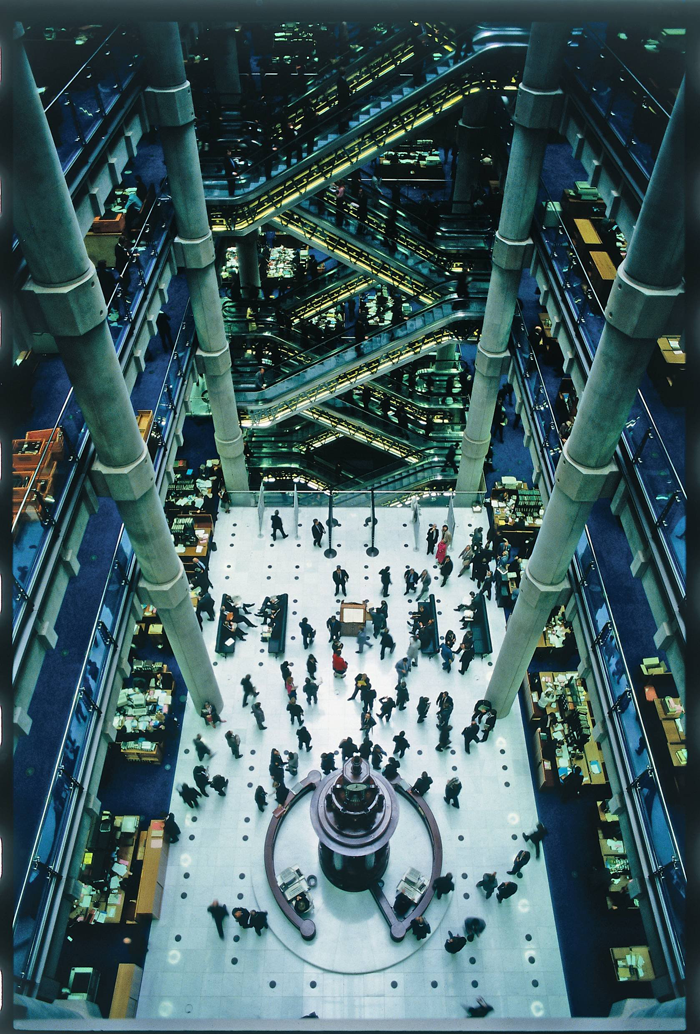
A number of high-profile projects that incorporate Rogers’ architectural principles are showcased. These include the Centre Pompidou, designed with Renzo Piano and still considered one of the most radical modern buildings since its opening in 1977, the Grade 1 listed headquarters for Lloyd’s of London, and the Bordeaux Law Courts. Through these projects Rogers has established himself and his practice, Rogers Stirk Harbour + Partners, as standing at the forefront of the architecture industry.
"Richard Rogers RA: Inside Out"
Date.- 18th July until 13th October 2013.
Venue.- Burlington Gardens, Royal Academy of Arts, London.




More information

Richard Rogers. (Florence, July 23, 1933 – London, December 18, 2021) was a central figure in international architecture from the late twentieth to the early twenty-first century, widely recognized for his role in consolidating high-tech architecture and for his sustained engagement with urban debate. Born in Italy to a British family, he moved to the United Kingdom as a child during the Second World War. This early experience of displacement would later inform his sensitivity to the social and urban issues that permeated his work. He was educated at the Architectural Association in London, a key institution in the renewal of architectural thought, and later continued his studies at Yale University, where he encountered other architects who would go on to achieve international prominence.
In 1977, he founded his own practice, initially known as Richard Rogers Partnership, which later evolved into Rogers Stirk Harbour + Partners. From this professional platform, he developed an approach characterized by technical innovation, constructive clarity, and a strong commitment to making visible the systems that shape a building. His architecture is distinguished by the externalization of structural and service elements, understood not only as functional solutions but as an essential part of architectural expression.
Among his most influential works is the Centre Pompidou in Paris, designed in collaboration with Renzo Piano, which represented a radical break from conventional architectural languages and redefined the role of the cultural building within the city. Likewise, the Lloyd’s building in London stands as another paradigmatic example of his approach, where technology and programmatic flexibility are integrated into a proposal that challenges traditional typologies.
Throughout his career, he received numerous distinctions, including the Pritzker Prize in 2007, widely regarded as architecture’s highest honor, the RIBA Gold Medal in 1985, and the Golden Lion for Lifetime Achievement at the Venice Biennale in 2006. He was knighted in 1991 and was later appointed a Member of the Order of the Companions of Honour in 2008, in recognition of both his professional work and his contribution to urban thought.
Beyond his built work, Rogers played an active role in shaping urban policy, particularly in the United Kingdom. He chaired the Urban Task Force in the late 1990s, promoting strategies for the regeneration of British cities based on models of compact, diverse, and sustainable urban development. His vision emphasized the importance of public space as a structuring element of urban life, as well as the need to integrate environmental criteria into urban growth.
His legacy extends beyond a body of iconic buildings to encompass a broader understanding of architecture as a discipline deeply connected to society, politics, and the environment. Through his work, Rogers helped redefine both professional practice and the role of the architect in shaping the contemporary city.
Published on:
July 23, 2013
Cite:
""Richard Rogers RA: Inside Out" at Royal Academy of Art, London" METALOCUS.
Accessed
<https://www.metalocus.es/en/news/richard-rogers-ra-inside-out-royal-academy-art-london>
ISSN 1139-6415


