It has always been commented that the success of the Japanese architecture supposes a renunciation of part of the oriental tradition and at the same time part of its success, an approach and attraction to the western world, (Six Pritzker awards to the Japanese architecture endorse it).

The constant research process, the lack of style or a work difficult to classify in a world always eager for recipes with which to pigeonhole everything and everyone, meant a distancing from the ability of both their own and the misnamed Western to understand the bright work of this architect.

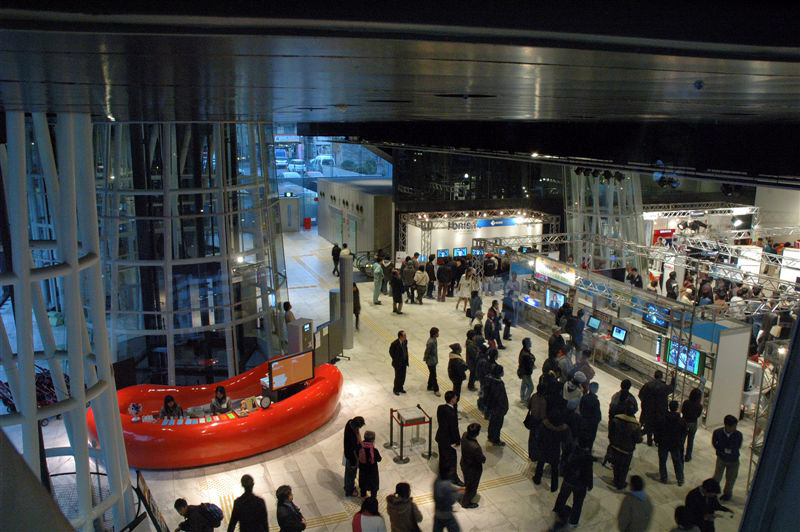
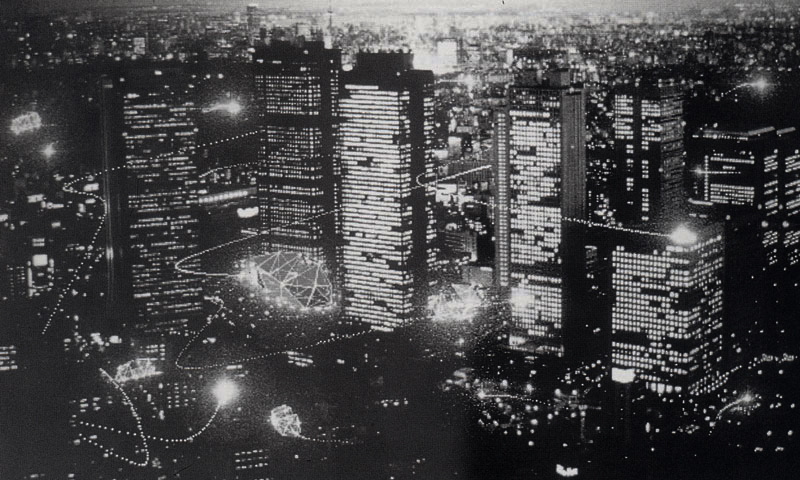
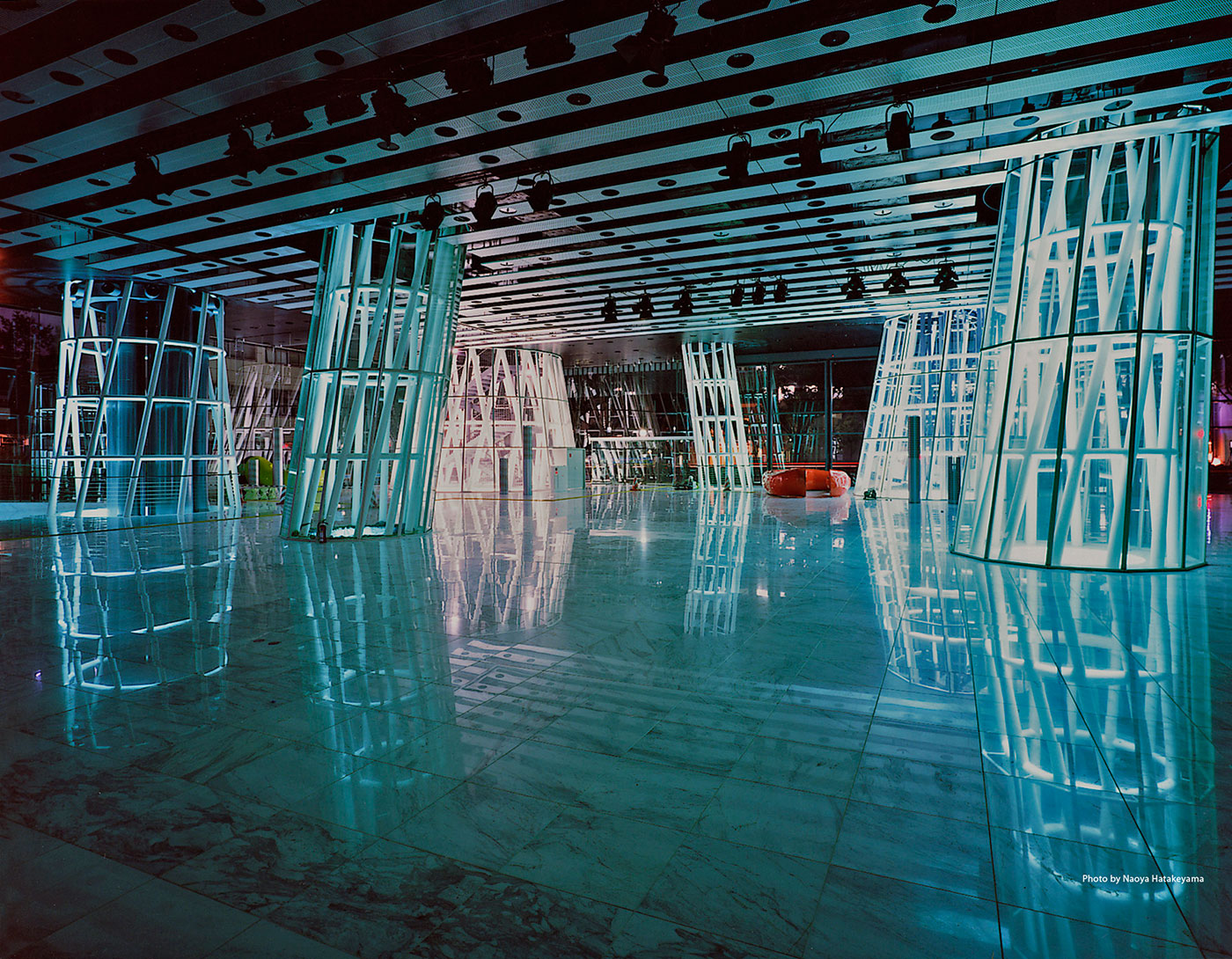
It would have been enough recognize works such as the exceptional Tower of the Winds (now disassembled), his research on the nomadic woman and the contemporary condition of the architecture and its inhabitants, or the exceptional impression that Toyo Ito made when explaining the design, the tree structure of the Sendai Mediatheque, for have granted him years ago the prestigious Pritzker Prize.

Listening to him tell Sendai's project was to be aware of the change of conception in the way of proposing a project and realize, with the "bristly hair", of the great advance that supposed a proposal of these characteristics. A tension that was repeated when, after the first impression of the Tsunami two years ago, we all wondered how it would have endured the mythical structure of the Mediatheque and of course did not disappoint. Some pieces of false ceiling, some crystals and after one of the most important earthquakes this fragile building continued. The idea of the agile bamboo in front of the powerful oak was again won by the lightness.

Later came works of different profile, among them the library of Tama University. The design of the building using arches to build, organize, open and close space, were criticized by some for their formal component. In Europe only two magazines published this building, of course one was METALOCUS (num 021). There were few who understood the perfect execution of the building, the continuity between materials (concrete and glass) so that to pass a finger along said surface hardly supposed an almost imperceptible variation. The reiteration of those arches also generated a really surprising permeability of spaces. I remember how in a lecture, explaining the project that we had published, I commented on the desire they had in front of a building like that to go back to the library and study, study ...

Research is not always recognized, it has risks, it means not being pigeonholed, it means staying alive in the constant need to reinvent yourself, reinventing your own work every morning. Of course, this process of experimentation has its risks, responding to extreme needs is not always possible and perhaps our country is the best vademécum of works not achieved, in Madrid, Alicante or Barcelona, ​​which also portrays the happy years of the Spanish Boom. The self-recognition of dissatisfaction, self-criticism so rare in this world of architecture made interpreting his words in some as an obstacle to obtain the aforementioned prize:

"I have designed architecture taking into account that it will be better if we get rid, even a little bit, of any limitations. However, when I finish a building, I realize with pain of my own disability. That inability becomes energy to tackle the next project. That is my creative process and, surely for that reason, my architecture will never have a fixed style and I will not be satisfied with any of my works".

In fact, all this explains that brilliant reaction in his country to reinvent himself with "Home for all", a project where with a group of Japanese architects he returned to the basics of architecture, the need to reinvent himself from scratch, recognizing the architecture as a social service. His ability to continue motivating new generations of architects allows to better understand than ever his nomadic wife and the necessary and deserved recognition that supposes the Pritzker Prize for Toyo Ito.

Txt.- José Juan Barba

More information

Toyo Ito was born in 1941. After graduating from the University of Tokyo in 1965, he worked in the office of Kiyonori Kikutake until 1969. In 1971, he founded his own office Urban Robot (URBOT), which was renamed Toyo Ito & Associates, Architects. Along with architecture projects all around the world, including Japan, Europe, Asia, and the U.S.A., Ito is engaged in a wide range of activities.

His recent works include the Tama Art University Library (Hachioji Campus), the Za-Koenji Public Theatre, and Torres Porta Fira in Spain. Among the many awards he has received are the AIJ Prize for Design, the Golden Lion for Lifetime Achievement at the Venice Biennale, the '06 Royal Institute of British Architecture Gold Medal, the Asahi Award, and the Prince Takamatsu World Culture Award.

Read more

José Juan Barba (1964) is an architect, graduated from ETSA Madrid (1991), and holds a Doctorate in Architecture from ETSA Madrid, awarded Cum laude for his thesis Inventions: New York vs. Rem Koolhaas, Bernard Tschumi, Piranesi (2004). He received a special mention in the National Awards for Completion of Studies (1991) and served as an advisor to various NGOs until 1997. He founded his studio in Madrid in 1992 (www.josejuanbarba.com). 

Barba is an architecture critic and has been the director of METALOCUS magazine since 1999. Since 1998, he has directed the International Architecture Magazine METALOCUS (bilingual, Spanish/English), which has been recognized with multiple national and international awards.

He is a Full Professor at the University of Alcalá, leading the project line of the Habilitation Master's Architecture and City, responsible for several courses in Theory and Criticism, heading the Urban Planning area of the Department of Architecture, and participating in the research group Architecture, History, City, and Landscape at UAH. He has been invited to numerous architecture and urbanism forums, including the II Forum of Mexican Cities World Heritage: Urban Development, History, and Modernity, organized by the Pan-American Committee for Urban Development and Historical Heritage, and the World Urban Development Forum (FMDU) in Culiacán, Sinaloa, Mexico. He has also participated in the International Architecture and Urbanism Conferences from the perspective of women architects, and has lectured at prestigious national and international universities, including the National Building Museum (Washington, DC), Roma TRE, Politecnico di Milano, UPMF Grenoble, ETSA Madrid, ETSA Barcelona, University of Thessaly (Volos), UNAM Mexico, the Faculty of Architecture Montevideo, schools of architecture in Medellín, Quito-Ecuador, Alicante, Málaga, Granada, Seville, A Coruña, Zaragoza, Valladolid, Universidad Iberoamericana Mexico, IE School, Universidad Europea Madrid, UCJC Madrid, ESARQ-UIC Barcelona, or Università Degli Studi di Genova.

Barba has extensive professional experience in architecture, urban planning, landscape design, and territorial recovery. He has received numerous awards, including the First Prize for Gran Vía Posible for Delirious Gran Vía (Madrid), the River Interpretation Center (Zamora), exhibited at the World Architecture Festival (Barcelona 2008), Santa Bárbara Park (Toledo), the Erich Degner Architecture Prize 1995 promoted by the BBVA Foundation, and his Day Care Center for the Elderly project, featured in Volume 3 of the COAM Madrid Architecture Guide (2007). His work has been published in numerous national and international books and magazines.

He was also Maître de Conférences at IUG-UPMF Grenoble (2013–14), in a position obtained through a European competition. His work has been published internationally. He regularly serves on academic juries, including the editorial competition of Quaderns magazine (2011), as a selector for the Mies van der Rohe Awards (2007–2026), as juror for EUROPAN13 Spain (2015–16), TRANSFER in Zurich (2019), and was invited to participate in the Venice Biennale 2016 as part of the exhibition Spaces of Exception / Spazi d’Eccezione.

He has published several books, including The Dark Line. michele&miquel, dA Vision Design (2024), CONGRESO ANYWAY. The City of Cities (2020), #Positions (2016), and Inventions: New York vs. Rem Koolhaas, Bernard Tschumi, Piranesi (2015). He has contributed to other publications such as Public Space Gran Vía. The Tourism City (2020), Spaces of Exception / Spazi d’Eccezione (2016), La mansana de la discordia (2015), and Contemporary Architecture of Japan: New Territories (2015), as well as chapters in numerous books including Architects: A Professional Challenge (2009), 21st Century Architectures (2007), Ruta de la Plata, New Conquerors of Space (2019), and The Tourism City (2020).

Selected awards include:

- “PIERRE VAGO” ICAC. International Committee of Art Critics Award, London, 2005
- “PANAYIOTI MIXELI AWARD,” SADAS-PEA, award for the promotion of architecture, Athens, 2005
- “SANTIAGO AMÓN” AWARD, award for the promotion of architecture, COAM Madrid, 2000
- FAD Award 07, Ephemeral Interventions, First Prize, M.C. Escher Exhibition, Arquin-FAD, Barcelona, 2007
- World Architecture Festival, Center for Research and Interpretation of the Rivers, Tera, Esla, and Órbigo, Finalist, Barcelona, 2008
- Gran Vía Posible, First Prize, Delirious Gran Vía, Madrid, 2010
- Reform of the Río Segura Surroundings, Award, Murcia, 2010

Read more
Published on: March 18, 2013
Cite:
metalocus, JOSÉ JUAN BARBA
"TOYO ITO. PRITZKER FOR A SMART ARCHITECT" METALOCUS. Accessed
<https://www.metalocus.es/en/news/toyo-ito-pritzker-a-smart-architect> ISSN 1139-6415
Loading content ...
Loading content ...
Loading content ...
Loading content ...
Loading content ...
Loading content ...
Loading content ...
Loading content ...
Loading content ...
Loading content ...
Loading content ...
Loading content ...
Loading content ...
Loading content ...
Loading content ...
Loading content ...
Loading content ...
Loading content ...
Loading content ...
Loading content ...
Loading content ...
Loading content ...
Loading content ...
Loading content ...
Loading content ...
Loading content ...
Loading content ...
Loading content ...
Loading content ...
Loading content ...
Loading content ...
Loading content ...
Loading content ...
Loading content ...
Loading content ...
Loading content ...
Loading content ...
Loading content ...
Loading content ...
Loading content ...
Loading content ...
Loading content ...
Loading content ...
Loading content ...
Loading content ...
Loading content ...
Loading content ...
Loading content ...
Loading content ...
Loading content ...
Loading content ...
Loading content ...
Loading content ...
Loading content ...