Taking advantage of the Rogers House is on sold for the first time, through The Modern House, since it has built in 1968, we want to remember a very good example of the british architecture of the last century. Besides, if you have something more than three millons pounds, you can purchase this masterpiece of the 20th century architecture.

We are talking about one of the first projects of Richard Rogers, whose clients were his own parents and for who he designed this house which he describes as a transparent tube with solid boundary walls.

For own Richard Rogers it is the "the most successful small project I have been involved in".

Memory of project.

The house, commissioned by Richard Rogers’ parents, sits within a long and narrow wooded urban plot, opposite Wimbledon Common in South West London and adjoining a major road. It is designed to provide maximum privacy and seclusion, and consists of two separate elements facing on to an internal garden courtyard. The small unit houses the separate flat and pottery studio and acts as a sound barrier between the house and the road. Rogers describes the house as ‘a transparent tube with solid boundary walls.’
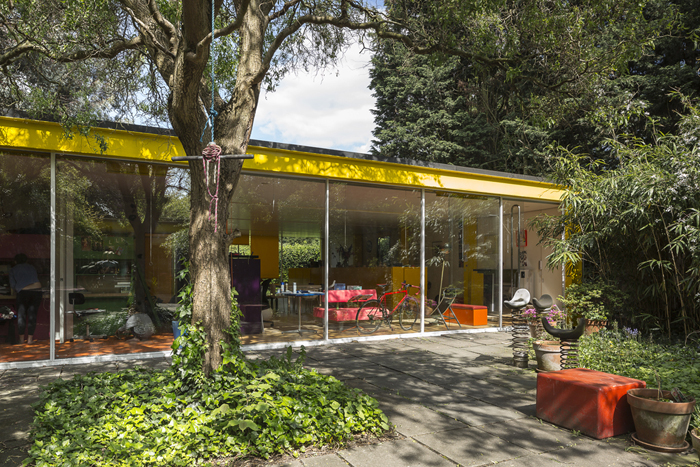
Backyard. Photograph © Tim Crocker. Courtesy of The Modern House.

The steel structure is brought inside the skin to eliminate maintenance and to simplify junctions between structure and skin. Eight welded clear-span rigid portals fabricated in standard steel sections permit maximum demountability and the re-use of the enclosing envelope and internal partitions. Walls are composite panels of plastic-coated aluminium inner skins with foam plastic core and neoprene jointing system.

Flexibility was a high priority and most internal partitions are moveable. Maximum sized, double- glazed, sealed units in painted steel frames have been used and glazed roofs, neoprene zipped and solar reflecting, enclose the bathrooms.

The house represented British Architecture at the 1967 Paris Biennale.

Text.- Rogers Stirk Harbour + Partners.

CREDITS.-

Architects.- Richard + Su Rogers.
Team.- Pierre Botschi, John Doggart, Ingrid Morris, Richard Russell and John Young.
Collaborators.- Landscape Design Partnership (landscape architect), GA Hanscomb Partnership (quantity surveyor), H Bressloff Associates (services engineer) and Anthony Hunt Associates (structural engineer).
Location.- London, England.
Date.- 1968-1969.
Client.- Dr and Mrs Rogers.

Read more
Read less

More information

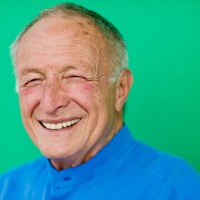
Richard Rogers. (Florence, July 23, 1933 – London, December 18, 2021) was a central figure in international architecture from the late twentieth to the early twenty-first century, widely recognized for his role in consolidating high-tech architecture and for his sustained engagement with urban debate. Born in Italy to a British family, he moved to the United Kingdom as a child during the Second World War. This early experience of displacement would later inform his sensitivity to the social and urban issues that permeated his work. He was educated at the Architectural Association in London, a key institution in the renewal of architectural thought, and later continued his studies at Yale University, where he encountered other architects who would go on to achieve international prominence.

In 1977, he founded his own practice, initially known as Richard Rogers Partnership, which later evolved into Rogers Stirk Harbour + Partners. From this professional platform, he developed an approach characterized by technical innovation, constructive clarity, and a strong commitment to making visible the systems that shape a building. His architecture is distinguished by the externalization of structural and service elements, understood not only as functional solutions but as an essential part of architectural expression.

Among his most influential works is the Centre Pompidou in Paris, designed in collaboration with Renzo Piano, which represented a radical break from conventional architectural languages and redefined the role of the cultural building within the city. Likewise, the Lloyd’s building in London stands as another paradigmatic example of his approach, where technology and programmatic flexibility are integrated into a proposal that challenges traditional typologies.

Throughout his career, he received numerous distinctions, including the Pritzker Prize in 2007, widely regarded as architecture’s highest honor, the RIBA Gold Medal in 1985, and the Golden Lion for Lifetime Achievement at the Venice Biennale in 2006. He was knighted in 1991 and was later appointed a Member of the Order of the Companions of Honour in 2008, in recognition of both his professional work and his contribution to urban thought.

Beyond his built work, Rogers played an active role in shaping urban policy, particularly in the United Kingdom. He chaired the Urban Task Force in the late 1990s, promoting strategies for the regeneration of British cities based on models of compact, diverse, and sustainable urban development. His vision emphasized the importance of public space as a structuring element of urban life, as well as the need to integrate environmental criteria into urban growth.

His legacy extends beyond a body of iconic buildings to encompass a broader understanding of architecture as a discipline deeply connected to society, politics, and the environment. Through his work, Rogers helped redefine both professional practice and the role of the architect in shaping the contemporary city.

Read more
Published on: September 19, 2013
Cite:
metalocus, ALEX DURO
"Rogers House by Richard + Su Rogers" METALOCUS. Accessed
<https://www.metalocus.es/en/news/rogers-house-richard-su-rogers> ISSN 1139-6415
Loading content ...
Loading content ...
Loading content ...
Loading content ...
Loading content ...
Loading content ...
Loading content ...
Loading content ...
Loading content ...
Loading content ...
Loading content ...
Loading content ...
Loading content ...
Loading content ...
Loading content ...
Loading content ...
Loading content ...
Loading content ...
Loading content ...
Loading content ...
Loading content ...
Loading content ...
Loading content ...
Loading content ...
Loading content ...
Loading content ...
Loading content ...
Loading content ...
Loading content ...
Loading content ...
Loading content ...
Loading content ...
Loading content ...
Loading content ...
Loading content ...
Loading content ...
Loading content ...
Loading content ...
Loading content ...
Loading content ...
Loading content ...
Loading content ...
Loading content ...
Loading content ...
Loading content ...
Loading content ...
Loading content ...
Loading content ...
Loading content ...
Loading content ...
Loading content ...
Loading content ...
Loading content ...
Loading content ...