
Project description by Elii
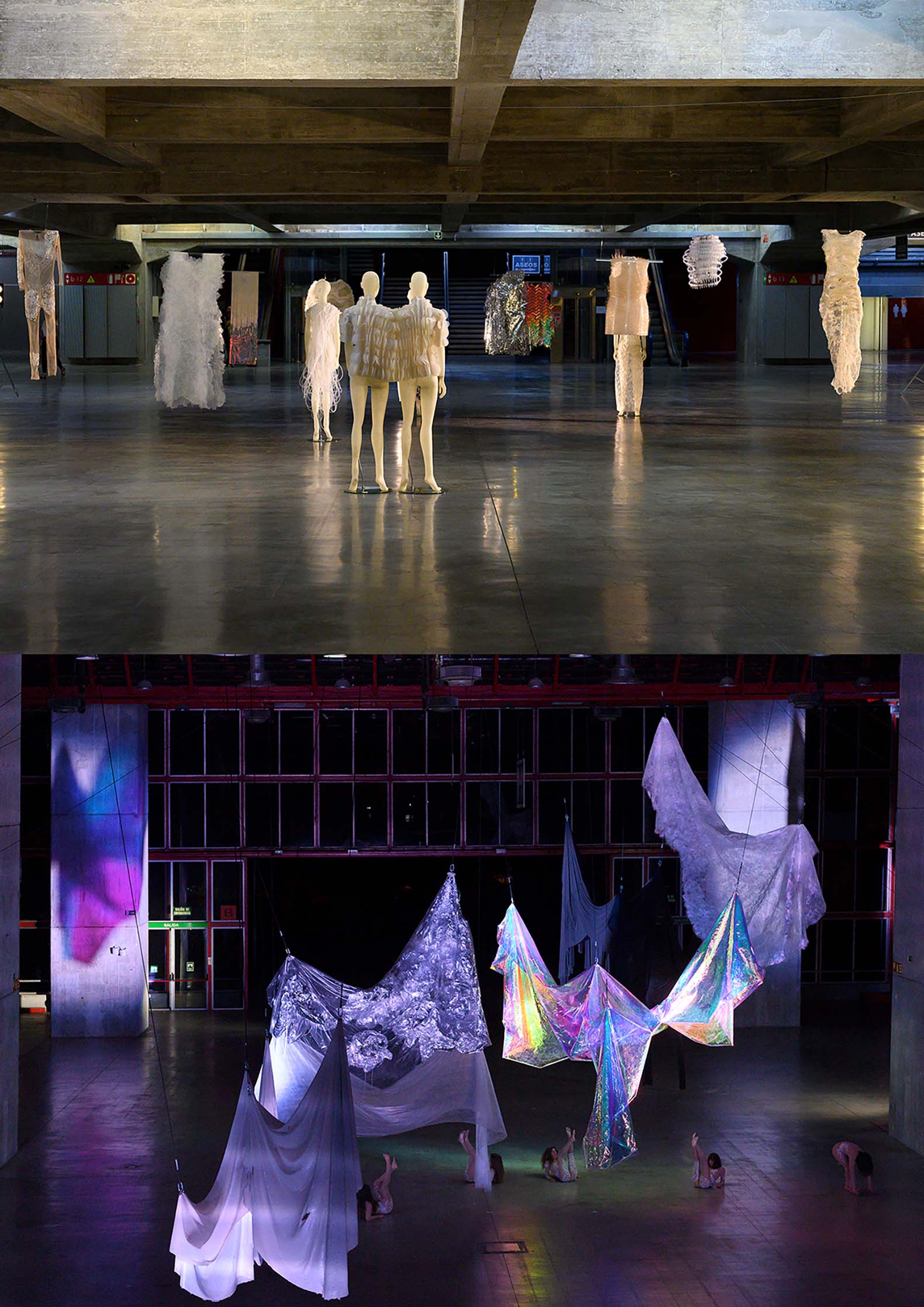
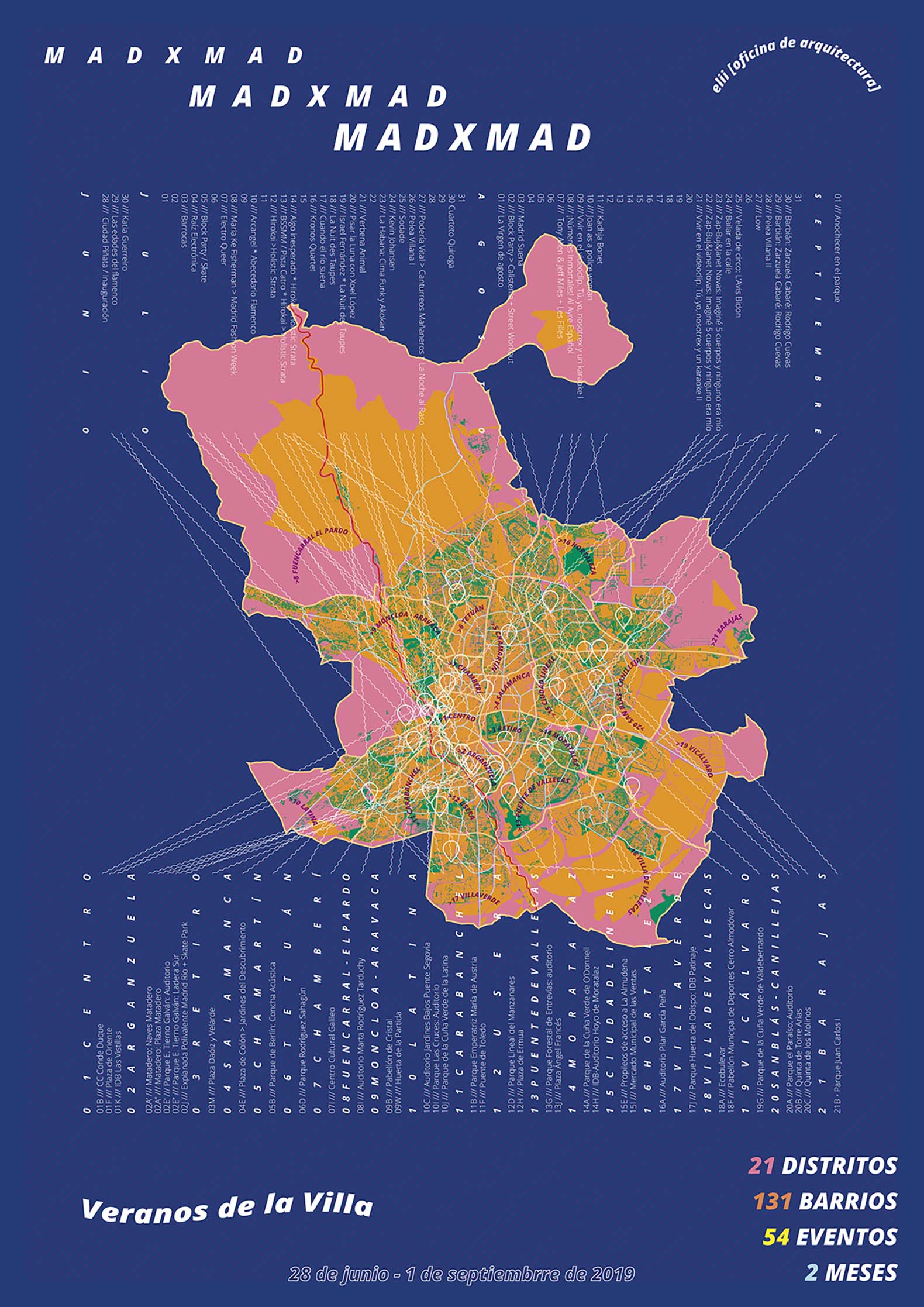
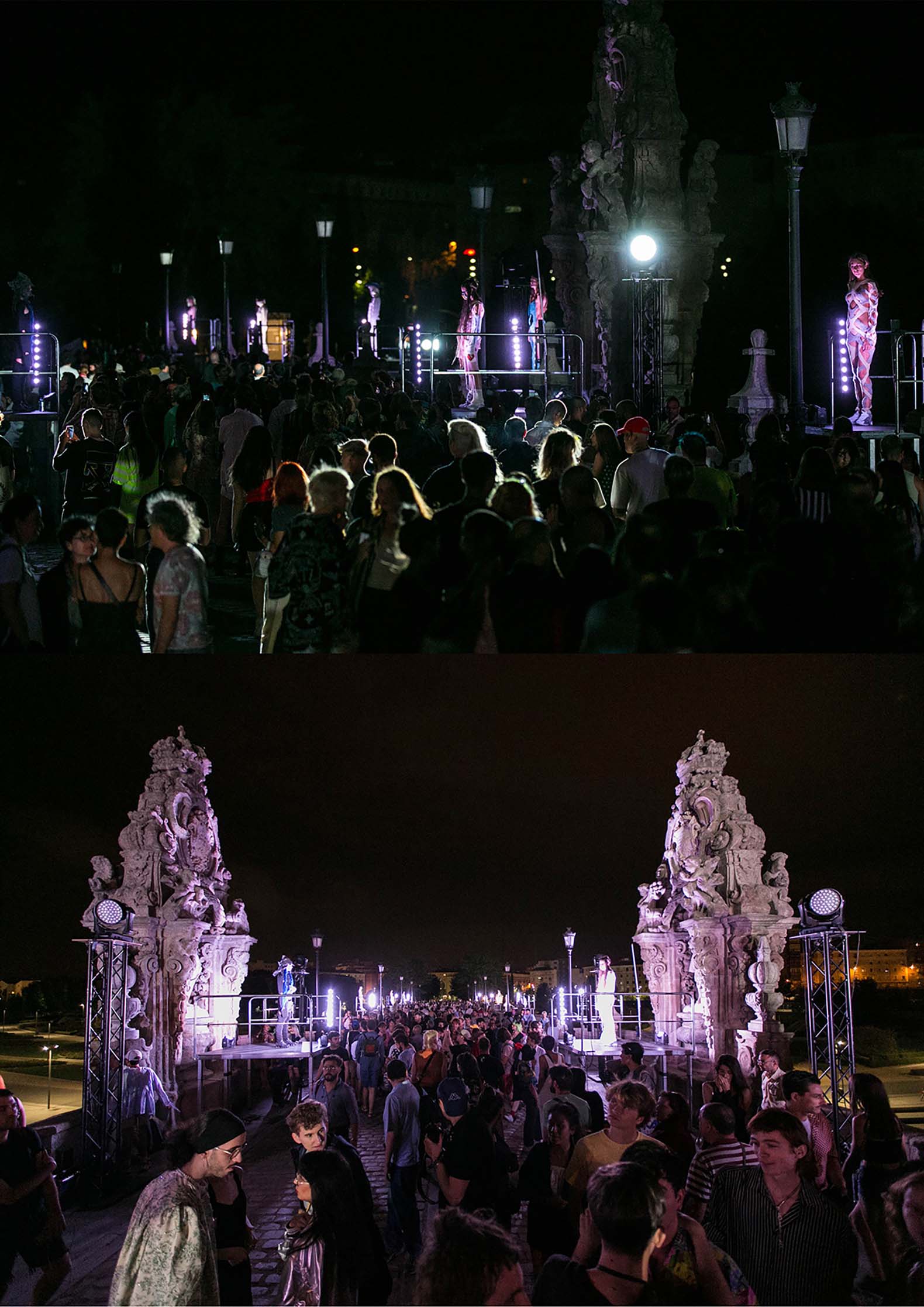
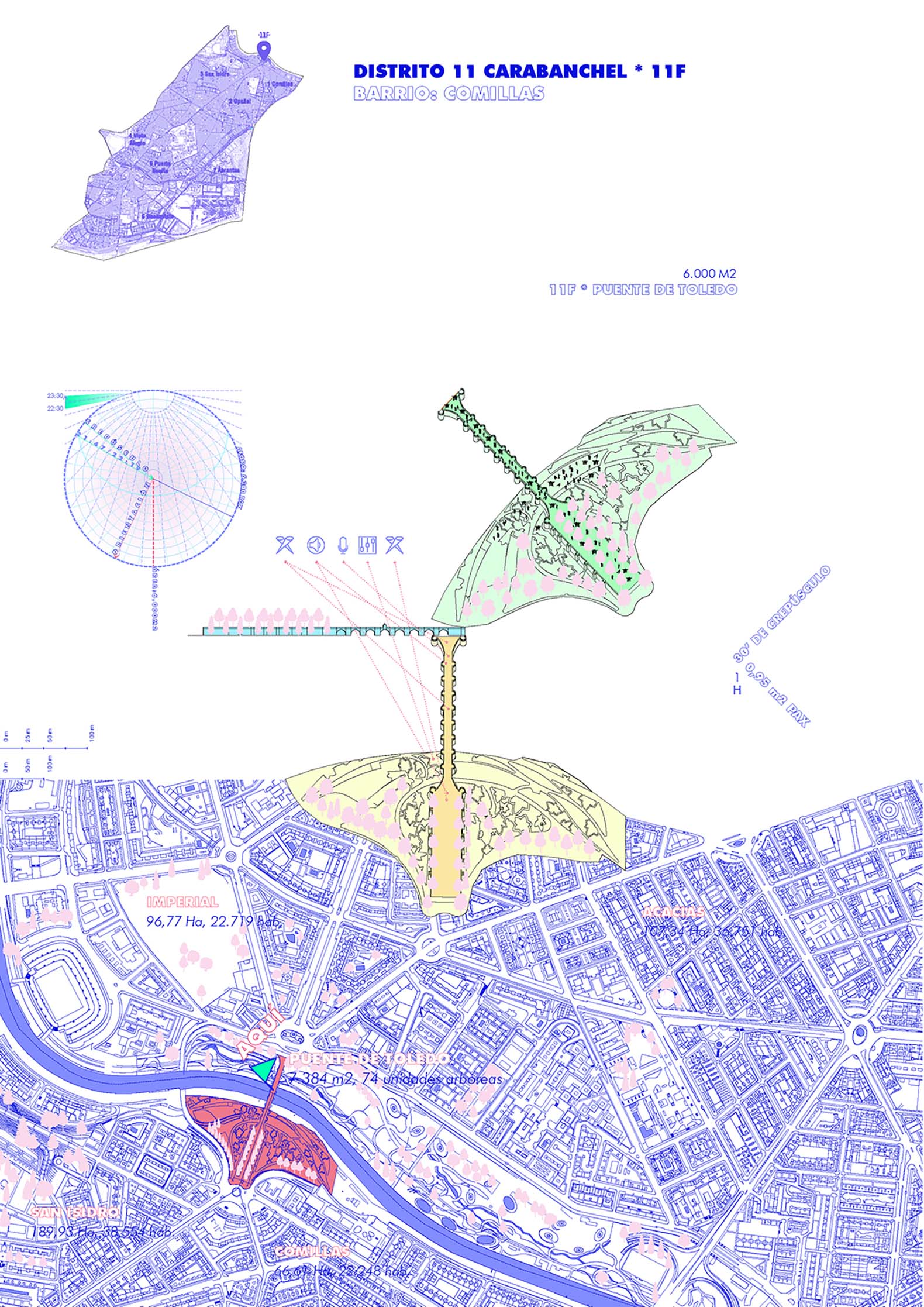
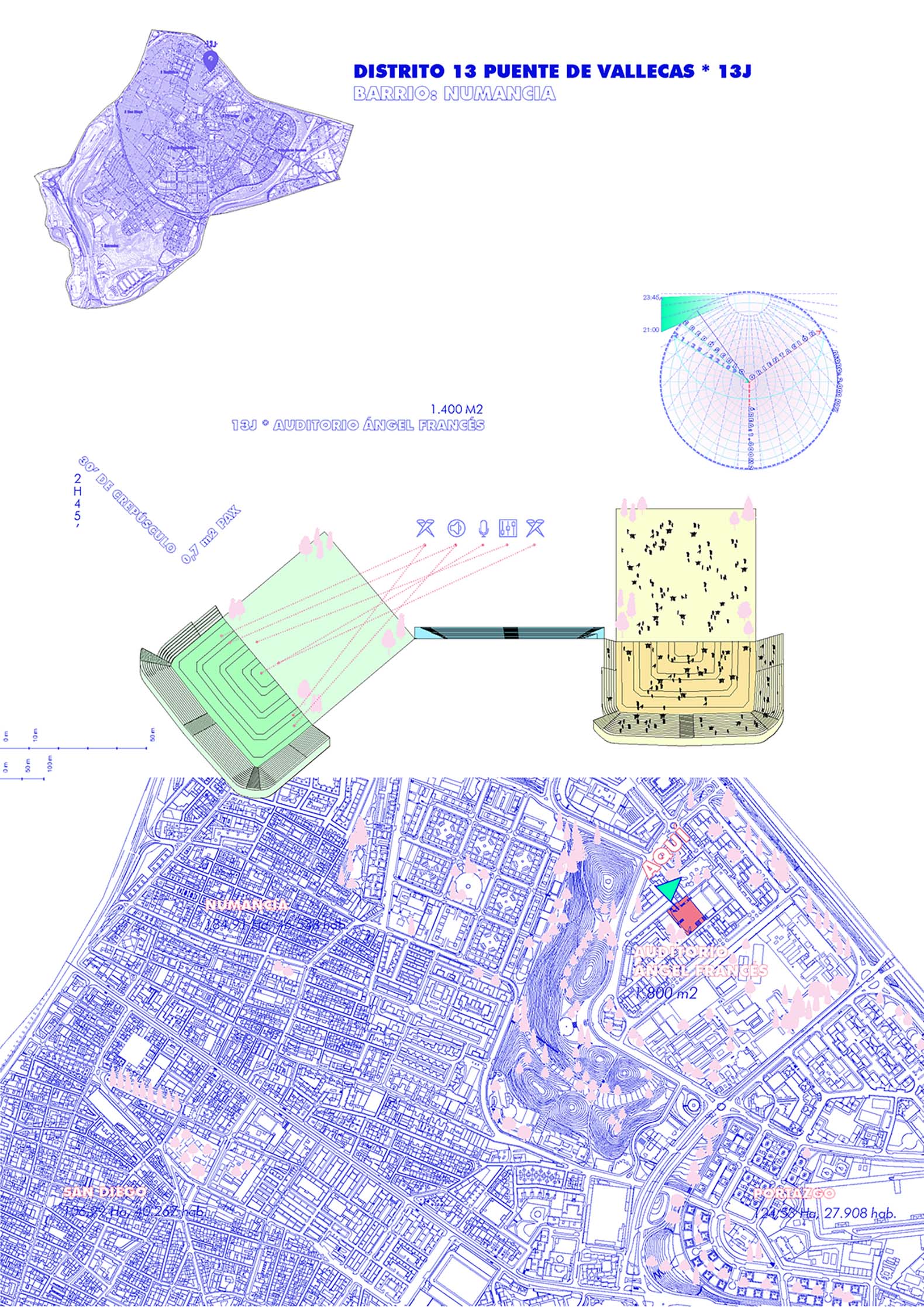
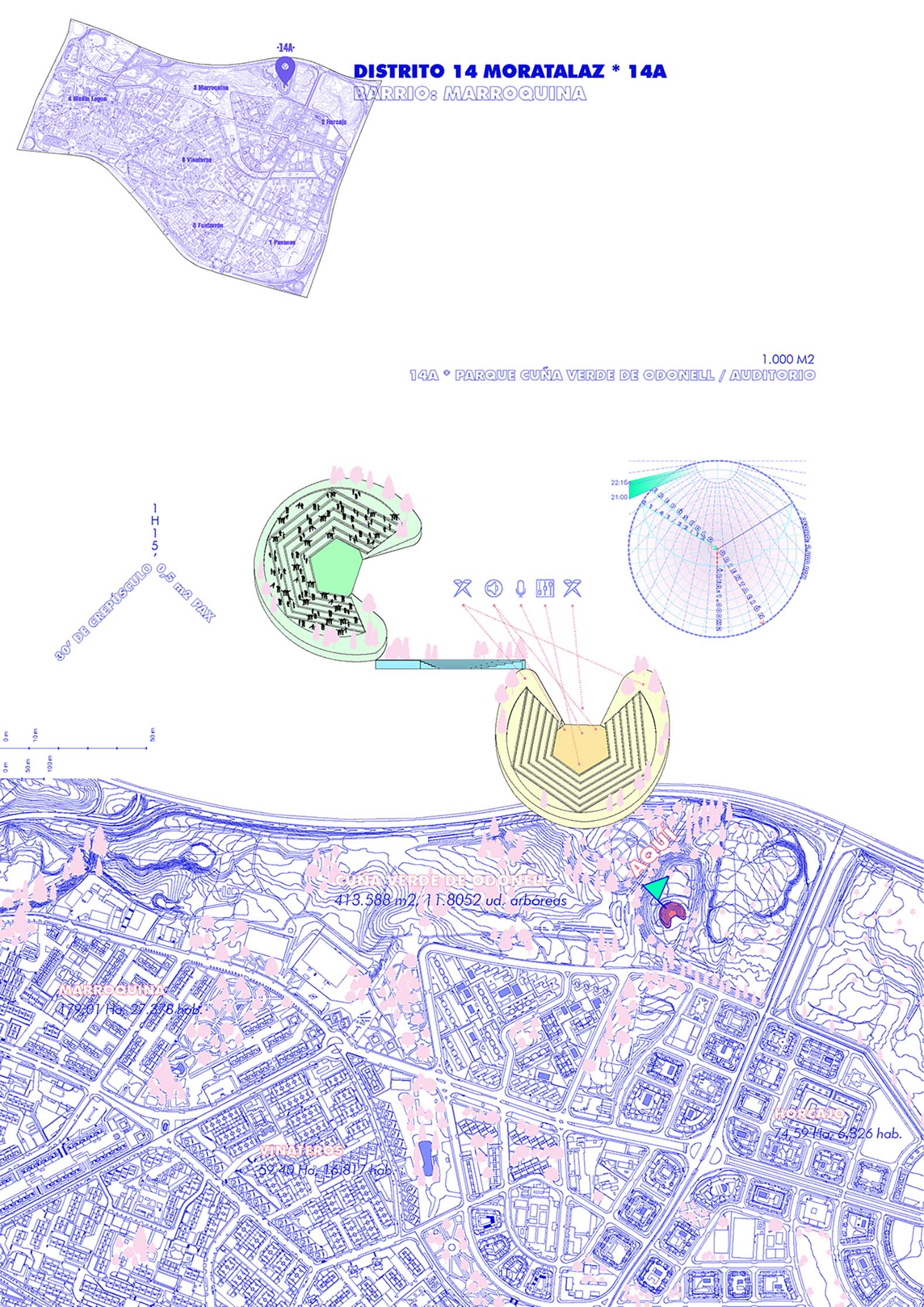
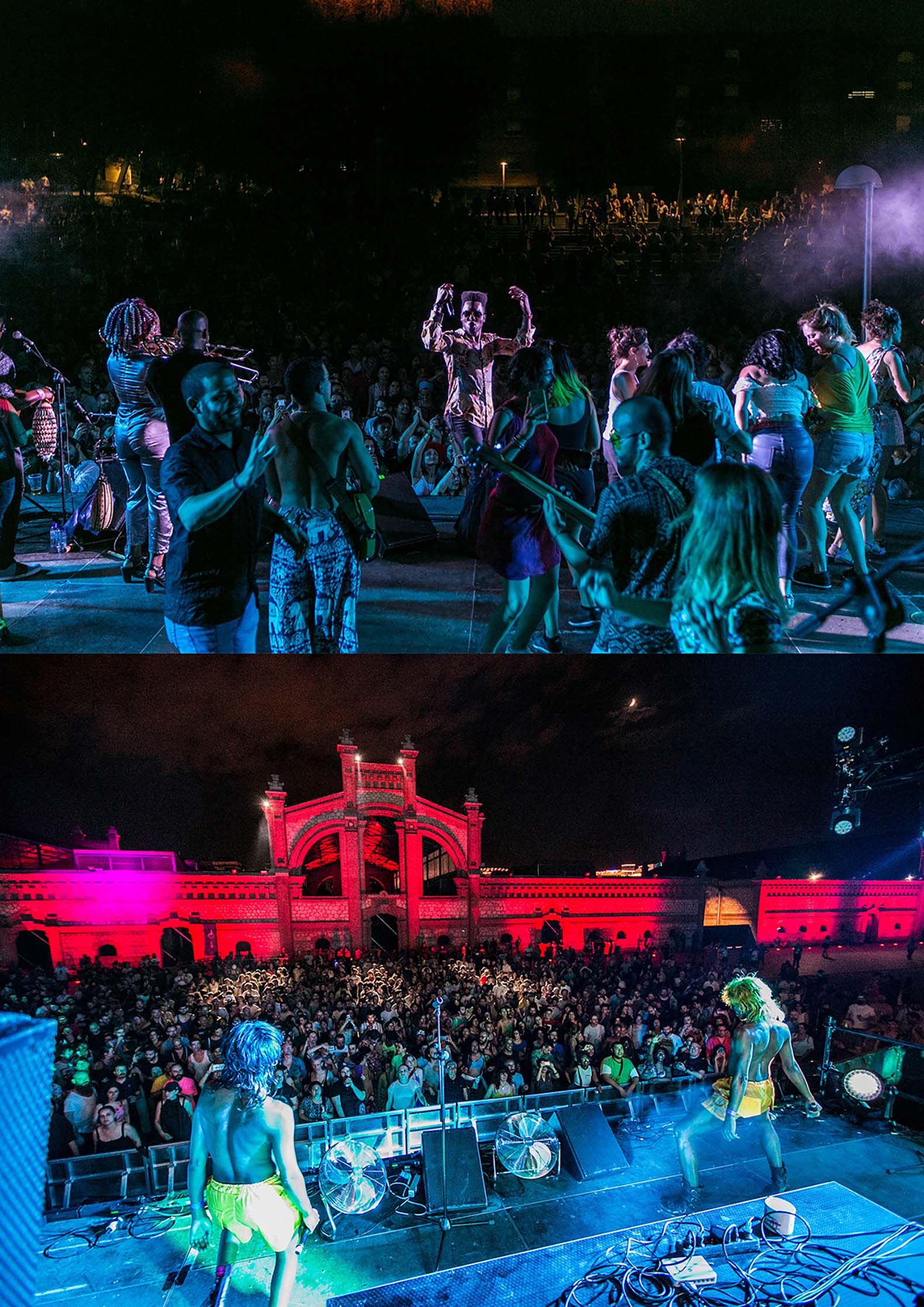
Mad x Mad is a strategic project to turn the Veranos de la Villa into a distributed festival. As in the last two editions, VdV activities spread out over the 21 districts of the Villa of Madrid to bring it closer to the people. On one hand, the festival travels around the city. On the other hand, the people of Madrid are invited to explore different public spaces around town.
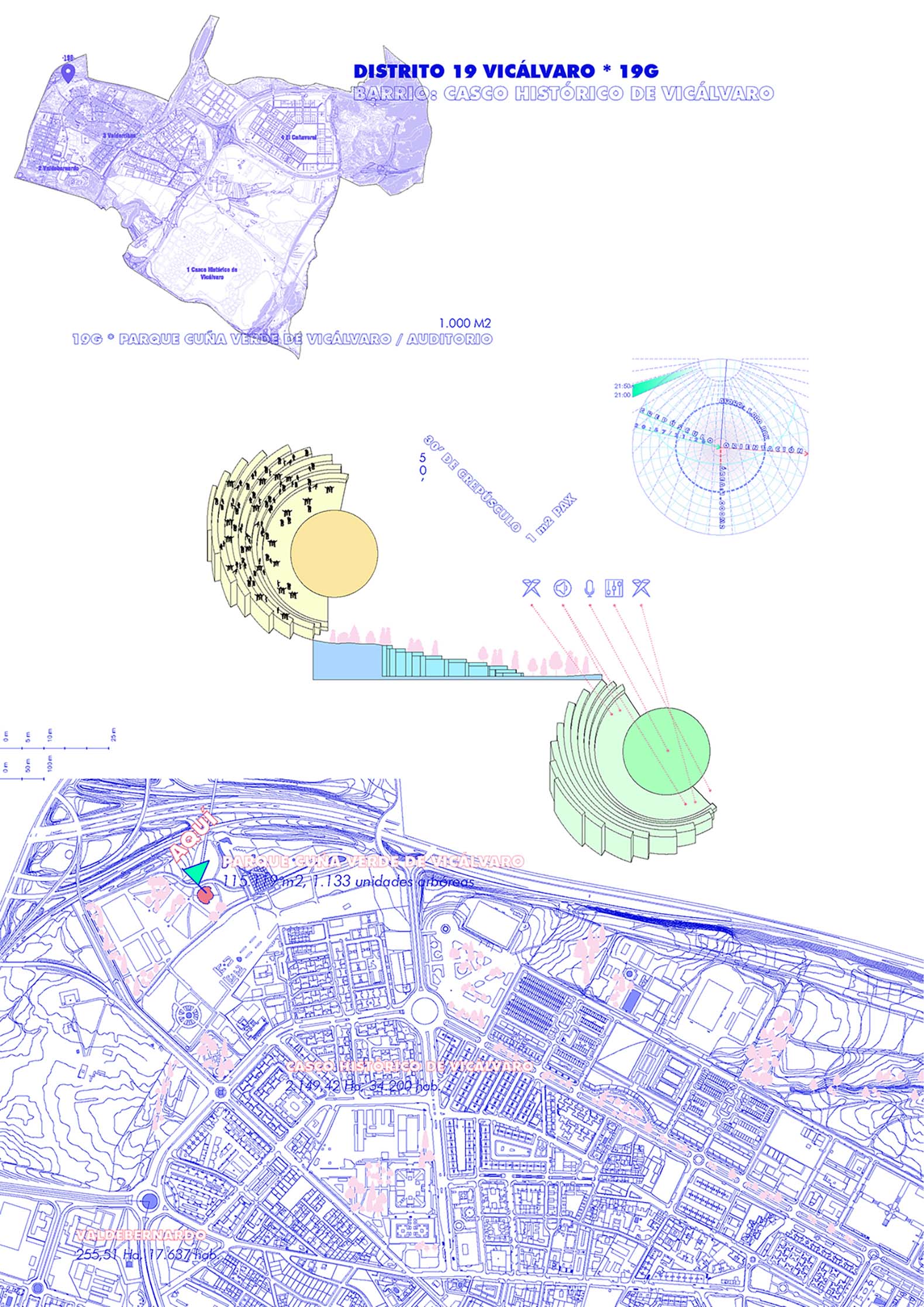
The project starts off by mapping out the districts for different kinds of public spaces that will be conditioned with temporary interventions to develop the different events at this dynamic festival. The main goal of Mad x Mad is to activate and benefit from Madrid's heterogeneous heritage, opening it up to a multiple, contemporary view.
The project develops in accordance with the following methodology:
1. Research. The first step is to get an up-close look at Madrid by analyzing the local historical context of each district in the city.
2. Contact with local agents. Getting in touch with neighbors, organizations, and different institutions can help bring people closer together to understand the complexities and singularities of Madrid city dwellers' urban ecosystem.
3. Field work. Walking every inch of the districts to find what may be hidden at first glance and to assess the possibilities from the point of view of experience.
4. Mapping. Scoping out the 21 districts (Centro, Arganzuela, Retiro, Salamanca, Chamberí, Tetuán, Chamartín, Fuencarral - El Pardo, Moncloa - Aravaca, Latina, Carabanchel, Usera, Puente de Vallecas, Moratalaz, Ciudad Lineal, Hortaleza, Villaverde, Villa de Vallecas, Vicálvaro, San Blas – Canillejas and Barajas) to find locations: public spaces, parks, establishments, infrastructures, cultural centers, sports facilities, open fields, relevant buildings, unique, lovely cozy corners, ordinary places, and any number of other unsuspected venues dotting the urban geography. As well as to find neighborhood activities, local traditions and culture, etc.
With all this information in hand, the next step is to draw up a strategic map that will act as a support and database for deploying the festival.
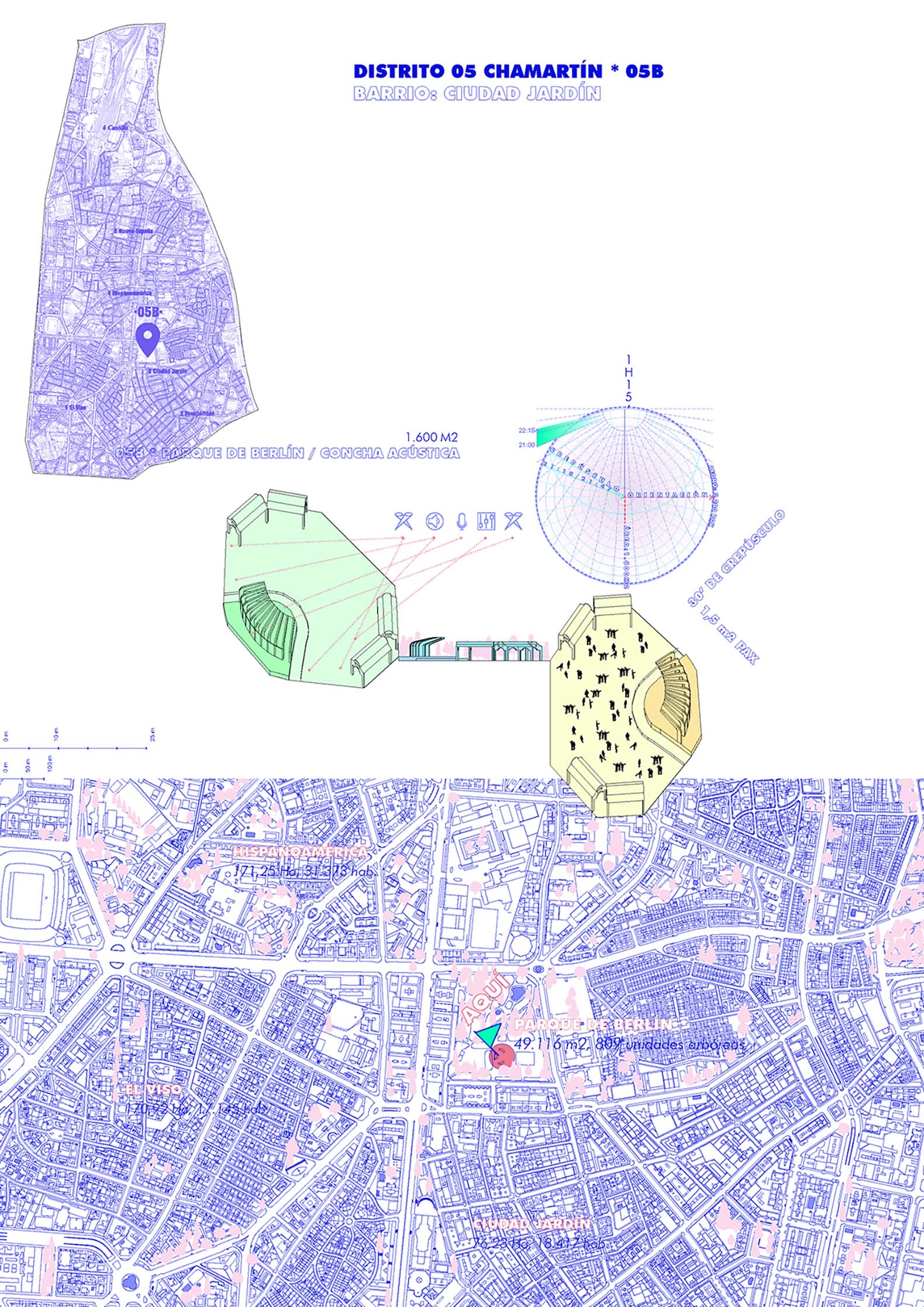
5. Valuing. After being studied in detail, the venues are assessed for their potential for being reprogrammed and equipped for the various different activities and events. The aim is to activate and value Madrid's heterogeneous heritage, opening it up to a multiple, contemporary view.
6. Urban strategy. Multi-disciplinary teams (artistic directors, producers, musicians, publicists, security, lighting, municipal authorities, etc.) work together to come up with a joint strategy for distributing the festival across the Madrid metropolitan area. Movement throughout Madrid becomes a kind of choreography spanning time and space.
7. Adaptation. At the same time, work meetings are held with the artists to adapt their projects to the particularities of each venue. The place thus becomes one of the actors in the event.
8. Collecting and systematizing the information. Synthesizing the process, codifying, sifting, pairing and articulating the whole ensemble.
9. Technical documentation. Writing up fact sheets for each venue (capacity, accesses, public transportation, timetables for the event, time of sunset, etc.) to use as a basis for planning each event in detail.
10. Sharing and evaluating. At the end of the festival, the team assesses the development of the festival, suggesting improvements and tweaking the strategy for future editions. The festival is a living project that learns from the intelligence it mobilizes.
The Elii architecture office designed the Mad x Mad project for the last stage of Veranos de la Villa 2019. To do so, it took cultural decentralization as its guidelines and makes it known to citizens as unusual, little-used or frequented spaces in Madrid .
Veranos de la Villa was created in 1985 by Mayor Tierno Galván with the idea of offering quality cultural programming to those who stay in Madrid in the summer months and to restore vitality and creativity in public spaces.
Like the city, Veranos de la Villa has naturally been transformed in these three decades. In this last stage, it has wanted to recover its initial spirit, adapting it to today's Madrid, from observing the needs and the evolution of society.
Veranos de la Villa was created in 1985 by Mayor Tierno Galván with the idea of offering quality cultural programming to those who stay in Madrid in the summer months and to restore vitality and creativity in public spaces.
Like the city, Veranos de la Villa has naturally been transformed in these three decades. In this last stage, it has wanted to recover its initial spirit, adapting it to today's Madrid, from observing the needs and the evolution of society.

This is how the last project of the Elii architecture office, Mad x Mad, arises, whose purpose is the conscientious exploration of the twenty-one districts of the city and the reinvention of the possible uses of the places, corners and existing infrastructures that have made possible that the activities of Veranos de la Villa unfold throughout the capital, relativizing distances, helping to remove the inertia of cultural centralism and favoring affection for the city and the enjoyment of common spaces.
That is why this Elii project won the COAM Award (from the Official College of Architects of Madrid) in 2018 and now is FAD 2020 Awards finalist, in the Category - Ephemeral Interventions (2020).














More information

elii is an architecture practice founded in Madrid in 2006 by Uriel Fogué, Eva Gil, and Carlos Palacios. Their professional practice extends to teaching (Madrid School of Architecture, ETSAM; Columbia University in the City of New York, GSAPP; École Polytechnique Fédérale de Lausanne, EPFL) and research. elii participated in the Spanish Pavilion at the 18th (2023) and 15th Venice Architecture Biennales (2016, the latter awarded the Golden Lion). They were invited to participate in the 24th Milan Triennale International Exhibition (2025). Two of their projects have been shortlisted for the European Union Prize for Contemporary Architecture: the Mies van der Rohe Award (2015, 2019). They were recognized, among others, with the Casa de la Arquitectura Award in the ES_INNOVACIÖN category and the ALDES Award for the best project in sustainability, decarbonization, or greater self-generation of energy in a building, Rebuild (with Husos, 2026); the Holcim Awards Gold Award 2023 (with Husos and Ultrazul, sponsored by the Daniel and Nina Carasso Foundation). First Prize COAM (2017) and COAM Award (2018, 2016, 2013, 2011, 2006). FAD Ephemeral Interventions Award (2020). FAD Opinion Award (2005) and Finalist and Selected for the FAD Award (2023 and 2017; and 2020 and 2018, respectively). Their work Yojigen Poketto was selected as one of the 20 visionary domestic spaces of the last 100 years in the exhibition 'Home Stories 100 Years, 20 Visionary Interiors', at the Vitra Design Museum, Weil am Rhein (2020). They are authors of the books: 'Super Petites Maisons' (EPFL, 2022), 'Traspasar los límites' (CentroCentro, 2020), 'What is Home Without a Mother' (HIAP – Matadero Madrid, 2015), awarded at the XIII Spanish Biennial of Architecture and Urbanism 2015, and co-editors of the publication UHF, included in the Archive of Creators of Madrid.
Published on:
May 9, 2020
Cite:
"A jorney in former and current Madrid. Mad + Mad, Urban Strategy for Veranos de la Villa 2019 by Elii" METALOCUS.
Accessed
<http://www.metalocus.es/en/news/a-jorney-former-and-current-madrid-mad-mad-urban-strategy-veranos-de-la-villa-2019-elii>
ISSN 1139-6415


