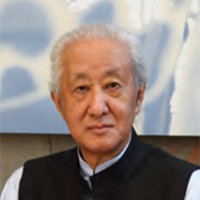
After a few years of fragile health and several ailments, the noted architecture historian David Butler Stewart died in Tokyo, where he lived for over 40 years, on April 3rd, 2025. He has been the finest commentator on Japanese architecture of the 20th century.

His major work The Making of a Modern Japanese Architecture (Kodansha, Tokyo: 1988, second edition 2003 with a new preface) remains the reference book in English, or in any other language for that matter, for that crucial period of Japanese history. In it, Stewart went beyond the historian to make critical propositions that still hold true. 

He not only retraced the origins of what can be safely considered the most vibrant and creative region in the world for architecture nowadays but offered a hypothesis that in the expansive 1980s seemed reductionist but has been firmly established since then: the major figures of the second half of the 20th century in Japan, delineating two major trends, were Arata Isozaki and Kazuo Shinohara. It is now, in the 2025 celebrations of the 100th anniversary of Shinohara's birth, to which Stewart contributed, that we can see the value of that foresight.

In his writings, he always offered explanations that went beyond the visual and attempted to frame architectural forms within a theoretical corpus. Always careful not to tread on intellectual territories that were foreign to the architects' aim, he nevertheless opened up ambitious references that could serve to relate specific works with major trends in the global discussion. Because this is what David was, above all: a living example of a cultural bridge, a connector of ideas, people, and works. Always keen to discuss at the highest level, was a friend and mentor in several ways. And he will, already is, deeply missed.

David B. Stewart was born in Washington, D.C., in 1942. He pursued his education at the University of Pennsylvania, where he earned a Bachelor of Arts with honors in the History of Art (1960–1964), and later at the Courtauld Institute of Art at the University of London, where he completed his PhD in the History of European Art under the supervision of Professor Sir Nikolaus Pevsner (1964–1972), with a thesis about Le Corbusier. Before moving to Japan, he was a member of the editorial staff of L’Architecture d'aujourd'hui in Paris.

He taught the history of architecture at the famed Tokyo Institute of Technology (now Science Tokyo) since 1976, where he was nominated Specially Appointed Professor in his last years. His articles appeared in many international magazines and he lectured extensively worldwide, with some of his lessons available on YouTube. He is survived by his wife and two sons.


More information

David Butler Stewart was born in Washington, D.C. in 1942, and passed away on April 3rd, 2025. He pursued his education at the University of Pennsylvania, where he earned a Bachelor of Arts with honours in the History of Art (1960–1964), and later at the Courtauld Institute of Art at the University of London, where he completed his PhD in the History of European Art under the supervision of Professor Sir Nikolaus Pevsner (1964–1972), with a thesis about Le Corbusier. Before moving to Japan, he was a member of the editorial staff of L’Architecture d’aujourd’hui in Paris.

Since 1976, he taught history and theory of architecture at the Tokyo Institute of Technology (now Tokyo Institute of Science), where he worked closely with influential figures such as Kazuo Shinohara, whose work he helped to contextualize and promote internationally. Stewart became one of the most important Western interpreters of Shinohara’s thought, a colleague and a key disseminator of his architectural philosophy. In his later years, he was appointed Specially Appointed Professor at the same institution.

Stewart published extensively on both modern European architecture and contemporary Japanese architects. His seminal book The Making of a Modern Japanese Architecture: 1868 to the Present (1987) remains a fundamental reference in the field. He also co-authored Arata Isozaki: Architecture 1960–1990 and contributed essays to monographs on Kenzo Tange and Tadao Ando. En relación con Kazuo Shinohara, escribió Kazuo Shinohara: Centennial Hall, Tokyo (1995), un estudio detallado sobre una de las obras más emblemáticas del arquitecto, y coeditó Kazuo Shinohara: View from This Side, una recopilación de ensayos y fotografías que ofrece una visión crítica e integral de su legado.

Fluent in Japanese and French, Stewart served as a translator and cultural mediator, contributing significantly to the international understanding of postwar Japanese architecture. 

Read more
Kazuo Shinohara (born in Shizuoka on April 2, 1925 and died in Kawasaki, Kanagawa, Japan, on July 15, 2006) completed his bachelor’s degree in mathematics at the Tokyo University of Science in 1947. He decided to pursue a second degree in architecture following a visit to the famous temple complexes of Nara. The historical temples held such fascination over him that he enrolled to study architecture at the Tokyo Institute of Technology (TIT) in 1950. He graduated in Architecture in 1953 and established his own practice in 1954. Shinohara soon became recognized not only for his buildings but also for his reflections on architecture, which gave his work a strong theoretical dimension. Although his production was relatively limited in number, each project was conceived as a precise exploration of architectural ideas rather than as a purely functional commission. He has designed more than 30 houses and some public buildings in Japan, such as the TIT Centennial Hall (1987) and the Ukiyo-e Museum in Matsumoto (1982).

Shinohara also started a teaching career at the TIT in 1970. His academic involvement with the Tokyo Institute of Technology was long-lasting: after joining the school as a young researcher following his graduation, he gradually advanced through different teaching positions and remained linked to the institution for several decades. During this period, he also completed a doctoral dissertation in 1967 focused on spatial composition in traditional Japanese architecture. In addition to a series of theoretical writings, Kazuo Shinohara’s oeuvre consists mainly of smaller residential buildings. Through both his teaching and his publications, he exerted a significant influence on architects of the postwar generation in Japan, among them Toyo Ito, Itsuko Hasegawa and Issei Sakamoto, who were associated in the 1970s with what was sometimes referred to as the “Shinohara school.”

Shinohara has received many national and international awards, with the following especially significant: The Architectural Institute of Japan's great award in 205 and the commemorative Golden Lion of the Venice Biennale in 2010. Across his career, his architectural thinking underwent an important transformation. His early houses explored clarity, geometric balance and spatial order, often drawing inspiration from the compositional logic of traditional Japanese dwellings. These projects typically adopted simple and legible arrangements in which symmetry and proportion played a central role.

During the late 1960s and 1970s, his approach gradually shifted. While maintaining a strong interest in geometry, his designs began to incorporate more experimental spatial organizations and a less rigid internal hierarchy. This evolution reflected a growing concern with the relationship between domestic architecture and the increasingly complex conditions of contemporary cities.

For Shinohara, the dynamic and seemingly disordered character of large urban environments—particularly Tokyo—contained a specific form of aesthetic and cultural value. Instead of attempting to impose strict order on this environment, he argued that architecture should acknowledge and engage with that complexity. Buildings such as the Ukiyo-e Museum translate this position through facades composed of varied geometric elements and interiors that juxtapose different materials and spatial effects.

In the 1980s, he further developed these ideas by proposing that architecture could learn from technological systems and machines capable of operating within intricate and changing environments. This line of thought informed several later projects, including the Centennial Hall at the Tokyo Institute of Technology (1987), whose intersecting volumes and metallic surfaces evoke mechanical imagery while deliberately complicating the perception of the building within its urban surroundings. For Shinohara, such strategies allowed architecture to resonate more directly with the energetic and multifaceted character of the modern city.

Read more

Arata Isozaki, (born in 1931 in Oita Prefecture - d. Dec 28th, 2022 in Okinawa, Japan), Isozaki is a world-renowned and one of Japan’s leading architects. He established Arata Isozaki & Associates in 1963. His representative architectural works include Oita Prefectural Library (present Art Plaza), The Museum of Modern Art, Gunma, Art Tower Mito, Los Angeles Museum of Contemporary Art, Nara Centennial Hall, Akiyoshidai International Art Village, Shanghai Himalaya Center, Qatar National Convention Center.

He is the recipient of the Annual Prize, Architectural Institute of Japan, for the Ōita Prefectural Library and The Museum of Modern Art, Gunma (1967 and 1975 respectively, Japan), L’Ordre des Arts et des Lettres (1997 Officier, France), RIBA Gold Medal for architecture (1986 United Kingdom), Leone d’Oro, Venice Architectural Biennale, as commissioner of Japanese Pavilion (1996 Italy), Gran Cruz de la Orden del Mérito Civil (1997 Spain), Ordine al Merito della Repubblica Italiana (2007 Italy), and The Lorenzo il Magnifico Lifetime Achievement Award, Florence Biennale (2017). He was an honorary member of the Royal Academy of Arts (1994) and the American Academy of Arts and Letters (1998), and a member of the Japan Arts Academy (2017). He was appointed to the first Pritzker Prize Jury in 1979 and continued on as a member for five additional years.

Solo exhibitions featuring the work of Isozaki have included Arata Isozaki: Architecture 1960-1990 at the Museum of Contemporary Art, Los Angeles (California, USA) and Tokyo Station Gallery (Tokyo, Japan); Arata Isozaki: Works in Architecture at the Brooklyn Museum (New York, USA), Galleria D’ Arte Moderna, Comune di Bologna (Bologna, Italy), The Netherlands Architecture Institute (Rotterdam, The Netherlands), The National British Architecture Institute (London, United Kingdom), Miro Museum (Barcelona, Spain) and Moni Lazariston (Thessaloniki, Greece); Arata Isozaki – Electric Labyrinth at Castello di Rivoli, Museo d’Arte Contemporanea (Torino, Italy) and Serralves Museum of Contemporary Art (Porto, Portugal); and Arata Isozaki UNBUILT at the Central Academy of Fine Arts (Beijing, China), Shanghai Urban Planning Exhibition Centre (Shanghai, China) and Guangdong Museum of Art (Guangzhou, China).

Isozaki has served as a visiting professor at several U.S. universities including Columbia University, New York (New York, USA); Harvard University (Cambridge, MA, USA) and Yale University (New Haven, Connecticut, USA). He is based in Okinawa with offices operating in Japan, China, Italy and Spain.

Read more
Published on: April 7, 2025
Cite:
metalocus, Enric Massip-Bosch
"David B. Stewart In Memoriam" METALOCUS. Accessed
<http://www.metalocus.es/en/news/david-b-stewart-memoriam> ISSN 1139-6415
Loading content ...
Loading content ...
Loading content ...
Loading content ...
Loading content ...
Loading content ...
Loading content ...
Loading content ...
Loading content ...
Loading content ...
Loading content ...
Loading content ...
Loading content ...
Loading content ...
Loading content ...
Loading content ...
Loading content ...
Loading content ...
Loading content ...
Loading content ...
Loading content ...
Loading content ...
Loading content ...
Loading content ...
Loading content ...
Loading content ...
Loading content ...
Loading content ...
Loading content ...
Loading content ...
Loading content ...
Loading content ...
Loading content ...
Loading content ...
Loading content ...
Loading content ...
Loading content ...
Loading content ...
Loading content ...
Loading content ...
Loading content ...
Loading content ...
Loading content ...
Loading content ...
Loading content ...
Loading content ...
Loading content ...
Loading content ...
Loading content ...
Loading content ...
Loading content ...
Loading content ...
Loading content ...
Loading content ...