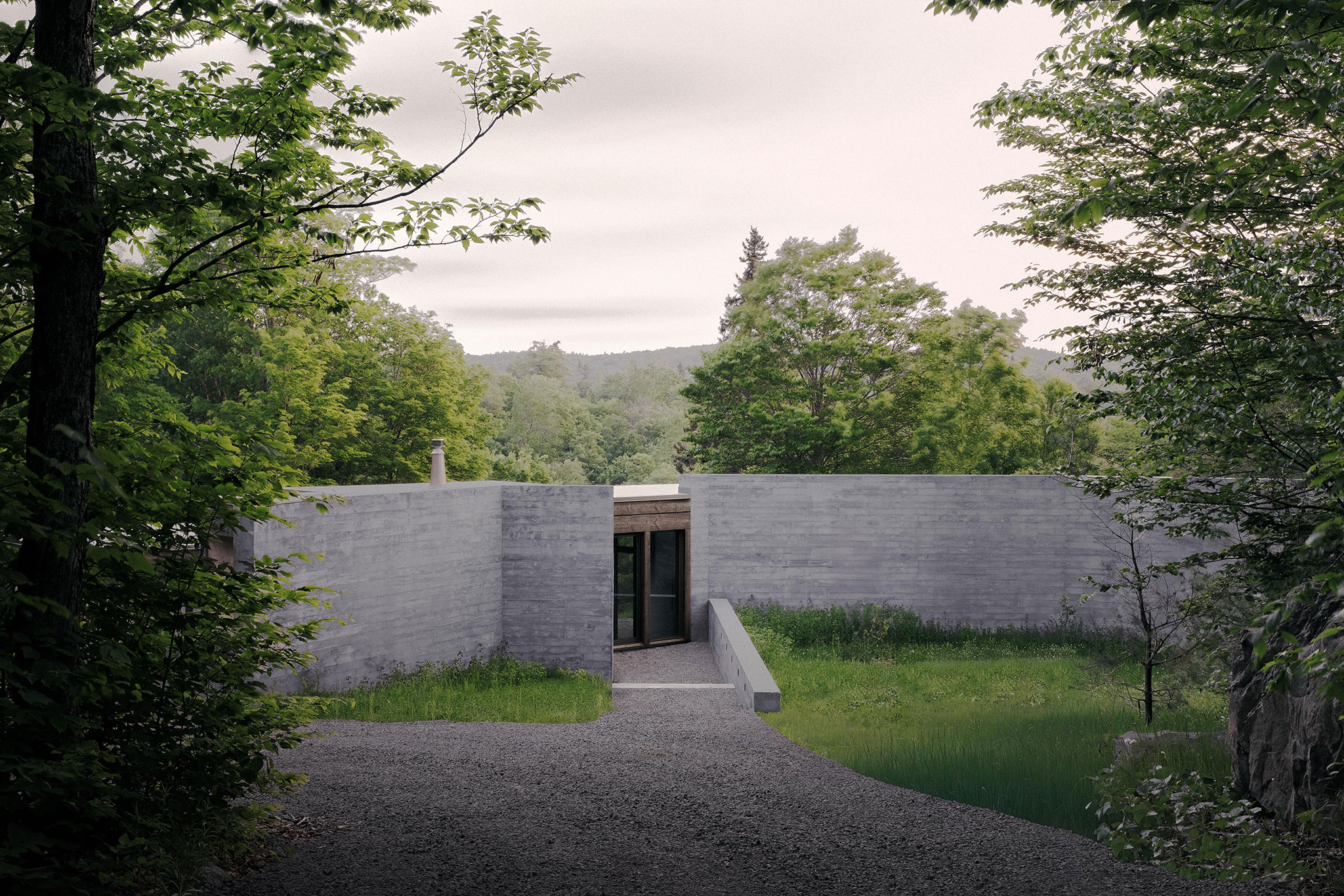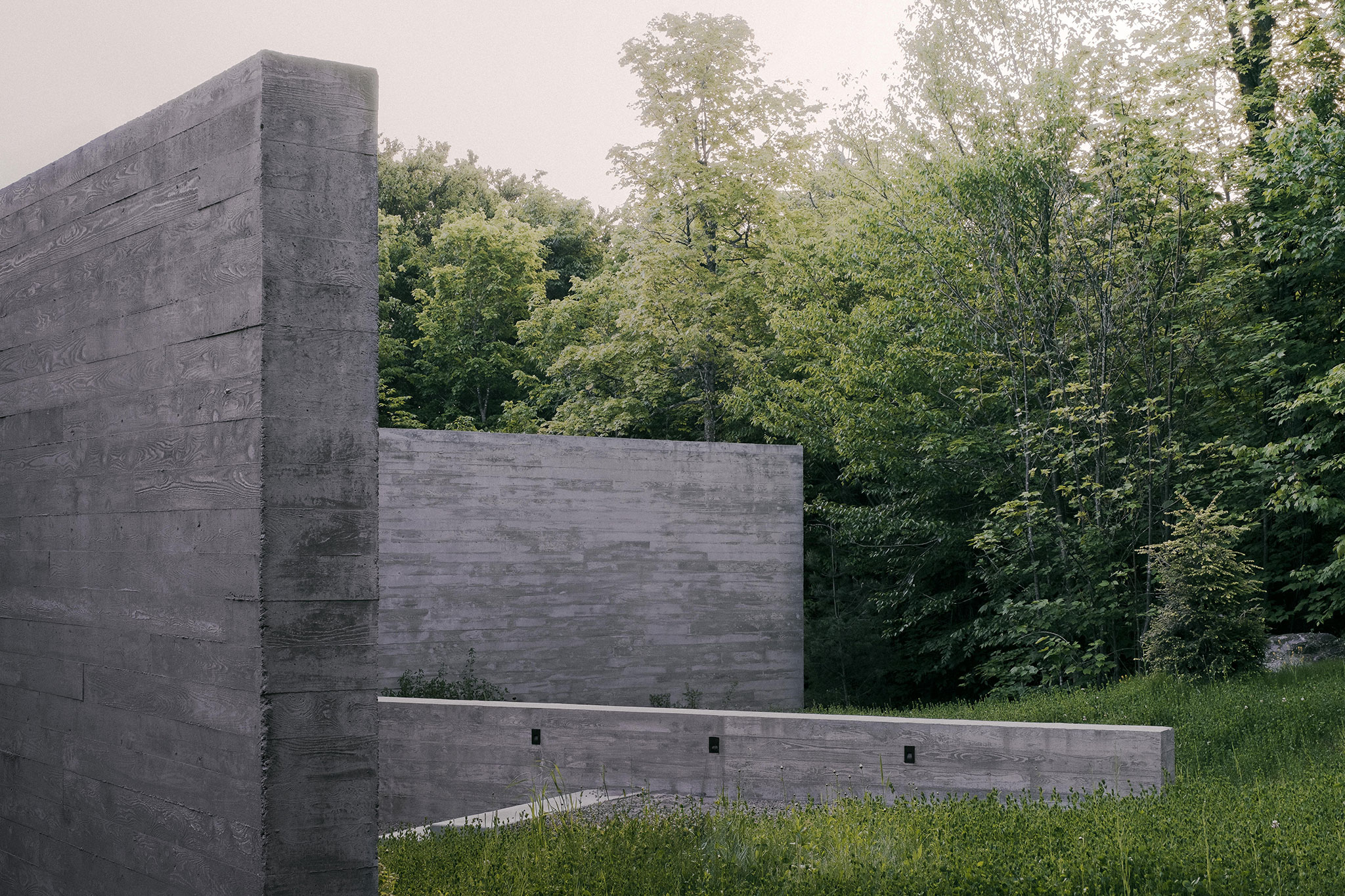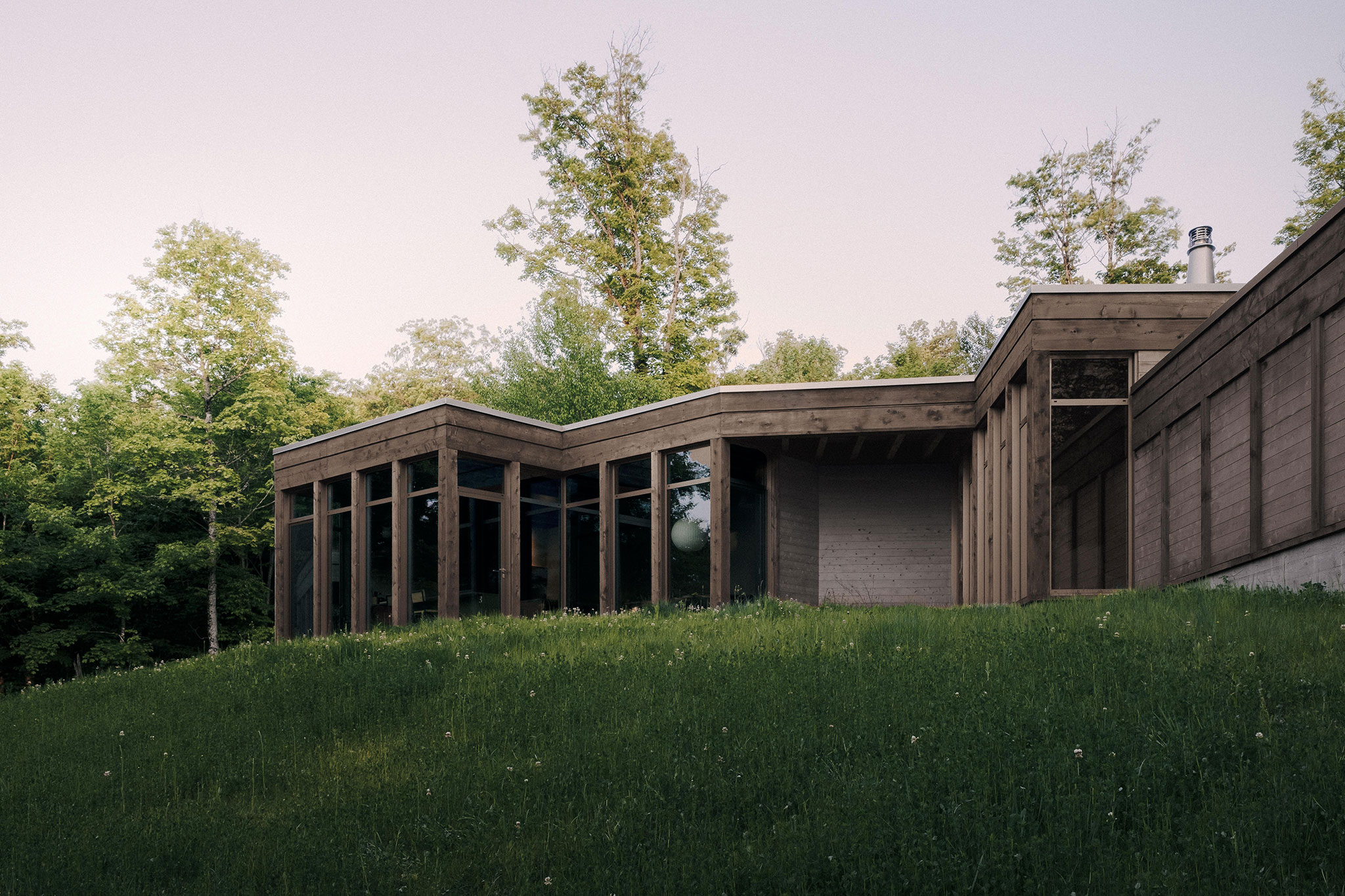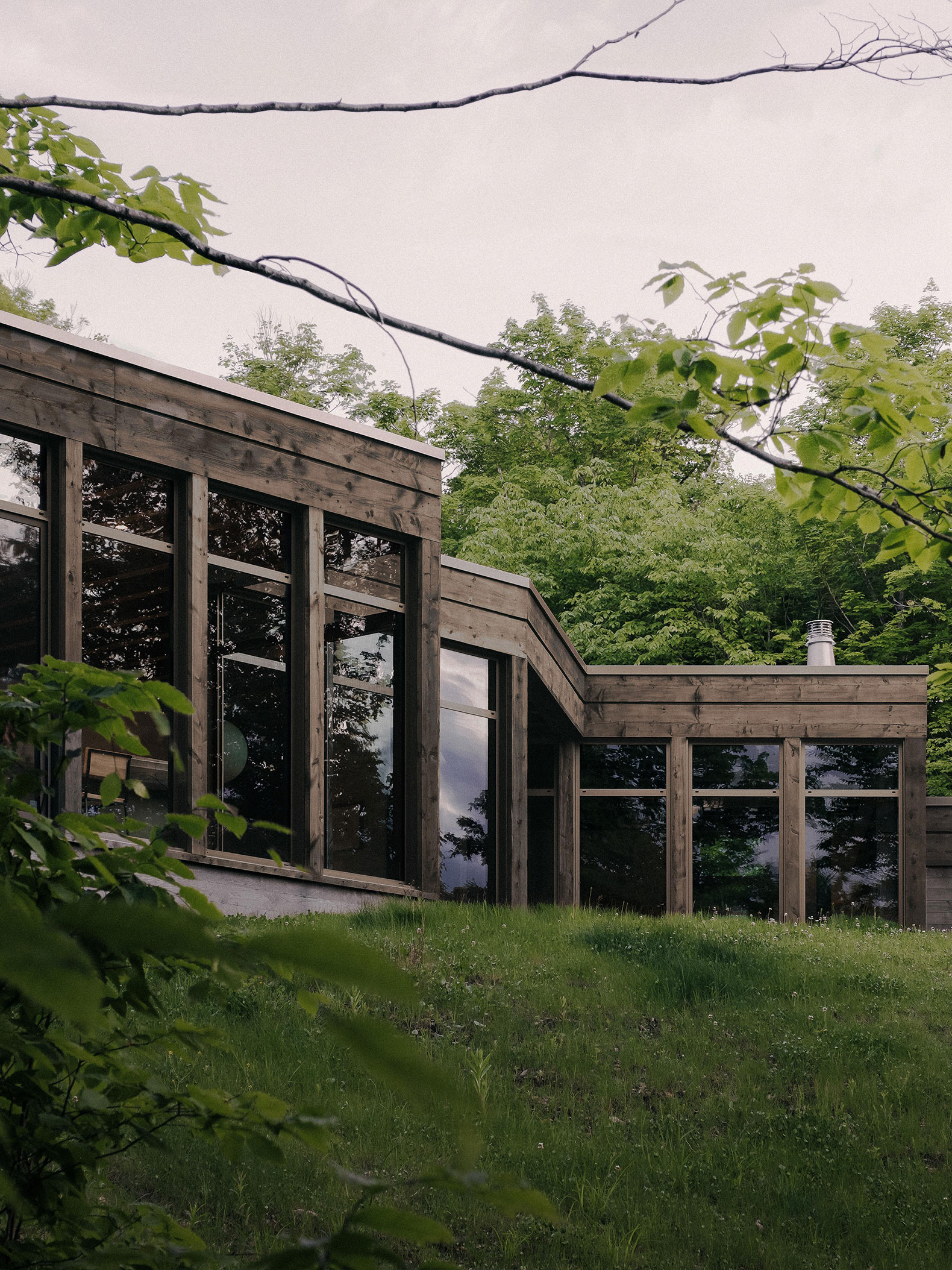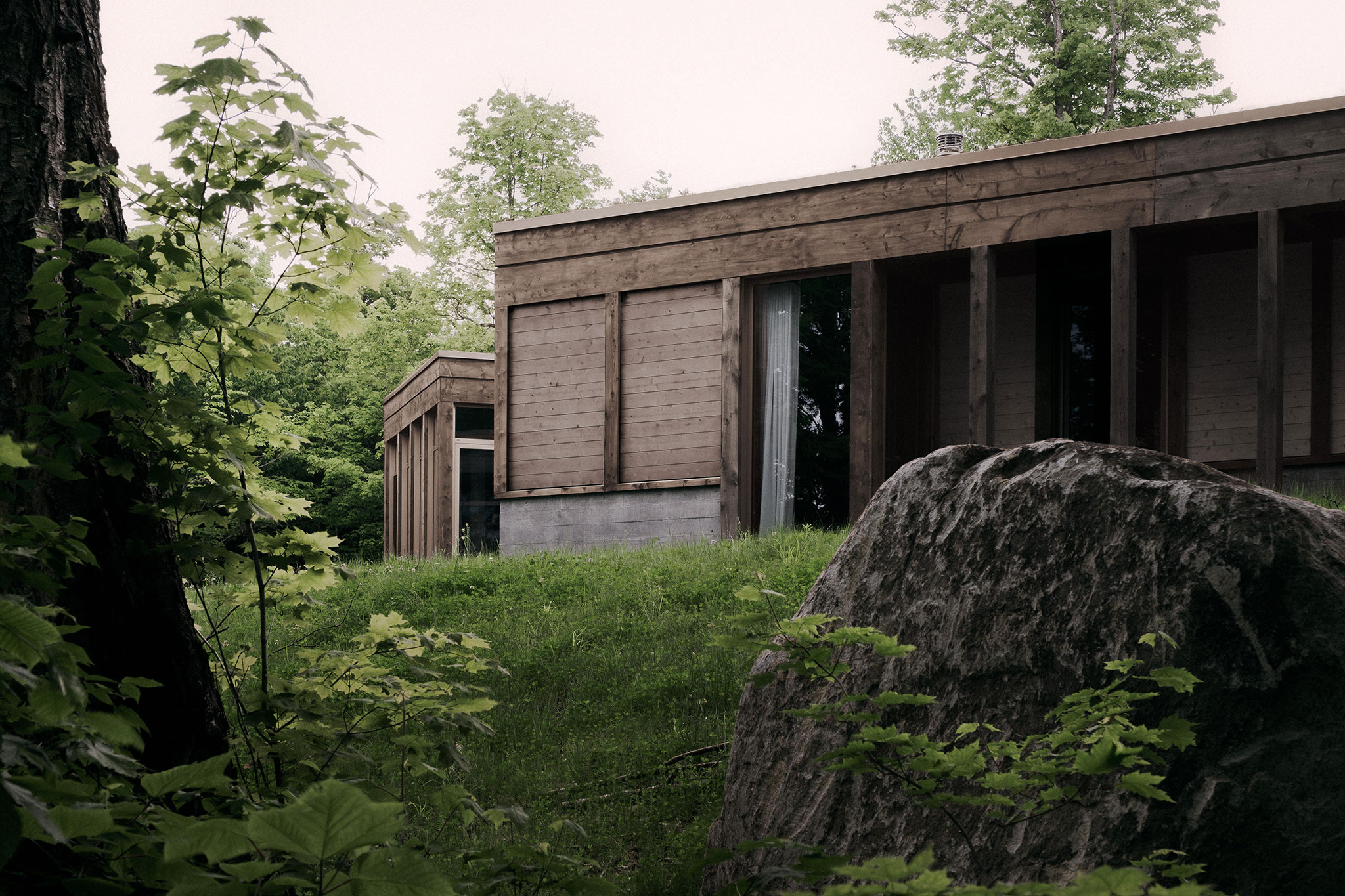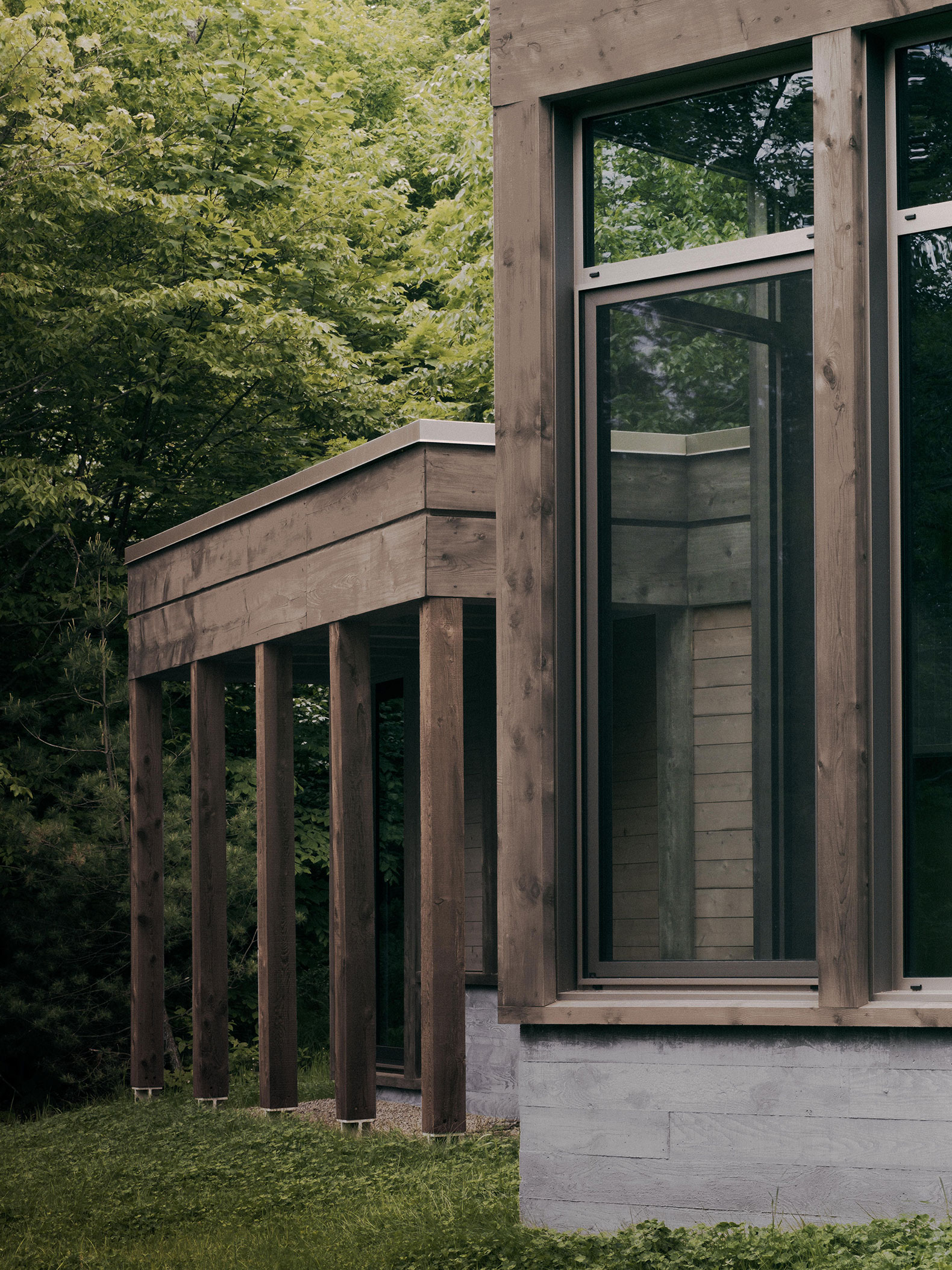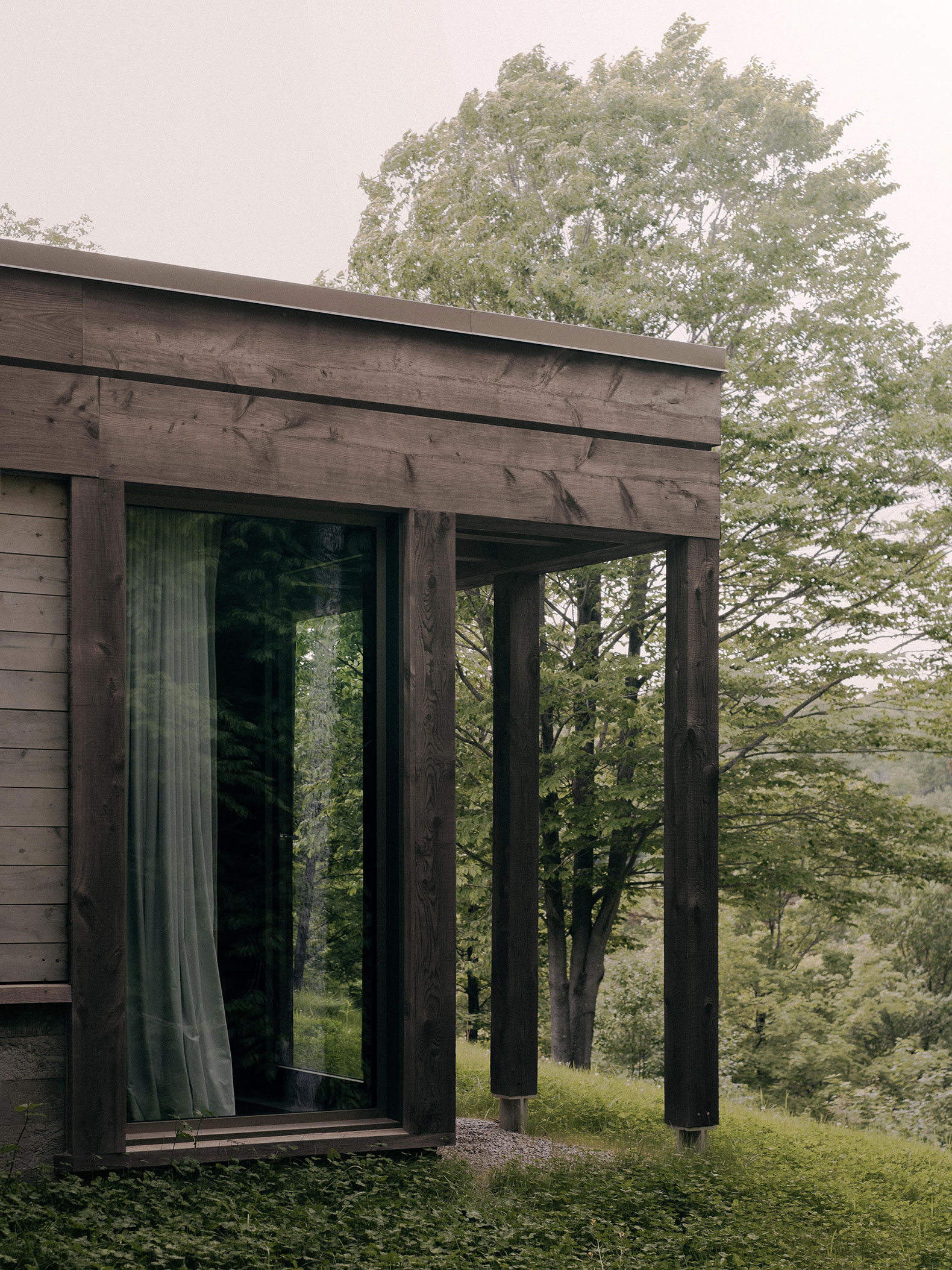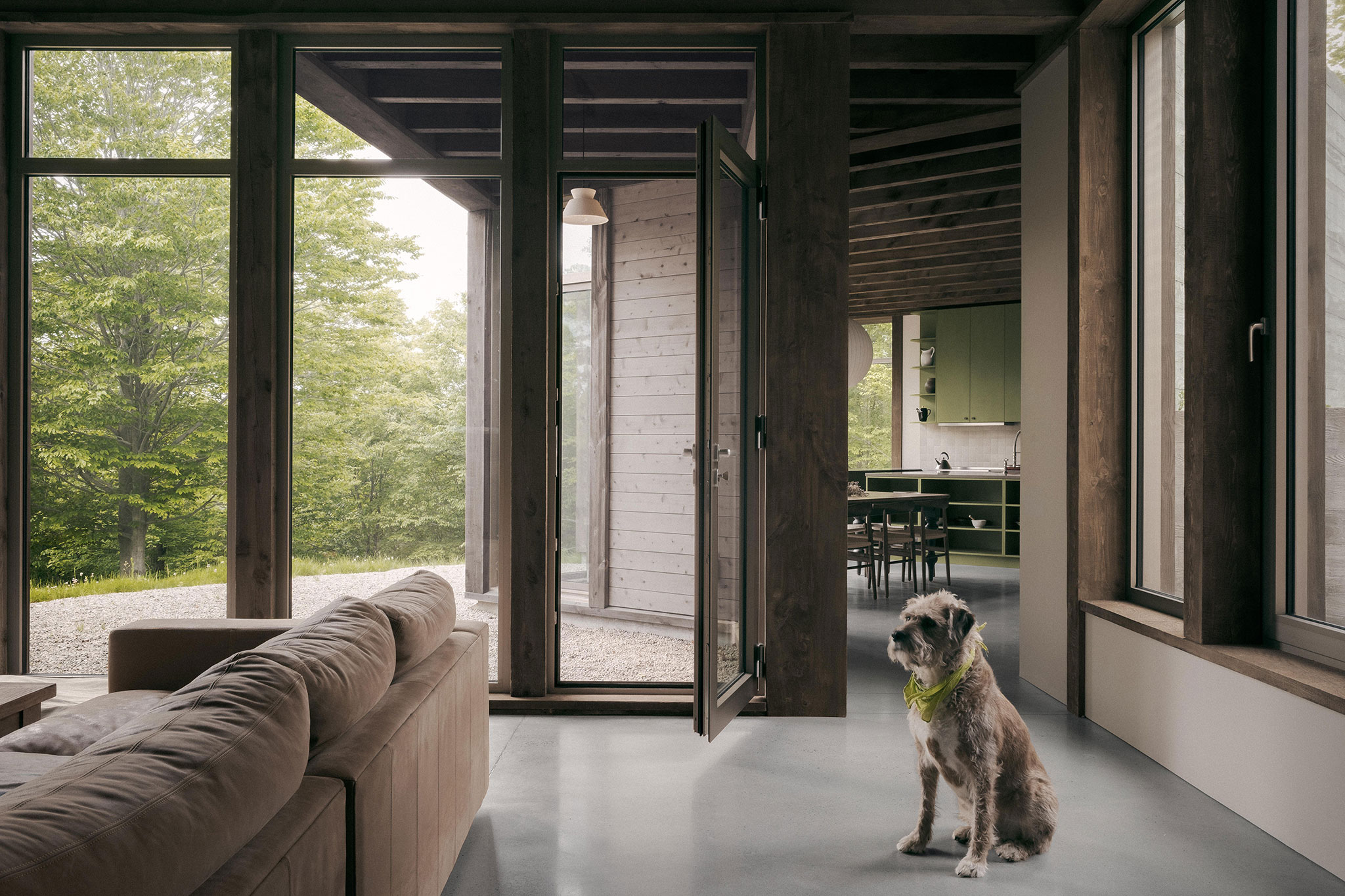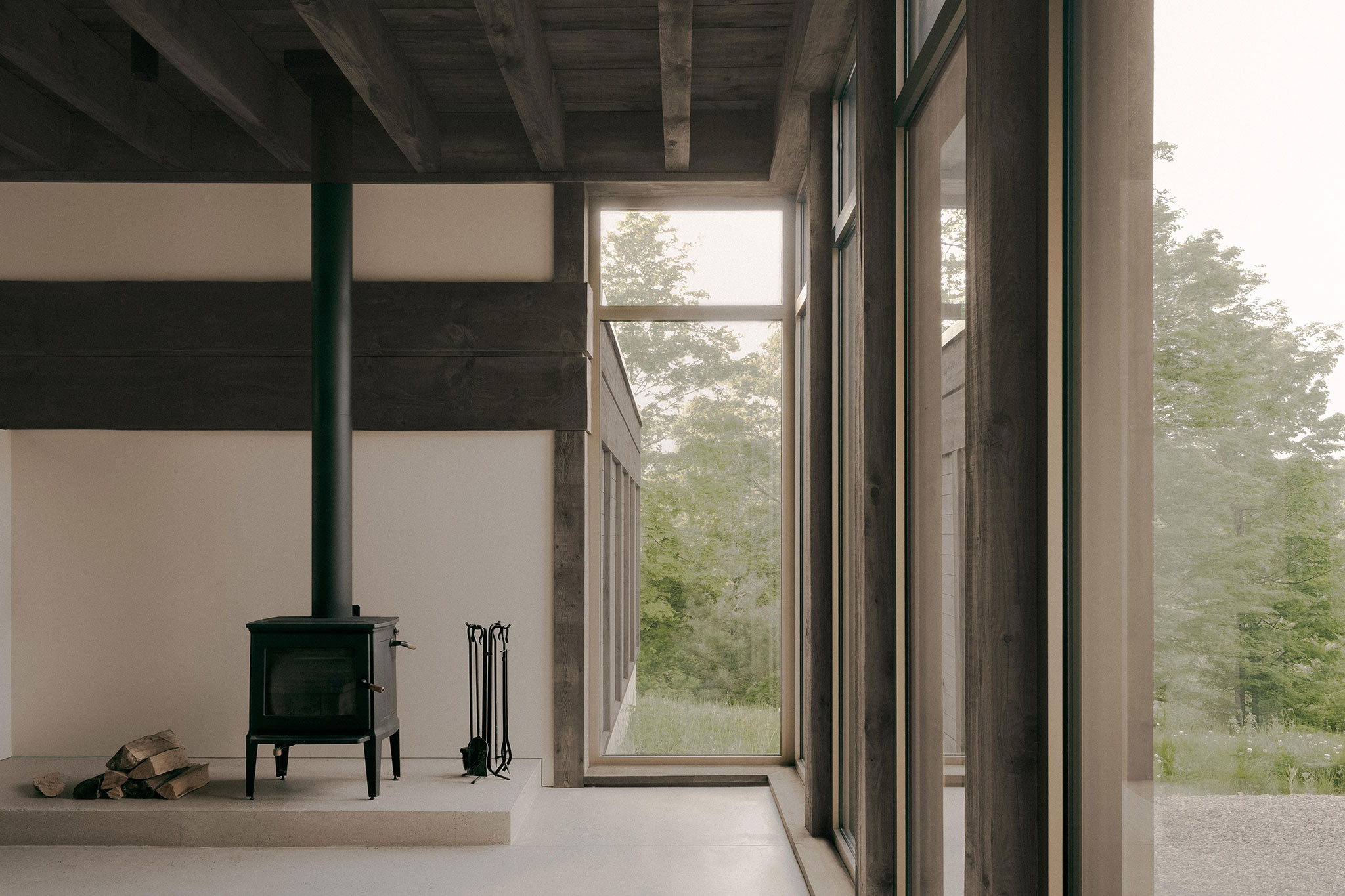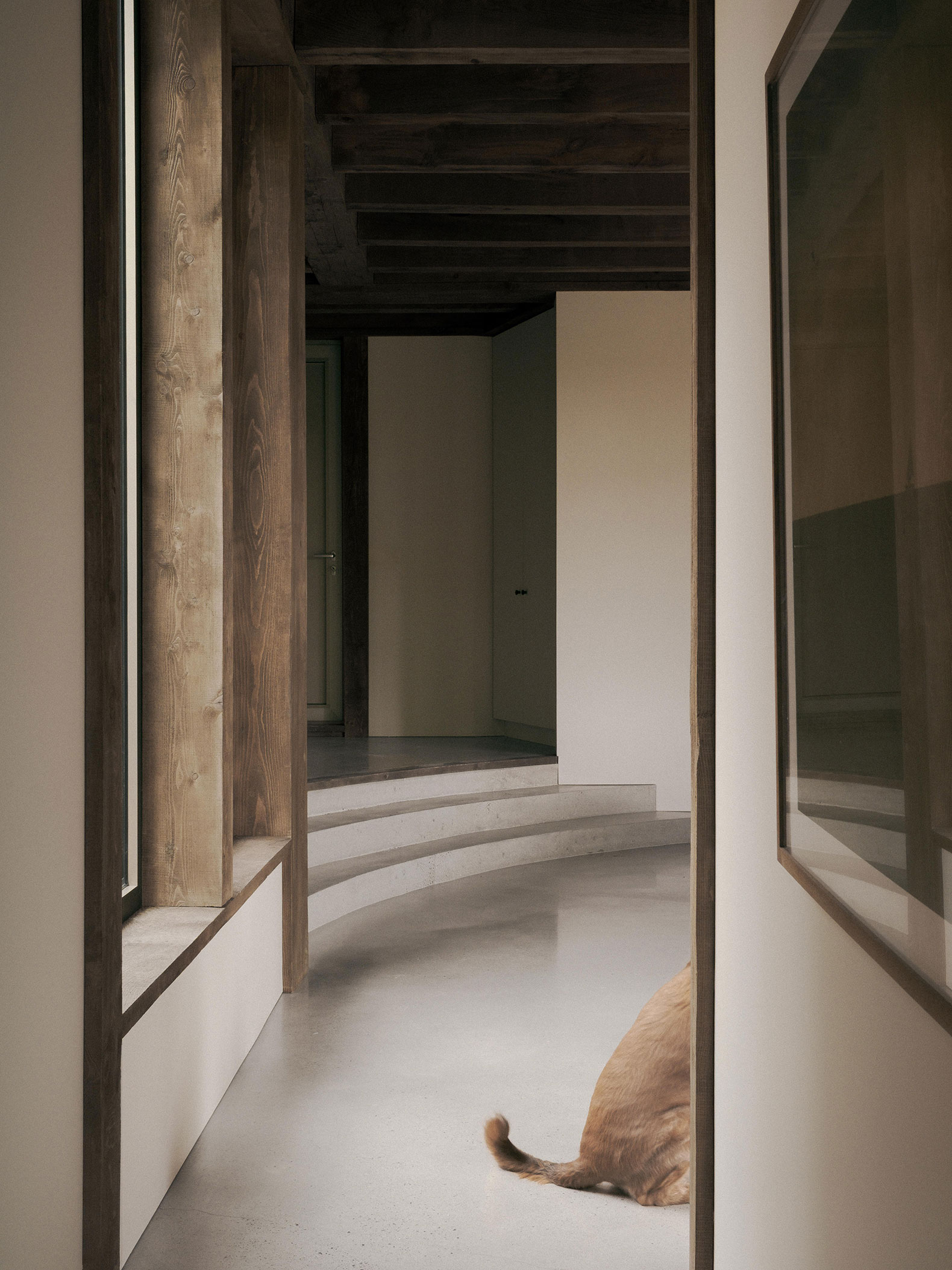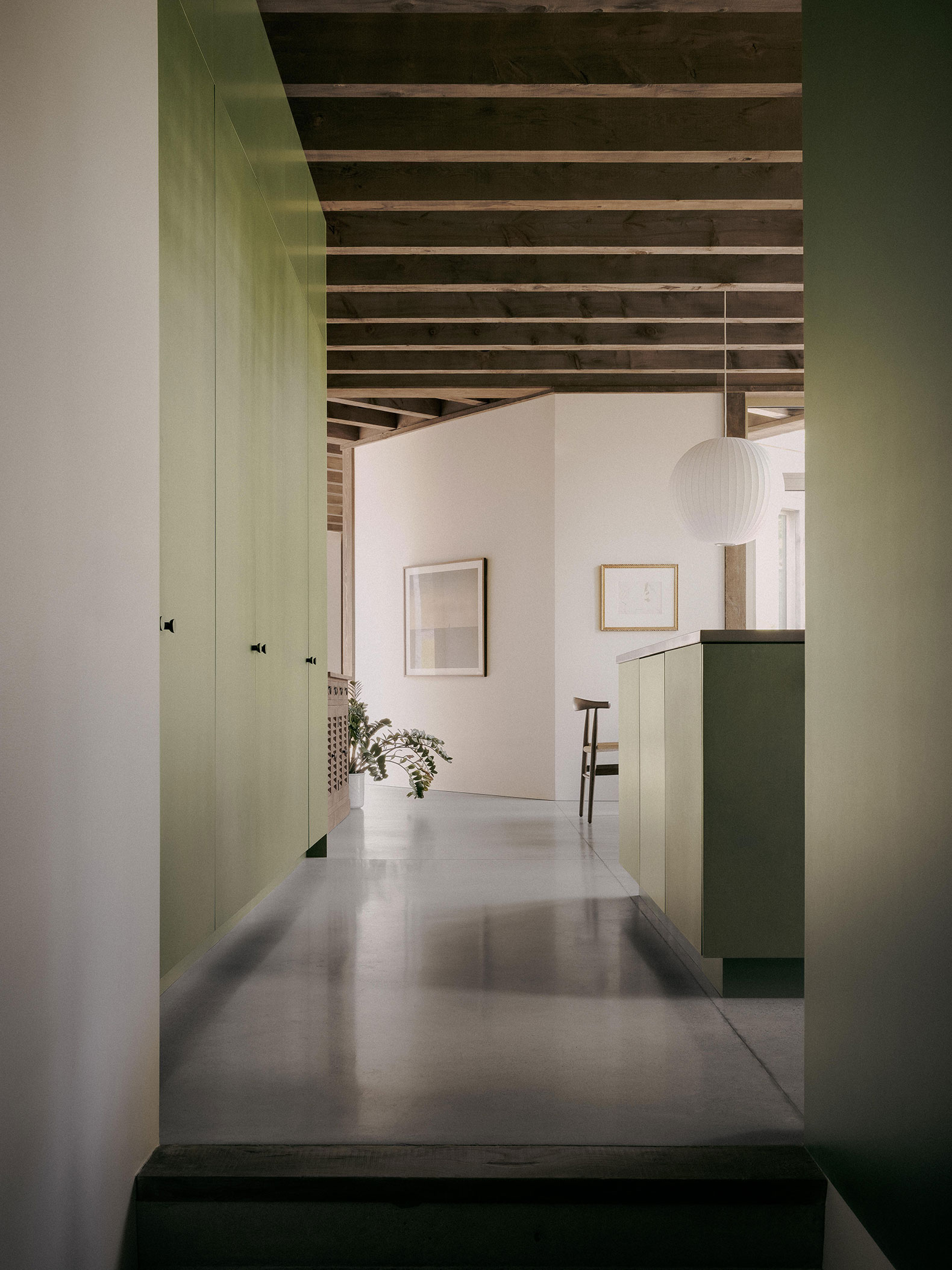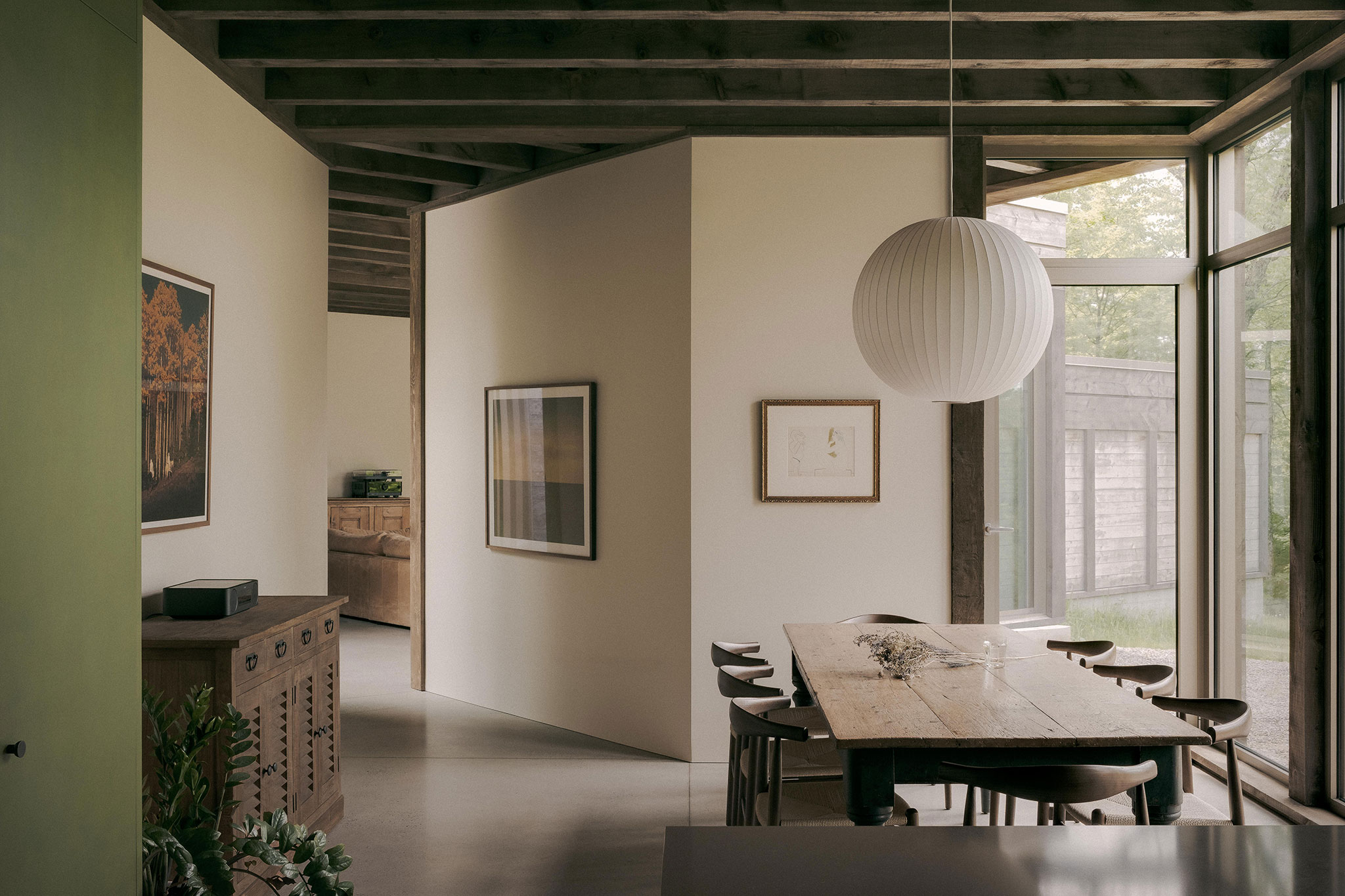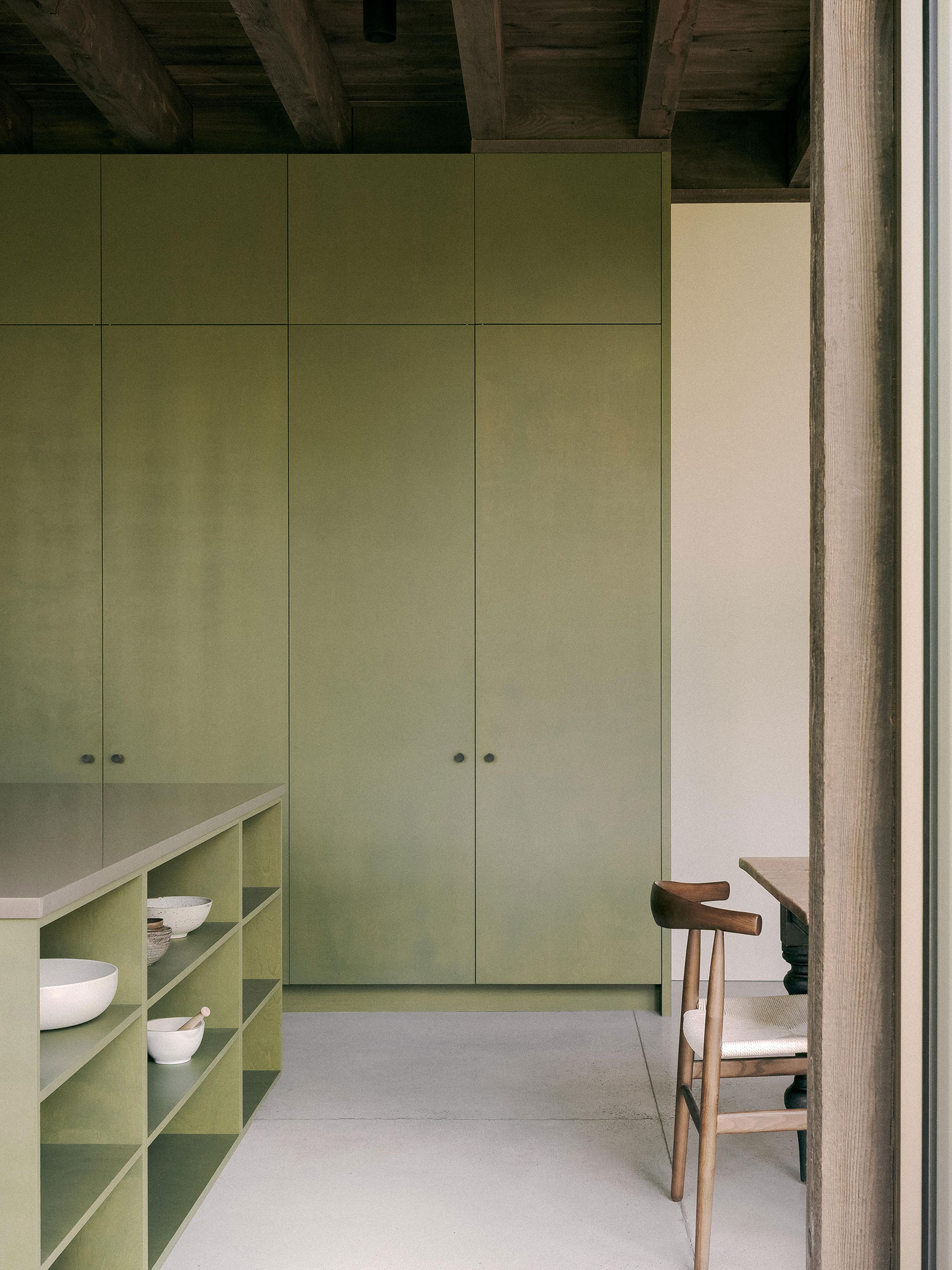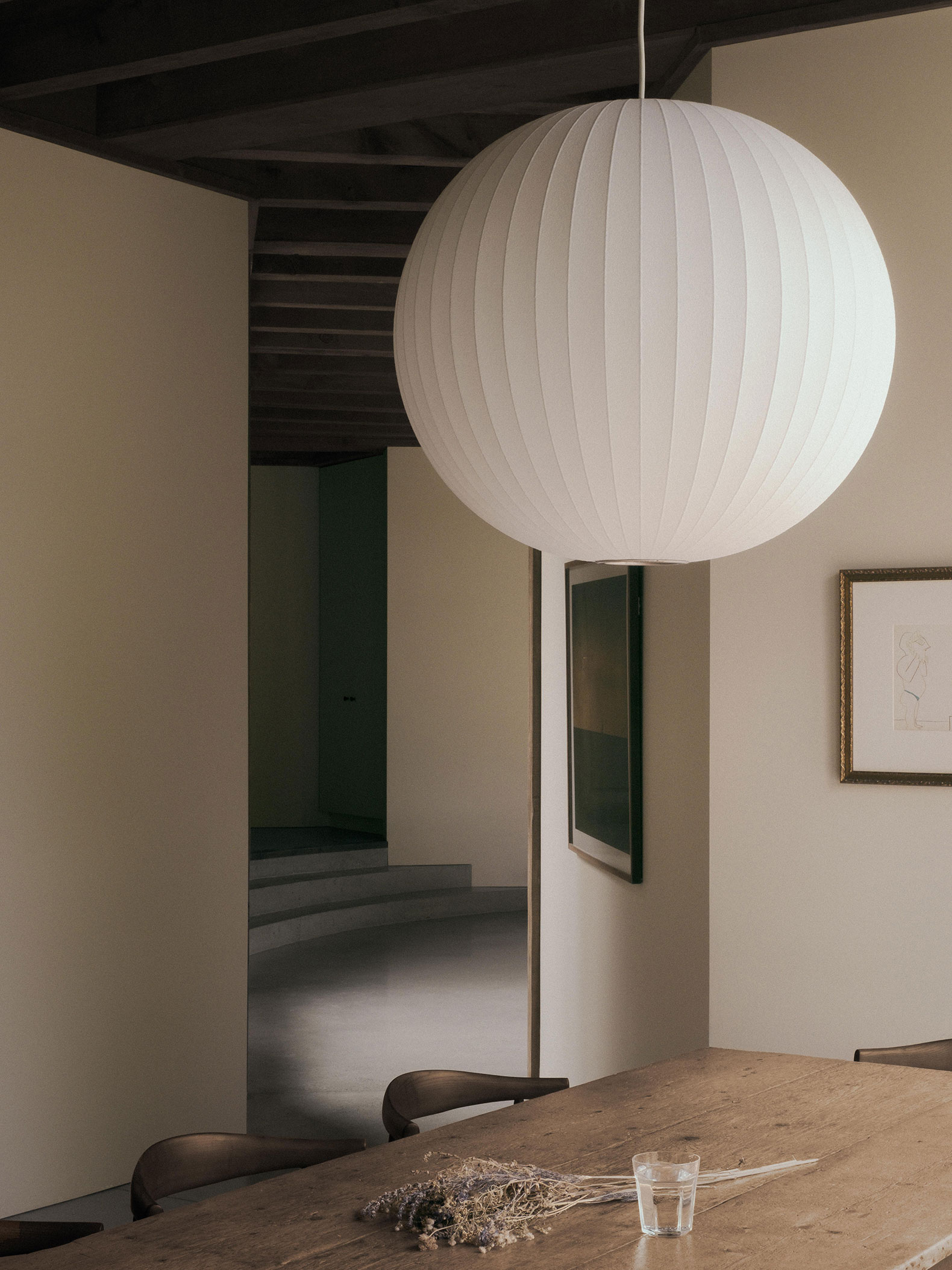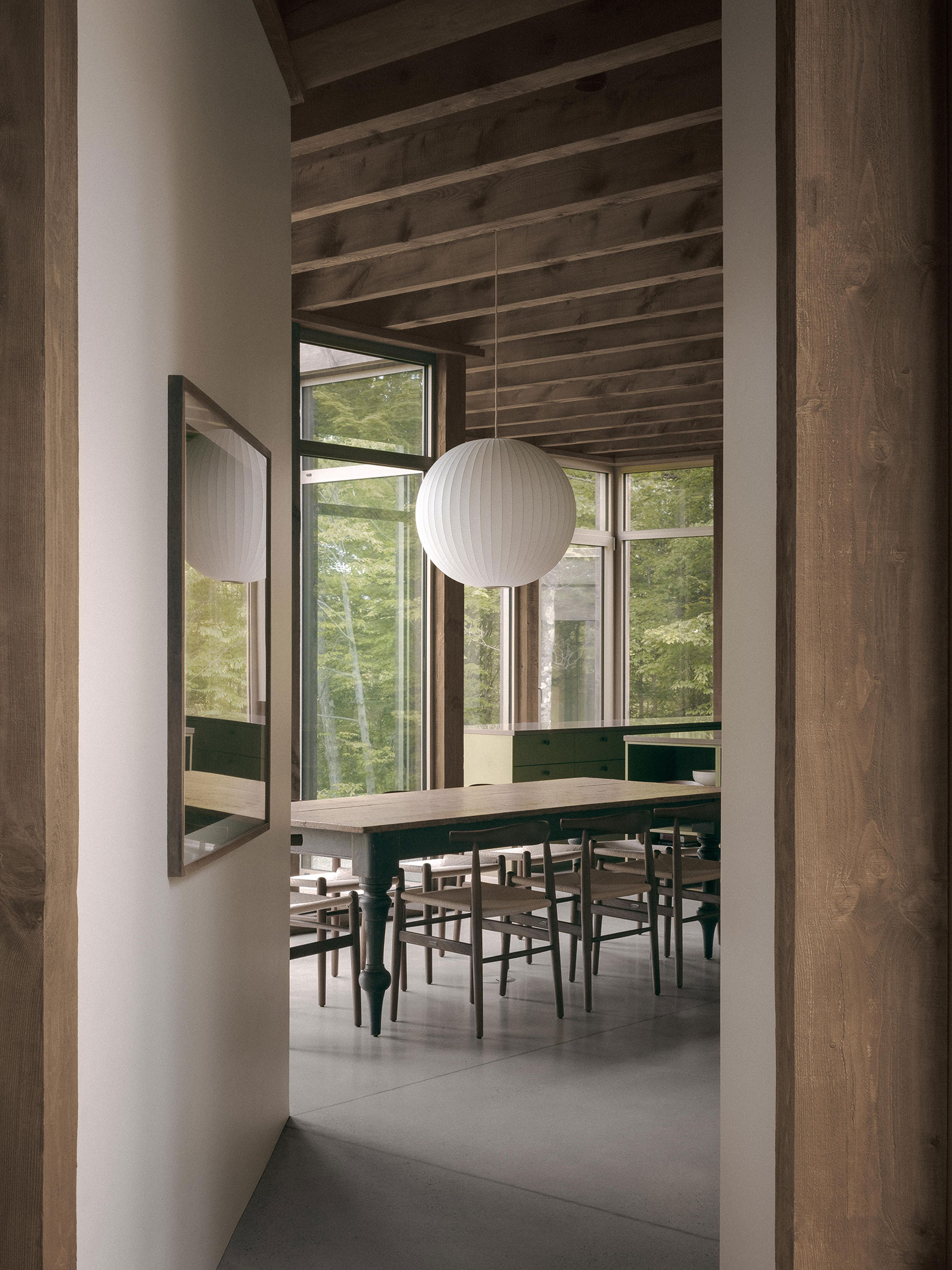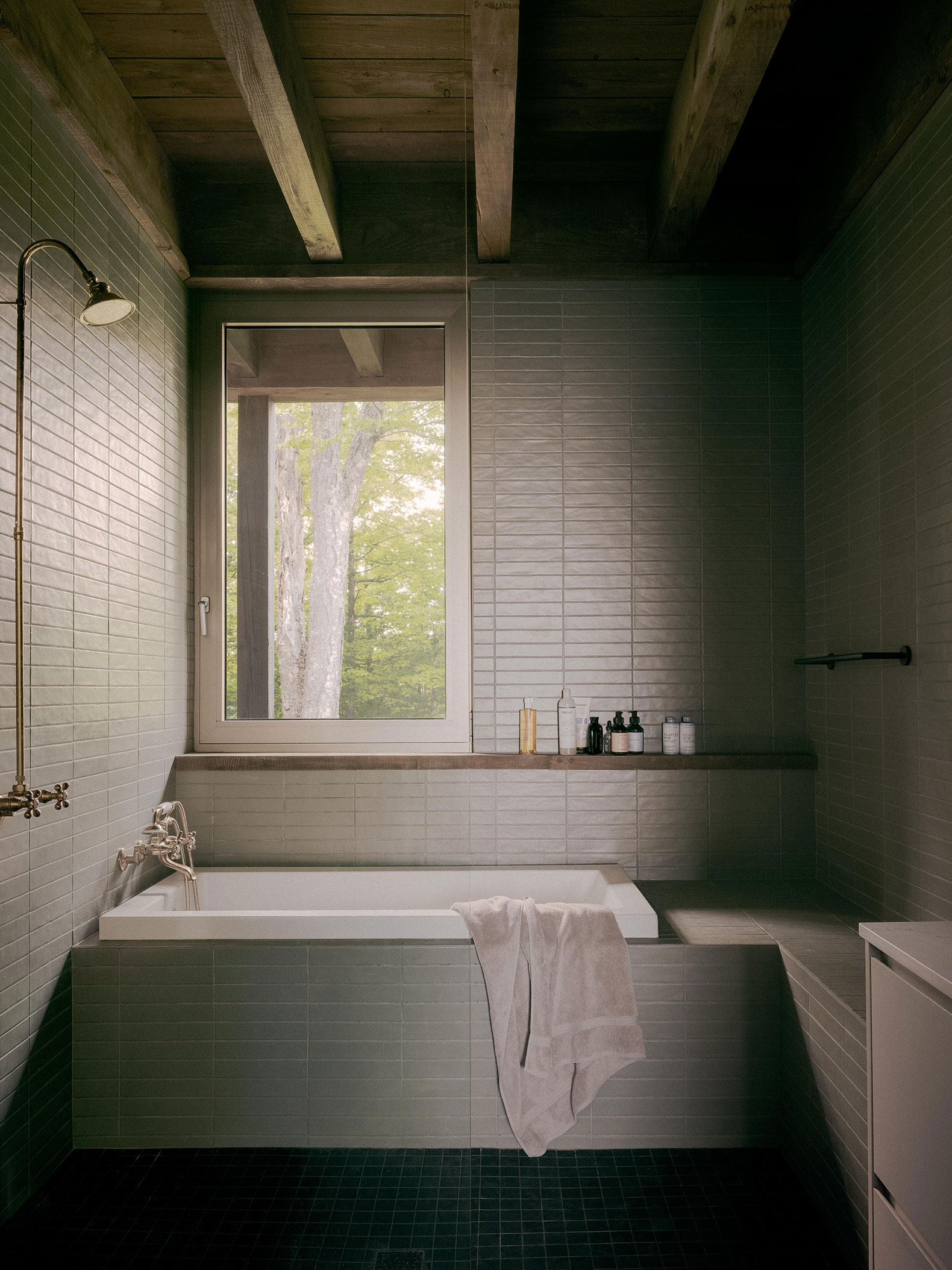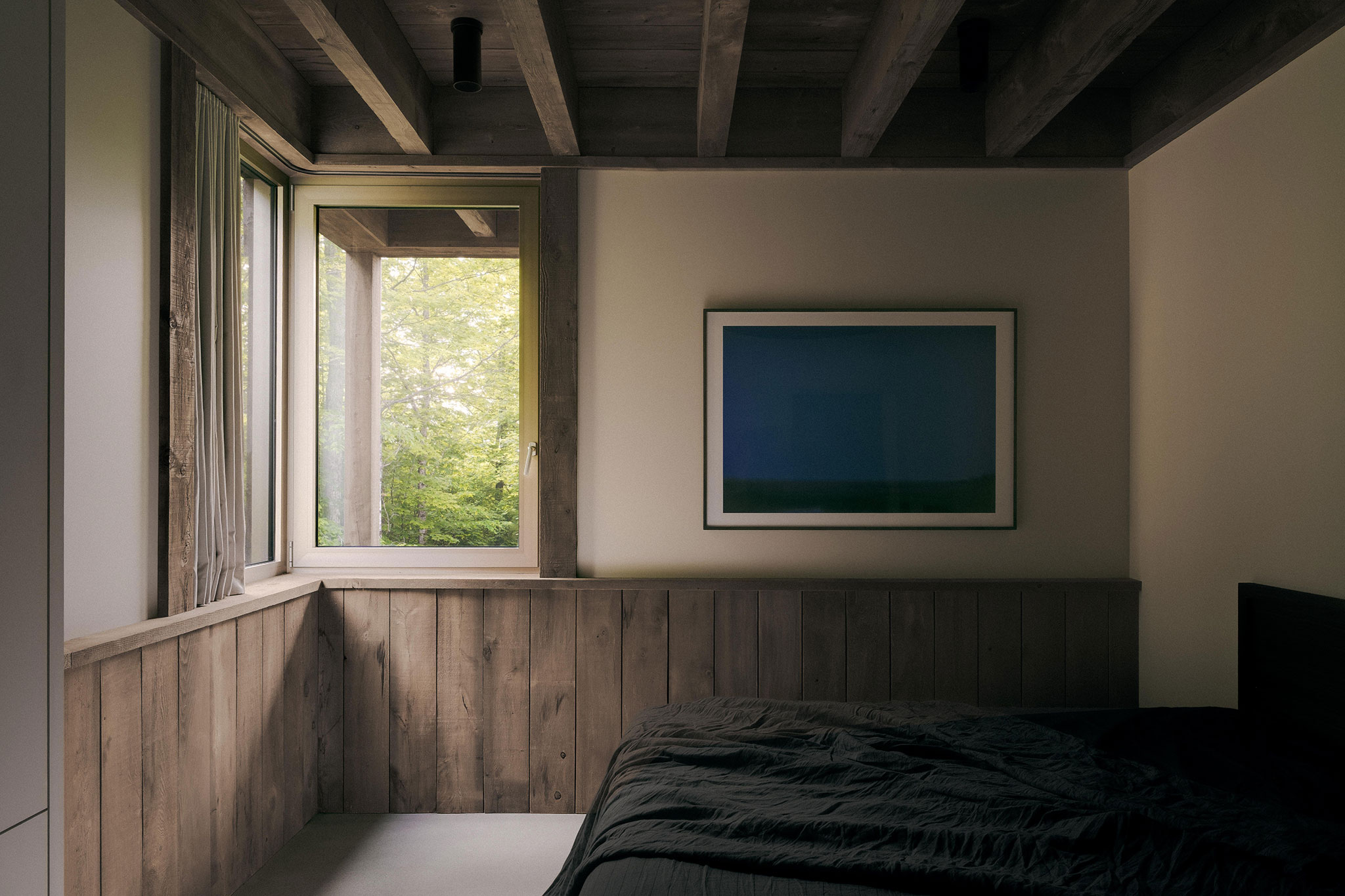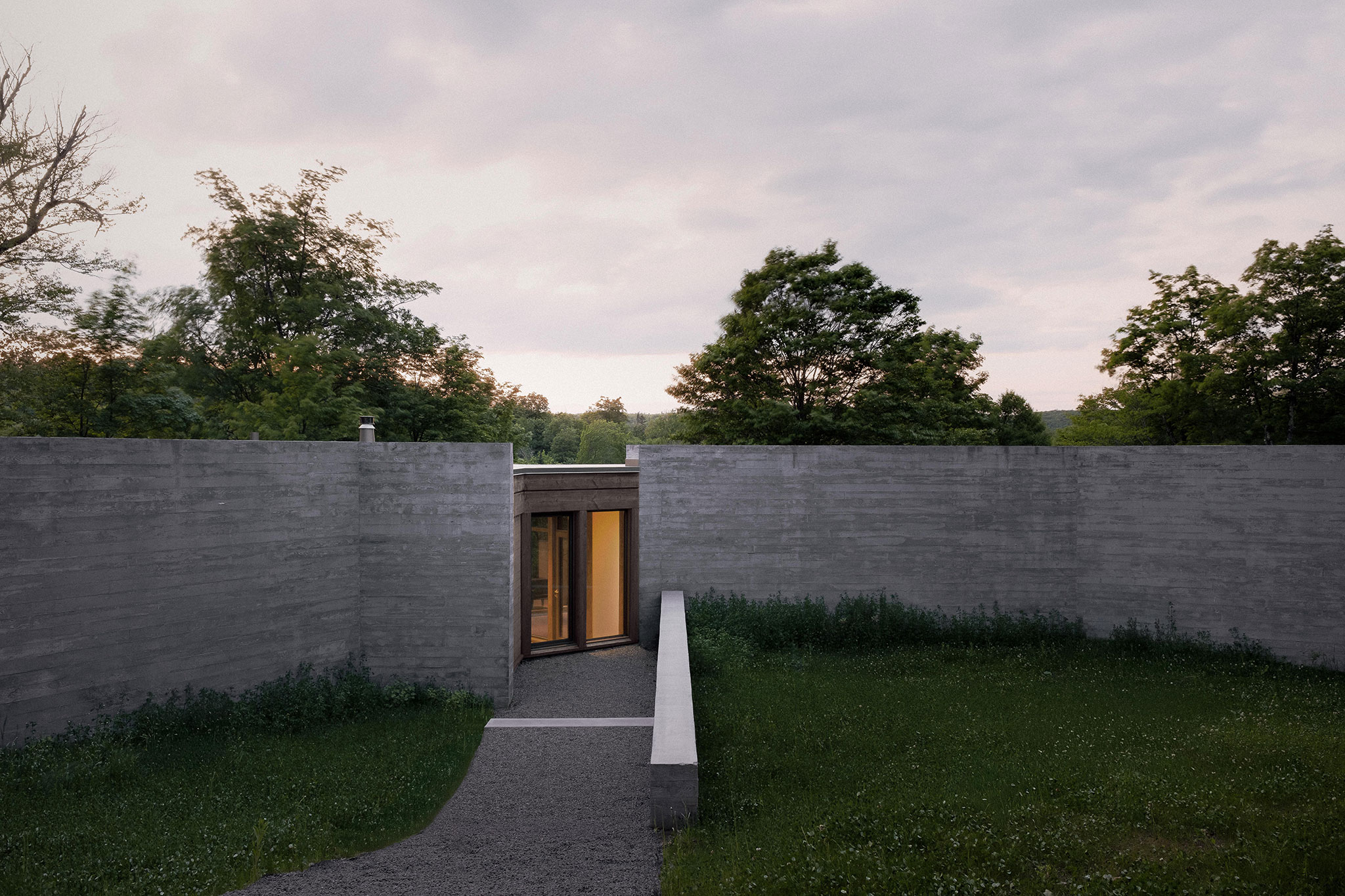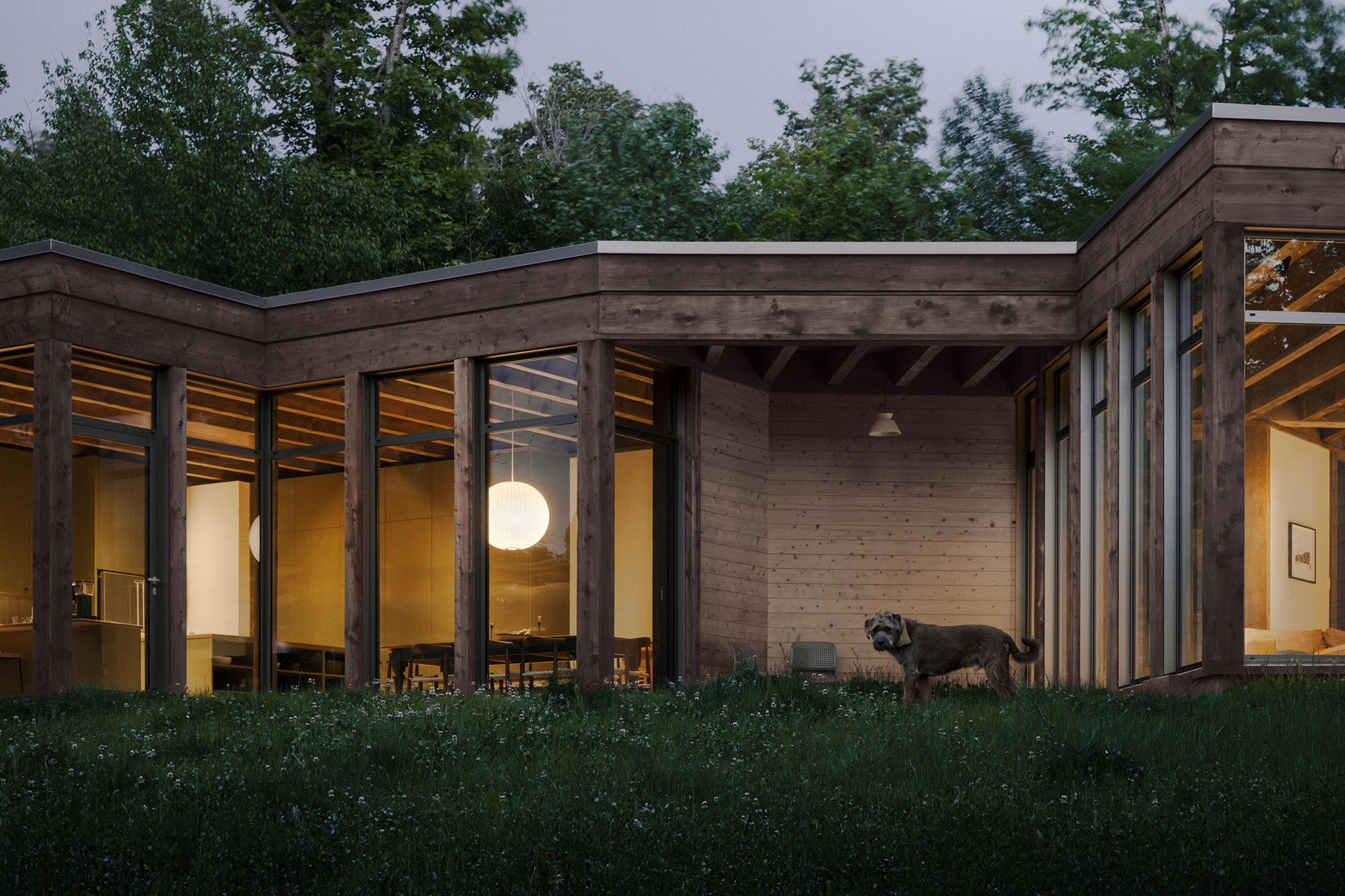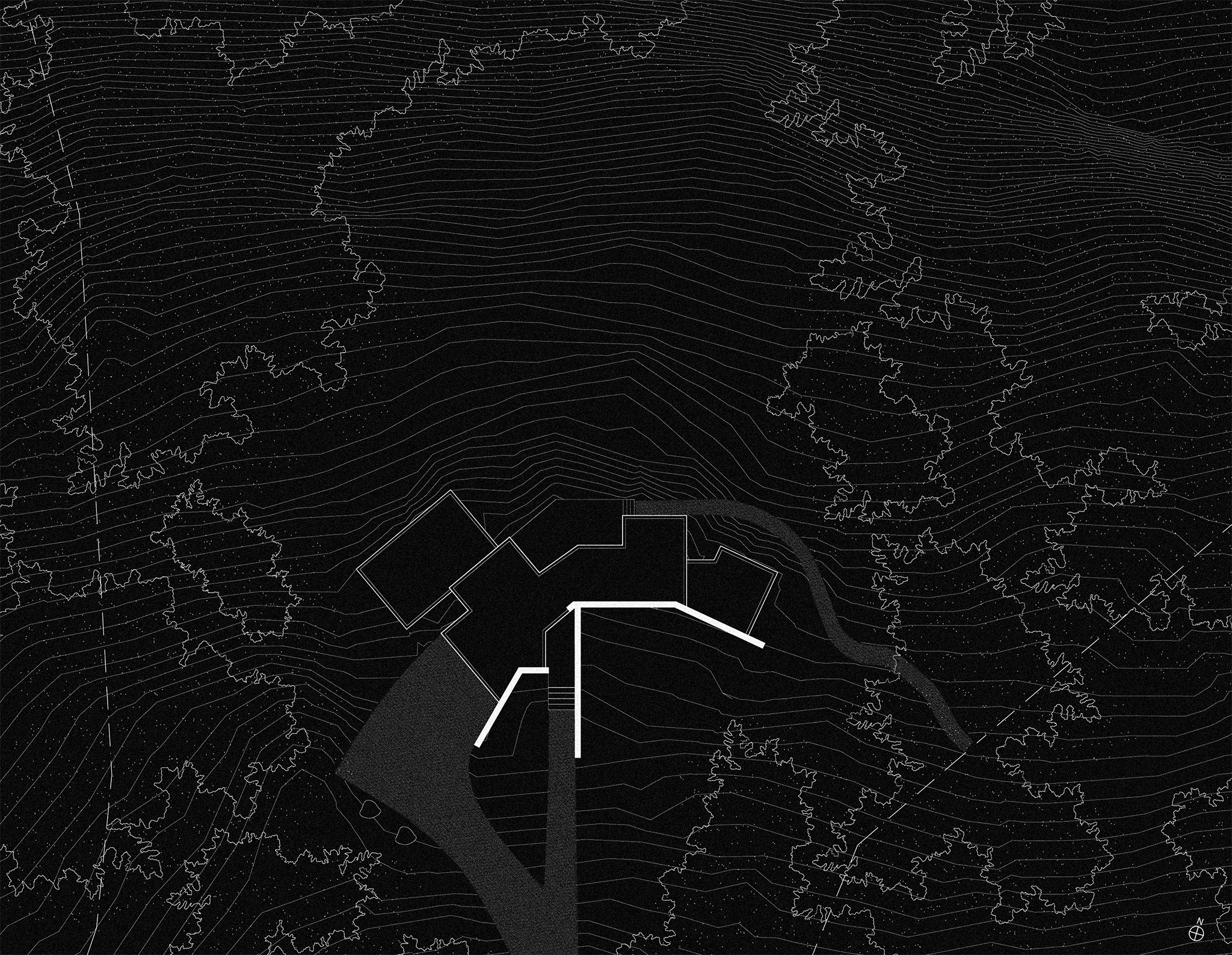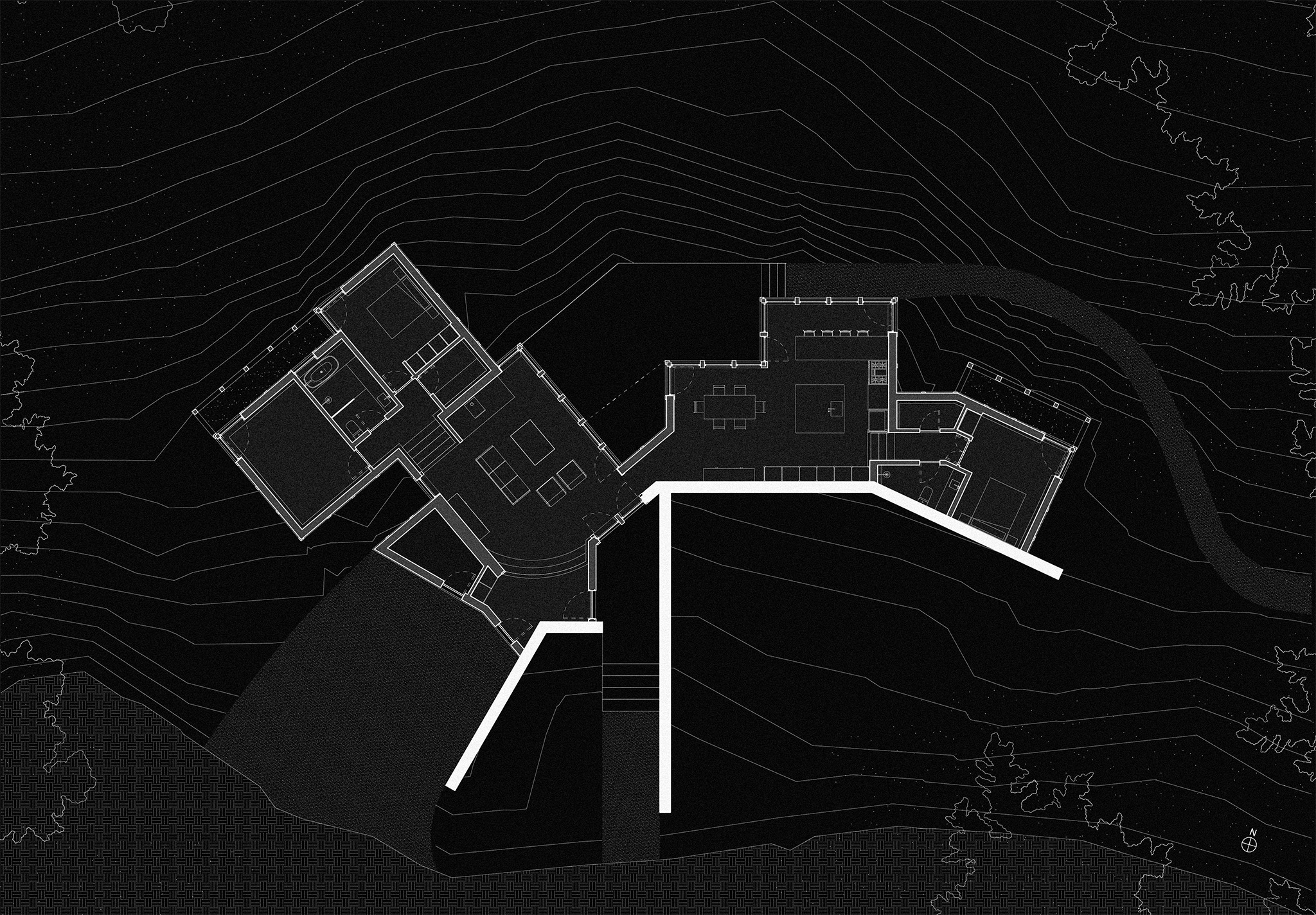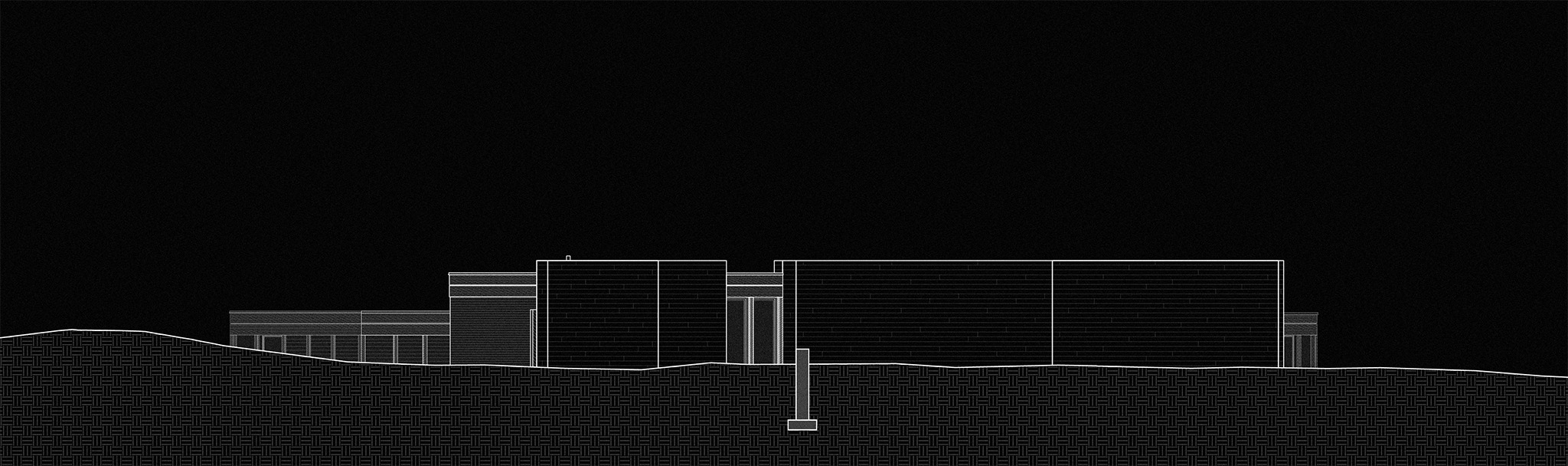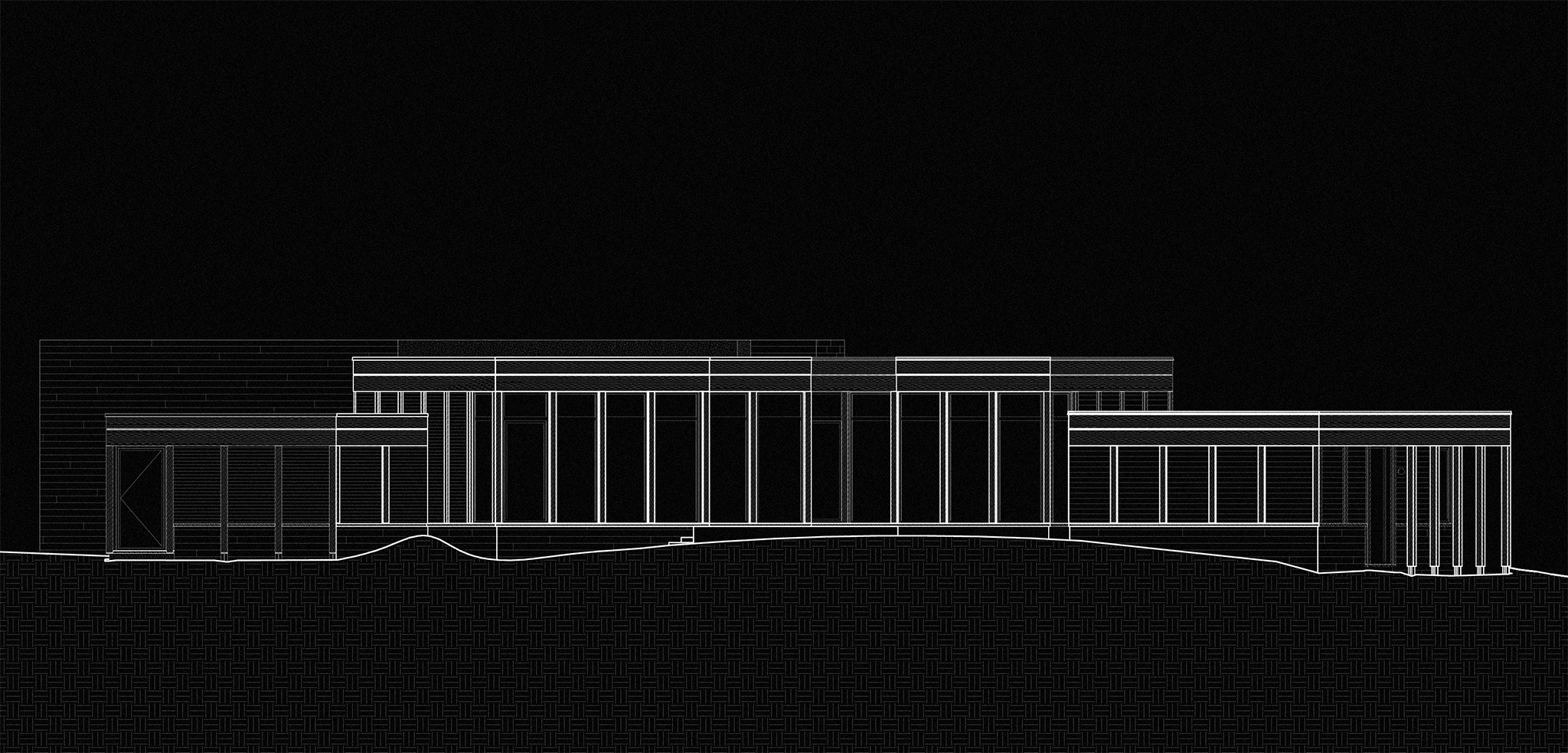
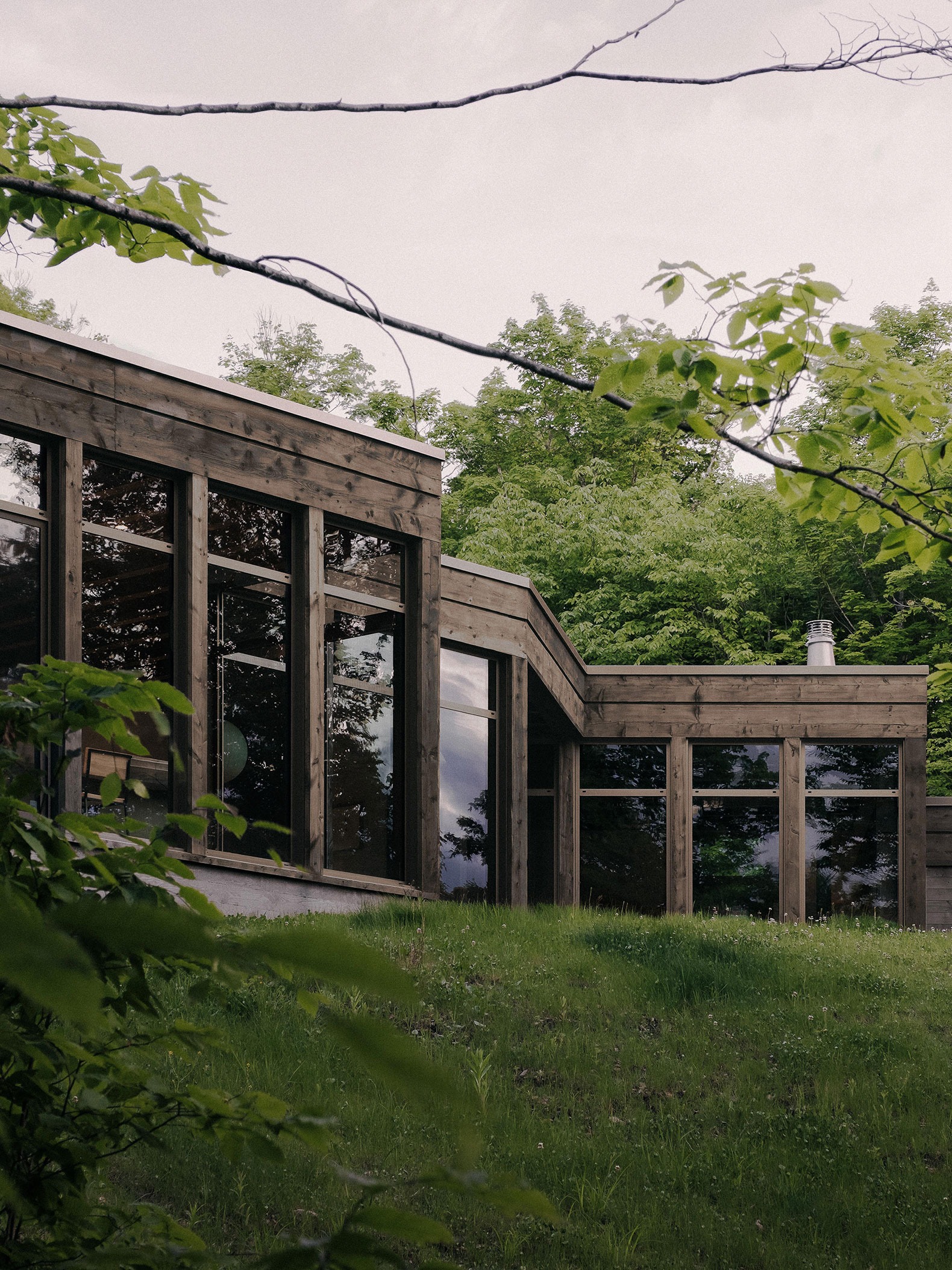
The Sono House project, designed by Atelier Carle amid the landscapes of Wentworth-Nord, was conceived with the intention of creating a home that would foster the creation of private spaces through the design of interconnected areas, with the kitchen serving as the main gathering space, framed by the outdoor view.
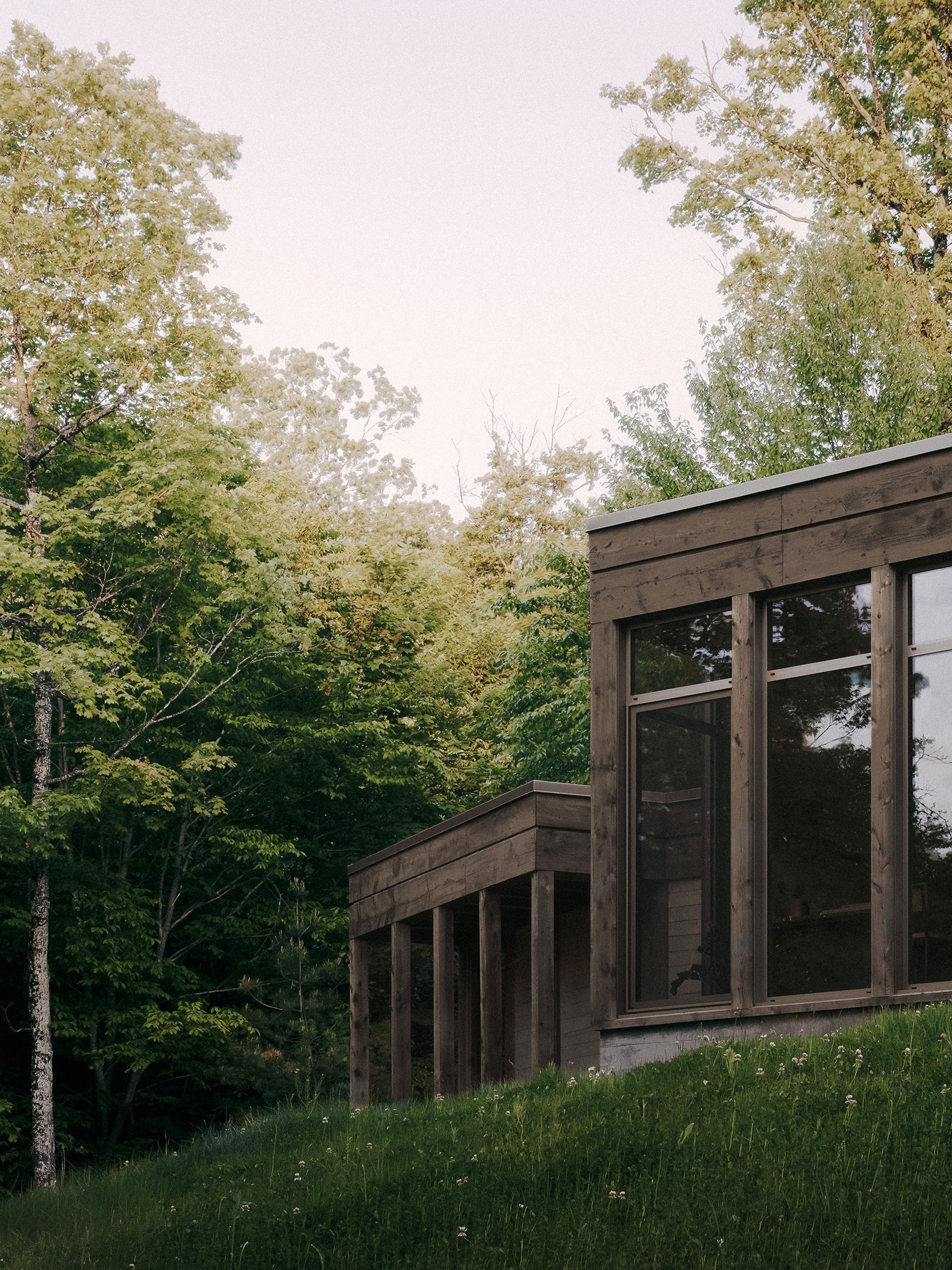
The house's structure is conceived as an exposed system, developed in direct collaboration with a local carpenter, whose participation was key in defining the details and their execution on site. The wood used comes largely from a site near the project and is employed in both the structure and the north facade, especially in friezes and cladding. The house rests directly on the existing bedrock, avoiding blasting, major excavations, and significant alterations to the terrain.
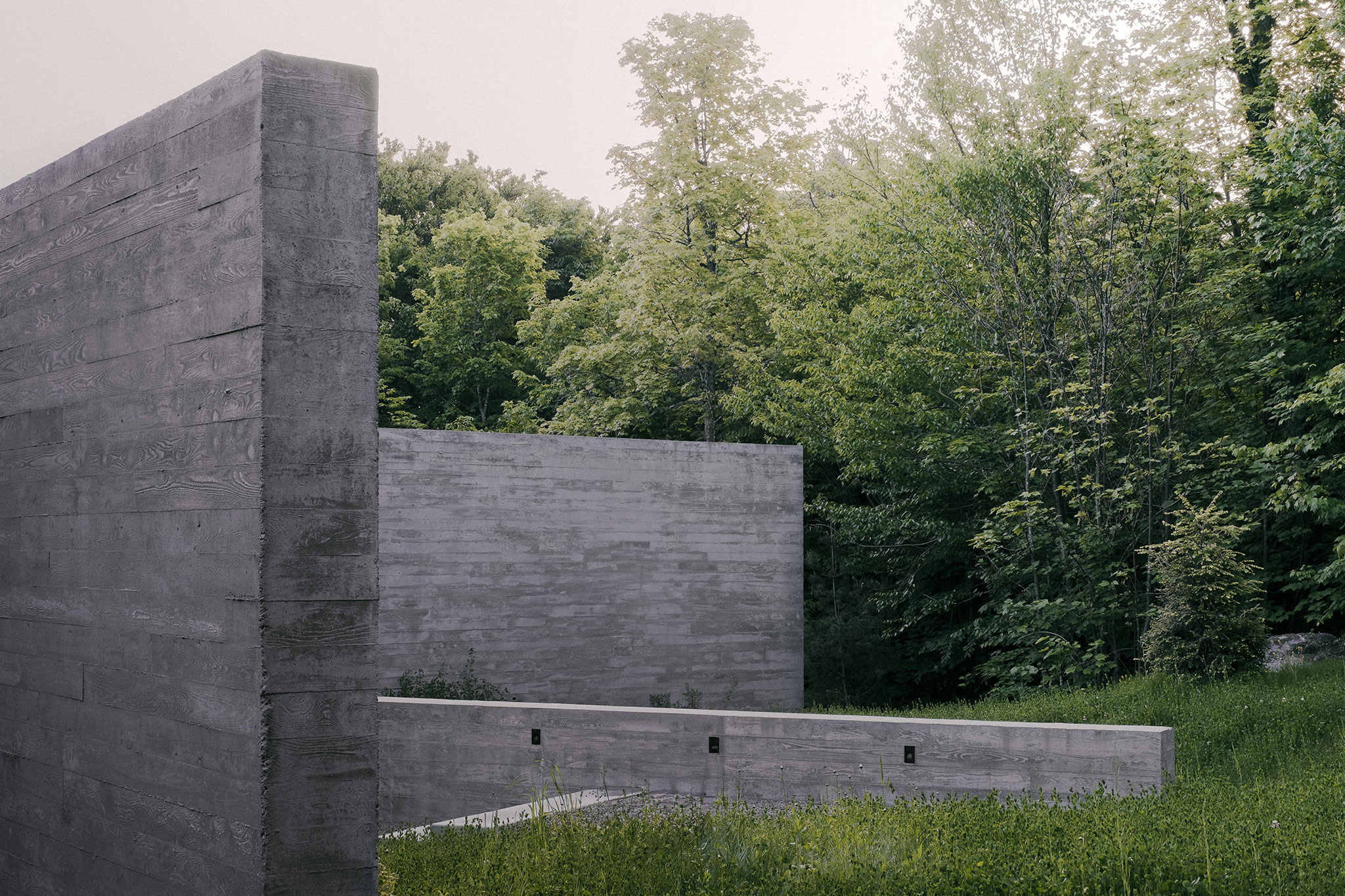
Sono House by Atelier Carle. Photograph by Félix Michaud.
Project description by Atelier Carle
This secondary residence organically articulates a unified composition, oriented toward northern light, framing landscapes found within a vast panorama that opens onto the site. Three long concrete walls of varying heights, in scale with the landscape, form the approach to the building: they resonate with the permanence of the now-architectured site and anchor it in time. A narrow gap between the walls reveals the entrance.
Beyond this threshold, the spaces organize the living areas according to a flexible layout and timber structure, thereby signaling their capacity to adapt over a more distant temporal horizon.
The clients, a couple of friends wishing to share the same secondary residence, had an implicit directive: to share a space without being obliged to “live together” in every respect. The articulation of the architectural volumes thus creates a meandering sequence of spaces that gradually reveal the whole, ensuring a certain visual intimacy and a fragmentation of the acoustic environment. Sign of the times, the kitchen is the space that opens completely onto the landscape: a gathering place, both for the couple and their guests, and metaphorically, with the surrounding natural environment.
The conceptual framework of the project is therefore not based on stylistic or identity-related architectural references of the region. Rather than prescribing specific uses, it weaves connections between the body’s in situ perception of the landscape and the real, and that of the space that “frames” experiences across the variations of time.
This refers to the intention to promote a practice that prioritizes the phenomenological qualities of space, rather than being determined by a calculated assembly of programmatic components. The spaces unfold in terraces following the natural slope of the site. The varied viewpoints revealed within each room, together with the shifting qualities of the indirect light, constitute the haptic characteristics which, like the large abstract wall abutting the landscape upon arrival, are the result of the sensitive exploration advocated by the firm. The outcome is an architectural language that responds to the heterogeneity of the real, rather than constructing a rigid identity derived from often exclusive precepts.
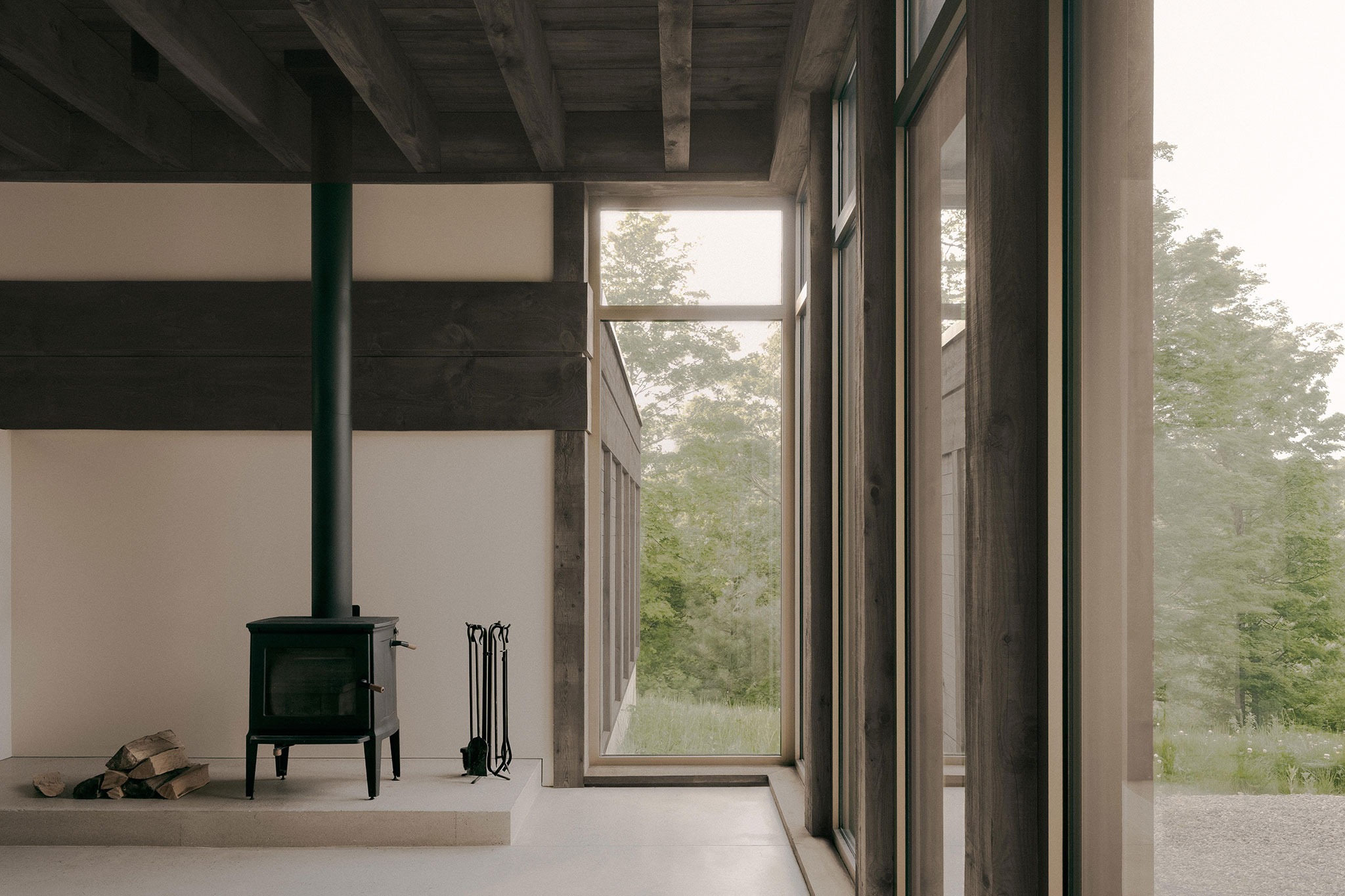
The SONO residence was realized through a carefully orchestrated relationship between the builders and the key trades involved in the project. The trust of all collaborators was instrumental in the success of this approach. For the firm, it has become a model of development that the framework of a traditional fixed-price contract struggles to contain. The new challenges of time for an architectural practice of meaningful consequence can no longer be accommodated by a linear approach in which the architect is the sole initiator of decisions. It is also thanks to the clients' constant patience and enthusiasm that this vision was able to take shape within a climate of mutual trust.
The design of the exposed structure, developed in collaboration with a local carpenter responsible for the production and installation of the woodwork, enabled the sourcing of a significant quantity of hemlock from a site adjacent to the project. The close relationship maintained with this collaborator was fundamental to the development of details and their execution on site. This wood was also used on the north façade, notably for the columns, fascias, and cladding. An ecological and locally sourced building material, hemlock naturally aligns with a responsible approach. The house is furthermore anchored on existing bedrock, without blasting or significant excavation, thus avoiding any major intervention on the site.