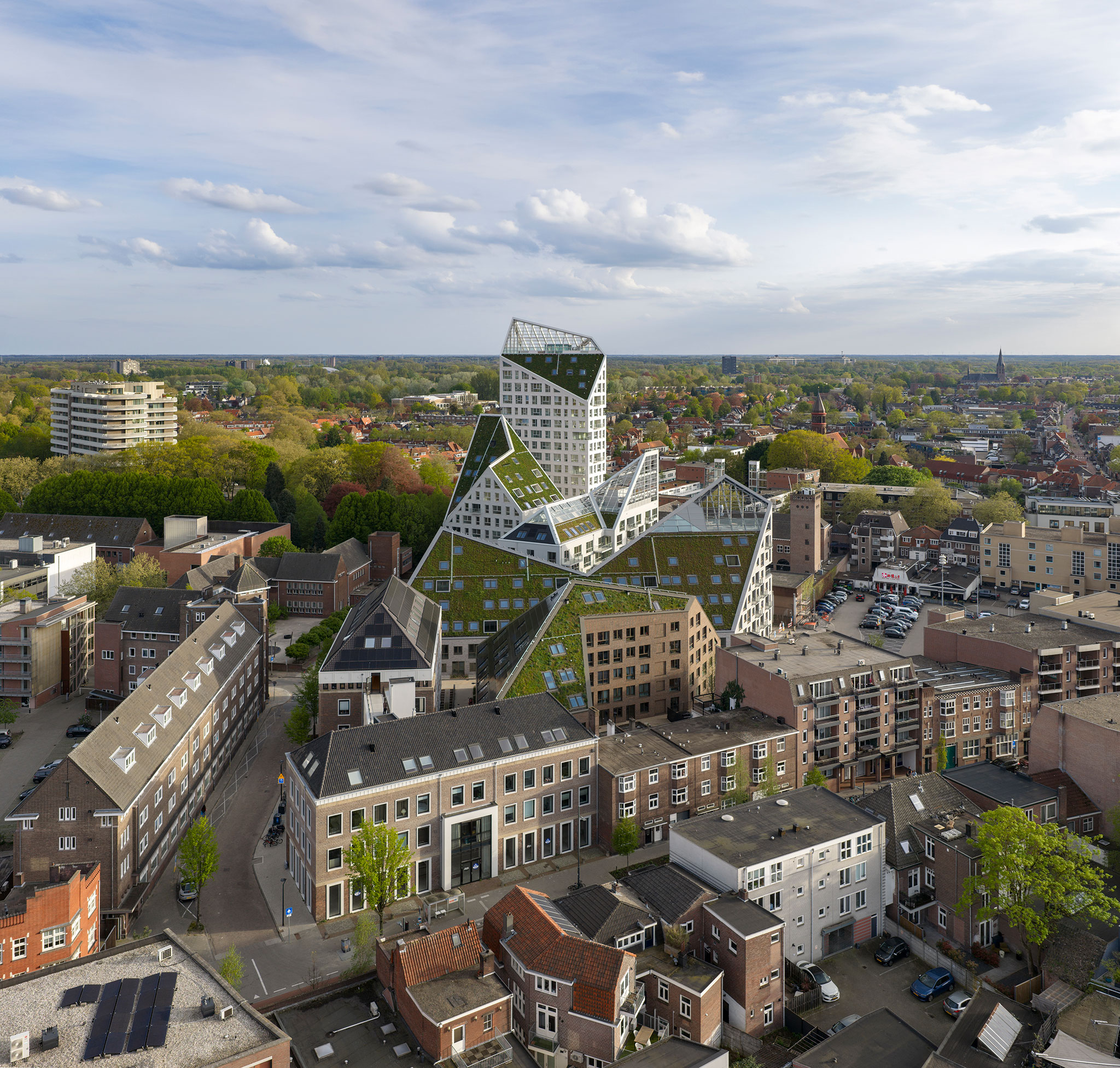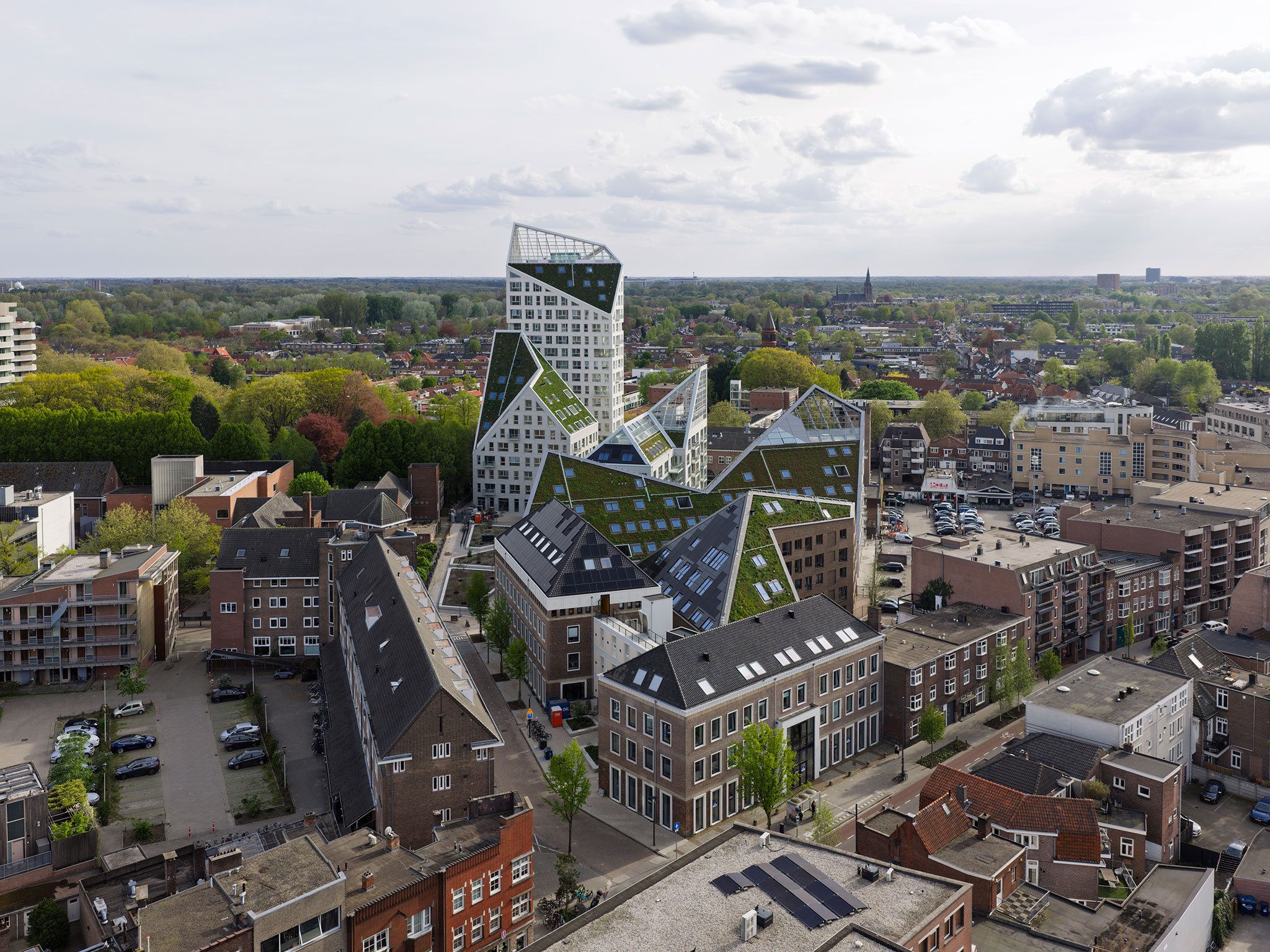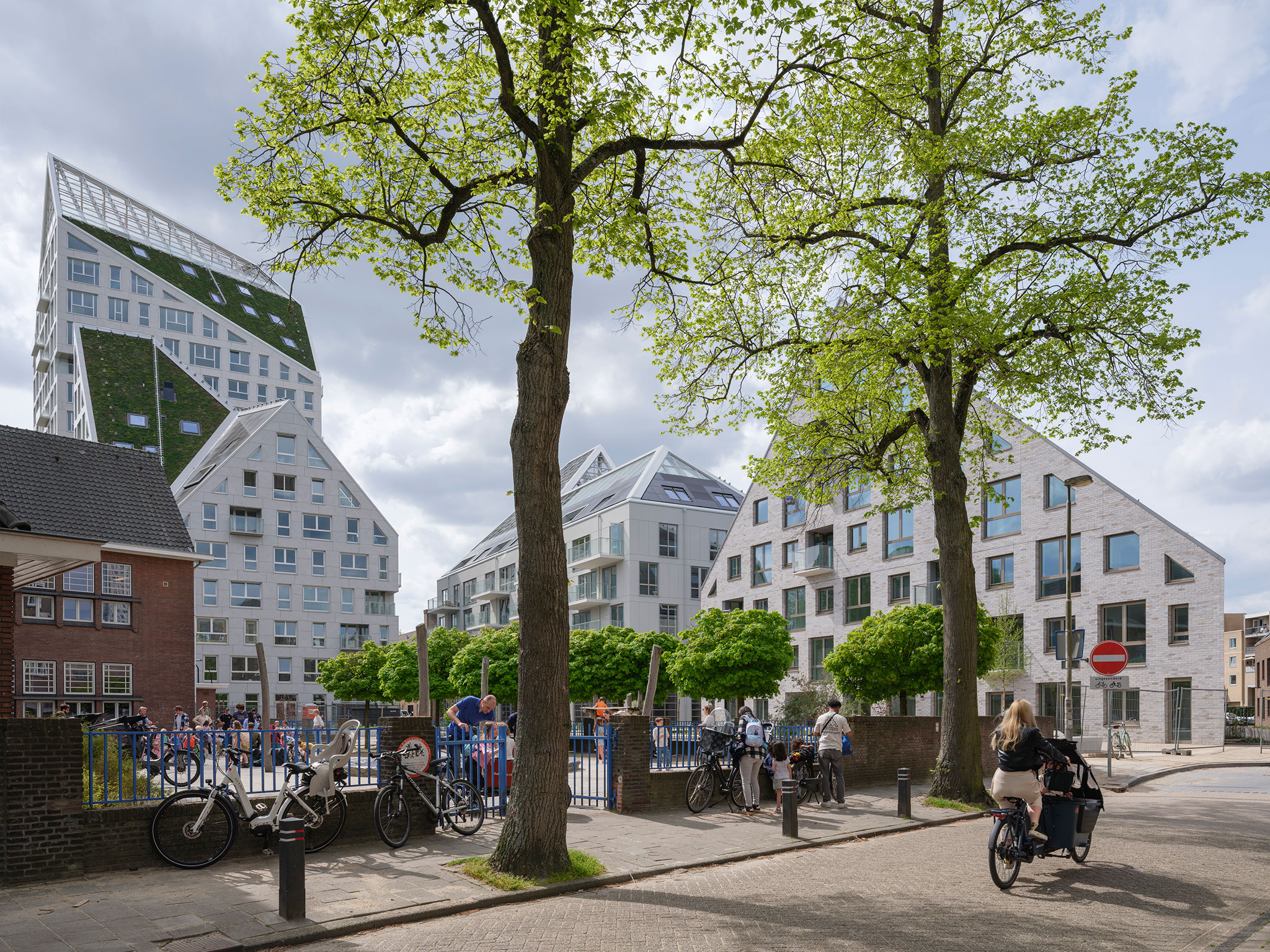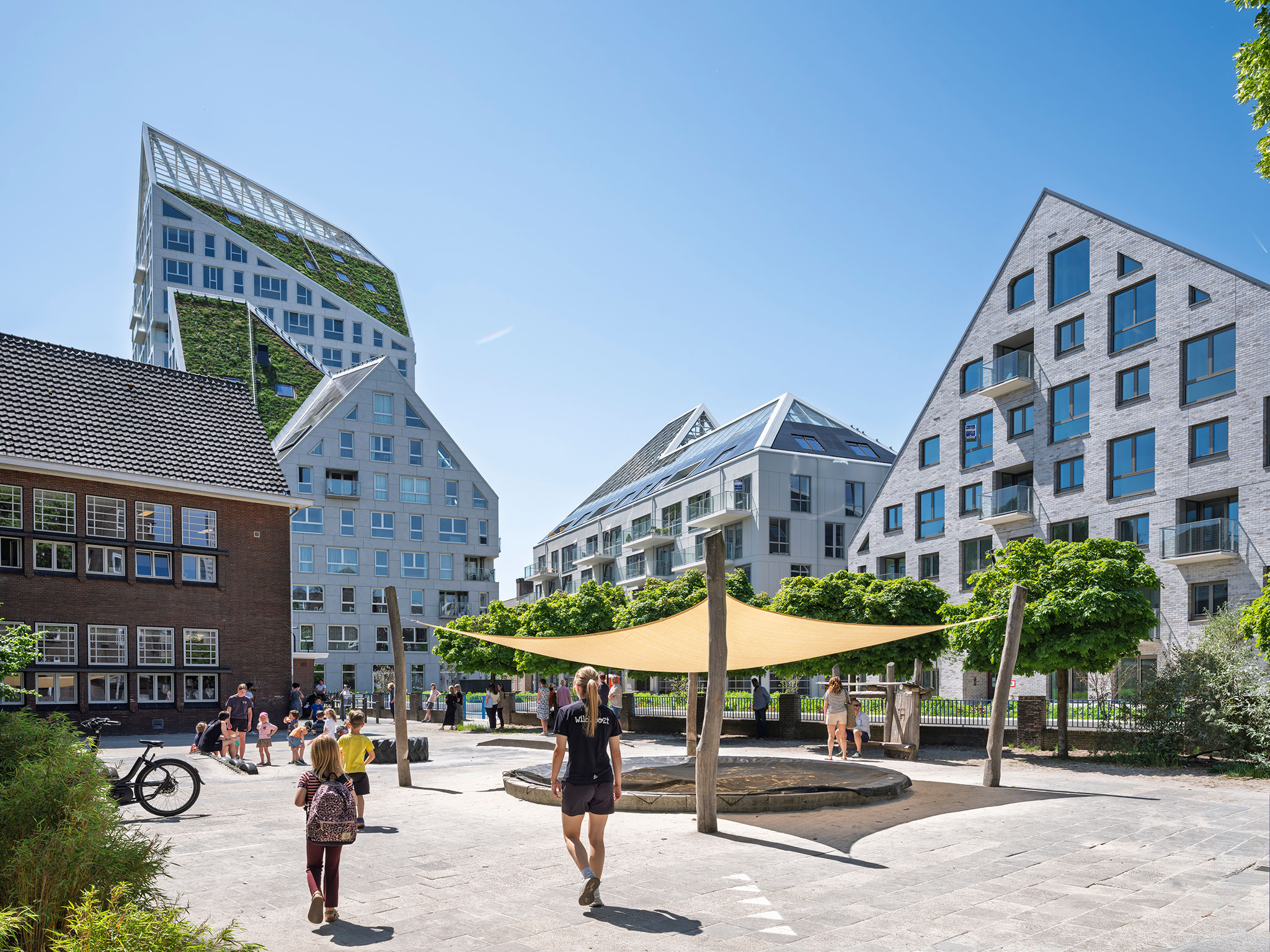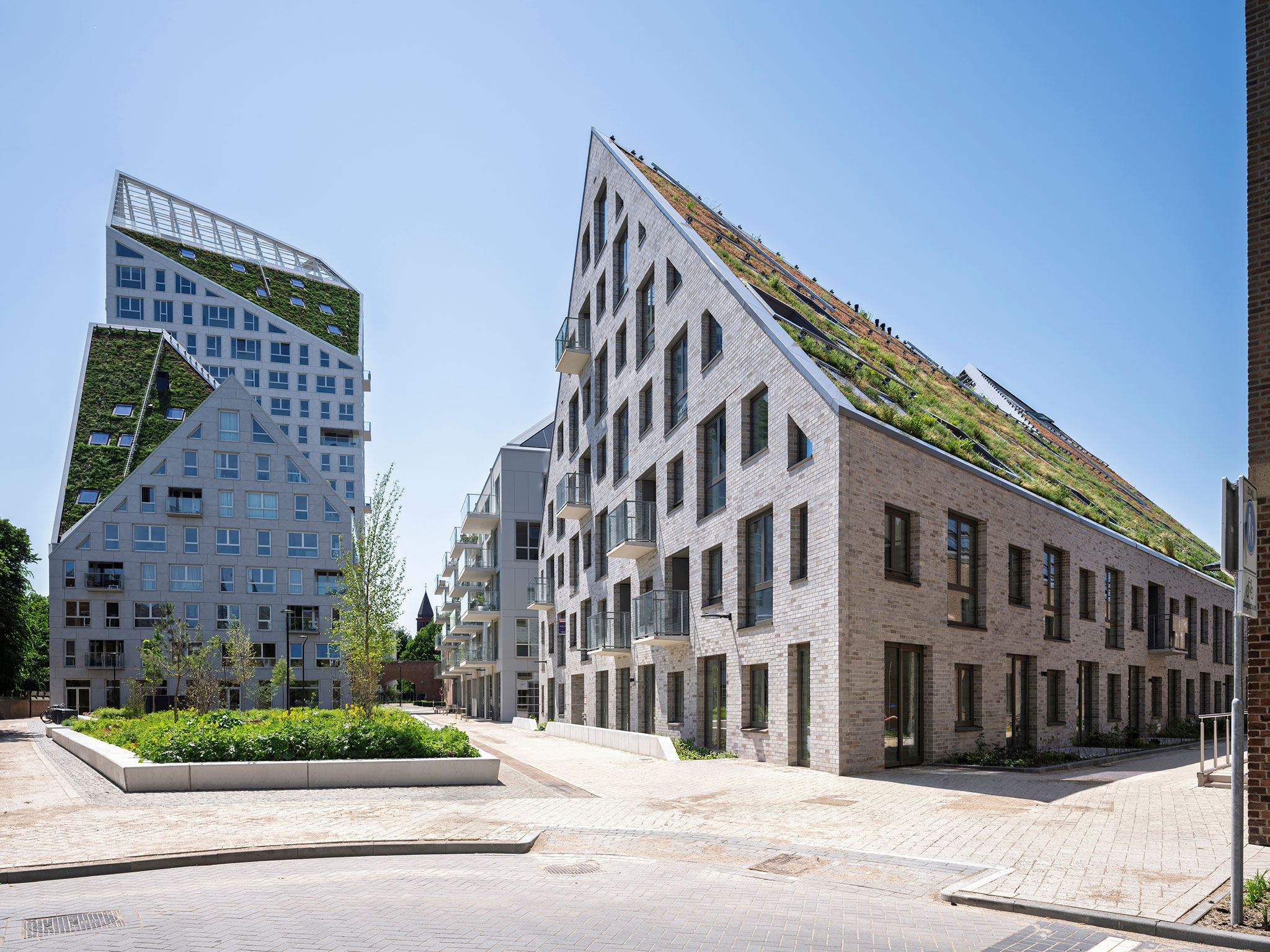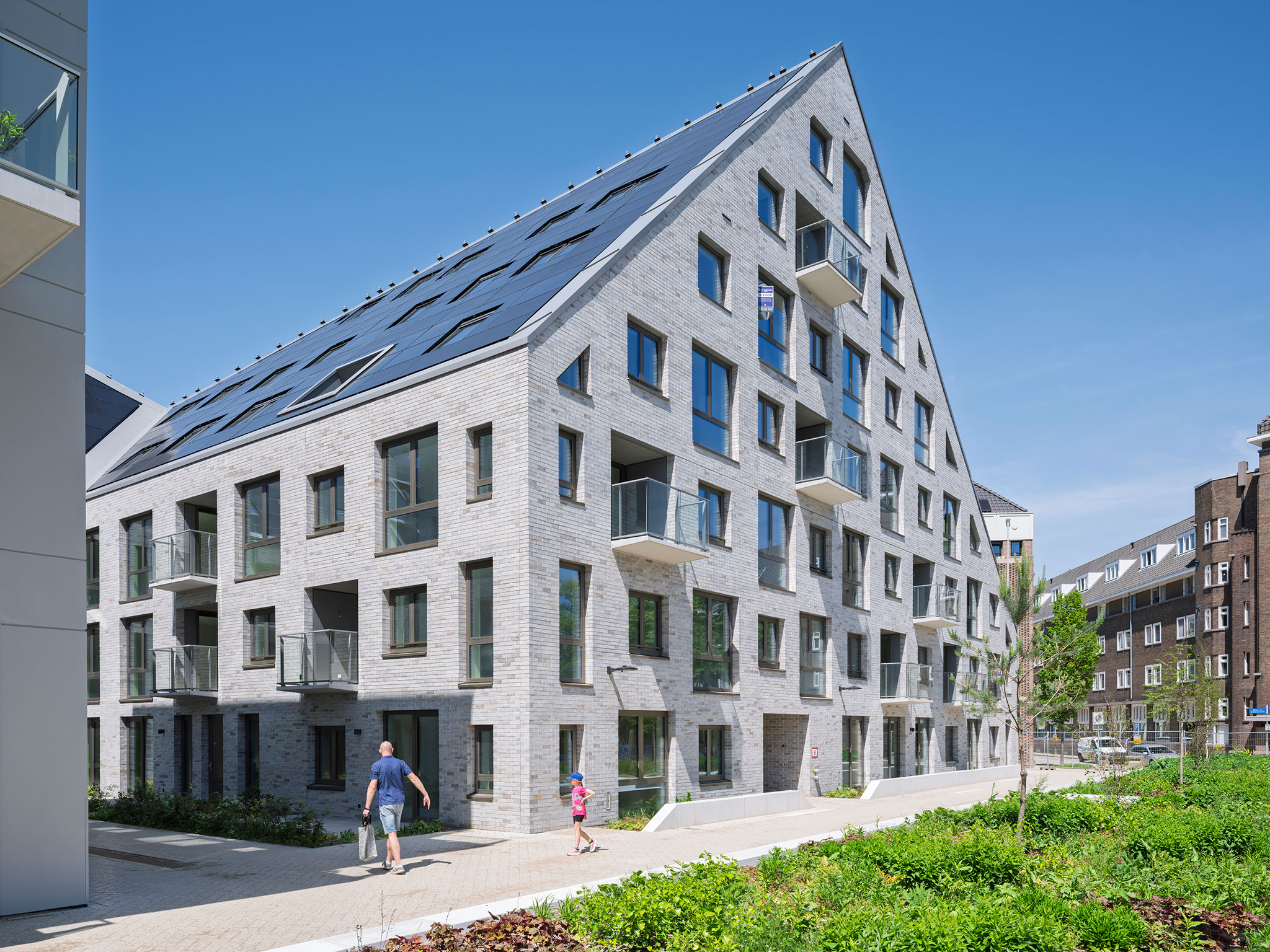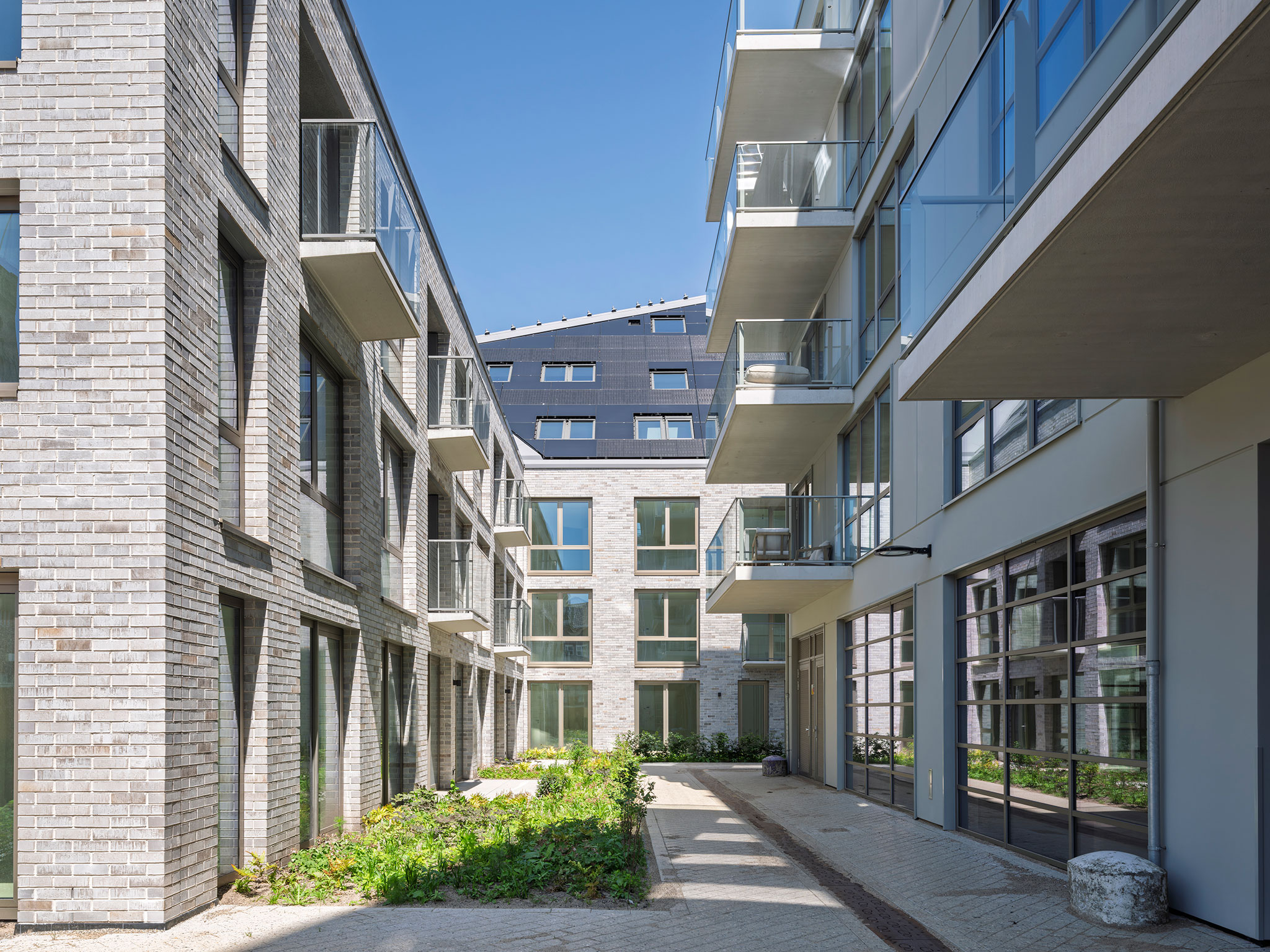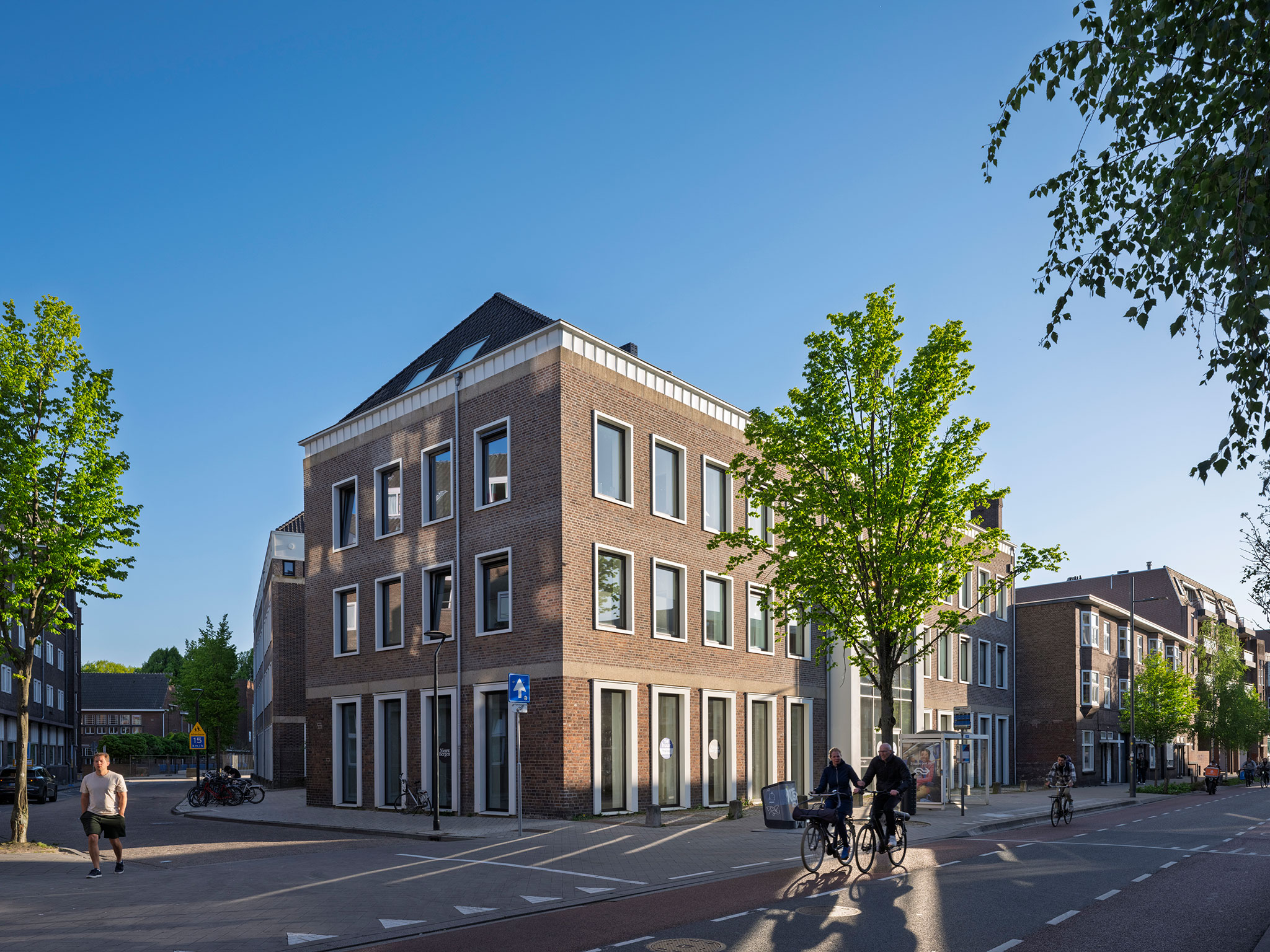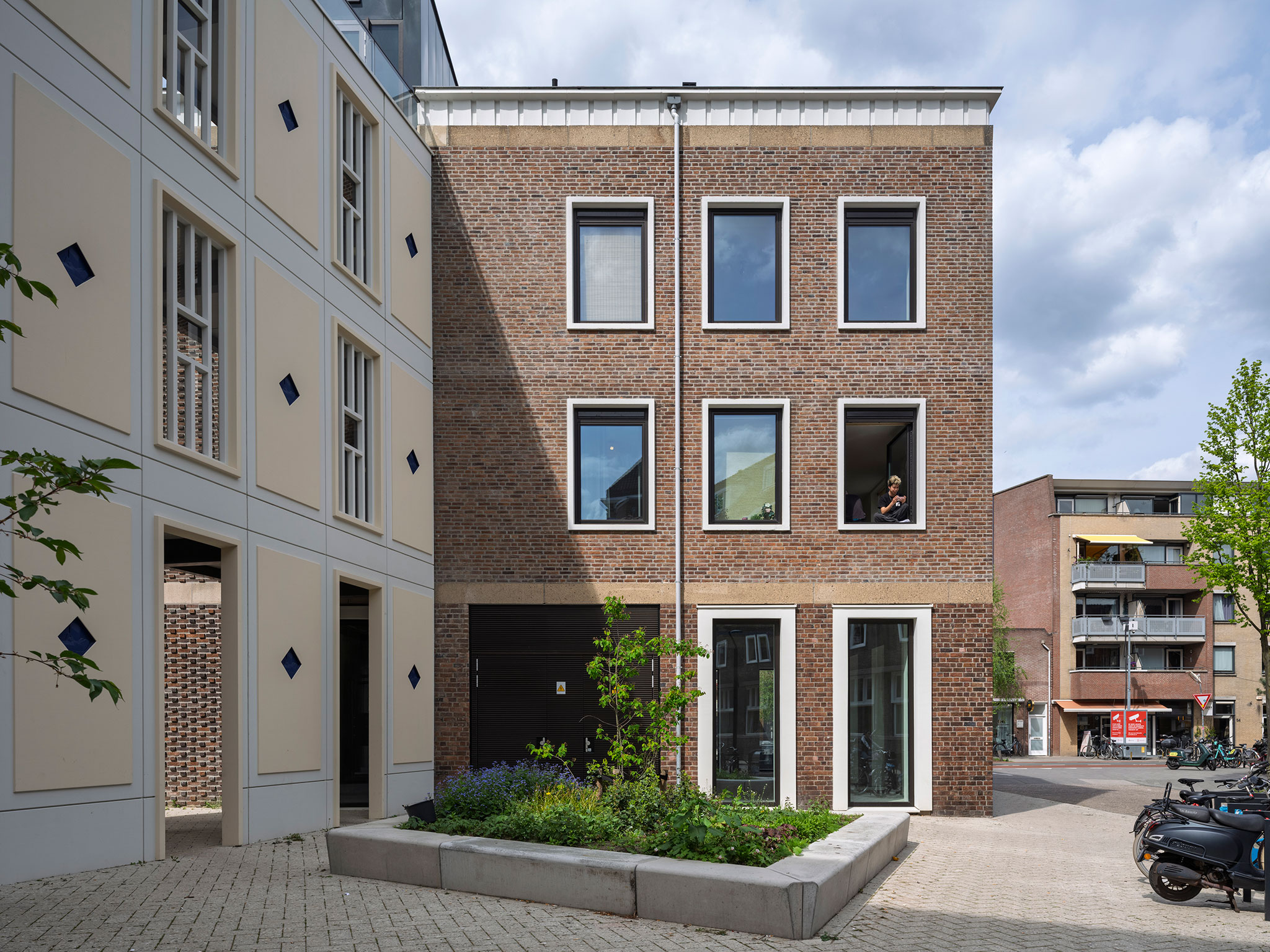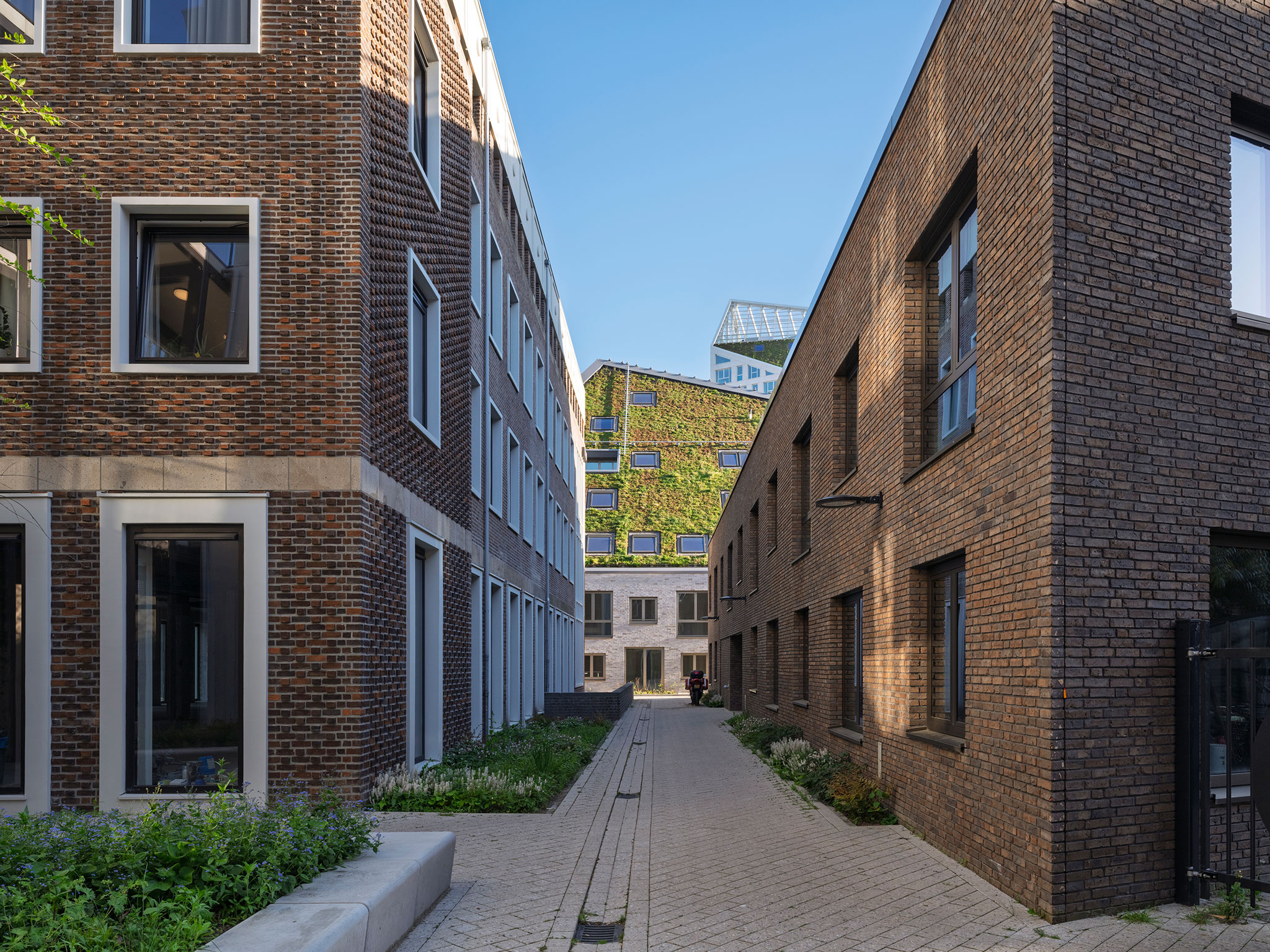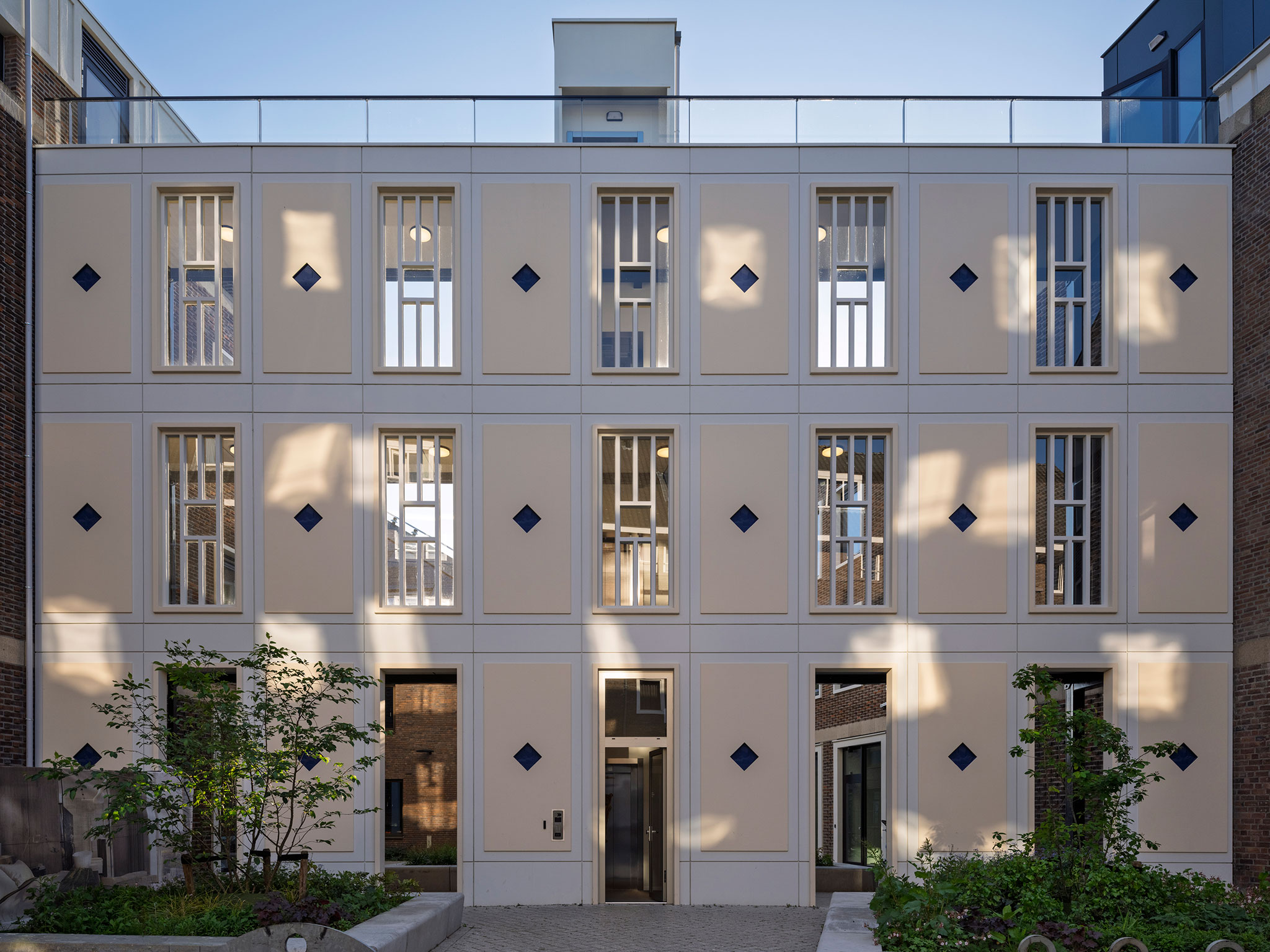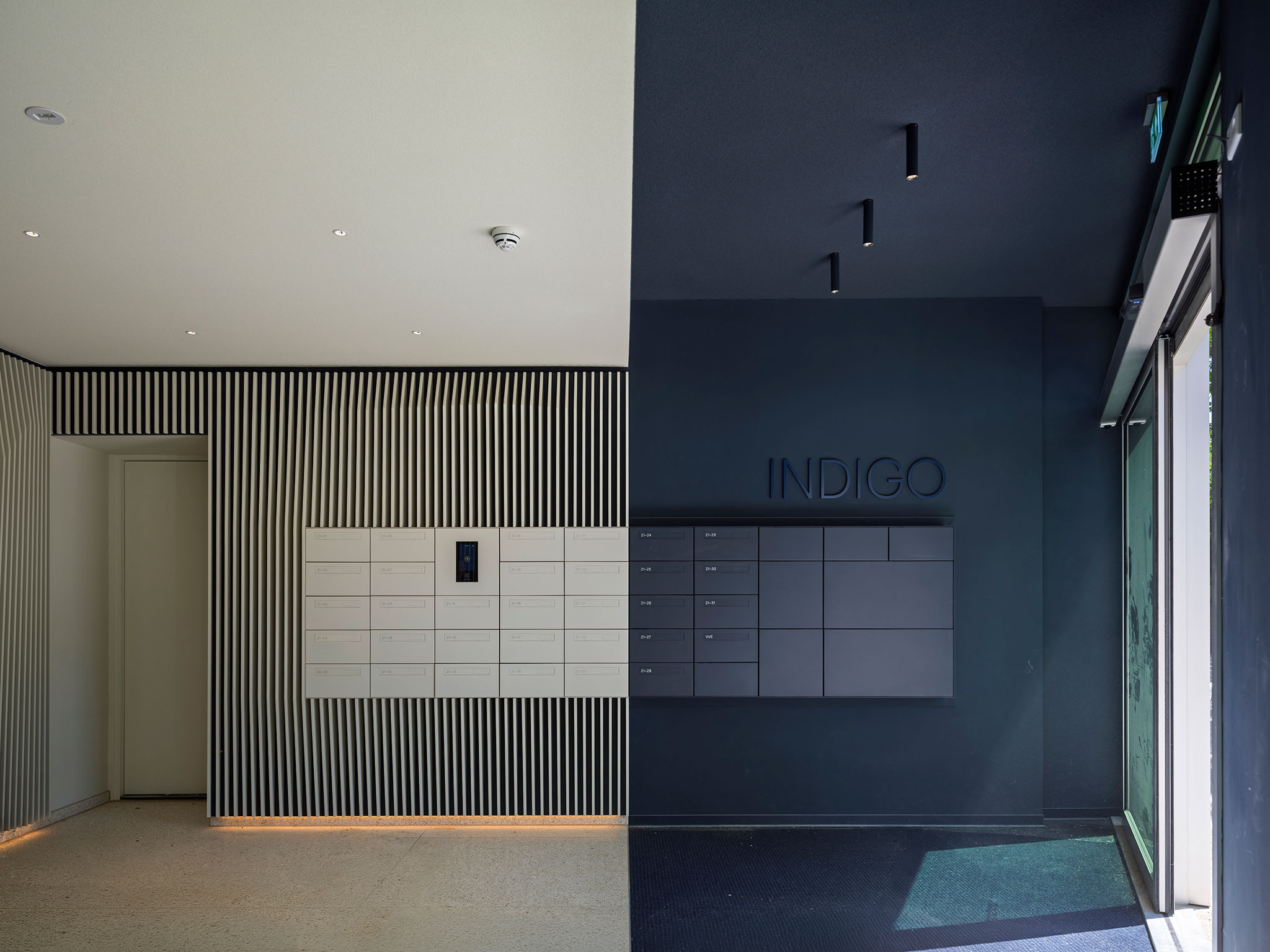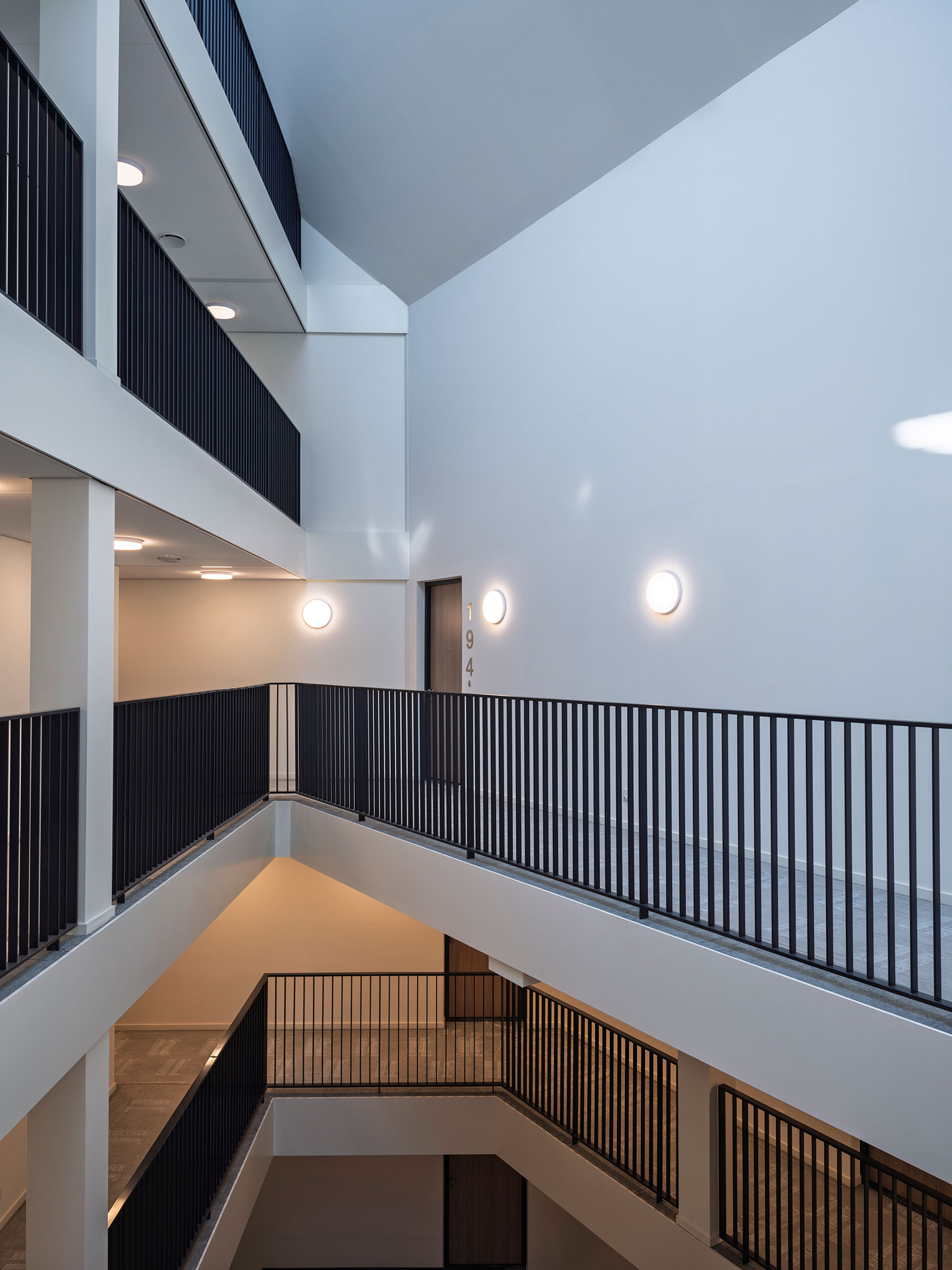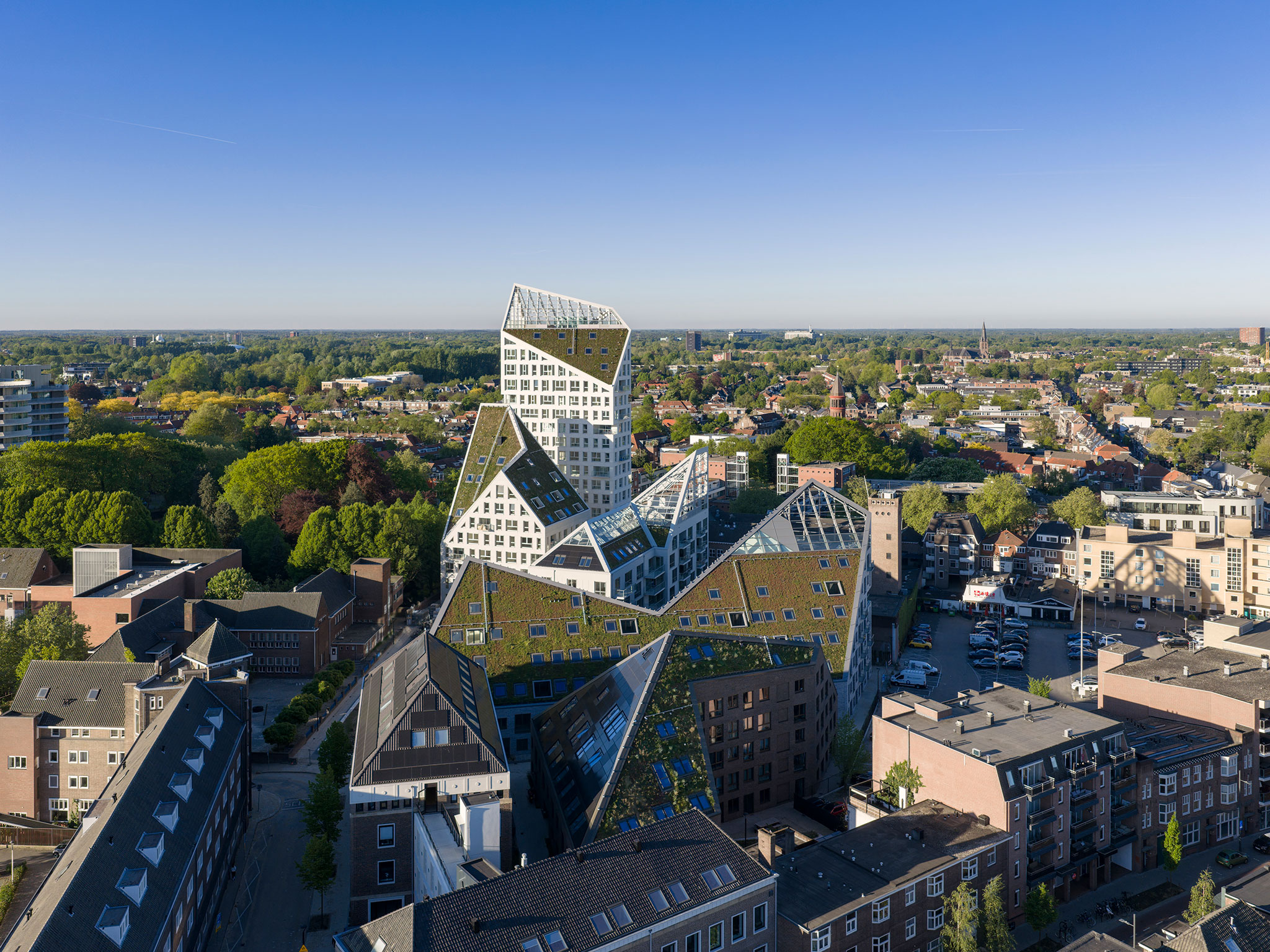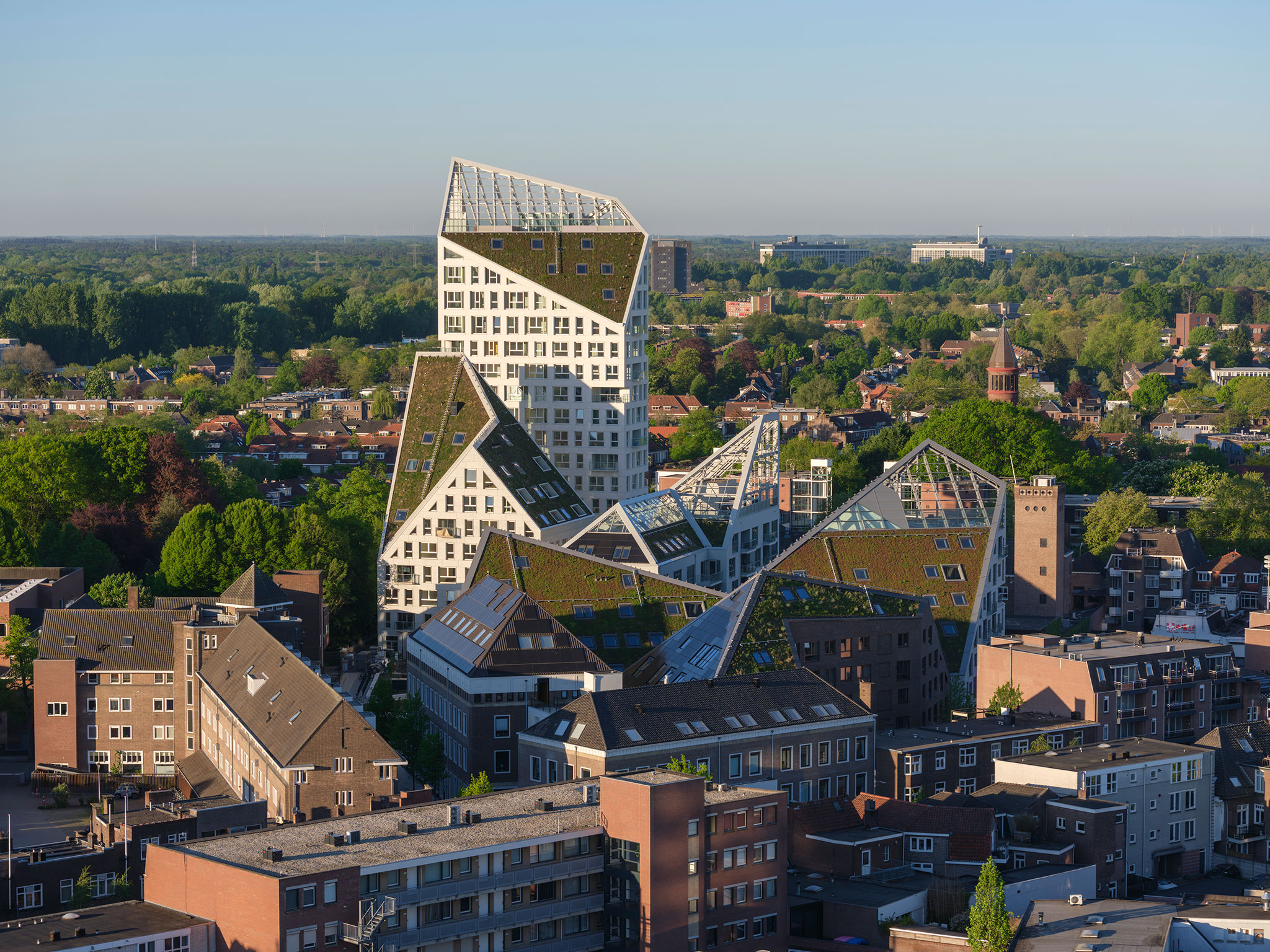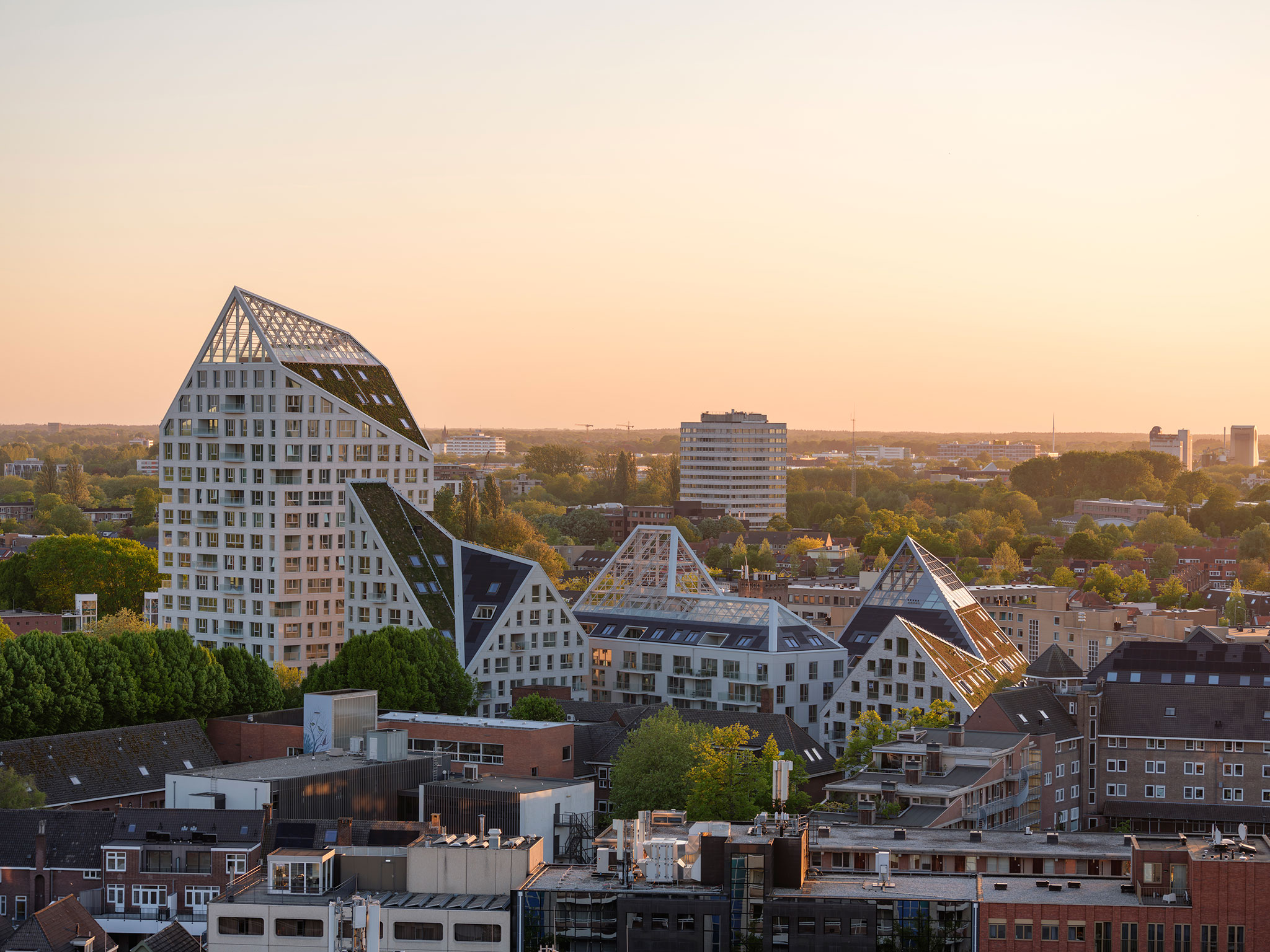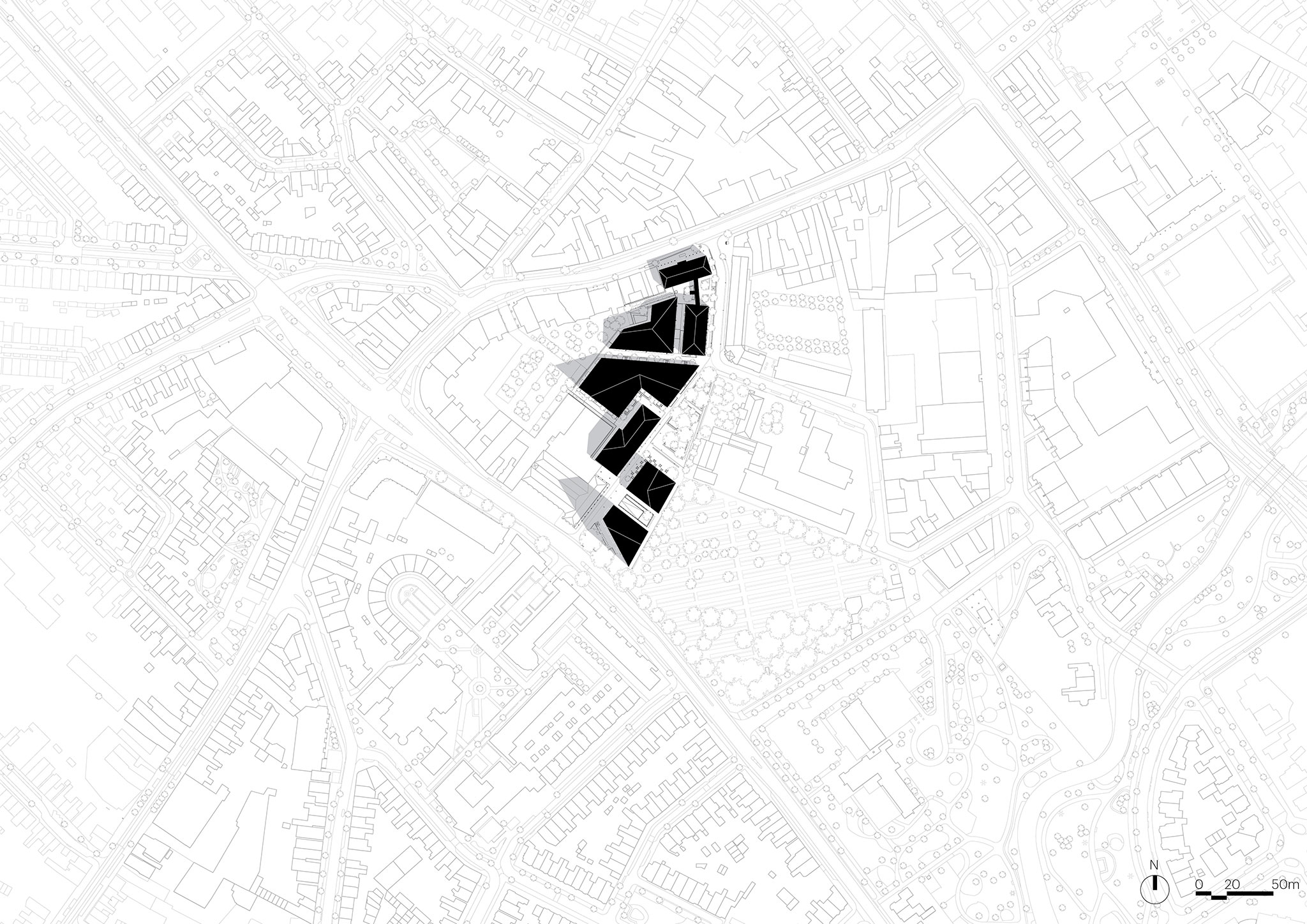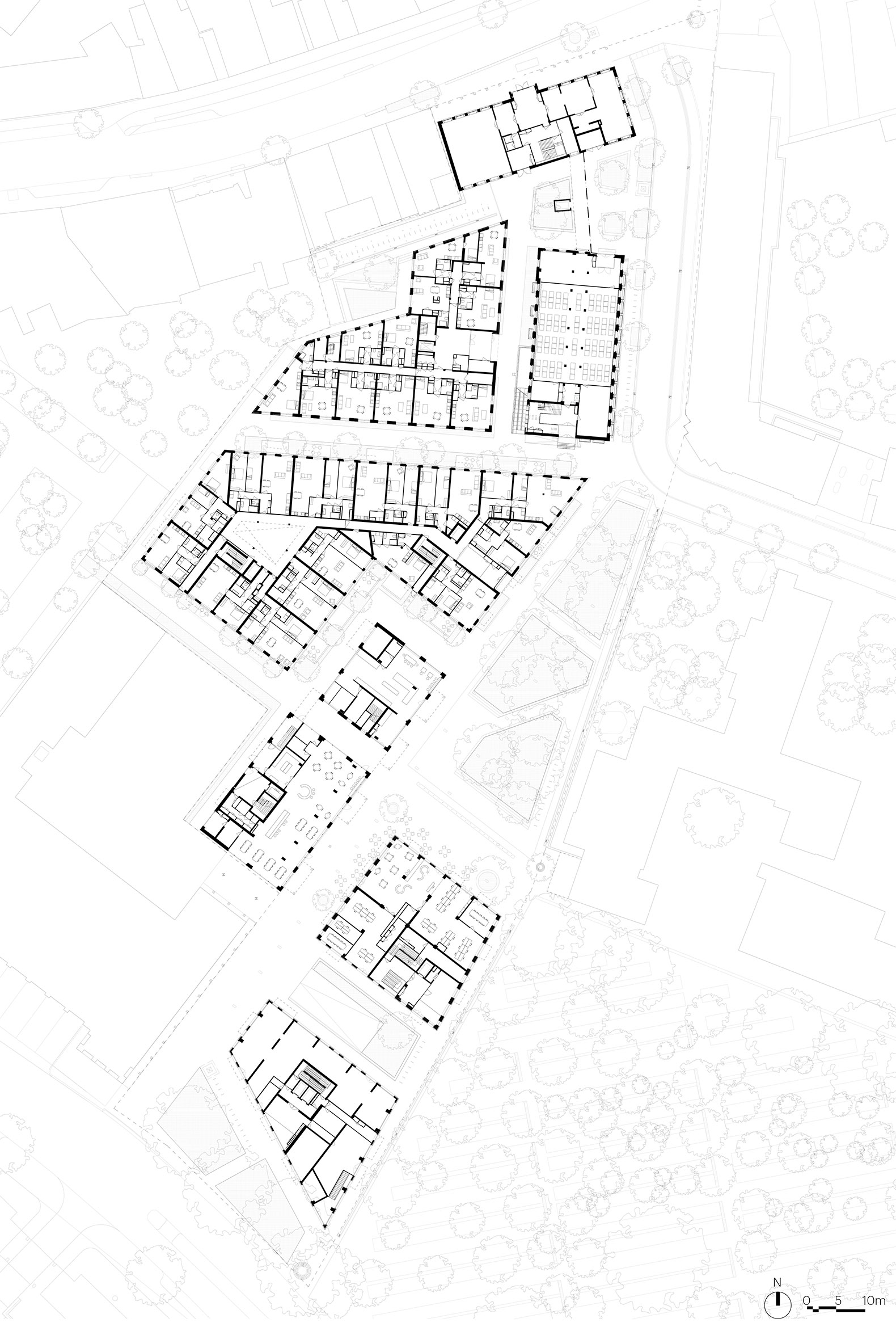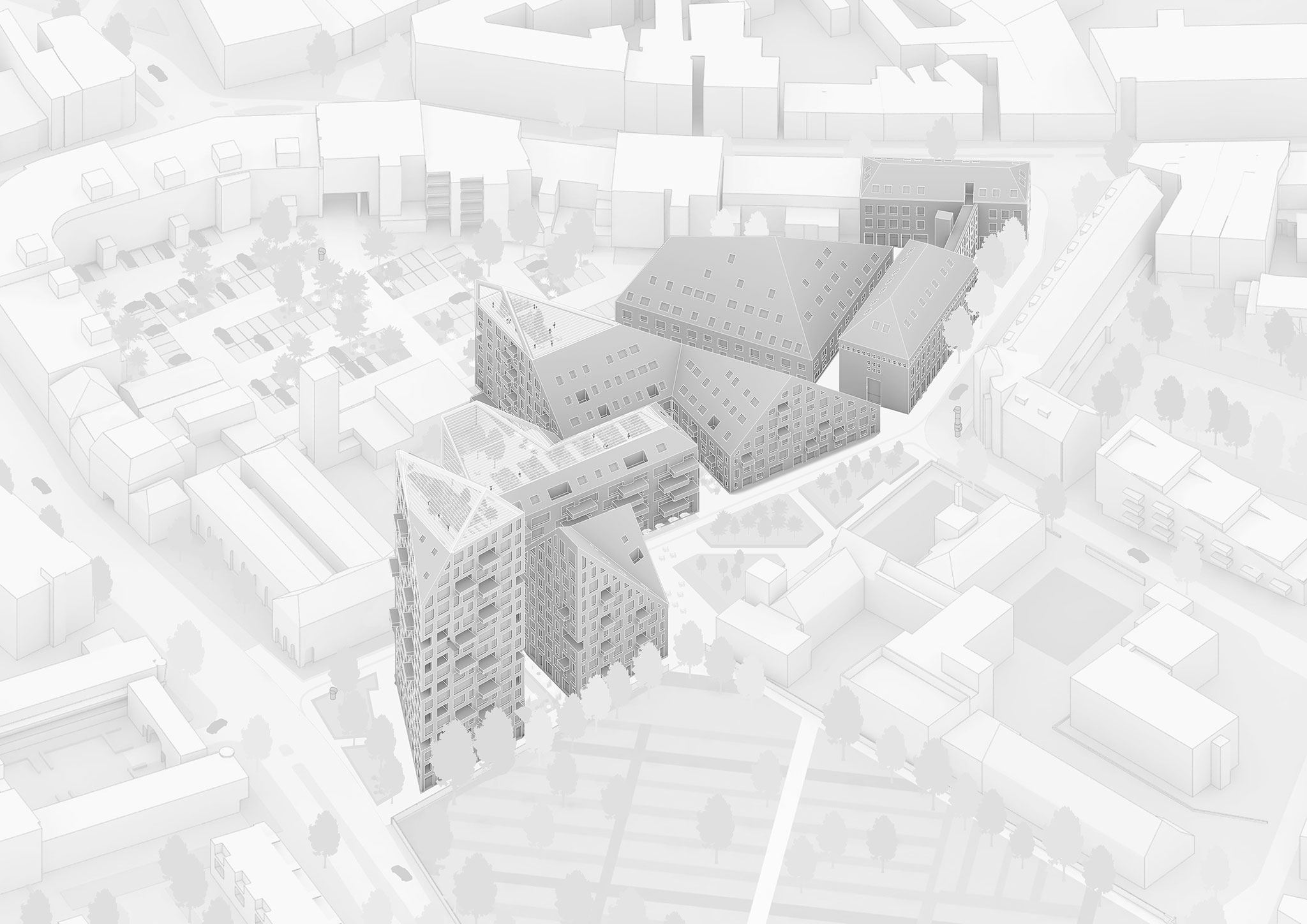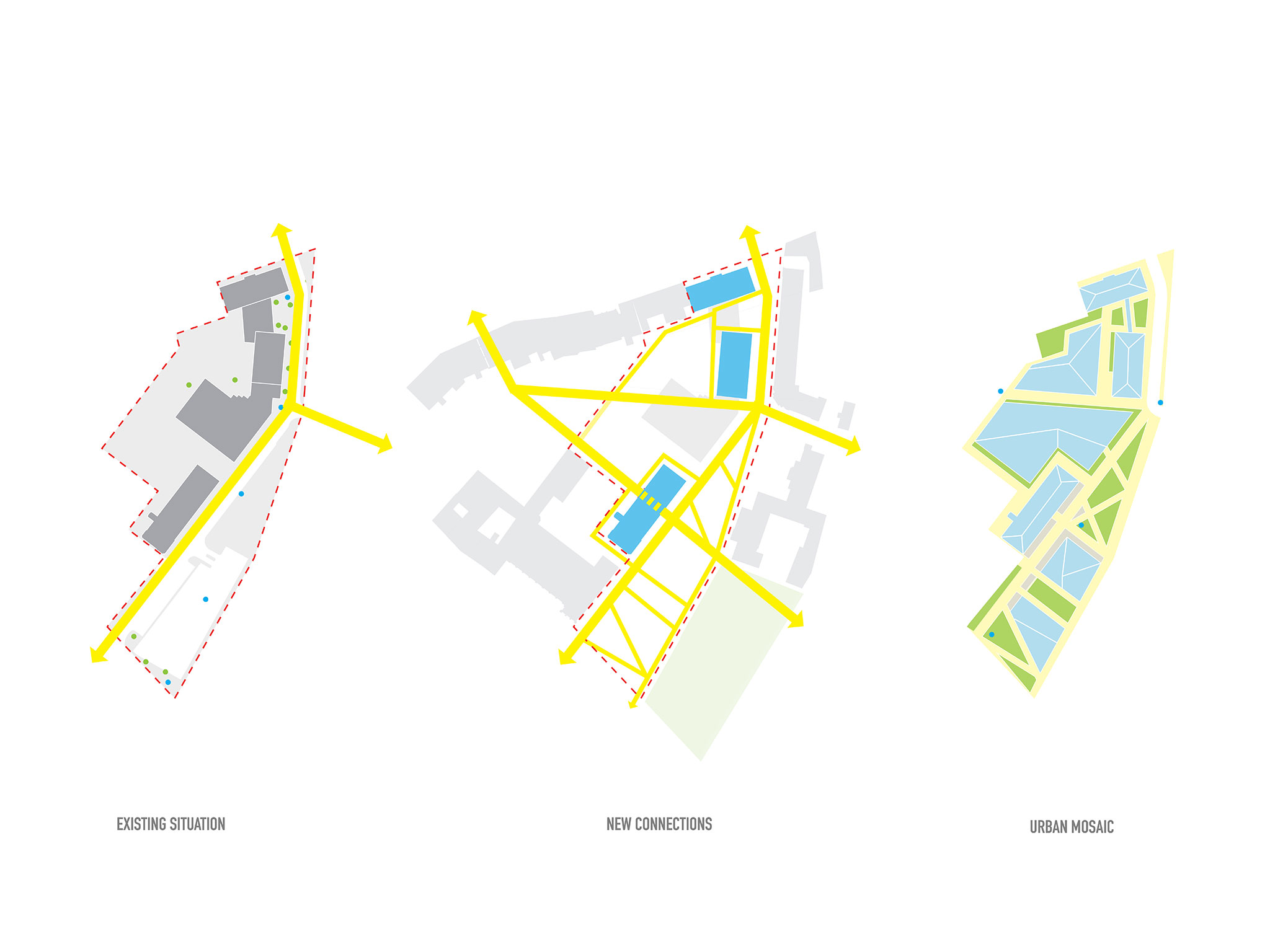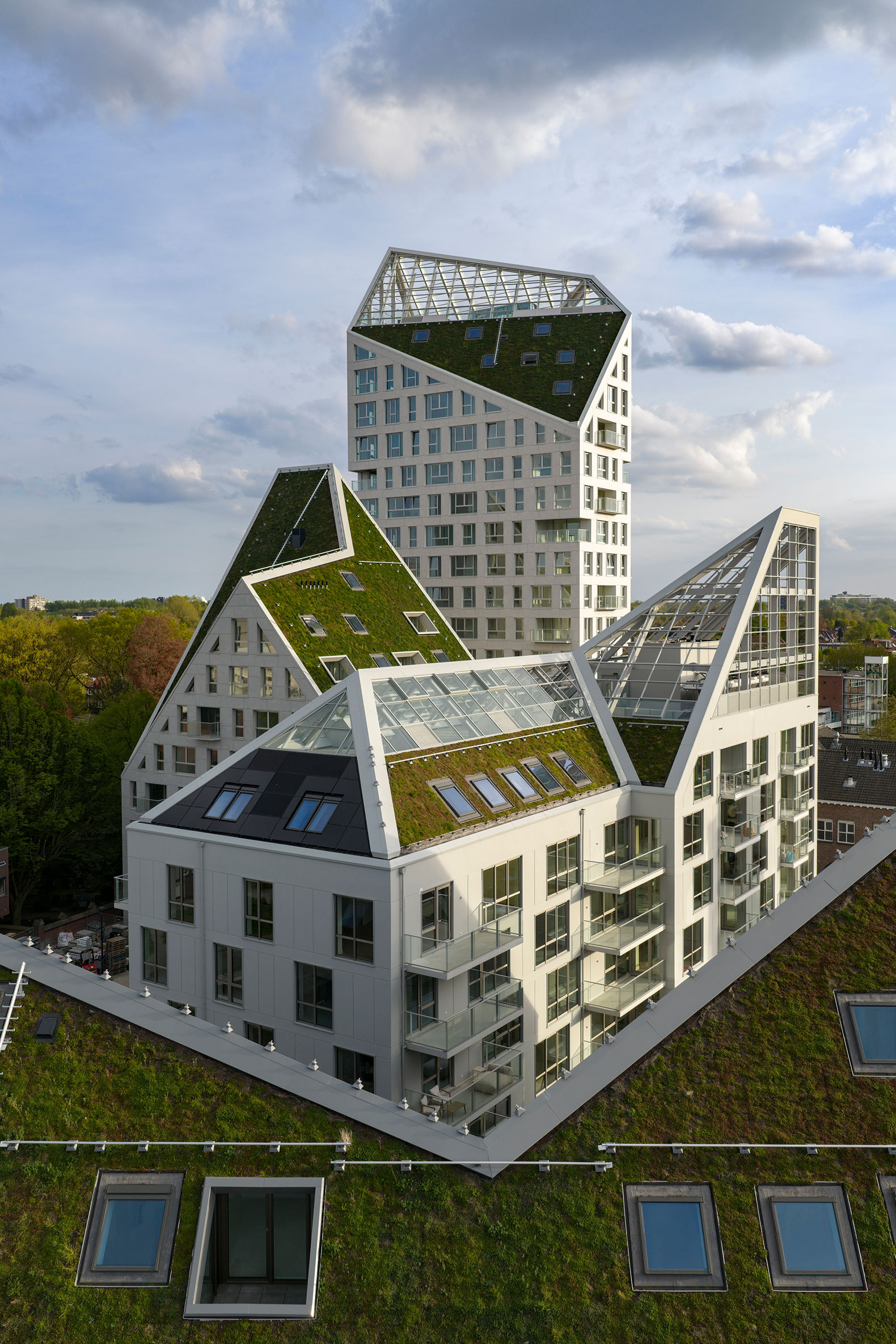
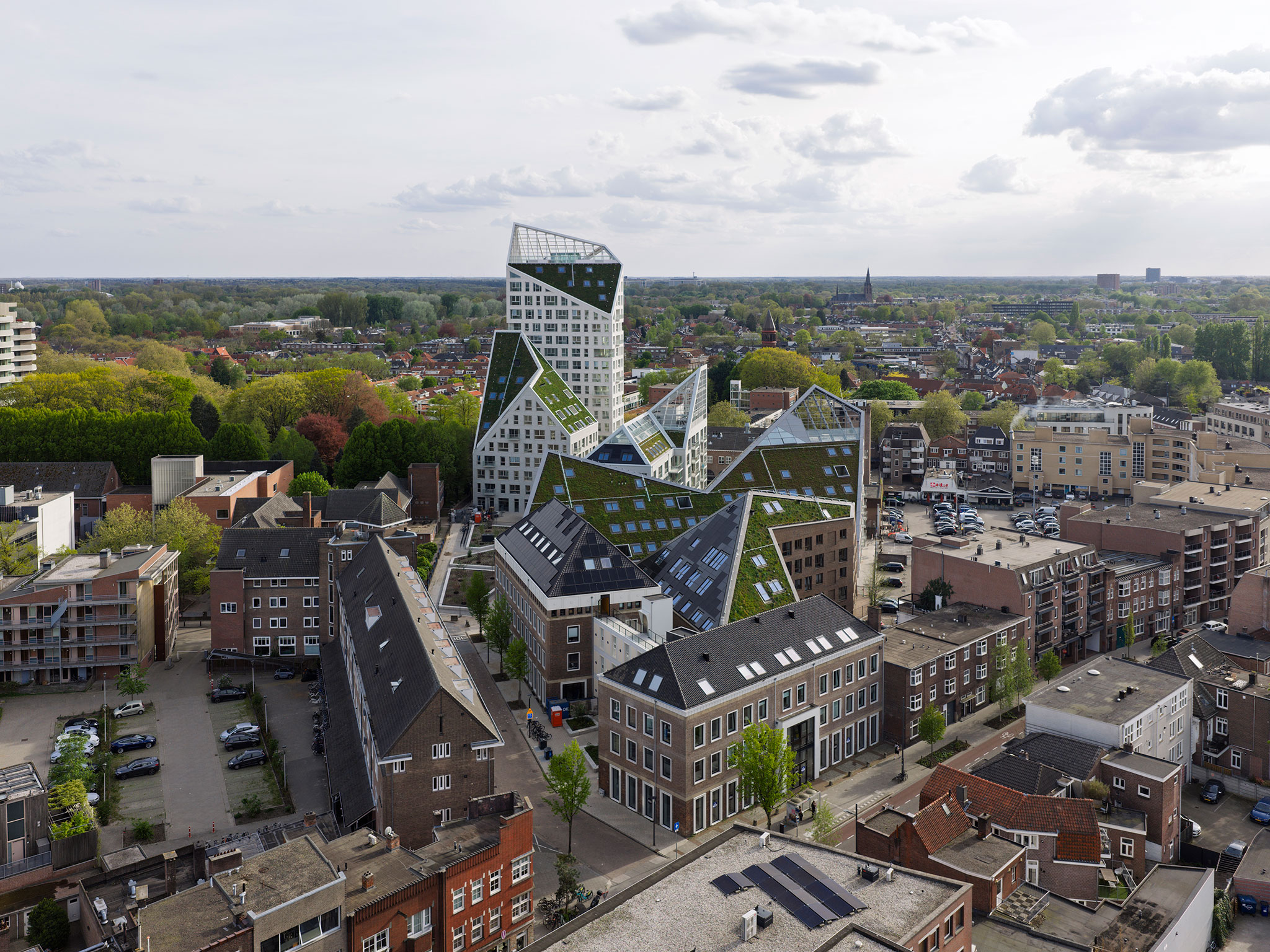
In the heart of one of Eindhoven's oldest and most authentic areas, the MVRDV team has completed an ambitious residential project comprising 237 apartments in seven buildings: five new and two renovated historic structures. With its distinctive appearance, characterized by its sloping roofs, "Nieuw Bergen" offers a variety of apartment types, from single-person apartments to family residences, thus catering to a diverse range of users.

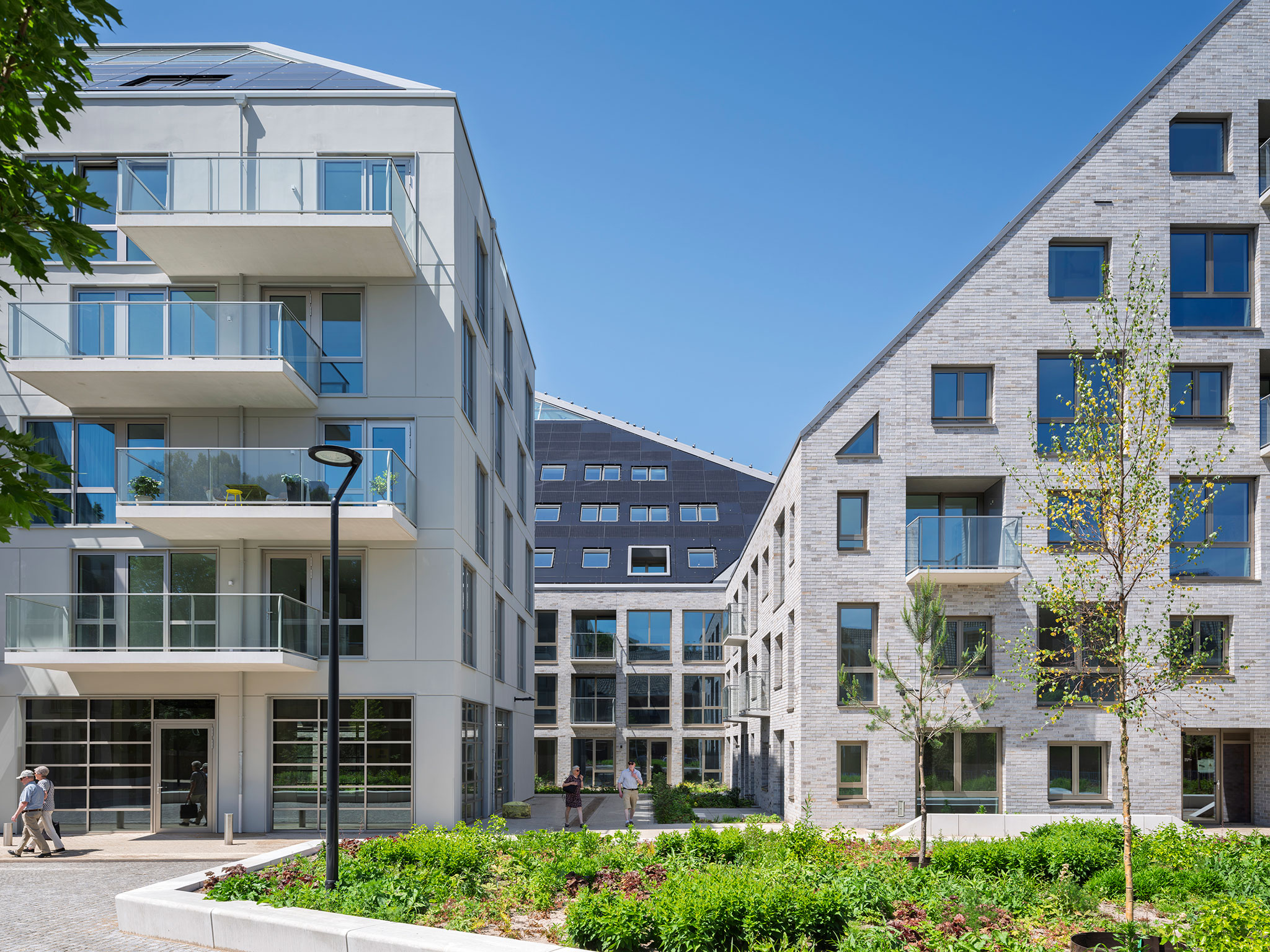
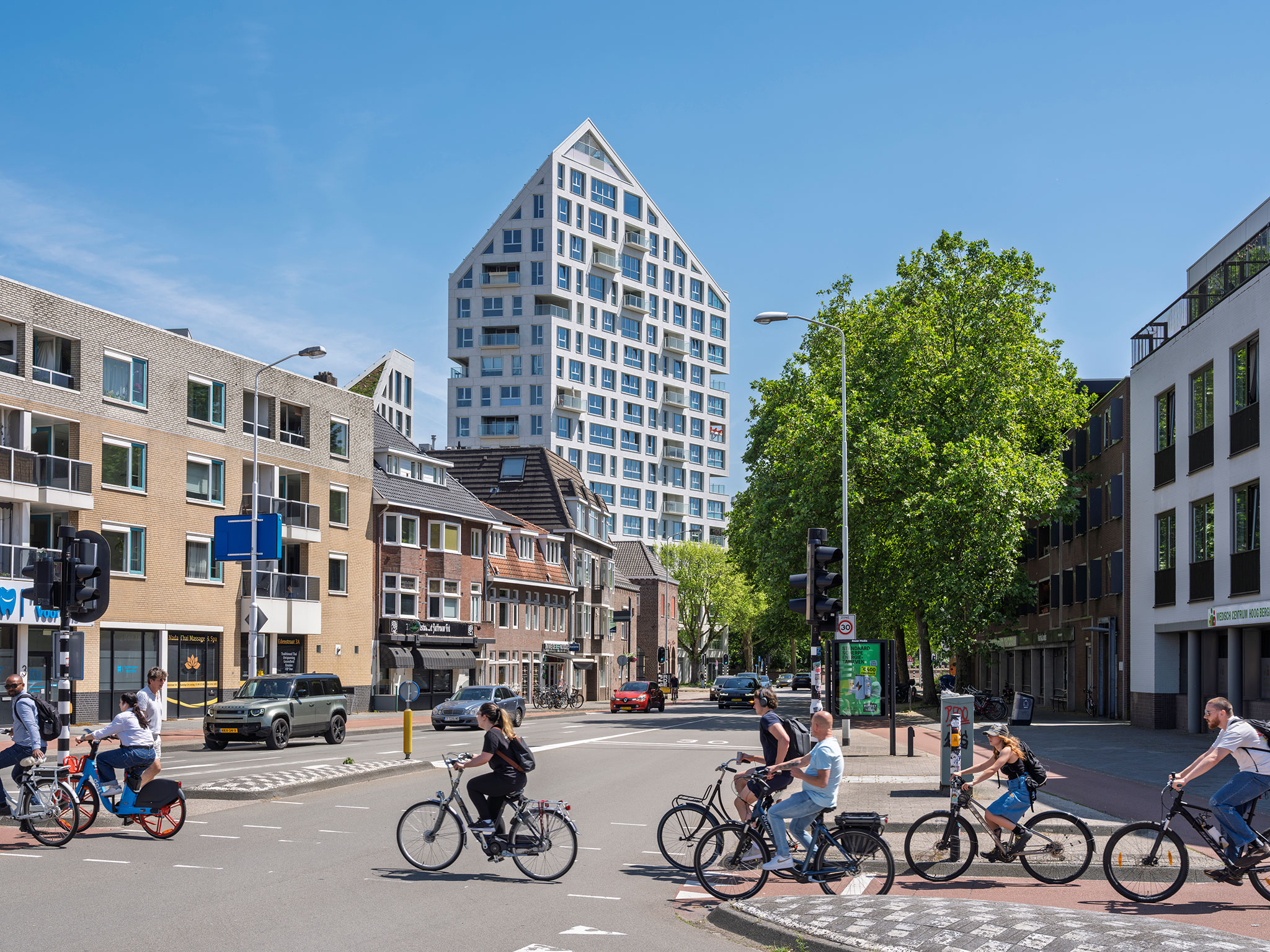
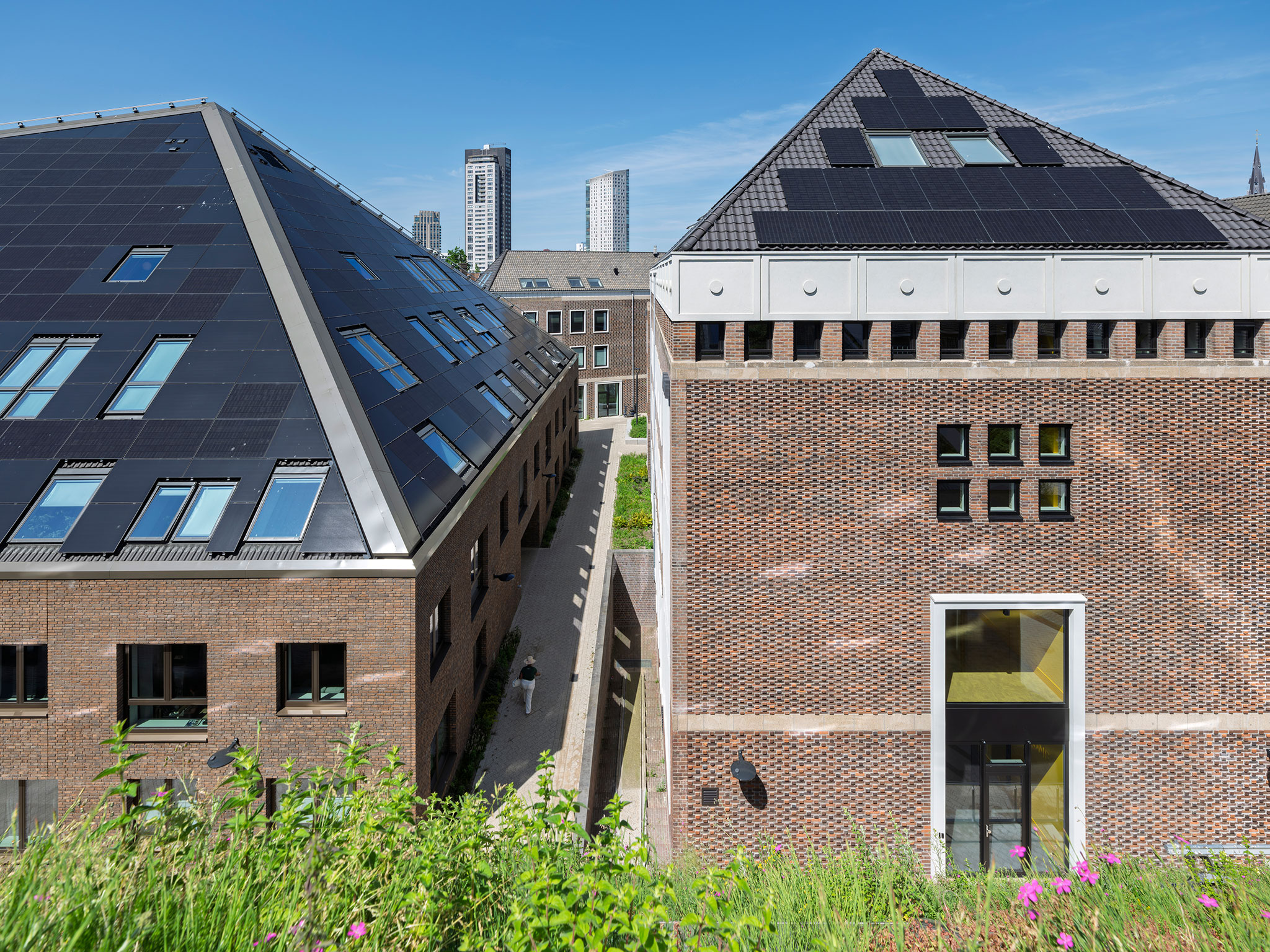
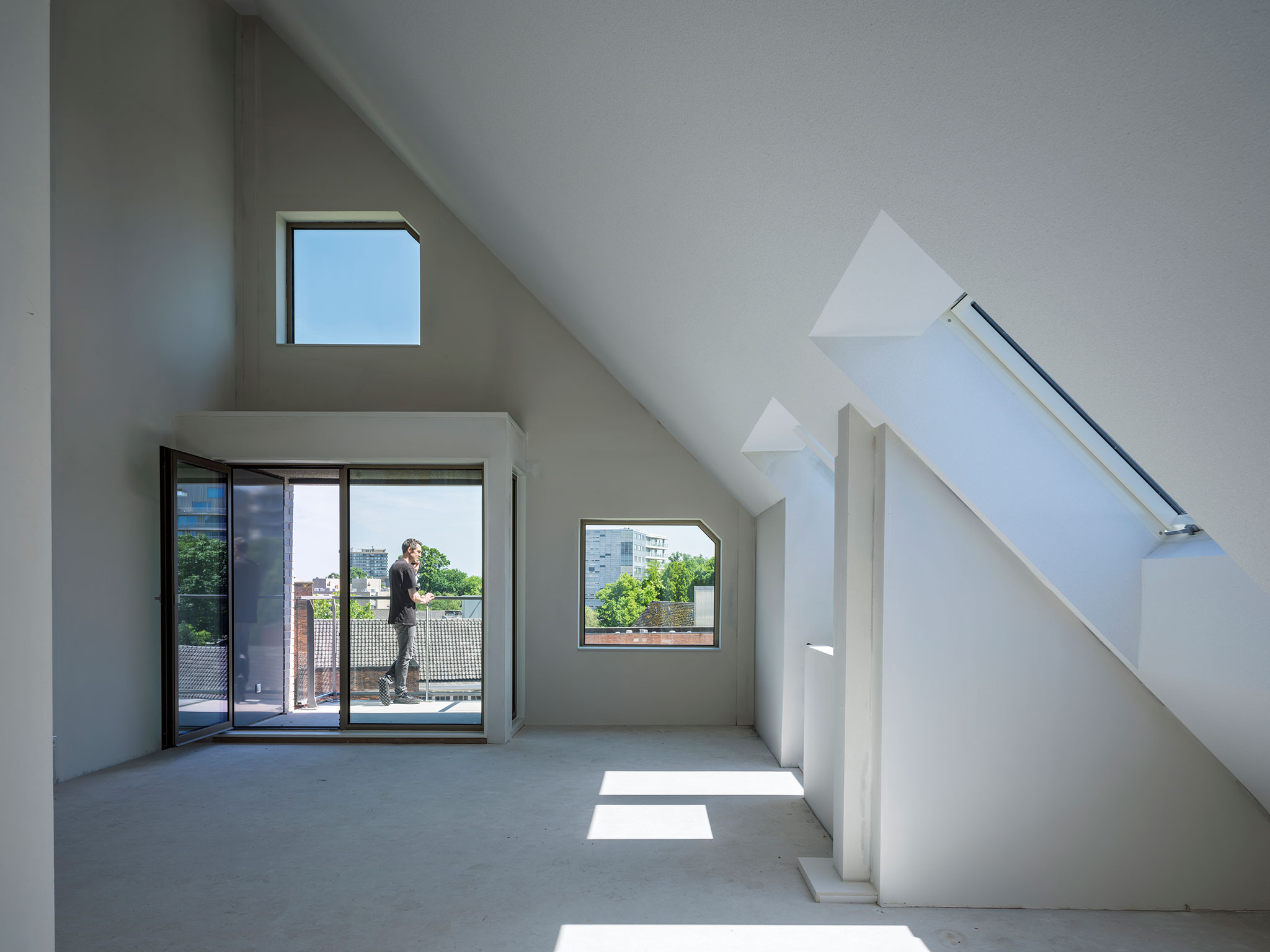
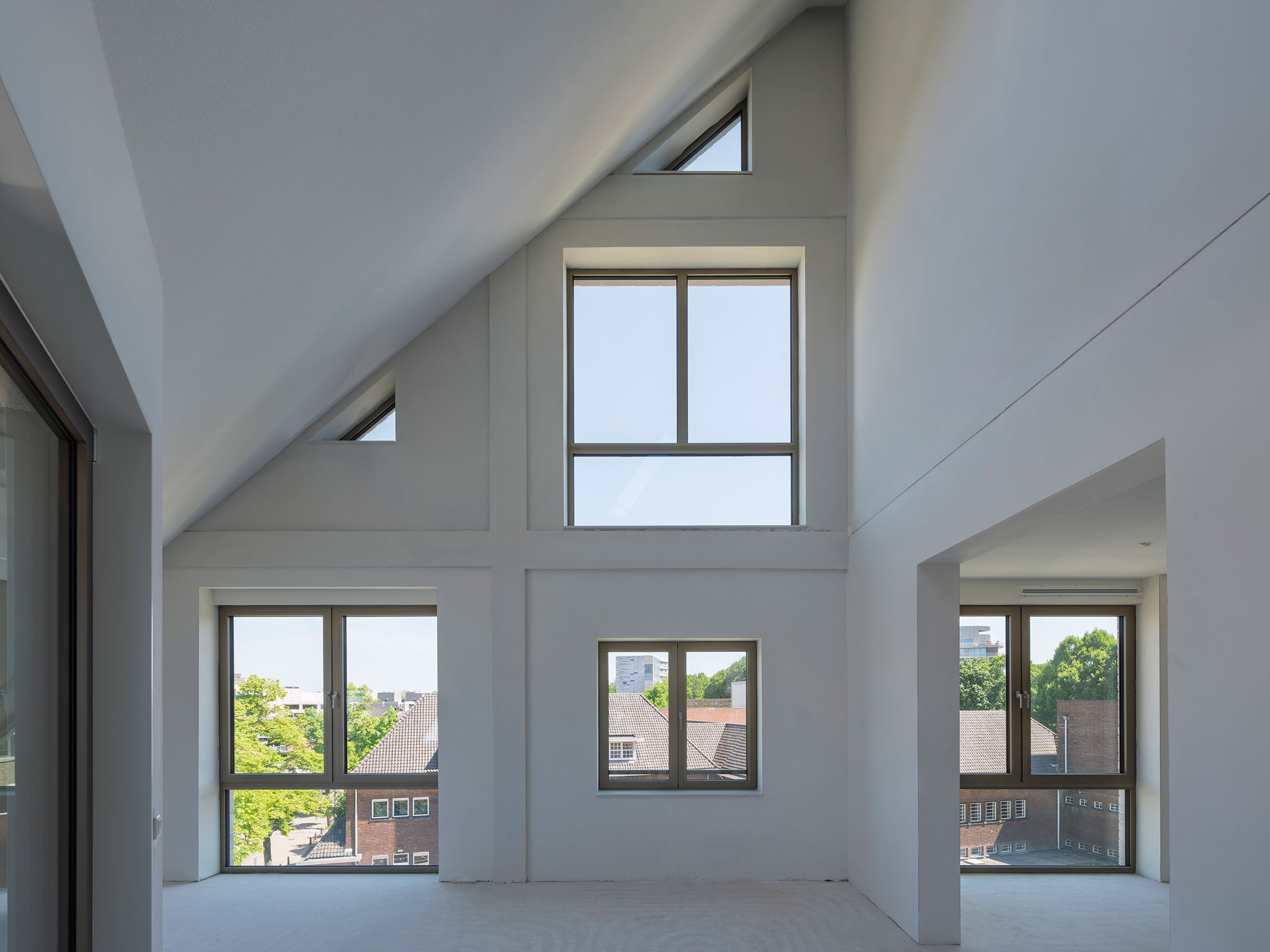
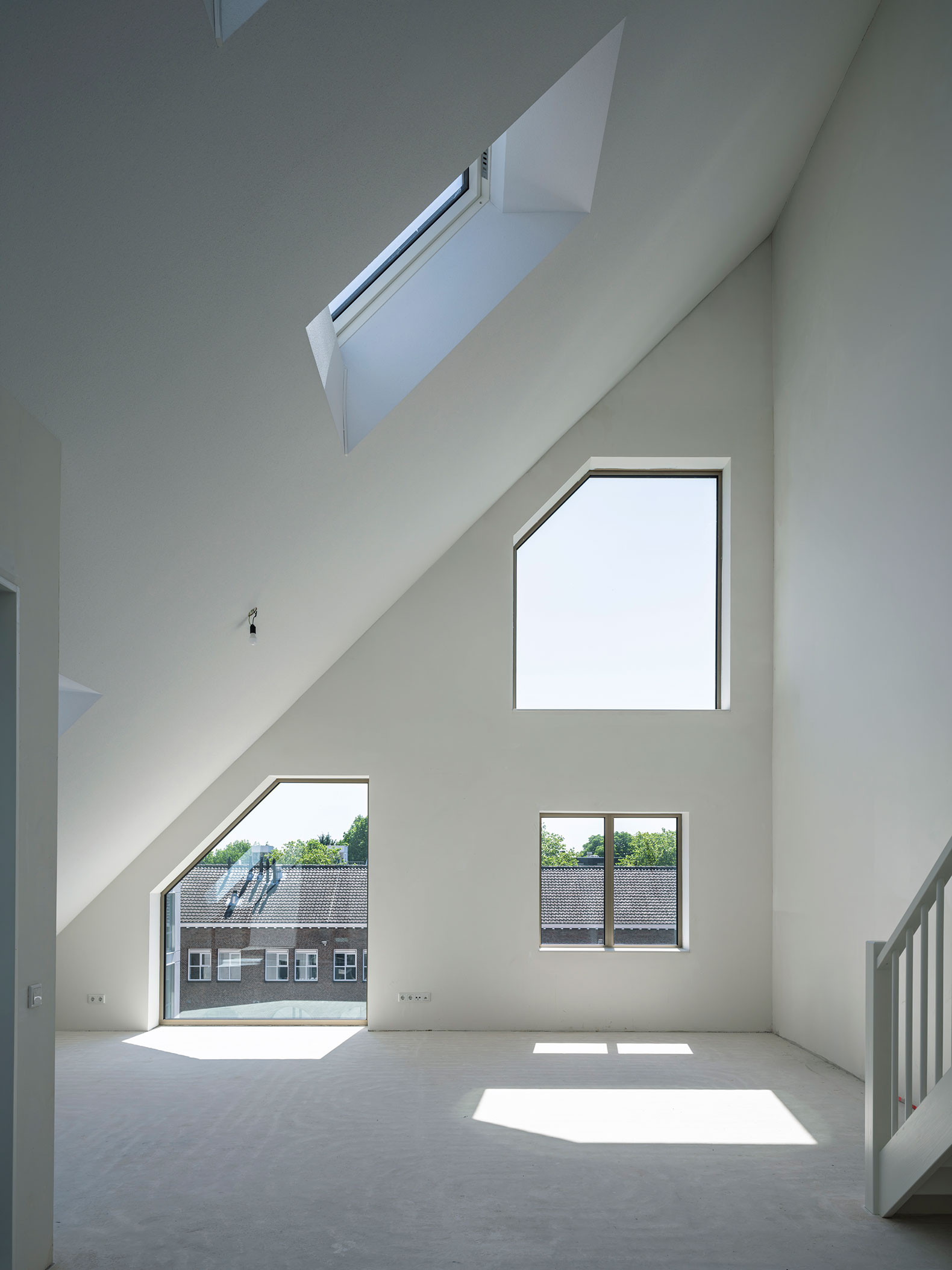
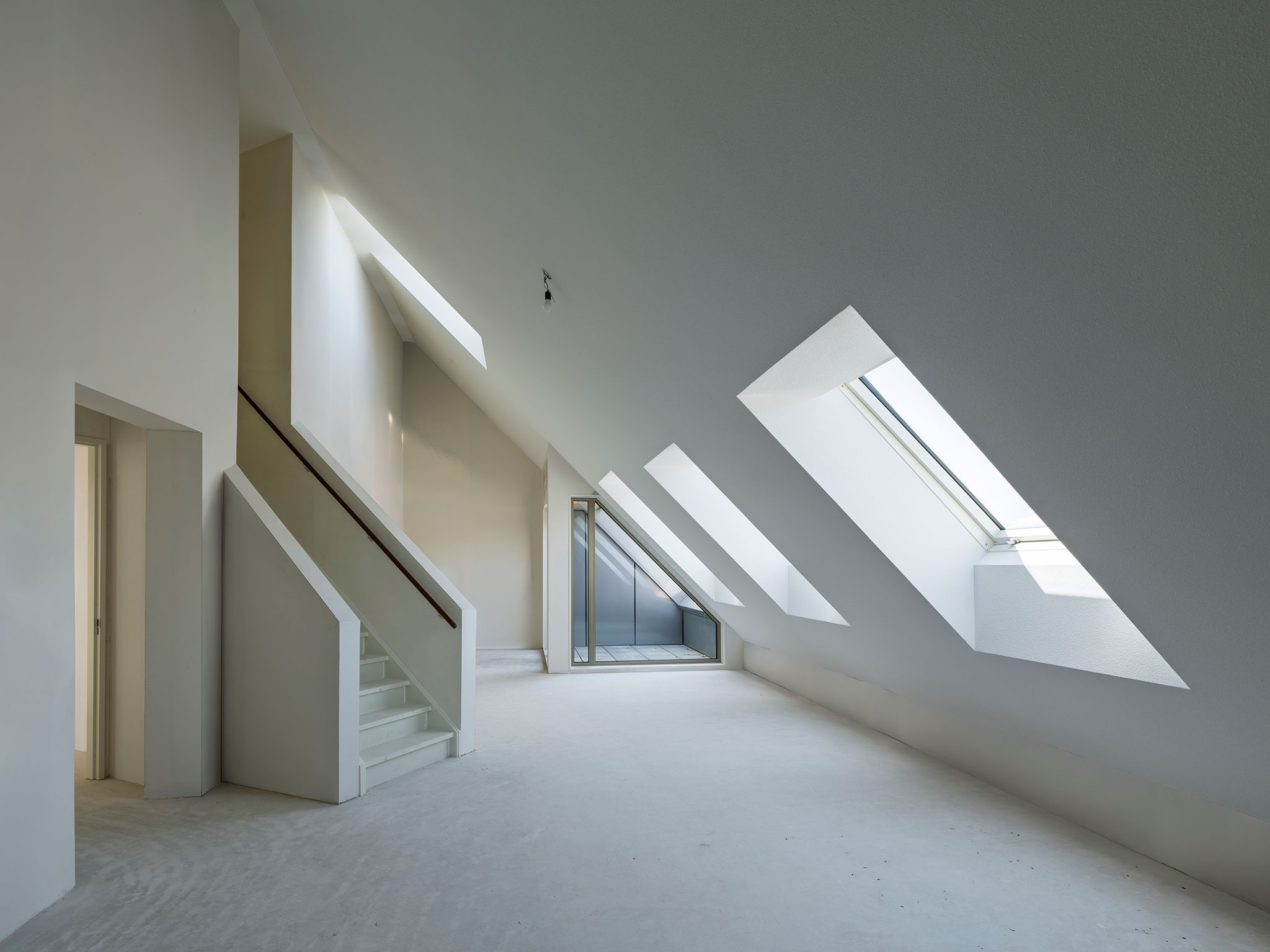
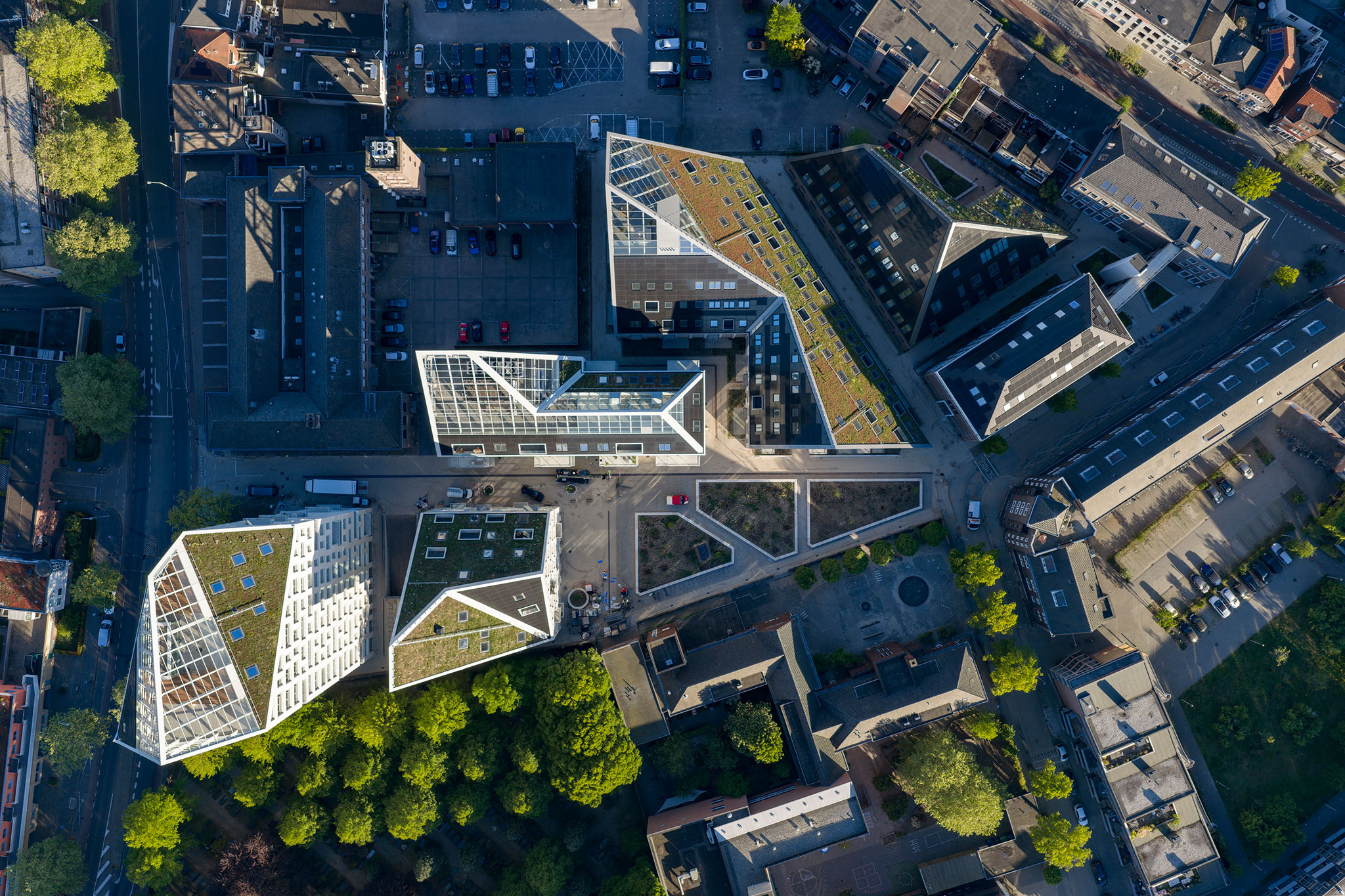
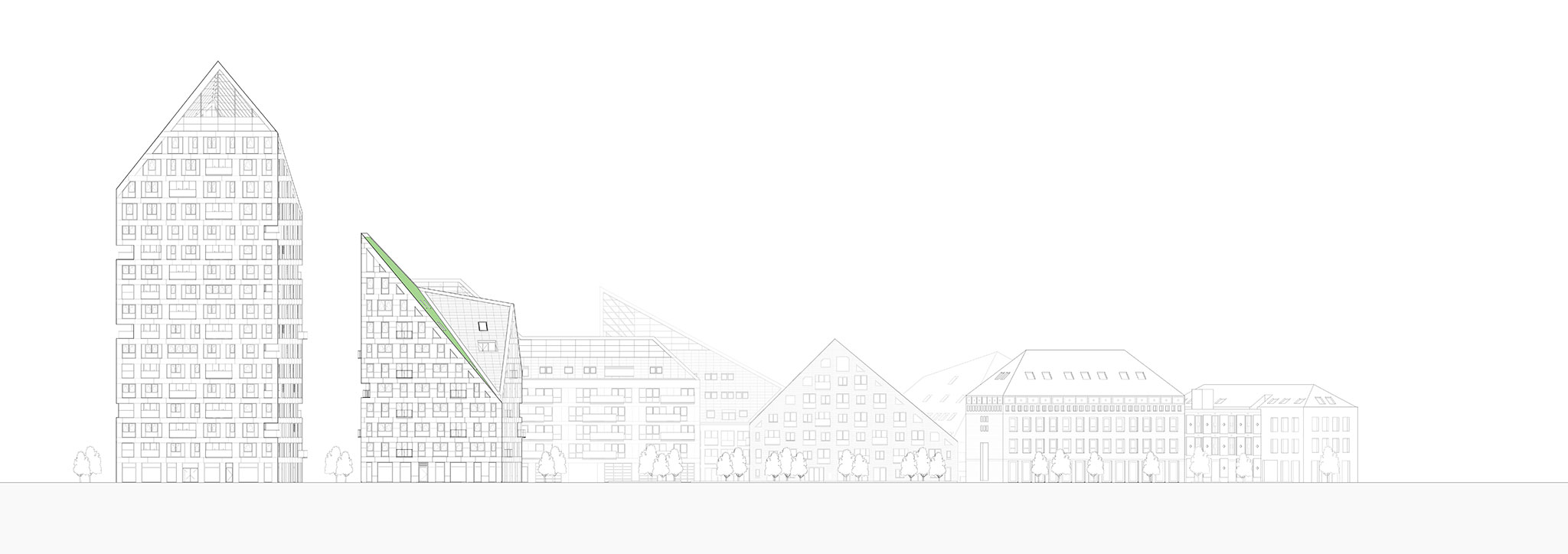
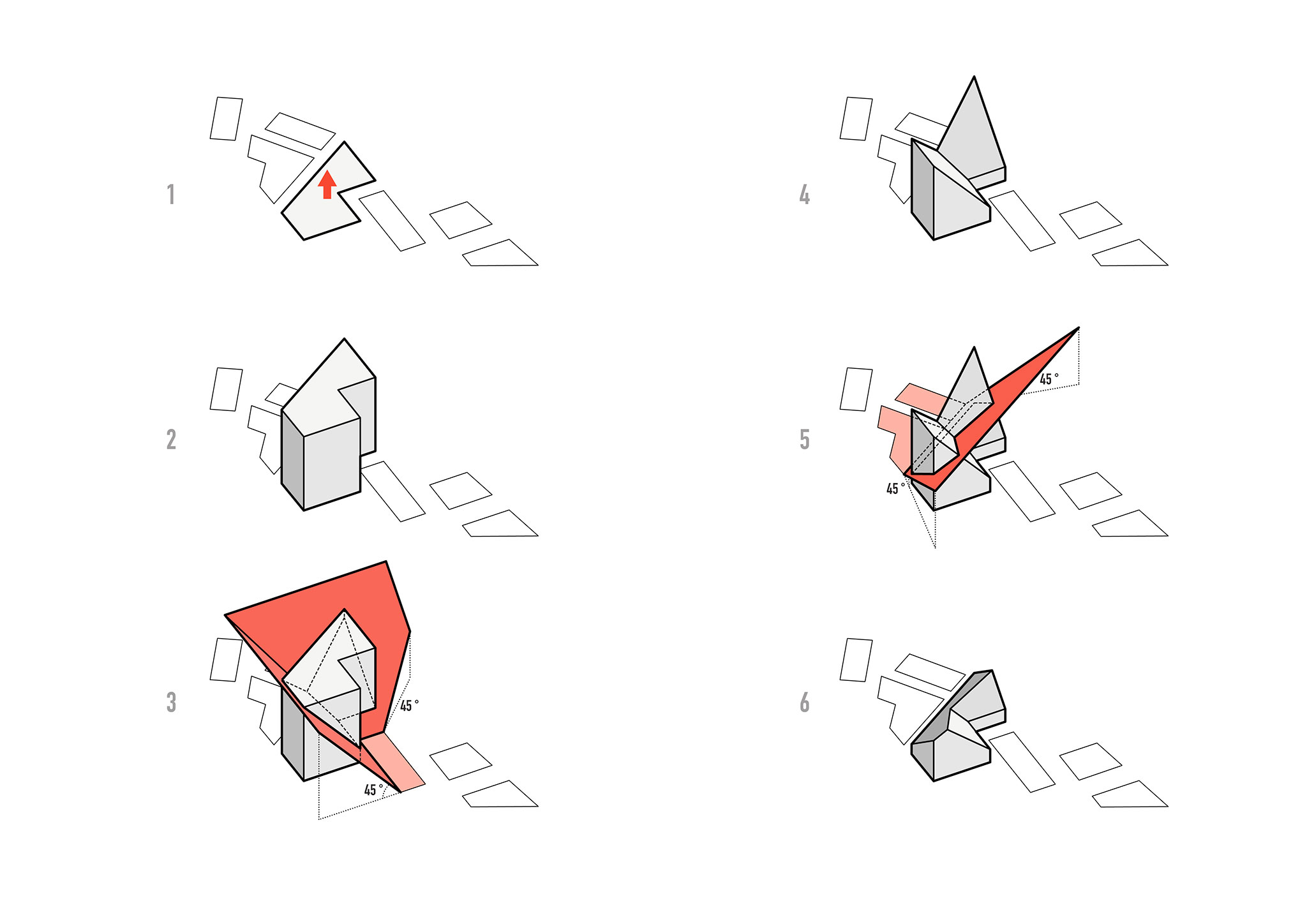
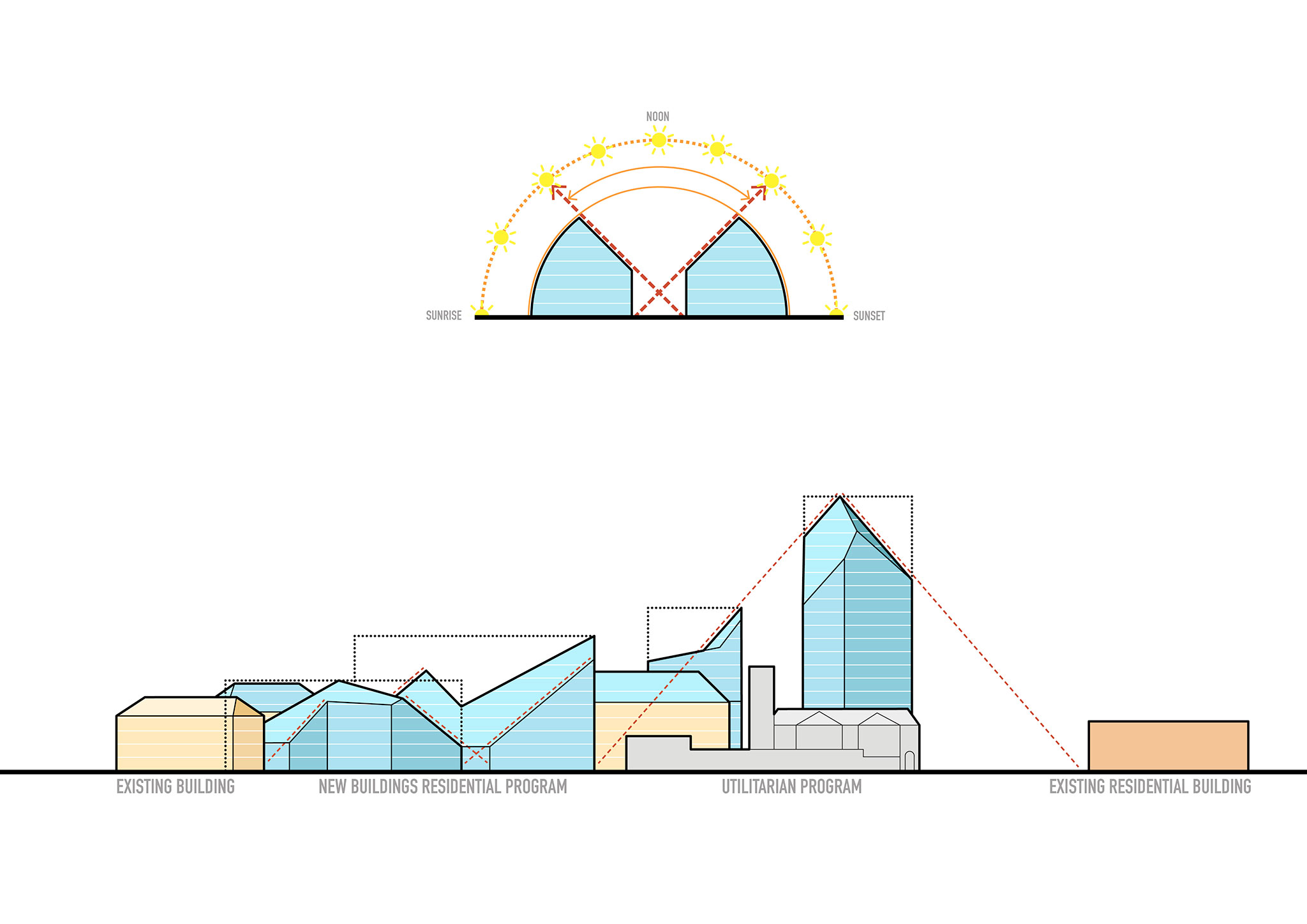
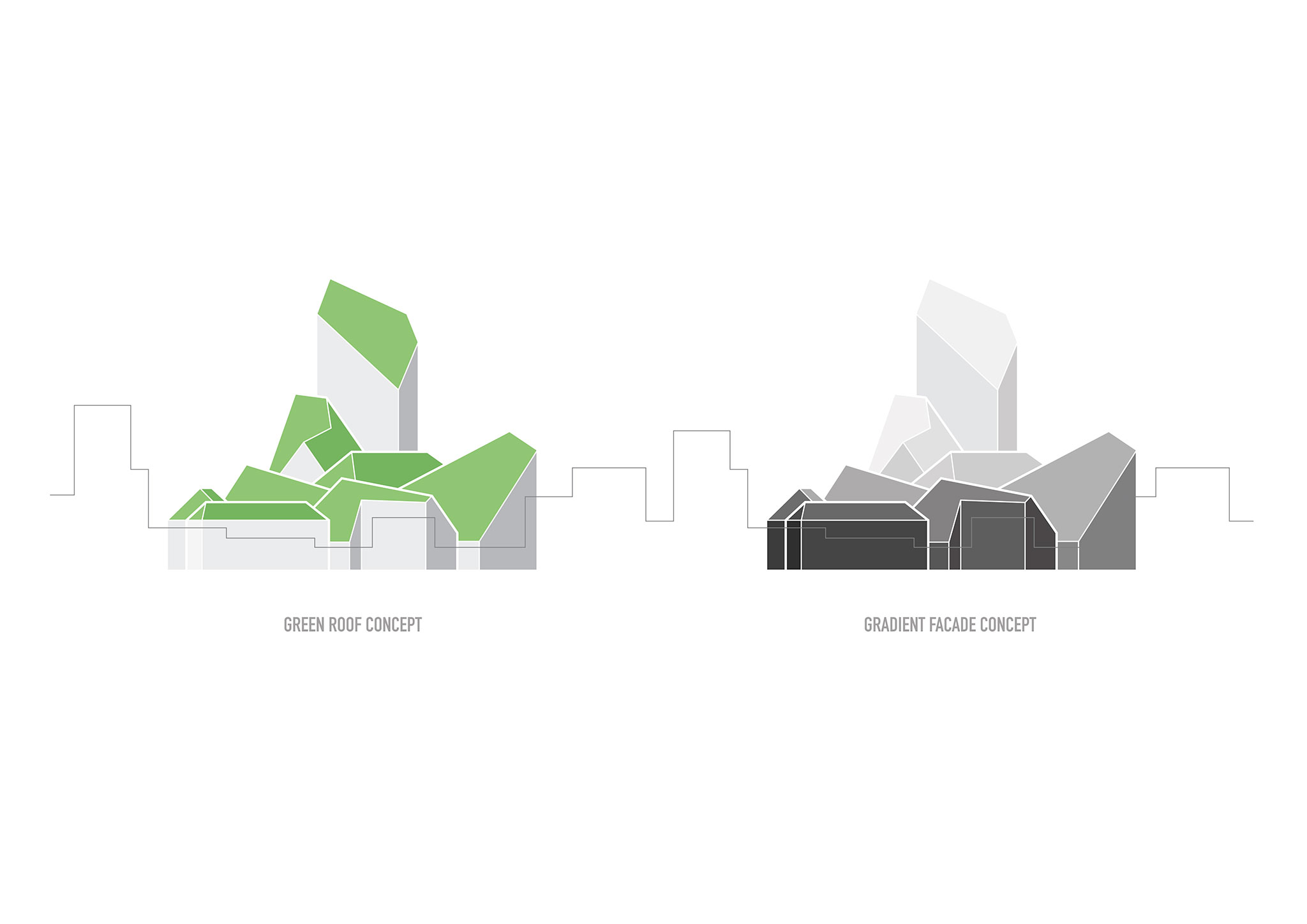
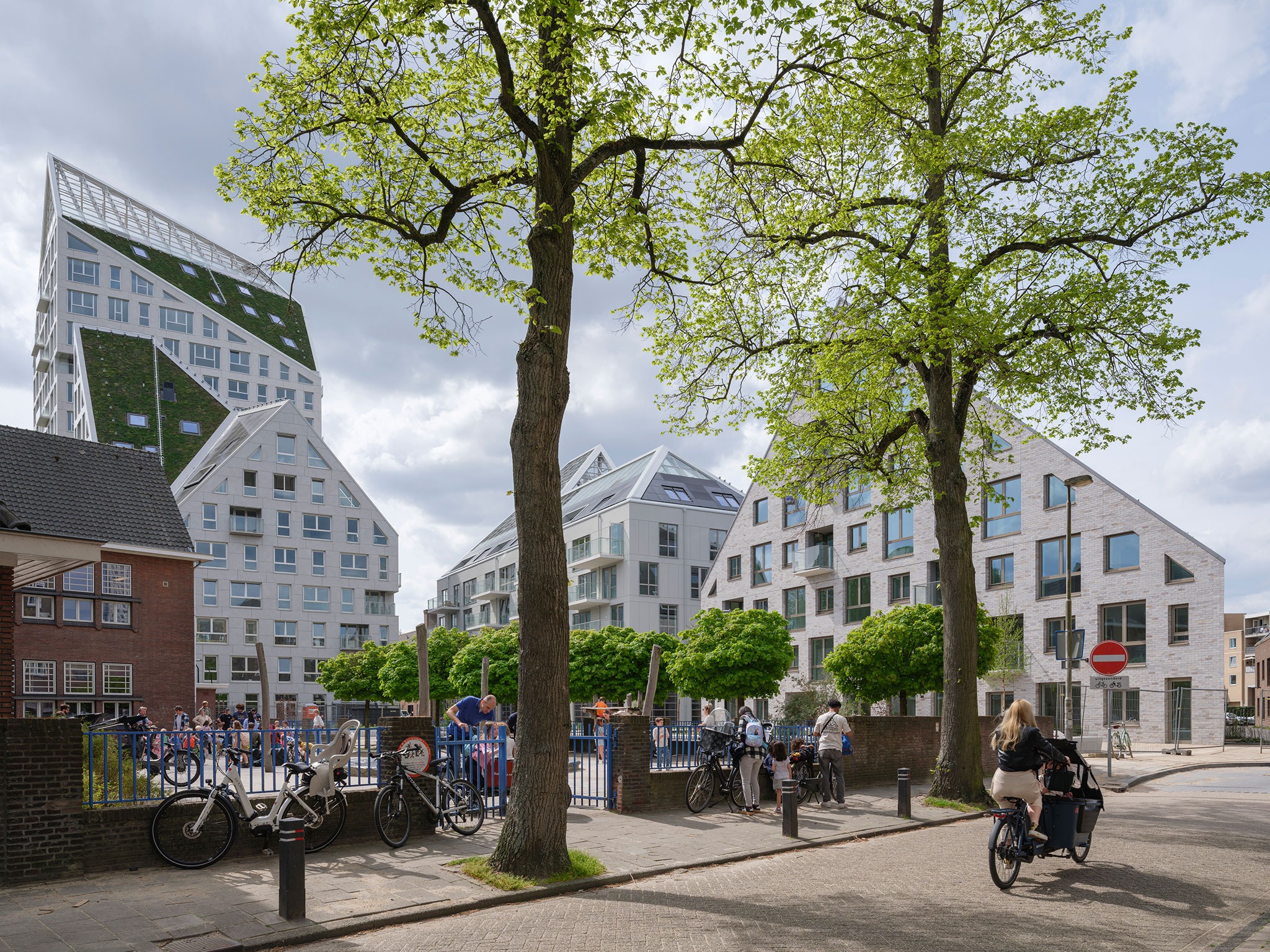
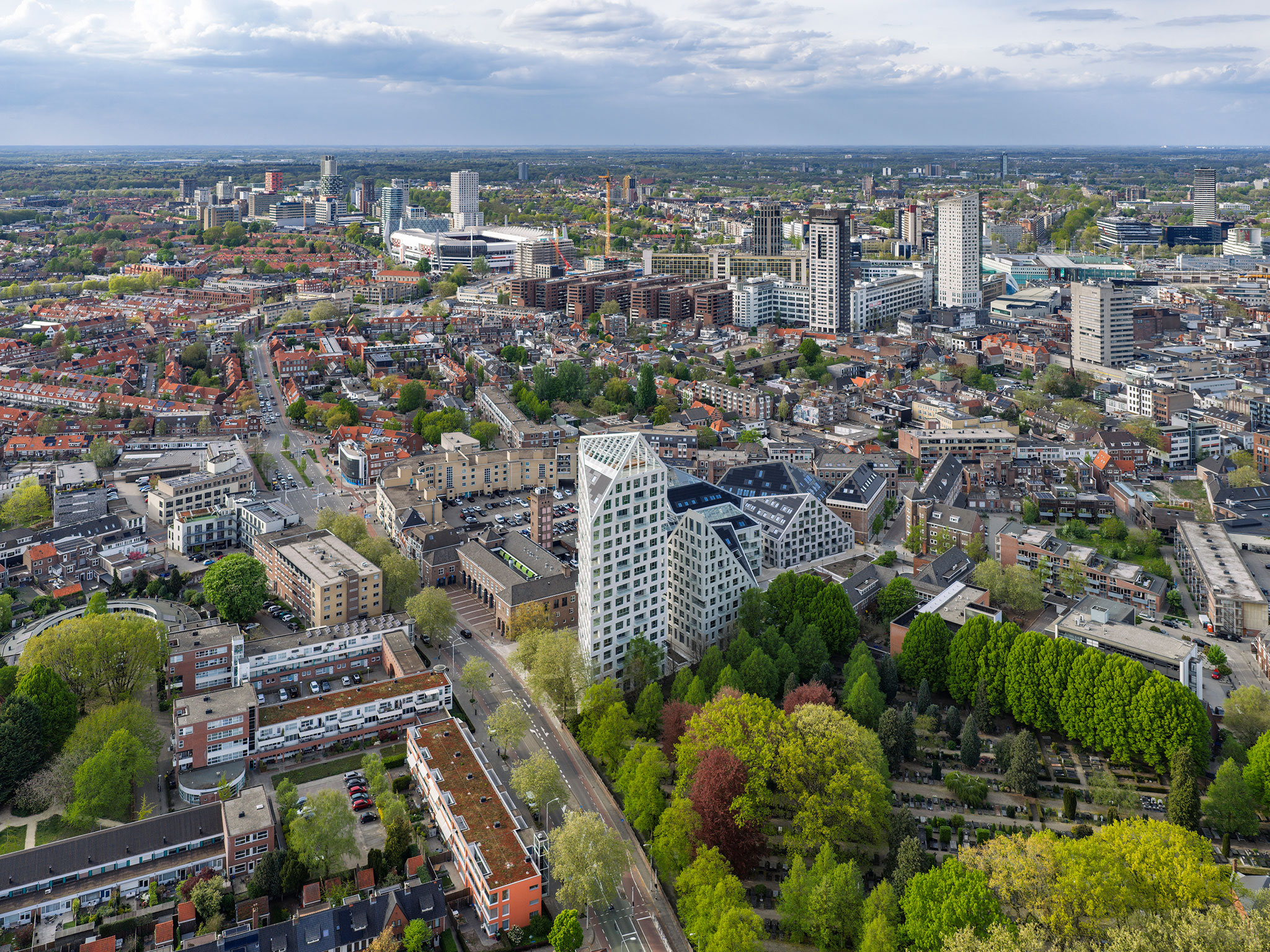
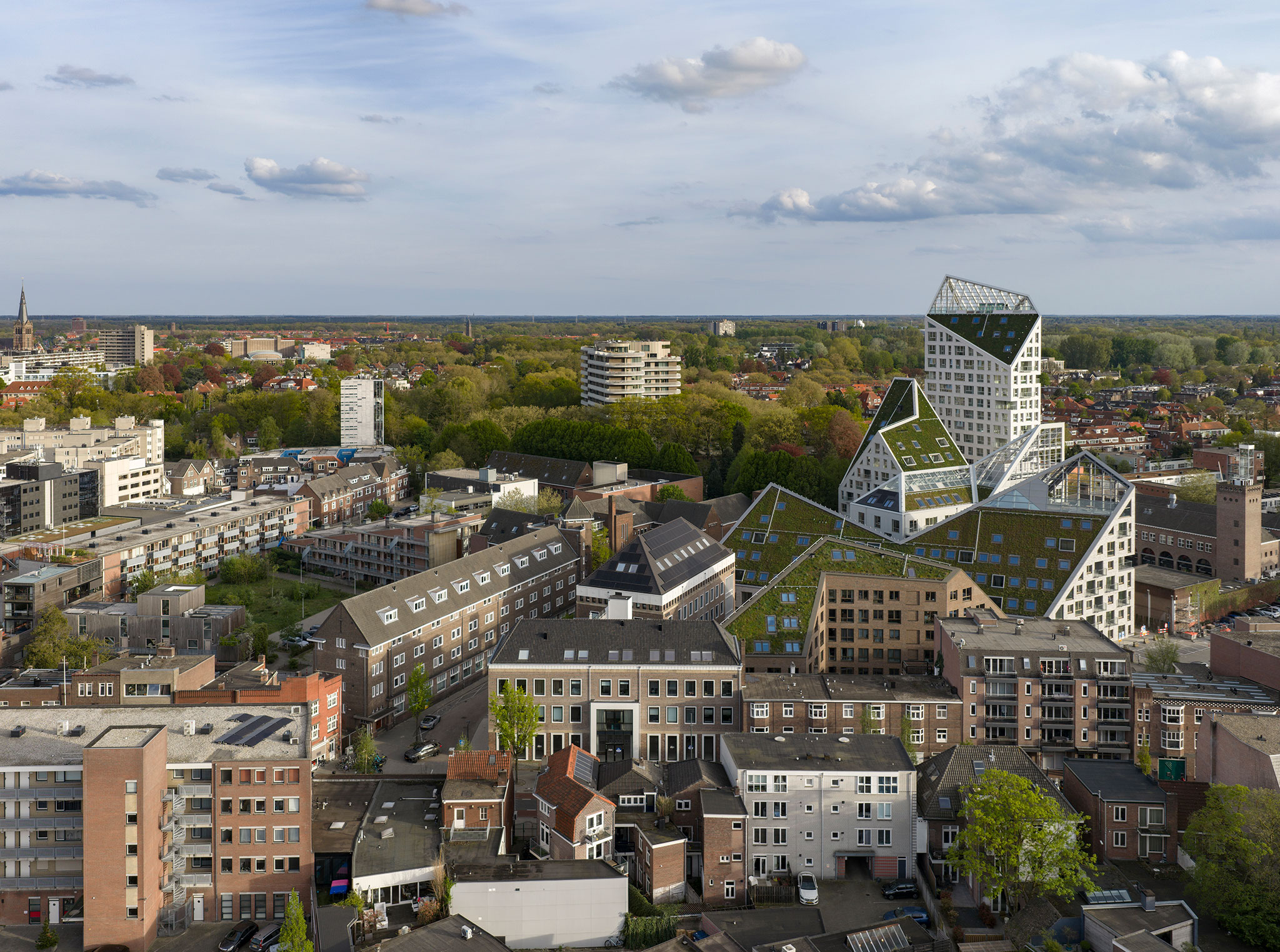
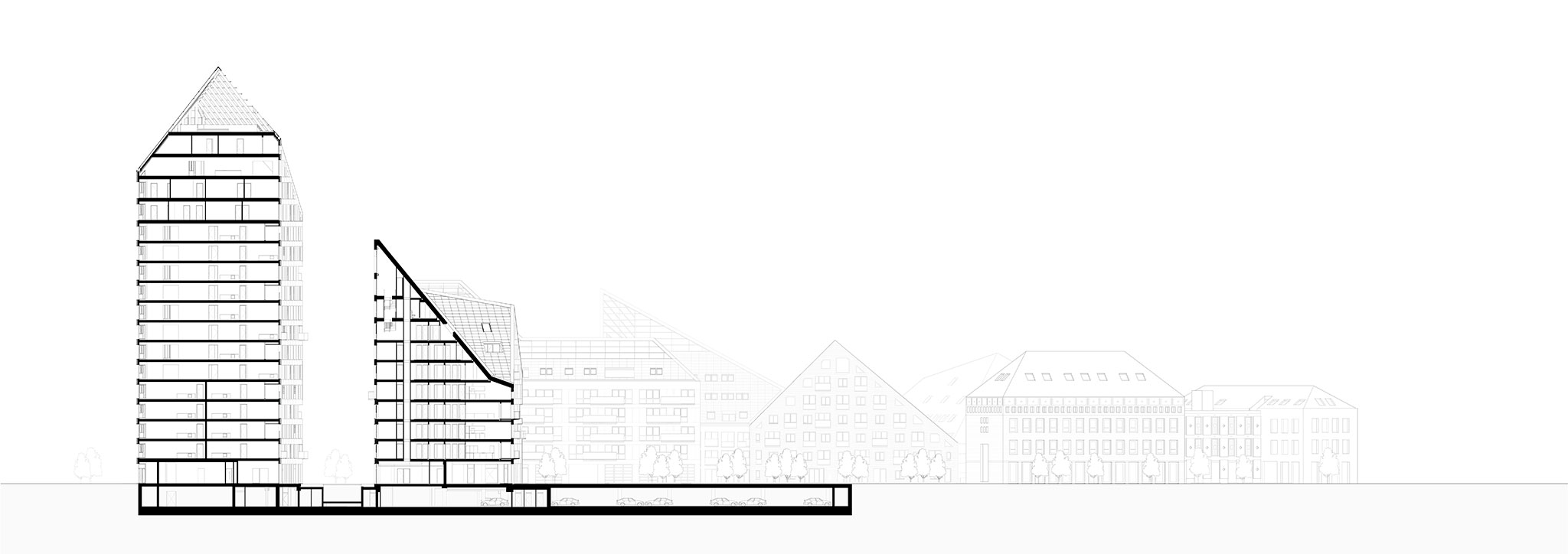
The five new buildings gradually integrate into the historic low-rise architecture of the Bergen neighborhood: the new constructions temporarily alter their height and color, allowing the new, dense development to gradually blend into the scale of its surroundings. The irregular roof pitches ensure the entry of natural light, demonstrating how a project can significantly increase density while maintaining a sense of spacious, bright, and sunny urban environments.

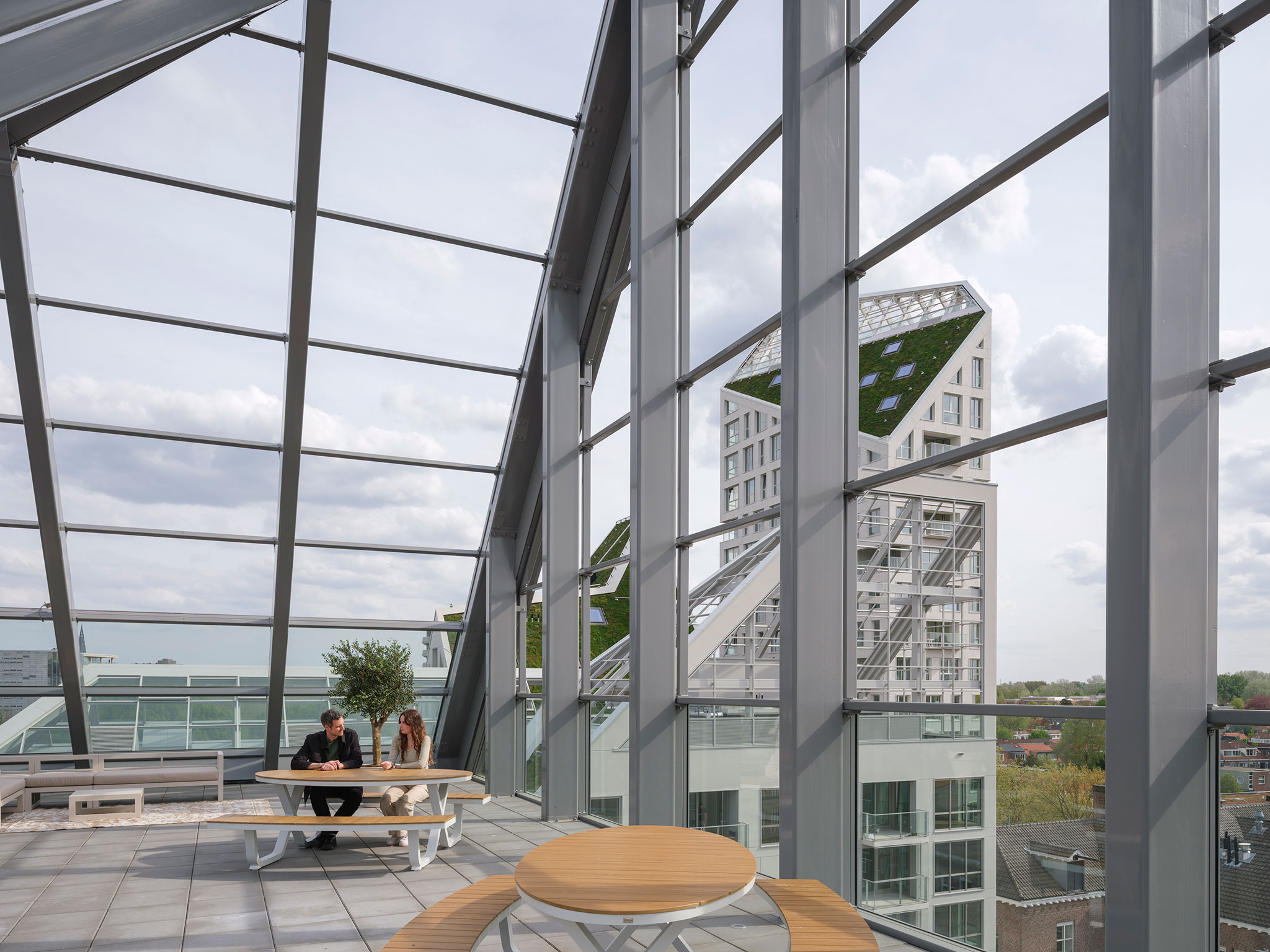
Promoting community activities, the project undertaken by MVRDV incorporates a series of common spaces that foster social cohesion among residents. The open terraces, along with the glass-enclosed greenhouse, provide the ideal setting for residents to meet, organize events, and cultivate gardens. Benefiting from sunny, virtually car-free public spaces, the ground-floor retail units complete the offering, incorporating a variety of terrace areas for restaurants and bars.

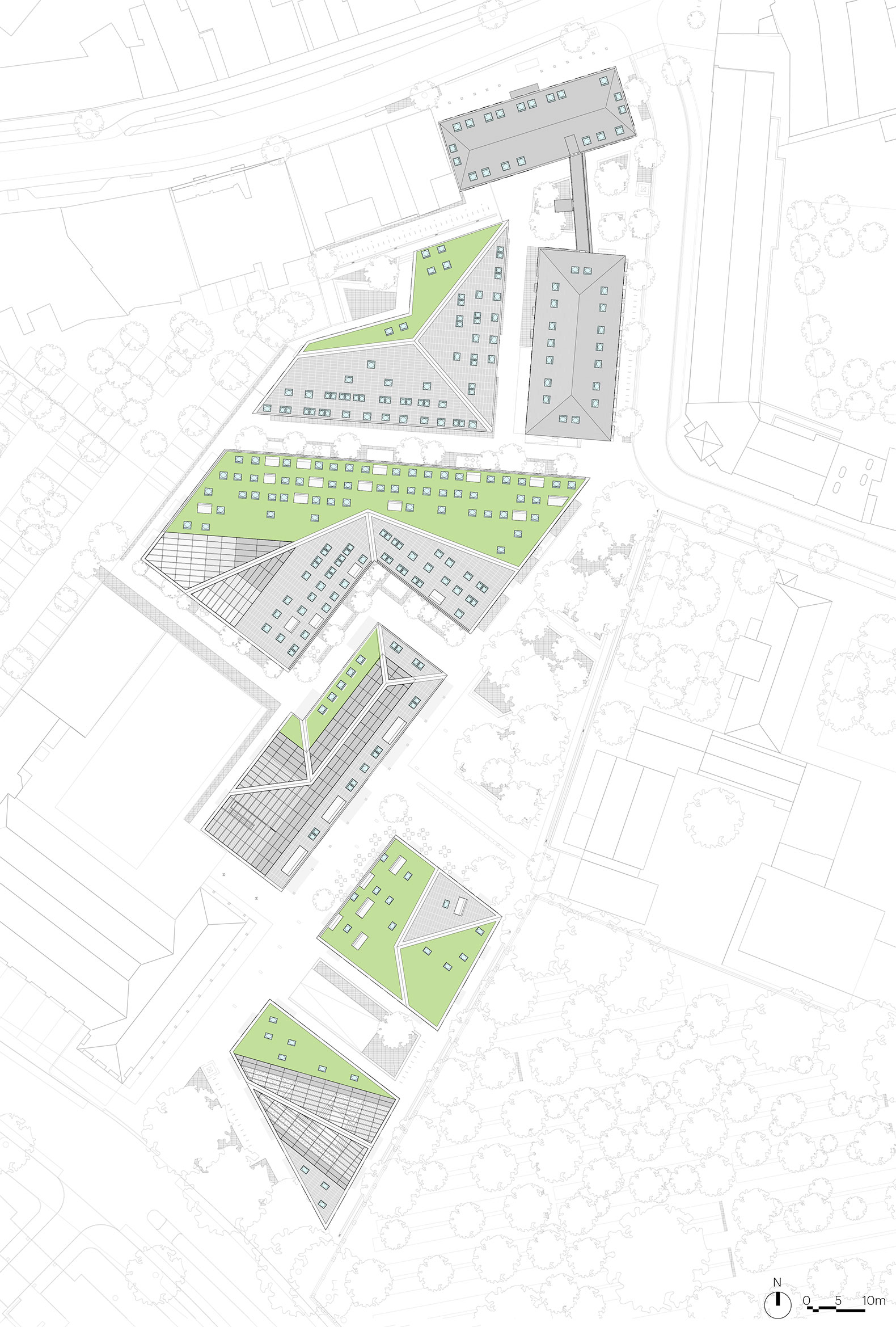
Following sustainability criteria, the addition of green spaces and active rooftops not only promotes biodiversity but also mitigates heat, retains rainwater, and improves the well-being of all residents. Furthermore, the reuse of existing buildings reduces the carbon footprint, while energy-efficient building systems decrease operational emissions. In this way, "Nieuw Bergen" is conceived as a project that manages to densify the city center, without neglecting the sense of community and belonging.
"Nieuw Bergen" by MVRDV. Photograph by Ossip van Duivenbode.

"Nieuw Bergen" by MVRDV. Photograph by Ossip van Duivenbode.

Project description by MVRDV

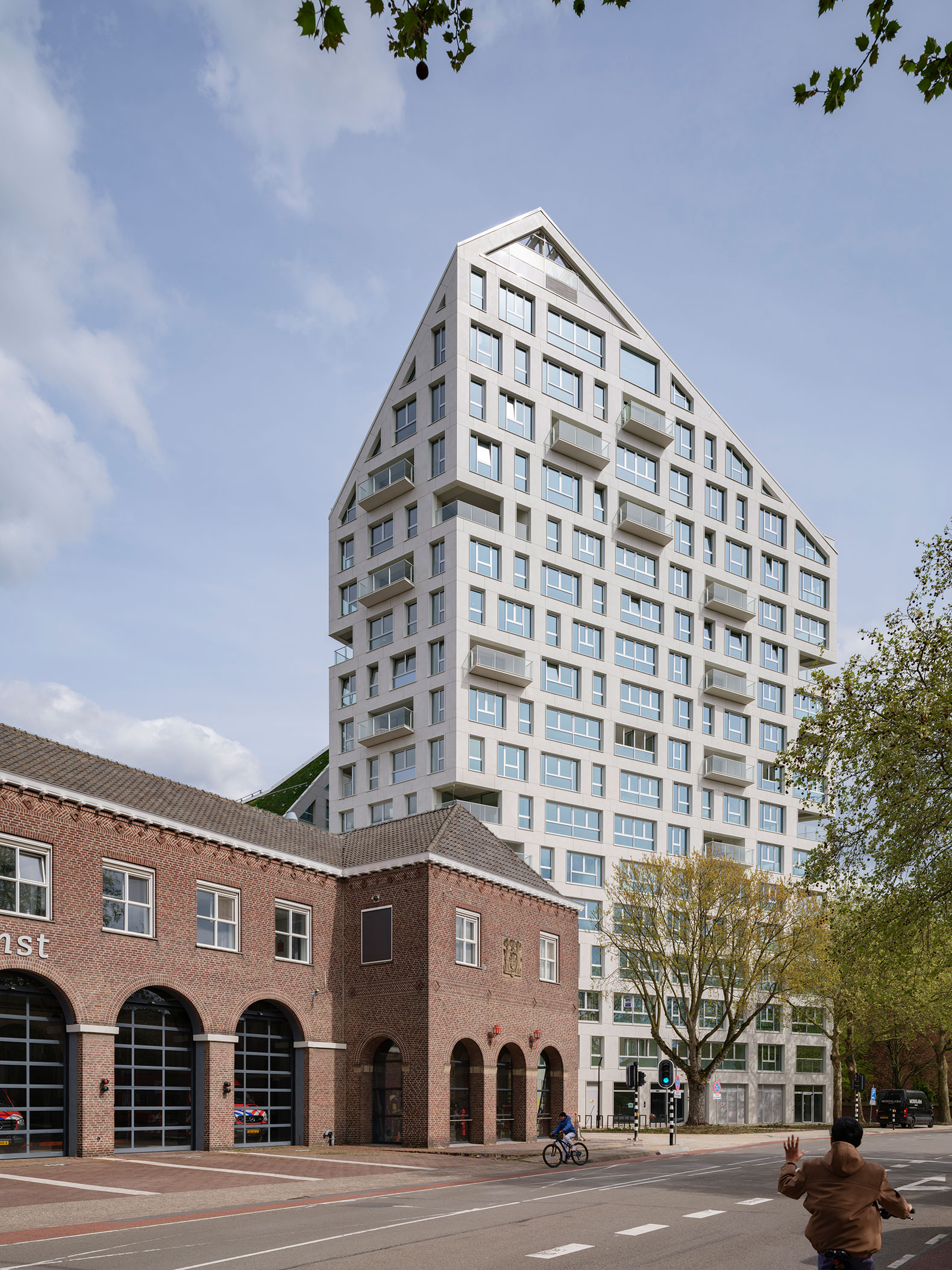
Nieuw Bergen, a residential project comprising seven buildings designed by MVRDV, has been completed in the heart of Eindhoven. The development combines five new buildings with two transformed historic structures, introducing 237 diverse homes to the city that range from apartments for singles to family residences, and from social housing to luxury penthouses. Characterised by jagged sloping roofs that maximise sunlight access while giving the development a dramatic, mountainous silhouette, the project demonstrates how careful design can add density while retaining a sense of openness, character, and urban identity.

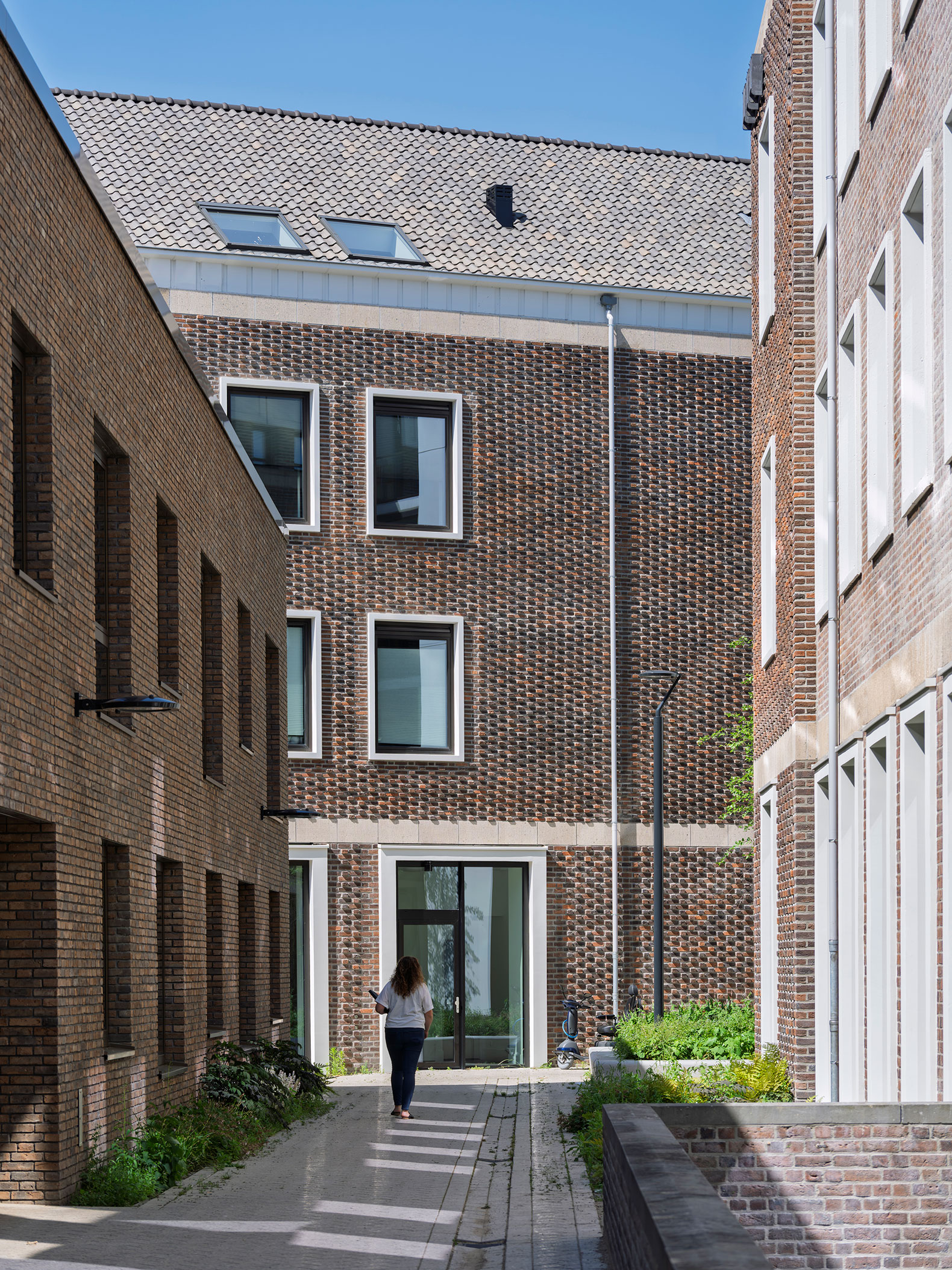
Developed by SDK Vastgoed, the seven buildings – named Indigo, Violet, Bleu, Rouge, Orange, Jaune, and Vert – express a gradual transition in scale that allows the dense new development to blend into the low-rise, historic architecture of Bergen. Vert and Jaune, located next to Grote Berg street at the heart of the neighbourhood, are transformations of two buildings constructed in the 20th century; both served as the neighbourhood’s police station at different periods in time. They are connected by the recreated façade of a building that once filled the space in between – creating a colonnade-like structure that maintains the memory of the ensemble as it once was.

"Nieuw Bergen" by MVRDV. Photograph by Ossip van Duivenbode.

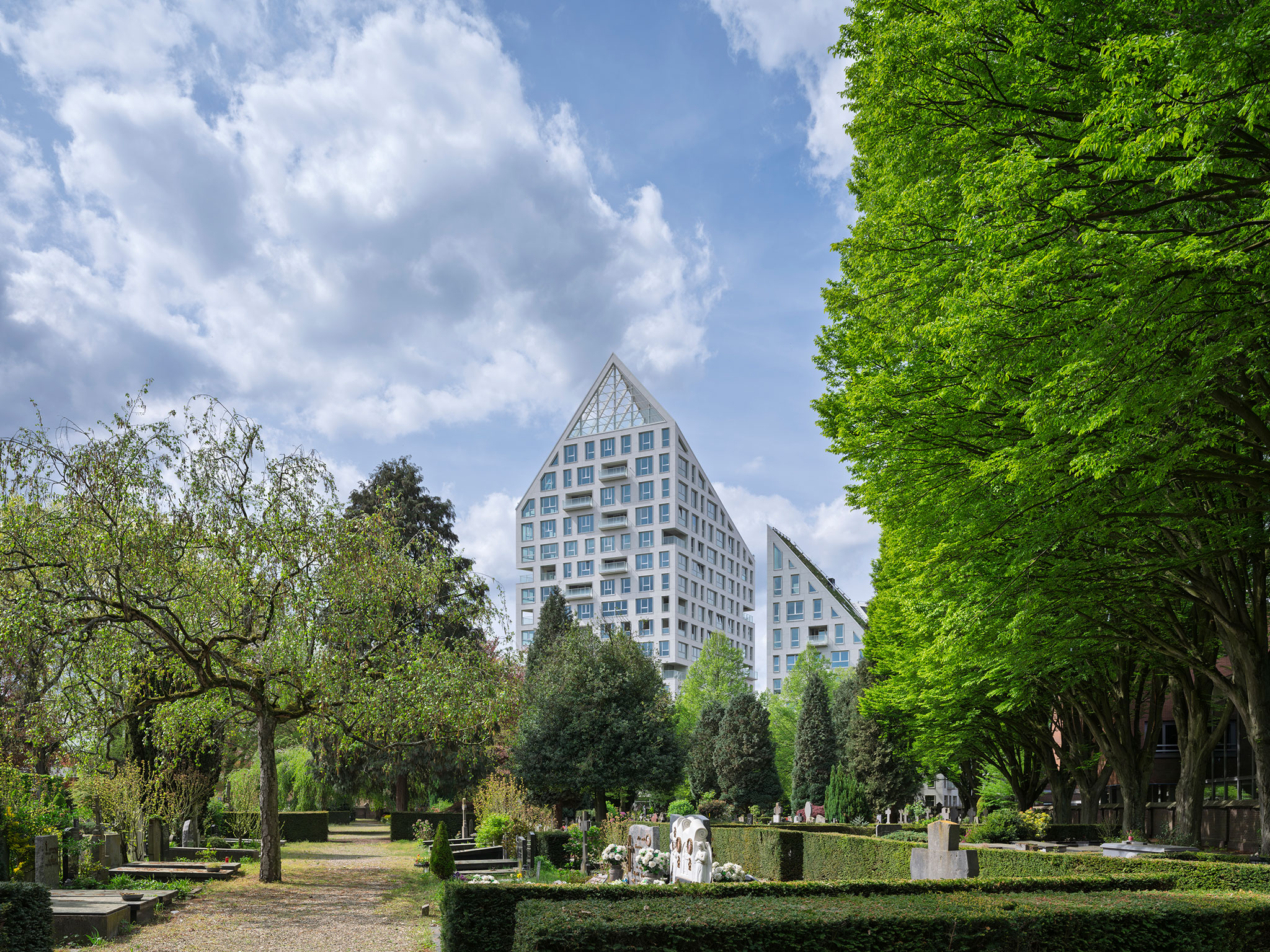
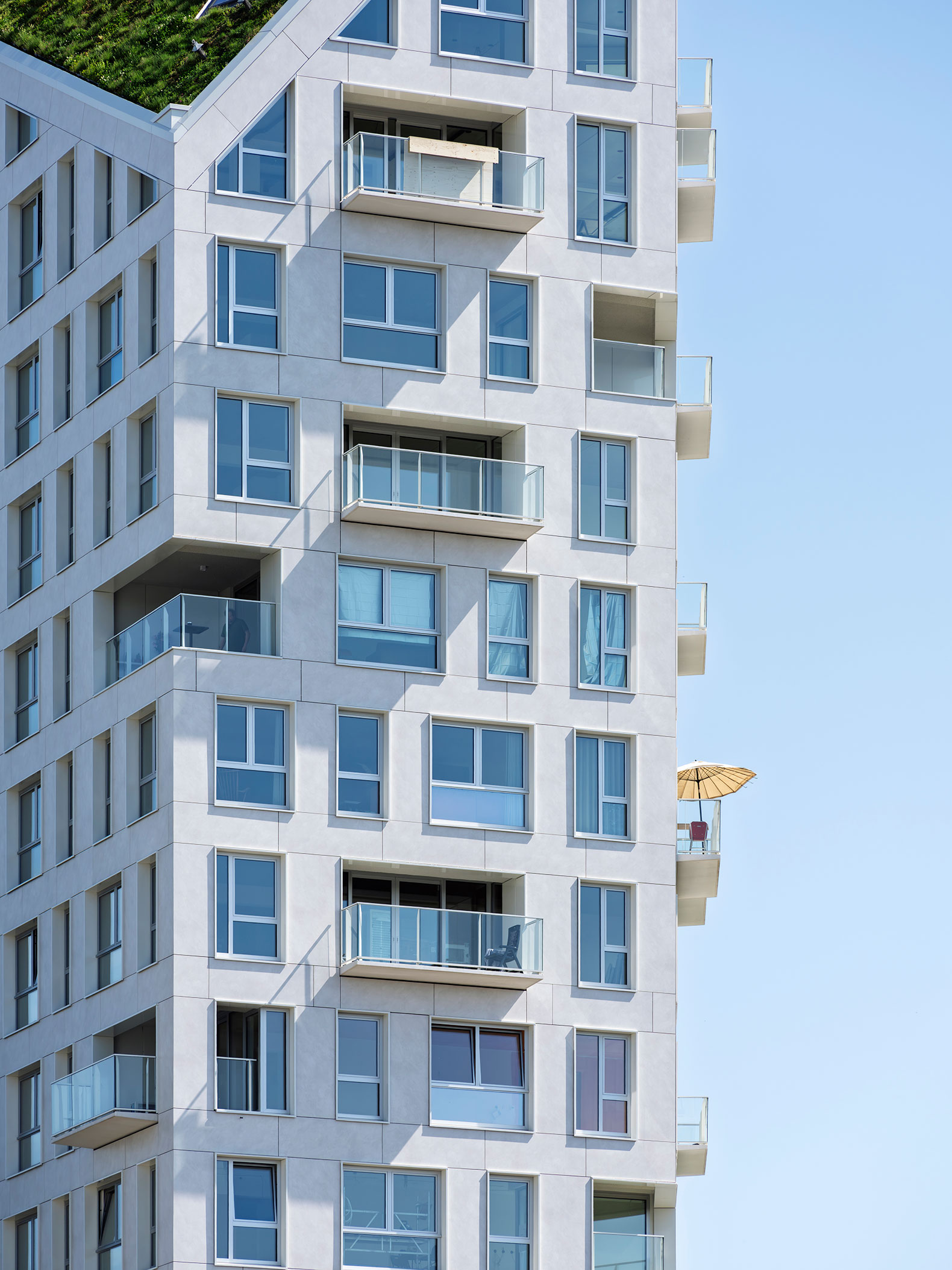
Behind these renovated buildings, the five new structures gradually rise in scale, from the six-storey Orange – which houses the development’s 48 apartments for social housing – eventually rising to a height of 17 storeys with the tower at the other end of the development, Indigo. This transition is reinforced by a gradient of façade colours, starting with the dark red brick of the two existing buildings, and moving through brown, beige, and light grey before ending at the white stone façade of the tower.

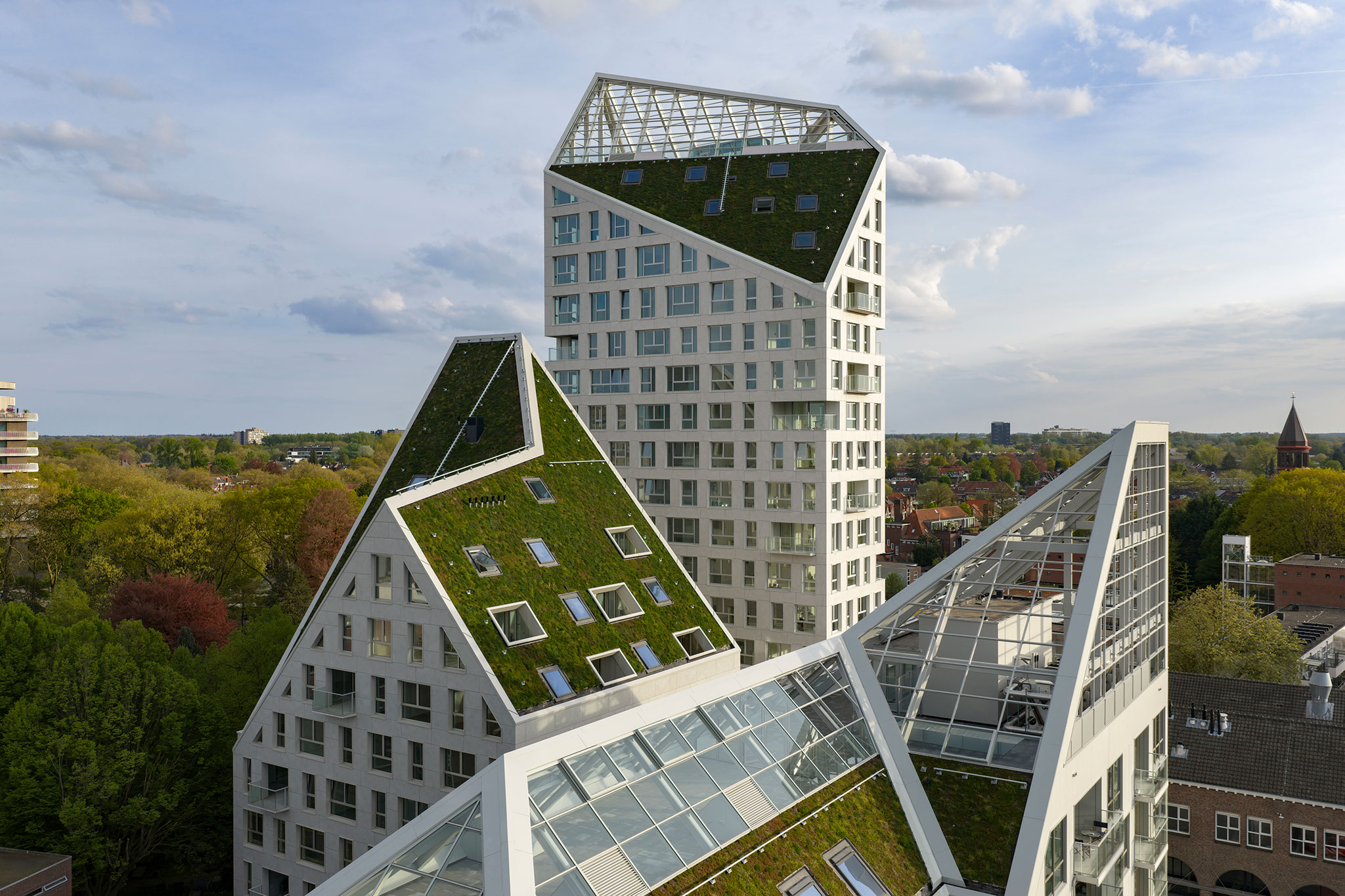
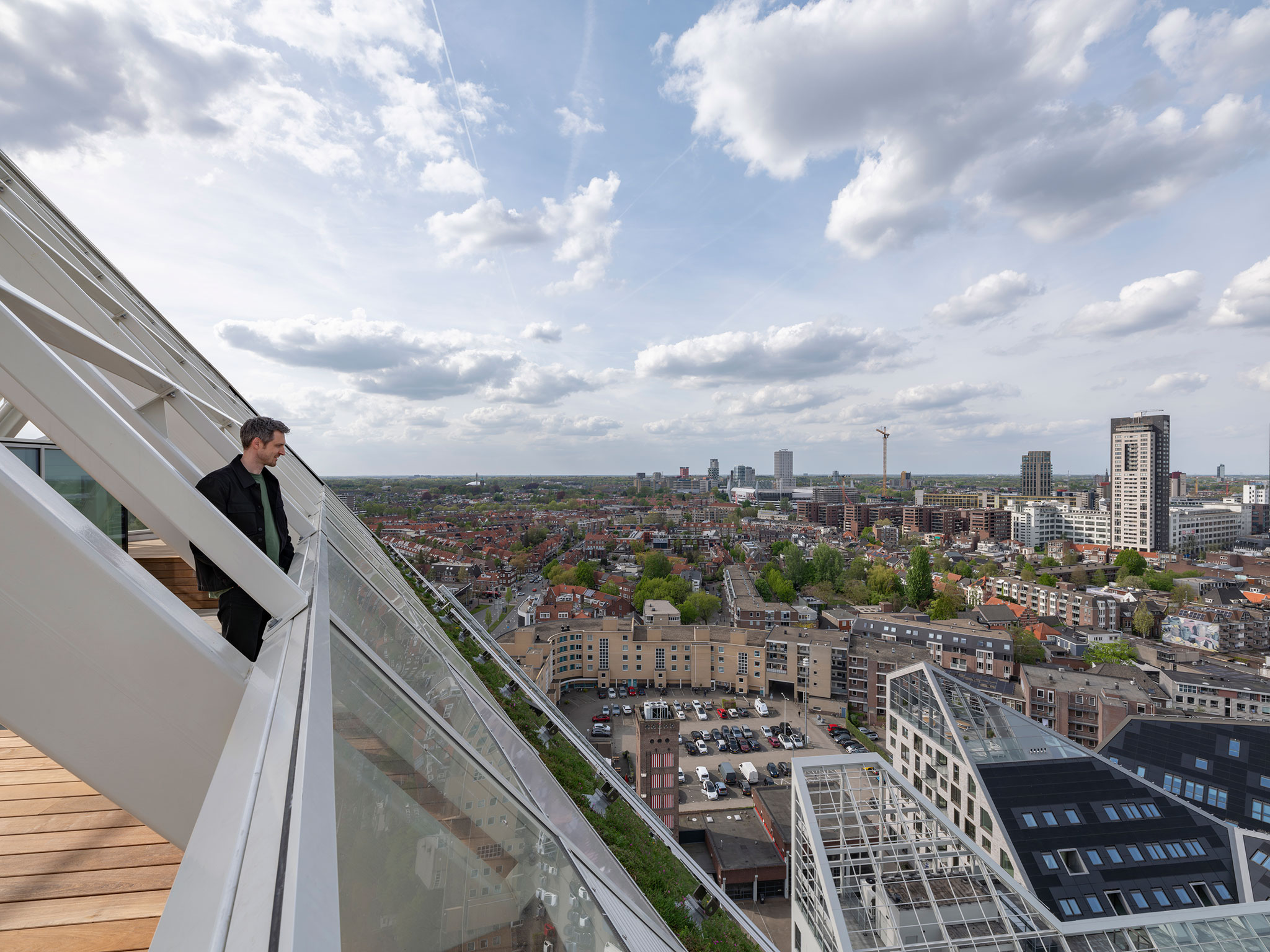
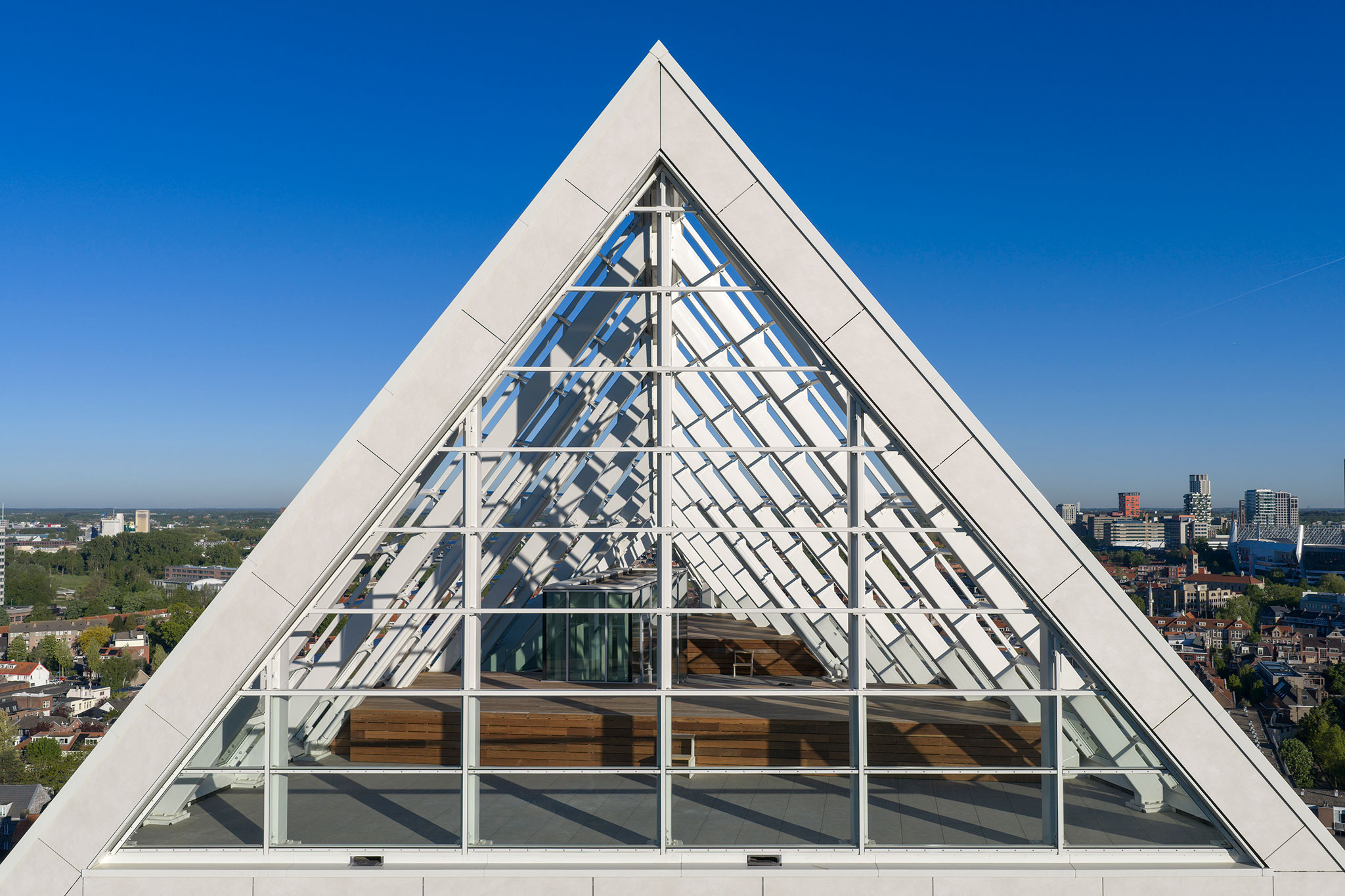
The jagged rooflines of these five buildings are created using a systematic approach to daylight access: roof surfaces trace a 45-degree angle from the base of neighbouring structures, ensuring bright, sunlit homes and public spaces and making Nieuw Bergen feel open and airy in spite of its density and intimate street layout. These sloping roofs also provide ideal surfaces for photovoltaic panels, and for green roofs which add to the biodiversity of the neighbourhood.
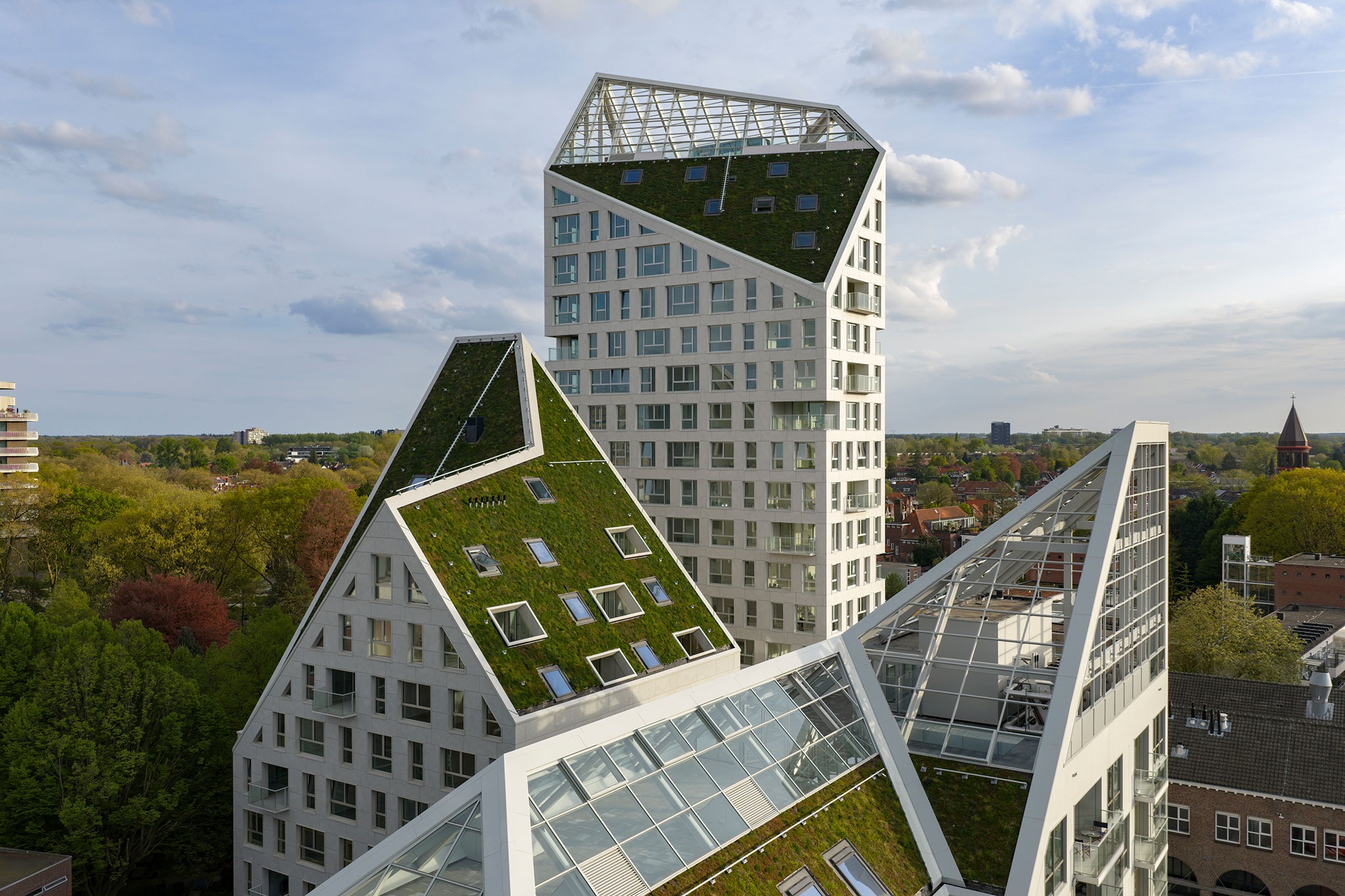
"Nieuw Bergen" by MVRDV. Photograph by Ossip van Duivenbode.

The peaks of three of these roofs feature open roof terraces, with glass parapets serving as windbreaks. These provide communal spaces on Bleu and Rouge, with the roof of Bleu also including a glass-enclosed greenhouse for communal gardening. These opportunities for residents to meet together, host events, and cultivate gardens helps to stimulate social cohesion among residents. Commercial spaces, located in the ground floors of Indigo, Violet, Bleu, Vert, and Jaune, will also benefit from the sunny, largely car-free public spaces that encourage visitors to linger, while also providing ample room for dining and drinking terraces.

“The neighbourhood of De Bergen is one of the oldest and most authentic parts of Eindhoven, known for its small restaurants and boutique shops, making it a charismatic neighbourhood close to the city centre”.

“To turn this site from a cluster of municipal buildings and parking lots into a place to live and stay, with activity throughout the day, we wanted buildings with character, embedded into the neighbourhood in a way that feels natural. The sloping roofs achieve this in a way that benefits both residents in their apartments and visitors in the streets. The result is a chain of polite, yet simultaneously radical buildings with an exciting contour resembling a mountainous landscape – adding ‘bergen’ in De Bergen!”

Jacob van Rijs, MVRDV founding partner.
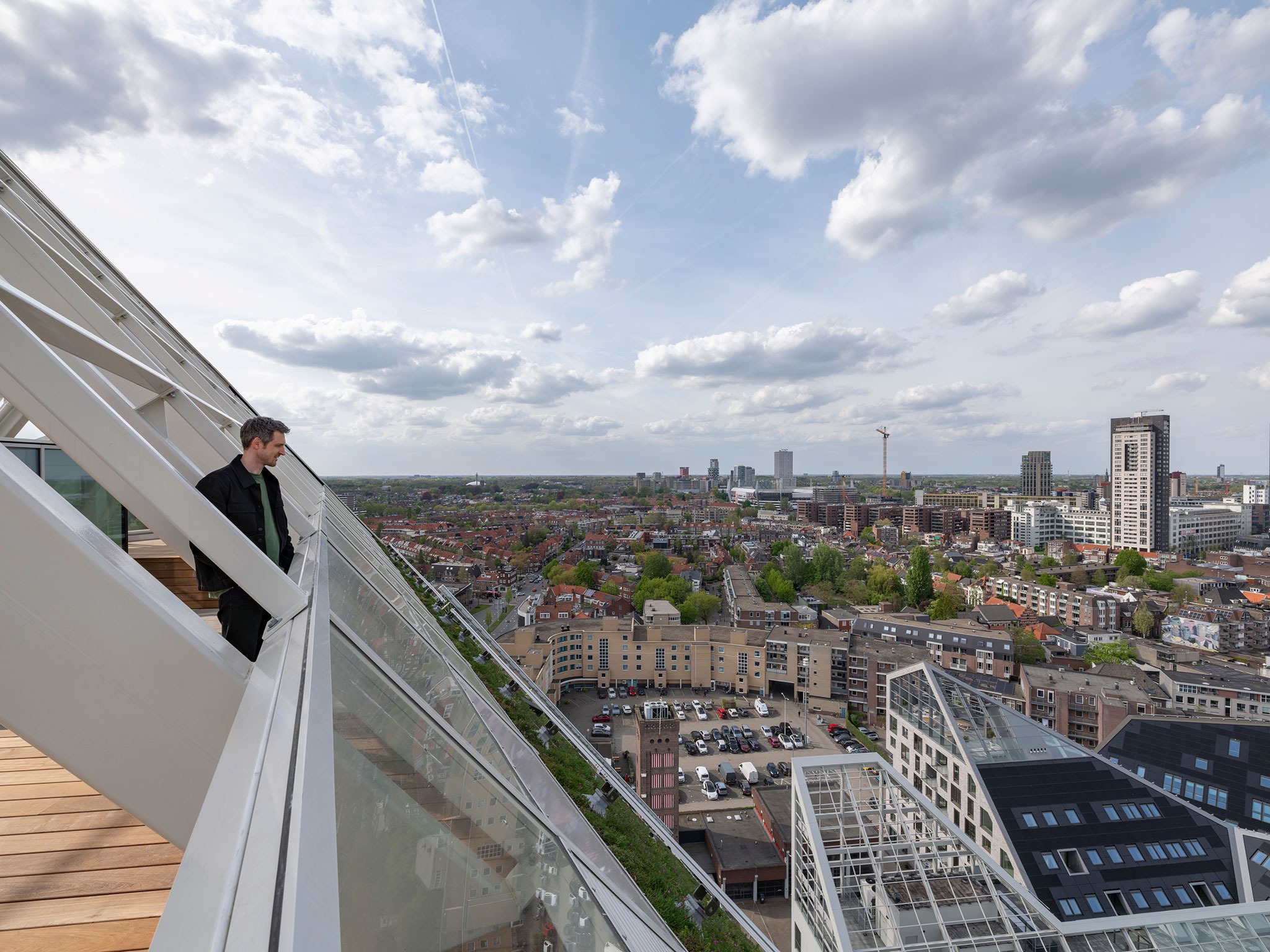
"Nieuw Bergen" by MVRDV. Photograph by Ossip van Duivenbode.

Sustainability was a key consideration in the project’s design: the reuse of existing structures reduces embodied carbon, while energy-efficient building systems, solar panels, and green roofs limit operational emissions. The combination of landscaping and rooftop greenery enhances biodiversity, mitigates heat, provides rainwater retention, and improves residents’ well-being. The completed project demonstrates how thoughtful design can densify a city centre without compromising character, sustainability, or community.
More information

Label
Architects
Text

MVRDV. Lead Architects.- Winy Maas, Jacob van Rijs, Nathalie de Vries.
Founding Partner in charge.- Jacob van Rijs.
Partner.- Frans de Witte.

+ + copy Created with Sketch.
- + copy Created with Sketch.
Label
Interior (lobbies)
Text

Partner.- Fokke Moerel.
Design team.- Elien Deceuninck, Basak Günalp, Karolina Szostkiewicz, Tanne Marais, Amanda Galiana Ortega.

+ + copy Created with Sketch.
- + copy Created with Sketch.
Label
Collaborators
Text

Landscape architect.- MTD Landschapsarchitecten.
Structural engineer.- Adviesbureau Tielemans.
MEP.- Huisman & van Muijen.
Building Physics.- DPA Cauberg-Huygen.
Technical design.- INBO.

+ + copy Created with Sketch.
- + copy Created with Sketch.
Label
Client
Text

SDK Vastgoed (VolkerWessels).

+ + copy Created with Sketch.
- + copy Created with Sketch.
Label
Business Development
Text

Willeke Vester.

+ + copy Created with Sketch.
- + copy Created with Sketch.
Label
Contractor
Text

Stam + De Koning Bouw.

+ + copy Created with Sketch.
- + copy Created with Sketch.
Label
Area
Text

31,246 sqm.
237 housing units, hospitality and retail spaces.

+ + copy Created with Sketch.
- + copy Created with Sketch.
Label
Dates
Text

2016-2026.

+ + copy Created with Sketch.
- + copy Created with Sketch.
Label
Location
Text

Eindhoven, Netherlands.

+ + copy Created with Sketch.
- + copy Created with Sketch.
Label
Photography
+ + copy Created with Sketch.
- + copy Created with Sketch.

MVRDV was founded in 1993 by Winy Maas, Jacob van Rijs and Nathalie de Vries in Rotterdam, the Netherlands. The practice engages globally in providing solutions to contemporary architectural and urban issues. A highly collaborative, research-based design method involves clients, stakeholders and experts from a wide range of fields from early on in the creative process. The results are exemplary, outspoken projects, which enable our cities and landscapes to develop towards a better future.

The products of MVRDV’s unique approach to design vary, ranging from buildings of all types and sizes, to urban plans and visions, numerous publications, installations and exhibitions. Built projects include the Netherlands Pavilion for the World EXPO 2000 in Hannover; the Market Hall, a combination of housing and retail in Rotterdam; the Pushed Slab, a sustainable office building in Paris’ first eco-district; Flight Forum, an innovative business park in Eindhoven; the Silodam Housing complex in Amsterdam; the Matsudai Cultural Centre in Japan; the Unterföhring office campus near Munich; the Lloyd Hotel in Amsterdam; the Ypenburg housing and urban plan in The Hague; the Didden Village rooftop housing extension in Rotterdam; the music centre De Effenaar in Eindhoven; the Gyre boutique shopping center in Tokyo; a public library in Spijkenisse; an international bank headquarters in Oslo, Norway; and the iconic Mirador and Celosia housing in Madrid.

Current projects include a variety of housing projects in the Netherlands, France, China, India, and other countries; a community centre in Copenhagen and a cultural complex in Roskilde, Denmark, a public art depot in Rotterdam, the transformation of a mixed use building in central Paris, an office complex in Shanghai, and a commercial centre in Beijing, and the renovation of an office building in Hong Kong. MVRDV is also working on large scale urban masterplans in Bordeaux and Caen, France and the masterplan for an eco-city in Logroño, Spain. Larger scale visions for the future of greater Paris, greater Oslo, and the doubling in size of the Dutch new town Almere are also in development.

MVRDV first published a manifesto of its work and ideas in FARMAX (1998), followed by MetaCity/Datatown (1999), Costa Iberica (2000), Regionmaker (2002), 5 Minutes City (2003), KM3 (2005), Spacefighter (2007) and Skycar City (2007), and more recently The Vertical Village (with The Why Factory, 2012) and the firm’s first monograph of built works MVRDV Buildings (2013). MVRDV deals with issues ranging from global sustainability in large scale studies such as Pig City, to small, pragmatic architectural solutions for devastated areas such as New Orleans.

The work of MVRDV is exhibited and published worldwide and has received numerous international awards. One hundred architects, designers and urbanists develop projects in a multi-disciplinary, collaborative design process which involves rigorous technical and creative investigation. MVRDV works with BIM and has official in-house BREEAM and LEED assessors.

Together with Delft University of Technology, MVRDV runs The Why Factory, an independent think tank and research institute providing an agenda for architecture and urbanism by envisioning the city of the future.

Read more
Published on: June 14, 2026
Cite:
metalocus, AGUSTINA BERTA
"Gradual integration into the heart of Eindhoven. "Nieuw Bergen" by MVRDV" METALOCUS. Accessed
<http://www.metalocus.es/en/news/gradual-integration-heart-eindhoven-nieuw-bergen-mvrdv> ISSN 1139-6415
Loading content ...
Loading content ...
Loading content ...
Loading content ...
Loading content ...
Loading content ...
Loading content ...
Loading content ...
Loading content ...
Loading content ...
Loading content ...
Loading content ...
Loading content ...
Loading content ...
Loading content ...
Loading content ...
Loading content ...
Loading content ...
Loading content ...
Loading content ...
Loading content ...
Loading content ...
Loading content ...
Loading content ...
Loading content ...
Loading content ...
Loading content ...
Loading content ...
Loading content ...
Loading content ...
Loading content ...
Loading content ...
Loading content ...
Loading content ...
Loading content ...
Loading content ...
Loading content ...
Loading content ...
Loading content ...
Loading content ...
Loading content ...
Loading content ...
Loading content ...
Loading content ...
Loading content ...
Loading content ...
Loading content ...
Loading content ...
Loading content ...
Loading content ...
Loading content ...
Loading content ...
Loading content ...
Loading content ...