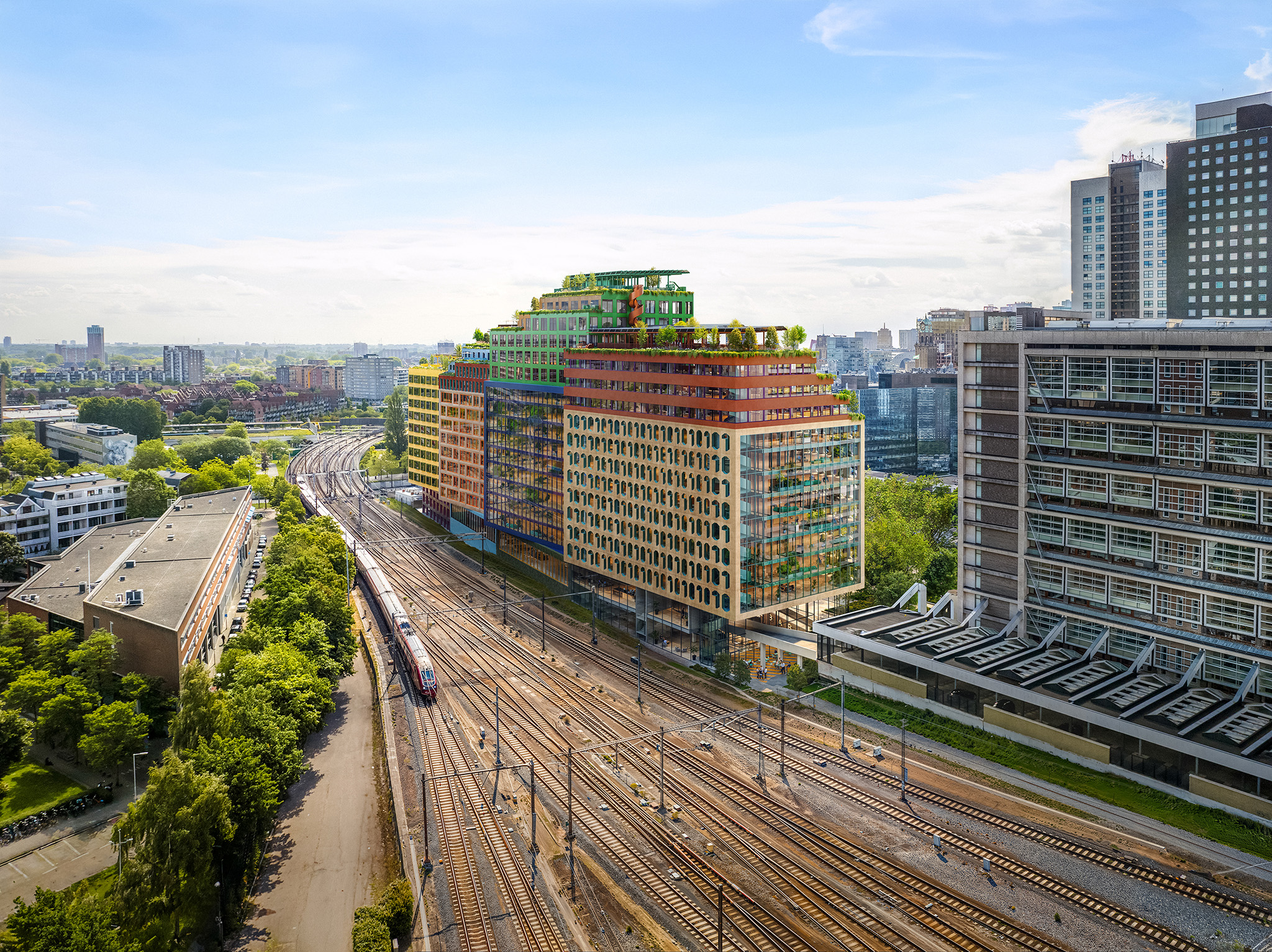
Designed by MVRDV for the developer LSI, the 47,000-square-meter building is poised to become the largest newly constructed private office building in the Netherlands. The proposal includes a wide variety of commercial uses, including a restaurant and an event space.
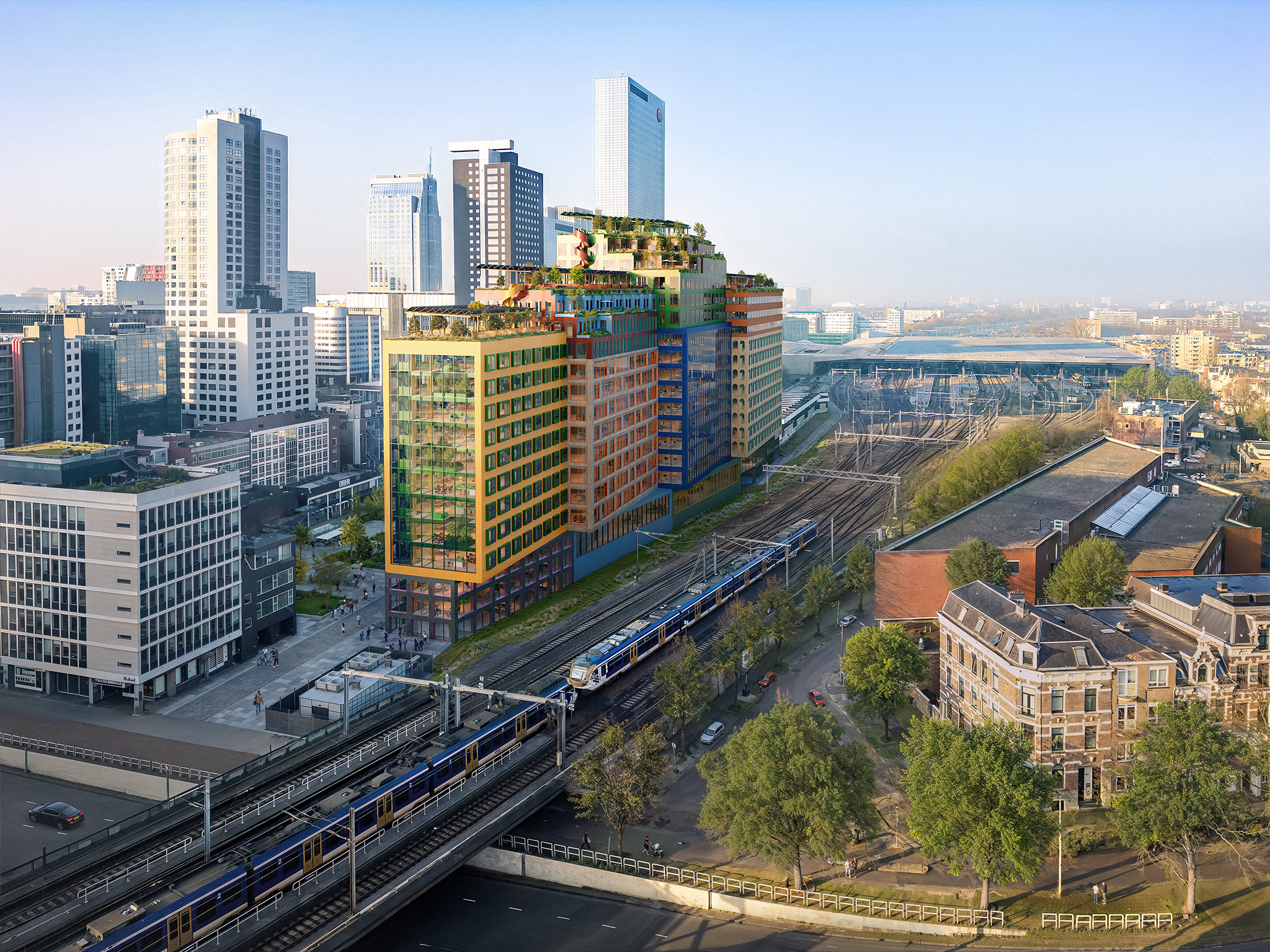
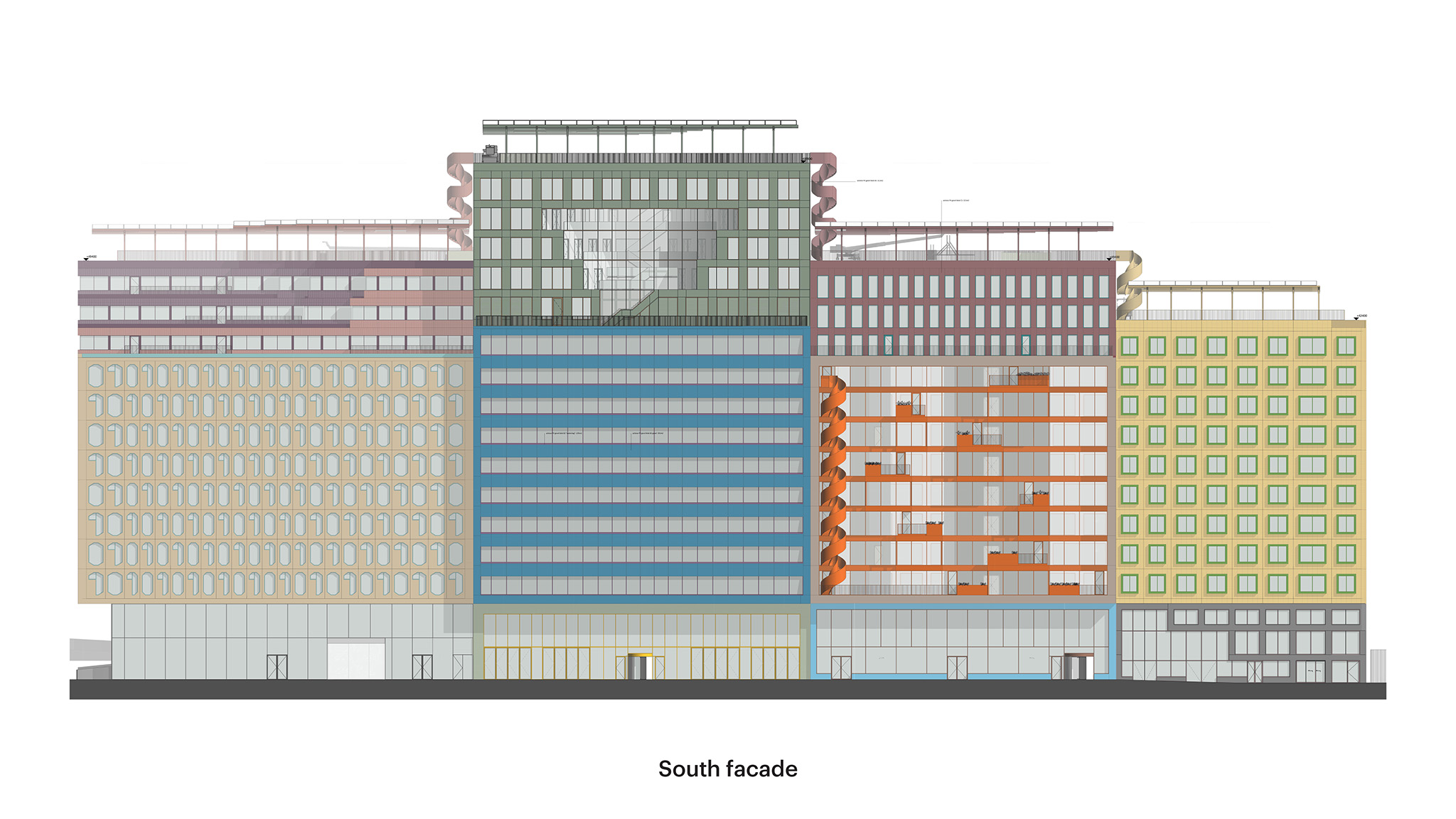
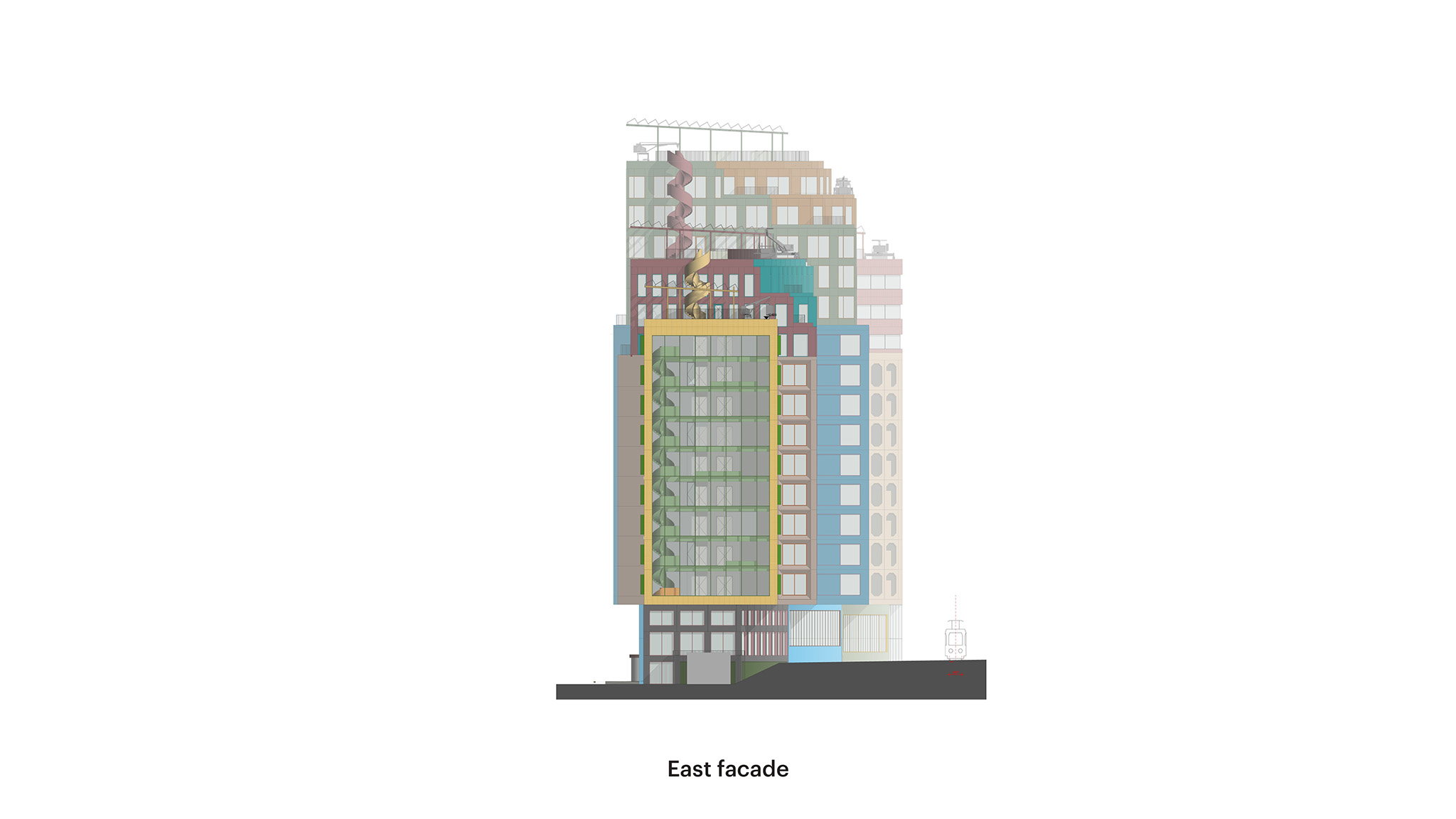
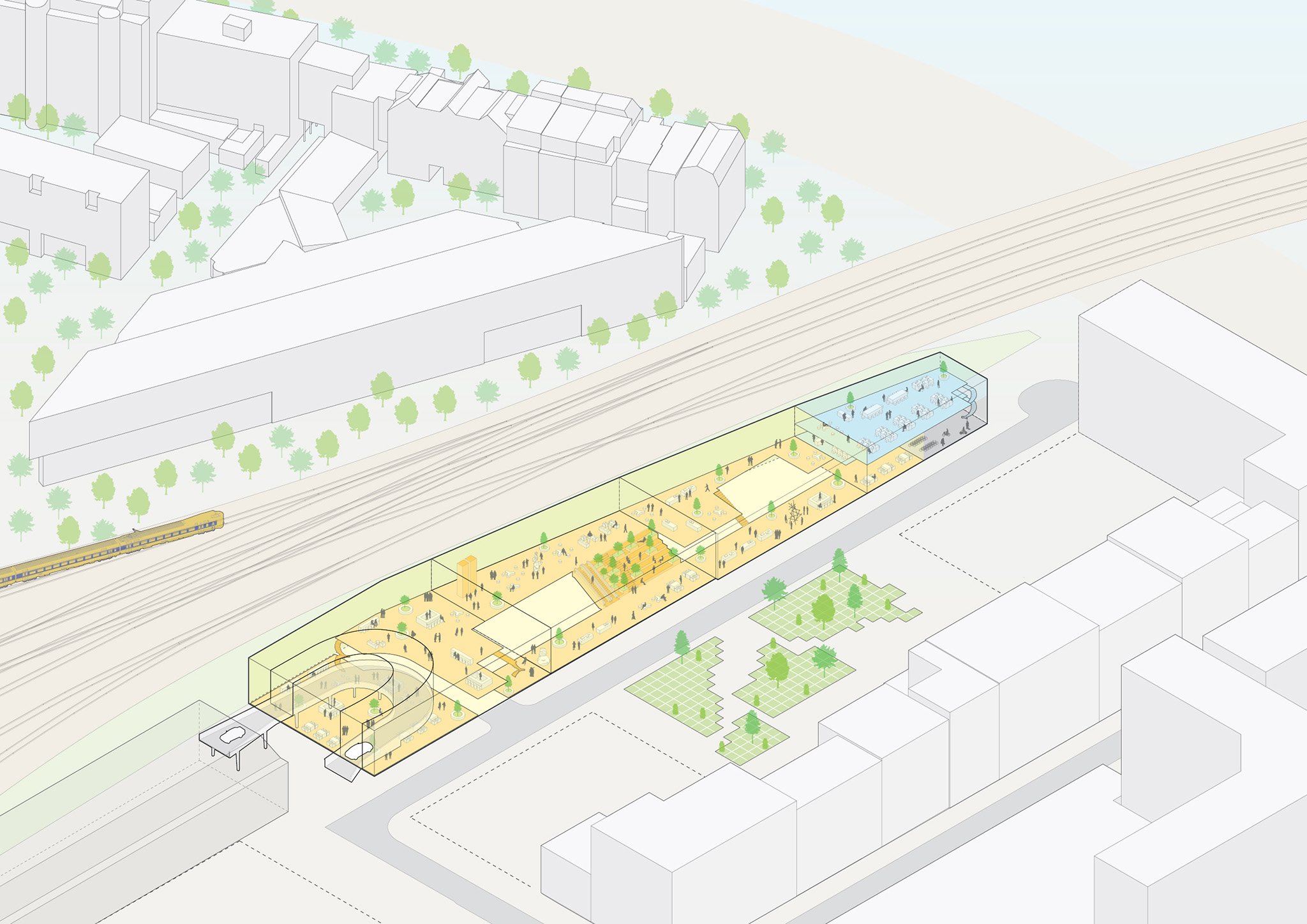
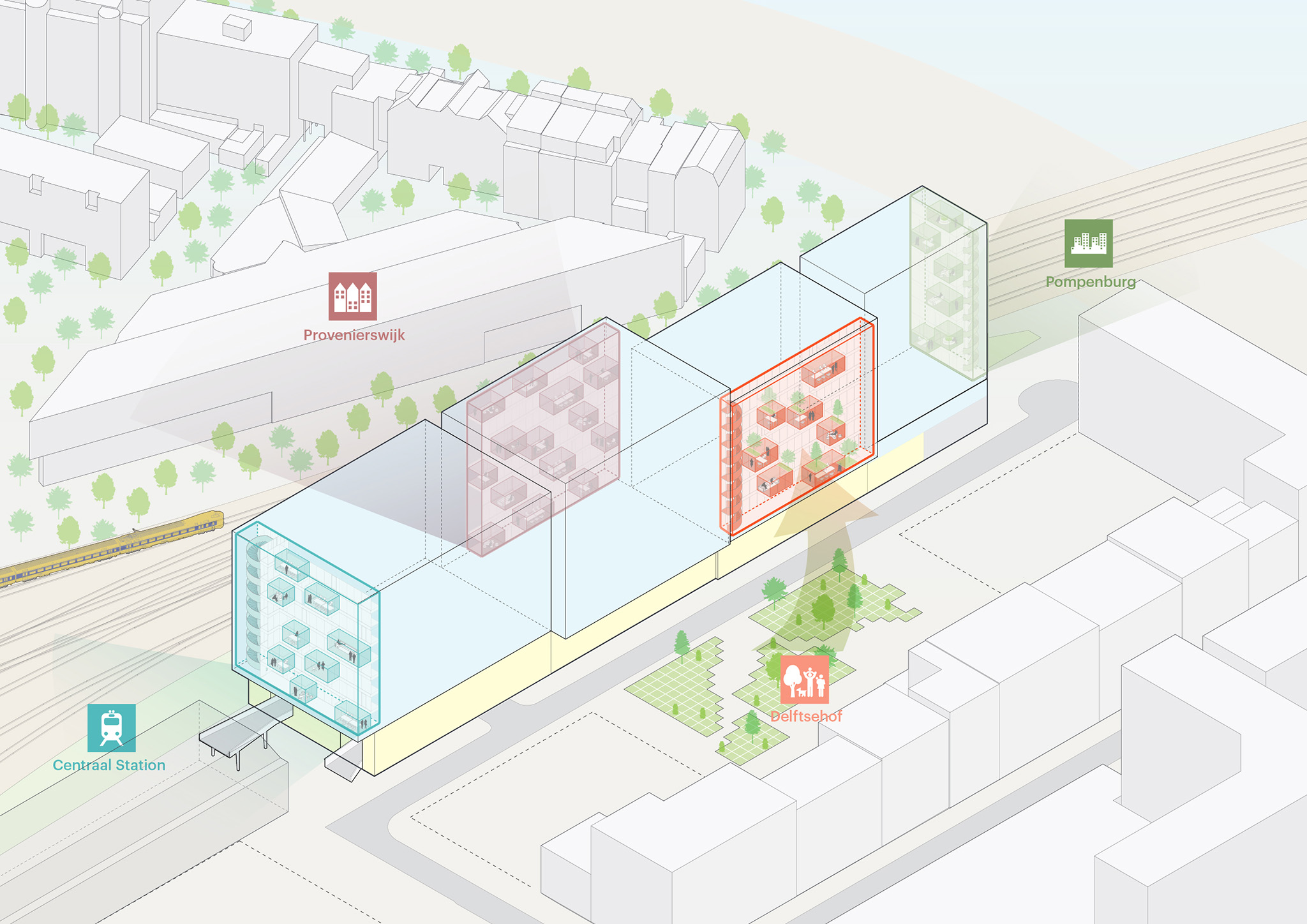
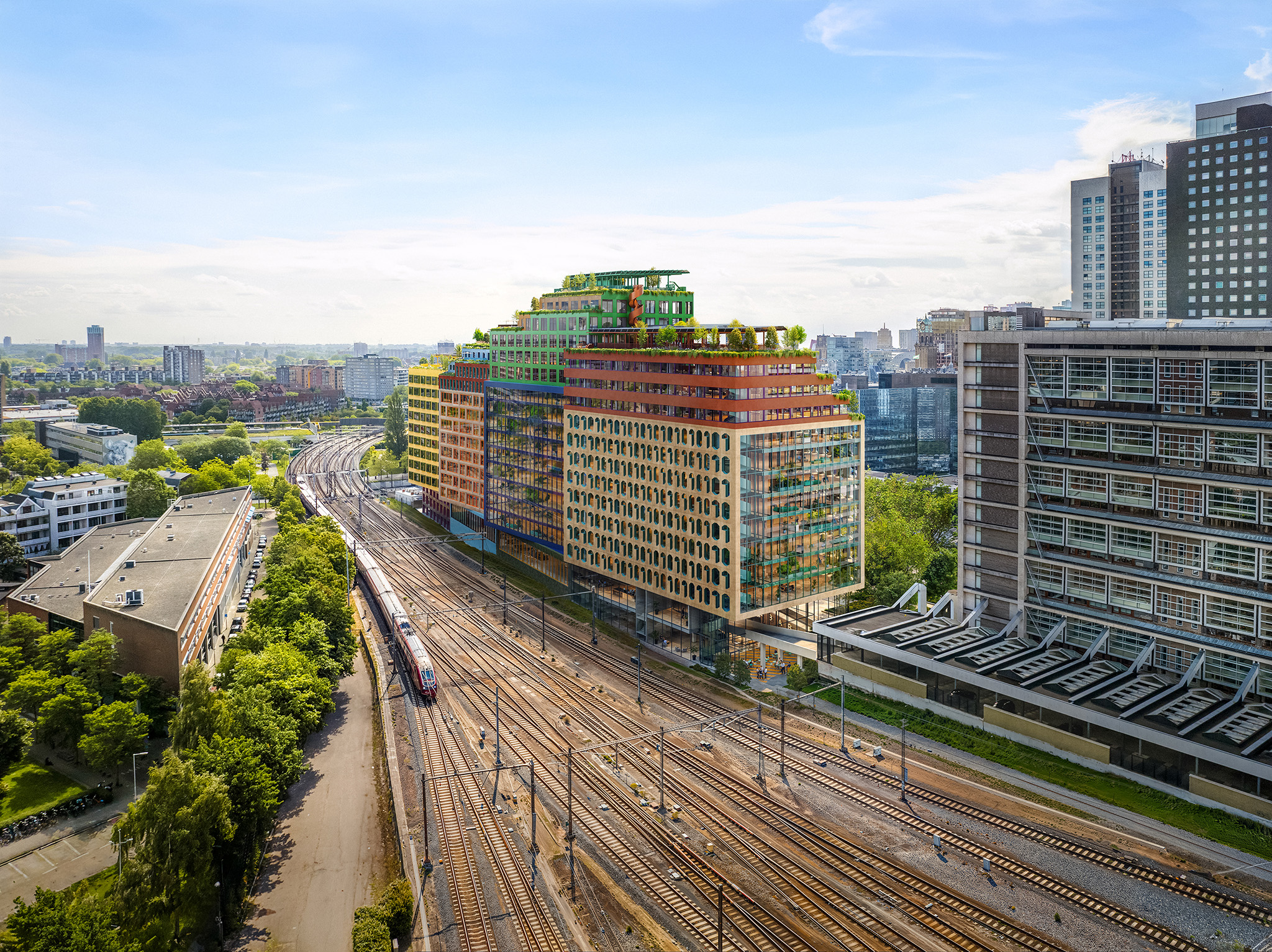
On a narrow strip of land adjacent to the railway line, the nearly 150-meter-long and 61-meter-high building presents itself as a high-rise office district. Through the use of vibrant colors, the different blocks that make up the project are clearly distinguished. The materials and color palette employed were carefully studied to reflect the distinctive spirit of Rotterdam.
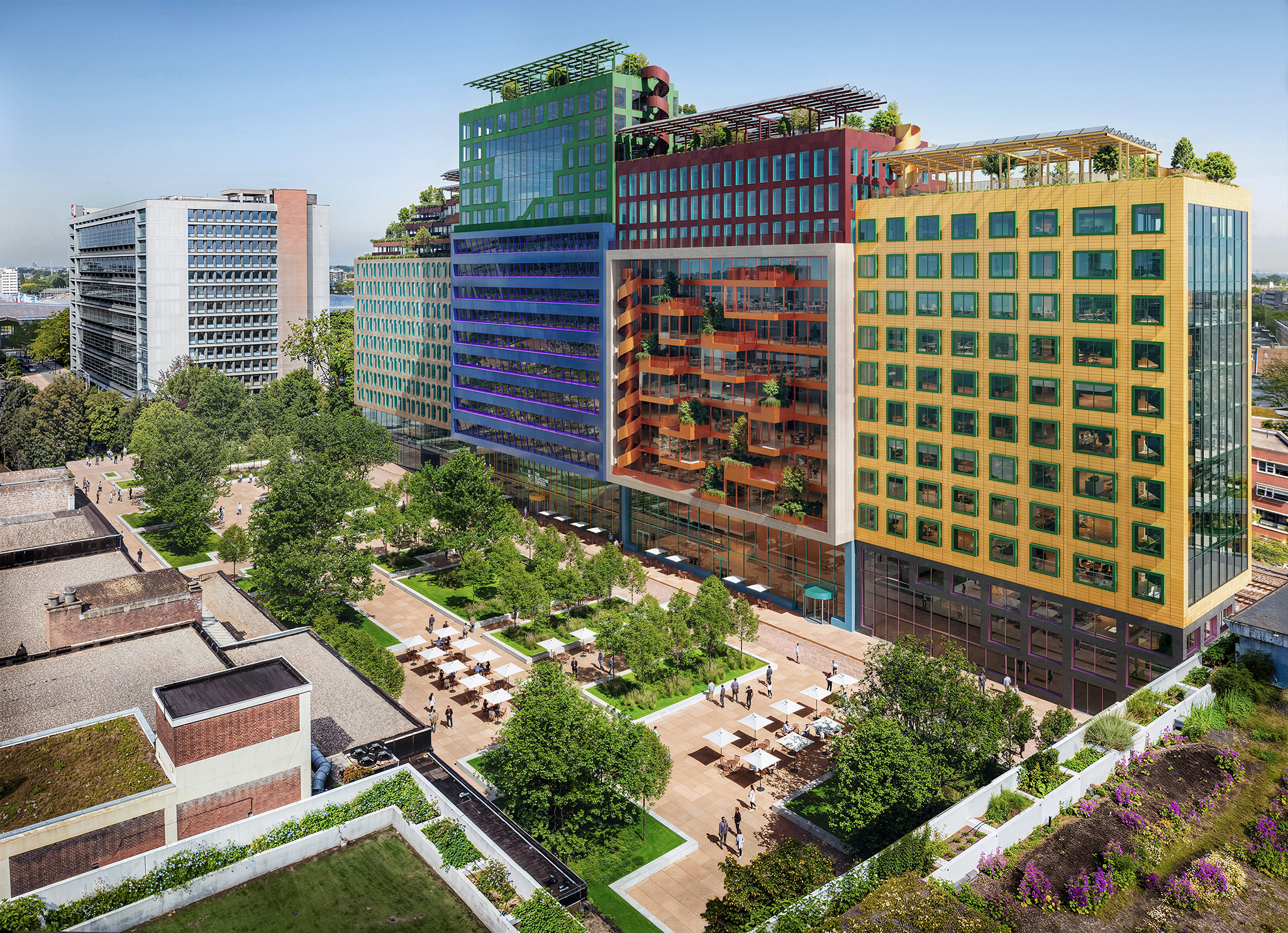
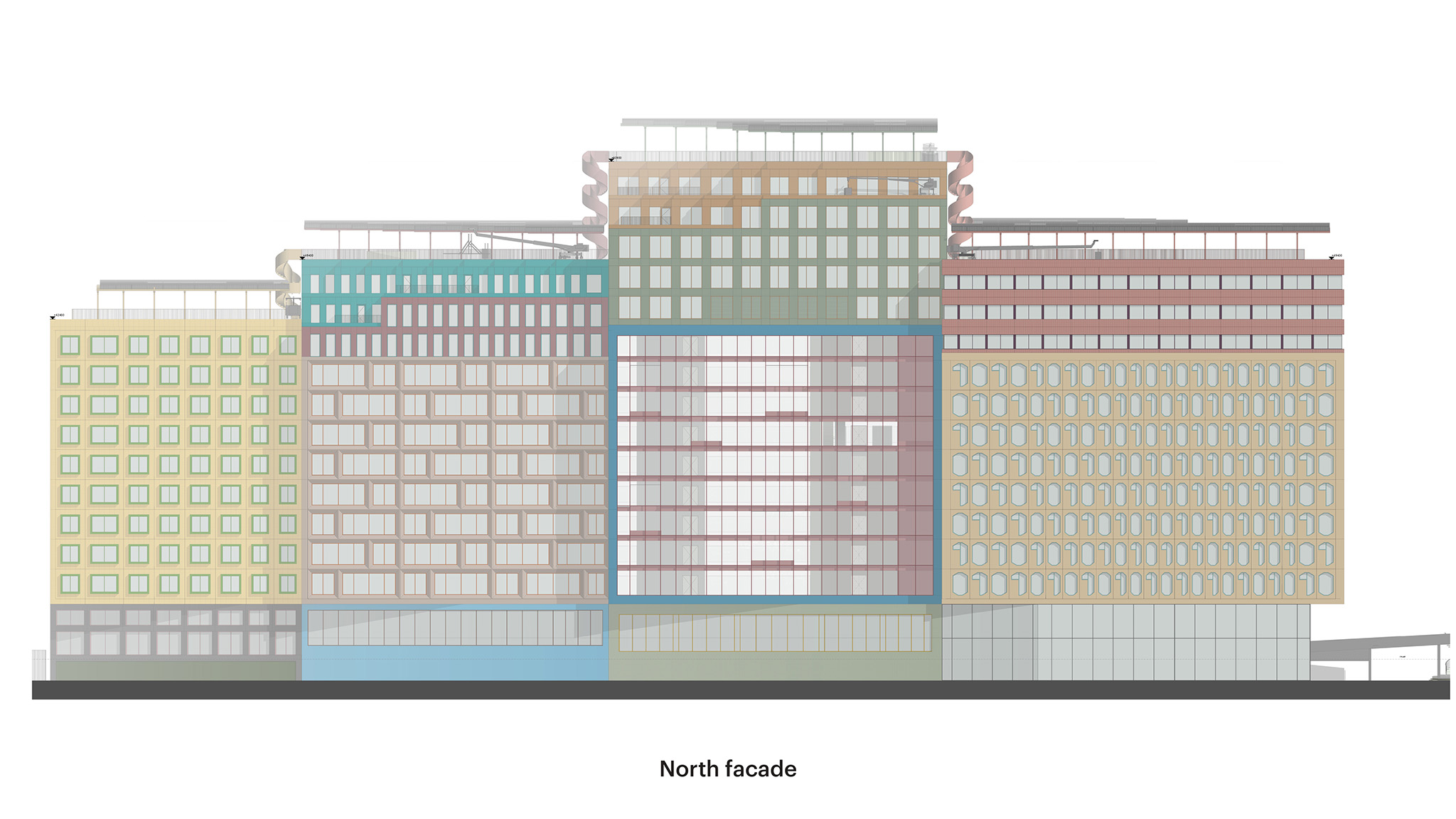
Inspired by the colorful furniture series of Donald Clarence Judd, an American artist associated with the minimalist movement, each block combines a pattern and color linked to some of the city's iconic buildings: one block incorporates projecting windows inspired by the Citrusveiling building, designed by Huig Maaskant in western Rotterdam, combined with the bright yellow of the neighboring Luchtsingel Bridge (now partially demolished).
Schieblocks by MVRDV. Rendering by CUUB. Image courtesy of MVRDV.
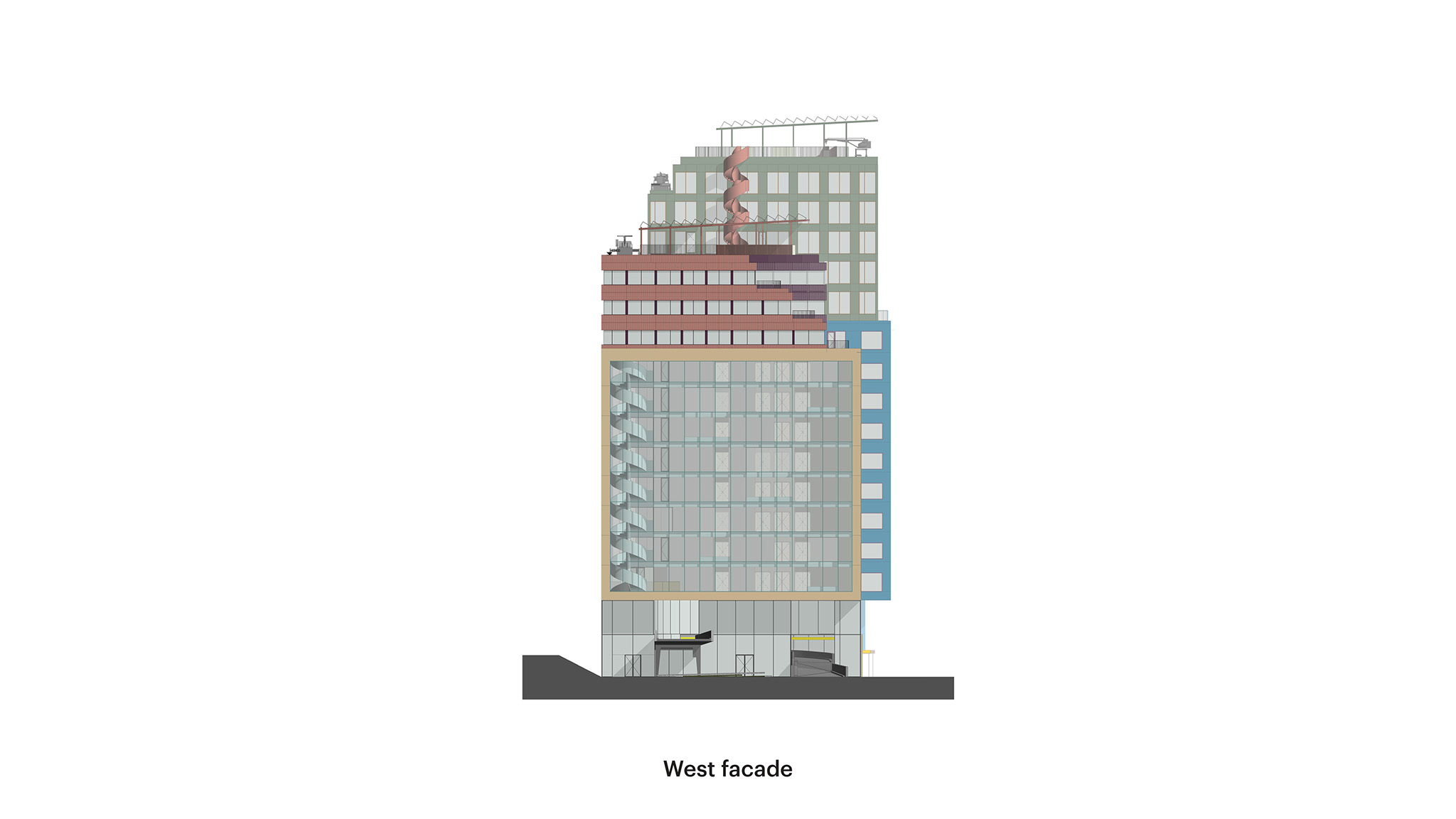
Compositionally, the proposal evokes the surrounding reconstruction blocks, but stacked vertically, advocating for a "second reconstruction." The building is divided horizontally into four sections, each with a clearly defined base and one or two blocks above. With a total of 11 new "Schieblocks," the proposal drives a new phase of densification in Rotterdam.
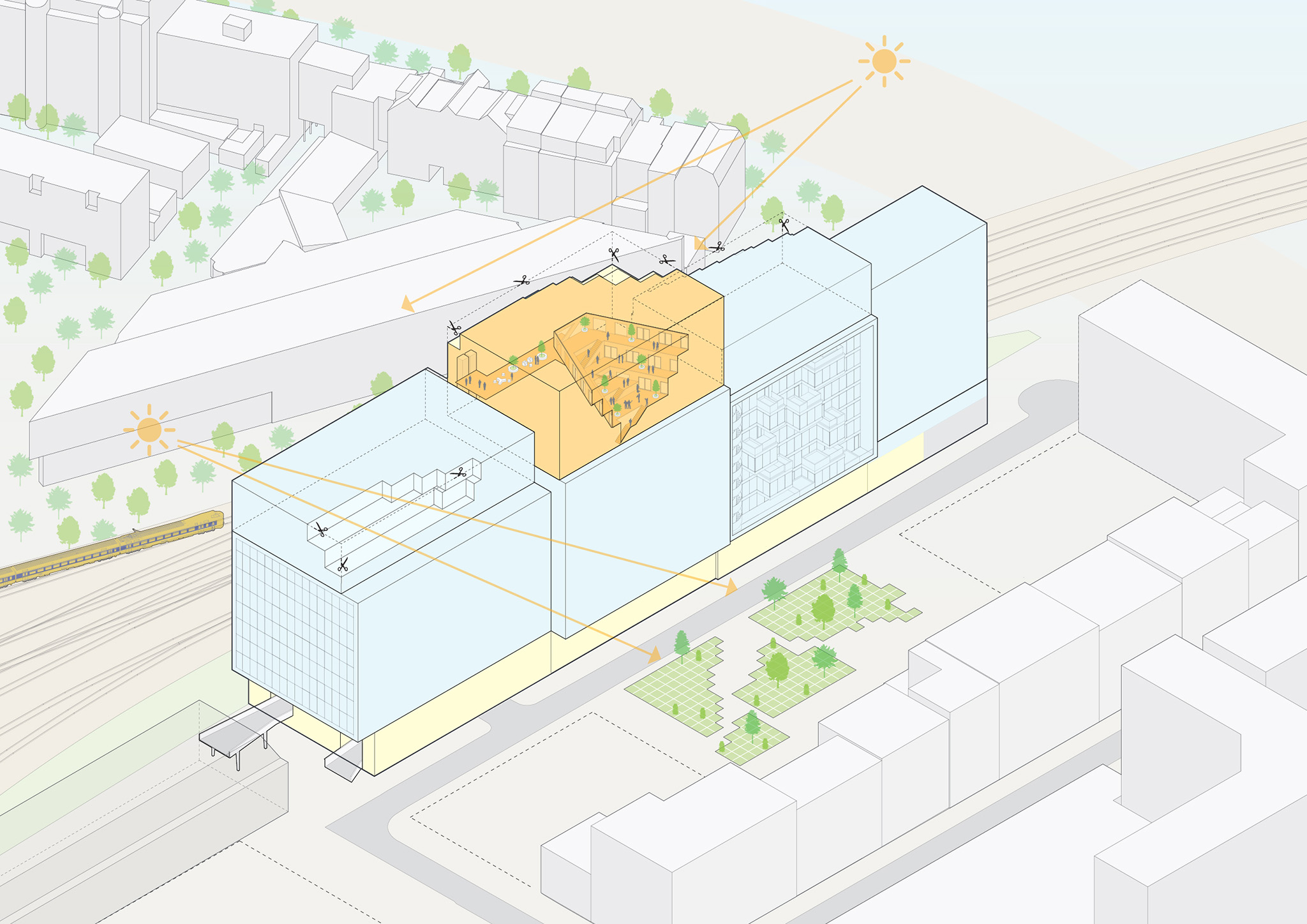
Far removed from excessive densification, the intervention maintains the quality of urban life by preventing shadows from being cast on the homes located on the other side of the railway tracks, thanks to a series of setbacks on the upper levels of the building.
Of the 11 blocks, two are built with bricks made from recycled material, significantly reducing the embodied carbon in the construction. Taking advantage of the large south-facing façade, photovoltaic panels are incorporated to generate electricity and decrease operational carbon emissions.
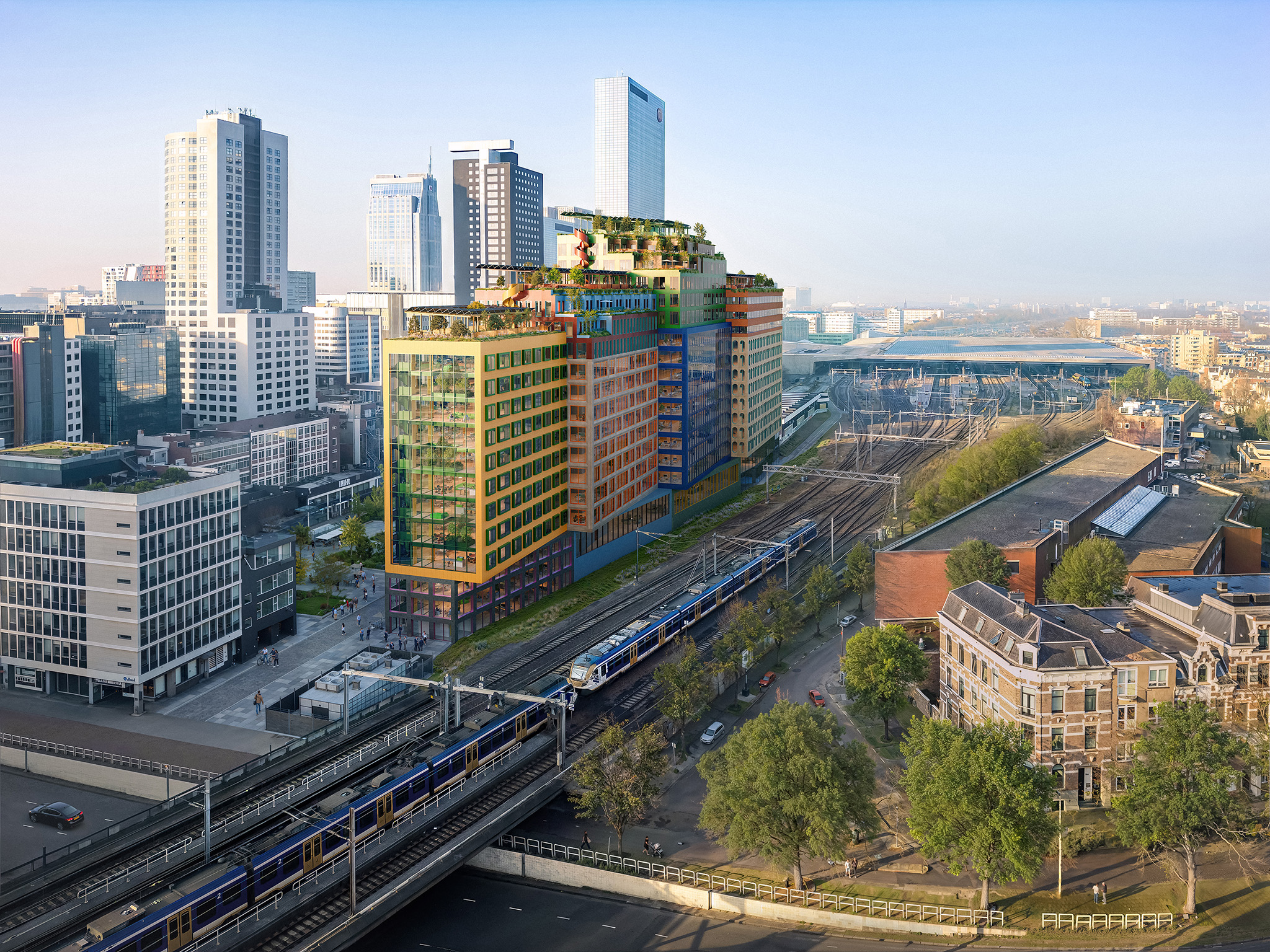
Schieblocks by MVRDV. Rendering by CUUB. Image courtesy of MVRDV.
The building's base is conceived as a transparent space that integrates public services designed to enrich the urban life of the neighborhood, such as a concept store, a bakery, and a cyclist café. At its western end, a parking ramp belonging to the historic Central Post building—which cannot be removed—is clad in glass and becomes the central element of Wokkelbar, a unique bar that aspires to become a new attraction in the Schiekadeblok nightlife scene.
“Squeezing a building in this narrow space next to the railway was a tough challenge – not to mention the complexity of building around a National Monument with the Wokkelbar.”
Winy Maas, Founding Partner of MVRDV.
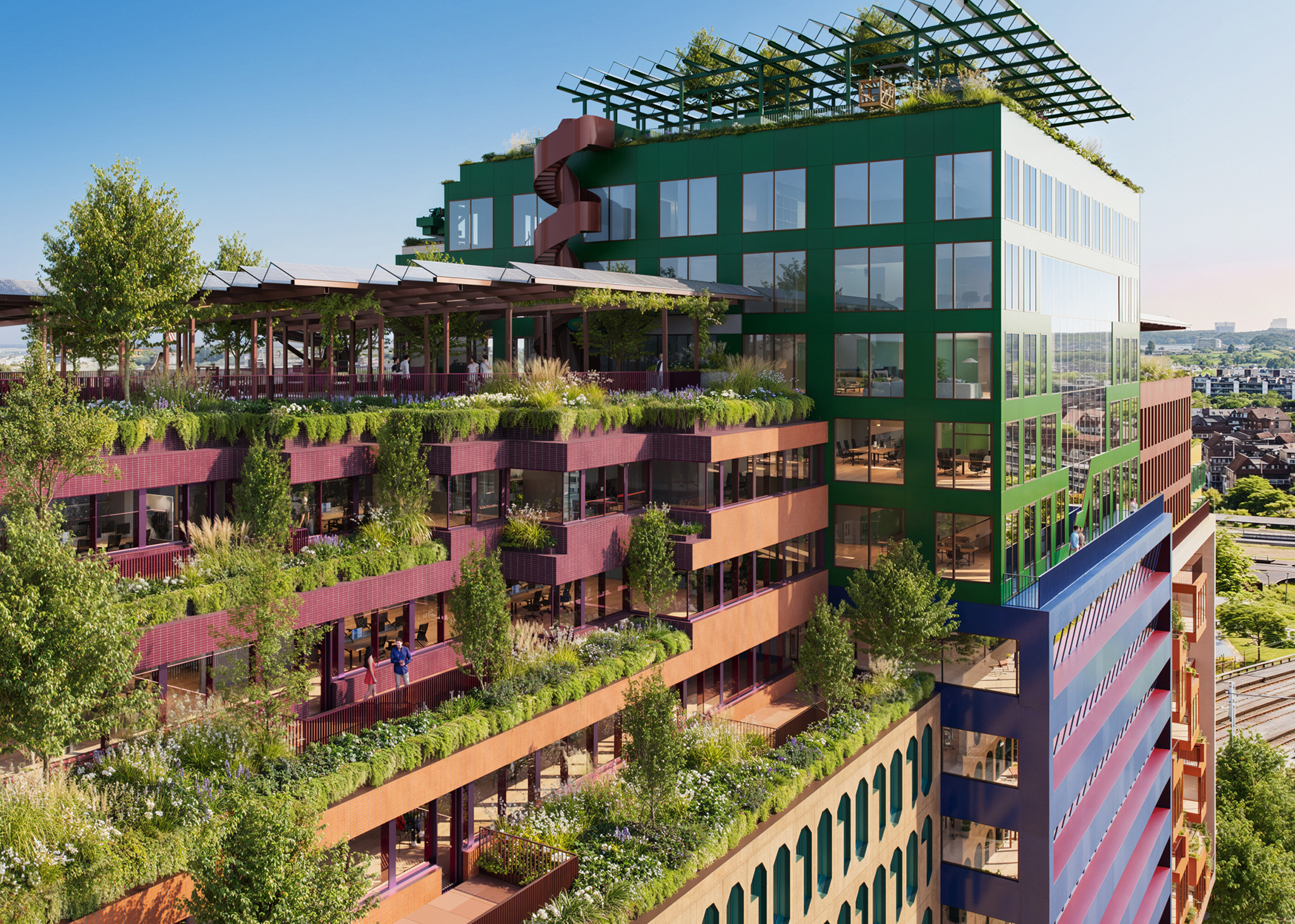
On the upper floors, a restaurant and a two-level space for social and cultural events are arranged around a grandstand overlooking the city. The roof, conceived as an accessible green extension, allows for continuous movement thanks to spiral staircases connecting its different levels. Above this elevated garden, a pergola with solar panels will contribute significantly to energy production.
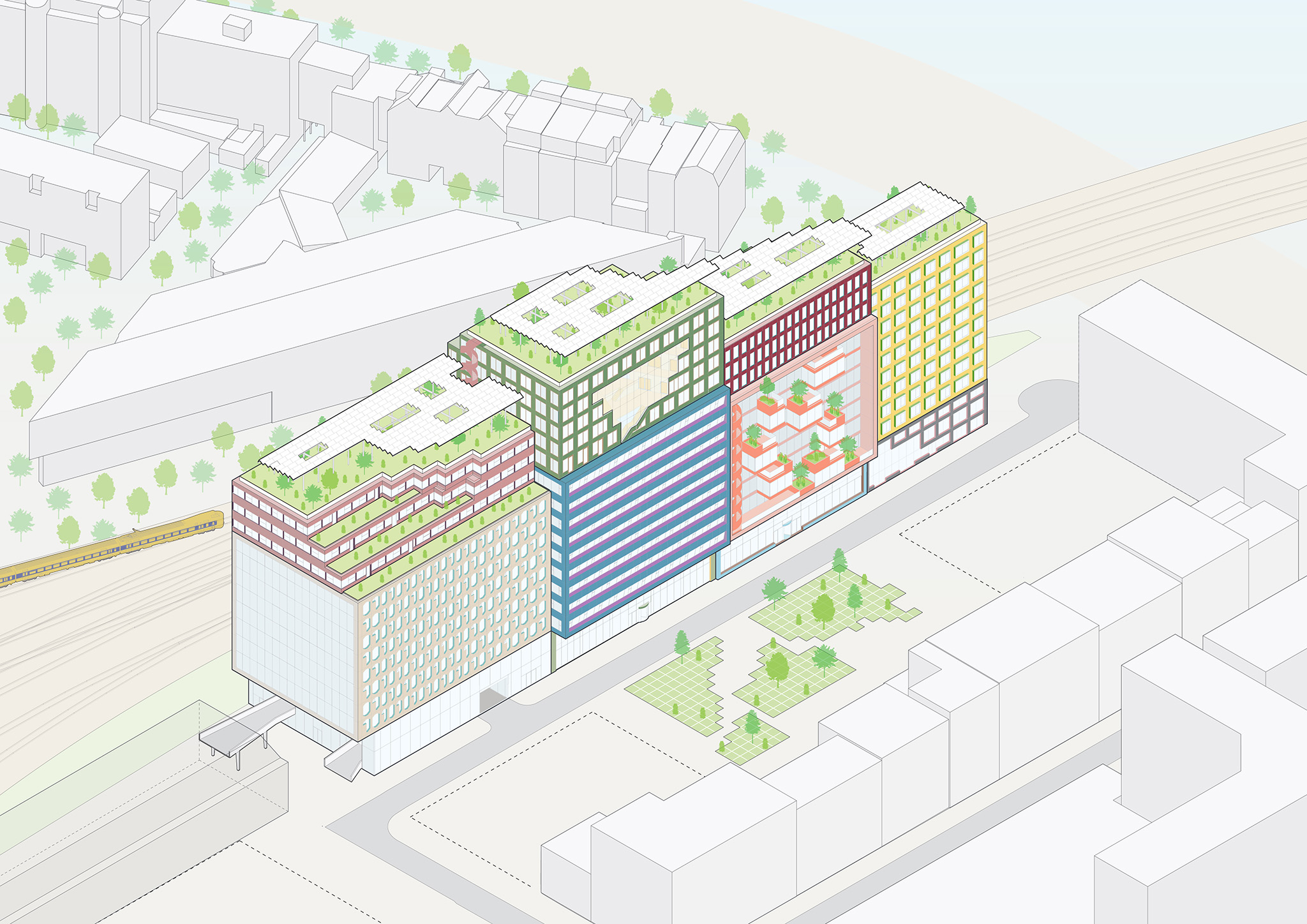
Step story 6- Facade color. Schieblocks by MVRDV. Image courtesy of MVRDV.
As part of a second phase of sustainable reconstruction that respects Rotterdam’s heritage, the Schieblocks will add a splash of color to the city, creating a diverse and vibrant image that will welcome future visitors arriving by train.