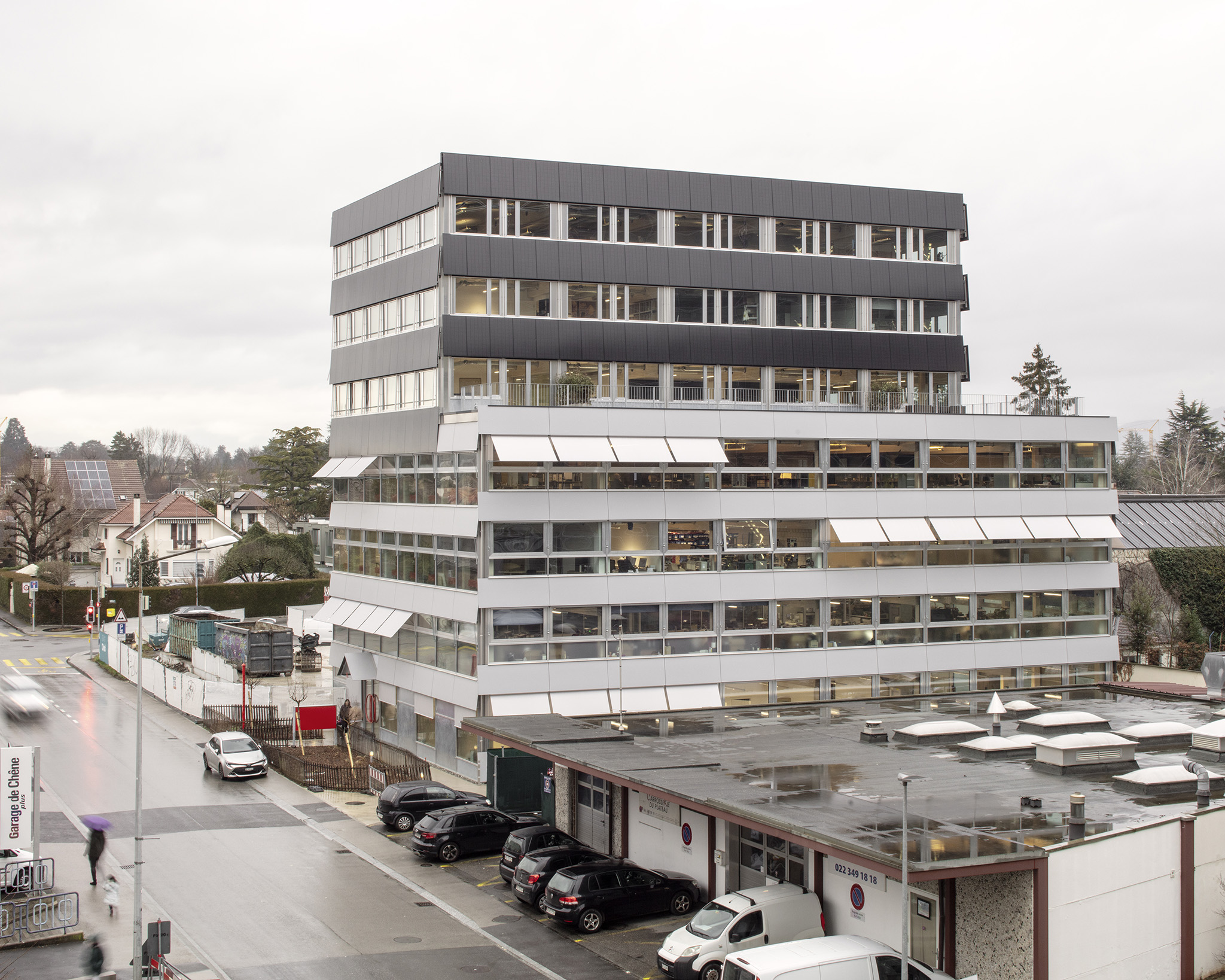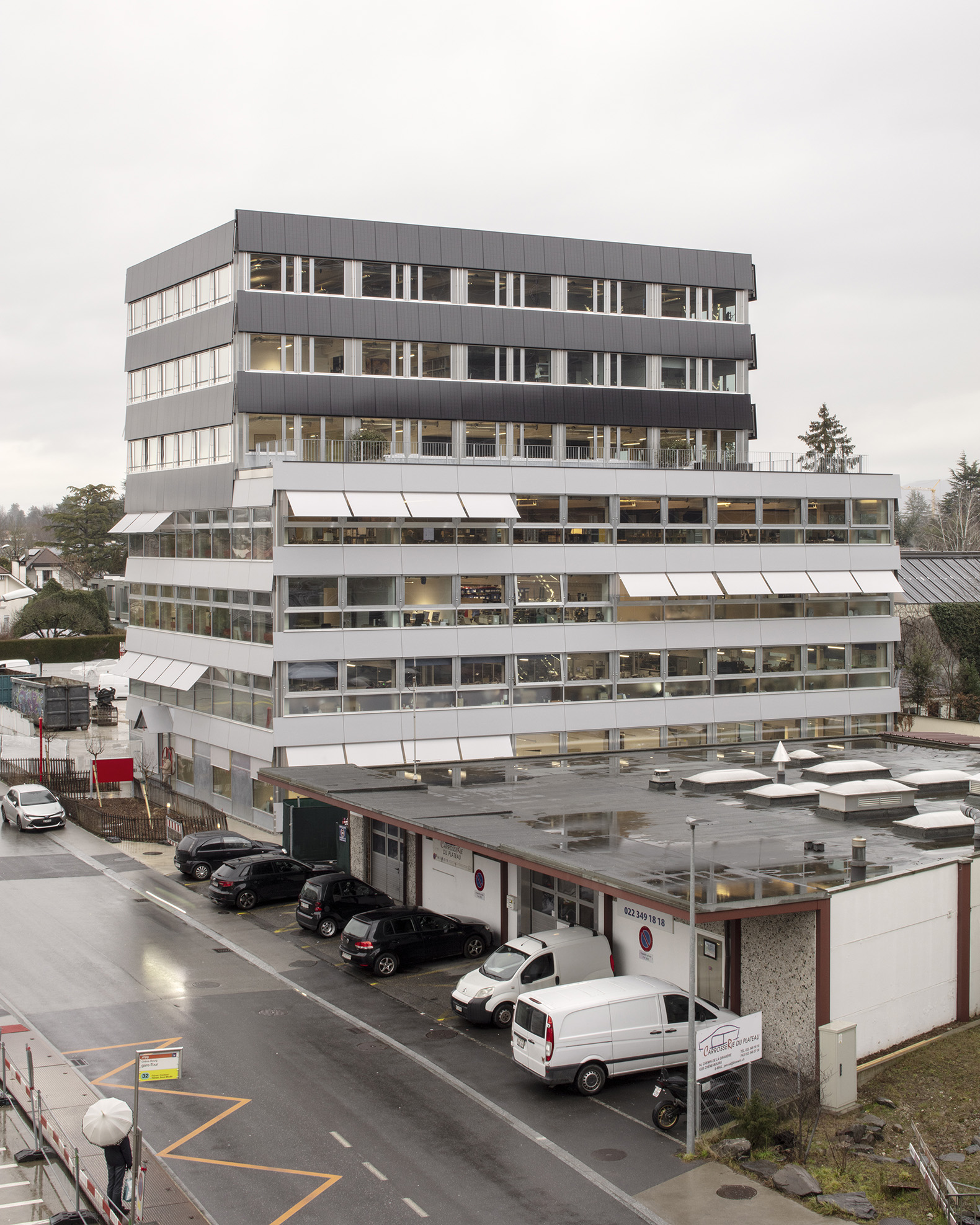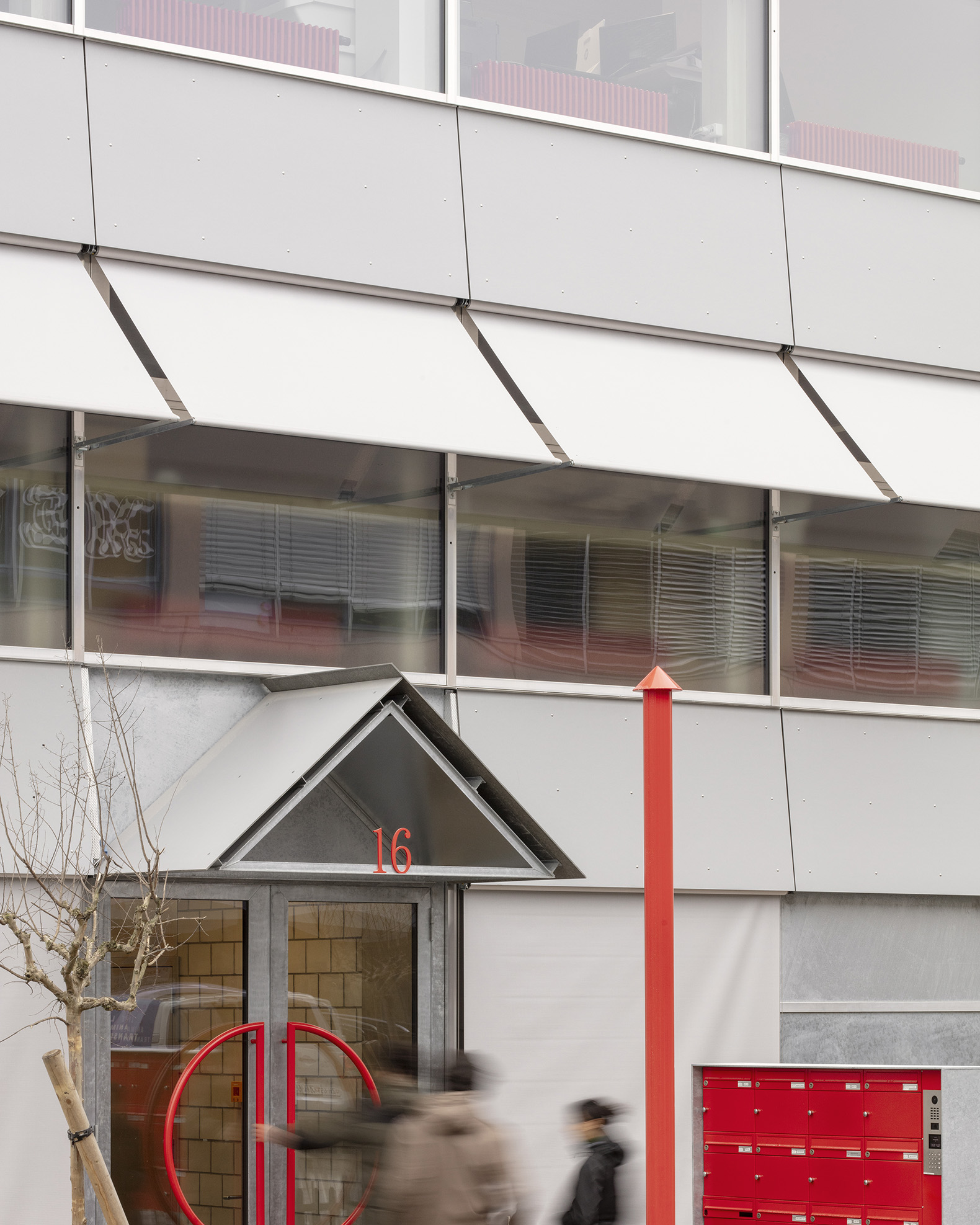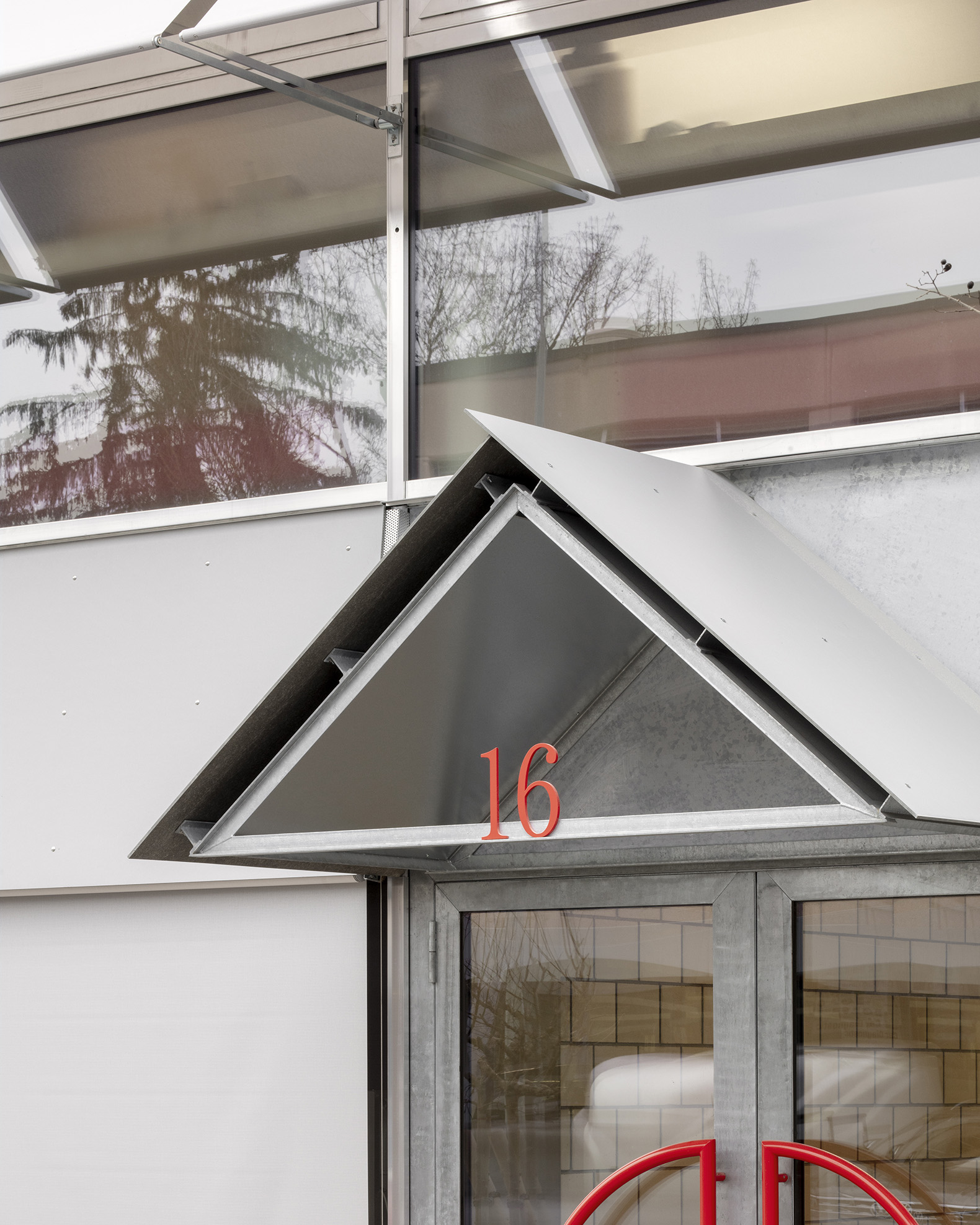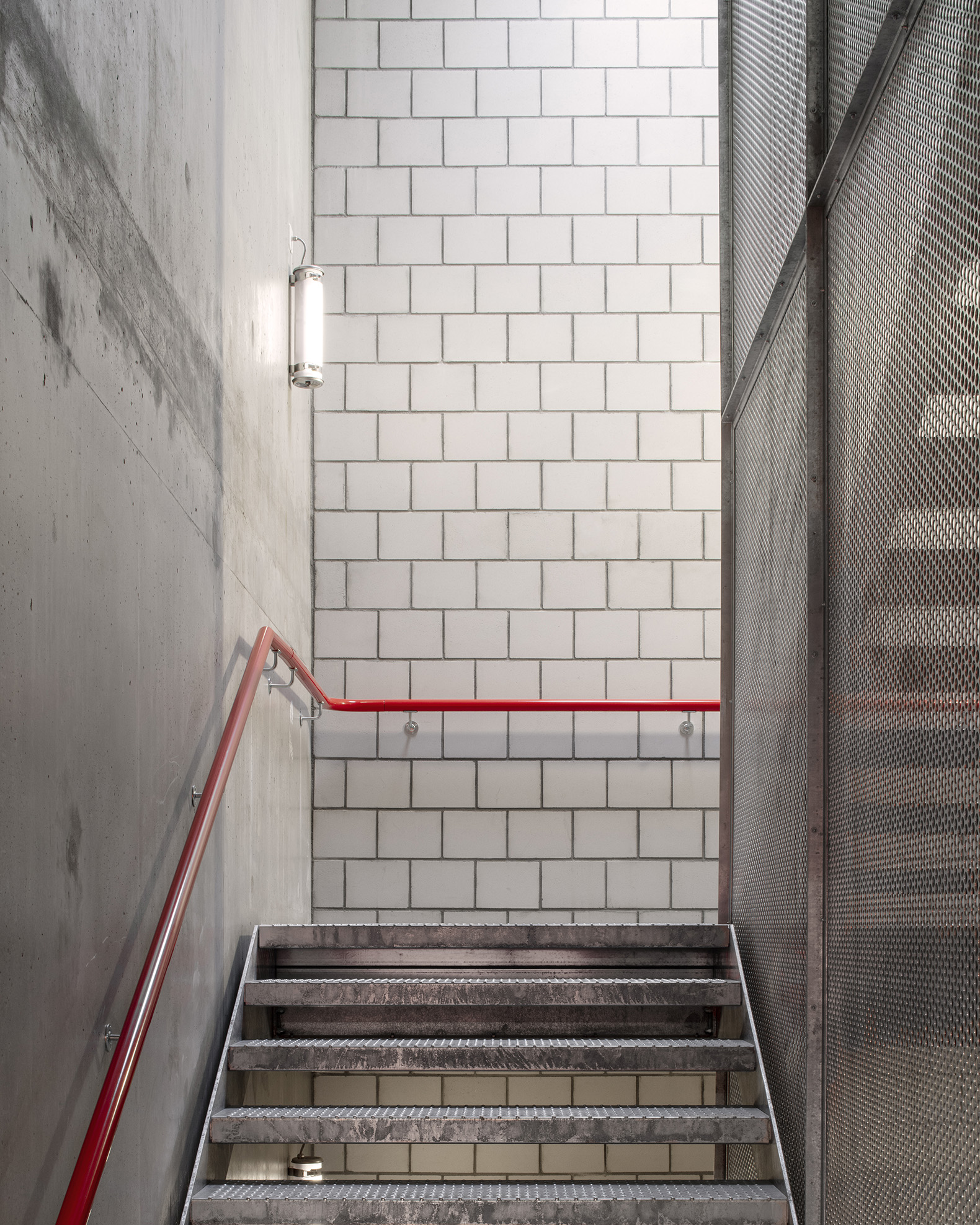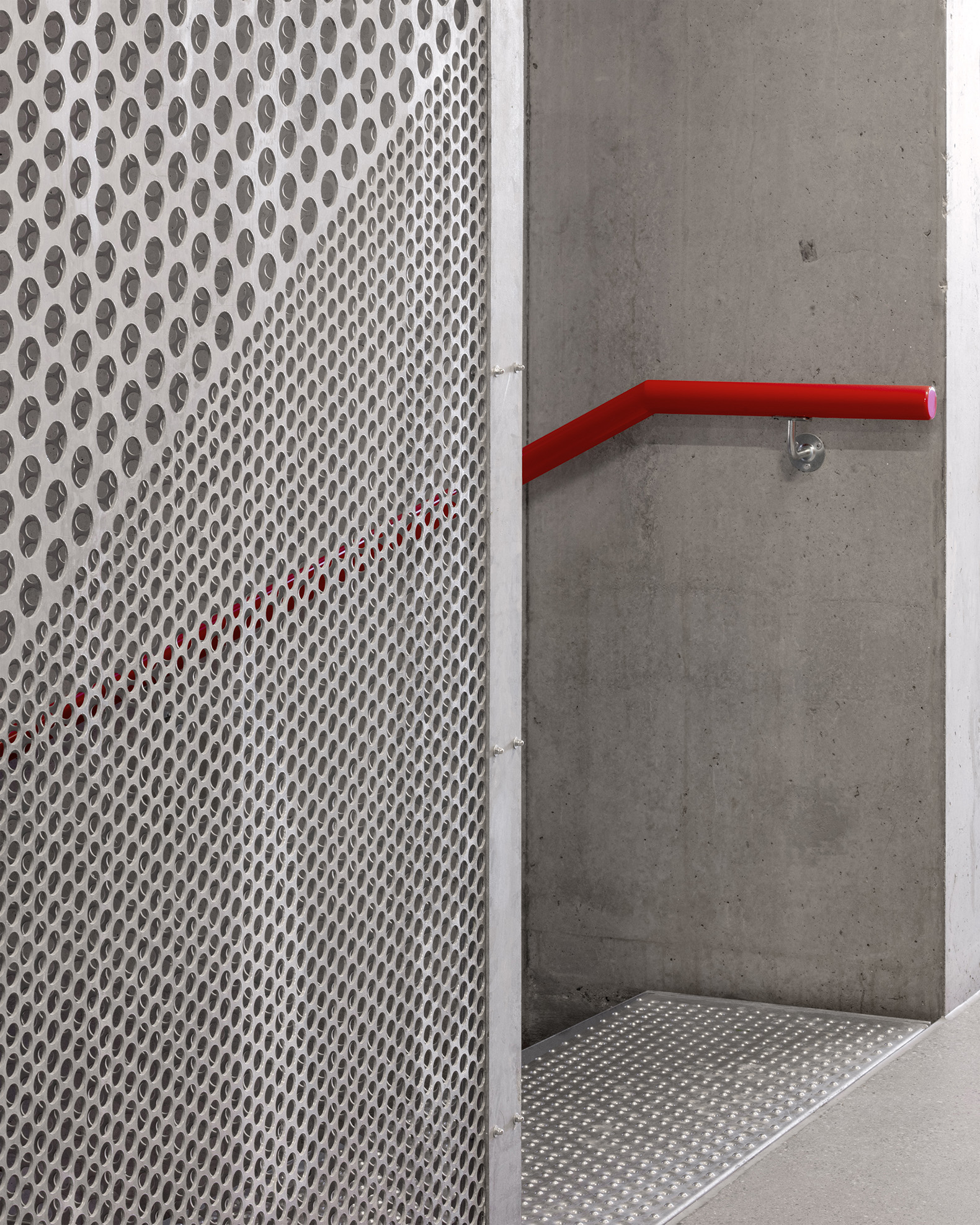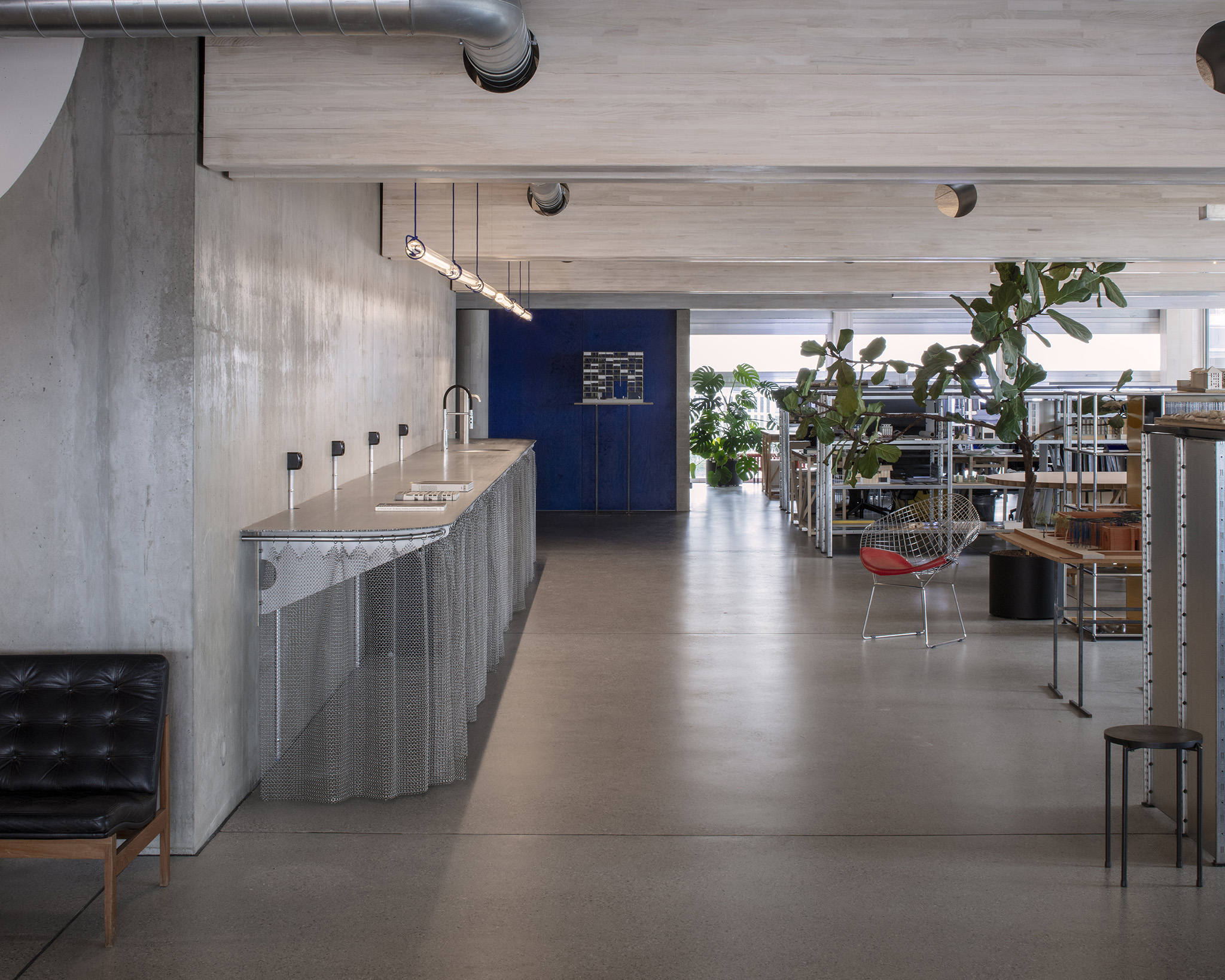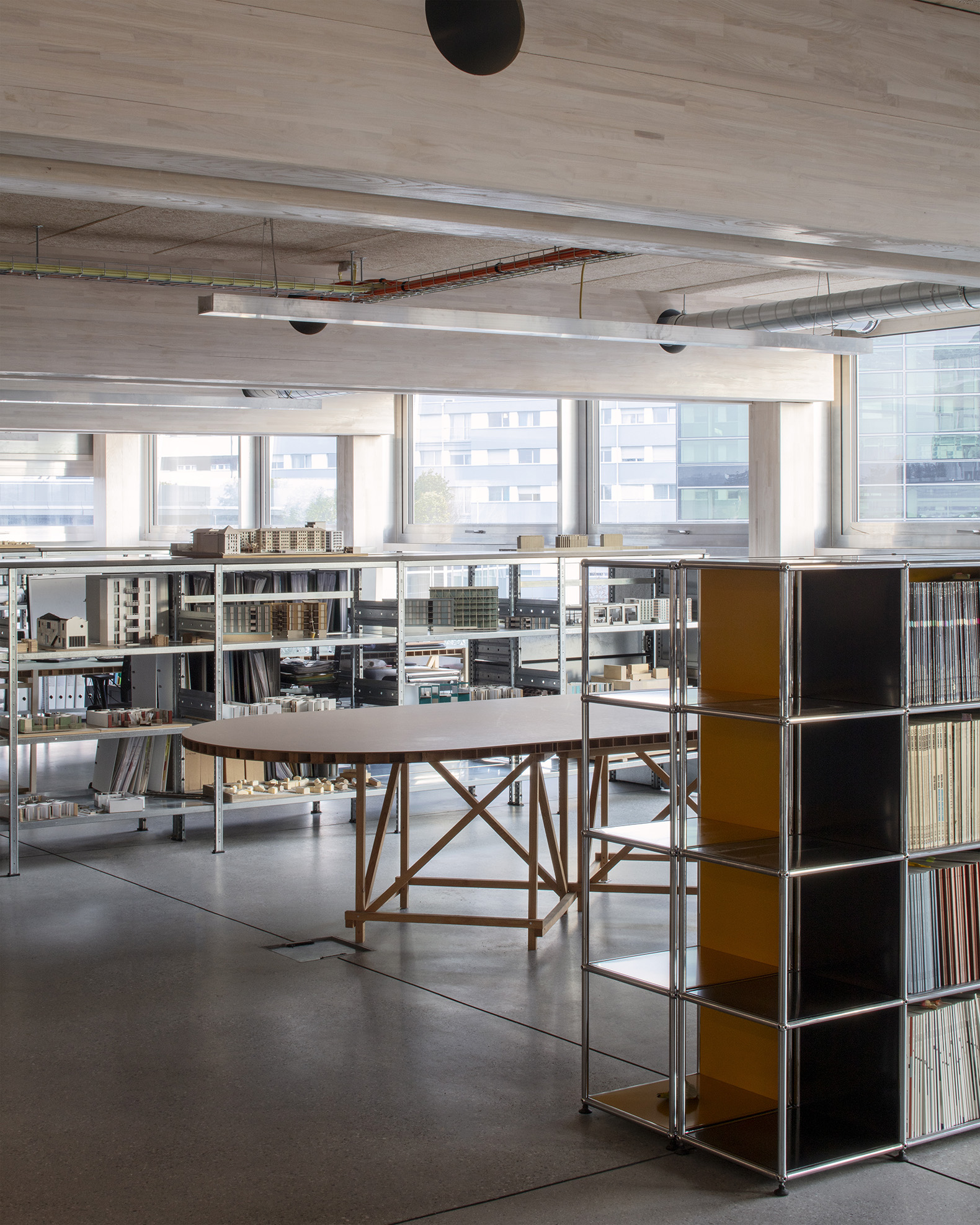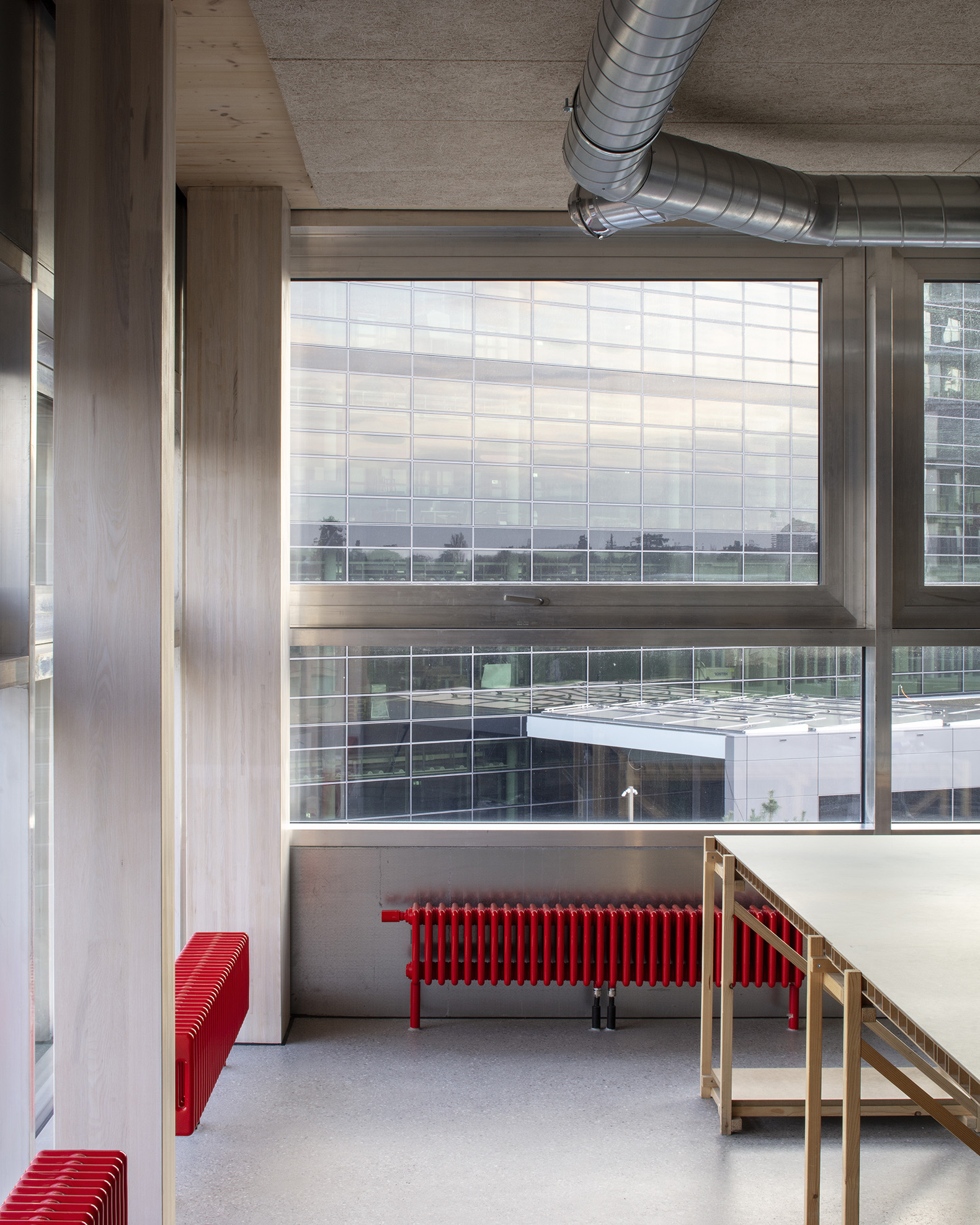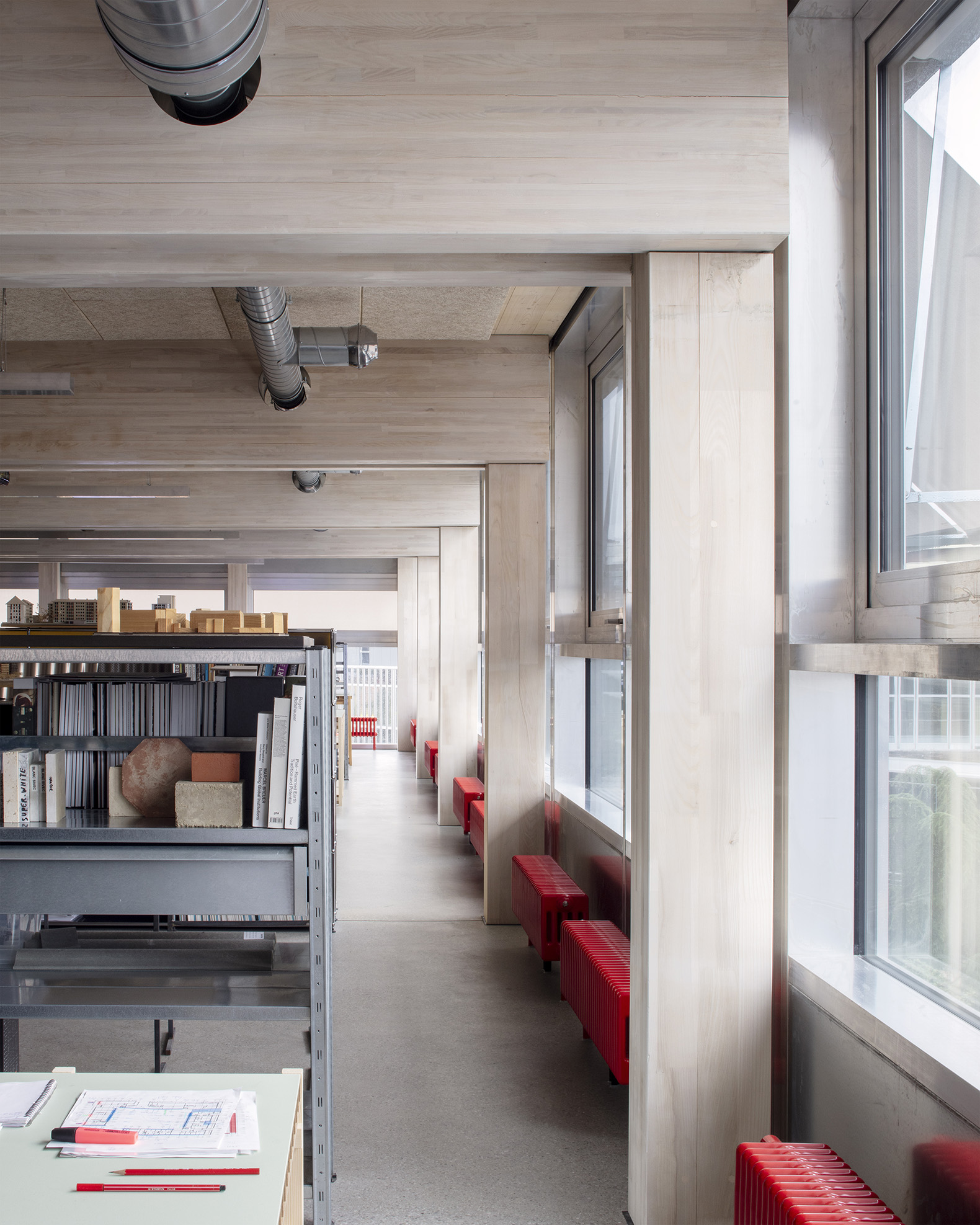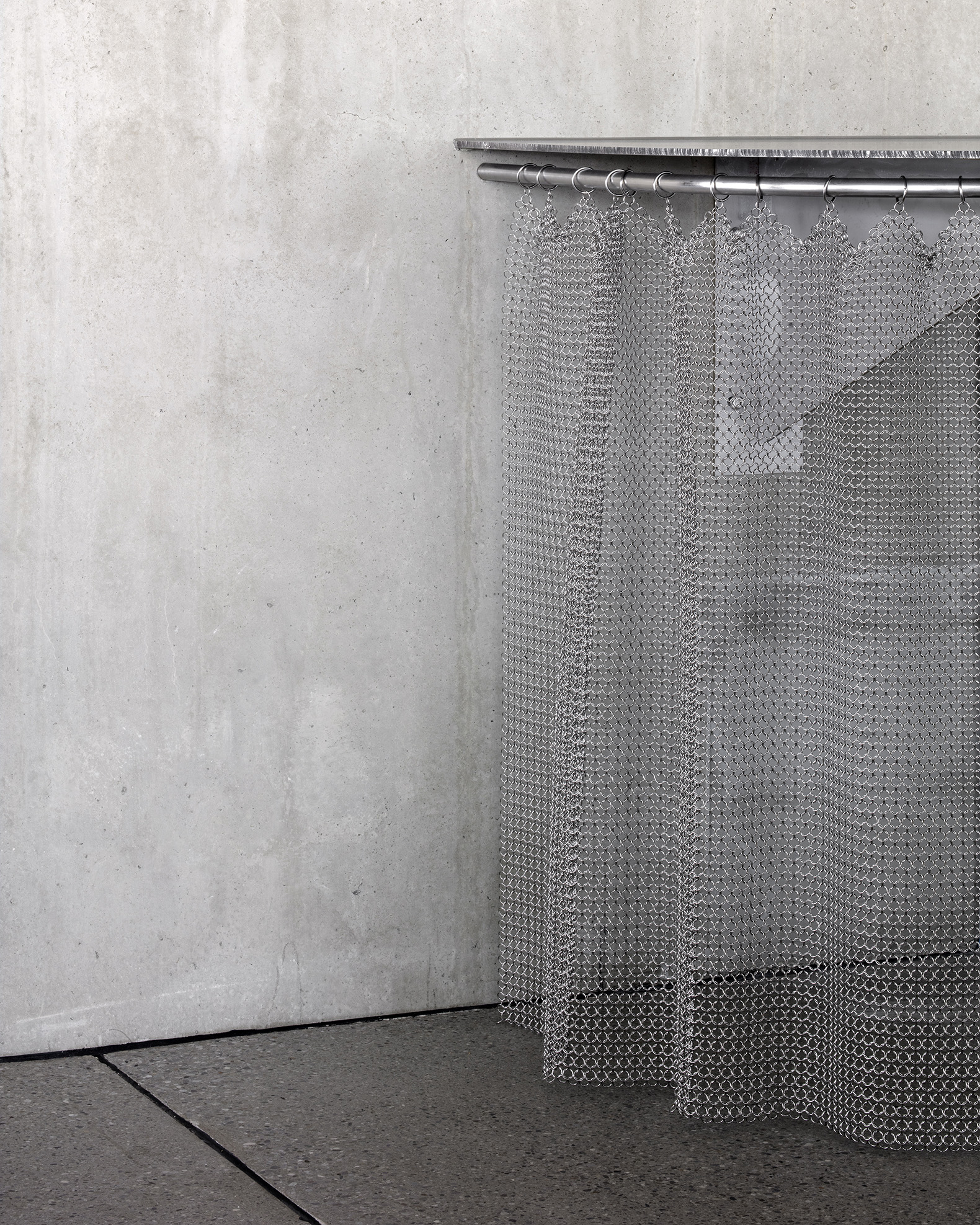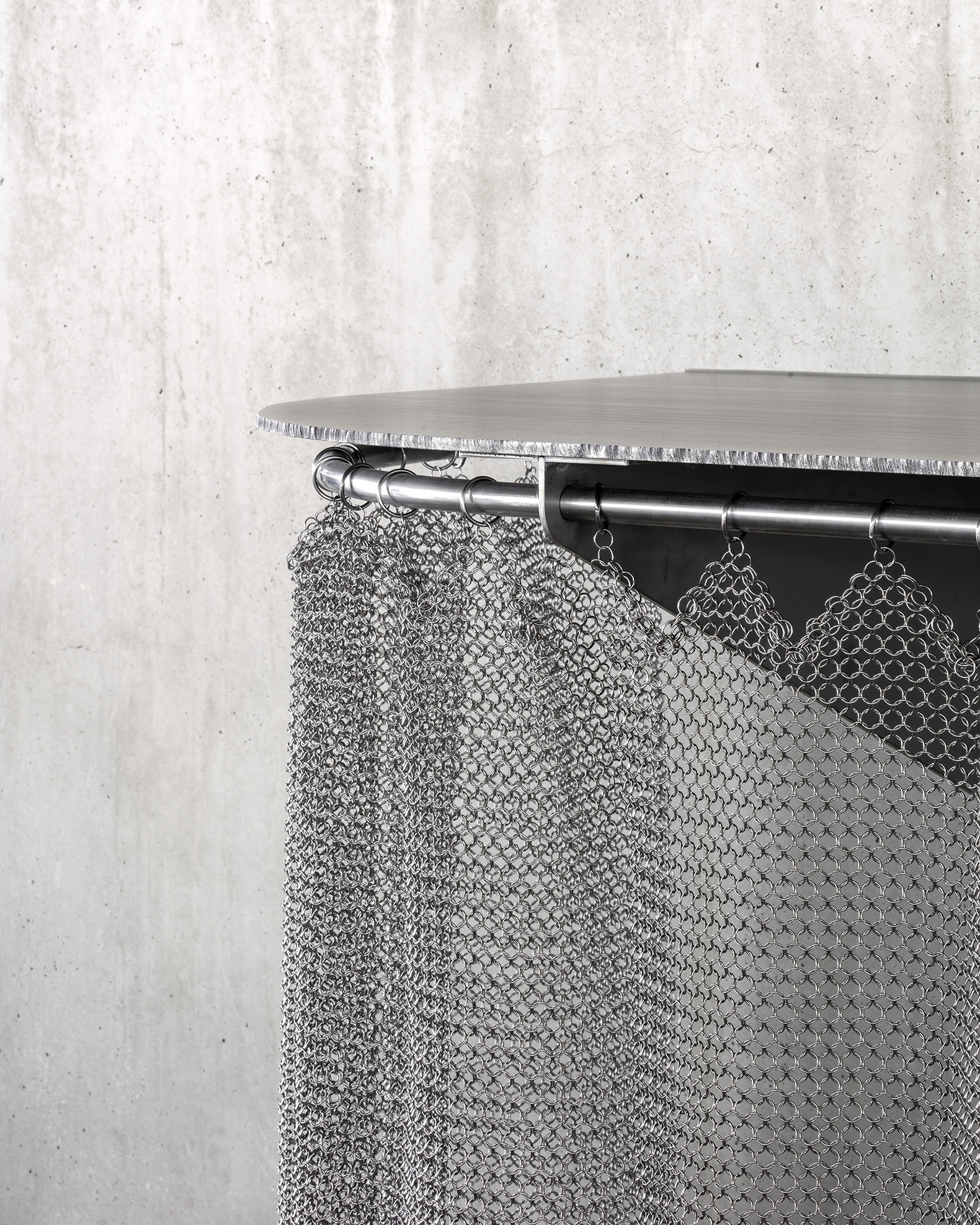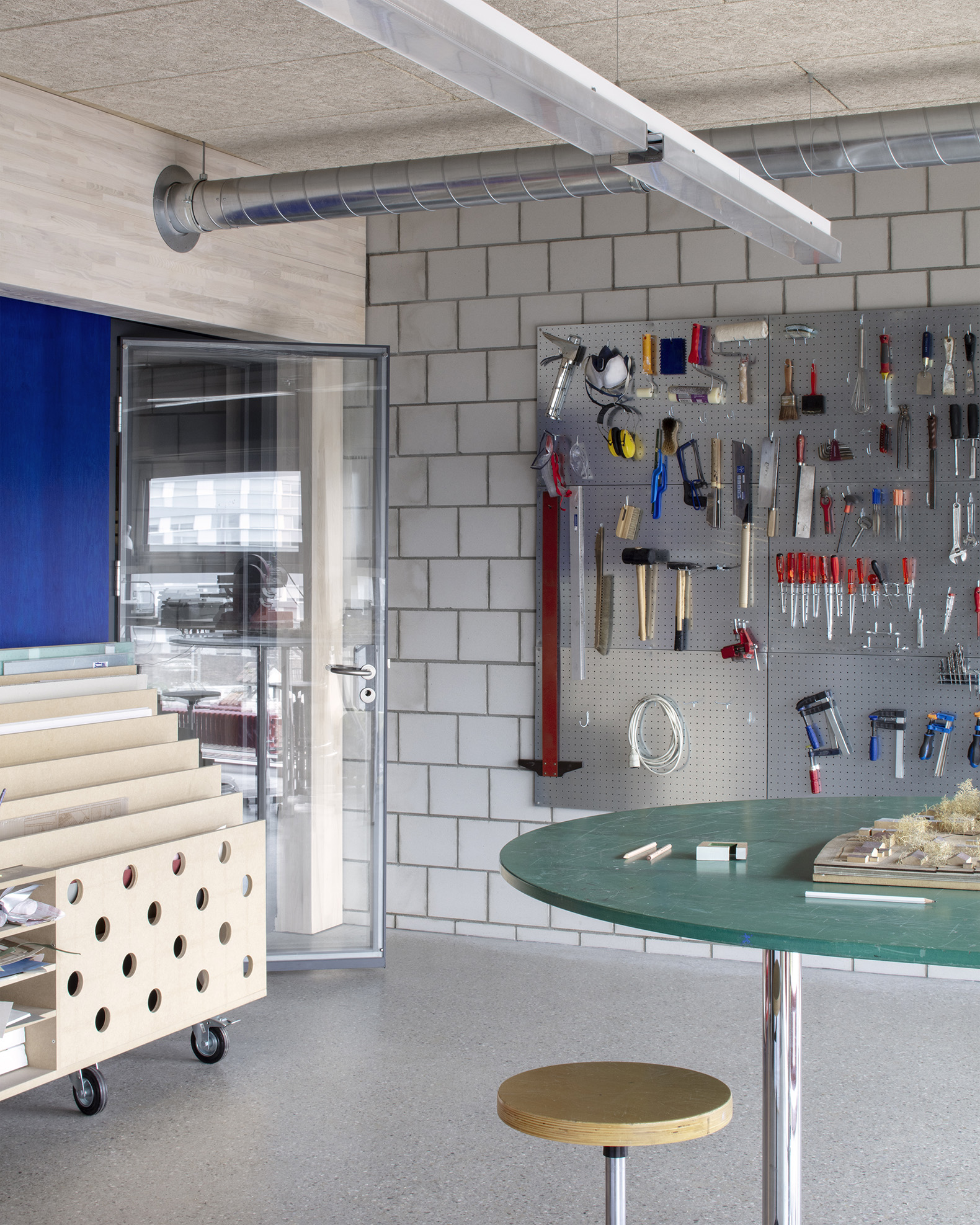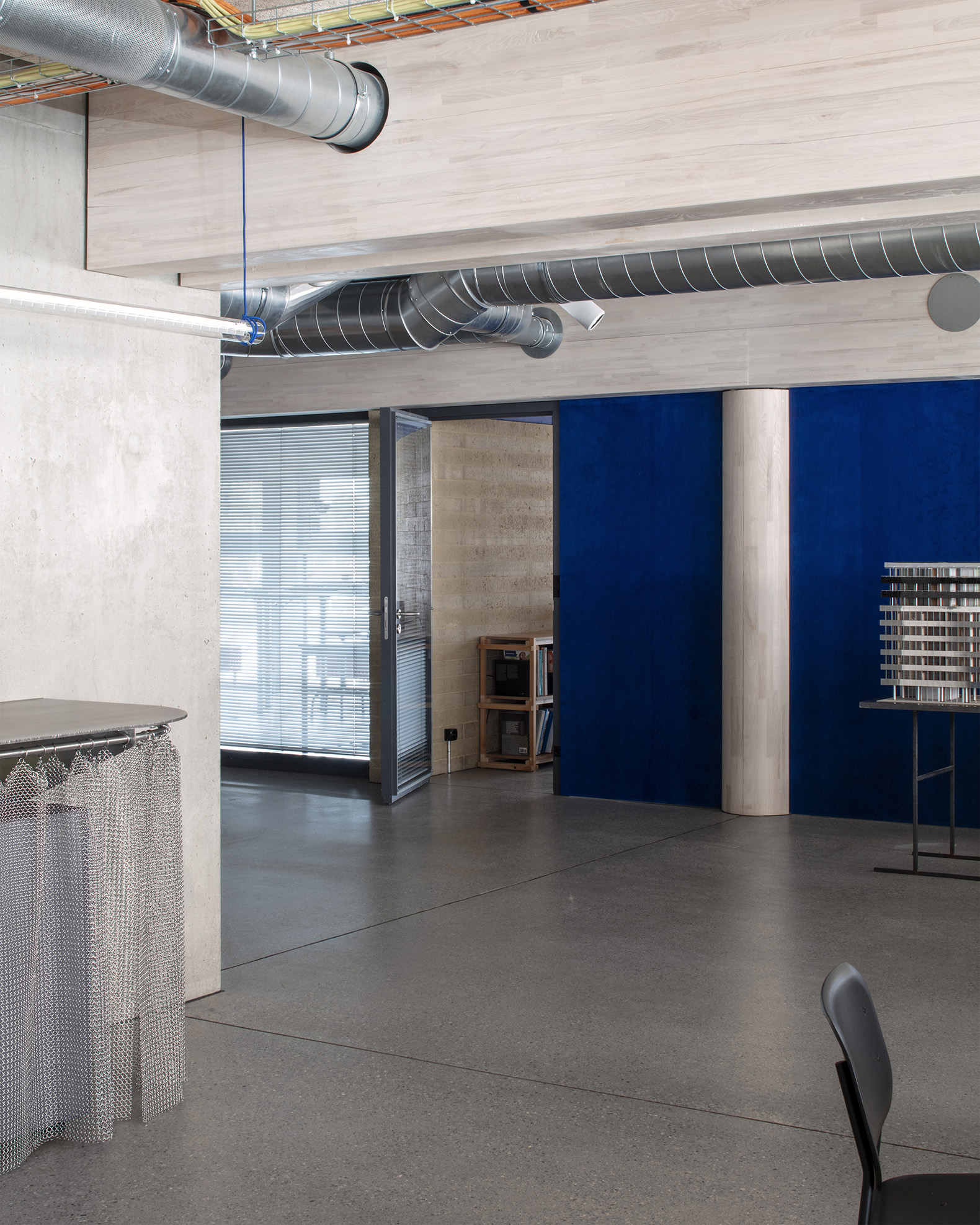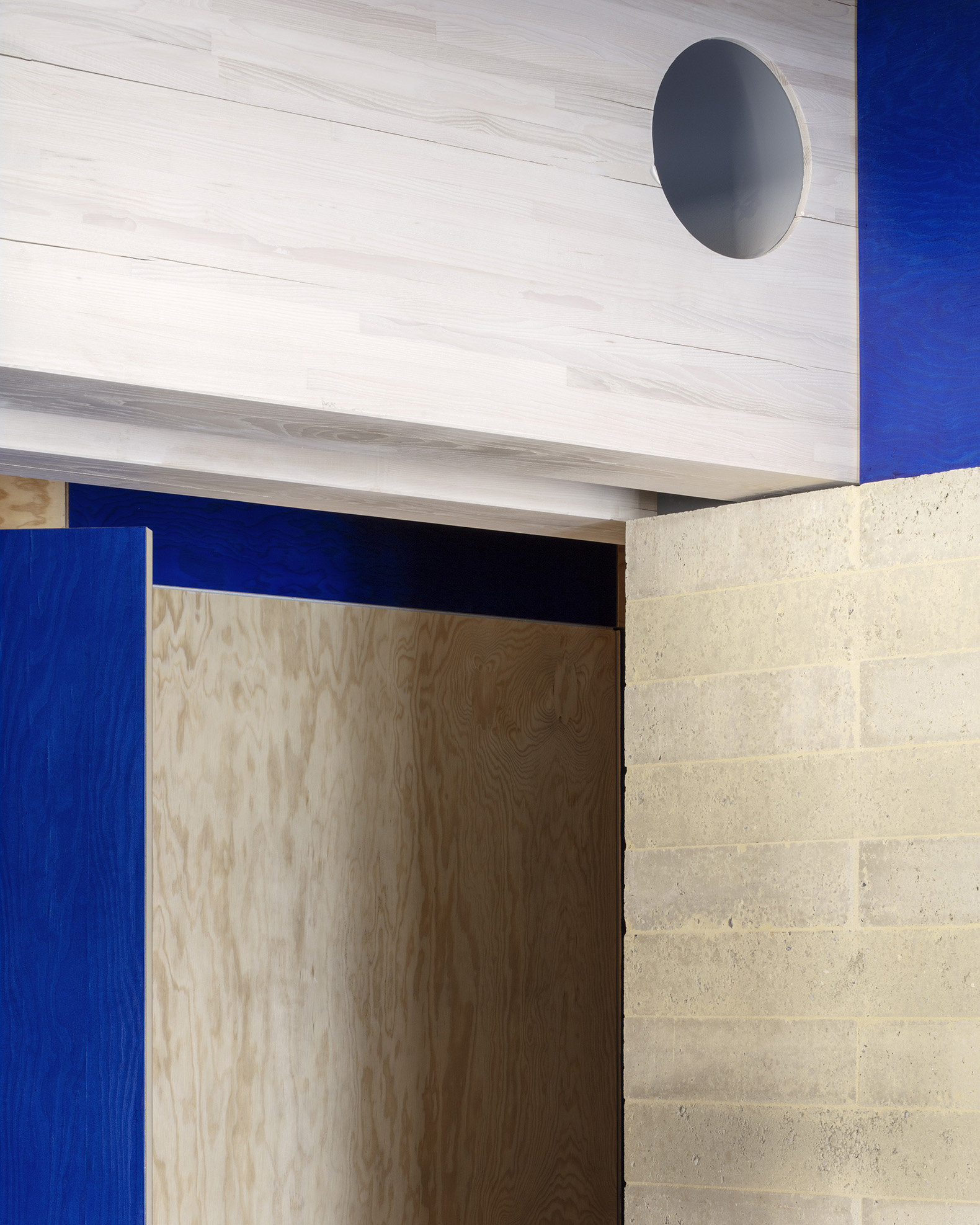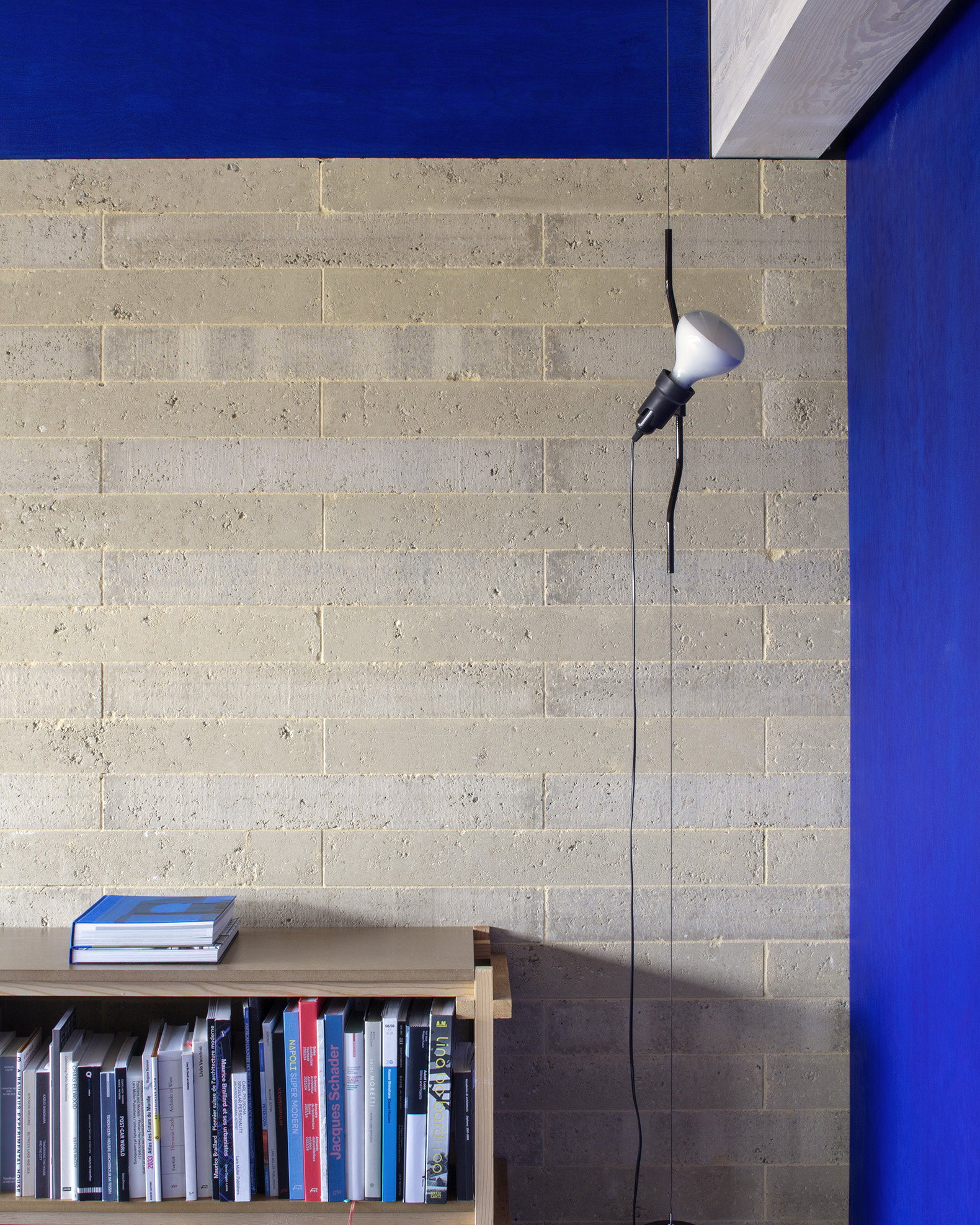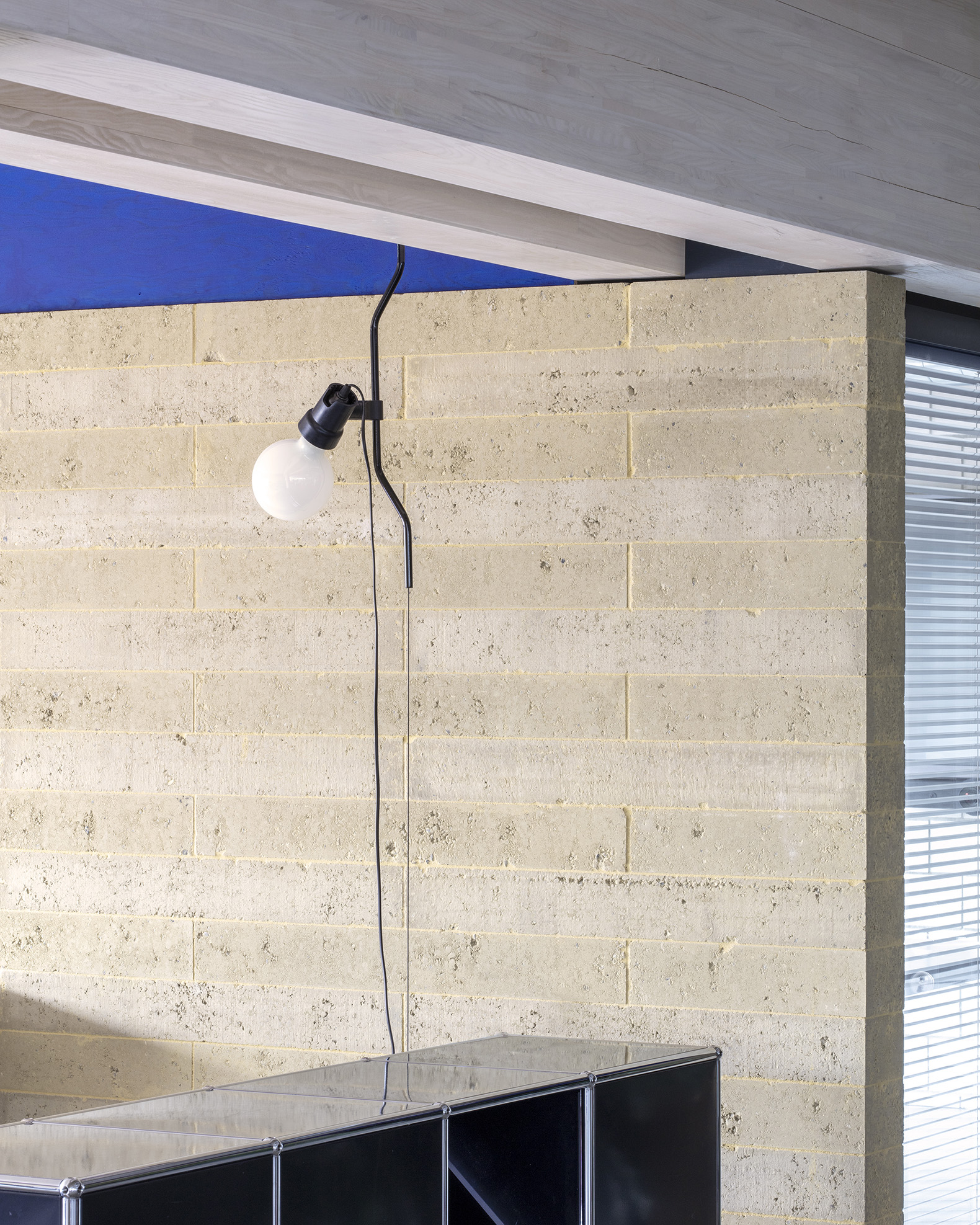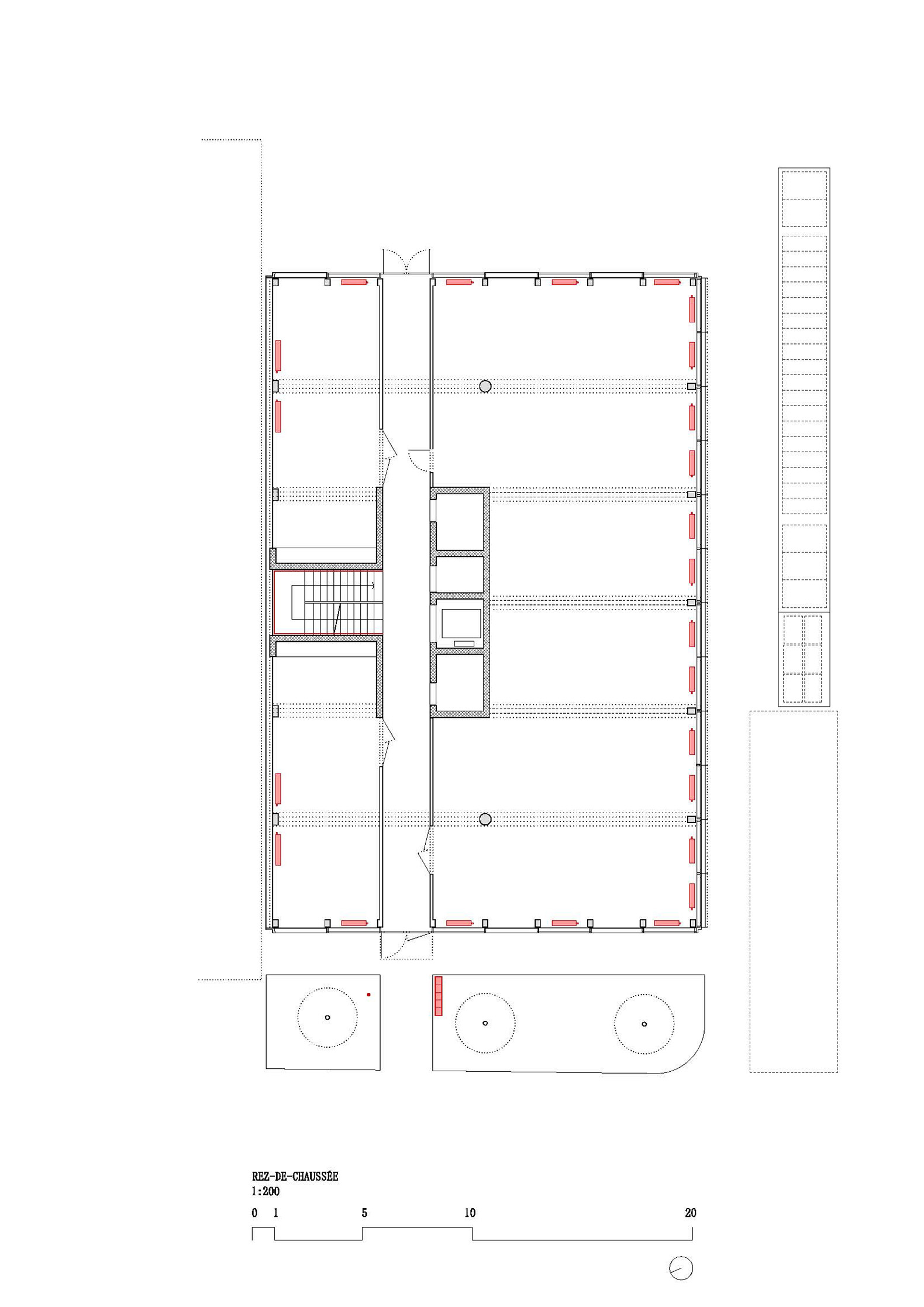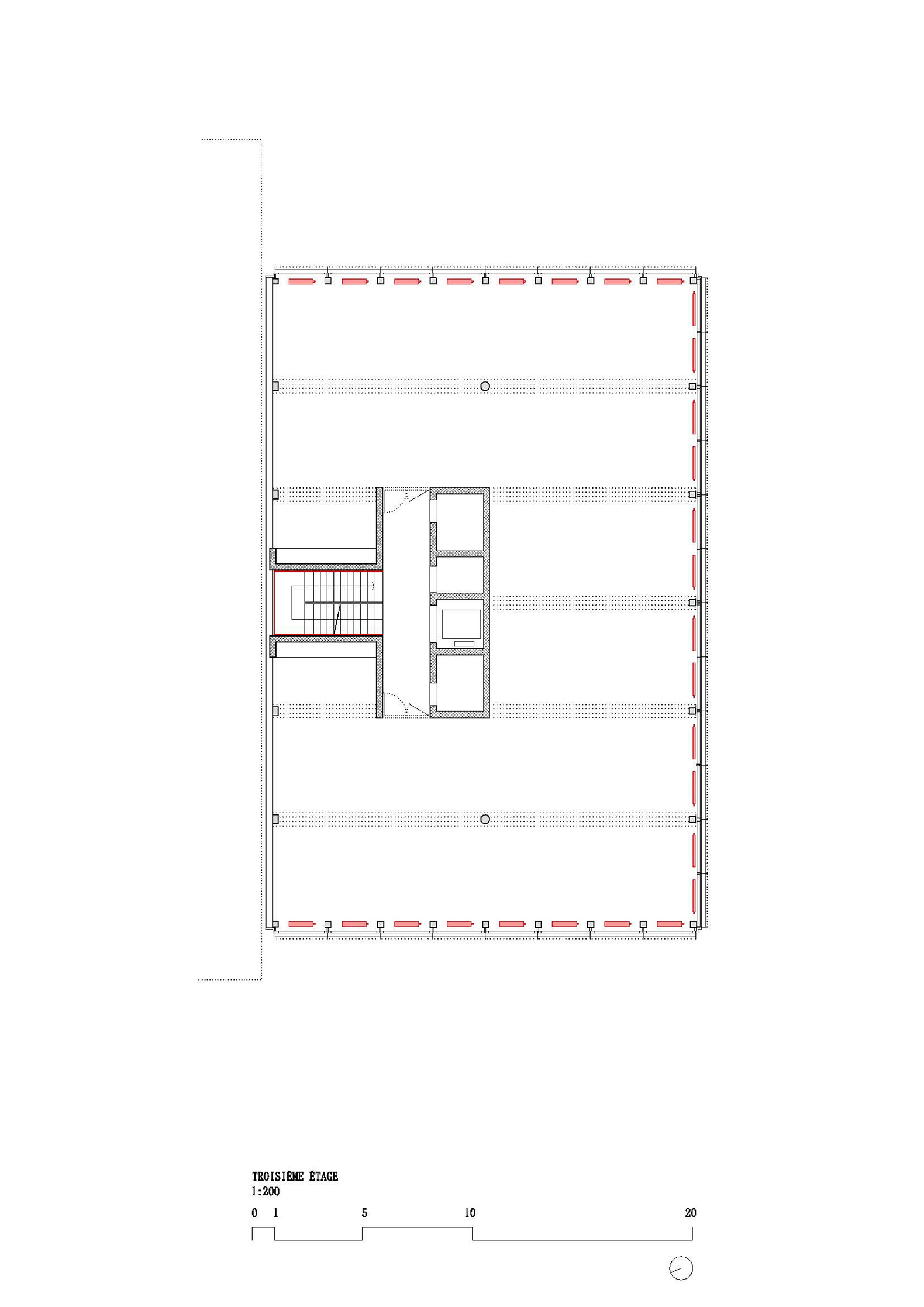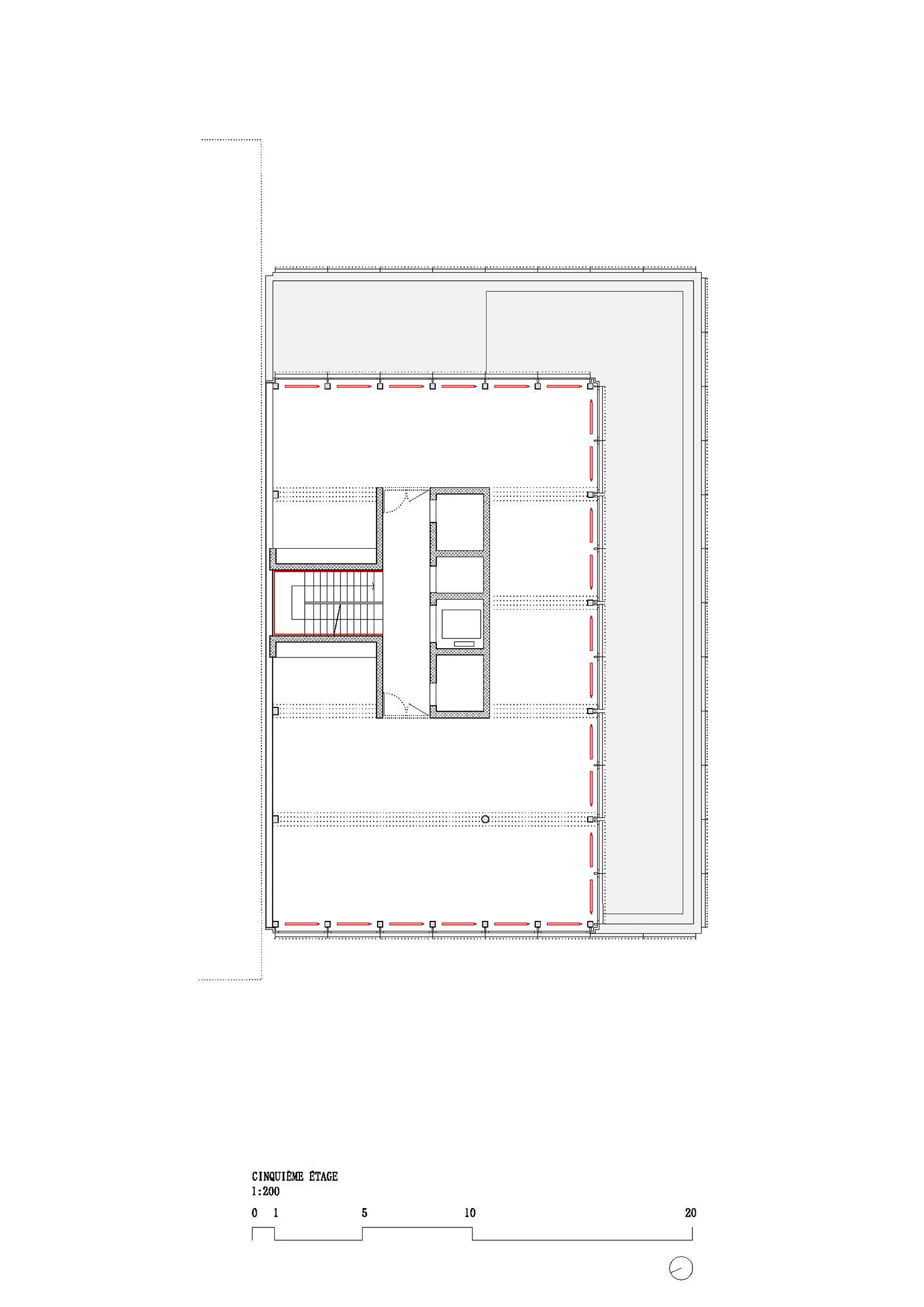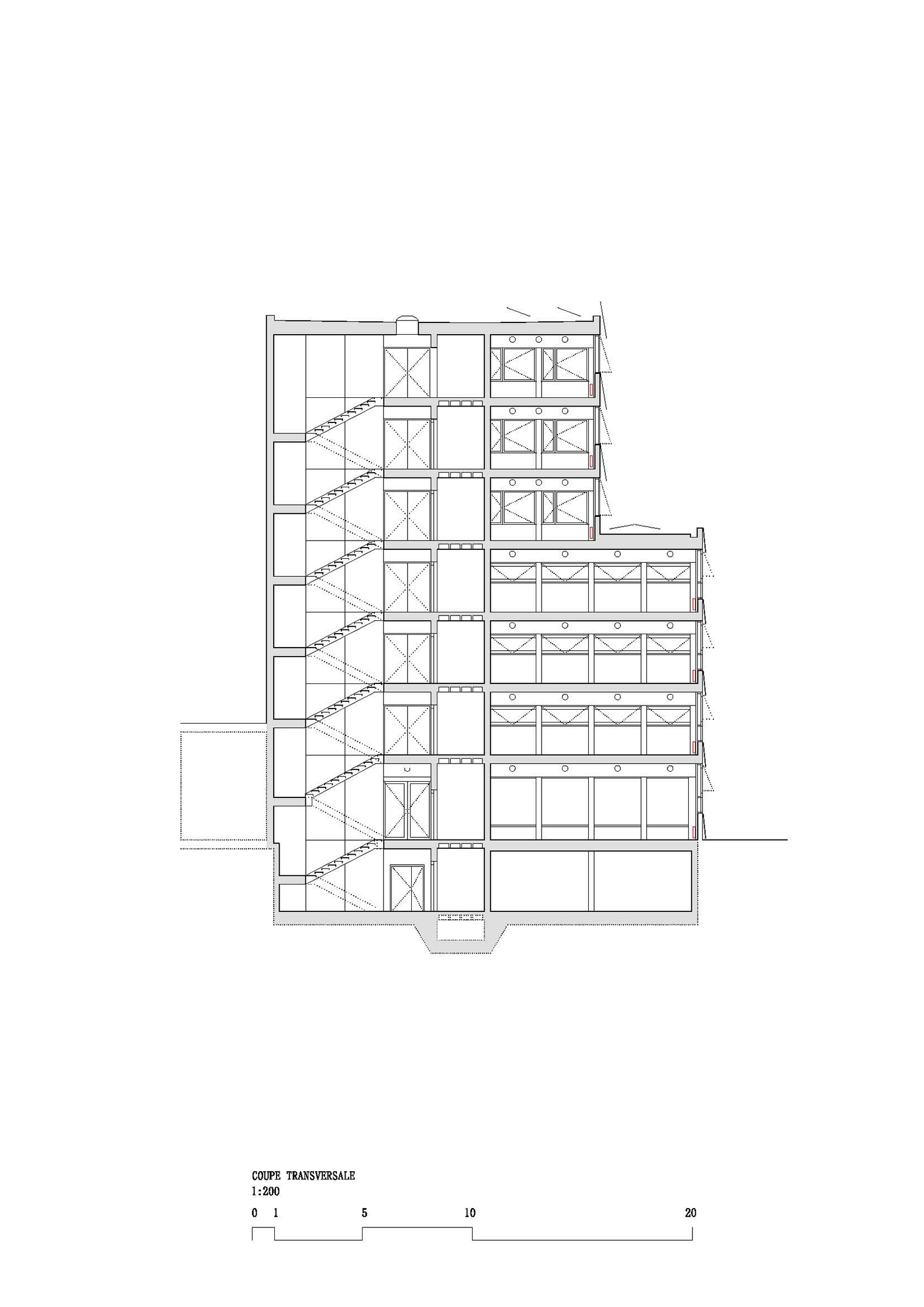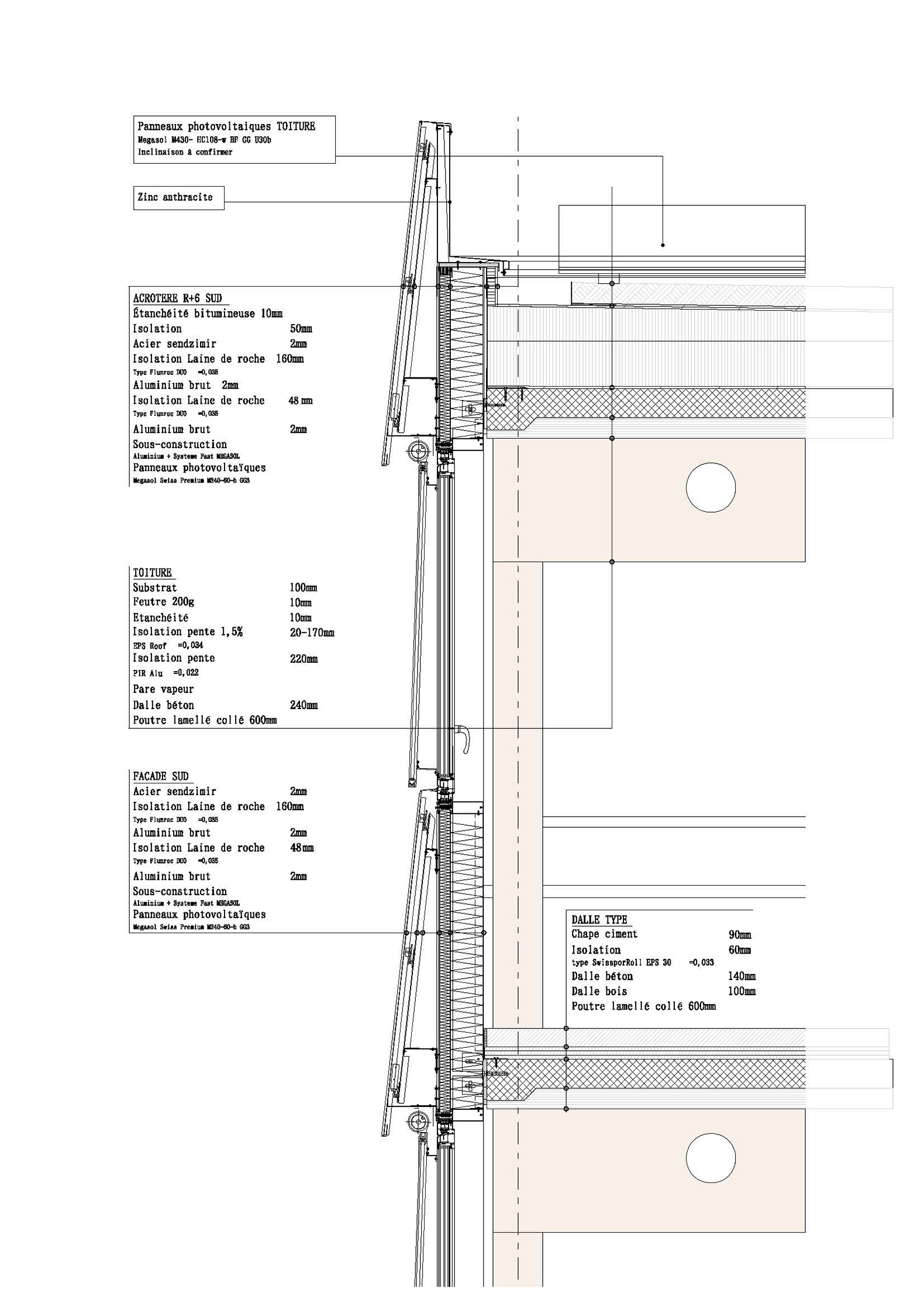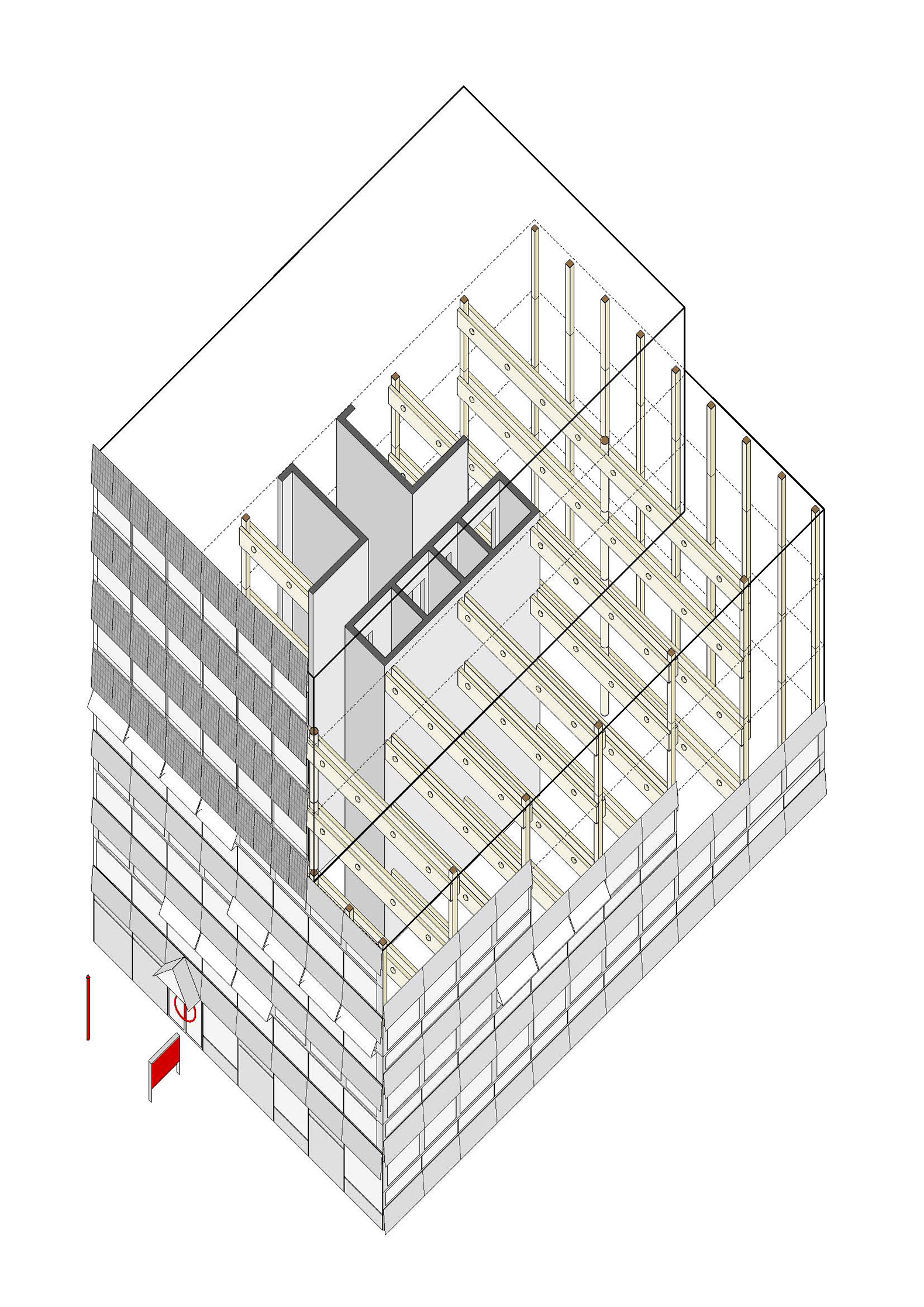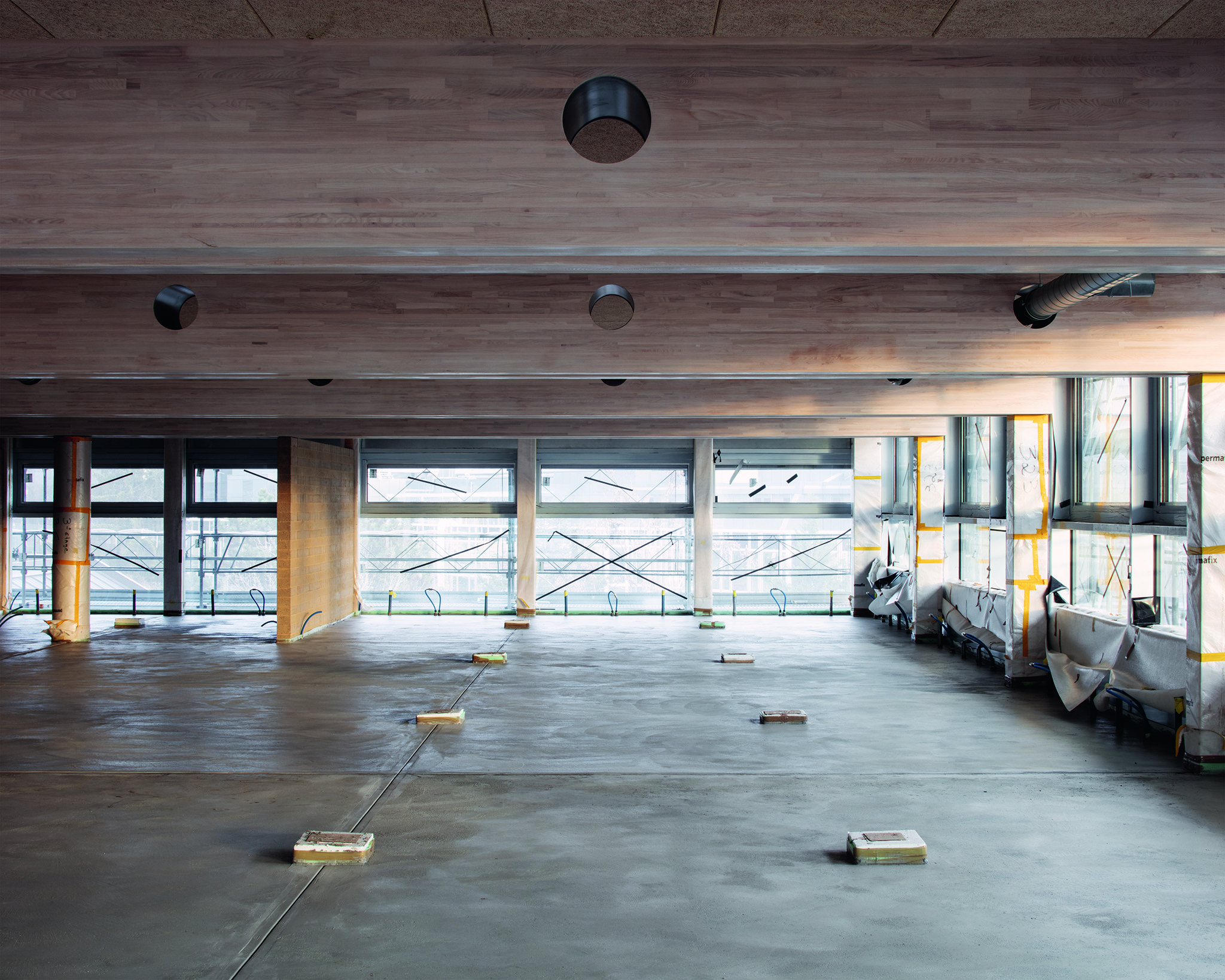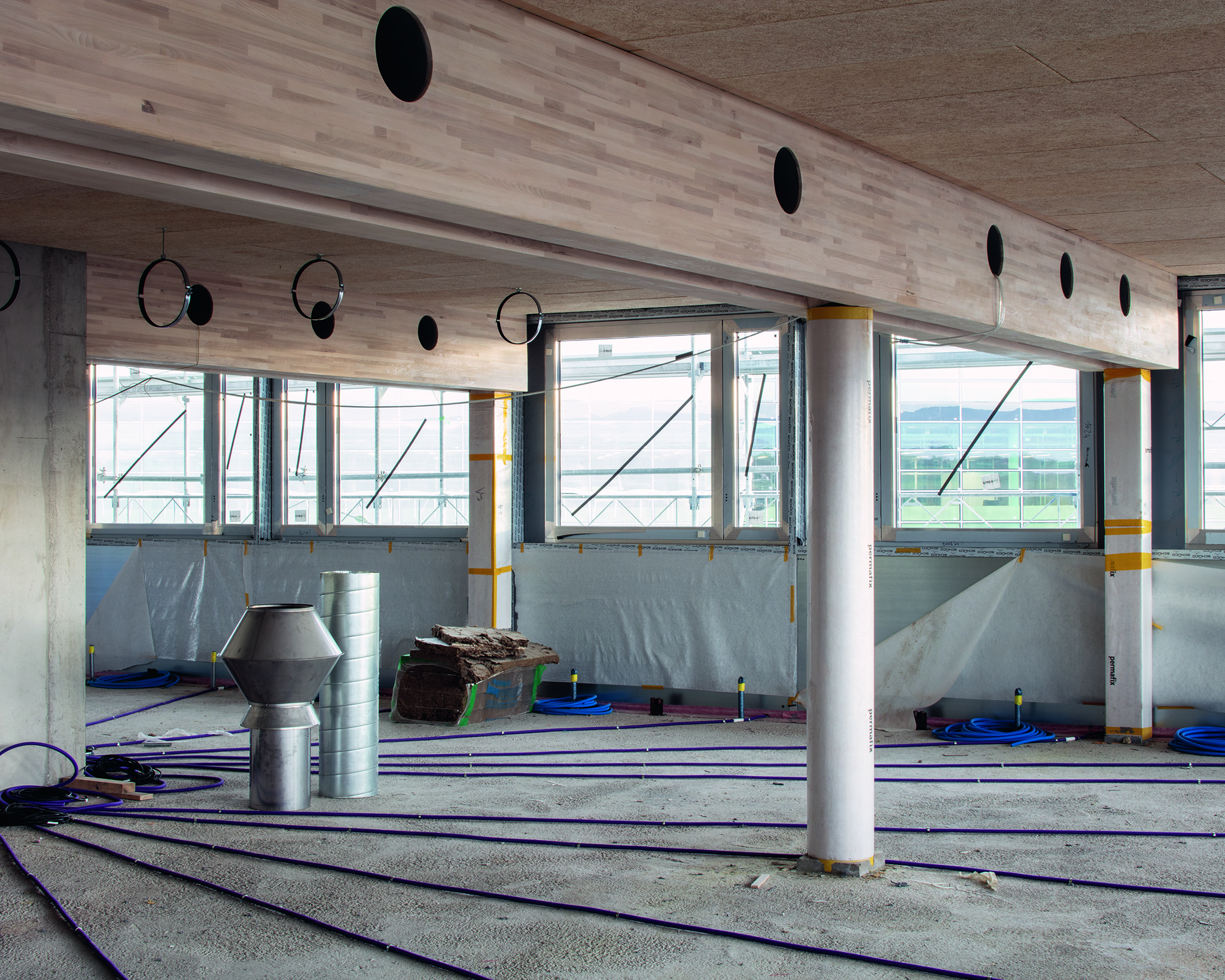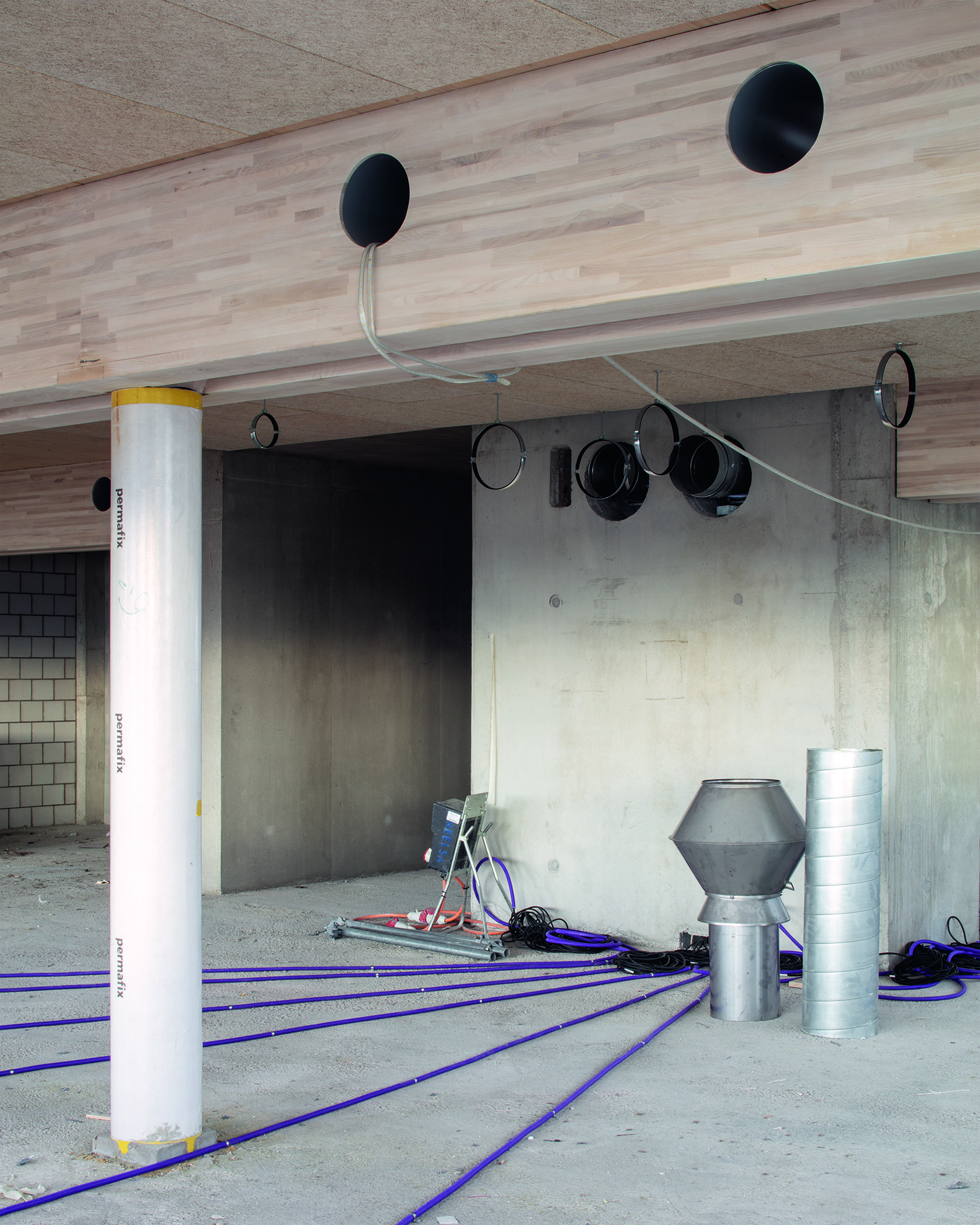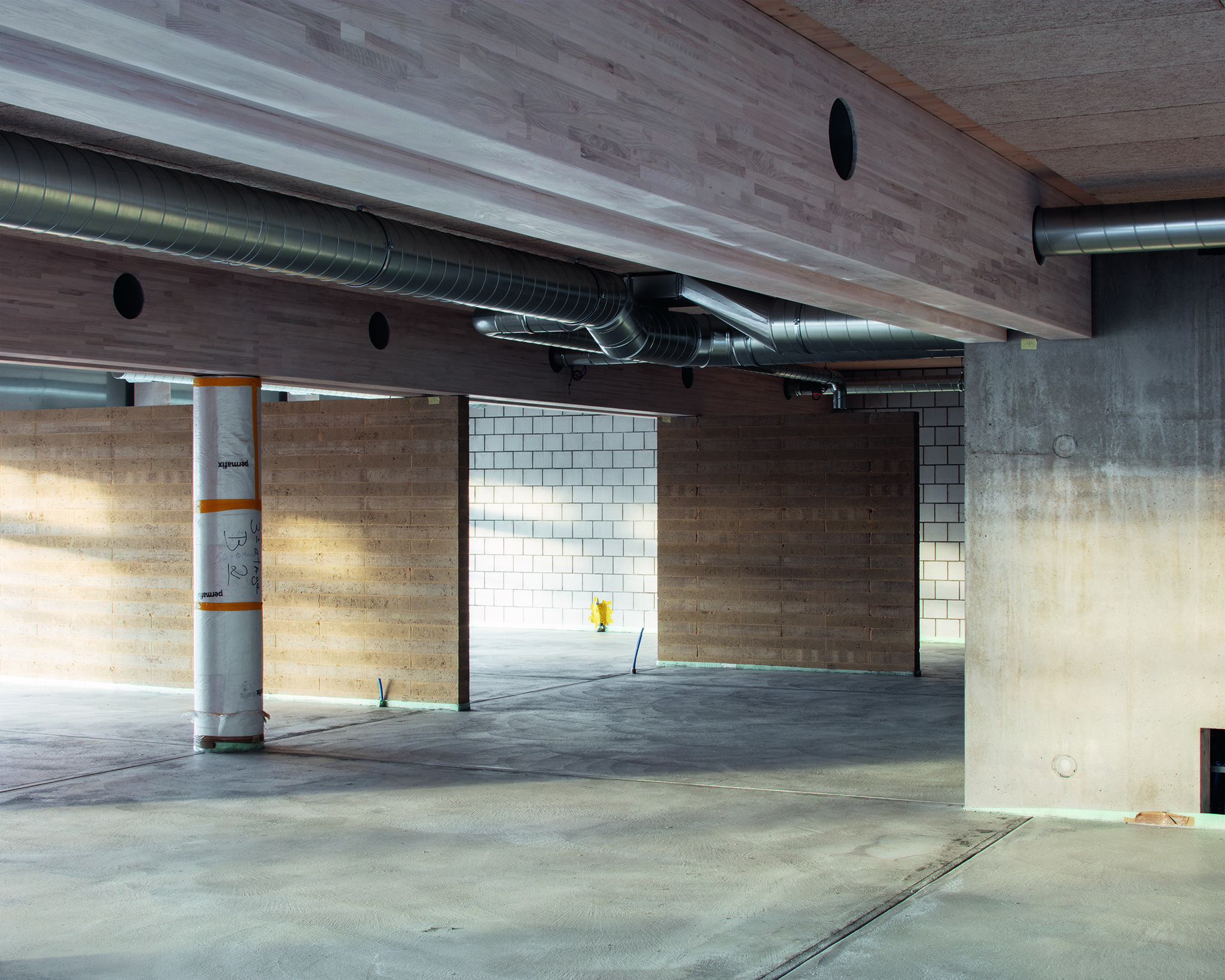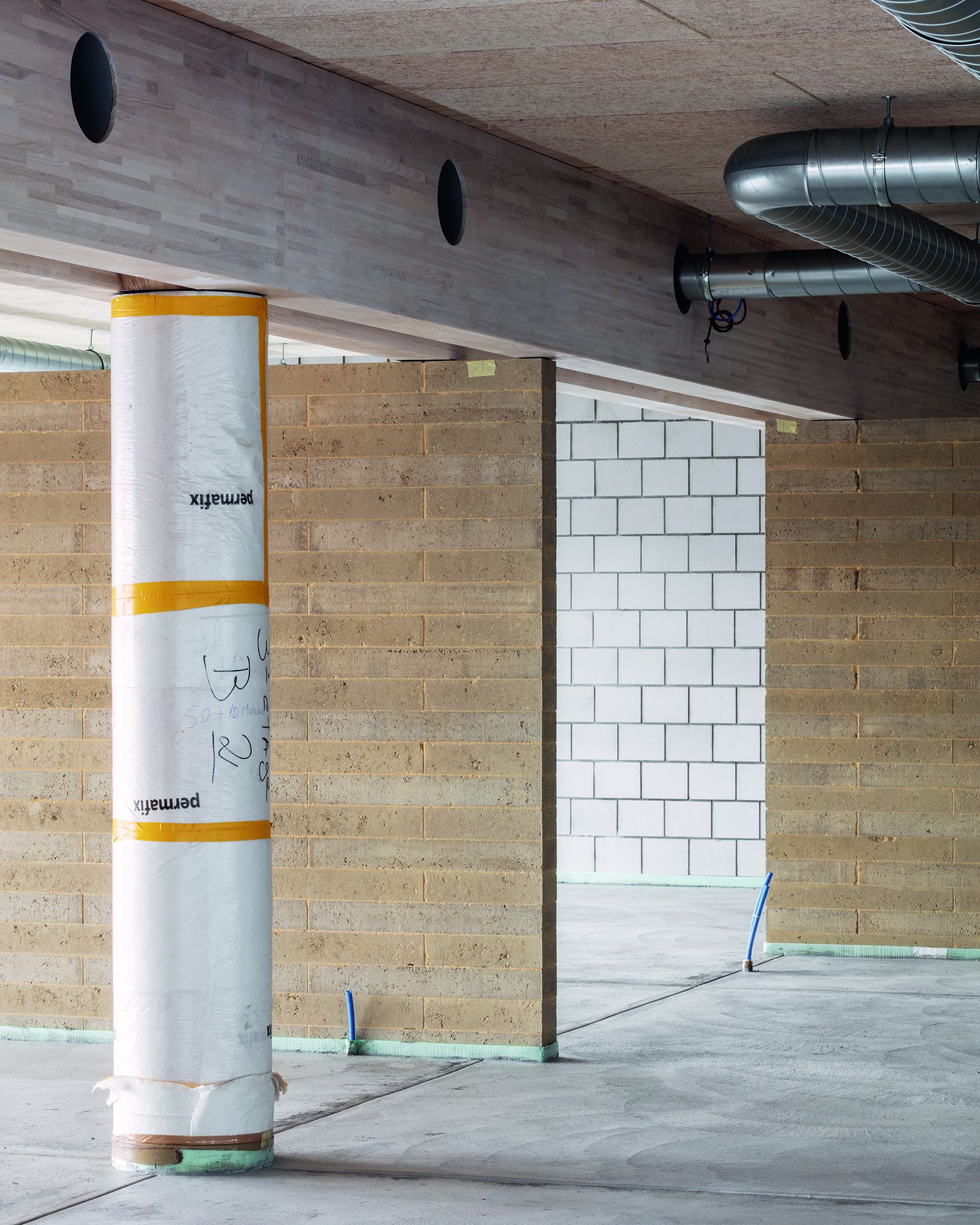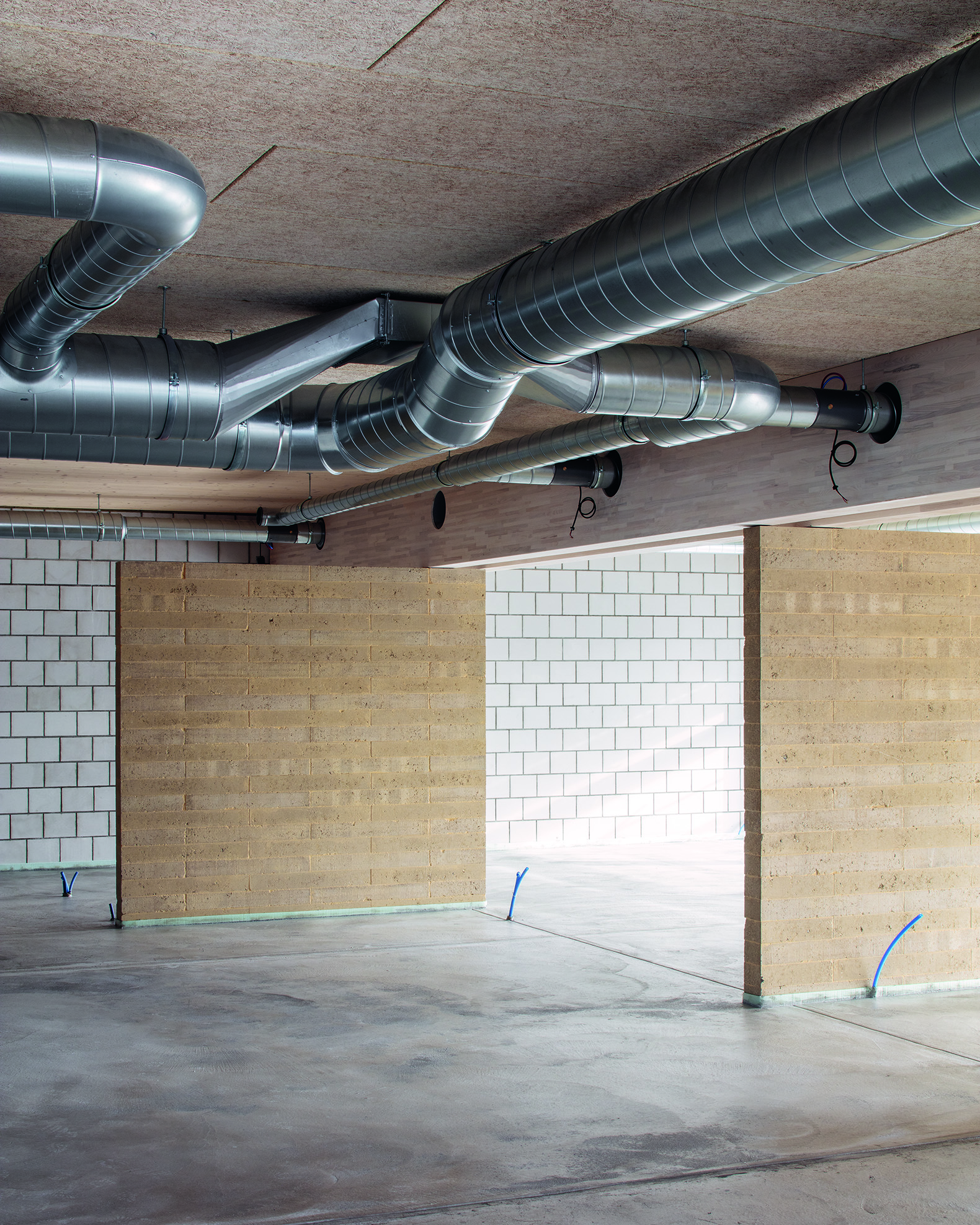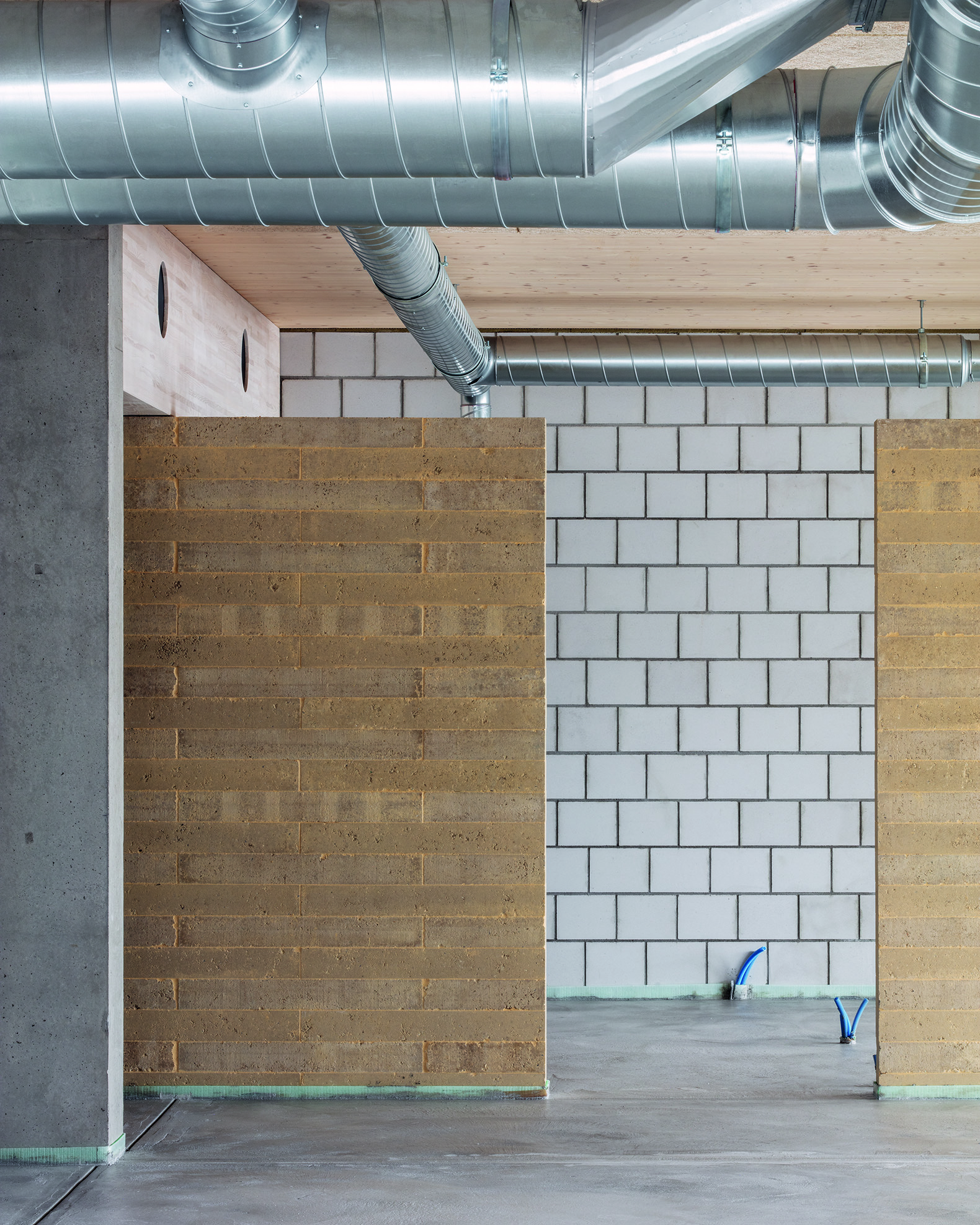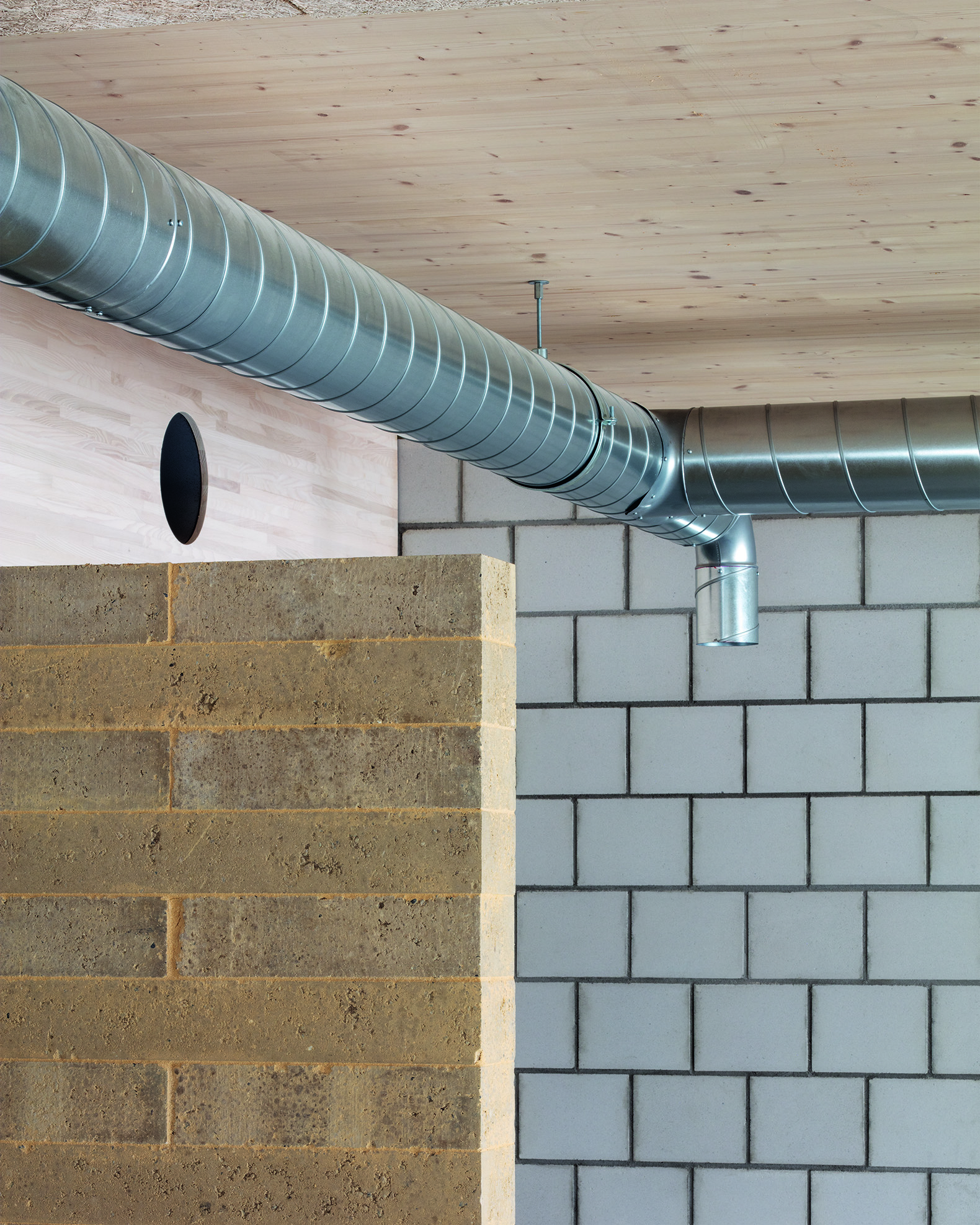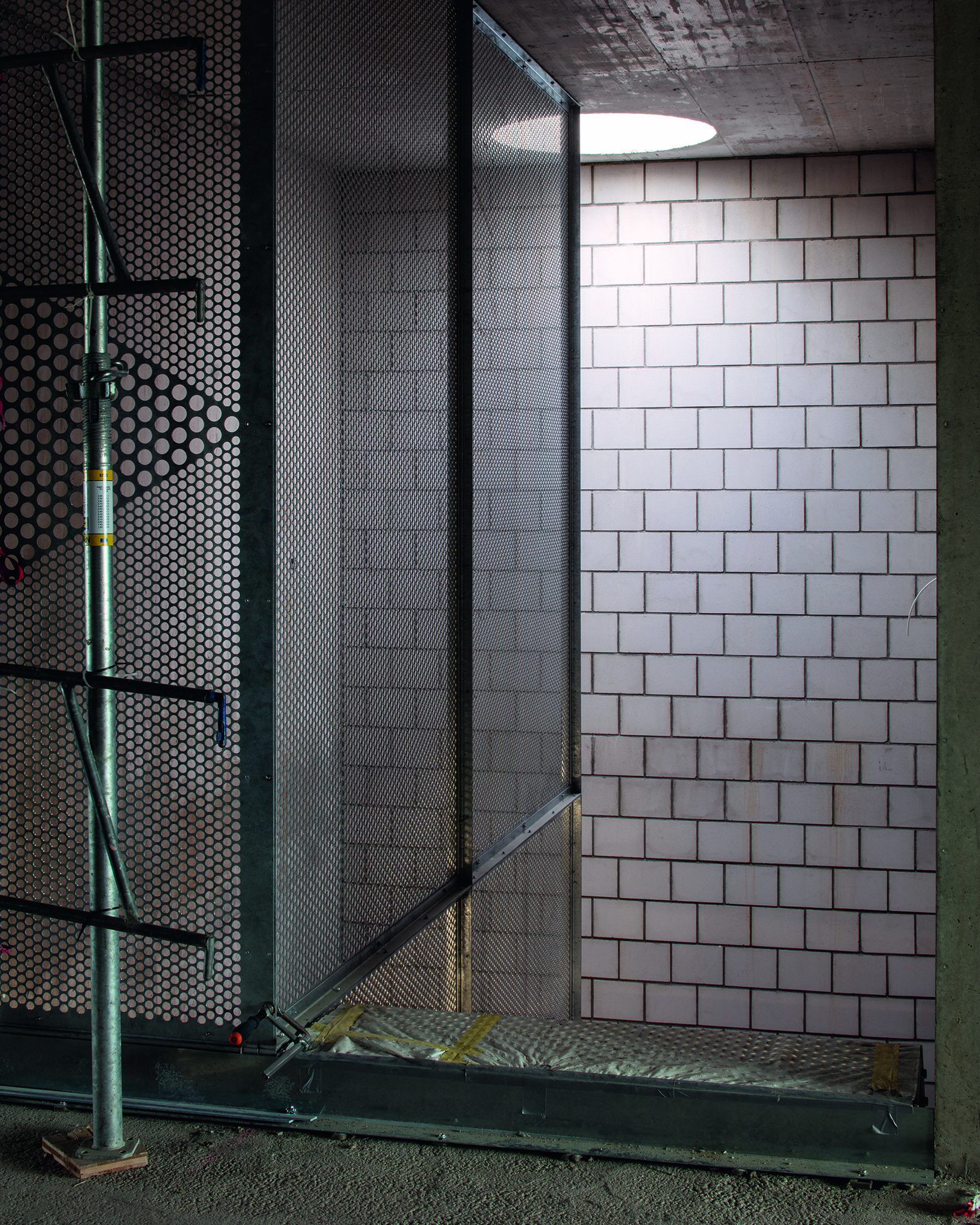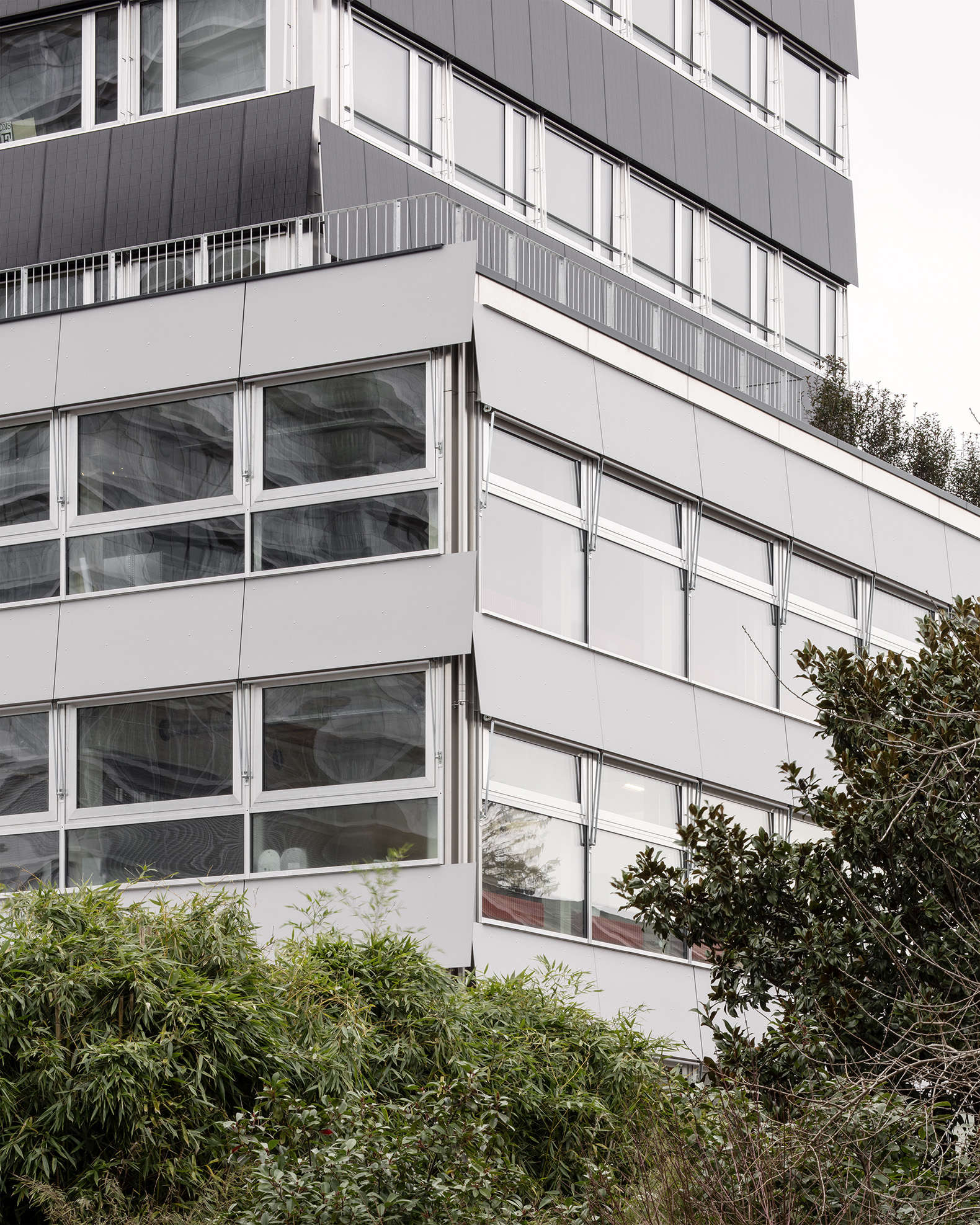
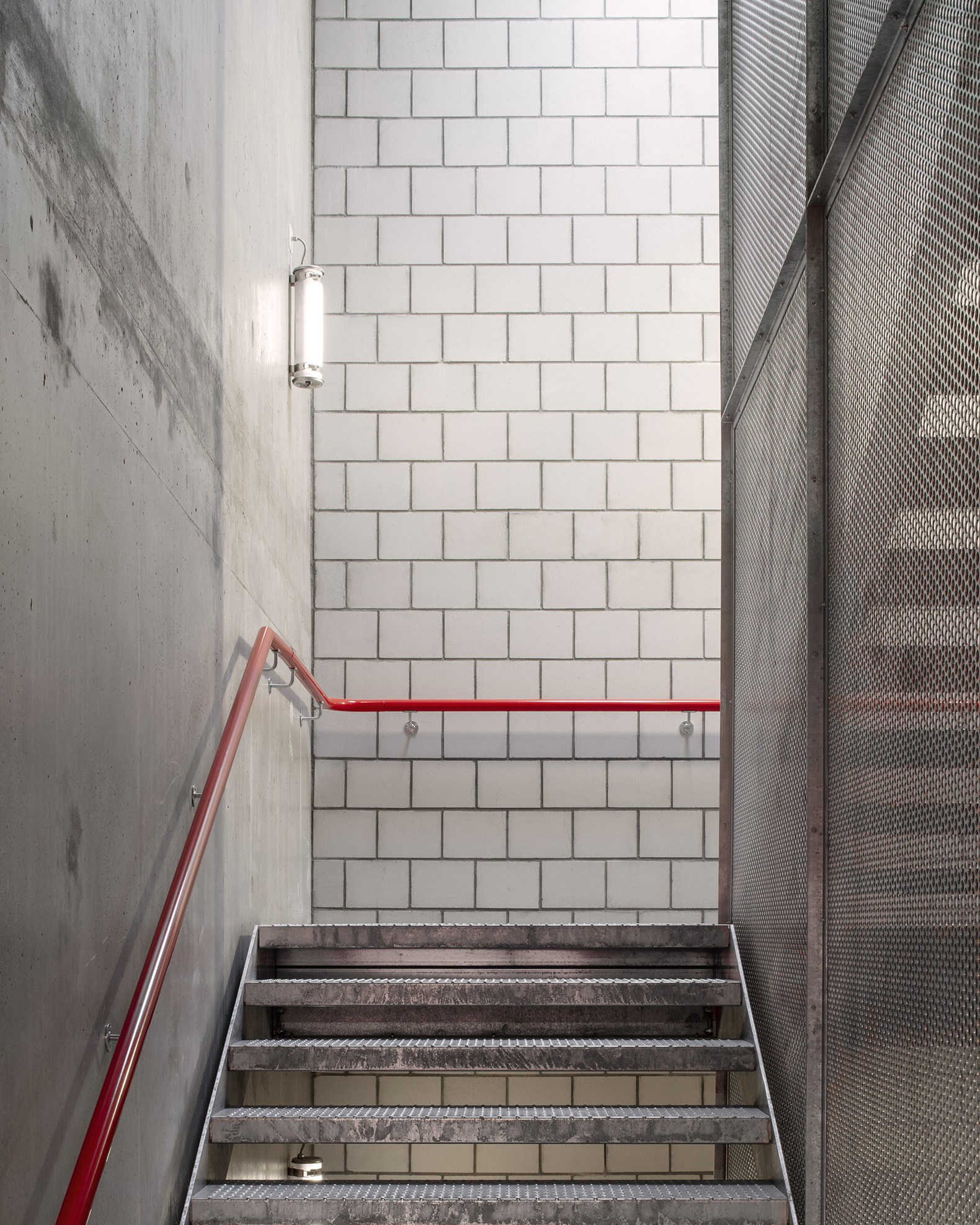
The construction system employed by NOMOS is based primarily on a wood and concrete structure, complemented by glazed facades and removable fiber cement panels. Inside, materials in their natural state predominate, such as polished concrete, calcium silicate brick, exposed wood, galvanized steel, and compressed earth blocks, reinforcing the technical and artisanal character of the project.
As a guiding principle, the reuse of components was an essential part of the design. Light fixtures salvaged from demolished buildings and glass partitions reintegrated into the design reduce the building's environmental impact. This strategy, along with the integration of photovoltaic systems and an energy-efficient building envelope, makes the building an example of sustainable architecture based on the optimization of existing resources and flexibility of use.
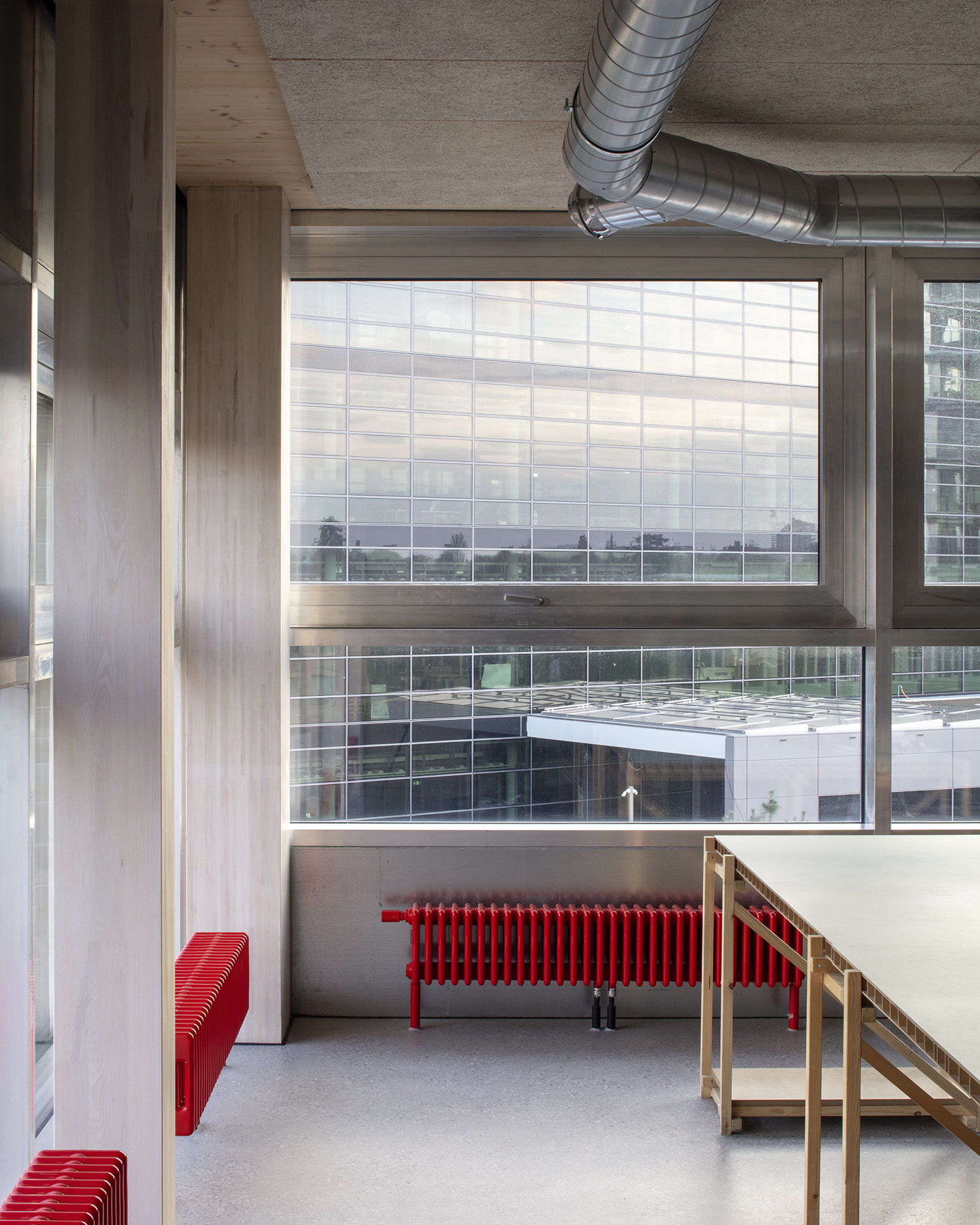
Mosso by NOMOS. Photograph by Paola Corsini.
Project description by NOMOS
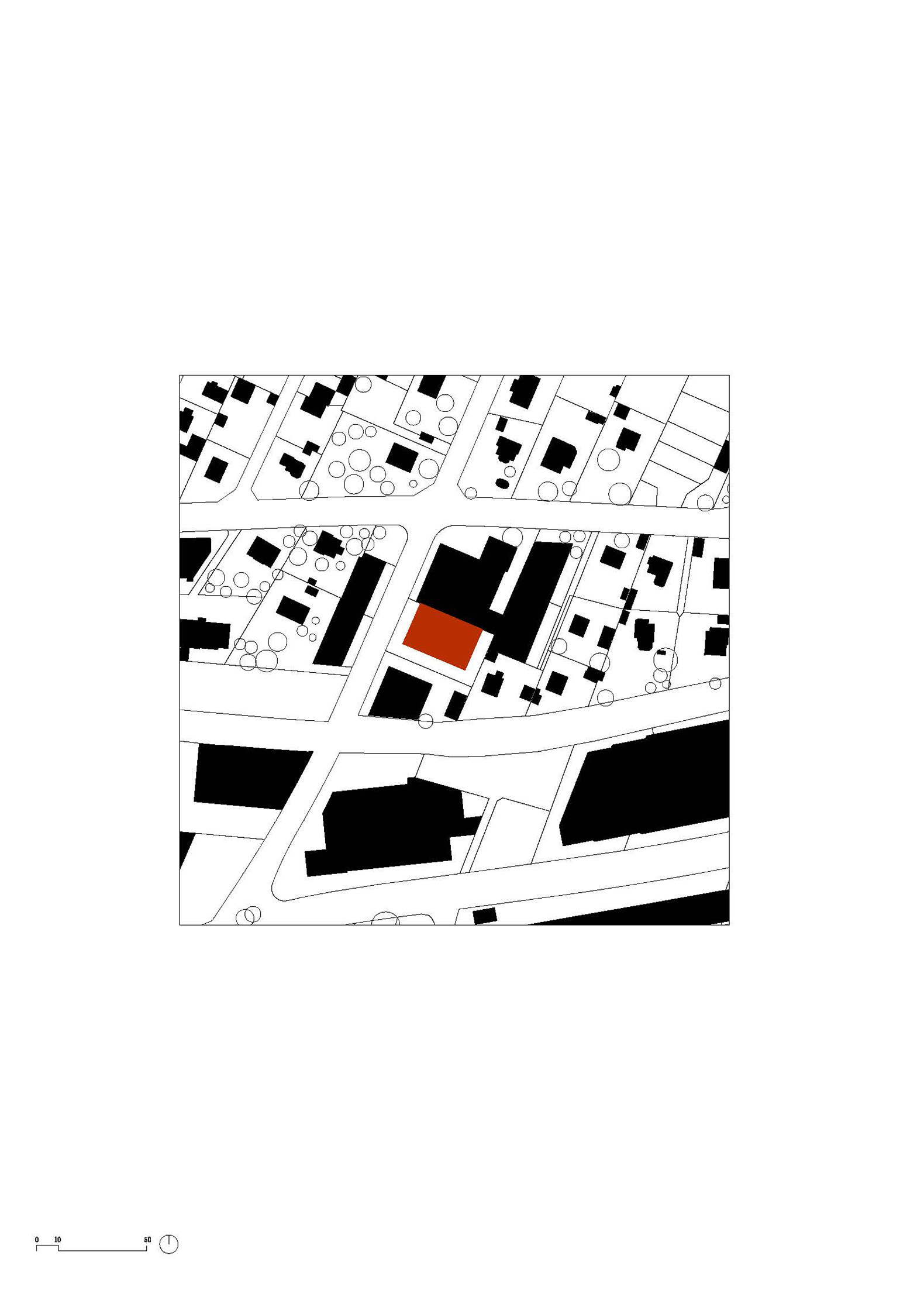
Erected on the family plot owned by the Client, which once housed his grandfather’s printing press, Mosso is a 6-story building designed to accommodate mixed activities, in line with what is nowadays understood as "craftsmanship”. Located in the centre of the rapidly evolving new neighbourhood around the emergence of the Léman Express station in Chêne-Bourg, this project is a tool provided for the activities it hosts. Thus, it aims to be as "low tech” and sustainable as possible, both in its design and implementation.
A hybrid wood-concrete load-bearing structure, with large laminated ash tree beams punctuated by holes, allowing for the passage of utilities and minimal impact of the structures on the floors: a strong desire to provide users with maximum space to offer complete freedom for the use they wish to make of it.
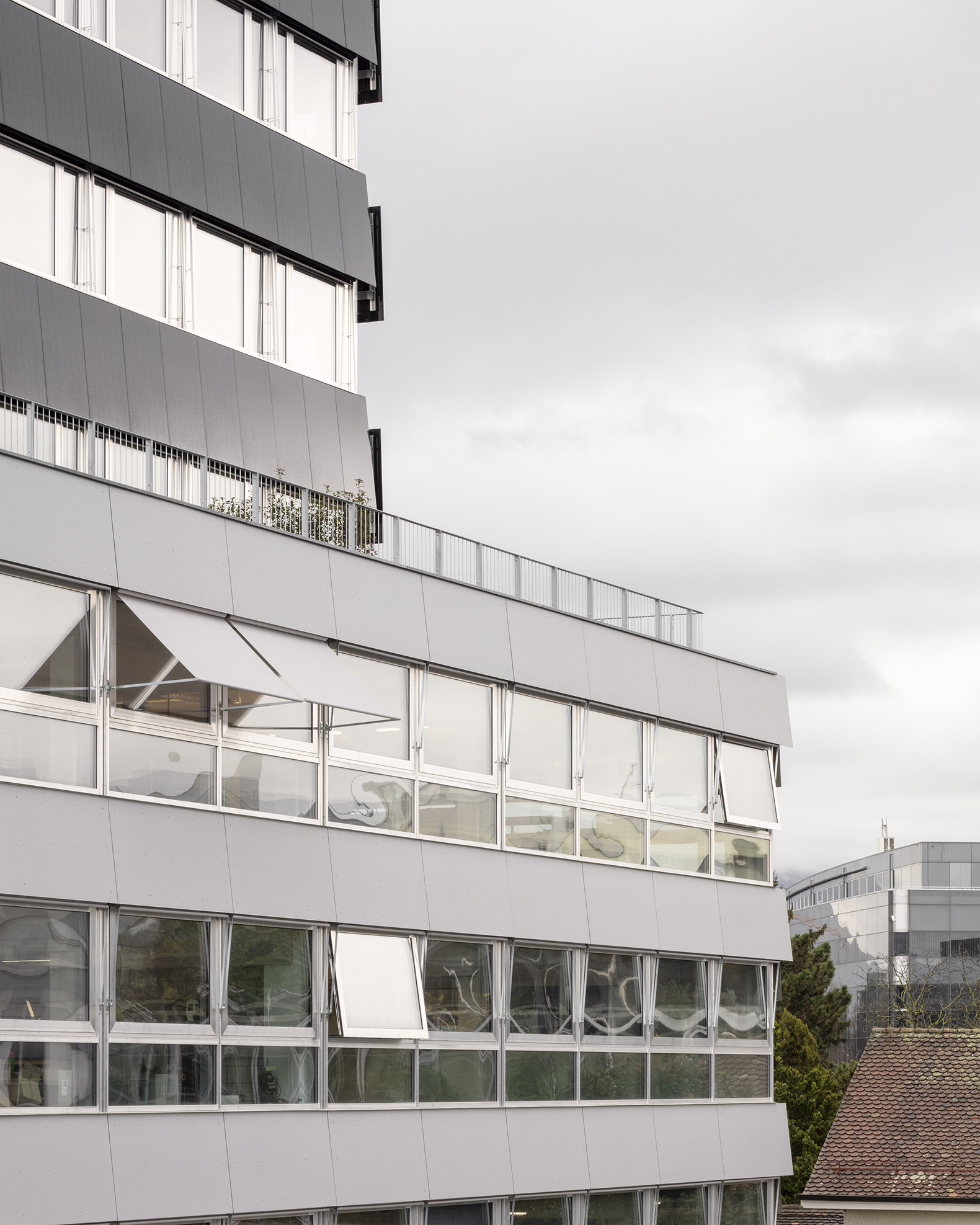
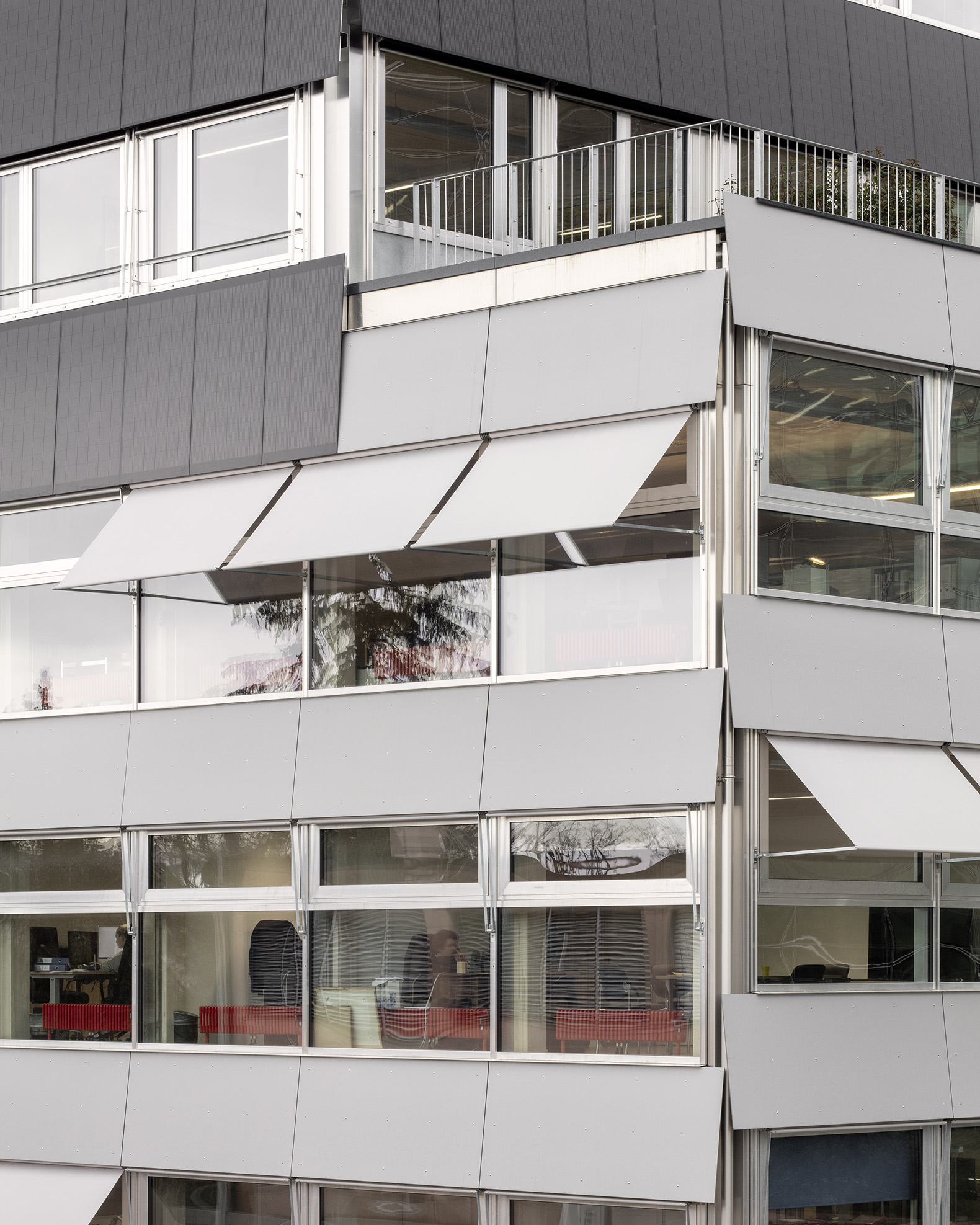
The facades, on the other hand, are largely glazed, bringing in maximum natural light into the future workspaces. Composed of glass and fibre cement panels, deliberately implemented by visible mechanisms, akin to a meccano set, to allow for replacement if necessary of a panel, but also for practical aesthetics, showcasing the assemblies.
The angles of the volume, due to the inclination of the panels and their staggered installation, reveal the finesse of the facade composition, akin to a house of cards and in homage to the place’s past, strongly linked to paper. This assembly of angled panels not only allows for the facade to vibrate but also provides space to accommodate blinds, thus shedding the superfluous of the bulkhead.
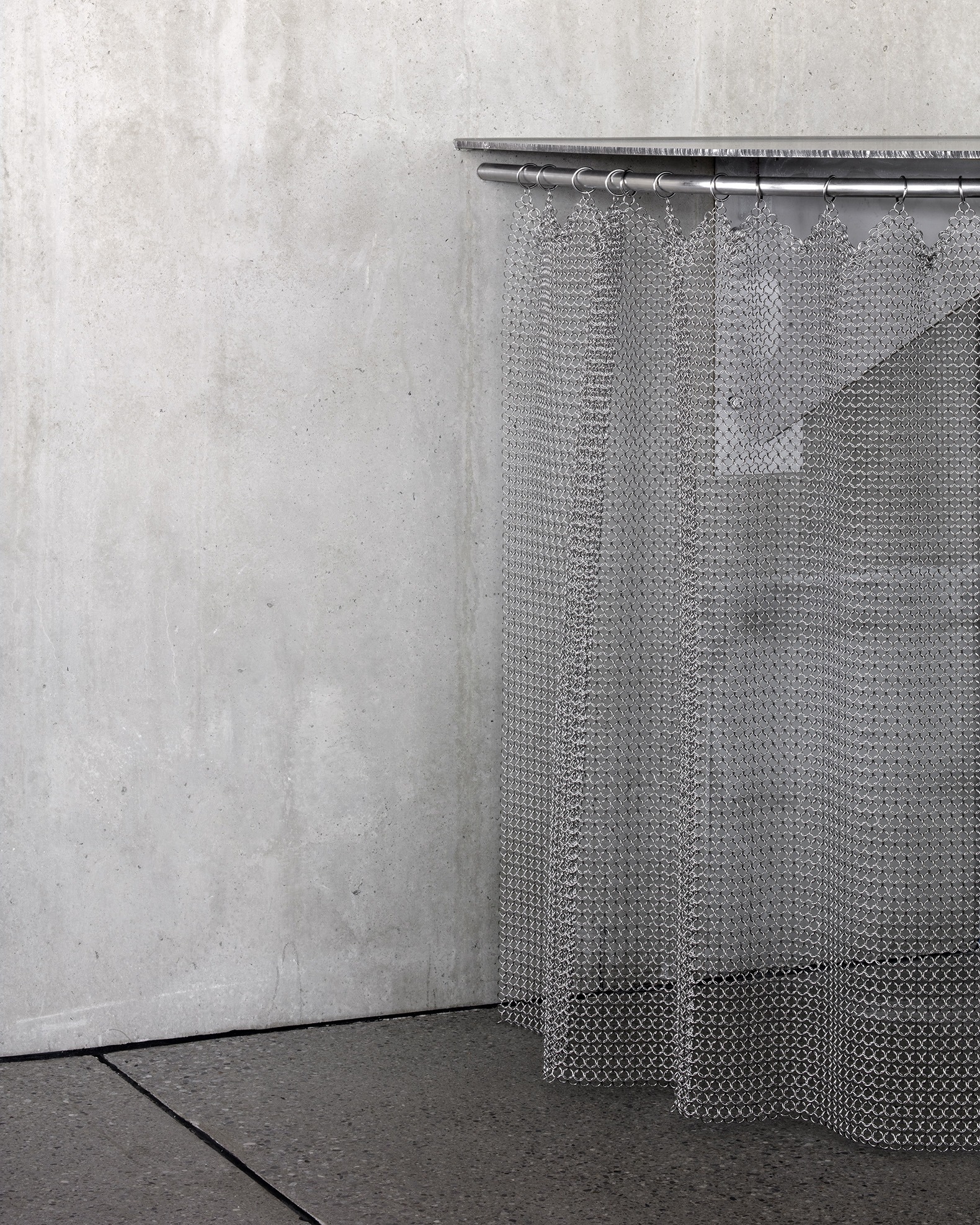
This slight angle given to the facade composition elements contributes to increasing the performance of the photovoltaic panels, which dress the last 3 floors, thus replacing the fibre cement panels. Indeed, labelled THPE (Very High Energy Performance), it was necessary to use the facade to provide the significant surfaces required for photovoltaic panels.
The interior fittings, on the other hand, are raw and adopt the artisanal language of the place: sanded concrete screeds floors, silico-limestone bricks, wood, visible schichtex insulating panels, galvanized steel panels, and CEB (Compressed Earth Blocks) walls. Where possible, luminaires have been recovered from the demolition bound building sector, as have some glass partition walls, also reused.