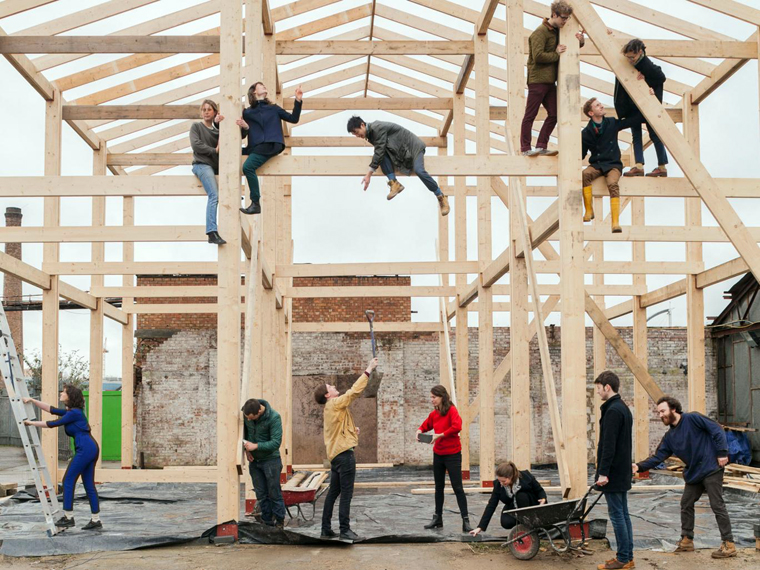
BC Architects & Studies & Materials, Assemble and Atelier LUMA have transformed the "Magasin Electrique" (Electric Store) in Lot 8 into a design and research laboratory for Atelier Luma. The program includes: workshops for wood, metal, ceramics, and textiles; meeting rooms; offices and production areas; a library; a resource center; and algae and mycelium laboratories. The heart of the building is the "Agora," a central space used for exhibitions and public events.
The project stands out for its use of locally sourced solutions that promote an ecological transition based on a bioregional design with natural, innovative, and local materials and sustainable techniques, making it an emblem of sustainable architecture.The construction involved more than 15 local contractors.

Lot 8 by Assemble + BC architects + Atelier LUMA. Photograph by Joana Luz.
Project description by Assemble + BC
Renovation of the former "Magasin Electrique" of the French railway company SNCF
The Lot 8 project is a collaboration between BC architects & studies & materials, Assemble and Atelier LUMA. The "Magasin Electrique" is a 2100 m² former 19th century train depot building, and has been renovated to provide a new workspace for the design and research laboratory Atelier Luma, including workshops for timber, metal, ceramic, and textile, alongside dedicated algae and mycelium laboratories, meeting rooms, desk and production space, library and resource centre.
Atelier LUMA is the design research program of LUMA Foundation. Based in the Parc des Ateliers in Arles, France, since 2017, it is deeply connected to its geographic and cultural environment: the Camargue region, the Alpilles mountains, and the Crau plains.
"Through investigating the resources and know-how in our bioregion, and connecting different fields of expertise, Atelier Luma develops local solutions for ecological, economic, and social transition."
Working in close collaboration, the team set out an ambition to create a flagship piece of bioregional design, presenting a new attitude towards materials, promoting and highlighting innovation in bioregional design practice. The project is developed in collaboration with local stakeholders, it is drawing from regional know-how and resources, and it aims to create lasting impact through training programs and transmission projects.