The movie begins with a trip in a bus on the occasion of the European Heritage days. The passengers are listening attentively to the explications of a guide, who speaks French. The guide describes the different characteristics of the house, which they are about to visit. Among its main characteristics the guide mentions that it was listed in the additional inventory of historic monuments, after its recent built in 1998.
The bus leaves the passengers not at the house, but on a road next to it. The road leads them to the entrance, where the guide asks the visitors to take off their shoes so that they can start the tour, barefooted. The rest of the documentary places its narrative around Guadalupe Acedo, but that's a different story, one which I strongly recommend you to watch. 

I've just told you briefly the beginning of one of the most popular and successful modern movies about architecture from the last decade, the very known “Koolhaas Houselife". It is a documentary, made by the Italian Ila Bêka and the French Louise Lemoîne, about the house in Bordeaux by Rem Koolhaas.

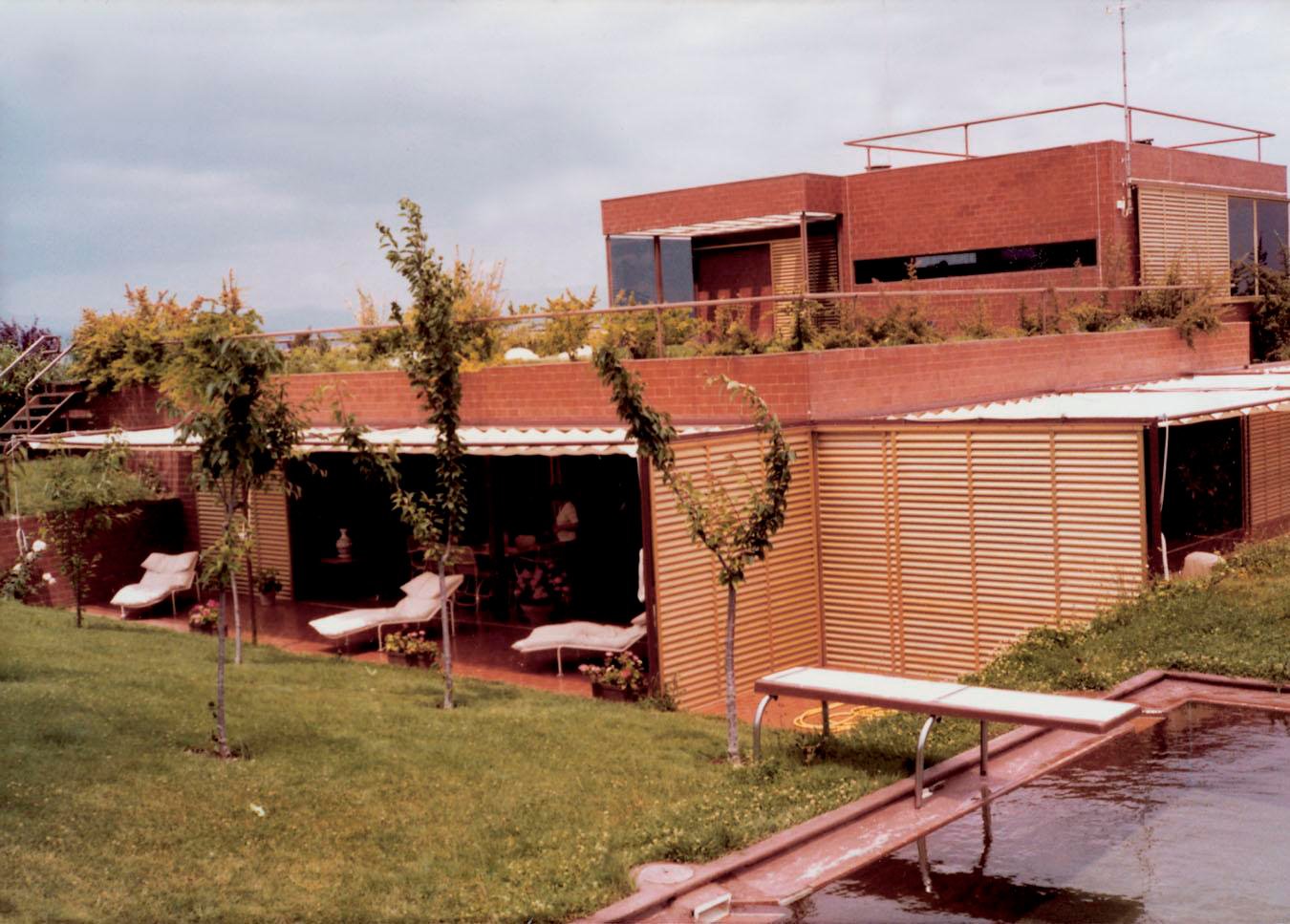
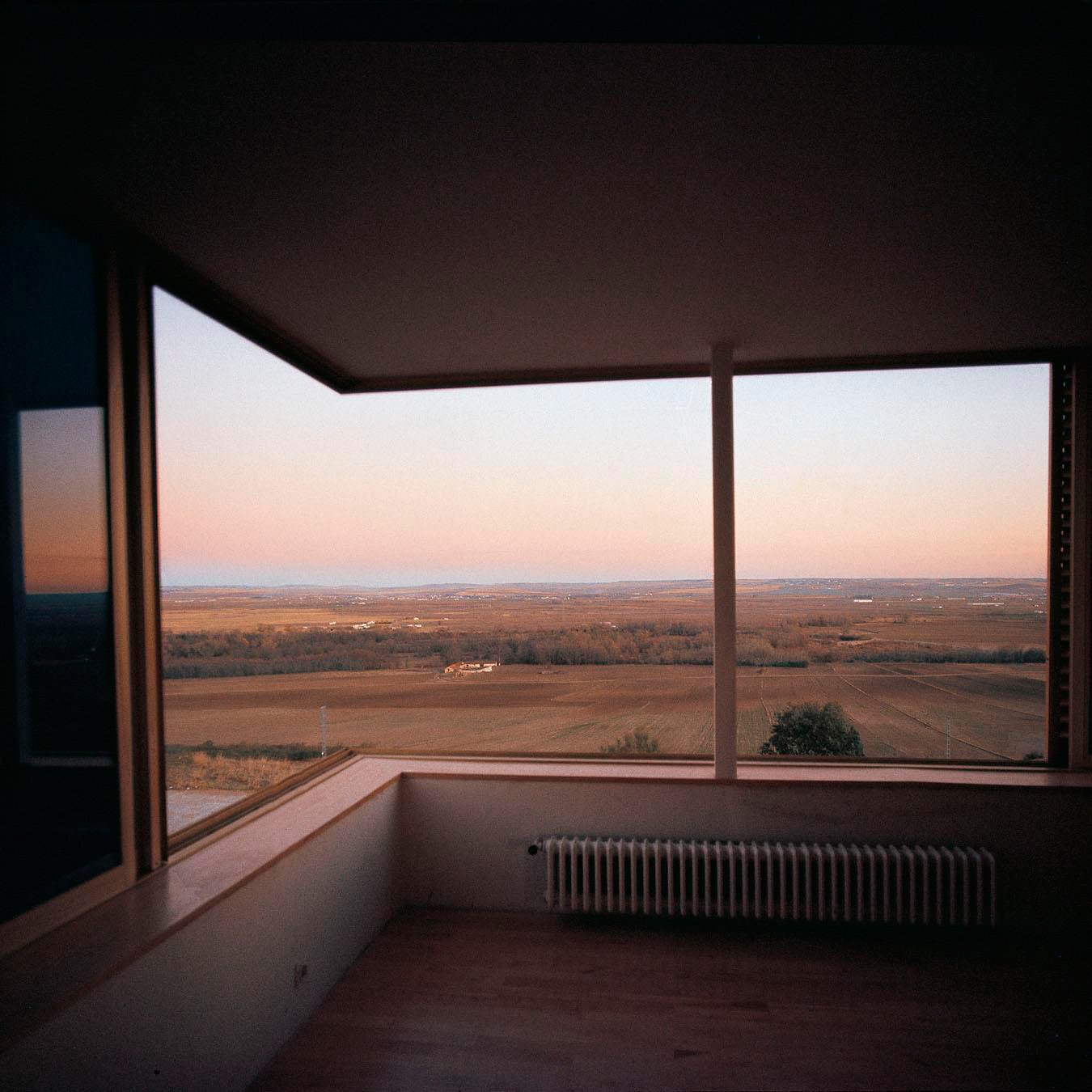
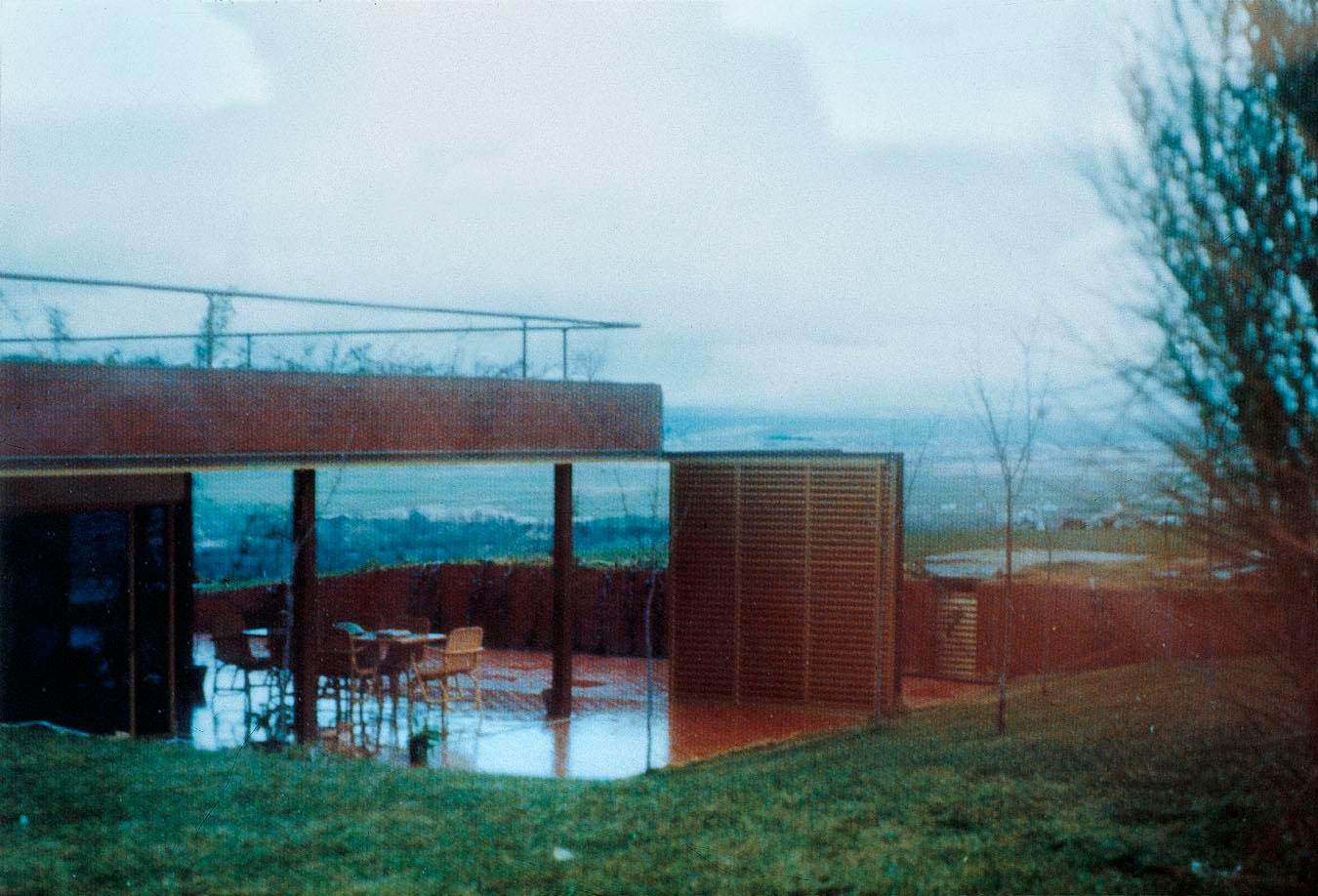
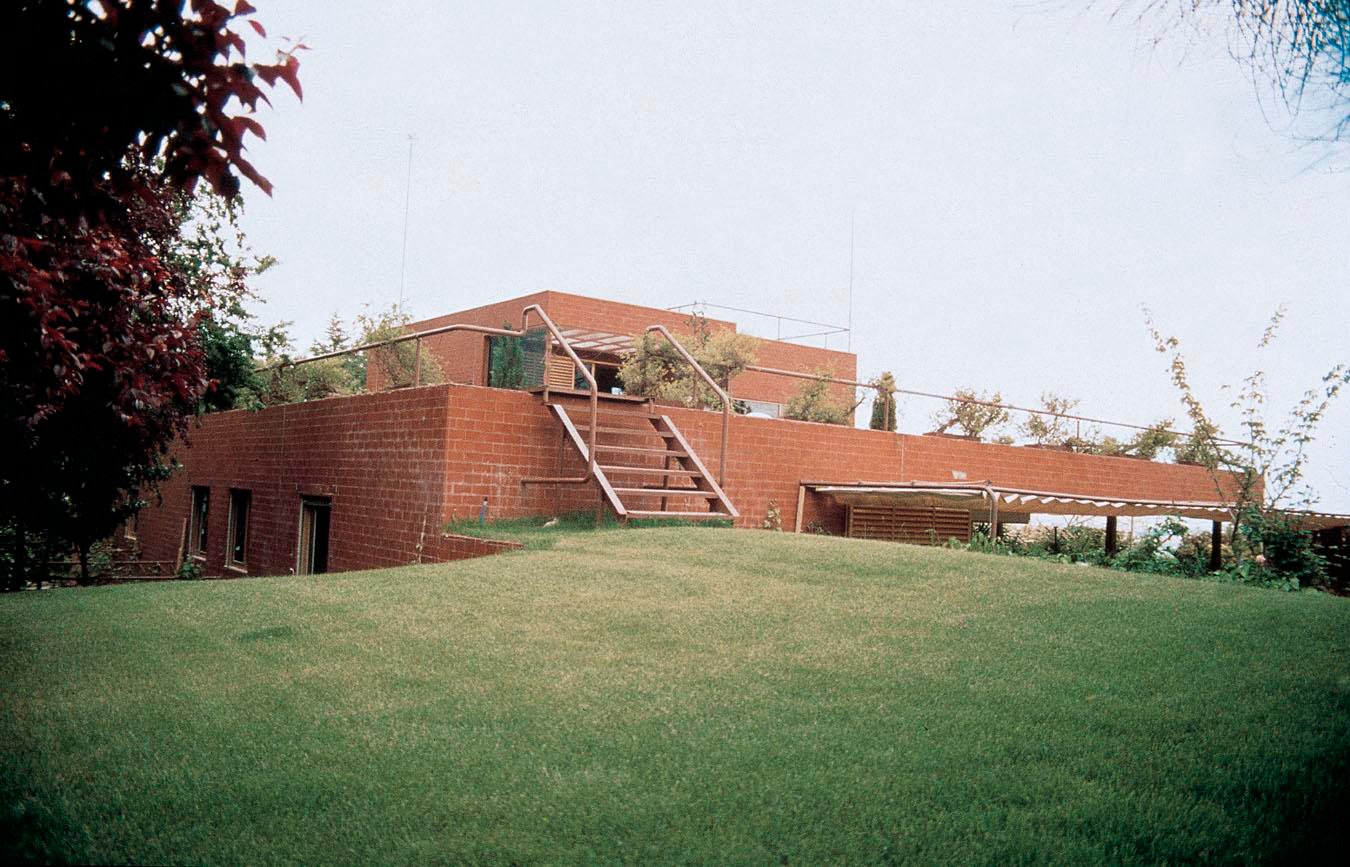
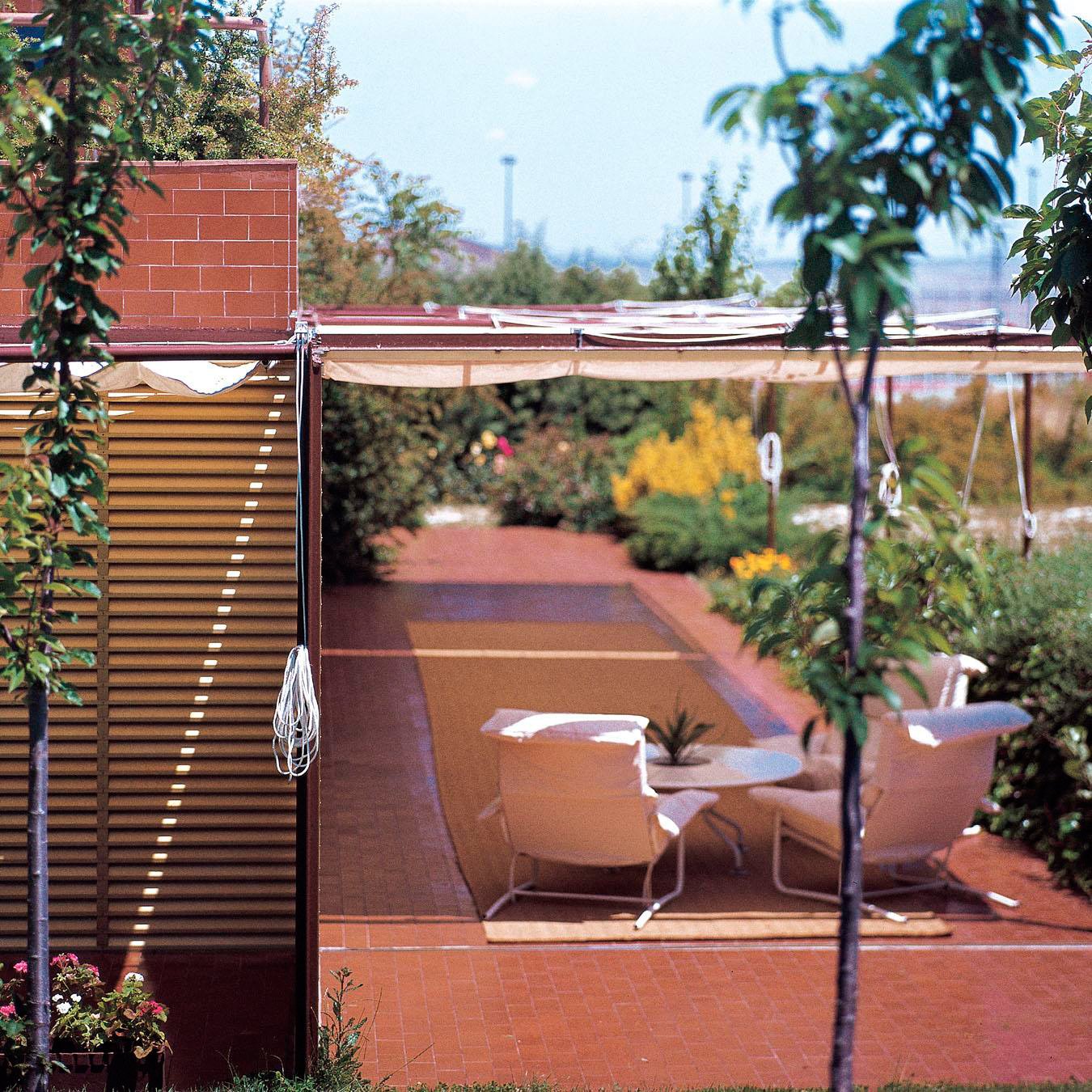
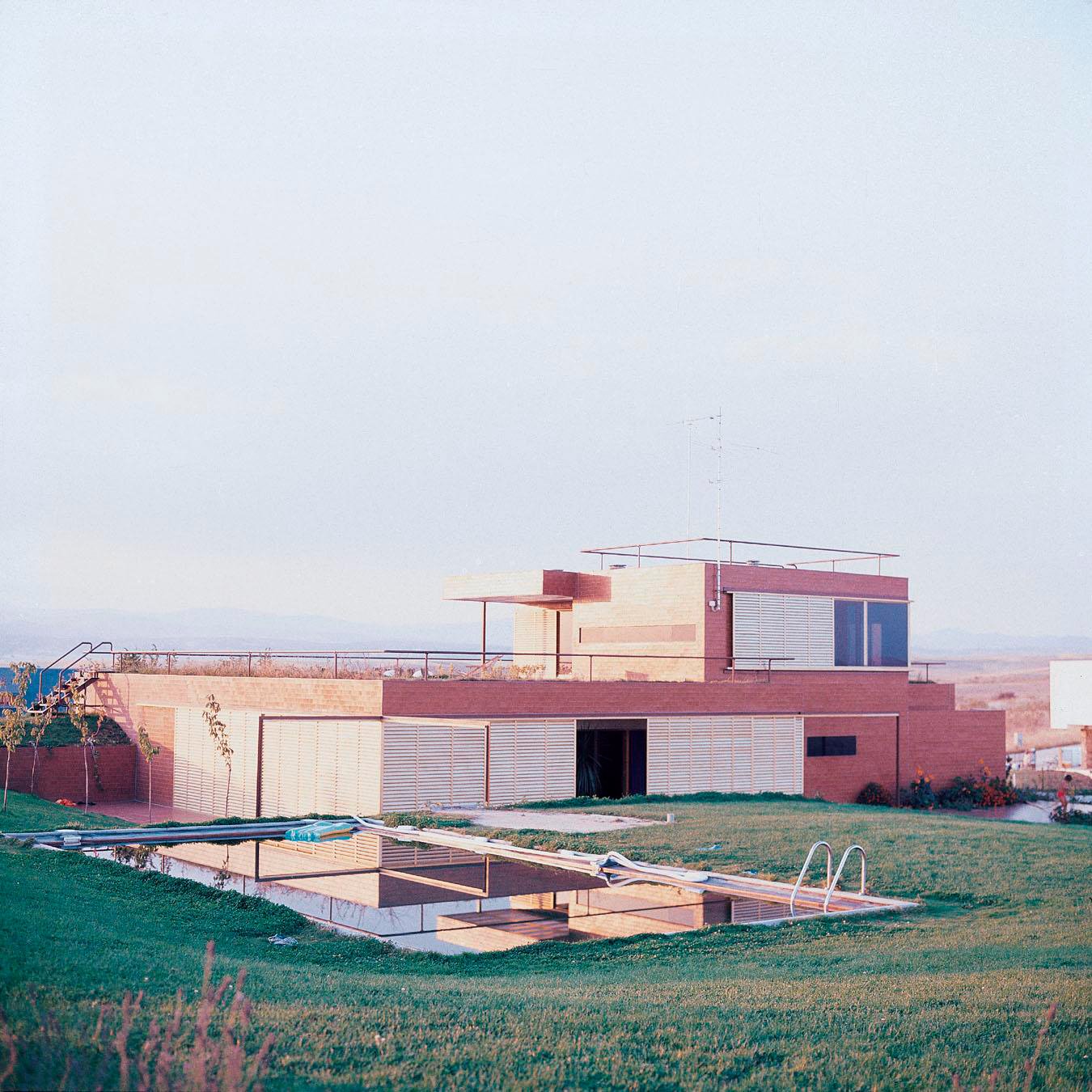
From the act of veneration that the visitors show to the house by taking their shoes off, to the fact that this is one of the buildings that has received heritage protection so soon; the distance that this movie marks with the appreciation of the recently demolished by owners of Casa Guzmán by Alejandro de la Sota, by all the responsible administration and other institutions, is enormous.

There has already been a precedent of such pathetic nonsense, the famous Pagoda by Fisac, which was decatalogued because the responsible figures had put their personal opinion over the knowledge.
 
And once again, there are no comments from either the Comunidad de Madrid, the city council, the Official College of Architects of Madrid, Consejo Superior de Arquitectos, or any other Architectural Schools of Madrid.

This new demolition shows the tremendous distance that separates us from some countries (and it is not relevant that in some other the similar nonsenses happen). In the case of France, where the above mentioned movie takes place, it is not the actual physical distance, we are neighbours, but it is cultural, and it's oceanic.

The only link that we can find with the documentary is the pilgrimage, in this case, one of the young students is sent by their professors to visit and to draw the Casa Guzmán, as the first exercise of initiation in their studies. The difference is that coming to the house by Alejando de la Sota, instead of taking part in this procession of admirers that visits the Koolhaas´s building, the students get a punch from reality, finding themselves in a terrible nightmare, literally, because as the reader can see in the picture provided by the Fundación de Alejandro de la Sota, what is there now, in its place, looks more like a house from a horror movie, let´s say…for example, Alfred Hitchcock´s Psycho. The only thing that we can hear is a terrified scream coming from the shower of reality from the students that were going to draw it… but we are only talking about the movie now, not about reality; because the movie was fiction, and the Casa Guzmán is now also fictional. 
 
How is it possible that in all these years any institution, public or collegiate, hasn’t´t realised the need for protection of the work of such an architect as Alejandro de la Sota? How is it possible that nobody has listened to the foundation that carries his name? Why is there not any real promotion to defend contemporary architectural culture?

Isn´t it the role of the collegiate institutions to look after and insist on protecting architectural heritage sites? And isn´t it also the role of public institutions to watch over heritage sites, like our neighbours do?

There are too many questions without answers… too much bluff and too little real action, and if not… I´m referring to the facts.
More information

José Juan Barba (1964). Architect from the Madrid School of Architecture (ETSAM) in 1991. He received his PhD in Architecture from ETSAM in 2004, graduating summa Cum laude with the doctoral thesis "Inventions: New York vs. Rem Koolhaas, Bernard Tschumi, Piranesi." In 1991, he received a Special Mention in the Spanish National Graduation Awards. Until 1997, he worked as an advisor to several NGOs. In 1992, he founded his architectural practice in Madrid (www.josejuanbarba.com). 

He is an architectural critic and, since 1998, Editor-in-Chief of the internationally acclaimed bilingual architecture journal METALOCUS (Spanish/English), recipient of several national and international awards.

Barba is an Associate Professor at the University of Alcalá and a member of several research groups. He has been invited to participate in numerous international forums on architecture and urbanism, including the II Forum of Mexican World Heritage Cities, Urban Development, History and Modernity, organized by the Pan-American Committee for Urban Development and Historical Heritage; the World Urban Development Forum (FMDU), held in Culiacán, Sinaloa, Mexico; and the International Conference on Architecture and Urbanism from the Perspective of Women Architects. He has also been invited as lecturer and guest critic at numerous national and international institutions, including the National Building Museum, Roma Tre University, Politecnico di Milano, University of Genoa, Université Pierre Mendès France Grenoble, the Madrid and Barcelona Schools of Architecture, National Autonomous University of Mexico, the Faculty of Architecture in Montevideo, the Schools of Architecture of Medellín and Ecuador, Universidad Iberoamericana, IE University, as well as the Schools of Architecture of Zaragoza, Valladolid, Málaga, Granada, Seville, and A Coruña, among others.

He has extensive professional experience in architecture, urbanism, landscape intervention, and territorial regeneration. His work has received numerous awards, including First Prize in the “Gran Vía Posible” competition for Delirious Gran Vía, Madrid; recognition for the Rivers Interpretation Centre in Zamora, awarded and exhibited at the World Architecture Festival 2008; and recognition for the Santa Bárbara Park project in Toledo. He was also awarded the Erich Degner Prize for Architecture (1995), promoted by the BBVA Foundation. His project for a Day Centre for the Elderly was included in Volume 3 of the Madrid Architecture Guide published by the Official College of Architects of Madrid (COAM) in 2007. His work has been widely published in national and international books and journals.

He served as Maître de Conférences at the Institut d’Urbanisme de Grenoble, Université Pierre Mendès France Grenoble, during the 2013–14 academic year, following his appointment through a European open competition. His work has been published internationally. He regularly serves on academic and professional juries, including the editorial competition jury for the journal Quaderns (2011), the selection committee for the European Union Prize for Contemporary Architecture – Mies van der Rohe Awards (2007–present), and the jury panels for EUROPAN 13 (2015–16) and TRANSFER, Zurich (2019). He was also invited to participate in the Biennale di Venezia 2016 as part of the exhibition Spaces of Exception / Spazi d’Eccezione.

He has authored several books, including "The Dark Line. michele&miquel, dA Vision Design" (2024), "CONGRESO ANYWAY. La ciudad de las ciudades" (2020), "#Positions" (2016), and "Inventions: New York vs. Rem Koolhaas, Bernard Tschumi, Piranesi" (2015). He has also contributed to publications such as "Espacio público Gran Vía. La Ciudad del Turismo" (2020), "Spaces of Exception / Spazi d’Eccezione" (2016), "La manzana de la discordia" (2015), and "Contemporary Japanese Architecture: New Territories" (2015), as well as chapters in numerous books, including "Women Architects: A Professional Challenge" (2009), "21st Century Architectures" (2007), "Ruta de la Plata, New Conquerors of Space" (2019), and "The City of Tourism" (2020).

Selected awards include:

•    “SANTIAGO AMÓN” AWARD, award for the promotion of architecture, COAM Madrid, 2000.
•    “PANAYIOTI MIXELI AWARD,” SADAS-PEA, award for the promotion of architecture, Athens, 2005.
•    “PIERRE VAGO” ICAC. International Committee of Art Critics Award, London, 2005.
•    FAD Award 07, Ephemeral Interventions, First Prize, M.C. Escher Exhibition, Arquin-FAD, Barcelona, 2007.
•    World Architecture Festival, Center for Research and Interpretation of the Rivers, Tera, Esla, and Órbigo, Finalist, Barcelona, 2008.
•    Gran Vía Posible, First Prize, Delirious Gran Vía, Madrid, 2010.
•    Reform of the Río Segura Surroundings, Award, Murcia, 2010.

Read more
Published on: January 15, 2017
Cite:
metalocus, JOSÉ JUAN BARBA
"Shoes, Phsyco, Bordeaux or neglect with Guzmán House by Alejandro de la Sota" METALOCUS. Accessed
<http://www.metalocus.es/en/news/shoes-phsyco-bordeaux-or-neglect-guzman-house-alejandro-de-la-sota> ISSN 1139-6415
Loading content ...
Loading content ...
Loading content ...
Loading content ...
Loading content ...
Loading content ...
Loading content ...
Loading content ...
Loading content ...
Loading content ...
Loading content ...
Loading content ...
Loading content ...
Loading content ...
Loading content ...
Loading content ...
Loading content ...
Loading content ...
Loading content ...
Loading content ...
Loading content ...
Loading content ...
Loading content ...
Loading content ...
Loading content ...
Loading content ...
Loading content ...
Loading content ...
Loading content ...
Loading content ...
Loading content ...
Loading content ...
Loading content ...
Loading content ...
Loading content ...
Loading content ...
Loading content ...
Loading content ...
Loading content ...
Loading content ...
Loading content ...
Loading content ...
Loading content ...
Loading content ...
Loading content ...
Loading content ...
Loading content ...
Loading content ...
Loading content ...
Loading content ...
Loading content ...
Loading content ...
Loading content ...
Loading content ...