


For ADN, DTACC Architectes has demonstrated rigour, serenity, and respect for the urban context, making these qualities the essence of the project. The building’s understated, contemporary identity is defined by a horizontal rhythm that interacts with neighbouring buildings in a Haussmannian sequence. The volume comes to life thanks to the play of light sculpted into the façade through the incorporation of niches, creating a sense of serene and expressive depth.
The main façade, filled with planters, volumes, and voids, presents a complex and refined composition in a colour palette that combines shades of stone and rust. The façade facing the garden features a lightweight wooden structure, with special attention to detail, reminiscent of traditional Japanese architecture.
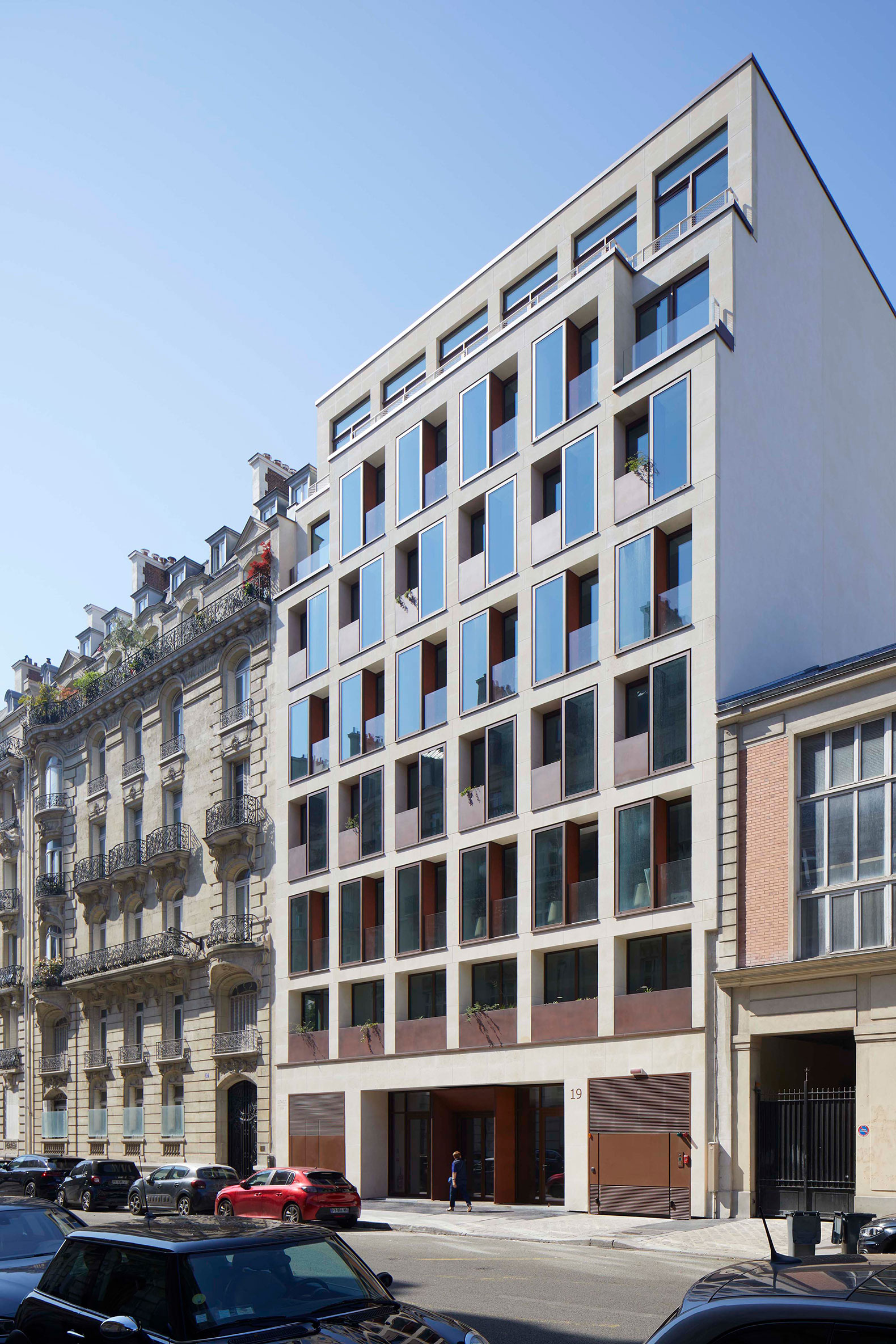
ADN by DTACC Architectes. Photograph by Hervé Abbadie.
Project description by DTACC Architectes
Japanese garden in the heart of Paris
All it takes is a plant, a garden, to spark an architectural project. It was from this garden on the ground floor, listed for its heritage value in Paris’s local urban planning regulations, that 19 ADN was born. From this nature and composition, a vertical creation project took shape: a conversation between Parisian architecture and a Japanese garden, where one moves up from the ground level to the architecture.
This place, protected by the City of Paris for its heritage value, becomes a space for subtle dialogue between two architectural cultures. The elegance and delicacy of Japanese detail are integrated into Parisian architecture: limestone on the street side, wooden extension on the courtyard side. Rigour, serenity and respect for the Parisian urban context are at the heart of the project. On the street side, the project develops a sober architectural identity, in harmony with its urban context.
A sober and contemporary architectural identity
A strong horizontal rhythm interacts with the composition of the neighbouring buildings, in the spirit of Haussmannian sequences. This pattern is extended by a vertical recomposition of the reliefs: recessed openings, treated as niches, sculpt the façade and play with the light. The volume is thus enlivened by subtle shadows, offering a sense of depth that is both calm and expressive.
Urban delicacy
This project fits delicately into an urban fabric composed of atypical buildings forming a unique collective. On the street side, the façade offers a complex and refined composition. It incorporates planters, plays with solids and voids, and subtly aligns with the Haussmannian rhythm of the neighbouring building. Its colour scheme – combining light stone and rust tones – dialogues with the surrounding architecture in discreet harmony.

On the garden side, the extension, designed as a lightweight wooden structure, reveals meticulous attention to detail and wooden post-and-beam construction reminiscent of traditional Japanese architecture, echoing the garden it extends. The entire architectural and interior design project was conceived by the firm with particular attention to the sensitivity of the site, down to the smallest detail, balancing respect for heritage with contemporary creation.
The external structure attached to the courtyard façade is made of wood. It allows for the creation of large terraces and the greening of the façade with hanging planters. This wooden façade is largely inspired by Japanese culture and interacts with the existing protected zen garden.

With this building, we propose a new way of seeing the world, starting with the vertical reversal of the garden and its continuity from the ground floor to the roof. It is a hidden treasure, whose interior responds to the exterior in a play of openness and transparency.


