Architecture practice Estudio Carbajal was commissioned to design the expansion of the School of Agricultural Engineering at the University of Seville, the result of a public competition. This project comprises the first phase of a larger initiative, which also includes the renovation of the existing building located south of the old university campus.

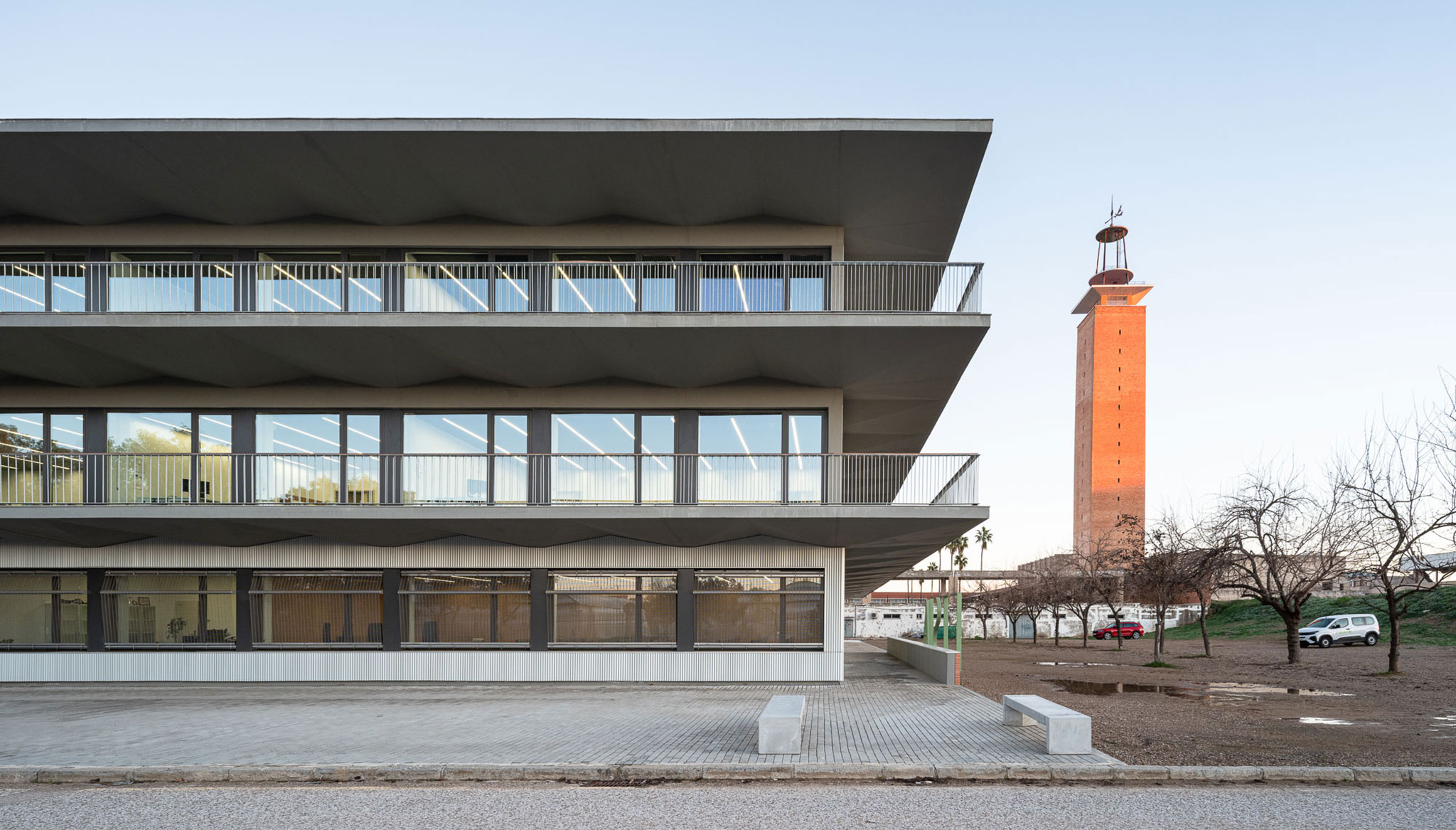
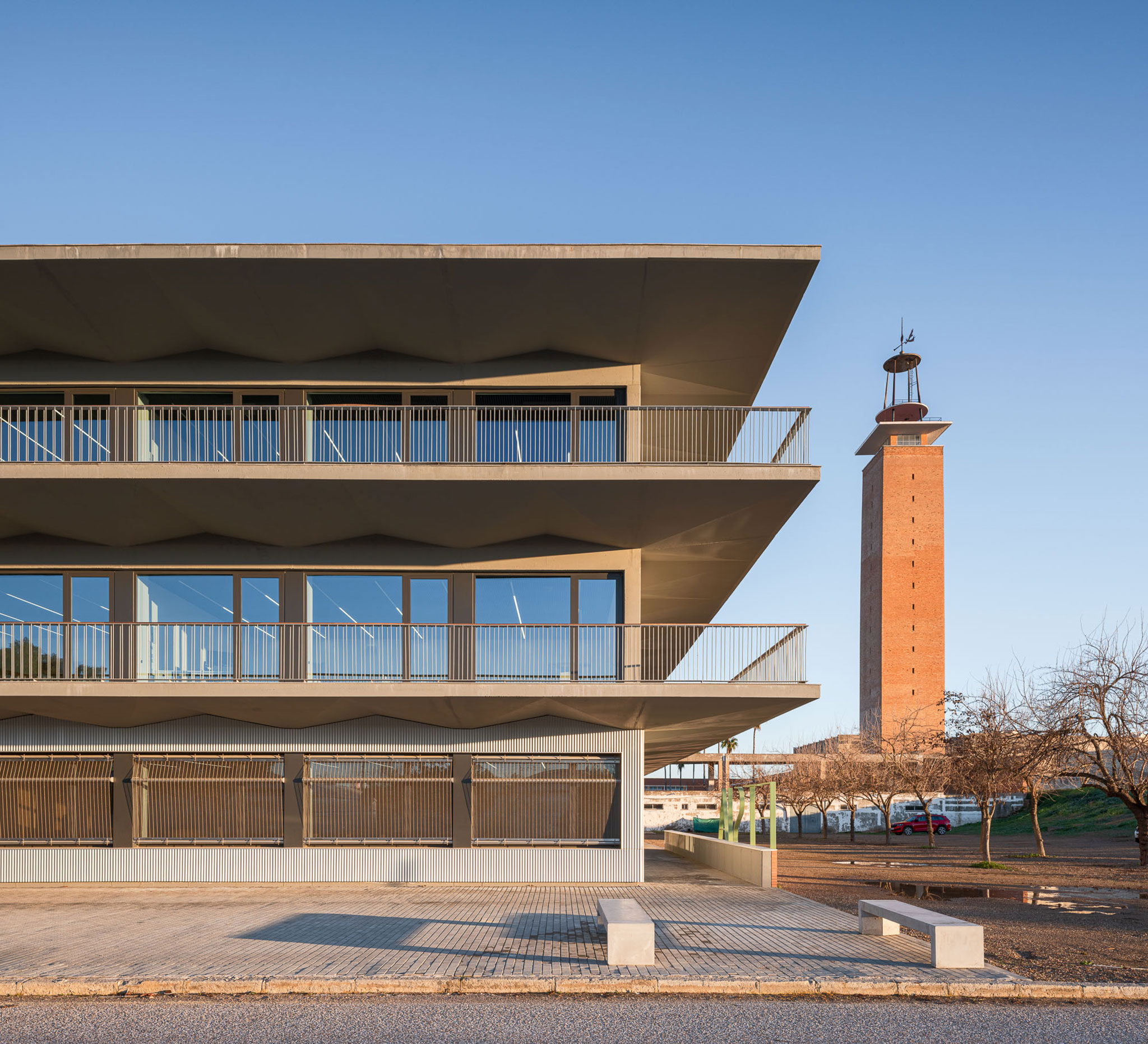
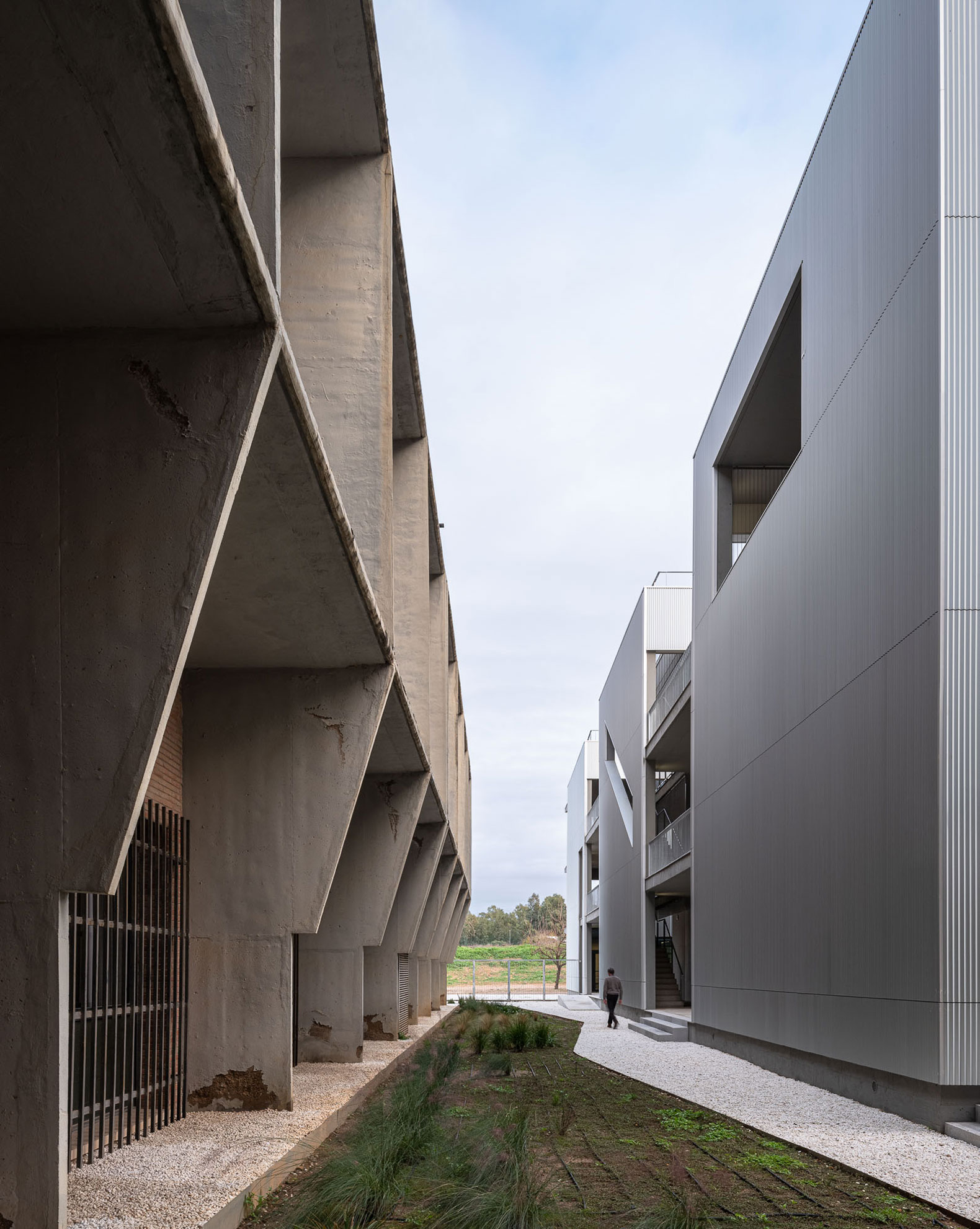
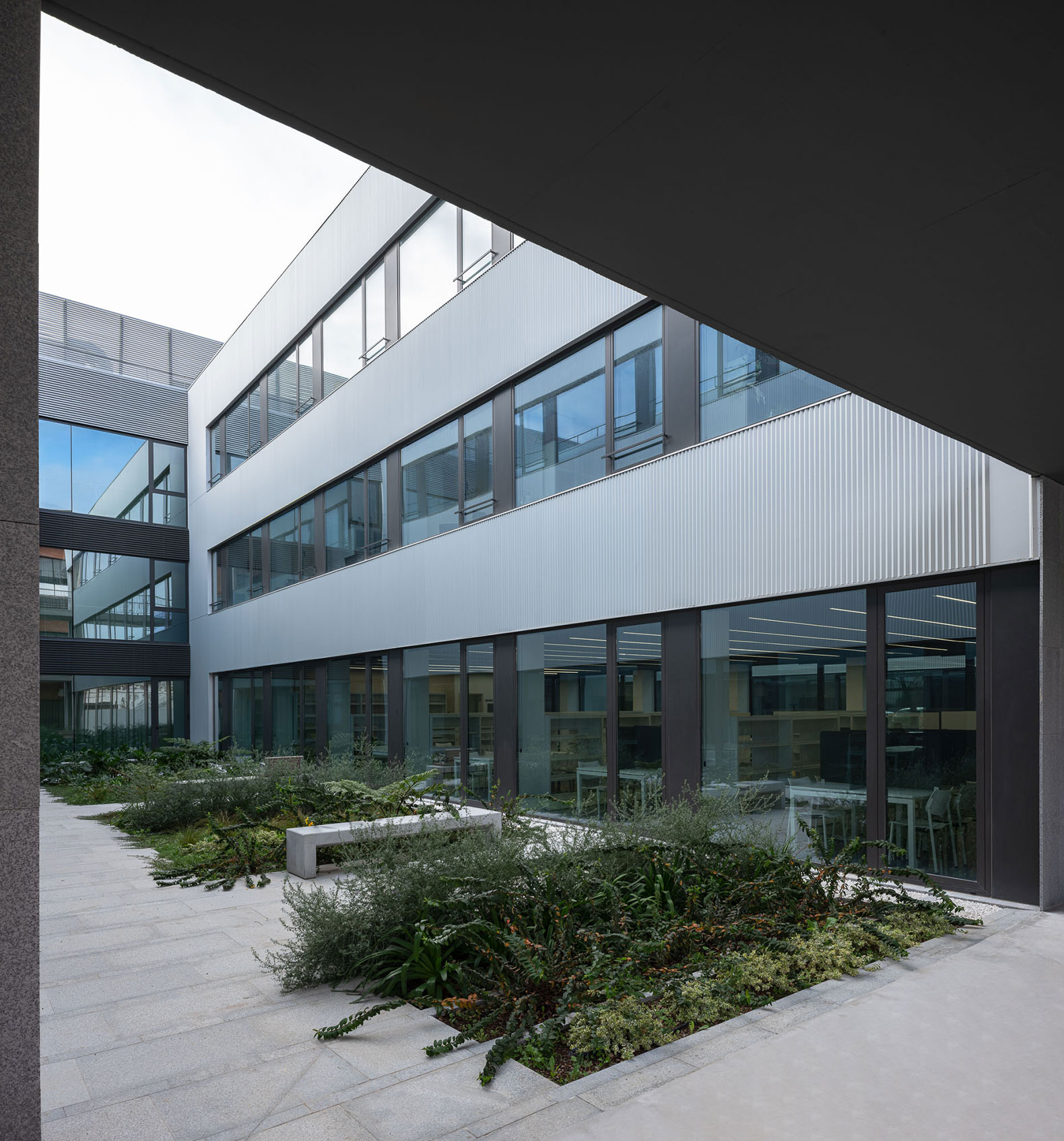
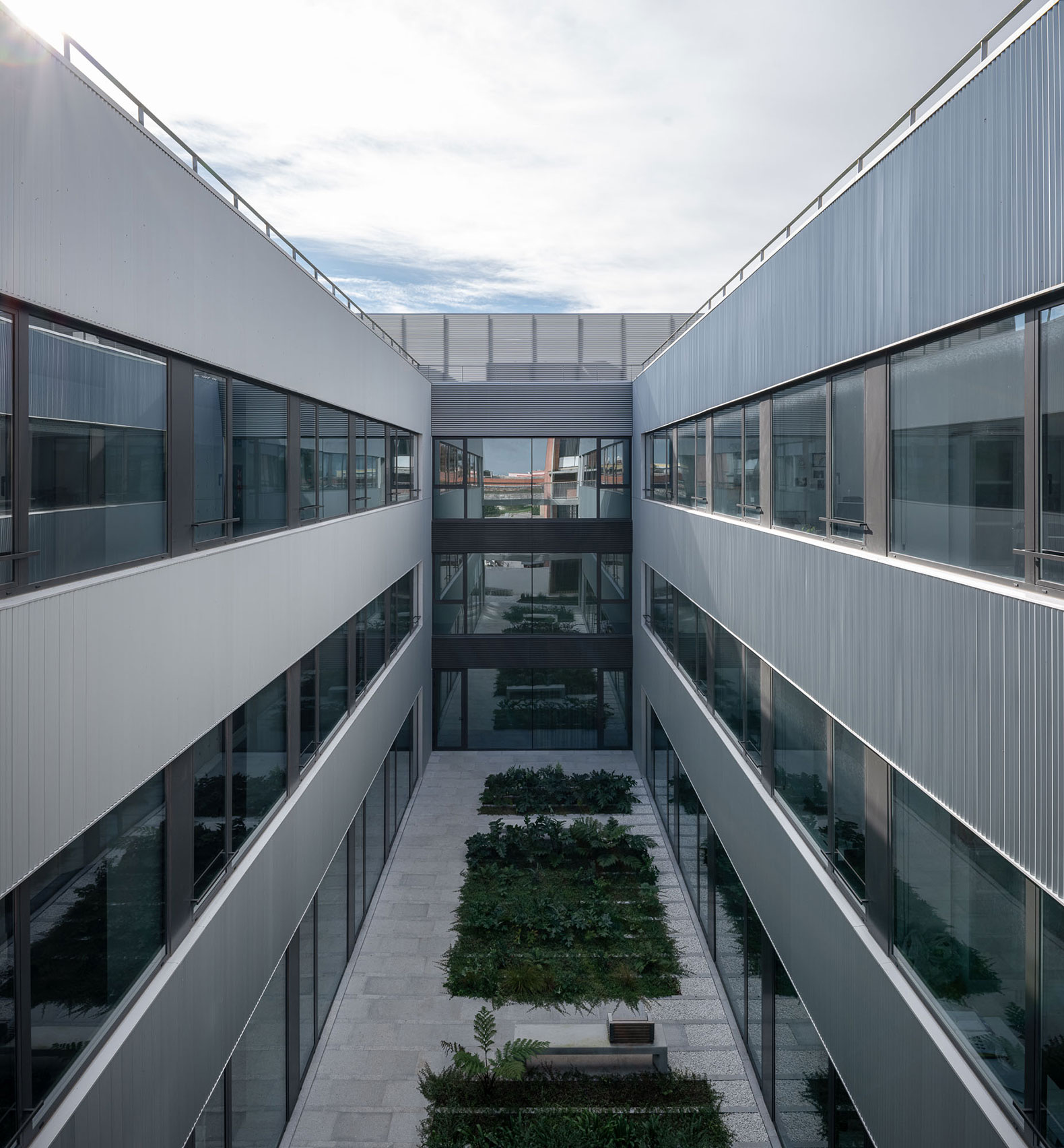
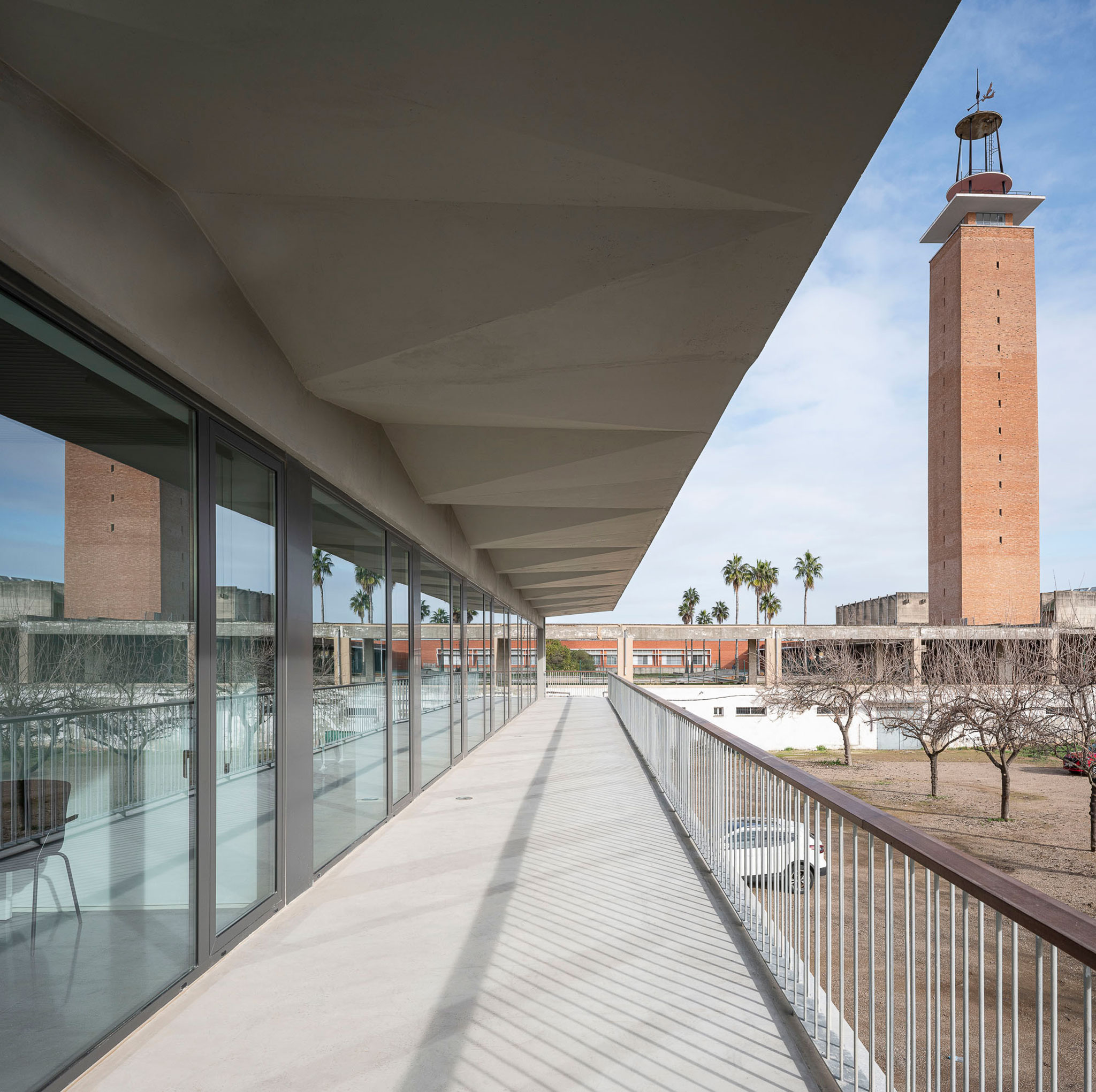
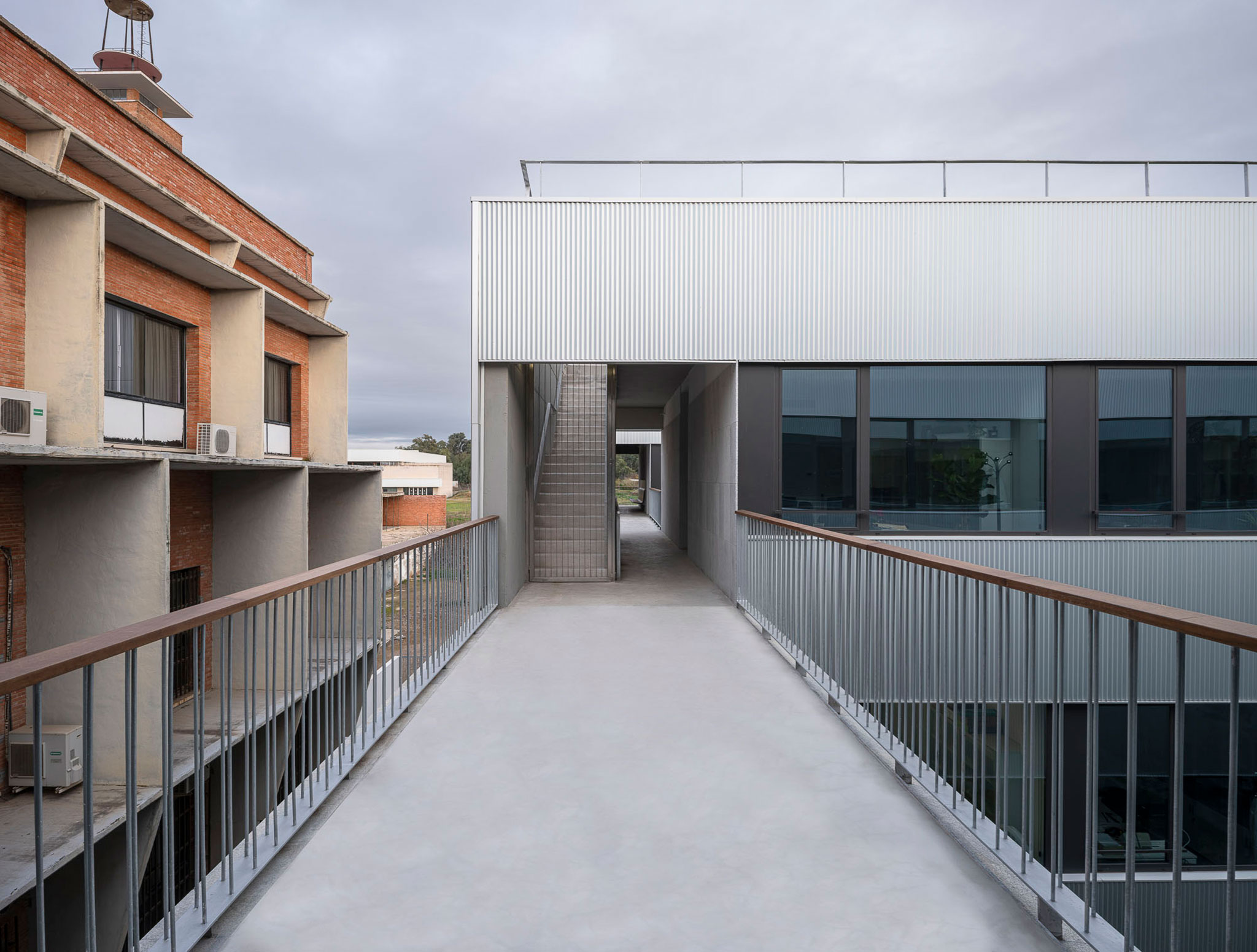
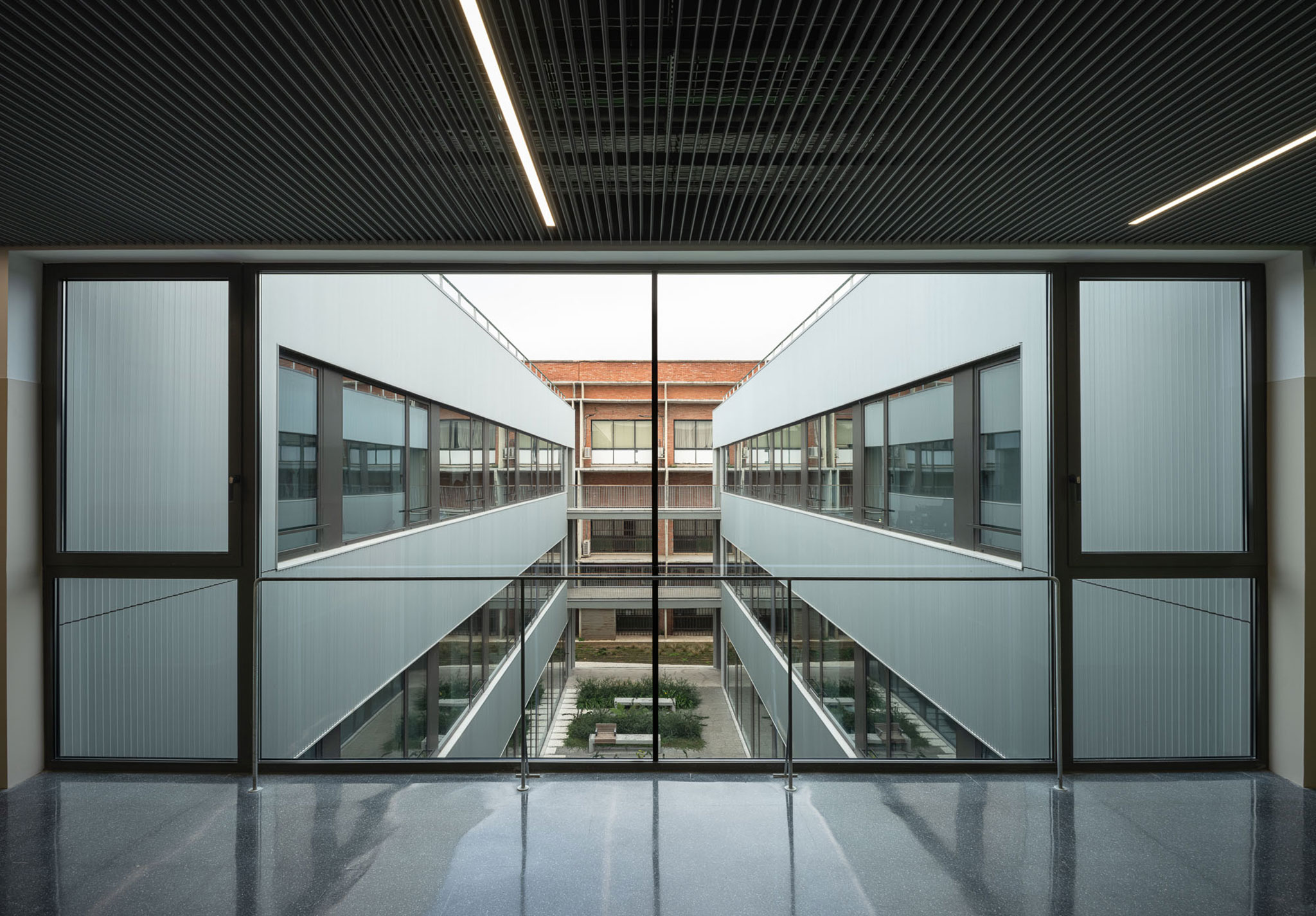
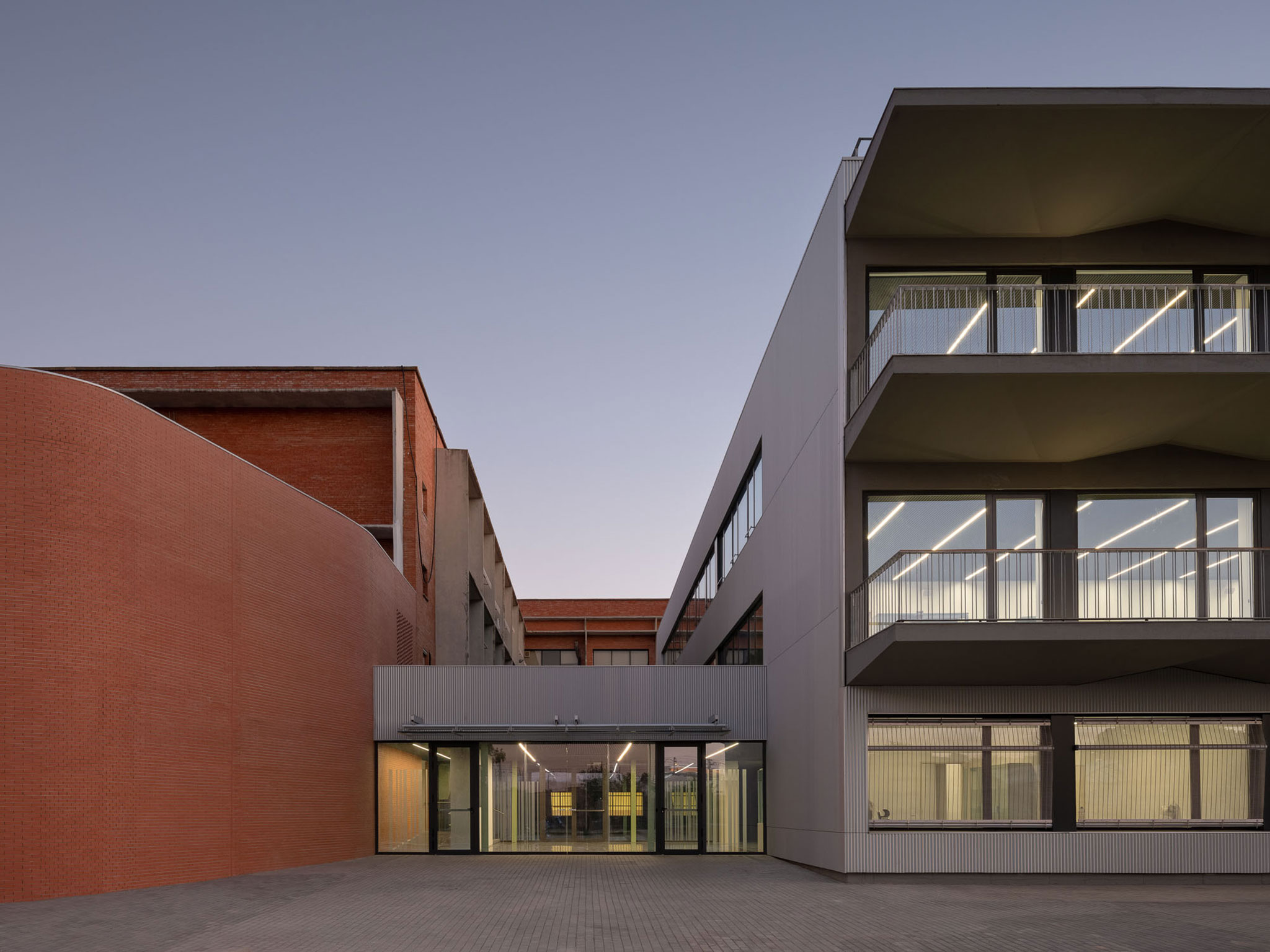
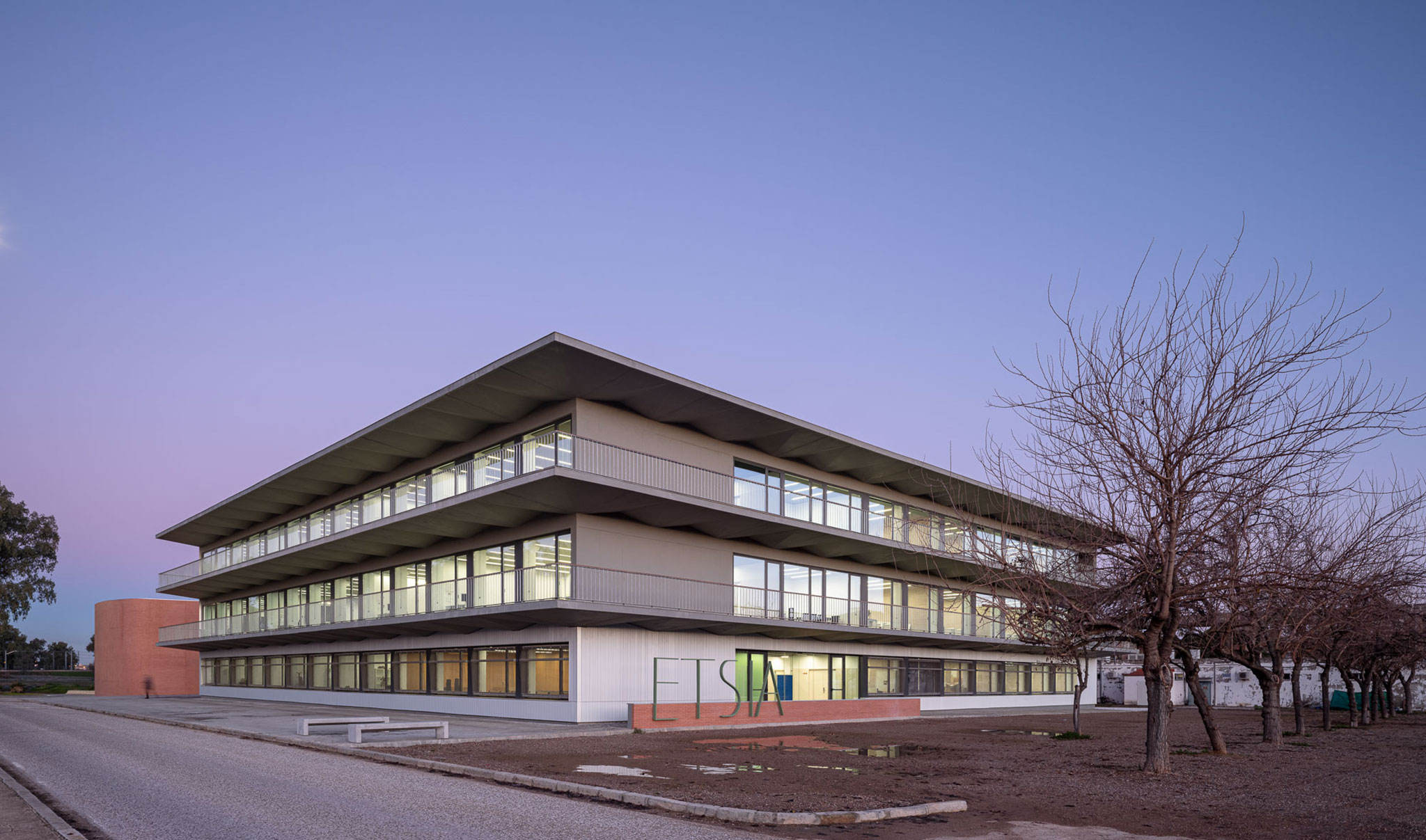
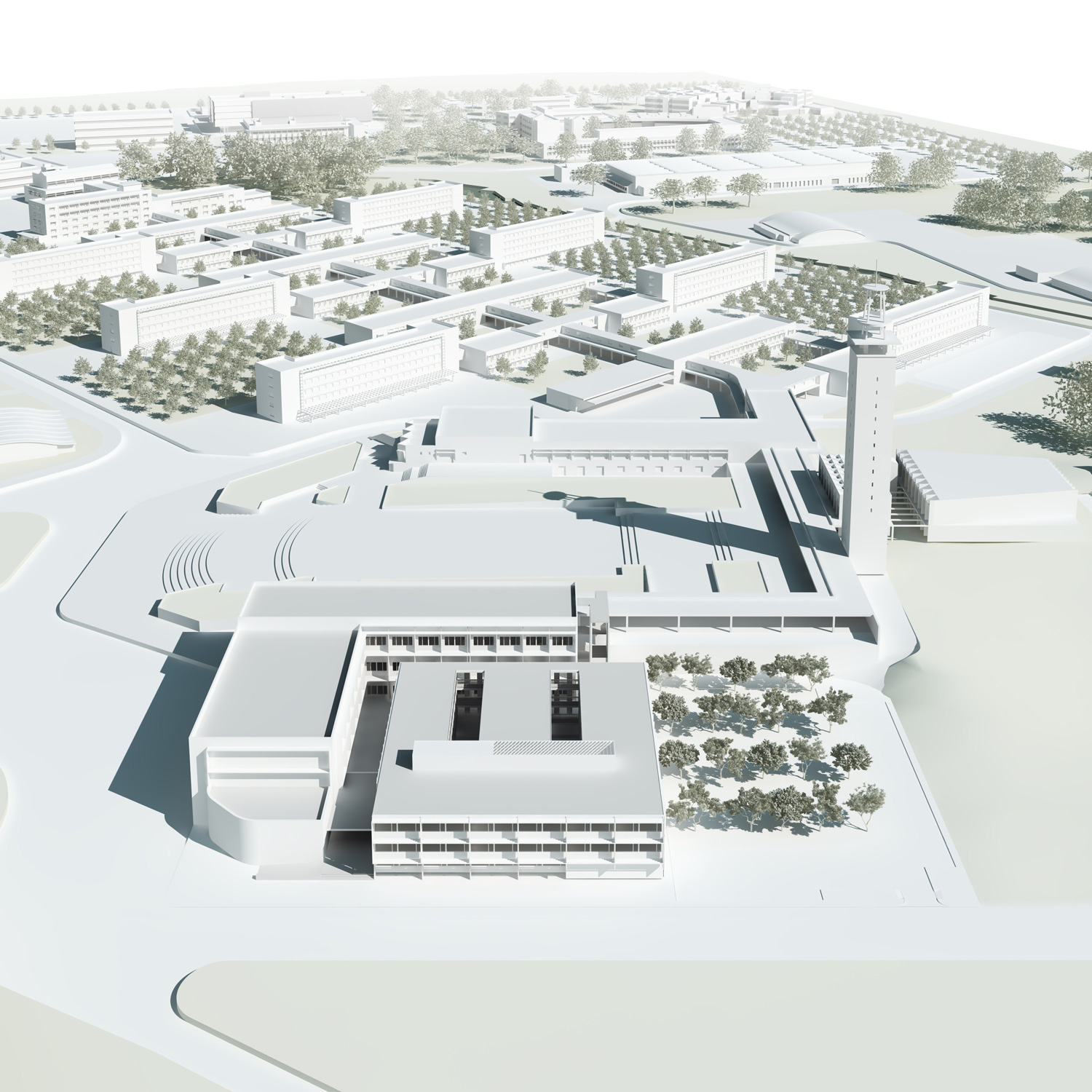
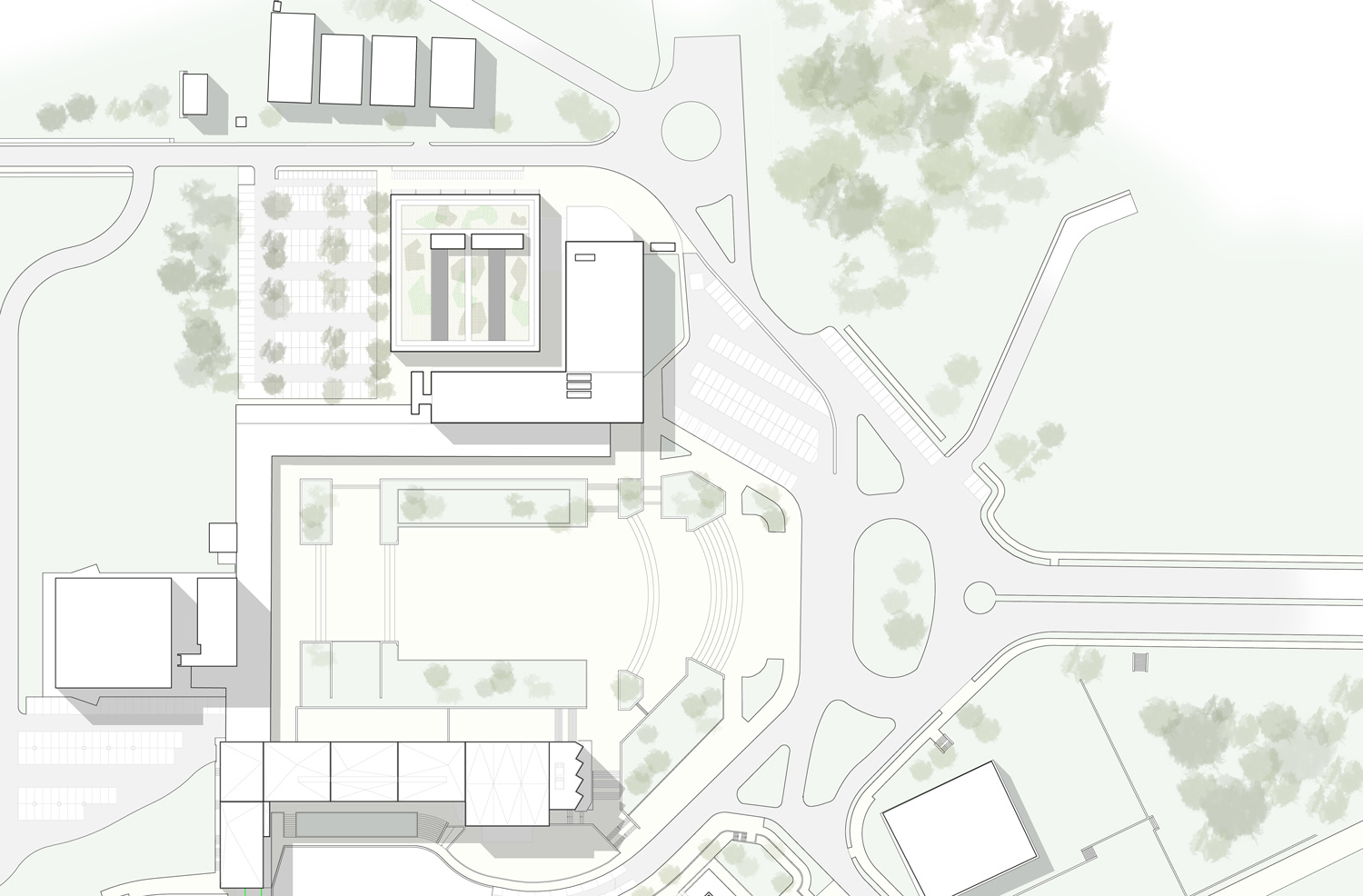
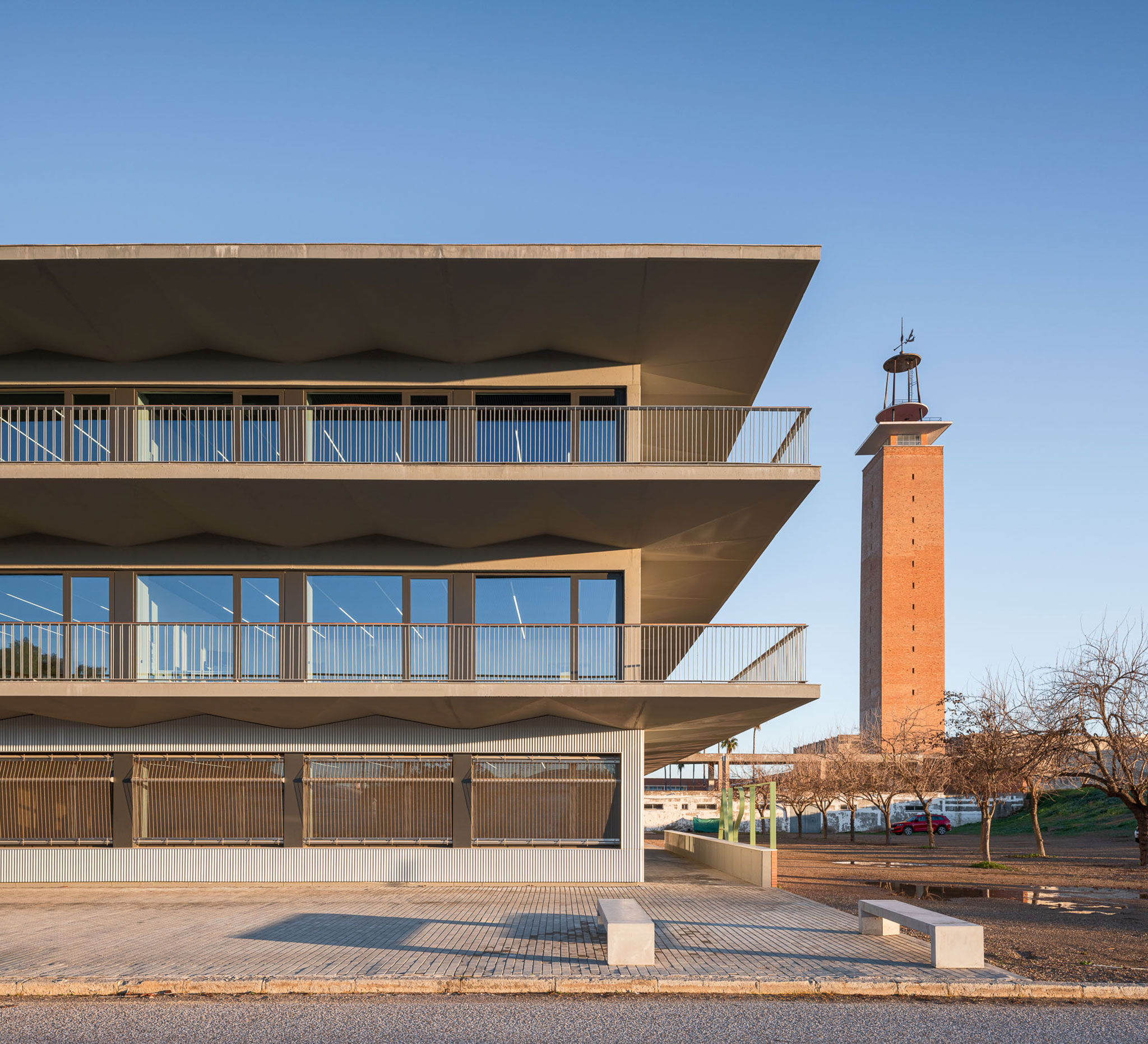
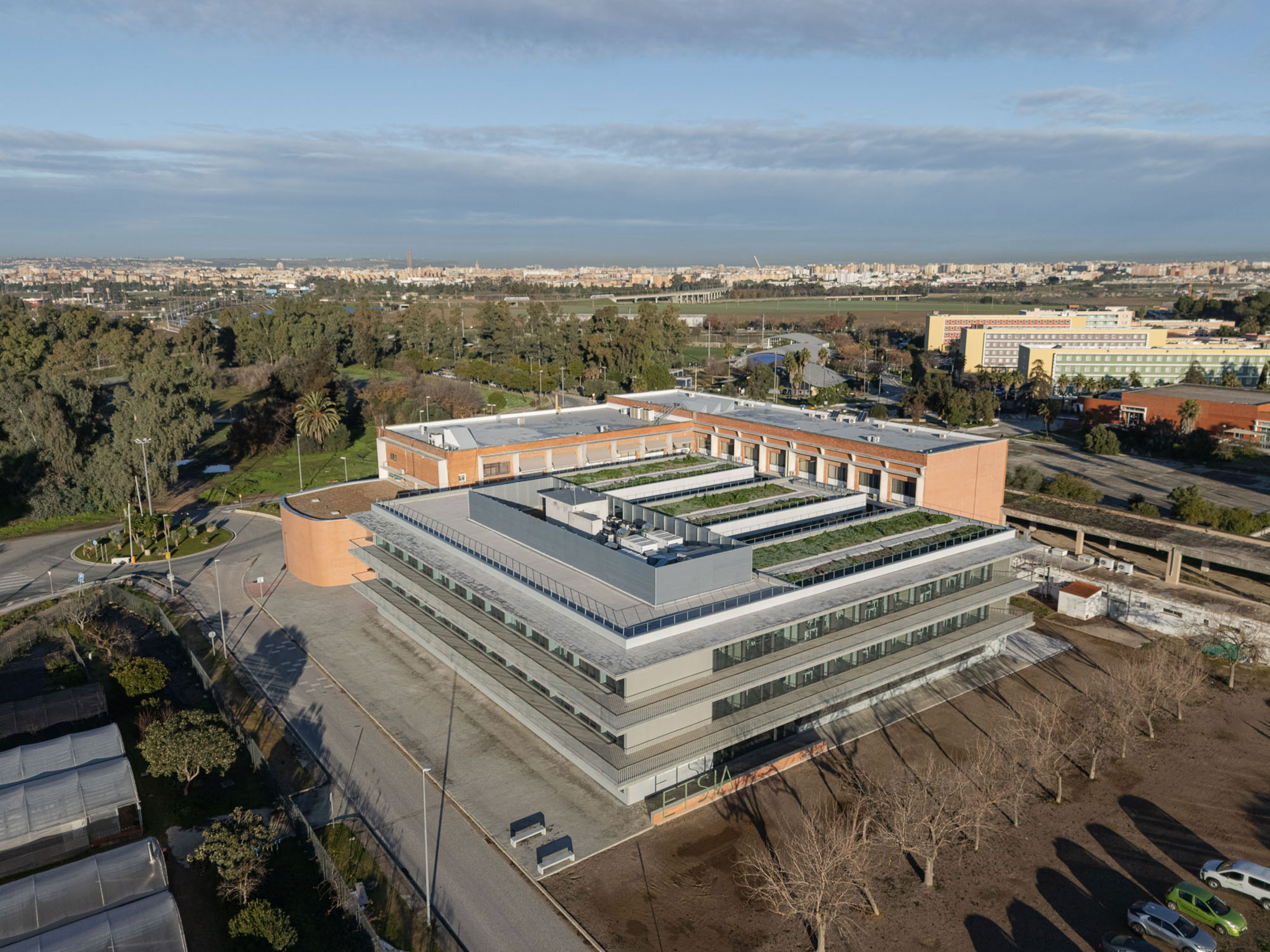
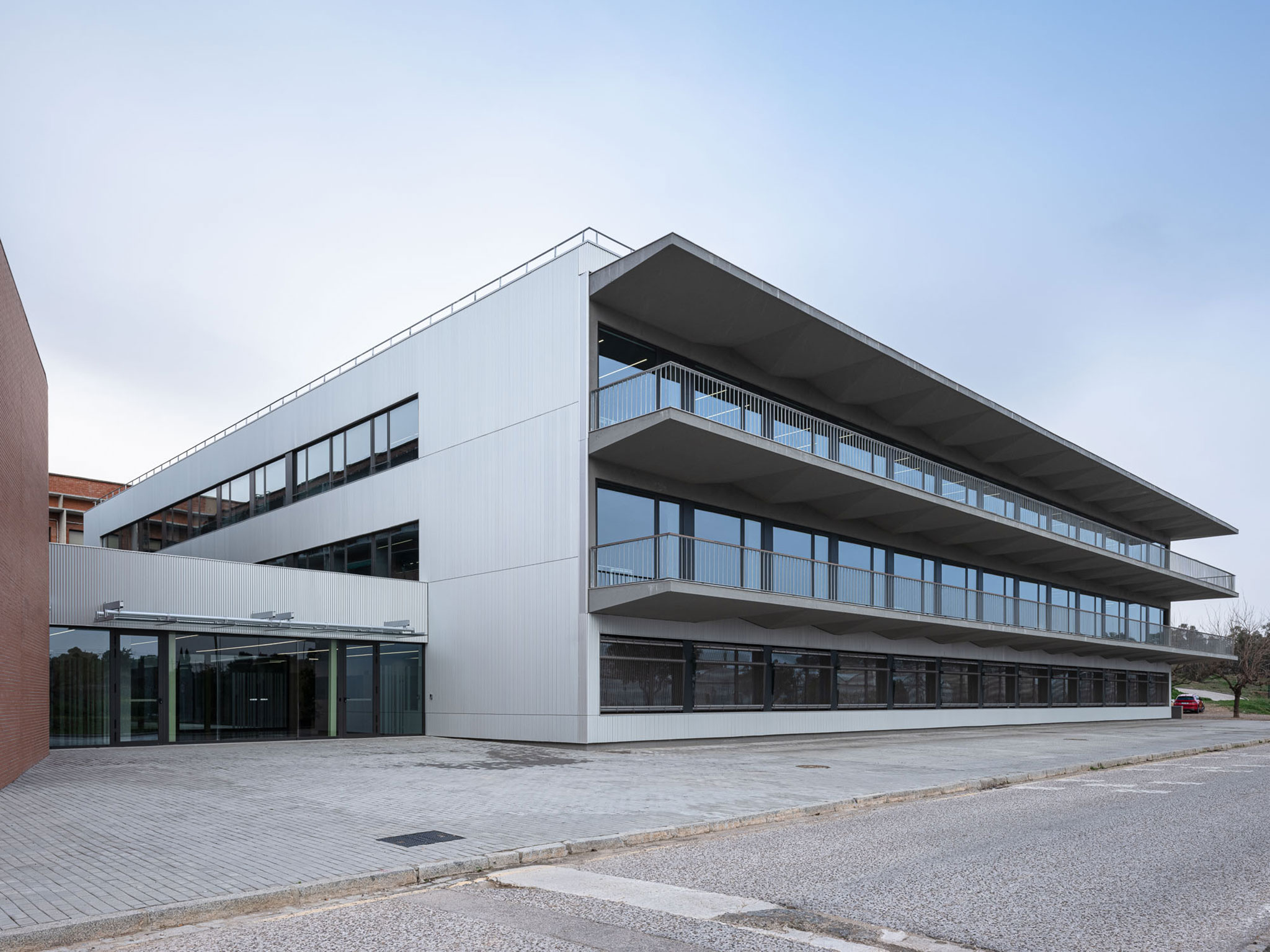
The three-story building was designed to be lower than the OTAISA building —located at the rear— to preserve the heritage value of the complex and facilitate connections between the two. This design strategy creates a courtyard structure that forms an interconnected whole. 

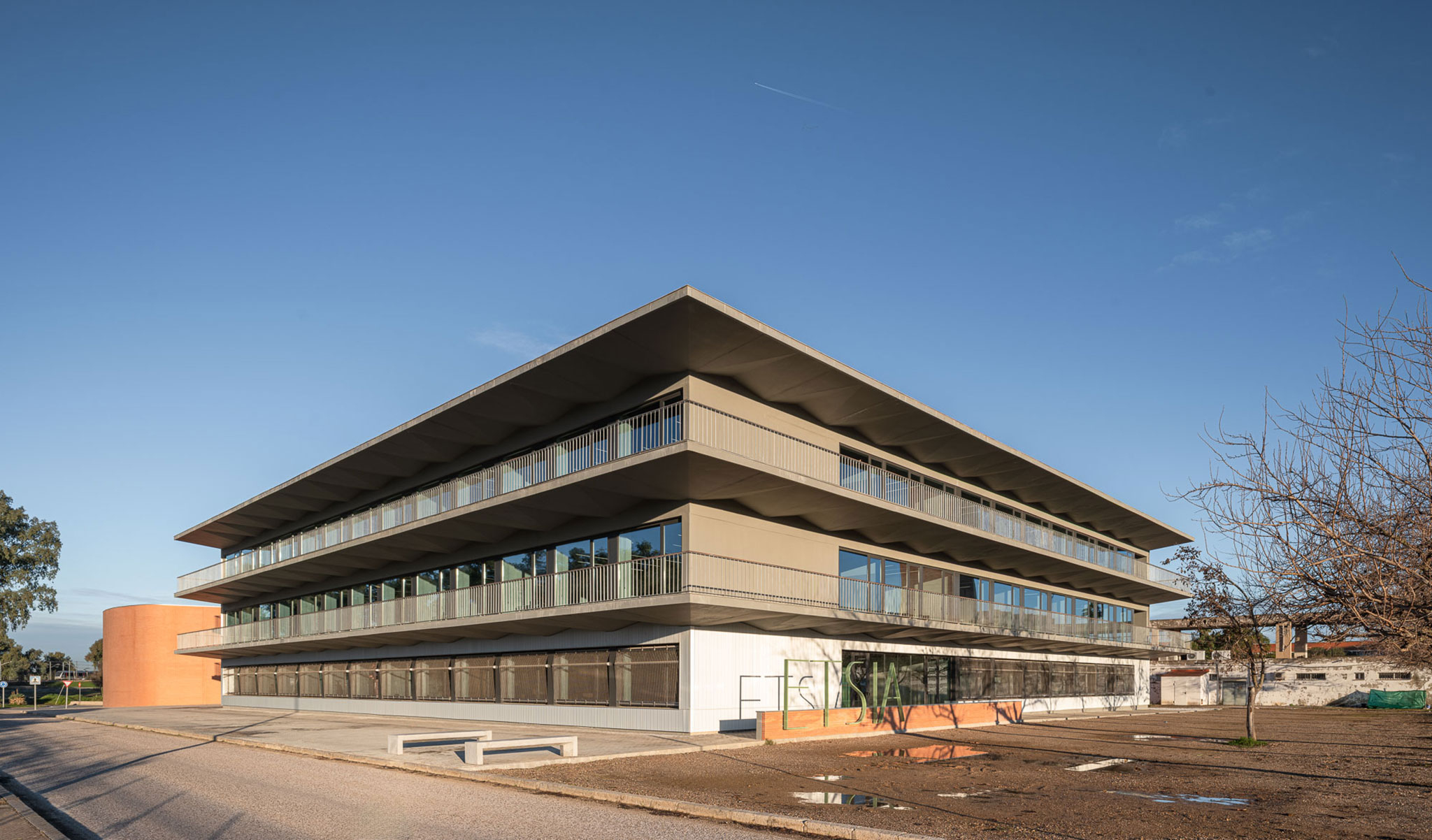
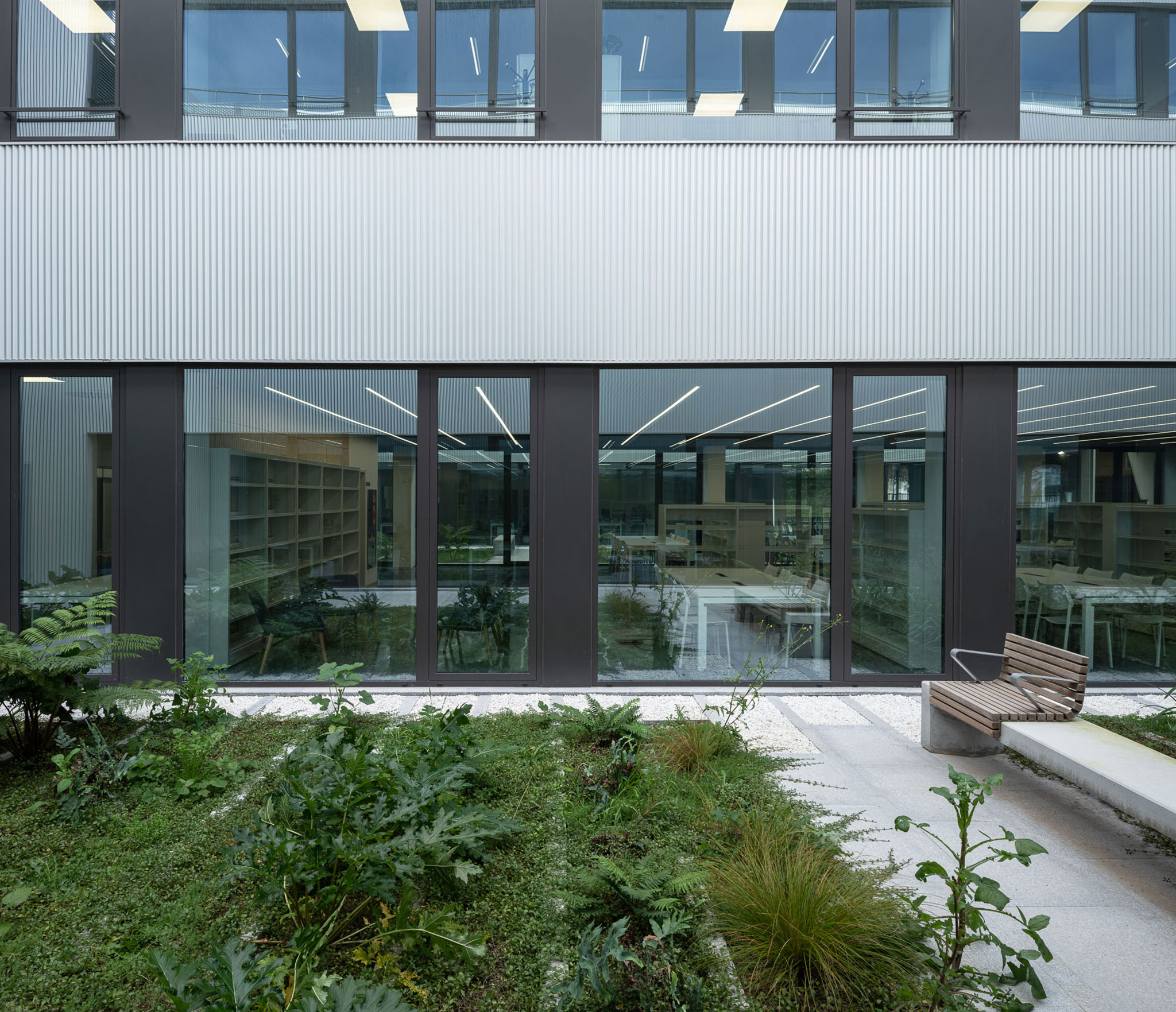
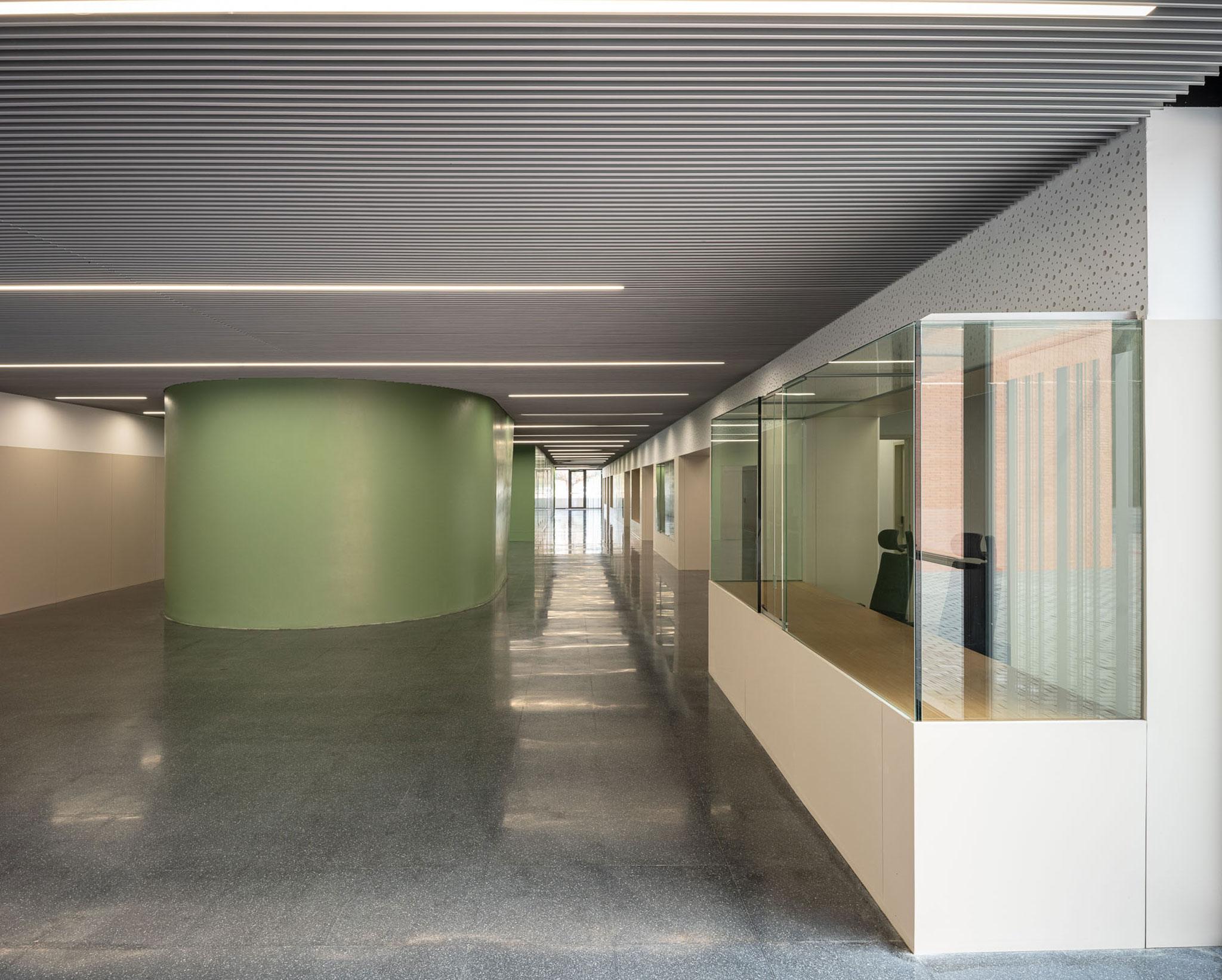
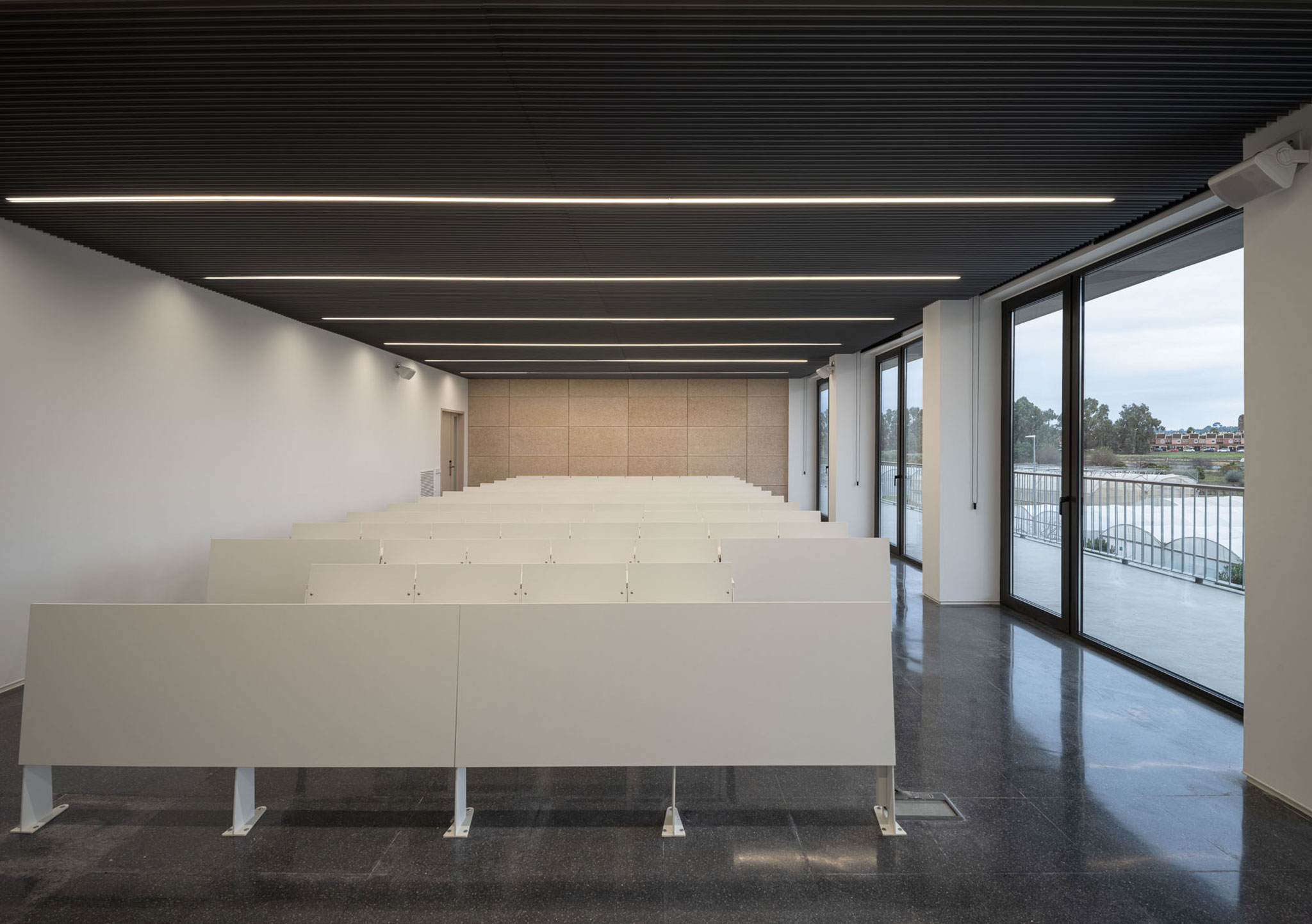
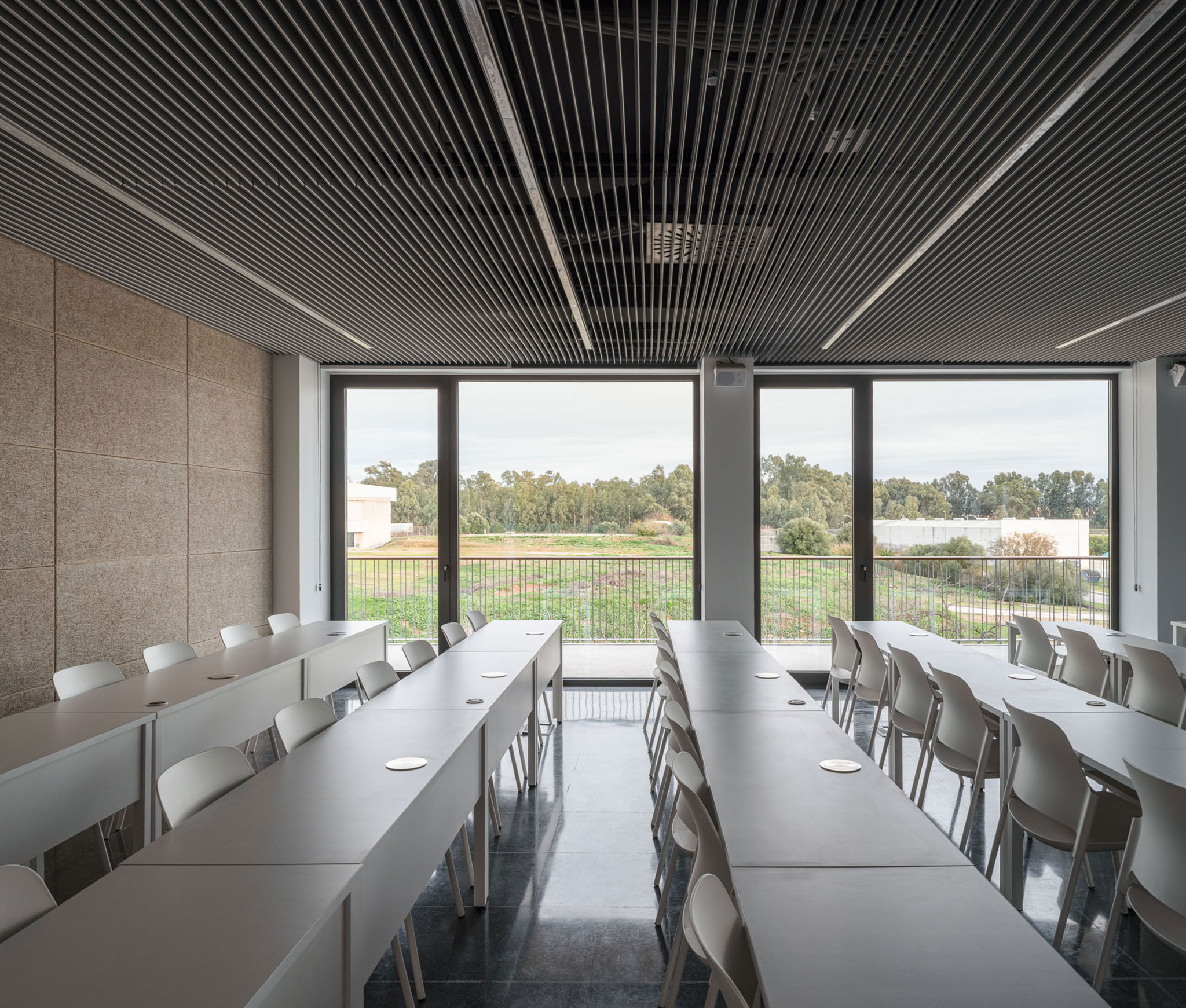
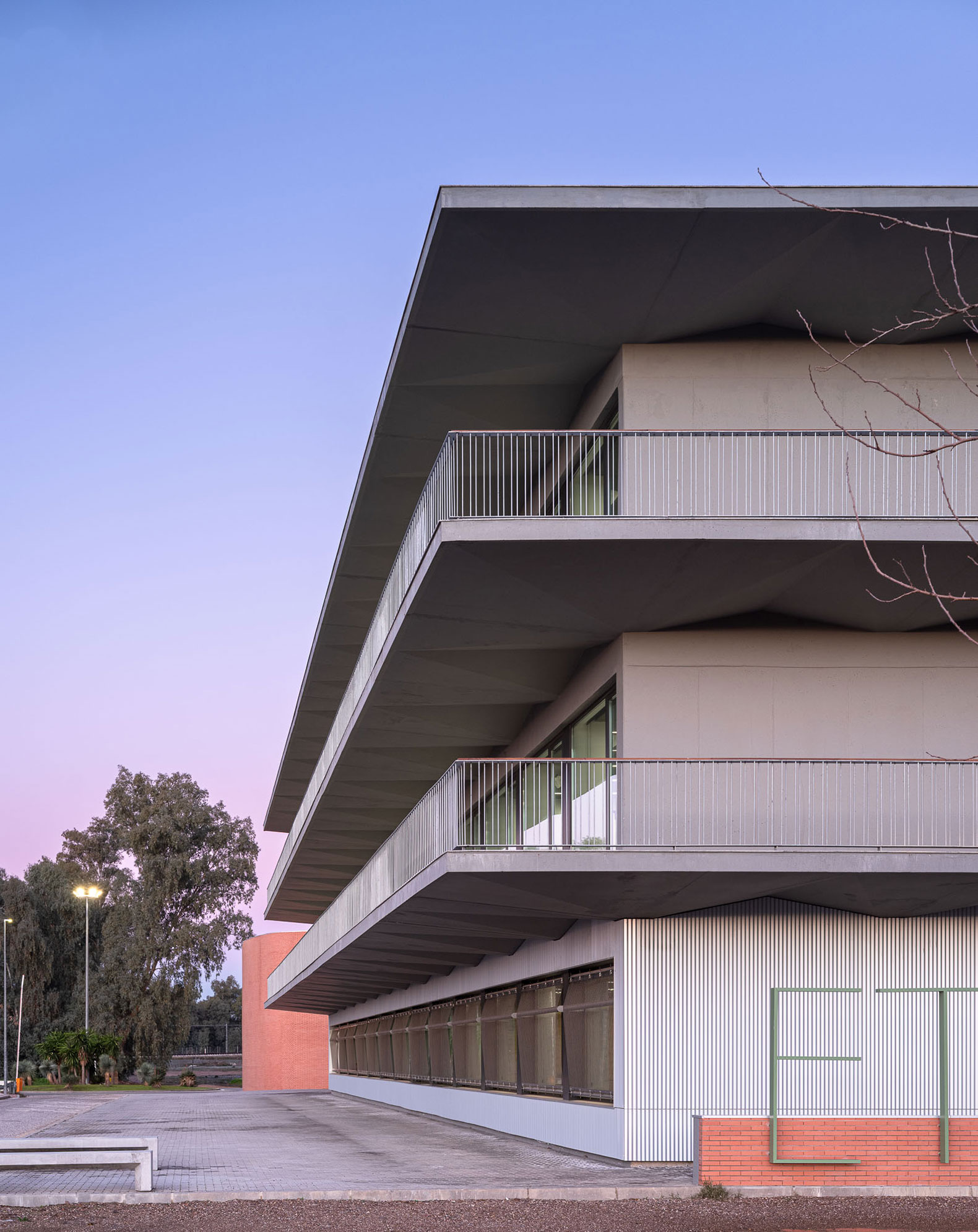
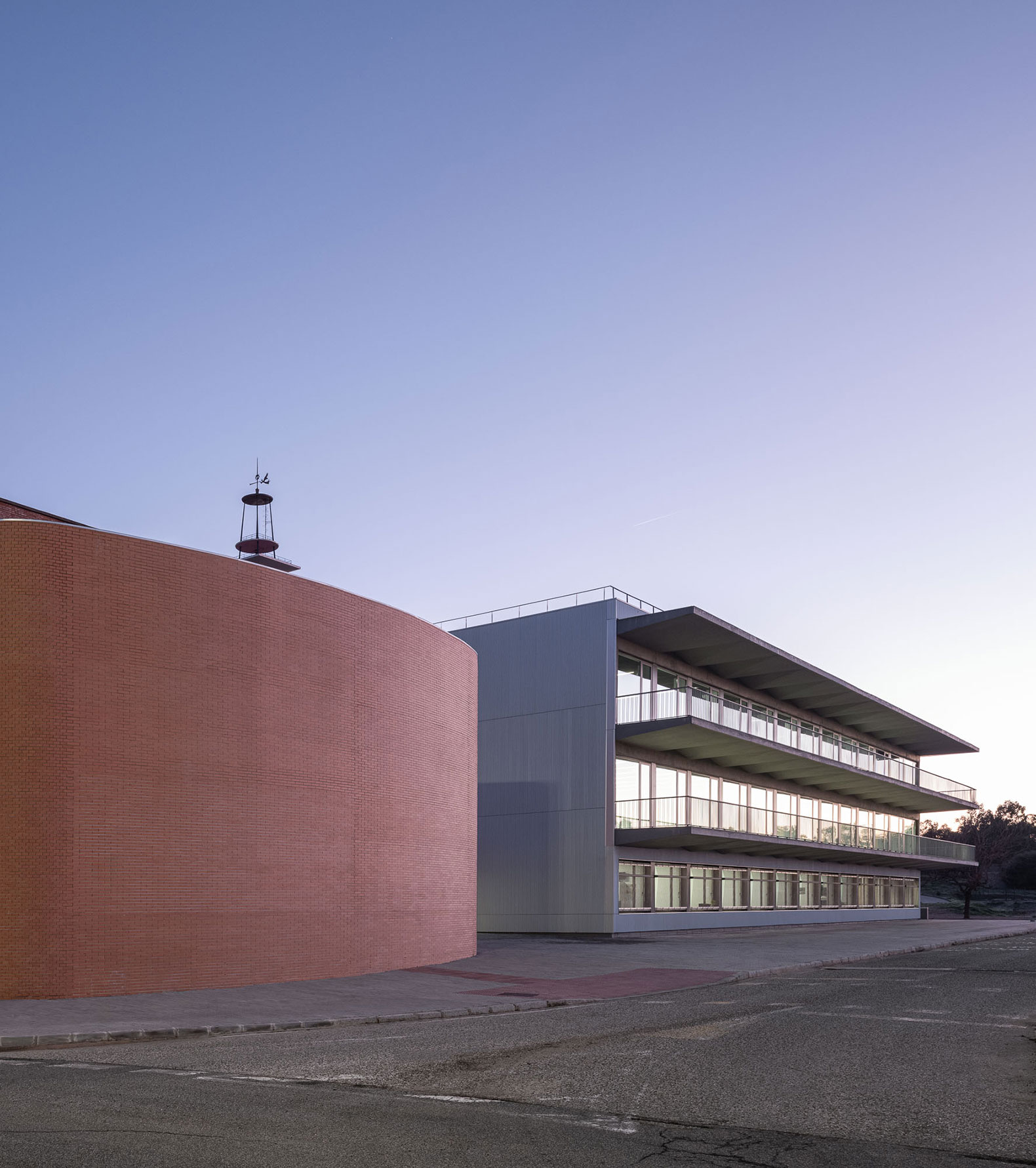
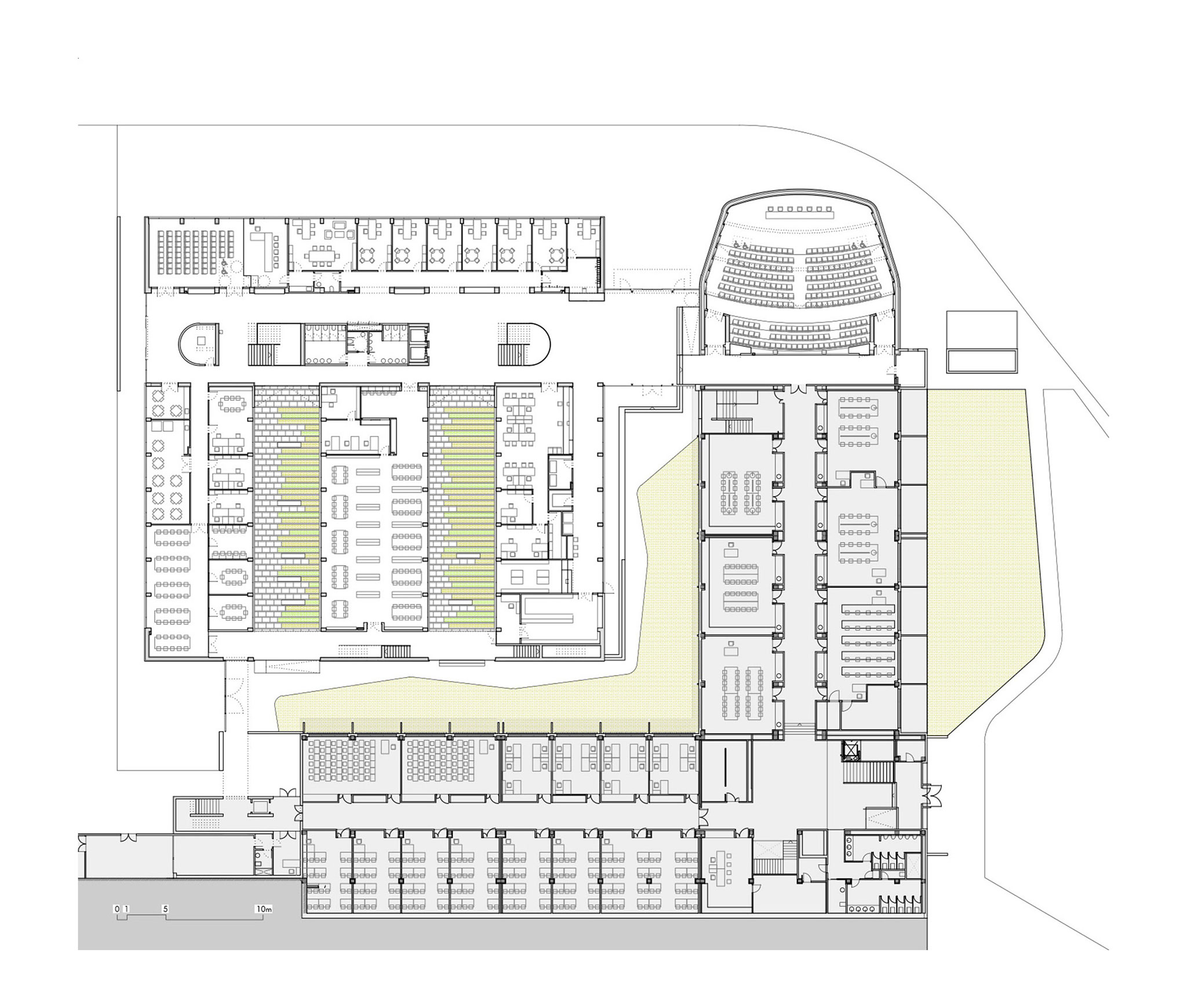
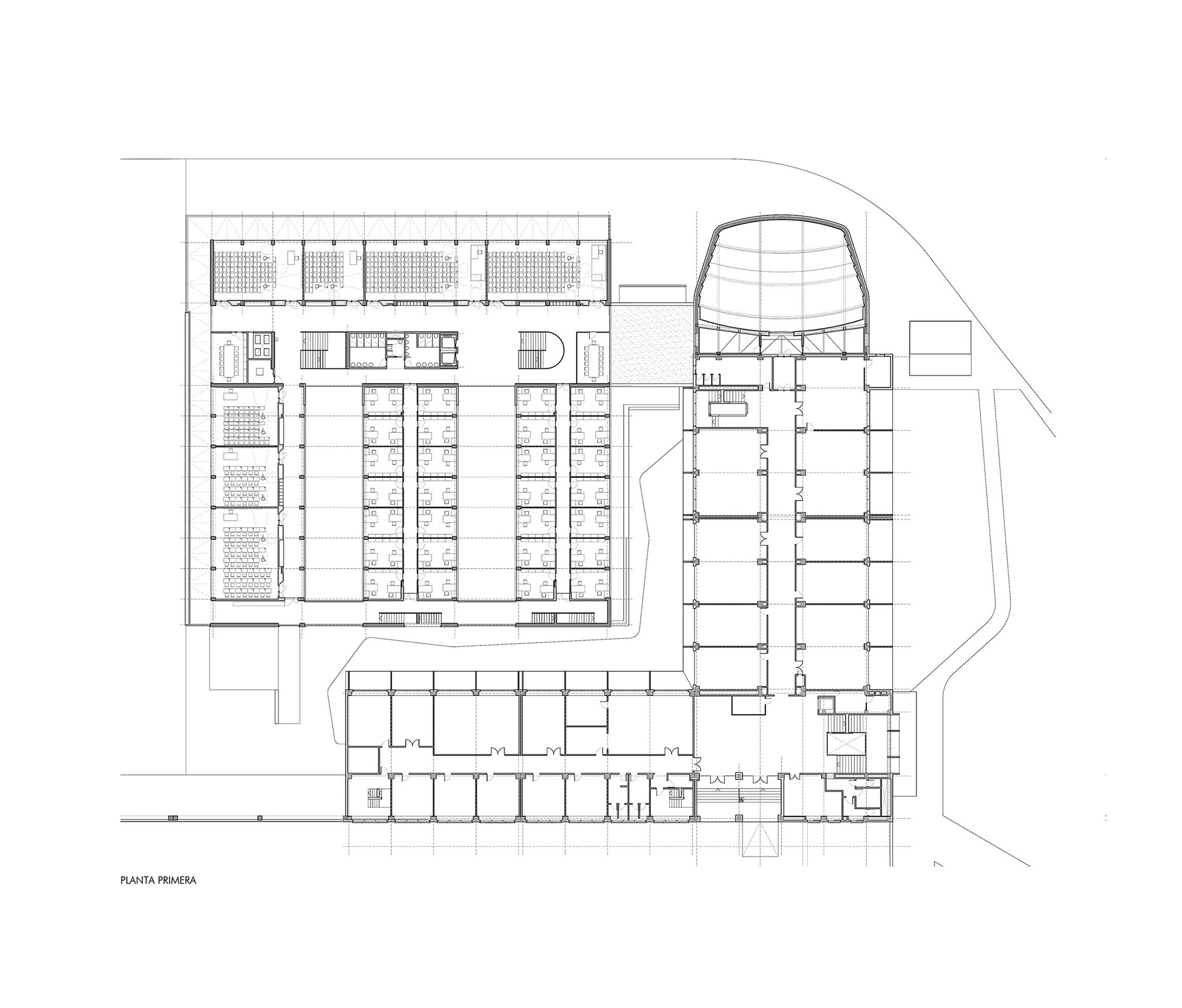
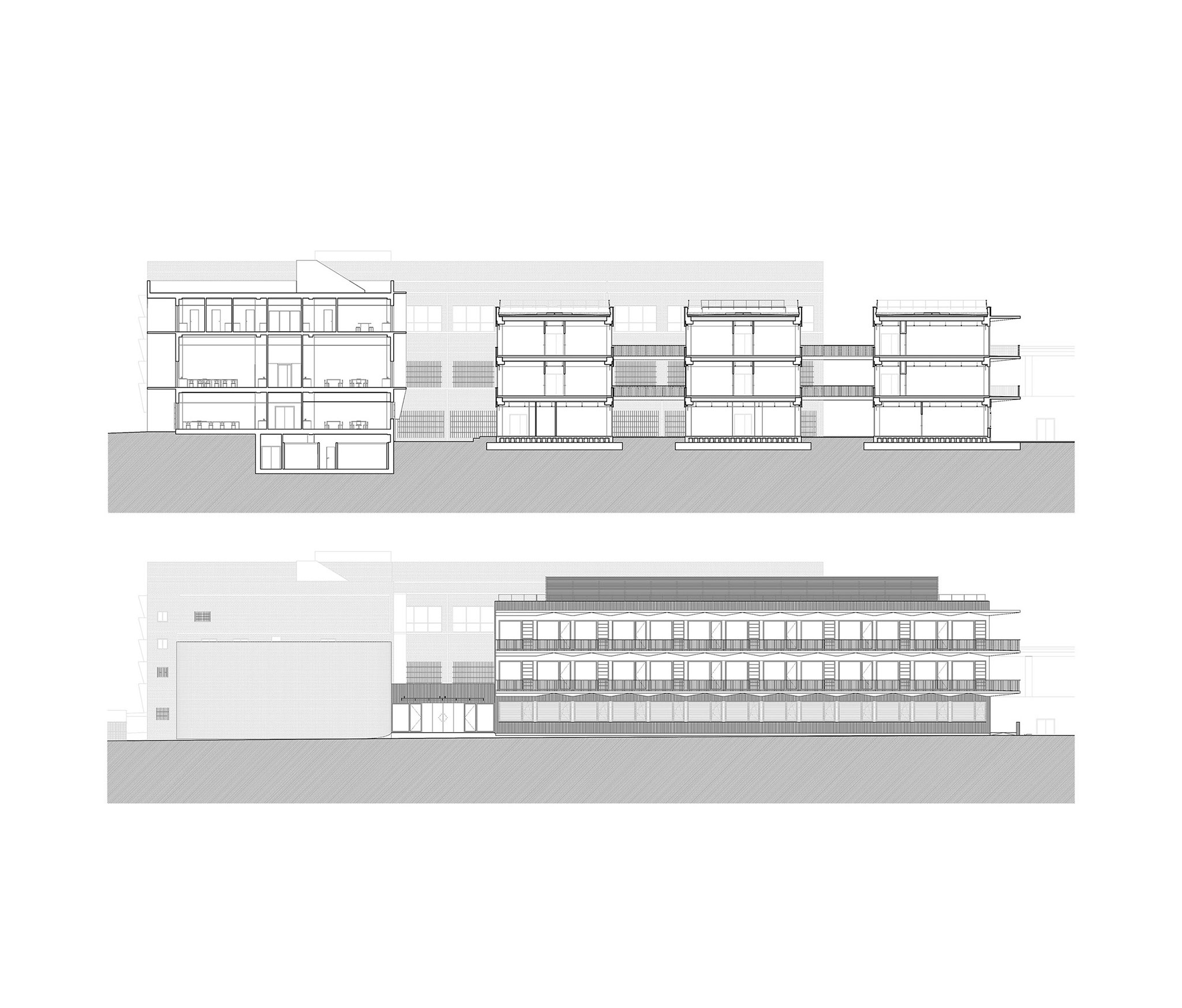
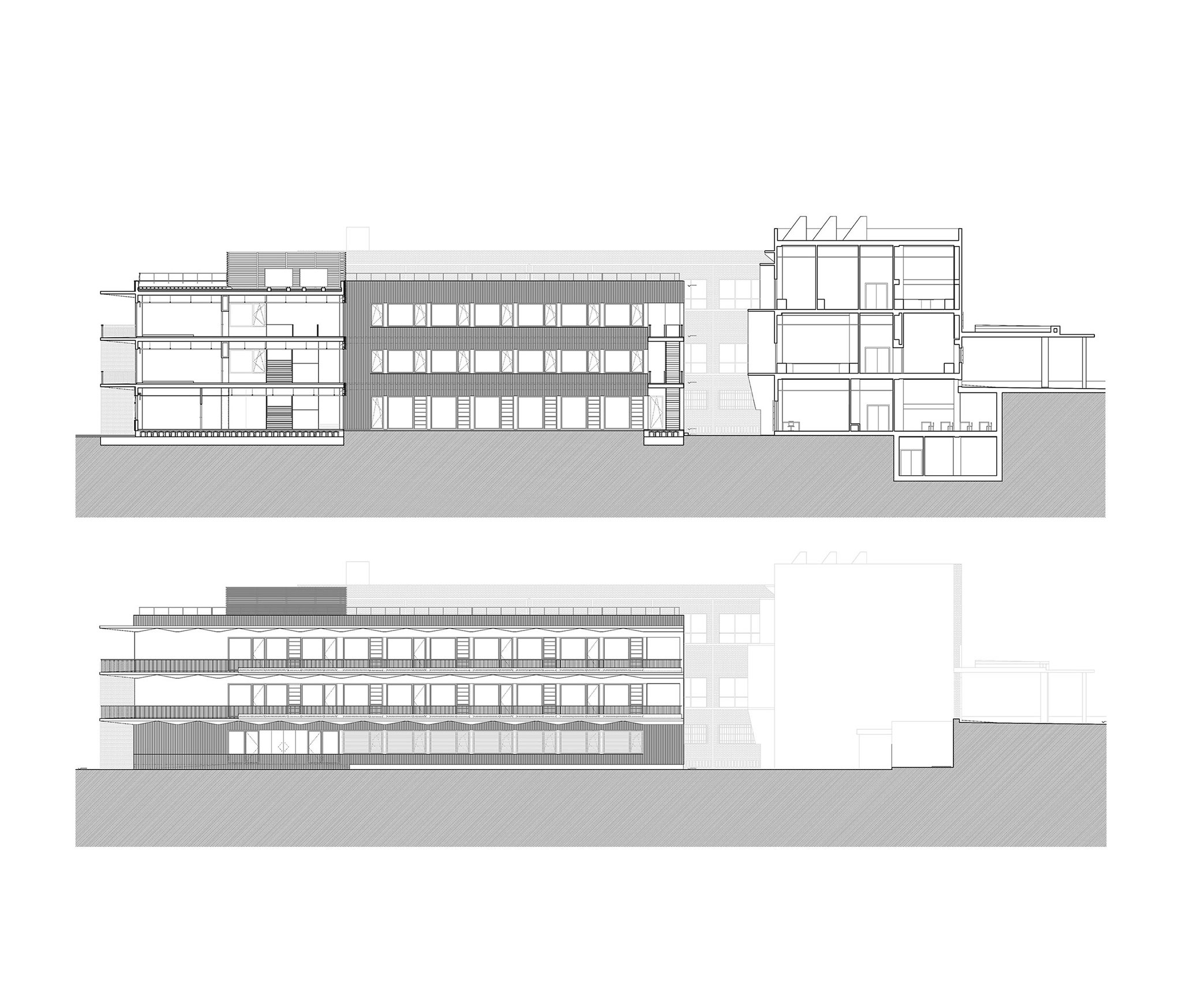
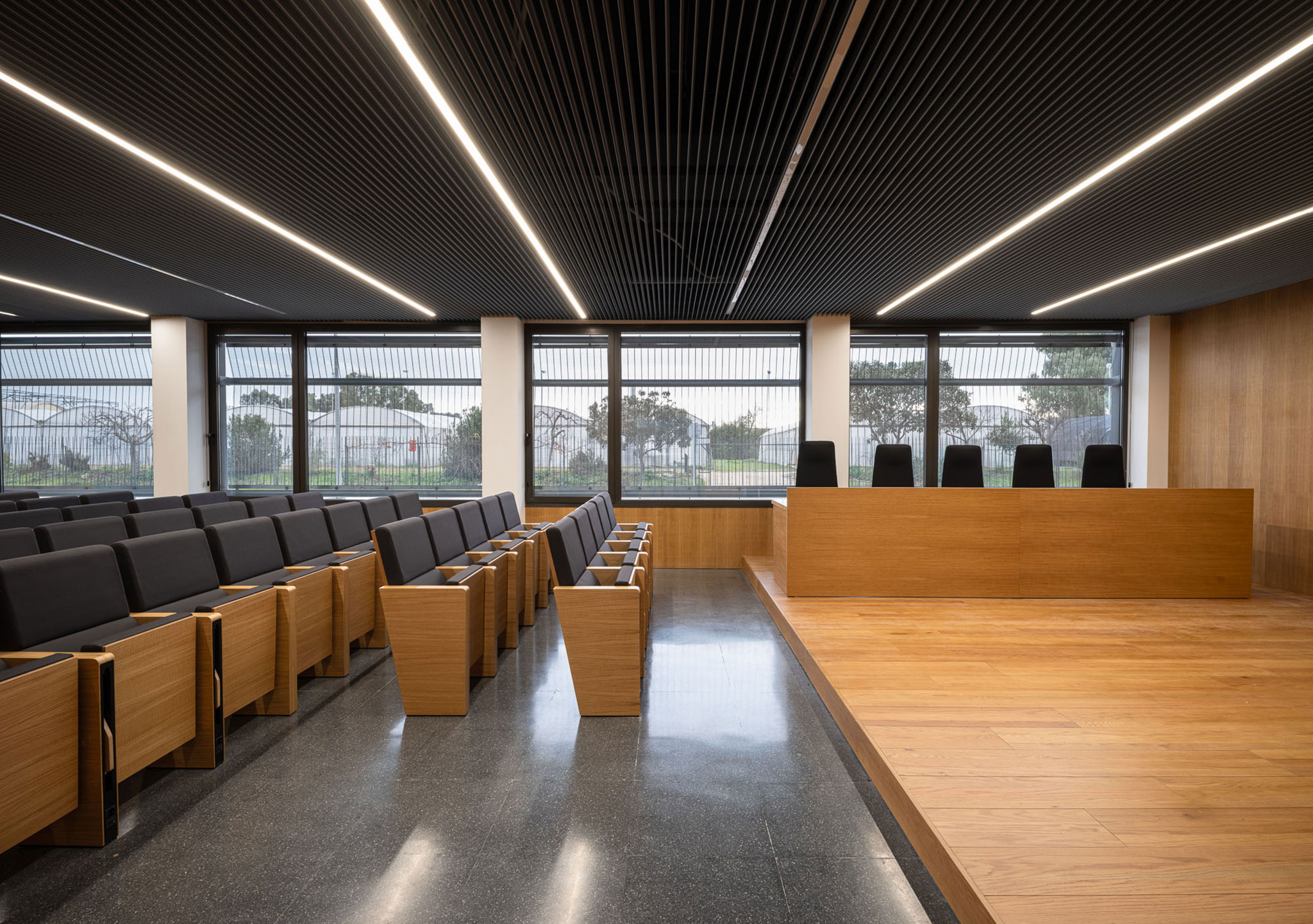
The expansion and renovation of the School of Agricultural Engineering, designed by Carbajal, comprises a building with exterior galleries distributed across three wings. It includes the construction of an auditorium at one end of the original building. The ground floor houses general services such as the administrative offices, study and meeting rooms, dining areas, and the library. These spaces are framed perpendicularly by a section containing the lobbies, circulation cores, graduation hall, administrative offices, and restrooms. The upper floors contain classrooms and departmental offices.

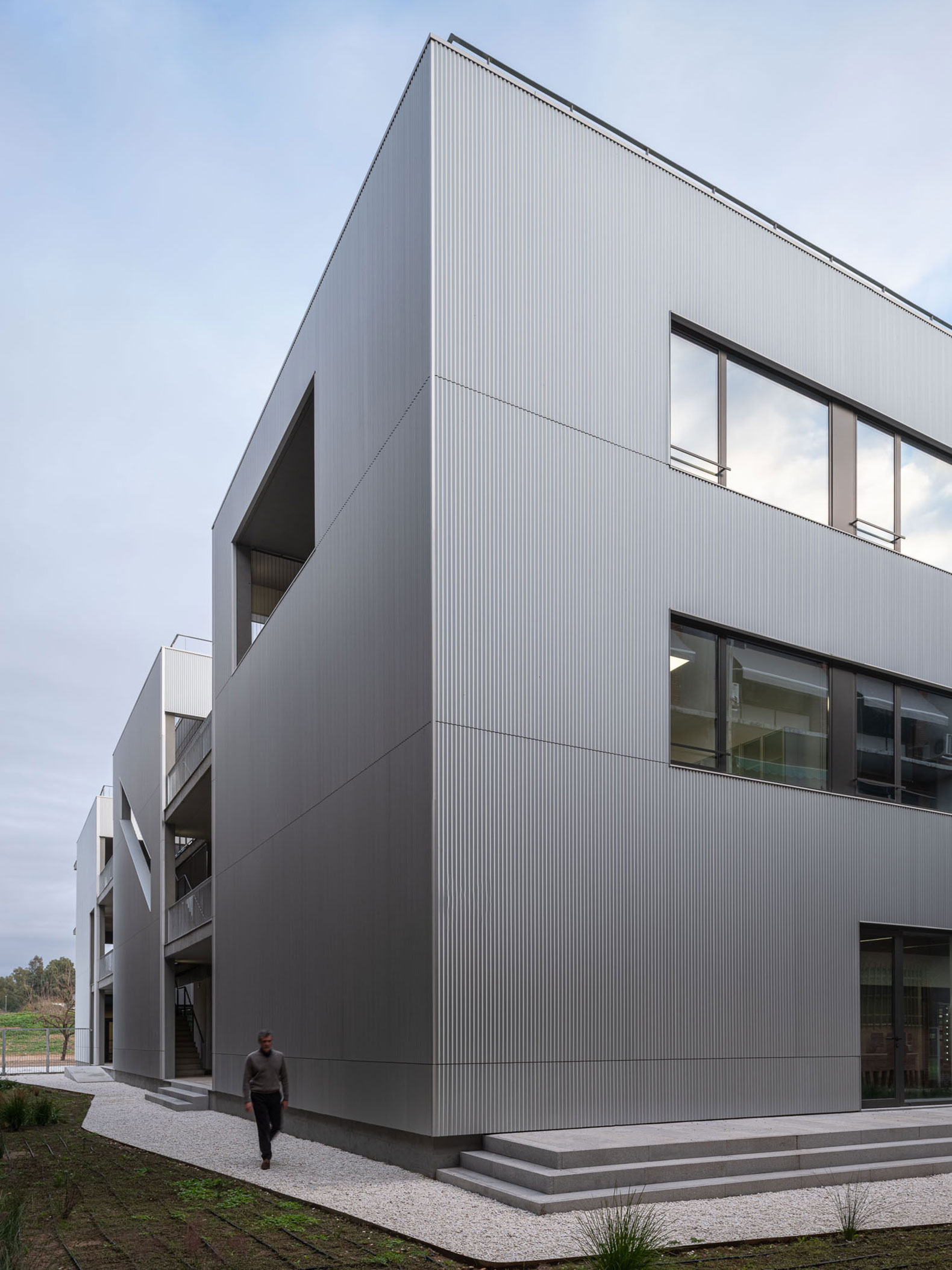
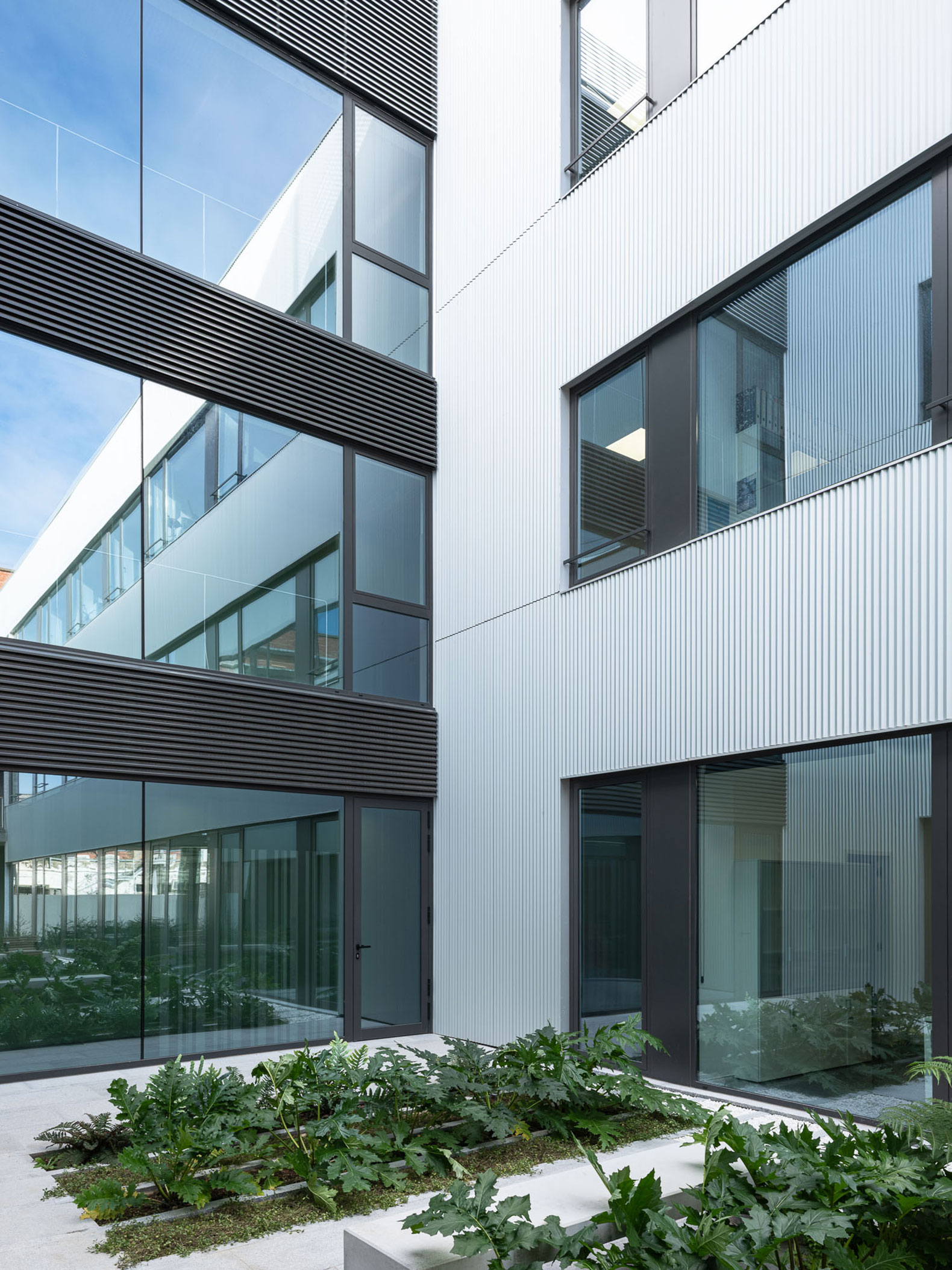
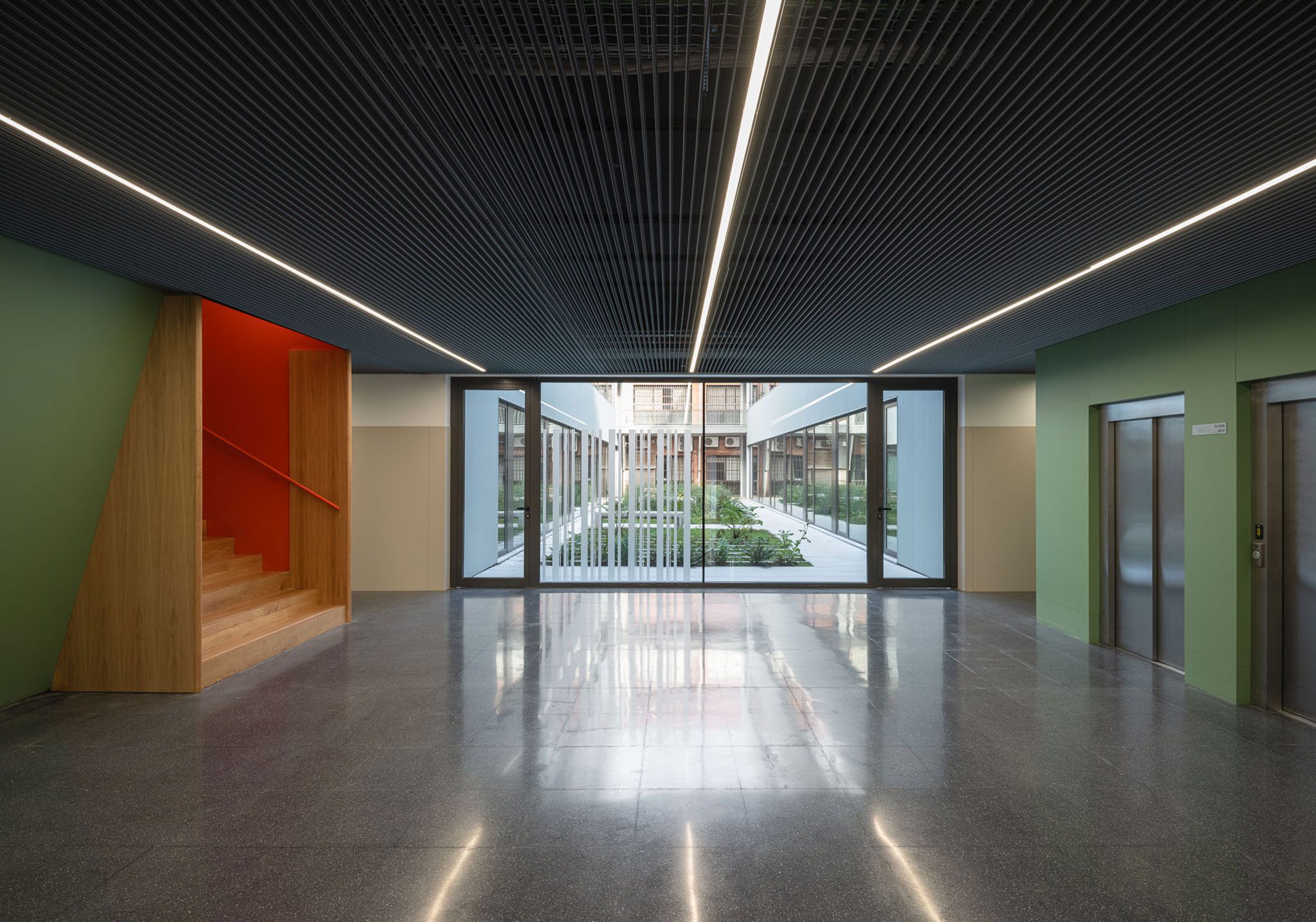
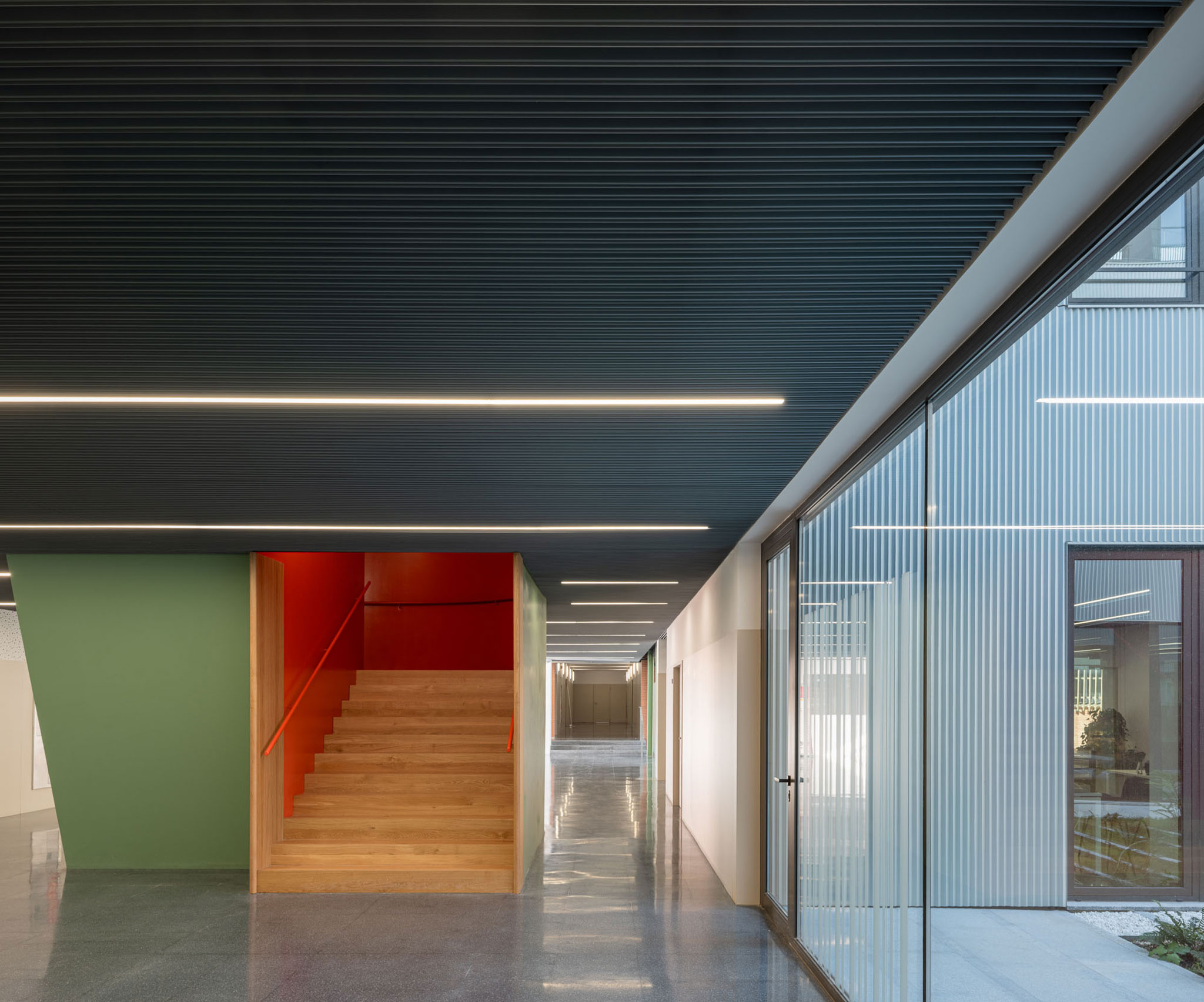
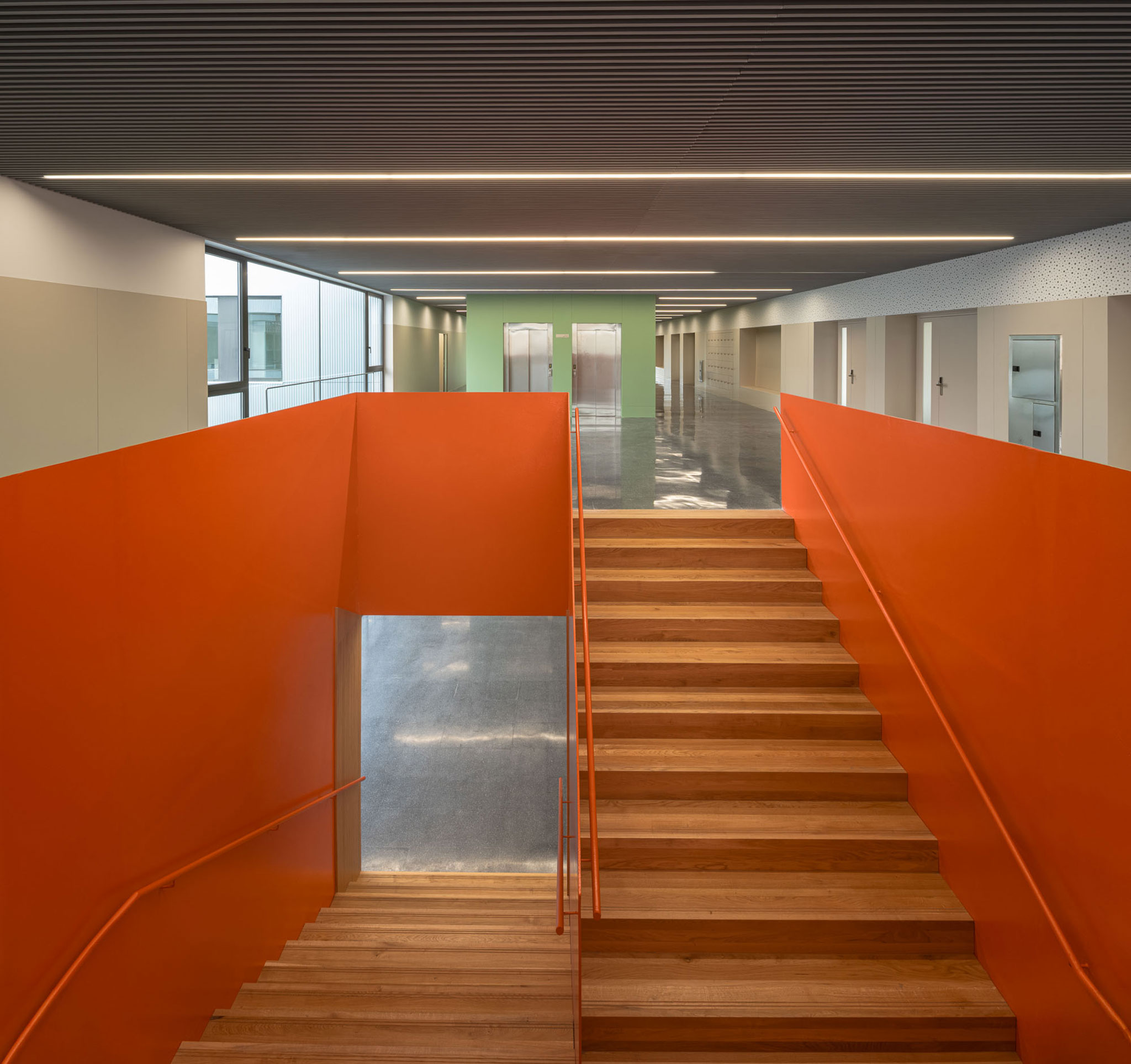
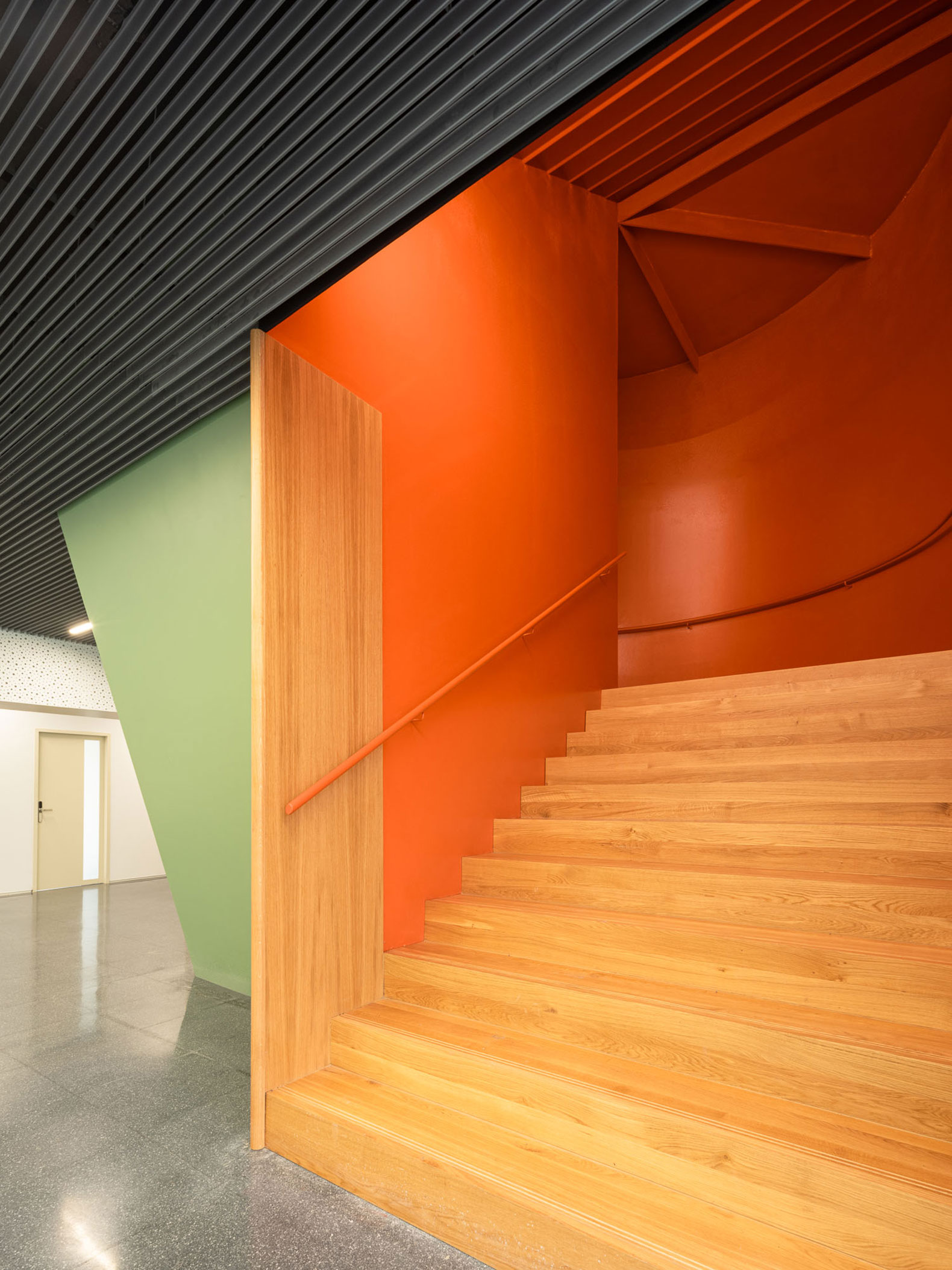
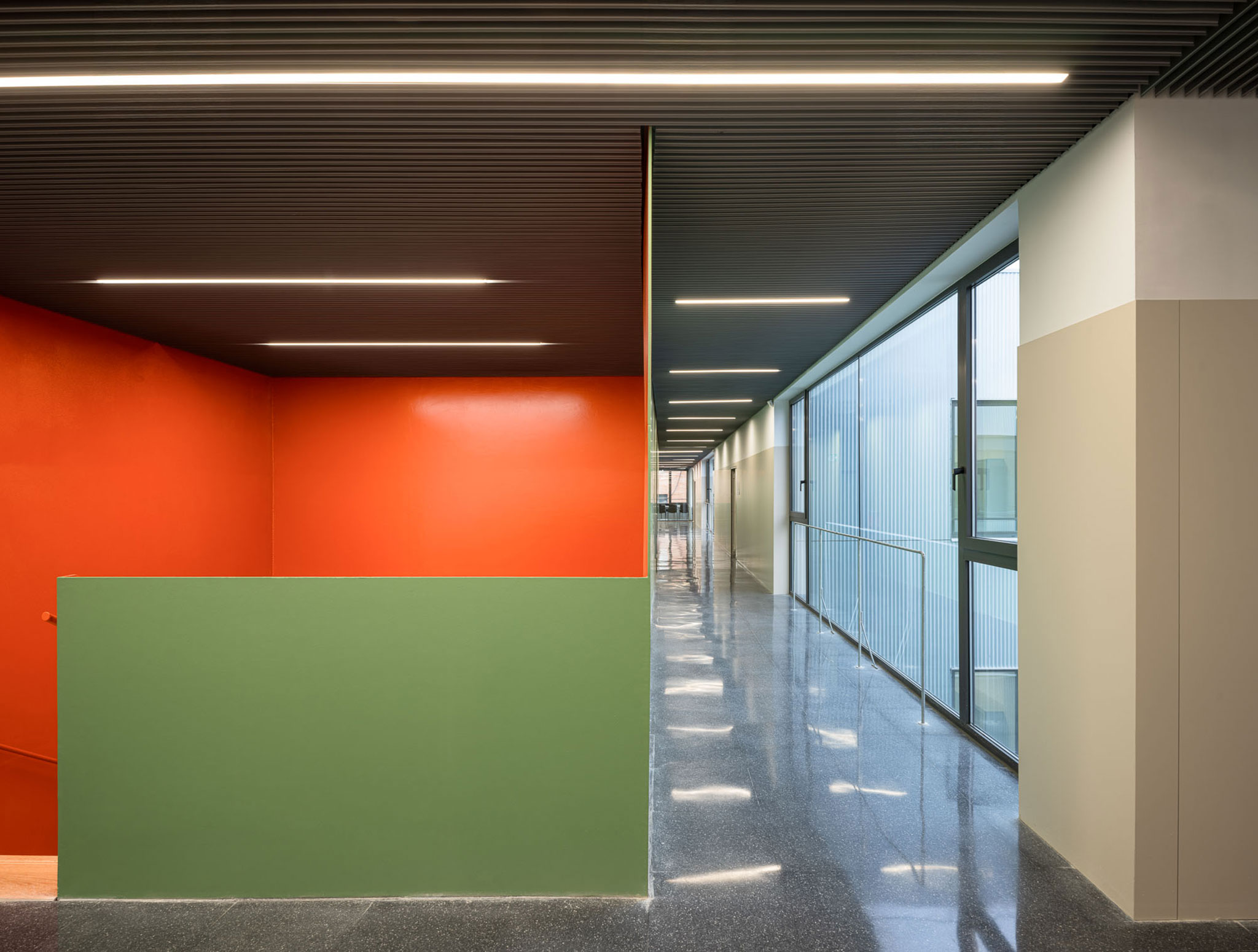
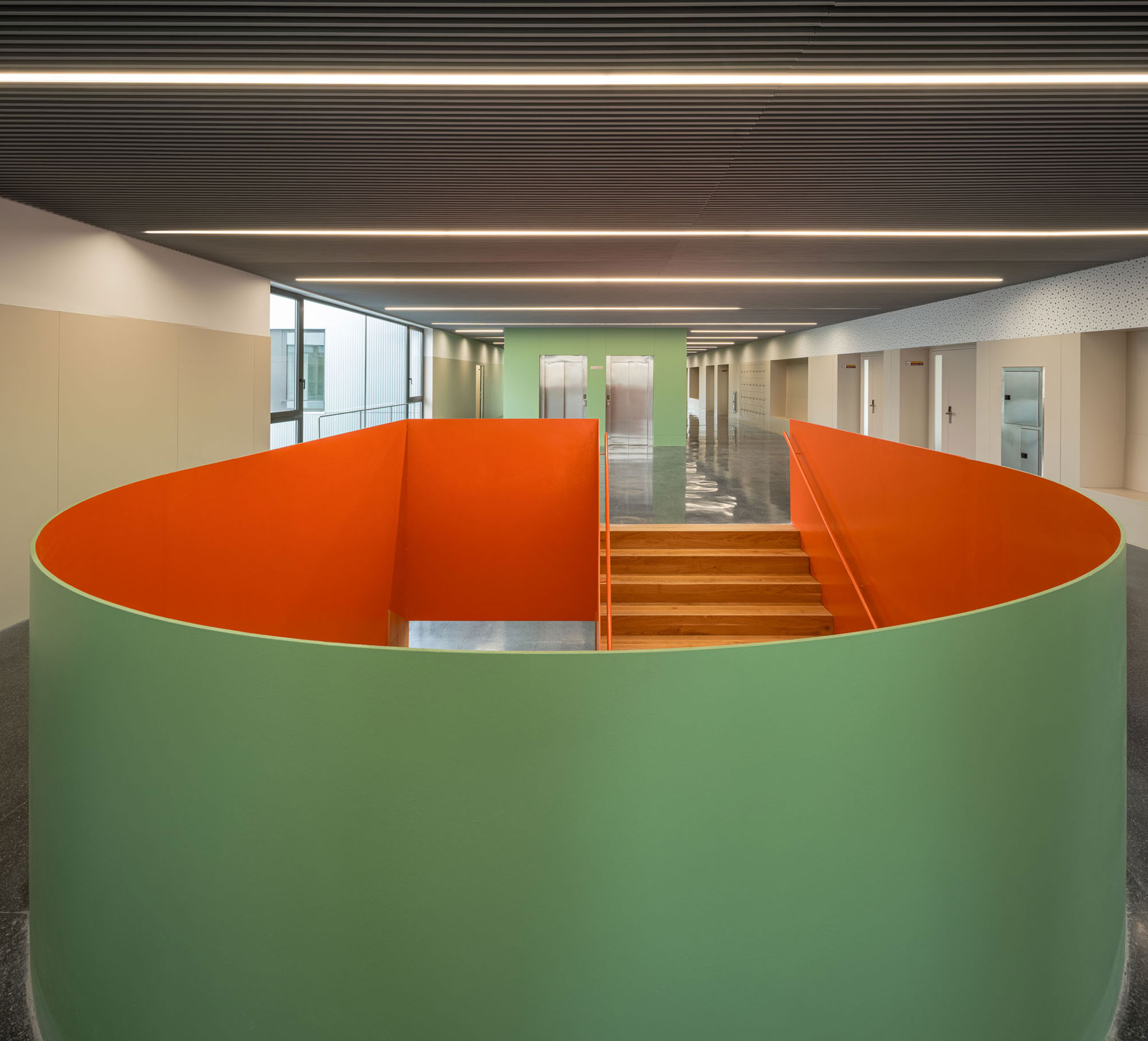
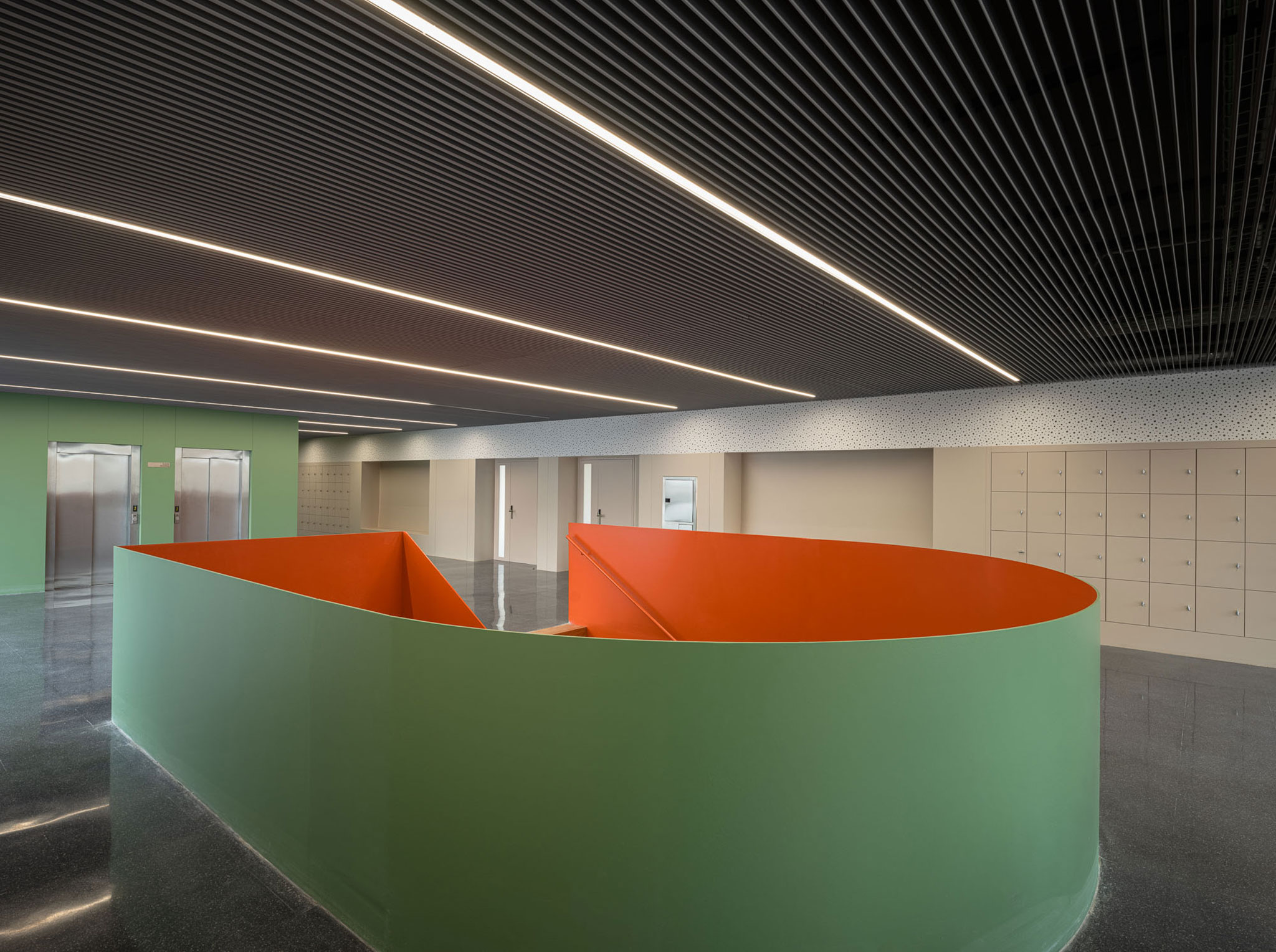
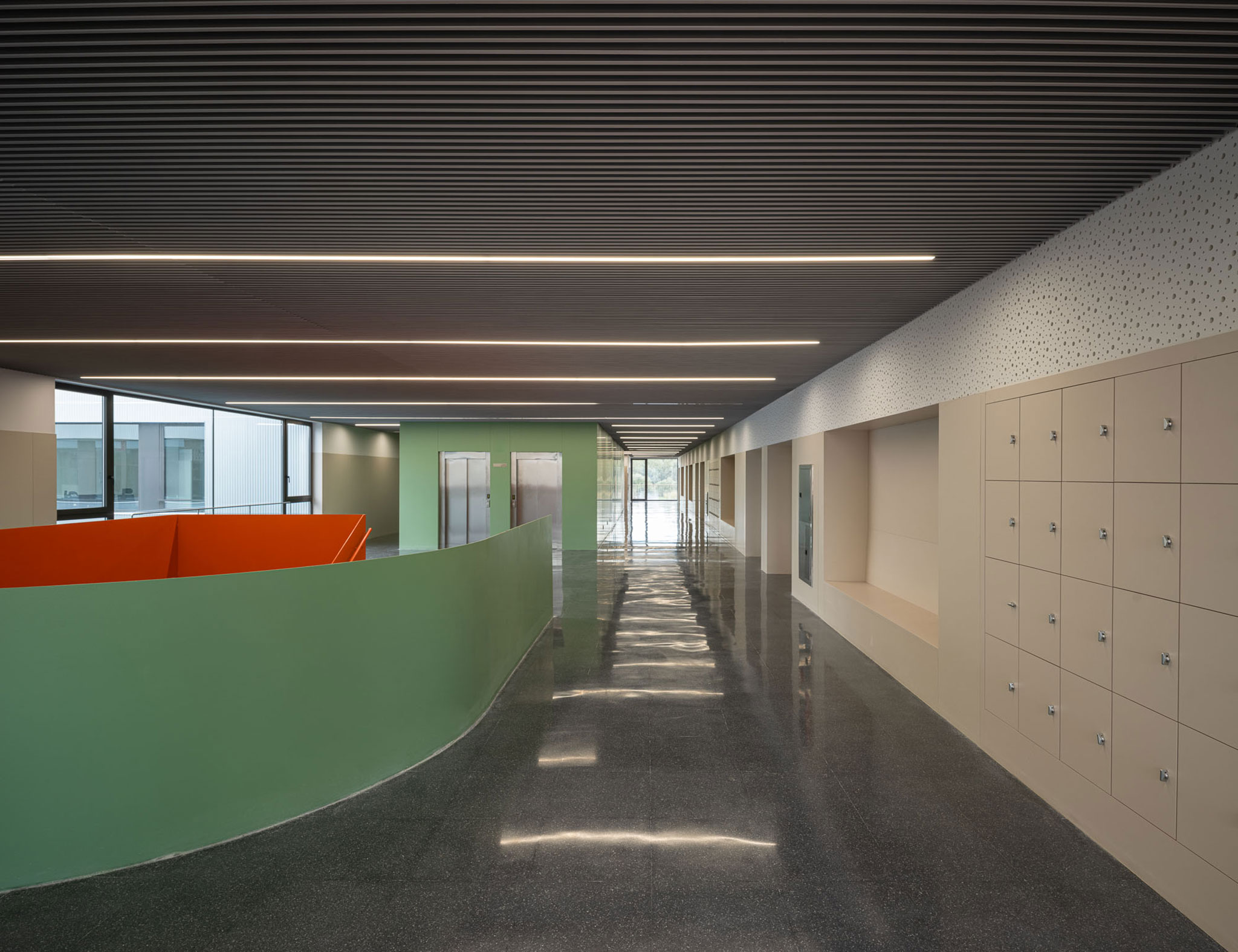
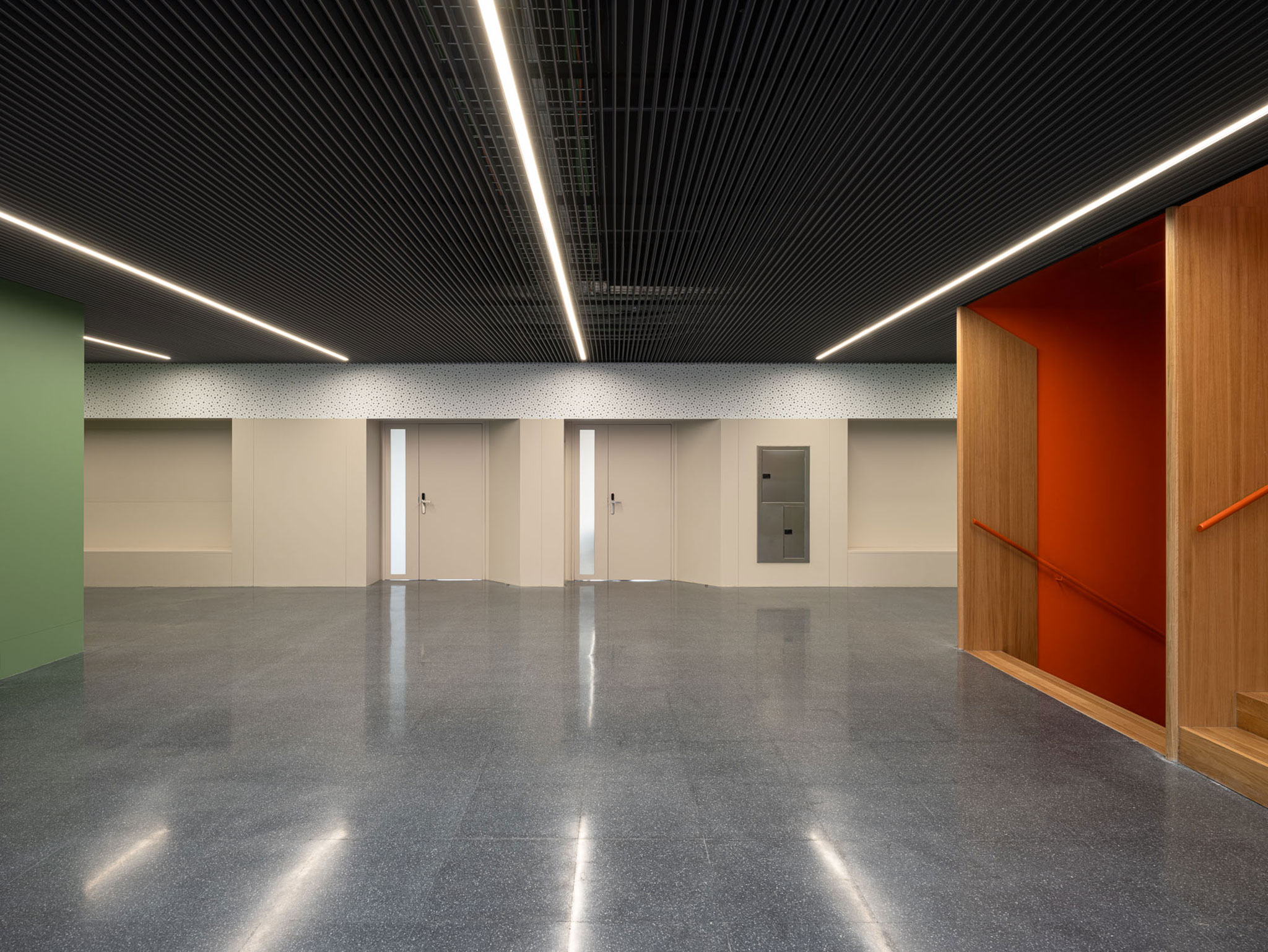
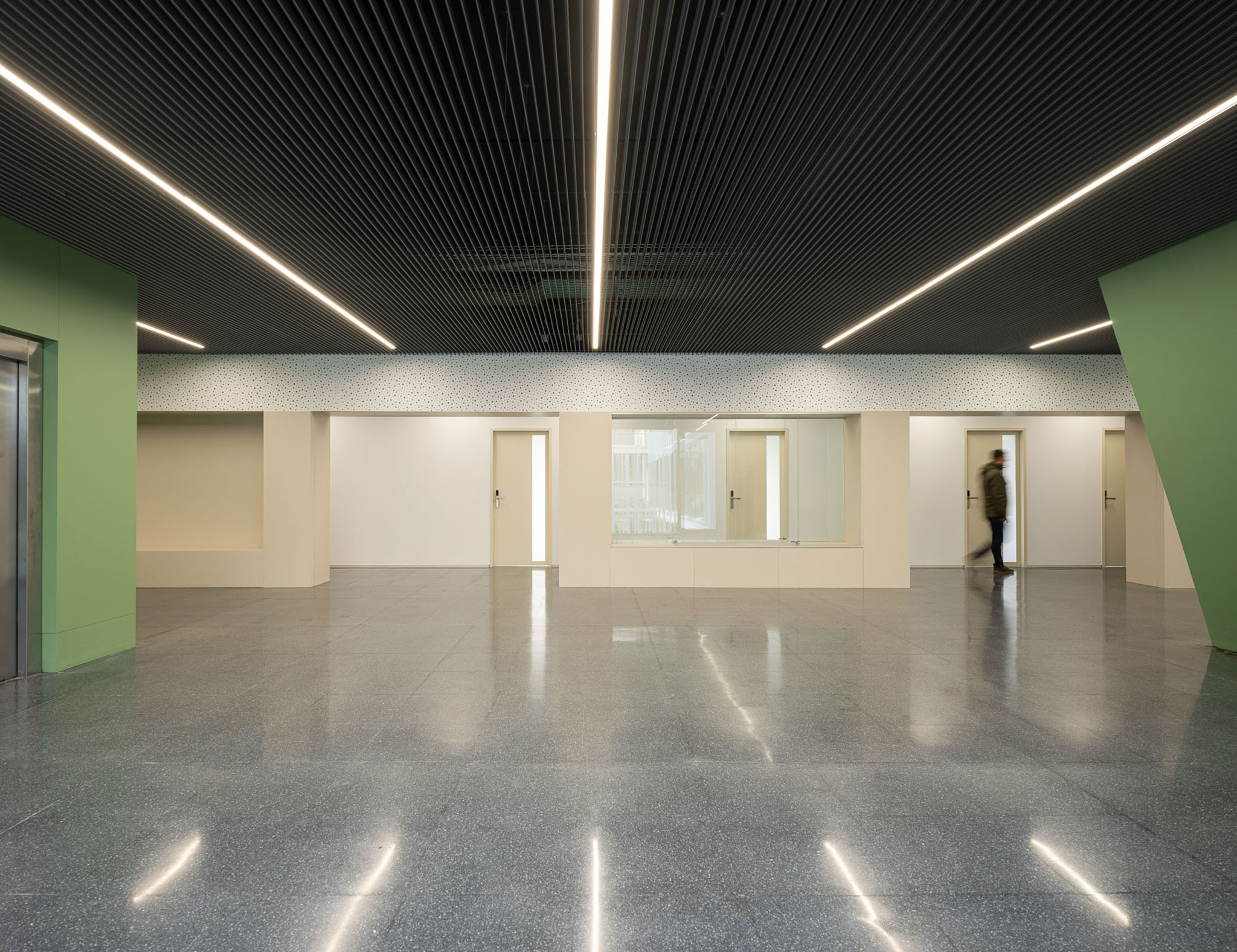
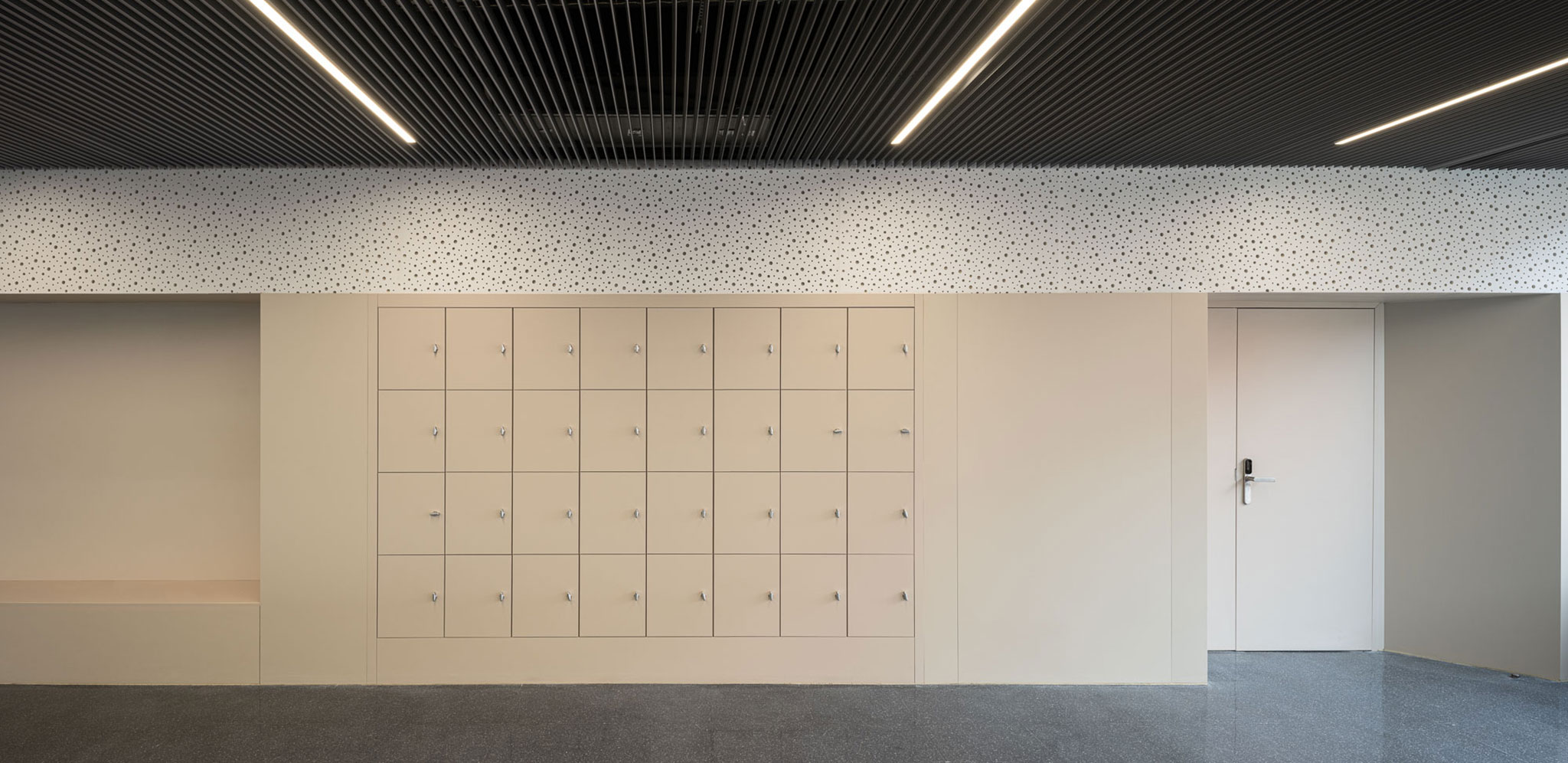
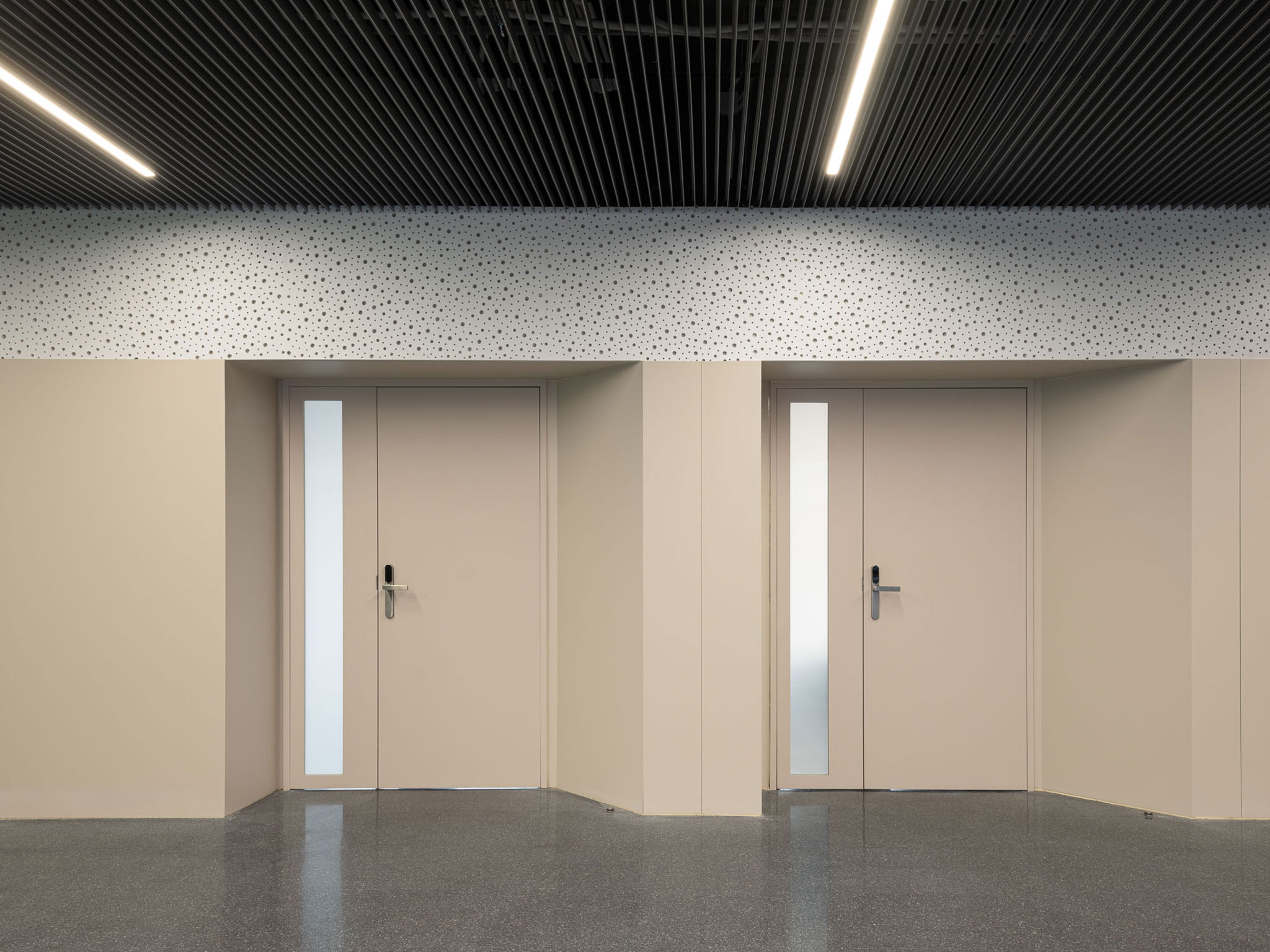
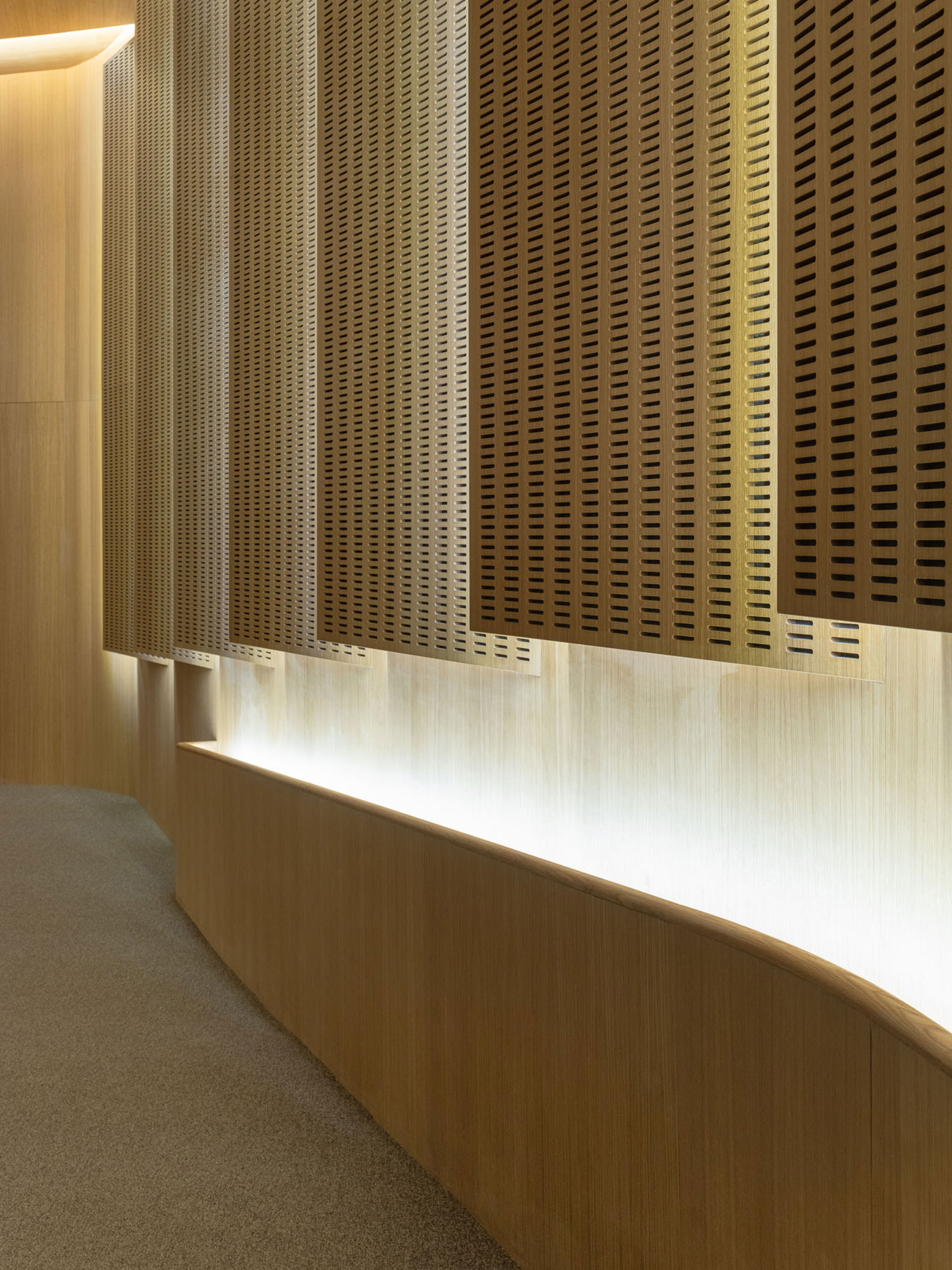
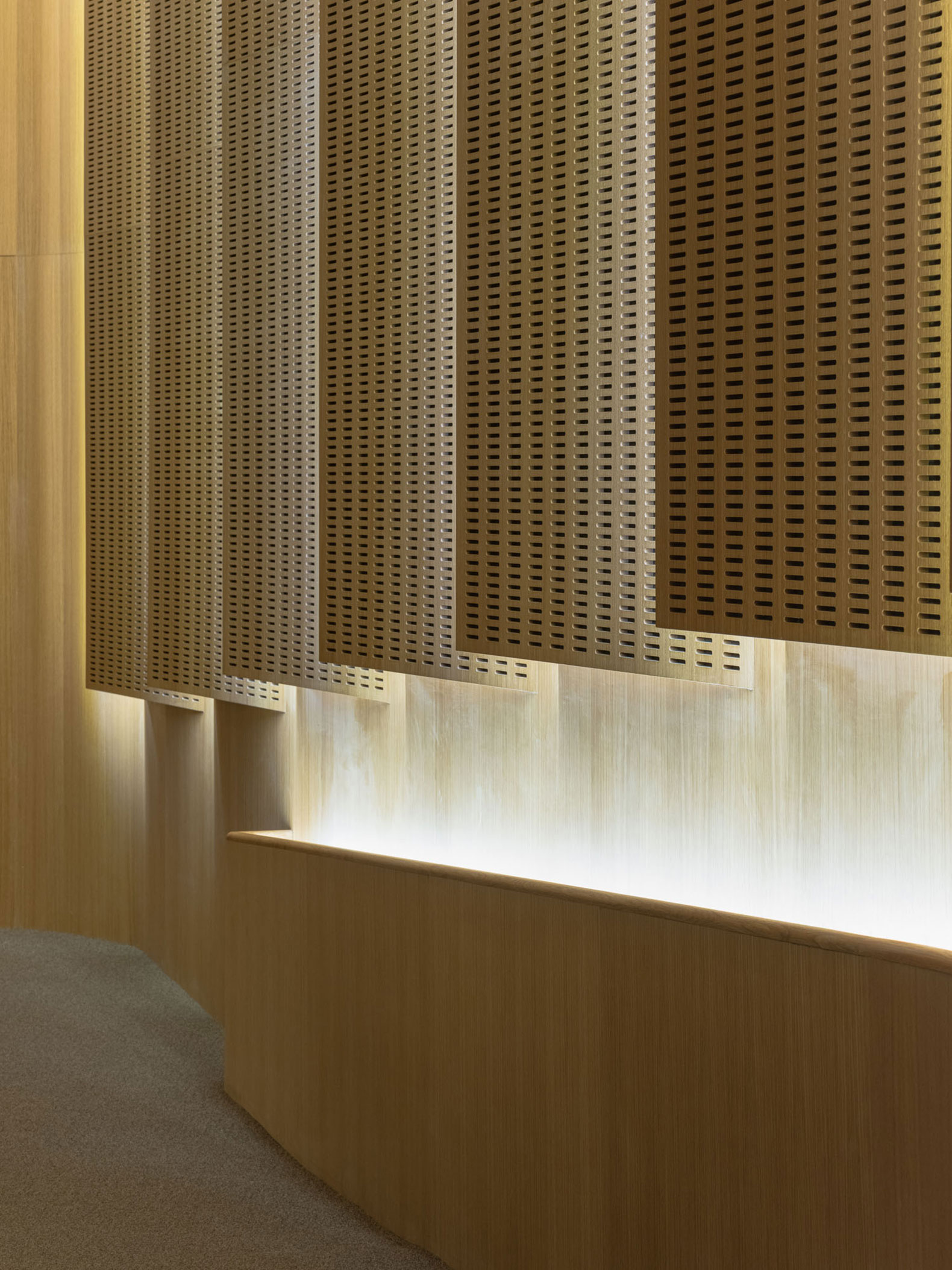
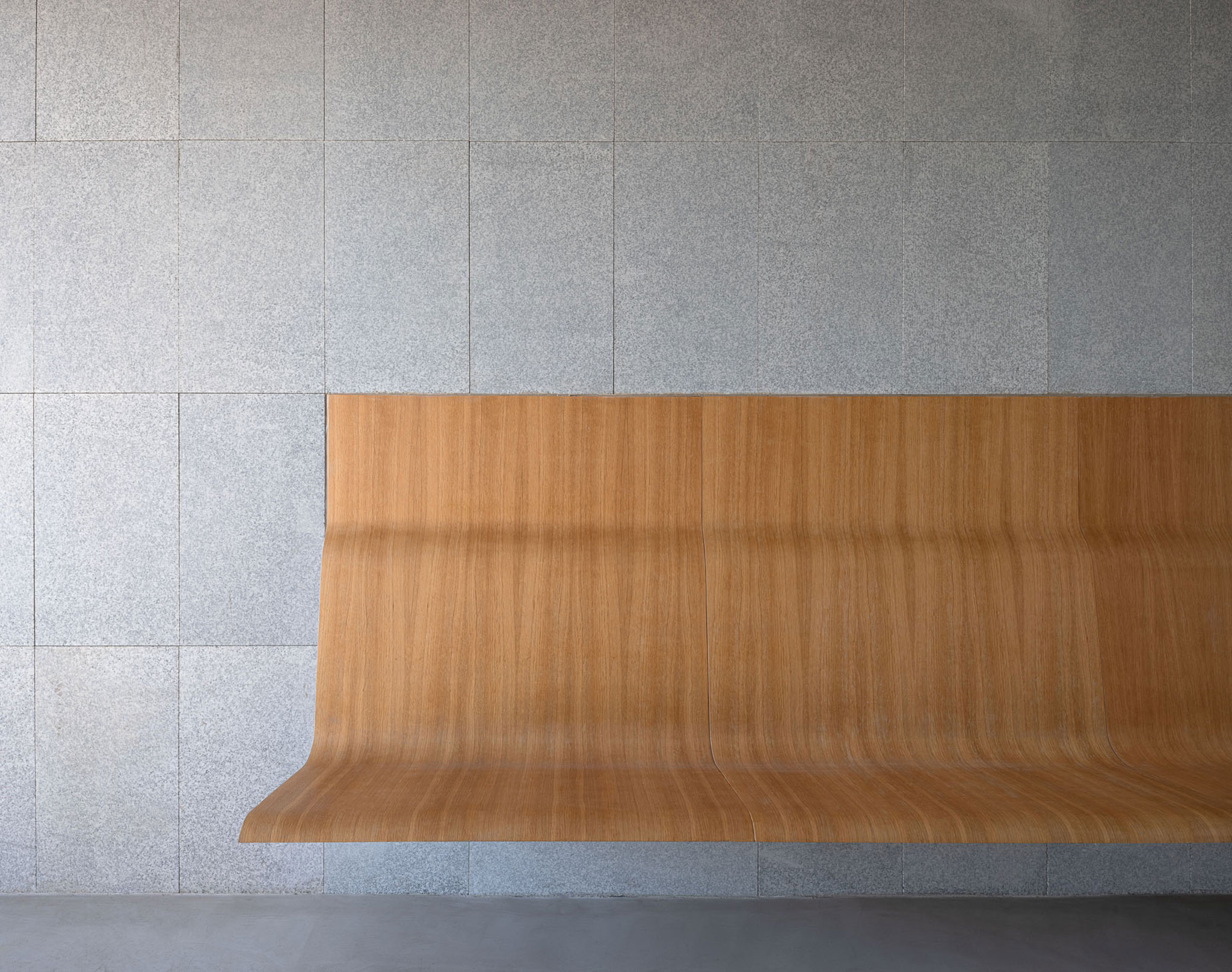
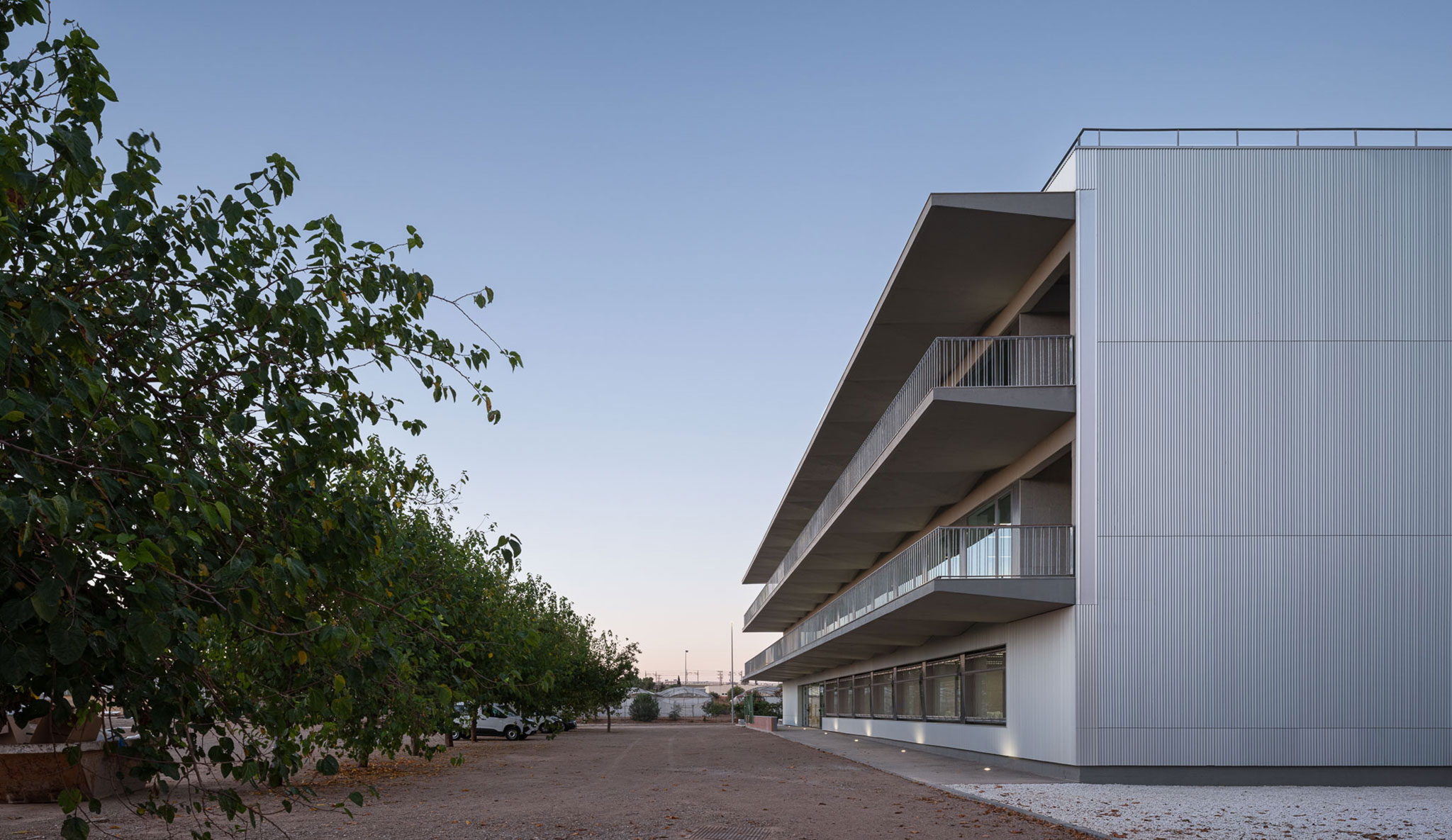
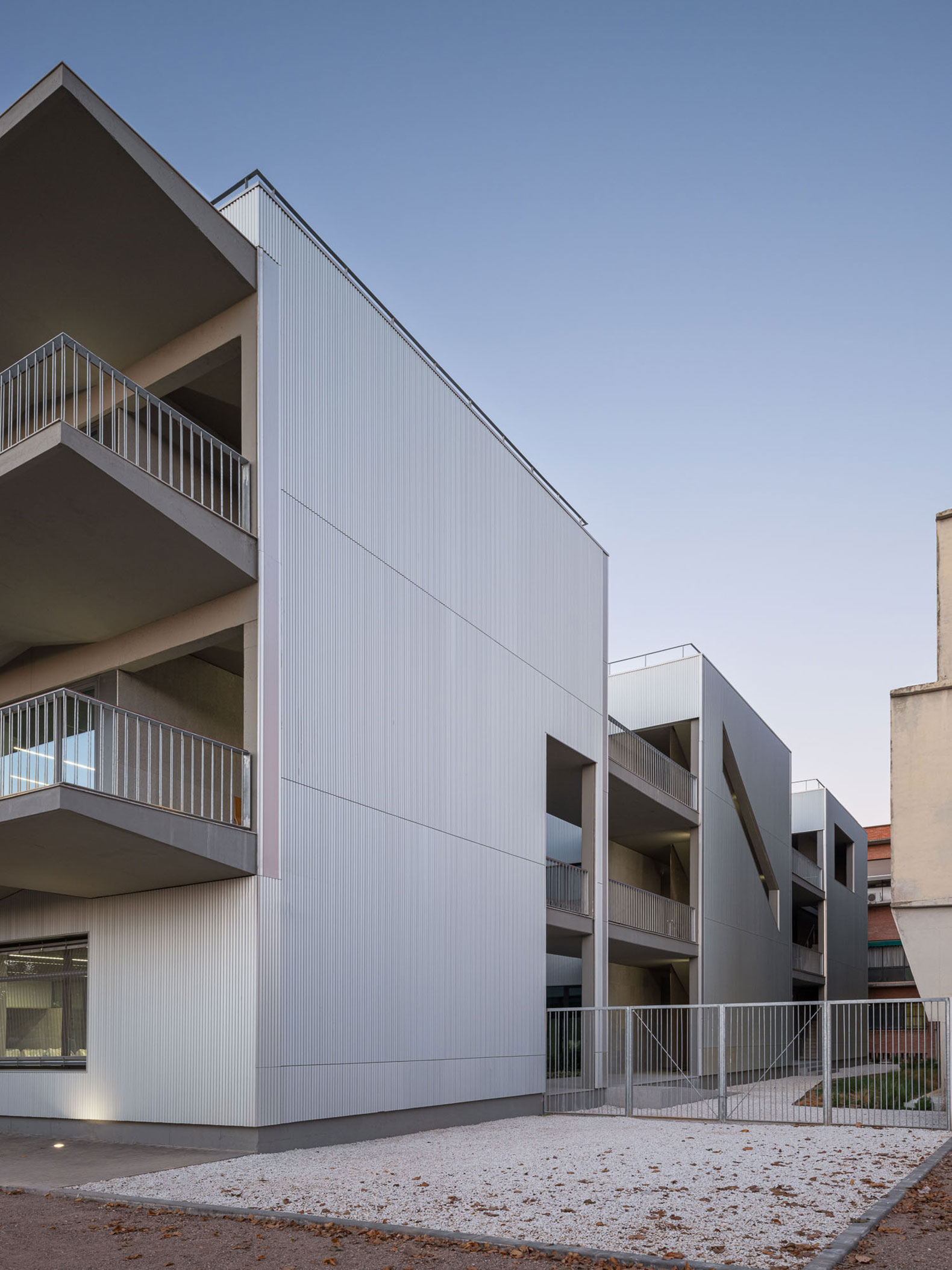
For the building's construction, a reinforced concrete structure with large spans and supports on the facades was chosen. Aluminum was used for the facade cladding, windows, and suspended ceilings. In addition to aluminum, terrazzo flooring was used for the interior floors, and MDF panels with a veneer and brushed and lacquered aluminum with a mineral core were used for the interior walls.
  Ampliación y reforma de la ETSIA de la Universidad de Sevilla por Estudio Carbajal. Fotografía por Fernando Alda.

Expansion and renovation of the ETSIA of the Universidad de Sevilla by Estudio Carbajal. Photograph by Fernando Alda. 

Project description by Estudio Carbajal

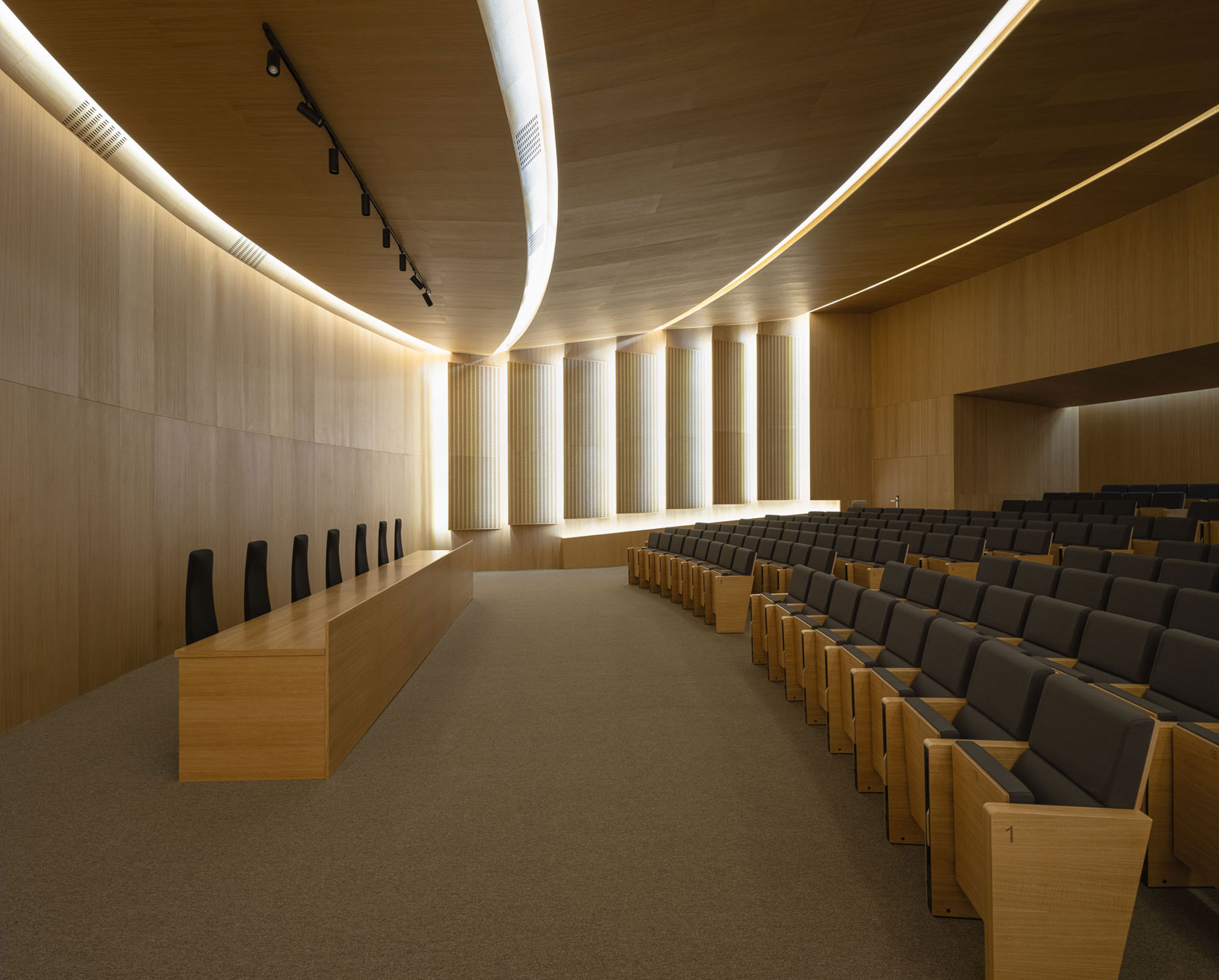
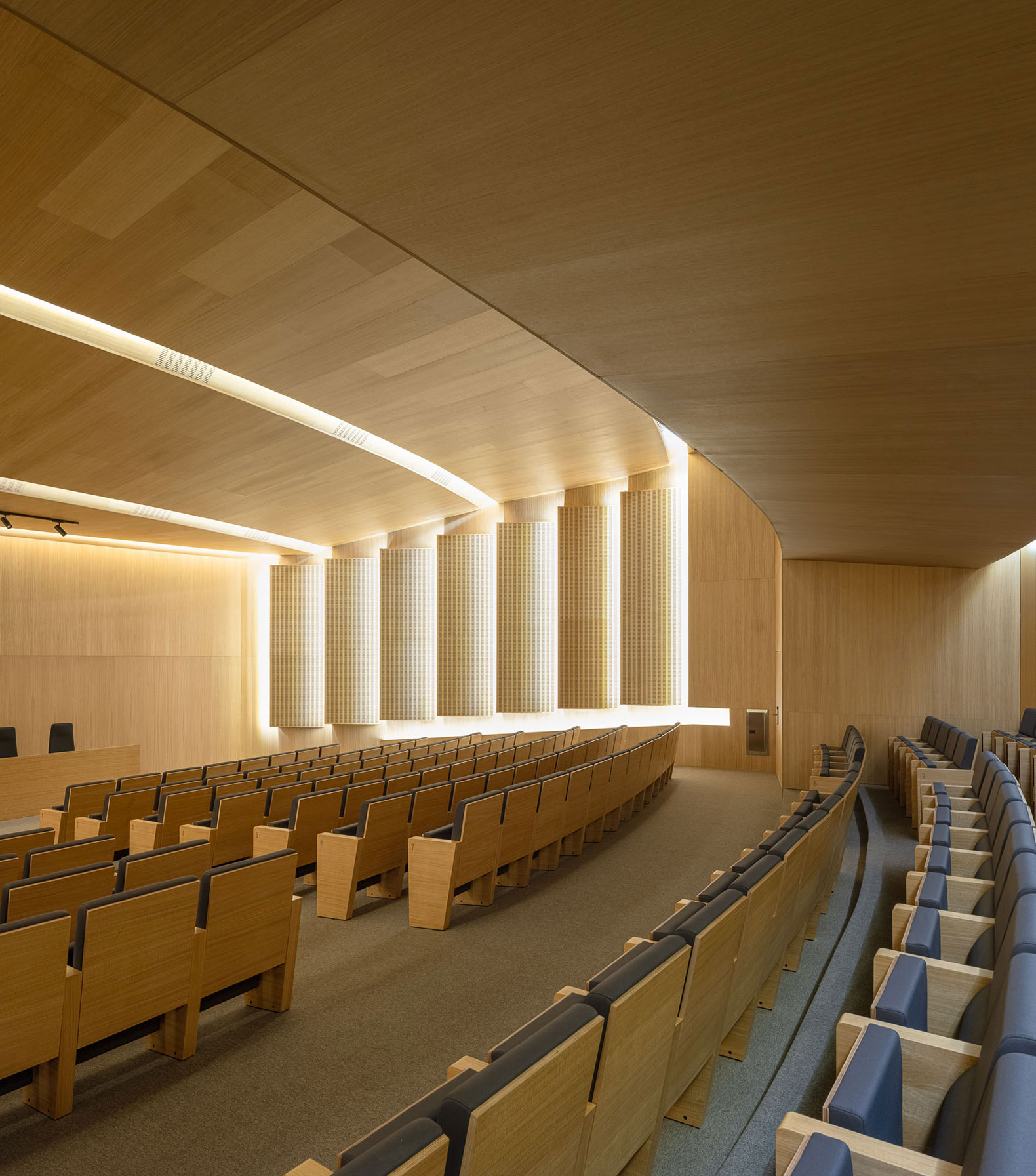
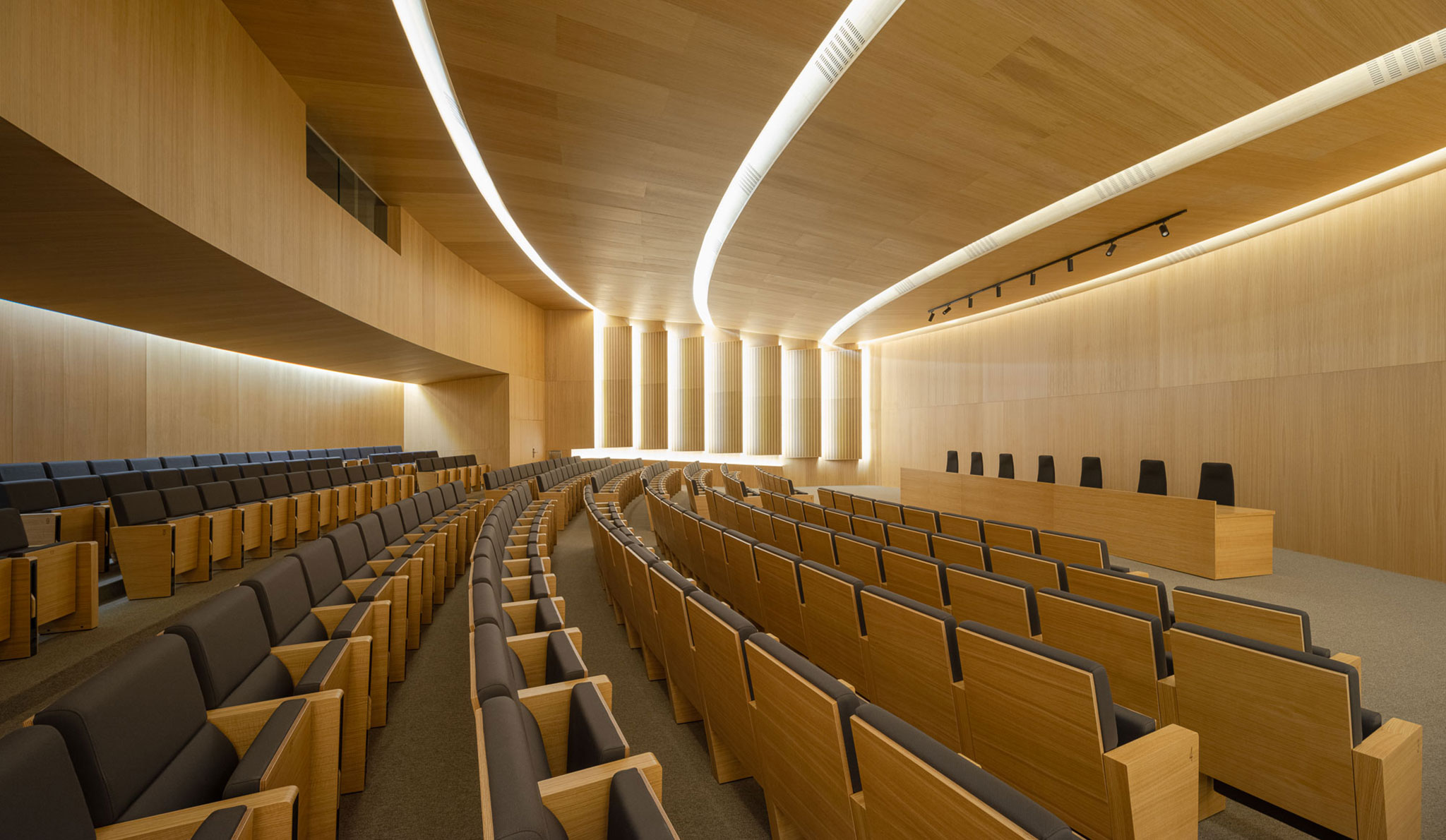
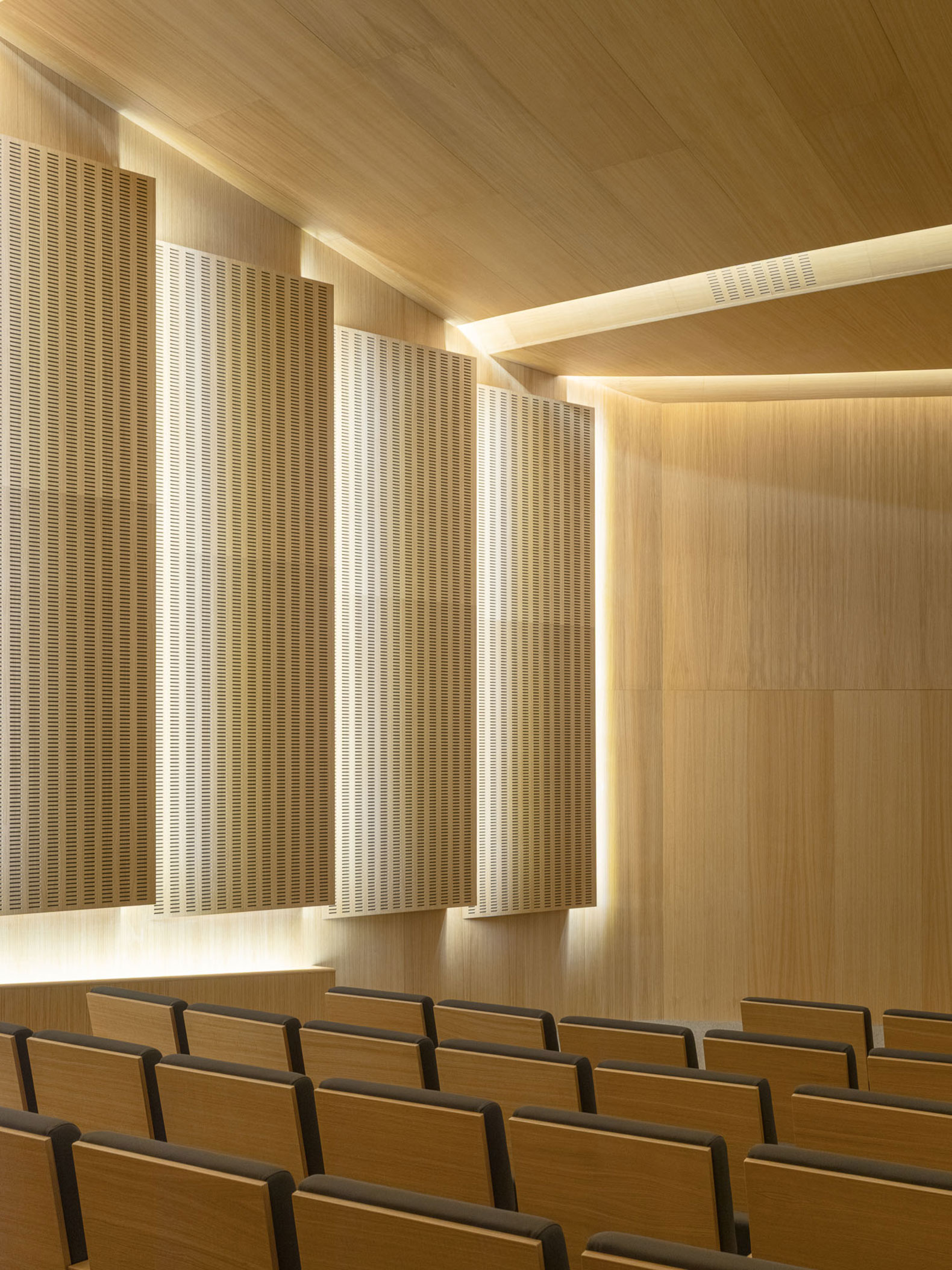
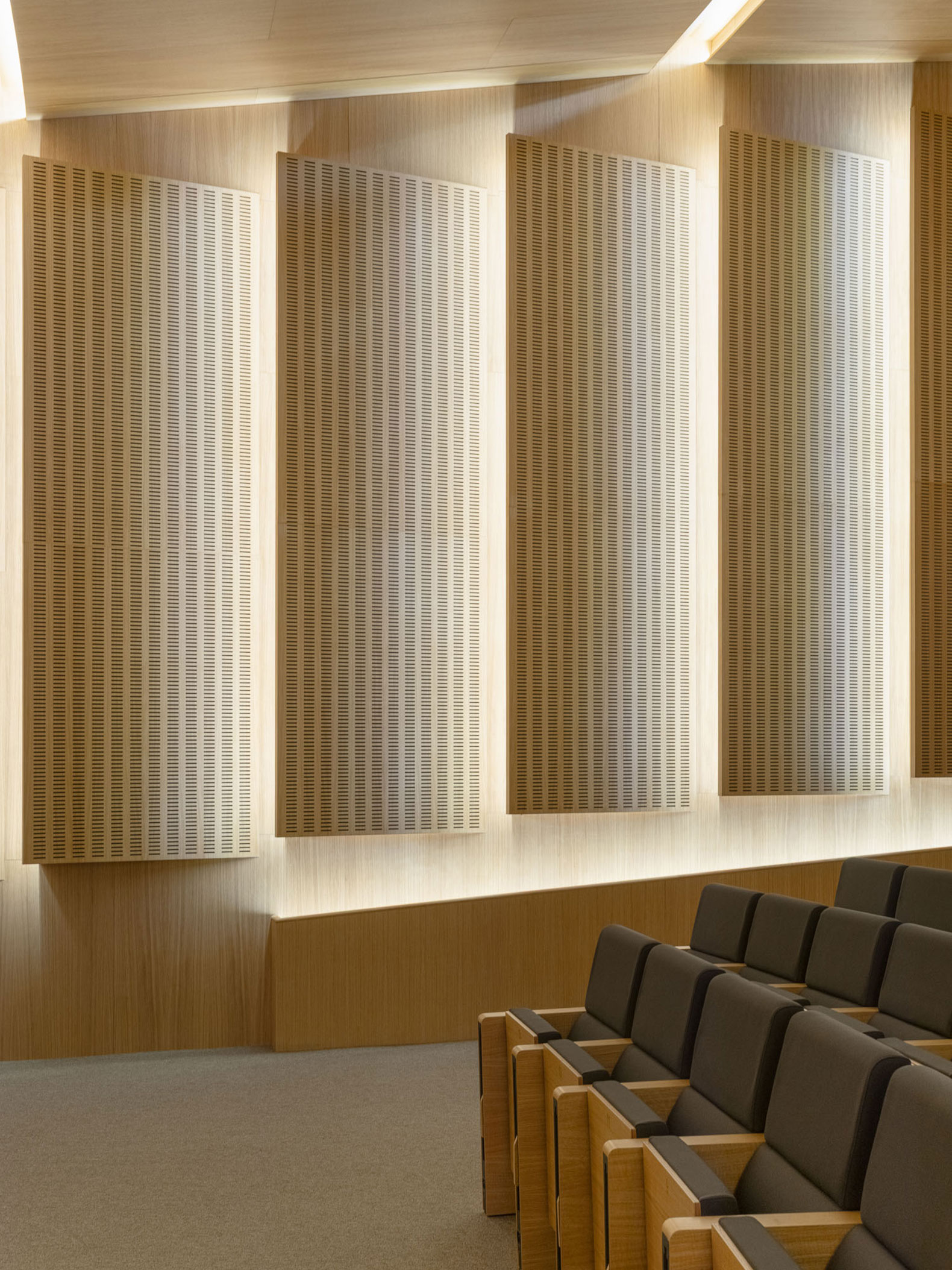
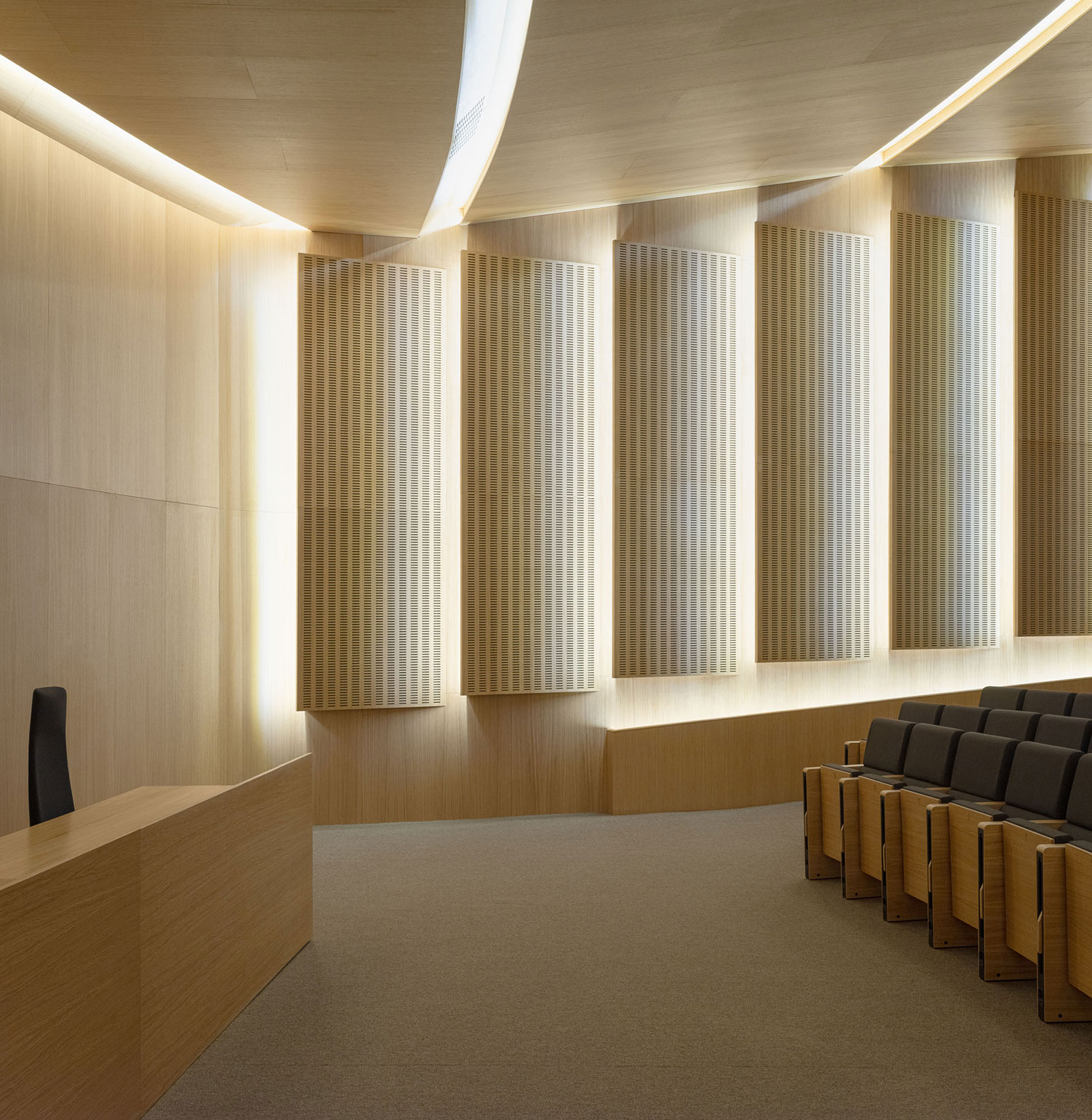
This project—the result of a public competition with a jury—addresses the expansion of the ETSIA (School of Agricultural Engineering) at the University of Seville as the first phase of a comprehensive project that also includes the renovation of the current building located south of the former Labor University campus. Along with the new building, it includes the construction of an auditorium that completes one end of the original building, which had to be demolished due to serious structural problems.

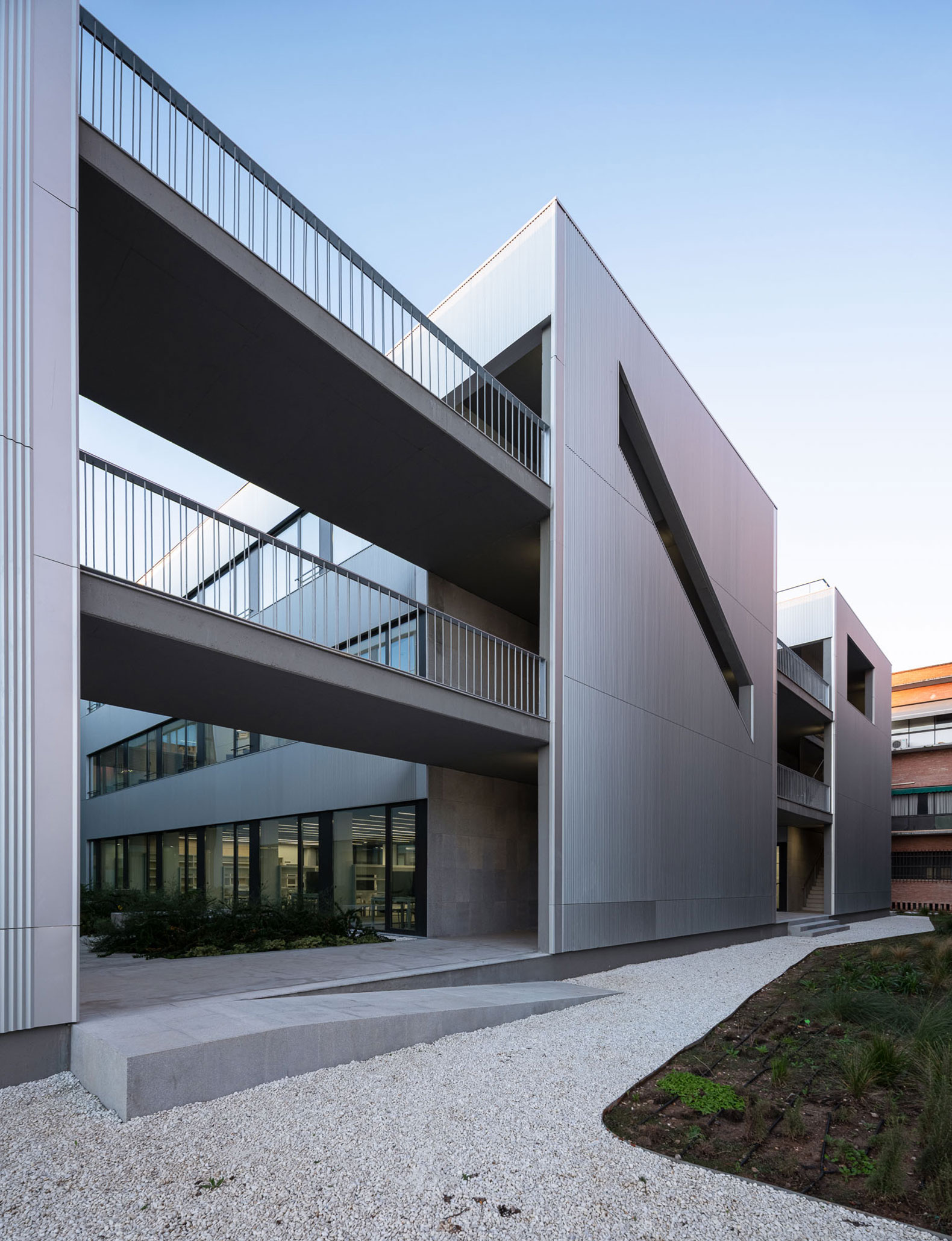
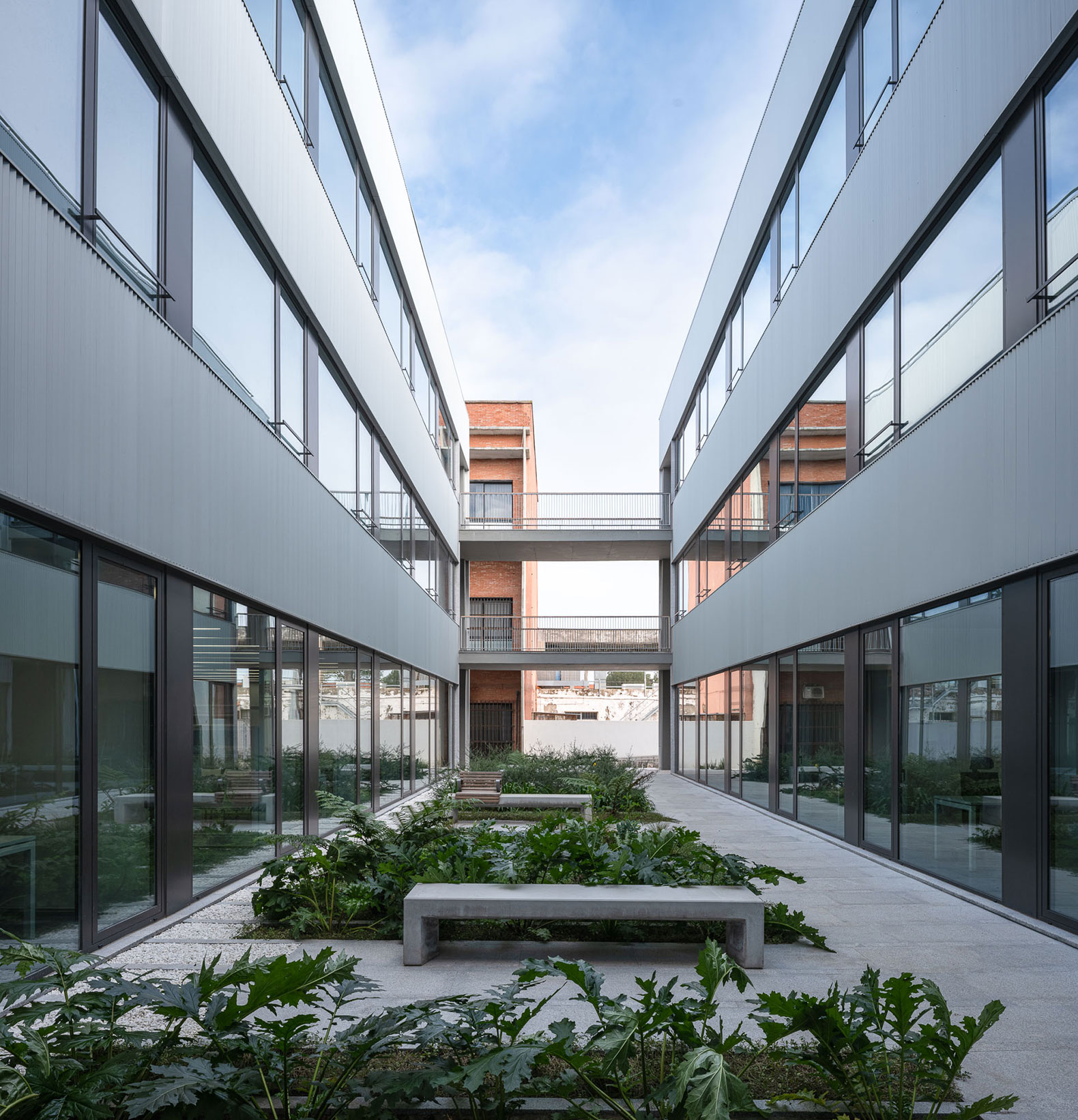
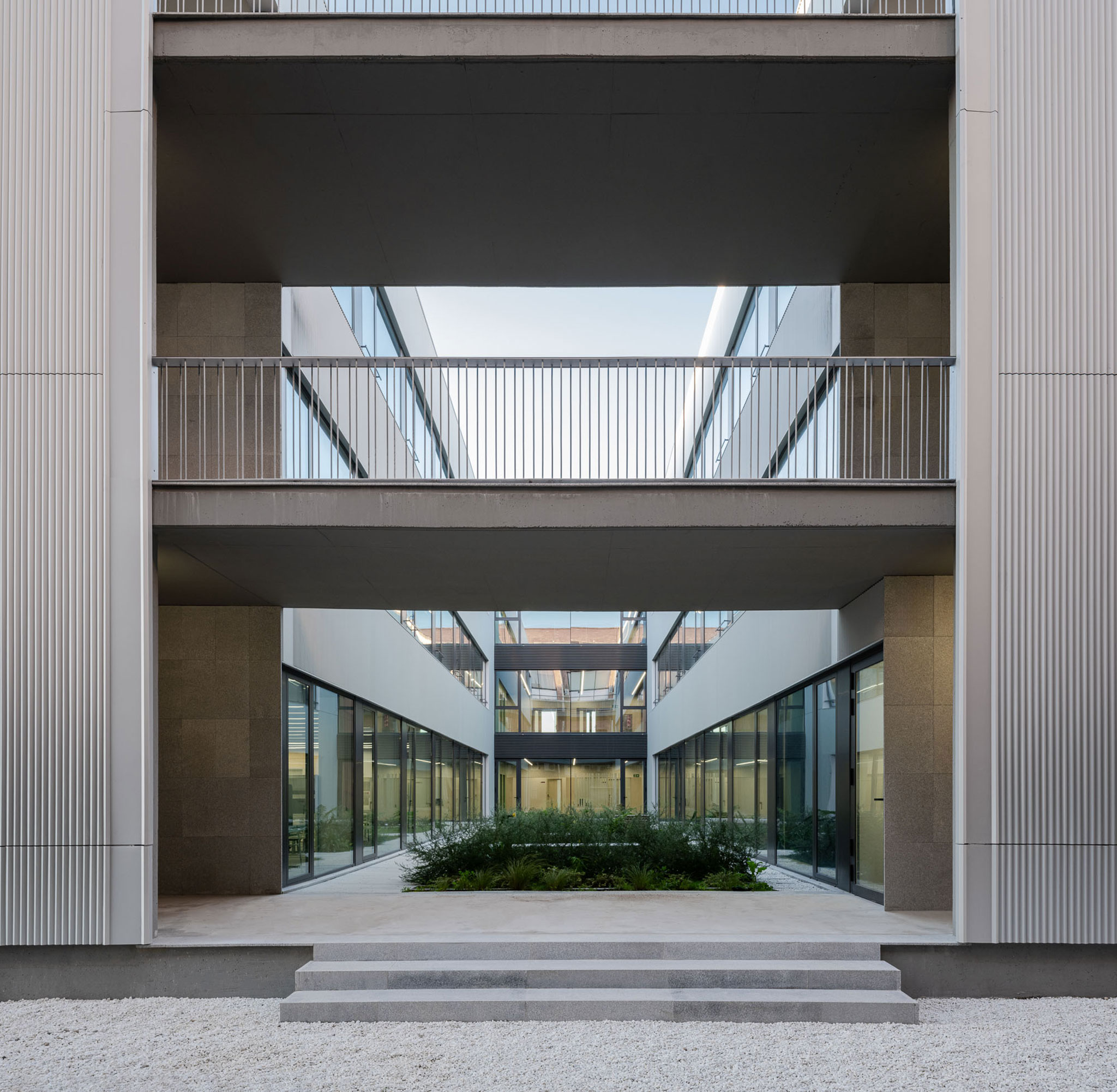
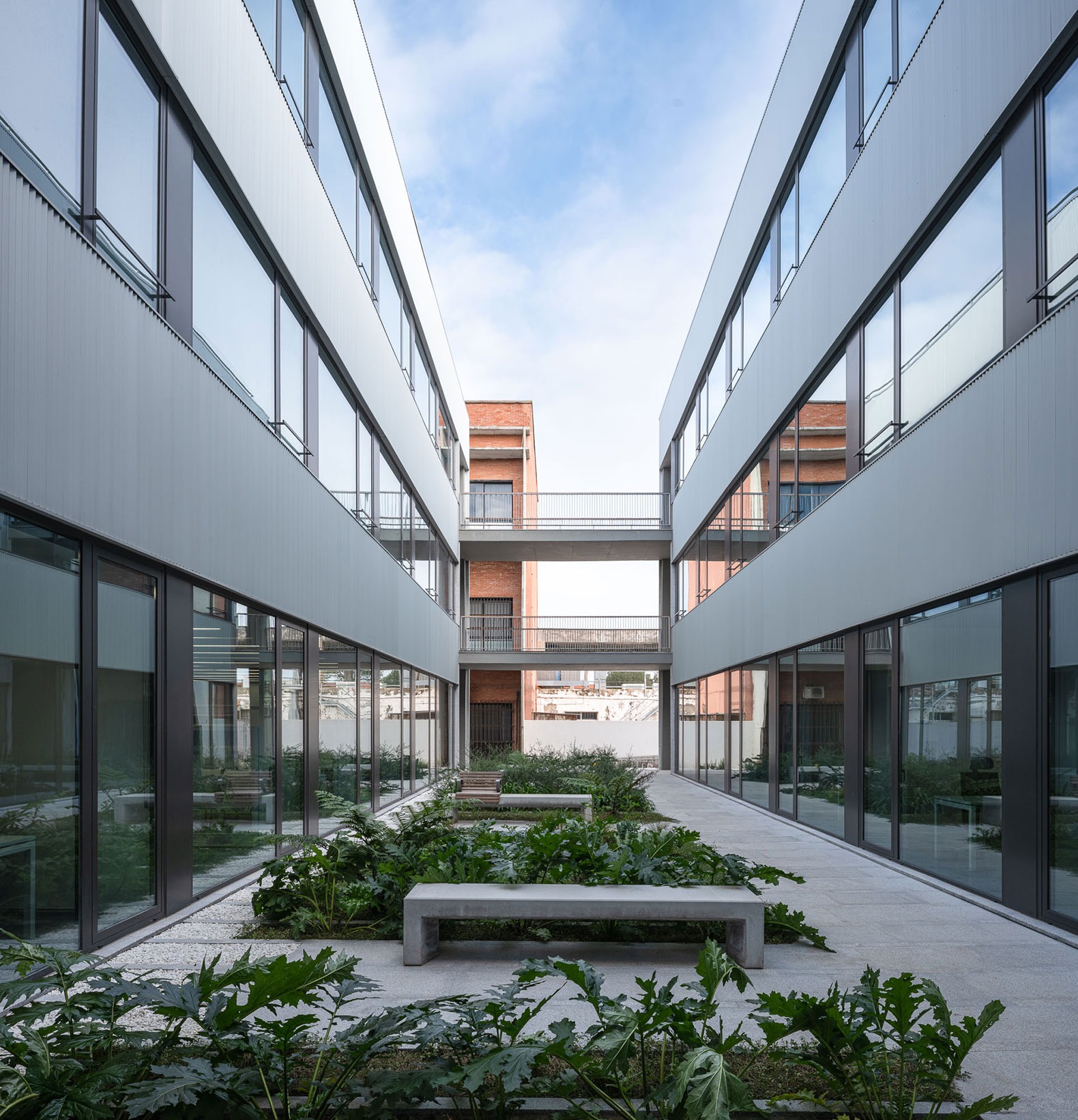
This three-story building is shorter than the OTAISA building. Located behind it to avoid altering the heritage value of the complex, it facilitates connections between the two, completing the ends of the original "L" shape. At the same time, where it meets the original building, it creates a series of courtyards that allow both to be understood as an interconnected whole.

  Ampliación y reforma de la ETSIA de la Universidad de Sevilla por Estudio Carbajal. Fotografía por Fernando Alda.
Expansion and renovation of the ETSIA of the Universidad de Sevilla by Estudio Carbajal. Photograph by Fernando Alda. 

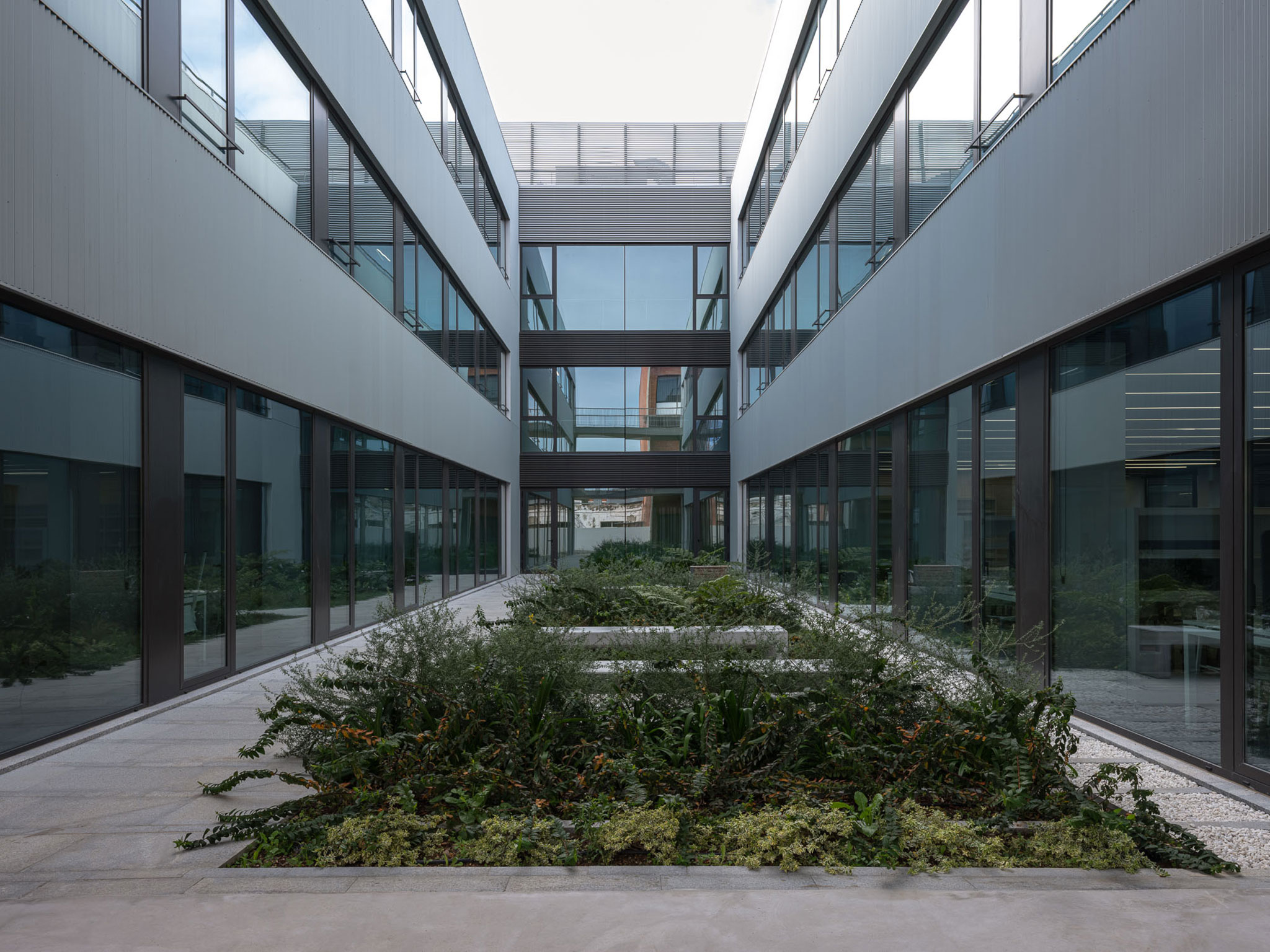
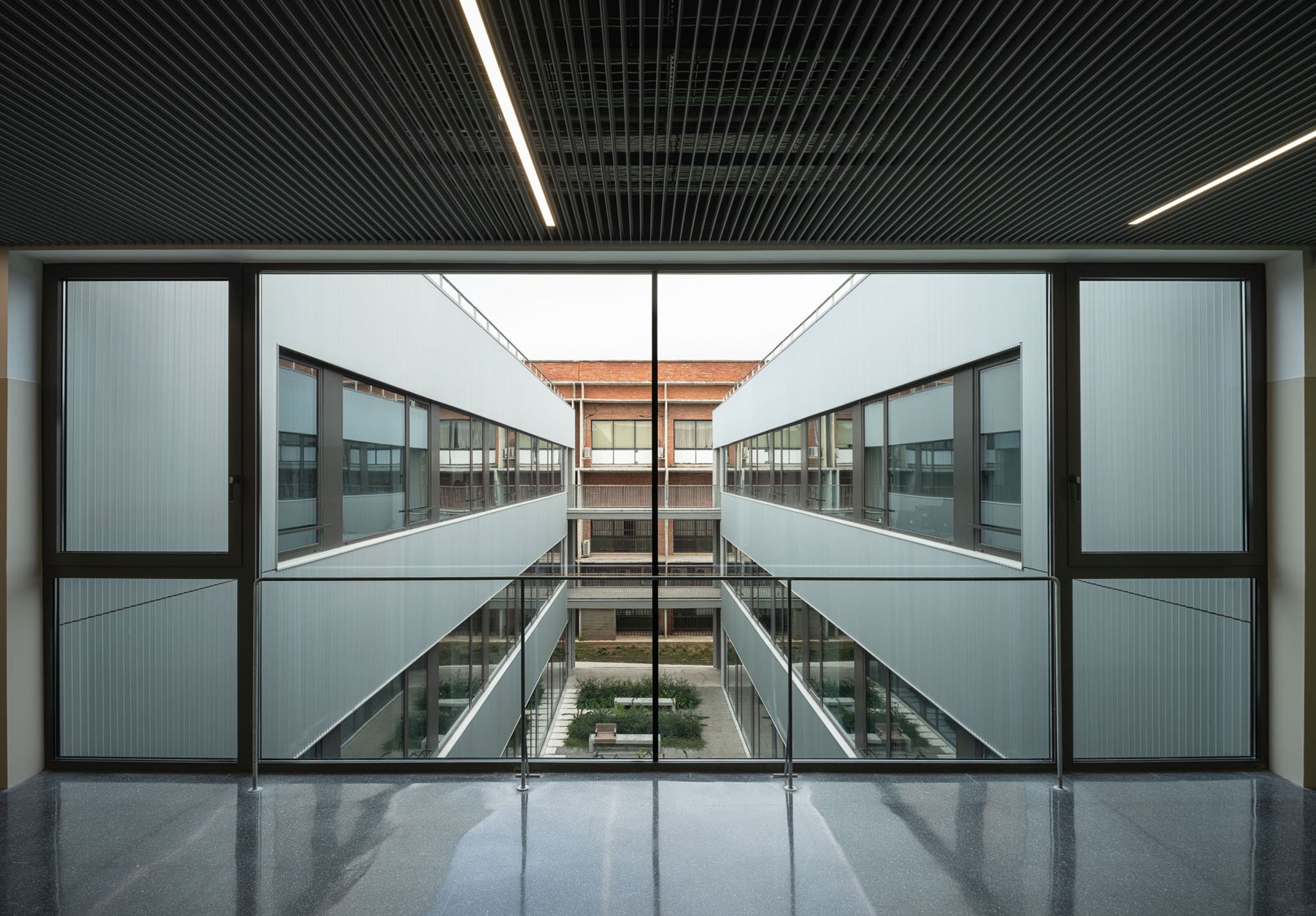
It consists of three wings oriented north-south, with the ground floor housing general services such as the administrative offices, study and meeting rooms, dining areas, and the library, which is presented as a glass-enclosed room between two of the landscaped courtyards. The upper floors contain classrooms and offices for the various departments. These wings connect to a perpendicular section that houses the lobbies and a central spine containing circulation cores, building services, and restrooms, as well as the administrative offices and lecture hall (on the ground floor) and classrooms arranged along the south facade (on the upper floors).

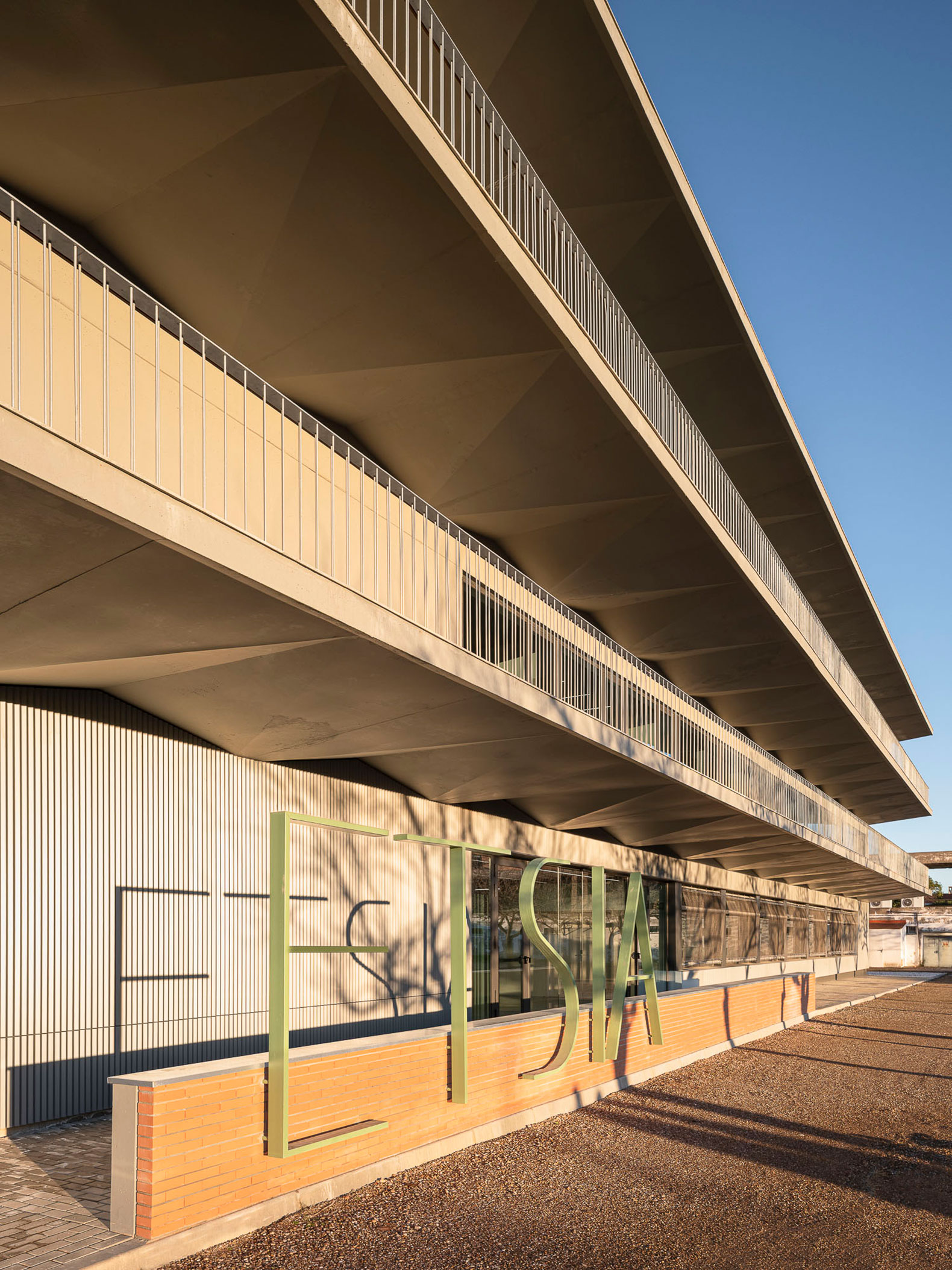
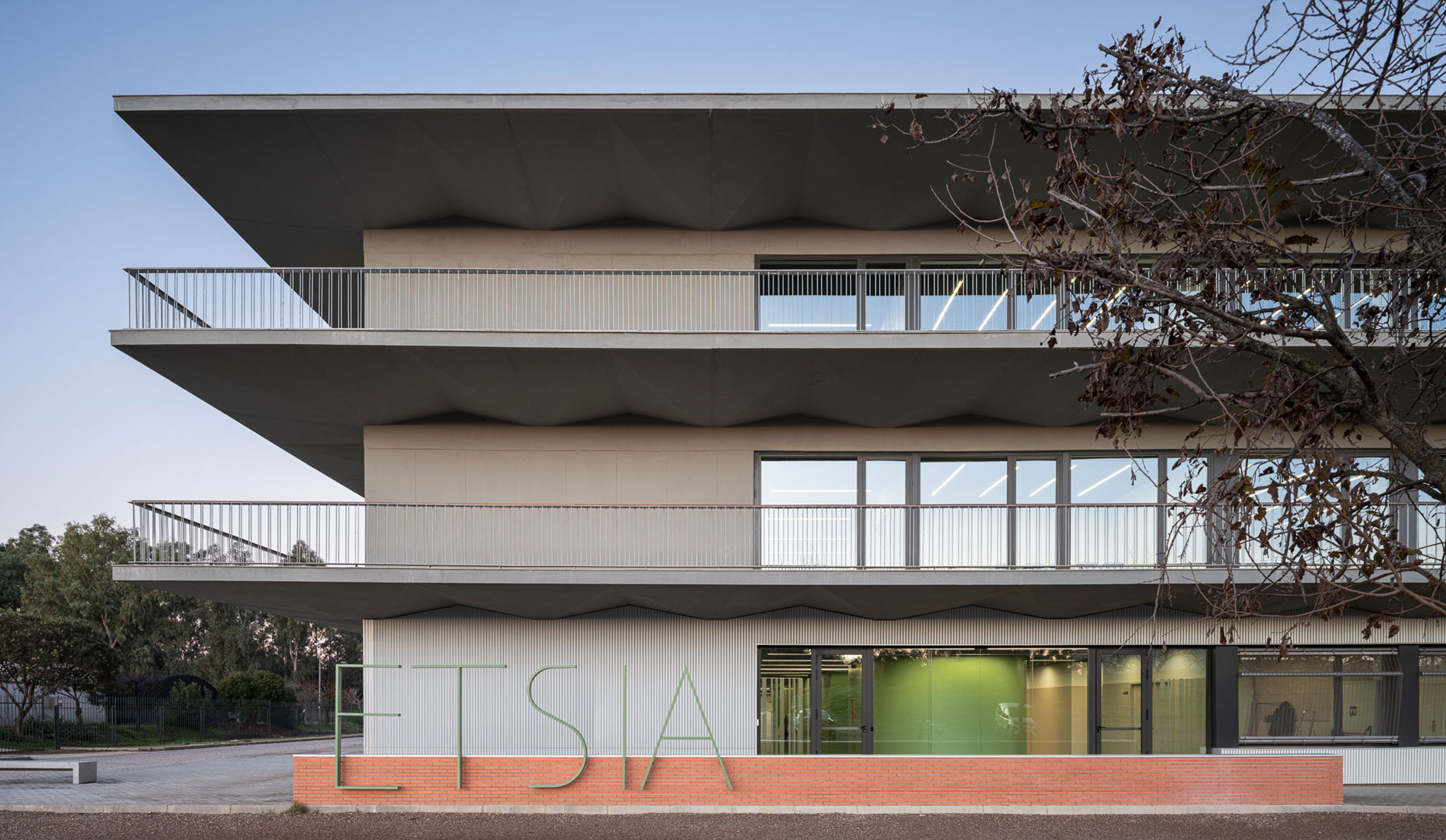
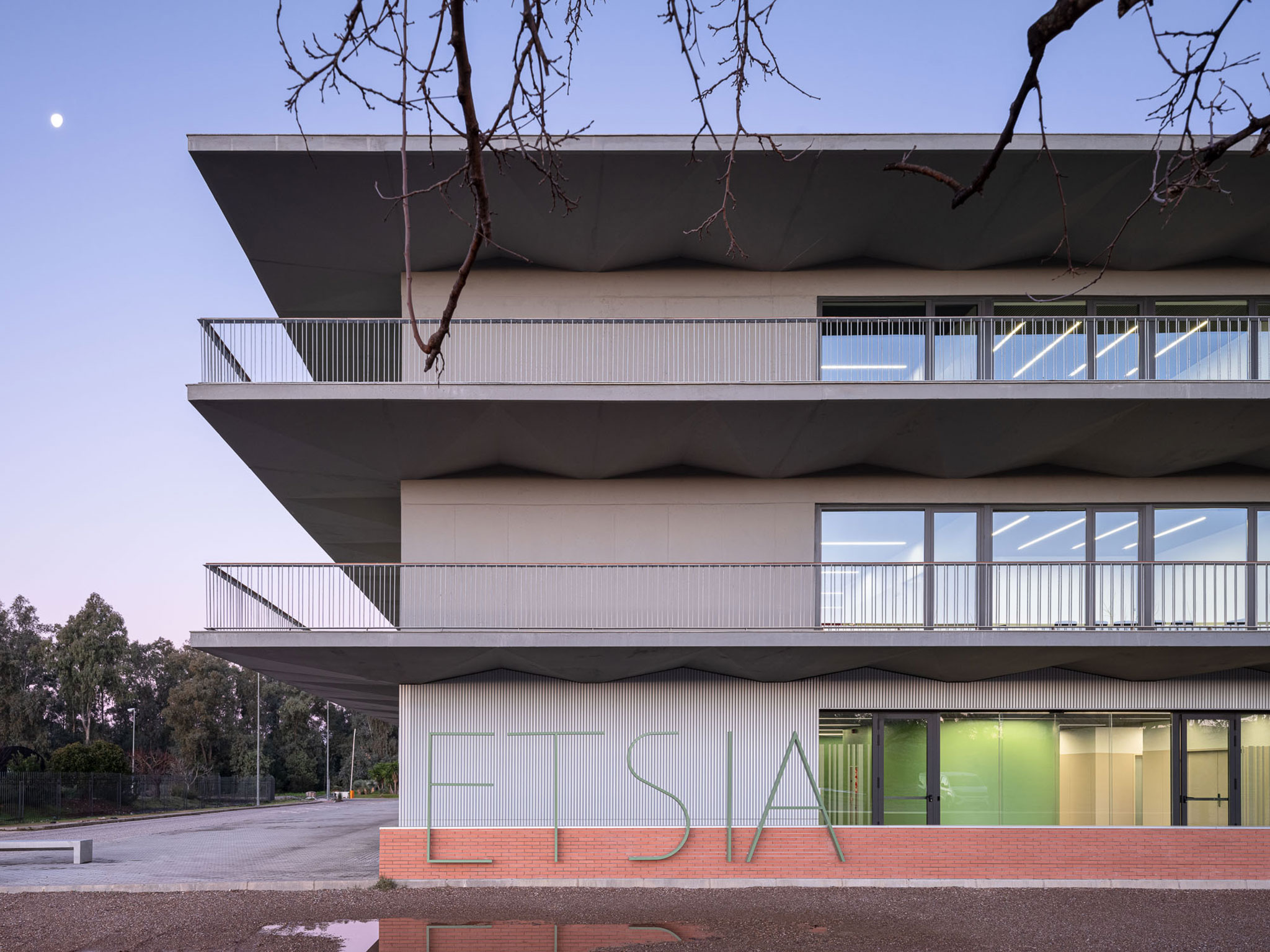
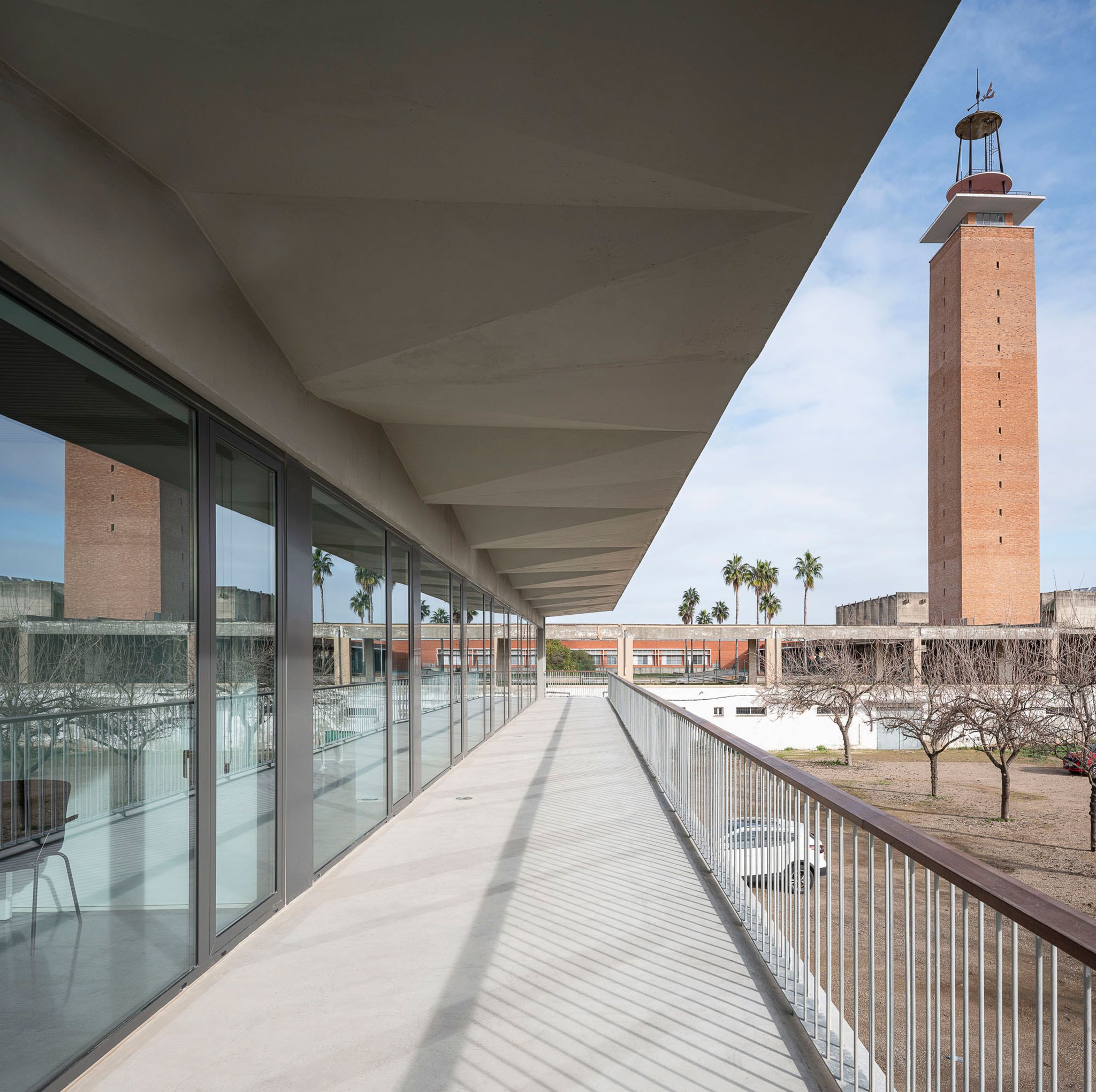
This lobby section extends onto the ground floor, creating a spacious entrance and connection area between the two buildings. This space appears transparent and open from the street, with the courtyard created at the junction of the buildings serving as a backdrop.
  Ampliación y reforma de la ETSIA de la Universidad de Sevilla por Estudio Carbajal. Fotografía por Fernando Alda.
Expansion and renovation of the ETSIA of the Universidad de Sevilla by Estudio Carbajal. Photograph by Fernando Alda. 

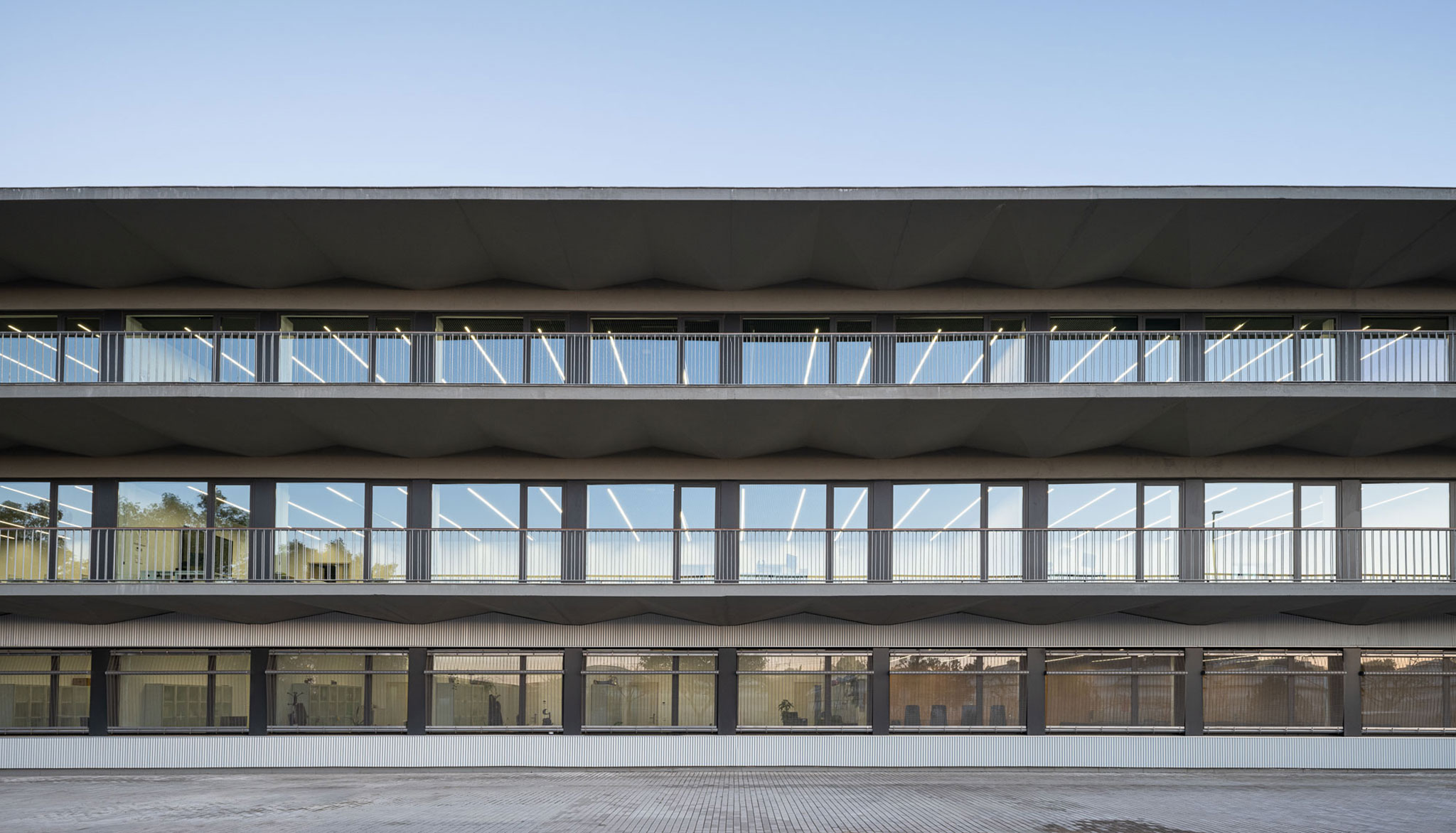
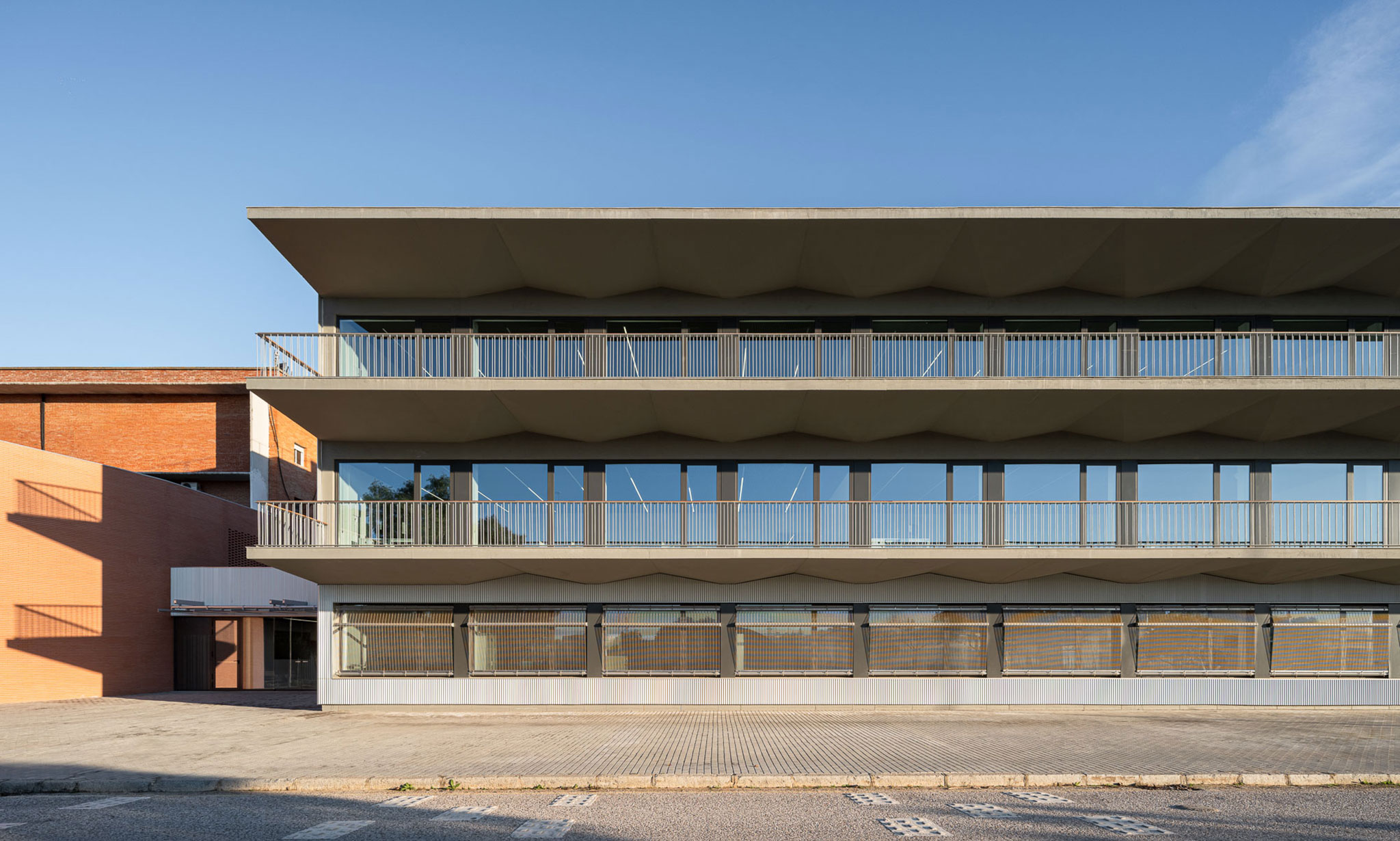
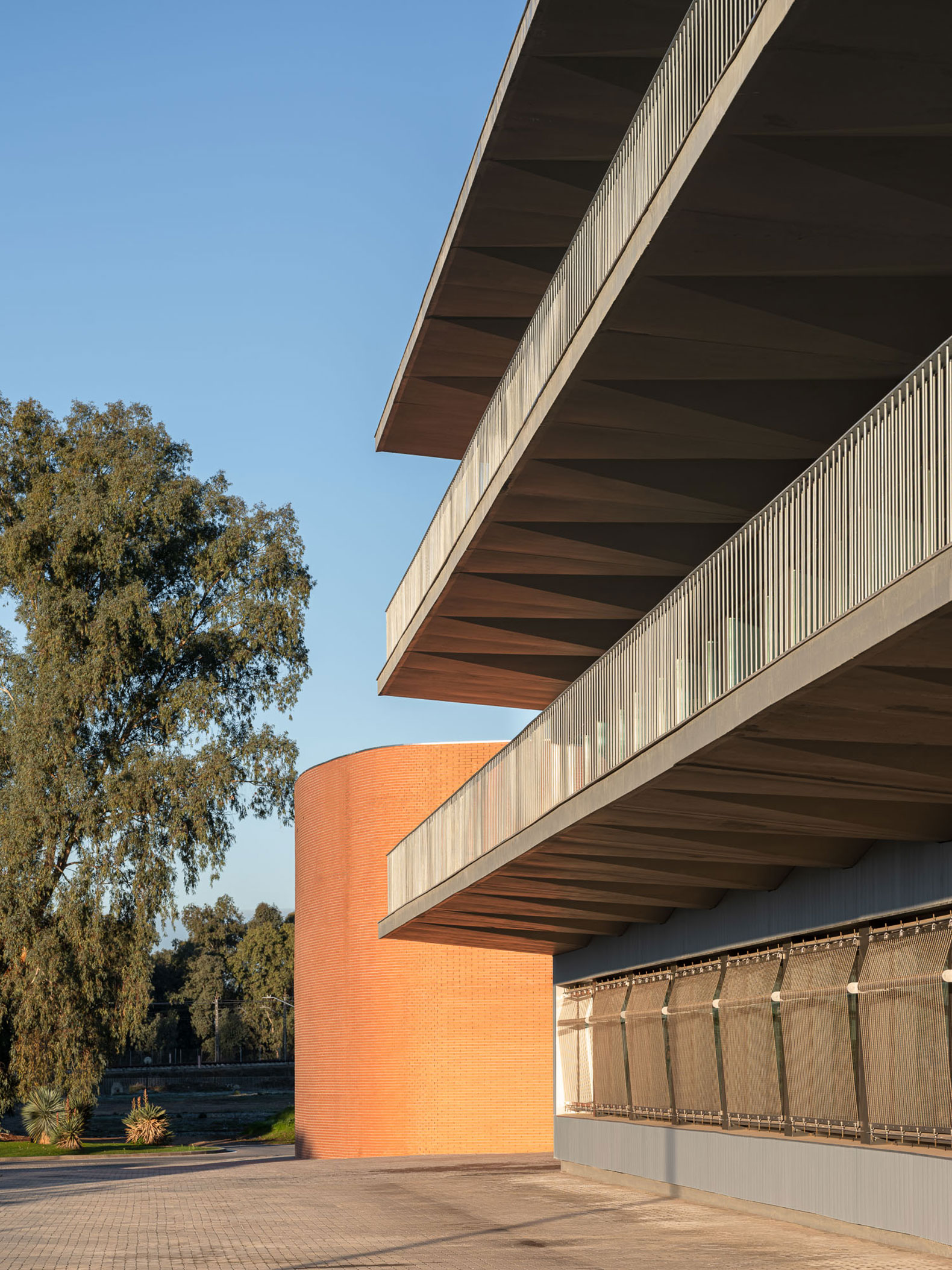
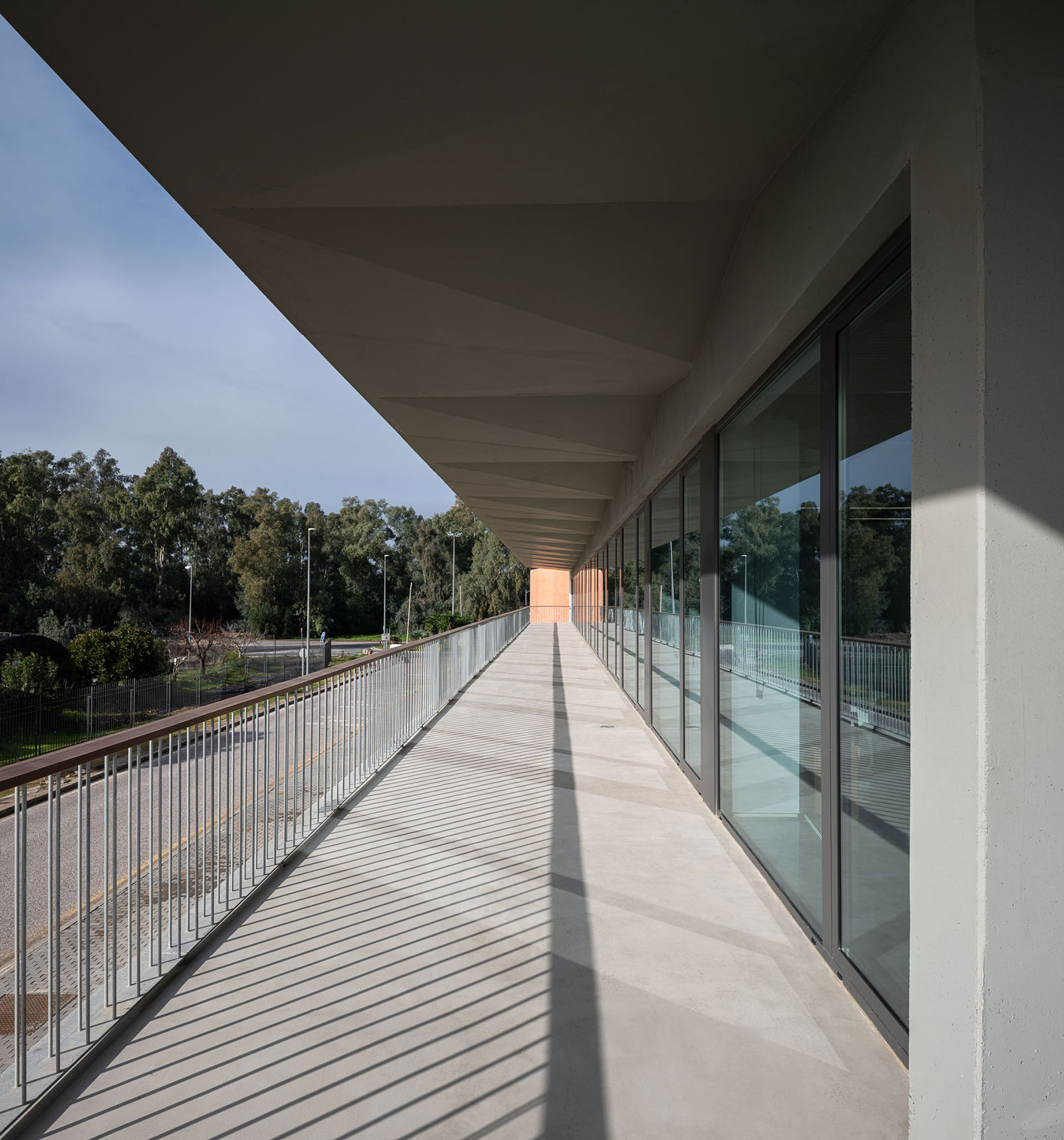
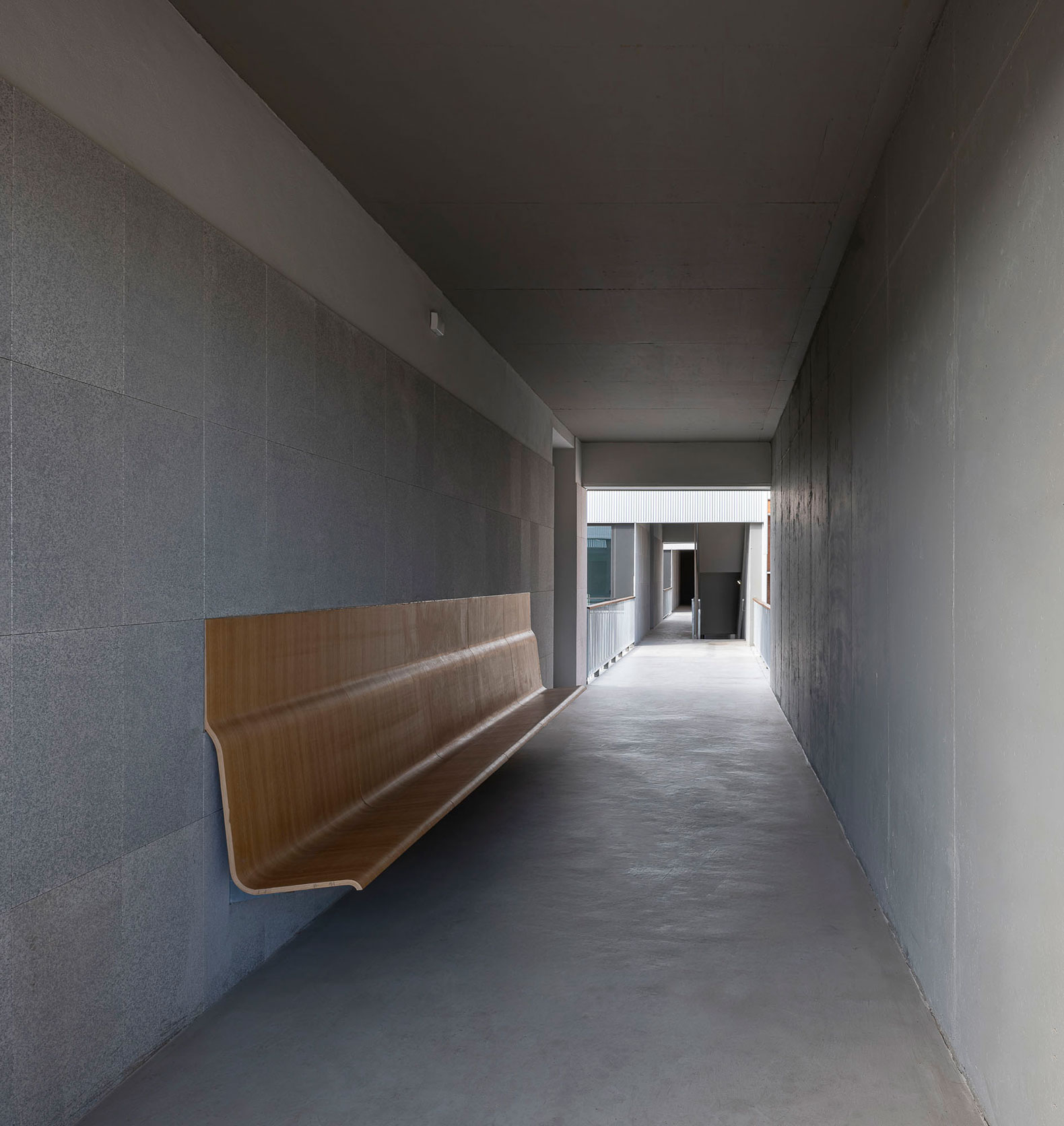
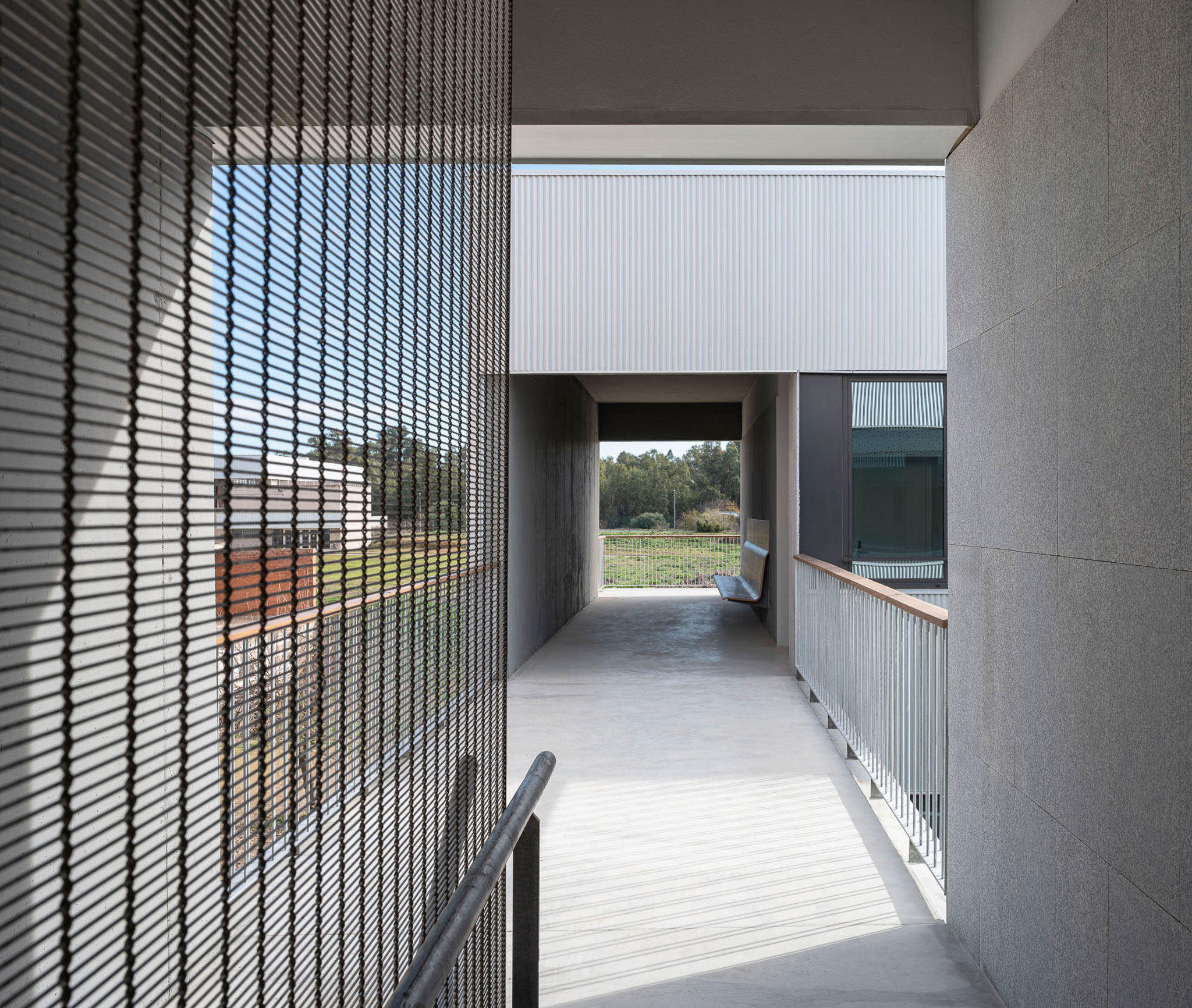
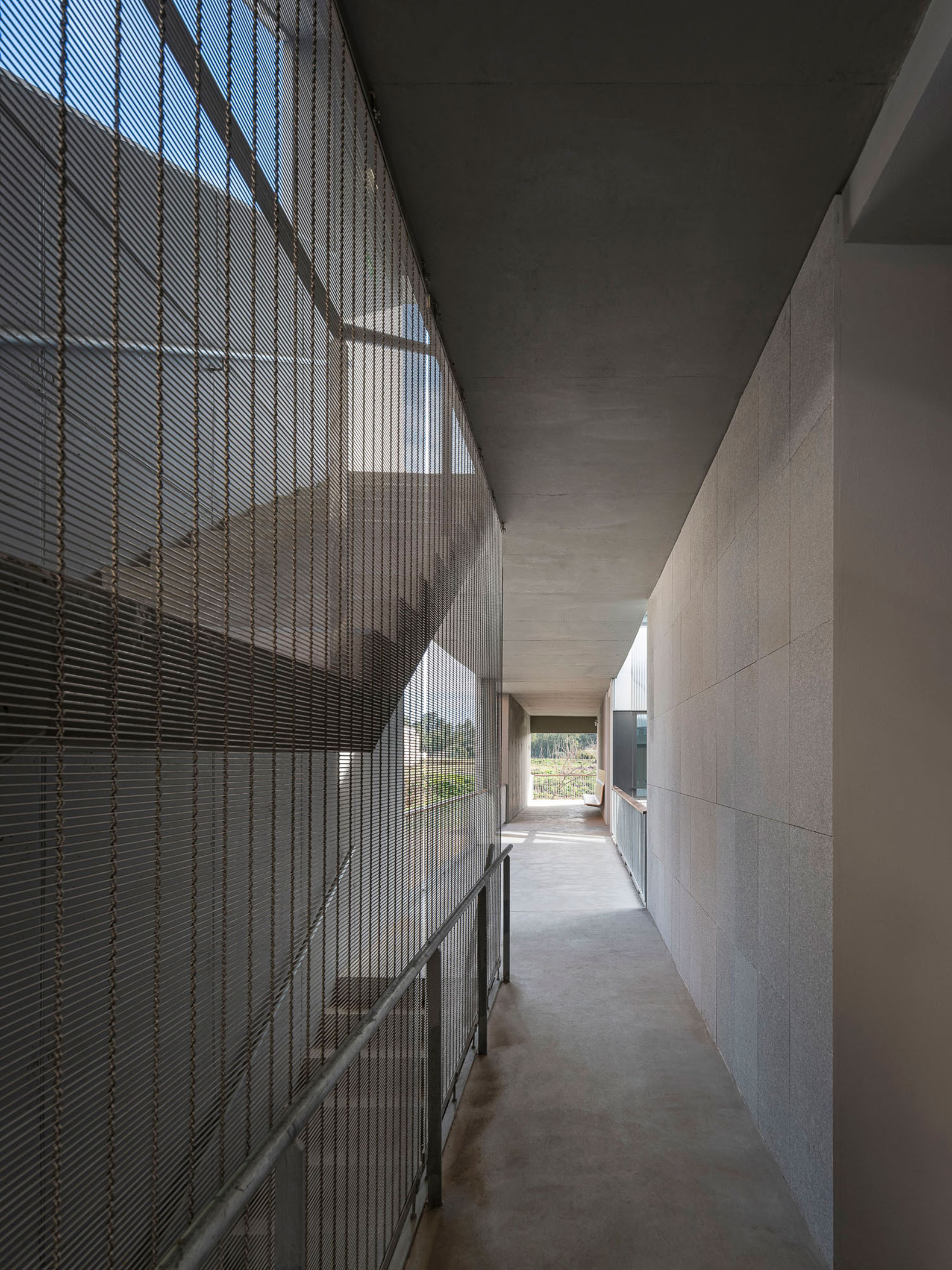
Of particular note is the addition of generous exterior galleries, designed as ample space for users to move around and facilitate evacuation. Their large overhangs also provide sun protection on the more exposed sides of the building.

Given the program requirements and the established phases, this layout allows for adequate communication between both buildings and their various services, proper lighting and ventilation in all areas, and easy and rapid evacuation in case of emergency. The courtyards and green roofs, as spaces for recreation and relaxation, will also contribute to the well-being of the university community and serve as open-air classrooms where students can put their agronomy studies into practice.
  Ampliación y reforma de la ETSIA de la Universidad de Sevilla por Estudio Carbajal. Fotografía por Fernando Alda.
Expansion and renovation of the ETSIA of the Universidad de Sevilla by Estudio Carbajal. Photograph by Fernando Alda. 

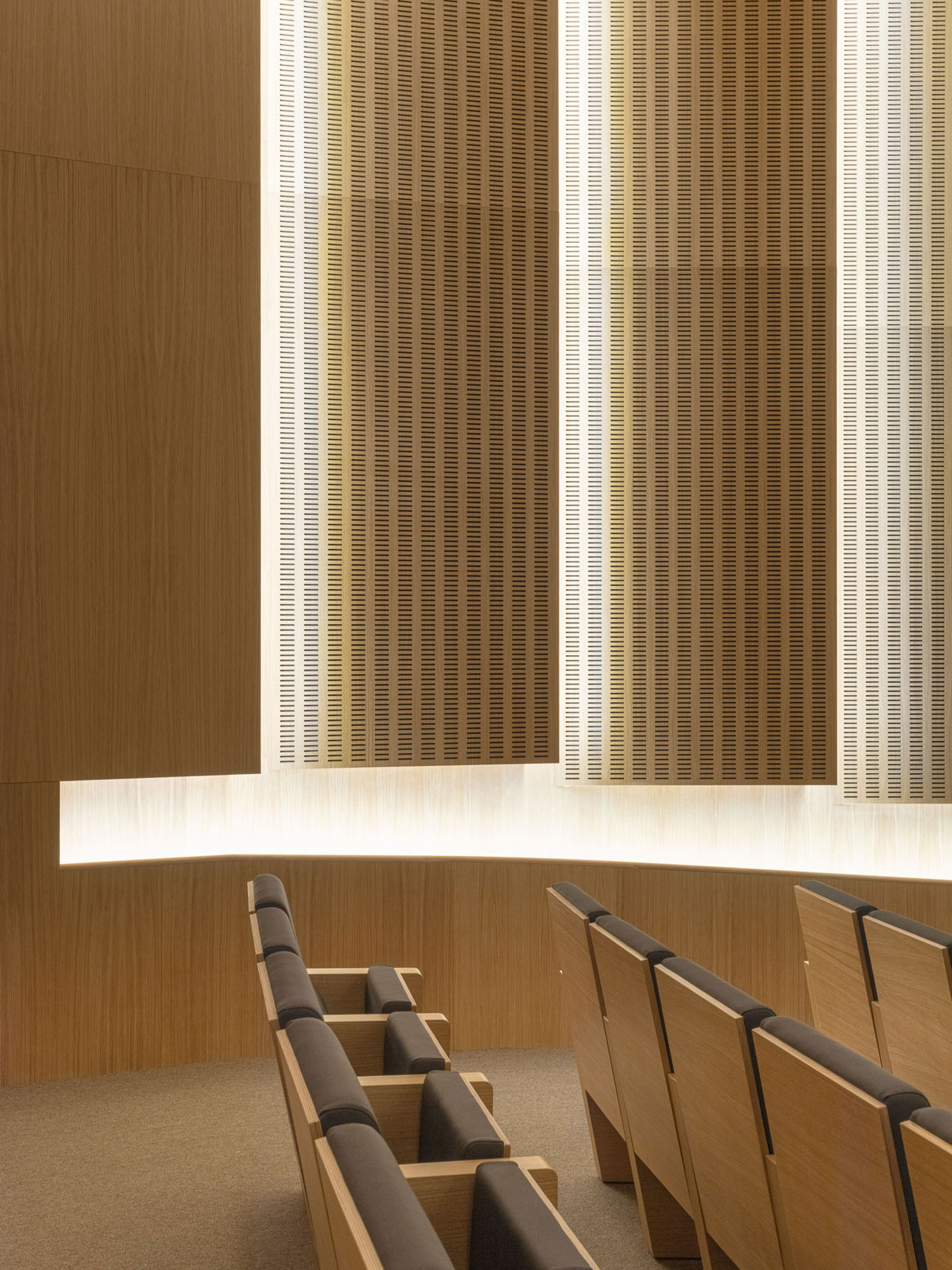
Regarding the construction solutions and materials used, the building features a reinforced concrete structure with large spans supported by the facades. This creates large, open floor plans that can be reconfigured over time without the need for columns. The vertical envelopes are multi-layered for high energy efficiency, and the roofs are green. Two fundamental materials are used: concrete—which has ecological certification—and aluminum (for windows, suspended ceilings, and facade cladding). Alongside them, terrazzo in interior flooring and microcement in exteriors, laminated plasterboard panels in different compositions in the partitions, veneered MDF boards and brushed and lacquered aluminum panels with mineral core in interior cladding and hot galvanized steel and stainless steel depending on the case in the metalwork.
More information

Label
Architects
Text

Estudio Carbajal. Lead architects.- José Antonio Carbajal Navarro, José Luis Daroca Bruño, Nicolás Carbajal Ballell, Rodrigo Carbajal Ballell.
+ + copy Created with Sketch.
- + copy Created with Sketch.
Label
Project team
Text

Fernando Moreno Humanes, Lorena Tirador Díaz, José Anelo Romero, Juan Tuñón Espinosa, Javier Corrochano Rubio, Ginés García González, Rafael Rus, Alejandro Fernández, Pilar Miquelajauregui, Francesco Capula, Ana Jiménez y Miriam Manca.  

+ + copy Created with Sketch.
- + copy Created with Sketch.
Label
Collaborators
Text

Quantity surveyor.- Jesús Bozzo Fernández de Tirso y Roberto Alés Méndez. 
Structural engineering.- Edartec Consultores and Pedro Lobato.
Mechanical engineering.- IIS Ingenieros y Master Box Ingenieros. 

+ + copy Created with Sketch.
- + copy Created with Sketch.
Label
Area
Text

Built area.- 6,454.37 m². 

+ + copy Created with Sketch.
- + copy Created with Sketch.
Label
Dates
Text

Competition year.- 2018.
Design year.- 2018 - 2020.
Construction year.- 2025.  

+ + copy Created with Sketch.
- + copy Created with Sketch.
Label
Location
Text

Ctra. de Utrera, km 1. 41005 - Sevilla, Spain.

+ + copy Created with Sketch.
- + copy Created with Sketch.
Label
Photography
+ + copy Created with Sketch.
- + copy Created with Sketch.

Estudio Carbajal is an architecture firm founded in 2000 by José Antonio Carbajal Navarro and his sons, Nicolás and Rodrigo Carbajal Ballell, and based in Seville, Spain.

José Antonio Carbajal Navarro is an architect, having graduated from the Seville School of Architecture (ETSAS). He was a professor in the Department of Architectural Projects at the same school from 1968 to 1989, a period during which he combined this work with some professional practice. His sons both hold doctorates and are professors in the Department of Architectural Projects at ETSAS.

In 1990, he was awarded the Andalusia Culture Prize for the Defense of Historical and Artistic Heritage for the restoration of the Falla Theater in Cádiz. After leaving teaching, he has worked both independently and in collaboration, developing projects promoted by public administrations. His work has been featured in exhibitions and biennials such as the Spanish Architecture Biennial, the Venice International Architecture Biennial, and the Ibero-American Biennial, among others. In 1997, he received the Award for Best Professional Work from the Official College of Architects of Western Andalusia for his work on the New Seminary of Seville. In 2003, he was appointed Conservation Architect of the Royal Maestranza Bullring of Seville, a position he still holds. In 2021, he was appointed Academician of the Royal Academy of Fine Arts of Santa Isabel de Hungría, and in 2022, he was awarded the Andalusia Architecture Prize for his established career.

Nicolás Carbajal Ballell was born in 1971. He holds a PhD in Architecture from the University of Seville. After years of collaboration as a student in the studio of José A. Carbajal, he began his independent practice in 2000 at Estudio Carbajal. Alongside this work, he has collaborated on projects with R. Kruszewski, S. Solinas, and G. Verd. He is an Associate Professor in the Department of Architectural Projects at the Higher Technical School of Architecture of Seville.

Rodrigo Carbajal Ballell was born in 1974. He holds a PhD in Architecture from the University of Seville. After collaborating as a student in the studio of José A. Carbajal, he began his independent practice at Estudio Carbajal. He is an Associate Professor in the Department of Architectural Projects at the Higher Technical School of Architecture of Seville.

Read more
Published on: March 9, 2026
Cite:
metalocus, SARA GENT, CAMILA DOYLET
"Close the ring. Expansion and reform of the ETSIA of the Universidad de Sevilla by Carbajal" METALOCUS. Accessed
<http://www.metalocus.es/en/news/close-ring-expansion-and-reform-etsia-universidad-de-sevilla-carbajal> ISSN 1139-6415
Loading content ...
Loading content ...
Loading content ...
Loading content ...
Loading content ...
Loading content ...
Loading content ...
Loading content ...
Loading content ...
Loading content ...
Loading content ...
Loading content ...
Loading content ...
Loading content ...
Loading content ...
Loading content ...
Loading content ...
Loading content ...
Loading content ...
Loading content ...
Loading content ...
Loading content ...
Loading content ...
Loading content ...
Loading content ...
Loading content ...
Loading content ...
Loading content ...
Loading content ...
Loading content ...
Loading content ...
Loading content ...
Loading content ...
Loading content ...
Loading content ...
Loading content ...
Loading content ...
Loading content ...
Loading content ...
Loading content ...
Loading content ...
Loading content ...
Loading content ...
Loading content ...
Loading content ...
Loading content ...
Loading content ...
Loading content ...
Loading content ...
Loading content ...
Loading content ...
Loading content ...
Loading content ...
Loading content ...