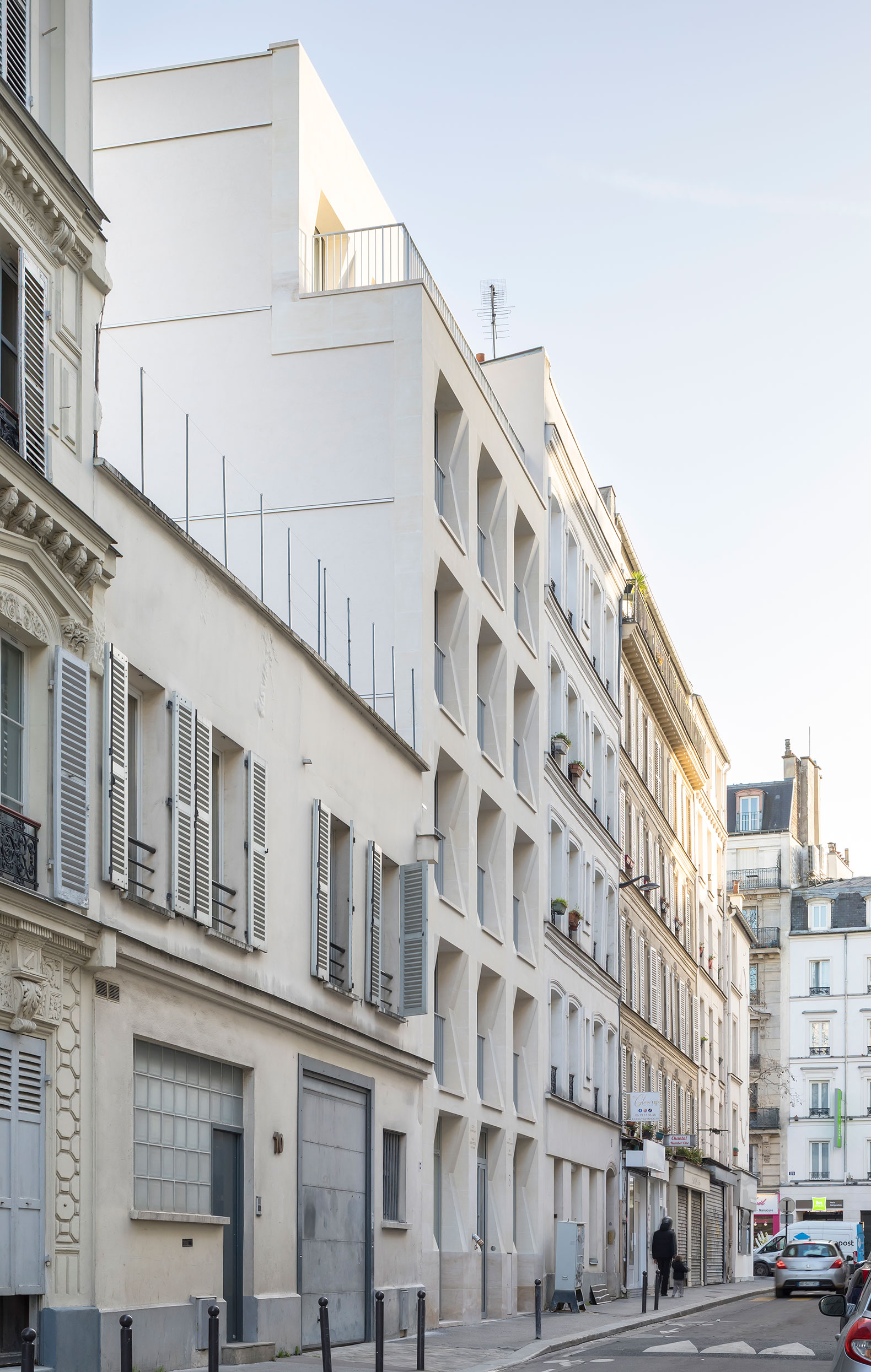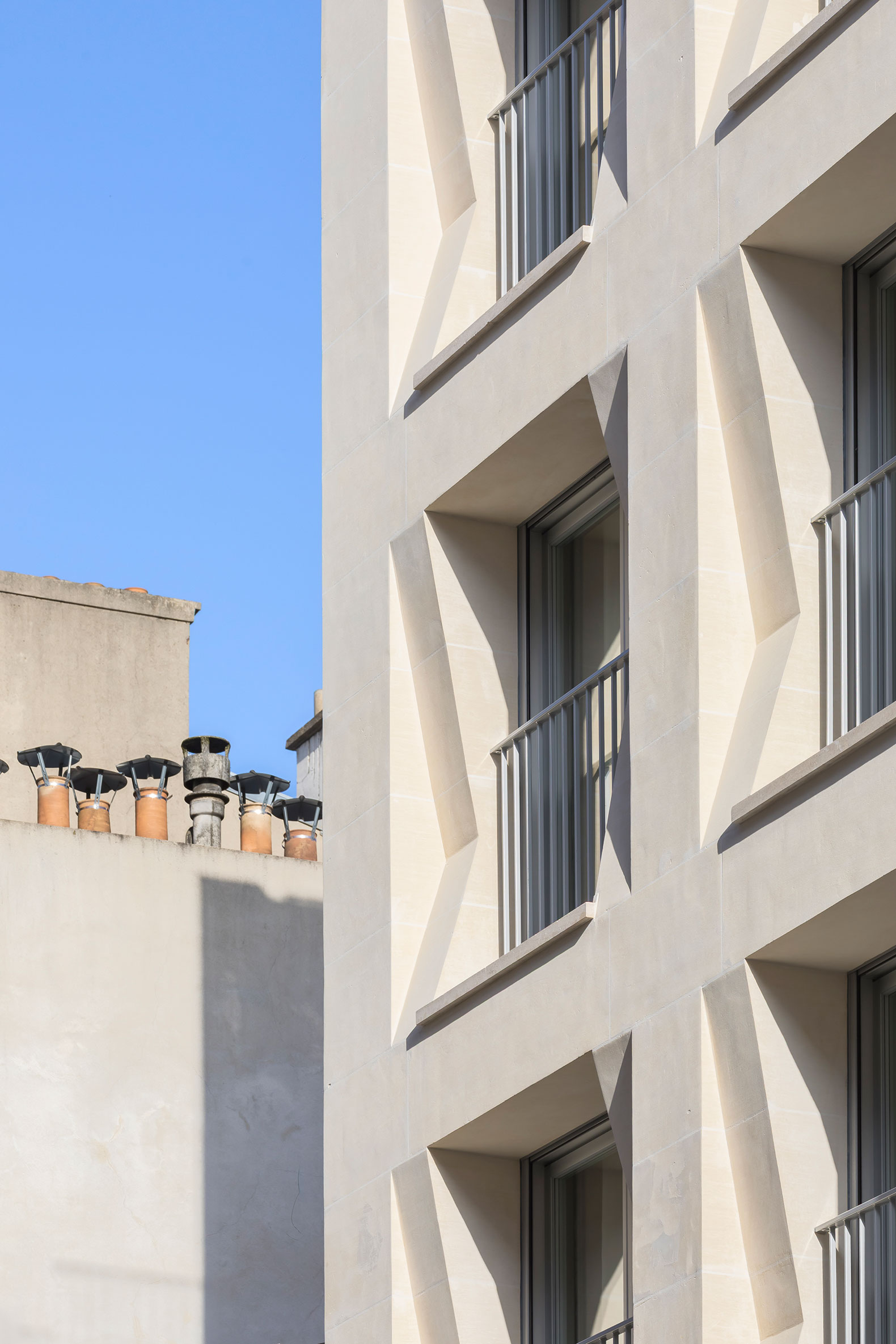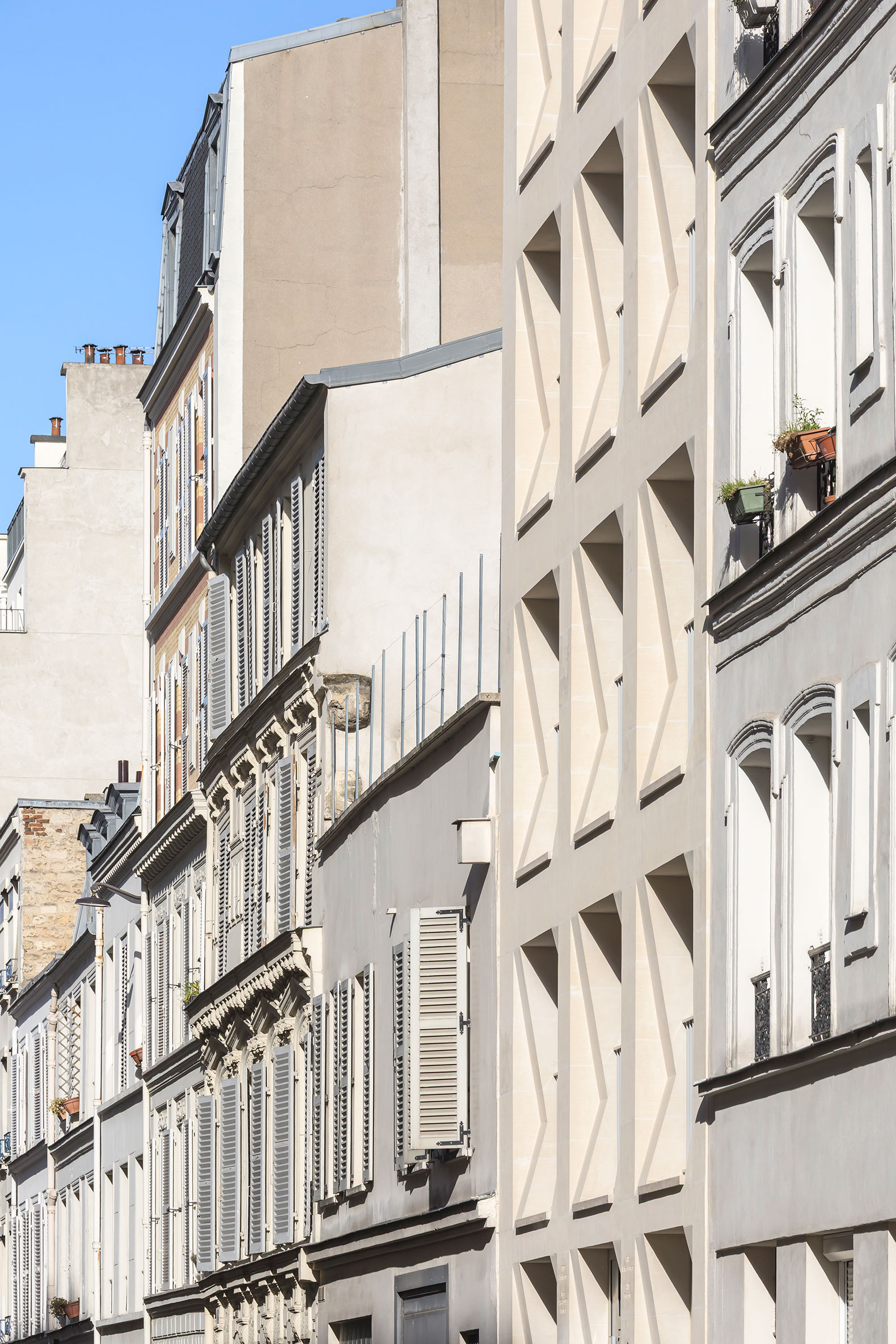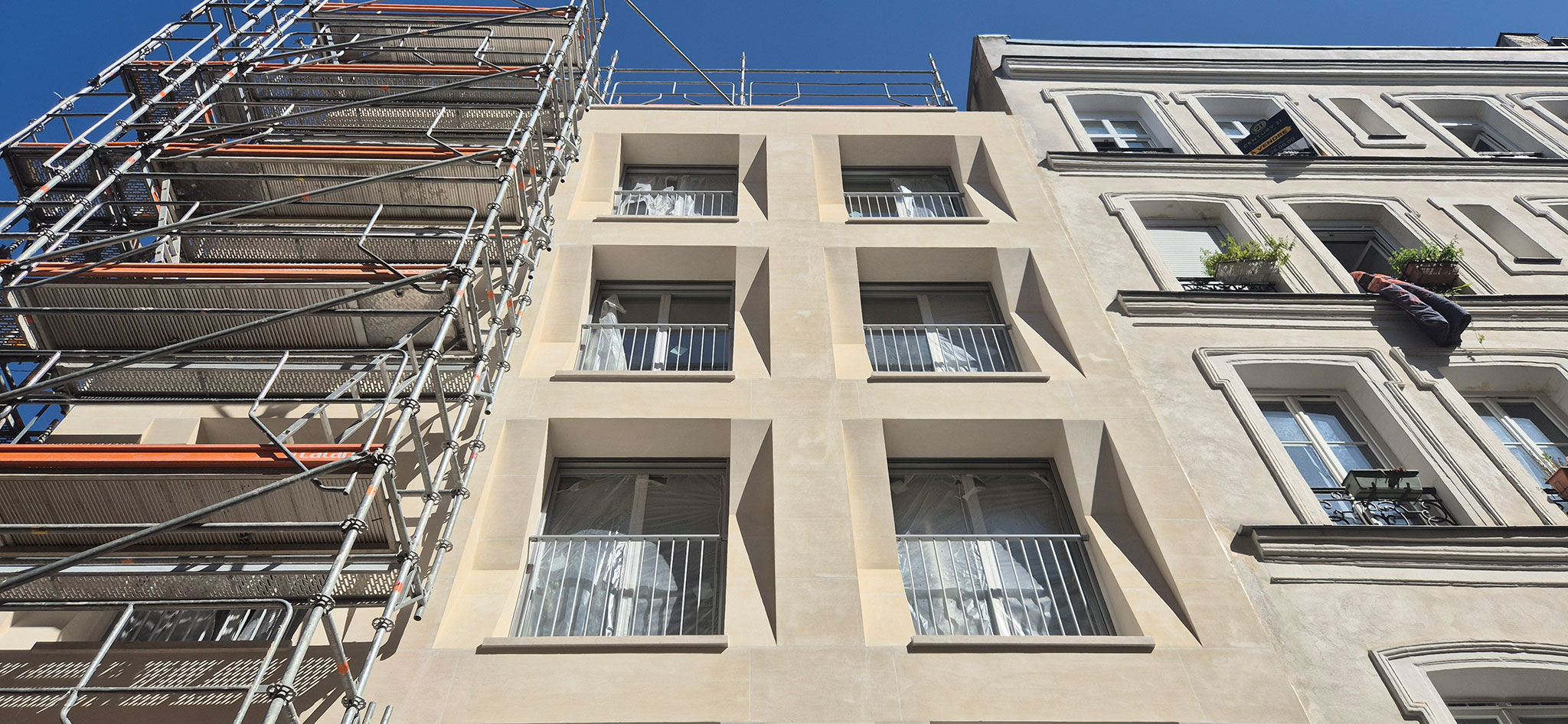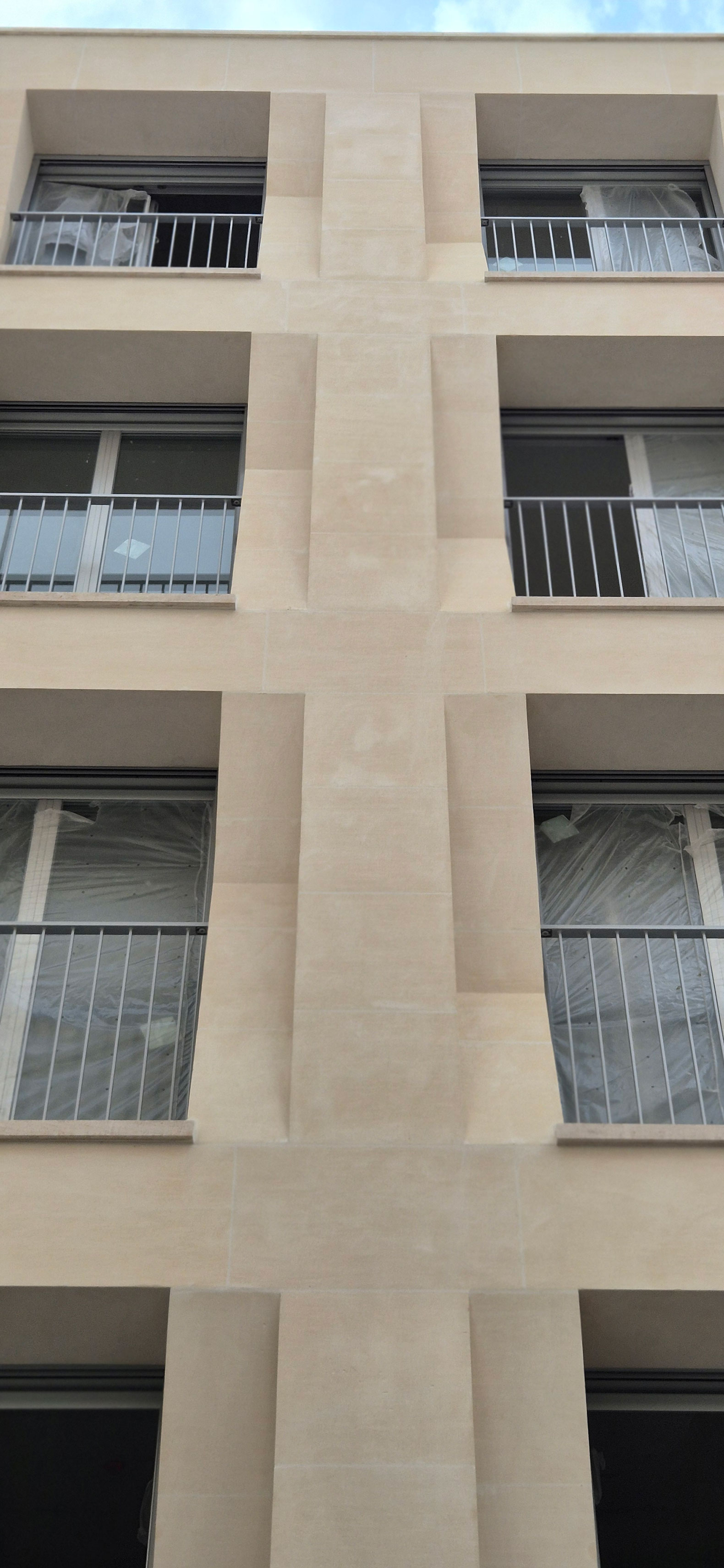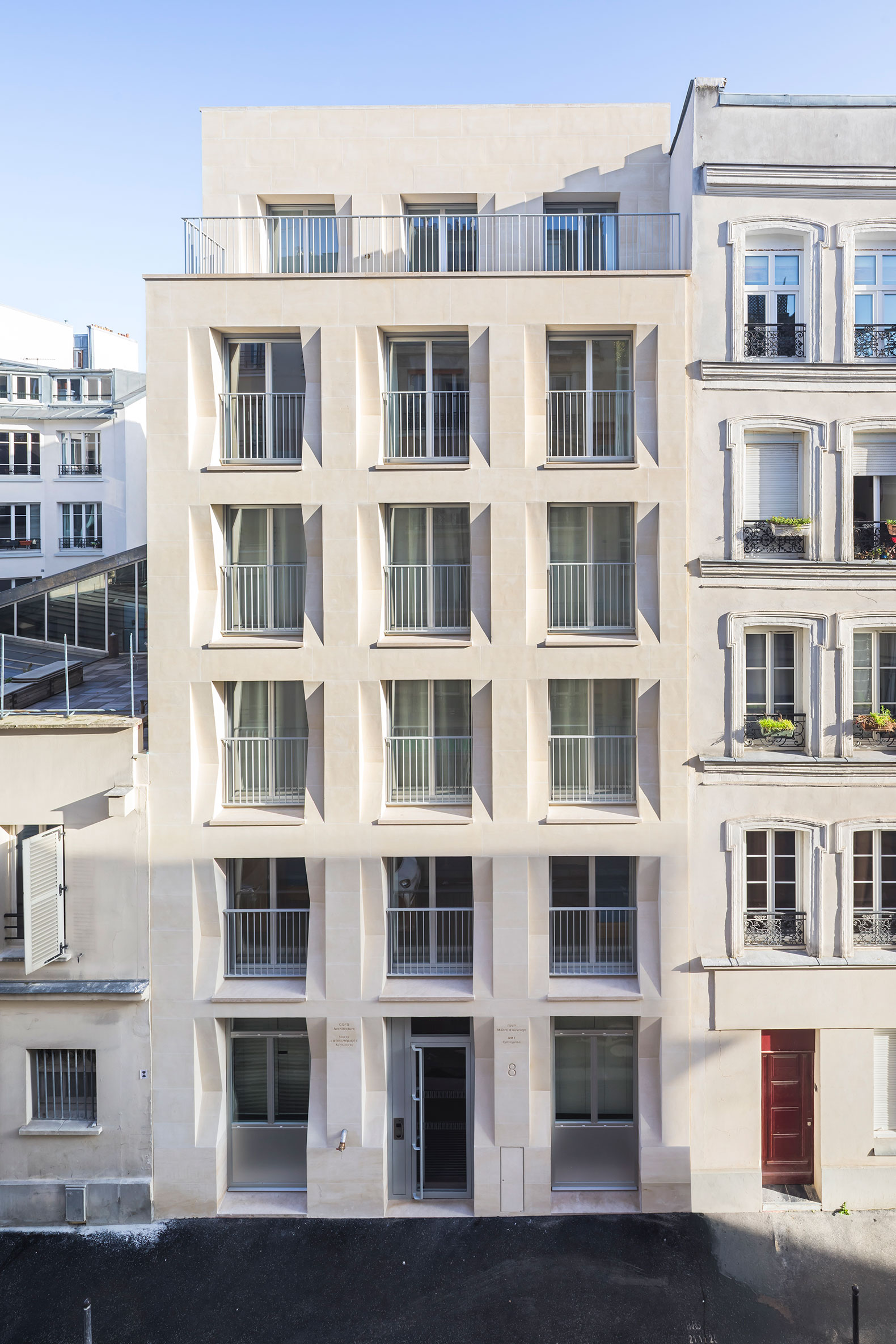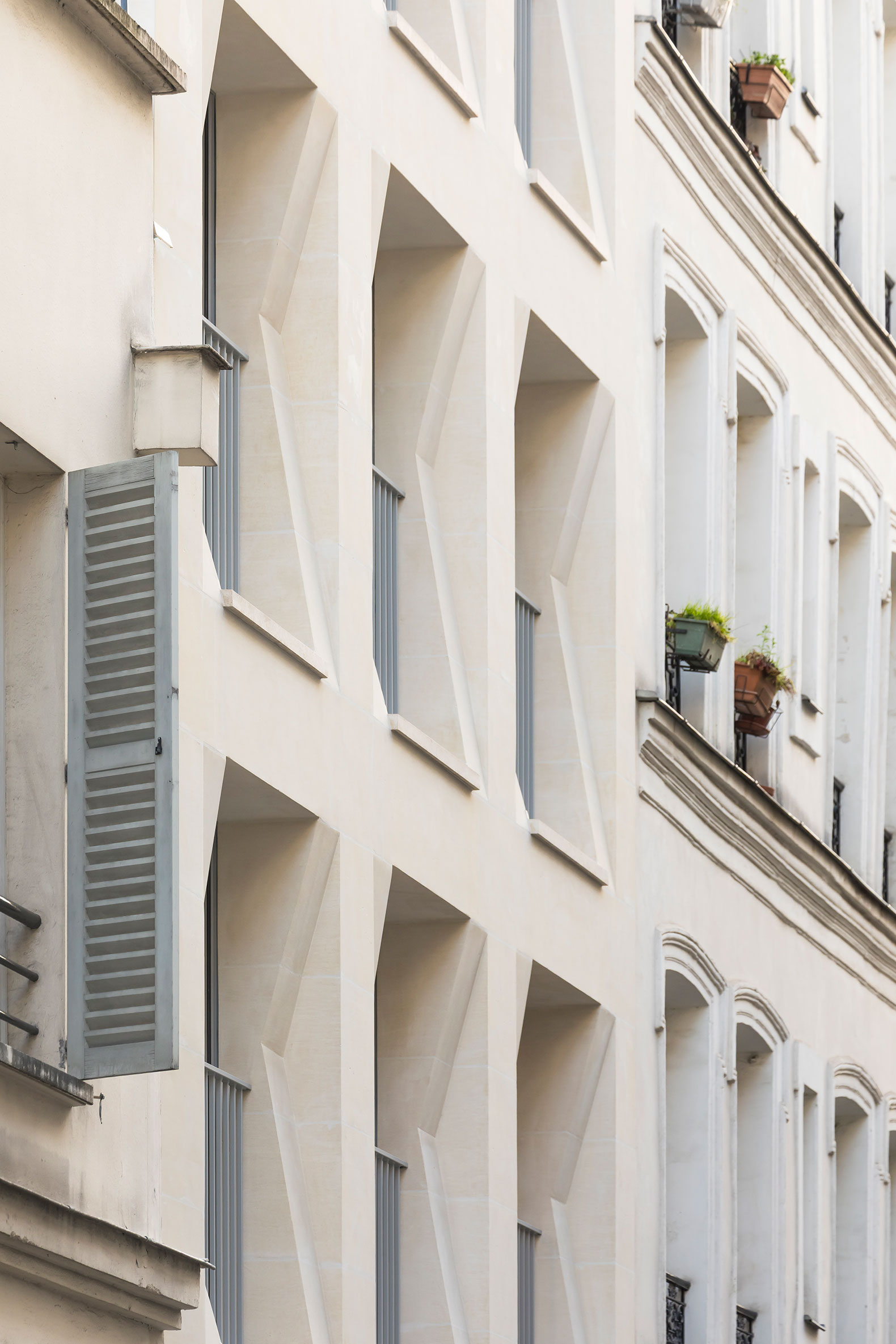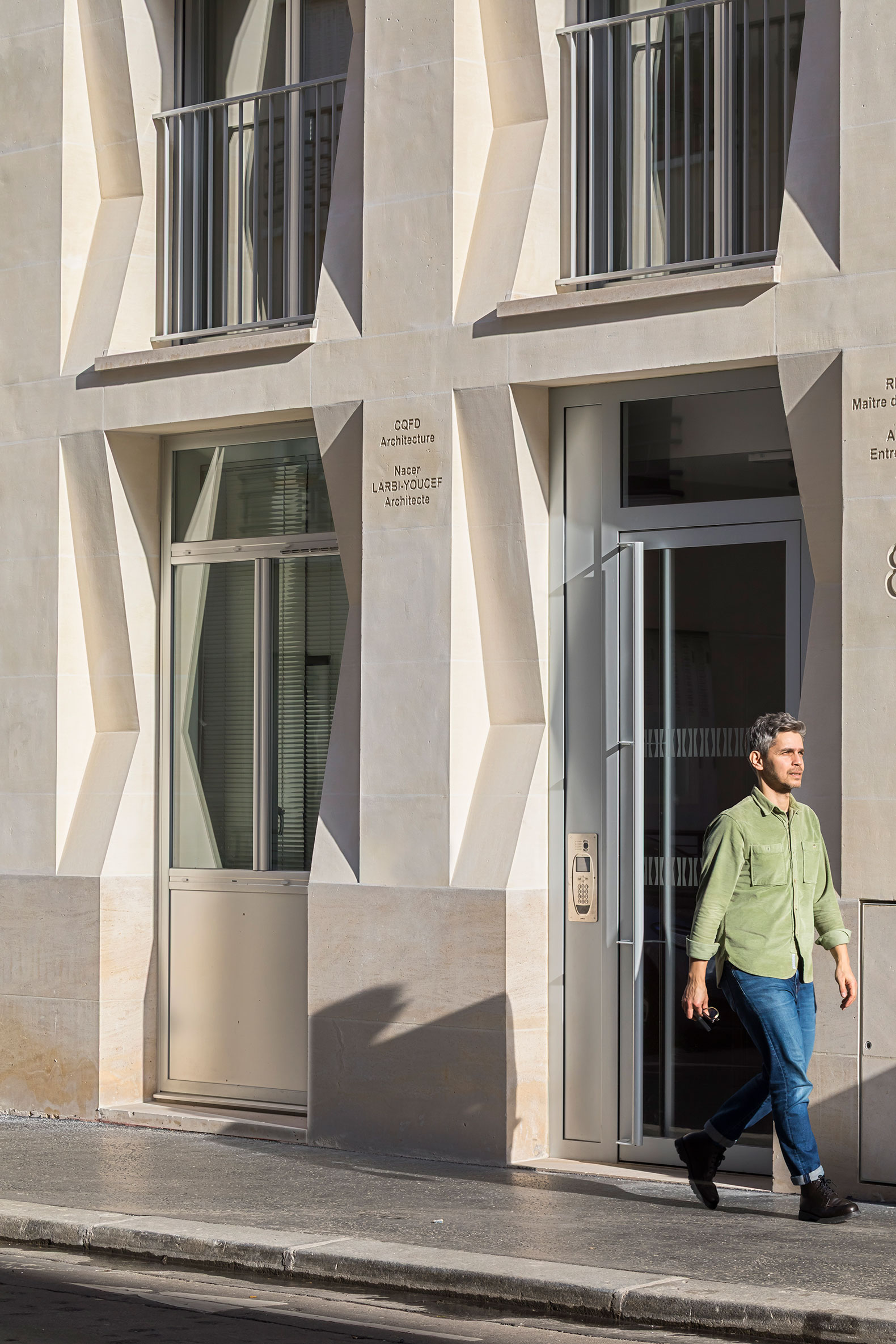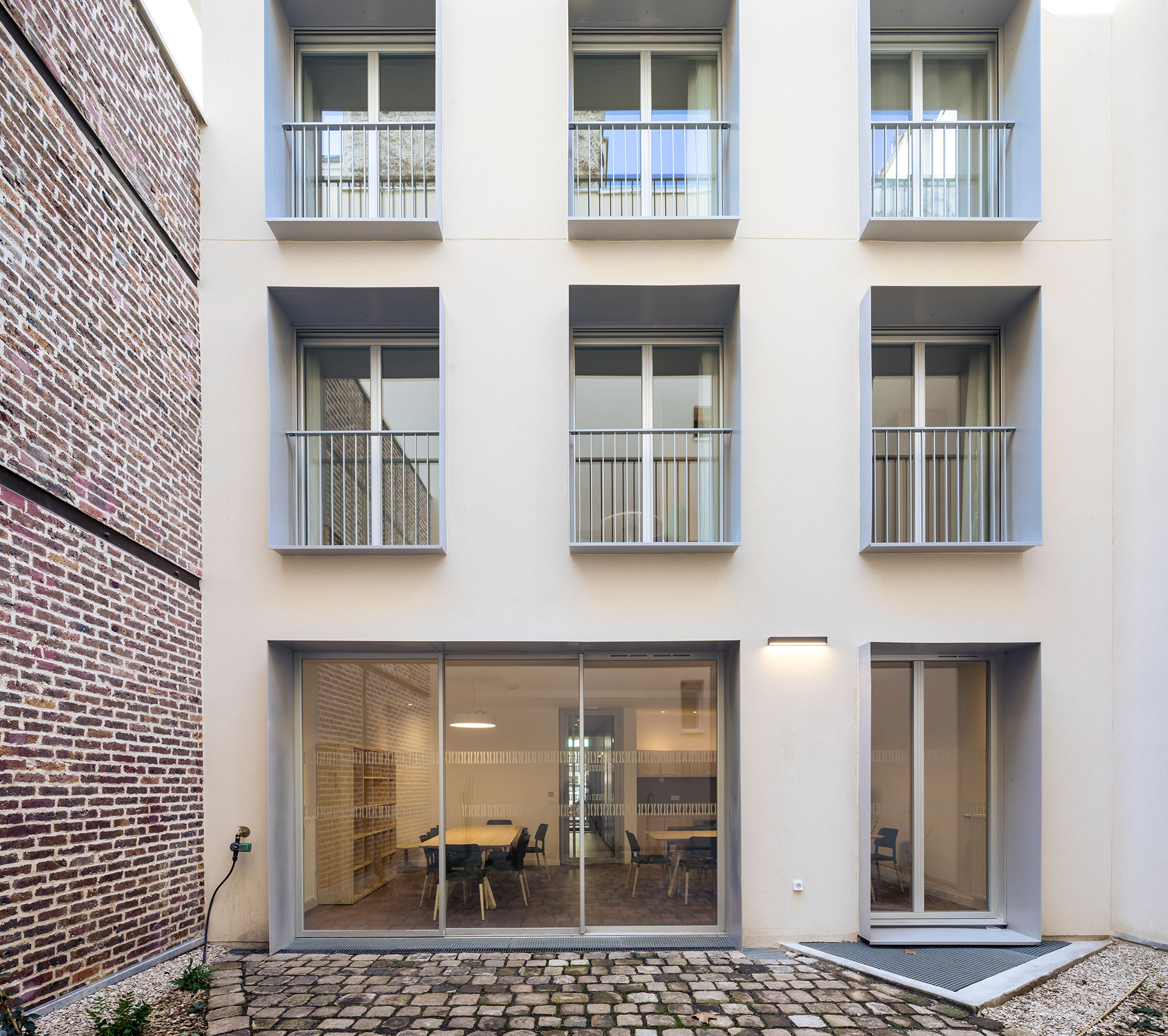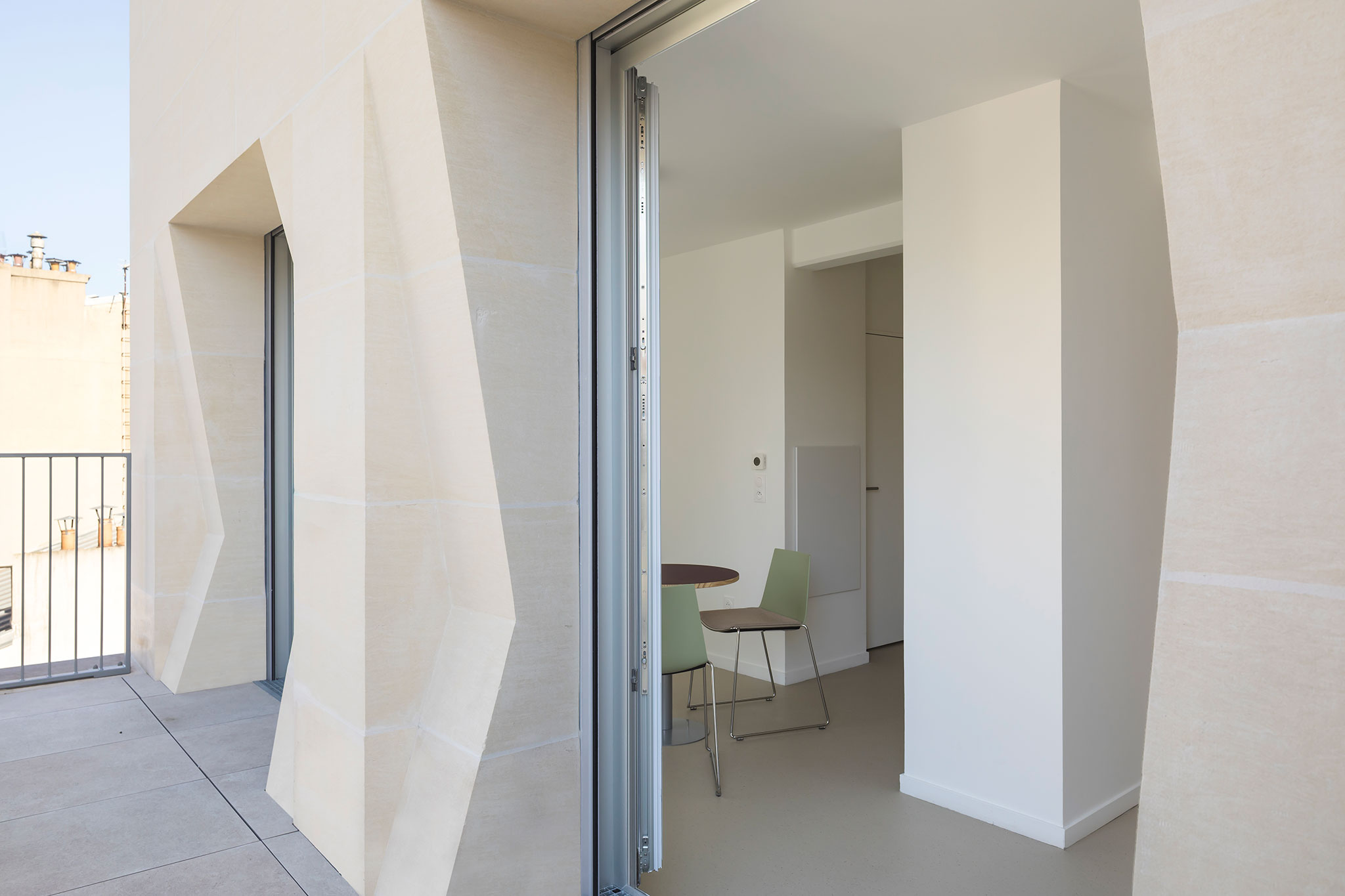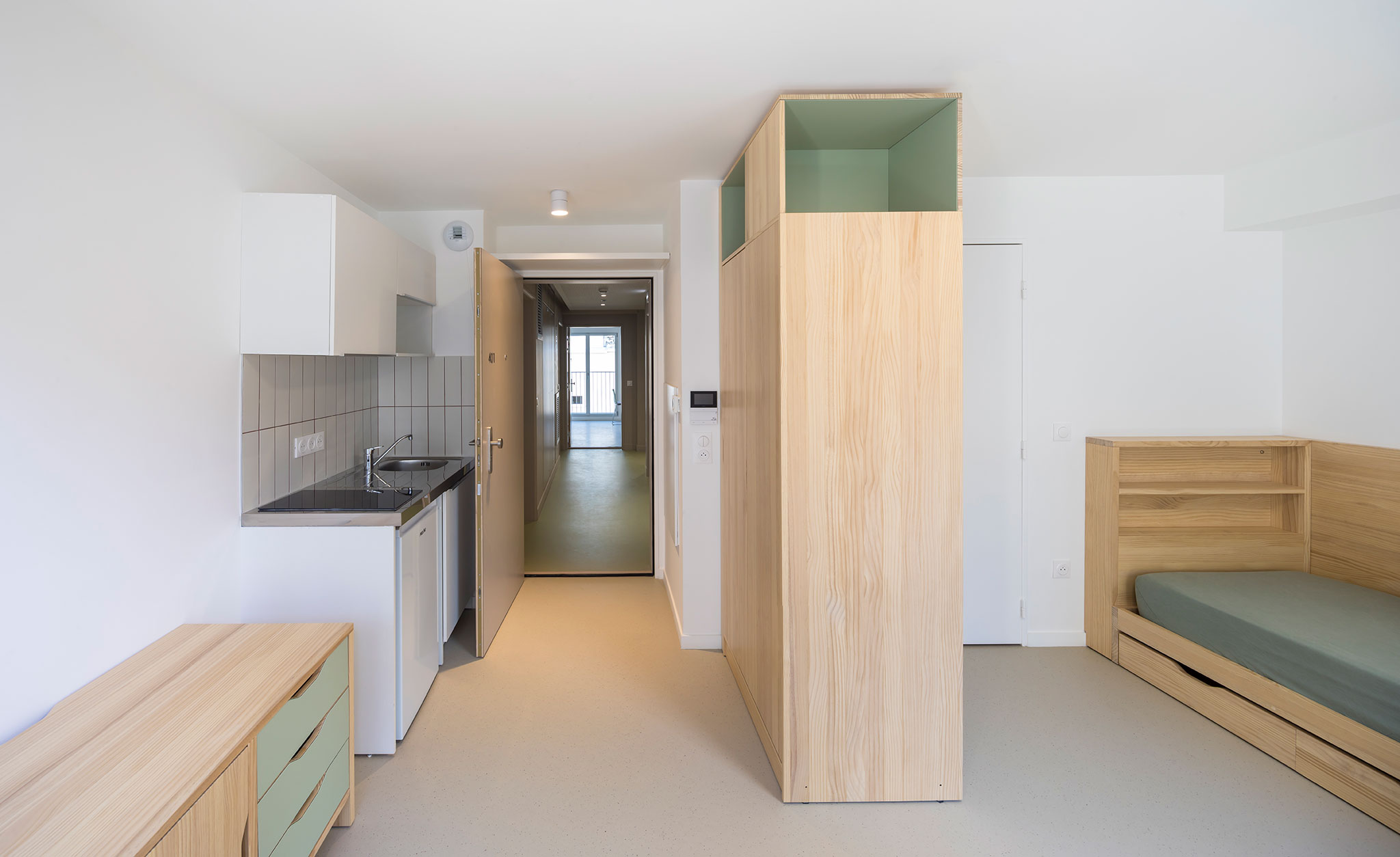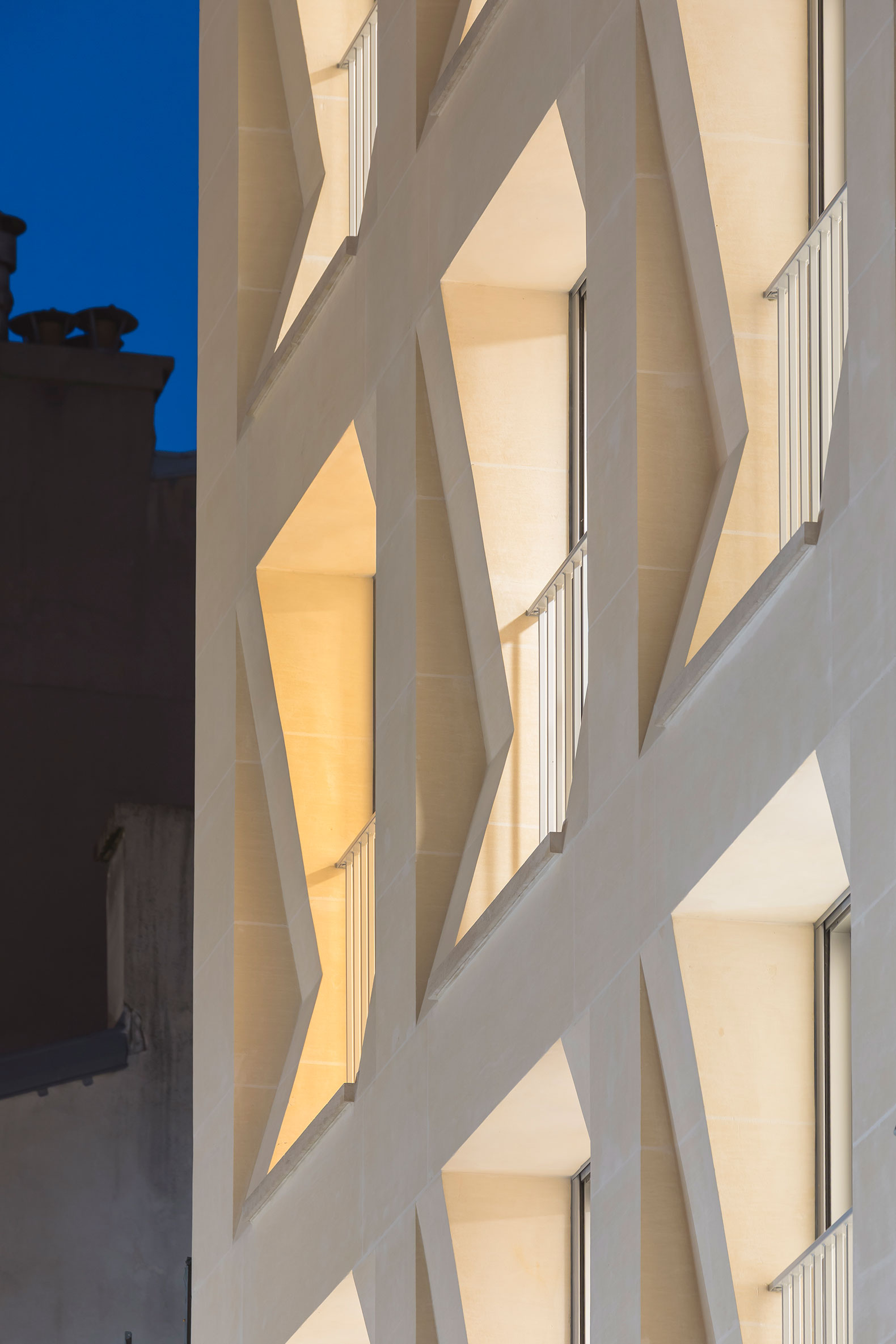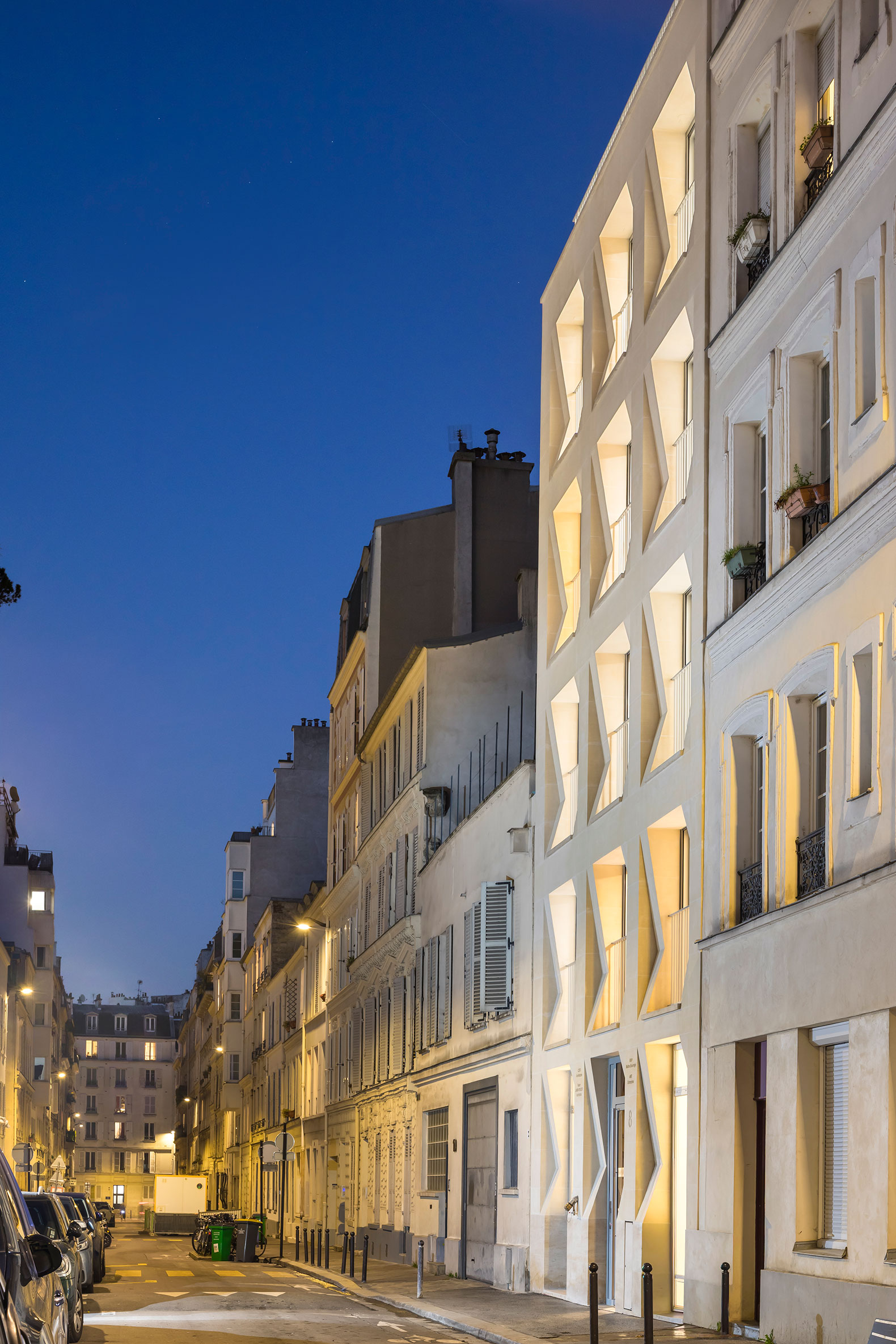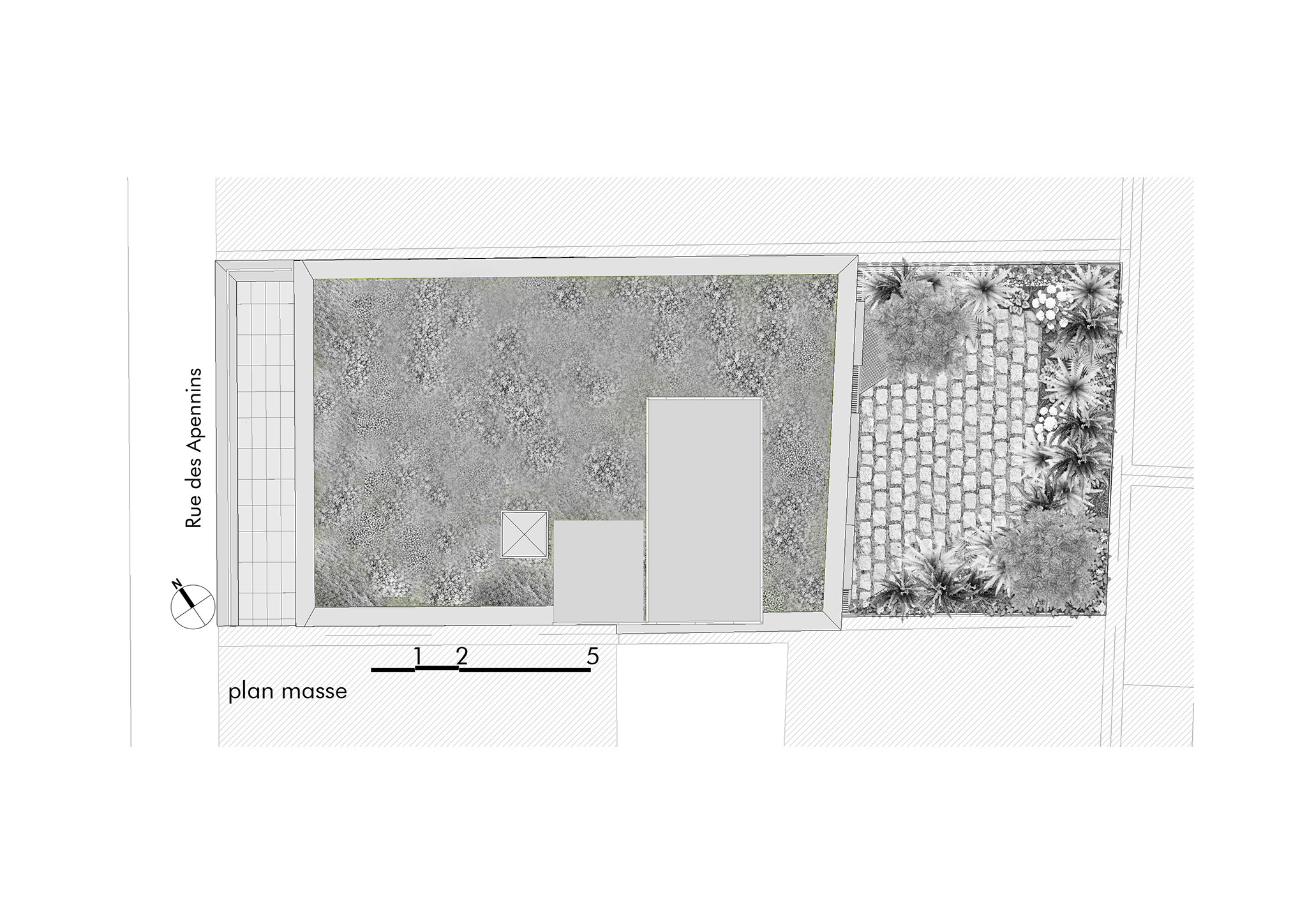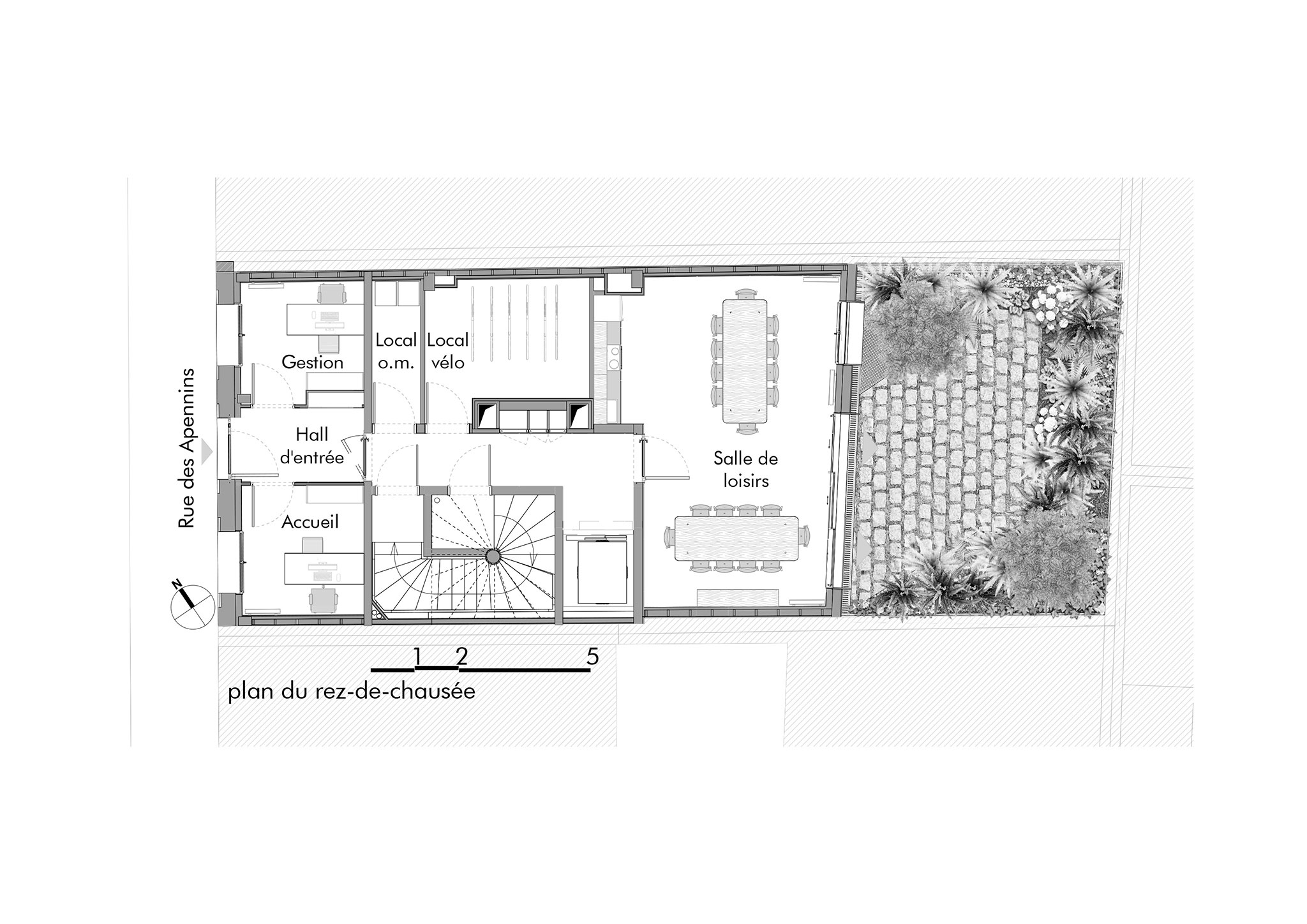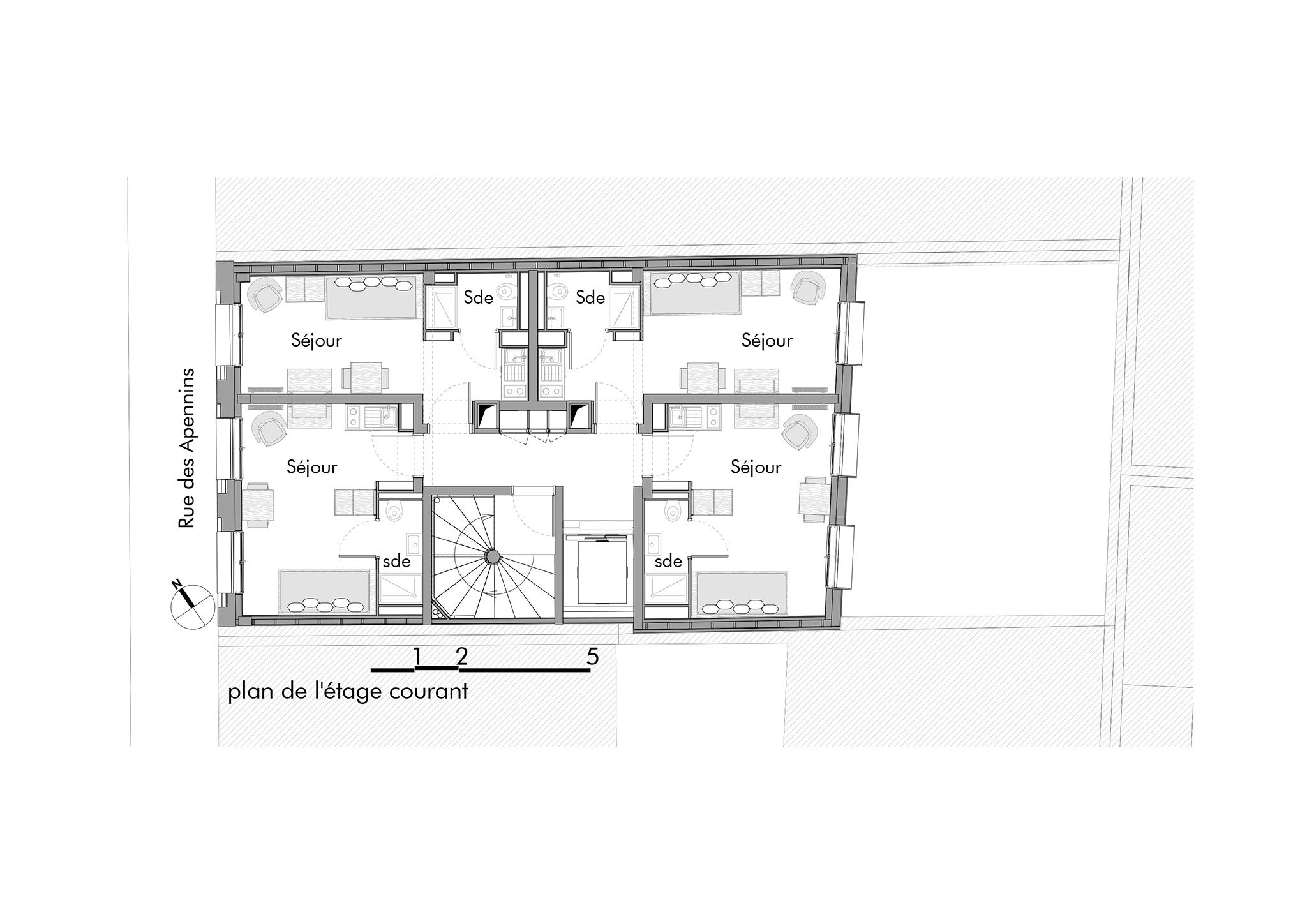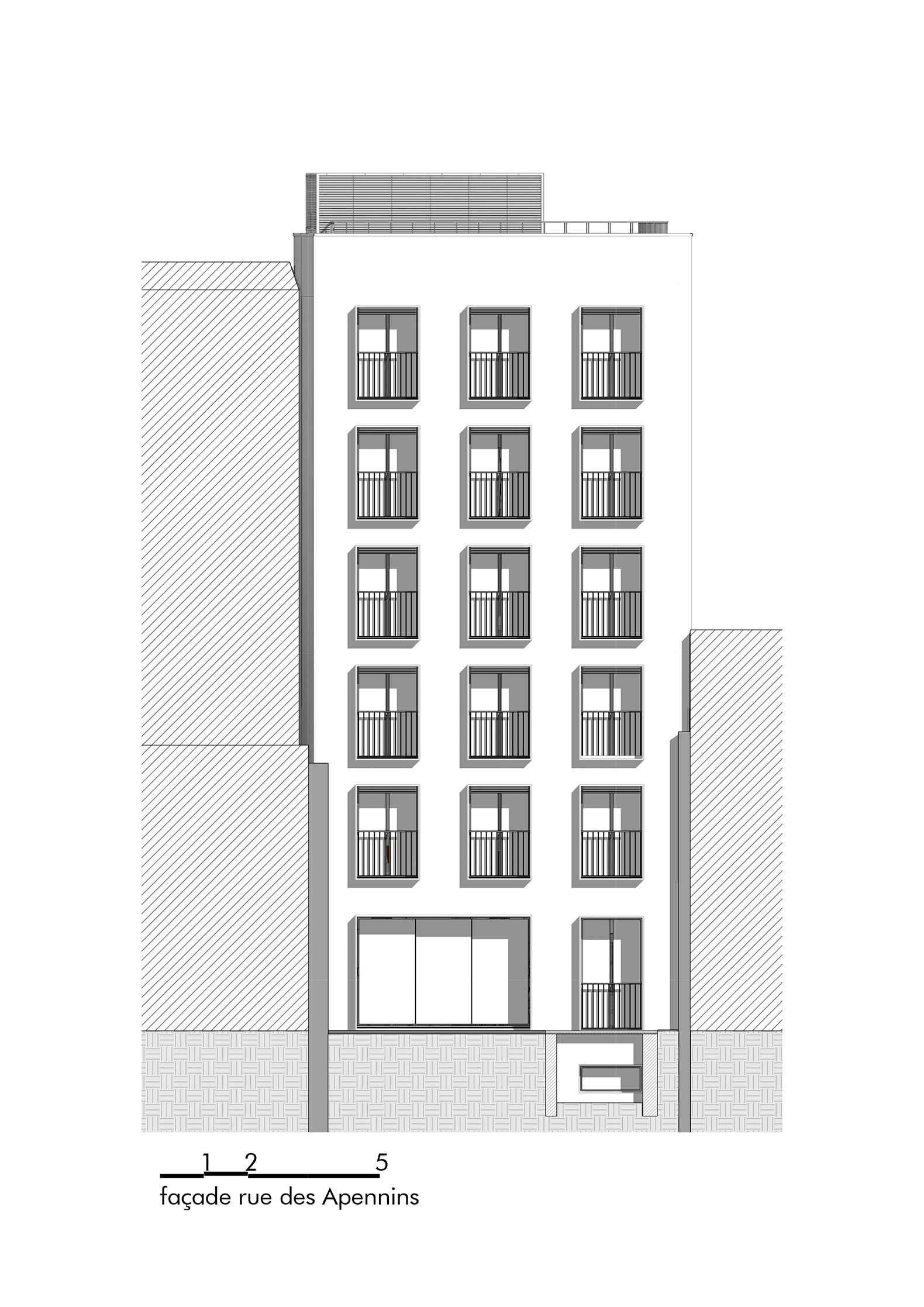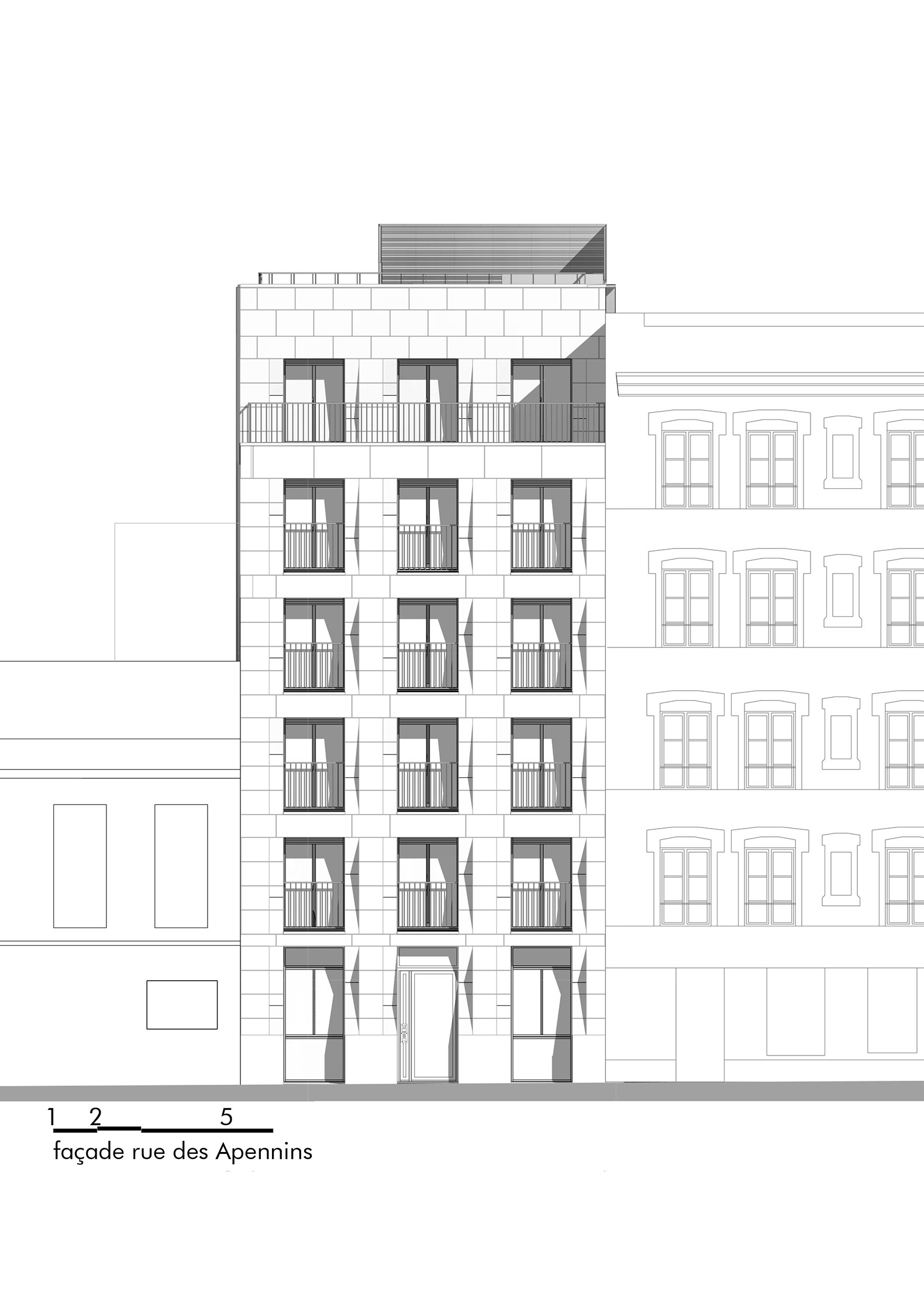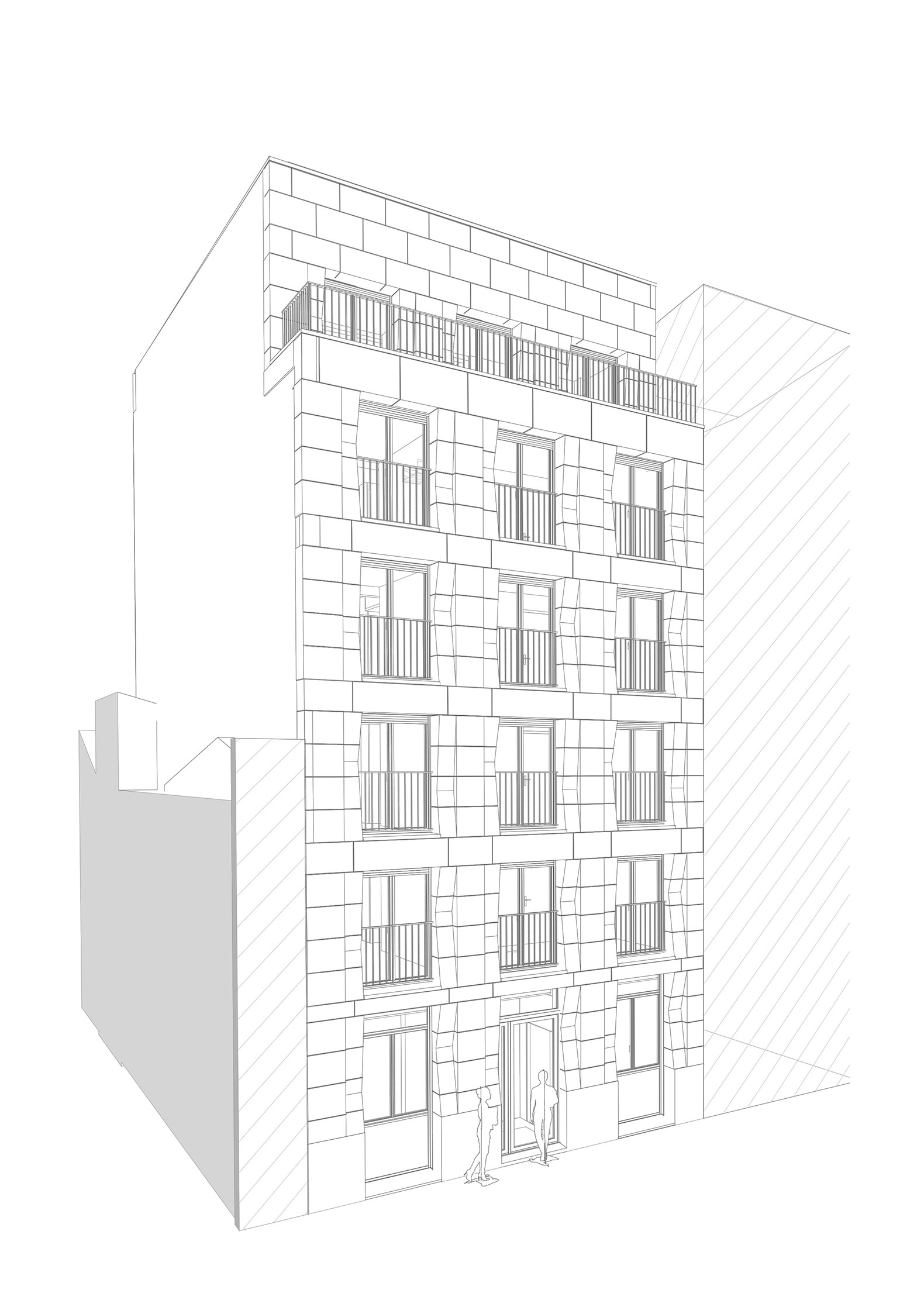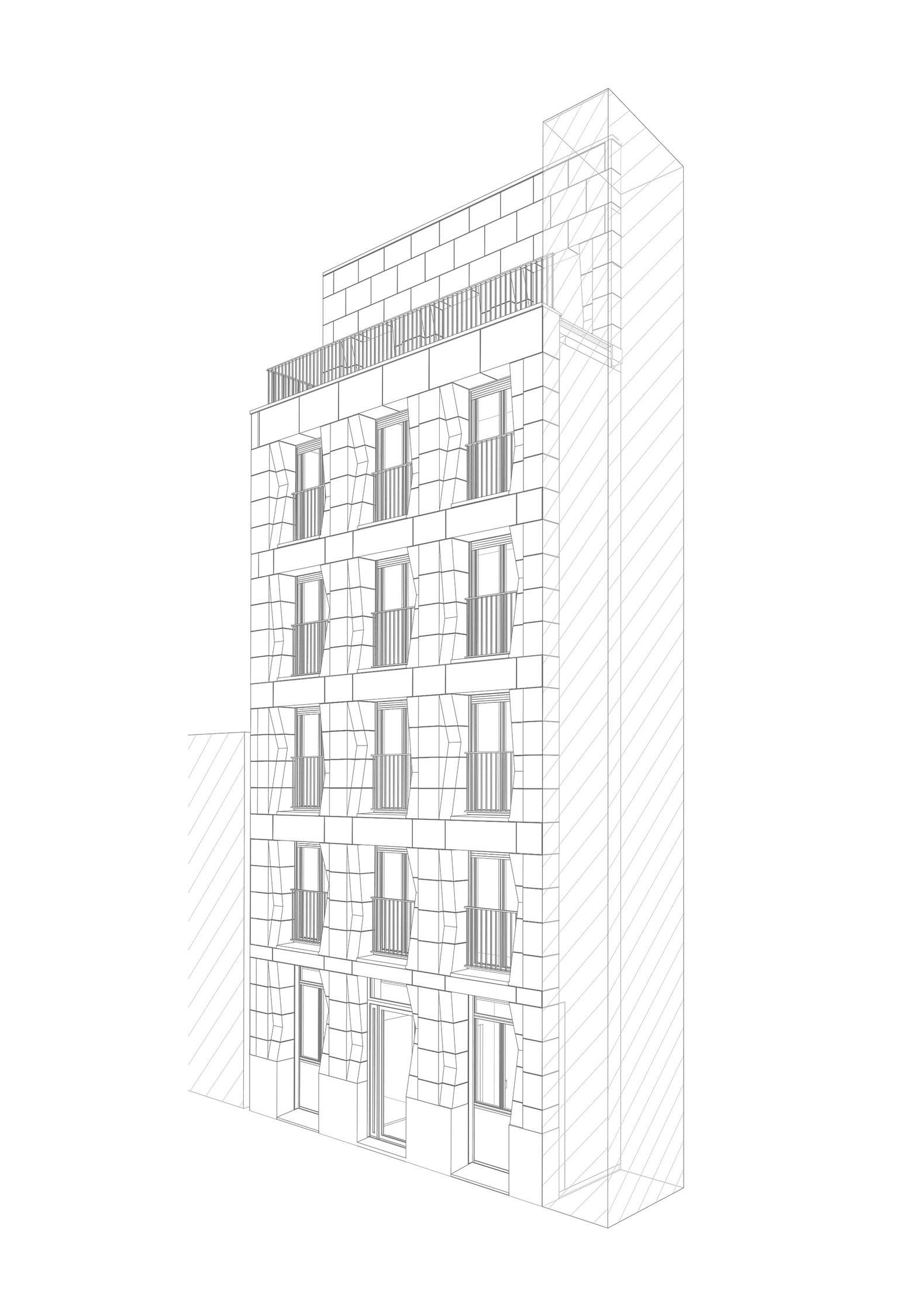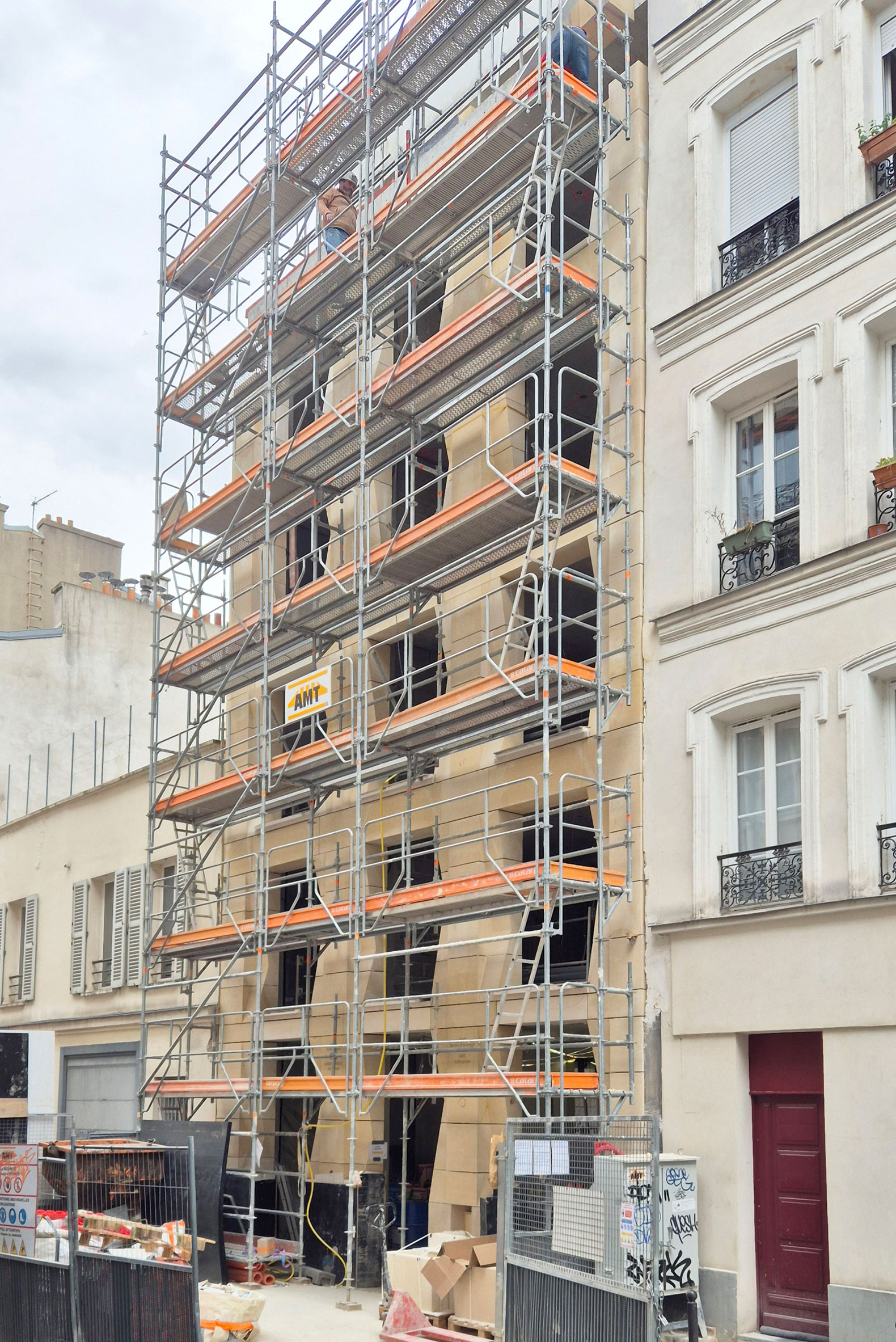
The "La Pension de famille des Apennins" building, designed by CQFD Architecture, comprises 19 independent rooms with shared common areas and a landscaped courtyard. The apartments are organized around communal spaces that include a common room, a kitchen, a laundry room, and a garden, fostering interaction and community among the residents.
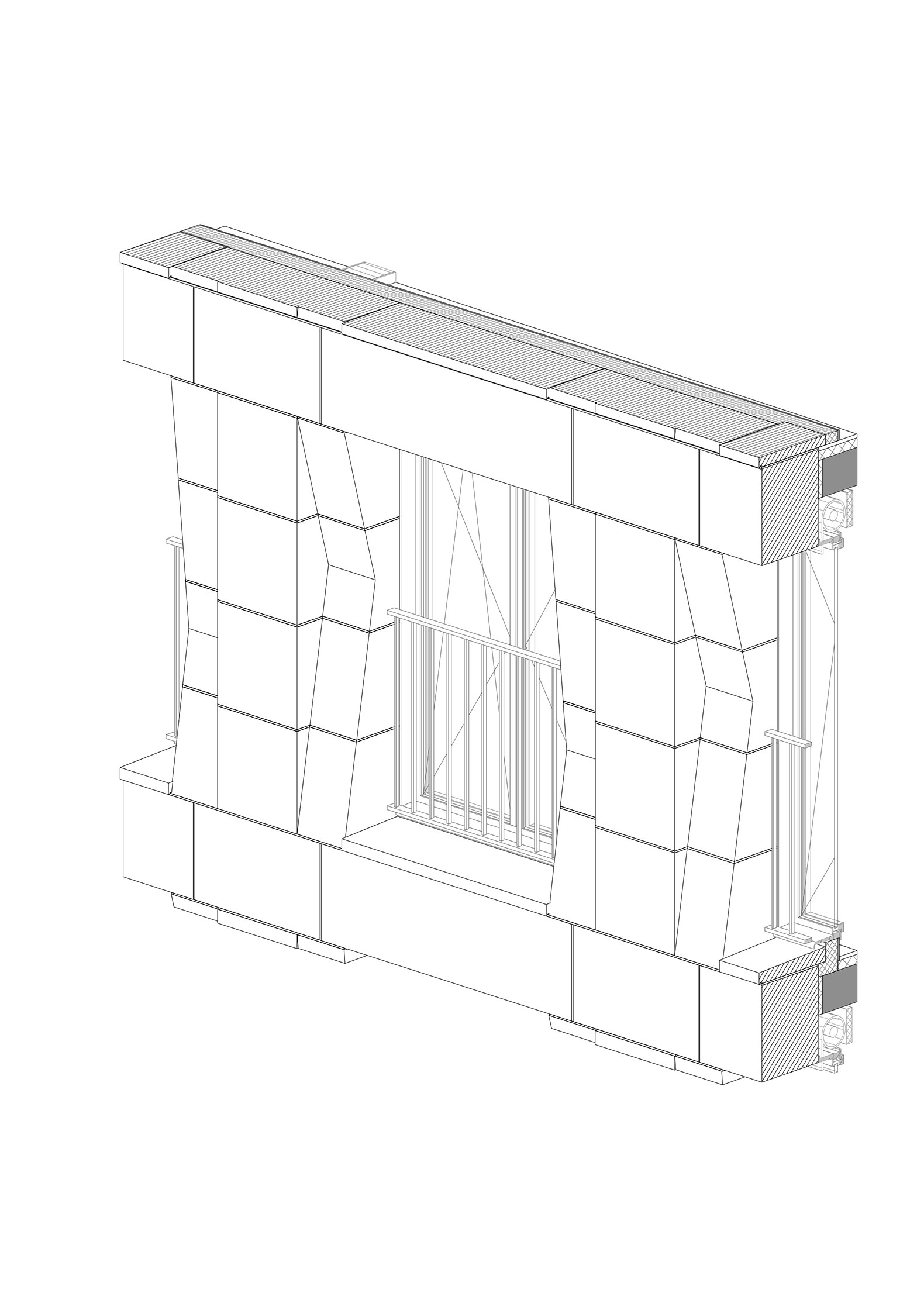
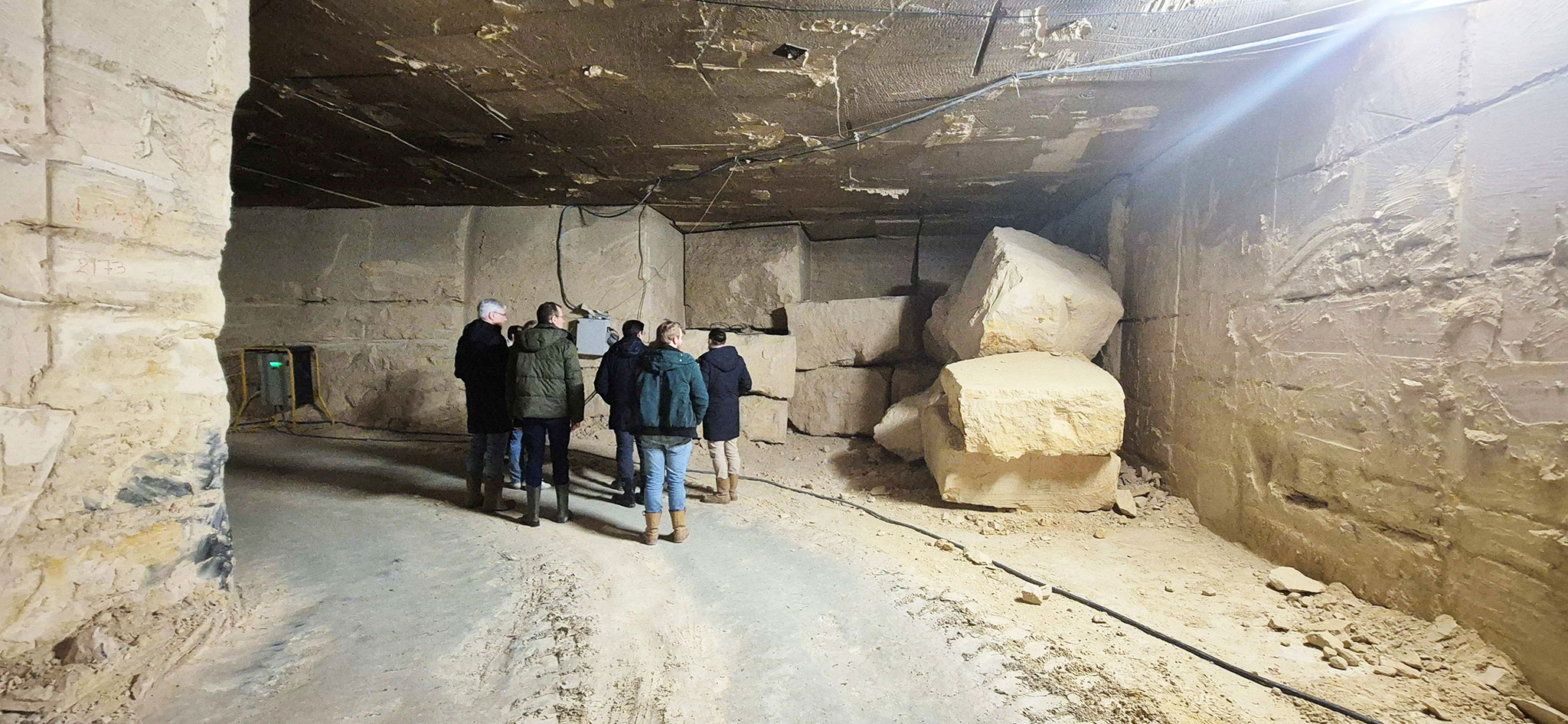
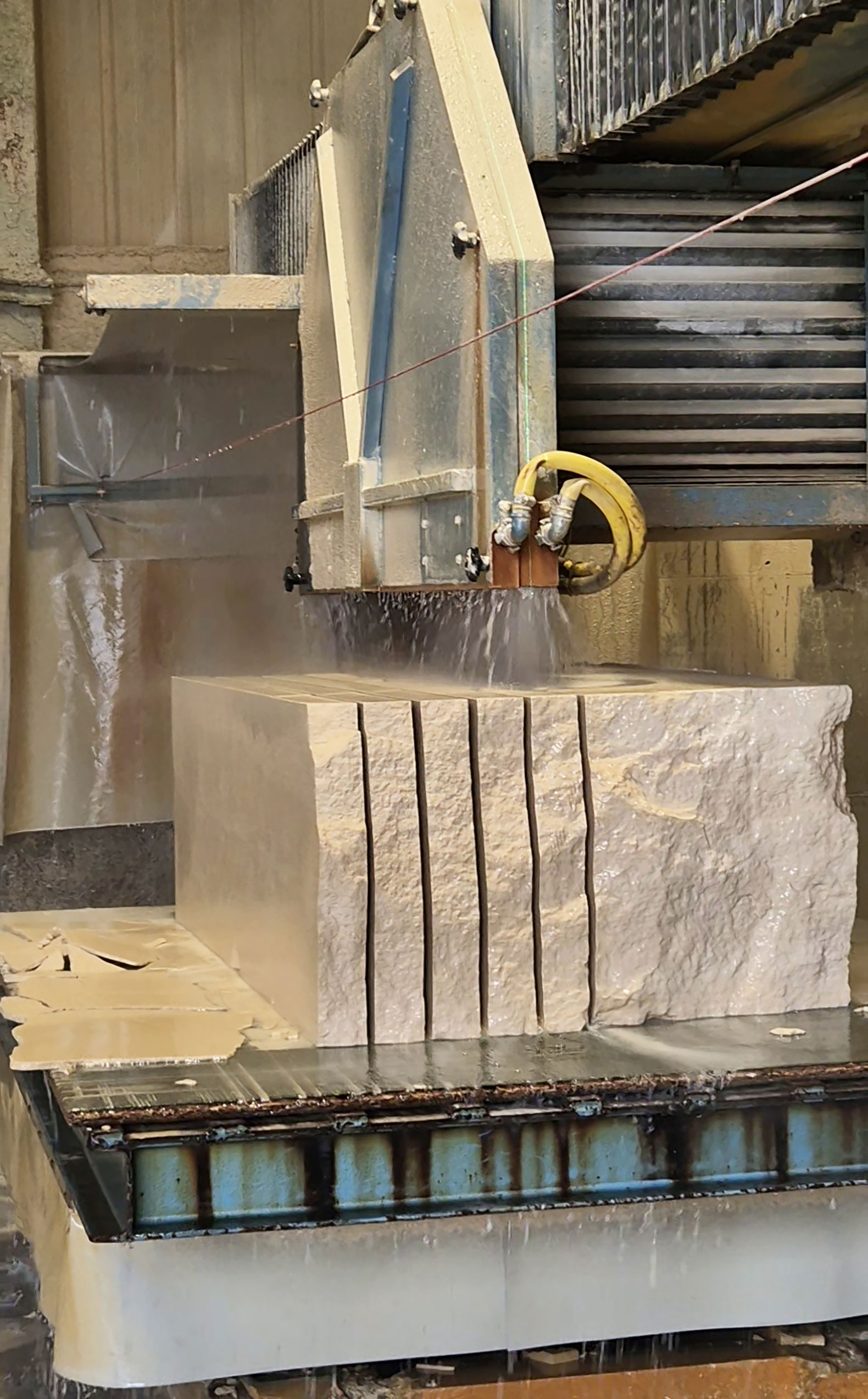
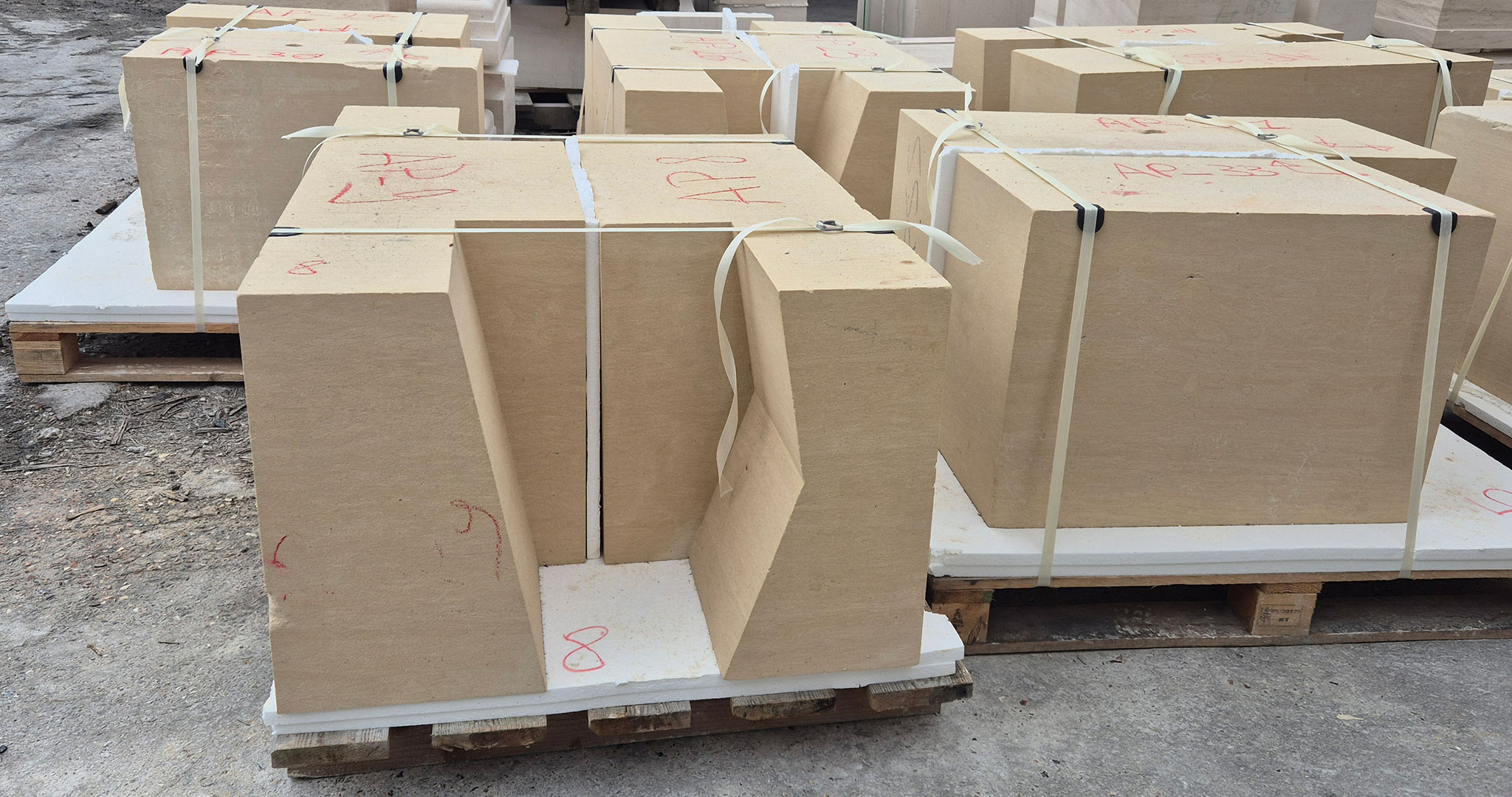
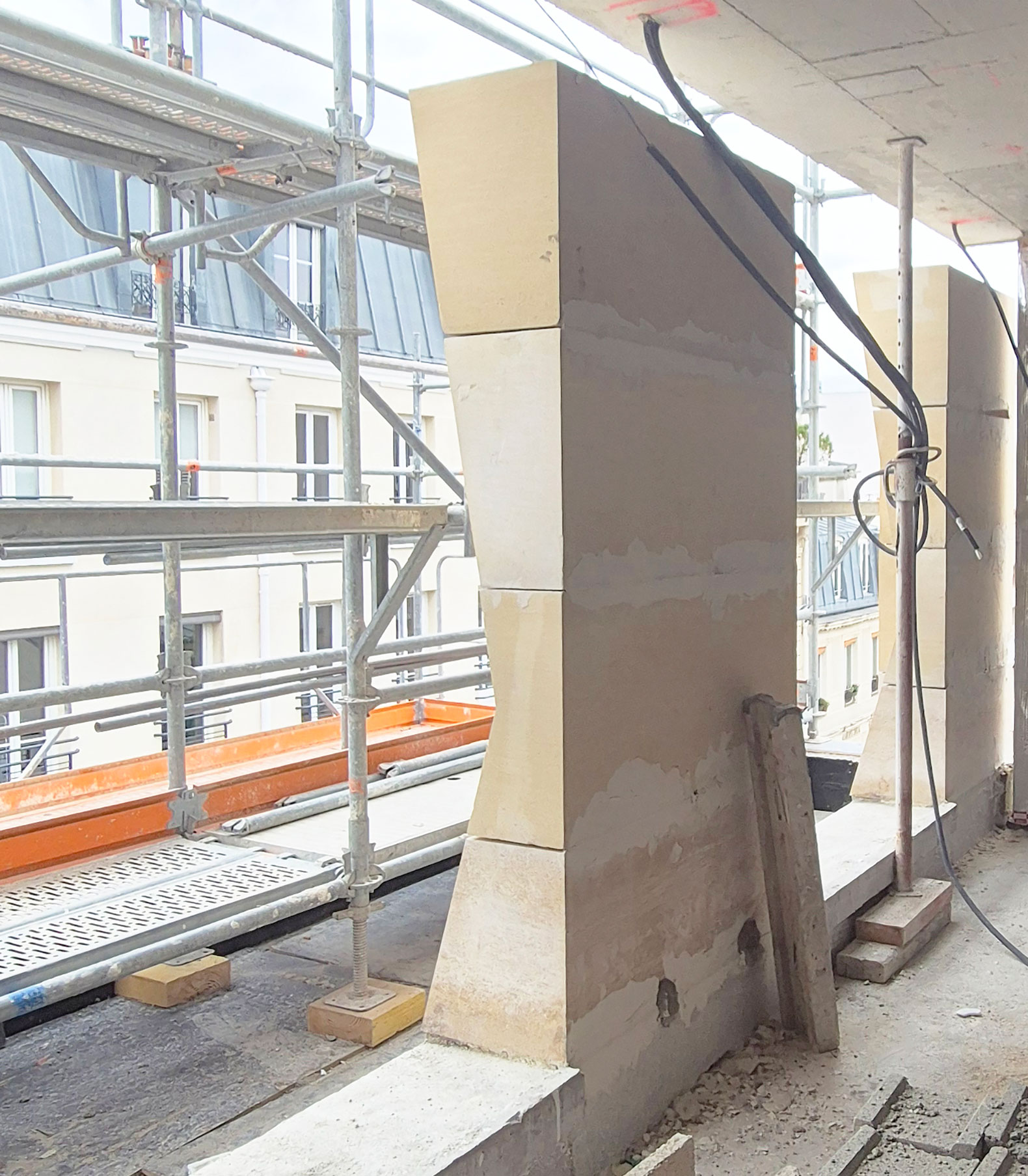
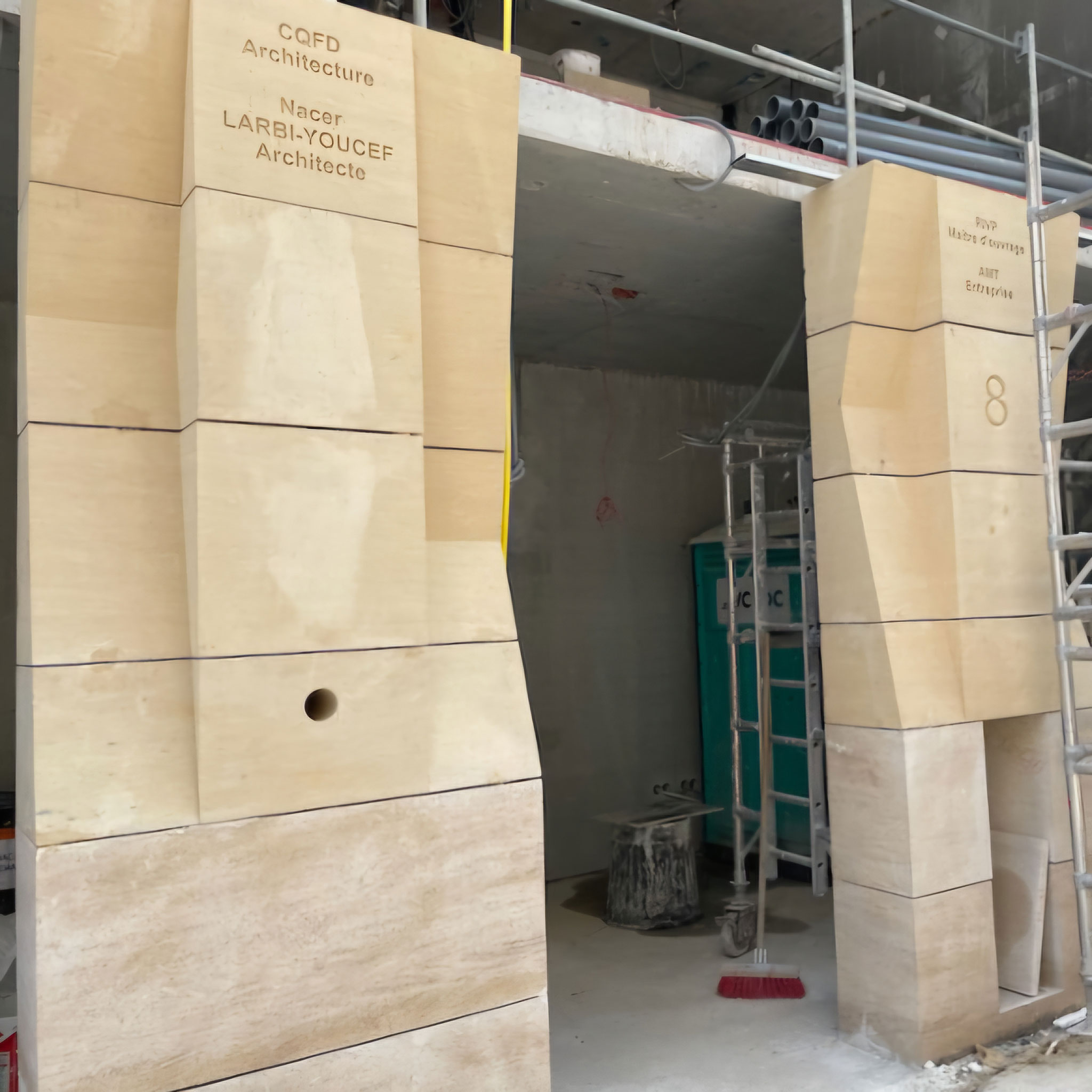
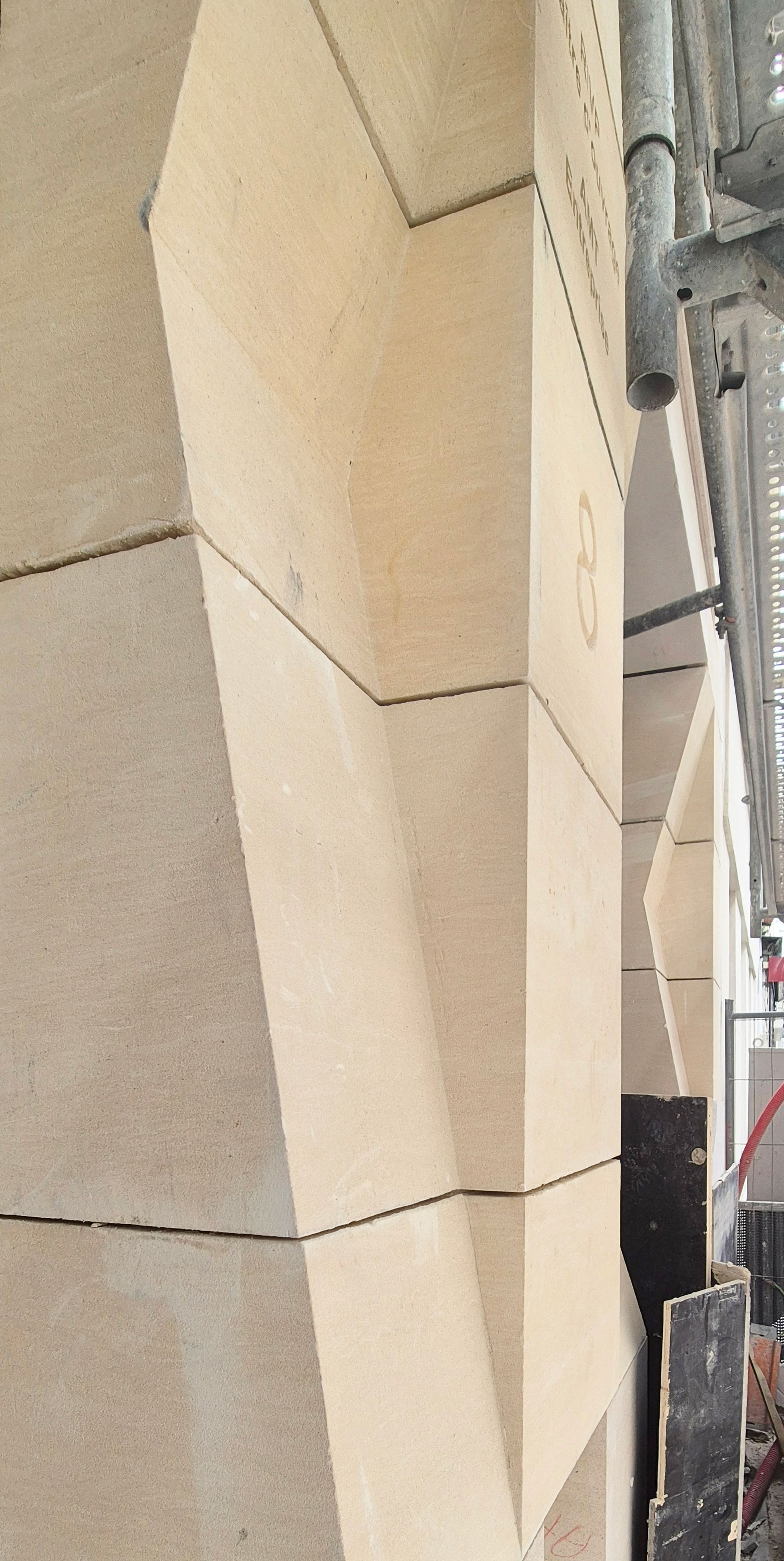
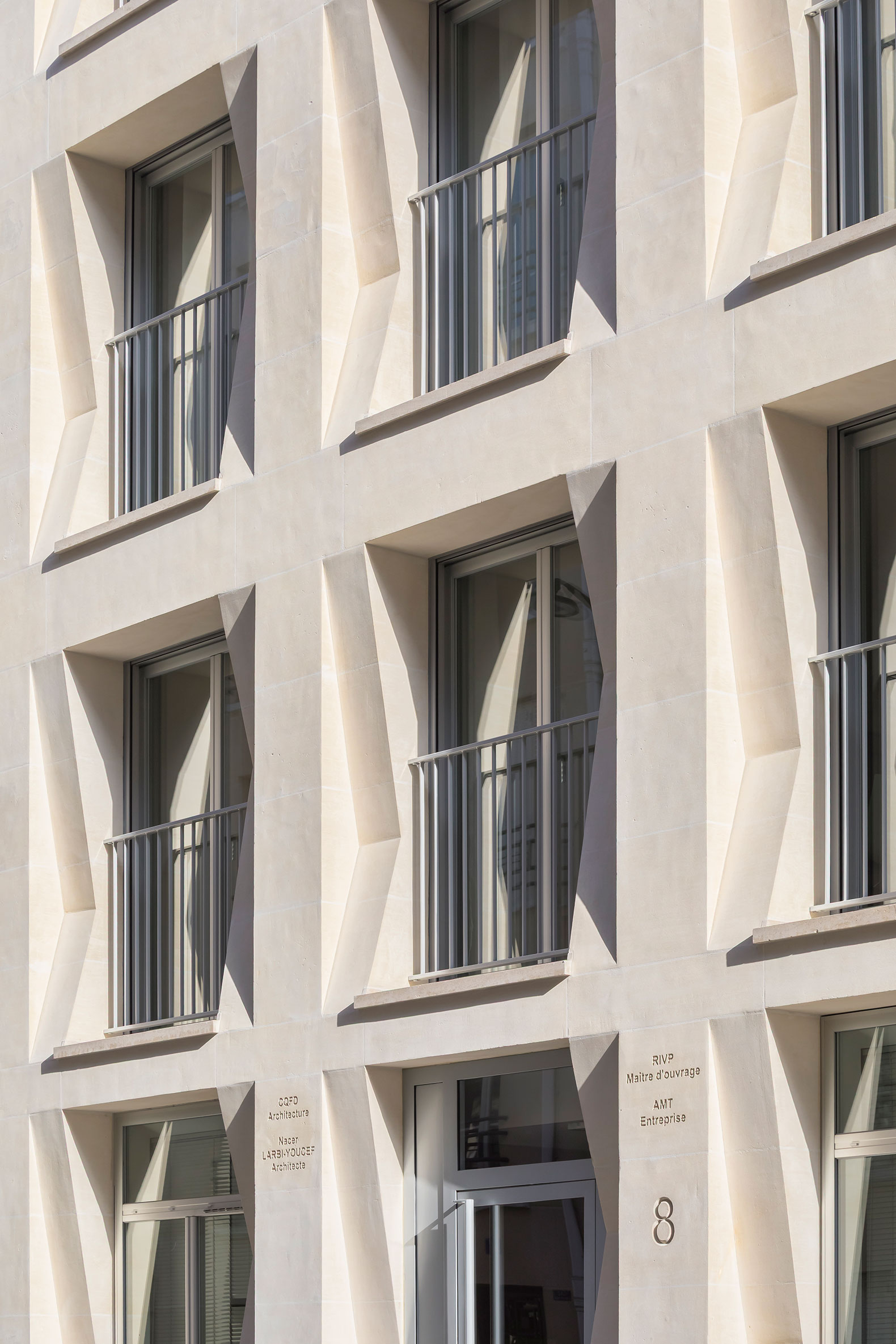
Its construction was based on economical and sustainable principles. Solid stone from the Vassens quarries and a timber frame were used. Furthermore, bio-based wood fiber was chosen for insulation.
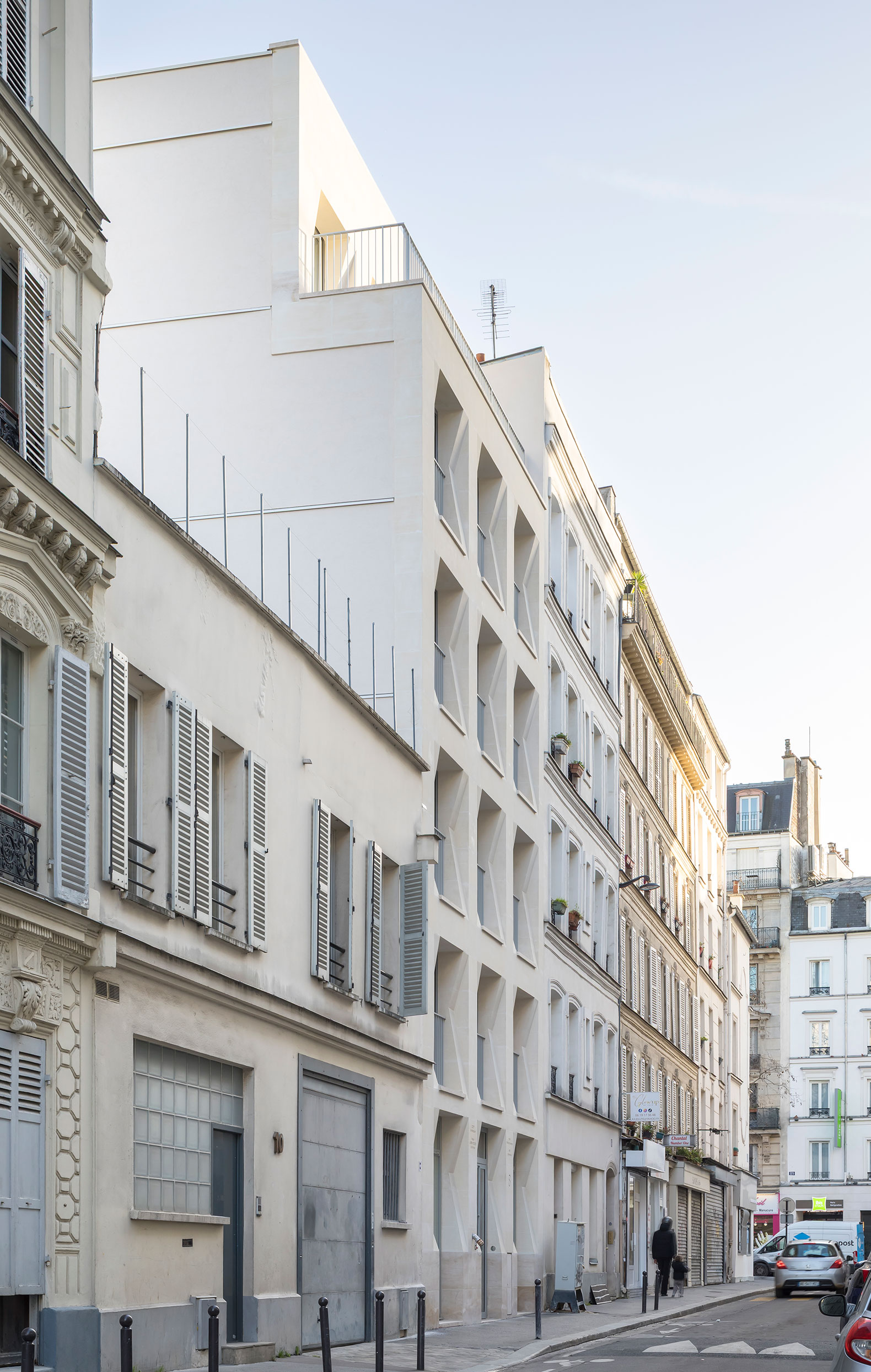
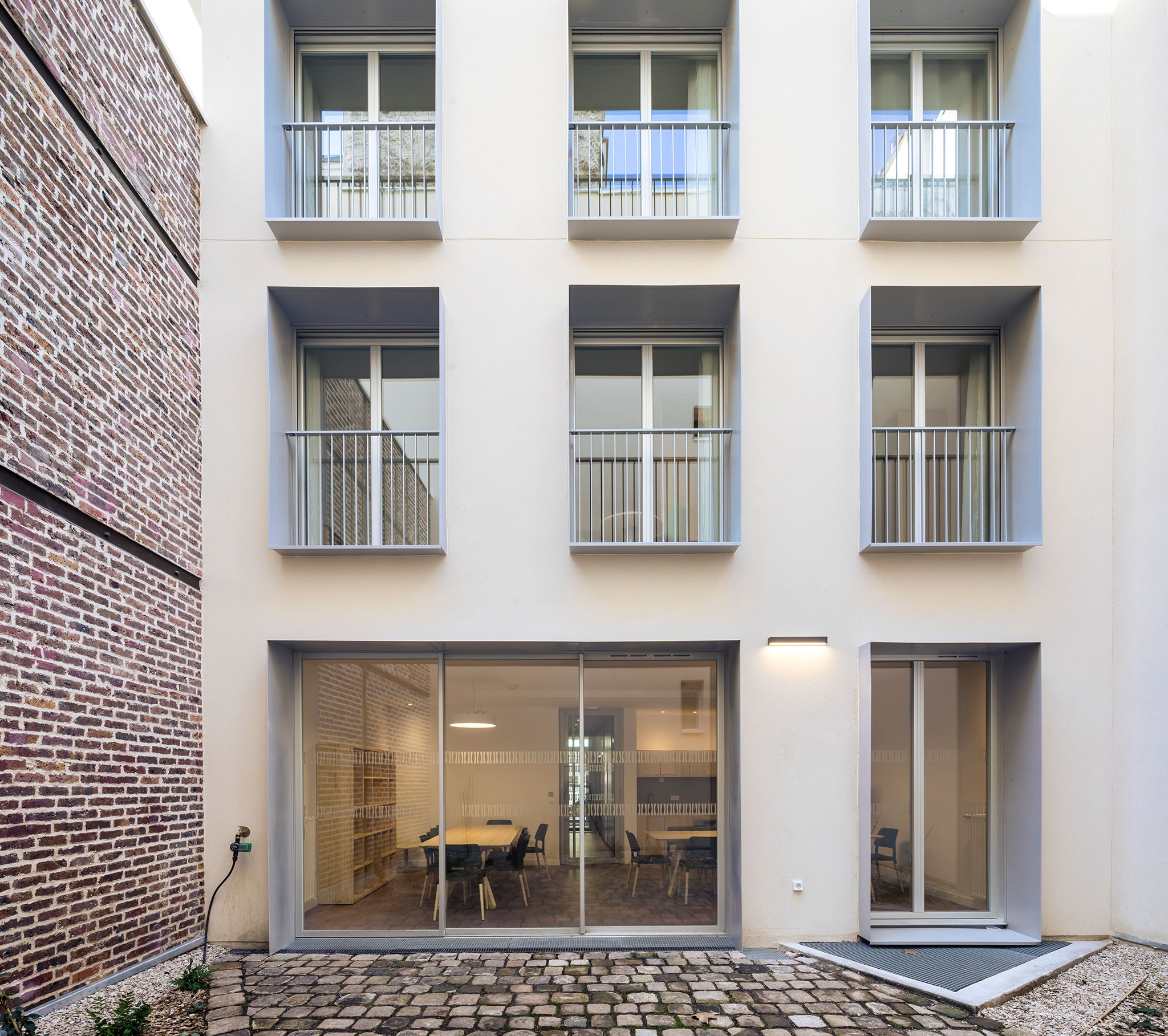
"La Pension de famille des Apennins" by CQFD Architecture. Photograph by Sergio Grazia.
Project description by CQFD Architecture
“La Pension de famille is my home for as long as I wish.” Words spoken by a resident of this social housing residence for people of low-income as well as those in situations of isolation or social exclusion, for whom ordinary access to housing is challenging. The social housing residence offers a private accommodation within a collective human scale framework offering common areas designed to help overcome social isolation.
La Pension de famille des Apennins sits in the heart of the 17th arrondissement of Paris. It uses economical construction and sustainability with solid stone from Vassens quarries and a wooden framework. Bio-sourced wood fiber insulation completes this durable and warm design, blending seamlessly into the Parisian cityscape.
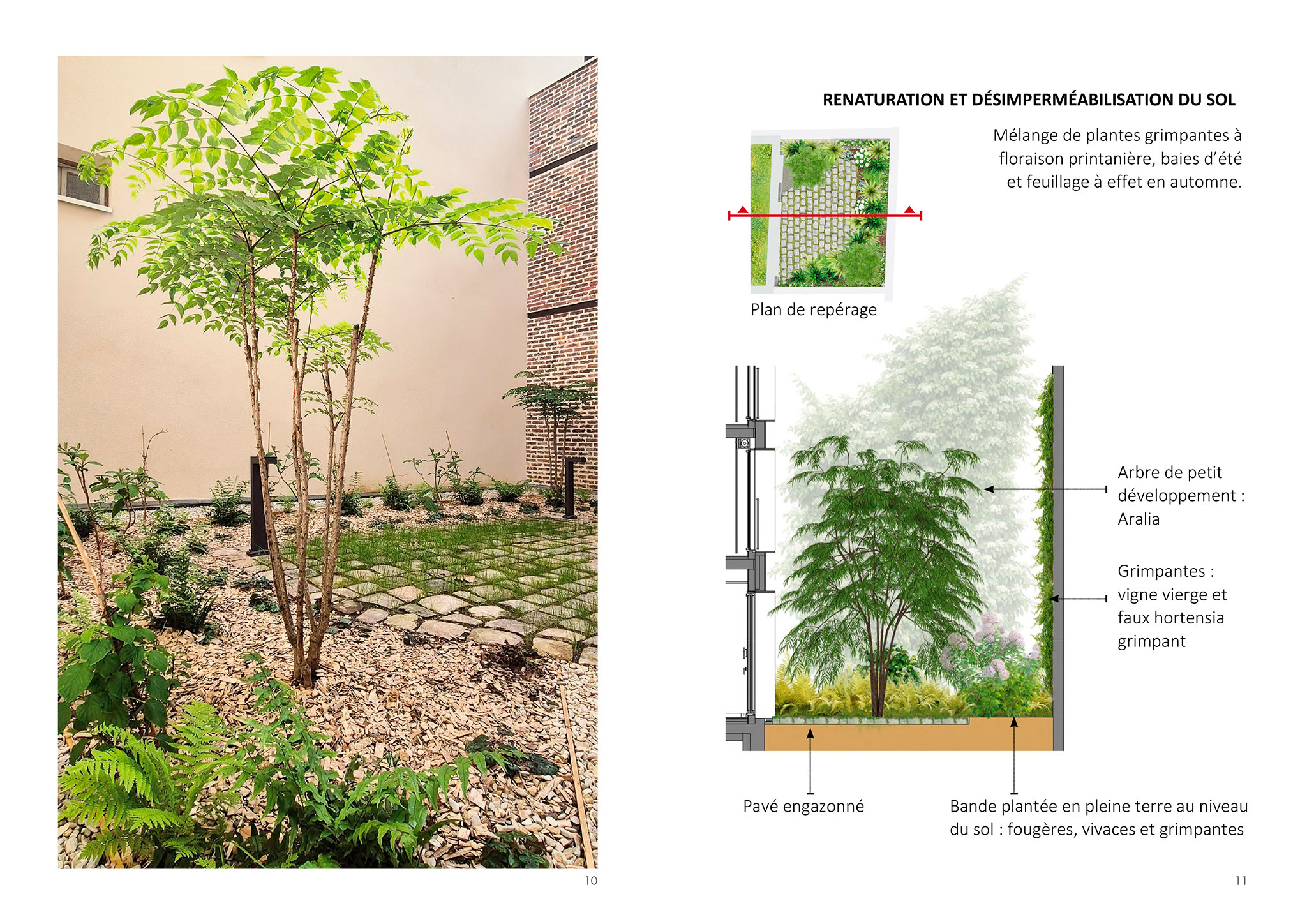
The 19 independent and furnished flats are organized around shared spaces that open onto a planted and shaded courtyard, providing a refreshing island of fresh air. These shared areas, including a common room, kitchen, laundry room, and garden, encourage interaction and cohabitation among residents. The project’s intentionally compact design creates a cozy and inclusive atmosphere. Through this project, CQFDArchitecture explores how spatial quality, natural light, and raw materials can enhance the dignity of a flat and restore social connections, in line with the founding principles of the social housing residence.
The project is part of an ensemble of lots forming a portion of the suburban district composed of apartment blocks ranging from ground floor +2 and Ground floor +7, with the majority being ground floor +5.
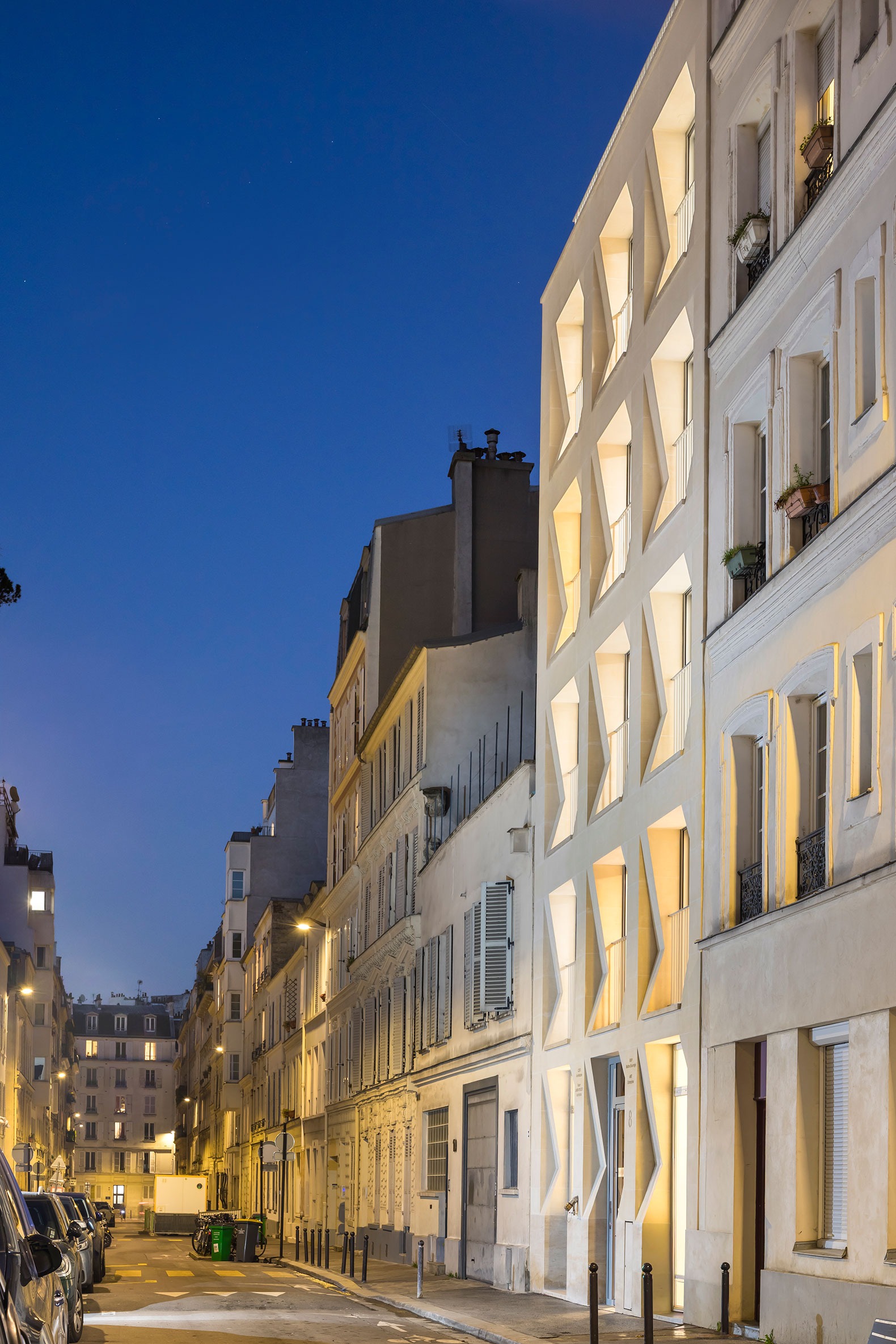
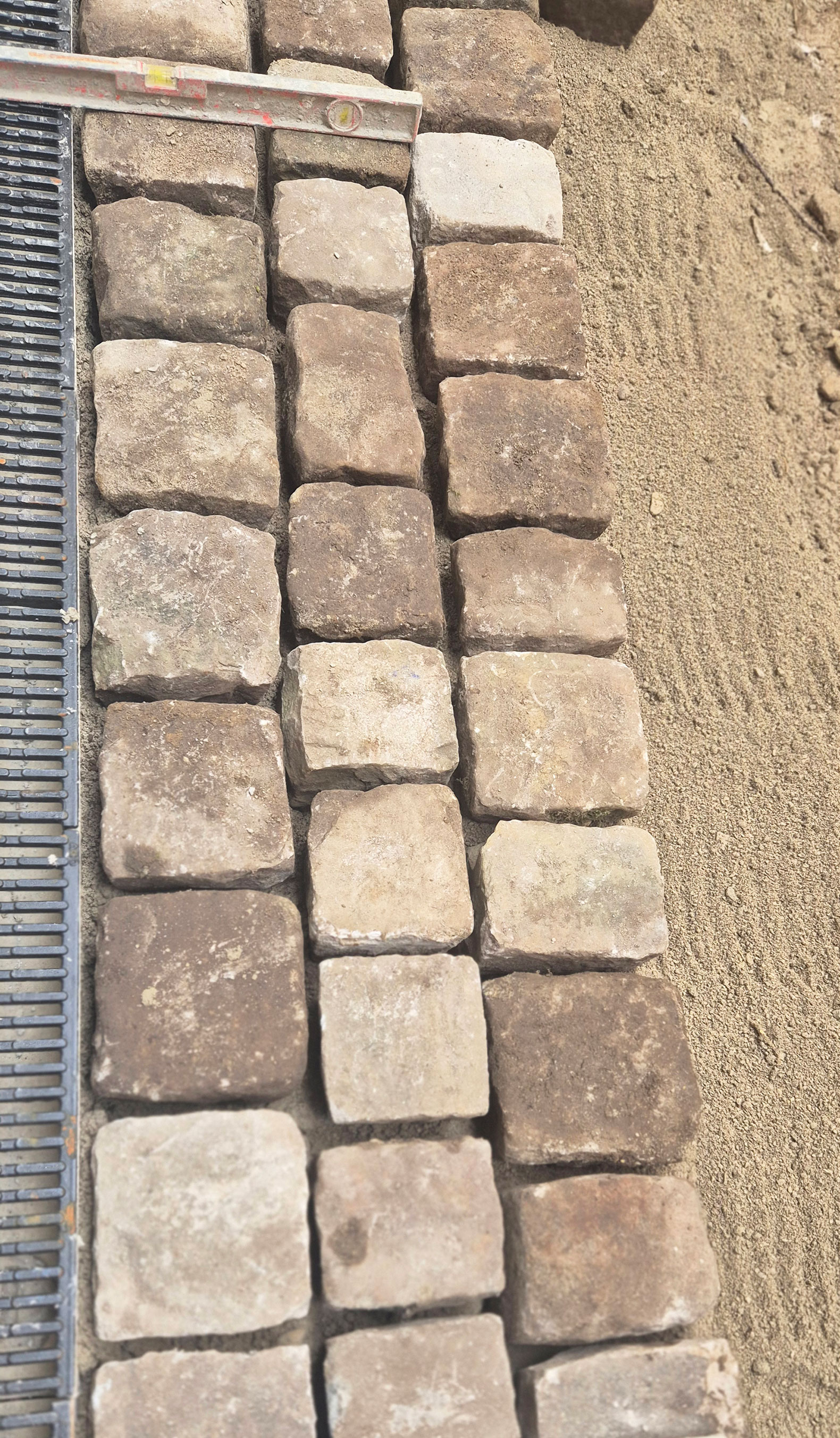
It was designed for the site of a small building occupying the entire lot, to which it was technically impossible to add more floors. Its demolition also allowed for the creation of a renatured courtyard, ensuring a genuine island of fresh air in the dense urban fabric of Paris. The garden is a direct extension of the building’s common room.