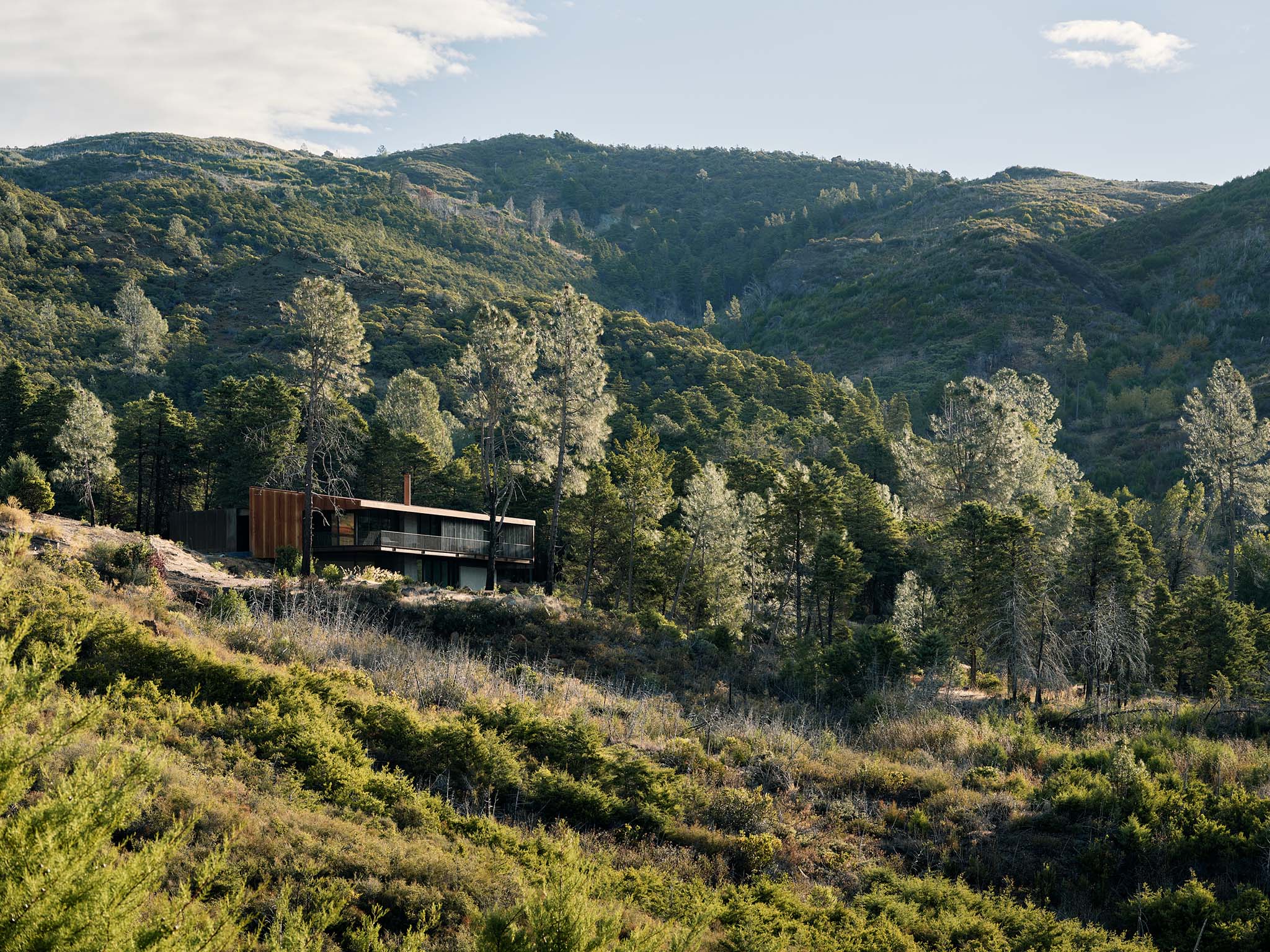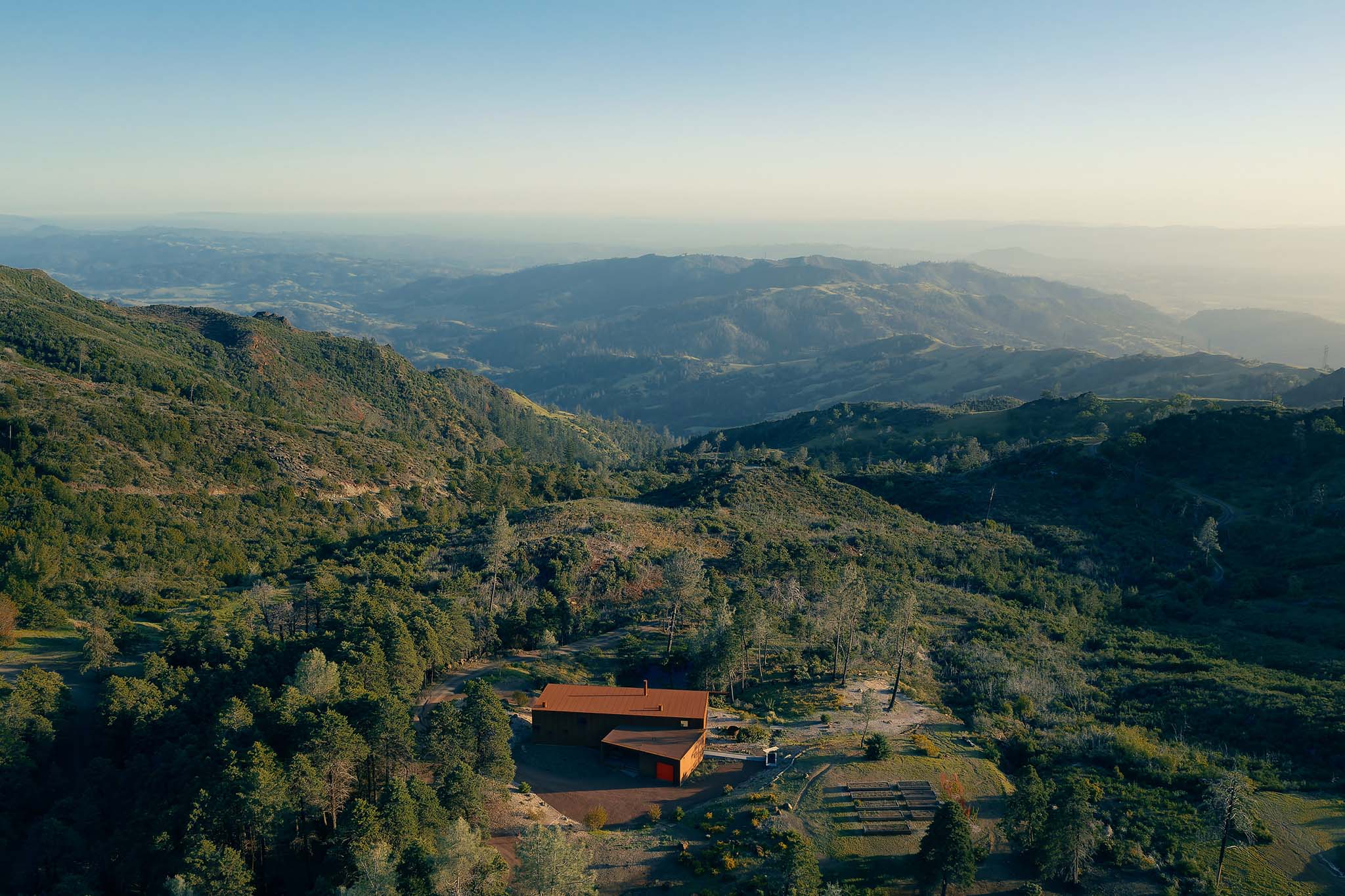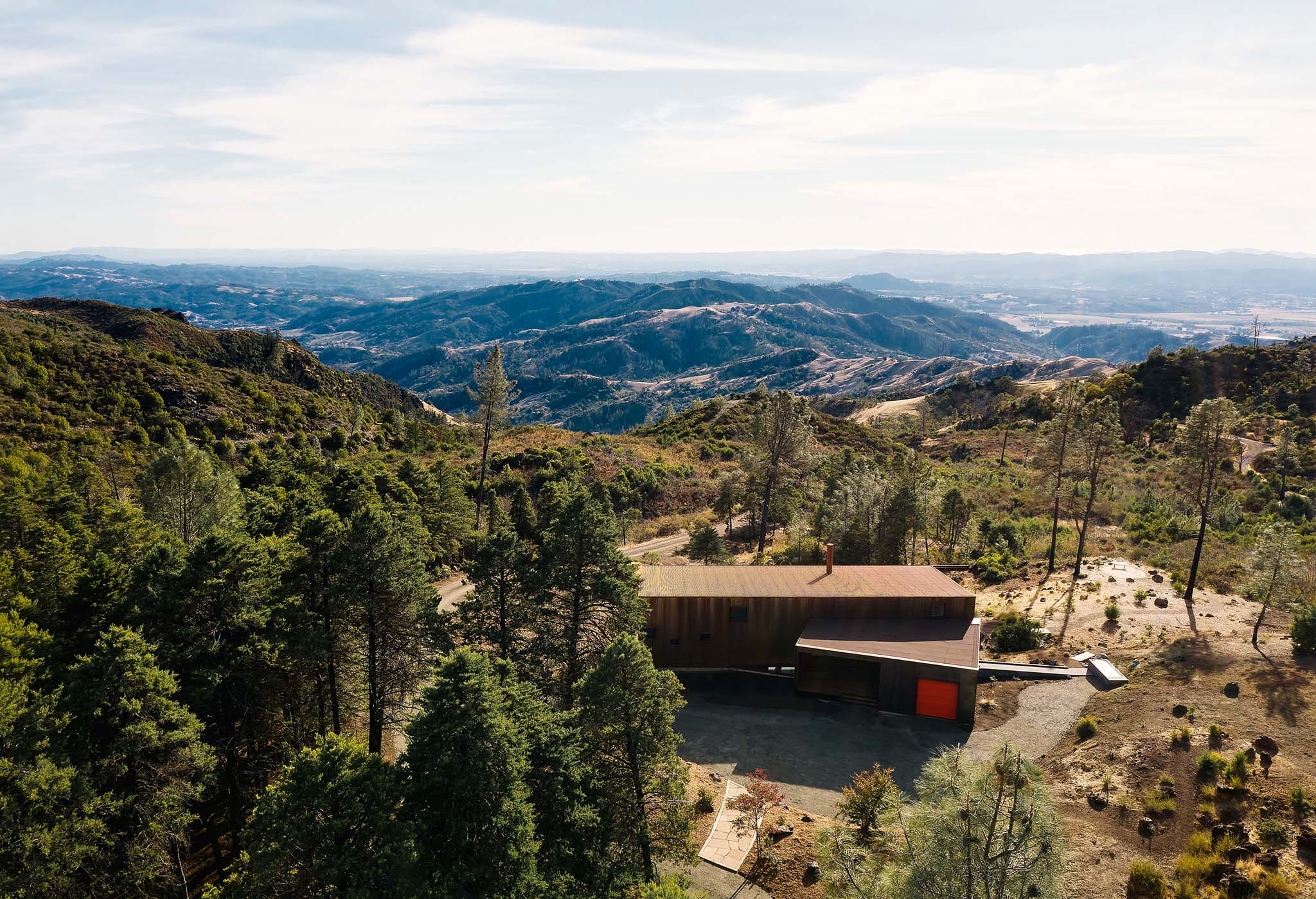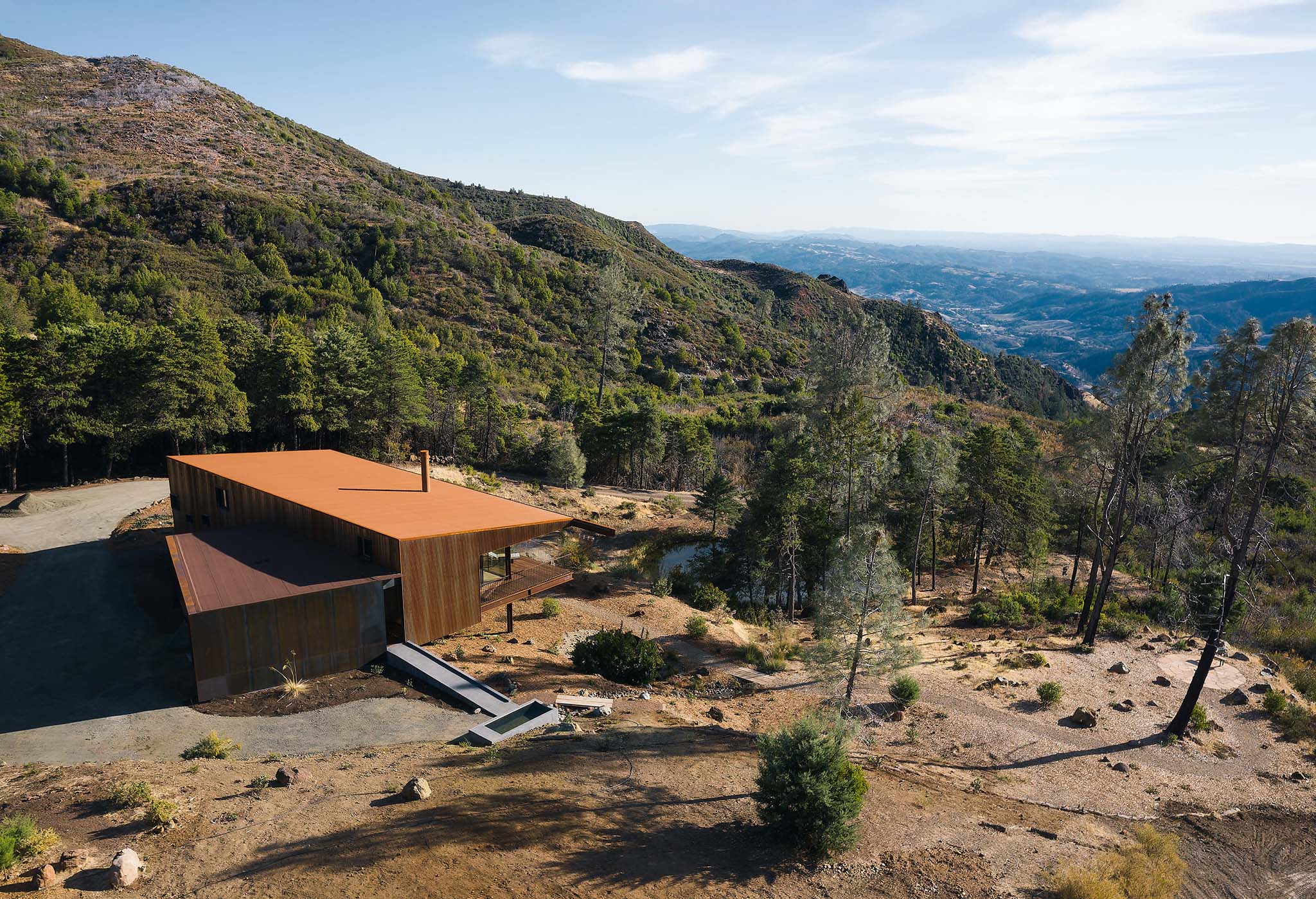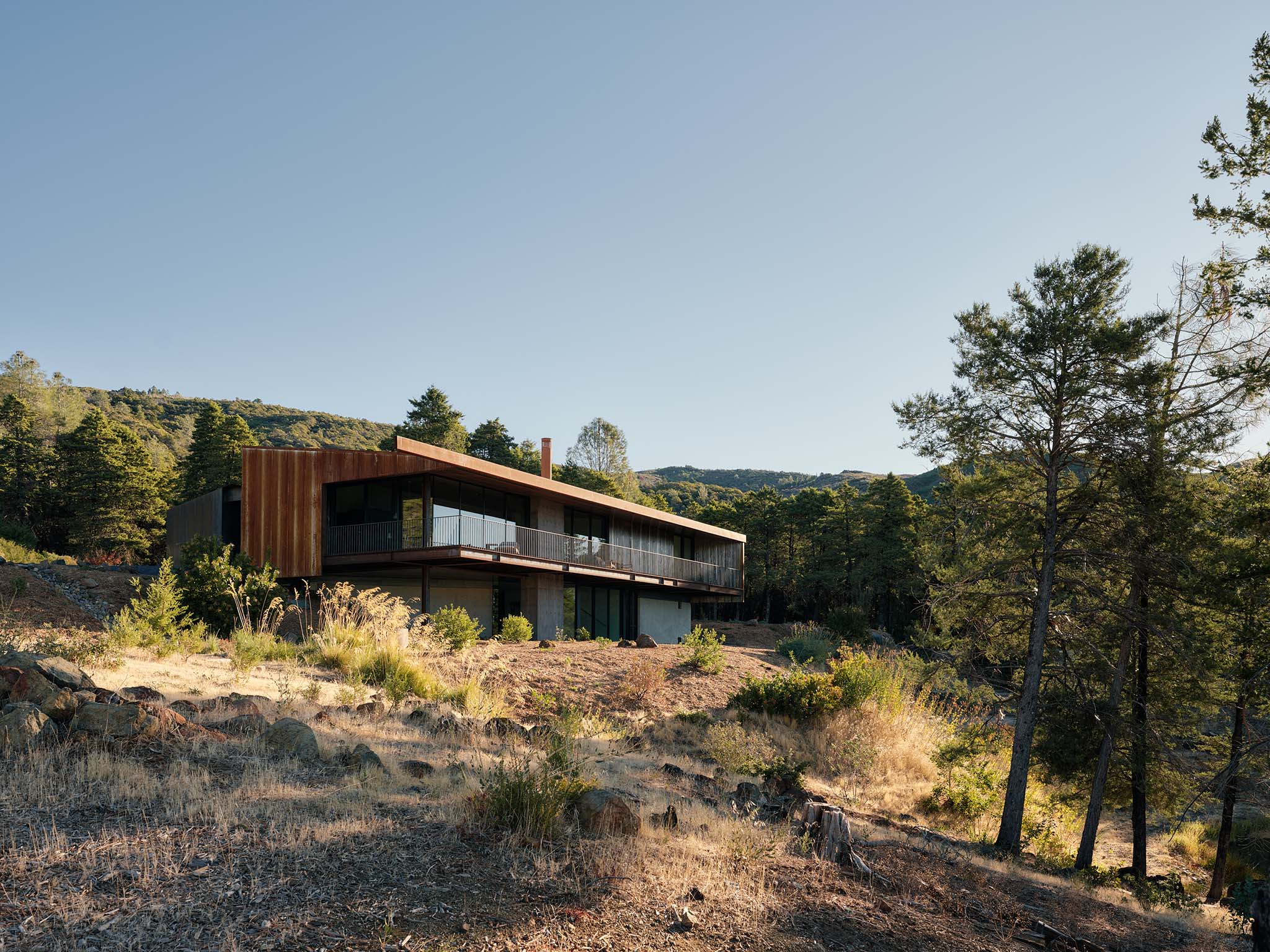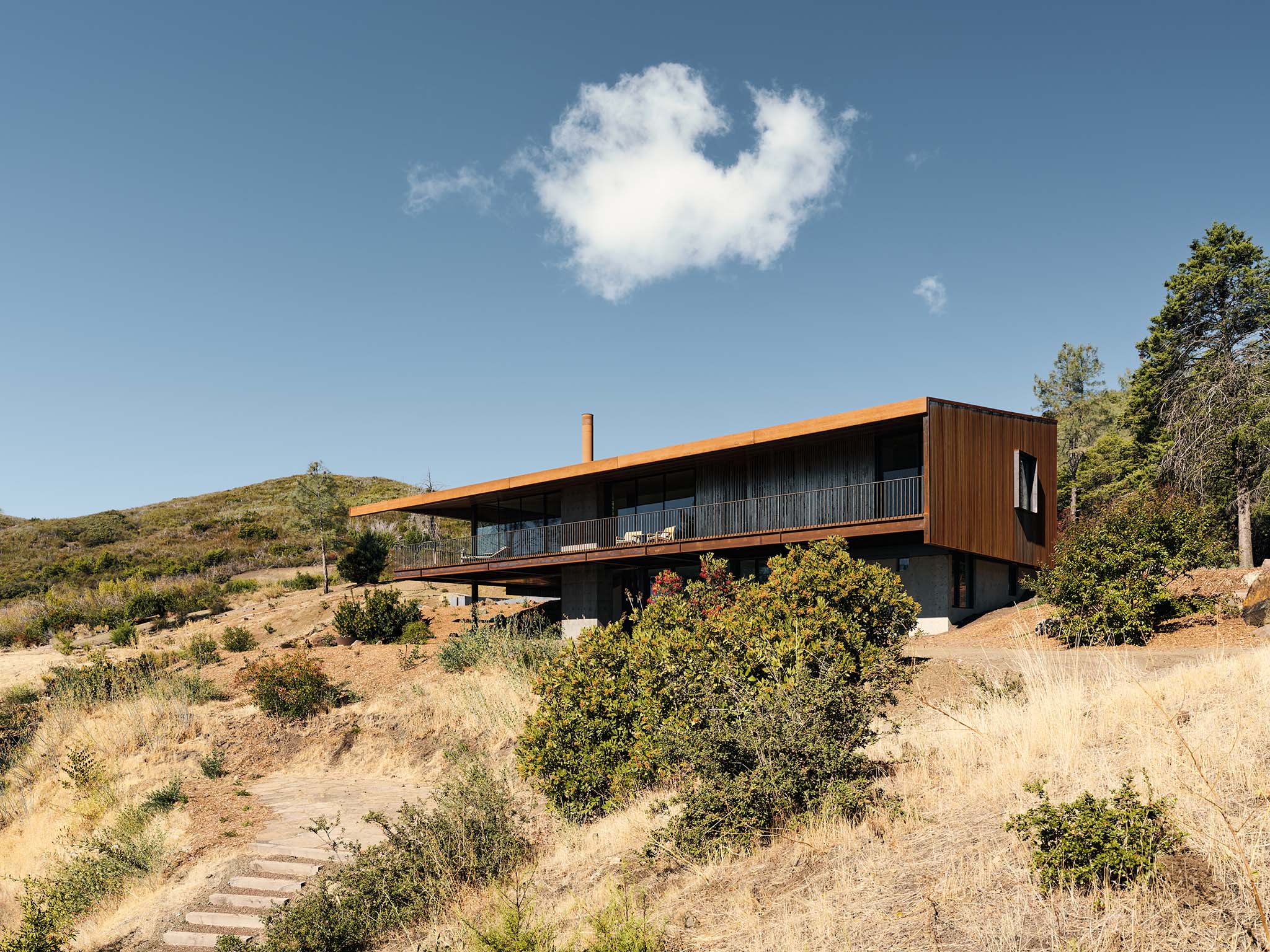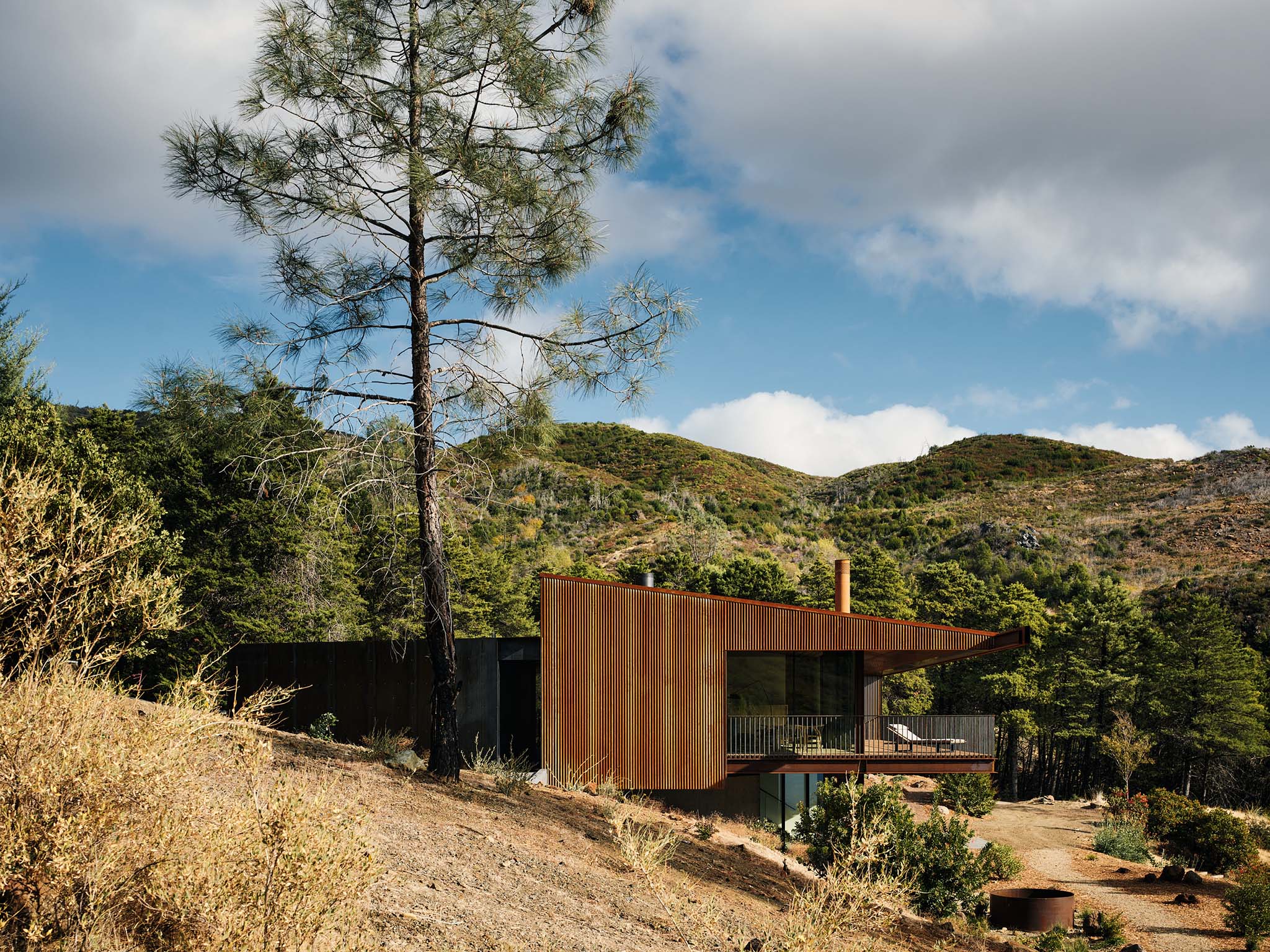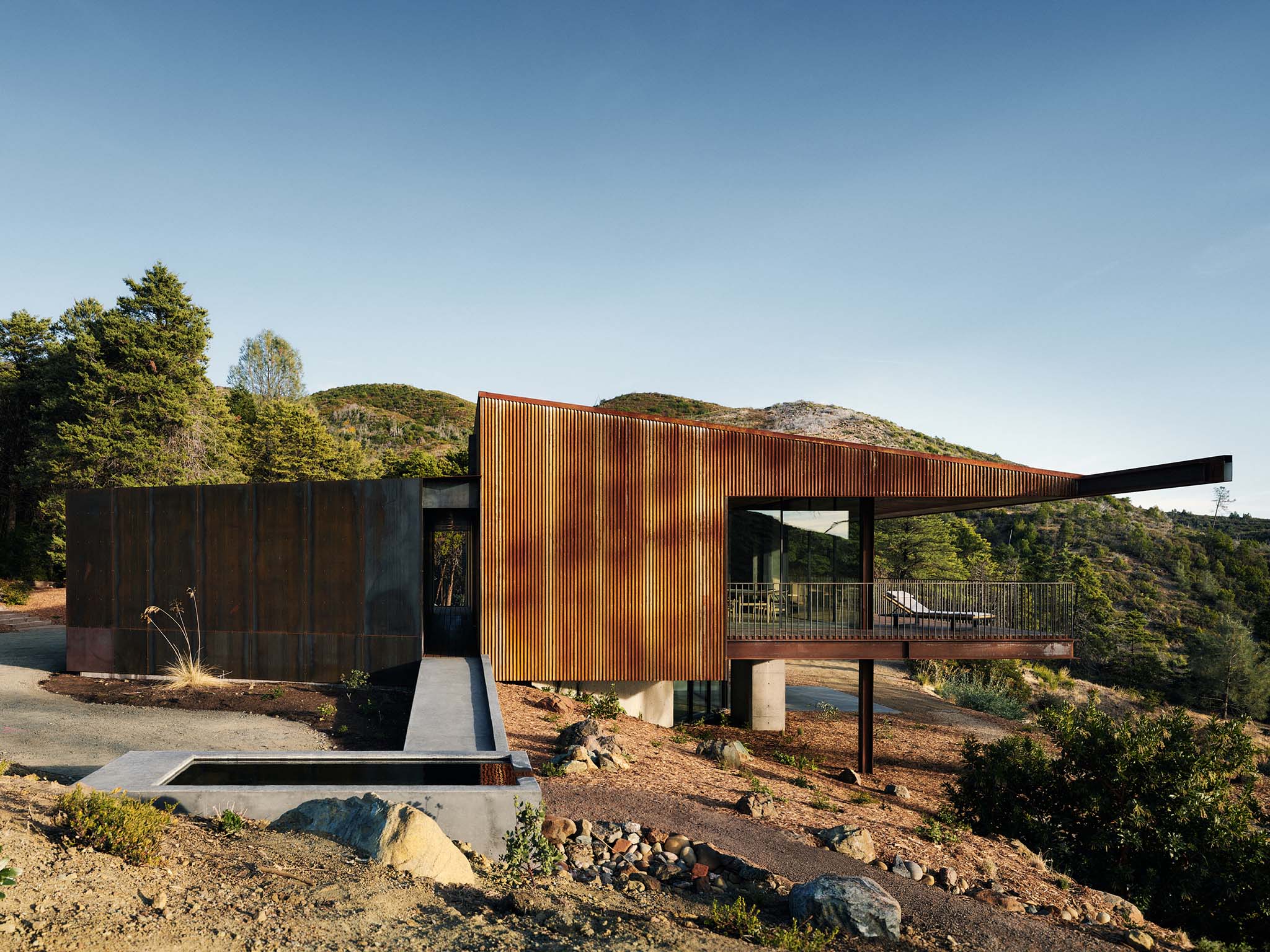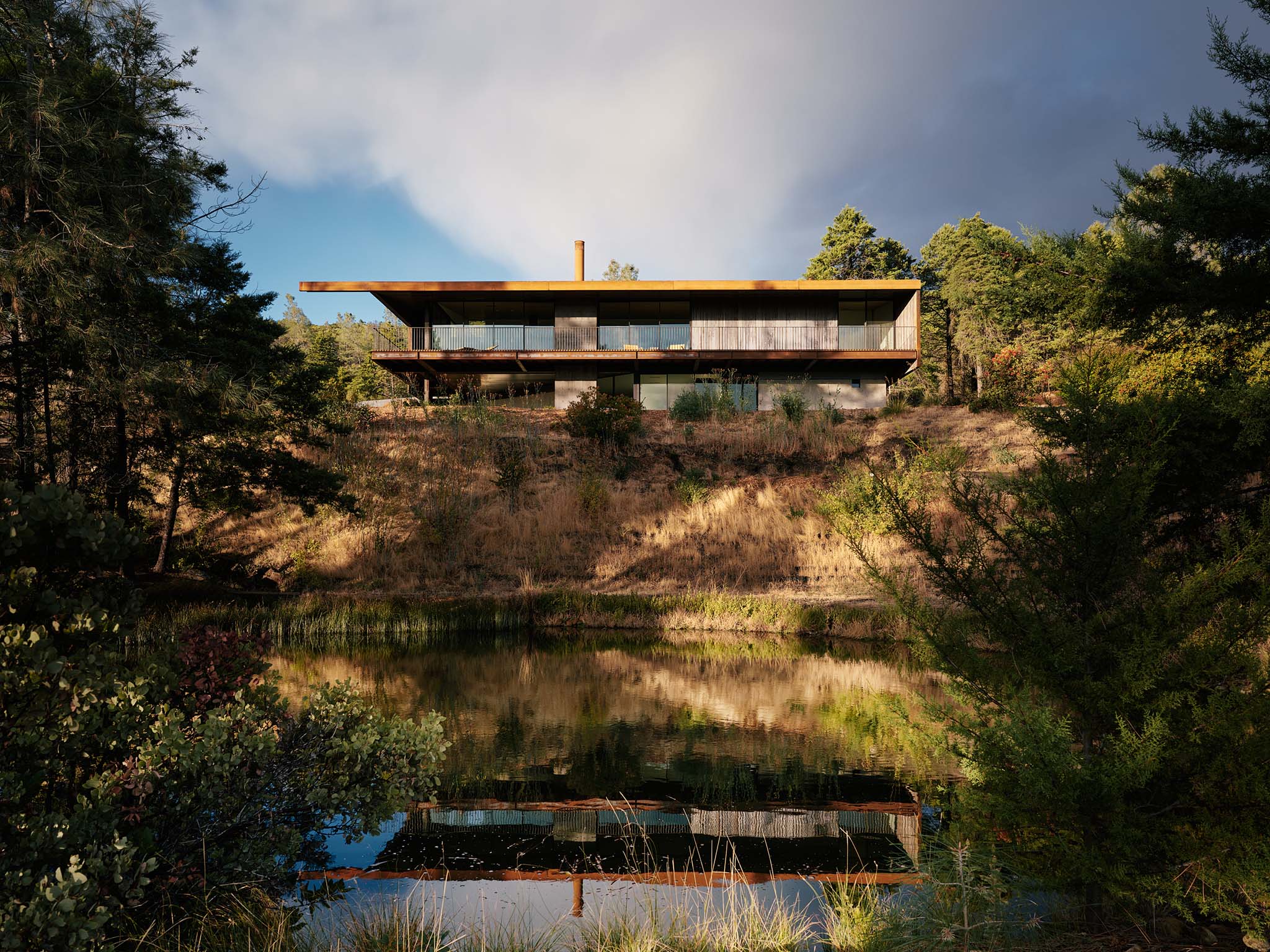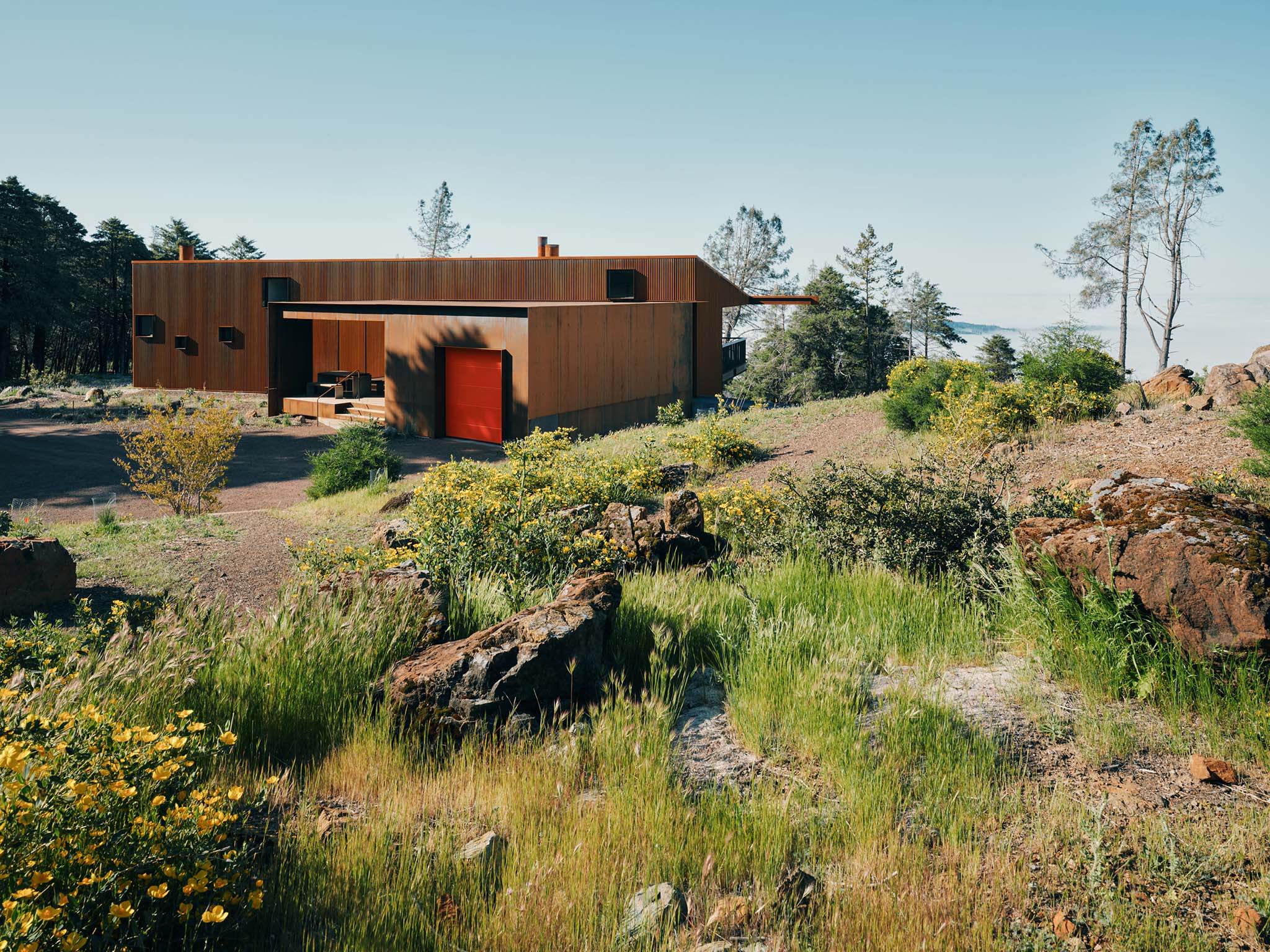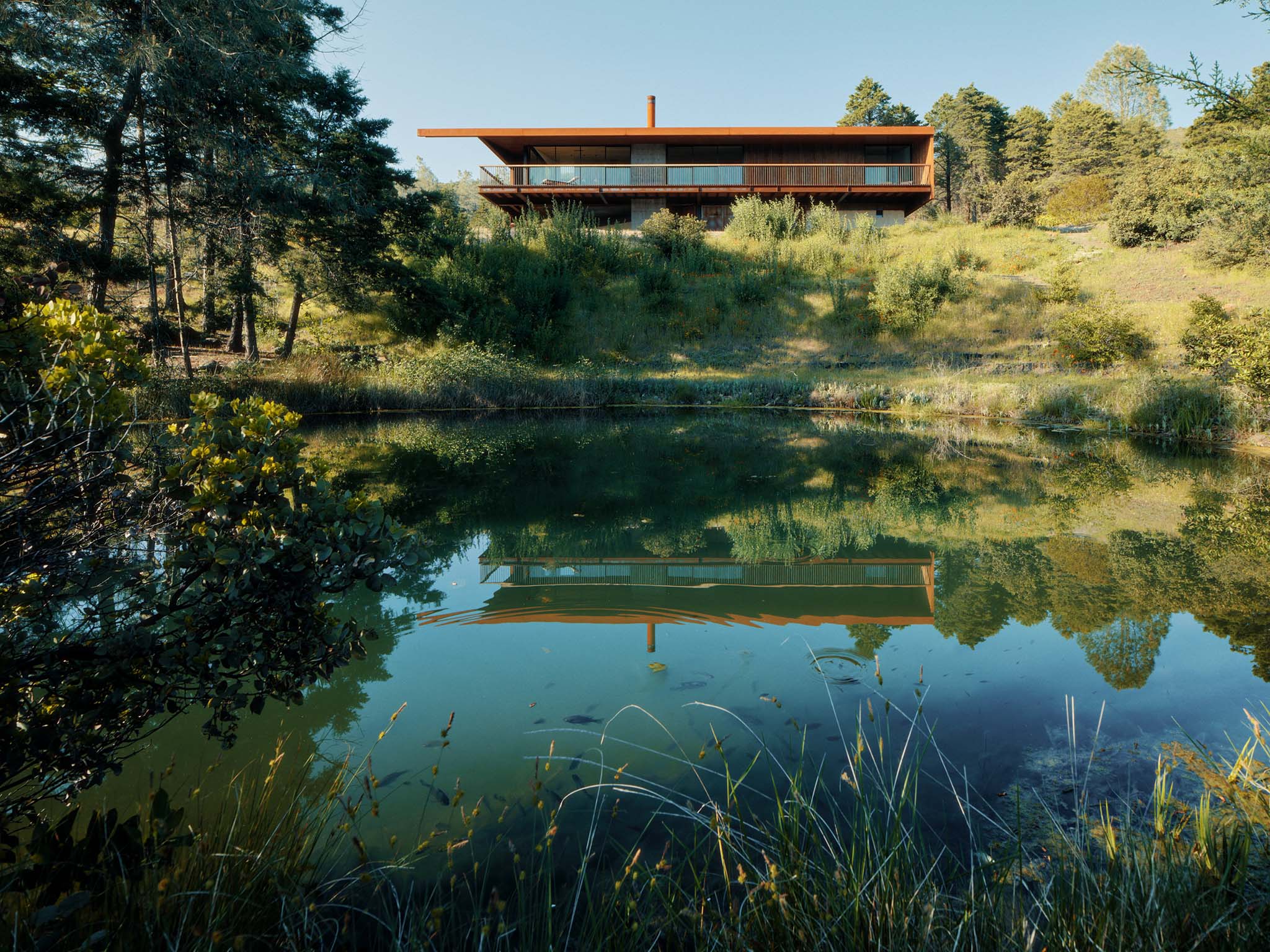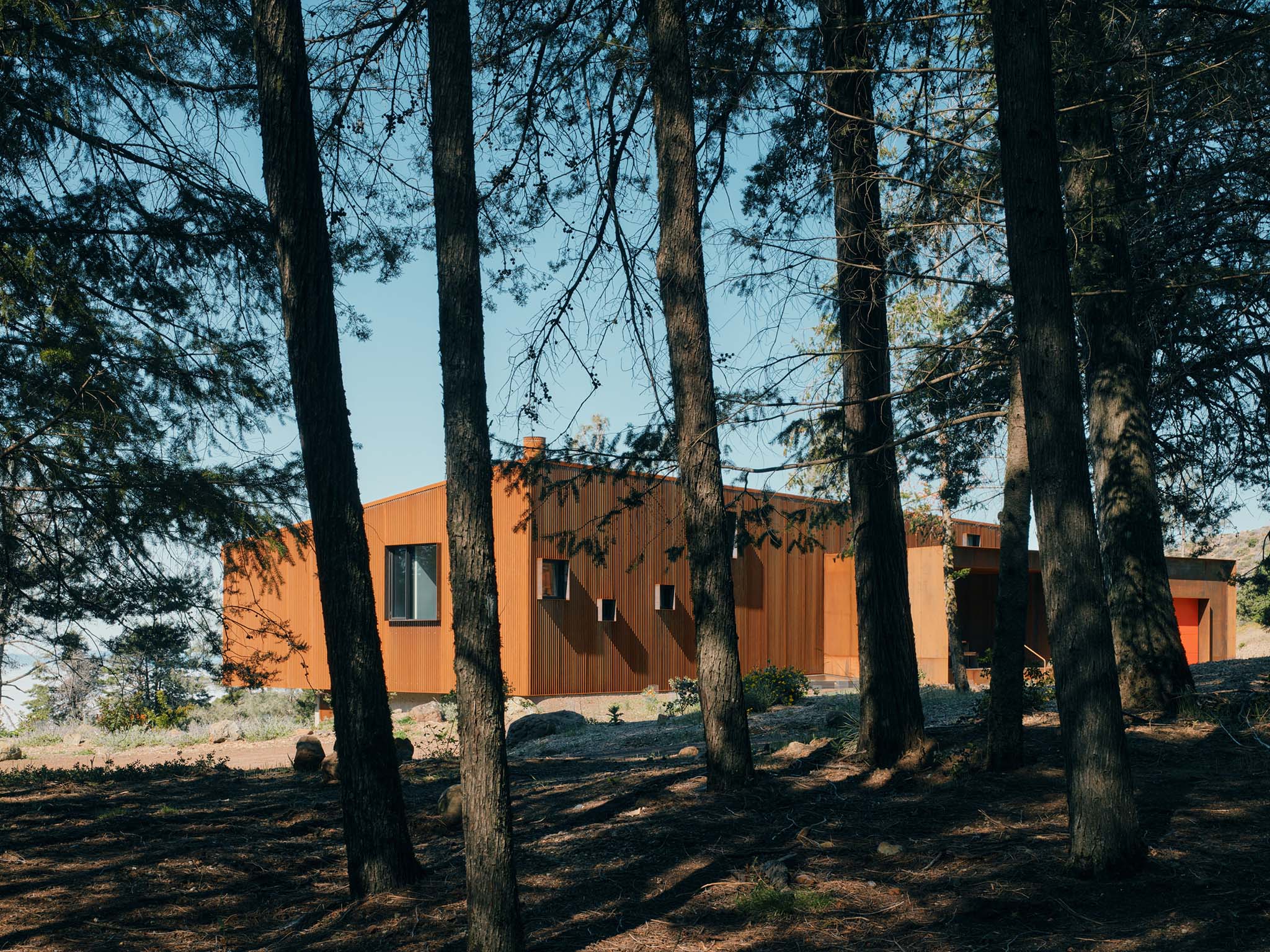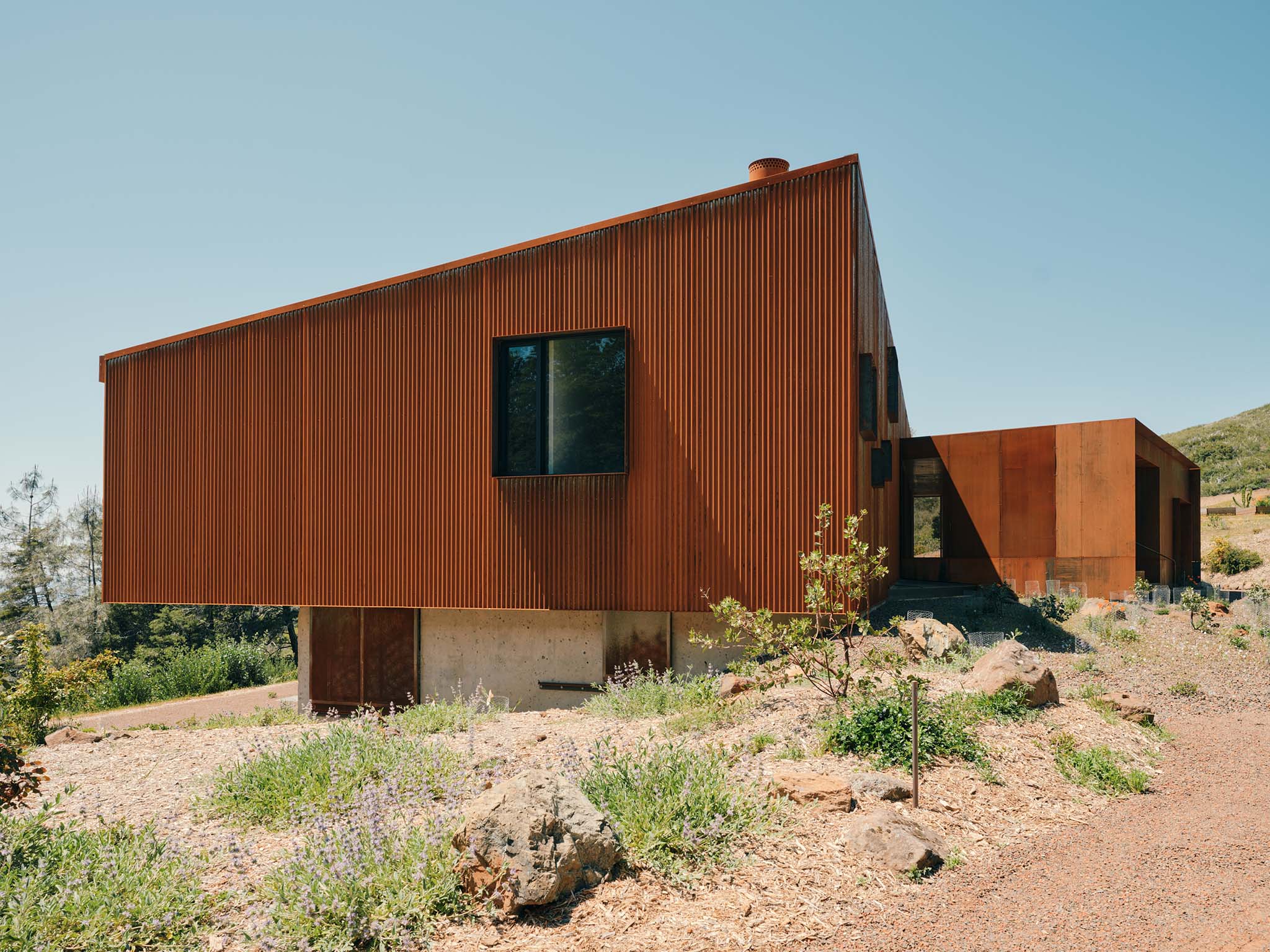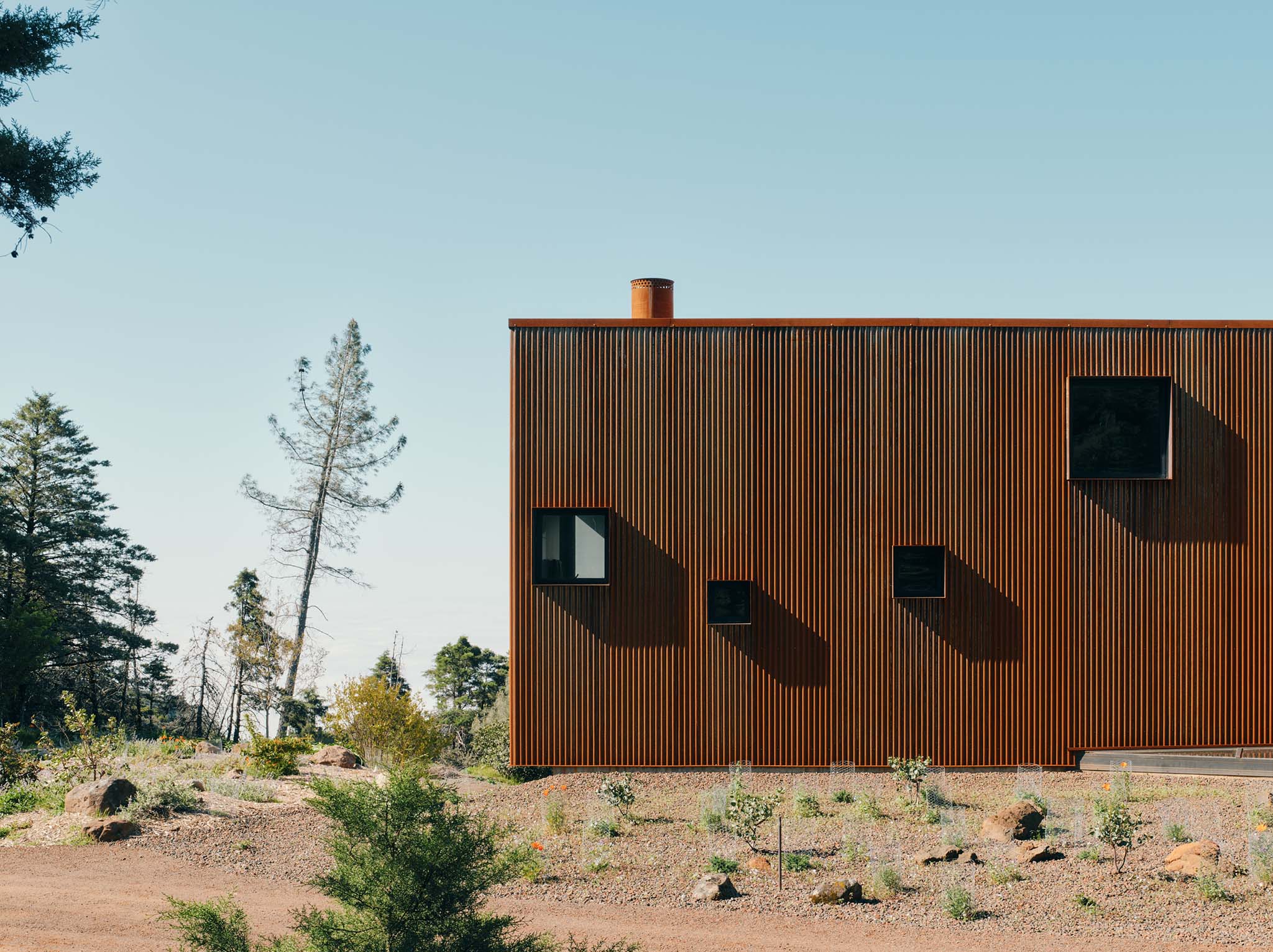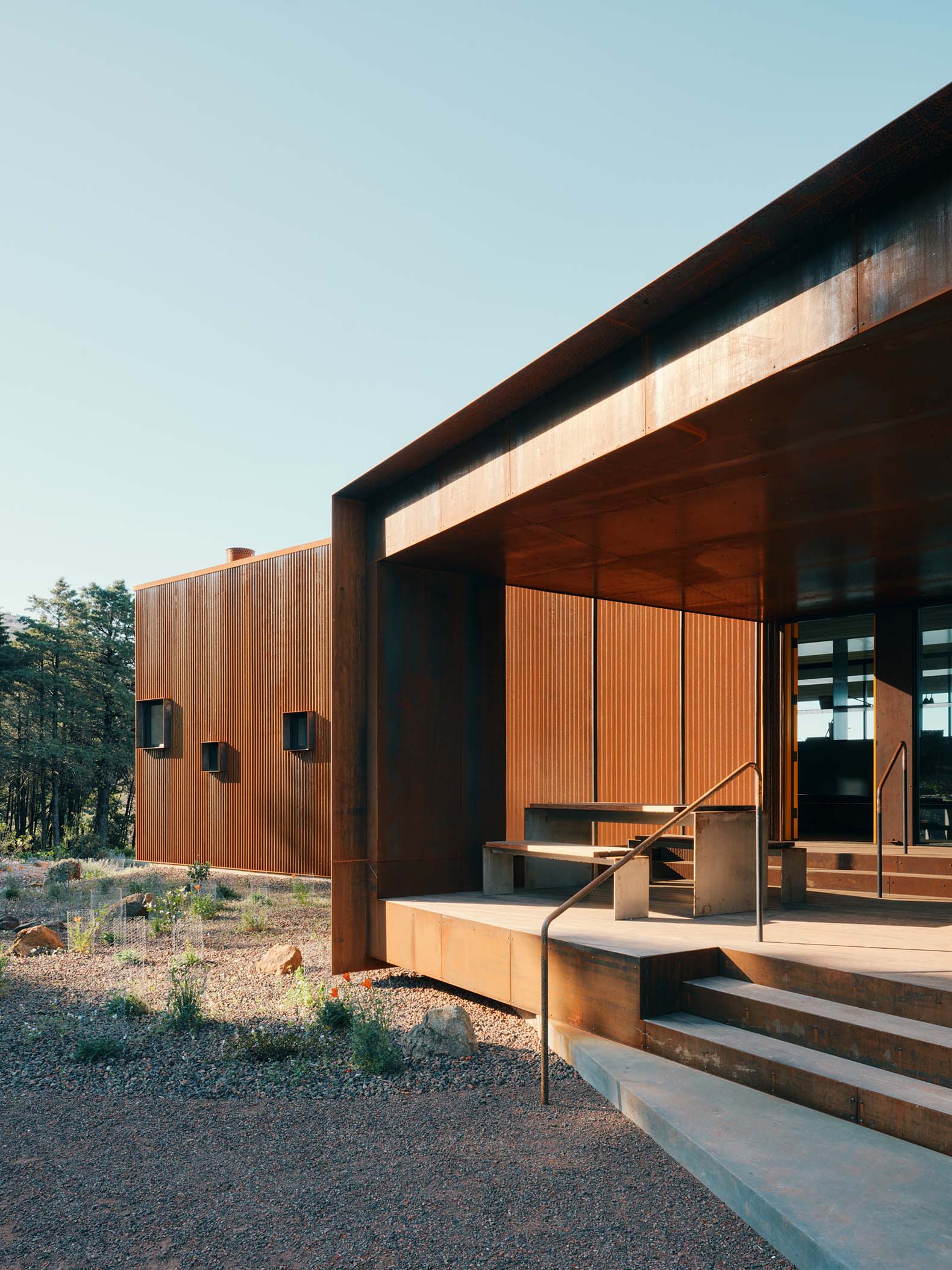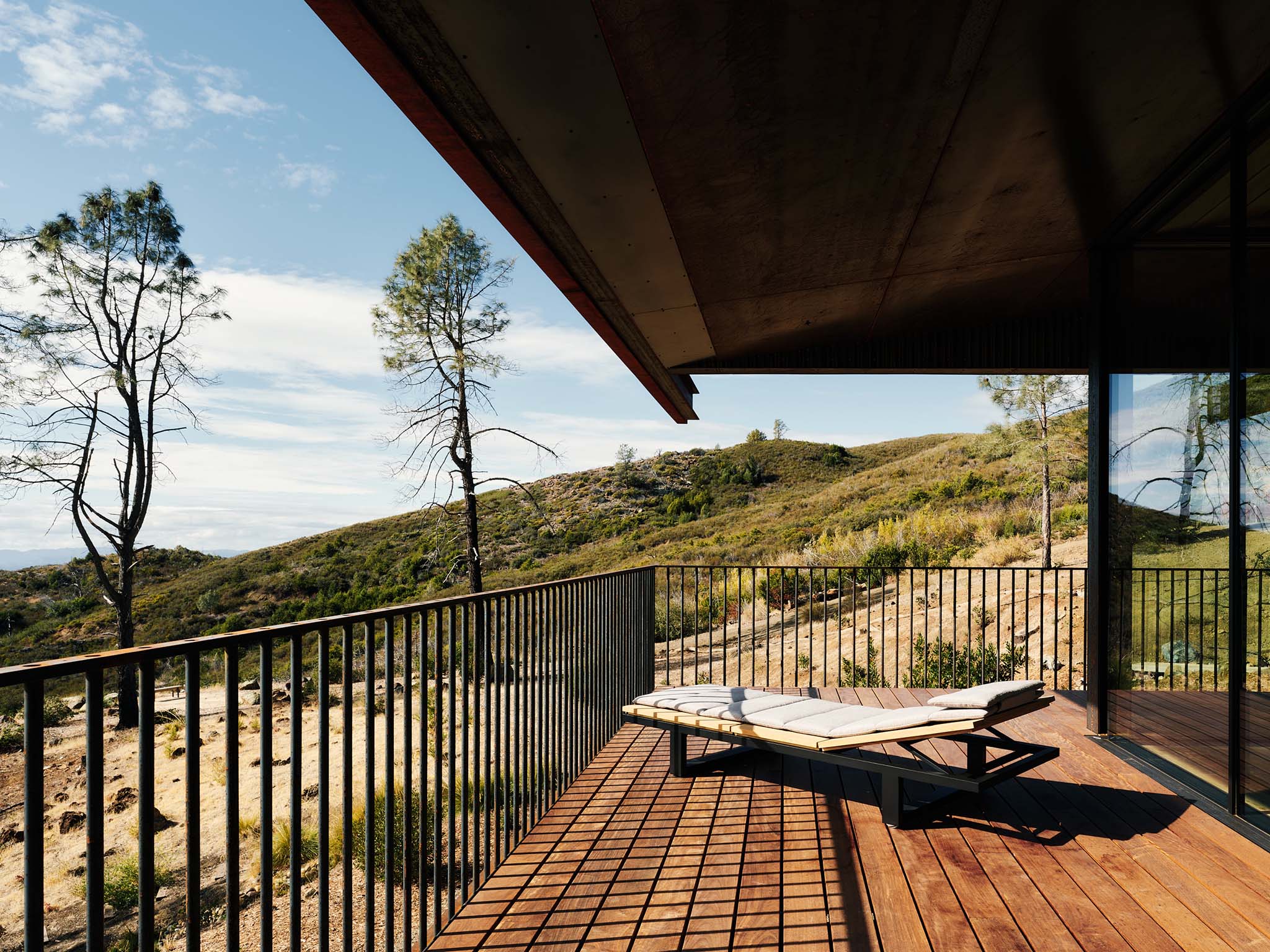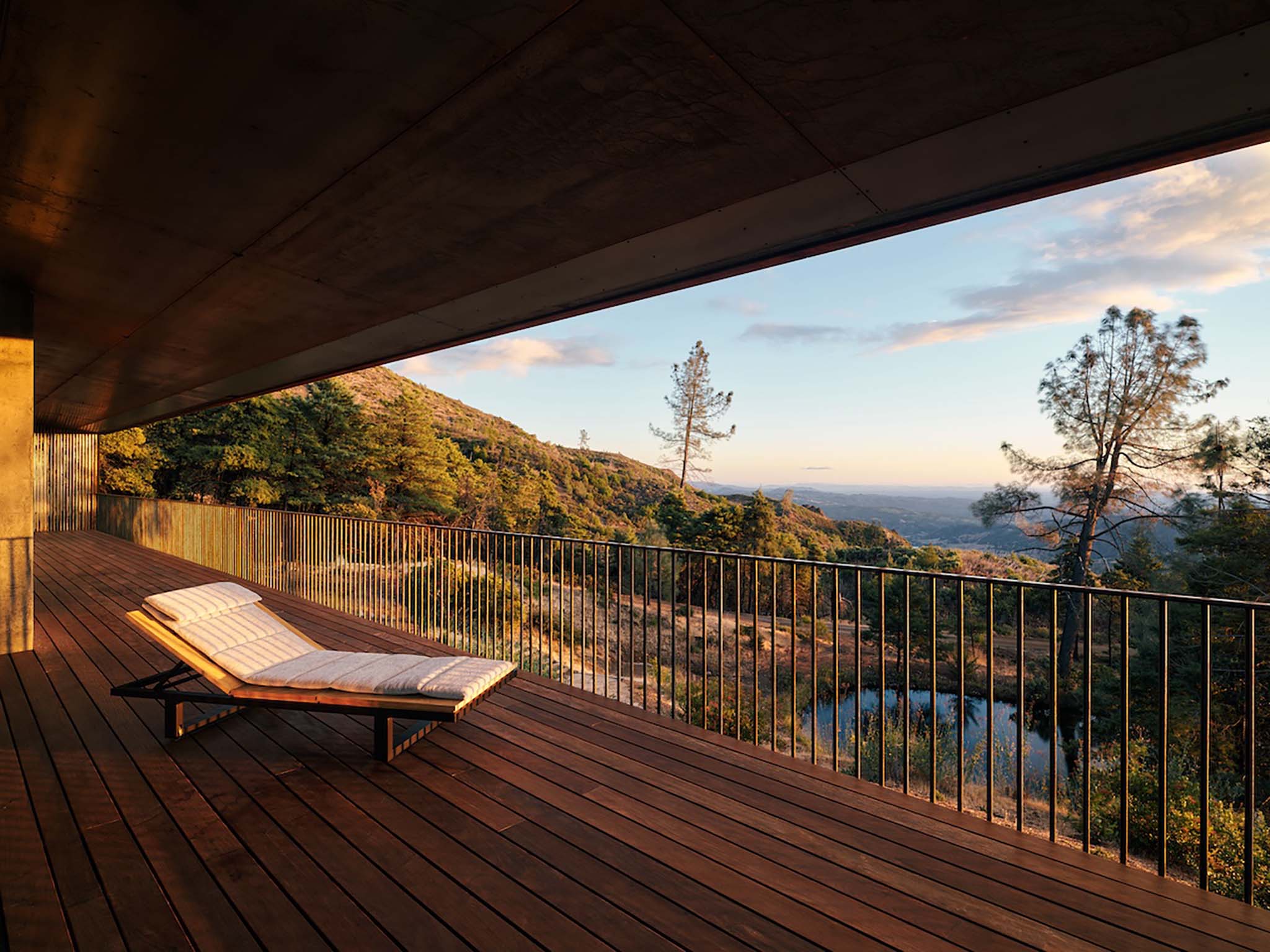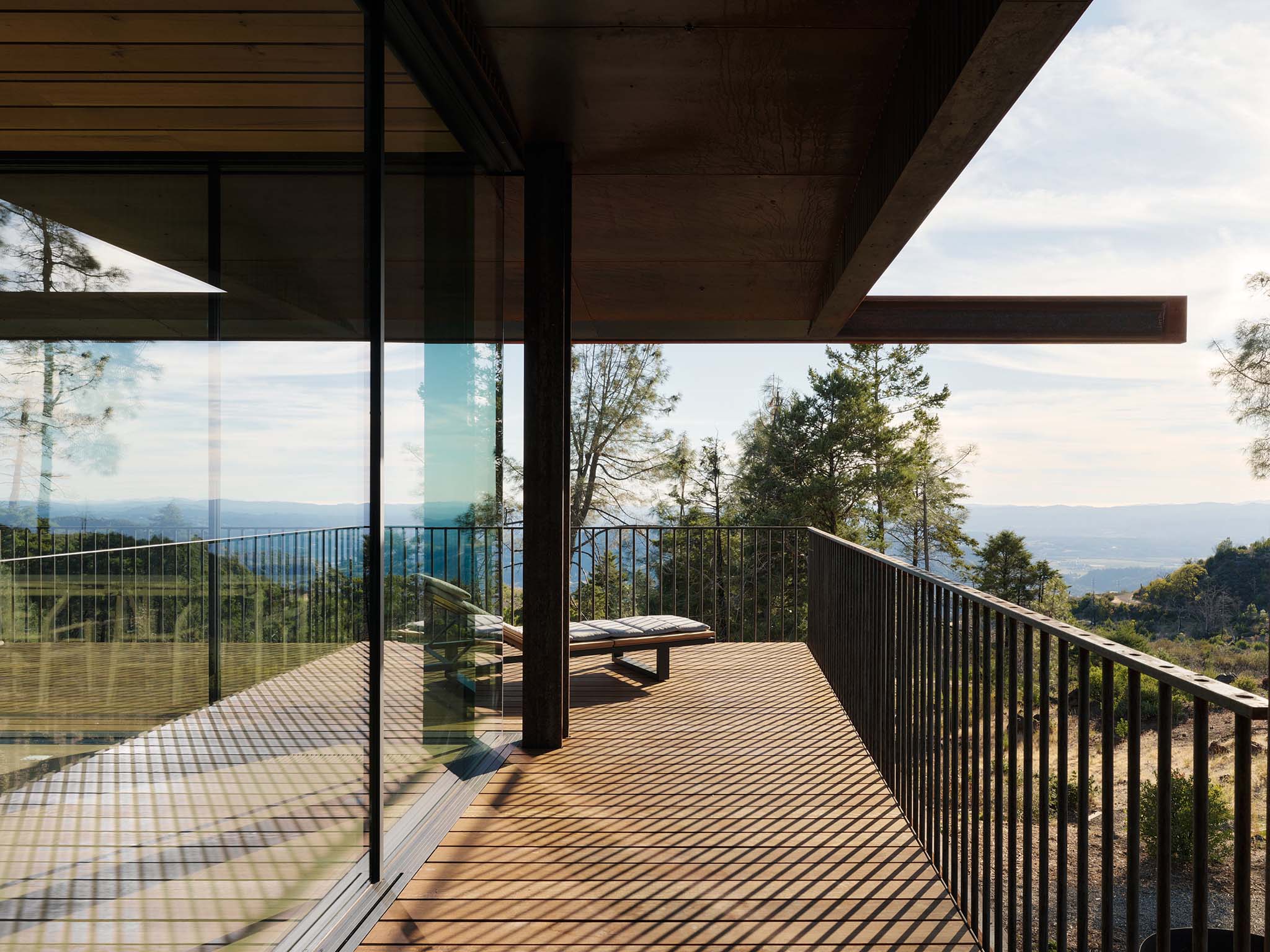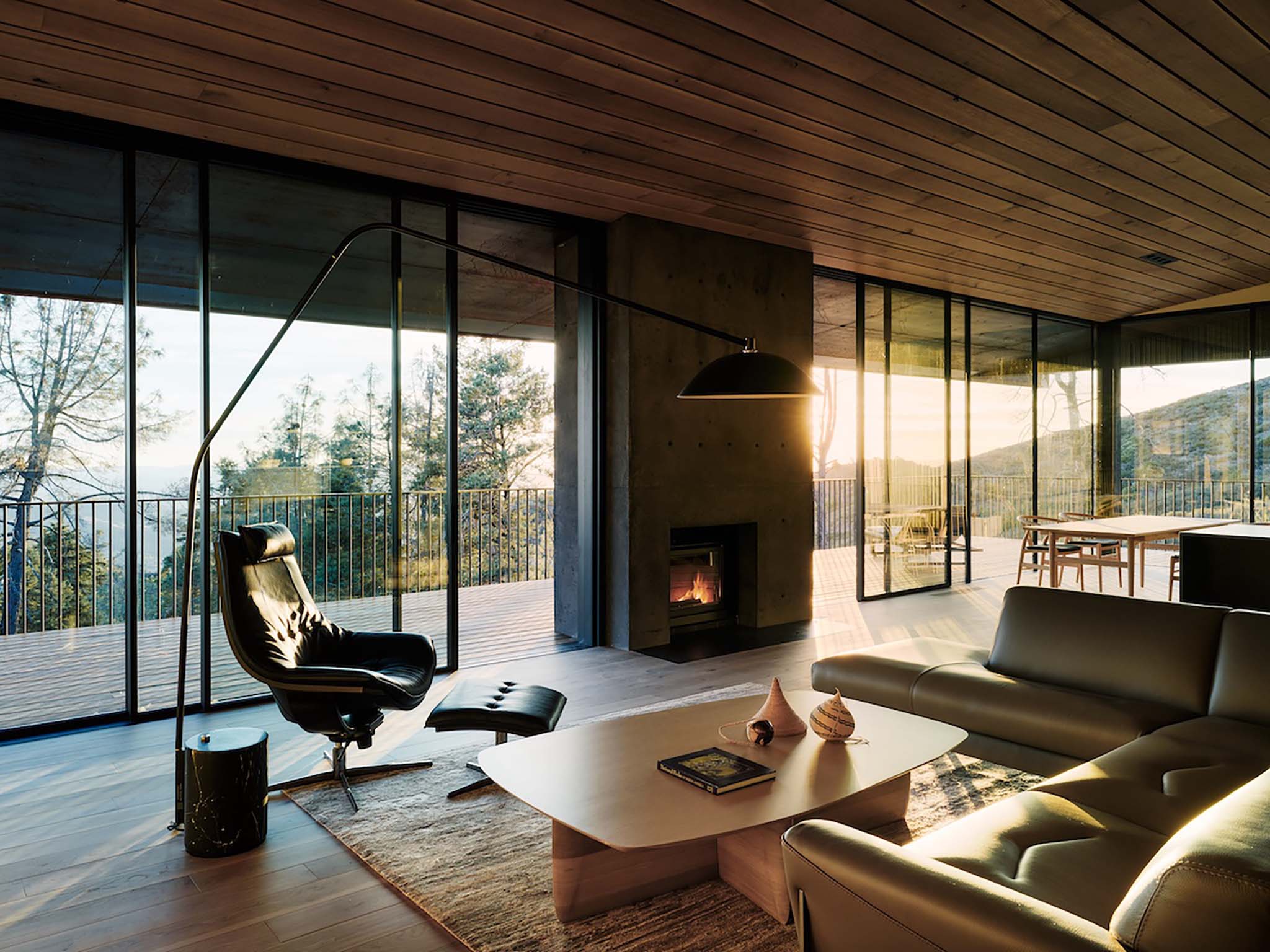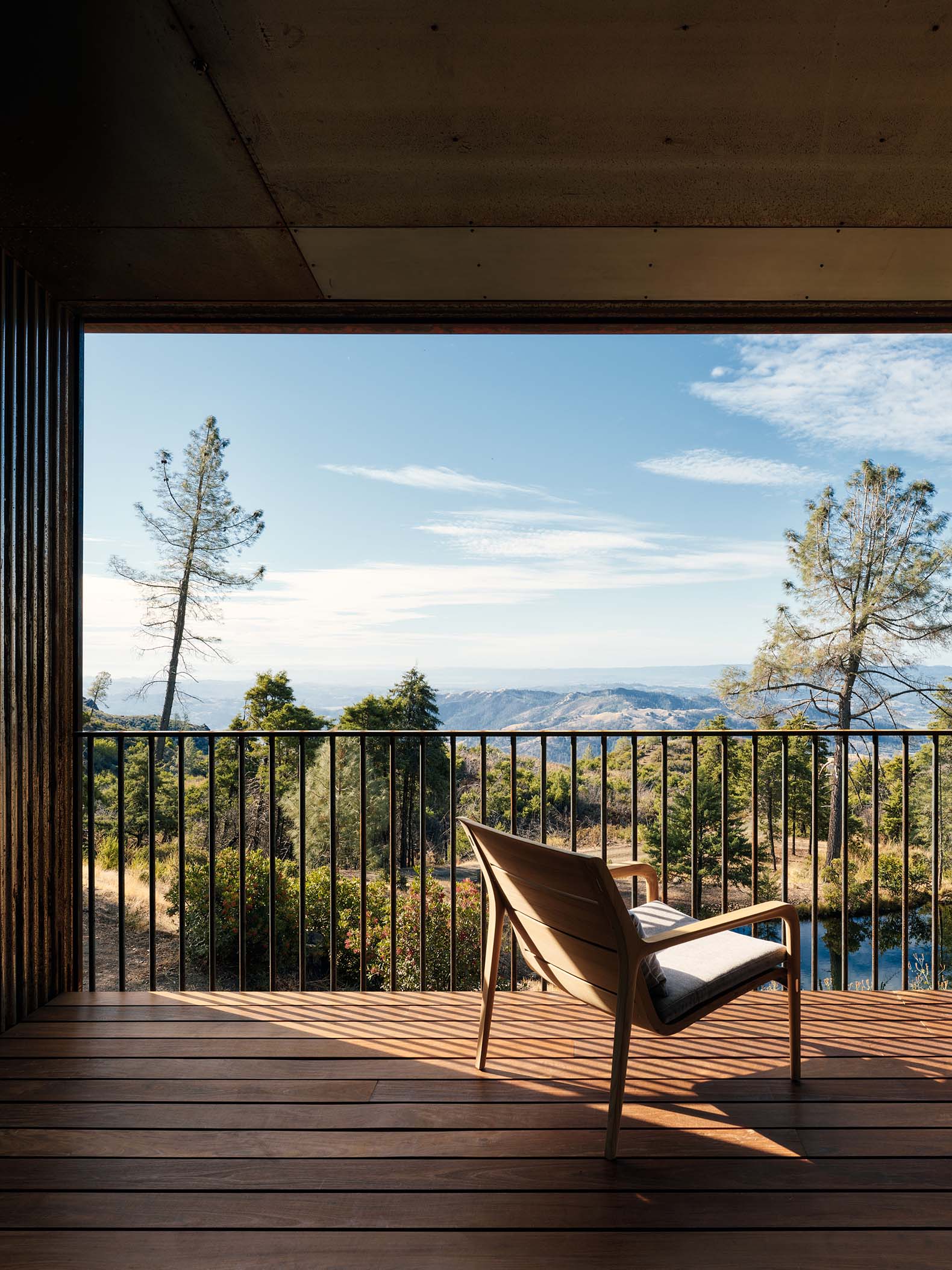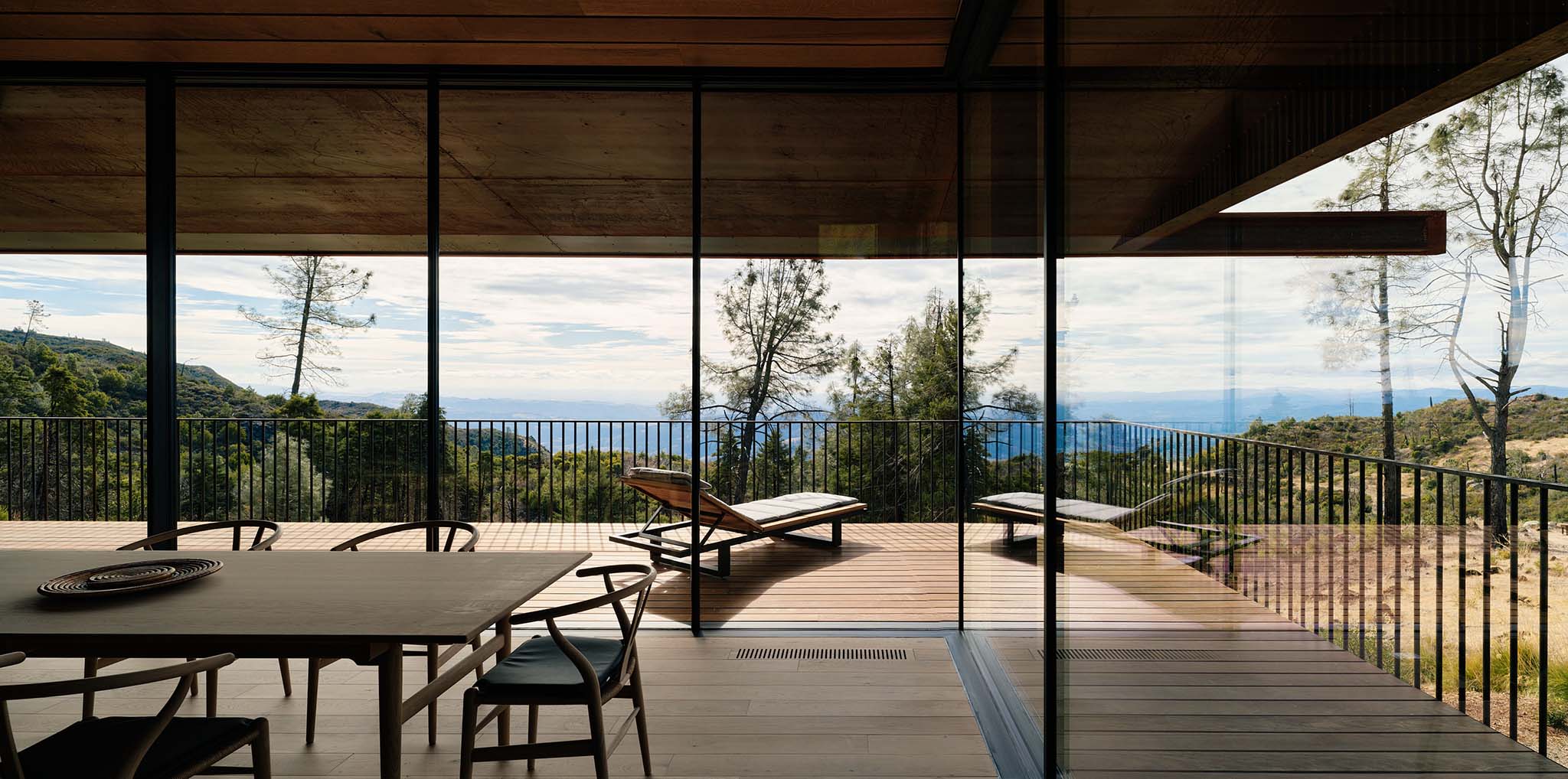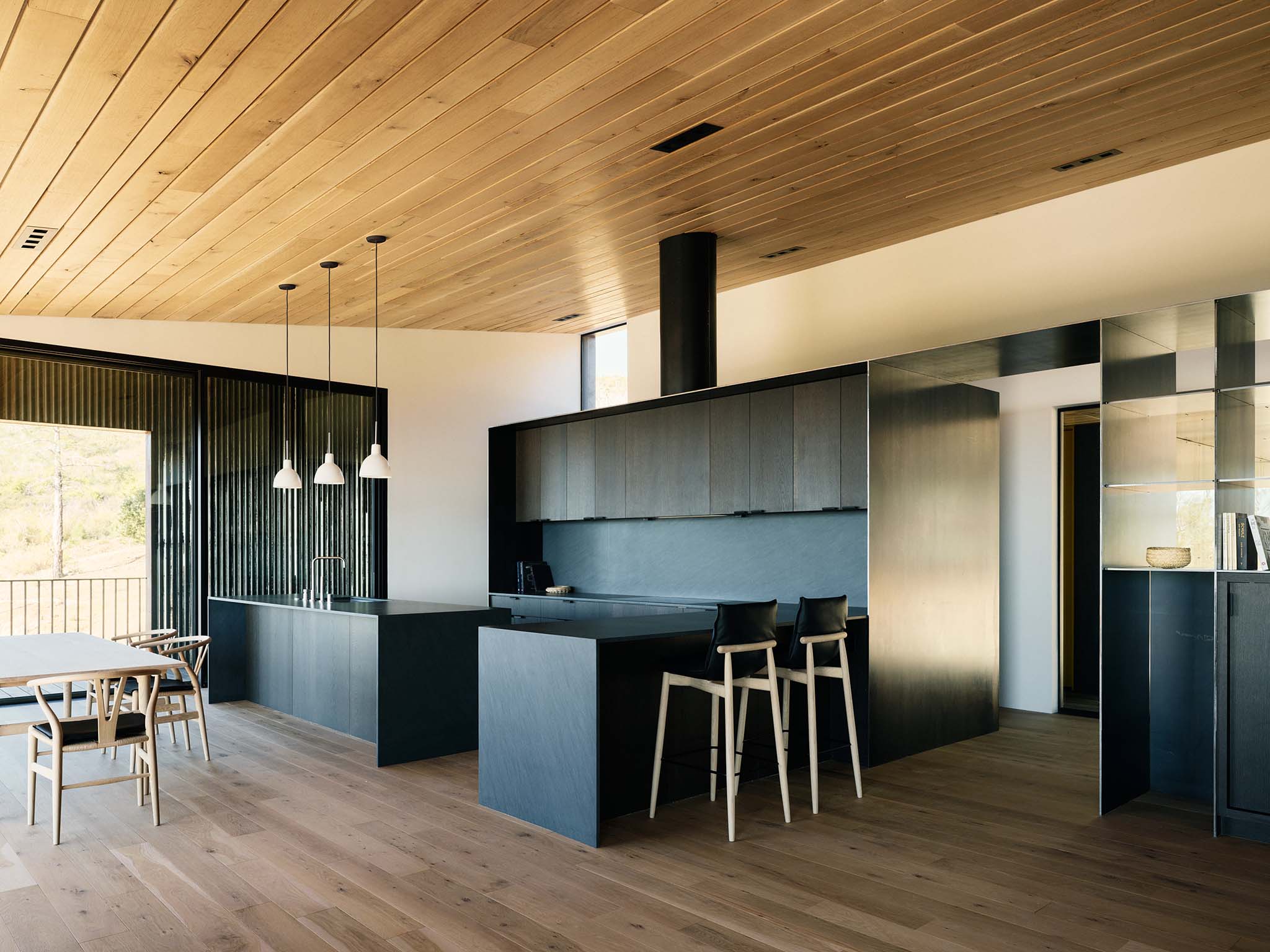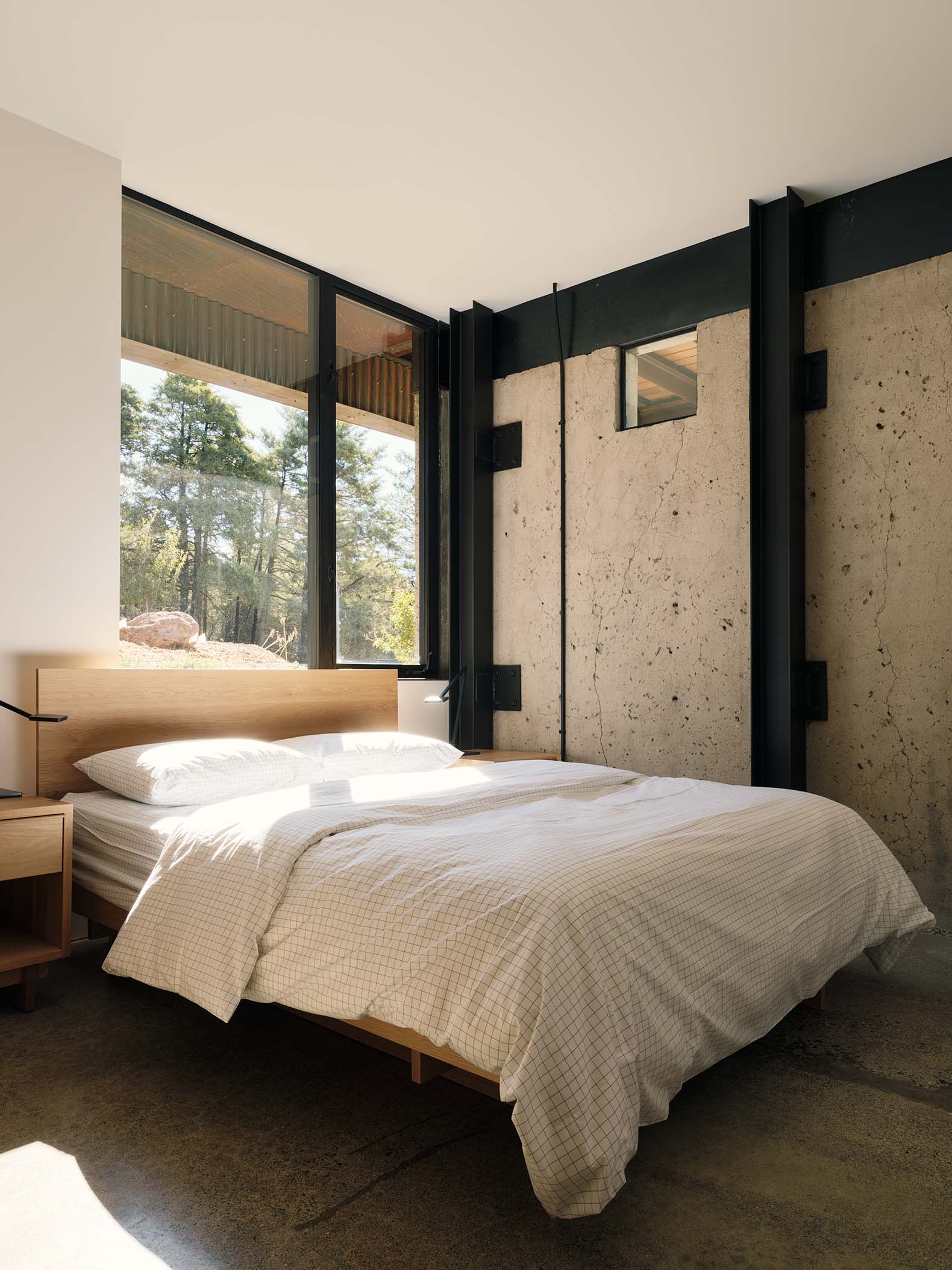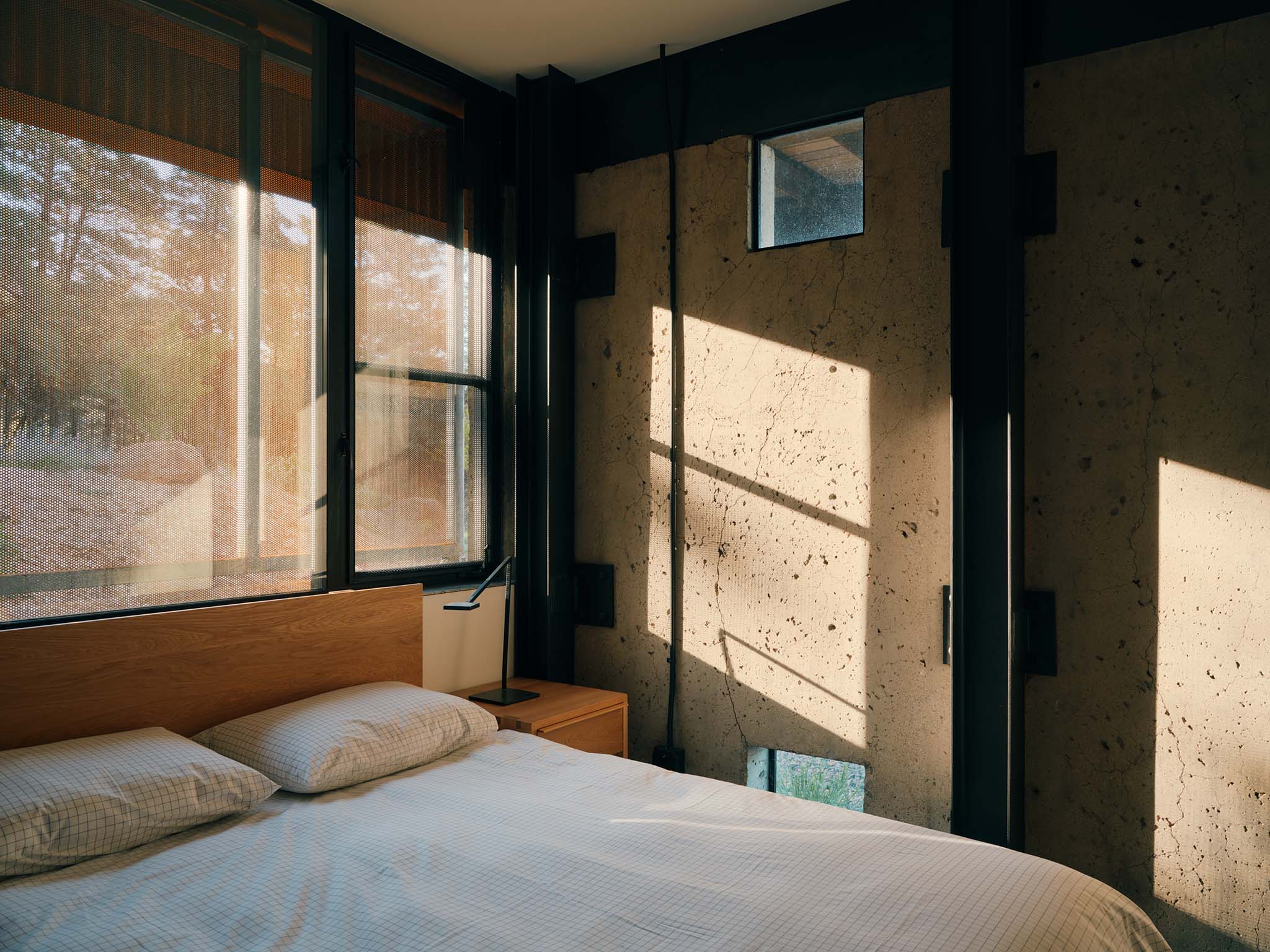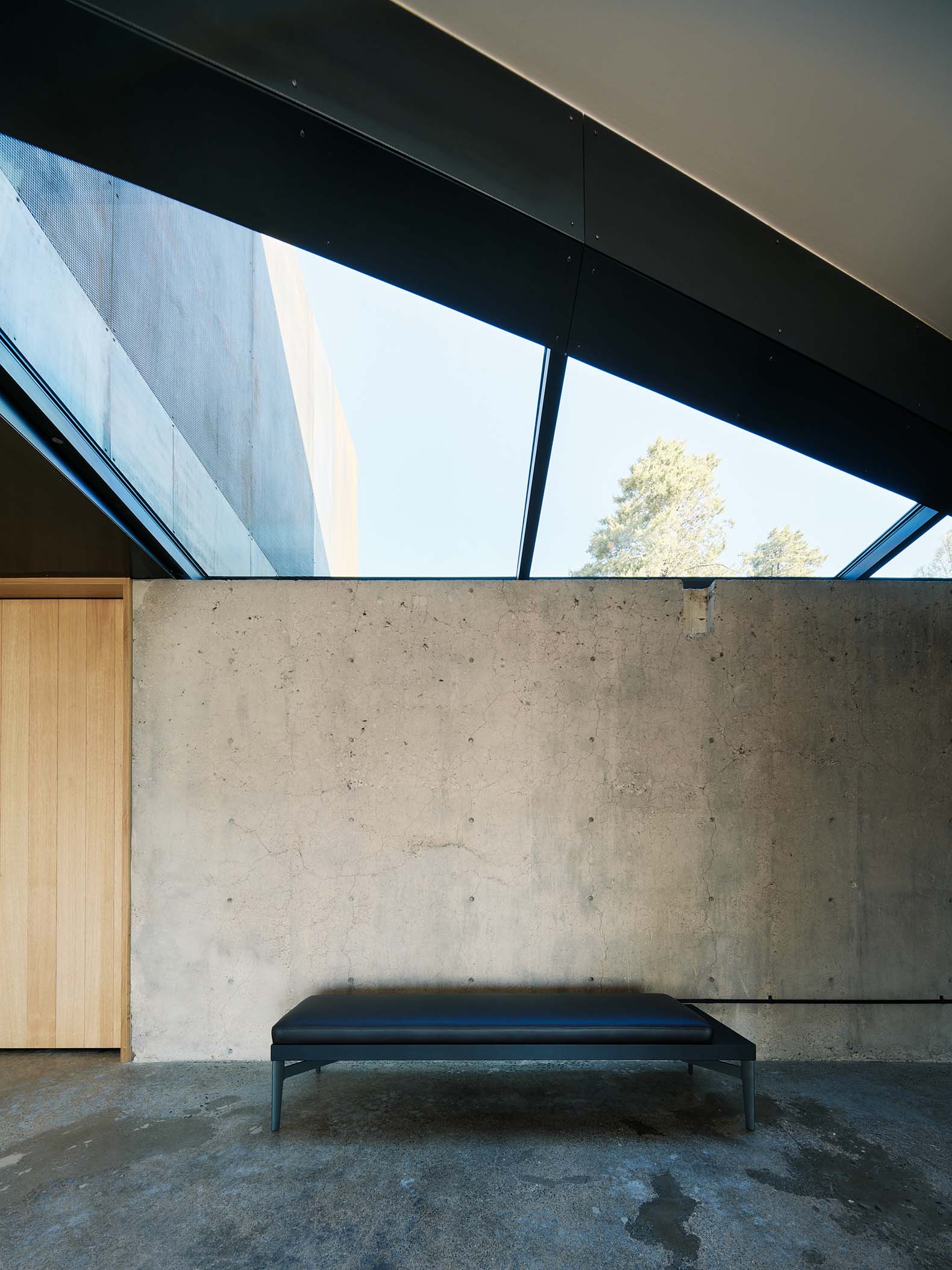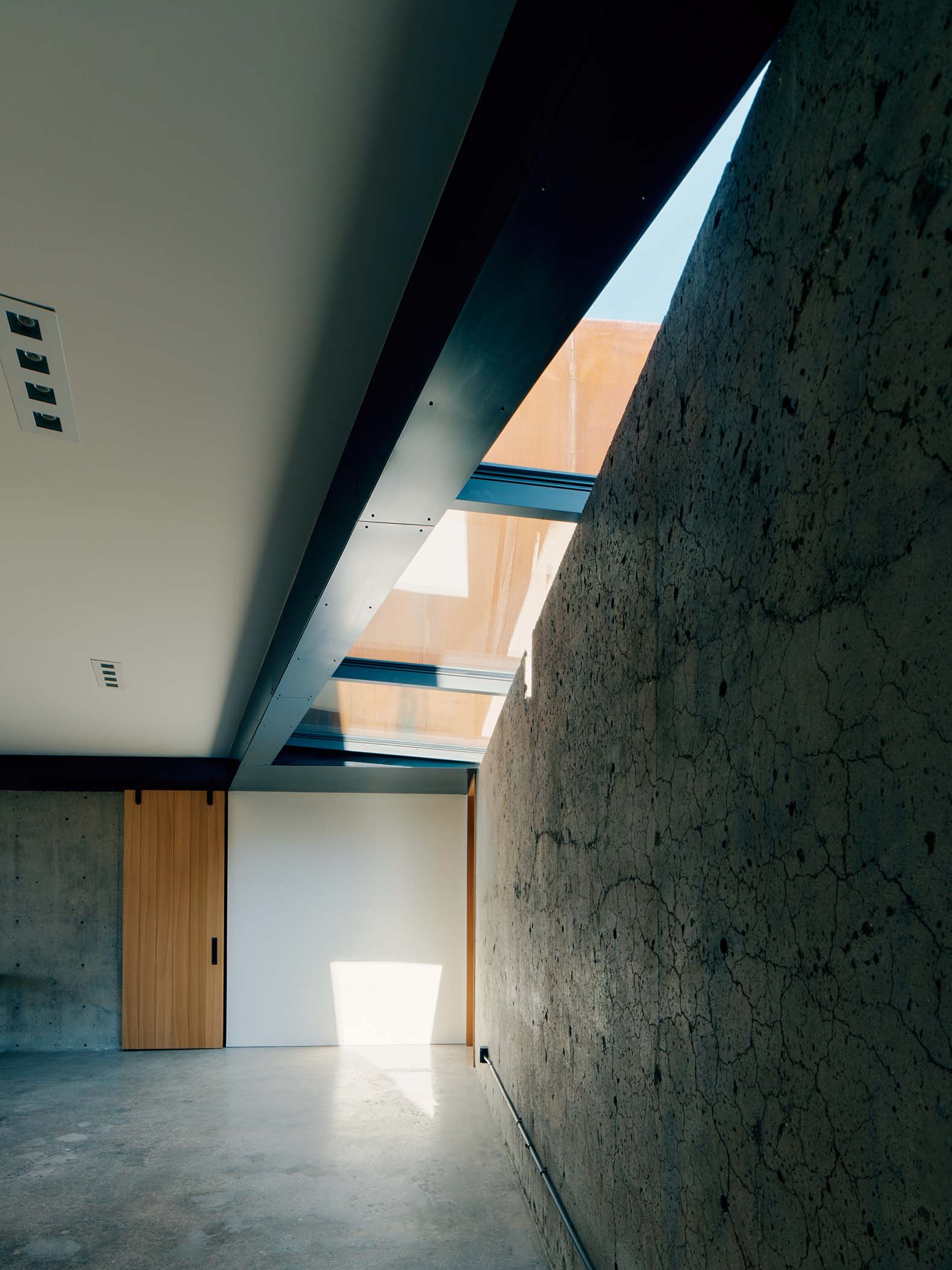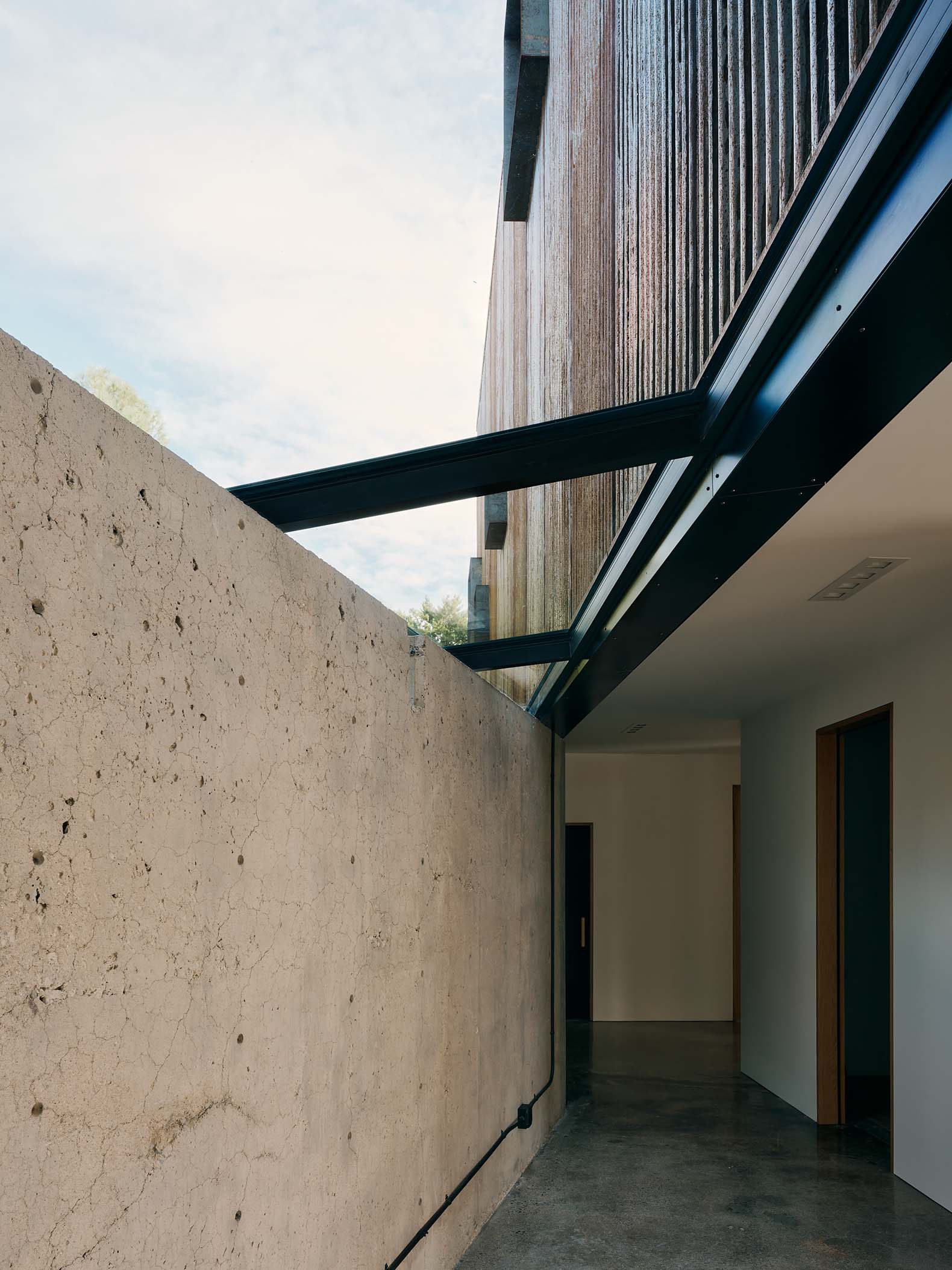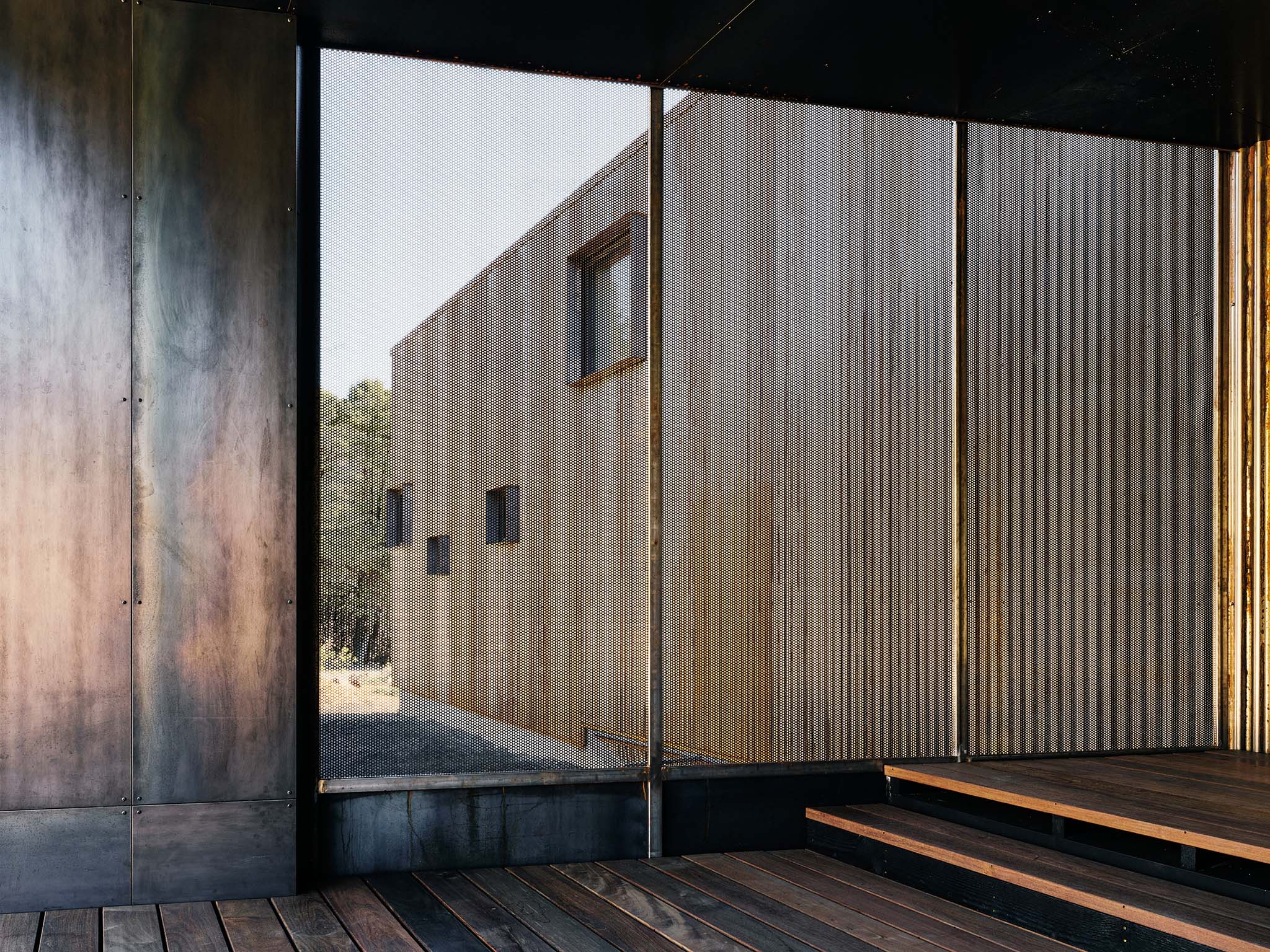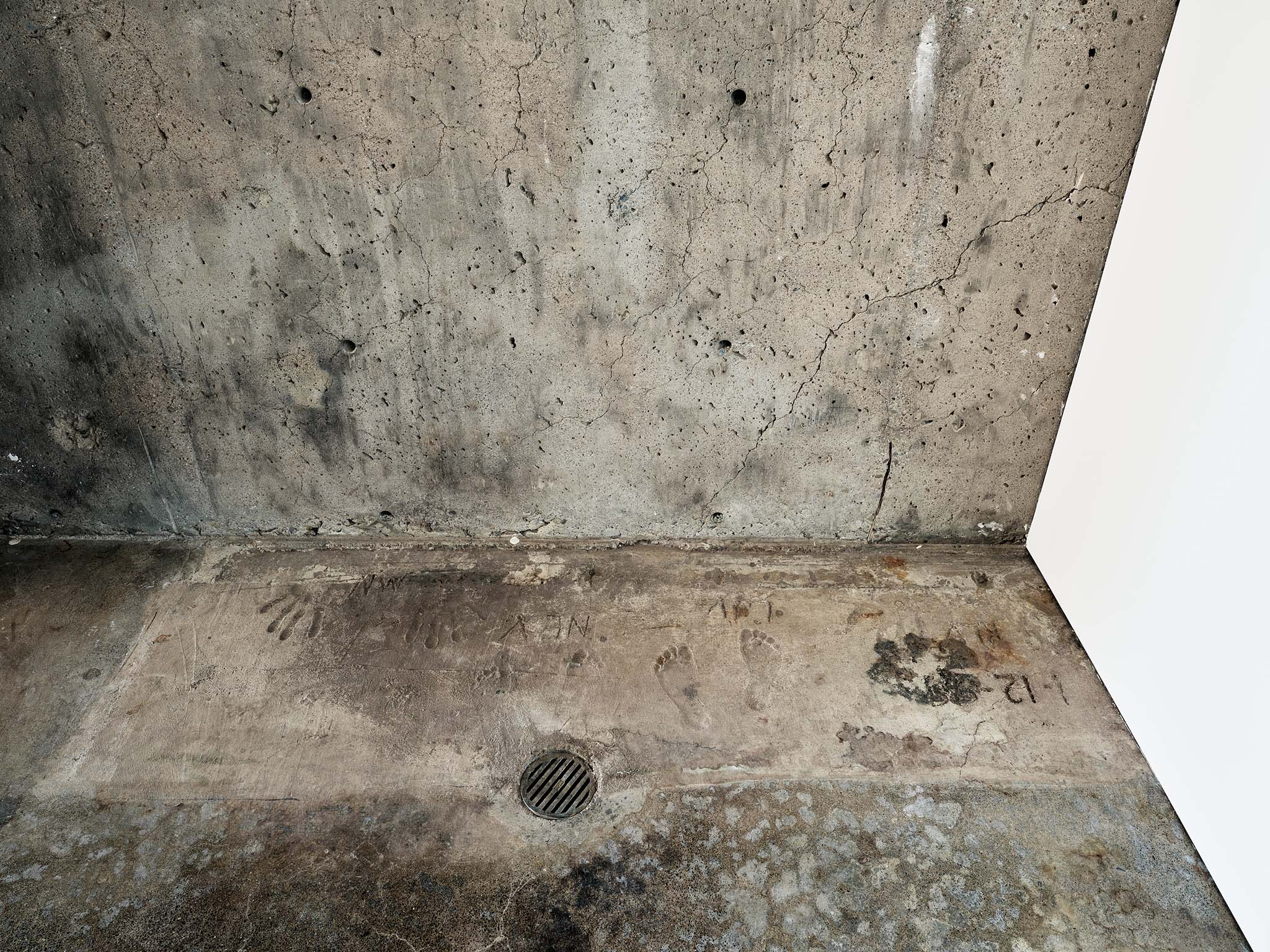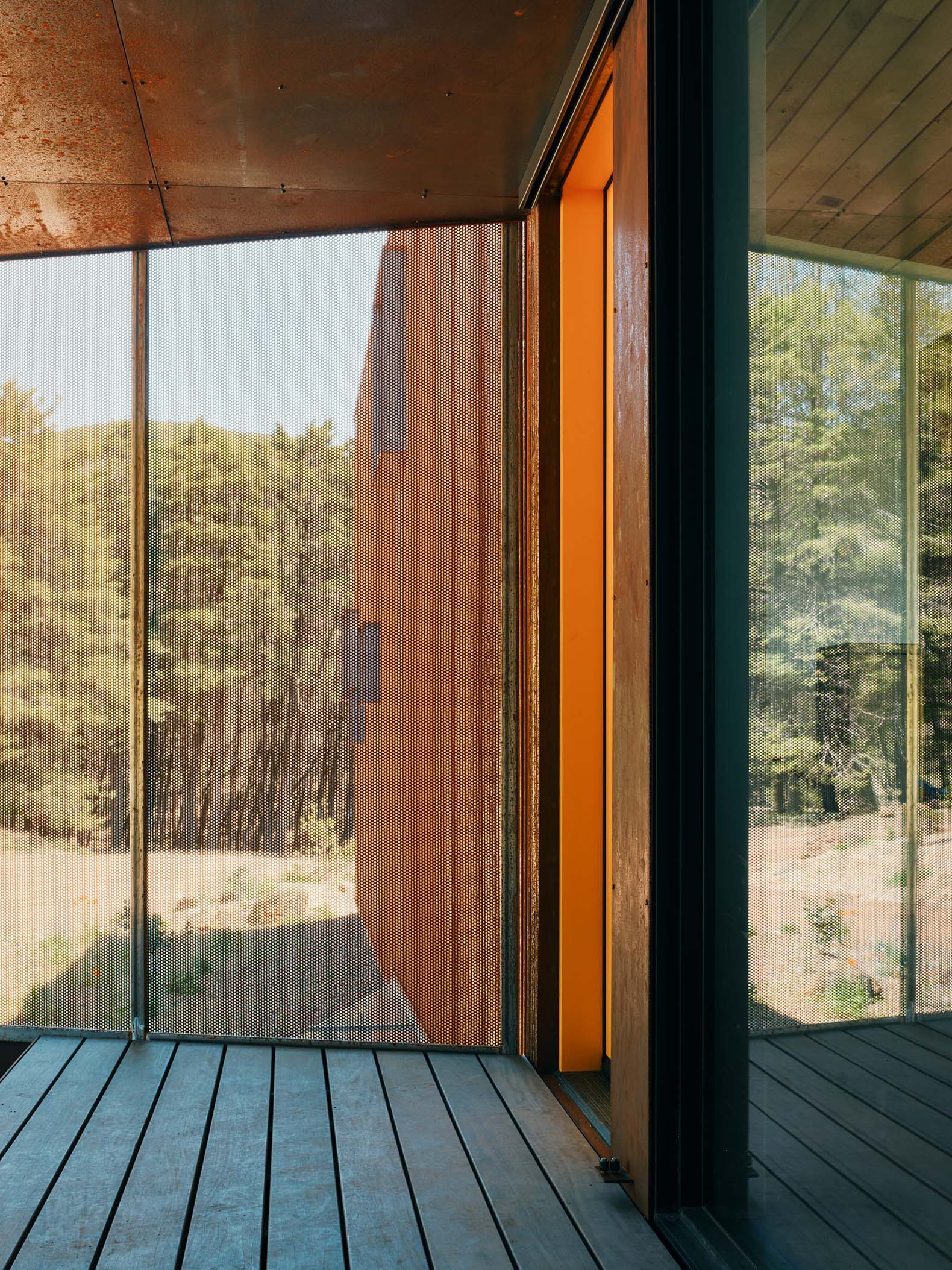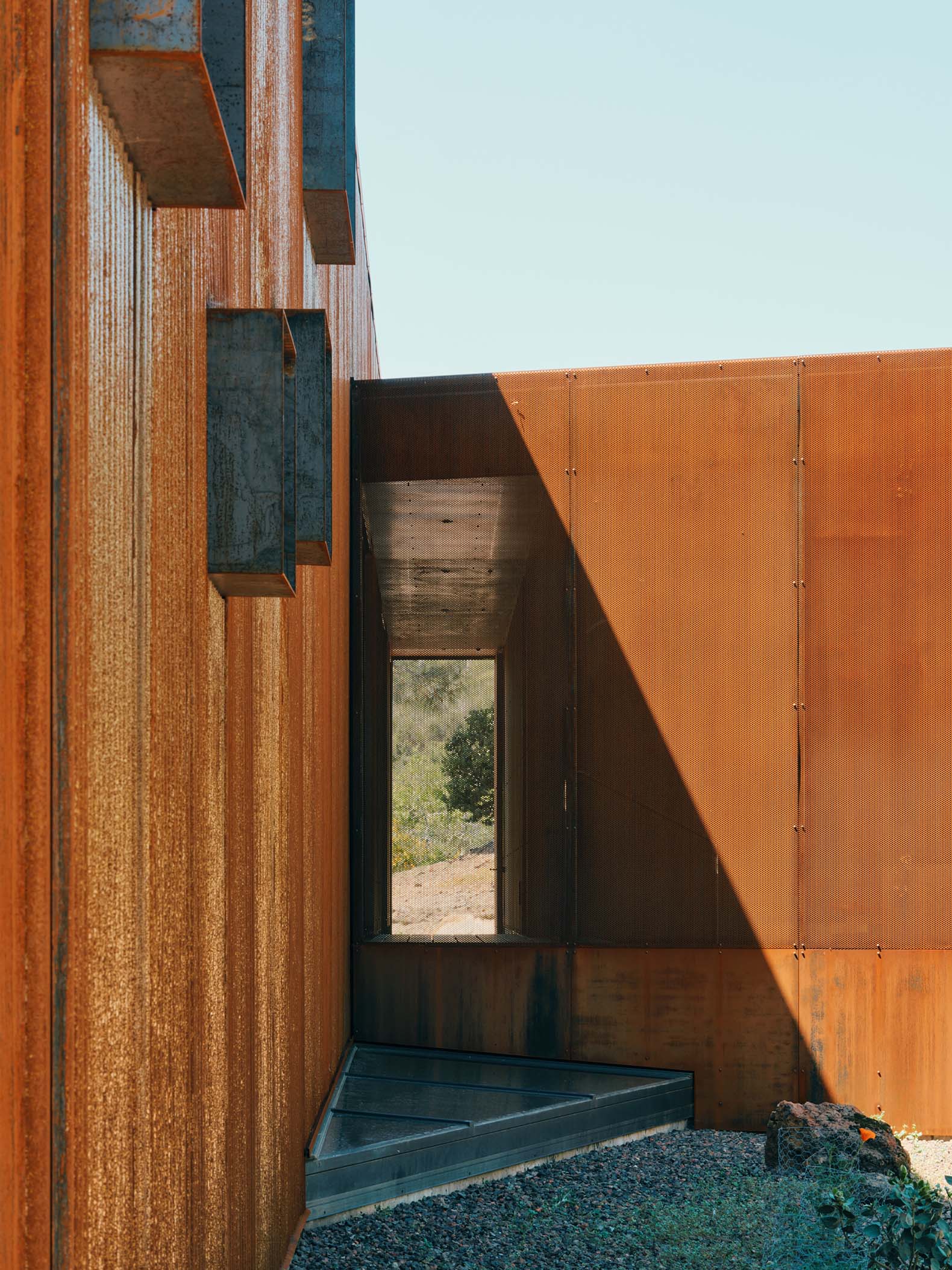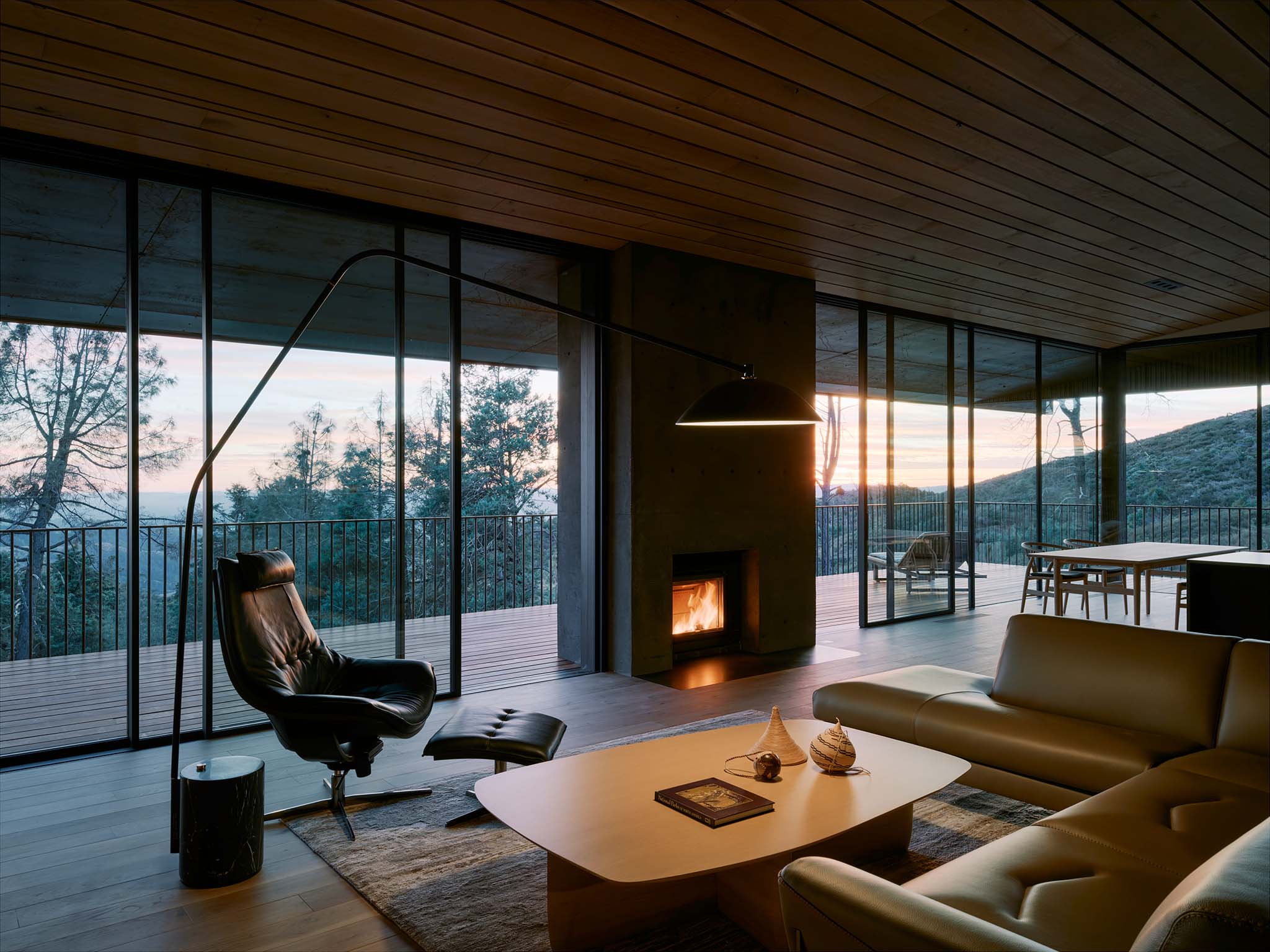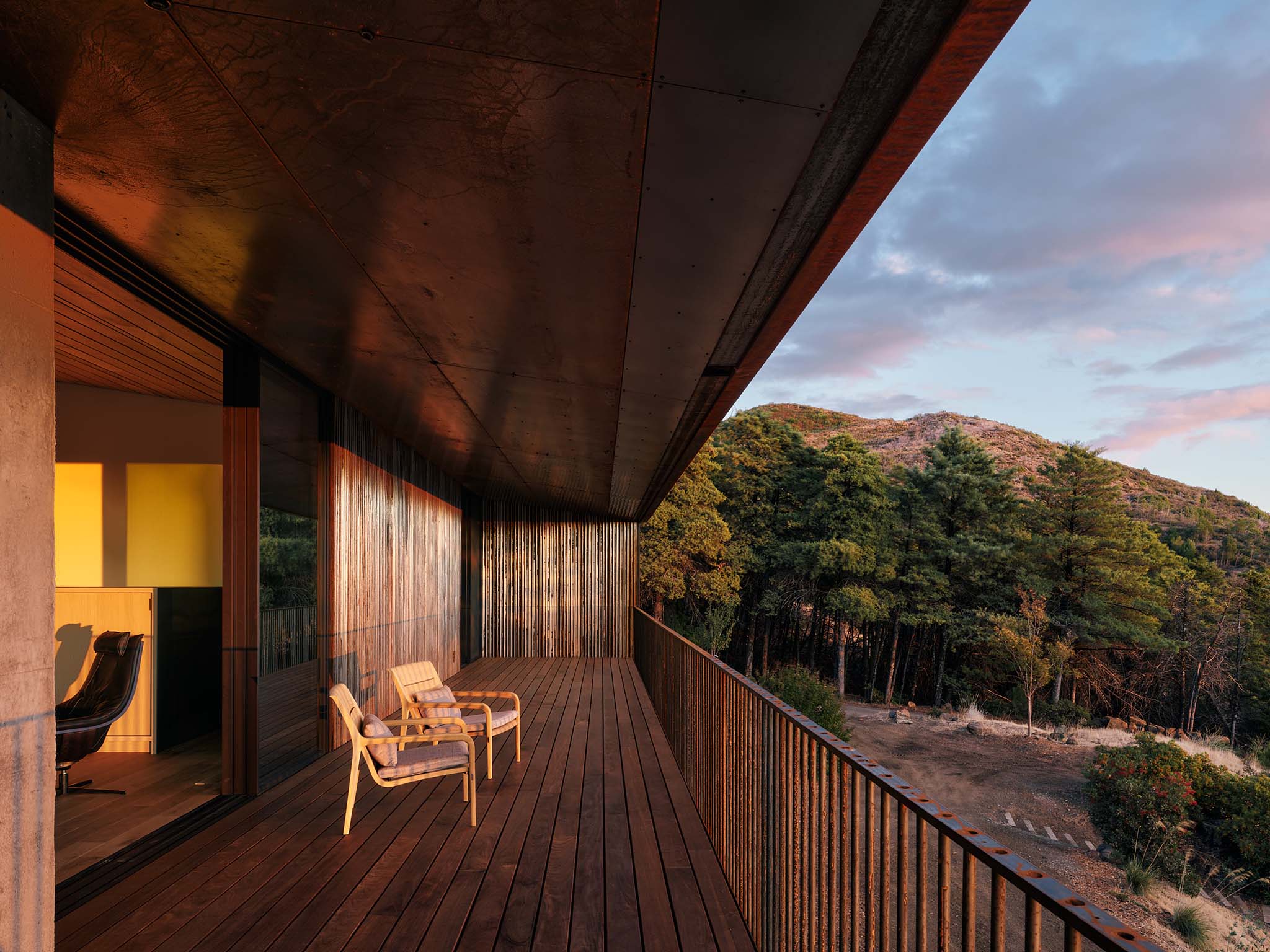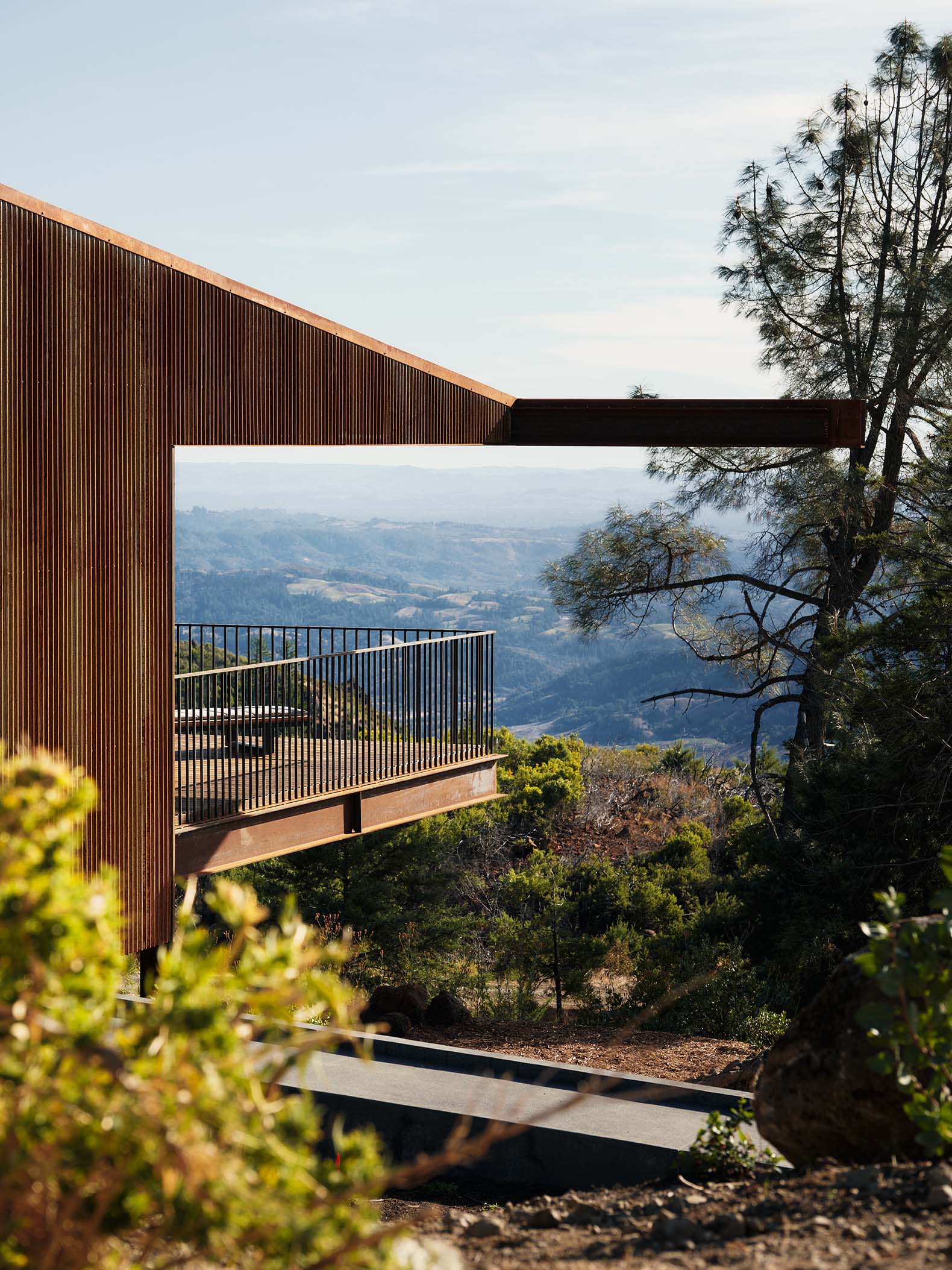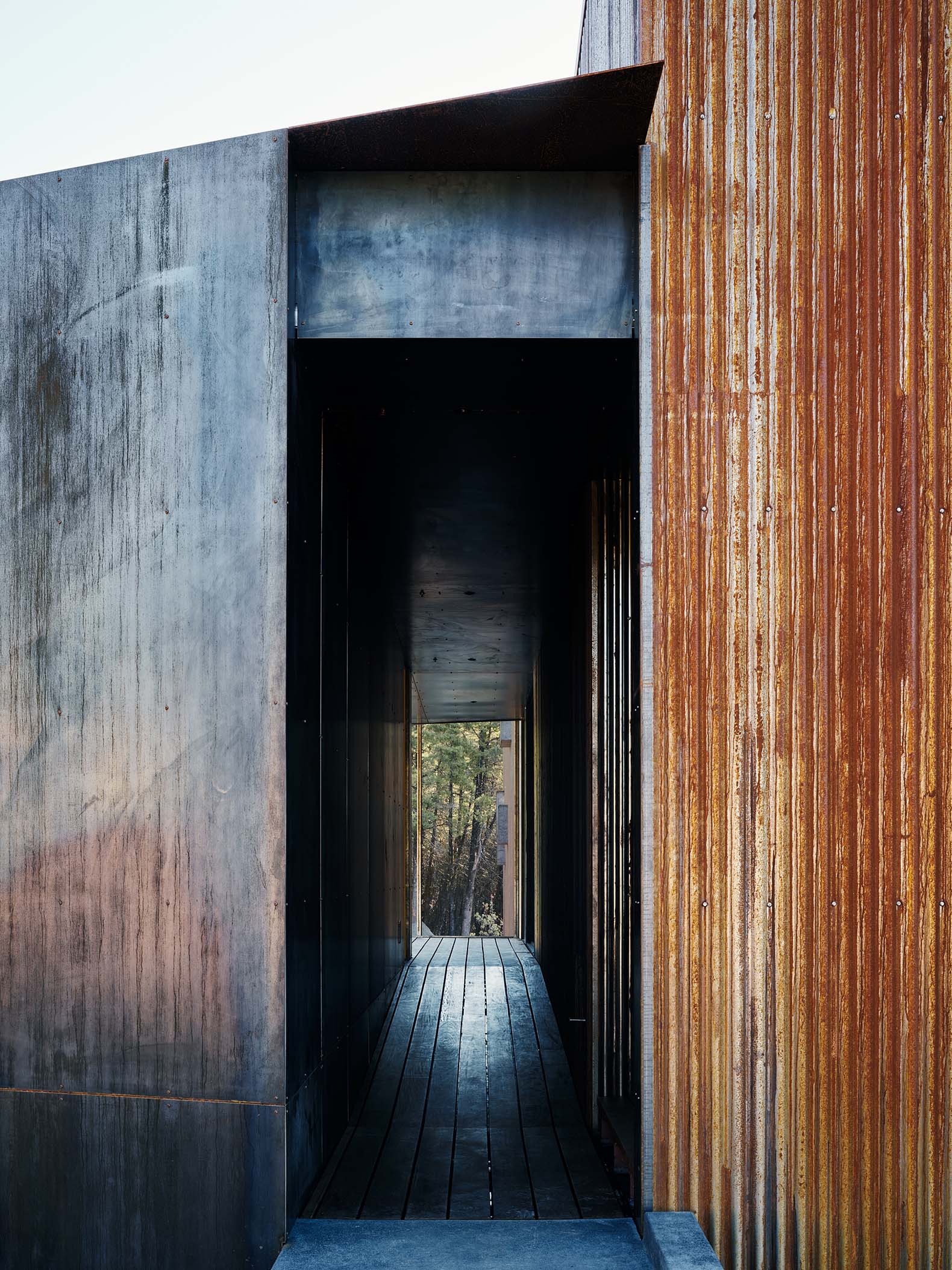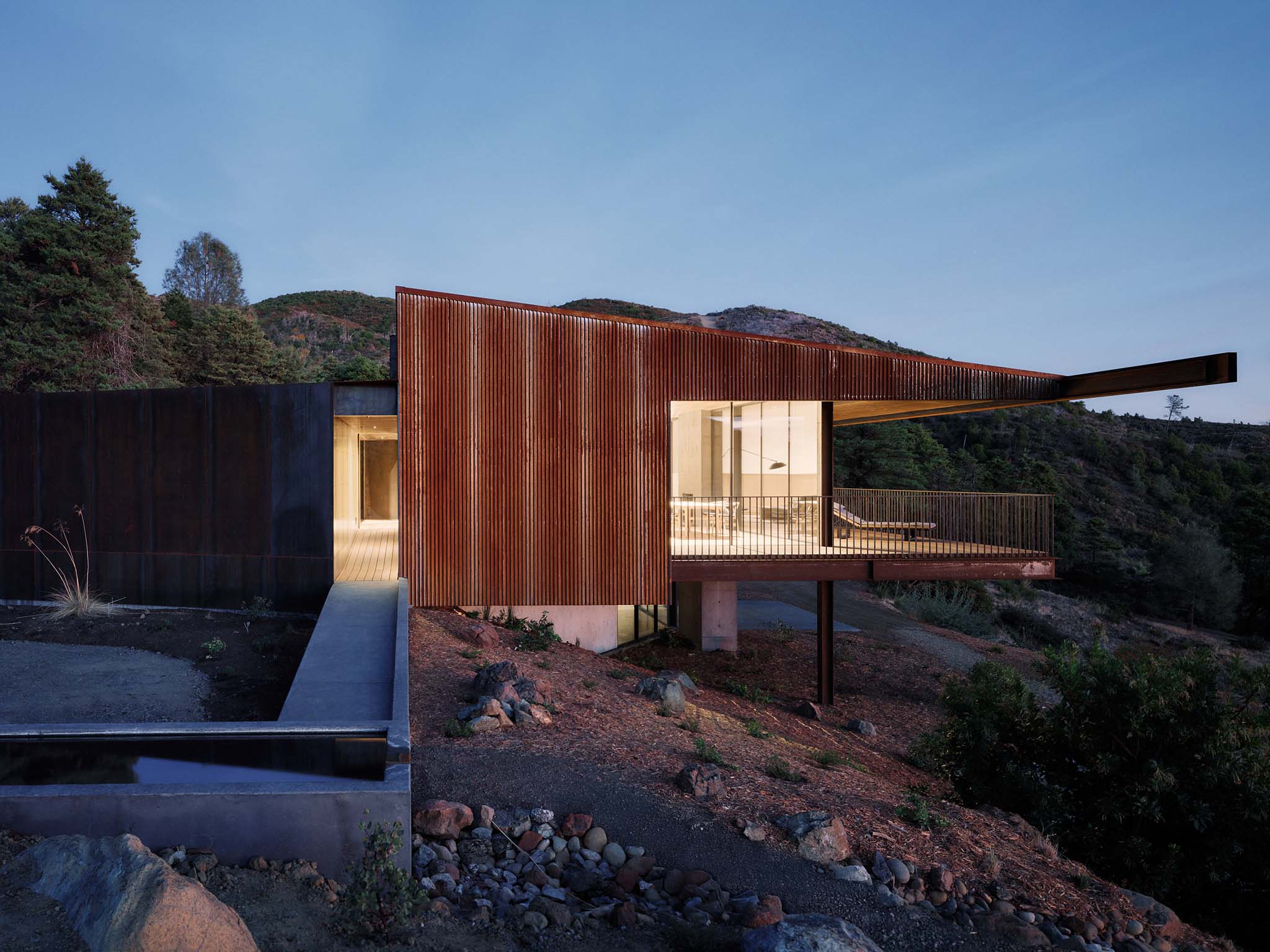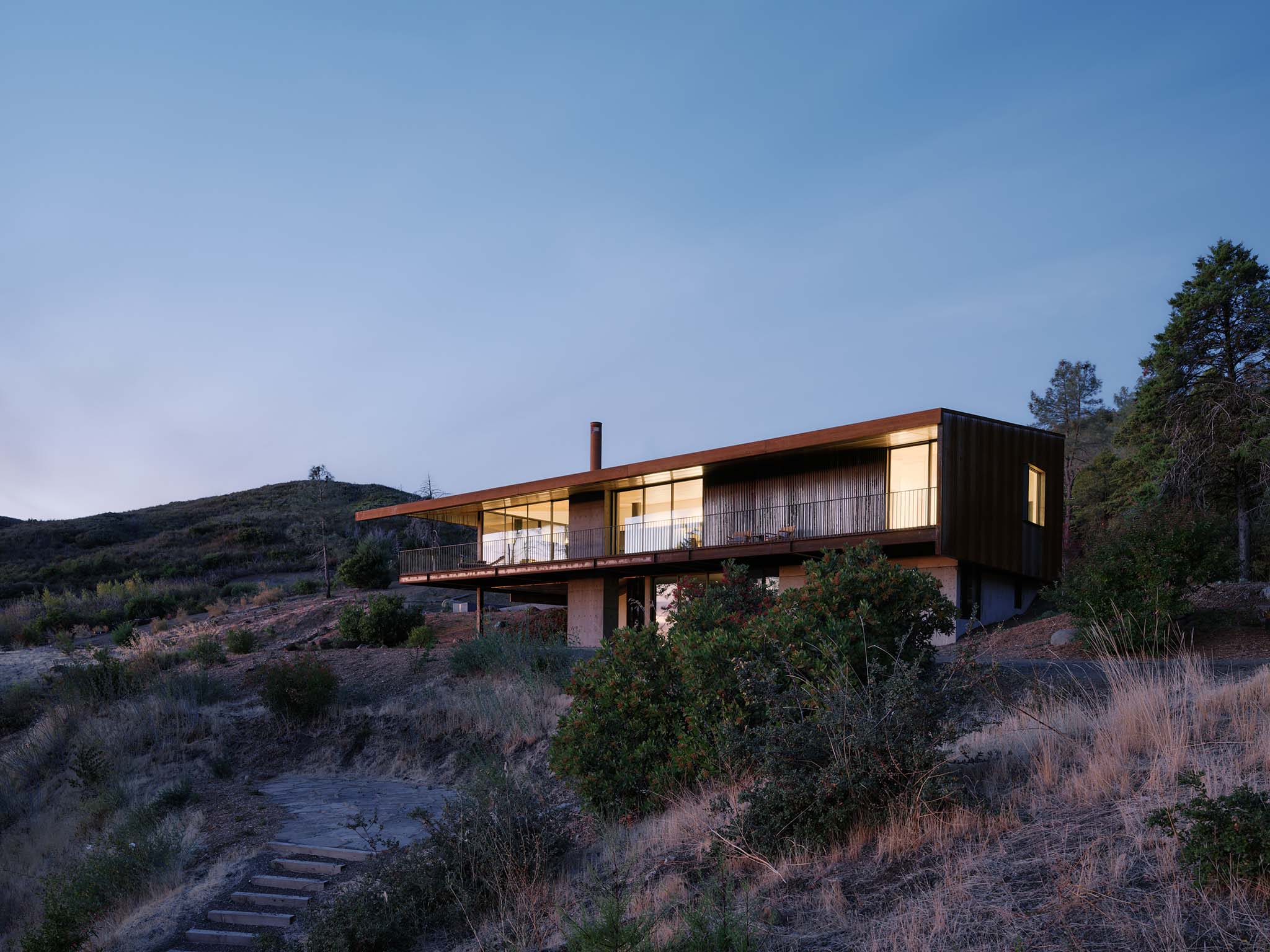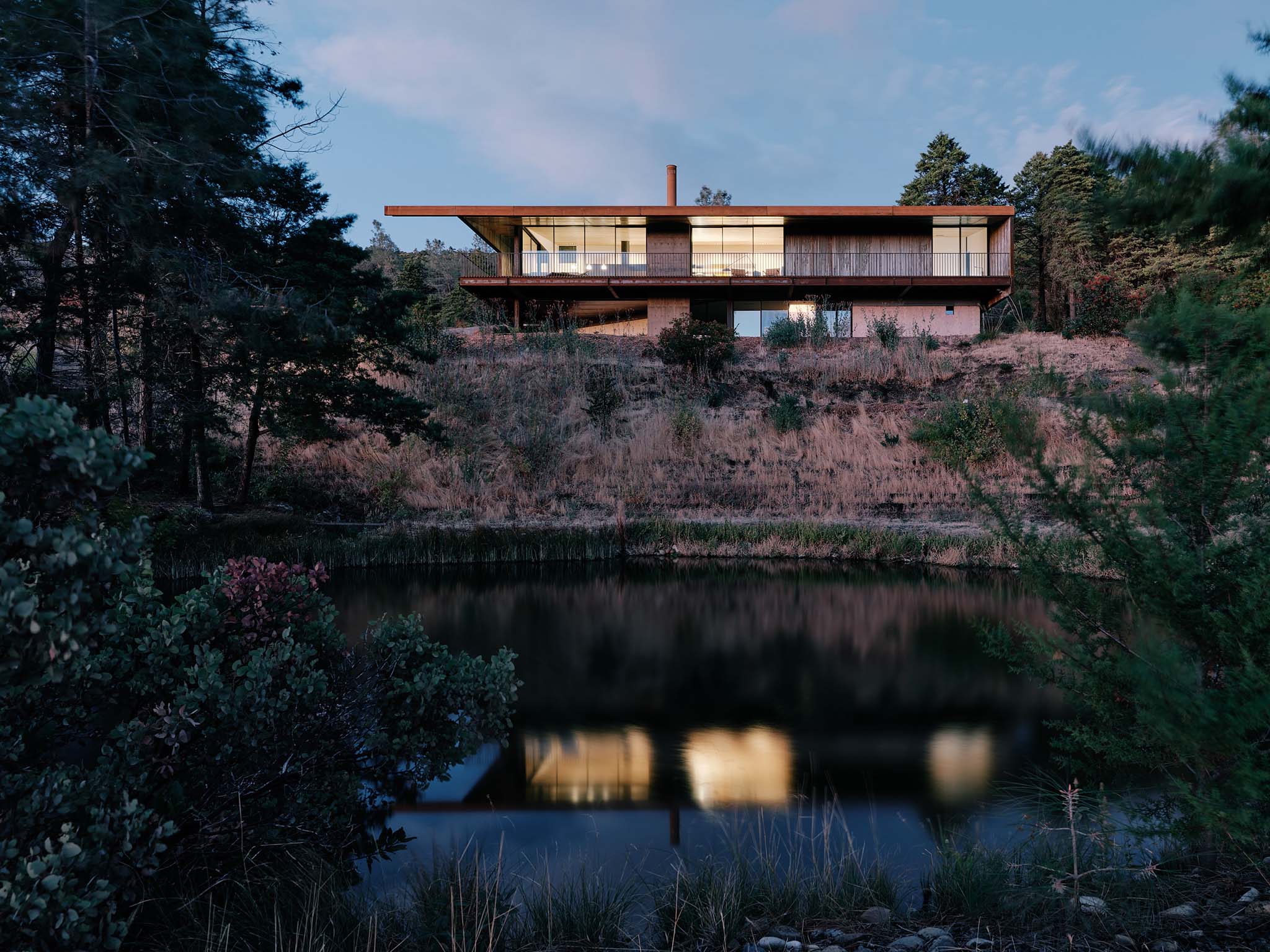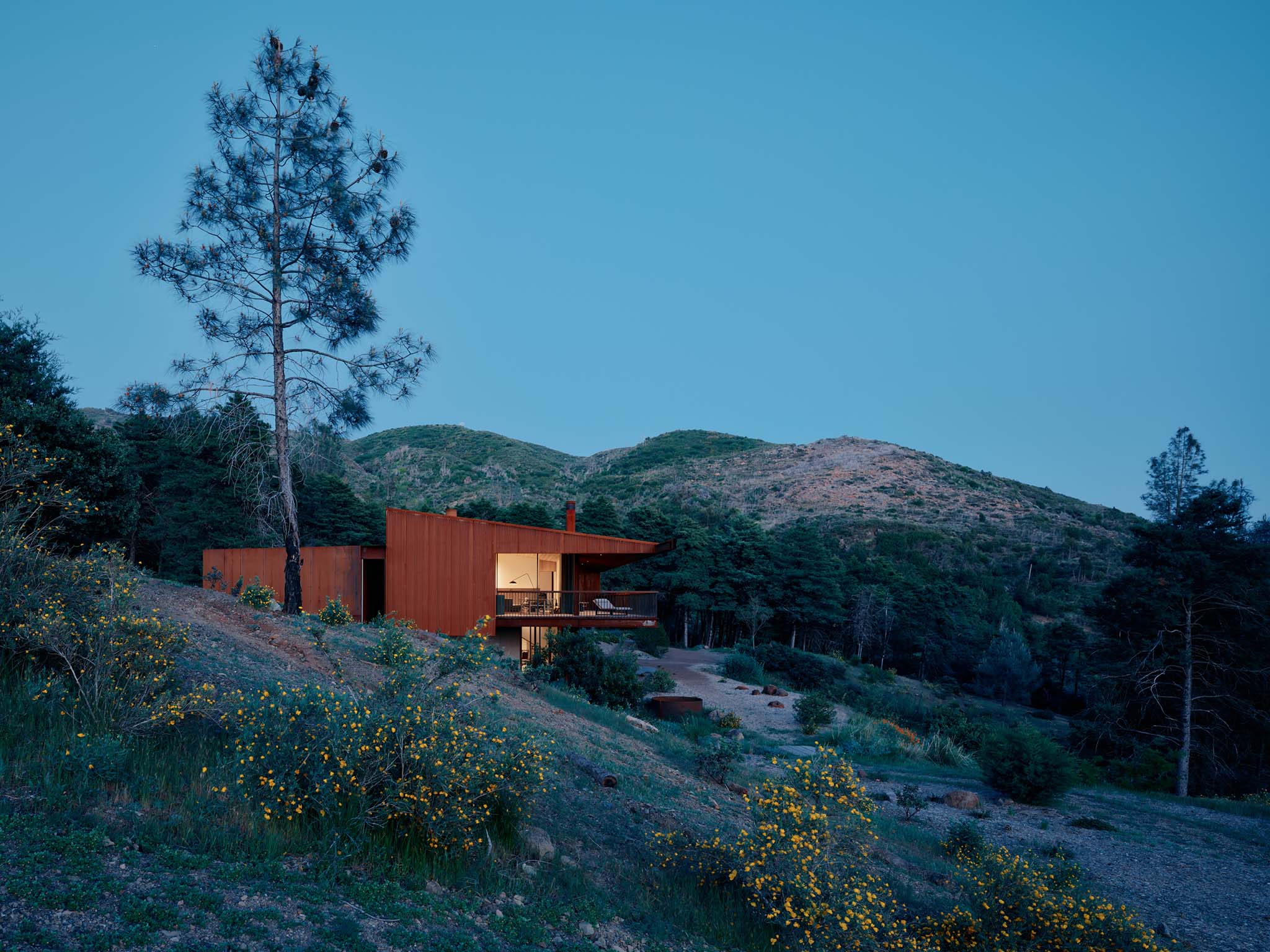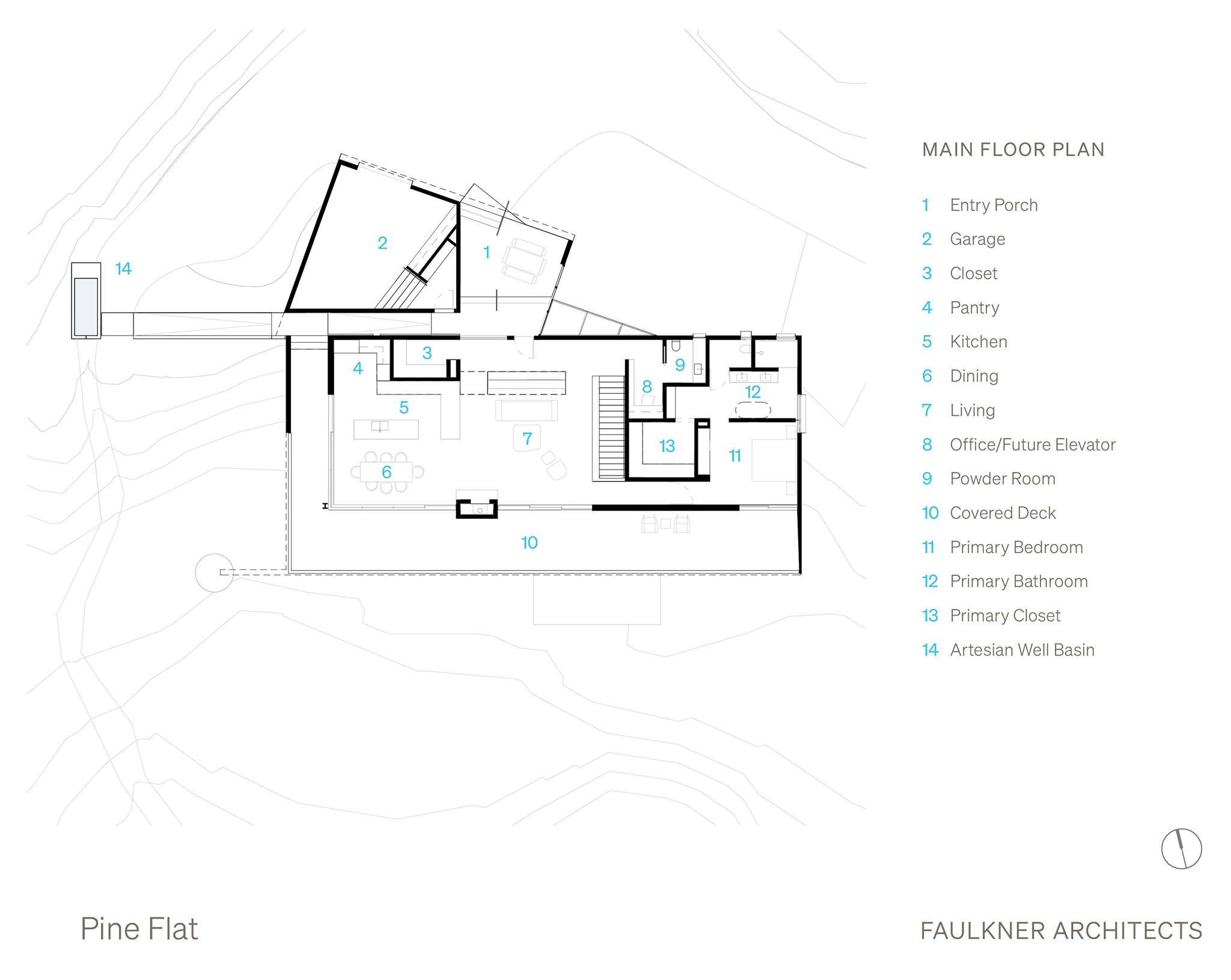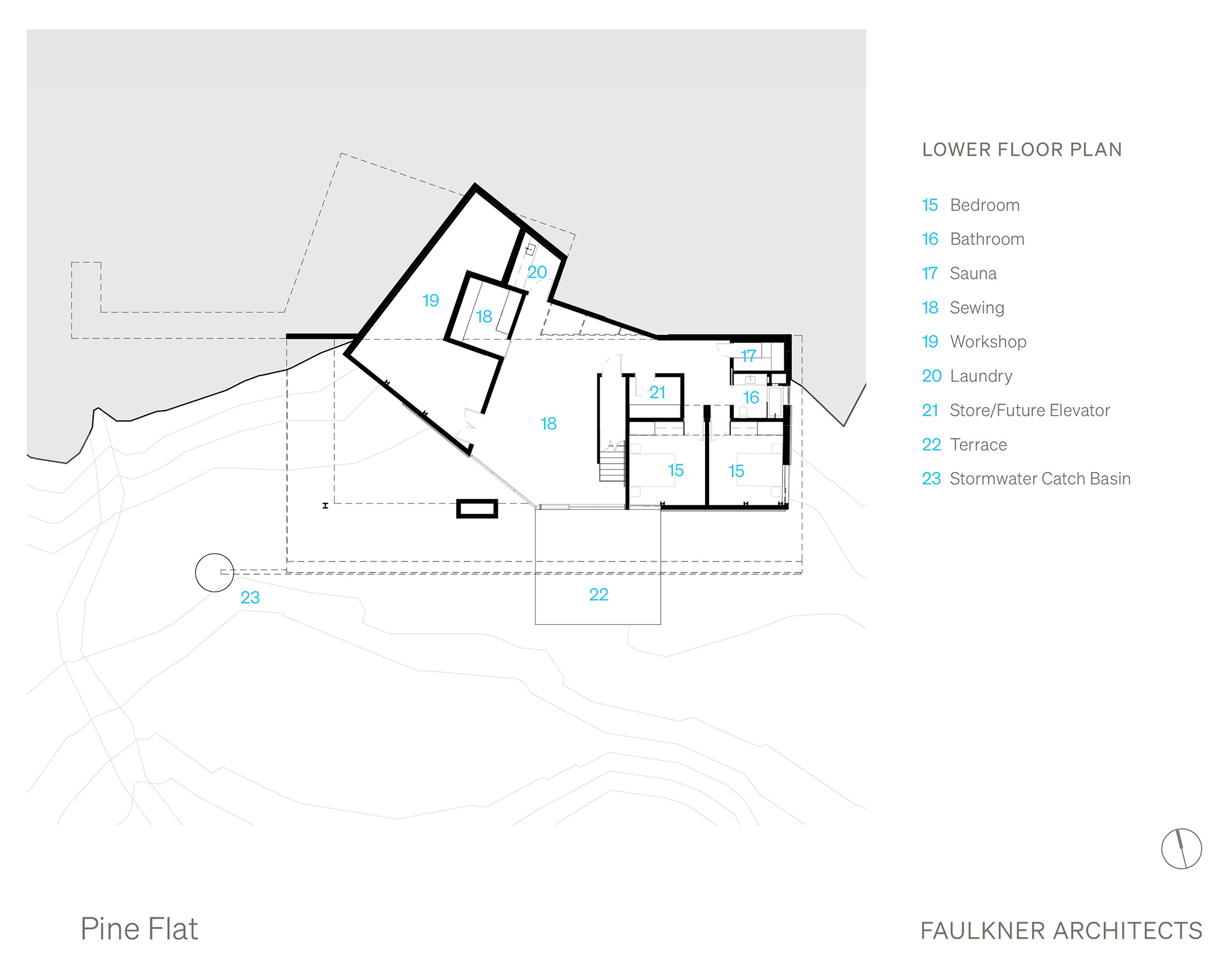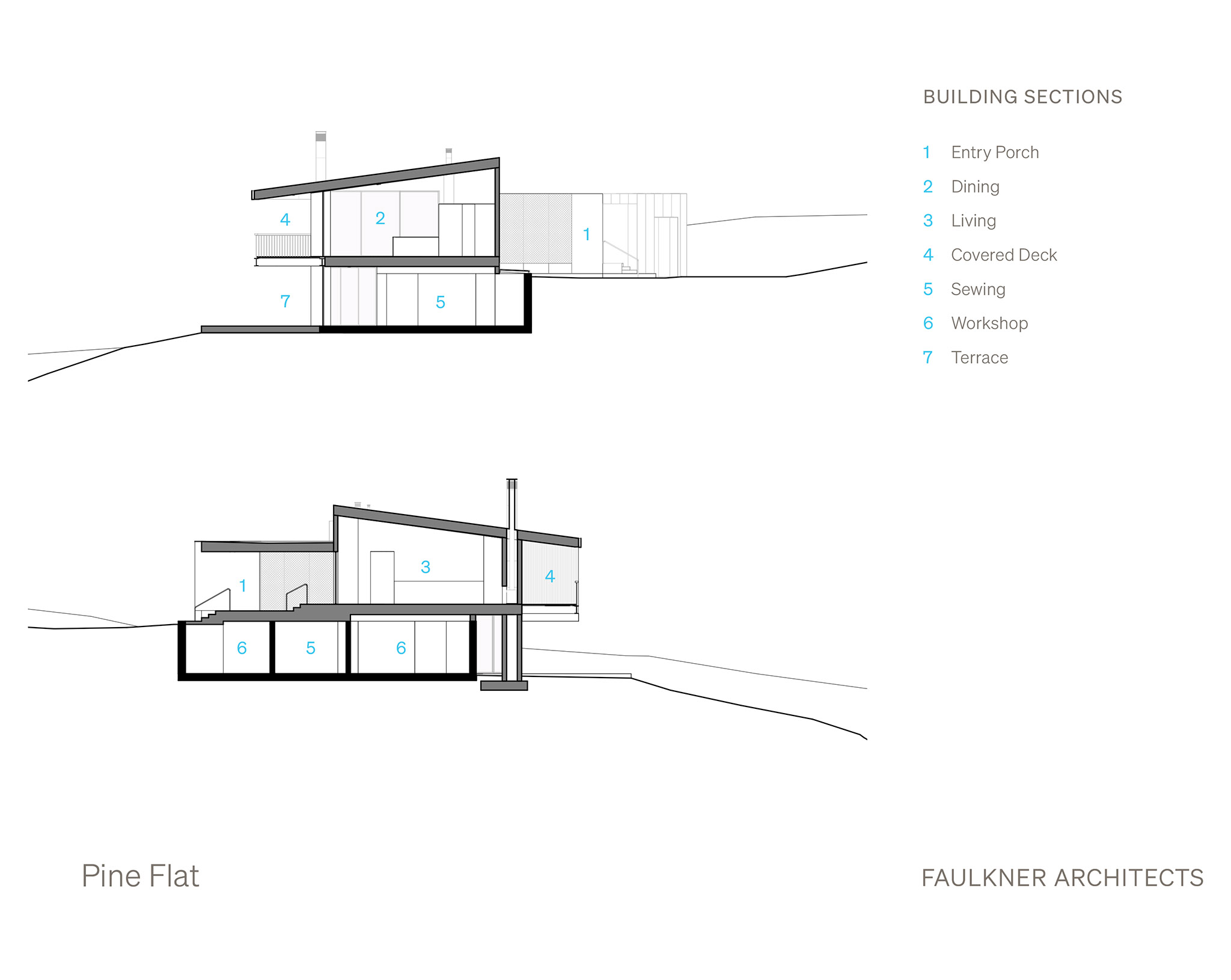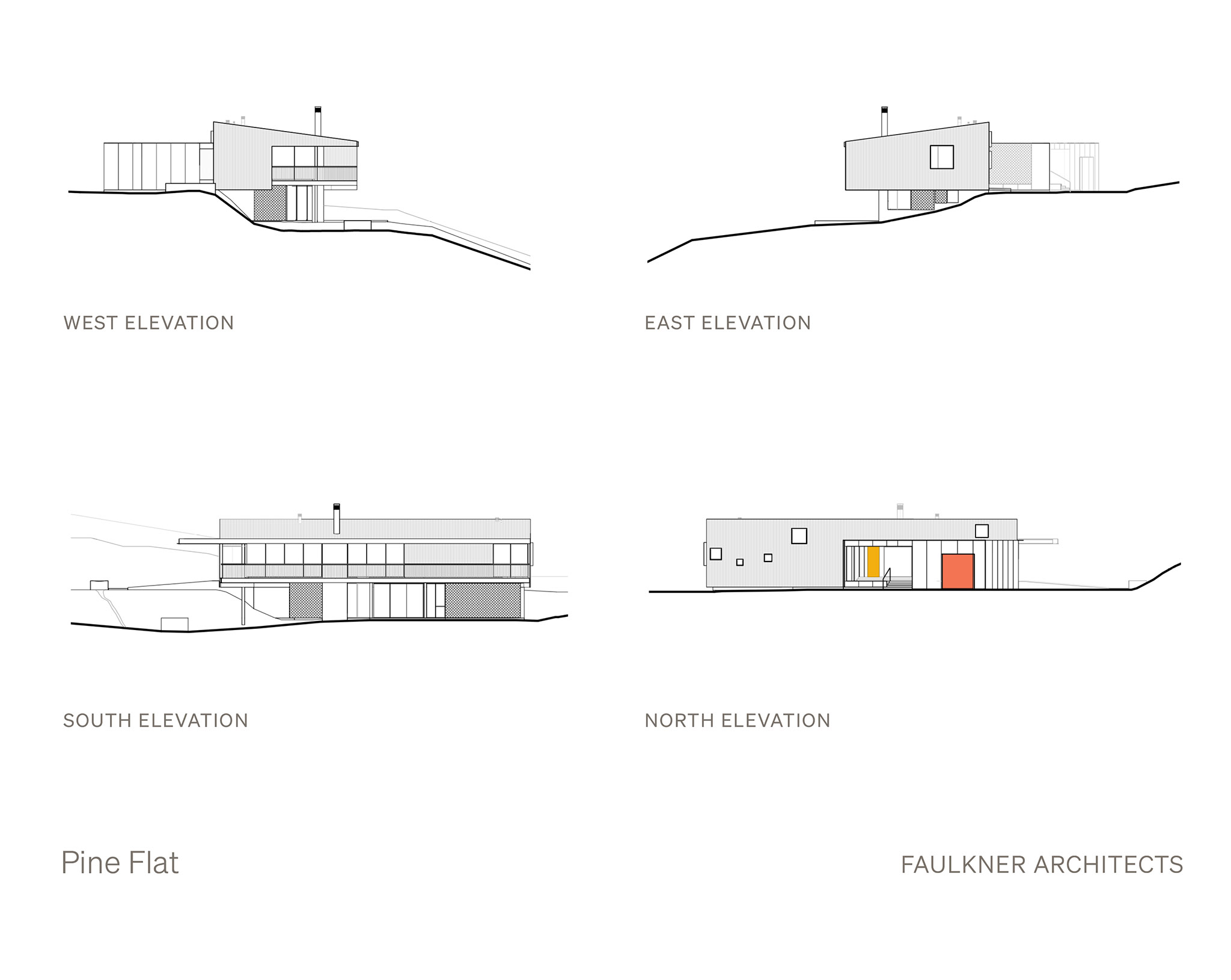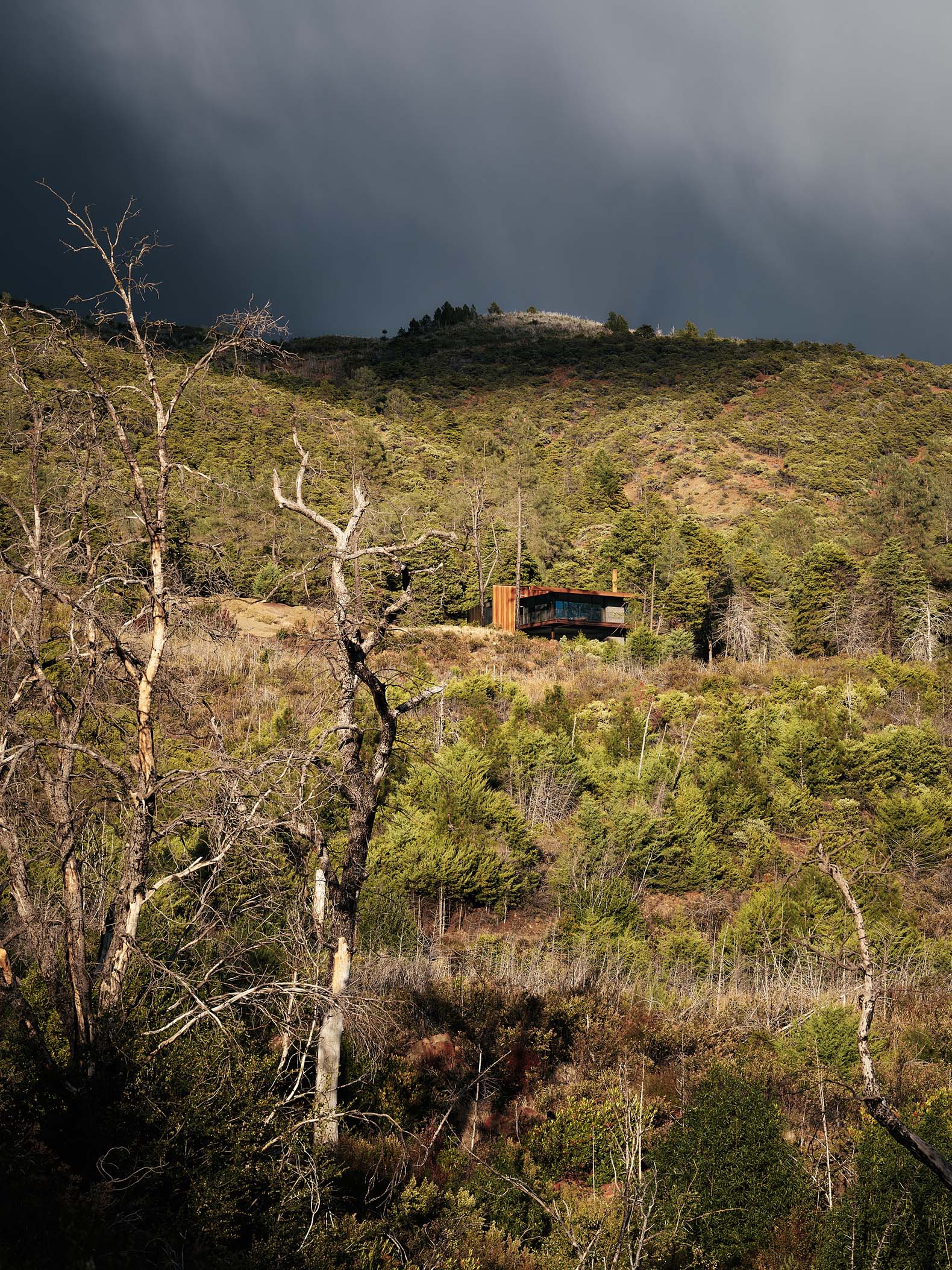
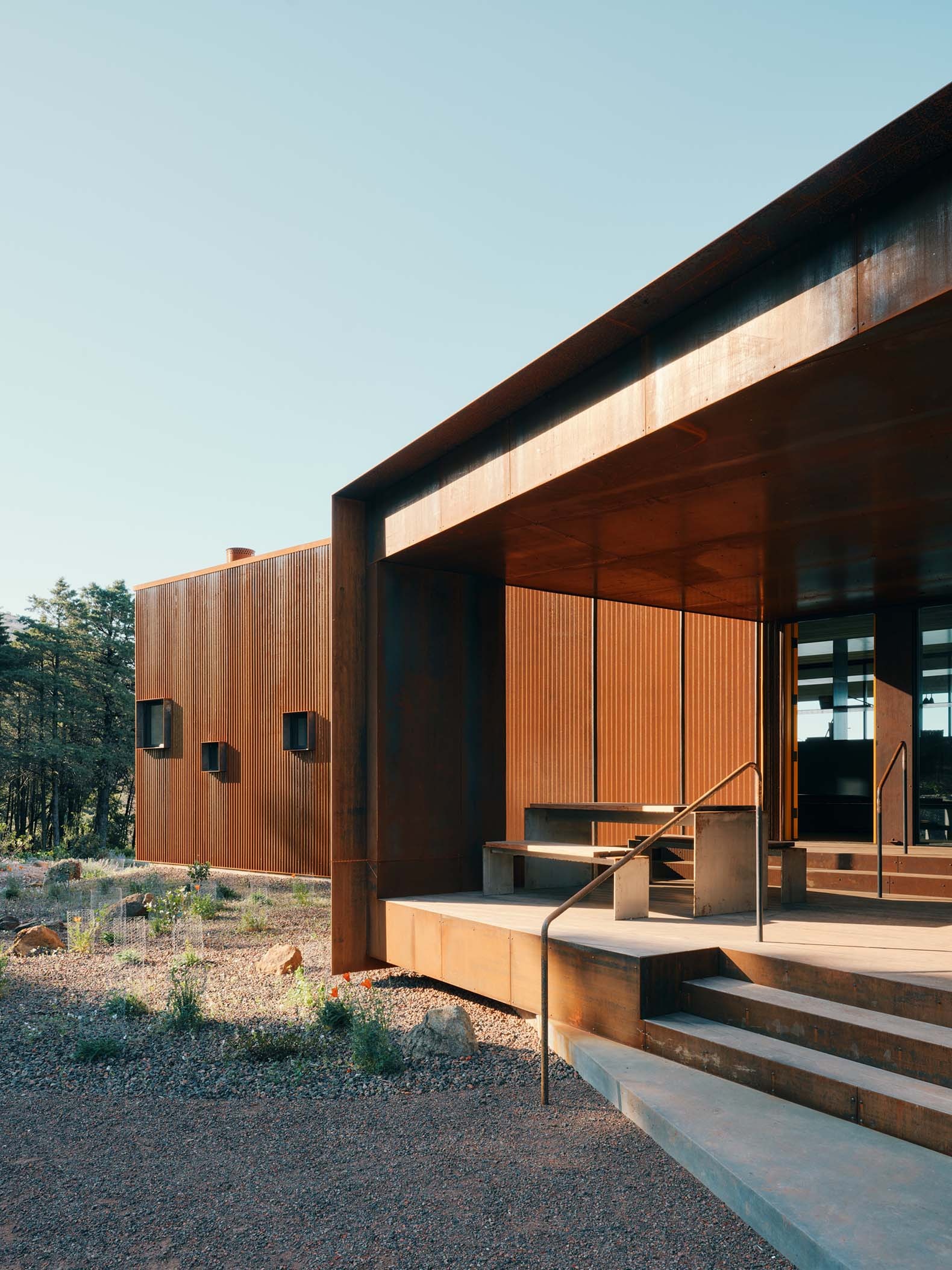
Formally, the residence designed by Faulkner Architects is organized around a simple rectangular volume that reuses much of the existing foundations from the former structure. This clean geometry rests on the hillside following the direction of the mountain ridge, while certain elements extend beyond the perimeter to create entrances, courtyards, and transitional spaces.
The interior prioritizes accessibility and spatial continuity, keeping the social areas and the primary bedroom on the same level. A sculptural ramp connects the house to the terrain, while the glazed courtyard and pond establish visual and poetic relationships between water, light, and the surrounding landscape.
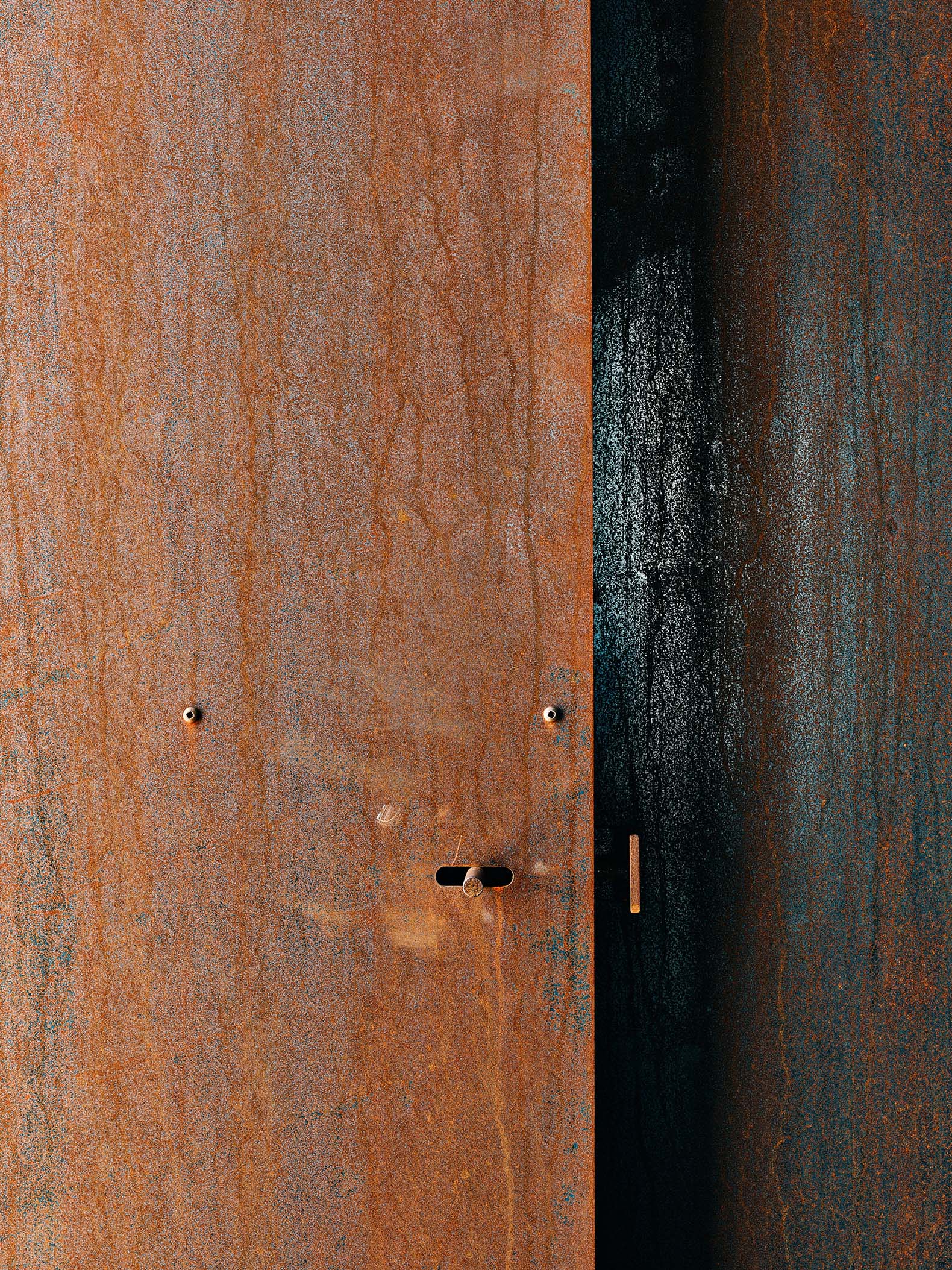
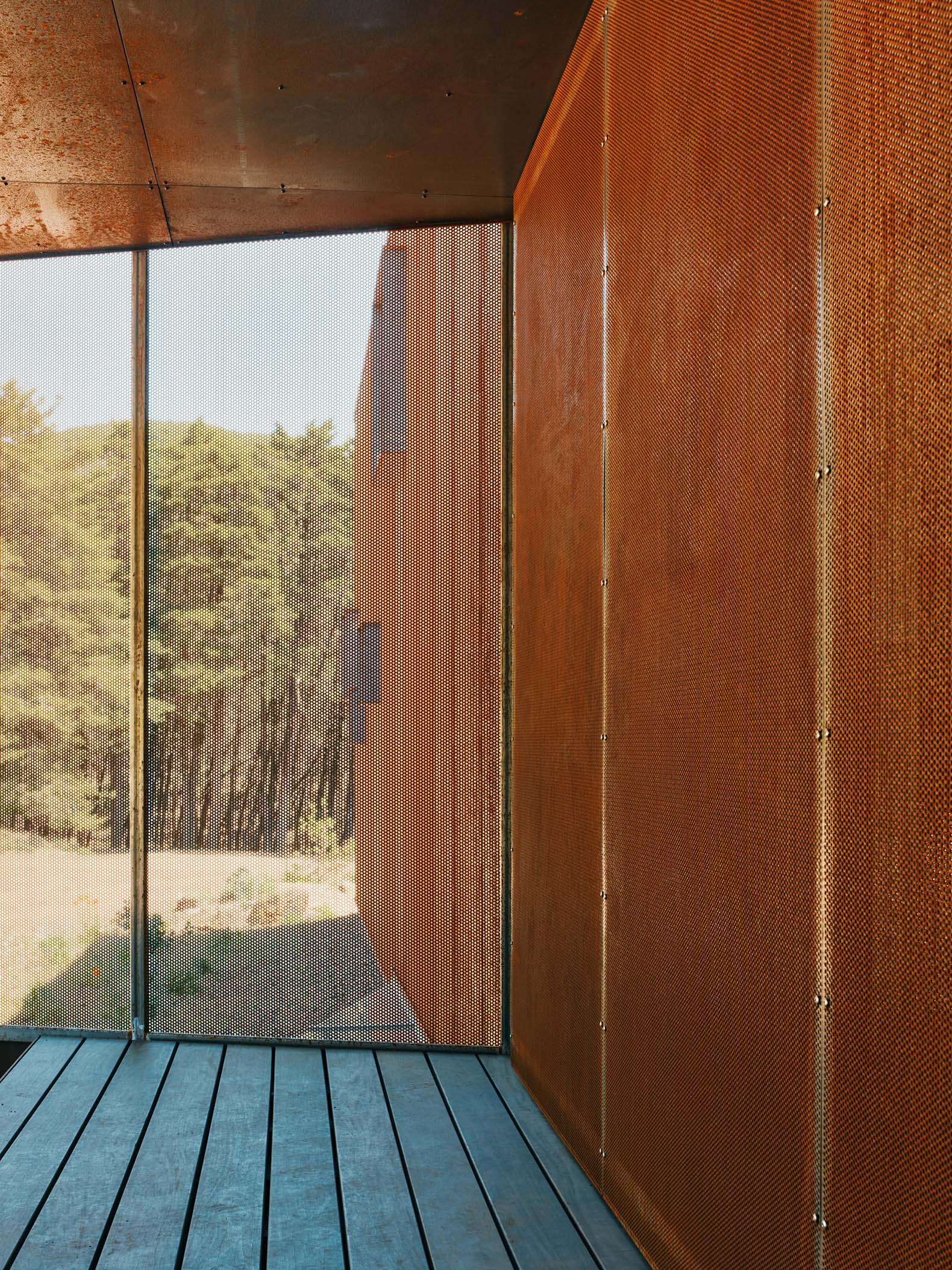
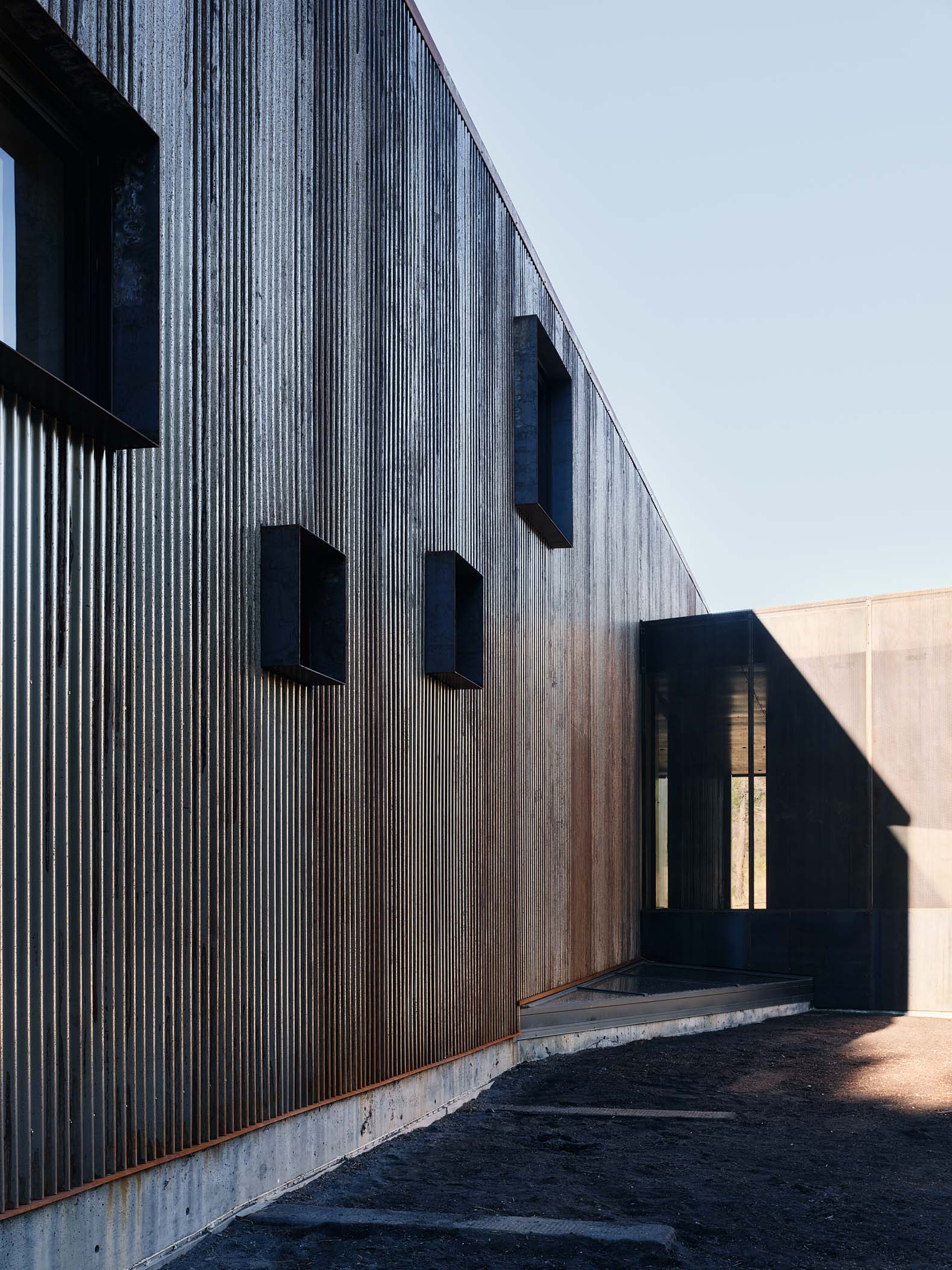
From a constructive standpoint, the project stands out for its use of robust materials. A corten steel structure, together with sliding ember screens and exterior sprinkler systems, reinforces the home’s protection. Approximately 90% of the existing concrete was reused in order to preserve embodied energy and minimize additional excavation. In addition, the house operates through self-sufficient systems such as photovoltaic panels, battery energy storage, complete rainwater harvesting, and supplementary hydroelectric generation through a Pelton turbine.
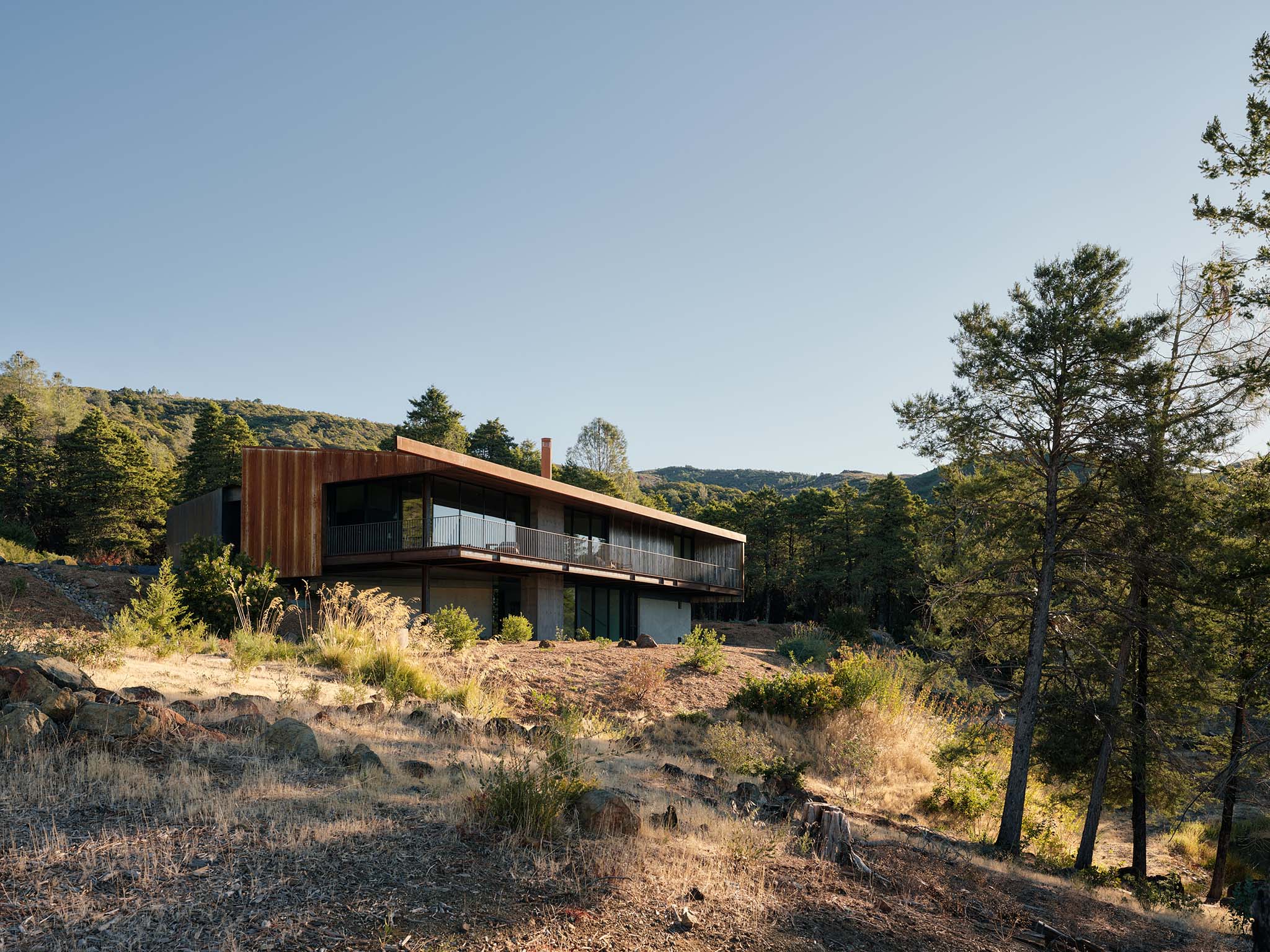
Pine Flat by Faulkner Architects. Photograph by Joe Fletcher.
Project description by Faulkner Architects
Remotely accessed via a winding former stagecoach road north-east of Healdsburg, California, the 2019 Kincade Fire destroyed the original off-grid house. The pioneering resourcefulness of the clients allowed them to embrace an alternative, landscape-driven lifestyle, that follows the spirit of the nearby original historic Pine Flat community – a boomtown that flourished in the Mayacamas Mountains during the quicksilver and mercury rush in the 1870s.
A brief and program was developed with key aims that included a durable, low-maintenance, long-lifecycle, wildfire-resilient house. Robust materials, a fire-resistive corten steel shell, sliding ember screens, and exterior sprinklers above decks mitigate this concern. Accessibility as the clients’ age was important. The design integrates an entry ramp, wheelchair maneuvering clearances, pre-framed elevator location, and maintains the primary bedroom on the same level as the kitchen, dining, and living spaces.
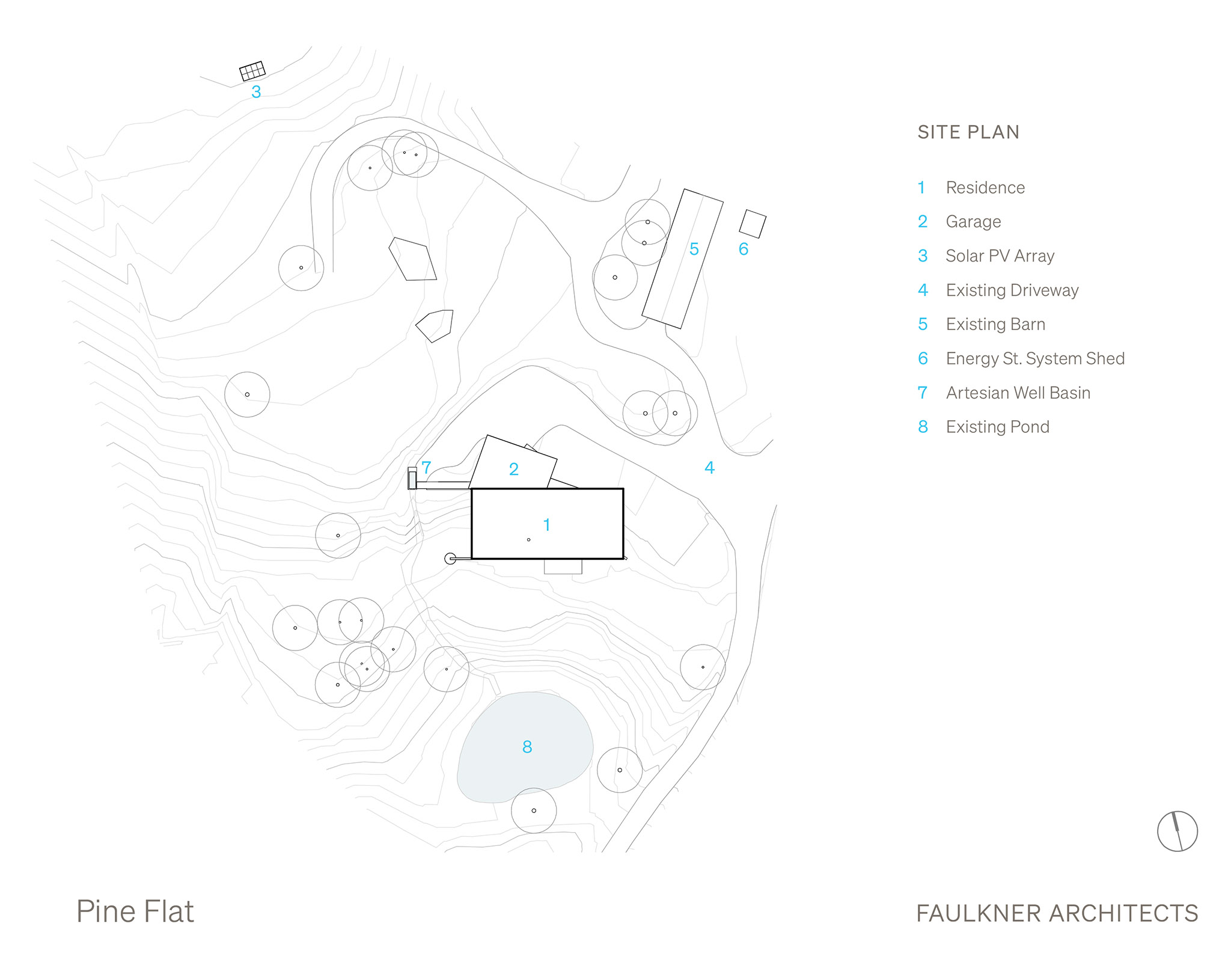
Reuse of existing foundation and walls for 90% of the project’s concrete retained existing embodied energy and limited additional excavation. A rectangular shed form inhabits the old angular foundation. Like stepping on a leaf, portions extending beyond the outline of the new rectangle are utilized for a sculptural entry step as well as a glazed light well. The preserved concrete foundation is half buried into the hillside, juxtaposed with the outstretched protective structure elevated above. The simple form parallels the direction of the ridgeline, existing as a quiet presence in the wildland landscape. A new concrete chimney mass anchors the main floor, setting a view of the fire within the landscape that recalls the danger. An entry ramp extends outward as an expressive form toward the west hillside. The artesian water basin fosters a visual and poetic dialogue to honor the site’s spring water. Remoteness led to materials taking on a precious quality to limit waste.
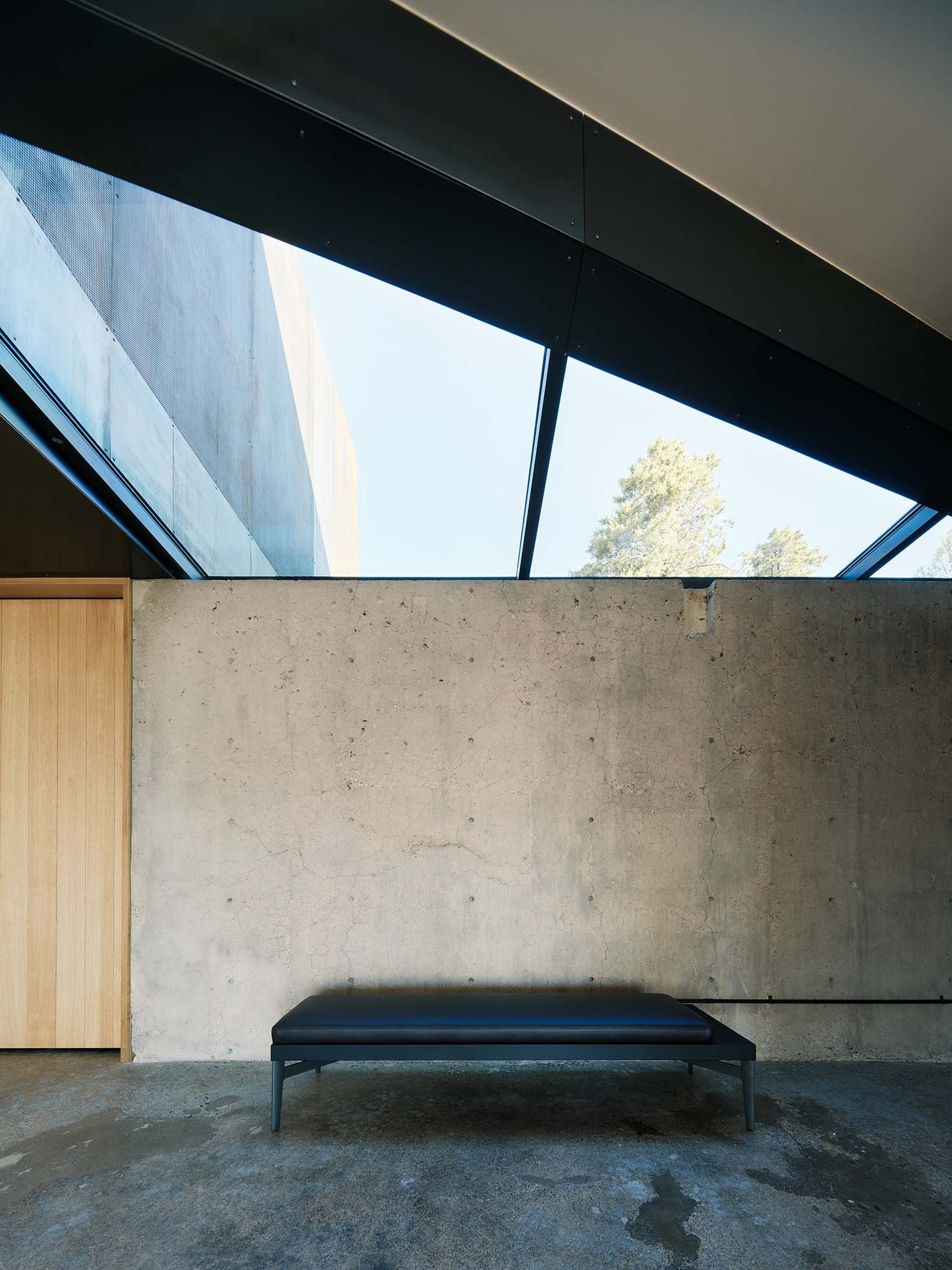
The off-grid site utilities support a home that embraces passive survivability. The existing solar PV array was replaced with upgraded panels, inverters, and batteries. 100% of stormwater is captured and retained on site. A cantilevered gutter flows into a steel basin and diverts runoff to a vegetated bioretention area before flowing down to a retention pond that serves as a backup firefighting water source. Spring-fed wells provide all water usage including a dedicated tank for the fire hydrant and sprinkler system. The concrete basin captures water after it is harnessed by a Pelton wheel for supplementary hydroelectric power, offering a continually refreshed basin for cooling dips. Wastewater is treated in a repaired septic field.
This project exemplifies how residential architecture can transcend aesthetic considerations. The house is a tool for living shaped by the needs of the site. As we continue to expand into wild landscapes through development, we must enhance construction systems and materials to withstand disasters.