Studio Link-Arc designed a building composed of four square-section concrete tubes stacked vertically, simulating four "lenses" for viewing newspapers. These tubes are arranged in different directions according to the existing vegetation and optimal views, creating a staggered interior space. A diffused perspective is created where the protagonist shifts from humankind to nature in motion.
The communication area between the four volumes is a vertical triangular atrium, the result of a Boolean difference. From this space, nature can be contemplated simultaneously through the different tubes. The box-like concrete structural system is cast in situ using pine formwork, imprinting a veined texture on the concrete, which is left exposed on the facade. The building's flat roof houses lotus ponds and ecological fountains, softening its impact on the surrounding environment.
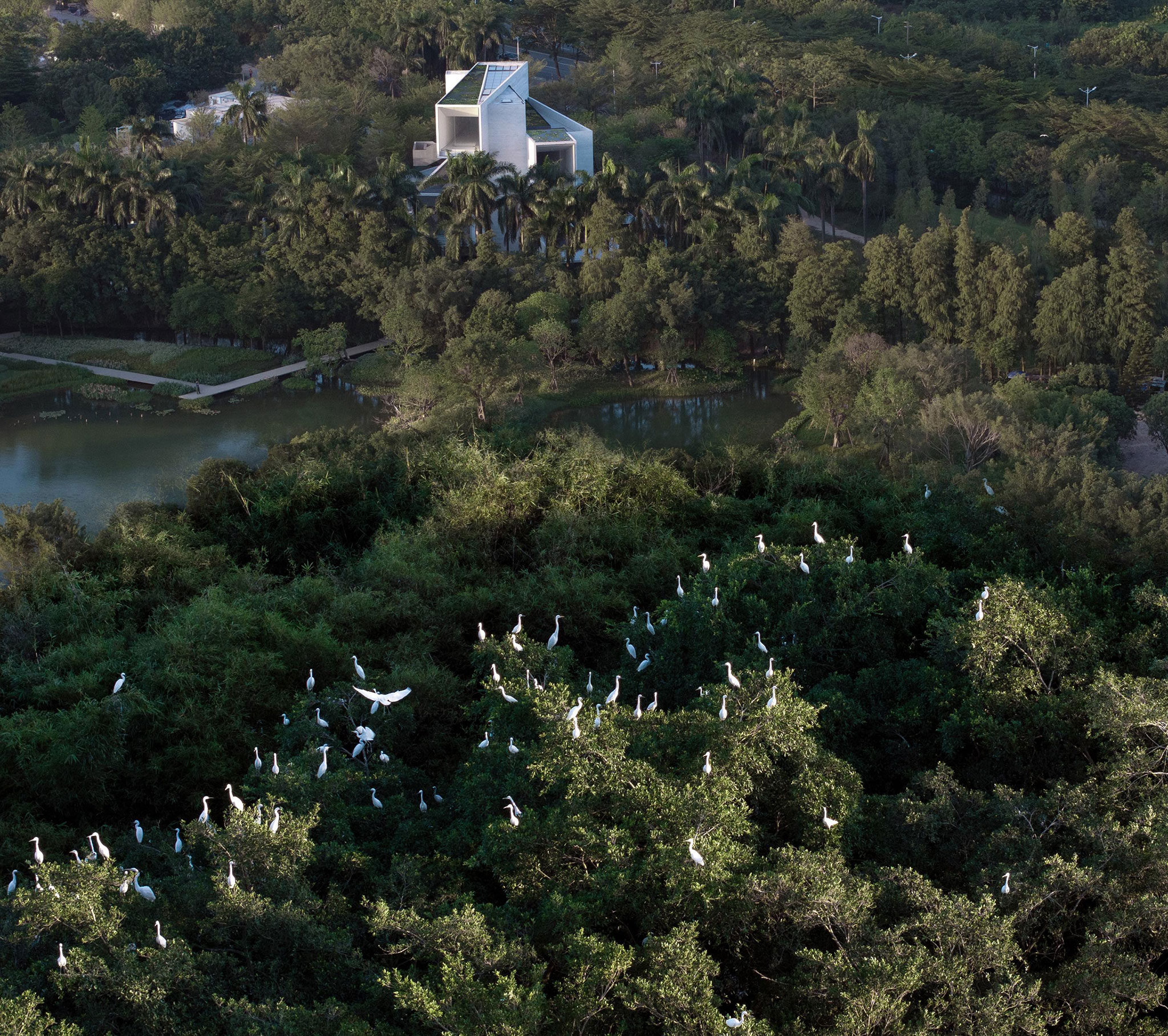
Shunde Yunlu Wetland Museum by Studio Link-Arc. Photograph by Arch-Exist.
Project description by Studio Link-Arc
The Yunlu Wetland Museum is located in Yunlu Wetland Park in Shunde, adjacent to an ecological island inhabited by 25,000 egrets. The building combines a bird-watching tower and a wetland museum, aiming to raise visitors' awareness of the ecology of the wetland while providing a unique bird-watching experience.
The project originated from a bamboo forest planted by "Uncle Bird" Xian Quanhui 26 years ago. With the influx of a large number of egrets, a good intention prompted Uncle Bird to make this oasis an "egret paradise" in the city through decades of effort. Today, the Shunde government has expanded the protected area of Egret Paradise by 13 times, working with scientists, engineers, and designers to restore water systems, update bamboo forests, and reshape this area into Yunlu Wetland Park.
The architects chose to hide the building behind a row of existing cedar forests. The shape of the building consists of four vertically stacked concrete tubes, resembling four horizontally rotating "lenses" that capture the activities of egrets. The design aims to minimize the presence of the building and harmoniously coexist with the "indigenous creatures" in this area with a modest attitude. Looking at the museum from Egret Island, the building "disappears" into a lush subtropical forest.
Each tube of the museum is rotated to an optimal viewing direction according to site conditions, forming four staggered "framing frames" in the internal space. Floors 1 to 4 look towards the tree roots, trunks, crowns, and treetops. People can observe the swaying of tree shadows and the fluttering of birds on Egret Island from different heights inside the building. In this way, the traditional human-oriented architectural perspective is deconstructed into a nature-oriented scattered perspective.

The four superimposed tubes of the museum are divided into a vertical triangular atrium by a Boolean difference, which connects the volumes of the four floors together. The atrium is a common "viewpoint" for different perspectives inside the building. Standing here, one can simultaneously look into nature through the tubes in different directions. The viewfinder window at the end of the tube is like several carefully selected landscape paintings hanging in the space.
The building adopts a box-type concrete structure system. The side walls, top plate, and bottom plate of each tube work together to provide overall load-bearing support. Softened by deep beams, sunlight filters through the upper skylights and penetrates into the interior of the building. Being in the building, people can physically perceive the flow of seasons and the change of nature.

In order to not damage the wetland environment, after surveying the existing 560 trees, the architect carefully determined the location of the building, reduced its footprint, and rotated the volume of each floor. This also ensures that buildings can capture good bird watching views while reducing the logging of native trees.
The exterior facade of the building is made of cast-in-place pine molded concrete. The fine grain of the pine wood gives the facade a natural texture that echoes the surrounding dense forest. The roof of the building is covered by lotus ponds, and the ecological water features weaken the presence of the building on the fifth elevation.