Dorte Manrup designed the building with meticulous attention to weather and solar conditions. The program features a clear organization of spaces, with most bedrooms arranged around kitchens and dining areas (some with their own kitchens), creating a layout along the perimeter of this large, elliptical building. The complex presents a unified image thanks to its black slate roof, articulated with varying slopes that facilitate natural light while also improving its protection against the area's strong winds.
To reduce the carbon footprint, durable, locally sourced, and low-impact materials were used, such as wood (selecting tree species according to their function: cedar for facades, oak for doors and walkways, fir for interior panels, and pine for the main structure), slate, granite, and 700,000 bricks from demolished buildings, whose irregularities create a diverse and varied aesthetic. The structure utilizes load-bearing walls of brick and laminated timber, free of chemicals.
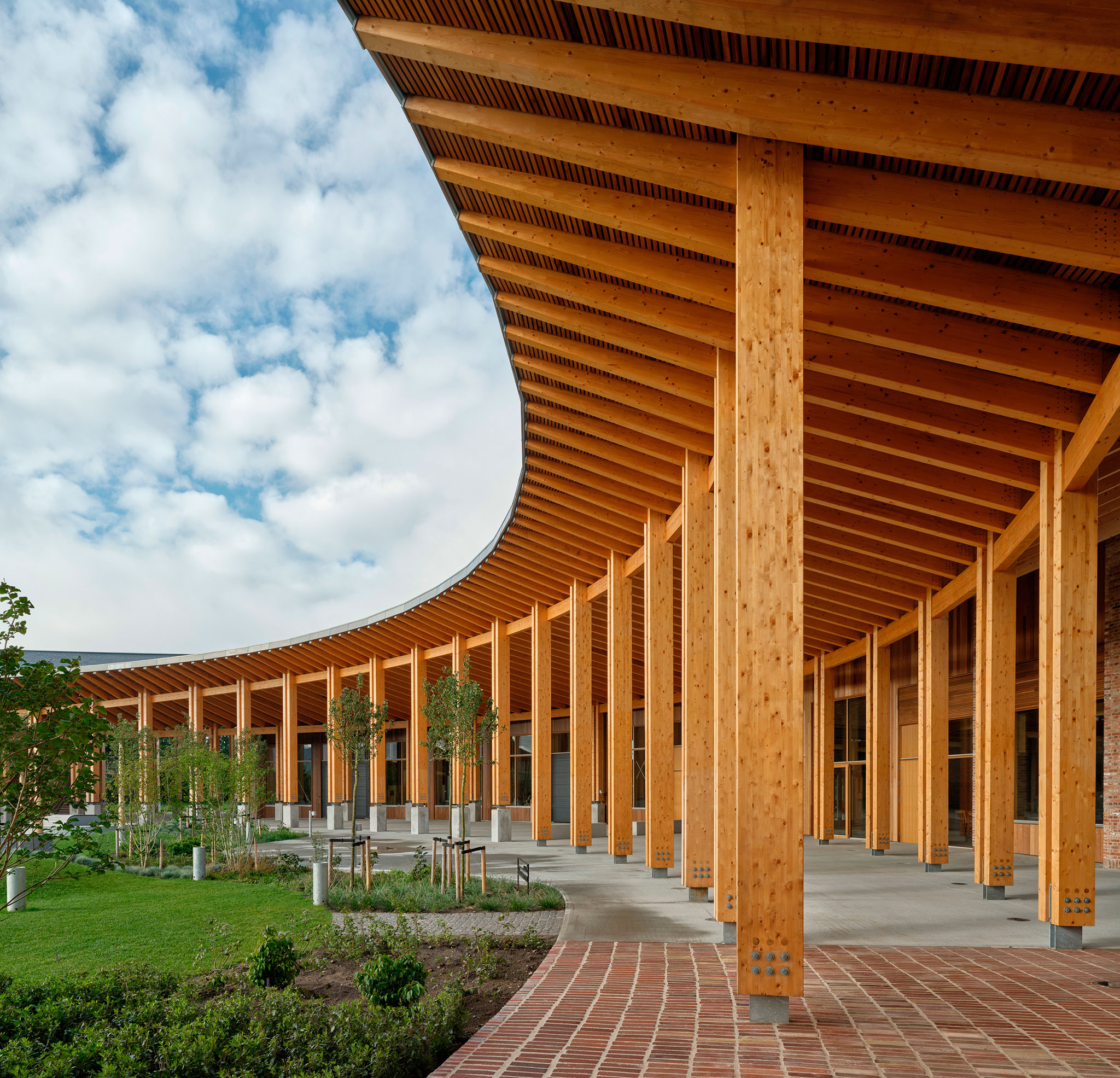
Dorte Mandrup, a space for future craftspeople in Crafts College. Photograph by Adam Mørk.
Project description by Dorte Mandrup
From the homes we inhabit to the schools, workplaces, and cultural institutions that frame our everyday life. Our built environment relies profoundly on skilled craftspeople. Yet in Denmark, as in many other countries, the value of crafts professions has been increasingly overlooked, with vocational programmes experiencing a marked decline in recent years. As part of a broader initiative to establish dedicated residences for apprentices, the Crafts College in Herning aims to restore pride and relevance to vocational education. It is designed to not only foster wellbeing and a sense of belonging among young craftspeople, but also to demonstrate – through form, materials, and construction – the cultural and societal significance of crafts.
“There is a relationship of mutual influence between architecture and craftsmanship. Without skilled craftspeople with deep knowledge of materials and methods, architecture simply cannot be realised. With the Crafts College, we wanted to cultivate our common profession and create a space where young apprentices can discover the impact and possibilities of their work. An important aspect of the design is the honesty in materiality – allowing the materials we use to be experienced in their natural, exposed state and become sources of inspiration and knowledge. In this way, form and materiality act both as didactic tools and a frame for community building and mutual support among the different crafts.”
Dorte Mandrup, Founder and Creative Director.
A unifying form
Designed as a large elliptical roof, the Crafts College brings together housing, workshop facilities, and communal spaces in a gesture that promotes collaboration and togetherness. The elliptical form defines an inner circular courtyard, creating a green communal place, sheltered from the harsh winds of the heathland. A large wooden bench is placed at its centre to form a natural meeting point and encourage social interactions The inner part of the roof collects rainwater, channelling it to an open rainwater basin via a controlled waterfall, contributing to a resilient landscape and transforming a functional element into a sensory experience.
Four large openings connect the building to its wider surroundings, linking apprentices with the nearby vocational school, the natural landscape of the nearby Lillelund Engpark, and the city of Herning. While primarily serving its residents, the building’s facilities are also intended to engage the wider community – hosting workshops, and public events that bring together schools, local residents, and policy makers to strengthen dialogue around crafts and education.

A study in the art of crafts
The Crafts College has been developed through a co-creative process across disciplines, with a particular focus on the interplay between architecture and craftsmanship. Every aspect of its design and materiality has been carefully considered to highlight how high-quality craftsmanship and architecture combine to create functional, beautiful spaces centred on human wellbeing and quality of life.
Designed to withstand use and change for many years, the design prioritises natural, durable, and low-impact materials rooted in different crafts tradition, including various types of certified timber, slate, granite, and recycled bricks. More than one million reclaimed bricks have been used for both exterior and interior walls and flooring. Bearing visible traces of wear, mortar residue, and paint, these bricks introduce narrative layers to the architecture, creating a tactile, textured expression.

The exposed materiality makes construction methods legible to occupants. Over time, wear and patina on the different surfaces – timber, brick, slate, stone – will add to the character and aging itself becomes an educational tool, giving young apprentices a tangible understanding of how materials respond to climate, use, and the passing of time. Visible, tectonically clarified joints are part of the architectural ornamentation, revealing the logic of the construction and encouraging an understanding of artisanship that extends beyond aesthetics.
Living and learning together
By weaving together living, learning, and working under one roof, the Crafts College strengthens the sense of belonging and exchange between different disciplines. The building combines dormitory accommodations for 70 aspiring craftspeople, workshop areas, and communal spaces for social life, conversation, and informal learning. A natural hierarchy shapes the layout, moving from collective functions at the centre to more private areas at the perimeter. Workshops and collective facilities are placed side by side along the inner ring, facing the courtyard, while the studio flats occupy the outer perimeter, each with its own terrace that opens toward the landscape.

“With the Crafts College, our ambition is to build a home for those who build the world around us - the craftsmen of the future. They are the ones who turn architects’ visions into iconic buildings and carry out both large and small projects for everyday Danes, and we need skilled craftsmen now and, in the years, to come. We want to show young apprentices that their trades are both attractive and prestigious, by offering them housing of the highest craftsmanship quality, designed to inspire them professionally. The college should also help them build strong communities with like-minded peers, adding a social dimension to their apprenticeships similar to what we see in general youth education.”
Kristian May, CEO of The Foundation of Crafts Colleges.