

The extension, designed by the team of Australian firm Blight Rayner Architecture and Snøhetta's Australian and Asian branch, draws inspiration for the undulating glass facade from a prose poem written by the elder Aboriginal artist Aunty Lilla Watson in 2006. This poem references the ripples of the Brisbane River and the fish swimming beneath its surface. Another element focuses on seven skylights in the roof, representing the seven river basins of Queensland.
This unique, cantilevered, undulating glass structure was designed to take advantage of the fact that the project specifications required the building to project approximately six meters on both facades to fit the available space above the existing Playhouse Green. Furthermore, the architects created a highly transparent edge on the cantilever to minimize its visual impact. Viewed through it, the theater block aligns with the design of the existing building, as part of a strategy to respect the heritage status of the brutalist QPAC building and Queensland Cultural District architect Robin Gibson AO.
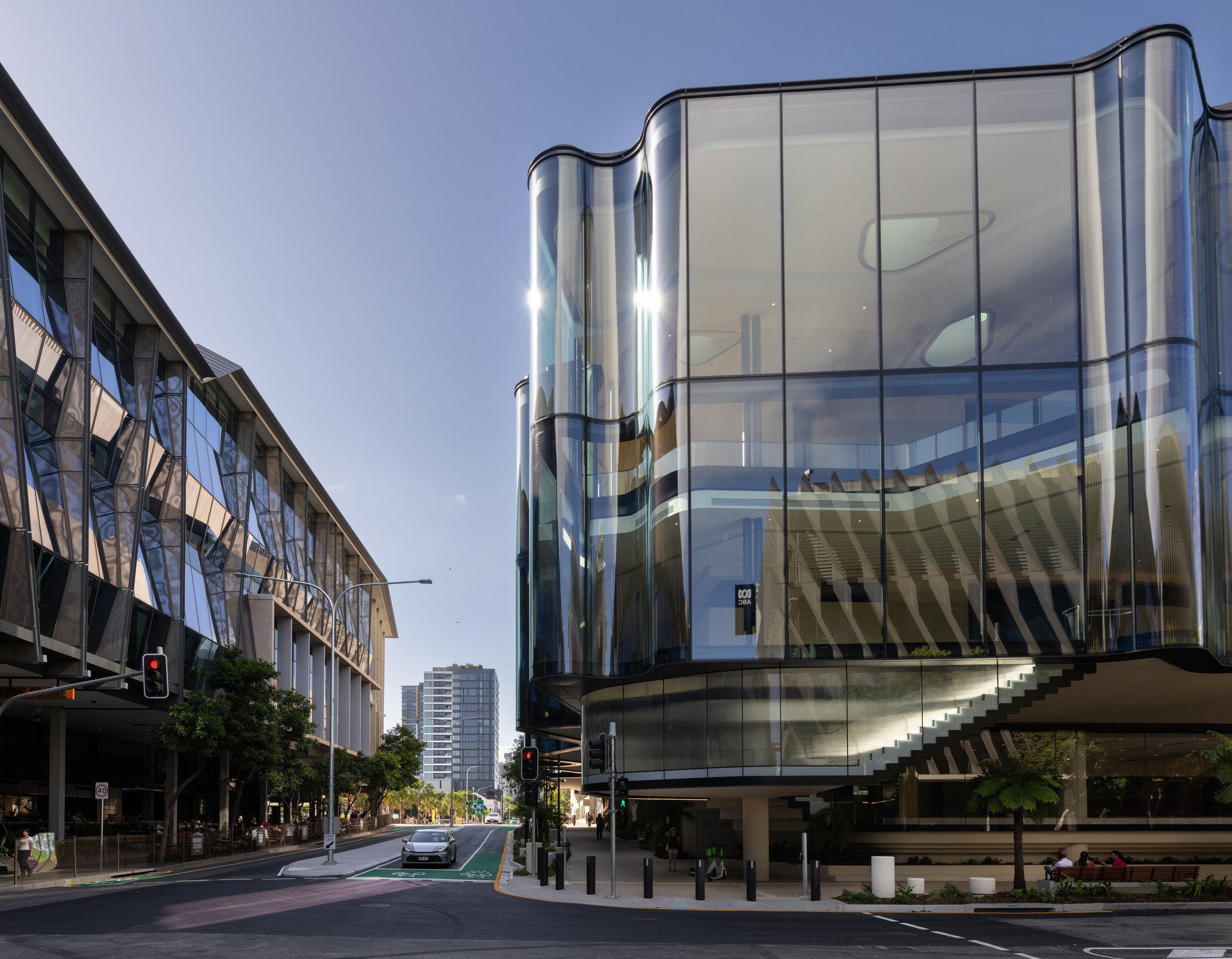
QPAC Glasshouse Theatre by Snøhetta and Blight Rayner Architecture. Photograph by David Kelly.
The seven-meter-high undulating glass panels create a two-tiered glass facade with a total height of 14.28 meters. Manufactured by the Austrian company Seele, the panels offer stunning views of the exterior from the lobbies. They are precision-engineered for optimal thermal performance and constructed in four layers with an intermediate air gap. The facets that receive direct sunlight incorporate a black ceramic inlay that acts as an integrated lattice to block solar penetration, optimizing the building's energy performance and minimizing glare.
The lightness and spaciousness of the lobbies contrast dramatically with the theater's interior, conceived as an intimate space with dark gray iron-bark walls and a jungle-green carpet.
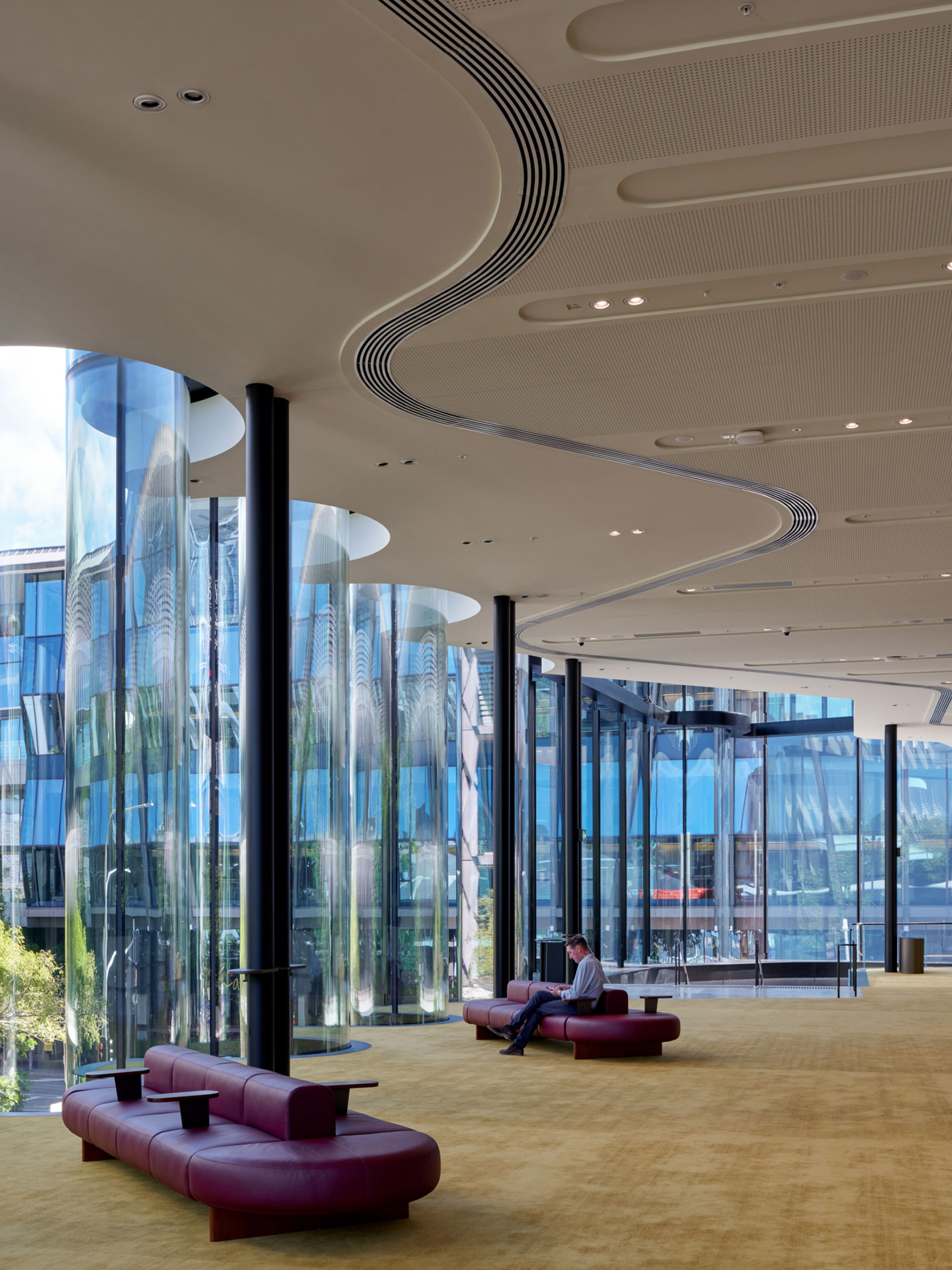
QPAC Glasshouse Theatre by Snøhetta and Blight Rayner Architecture. Photograph by Christopher Frederick Jones.
“The auditorium was conceived as a highly adaptable performance environment capable of hosting a wide spectrum of art forms. The theater was designed to function like a finely tuned musical instrument, adjustable to support top-tier opera, ballet, dance, symphony, theater, and musical productions.”
Gumji Kang, Managing Director of Snøhetta Australasia
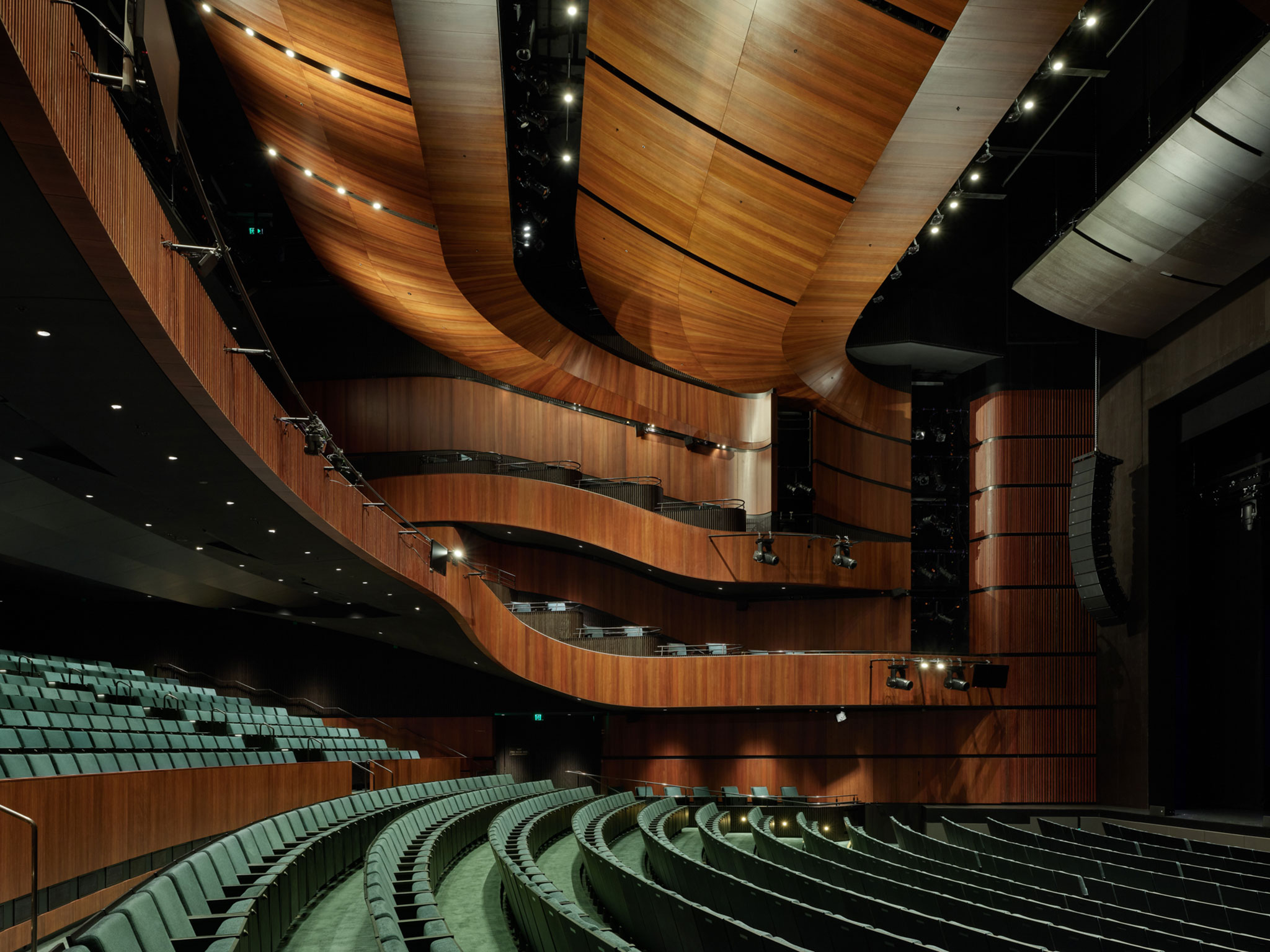
QPAC Glasshouse Theatre by Snøhetta and Blight Rayner Architecture. Photograph by Christopher Frederick Jones.
The distance from the stage to the furthest seat in the theater is a mere 28 meters, just three meters longer than a semi-Olympic swimming pool. Combined with the balconies surrounding the theater, the atmosphere is incredibly intimate for both the performers and the audience, which is seated on two levels with 1,000 seats in the stalls and 500 in the balcony.
The orchestra pit has three sections that can be raised or lowered independently to accommodate orchestras of different sizes, and there are four distinct configurations, two more than usual.
The stage rigging system is fully automated, with a 24-meter-high rigging tower consisting of 107 hoists and 29 km of steel cable that control the scenery, lighting rails, battens and curtains, and move the rigging bars at a speed of up to 1.8 meters per second.


