The formal proposal developed by Snøhetta, along with ECADI draws inspiration from the fluid movements of the body in dance and theater, materializing in an enveloping gesture that traverses the building. This design creates an accessible helical roof that functions as a public space, a viewpoint, and an extension of the urban landscape. Inside, the architecture combines large glazed surfaces that flood the spaces with light with sculptural volumes of intense red, creating a dynamic and continuous spatial experience.
Beyond its cultural function, the project acts as a catalyst for the urban regeneration of the area. The surrounding environment adopts a radial geometry that engages with the building's form, reinforcing a coherent urban vision. Furthermore, the permanent accessibility of its roof and public spaces promotes community ownership, strengthening a sense of belonging and activating the waterfront.
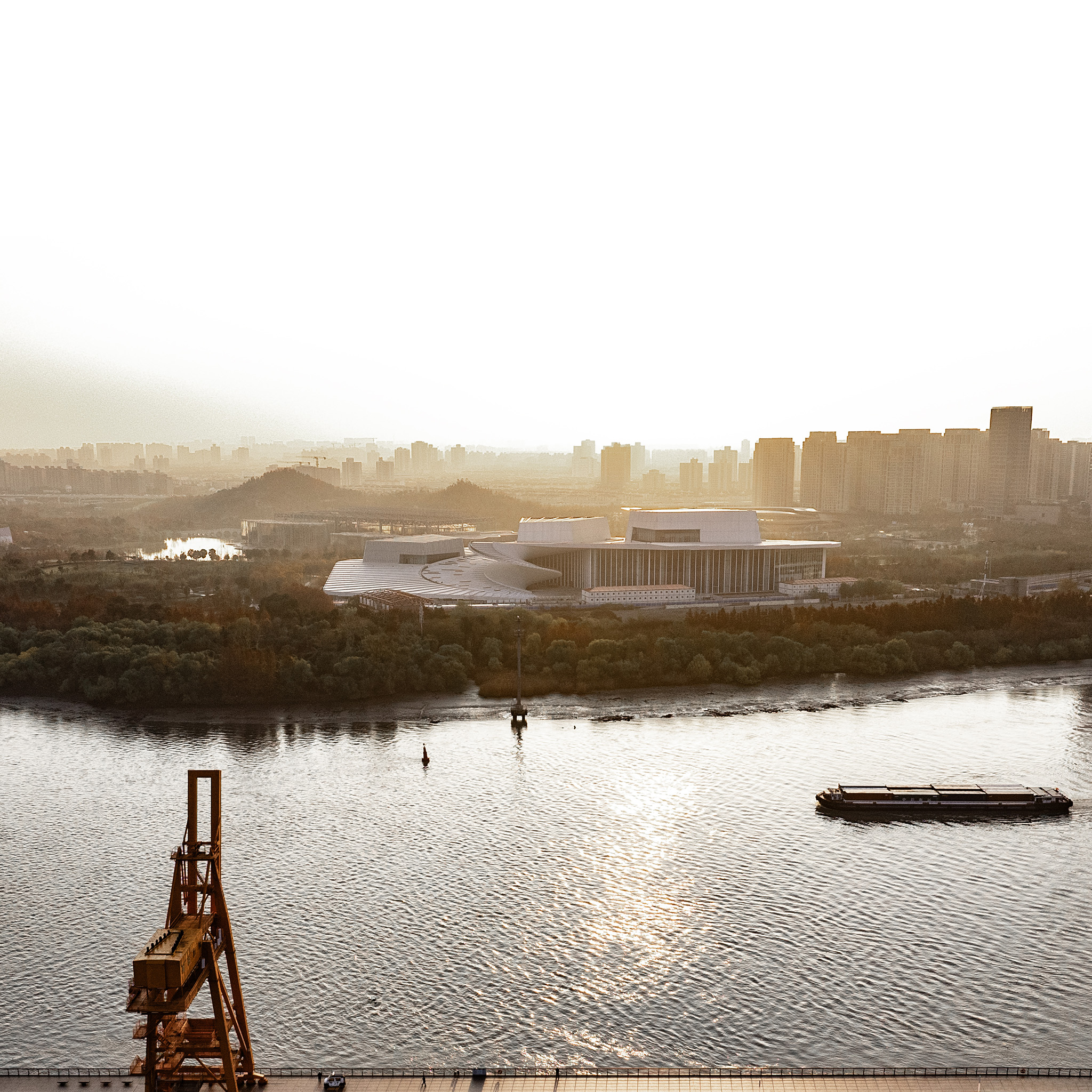
Shanghai Grand Opera House by Snøhetta. Photograph by Honne Dang.
Project description by Snøhetta
After its winning proposal in the 2017 international competition, Snøhetta, East China Architectural Design & Research Institute (ECADI), Theatre Projects, and Nagata Acoustics were commissioned in 2019 as a consortium to deliver the Shanghai Grand Opera House, from initial concept to final completion. The Opera House is a bold cultural destination conceived to engage audiences across genres, from traditional opera and orchestral performances to contemporary and experimental works.
Positioned prominently along the convex bank of the Huangpu River, the Opera House is set to become an iconic anchor of Shanghai's emerging cultural masterplan, which aims to further elevate the city as a global hub of culture, commerce, and innovation. With the building's interior now taking its final shape, the Shanghai Grand Opera House is approaching completion and is anticipated to open to the public in the second half of 2026.
A powerful dialogue between monumentality and movement now unfolds inside the Opera House. Soaring glazed façades flood the public halls with daylight, while sculptural, deep-red volumes wind through the interior, shaping the spatial rhythm. More than a space for performance, the interior becomes an experience – where architecture performs before the curtain even rises.
The building's form draws inspiration from the fluid motions of the human body in dance and theater. A singular, sweeping gesture encircles the site, echoing the ebb and flow of the Huangpu River and creating "one shelter," where the roof transforms into a public stage, an elevated observation platform, and a civic gathering ground.

Celebrating both the collective and the individual, the helical roof provides 24‑hour, year‑round community access, fostering a sense of shared ownership and civic pride. A spiraling stairway connects ground and sky, revealing unfolding views toward the city and riverbanks as visitors ascend.
As a catalyst for urban regeneration, the project also highlights the district's ecological ambitions. The surrounding landscape adopts a radial layout that mirrors the opera house's architectural geometry, reinforcing a holistic, low‑carbon design vision.
From architecture and landscape to interior design, the Shanghai Grand Opera House has been developed through a close collaboration between Snøhetta and the East China Architectural Design & Research Institute, ensuring the project's strong local relevance and integration.