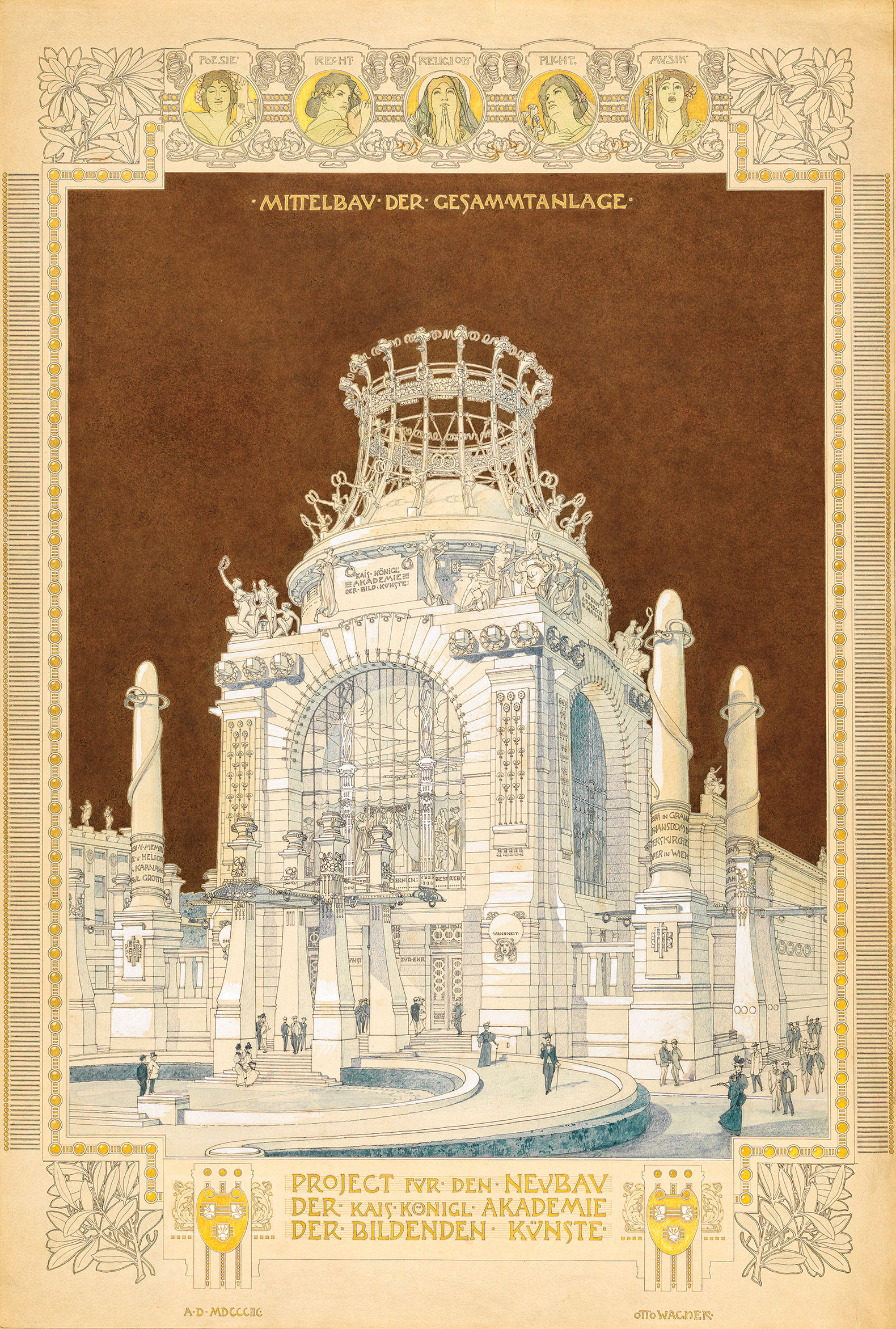
Starting January 31, the Tchoban Foundation – Museum of Architectural Drawing in Berlin presents "Otto Wagner – Architect of Modern Life," the first time in over sixty years that the work of this pioneer of modern architecture has been exhibited in Germany. The choice of Berlin is not accidental: the German capital played a decisive role in Wagner’s creative and professional development.

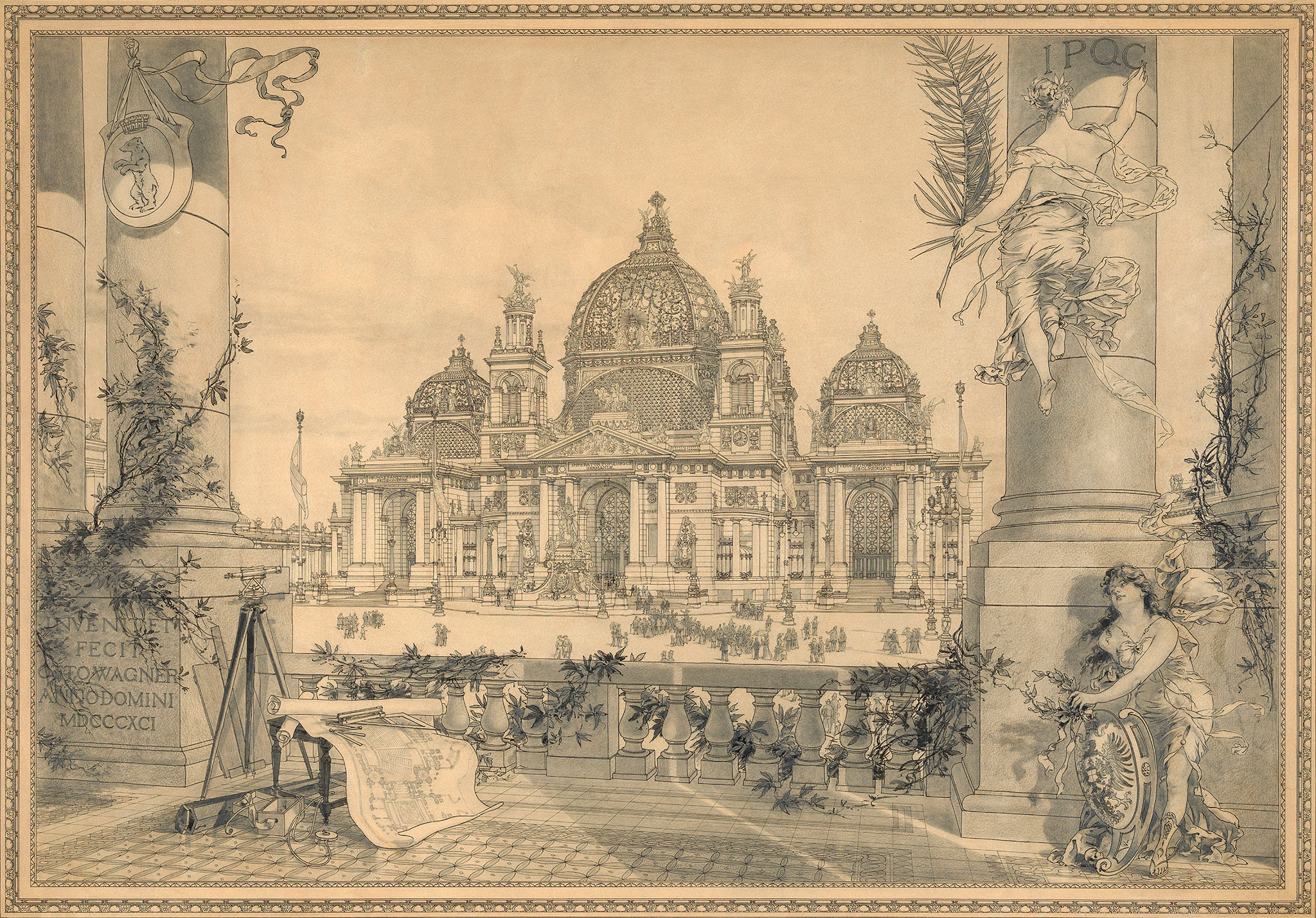
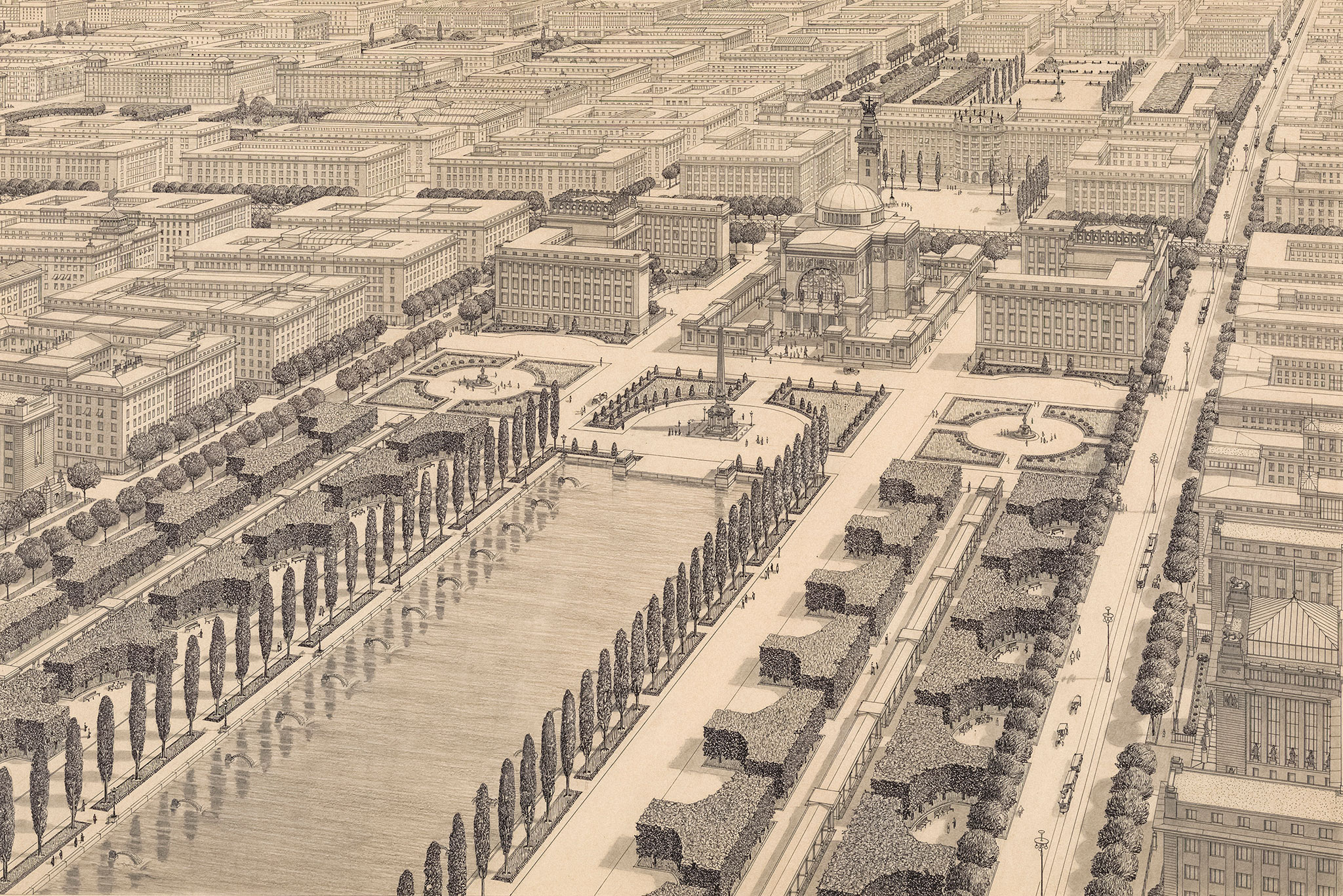
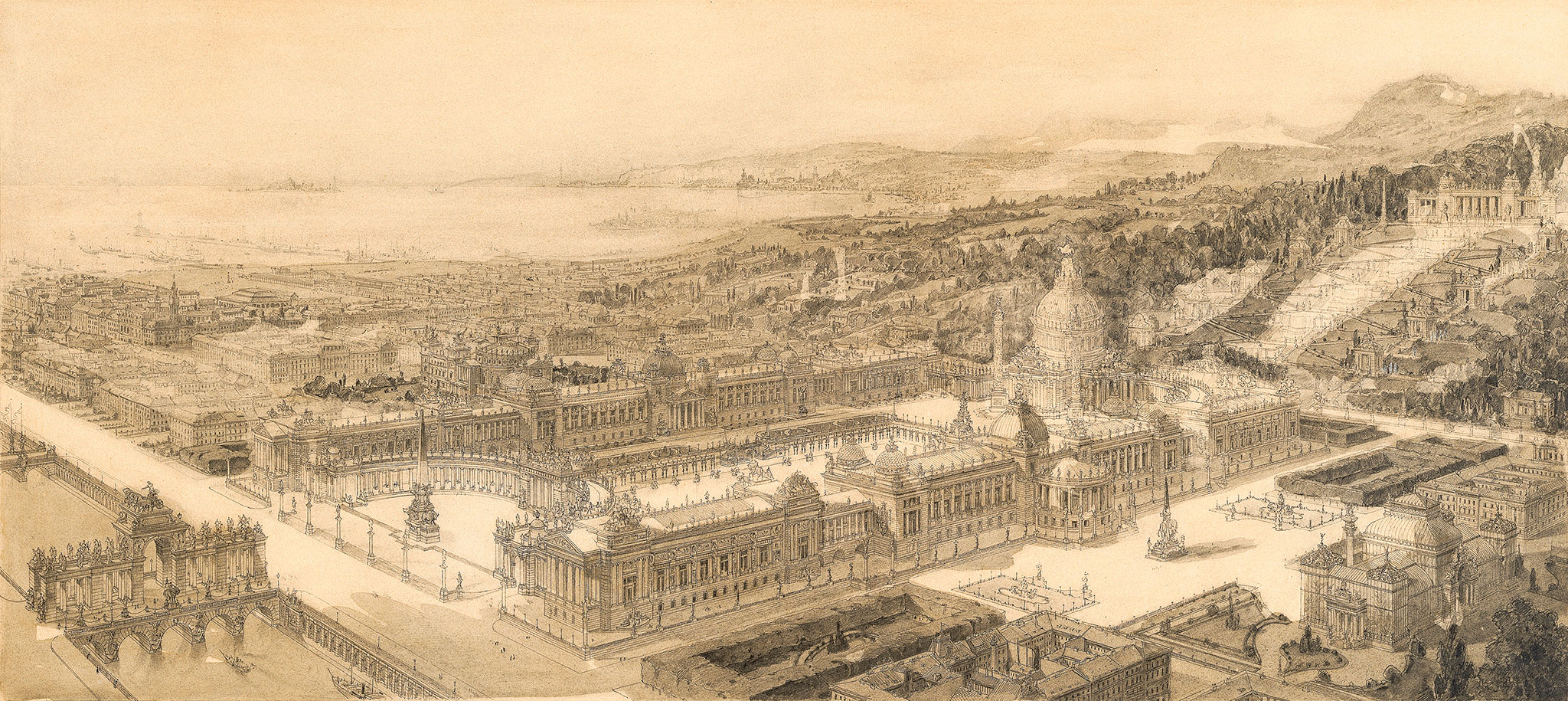
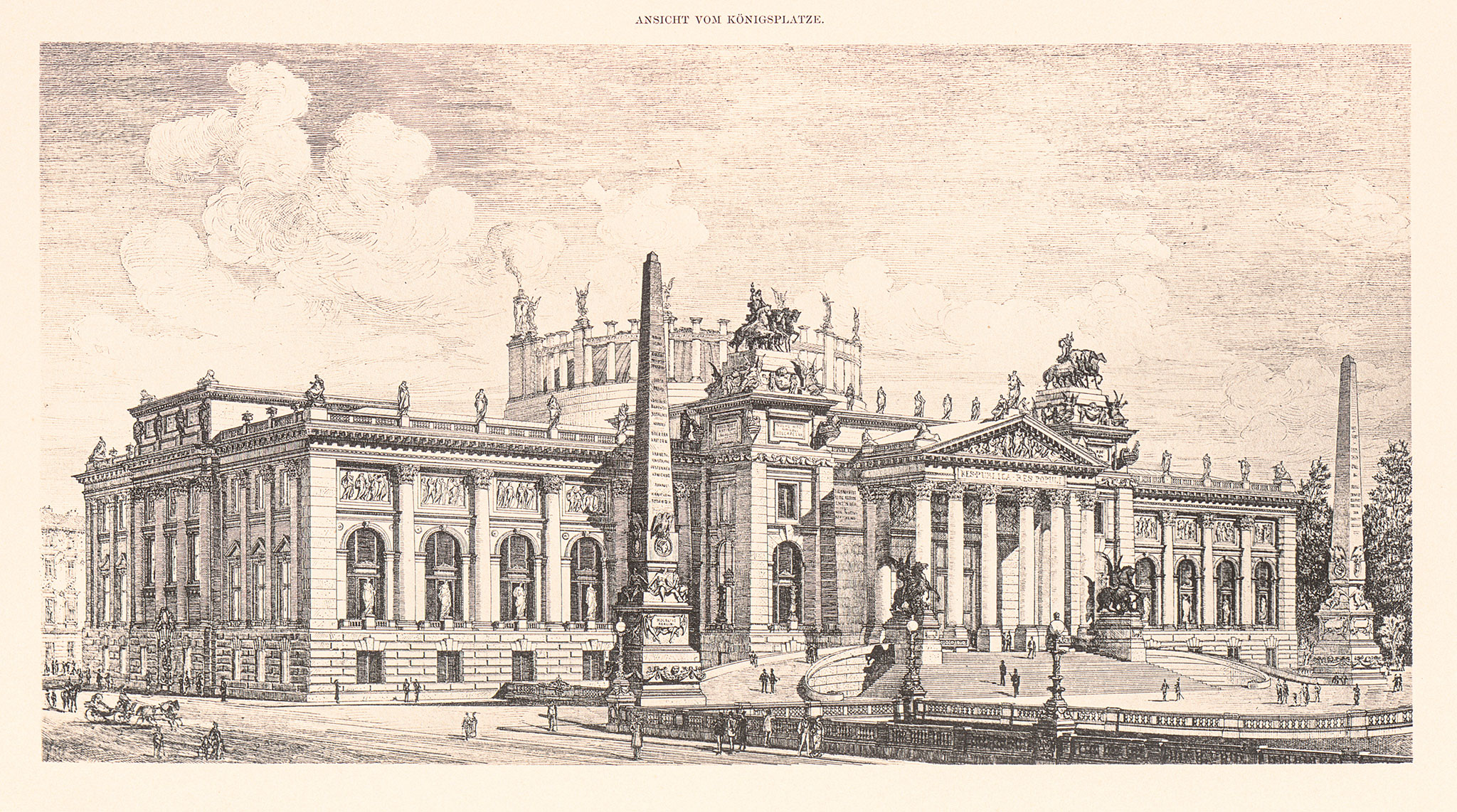
During his studies at the Academy of Building, Wagner became acquainted with the work of Karl Friedrich Schinkel, whose Sammlung architektonischer Entwürfe (Collection of Architectural Designs) served as a model for one of his most renowned books, Einige Skizzen, Projekte und ausgeführte Bauwerke (Some Sketches, Projects, and Completed Buildings). He also participated in the competitions for the Berlin Cathedral and the Reichstag building, developing designs that became landmarks in the monumental architecture of the time.

Curated by Andreas Nierhaus, curator of architecture at the Vienna Museum, the exhibition comprises a carefully selected collection of Wagner's most significant drawings, organized according to the different stages and most relevant themes of his career. The material on display comes from the Vienna Museum's impressive collection, which includes more than 1,000 graphic works.

The exhibition spans from his early, little-known historicist works to the spectacular projects for the Vienna Secession and the radical, unadorned buildings of his later period, which consolidated Wagner's central position in the history of modern architecture.

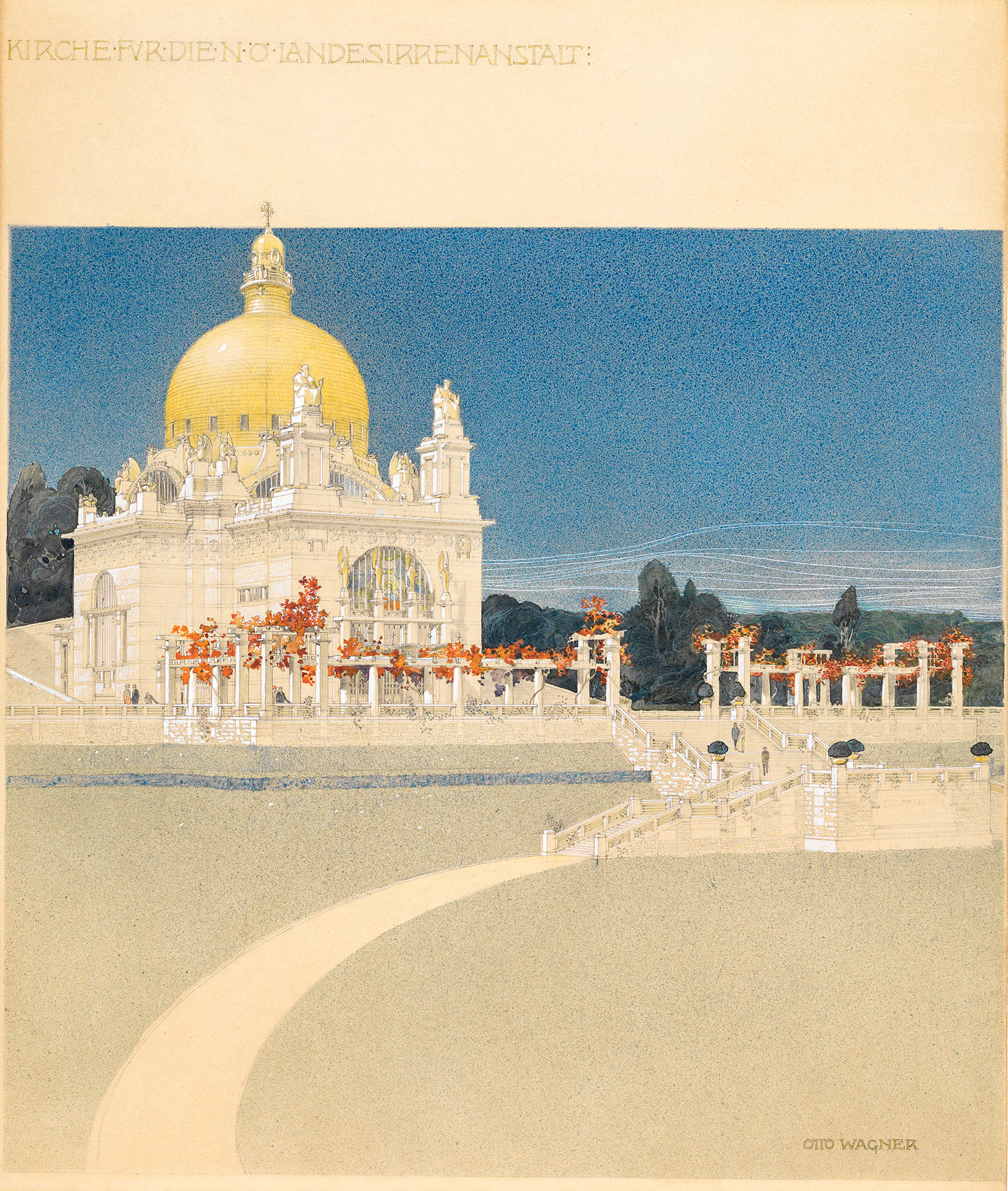
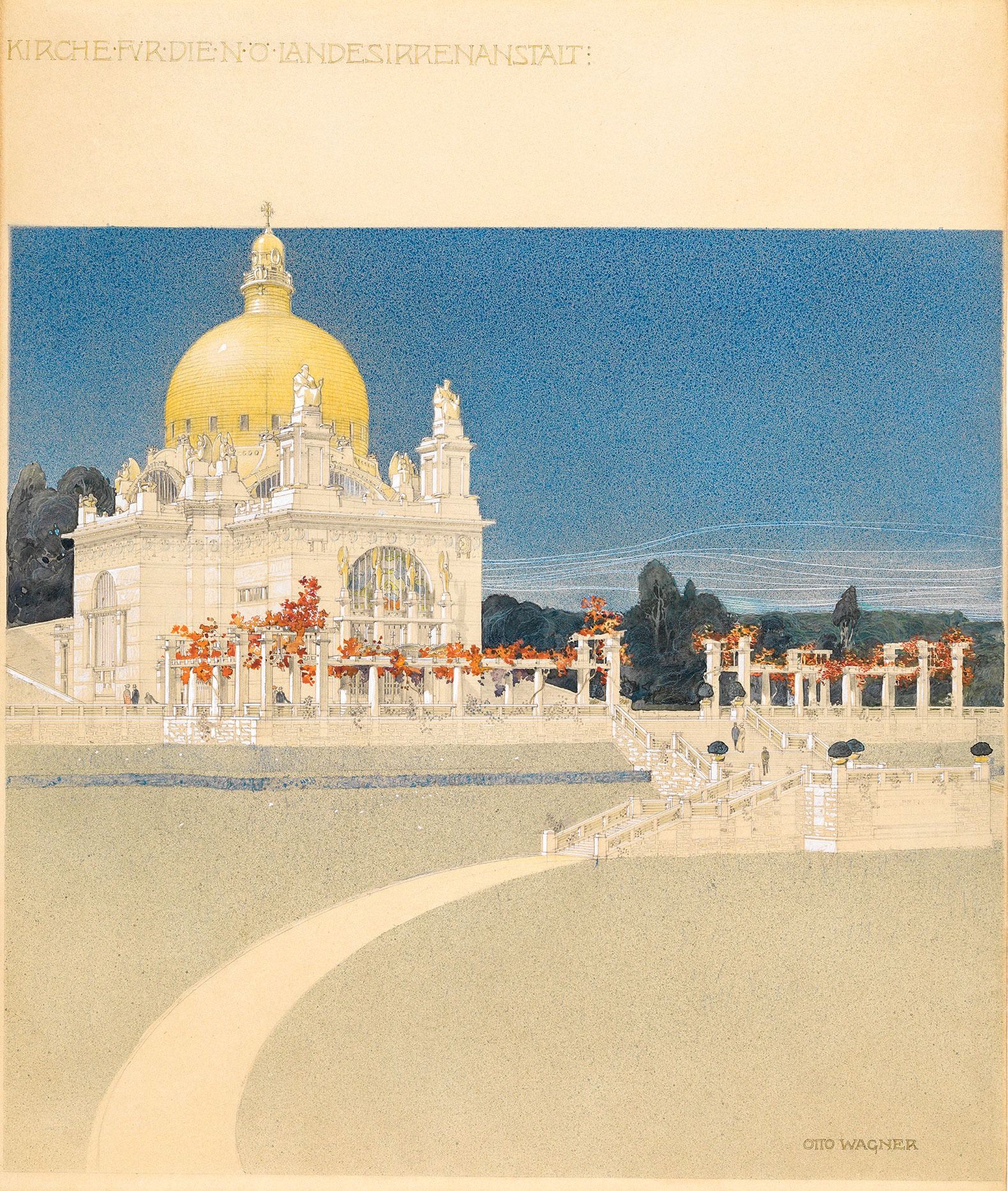
Otto Wagner, Competition project for St. Leopold’s Church at Steinhof, 1902/03. Pencil, watercolour, spray technique, opaque paint, 55,8 × 47 cm. Wien Museum, Inv. 96.011/2.

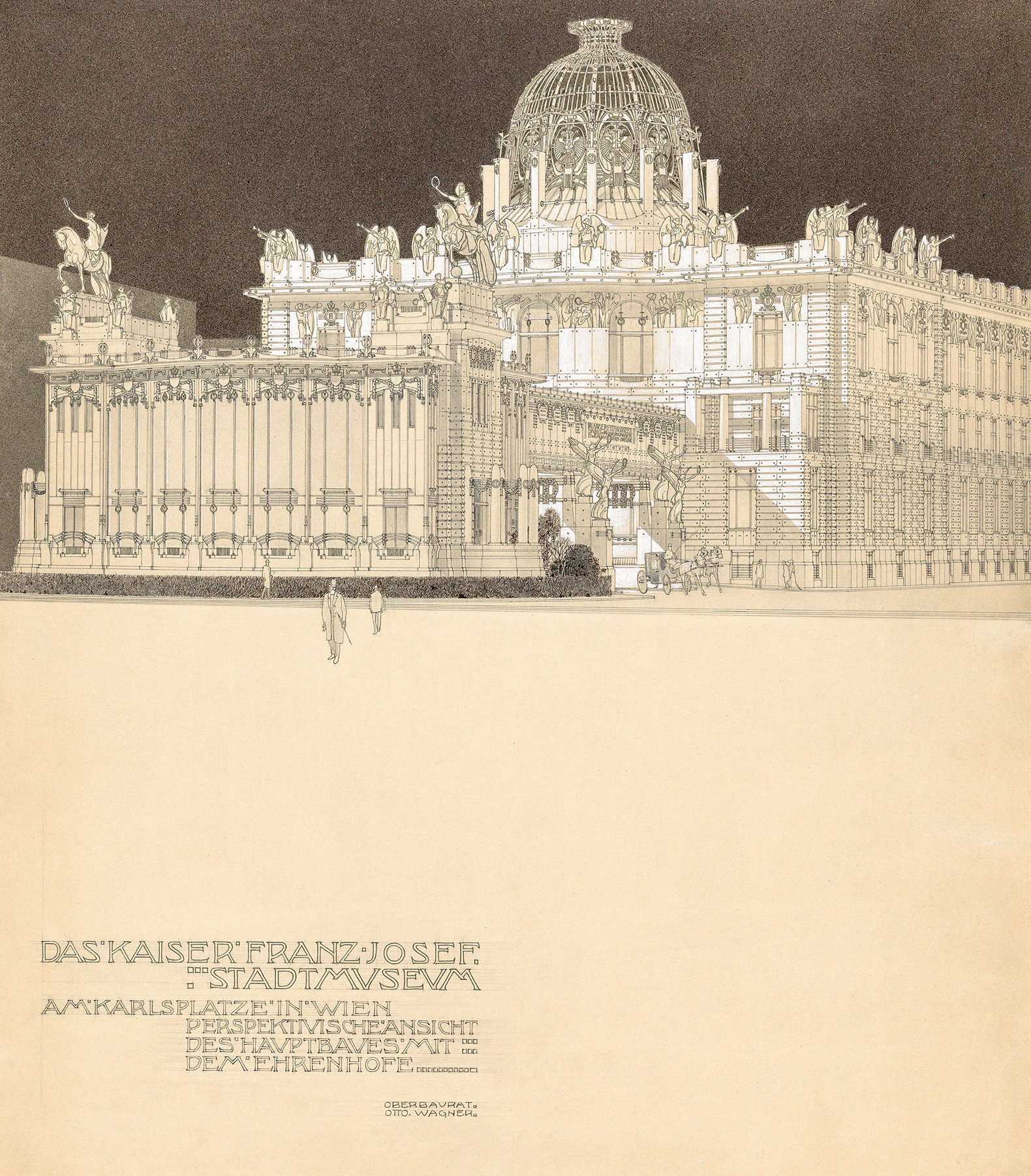
In addition to exploring his architectural output, the exhibition examines the compositional and technical characteristics of his drawings, as well as their strategic use as veritable "paper weapons" in the "battle" for modern architecture.

About Otto Wagner
Otto Wagner (1841–1918) is one of the most influential figures in early modern architecture internationally. Many of his buildings, such as the Vienna Metropolitan Railway, the Postal Savings Bank, and Steinhof Church, are now considered key works of 20th-century architecture. Stripped of historical stylistic trappings, his projects express themselves in a language of "modern life," based on purpose, materiality, and construction.
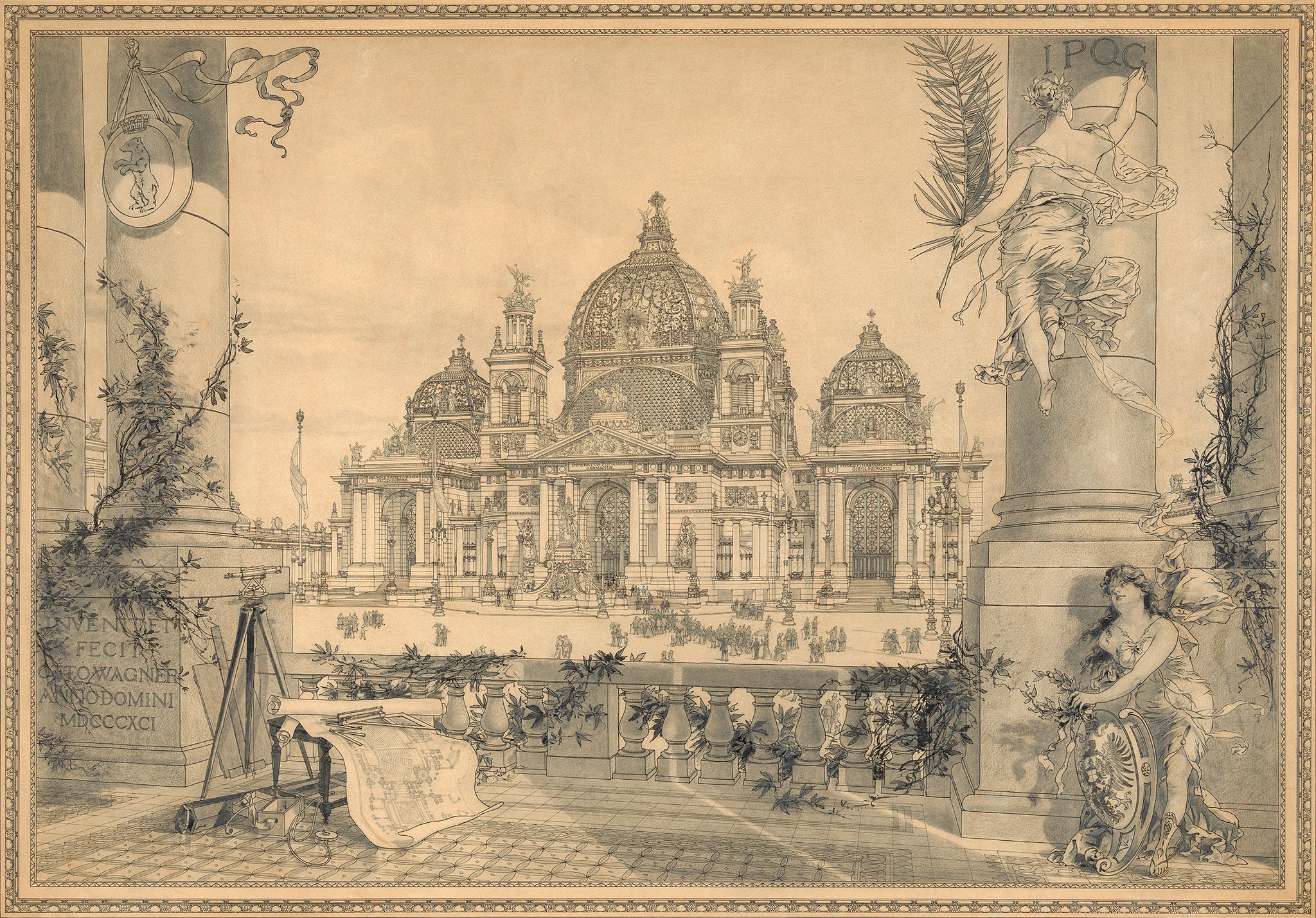
Otto Wagner, Study for Berlin Cathedral, 1890/91. Pencil, pen and wash, 57,5 × 81,4 cm. Wien Museum, Inv. 96.001/2.

Wagner's early work was initially influenced by the historicism of Vienna's Ringstrasse. However, towards the end of the 1880s, he was the only one of his generation to recognize that this architectural language was incompatible with the political, economic, and social transformations of his time. This position was clearly articulated in 1896 with the publication of Modern Architecture, a seminal treatise that had a wide-ranging impact and is now considered one of the most influential texts in architectural theory.

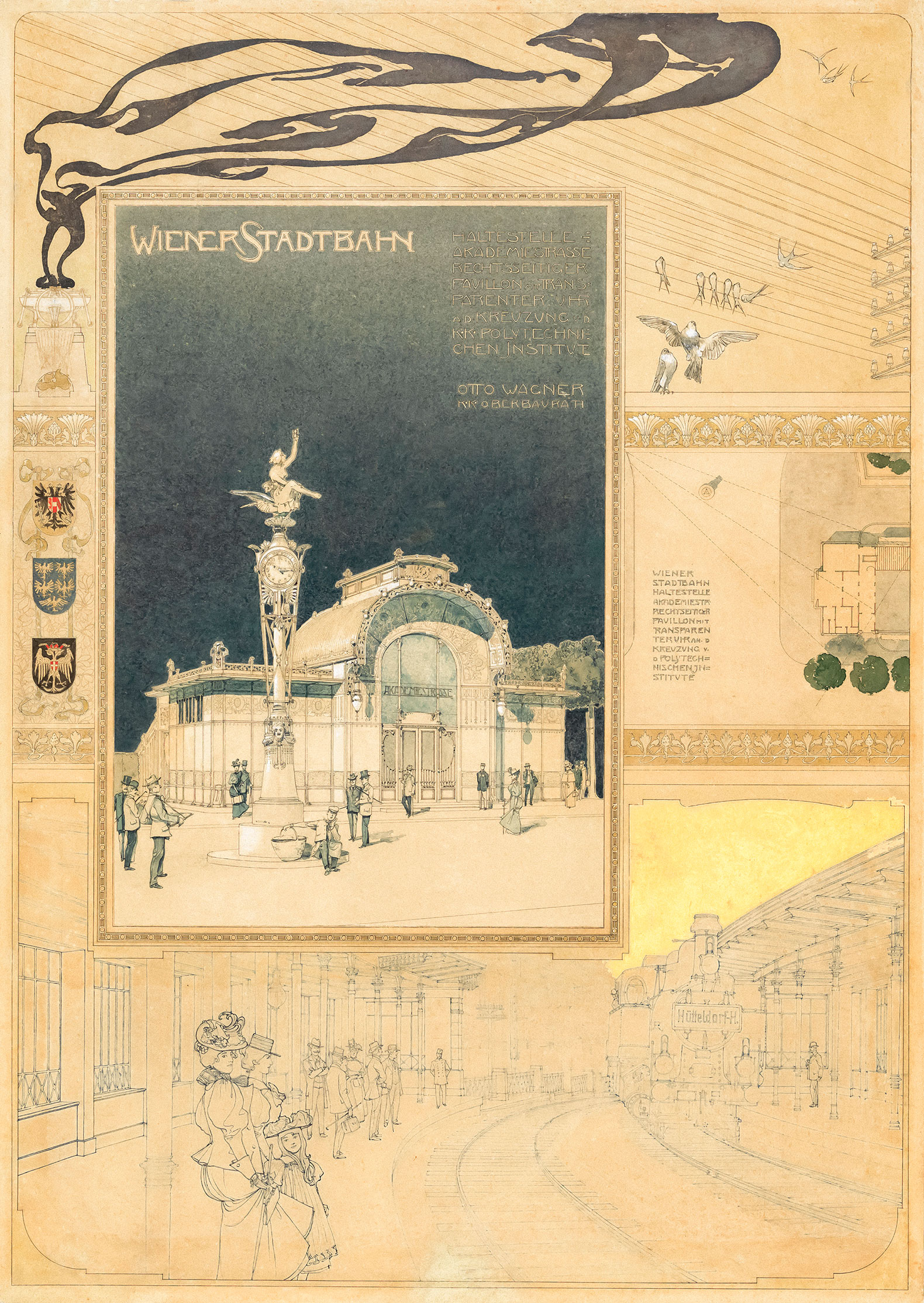
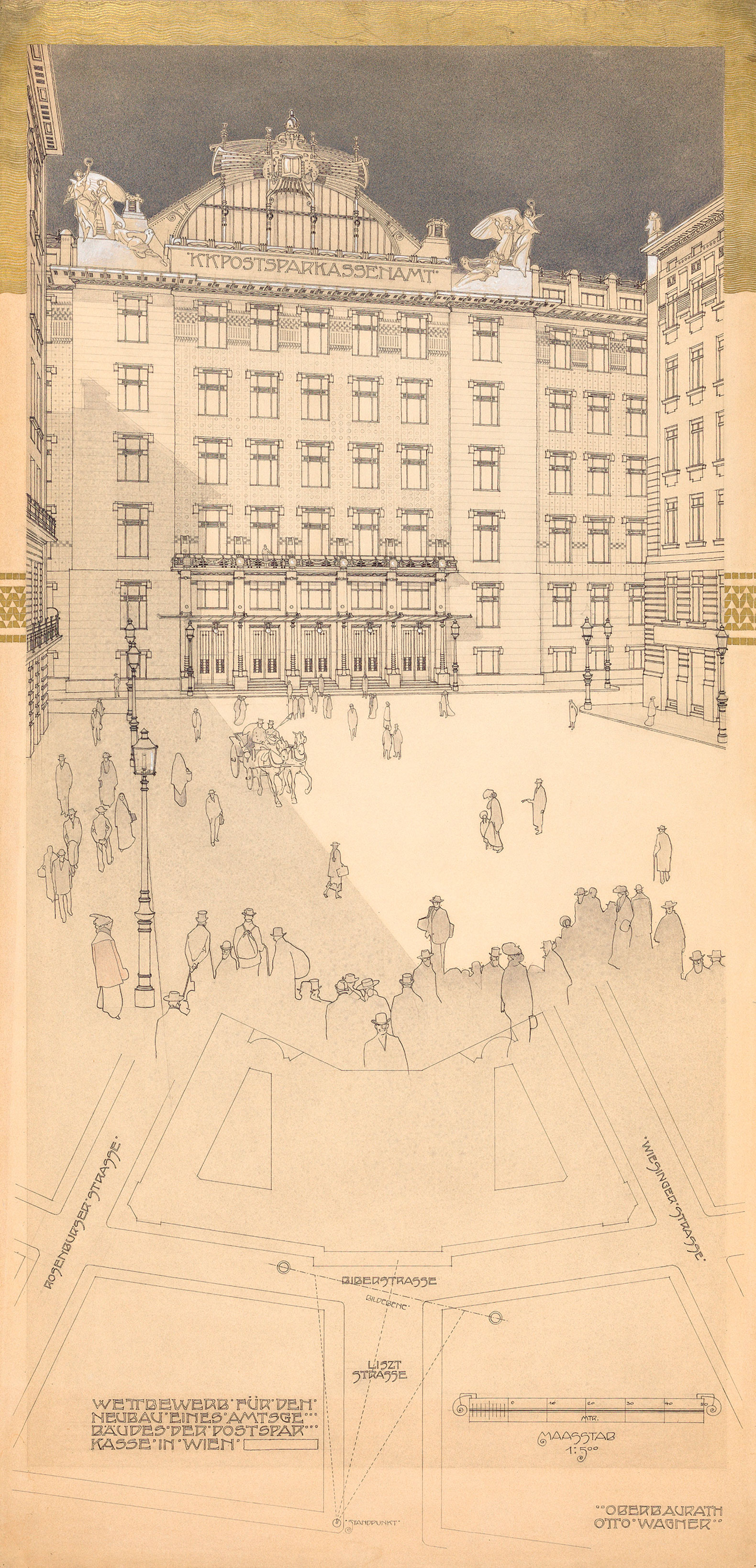
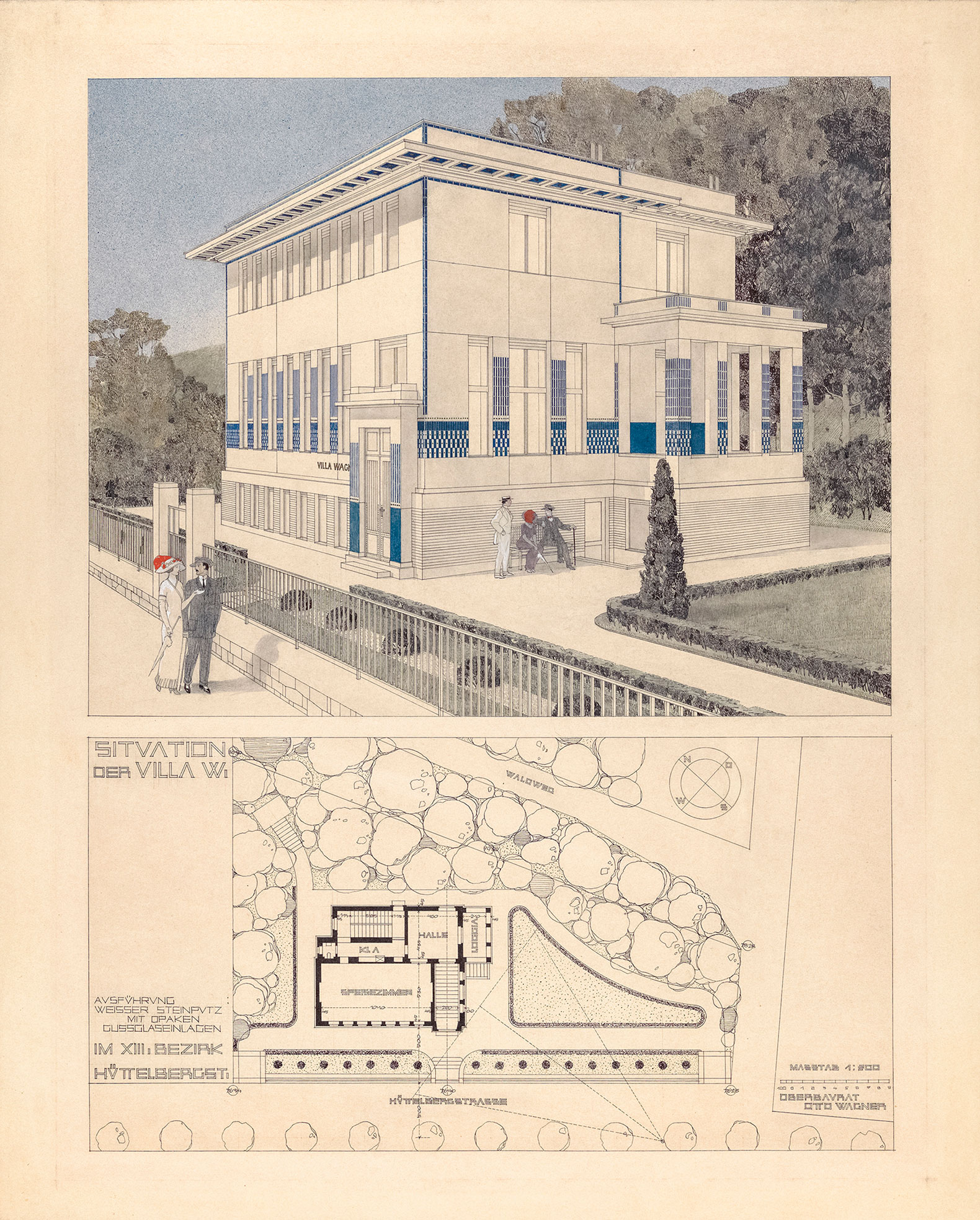
His ideas, radically innovative for the time, generated strong resistance from traditional sectors. In this context, drawing acquired a central role as a tool for experimentation and dissemination: through visionary images of a future architecture, Wagner and his studio produced compositions of great technical sophistication that are now considered milestones of architectural drawing and the origin of the visual propaganda of the modern movement.
More information

Label
Exhibition
Text

Otto Wagner, Architect of Modern Life.

+ + copy Created with Sketch.
- + copy Created with Sketch.
Label
Curator
+ + copy Created with Sketch.
- + copy Created with Sketch.
Label
Collaborators
Text

Lenders.- Wien Museum, Architecture Museum of the Technische Universität Berlin, Sergei Tchoban Collection.
Patronage of.- Österreichische Botschaft Berlin, Österreichisches Kulturforum Berlin. 
Supported by.- Thomas Betonbauteile, Tchoban Voss Architekten.
Media partner.- World-Architects.

+ + copy Created with Sketch.
- + copy Created with Sketch.
Label
Dates
Text

30.01 > 17.05.2026.
Opening hours.- Mon–Fri 2 pm – 7 pm, Sat–Sun 1 pm – 5 pm.
Admission.- 6 € / Reduced.- 4 €.

+ + copy Created with Sketch.
- + copy Created with Sketch.
Label
Location
Text

Tchoban Foundation. Museum for Architectural Drawing. 
Christinenstraße 18a, 10119 Berlin, Germany.

+ + copy Created with Sketch.
- + copy Created with Sketch.
Label
Fotografía
Text

Courtesy of the Wien Museum.

+ + copy Created with Sketch.
- + copy Created with Sketch.

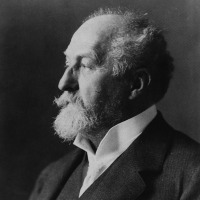
Otto Wagner (b. July 13, 1841, Penzing, Vienna, Austria and d. April 11, 1918 (age 76 years), Vienna) developed his career during a period of profound cultural, technical, and social transformations. His training began at the Vienna Polytechnic (1860–1861), continued at the Berlin School of Architecture (1861–1862), and culminated at the Vienna Academy of Fine Arts (1862–1863), where he assimilated the principles of the prevailing historicism. His early projects adhered to this stylistic framework, aligning themselves with the representative architecture of the Austro-Hungarian Empire.

From the 1880s onward, Wagner began to gradually distance himself from historical architectural languages. In contrast to architecture as a mere repetition of past styles, he argued that design should involve a direct response to the conditions of the present: new materials, industrial technology, and the real needs of modern life. This position places him at a turning point between late historicism and modern architecture.

In 1894, he was appointed professor at the Vienna Academy of Fine Arts, a position from which he exerted a decisive influence on the Vienna Secession generation. Architects such as Josef Hoffmann and Joseph Maria Olbrich found in Wagner an intellectual touchstone who, unlike more decorative approaches, insisted on the coherence between function, construction, and form. His ideas were systematized in the treatise Moderne Architektur (1896), a key text for understanding the transition to modernism.

His most extensive contribution to the city of Vienna was the Stadtbahn project, developed between 1894 and 1901. Wagner designed stations, bridges, and auxiliary buildings that transformed the urban infrastructure into a field of architectural experimentation. Among his most outstanding works are the Karlsplatz (1898–1899) train station, the Stadtpark train station, the Hietzing train station (1898), and the Hofpavillon Hietzing (1898–1899), designed for the emperor. In these projects, the metal structure, lightweight cladding, and abstract ornamentation heralded a new architectural language, still expressive but already detached from the historical repertoire.

At the same time, Wagner designed residential buildings such as the Majolikahaus (1898–1899), where the façade becomes a continuous and modern surface, and ambitious institutional works. The Church of St. Leopold at Steinhof (1903–1907) represents an advanced synthesis of function, symbolism, and technique, especially in its adaptation to a hospital complex. His most emblematic work, the Vienna Postal Savings Bank (1904–1906; extension 1910–1912), constitutes a radical formulation of modern architecture: a legible structure, industrial materials such as aluminum and glass, and an aesthetic derived directly from use and construction.

Compared to contemporaries like Victor Horta or Hector Guimard, Wagner appeared less organic and more rational; in contrast to Louis Sullivan, he shared the primacy of function, albeit from a European technical perspective; and in relation to Hendrik Petrus Berlage, he shared the pursuit of a modern construction ethic. He died in 1918, leaving a decisive legacy: having demonstrated that architectural modernity was not a style, but an inevitable consequence of designing within the context of his time.

Read more
Sergei Tchoban (1962) is an internationally active German architect. He is managing partner of TCHOBAN VOSS Architekten and head of the Berlin office. Tchoban studied architecture at the Academy of Arts in Saint Petersburg. He has lived in Germany since 1991 and has held German citizenship since 1995. After starting at NPS Nietz - Prasch - Sigl in Hamburg in 1992, Tchoban became managing partner of the architectural office now known as TCHOBAN VOSS Architekten in 1995. In 2009, the Tchoban Foundation was established, which is based in the Museum for Architectural Drawing built for this purpose in 2013.

Numerous residential and office buildings, hotels, cultural buildings and revitalisation projects have been created according to his designs and plans, including EDGE Suedkreuz Berlin, Germany's largest office ensemble in sustainable timber hybrid construction, the Berlin Apple store Rosenthaler Strasse, as well as the revitalisation of the Ernst-Reuter-Platz 6 office building and numerous buildings as part of the master planning for Berlin's Osthafen.

In 2020, Tchoban was president of the American Society of Architectural Illustrators ASAI. His architectural drawings have been exhibited in numerous museums and galleries worldwide and are in the collections of international museums, archives as well as in private collections. In 2018, Sergei Tchoban was awarded the European Prize for Architecture by the Chicago Athenaeum Museum of Architecture and Design for his lifework.

Sergei Tchoban is member of the Bund Deutscher Architektinnen und Architekten BDA (Association of German Architects) and the chambers of architects in Hamburg and Berlin.
Read more

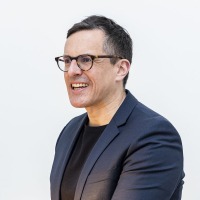
Andreas Nierhaus was born in Graz in 1978. He studied art history and history in Vienna. From 2004 to 2005, he was an assistant at the Institute of Art History at the University of Vienna. From 2005 to 2008, he was a member of the Art History Committee of the Austrian Academy of Sciences.

Since 2005, he has been a professor at the University of Vienna, and since 2008, he has been a curator at the Vienna Museum. He has also been a visiting professor at Goethe University Frankfurt am Main. In 2022, he received his habilitation from the University of Vienna.

Read more
Published on: January 18, 2026
Cite:
metalocus, JOSÉ JUAN BARBA
"Records of a pioneer. "Otto Wagner, Architect of Modern Life" at the Tchoban Foundation" METALOCUS. Accessed
<http://www.metalocus.es/en/news/records-pioneer-otto-wagner-architect-modern-life-tchoban-foundation> ISSN 1139-6415
Loading content ...
Loading content ...
Loading content ...
Loading content ...
Loading content ...
Loading content ...
Loading content ...
Loading content ...
Loading content ...
Loading content ...
Loading content ...
Loading content ...
Loading content ...
Loading content ...
Loading content ...
Loading content ...
Loading content ...
Loading content ...
Loading content ...
Loading content ...
Loading content ...
Loading content ...
Loading content ...
Loading content ...
Loading content ...
Loading content ...
Loading content ...
Loading content ...
Loading content ...
Loading content ...
Loading content ...
Loading content ...
Loading content ...
Loading content ...
Loading content ...
Loading content ...
Loading content ...
Loading content ...
Loading content ...
Loading content ...
Loading content ...
Loading content ...
Loading content ...
Loading content ...
Loading content ...
Loading content ...
Loading content ...
Loading content ...
Loading content ...
Loading content ...
Loading content ...
Loading content ...
Loading content ...
Loading content ...