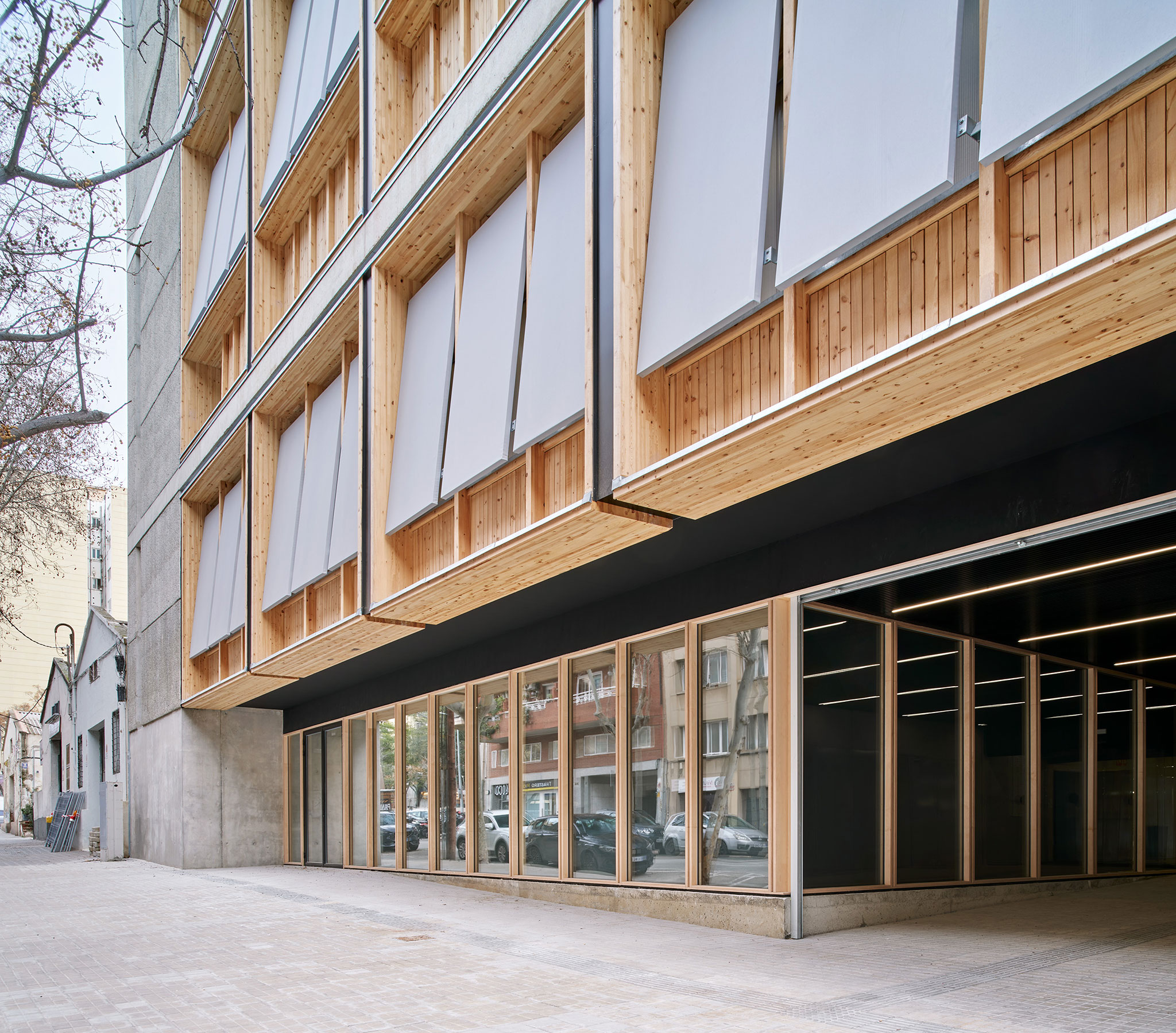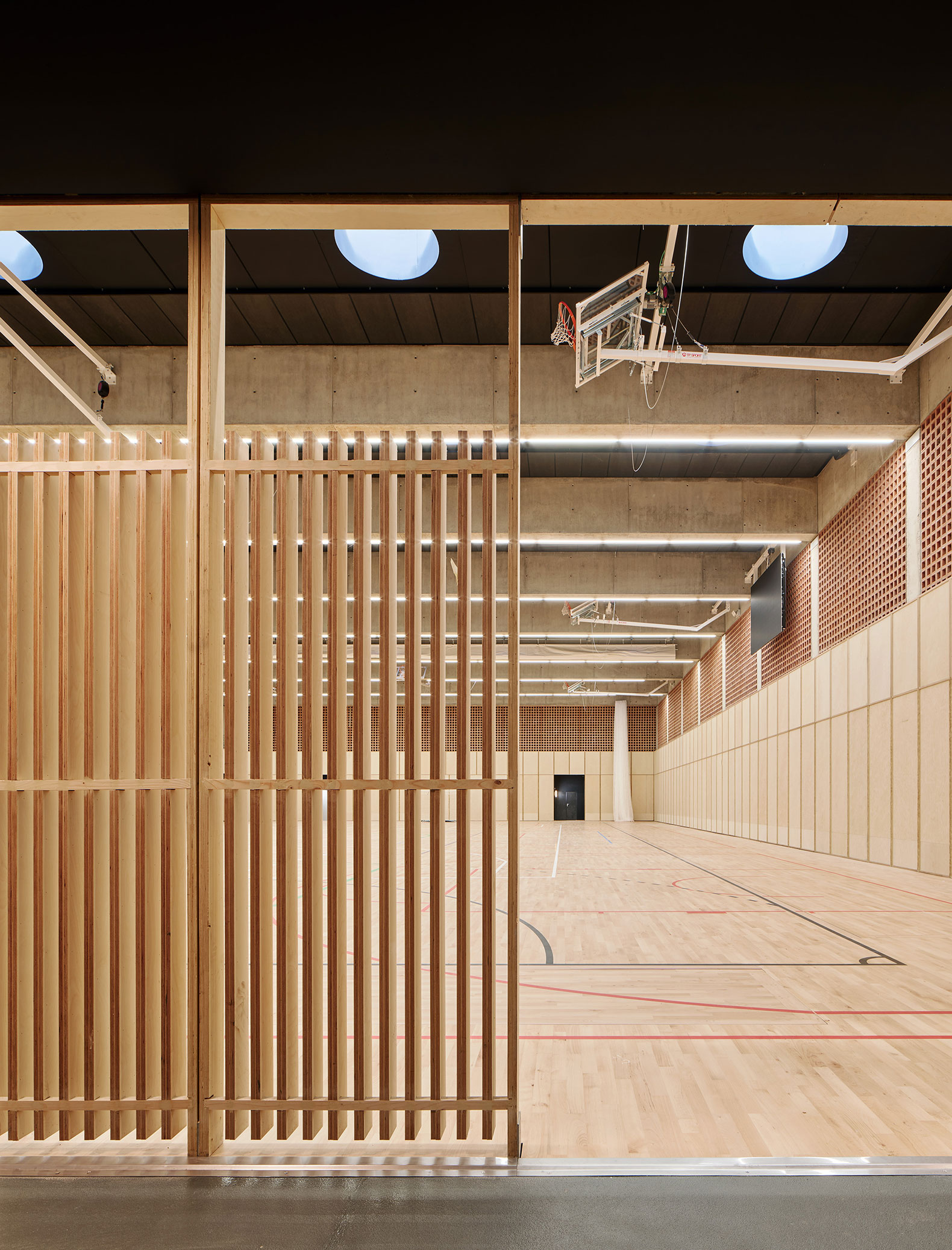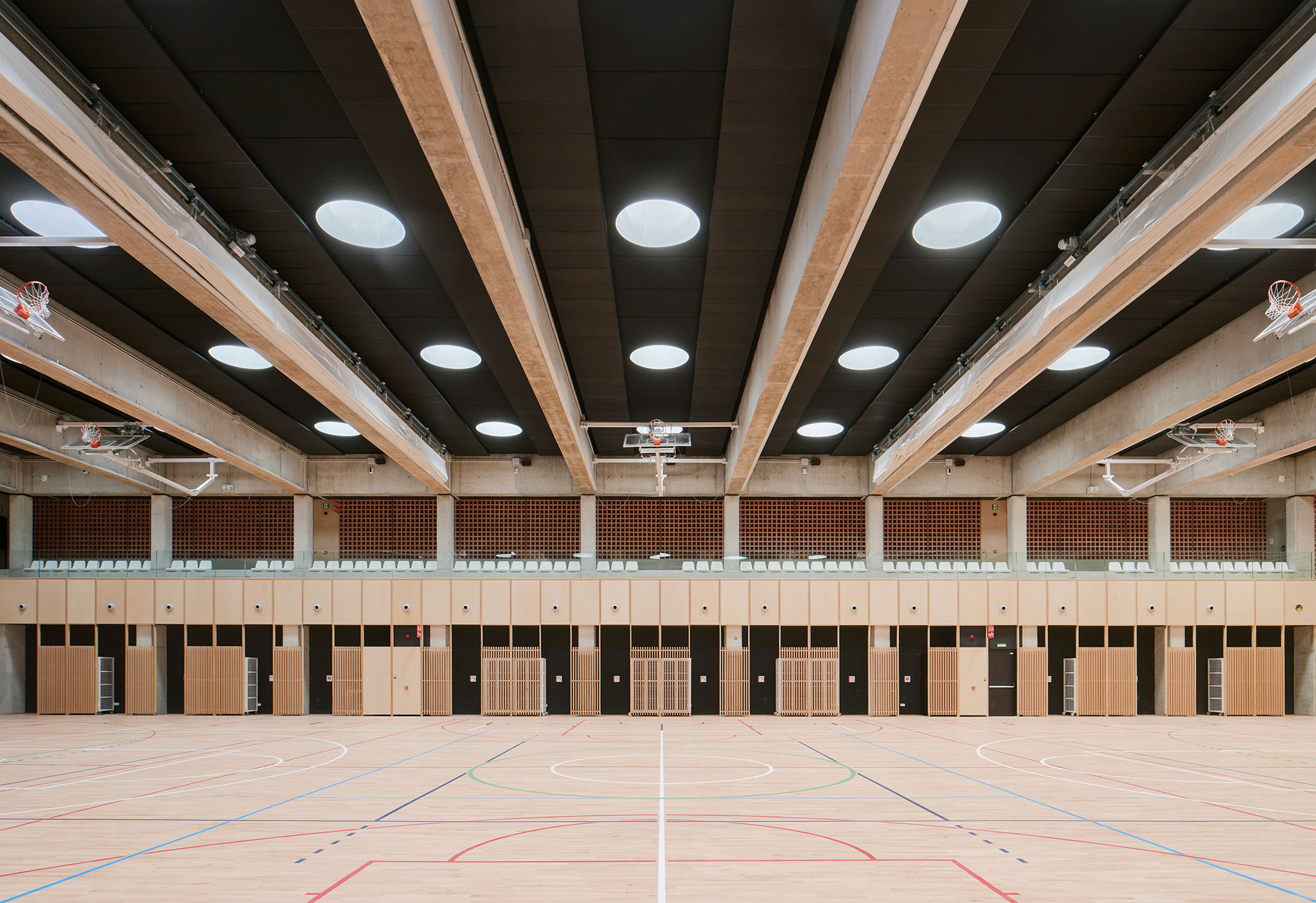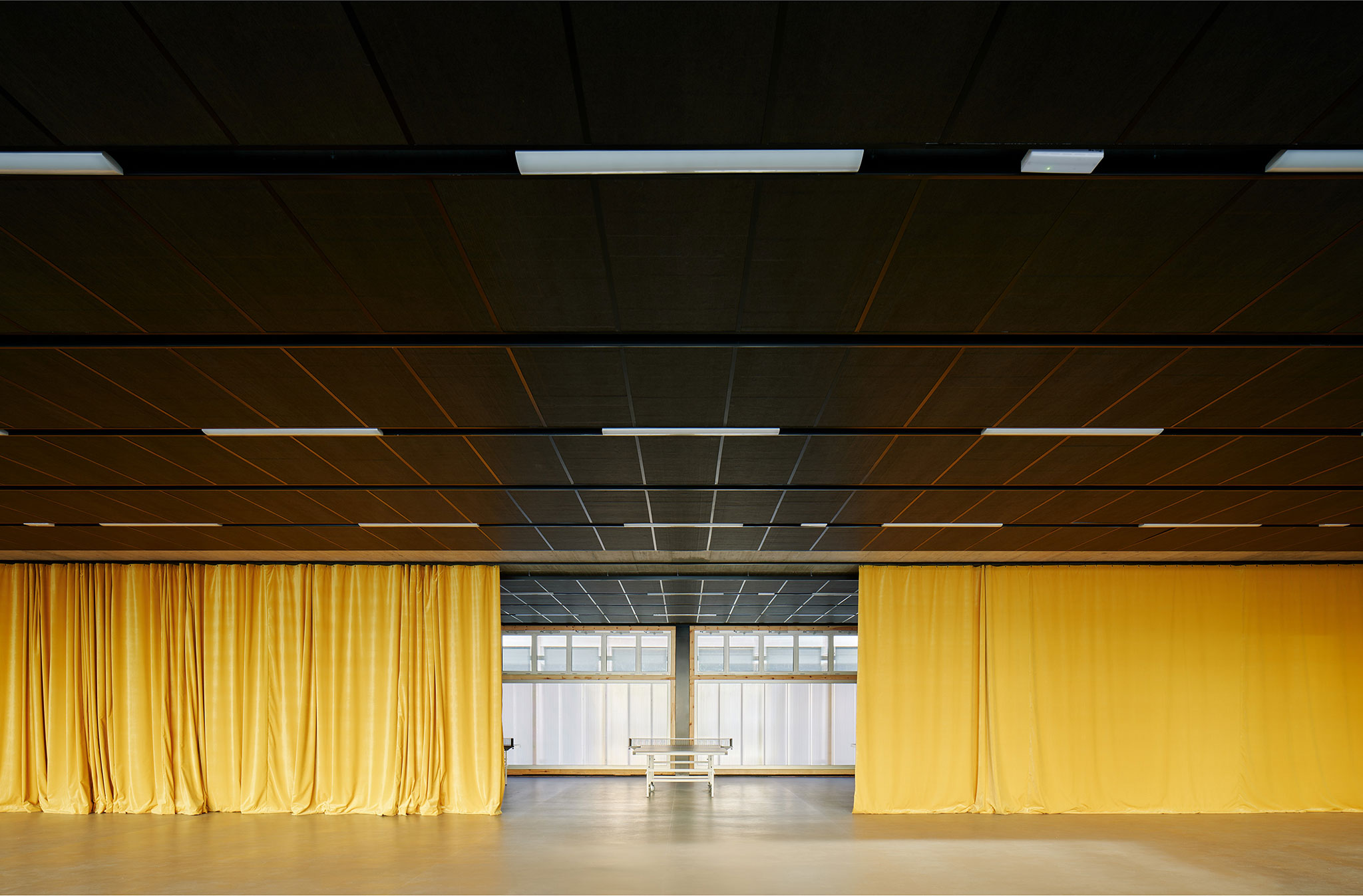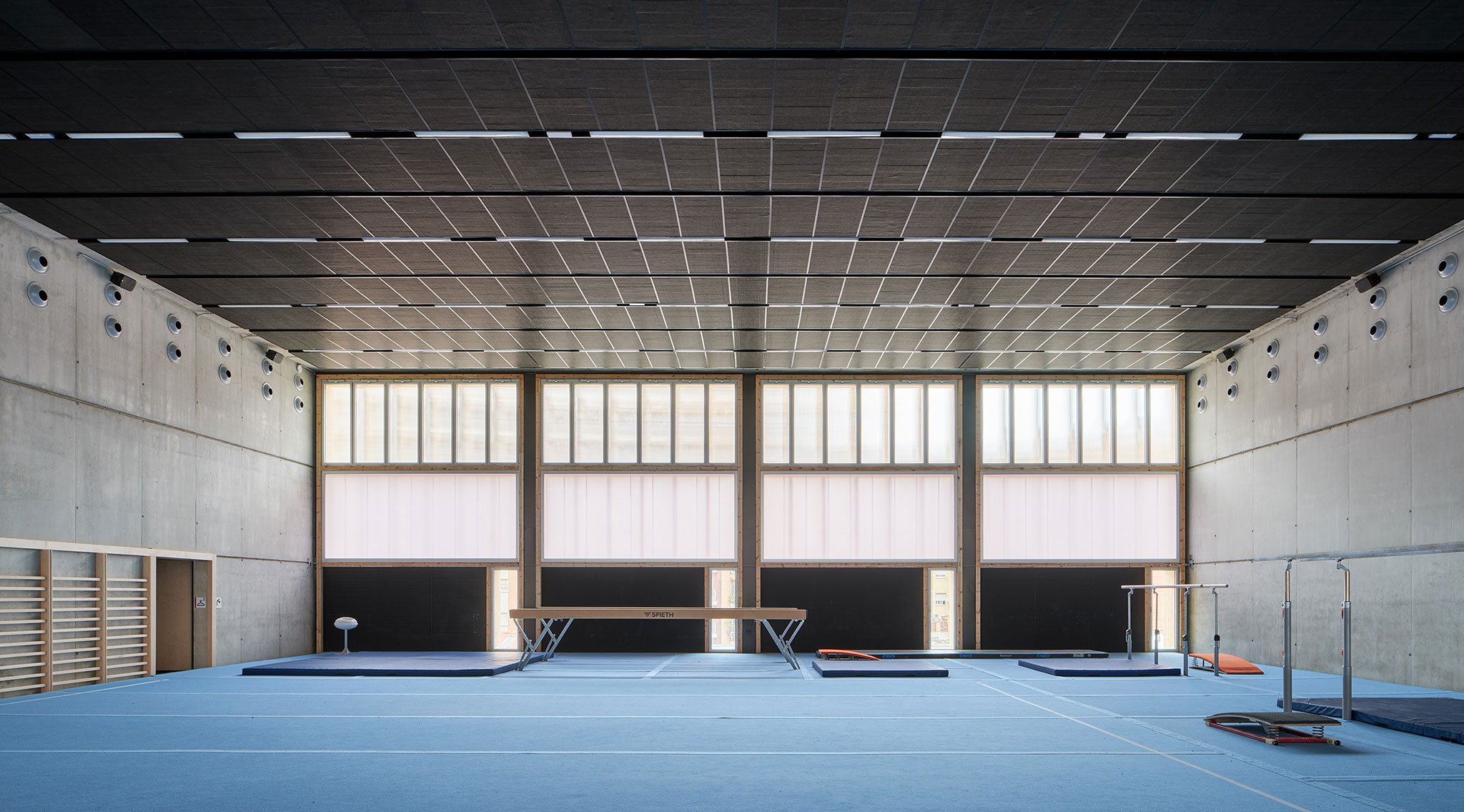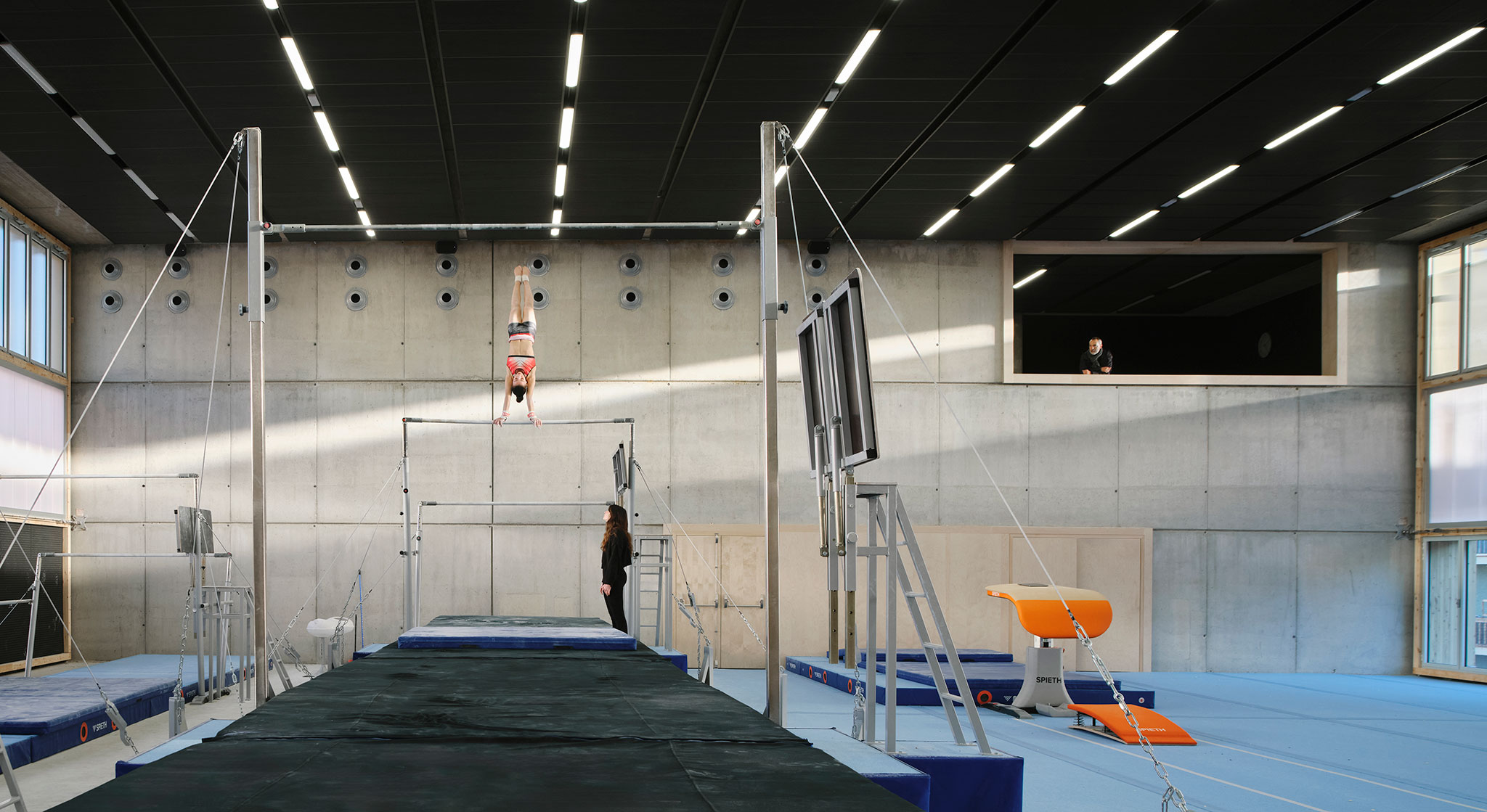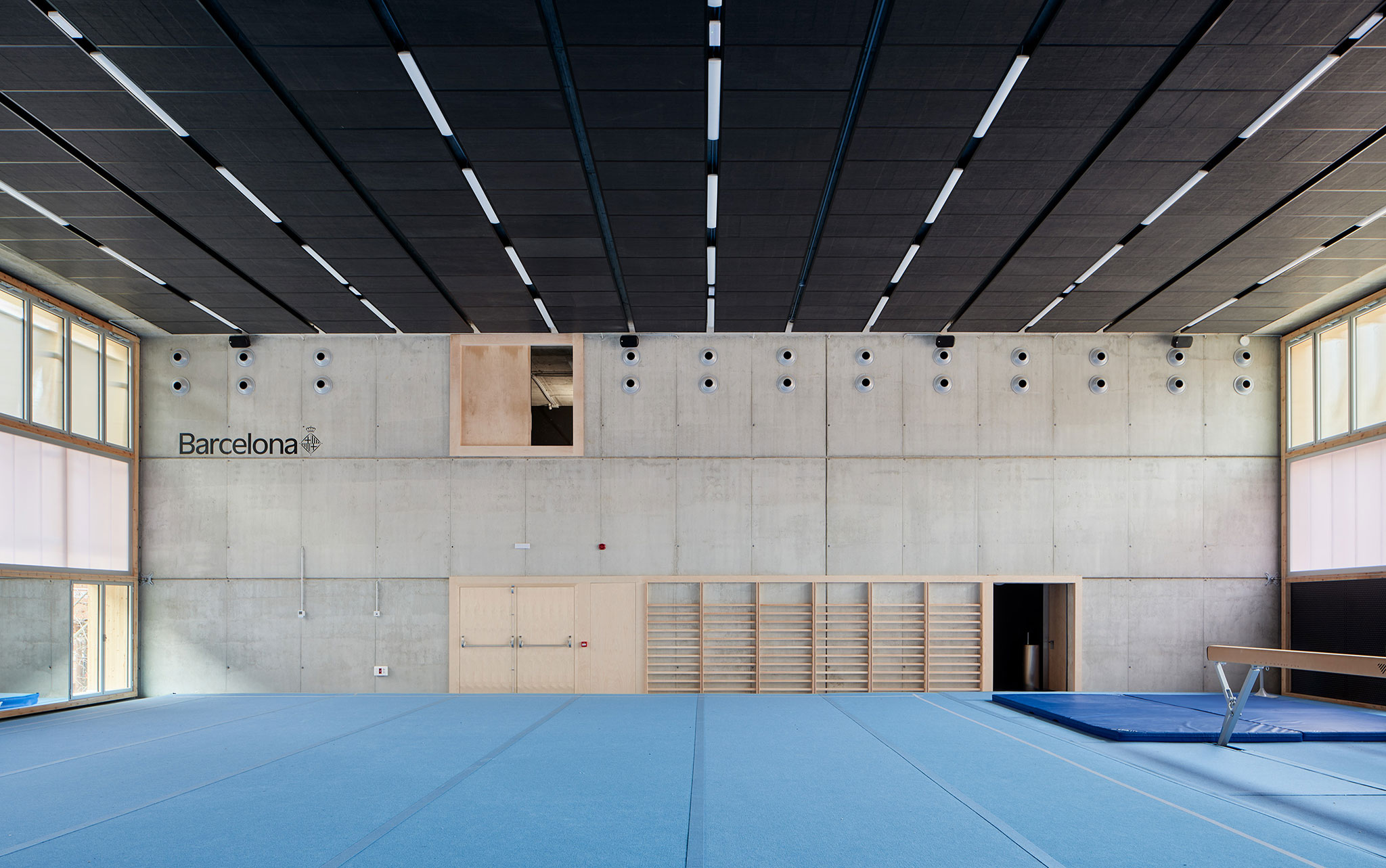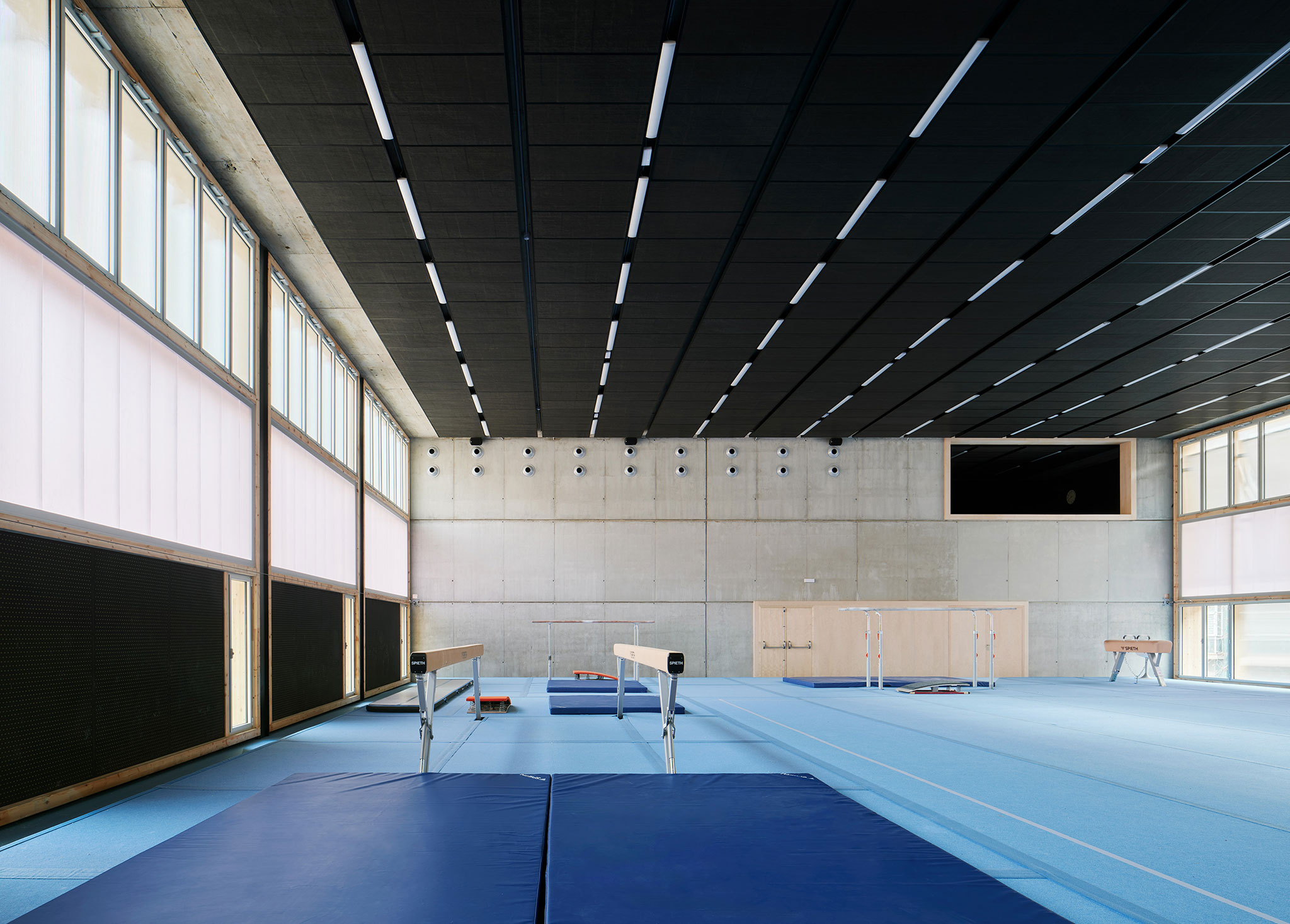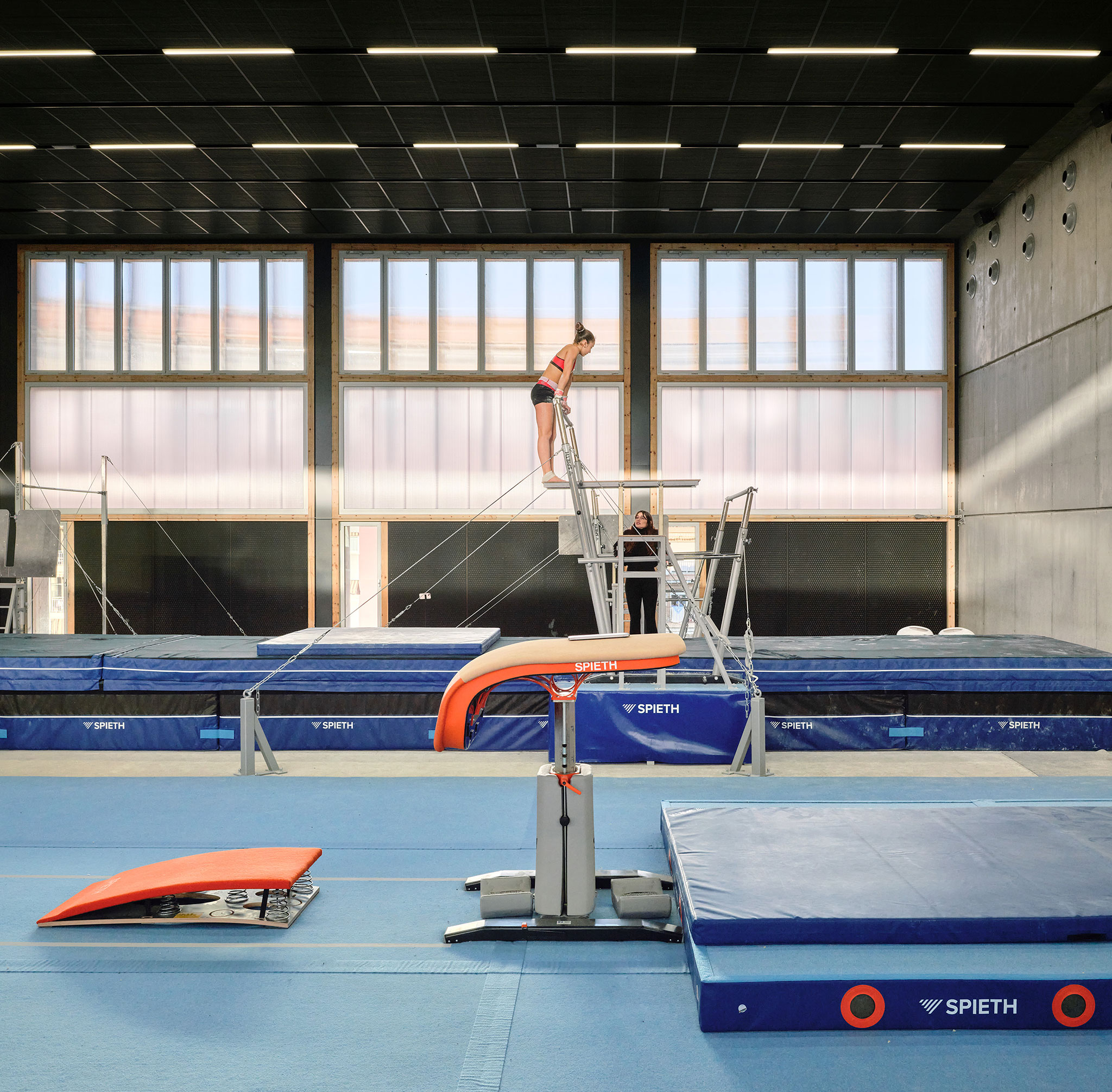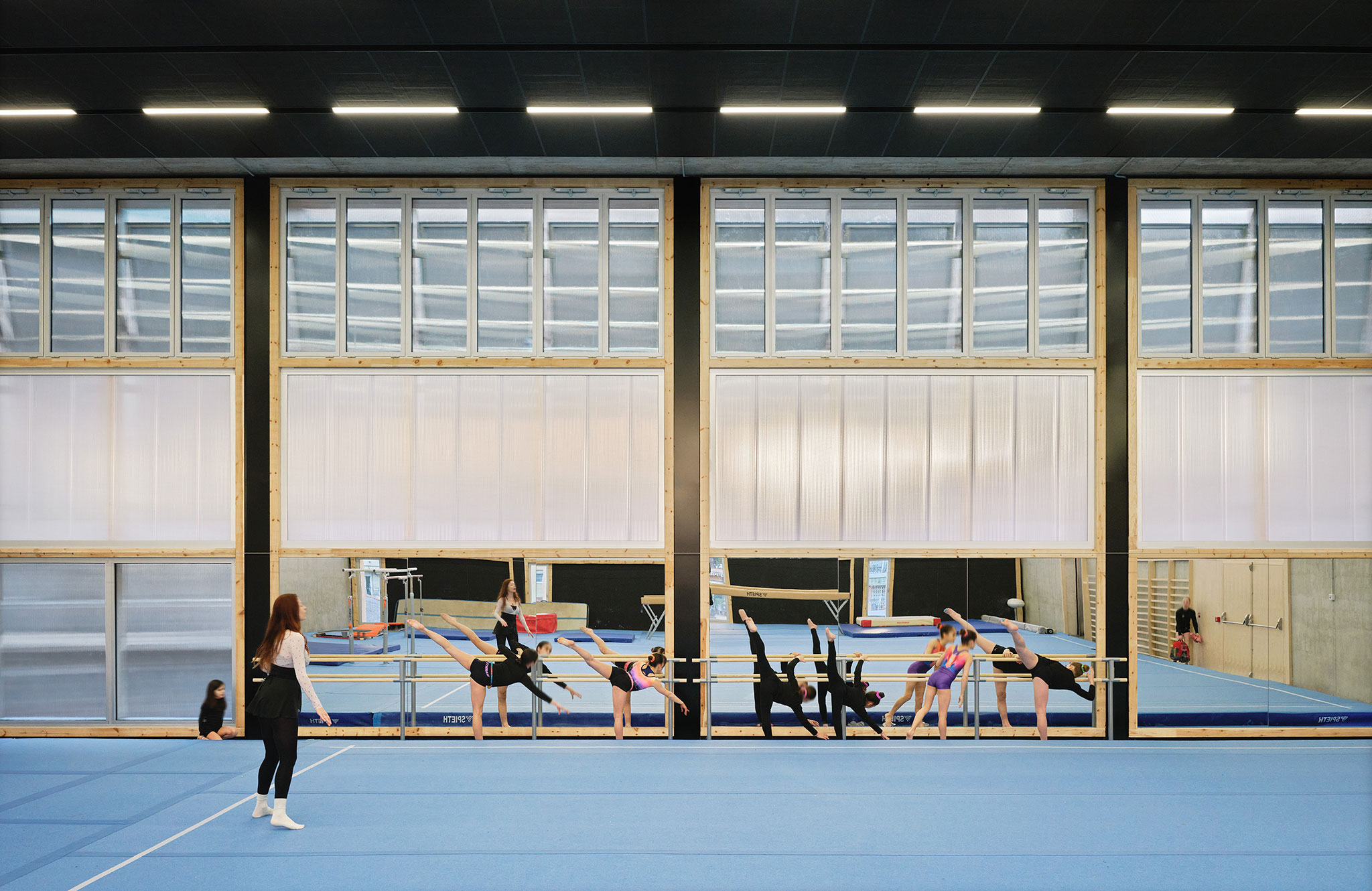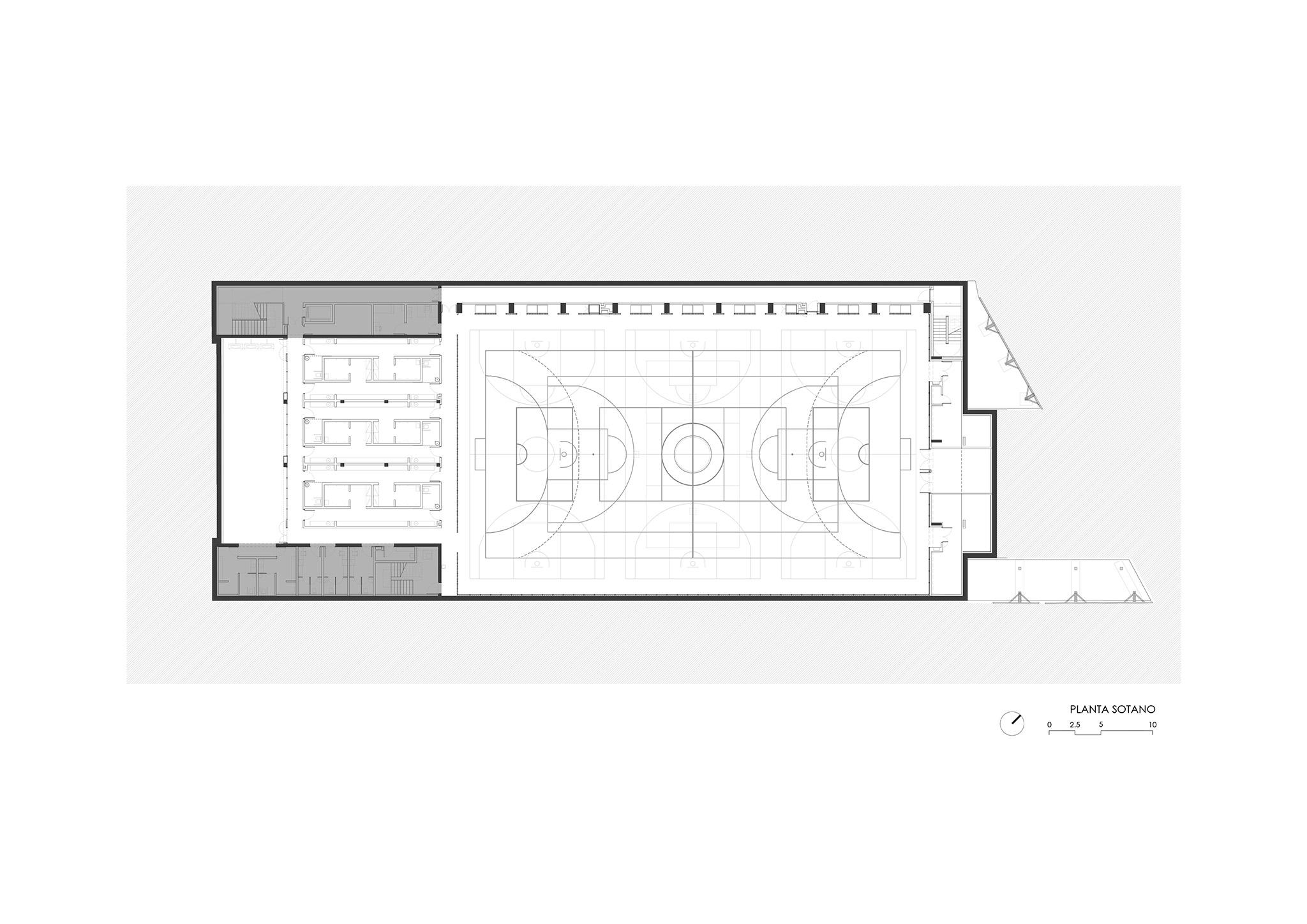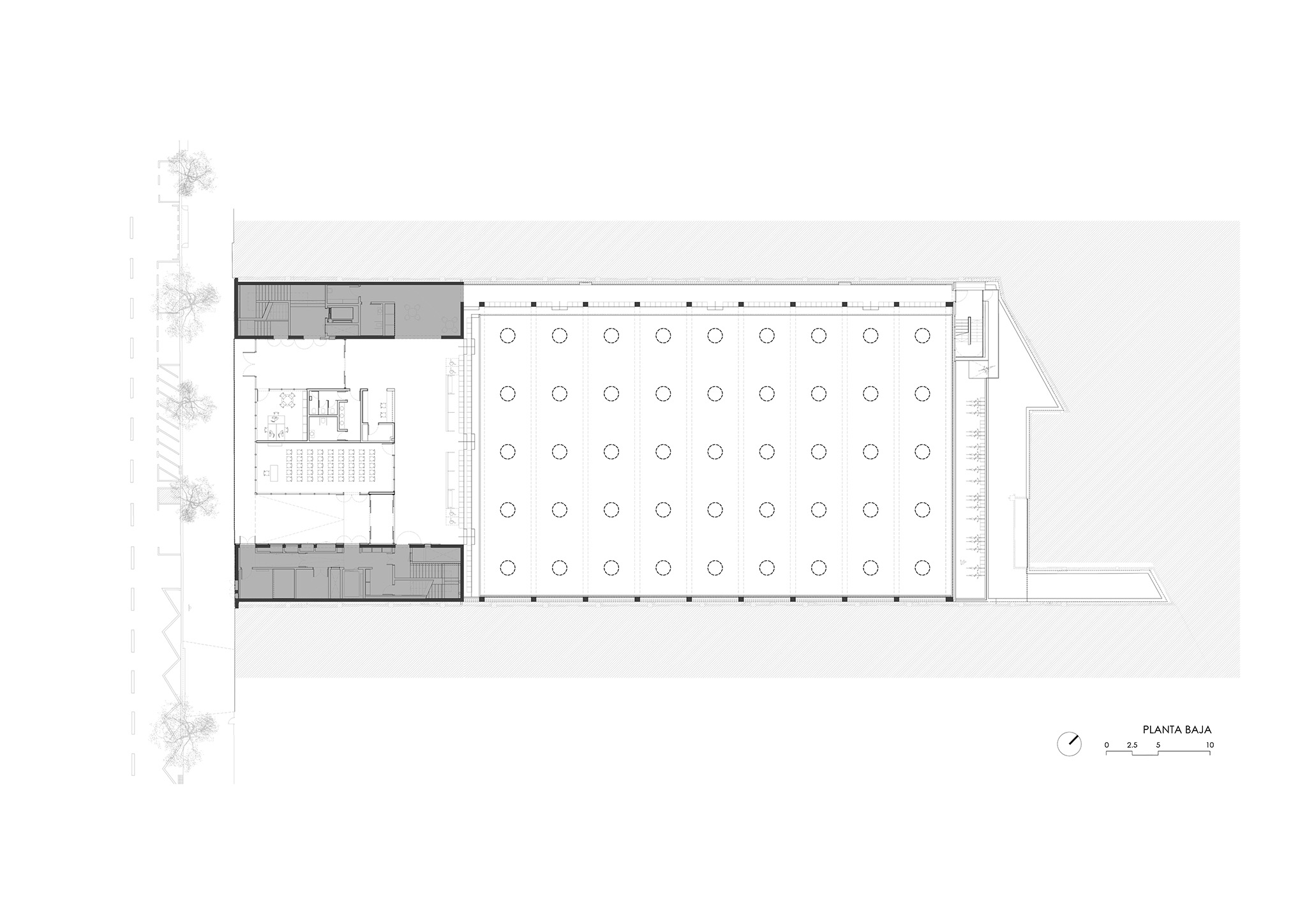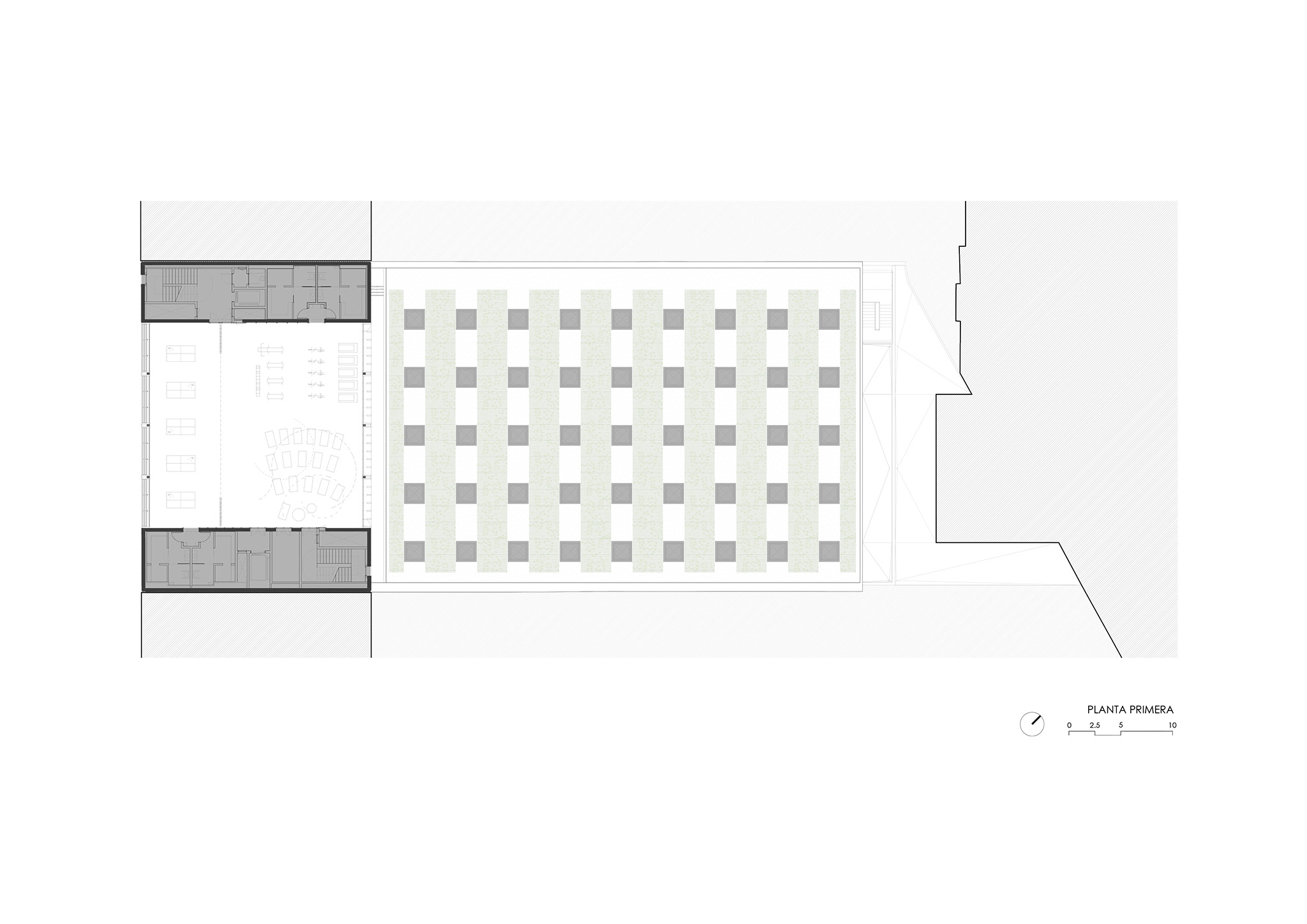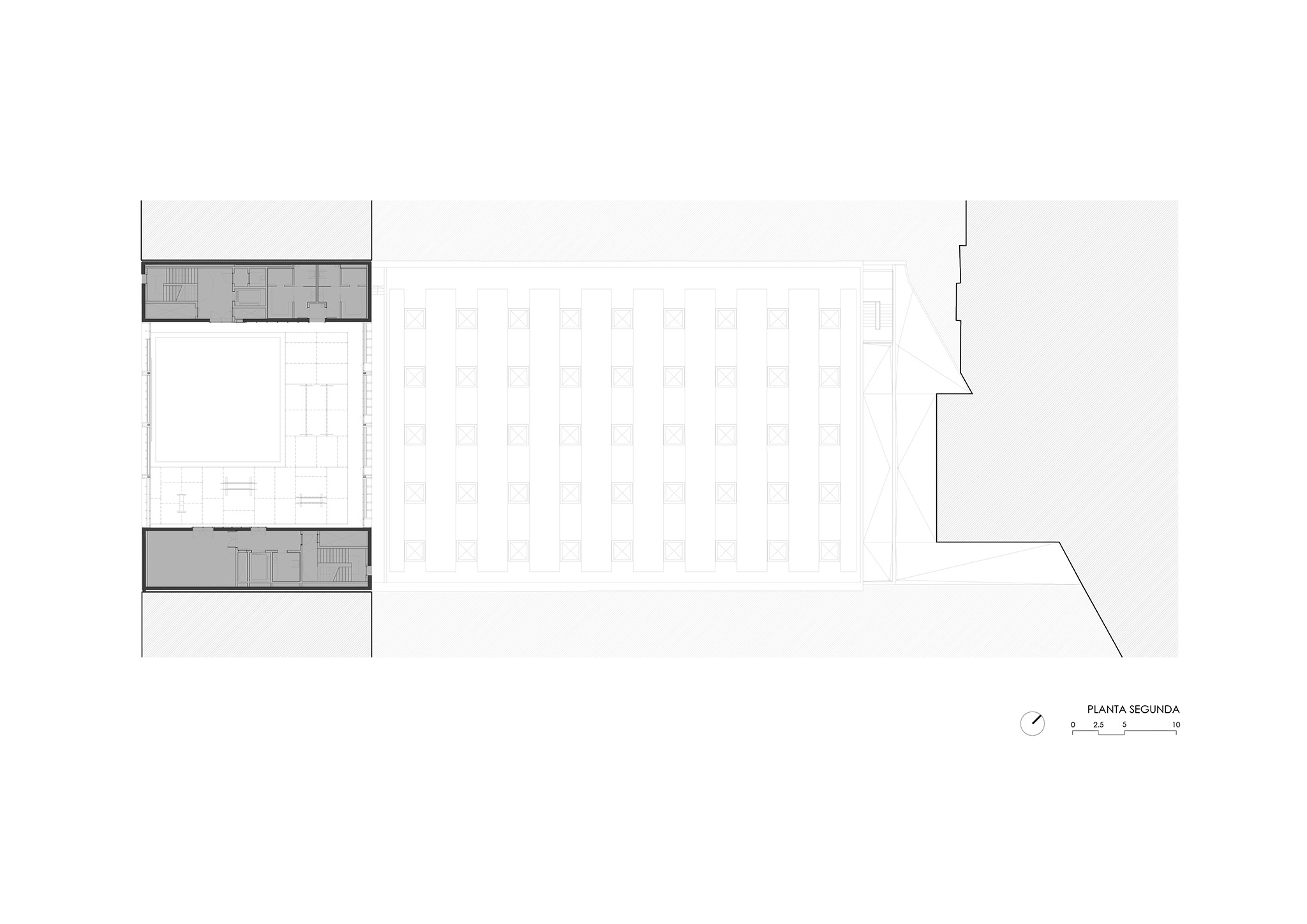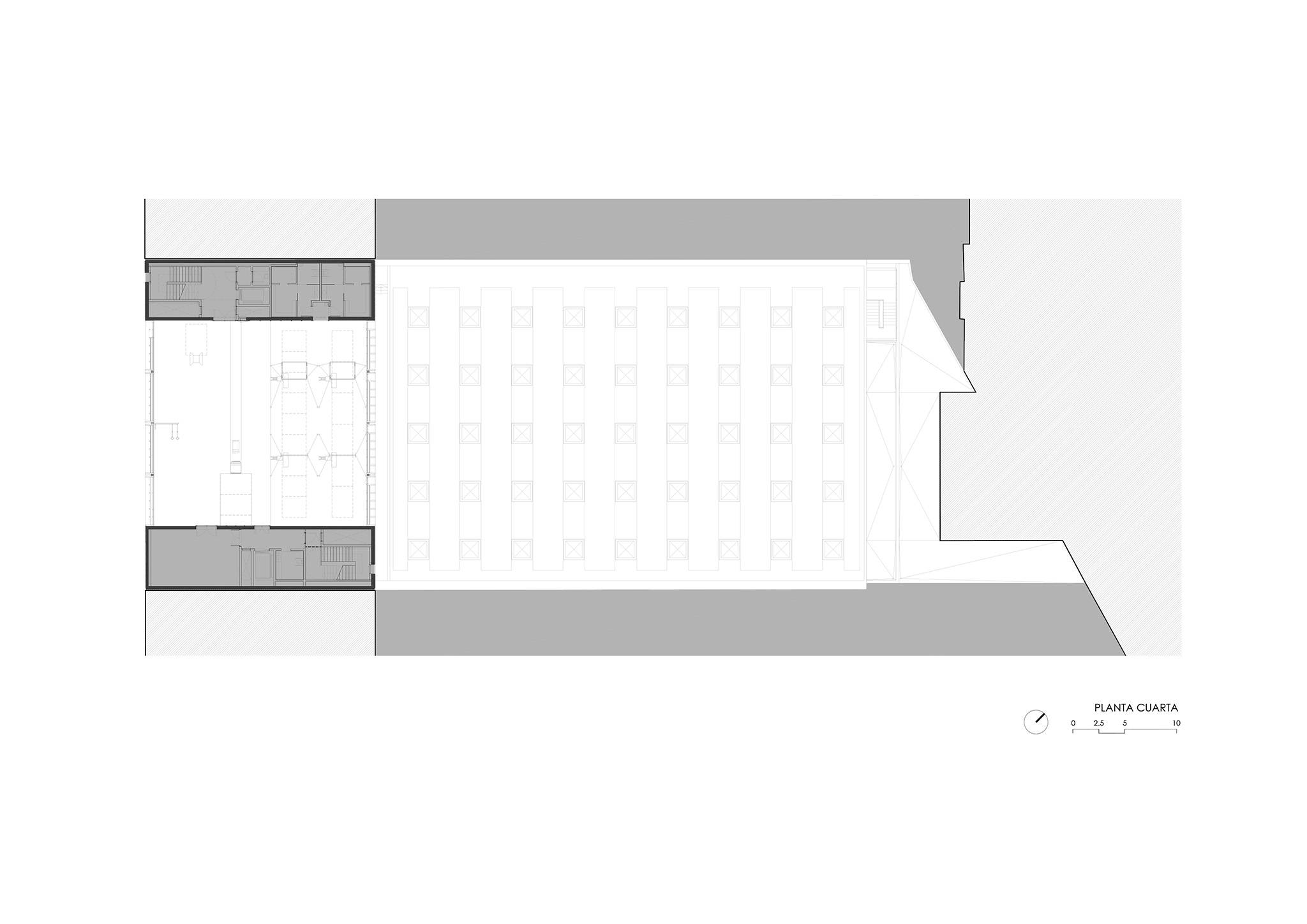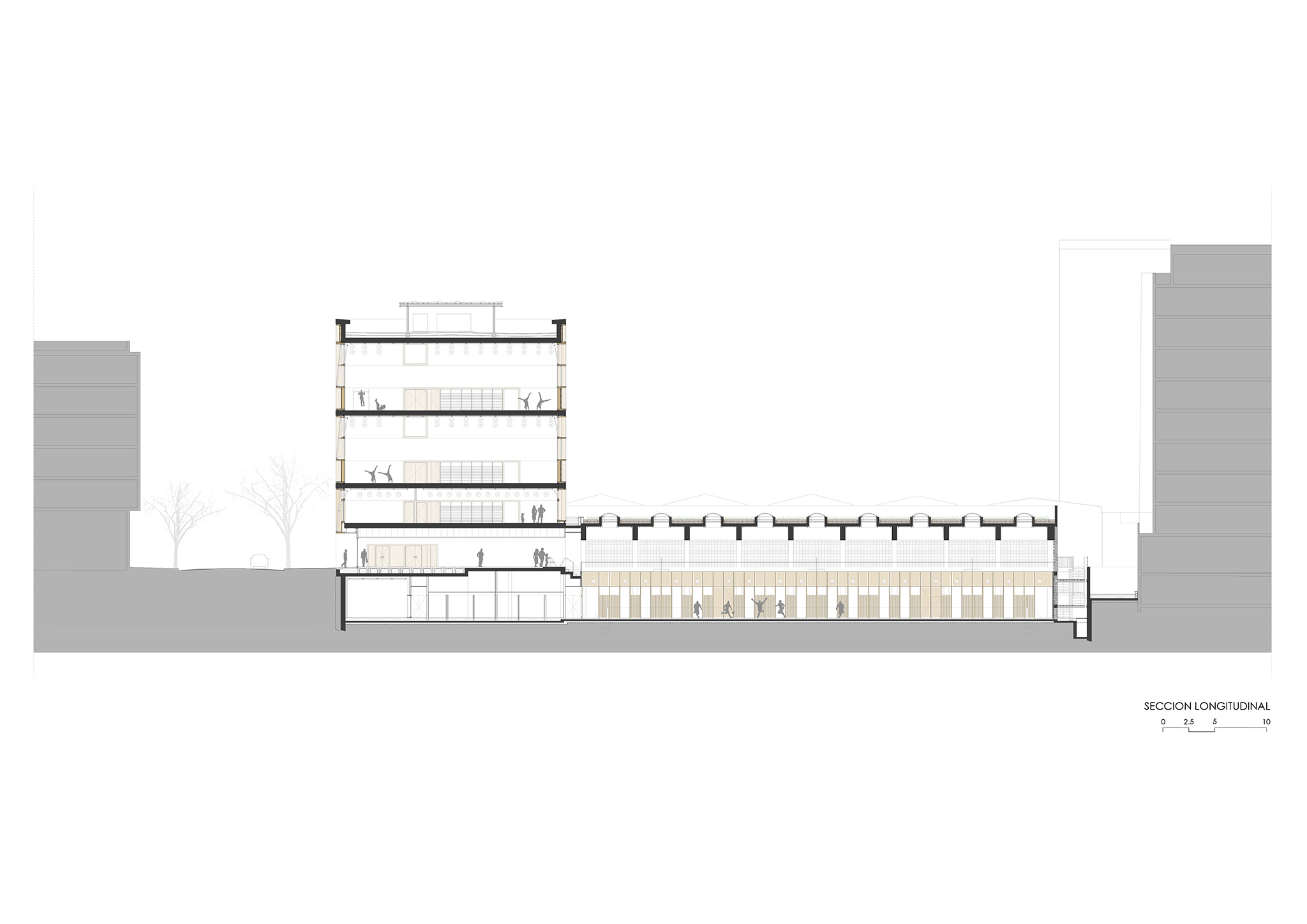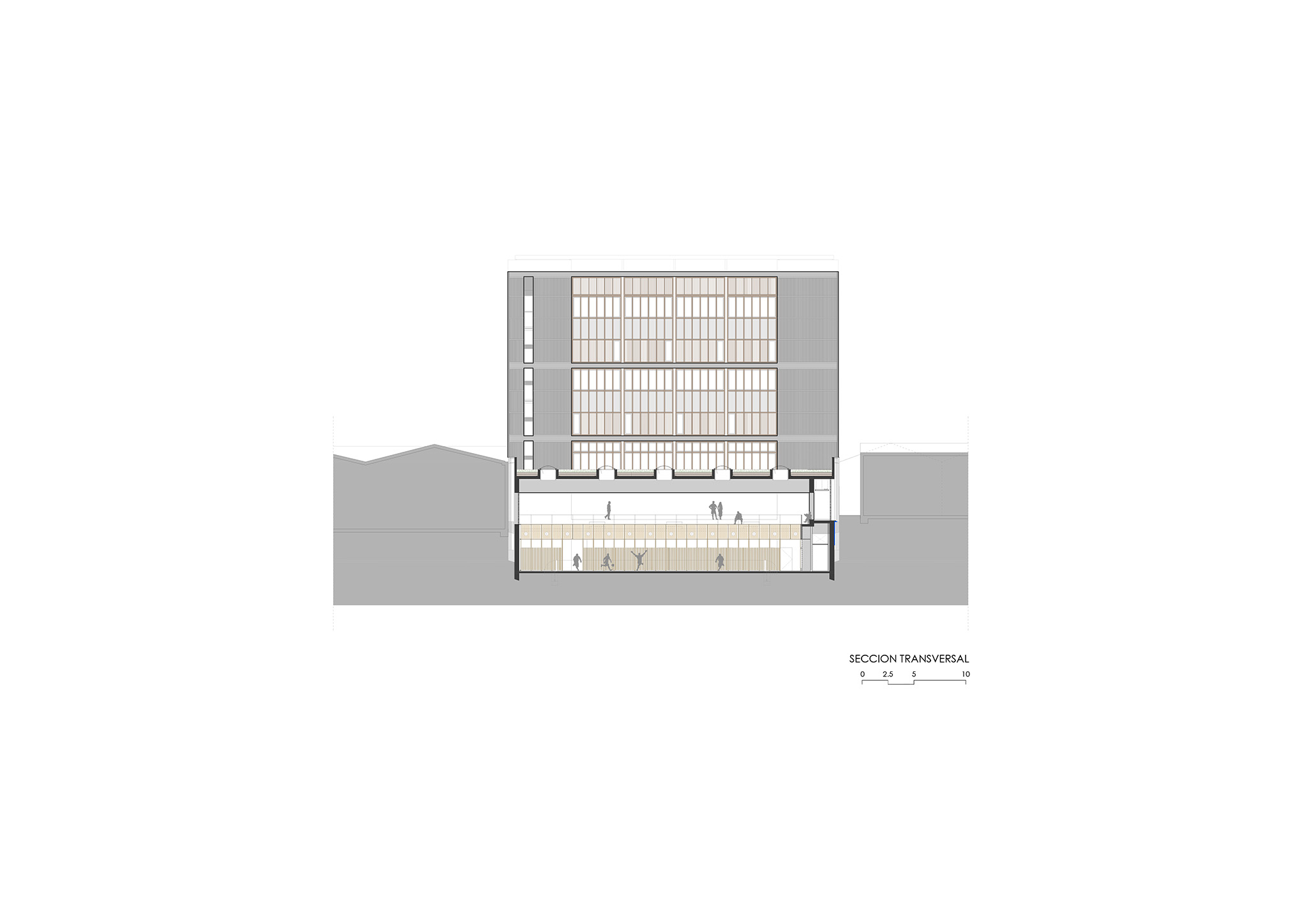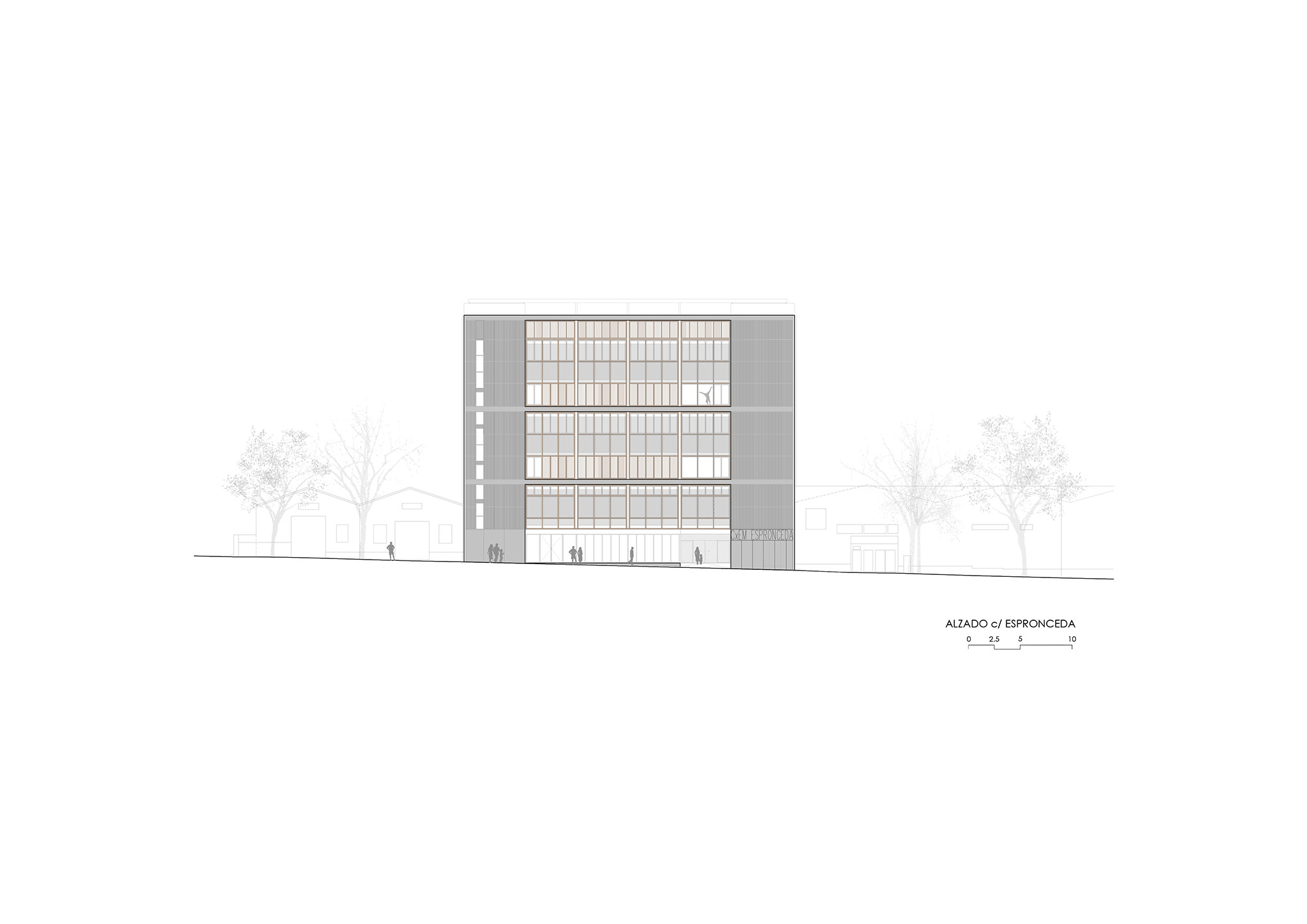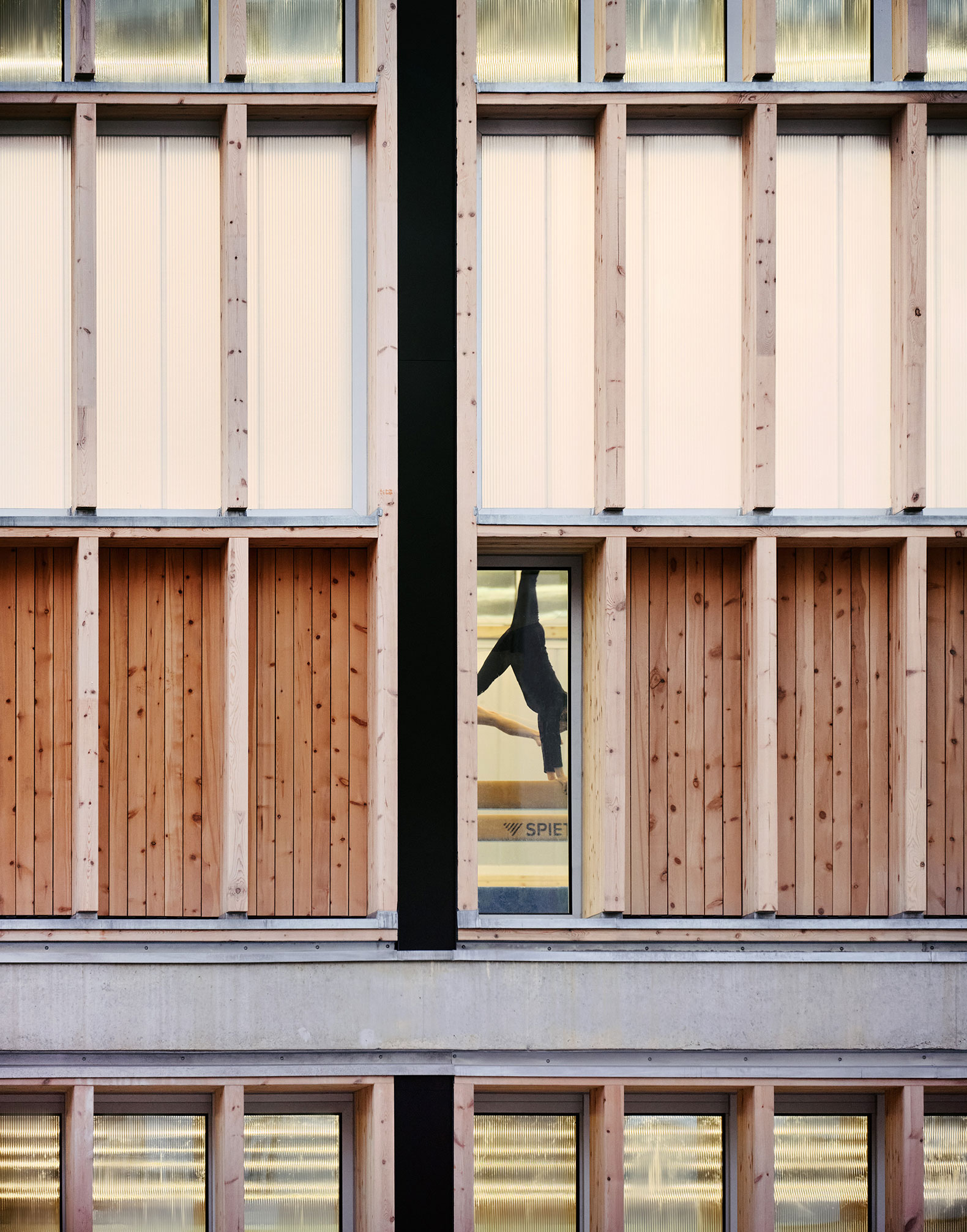
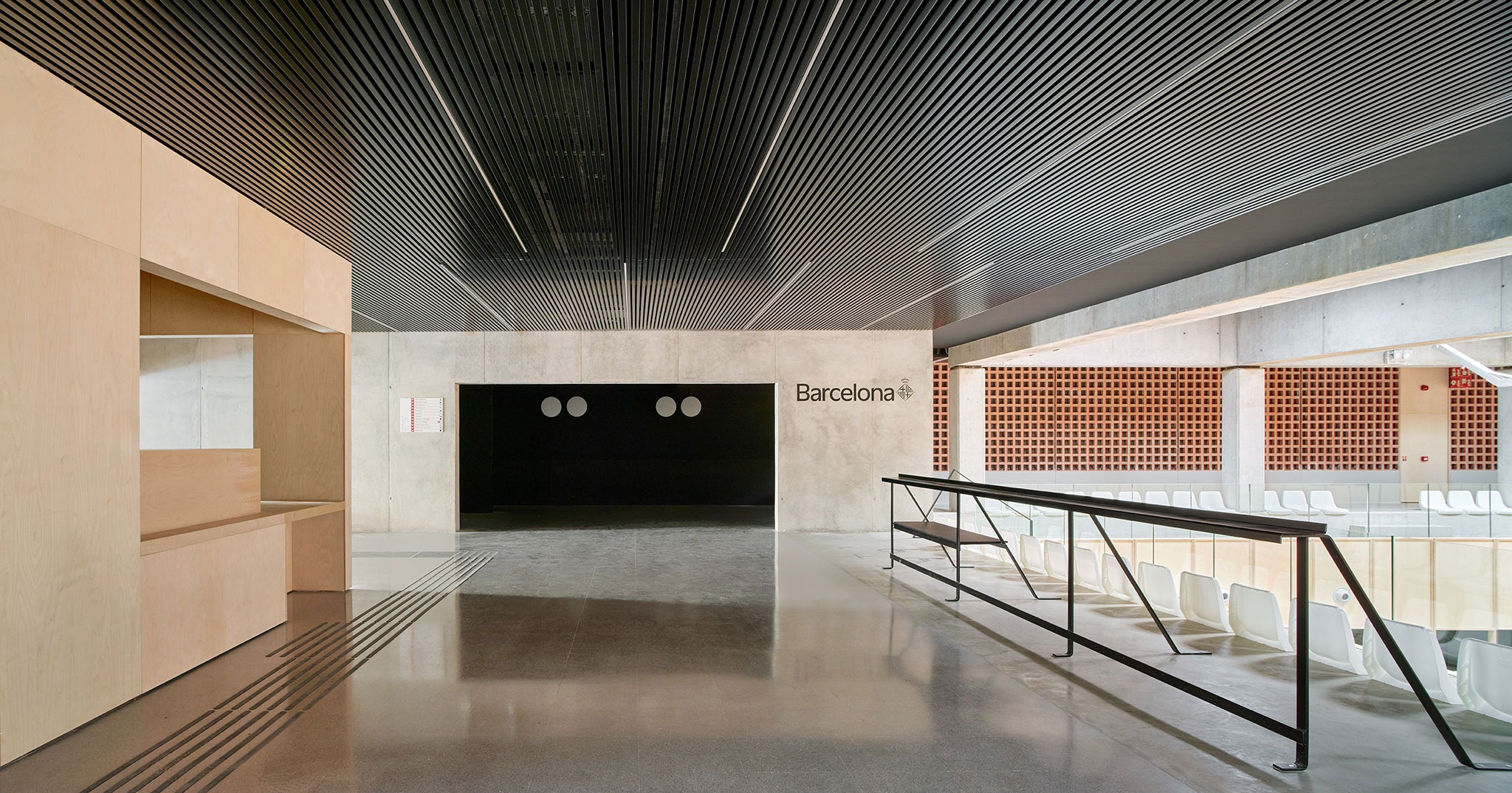
BB Arquitectes and Conxita Balcells Associats propose two large volumes for the structure and floor plan of the CEM Espronceda sports center. These volumes, attached to the adjacent buildings, house all the vertical circulation cores, changing rooms, services, and facilities, creating open and flexible spaces for the central sports pavilions. Access to the building is through the portico on Espronceda Street, which promotes permeability and flexibility of use.
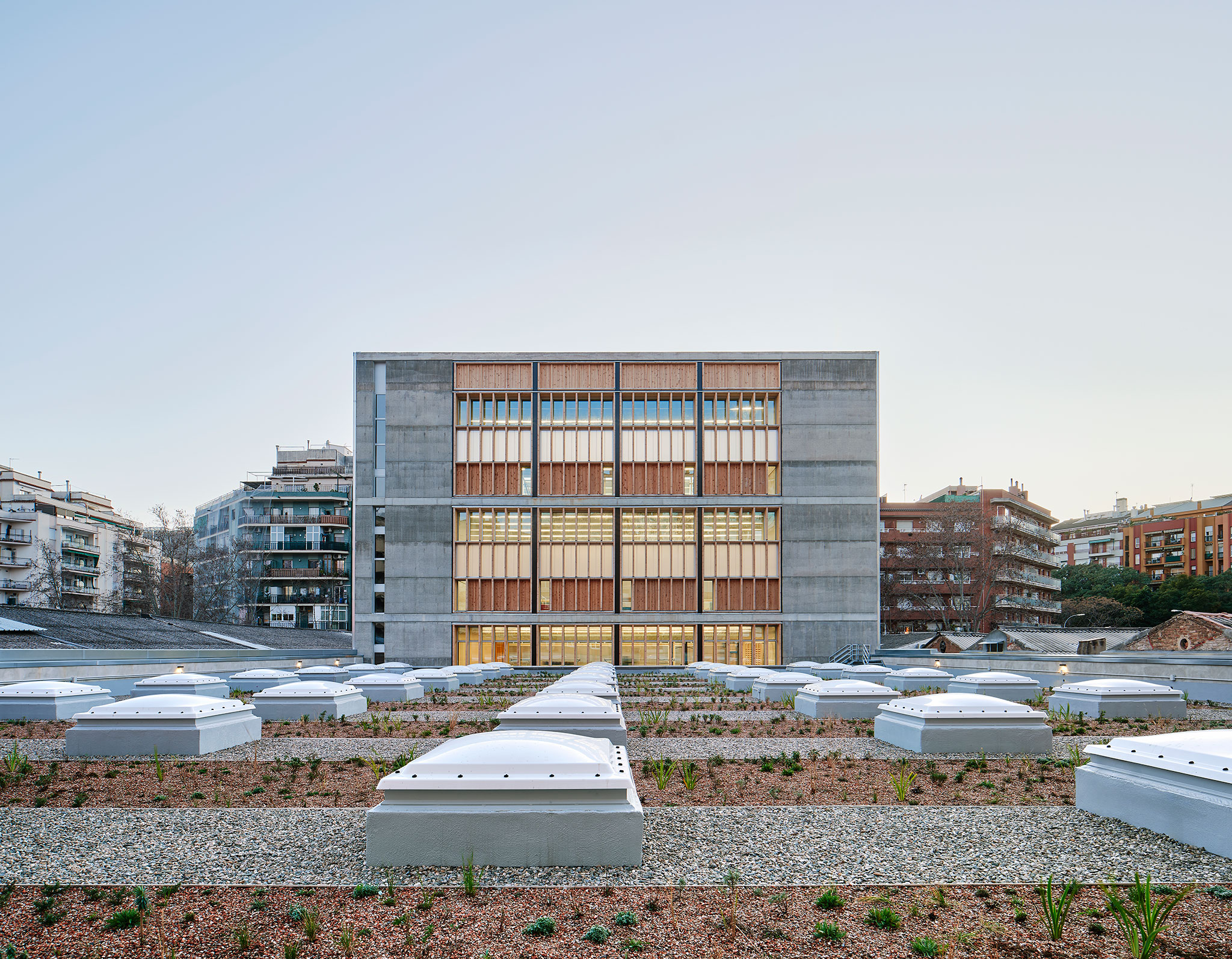
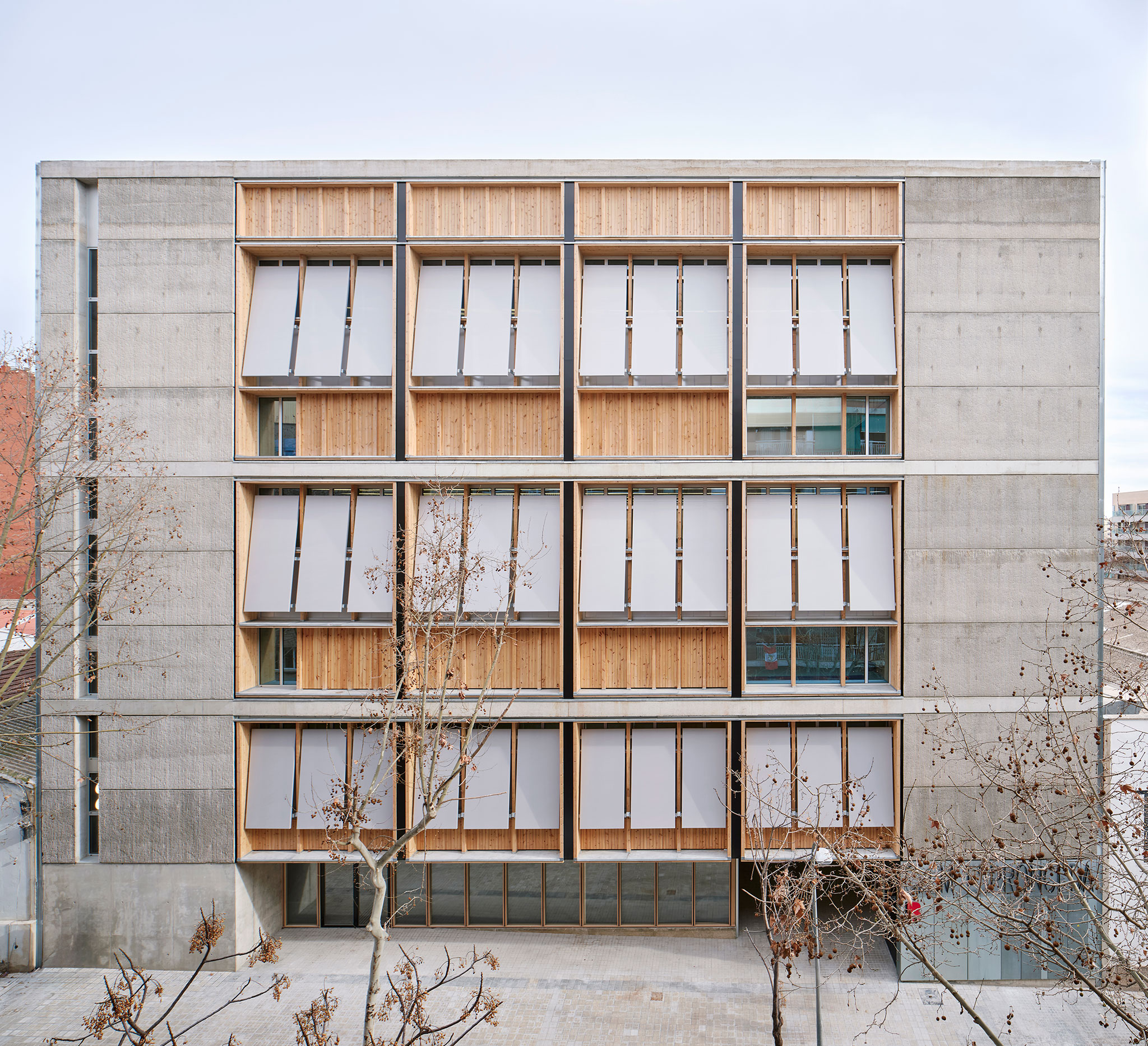
The structural system, which becomes the defining physical image of the building, consists of prestressed reinforced concrete beams, optimizing the cross-section of the compact volume that occupies the interior of the block. A green roof, designed to retain water, creates a self-managed green space and acts as a green lung for all the neighbors. The façade is a multi-layered skin that incorporates wooden frames, glass, and textile panels, contextualizing it within its surroundings.
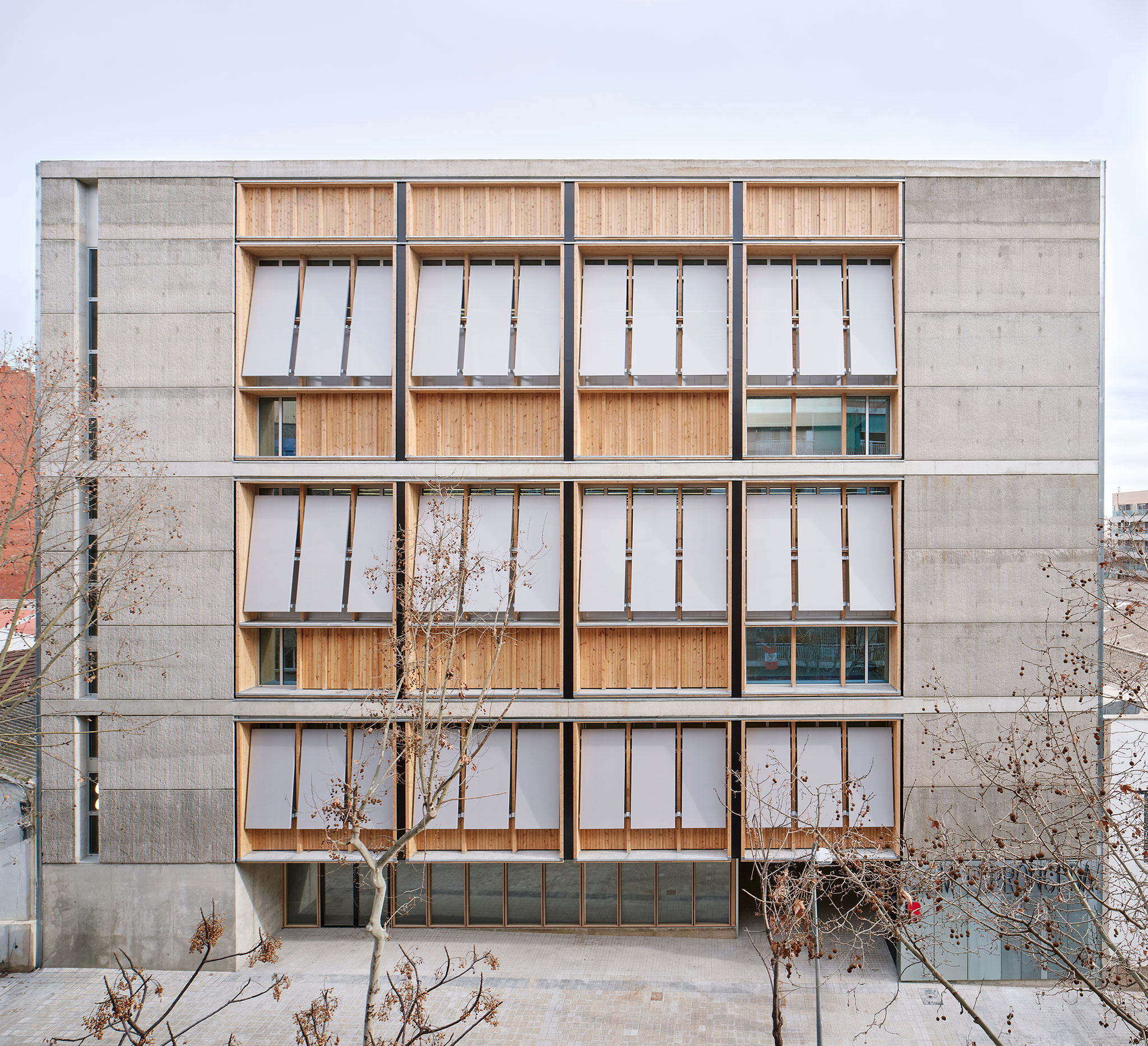
CEM Espronceda by BB Arquitectes + conxita balcells. Photograph by José Hevia.
Project description by BB Arquitectes + conxita balcells
The urban integration of the proposal aims to resolve the volume defined in the previous urban studies, which serve as the framework for organizing the future sports complex on Espronceda Street, ensuring optimal living conditions in terms of functionality, character, and eco-efficiency.
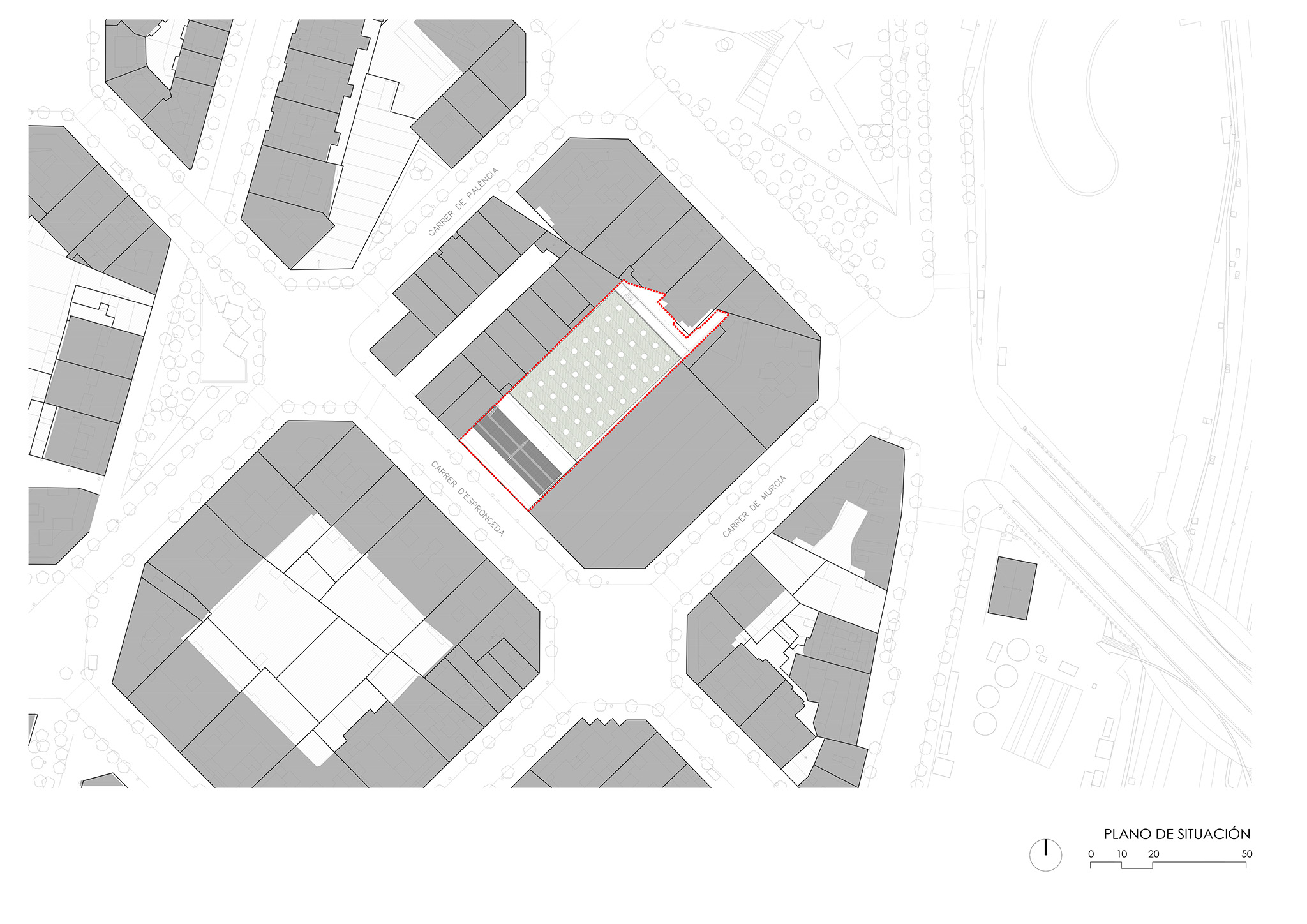
The unique nature of this sports facility stems from its location, situated between party walls and completing a consolidated city block. Consequently, it must be developed vertically, addressing the complexities of access, circulation (for athletes and spectators), and the specific requirements of each of the planned sports.
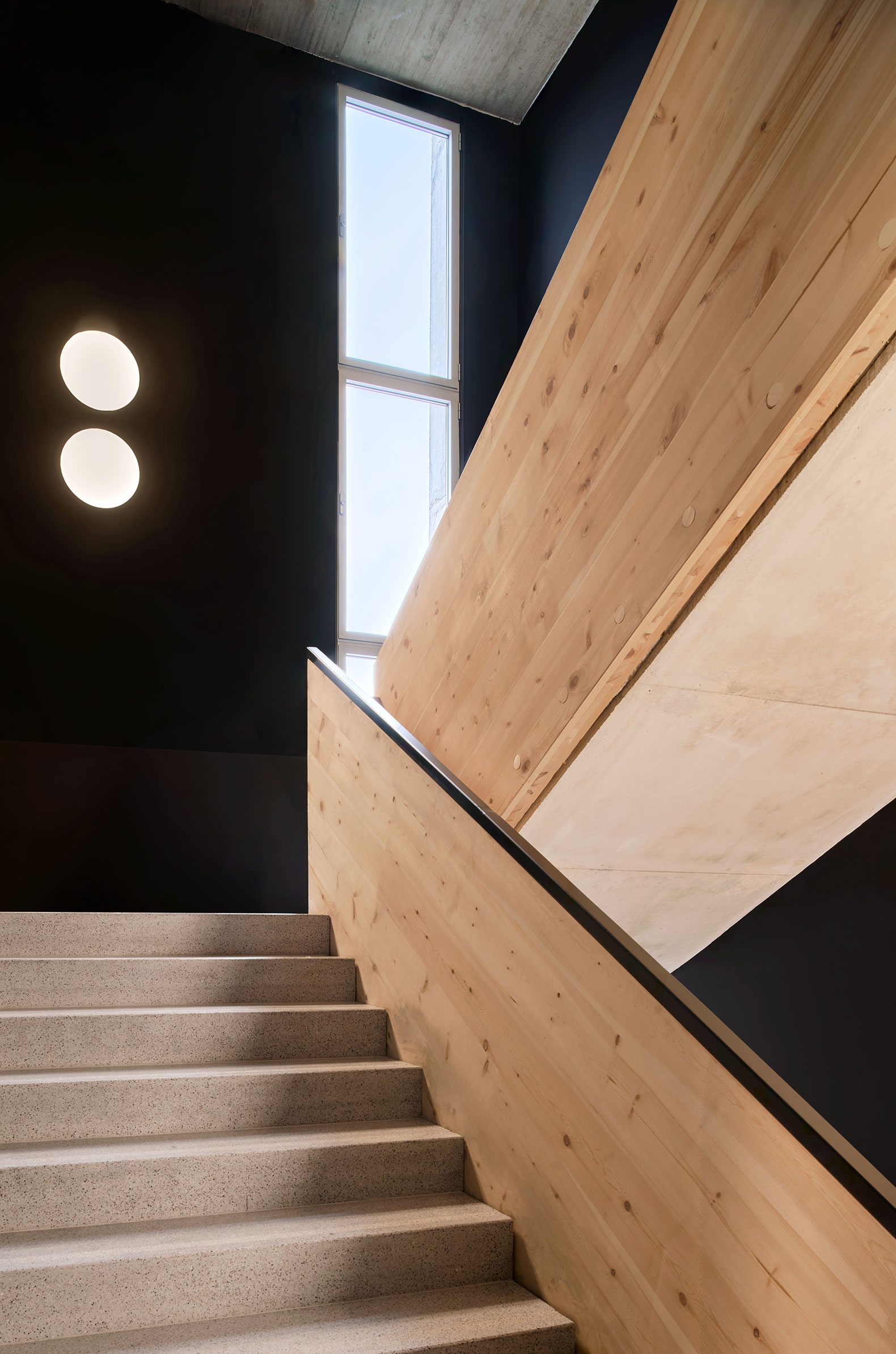
Based on the "between party walls" concept, the building's volume, structure, and floor plan are resolved with two large volumes between party walls, attached to the neighboring buildings. These volumes house all the vertical circulation cores, changing rooms, services, and facilities. In this way, the central sports halls become open, flexible spaces with optimal natural lighting and ventilation.
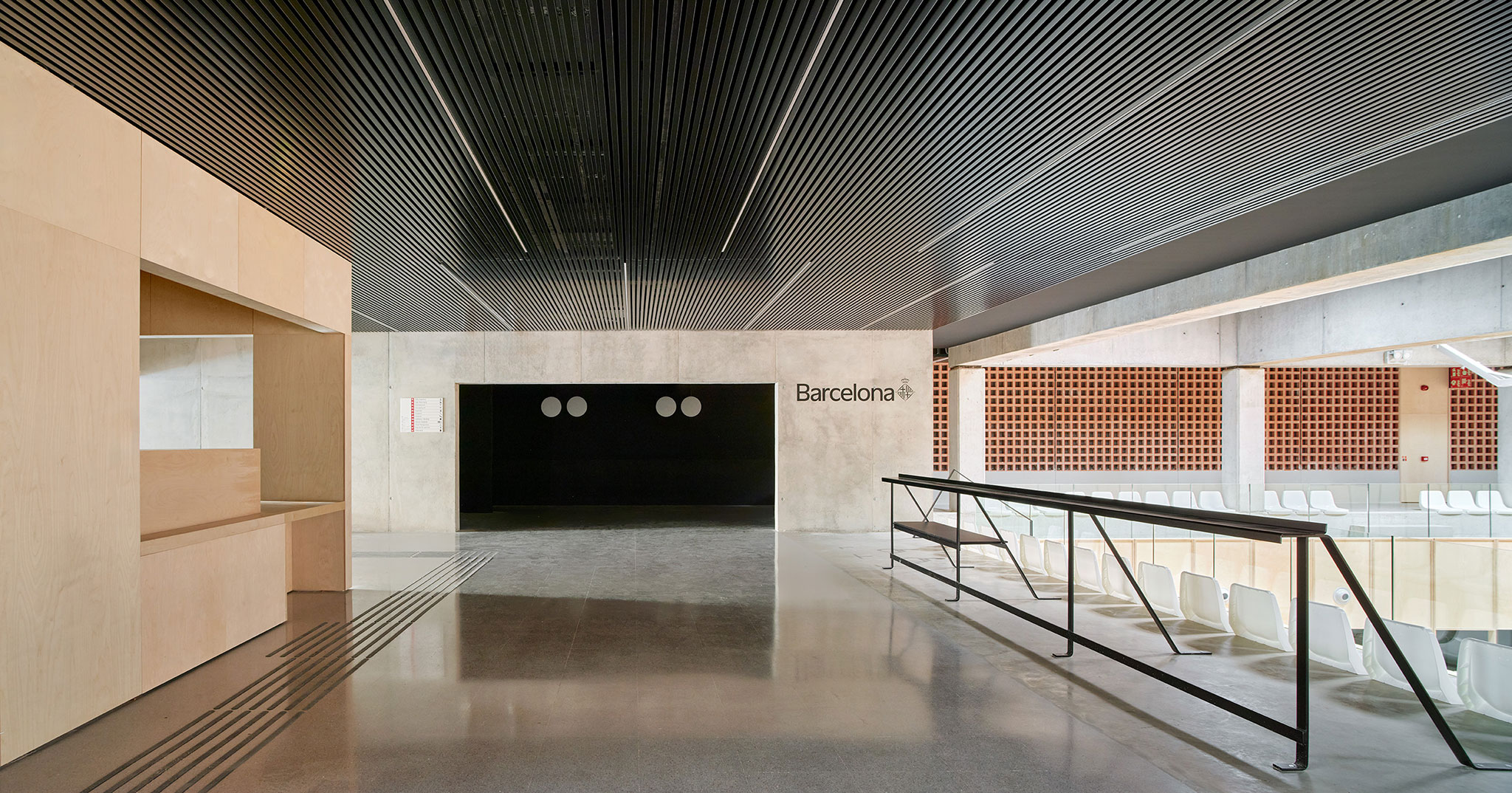
Special attention is paid to the design of the ground floor, which ultimately establishes the user's connection with the city. Accessed from the porch on Espronceda Street, permeability and flexibility of use have been prioritized, allowing for simultaneous activities within a single space.
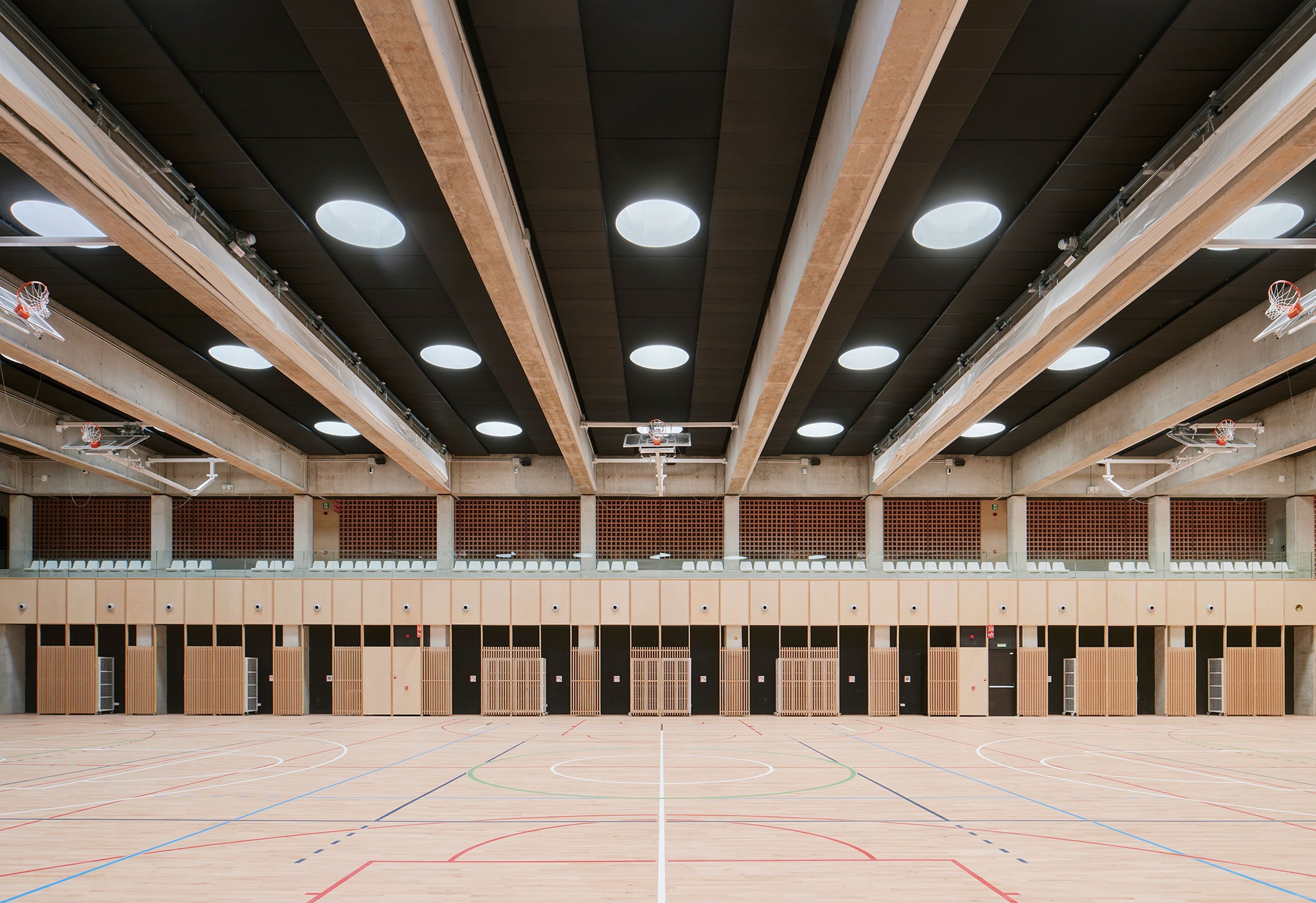
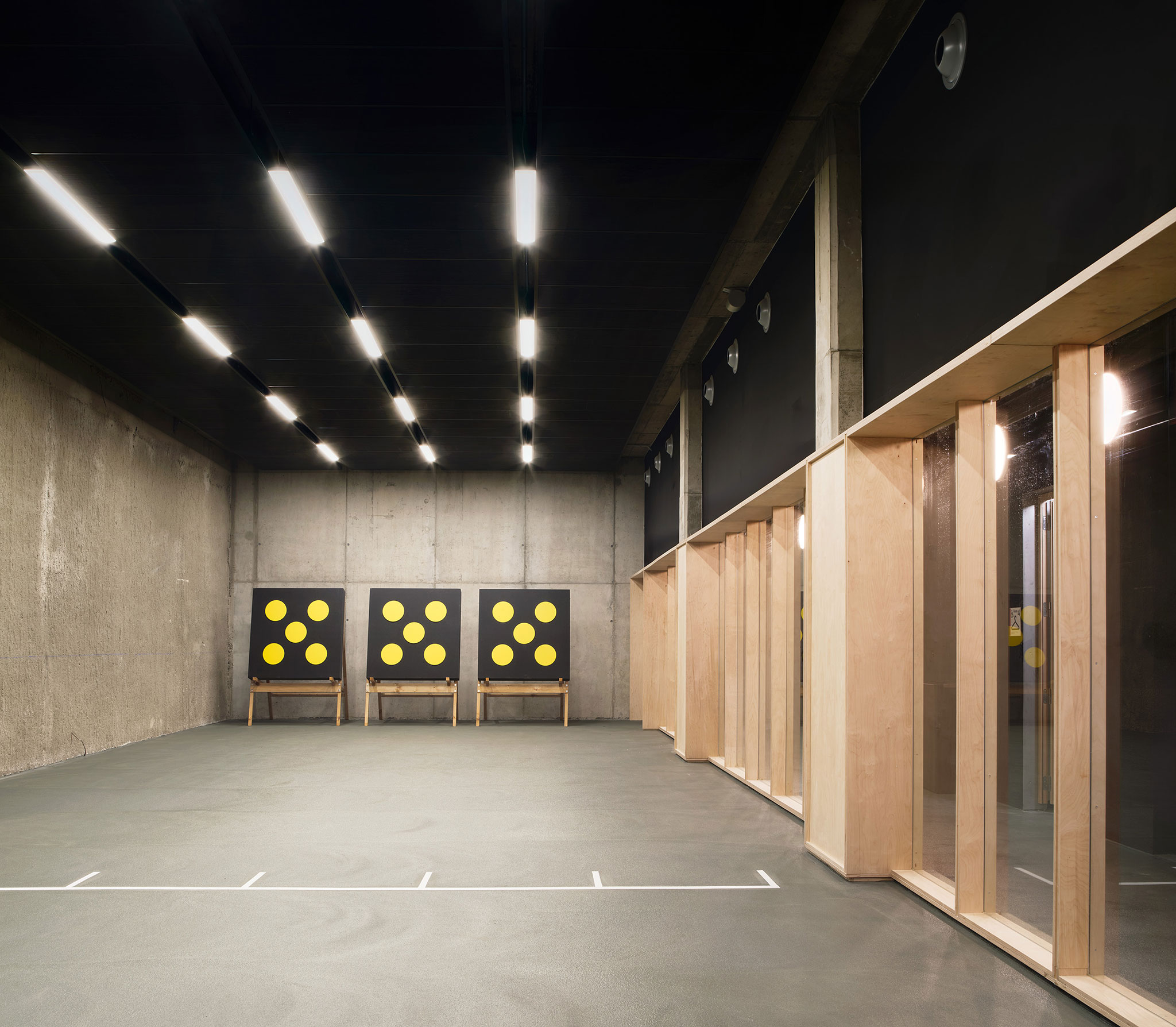
The PAV3 multi-sports pavilion and the archery range are located on level -1, in a compact volume that occupies the interior space of the block. The structural system, with prestressed reinforced concrete beams, optimizes the cross-section, resulting in less excavation required to reach the regulation height of the court. It also allows for a water-retaining green roof, creating a self-managed green space—a green lung for all residents. A series of skylights allow for daytime use of the court, providing ample natural light without energy consumption, as well as controlled ventilation.
Given the maximum heights established in the General Urban Development Plan (PGM) and the density of the program requirements, the Gymnastics and Table Tennis halls, the open "platforms" between the two cores, were only possible with a post-tensioned reinforced concrete structure, which also becomes the building's defining material image. The enclosure of these spaces is a multi-layered skin, formed by different elements that allow for controlled sunlight and natural cross-ventilation.
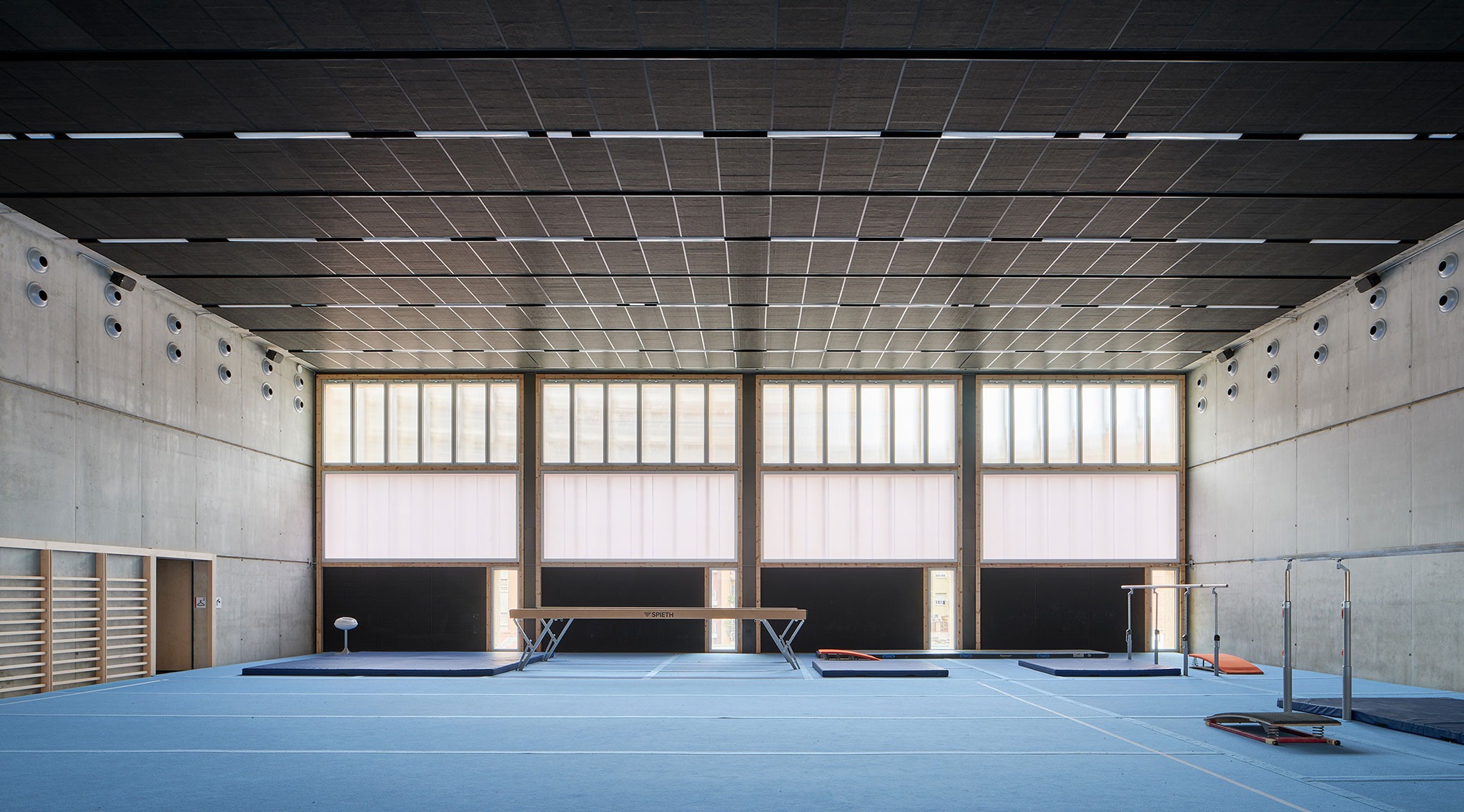
Wooden frames with glass and textile panels are designed and arranged to contextualize the façade within its surroundings, abstractly recreating the compositional systems and scale of the site.
The building aims to achieve near-zero energy consumption. It is conceived as an energy hub, maximizing self-production and reducing energy demand and consumption through passive strategies. This balance, along with the choice of materials and the incorporation of vegetation on the pavilion's roof, contributes to a healthy and sustainable building.