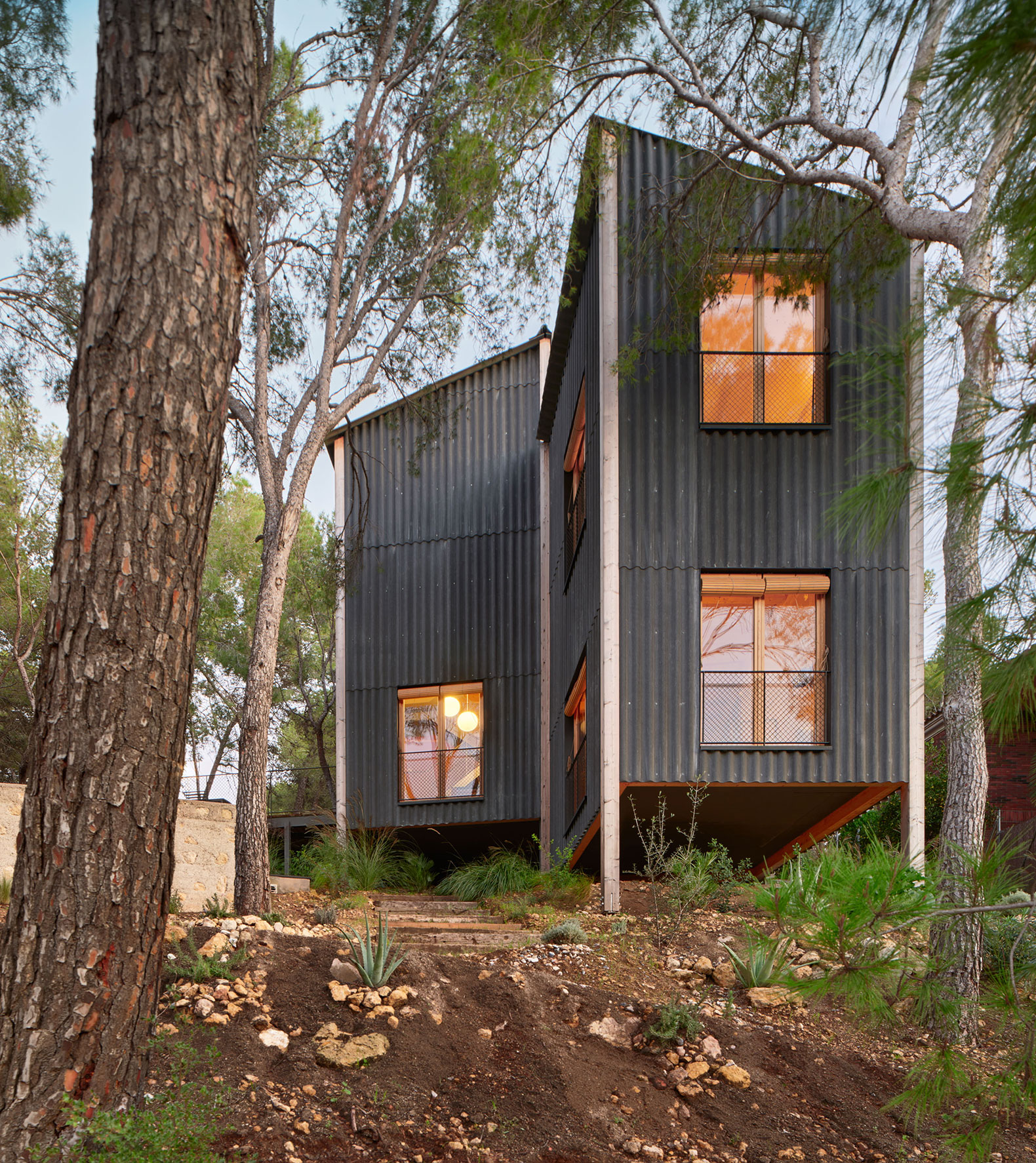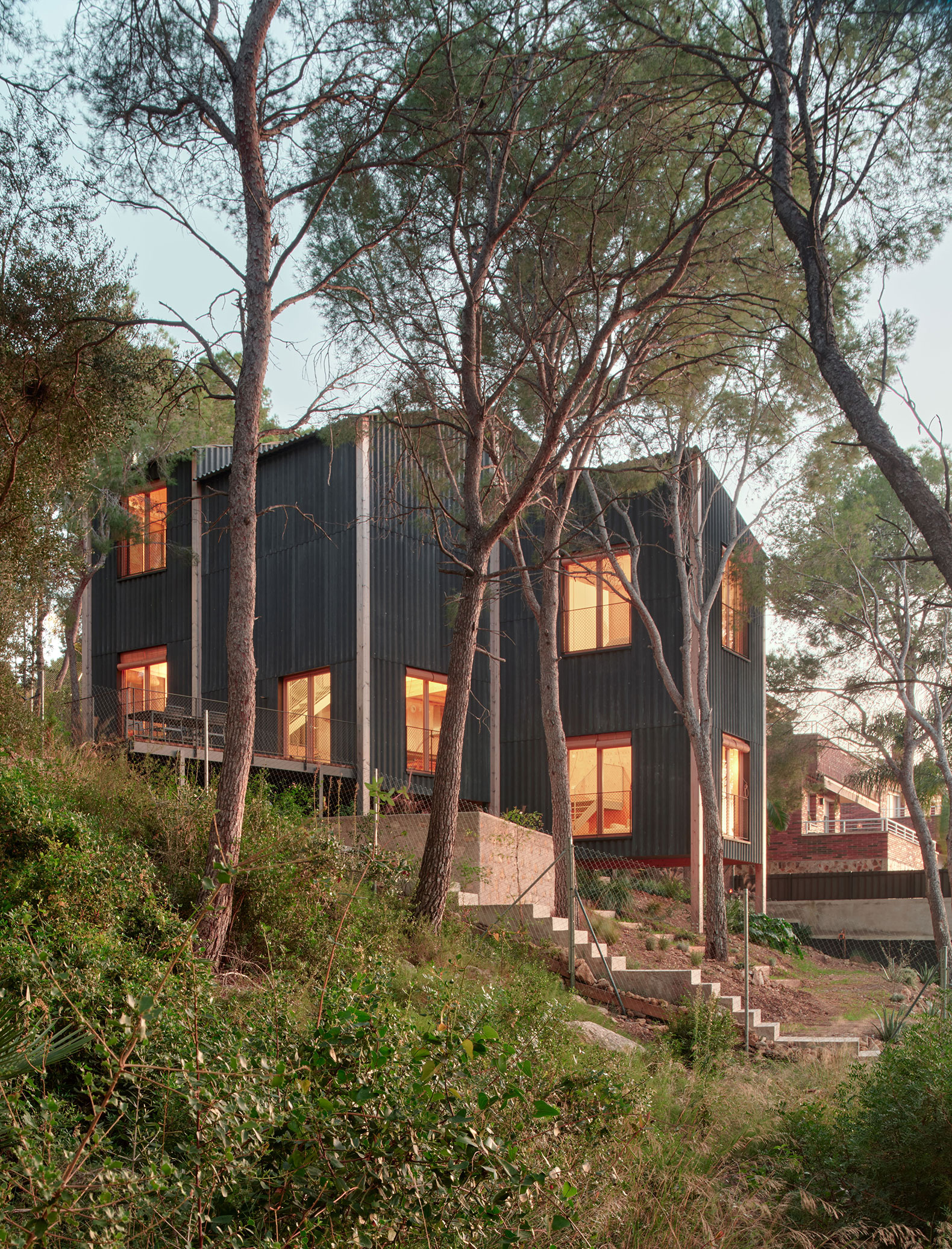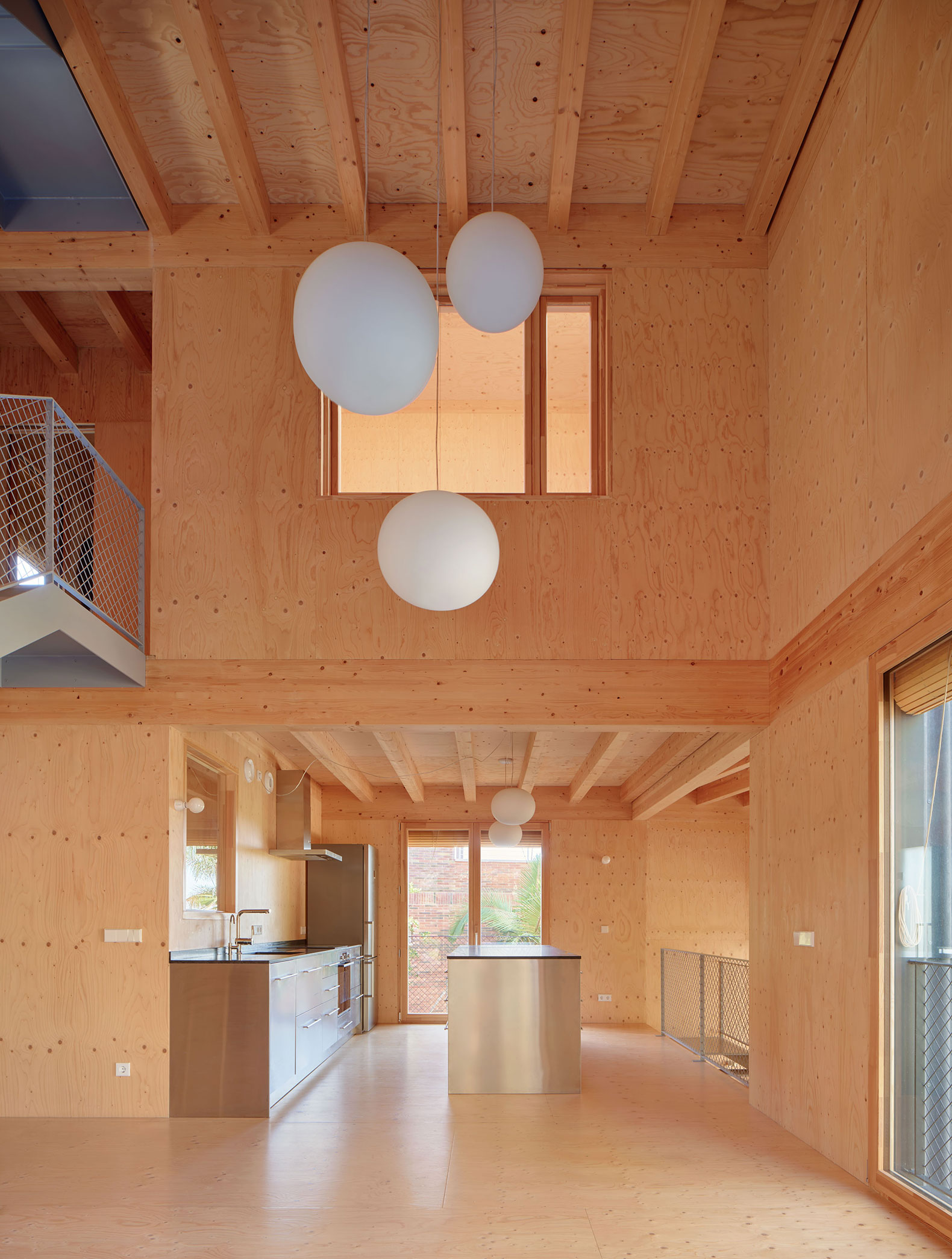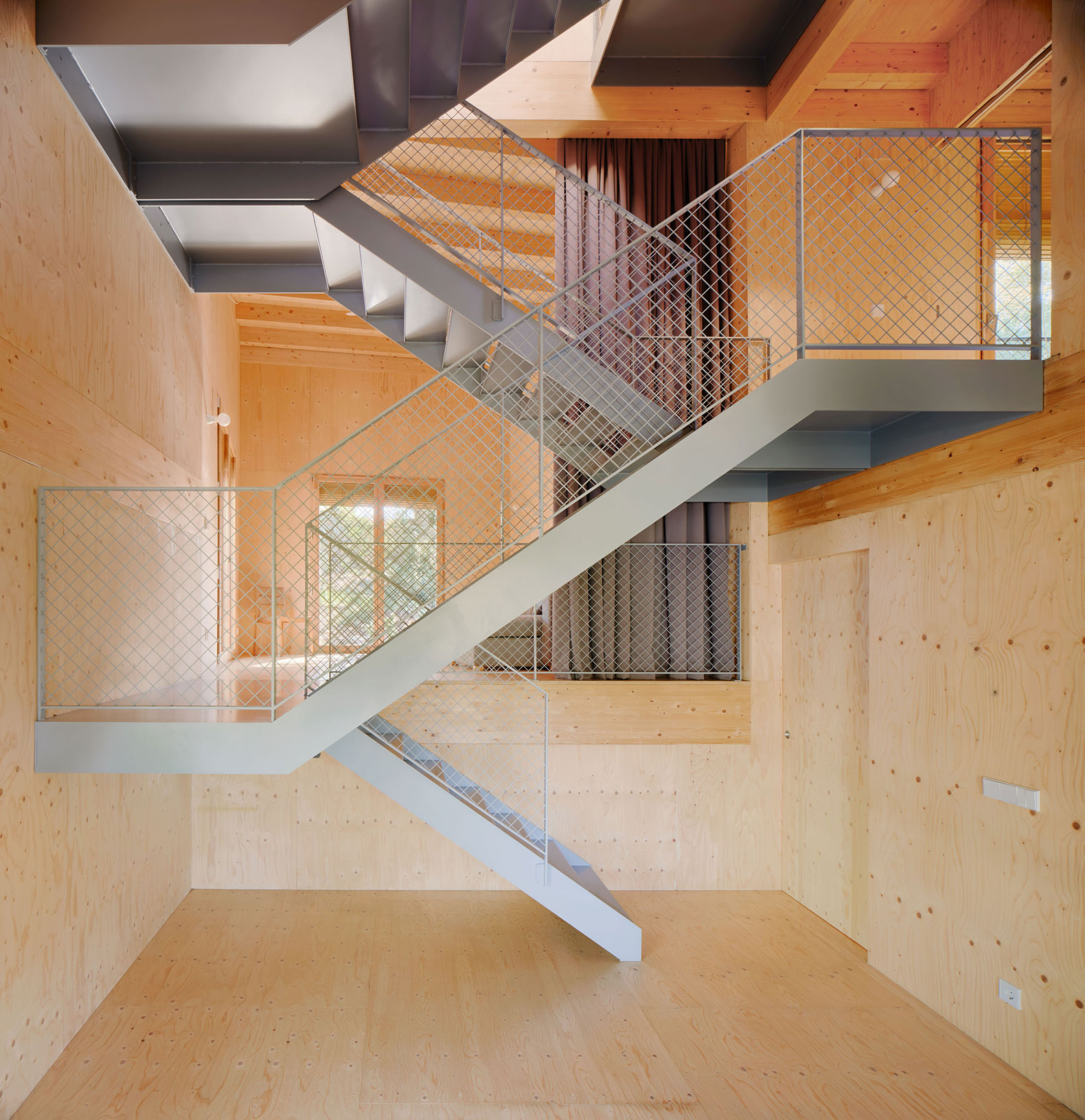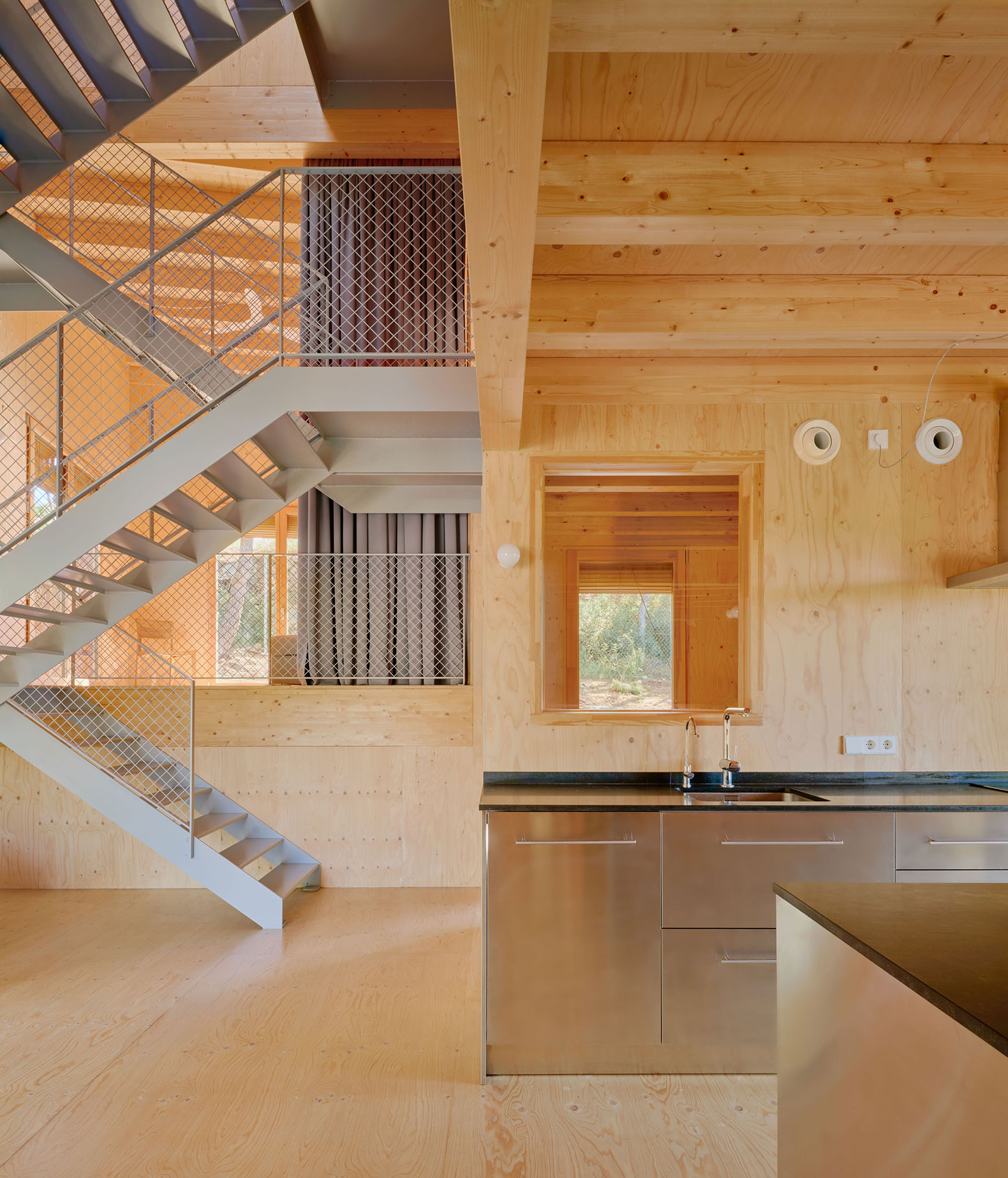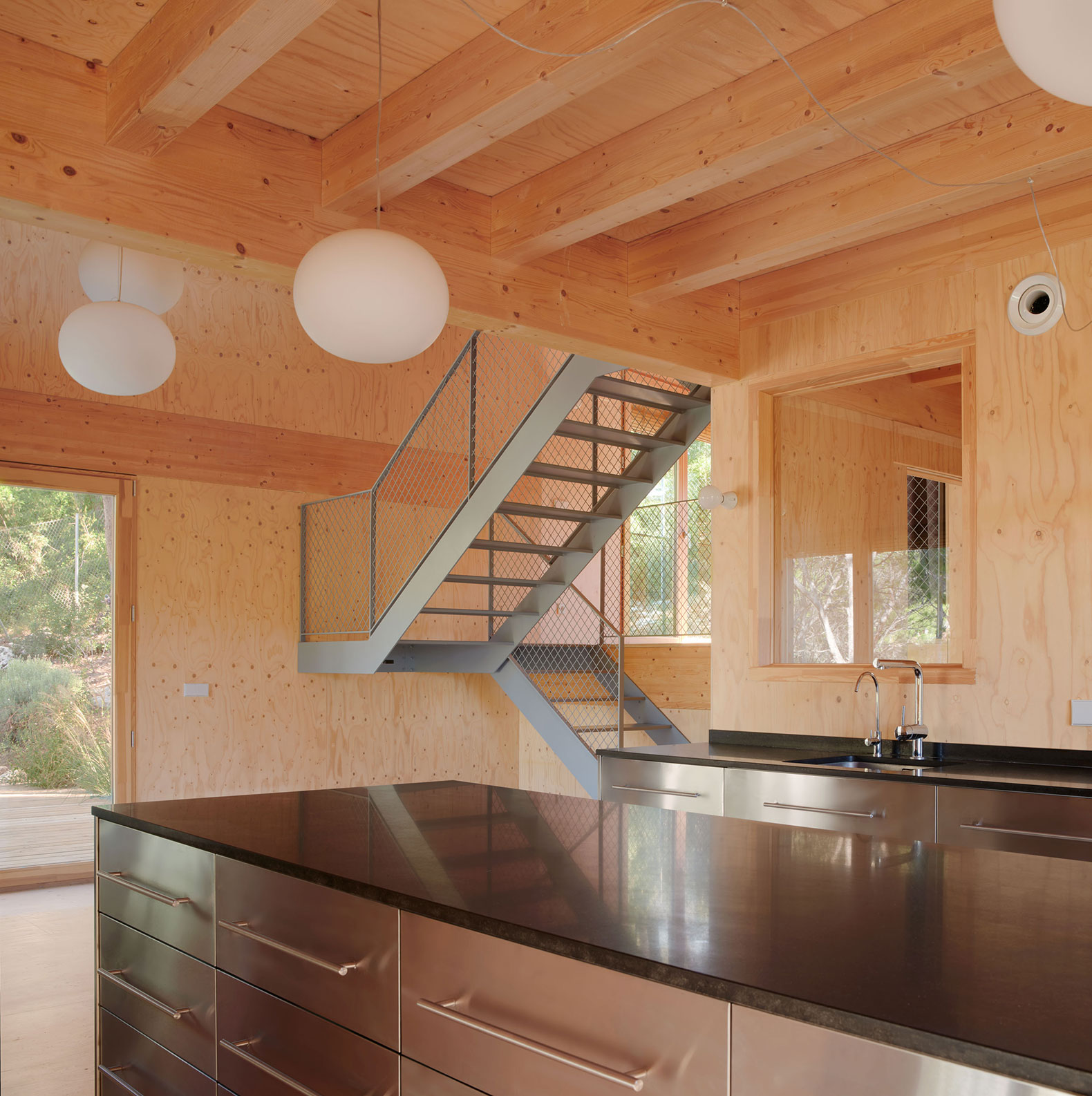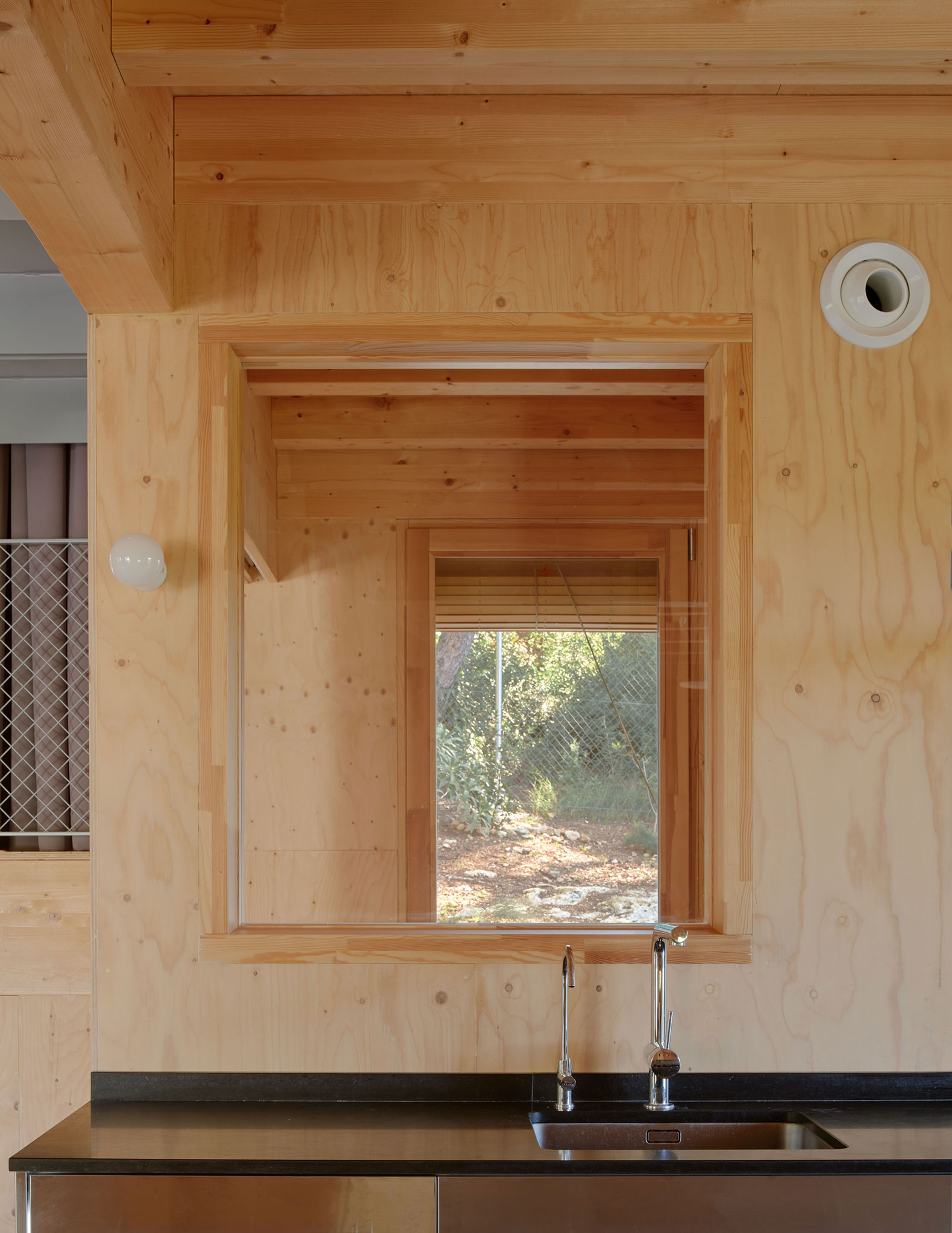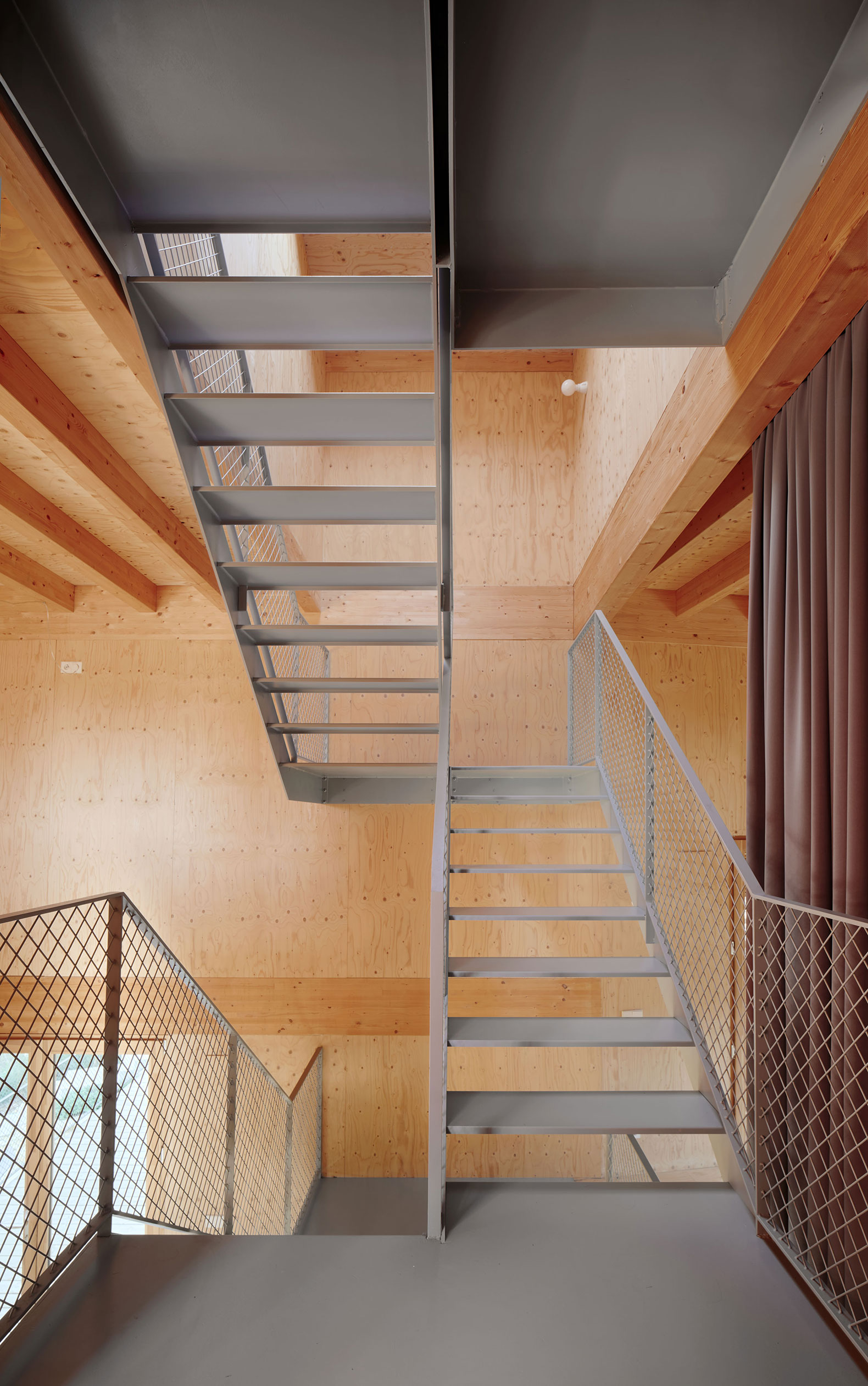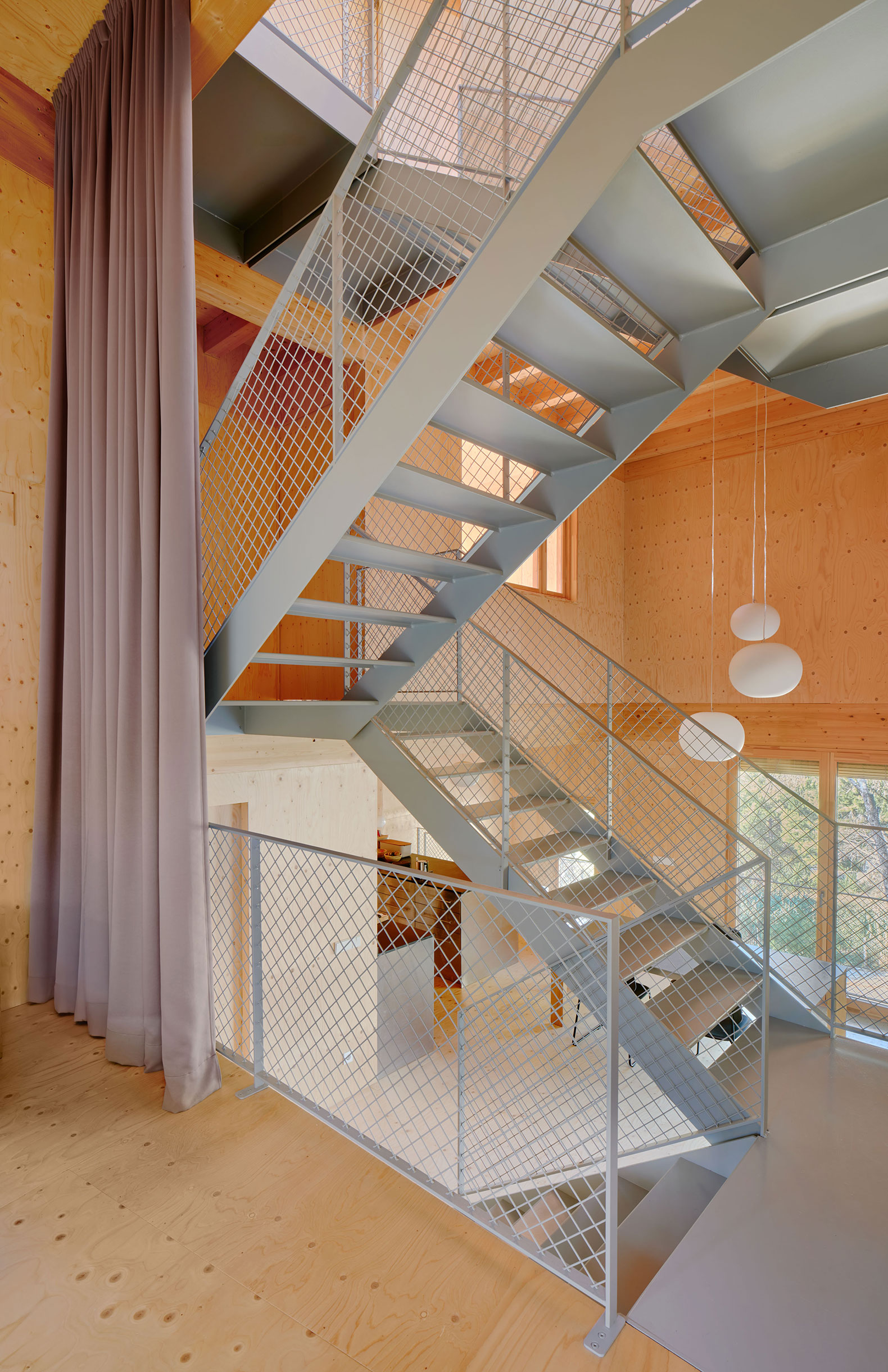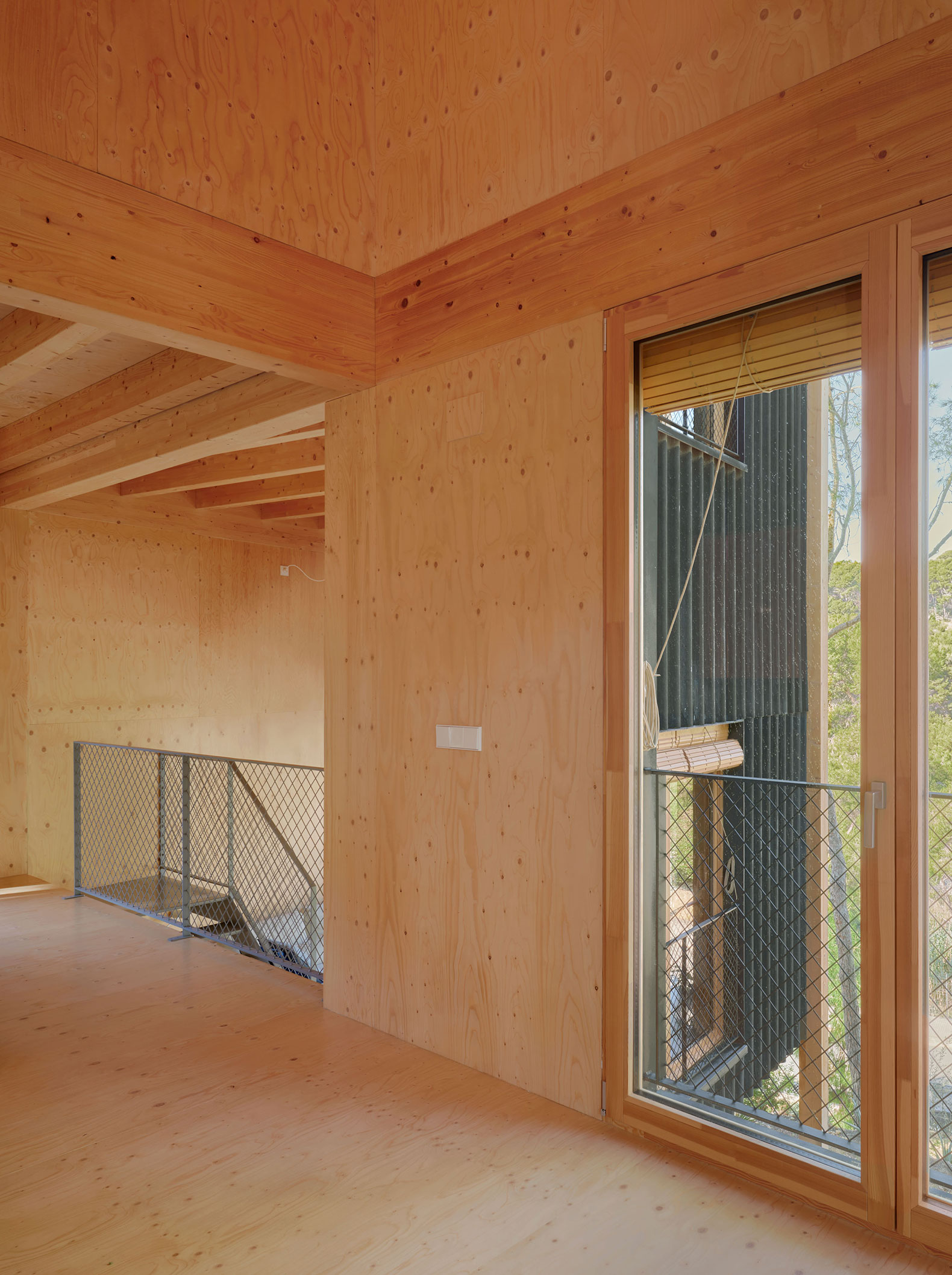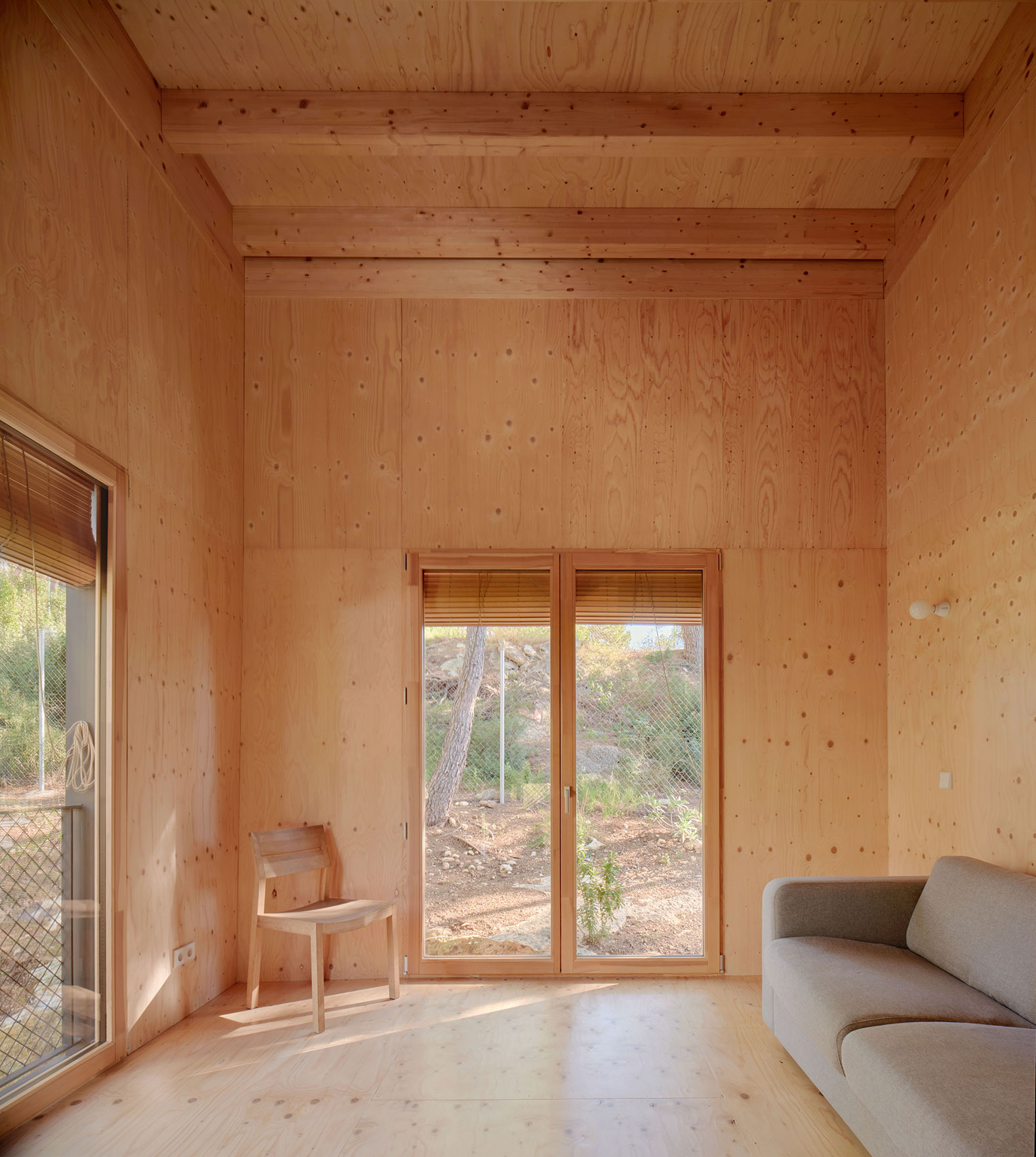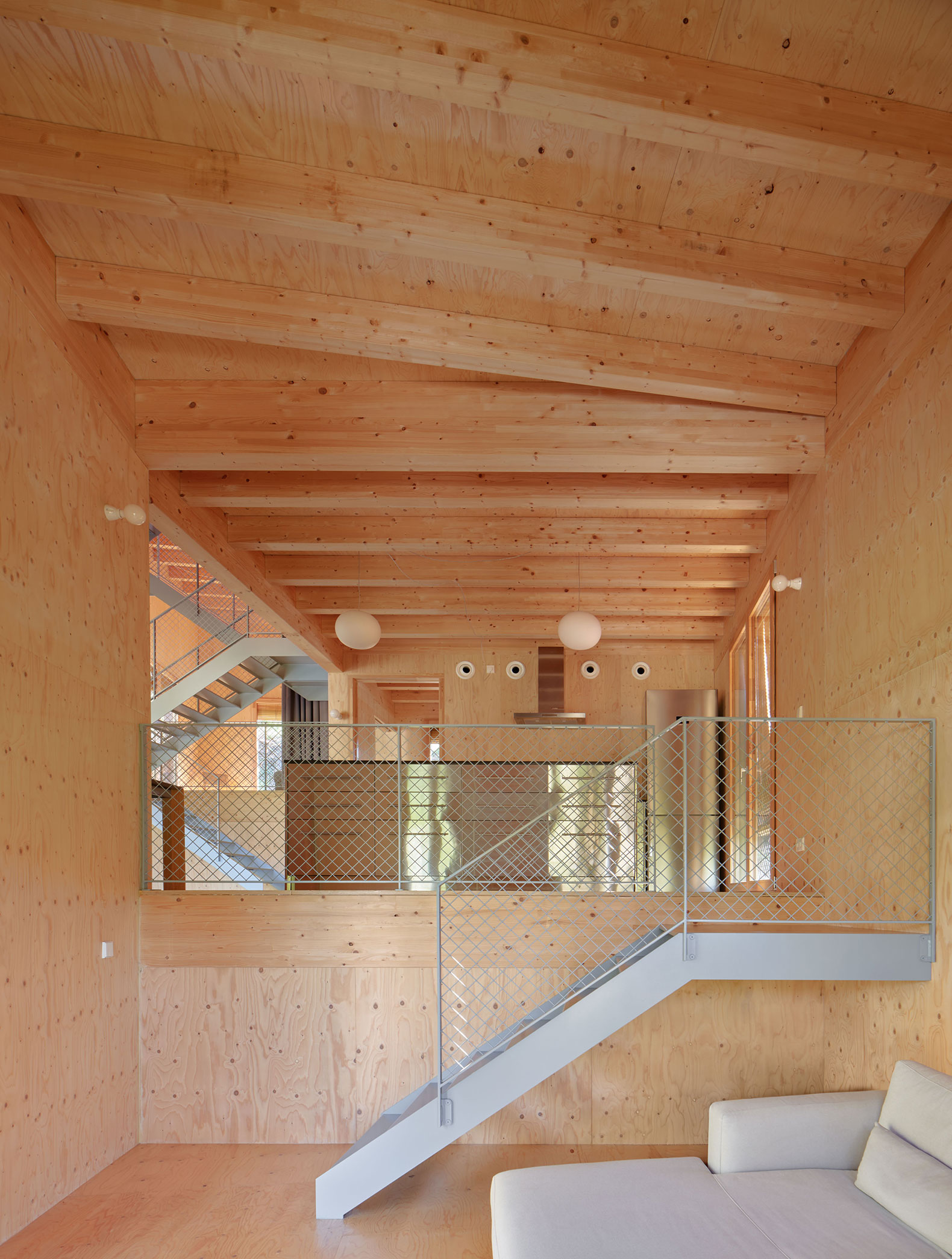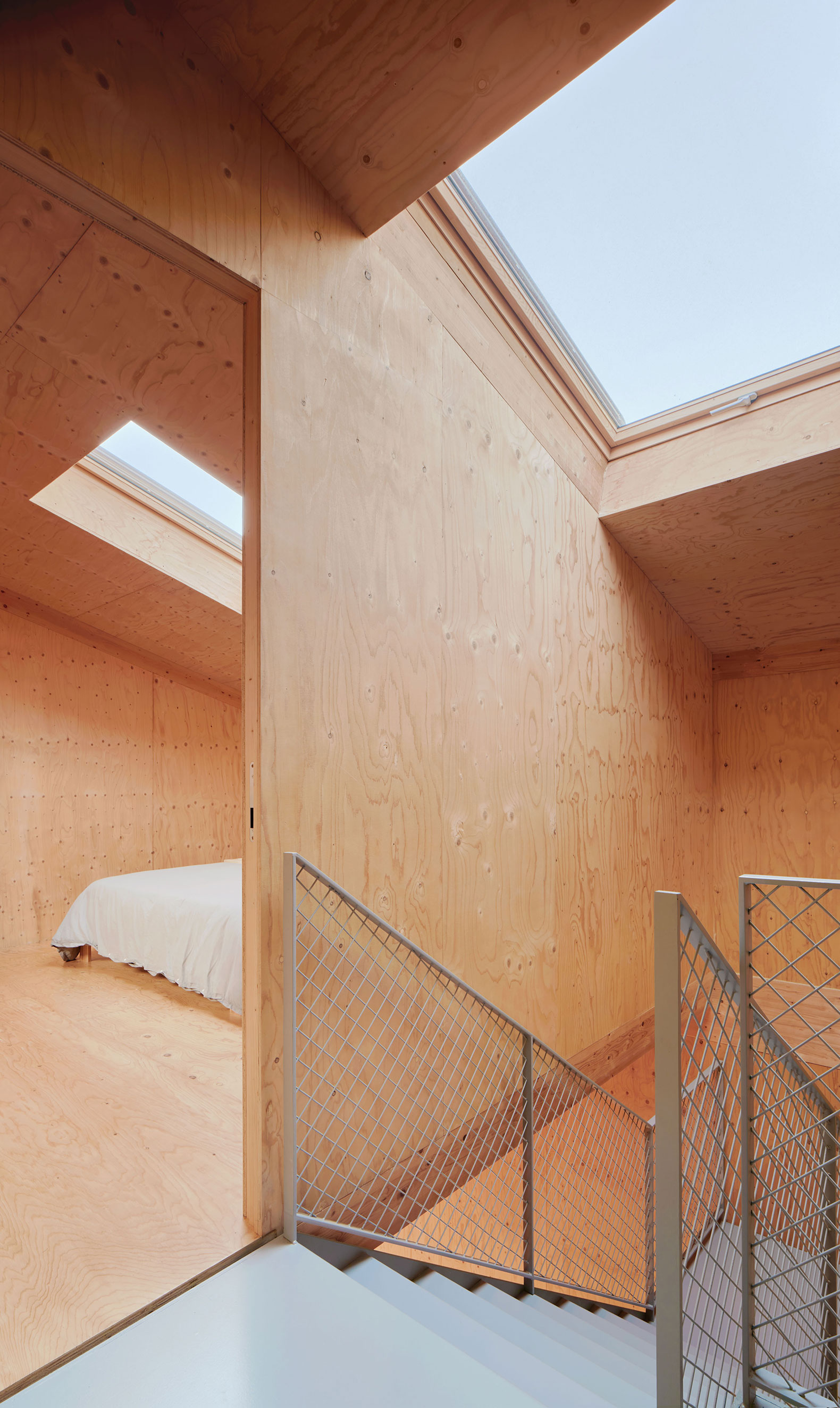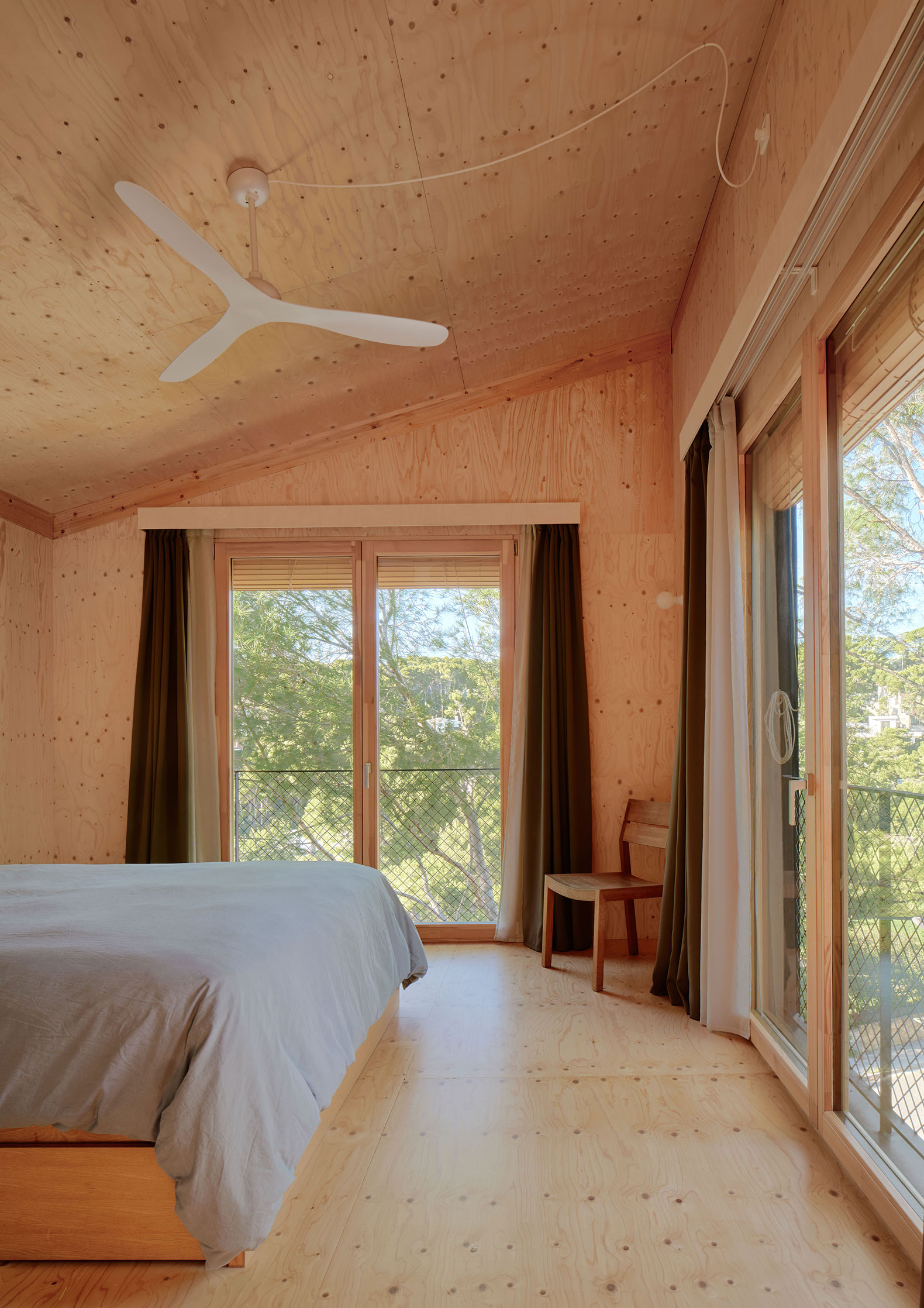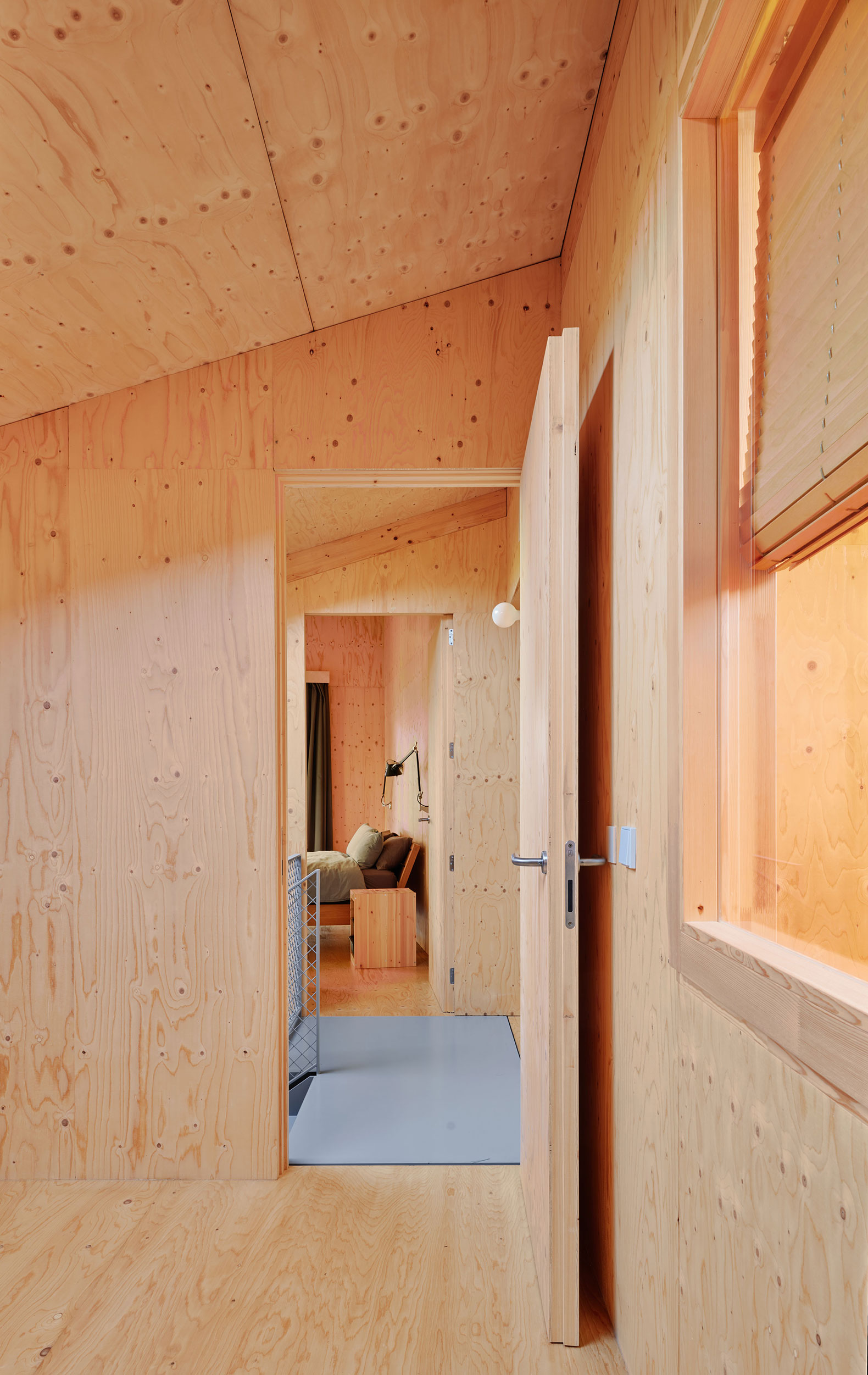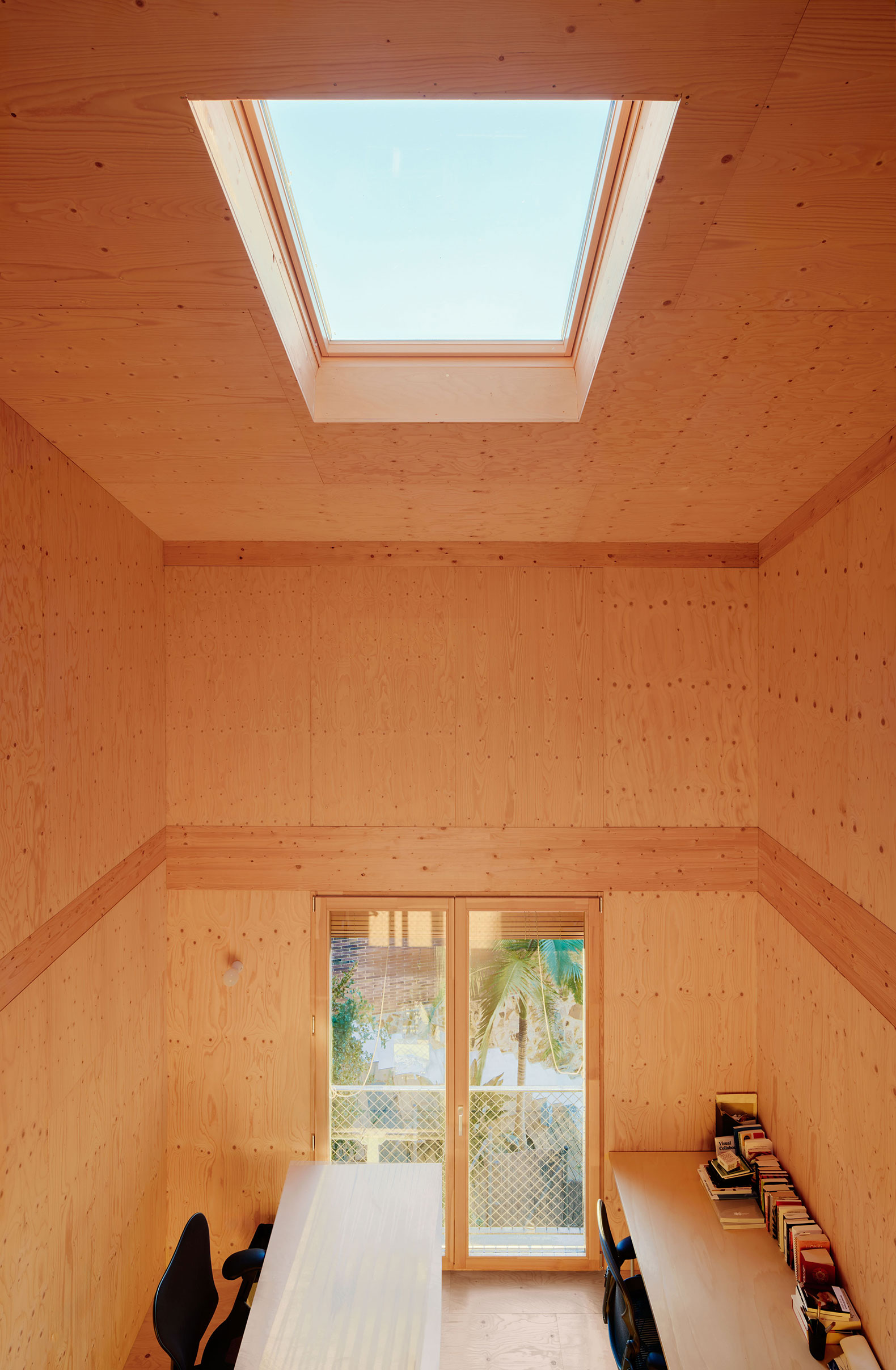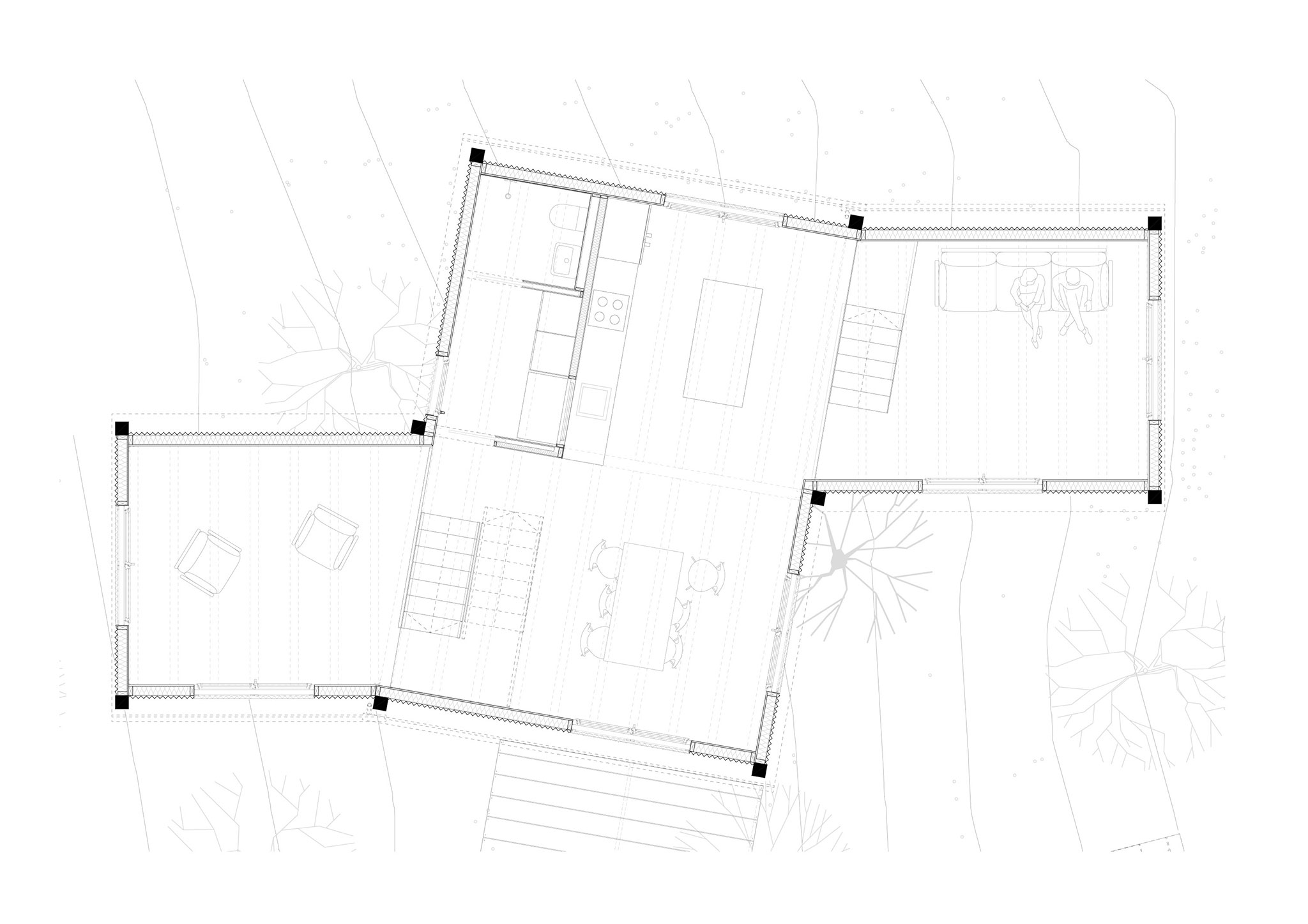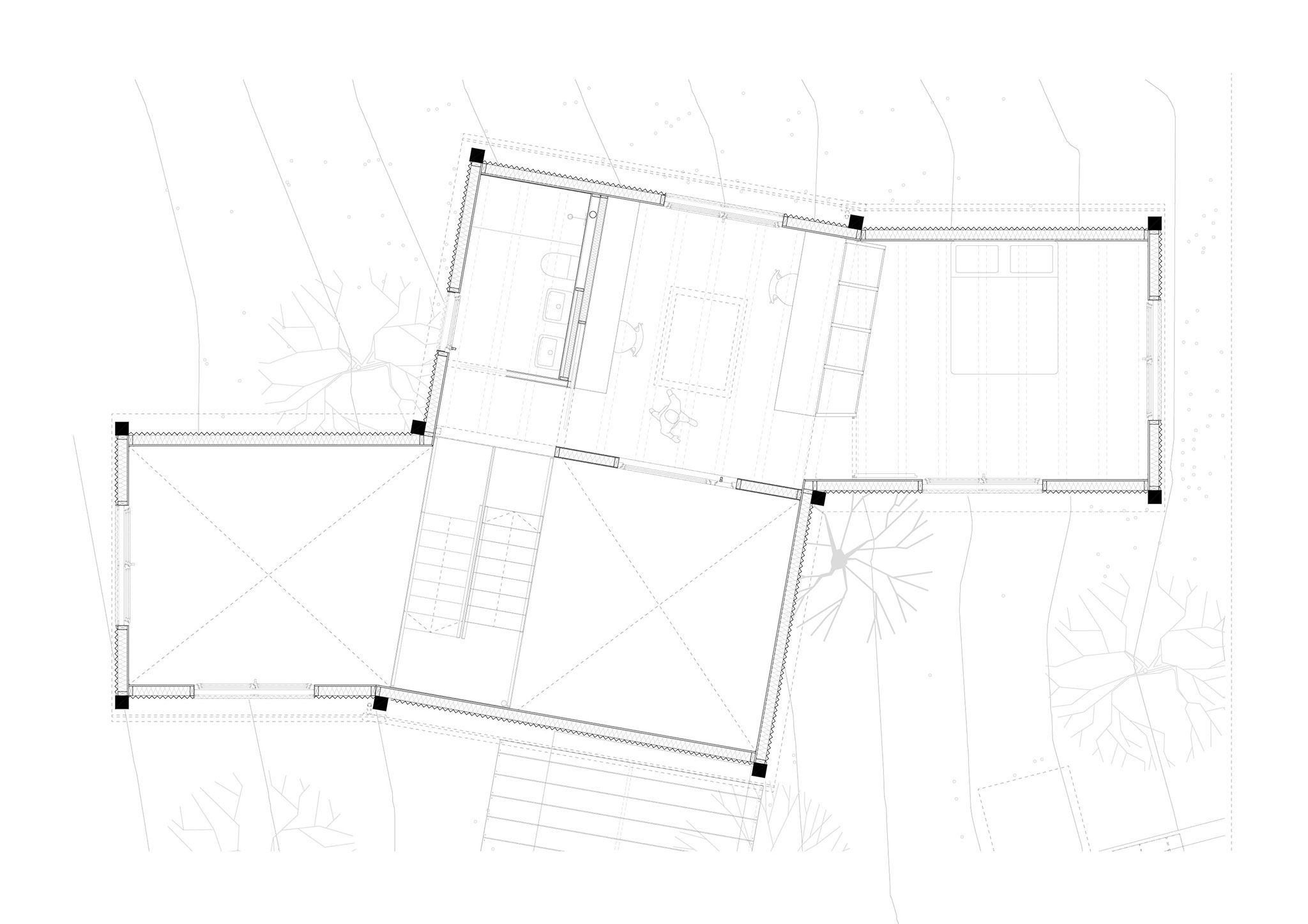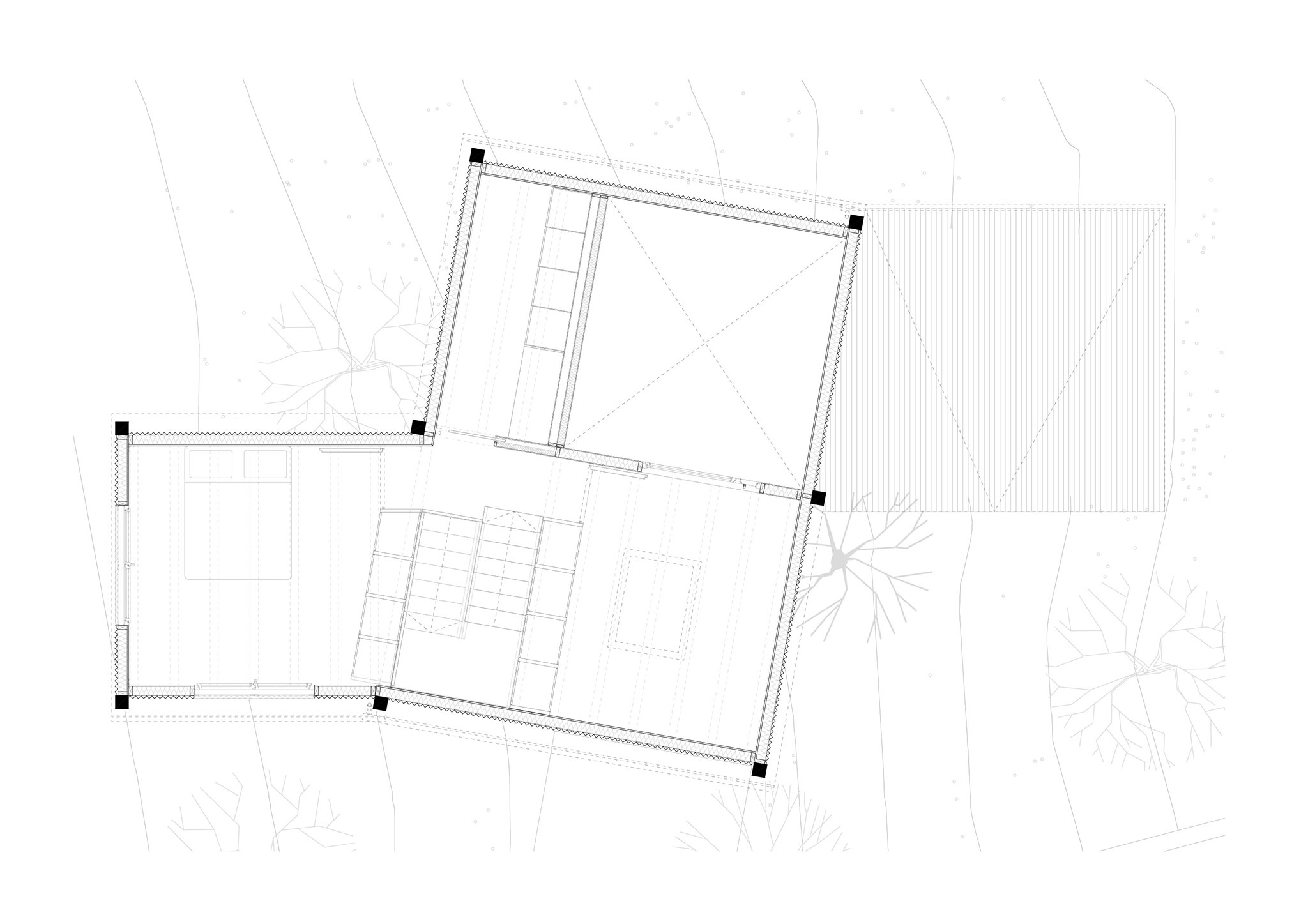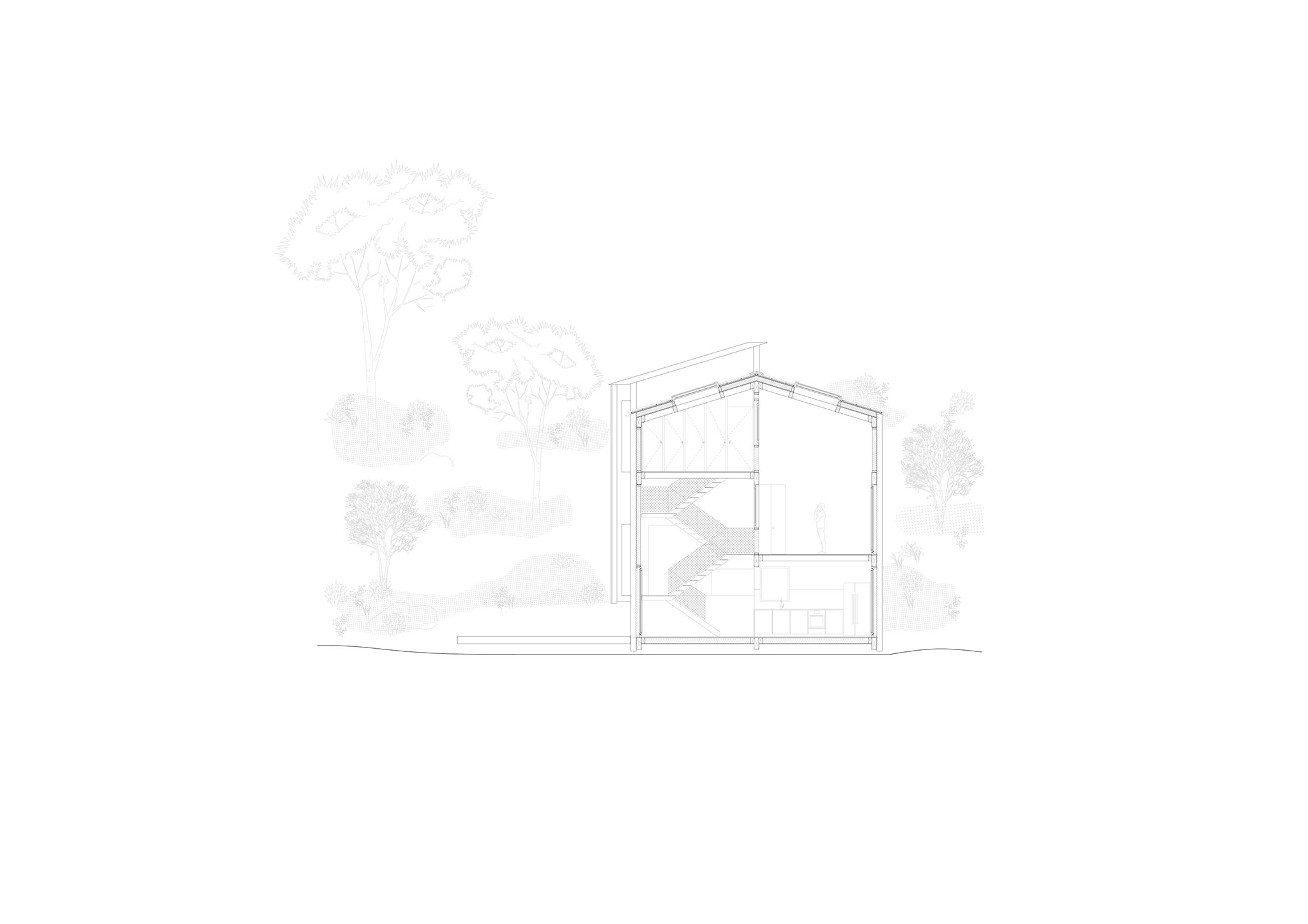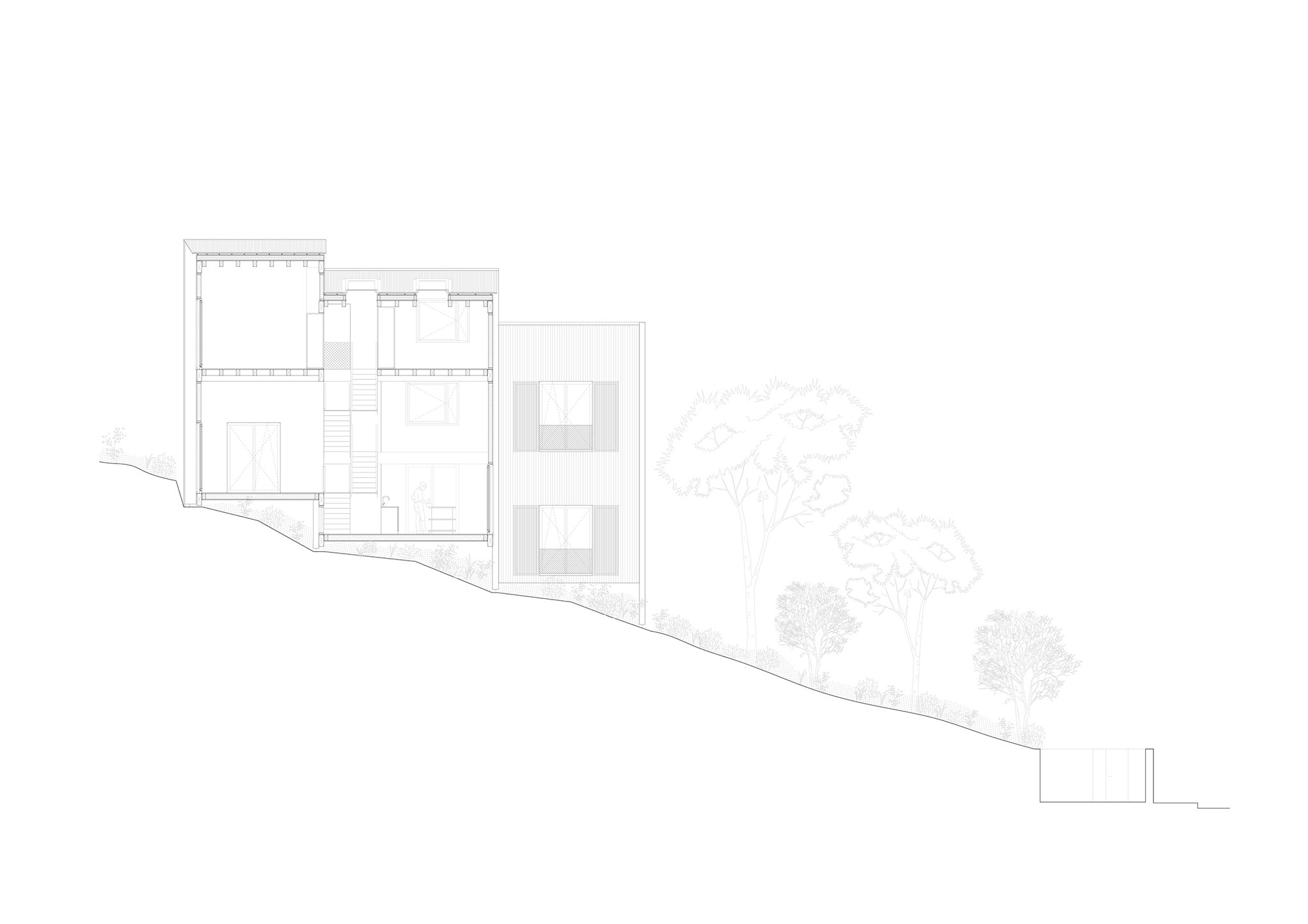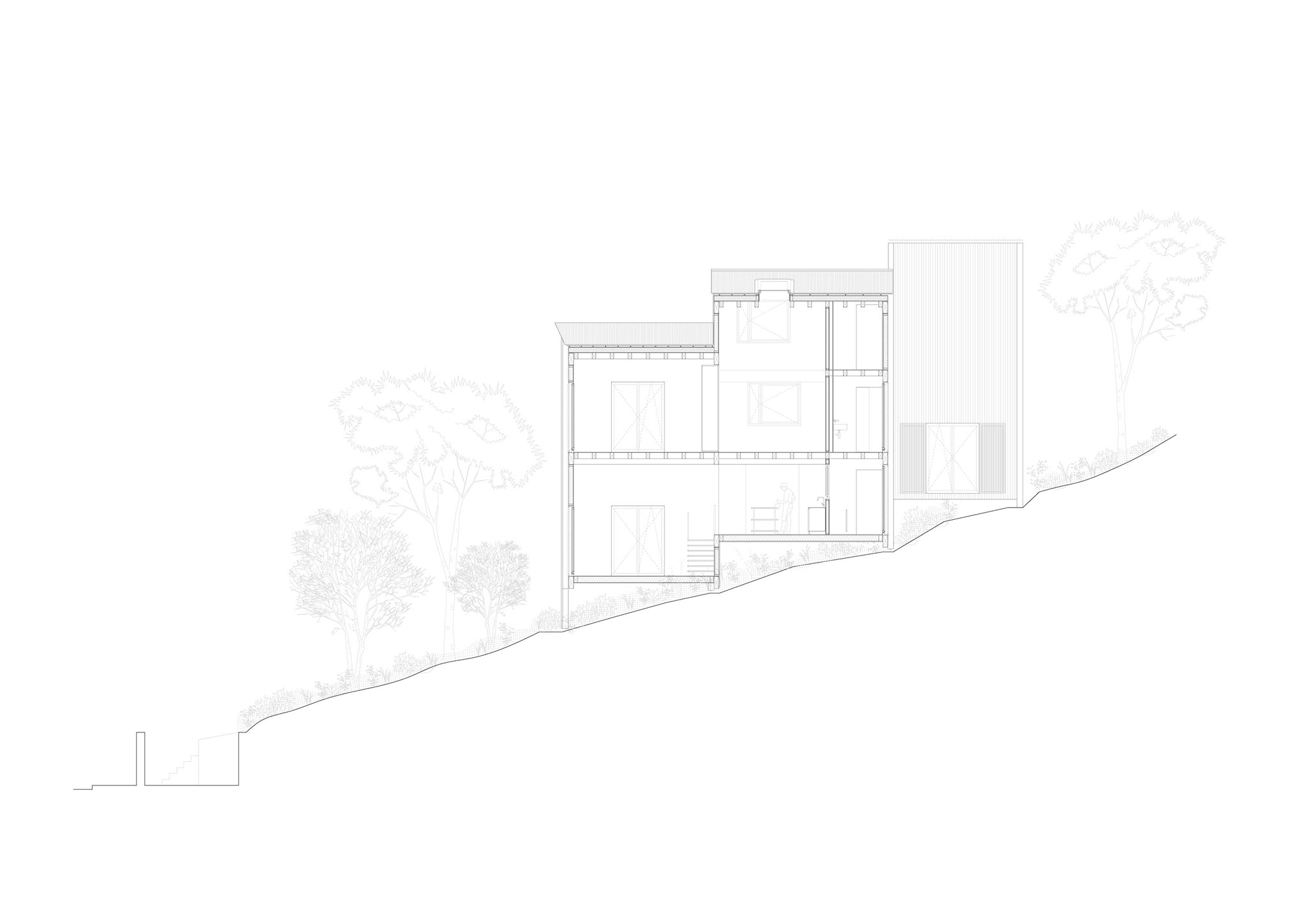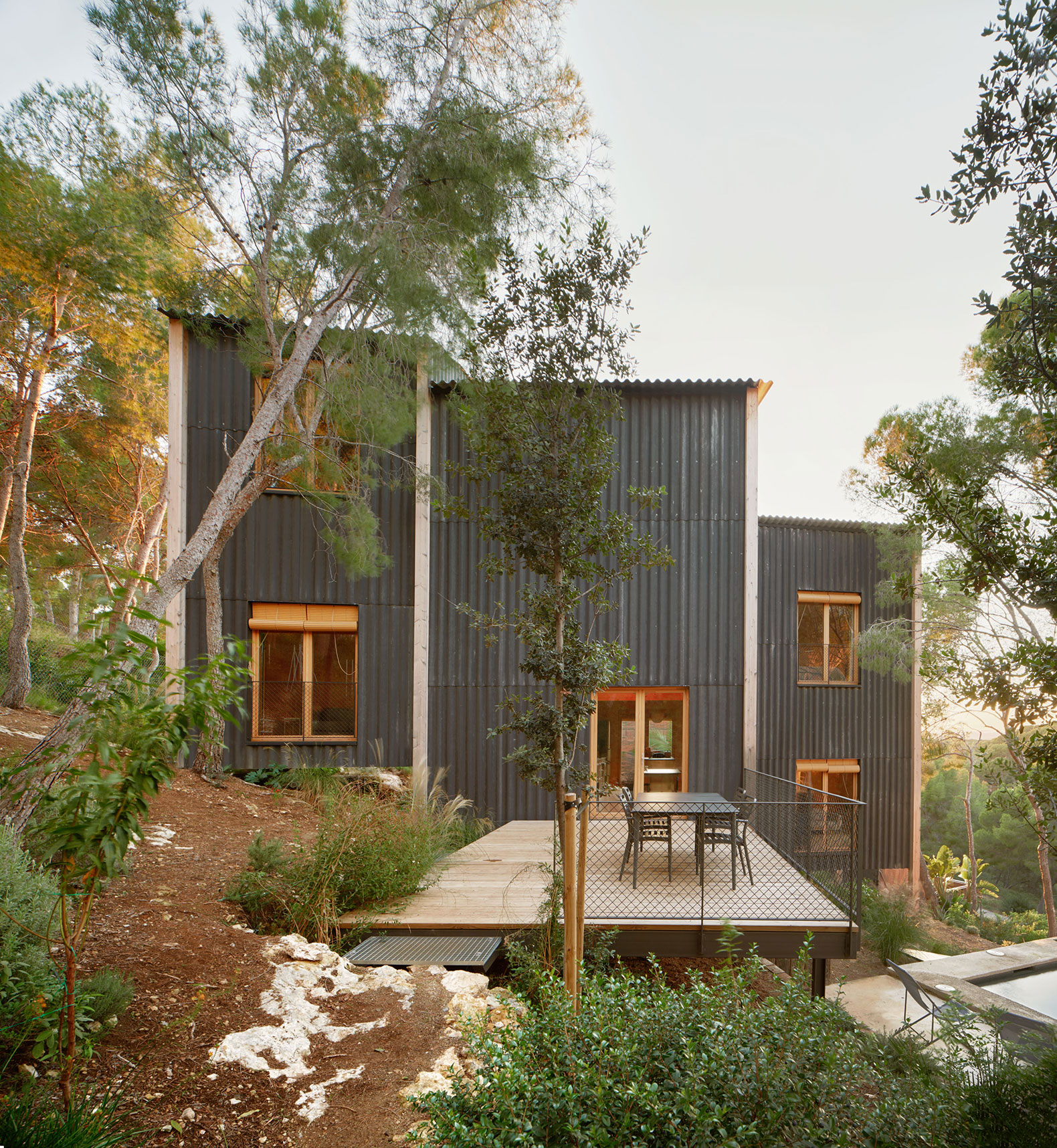
Alventosa Morell Arquitectes proposes for "Casa CLO" a spacious double-height entrance hall that houses the dining room and kitchen. This core visually connects the common areas of the three volumes via a metal staircase leading to a first floor with a double-height study and a bedroom, and to the upper floor, where two additional bedrooms are located.
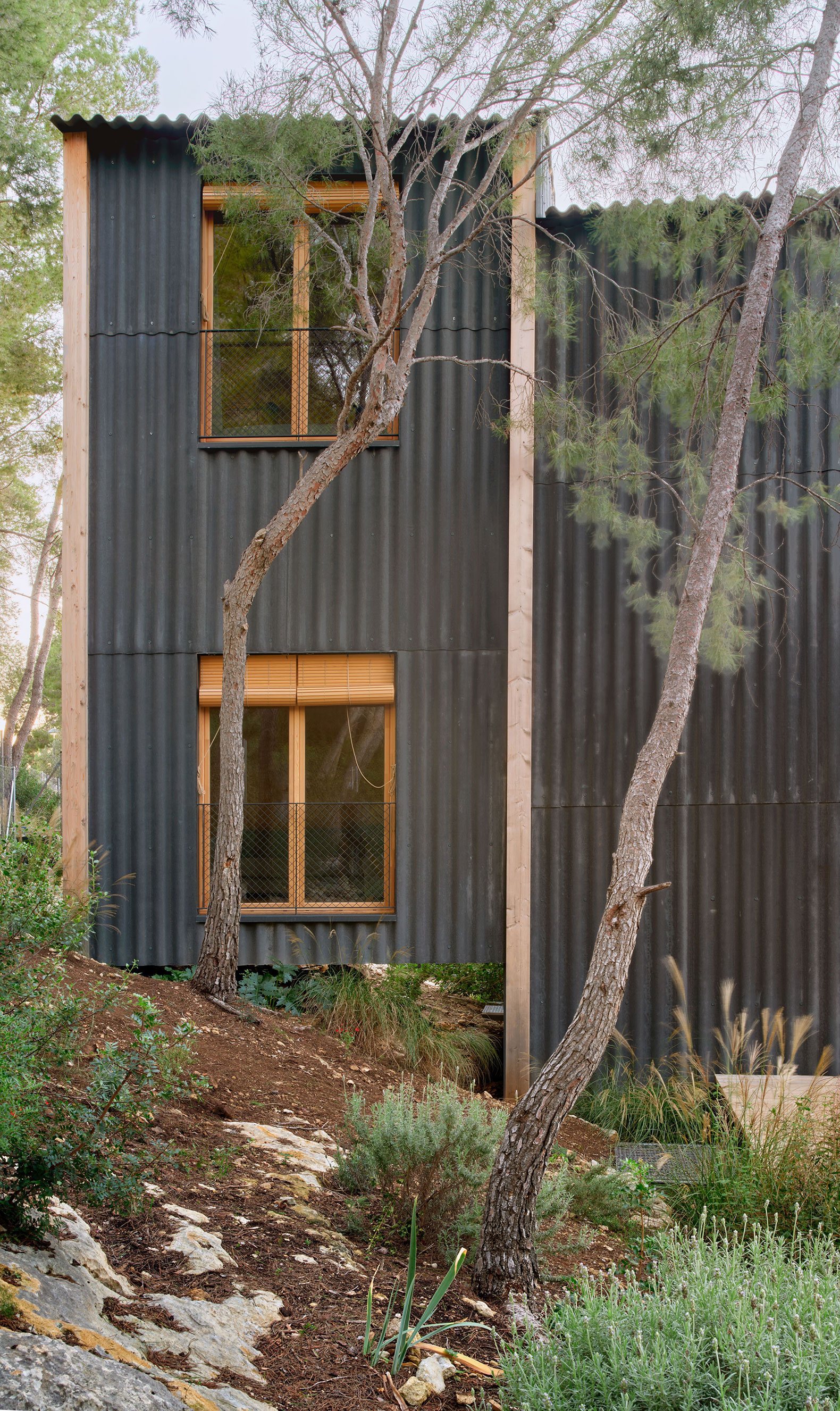
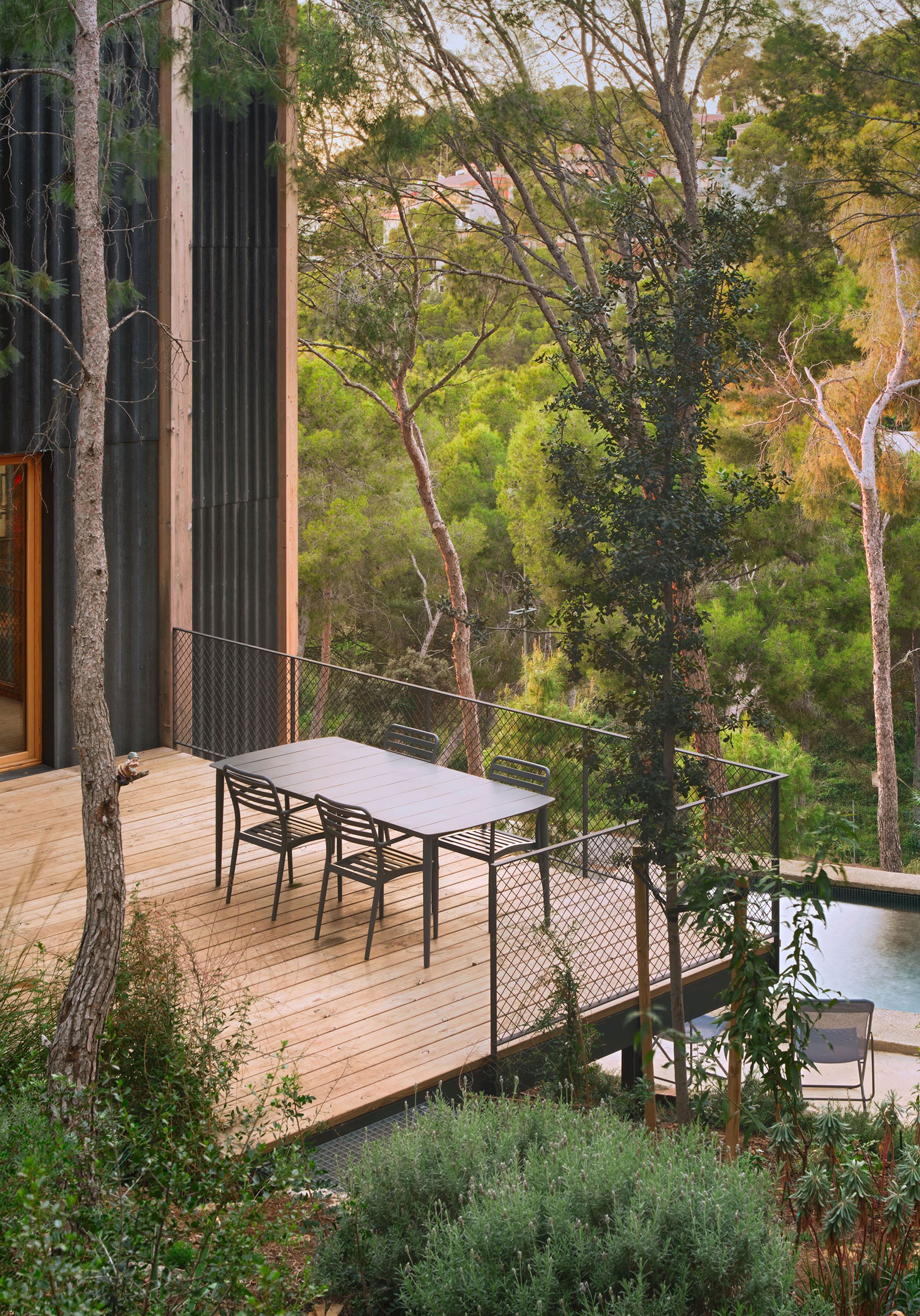
The wooden structure, in harmony with the verticality of the forest, is made up of ten pillars that distribute the weight of the building on just ten specific bases. This strategy limits the impact on the land, avoiding large earthworks and adapting precisely to the natural configuration of the trees.
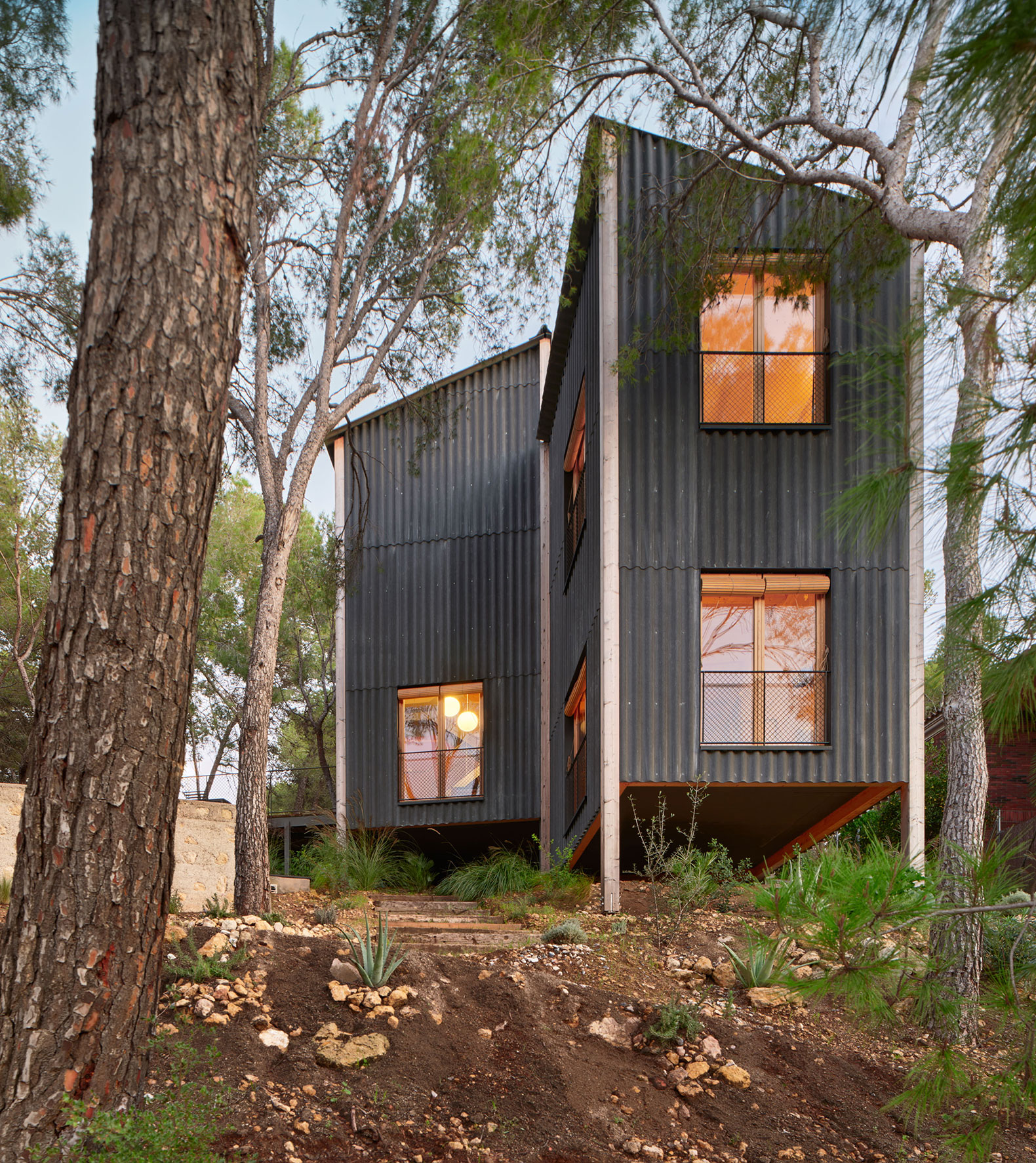
"Casa CLO" by Alventosa Morell Arquitectes. Photograph by José Hevia.
Project description by Alventosa Morell Arquitectes
Located in a small coastal town in Tarragona, "Casa CLO" sits on a sloping plot, adapting to the topography and existing wood to create comfortable living spaces among the tree canopies.
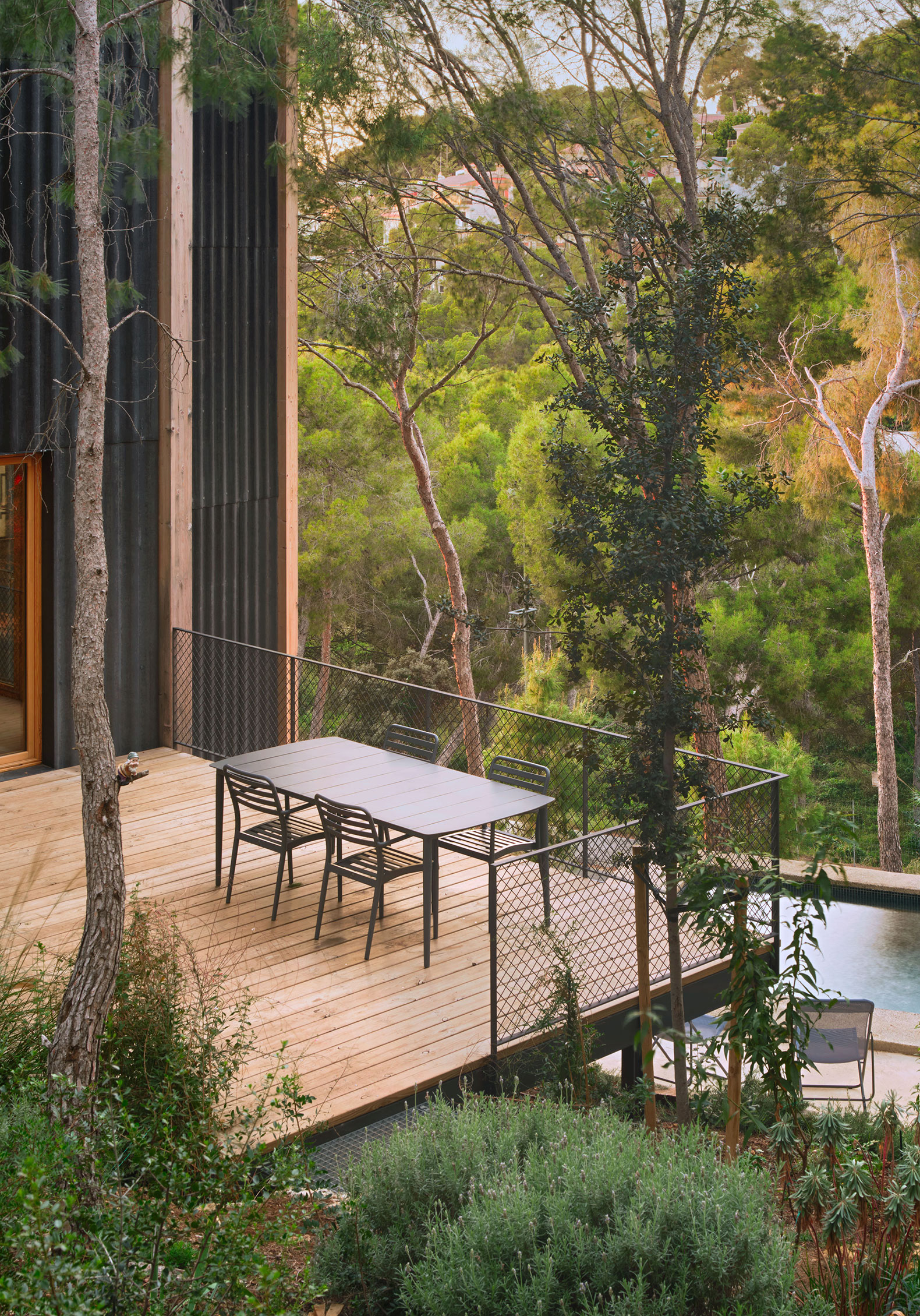
The site has rocky ground and a very steep slope, with access only from its lowest point. From the highest part of the site, the sea can be glimpsed in the distance, filtered through the pine forest. The clients, a family from Barcelona, acquired this plot to build their second home, with the intention of gradually spending more time in the tranquillity of the forest and close to the sea. They were looking for a house that could engage with its surroundings and, being familiar with the studio’s philosophy, gave us the freedom to define both the design strategy and the material approach.
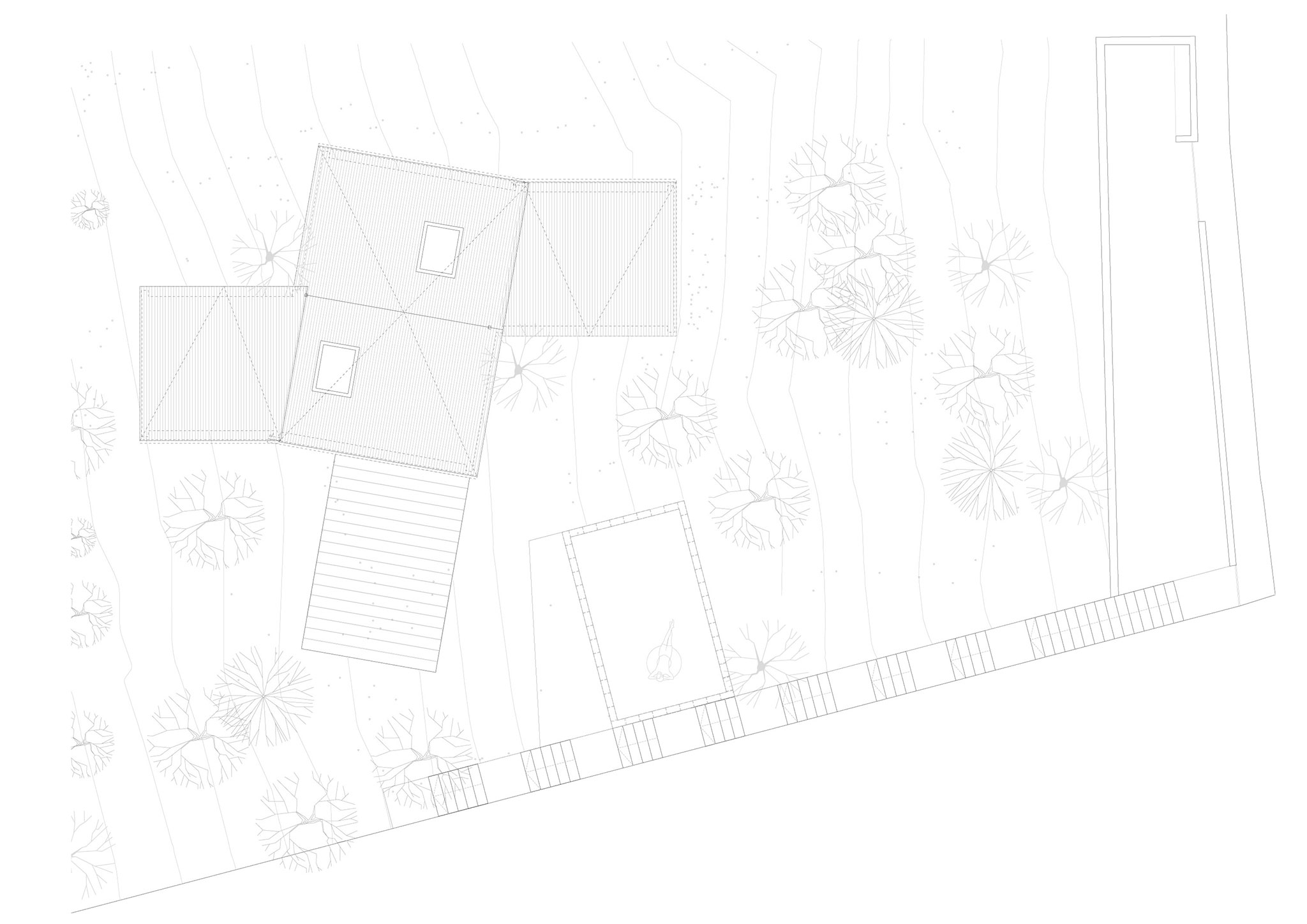
The existing trees, the slope and planning regulations shaped the proposal. Any significant earthworks would have been extremely costly, and for this reason the programme was organised into three volumes arranged at different levels in the upper part of the plot, in order to take advantage of the sea views. The placement of these volumes responds to the position of the existing trees to avoid felling them, resulting in a slight rotation in plan that gives the overall composition a more organic configuration.
We worked with a timber structure in which the entire load is transferred to ten columns, allowing the intervention on the ground to be limited to just ten point foundations. This lightweight structure echoes the verticality of the forest and brings it into the interior of the house.
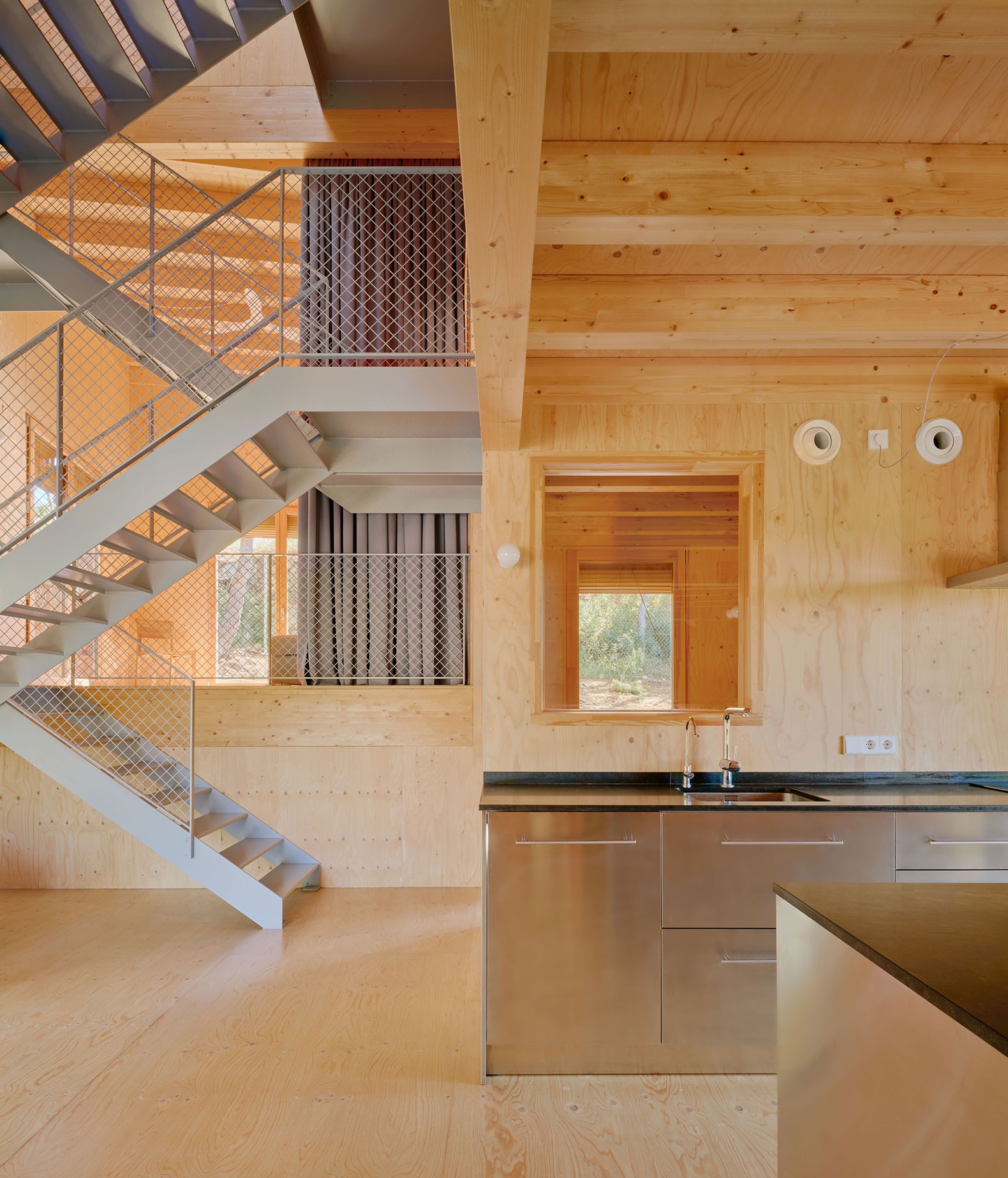
Planning regulations required an excavation along the street edge, which was used to accommodate the parking area. From there, a stair along the side of the plot leads up to the upper part of the site, first reaching the swimming pool and finally the entrance terrace. Upon entering the house, one arrives at a double-height dining space and kitchen. This large space visually connects the shared areas of the three volumes. A metal staircase provides access to the remaining levels, first leading to a second floor with a double-height study and a bedroom, and finally to two additional bedrooms on the top floor.