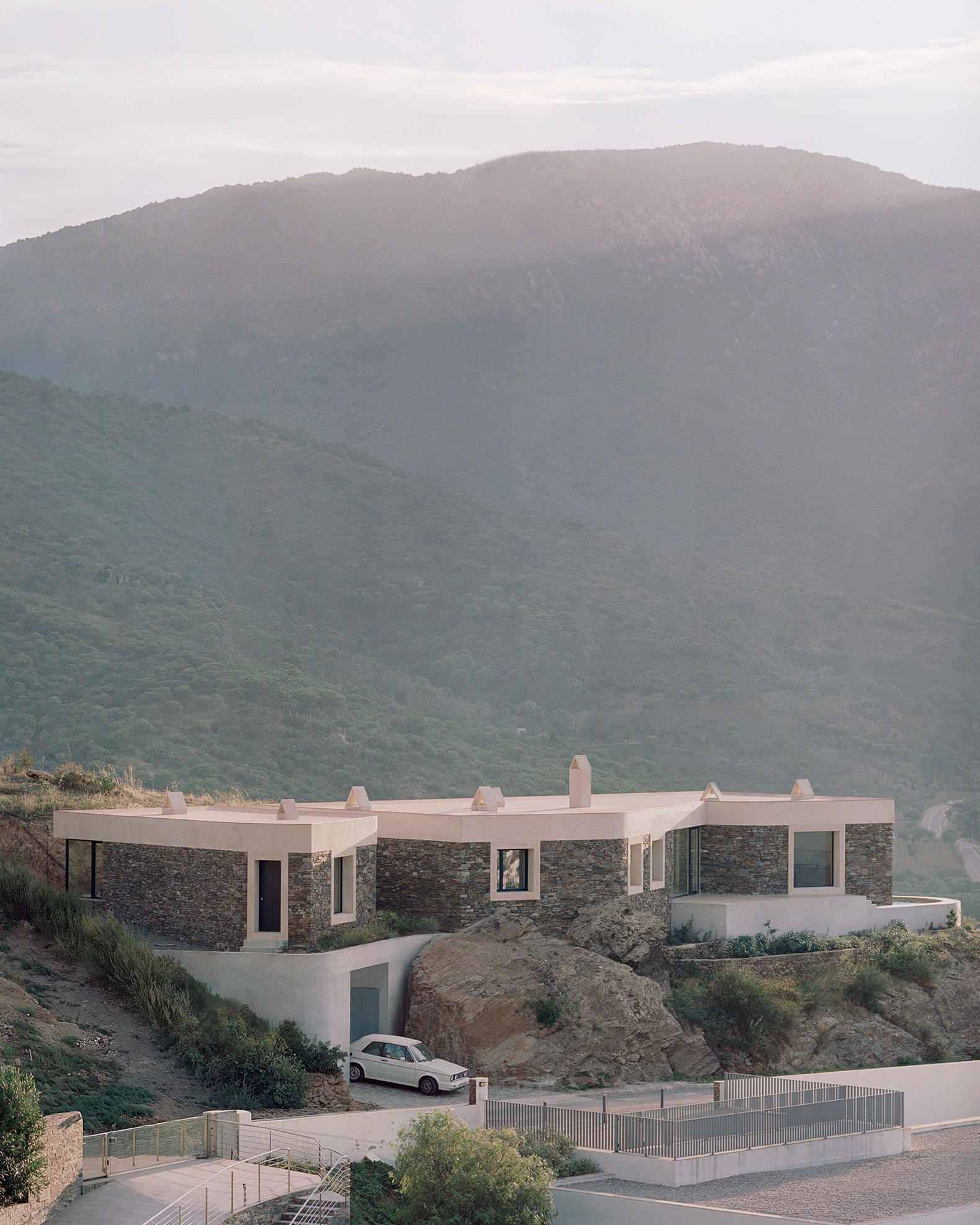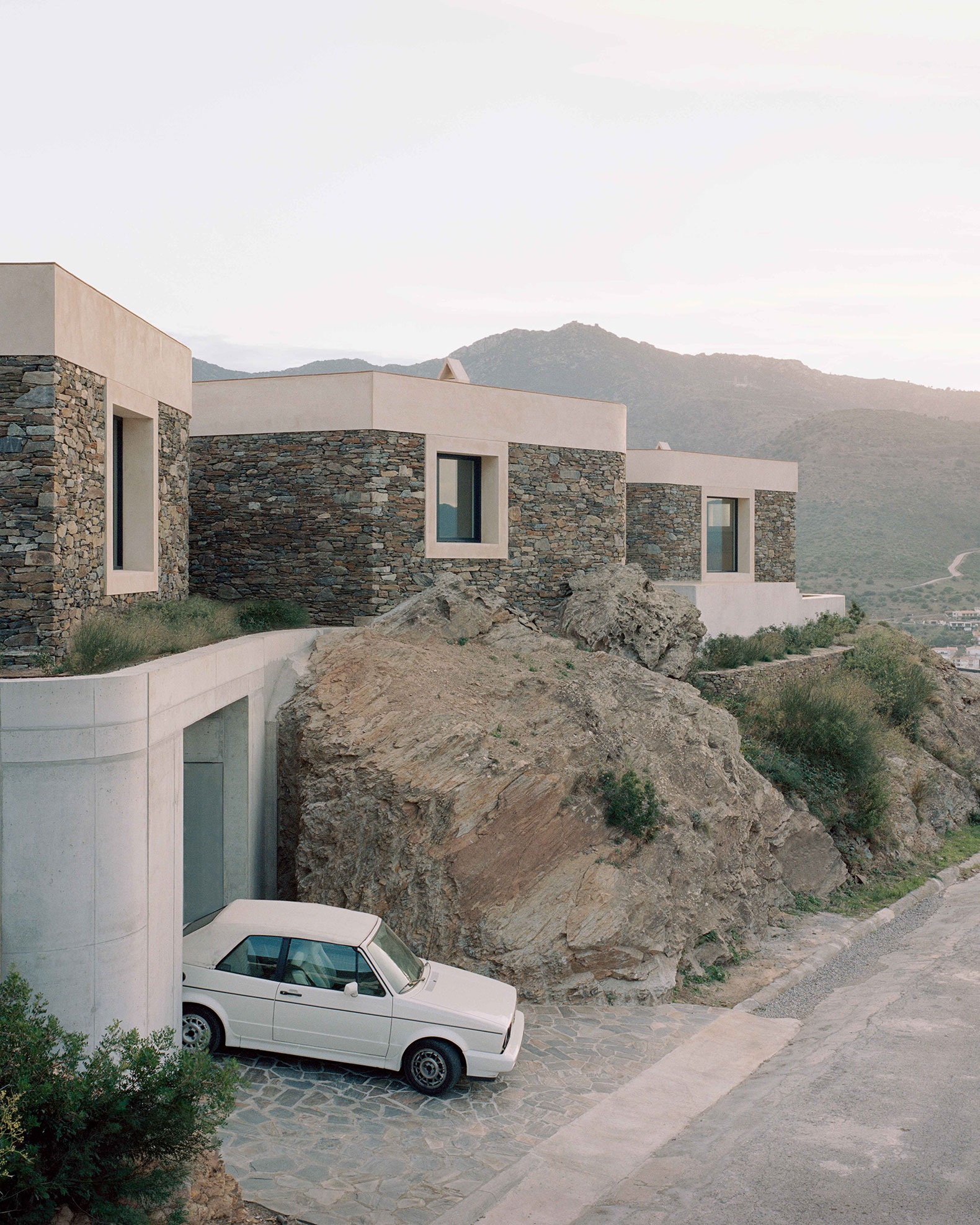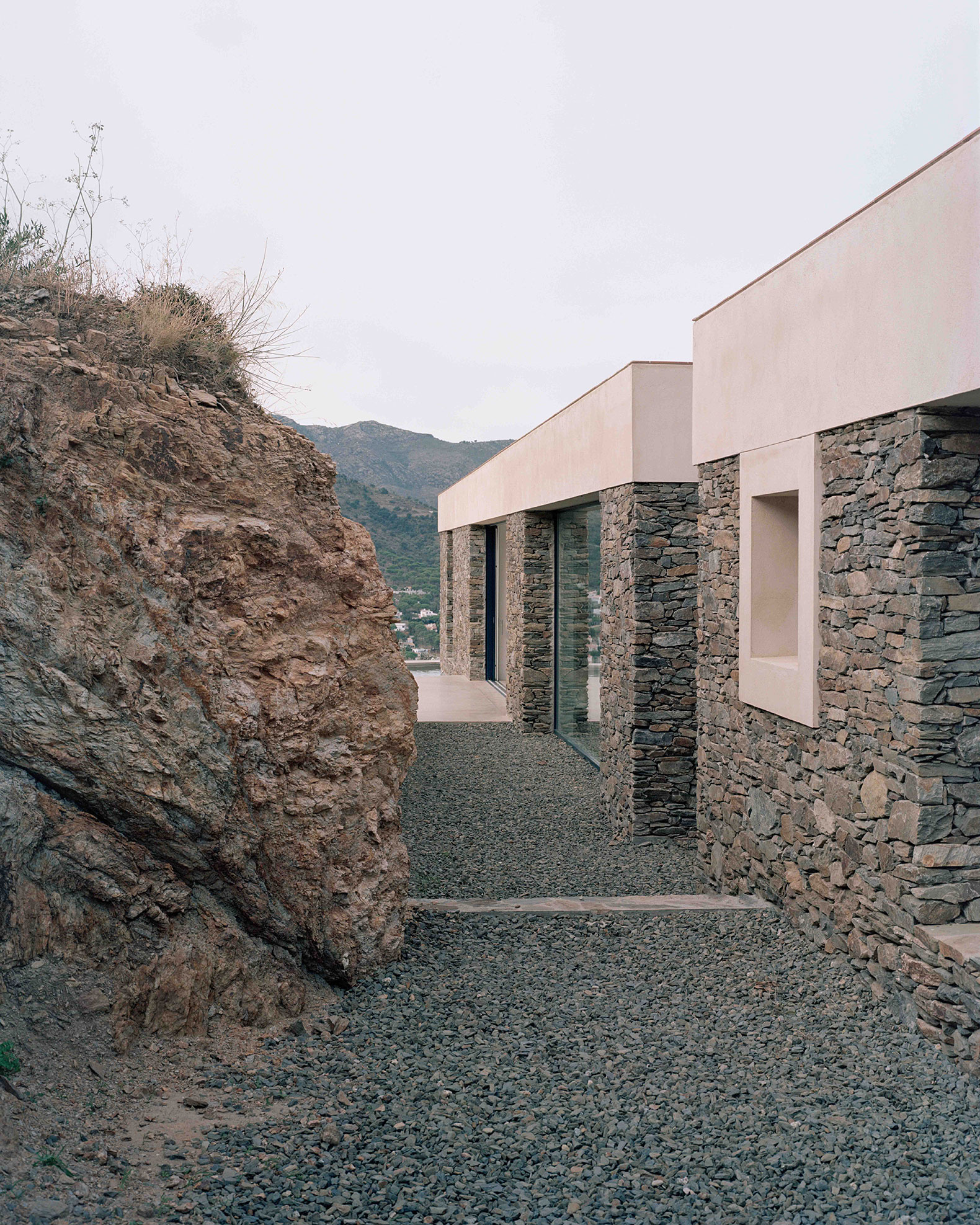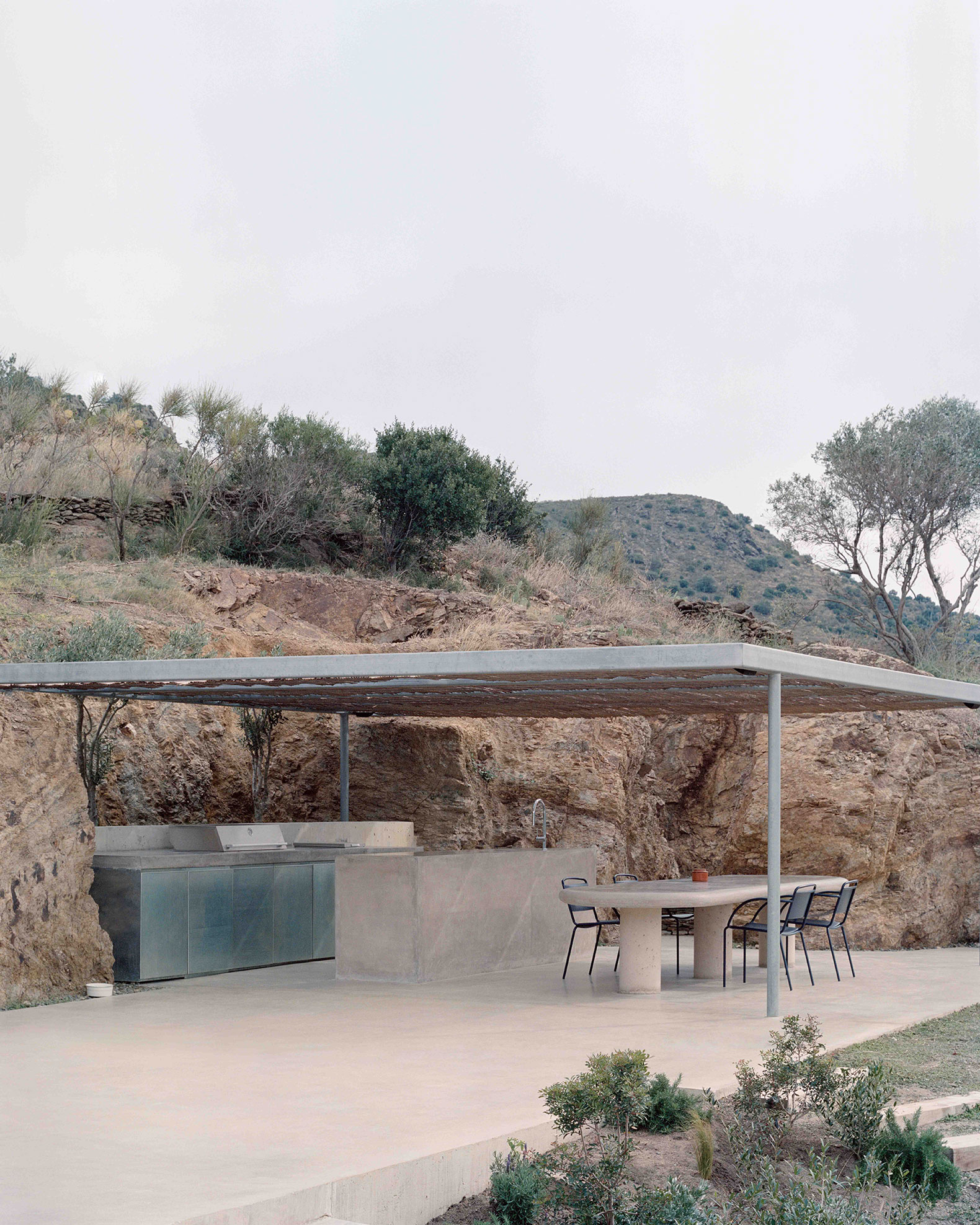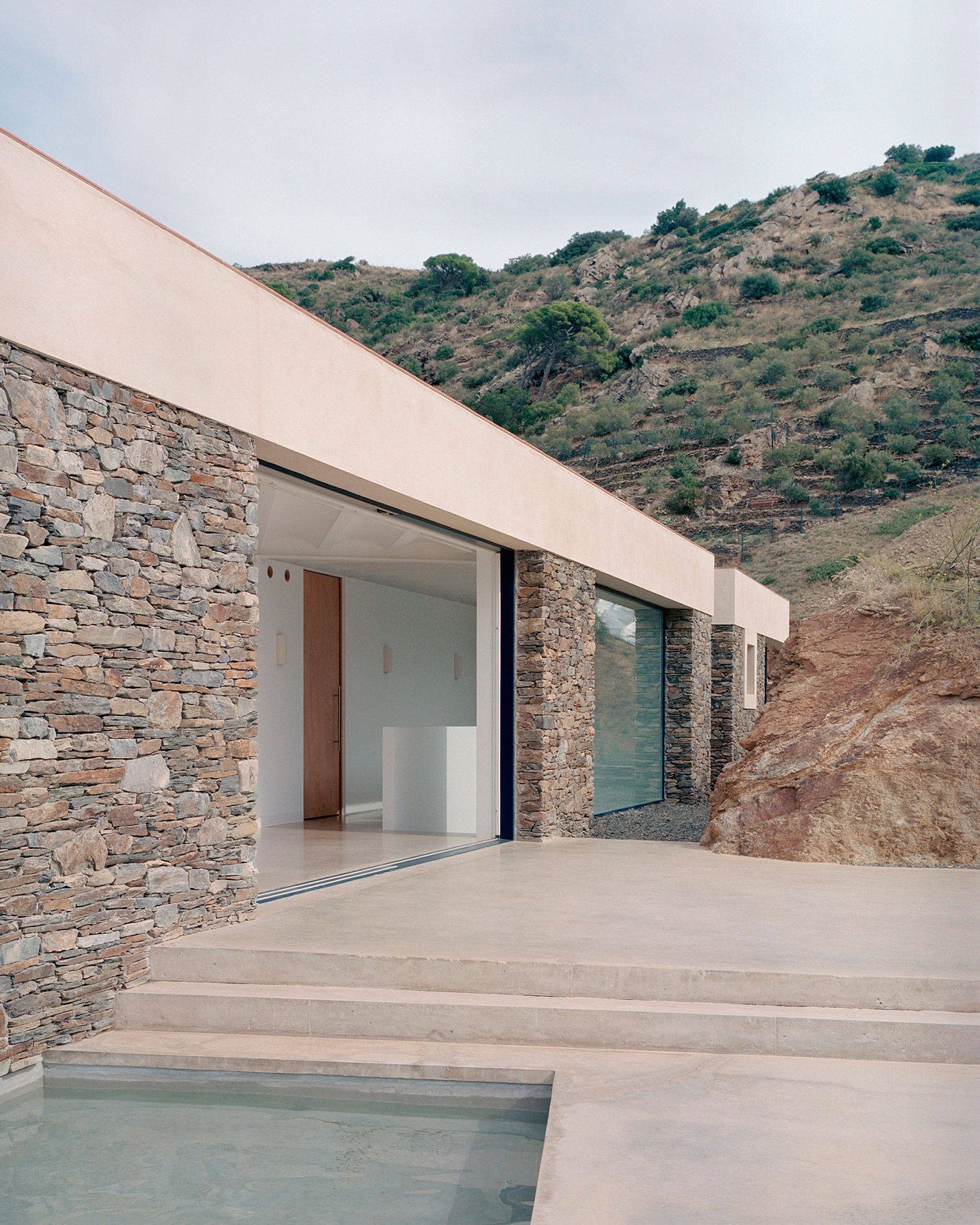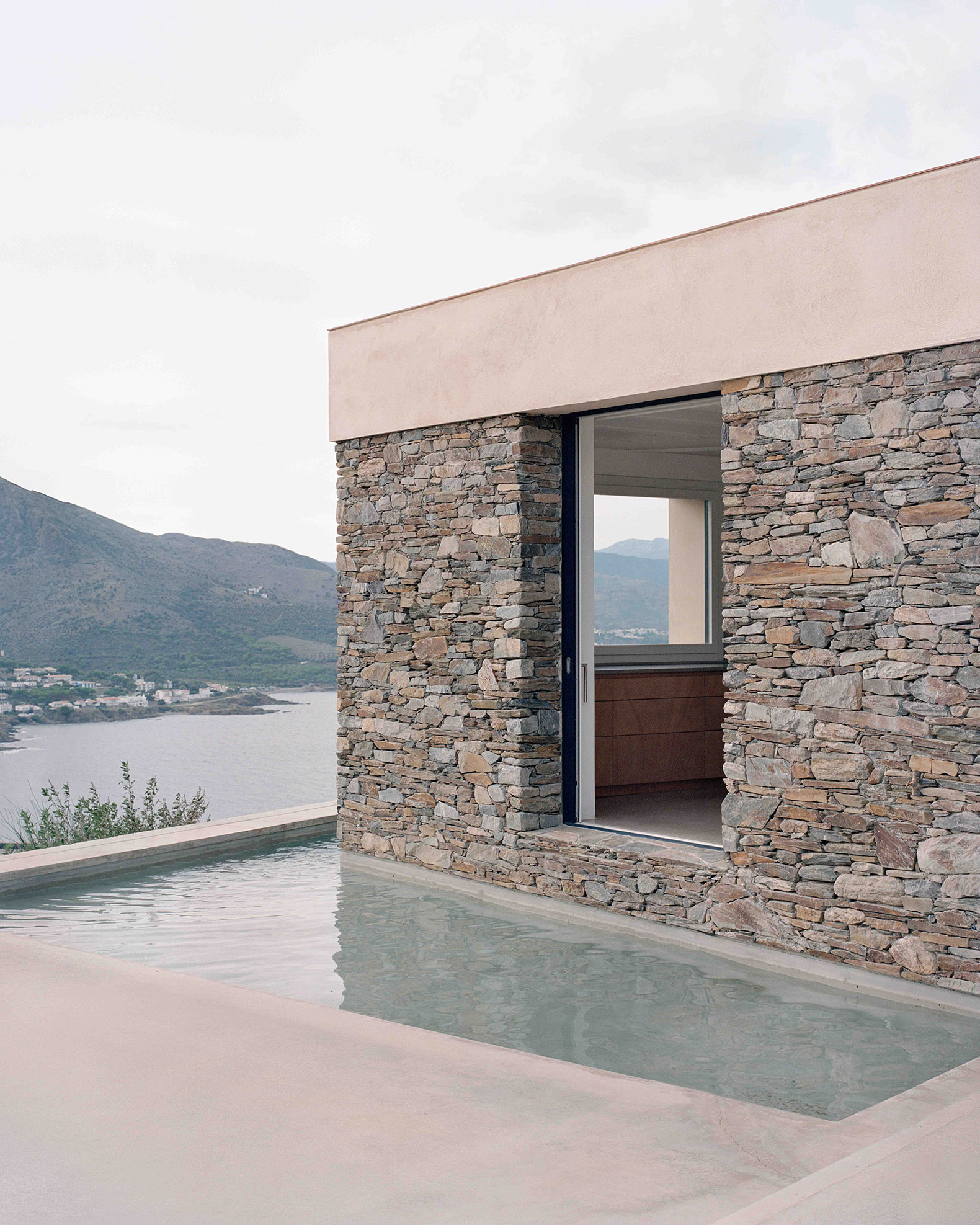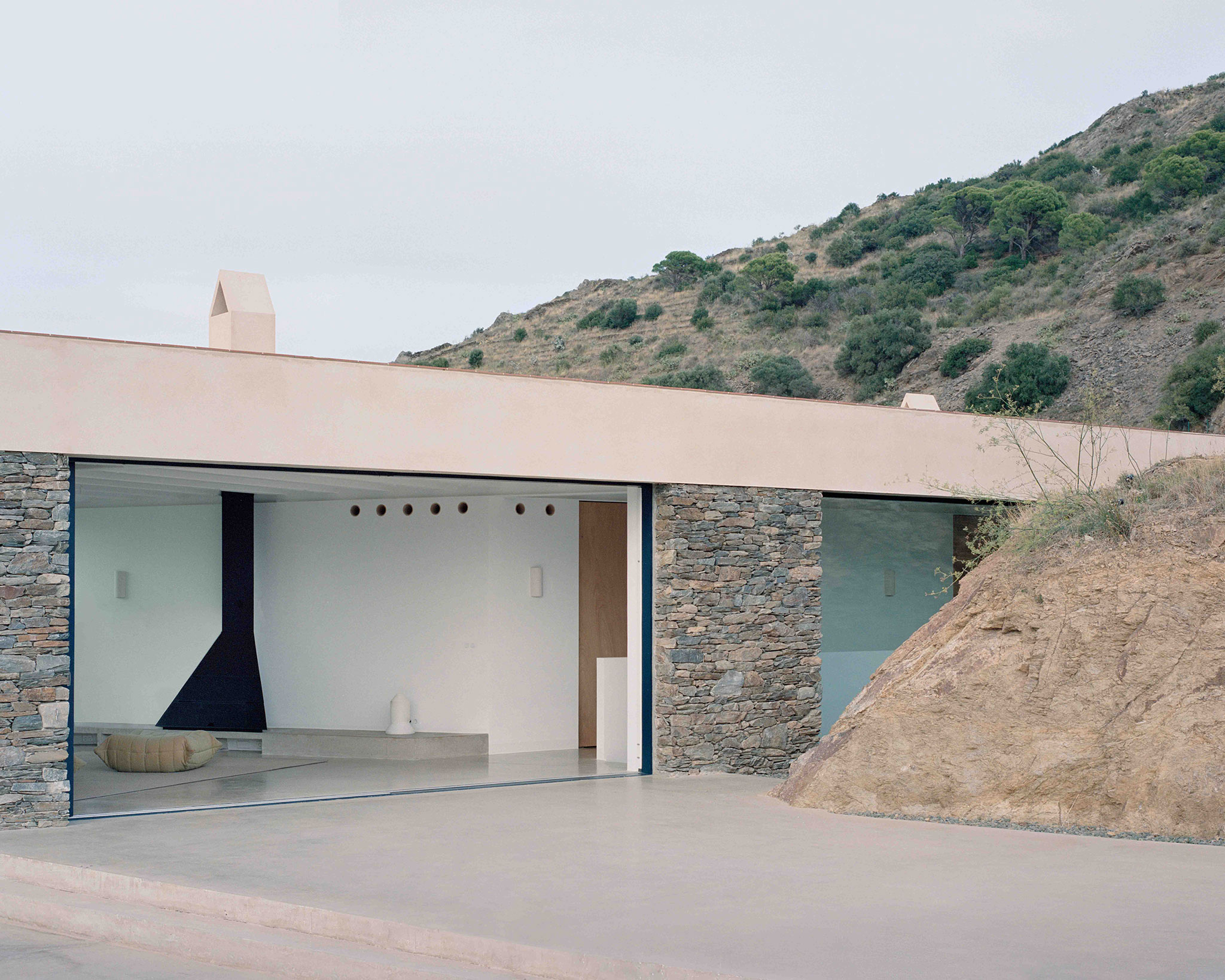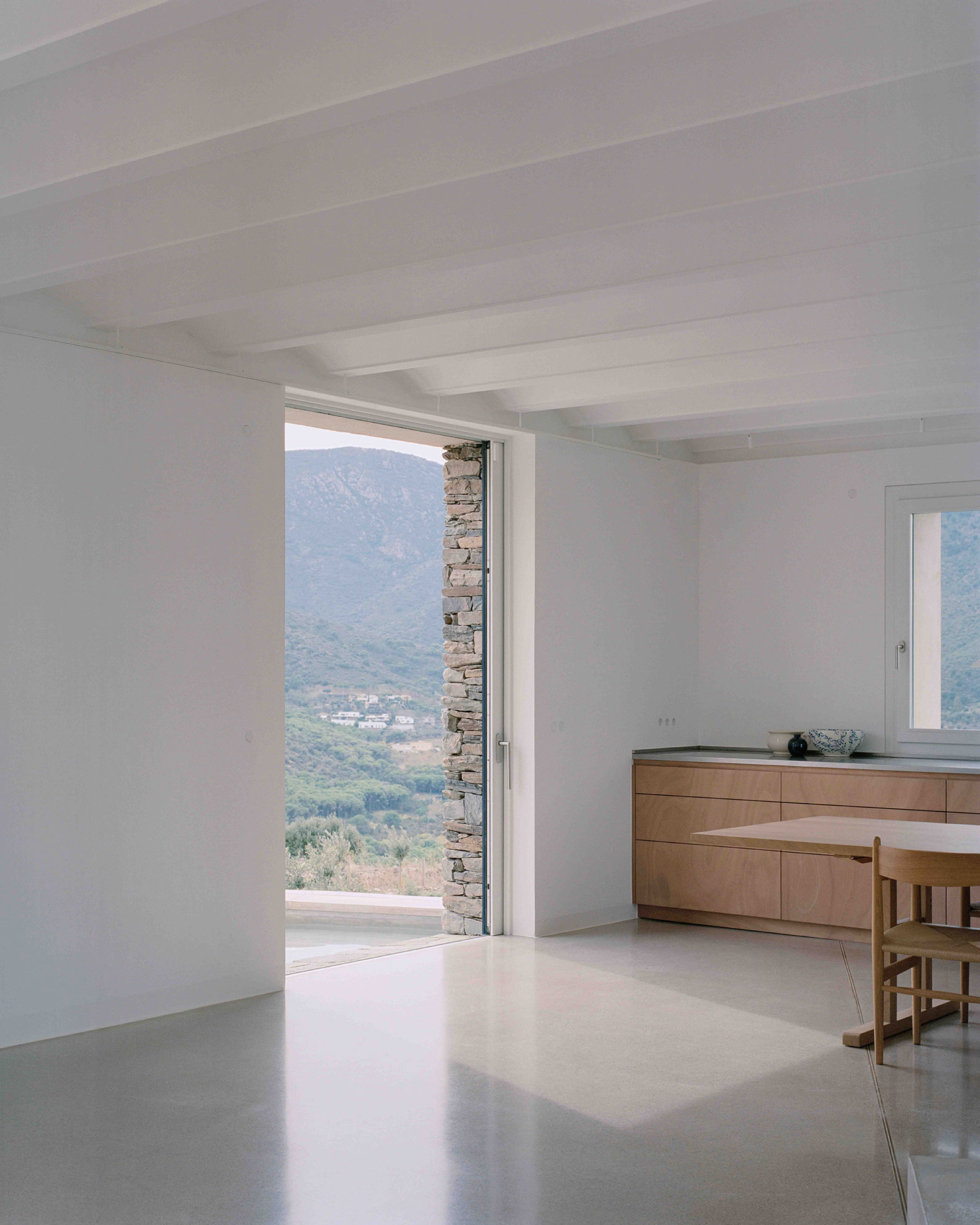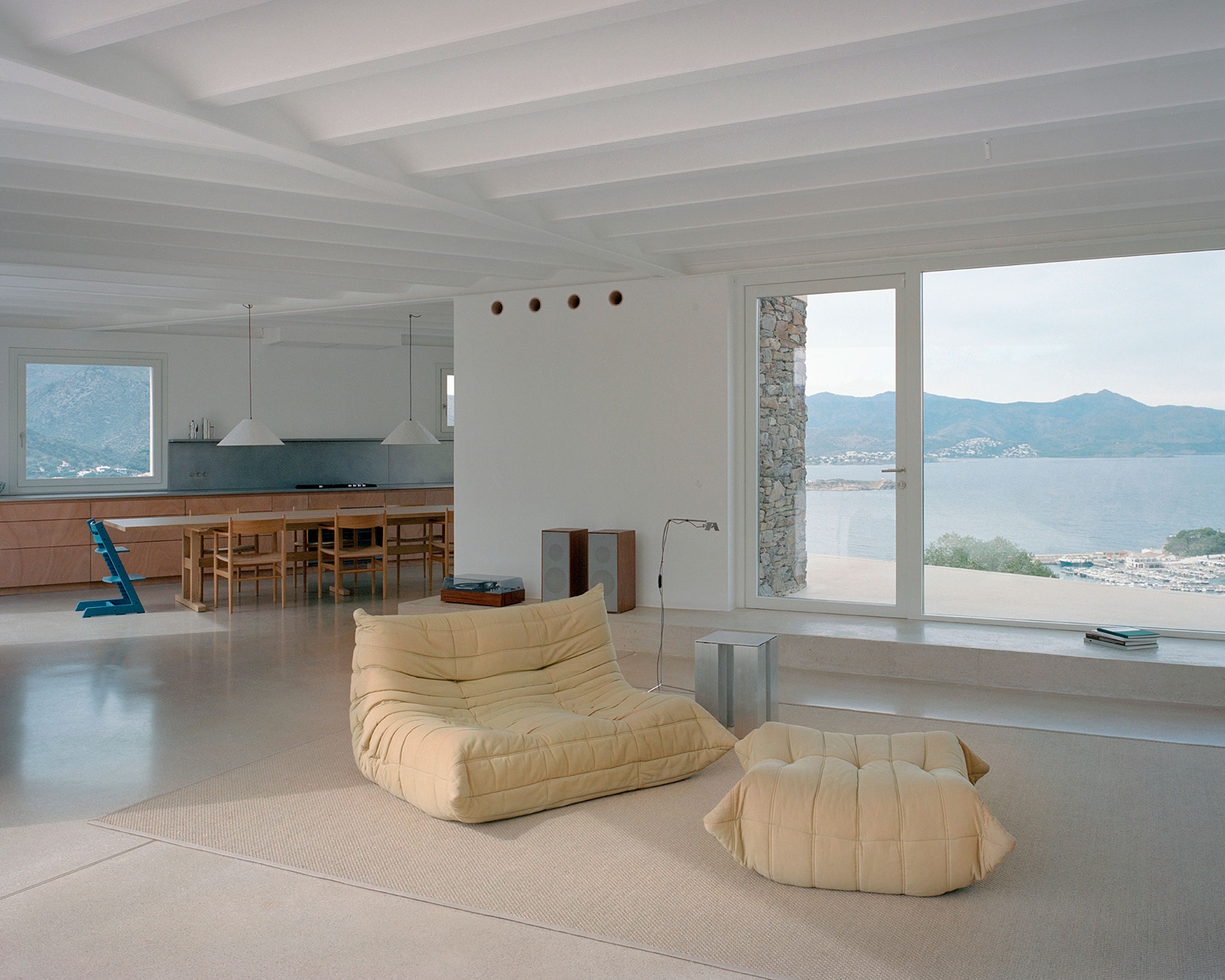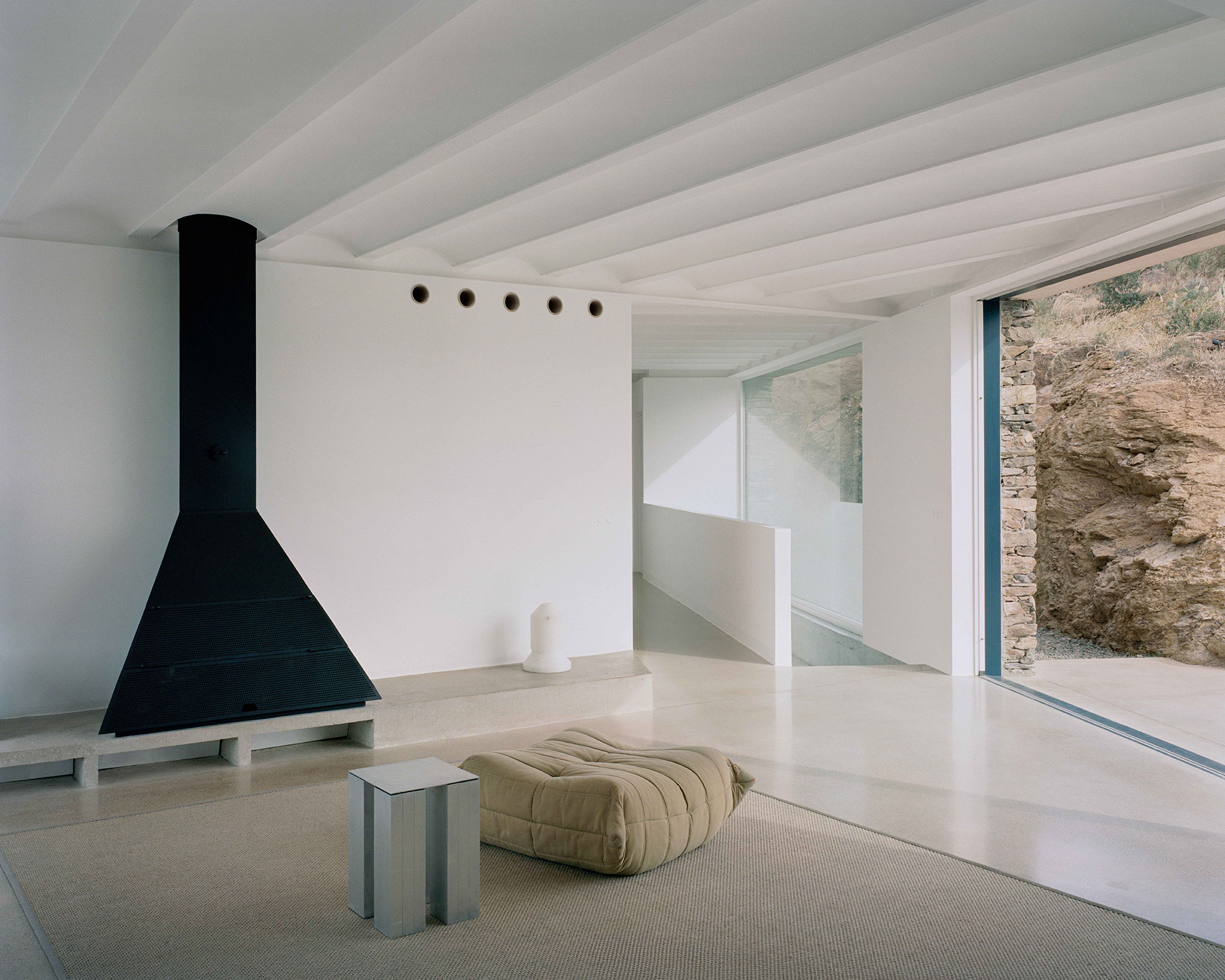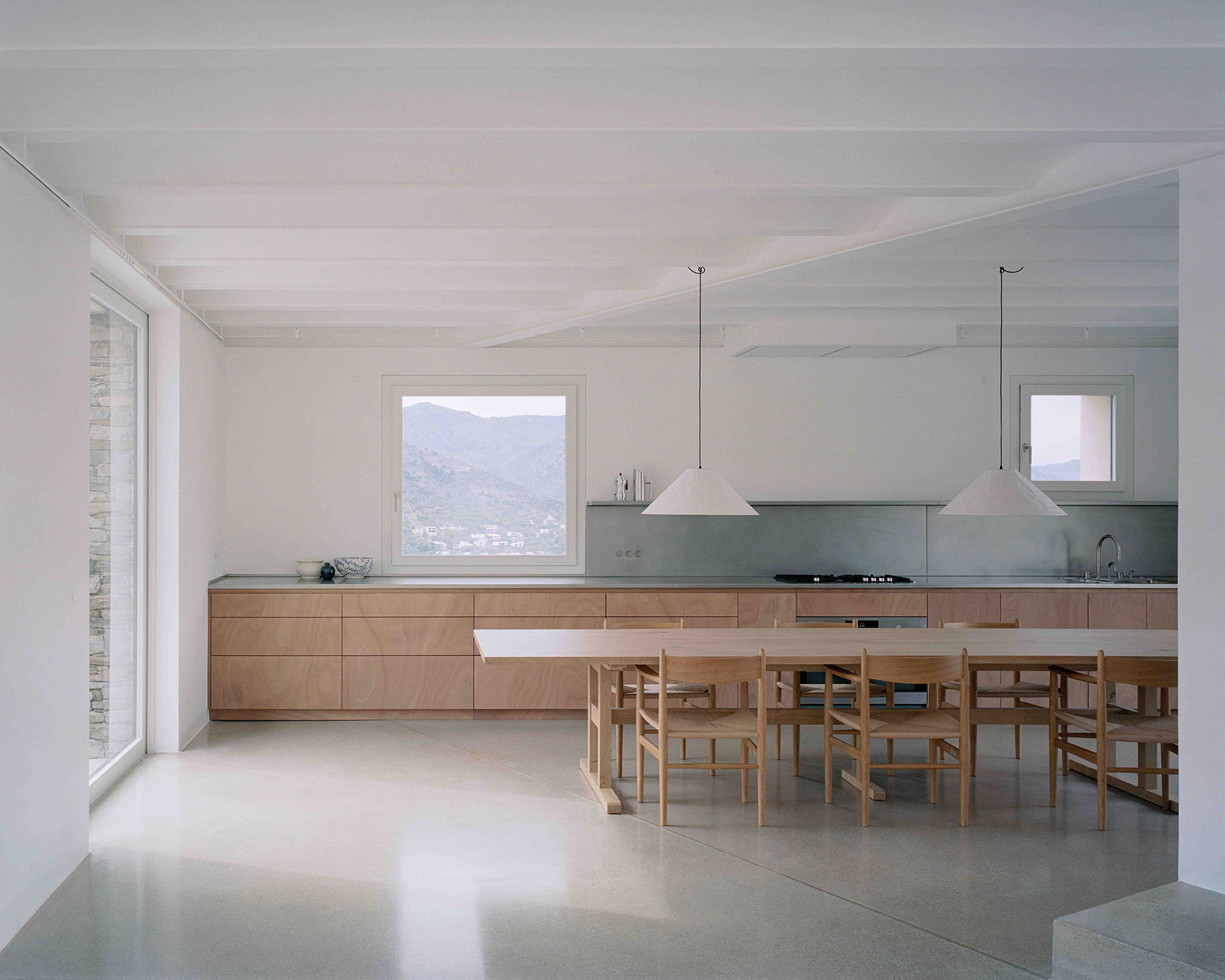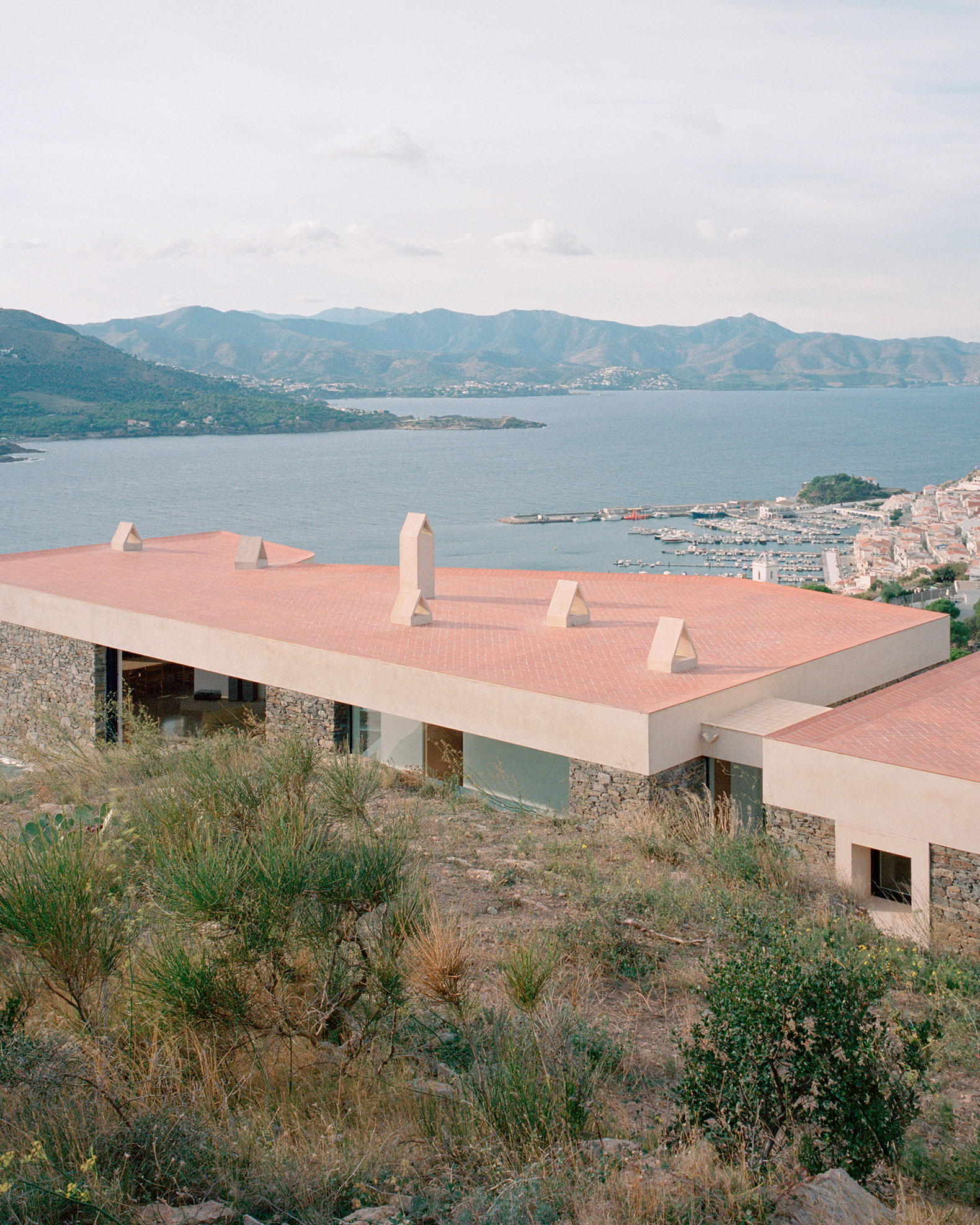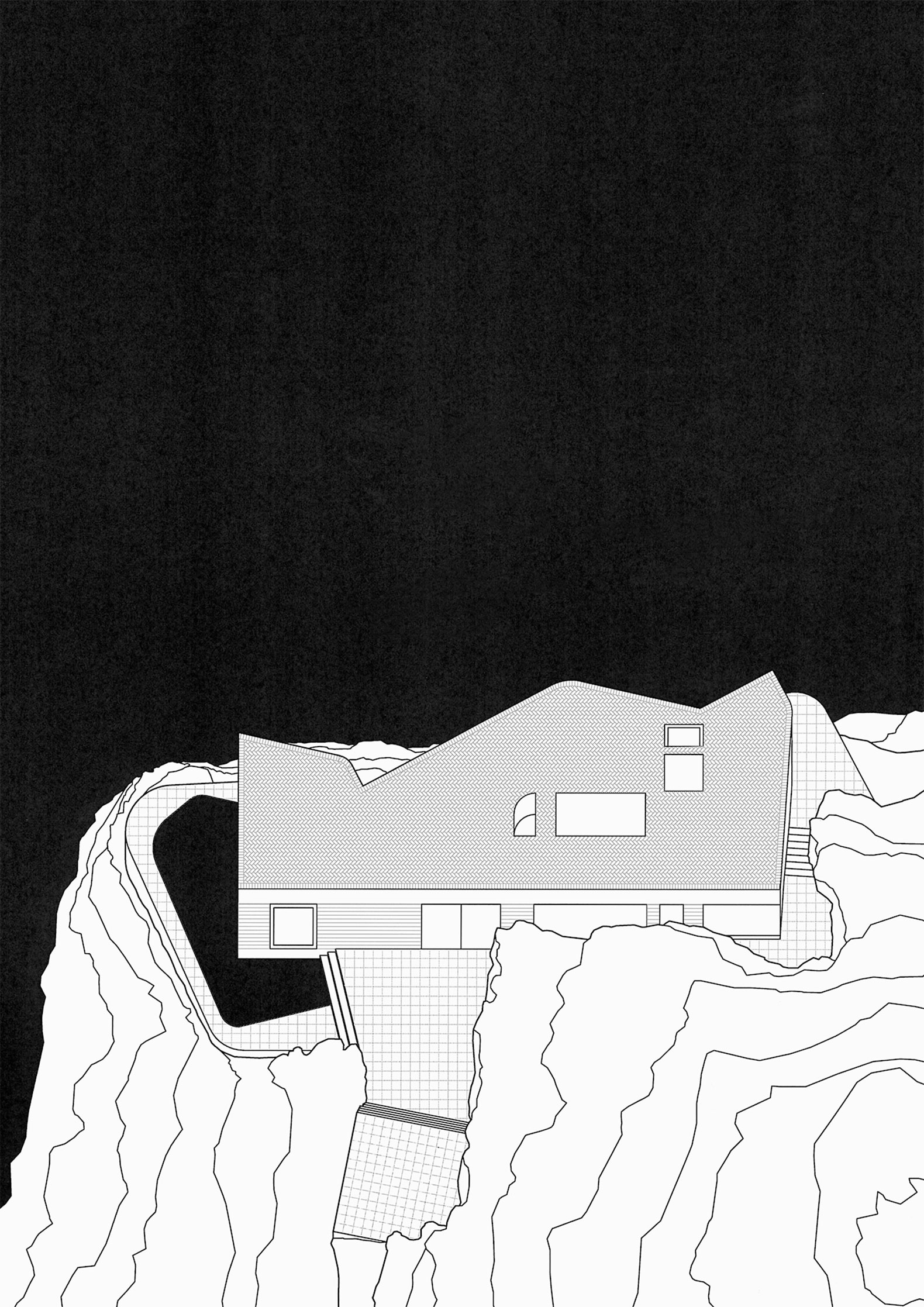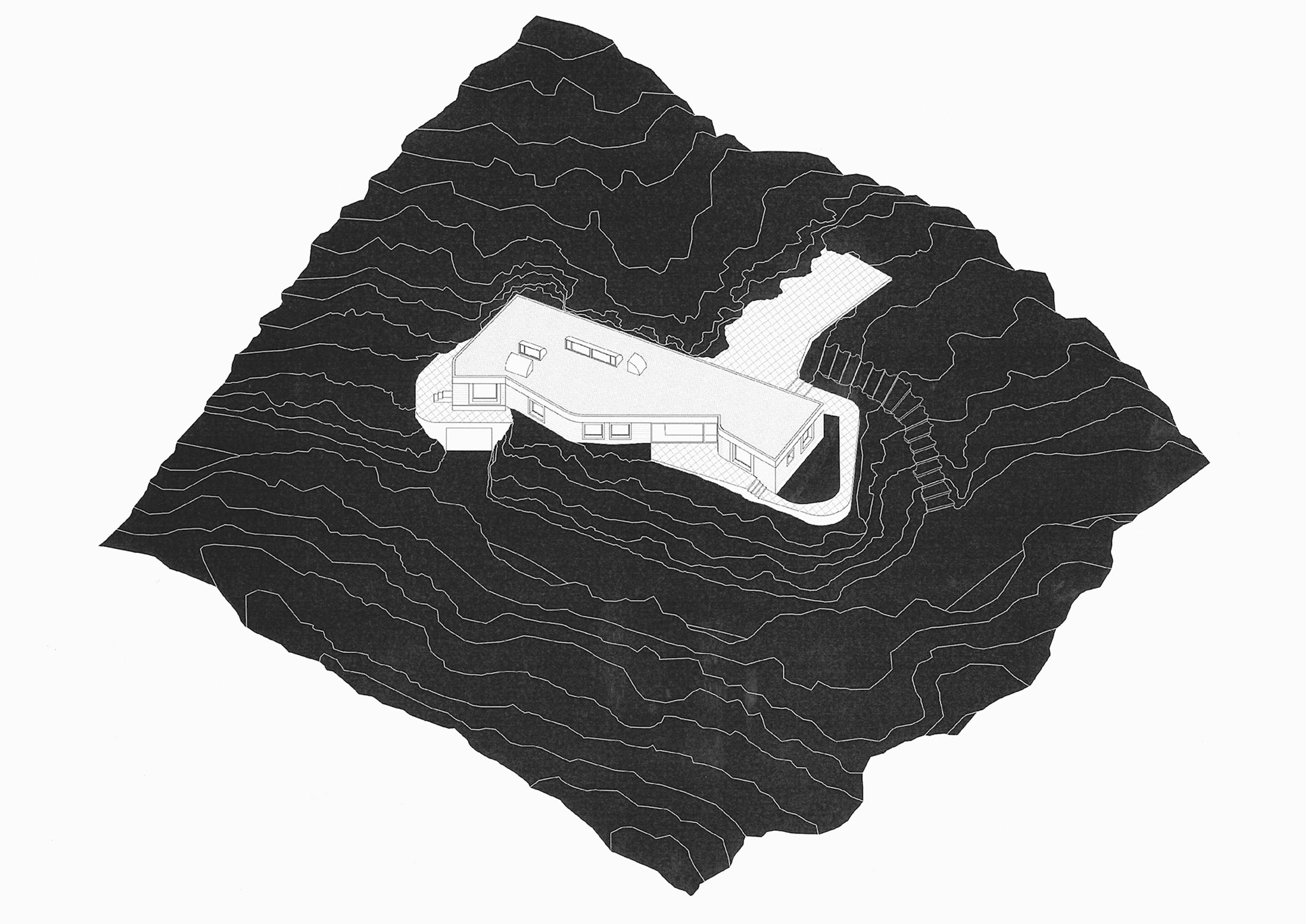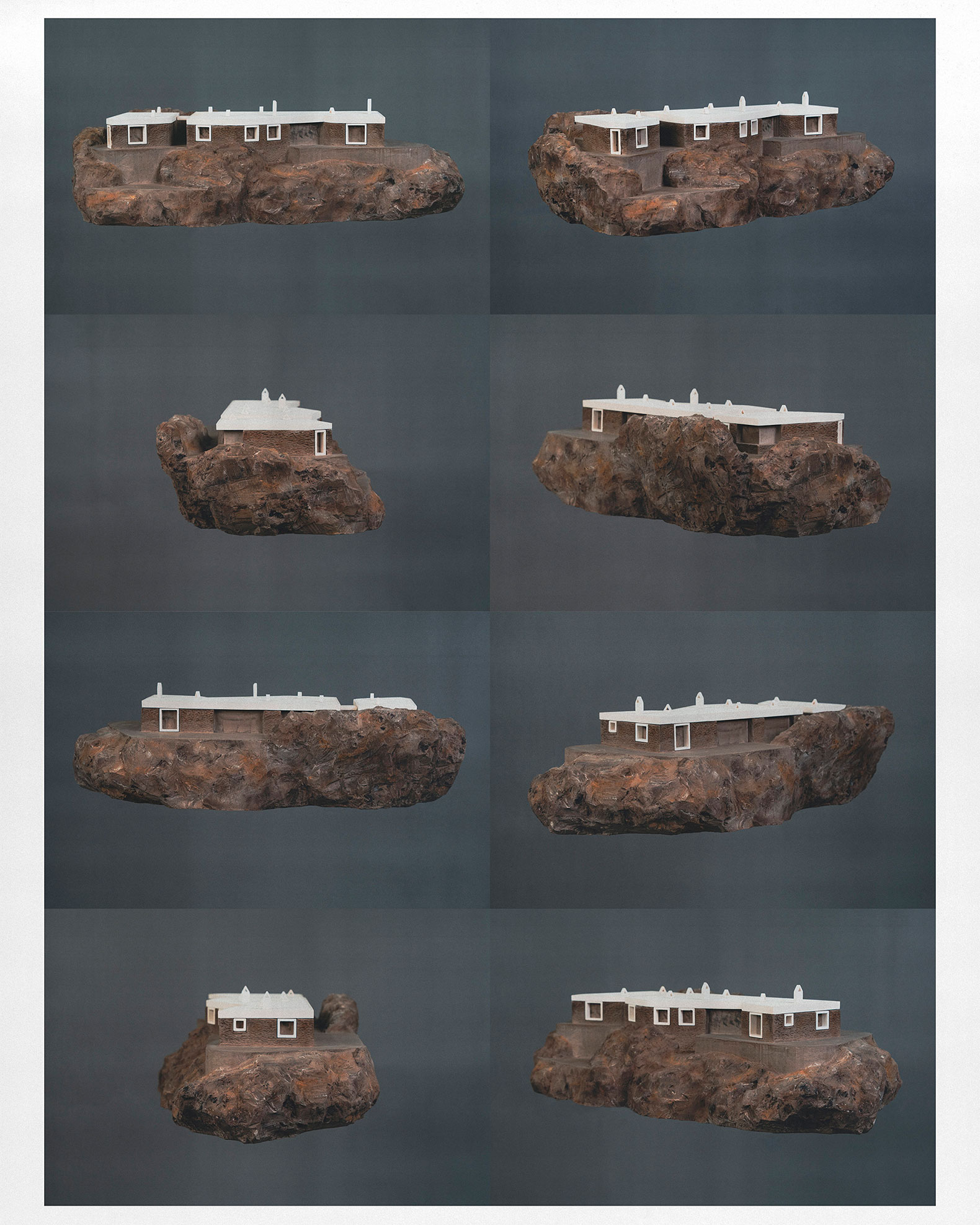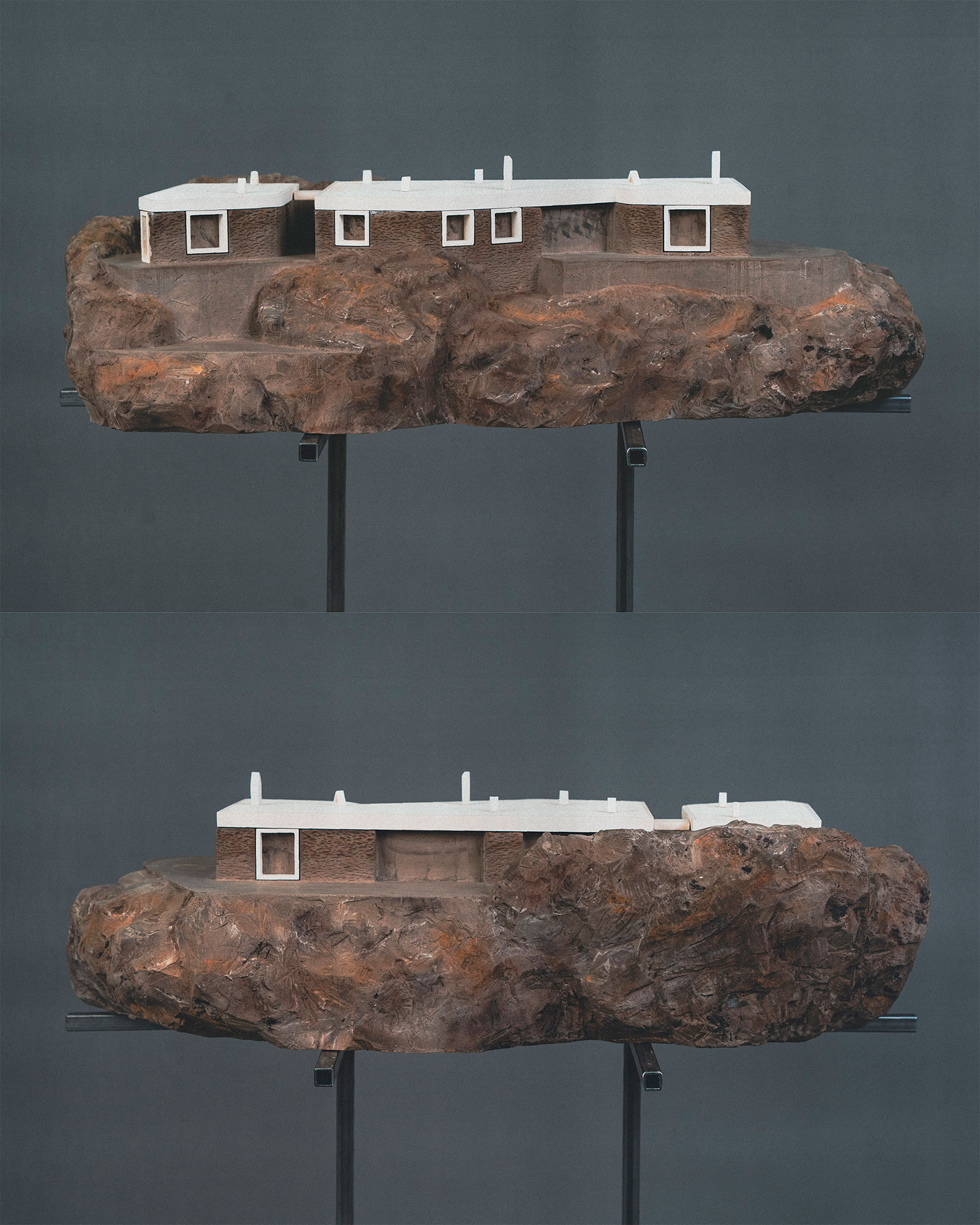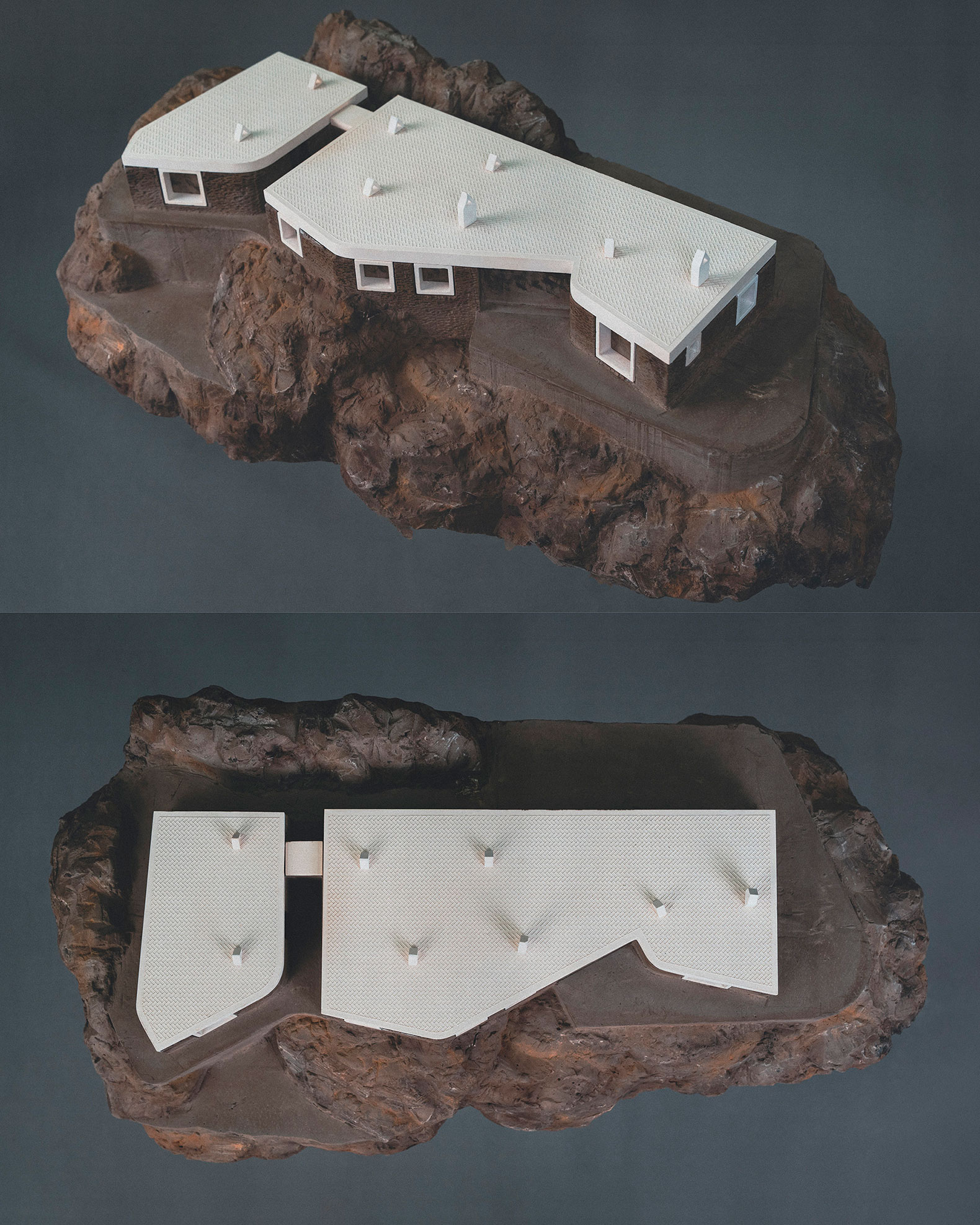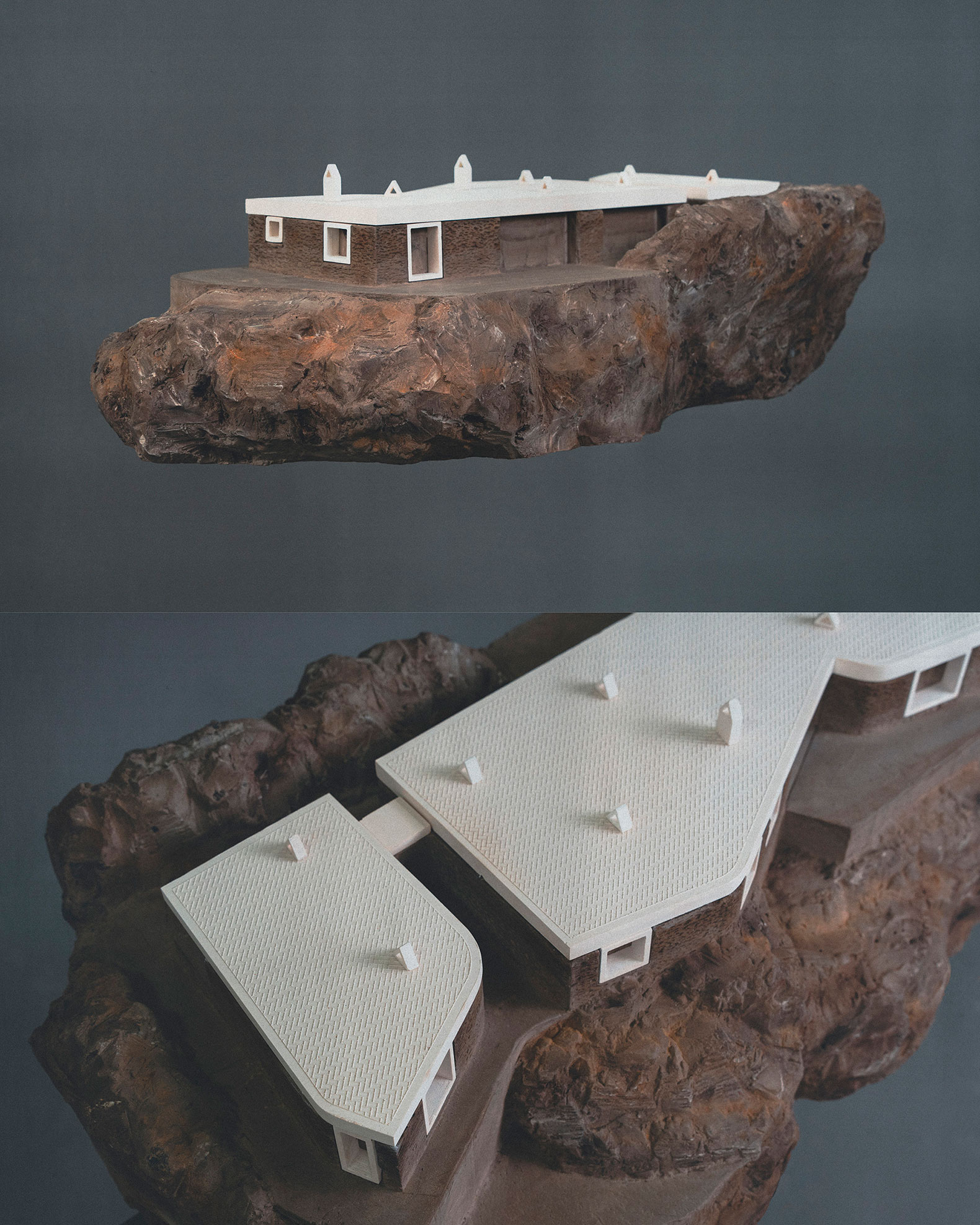
The Balma Murada house, designed by Mesura, unfolds within a volume adapted to the natural topography, featuring a sequence of access points. On one side, daily access is through a garage integrated into the ground, while on the other, the main entrance is reached by gradually ascending the rocky landscape. The upper level features an outdoor space that includes a the terrace and a swimming pool.
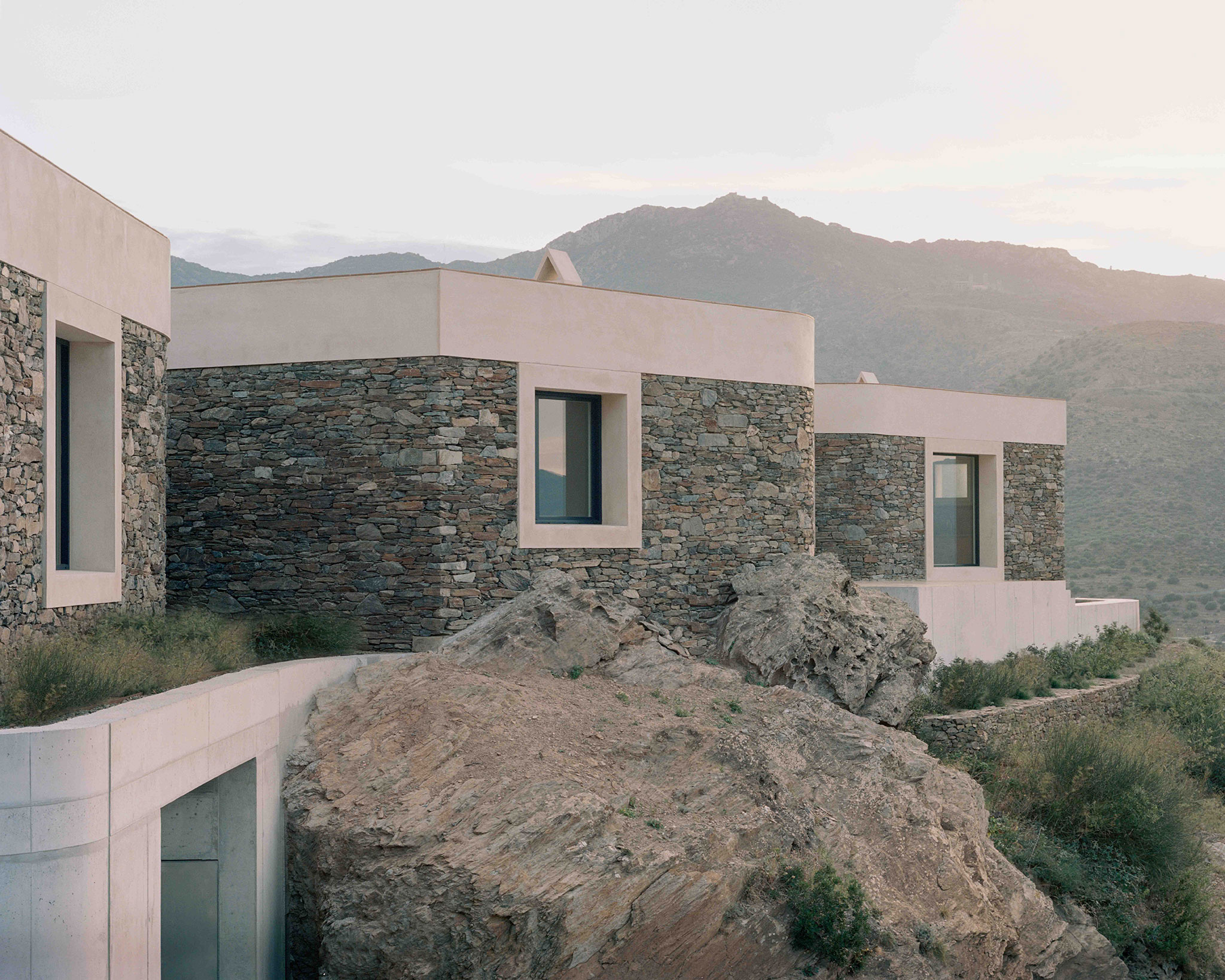
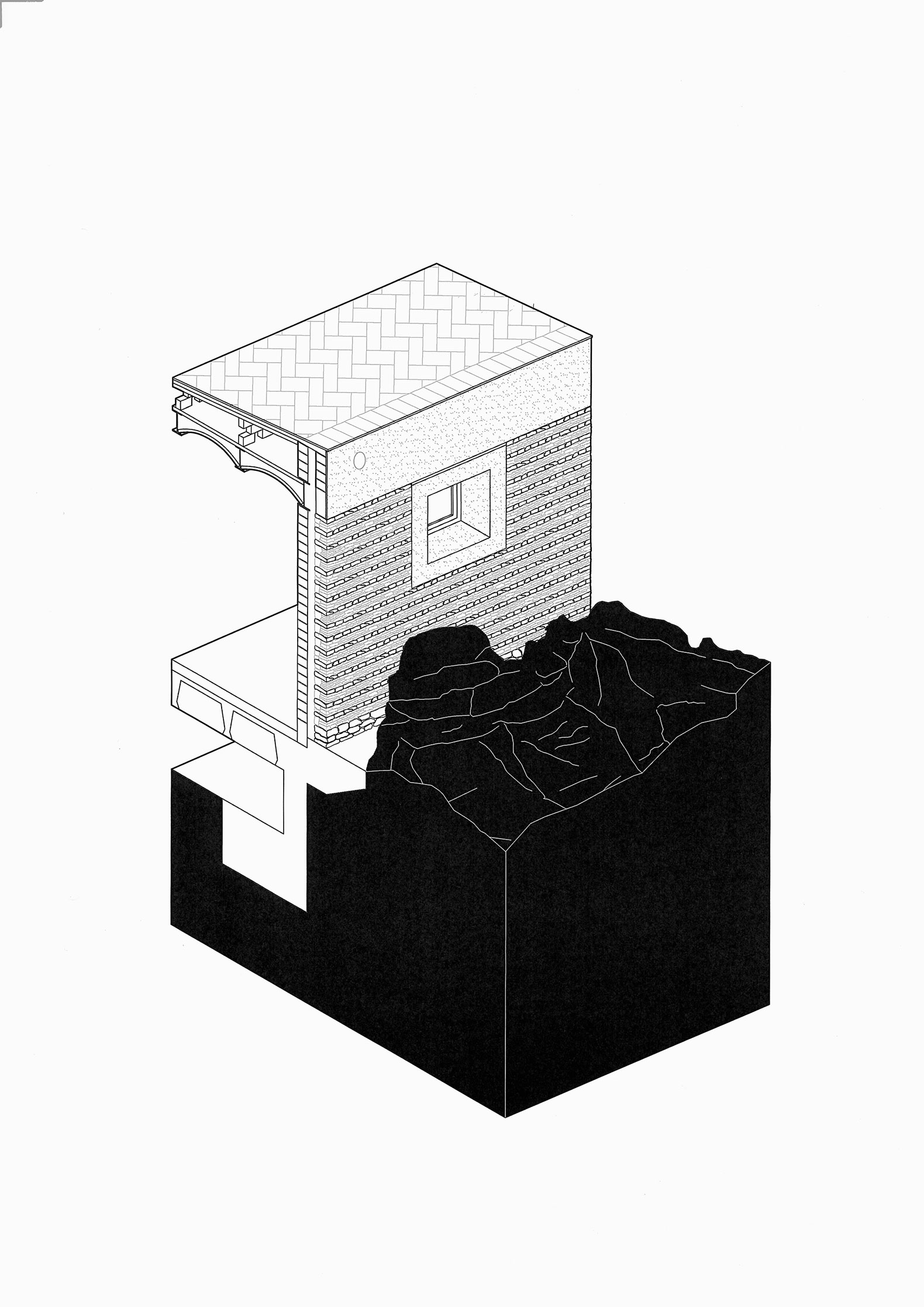
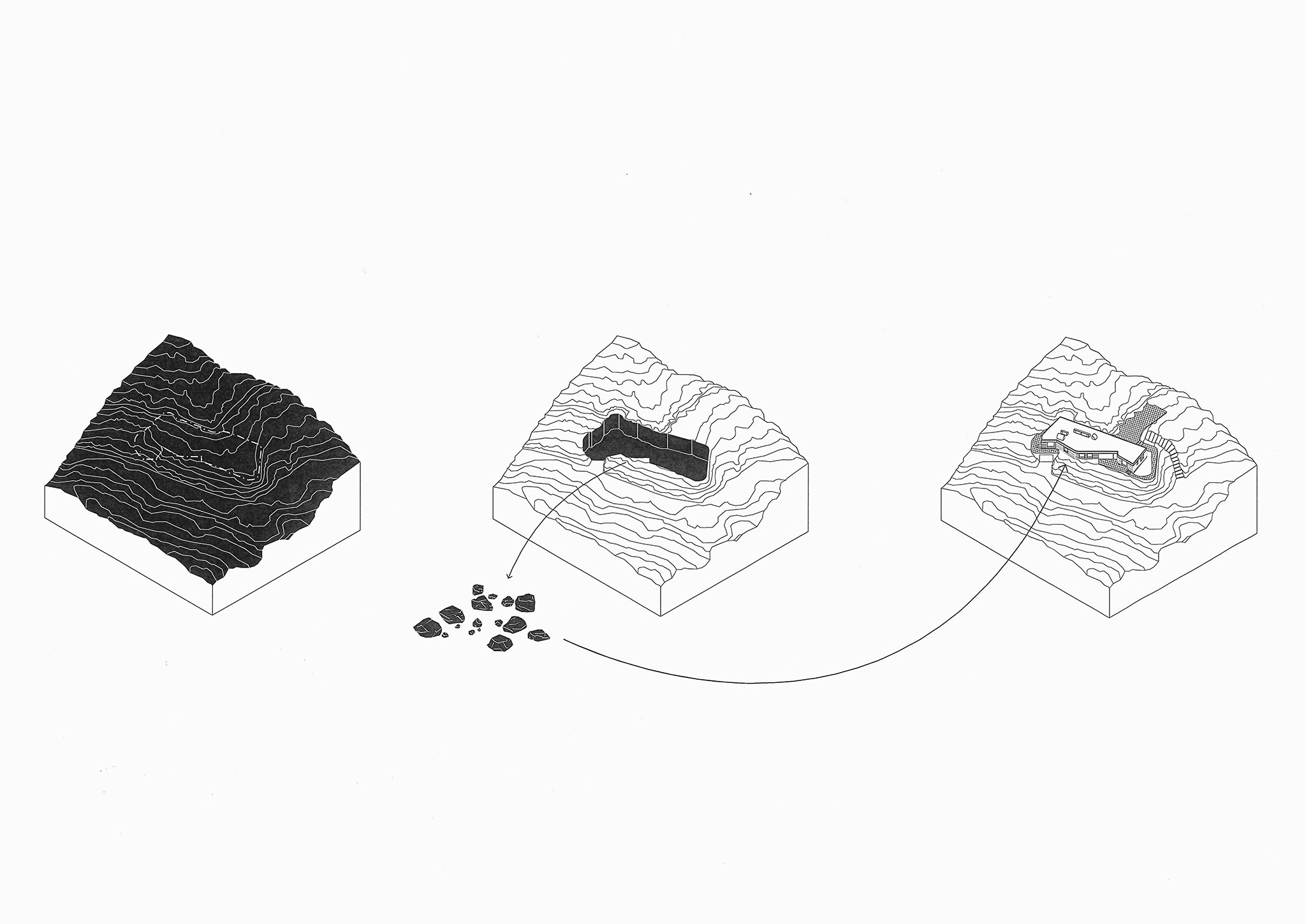
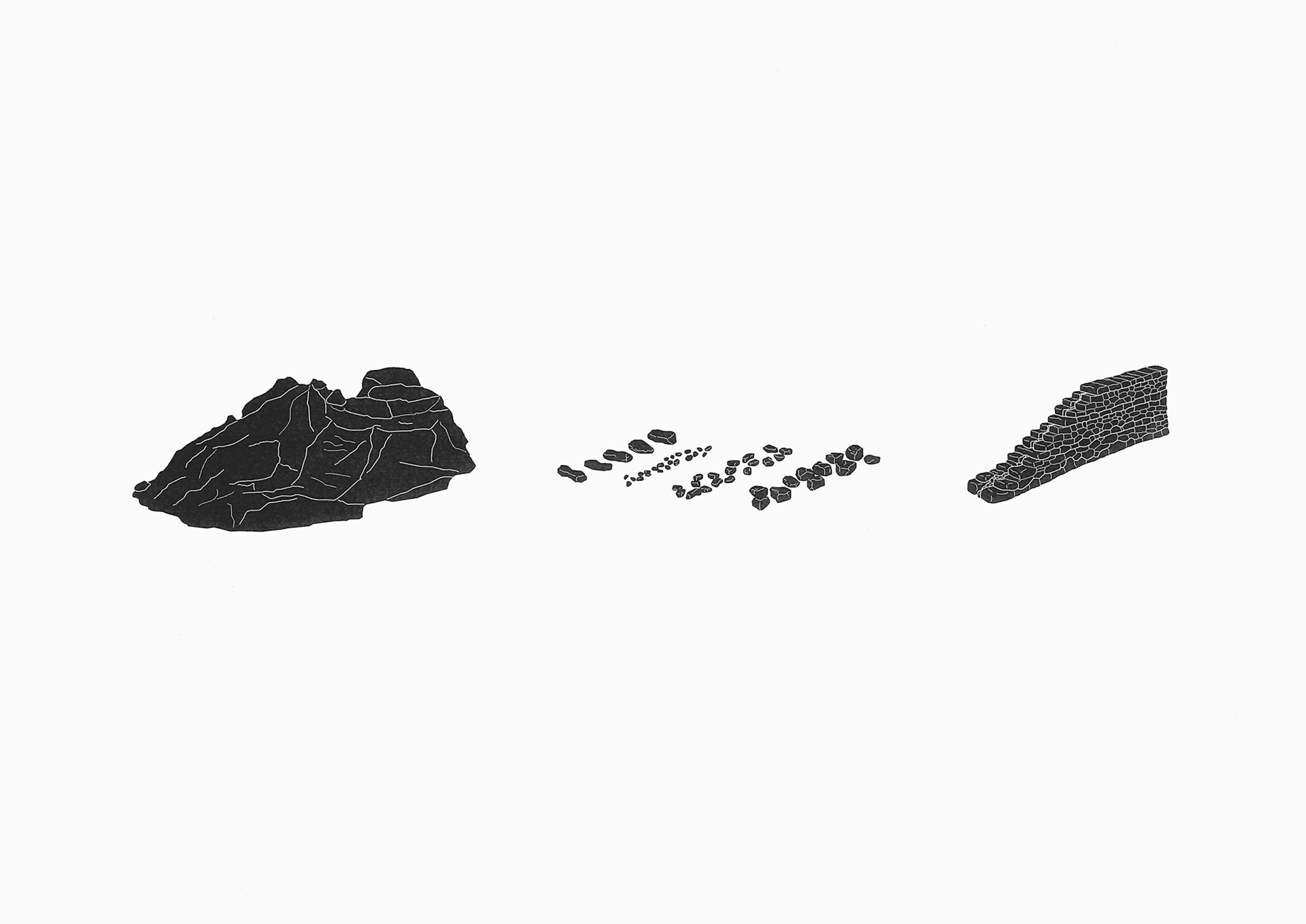
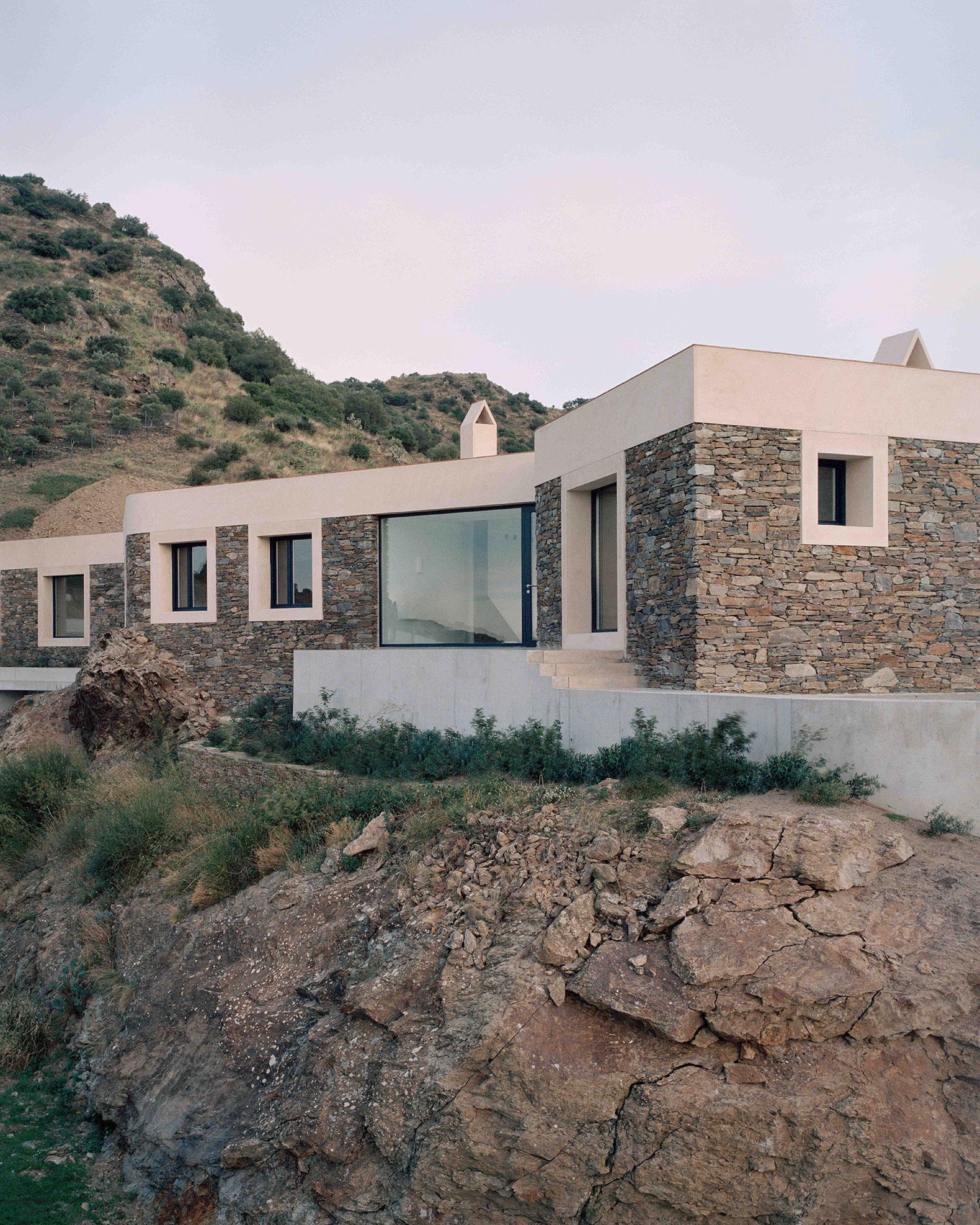
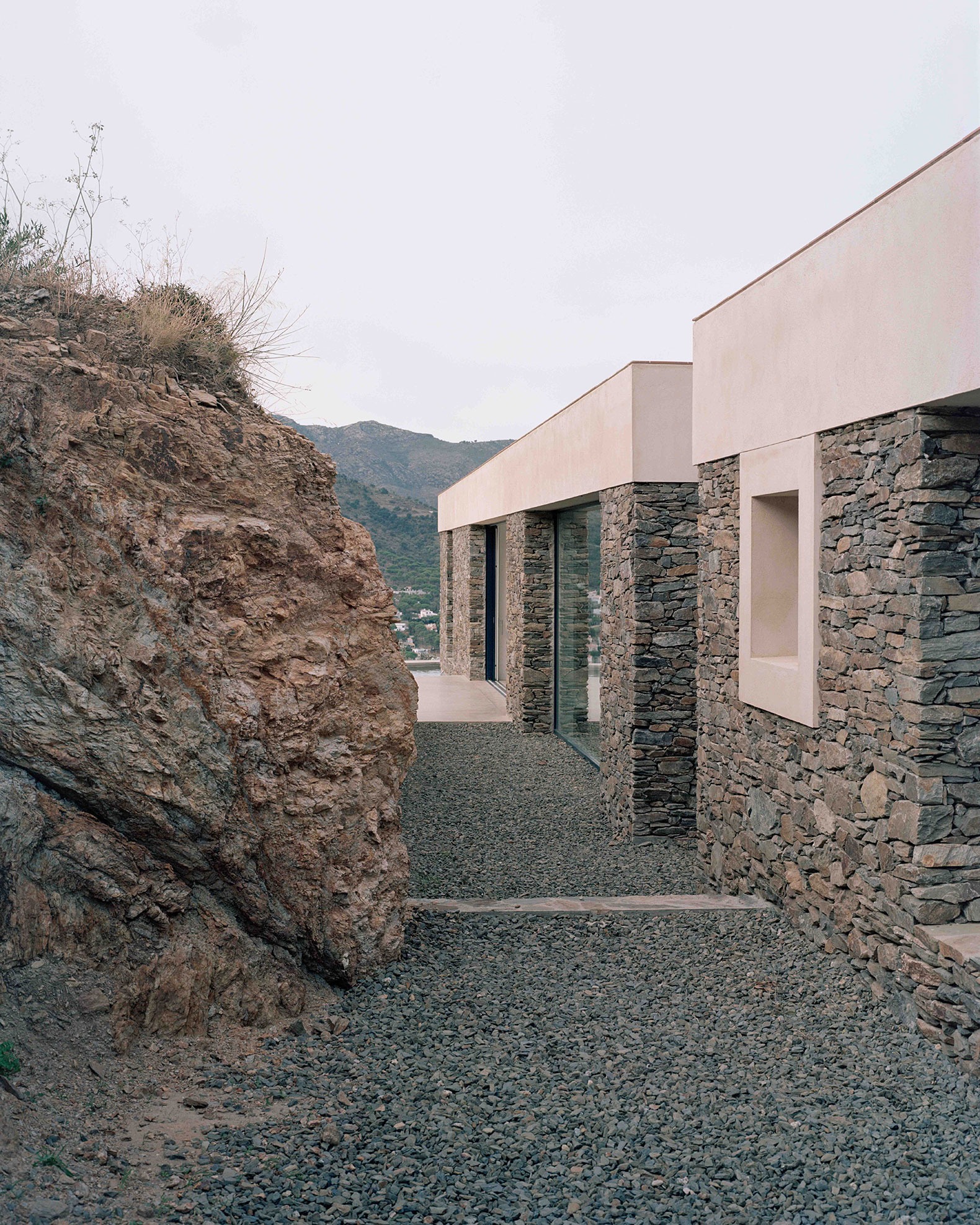
This Mediterranean-style house, constructed with solid, layered walls of locally sourced stone, was built using traditional stonemasonry techniques and local material extracted from the site itself during the excavation of the garage. The method employed contributes to natural water drainage, establishing a continuity with the agricultural terraces and historical Mediterranean structures.
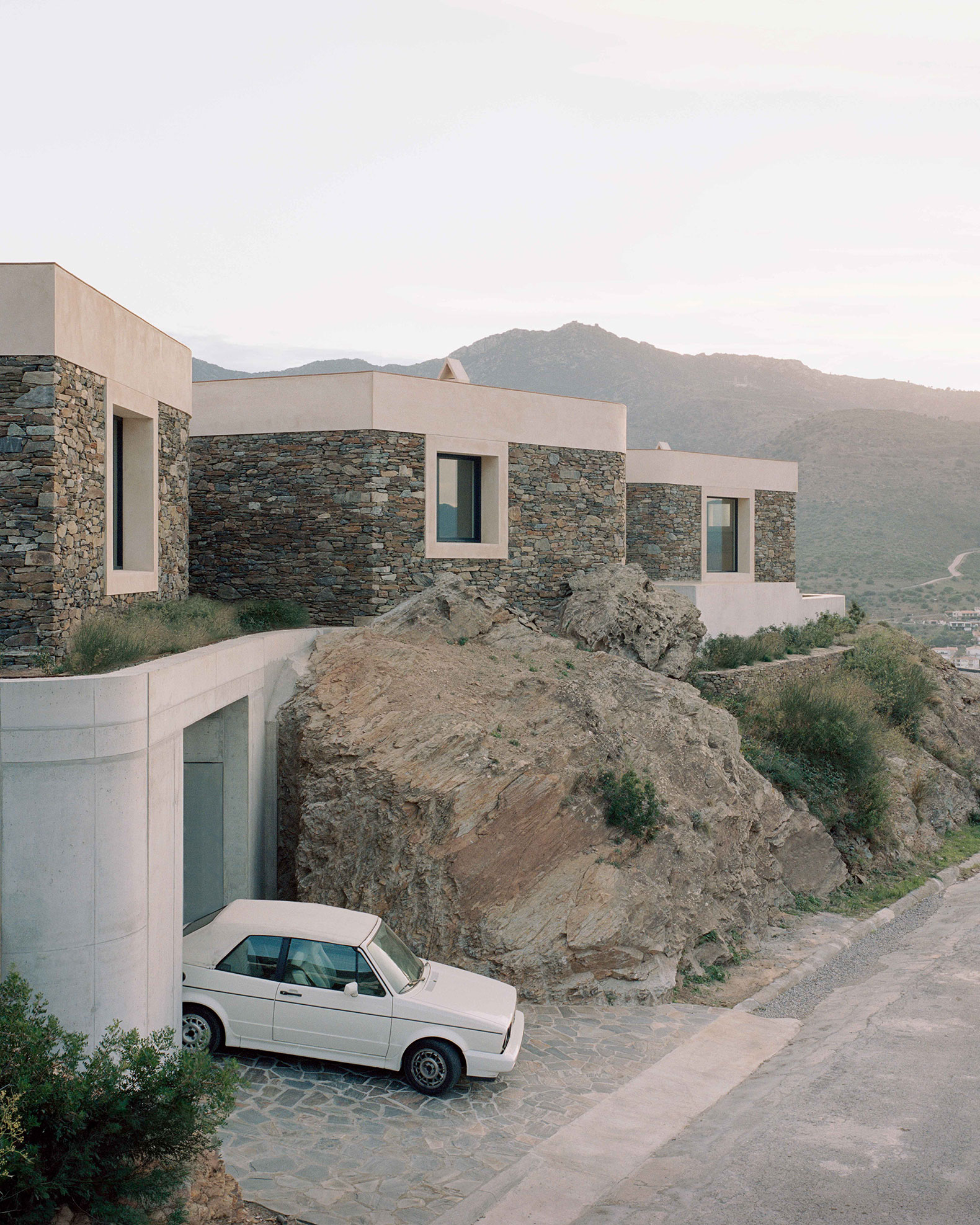
Balma Murada house by Mesura. Photograph by Rory Gardiner.
Project description by Mesura
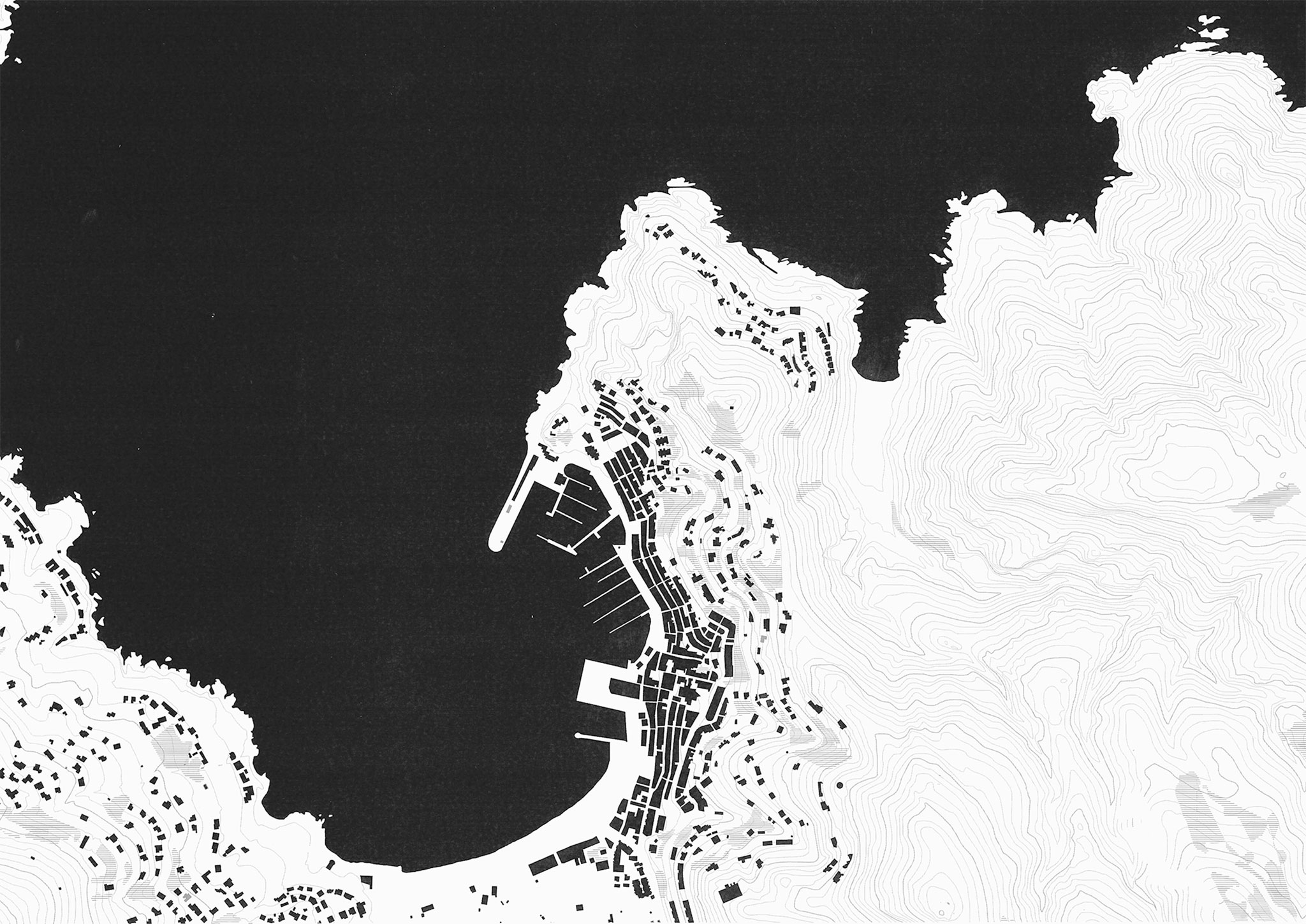
Casa Balma Murada is conceived as an architecture of response rather than imposition. Located at the edge of a natural reserve, the house engages the strong wind and the irregular geometry of the terrain through local materials and traditional construction techniques, establishing a direct relationship between architecture and place.
Reading the Site
The project begins with an attentive reading of its context: a markedly rocky ground, constant exposure to wind, and a building tradition based on the direct use of local resources. These conditions define the architecture from the outset and lead to stone as the structuring material of the construction system.
All perimeter walls are built using KM0 stone extracted from the plot itself during the excavation of the garage. What is removed from the ground to make space for the building becomes the substance of its construction, reinforcing continuity between land, material, and architecture.
Stone as Structure and Memory
The walls are conceived as self-supporting elements, built using traditional stone construction techniques and local material sourced from the immediate surroundings. The system embraces the inherent irregularity of stone, allowing the construction of massive, stratified walls that work primarily through gravity.
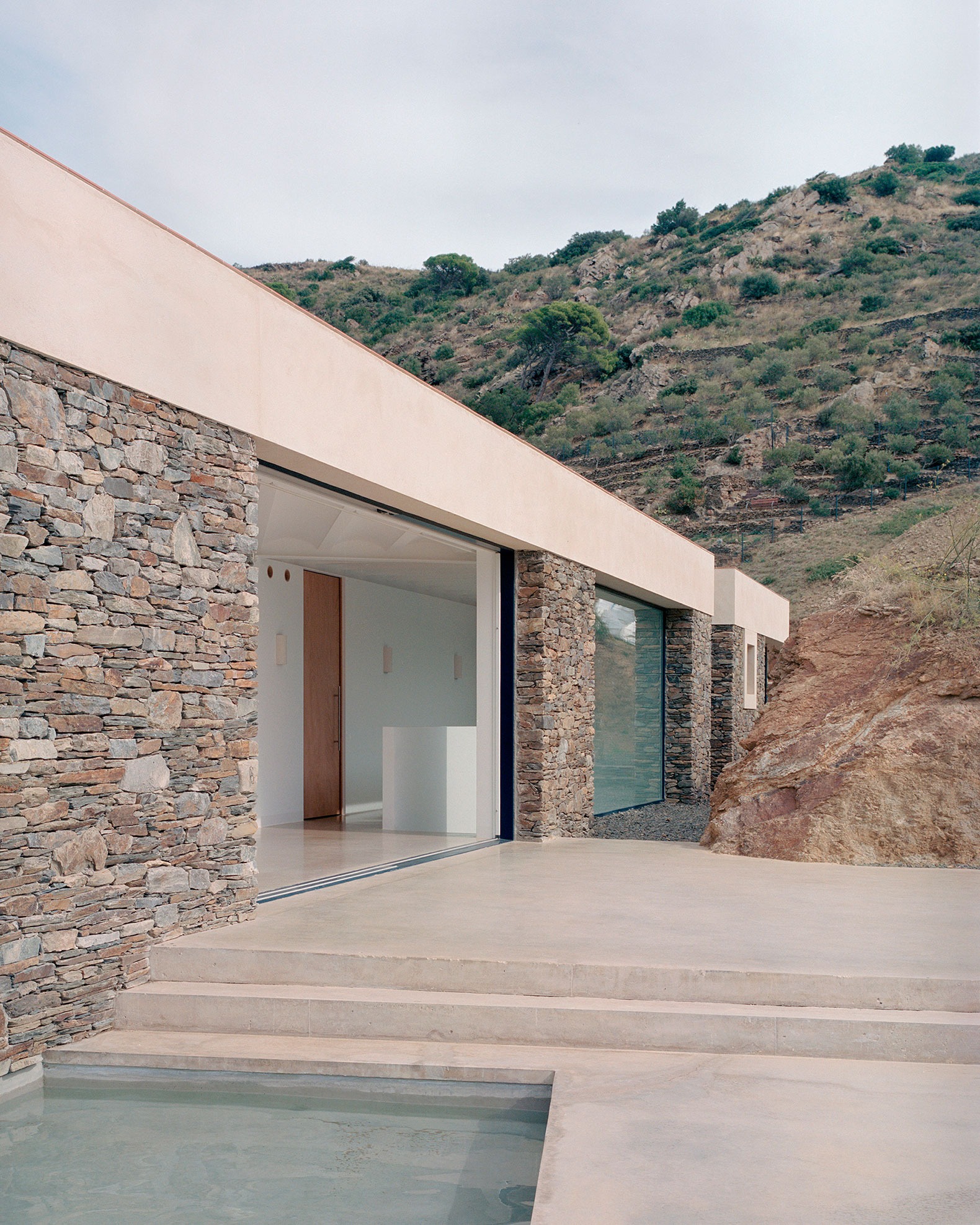
This method facilitates adaptation to ground movements and contributes to natural water drainage. The use of stone establishes continuity with agricultural terraces and historic Mediterranean structures, reduces environmental impact, and reinforces the building’s physical and cultural rootedness. The house does not impose itself on the site; it integrates into the territory through its own matter.
Geometry, Landscape and Climate
The façade follows the natural geometry of the topography and existing rocks, adapting to the relief and fragmenting to generate multiple orientations and views. Each interior space establishes a specific relationship with its surroundings, opening selectively toward the natural park, the sea, or the nearby village.
In response to persistent wind exposure, the house relies on mass, wall thickness, and volumetric geometry. The stone walls provide thermal inertia and climatic protection, while the fragmented perimeter encourages natural air circulation. Designed as a single-storey volume in accordance with local regulations, the house balances enclosure and openness, with stone acting as a mediator between interior spaces and landscape.
A Walk Through Balma Murada
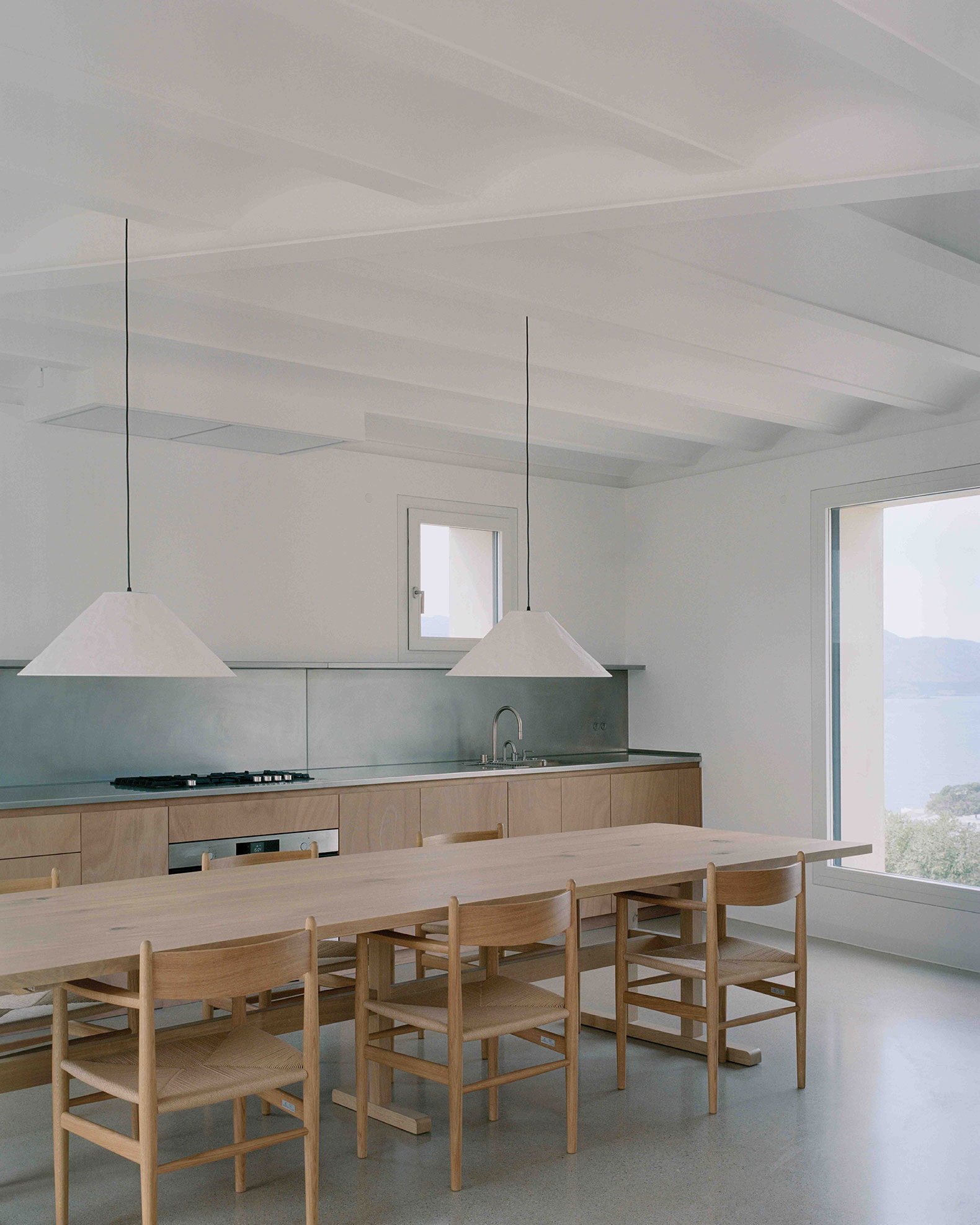
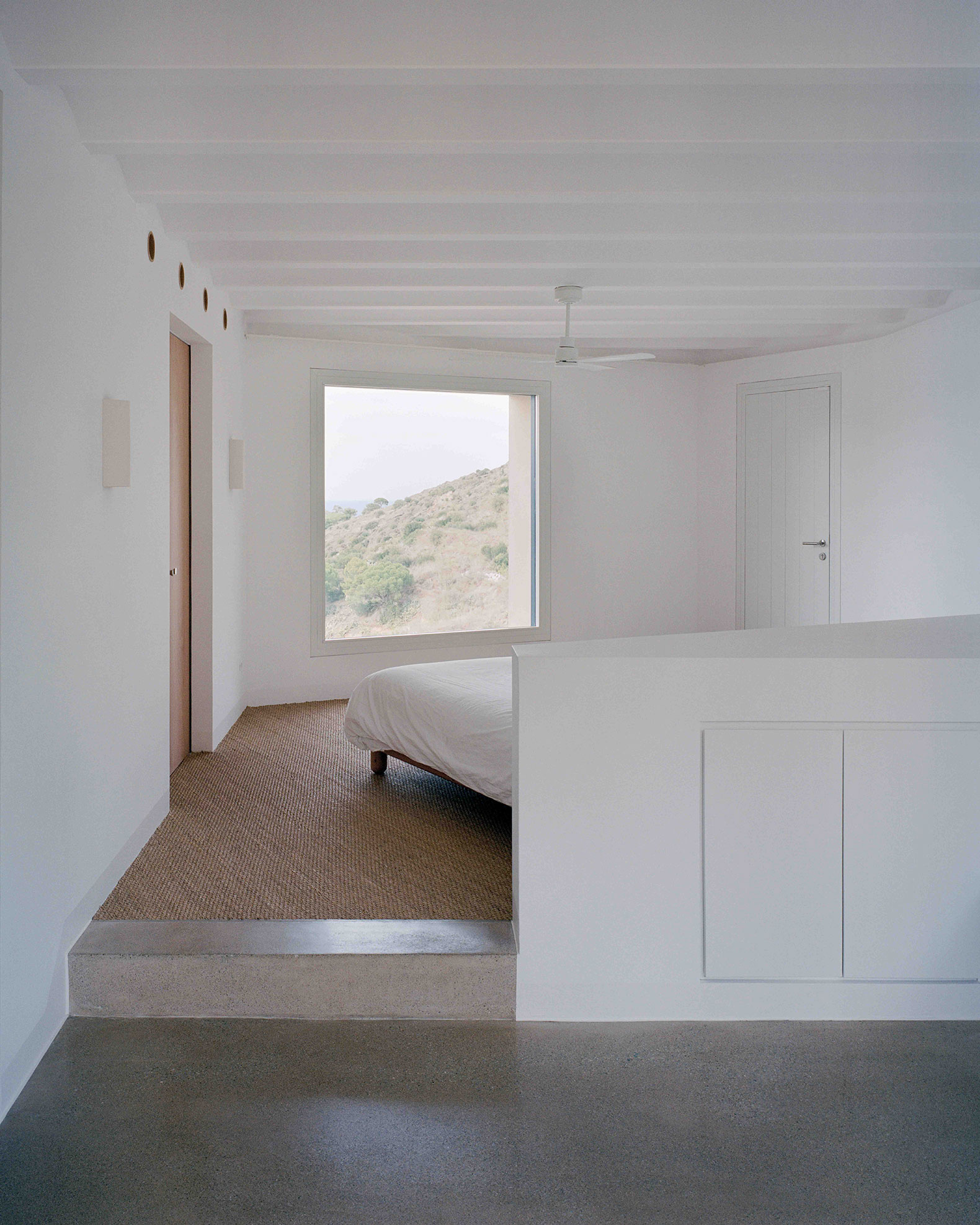
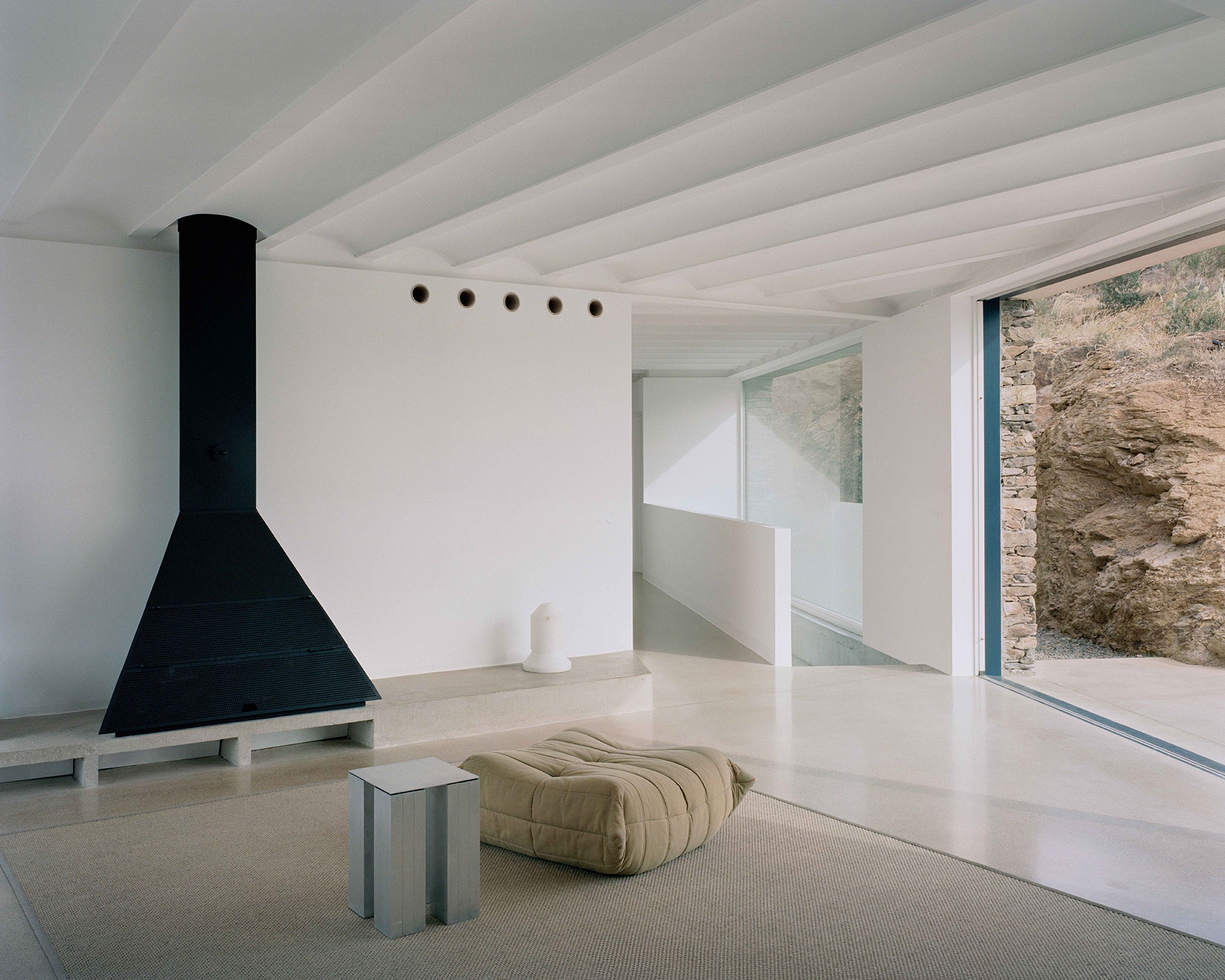
In contrast to the mineral, site-anchored exterior, the interior is defined by an essential Mediterranean language. Spaces seek light, continuity, and calm, creating a serene domestic atmosphere that emphasizes the relationship with the outdoors. The contrast between a tectonic exterior and a bright, restrained interior reinforces the sense of refuge and the transition between landscape and dwelling.

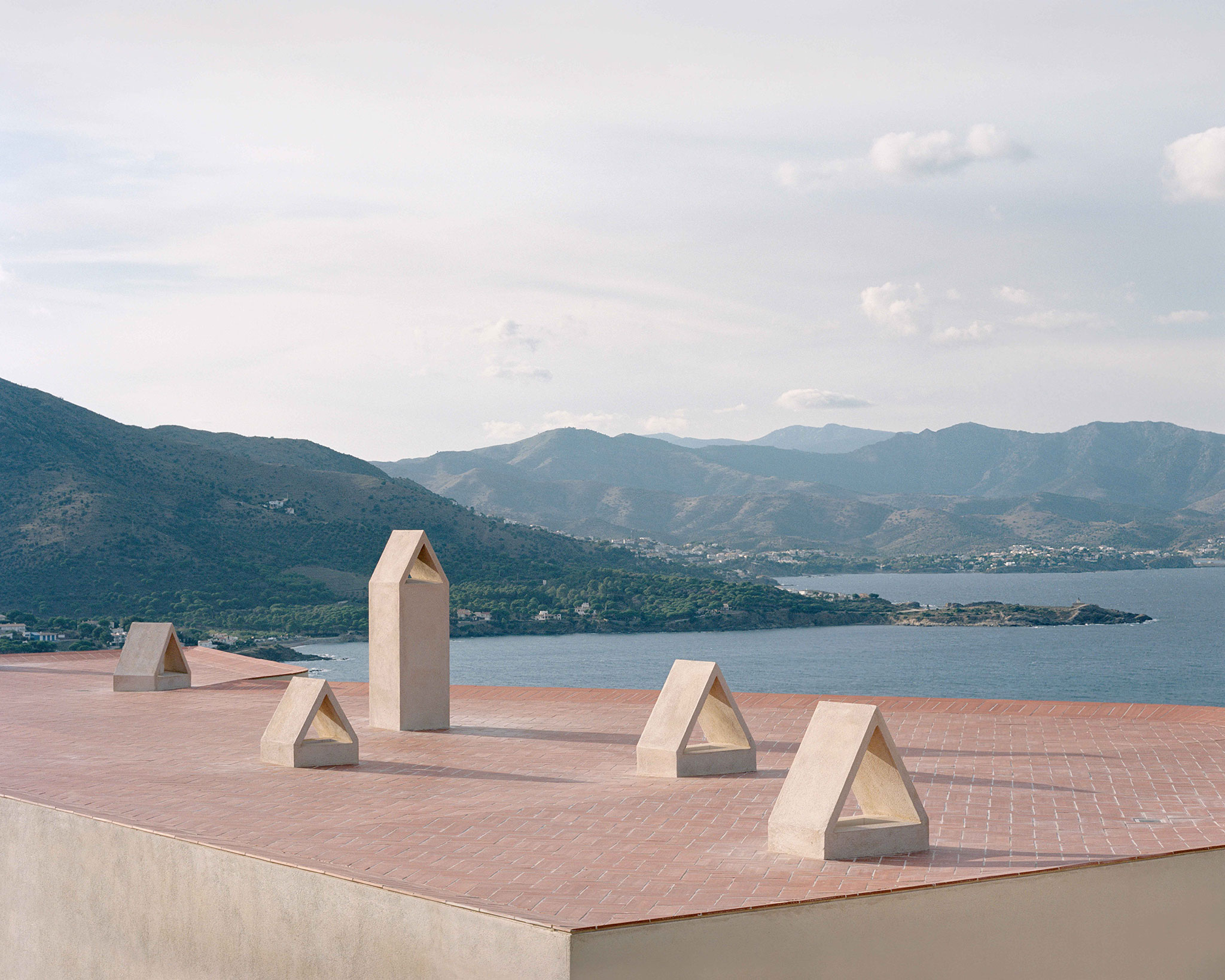
The access sequence strengthens the relationship with the terrain. Daily access occurs through the garage embedded in the ground from which the stone was extracted, while the main entrance unfolds as a gradual ascent through the rocky landscape. At the upper level, the terrace and pool open to views on both sides of the house, forming an exterior space fully integrated within the natural reserve.
An Architecture Rooted in Place
Casa Balma Murada synthesizes an approach to architecture grounded in observation of place and conscious use of its resources. Defined by stone and traditional construction knowledge, the project gives form to a building coherent with its physical and cultural context.
The result is an architecture that engages with the landscape through discretion, continuity, and rootedness — a house that works with the land rather than against it.