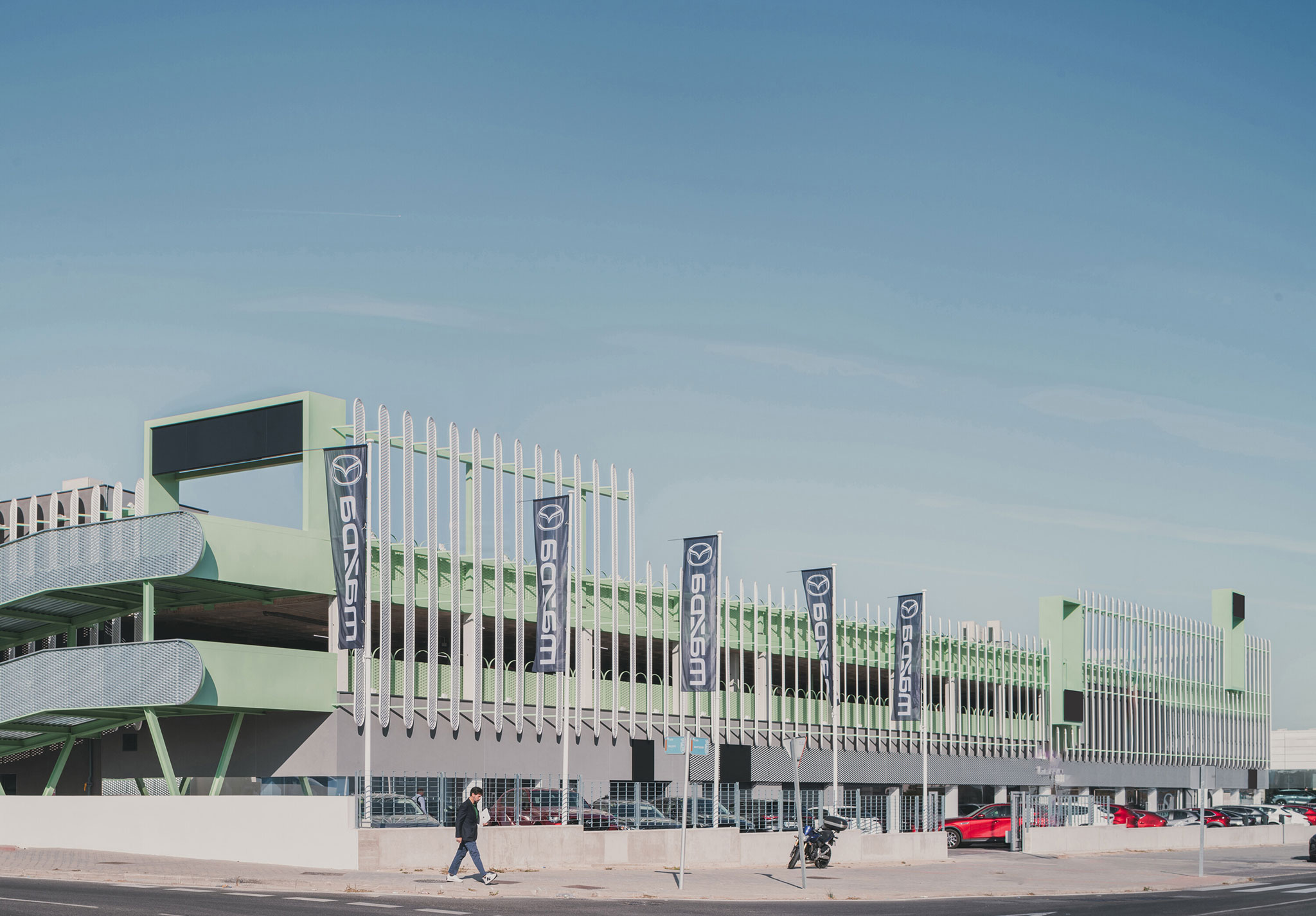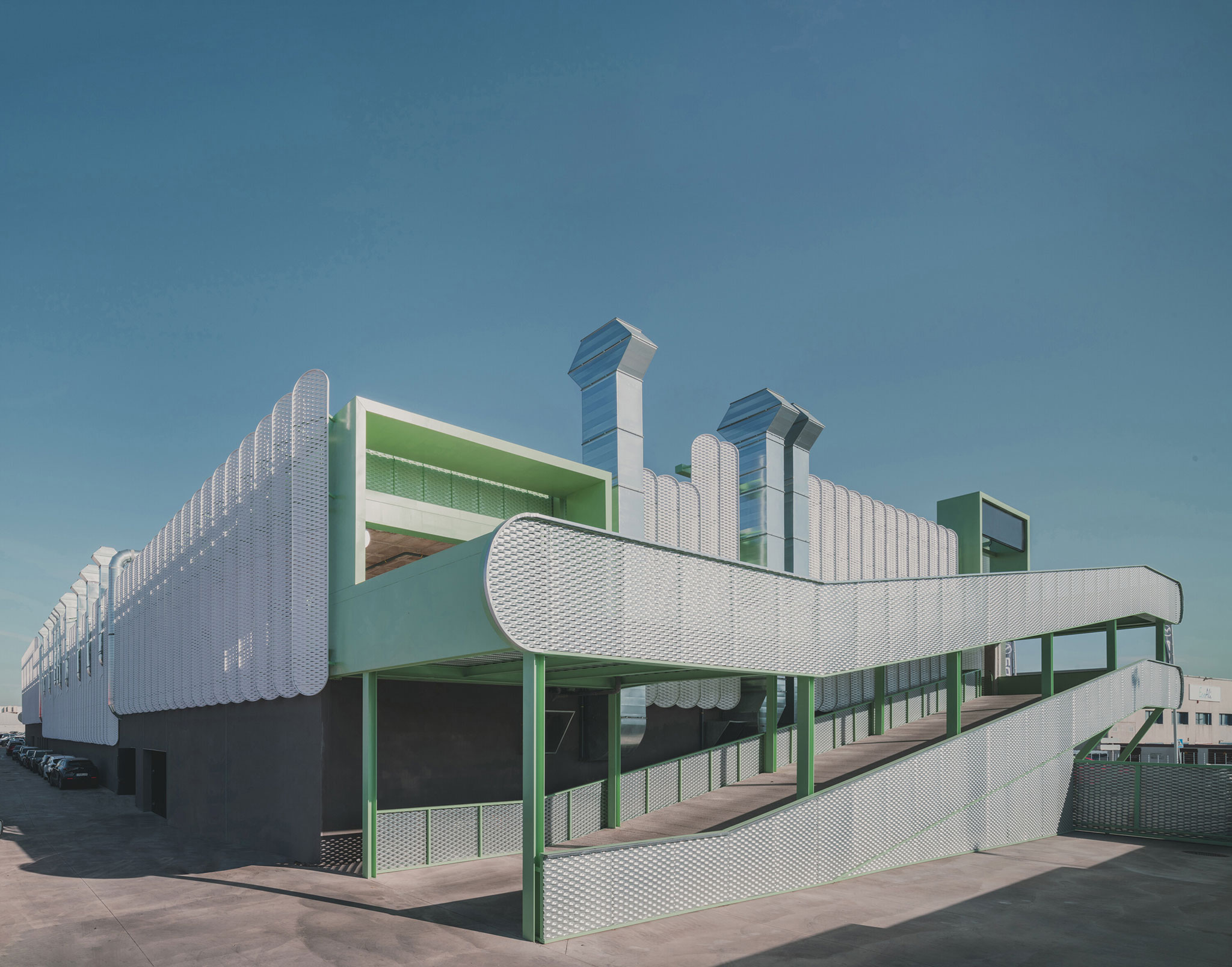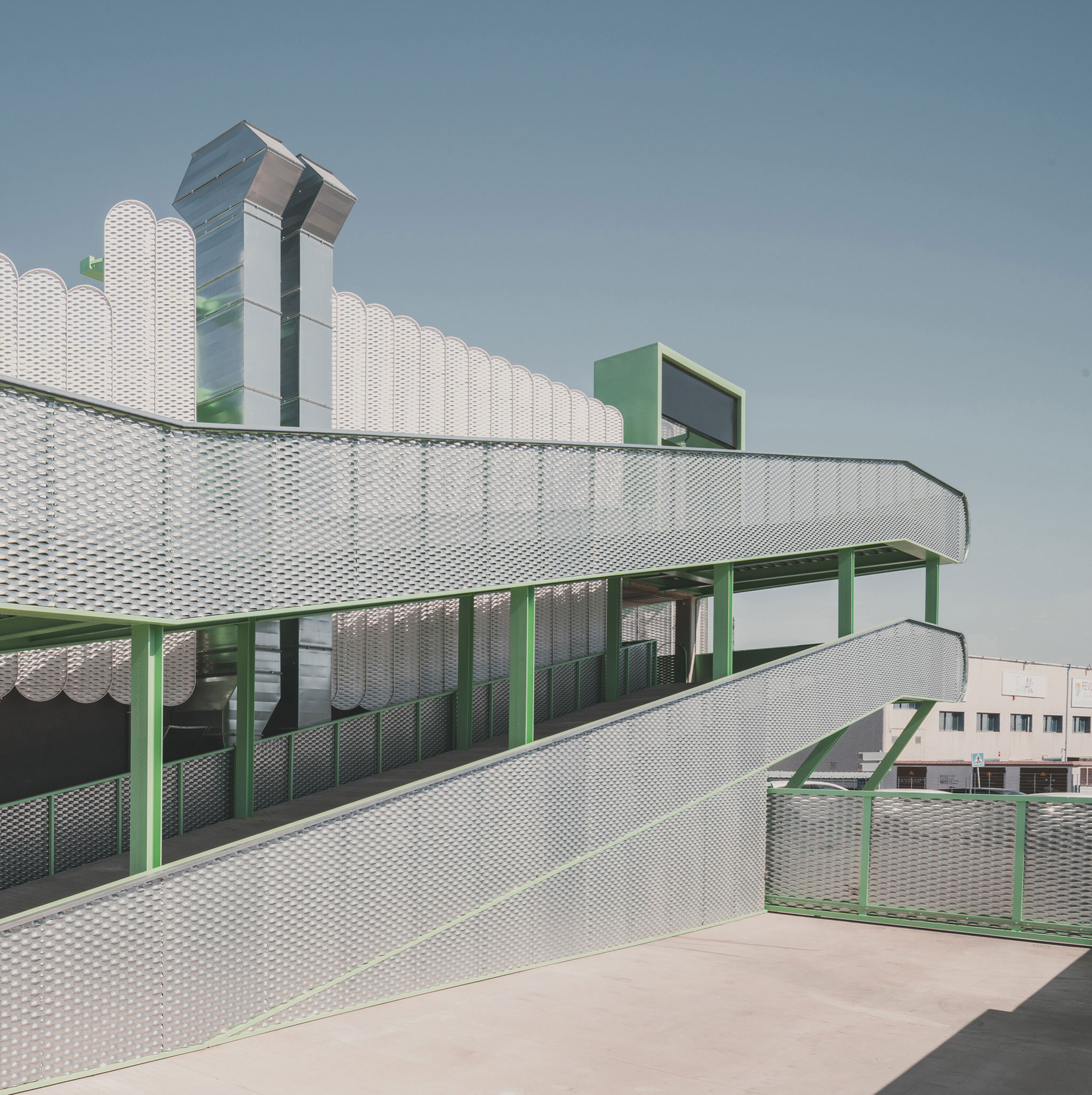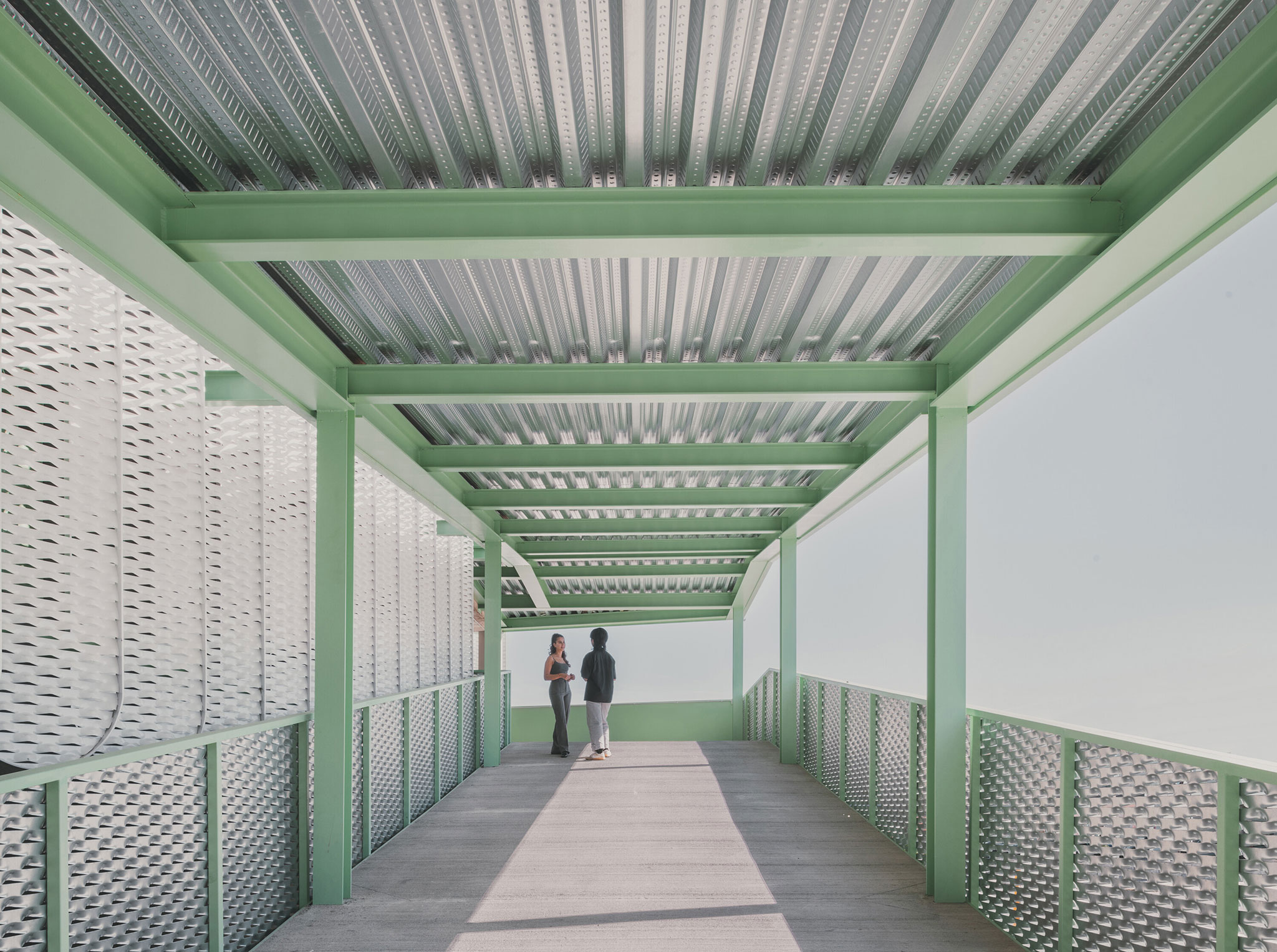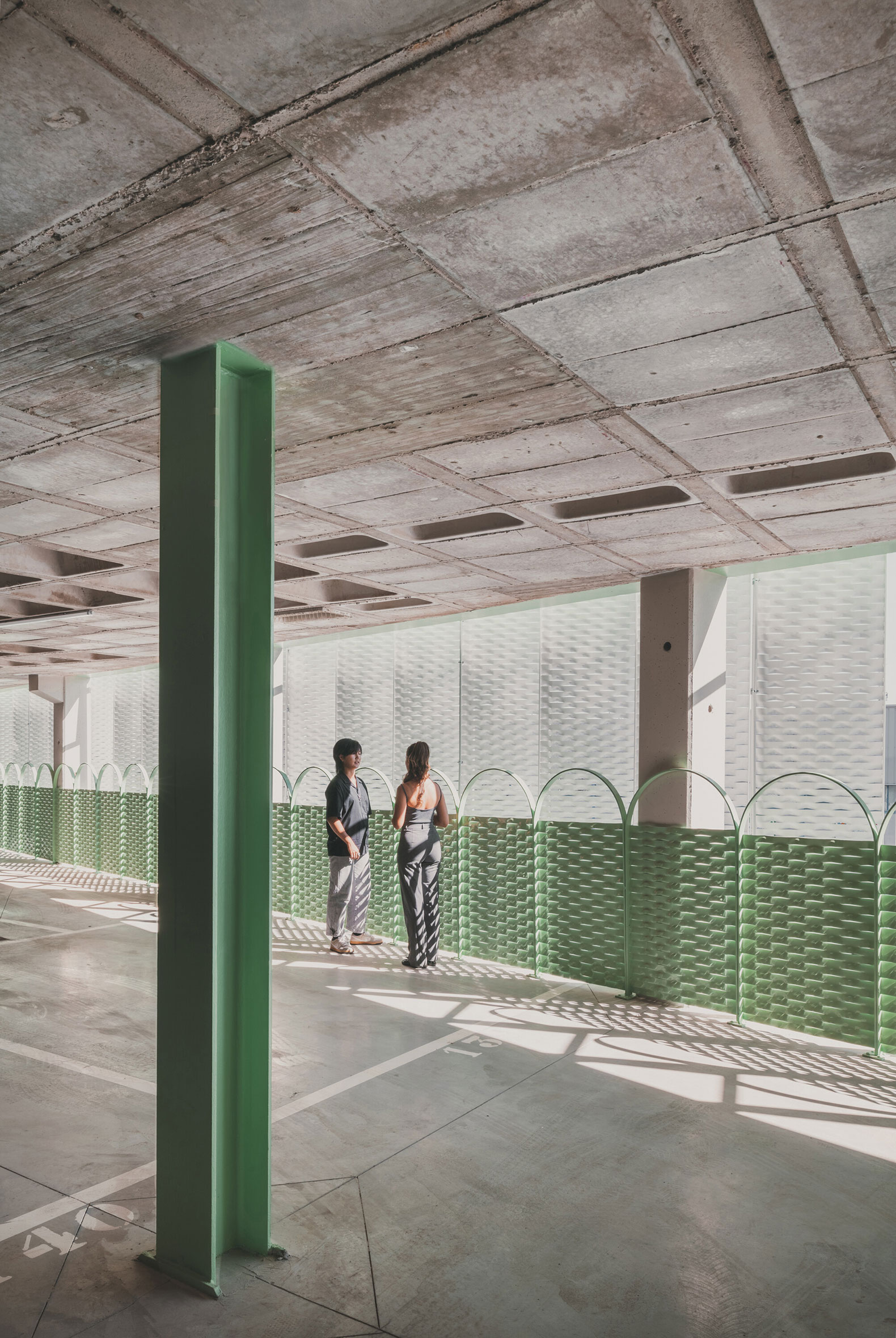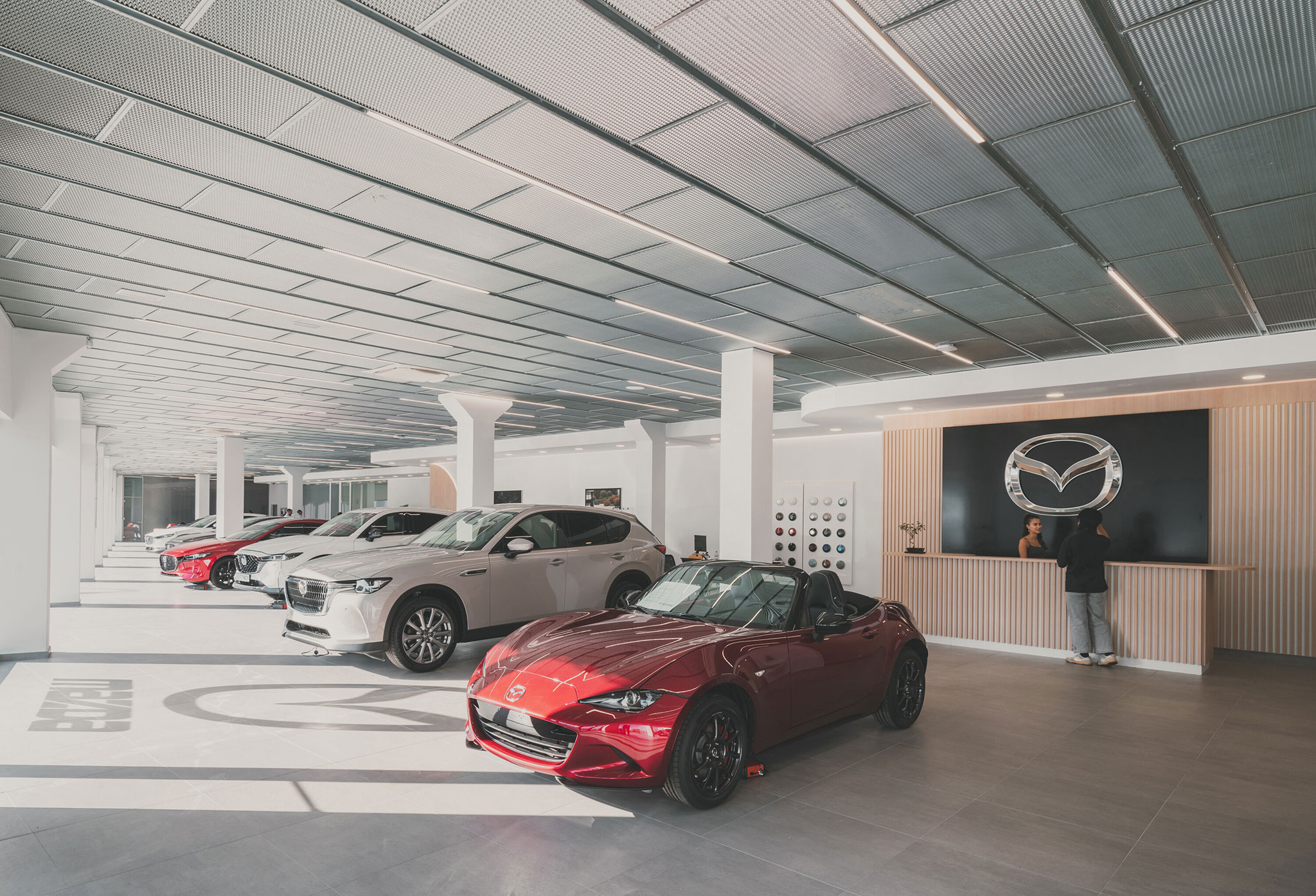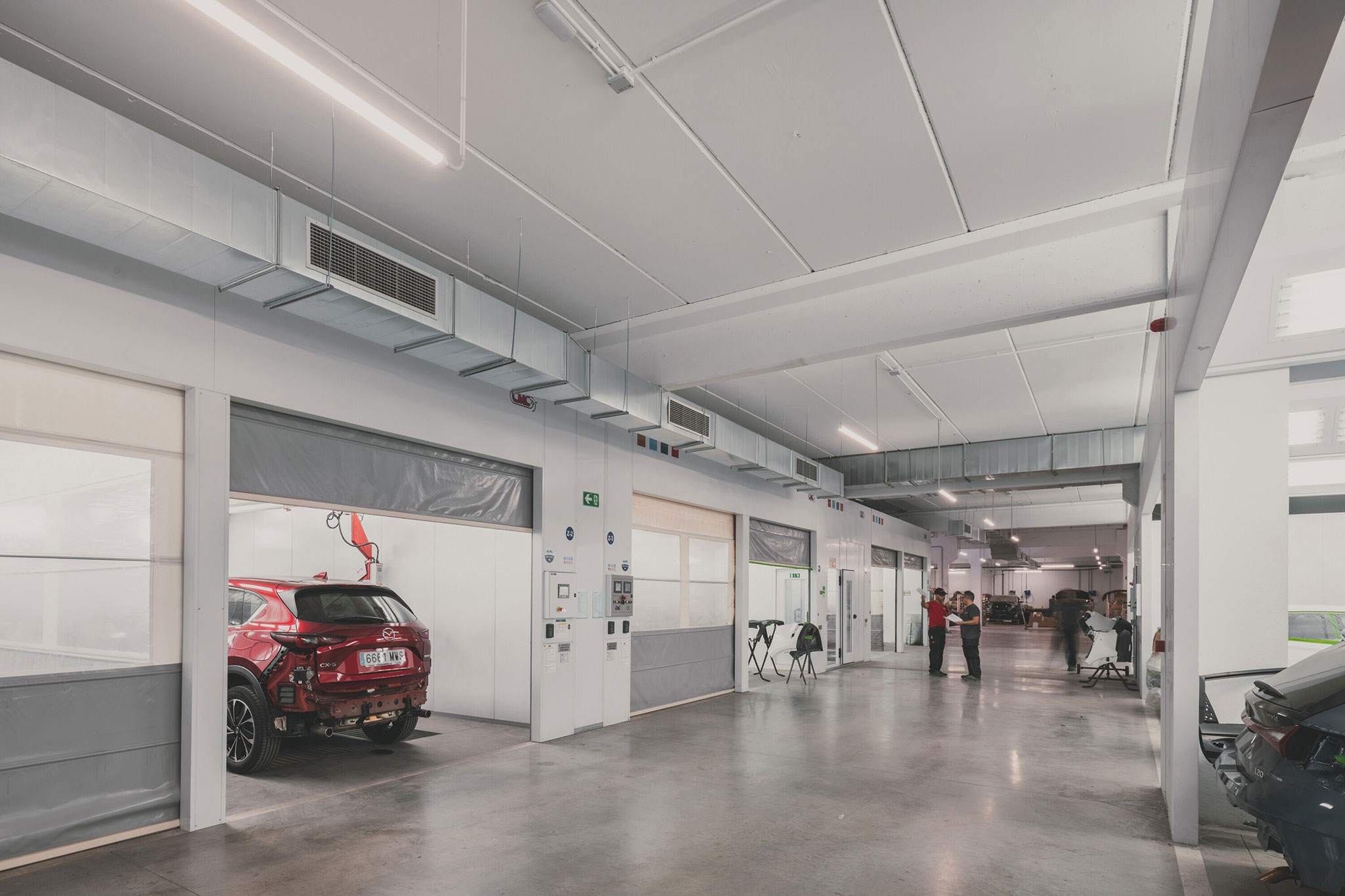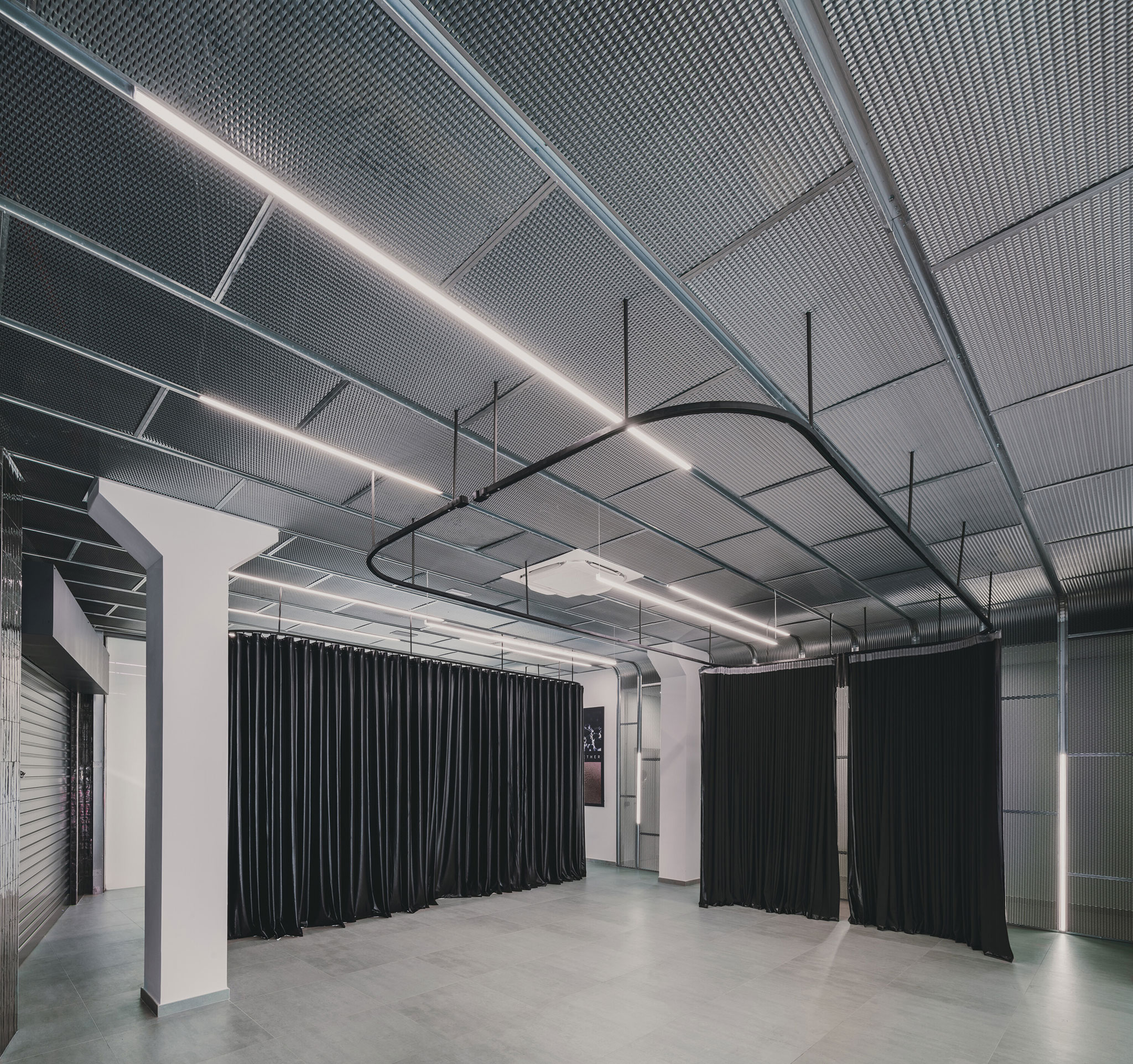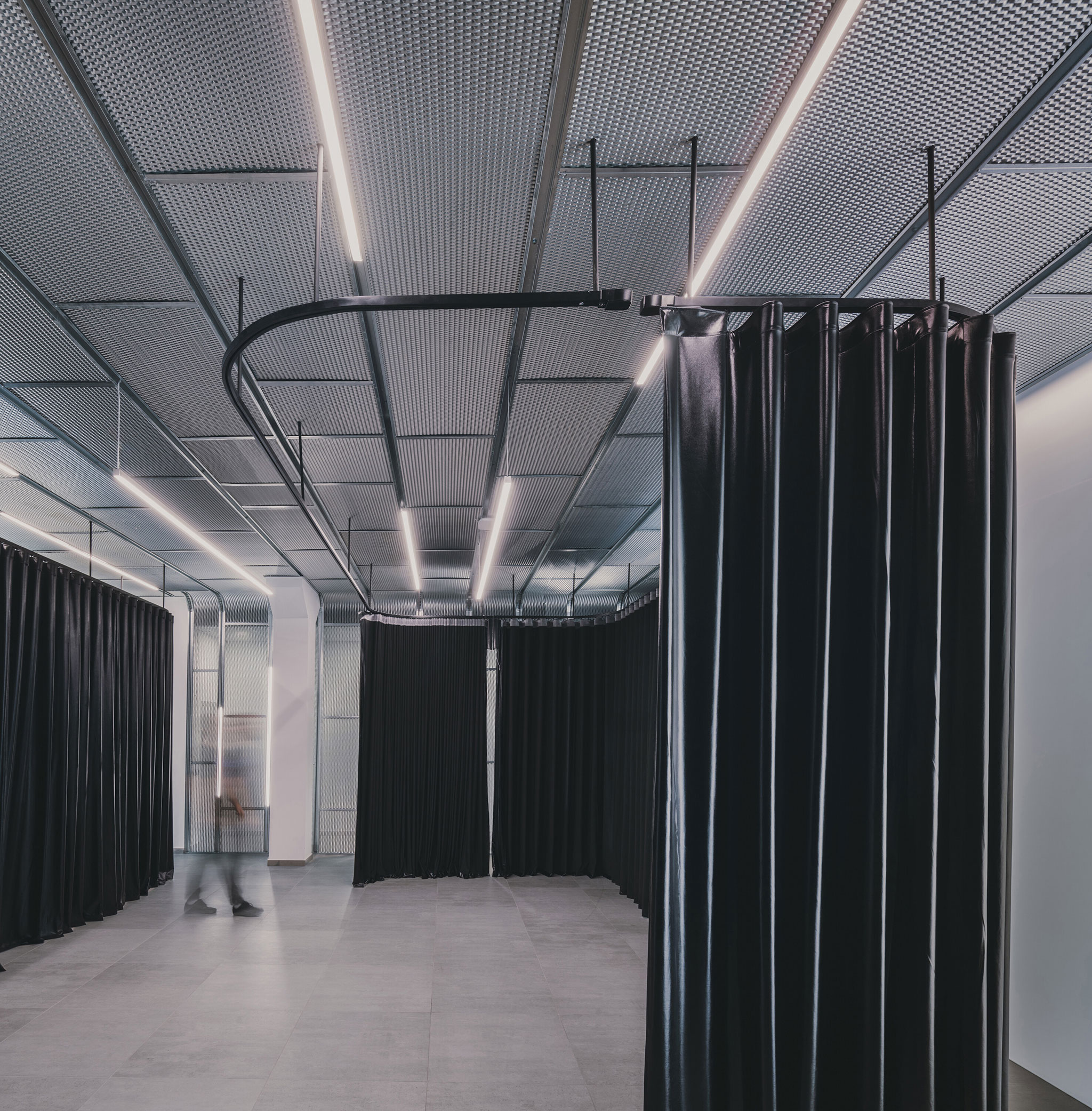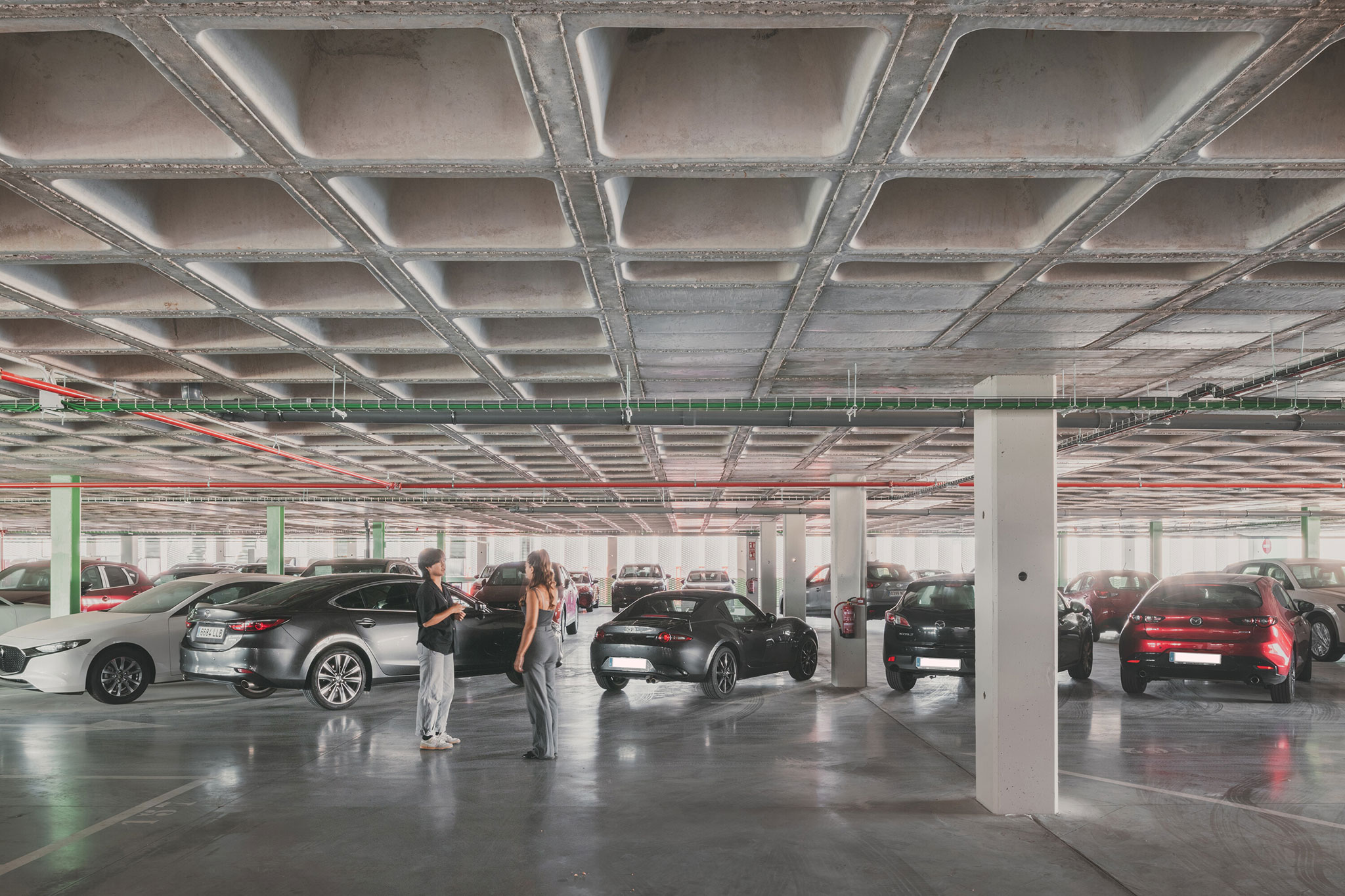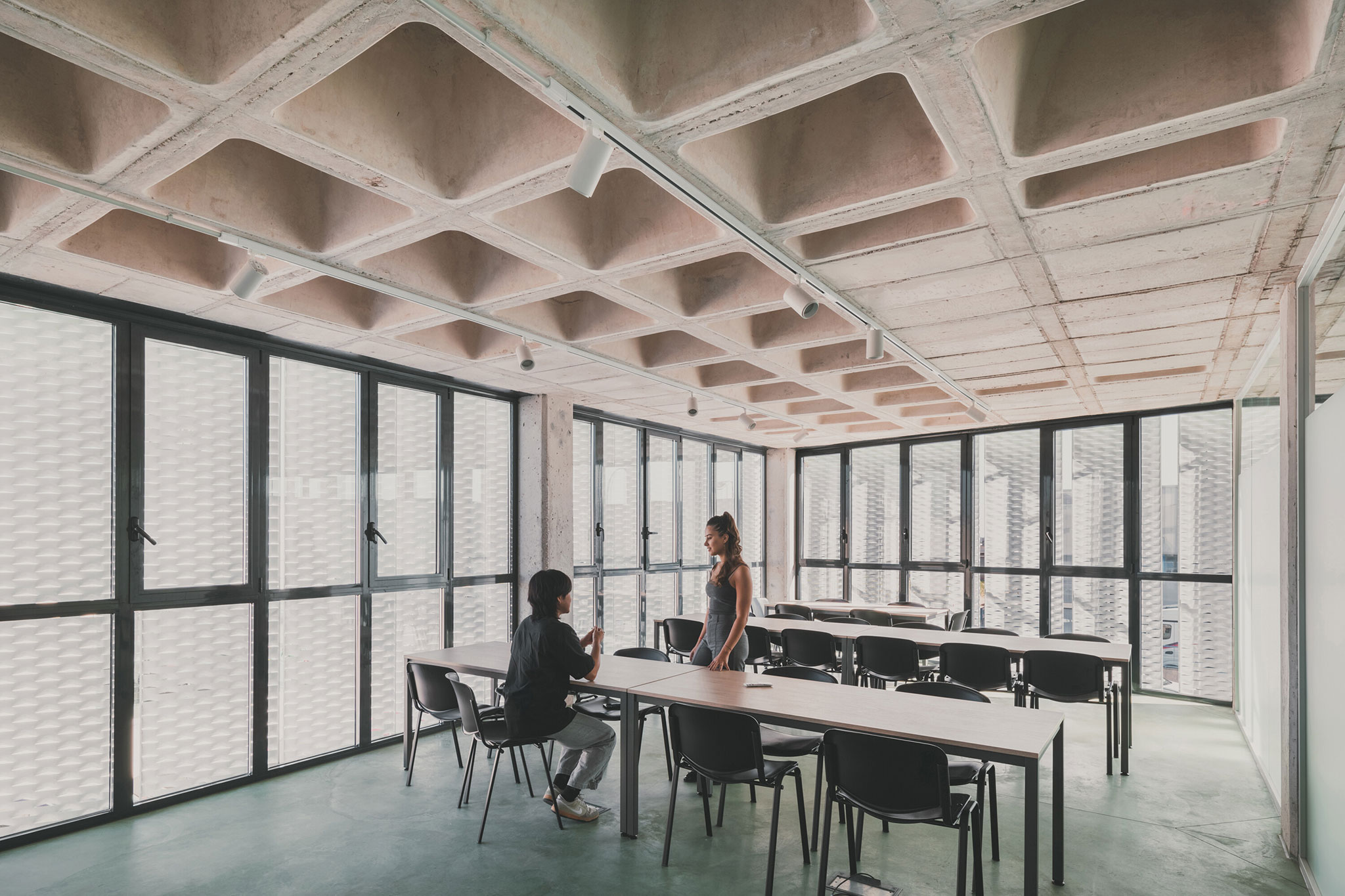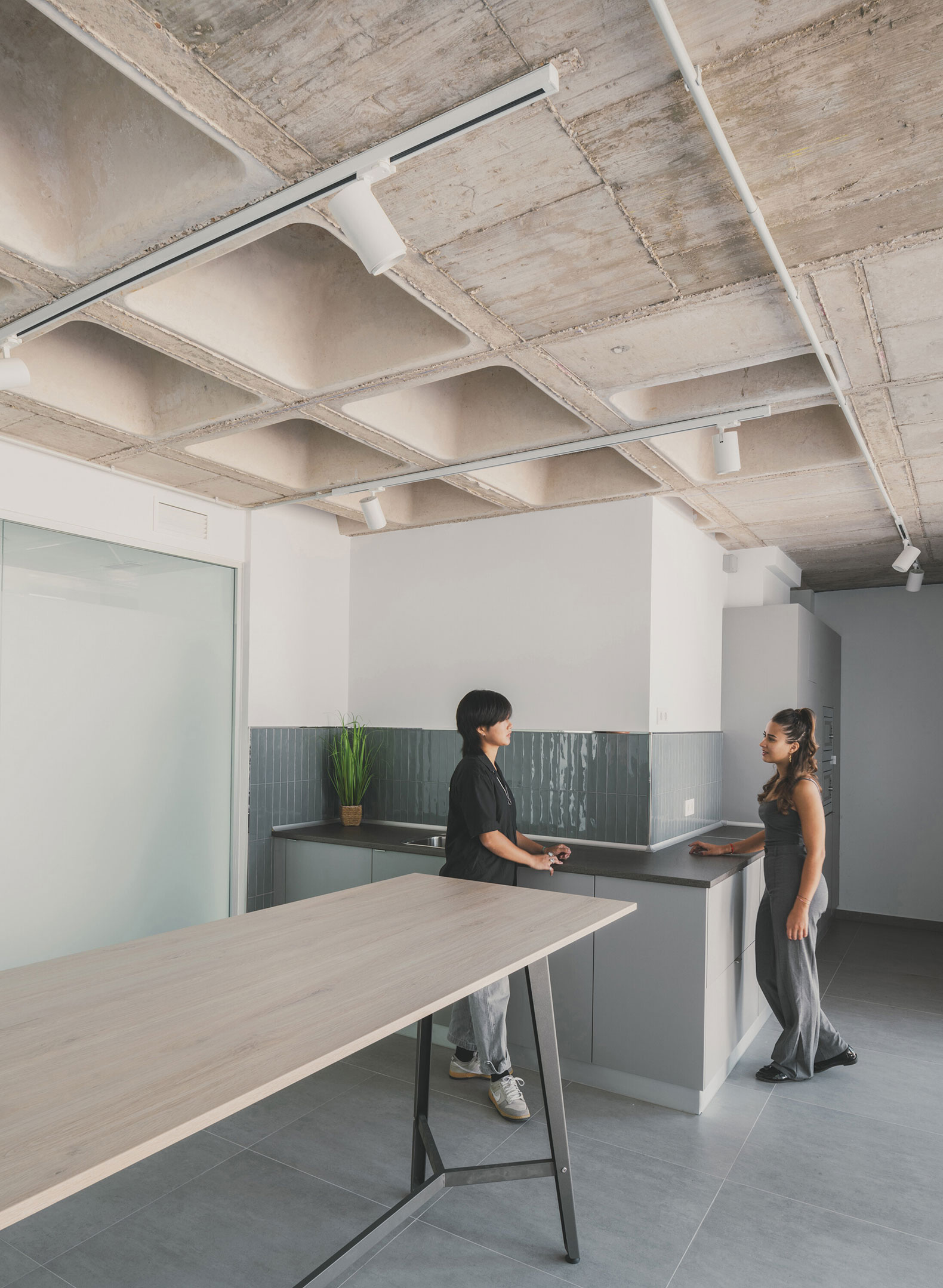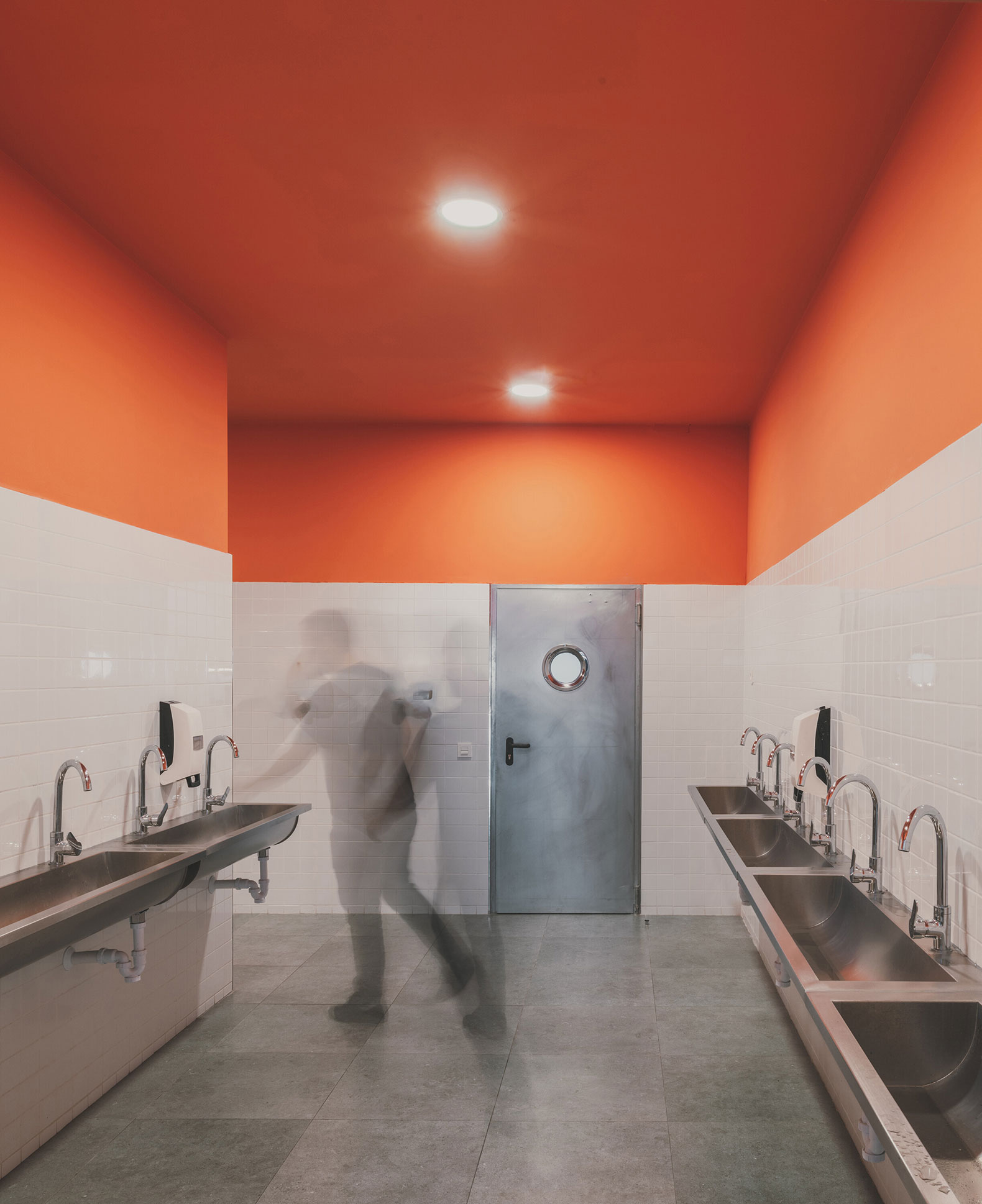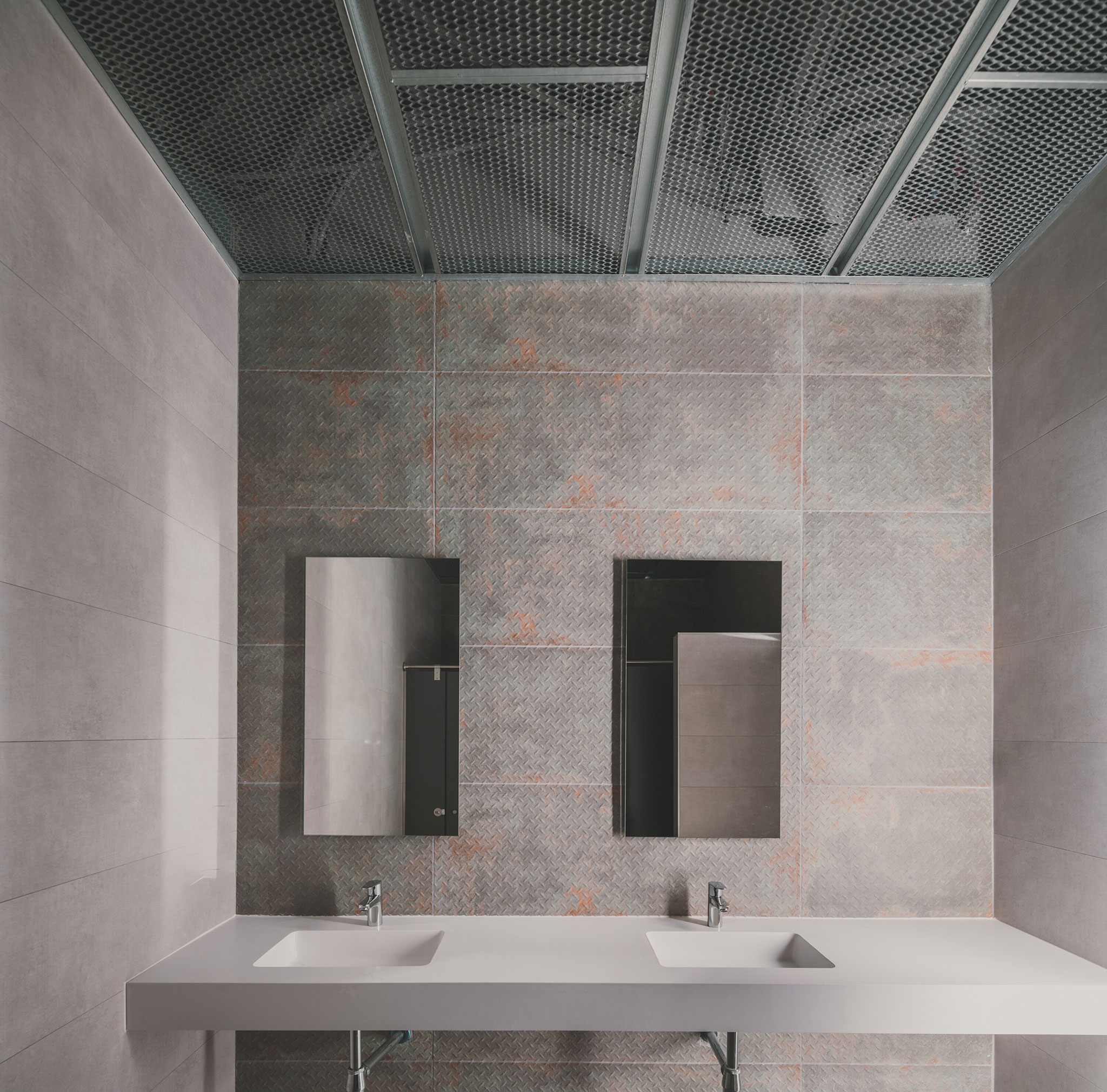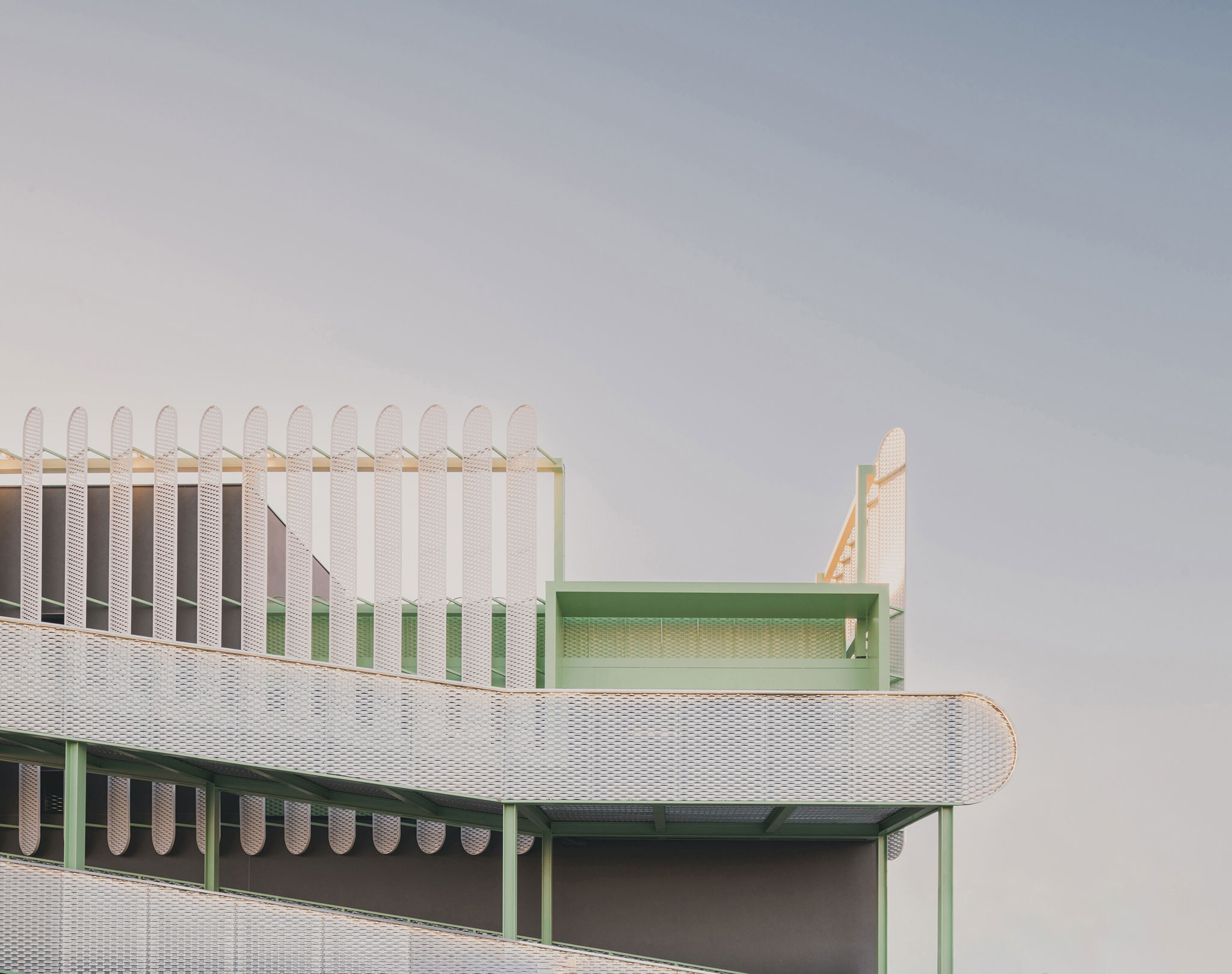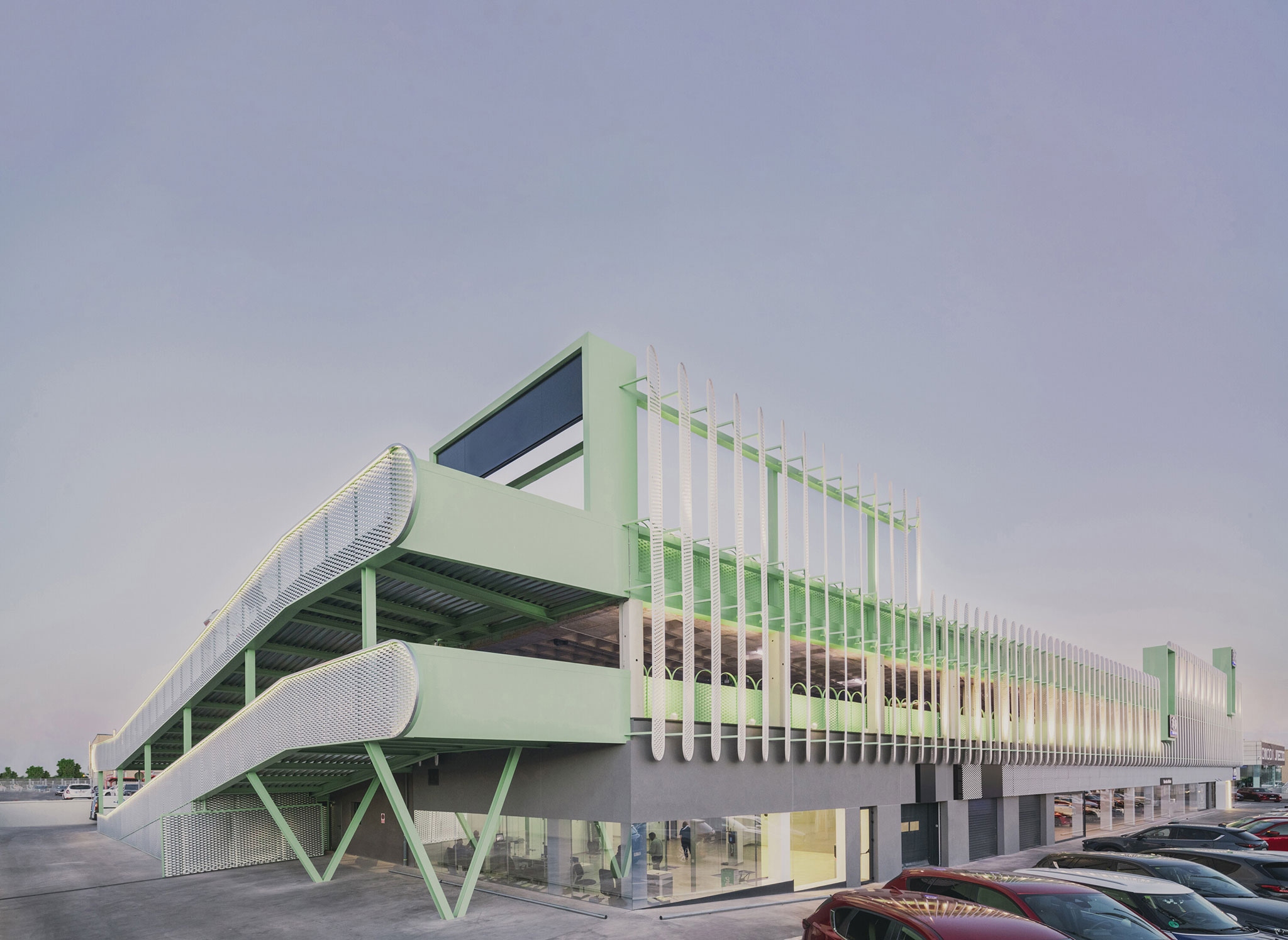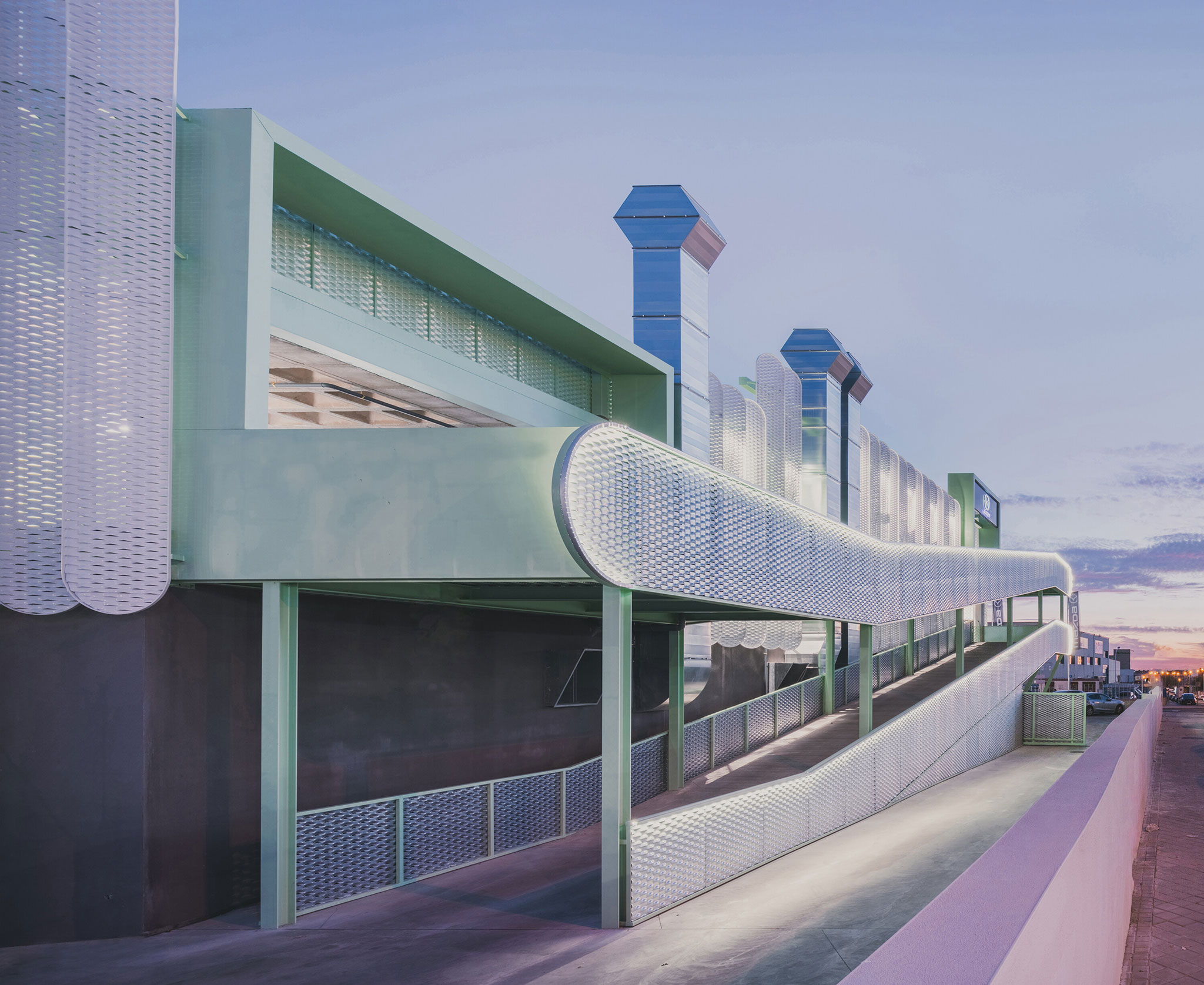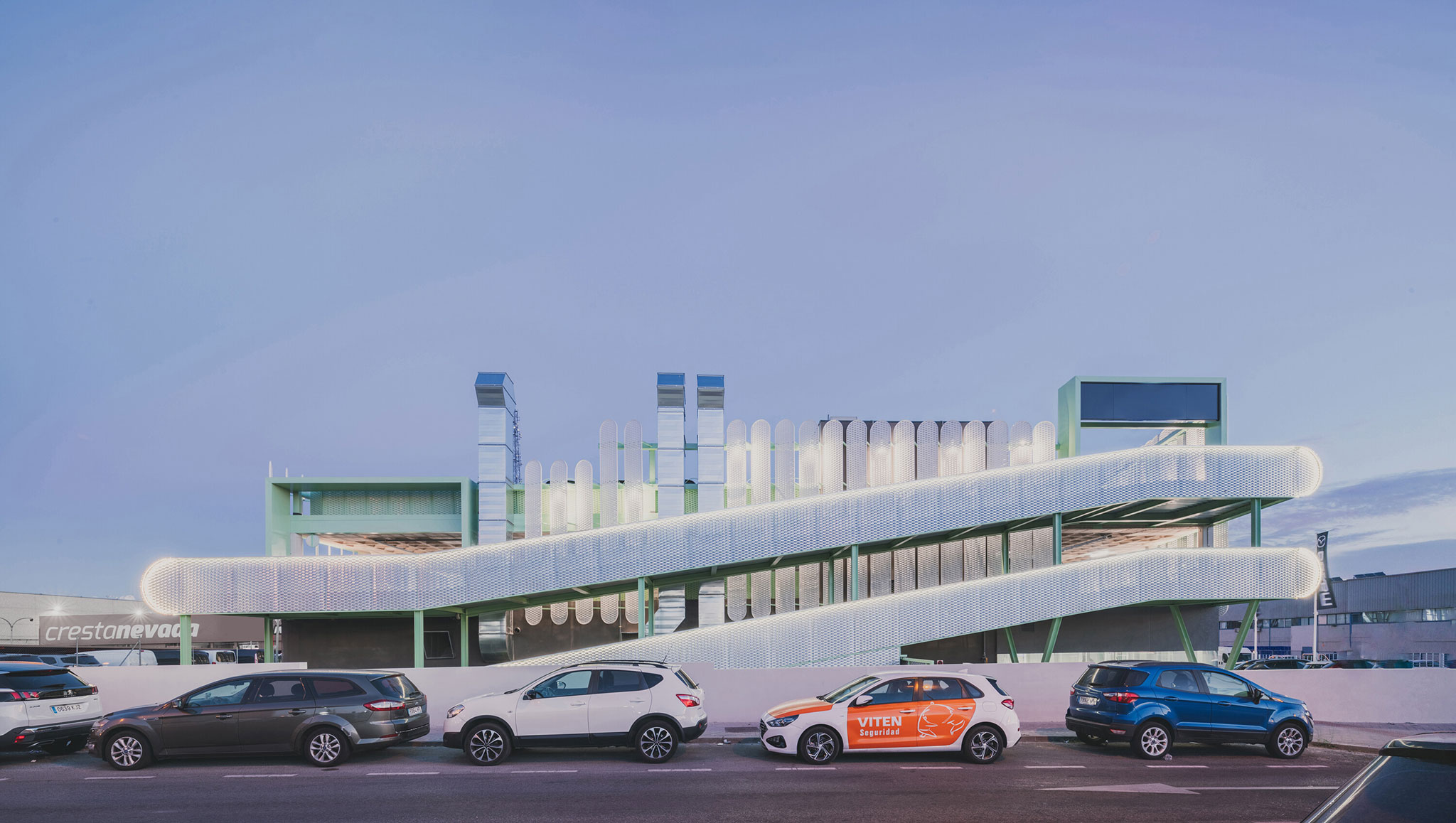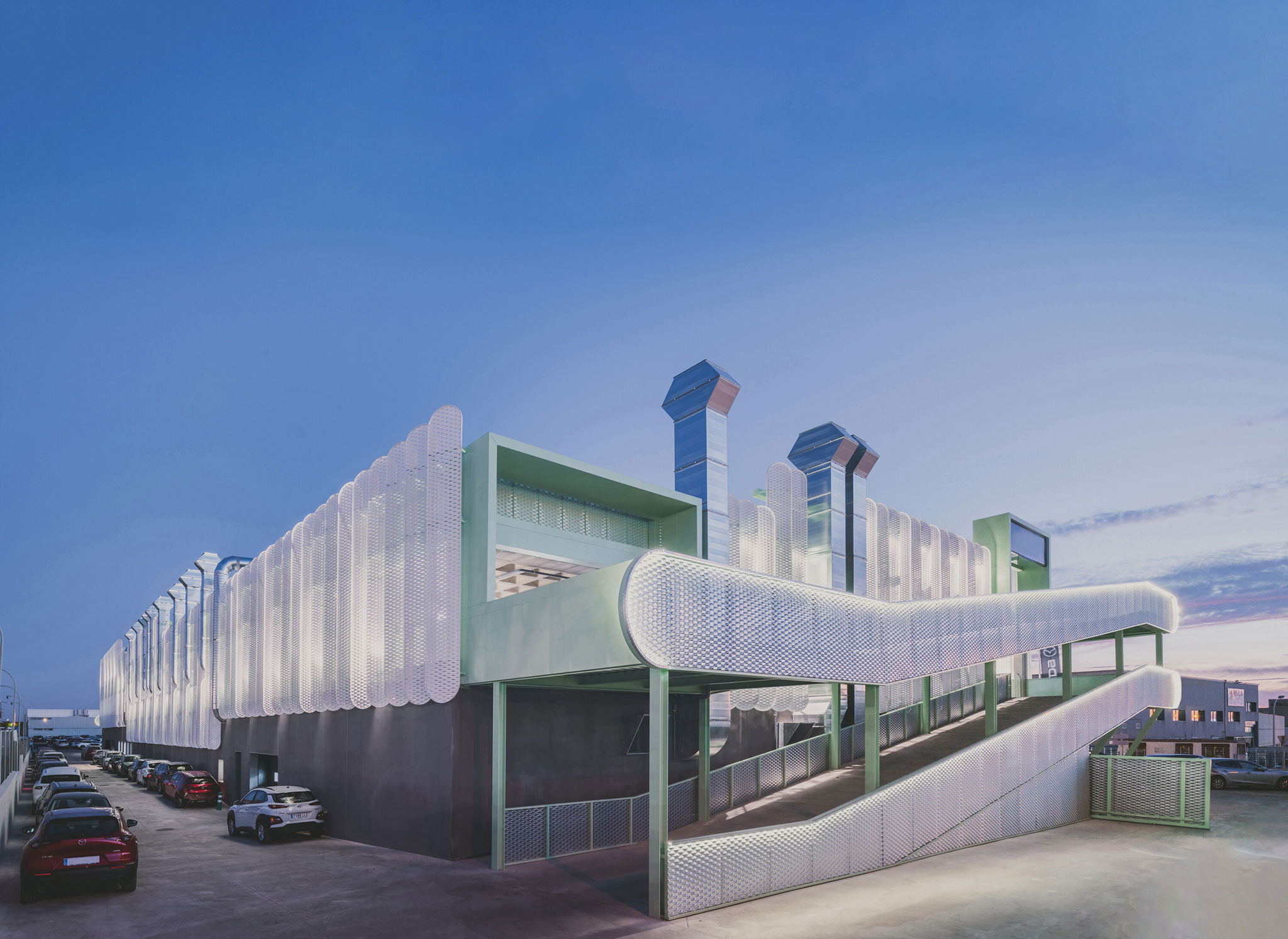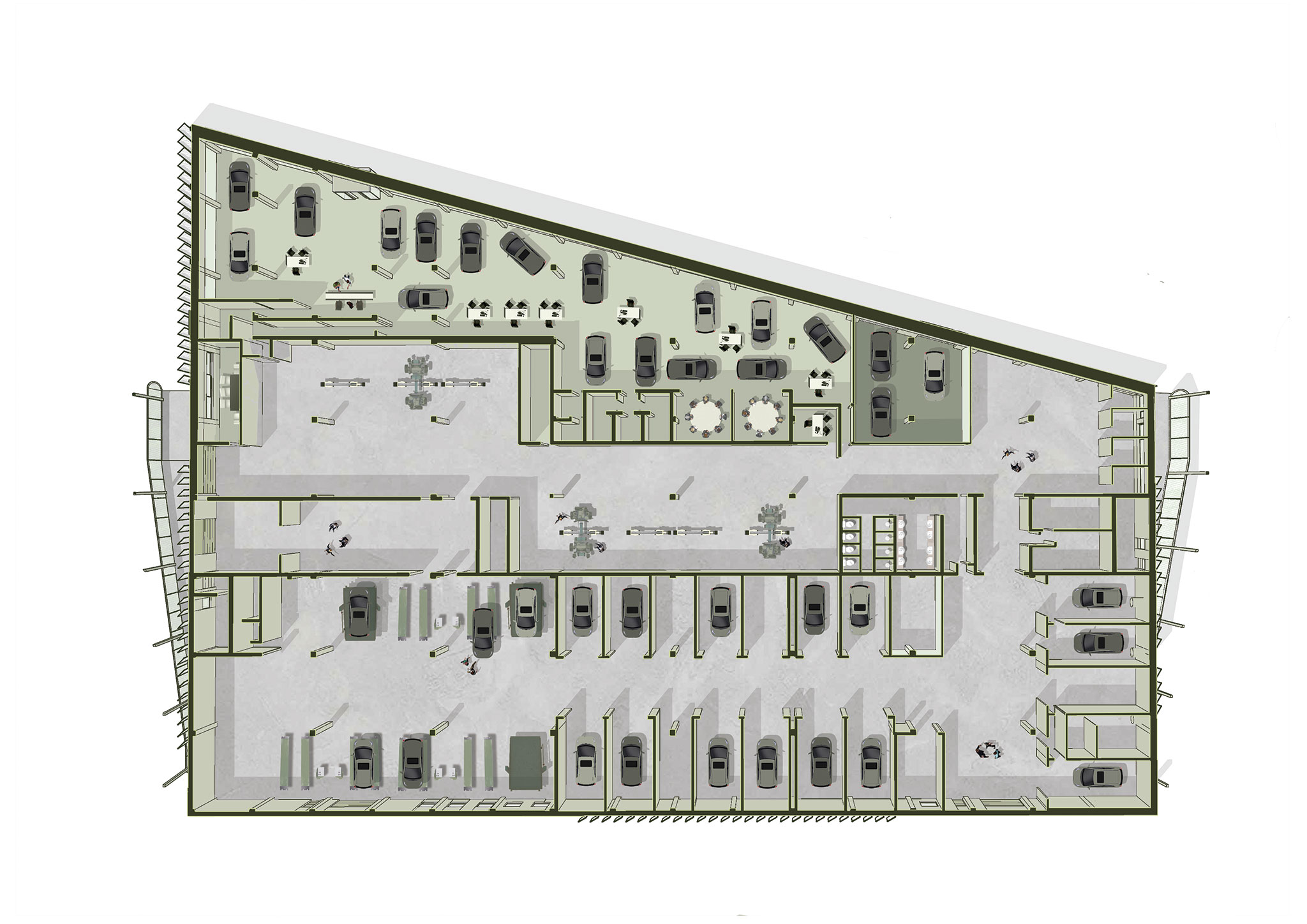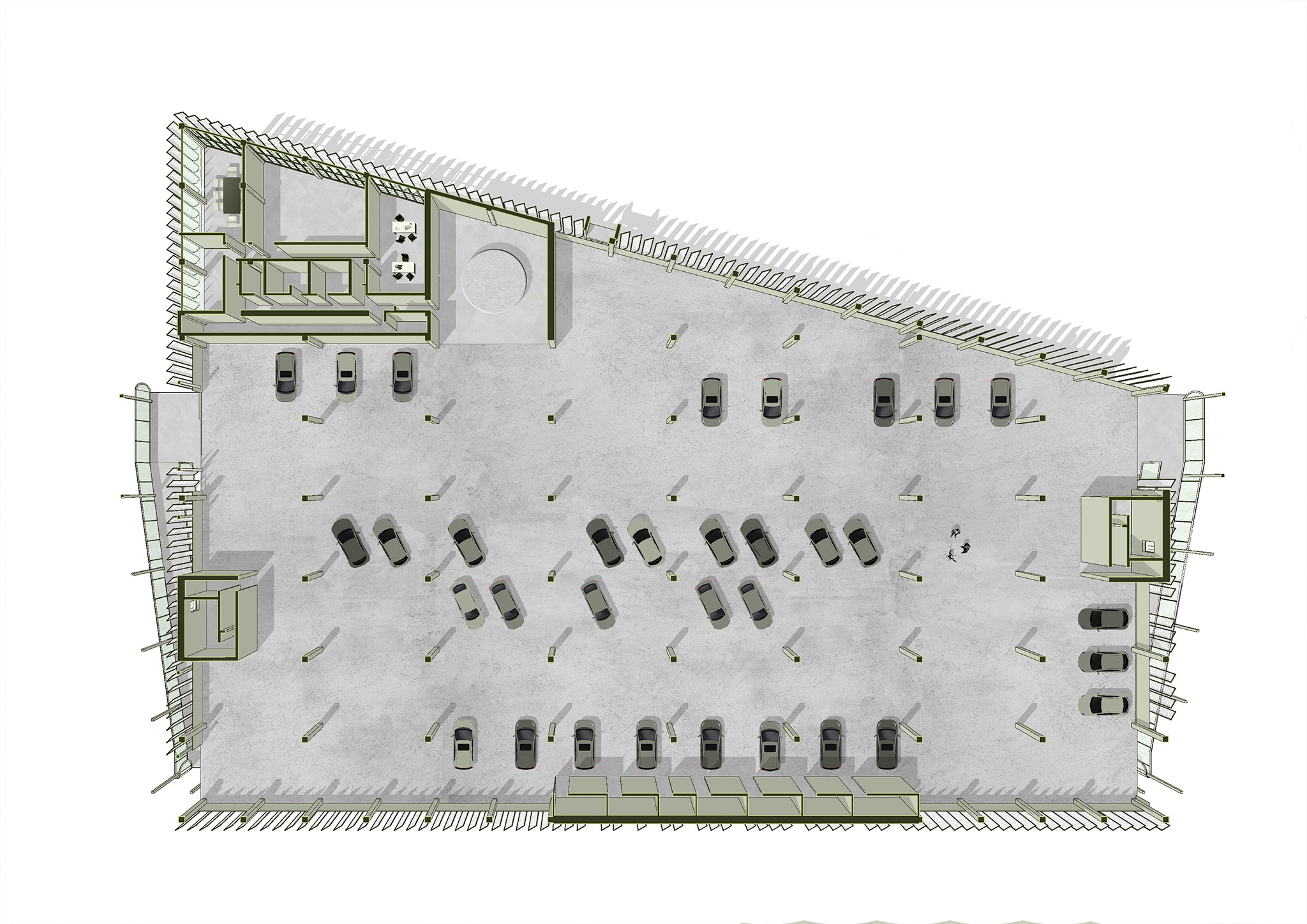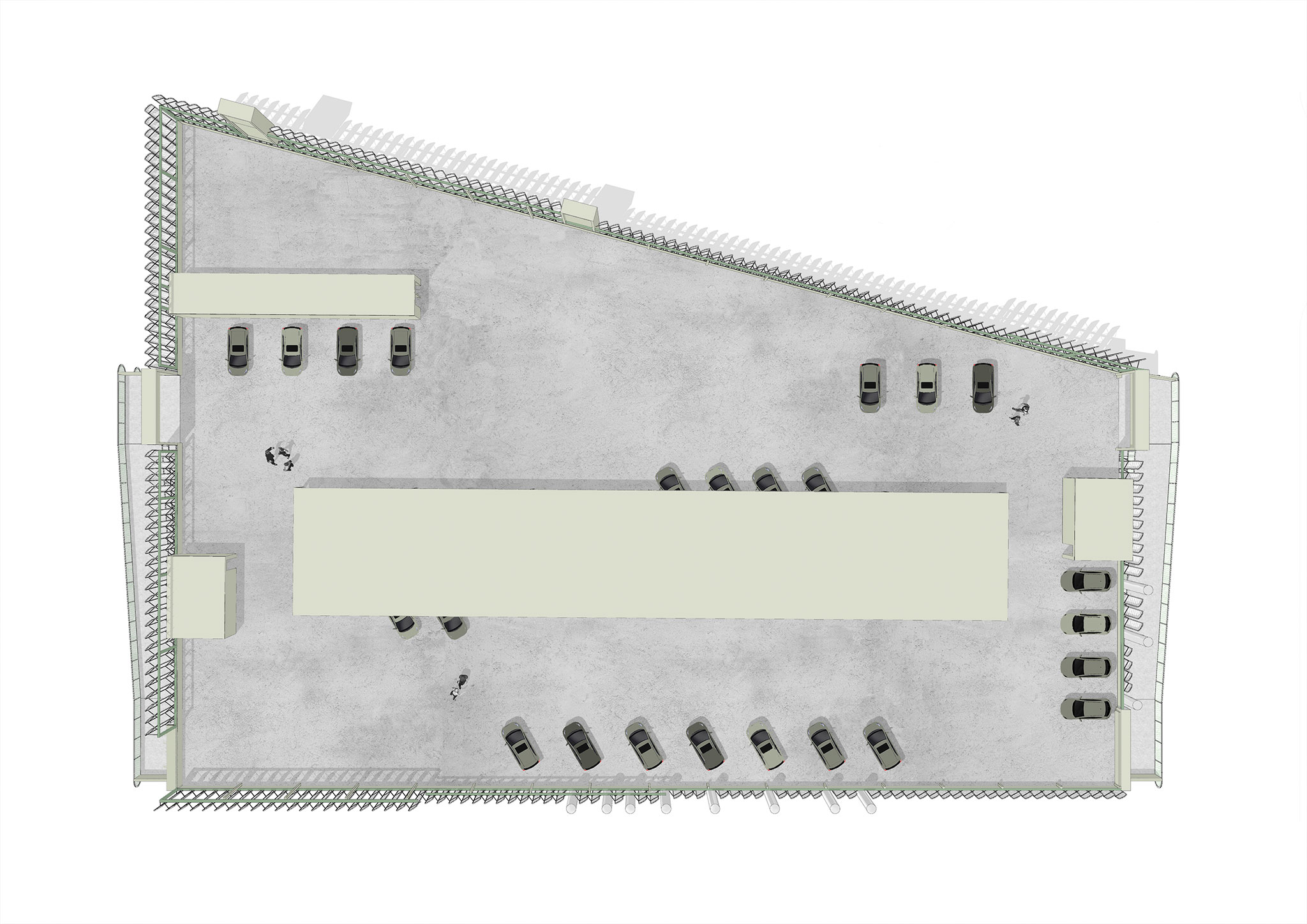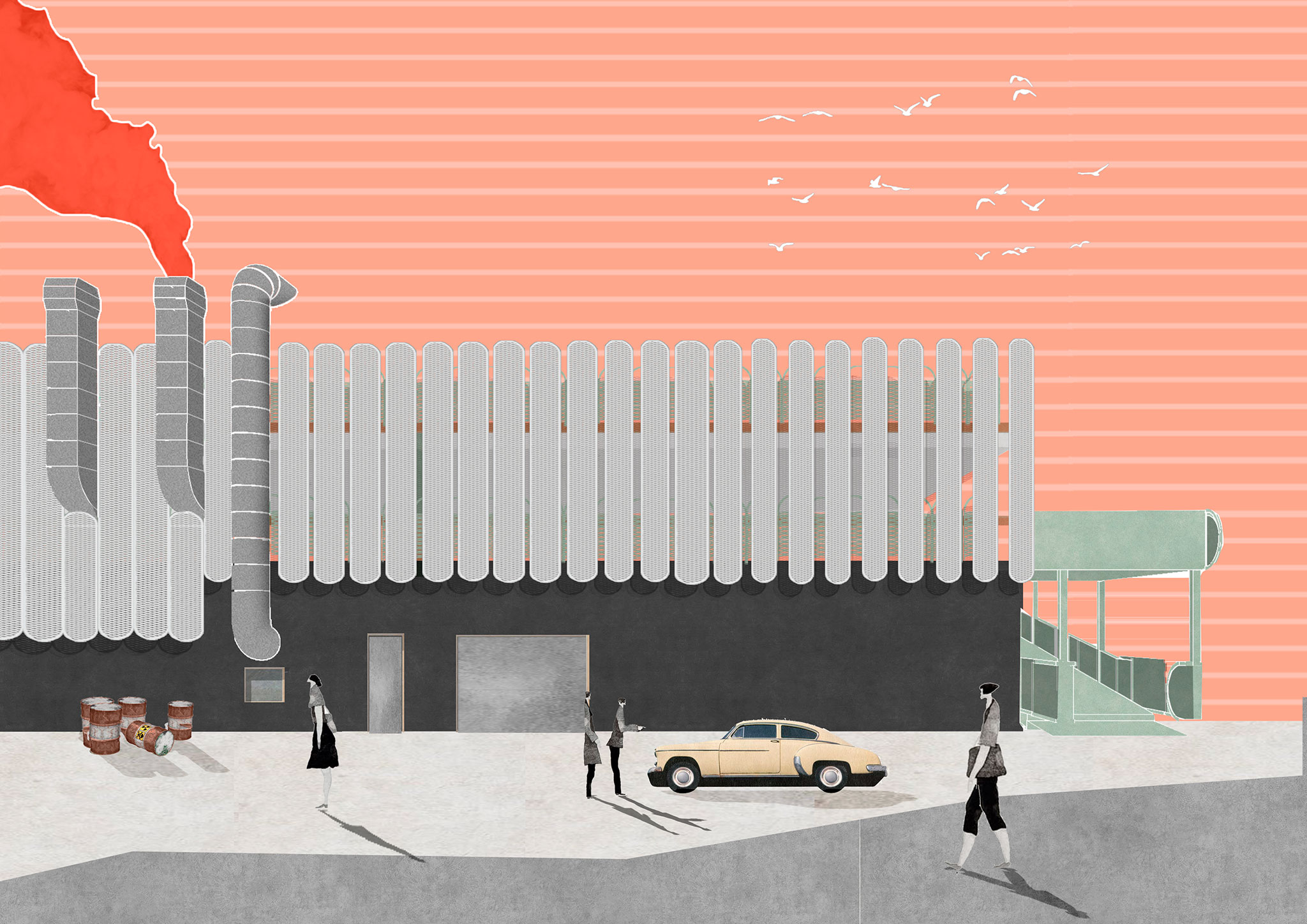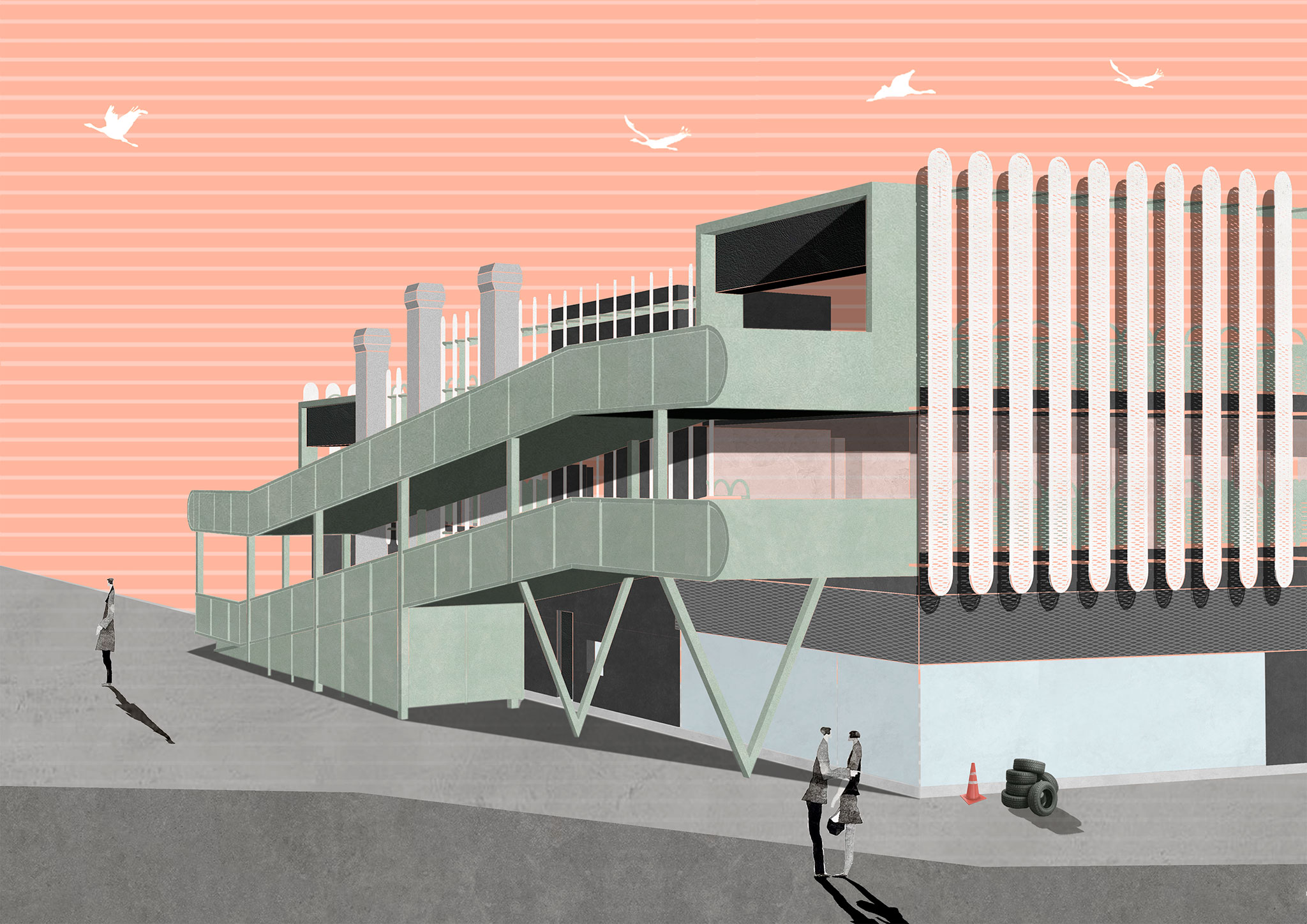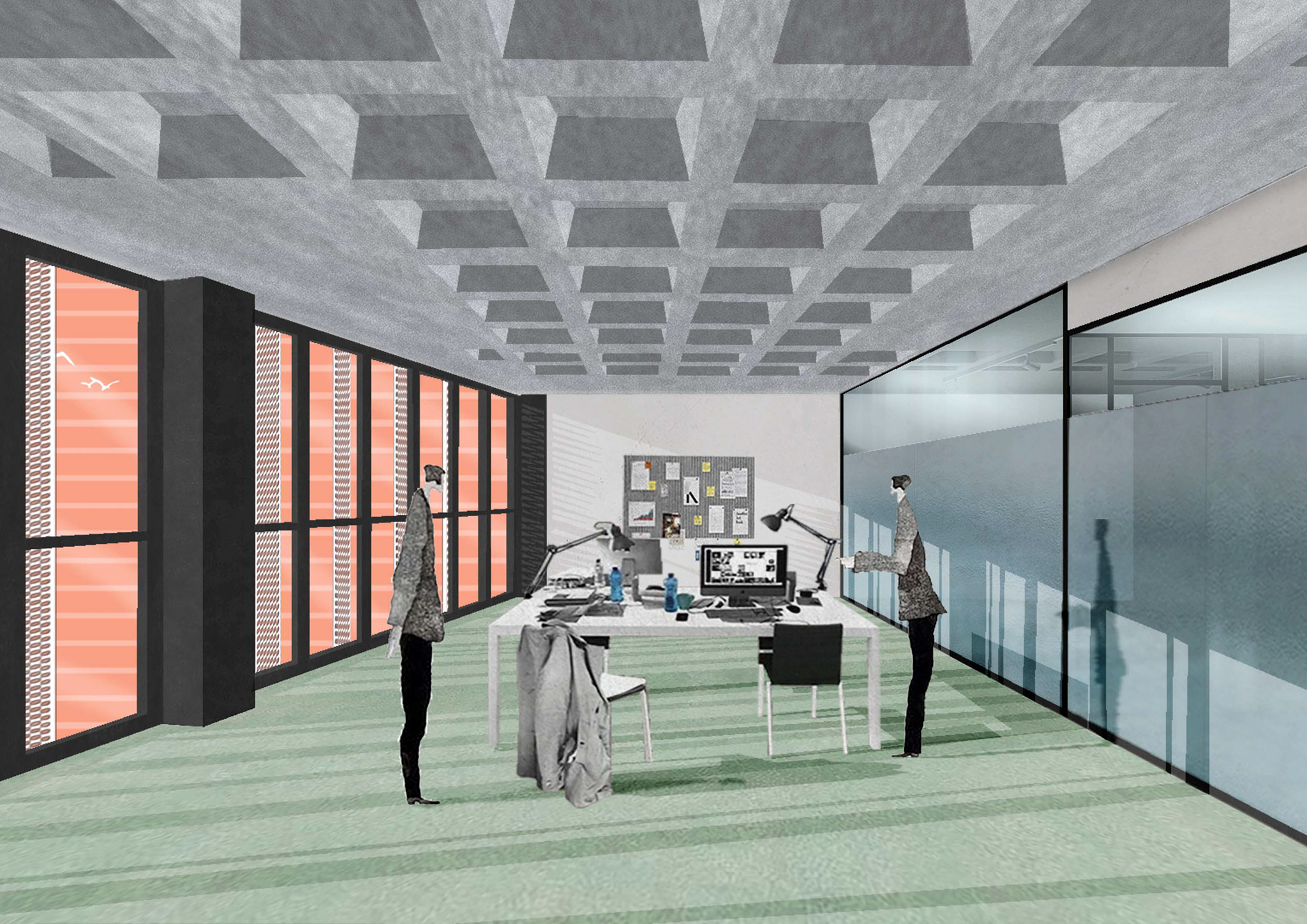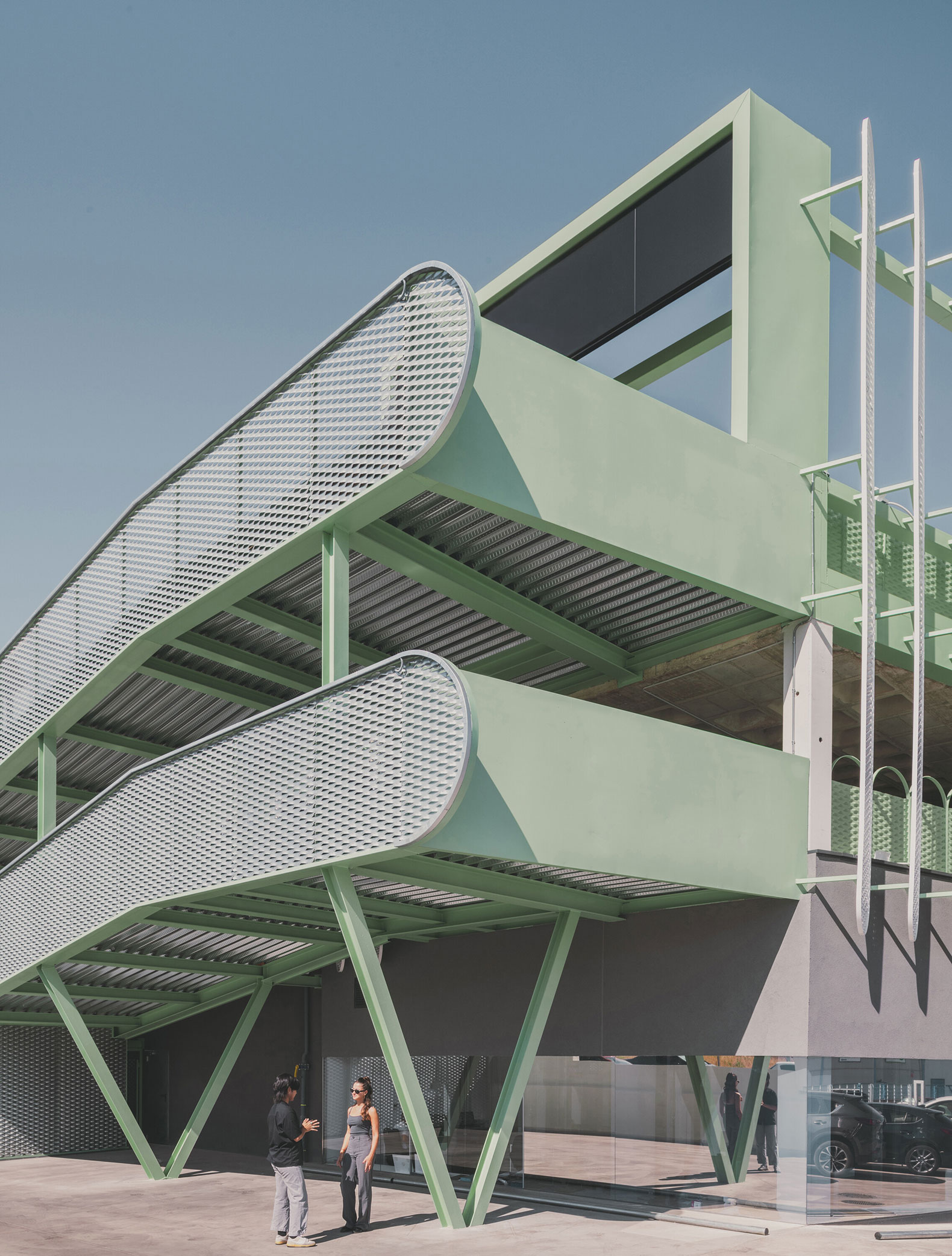
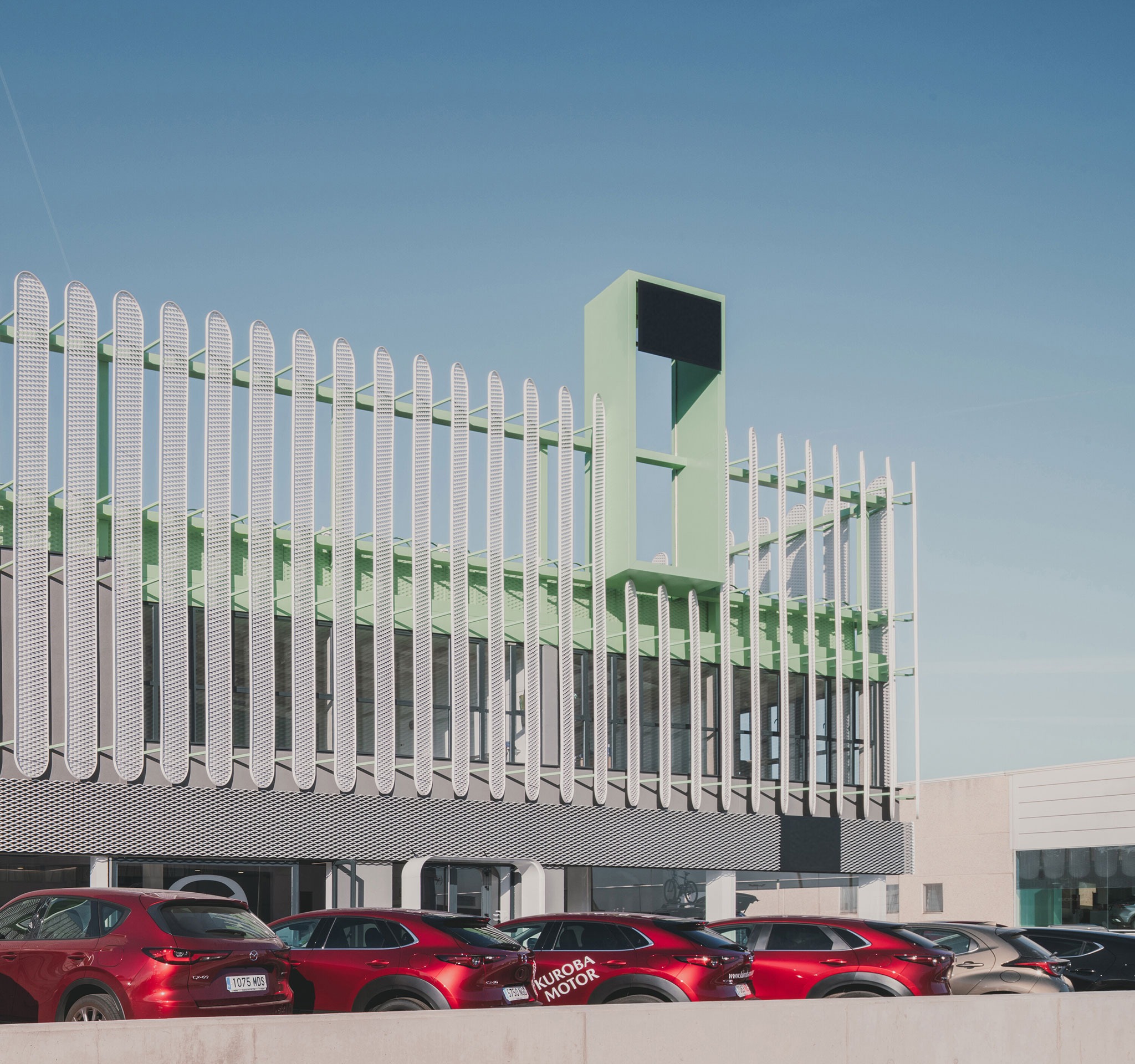
The "Leganés Auto Center" facility, designed by OOIIO Arquitectura, dedicates the ground floor to commercial uses and mechanical and bodywork workshops, while the first floor houses the offices and vehicle storage. A new upper level, also for vehicle storage, is protected by photovoltaic pergolas that supply energy to the building. Two large ramps on either side organize the interior circulation.
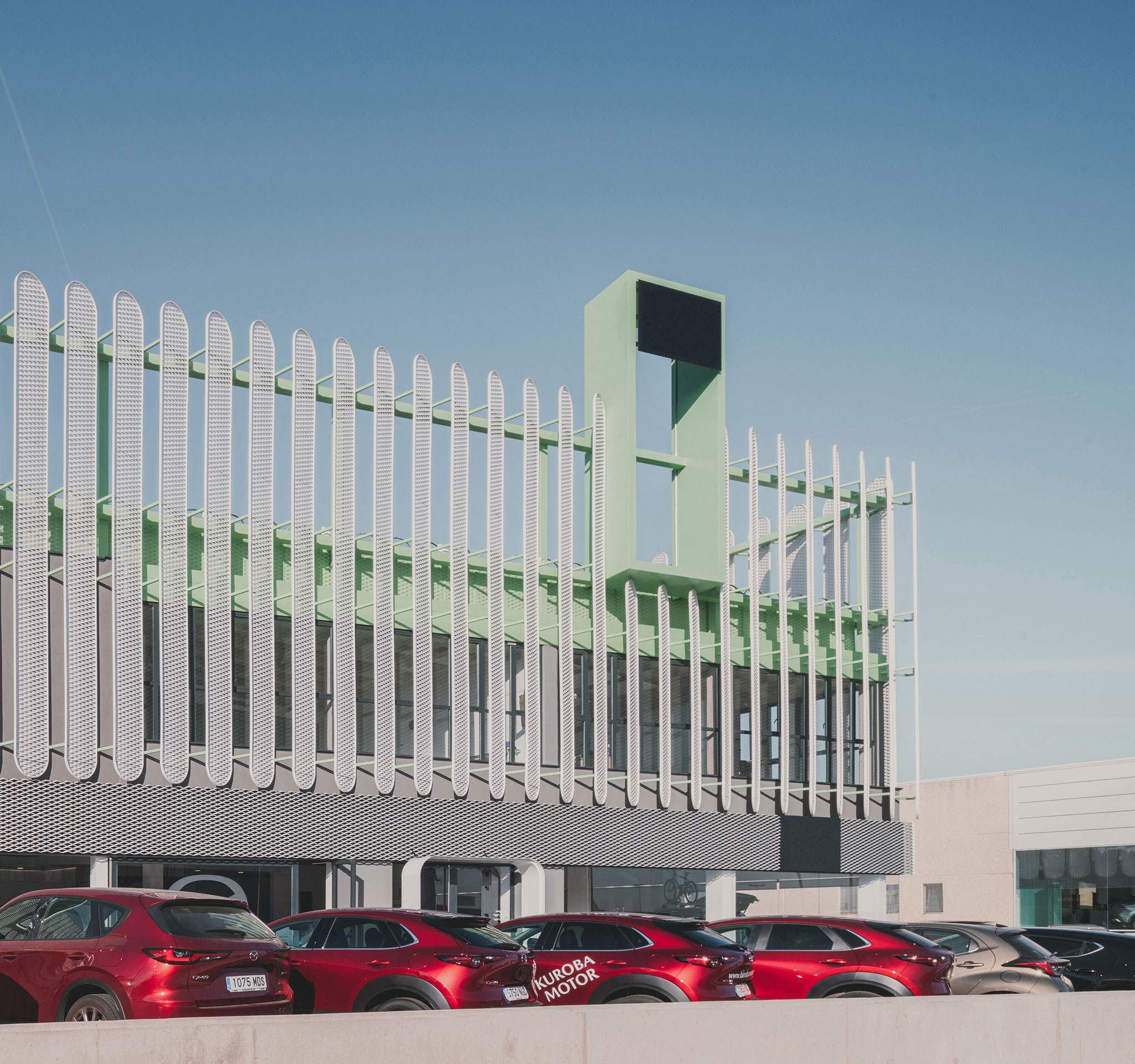
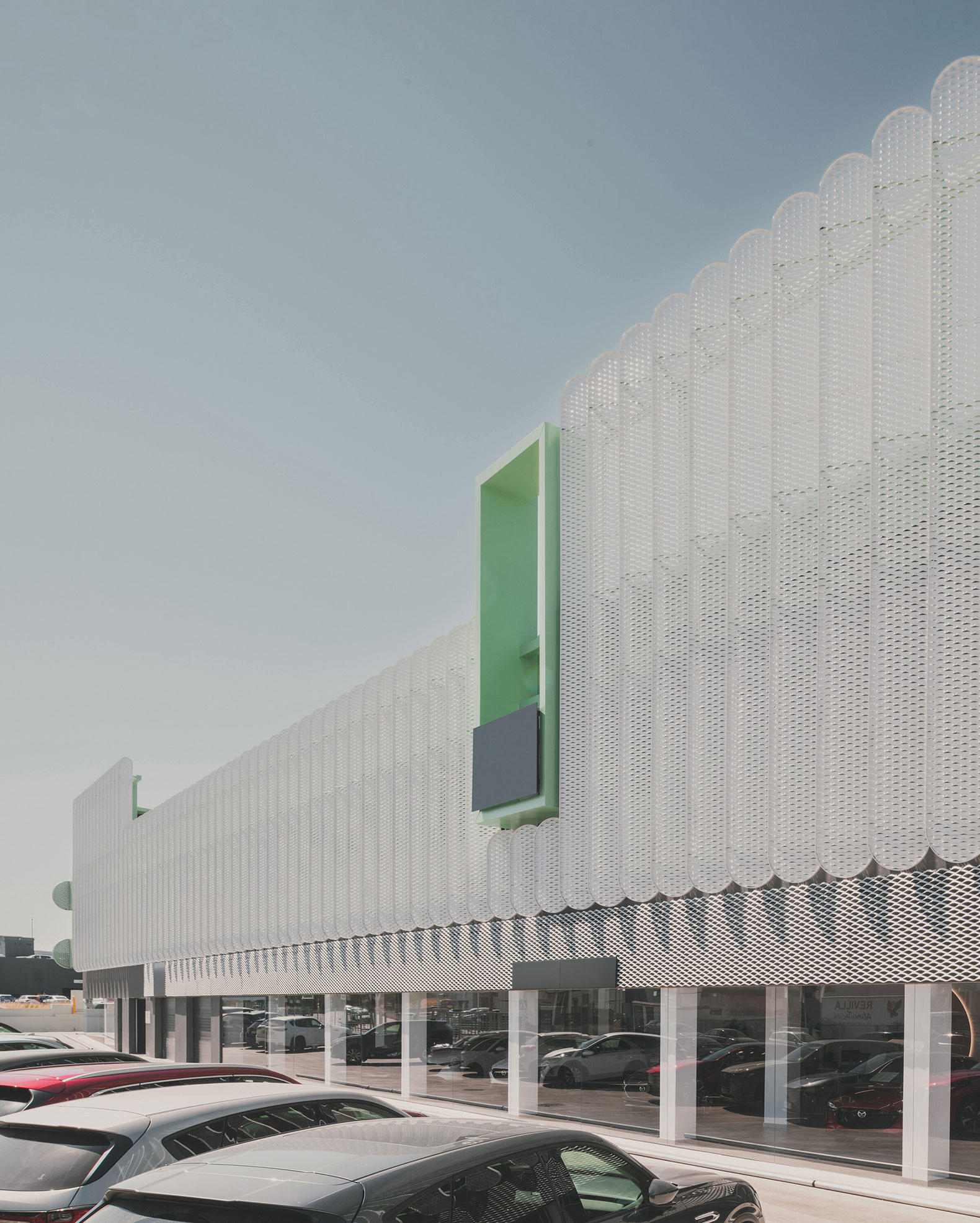
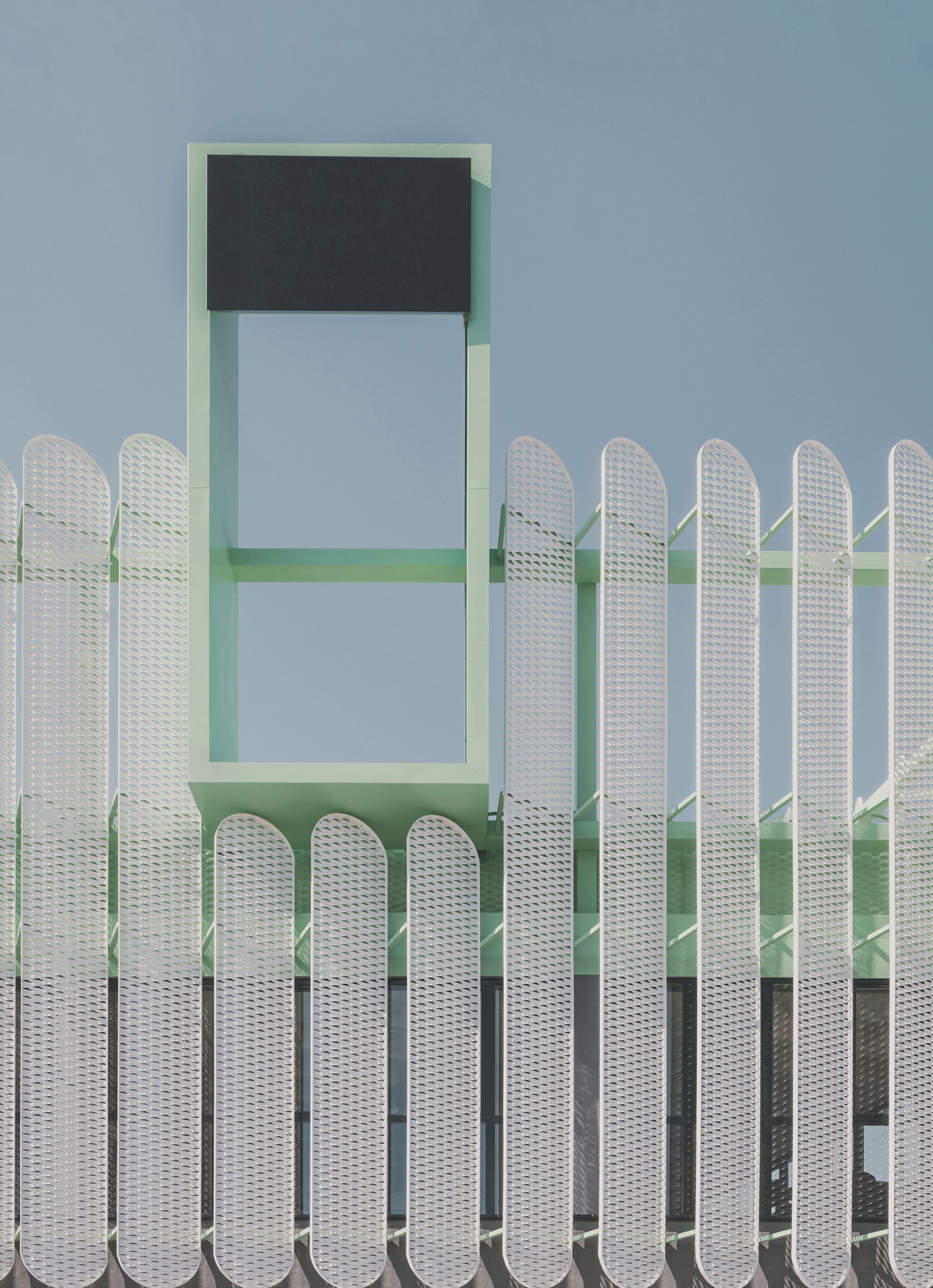
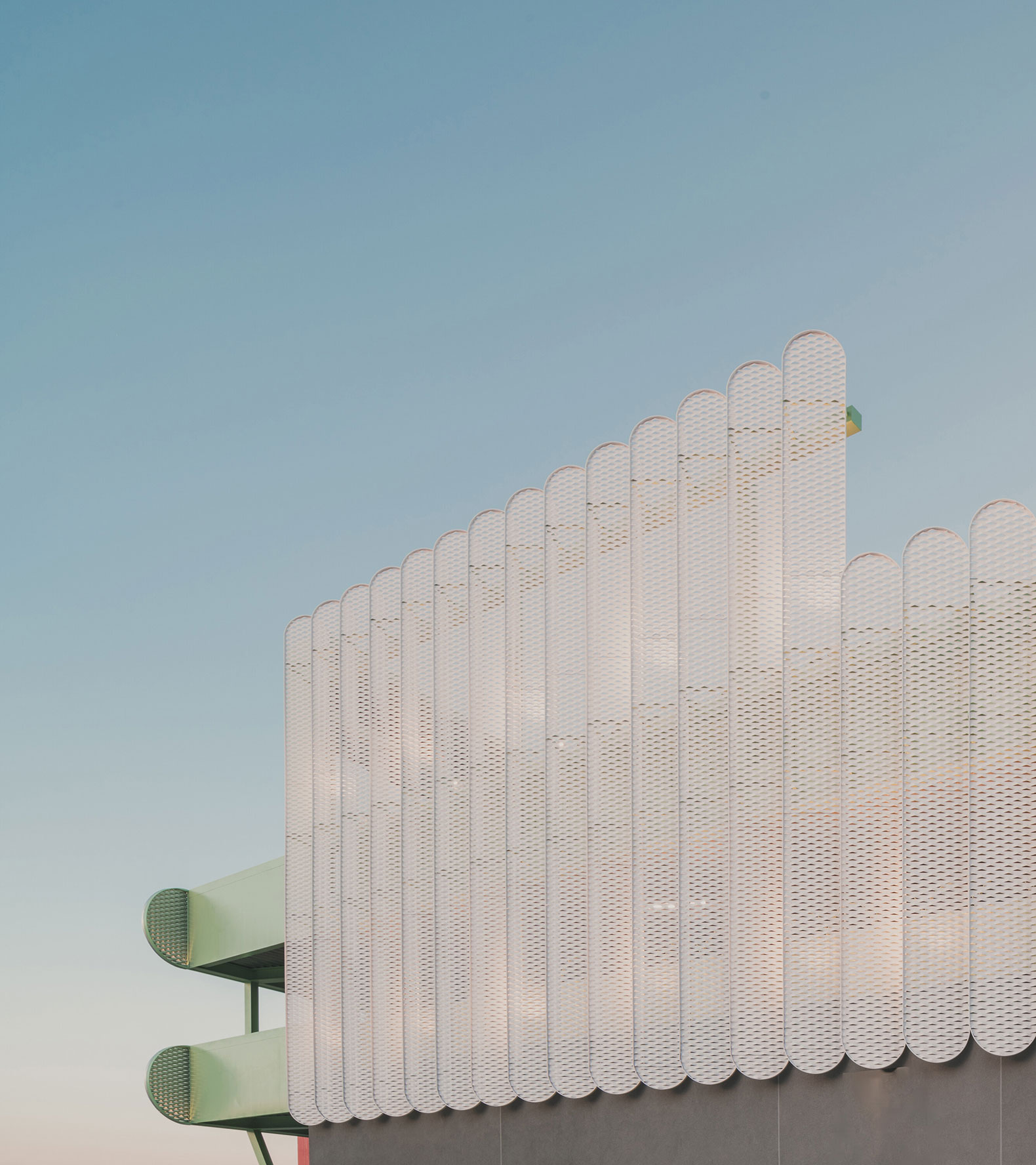
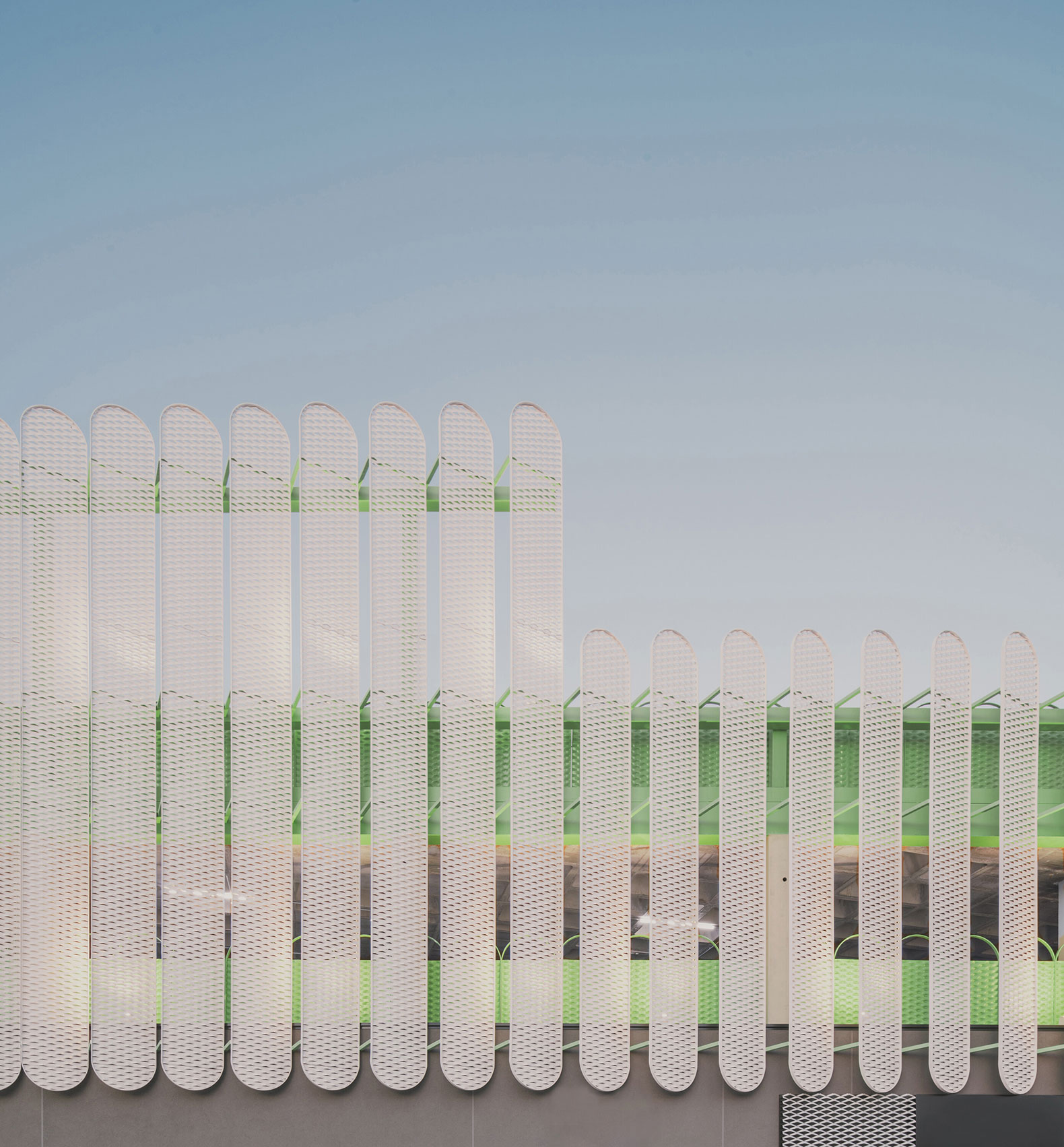
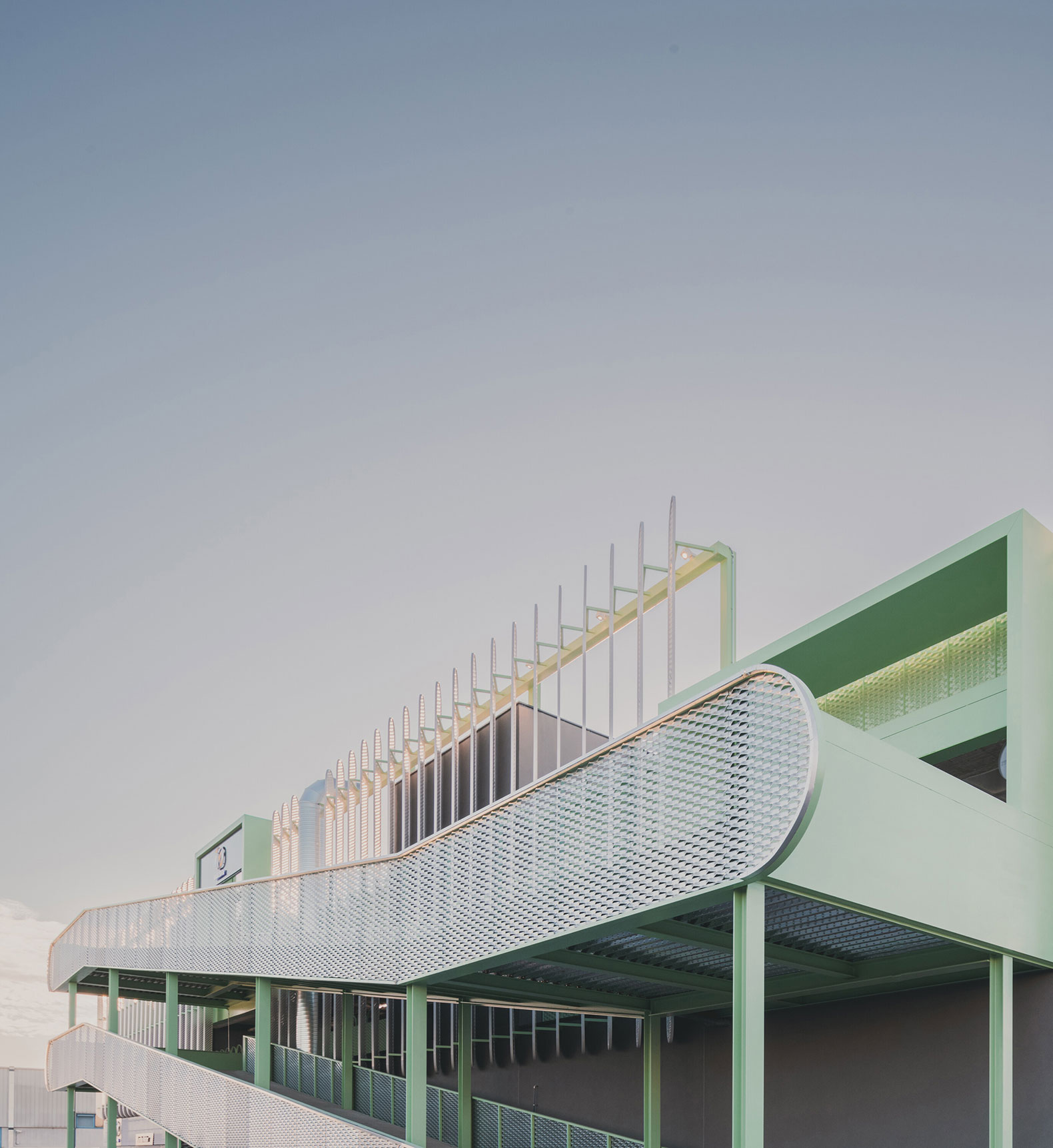
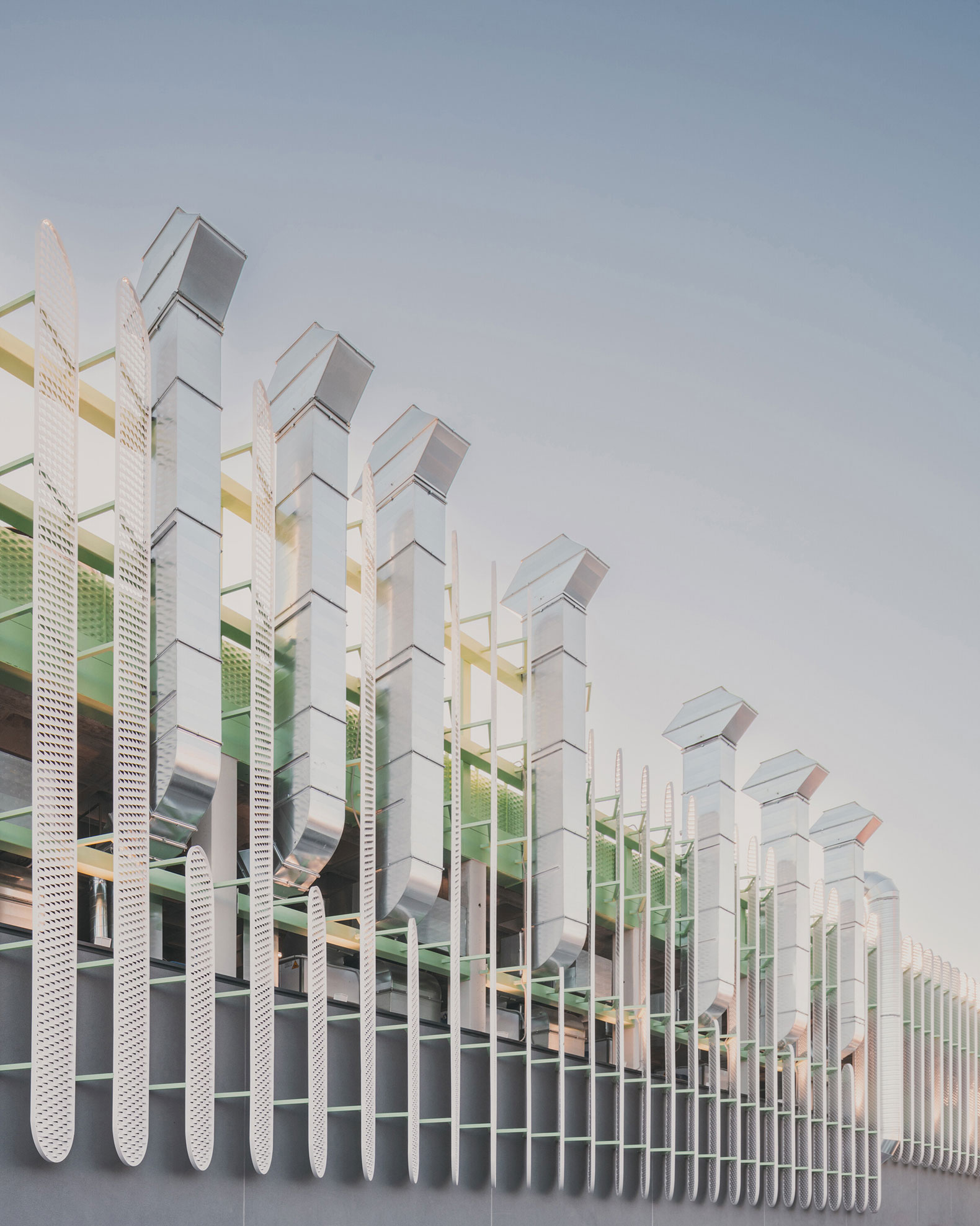
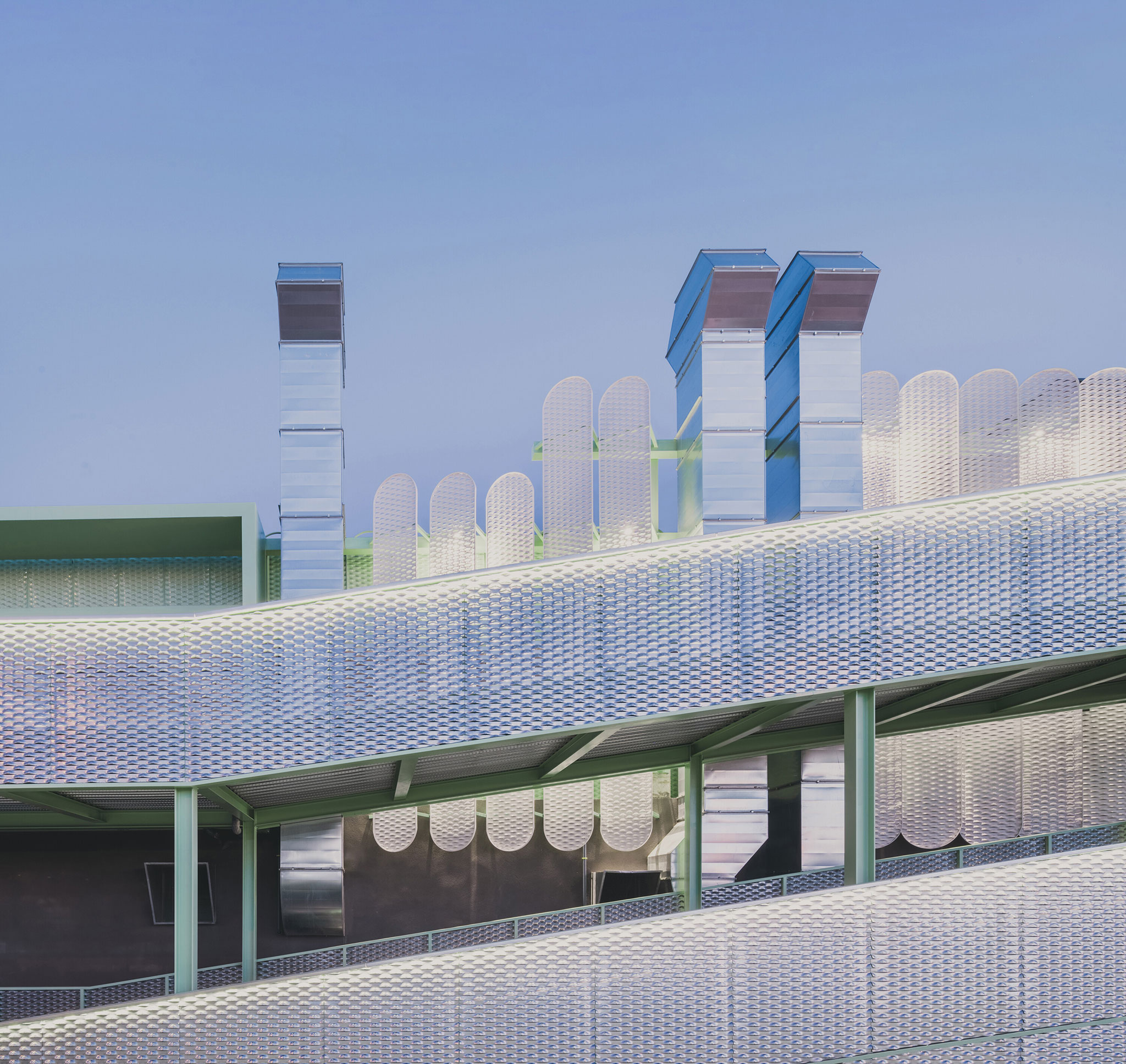
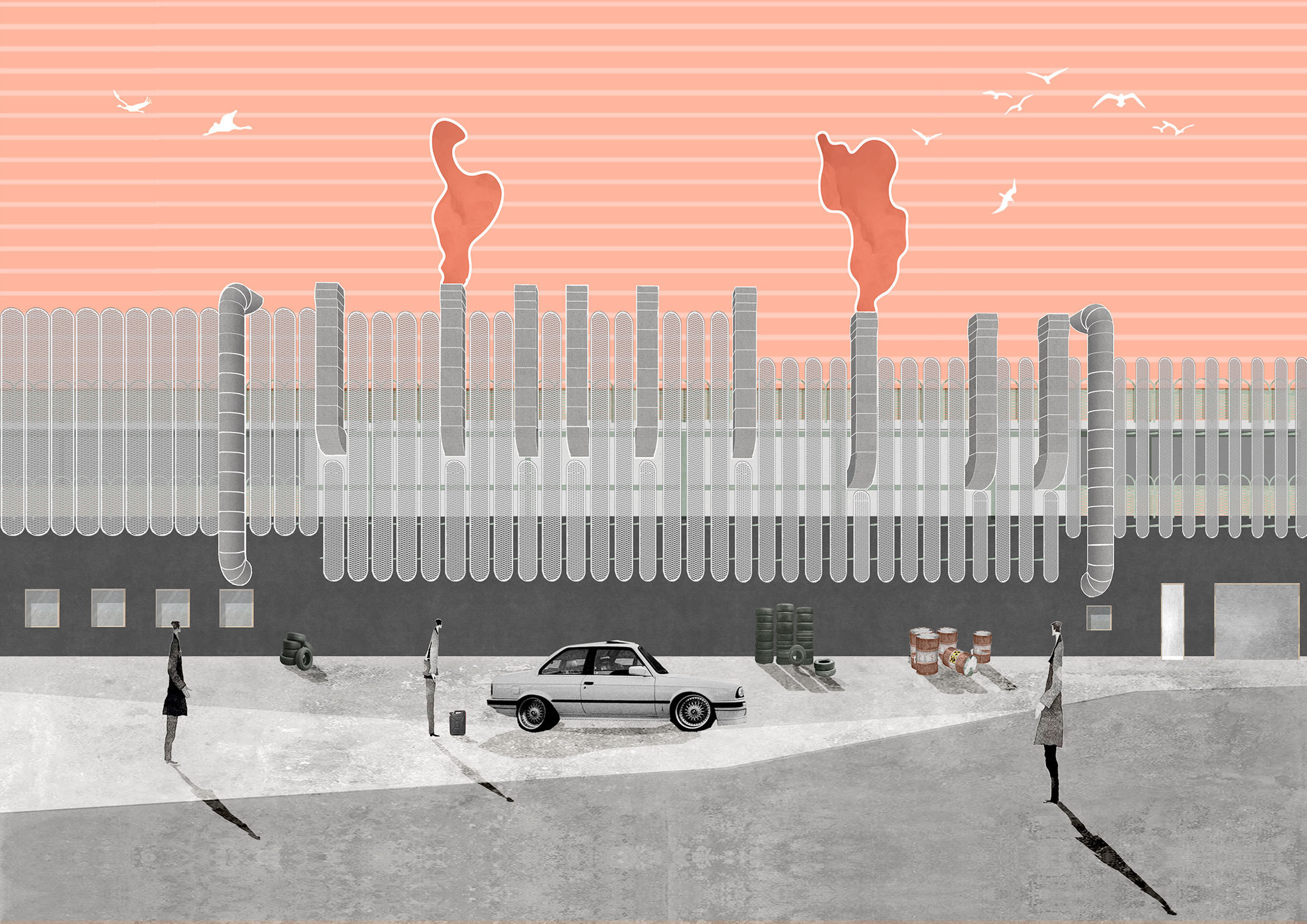
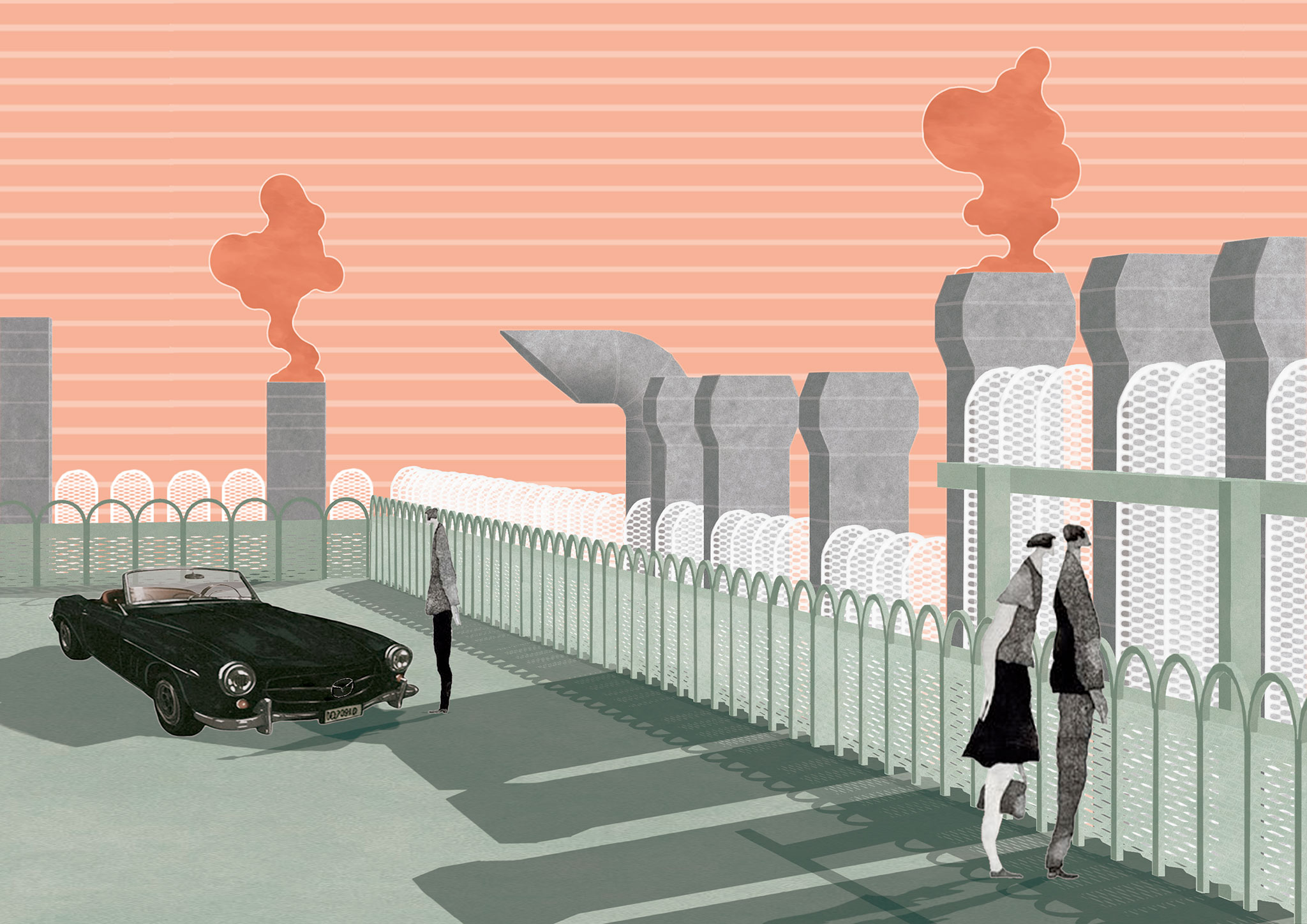
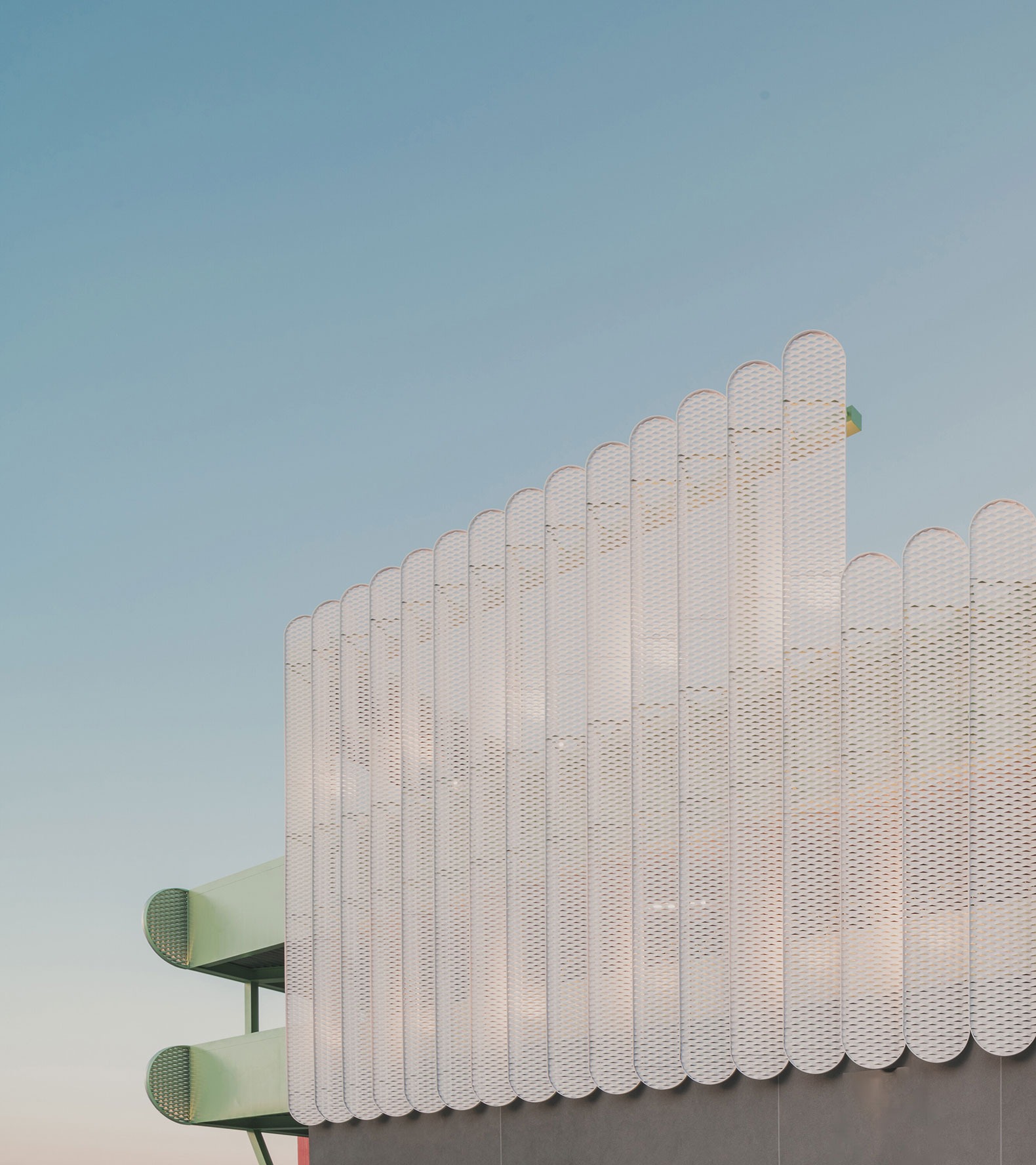
The industrial-style project is developed through formal interplay, textures, and chromatic contrasts that make the façade its defining element. The façade is composed of large white metal slats of varying sizes, anchored to a green substructure.
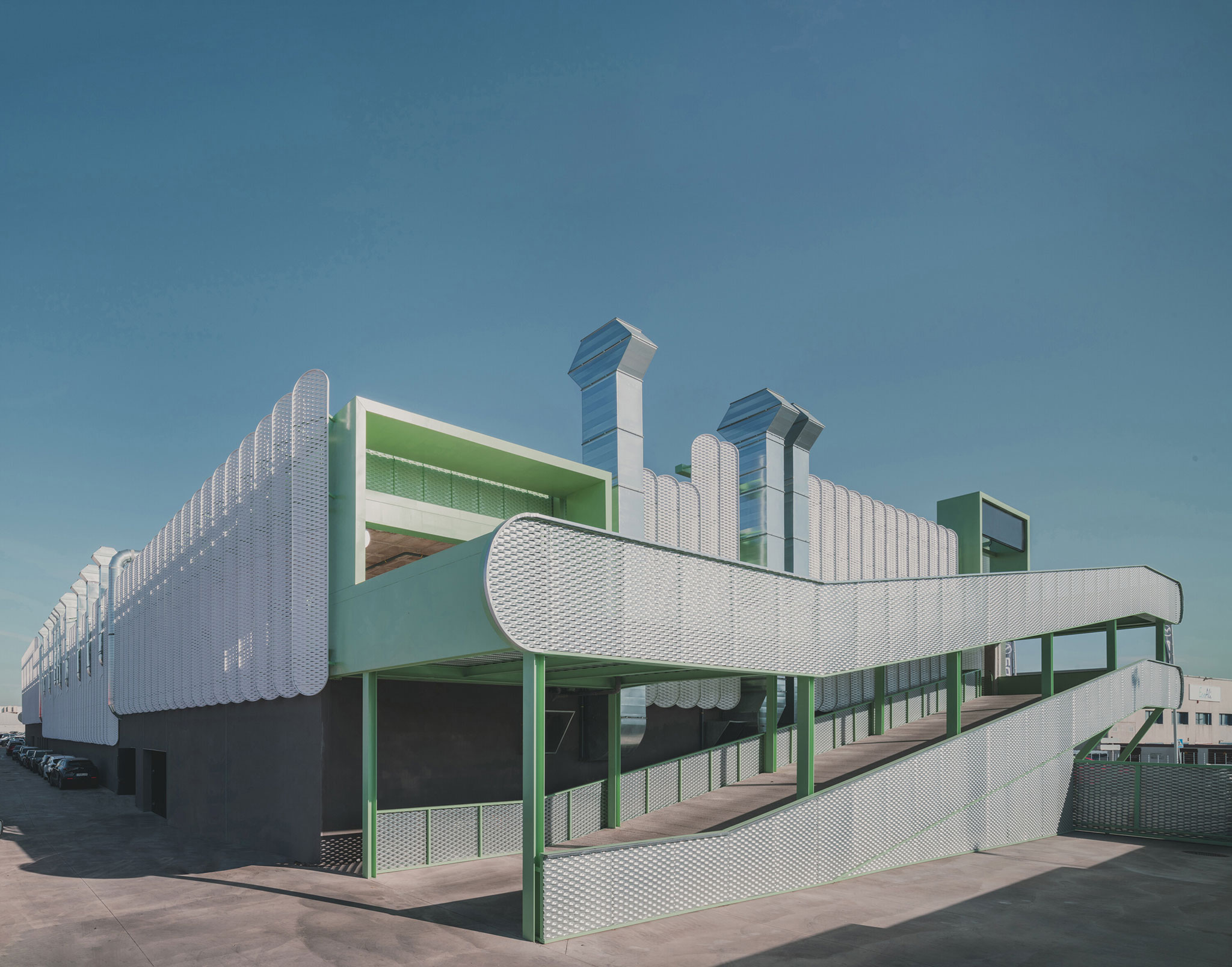
Leganés Auto Center by OOIIO Arquitectura. Photograph by Javier de Paz.
Project description by OOIIO Arquitectura
Sustainability and Emotion in an Industrial Building
Creativity is an extraordinarily powerful tool, capable of offering answers to almost any challenge. In architecture, imagination and unique solutions shouldn't be the exclusive domain of large public buildings or those dream homes we all wish we could live in. There's also room for innovation—and emotion—in the most unexpected places.
That was the starting point when a businessman commissioned the architecture firm OOIIO to build a large building for the sale and repair of automobiles in an industrial park specializing in the automotive sector in Leganés, one of the cities in Greater Madrid. The challenge was as attractive as it was complex: a large-scale building that had to house ample retail space, offices, mechanical and bodywork workshops, as well as storage areas for hundreds of vehicles, while also managing the heavy daily traffic of cars within the building itself. Adding to this functional complexity was a key condition: the site already contained a disused industrial building, a former kitchen factory that had been abandoned for years.
This type of architecture is usually left to engineering firms that opt for predictable and strictly functional solutions. It's rare to entrust these kinds of projects to studios with a creative profile like OOIIO. A visit to any industrial park is enough to see the scant attention paid to architecture, light, materials, or the capacity of these buildings to evoke emotions. That's why this project becomes an exception, a true rarity in the world of mechanical workshops.
As Le Corbusier said, a building—including an industrial one—can be understood as a machine, where everything must be in its place. A car must function perfectly: efficiency and function are essential. But it must also evoke emotion, generate feelings. Driving a sports car is not the same as driving a van, even though both take you from point A to point B. Car manufacturers know this well and consciously cultivate this emotional component. In this case, that same logic is applied to the architecture.
The first major decision of the project was to repurpose the existing factory and adapt it to its new uses. This was clearly a more sustainable approach than demolishing and constructing a completely new building, an option that would have been quicker and simpler, but also much more costly in environmental terms. Can a former kitchen factory be transformed into a car dealership and workshop? The answer is a resounding yes.
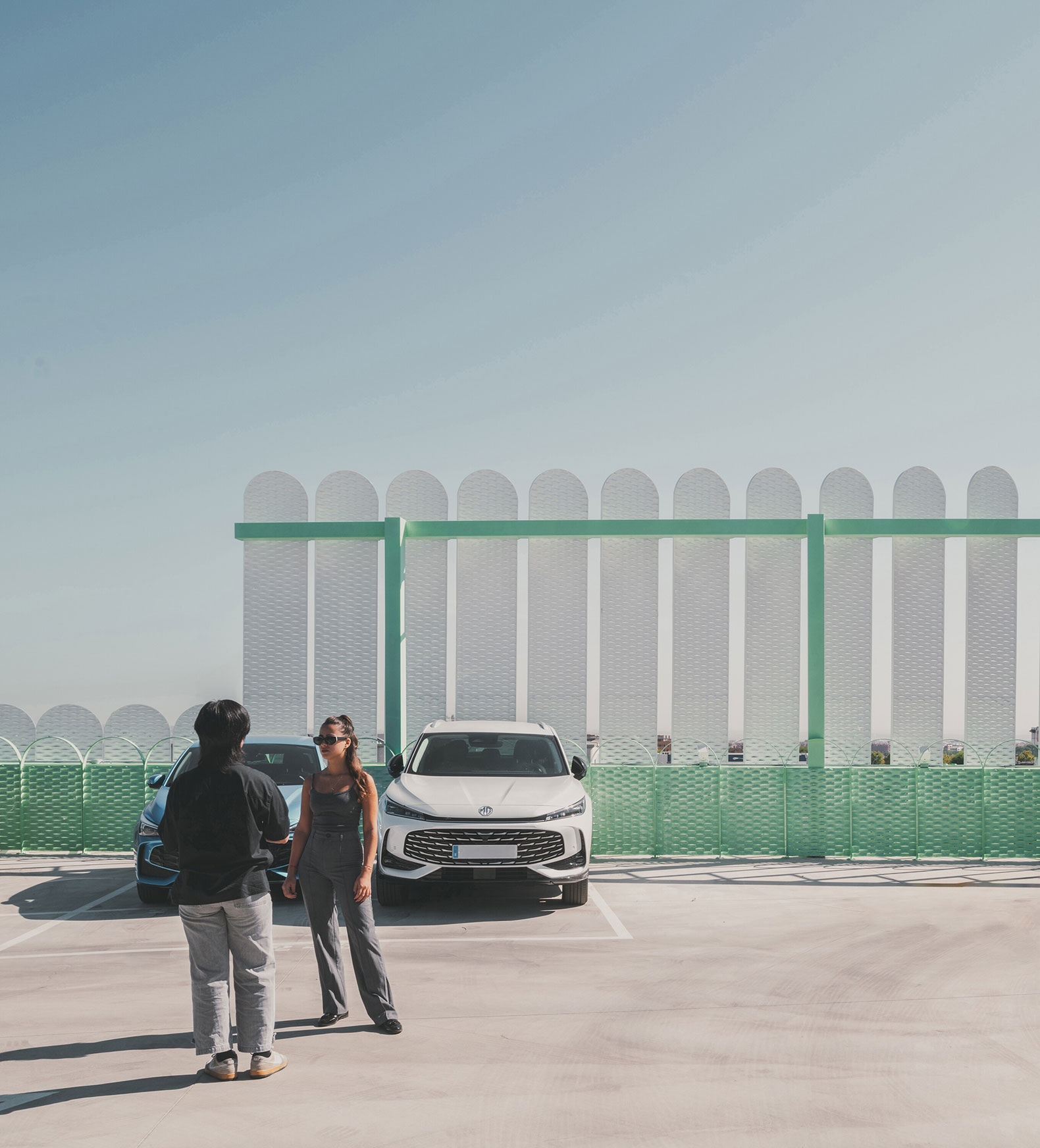
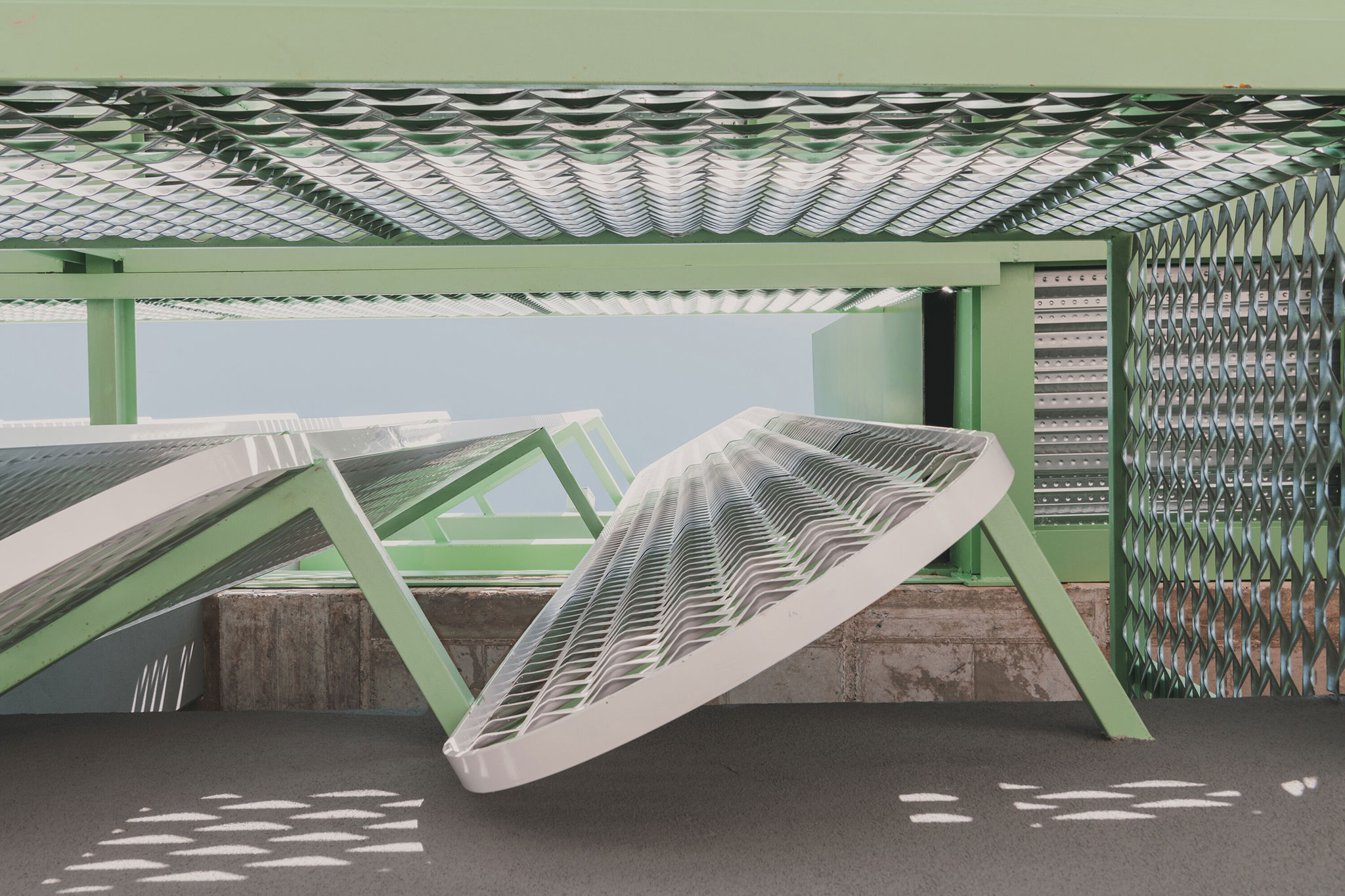
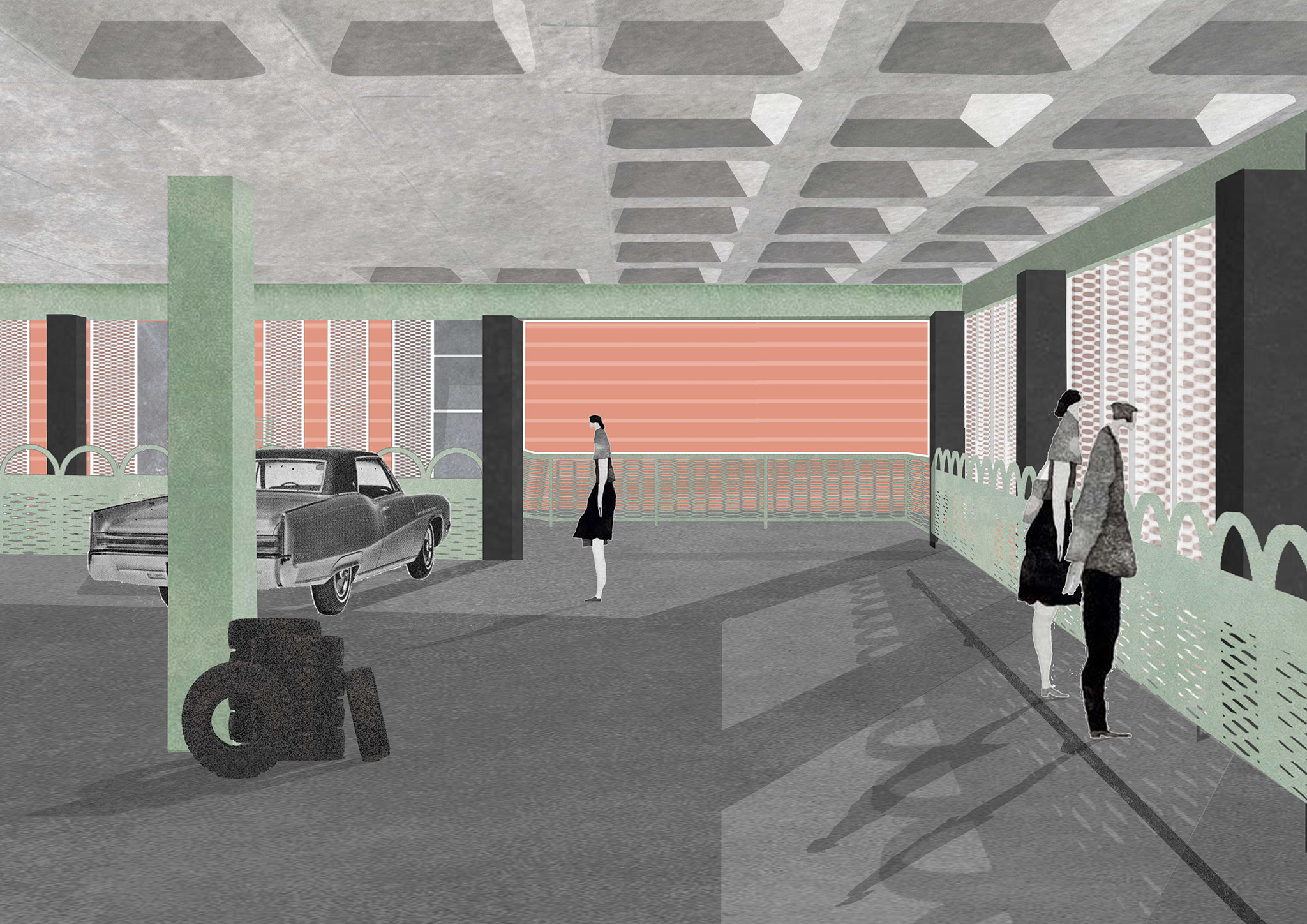
Following functional criteria, the ground floor is dedicated to retail space and mechanical and bodywork workshops, while the two upper floors are used as a vehicle storage area. This required reinforcing the existing structure to support the new loads. Furthermore, the original roof was removed, and a new upper storage level was created, protected from the sun by photovoltaic pergolas capable of generating enough energy to supply not only the building but also others in the surrounding area.
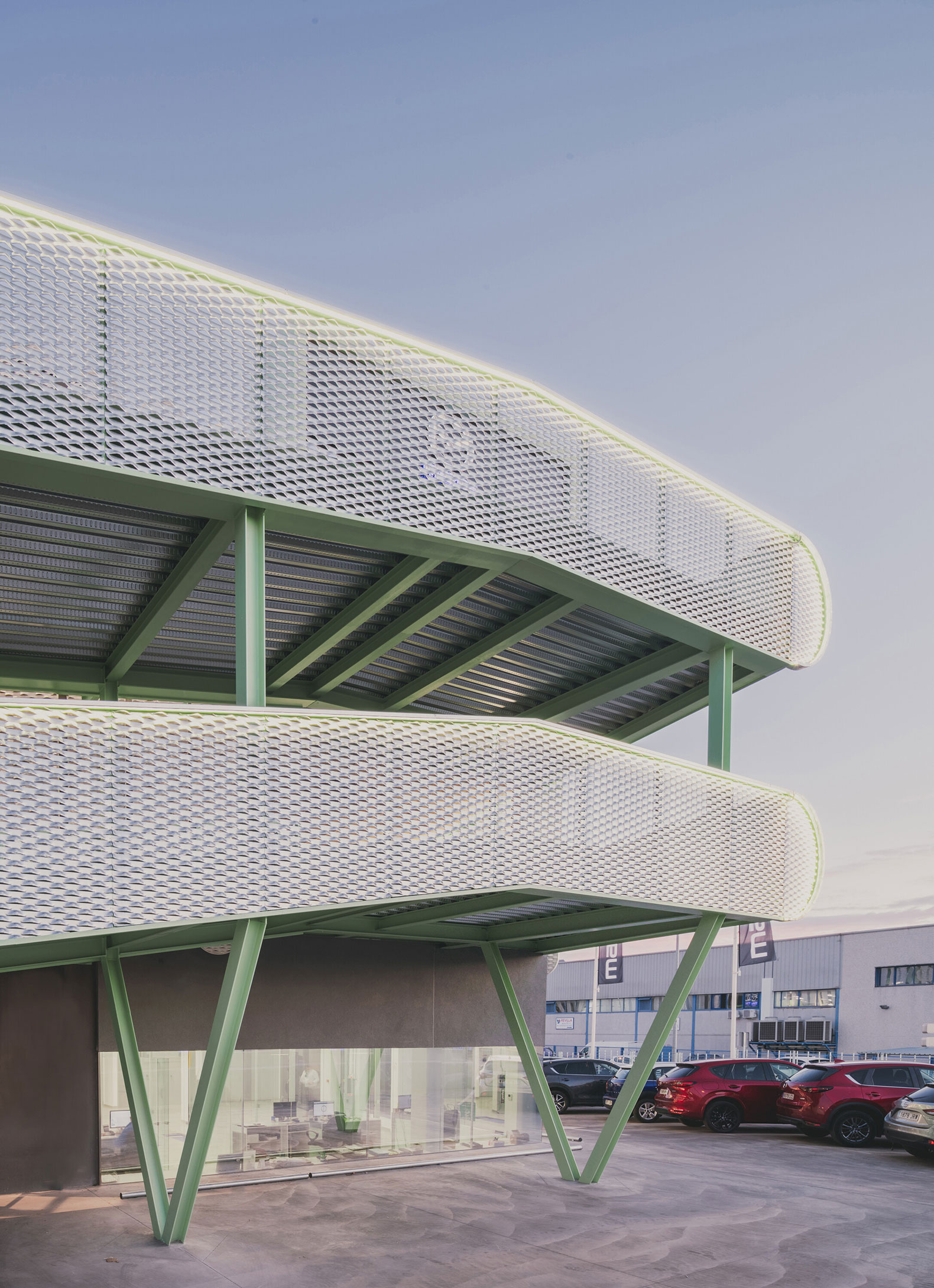
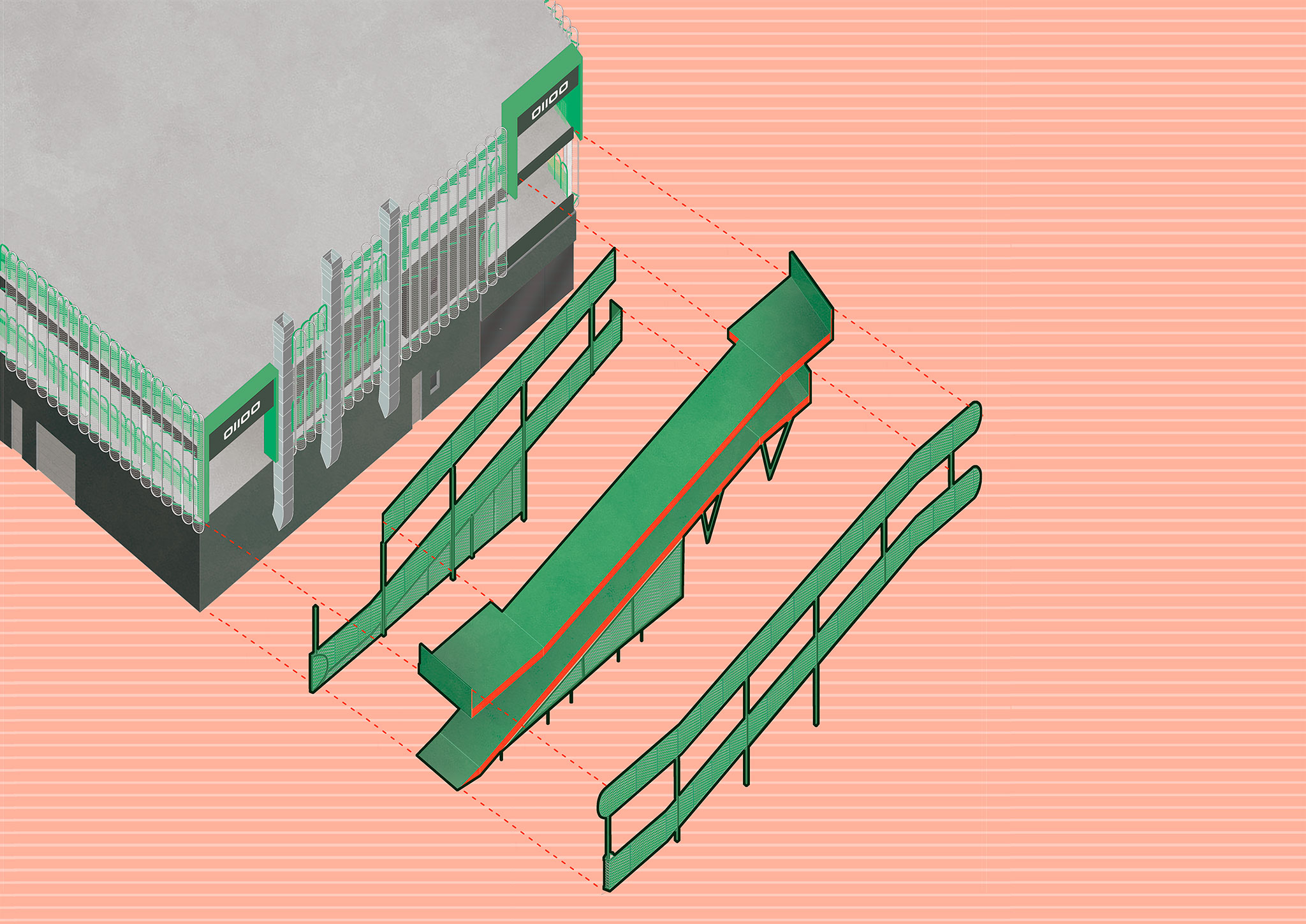
Two large ramps were incorporated along the sides, organizing internal circulation and coexisting with the customer vehicle access on the ground floor. With the addition of offices on the first floor, the building's functional program is fully resolved.
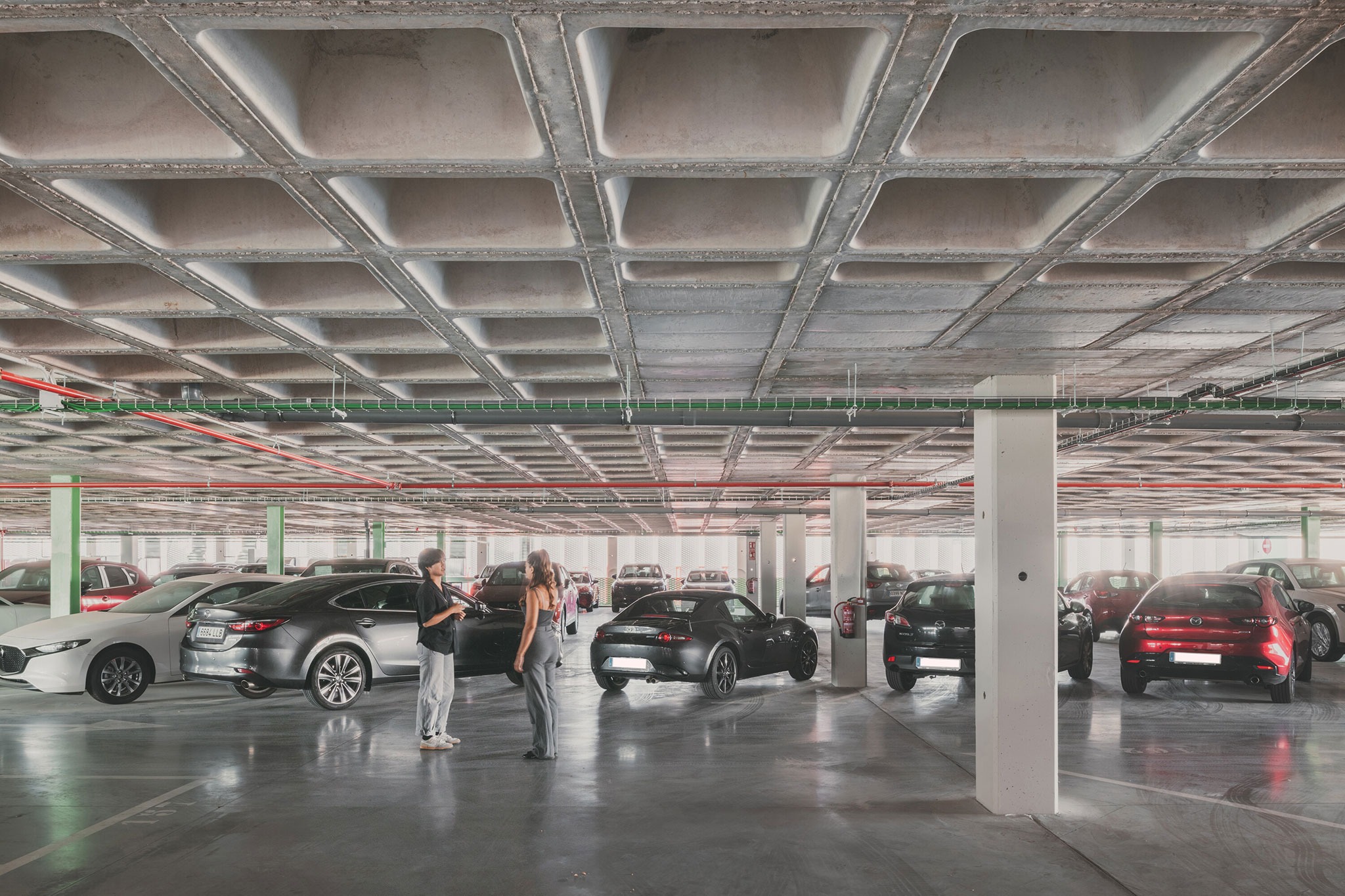
The old factory had a closed, heavy brick facade, lacking insulation and practically invisible in its surroundings. The project completely transforms the relationship between interior and exterior, opening the building to its context. The upper storage floors are not climate-controlled and remain open, concentrating energy consumption solely on the ground floor, where employees and customers are located.
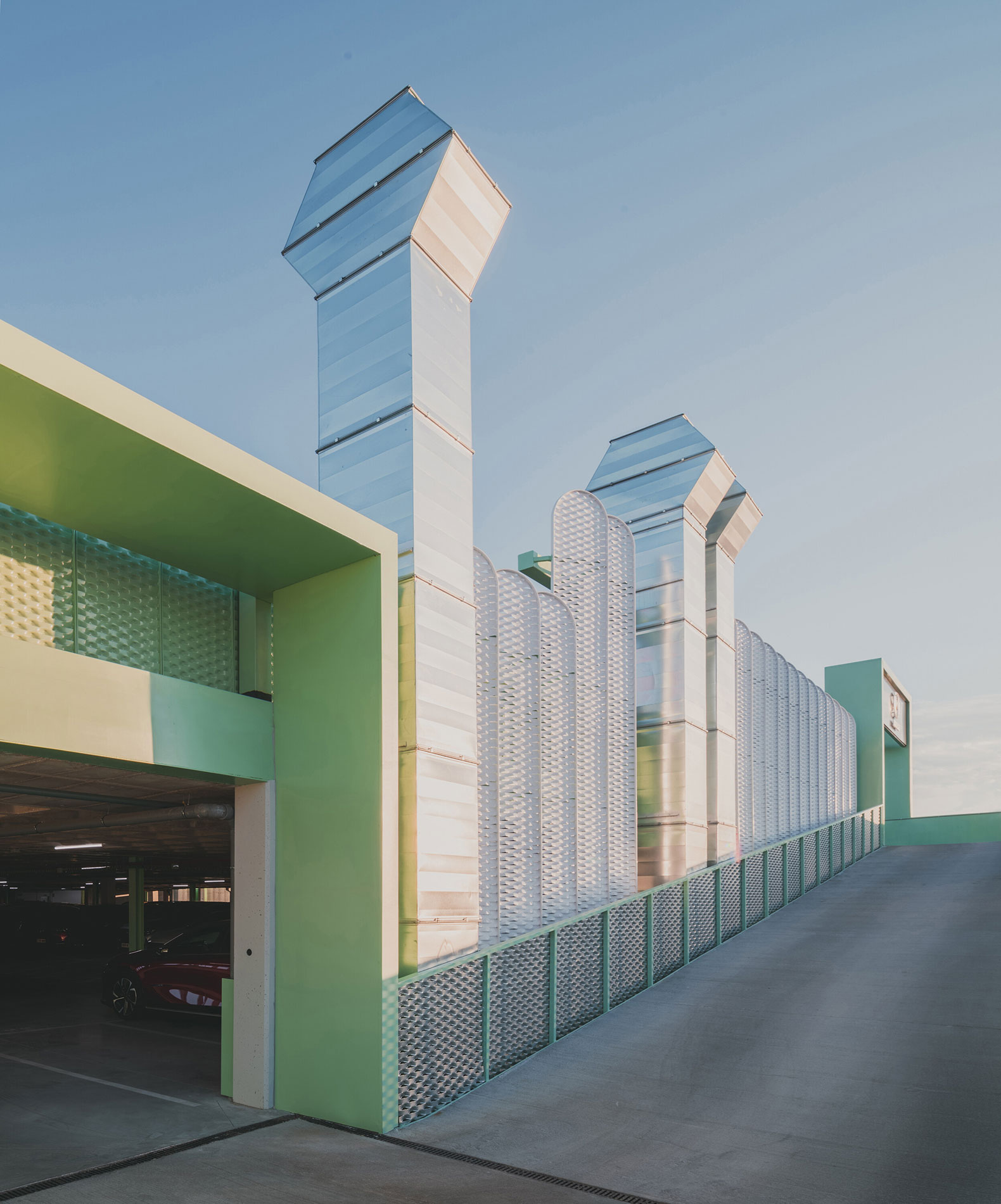
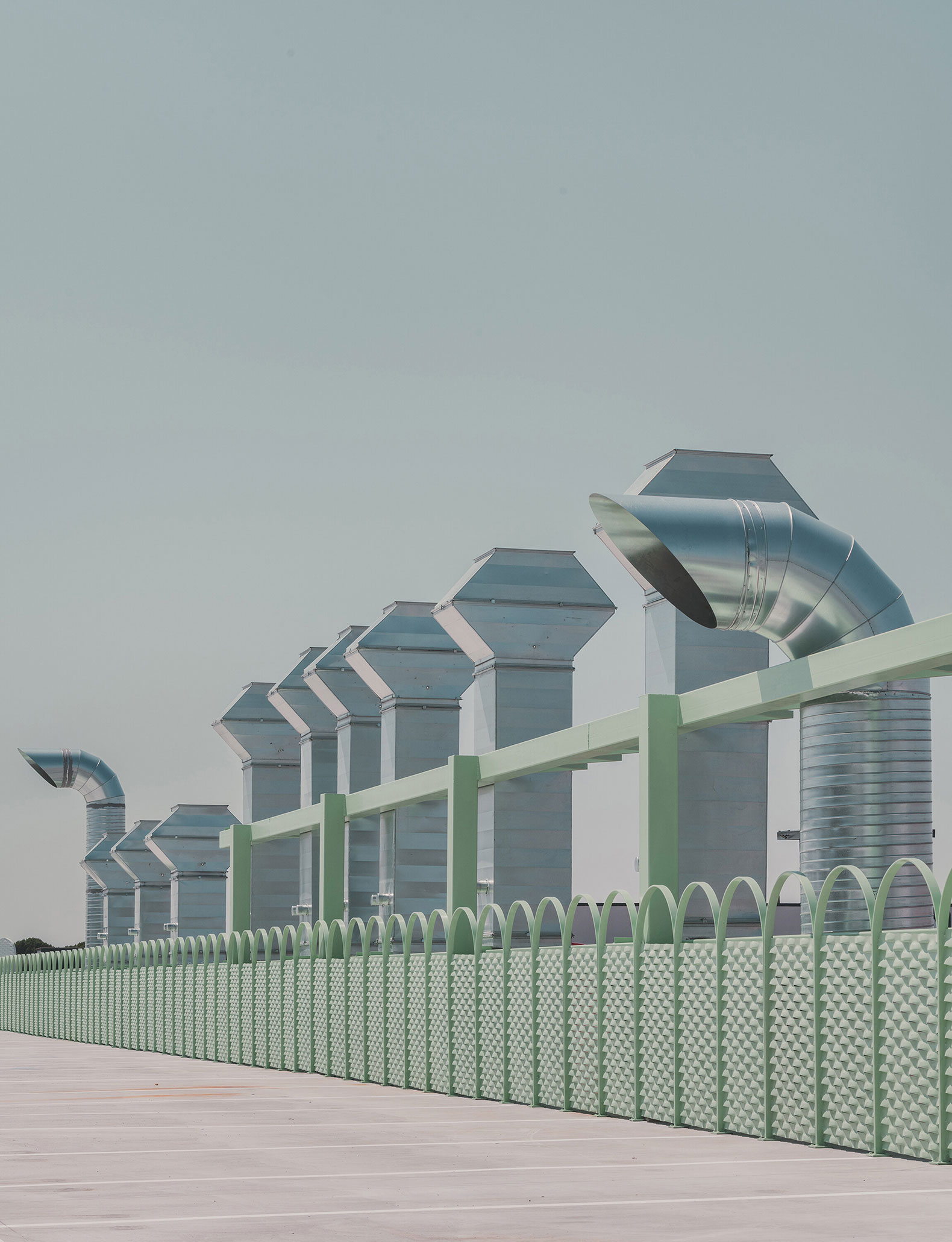
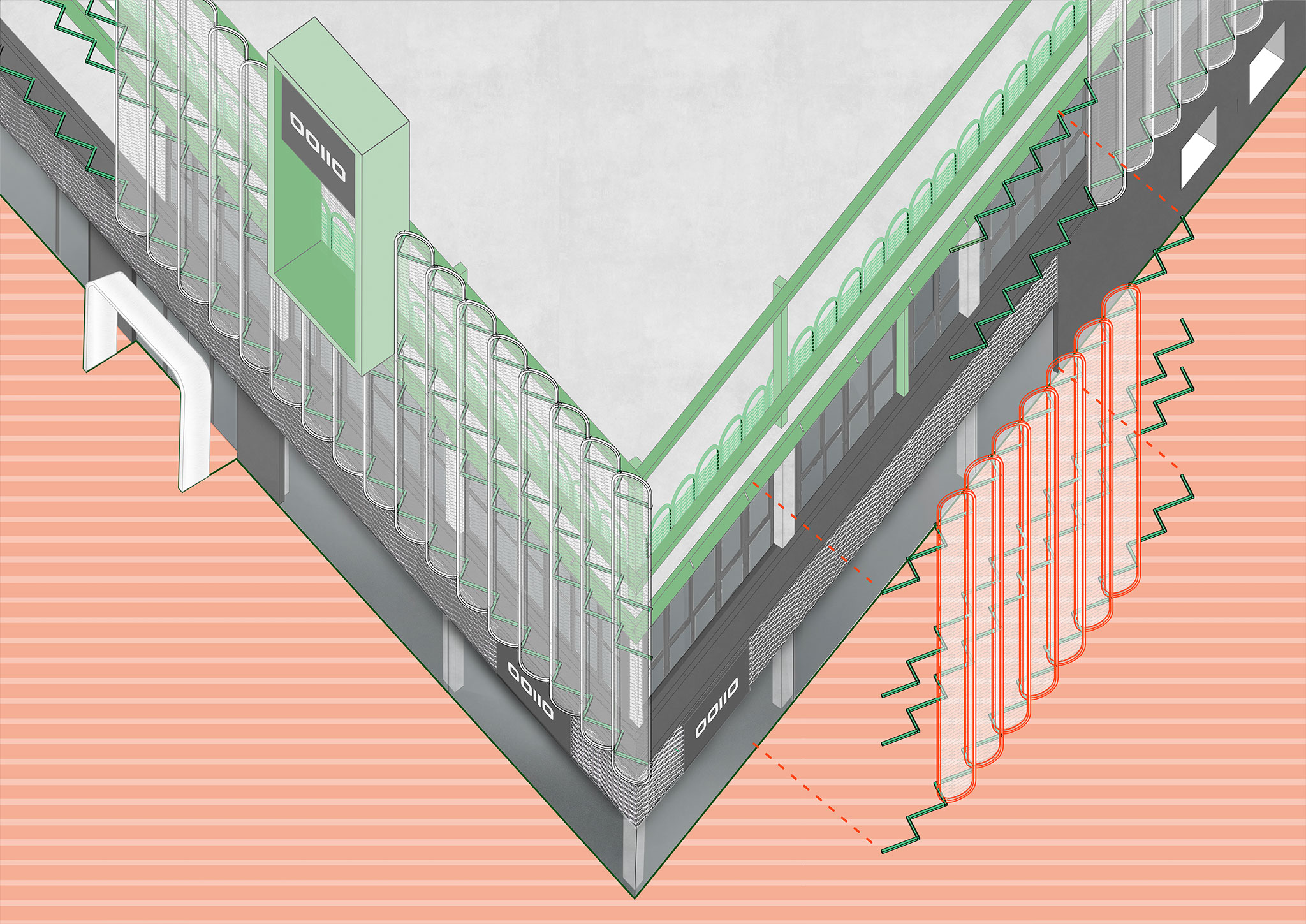
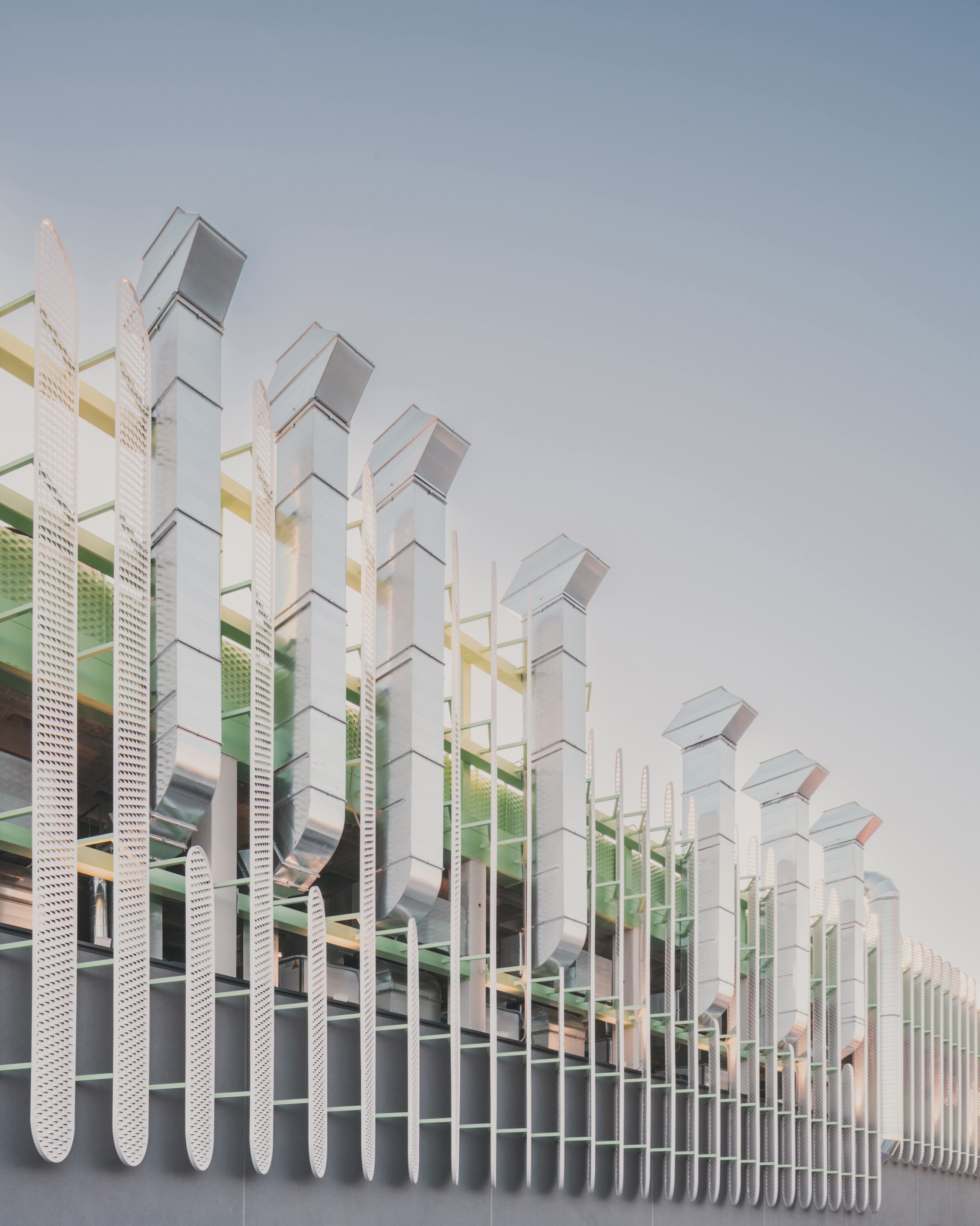
The new facade is composed of large, white metal louvers of varying sizes, anchored to a mint-green substructure, combined with chimneys and vents from the industrial facilities. By bringing these facilities to the facade, the industrial character of the building is showcased and monumentalized, while simultaneously freeing up interior space to facilitate vehicle circulation.
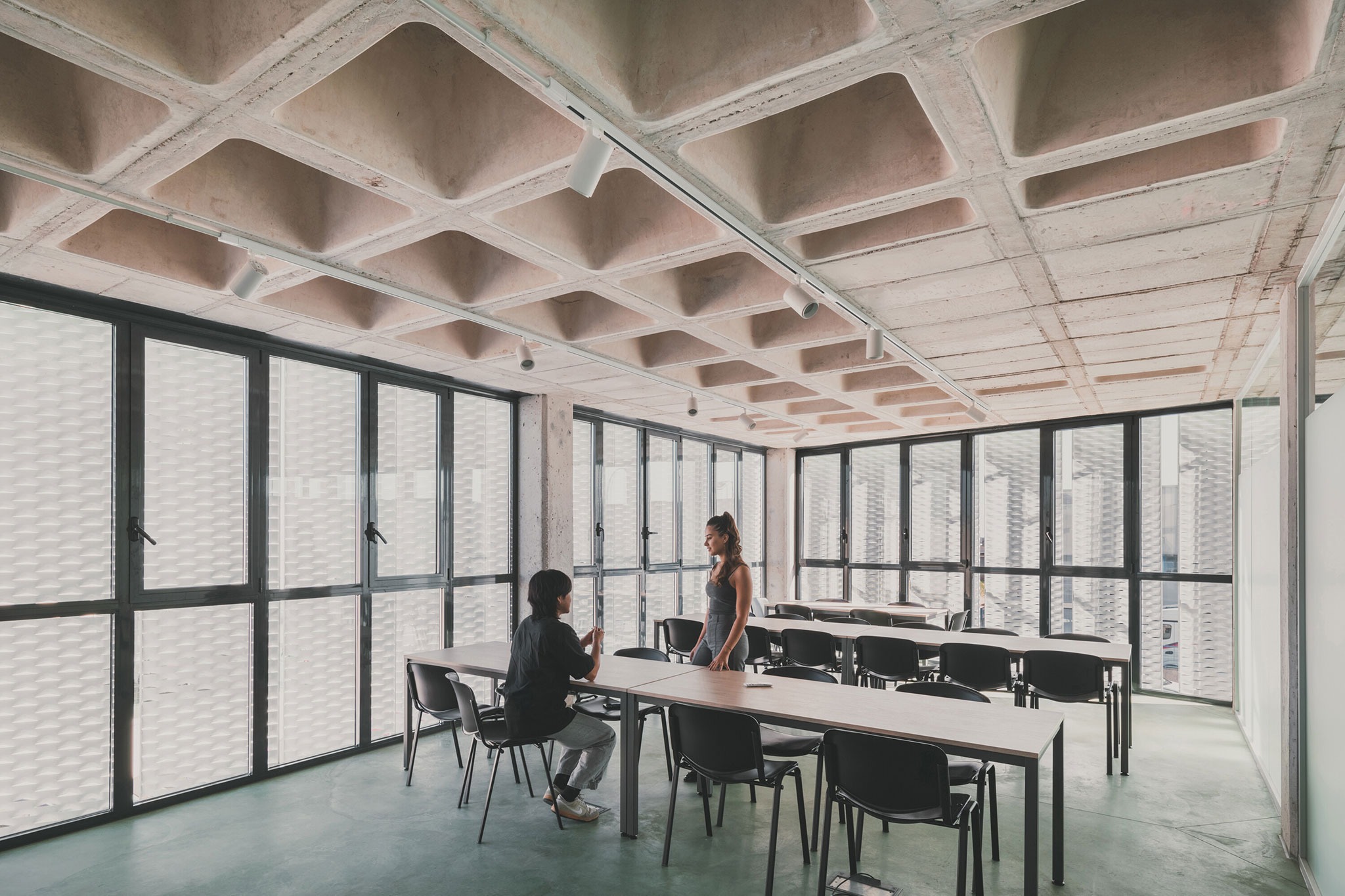
The facade thus becomes the project's defining element: a carport that stands out amidst the monotonous industrial landscape thanks to its textures, formal interplay, and chromatic contrasts. The louvers evoke the vertical banners of car dealerships, capturing the visitor's attention, adding character, and reducing energy consumption through passive solar control. Even during Madrid's intense summer, the upper floors maintain a temperature several degrees lower thanks to cross-ventilation, without the need for air conditioning.
Passive solar control, energy self-sufficiency, rainwater harvesting for vehicle washing, reuse of existing structures, design, and a unique identity. This project demonstrates that another kind of industrial architecture is not only possible, but necessary.