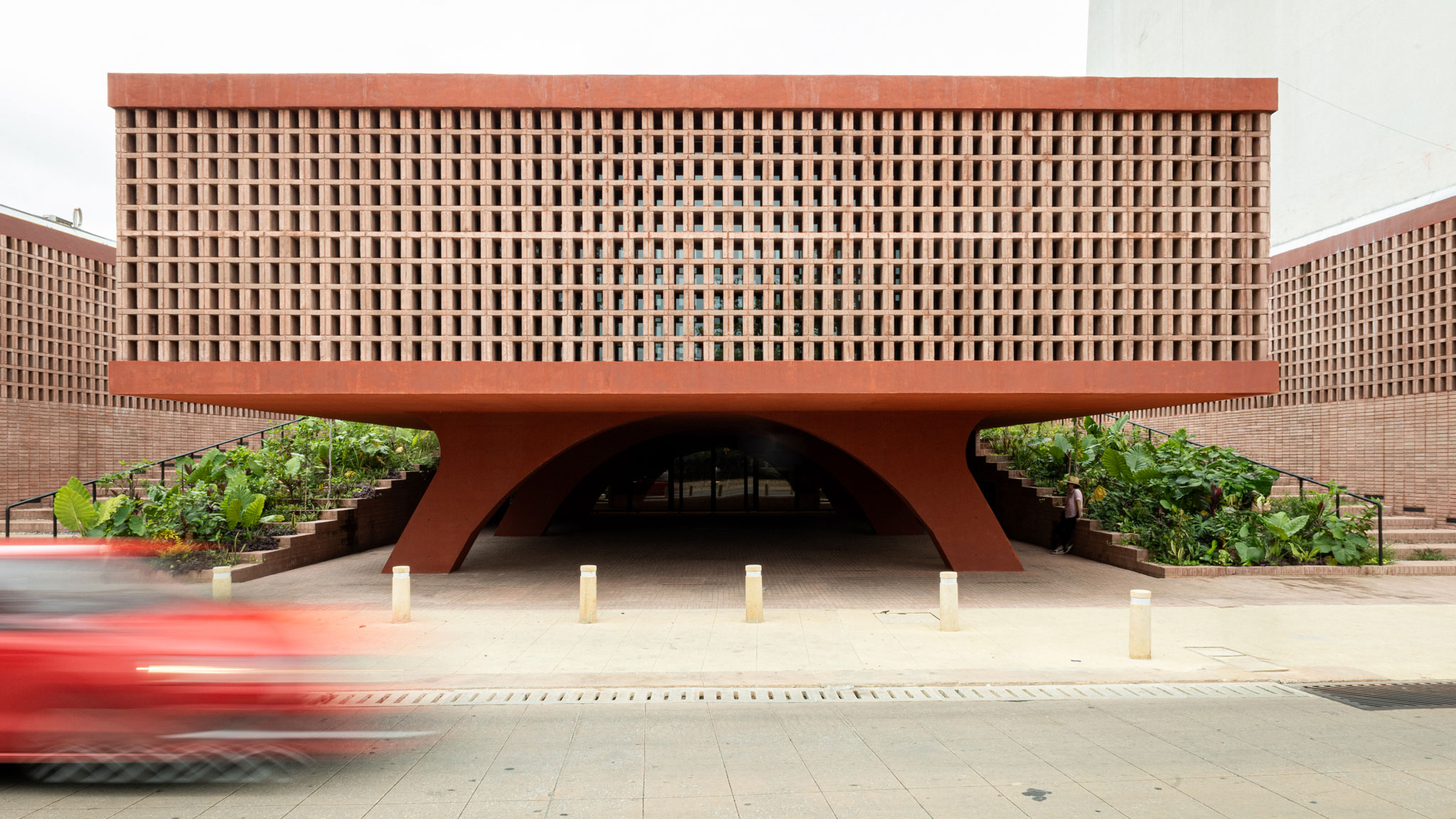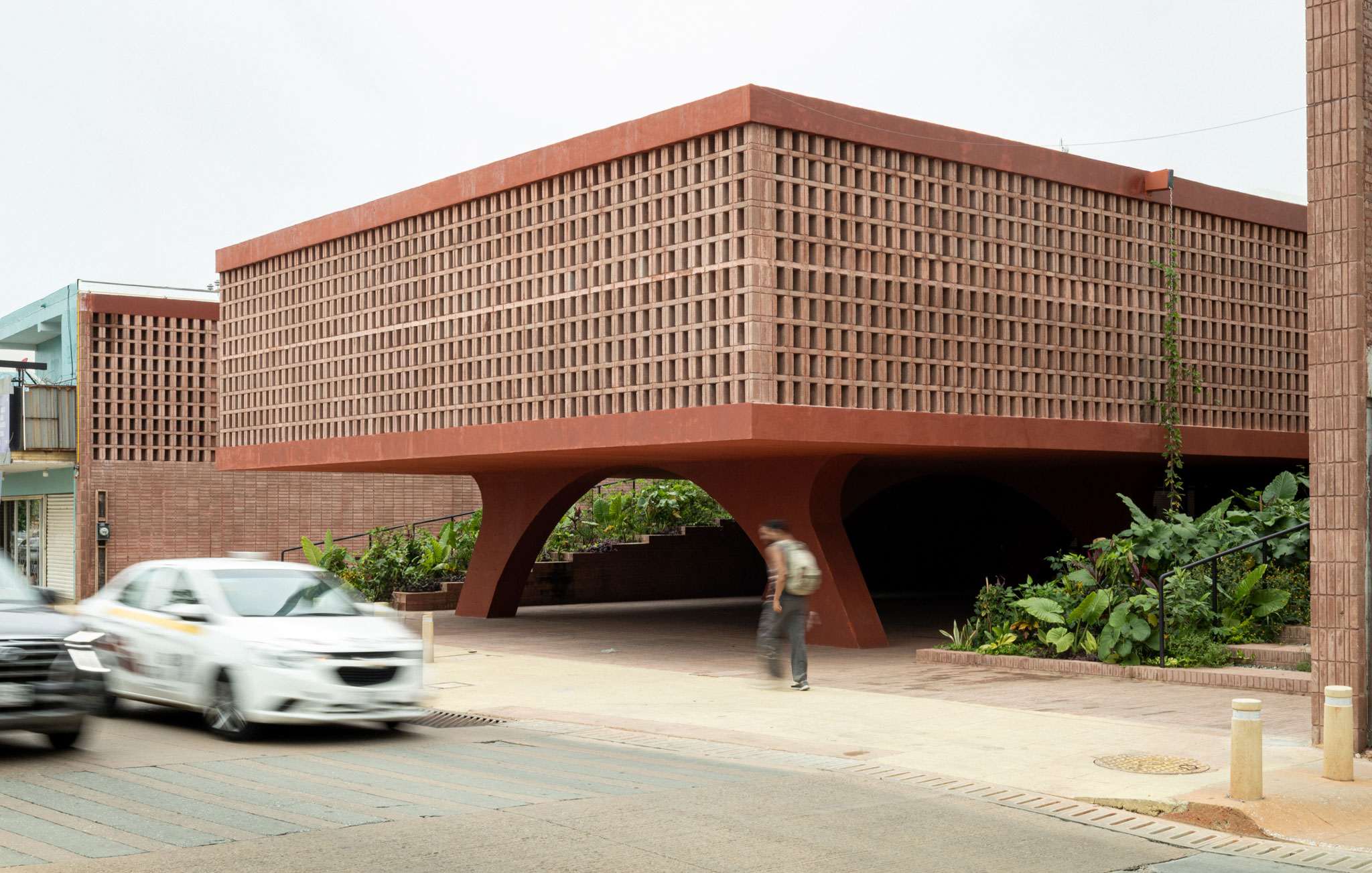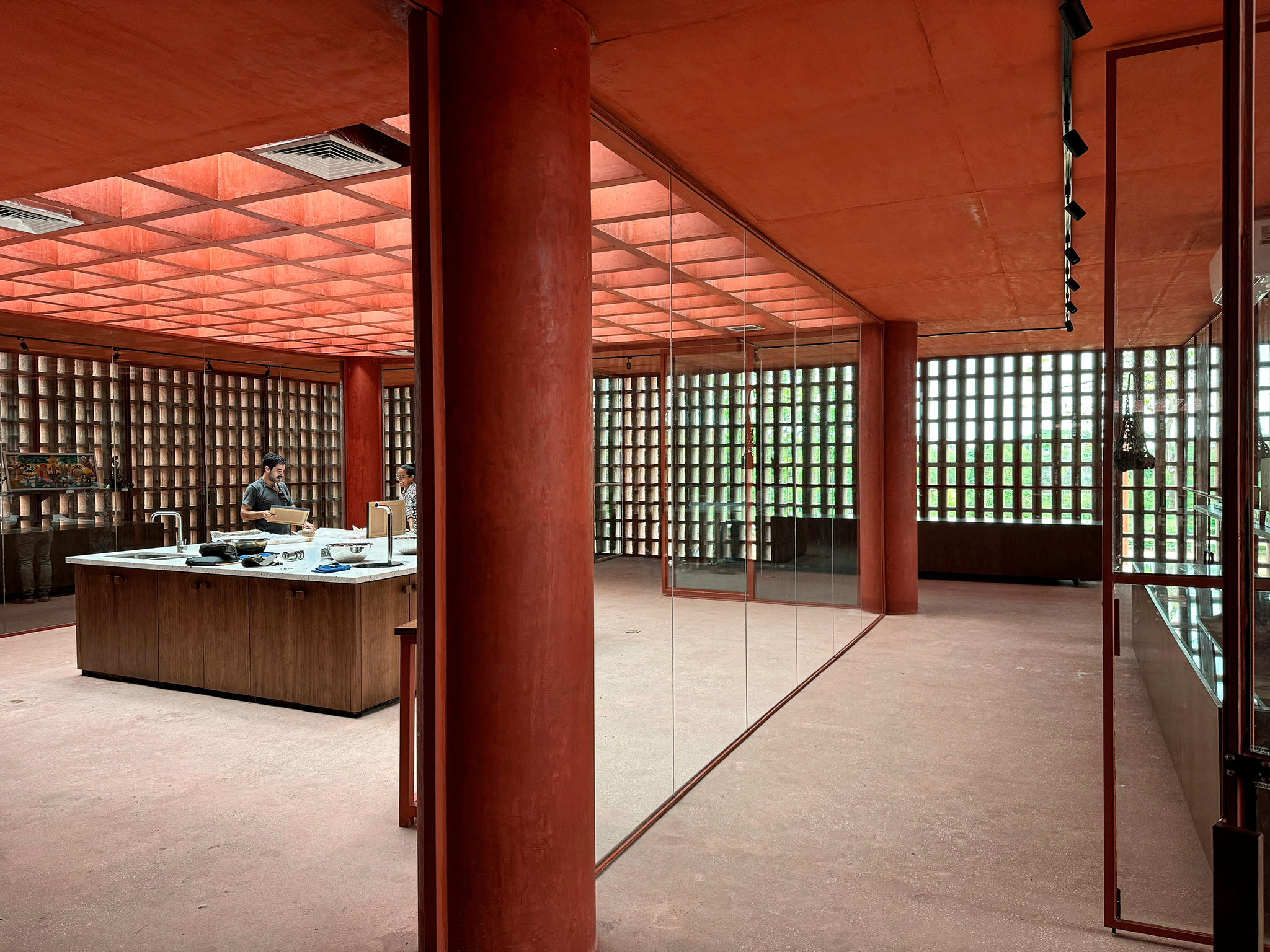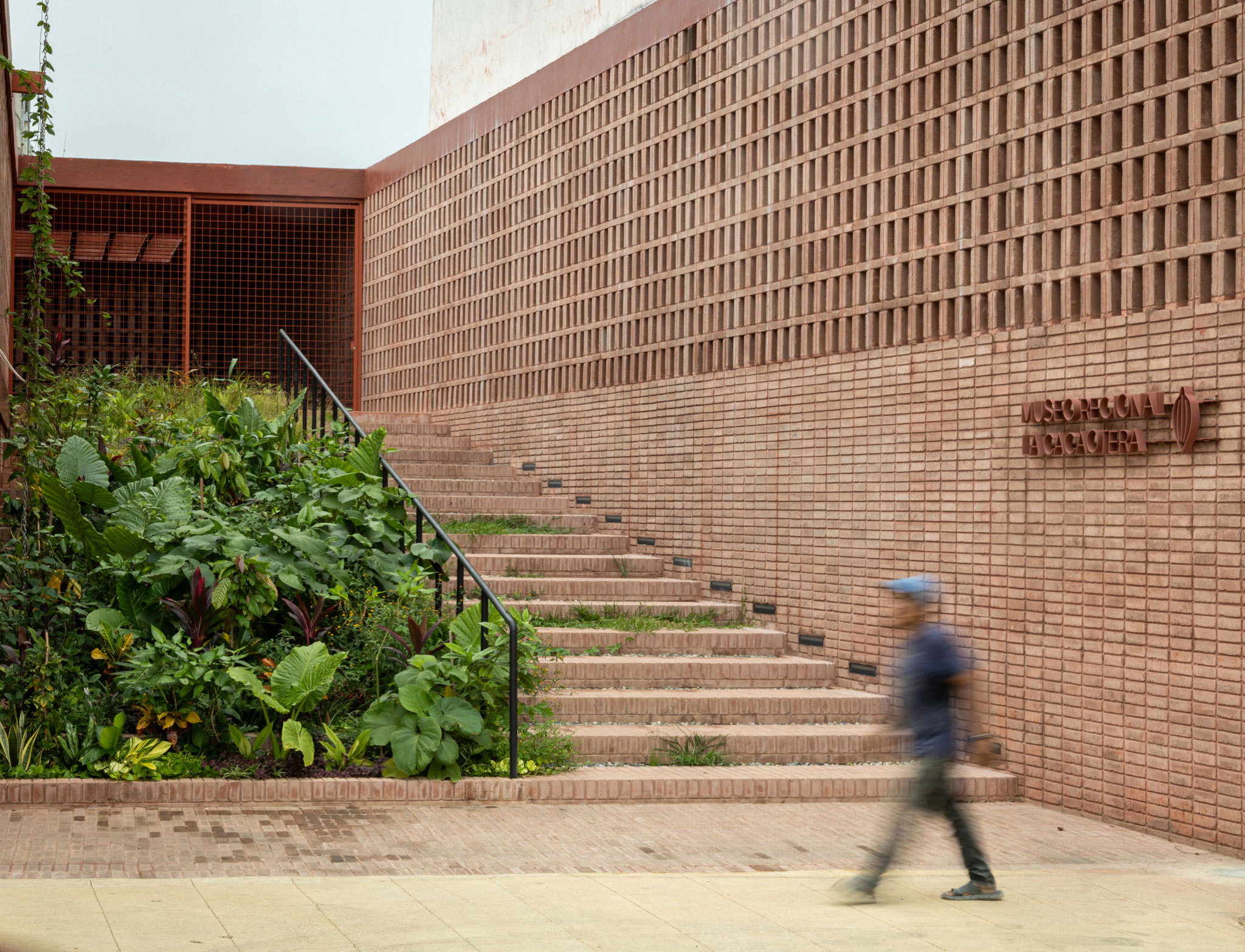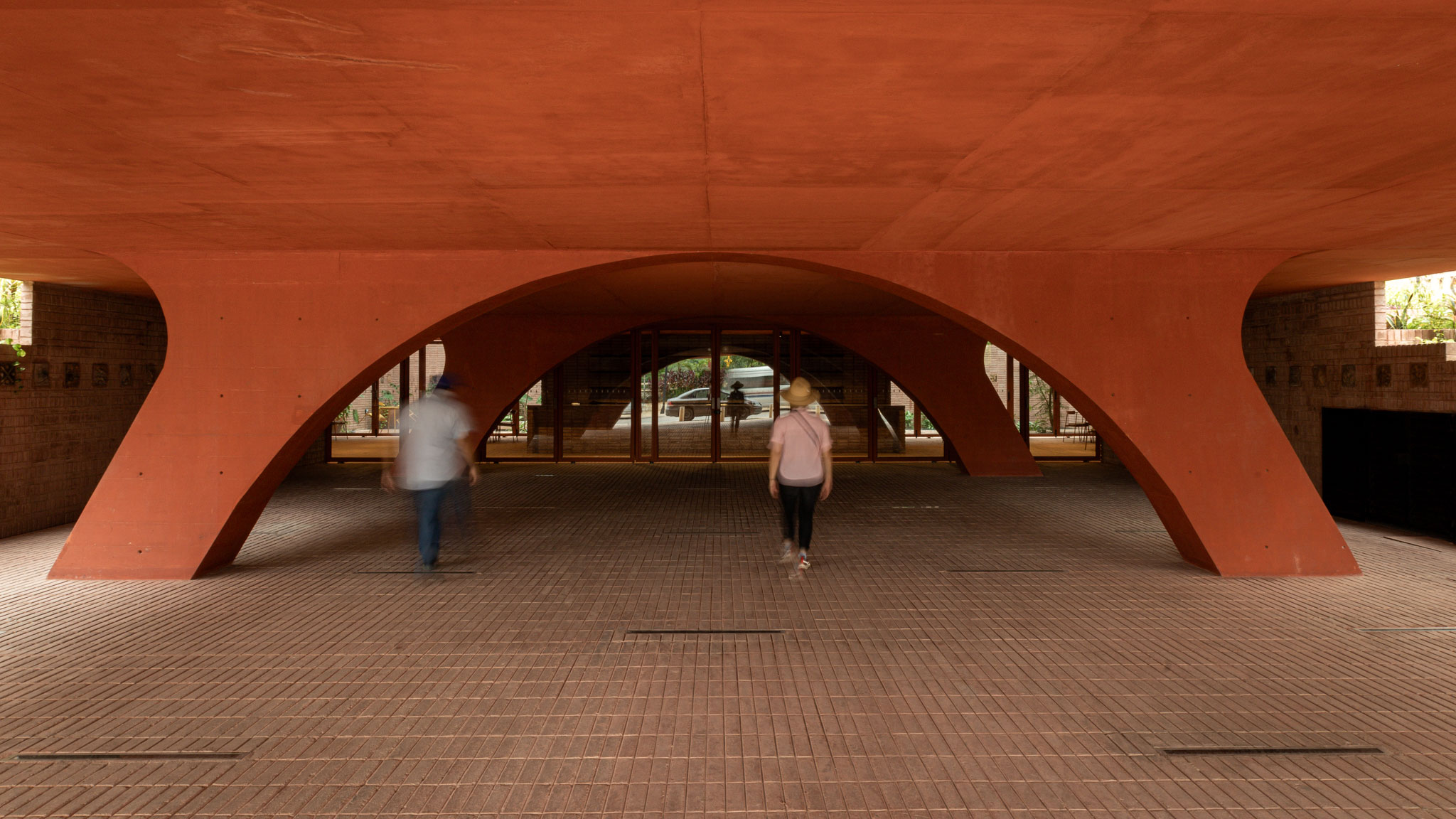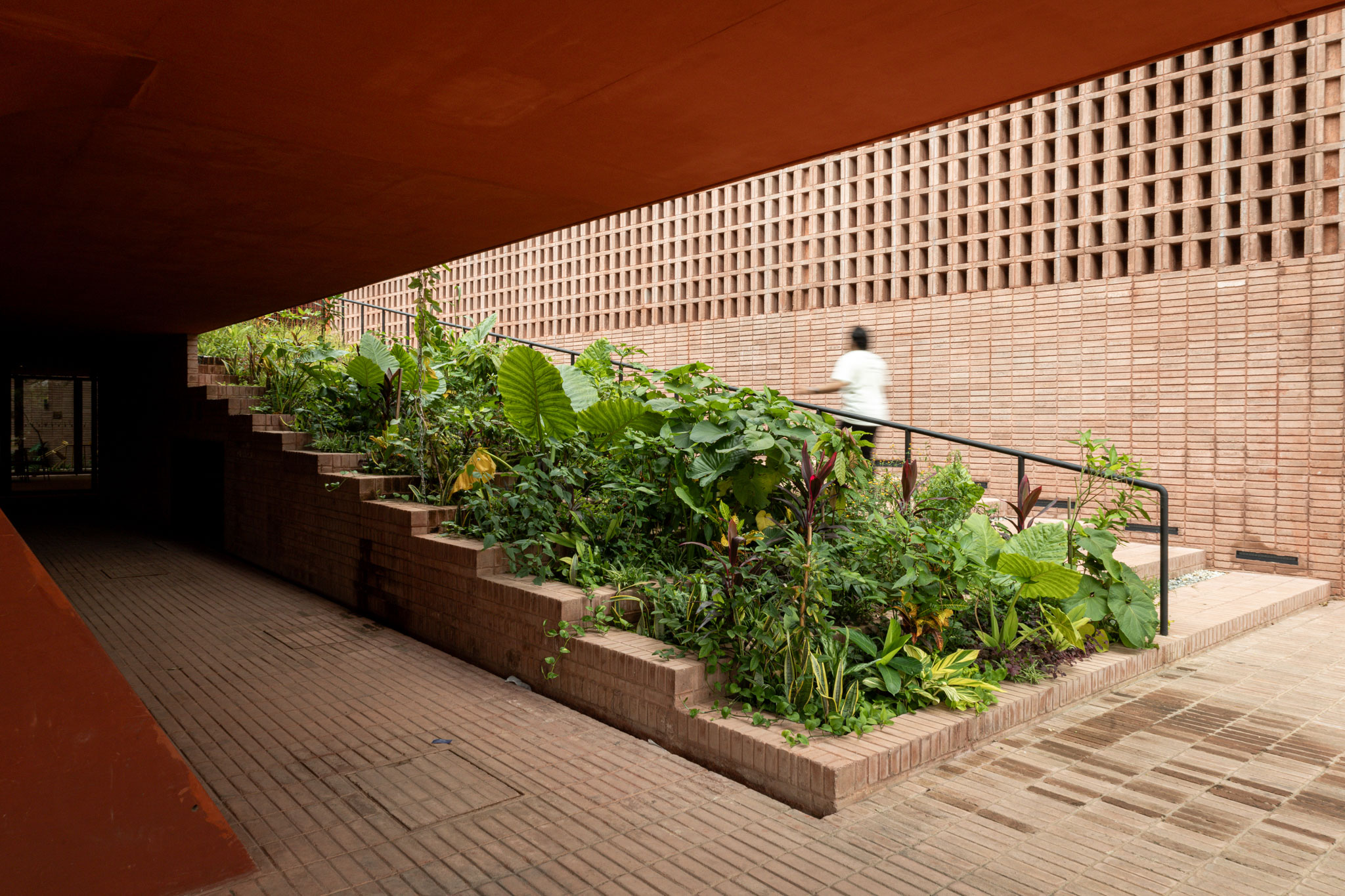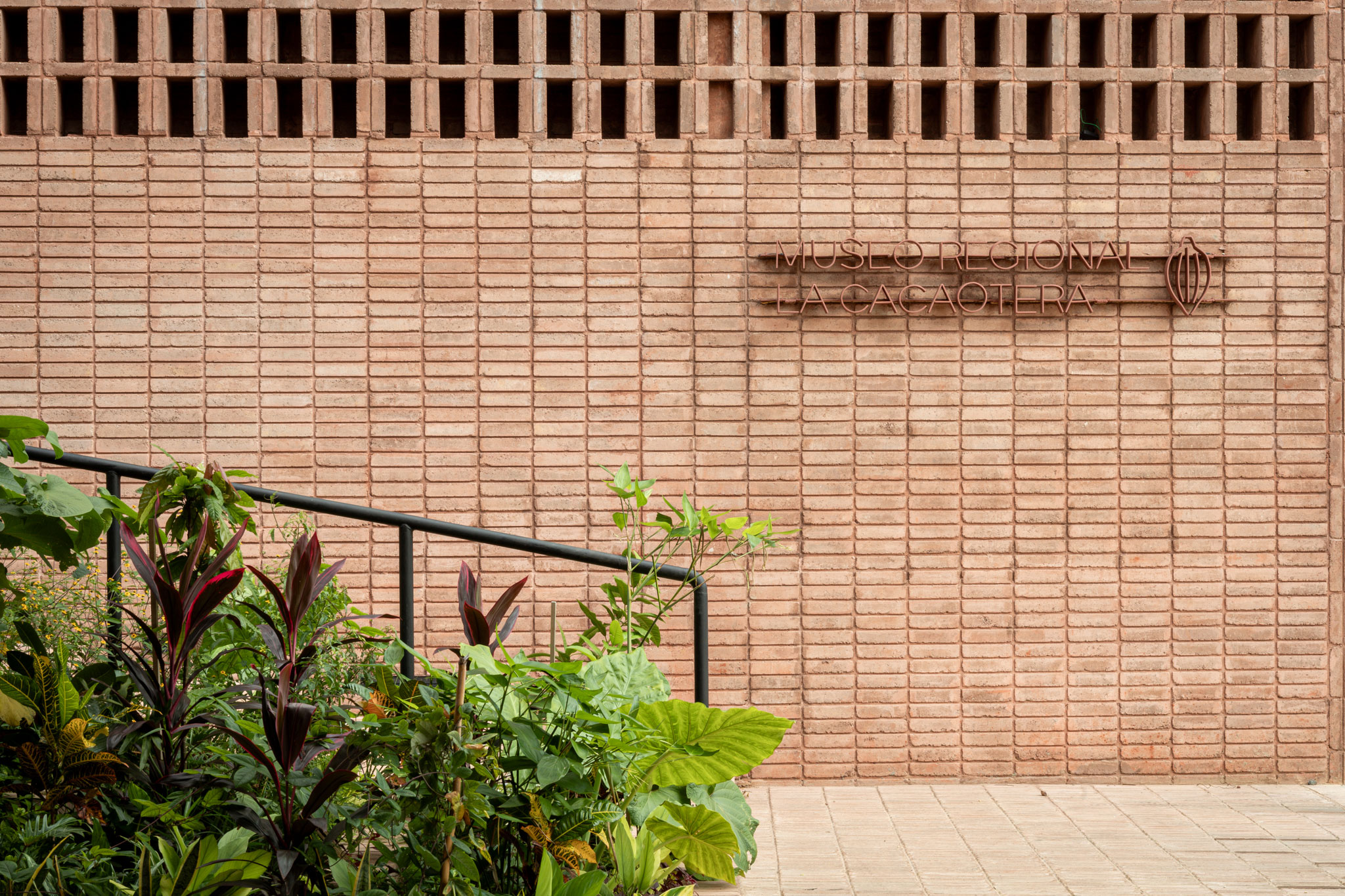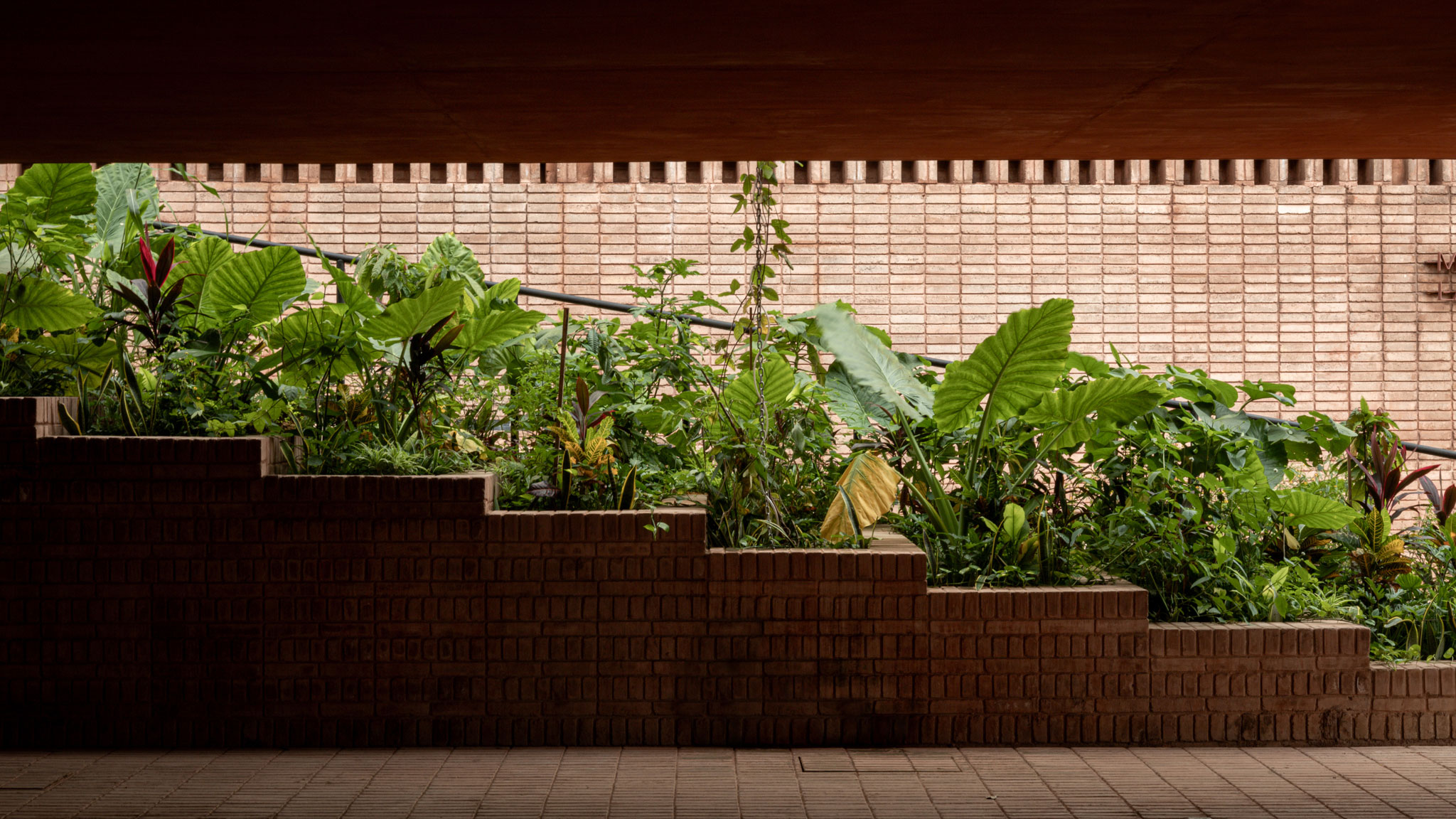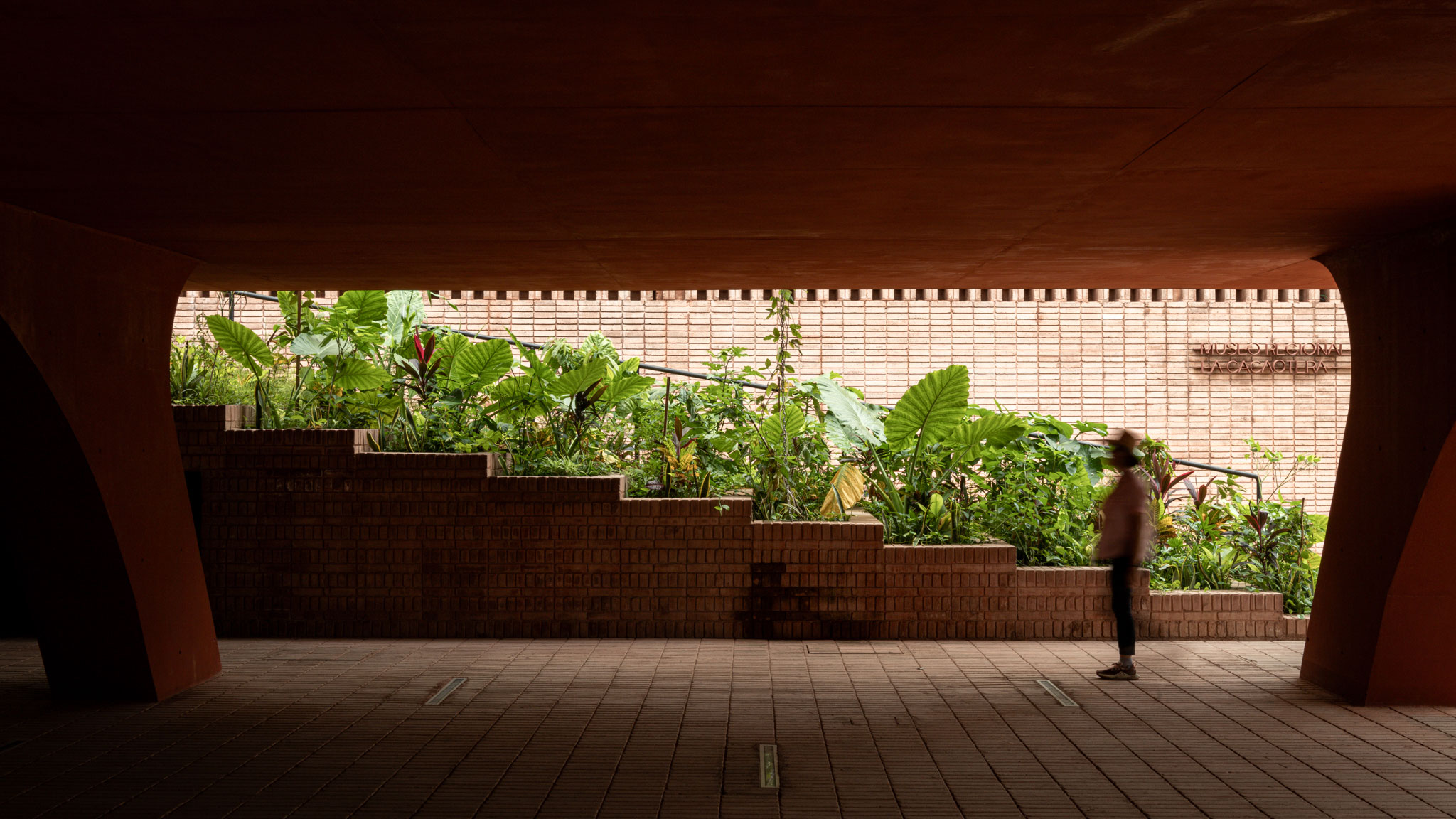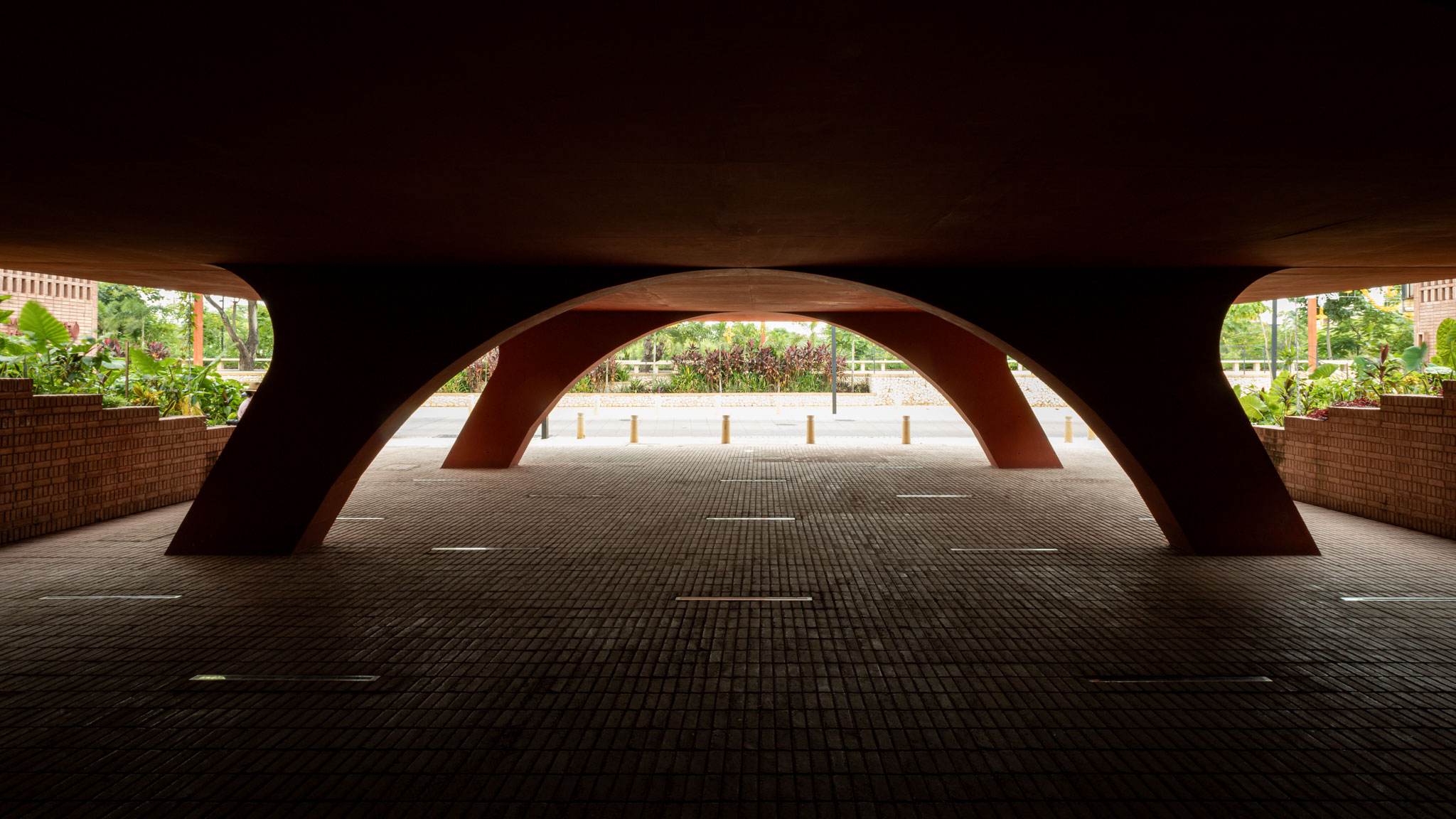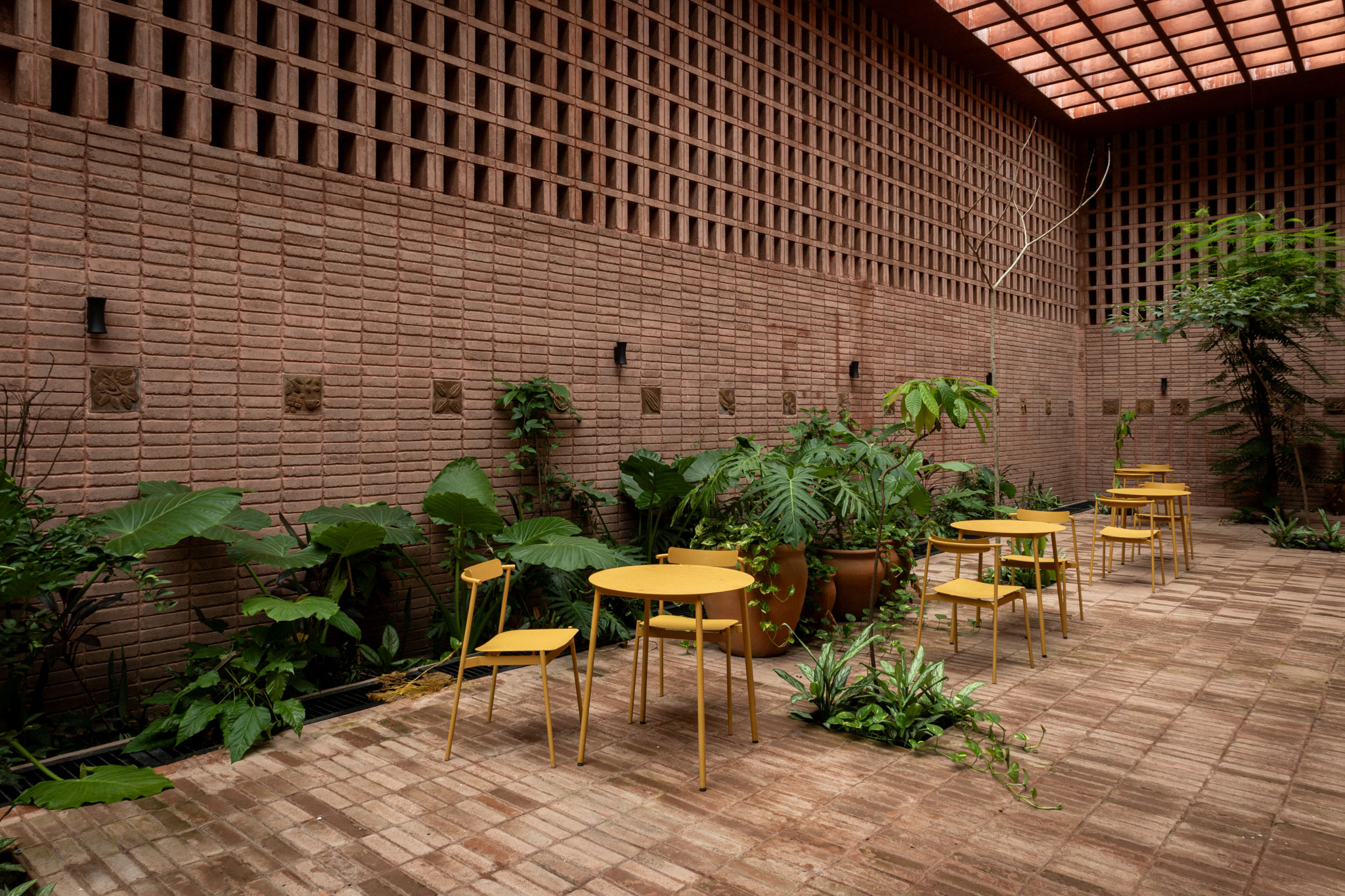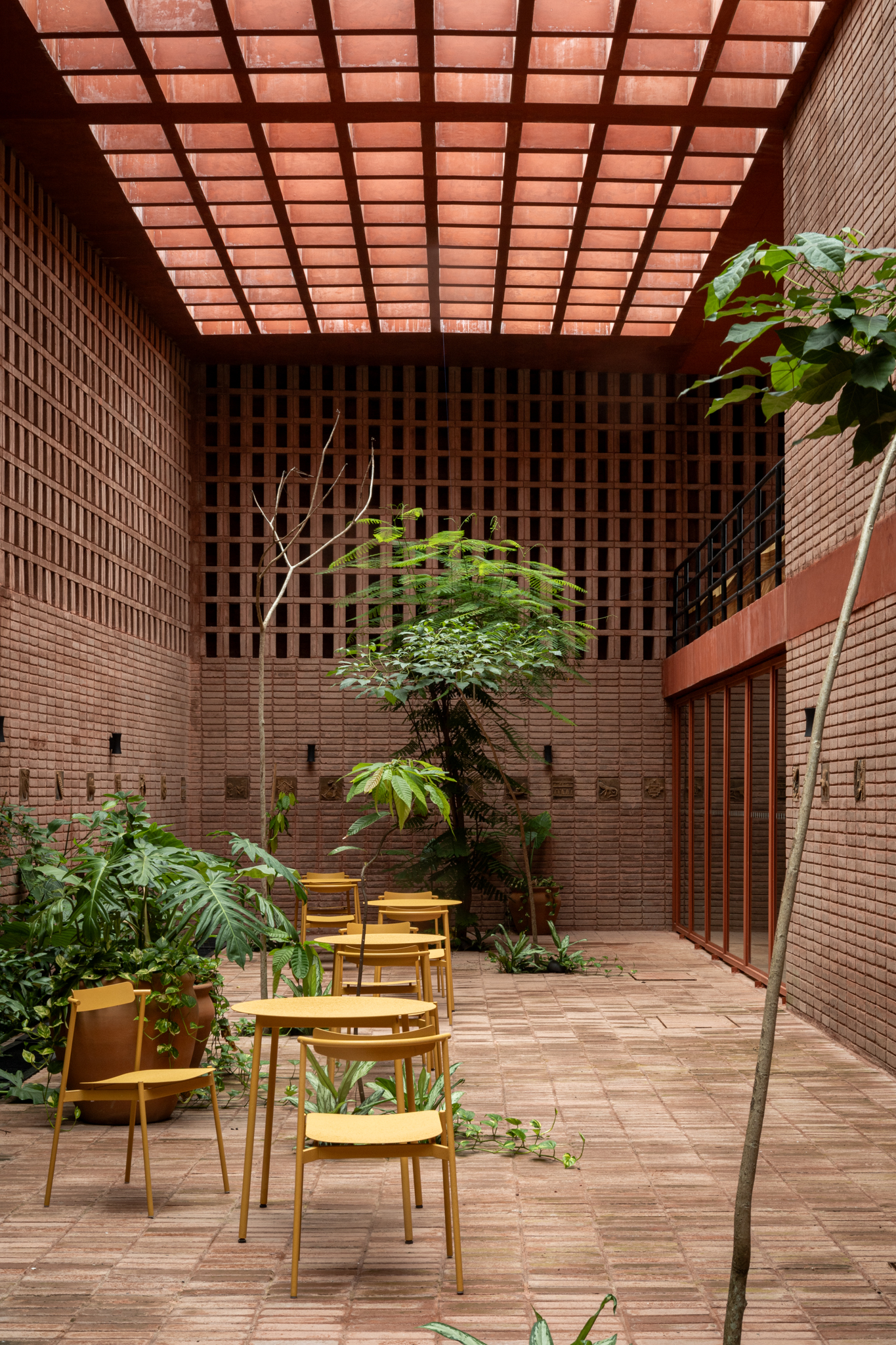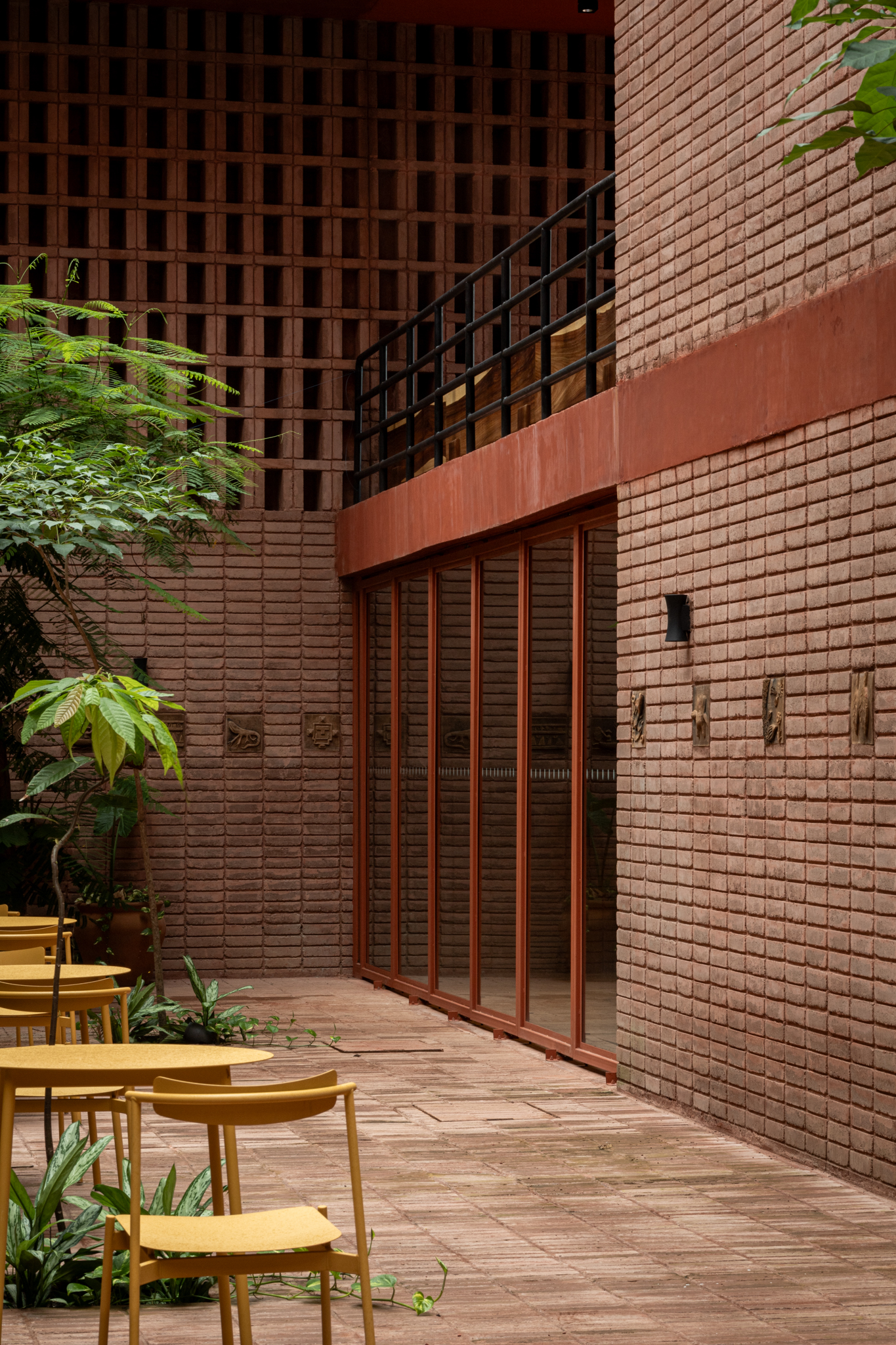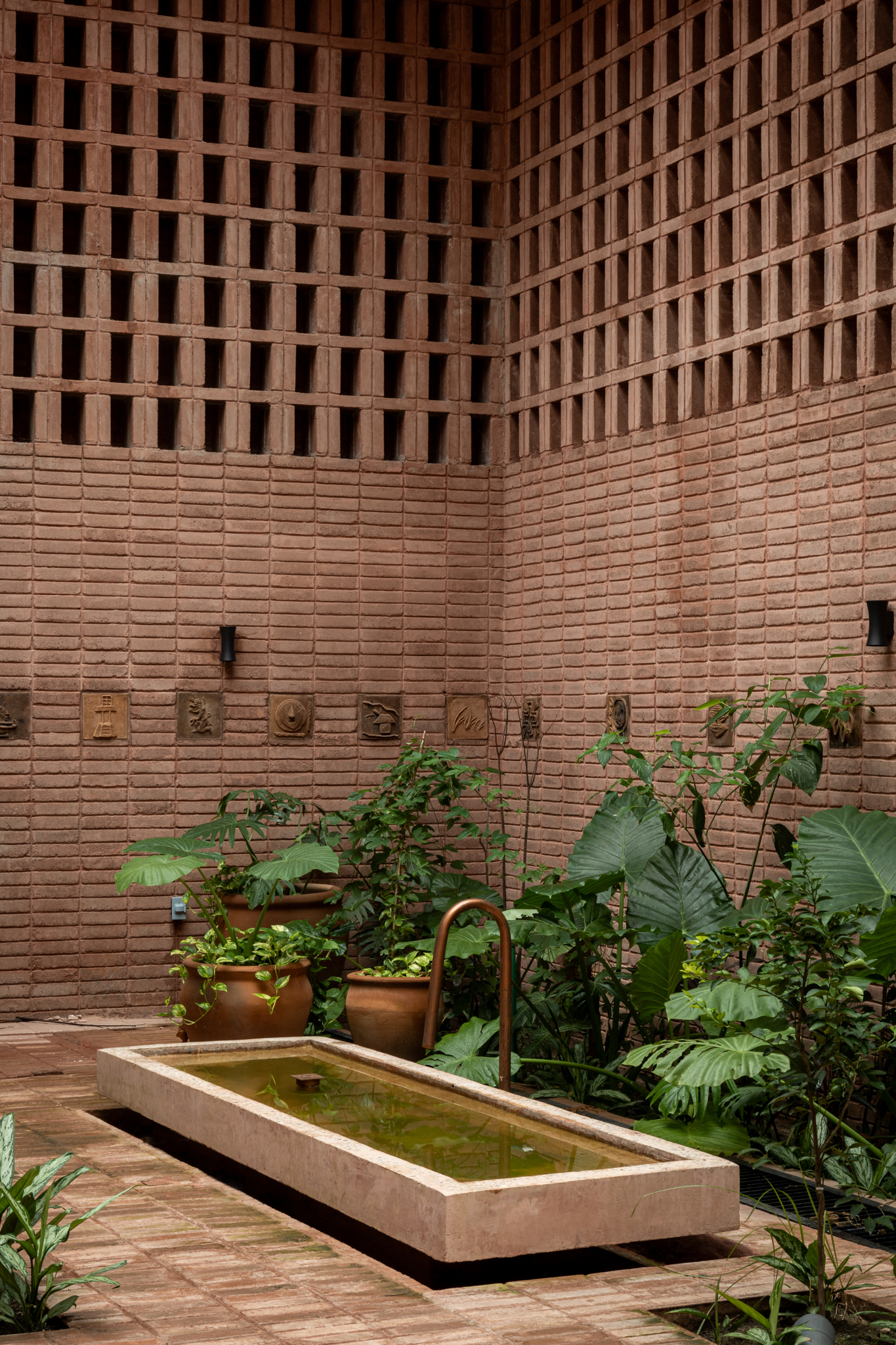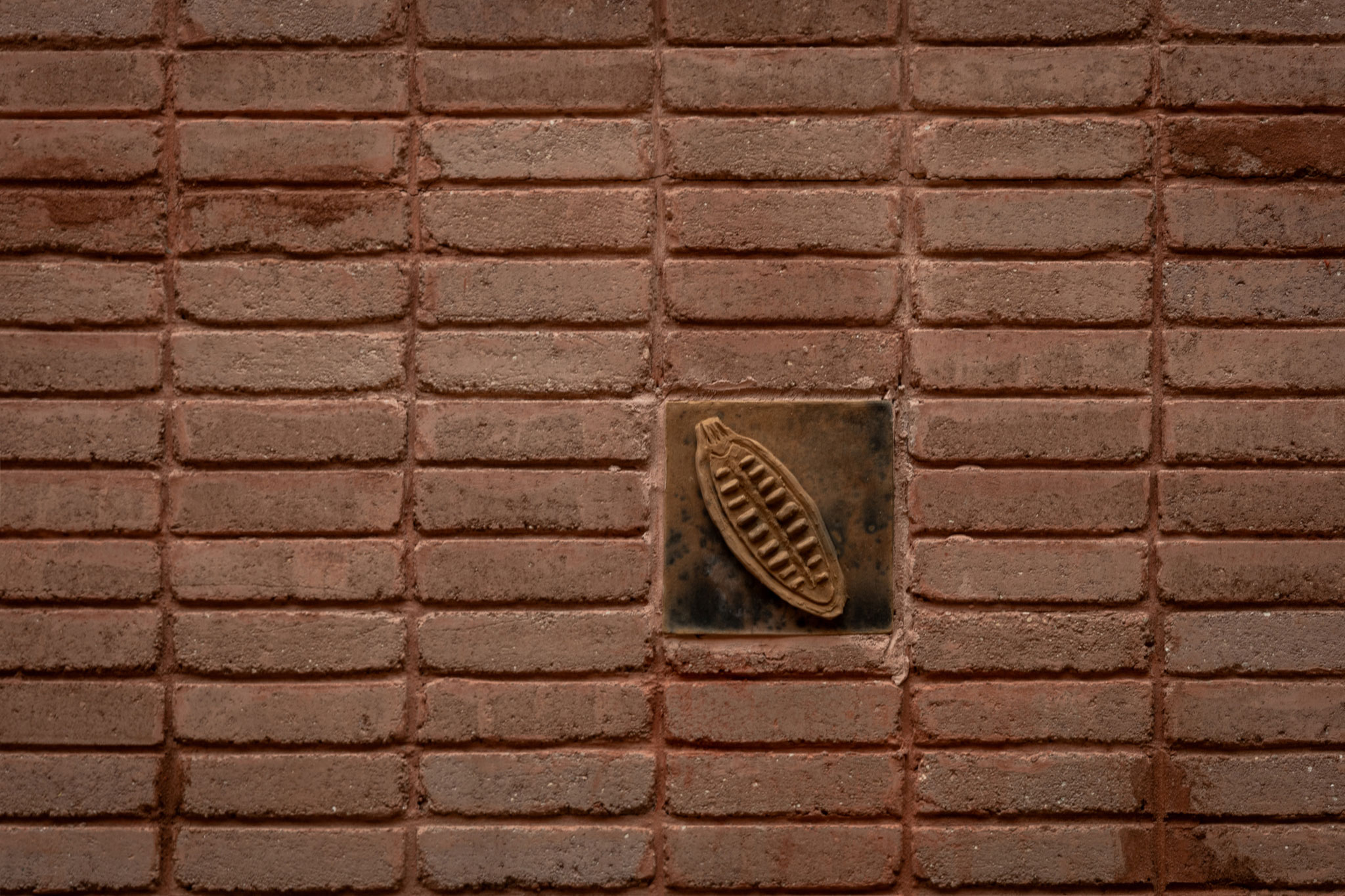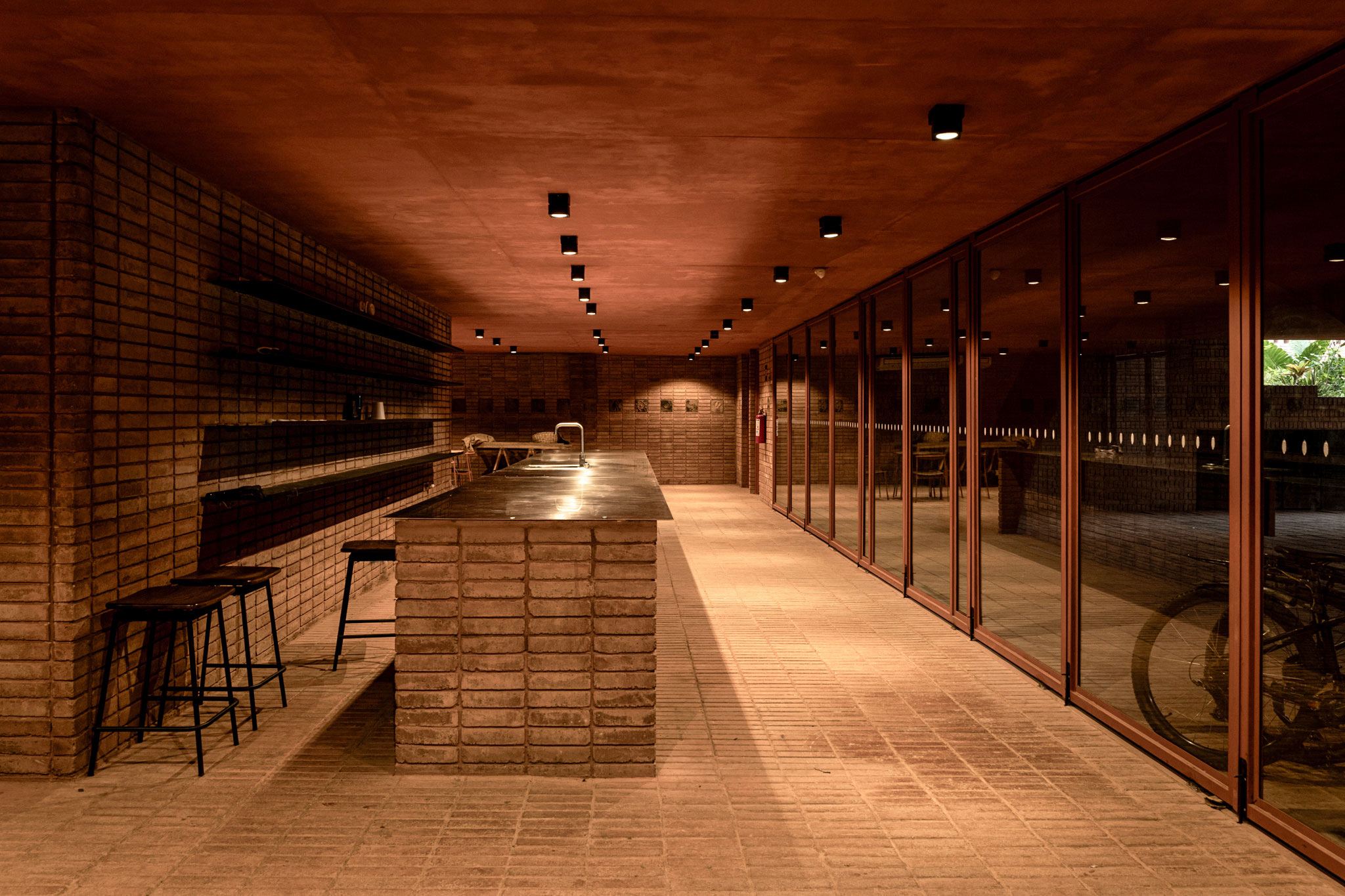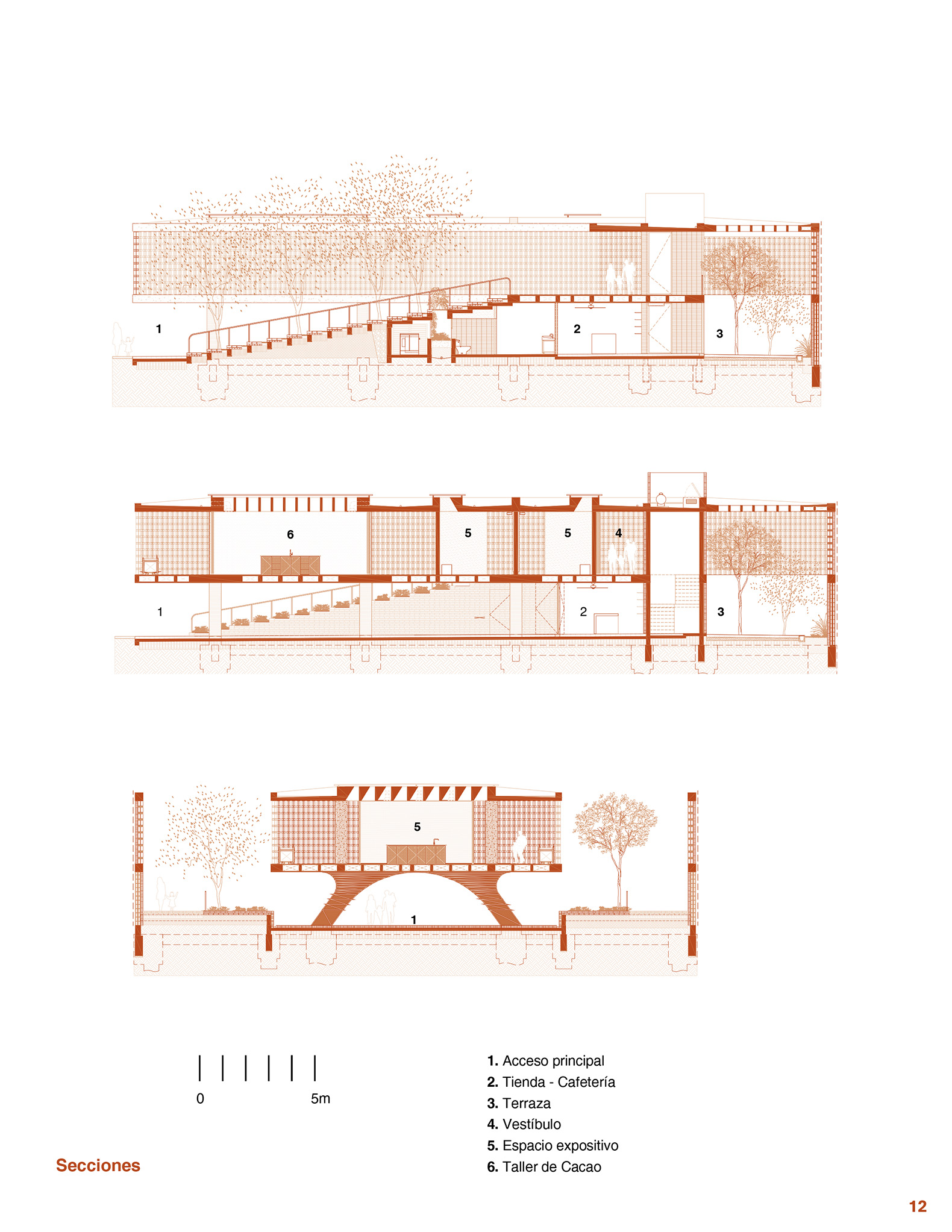
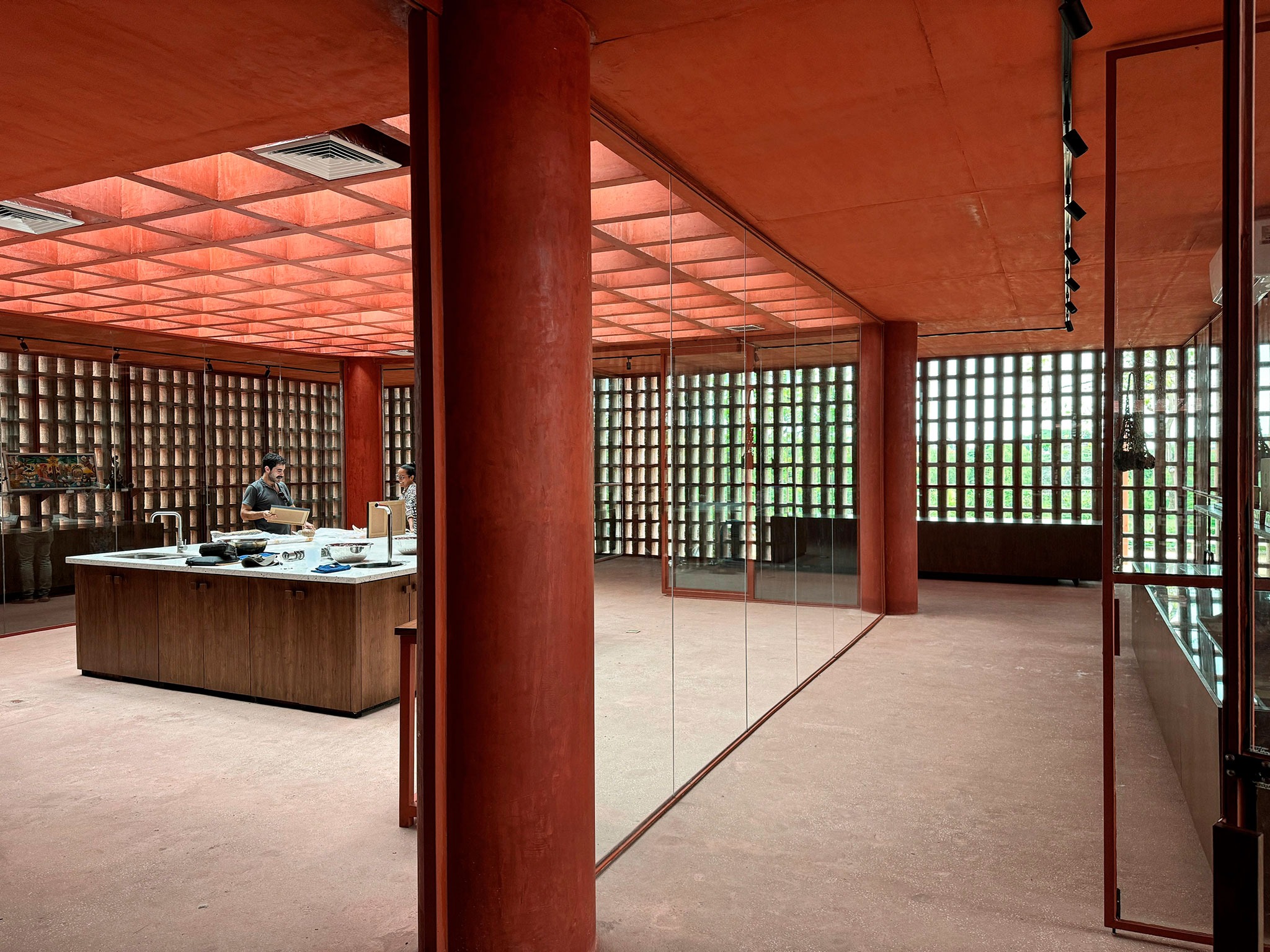
The "La Cacaotera" Regional Museum, designed by Taller Mauricio Rocha, a regional architecture studio, and architect Samuele Xompero, features an exhibition space that tells the story of cacao and its cultural impact. This is complemented by a workshop area that demonstrates production processes to visitors through the use of grinding, roasting, and shelling machines.
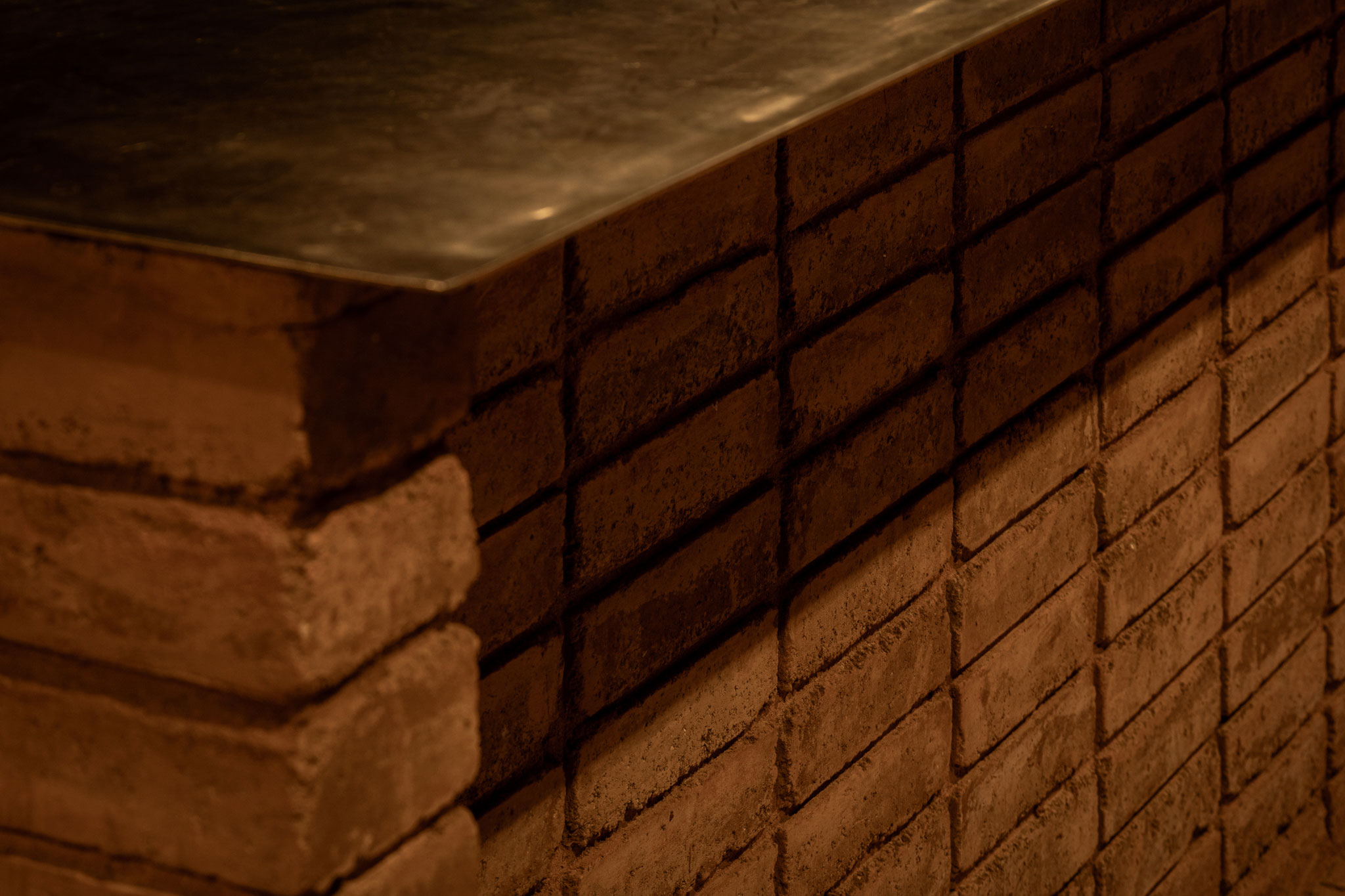
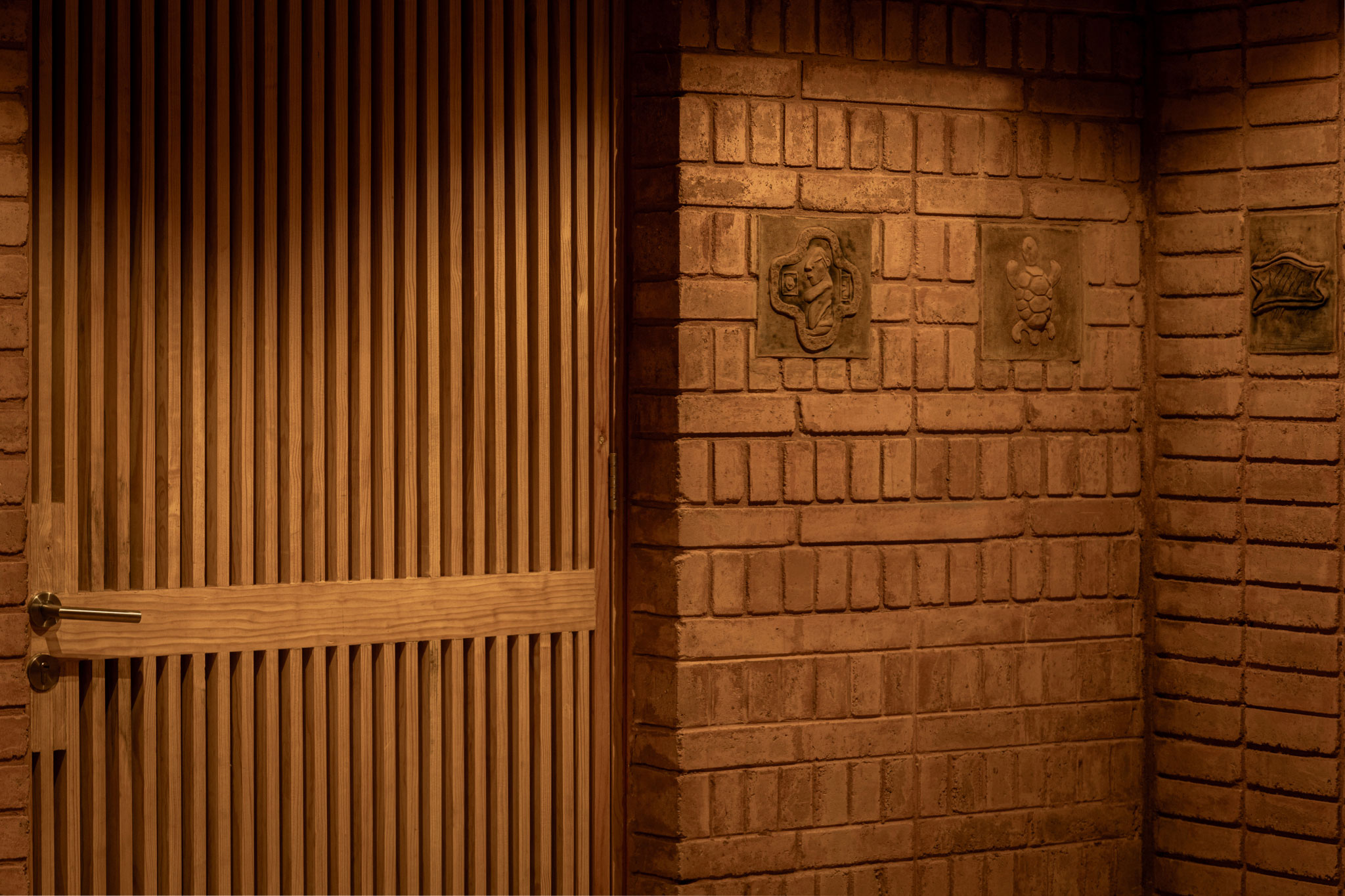
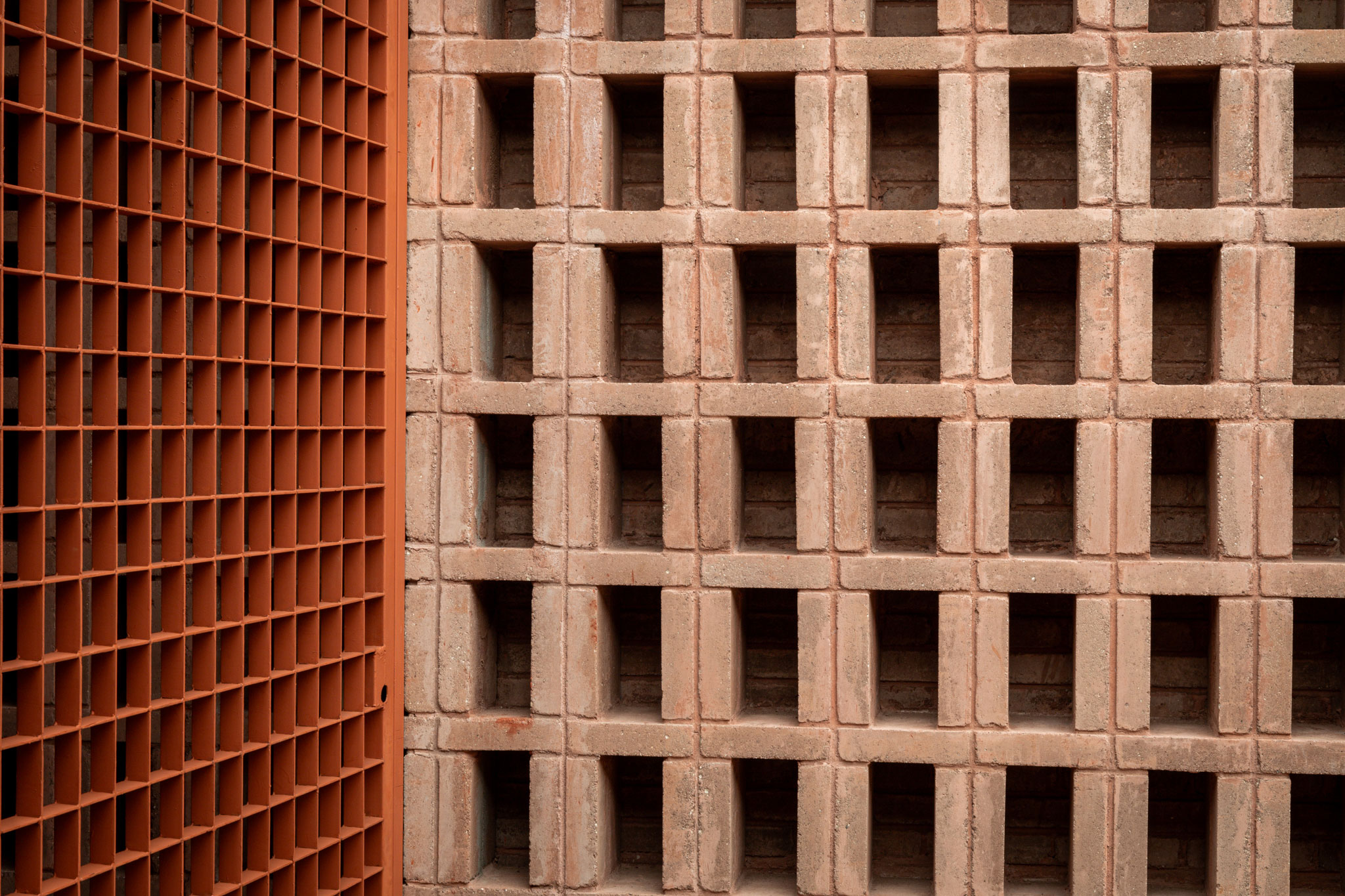
For the structural construction of the project, a system of slabs with wooden beams and planks was used on a painted steel frame. In terms of materials, reinforced concrete with red pigment predominates, complemented by latticework, clay floors, glass, and wrought iron.
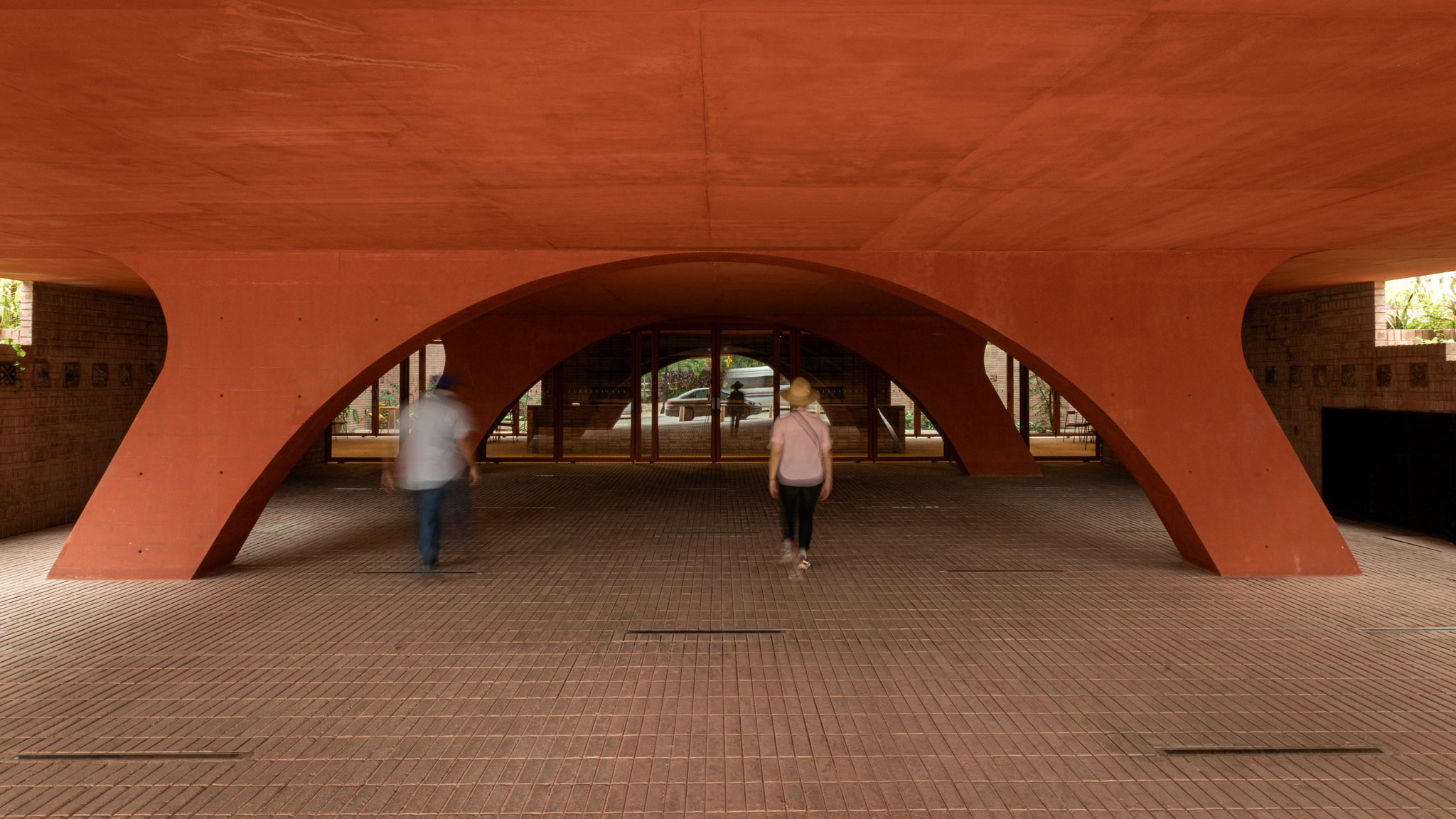
"La Cacaotera" Regional Museum by Laboratorio regional de arquitectura + Taller Mauricio Rocha + Samuele Xompero. Photograph by Miguel Cobos.
Project description by Taller Mauricio Rocha, Laboratorio regional de arquitectura and Samuele Xompero
The "La Cacaotera" Regional Museum, located within the Malecón intervention area of Villahermosa, aims to promote learning about cacao culture in the state of Tabasco, the largest producer of this raw material in Mexico. The project was undertaken after the demolition of the building that once housed the National Union of Cacao Producers, which had suffered severe structural damage.
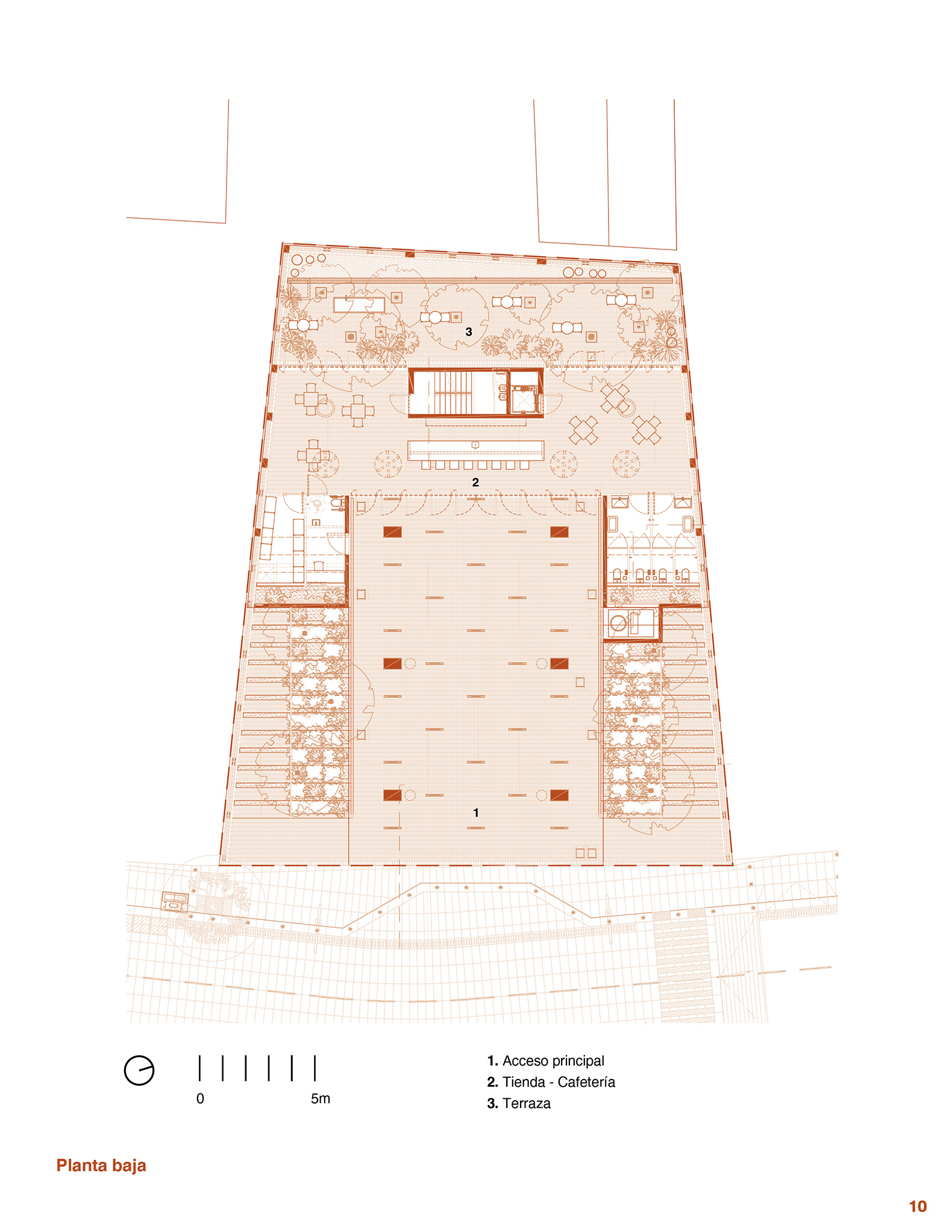
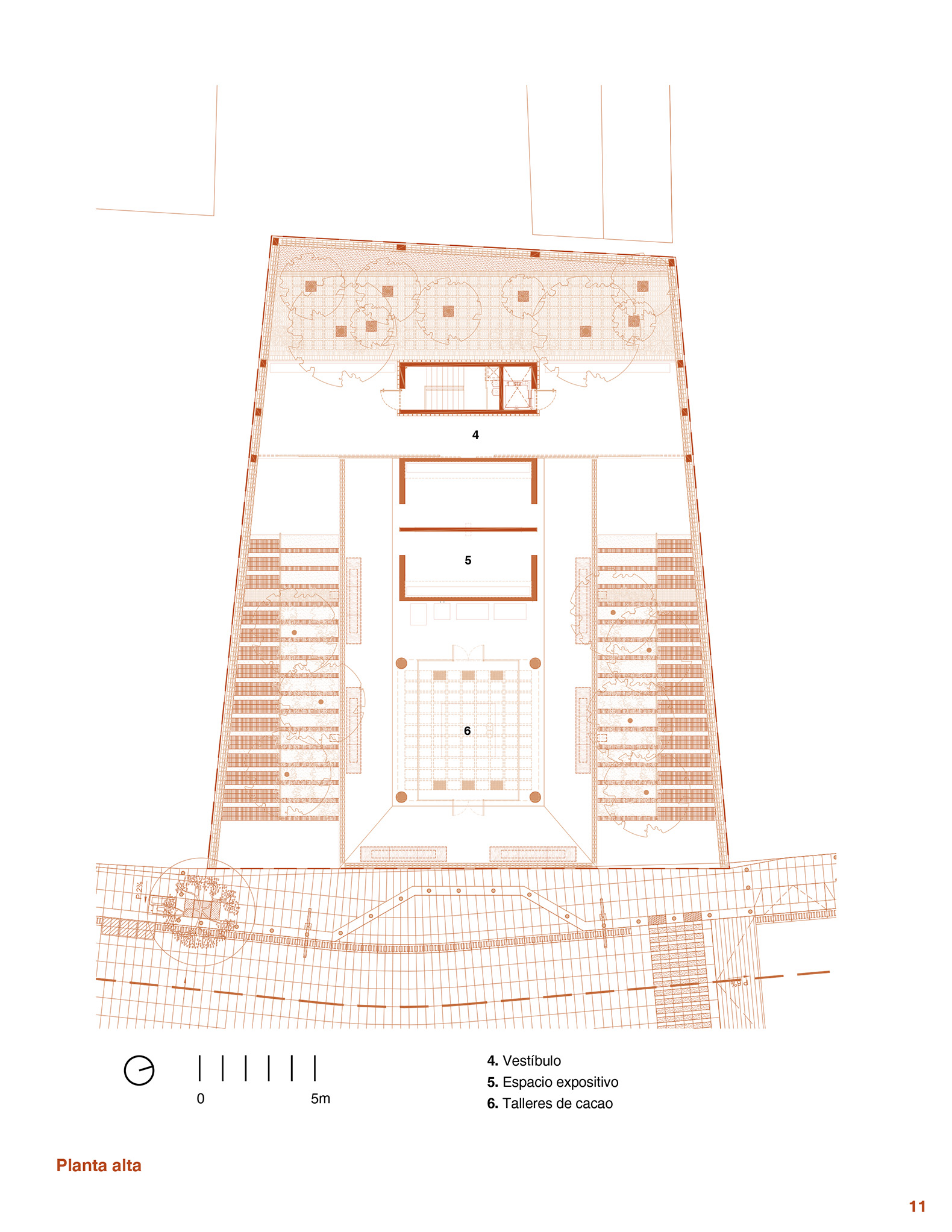
The building's architecture incorporates the formal memory of its predecessor, but with a new program dedicated to showcasing the process of transforming cacao into chocolate. It features an exhibition space that tells the story of cacao and its cultural impact, complemented by a workshop area where, through the use of grinding, roasting, and hulling machines (among others), visitors can learn about the production processes.
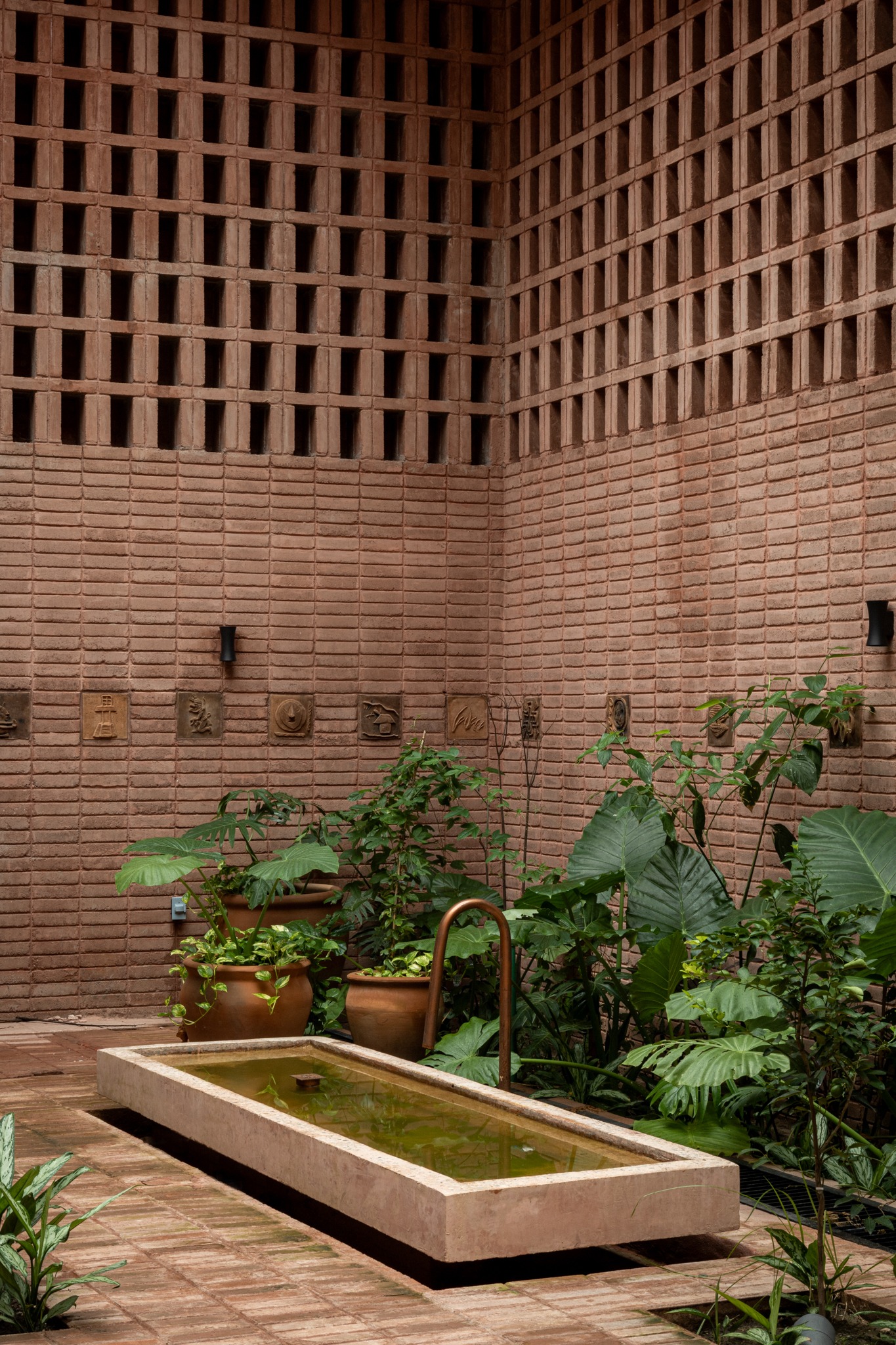
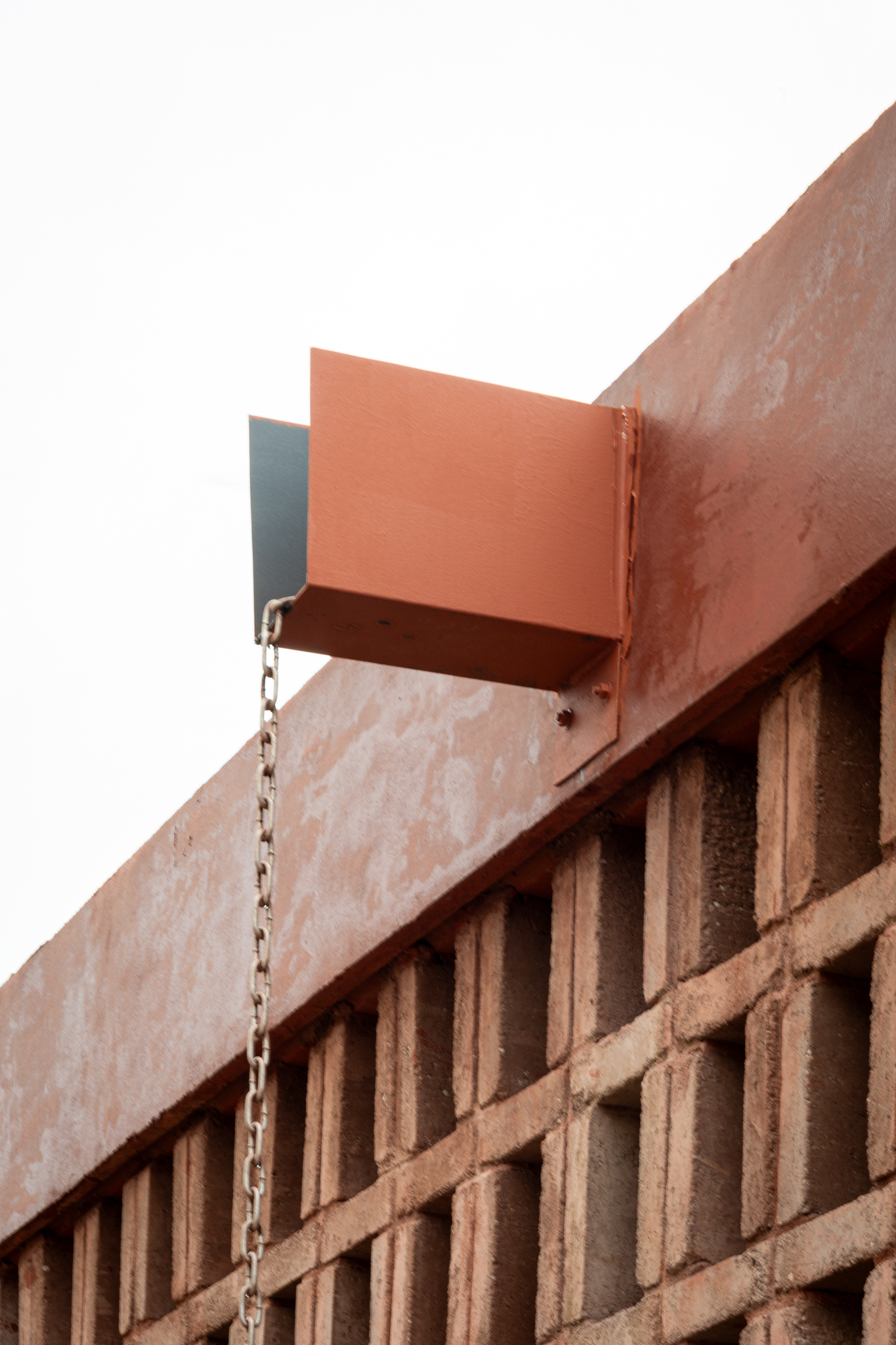
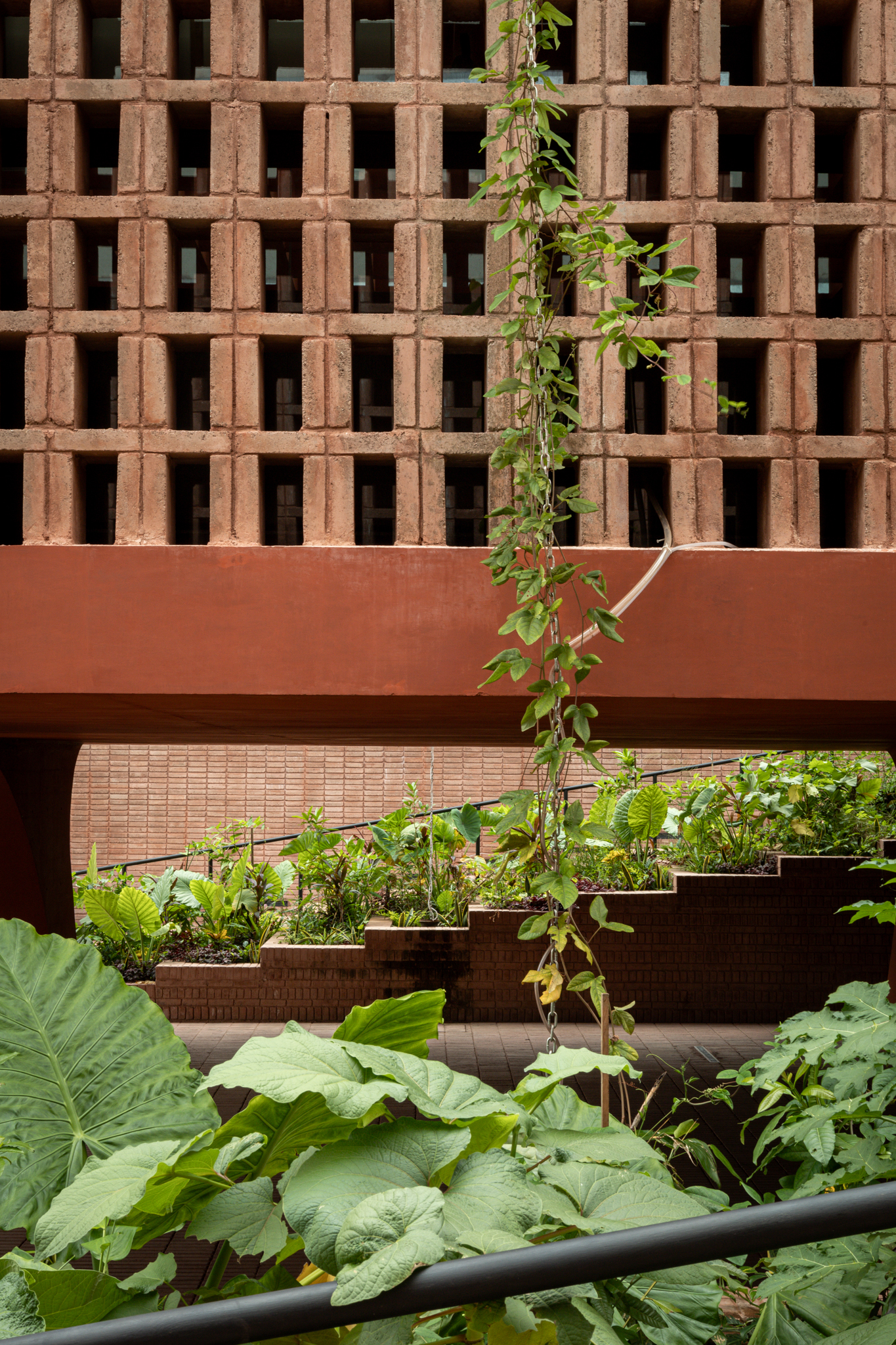
The project's materials are predominantly reinforced concrete with red pigment, visible in the structure, which is complemented by latticework and floors made of clay, glass, and wrought iron. This palette also incorporates endemic vegetation from the banks of the Grijalva River, integrating the project with its urban context.
The building is designed with a slab system supported by wooden beams and planks on a painted steel structure. As a result, the market will be an open space, but with a large, lightweight, gabled roof.