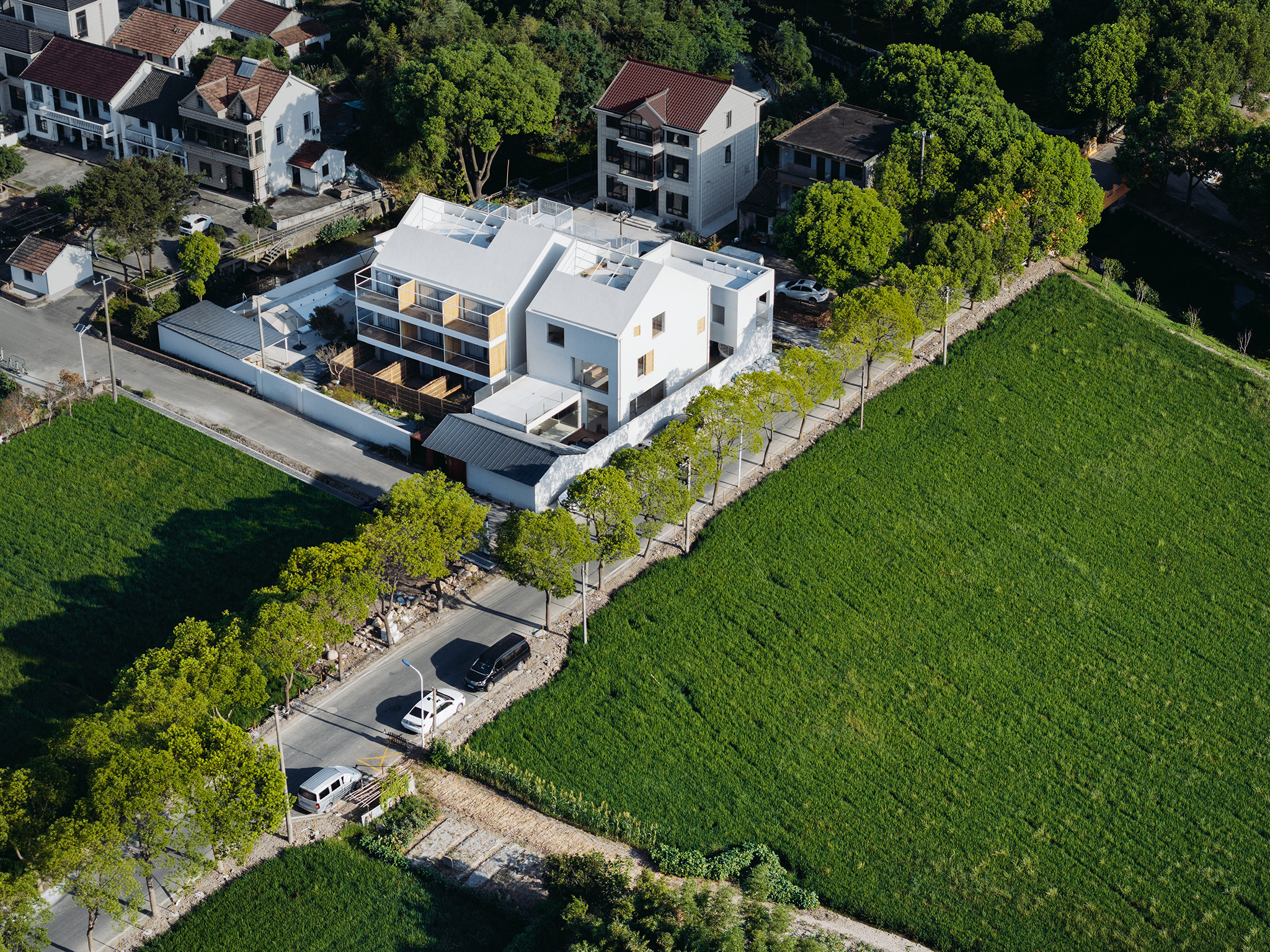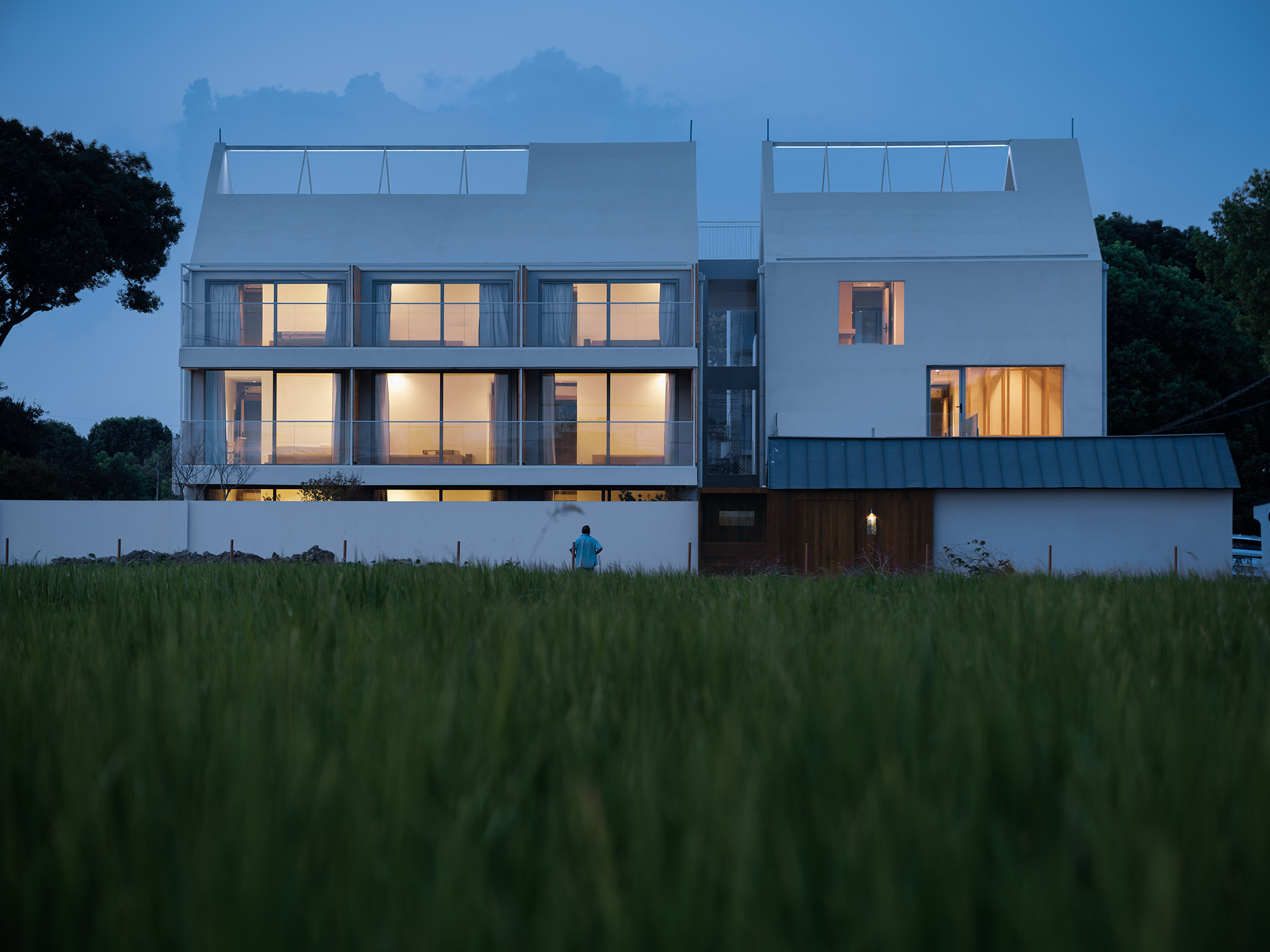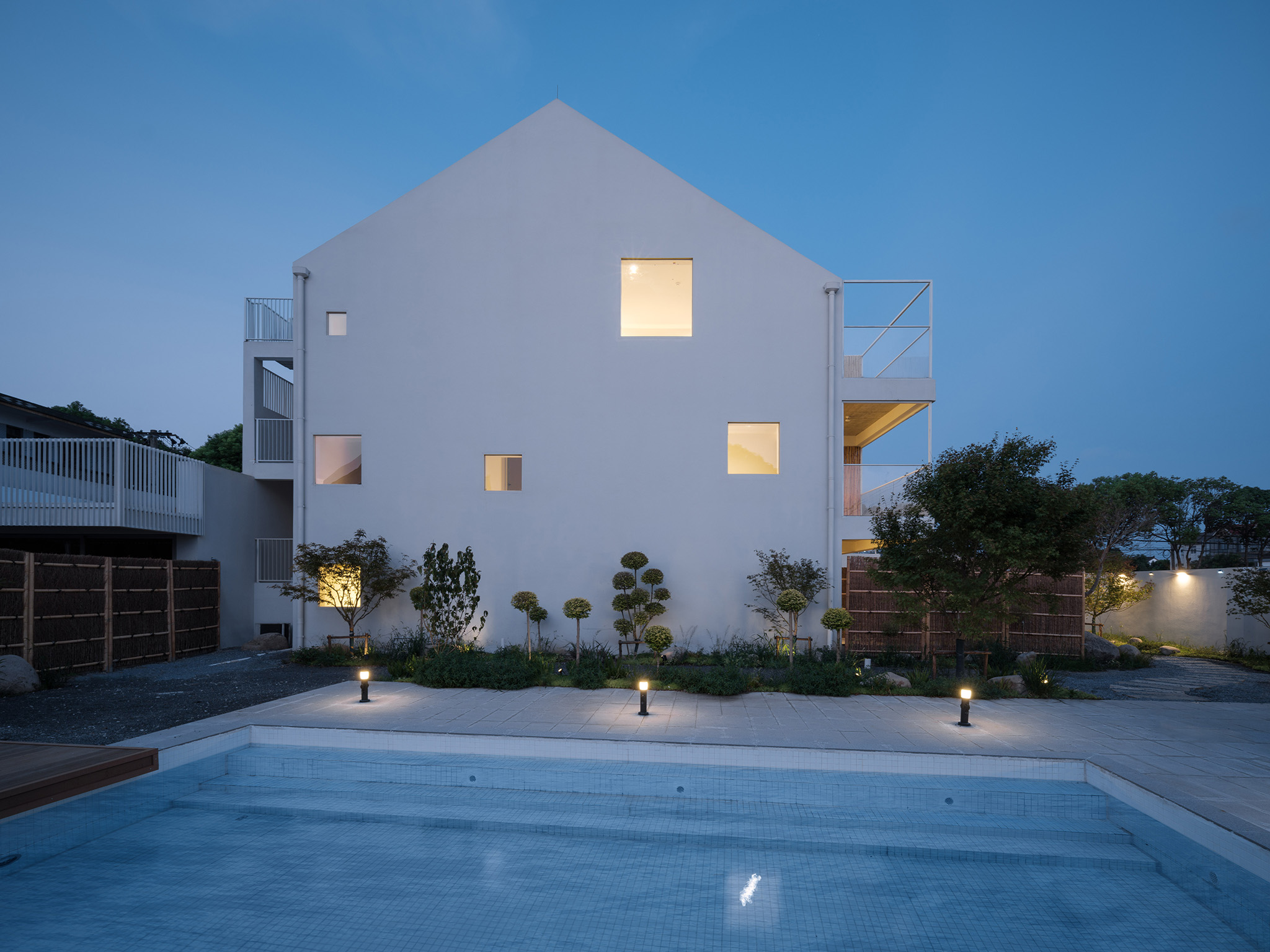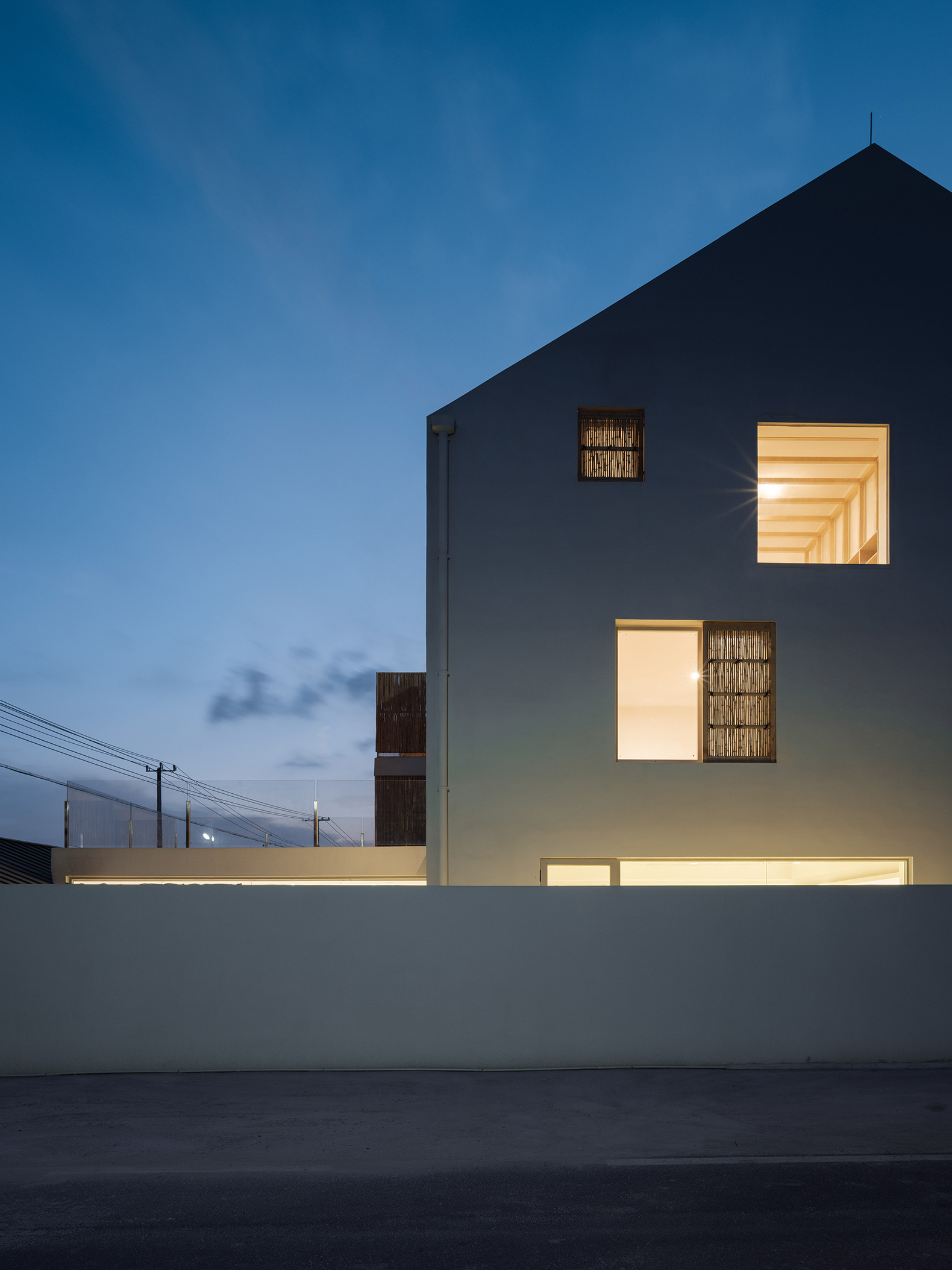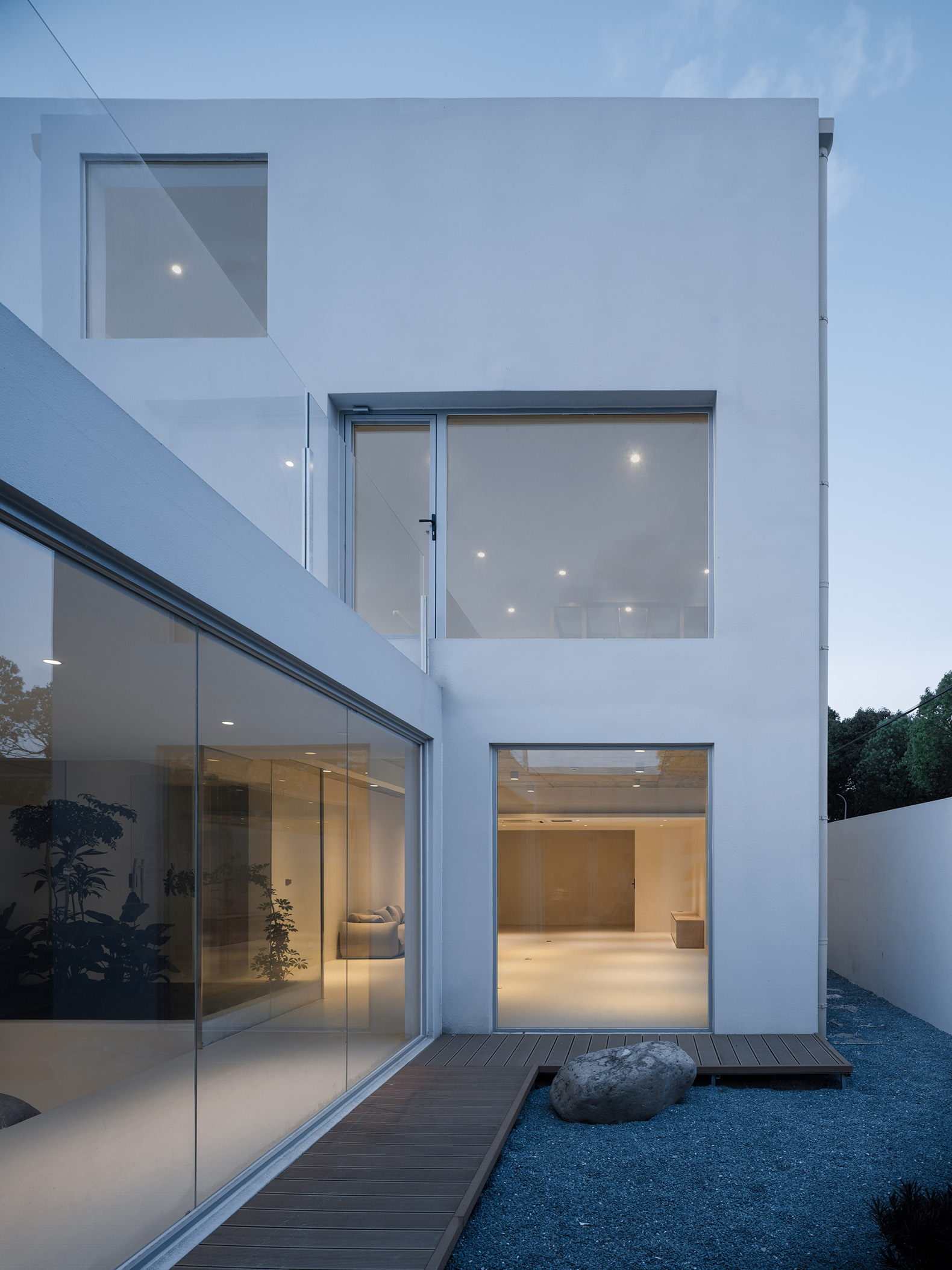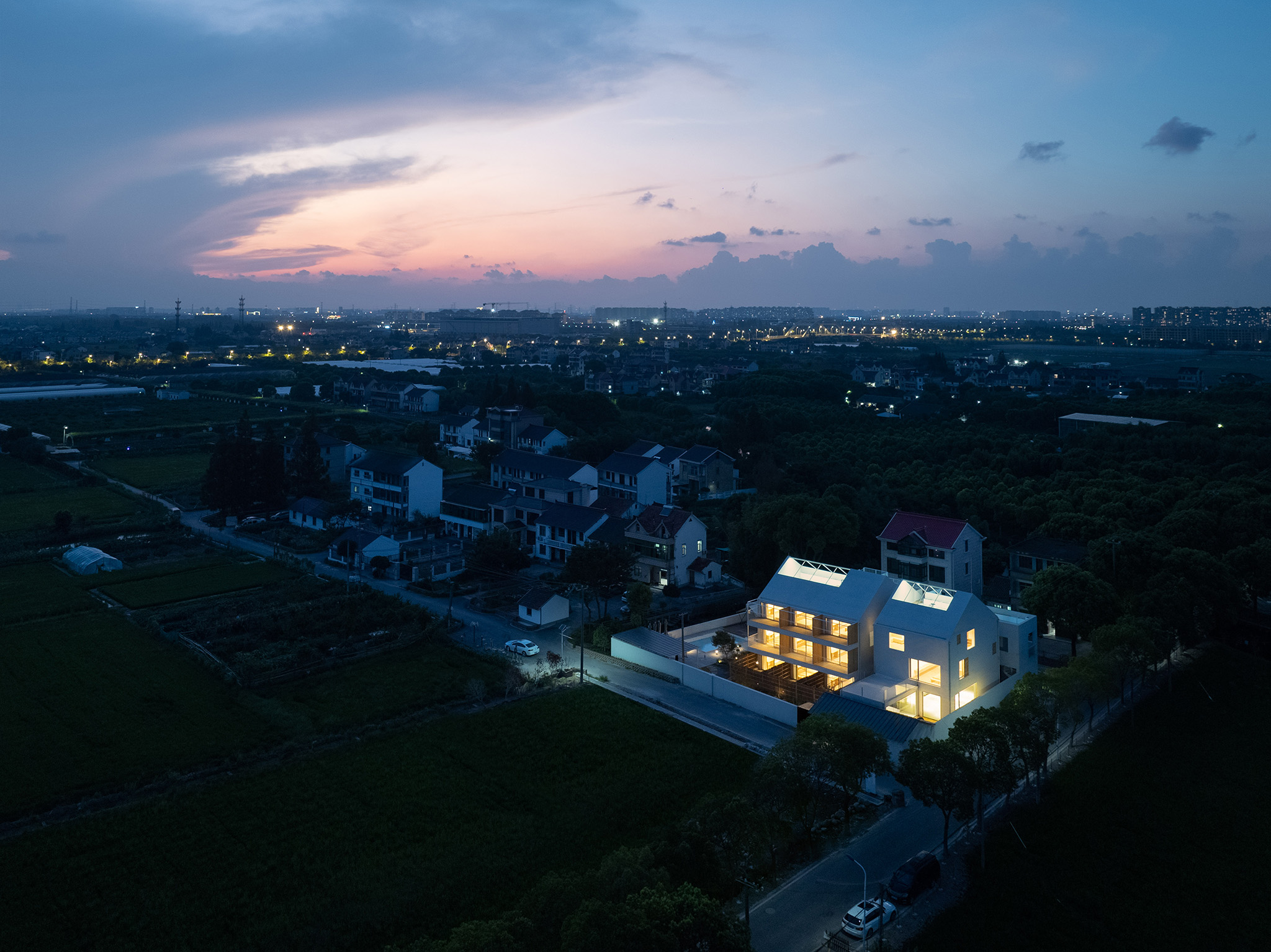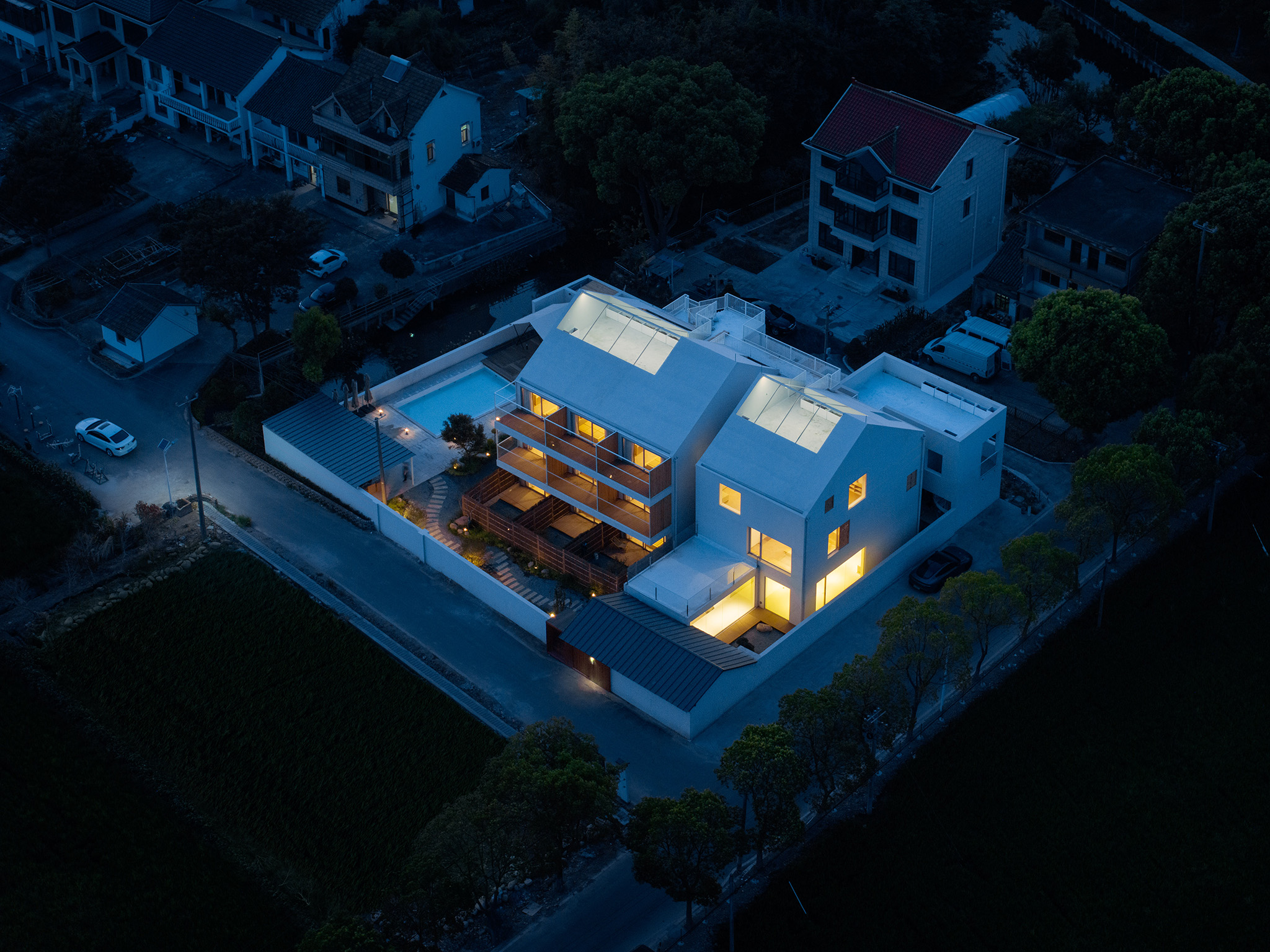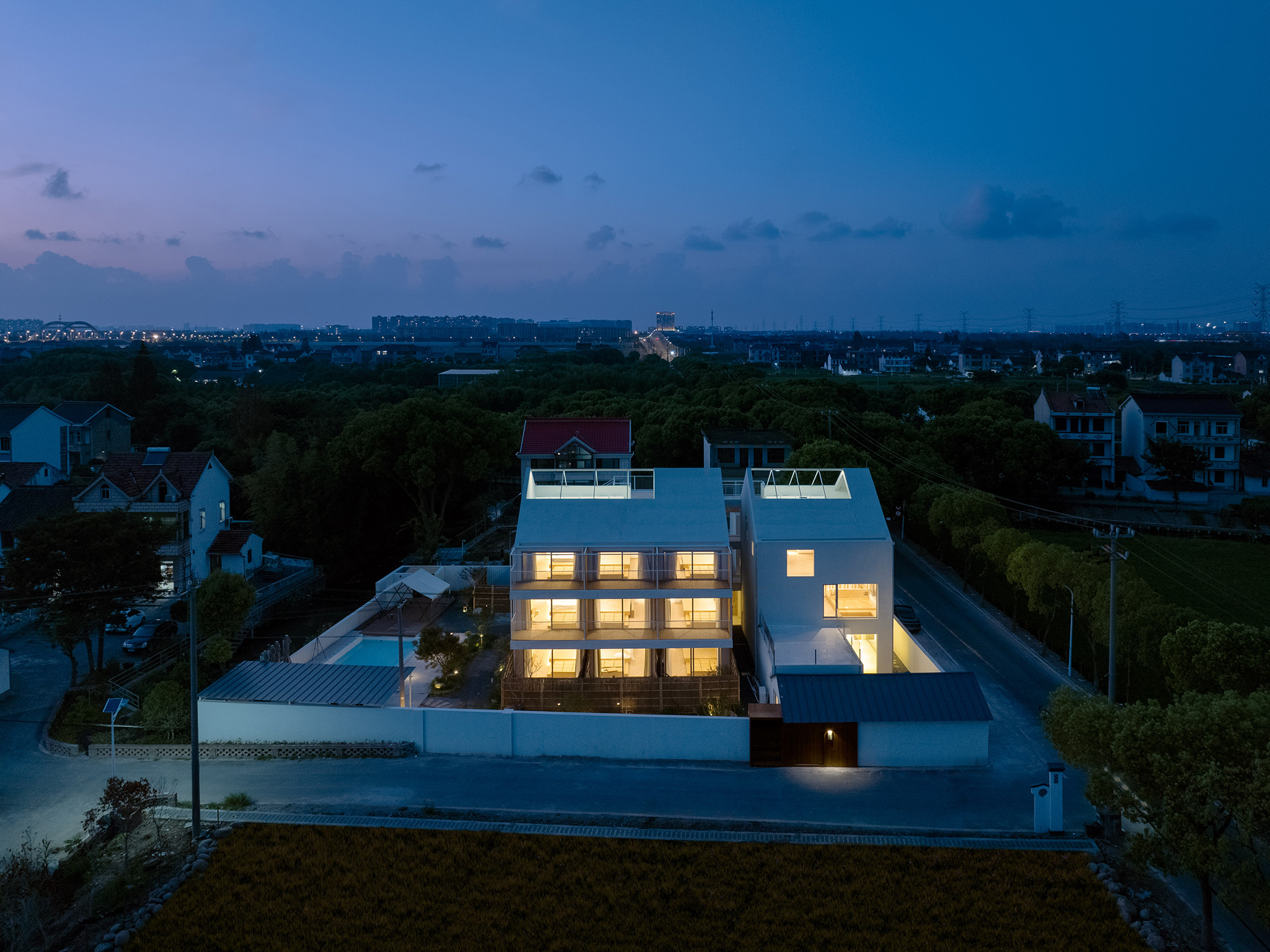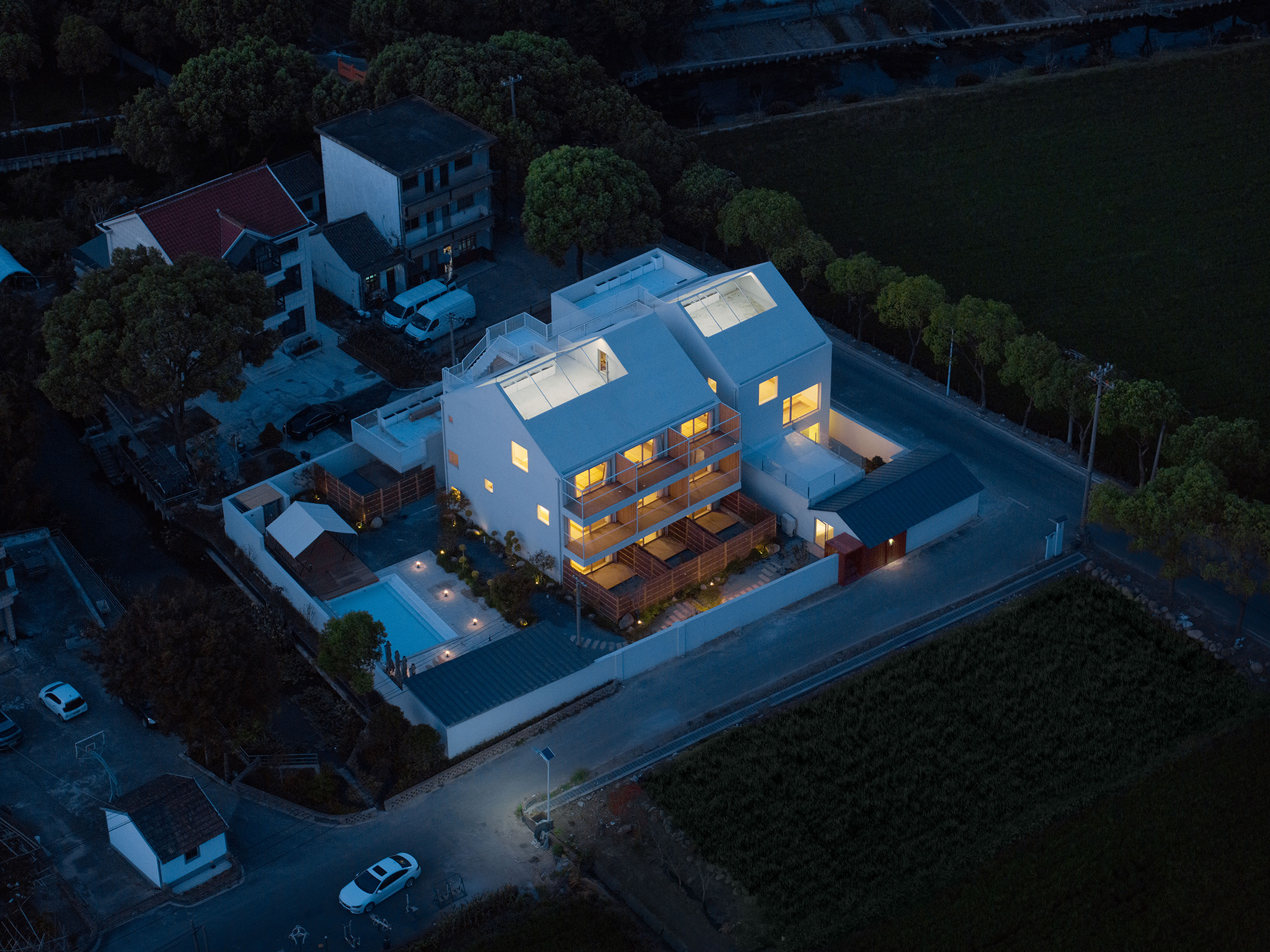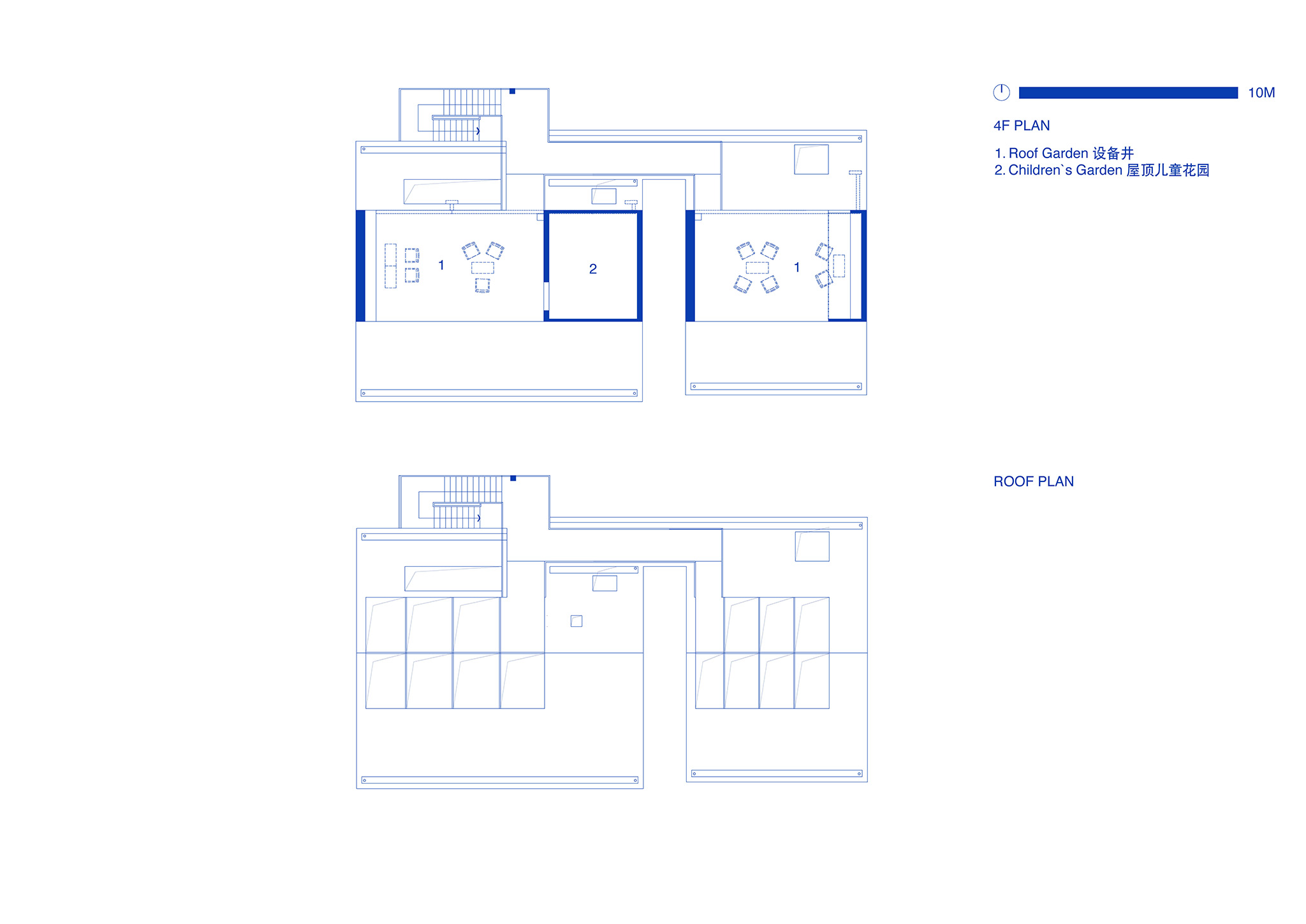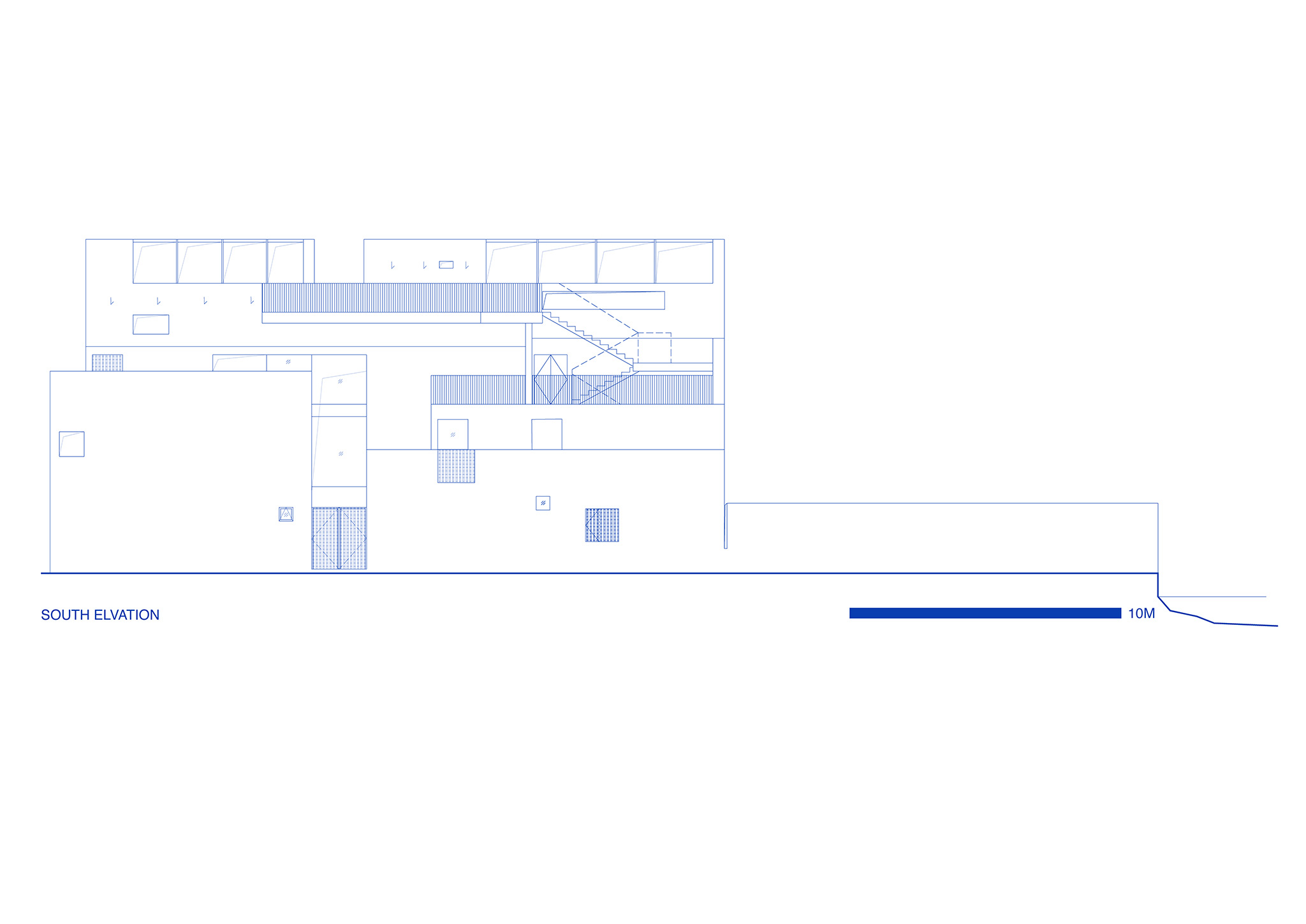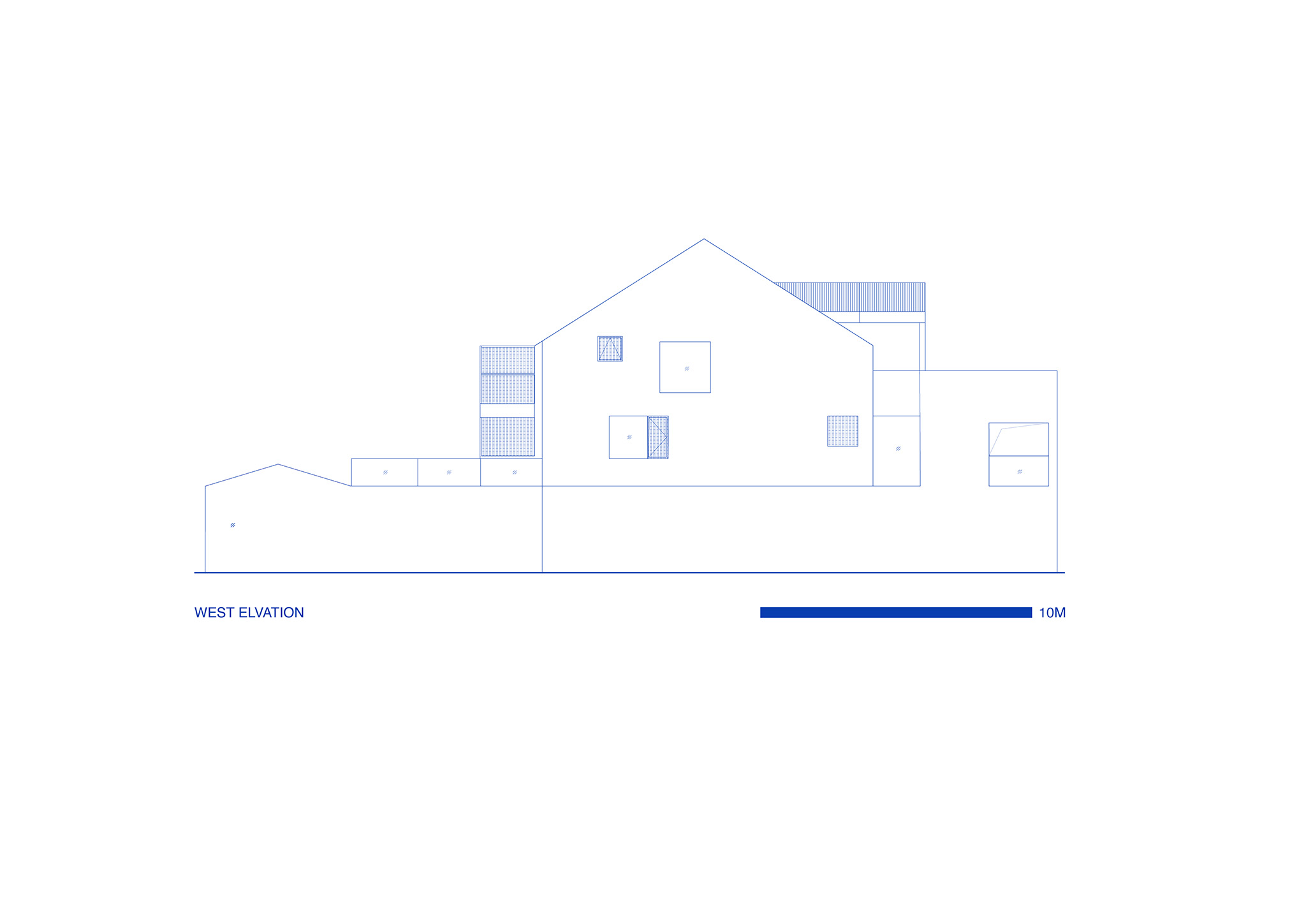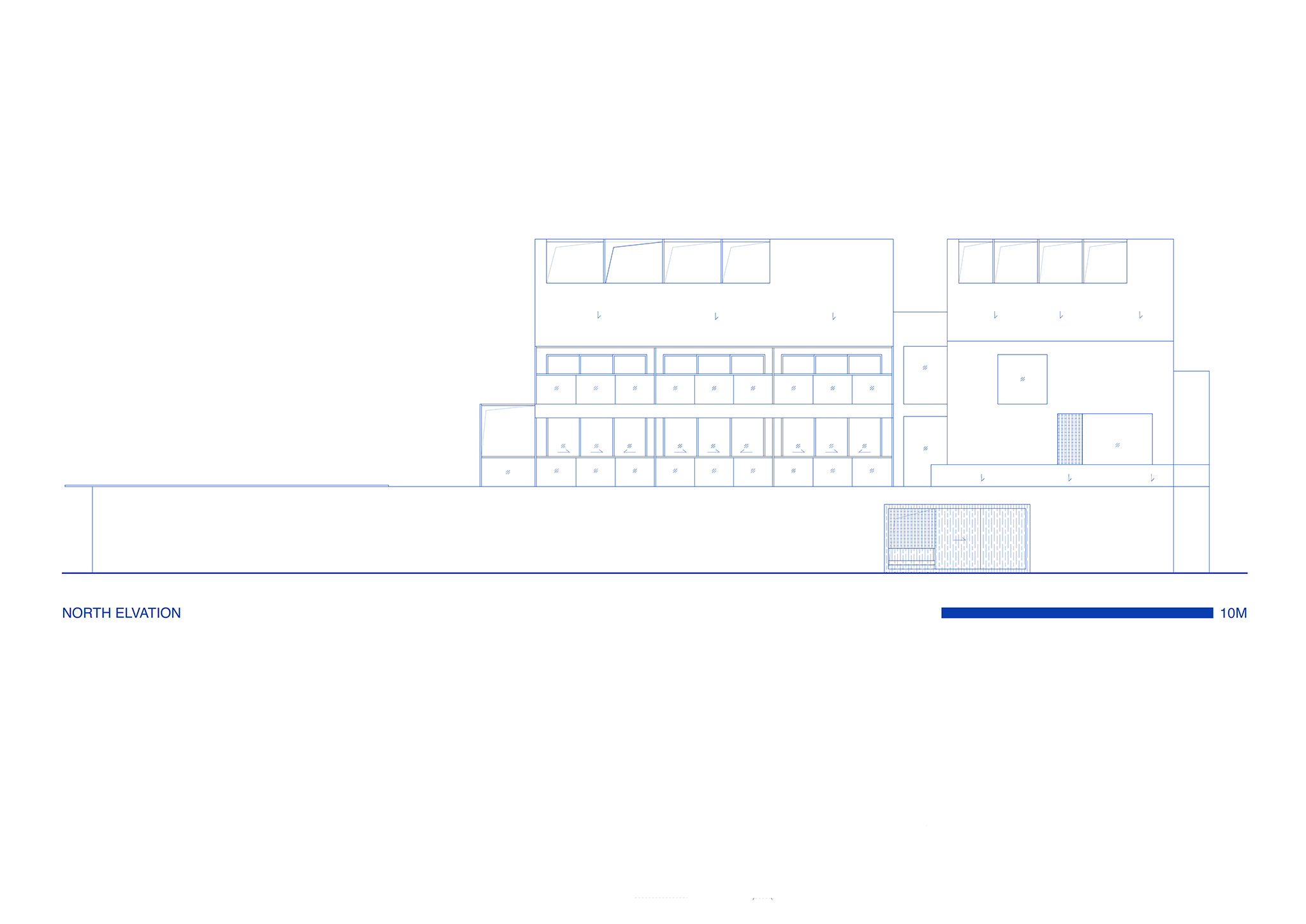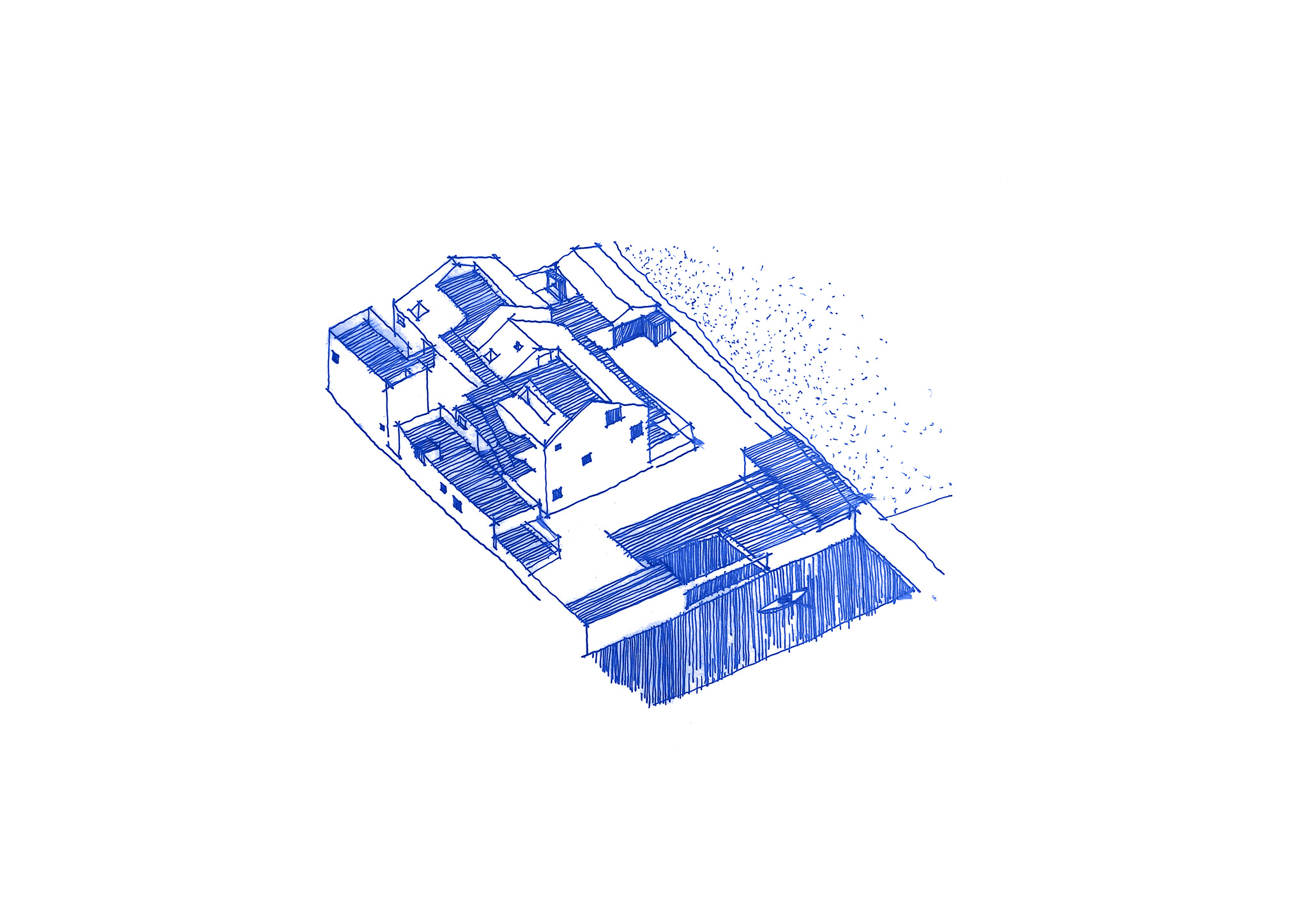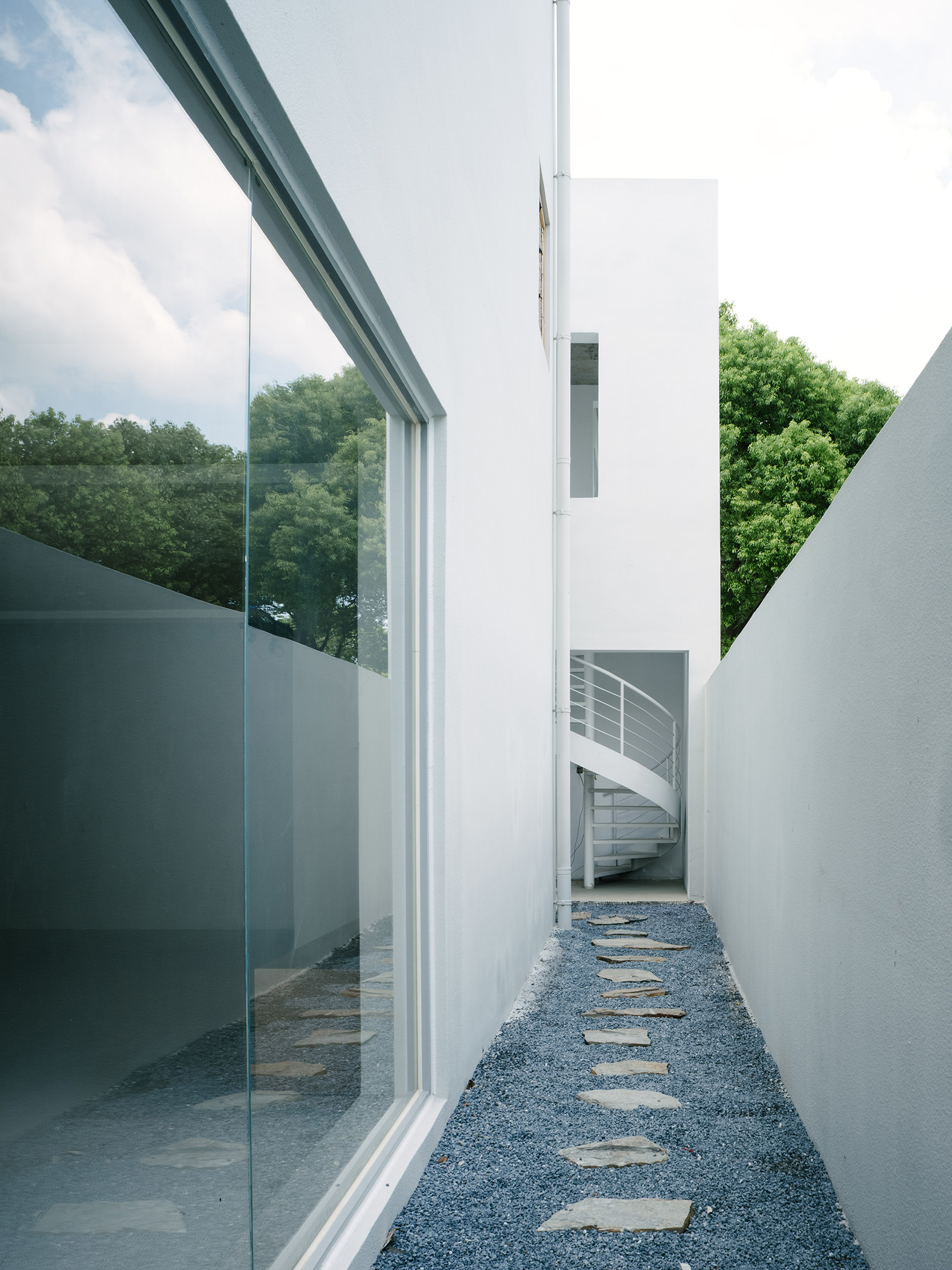
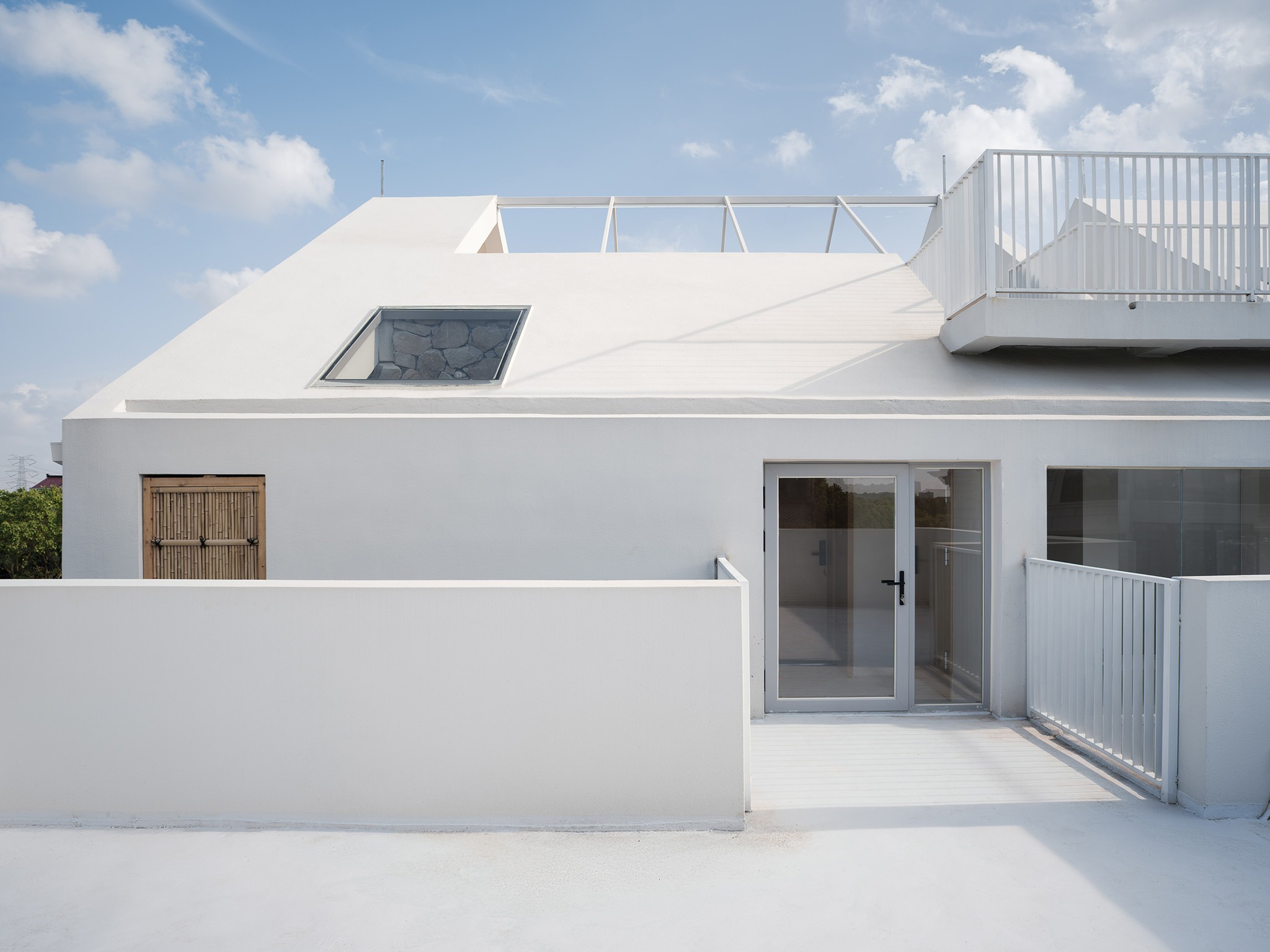
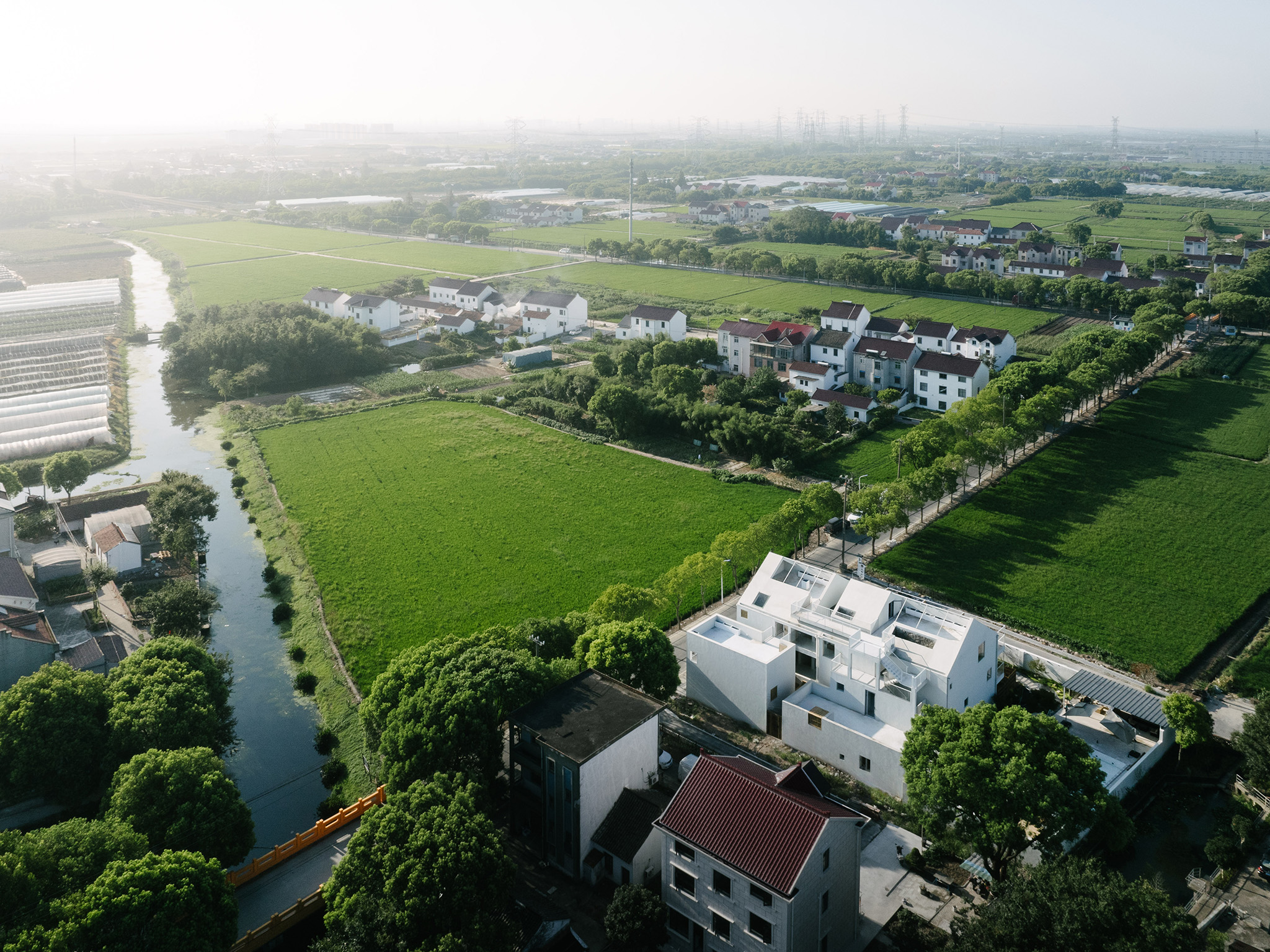
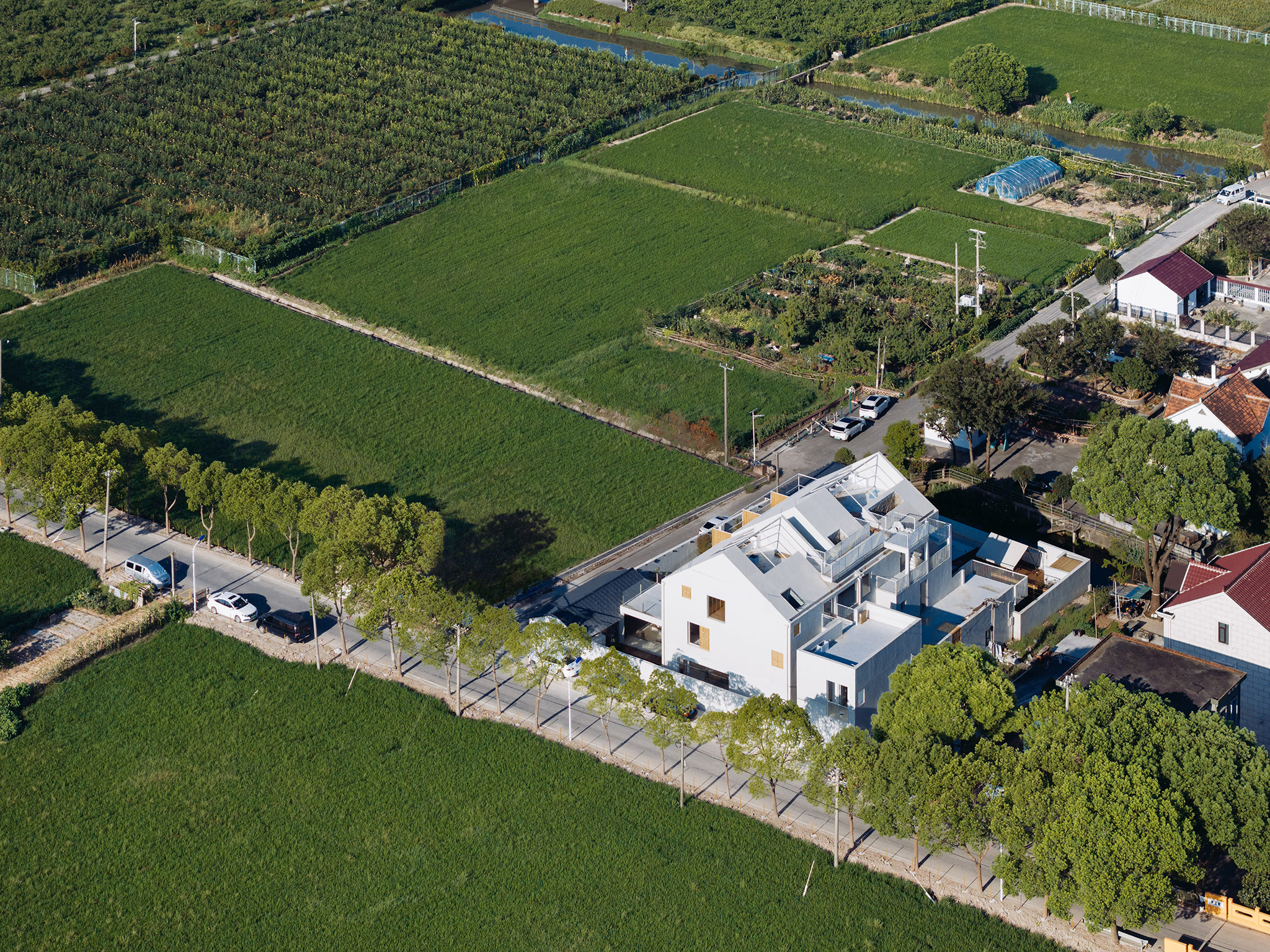
Set amidst a vast landscape of rice paddies near the historic city of Xinchang in Shanghai, the guesthouse designed by Team_BLDG is a unique creation. Centered on the concept of "watching over," "The Catcher" transforms two pre-existing rural houses into an eleven-room project that blends seamlessly with the surrounding nature.

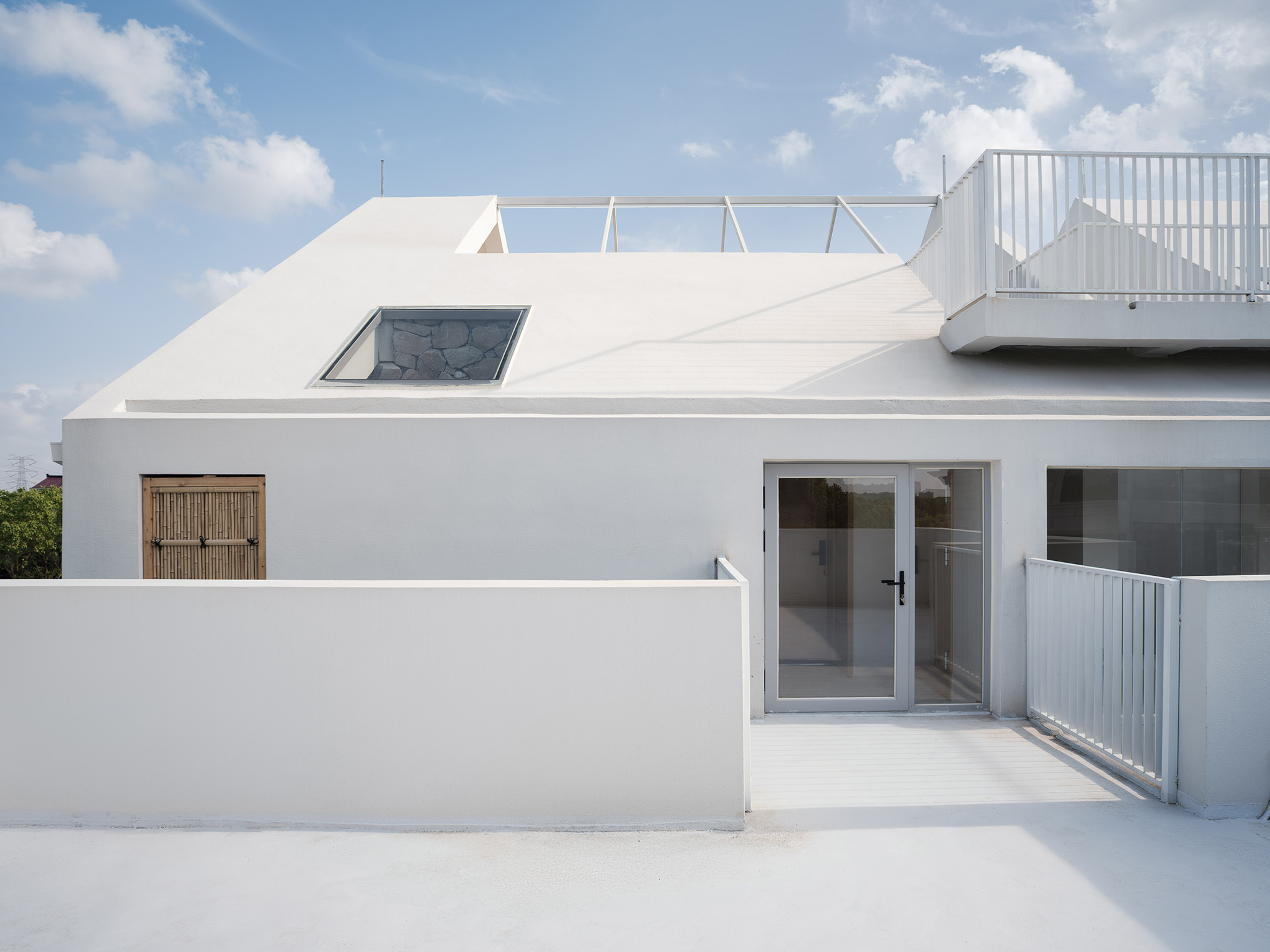
Far from imposing itself radically, the intervention respectfully preserves the original structures. Each intervention serves a specific purpose, adapting existing spaces and avoiding significant alterations. By incorporating new functions, the project addresses the client's fundamental needs while maximizing the use of the outdoor spaces and rooftop terrace.

For its construction, Team_BLDG employed traditional building techniques, using durable materials and methods that simplify details to the maximum, guaranteeing a high level of finish. In this way, the guesthouse effectively manages the relationship between old and new, seeking a delicate balance between preservation and intervention.

"The Catcher" thus presents itself as an adaptive reuse project with a strong emphasis on nature, memory, and the essence of the place. While it effectively meets the needs of contemporary accommodation, its main aspiration lies in creating a space where rural hospitality fosters a deep connection between people and the land.
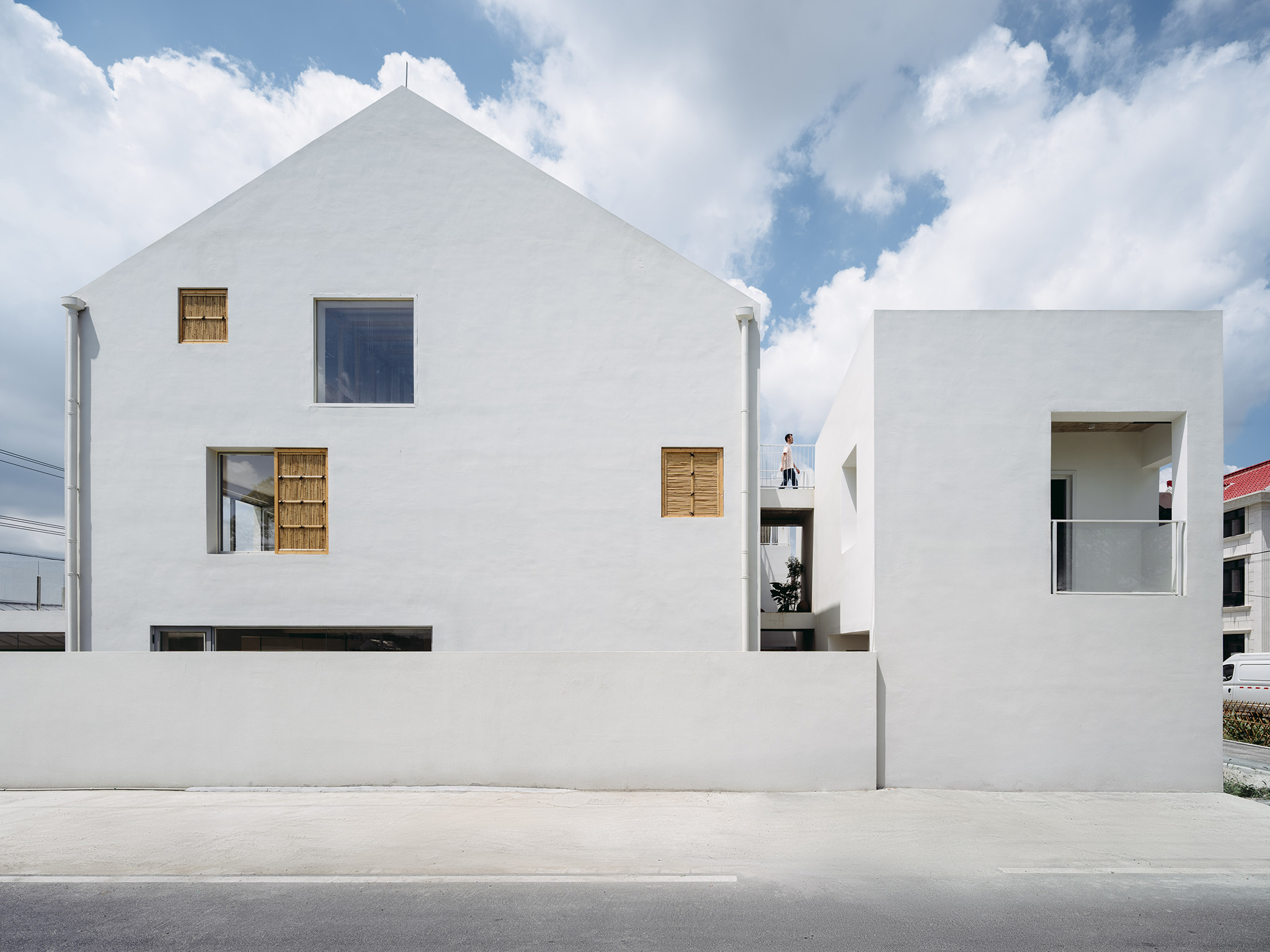
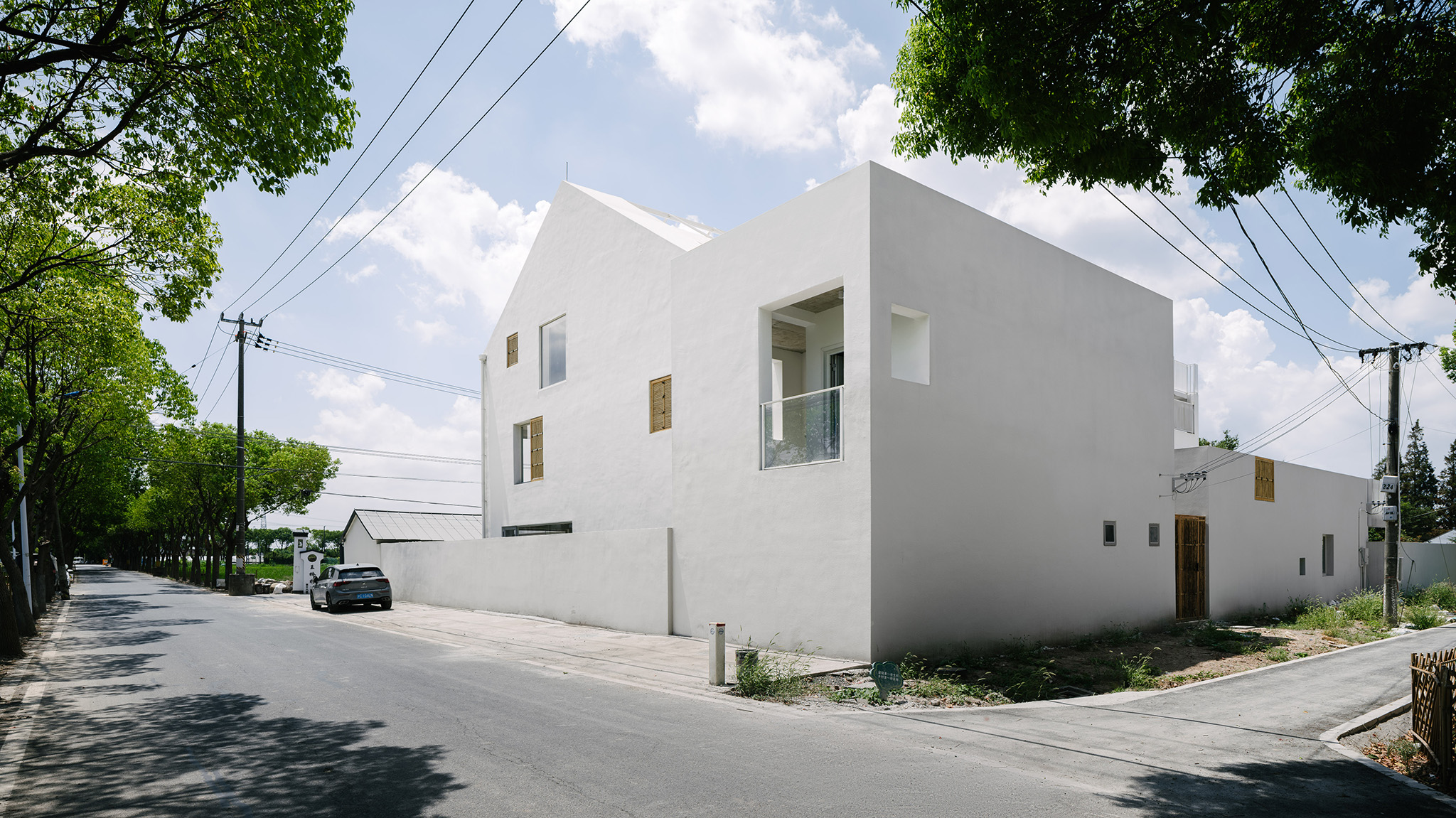
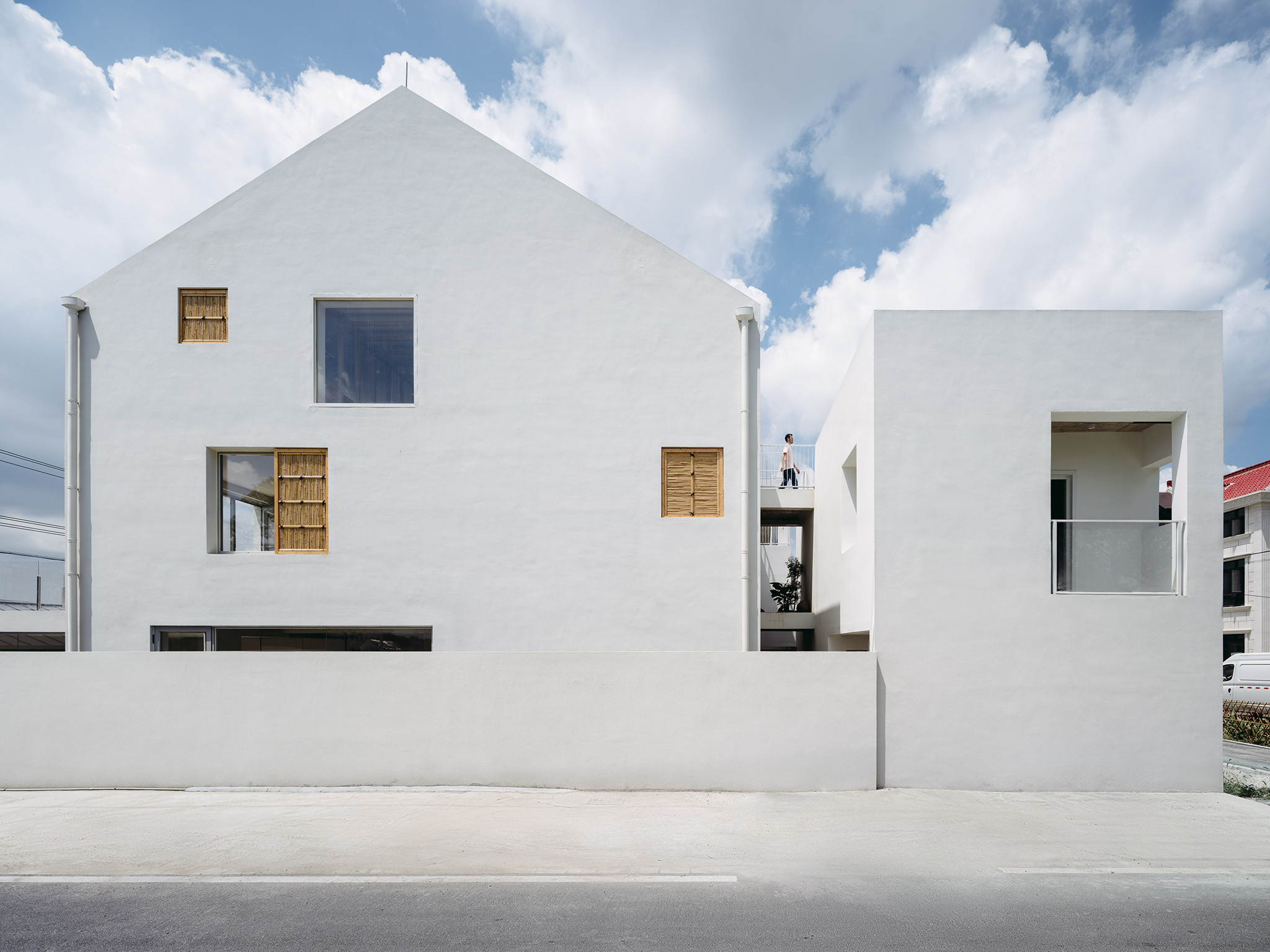
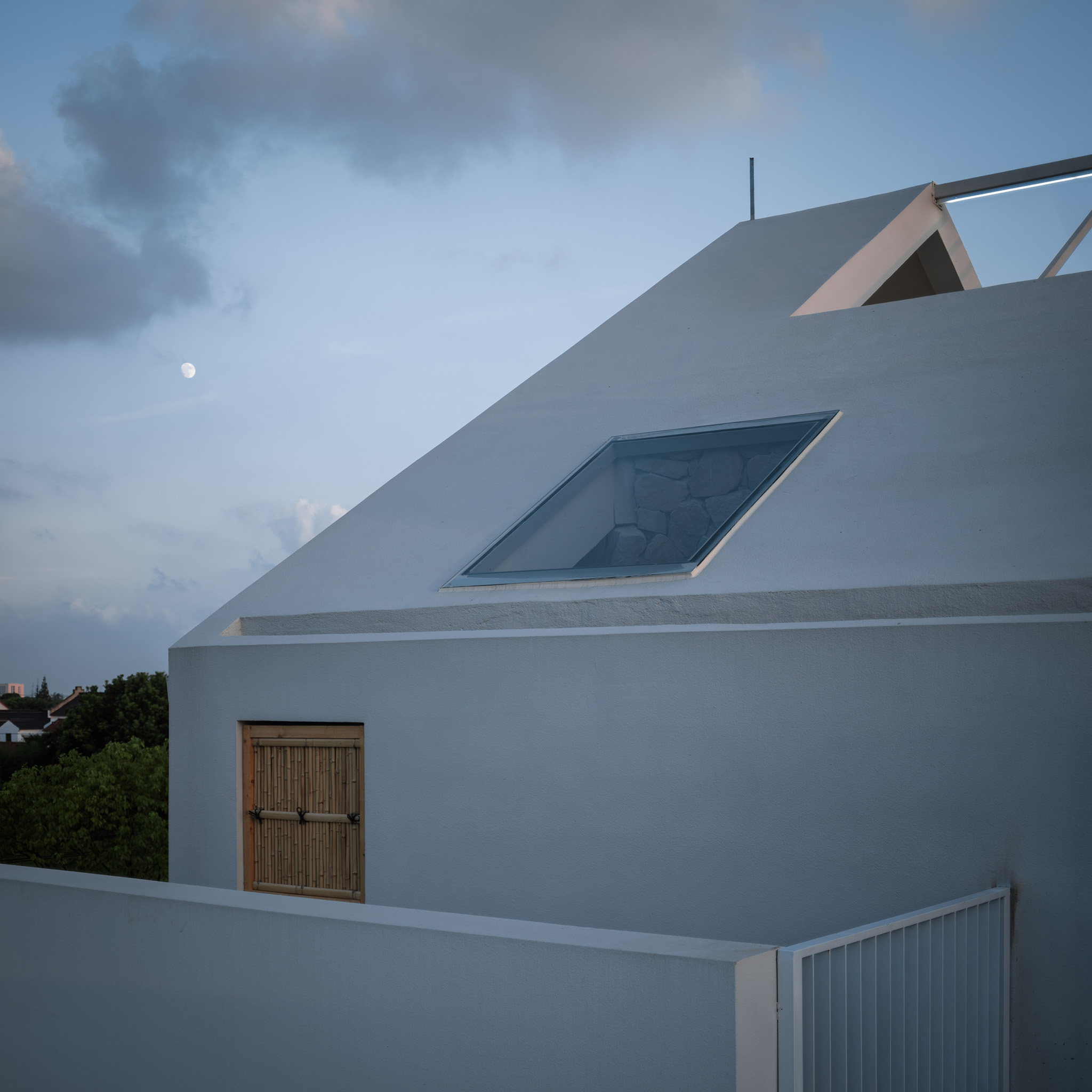
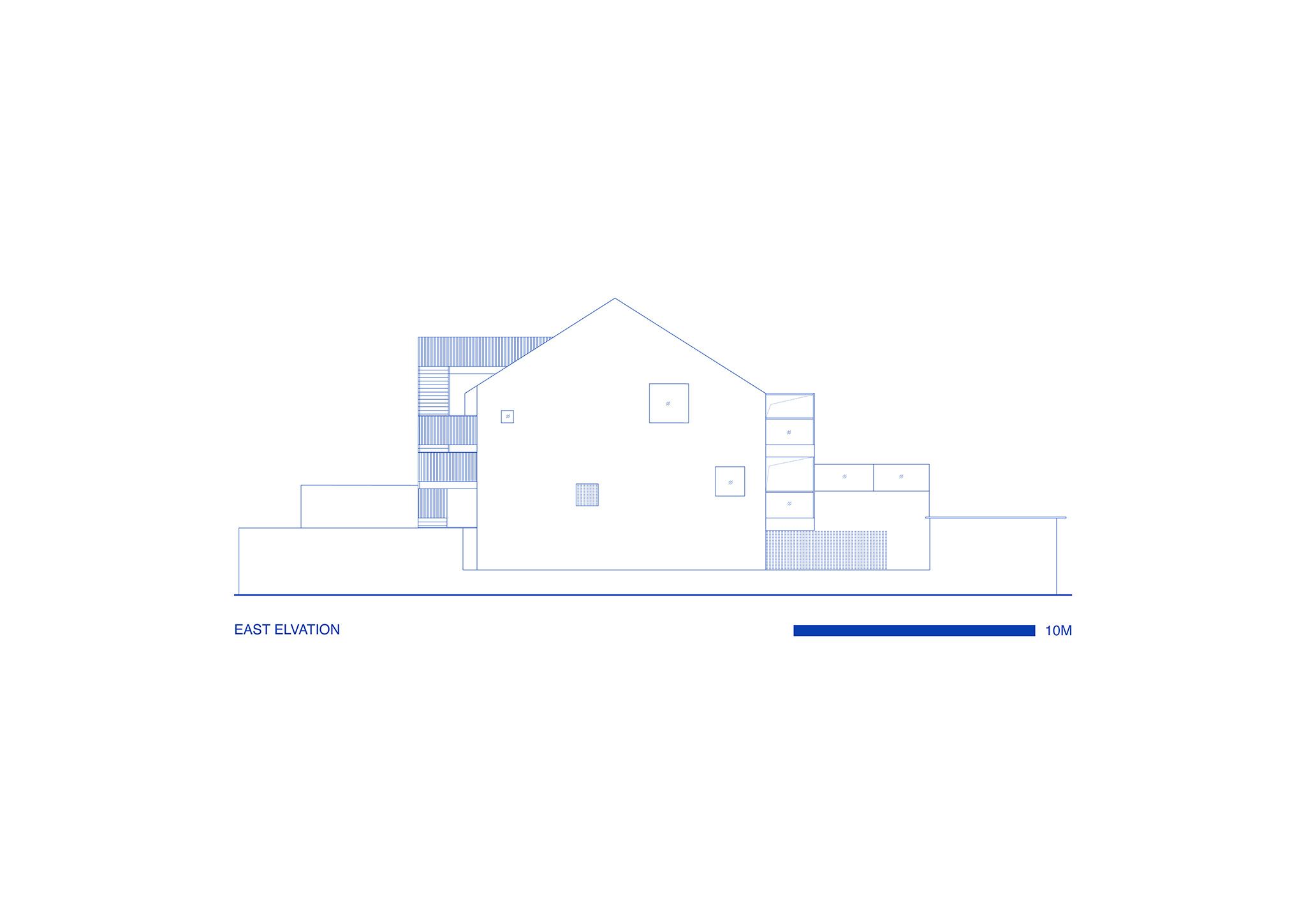
Elevación Este. Fotografía por Hu Siyuan.

East Elevation. The Catcher guesthouse by Team_BLDG. Photograph by Hu Siyuan.

Project description by Team_BLDG

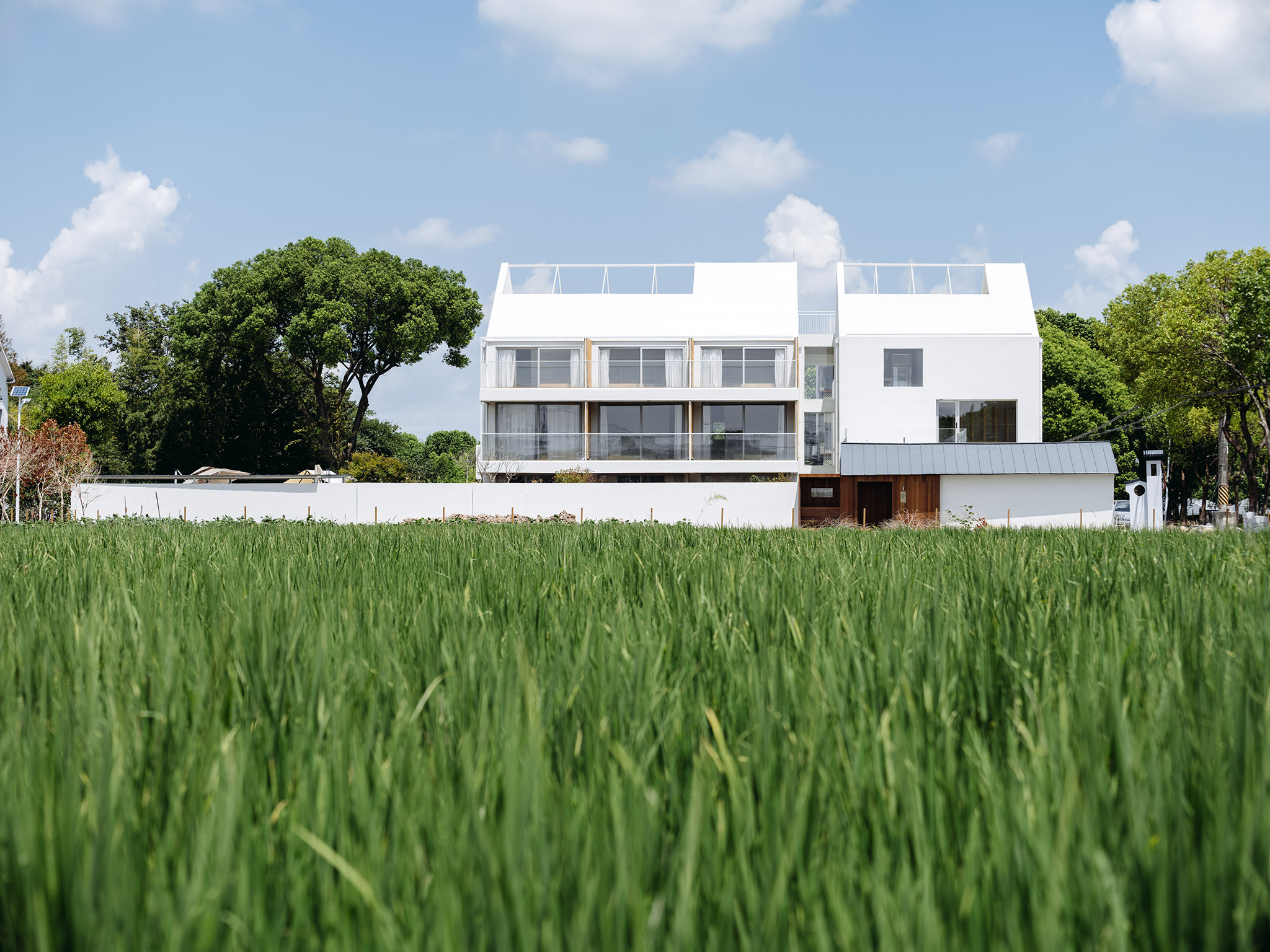
The Chunli Guesthouse project is located near the ancient town of Xinchang in the suburbs of Shanghai. Upon first arriving at the site, the vast expanse of rice fields was refreshing and delightful. The boundless scenery and natural ambiance of the fields became the inspiration for the design, setting the tone for the project's symbiotic relationship with nature.

Unlike the many predetermined constraints of branded guesthouses, the owner of Chunli Guesthouse preferred to grant greater freedom to the designers. During the initial discussion, the owner only verbally outlined basic requirements: meeting the number of rooms and functional needs of public areas while making full use of outdoor and rooftop terrace spaces.

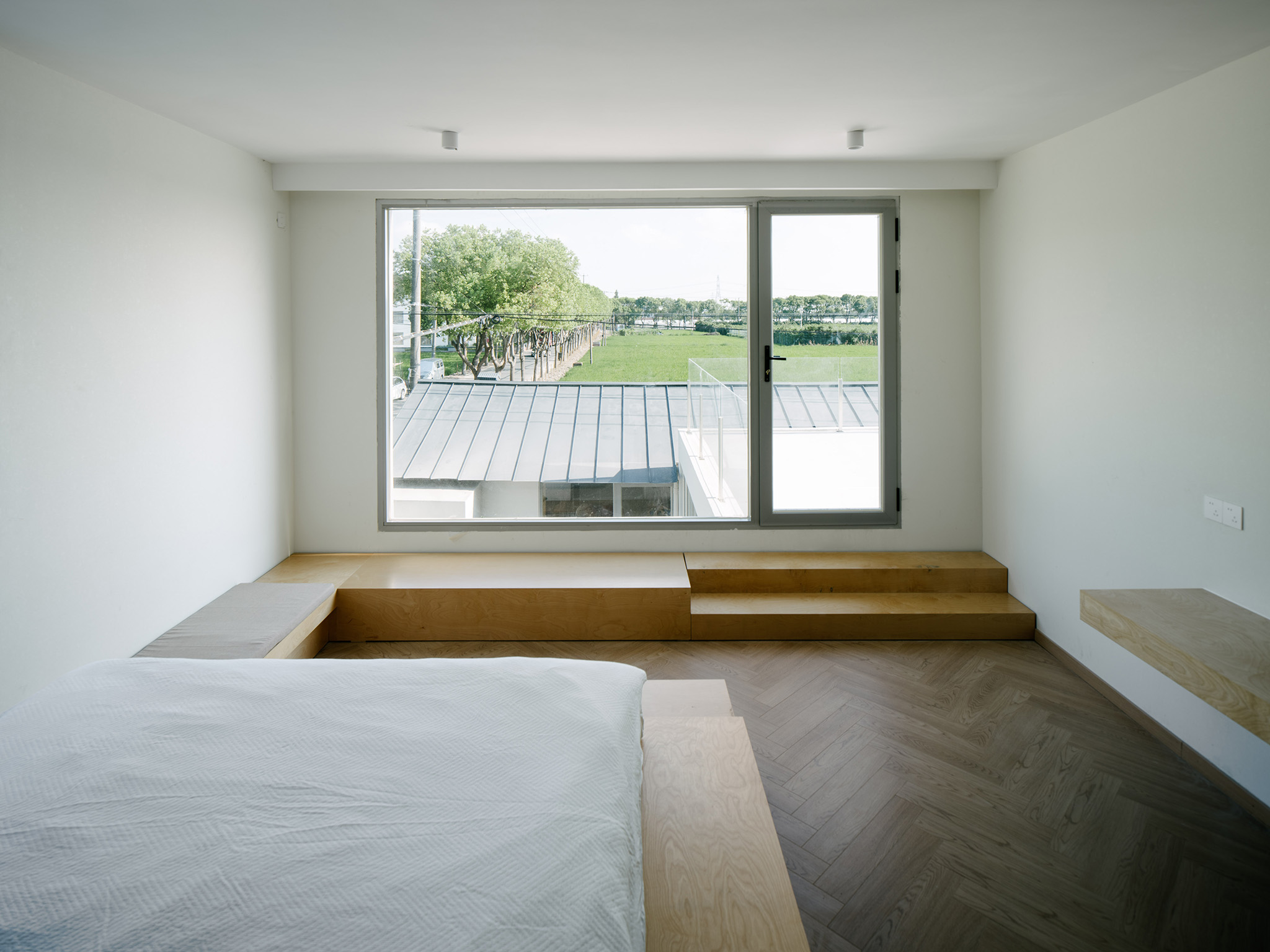
Private Terrace (Top-Floor Room). Photograph by Hu Siyuan.
Private Terrace (Top-Floor Room). The Catcher guesthouse by Team_BLDG. Photograph by Hu Siyuan.

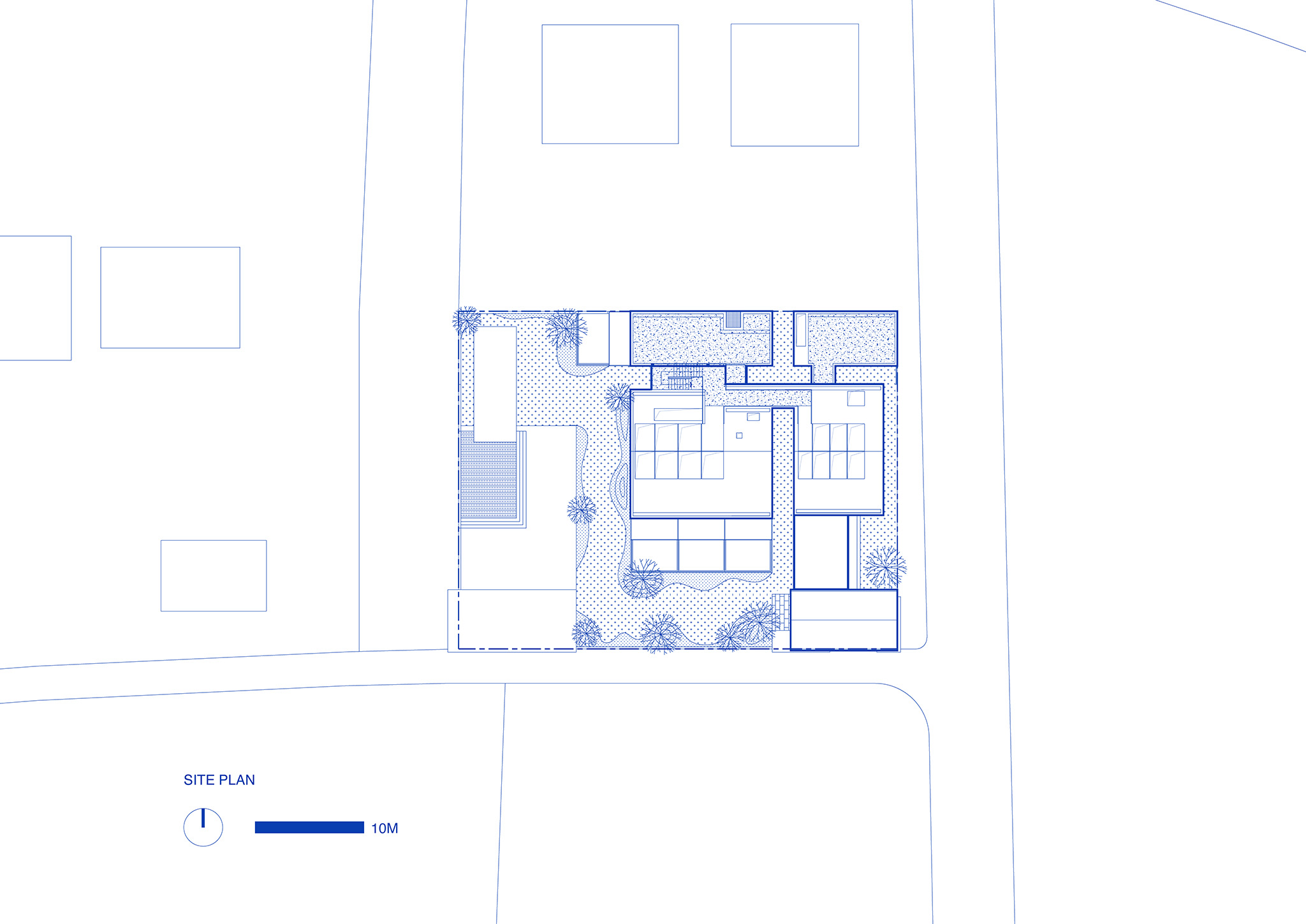
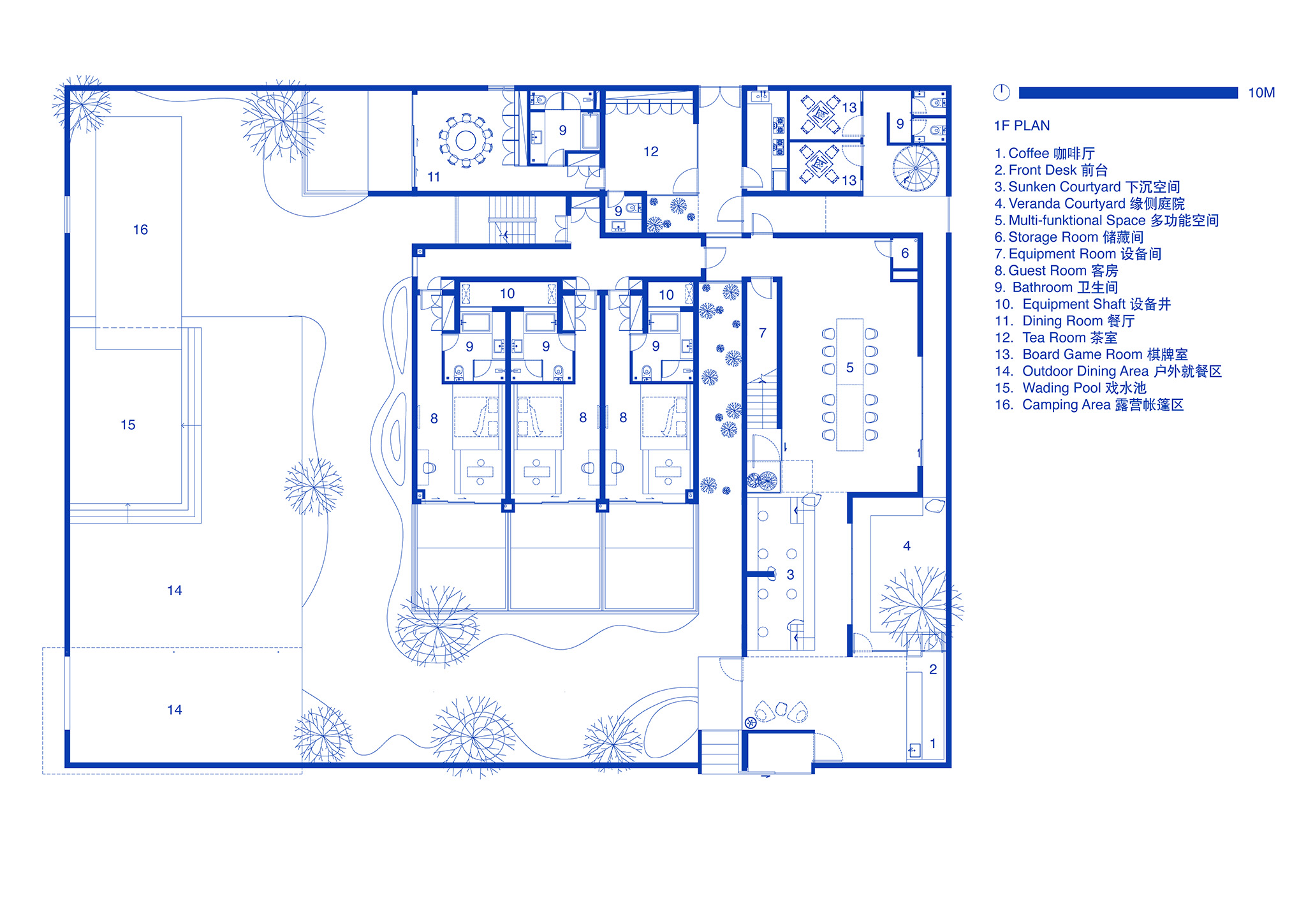
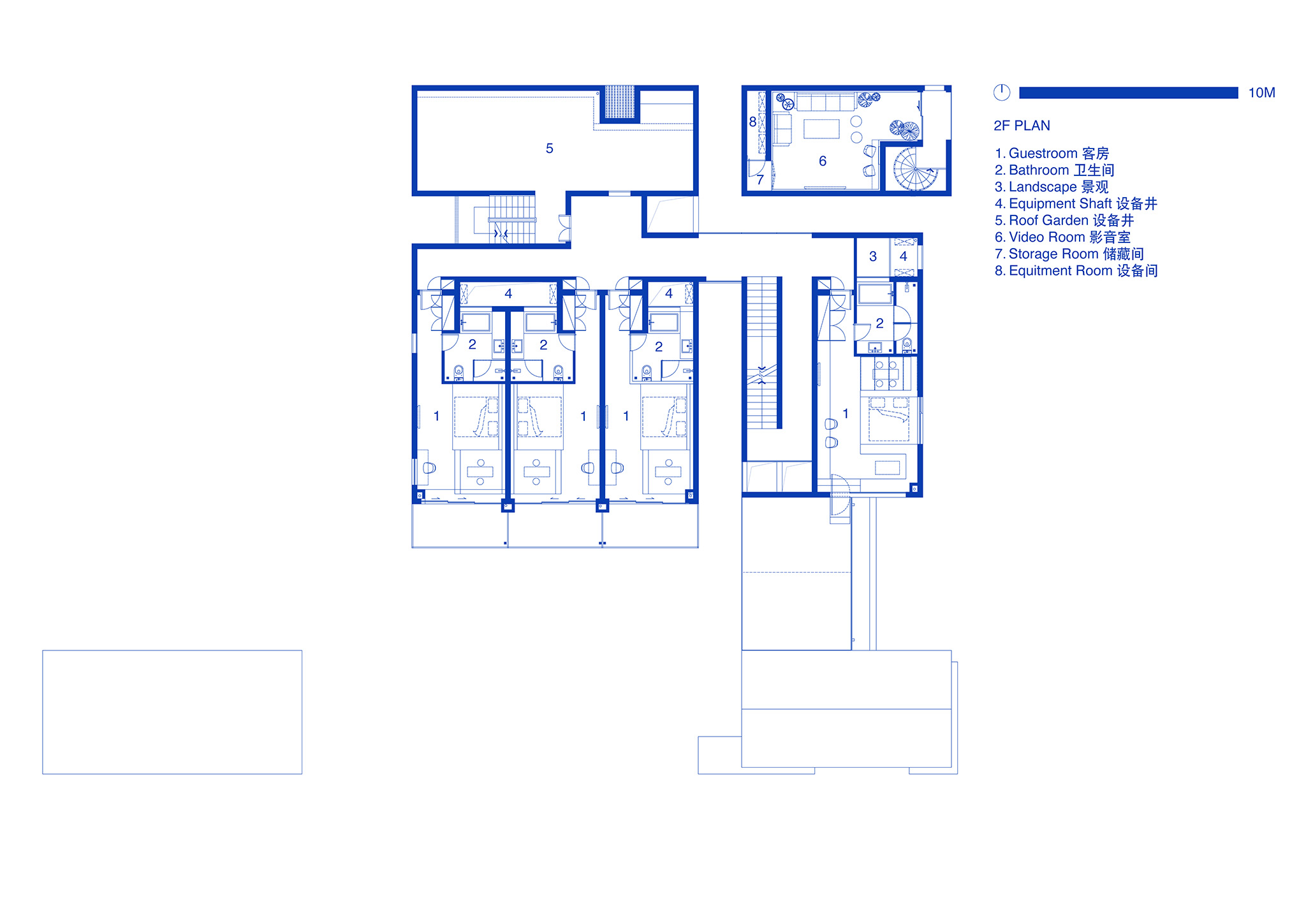
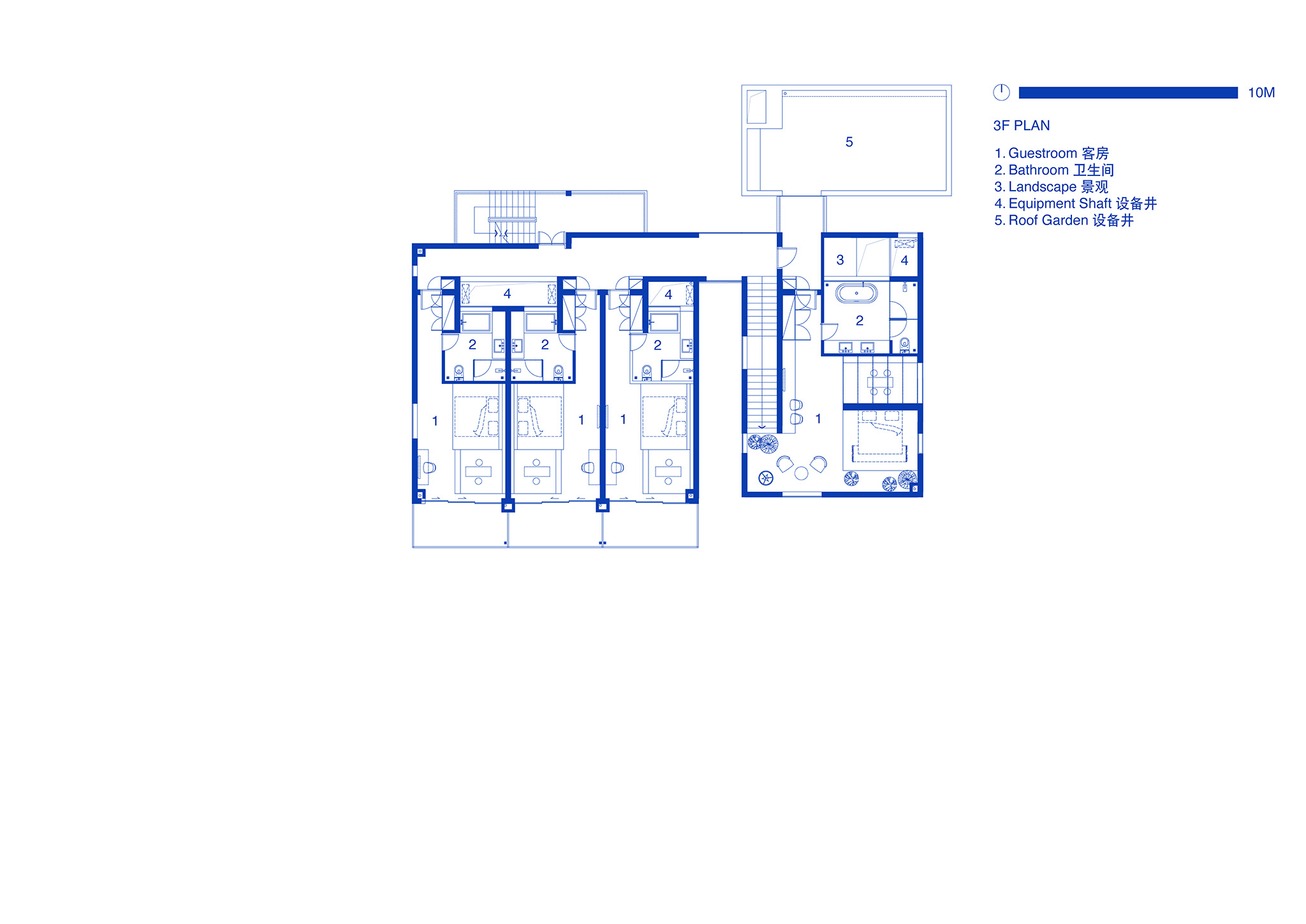
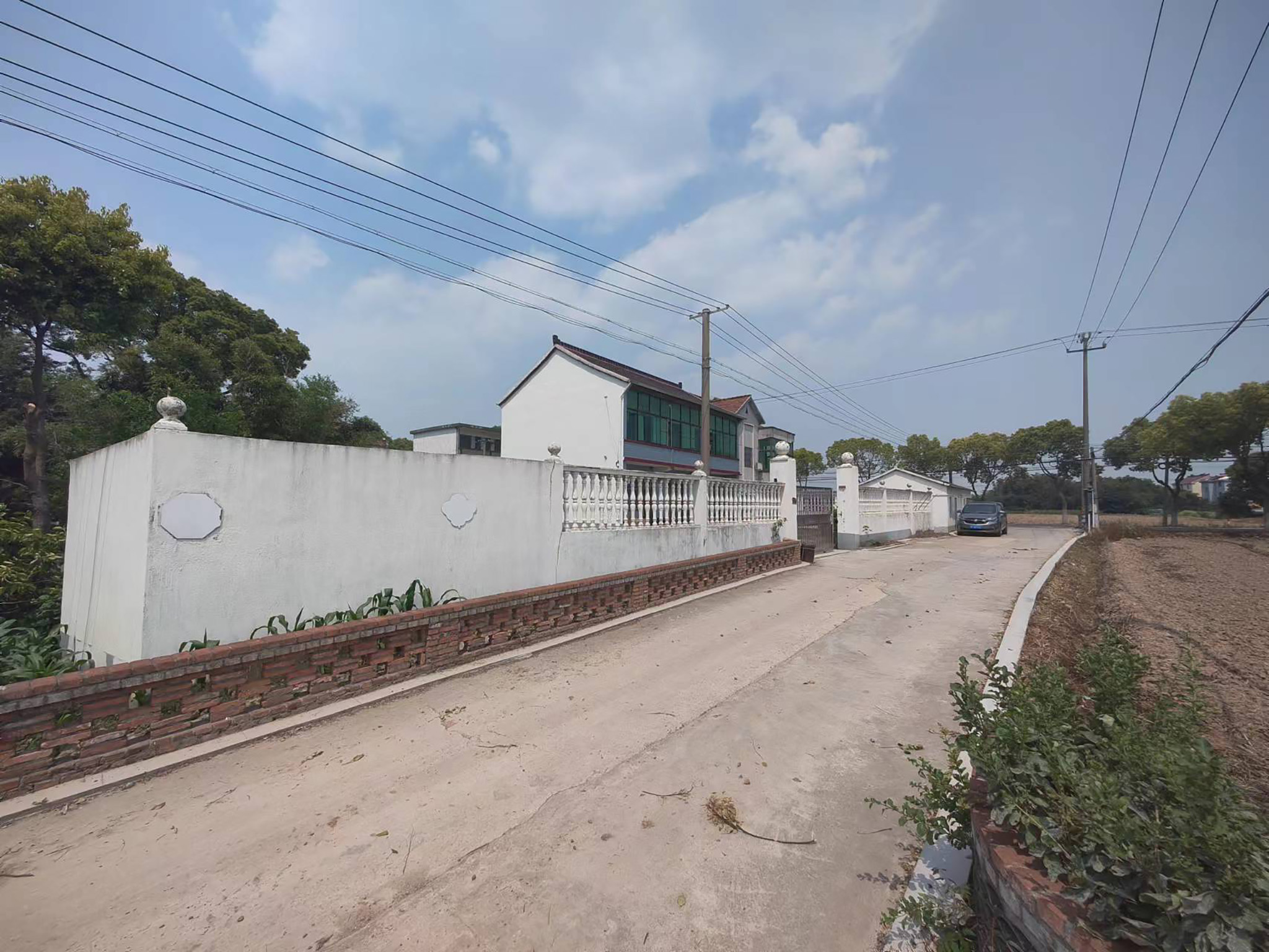
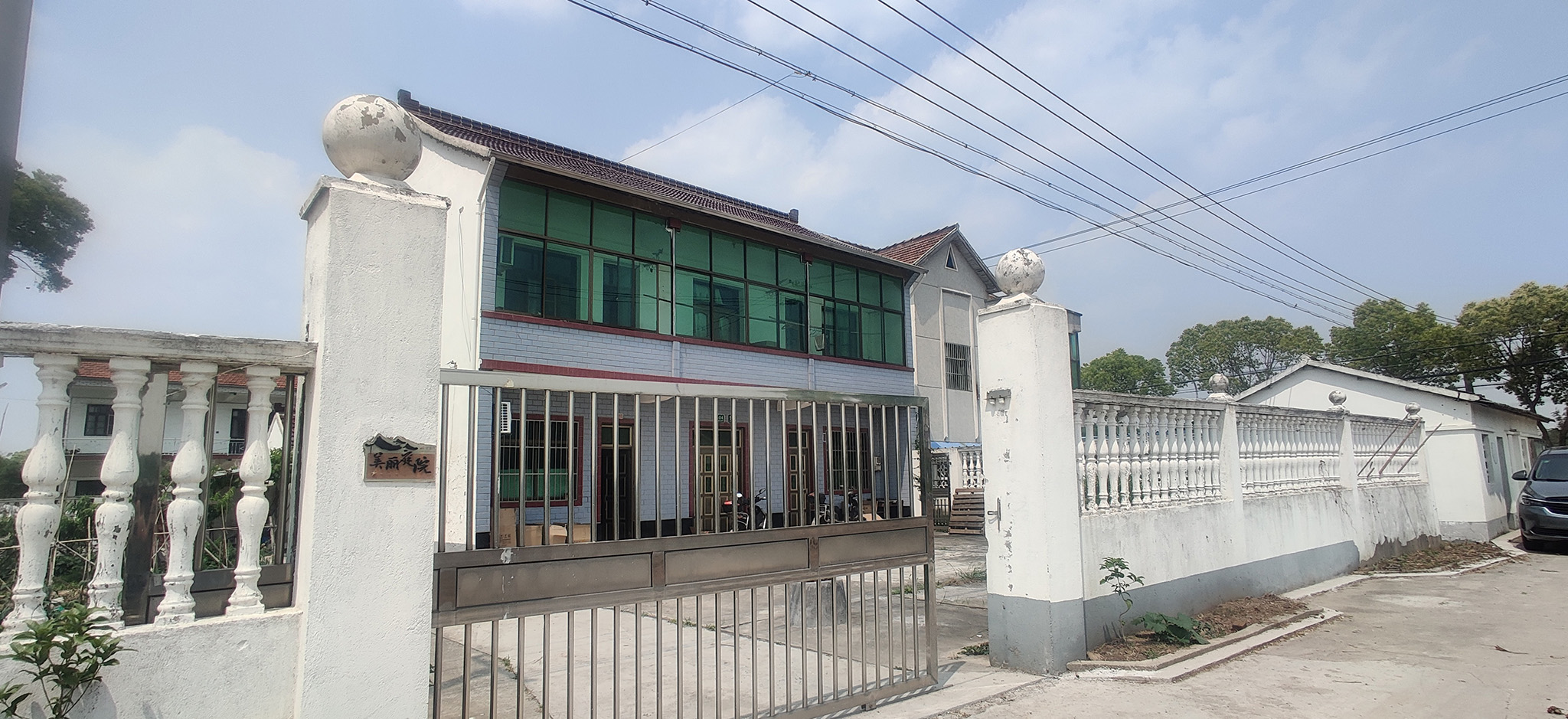
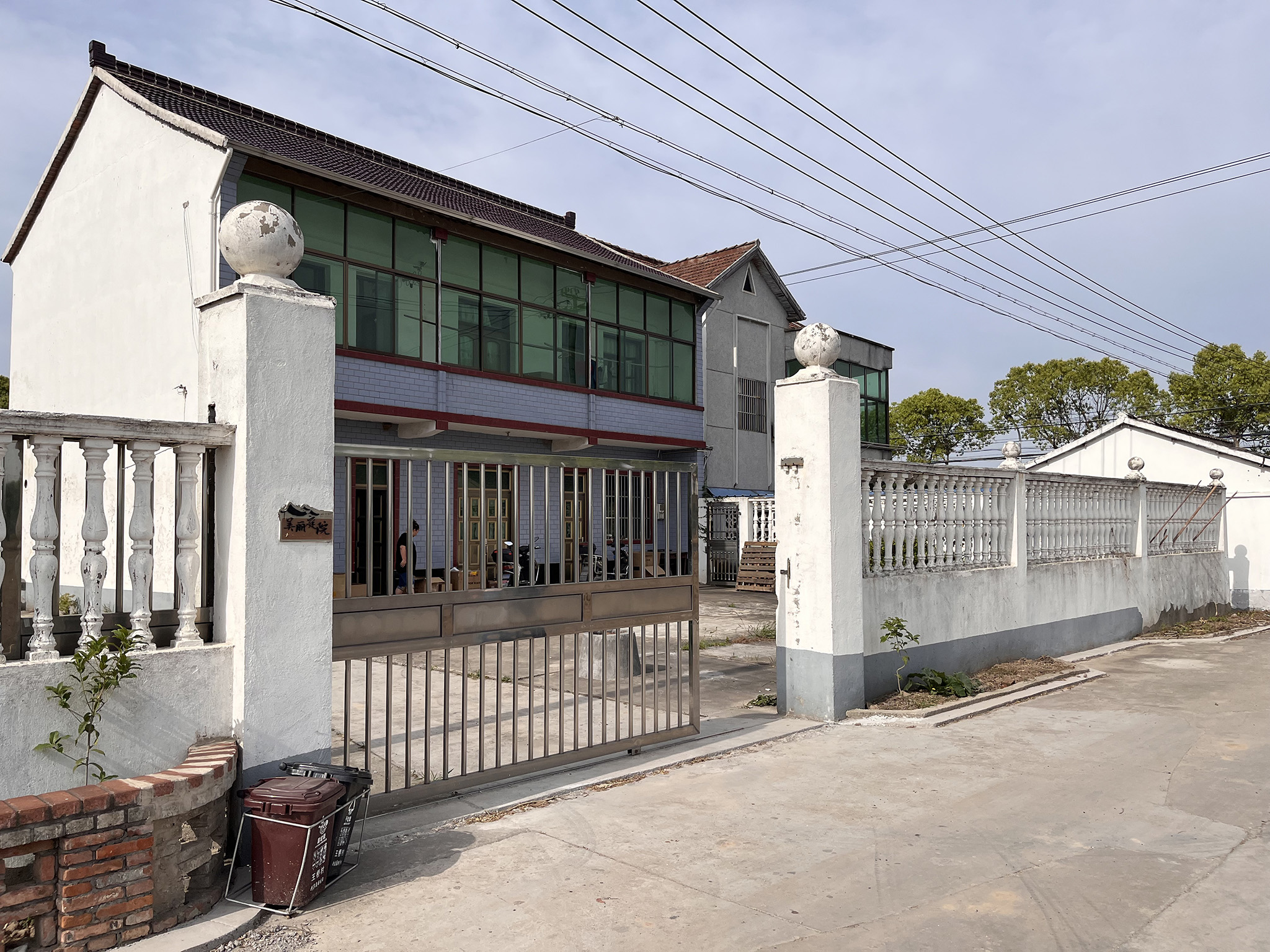
The original structures consisted of two independent self-built rural houses, whose forms and interior spaces could not meet the functional demands of a modern guesthouse. While preserving the original structures, we aimed to avoid extensive modifications, instead adapting to the existing conditions to create a guesthouse with 11 guest rooms and composite functions such as a banquet hall and mahjong room.

Moreover, as a natural, "unforced" rice field guesthouse, the corresponding design needed to be flexible enough to accommodate the uncertainties often encountered in renovation projects, such as approval processes and construction challenges, striving to balance practical conditions with ideal aspirations.
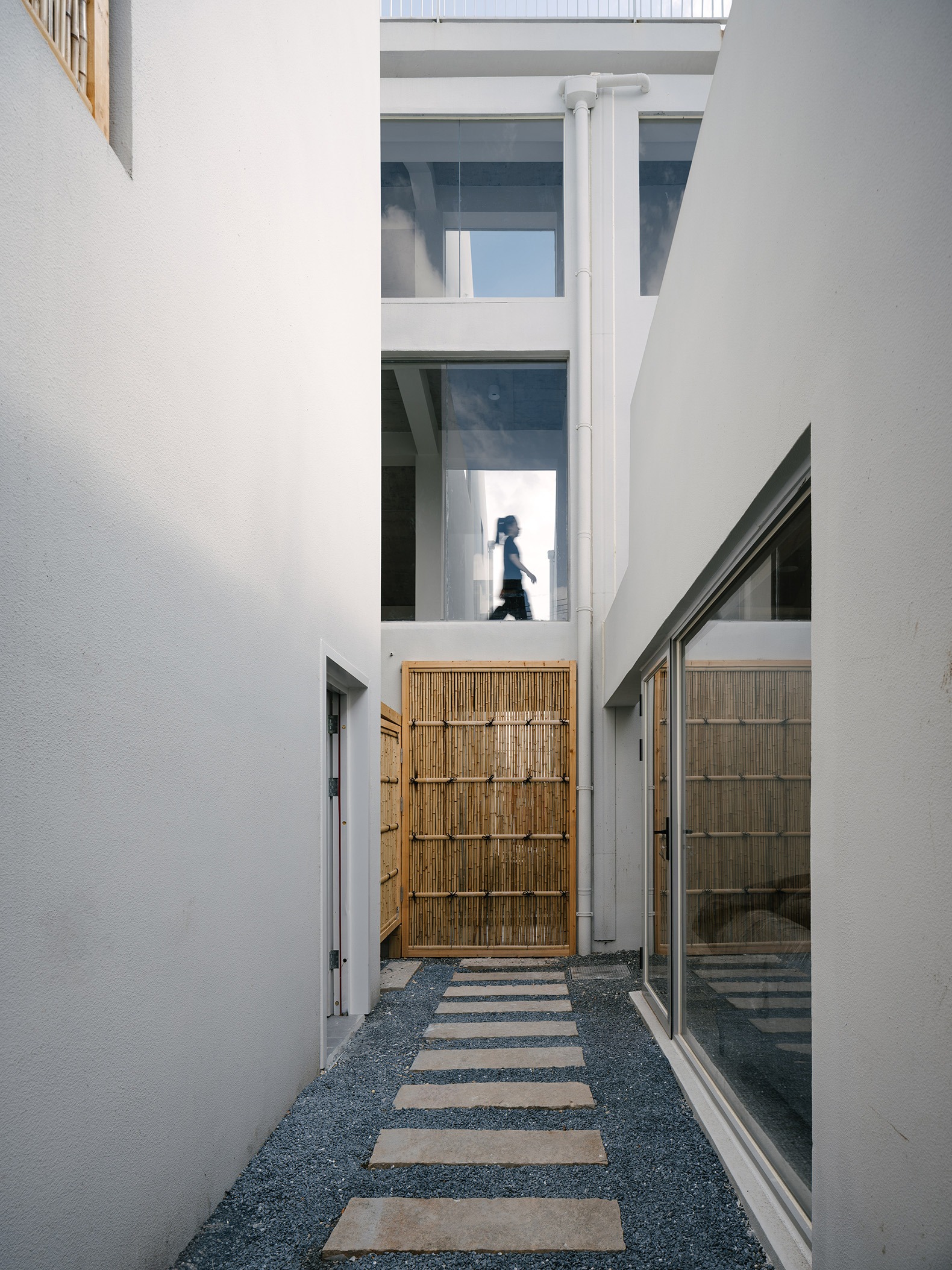
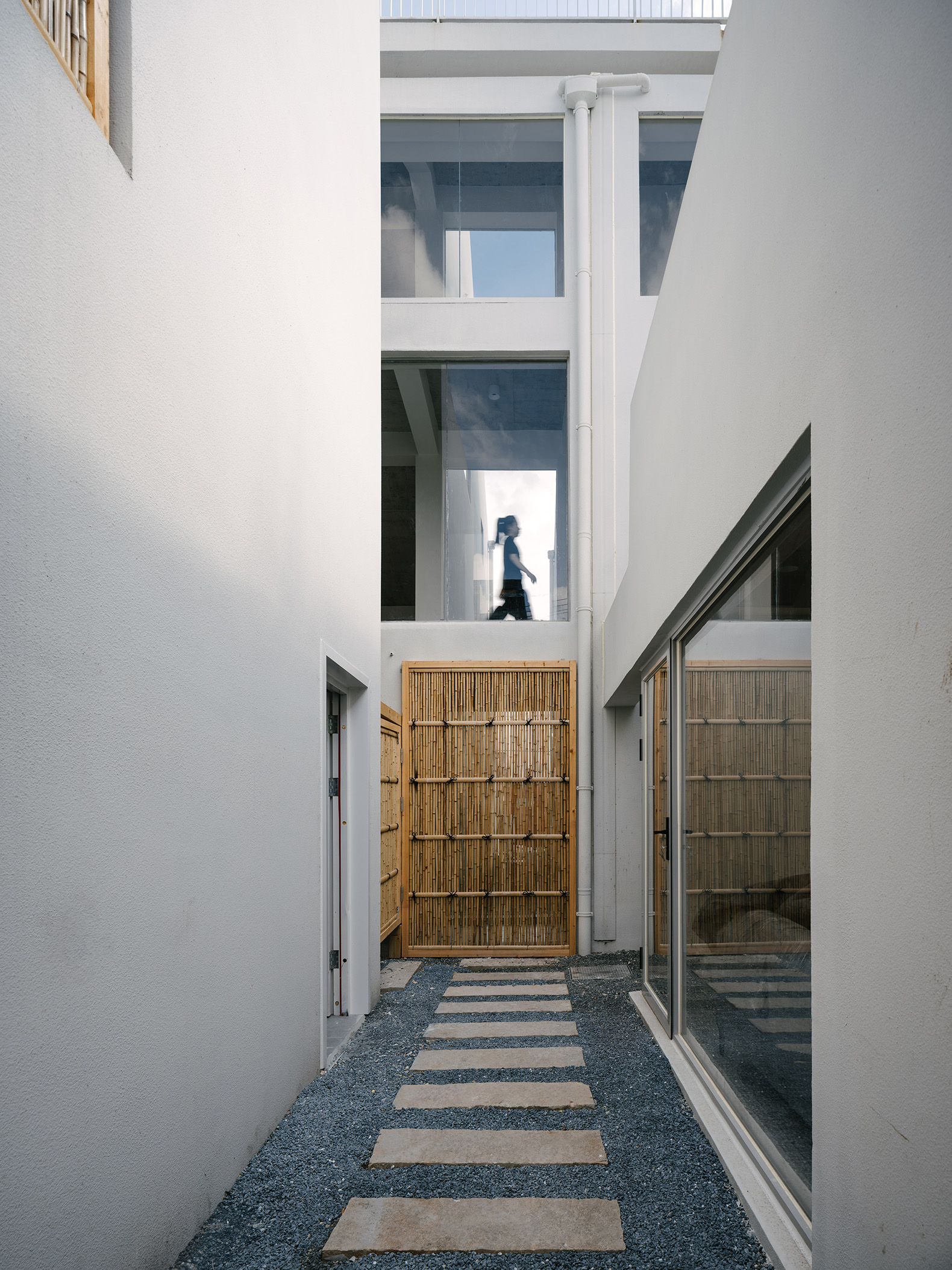
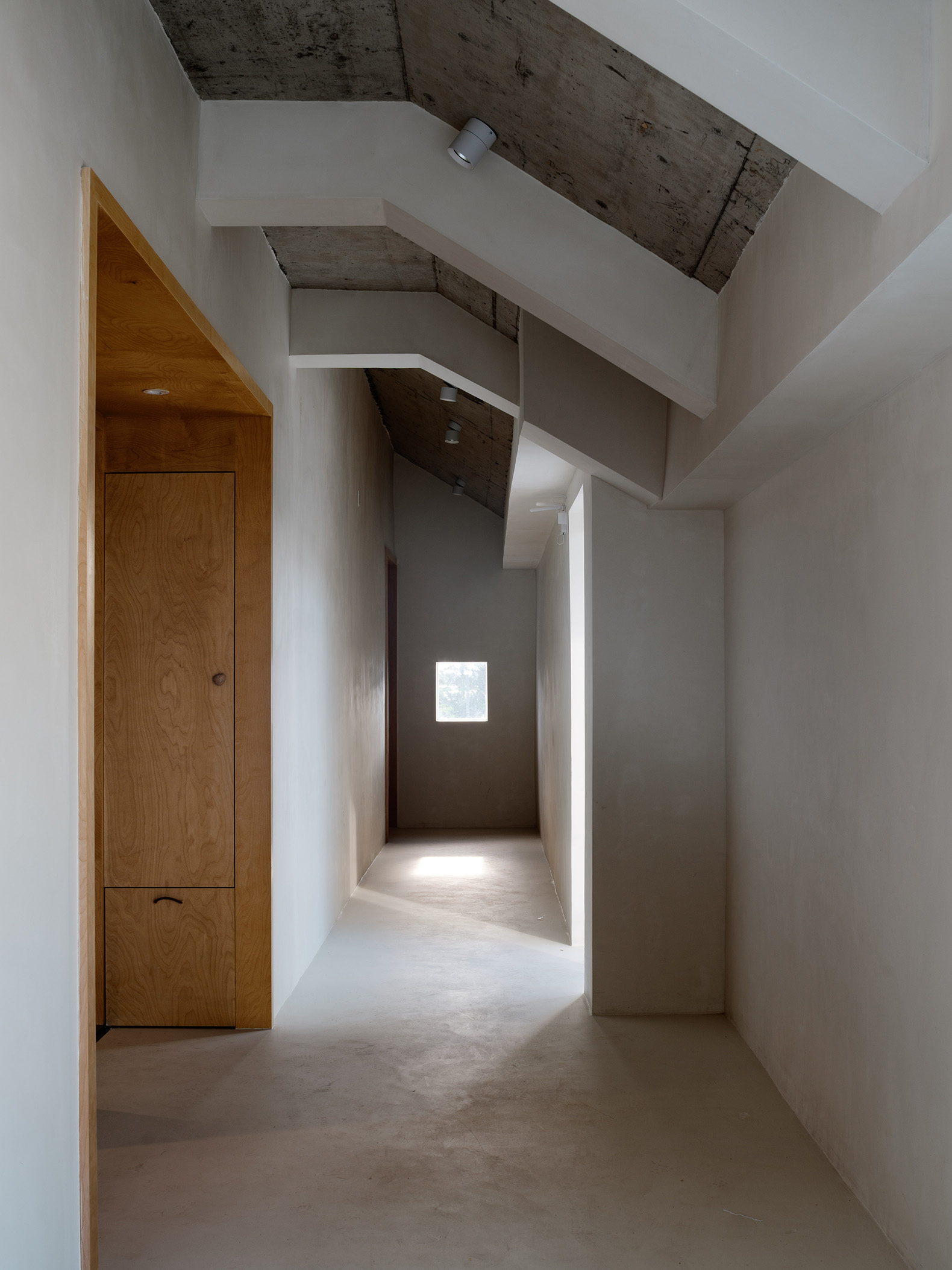
Pathways Connecting All Areas. Photograph by Hu Siyuan.
Pathways Connecting All Areas. The Catcher guesthouse by Team_BLDG. Photograph by Hu Siyuan.

«The Catcher», connected with nature
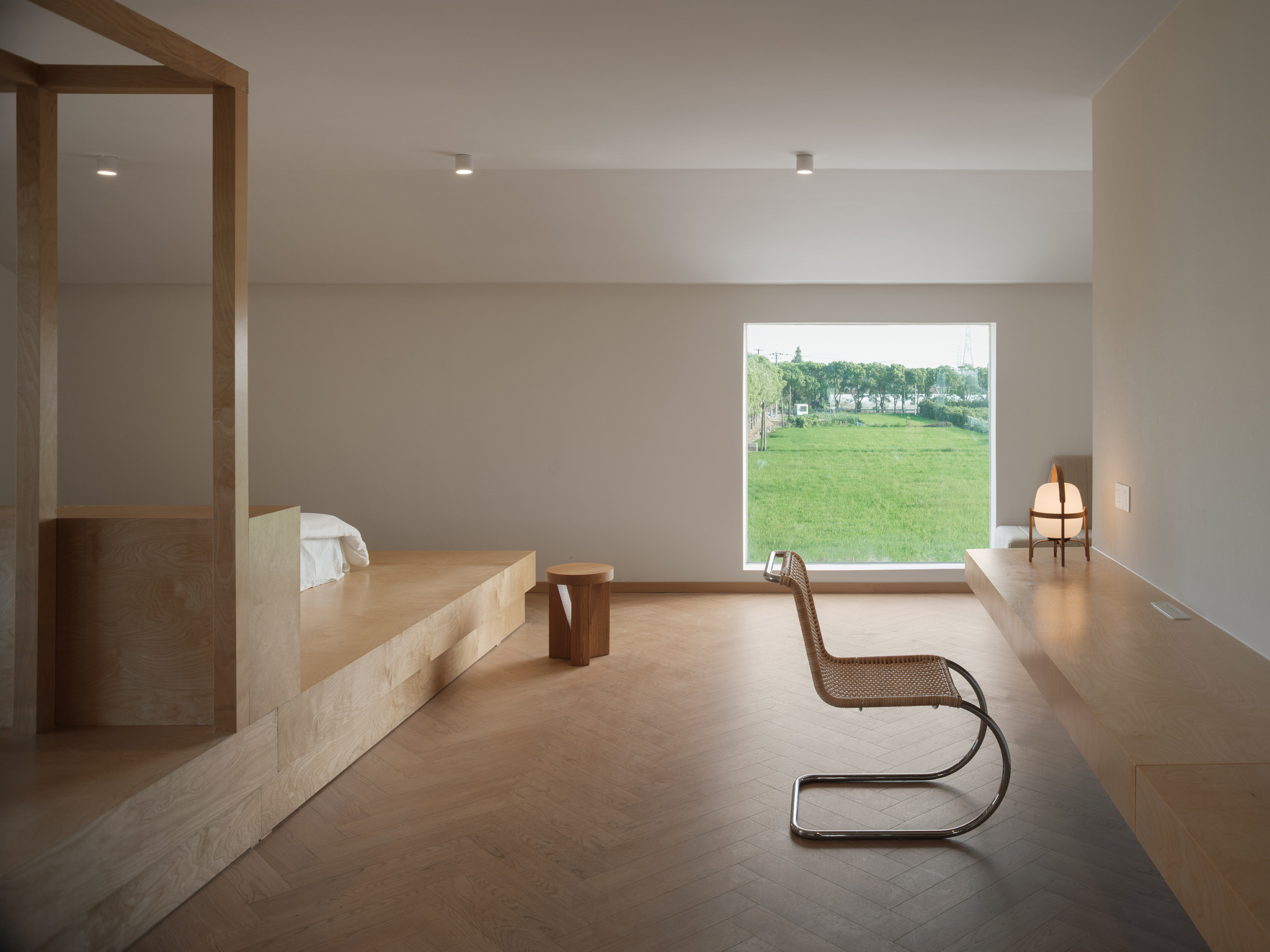
The design takes "Catching" as its spiritual core, emphasizing the relationship between the architecture and the surrounding rice field landscape. Under the premise of controllable costs, the design retained as much of the original structure as possible, including the gable-roofed bungalow with a wooden structure at the entrance. At the same time, through connections, framed views, and the interplay of indoor and outdoor spaces, the building becomes an integral part of the natural environment. Like a "Catcher in the field," it stands unique yet reassuring.

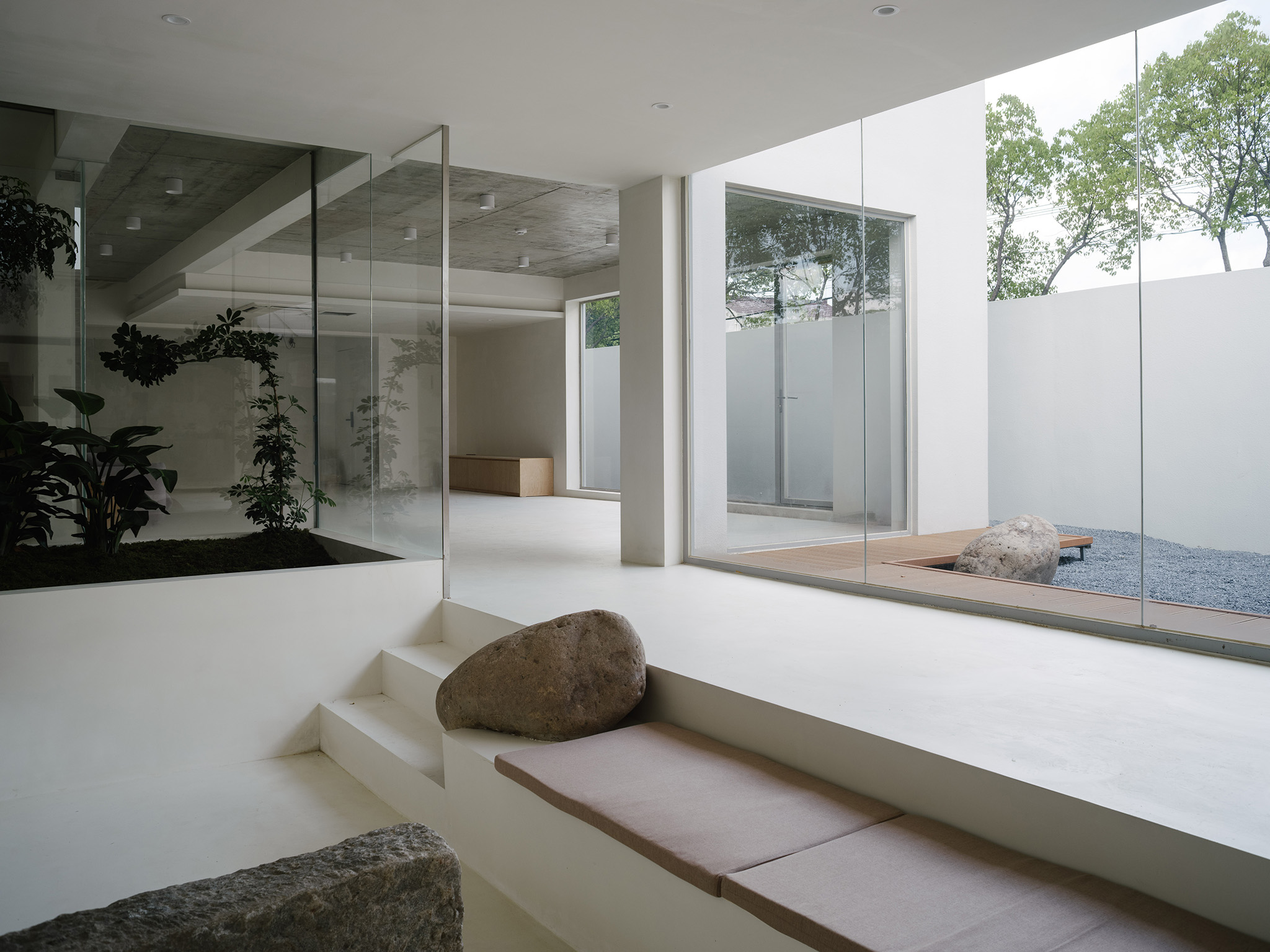
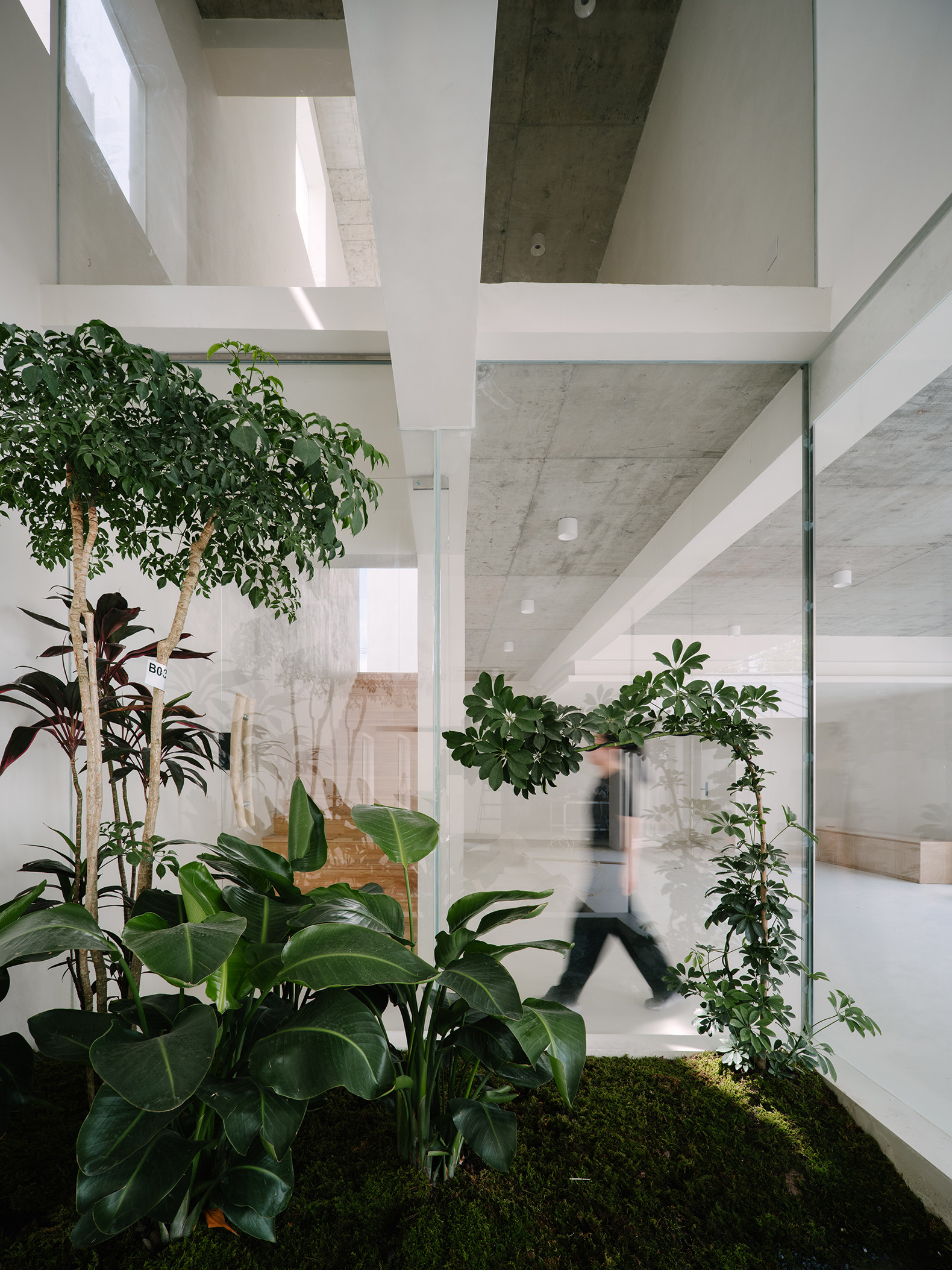
The design uses circulation as the core organizing principle for the spaces, making movement through the building an engaging experience in itself. First, a perimeter wall integrates the two buildings and courtyards into a unified site. Then, three architectural volumes are inserted into three corners of the rectangular site as "connectors," housing public functions such as the lobby, pavilion, and banquet hall. This strategy not only clarifies the logical relationship between public and private areas but also effectively links indoor and outdoor spaces.
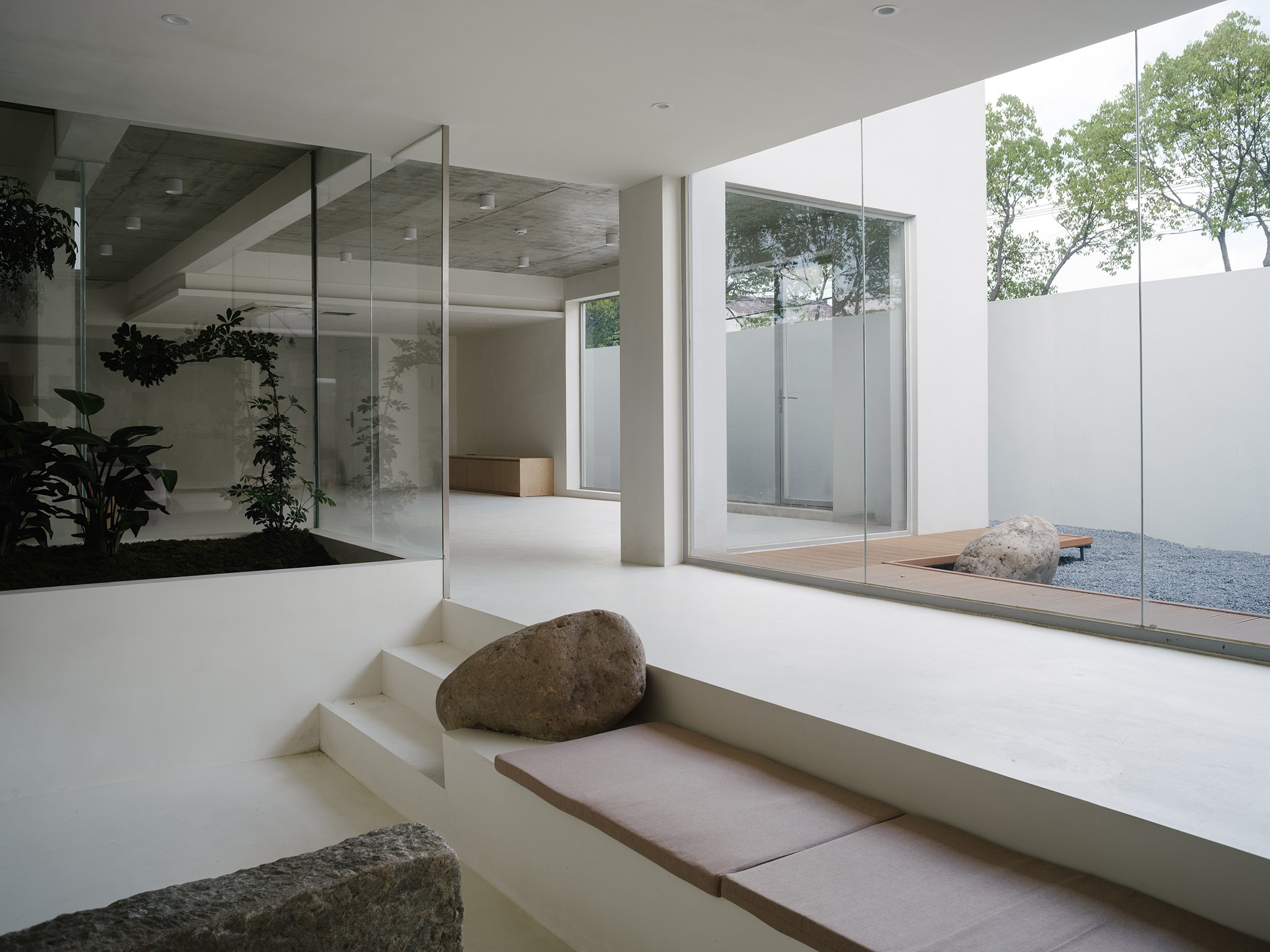
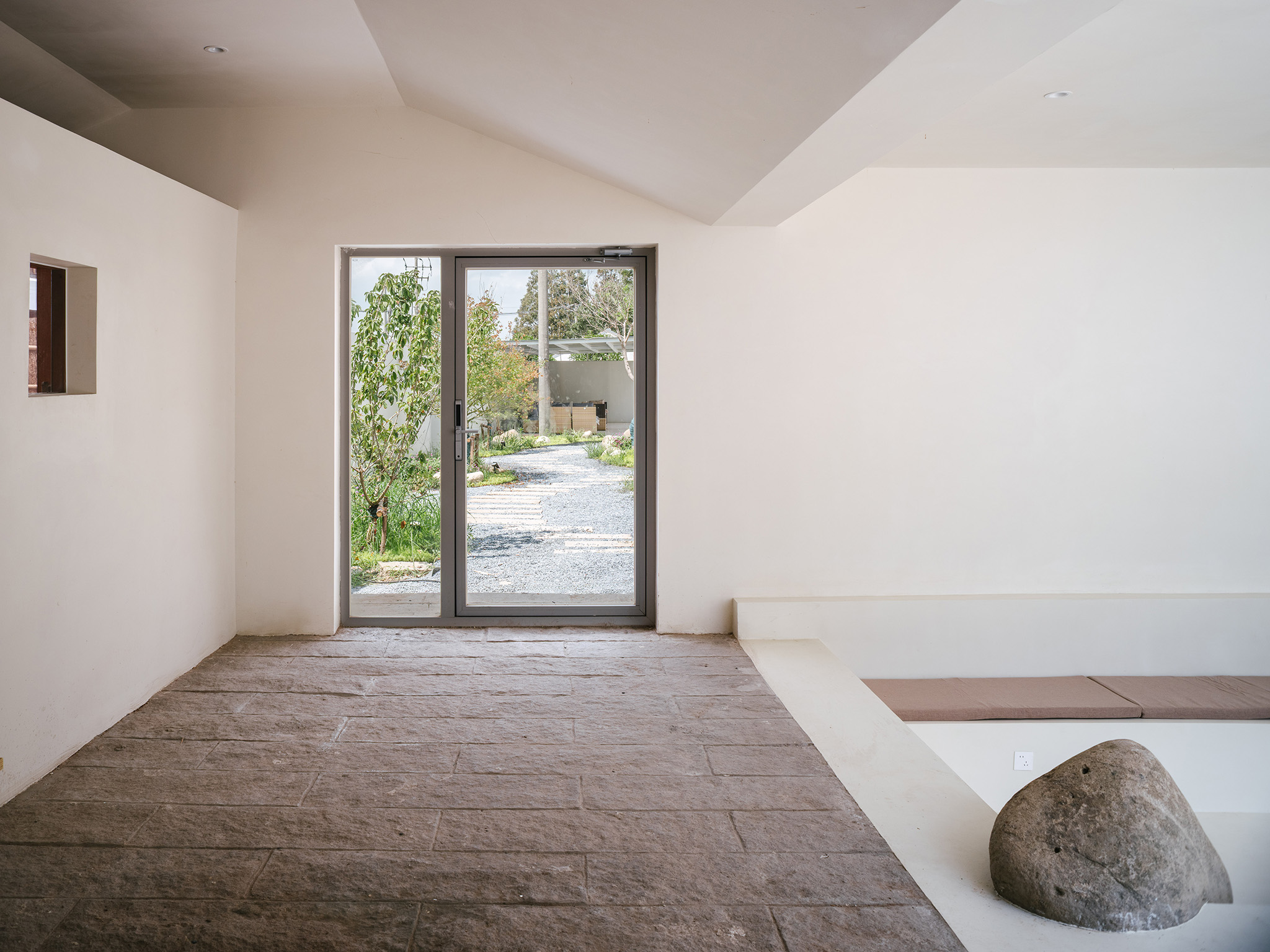
Lobby Extending into the Courtyard. Photograph by Hu Siyuan.
Lobby Extending into the Courtyard. The Catcher guesthouse by Team_BLDG. Photograph by Hu Siyuan.

Additionally, following the original terrain, a sunken seating area was created in the lobby, forming a unique visual dialogue with the small courtyard while introducing natural light and garden views into the interior, thereby enriching the layers of the semi-outdoor space.

Old and New, Balancing Preservation and Intervention
In the renovation, the designers carefully handled the relationship between old and new. For example, the old gable-roofed house at the entrance, though slightly different in style from the other new volumes, was largely left unchanged, with only the original roof replaced with aluminum-magnesium-manganese panels for safety reasons.
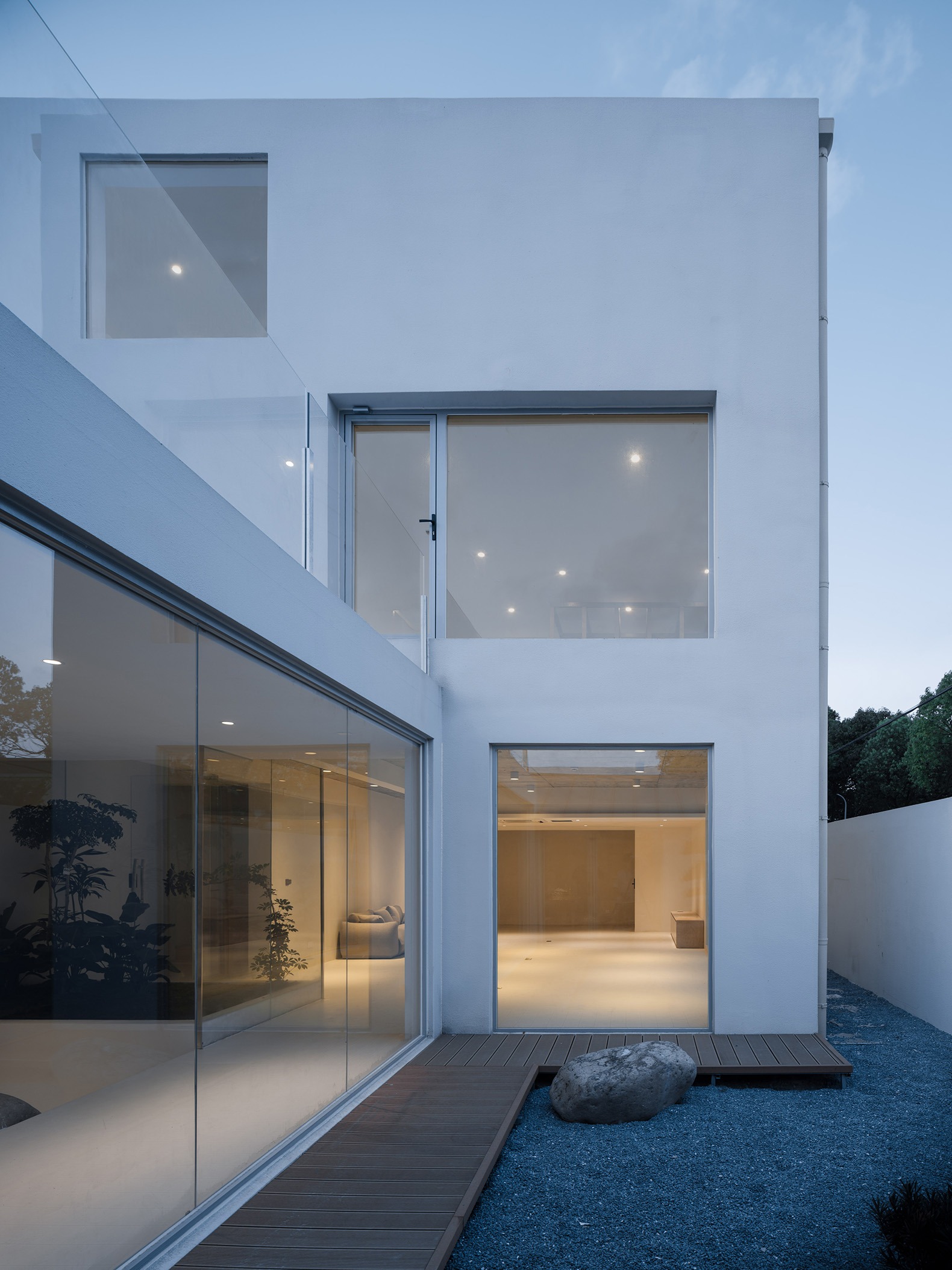
Wooden Deck for Strolling and Relaxation. Photograph by Hu Siyuan.
Wooden Deck for Strolling and Relaxation. The Catcher guesthouse by Team_BLDG. Photograph by Hu Siyuan.

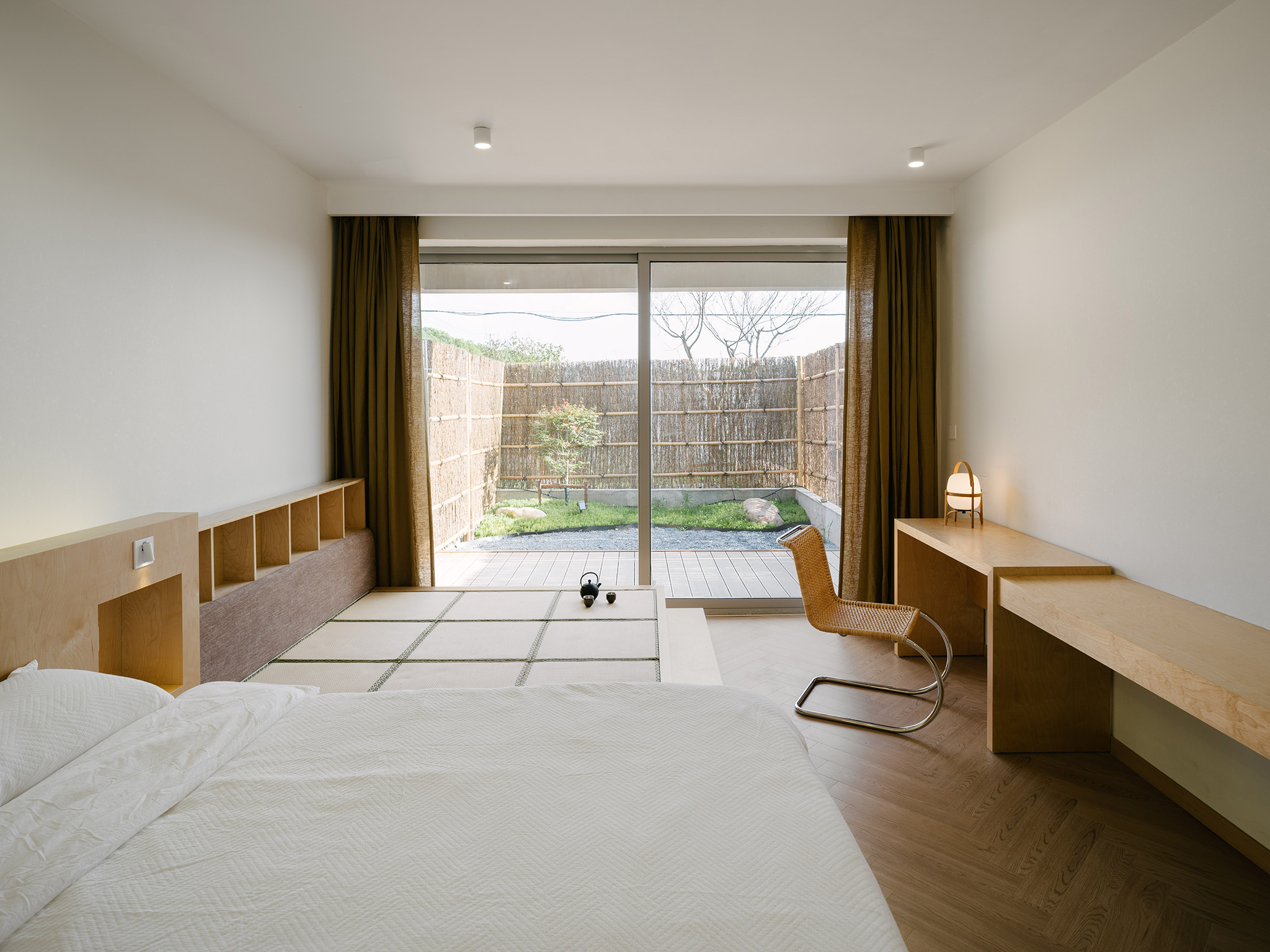
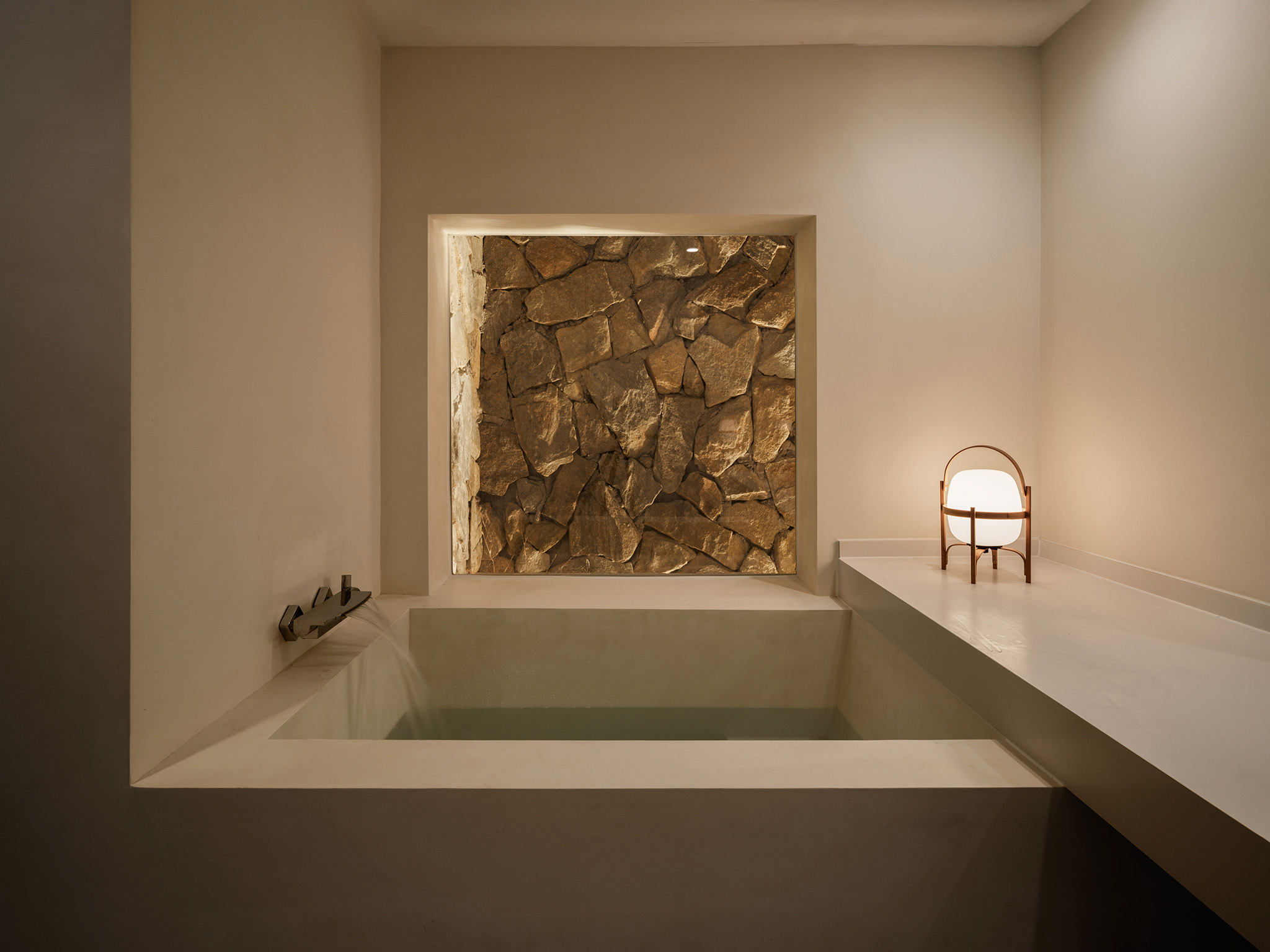
New interventions also adhered to the principle that "every intervention has a reason." For instance, the landscaped view outside the window of the guest room soaking area was not merely decorative but also served to cleverly conceal unsightly pipes running along the wall, reflecting the design's pursuit of authenticity and integrity.

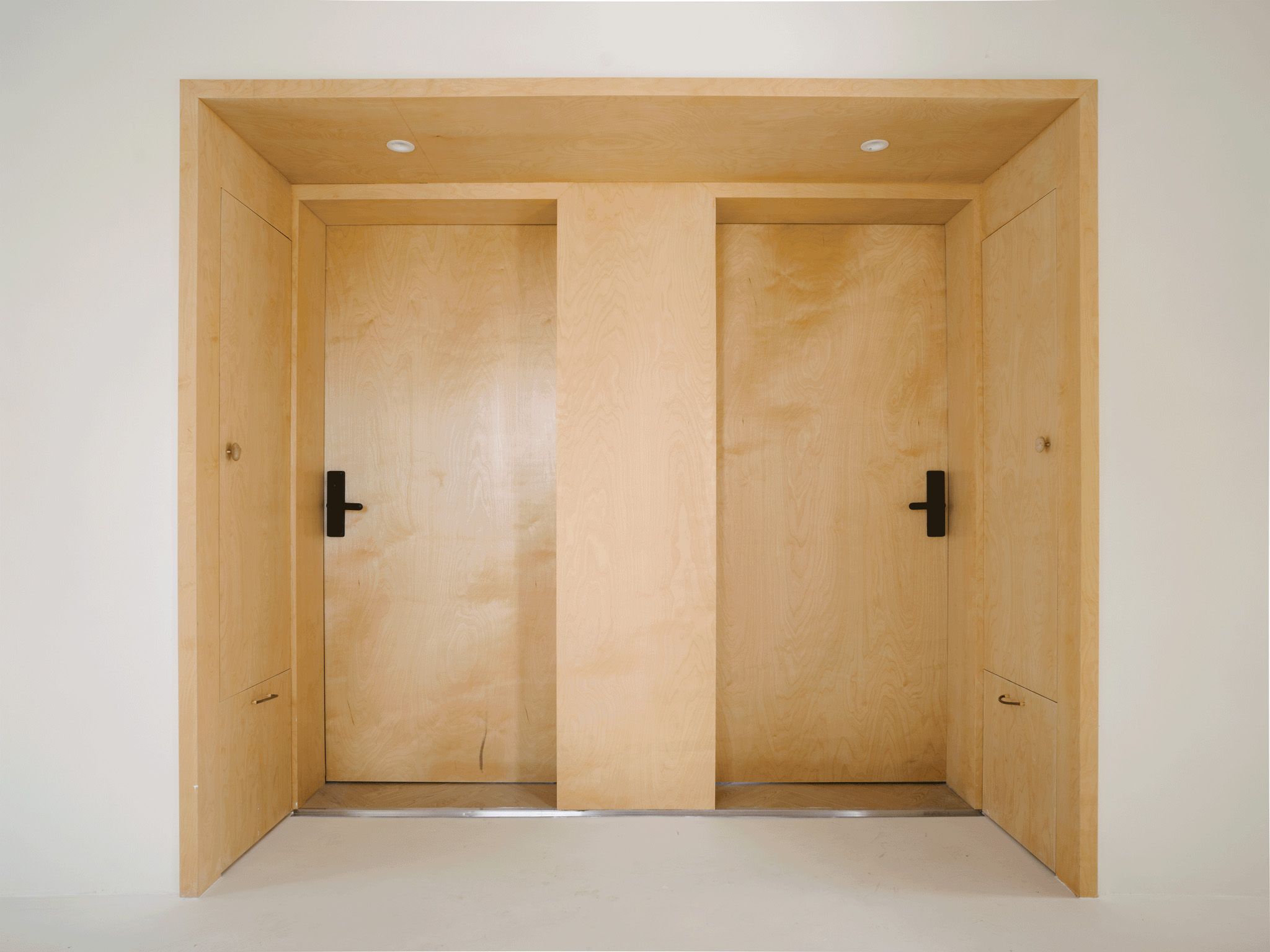
Like most old building renovation projects, Chunli Guesthouse faced challenges such as tight budgets and the need to adapt to local construction standards. By adopting a fixed furniture system, multiple functional needs in the guest rooms were integrated and addressed, effectively reducing overall costs. At the same time, the design process fully considered local construction techniques, simplifying construction details as much as possible and selecting materials and methods that are easy to implement and durable, ensuring a high level of completion for the design concept.
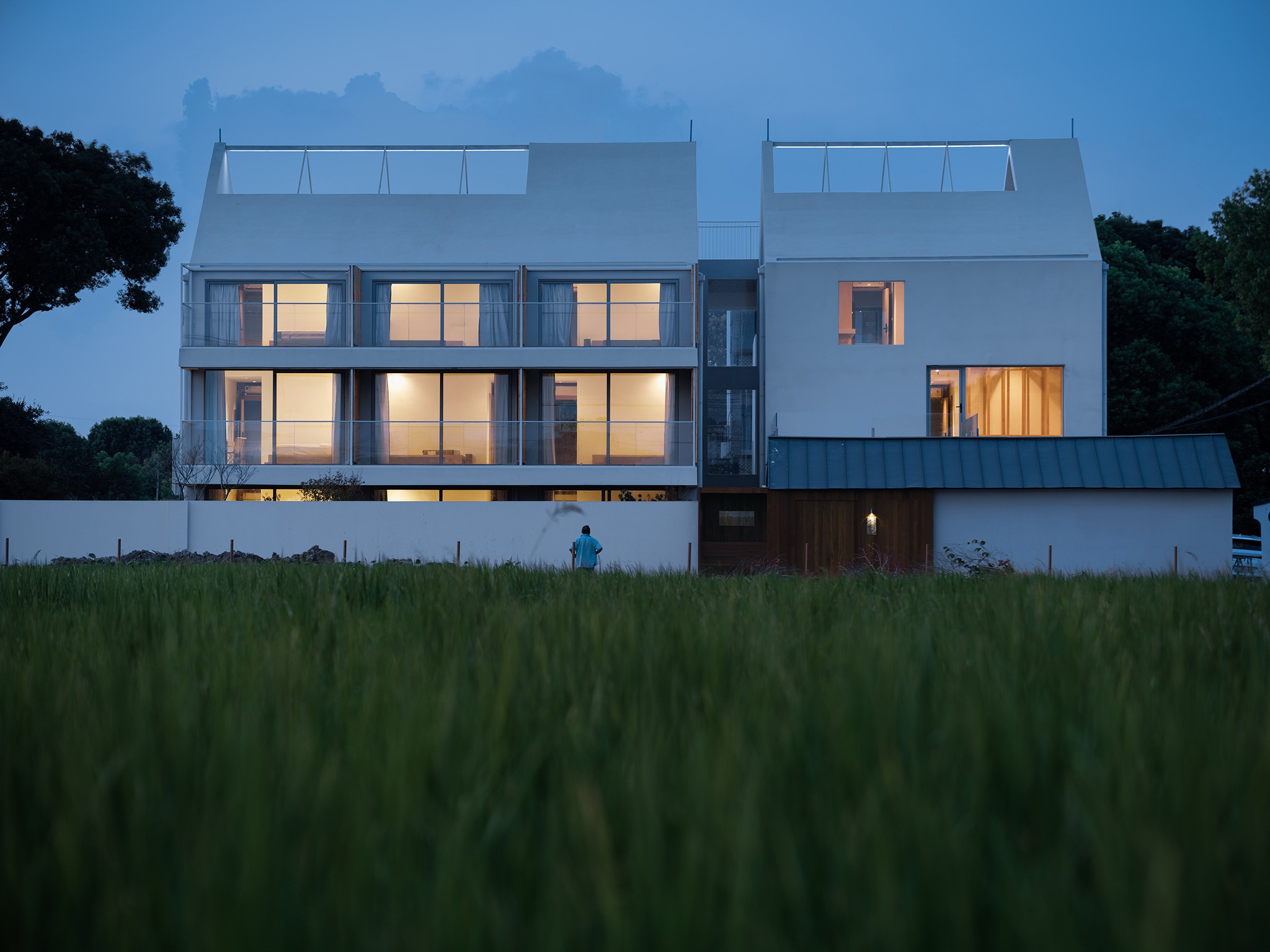
View from the Rice Fields. Photograph by Hu Siyuan.
View from the Rice Fields. The Catcher guesthouse by Team_BLDG. Photograph by Hu Siyuan.

"Catcher in the Field" is TEAM_BLDG's response to nature, memory, and the spirit of place. We hope that, beyond meeting functional needs, this building can become a medium connecting people with the land, the past with the future, watching over both the soil and time itself.
More information

Label
Architects
Text

Team_BLDG. Lead Architects.- Xiao Lei, Wang Jin.
+ + copy Created with Sketch.
- + copy Created with Sketch.
Label
Project team
Text

Xiao Lei, Deng Zhaojing, Deng Caiyi, Shigeno Yuji, Shen Ruijie.

+ + copy Created with Sketch.
- + copy Created with Sketch.
Label
Collaborators
Text

Custom Furniture Design.- TEAM_BLDG.

+ + copy Created with Sketch.
- + copy Created with Sketch.
Label
Client
Text

Chunli Guesthouse.

+ + copy Created with Sketch.
- + copy Created with Sketch.
Label
Area
Text

Building Area.- 897 sqm. 
Landscape Area.- 773 sqm.

+ + copy Created with Sketch.
- + copy Created with Sketch.
Label
Dates
Text

Design Period.- 2023.05 / 2024.04.
Construction Period.- 2024.02 / 2024.08.

+ + copy Created with Sketch.
- + copy Created with Sketch.
Label
Location
Text

Pudong, Shanghai, China.

+ + copy Created with Sketch.
- + copy Created with Sketch.
Label
Photography
+ + copy Created with Sketch.
- + copy Created with Sketch.

Team_BLDG, founded in Shanghai in 2012 by Xiao Lei and Wang Jin is a team that works with architecture, interior, landscape and product.

The two founders of the studio consider the word “BLDG” more of a verb than noun, which represents the whole process from design to construction; The conclusion of the design stage equals only another starting point of architects’ work. Instead of demostrating stylish concept, TEAM_BLDG emphasises on the atmospheric sense of the space, interior and exterior.

Xiao Lei, focuses, through years of design practice, on the low-tech strategy of construction and local traditional culture, seeking spatial responses to urban and rural problems in natural and cultural environment. Xiao was committed many projects to restore, reuse and reurpose old buildings, through which he kept exploring how to use both modern and traditional technologies to reinterpreate spatially the old enviornment, also in a spiritual sense. In addition to visual experience, atmosphere, temperature, touch and spiritual resonance are the deep beauty that his works pursue.Xiao’s works were awarded and shortlisted in multiple international awards,

Wang Jin, focuses on the creation of atmospheric space with local materials, and the expression of proper scale with simpler forms. Her works have been awarded and shortlisted in many international awards such as The American Master Architect Award, the German Iconic Design Award and so on.She have been reported by many professional media such as The Architectural Review, IDEAT, ELLEDECORATION and so on. In addition to her design practice, Wang is also active in the field of design research and criticism; She has written special reports for magazines such as ELLEMEN and AD as well as new media; Precedently she also worked as a reporter for Art and Design and 21st Century Business Herald.

Read more
Published on: January 22, 2026
Cite:
metalocus, CAMILA DOYLET, AGUSTINA BERTA
"Rural hospitality. The Catcher guesthouse by Team_BLDG" METALOCUS. Accessed
<http://www.metalocus.es/en/news/rural-hospitality-catcher-guesthouse-teambldg> ISSN 1139-6415
Loading content ...
Loading content ...
Loading content ...
Loading content ...
Loading content ...
Loading content ...
Loading content ...
Loading content ...
Loading content ...
Loading content ...
Loading content ...
Loading content ...
Loading content ...
Loading content ...
Loading content ...
Loading content ...
Loading content ...
Loading content ...
Loading content ...
Loading content ...
Loading content ...
Loading content ...
Loading content ...
Loading content ...
Loading content ...
Loading content ...
Loading content ...
Loading content ...
Loading content ...
Loading content ...
Loading content ...
Loading content ...
Loading content ...
Loading content ...
Loading content ...
Loading content ...
Loading content ...
Loading content ...
Loading content ...
Loading content ...
Loading content ...
Loading content ...
Loading content ...
Loading content ...
Loading content ...
Loading content ...
Loading content ...
Loading content ...
Loading content ...
Loading content ...
Loading content ...
Loading content ...
Loading content ...
Loading content ...