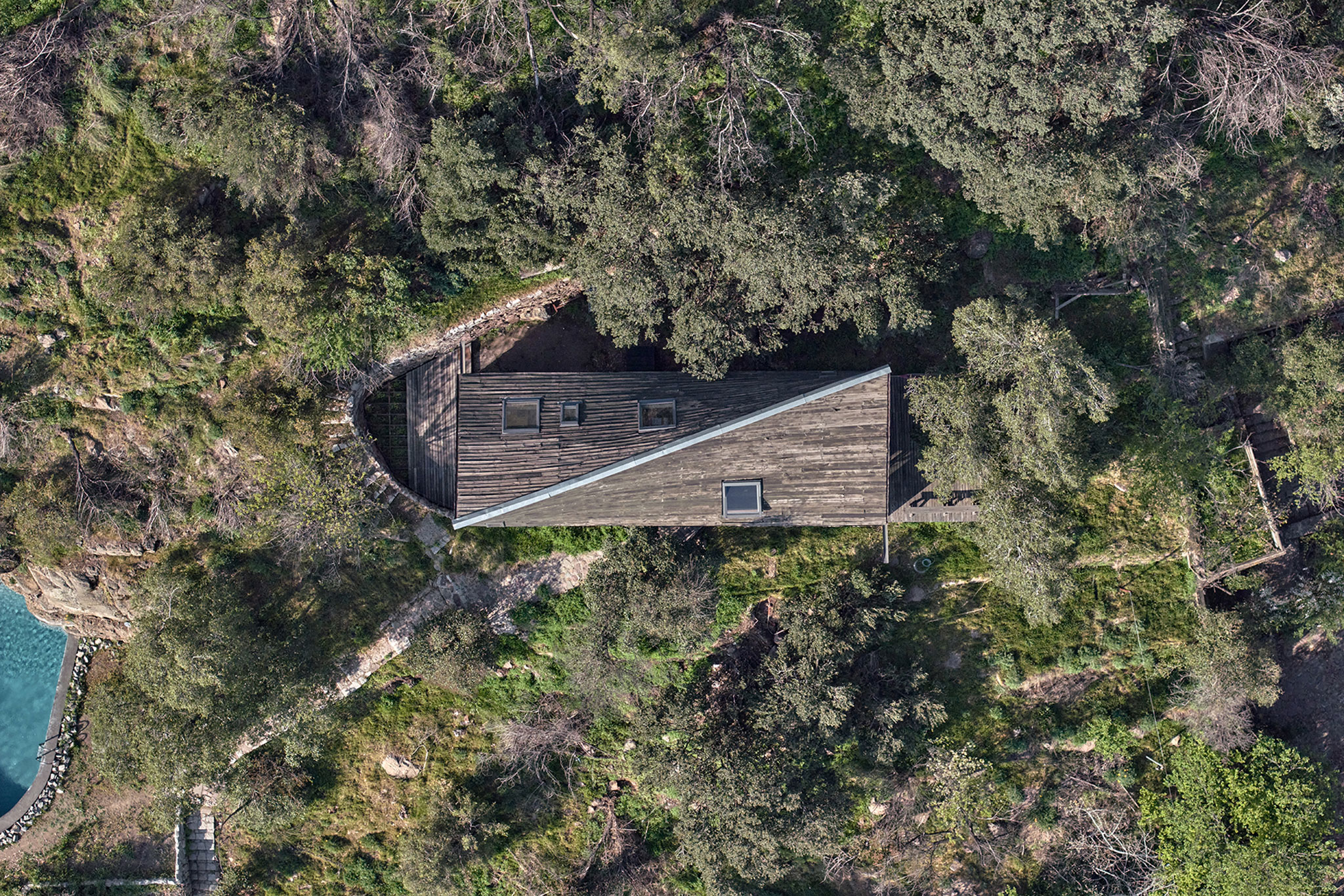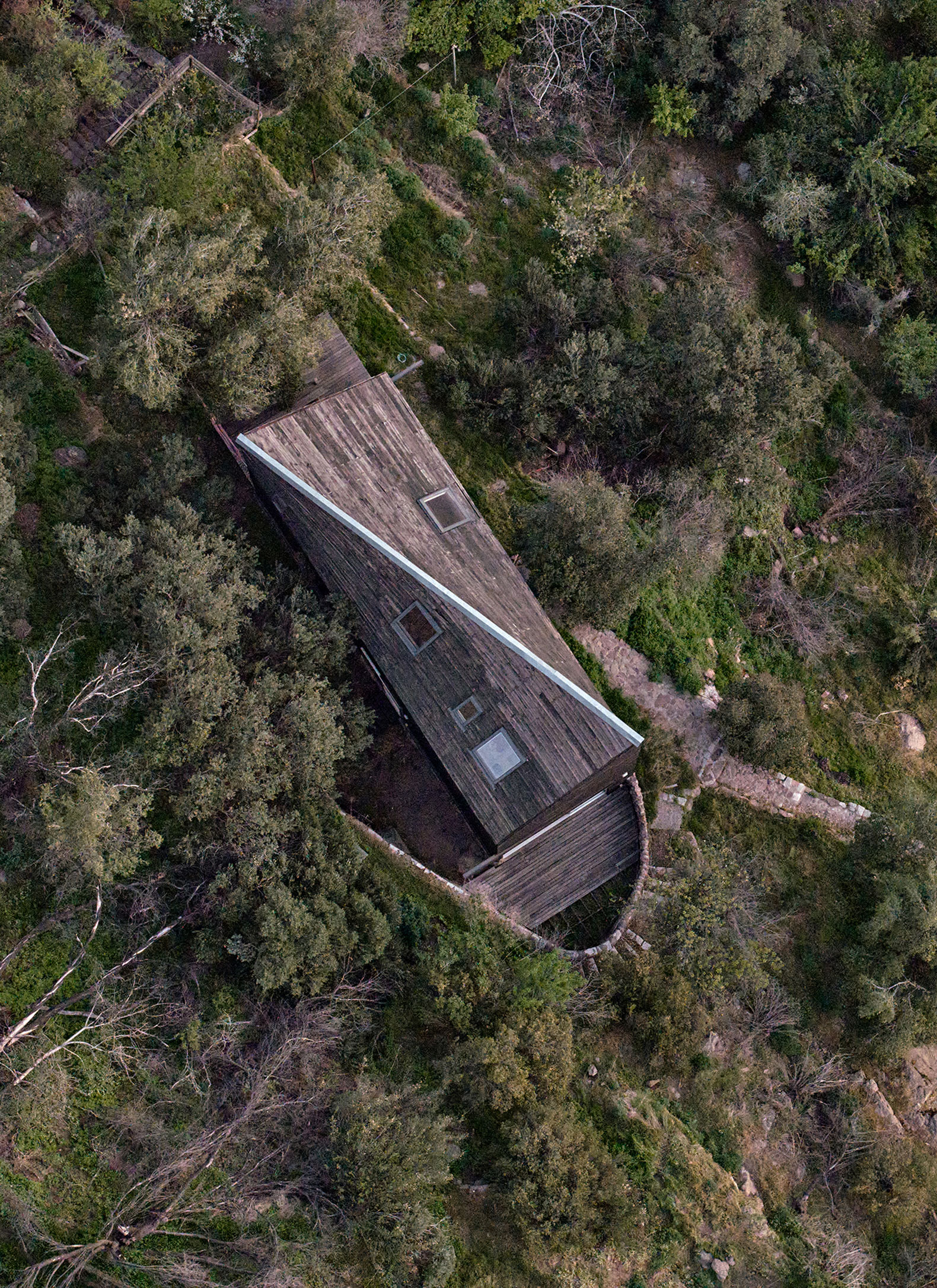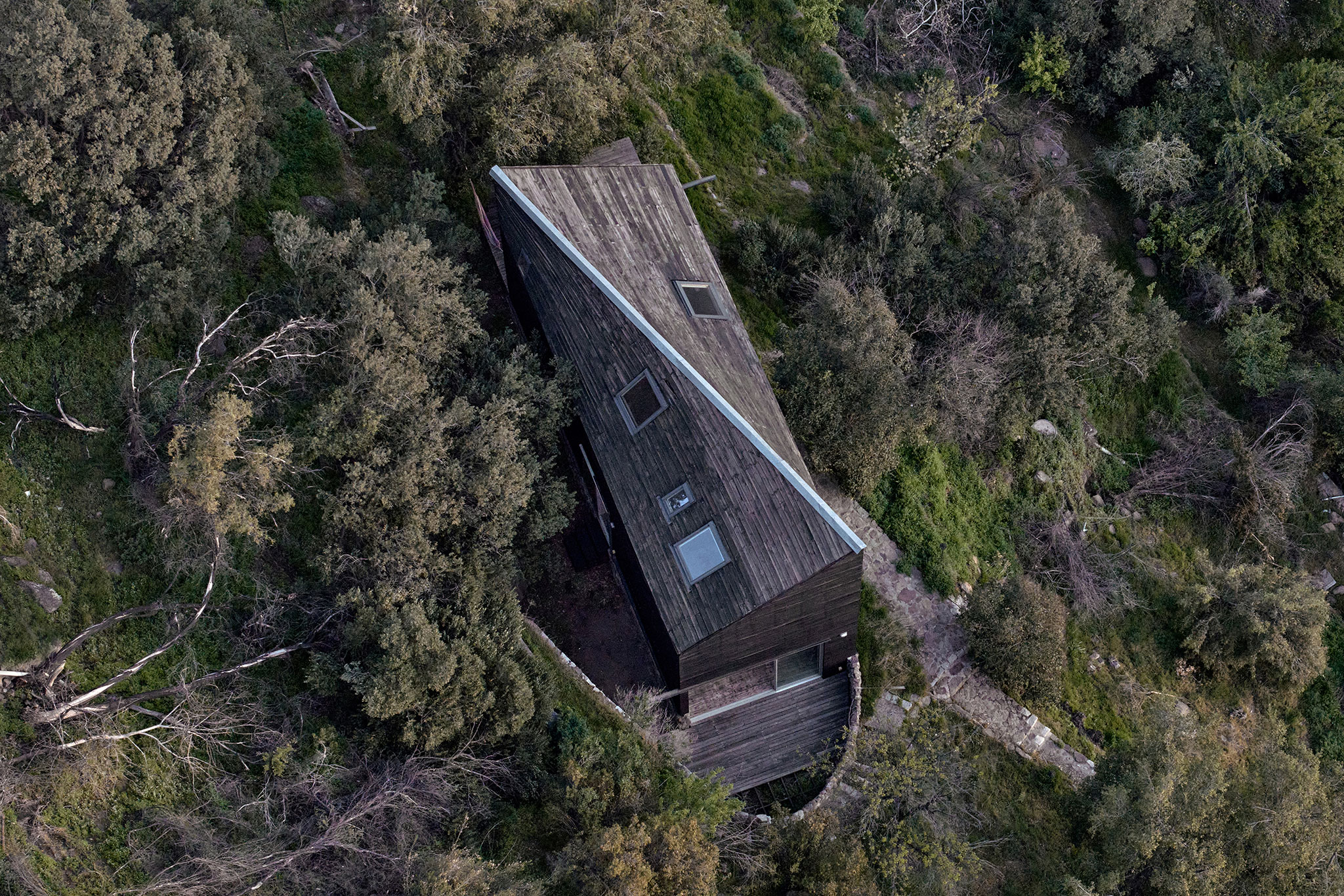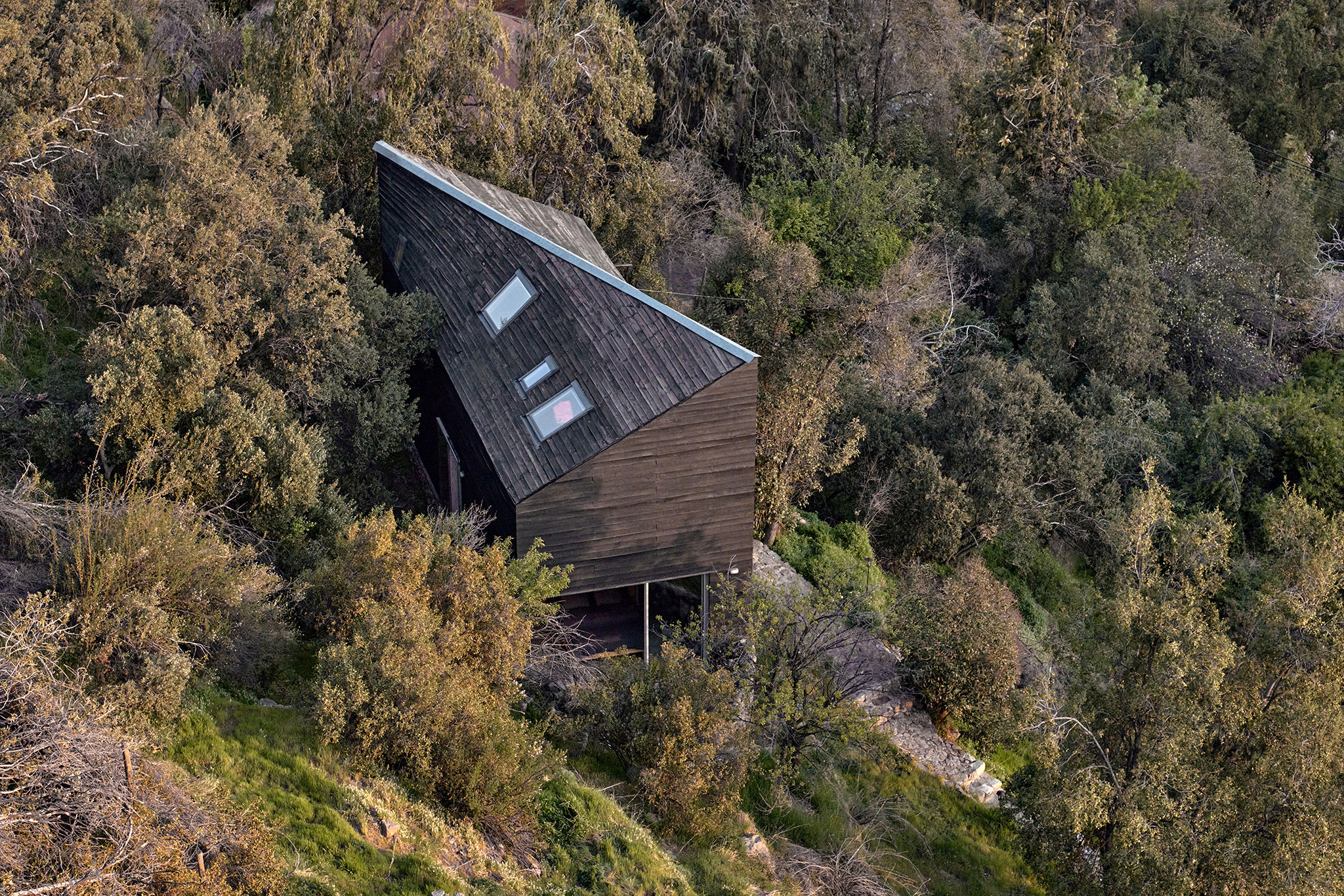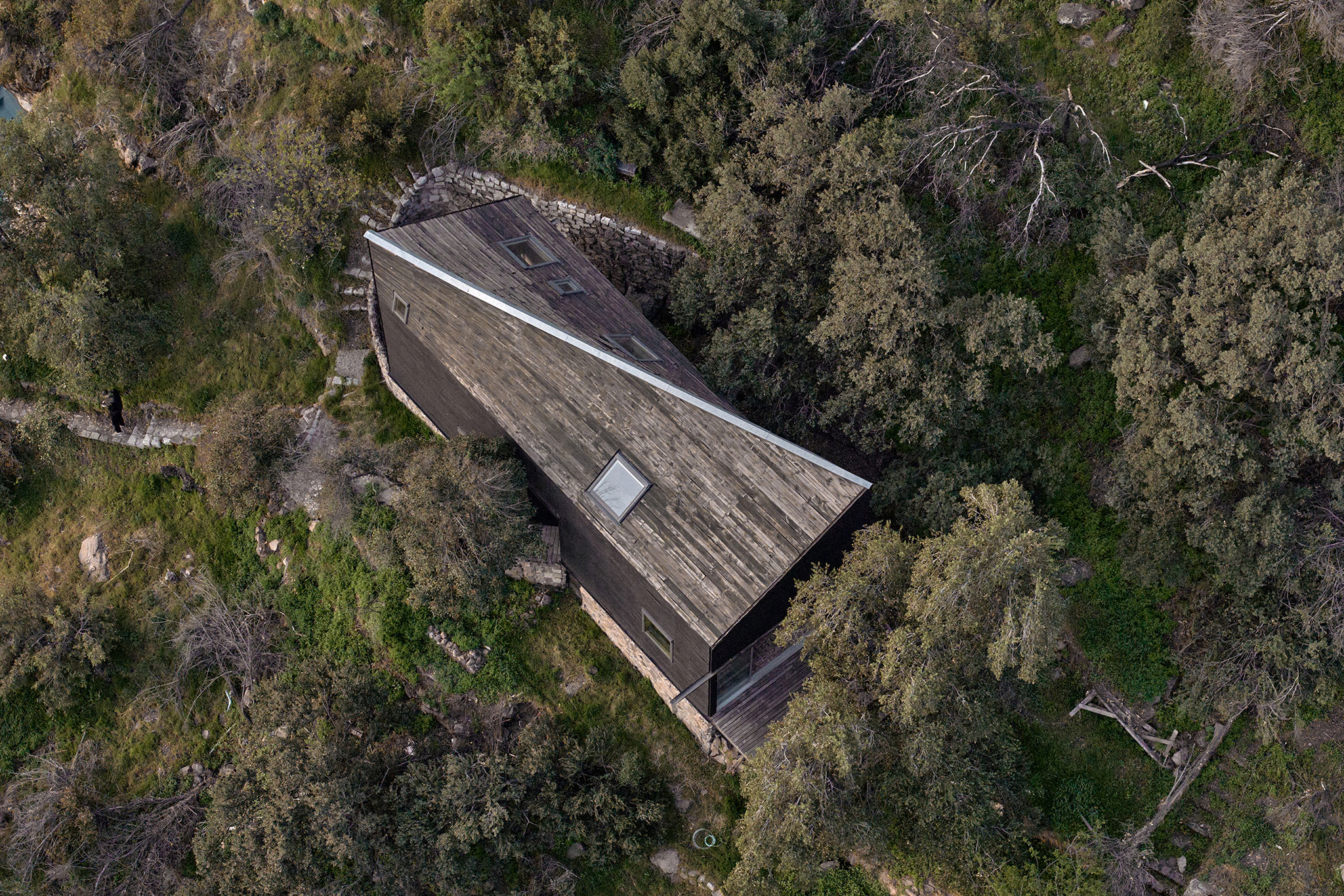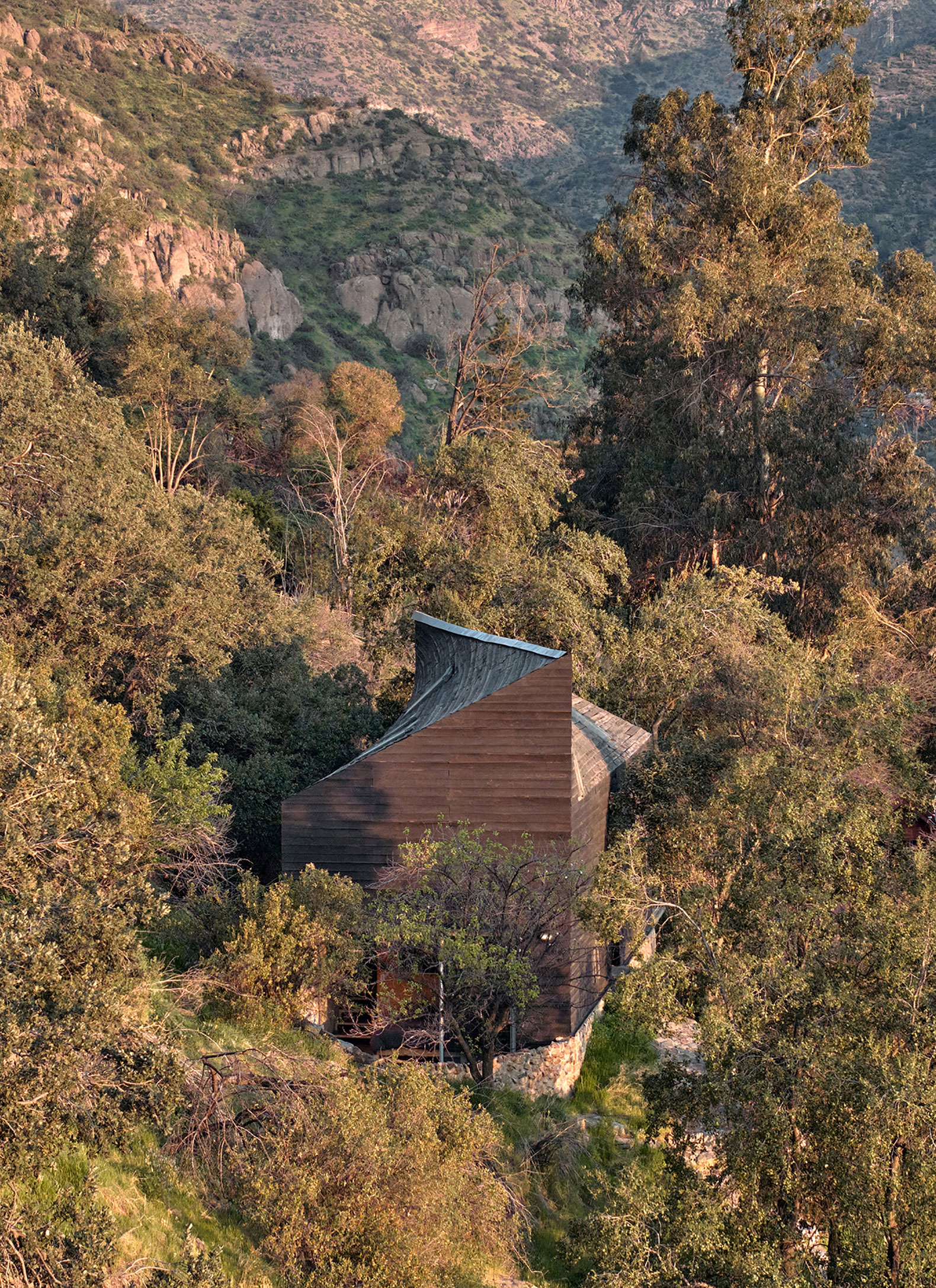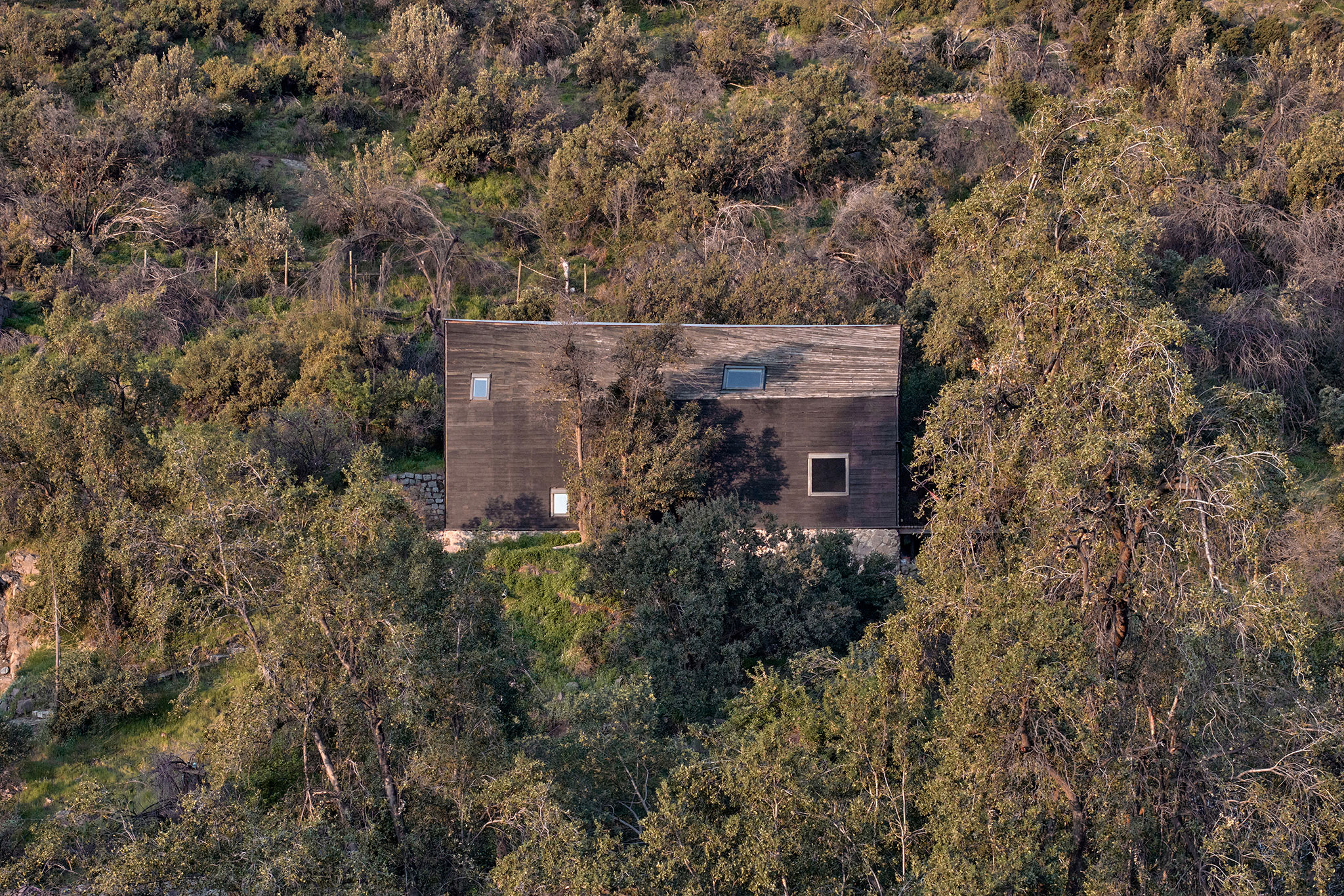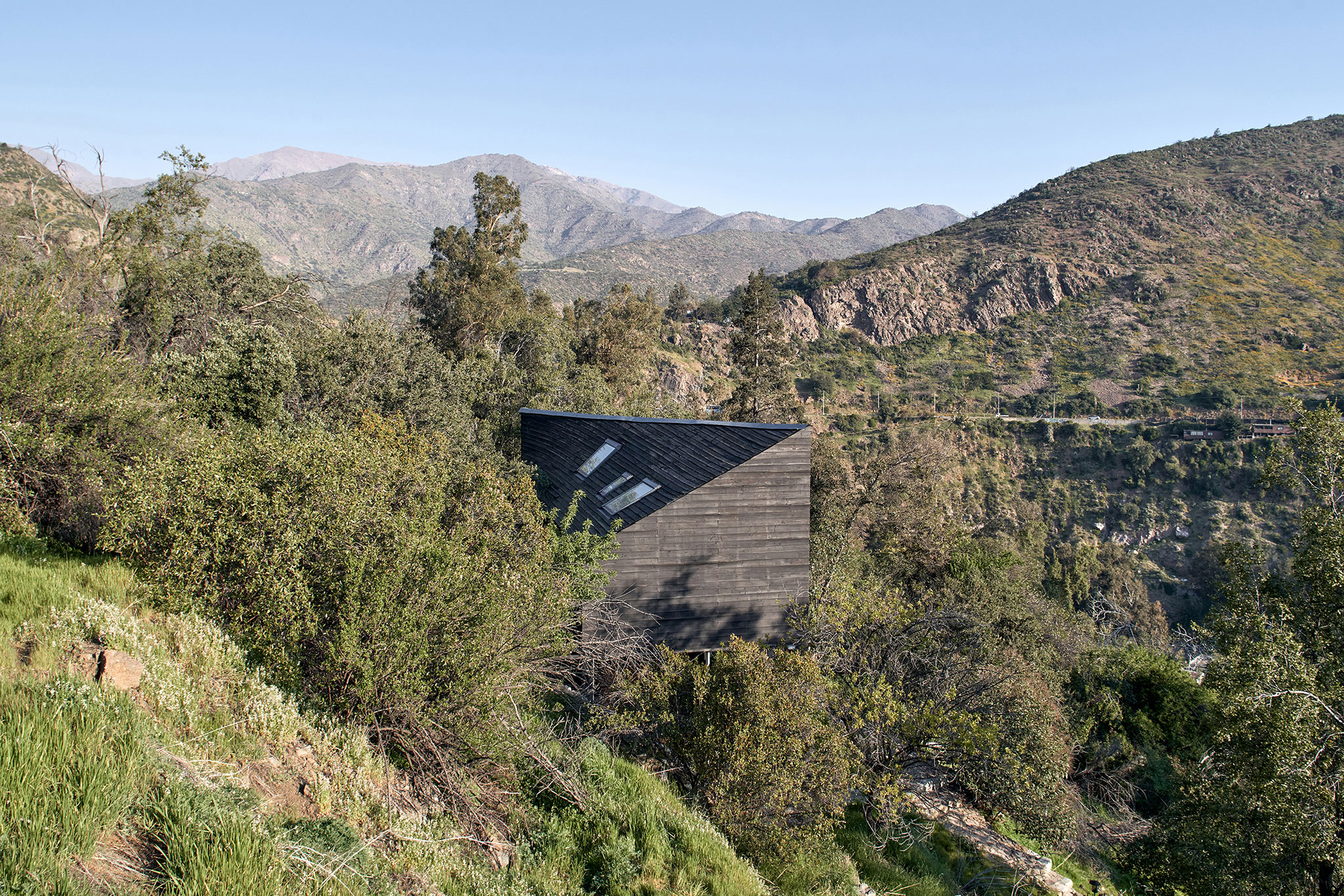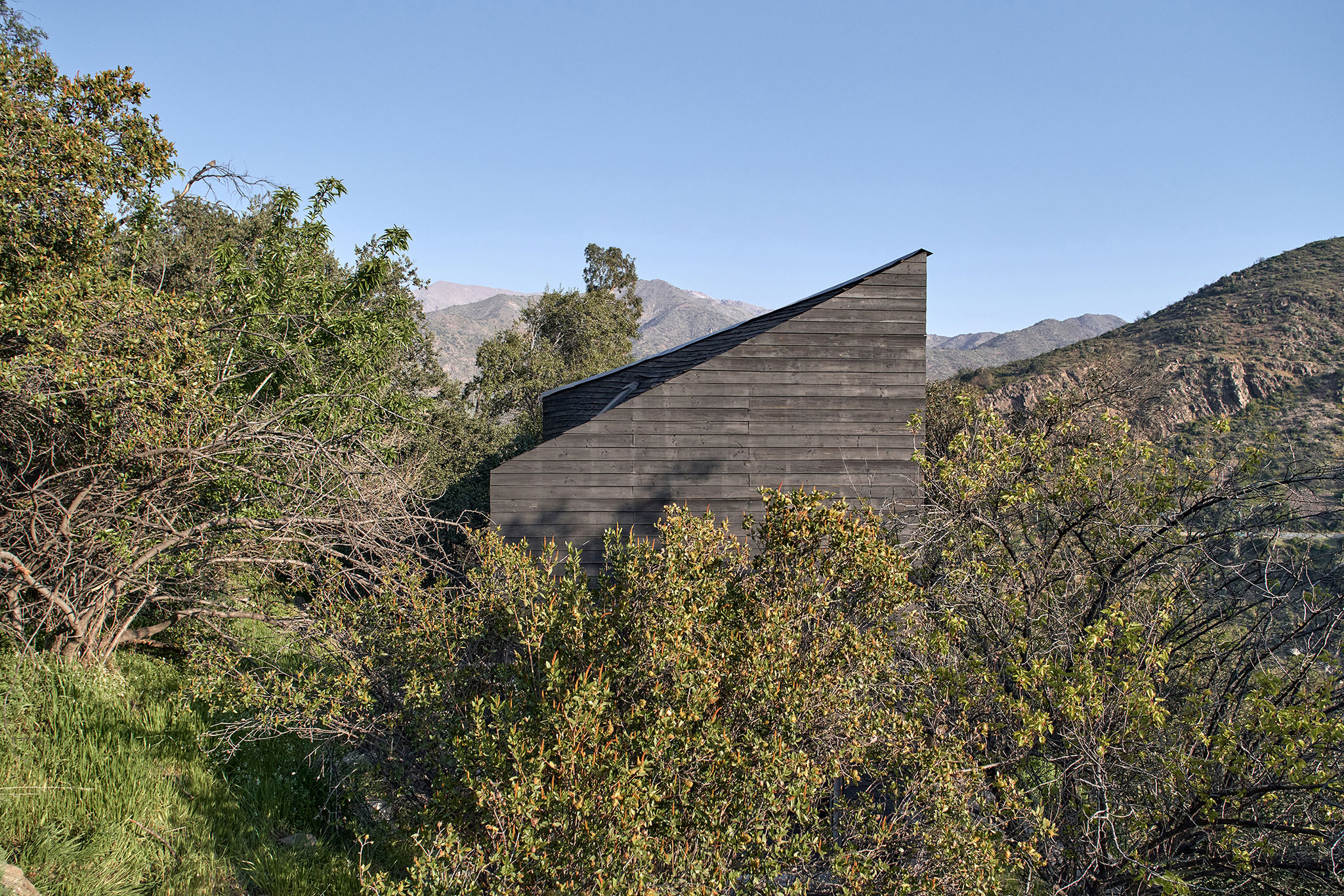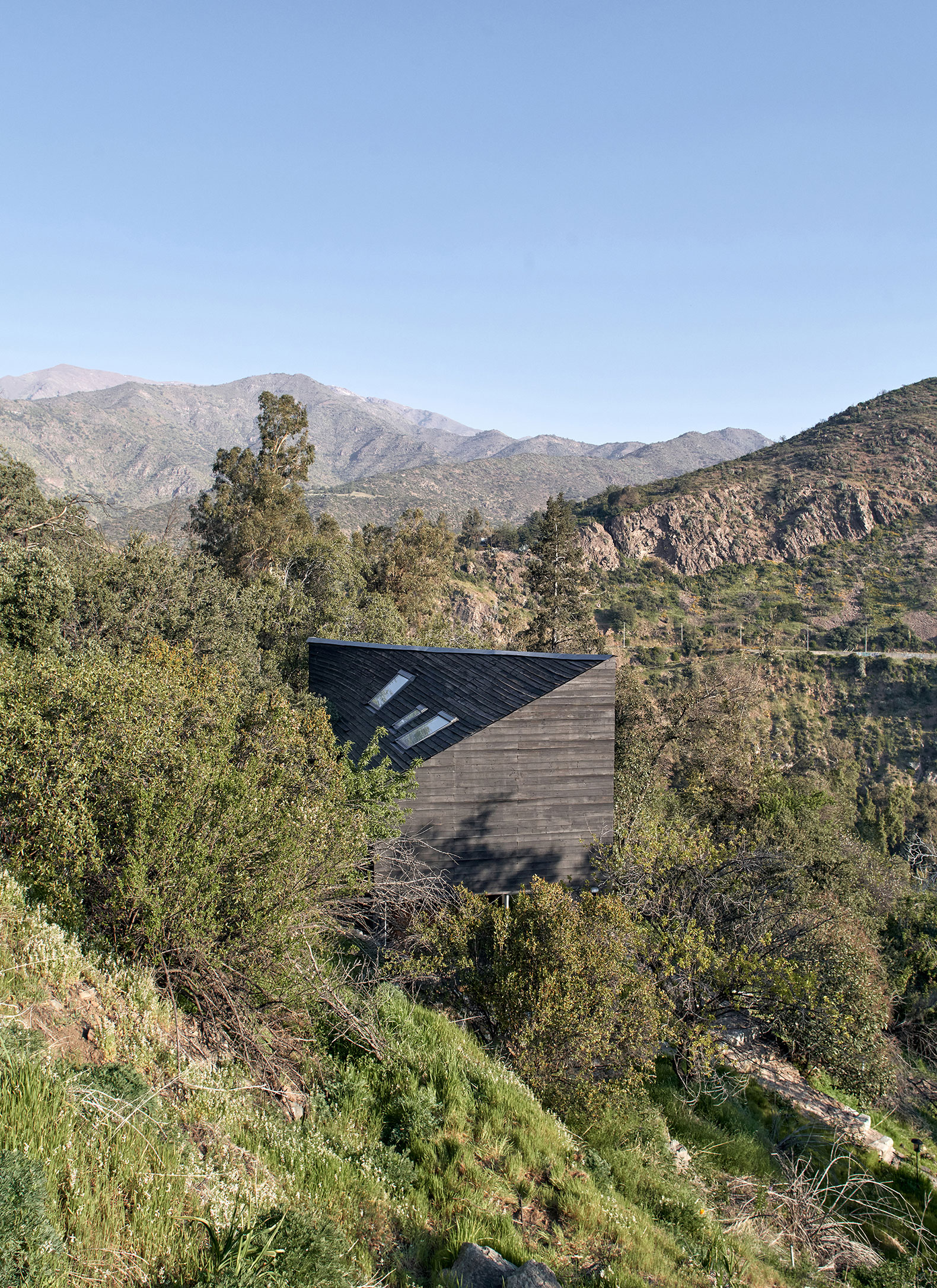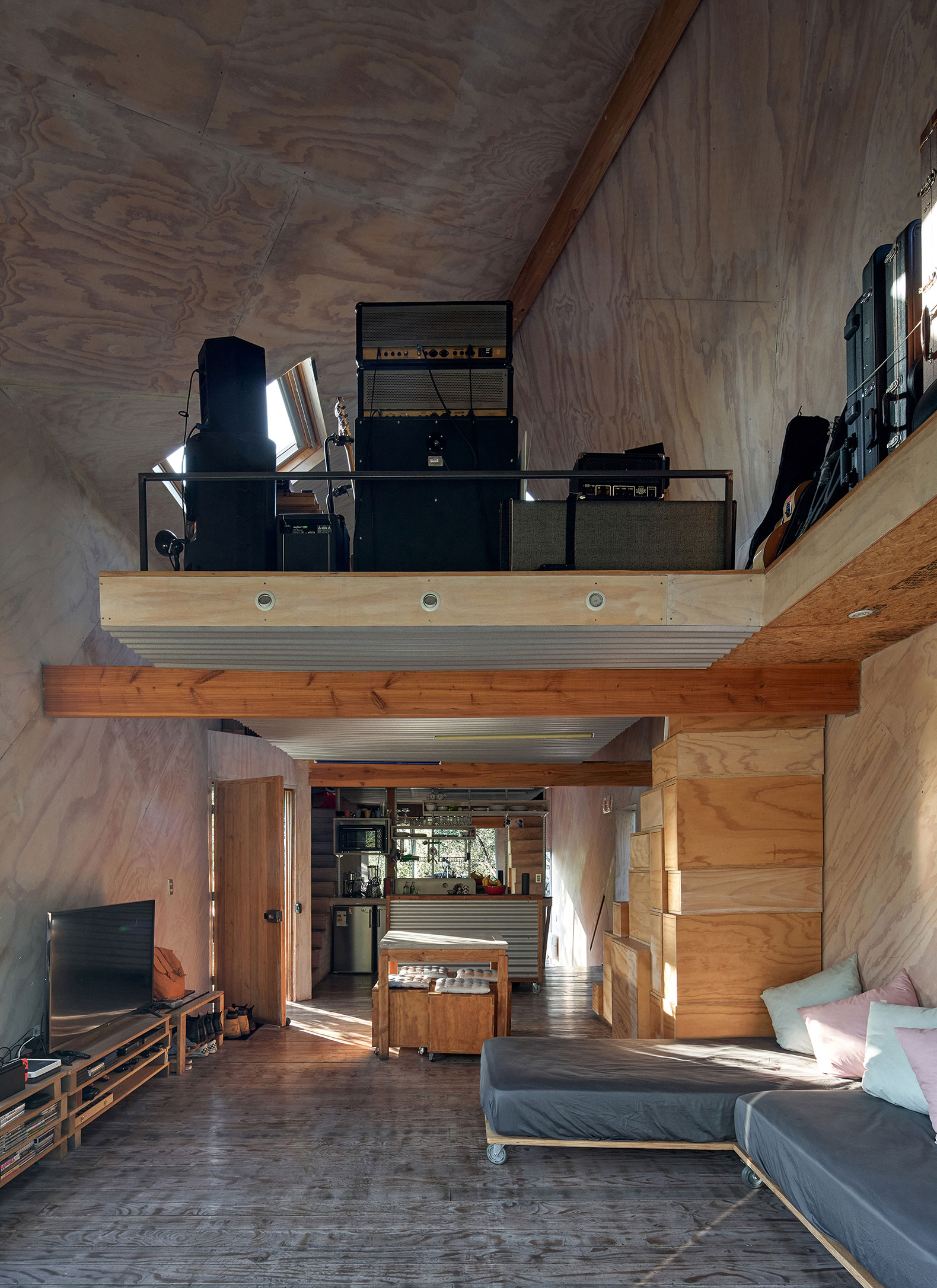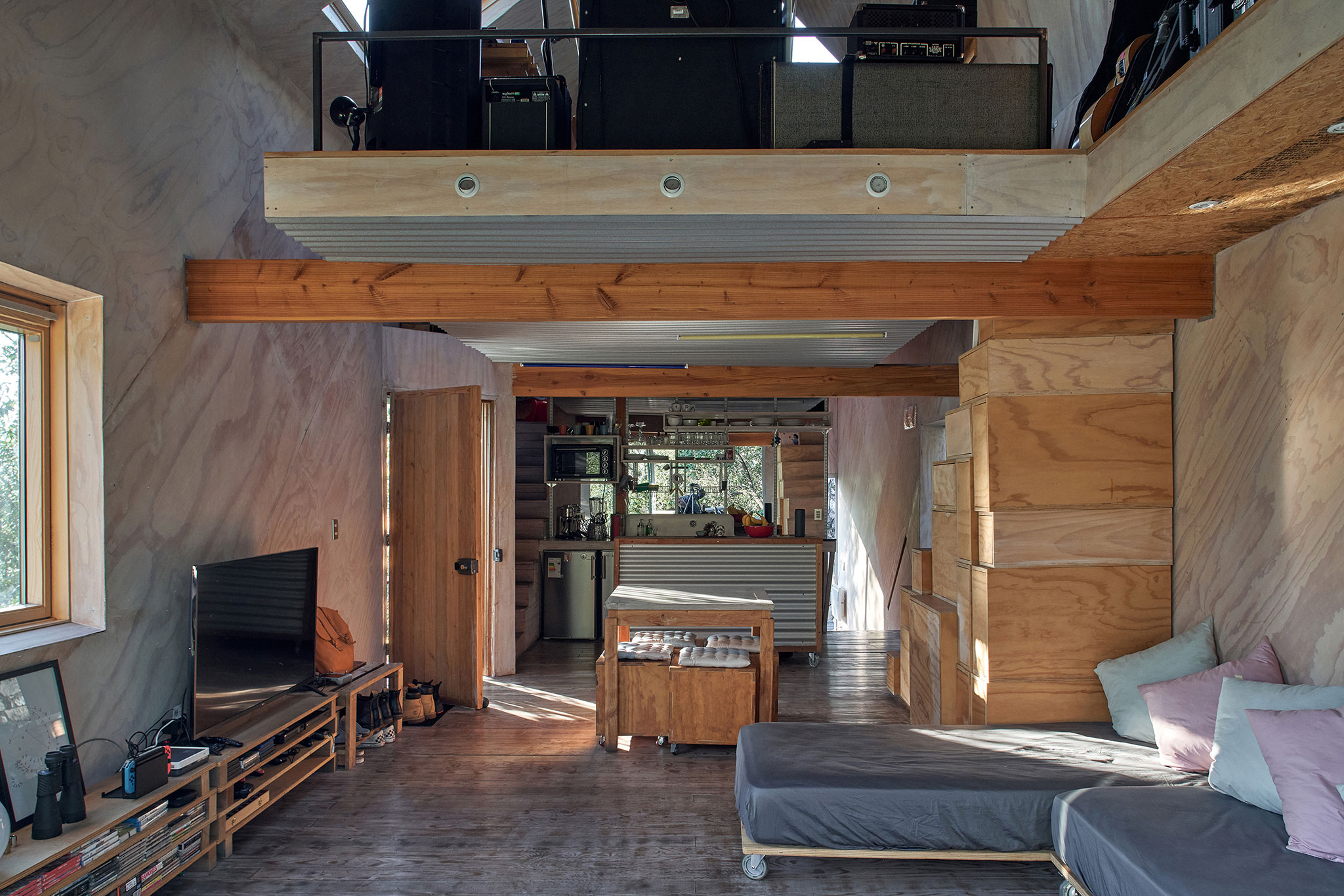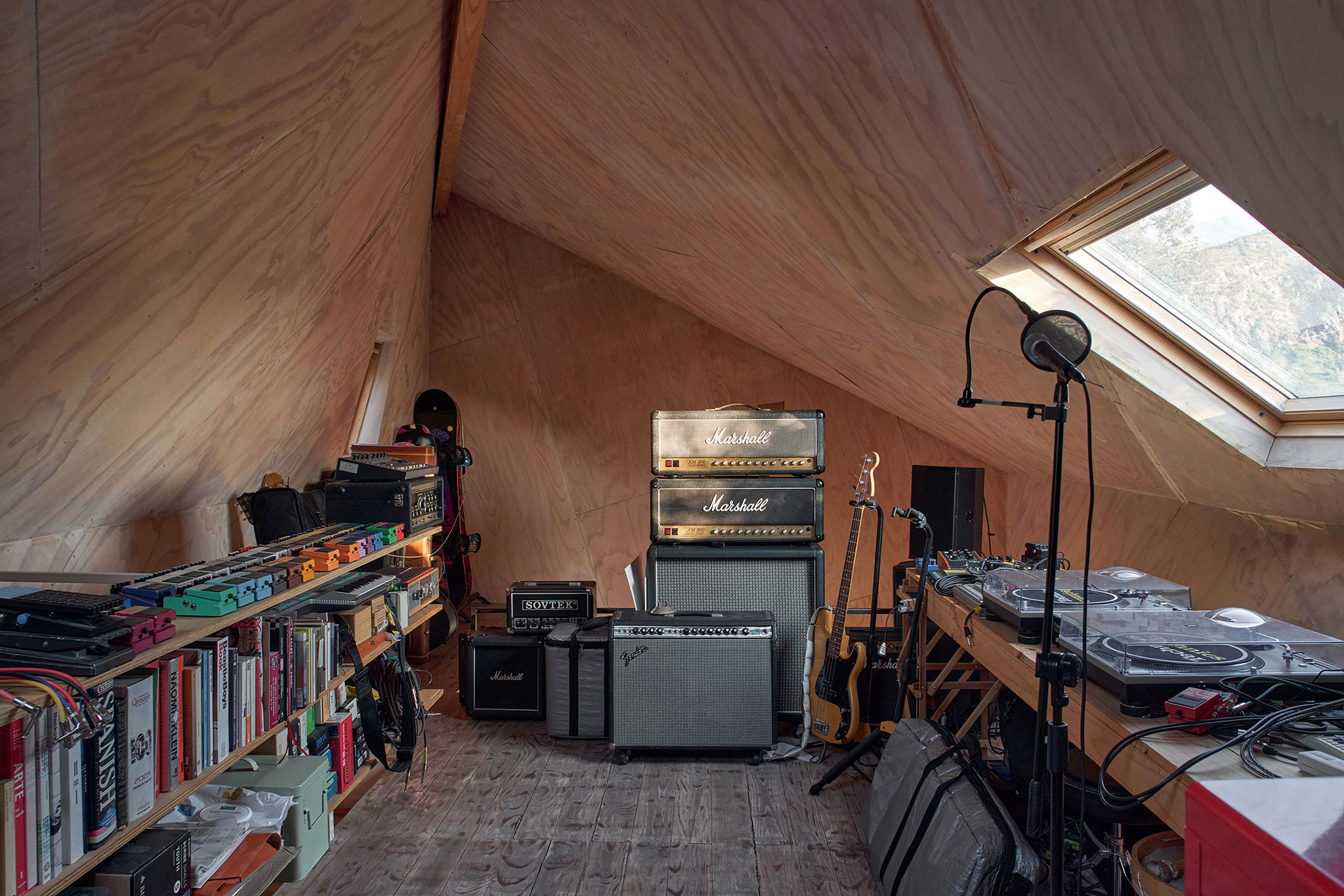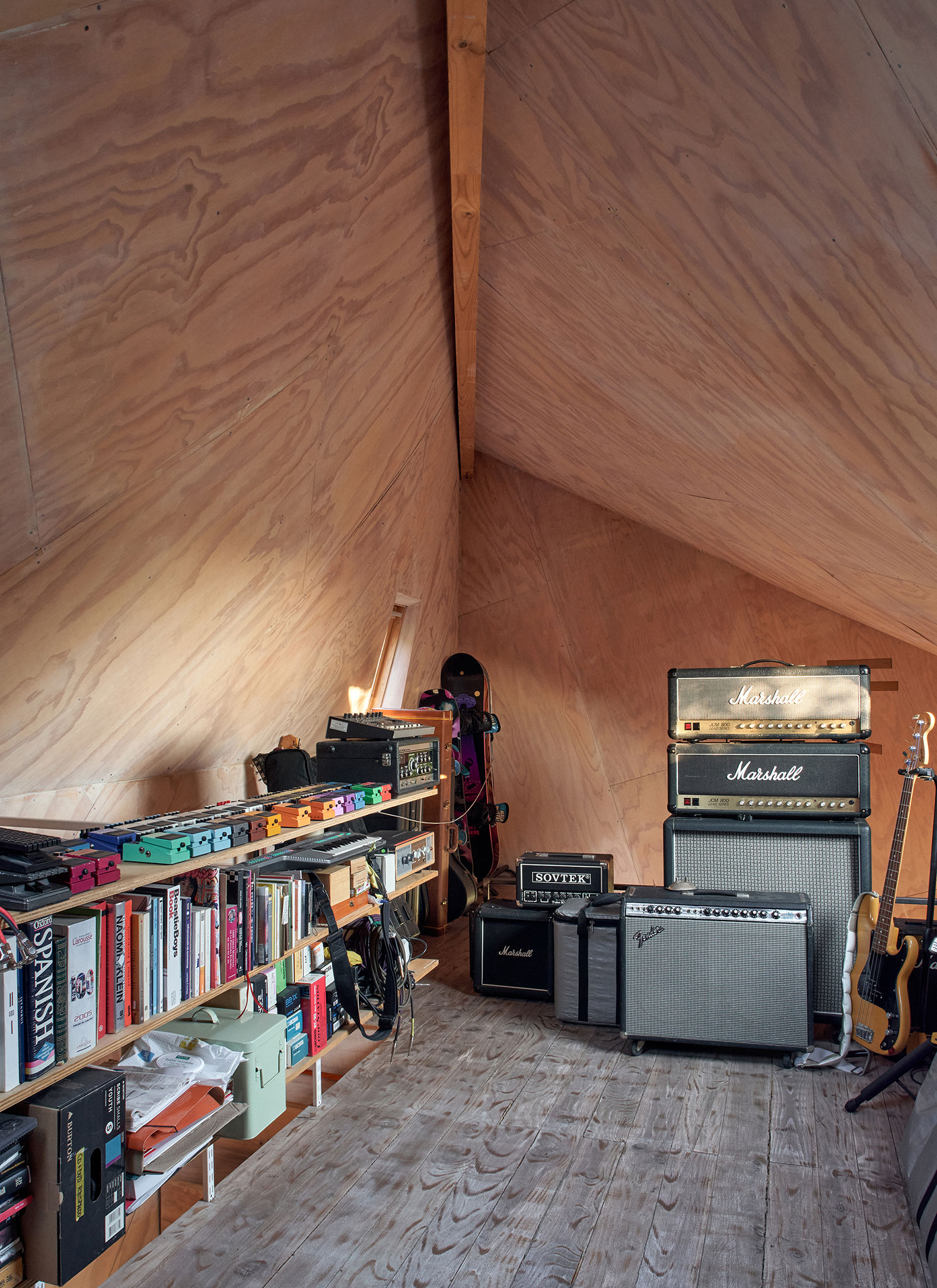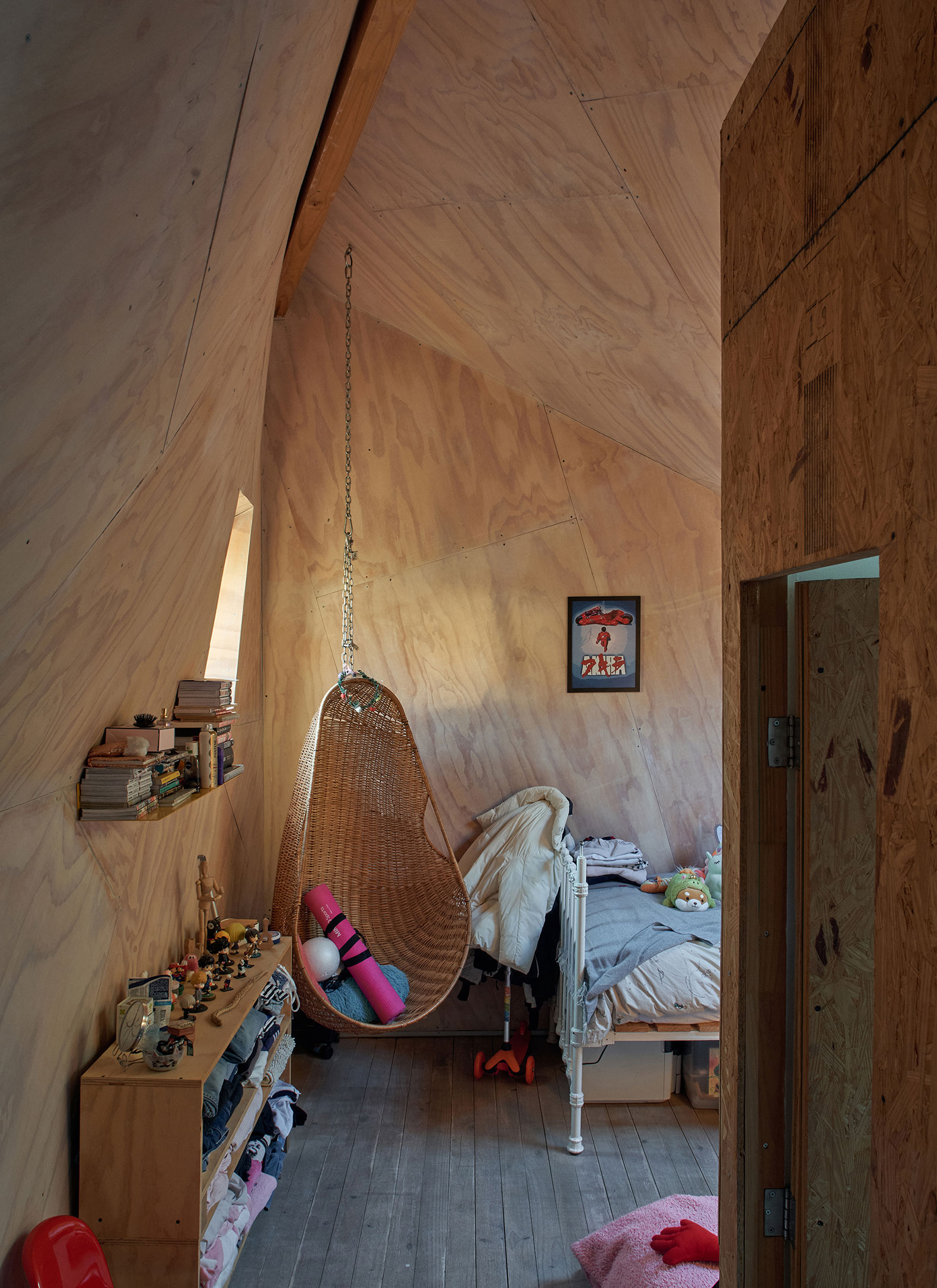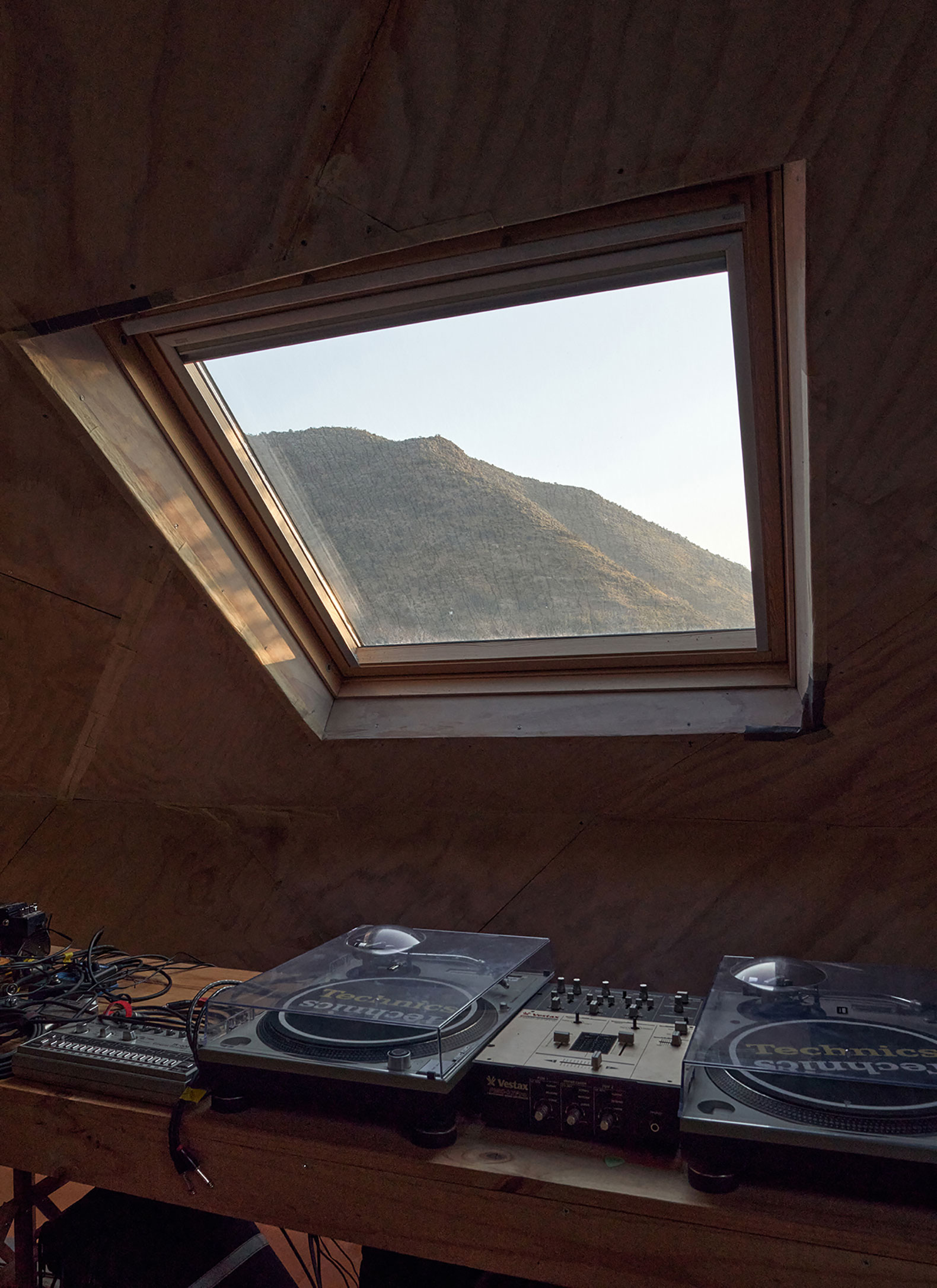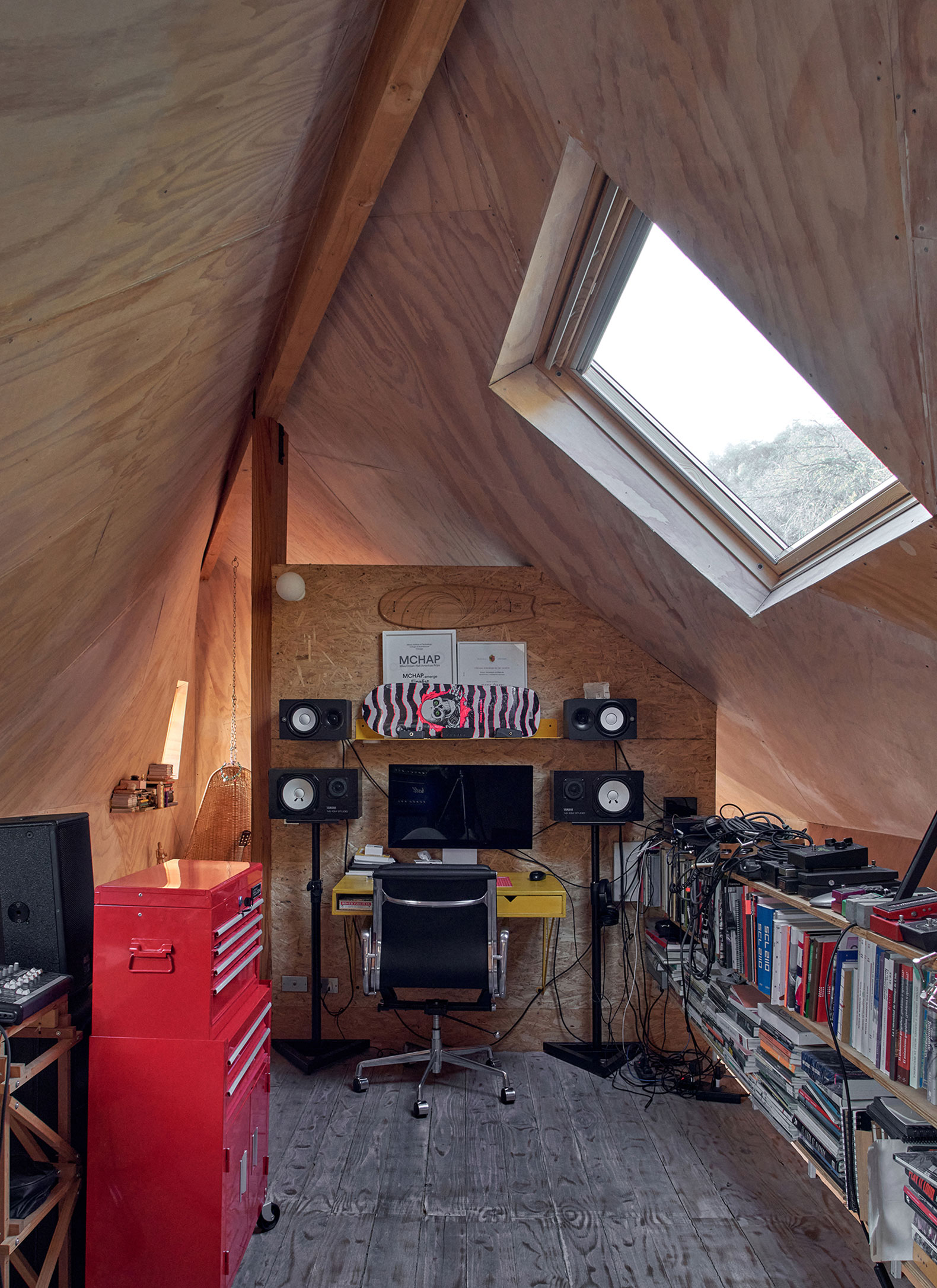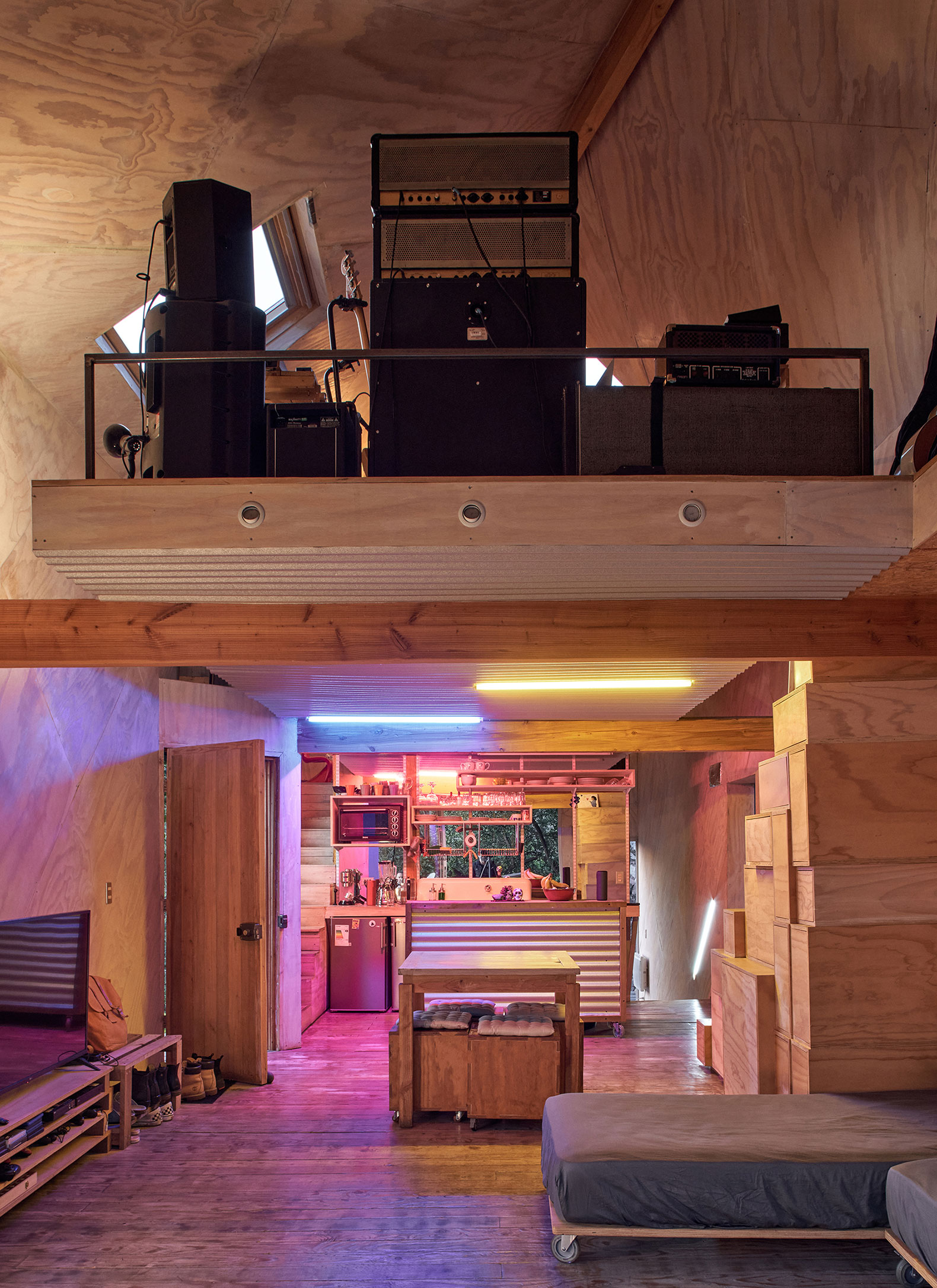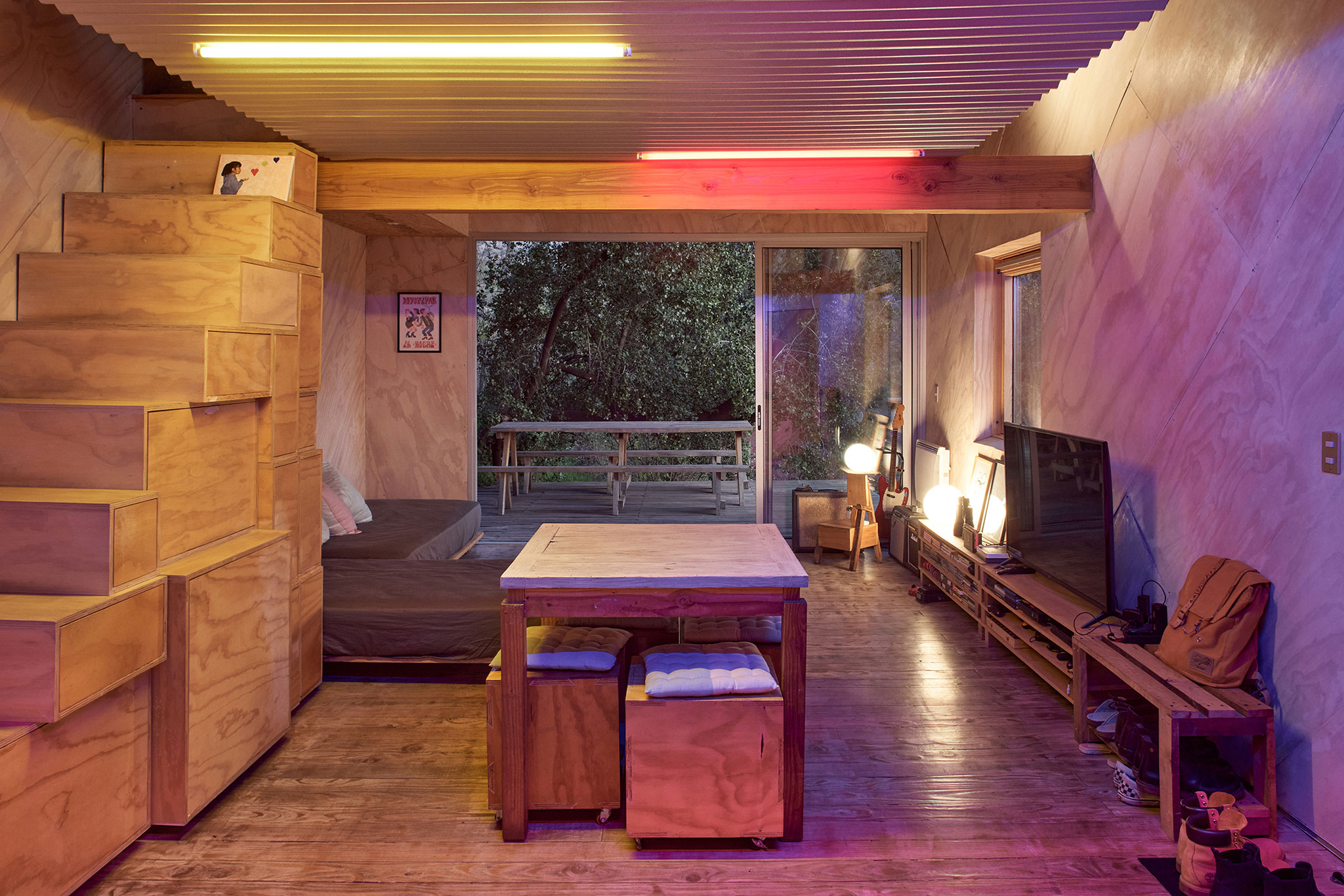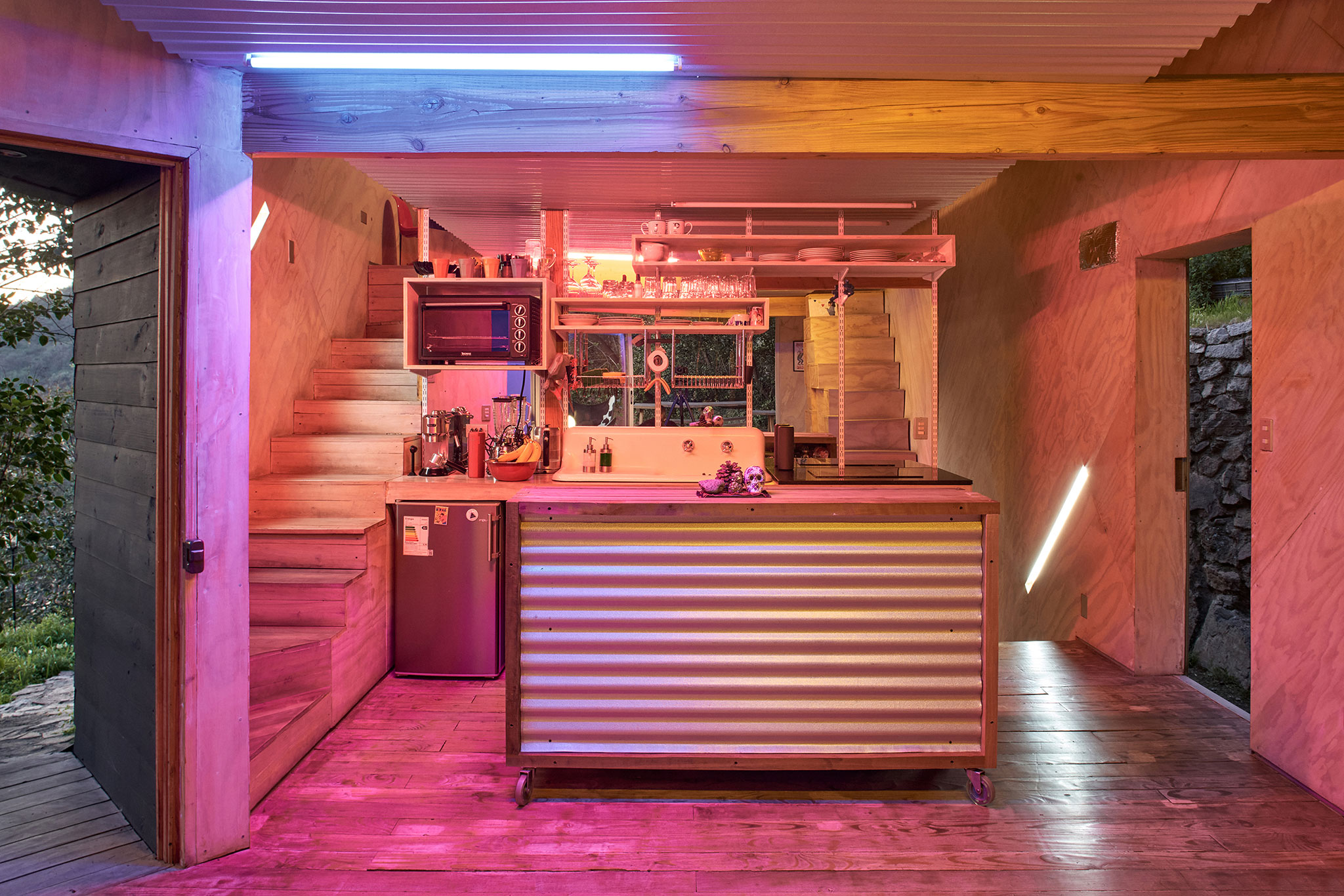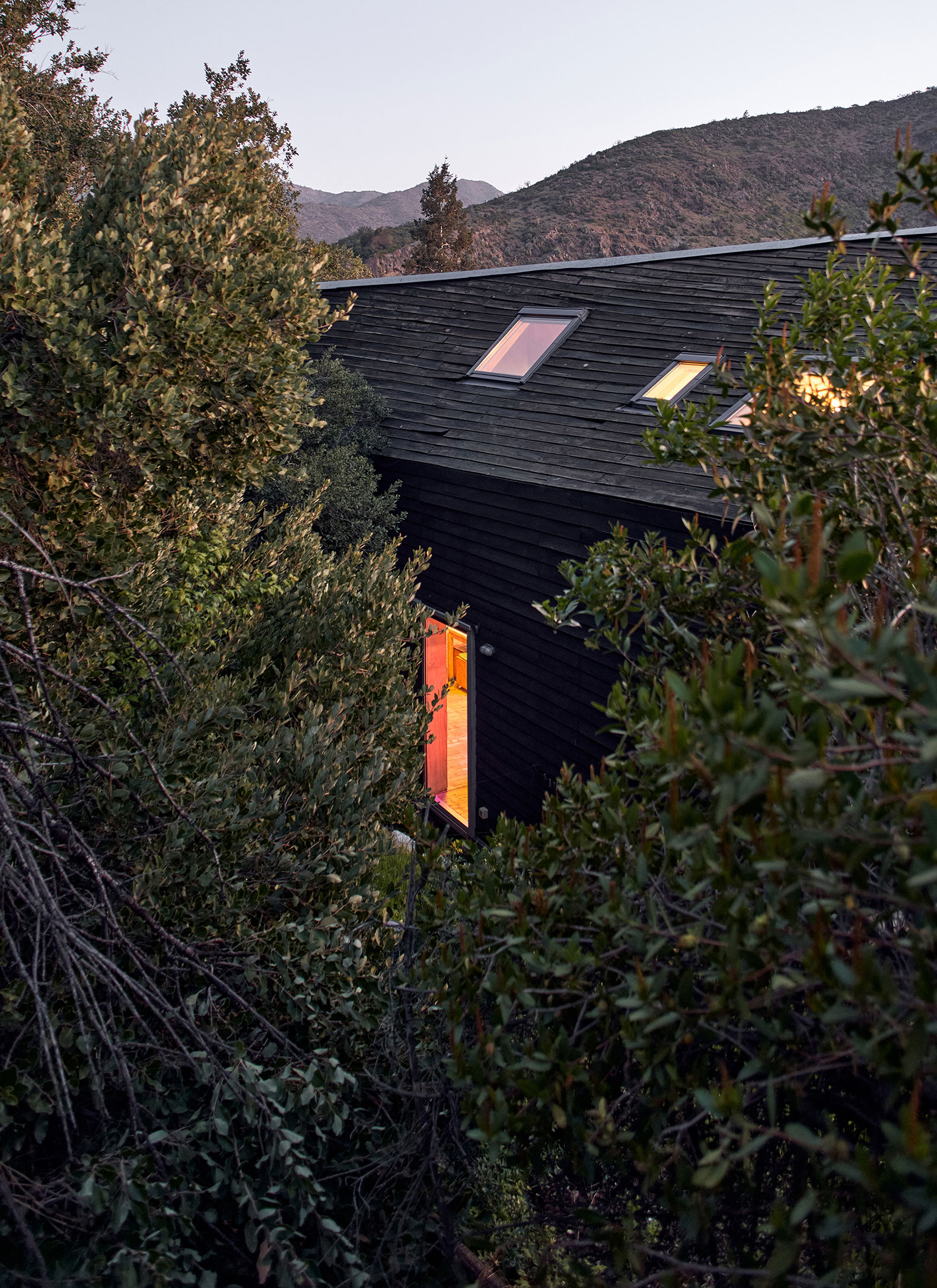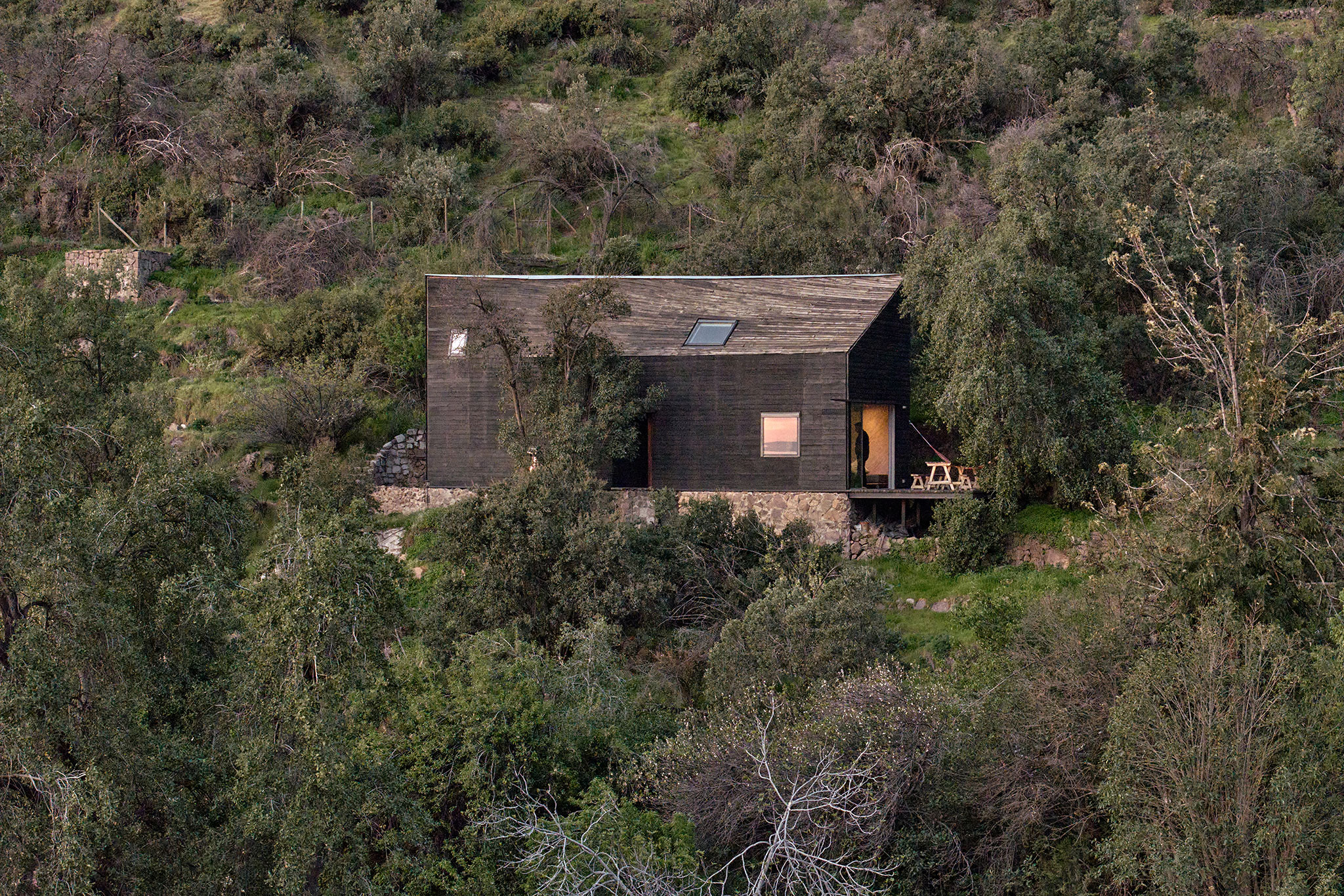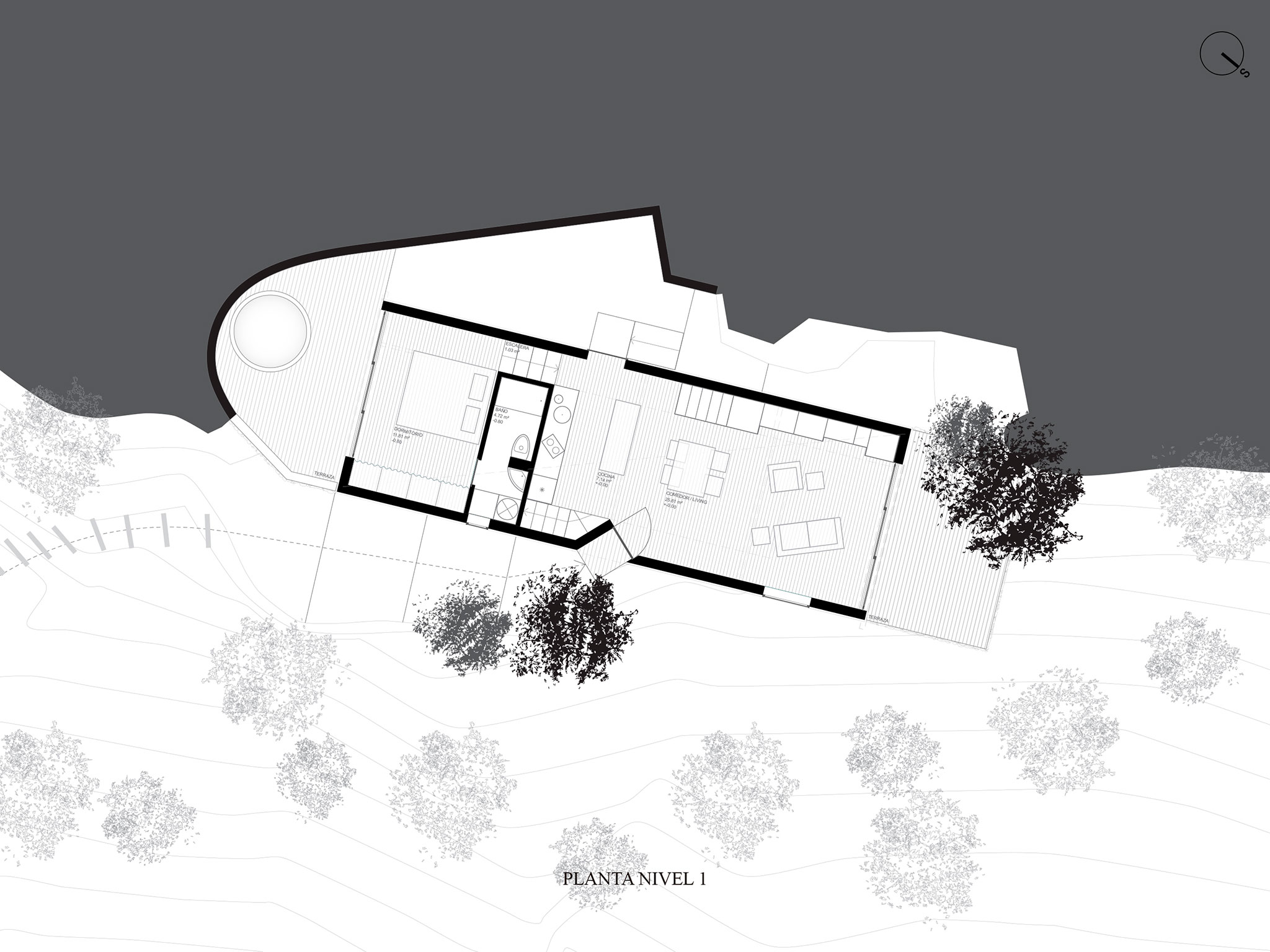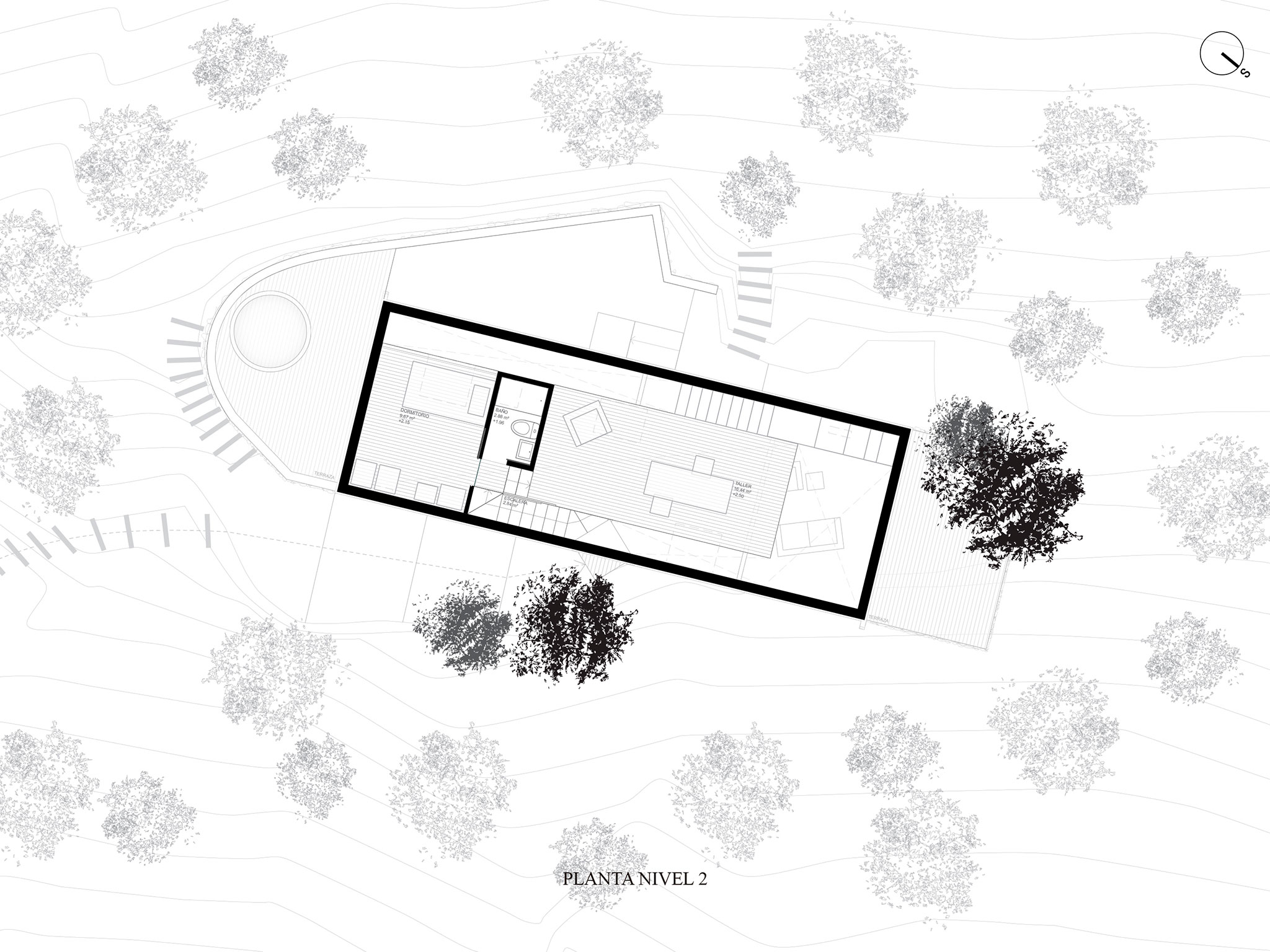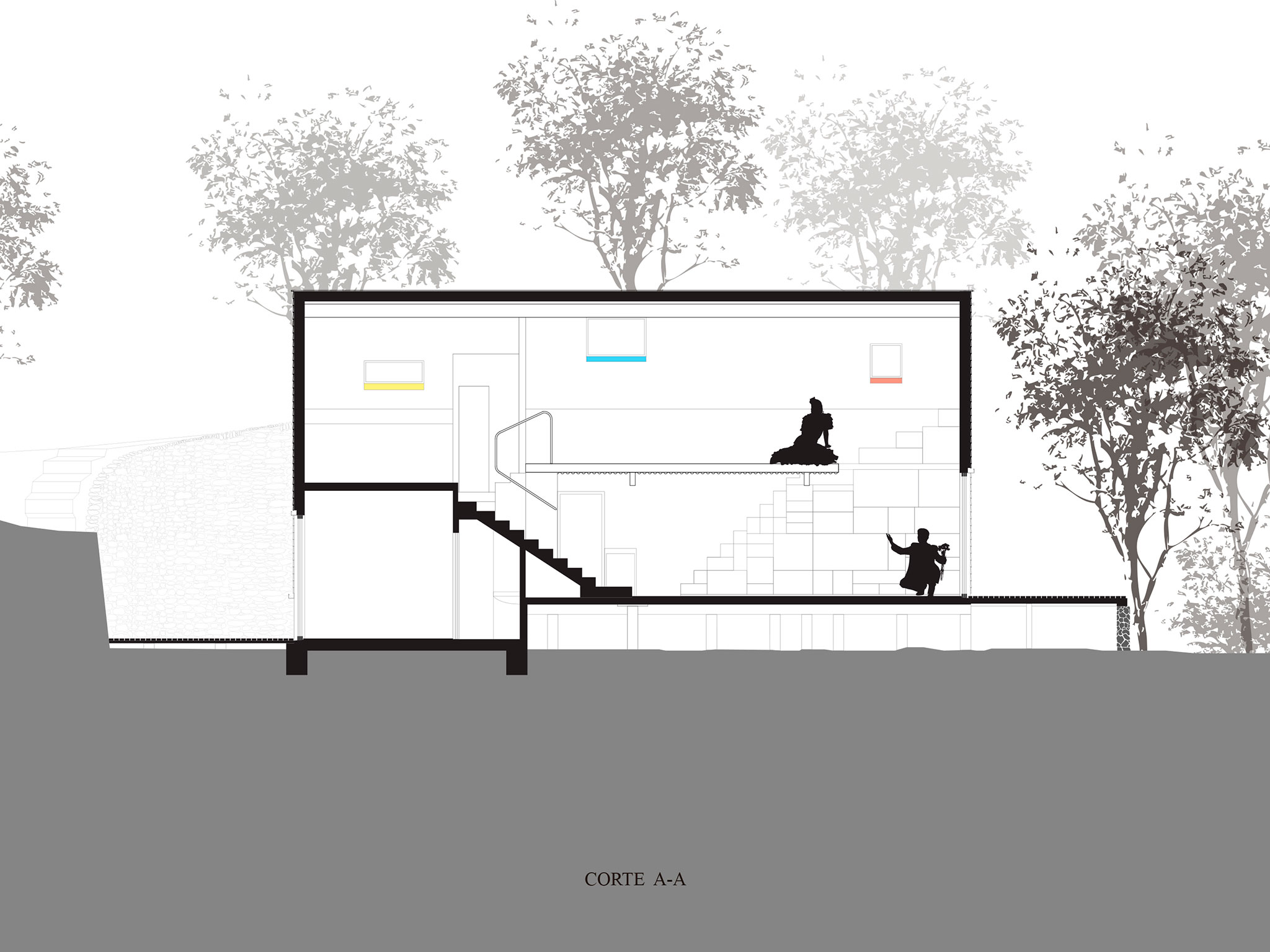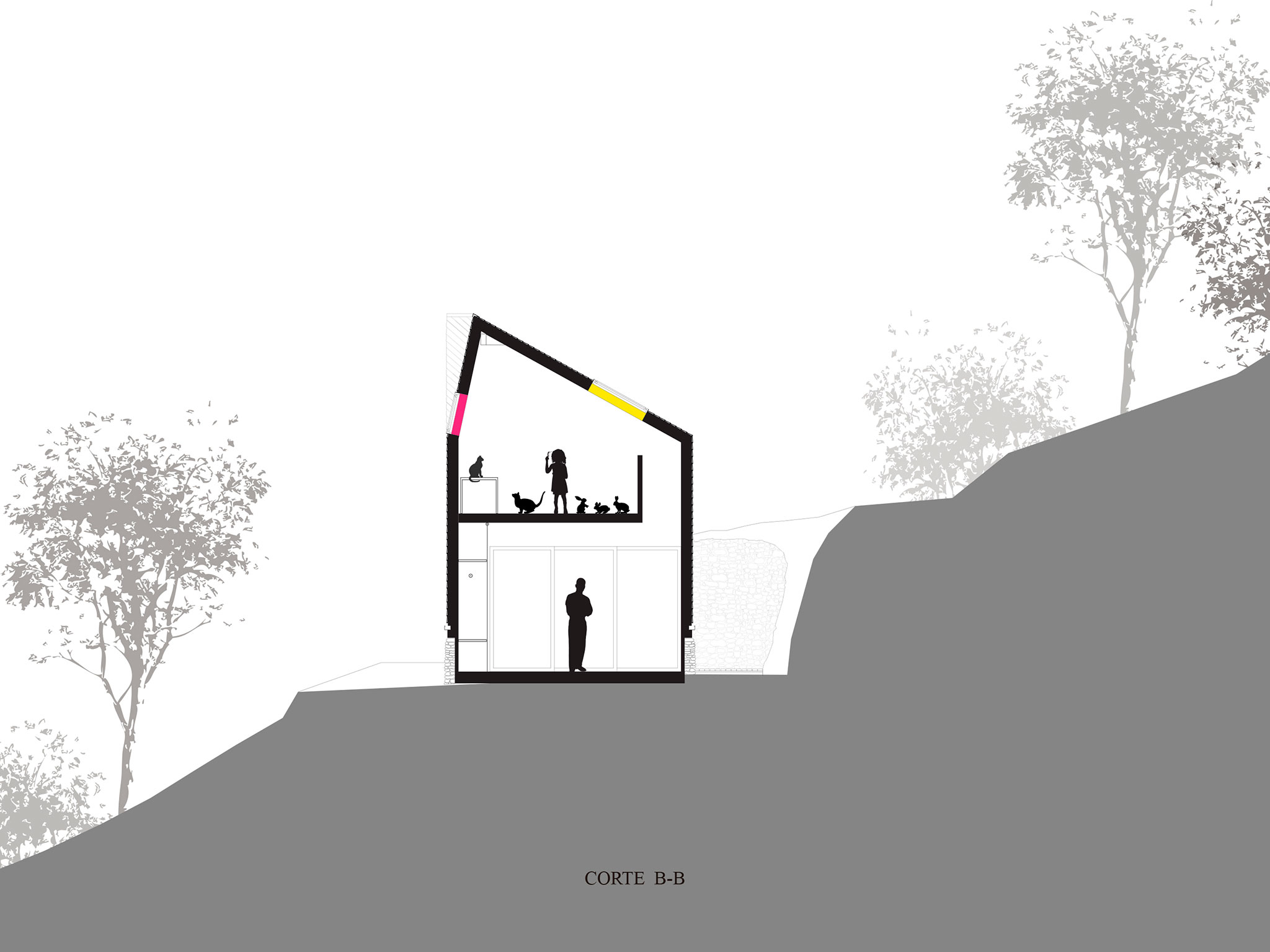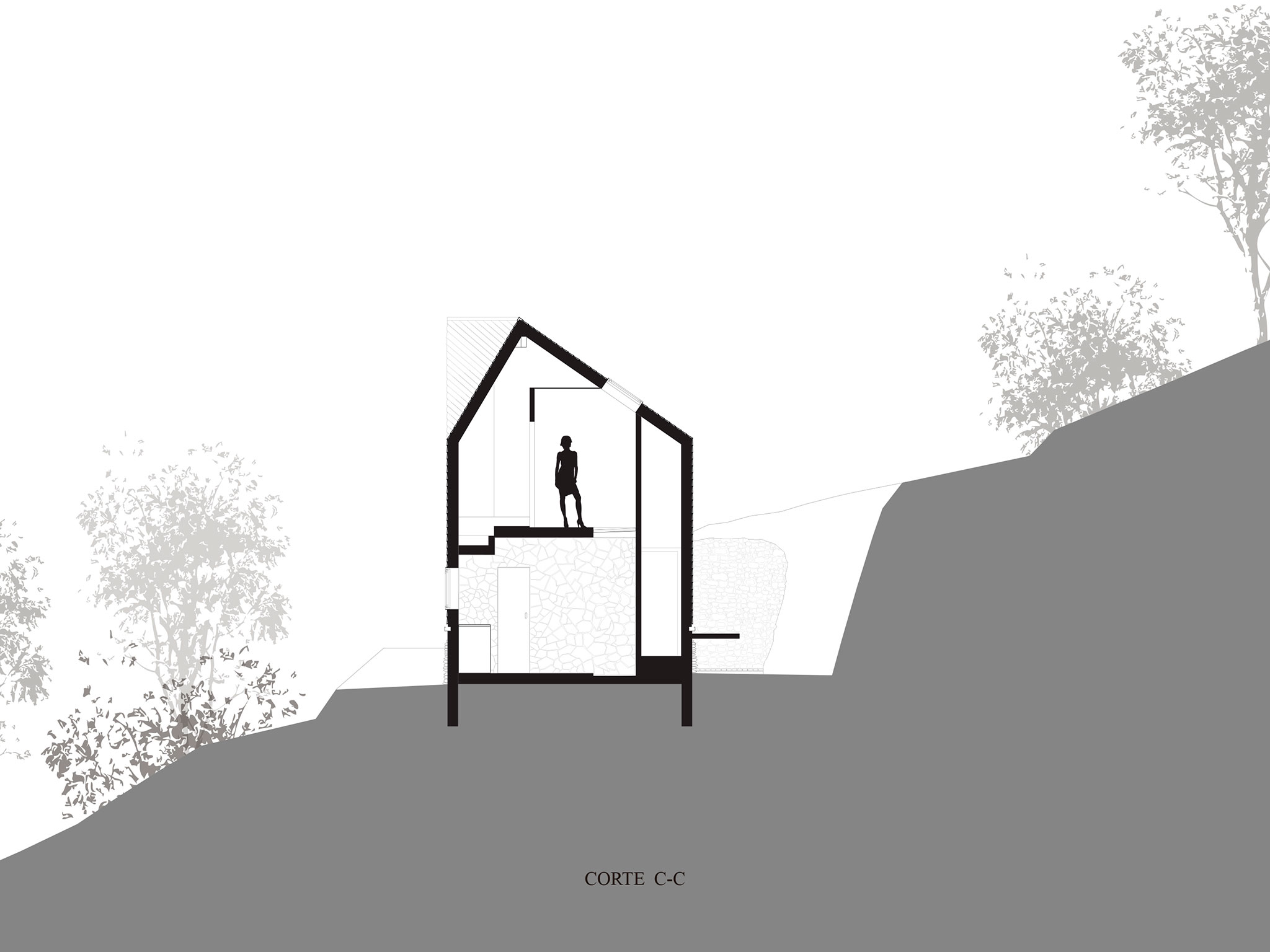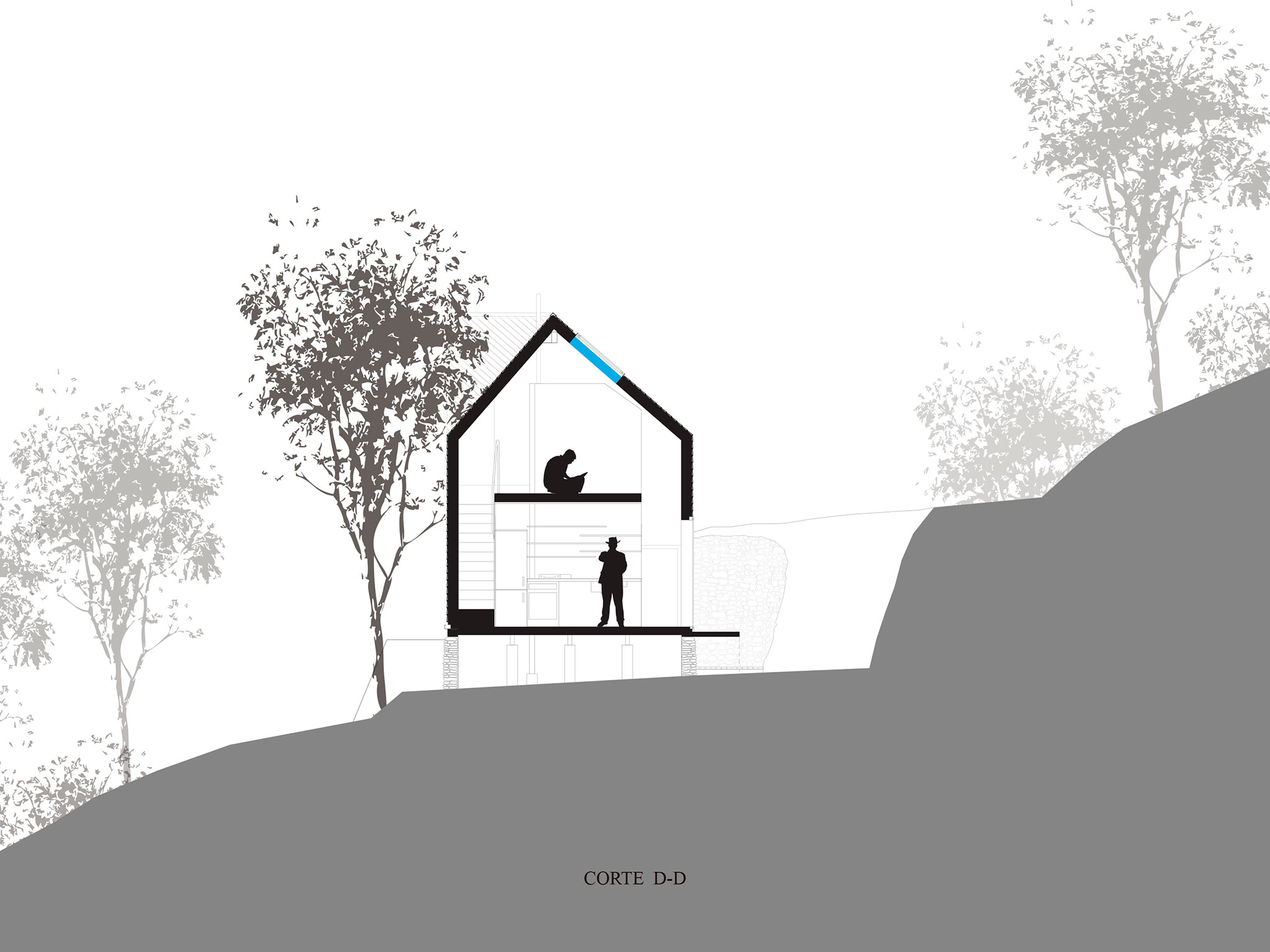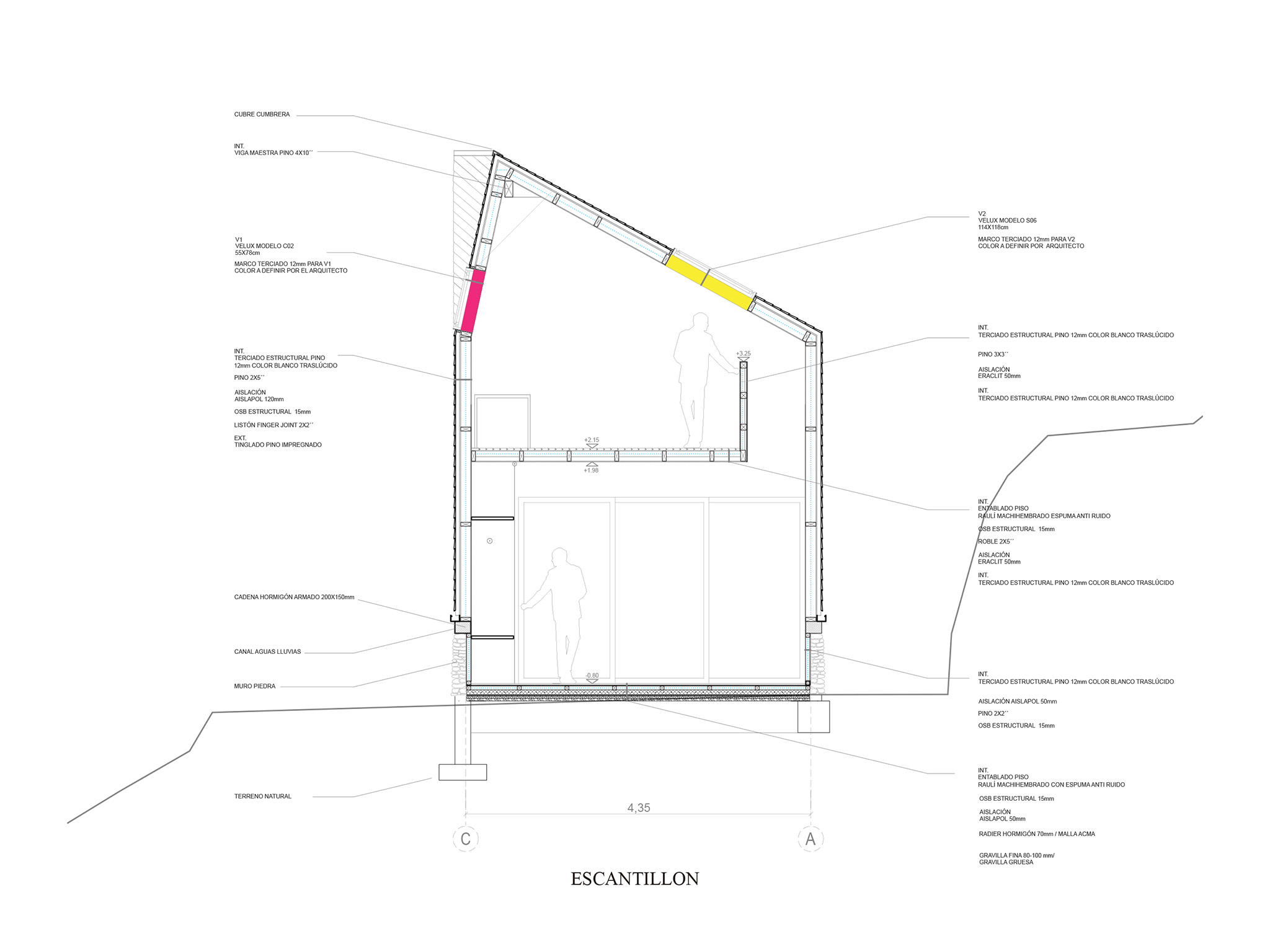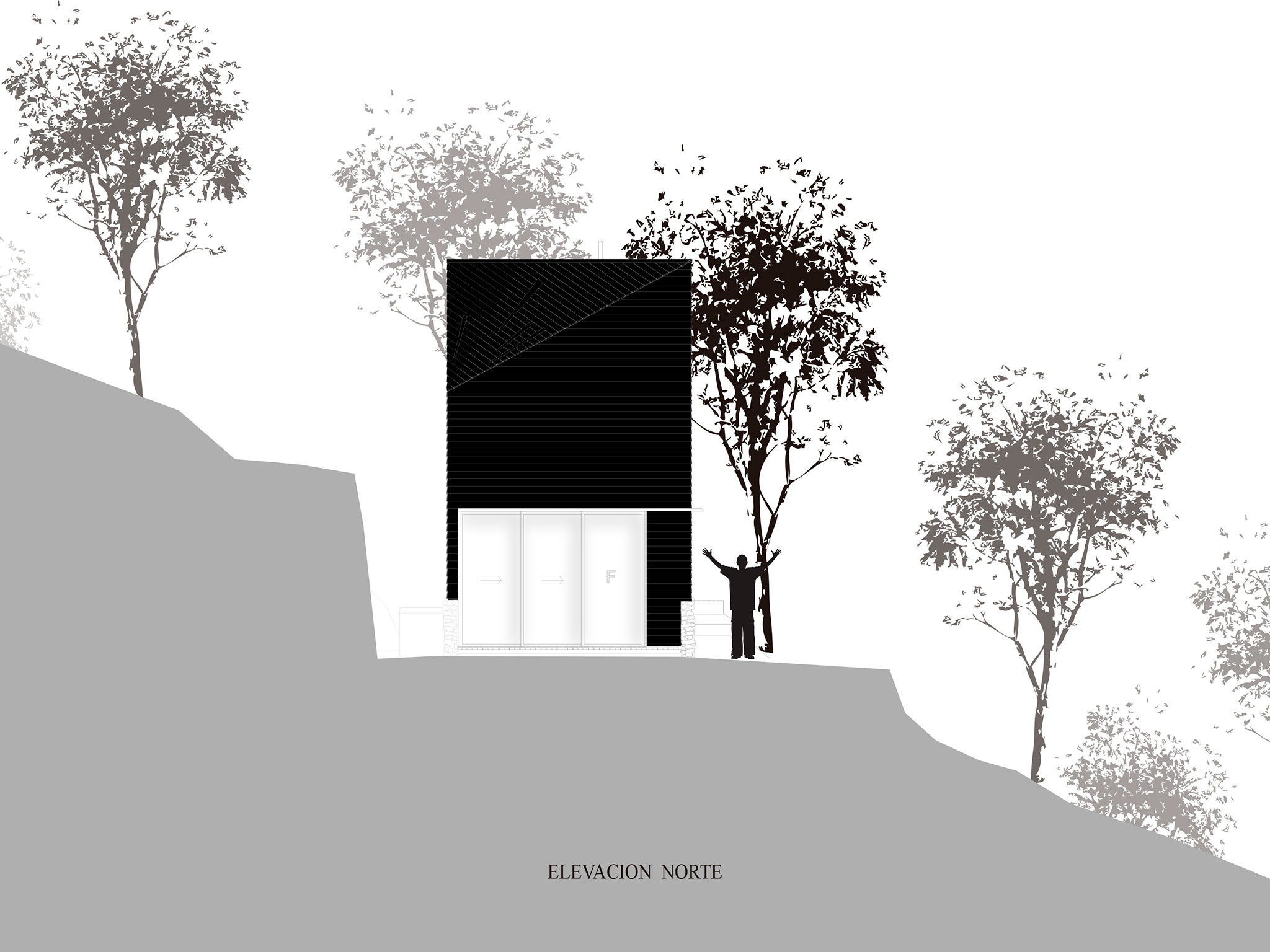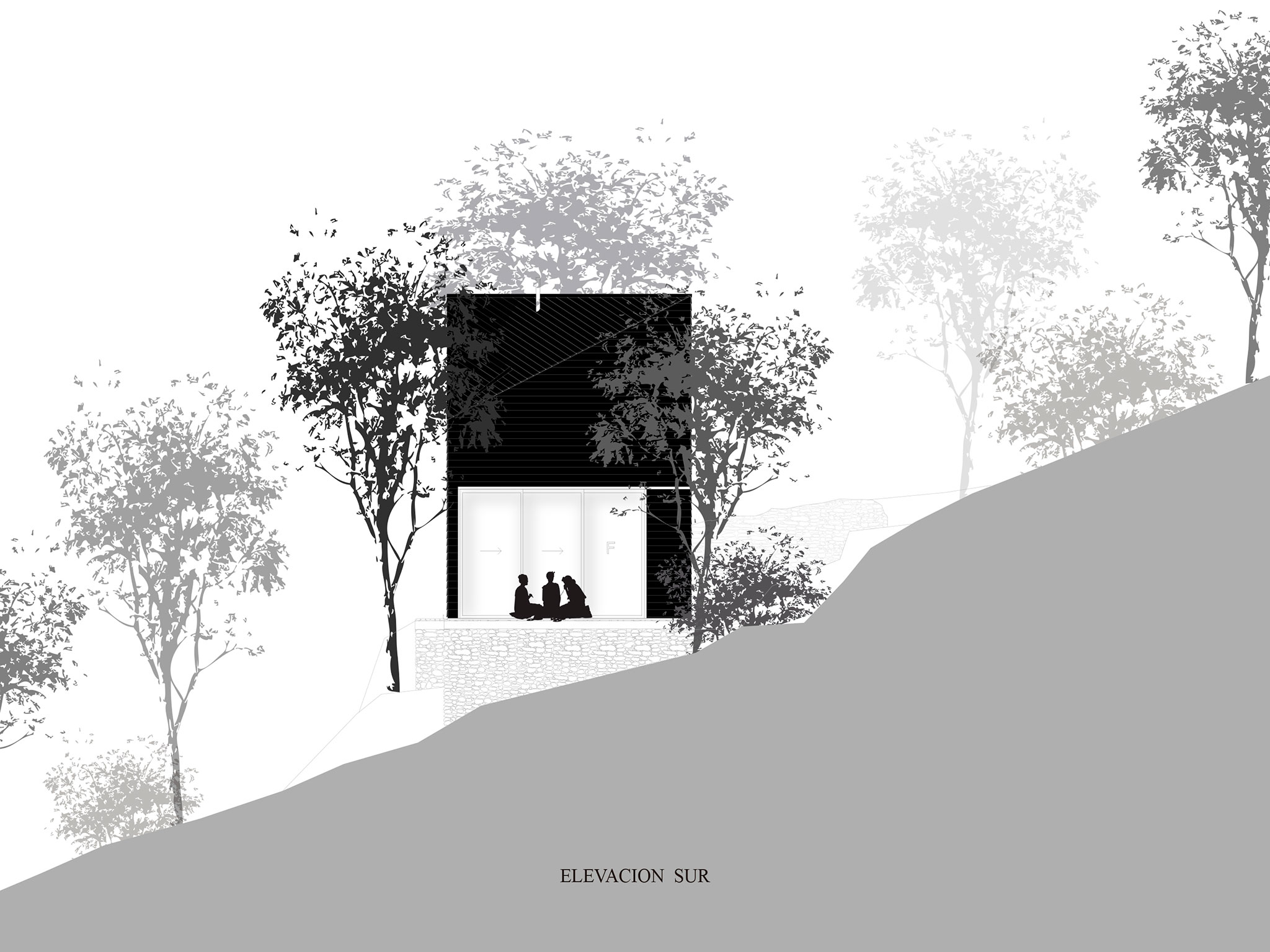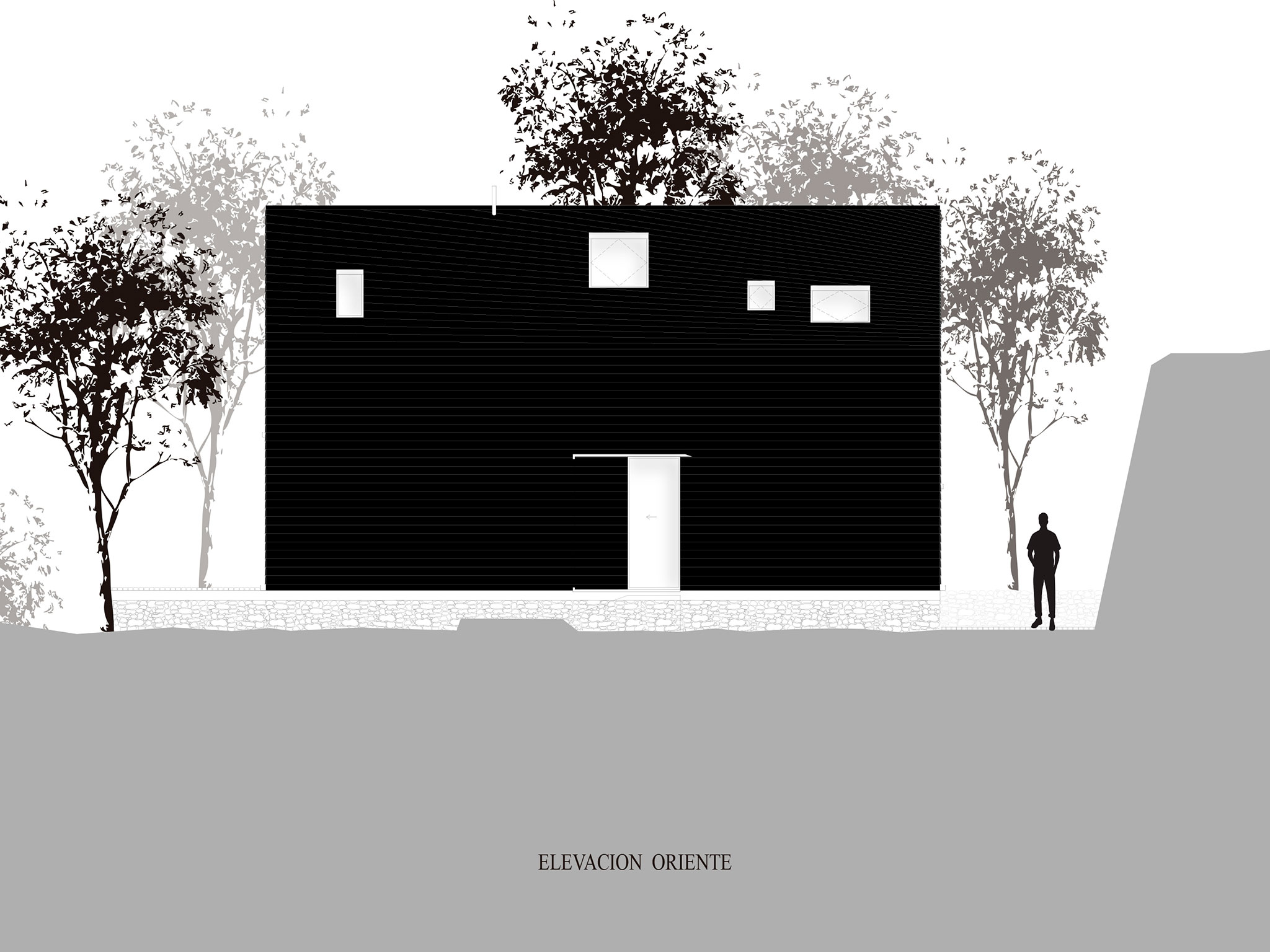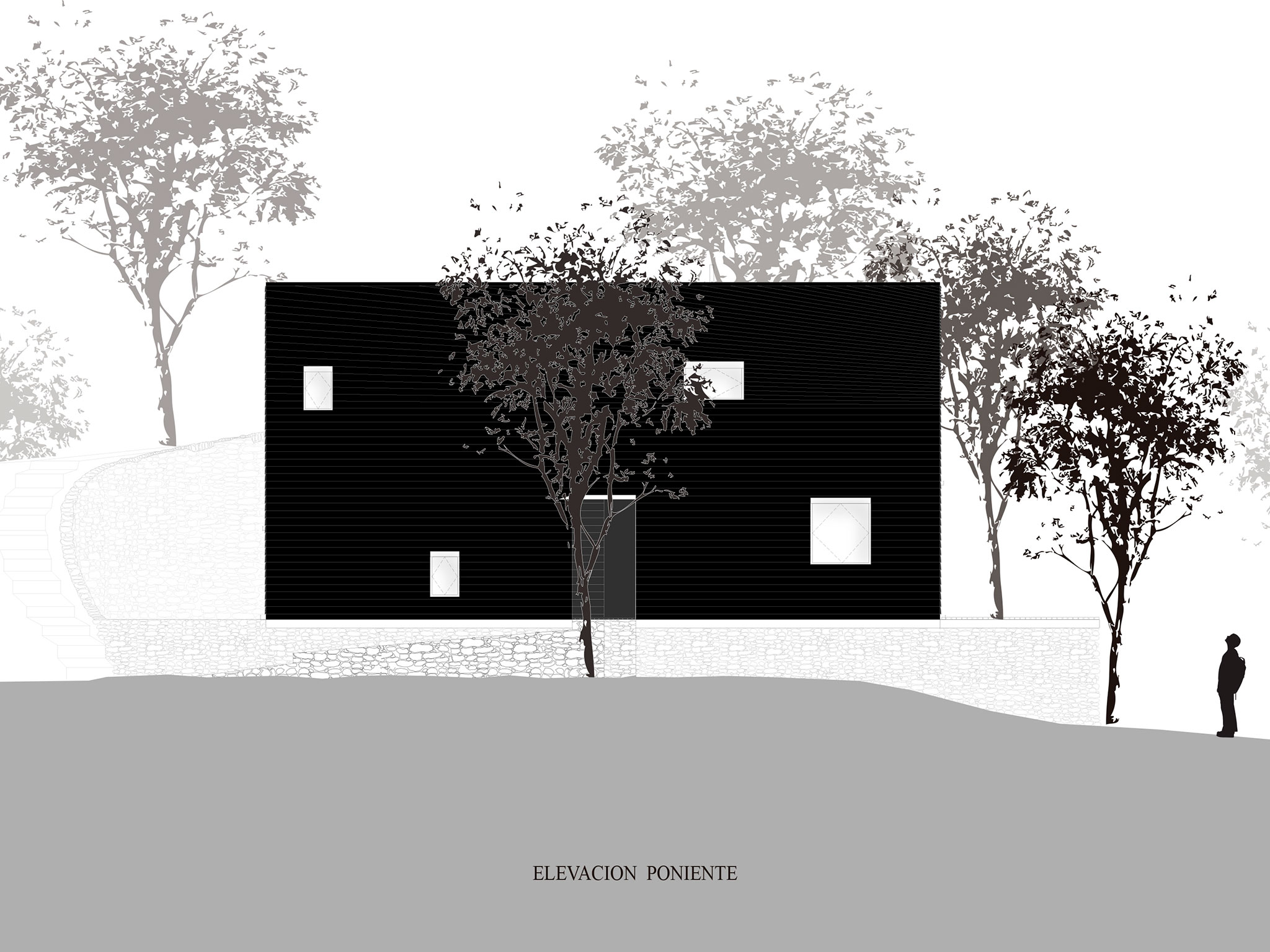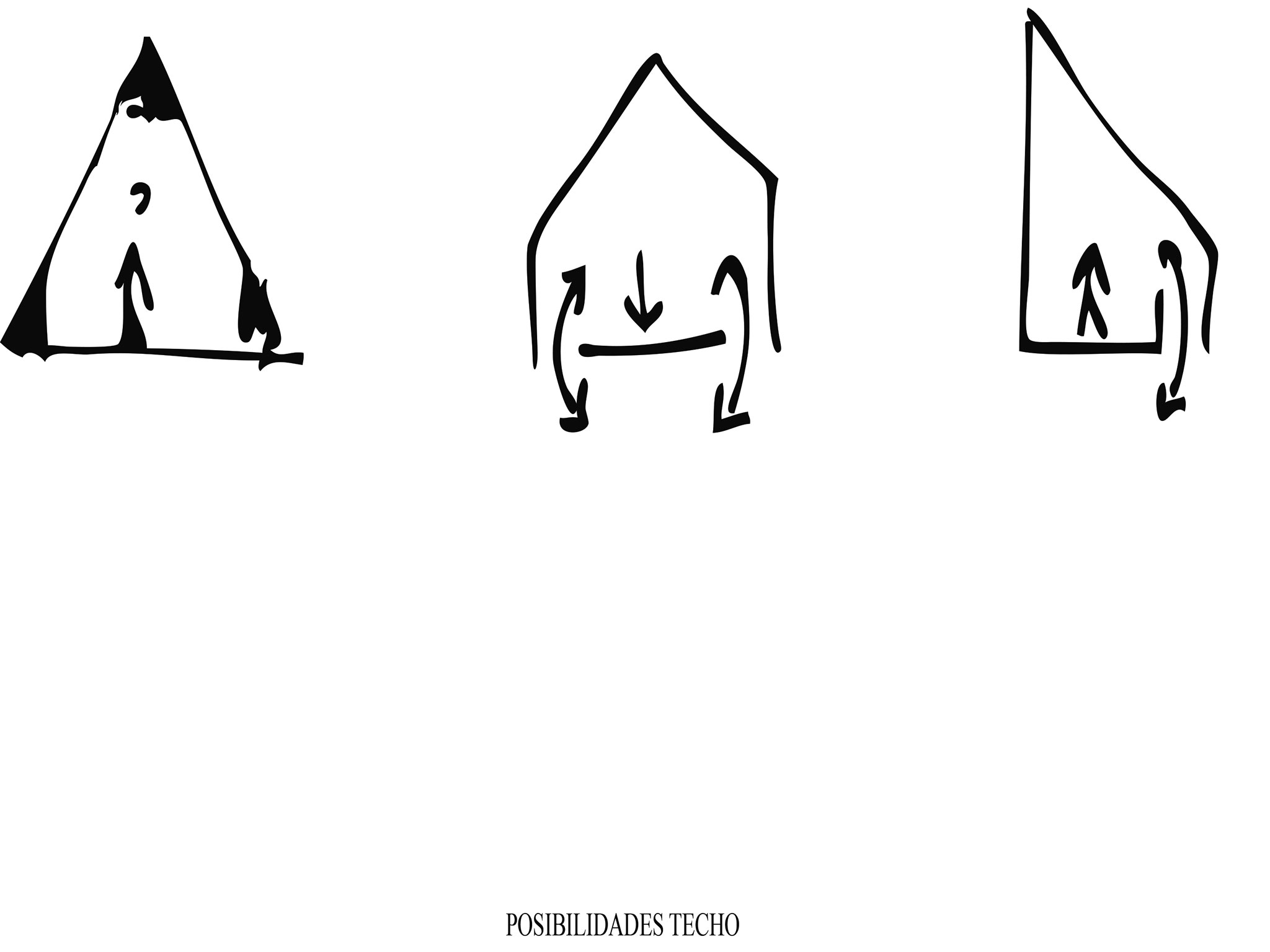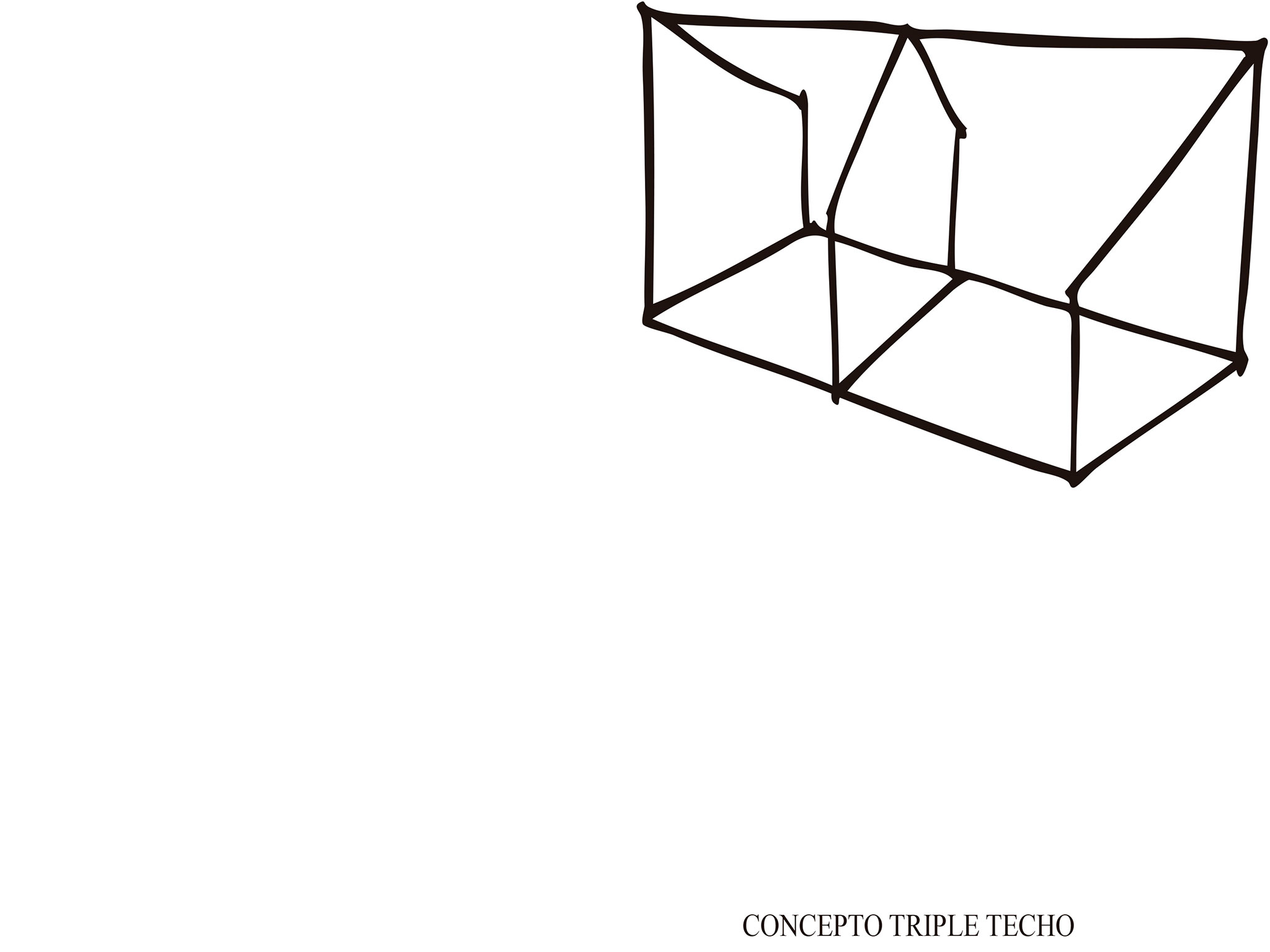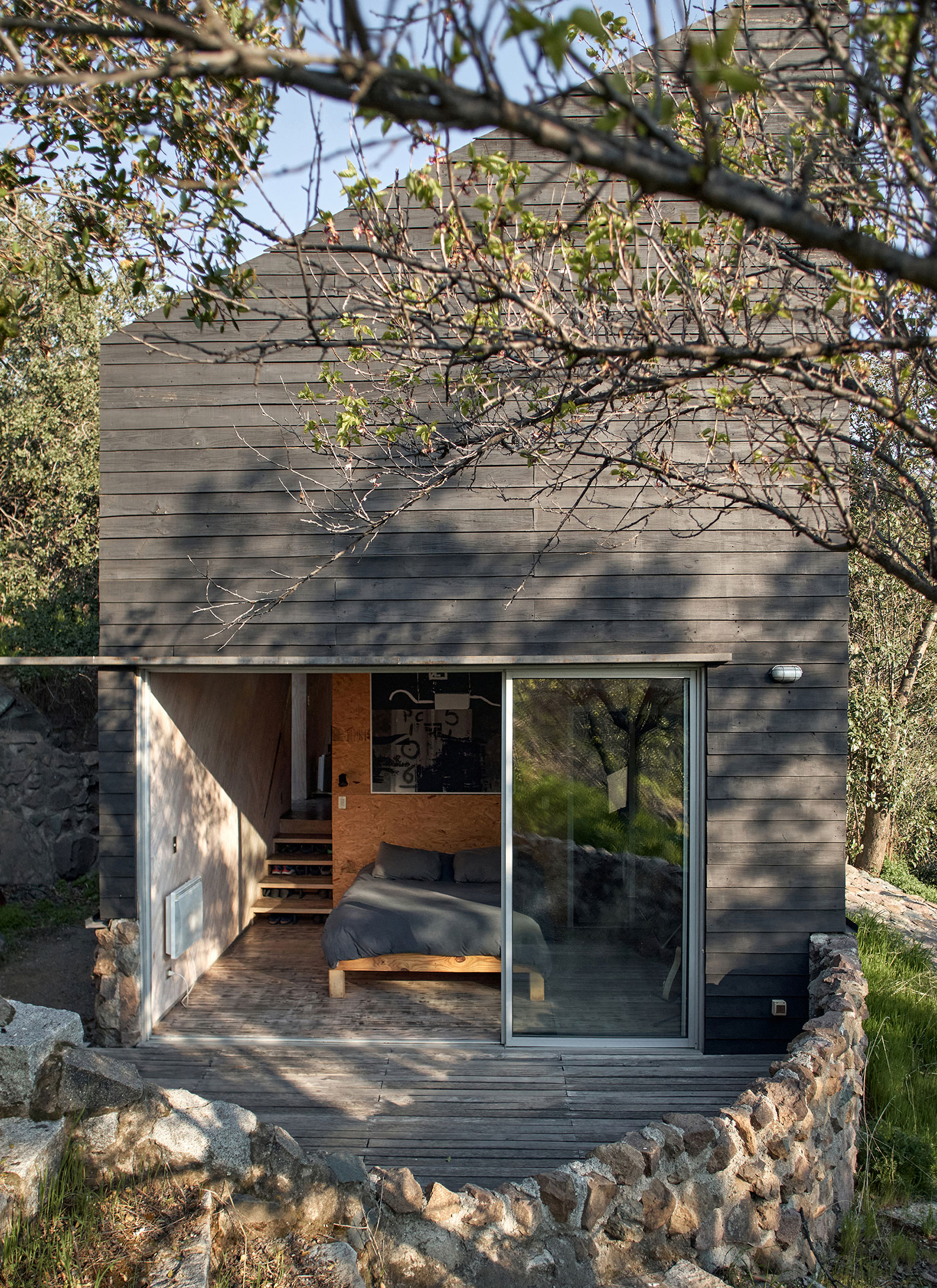
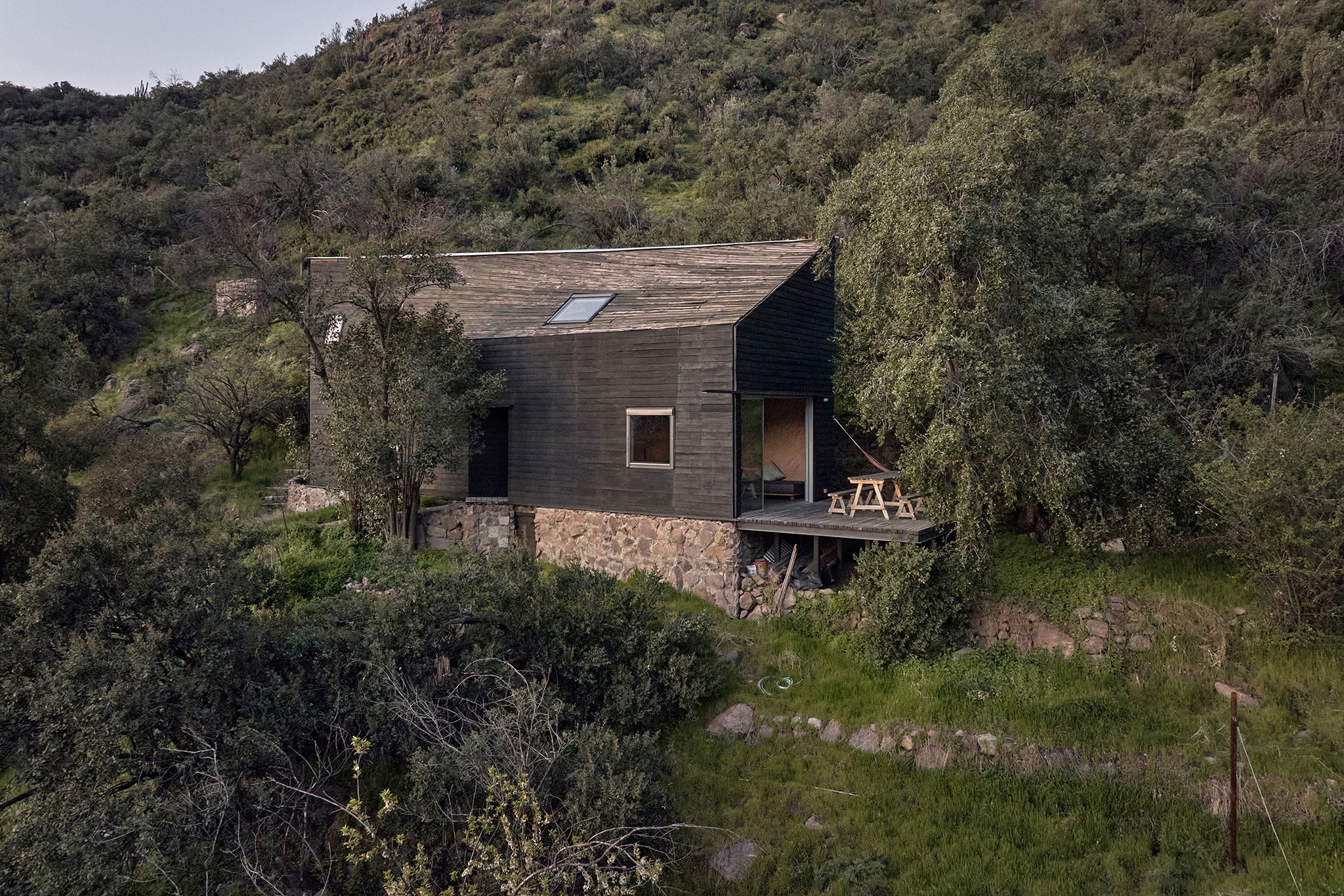
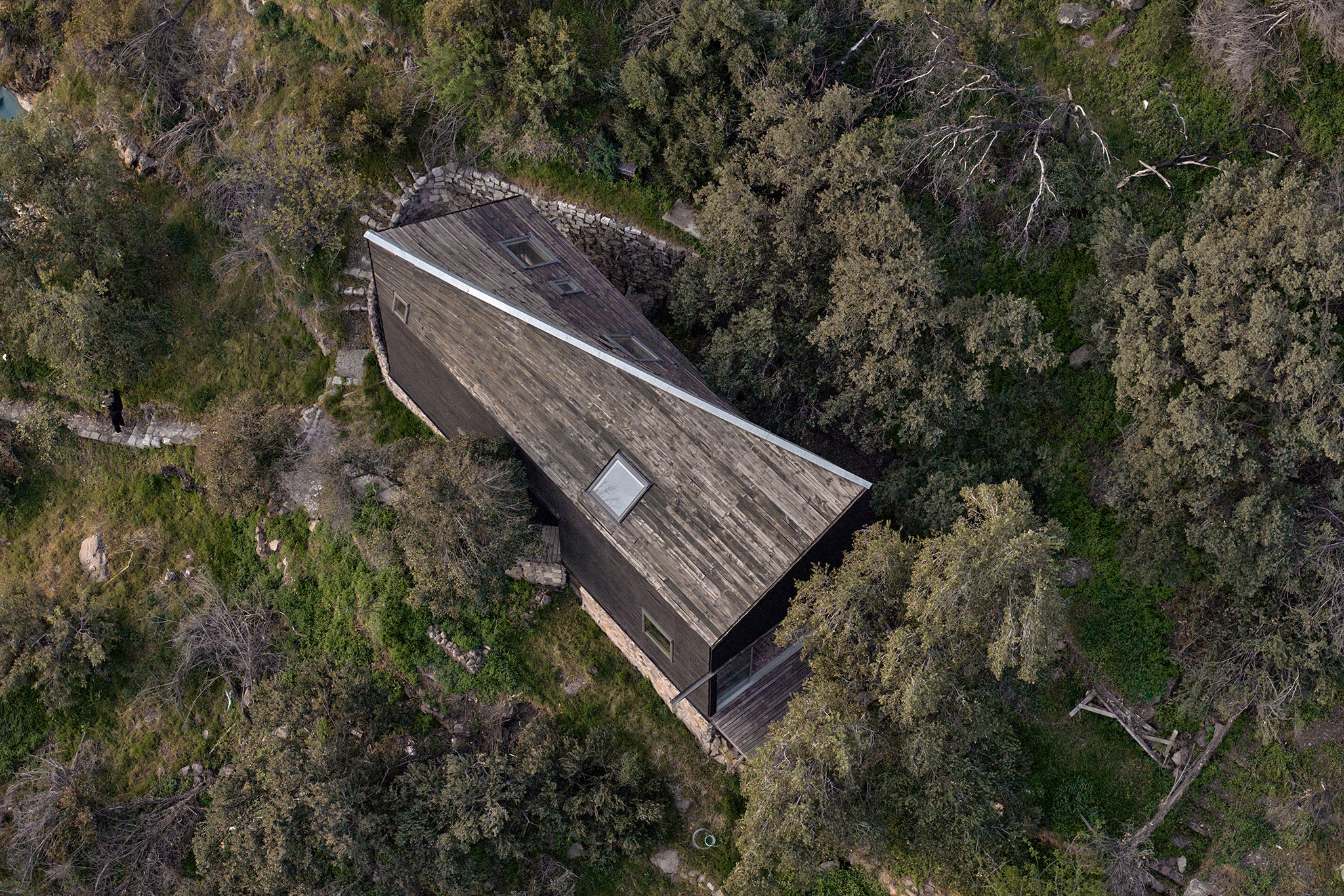
The Cabanon, designed by Susuka Architects, features a roof comprised of a series of skylights and a double structural curve. This curve is formed by a slope that ends in the opposite direction and converges at a midpoint with another, creating an incline to both sides. The project's layout is based on a compact, double-height volume with a total area of 80 m², containing two bedrooms, a living room, a dining room, a kitchen, and a study, organized around a service core with two bathrooms.
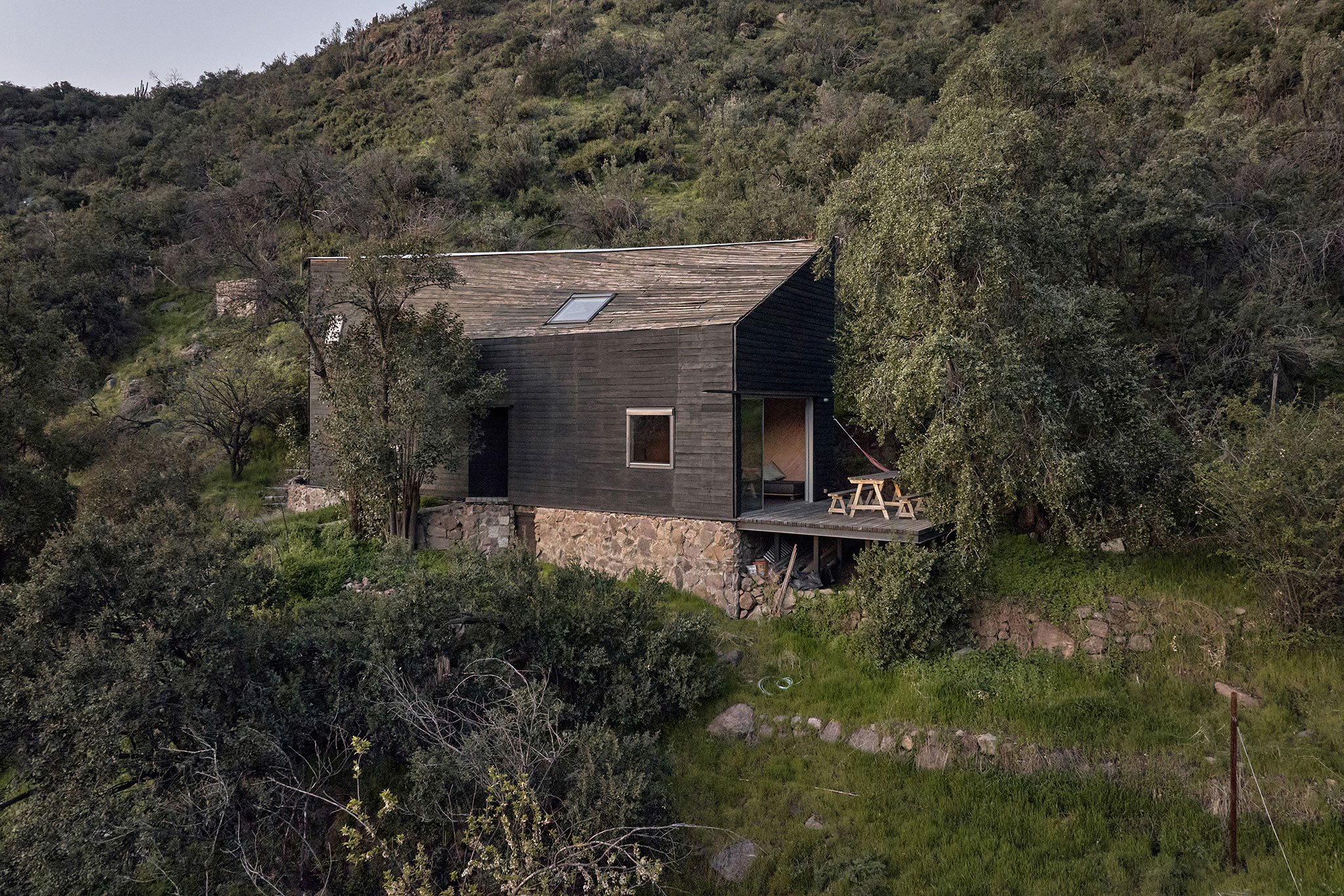
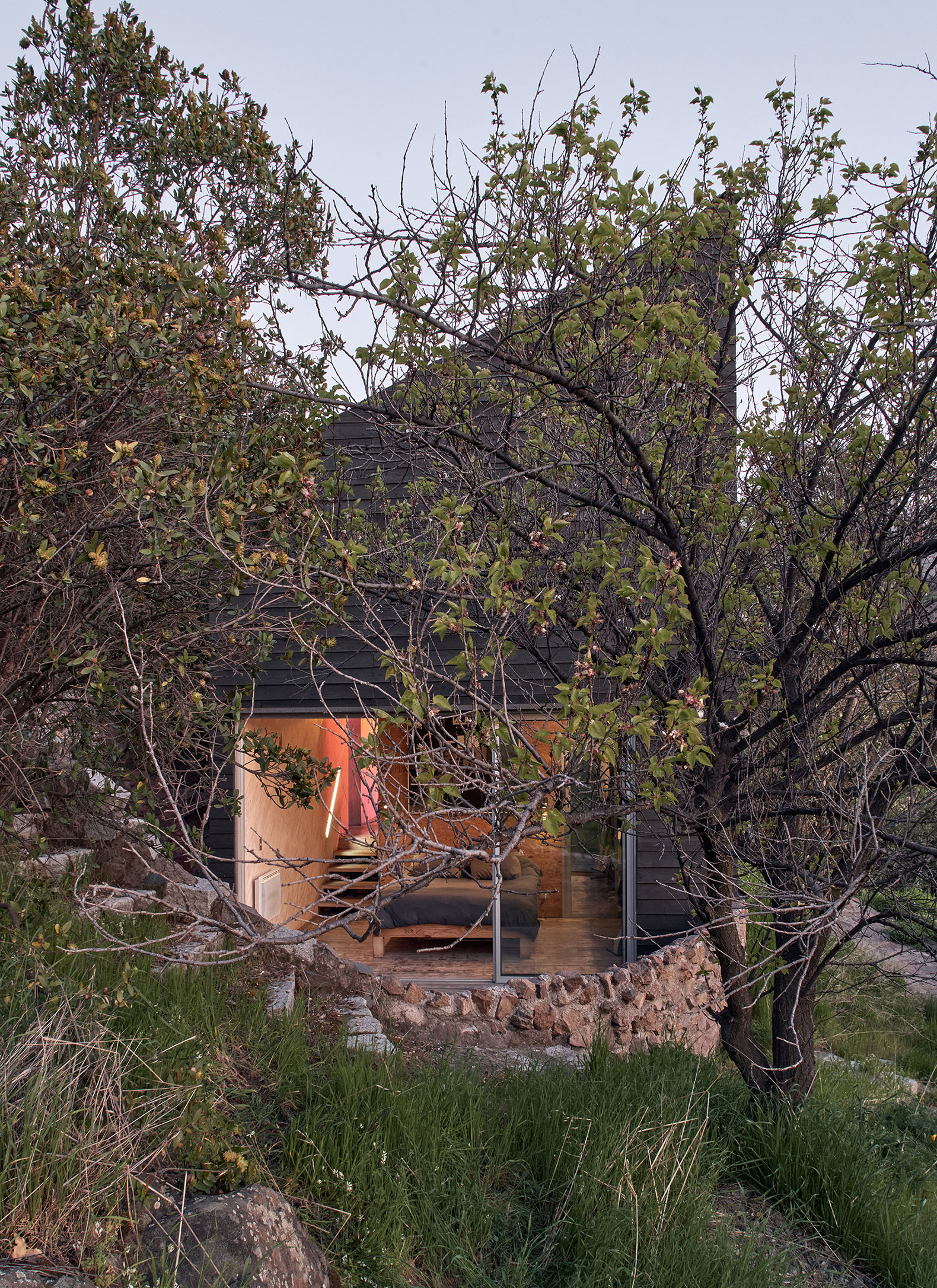
The design was built on an old terrace and a pre-existing stone retaining wall. Due to its location in a highly seismic area, a double-curved structural envelope was constructed, supported by a beam and a column. The chosen materials are based on transportable, lightweight, and dry-assembly elements, such as locally sourced stone for the supporting elements and various types of wood, including recycled and treated timber, plywood, and structural laminate.
Cabanon by Susuka Architects. Photograph by Cristóbal Palma.
Project description by Susuka Architects
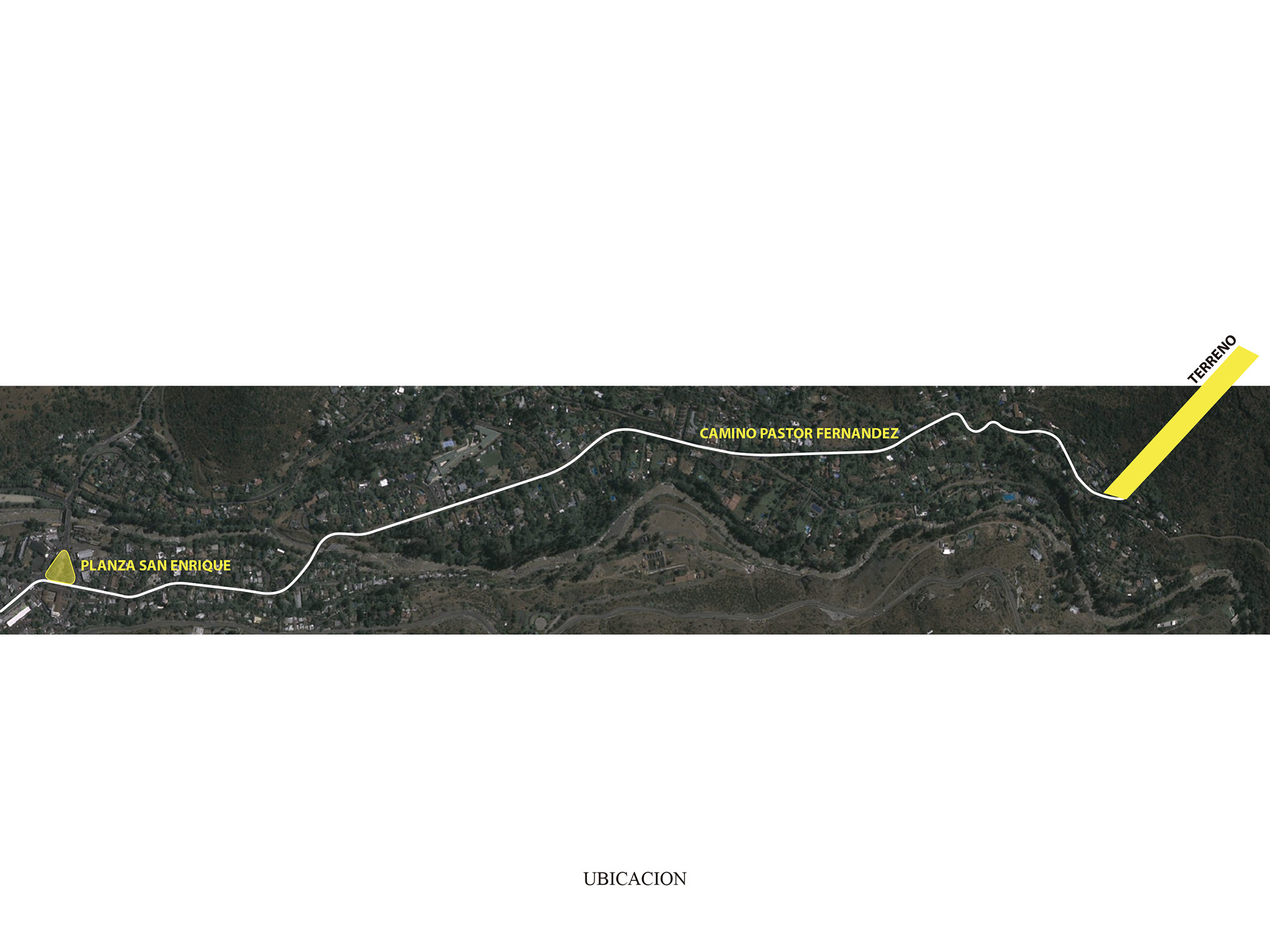
The Cabanon project, located in El Arrayán, Santiago, Chile, was conceived as a mountain retreat and developed by SUSUKA Architects, comprised of Juan Pablo Corvalan, Renata Sinkevic, and Gabriel Vergara. The design draws inspiration from the vernacular stone and wood constructions found on the slopes of the Andes Mountains, reinterpreting the archetypal concept of a single-shell roof supported by a stone base. This roof begins with a slope and culminates in the opposite direction, forming a double structural curve, the midpoint of which creates an equal incline to both sides.
Given the highly seismic nature of the area, the house adopts this large structural shell—a double-curved envelope supported only by a beam and a pillar—which provides the structure with both stability and flexibility. The challenging access, via a narrow stone path, necessitated the use of transportable, lightweight, and dry-assembly materials, minimizing the use of concrete. Locally sourced stone was used for the structural elements, along with various types of wood: recycled, treated, plywood, and structural laminated timber (MLC/Glulam). The building was designed to withstand the mountain climate, with adequate thermal insulation for snow and significant temperature fluctuations.
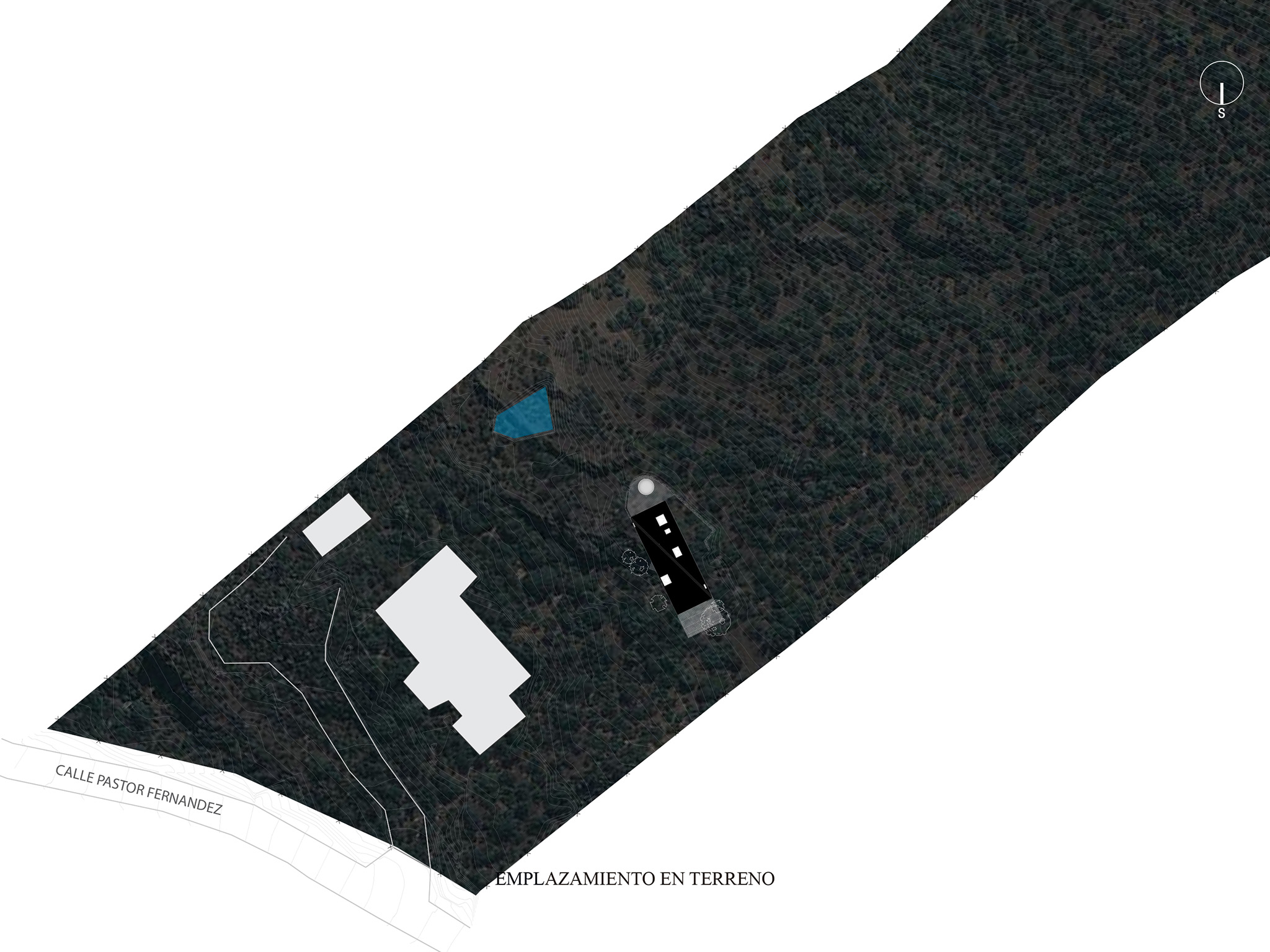
The house sits atop an old terrace and a pre-existing stone retaining wall, avoiding any major alteration to the terrain. Located on the south-facing slope, where sunlight arrives late, eight windows of varying sizes were incorporated, along with skylights in the roof, to maximize natural light, frame the valley and surrounding slopes, and reinforce the introspective and protective character of the refuge. These openings also prevent direct views of neighboring buildings and allow access to sheltered side terraces.
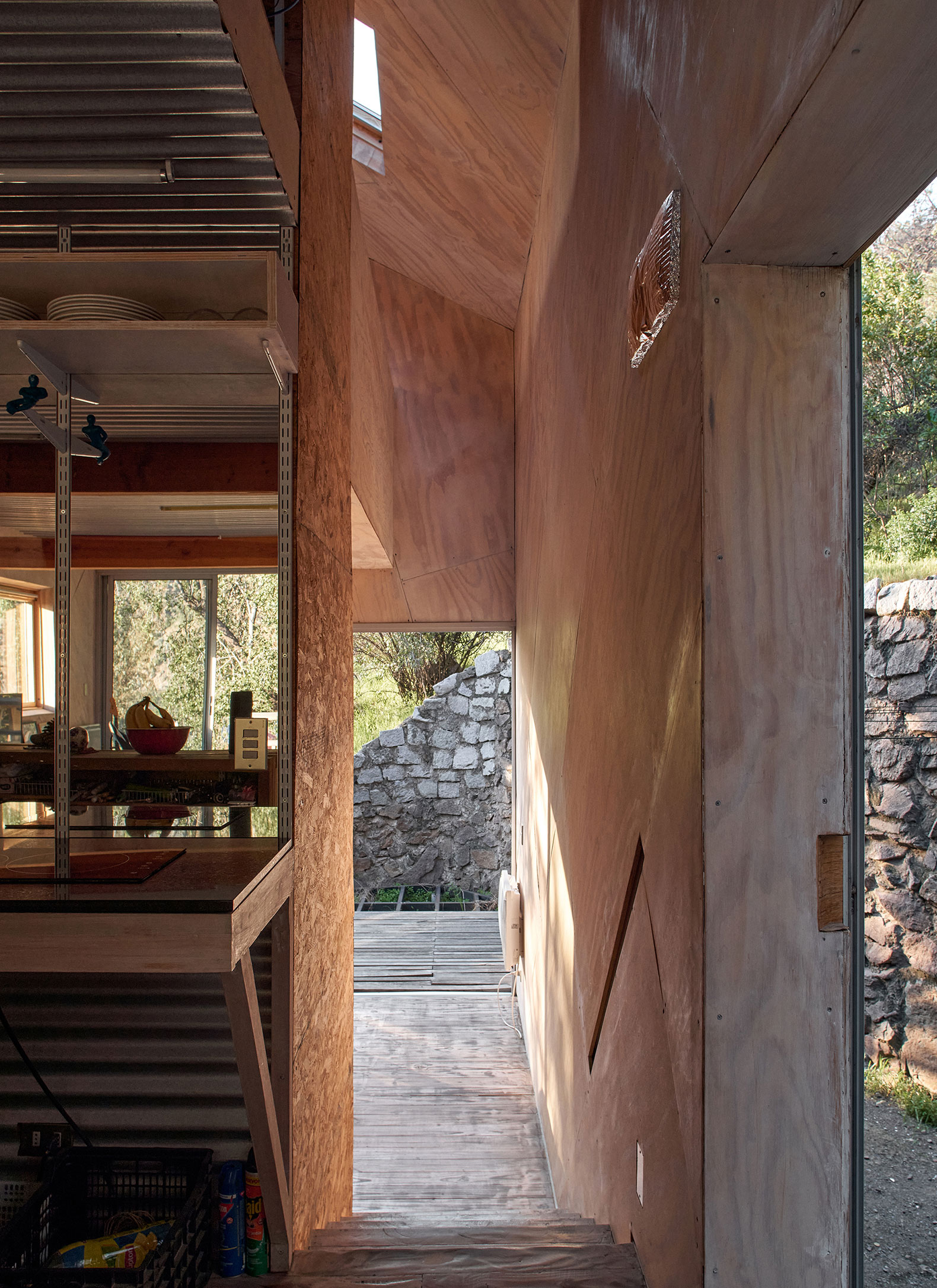
Inside, the compact volume is organized around a service core with two bathrooms stacked one above the other. Around it, a large open-plan space distributes two bedrooms, a living room, a kitchen-dining area, and a study via split-level horizontal partitions, totaling 80 square meters. This system provides each room with cross-ventilation, natural light, and views of the landscape, while the central double-height ceiling amplifies the spatial perception, making the house appear larger than its actual scale.
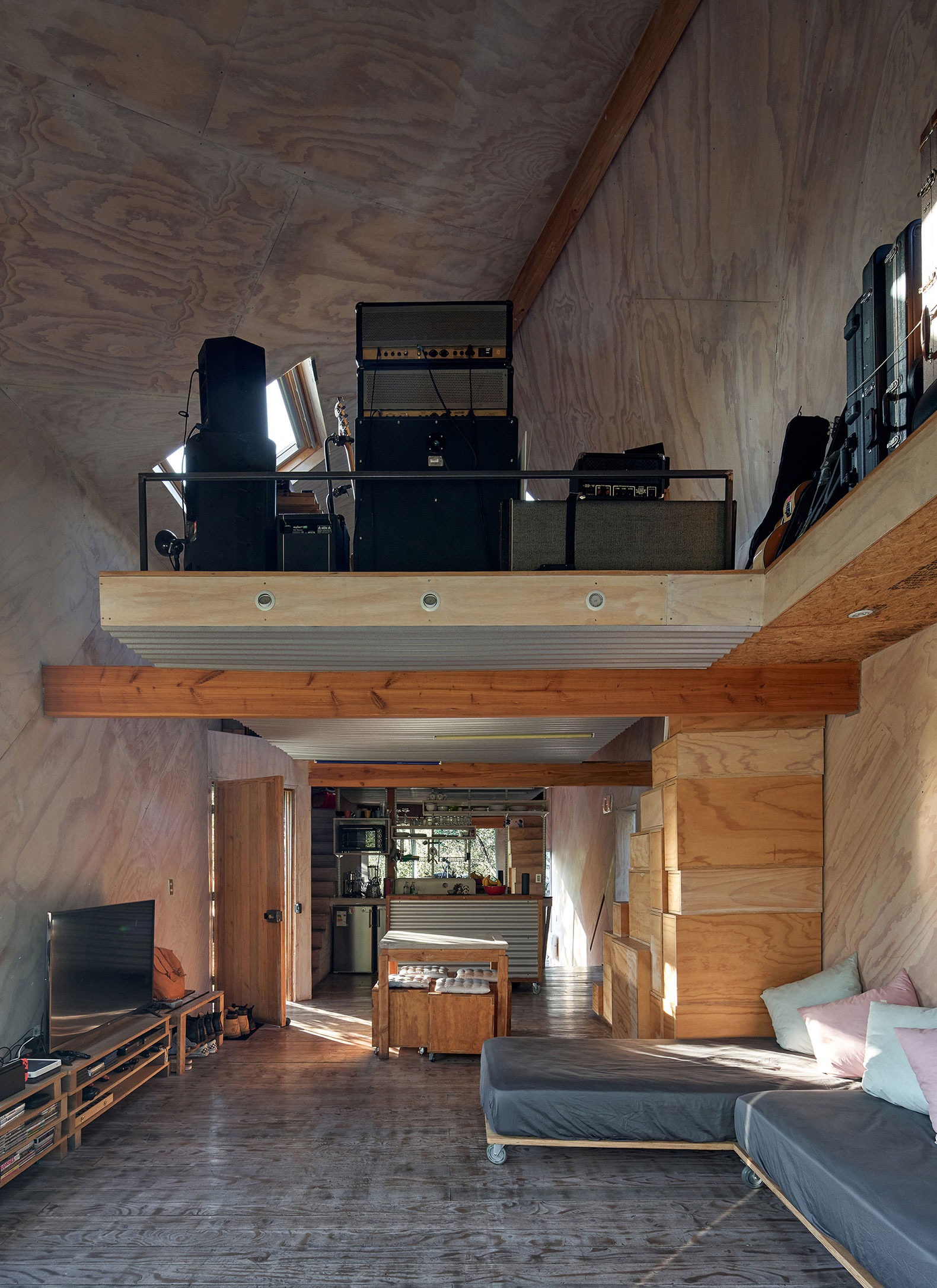
The design proposes a contemporary form of domesticity that integrates remote work, home studios, and daily life with an almost primal connection to the land. As Yoshiharu Tsukamoto of Atelier Bow-Wow noted during a visit to the site: "It's an inverted boat: the first home."