In a strategic location within the industrial zone near the town of Cittadella, in Padua, Italy, lies "Green Village," a garden center designed by Studio Bressan. Thanks to its proximity to major transportation routes, the complex occupies a highly significant site between the provinces of Vicenza, Padua, and Treviso.

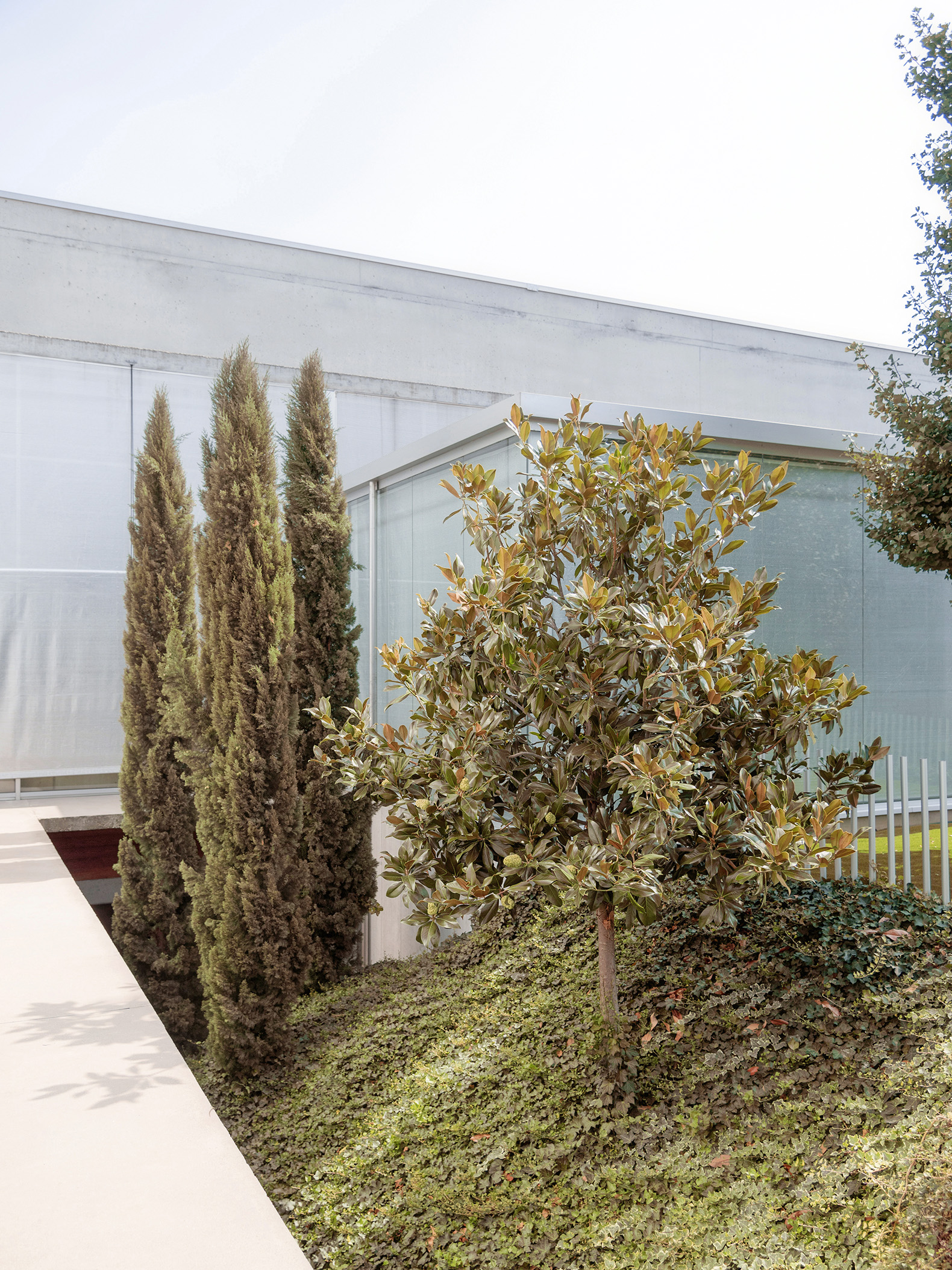
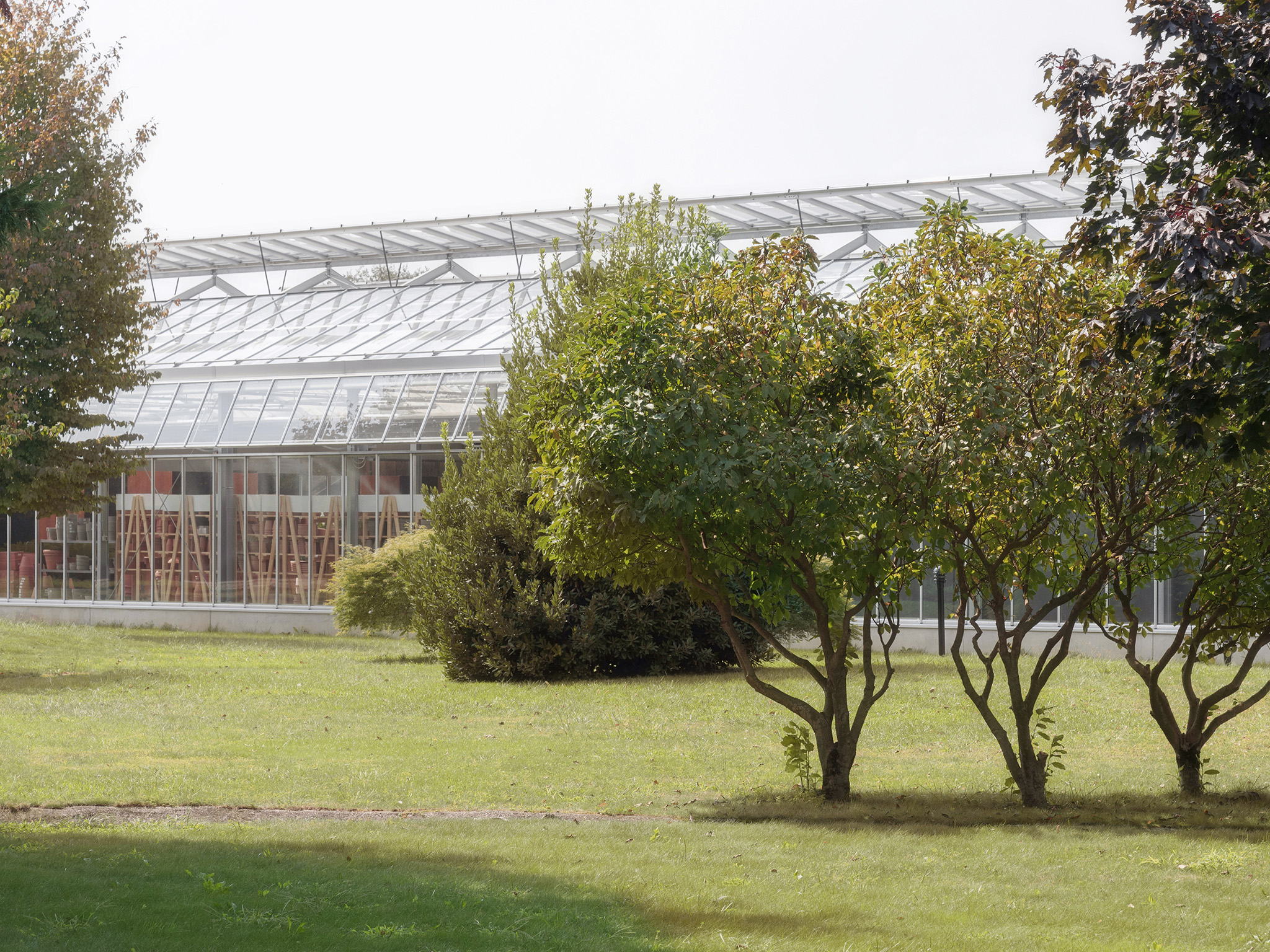
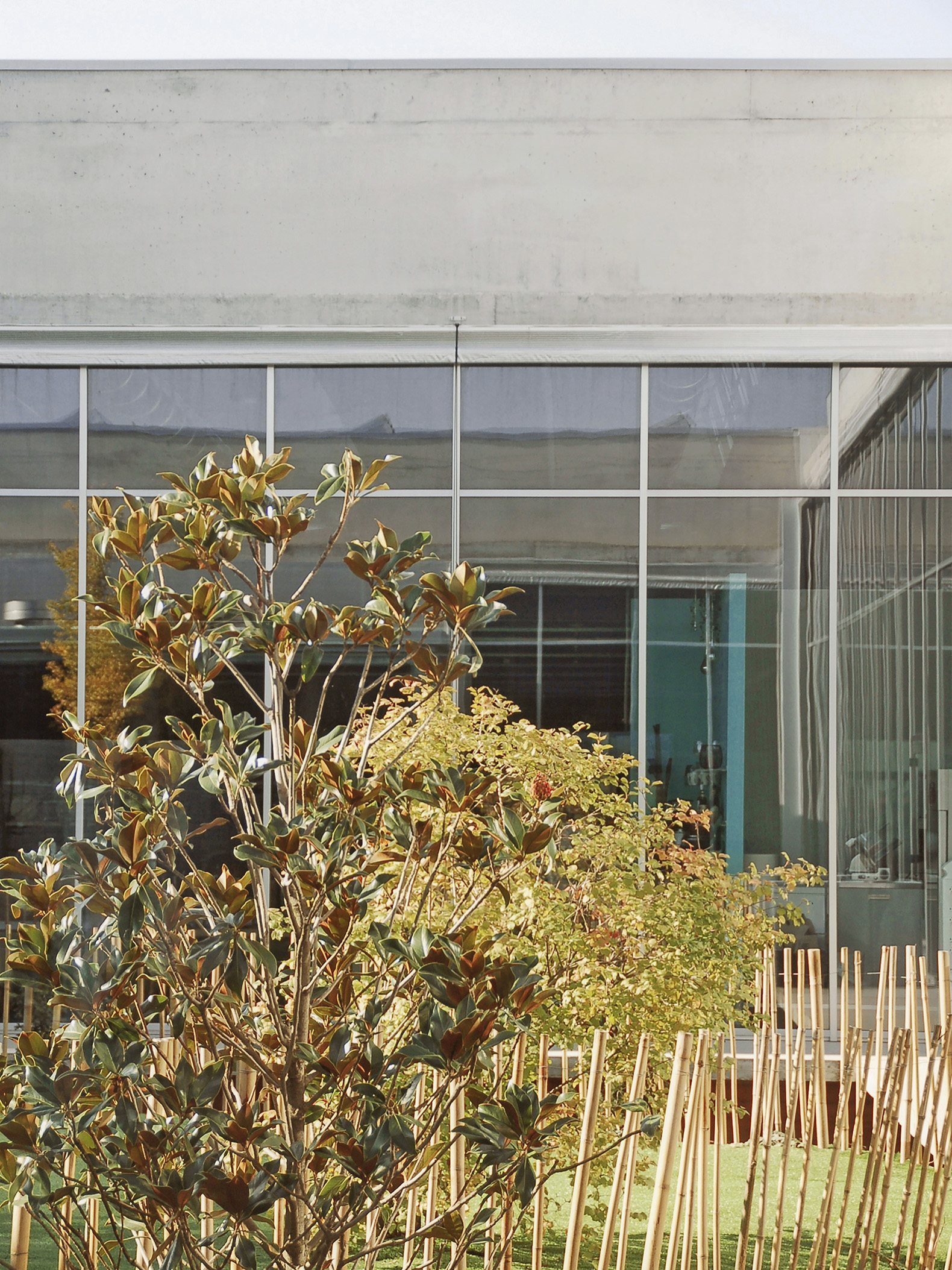
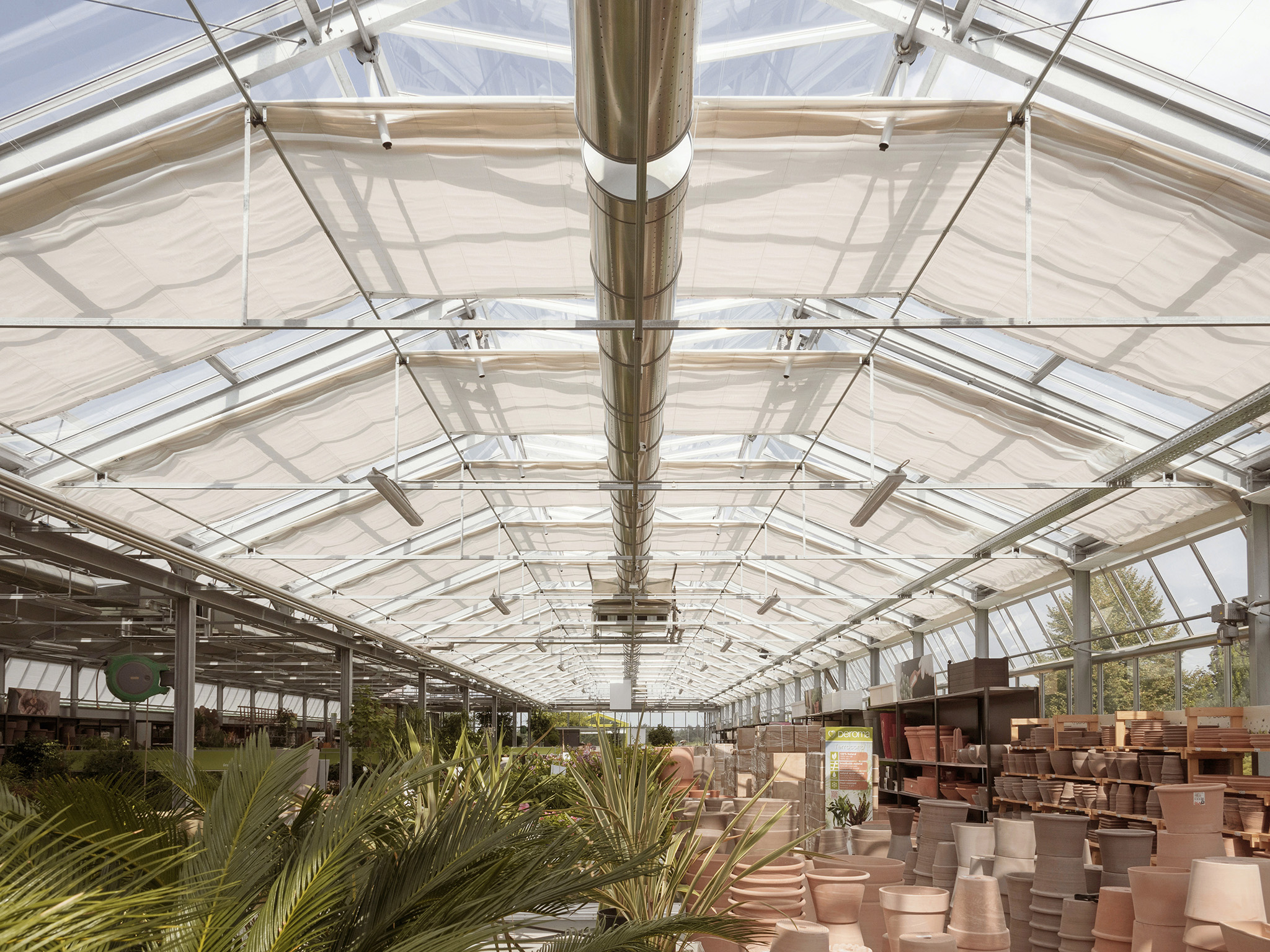
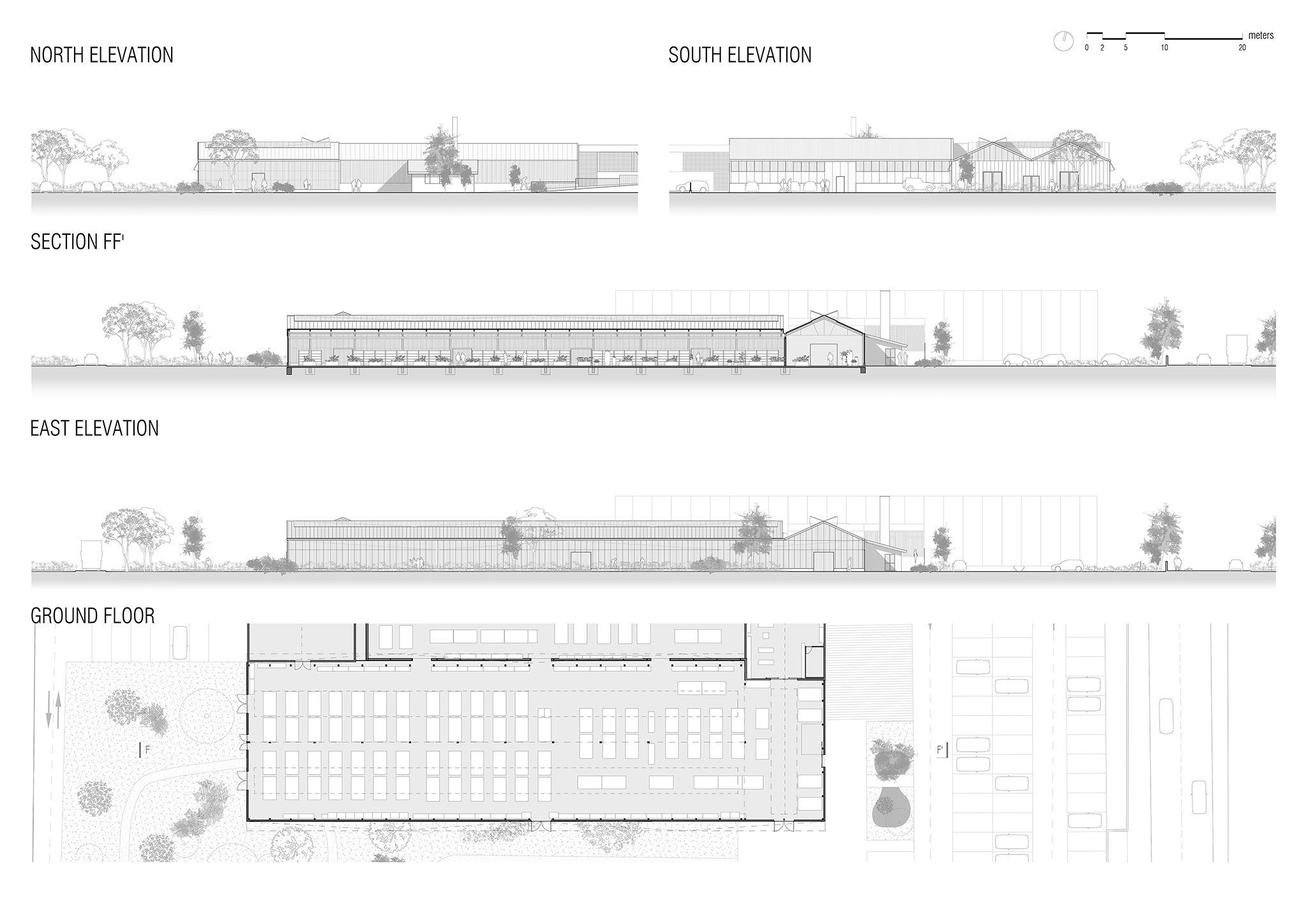
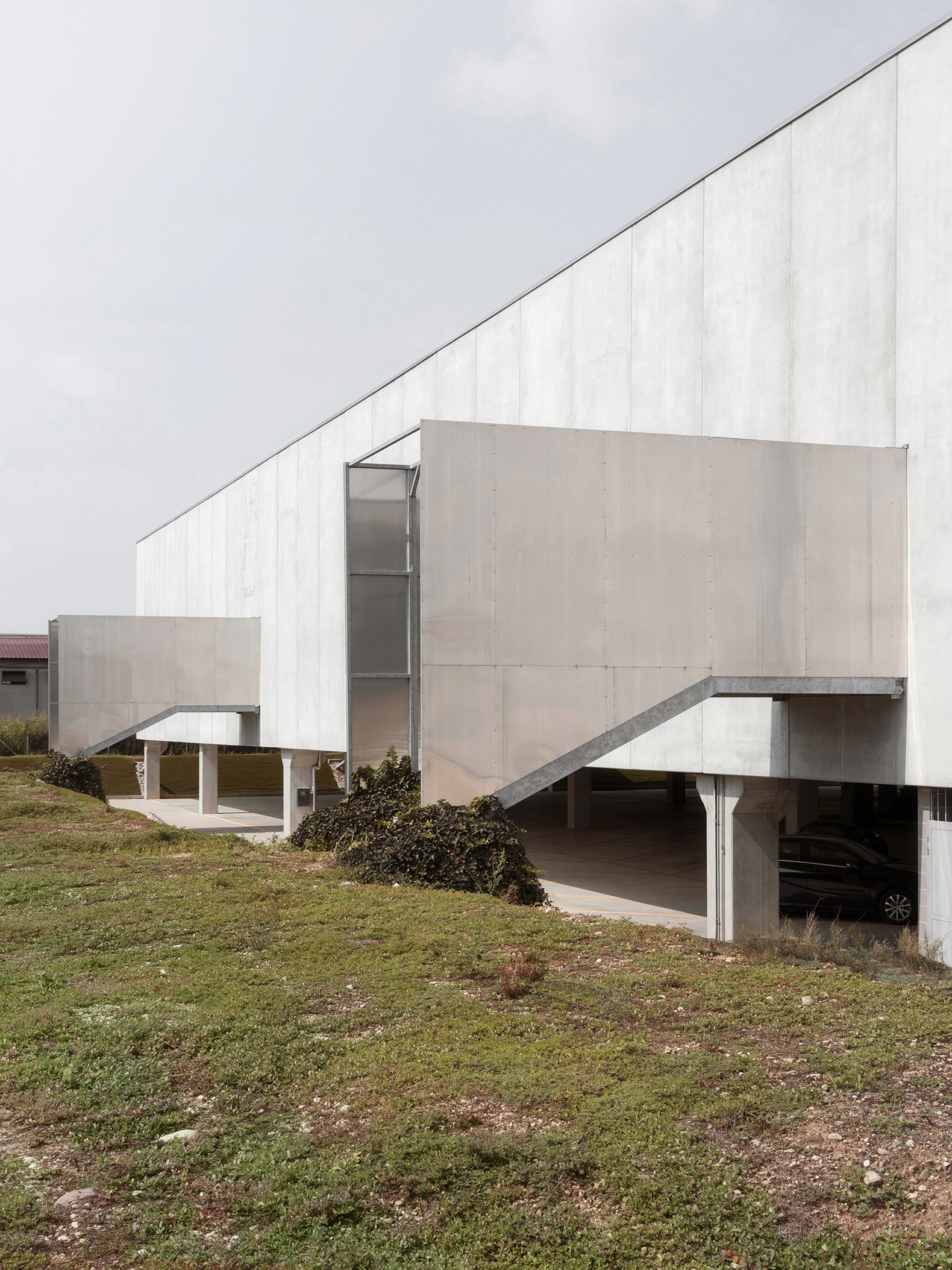
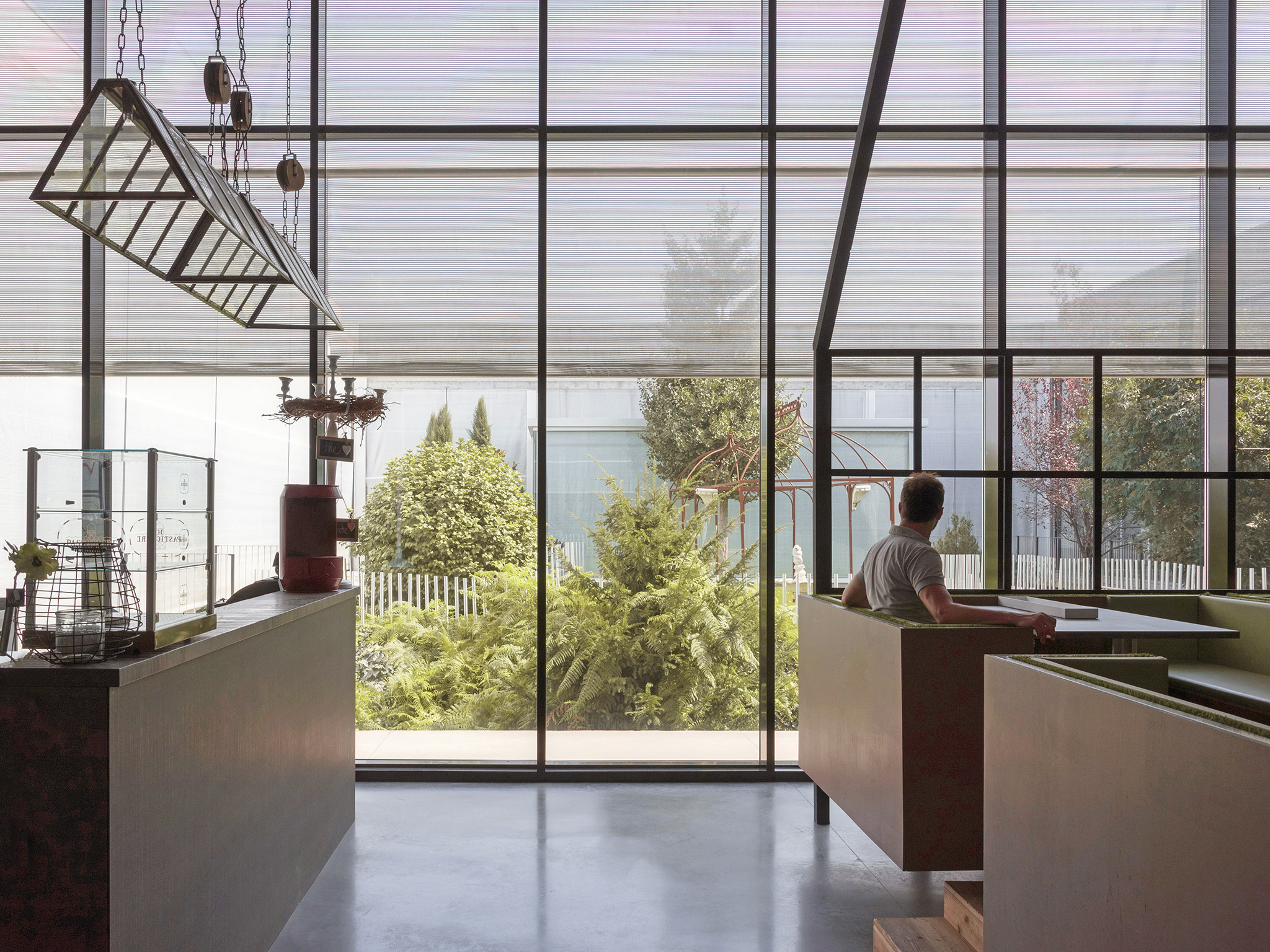
"Green Village" is presented as a building organized around two contrasting elements: on one side, a light and permeable glass volume reminiscent of the traditional greenhouse typology; on the other, a compact and solid concrete geometry that conveys solidity and introspection.

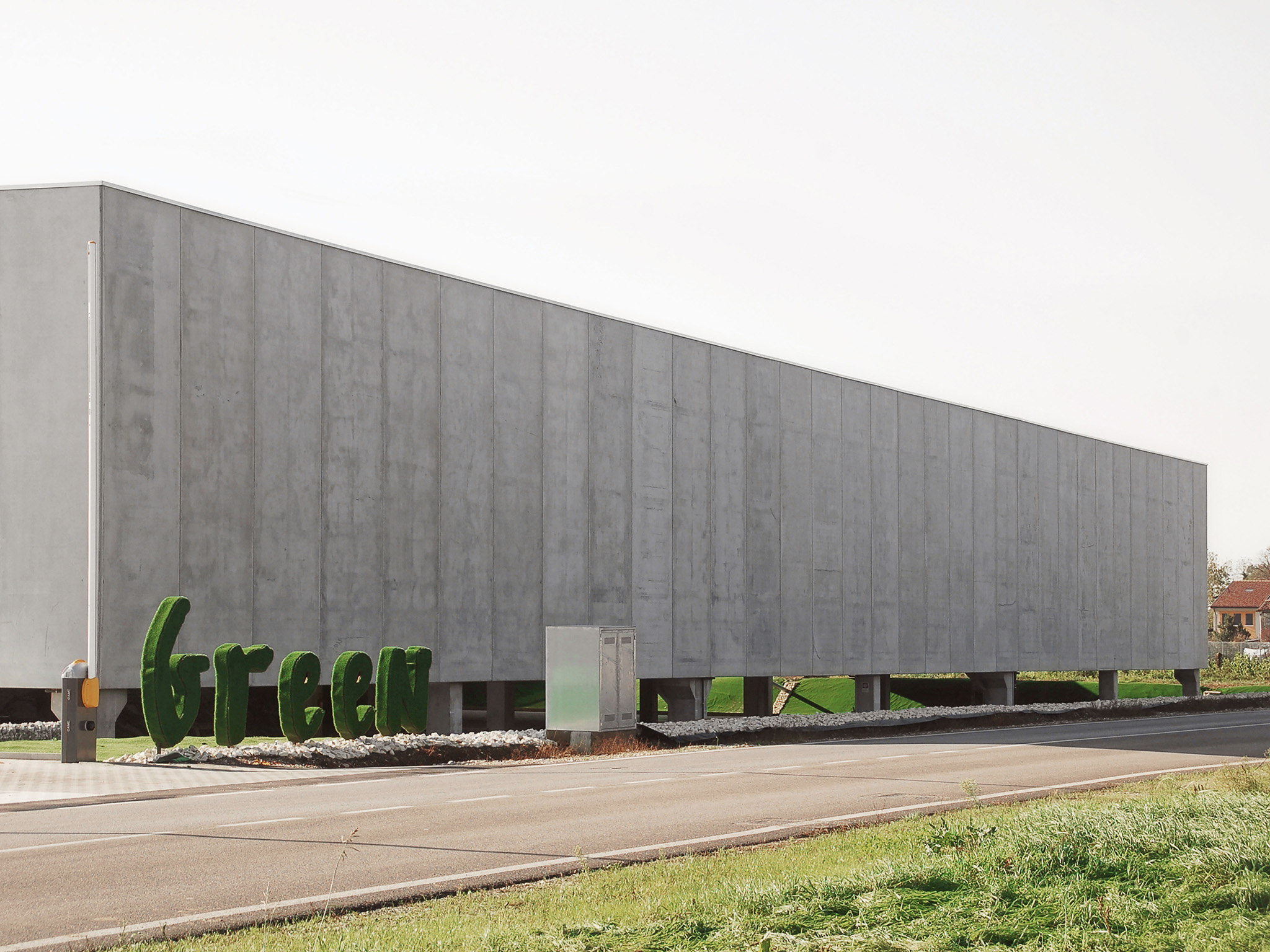
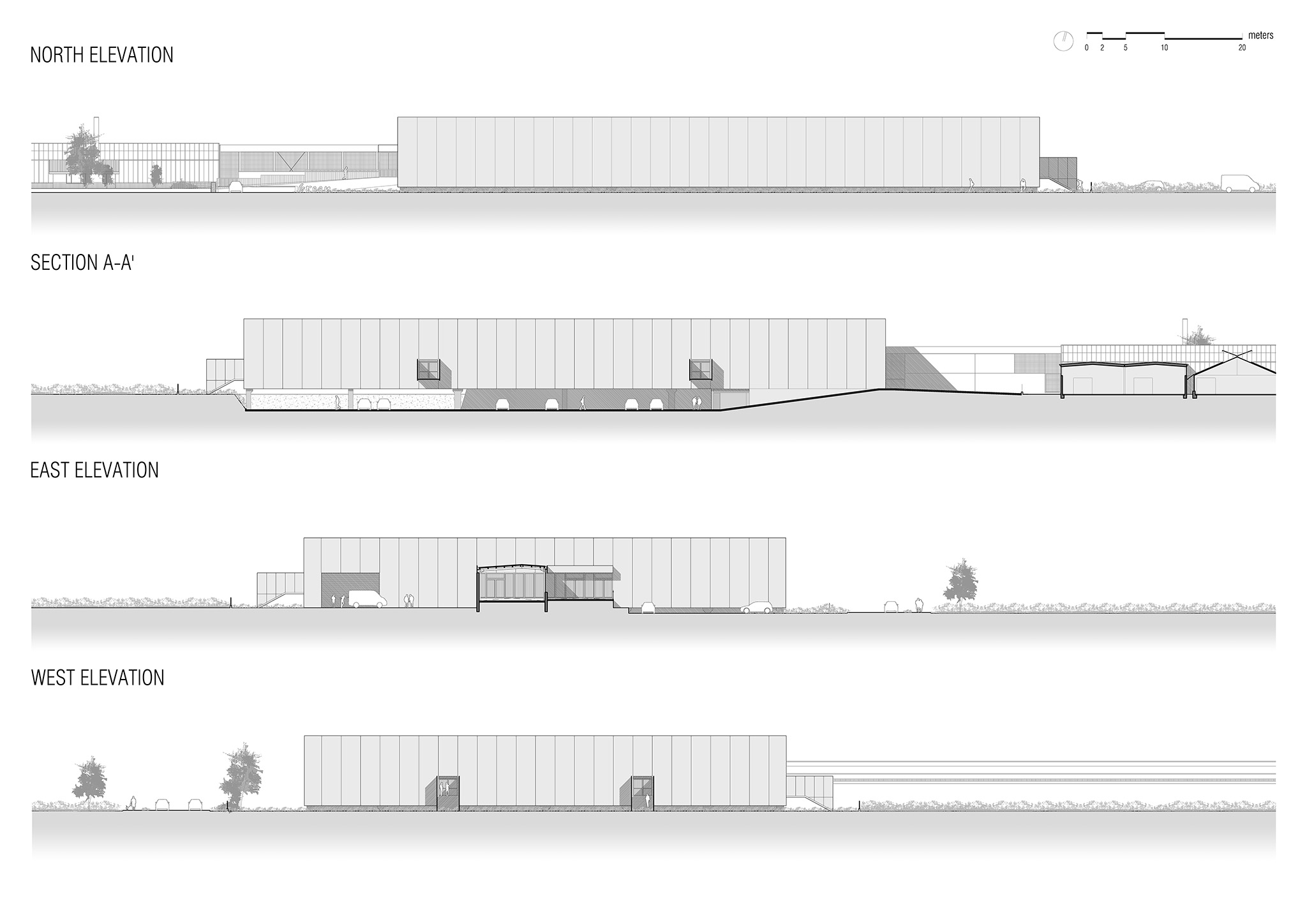
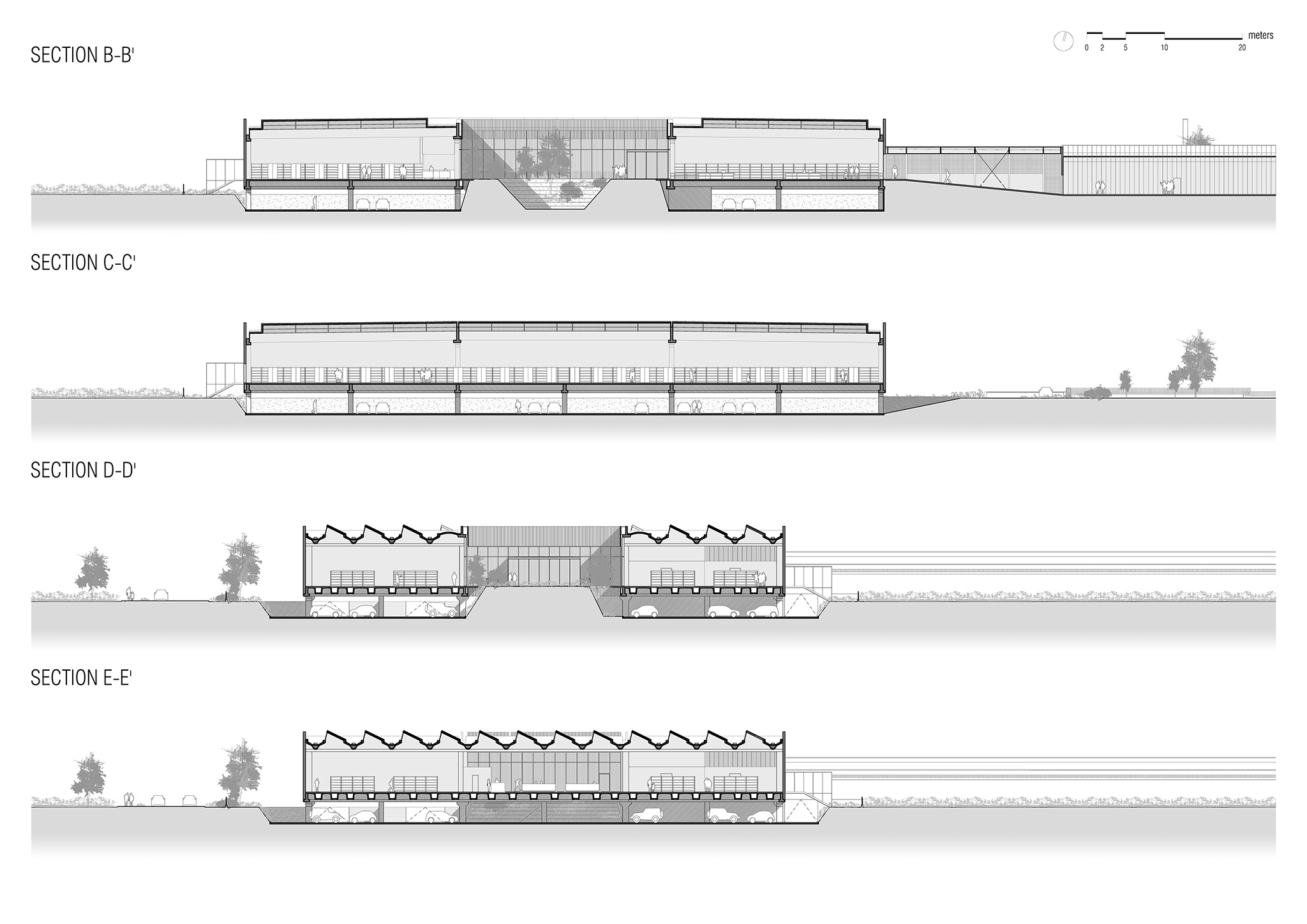
From the outside, the shopping center designed by Studio Bressan is conceived as a clear and precise parallelepiped. Inside, two levels connected by a central landscaped courtyard house a spacious and flexible retail area and a relaxation zone. The basement level completes the design, integrating the parking and access to the upper level.

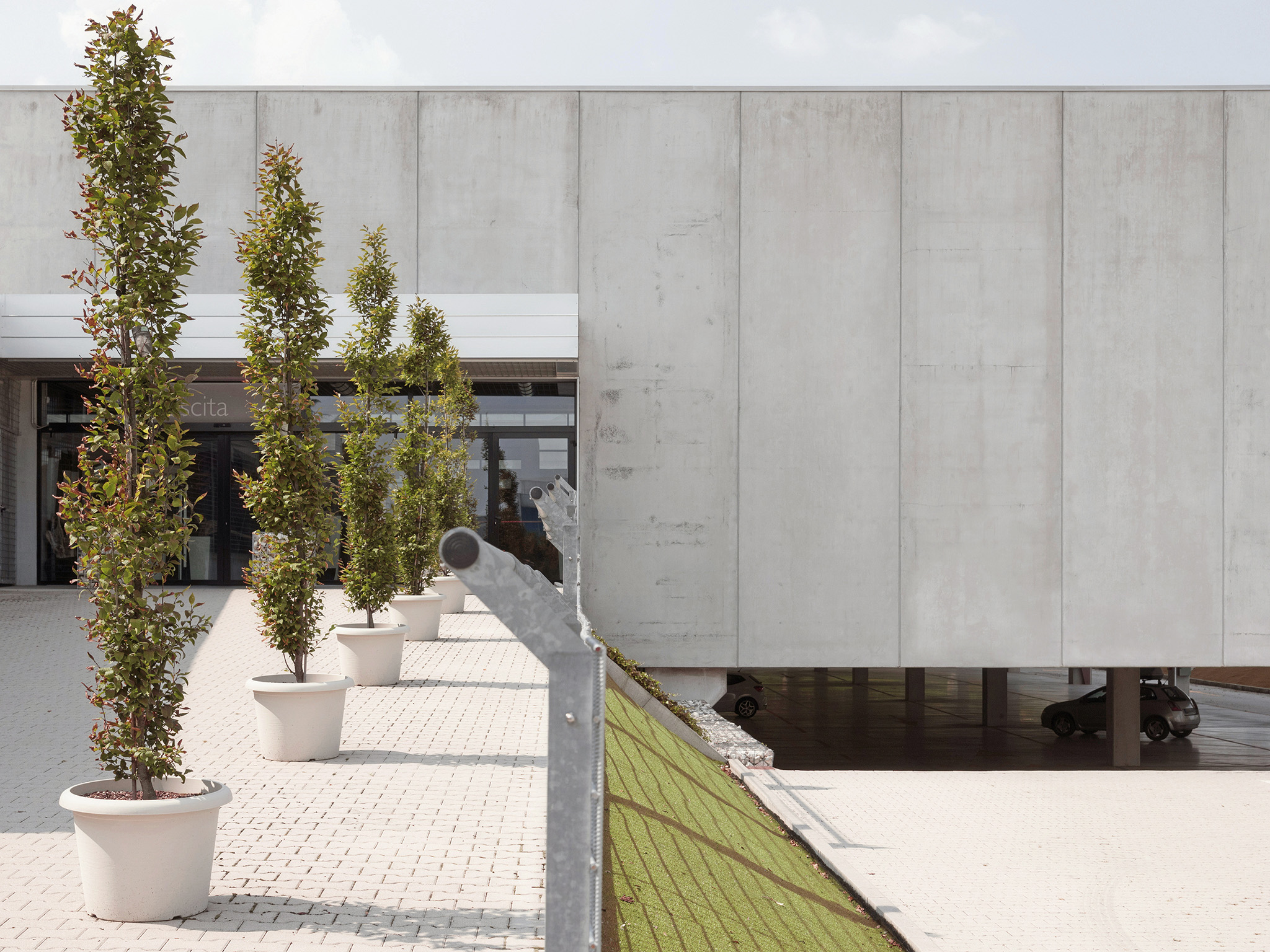
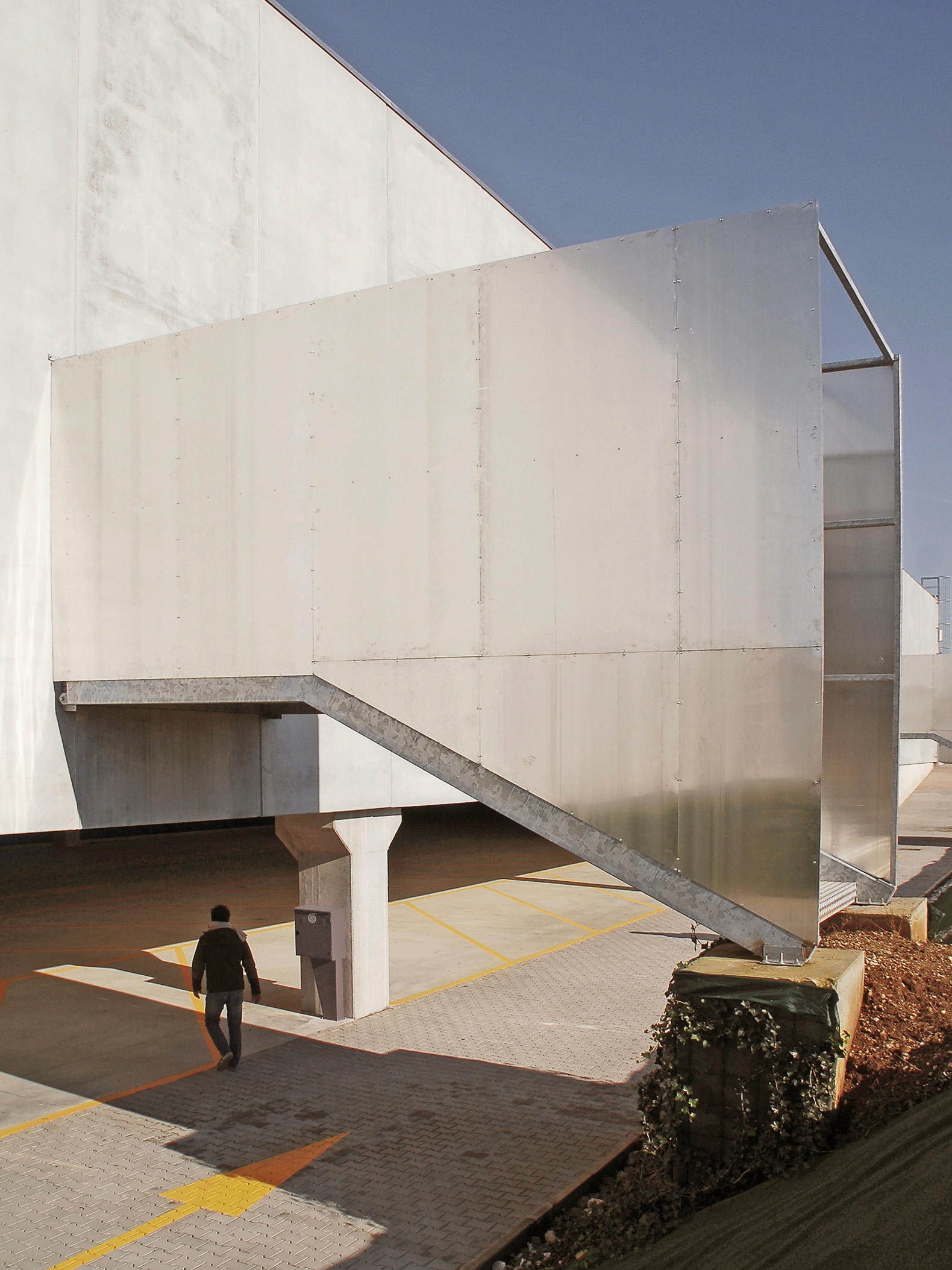
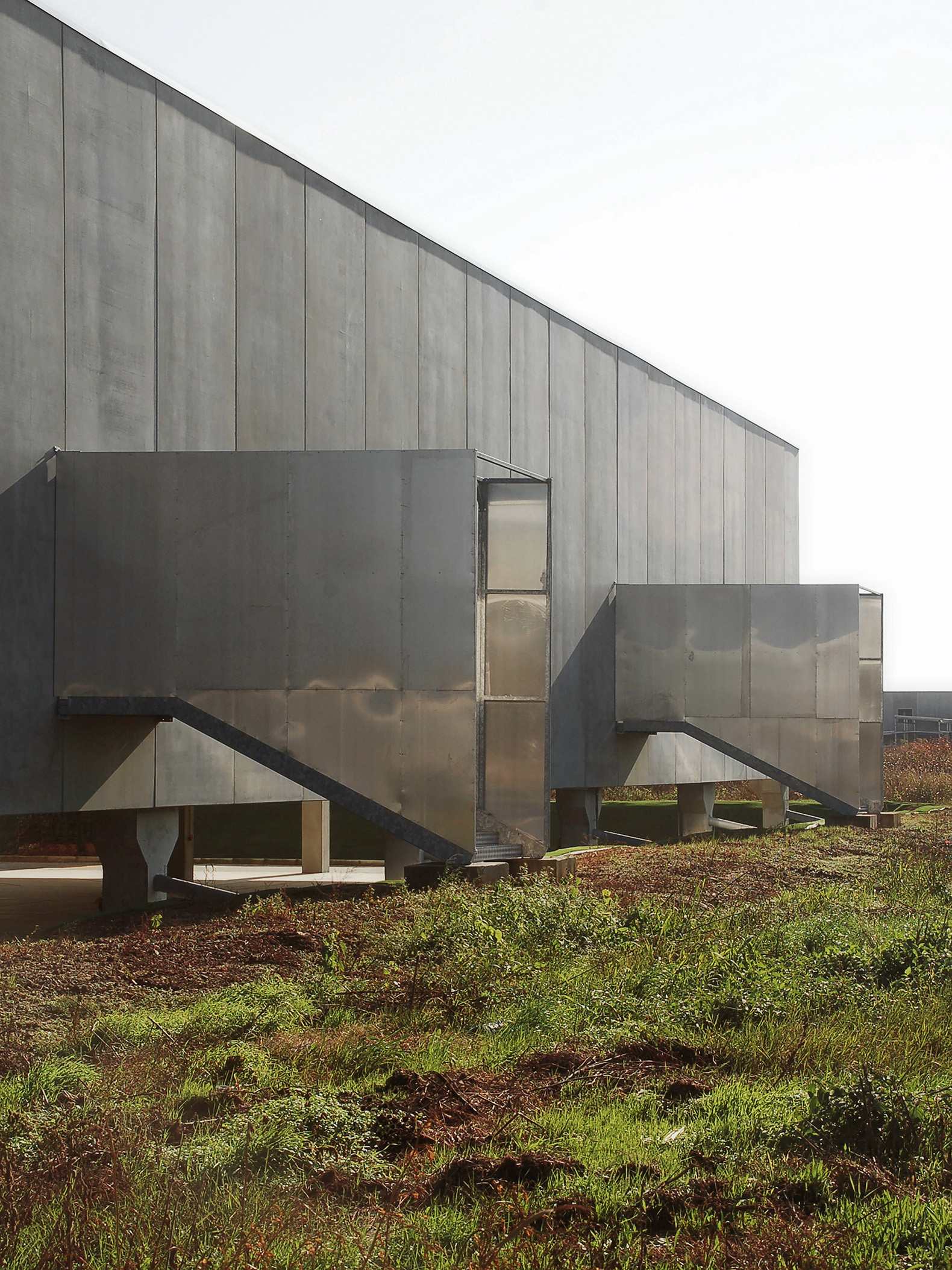
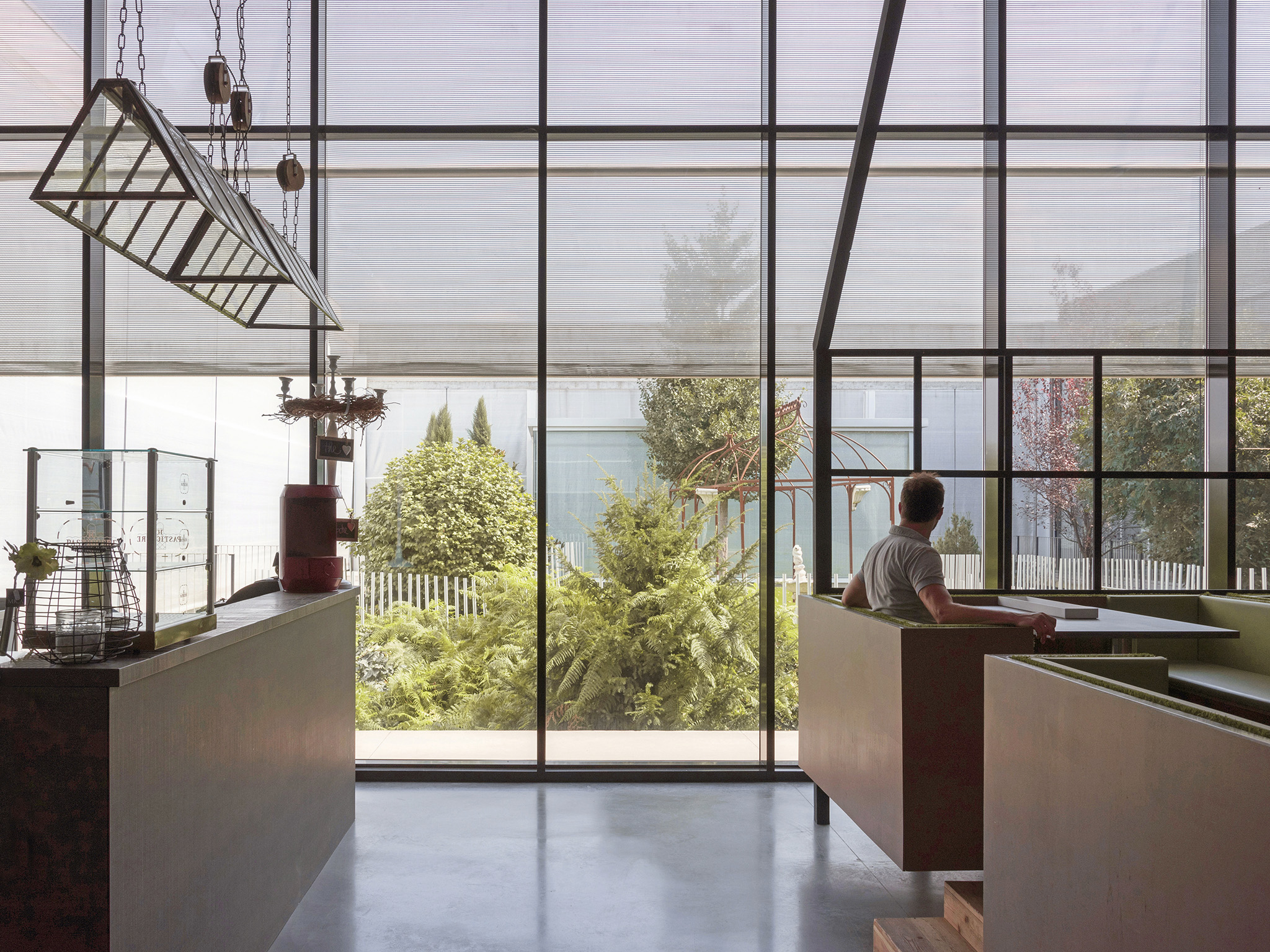
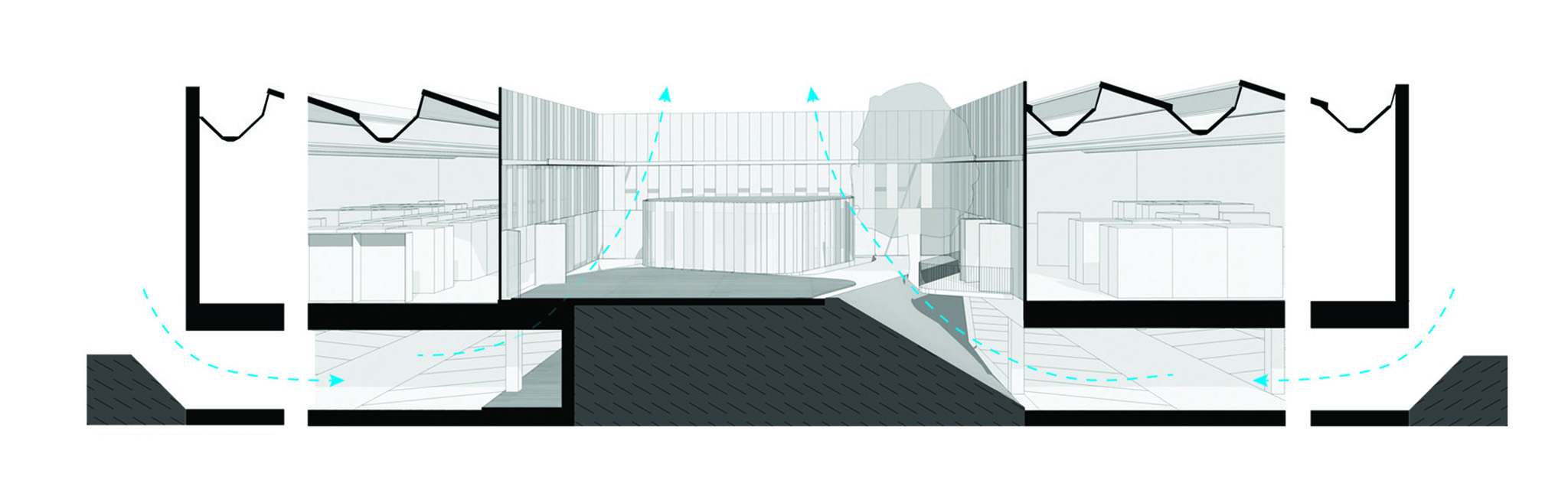
Like a Roman domus opening inward, "Green Village" emerges as an introspective architecture, permeable only through the metal gates that define the security entrances and exits. At the heart of the design, and in close contact with the sky, the interior courtyard ensures adequate natural ventilation and diffused lighting throughout the complex.
"Green Village" by Studio Bressan. Photograph by Emanuele Bressan.

"Green Village" by Studio Bressan. Photograph by Emanuele Bressan.

Project description by Studio Bressan

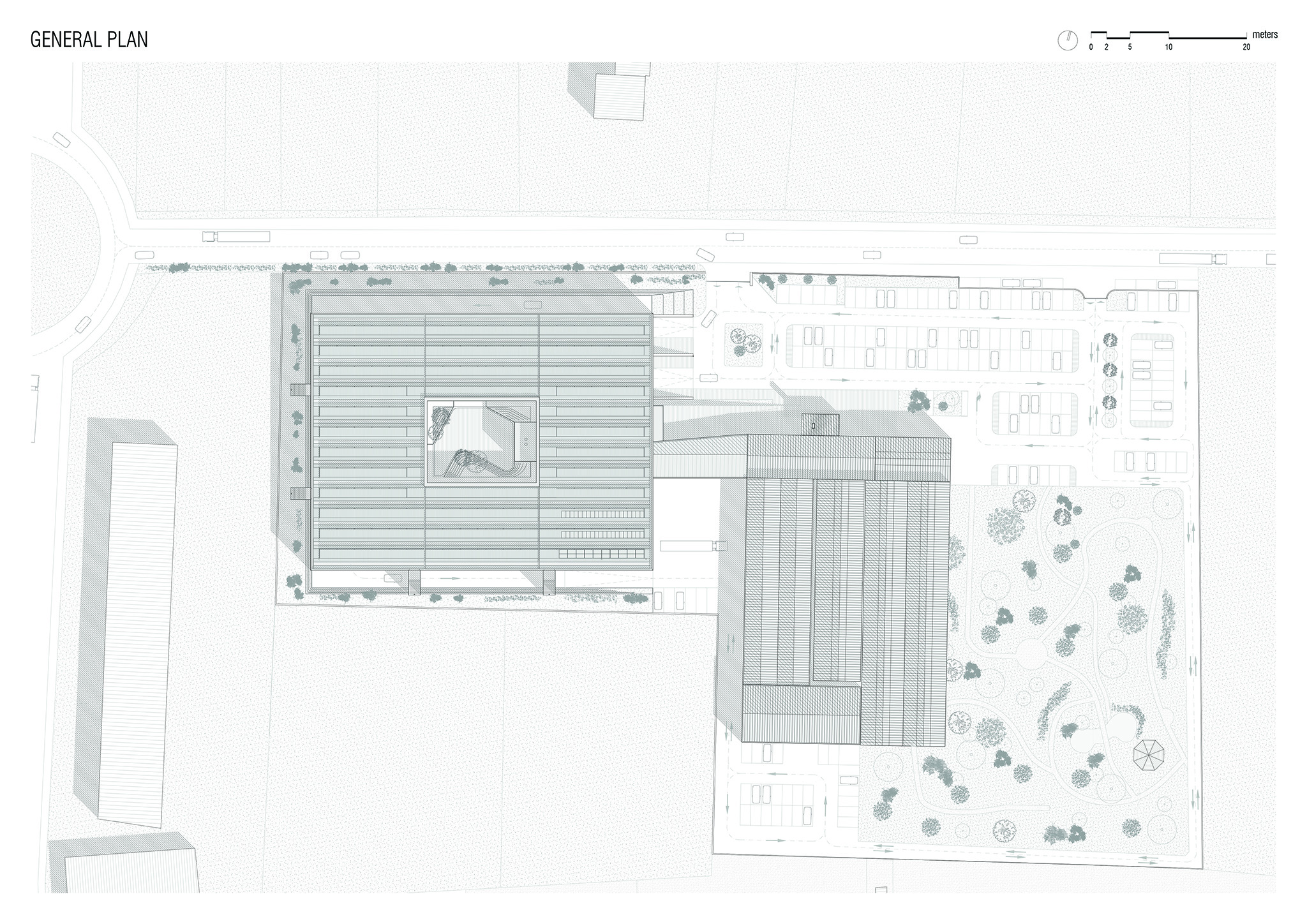
The Green Village is a garden center located in the eastern industrial area next to the municipality of Cittadella, in the province of Padova. It has a strategic position in relation to the main roads and it attracts a catchment area that extends between the provinces of Vicenza, Padua and Treviso. The complex is made of three parts: the commercial building, the greenhouses and the park.

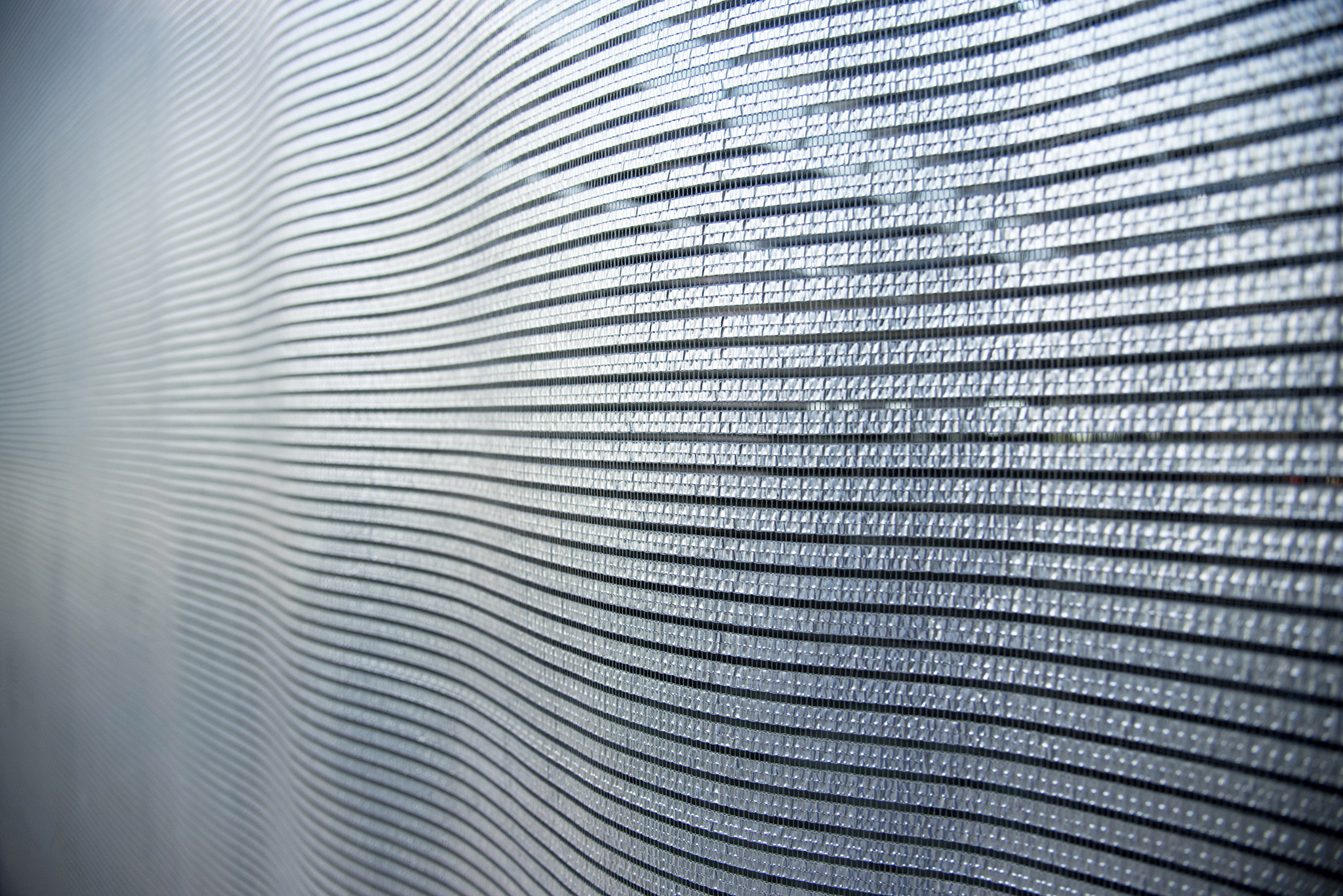
The construction is organized across two volumes. One is expressed as a solid, inward-facing geometry surrounding a centralized green courtyard. The second volume is designed to reflect the traditional greenhouse typology, clad entirely in glass with a rhythmic, exposed structure.

"Green Village" by Studio Bressan. Photograph by Emanuele Bressan.

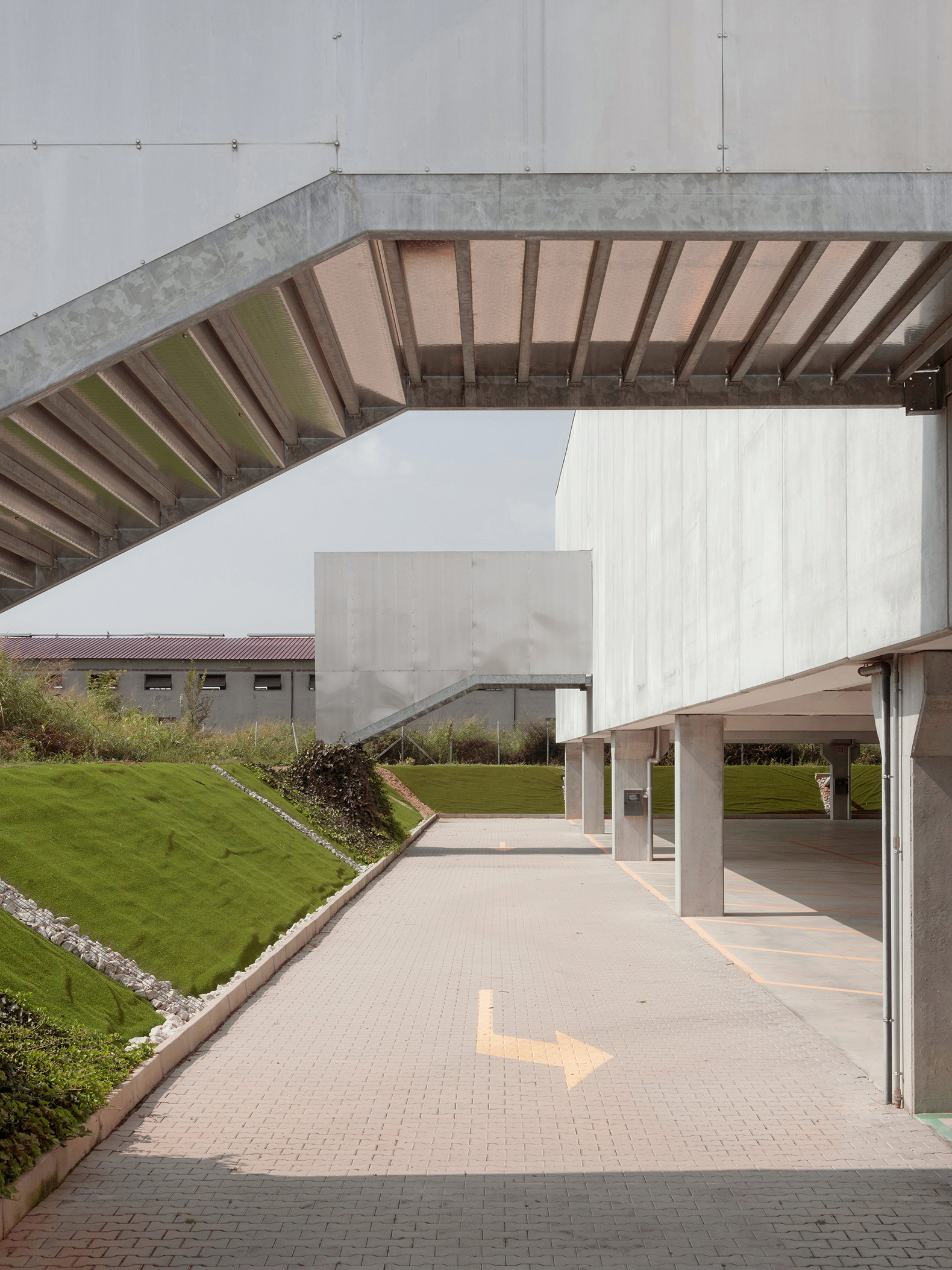
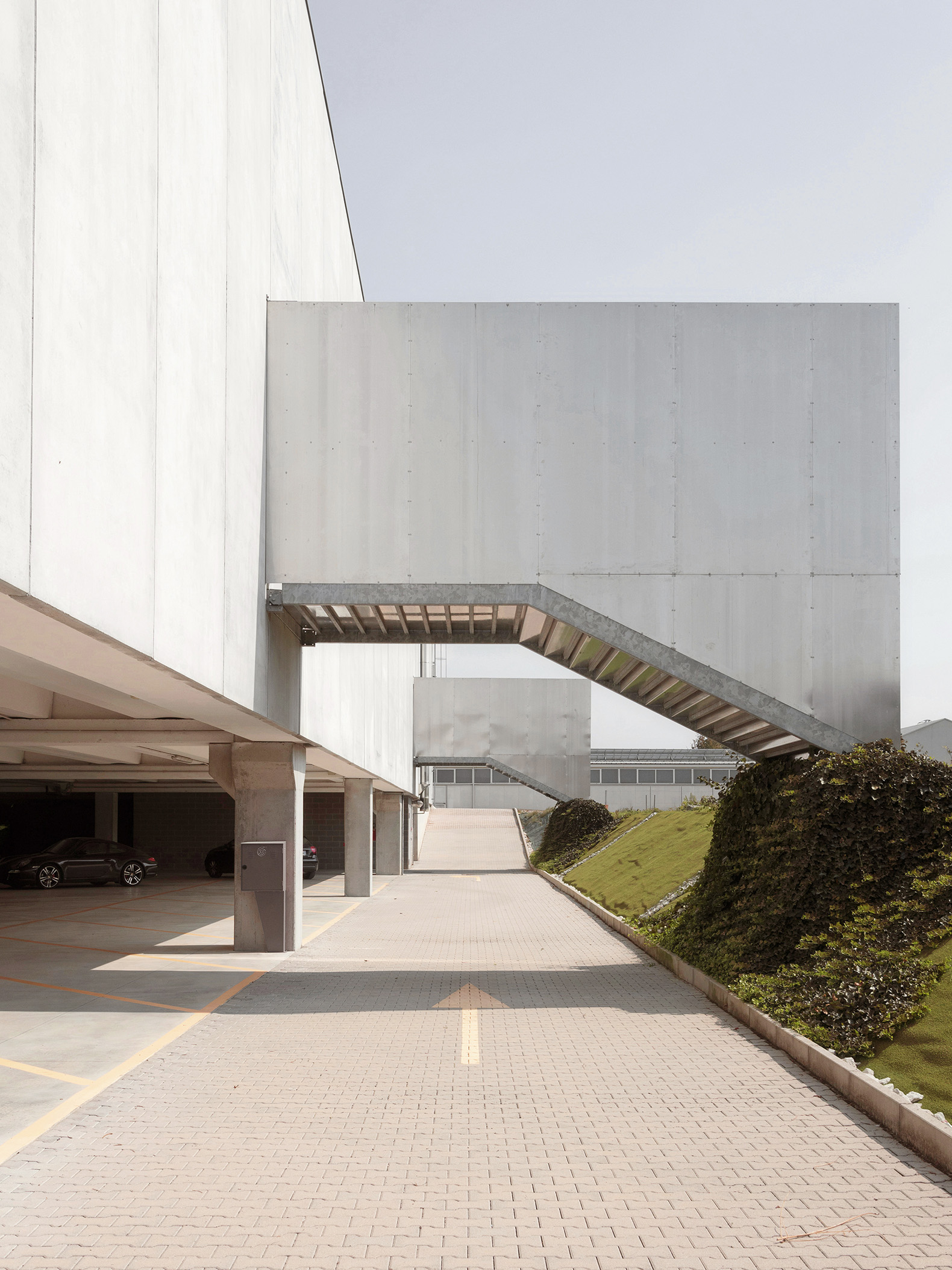
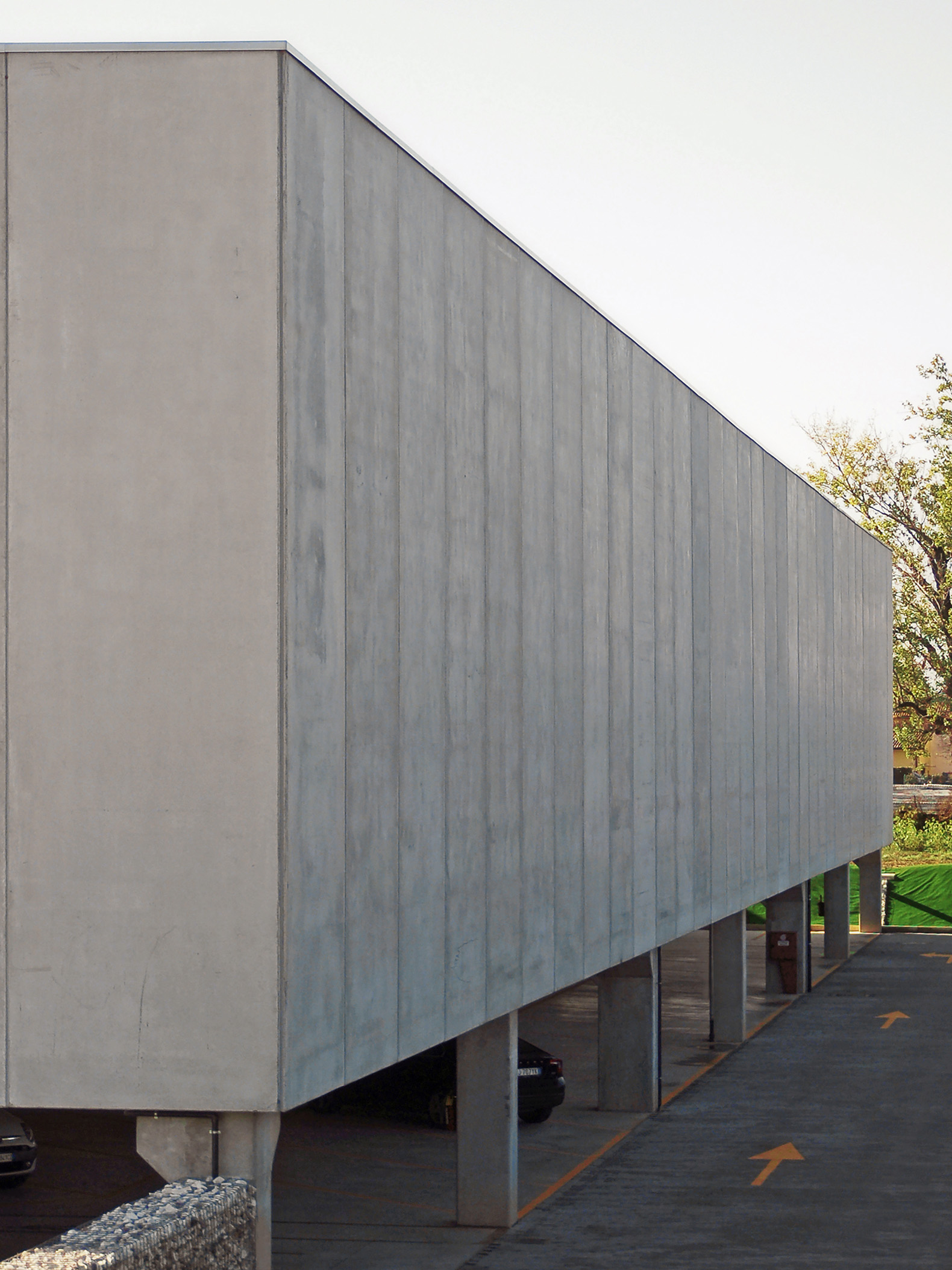
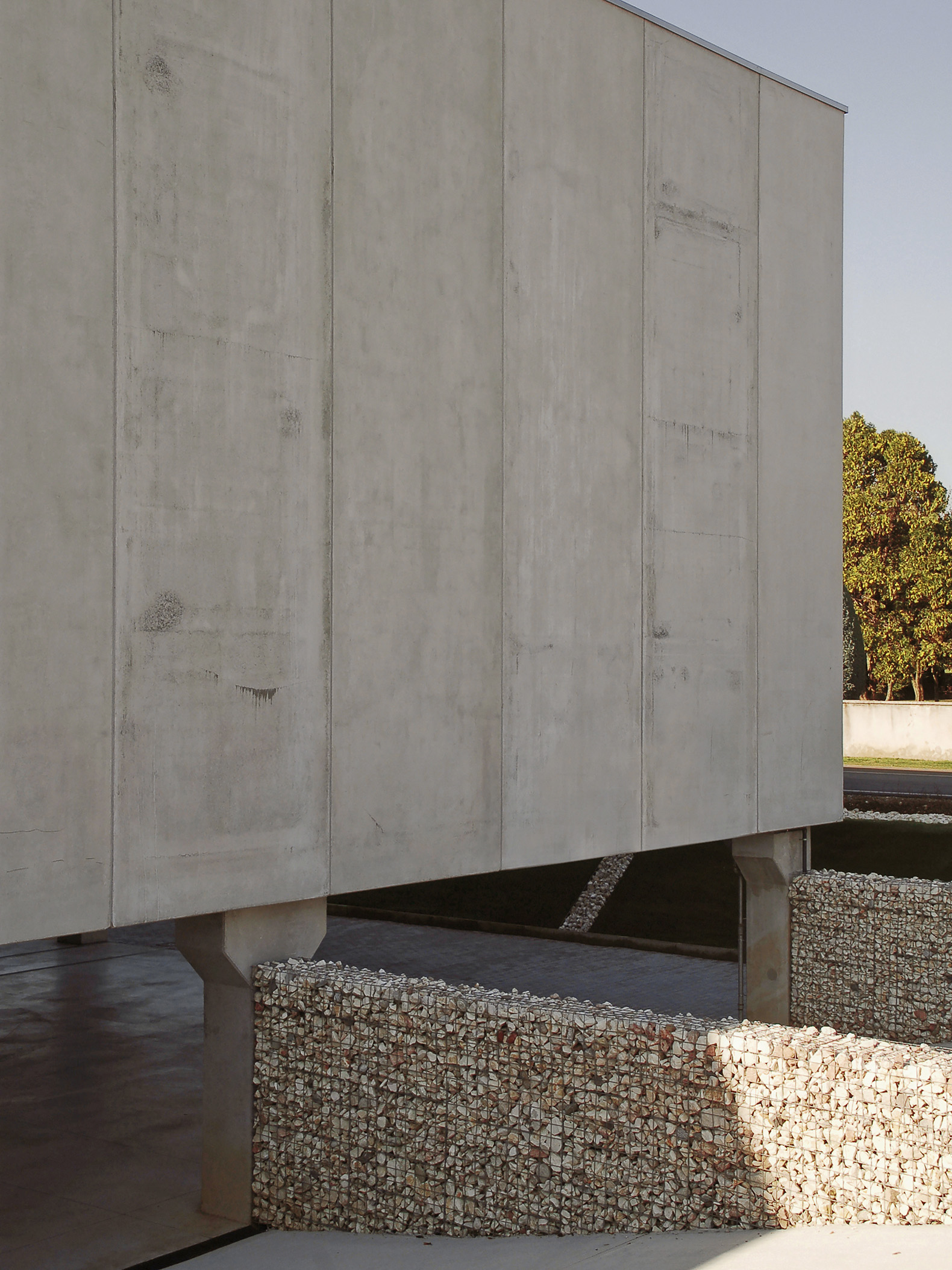
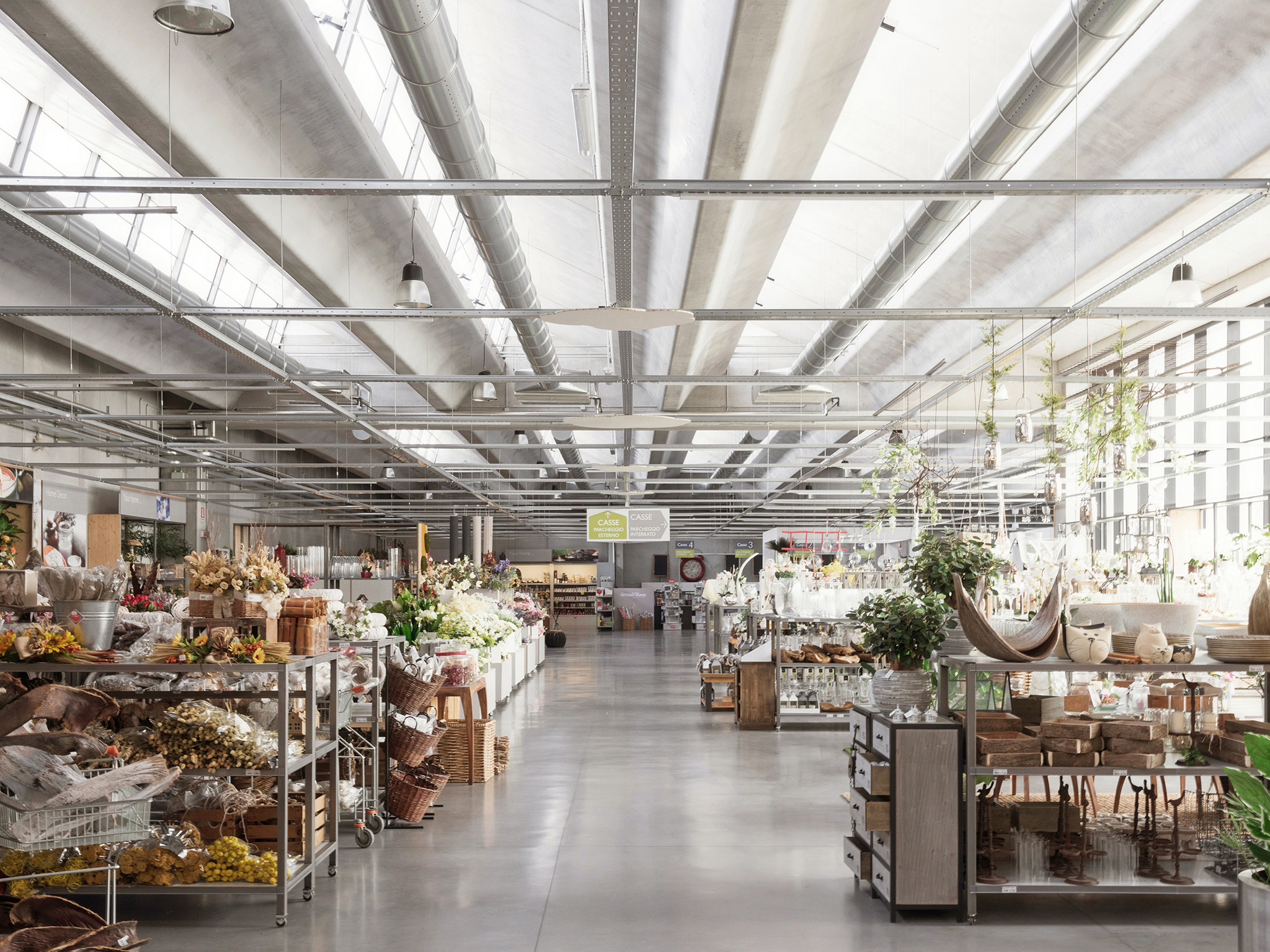
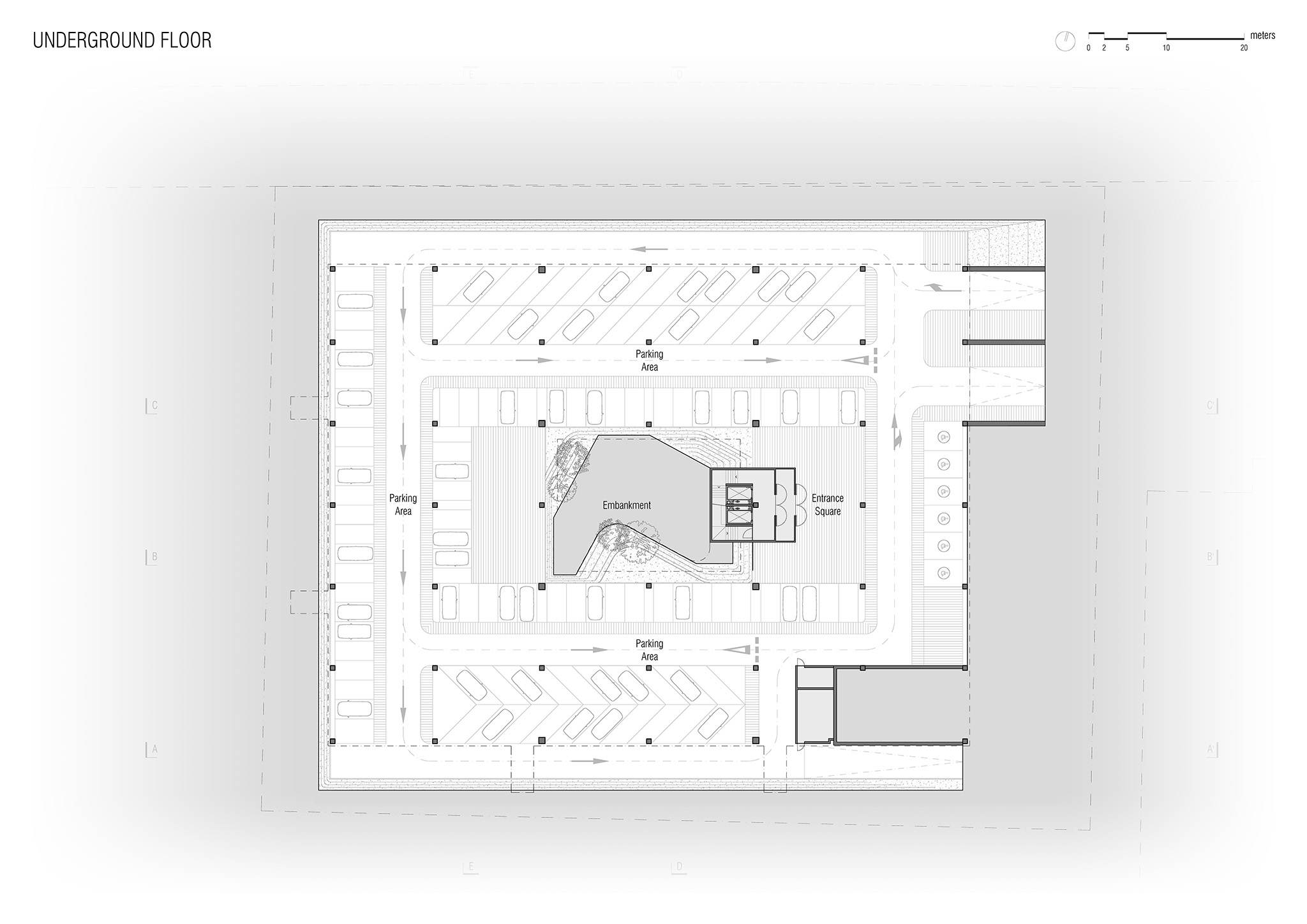
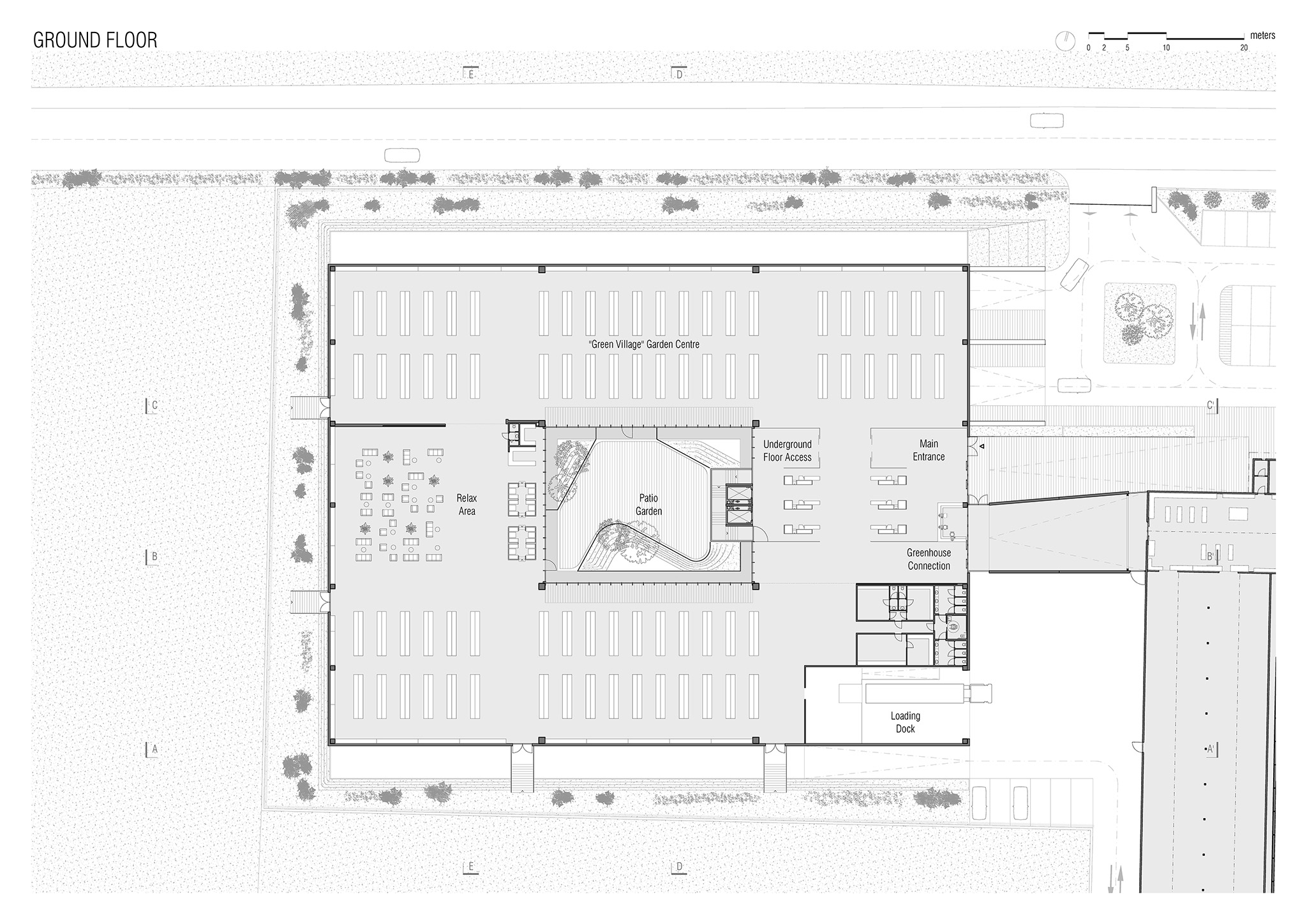
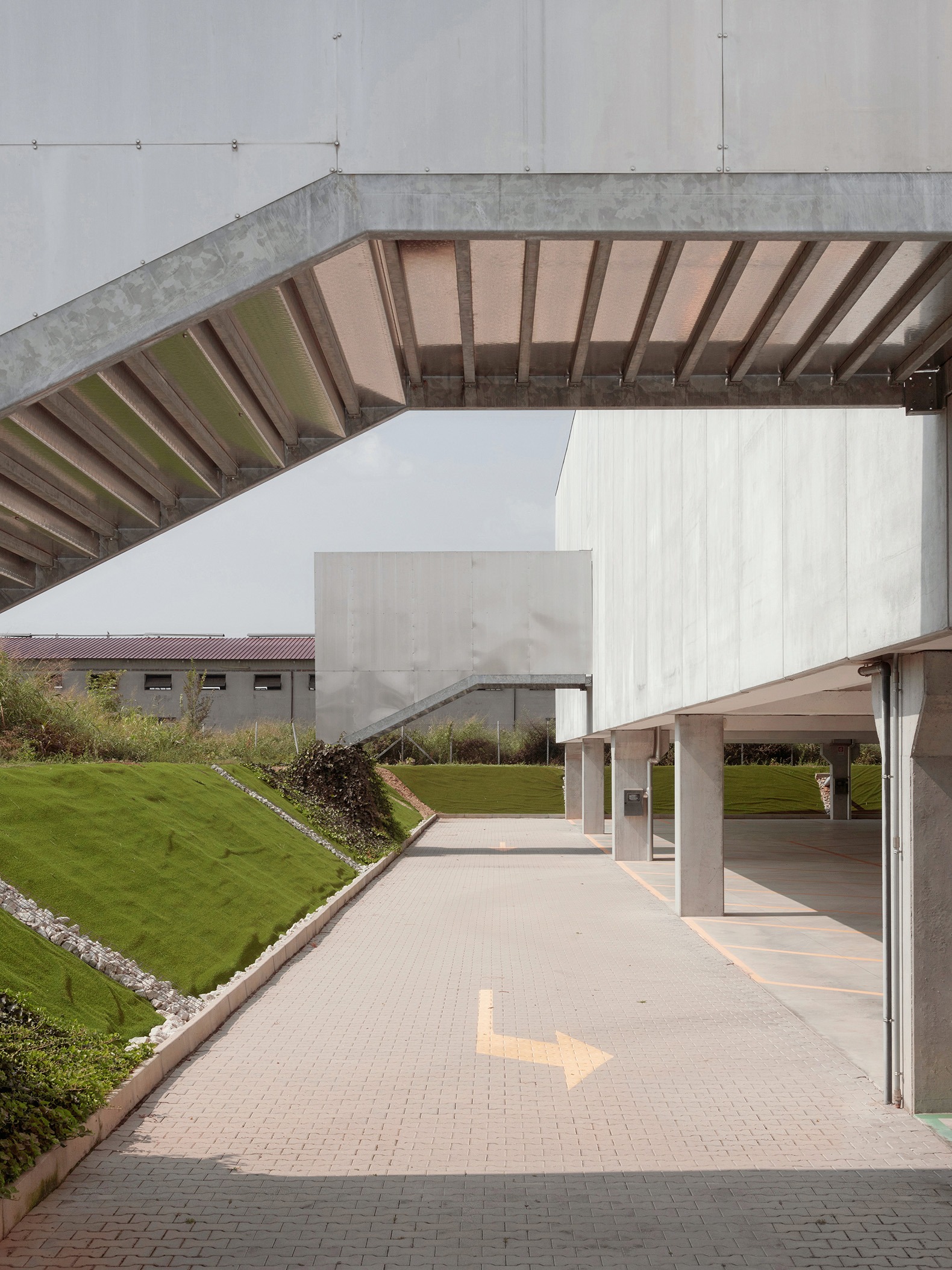
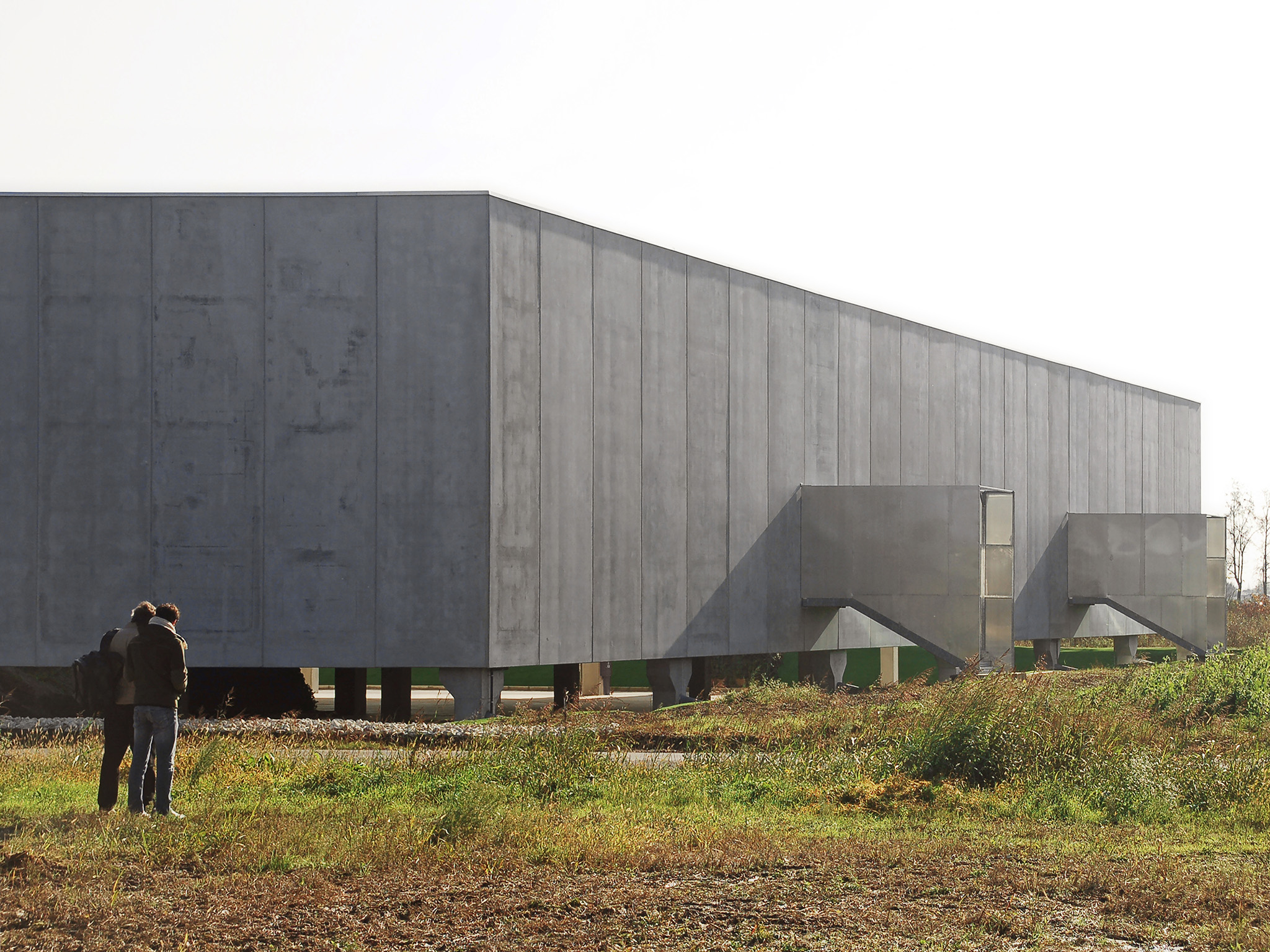
The mall has been conceived as a clear and essential parallelepiped made up of two levels connected by a central green courtyard that opens toward the sky. At the basement there are a parking area and the access to the upper level, while at the ground floor there are a large sales area and a relax zone. The façade pulls back on any opening in favour of a blind geometric solid, whose only exception is given by the security entrances and exits. They are shaped as portals with their own volume thanks to a metal cladding superstructure.

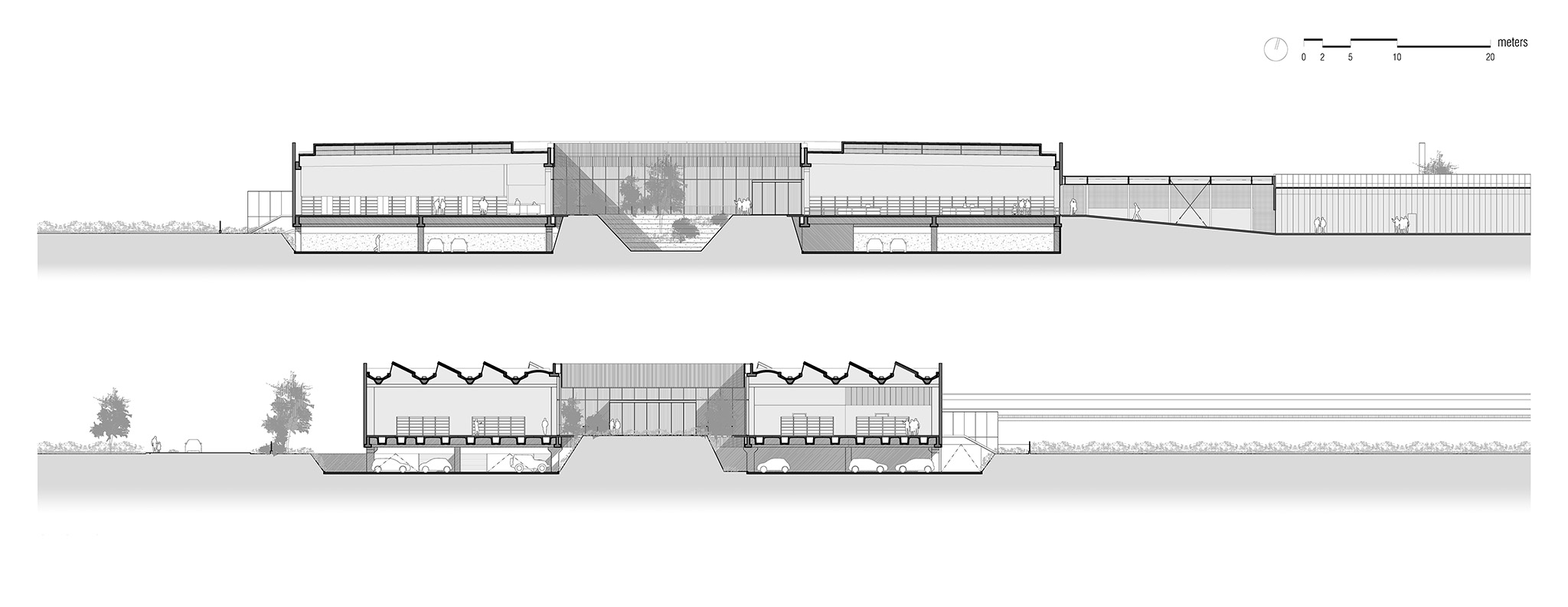
The correct supply of air and light is given by the combination of two factors: the shed roof and the central patio. The former guarantees diffused and uniform light throughout the day and the latter, thanks to its full height, is the true core of the construction. The building emerges as an introspective architecture, open inward like a Roman domus.
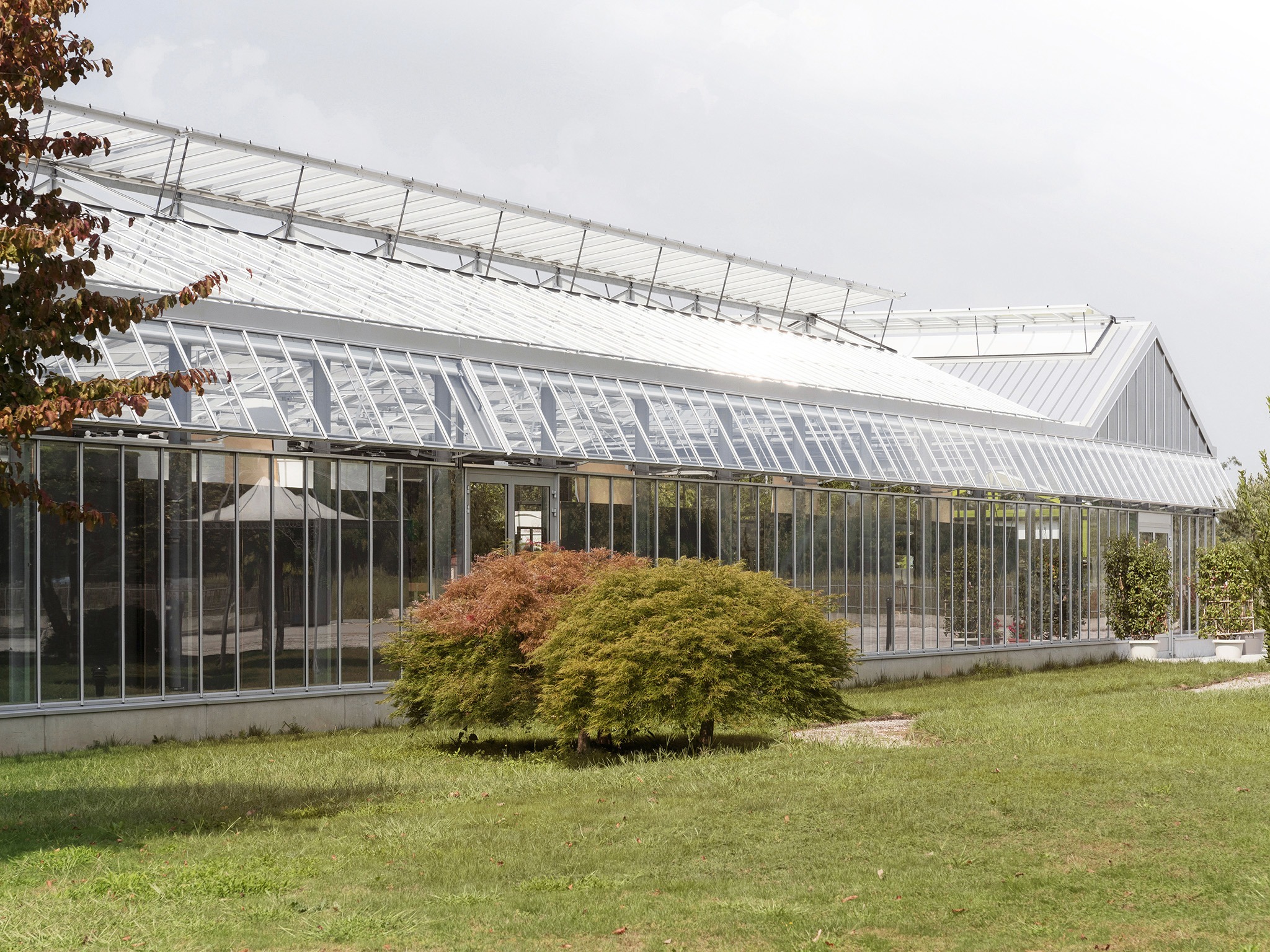
"Green Village" by Studio Bressan. Photograph by Emanuele Bressan.

The patio is the heart of the whole organism and the spot around which the plan generates: it is not a subtraction from the volume, but the space from which the building develops in a centrifugal way. The four corners present the only pillars in the building, except for the perimetral ones. They are necessary to the structure while leaving the rest of the plan free to be used as an uninterrupted space.

The indoor façades are to contain an open-air room framed and visible from every point of the building. Also, due to the nature of the activity, the patio works as a showroom indefinitely repeating, where it is possible to display a selection of products, while recreating an internal garden in contrast to the surrounding industry.
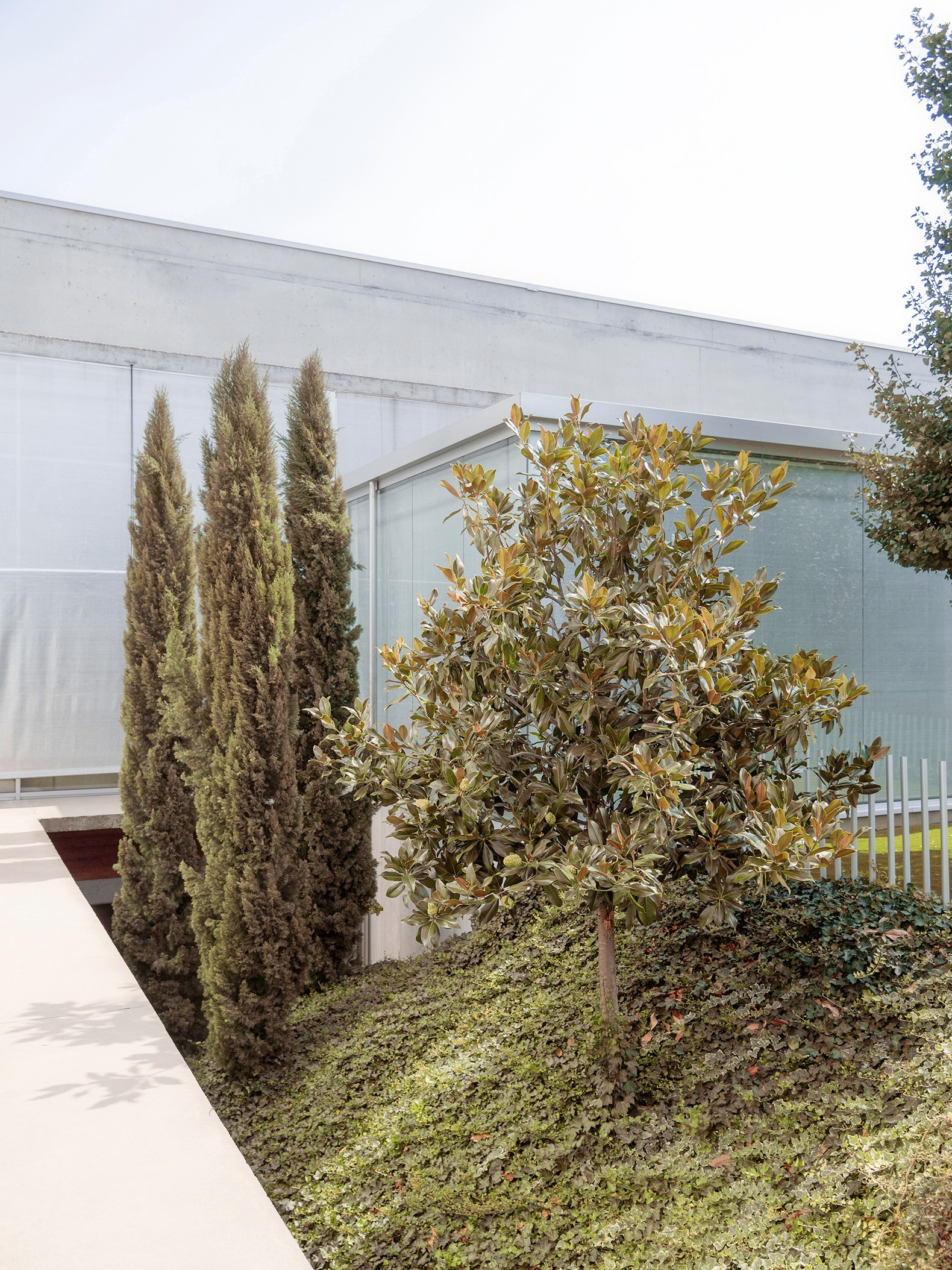
"Green Village" by Studio Bressan. Photograph by Emanuele Bressan.

This is a simple, economical and fast construction architecture made through the use of prefabricated elements which led to the creation of generous and flexible retail spaces, also in response to the need of the client for any rearrangements or changes to the shop layout.

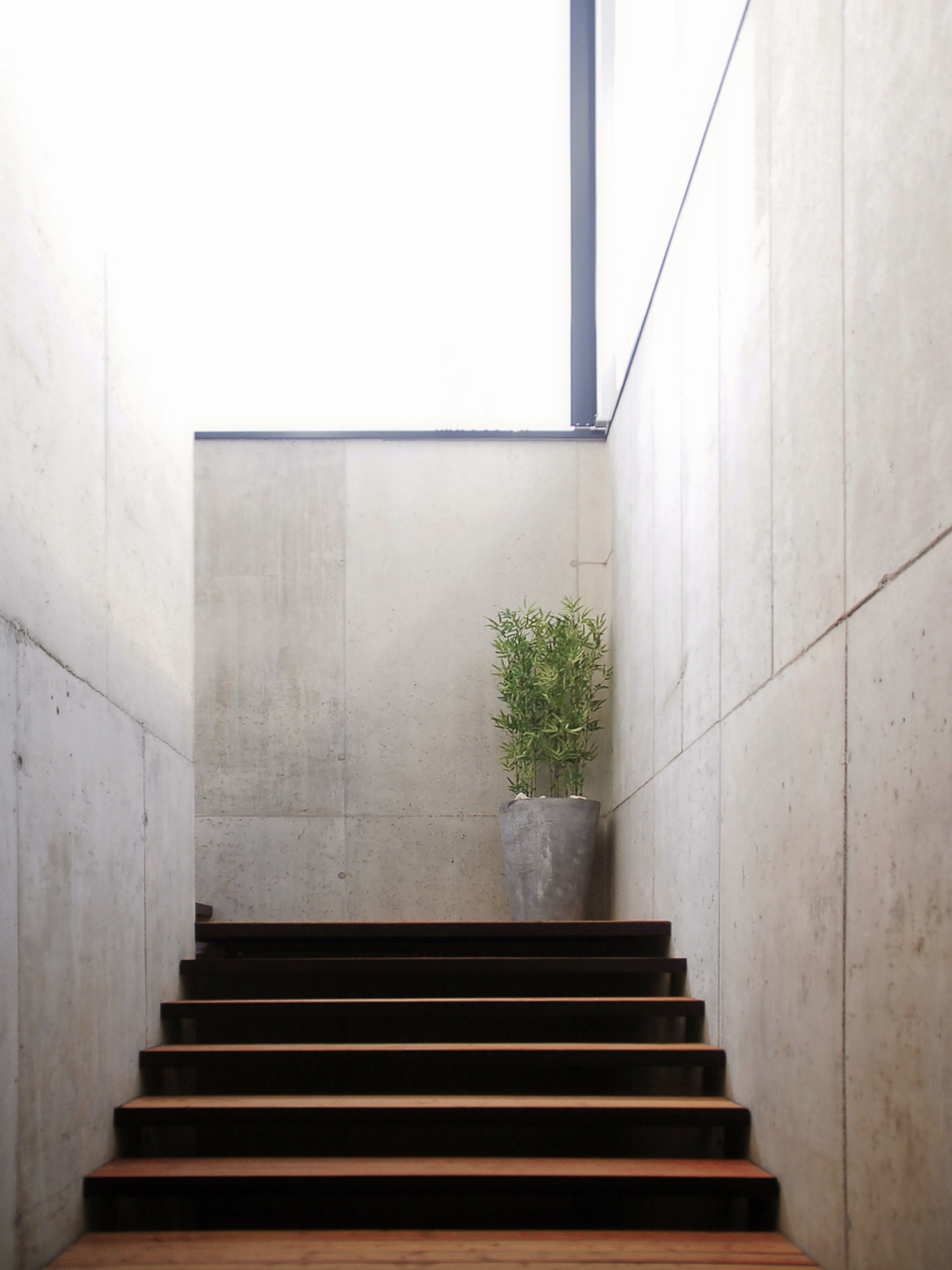
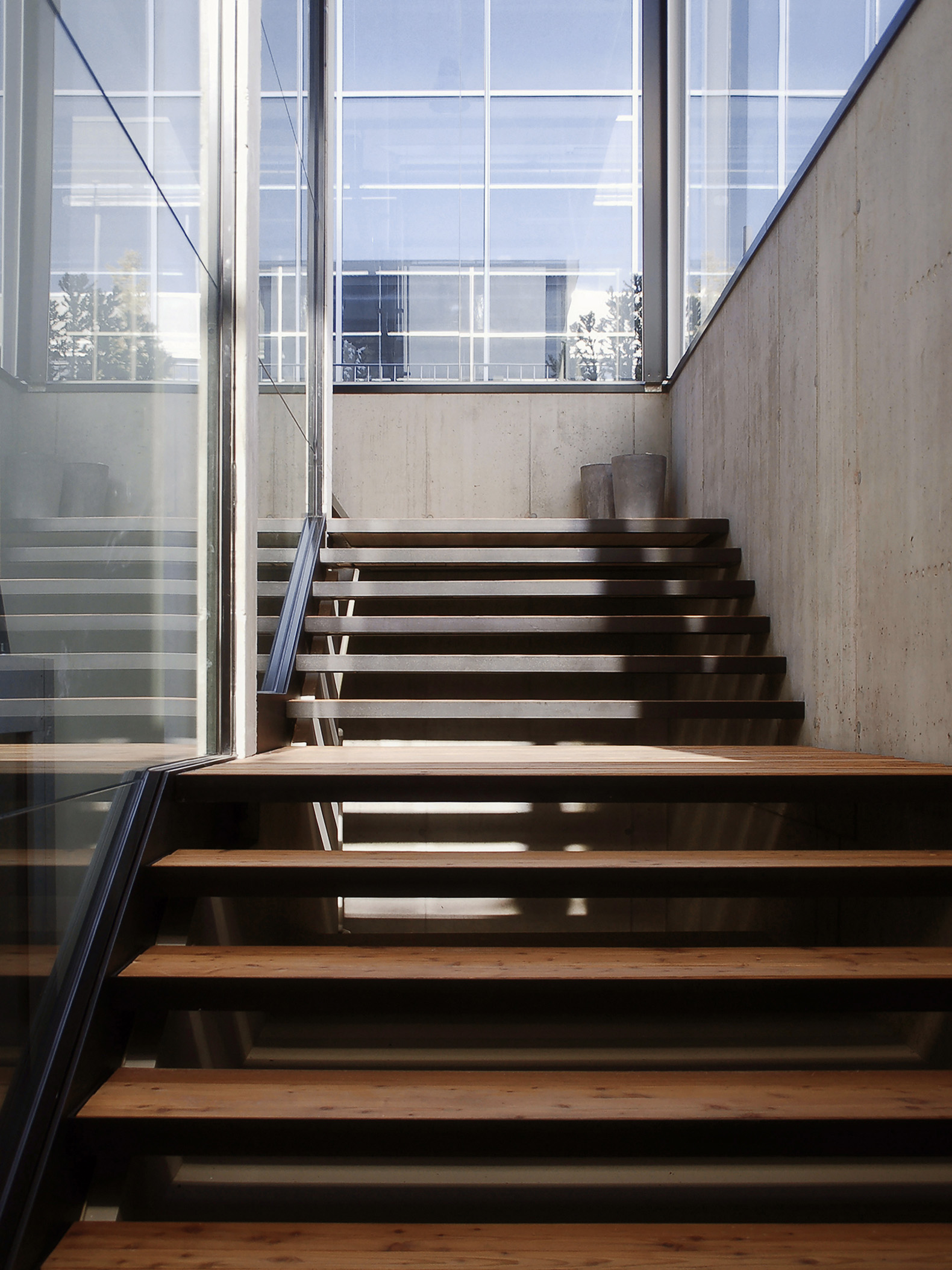
After a historical study of the underlying aquifer, the parking area has been set to a safe quota below the ground level, thus obtaining a large covered area that benefits from natural light and ventilation. At the same time, the 1.5 m height gap that is created between the road and the access lightens the visual impact of the large solid, making it float, although only prospectively.
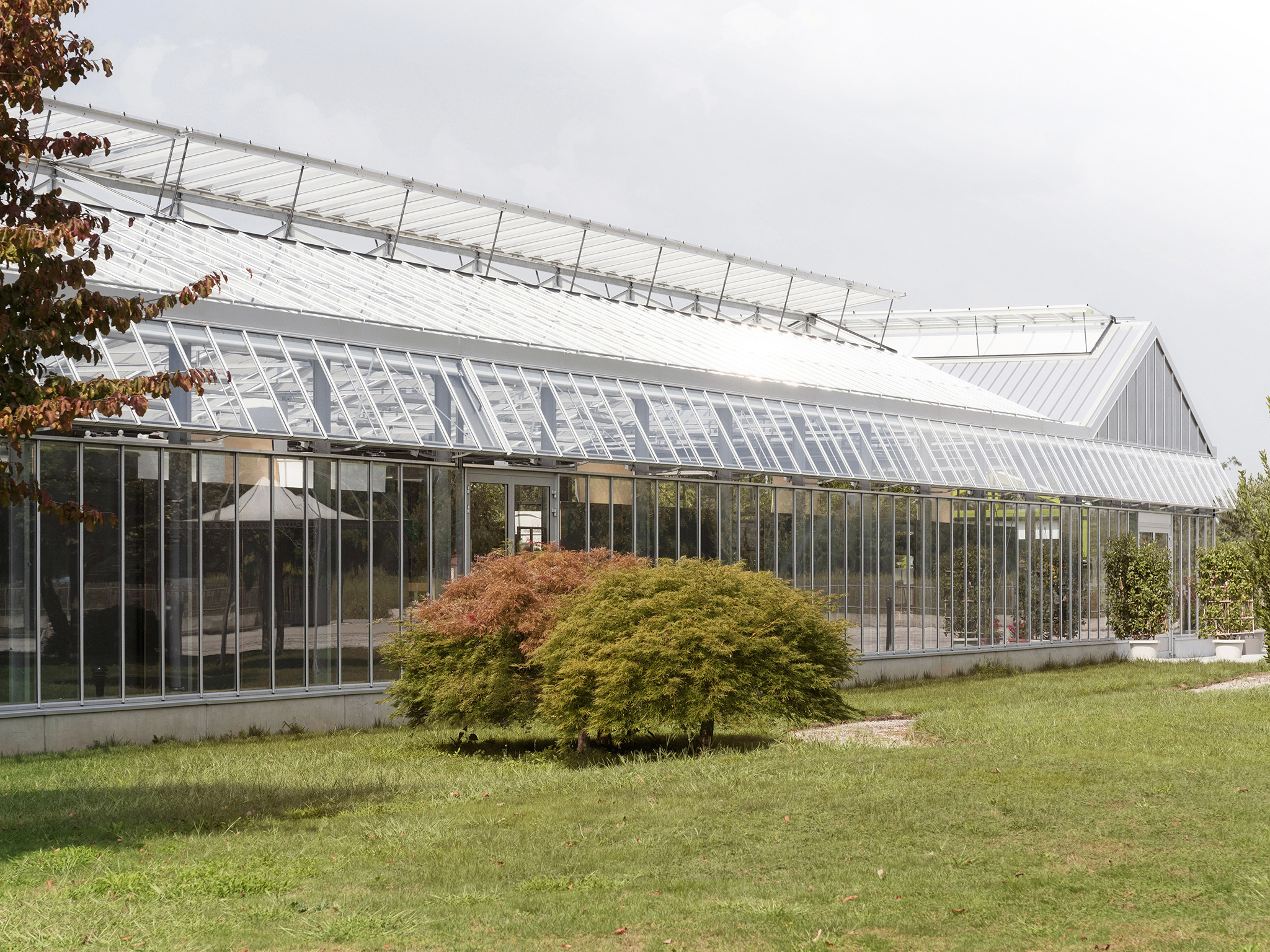
More information

Label
Architects
Text

Studio Bressan. Lead Architects.- Andrea Bressan, Emanuele Bressan.

+ + copy Created with Sketch.
- + copy Created with Sketch.
Label
Project team
Text

Andrea Bressan, Anna Agostini.

+ + copy Created with Sketch.
- + copy Created with Sketch.
Label
Collaborators
Text

Text.- Marika Scaduto.

+ + copy Created with Sketch.
- + copy Created with Sketch.
Label
Client
Text

Pavin S.r.l.

+ + copy Created with Sketch.
- + copy Created with Sketch.
Label
Area / Volume / Dimensions
Text

Surface.- 4.400 sqm.
Volume.- 44.000 m³.
Dimensions.- 80m x 60m x 10m.

+ + copy Created with Sketch.
- + copy Created with Sketch.
Label
Dates
Text

2011 / 2017.

+ + copy Created with Sketch.
- + copy Created with Sketch.
Label
Location
Text

Cittadella, Padova, Italy.

+ + copy Created with Sketch.
- + copy Created with Sketch.
Label
Manufacturers
Text

EdilRodighiero, Nico Velo S.p.a, Termoidraulica Sbrissa S.r.l.

+ + copy Created with Sketch.
- + copy Created with Sketch.
Label
Photography
+ + copy Created with Sketch.
- + copy Created with Sketch.

Studio Bressan is an interdisciplinary architecture practice based in Montebelluna, in the province of Treviso, active for over forty years and currently led by architects Andrea and Emanuele Bressan. The studio operates in Italy and abroad, working across scales from urban planning to architecture, from restoration to interior design, following the entire design process from concept to completion. Its approach combines careful attention to context, environmental and economic sustainability, construction quality, and attention to detail. Alongside its core professional activity, which over the years has led the studio to independently manage large-scale projects, Studio Bressan actively participates in the contemporary cultural debate and has received national and international awards and publications. Studio Bressan was founded in 1980 by Gianni Bressan.

Andrea Bressan was born in 1980 in Asolo (Treviso). After completing a scientific high school diploma, he graduated with honors in Architecture from IUAV University of Venice in 2005, with a thesis supervised by architect and urban planner Giorgio Lombardi. After graduating, he collaborated with Professor Lombardi and architect Trevisan, and in 2006 began a professional and cultural path through the founding of Frammenti, a network of young professionals focused on participatory urban design. This activity led to recognition in several design competitions, particularly on themes related to urban housing. In parallel, he works as a consultant for the Municipality of Asolo on urban planning, urban regeneration, the livability of the historic center, and urban furniture.

In 2013, he took over the management of the studio founded by his father, Gianni Bressan, which became Studio Bressan. He has been a member of the Municipal Building Commission of Asolo since 2020 and of the Landscape Commission since 2024. He has been registered with the Order of Architects, Planners, Landscape Architects and Conservationists of the Province of Treviso since 2006.

Emanuele Bressan, born in 1985 in Asolo (Treviso), completed his scientific high school education with top marks and graduated with honors in Architectural Sciences from IUAV University of Venice in 2007. In 2008, he was awarded a scholarship through the Swiss European Mobility Programme and attended the Academy of Architecture in Mendrisio, where he studied with internationally renowned architects. In 2010, he obtained his Master’s degree with honors from IUAV, developing a project between Mendrisio and Venice.

From 2010 to 2017, he worked at Studio Mario Botta Architetto as a project architect and project coordinator, contributing to complex projects in the residential, cultural, tertiary, and infrastructural sectors across Europe and Asia. Between 2017 and 2019, he collaborated with Studio Stocker-Lee in Switzerland, working on international projects. Alongside this experience, he has long been active within Studio Bressan and has participated in competitions and collaborations throughout Europe. Among his most significant works is the Palaluxottica multipurpose center in Agordo, which has received international awards and publications. He is registered with the Order of Architects of Treviso and has been a member of the Technical and Scientific Committee of the Fondazione Architettura Treviso since 2023.

Read more
Published on: January 21, 2026
Cite:
metalocus, ANTONIO GRAS, AGUSTINA BERTA
"Solidity and introspection. "Green Village" by Studio Bressan" METALOCUS. Accessed
<http://www.metalocus.es/en/news/solidity-and-introspection-green-village-studio-bressan> ISSN 1139-6415
Loading content ...
Loading content ...
Loading content ...
Loading content ...
Loading content ...
Loading content ...
Loading content ...
Loading content ...
Loading content ...
Loading content ...
Loading content ...
Loading content ...
Loading content ...
Loading content ...
Loading content ...
Loading content ...
Loading content ...
Loading content ...
Loading content ...
Loading content ...
Loading content ...
Loading content ...
Loading content ...
Loading content ...
Loading content ...
Loading content ...
Loading content ...
Loading content ...
Loading content ...
Loading content ...
Loading content ...
Loading content ...
Loading content ...
Loading content ...
Loading content ...
Loading content ...
Loading content ...
Loading content ...
Loading content ...
Loading content ...
Loading content ...
Loading content ...
Loading content ...
Loading content ...
Loading content ...
Loading content ...
Loading content ...
Loading content ...
Loading content ...
Loading content ...
Loading content ...
Loading content ...
Loading content ...
Loading content ...