

The project, proposed by architect Sou Fujimoto, combines traditional Japanese techniques with contemporary construction systems that enhance its seismic resistance. The Kiyomizudera Temple inspires the modular, detachable wooden structure in Kyoto, utilising "nuki" (nailless) connections, reinventing tradition with an eye to the future. The typical Japanese connection, in which a horizontal beam is inserted into a vertical post, is commonly used in temples and shrines.
This wooden structure has become the largest in the world, according to the Guinness Book of World Records.

The Grand Ring by Sou Fujimoto. Photograph by William Mulvihill.
Constructed with traditional carpentry, the project combines 70 percent wood sourced in Japan, including cedar and cypress, along with 30 percent red pine, sourced from abroad.
Through a walkway rising nearly 12 meters, users can enjoy exceptional views of the grounds, the Seto Inland Sea, and Osaka. The circulation route, called "The Ring Skywalk," is accessed by escalators and elevators.
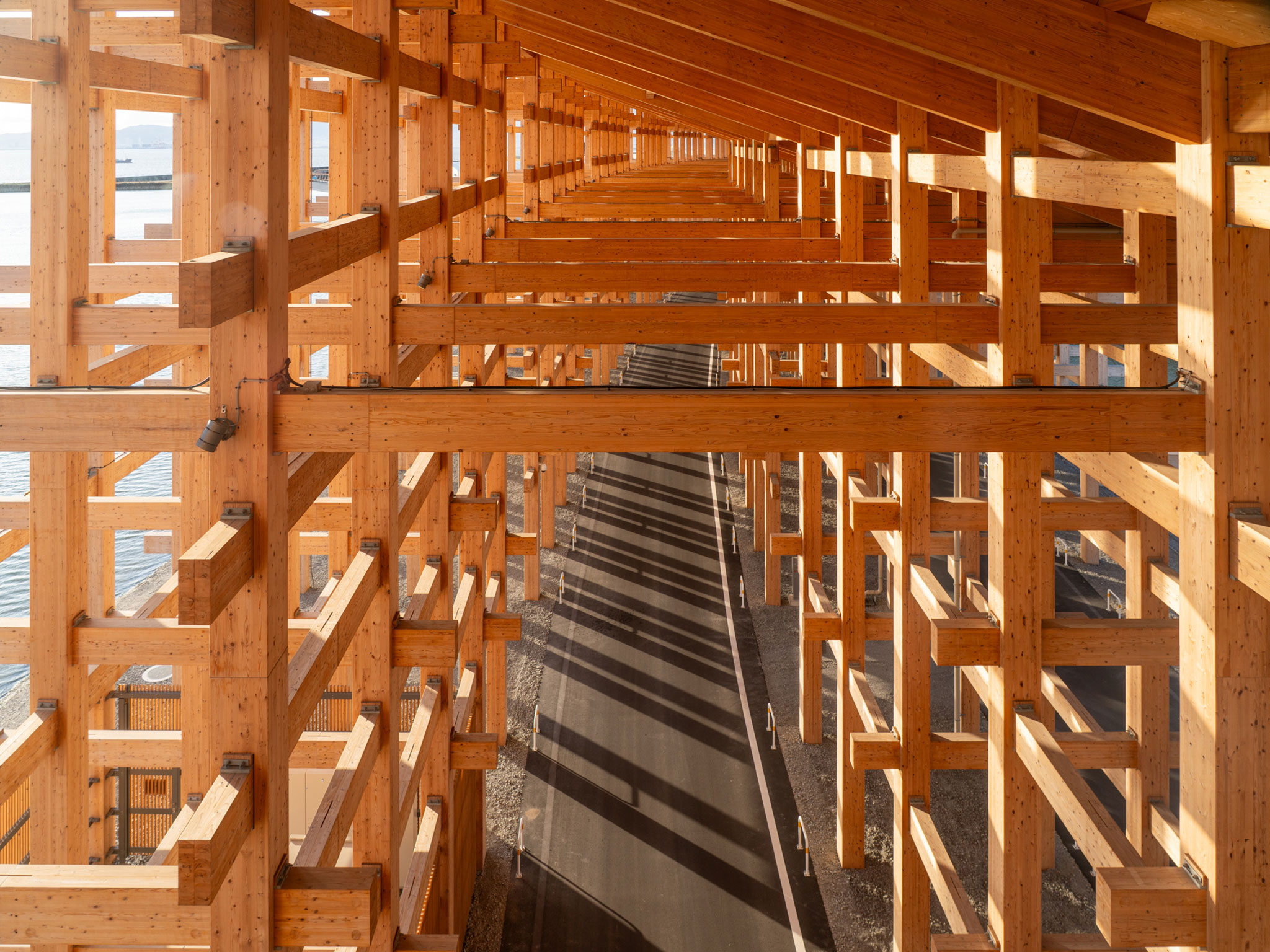
The Grand Ring by Sou Fujimoto. Photograph by William Mulvihill.
Enabling fluid movement around the site and offering visitors a comfortable space protected from wind, rain, and sunlight, The Grand Ring symbolizes the concept of “Unity in Diversity” among the 150 participating countries of Expo 2025 Osaka.


