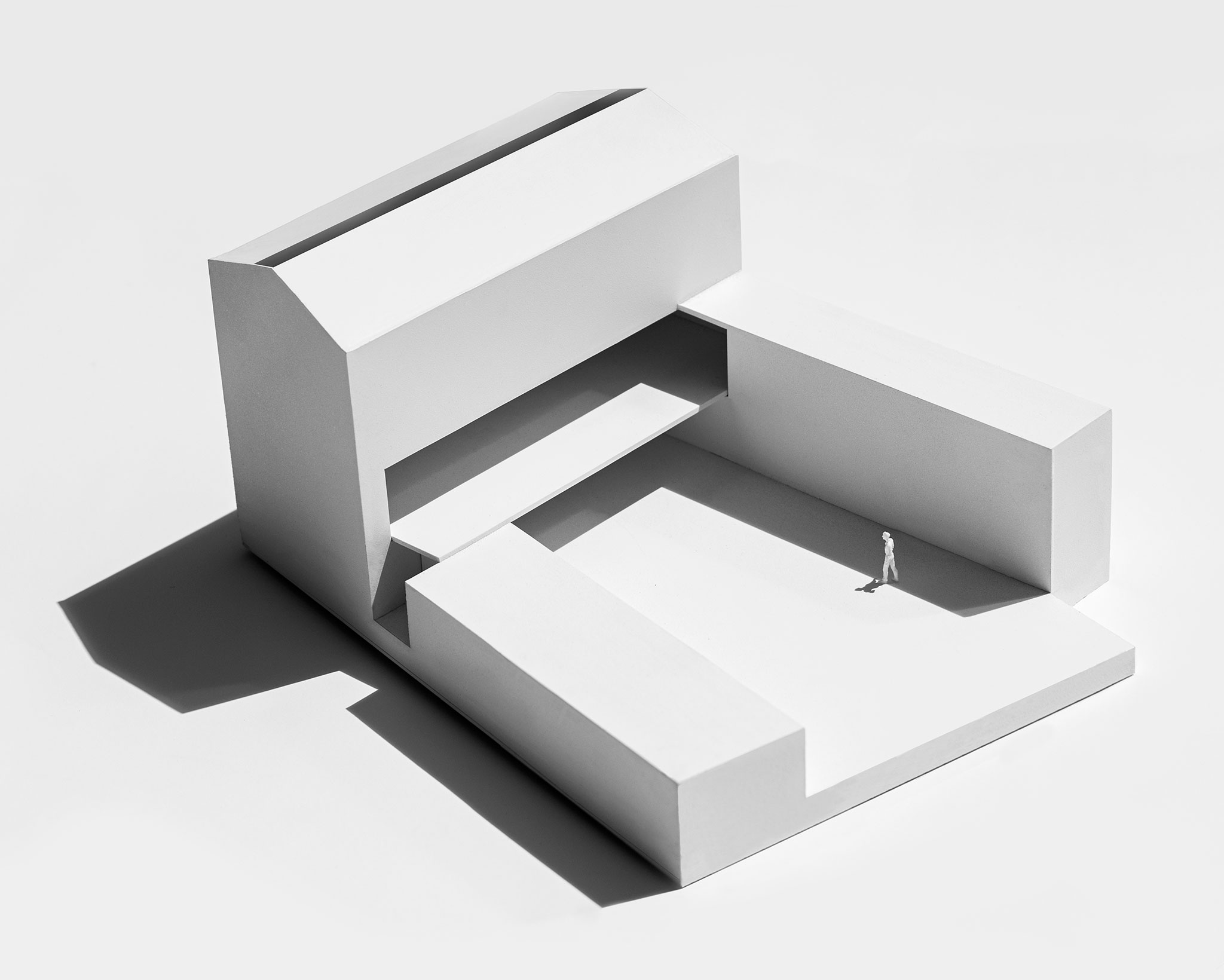
Architecture studio Fran Silvestre Arquitectos was commissioned to design a house, that needed to dialogue between its past, the façade protected by urban regulations, and the program and the needs of a contemporary home, located on the main street of a town near Valencia, a house which is part of a fragment of 20th-century history.

Taking the existing façade and the footprint of the old building as an argument, it was proposed to empty the interior space in ruins and recover it in an innovative way.

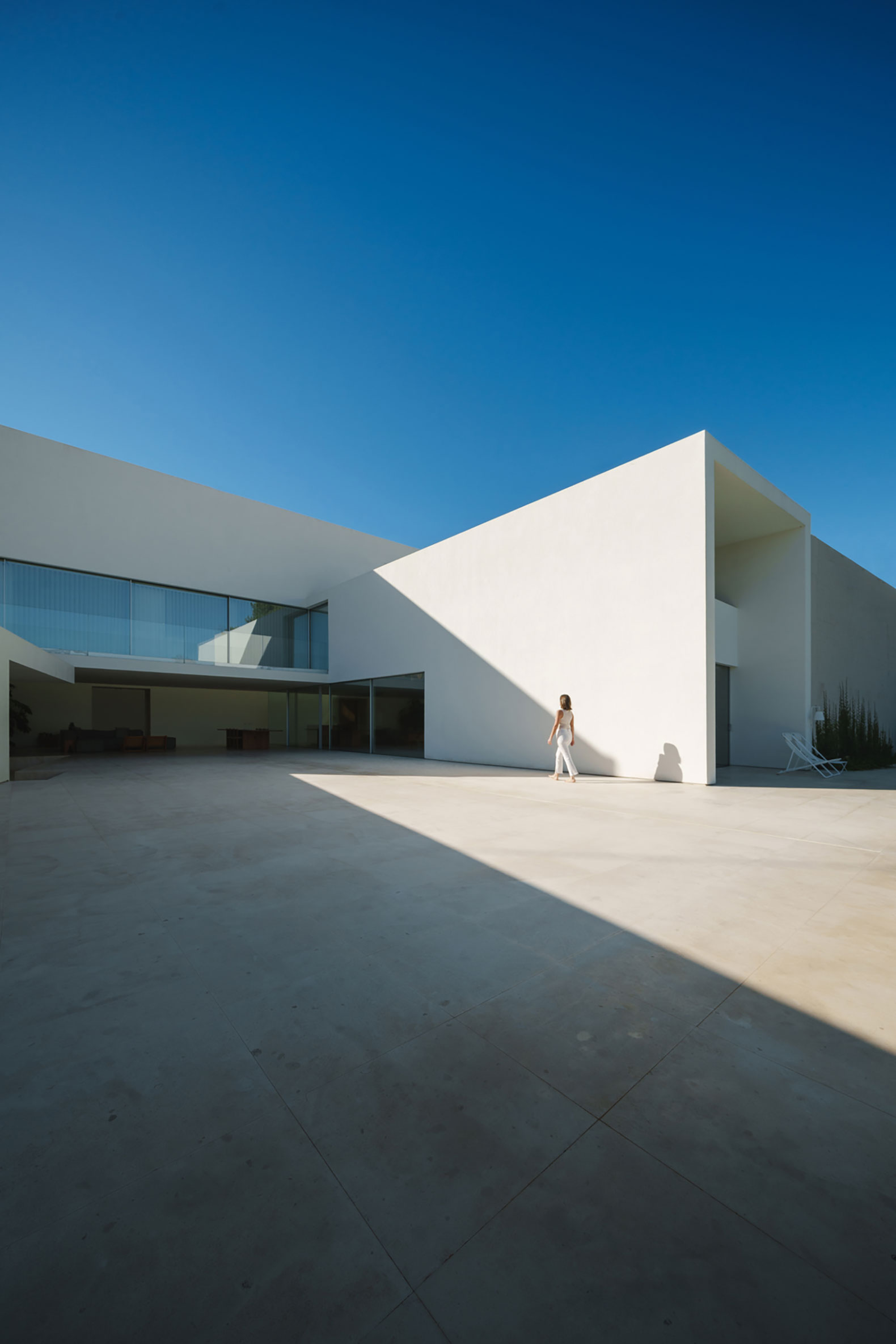
From the outside, the façade maintains its image (unifying the whole with an antelope grey treatment that integrates and unifies it) without altering the morphology and scale of the street, maintaining the scenery of the urban memory of the municipality.
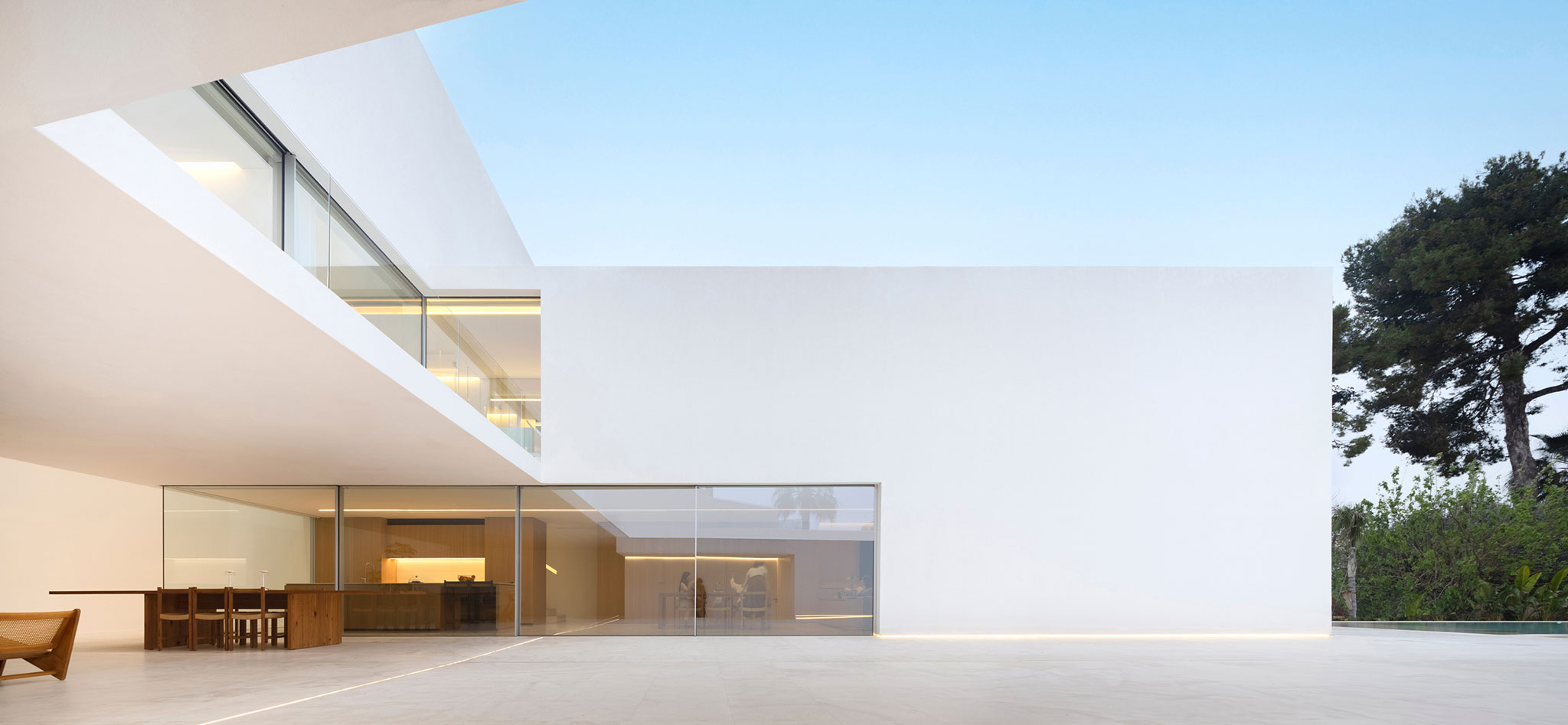
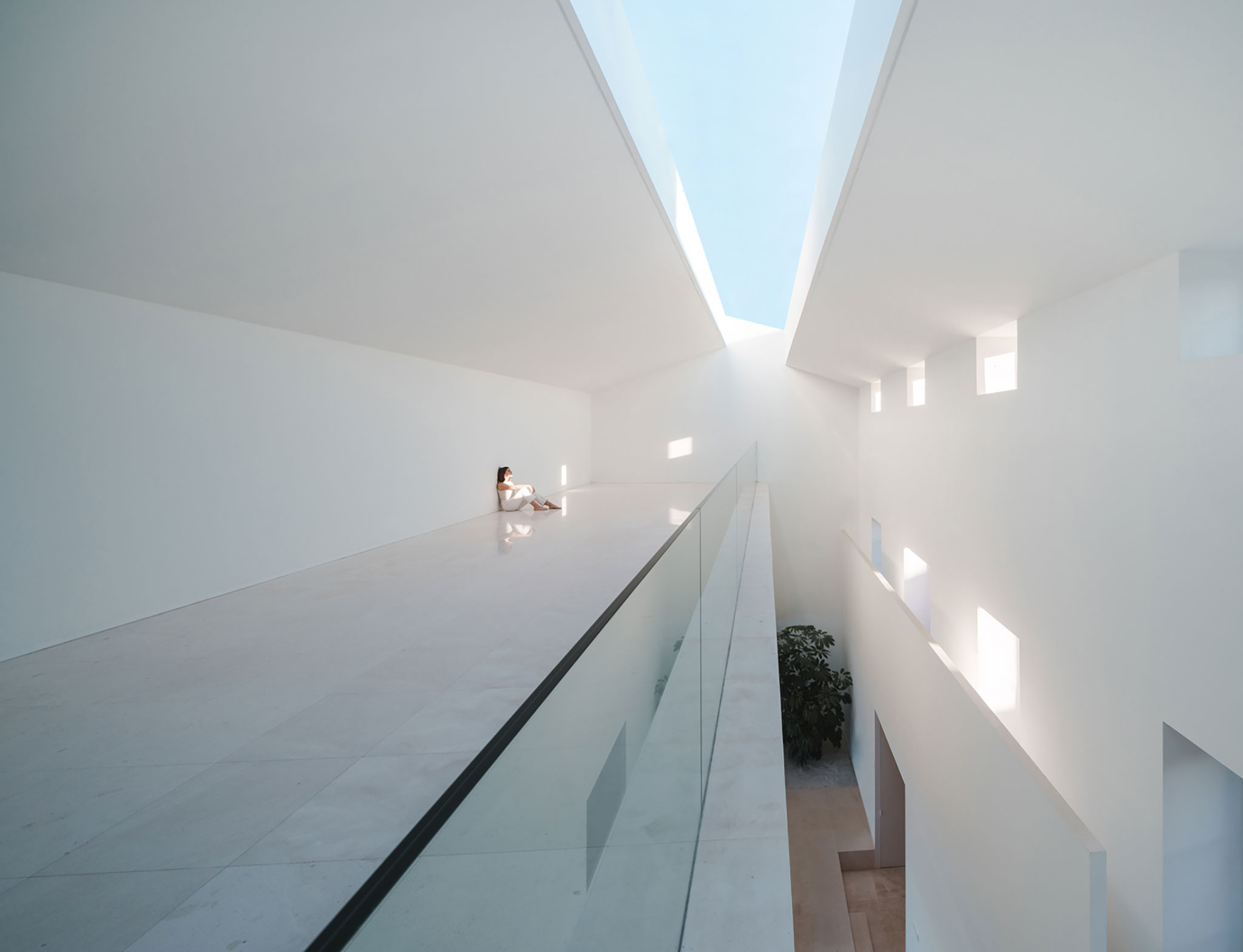
The design proposed by Fran Silvestre Arquitectos raises a radical dialogue between the past and the contemporary. After crossing the access threshold, the emptying becomes an exuberant game of spatiality, where the interior volume and its voids flow at a triple height like a magical reception stage, which connects directly with the exterior and where the closures are controlled to take advantage of the mild Mediterranean climate all year round.

The program is organized by placing the day area next to the dividing wall, in continuity with a long swimming pool, which seems to get lost in the landscape. On the opposite side is the guest room and between them a multipurpose room with a structural nod that separates them a few millimetres, creating a setting to enjoy the impressive landscape.

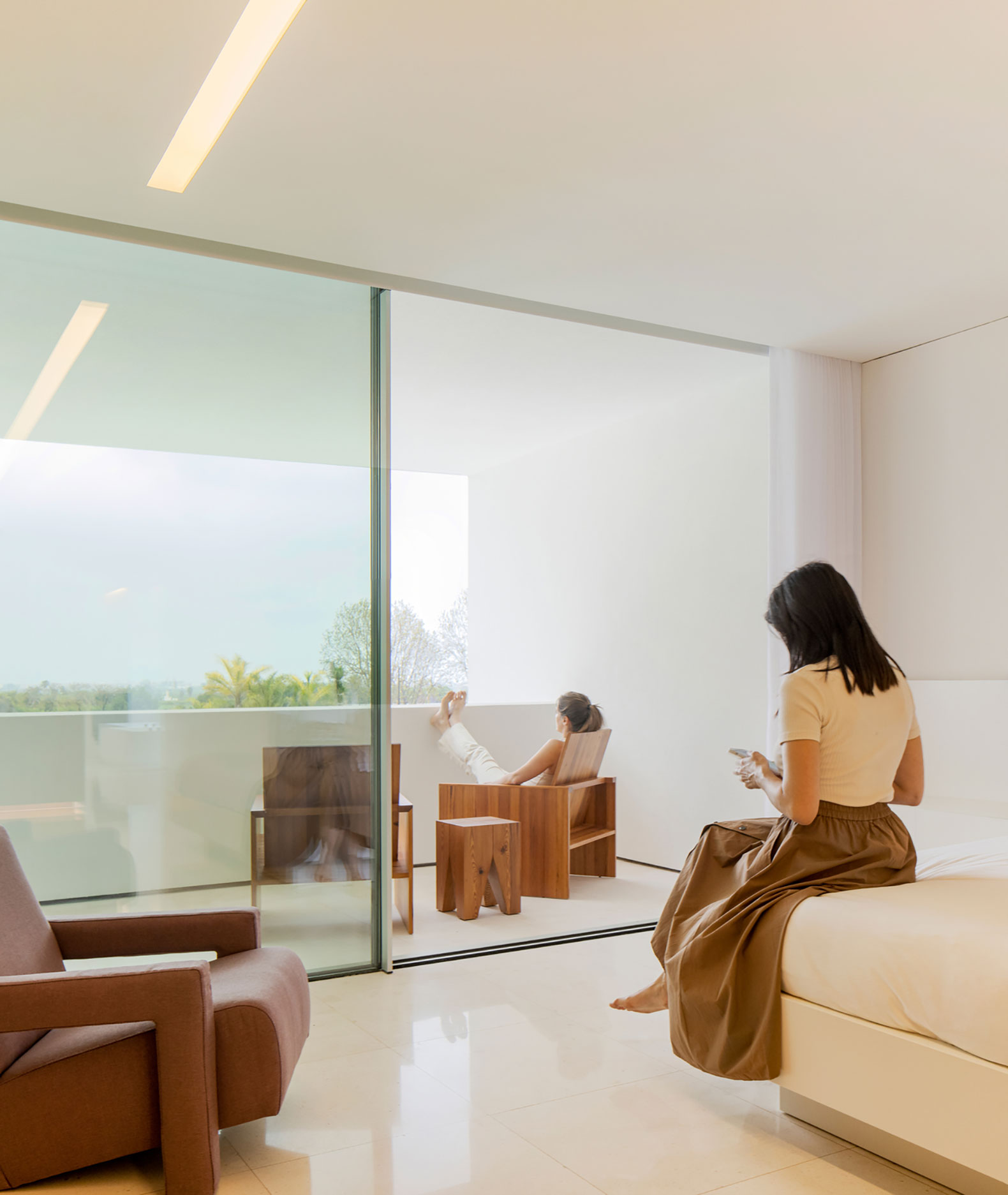
On the first floor, like a bridge, separated from the façade by the great void, are the bedrooms.

The wood from the old beams in the house was reused to build the furniture in the house.
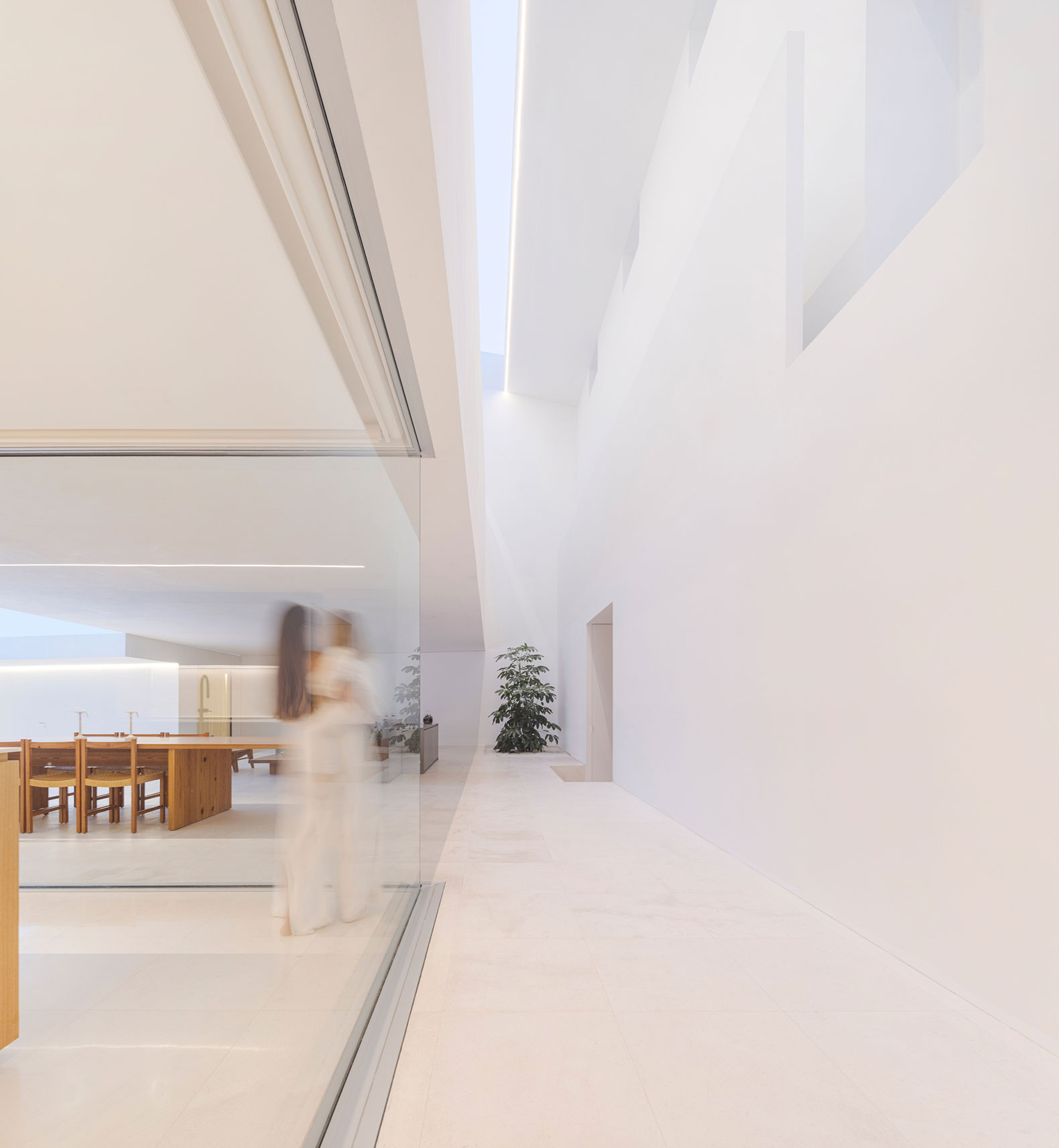


The Empty House by Fran Silvestre Arquitectos. Photograph by Fernando Guerra.
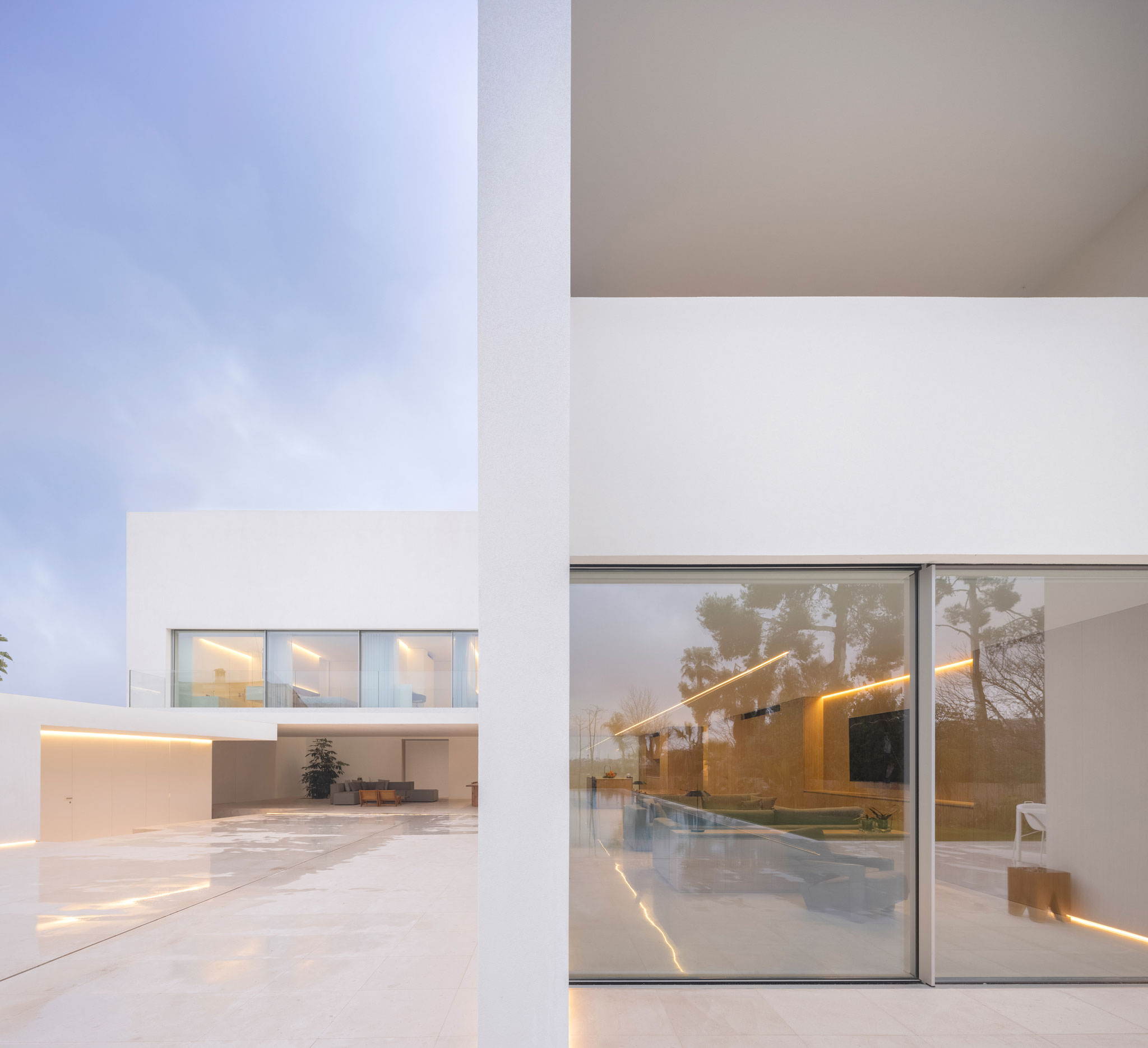

The Empty House by Fran Silvestre Arquitectos. Photograph by Fernando Guerra.
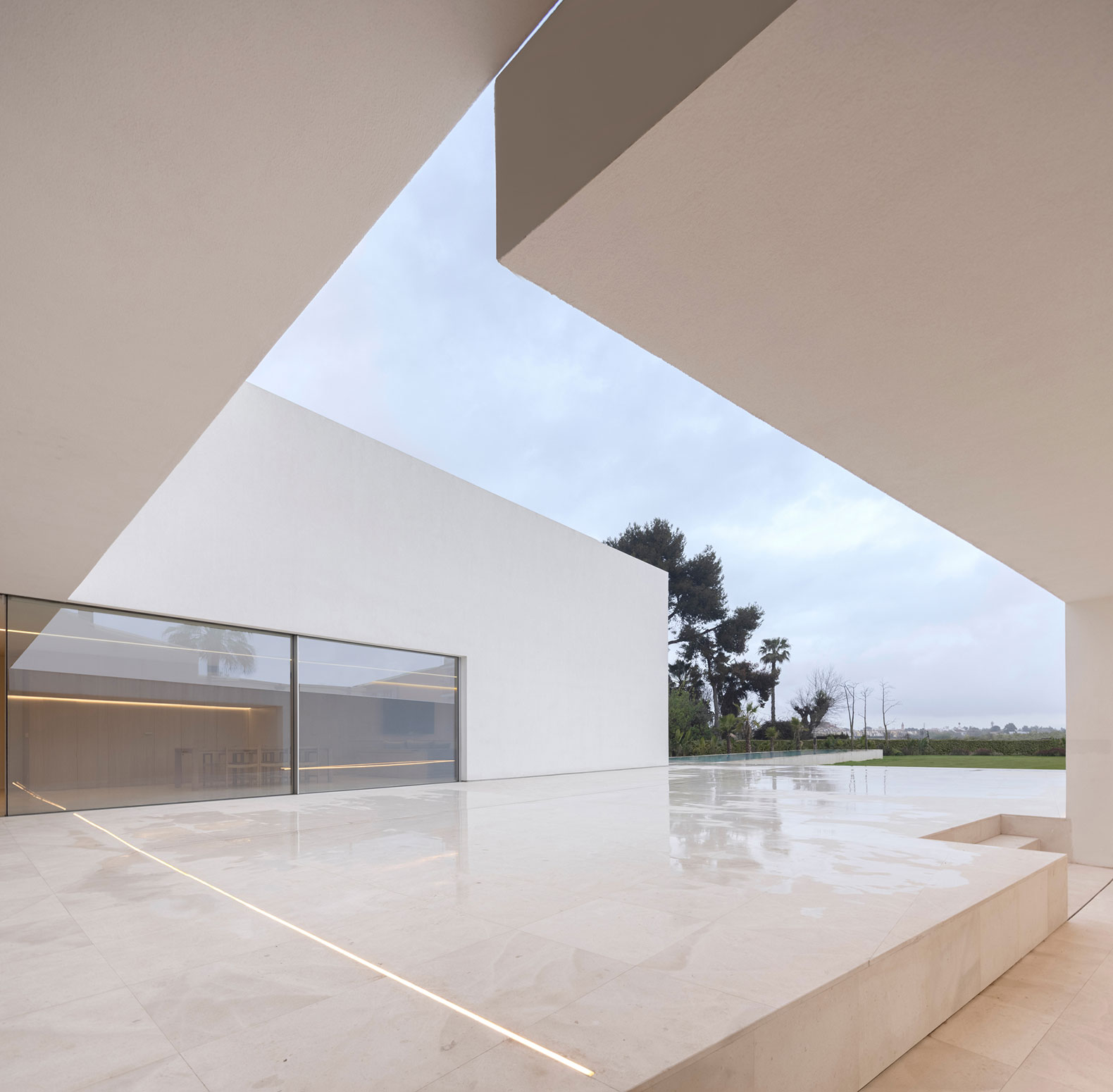

The Empty House by Fran Silvestre Arquitectos. Photograph by Fernando Guerra.

Project description by Fran Silvestre Arquitectos

Located on the main street of a town near Valencia, the house is part of a fragment of 20th-century history.

The existing façade and building footprint are protected, but the volume exceeds the needs of the new project. Faced with this situation, it is proposed to empty the interior space in ruins and show it in an innovative way. From the outside, the façade maintains its character, without modifying the street, which becomes a kind of scenery from another era. The tone of this old façade is unified with an antelope grey treatment that goes completely unnoticed.

Crossing the threshold we find ourselves in another time. Only what is necessary is closed and air-conditioned and a triple-height volume is generated that in a climate like the Mediterranean, we can use throughout the year. The day area is located close to the dividing wall, in continuity with a pool large enough to swim, which seems to get lost in the Valencian fields. The guest room and the multipurpose room resolve the change of direction that the site offers, a twist between two pieces separated by just a few millimetres.
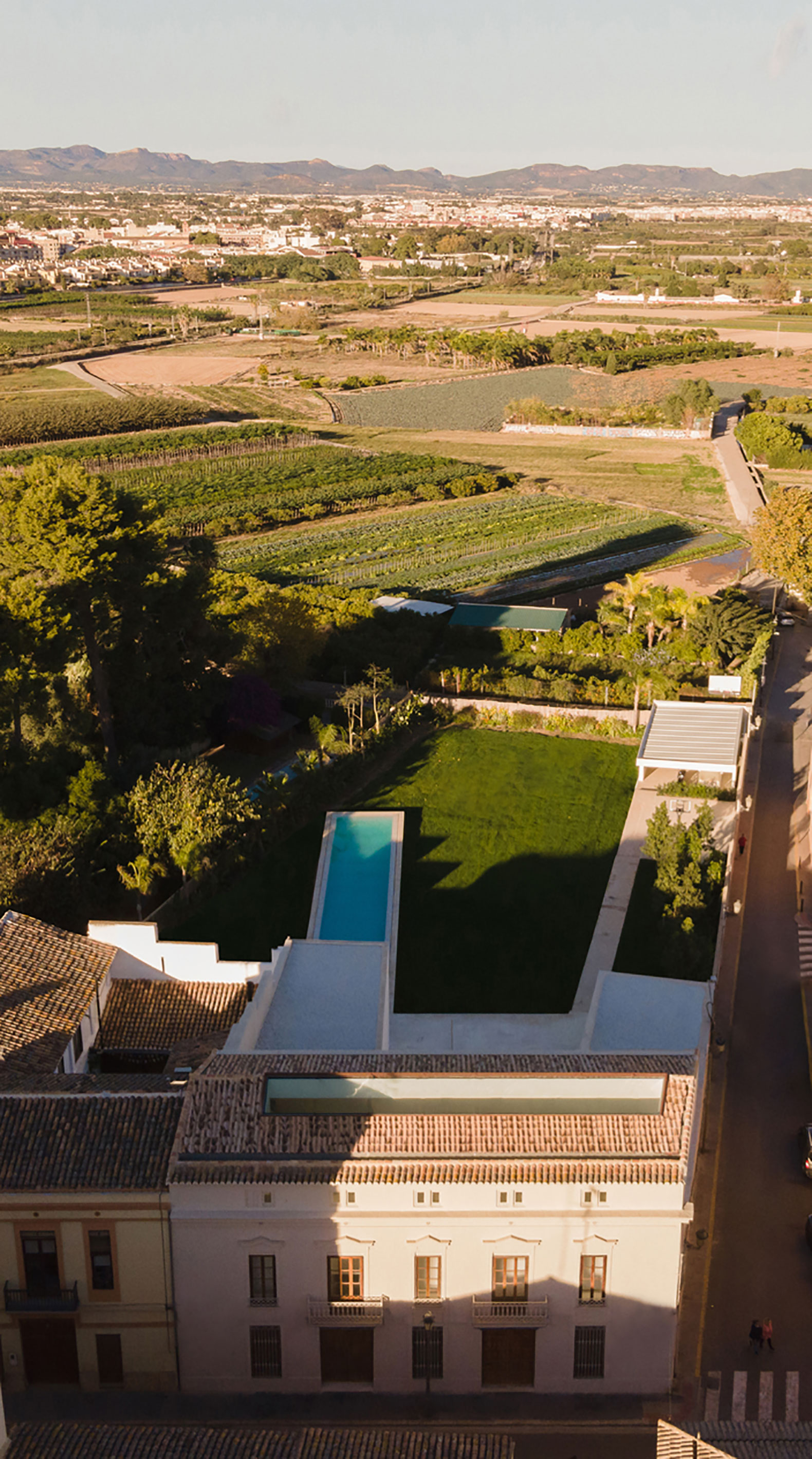

The Empty House by Fran Silvestre Arquitectos. Photograph by Jesús Orrico.

The rest of the space on this floor is empty, which will make us wonder about the size of a room whose depth of landscape seems to have no limits.

The night area is arranged transversally as a bridge framing the views. The master bedroom is located above the living room with the same orientation. The section gives us a floor plan with sloping roofs with an entrance of light from above, a space that time will put to use.

The wood from the old beams of the house in ruins is reused to build the furniture of the house, and just as it has been sought with the space of the house, it becomes a material that acquires a new life.

More information

Label
Architects
Text
Fran Silvestre Arquitectos. Lead architect.- Fran Silvestre, María Masià, Sevak Asatrián, Paco Chinesta.
+ + copy Created with Sketch.
- + copy Created with Sketch.
Label
Project team
Text
María Masià, Sevak Asatrián, Paco Chinesta, Pablo Camarasa, Ricardo Candela , Estefanía Soriano, Carlos Lucas, Andrea Baldo, Miguel Massa, Paloma Feng, Javi Herrero, Gino Brollo, Angelo Brollo, Anna Alfanjarín, Laura Bueno, Toni Cremades, David Cirocchi, Gabriela Schinzel, Lucas Manuel , Nuria Doménech. Andrea Raga, Olga Martín, Víctor González, Pepe Llop, Anahí Aguilera, Awab Bek, Monike Teodoro, Gemma Aparicio, Fran Ayala, Rosa Juanes.
+ + copy Created with Sketch.
- + copy Created with Sketch.
Label
Collaborators
Text
Interior design.- Alfaro Hofmann.
Structural engineering.- DOF Ingenieros.
Quantity surveyor.- Silverio Soriano | Arquitecto técnico de proyecto,  Enrique Alario | Collaborator.
Business Development and Management.- Judith López.
Business developer CCG and Mexico.- José María Ibañez.
Financial advisor.- Ana de Pablo.
Head of Marketing and Communication.- Sara Atienza.
Financial Dept.- Valeria Fernandini.
Administration Department.- Sandra Mazcuñán
Marketing Technician.- Andrés Martínez.
Marketing Technician.- Kateryna Spuziak.
+ + copy Created with Sketch.
- + copy Created with Sketch.
Label
Builder
Text
Construcciones Ribera.
+ + copy Created with Sketch.
- + copy Created with Sketch.
Label
Area
Text
814 m².
+ + copy Created with Sketch.
- + copy Created with Sketch.
Label
Dates
Text
2022.
+ + copy Created with Sketch.
- + copy Created with Sketch.
Label
Location
Text
Valencia, Comunidad Valenciana. Spain.
+ + copy Created with Sketch.
- + copy Created with Sketch.
Label
Manufacturers
Text
Air conditioning.- Mitsubishi air conditioning.
Mechanisms.- Jung 990 series mechanisms
Lighting.- Coves in false ceiling. LED linear luminaire. GLINT MG lighting system.
Pavements.- Capri limestone natural stone.
Pool.- Large-format ceramic TAU Cerámica.
Gardening.- Dalmau.
Paintings.- Jesús Hurtado
Coatings.- Solid Surface Krion.
+ + copy Created with Sketch.
- + copy Created with Sketch.
Label
Video
Text
Jesús Orrico.
+ + copy Created with Sketch.
- + copy Created with Sketch.
Label
Photography
Text
Fernando Guerra.
Jesús Orrico | Fran Silvestre Arquitectos.
+ + copy Created with Sketch.
- + copy Created with Sketch.

Fran Silvestre Arquitectos is an architecture studio based in Valencia, founded in 2005 by architect Fran Silvestre. The studio operates from the former workshop of sculptor Andreu Alfaro, a 7,000 m² space where a multidisciplinary team of more than 50 professionals develops projects. Its work encompasses residential, cultural, corporate, and public buildings in different countries, characterized by formal purity, modulation, serialization, and the innovative use of materials and technologies.

Fran Silvestre was born on July 5, 1976, and graduated in Architecture from the School of Architecture of Valencia in 2001, obtaining his degree with honours. One year later, he completed his qualification as an urbanist at the Technische Universiteit Eindhoven (TU/e), also with the highest distinction. He holds a PhD in Architecture from the Polytechnic University of Valencia, where he earned a Doctorate in Design with the distinction Cum Laude.

His professional education was further enriched by a fellowship to work in the studio of Portuguese architect Álvaro Siza, recipient of the Pritzker Prize, with whom he has maintained professional collaborations since then. In parallel, he has pursued an intense academic career: he has been a professor in the Department of Architectural Design at the Polytechnic University of Valencia since 2006 and at the European University since 2009. In 2011, he was appointed Deputy Director of the School of Architecture of Valencia, and in 2018, he was awarded the Victor L. Regnier Chair at Kansas State University (KSU), in the United States. He currently also directs the March Postgraduate School in Architecture and Design. He is the great-grandson of Valentín Silvestre Fombuena, who, according to the records of the Spanish Patent and Trademark Office, was the most prolific inventor in the second half of the nineteenth century.

Throughout his career, he has received numerous awards, including the Fundación Caja de Arquitectos Prize (2001), the COACV Architects’ Association Award (2010), and the Red Dot Design Award (2013). In 2012, he was appointed Ambassador of Spanish Architecture in the United States by the Ministry of Culture and Sport. He has also received the NYCxDESIGN Award (2016), the German Design Award on several occasions (2016, 2020, 2021, and 2024), the IF Design Award (2021), and the Bronze Delta Award at the ADI Awards (2024), as well as the first prize at the XIII Spanish Biennial of Architecture and Urbanism (BEAU) in the design category. In 2022, he was awarded the First Prize with a Gold Medal in the Architecture category by the International Federation of Architects and Designers.

His work has been exhibited at international museums and institutions such as the Museum of Modern Art (MoMA) in New York and the Serralves Museum in Porto, and he has been invited to lecture at universities and institutions including KSU, the American Institute of Architects (AIA) in New York, and Virginia Tech. His projects have been widely published in leading architectural journals such as Architectural Record, GA Houses, On-Diseño, and Interni, as well as by major publishers including Phaidon, Taschen, Thames & Hudson, and GG. Several monographs have documented the studio’s work, including those published by TC Cuadernos, A.Mag, and Arianuova, with particular note of the monograph published by Rizzoli (New York), featuring texts by critic Philip Jodidio.

Projects by Fran Silvestre Arquitectos are located across countries, including China, the United States, Brazil, Thailand, Egypt, Croatia, Italy, Australia, and Spain. Throughout its trajectory, the studio has worked on projects of both small and large scale. Notable works include the Atrium House (2009), the House on the Slope of a Castle (2010), the Cliff House (Alicante), the Balint House (Valencia), the Hollywood Hills House (Los Angeles), the Sabater House (Orihuela), the Zibo Master Plan (China), the Boutique Hotel in Vis (Croatia), and the Wind Tower (Valencia).

The studio’s architecture is deeply influenced by the work of Álvaro Siza and Andreu Alfaro. According to critic David Cohn, Fran Silvestre’s work is not driven by a search for a lost authenticity nor by the pursuit of the perfect geometry of form, but rather by the creation of environments that, through abstraction and precise architectural intention, elevate everyday life toward a more intense and conscious engagement with the surrounding environment.

Read more
Published on: February 26, 2023
Cite:
metalocus, ANDRÉS BLANCO
"Discreet contemporaneity and spatial luxury. The Empty House by Fran Silvestre Arquitectos" METALOCUS. Accessed
<http://www.metalocus.es/en/news/discreet-contemporaneity-and-spatial-luxury-empty-house-fran-silvestre-arquitectos> ISSN 1139-6415
Loading content ...
Loading content ...
Loading content ...
Loading content ...
Loading content ...
Loading content ...
Loading content ...
Loading content ...
Loading content ...
Loading content ...
Loading content ...
Loading content ...
Loading content ...
Loading content ...
Loading content ...
Loading content ...
Loading content ...
Loading content ...
Loading content ...
Loading content ...
Loading content ...
Loading content ...
Loading content ...
Loading content ...
Loading content ...
Loading content ...
Loading content ...
Loading content ...
Loading content ...
Loading content ...
Loading content ...
Loading content ...
Loading content ...
Loading content ...
Loading content ...
Loading content ...
Loading content ...
Loading content ...
Loading content ...
Loading content ...
Loading content ...
Loading content ...
Loading content ...
Loading content ...
Loading content ...
Loading content ...
Loading content ...
Loading content ...
Loading content ...
Loading content ...
Loading content ...
Loading content ...
Loading content ...
Loading content ...