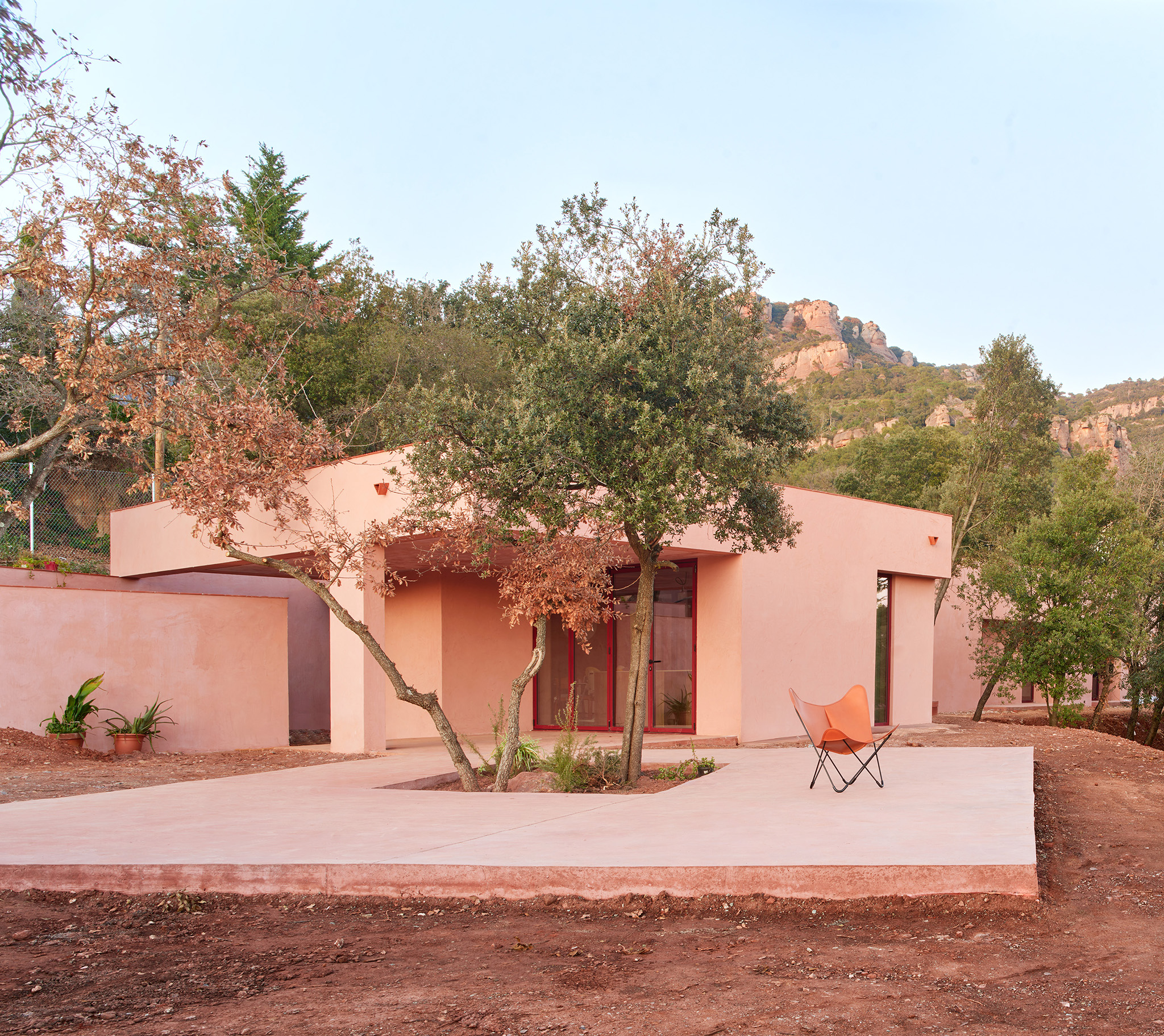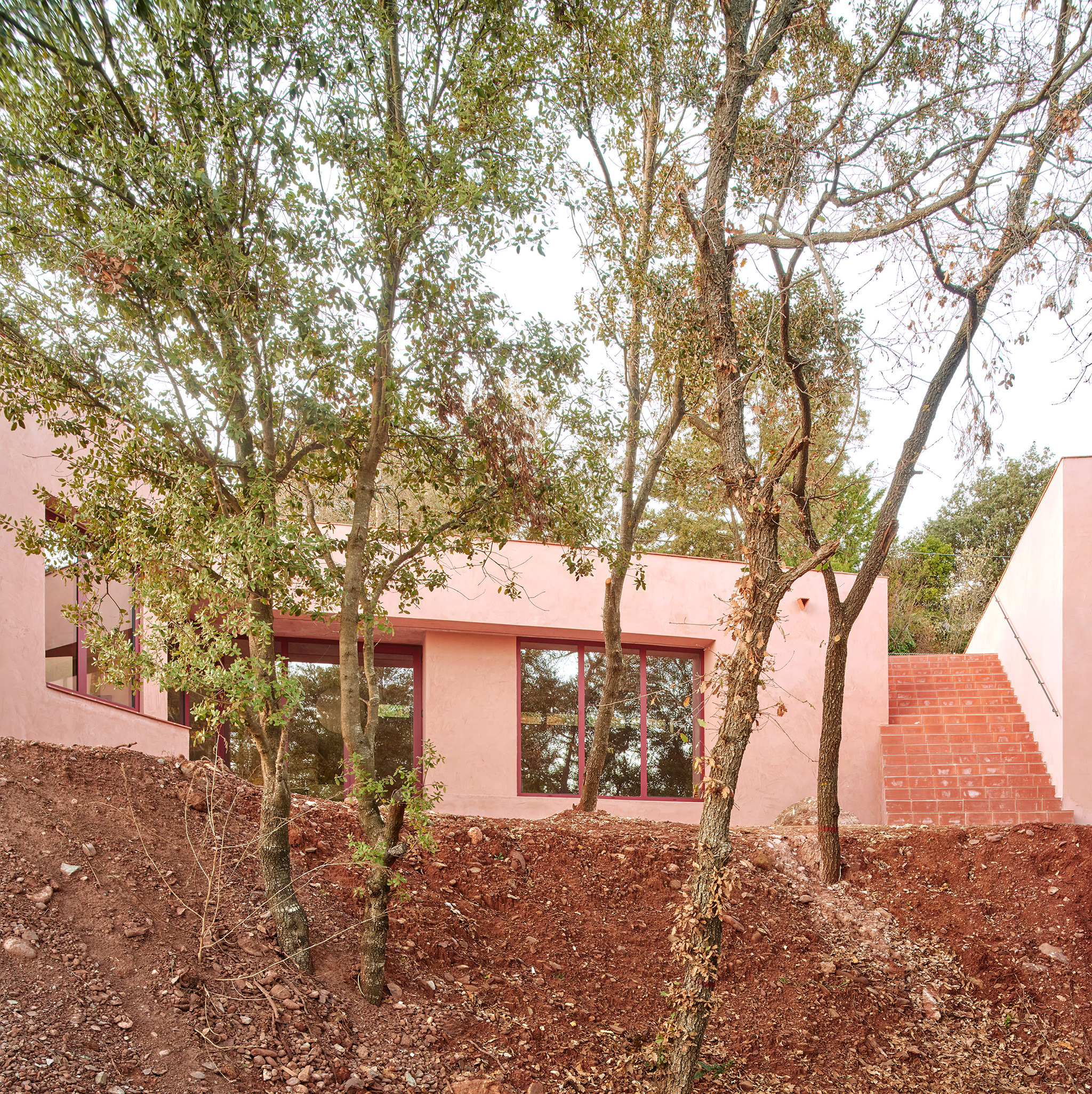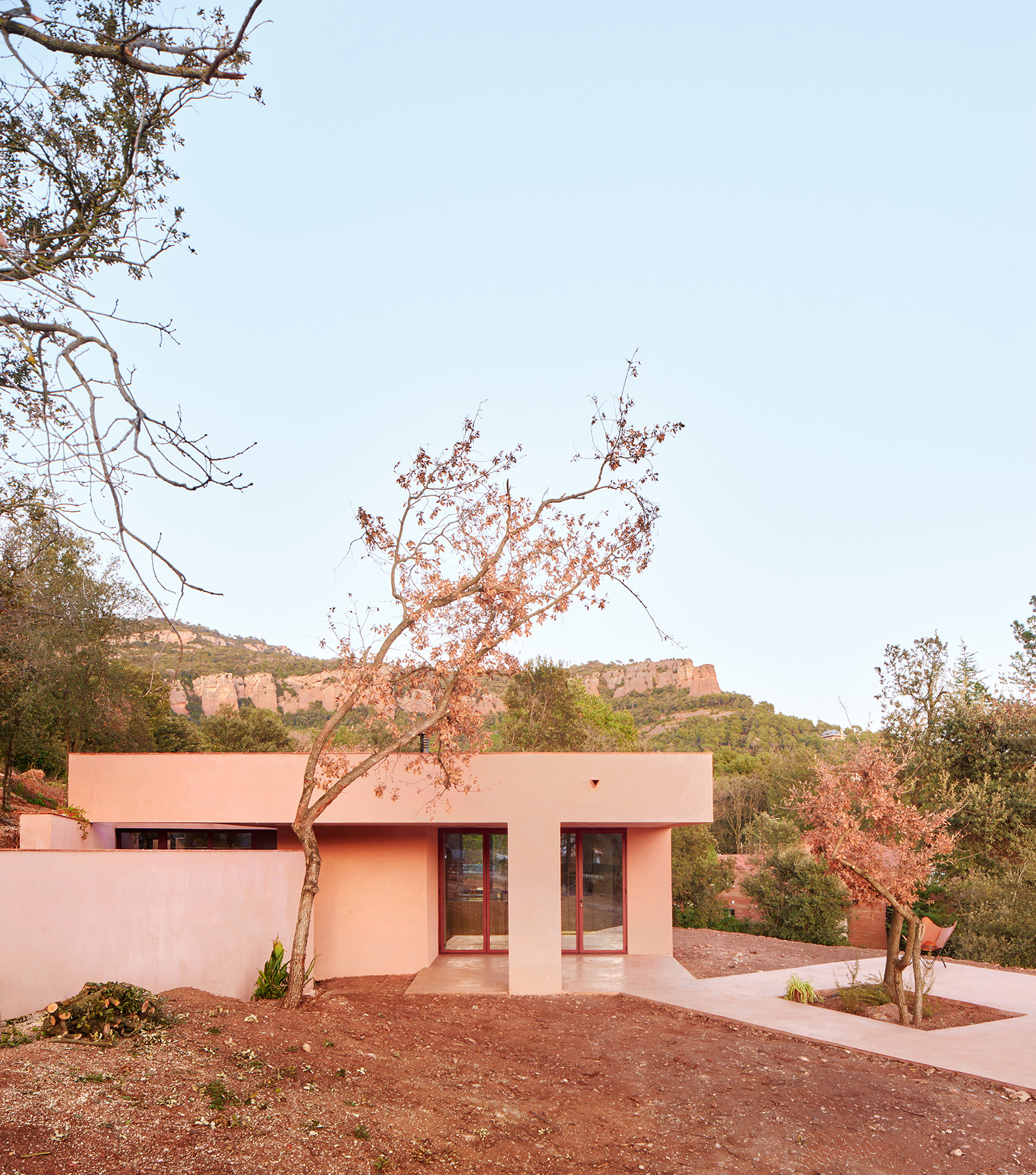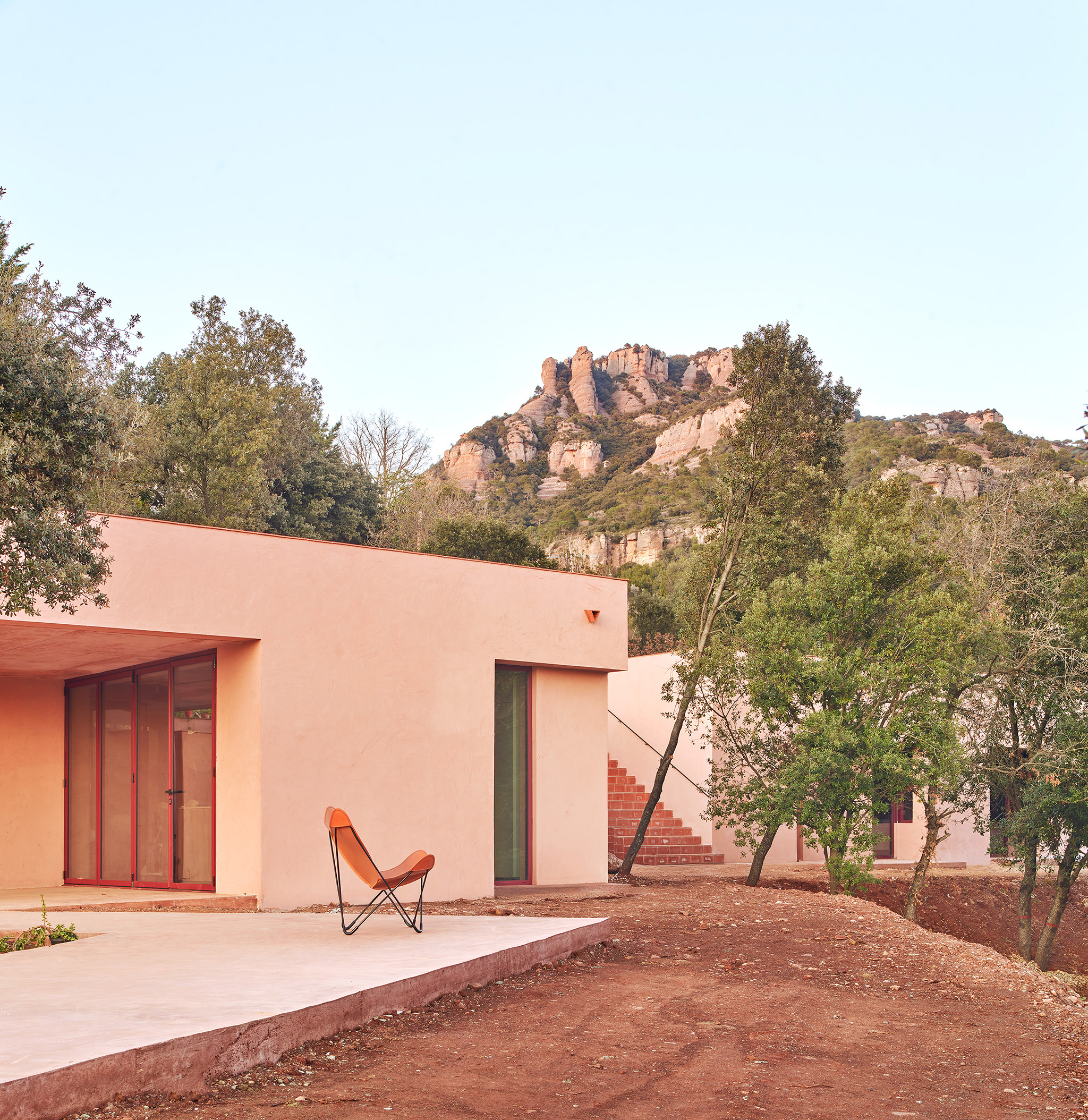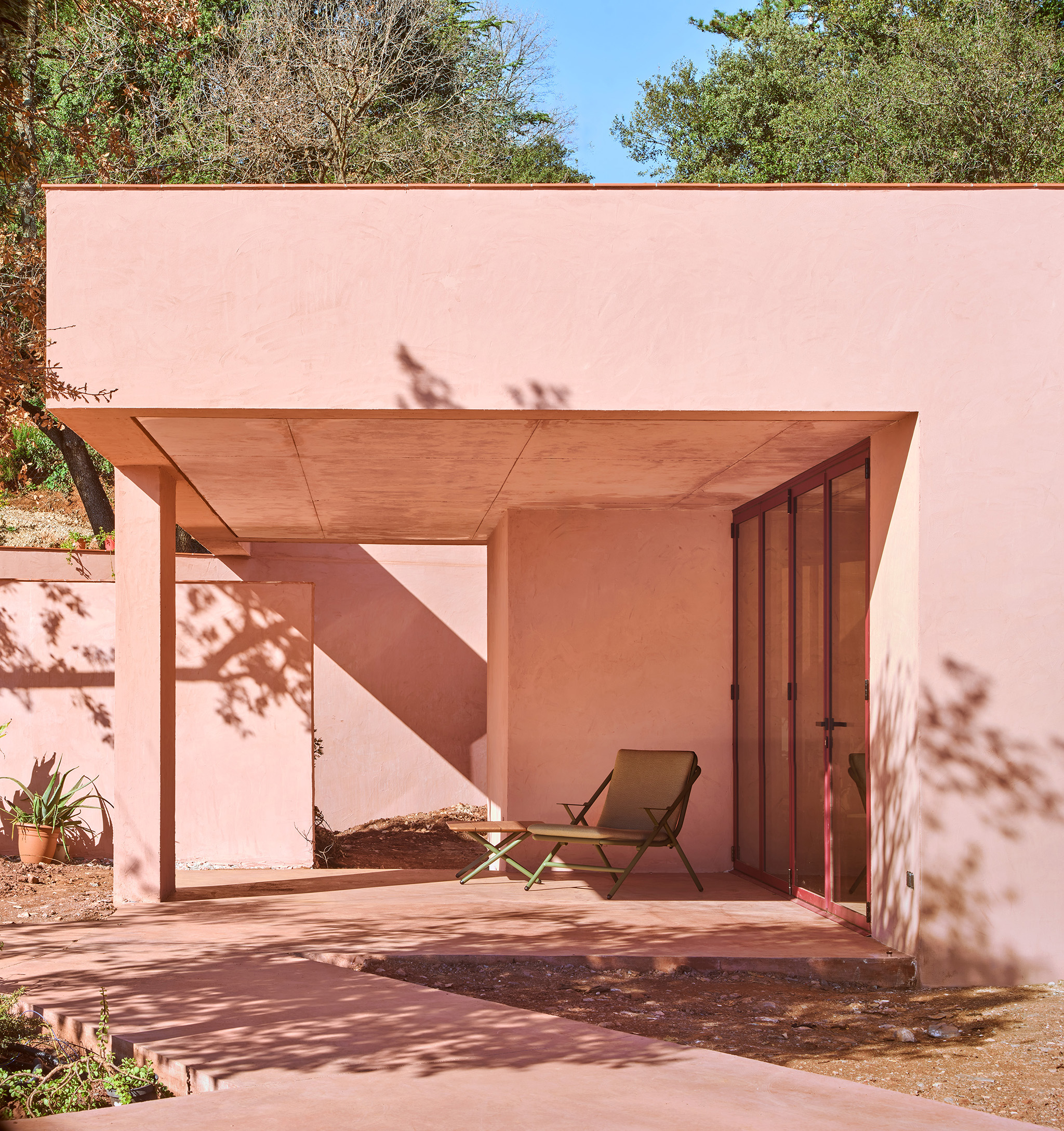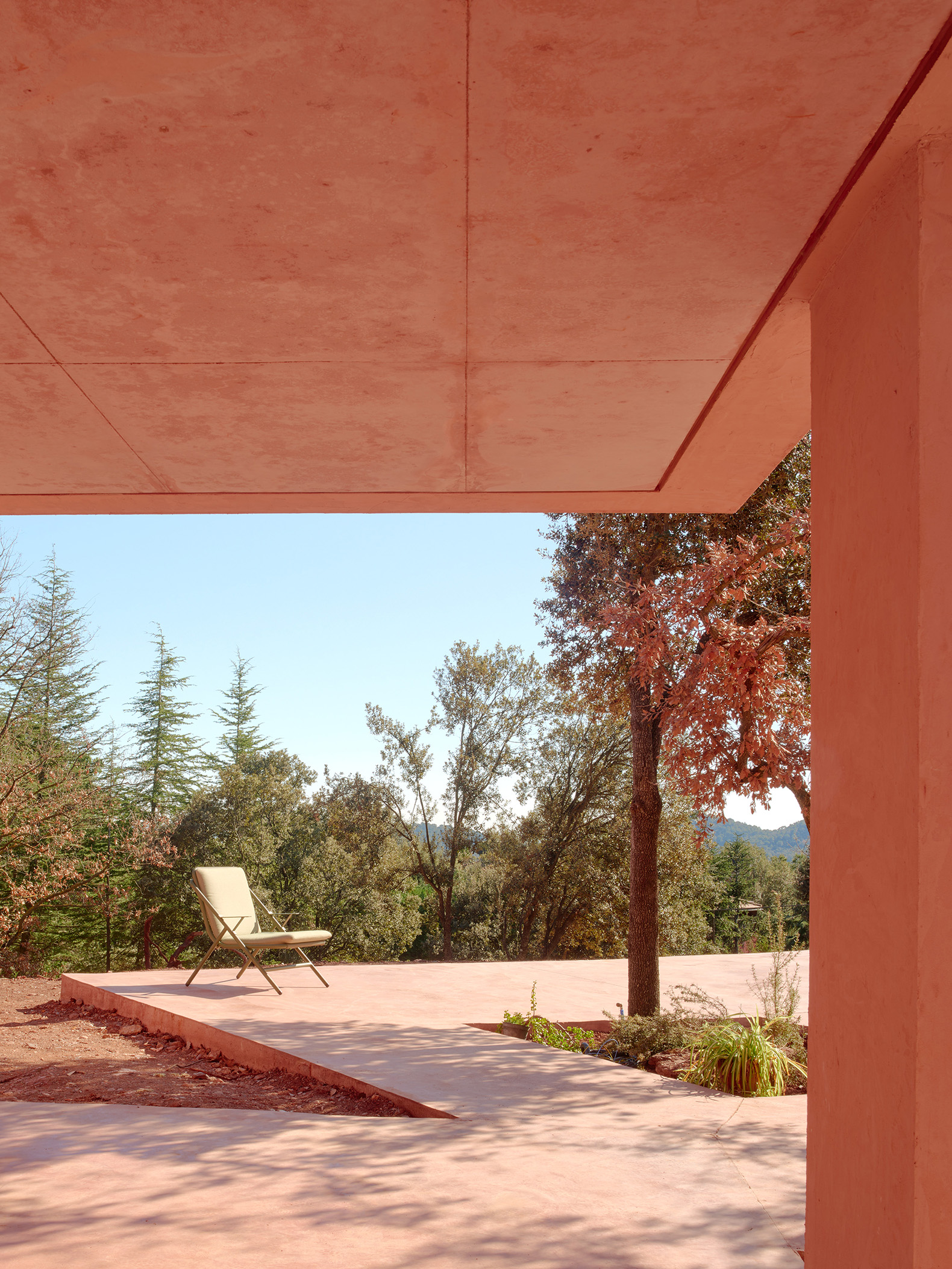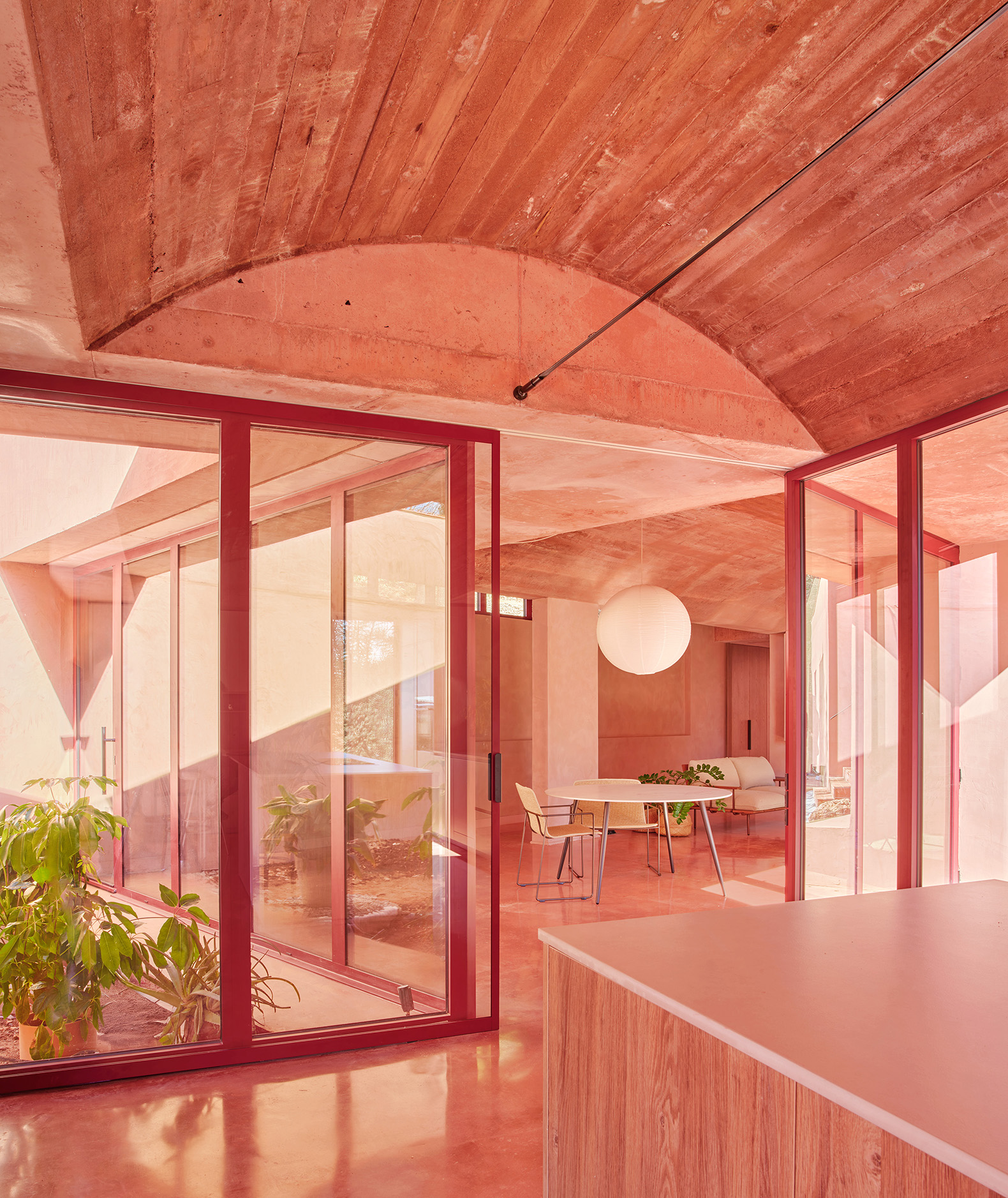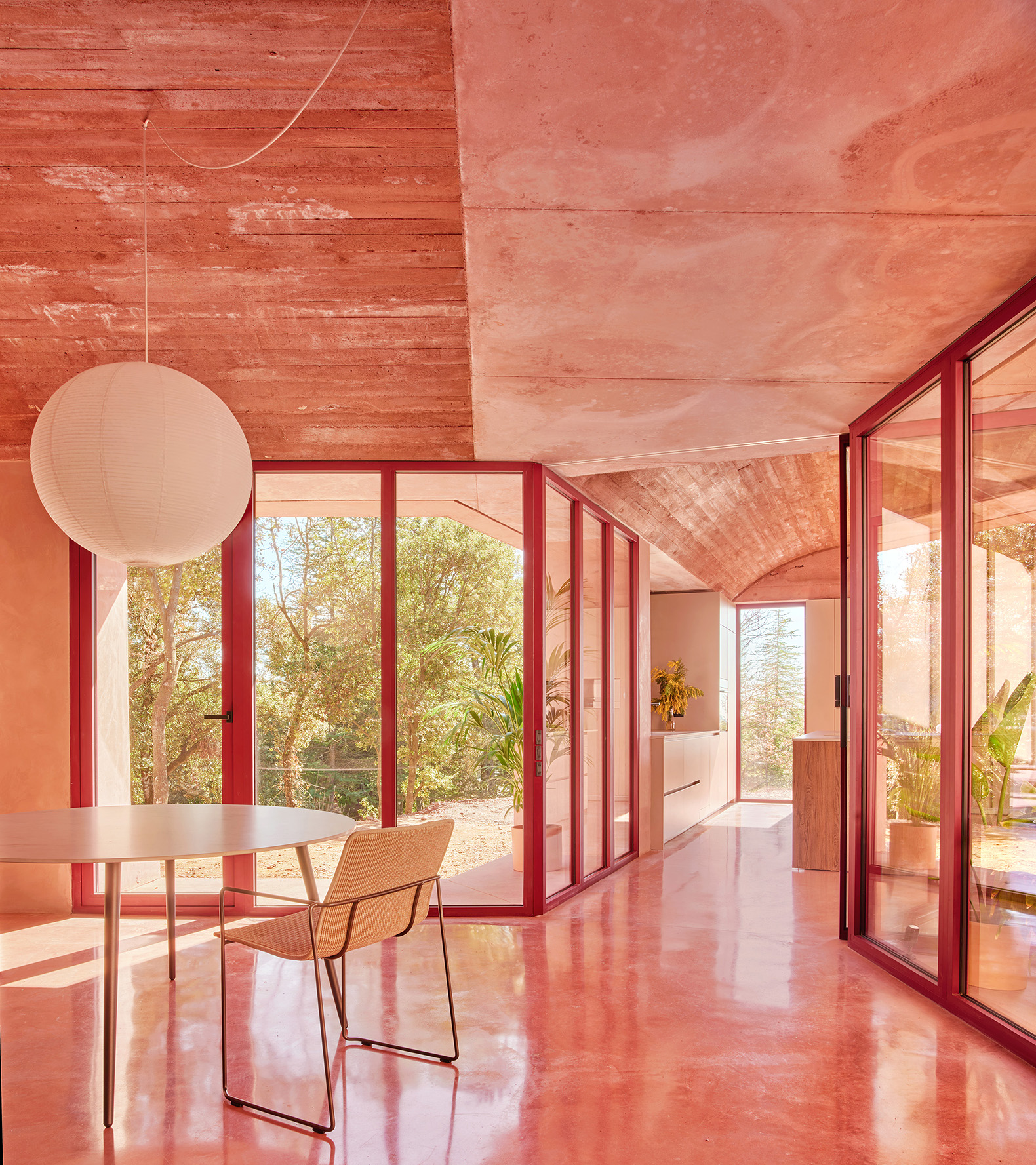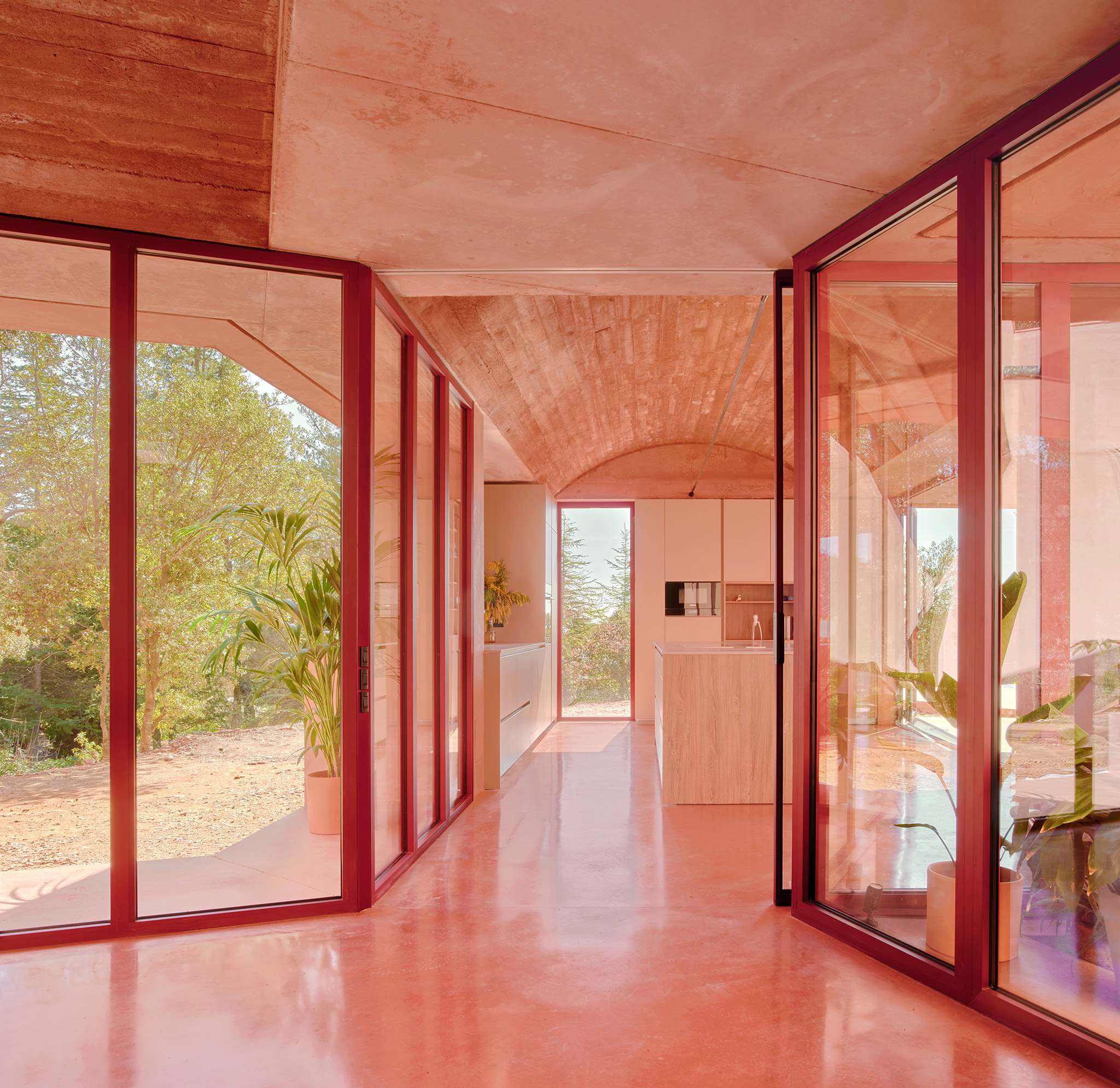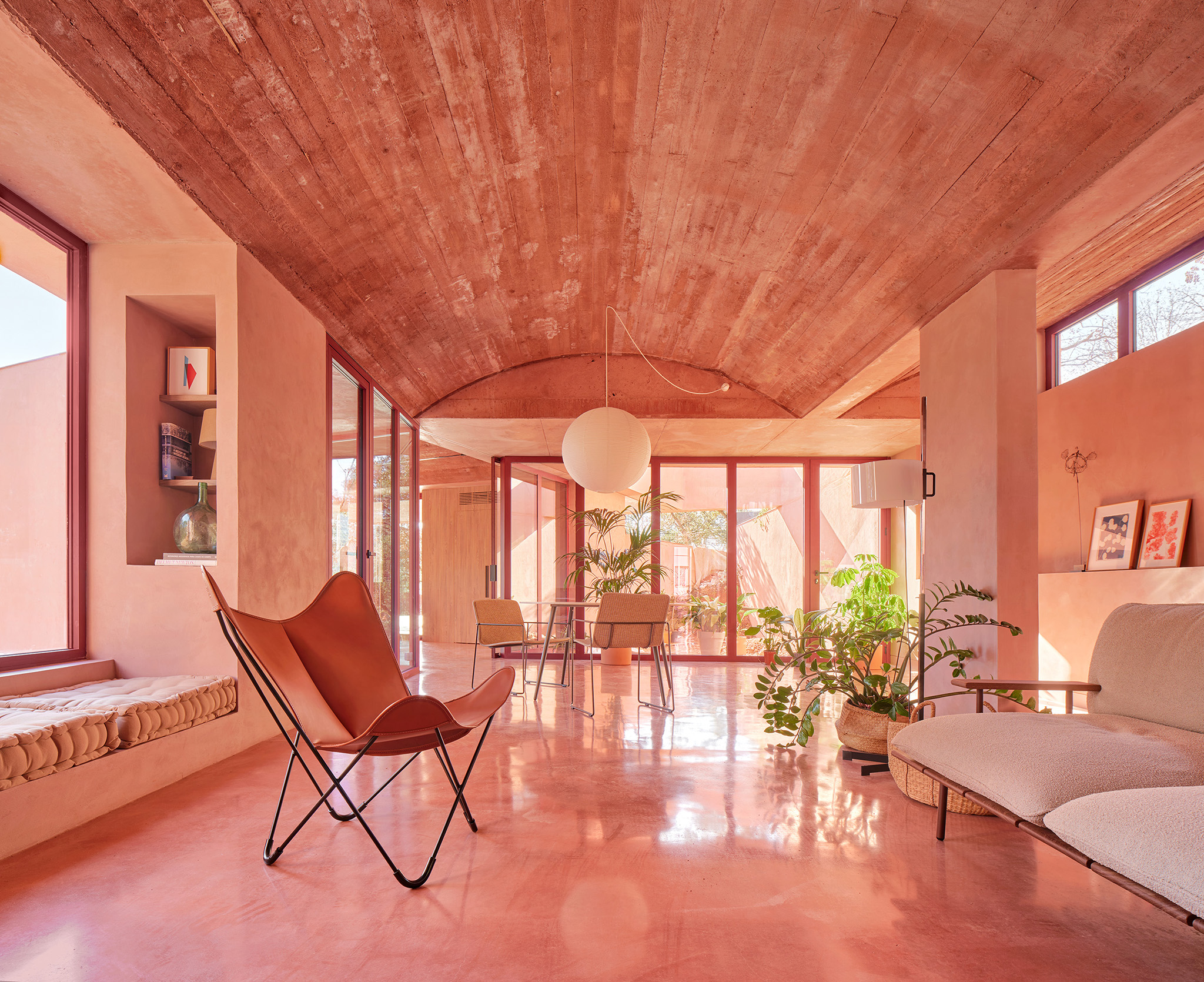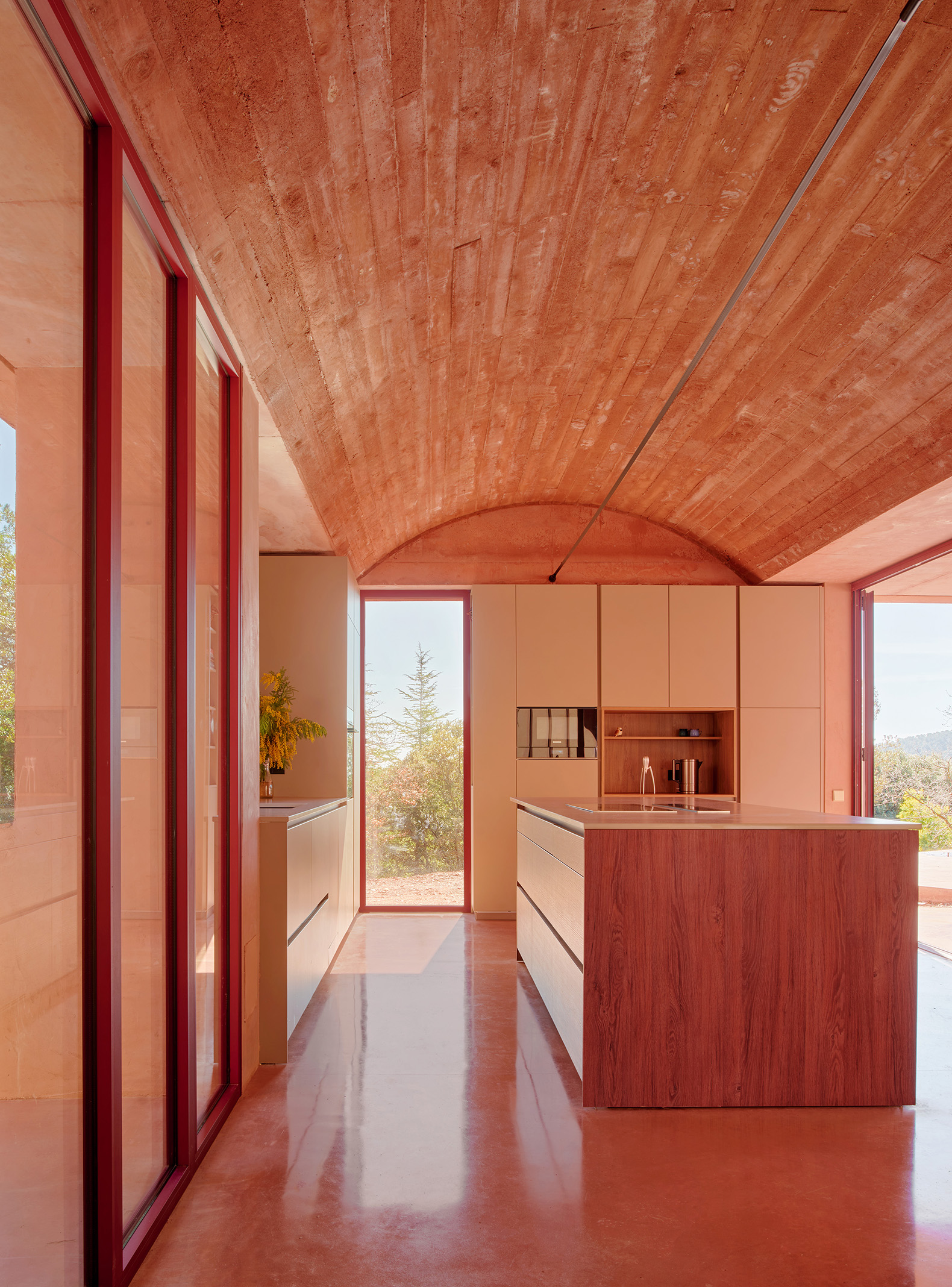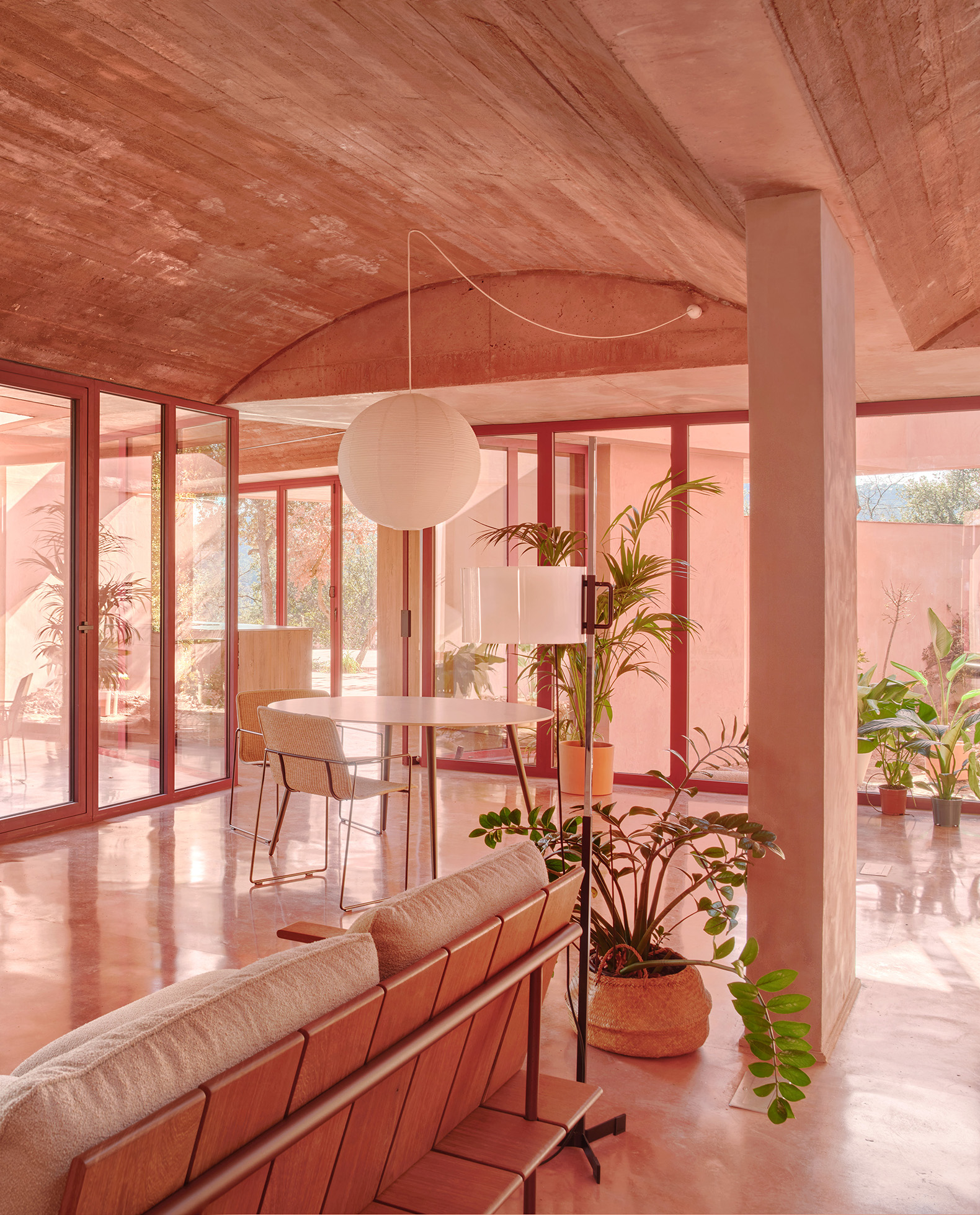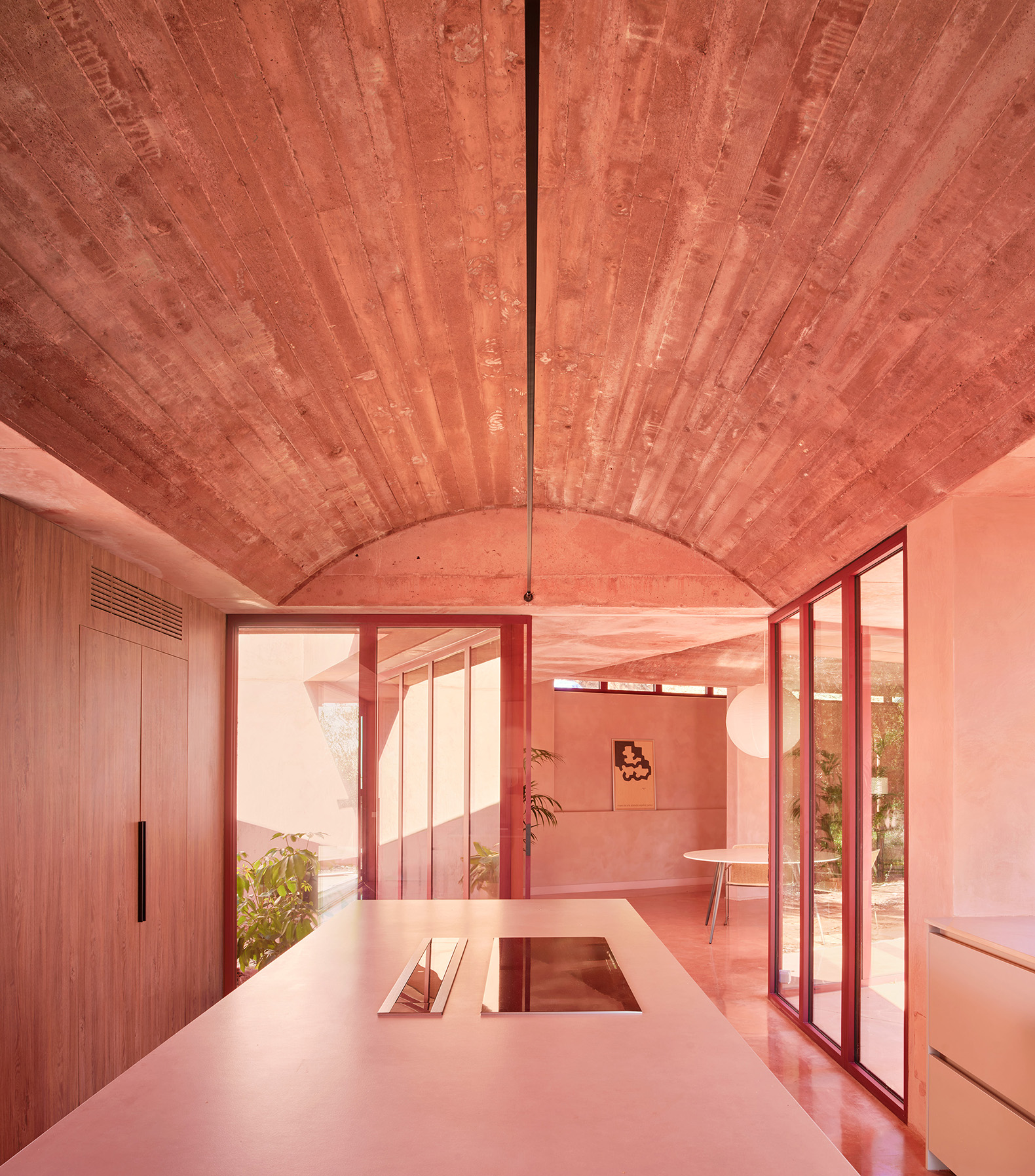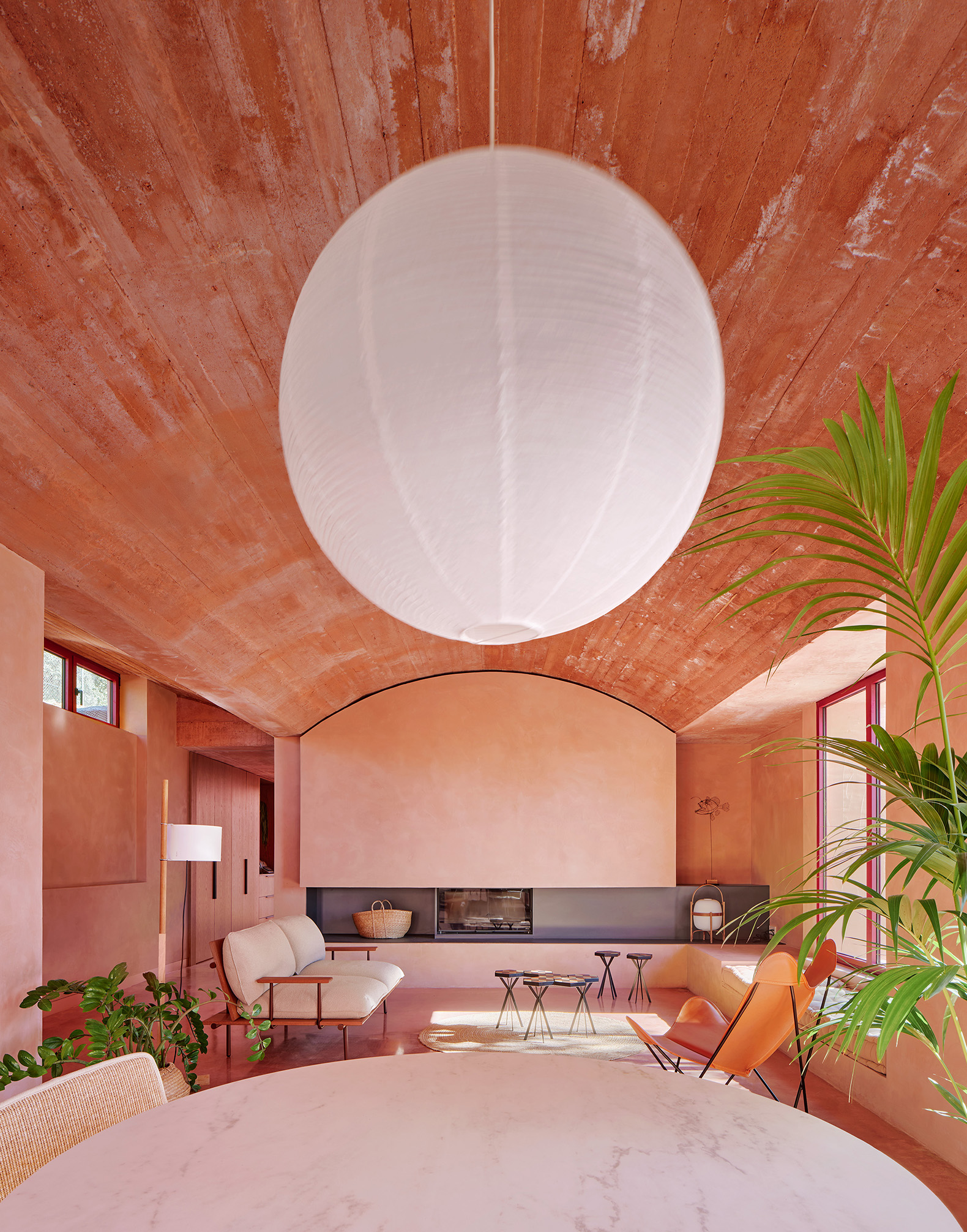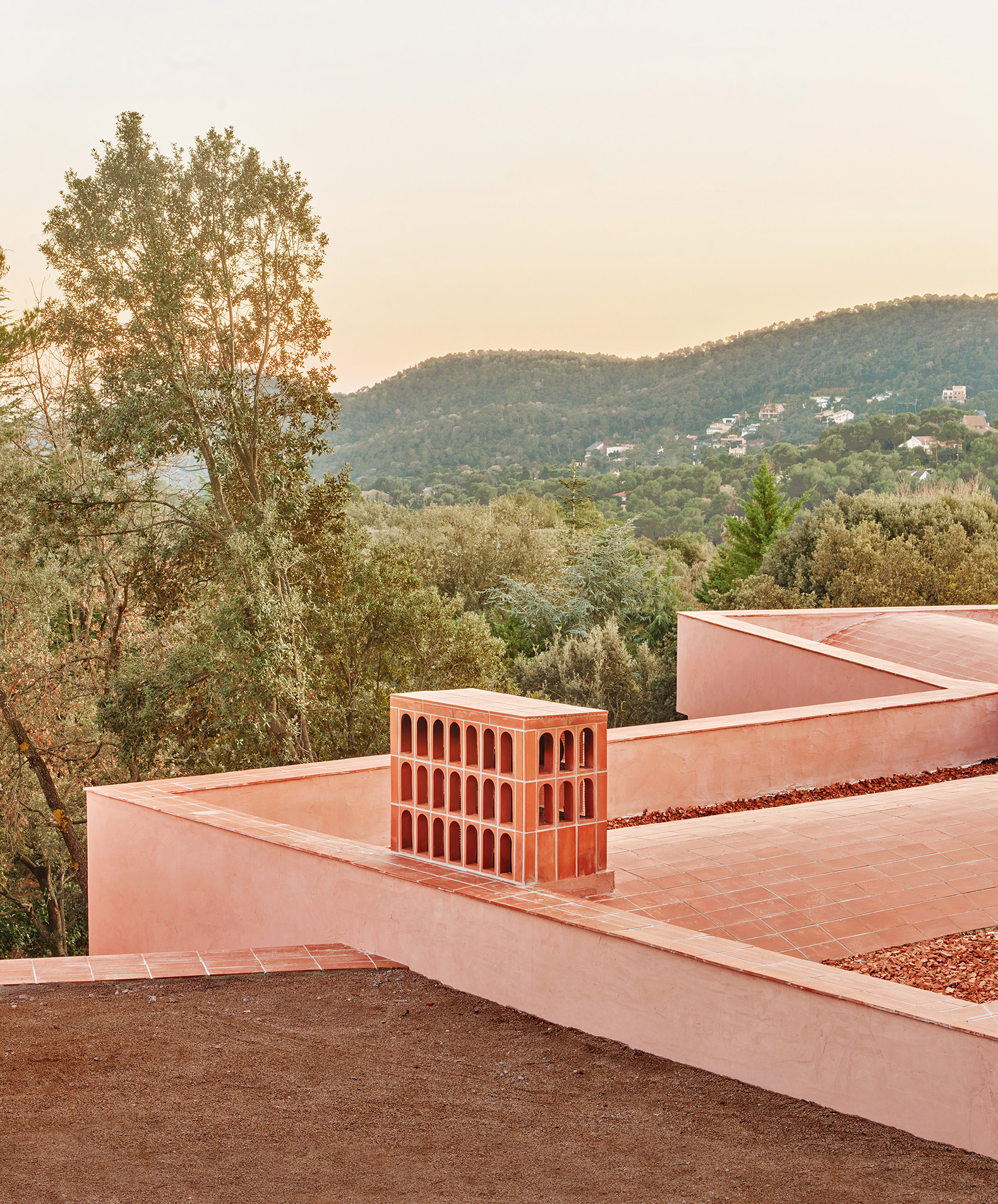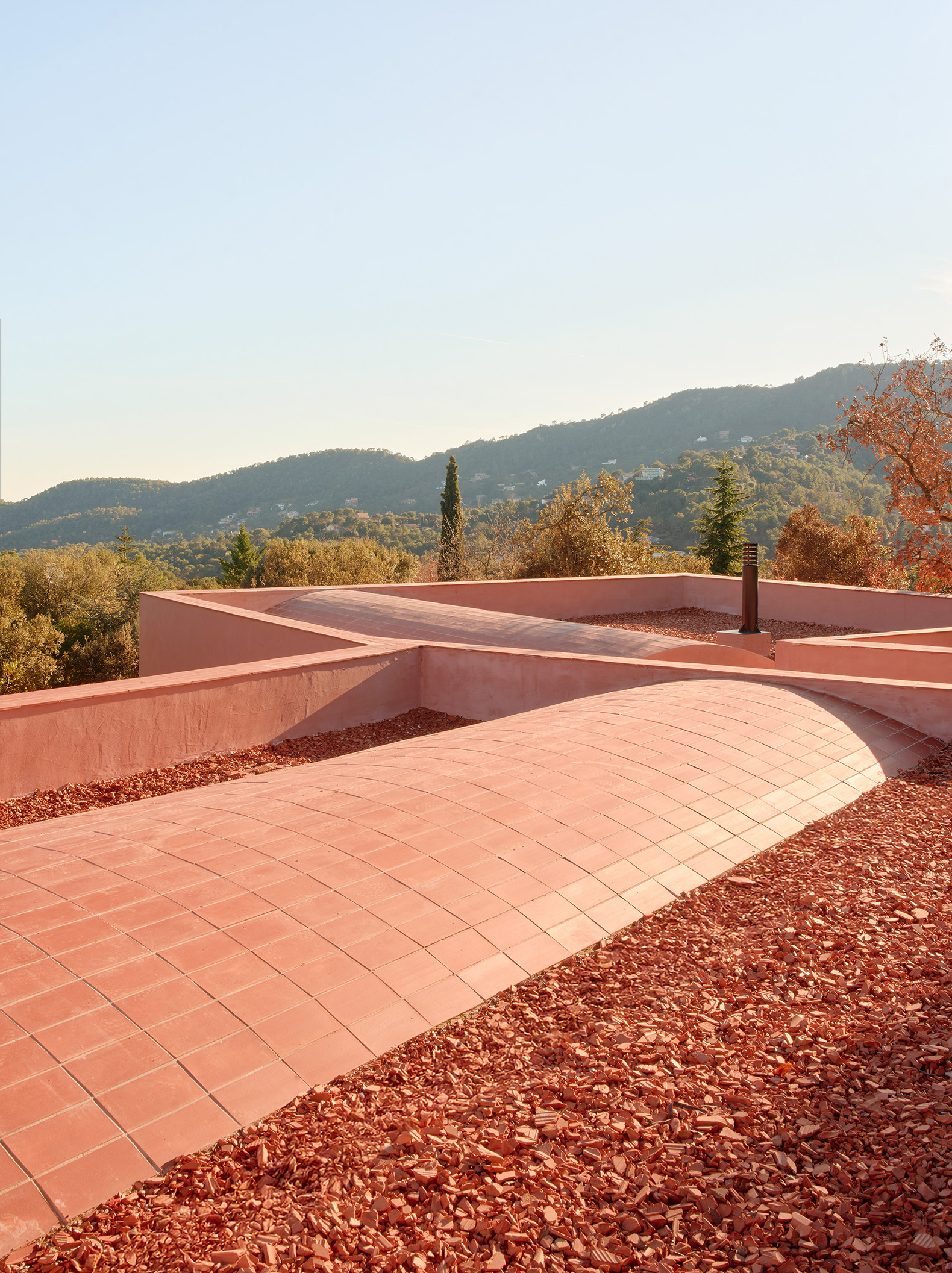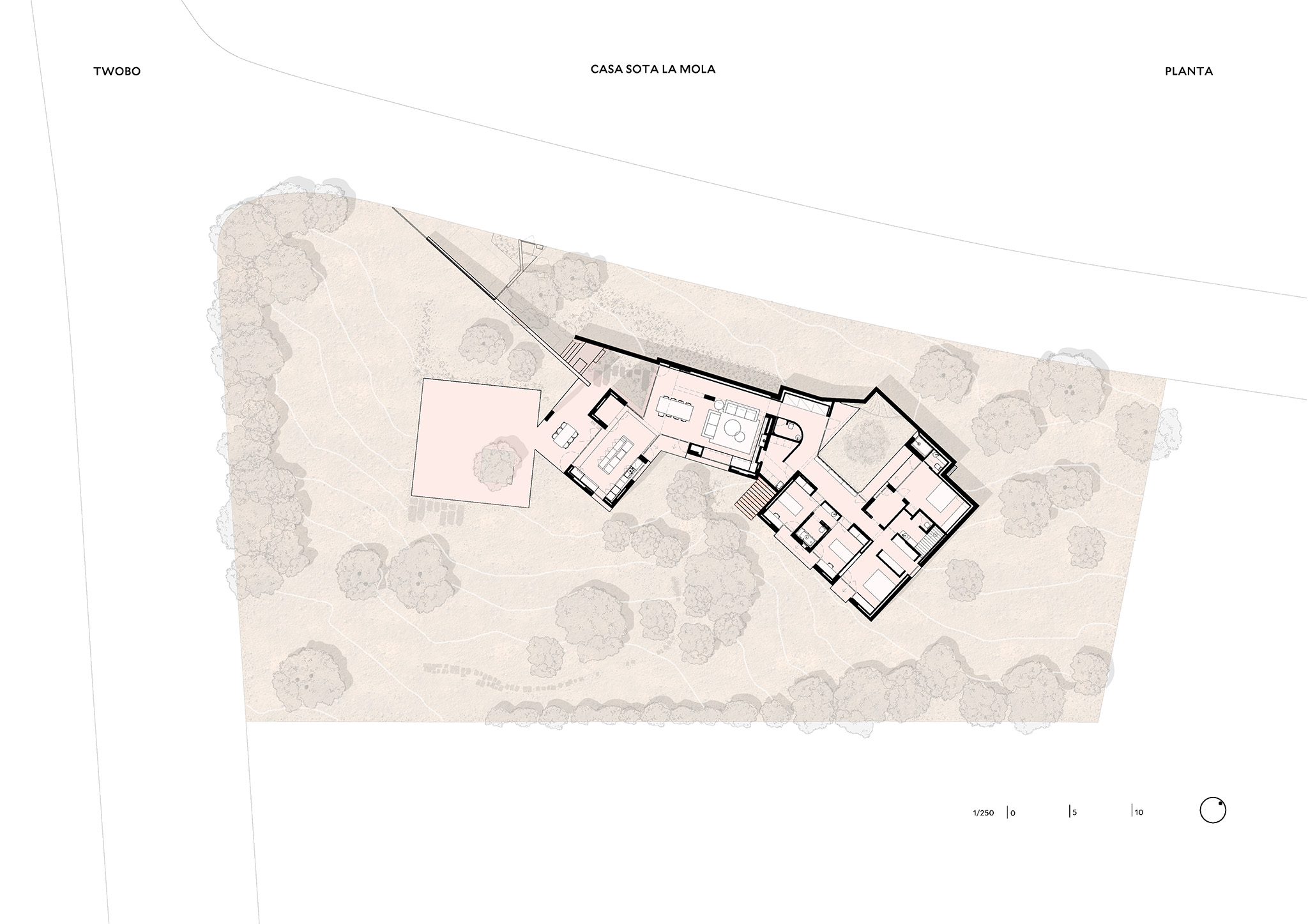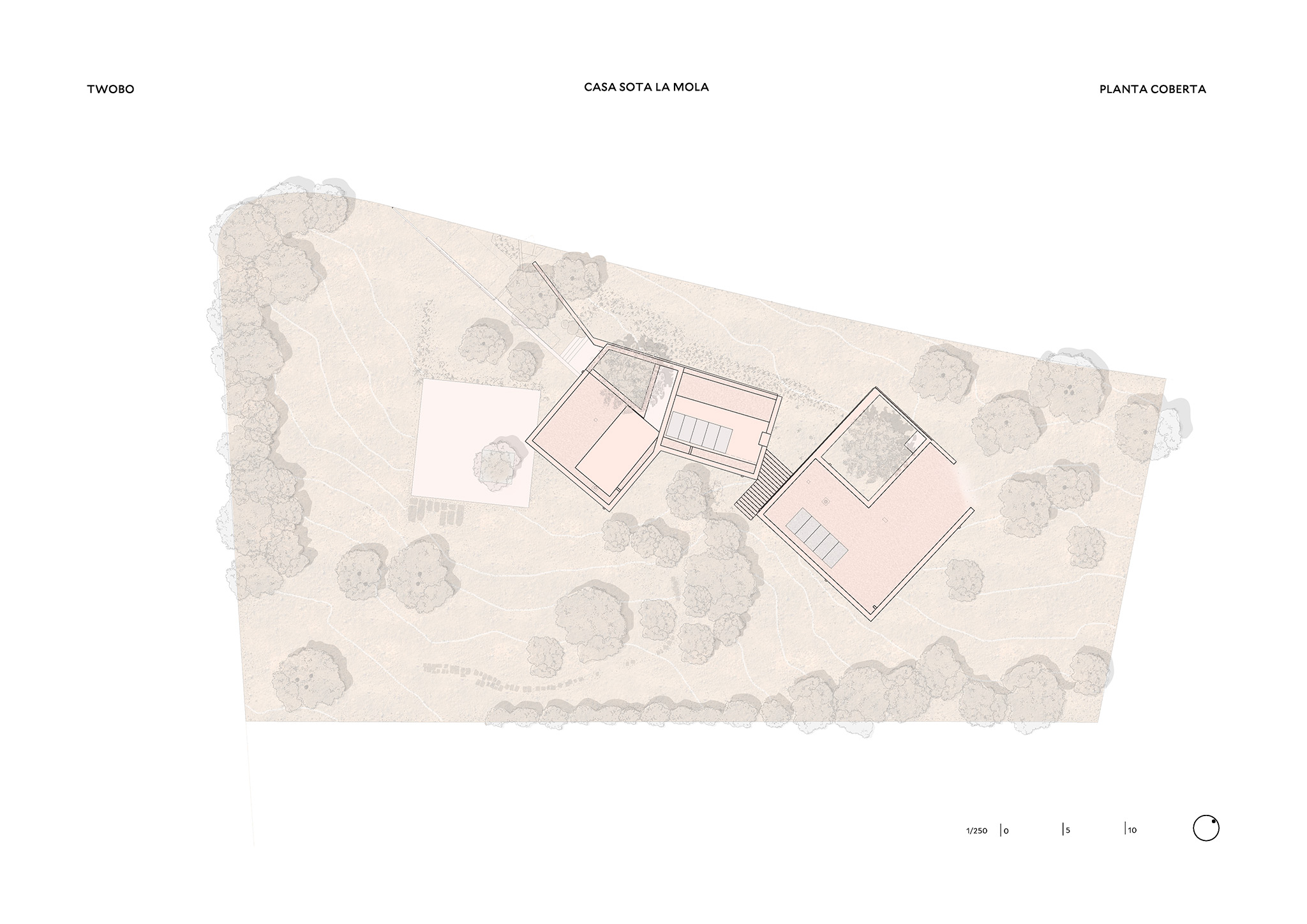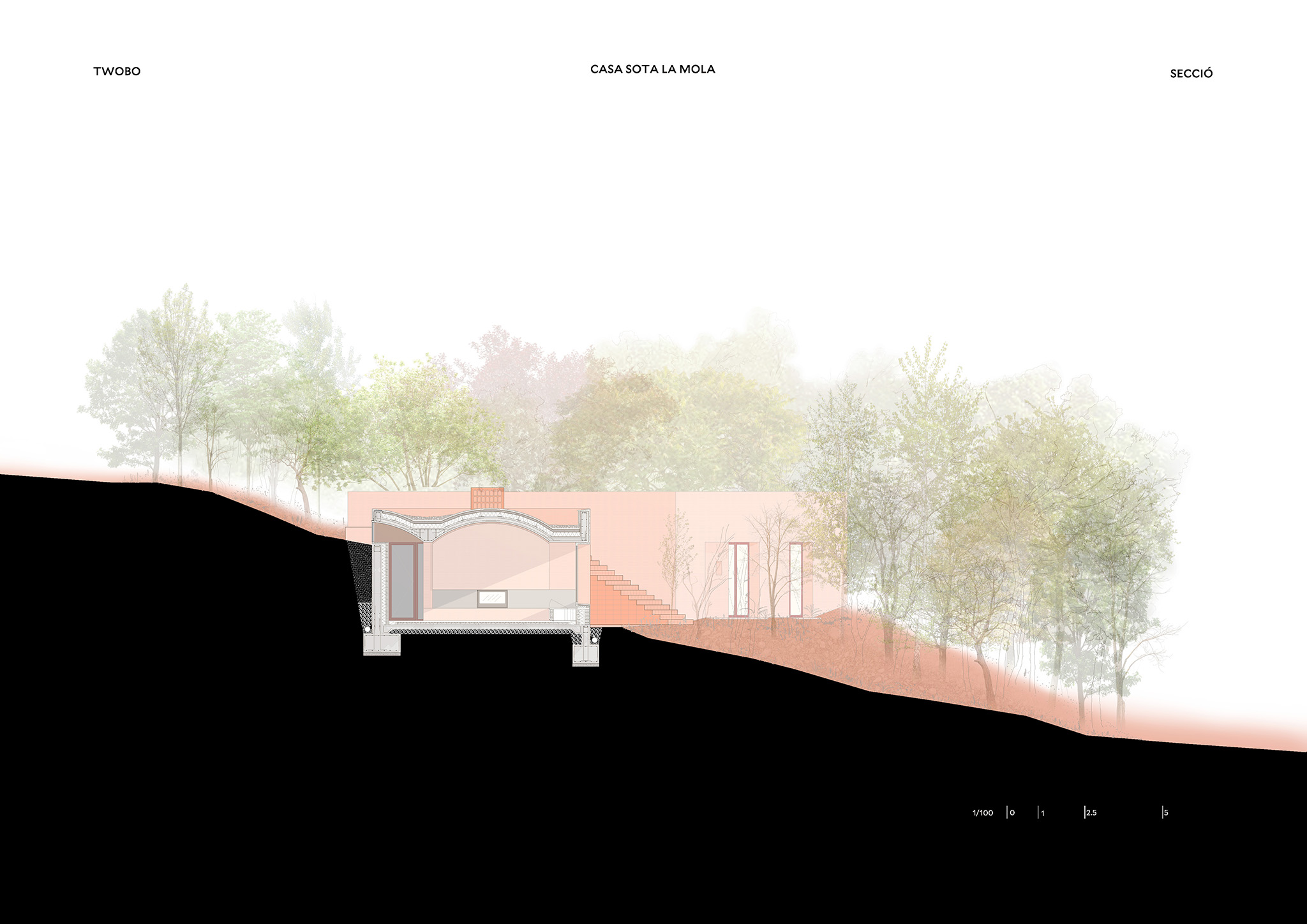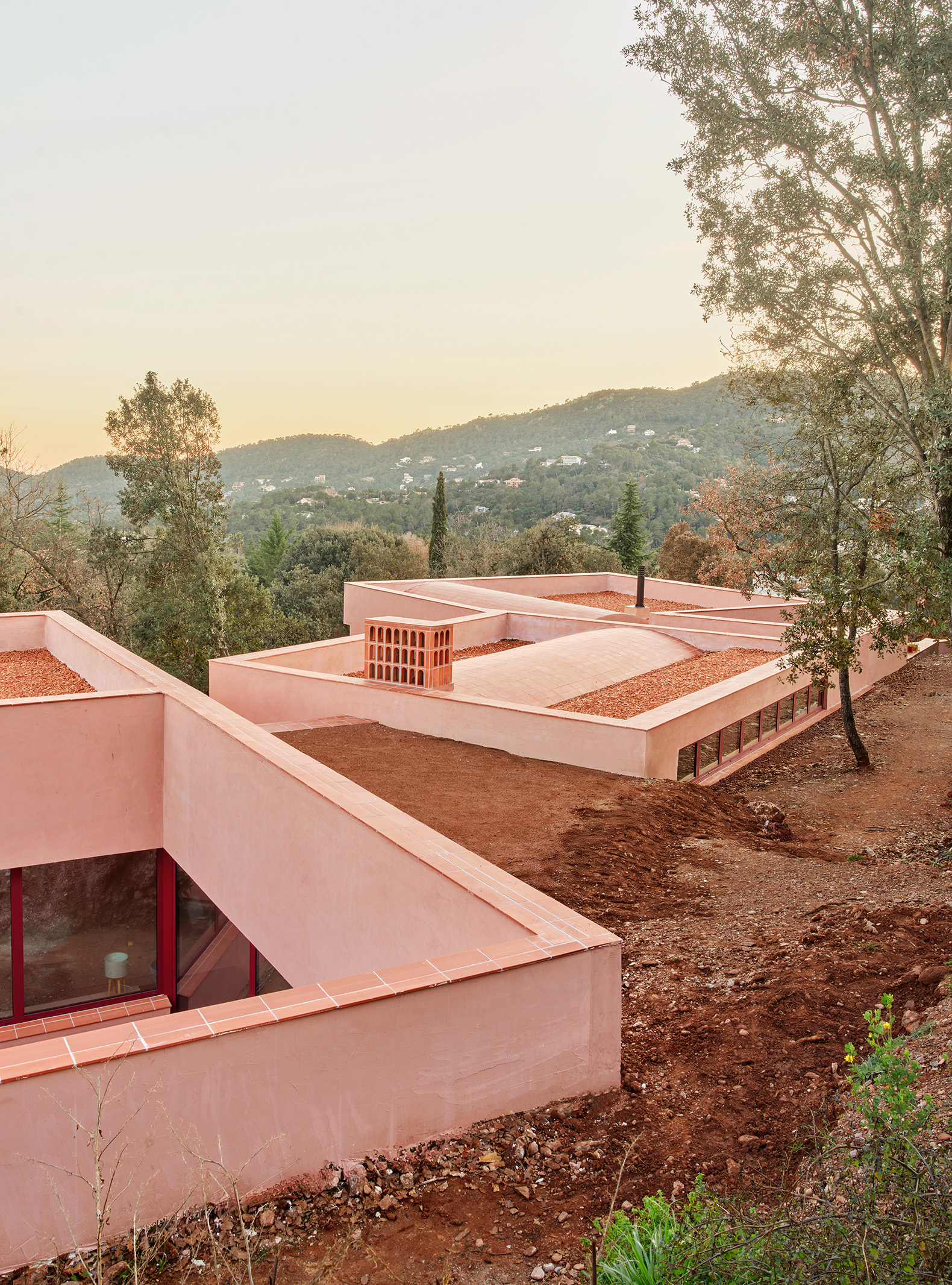
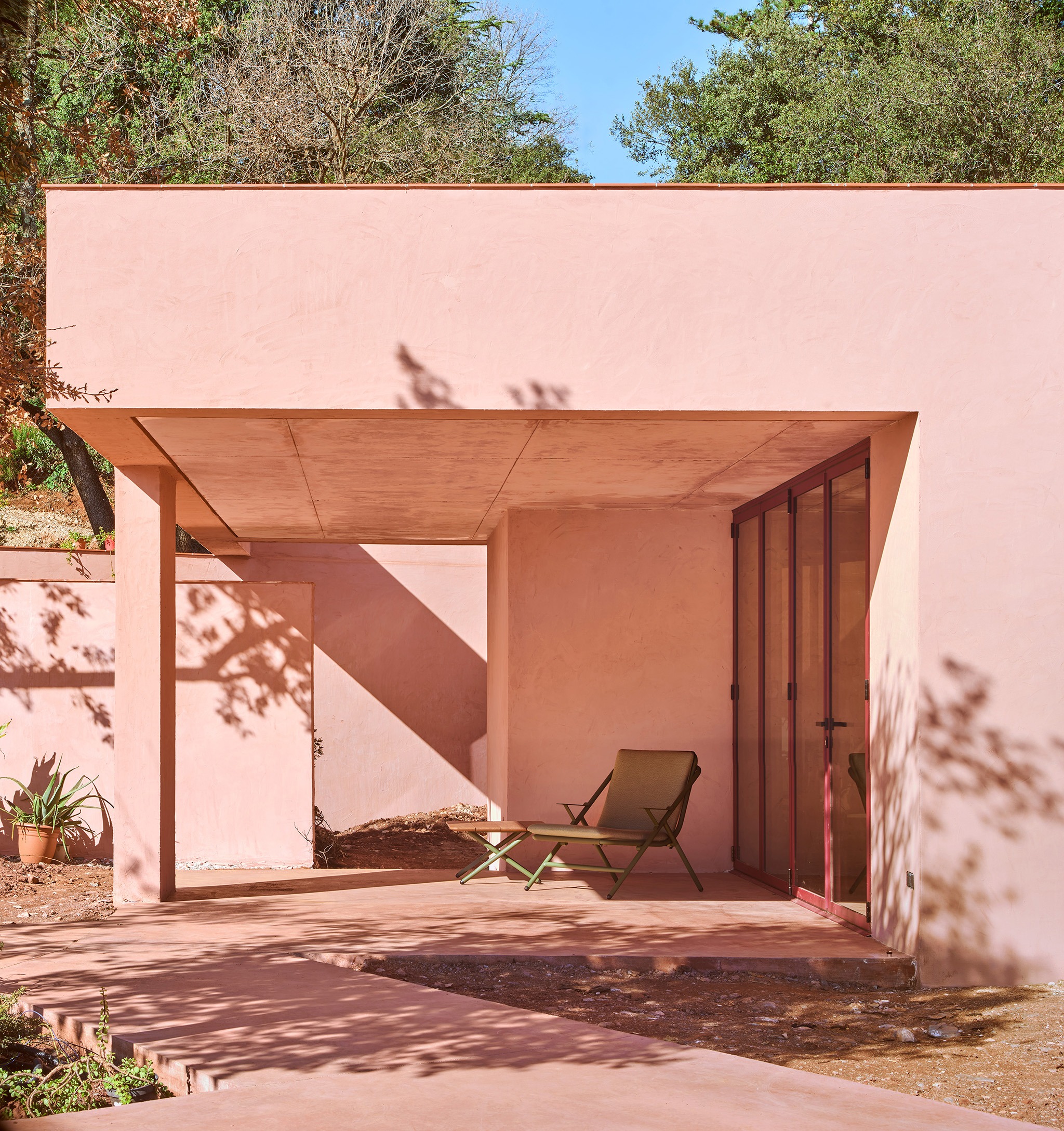
The volumetric strategy developed by Twobo is based primarily on fragmenting the building into pieces that integrate with the natural profile of the terrain. This organization allows the presence of the built volume to be diluted, evoking references such as Alvar Aalto's Muuratsalo House. The resulting form does not seek prominence, but rather to blend into the landscape through a geometry that follows the topography.
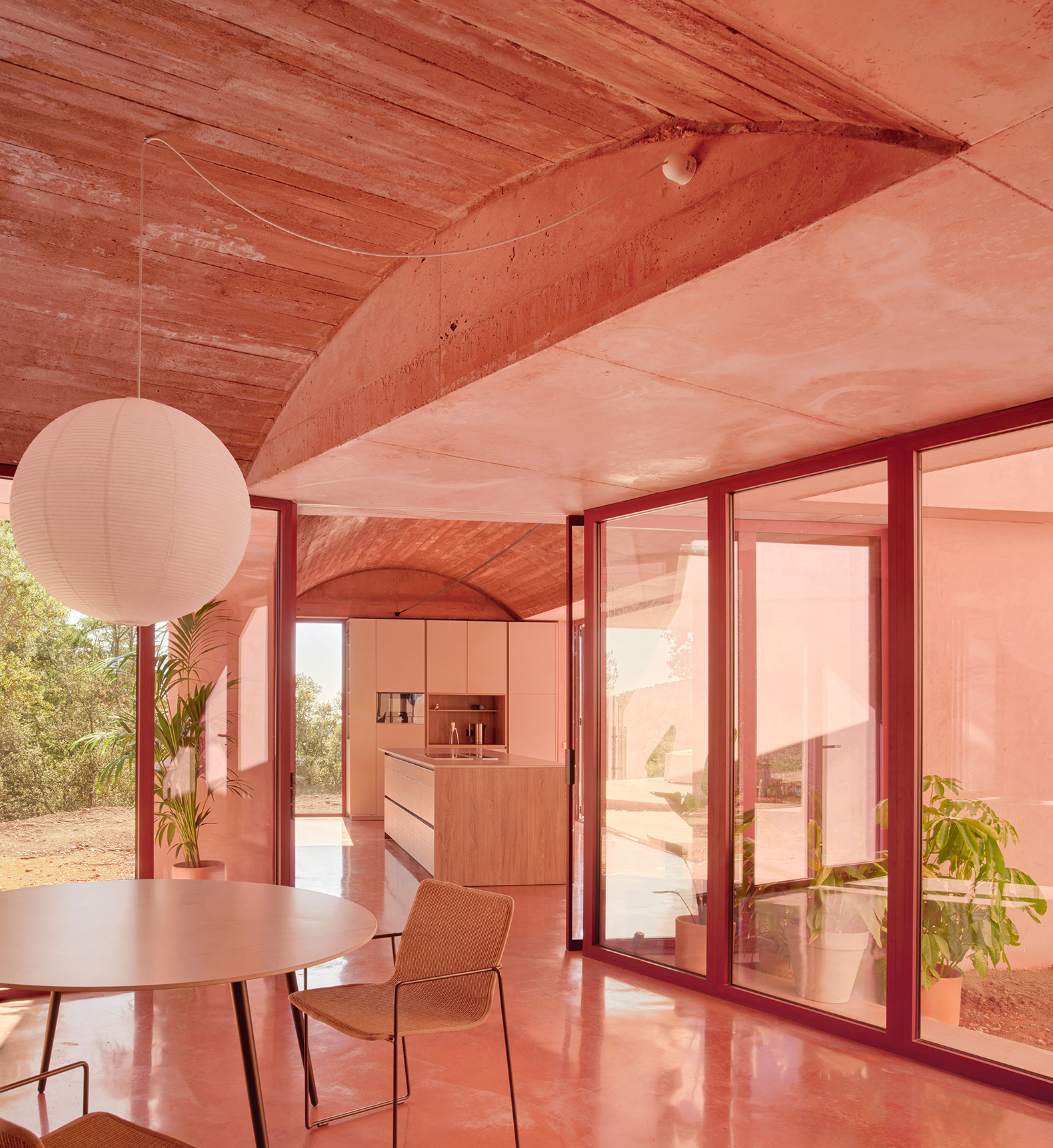
Organized on a single floor, the house arranges its program around two clearly differentiated volumes: one for the common areas—kitchen, dining room, and living room—and another, more introspective, that houses the bedrooms around an interior courtyard. This arrangement results in a sequence of distinct atmospheres, combining open spaces with more secluded and private areas.
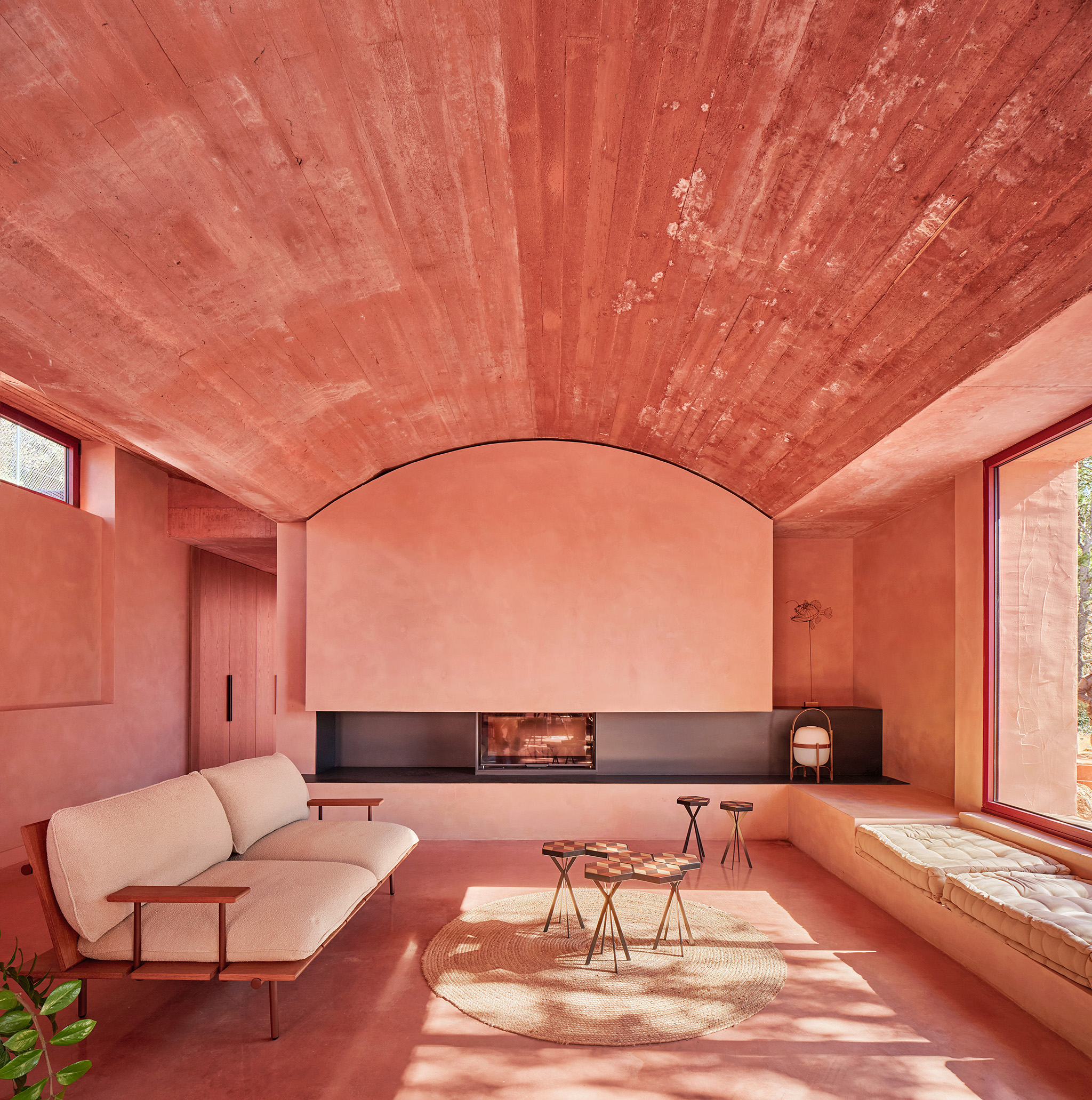
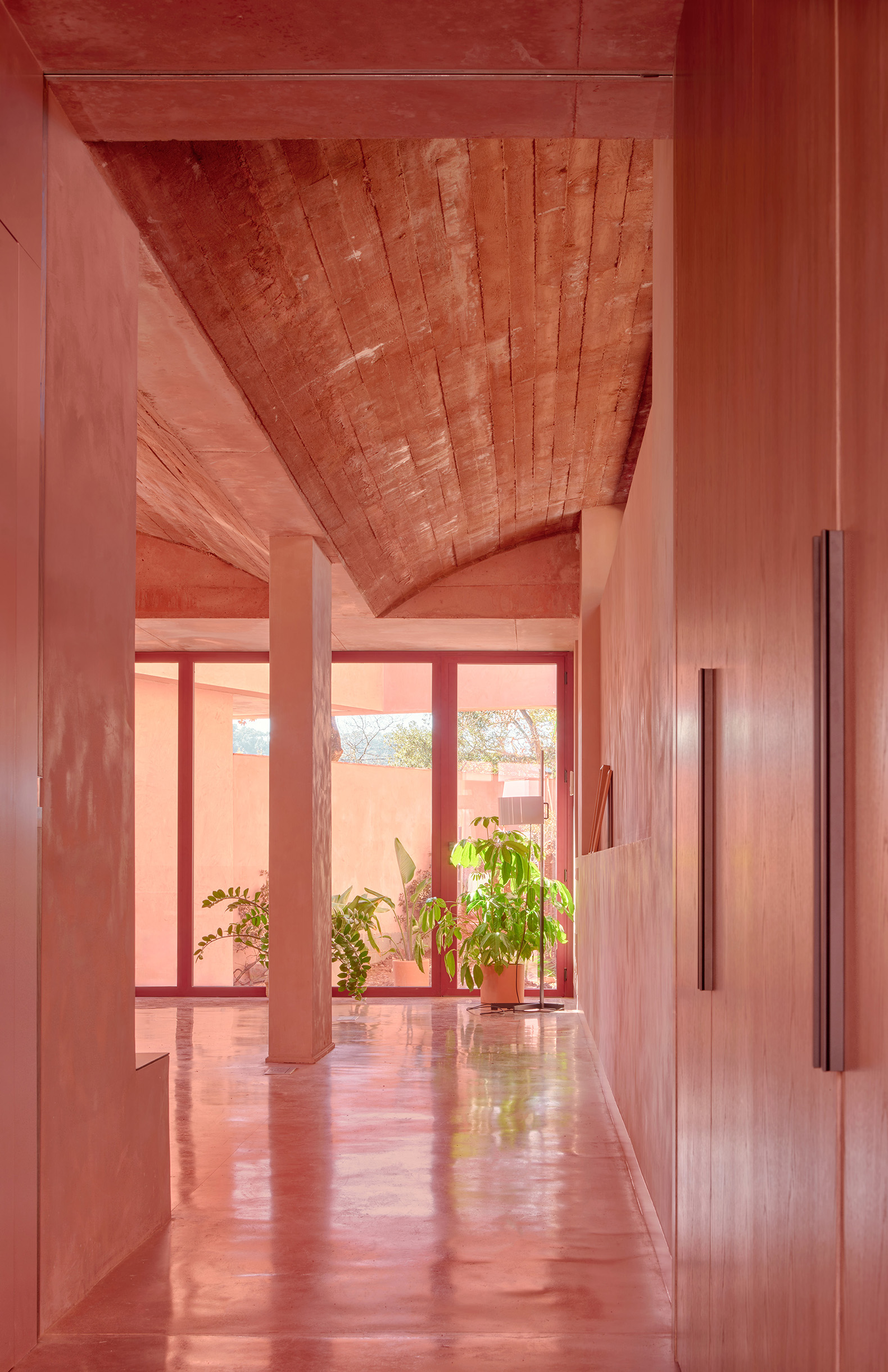
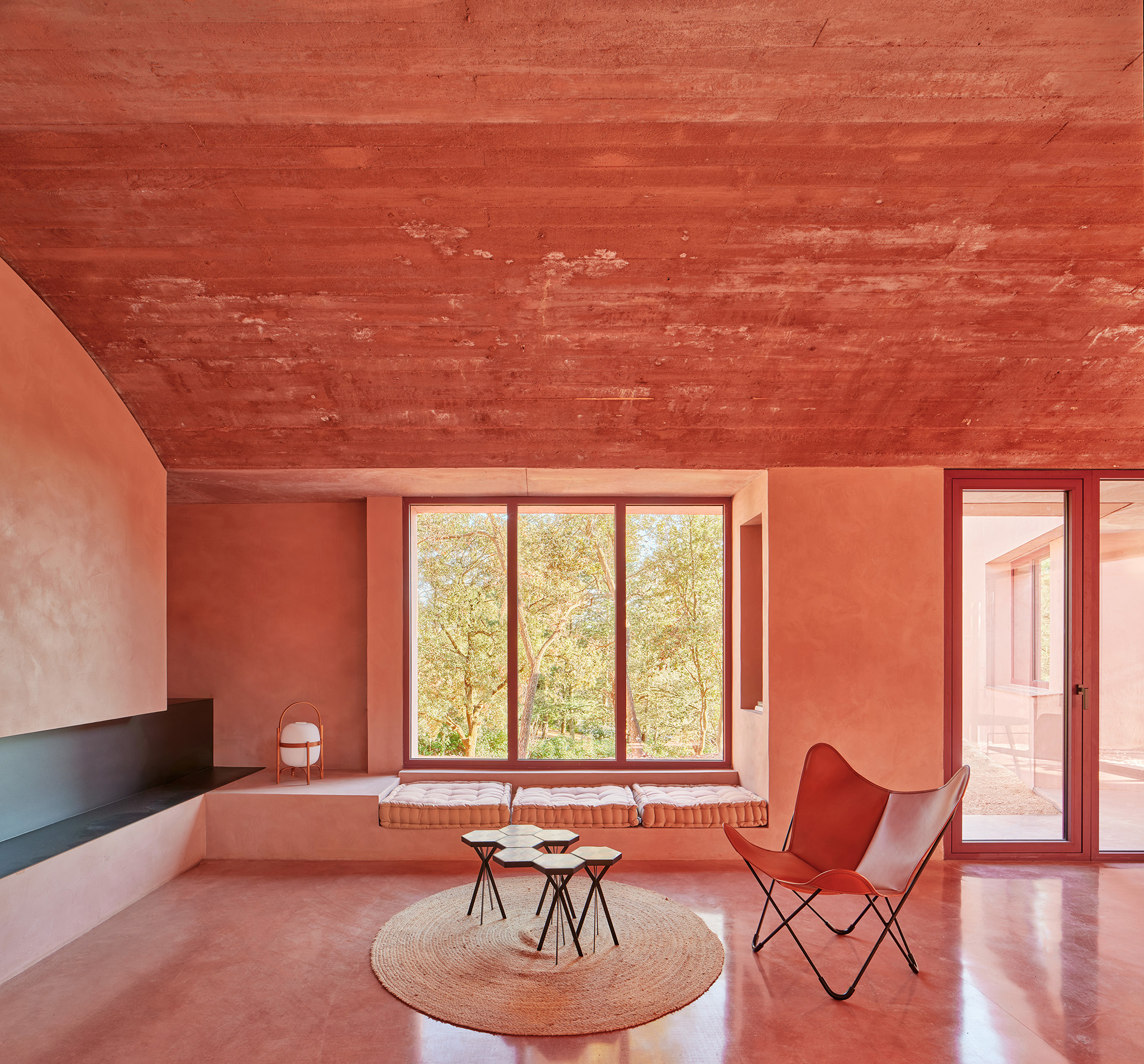
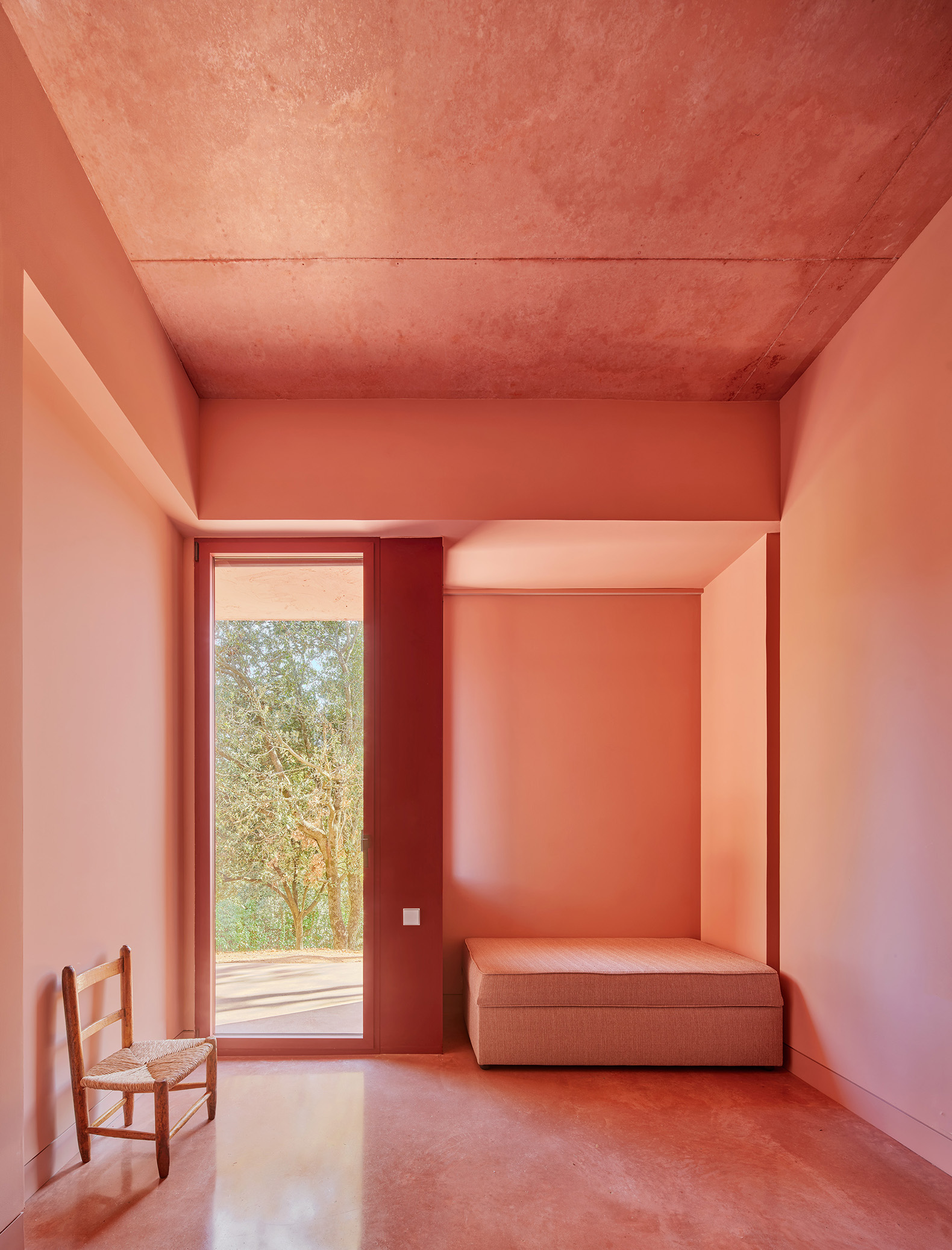
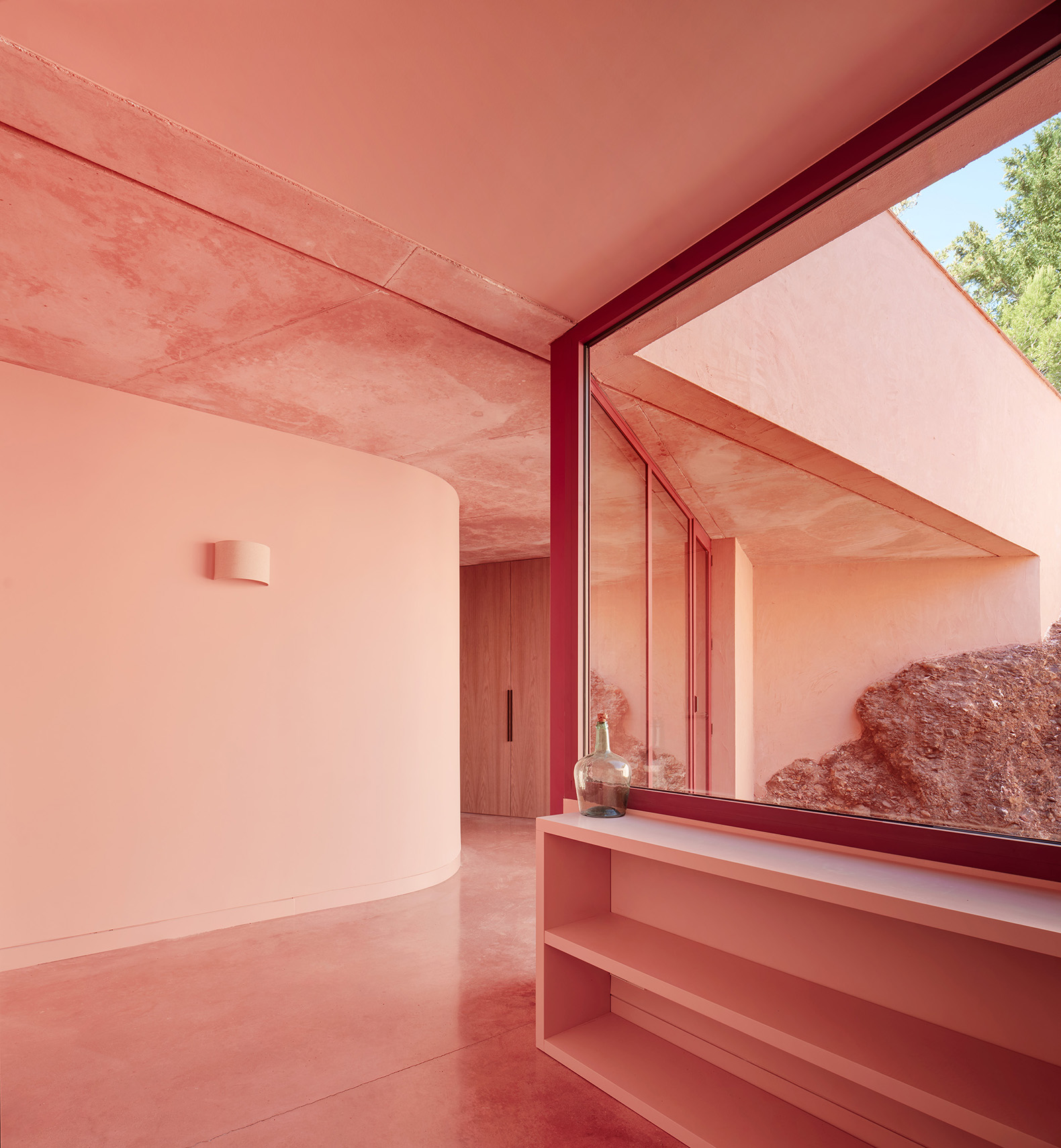
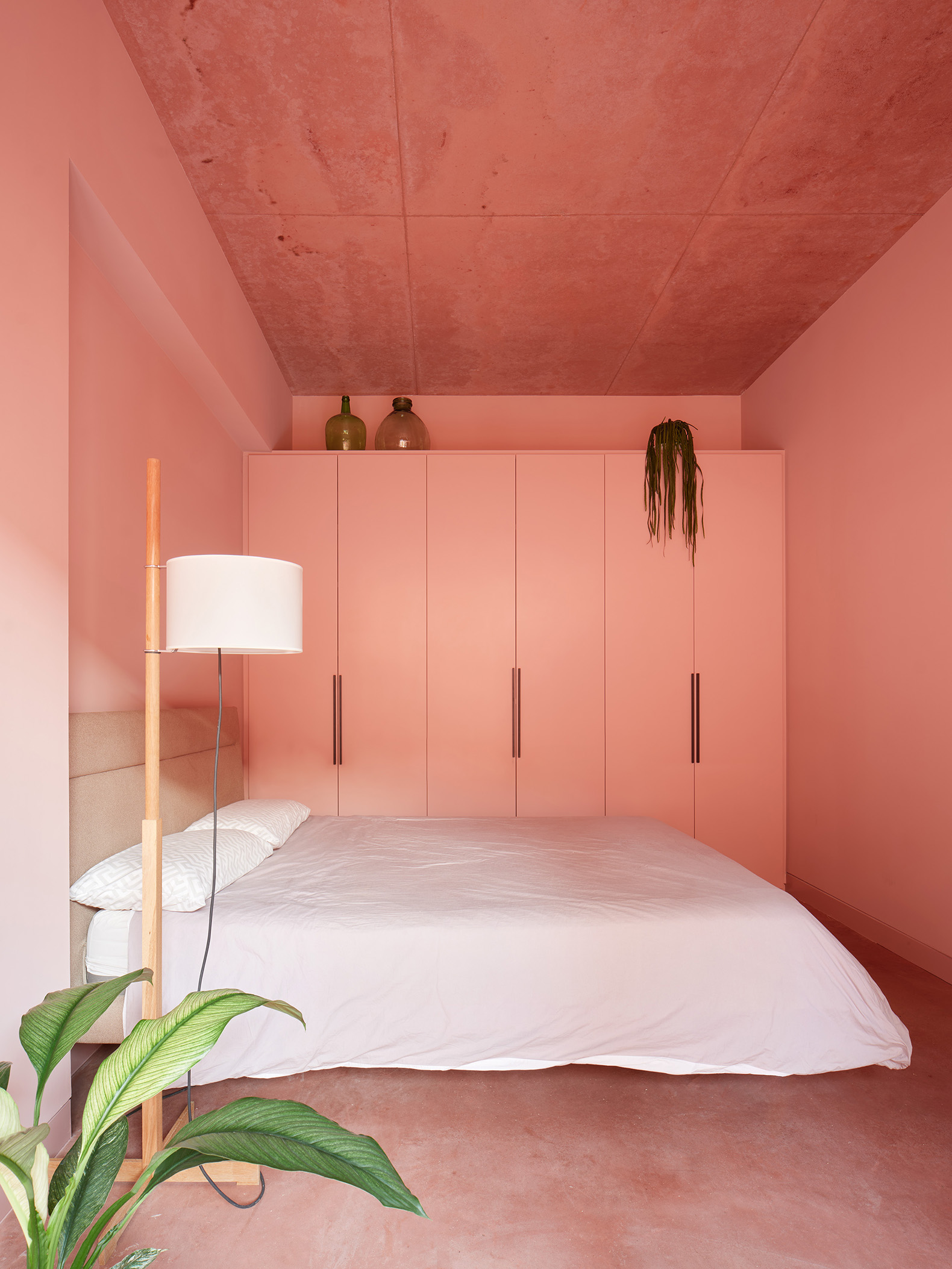
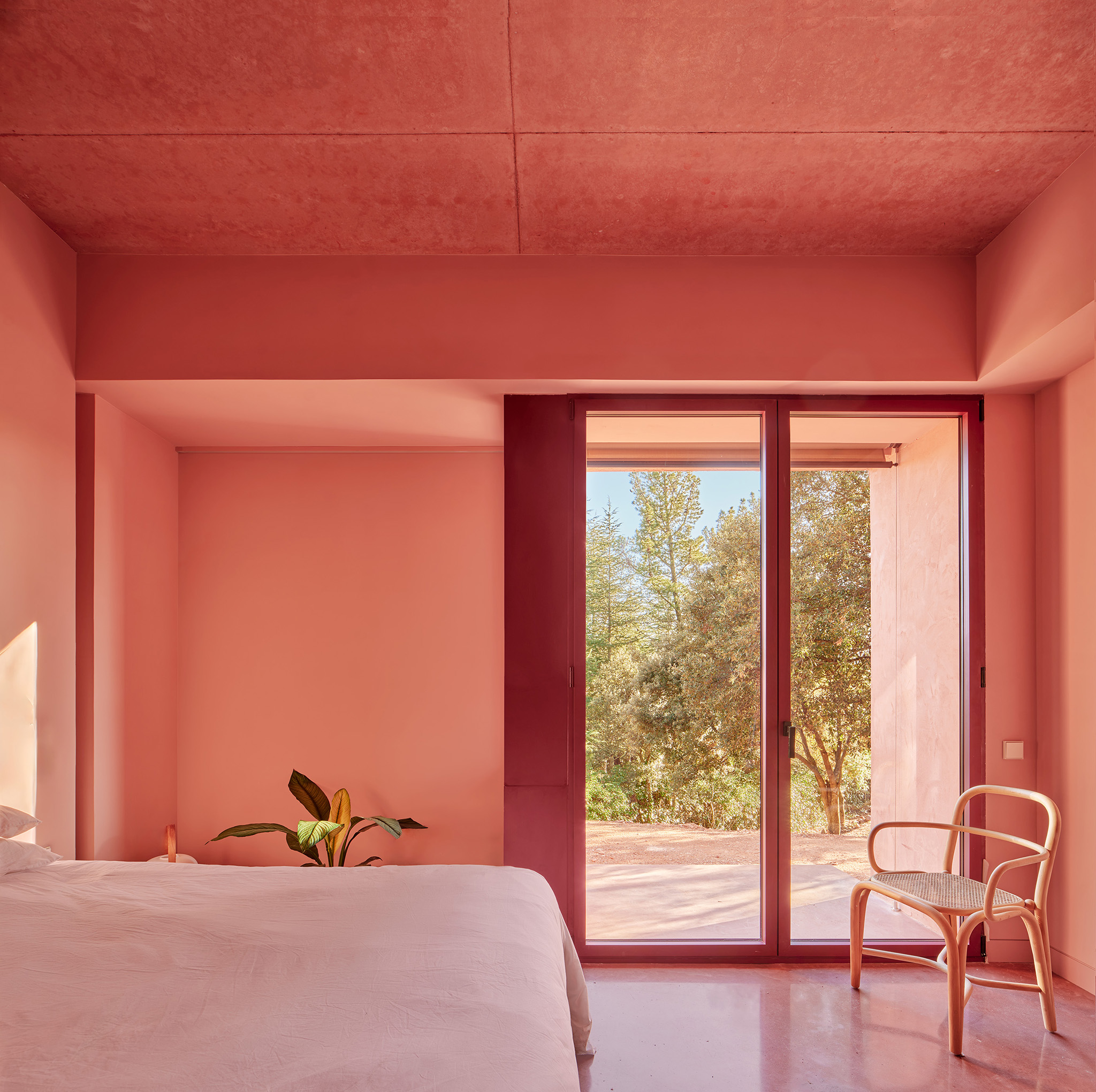
The materiality employed is defined by the use of reddish-tinted pigmented concrete, which allows the house to emerge from the terrain itself. The structure, which also acts as a finish, retains the imprint of the wooden formwork, adding texture and warmth. Elements such as the Catalan vault and the integration of the existing rock reinforce this idea of continuity with the landscape, consolidating an architecture that seems to emerge from the earth itself.
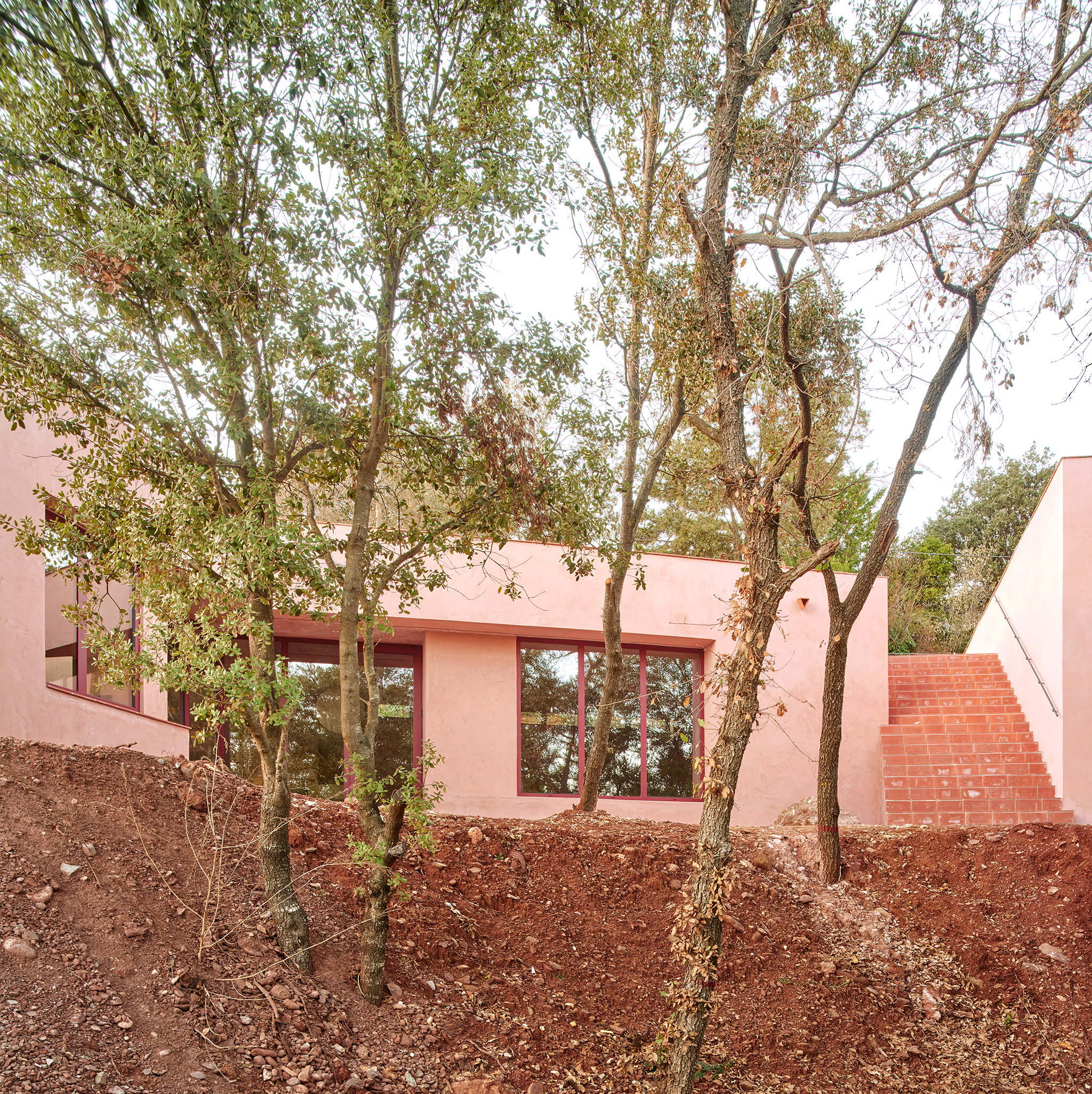
"Casa Sota la Mola" by Twobo. Photograph by José Hevia.
Project description by Twobo
Barcelona-based architecture studio Twobo, formed by María Pancorbo, Alberto Twose and Pablo Twose, presents Casa Sota la Mola. Situated in Matadepera, at the foot of the Sant Llorenç del Munt i l’Obac Natural Park in Barcelona, the project is rooted in a careful reading of its surroundings and designed to blend unobtrusively with the characteristic red hues of the landscape. The result is a monochromatic home that merges with the terrain, combining family life with the tranquillity of nature.
The project was conceived for a couple with two young children, who wanted a home that reflected a sensitivity to design and architectural integration. One of the owners has a deep personal connection to Matadepera, where they spent childhood summers. After fifteen years in Australia – where outdoor living is central to daily life – the family sought to reconnect with the land, selecting this site for their new home.
Twobo translated this personal story into a design that blends with the profile of La Mola through careful topographical adaptation and a close dialogue with the surrounding landscape. Two key strategies define the project: the fragmentation of volumes and the use of materials that harmonise with the terrain’s reddish palette. The result is a house that serves both as a family retreat and an extension of the landscape, with clear references to Alvar Aalto’s famous Muuratsalo Experimental House.
“In his house in Muuratsalo, Alvar Aalto begins with a central element – the hearth, the courtyard – and fragments the house in order to merge it with the landscape. From him, we learn that fragmentation can be a way of disappearing and of bringing architecture and nature together.”
Pablo, Alberto and María.
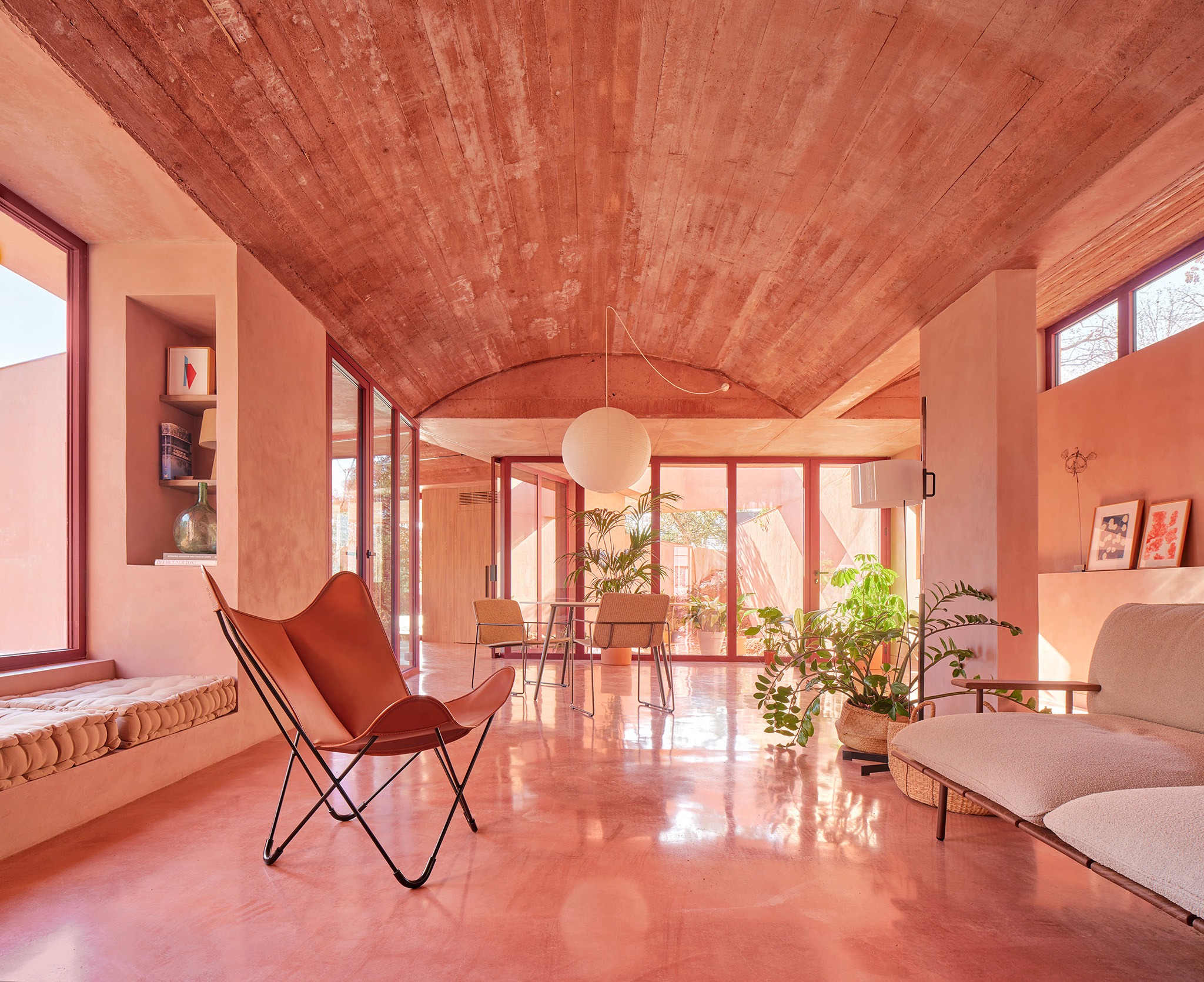
The house extends across a single storey and is organised into two volumes: one for communal living, containing the kitchen, dining room and living room; the other, arranged around an inner courtyard, accommodates the private areas with the bedrooms. This clear functional division creates two distinct atmospheres: the elevated section, oriented towards the afternoon sun and open to the views, naturally becomes the main living space, while the central, cooler, shaded area provides seclusion and rest. Its positioning avoids views of neighbouring buildings, prioritising a connection with the immediate natural surroundings.
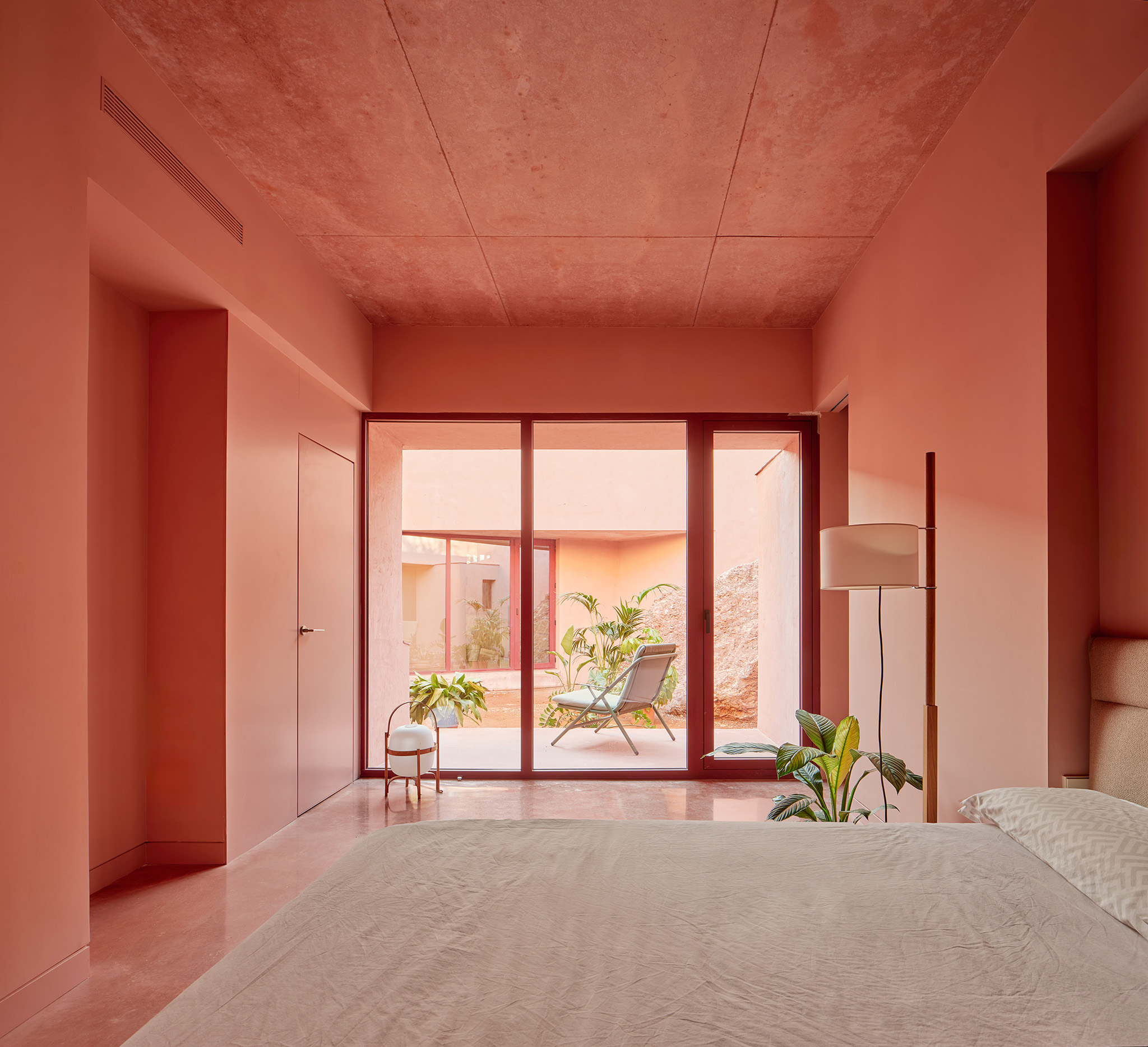
The interior is guided by a single principle: the structure itself serves as the final finish. Accordingly, the architects chose pigmented concrete in a reddish tone, giving the house its identity without additional cladding. Its surface retains the texture of the wooden formwork, a visible trace that adds a sense of handcrafted warmth and reveals the construction process. The vaulted form of the structure – the volta catalana – defines the main rooms, lending continuity, texture and an almost sculptural atmosphere throughout.
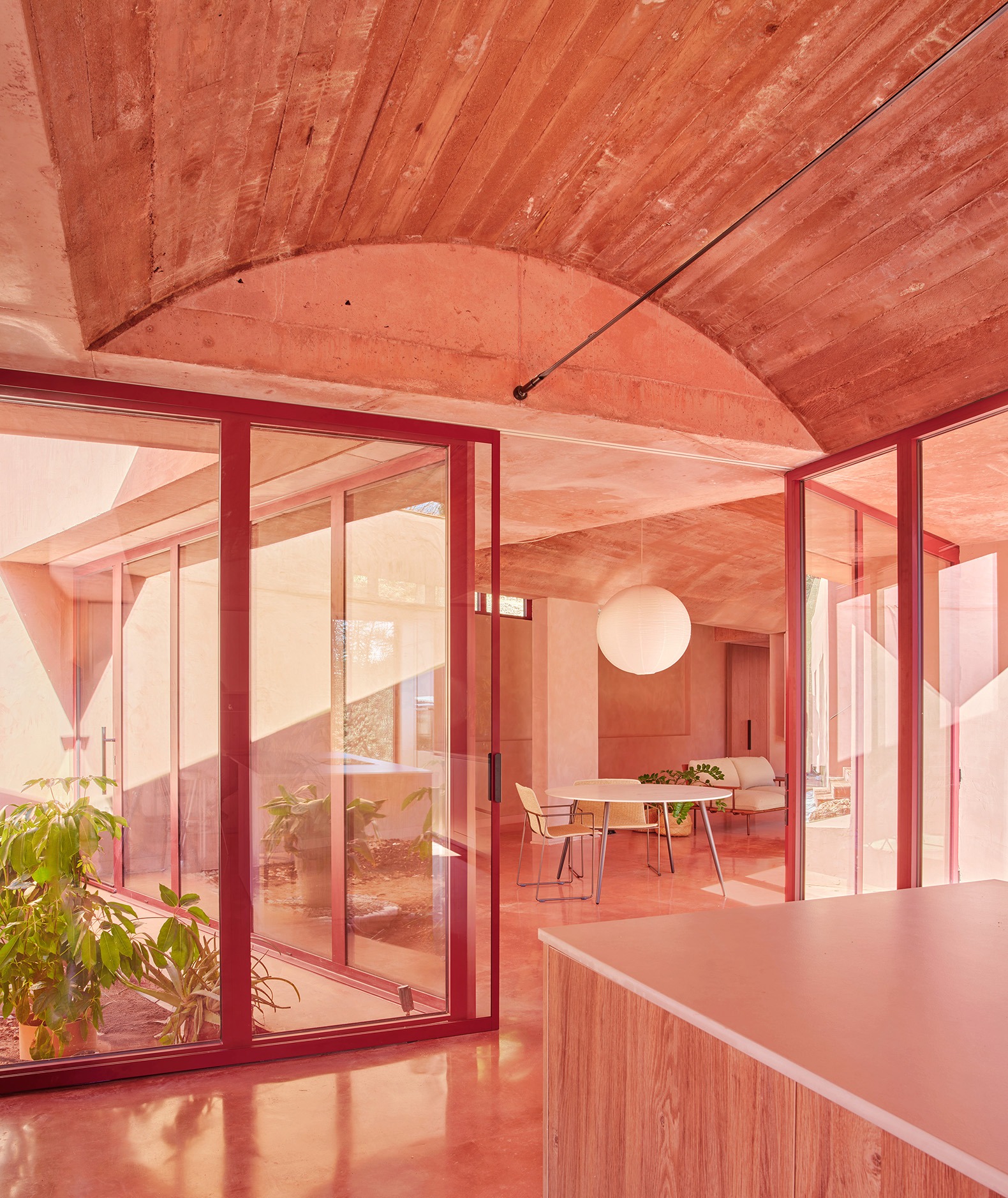
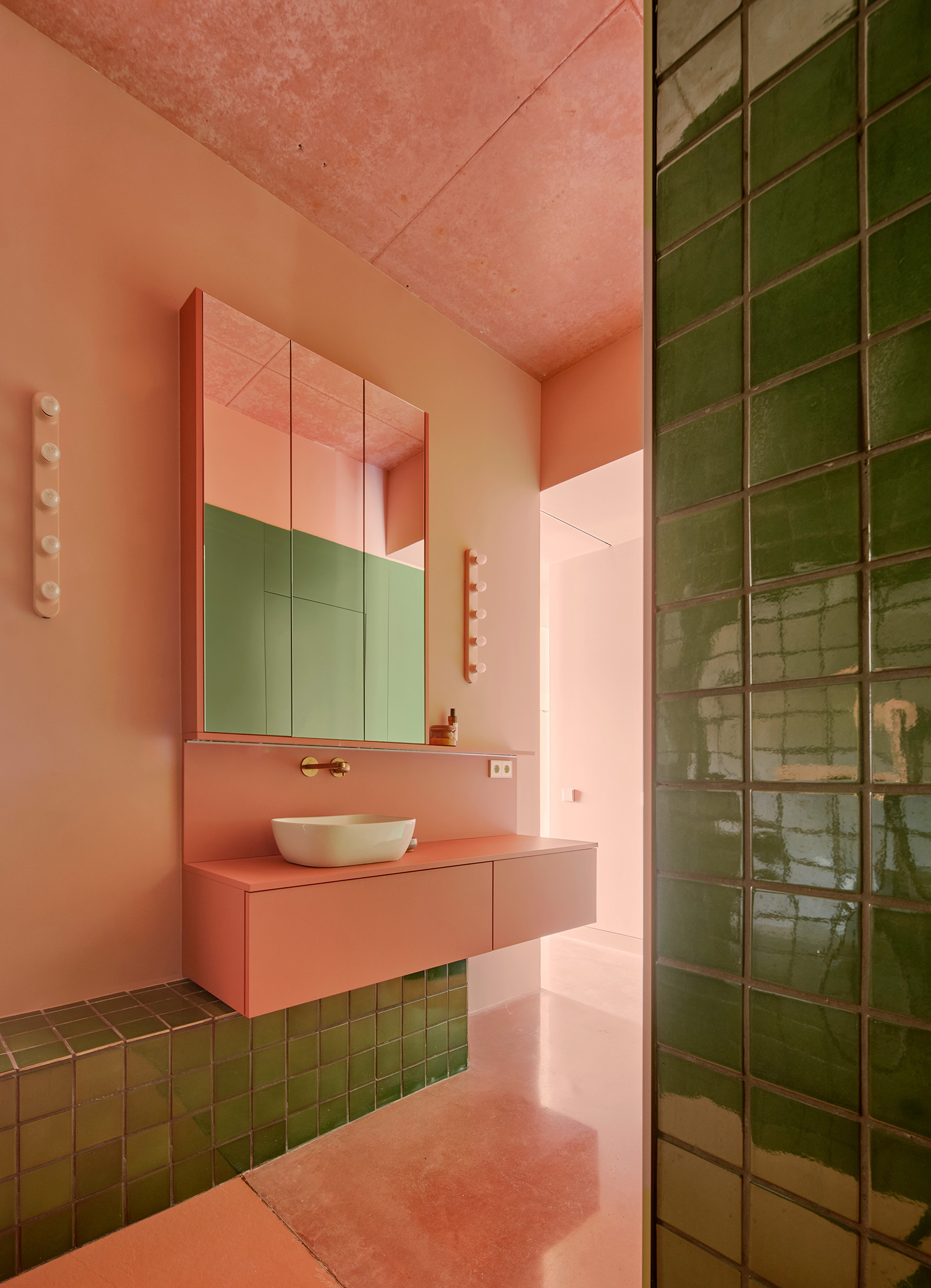
This earthy, reddish material is complemented by the green of the surrounding landscape, which flows in through the large windows, creating a striking contrast with the interior tones. This interplay of colour, light and material continues into the master bedroom bathroom, where green ceramics set against red finishes echo the contrast between the cork oaks outside and the house itself.
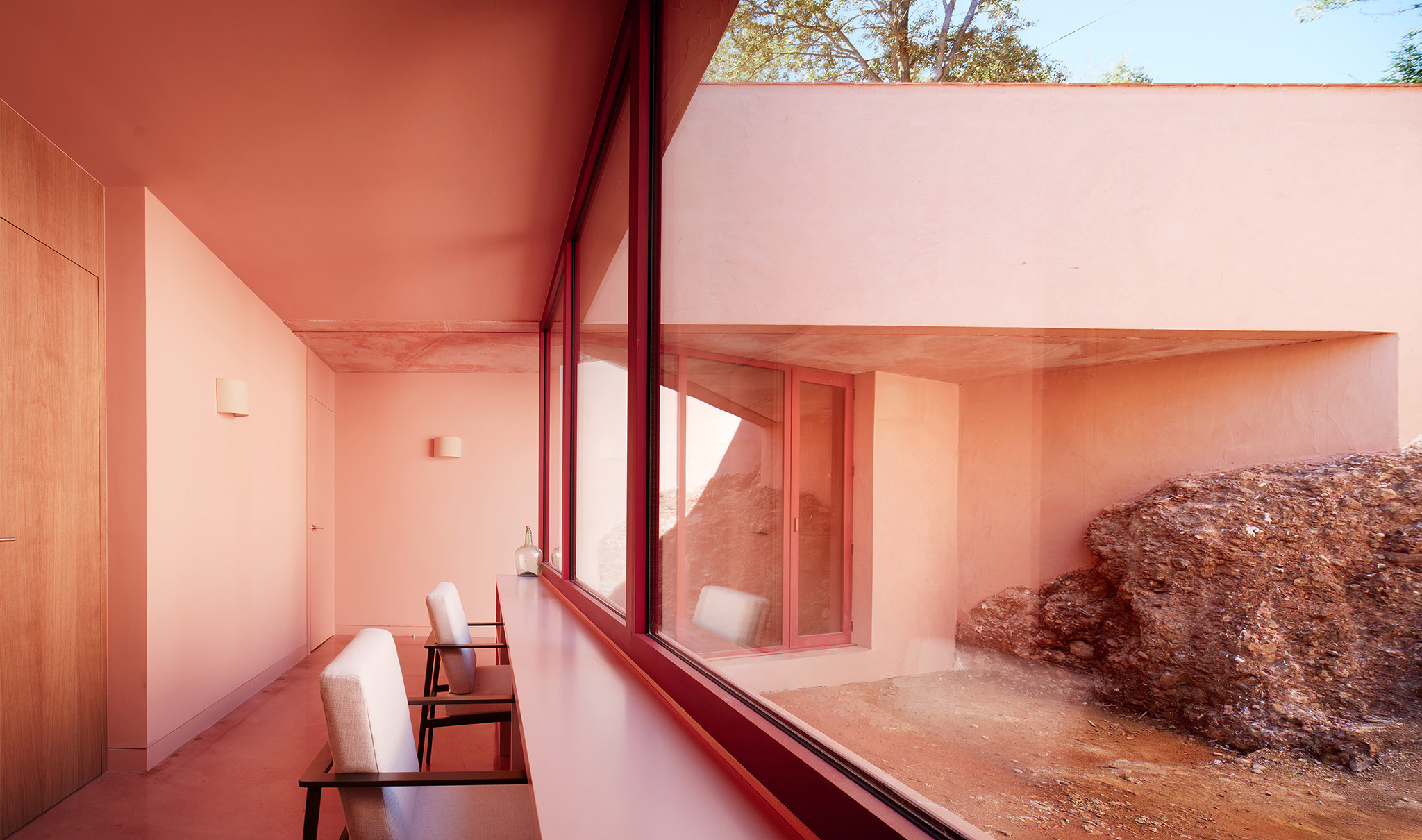
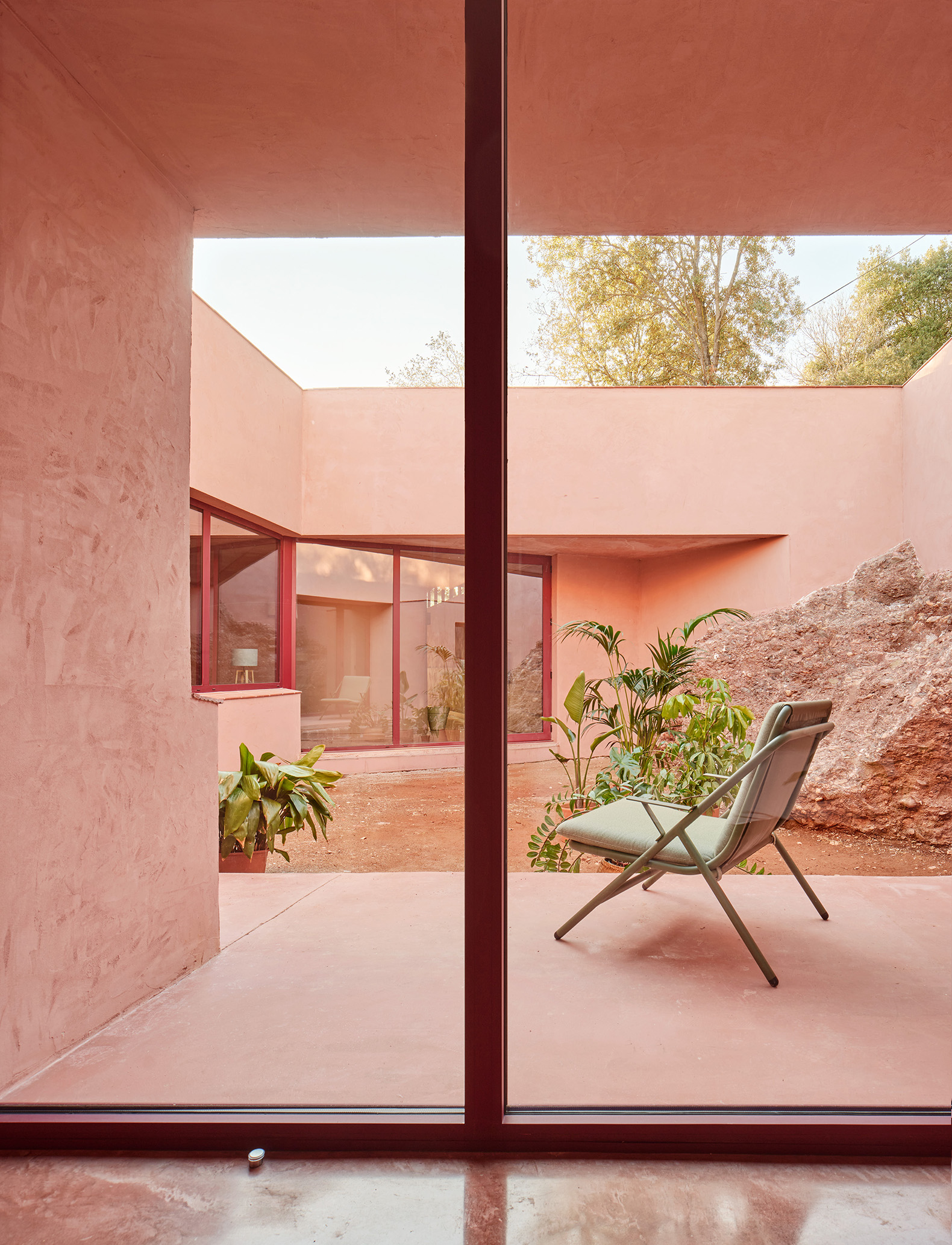
In keeping with the aim of engaging with the terrain, the design extends this dialogue beyond the interior. In the inner courtyard, directly accessible from the master bedroom, a large rock uncovered during excavation has been retained and integrated into the walls, becoming part of the final design. Outside, the vegetation remains virtually untouched: the original ground has been altered only to accommodate the footprint of the house.
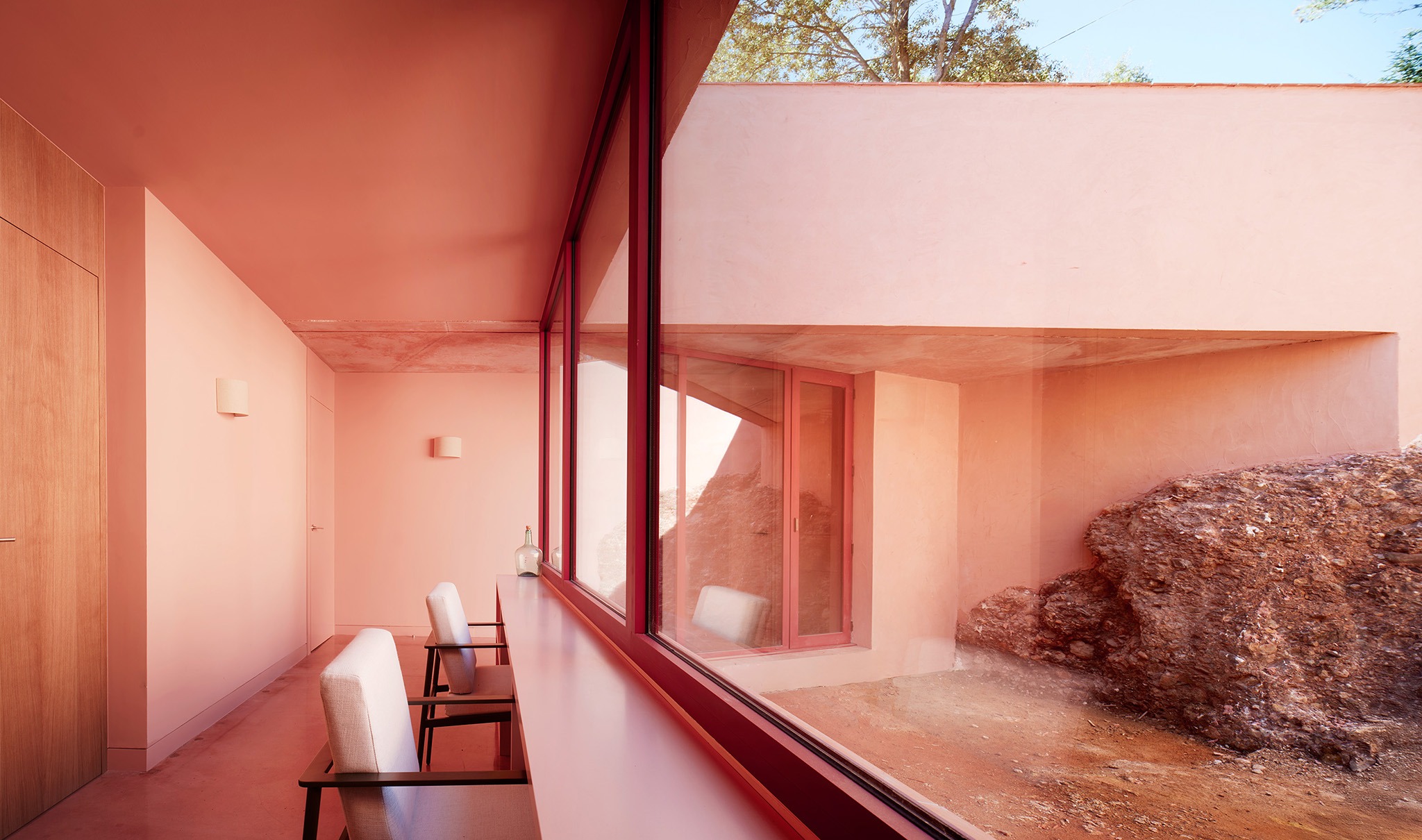
Twobo has created architecture that rises organically from the land, reinforcing its connection with the site’s pronounced and ever-changing topography. Nestled between damp run-offs and pockets of light, Casa Sota la Mola balances the shade of oaks and holm oaks with the warmth of the afternoon sun, combining family living with the profound serenity of nature.