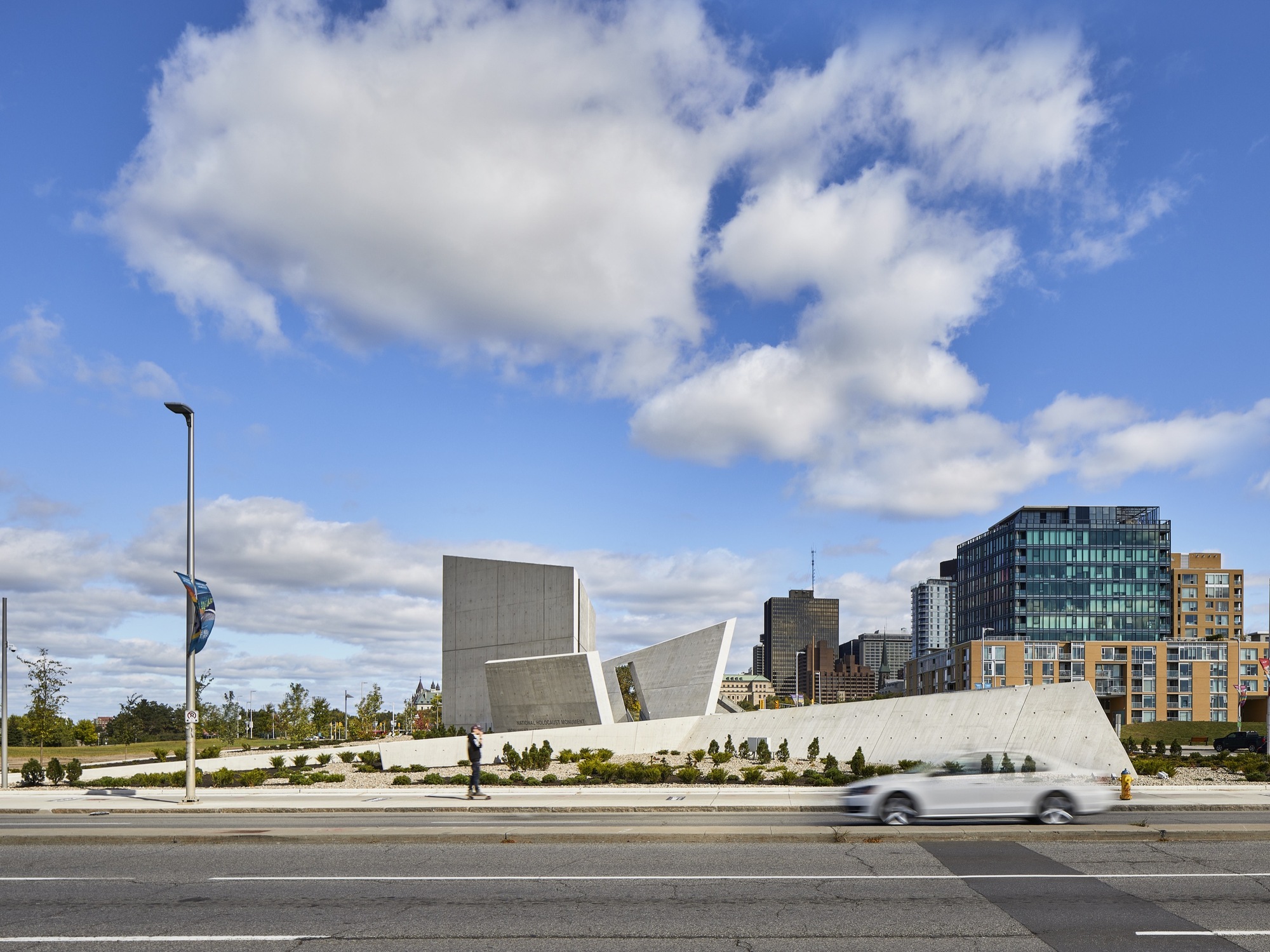
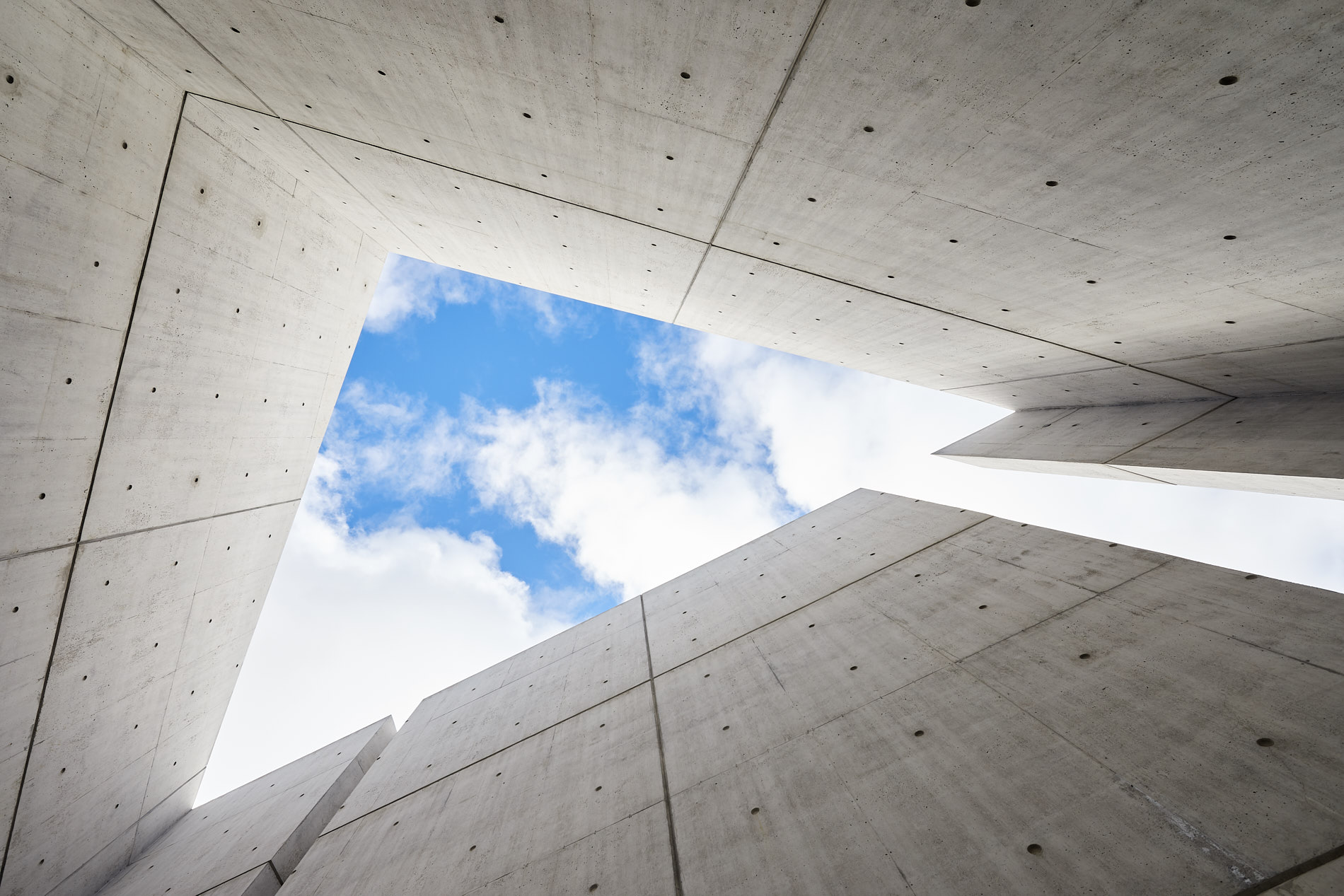
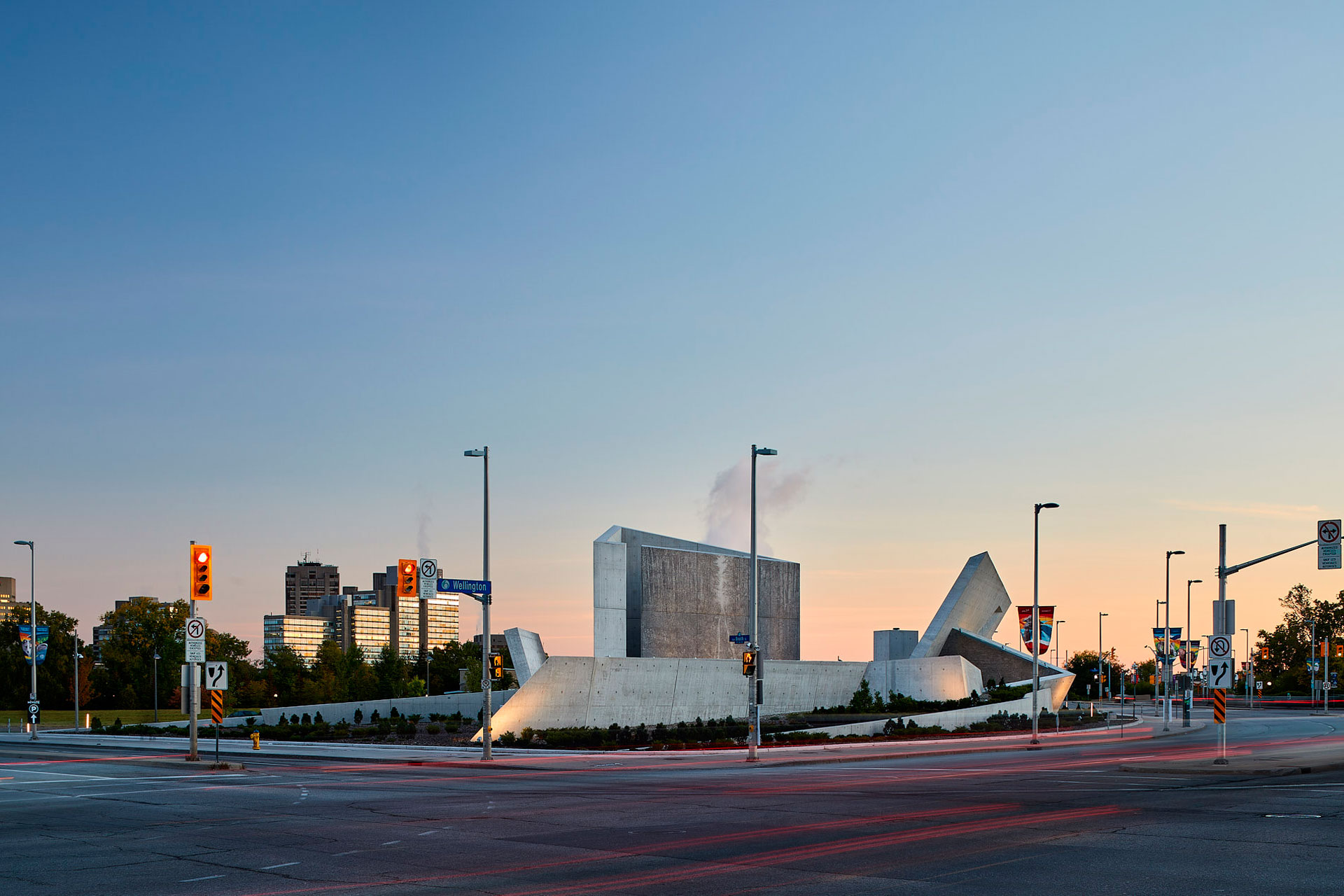
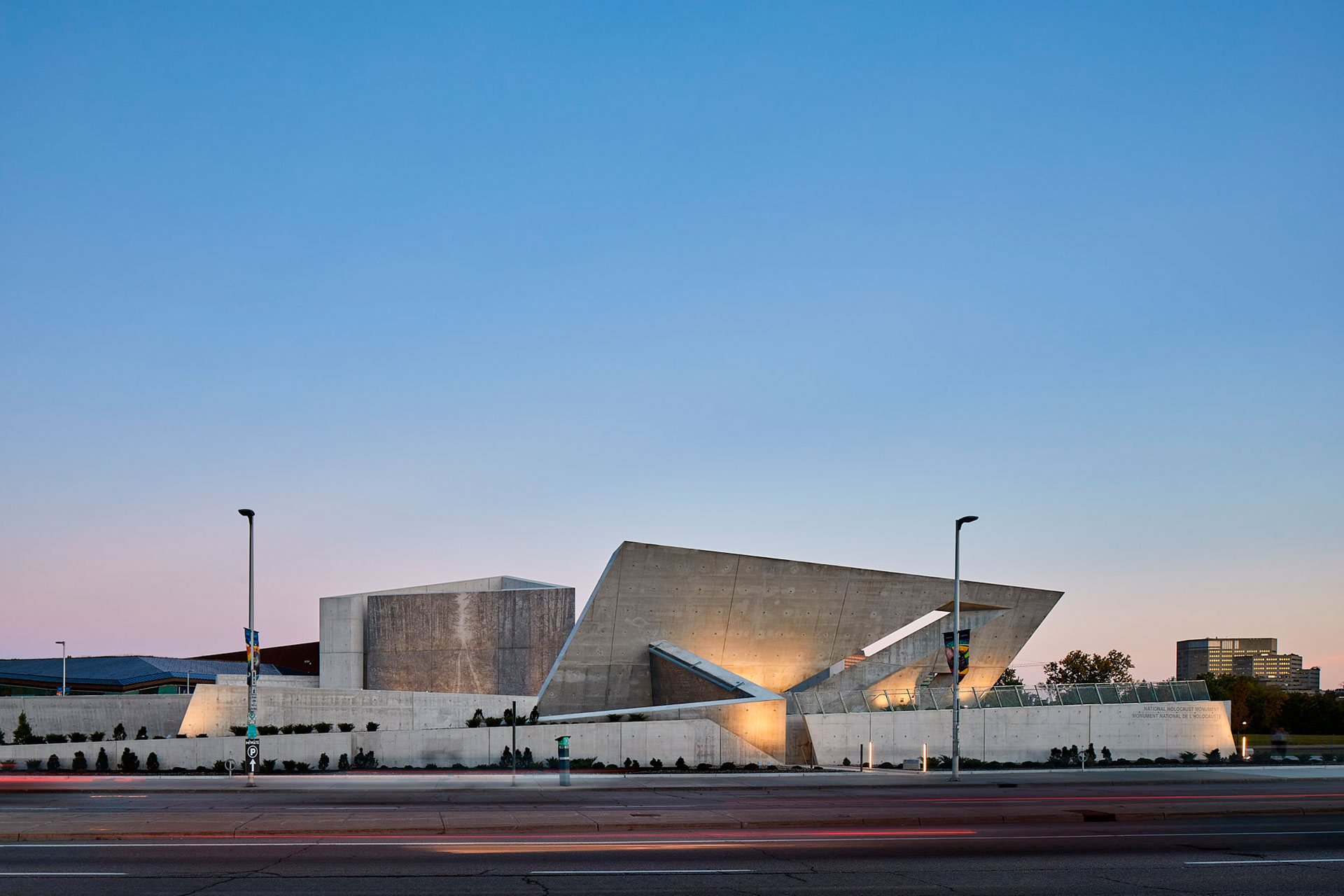
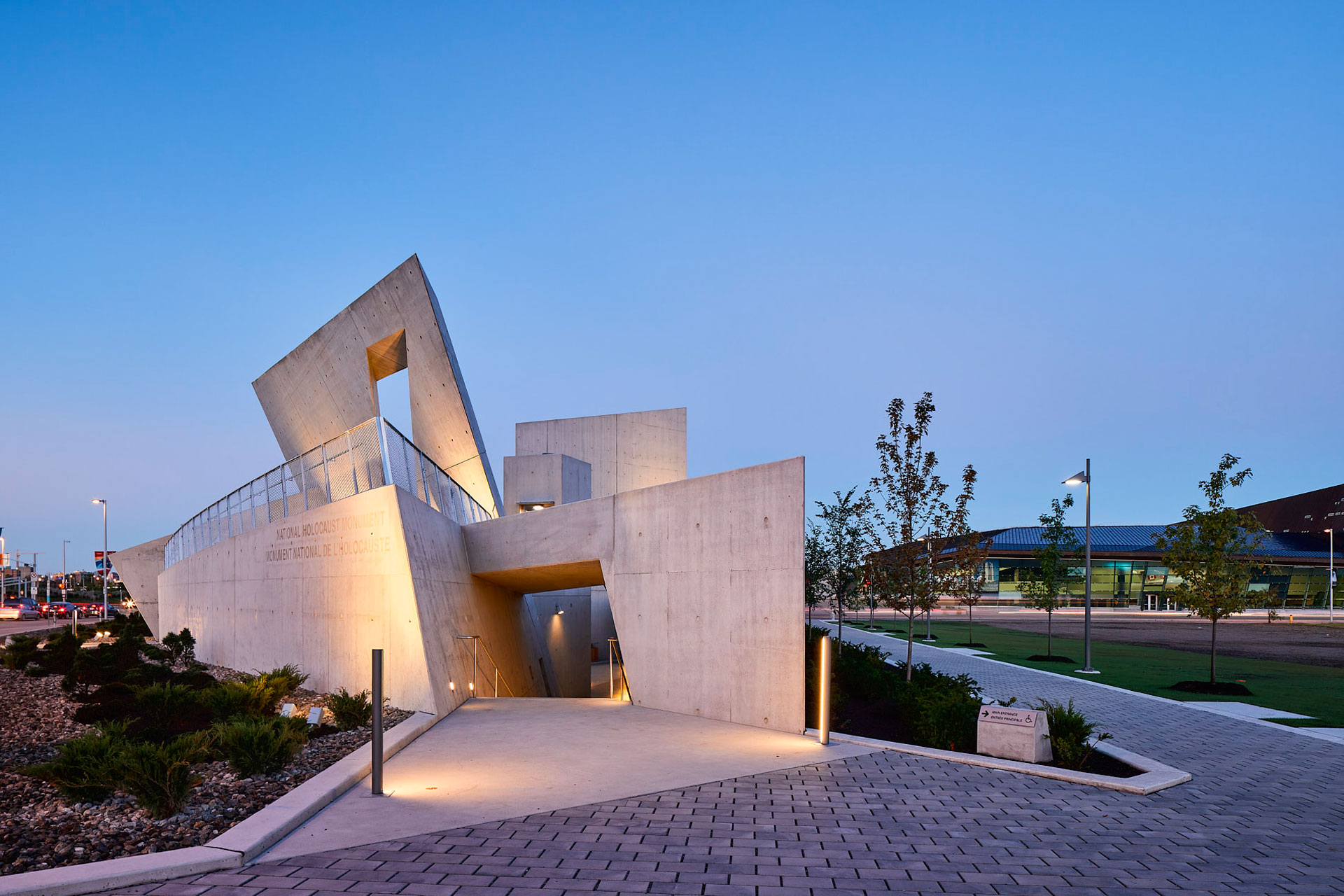
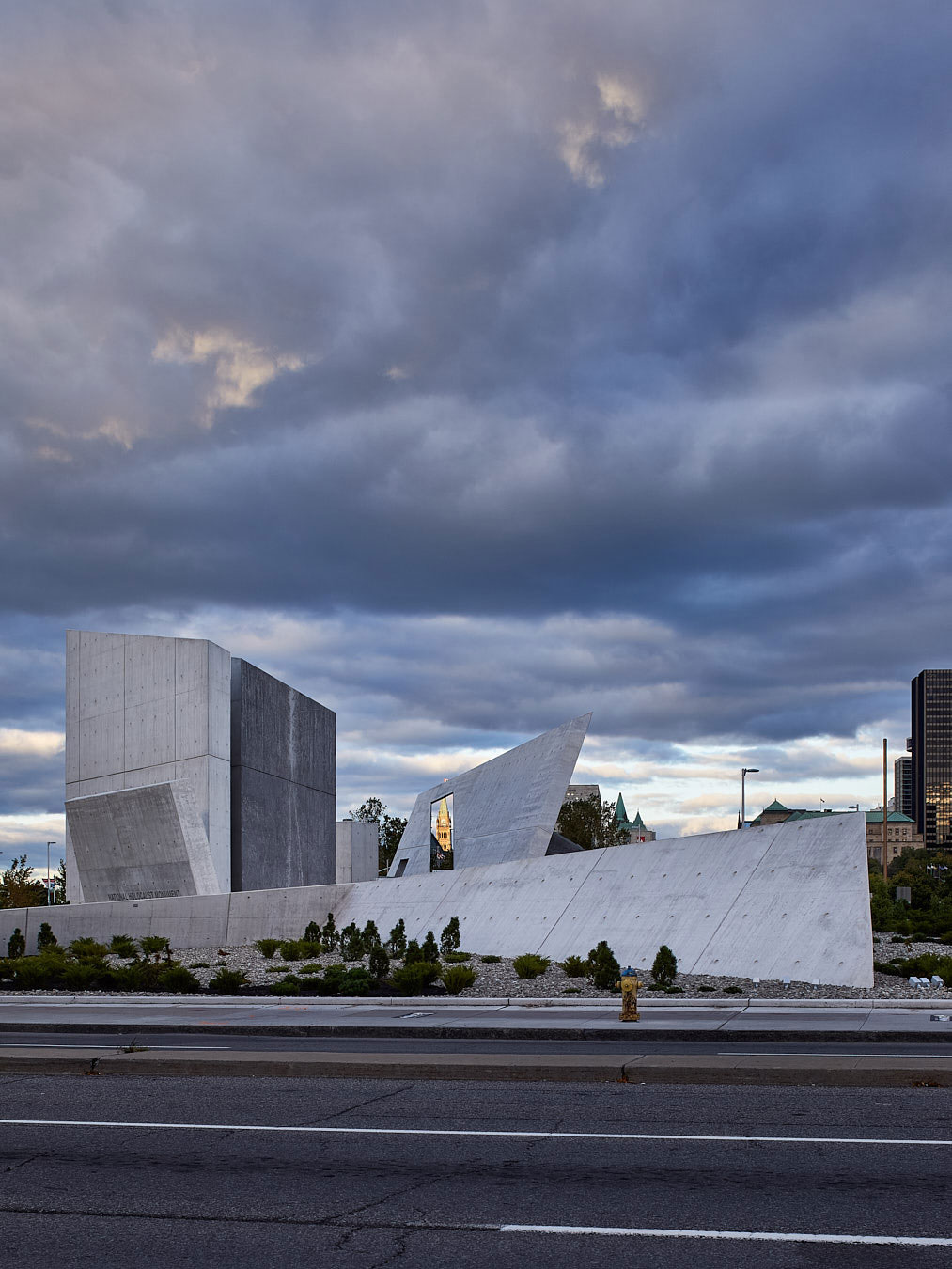
Canada’s first National Holocaust Monument designed by Studio Libeskind was unveiled in Ottawa, on September 27, with Prime Minister Justin Trudeau. In front of a crowd of 500 — many of whom are Holocaust survivors — the concrete monument was unveiled at Booth and Wellington, close to the Canadian War Museum.

The monument, called Landscape of Loss, Memory and Survival, has been in the works since 2014, when Studio Libeskind’s concept was selected from an open competition, beating out six other international submissions, including concepts by Toronto’s Quadrangle, Montreal’s Saucier + Perrotte from Montreal, and a team comprised of Sir David Adjaye and Ron Arad out of London.

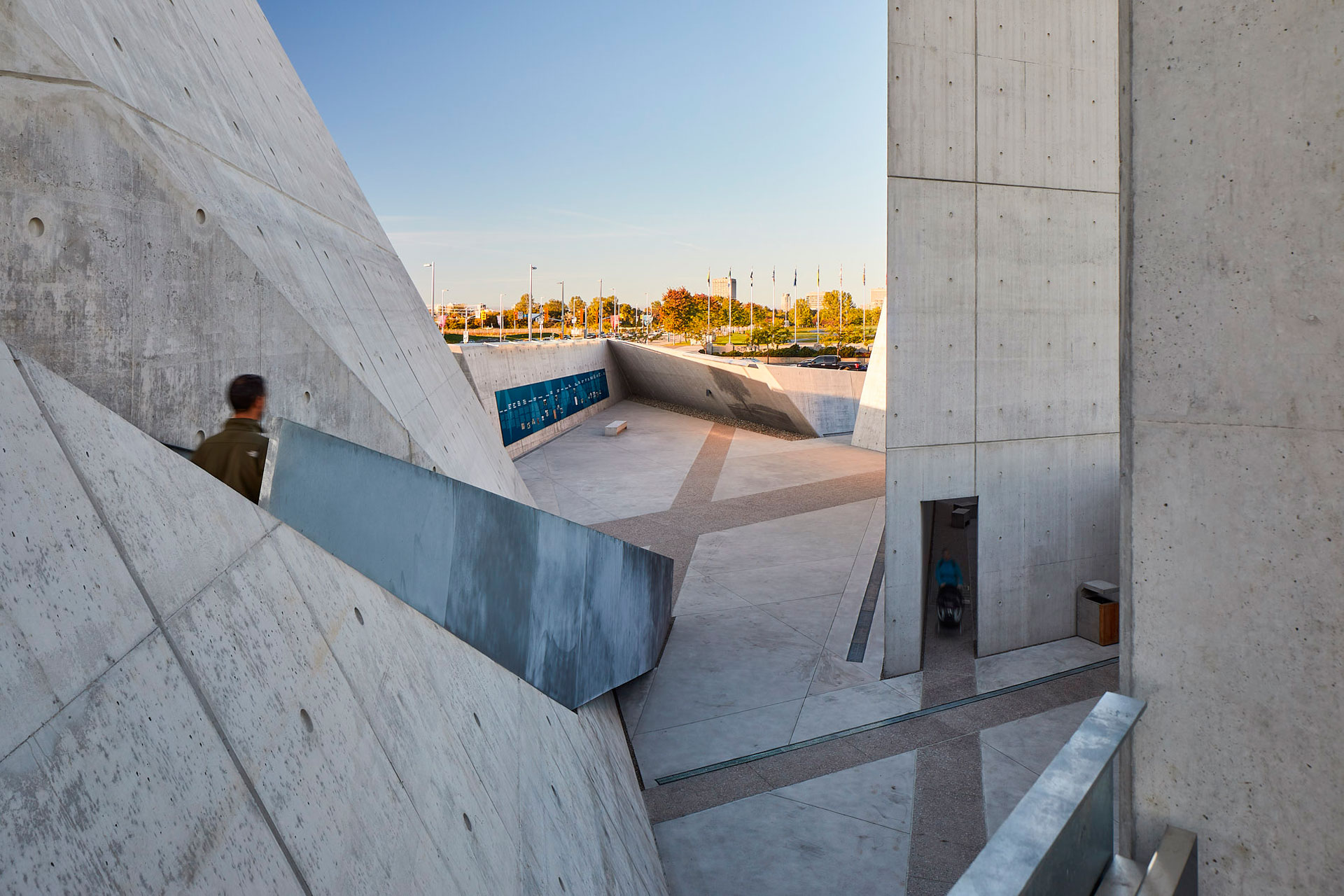
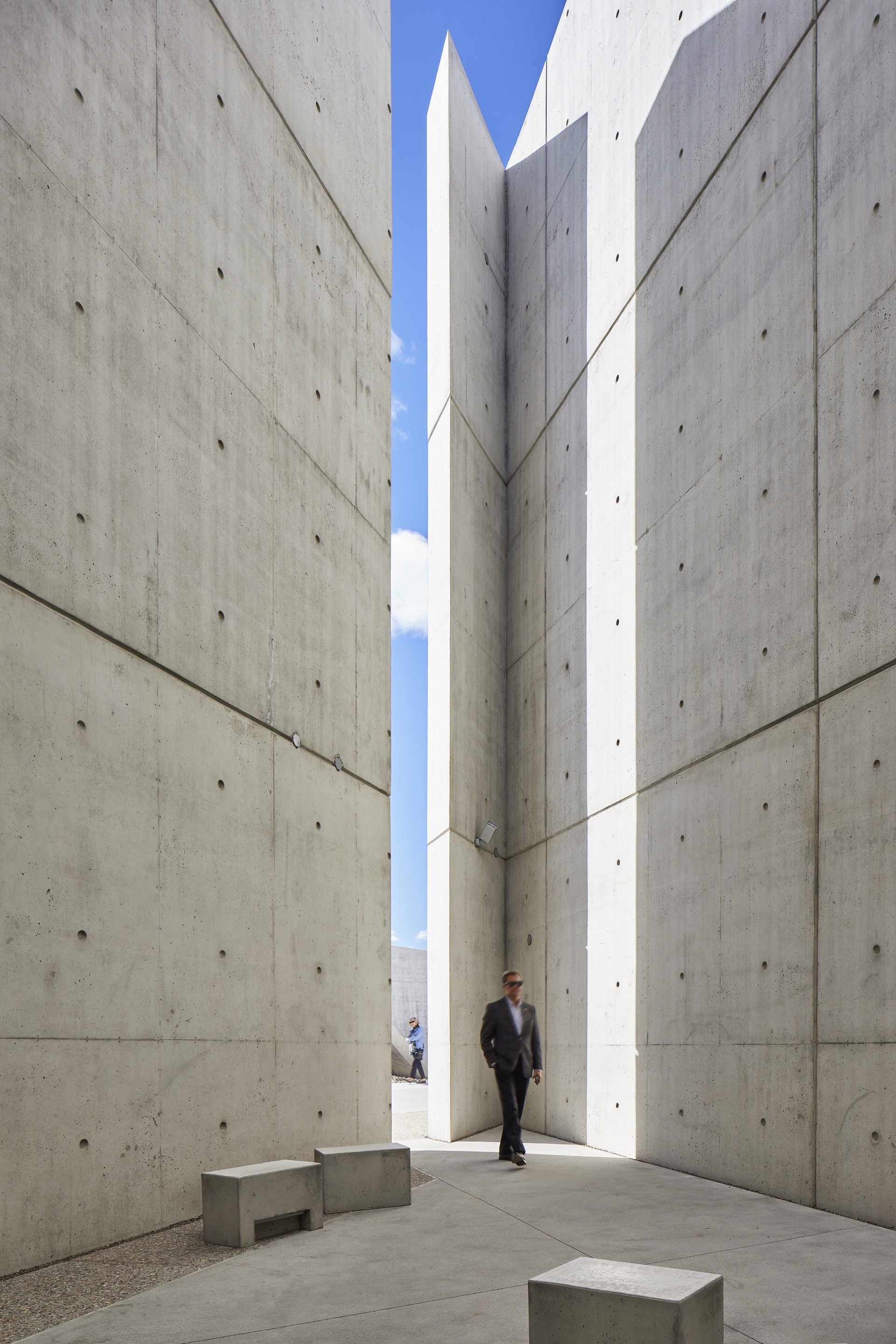
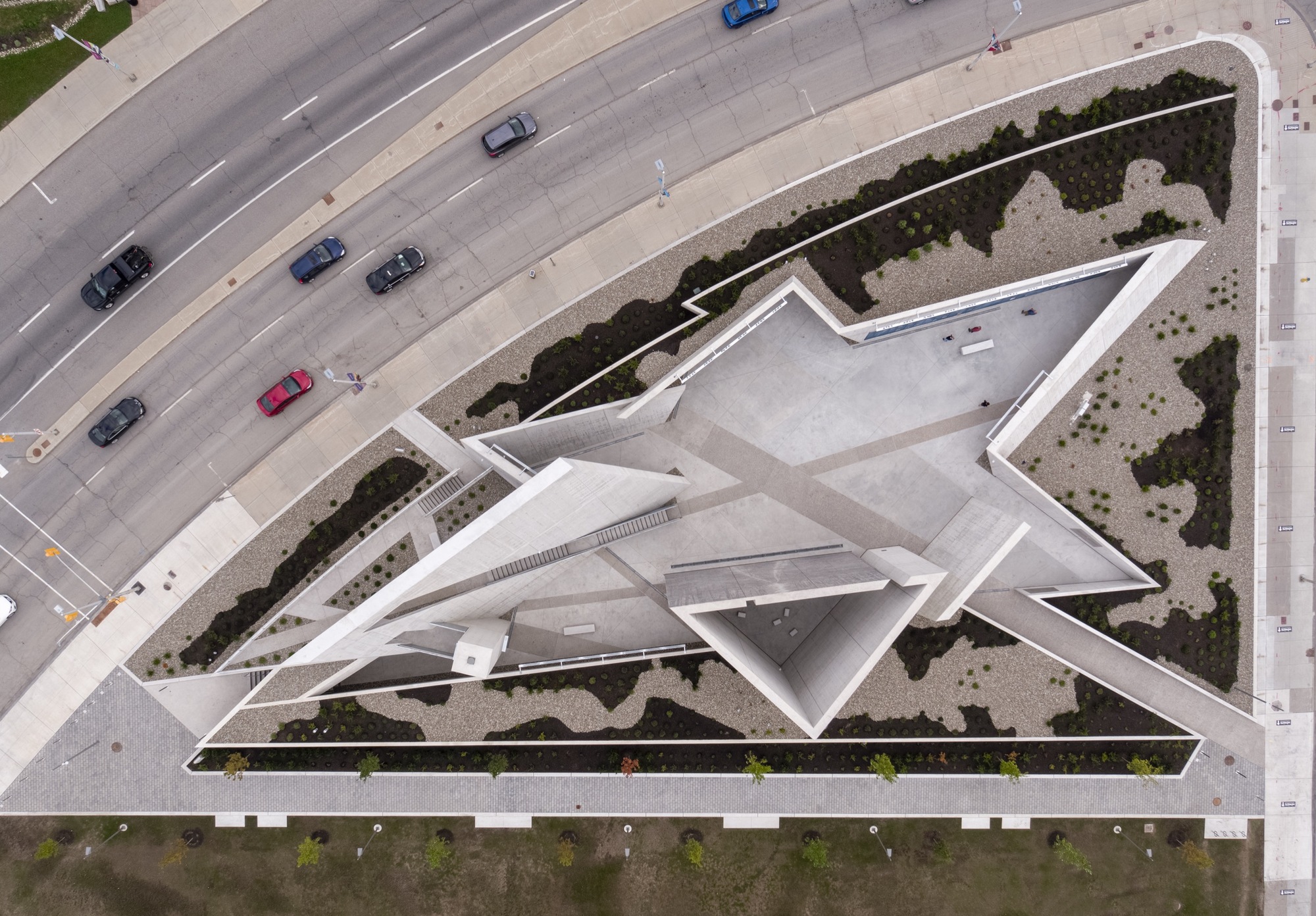
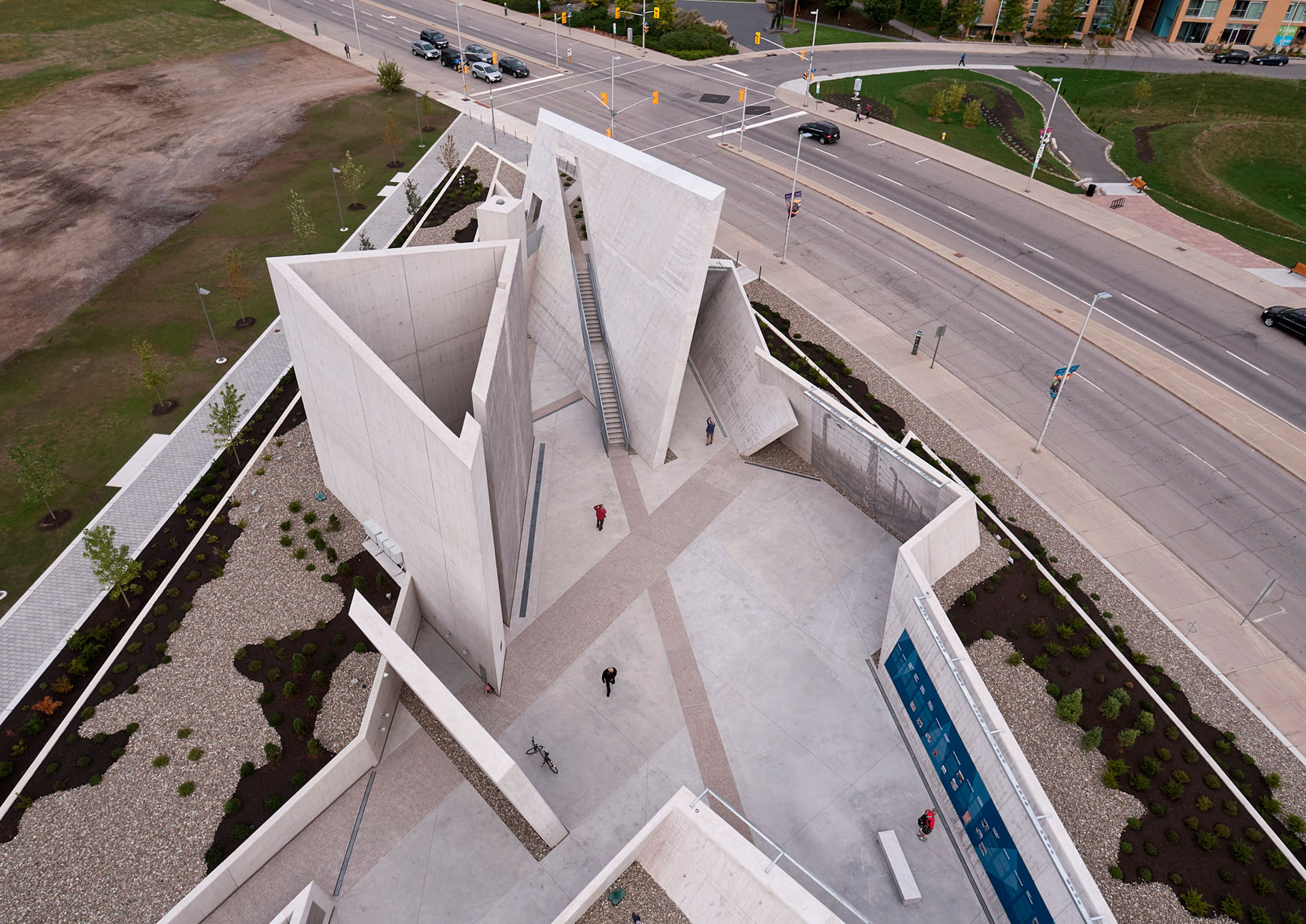
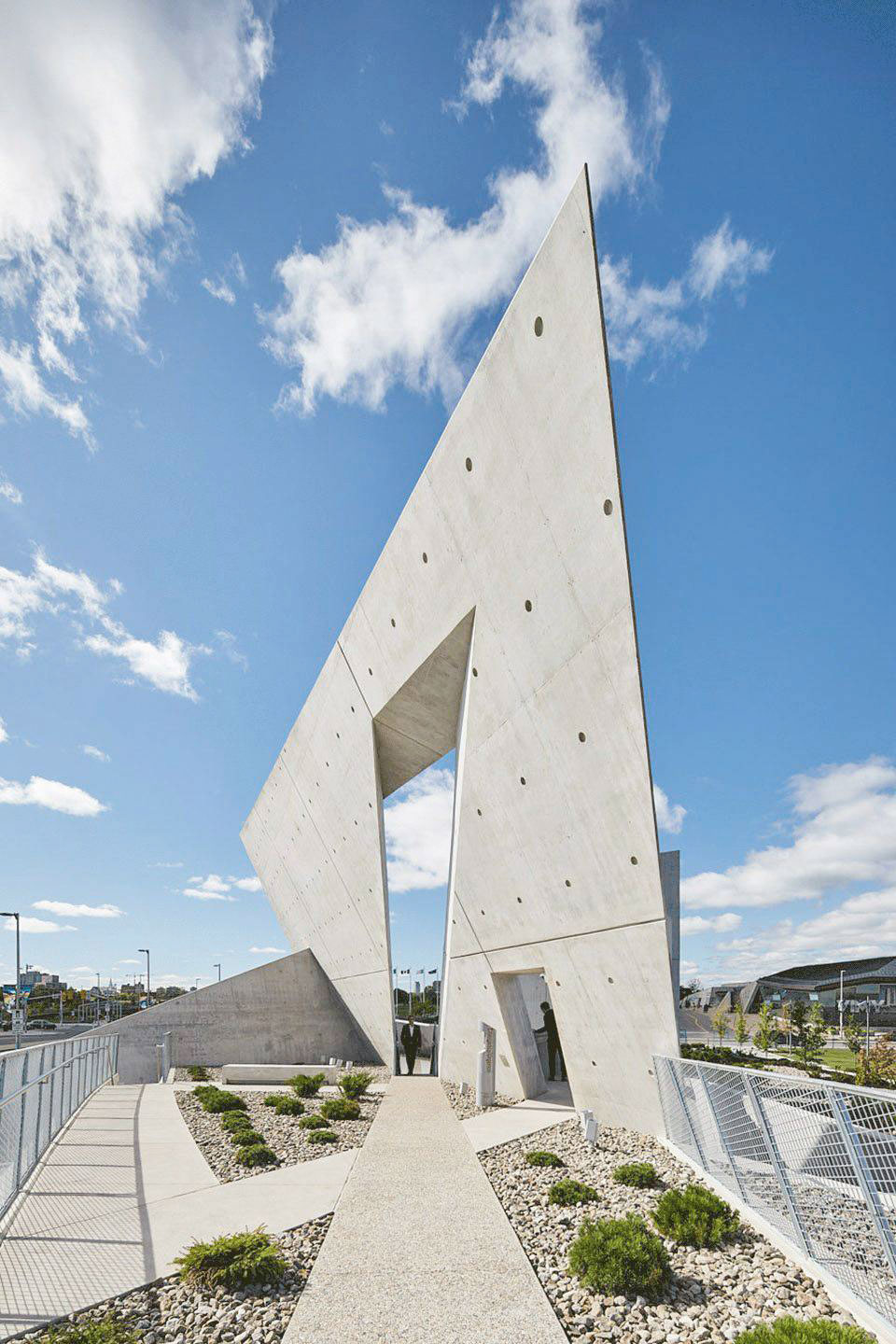
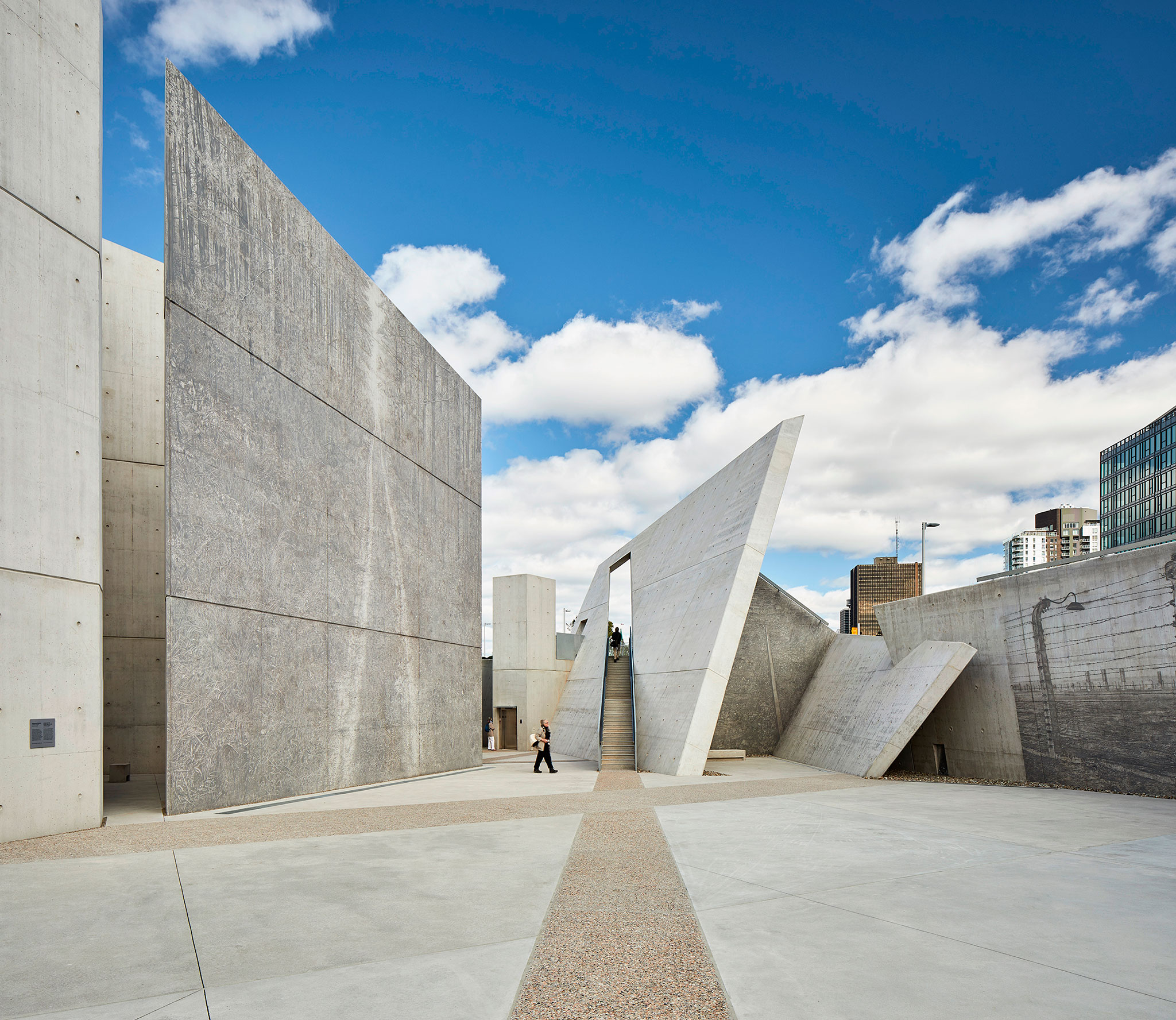
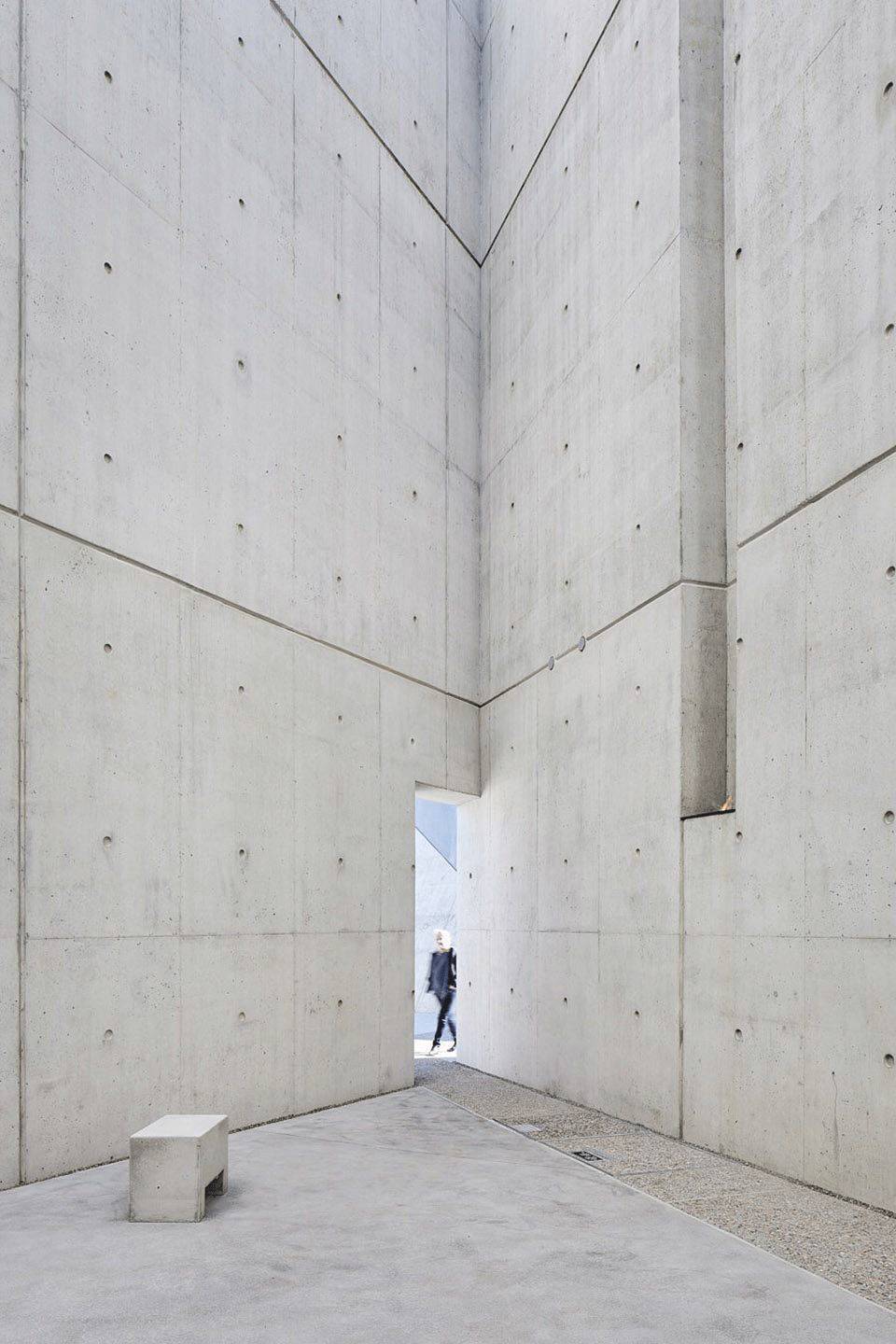
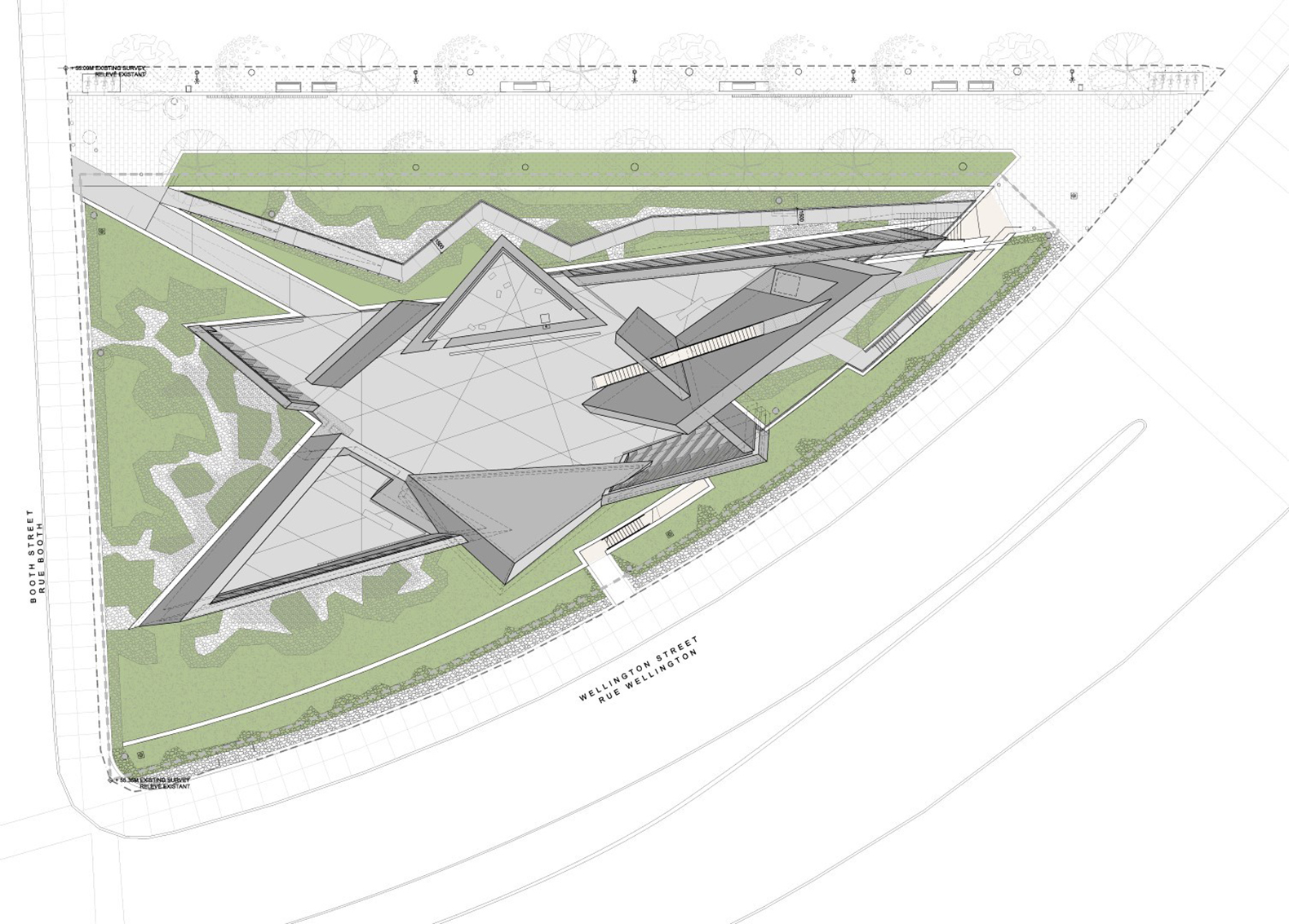
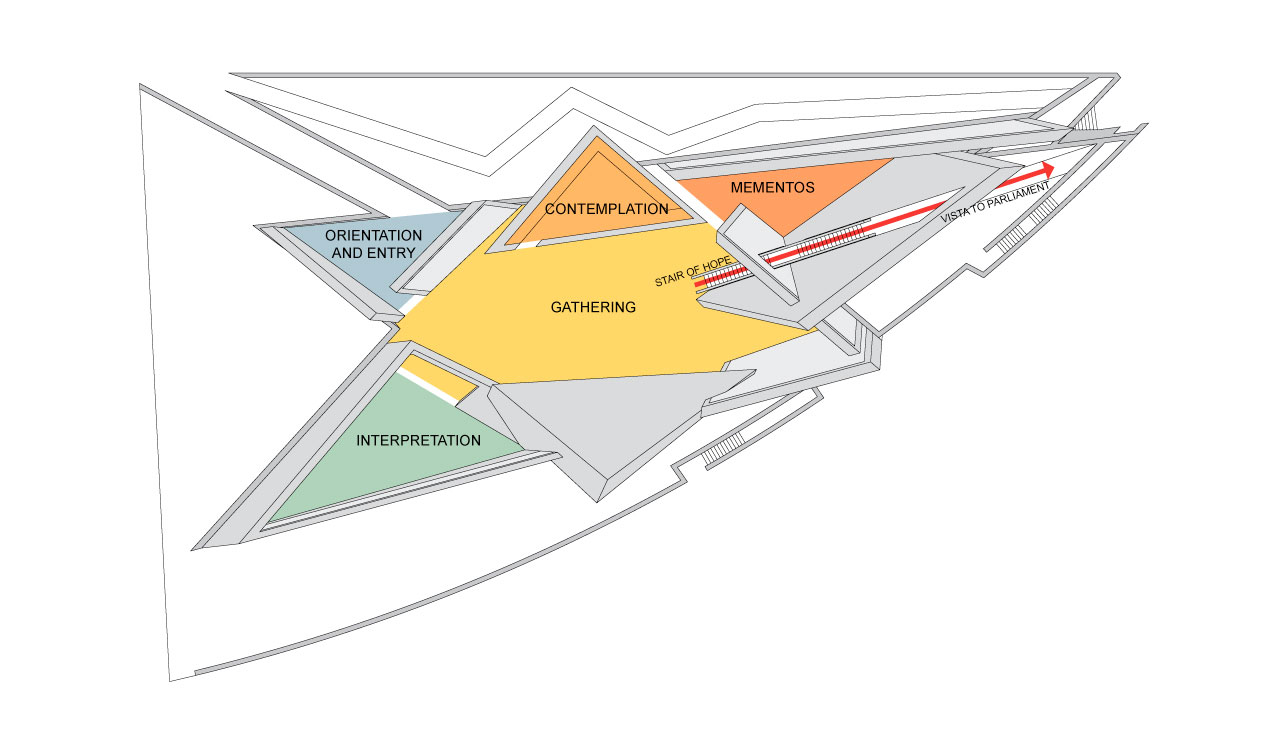
The new monument is made primarily of exposed concrete and combines six triangular volumes that create the Star of David.

“The star remains the visual symbol of the Holocaust – a symbol that millions of Jews were forced to wear by the Nazi’s to identify them as Jews, exclude them from humanity and mark them for extermination. The triangular spaces are representative of the badges the Nazi’s and their collaborators used to label homosexuals, Roma-Sinti, Jehovah’s Witnesses and political and religious prisoners for murder,” explain the architects.

The Monument honored “the millions of innocent men, women and children who were murdered under the Nazi regime and recognize those survivors who were able to eventually make Canada their home.” It will serve a solemn reminder, said Trudeau, of the six million lives lost globally to the Holocaust.

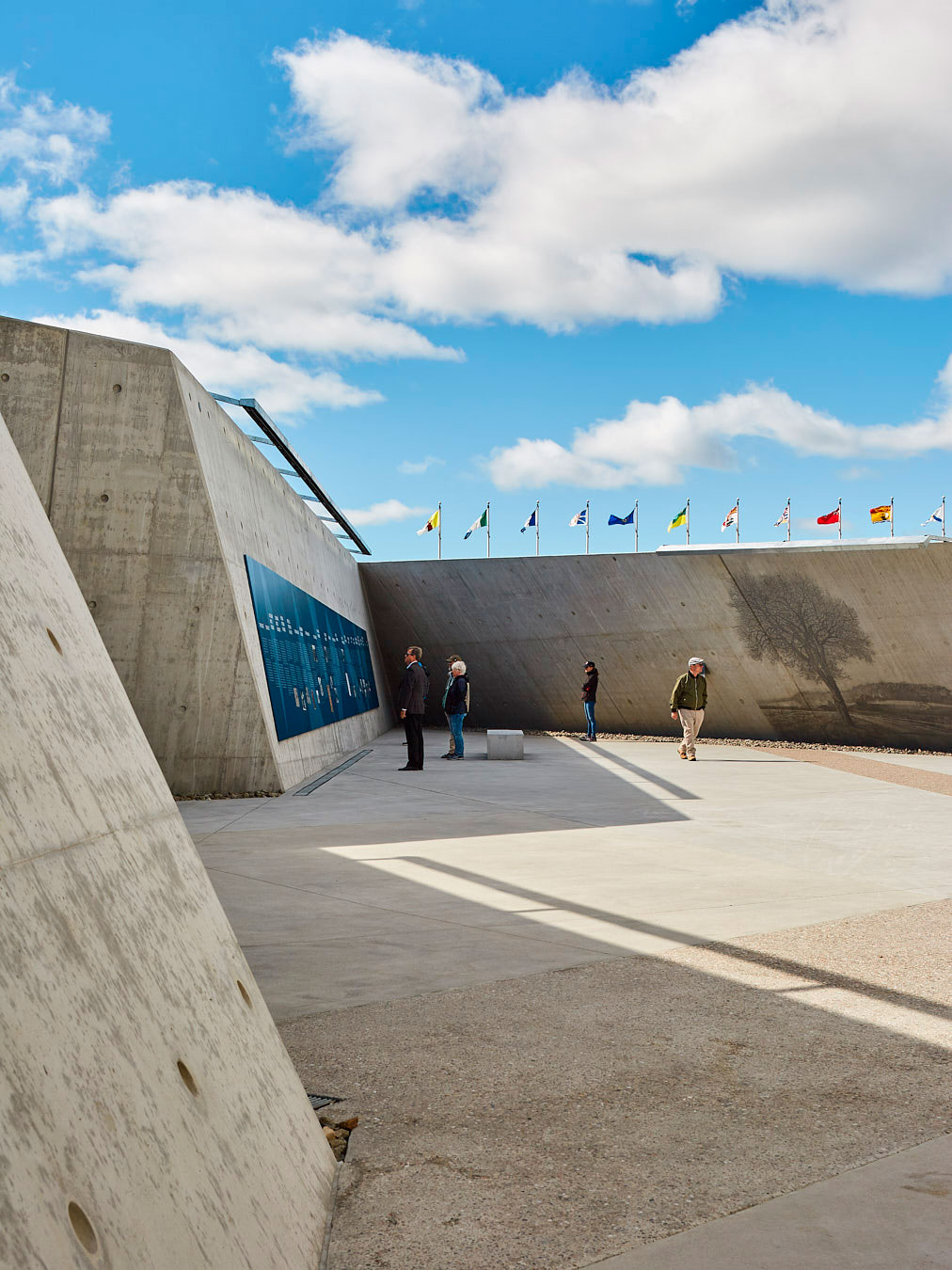
Studio Libeskind collaborators included museum planners Lord Cultural Resources, artist-photographer Edward Burtynsky, Montreal landscape architect Claude Cormier and scholar Doris Bergen. On the ground, the site is organized into two planes: one that ascends, pointing to the future; and one that descends, which suggests remembrance.

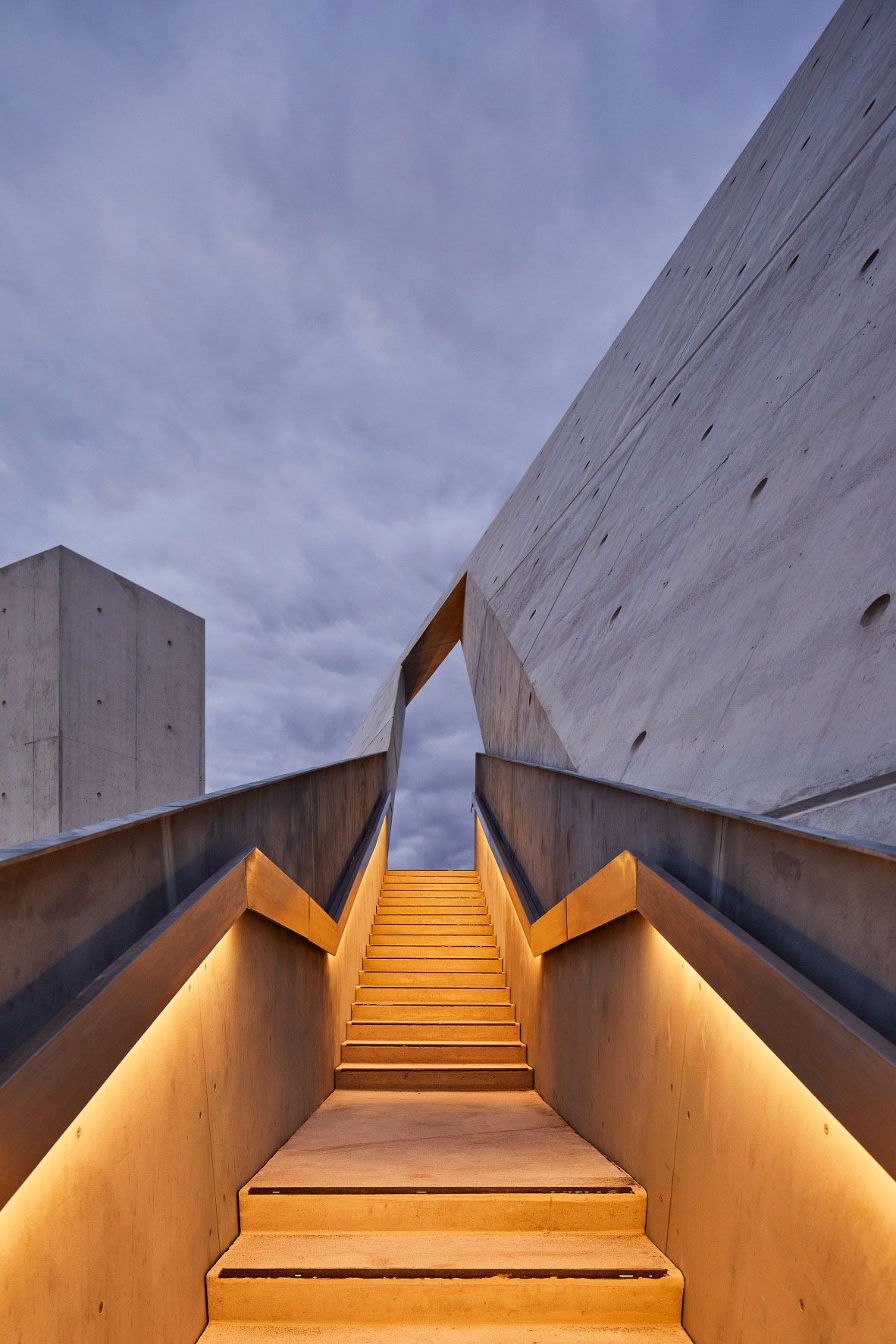
Burtynsky provided large-scale murals depicting Holocaust sites today. The grounds also include three contemplation areas, the four-metre high Flame of Remembrance and The Stair of Hope (shown below), which faces Ottawa’s Parliament buildings. It’s a statement that’s meant to recognize the continuing contributions Holocaust survivors have made to Canada.

“This monument not only creates a very important public space for the remembrance of those who were murdered in the Holocaust, but it also serves as a constant reminder that today’s world is threatened by anti-Semitism, racism and bigotry,” Libeskind said in a statement. “Canada has upheld the fundamental democratic values of people regardless of race, class or creed, and this national monument is the expression of those principles and of the future.”


Canada, notes the monument’s website, was the last Allied nation without a Holocaust monument.

Read more
Read less

More information

Daniel Libeskind (Łódź, Poland, 12 May 1946) is an American architect and urban planner of Polish-Jewish descent. The son of Holocaust survivors, he emigrated with his family to the United States as a teenager and settled in the Bronx. Memory, history and absence are recurring themes in a body of work also shaped by his longstanding interest in music, philosophy and literature.

Libeskind initially trained as a musician. He studied in New York and Israel on a scholarship from the American-Israel Cultural Foundation and reached a high level as a performer before turning to architecture. In 1970, he graduated from Cooper Union for the Advancement of Science and Art in New York and, in 1972, completed postgraduate studies in History and Theory of Architecture at the School of Comparative Studies, University of Essex.

In 1989, he founded Studio Libeskind in Berlin after winning the competition to design the city's Jewish Museum. Opened in 2001, the building established his international reputation and became one of his most representative works. In 2003, after being selected as master planner for the reconstruction of the World Trade Center site in New York, the studio relocated its principal office to the city.

Studio Libeskind has since developed cultural, civic, commercial and residential projects in different countries, including museums, concert halls, convention centres, university buildings, hotels and residential towers. In 2013, Libeskind was also selected to design the Ohio Statehouse Holocaust Memorial in Columbus, Ohio.

His musical background has remained a constant presence in his understanding of architecture and in his interest in rhythm, perception and the physical experience of space. Hand drawing continues to be an essential tool within his design process. Much of his work addresses the relationship between architecture and memory, seeking to translate historical events and collective experiences into spatial and material form.

Alongside his professional practice, Libeskind has developed an extensive academic and teaching career. He was the first holder of the Frank O. Gehry Chair at the University of Toronto and has lectured and taught at academic institutions in numerous countries. His work and ideas have been the subject of numerous exhibitions and publications.

Among the distinctions he has received are the Hiroshima Art Prize in 2001 — awarded for the first time to an architect — the Goethe Medal, the Dresden Peace Prize and the European Civil Rights Prize of the Sinti and Roma. In 2011, he delivered the eighth Auschwitz Never Again Lecture in Amsterdam and received the Annetje Fels-Kupferschmidt Award from the Dutch Auschwitz Committee.

In 2018, he published Edge of Order, in which he reflects on his architectural philosophy, creative process and professional career.

Libeskind lives between New York and Berlin with his wife and professional partner, Nina Libeskind. Studio Libeskind maintains its principal office in New York.

Among his current projects is the Albert Einstein Discovery Center in Ulm, Germany, Einstein's birthplace. Conceived to communicate the physicist's scientific discoveries while also addressing his commitment to pacifism, the project extends Libeskind's longstanding interest in the relationships between history, memory and the future.

Read more
Published on: October 4, 2017
Cite:
metalocus, ÁNGEL BLANCO
"Opening of Canadian National Holocaust Monument by Studio Libeskind" METALOCUS. Accessed
<https://www.metalocus.es/en/news/opening-canadian-national-holocaust-monument-studio-libeskind> ISSN 1139-6415
Loading content ...
Loading content ...
Loading content ...
Loading content ...
Loading content ...
Loading content ...
Loading content ...
Loading content ...
Loading content ...
Loading content ...
Loading content ...
Loading content ...
Loading content ...
Loading content ...
Loading content ...
Loading content ...
Loading content ...
Loading content ...
Loading content ...
Loading content ...
Loading content ...
Loading content ...
Loading content ...
Loading content ...
Loading content ...
Loading content ...
Loading content ...
Loading content ...
Loading content ...
Loading content ...
Loading content ...
Loading content ...
Loading content ...
Loading content ...
Loading content ...
Loading content ...
Loading content ...
Loading content ...
Loading content ...
Loading content ...
Loading content ...
Loading content ...
Loading content ...
Loading content ...
Loading content ...
Loading content ...
Loading content ...
Loading content ...
Loading content ...
Loading content ...
Loading content ...
Loading content ...
Loading content ...
Loading content ...