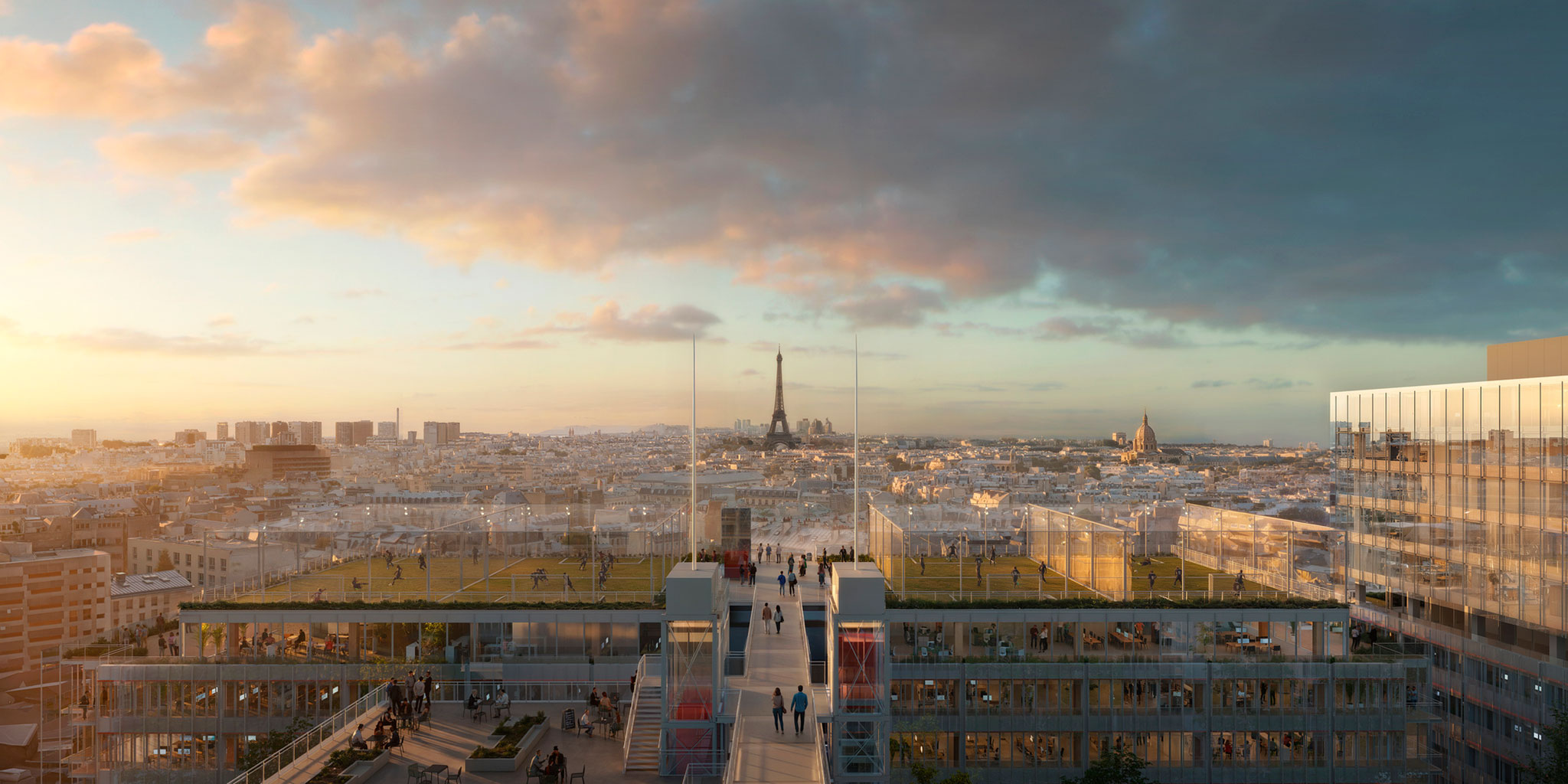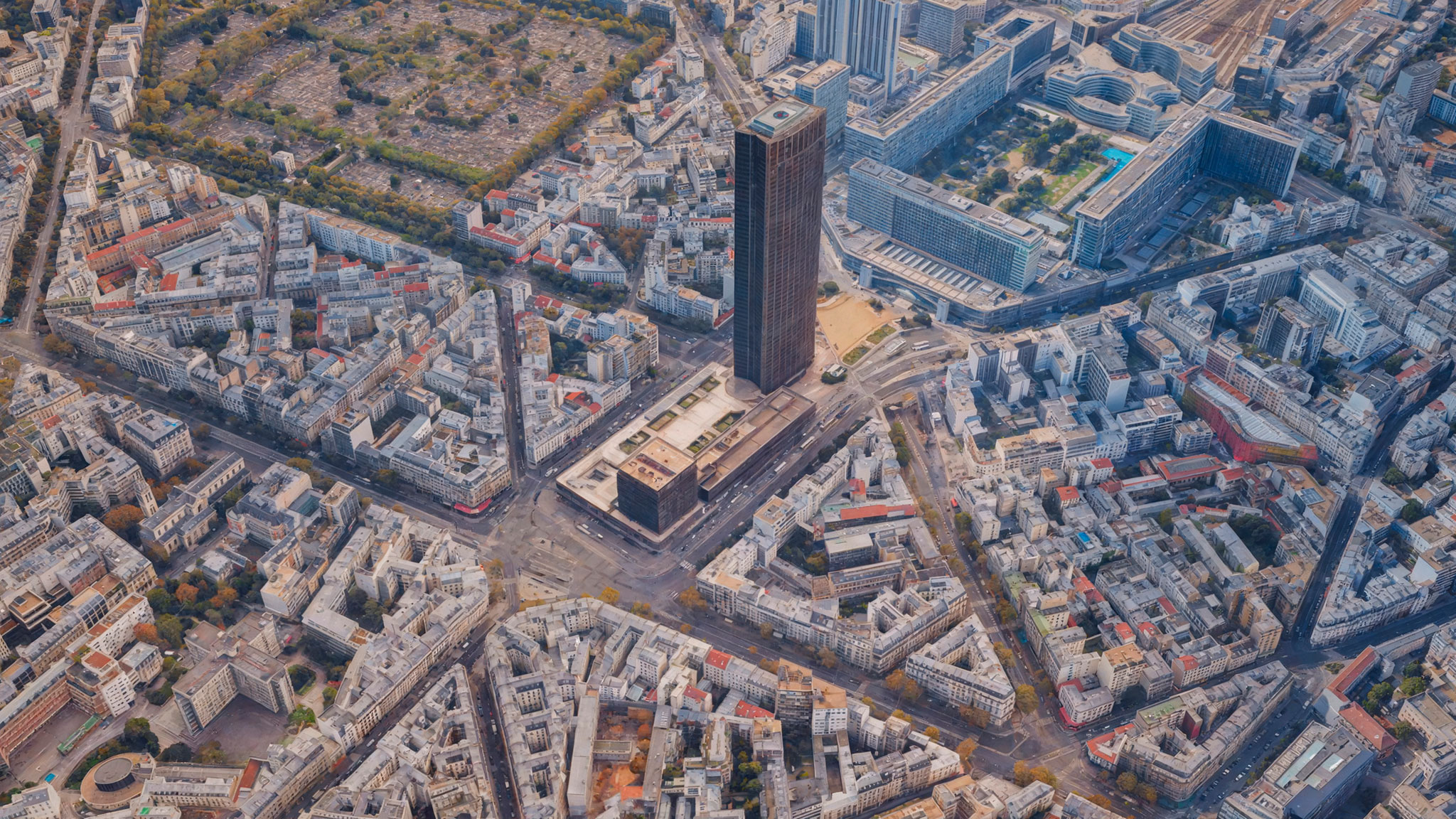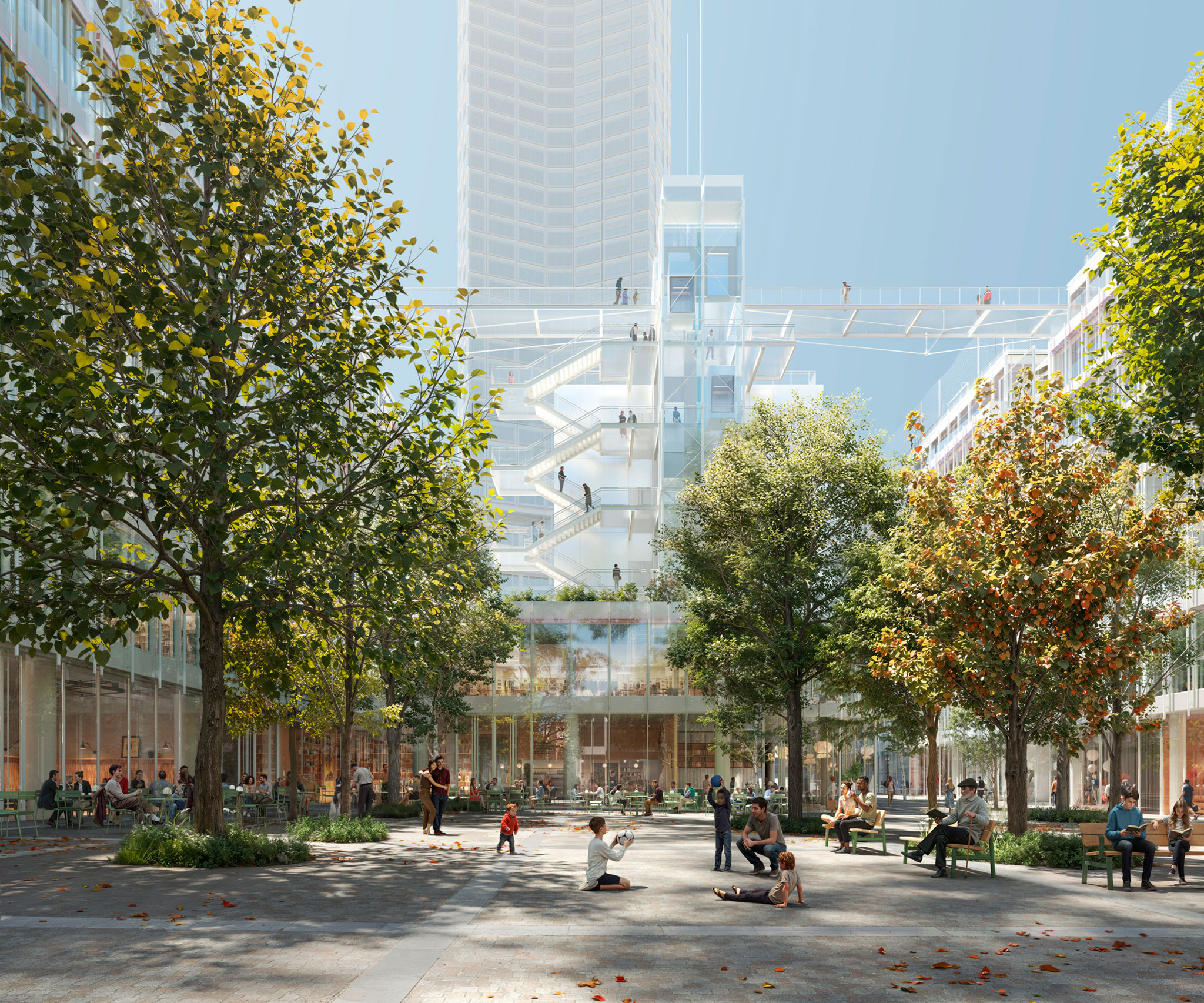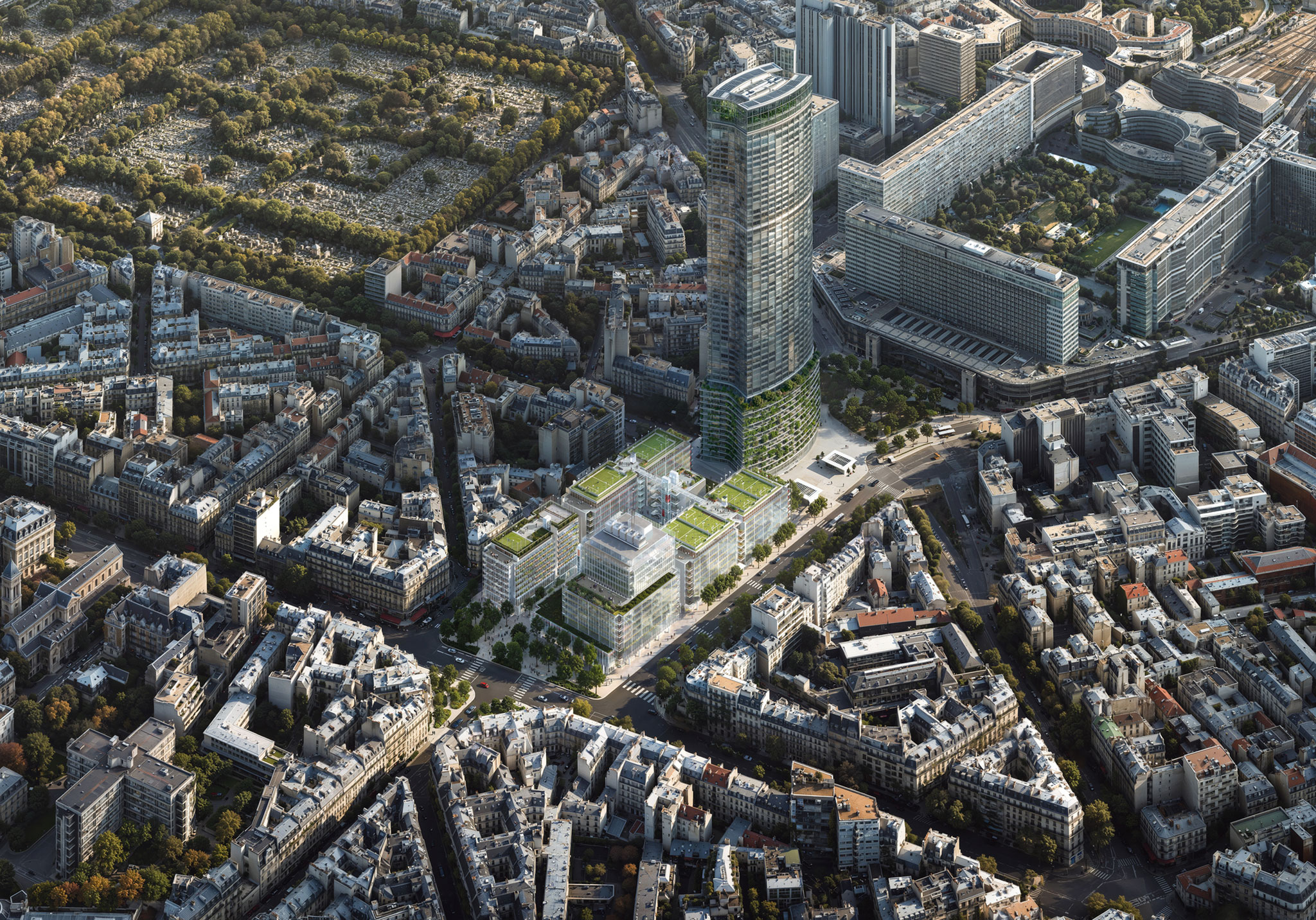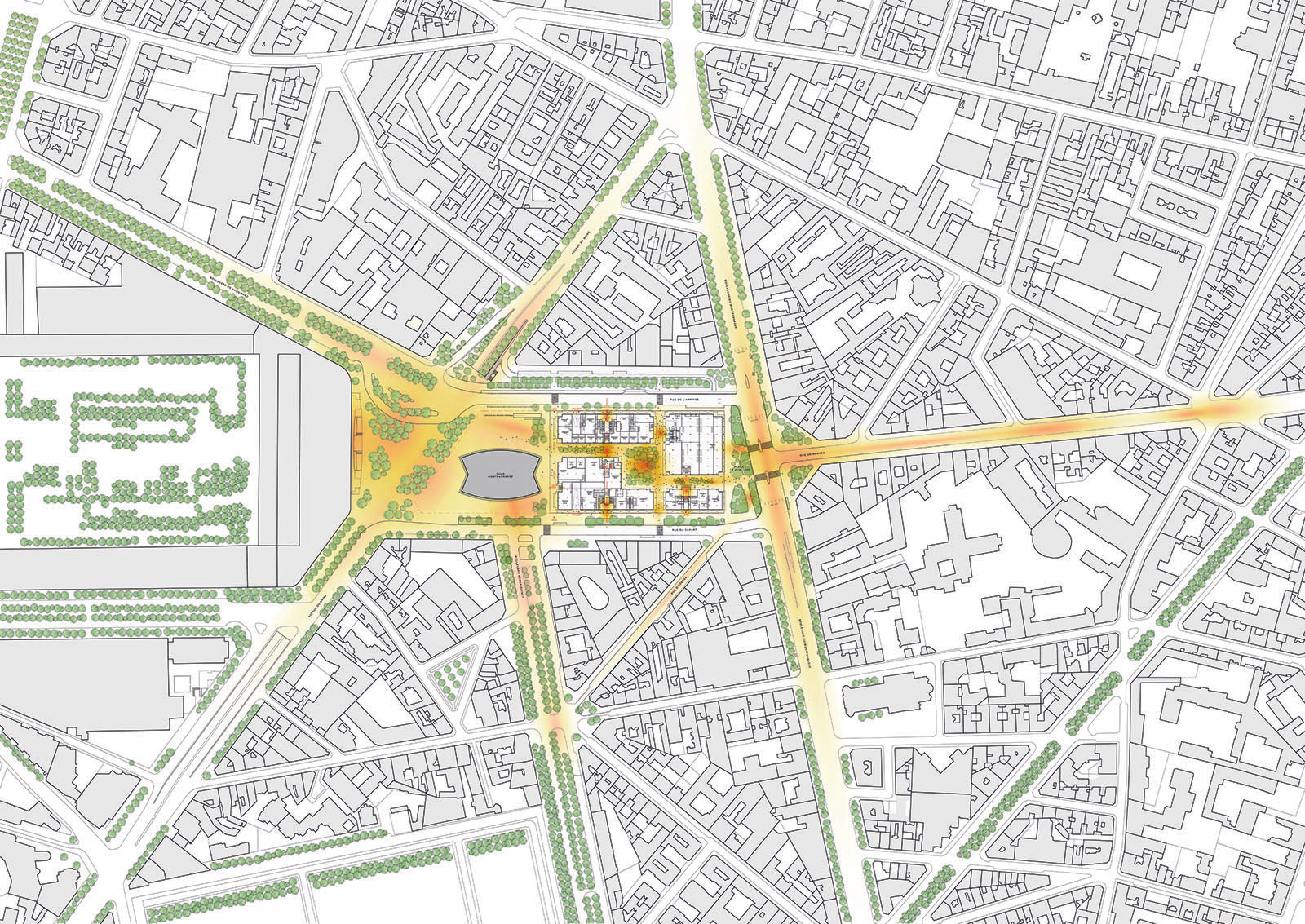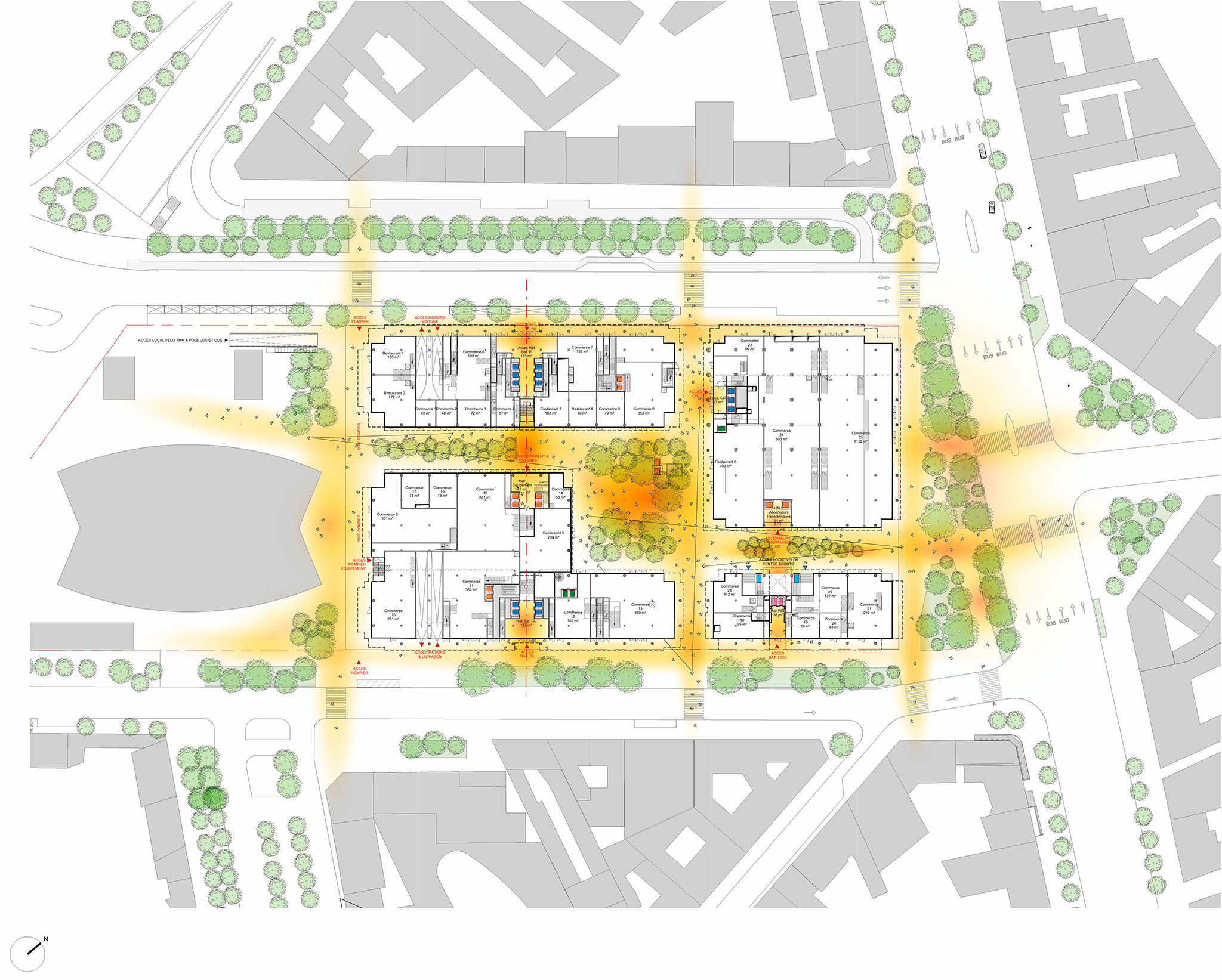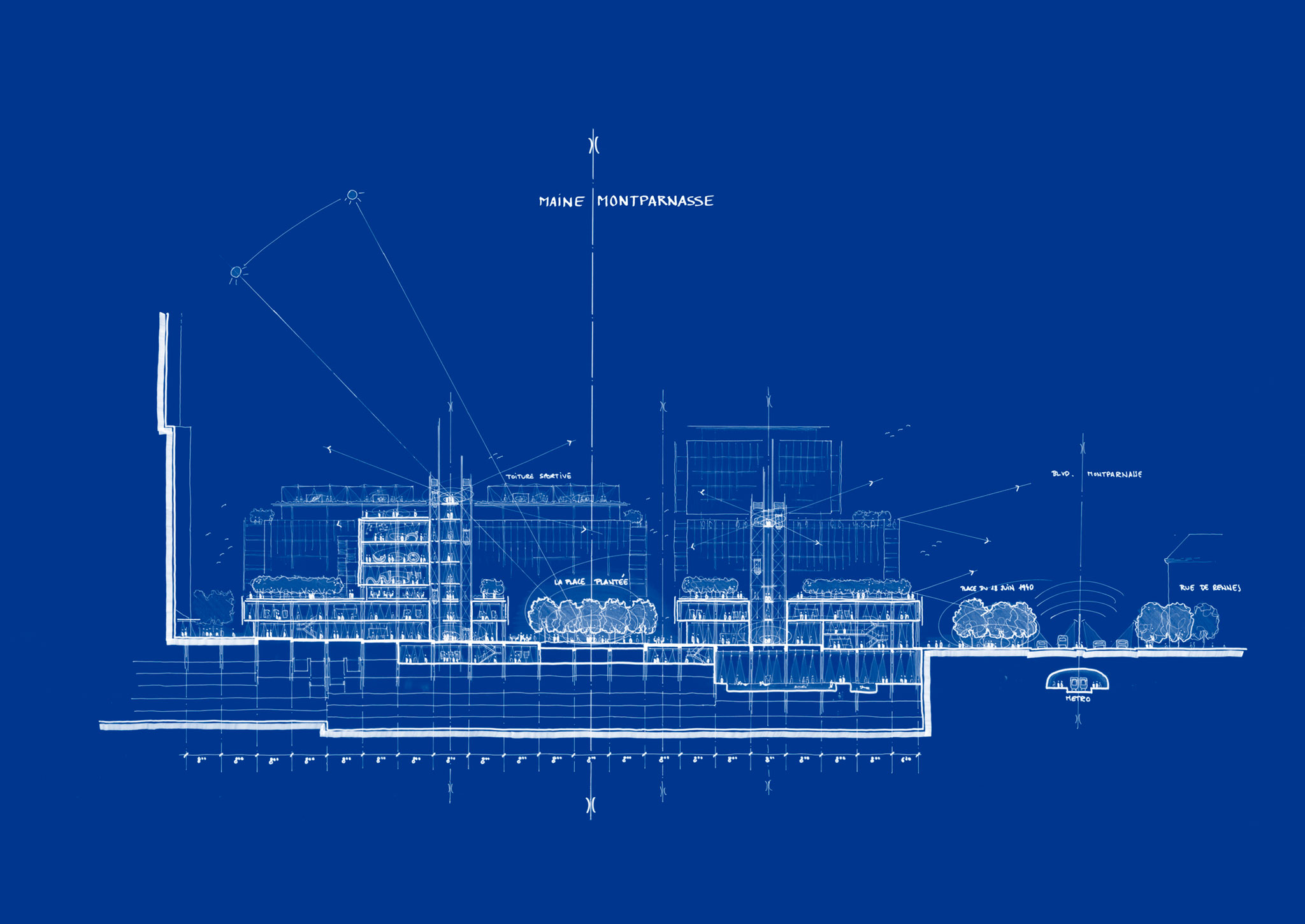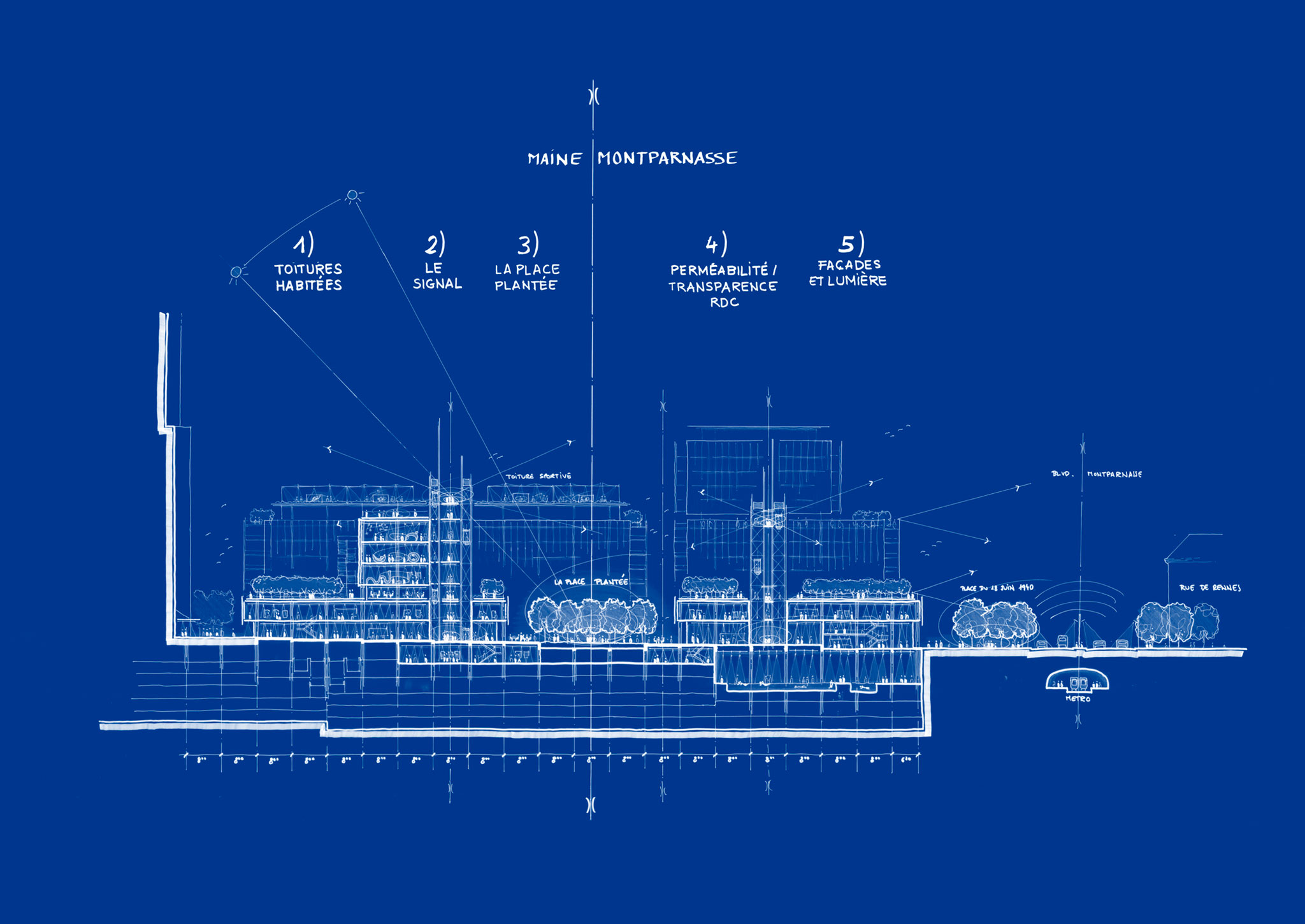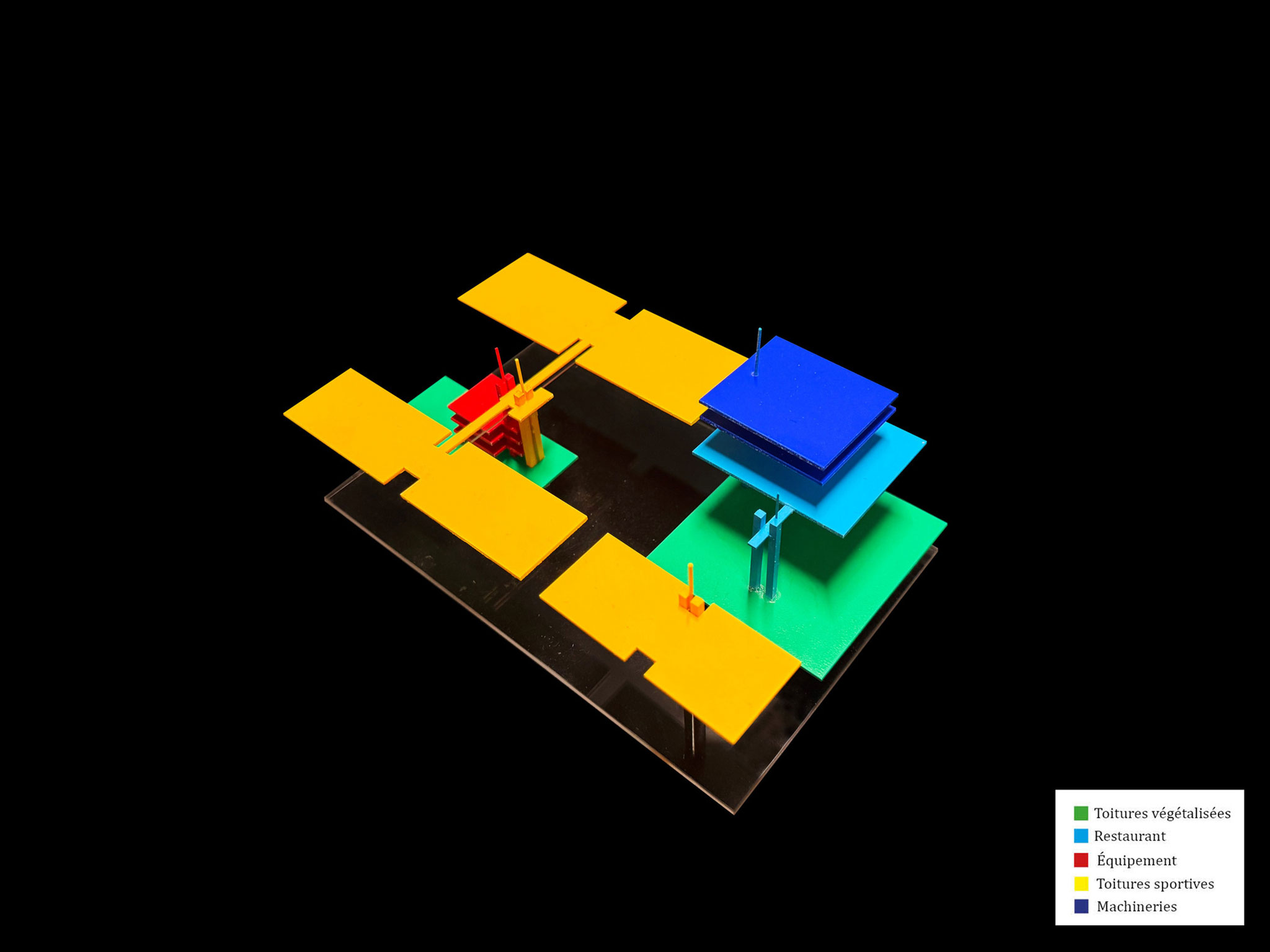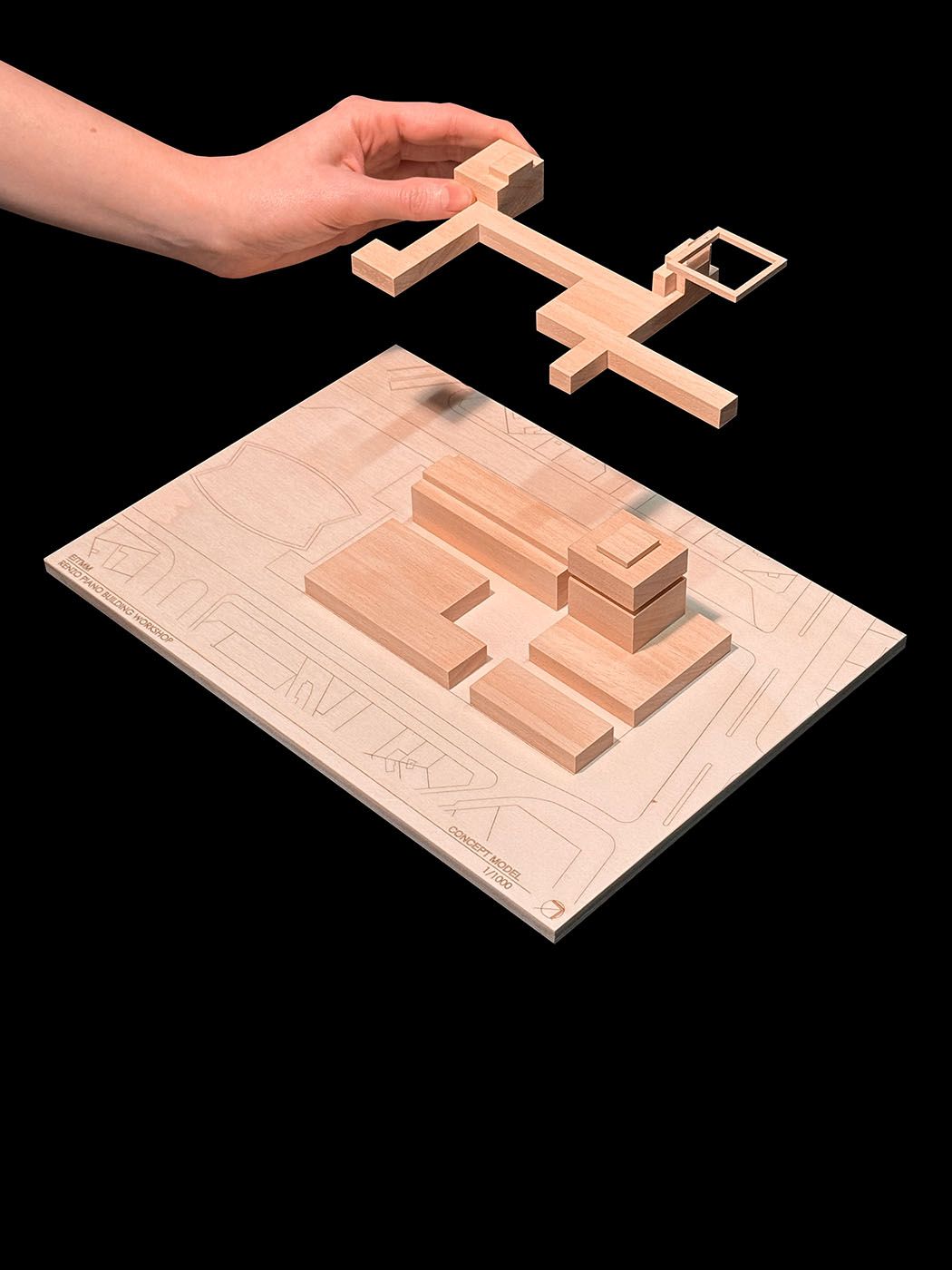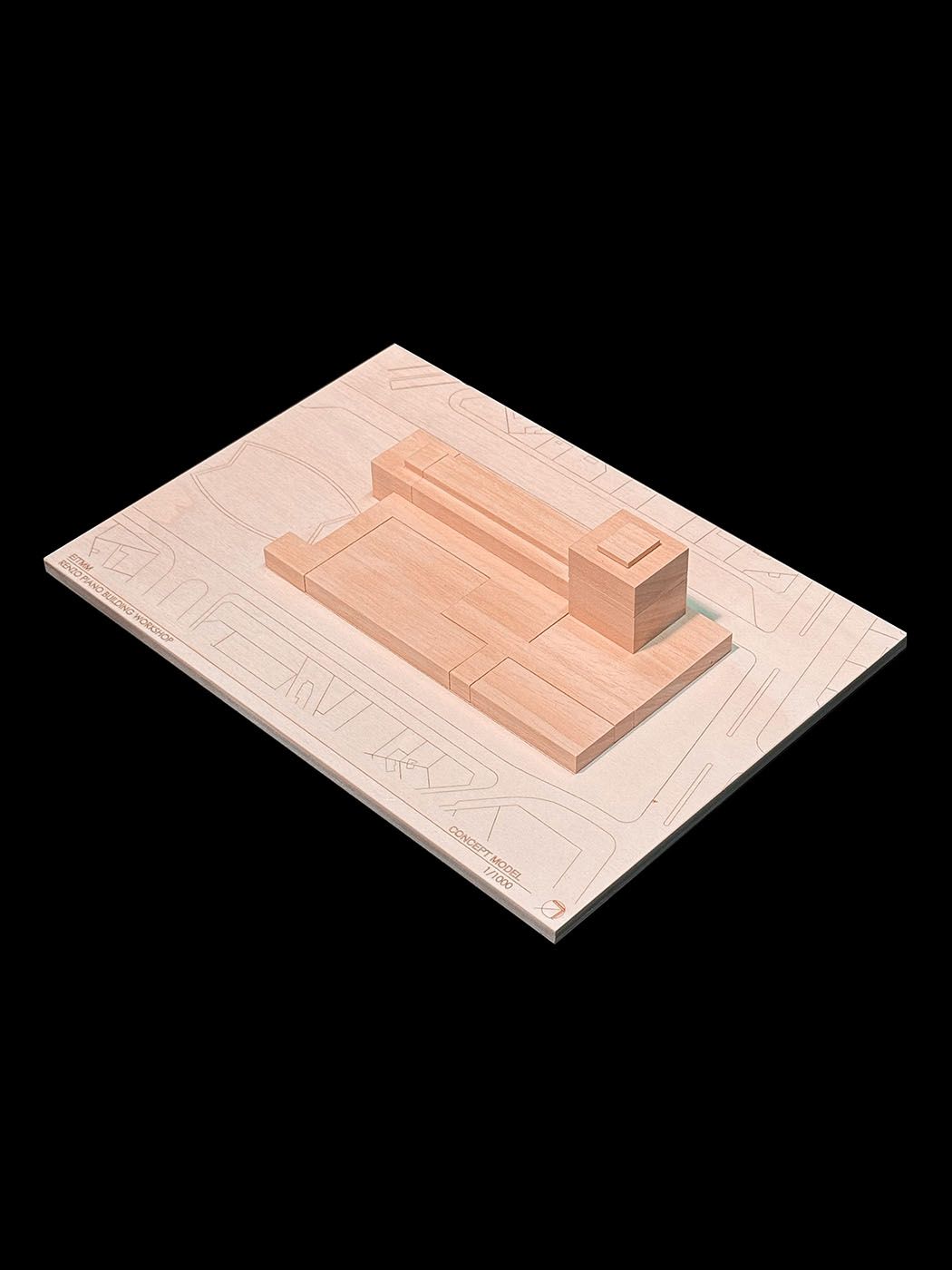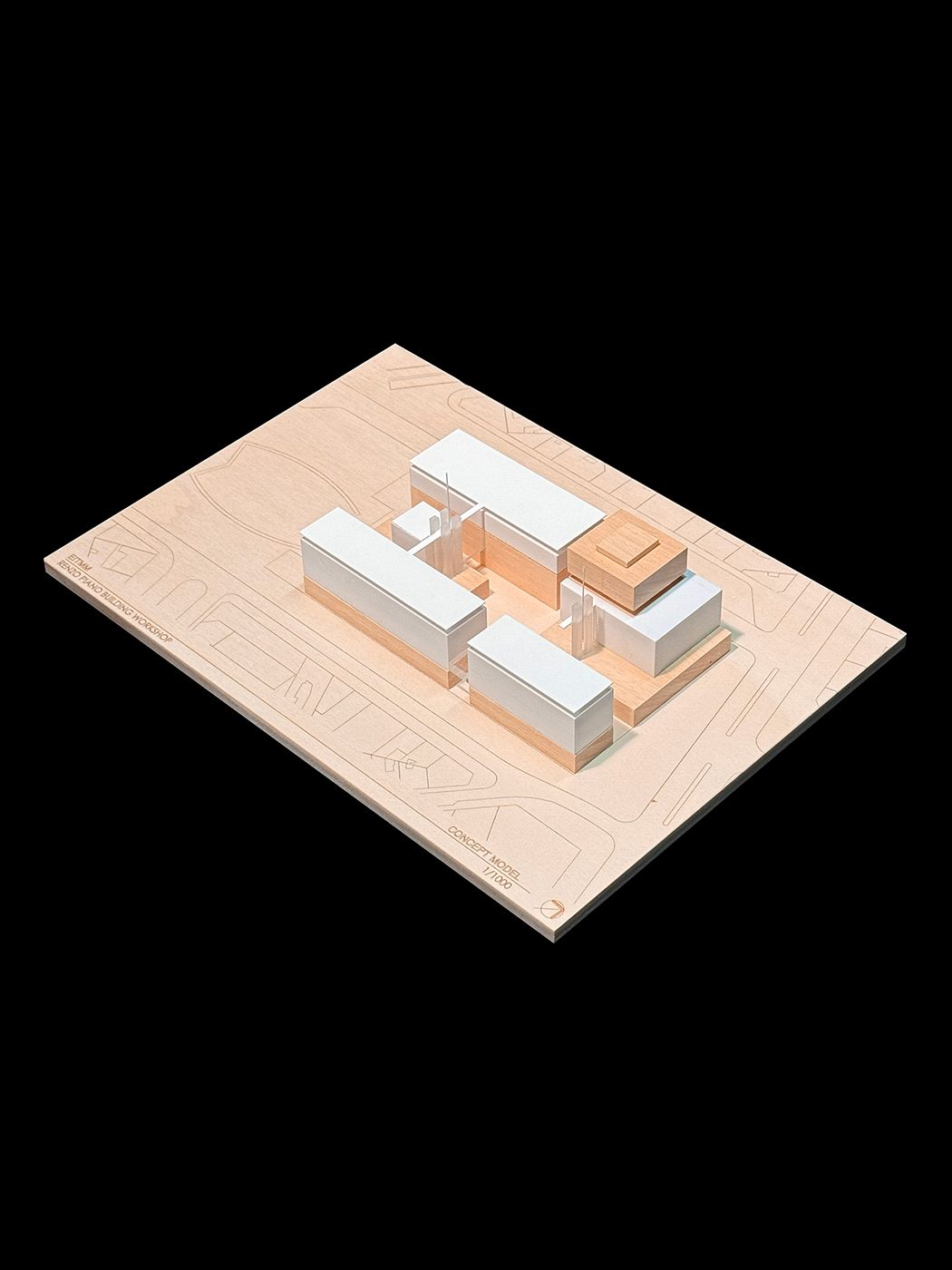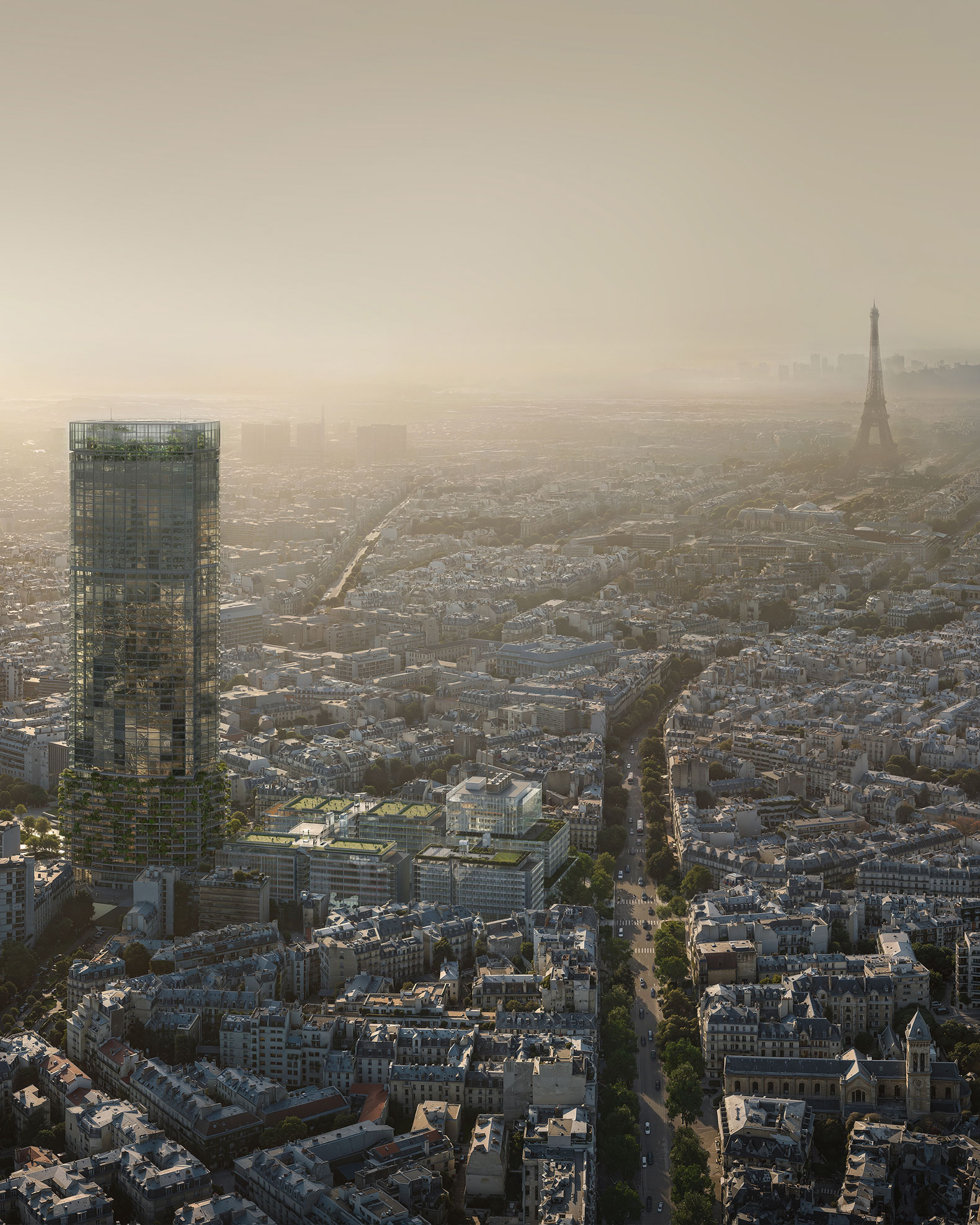
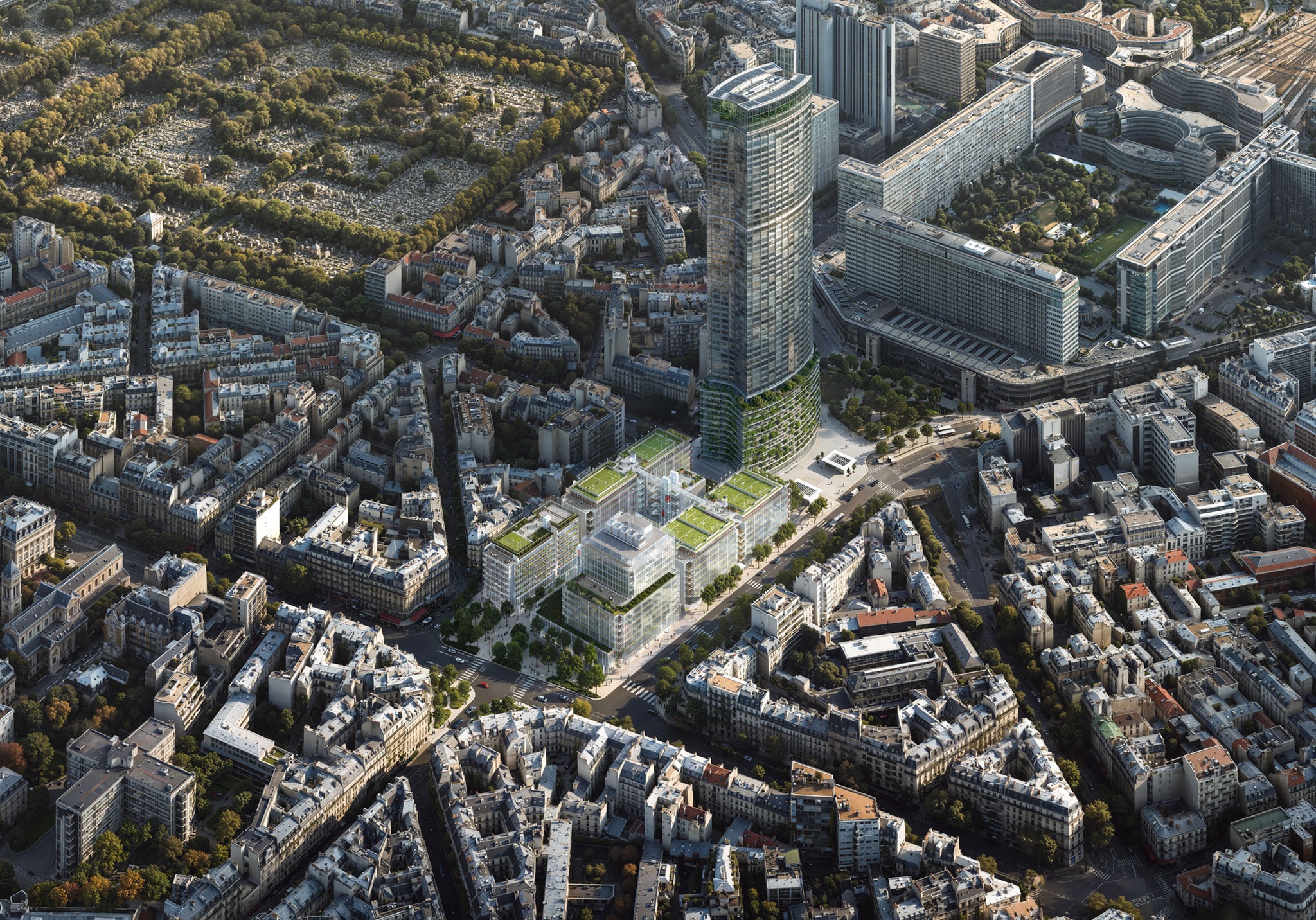
The Montparnasse Shopping Centre and CIT Tower project, renovated by Renzo Piano Building Workshop, creates new pedestrian routes that traverse the block, reconnecting Rue de Rennes, Montparnasse station, neighboring streets, and three Parisian arrondissements. The project's architectural program comprises cultural, sports, and commercial facilities, student residences, and offices. The lower floors are transparent and permeable, and at the heart of the project, a large landscaped plaza becomes a new civic space for the neighborhood.
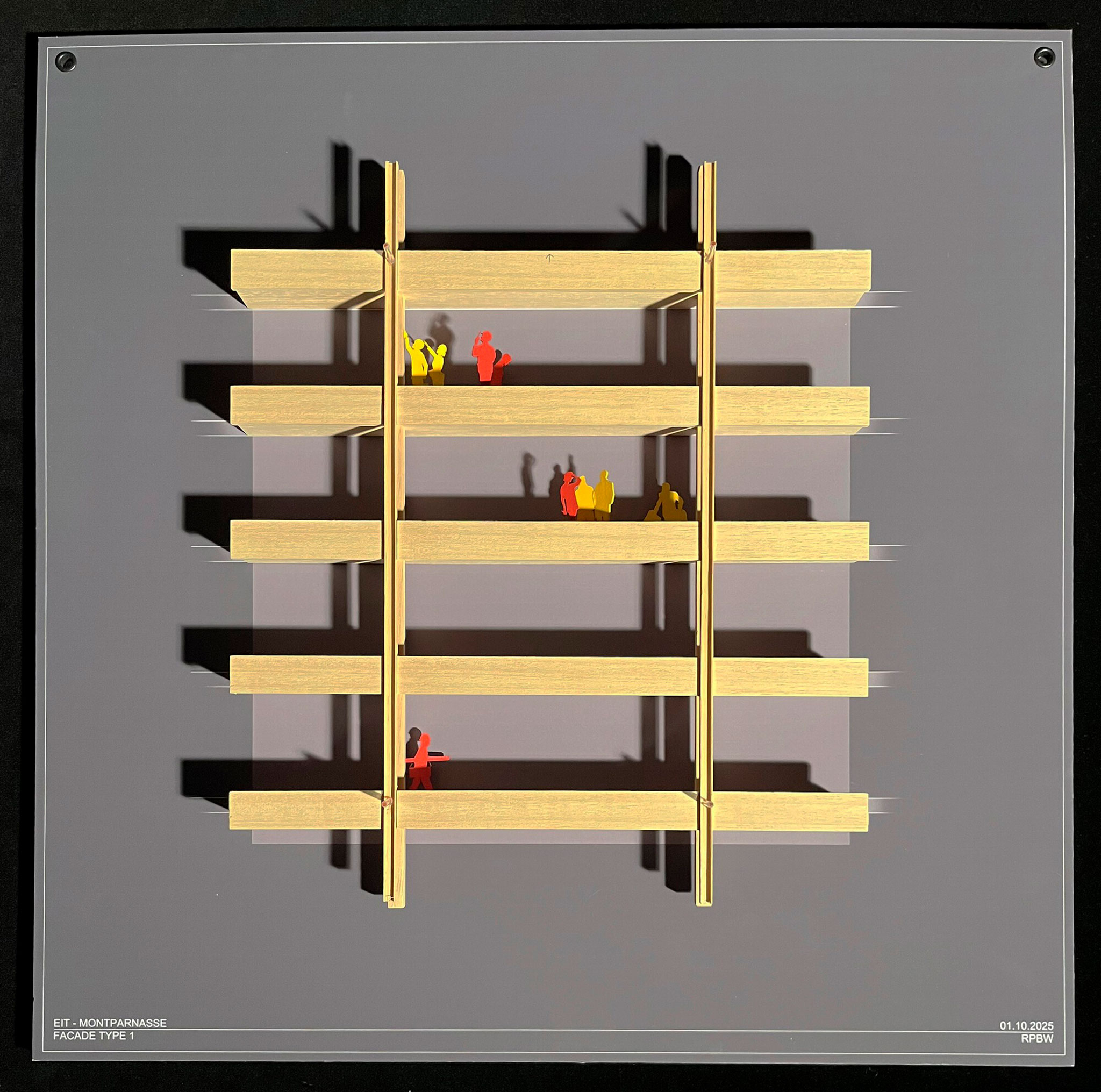
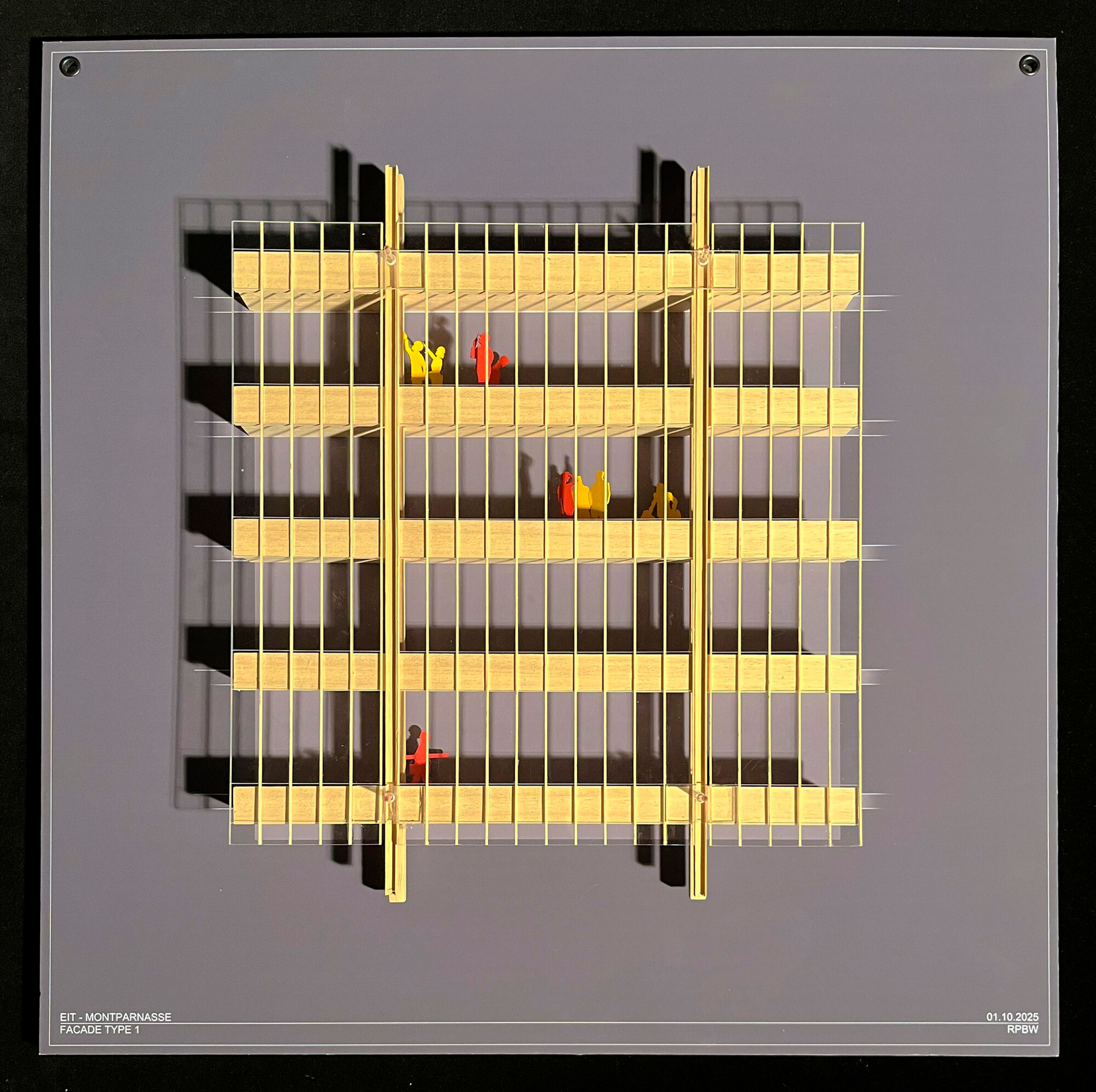
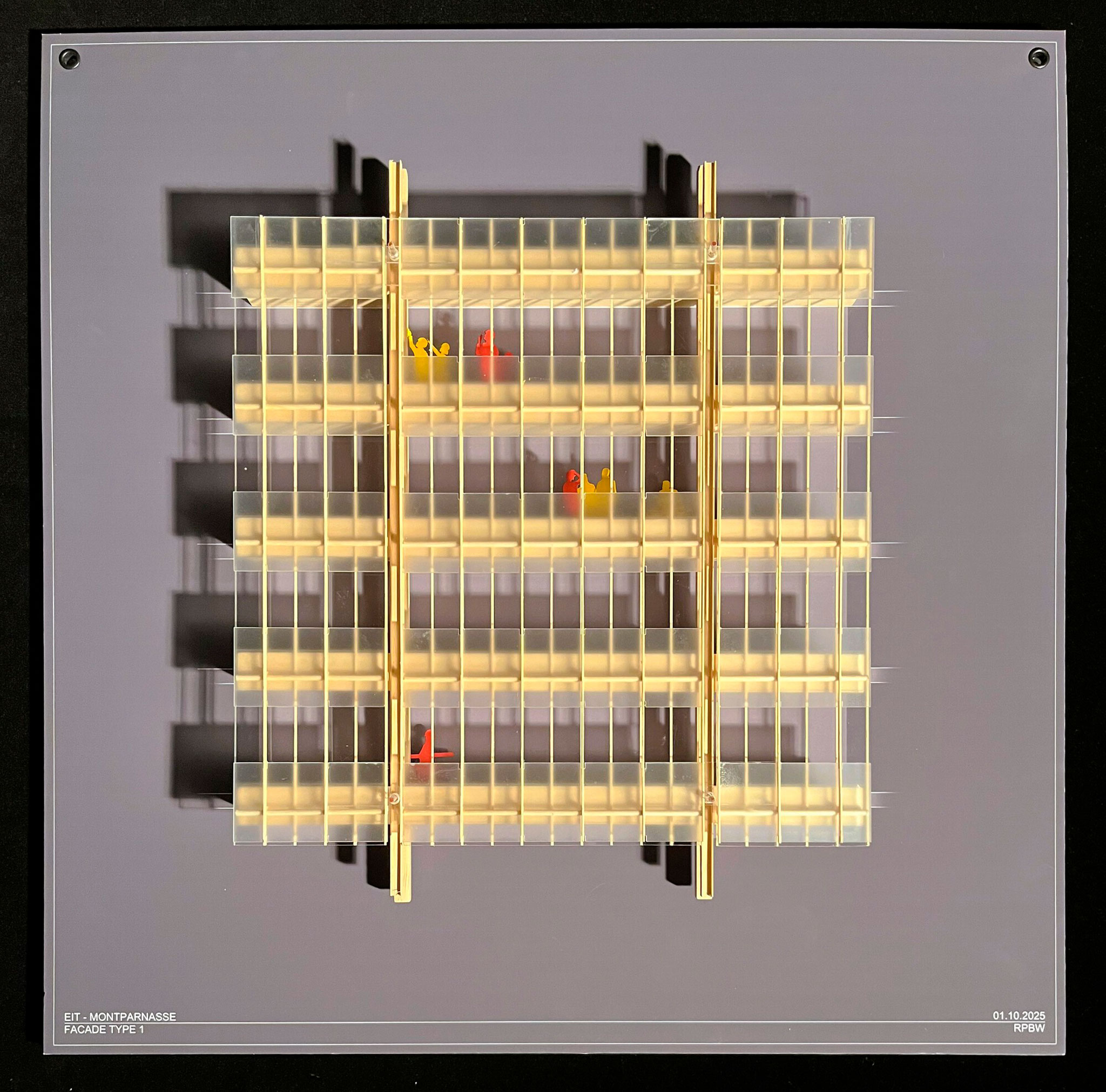
The construction strategy for the project is based on a balance between transformation, conservation, and demolition. The existing structural framework is maintained as the project's central axis, and new volumes with lightweight timber structures are integrated.
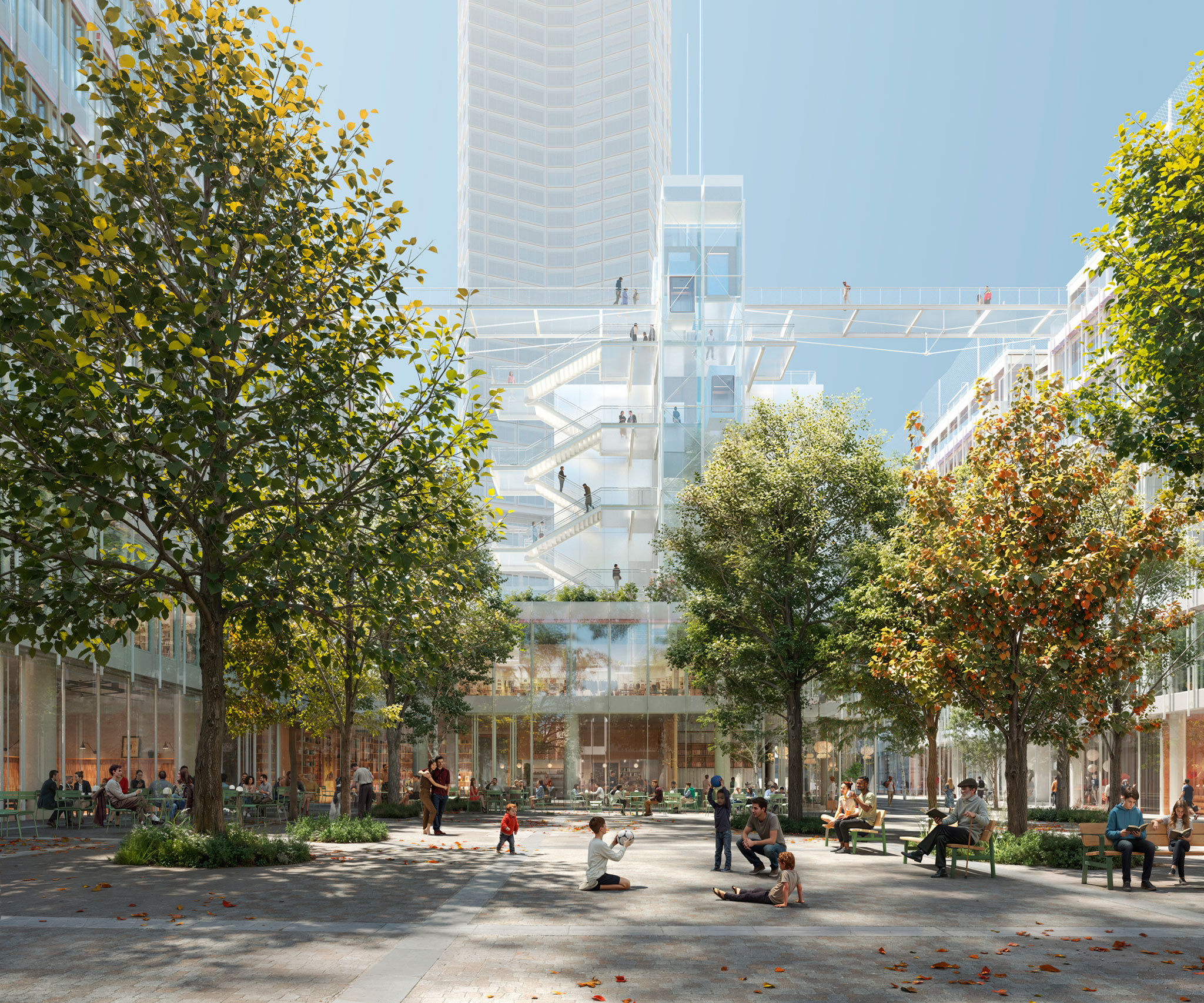
Montparnasse Commercial Centre and CIT Tower by Renzo Piano Building Workshop. Rendering by Renzo Piano Building Workshop.
Project description by Renzo Piano Building Workshop
Commissioned by the co-owners of the Commercial Centre and the CIT Tower, Renzo Piano Building Workshop transforms a 1970s low rise retail development into a vibrant, open, and pedestrian-focused urban district. Working alongside the redevelopment of the adjacent Montparnasse Tower by Nouvelle AOM, the project reinvents the Ensemble Immobilier Tour Maine-Montparnasse (EITMM), one of Europe’s largest private tertiary complexes, as a contemporary Parisian block. By reconnecting streets, creating generous public spaces, and introducing a mix of cultural, residential, commercial, and sports uses, the design restores continuity between the city and daily life. Architecture becomes a framework for movement, encounter, and openness, embedding sustainability, greenery, and accessibility at the heart of a renewed Montparnasse.
A storied site in need of reinvention
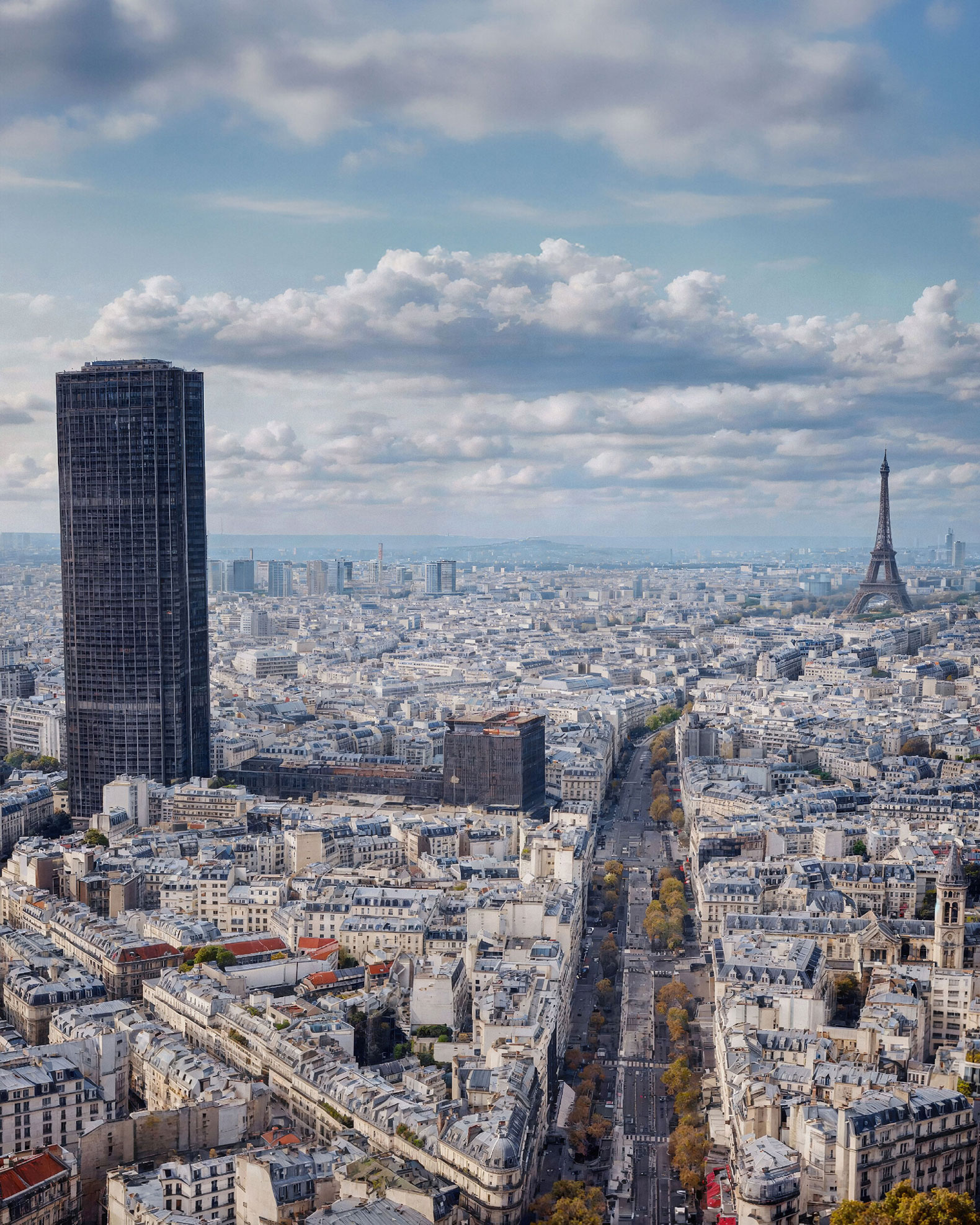
The Ensemble Immobilier Tour Maine-Montparnasse (EITMM), originally designed by AOM, was constructed between 1969 and 1973. It occupies the site of the former Montparnasse train station and is organized in three parts: the tower, the commercial center, and the CIT Tower, which sits atop the commercial center.
In 2022, RPBW was commissioned by the co-owners of the EITMM to develop a vision and design for the commercial center as retail models and the needs of Parisians have vastly evolved over. The project was paused the following year pending amendments to the Parisian Land Use Plan (PLU). Design work resumed in 2025, with discussions refining a direction that aligned client, planning, and environmental objectives while integrating a comprehensive vision for both the commercial center and the CIT. In late 2025, the Council of Paris voted in favor of the project in a bi-partisan show of support, and on January 7, 2026, the City of Paris and the EITMM signed a protocol agreement, formalizing their shared ambition to revitalize the site.
Reconnecting the City Through Public Space
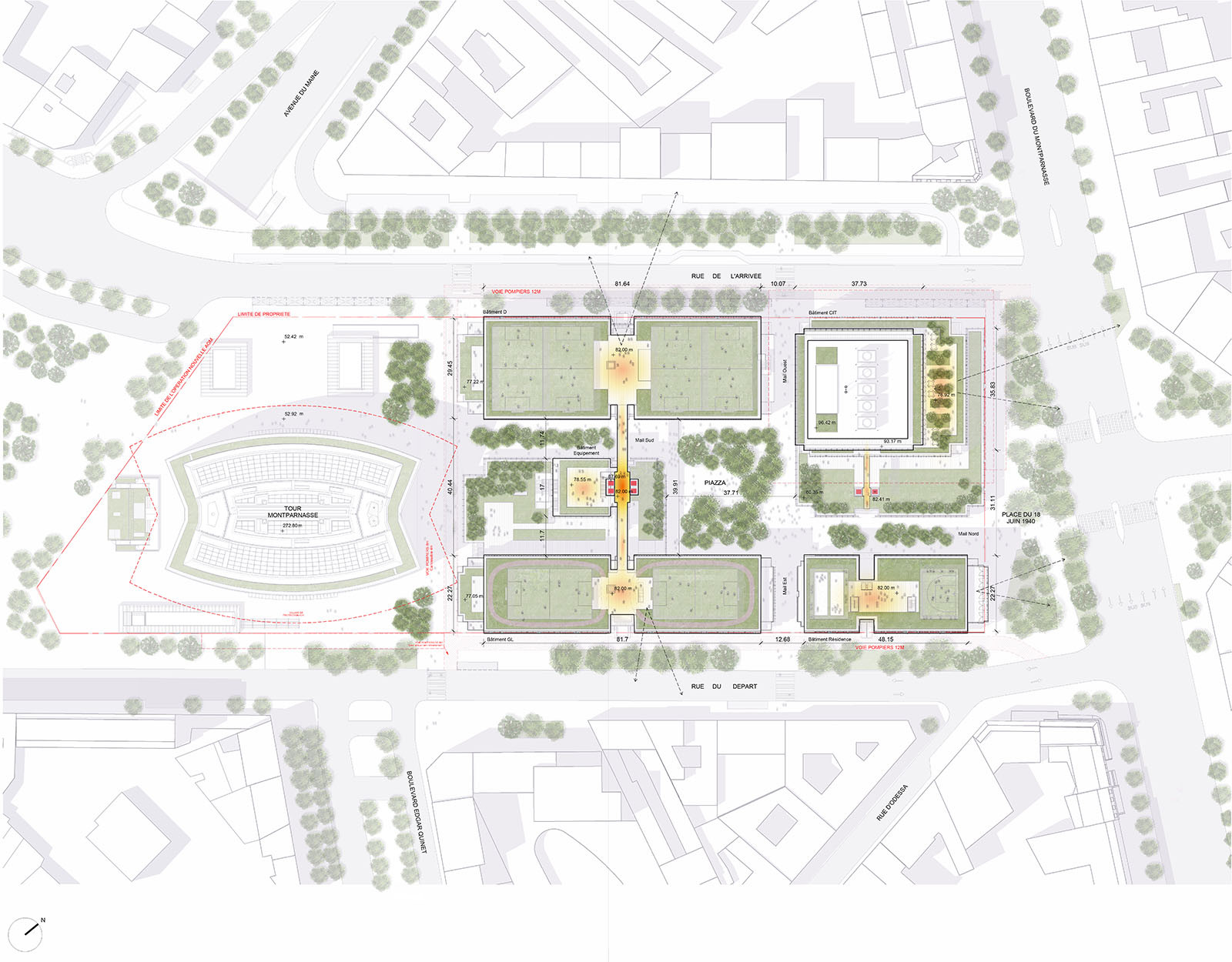
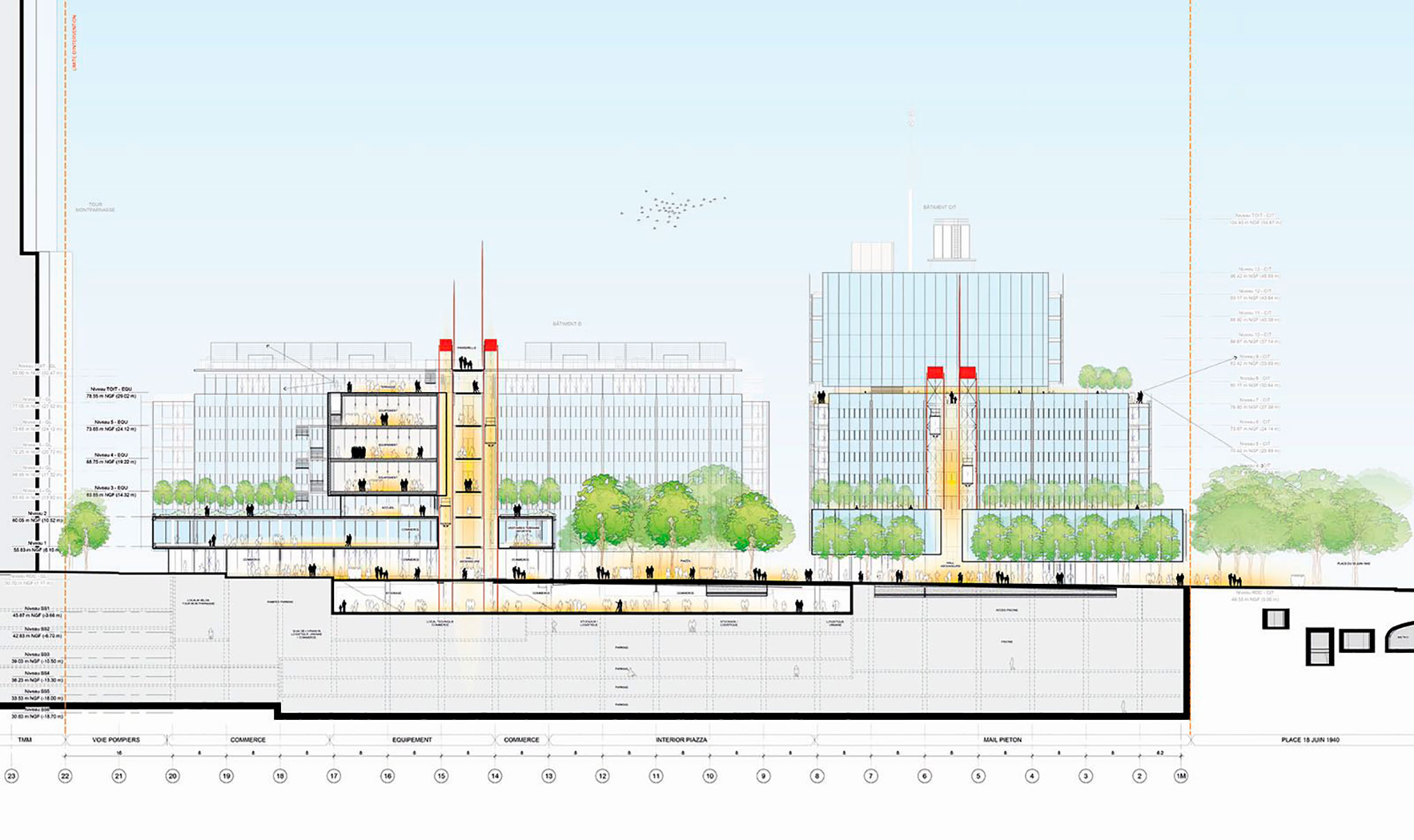
The project addresses a fragmented urban condition inherited from the era of slab-based planning by opening the site and reintegrating it into the surrounding city. New pedestrian routes cut through the block, reconnecting Rue de Rennes, the Montparnasse station and the neighboring streets, and linking three Parisian arrondissements. Ground floors are made transparent and permeable, allowing continuous visual and physical connections between the public realm and the heart of the block.
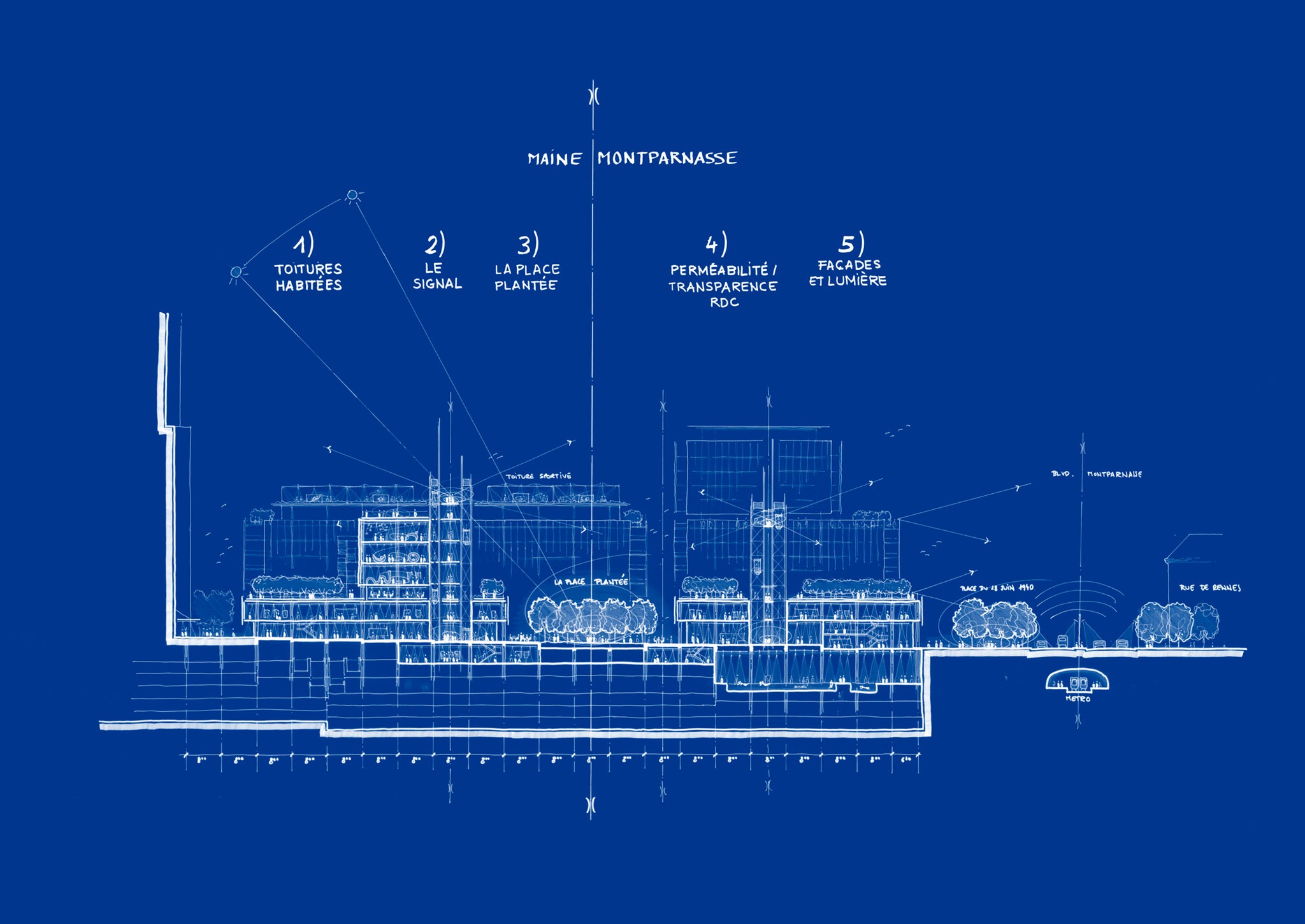
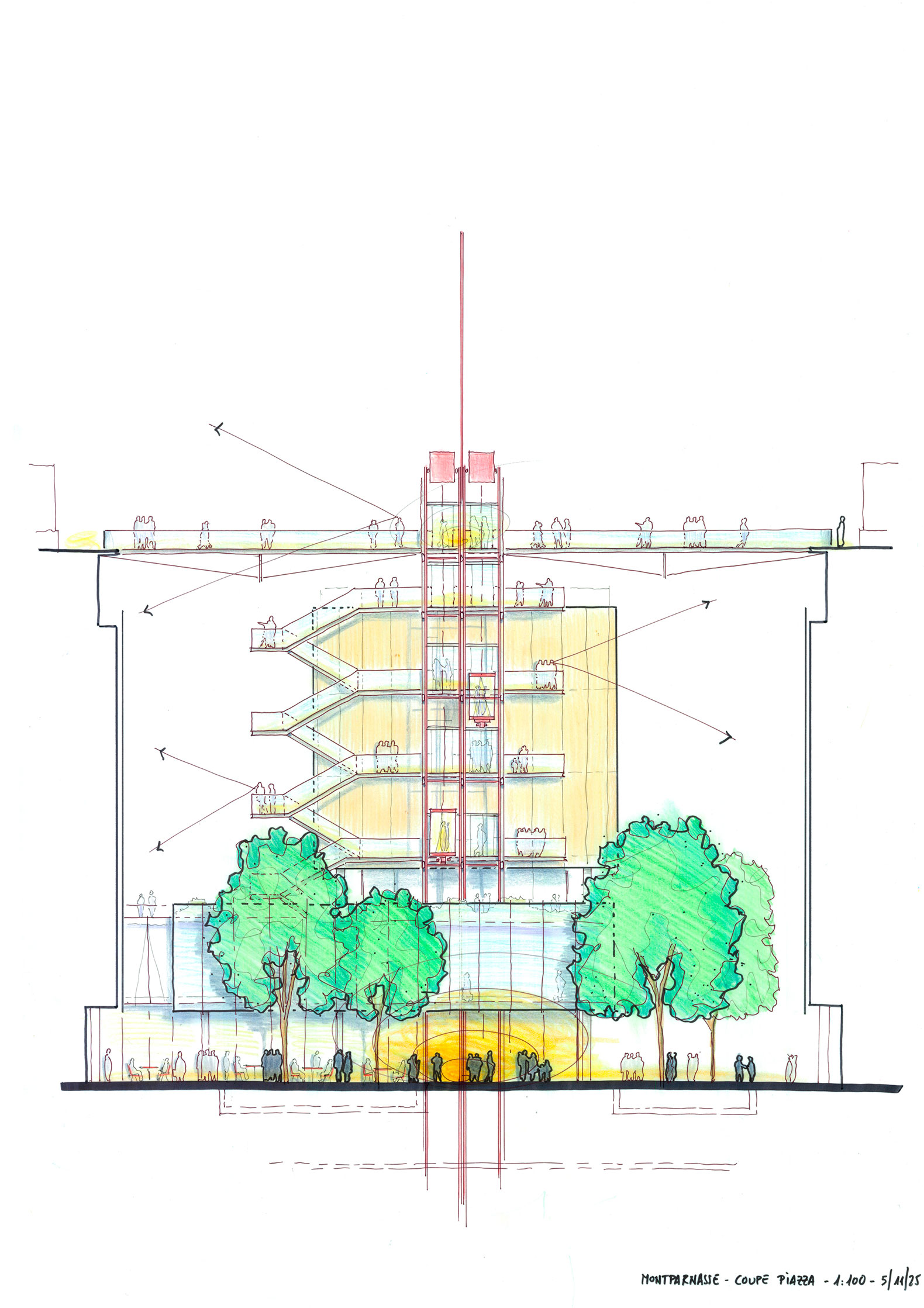
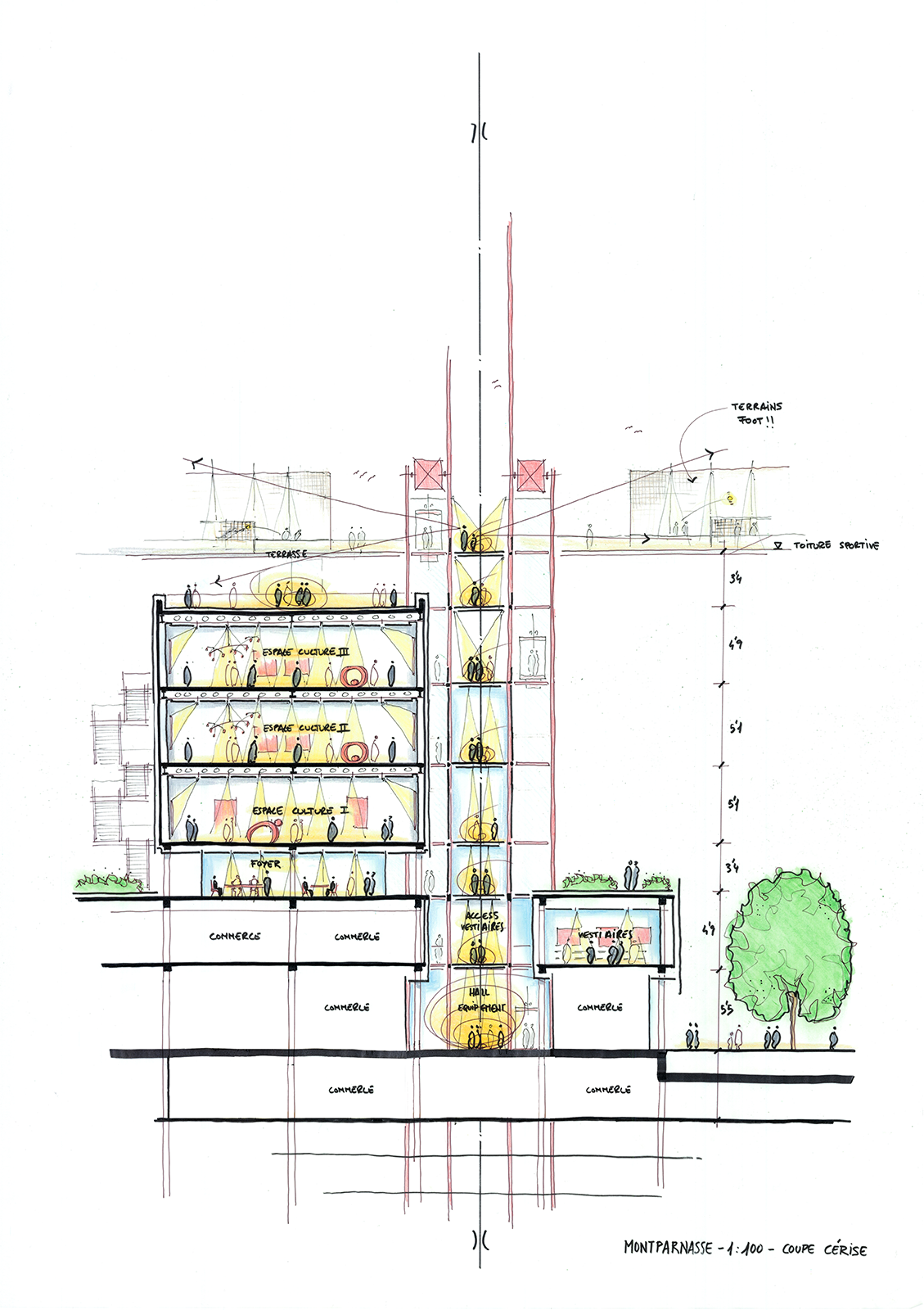
At the centre of the project, a large planted piazza becomes a new civic space for the neighborhood and beyond. Protected from traffic and generously shaded, it is conceived as a place to meet, pause and gather, animated throughout the day by cafés, terraces, cultural and sports facilities. The scale of the new buildings is calibrated to harmonize with the surrounding urban fabric, reinforcing the feeling of a coherent Parisian block rather than a monolithic complex. By introducing a rich mix of programs including culture, sport, student housing, offices and local commerce, the project supports everyday life and proximity uses, contributing to a vibrant, walkable and inclusive urban environment.
Building With What Already Exists
The architectural strategy is based on a careful balance between conservation, transformation and limited demolition. The existing structural grid is retained as the project’s backbone, significantly reducing material consumption and embodied carbon. New volumes are added through lightweight timber structures, allowing the integration of new programs while minimizing structural interventions.