In order to create a center to explore the evolution and cultural meaning of human desire, the architectural studio Snøhetta converts an old warehouse located in the Allapattah neighborhood of Miami into the new Museum of Sex, a sensory experience that explores in a fun and light-hearted way the relationship and diversity of the human body over time and presents a collection that stimulates debate and participation.

The space presents a succession of meeting and exhibition spaces, from works of art to historical collectibles or films, arranged in a building that was part of the post-industrial development of the city of Miami and that from now on will promote, from multi-colored corridors, lights and immersive experiences, the amazement of visitors and education about the role of sexual diversity in the arts, science and culture.

Snøhetta’s intention for the museum is centered on positivity, seeking to provide the space with structural and metaphorical lightness to translate the museum’s light-hearted and free-spirited perspective into a collection of interiors that embrace diversity, laughter, art, and unity through a series of permanent and temporary collections that complement the museum’s New York City-based approach with a new artistic approach.

The inaugural installation of the Museum of Sex in Miami includes among its interactive leisure spaces the first solo exhibition in the United States by Japanese artist Hajime Sorayama, known for his depictions of female robots, where he explores the eroticism of the human body. In addition, as a permanent installation, the museum presents an immersive “fairground” that details on a larger scale the New York exhibition of “Super Funland: Journey into the Erotic Carnival.”

Museum of Sex by Snøhetta. Photograph by Michael Stavaridis

Museum of Sex by Snøhetta. Photograph by Michael Stavaridis.

Project description by Snøhetta

Snøhetta converts Miami warehouse for the Museum of Sex's newest outpost.
A multifunctional center to explore the history, evolution, and cultural significance of human desire.

From fine art and historical collectibles to film, the Museum of Sex preserves an ever-growing collection of sexuality-related ephemera with exhibitions and programming that reveals the best of current scholarship while sparking public discourse and engagement of the topic. It's fun too!

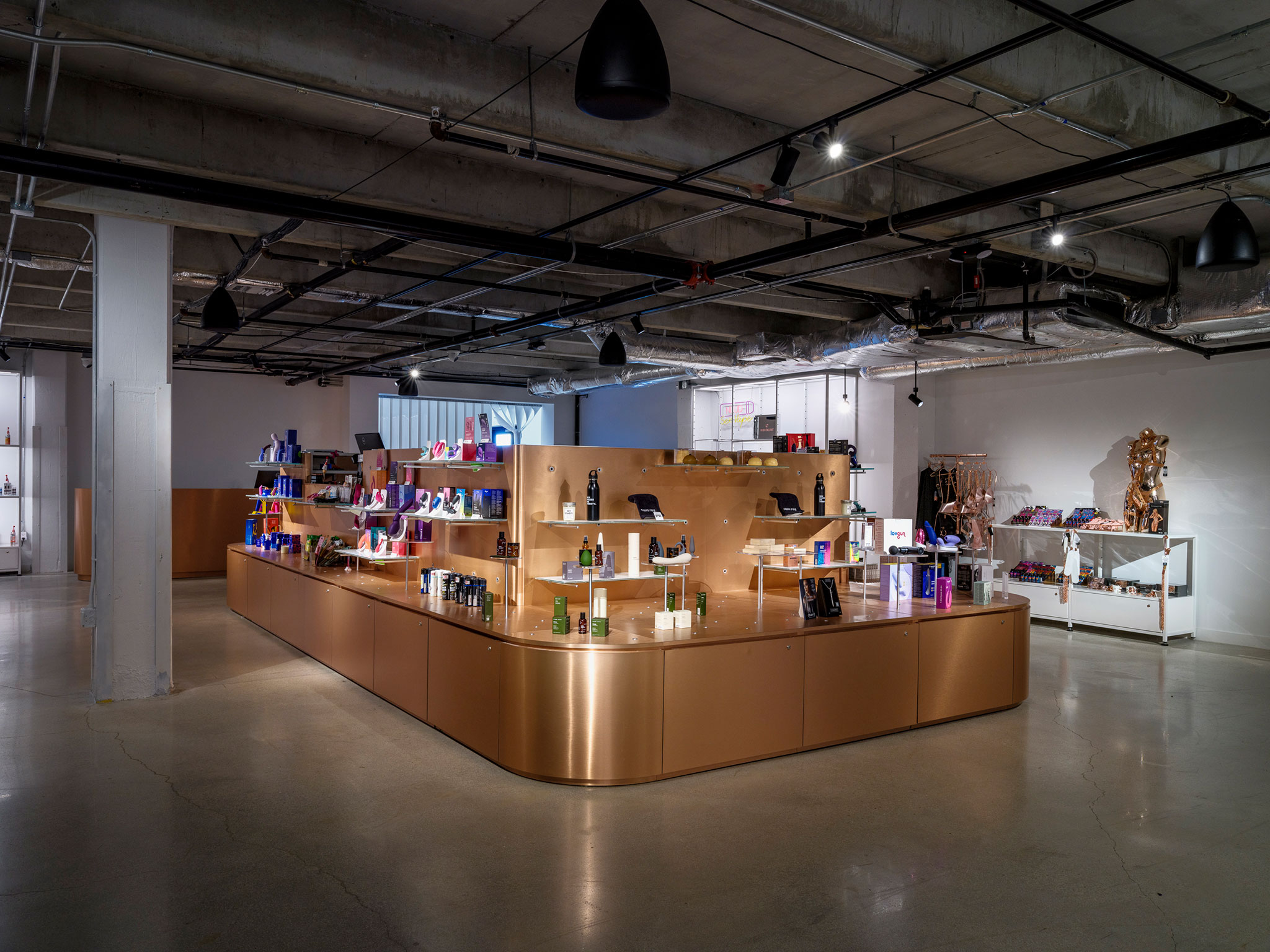
Located in the Miami neighborhood of Allapattah, the new iteration of the Museum of Sex is a sensory experience about more than just the human body, but an exploration of form, space, and play for adults. The 32,000 sq ft building was the former home of the Miami Herald distribution center and is the newest development within a post-industrial, emerging cultural hub. The space will house a collection of permanent and temporary exhibitions and is the second location for the New York City-based museum.

Museum of Sex by Snøhetta. Photograph by Michael Stavaridis
Museum of Sex by Snøhetta. Photograph by Michael Stavaridis.

Design played an integral role in the execution of the museum’s mission to preserve and present the history, evolution, and cultural significance of human desire. As collaborators on the project, we produced design concepts for the exterior, lobby and retail store, the temporary exhibition space, the Carnal Carnival bar, as well as the galleries and immersive experiences. Our concepts included a 40-foot-wide "rococo style" mermaid tank and fountain and 20 other interactive spaces and games for the permanent exhibition Super Funland, a grand space centered on the erotic history of the carnival.

"Snøhetta's collaboration with the Museum of Sex is rooted in positivity and joy. As we have pursued creating places that bring people together, our team embraced the levity that characterizes Museum of Sex, working to translate this perspective into a collection of interiors that embrace fun, laughter, and unity." ​

Snøhetta interior architecture discipline director, Anne-Rachel Schiffmann.

Museum of Sex by Snøhetta. Photograph by Michael Stavaridis.

The inaugural exhibition of the Miami outpost includes work by Hajime Sorayama, known for his detailed portrayals of feminine robots. The Japanese artist's first solo show in the US explores the eroticism of human bodies through his signature hyperrealist aesthetic, featuring four large-scale ‘sexy robot’ sculptures. Also showing at the museum is a scaled-up version of the exhibition that has entertained New Yorkers since 2019, ‘Super Funland: Journey into the Erotic Carnival’. This permanent installation, inspired by the eroticism of the carnival, presents an immersive ‘fairground’ with an otherworldly triptych by Hajime Sorayama, measuring over 14 ft. high.

This purpose-built space is an environment for friends to come together, for encouraging wonder while strolling the multicolored halls of memorabilia, and for educating audiences on the pivotal and diverse role of sensuality within the realms of the arts, science, and culture.

More information

Label
Architects
+ + copy Created with Sketch.
- + copy Created with Sketch.
Label
Client
+ + copy Created with Sketch.
- + copy Created with Sketch.
Label
Dates
Text

2025.

+ + copy Created with Sketch.
- + copy Created with Sketch.
Label
Location
Text

Miami, USA.

+ + copy Created with Sketch.
- + copy Created with Sketch.
Label
Photography
+ + copy Created with Sketch.
- + copy Created with Sketch.

Snøhetta is an architecture, landscape, and interior design studio with offices in Oslo, Norway, and New York City, USA. Founded in 1989, it is led by Craig Dykers and Kjetil Thorsen. The studio, named in honour of Mount Snøhetta, the highest peak in the Dovrefjell mountains of Norway, has approximately 100 collaborators working on large-scale international projects across a wide range of typologies. Their approach is deeply collaborative and transdisciplinary, bringing together architects, designers, engineers, and landscape professionals to explore multiple perspectives depending on the nature of each project.

Snøhetta has completed a series of world-renowned cultural and landmark projects, including the Bibliotheca Alexandrina in Egypt, the Oslo Opera House and Ballet, and the Lillehammer Art Museum in Norway. Current projects include the National Pavilion of the September 11 Memorial Museum at the World Trade Center site in New York, as well as urban and landscape developments that aim to merge local identity, sustainability, and public experience.

In 2004, Snøhetta was awarded the Aga Khan Award for Architecture, and in 2009, the Mies van der Rohe Award. The studio is the only practice to have won the World Architecture Award for Best Cultural Building twice in consecutive years: in 2002 for the Bibliotheca Alexandrina and in 2008 for the Oslo Opera House and Ballet, consolidating its international prestige.

Kjetil Trædal Thorsen (born 1958 on the coastal island of Karmøy, Norway) is a co-founder of the studio and a multiple award-winning architect. He is a visionary and humanist designer who has redefined the boundaries of contemporary practice. Under his leadership, Snøhetta has produced iconic, sustainable structures that are highly sensitive to their cultural context, combining technological innovation with a profound environmental awareness. Thorsen’s work is recognized for its focus on social interaction, sustainability, and the creation of spaces that foster human connection and sensory experience, establishing a benchmark in contemporary global architecture.

Craig Dykers (born 1961 in Frankfurt, Germany) is also a co-founder of the studio and director of its New York office. Snøhetta has earned a reputation for maintaining a deep integration of landscape, architecture, and urban experience across all its projects. Key works include the Bibliotheca Alexandrina in Egypt, the Oslo Opera House and Ballet, the National Pavilion of the September 11 Memorial Museum in New York, and the redesign of Times Square. Professionally and academically active, Dykers has been a member of the Norwegian Association of Architects (NAL), the American Institute of Architects (AIA), and the Royal Society of Arts in England. He has served as a diploma juror at the Architectural College in Oslo and as a distinguished professor at City College, New York. He has delivered numerous lectures across Europe, Asia, and the Americas, and has undertaken public art installation projects, many of which explore the interplay between context, landscape, and human experience.

Read more
Published on: March 7, 2025
Cite:
metalocus, MINERVA GARCÍA DE CASTRO
"Exploration into the meaning of human desire. Museum of Sex by Snøhetta" METALOCUS. Accessed
<https://www.metalocus.es/en/news/exploration-meaning-human-desire-museum-sex-snohetta> ISSN 1139-6415
Loading content ...
Loading content ...
Loading content ...
Loading content ...
Loading content ...
Loading content ...
Loading content ...
Loading content ...
Loading content ...
Loading content ...
Loading content ...
Loading content ...
Loading content ...
Loading content ...
Loading content ...
Loading content ...
Loading content ...
Loading content ...
Loading content ...
Loading content ...
Loading content ...
Loading content ...
Loading content ...
Loading content ...
Loading content ...
Loading content ...
Loading content ...
Loading content ...
Loading content ...
Loading content ...
Loading content ...
Loading content ...
Loading content ...
Loading content ...
Loading content ...
Loading content ...
Loading content ...
Loading content ...
Loading content ...
Loading content ...
Loading content ...
Loading content ...
Loading content ...
Loading content ...
Loading content ...
Loading content ...
Loading content ...
Loading content ...
Loading content ...
Loading content ...
Loading content ...
Loading content ...
Loading content ...
Loading content ...