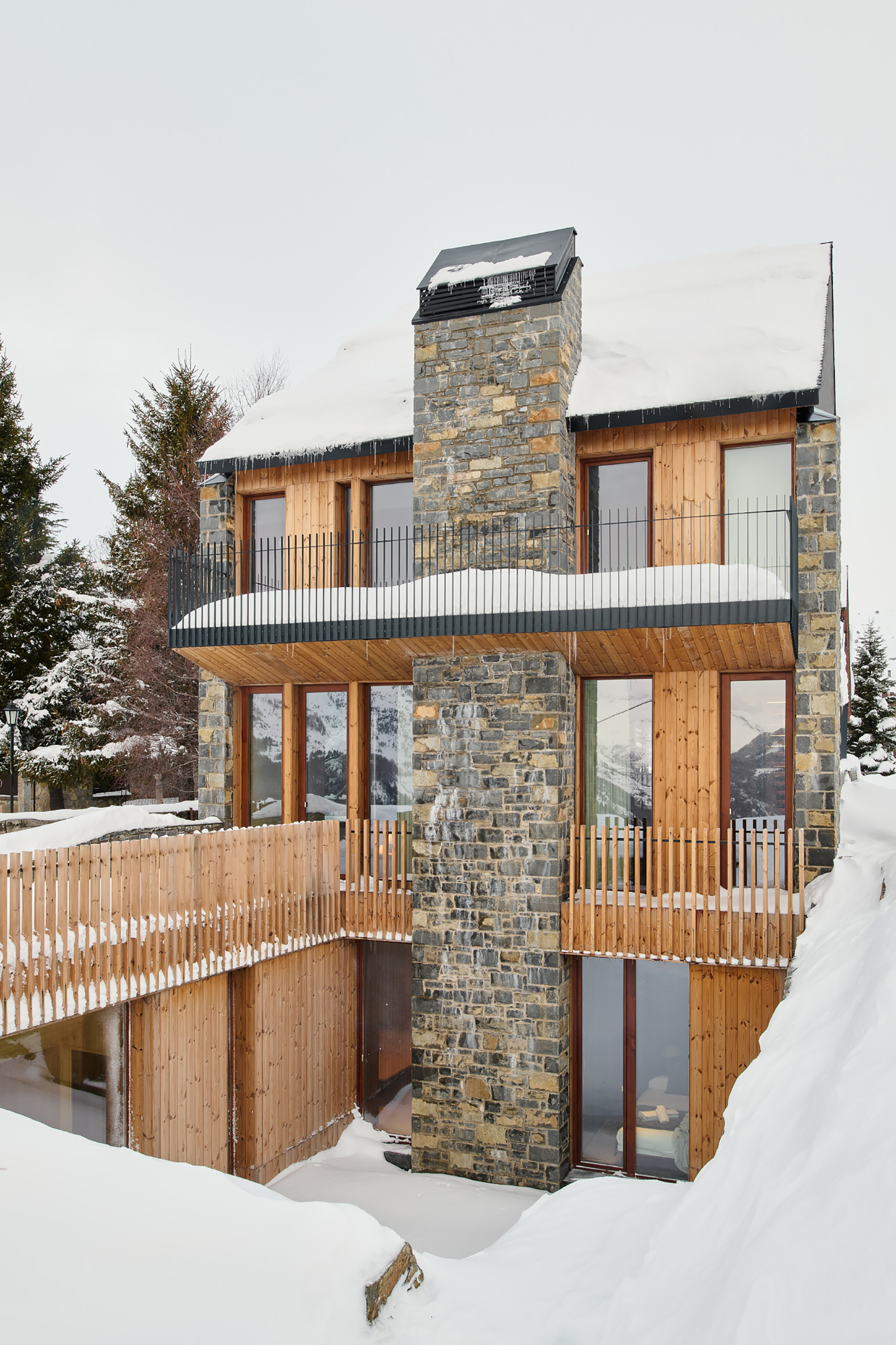
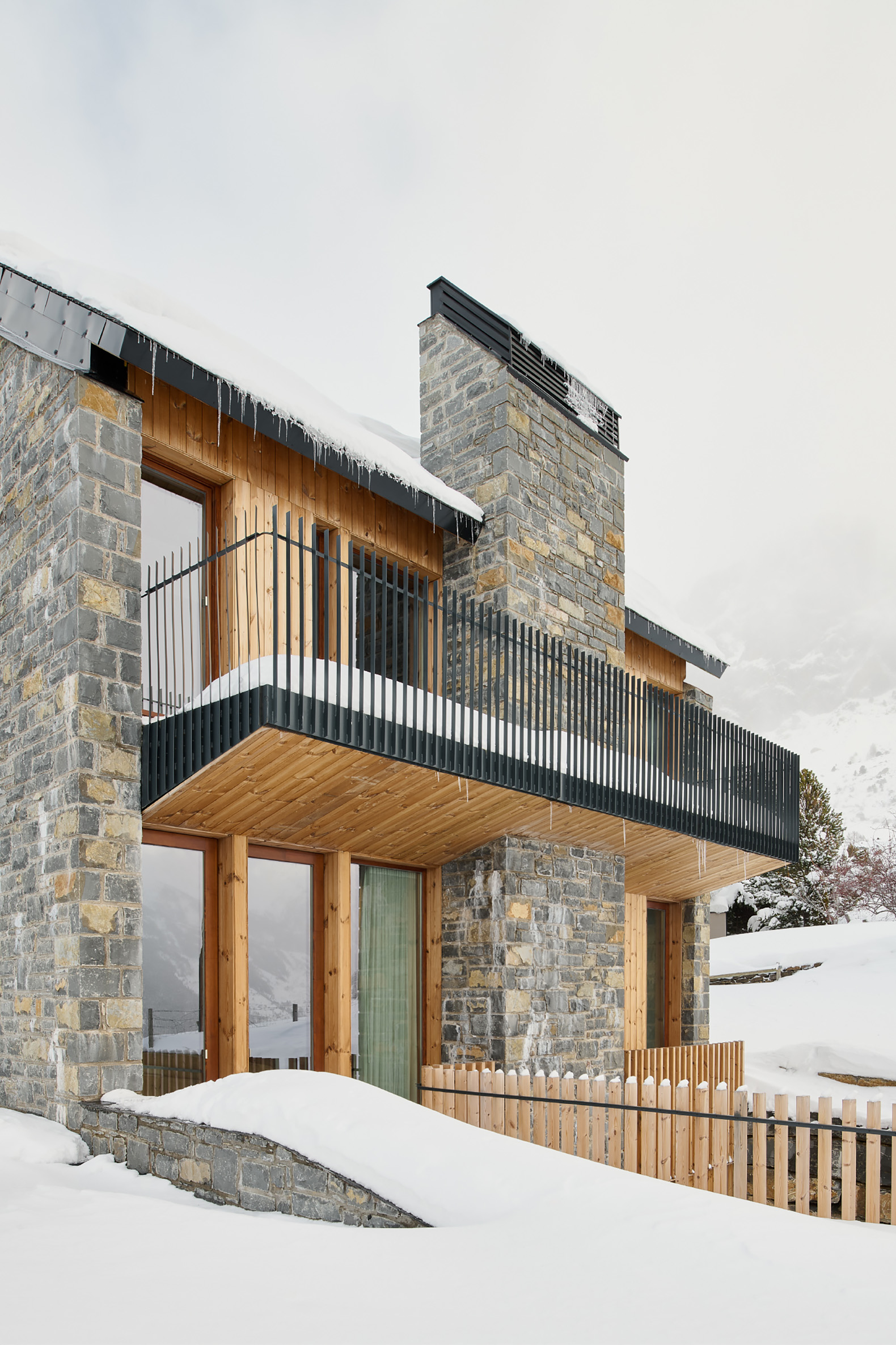
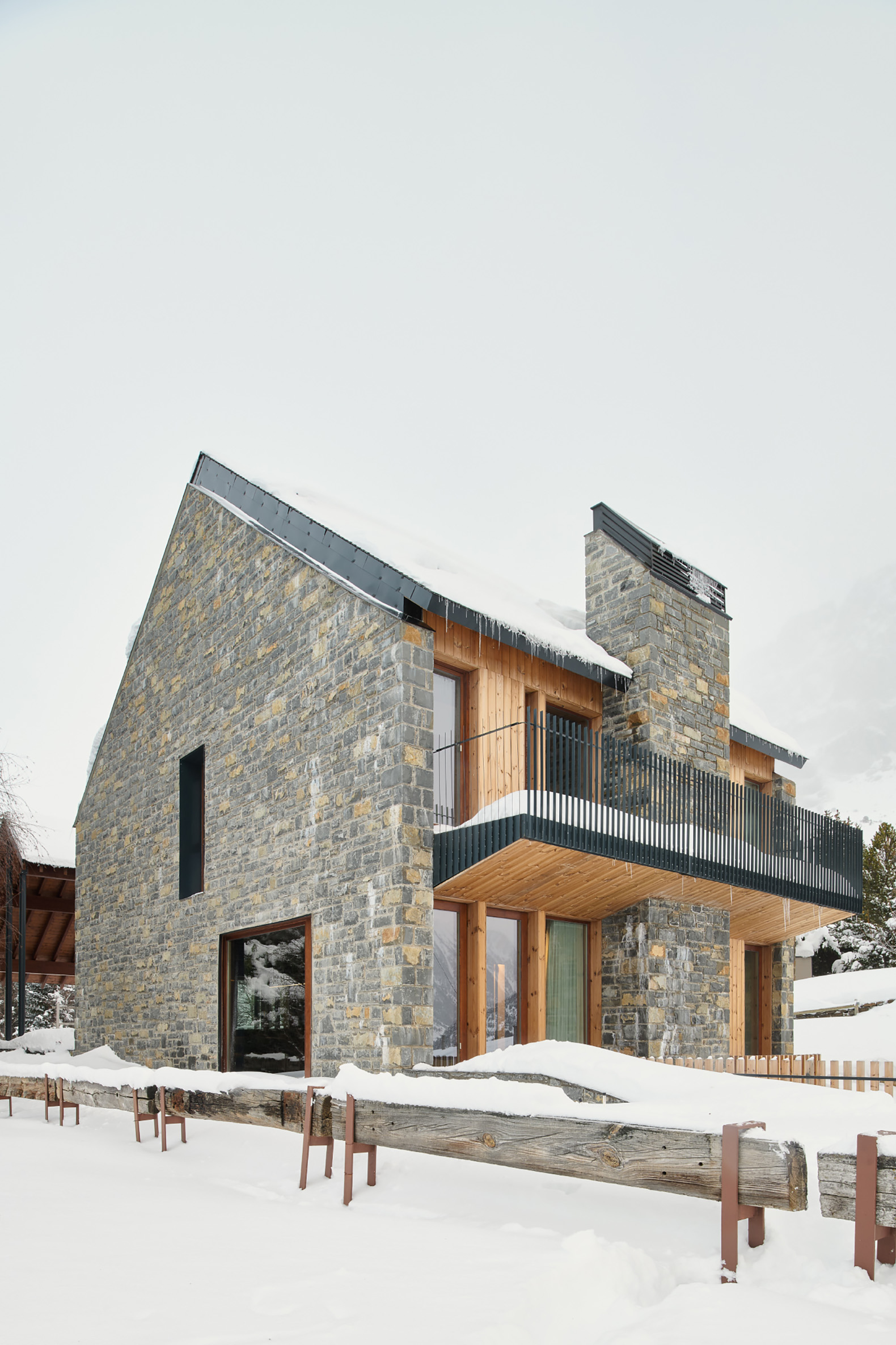
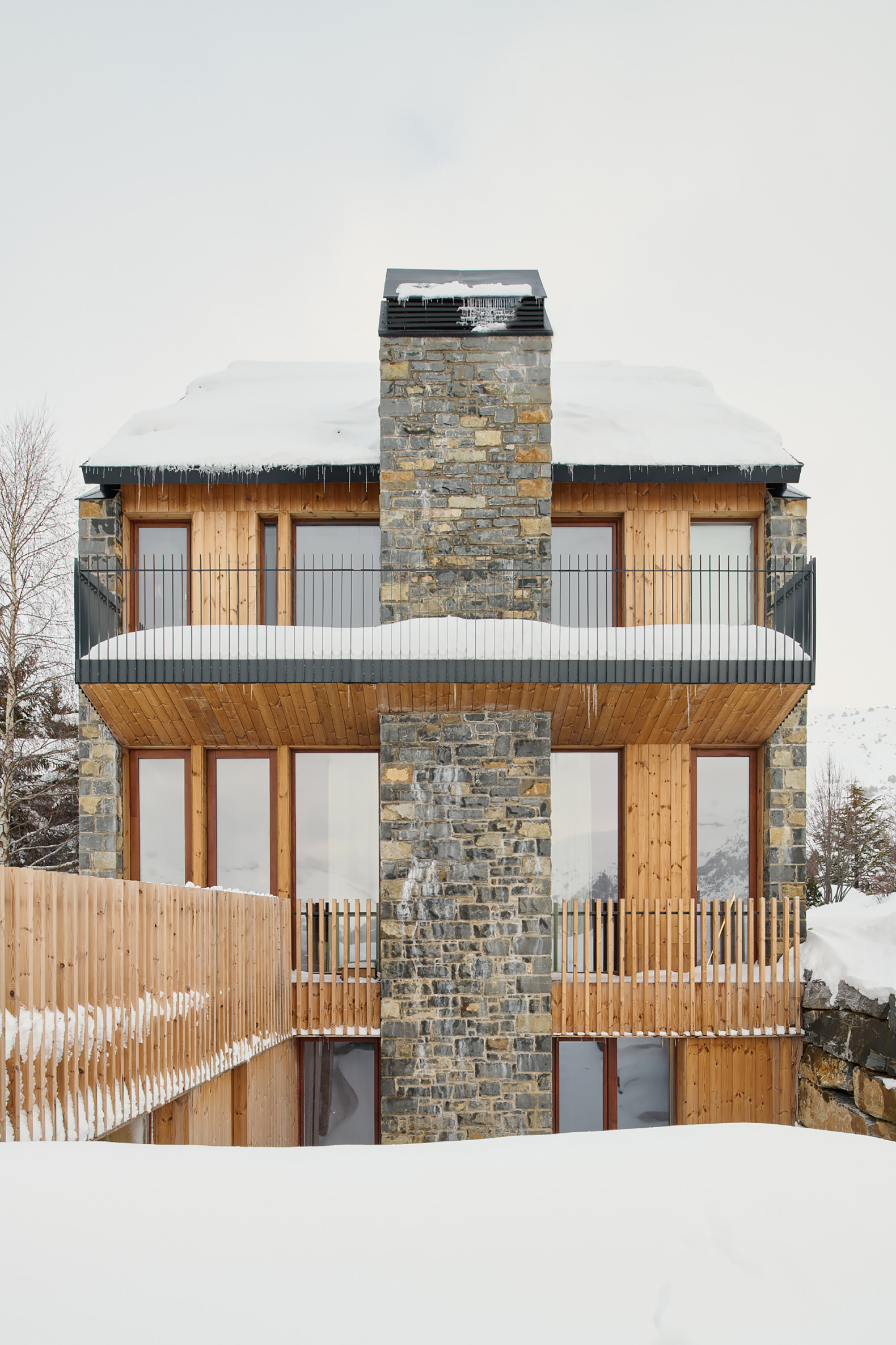
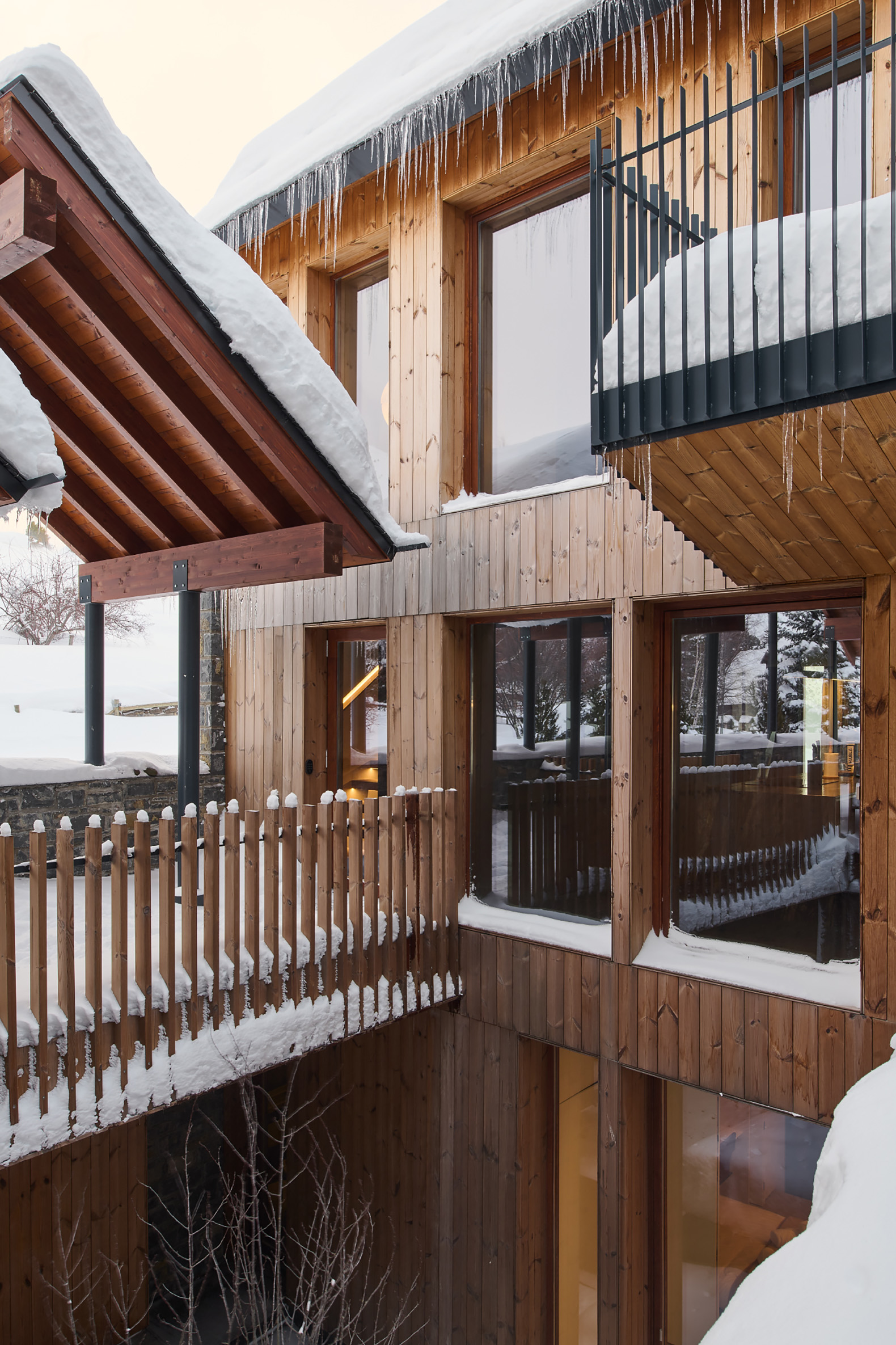
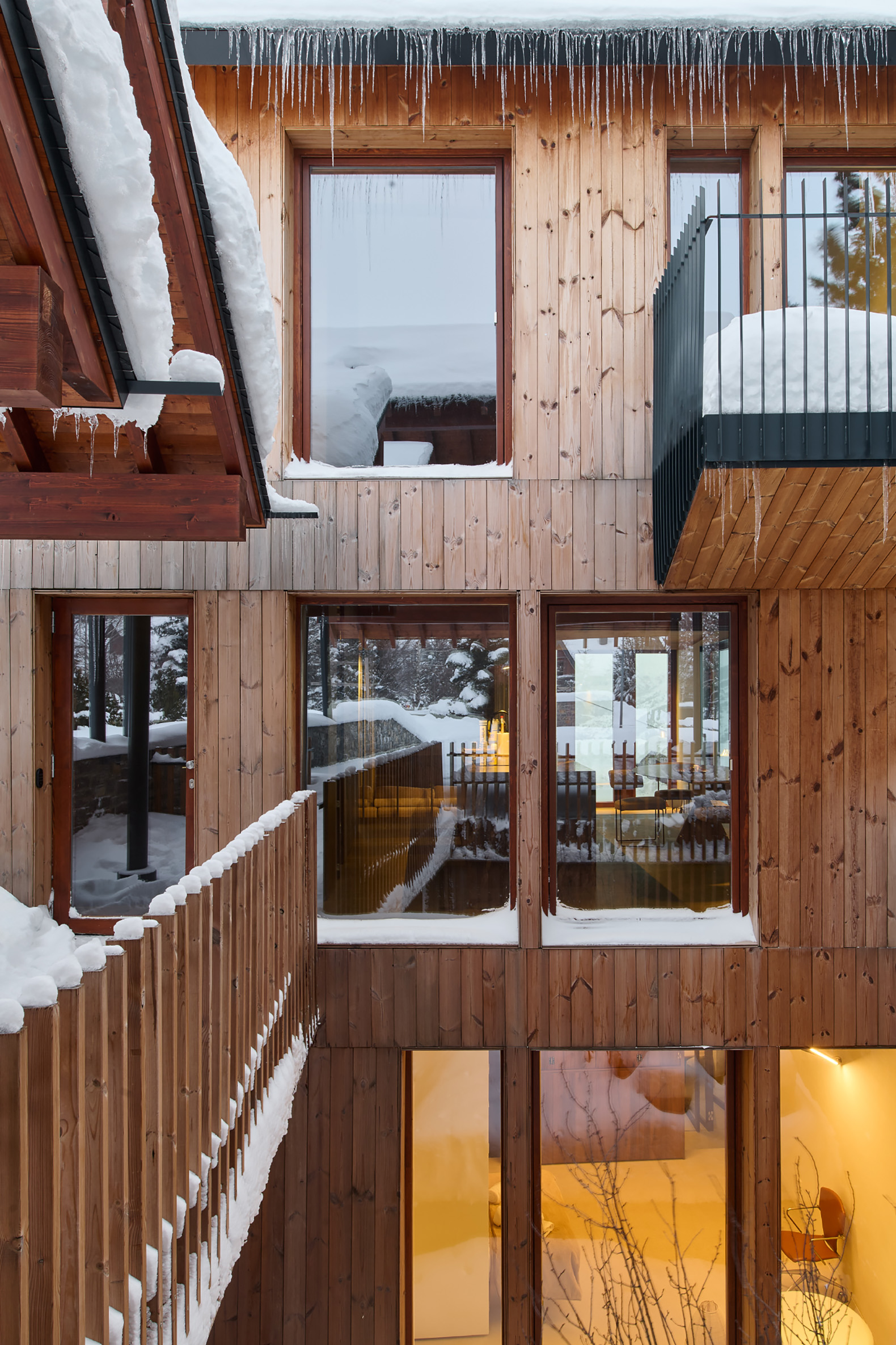
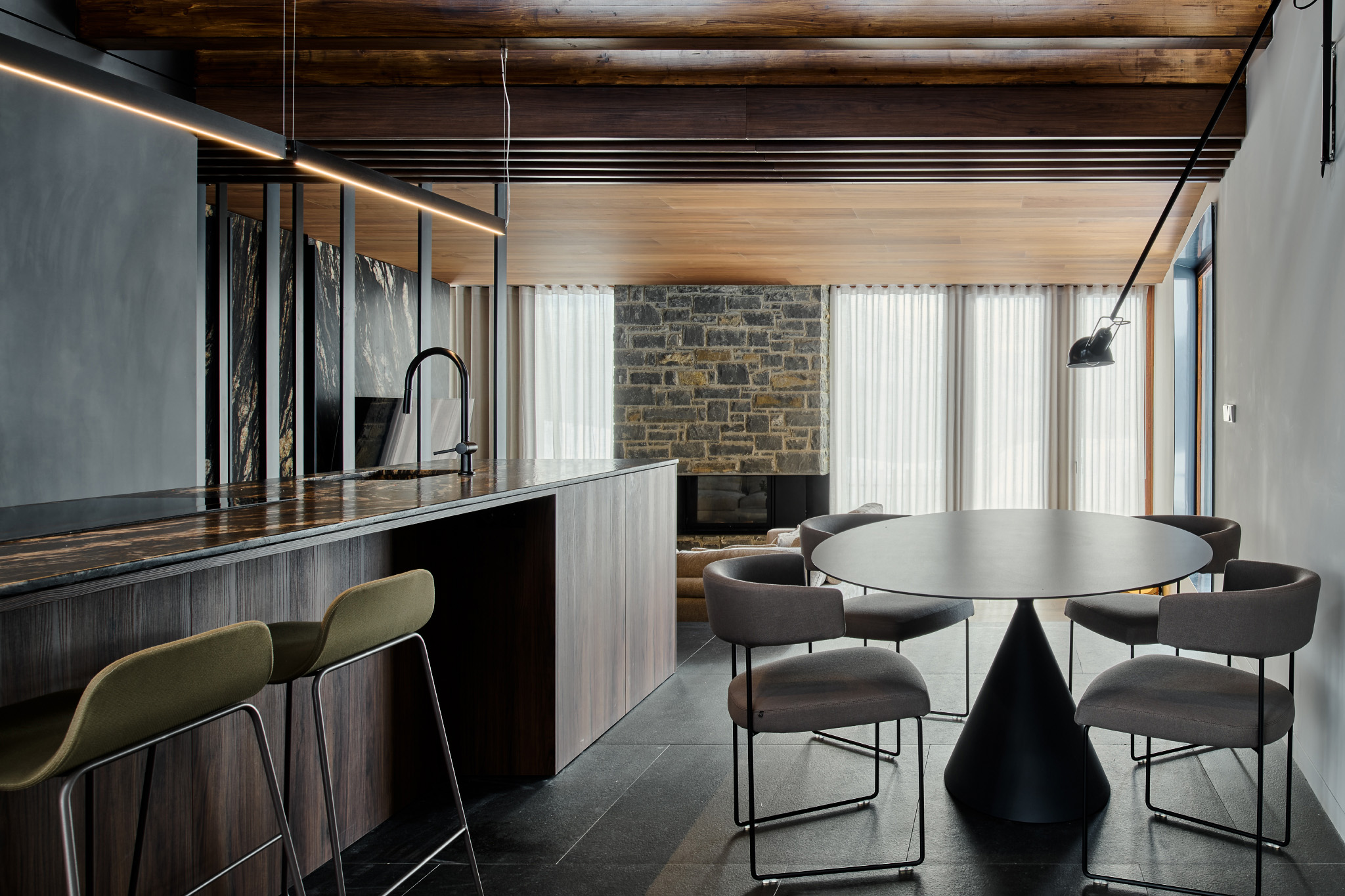
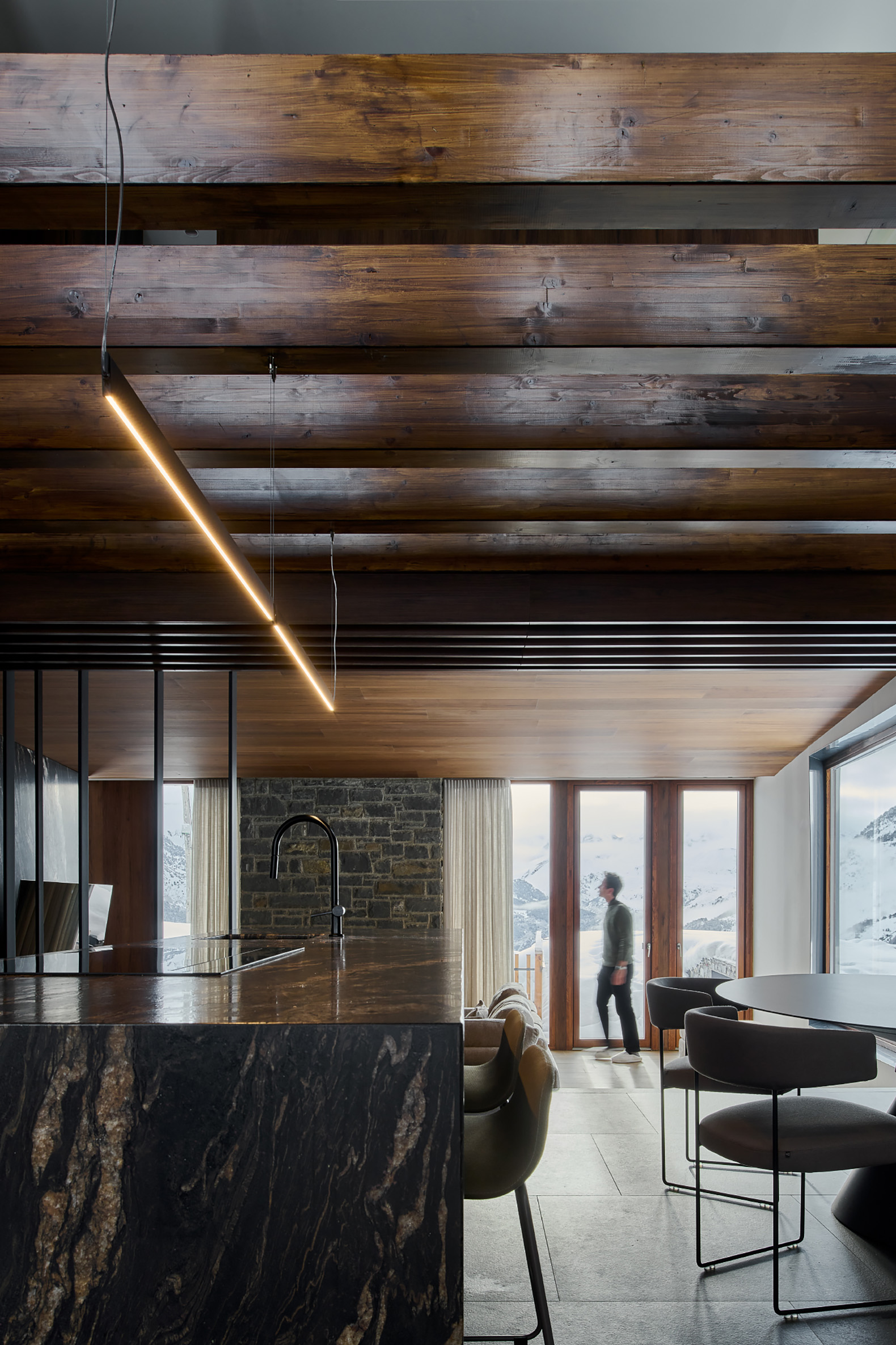
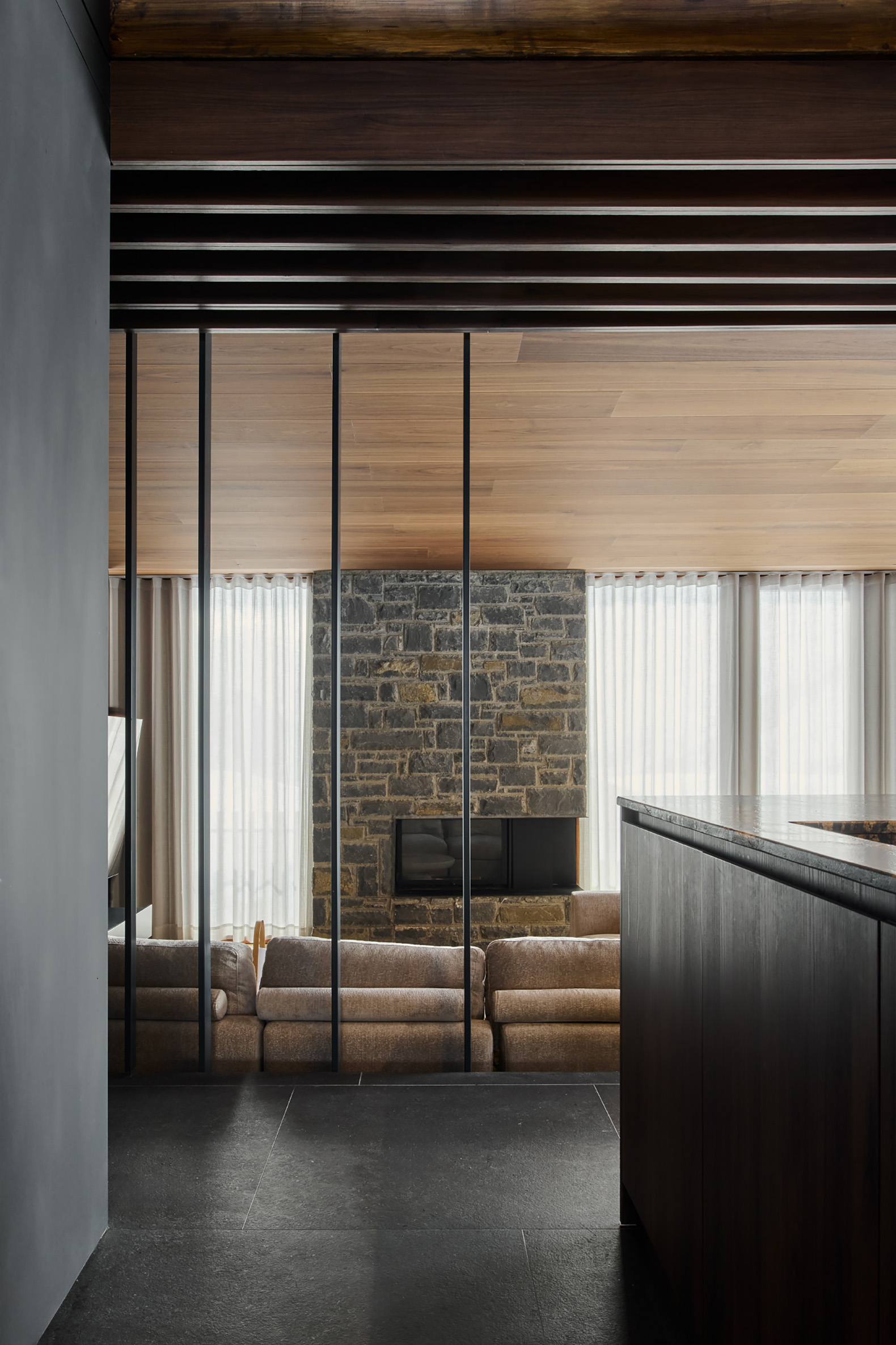
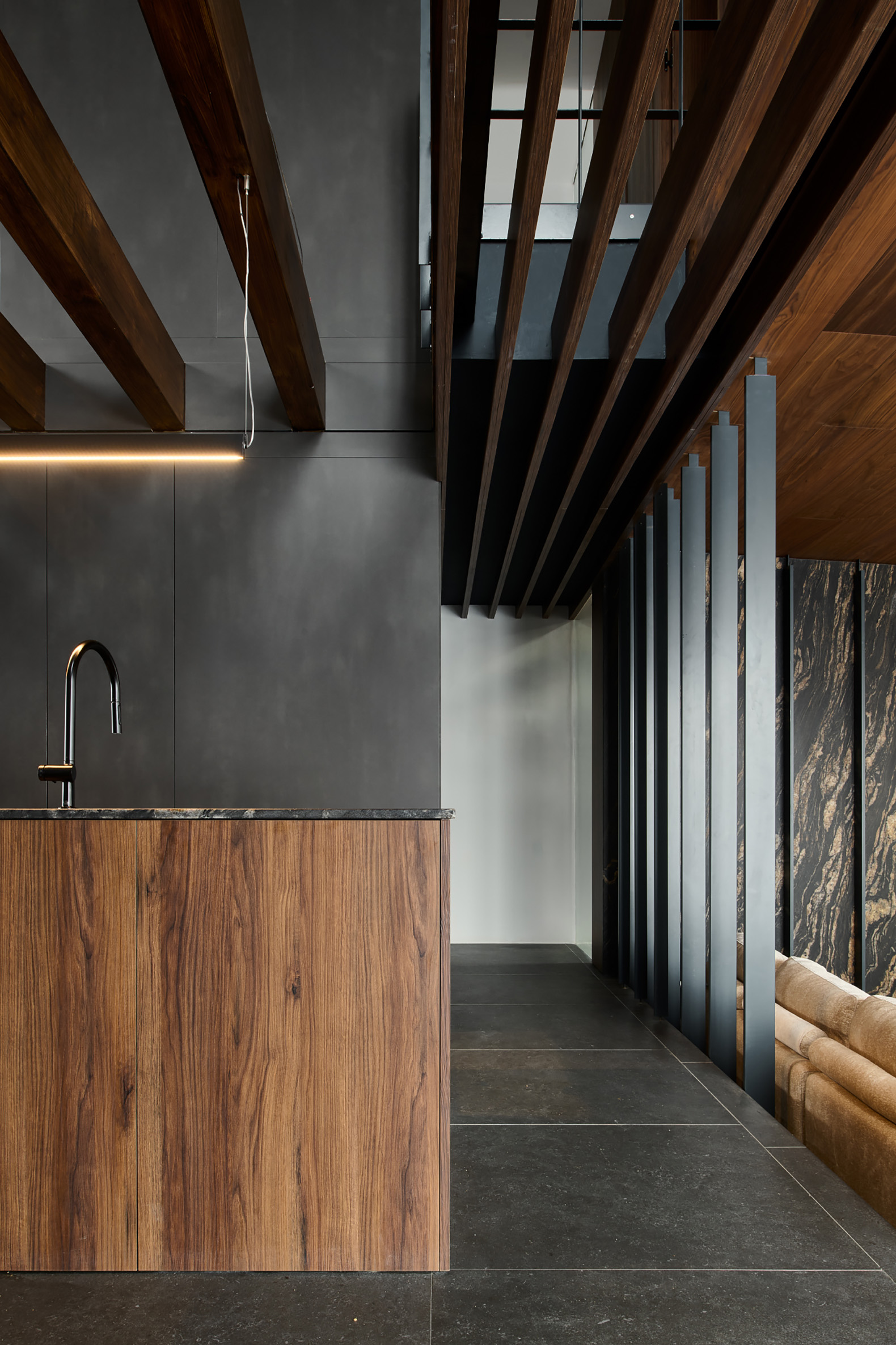
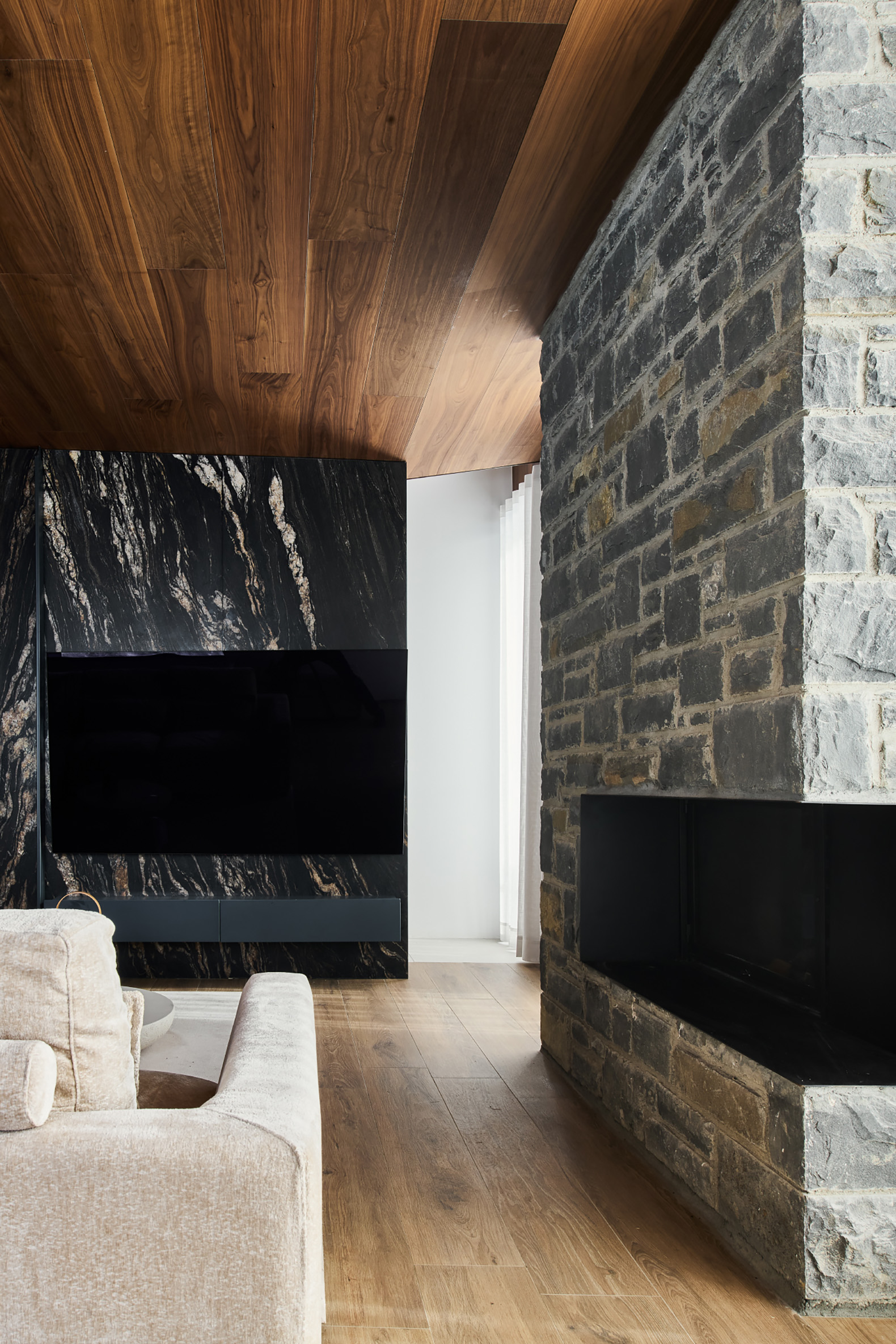
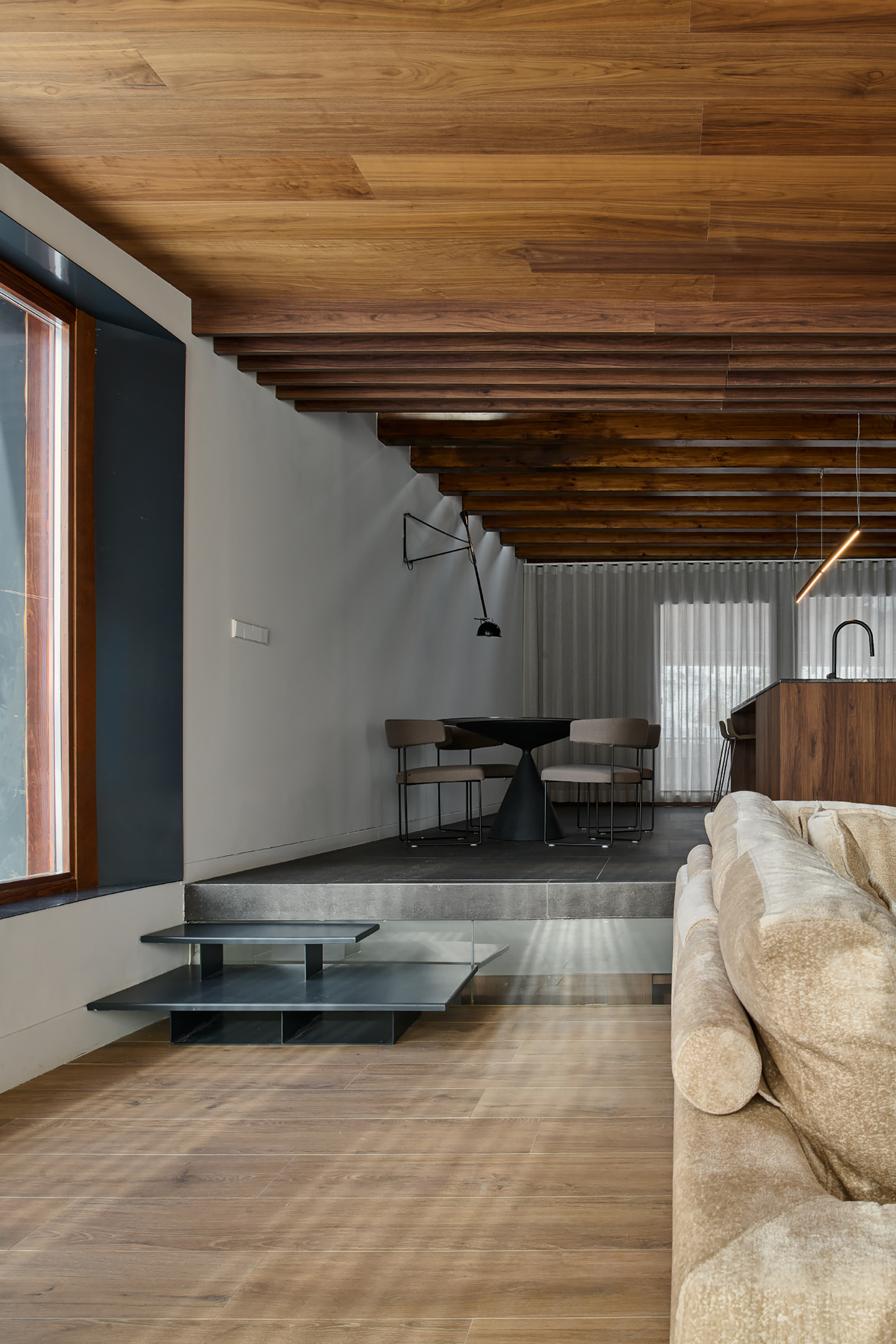
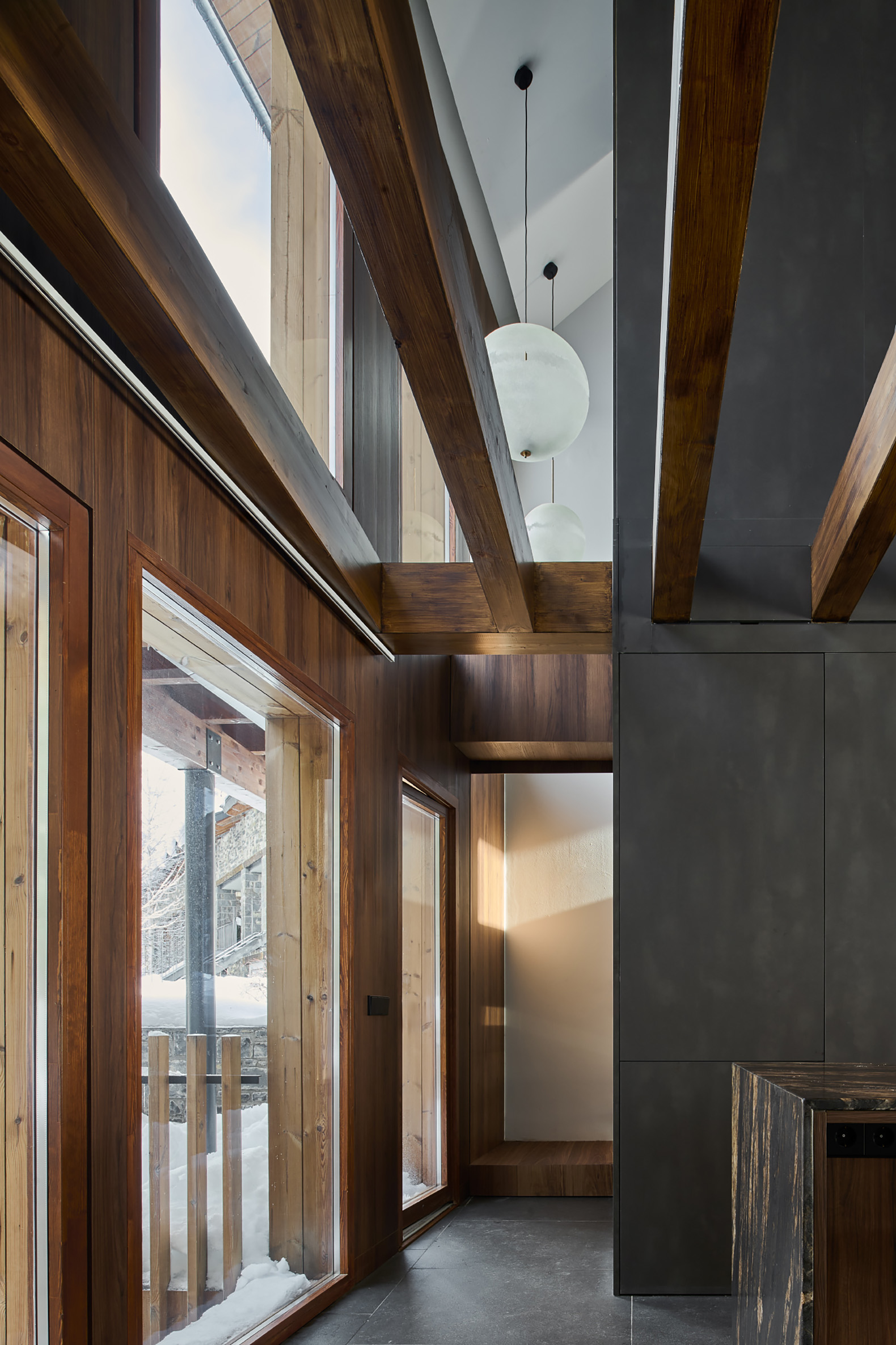
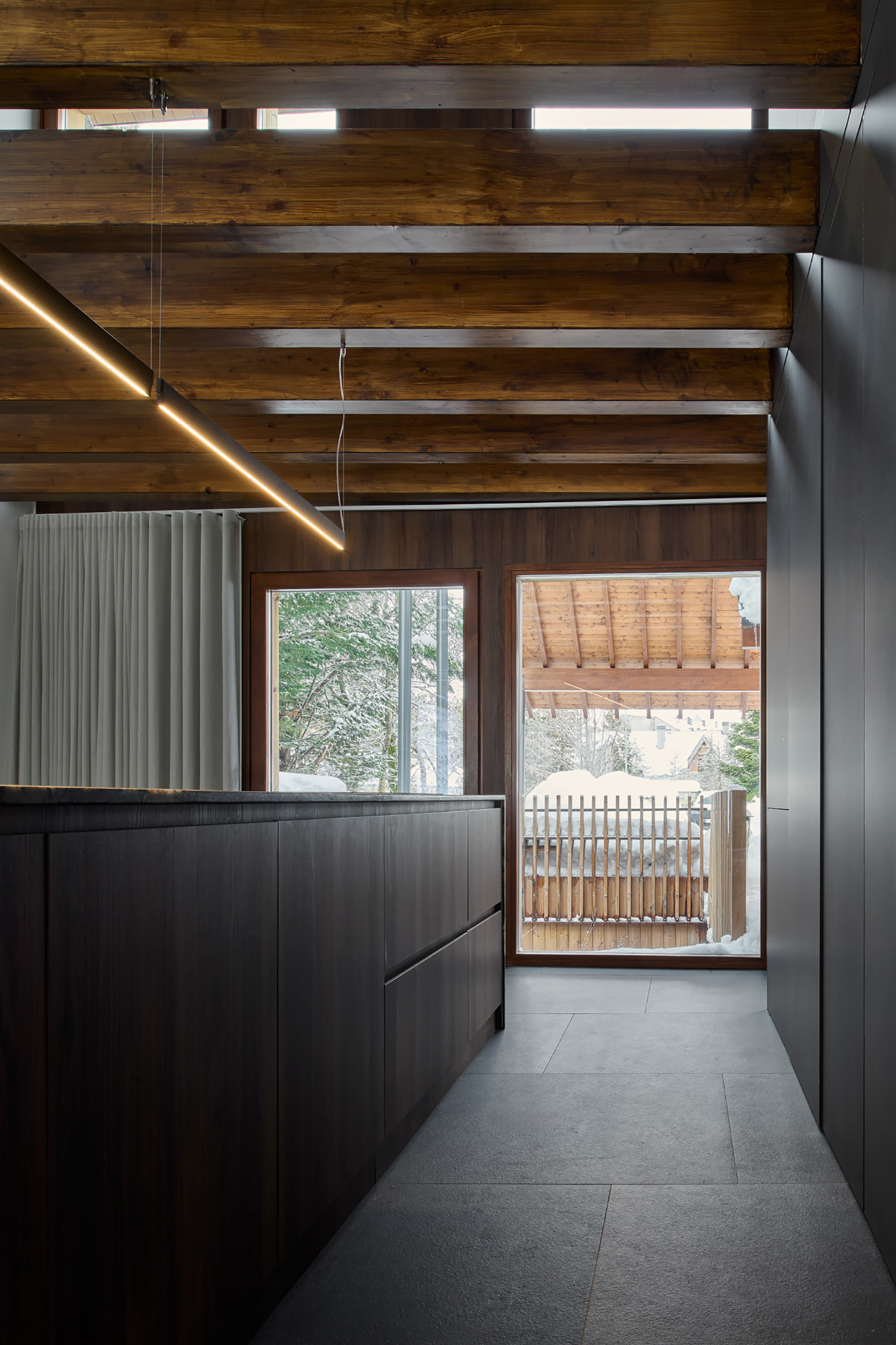
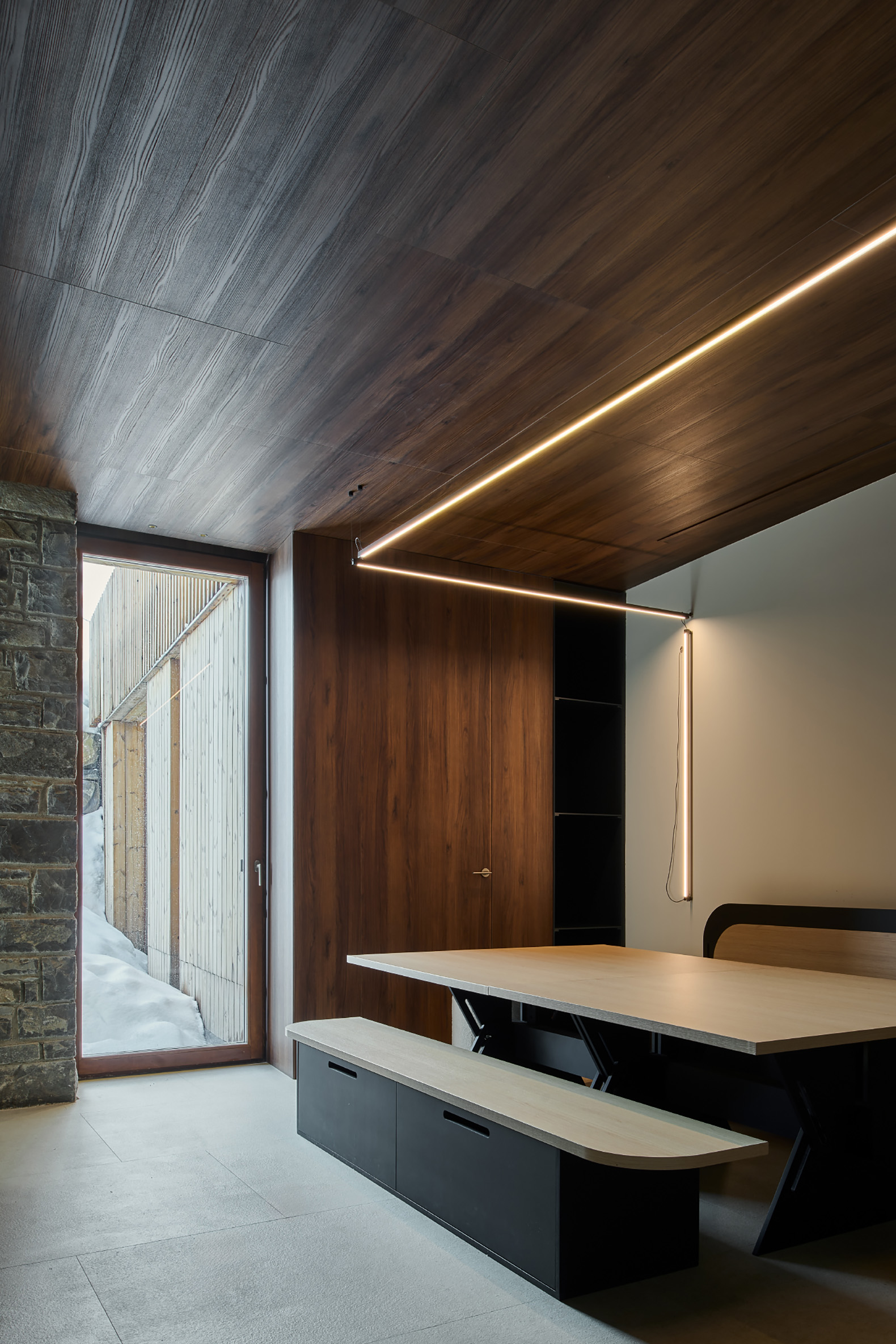
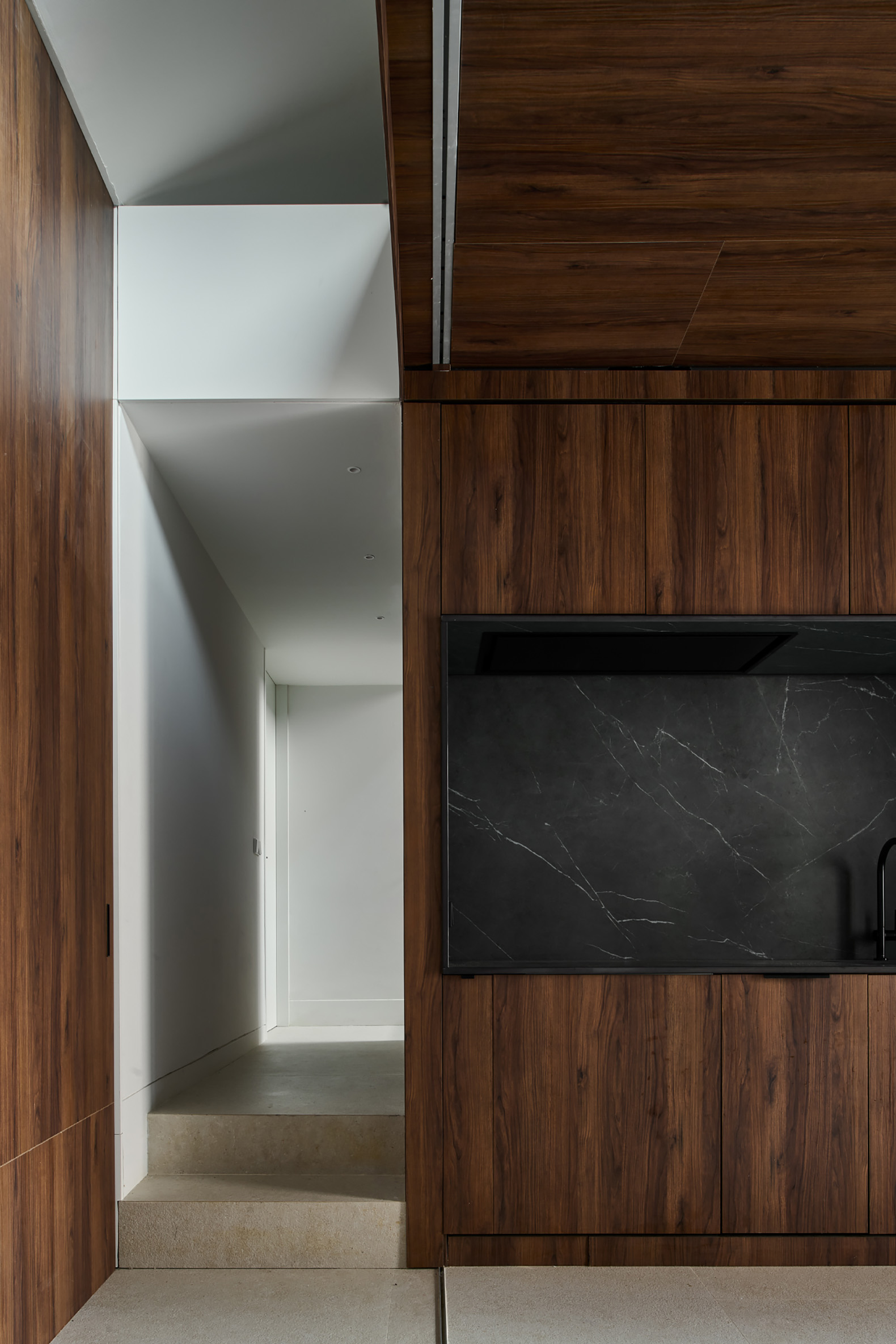
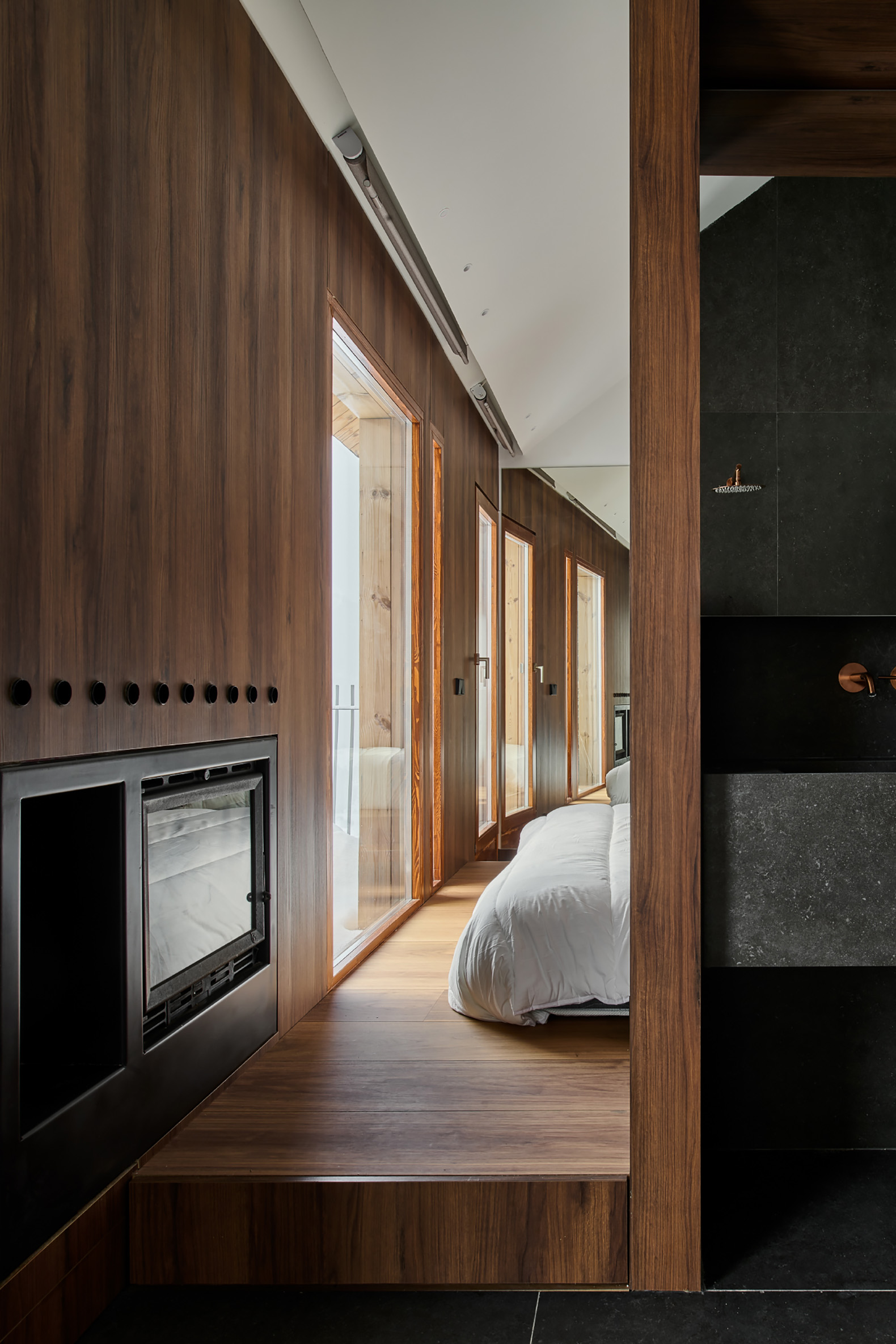
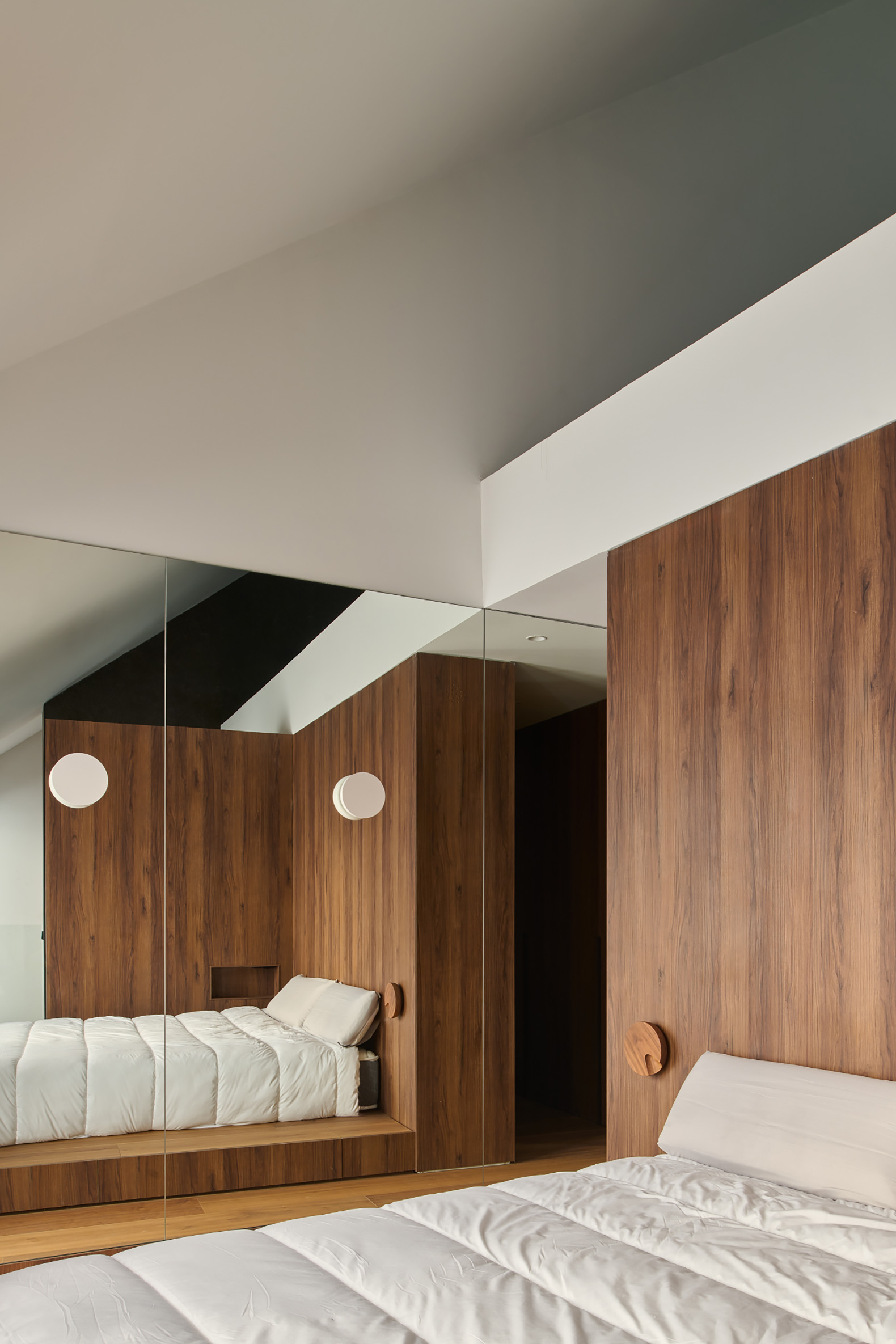
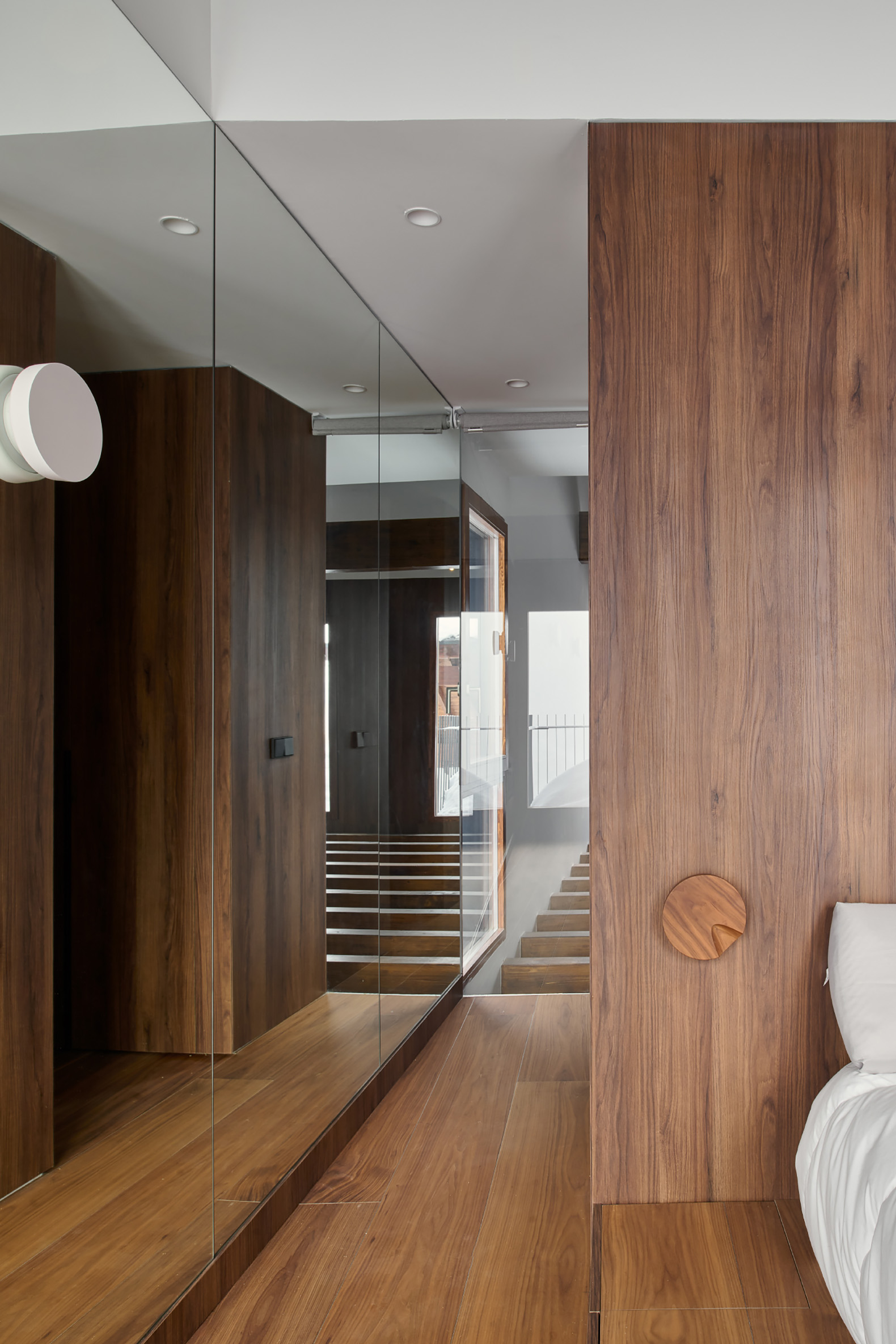
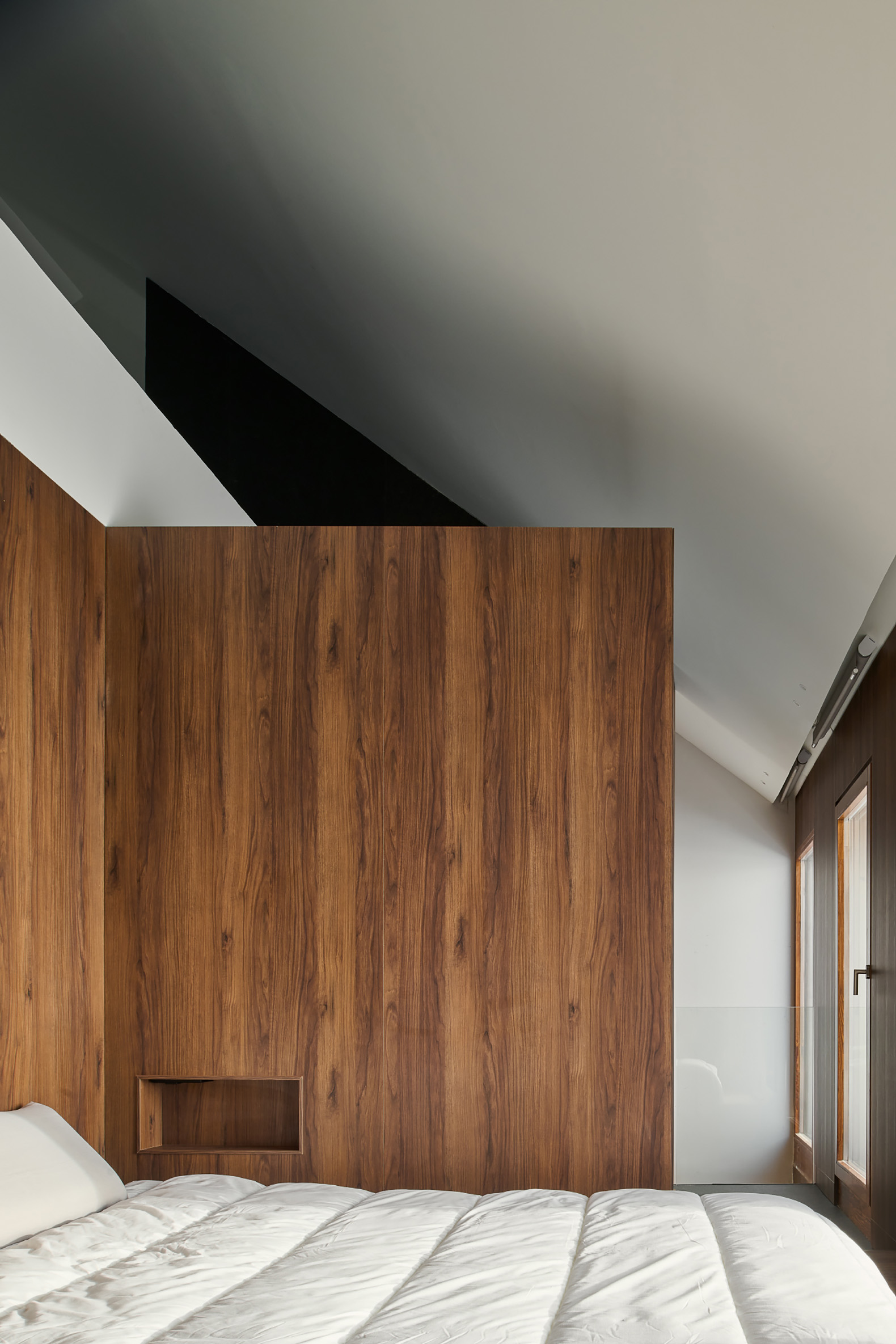
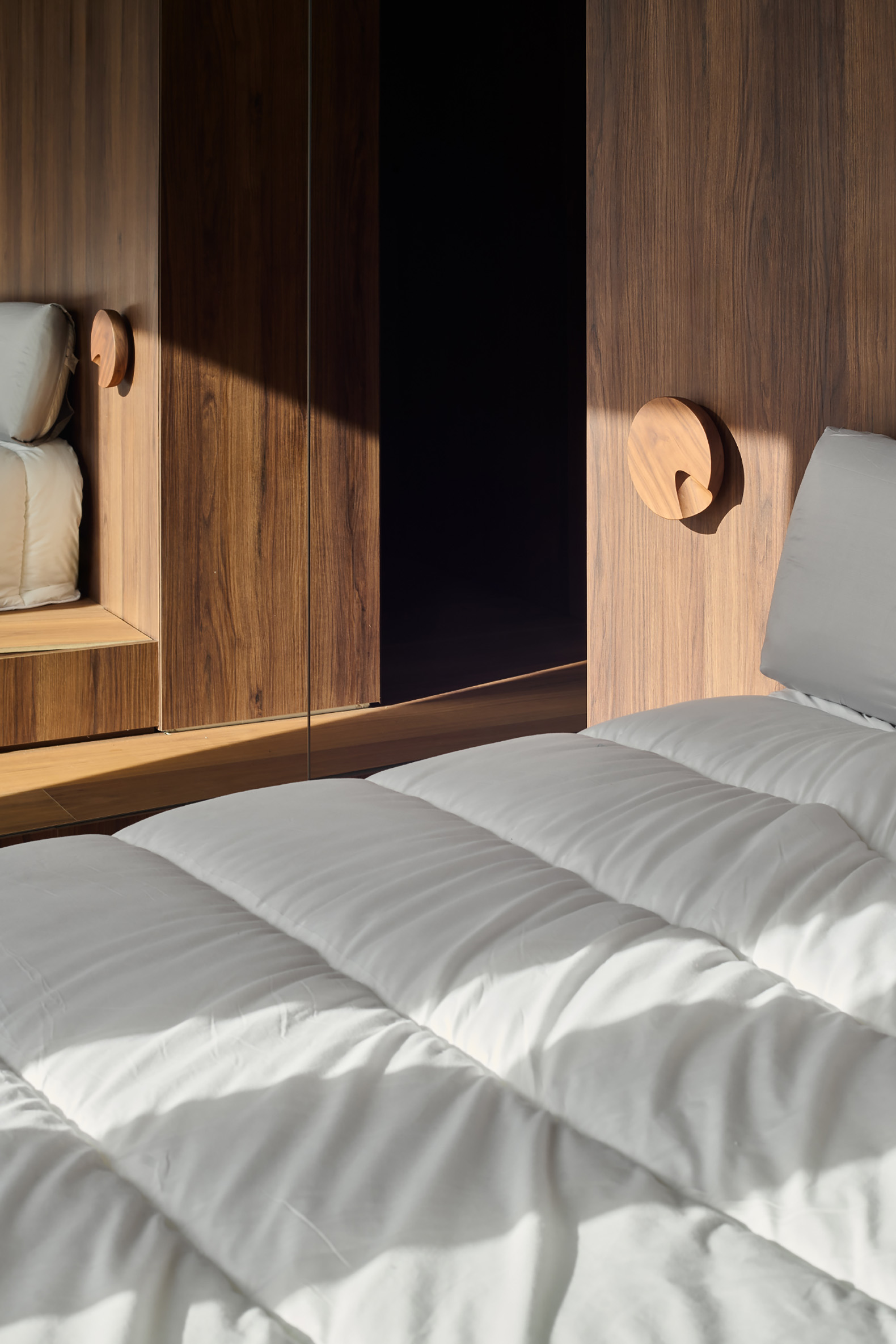
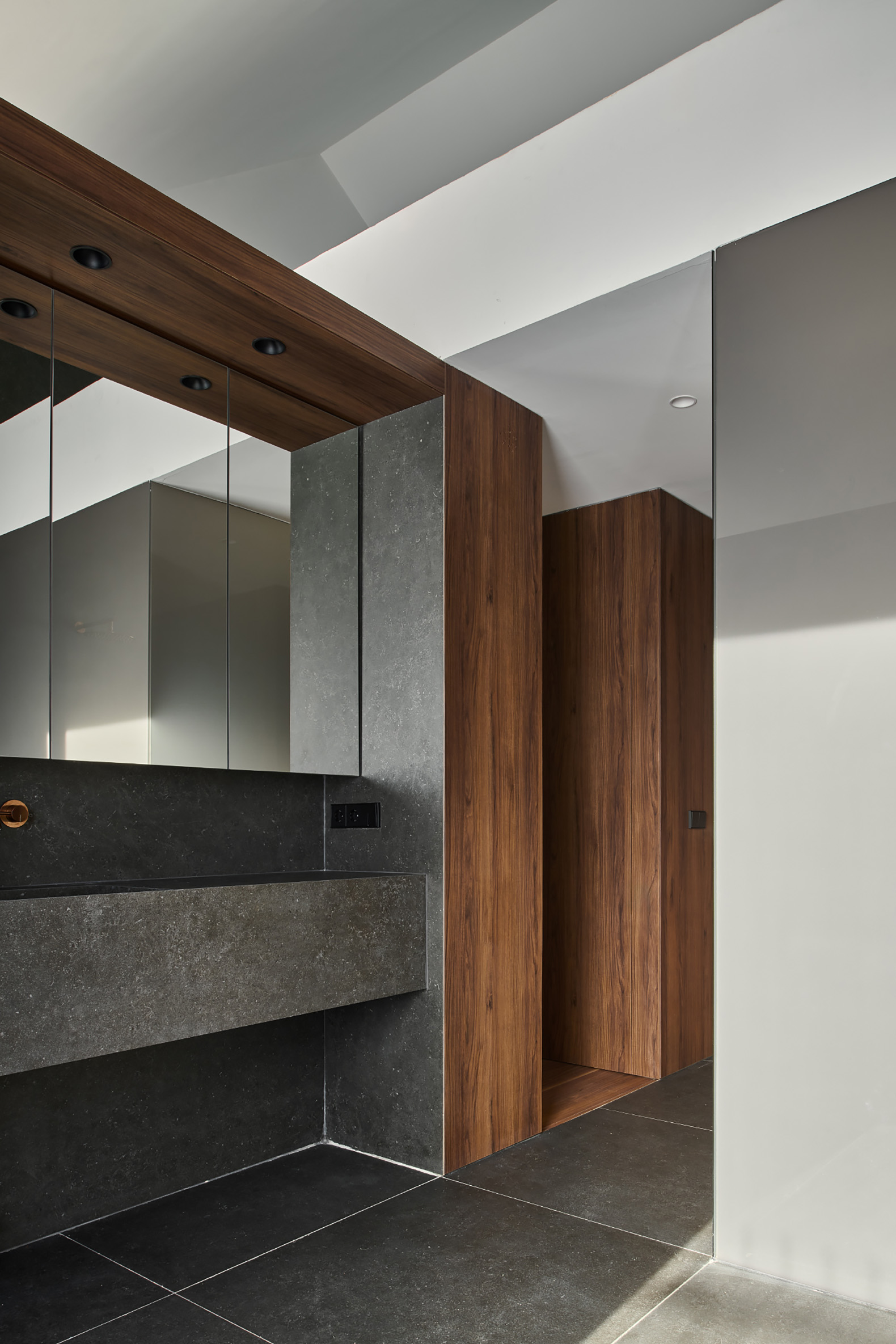
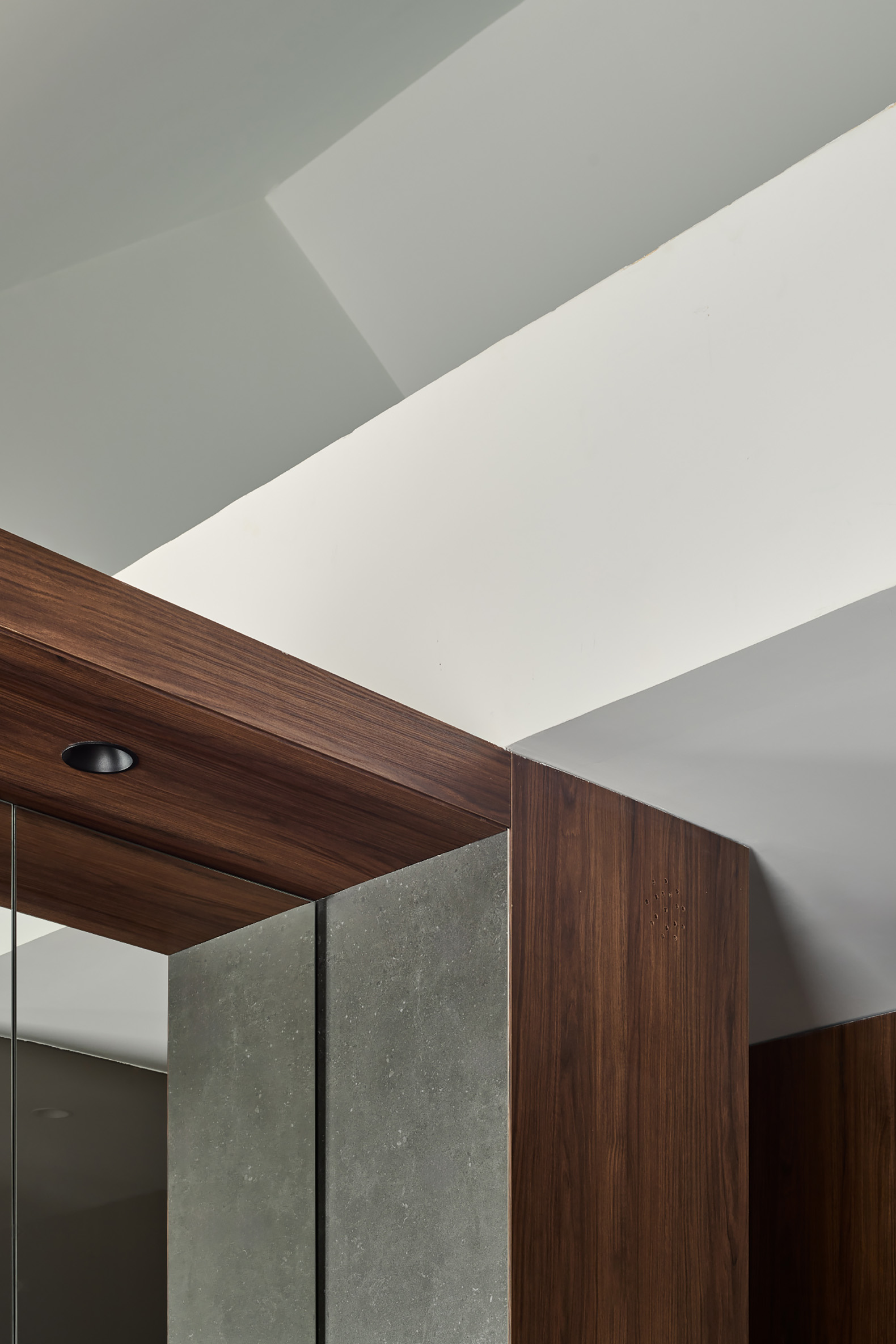
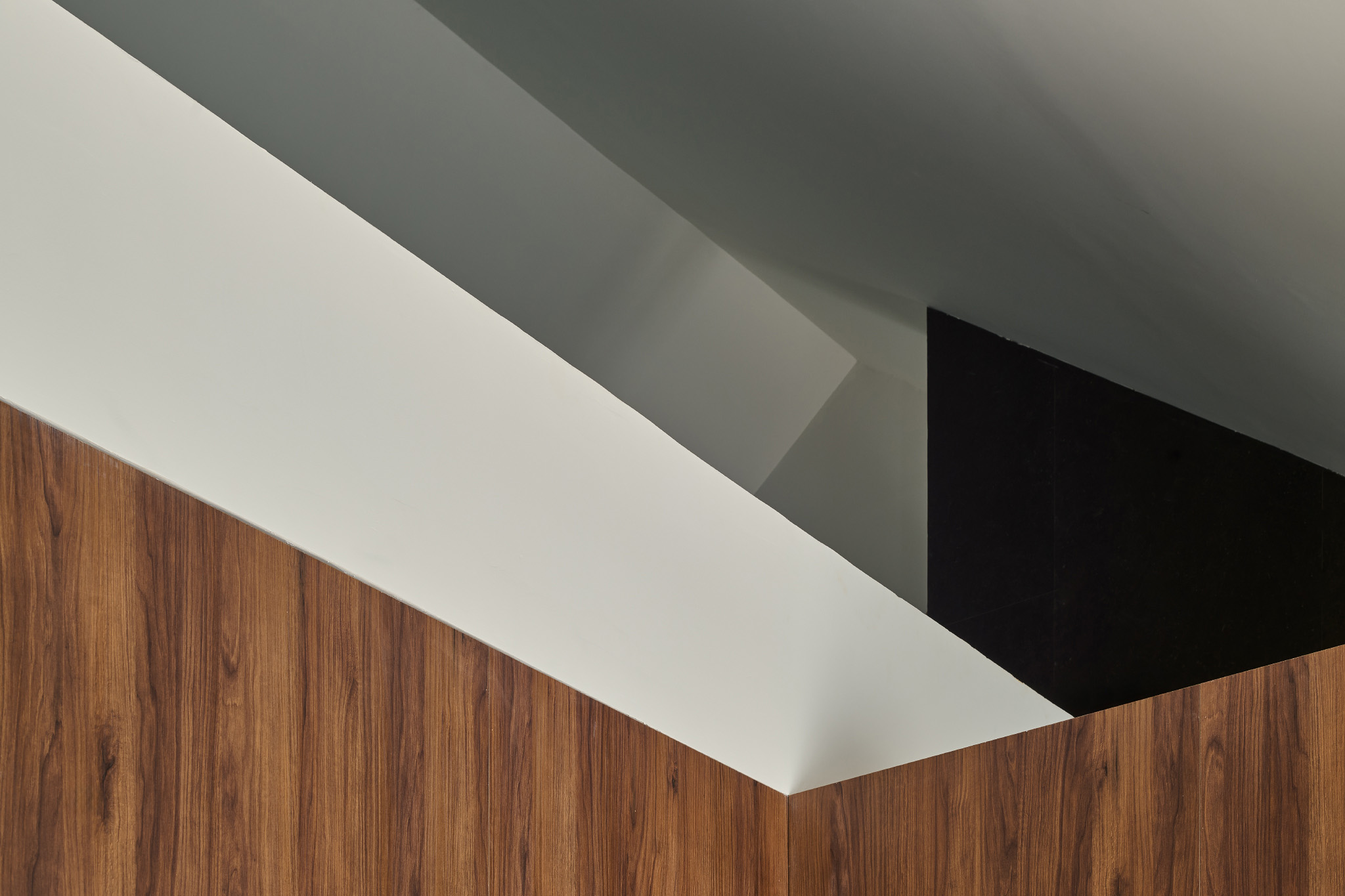
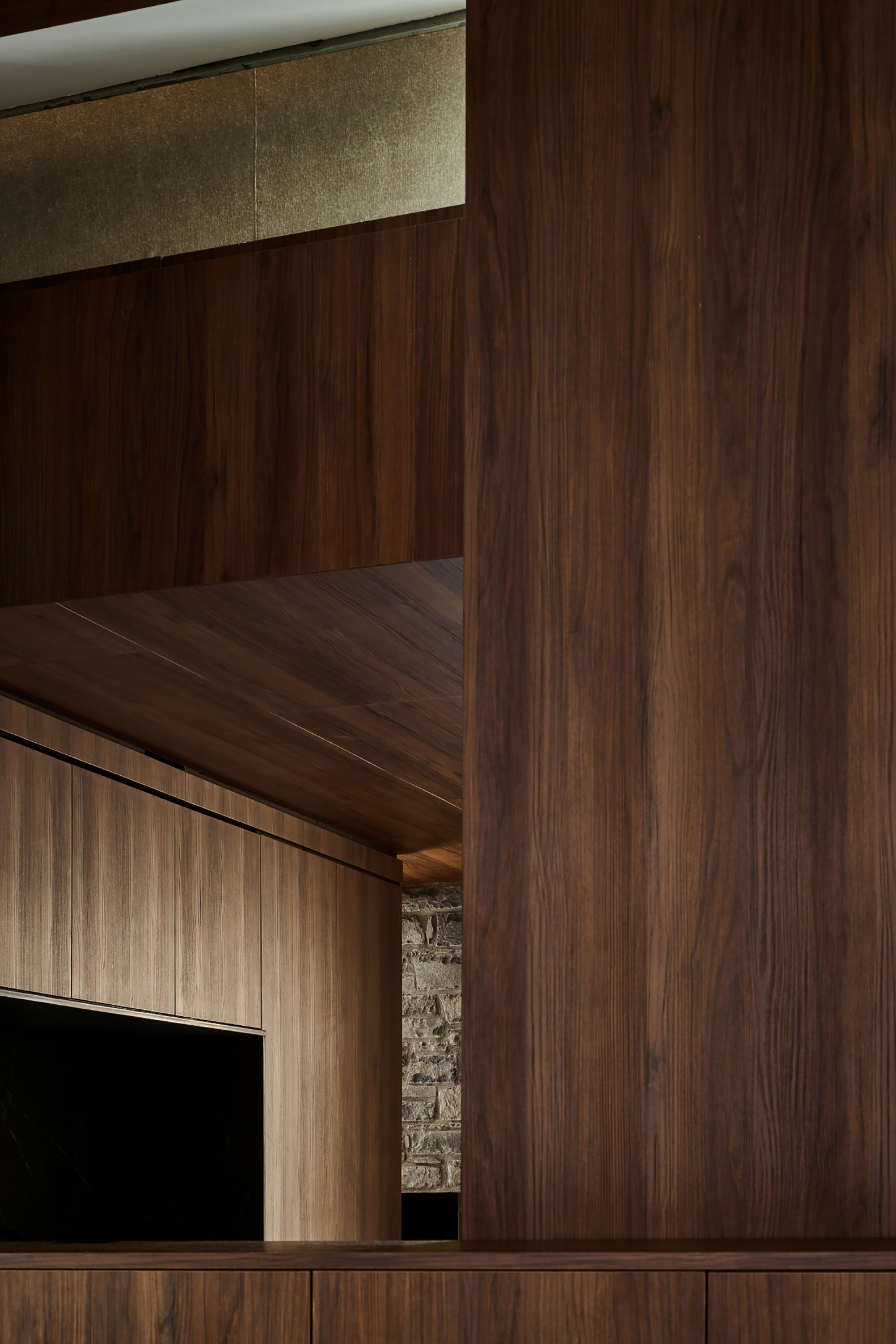
In terms of construction, the house designed by Cronotopos Arquitectura utilizes an industrialized system of cross-laminated timber (CLT) panels with 12 cm-thick load-bearing walls. This system optimizes resources and construction time while efficiently meeting the climatic demands of the Pyrenean environment, providing a contemporary, sustainable, and technically precise solution.
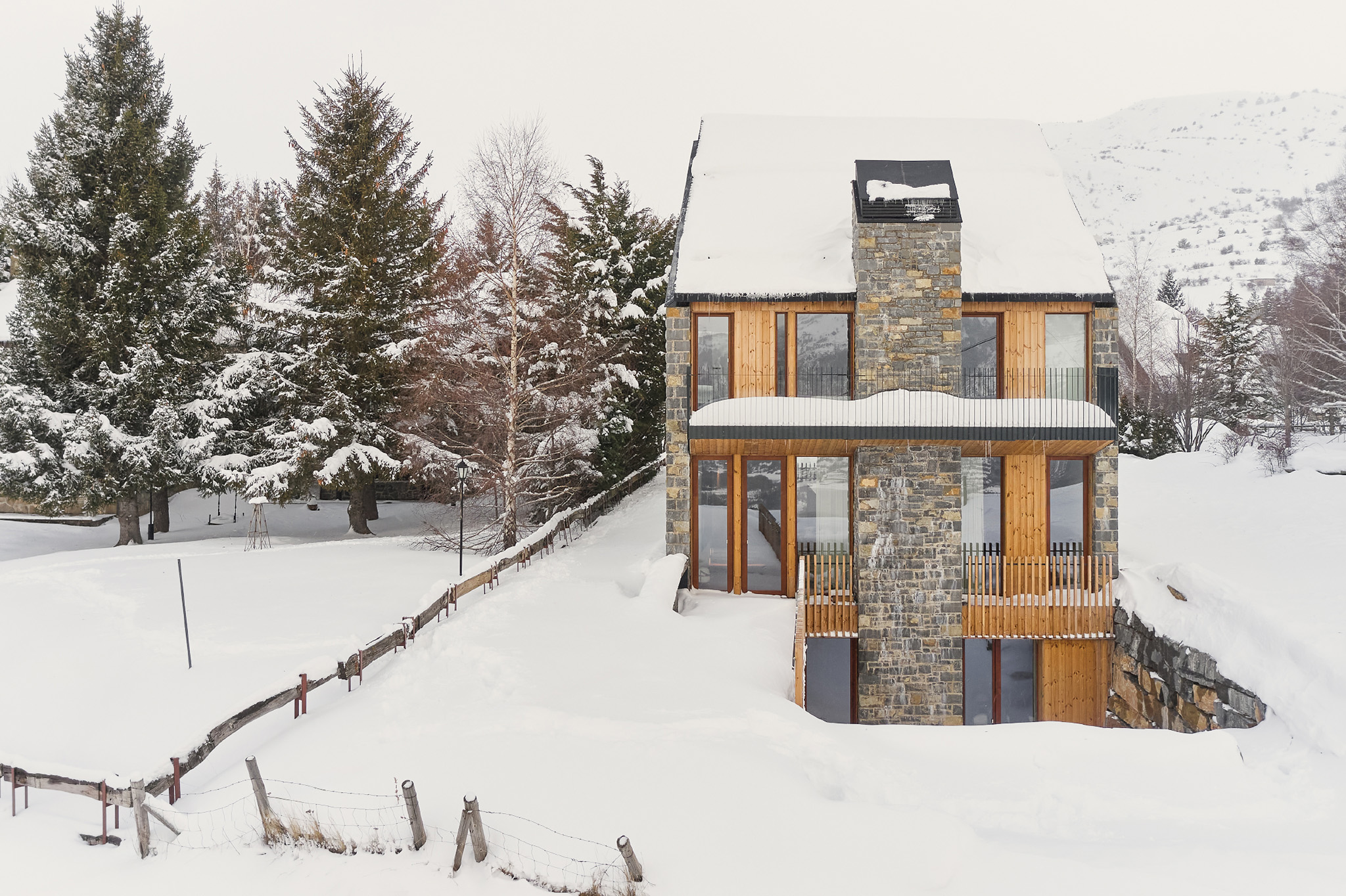
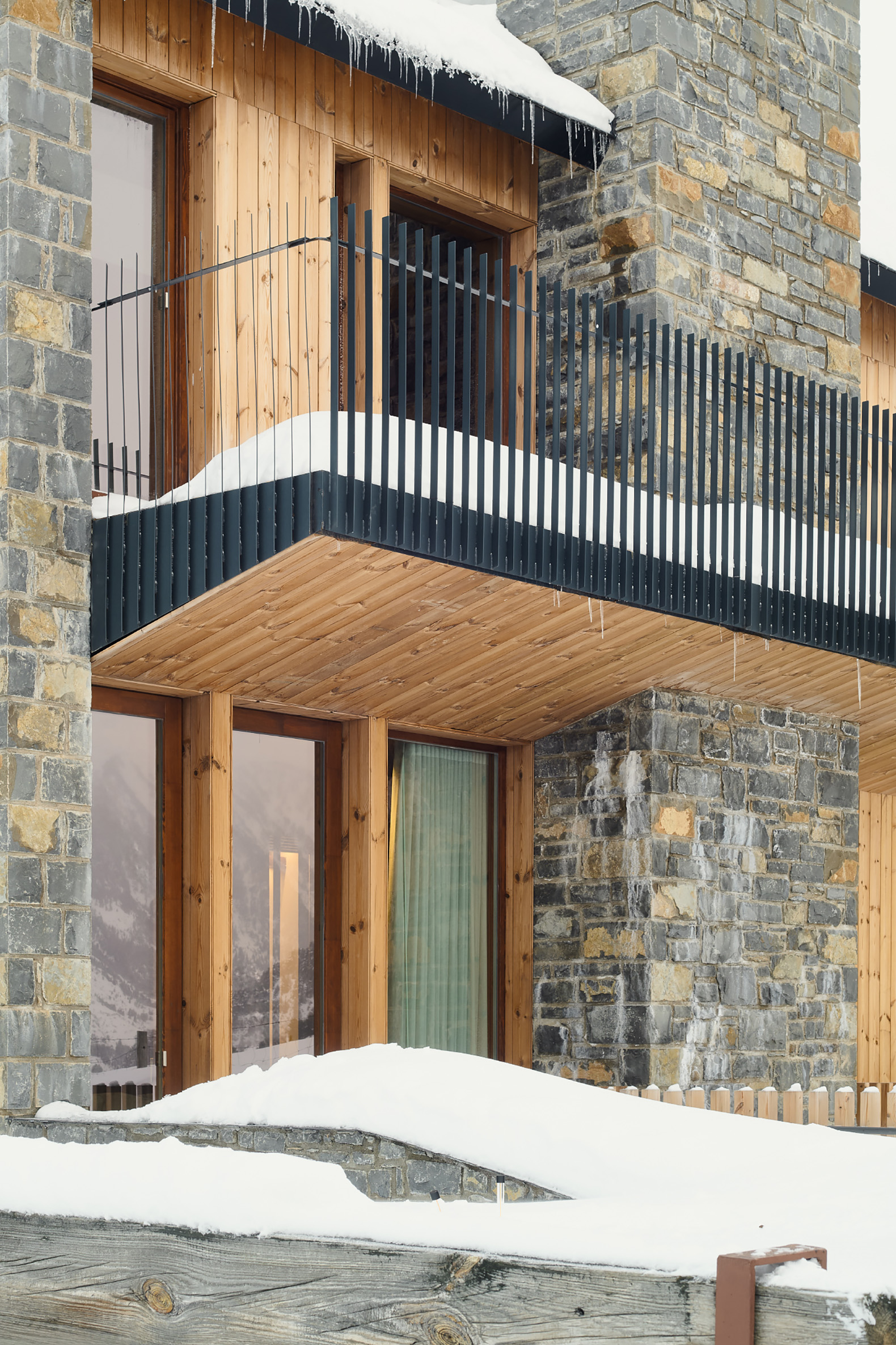
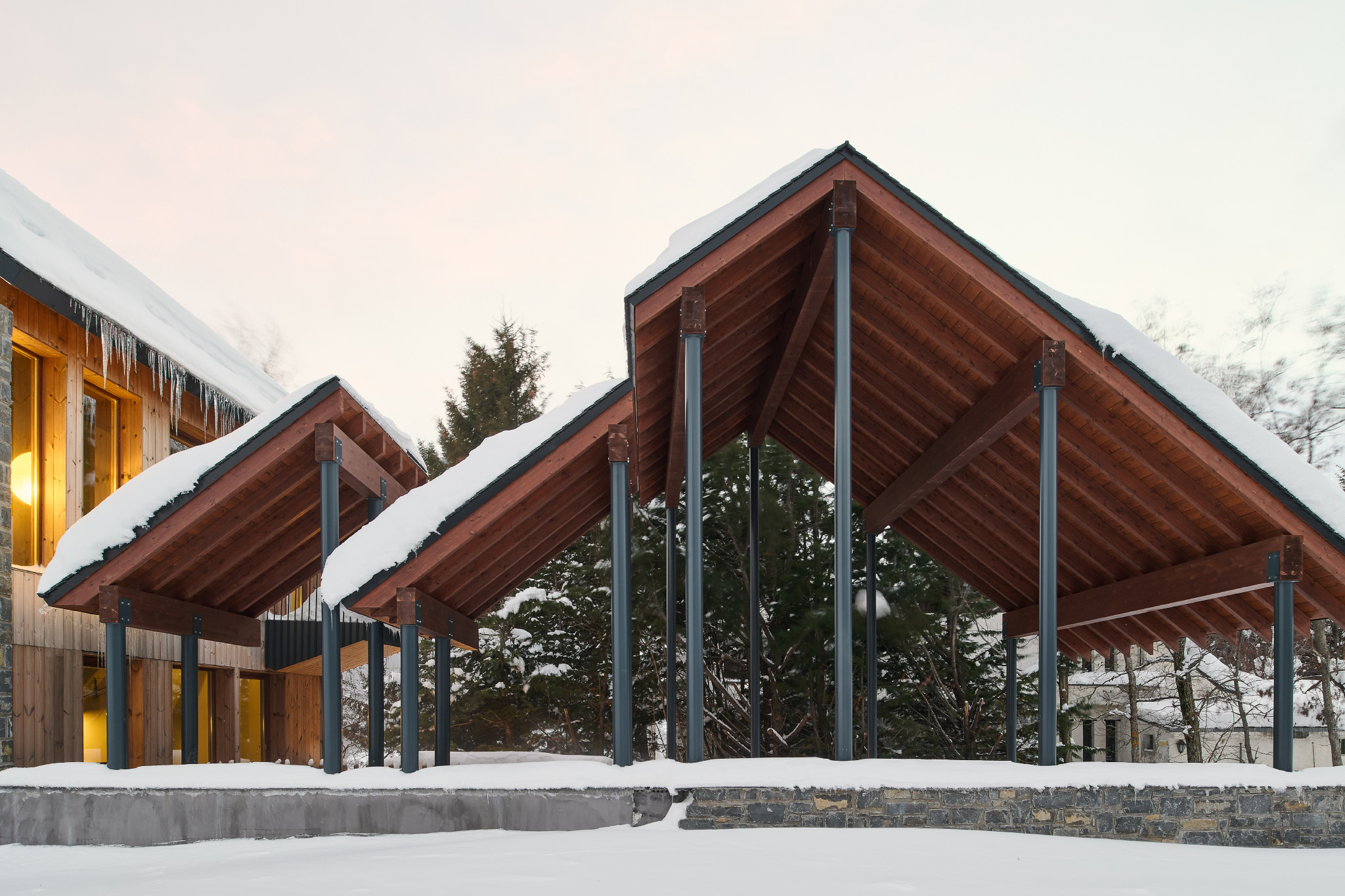
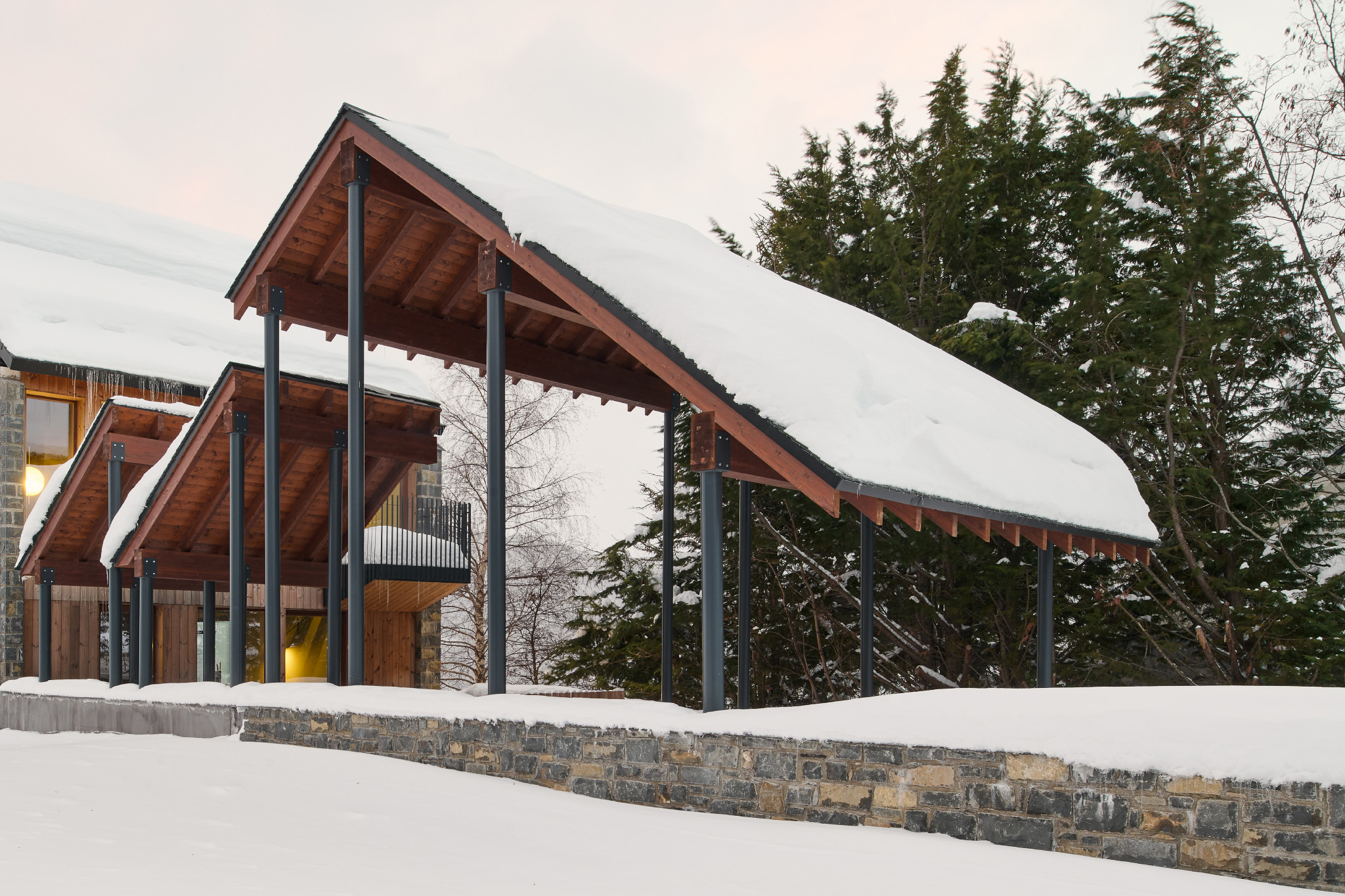
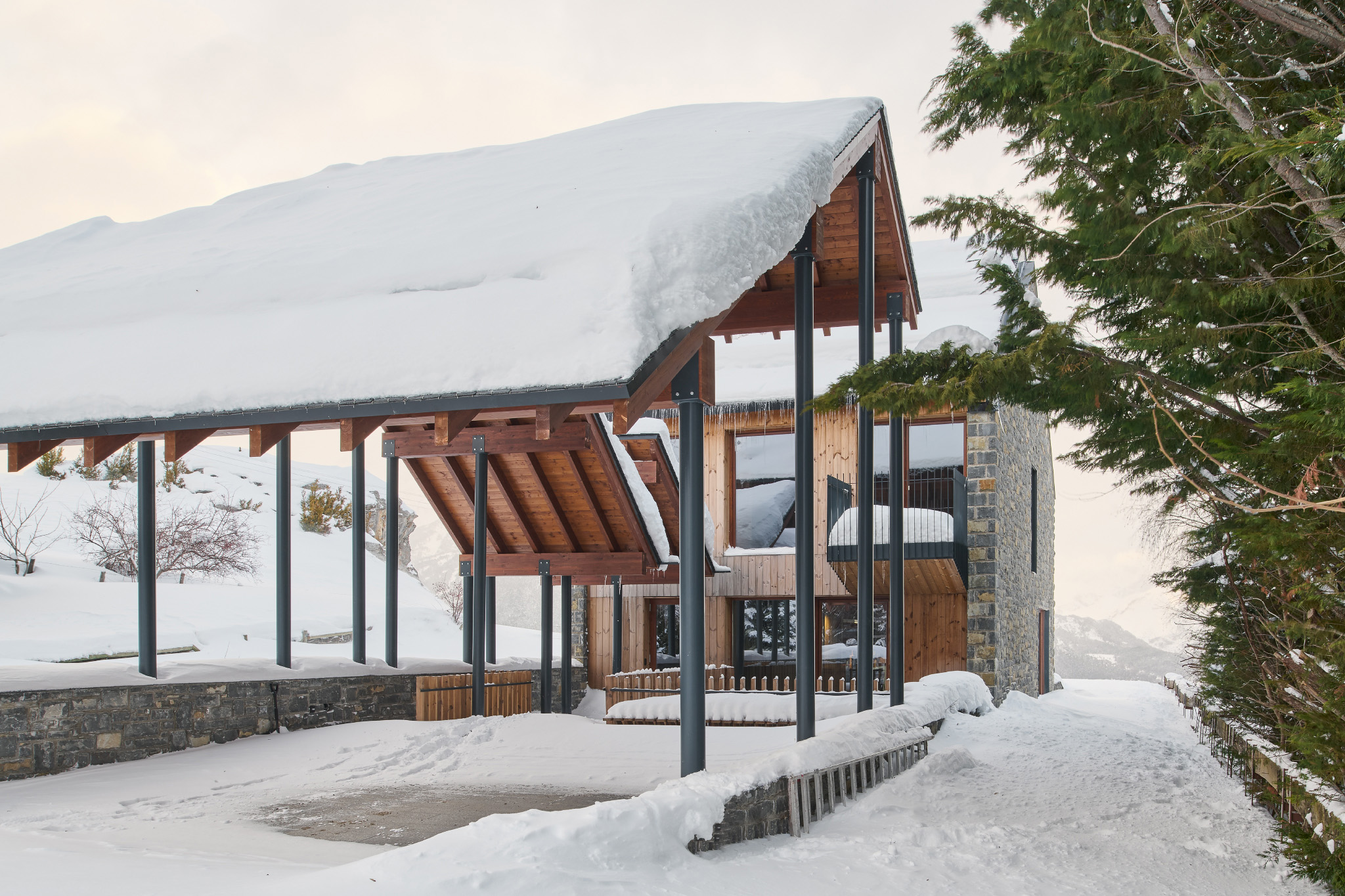
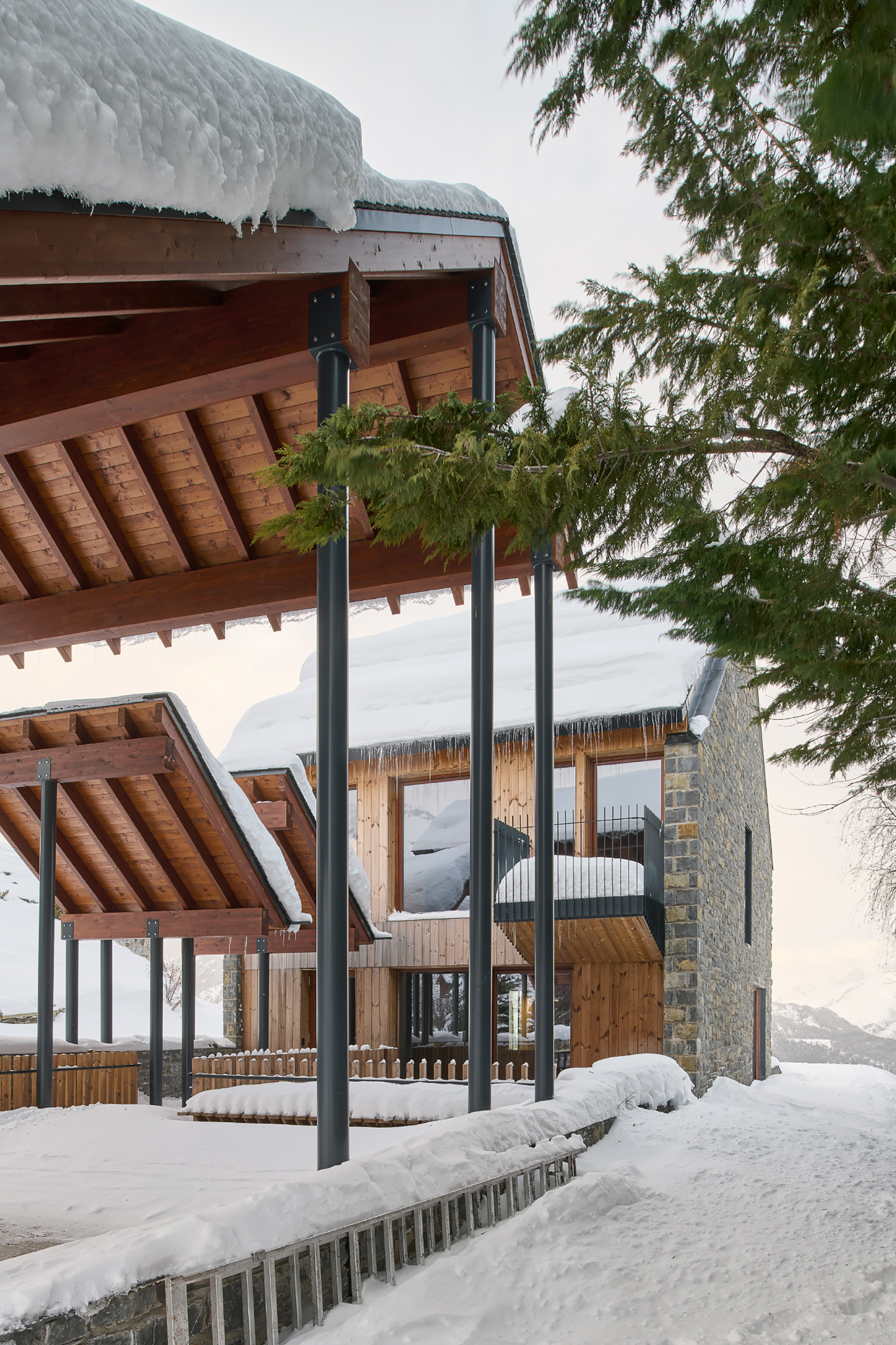
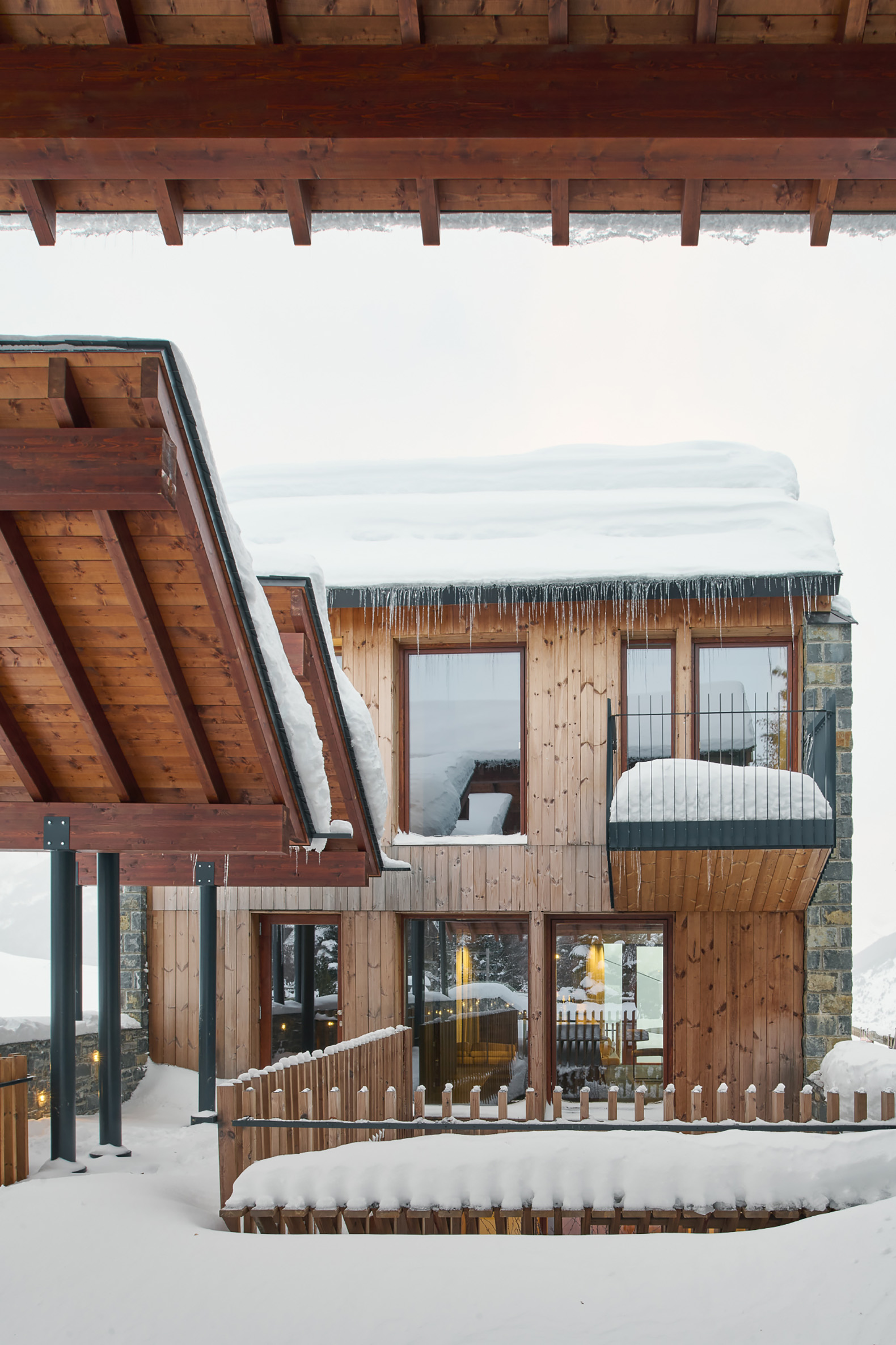
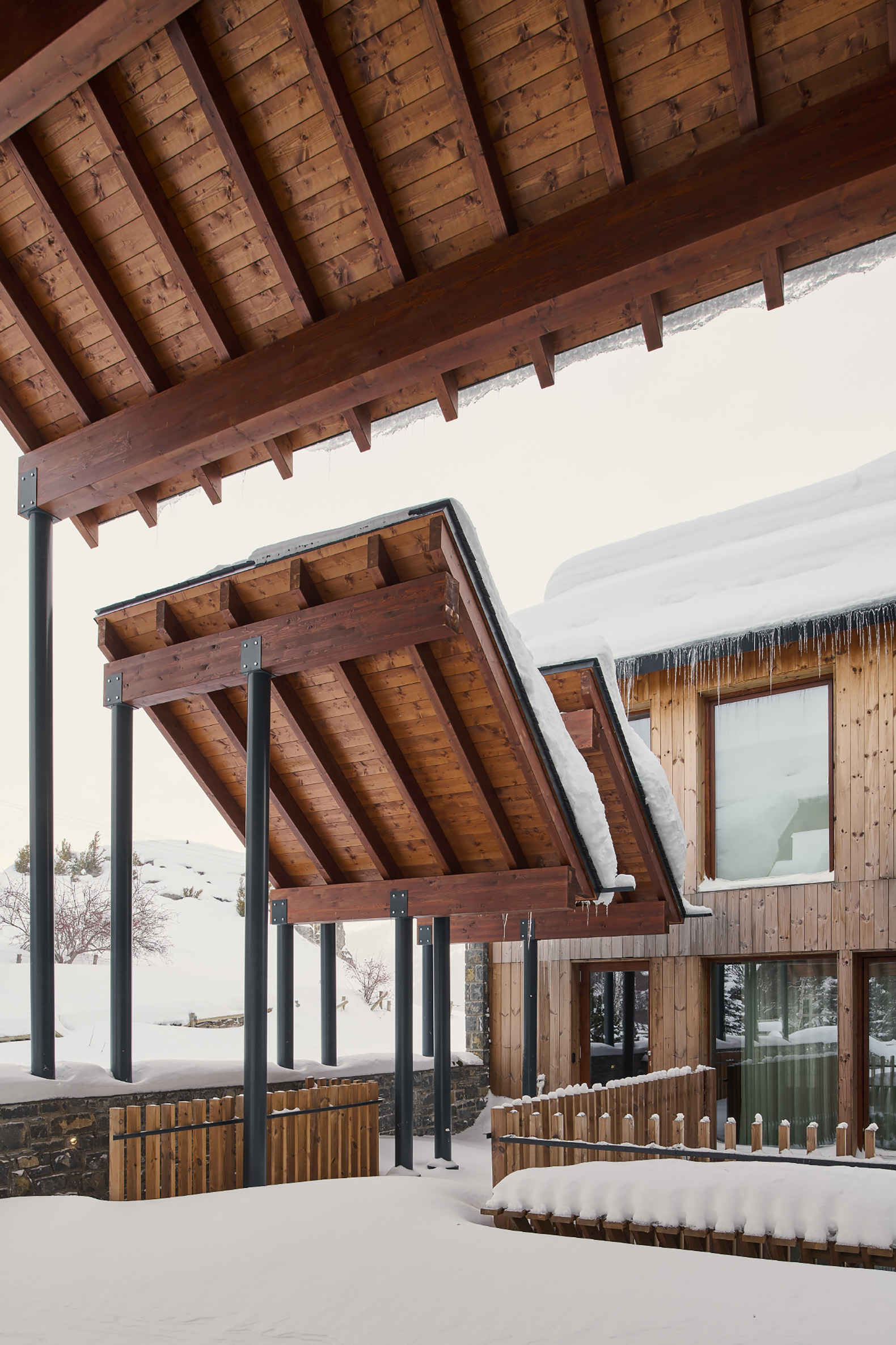
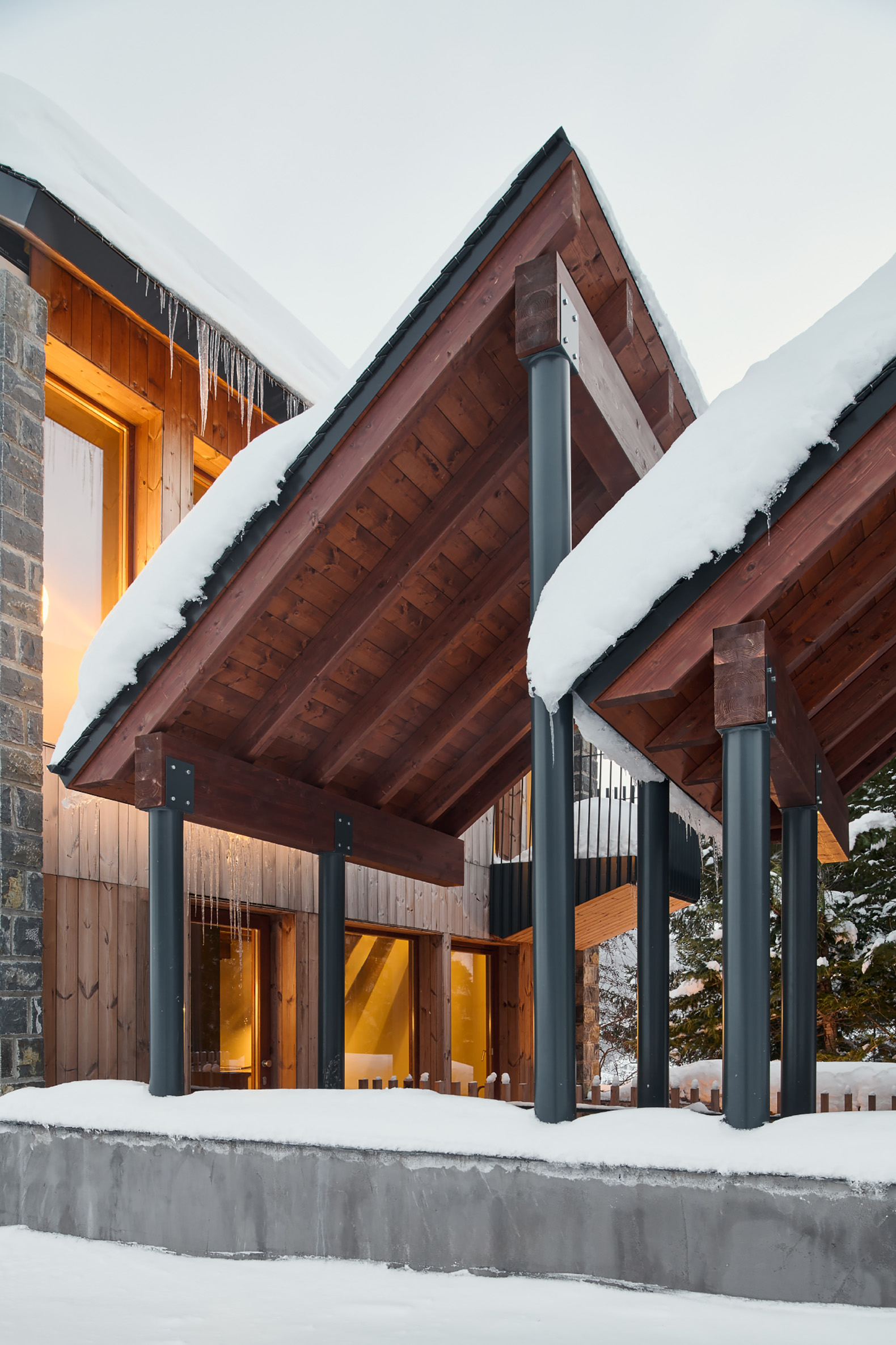
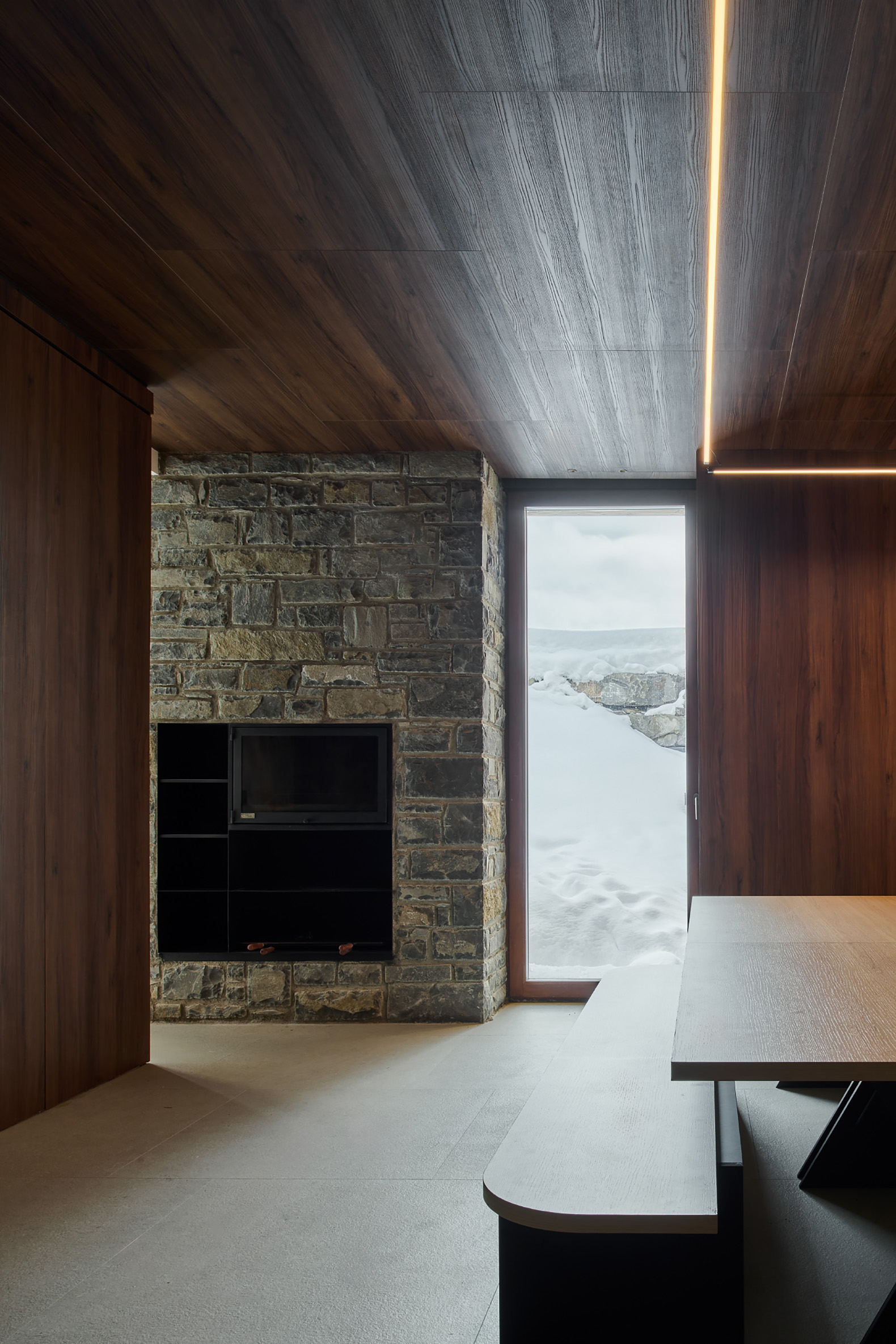
Regarding the materials used, the design incorporates elements linked to the local landscape to reinforce its integration: local stone on the facades anchors the house to the terrain, while the roof tiles and wood provide continuity with the surrounding context and a more domestic scale. The pergolas, also constructed of wood, function as intermediate spaces that expand the usability of the house and offer protection from the elements.

"Shelter between walls" by Cronotopos Arquitectura. Photograph by Iñaki Bergera Serrano.
Project description by Cronotopos Arquitectura
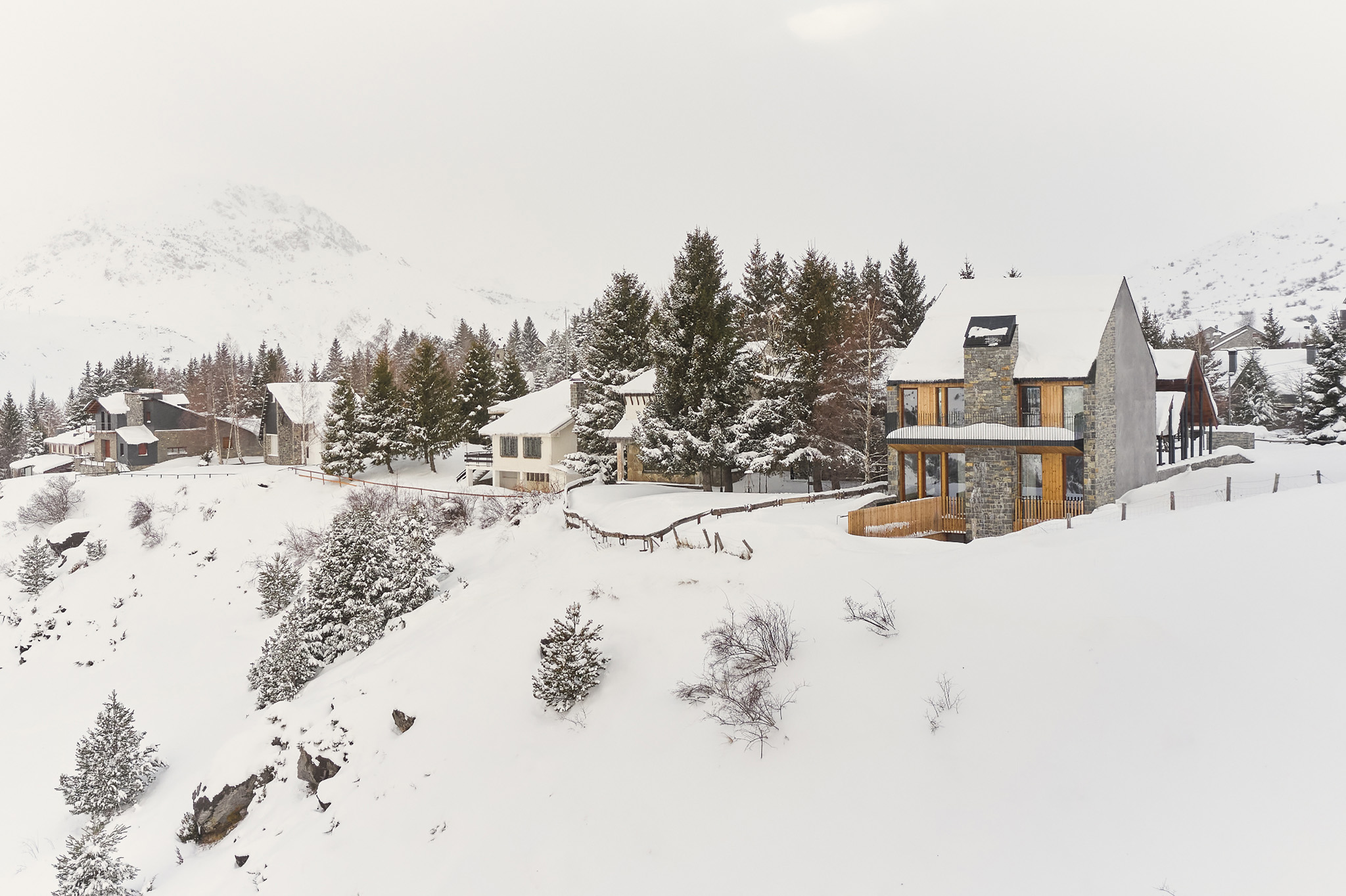
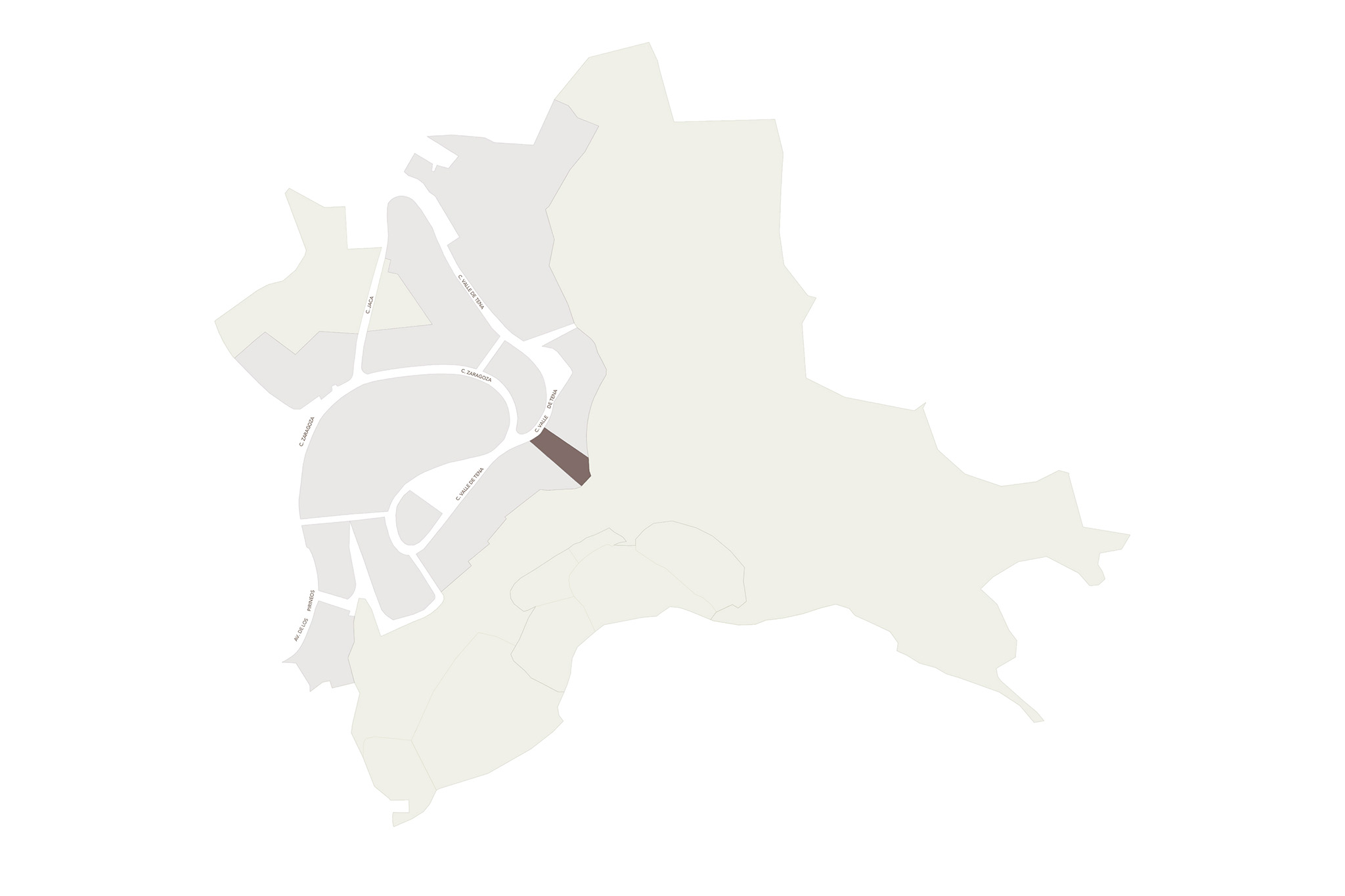
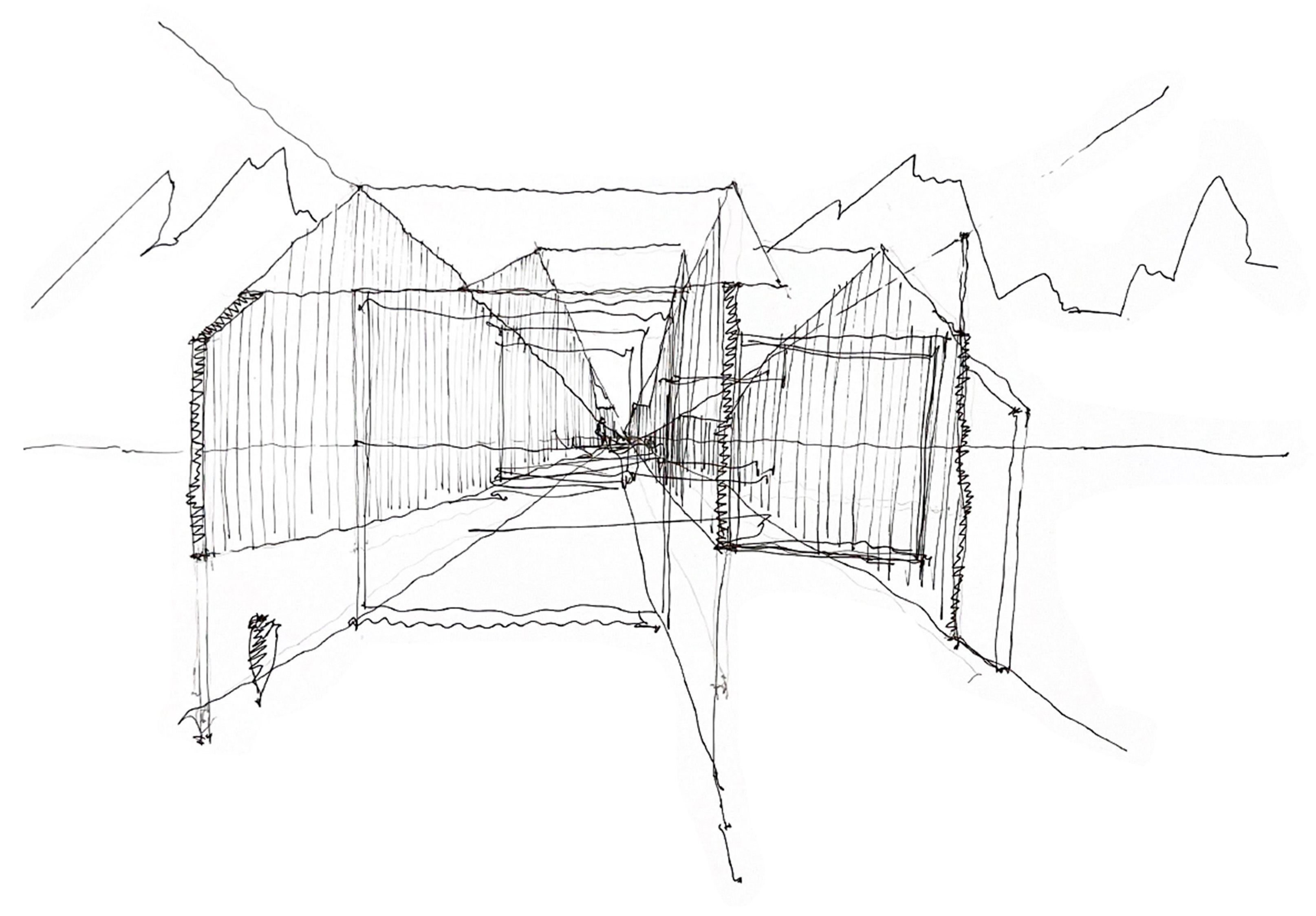
"Cobijo entre muros" stems from a desire to inhabit the high-mountain landscape without imposing oneself upon it. In Formigal, where the topography, the extreme climate and the presence of the peaks dictate every design decision, the house is conceived as a contemporary refuge, a place of protection and seclusion. The house does not seek to stand out in the landscape, but rather to blend into it, establishing a serene and lasting relationship with its natural surroundings. The plot, which opens out towards the Lanuza reservoir and the Tena Valley, allows for a linear layout that reinforces the visual connection with the horizon and facilitates a design that respects the topography.
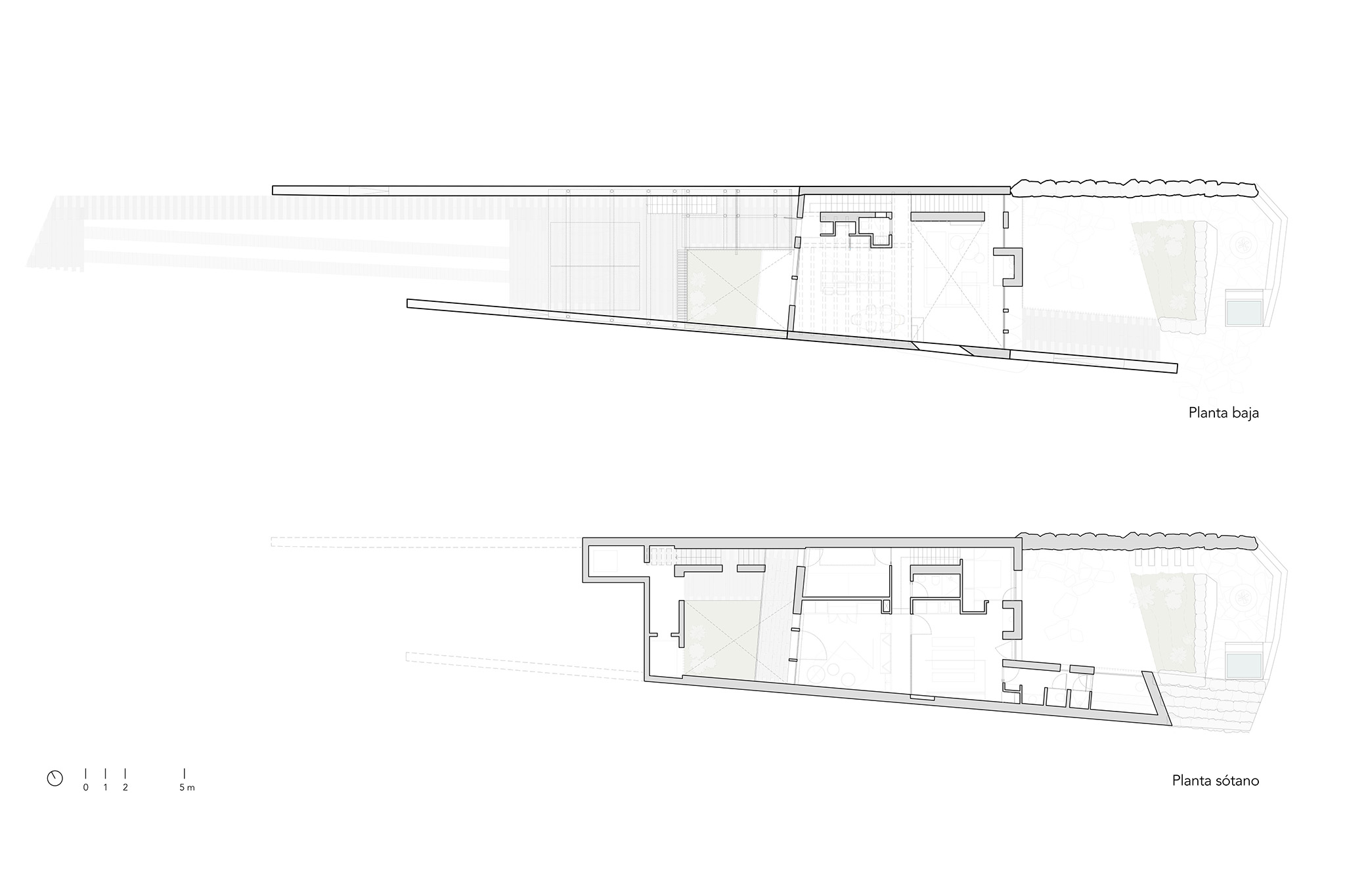
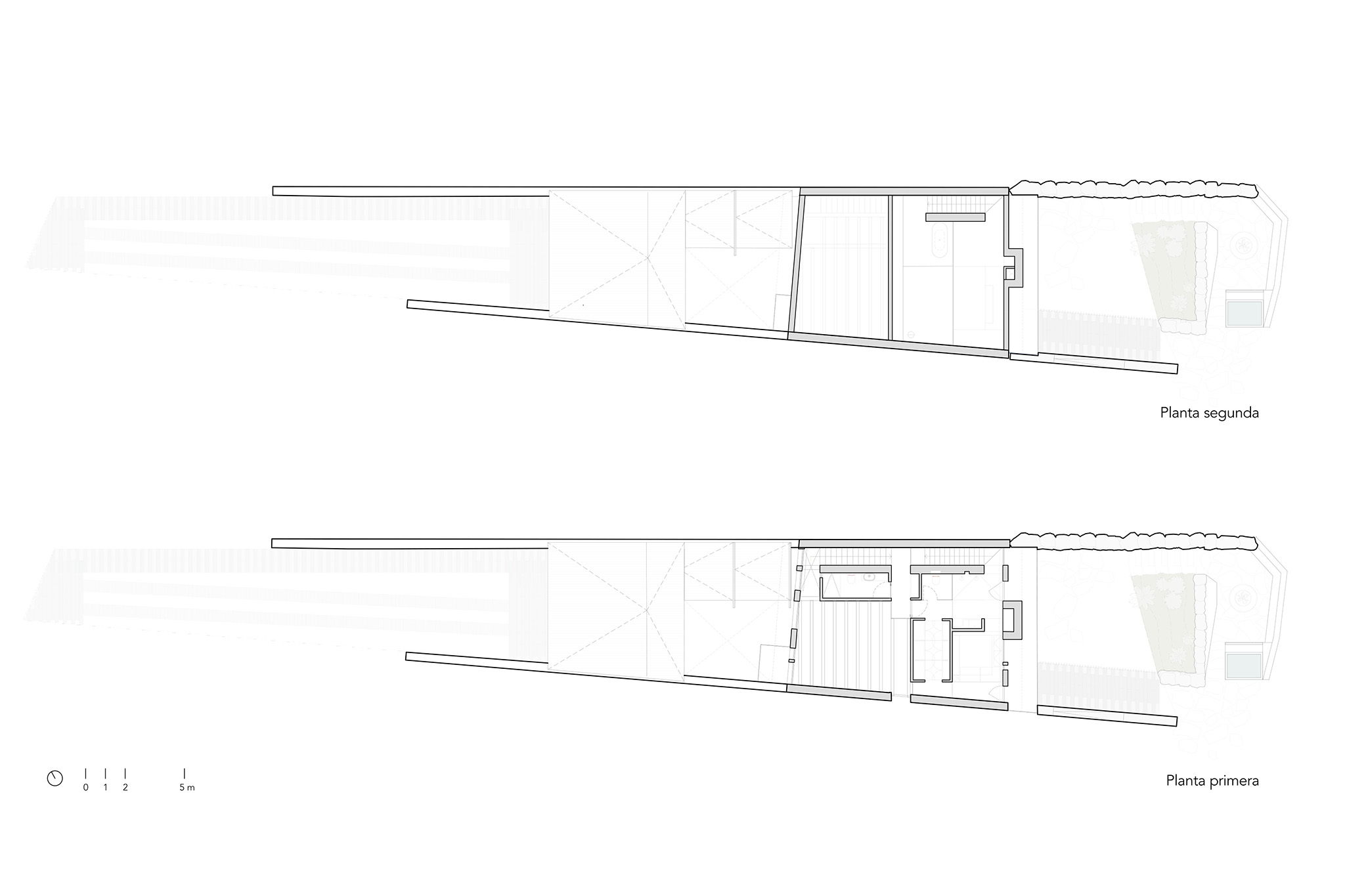
Two parallel walls emerge from the ground and organise the house, guiding the route and the view towards the landscape. Between them, the programme’s sequences unfold, creating a protected space that is, at the same time, open to the immensity of the surroundings. These walls not only delimit but also structure and give meaning to the act of living, becoming the spatial and conceptual essence of the house.
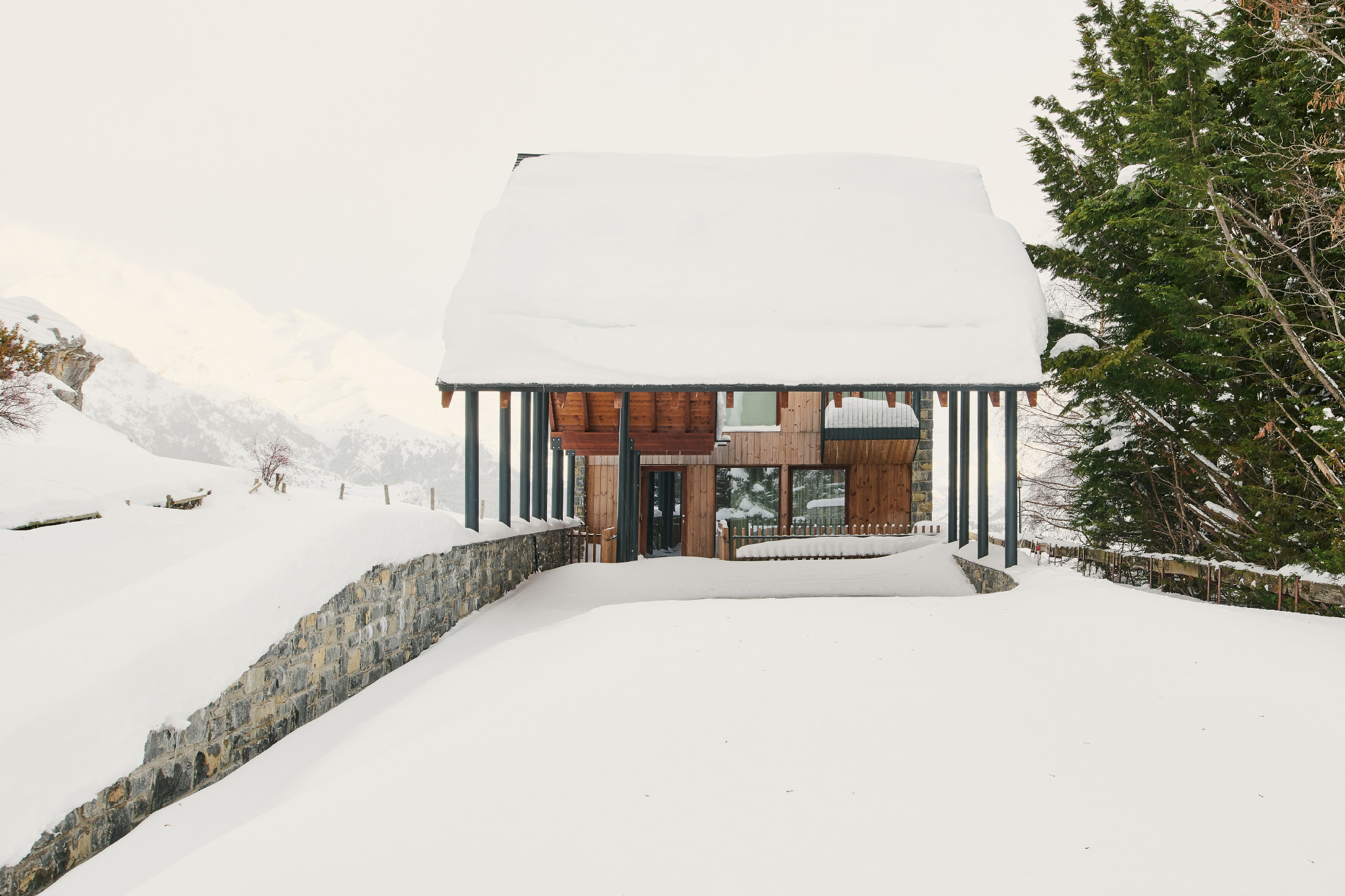
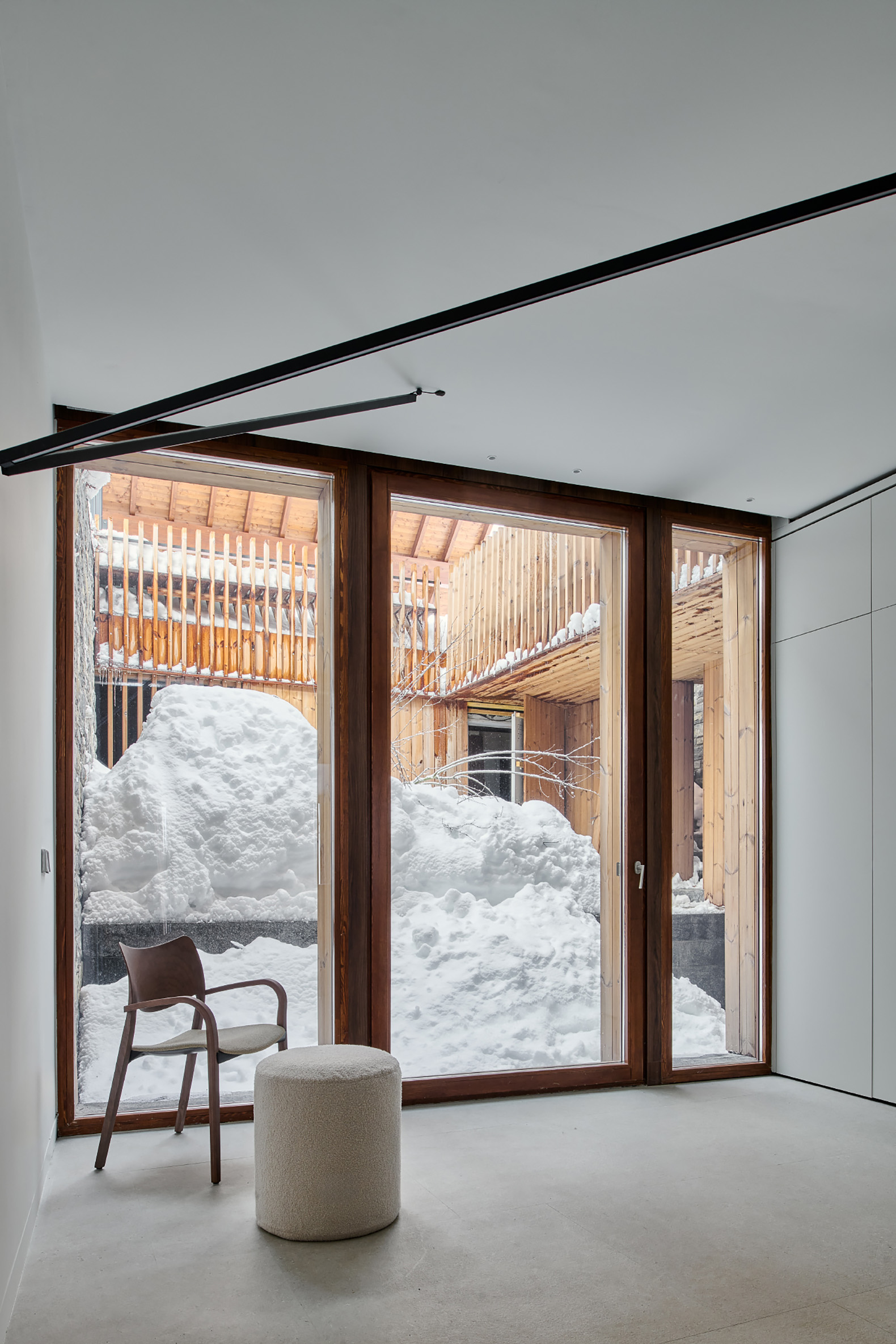
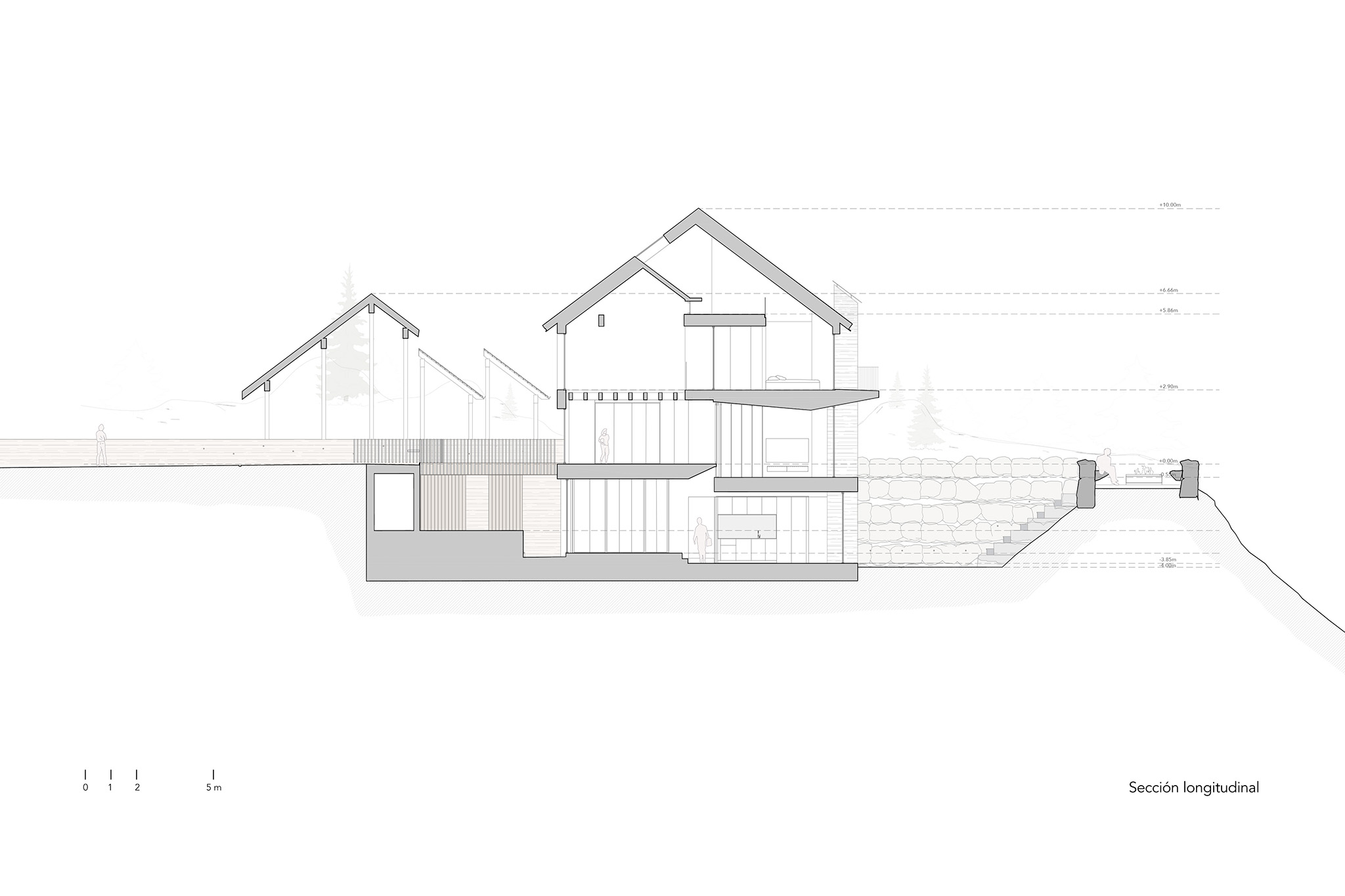
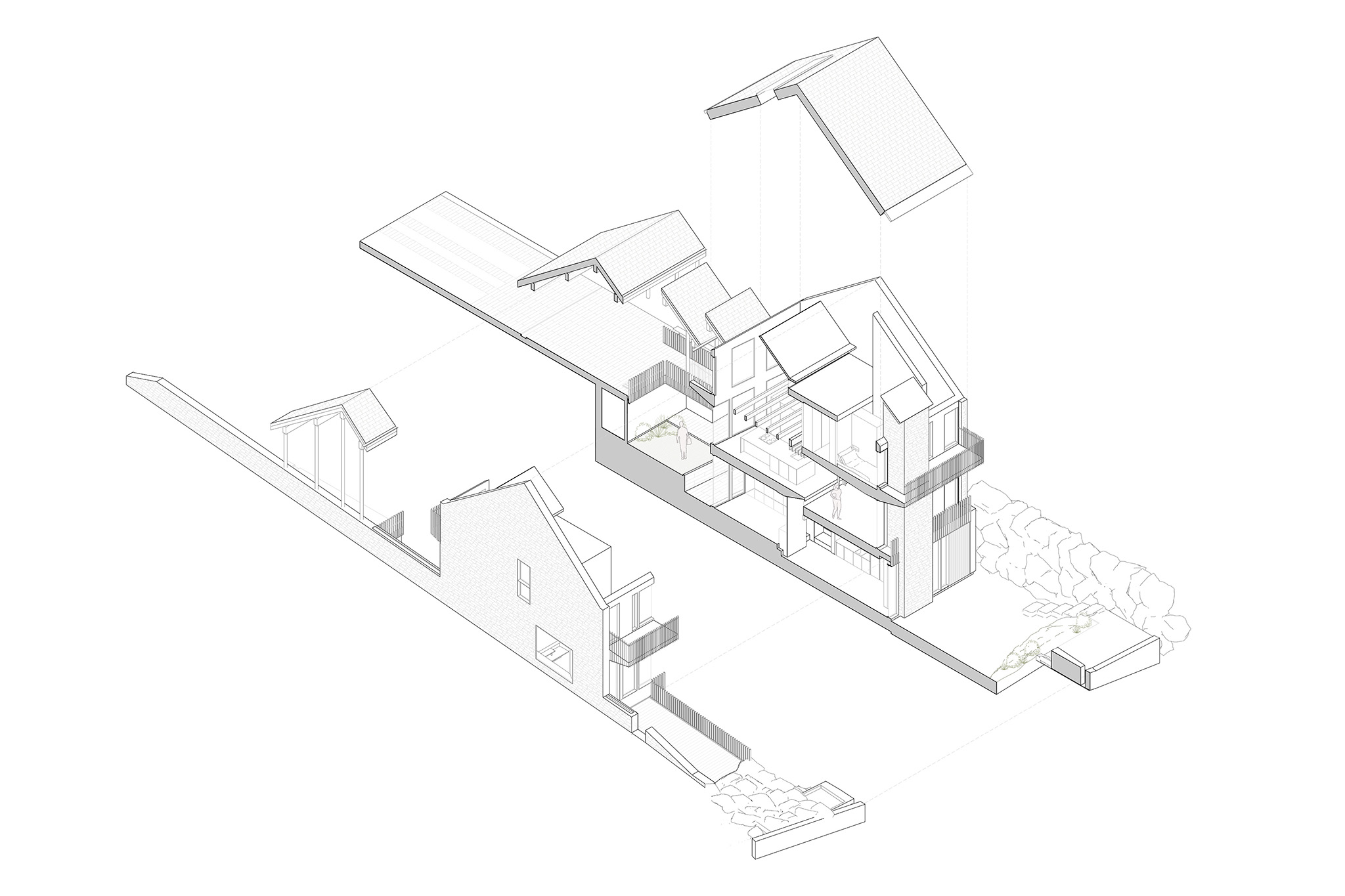
The house is conceived as a gradient developed in section. The walls begin as retaining structures for the site, form the side façades of a permeable and light-filled dwelling, and transform into pergolas that shelter the entrance. This transition allows the landscape to filter in from the very first moment, making living a continuous experience between interior and exterior. The architecture is thus understood as a dialogue between the earth and the roof: the ground is excavated to create terraces at different levels that illuminate the semi-underground spaces, whilst the roofs trace a geometric dance that converses with the profile of the mountains. In winter, when snow covers the house and the landscape, architecture and territory share a common language.
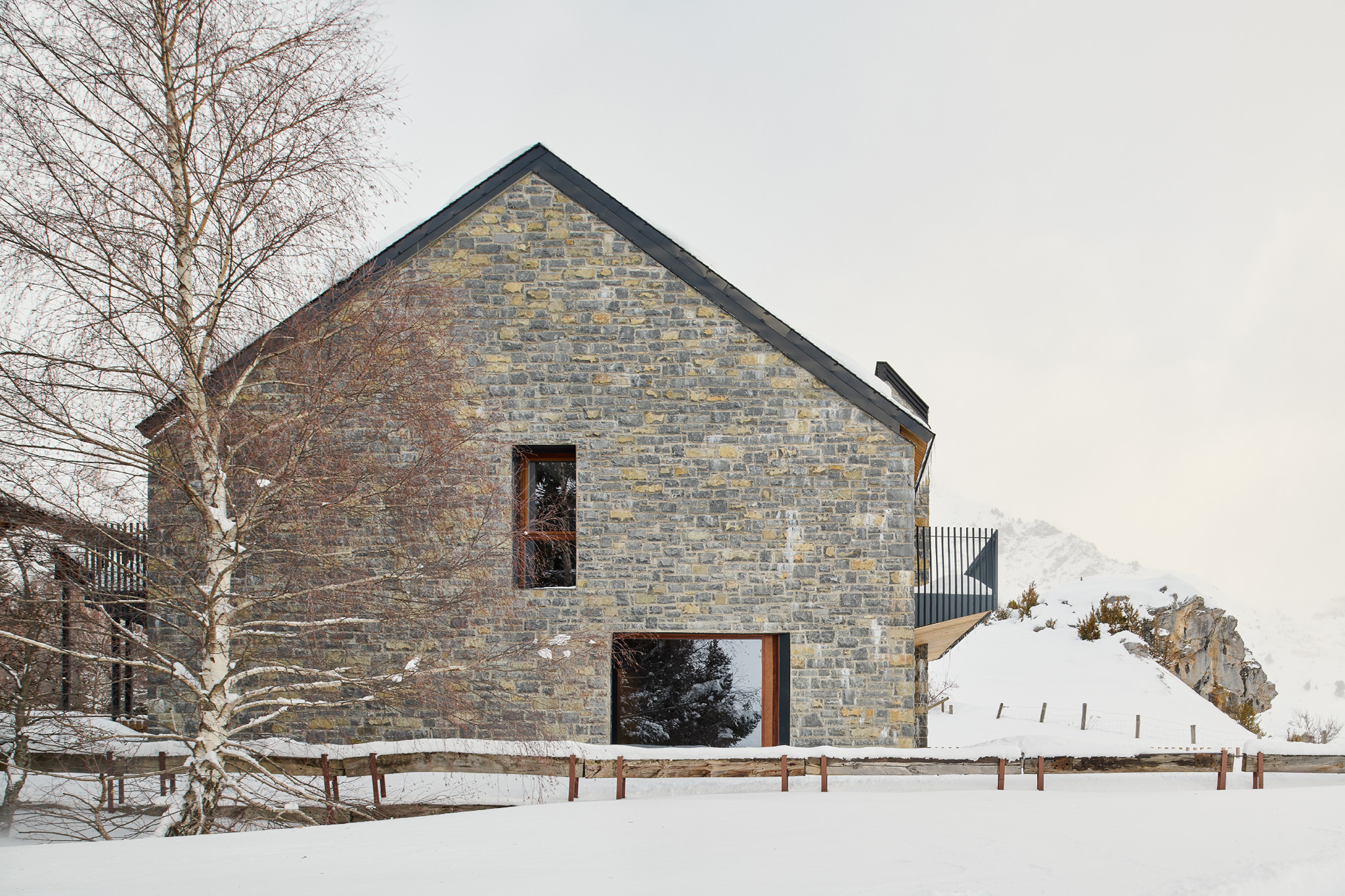
Only two openings break the line of the walls: one frames the entrance; the other leads to an intimate room. The rest reinforce the linearity of the whole, establishing a continuous, controlled and precise relationship with the exterior.

Structurally, the house is constructed using an industrialised CLT system. Twelve centimetres thick, the load-bearing walls optimise material use and construction times, making timber a sustainable, efficient and contemporary resource, well-suited to the climatic and structural demands of the Pyrenees.
On the outside, the house is built using local materials. The stone on the façades and the roof tiles are sourced locally, reducing the environmental footprint and reinforcing the local identity. The stone anchors the house to the land, whilst the wood introduces a domestic, intimate scale. The pergolas act as transitional spaces that extend the use of the house, sheltered from the weather.

This house constitutes the first phase of a development comprising two dwellings, establishing the principles of an essential and responsible architecture, where sustainability, beauty and integration are inseparable values. "Cobijo entre muros" proposes a contemporary way of living in the mountains, demonstrating that architecture can be efficient, sensitive and deeply connected to the landscape.