
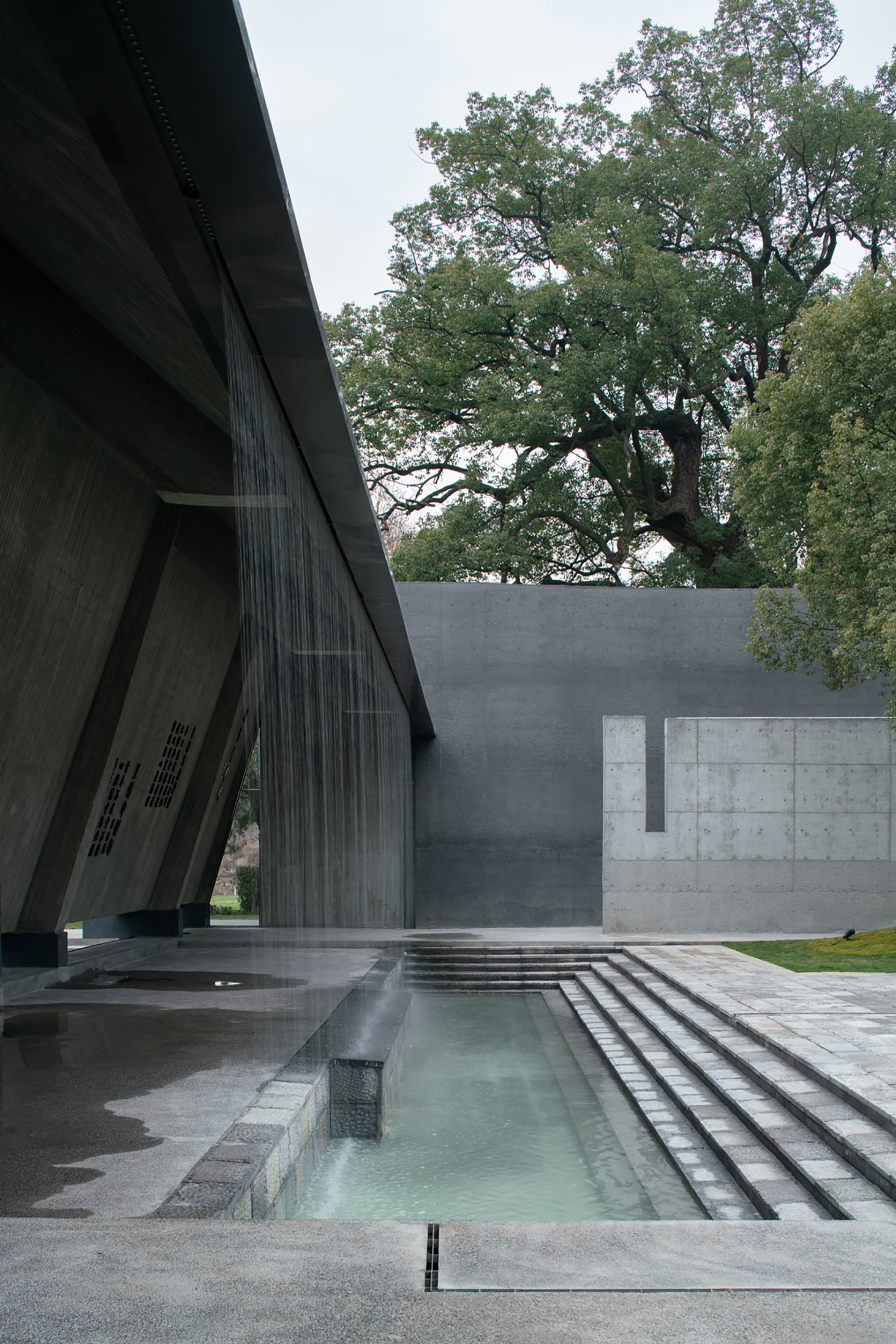
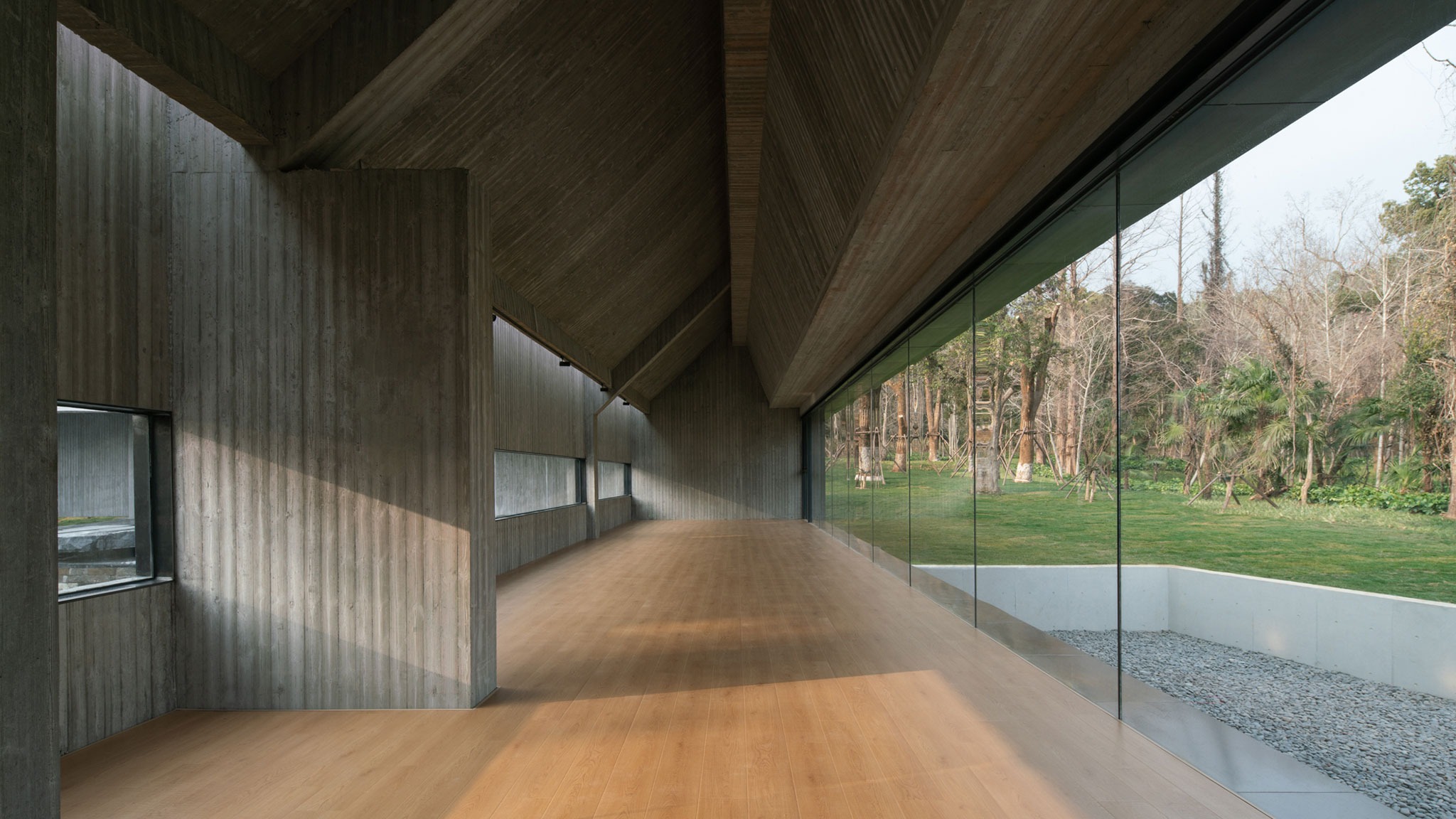
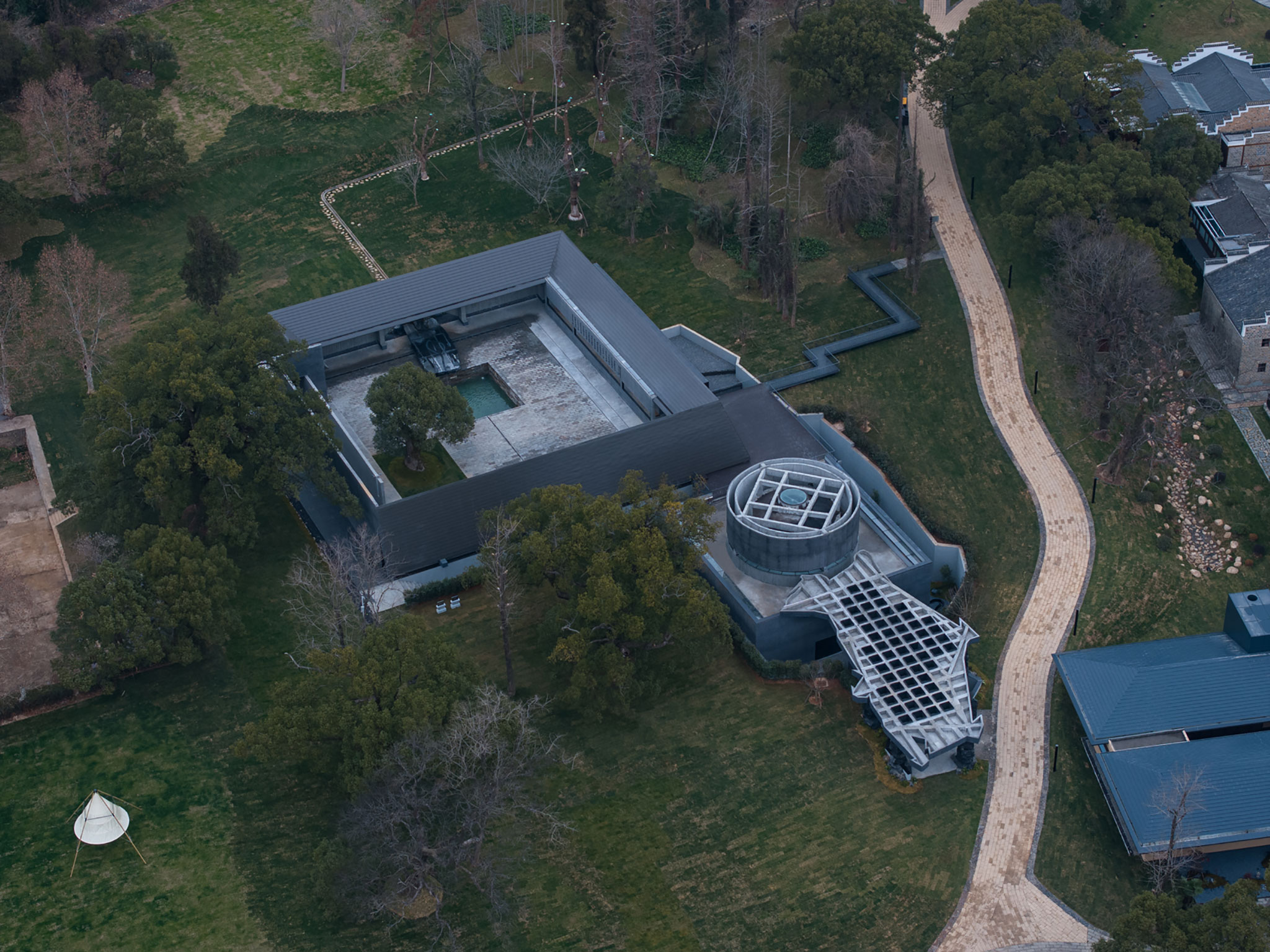
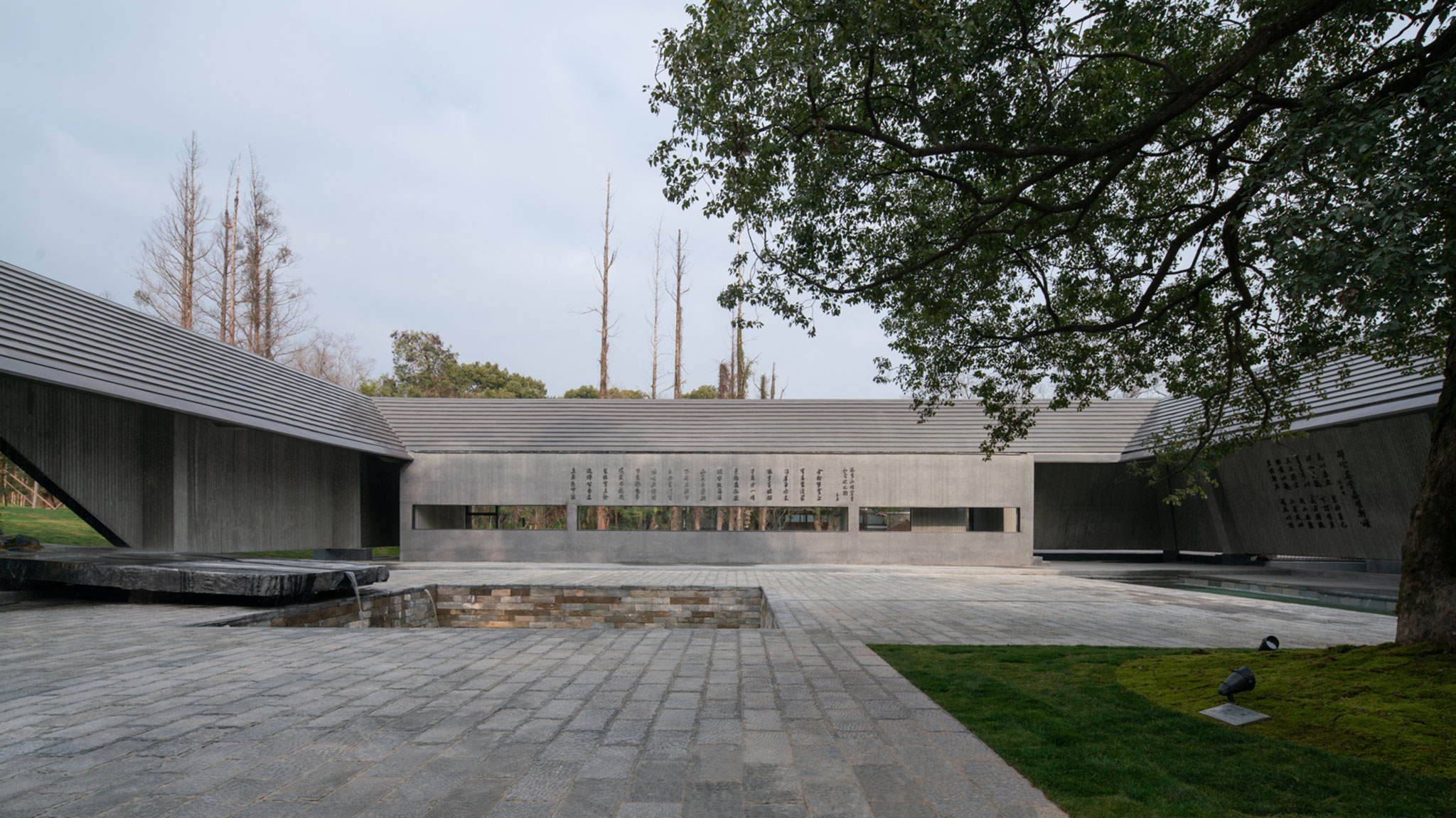
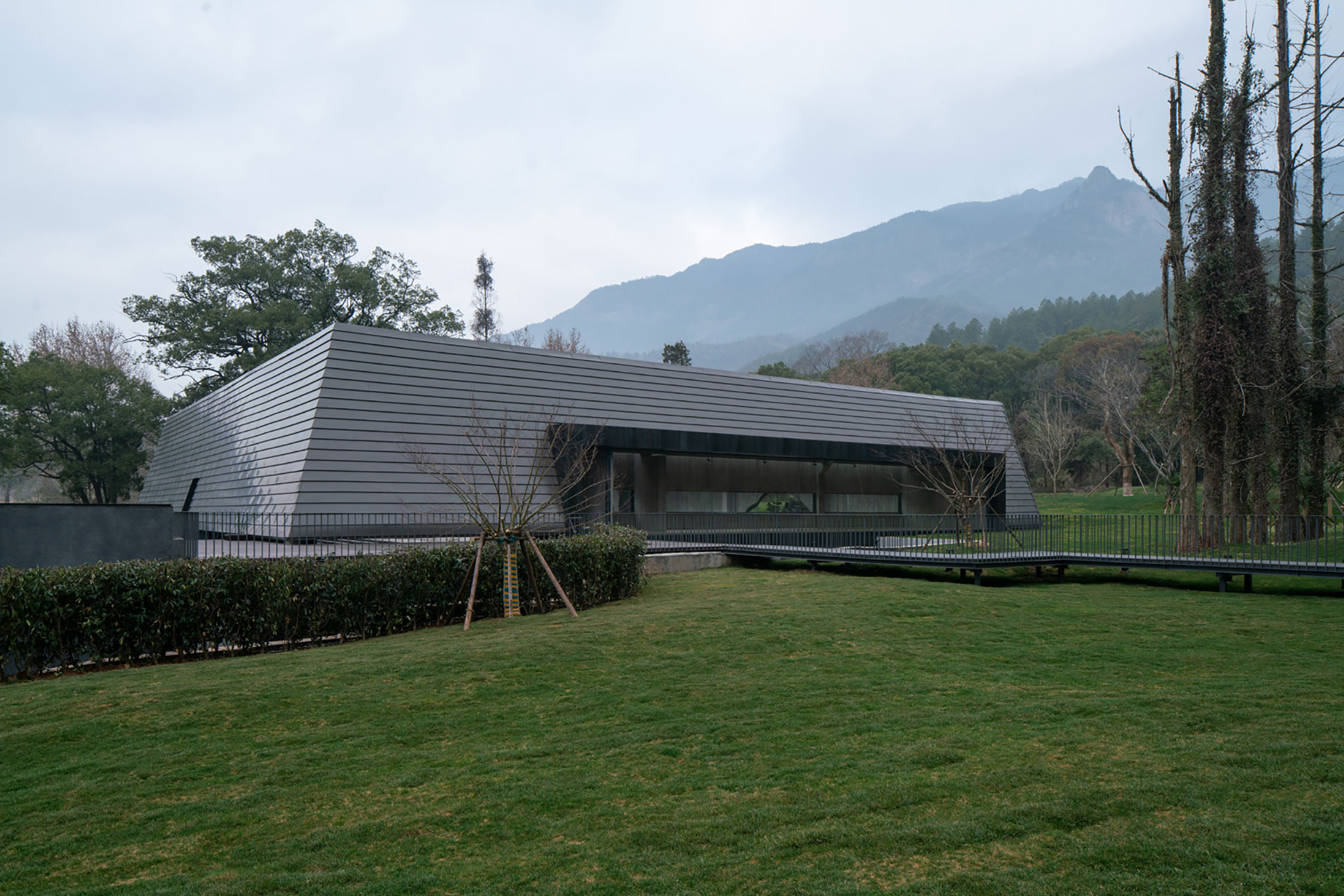
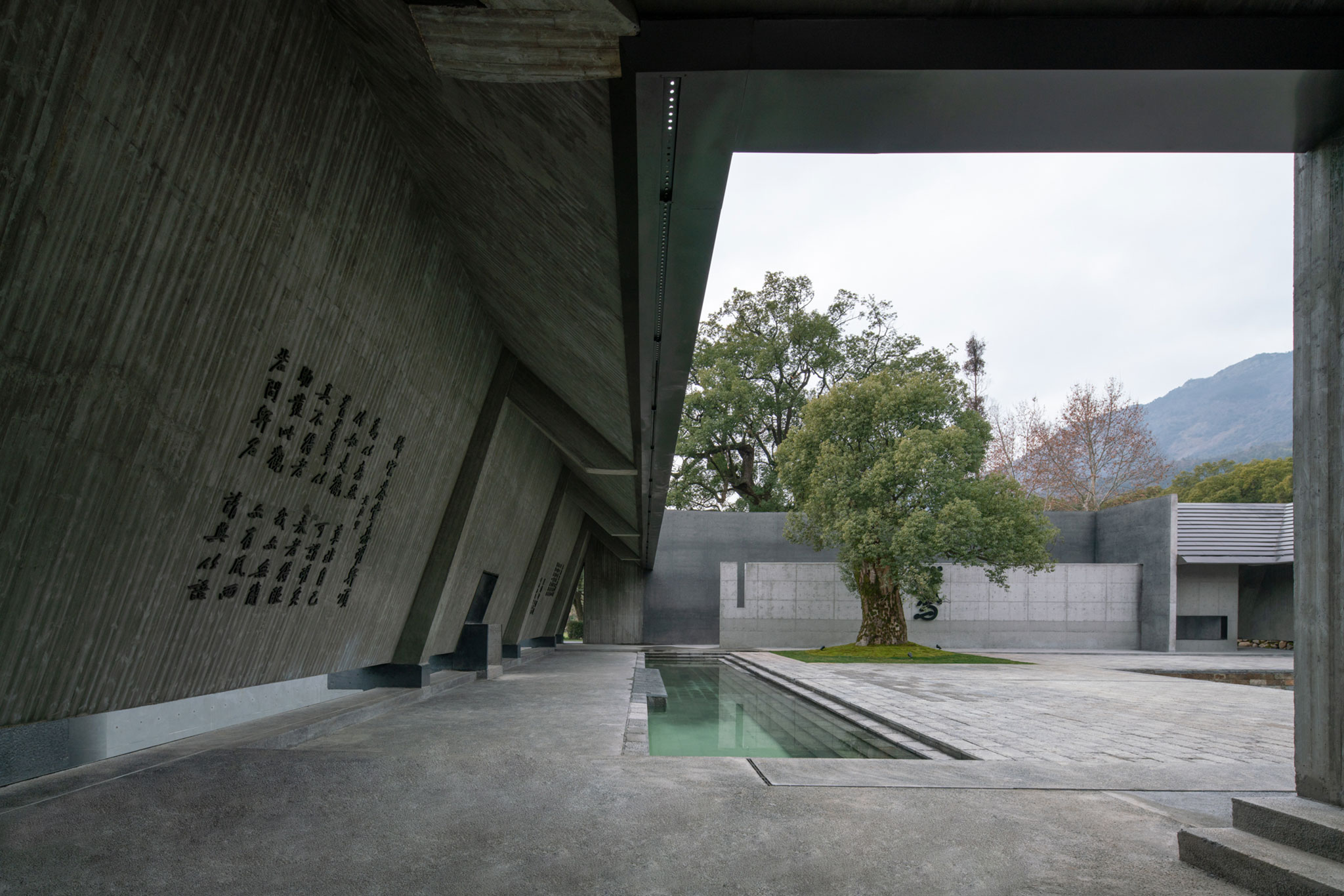
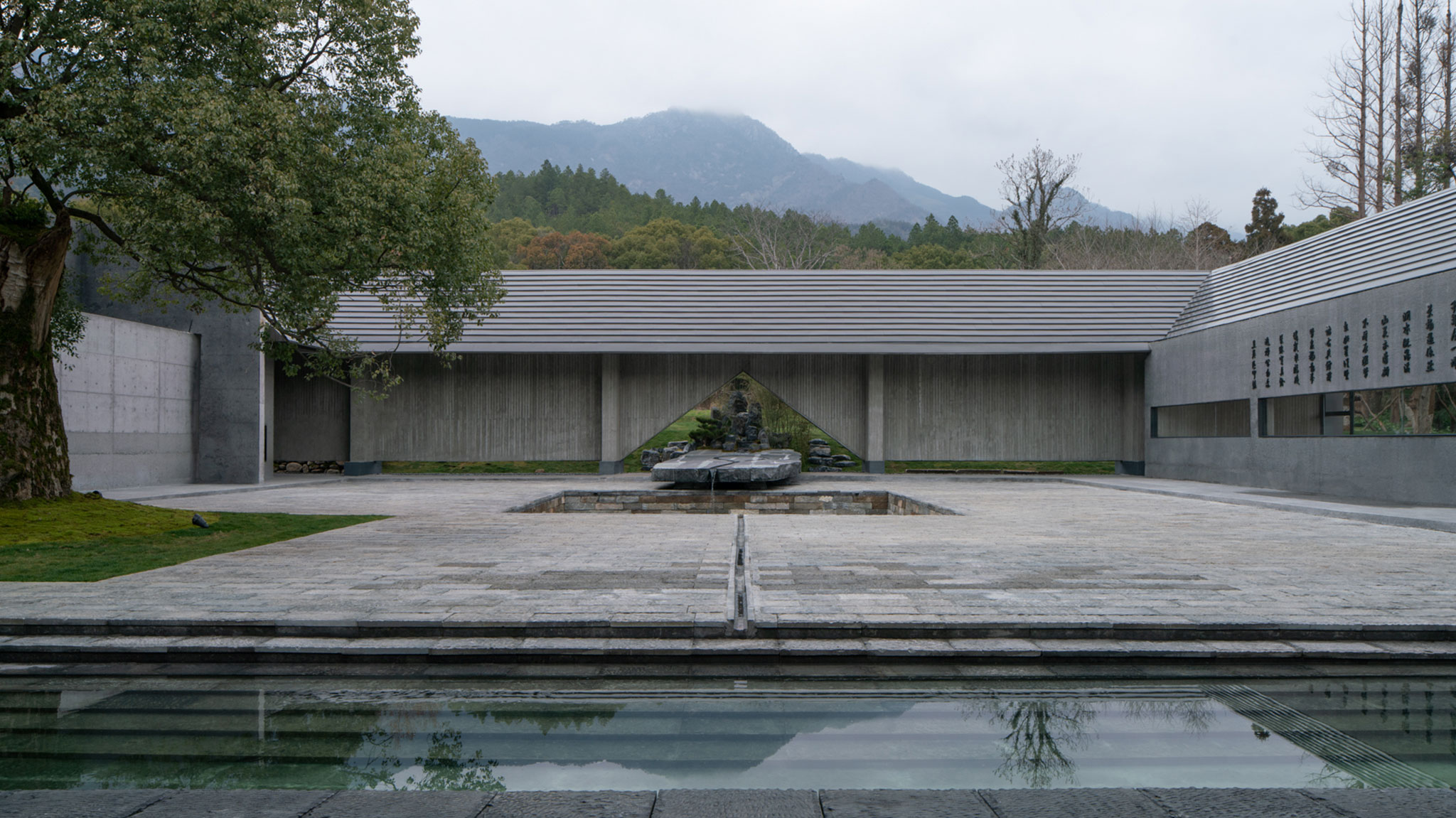
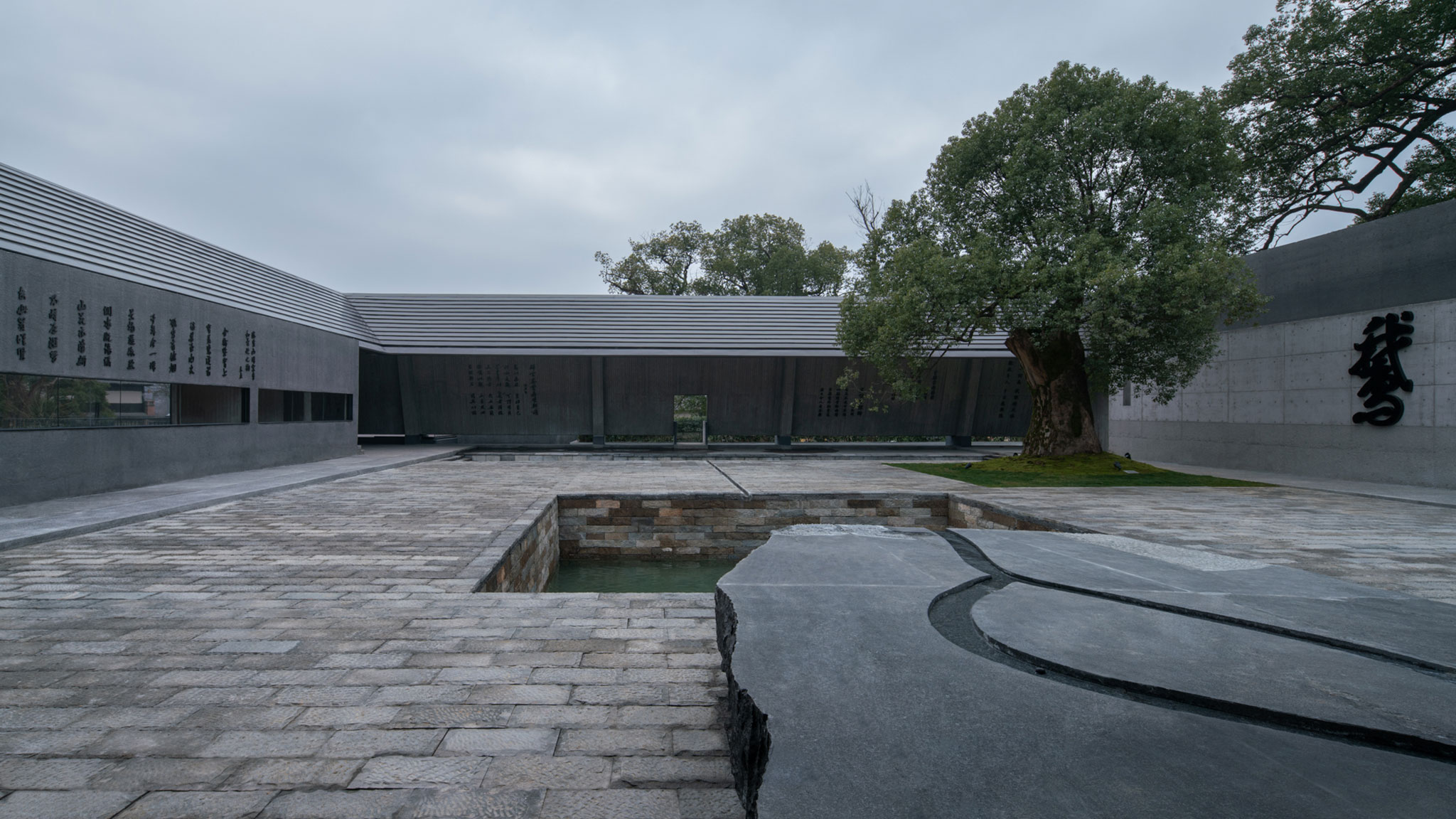
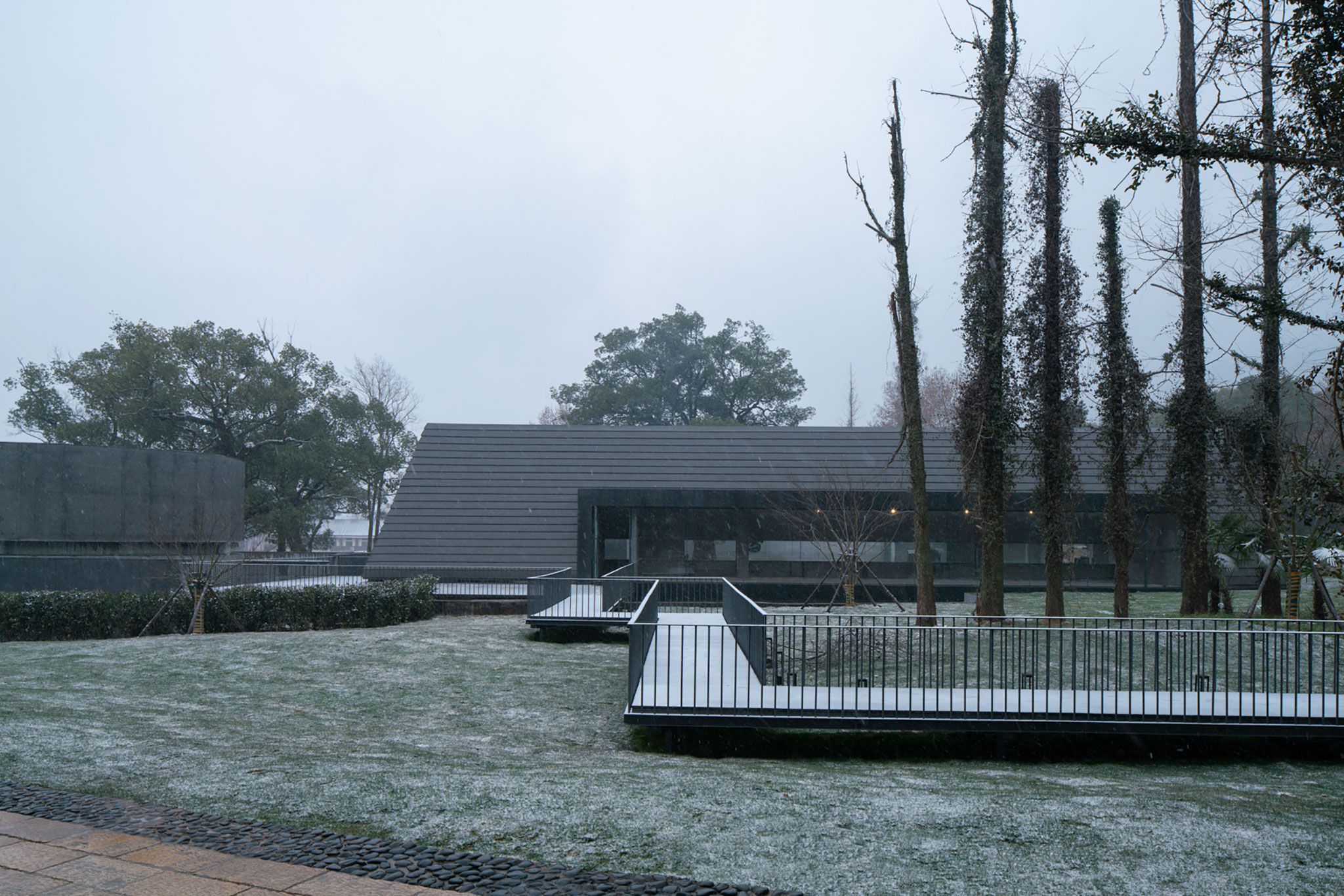
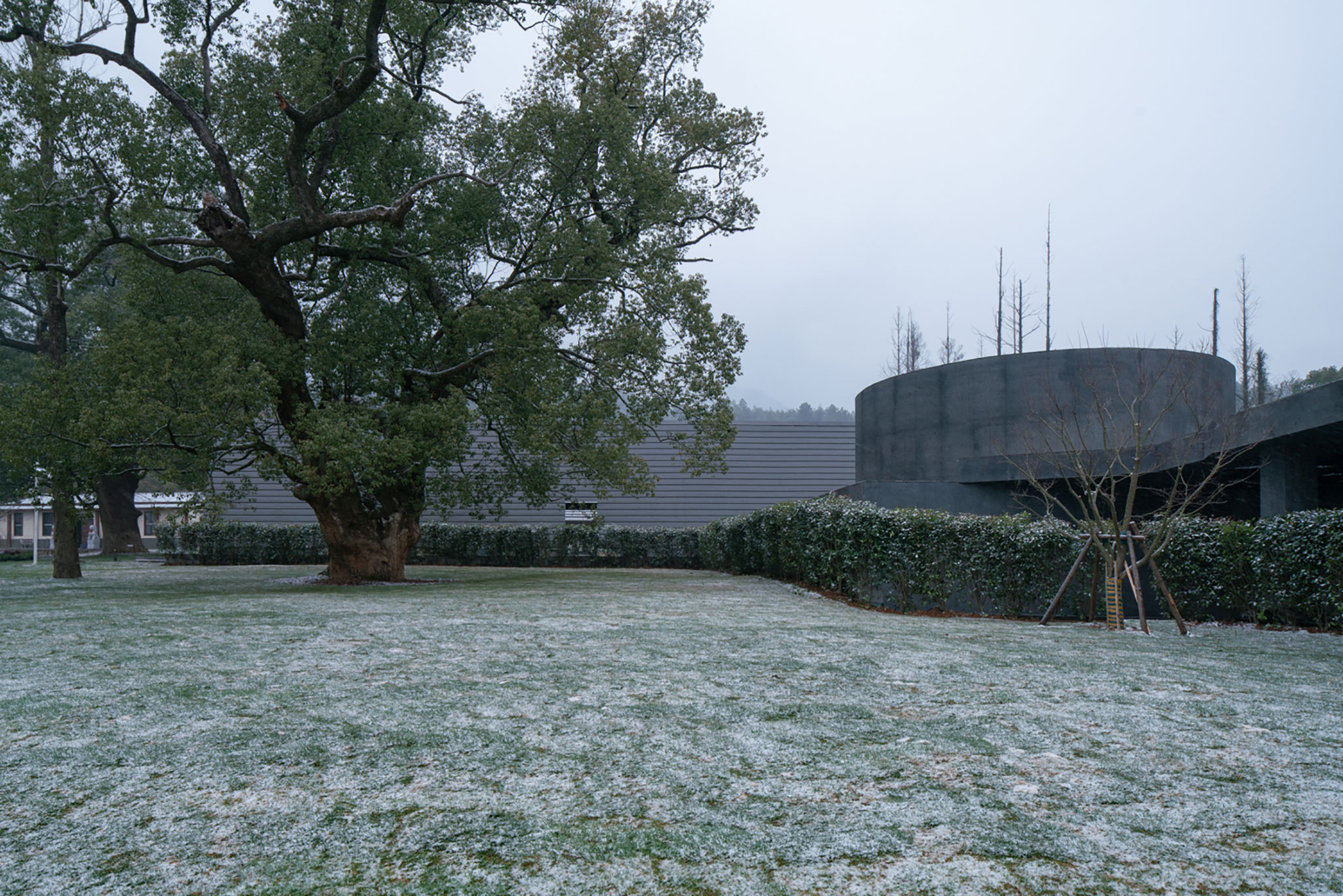
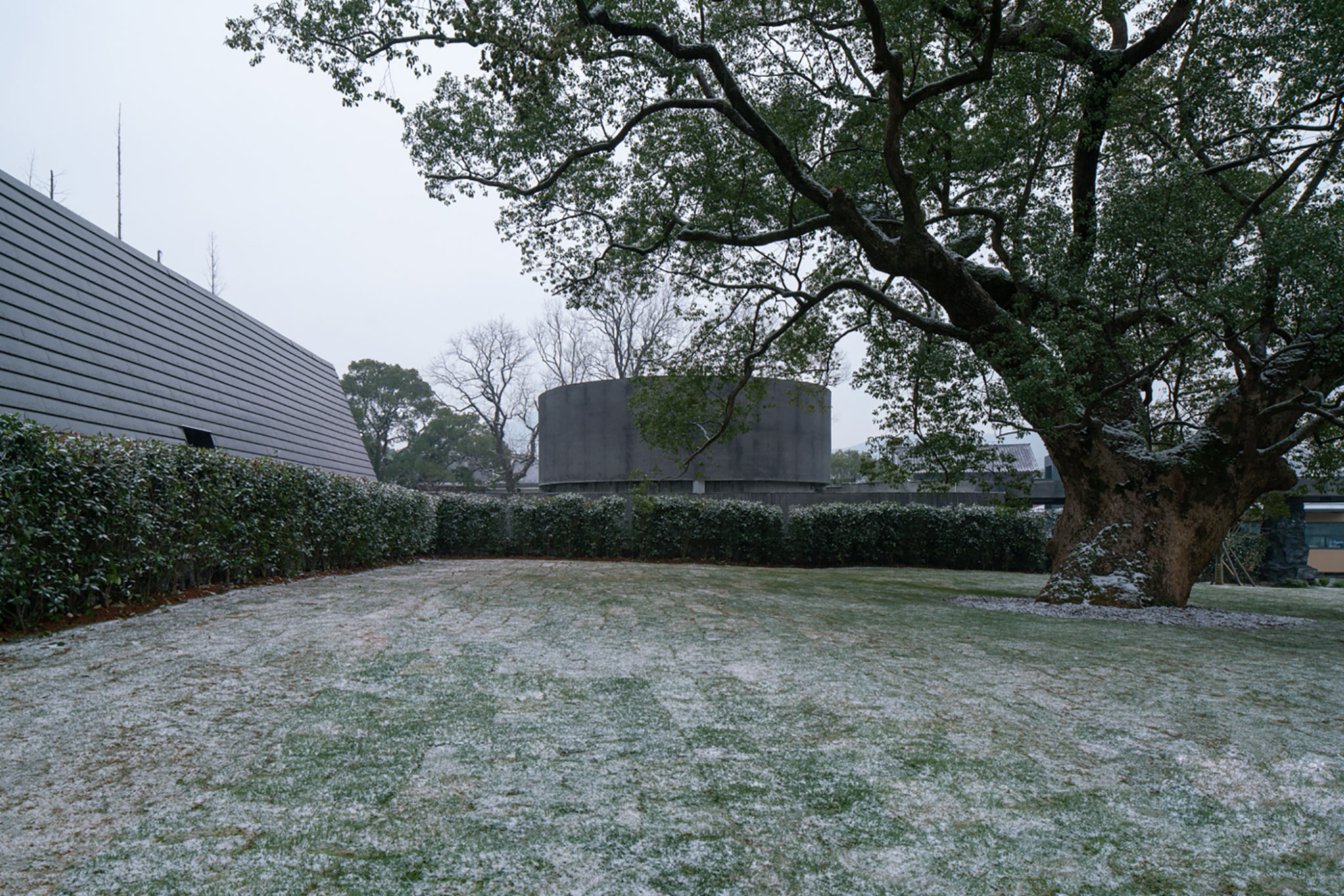
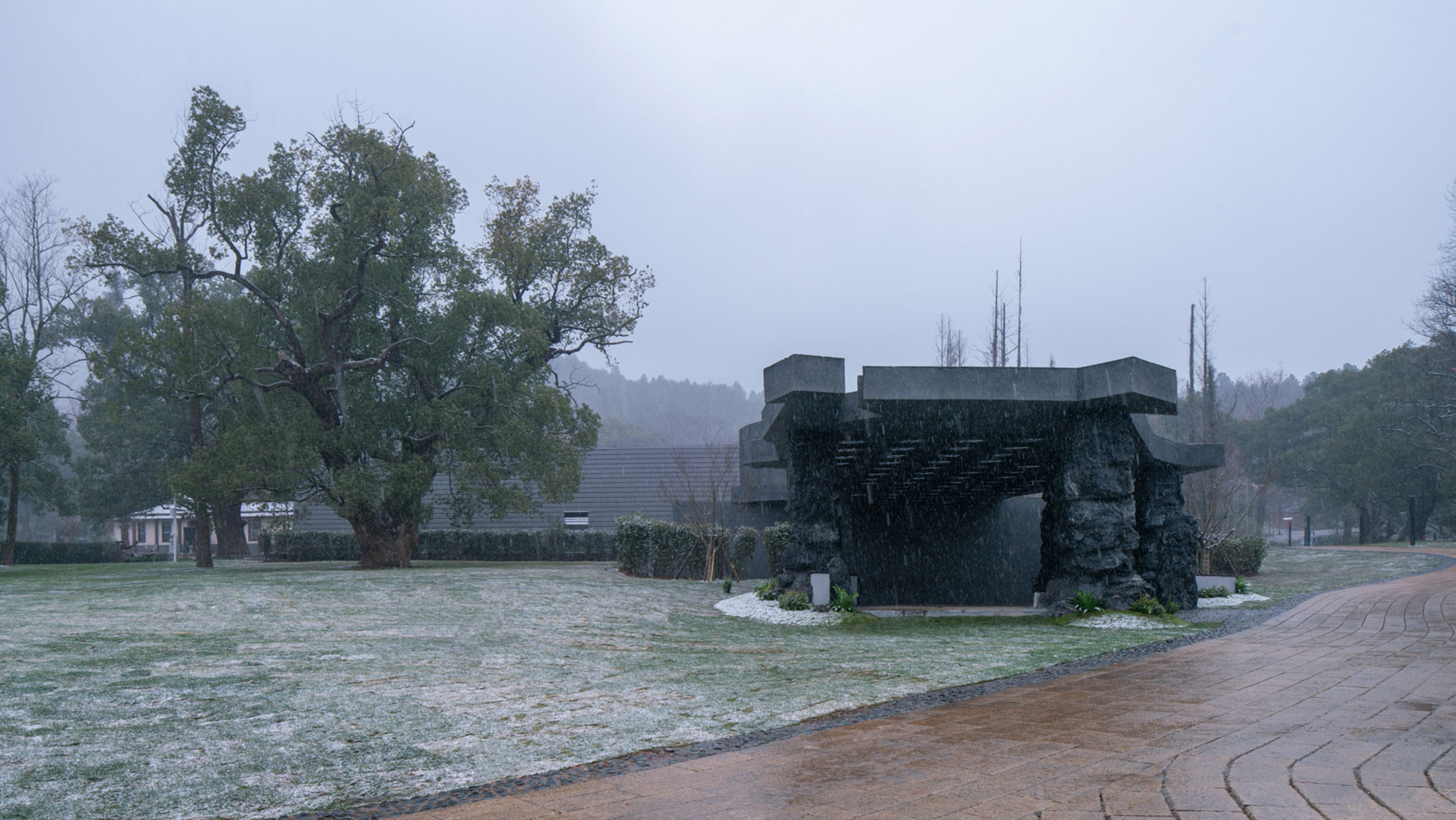
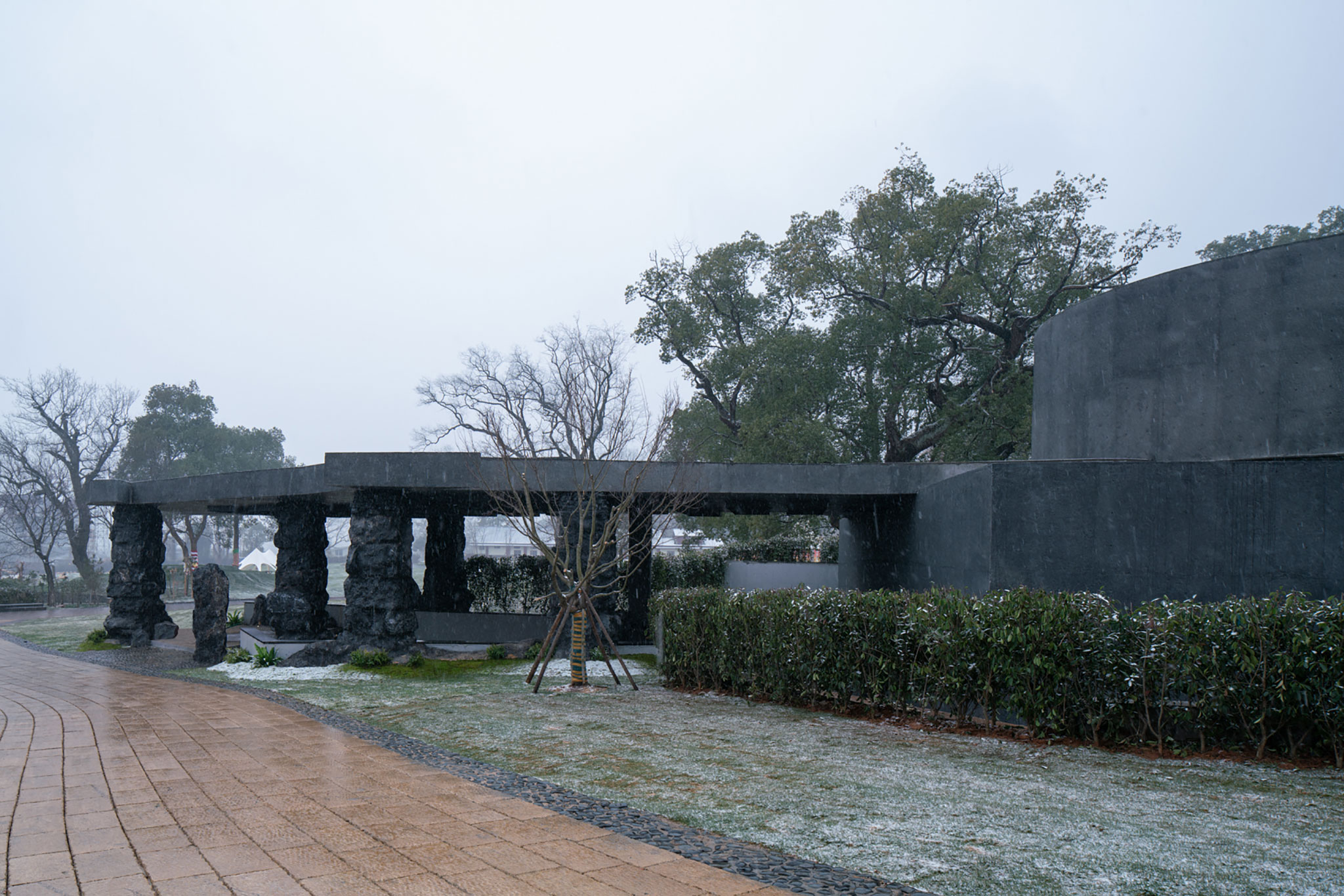
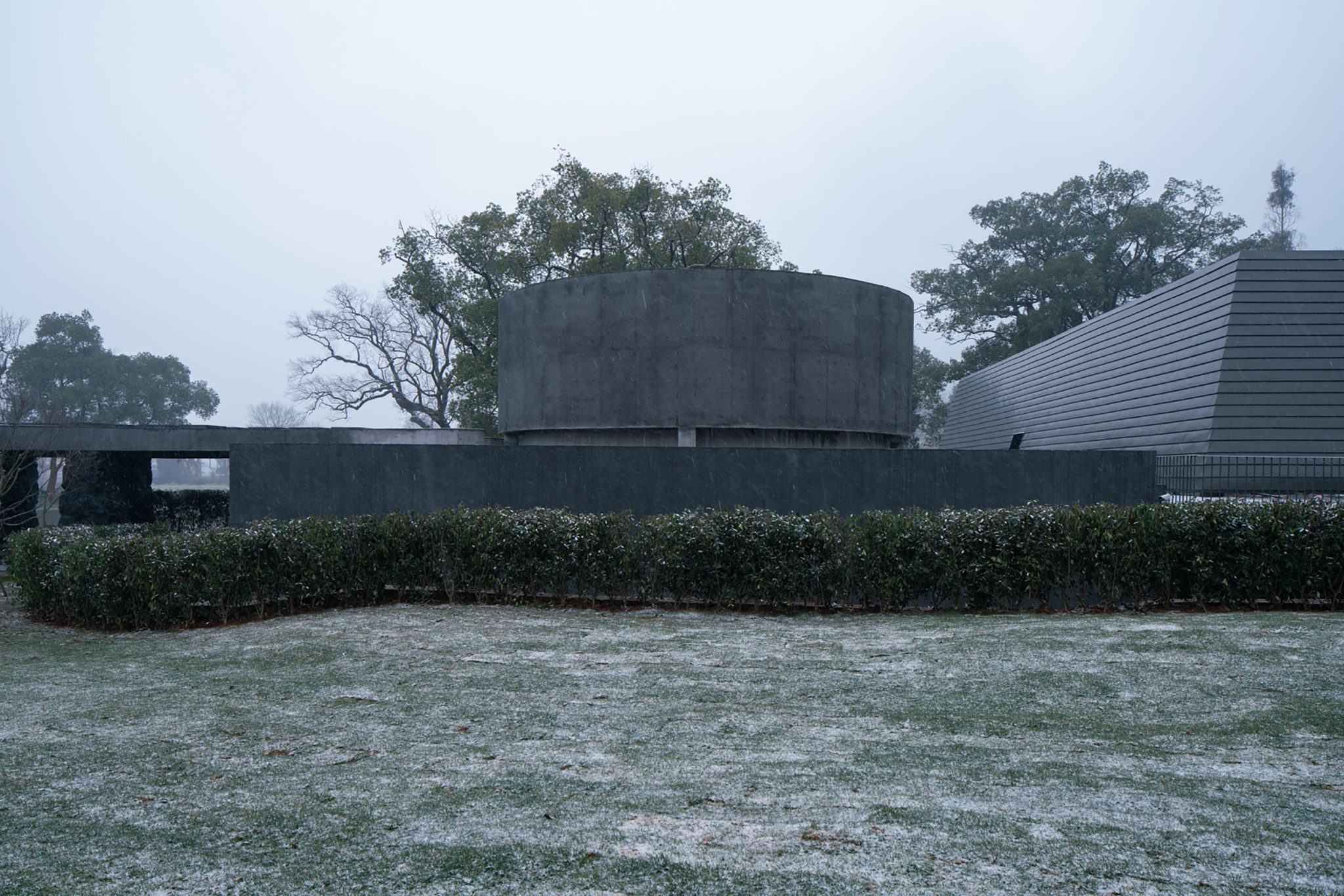
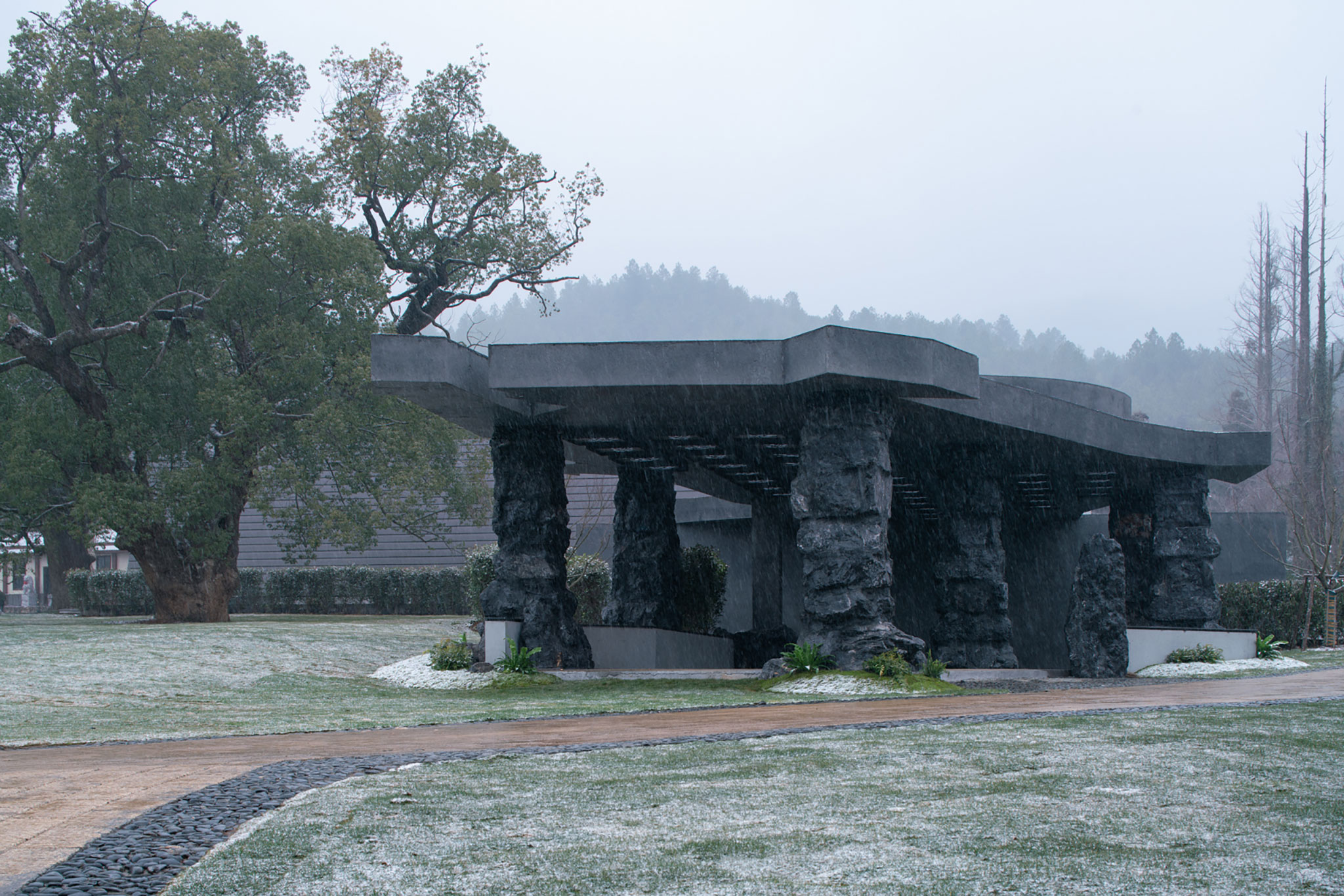
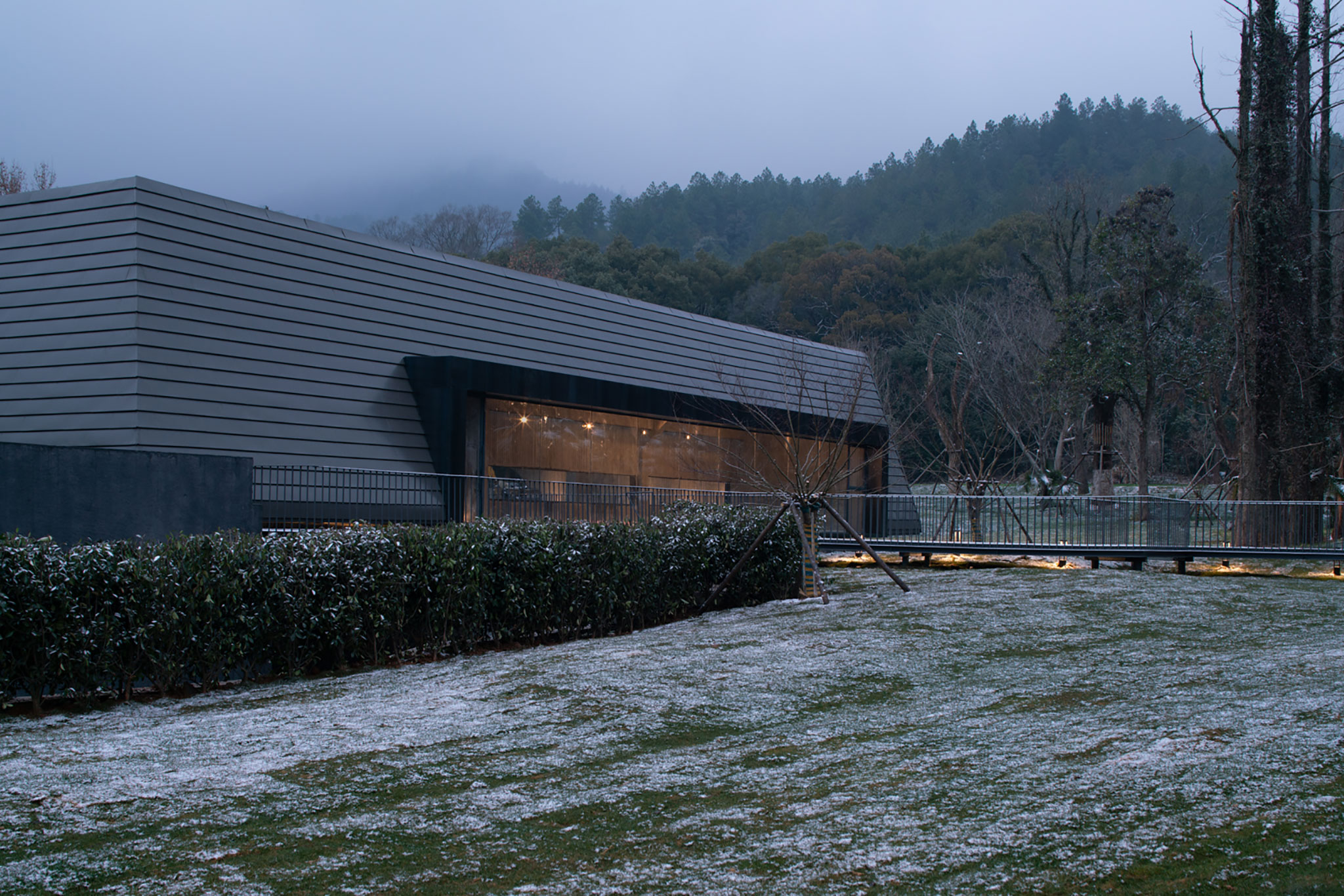
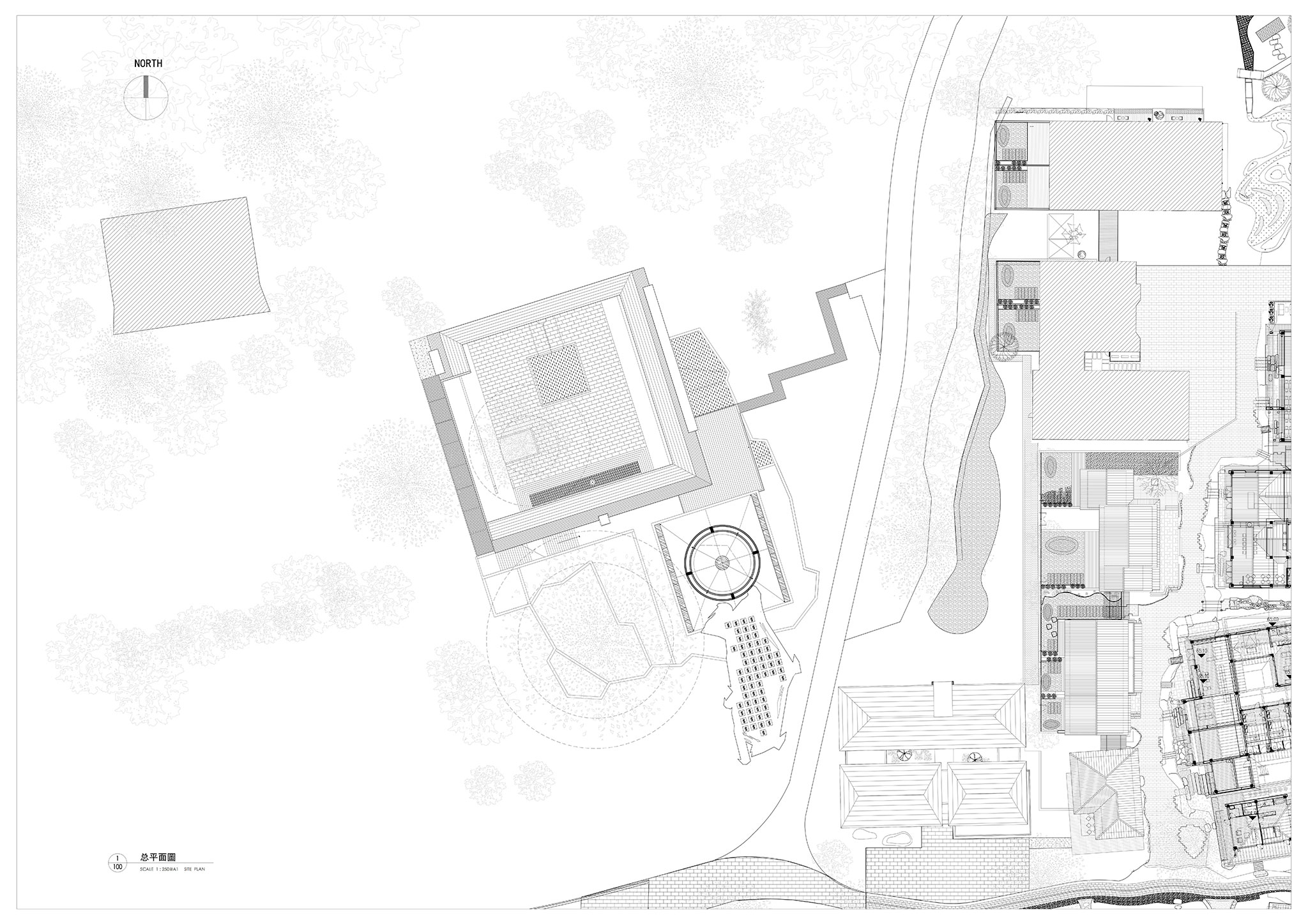
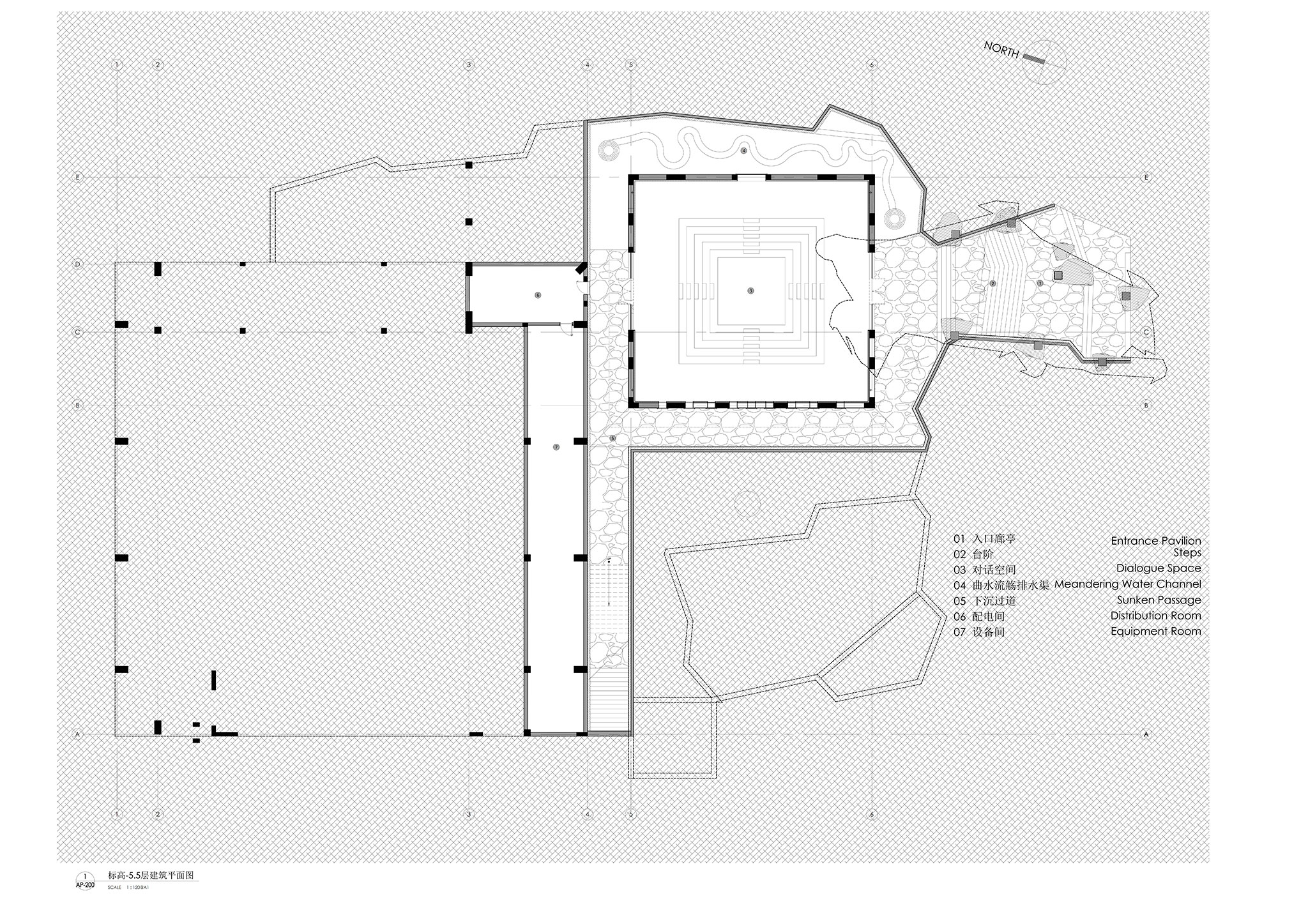
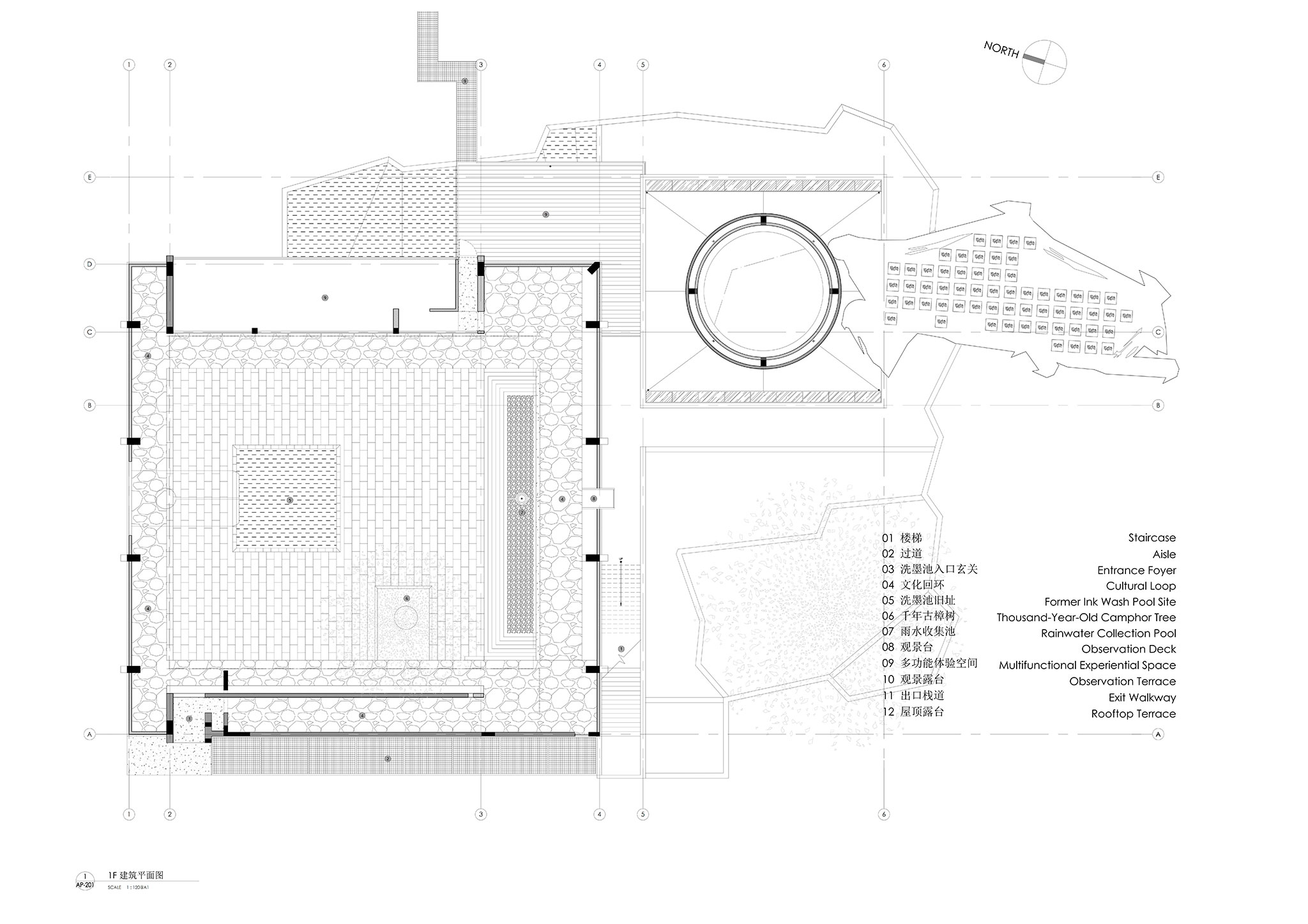
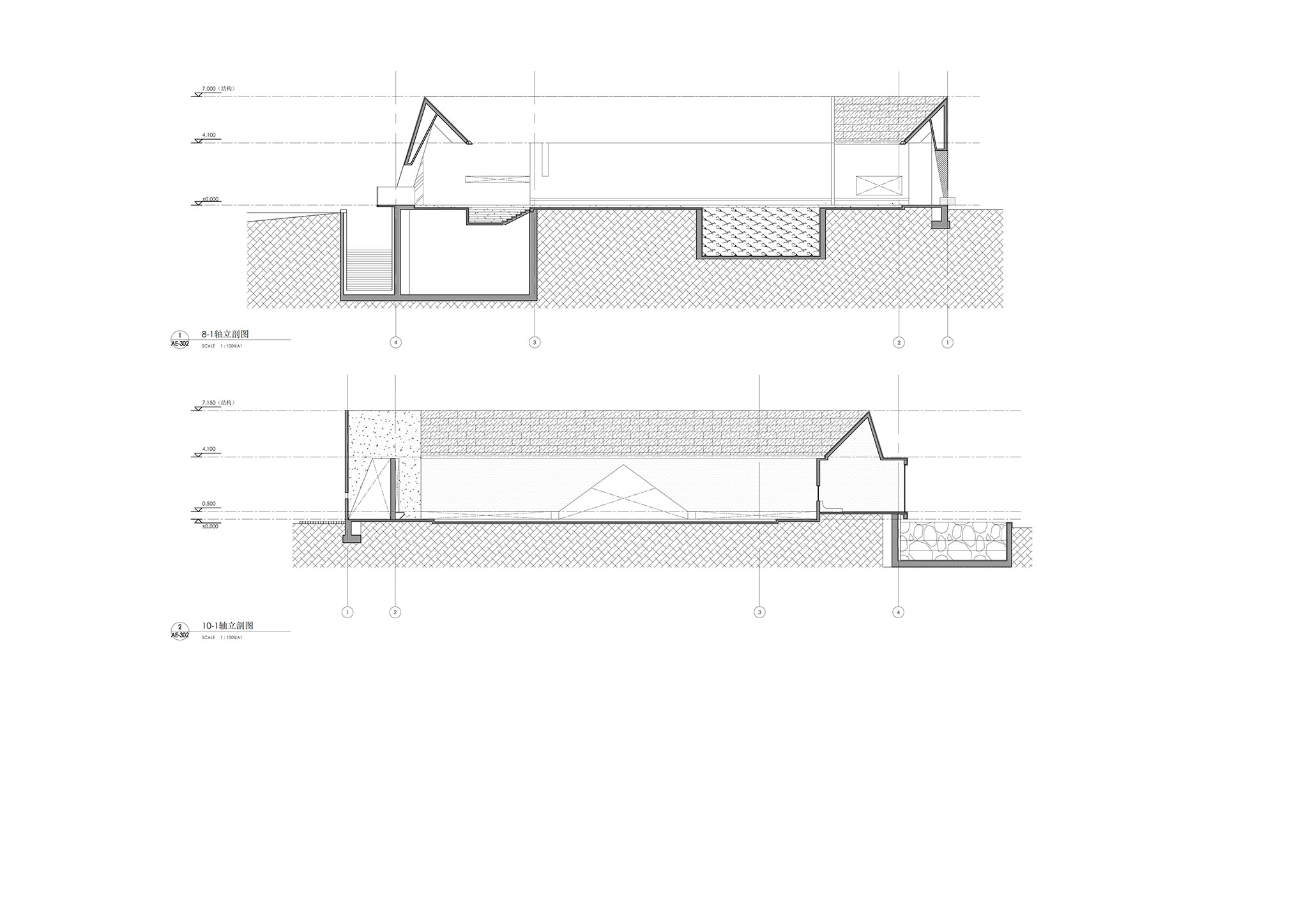
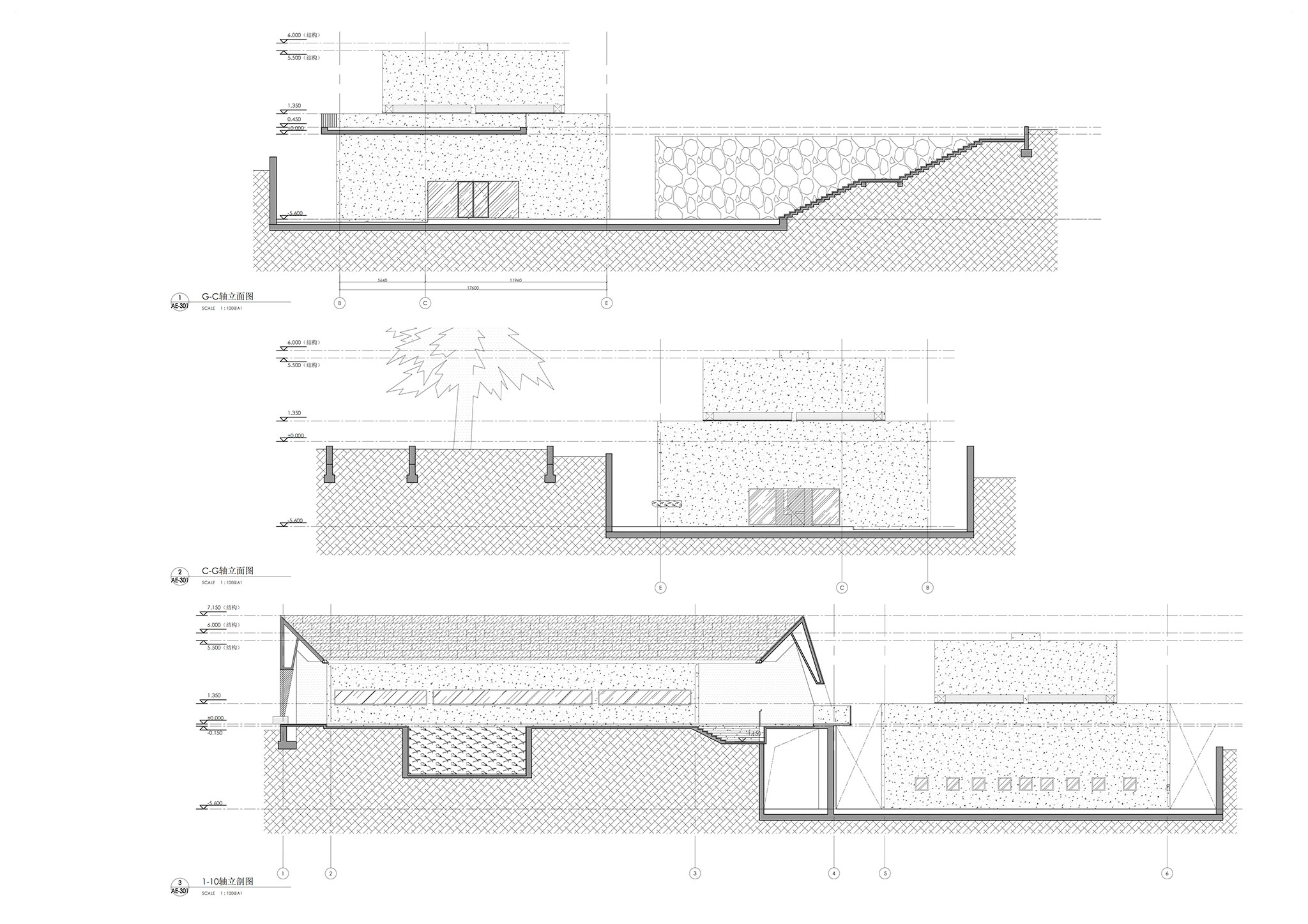
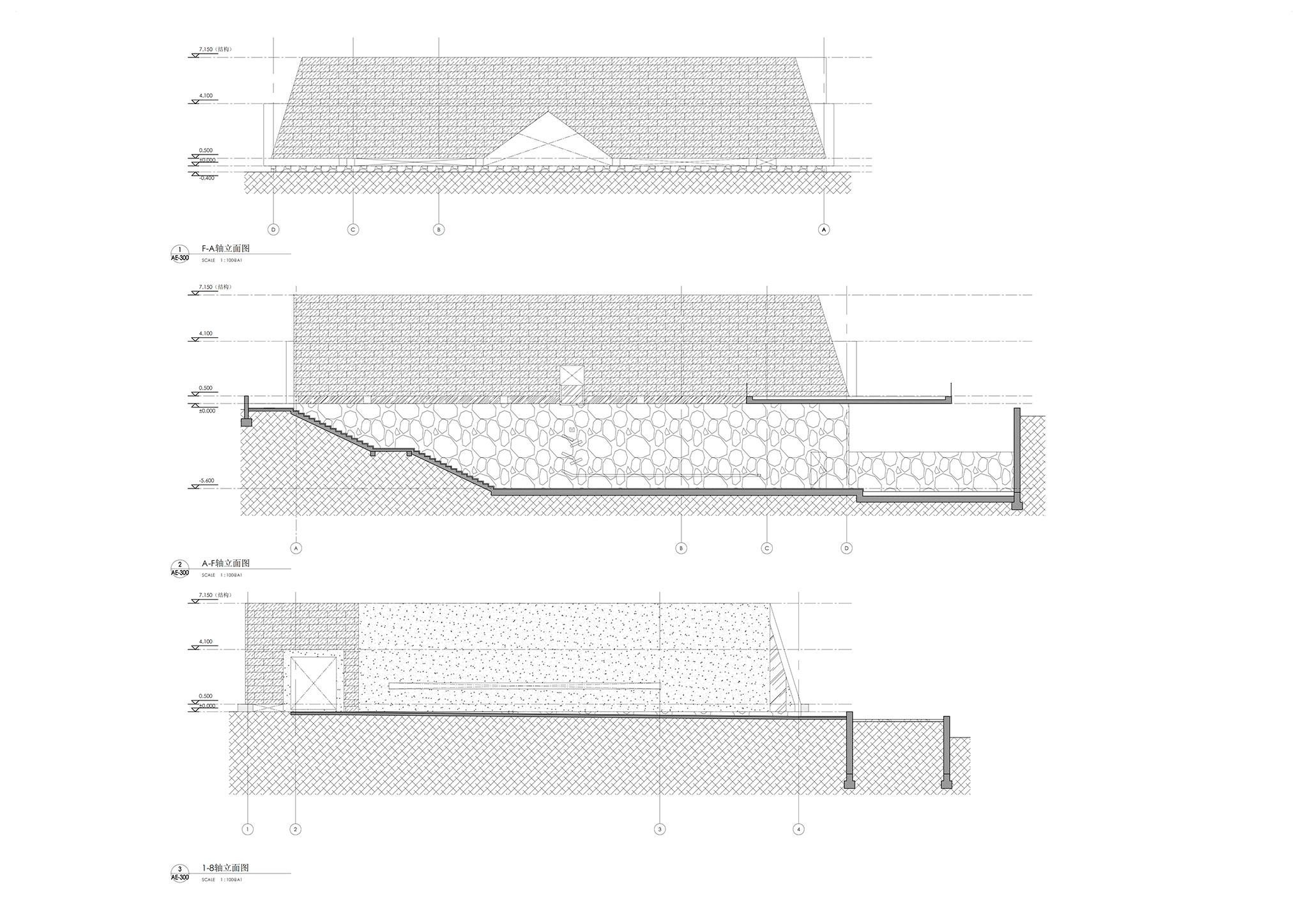
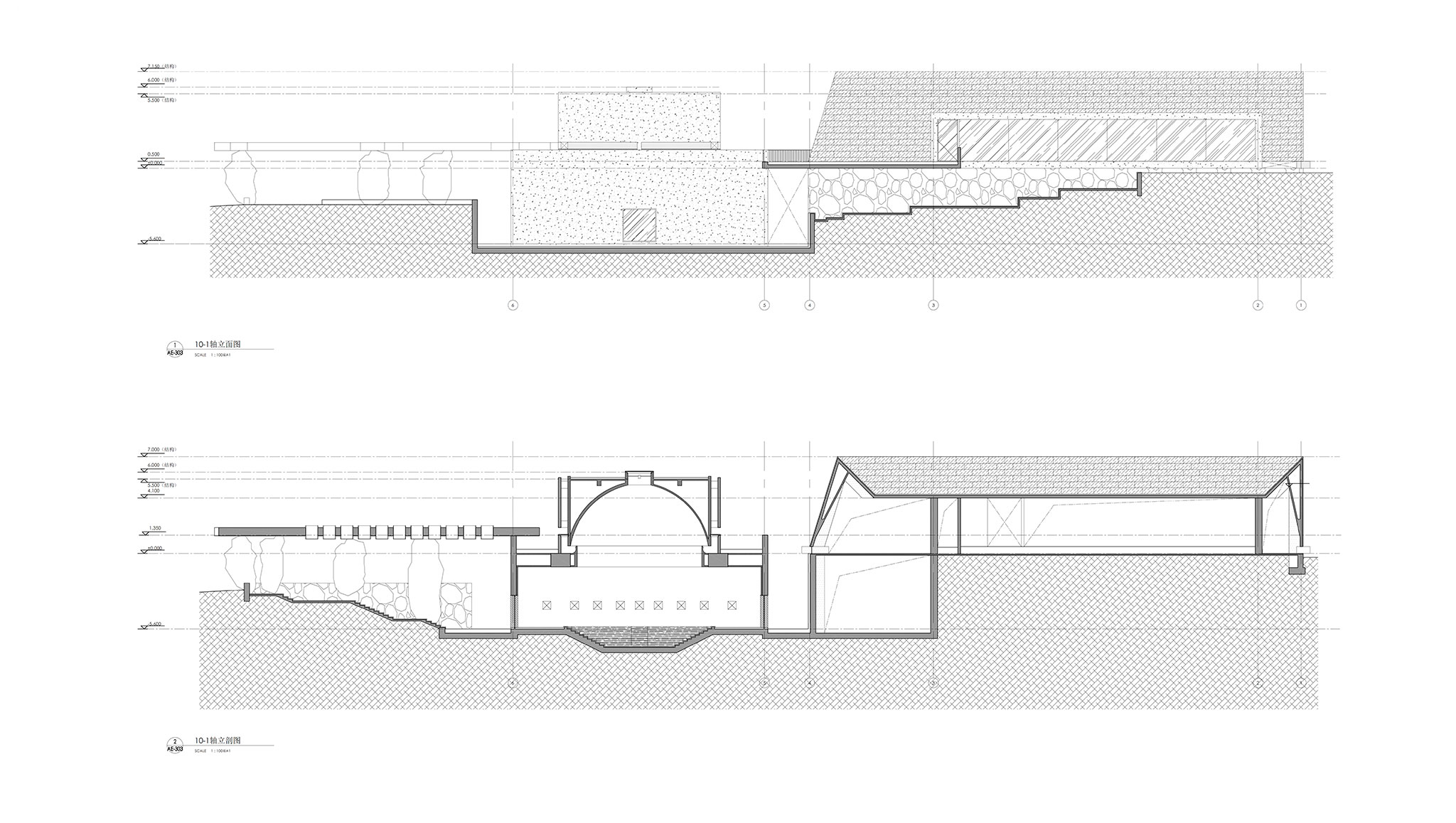
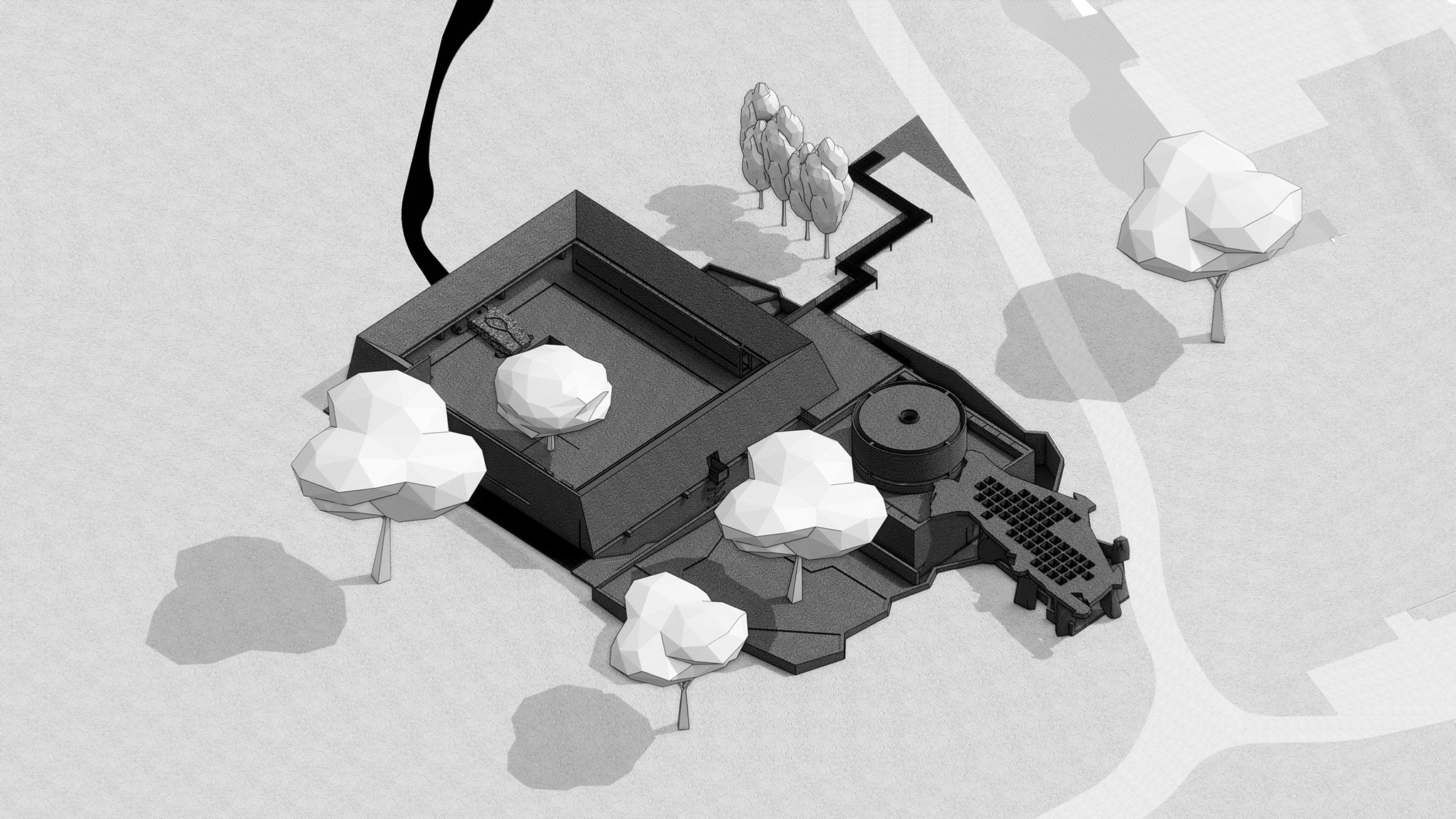
Ink Wash Pool comprises an above-ground and a basement level, with a surface area of approximately 790 m², where the y.ad studio team has integrated exhibition areas and public activities for visitors. The ground floor is organized around the historic site of the pond and a camphor tree, with corridors and transitional spaces, while the basement level houses a multifunctional hall and an exhibition space.
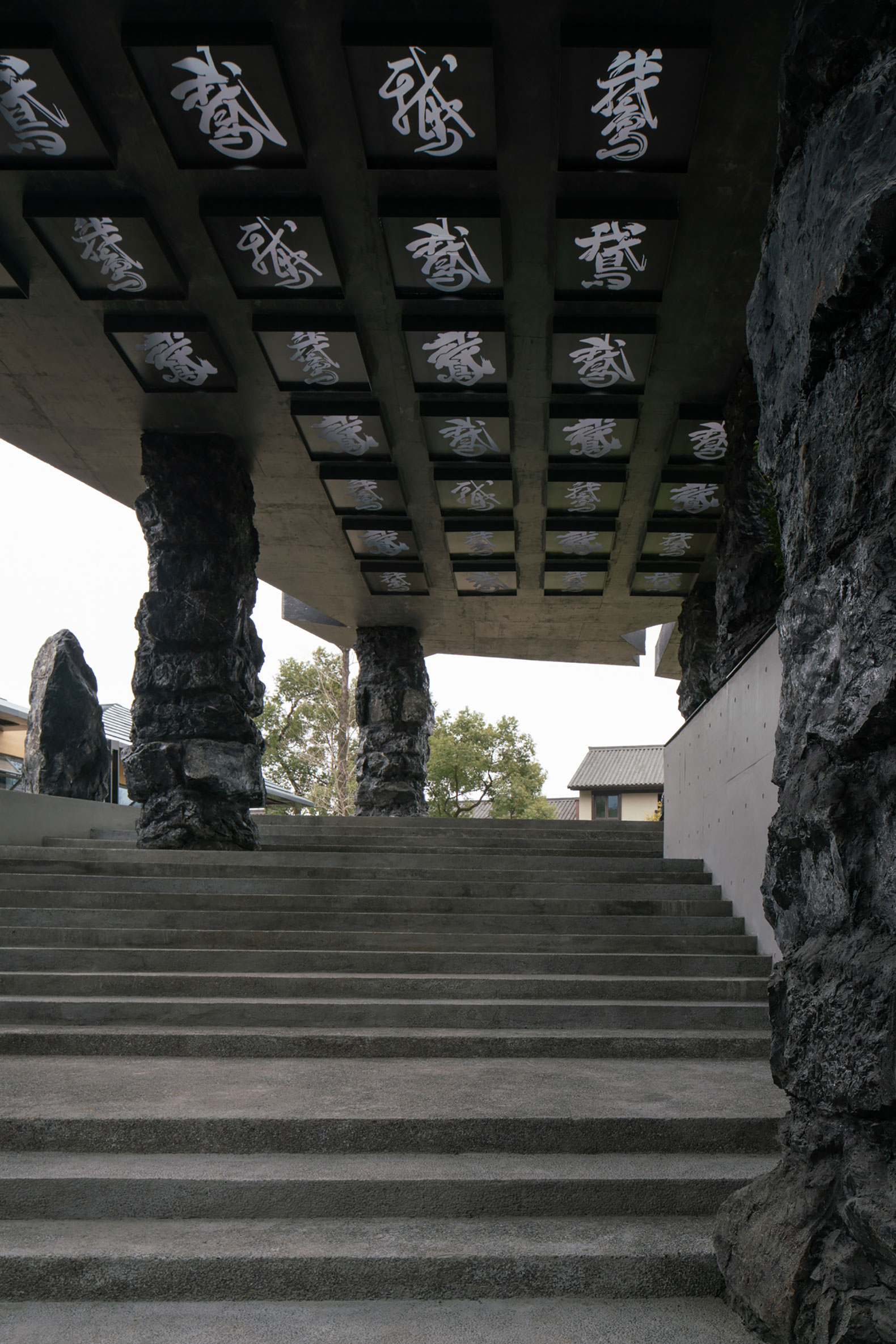
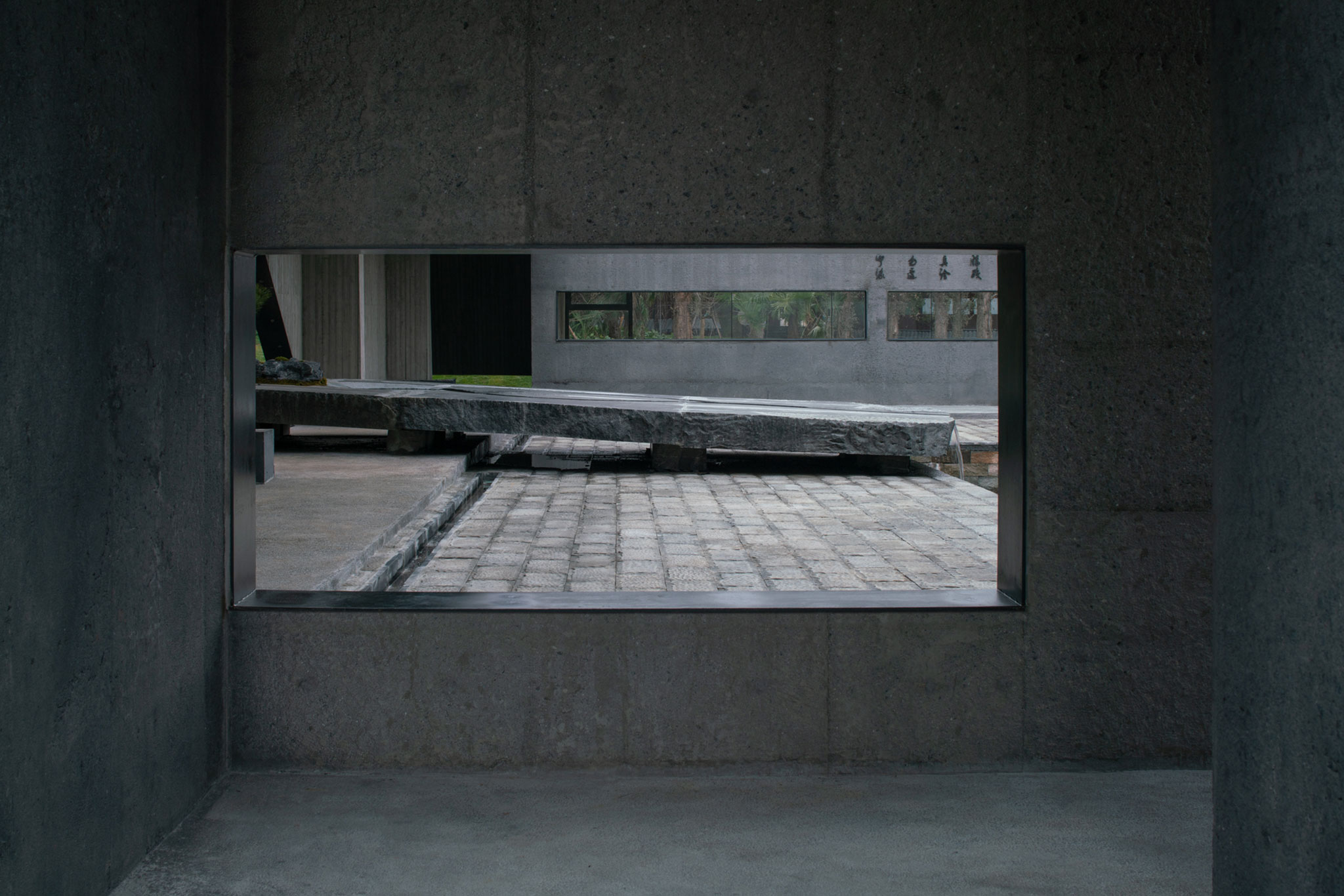
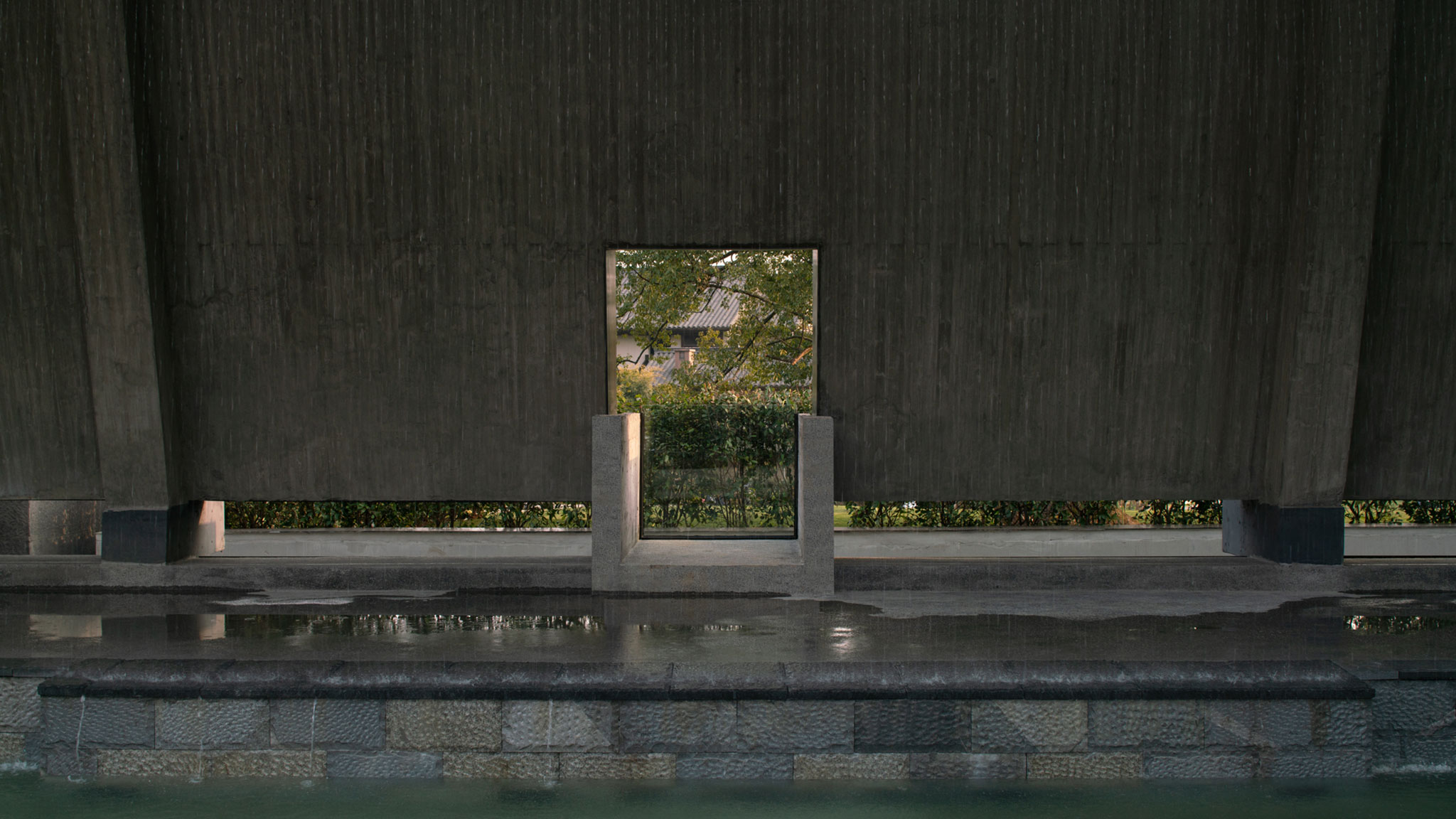
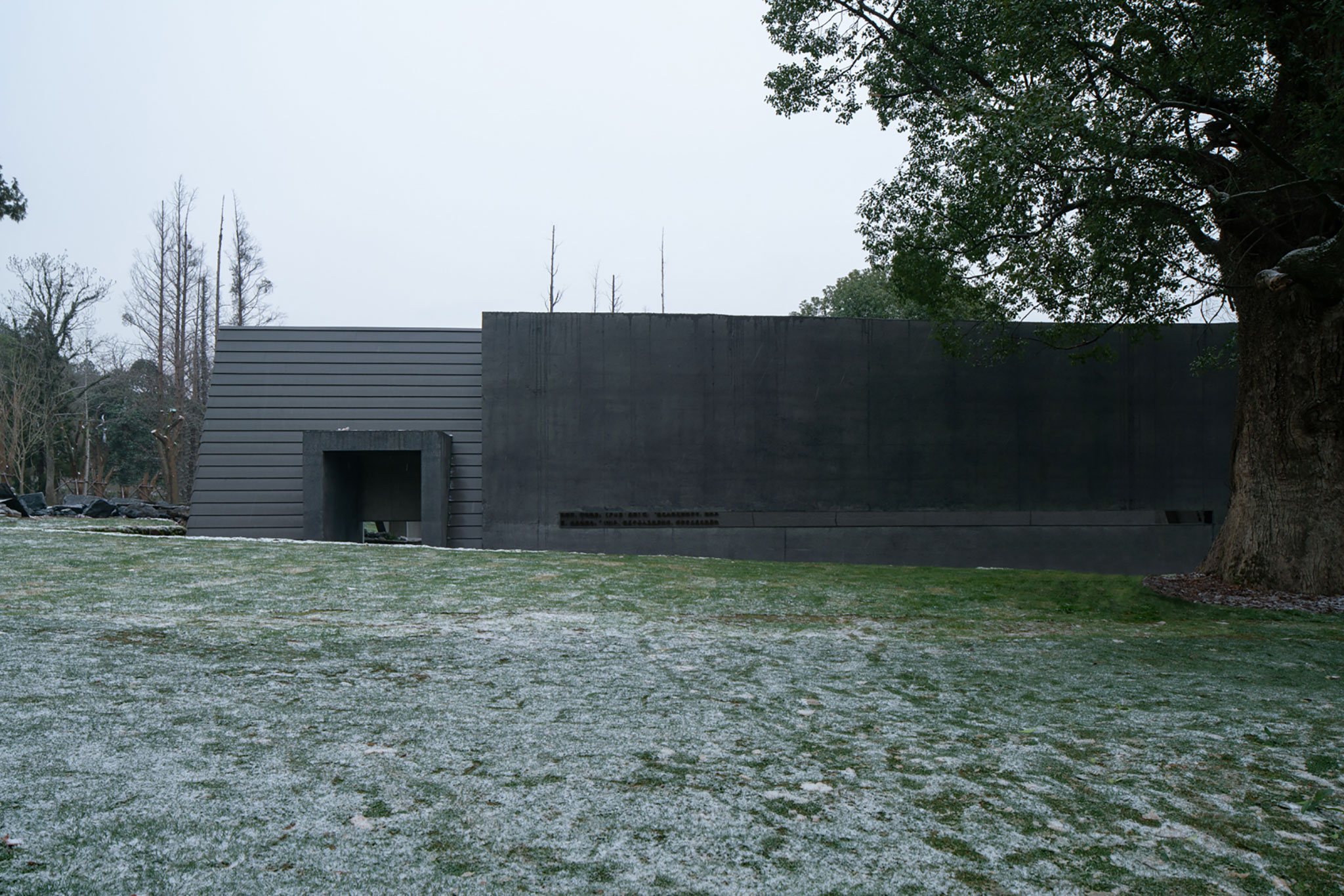
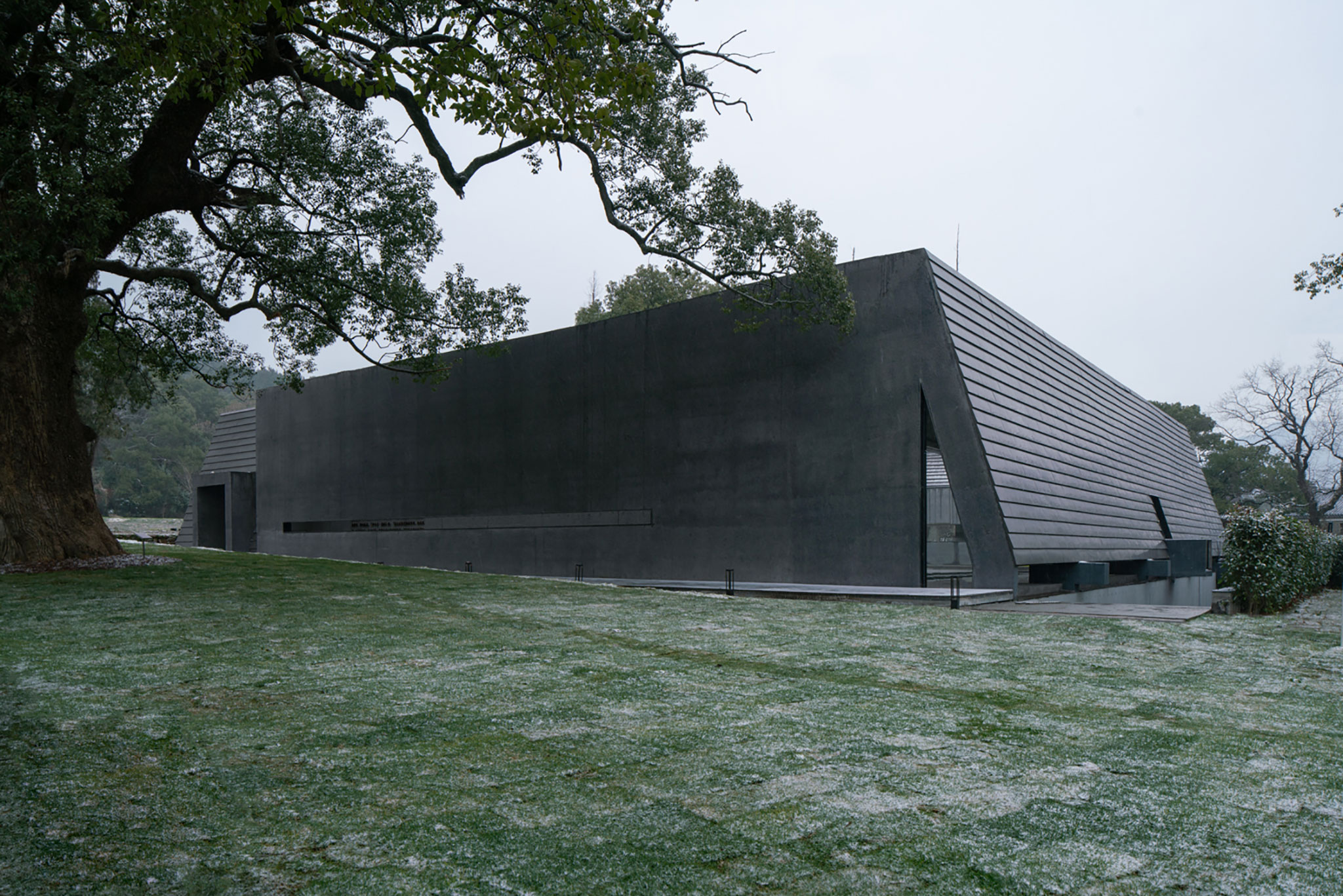
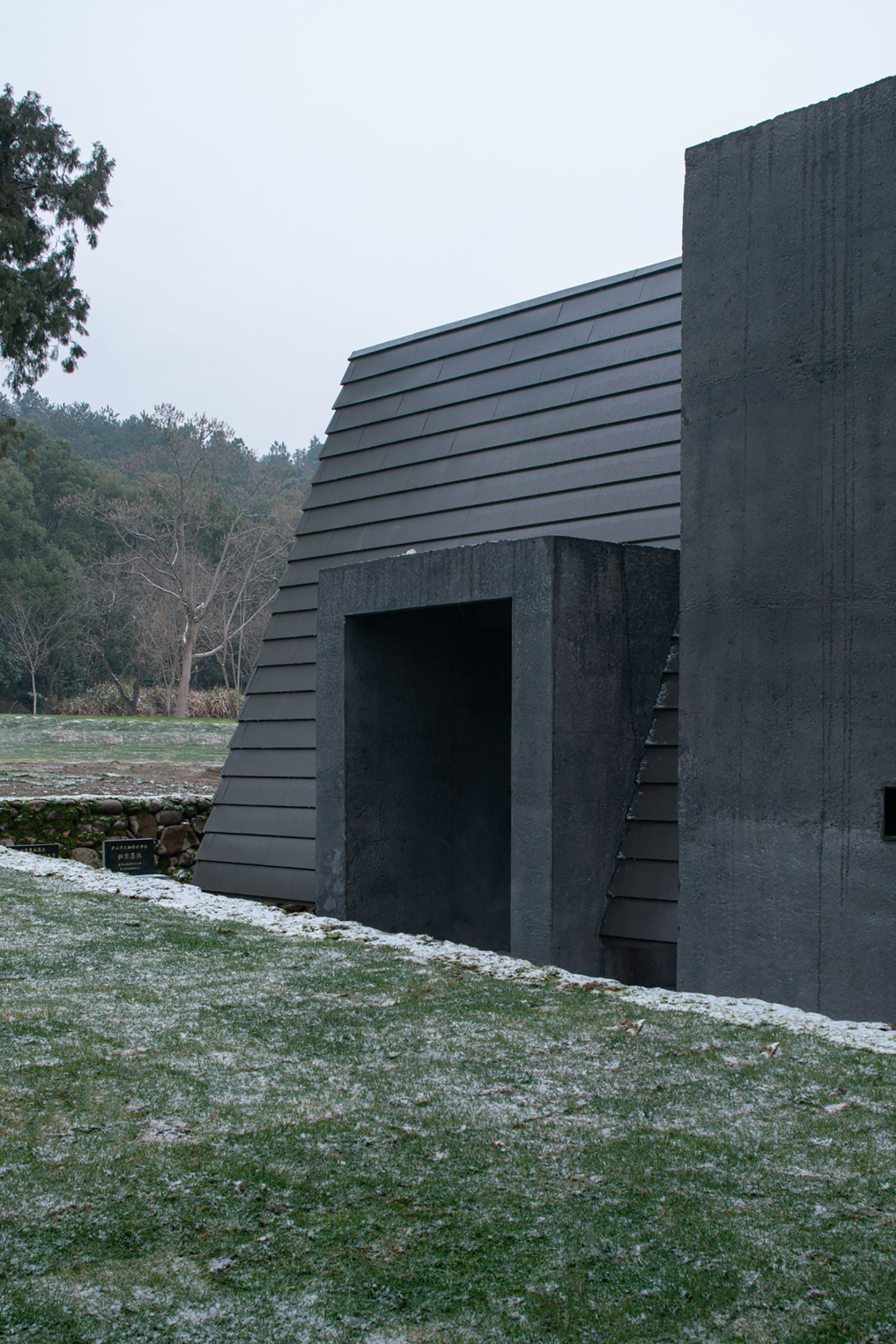
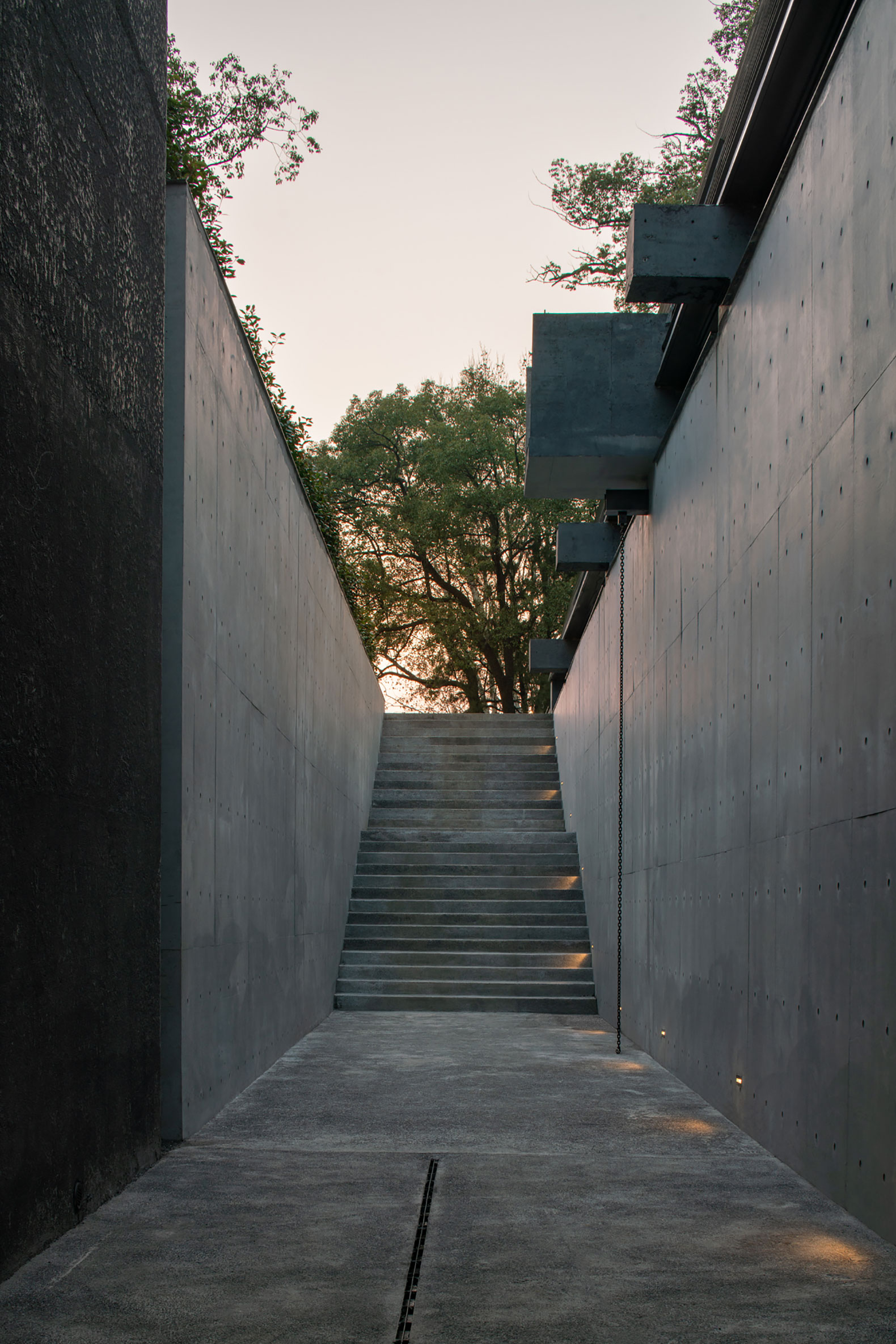
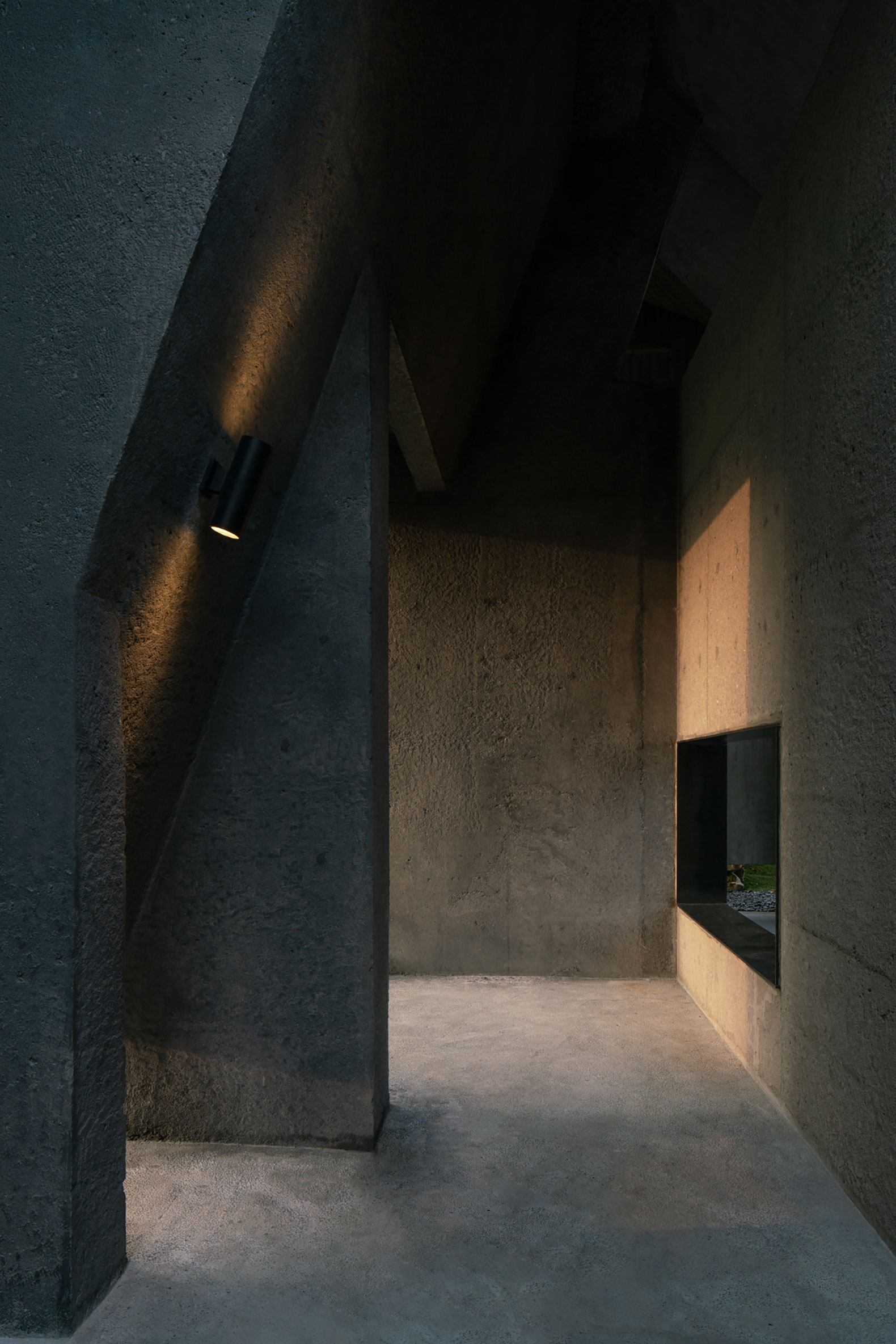
The project uses exposed concrete as its primary material and intentionally avoids decorative elements to maintain a sober and honest expression, reflecting the aesthetic and temporal intent of the work.
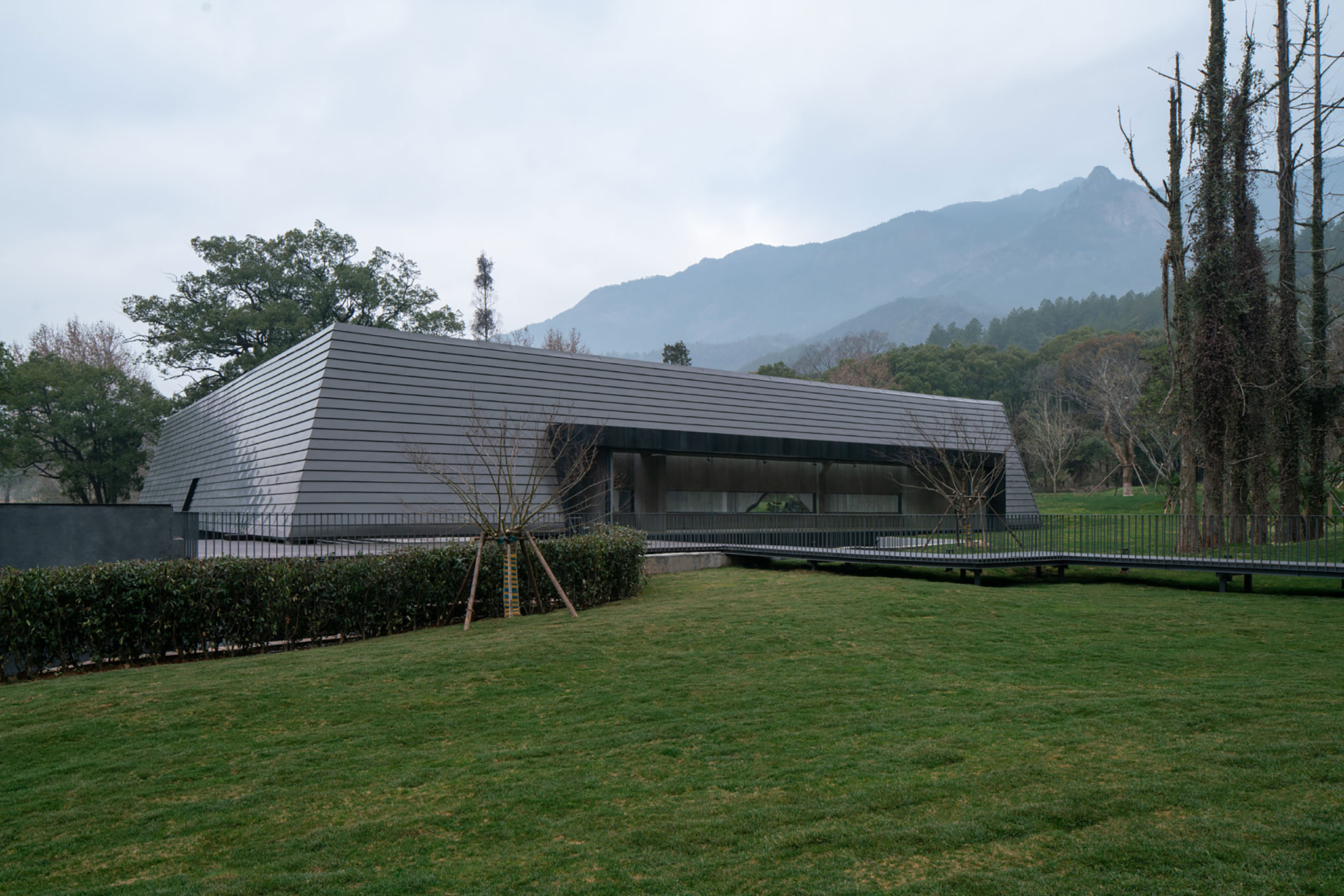
Ink Wash Pool by y.ad studio. Photograph by Alice.
Project description by y.ad studio
Site and History: Cultural Memory of Calligraphy and Self-Cultivation
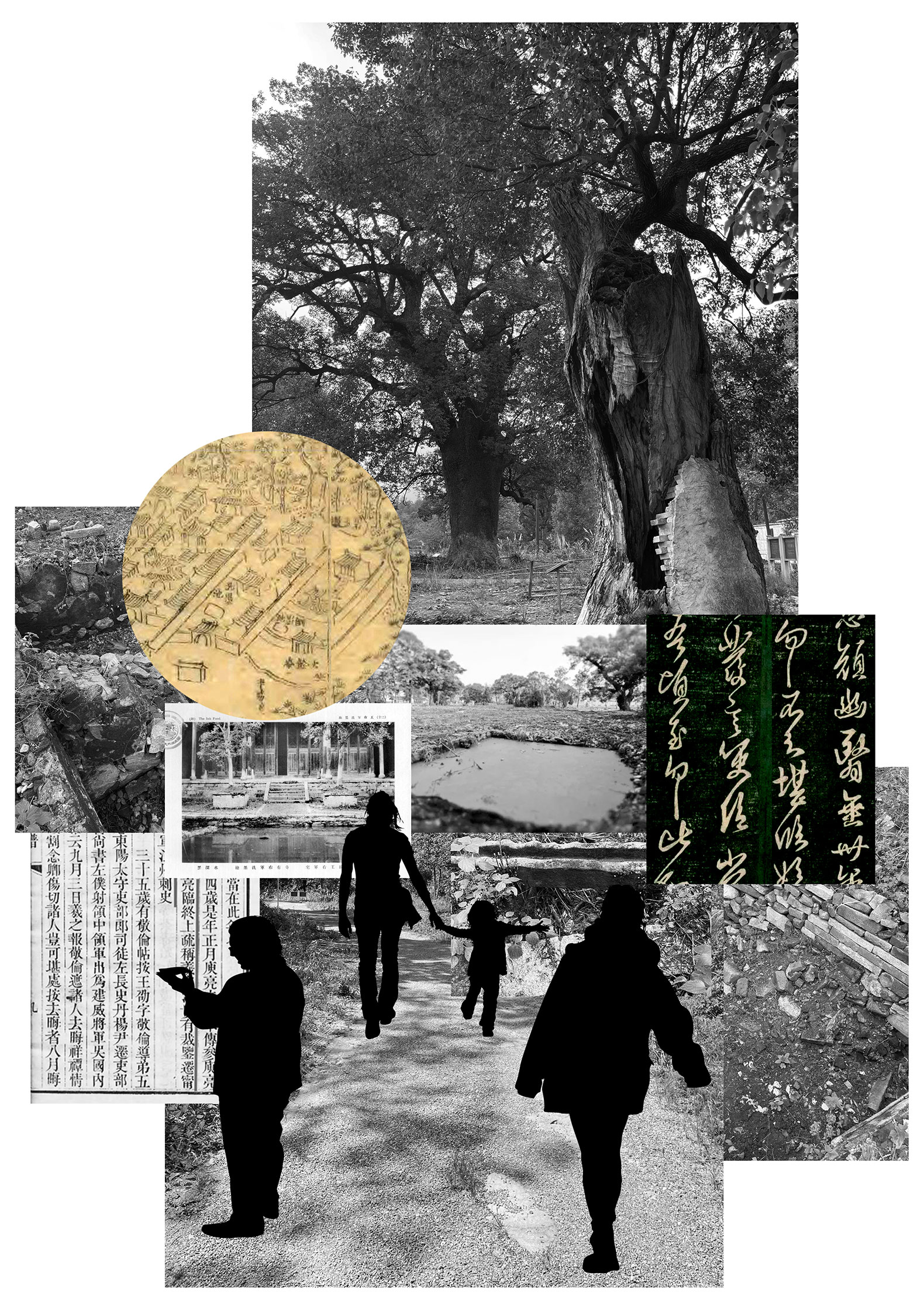
The Ink Wash Pool (also known as “Xi Mo Chi”) sits on a site steeped in historical memory. Local chronicles and folklore associate it with Wang Xizhi, the celebrated calligrapher of the Eastern Jin dynasty, who was believed to have washed his inkstone and brushes here. While the historical accuracy of this legend remains uncertain, the imagery of “Ink Wash Pool” has long carried symbolic significance in local cultural memory.
Unlike many historic sites marked by tangible architectural remains, the Ink Wash Pool is seen as a place of spiritual resonance—symbolizing both the tradition of calligraphy and the literati ideal of self-cultivation. Its significance lies not only in physical presence, but in the cultural temperament it represents—restraint, quietude, and an inner contemplative order. The design challenge, therefore, is not simply a matter of preservation or reconstruction, but about how to reactivate its cultural spirit through contemporary design intervention.
Design Approach: Between Restoration and Dissolution
In the renewal of historic sites, there are often two common approaches: formal reconstruction that imitates the past, or contemporary interventions that detach entirely from the historical context.
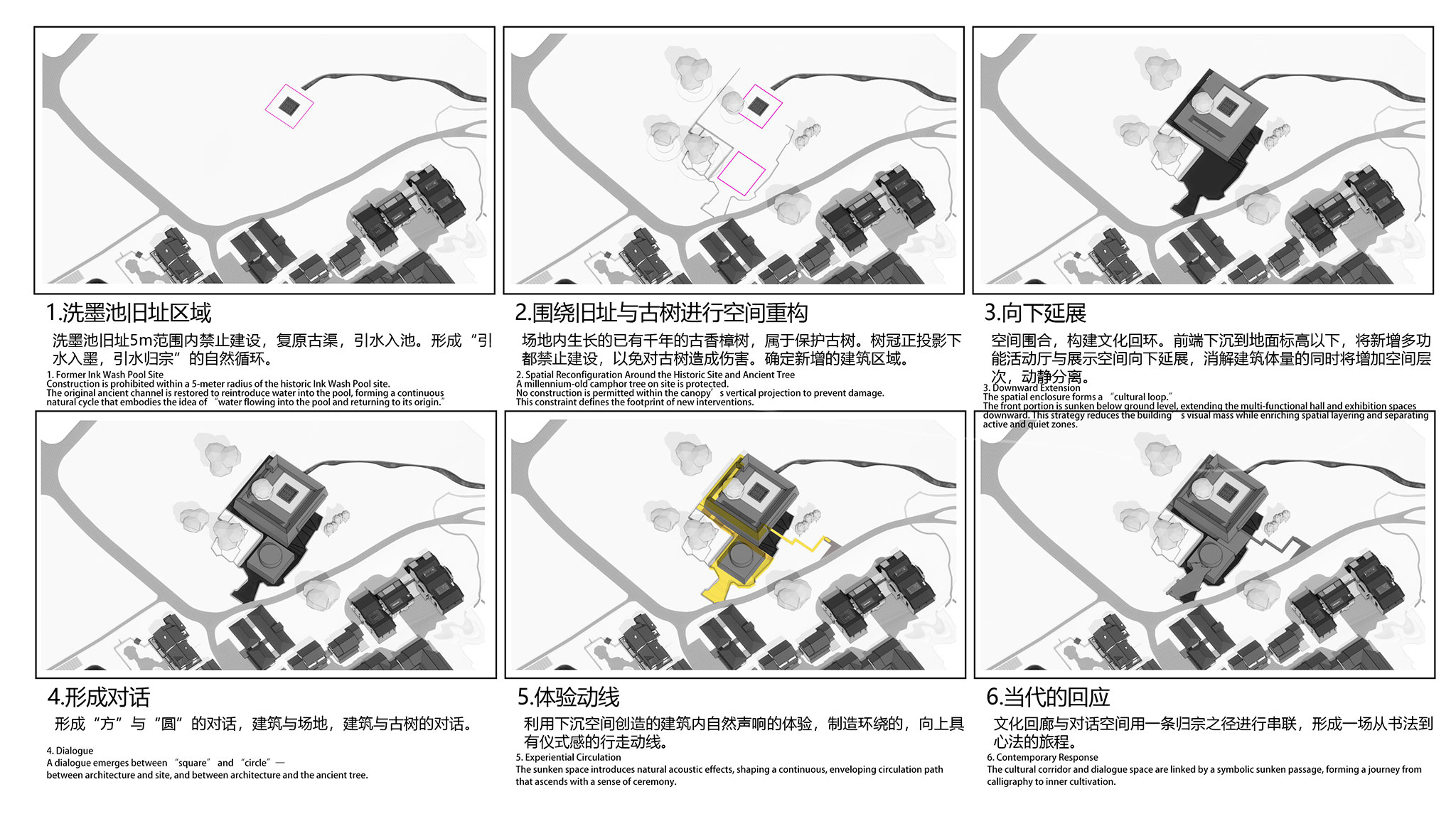
This project seeks a more restrained strategy between the two. Rather than restoring the site to its original state or translating historical narrative into superficial symbols, the design reorganizes spatial relationships so that the historic site becomes the core of a new spatial order.
The goal is not to reproduce historical form but to carry forward cultural temperament.
The literati spirit embodied by the Ink Wash Pool—quietness, introspection, and restraint—becomes a guiding reference for the spatial composition.
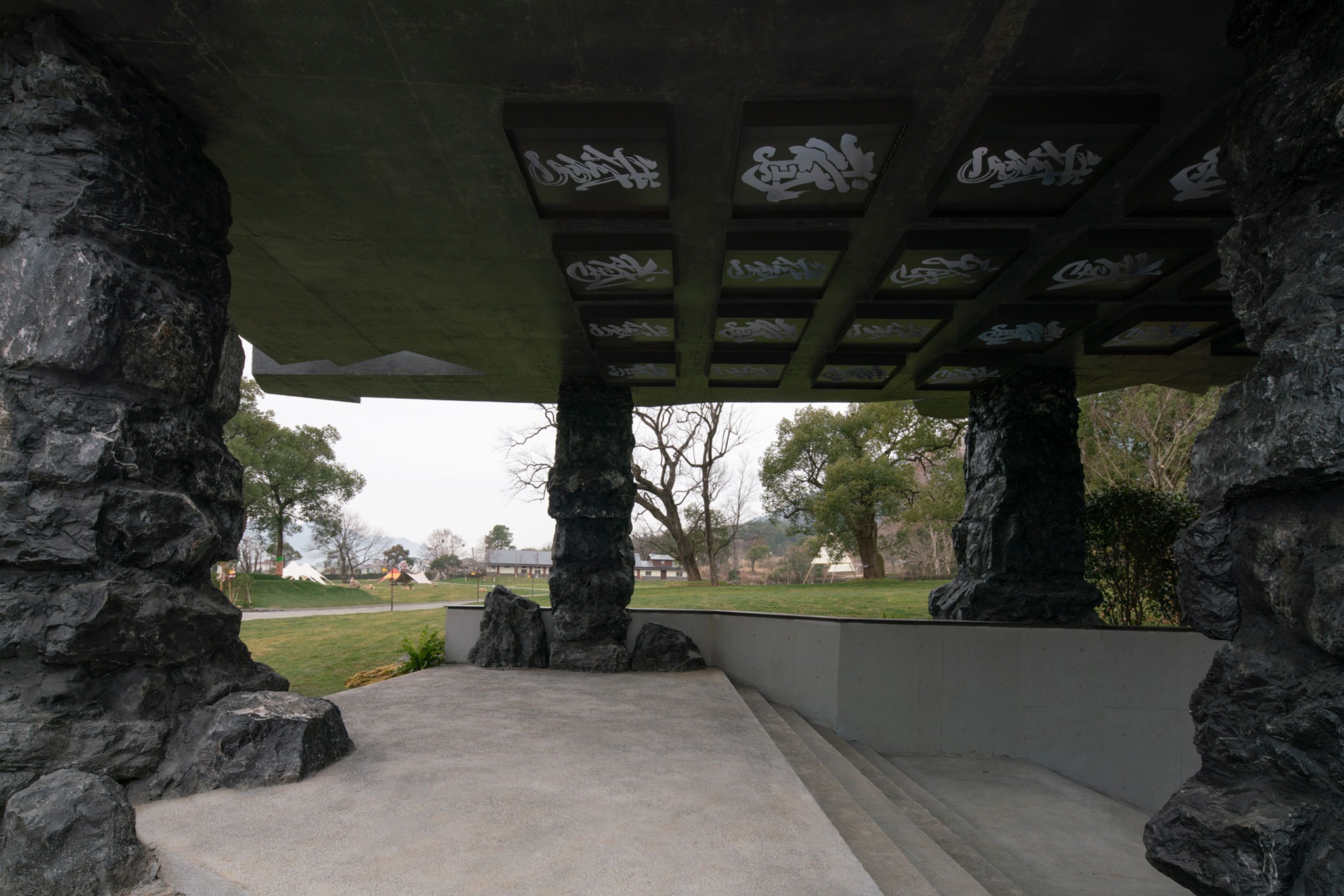
Spatial Strategy: Reconfiguring Space Around the Historic Site and Ancient Tree
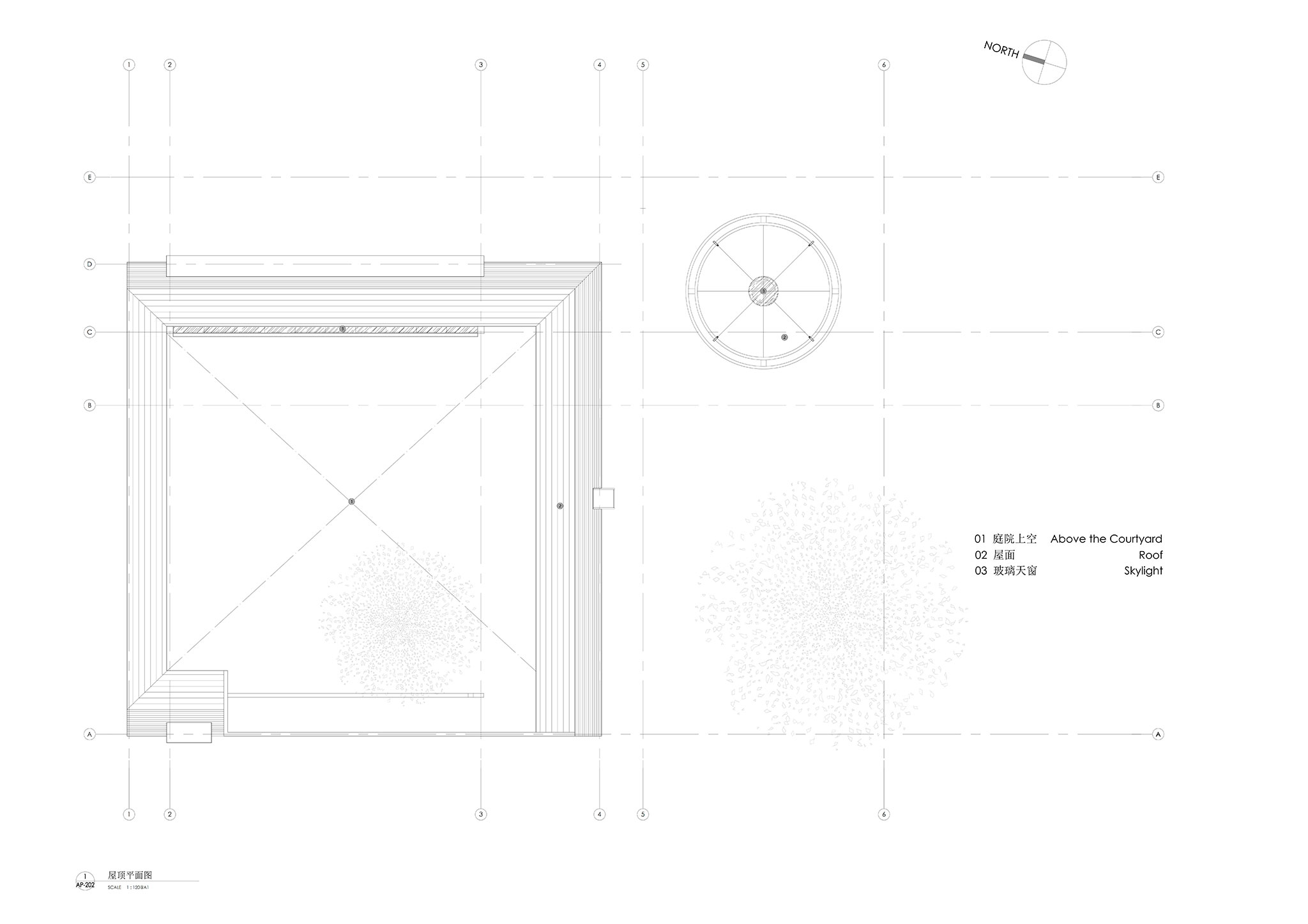
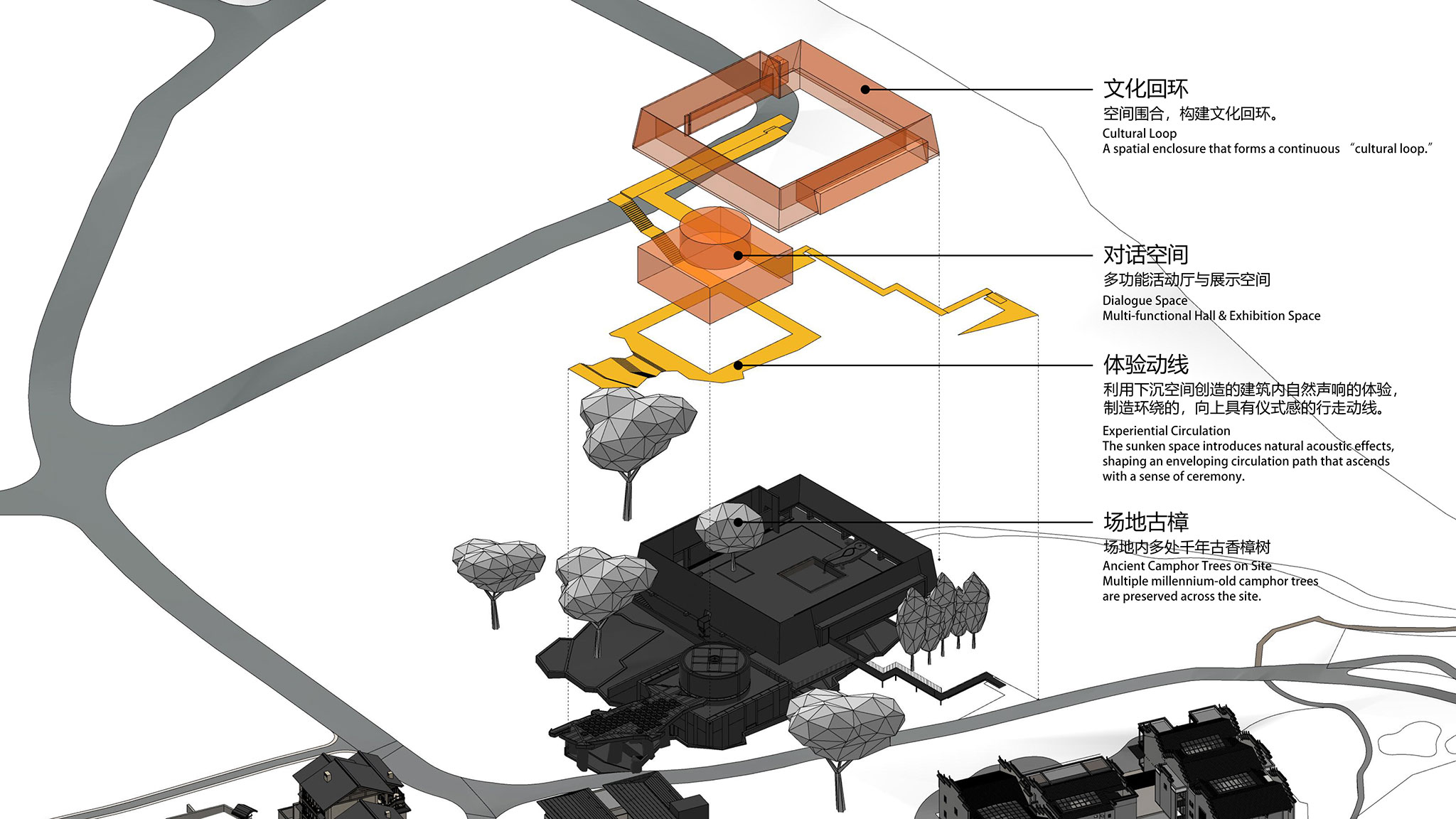
Respecting the original layout, the project reimagines the former Ink Wash Pool site into a public cultural space integrating exhibitions, public activities, and visitor experiences. The architecture consists of one above-ground level and one below ground, with a gross floor area of about 790 sqm.
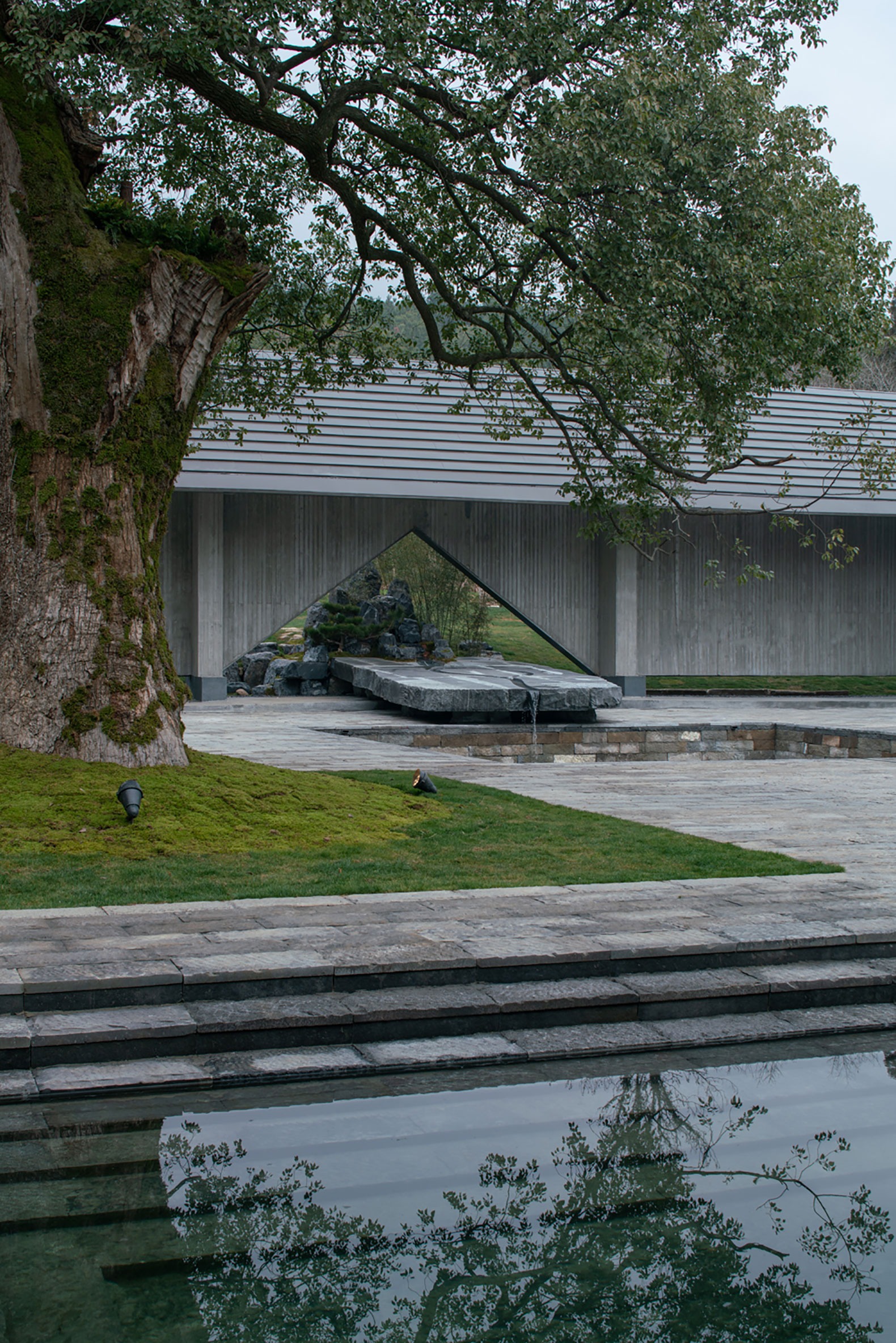
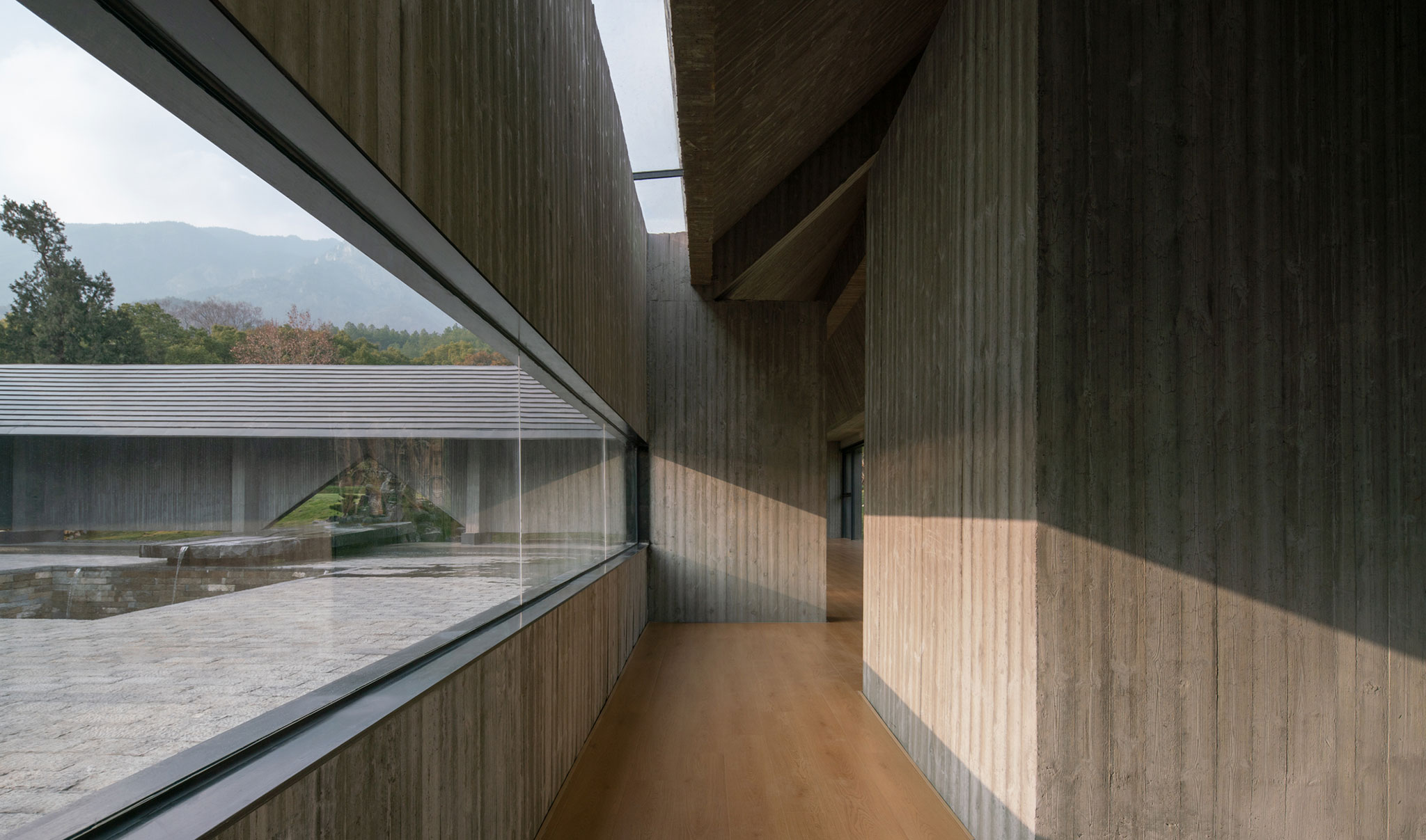
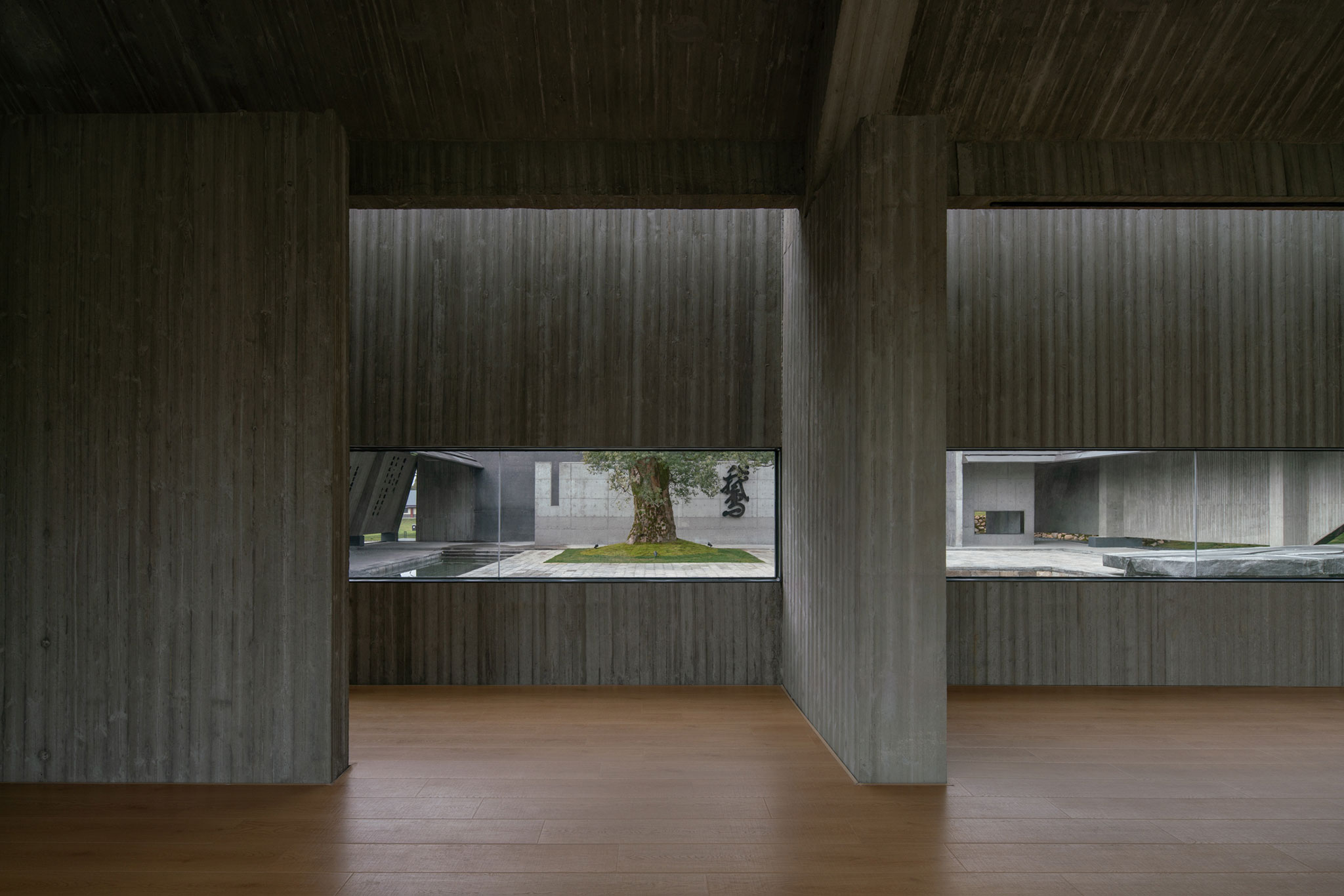
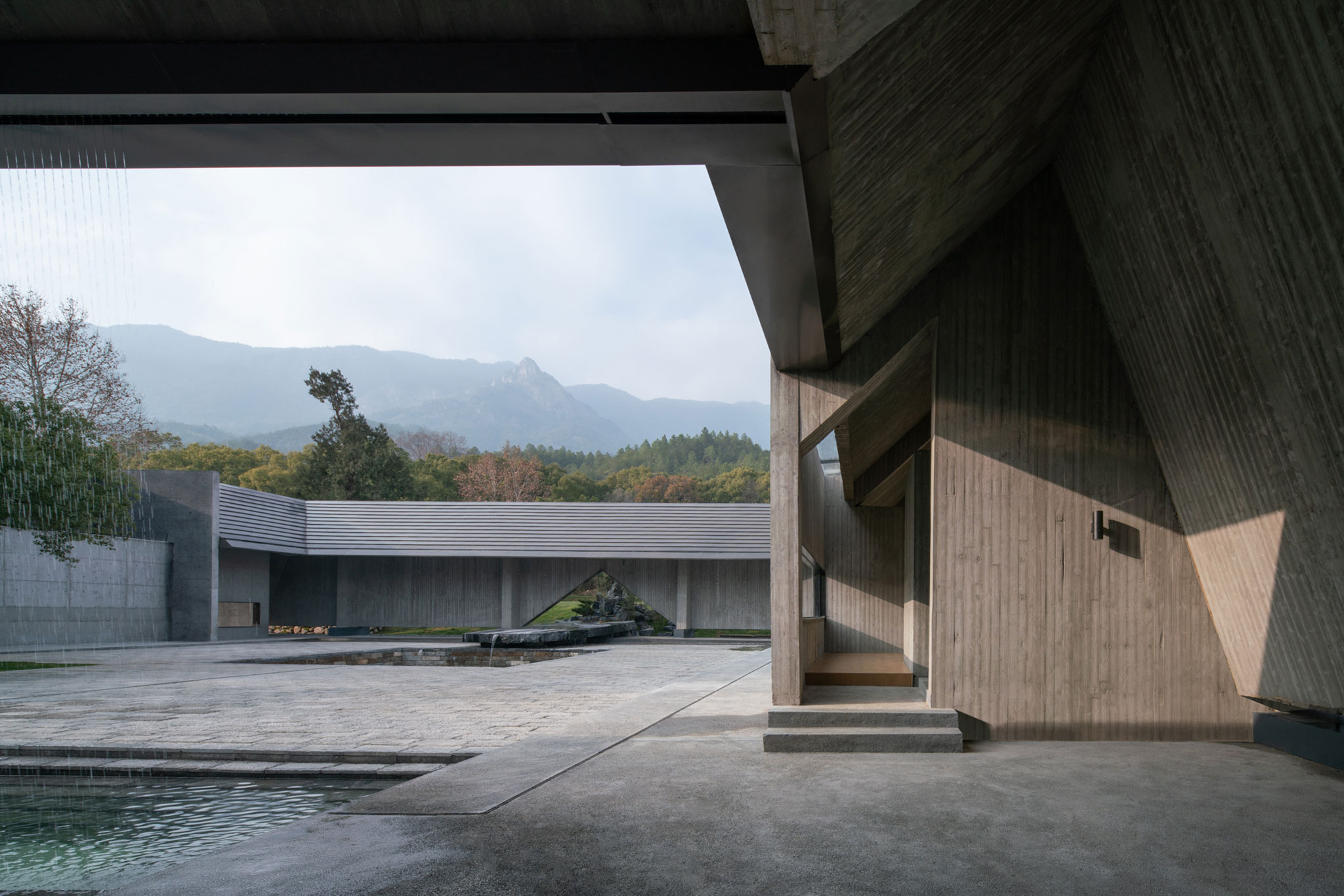
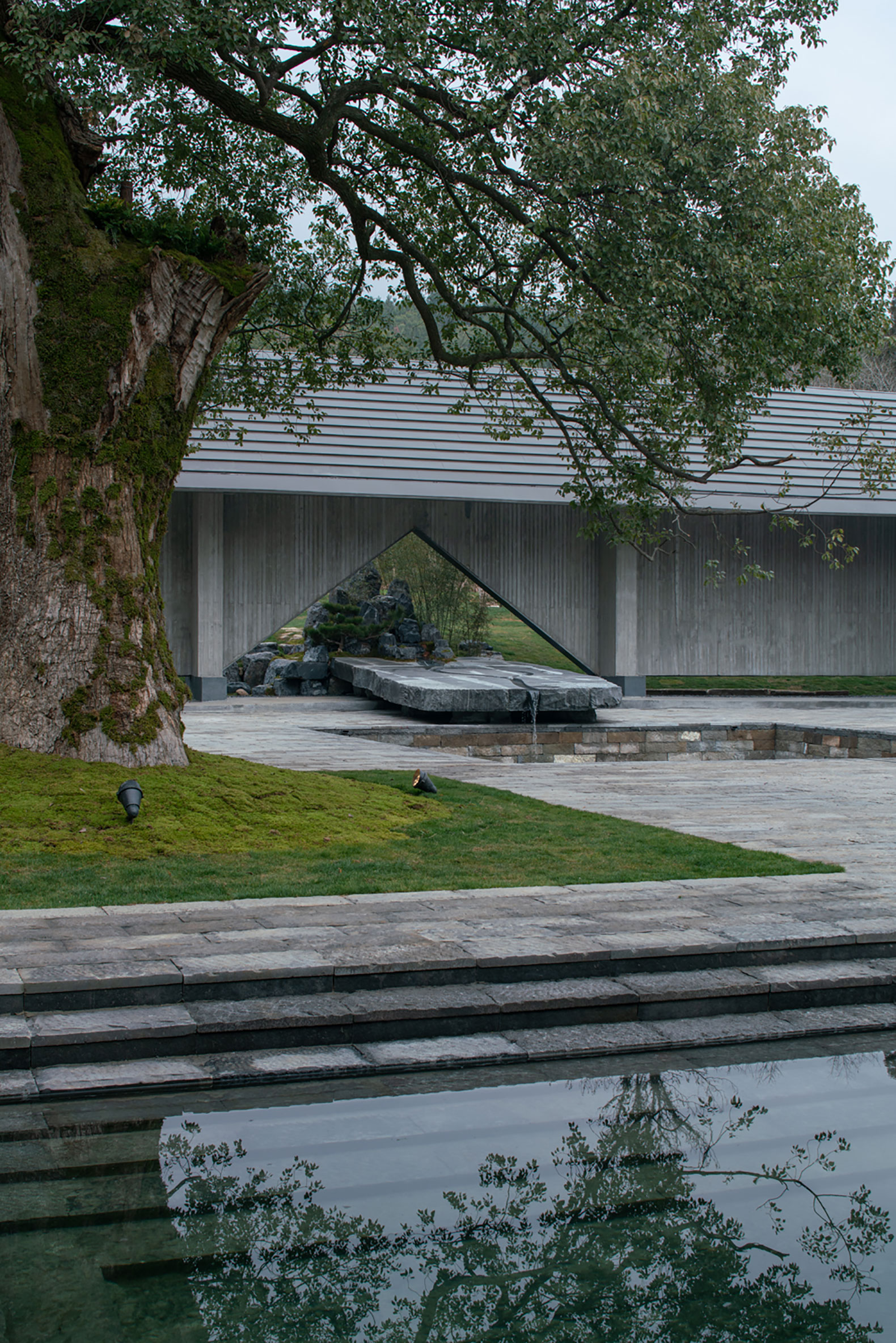
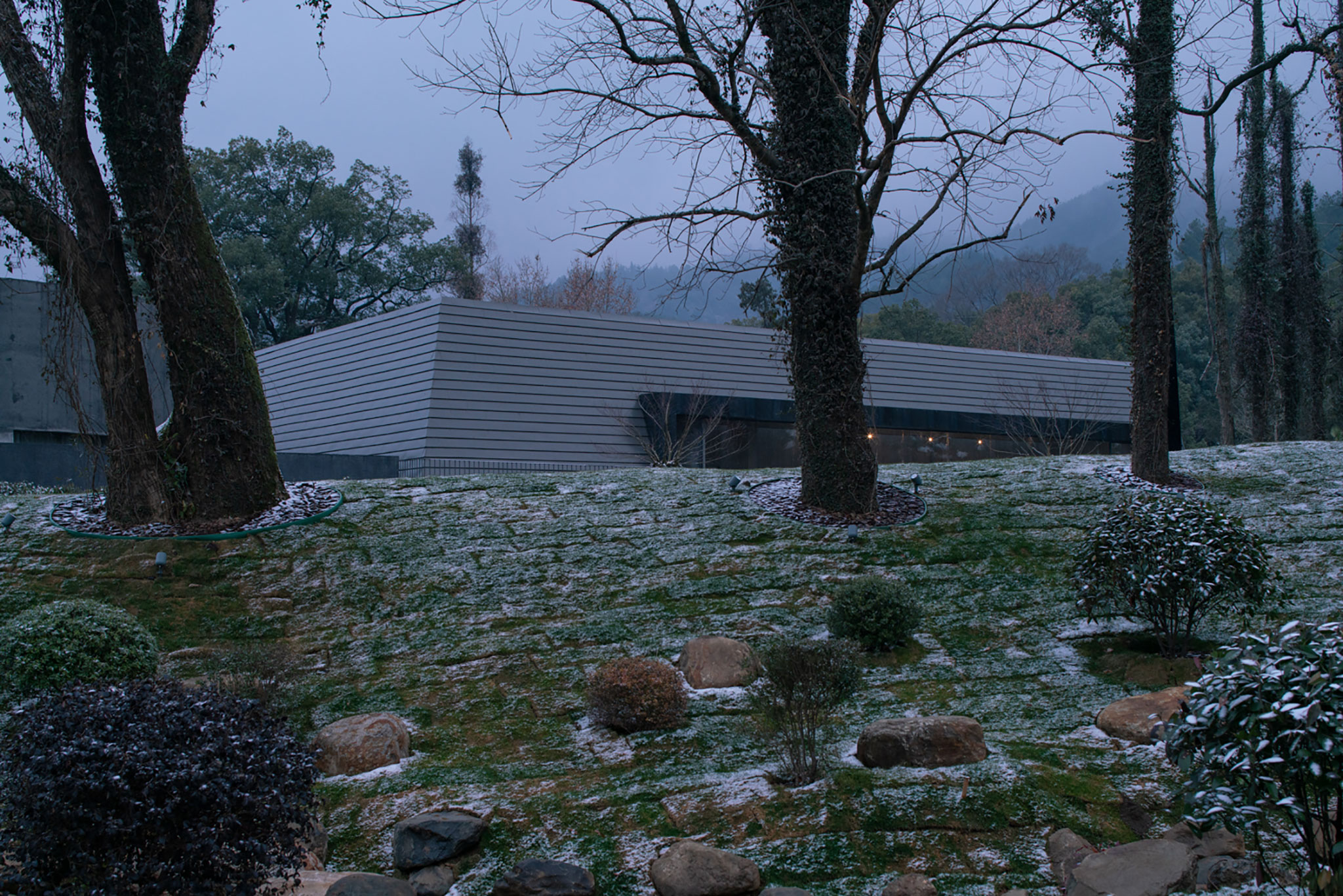
The ground floor is organized around the historic Ink Wash Pool site and a millennium old camphor tree, with corridors and transitional spaces forming a continuous spatial system.
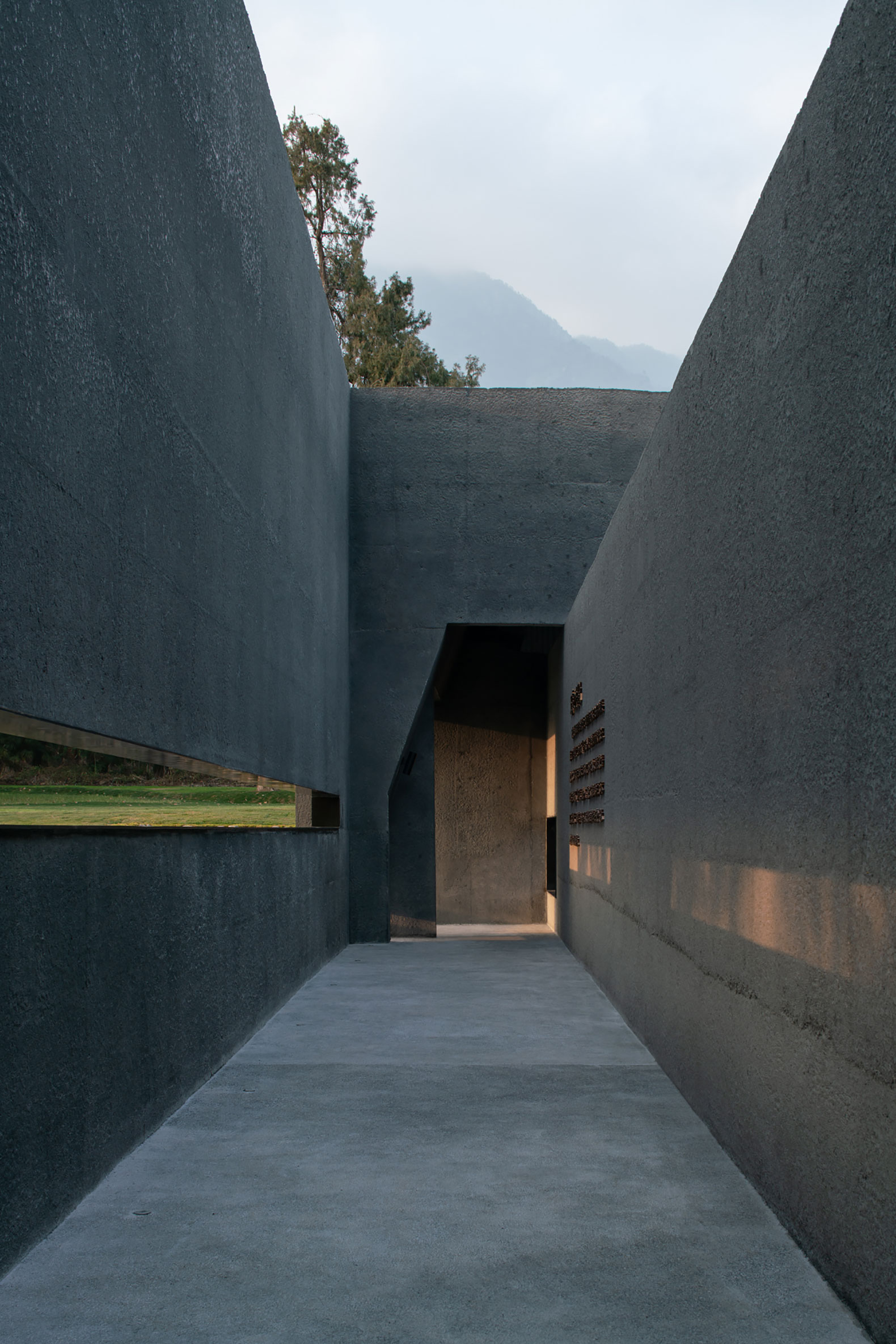
The looping corridor serves both as a circulation route and an open space to linger, maintaining the building’s public character beyond its exhibition function.
This spatial enclosure places the historic Ink Wash Pool site and ancient tree at the heart of the experience, rather than leaving them as isolated elements.
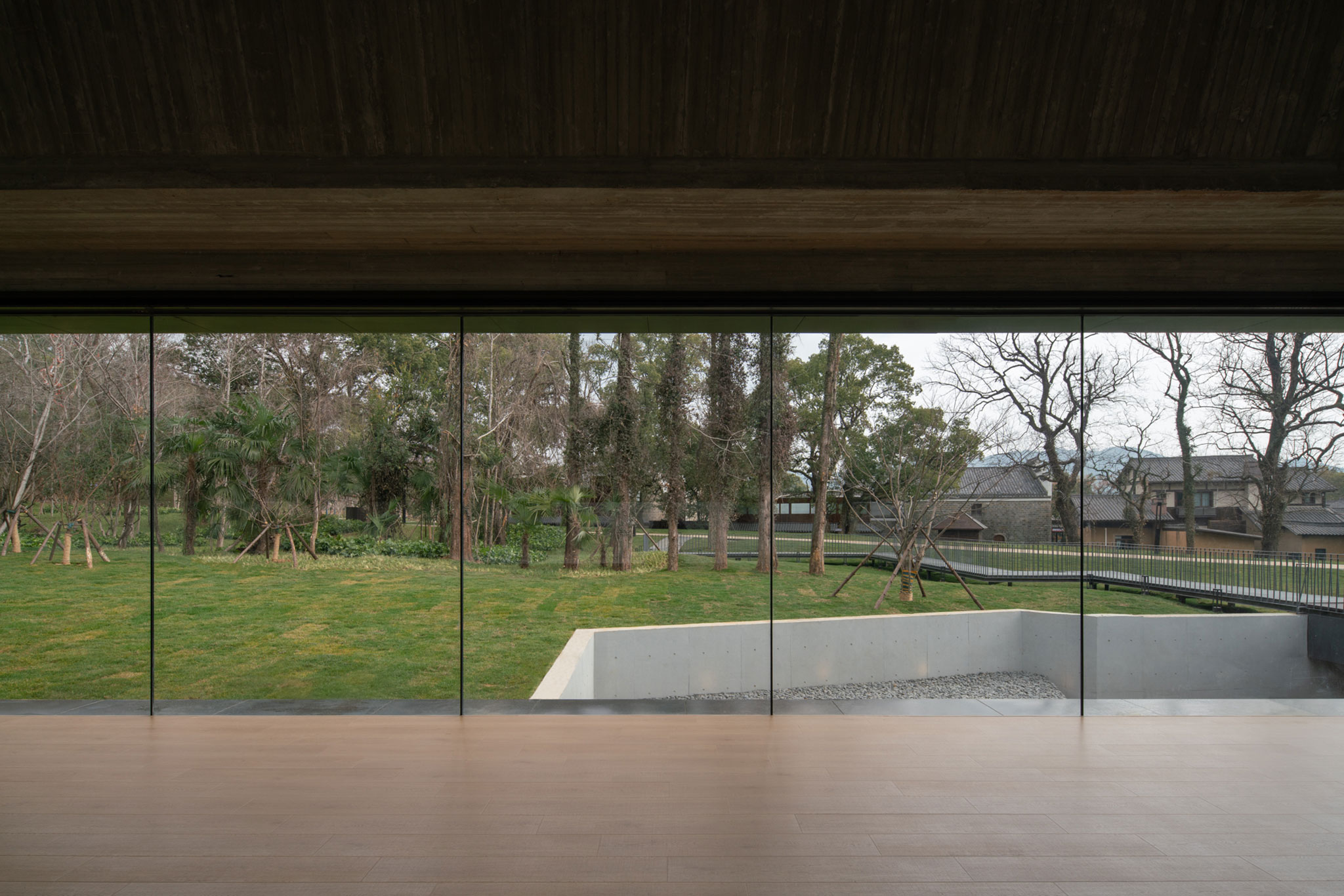
As visitors move, their sightlines shift—near and far, high and low, open and enclosed—turning the visit into an immersive, gradually unfolding journey.
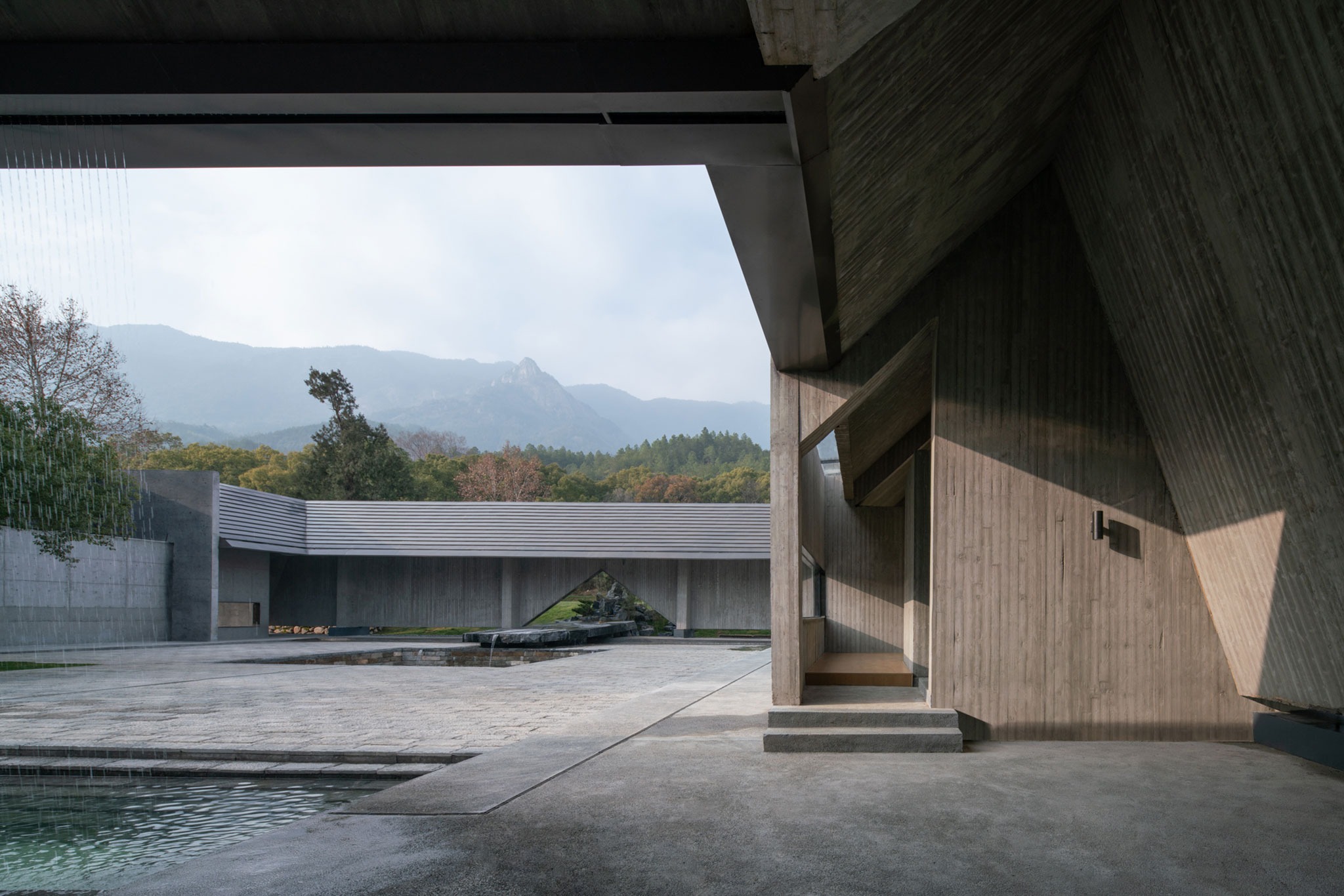
A Public Space Unfolding Downward
The underground level houses a multi-functional hall and exhibition space.
Unlike the more open ground floor, this lower level adopts a more concentrated layout to accommodate exhibitions, lectures, and cultural events.
This vertical organization creates two distinct modes of public use within a modest footprint.
The upper level encourages wandering and exploration, while the lower level supports gathering and exchange.
Through this spatial layering, the architecture preserves the site’s inherent quietness while gaining the capacity to support public cultural activities.
Materials and Time: Material as an Expression of Time
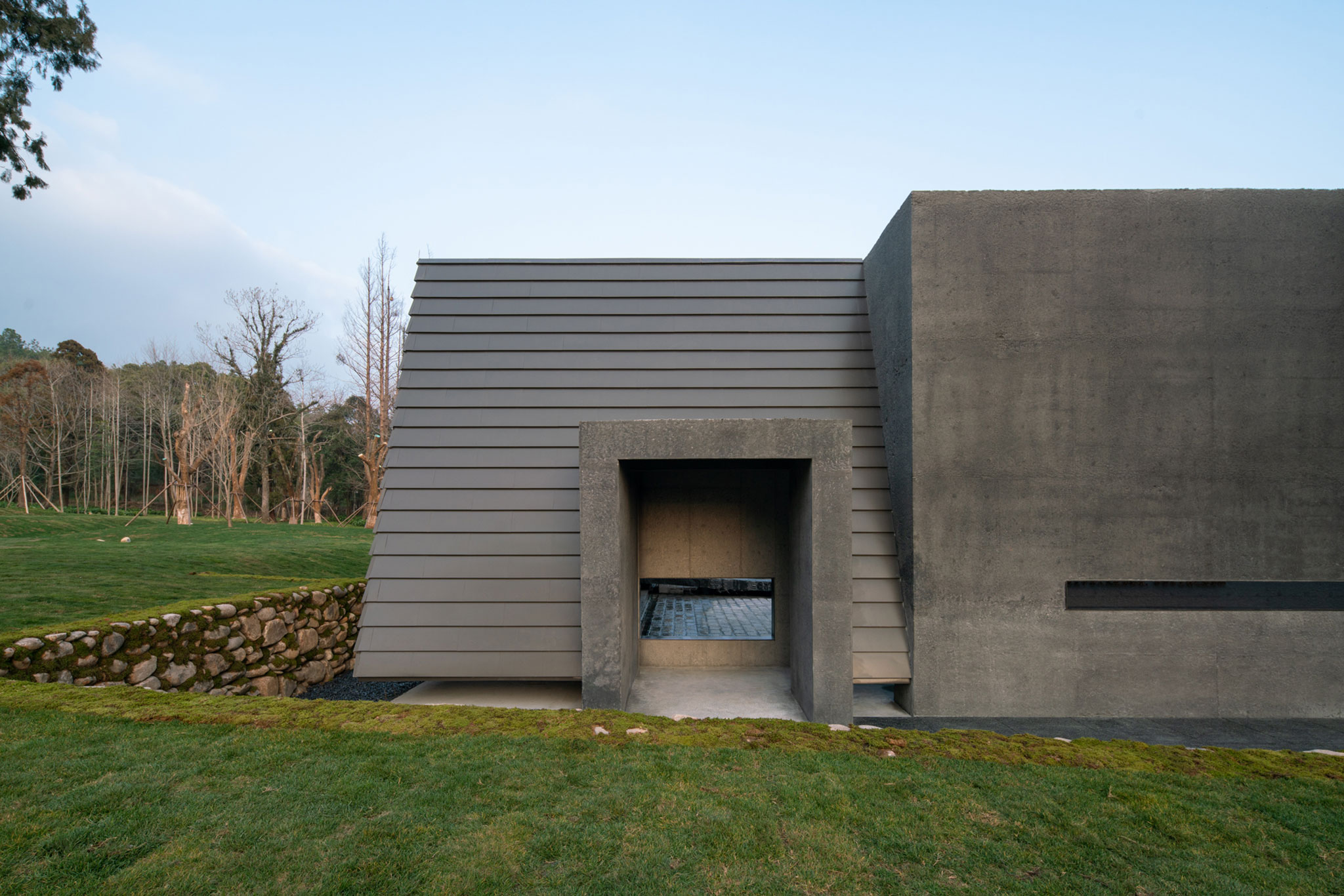
The project adopts exposed concrete as its primary material, emphasizing a sense of authenticity. Decorative or faux-historic materials are intentionally avoided in favor of a restrained, honest expression. This choice reflects both an aesthetic intention and a temporal strategy.
Authentic materials weather over time, gradually integrating into the environment rather than staying as a superficial visual effect.
Within the context of a cultural heritage site, material authenticity often holds greater significance than a literal sense of “historical” form.
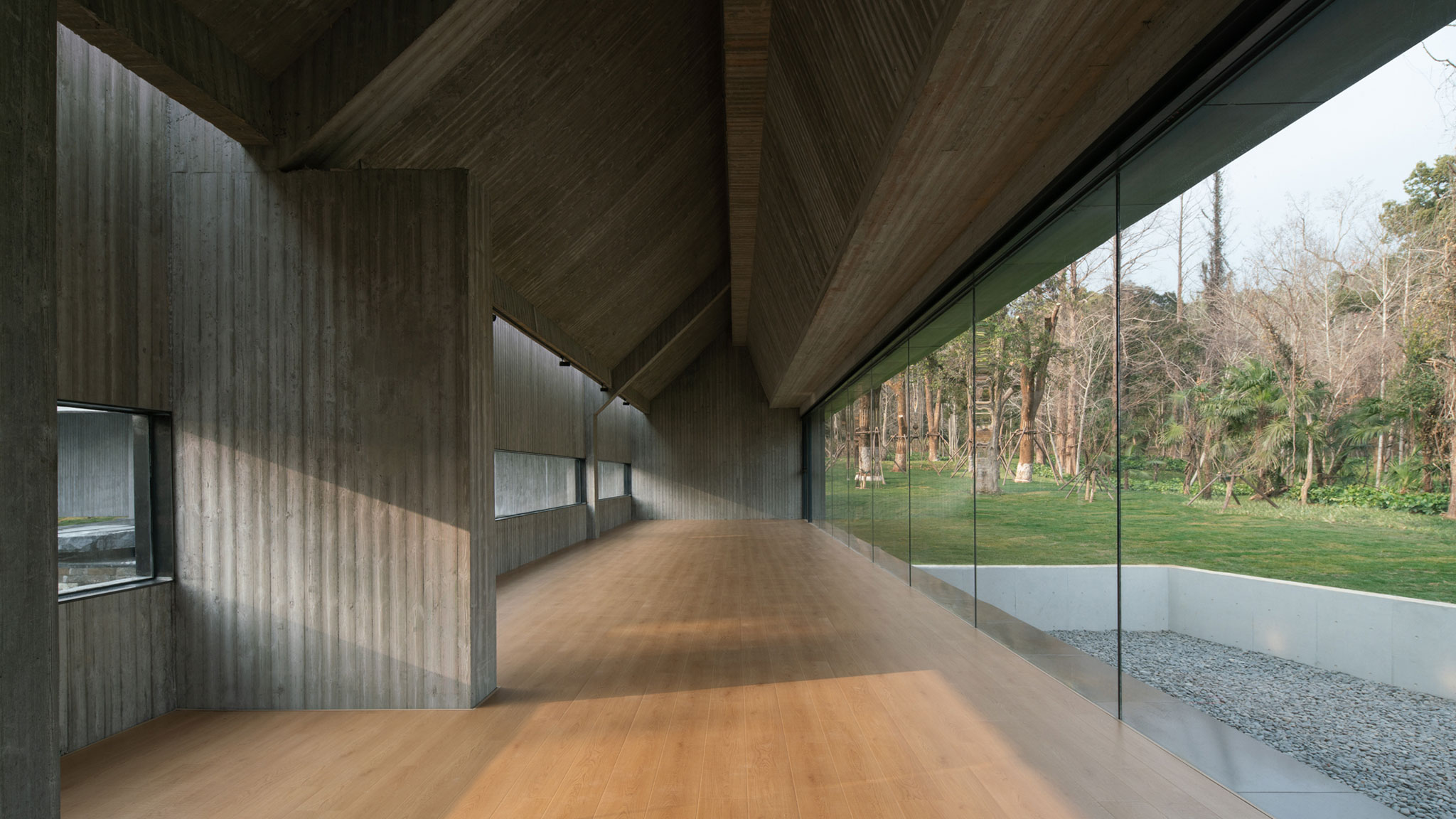
Different material treatments establish a layered relationship between interior and exterior space.
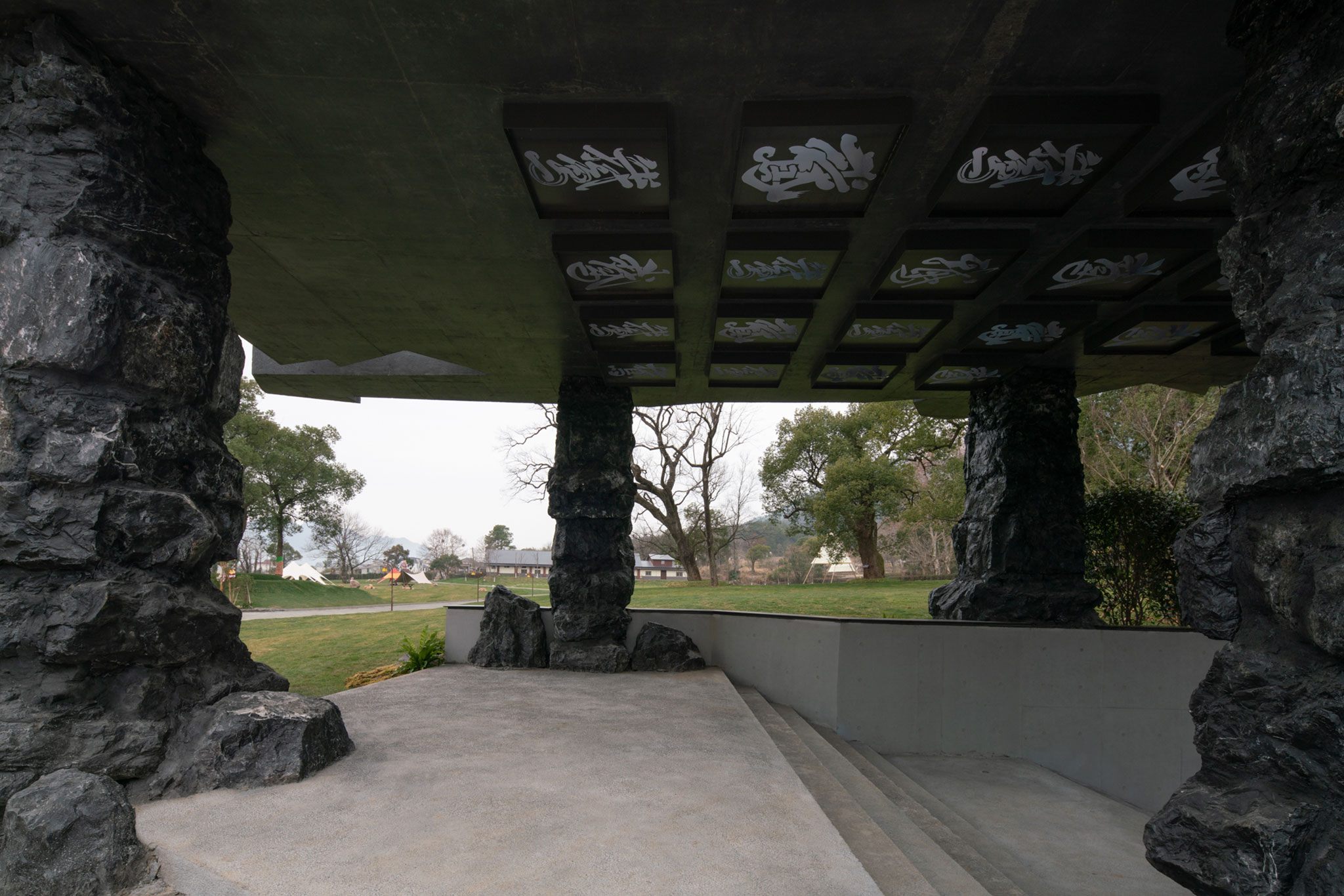
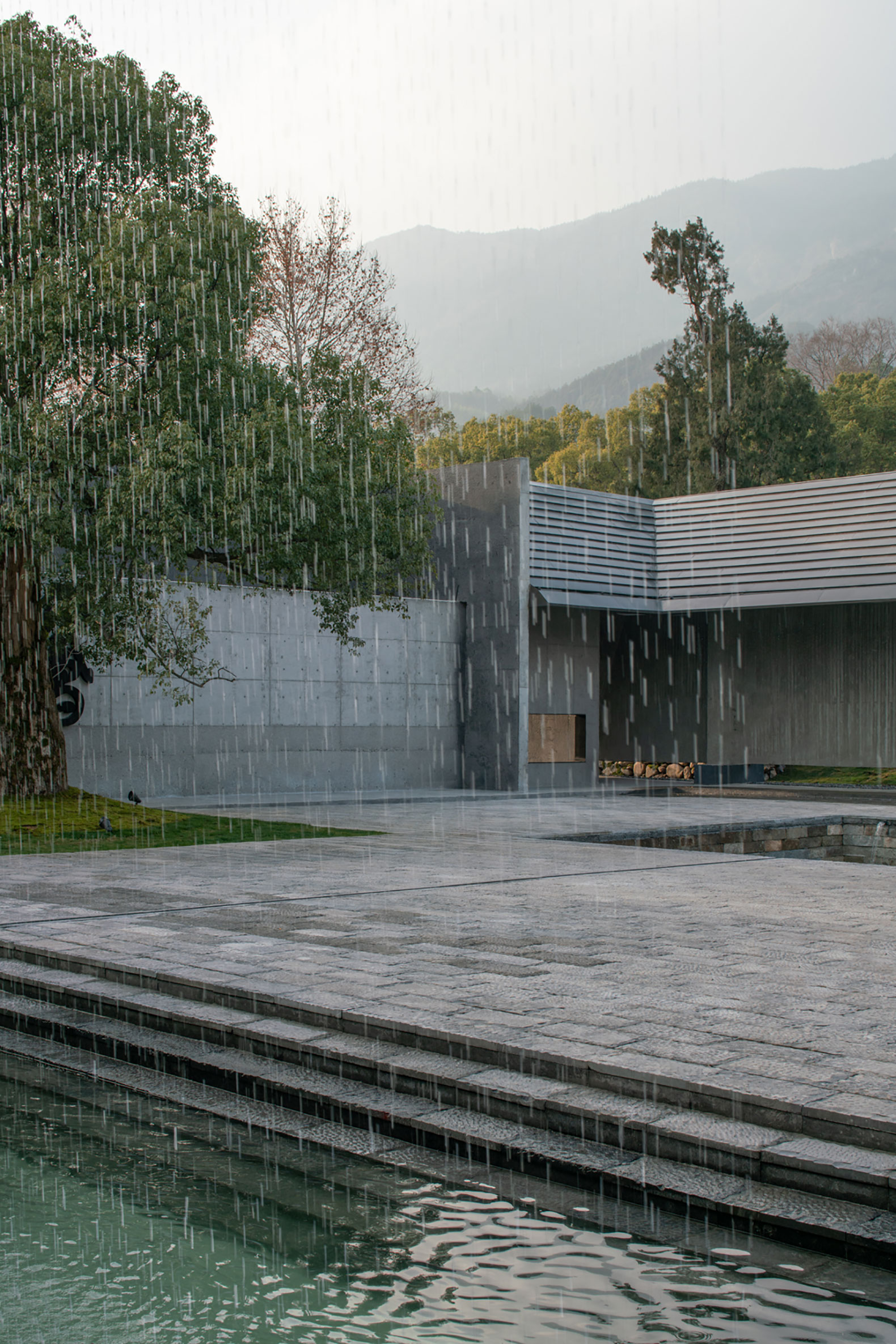
The exterior is finished with dark-gray, bush-hammered concrete, giving it a rough texture that resonates with the ancient trees and natural setting.
The interior employs light-toned, board-formed concrete, where the imprint of timber formwork introduces a subtle warmth into an otherwise austere material palette.
This material progression—from the roughness outside to the quietness within—guides the spatial experience toward an inner calm, forming a contemplative journey that echoes the site’s cultural sensibility.
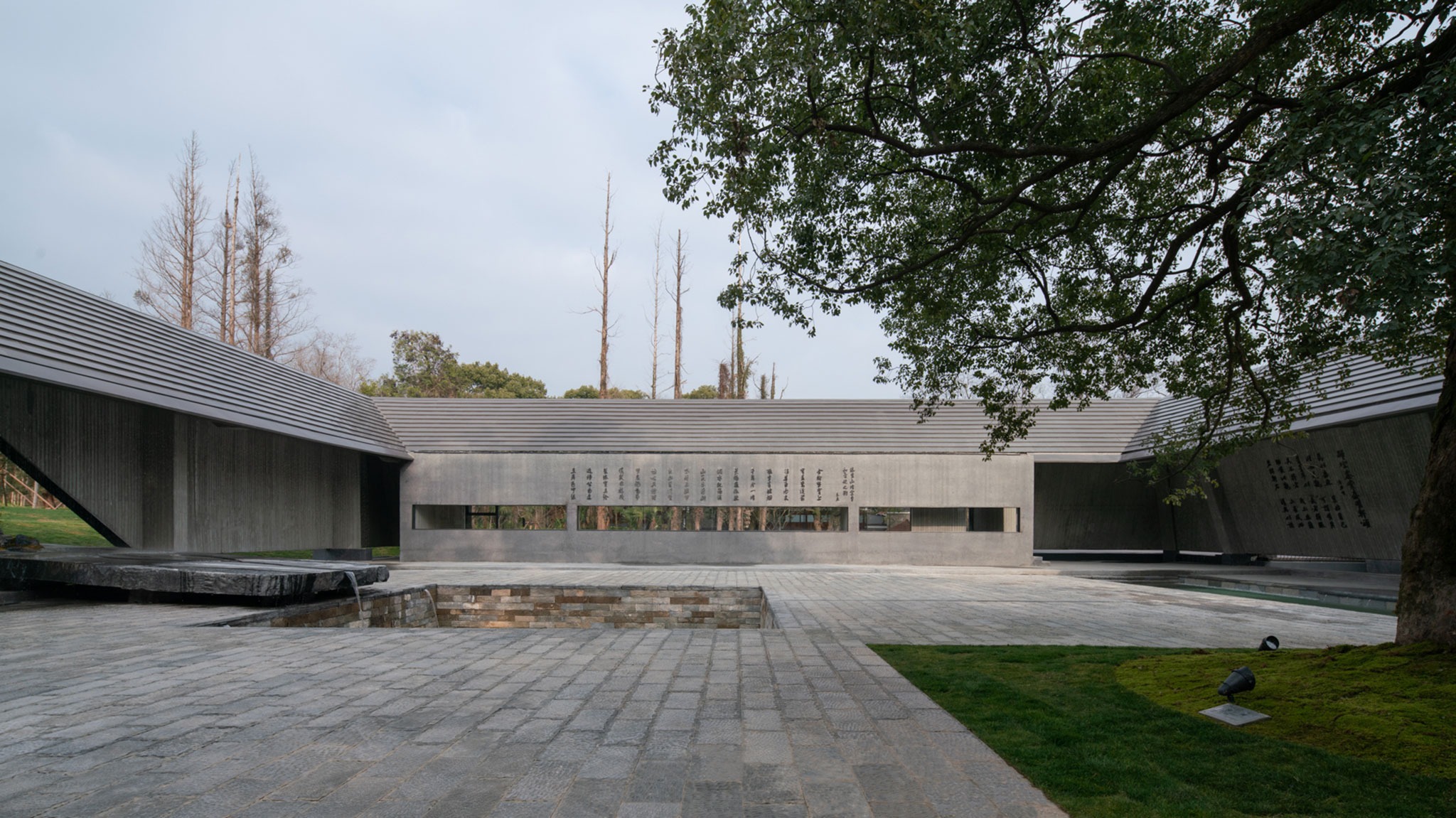
Conclusion: A Restrained Spatial Response
The building does not seek to become a visual centerpiece.
Instead, it takes on an understated presence, allowing the ancient tree, the historic site, and the movement of people to take precedence.
In the contemporary urban environment, such a space may appear unassuming, yet it is precisely this restraint that opens up another possibility: in its understated expression, time and culture unfold quietly.
The architecture takes shape around the ancient tree, and beneath its canopy, softens its presence.
In today’s visually saturated urban landscape, it may seem understated, yet this very quietness brings it closer to the spirit embodied by the Ink Wash Pool—a slow, contemplative process of self-cultivation unfolding in everyday life.


![Bois de Cergy Leisure Centre by PLURIEL[LES] ARCHITECTES. Photograph by Charly Broyez](/sites/default/files/styles/mopis_home_news_category_slider_desktop/public/2026-10/metalocus_PLURIEL-LES_Bois-de-Cergy-Leisure-Centre_14_2p.webp?h=3b4e7bc7&itok=DISDLRbJ "Bois de Cergy Leisure Centre by PLURIEL[LES] ARCHITECTES. Photograph by Charly Broyez")


