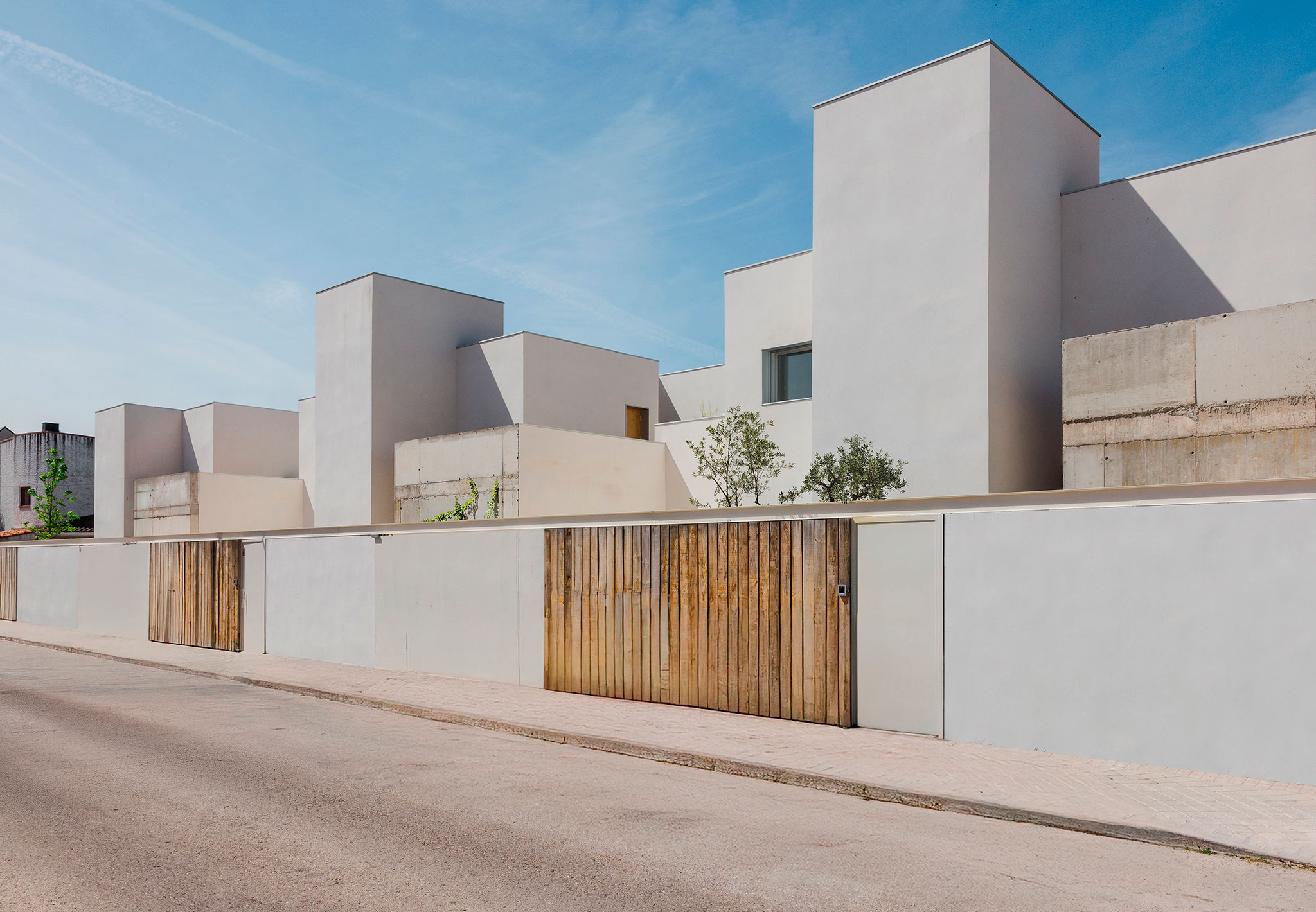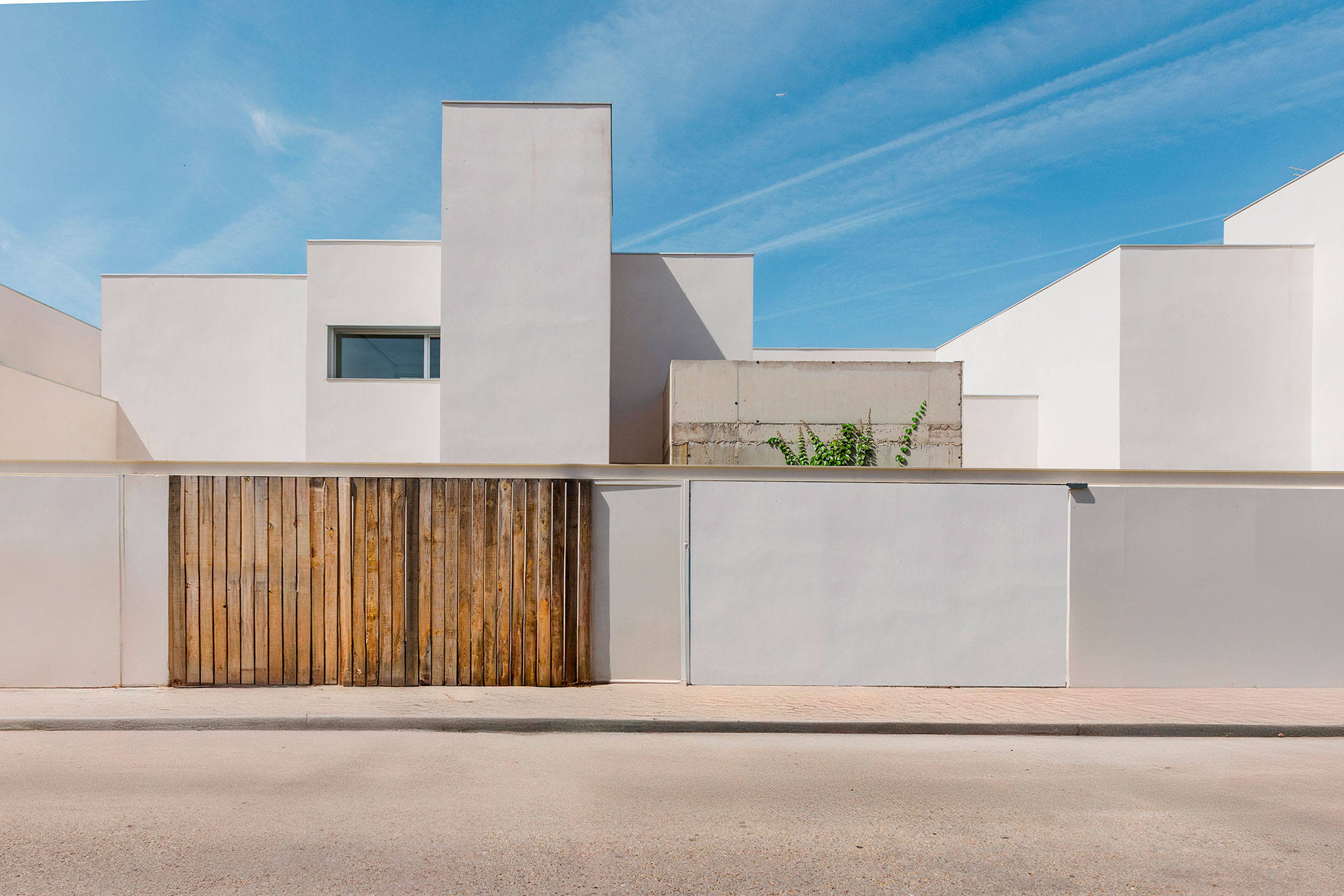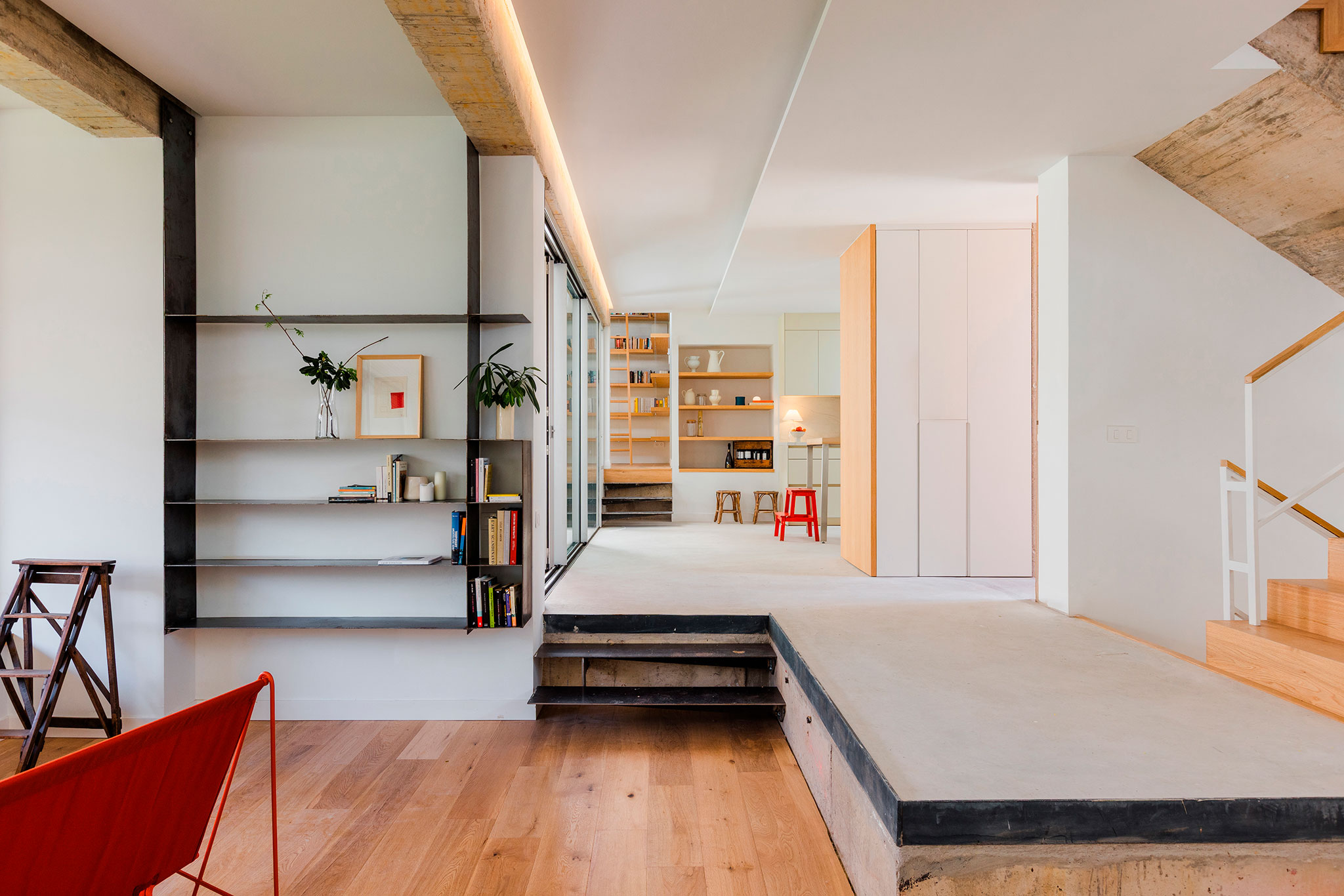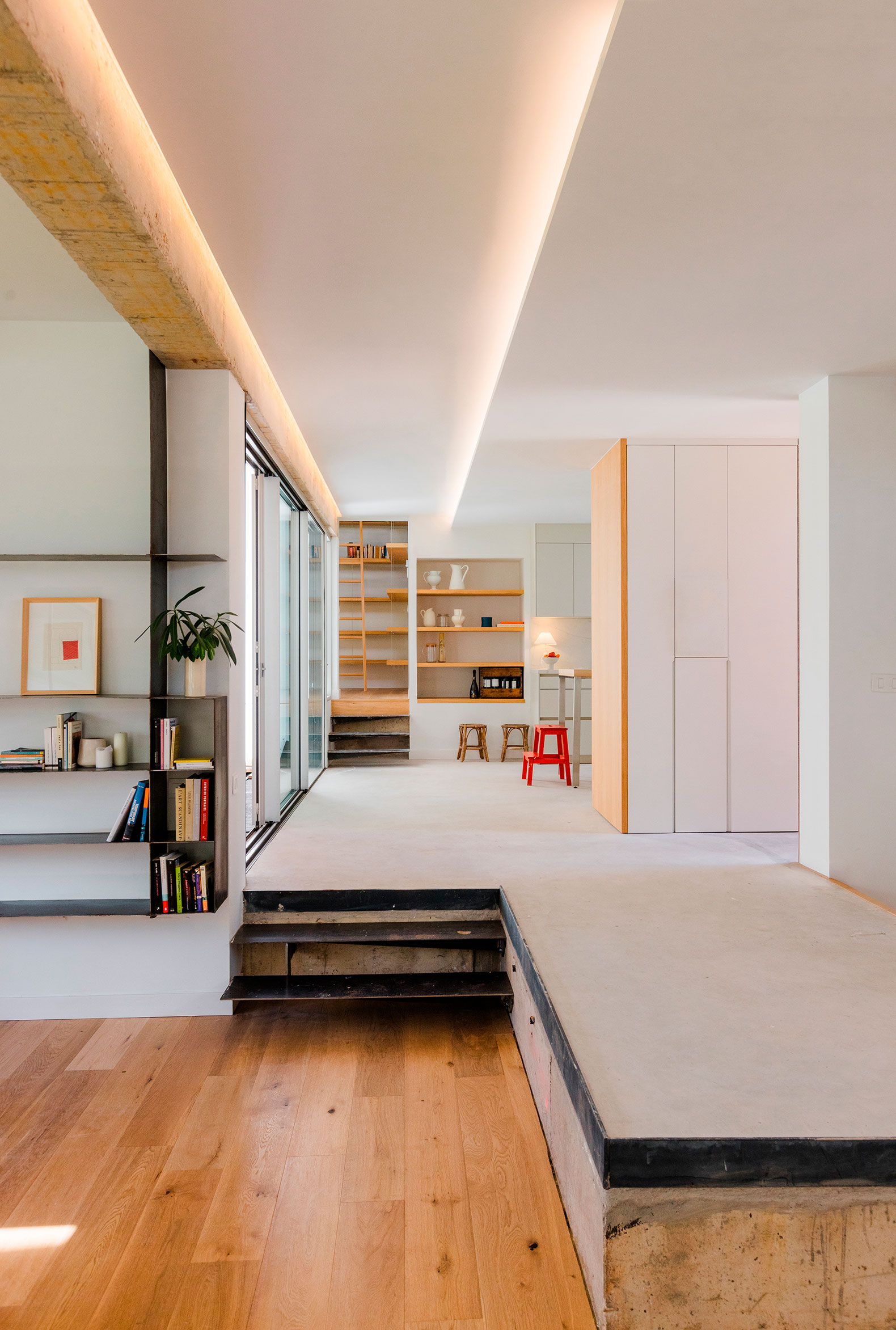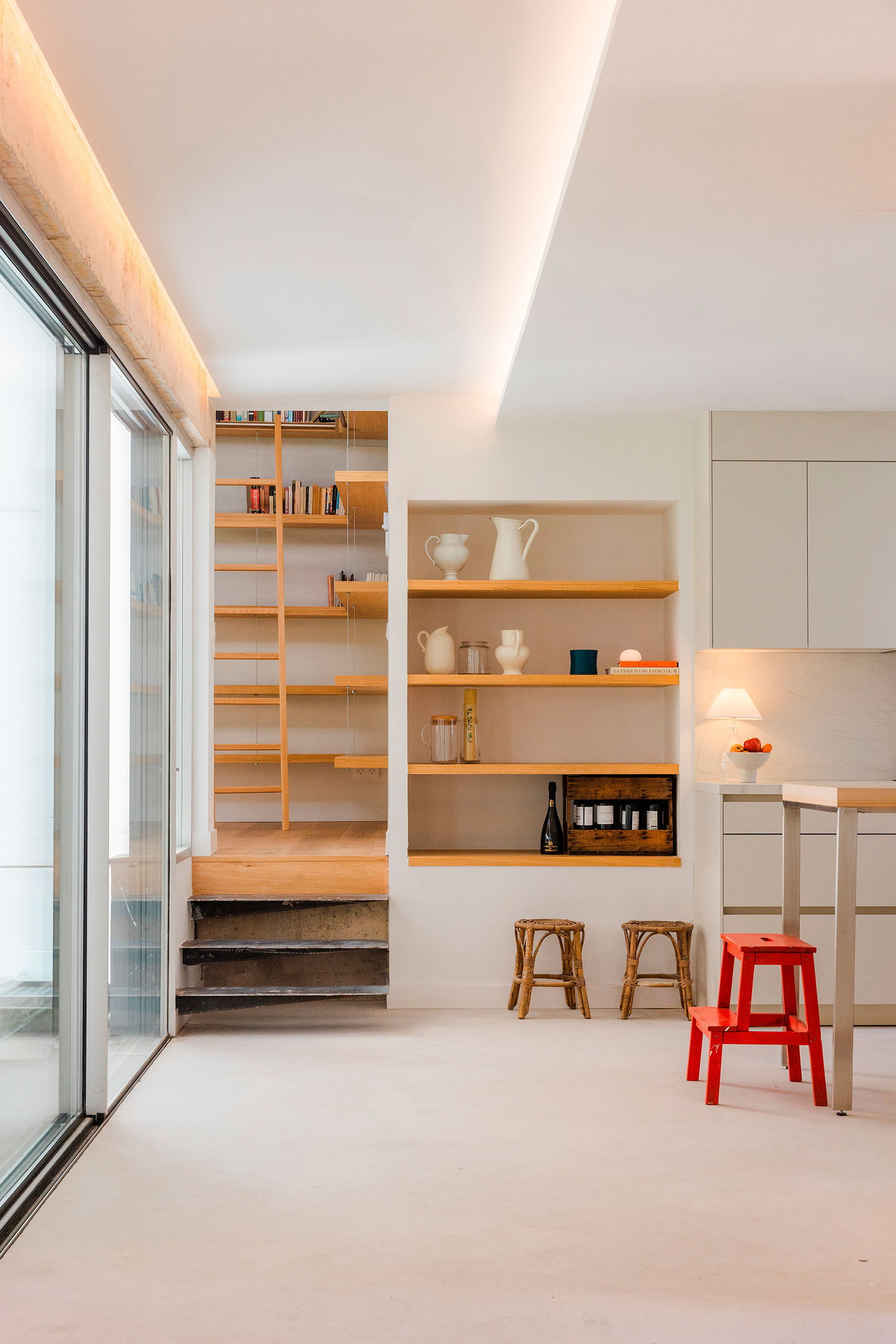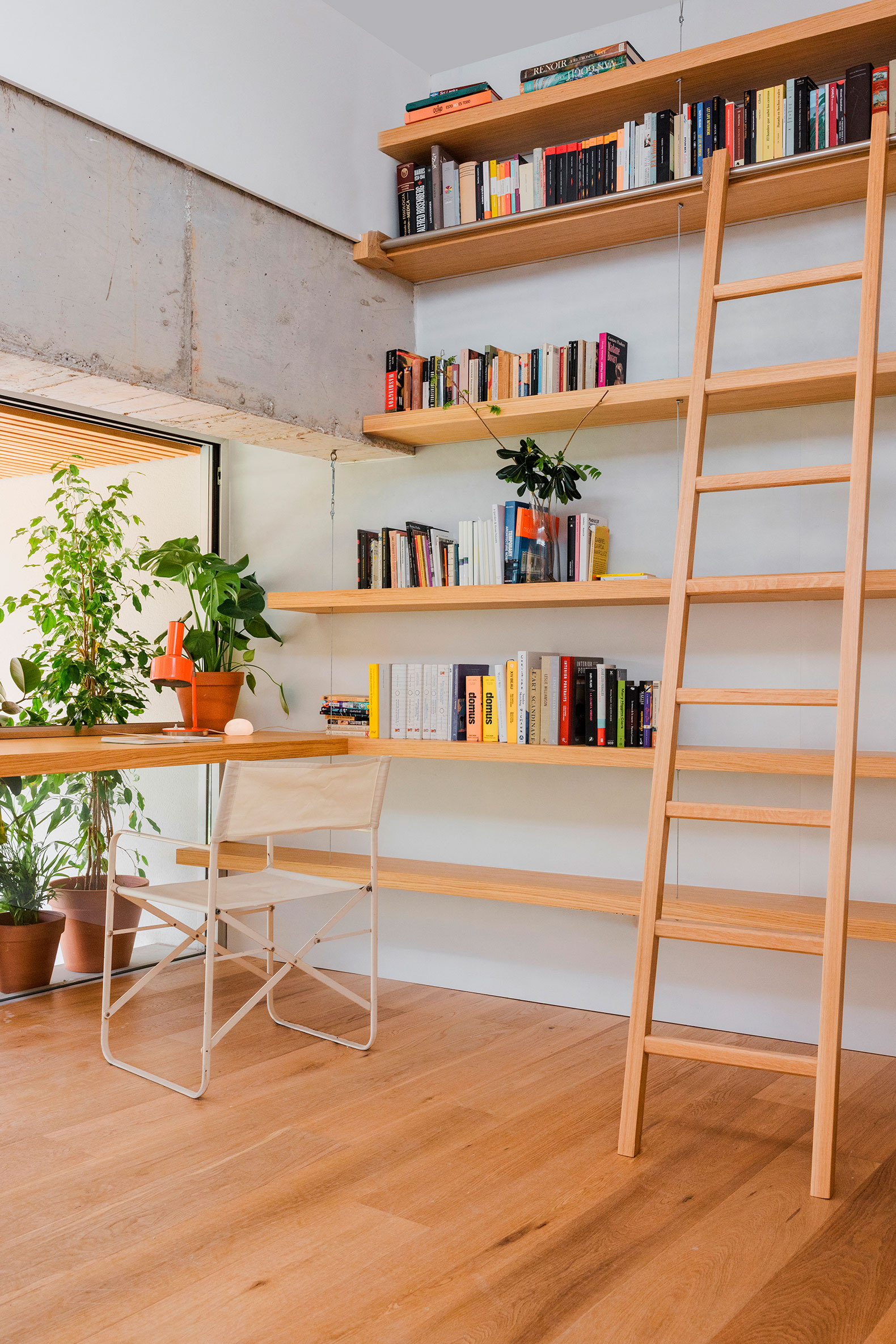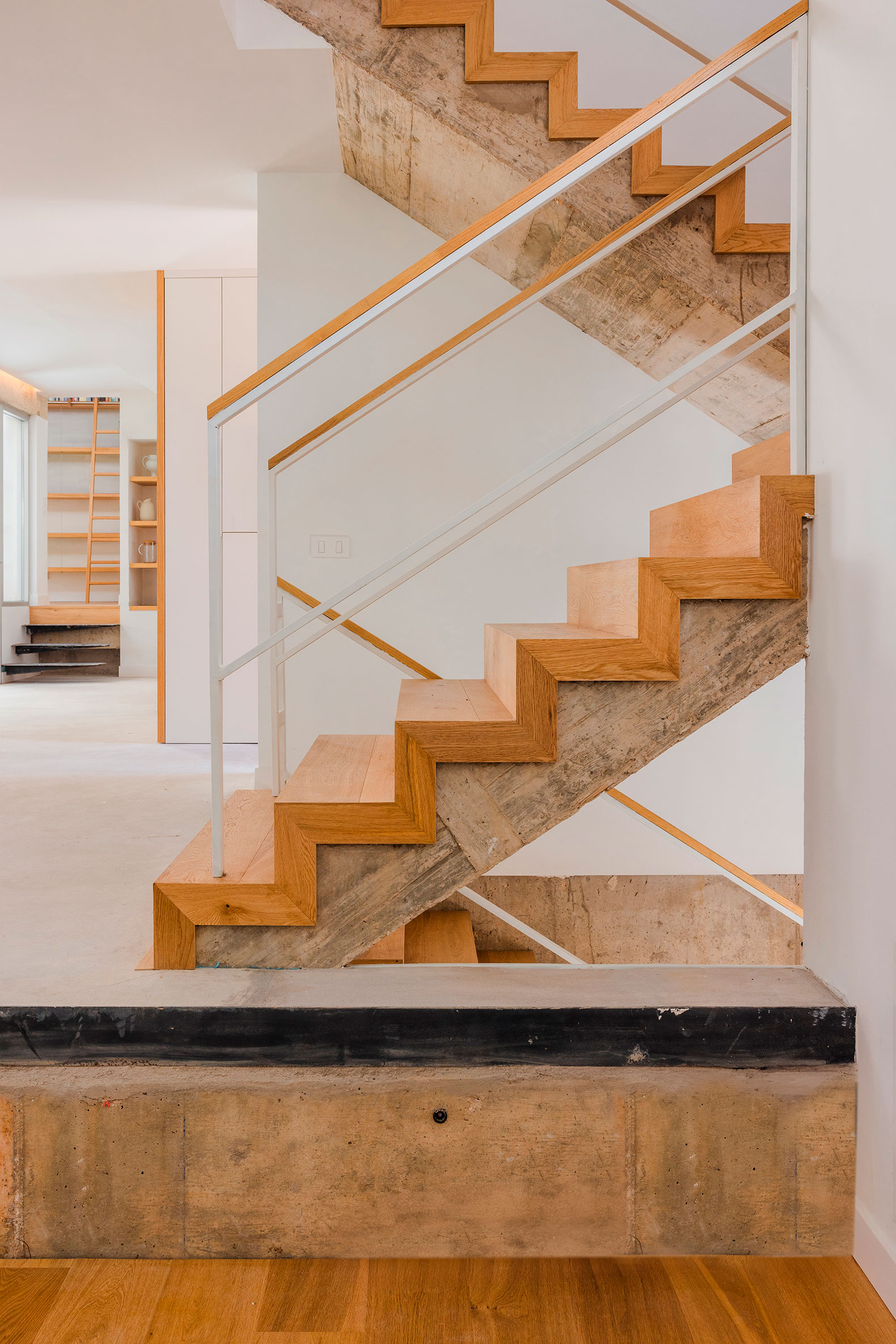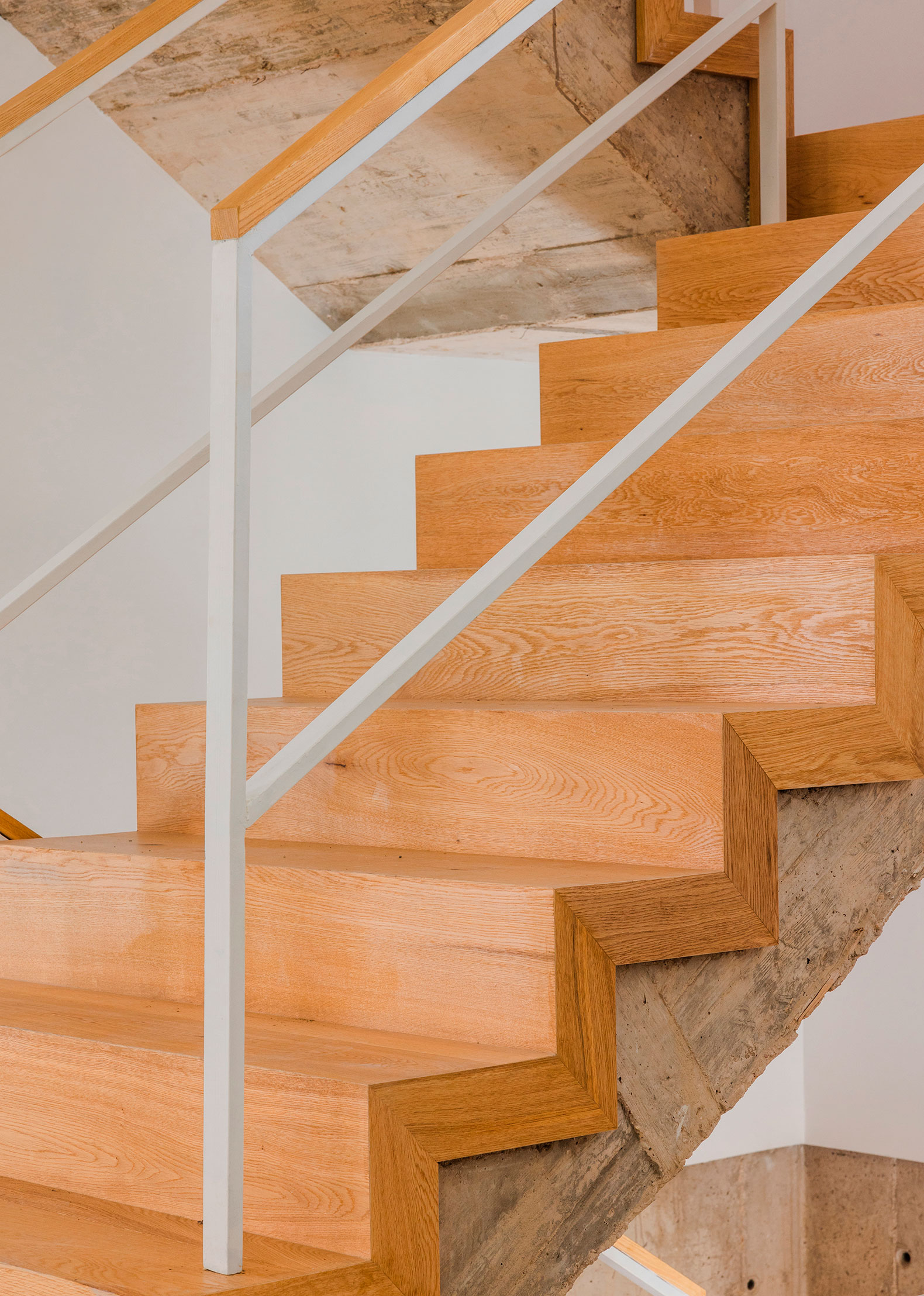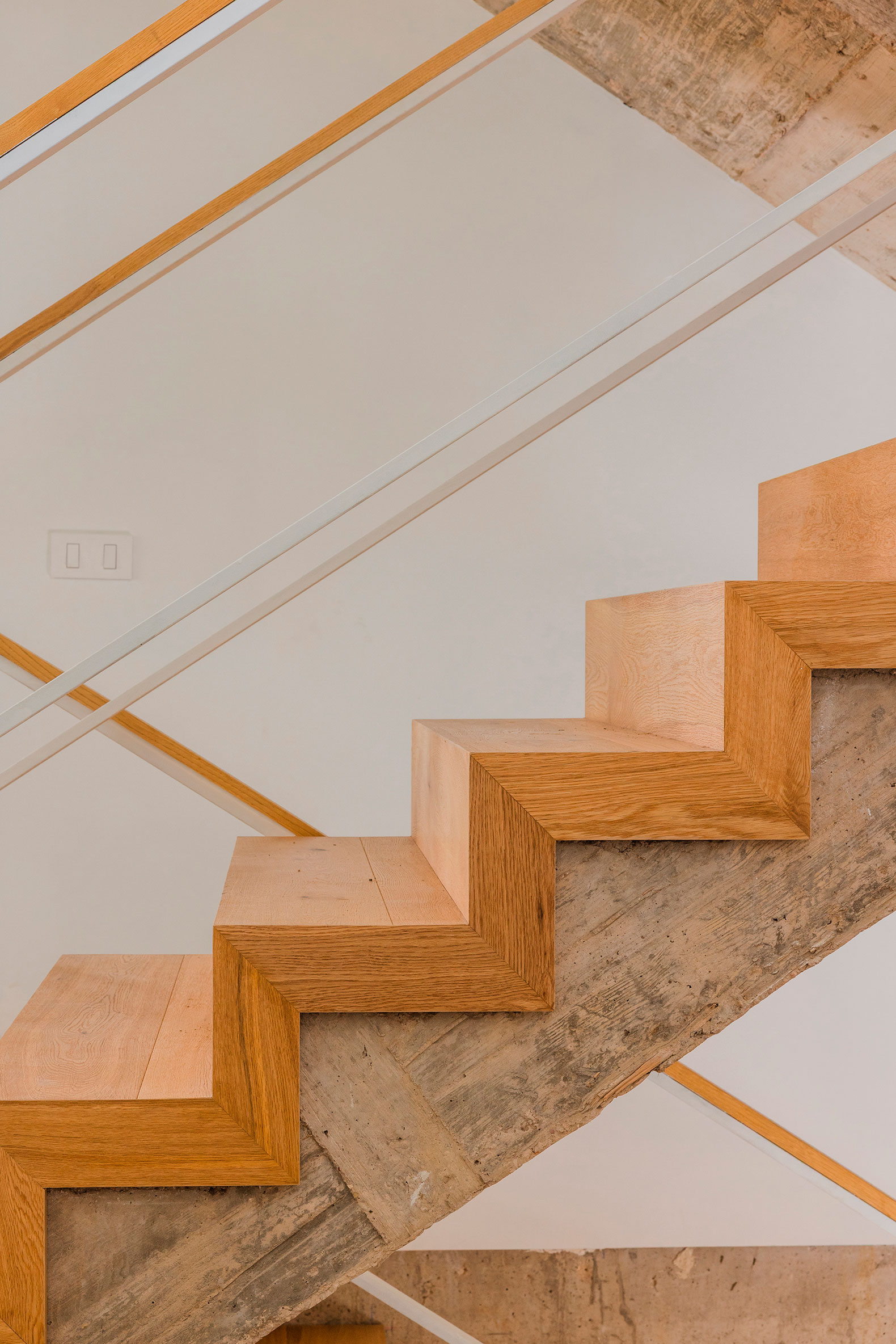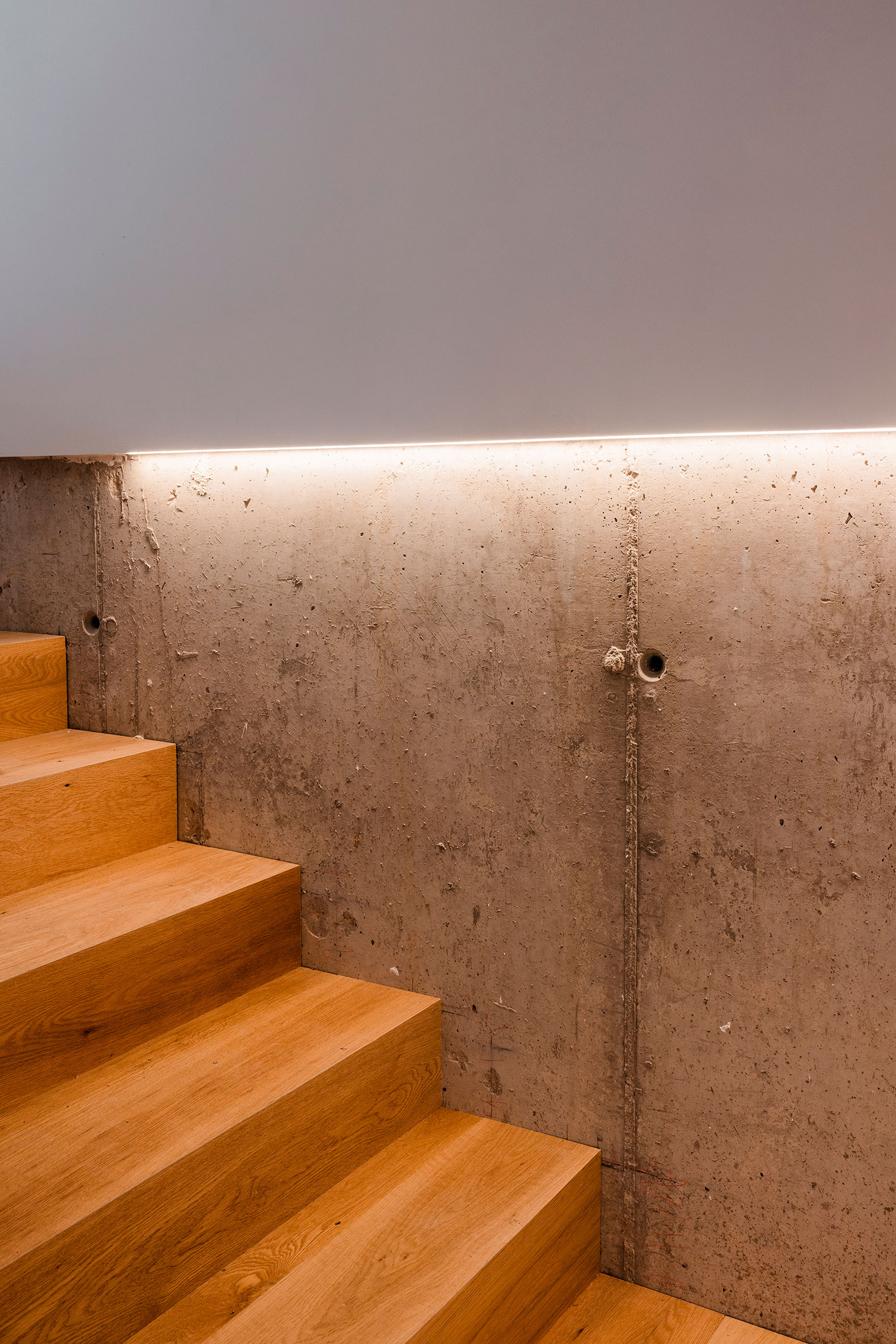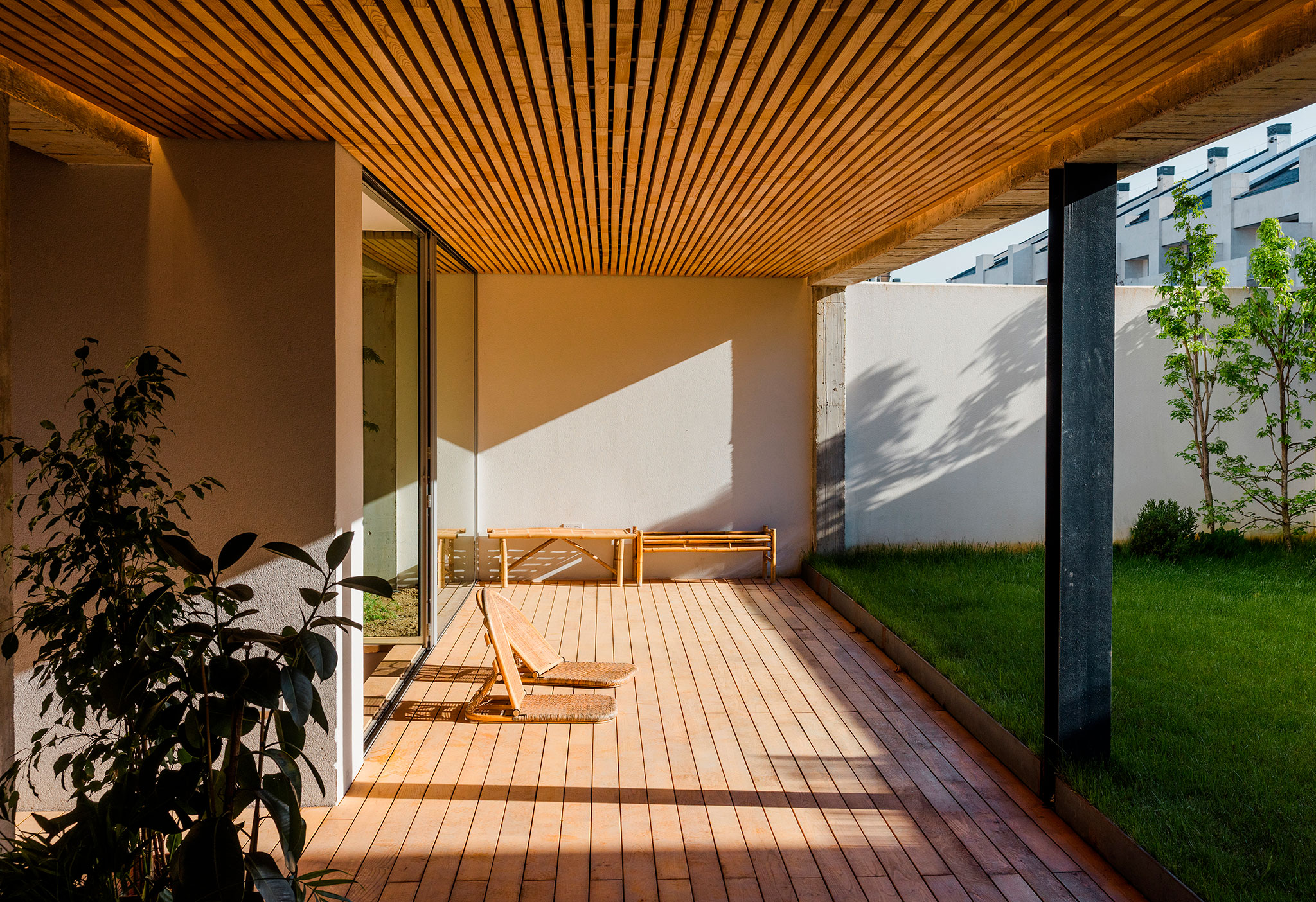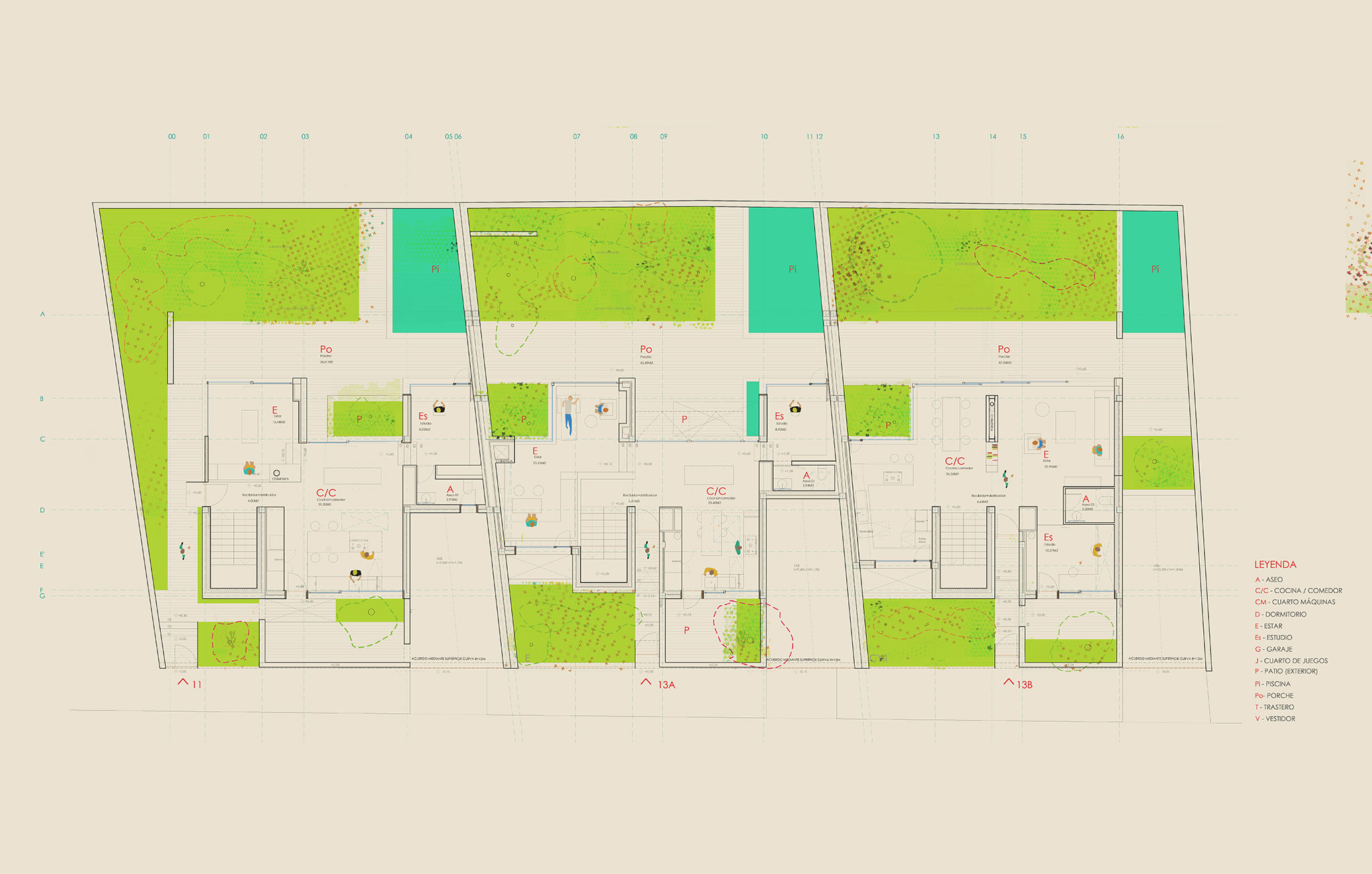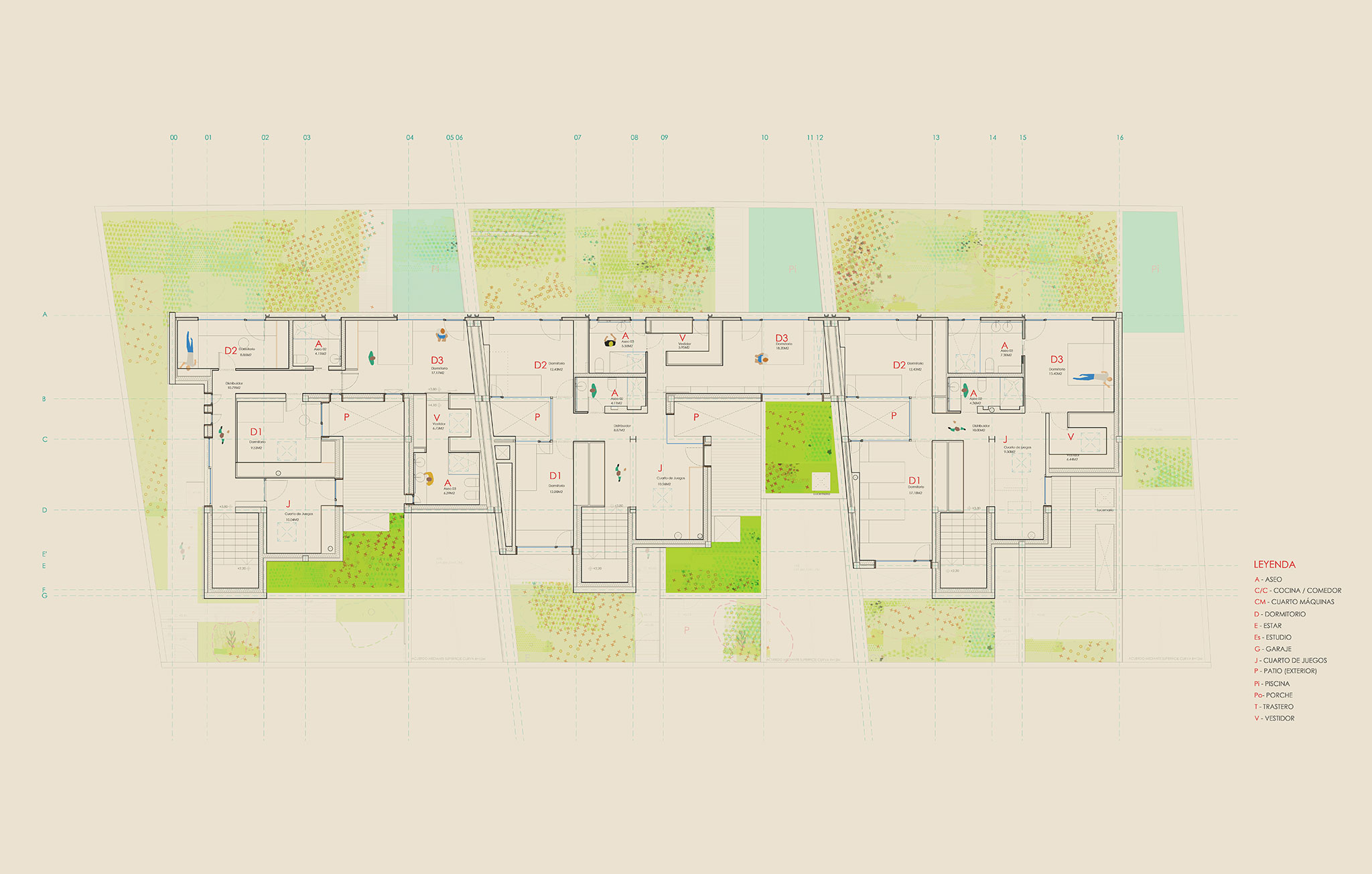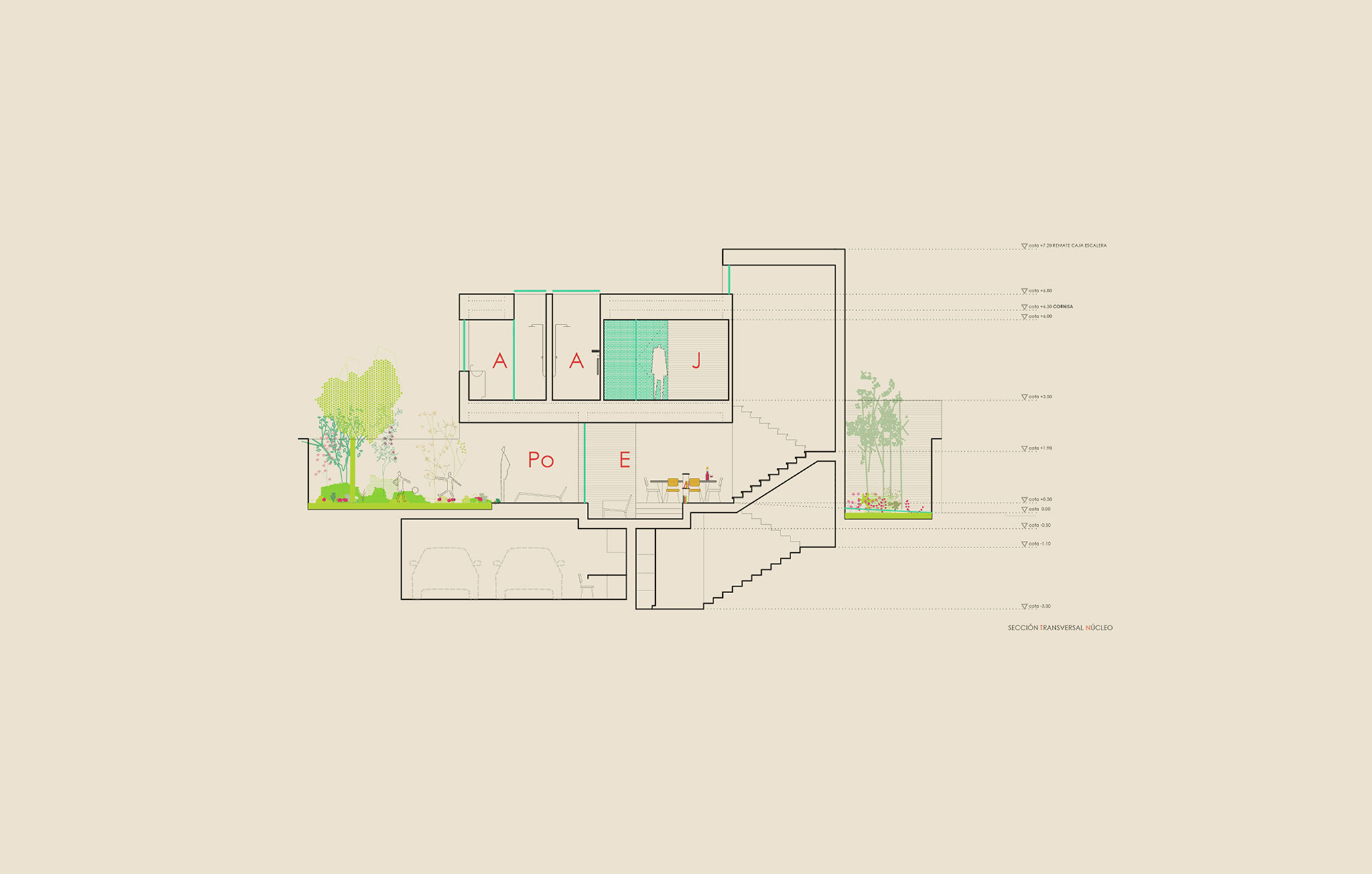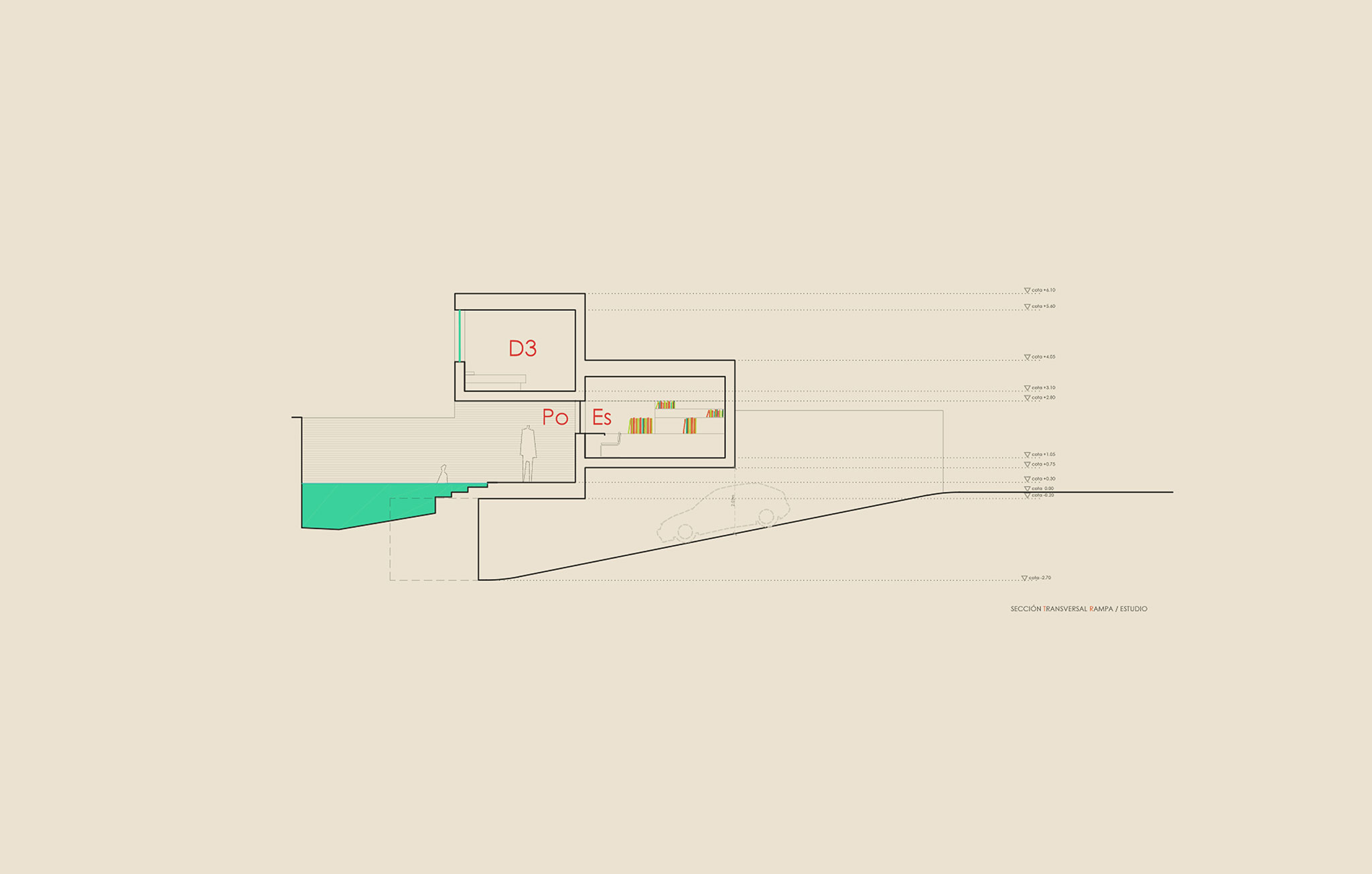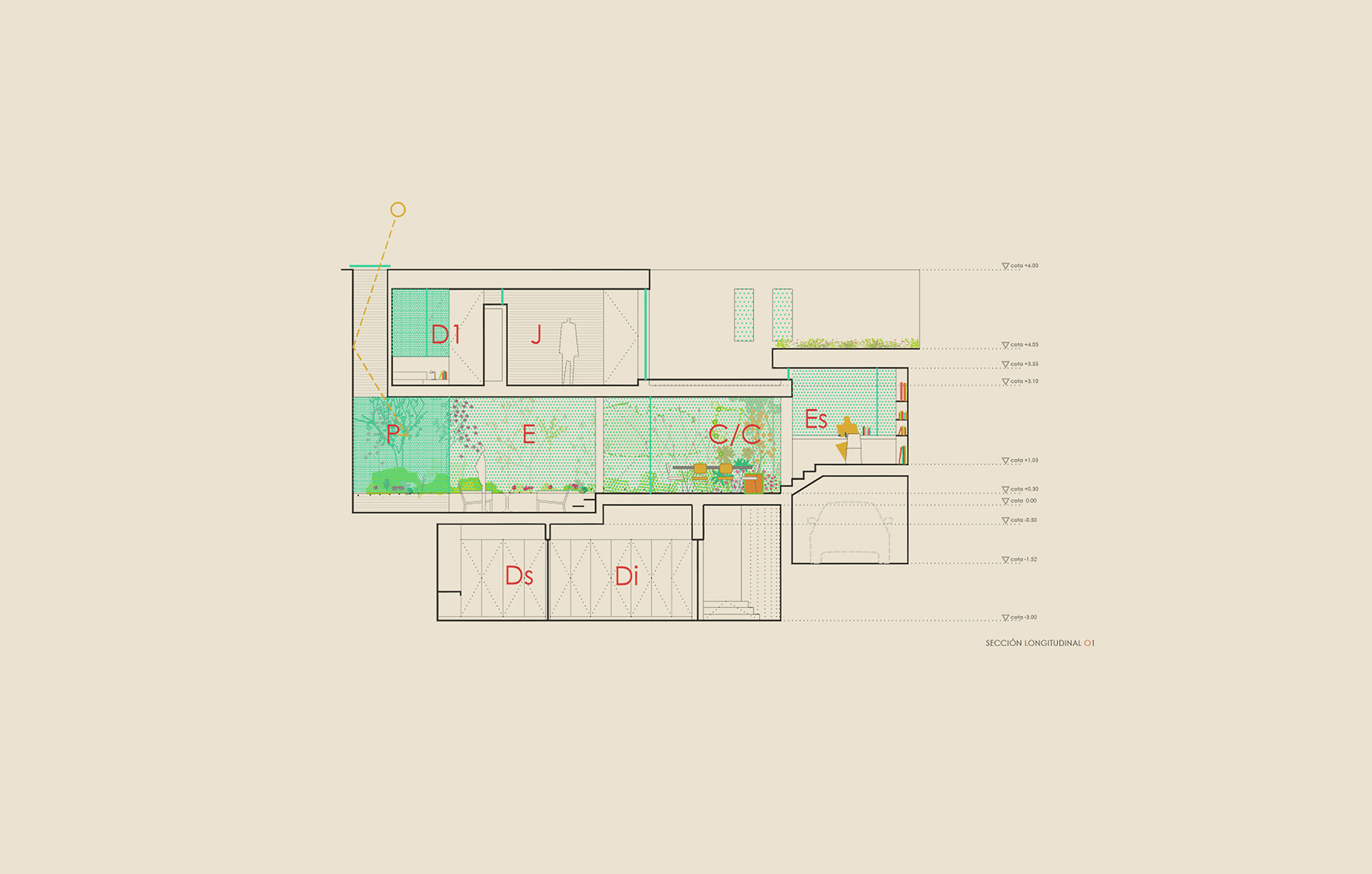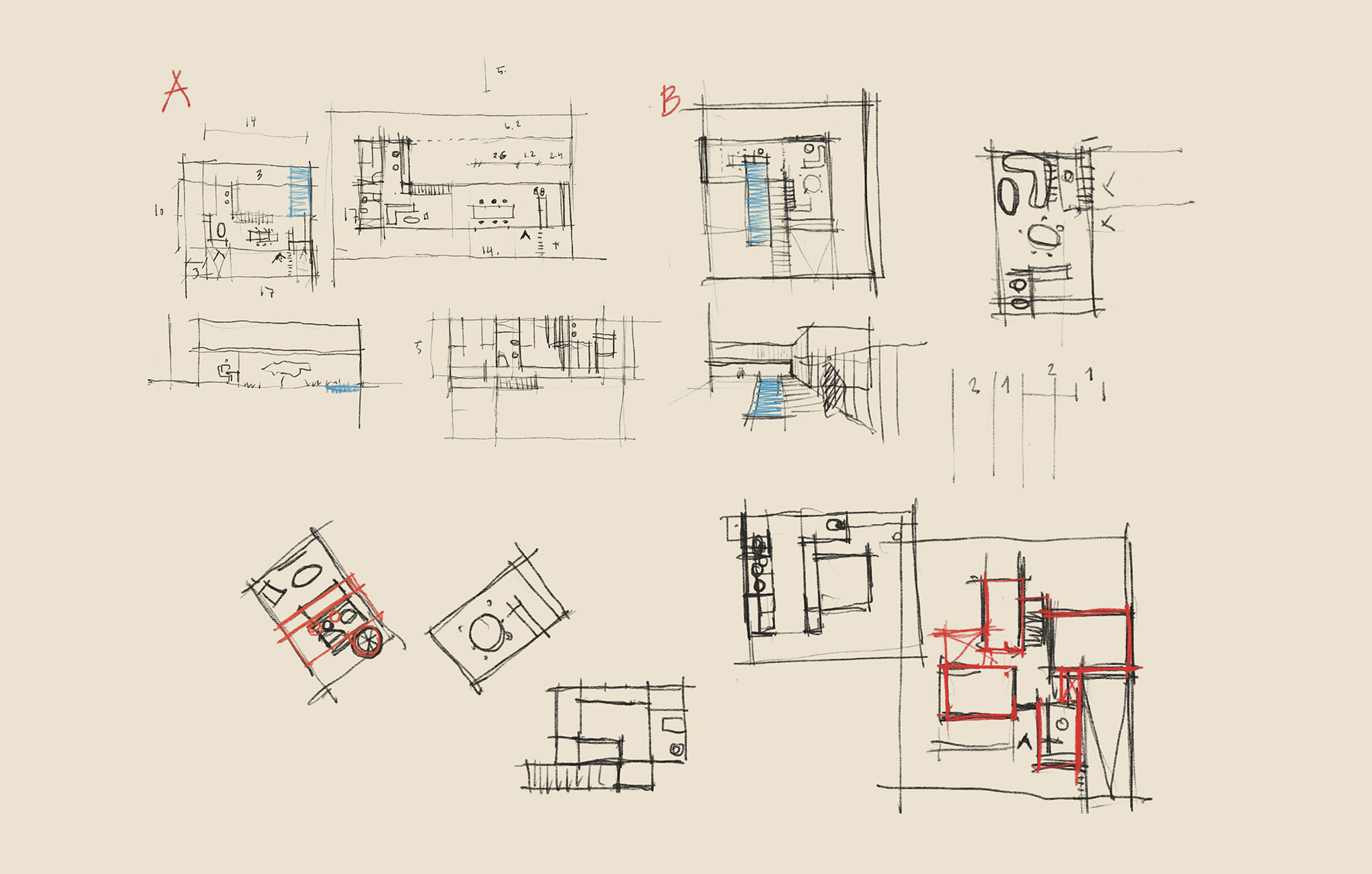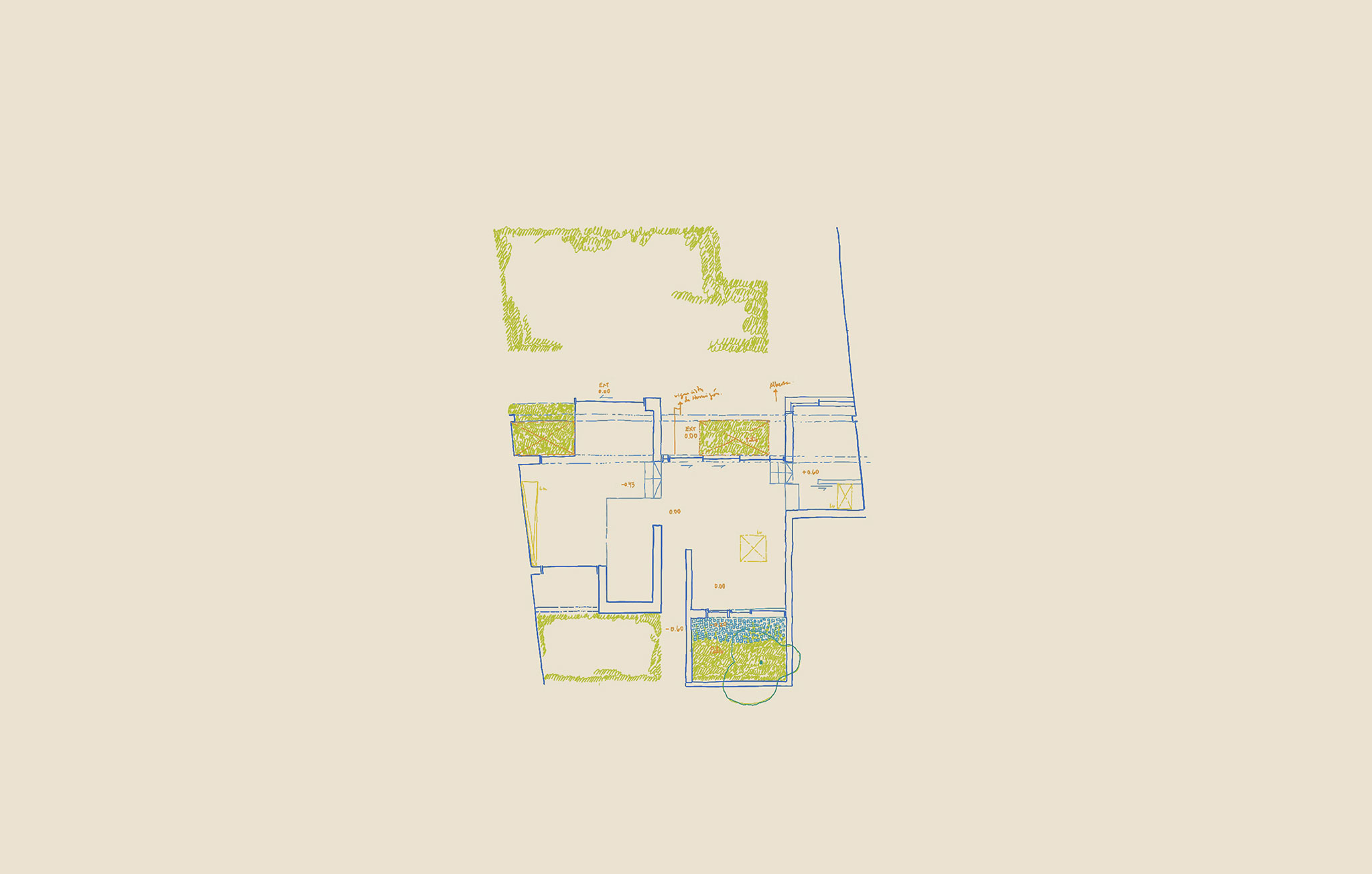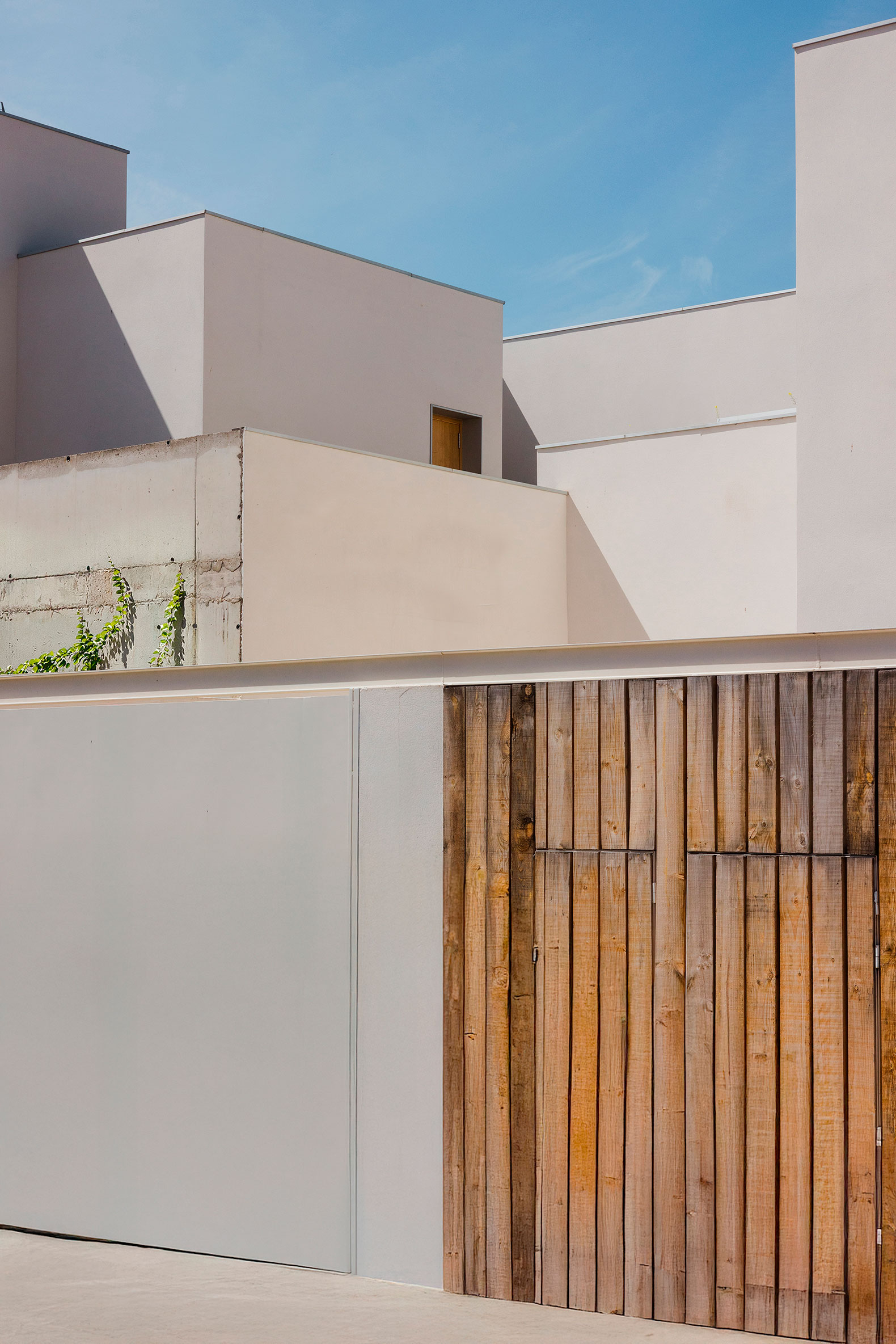
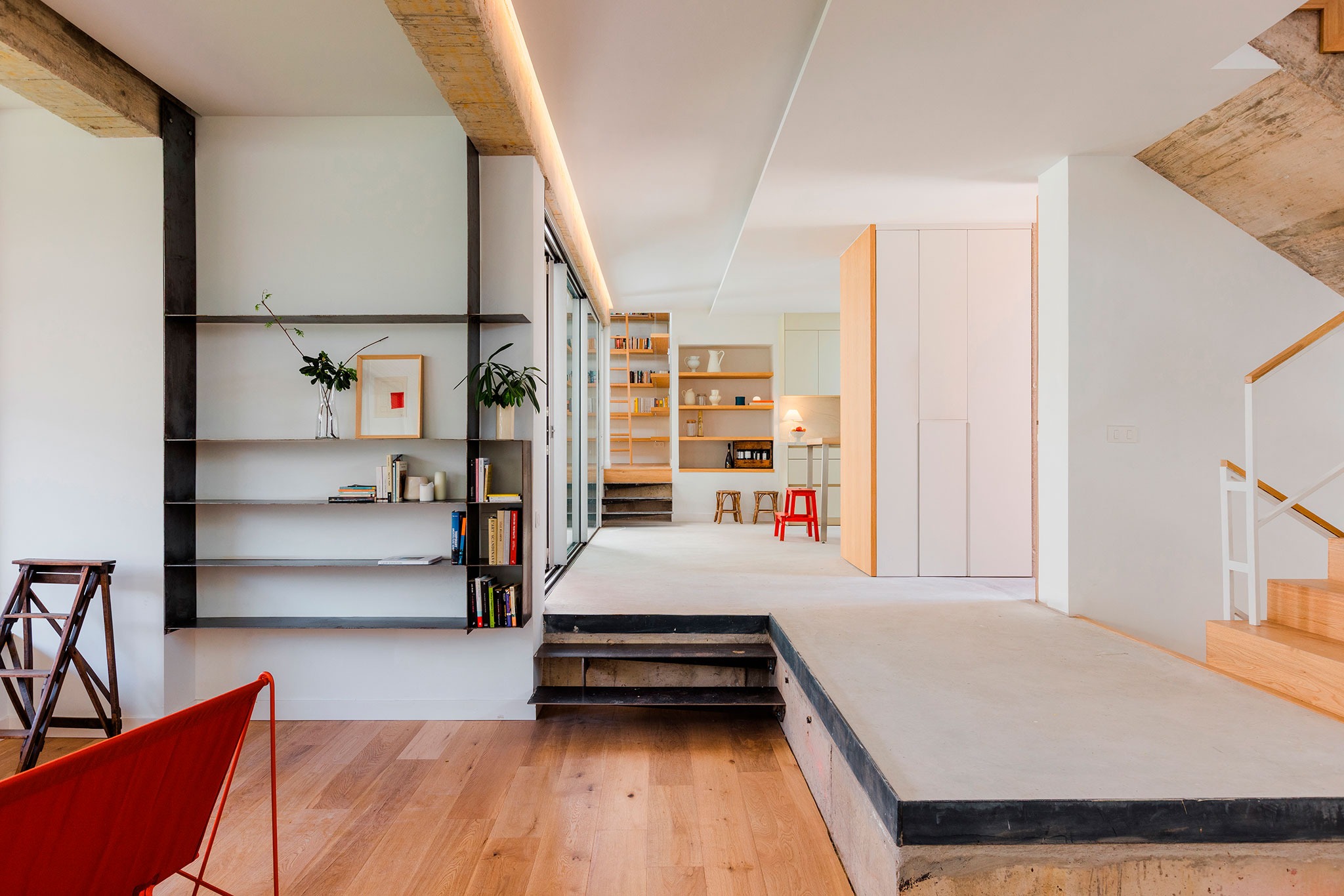
In the "MG Houses" designed by delaVegaCanolasso, the ground floor is maximized, housing the garden, entrance hall, and swimming pool outdoors, and the living room, dining room, kitchen, and study indoors. The bedrooms are concentrated on the upper level to optimize the available space.
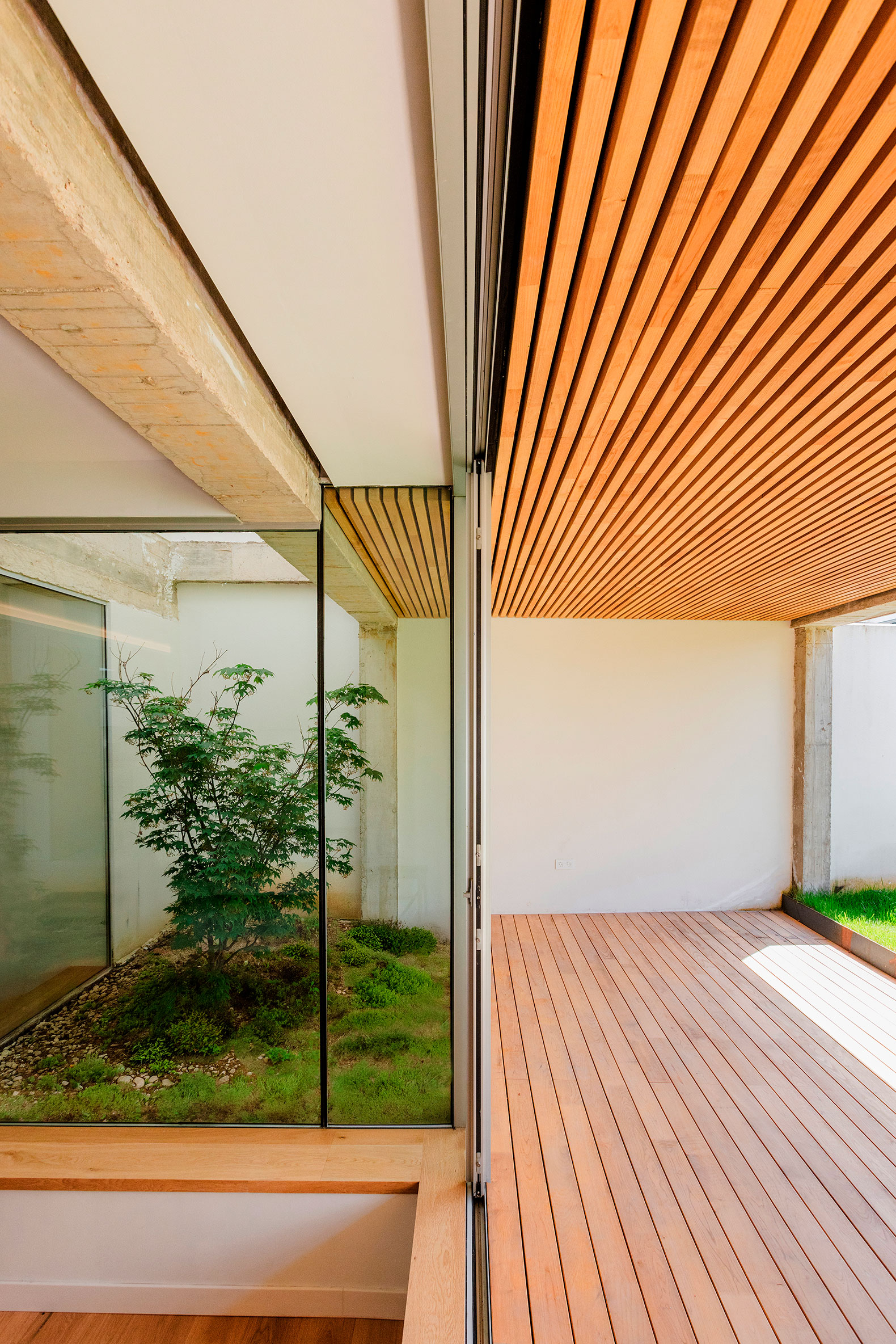
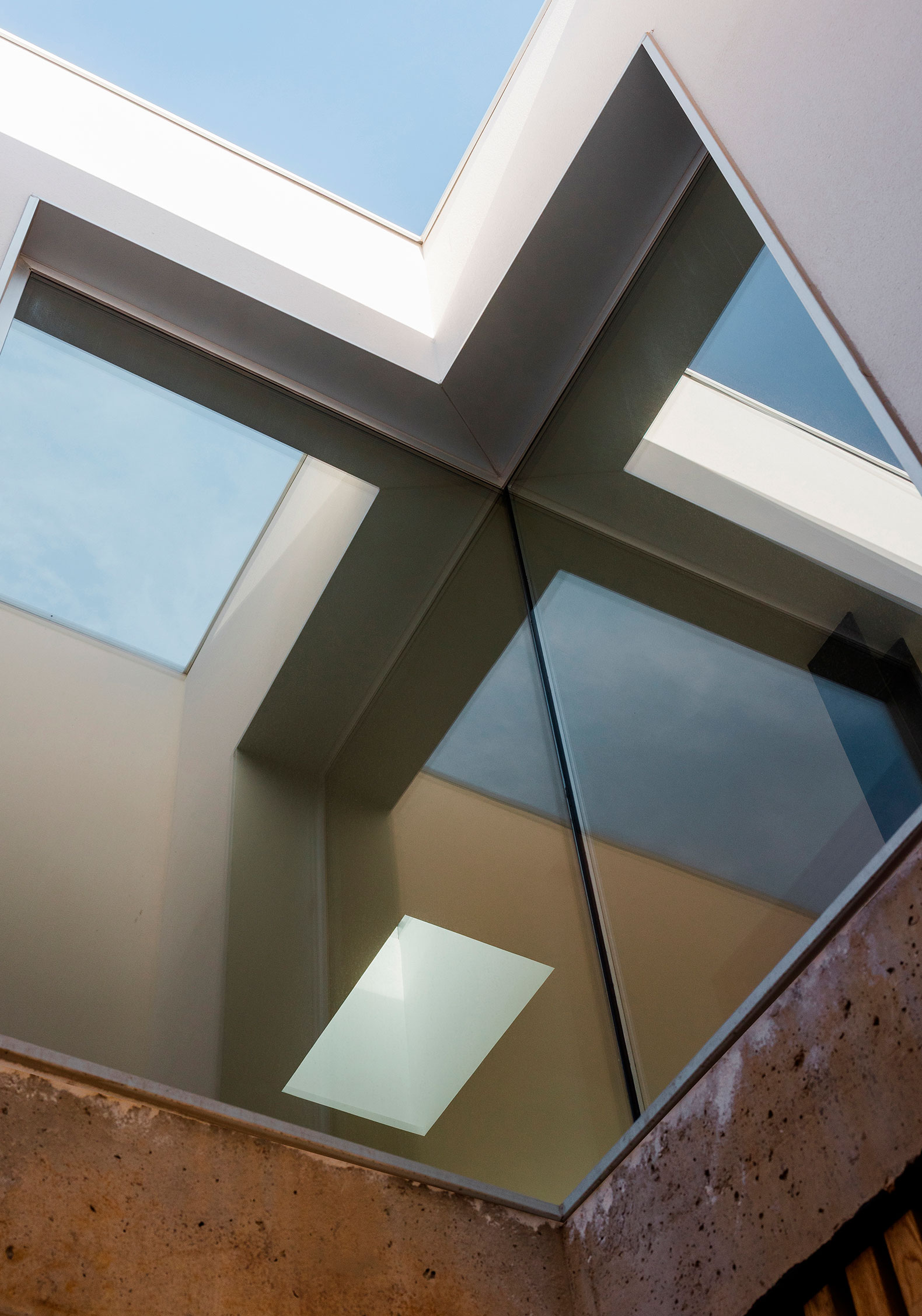
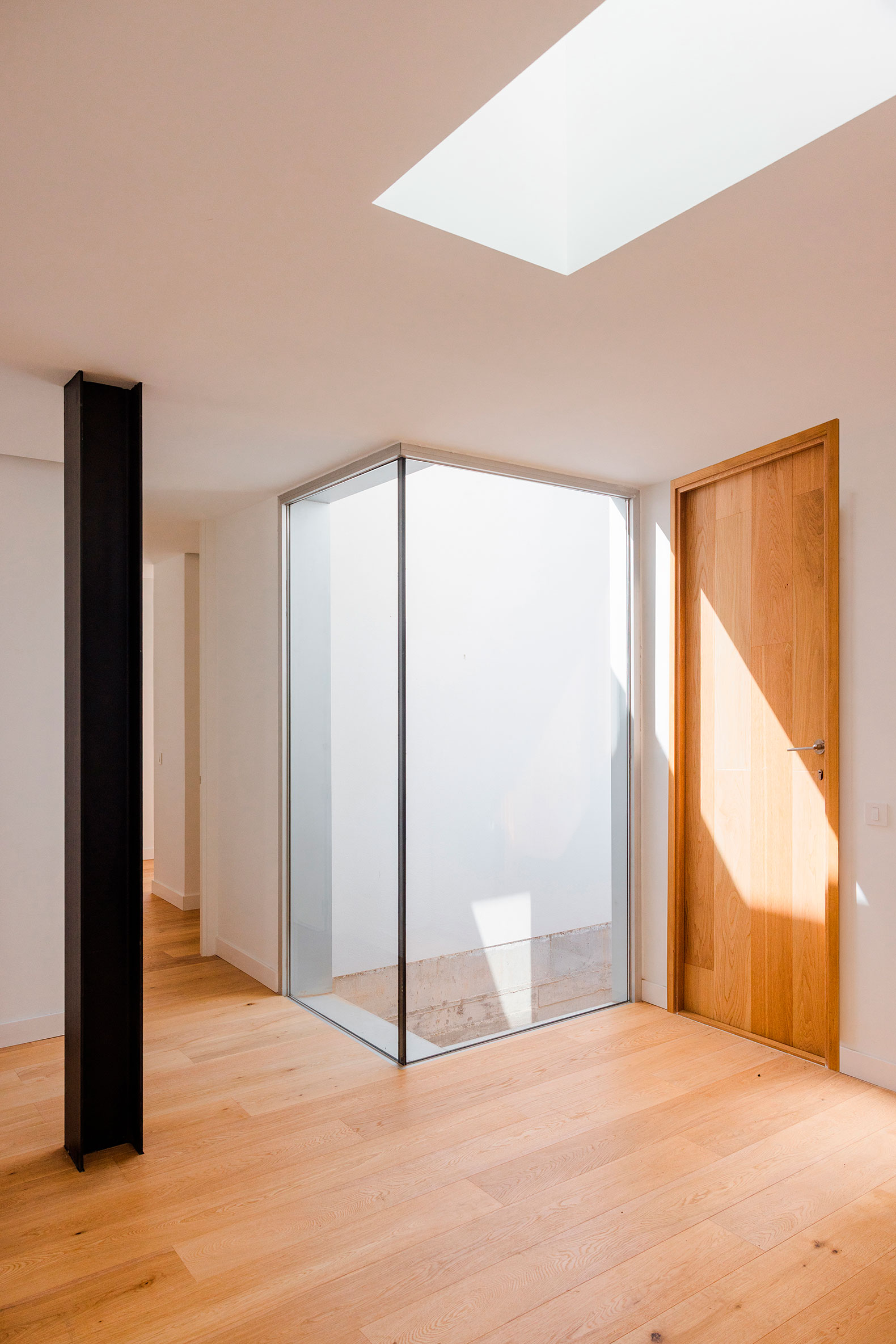
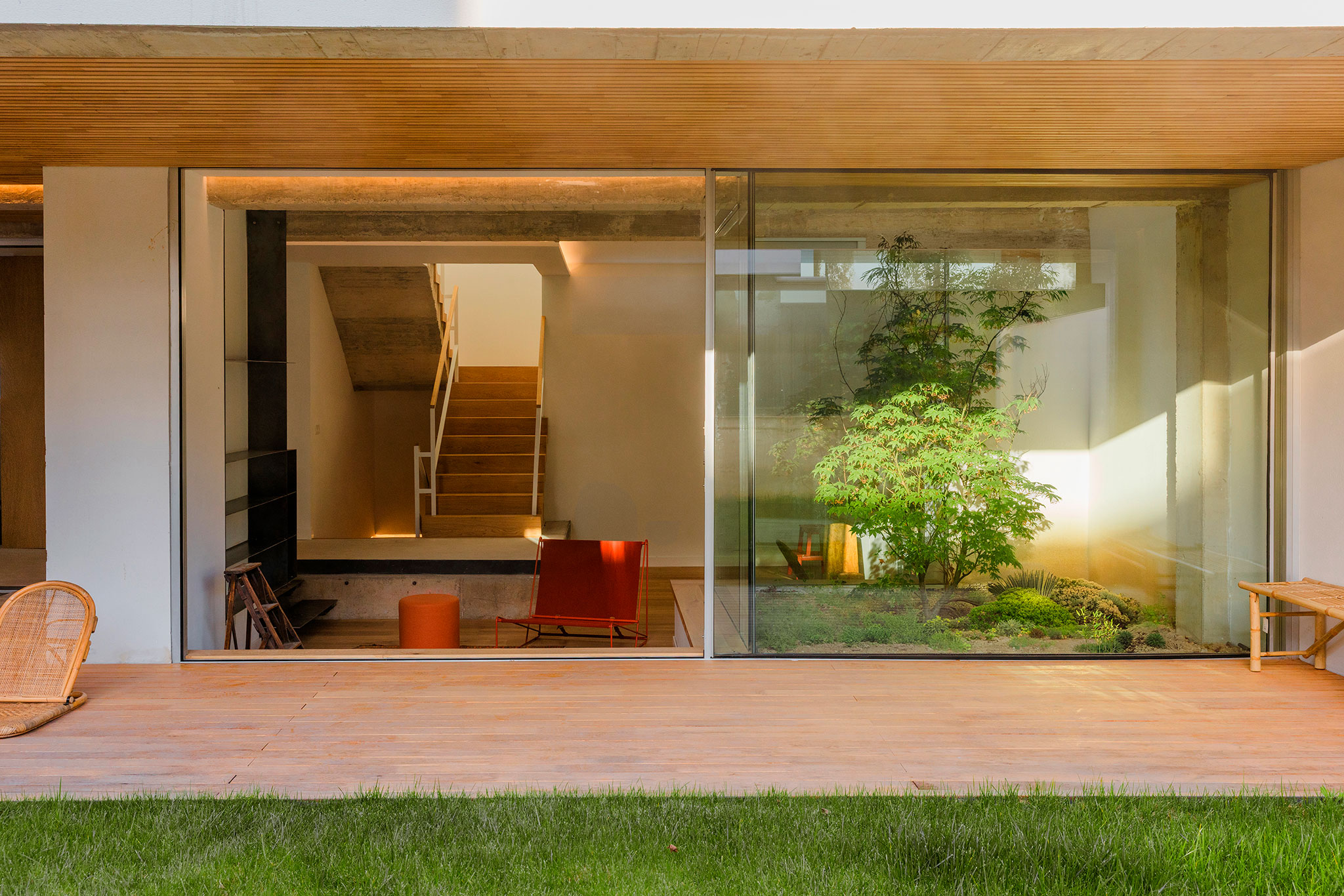
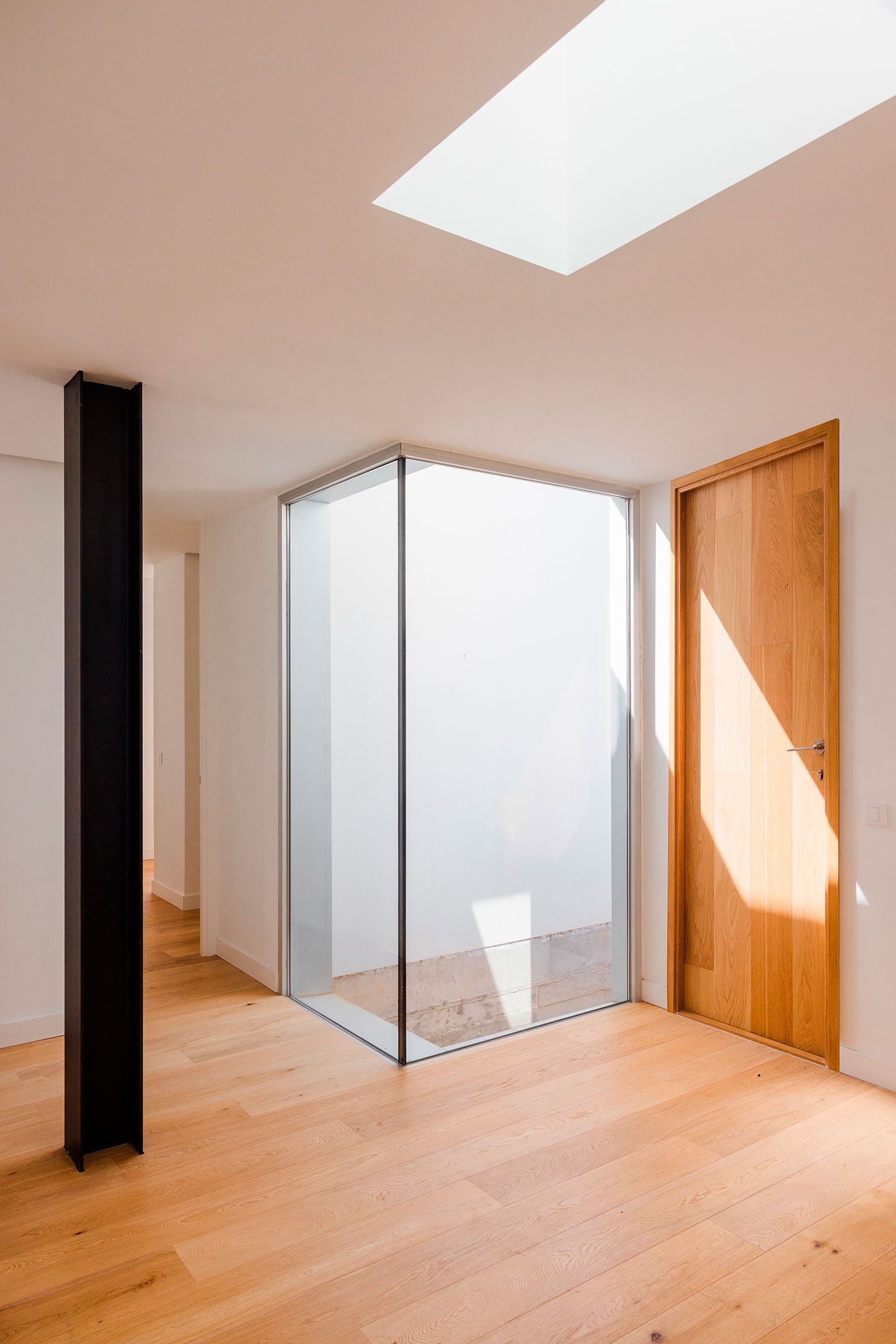
In the houses organized around three courtyards, the garden is brought indoors, cross-ventilation is created, and a system of thermal "chimneys" passively regulates the climate. Similarly, a fourth, sunken courtyard acts as a reservoir of fresh air and natural light, while also incorporating skylights in the bathrooms, the stairwell, and a main skylight that runs the length of the house.
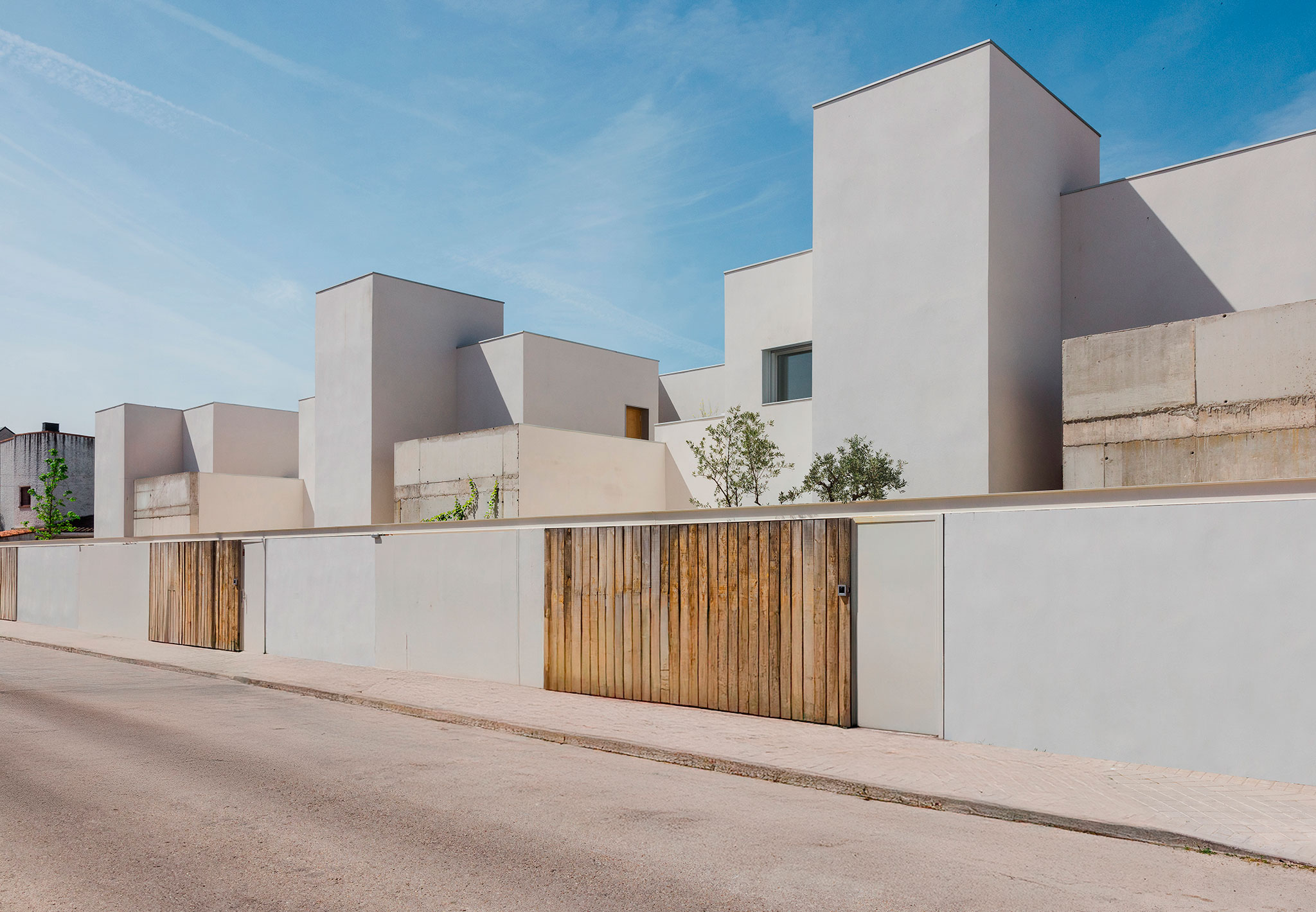
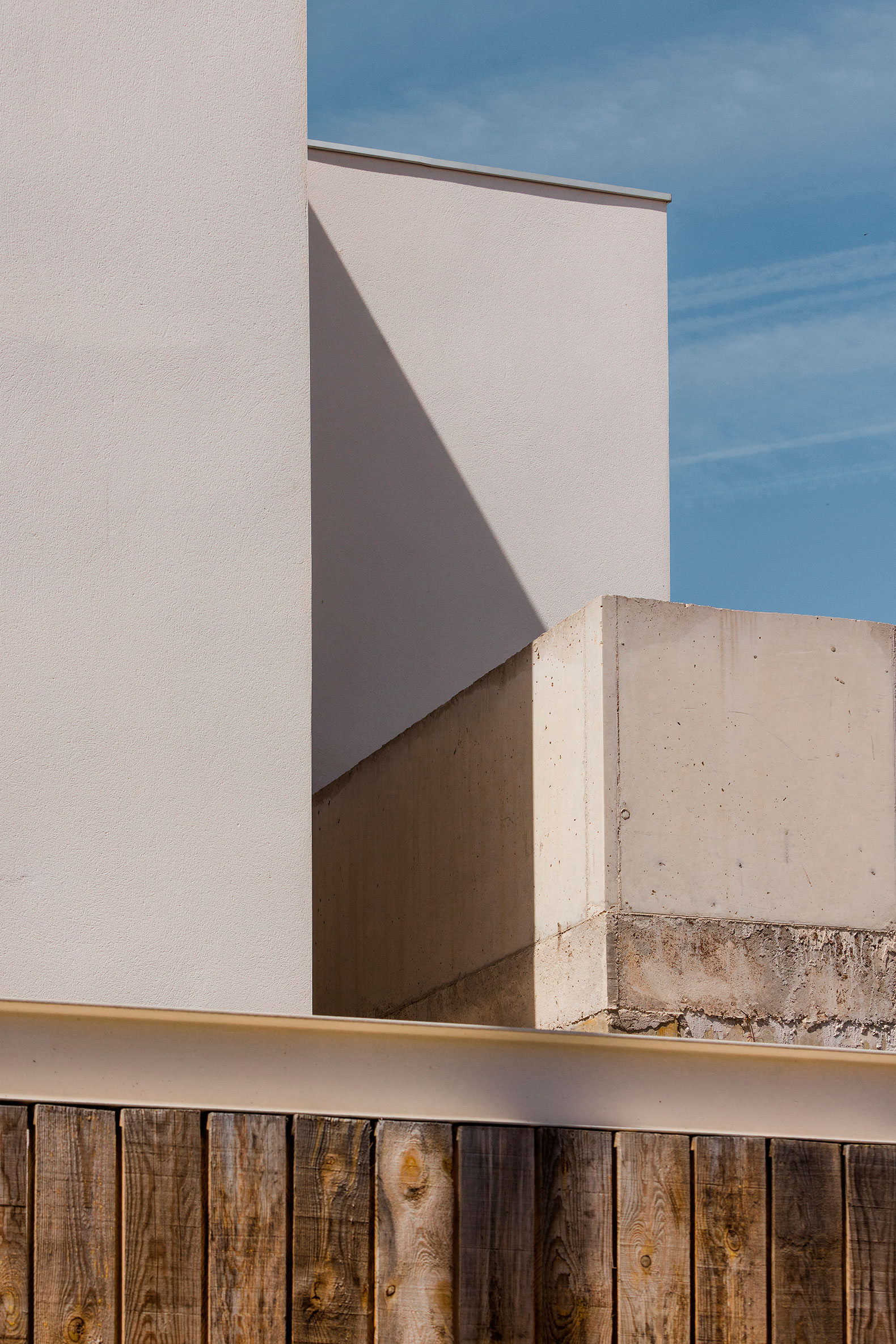
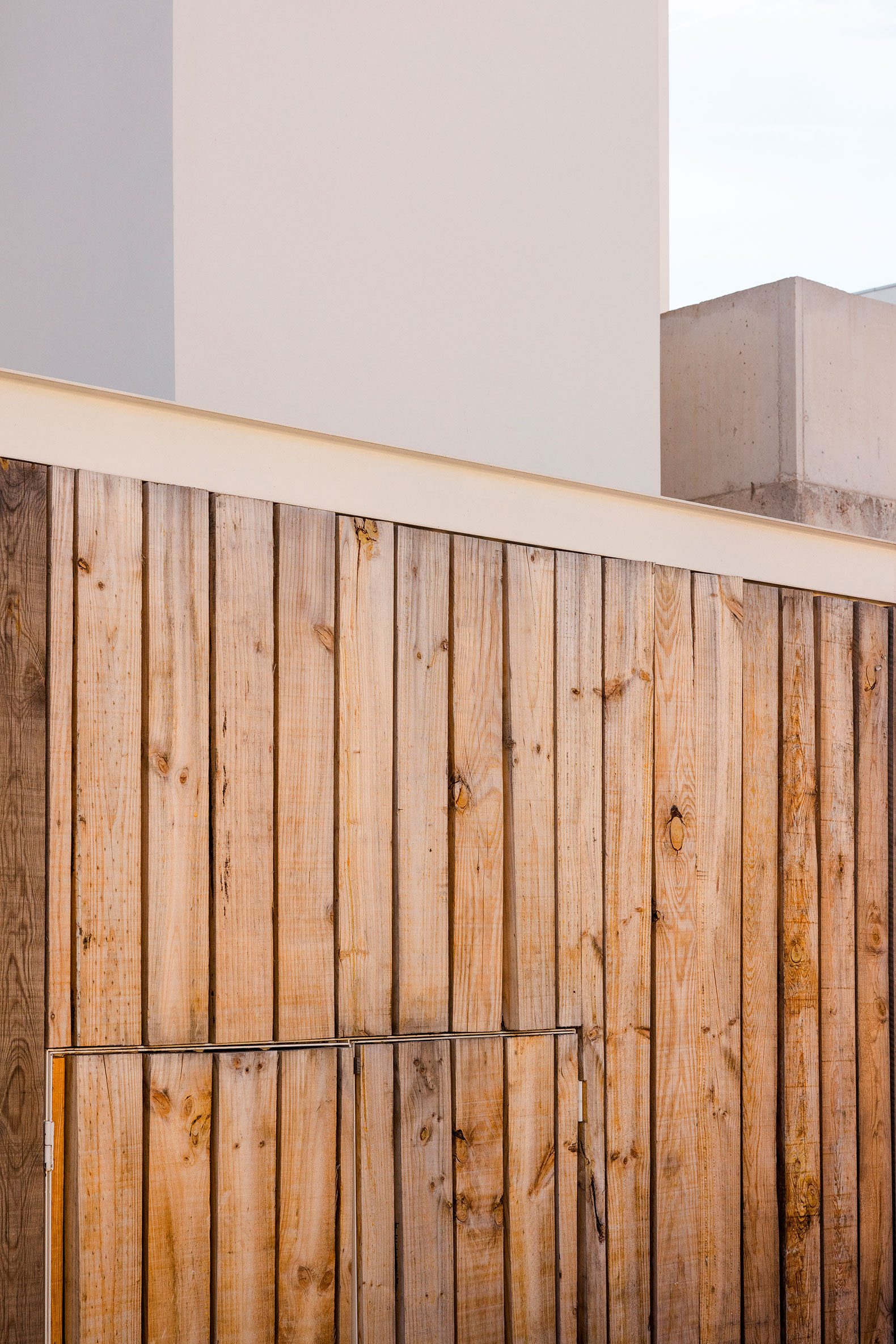
MG Houses by delaVegaCanolasso. Photograph by Paco Marín.
Project description by delaVegaCanolasso
In a densely planned urban fabric—minimal plots, semi-detached houses, and streets devoid of vegetation—the project adopts an introspective approach. Faced with a fragmented and, at times, hostile immediate environment, the houses are conceived as self-contained refuges, with a rich, exuberant, and fresh interior world that shifts the focus from the exterior to a contained, serene, and carefully constructed domestic experience.
These are three terraced houses for three different families that, despite their distinct interior layouts, form a single formal and visual entity.
Uniformity is not the goal, but rather a coherence based on shared strategies: each house is different, yet all respond to the same spatial, climatic, and material logic.
The site plan stems from a clear decision: to close the house off from the street—located to the east—and open it up to the garden, which faces west.
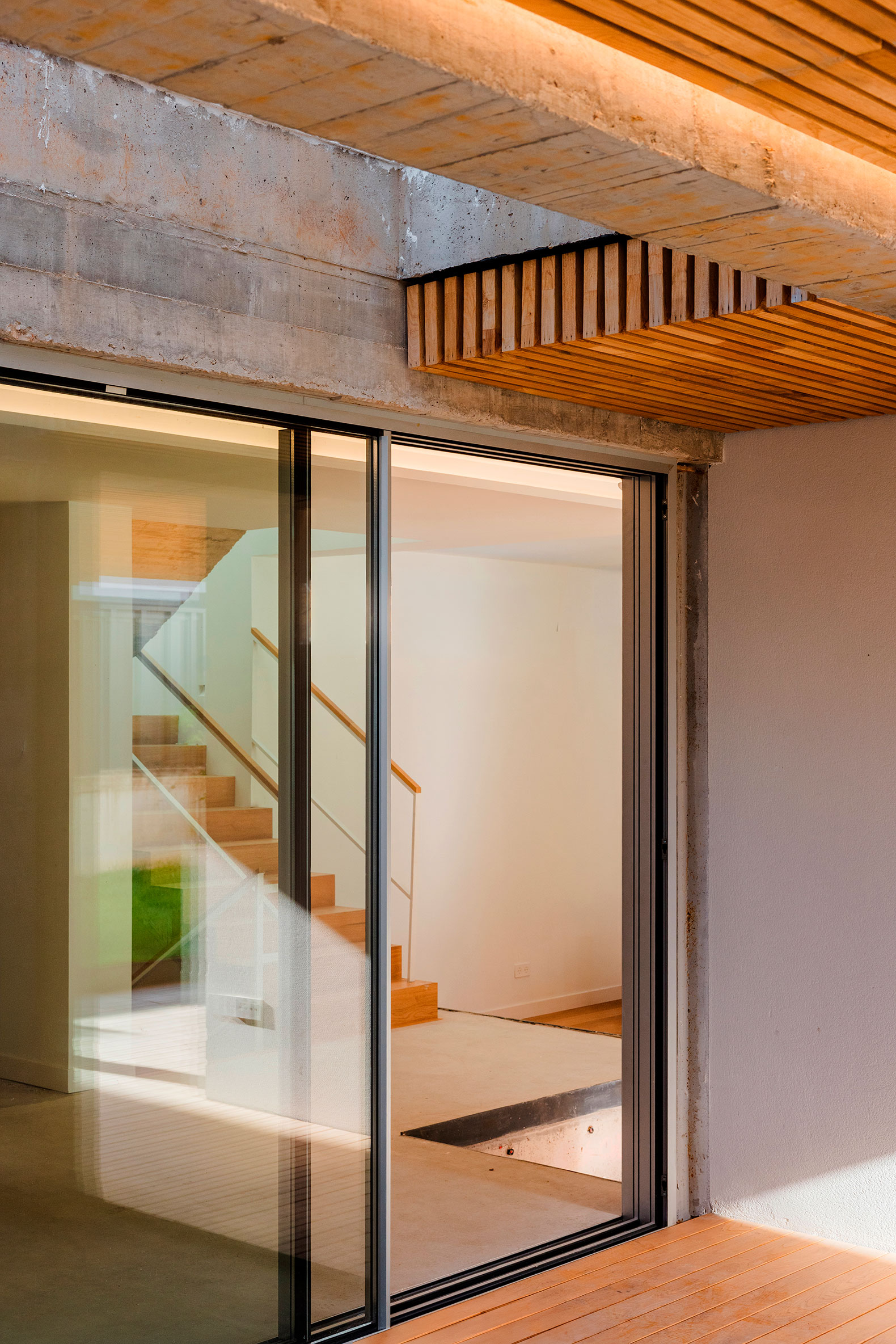
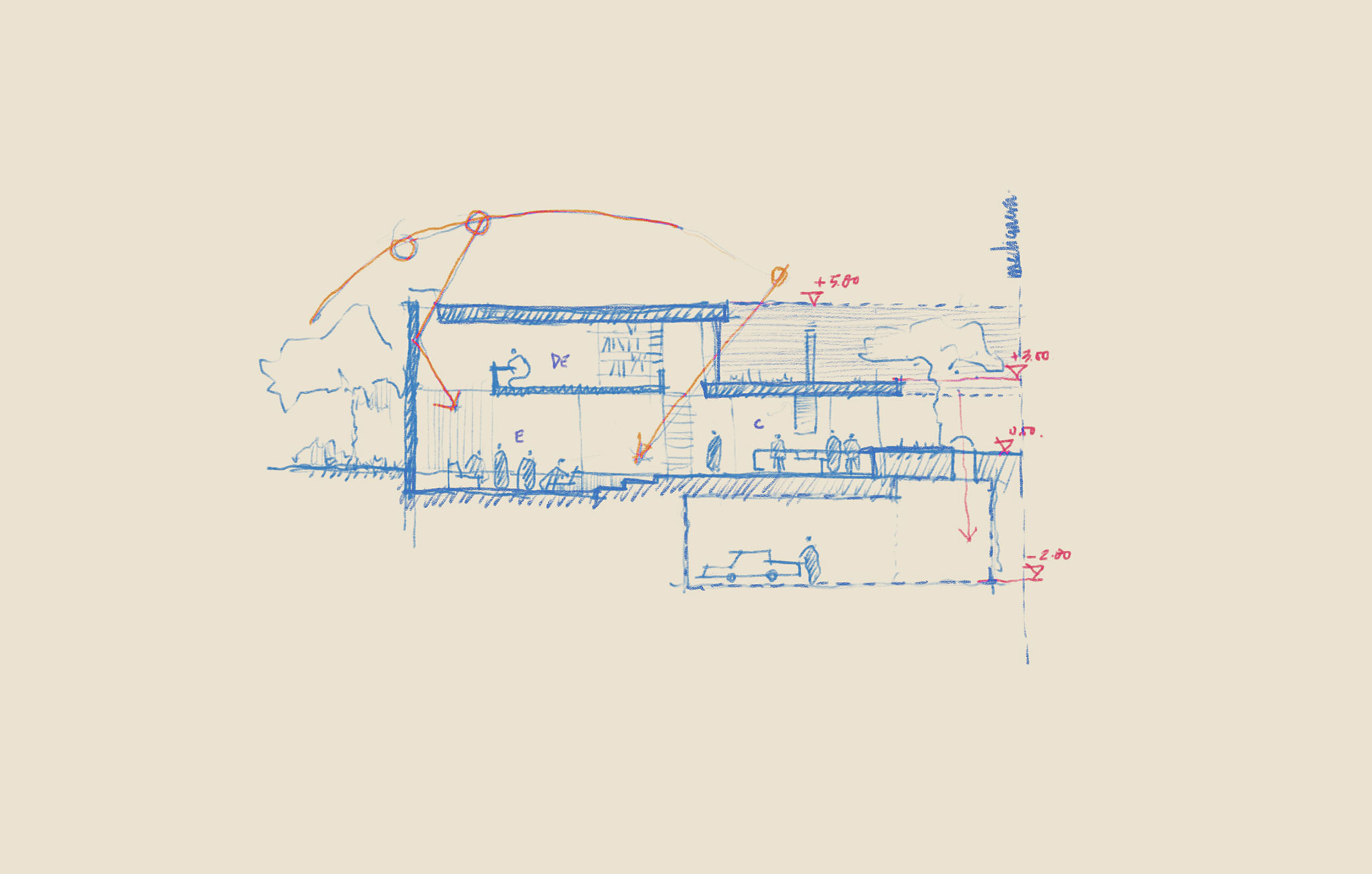
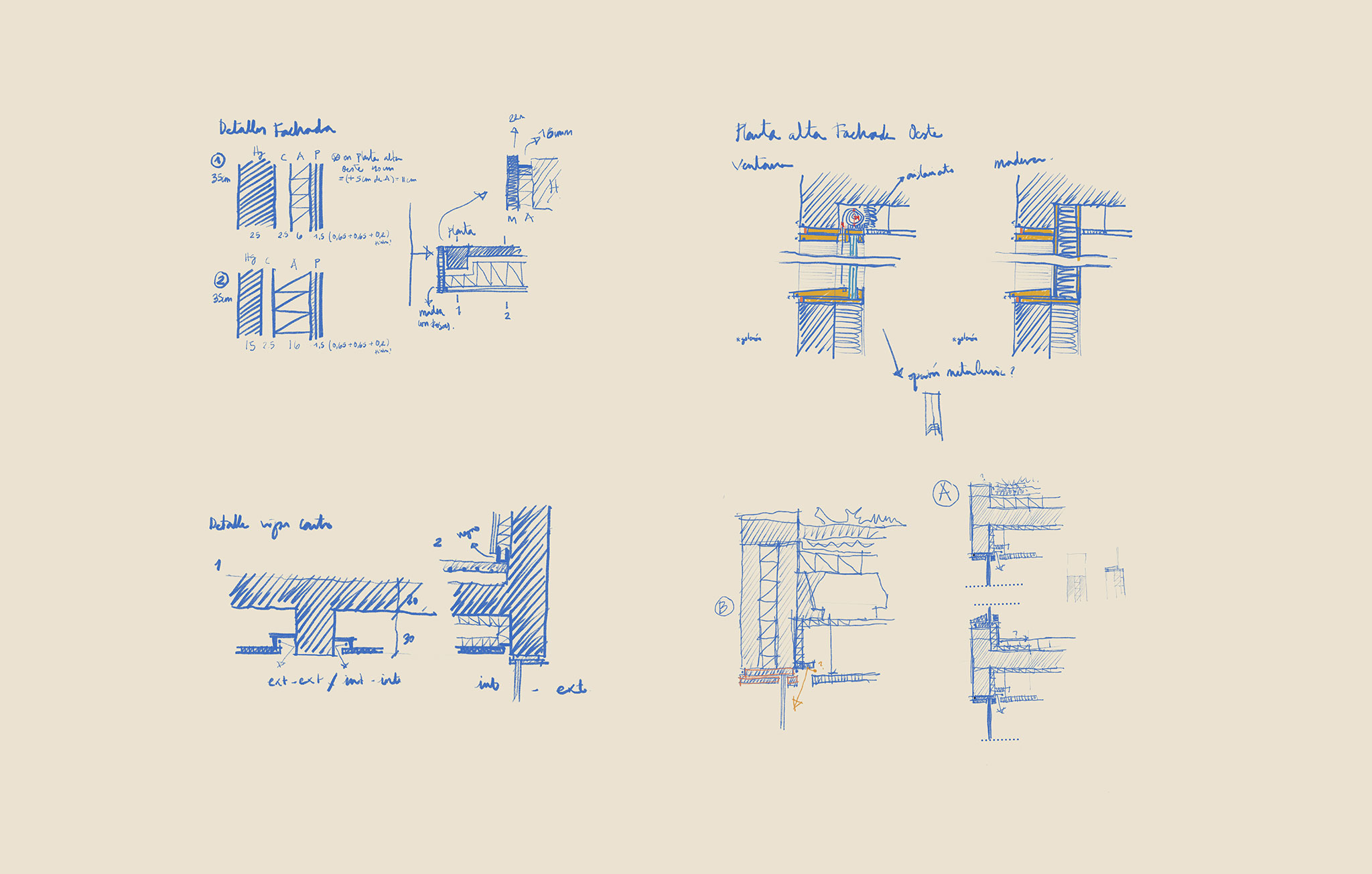
On small plots, this means maximizing the ground floor space for the garden and porch, shifting the main living areas to the upper floor. Thus, a striking "block" of bedrooms sits above the living room, dining room, and study, not only optimizing space but also acting as sun protection against the harsh western sun, while simultaneously creating a deep porch.
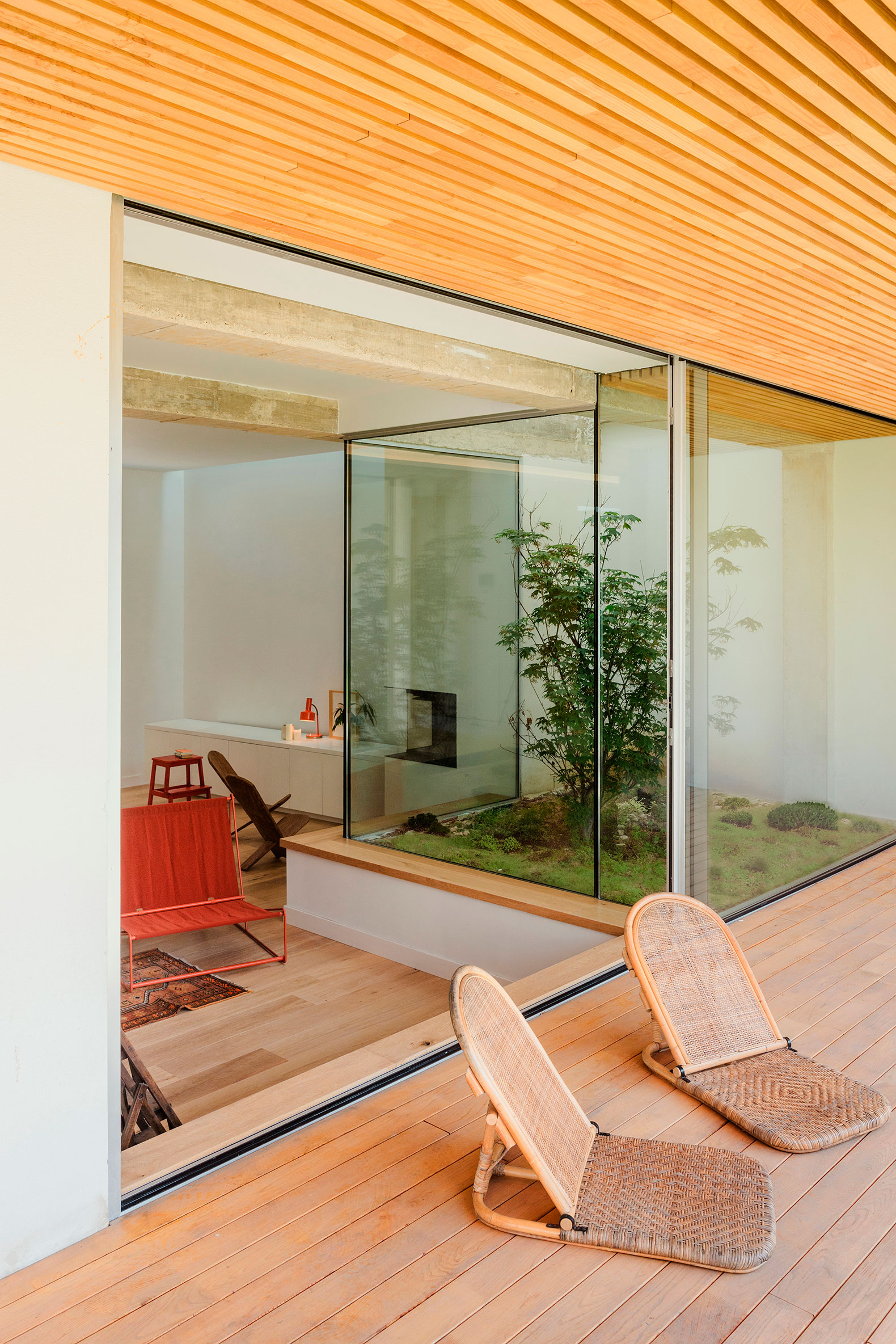
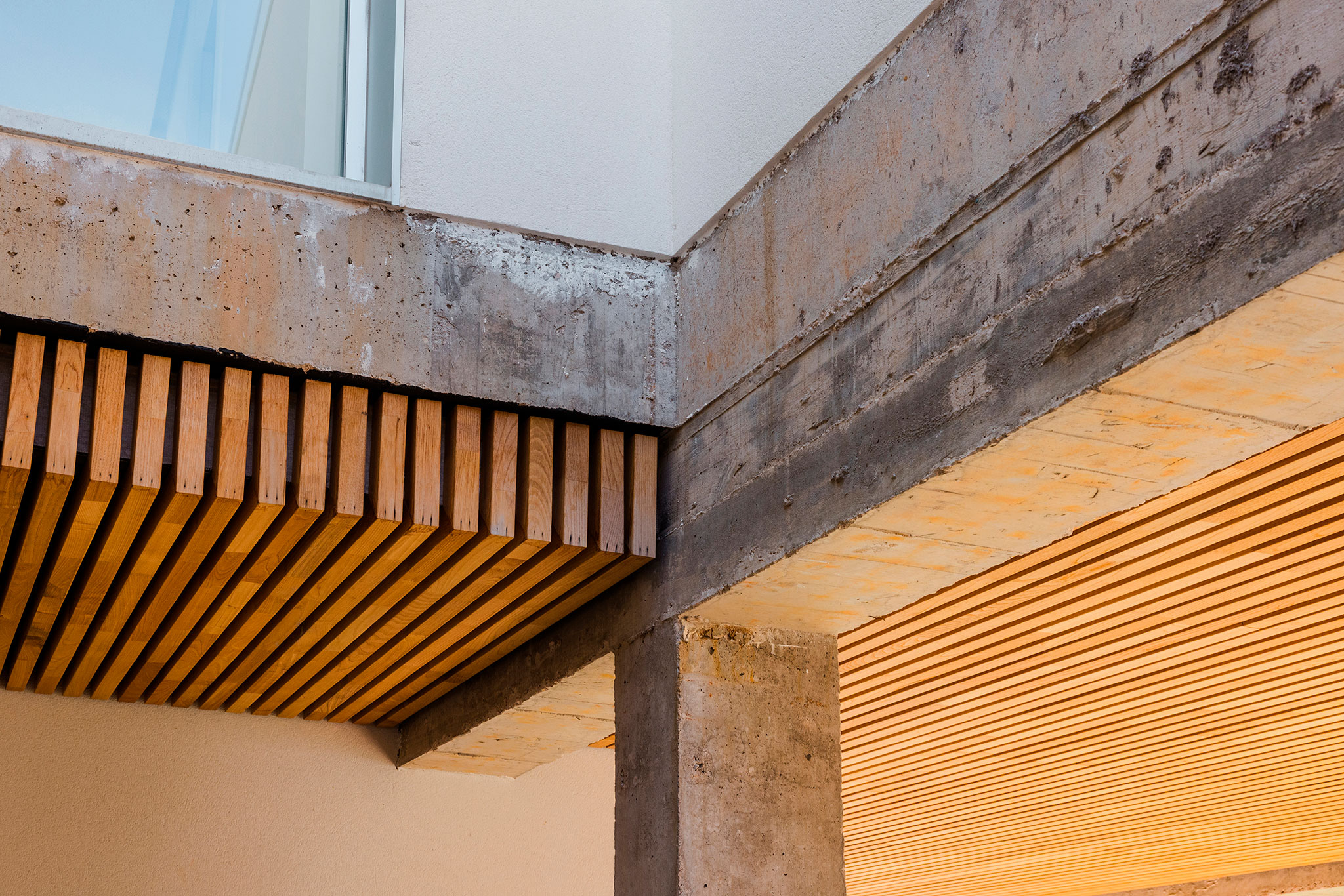
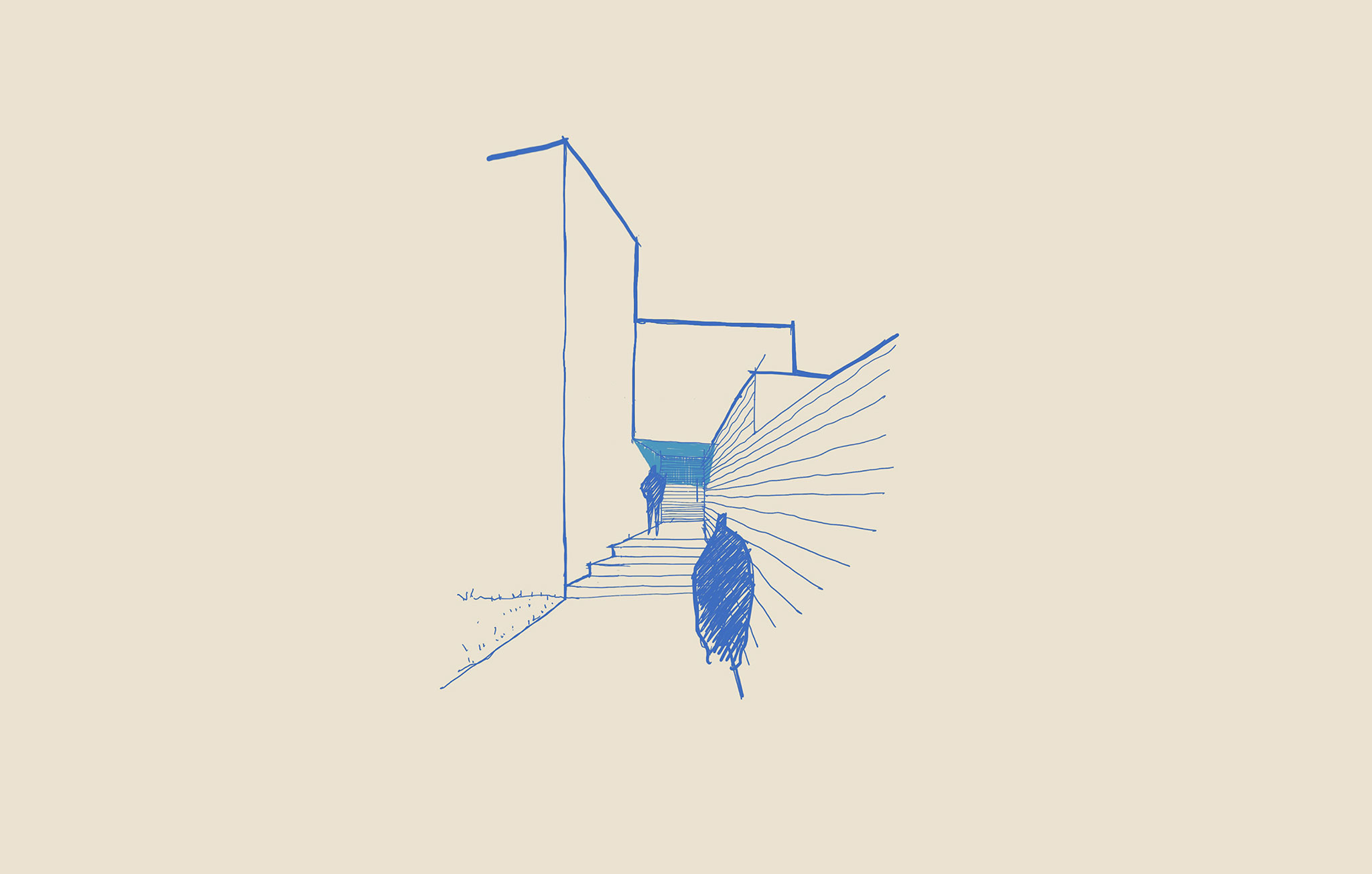
However, the fundamental operation is not only volumetric but also atmospheric. The house is situated slightly lower than the garden and central courtyard, so that the view is at vegetation level. This subtle gesture transforms the perception of the surroundings: the visual boundary is defined by the plants, not the buildings. The deep porch, screened by chestnut wood slats, along with the density of the garden, filters the views and softens the presence of nearby, often disproportionate, buildings.
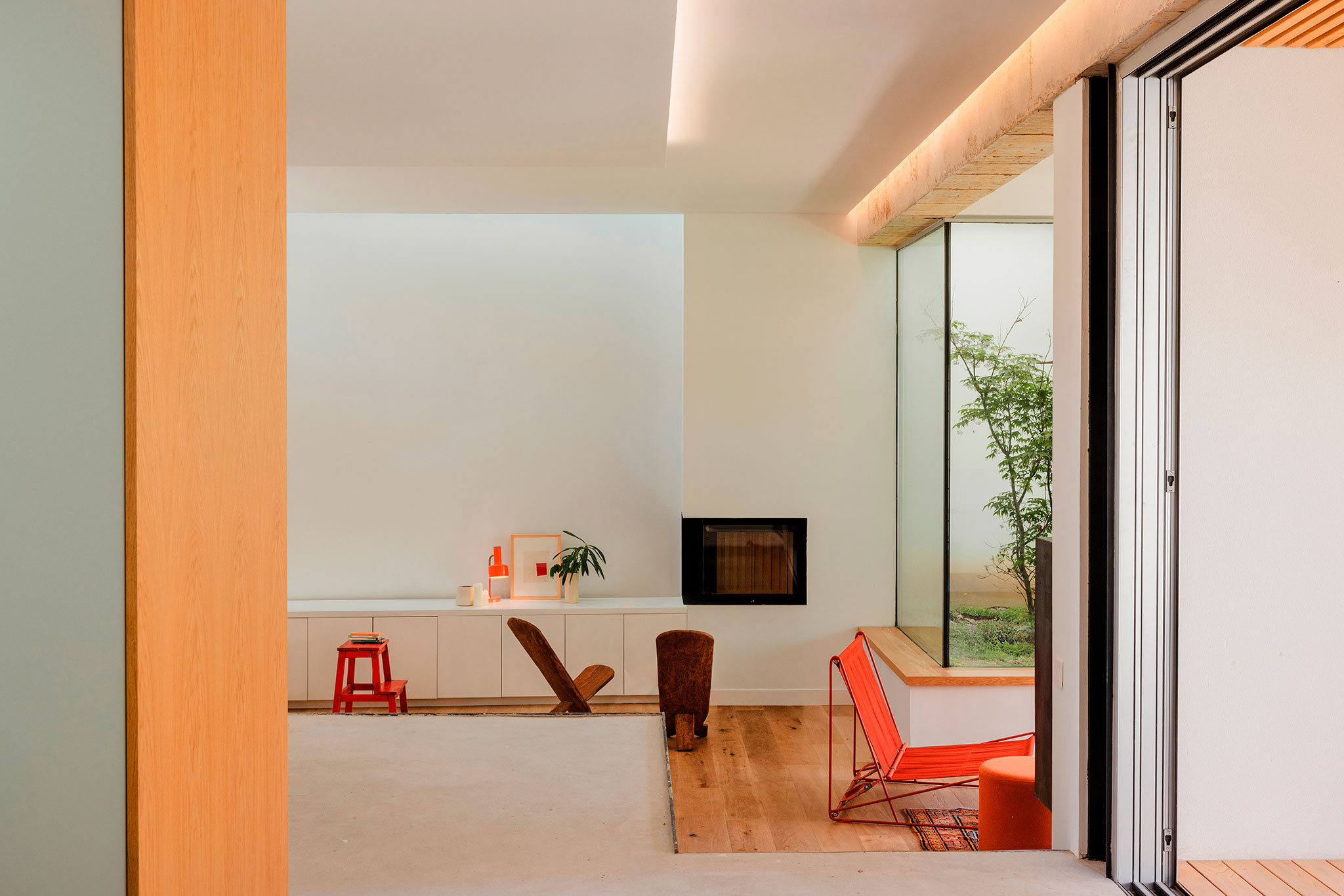
Inside, light is treated as another material. Direct sunlight is avoided in favor of filtered, ever-changing, and intimate lighting. To achieve this, three courtyards organize the layout of each house: they bring the garden inside, generate cross-ventilation, and create a system of thermal "chimneys" that passively regulate the climate. A fourth, sunken courtyard acts as a reservoir of fresh air and light, reinforcing this environmental logic.
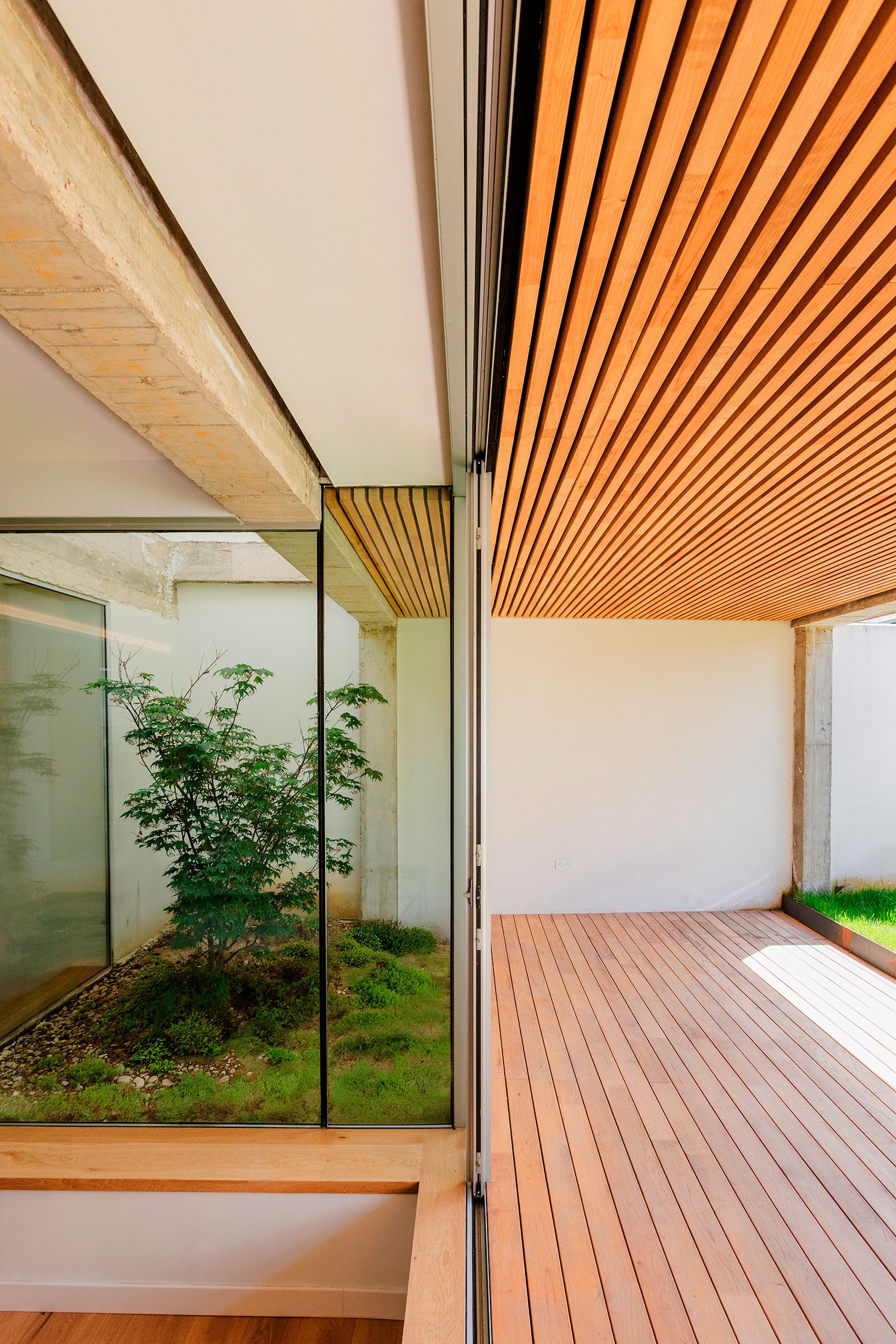
The kitchen opens onto a small east-facing patio, where a pergola filters the morning light and creates an everyday, intimate, almost ritualistic space: breakfast under the shade of vegetation. Skylights—the main one spanning the entire house to bathe the living room wall, as well as those in the bathrooms and the stairwell—complete this system, introducing both overhead and indirect light into the innermost parts of the house.
The result is a collection of dwellings that, while massive and contained on the exterior, reveal themselves to be permeable and complex on the interior. Compact in form, yet punctuated by voids that allow the garden to penetrate the house and the house to expand into the garden.
Ultimately, a domestic system that creates a small oasis: a place where light filters in, vegetation accompanies, and the immediate outside world fades away. A space from which there is no need to leave.
“We must strive to make gardens into houses and houses into gardens.”
Luis Barragán