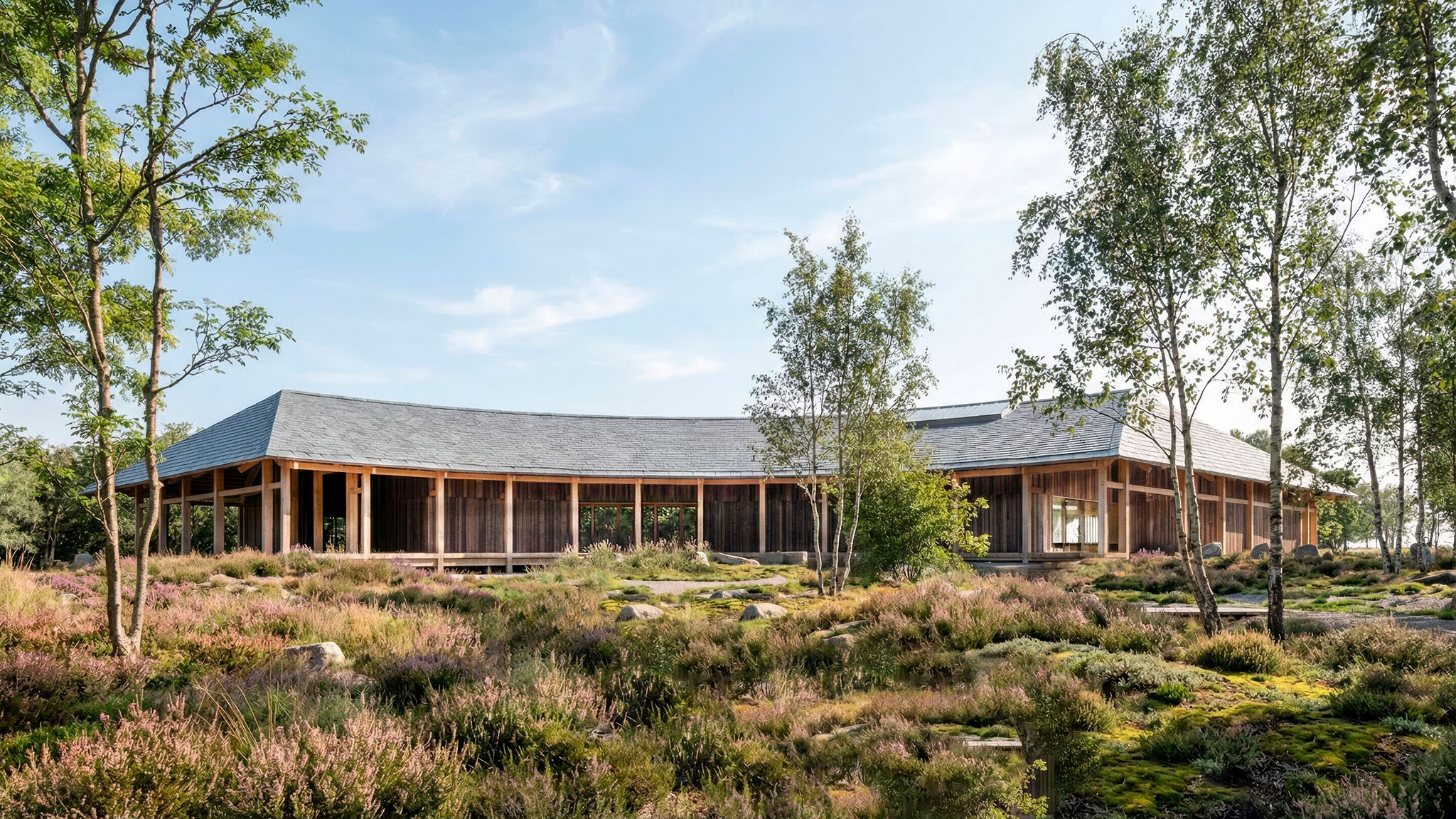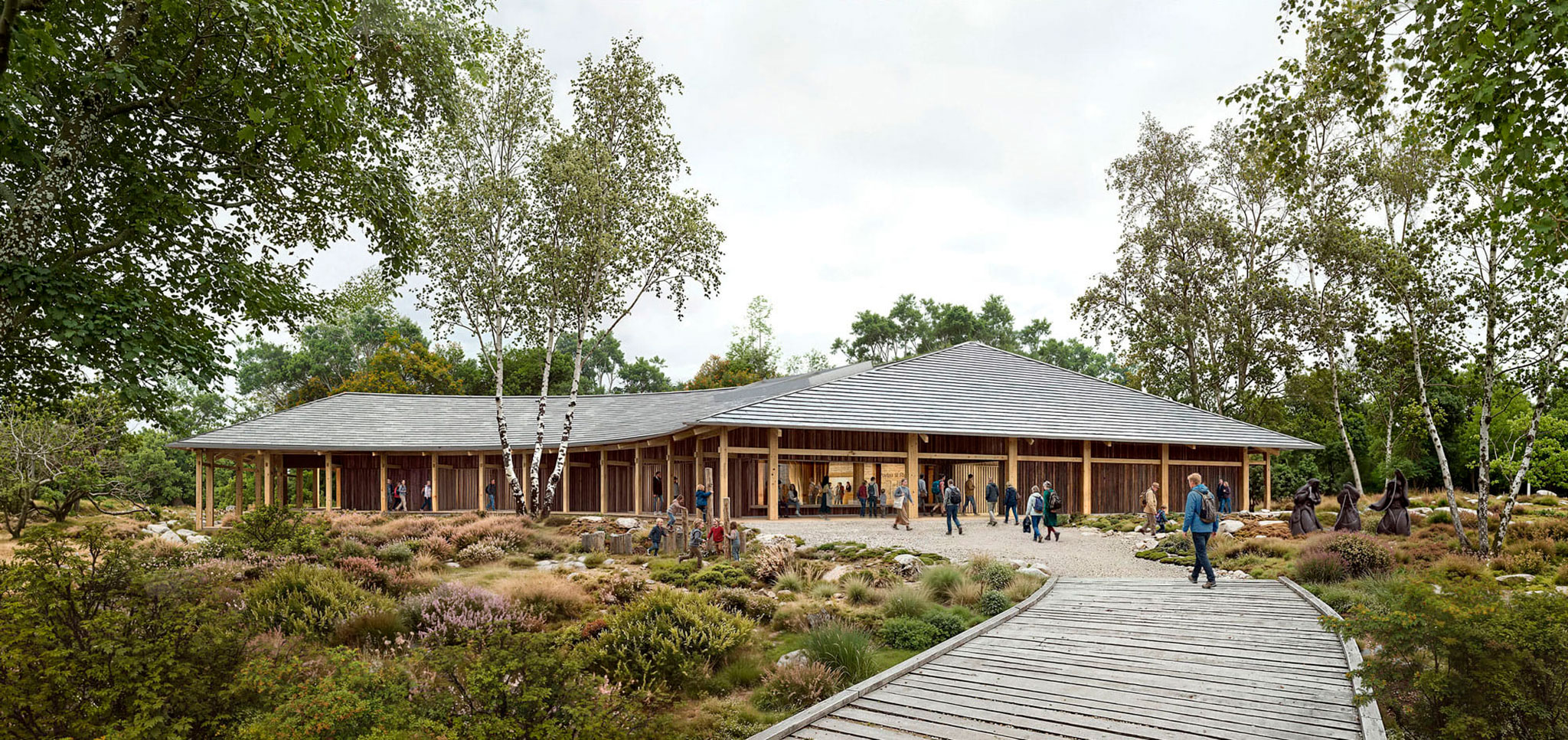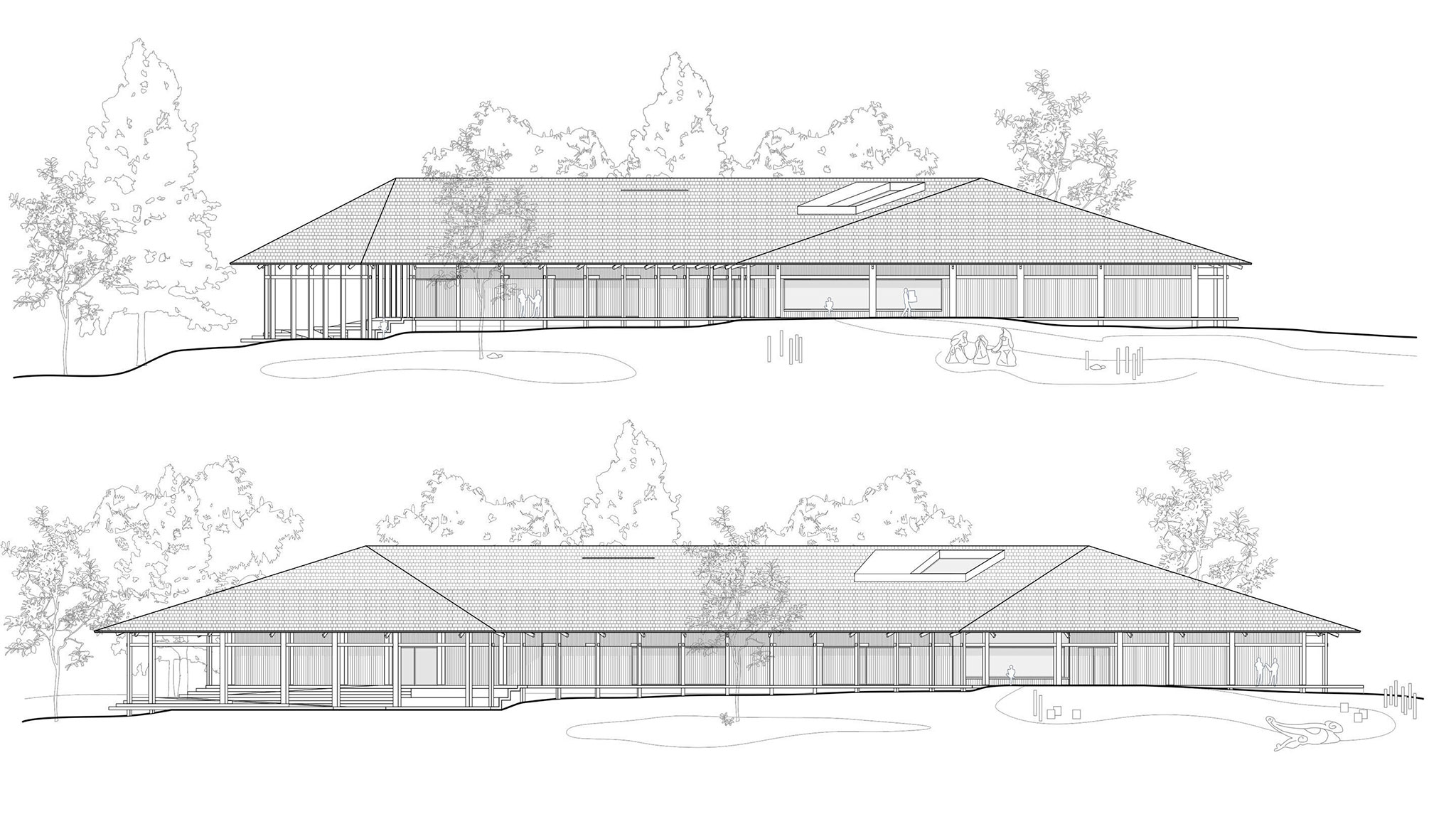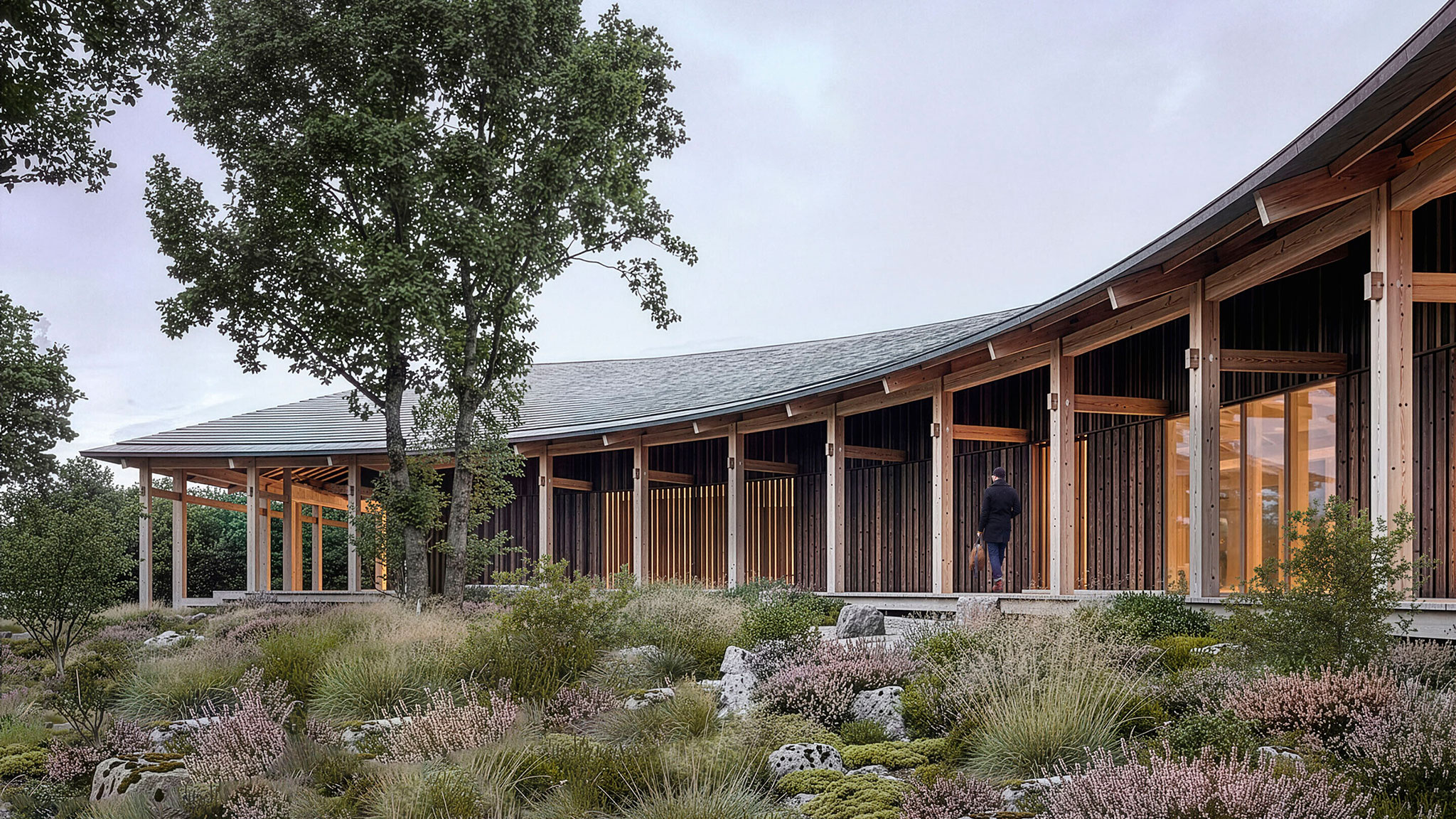
The proposal designed by ADEPT and its collaborators aspires to create a robust and sustainable welcome building that reflects the centre’s distinctive approach to interpretation, where history, craftsmanship, landscape, and sensory engagement converge.
Defined by a clear structural logic, natural materials, and a strong continuity between interior and exterior spaces, the building guides visitors on a gradual transition from the pace of the present into the immediacy and atmosphere of the past, using raw timber, clay, sculpted natural light, and exposed joints to create an immersive sensory experience. In this way, the architecture itself becomes an active narrative element rather than merely a backdrop for exhibition.
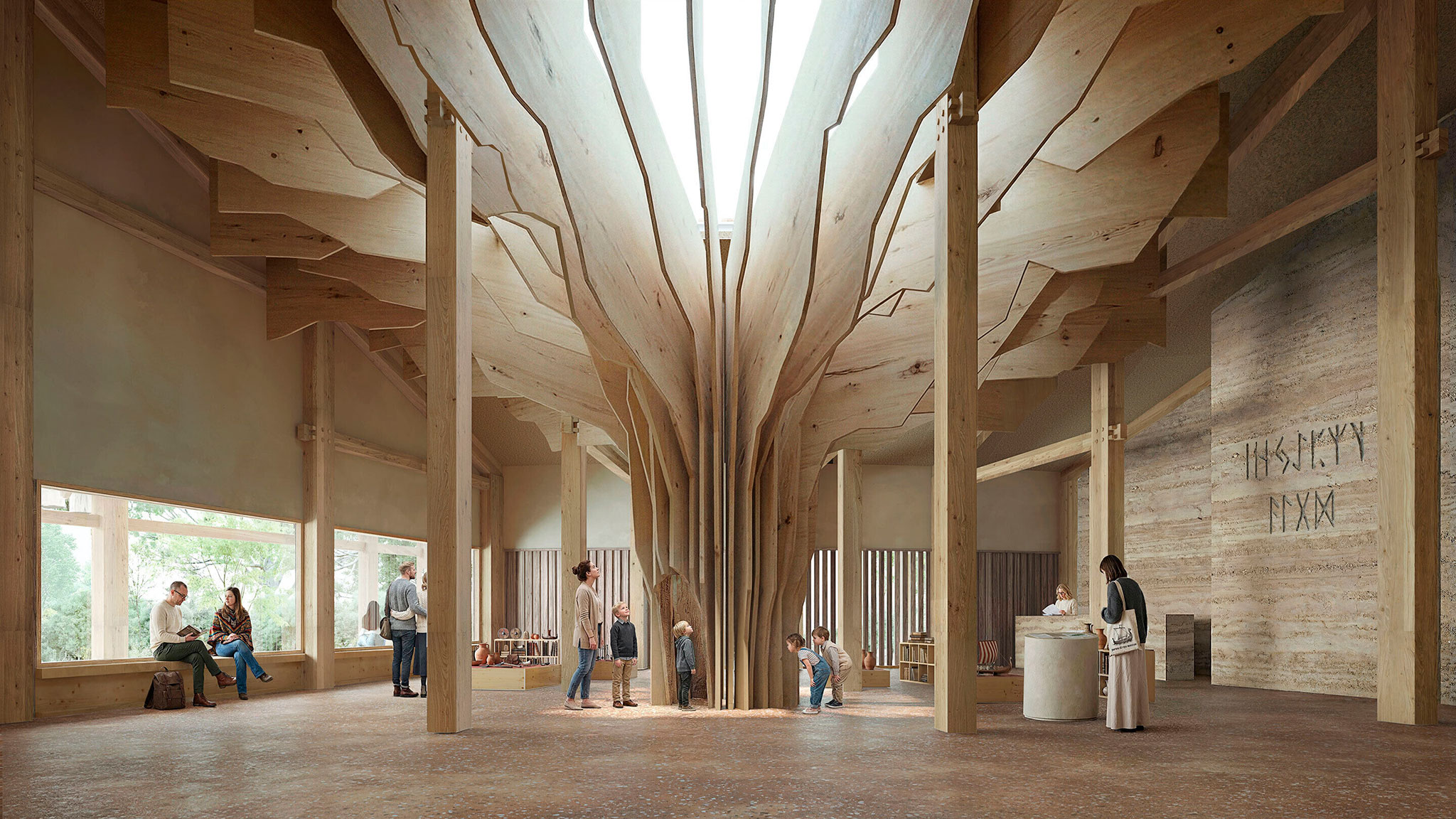
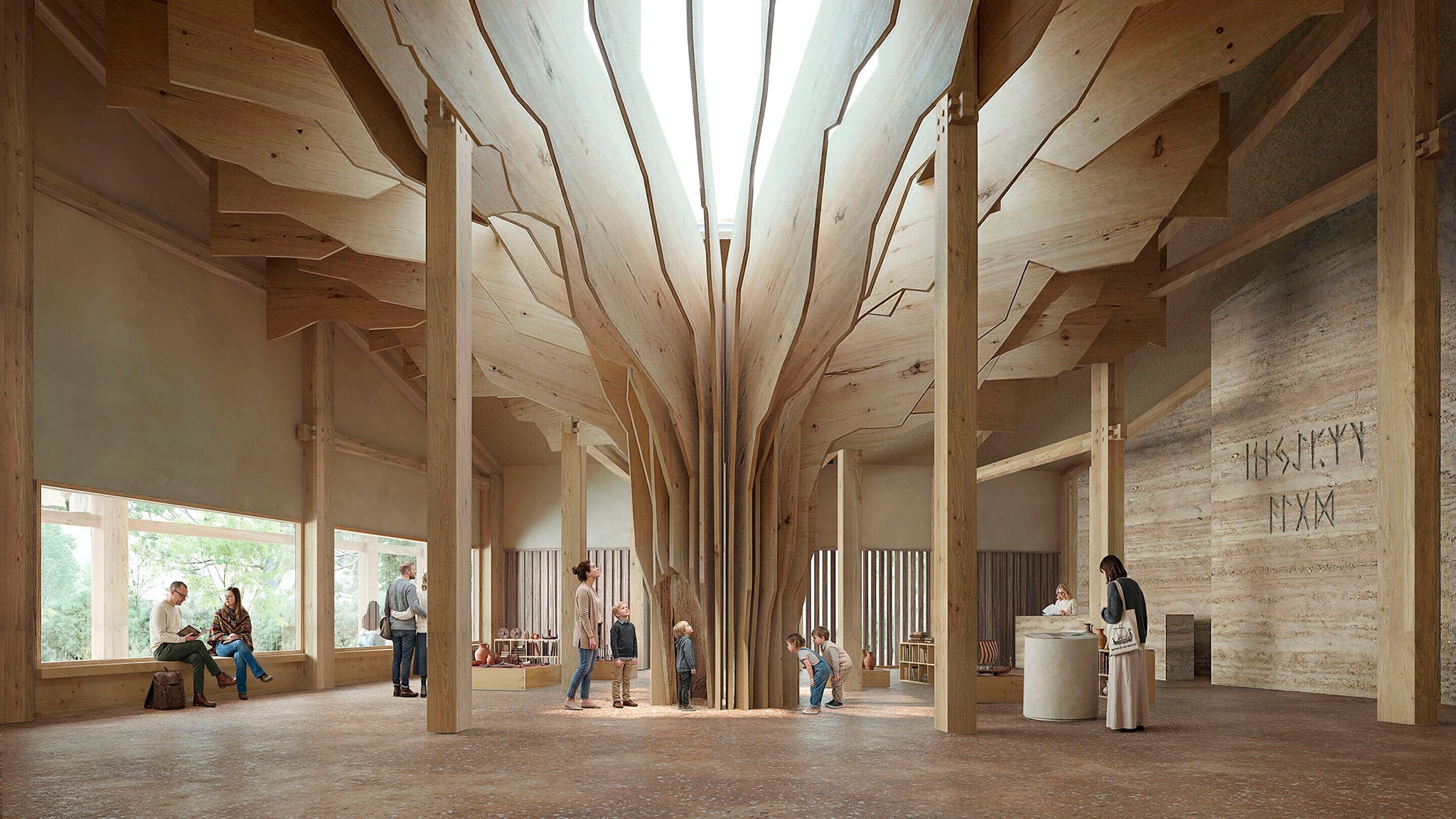
For ADEPT, the competition-winning proposal brings together many of the themes central to the practice: a site-responsive approach, sustainable thinking, and an architecture capable of framing culture, learning, community, and human-scale experiences. The design gradually reveals the story of Ripa as visitors move through the building, while symbolic elements such as the presence of Yggdrasil — the mythological tree at the heart of Norse cosmology — reinforce the project’s connection to Viking heritage and collective memory.
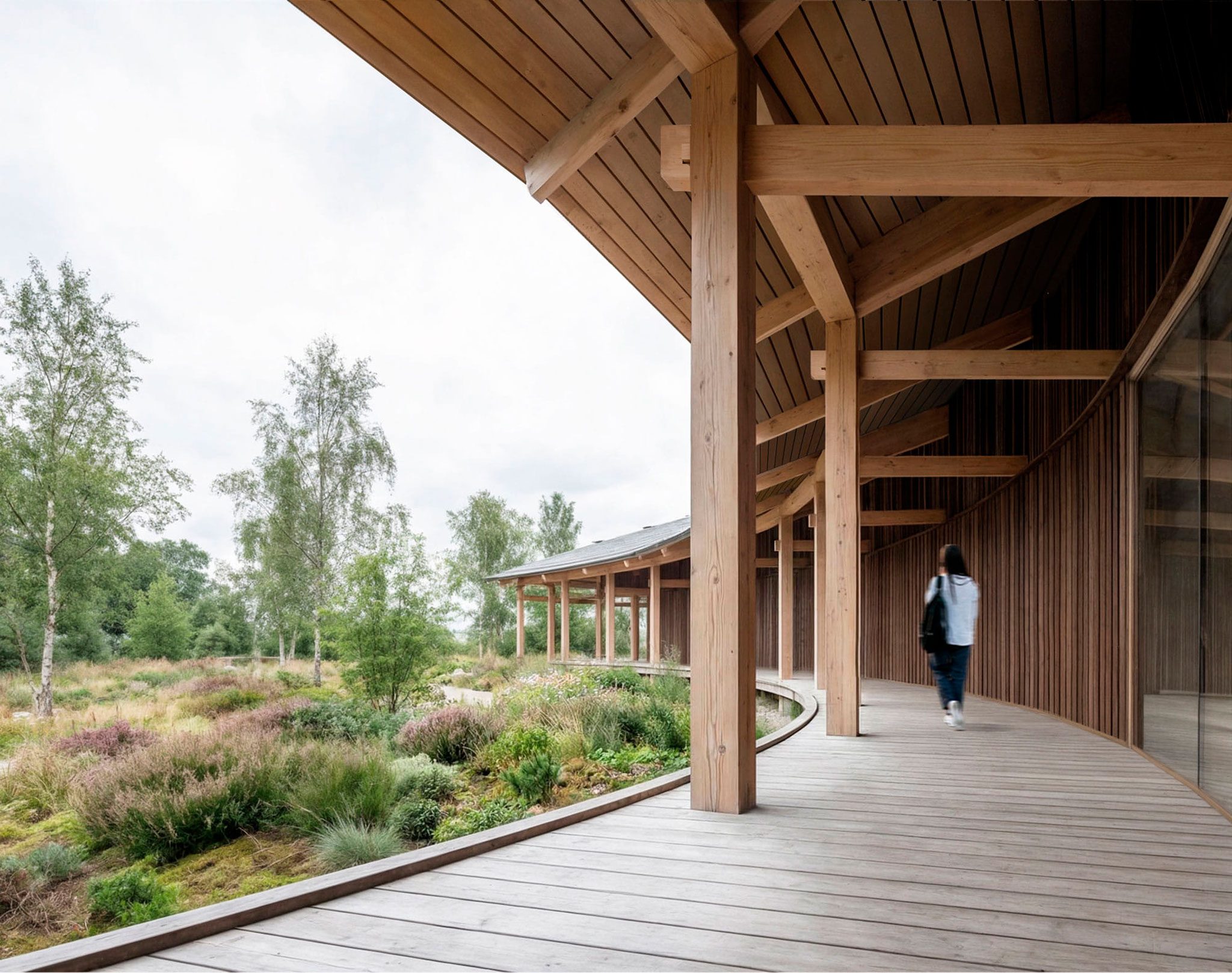
Gate to Ripa by ADEPT. Rendering by Aesthetica Studio.
Project description by ADEPT
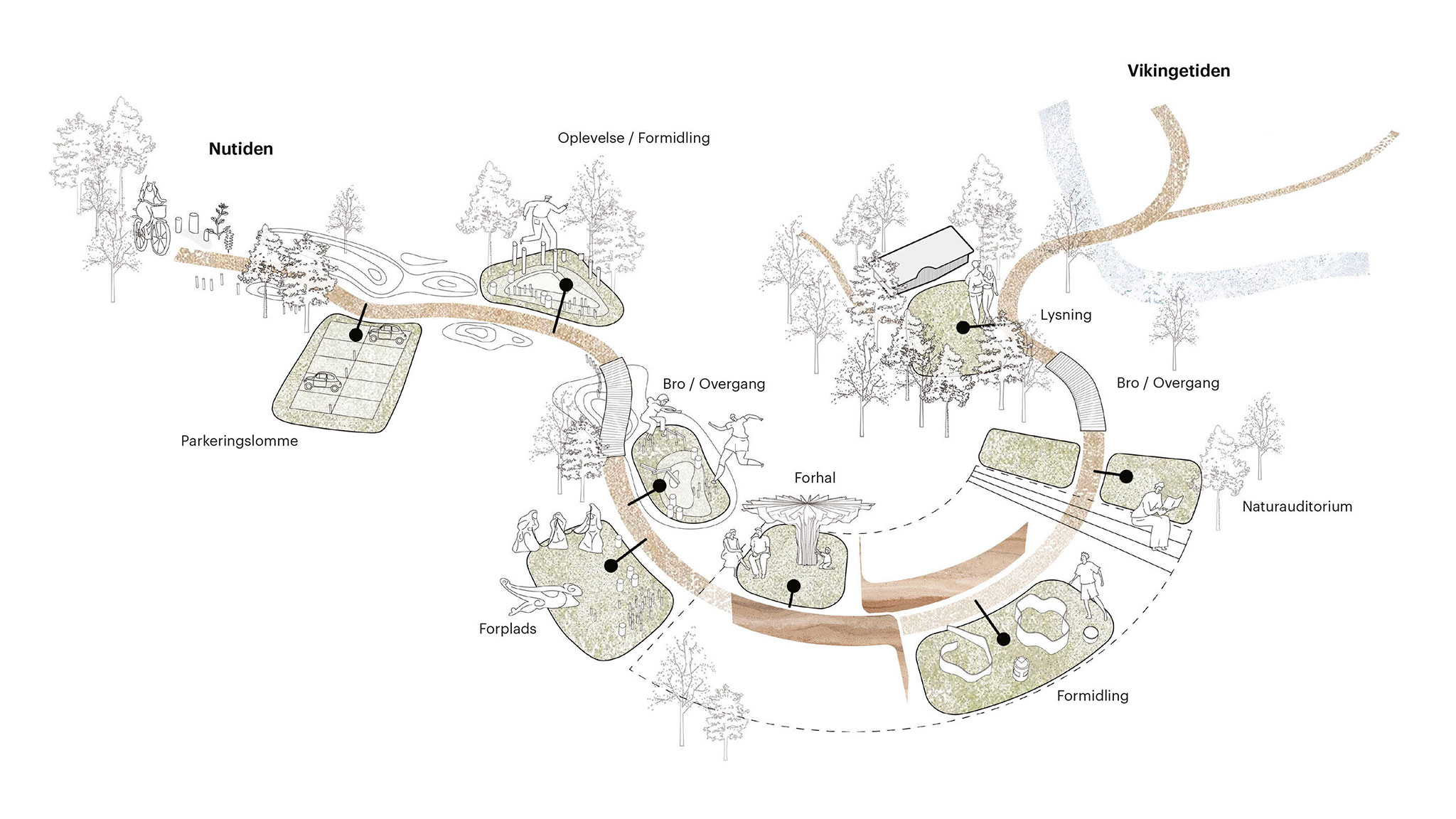
A new welcome and exhibition building for Ribe VikingeCenter is designed as a gradual movement from the pace of the present to the presence of the Viking Age.
The Gate to Ripa turns arrival into the first part of the visitor experience with a new building that both marks the transition from present to past and strengthens the visual communication of Ribe's central position as a city in the age of the Vikings.
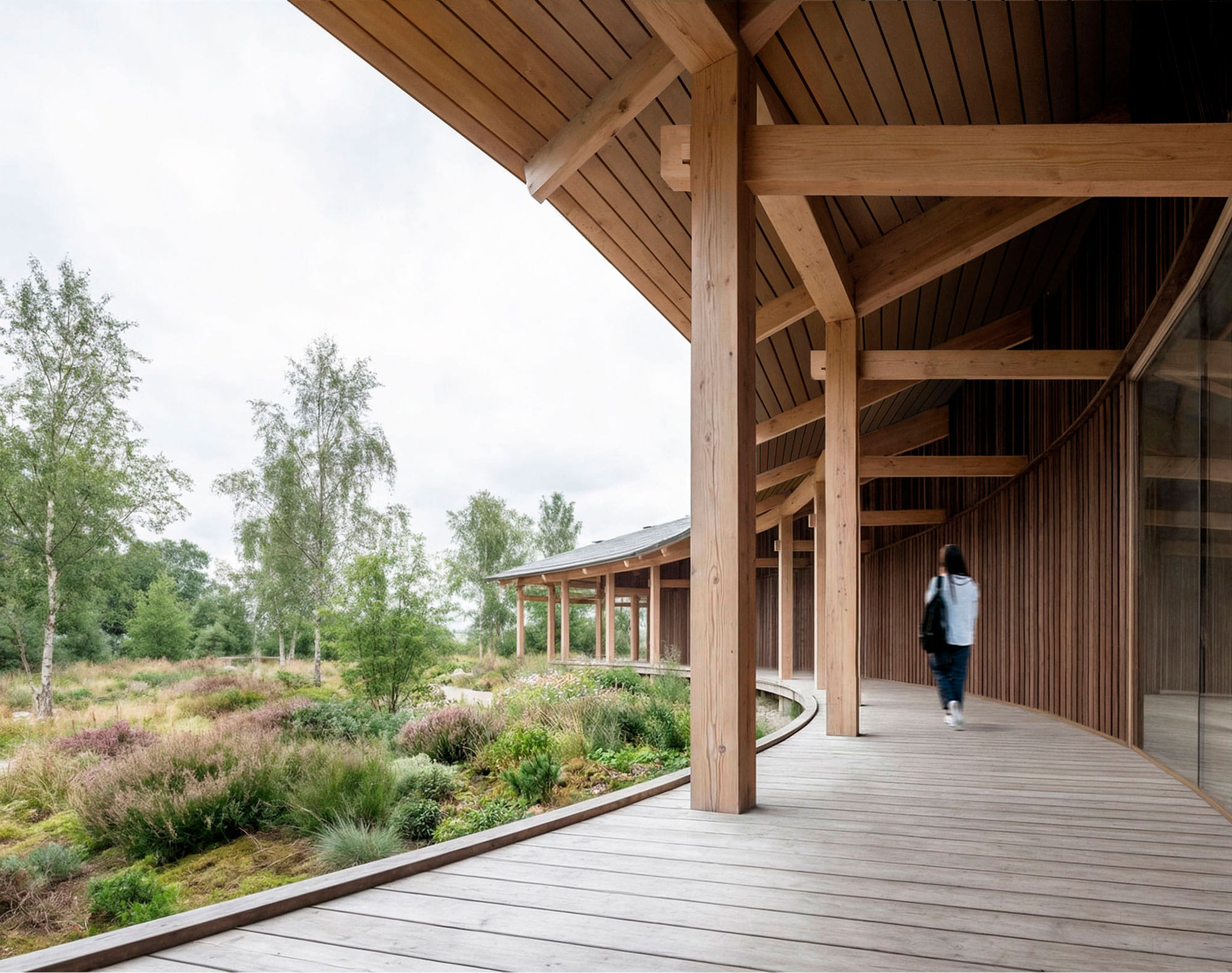
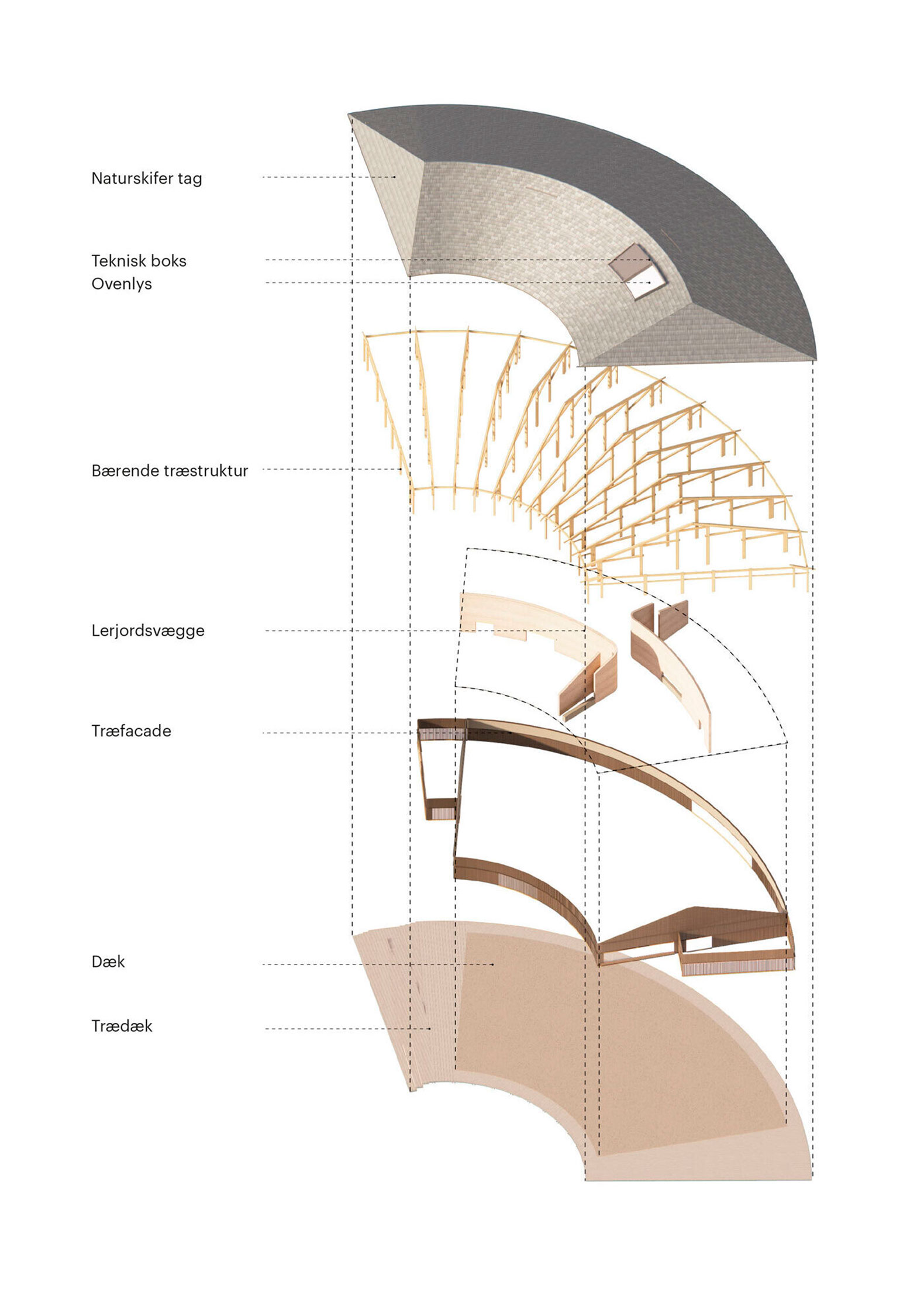
Reduce: The design is based on a simple structural logic using lightly processed, natural materials. A modular timber frame, long-lasting surfaces and passive material properties reduce technical complexity, supporting low-maintenance.
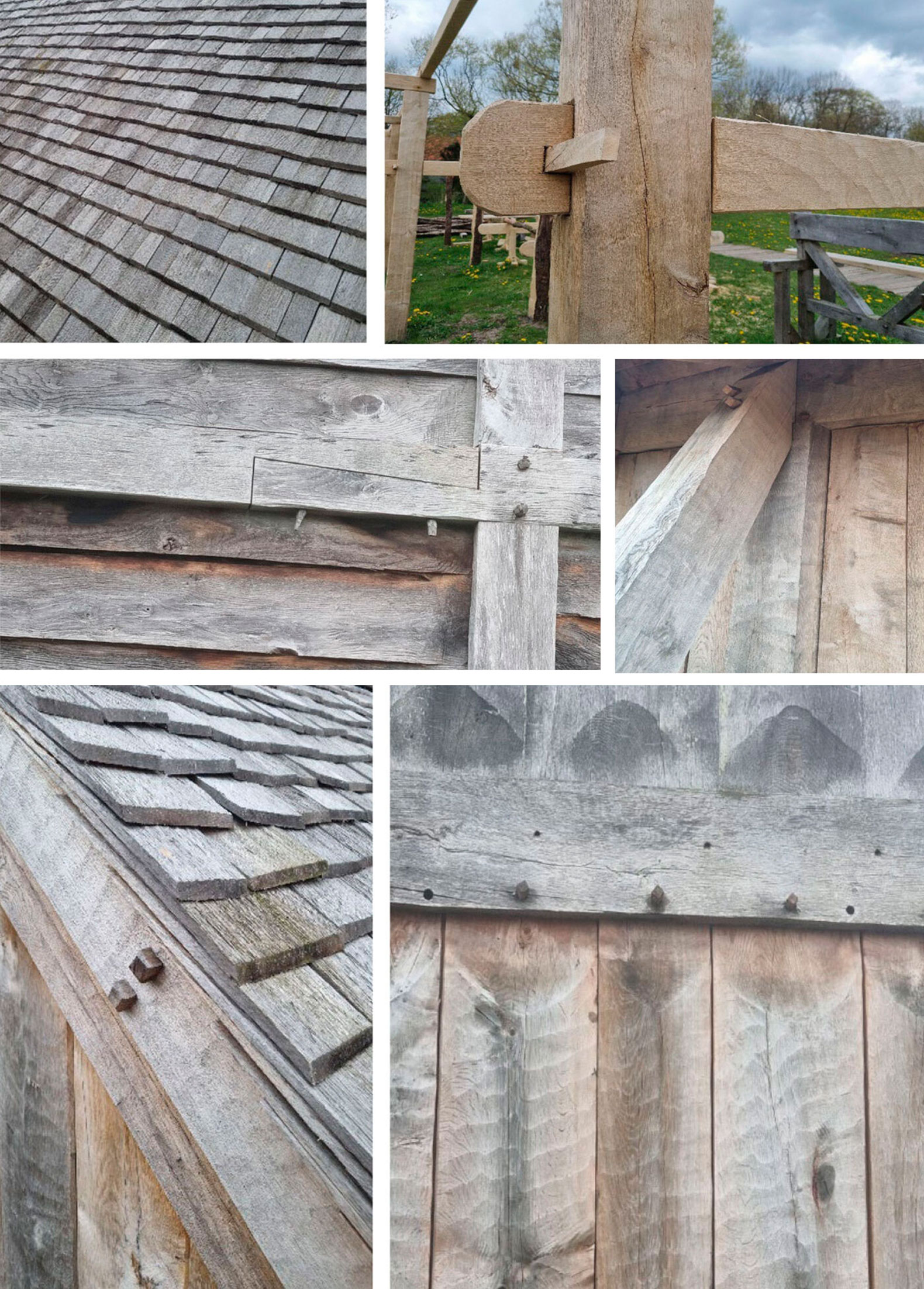
Reuse: Visible and accessible joints allow elements to be replaced and adapted over time. Choices prioritise renewable and durable components, while the structural system follows principles of disassembly wherever possible.
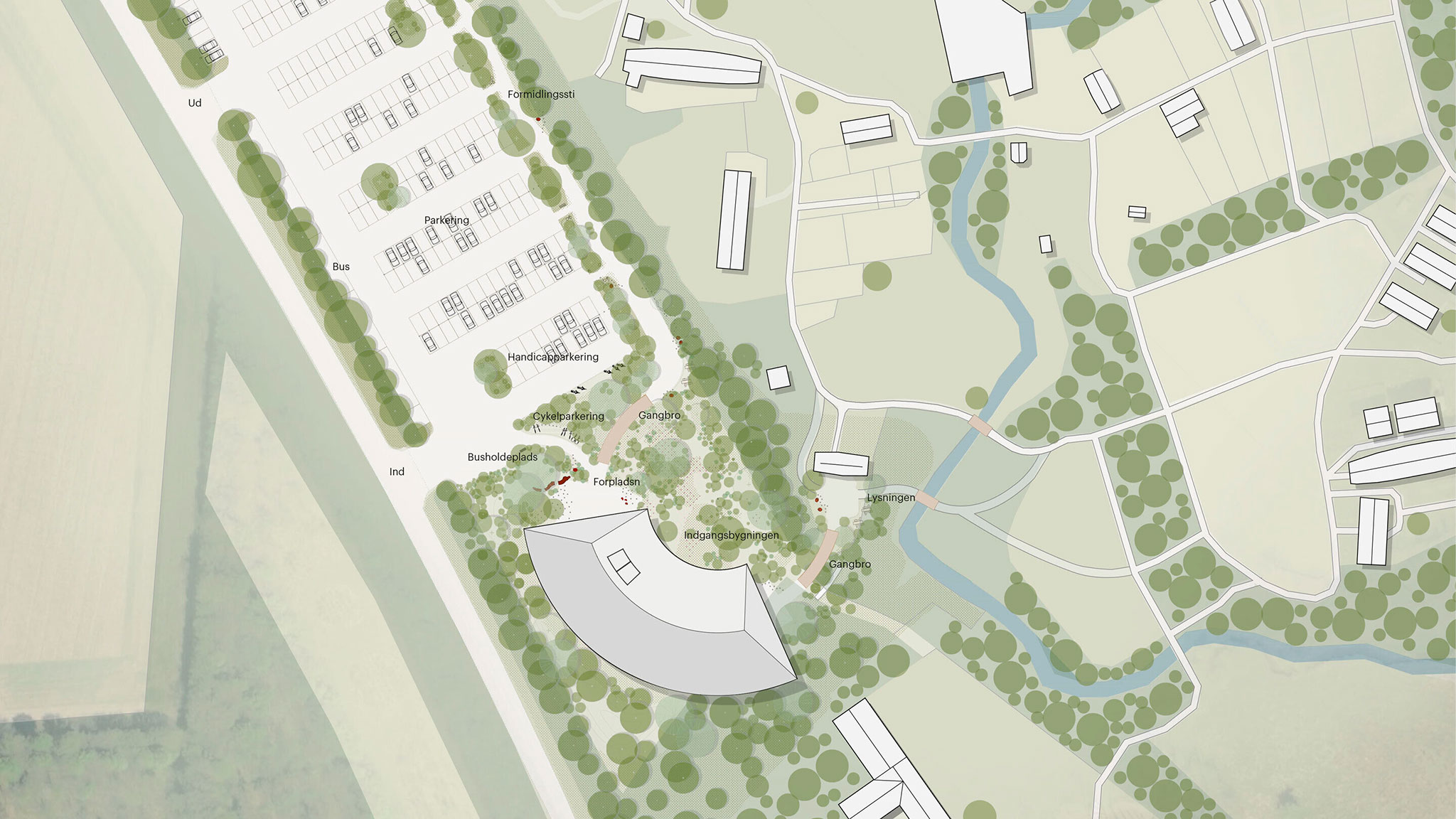
Regenerate: Landscape and building are developed as one joint visitor experience. Planting, terrain, paths, and timber markers guide guests and strengthen the transition between arrival and the Viking environment.
Reconnect: The design connects visitors with history on a spatial journey. Architecture, exhibition and landscape work together with learning, gathering and communication to make Ribe’s Viking Age tangible and accessible.
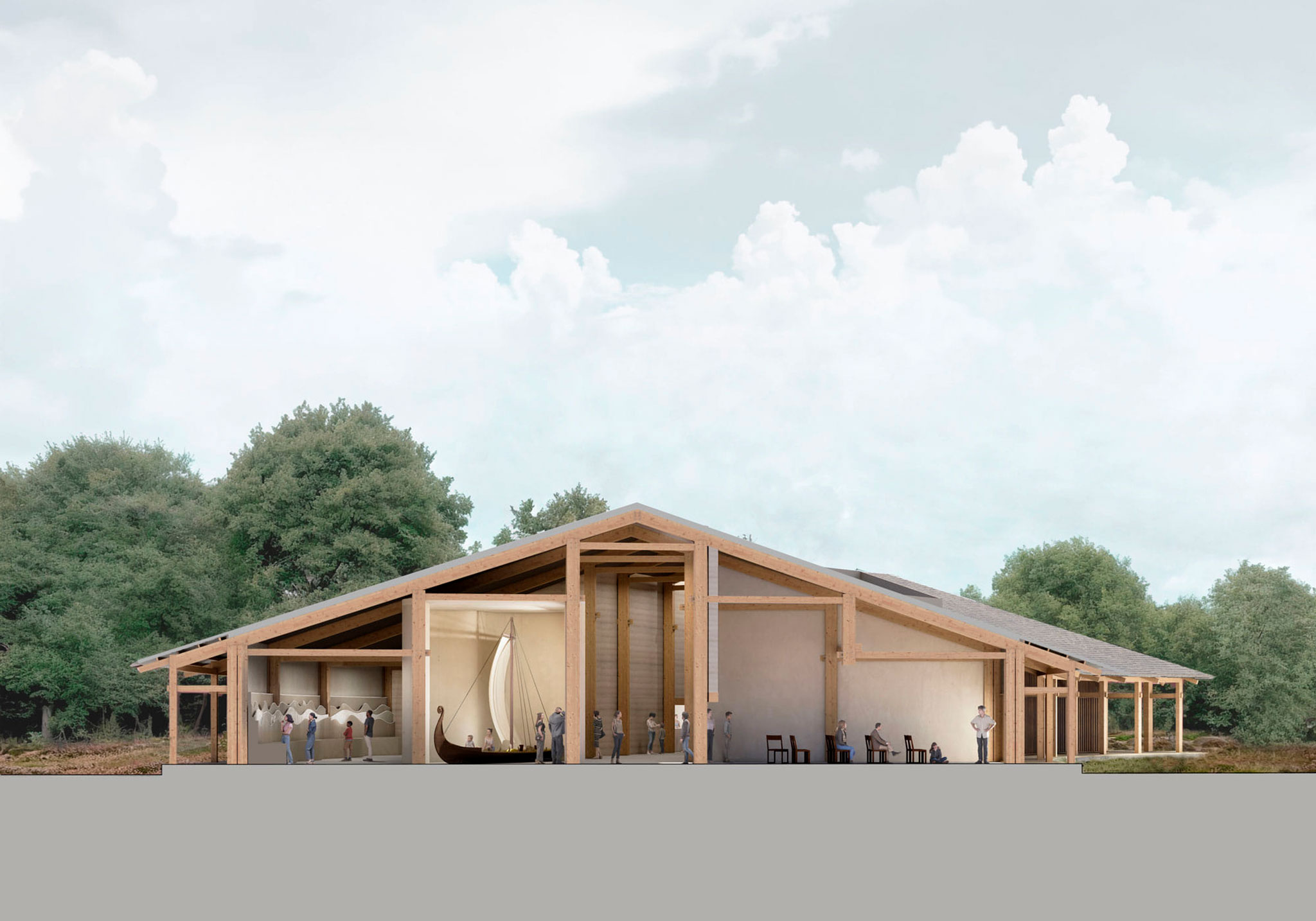
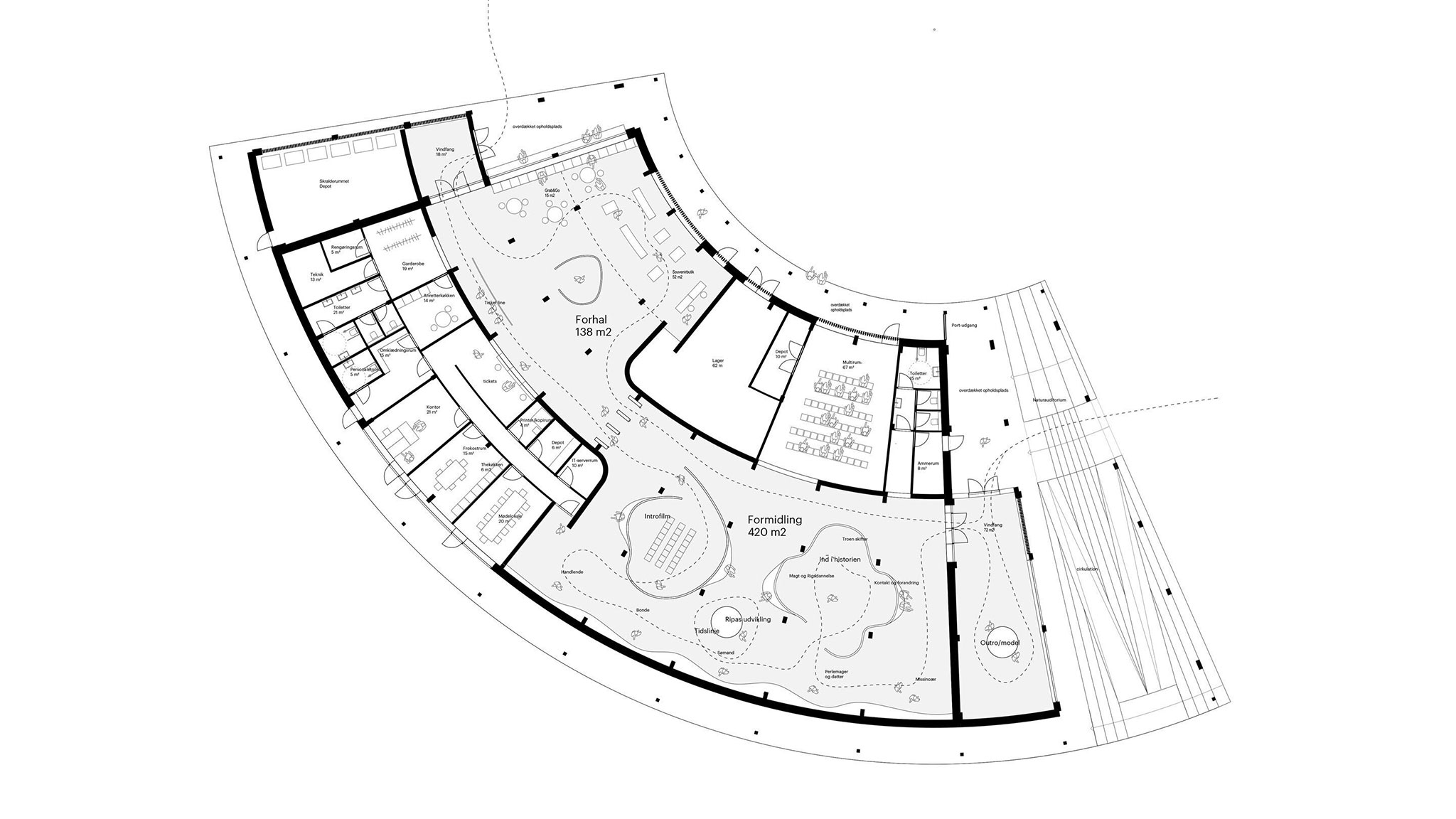
Blending the transition between arrival, exhibition and outdoor museum, the curved form gathers the visitor journey in a clear sequence. Under a wide roof, a repeated timber frame and curved rammed-earth walls organize the route from foyer to exhibition and onwards into the center.
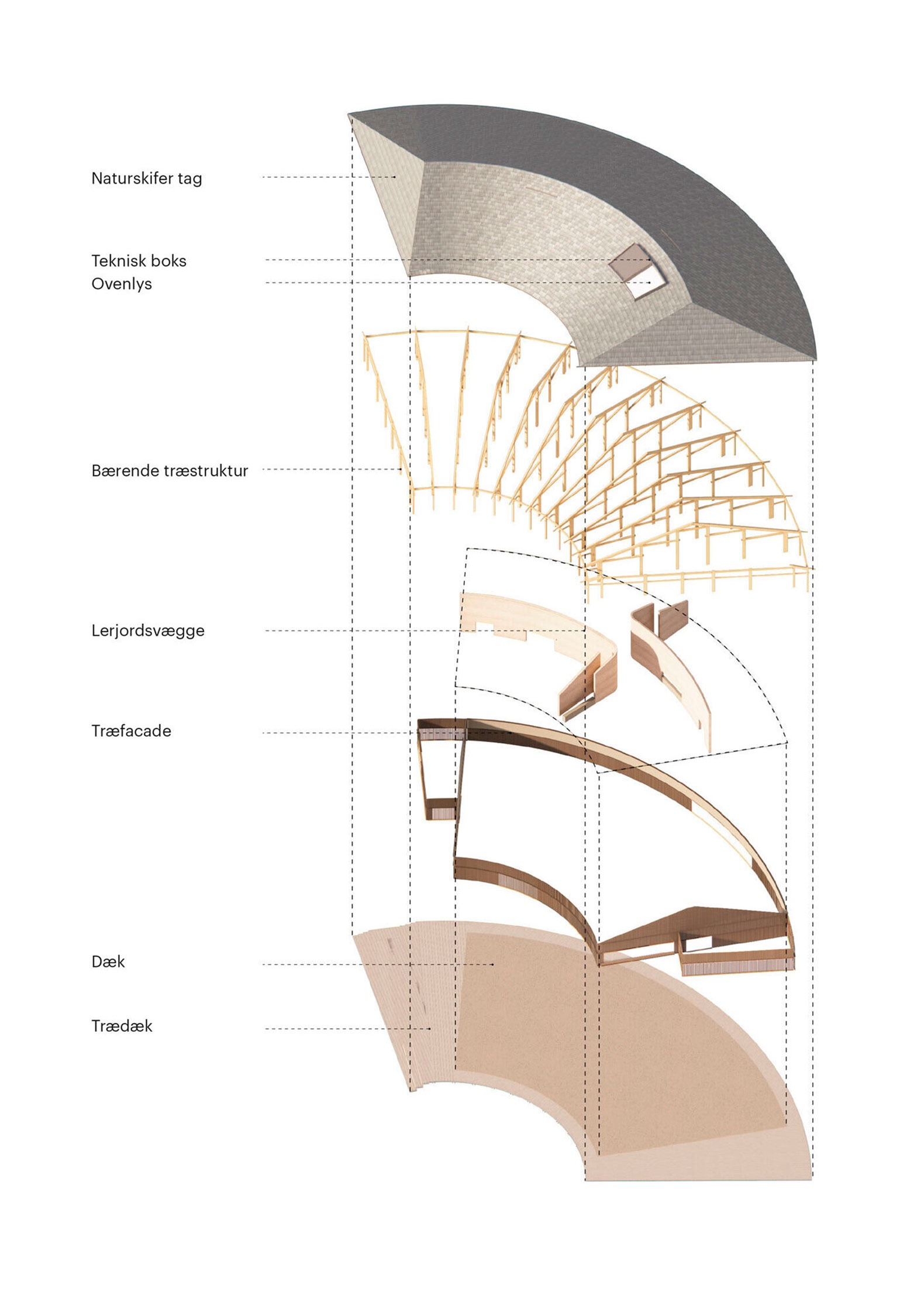
The central passage through the building becomes the project’s spatial spine: a clear orientation point and a gradual transition from one time to another.
Inside, the exhibition unfolds together with the architecture. Daylight is filtered through a central tree-like installation in the foyer, imitating the Yggdrasil tree of life of the Nordic Mythology, while soft daylight, tactile clay walls and glimpses of the landscape guide the movement through the exhibition spaces.
Practical functions such as ticketing, shop, staff and visitor facilities are integrated around the main route, keeping the wayfinding intuitive and direct.
The architecture does not imitate history, but translates the material palette, structural logic and relationship between building and landscape found in the Viking Age architecture.
Timber, clay, light and visible joints become part of the storytelling, making the building itself an active layer in the interpretation and communication of the Ripa of the past. The timber construction draws on inspiration from the main techniques of the age.