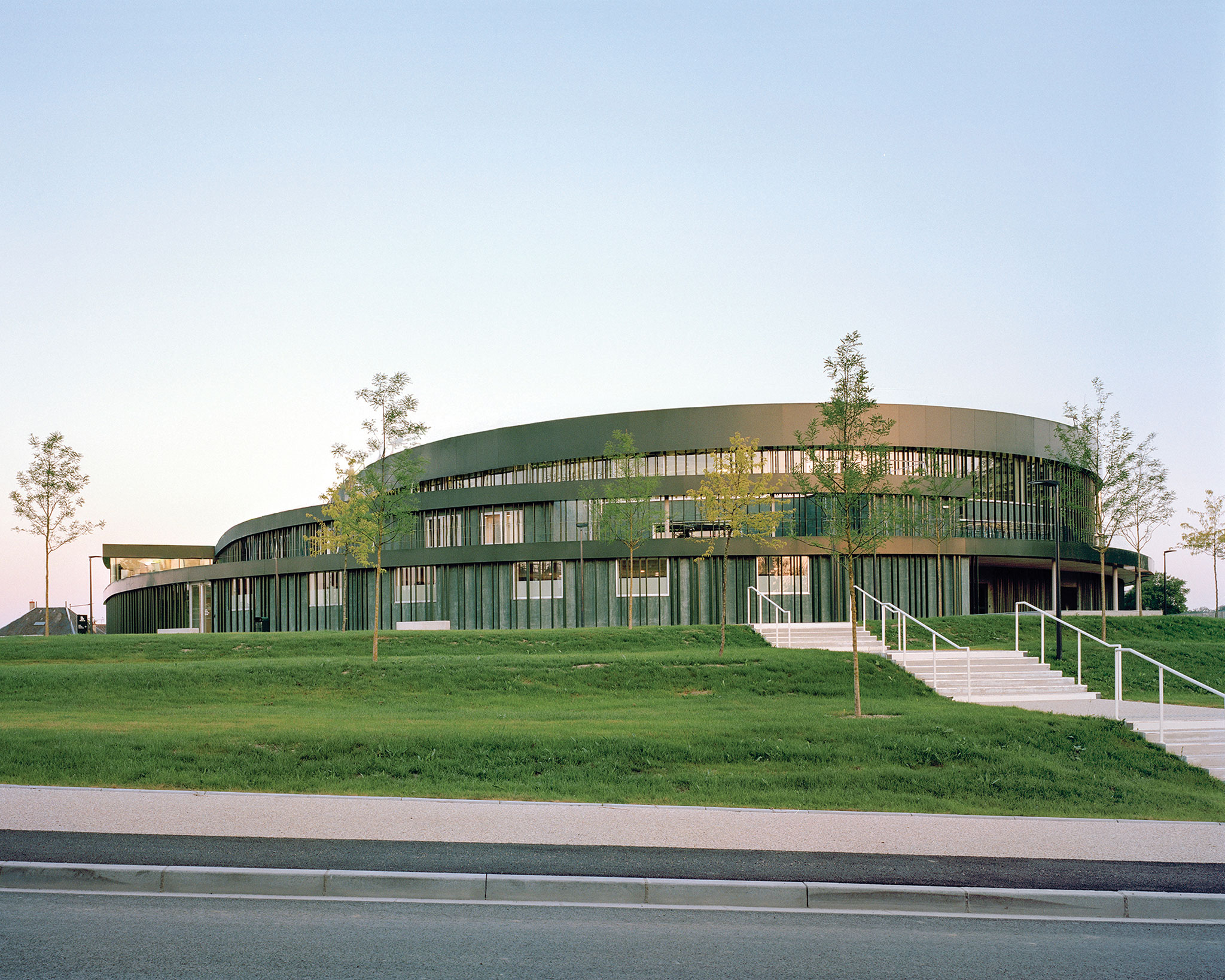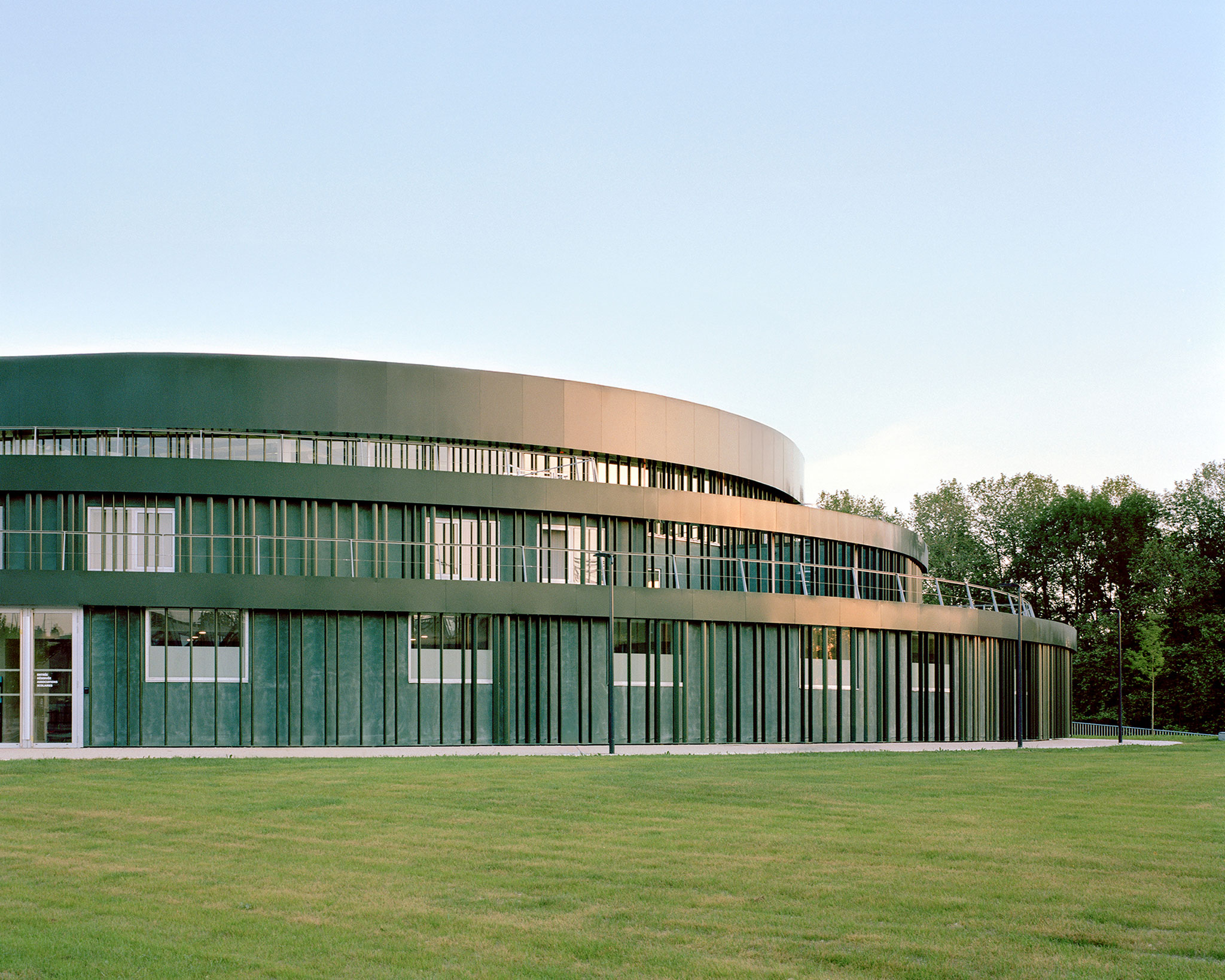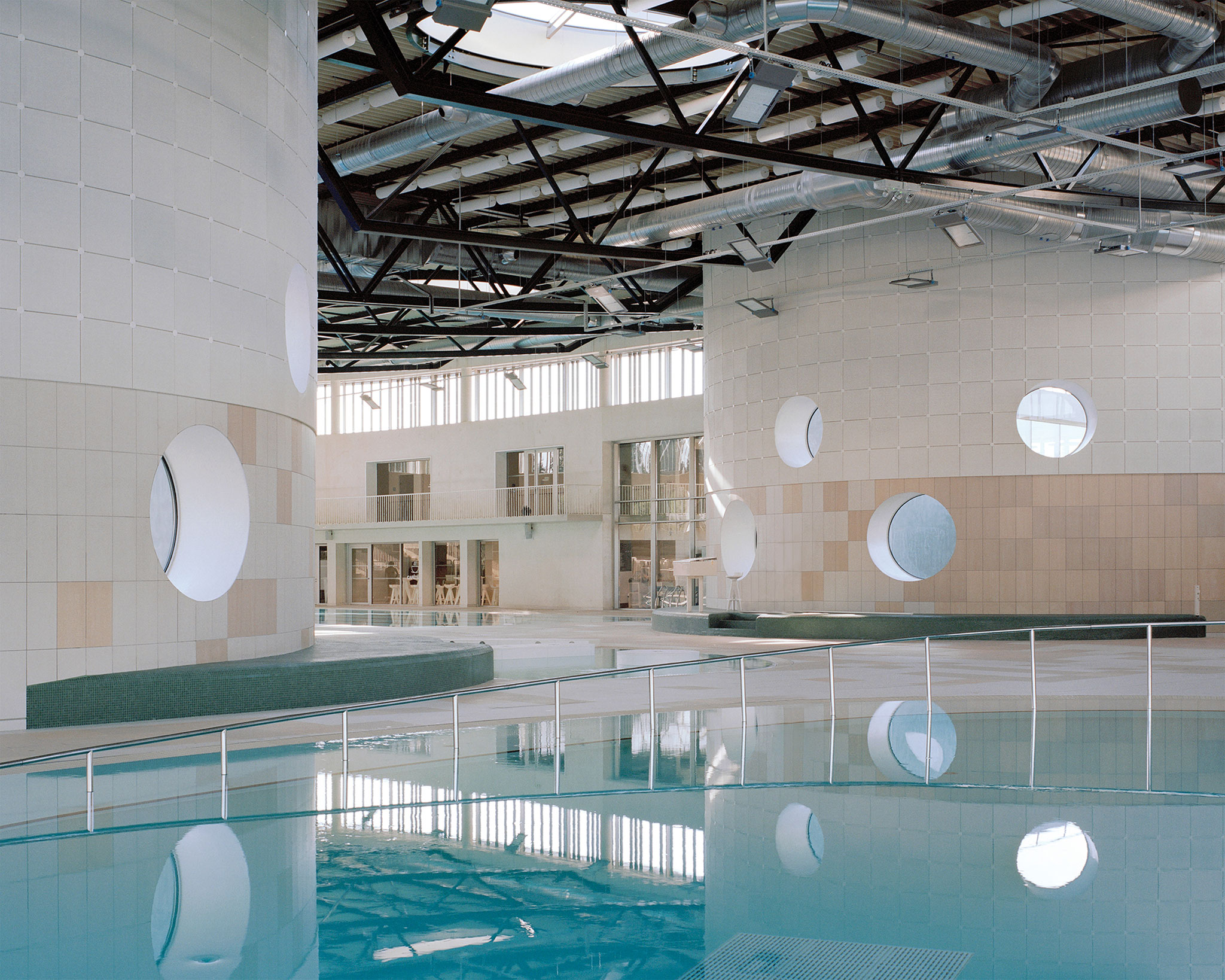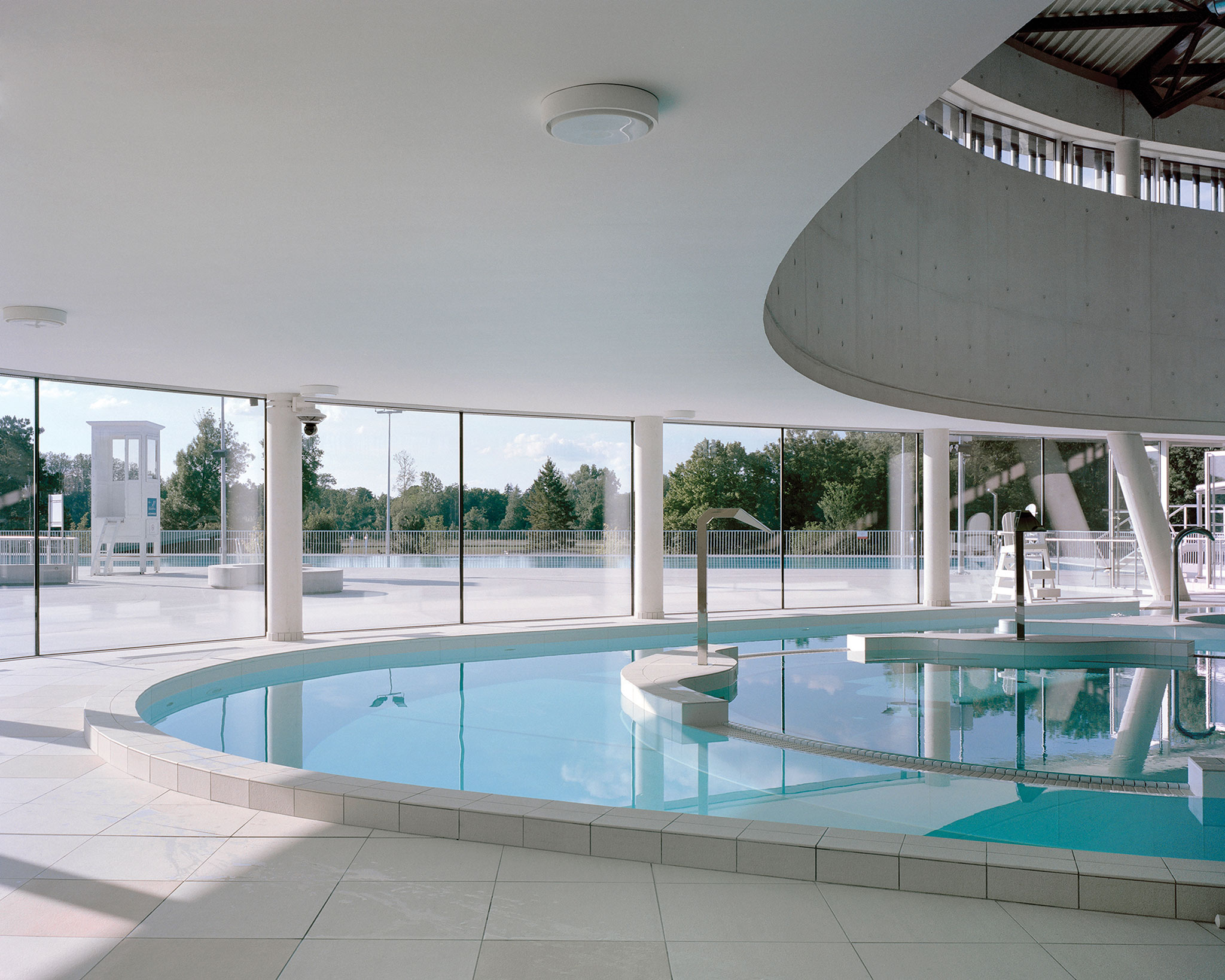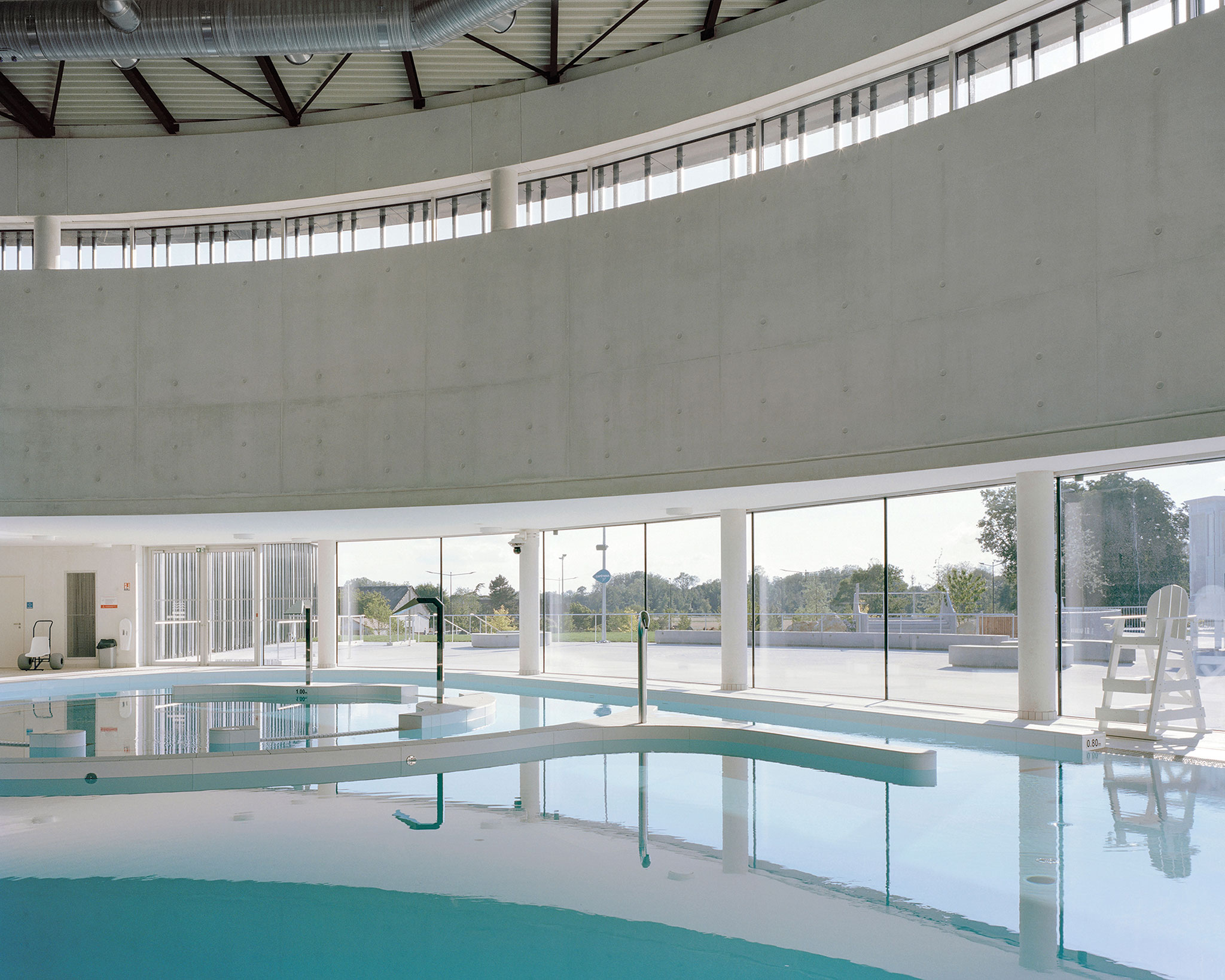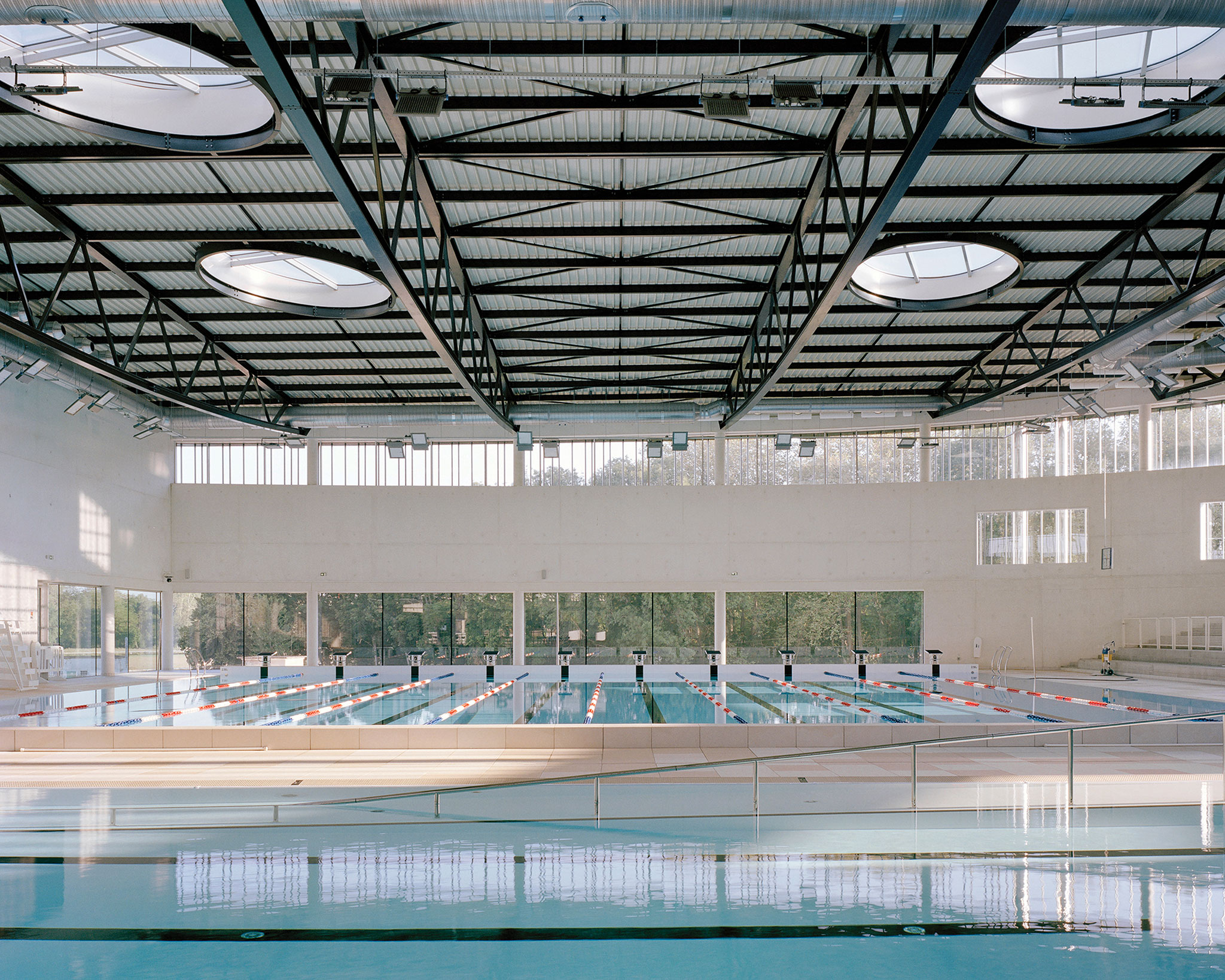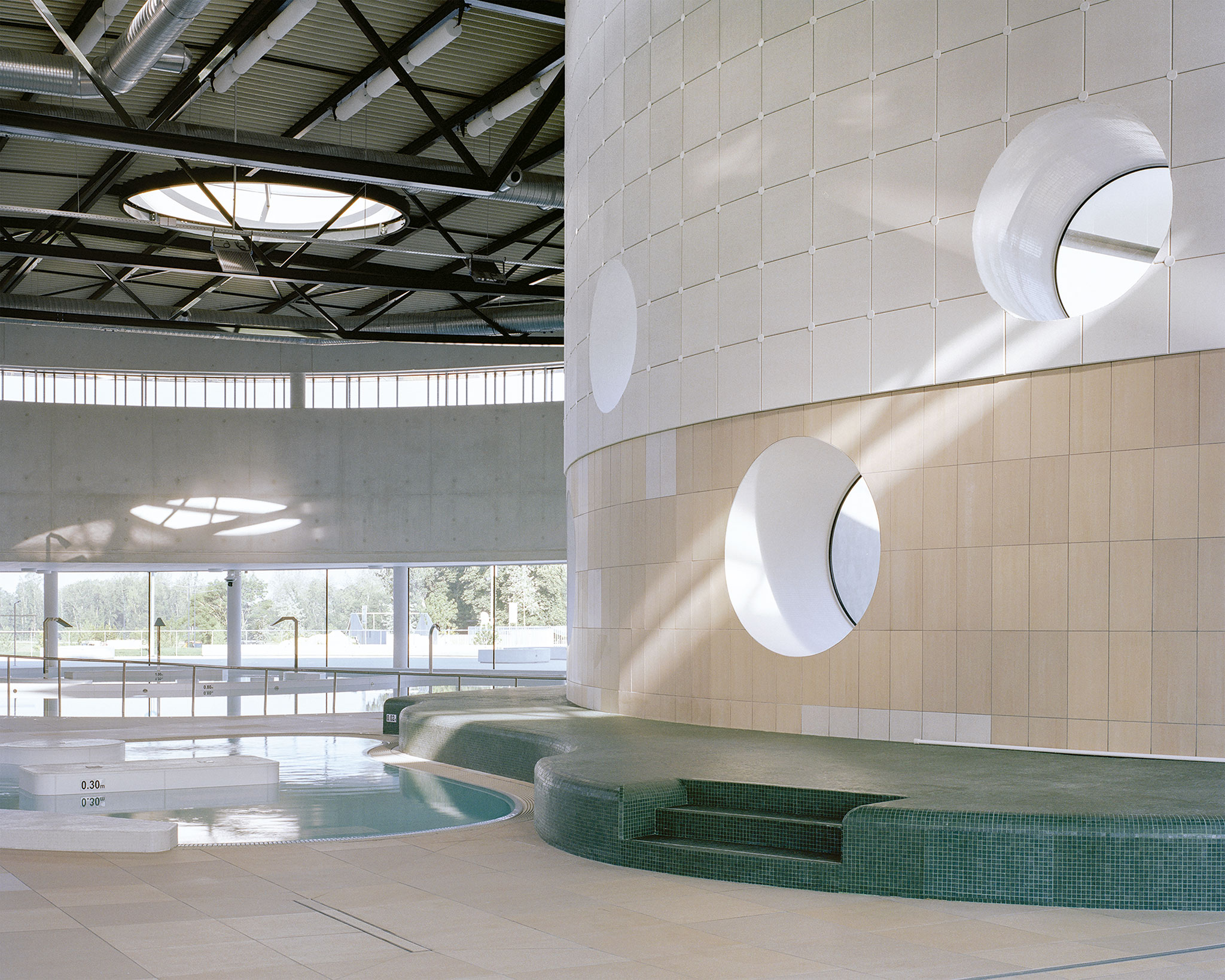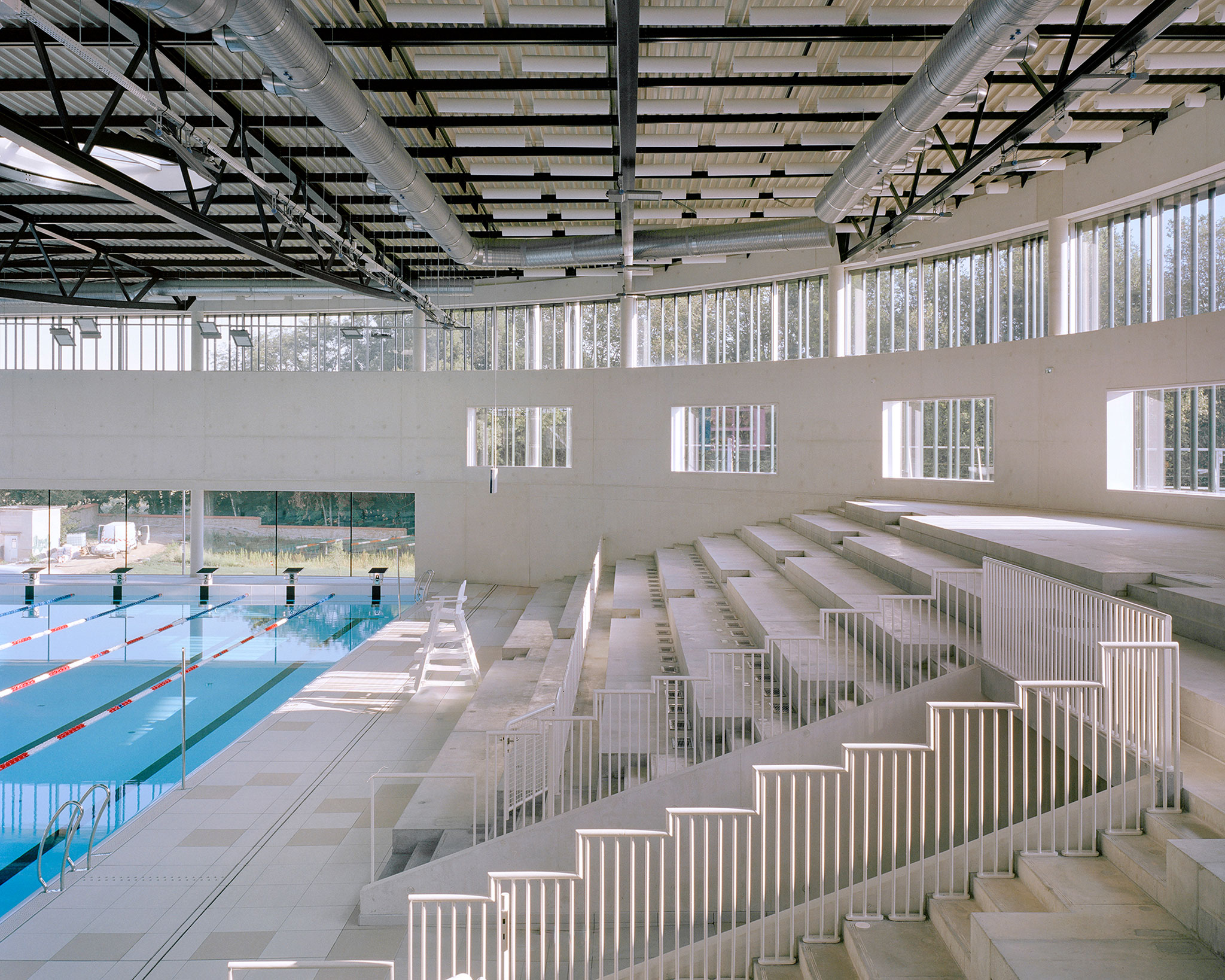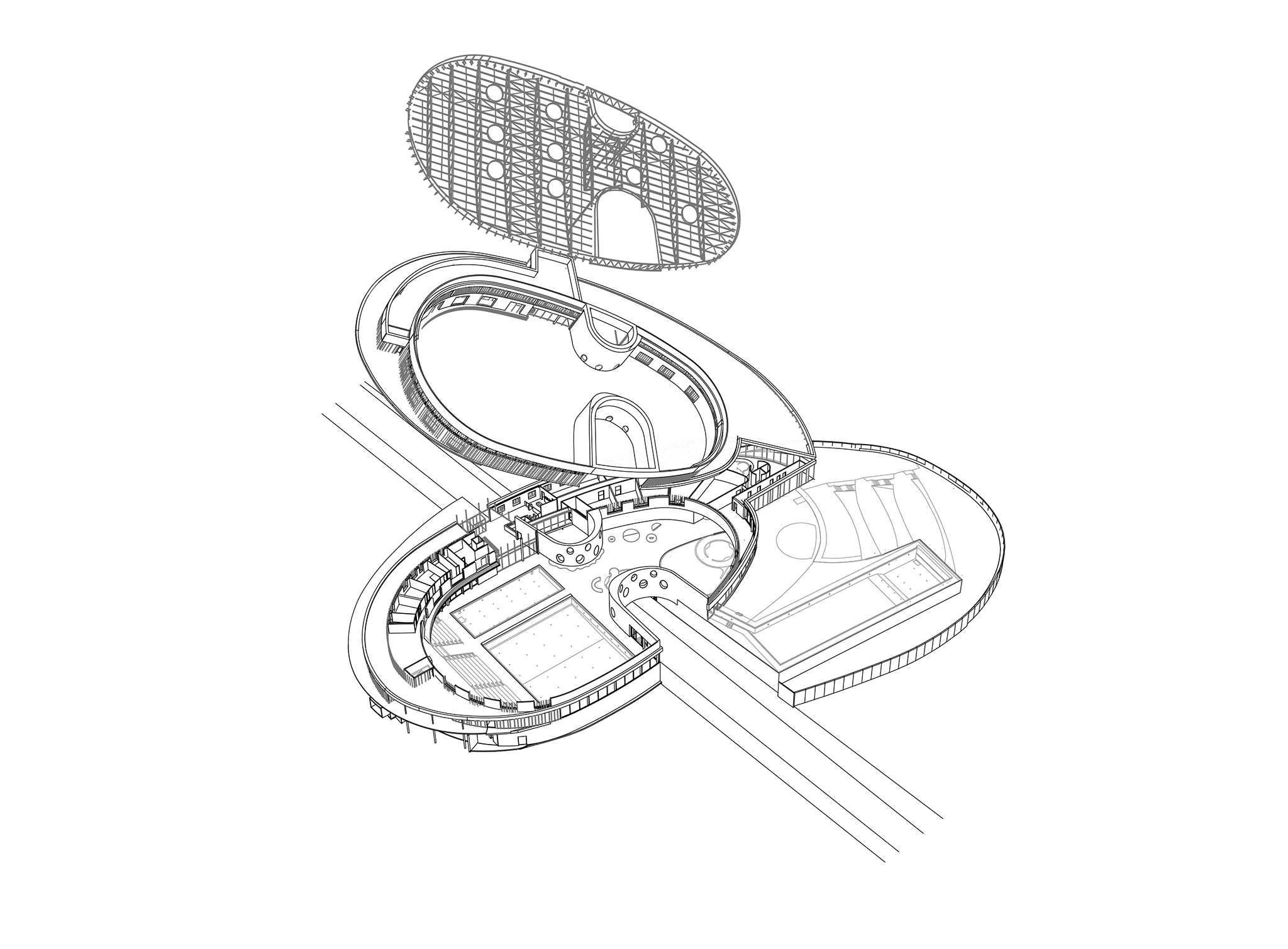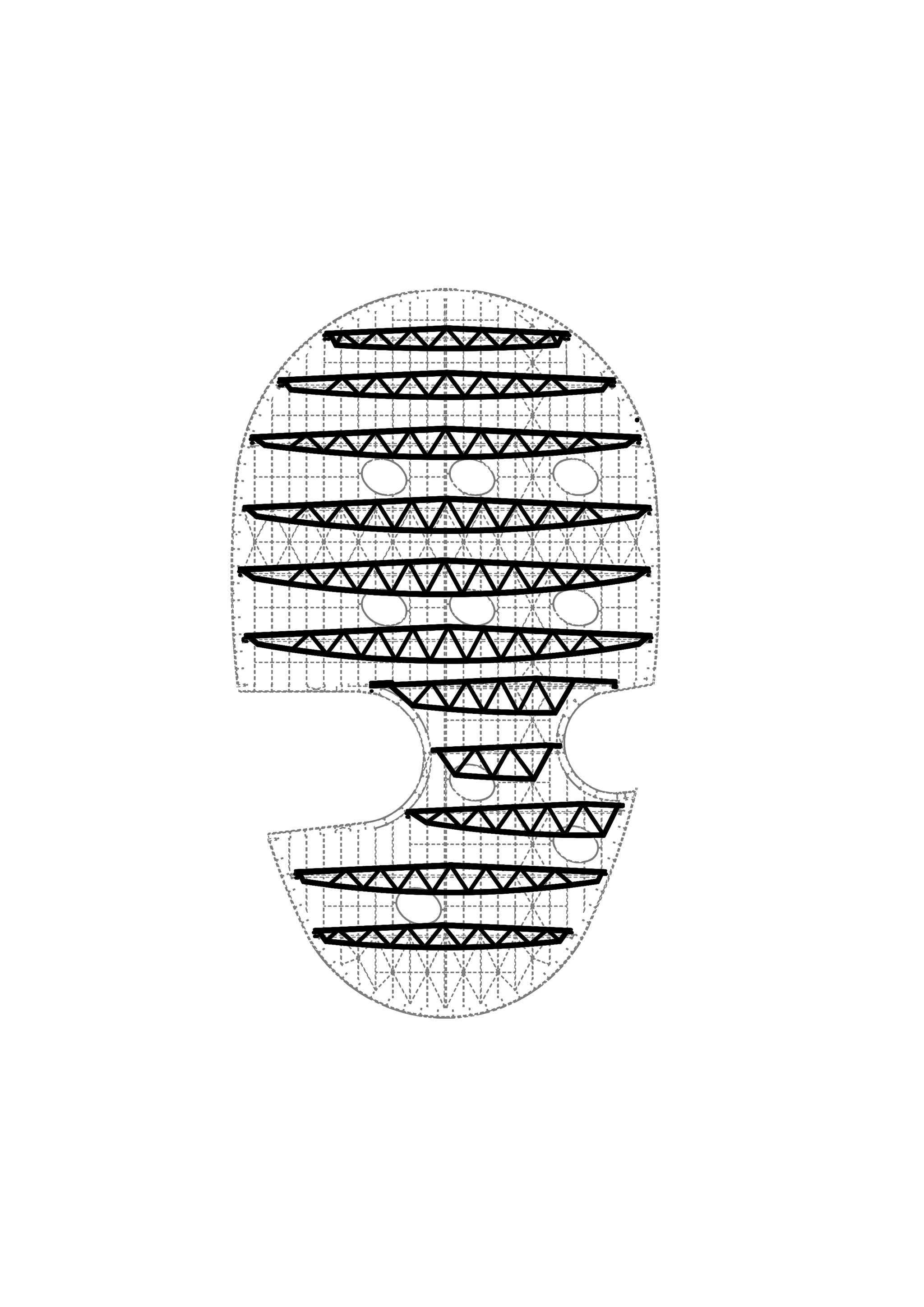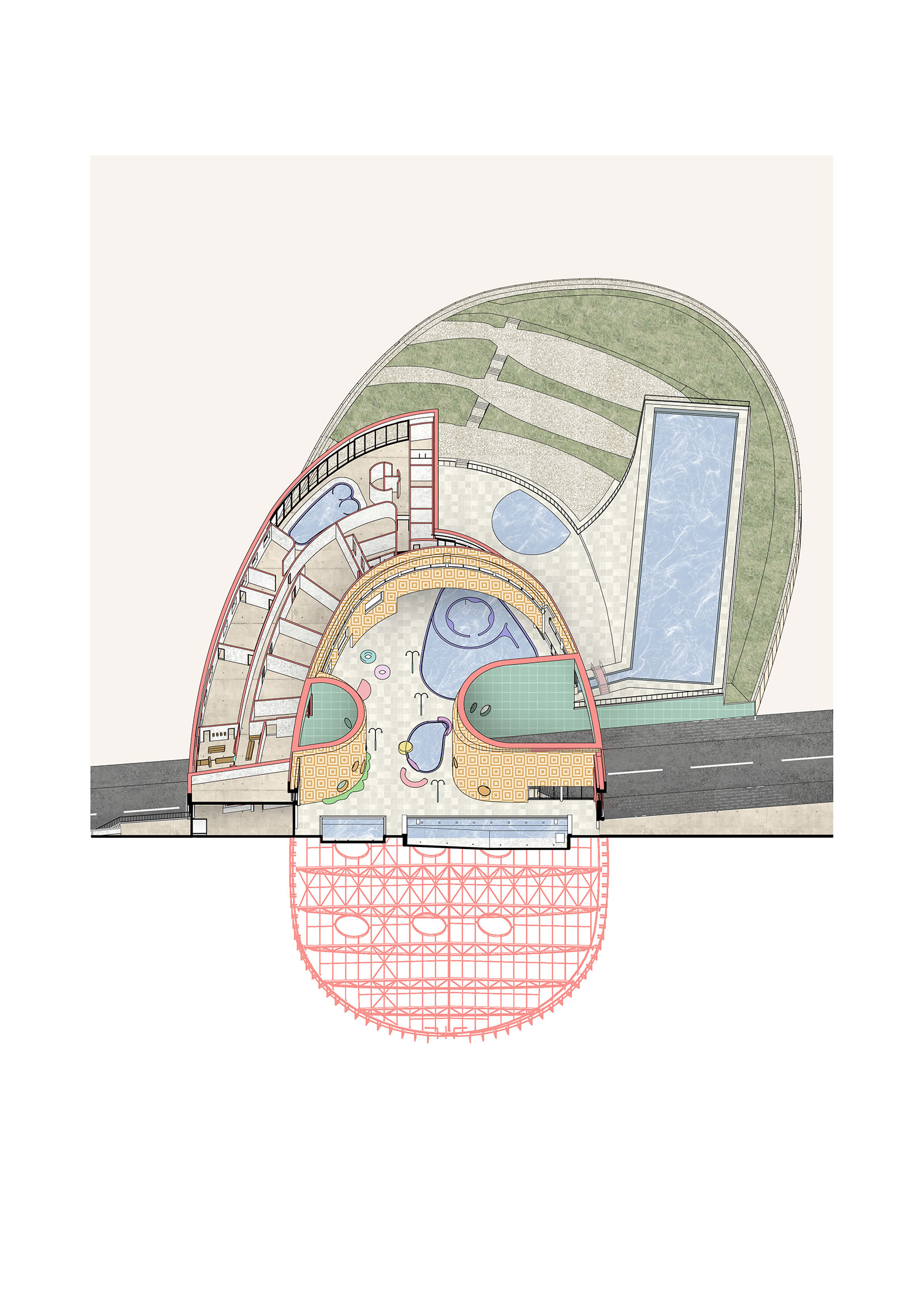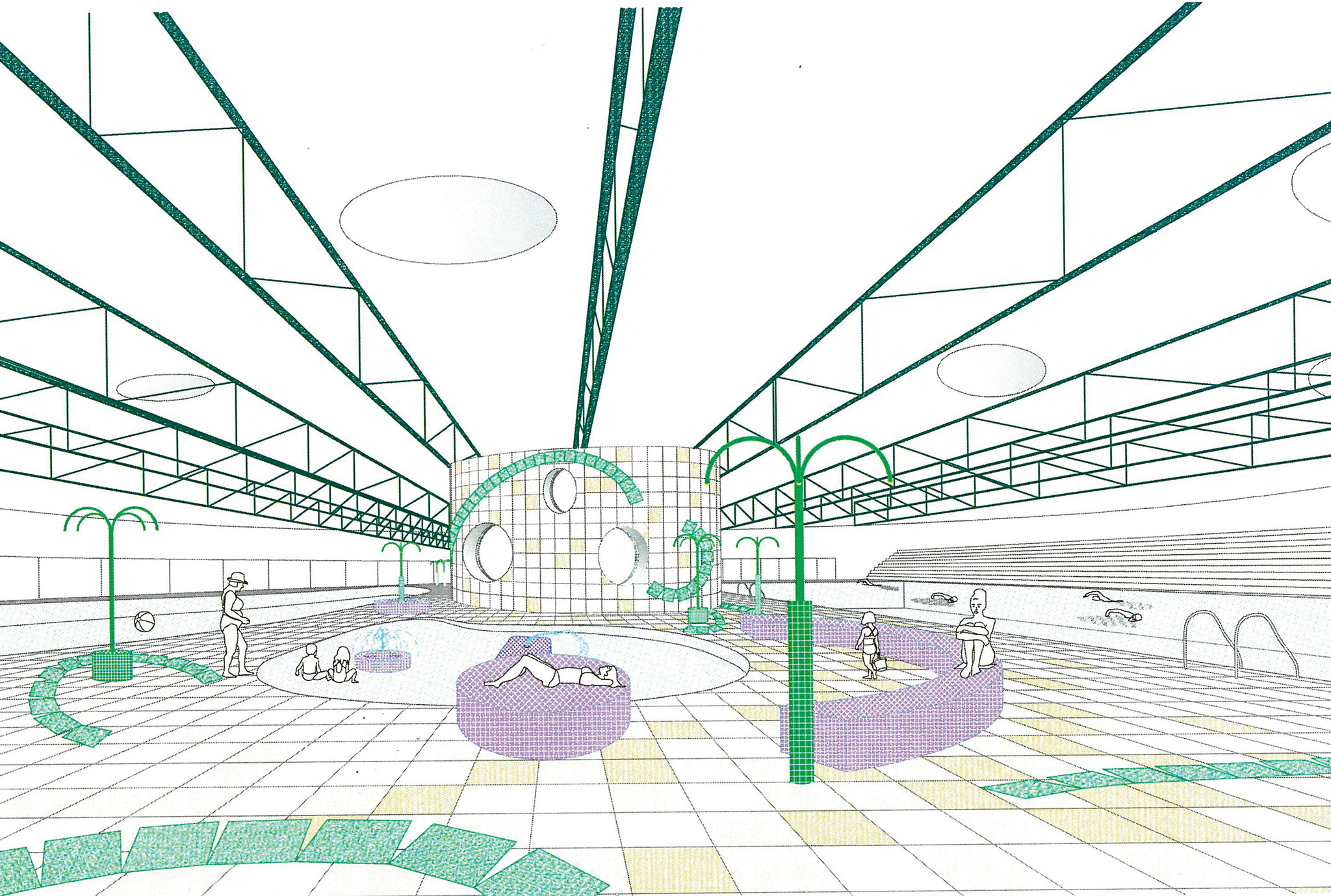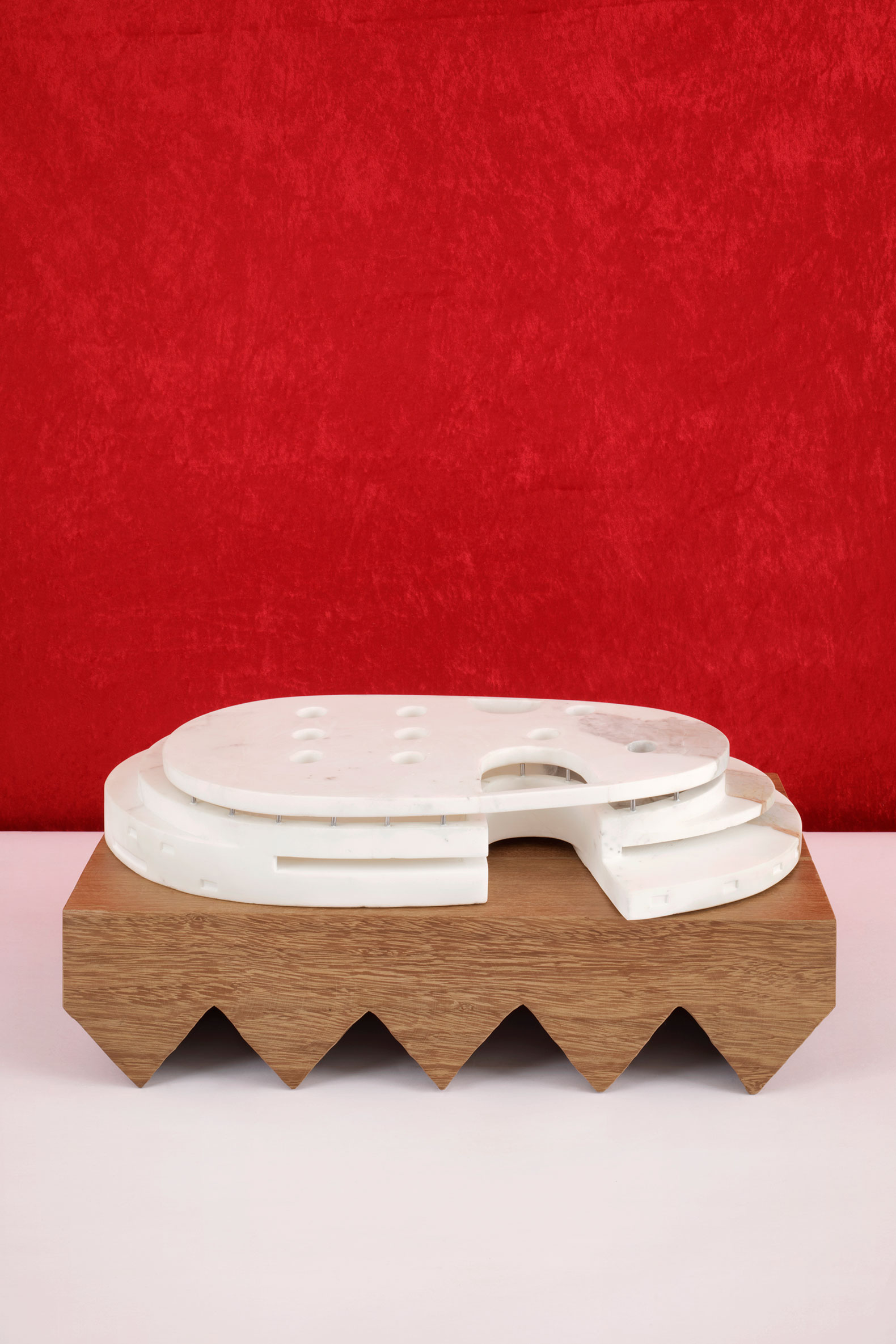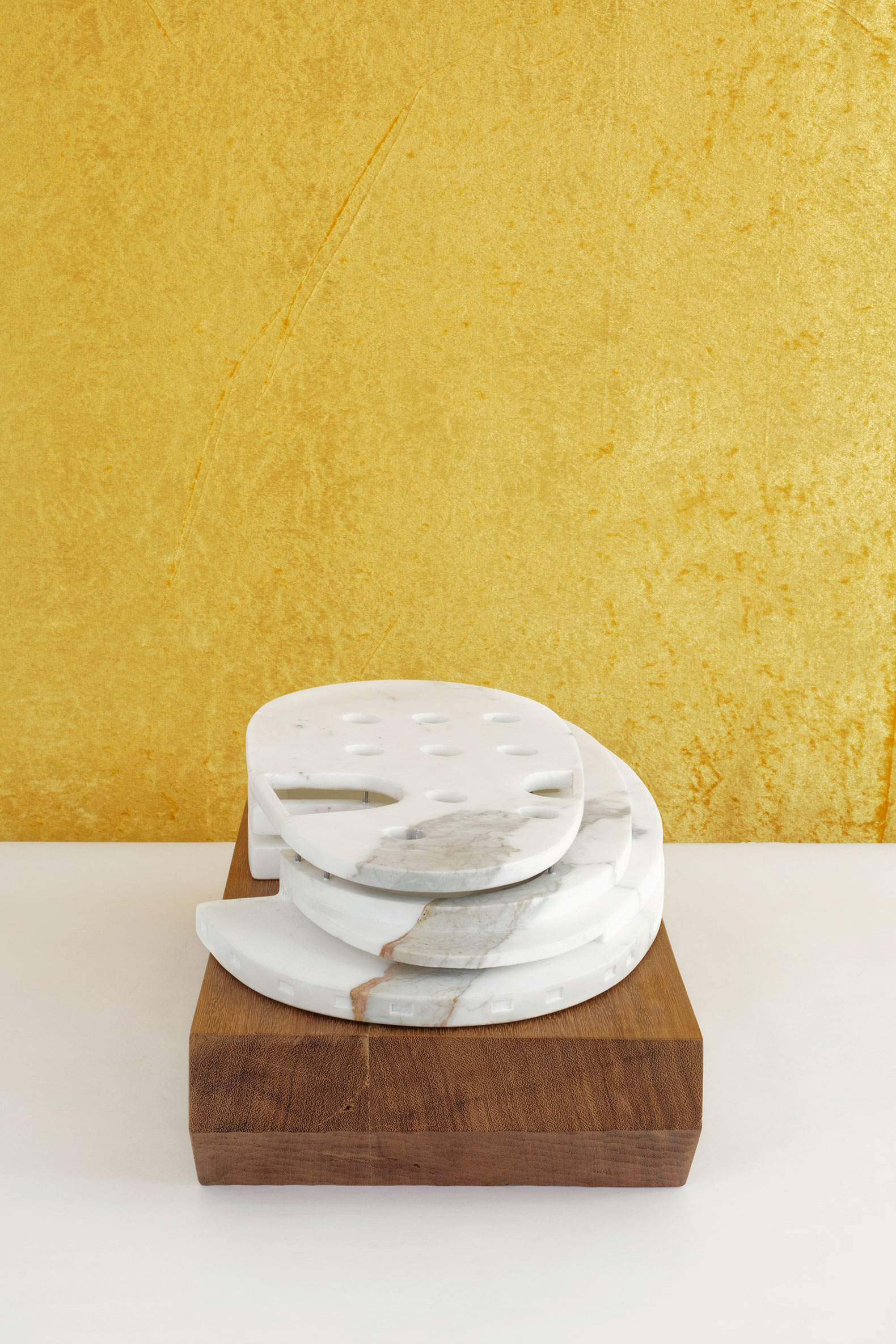
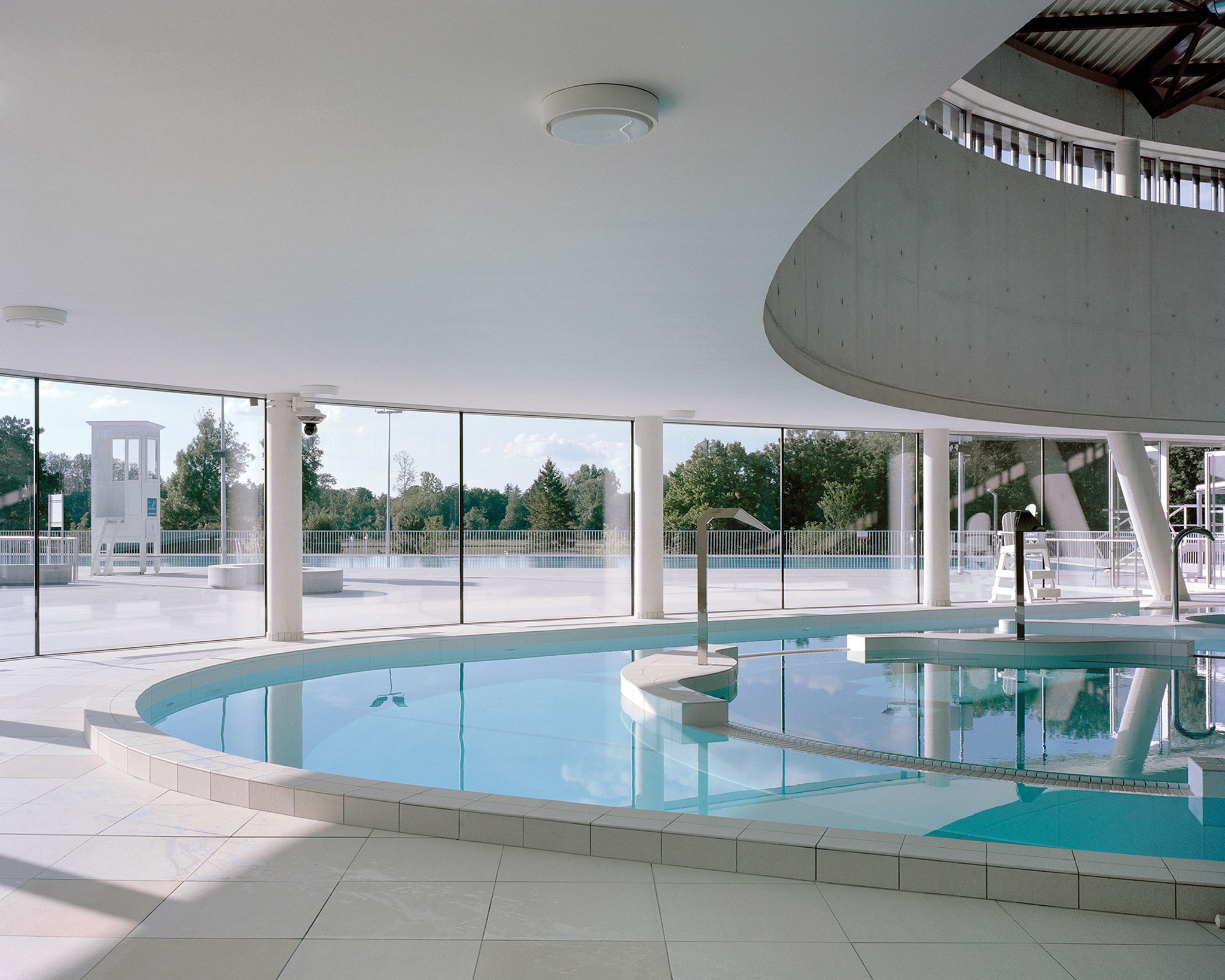
The proposal developed by Mikoü is structured around the large swimming pool: surrounded by elliptical walls of white concrete and topped by a three-dimensional steel structure, the aquatic space is presented as a central element that organizes the entire program and stimulates both visual and spatial connections.
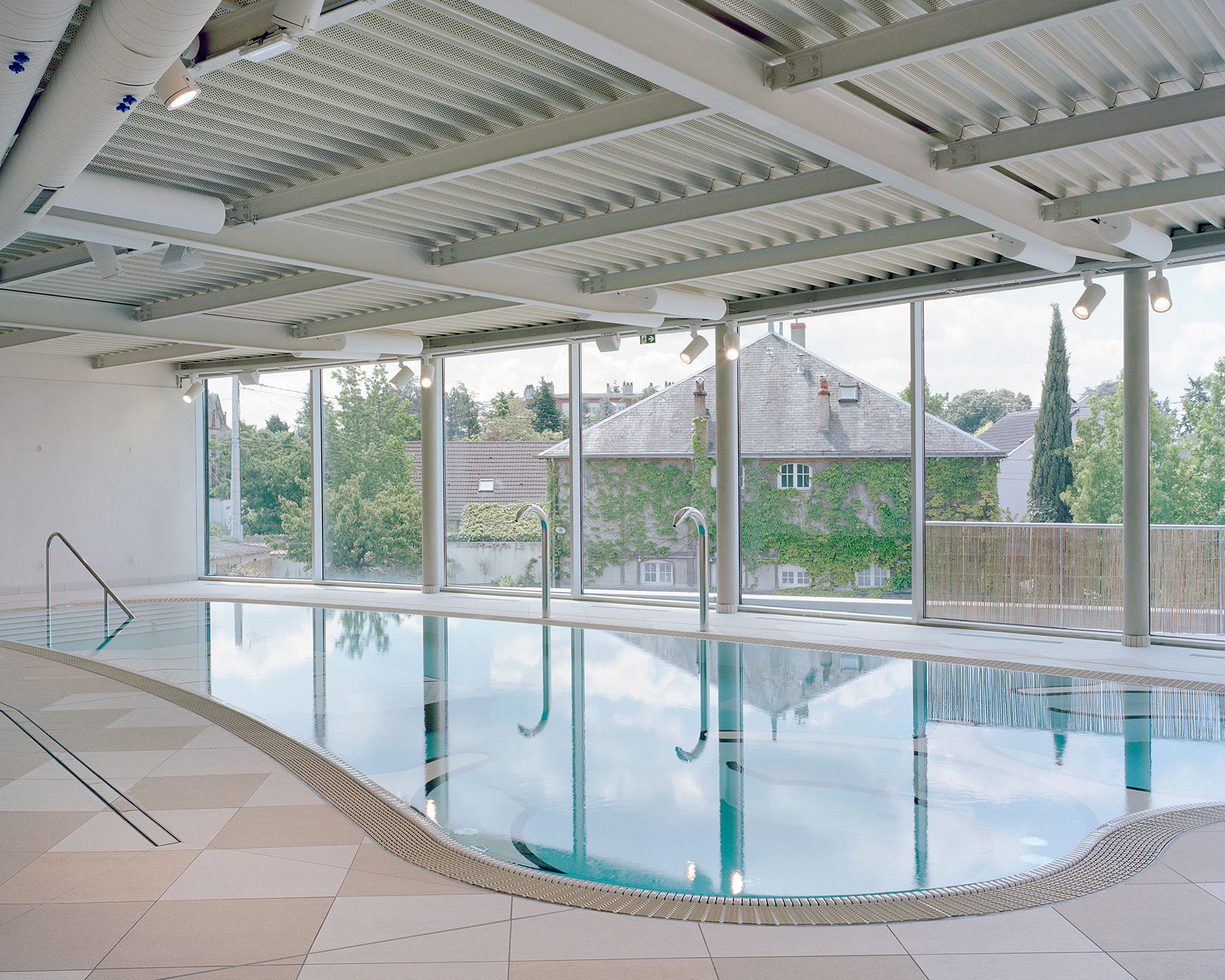
Regarding the materials used, the chosen white concrete contrasts with the ochre tones of the large ceramic tiles and is used throughout the project, giving the building a unified aesthetic. Inside, the incorporation of large glass panels along with the expansive skylights results in an interior that is sensitive to its surroundings and the changing light throughout the day.
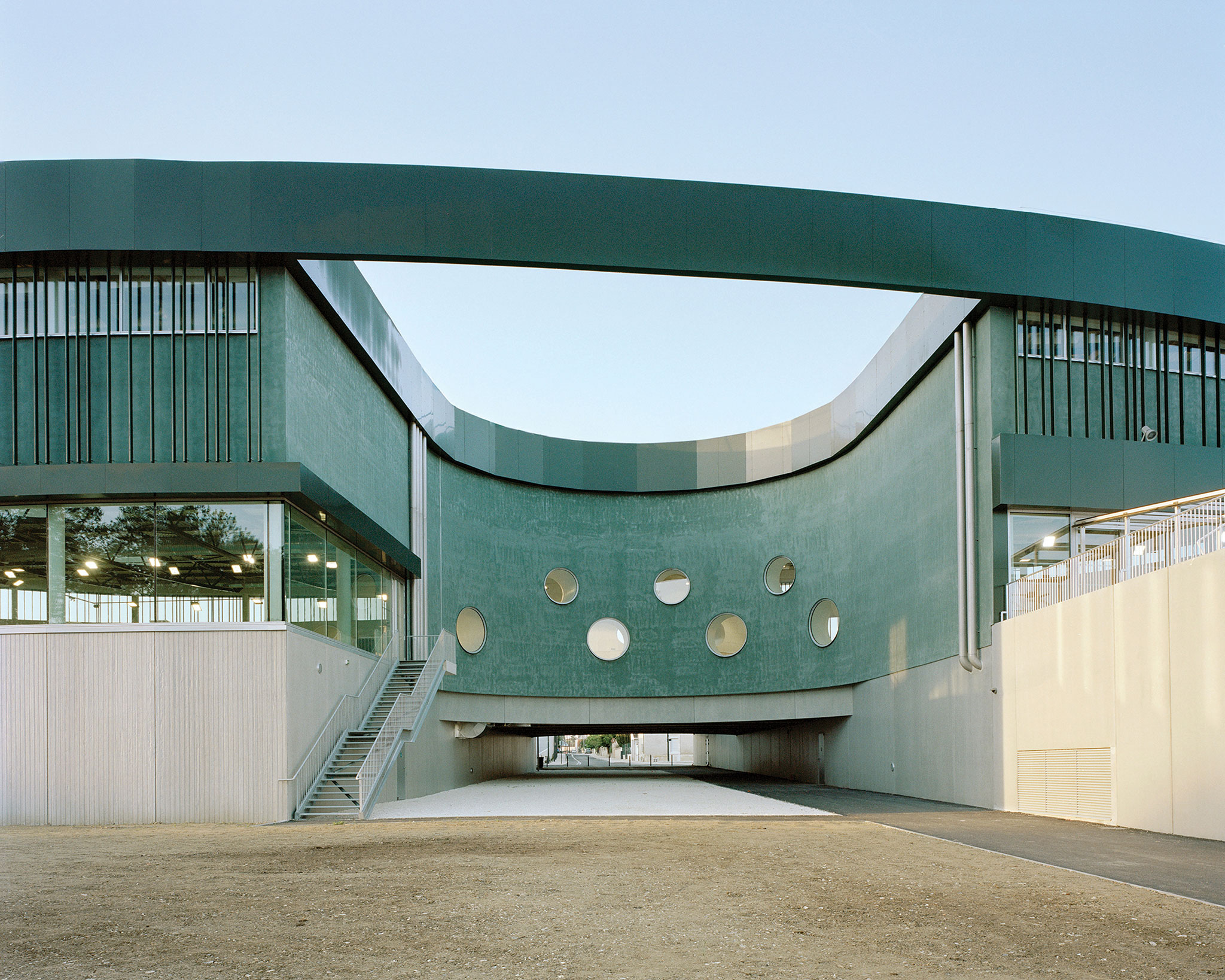
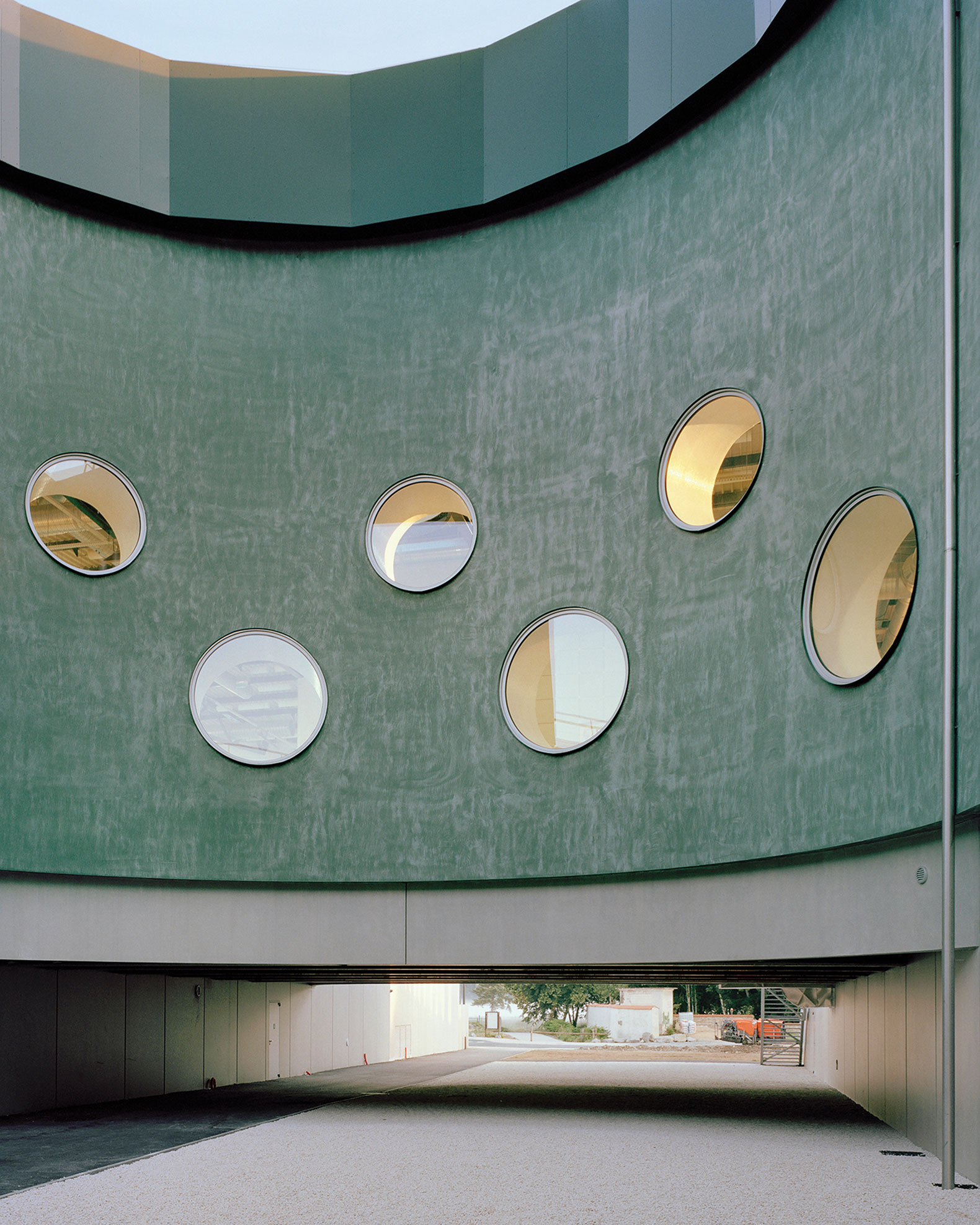
Aquatic Centre in Châteauroux by Mikoü. Photograph by Maxime Delvaux.
Project description by Mikoü
The Balsan district is a historic cultural and heritage site spanning 4.8 hectares. The former royal factory buildings, once symbols of industrial prestige, presented a significant redevelopment challenge for the Châteauroux Agglomeration. Their transformation in 2020 into a digital hub and university campus marked a turning point, revitalizing the area and breathing new life into the district.
The Balsan’éo aquatic center further enriches the district’s cultural and academic landscape. This state-of-the-art facility caters to a wide range of aquatic activities, from competitive sports to relaxation and family-friendly recreation, positioning itself as a cornerstone of the community.
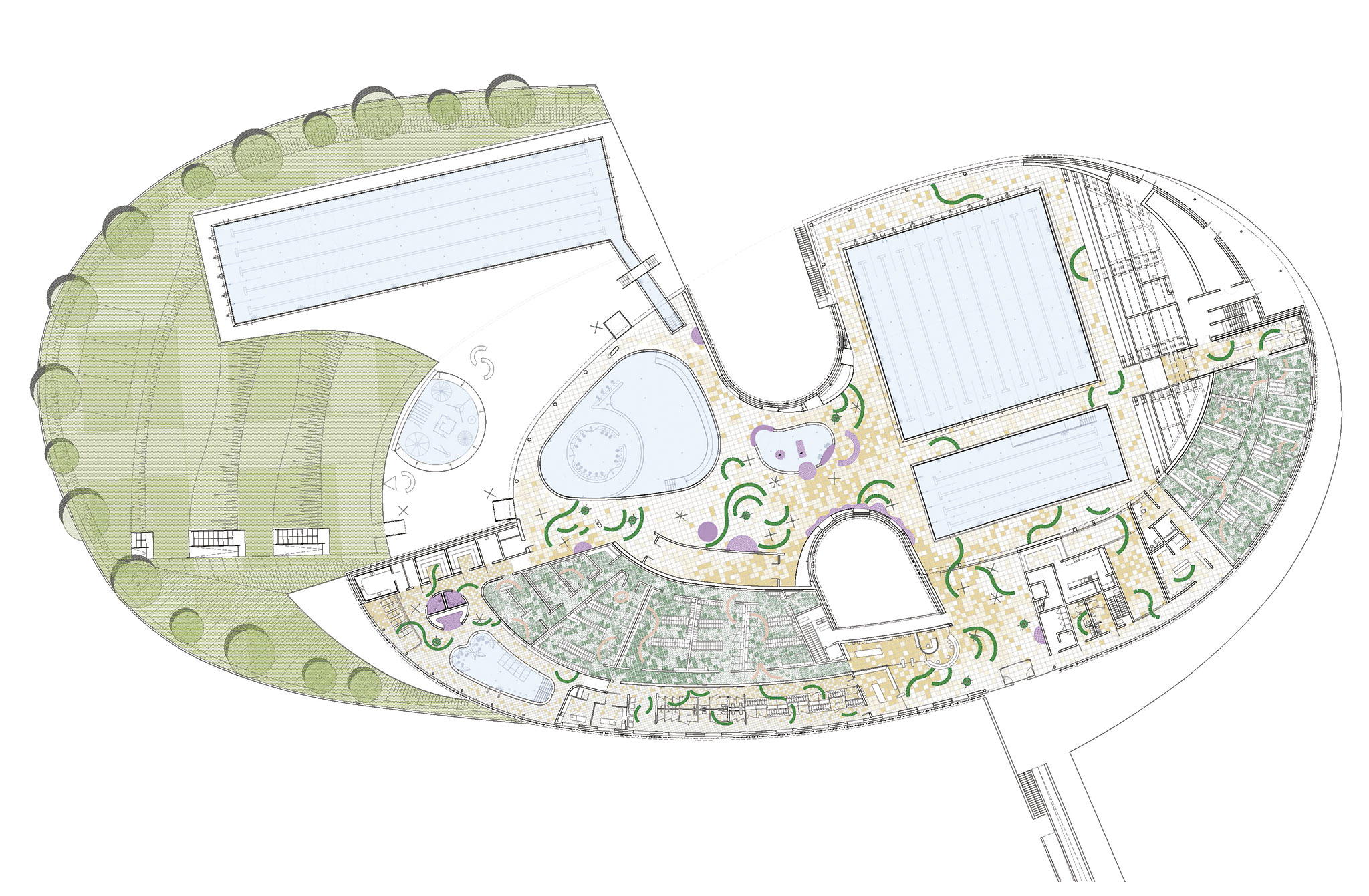
The building offers 2,000 sqm of water space, including competition-level swimming pools, spectator Stands, pools for leisure swimming, an outdoor 50m pool and a balneotherapy area with hammams, saunas, a sports centre and two multi-purpose rooms that can be used as music rooms or for events, as well as cafeterias and green outdoor solariums.
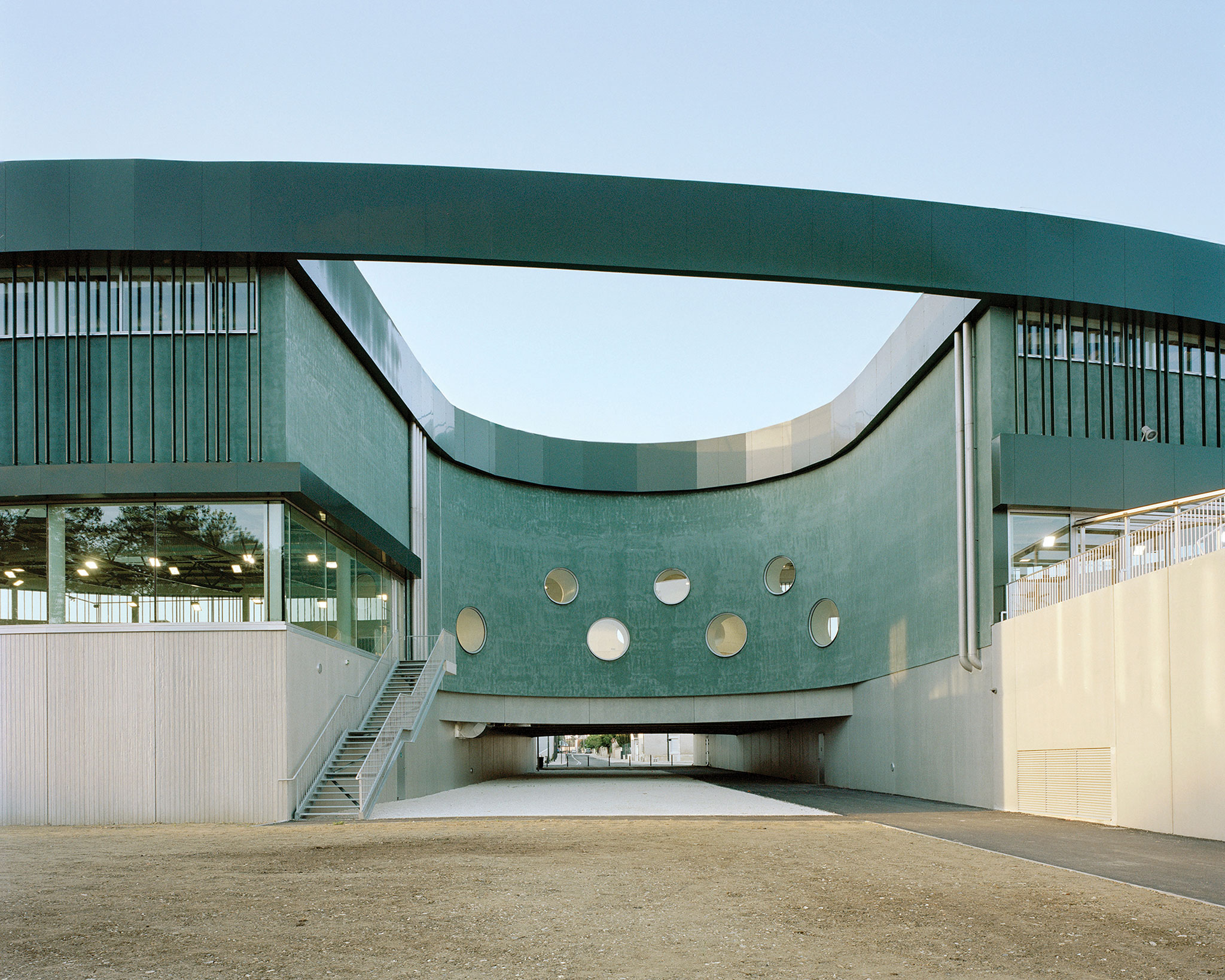
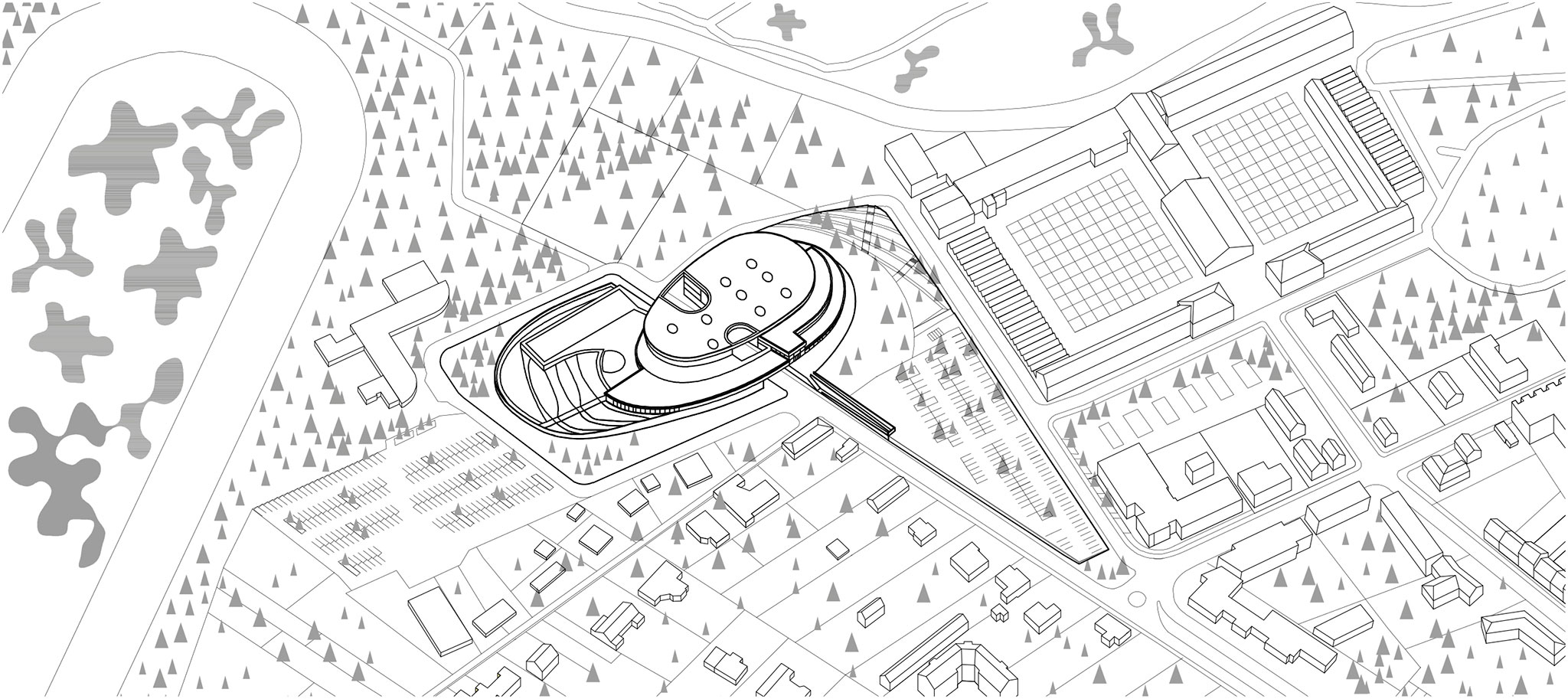
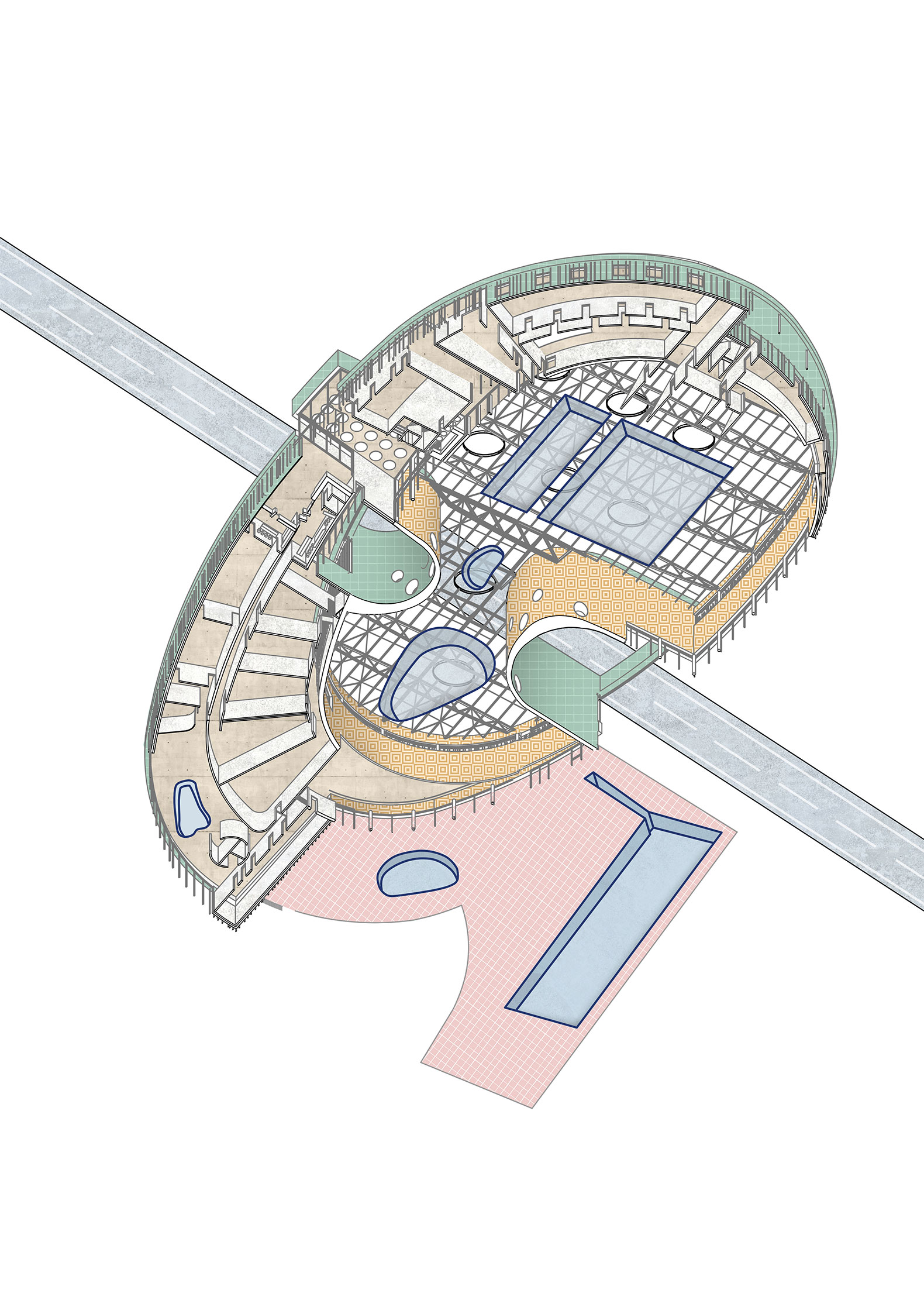
Architecturally, the building integrates harmoniously with the existing structures and site topography, while its alignment with the main avenue reinforces its urban identity. The design incorporates a bridge-like structure spanning a 12-meter-wide road that traverses the site. This elevated framework rests on a “Piano Nobile,” a raised esplanade that transforms the building into an elliptical belvedere. This elevated position allows the structure to gracefully navigate the site’s natural slope, provide panoramic views of the Indre landscape, and accommodate landscaped outdoor solariums.
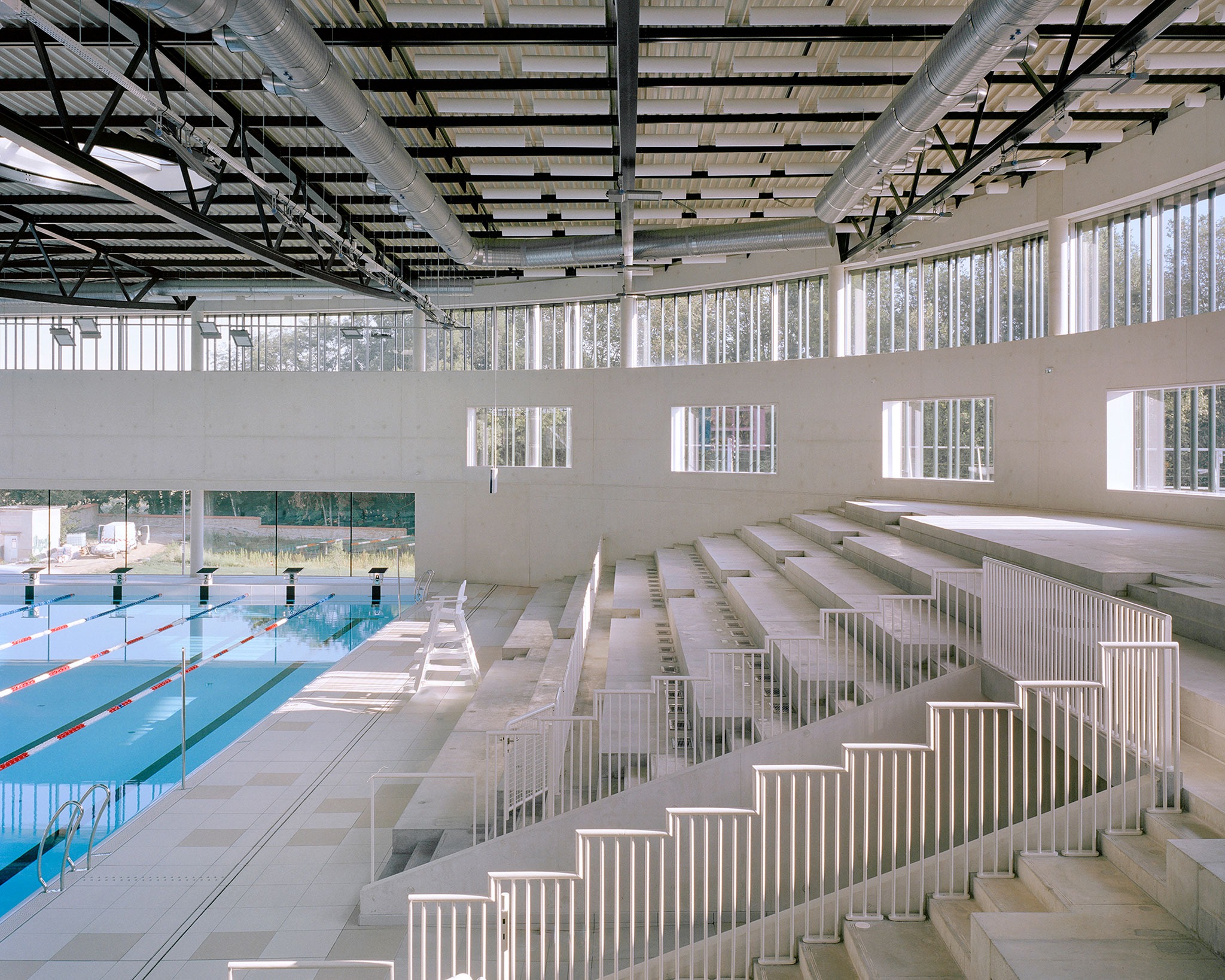
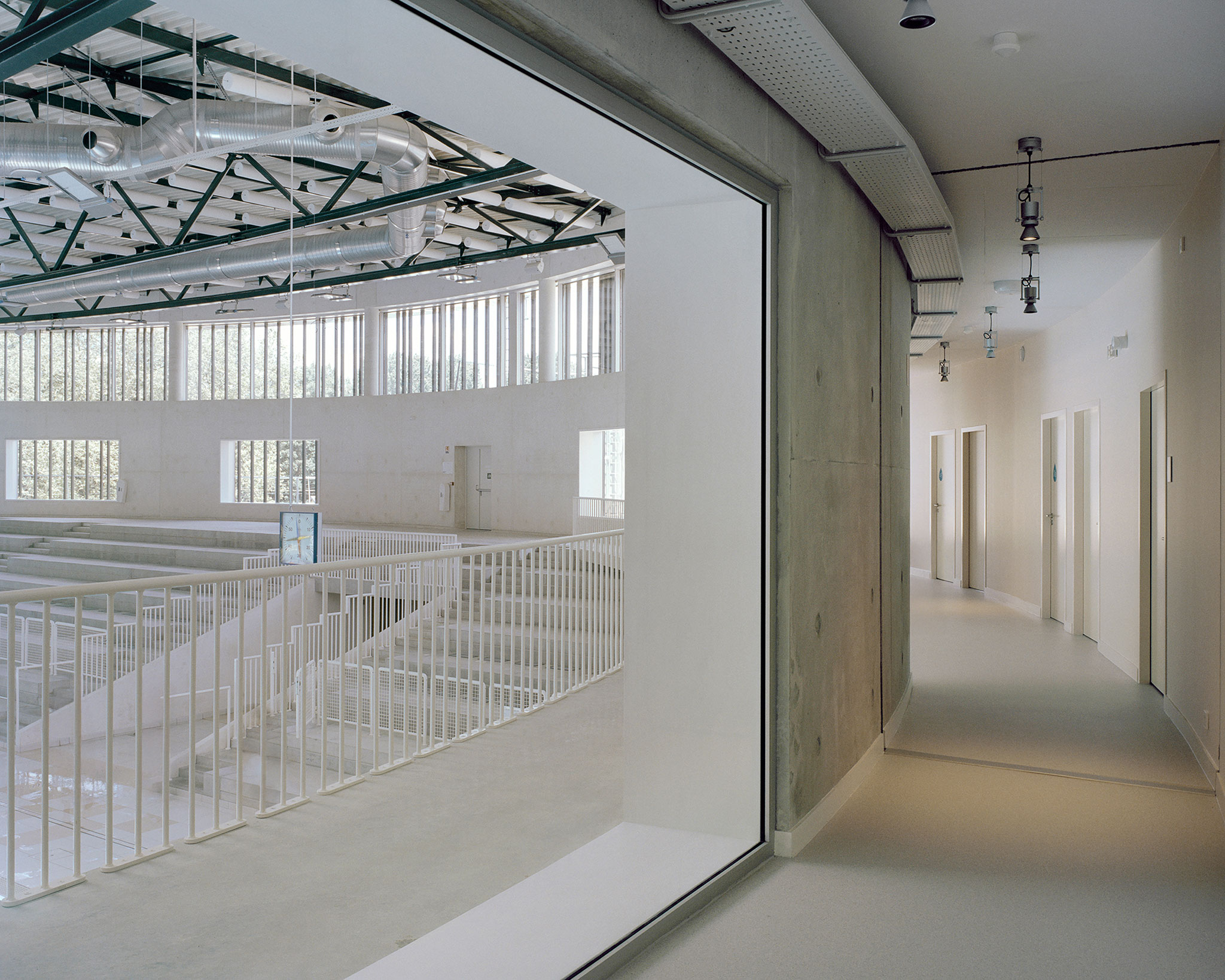
The center’s design revolves around the pool hall, which serves as the visual and spatial focal point. The layout promotes a progressive sequence of visual and spatial connections, offering users an immersive experience as they transition through the building’s spaces.
The pool hall itself is a luminous and expansive central feature, enclosed by elliptical white concrete walls. It is capped with a three-dimensional steel framework whose rhythmically arranged beams structure the interior, while the suspended ceiling creates a sense of weightlessness, appearing to defy gravity.
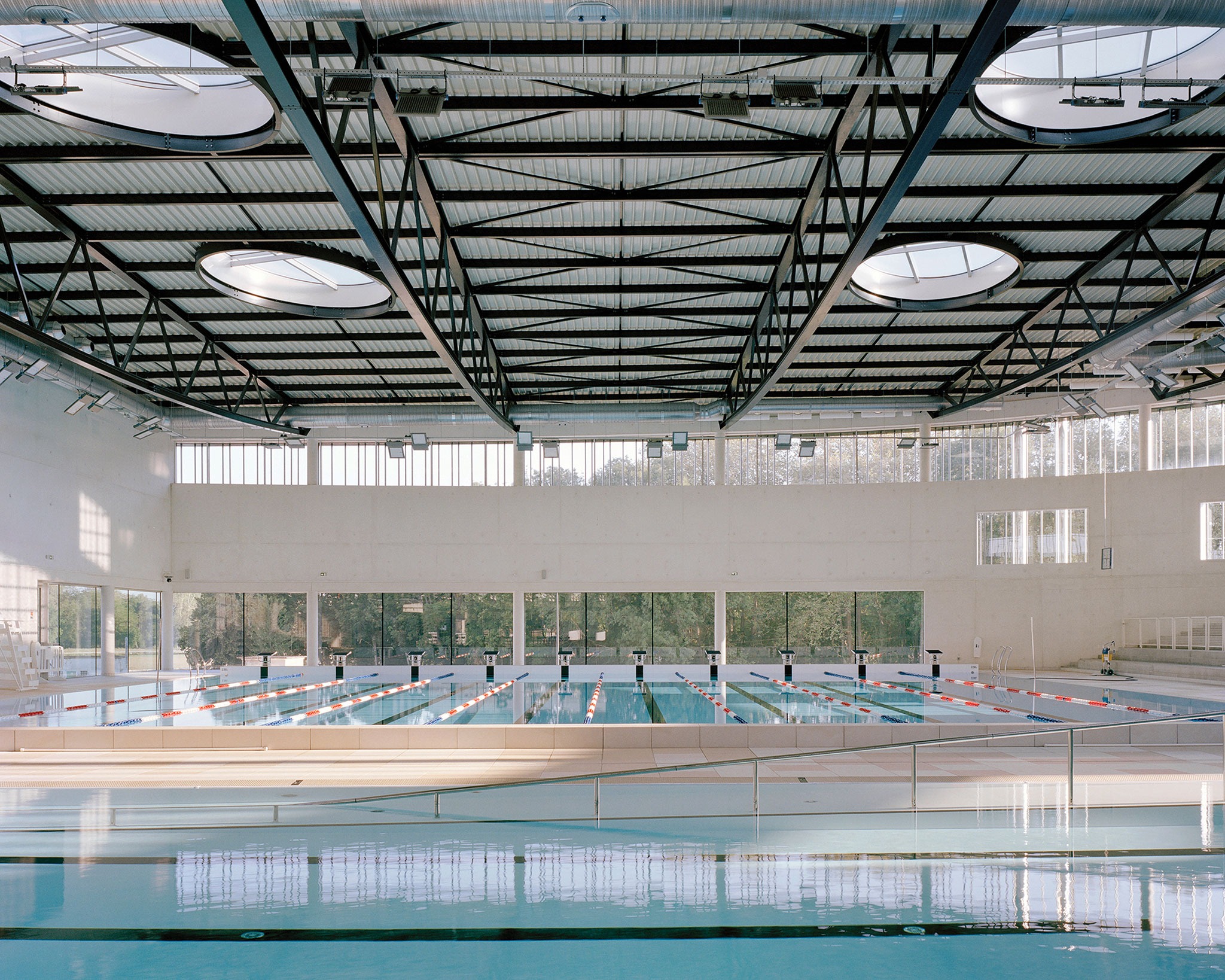
White concrete is used throughout the project, providing a unified and cohesive aesthetic. This is contrasted by the ochre tones of large ceramic tiles, which add warmth and vibrancy, complementing the green mosaic solariums. Inside, the large edge-to-edge glass panels, which are free of joinery, provide a seamless view of the landscape, while zenith light from the large roof windows provides an intense connection to the sky and the path of the sun throughout the day.
The landscaped solariums, with their gently sloping terrain, form terraced platforms that overlook the surrounding scenery. These grassy dunes provide tranquil spaces shaded by trees, inviting visitors to recline and take in the serene natural surroundings.