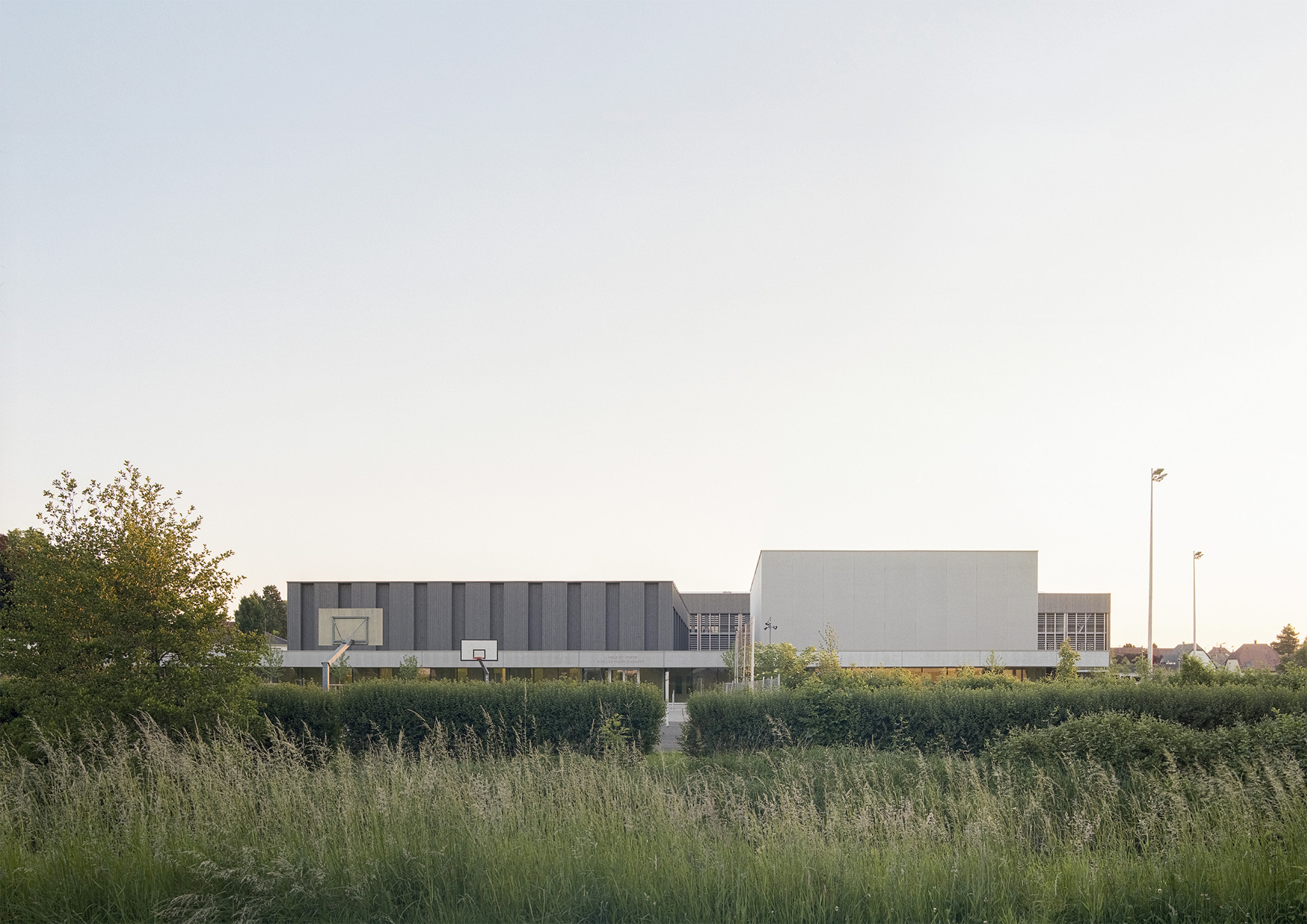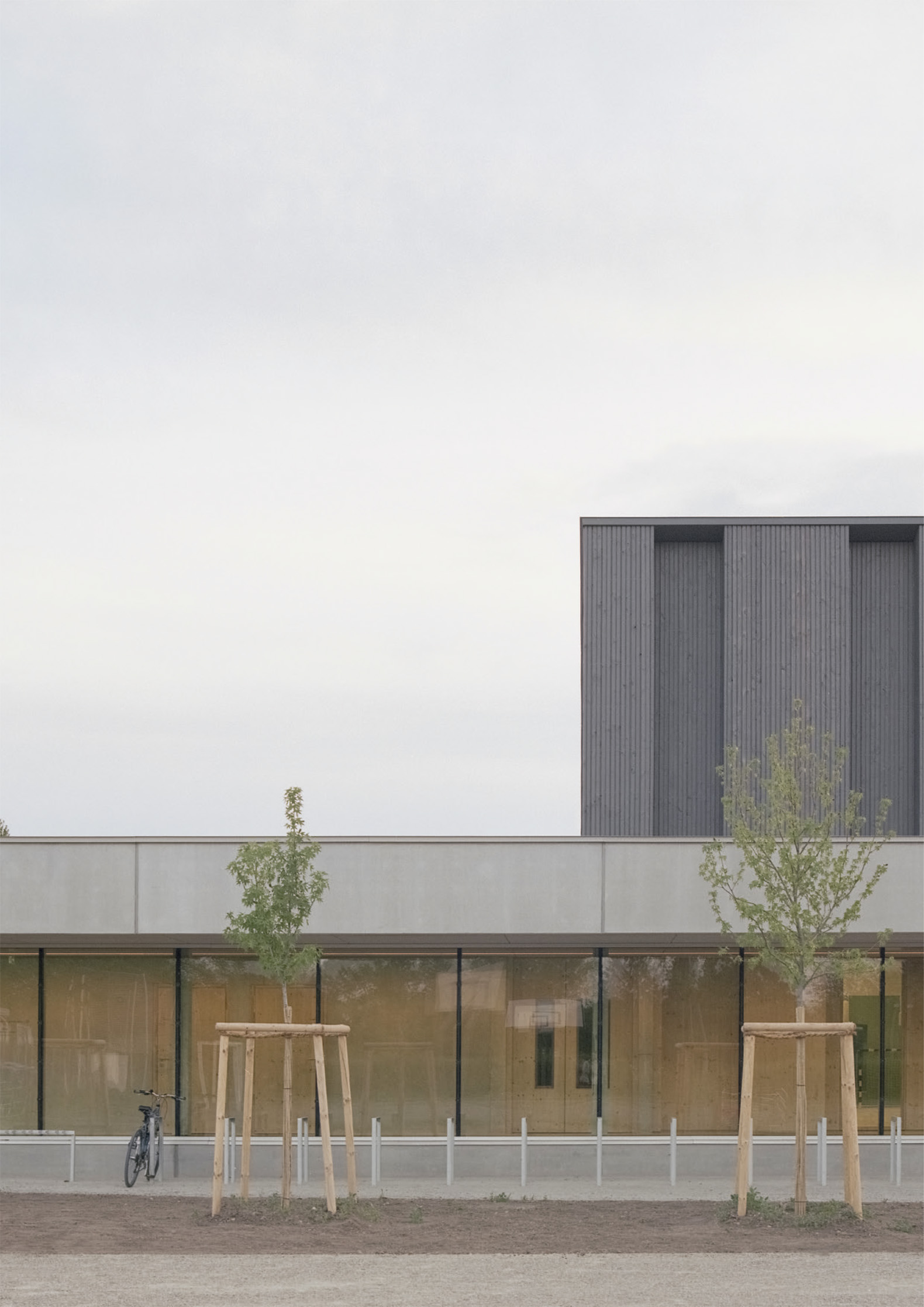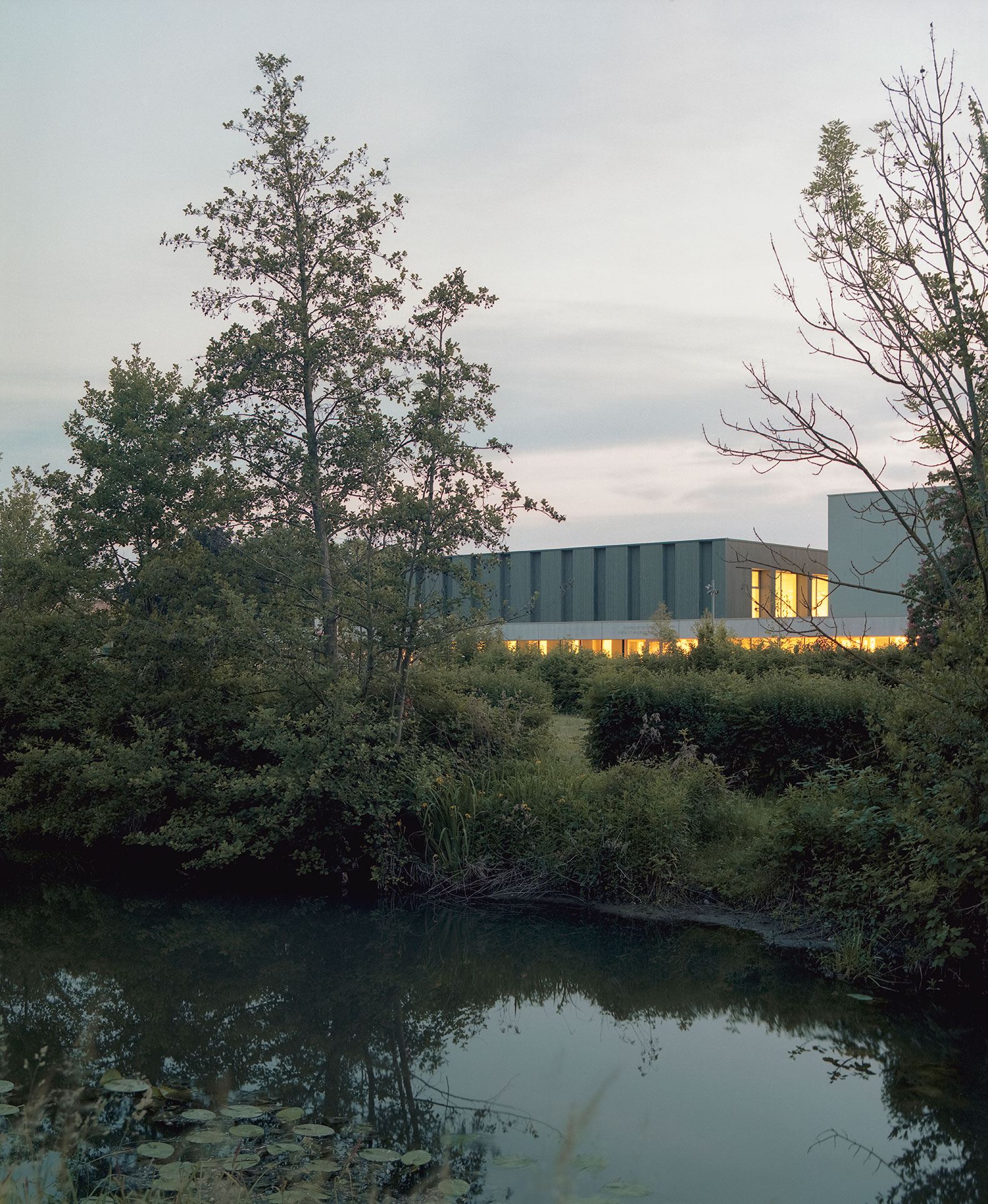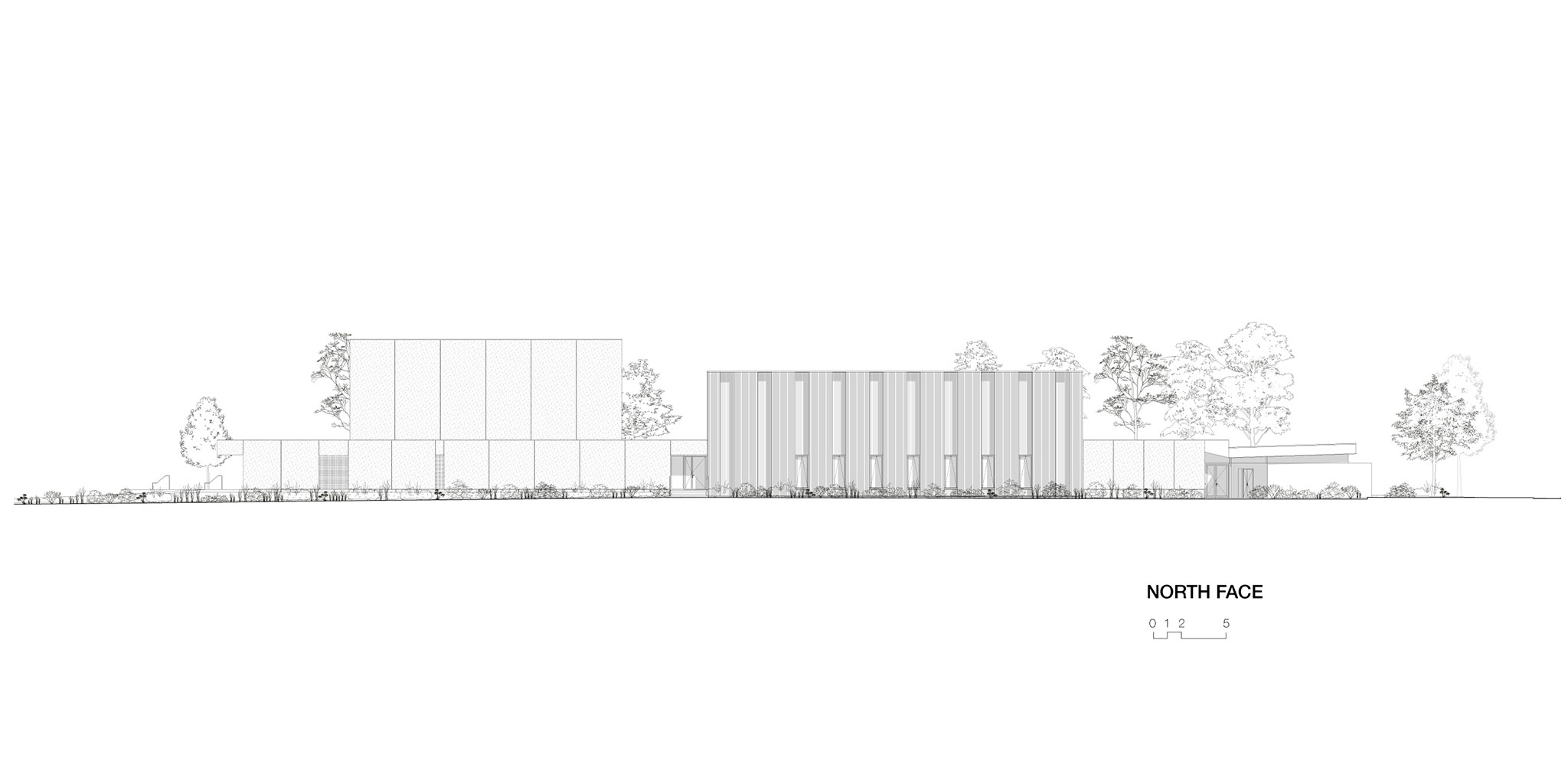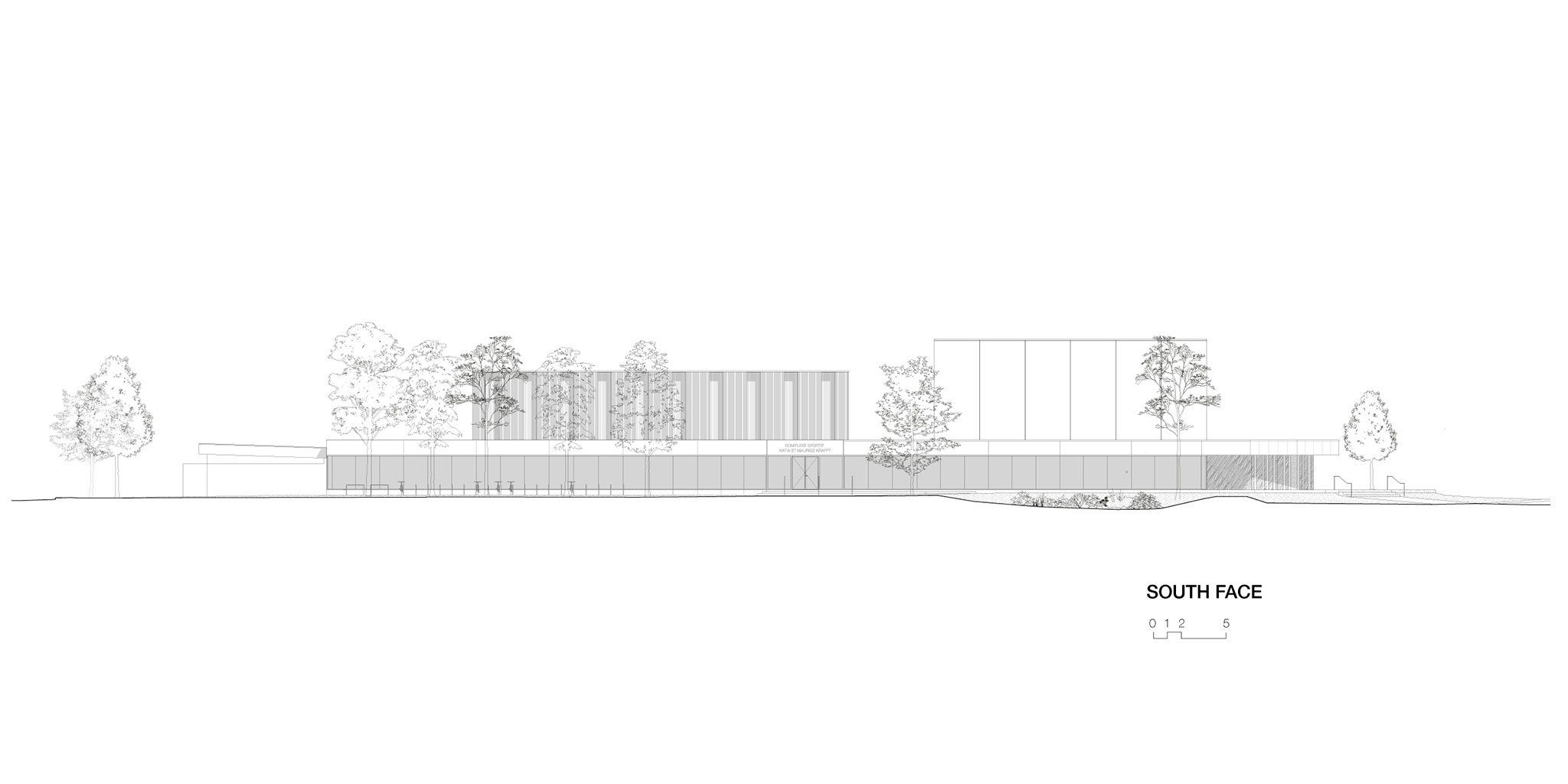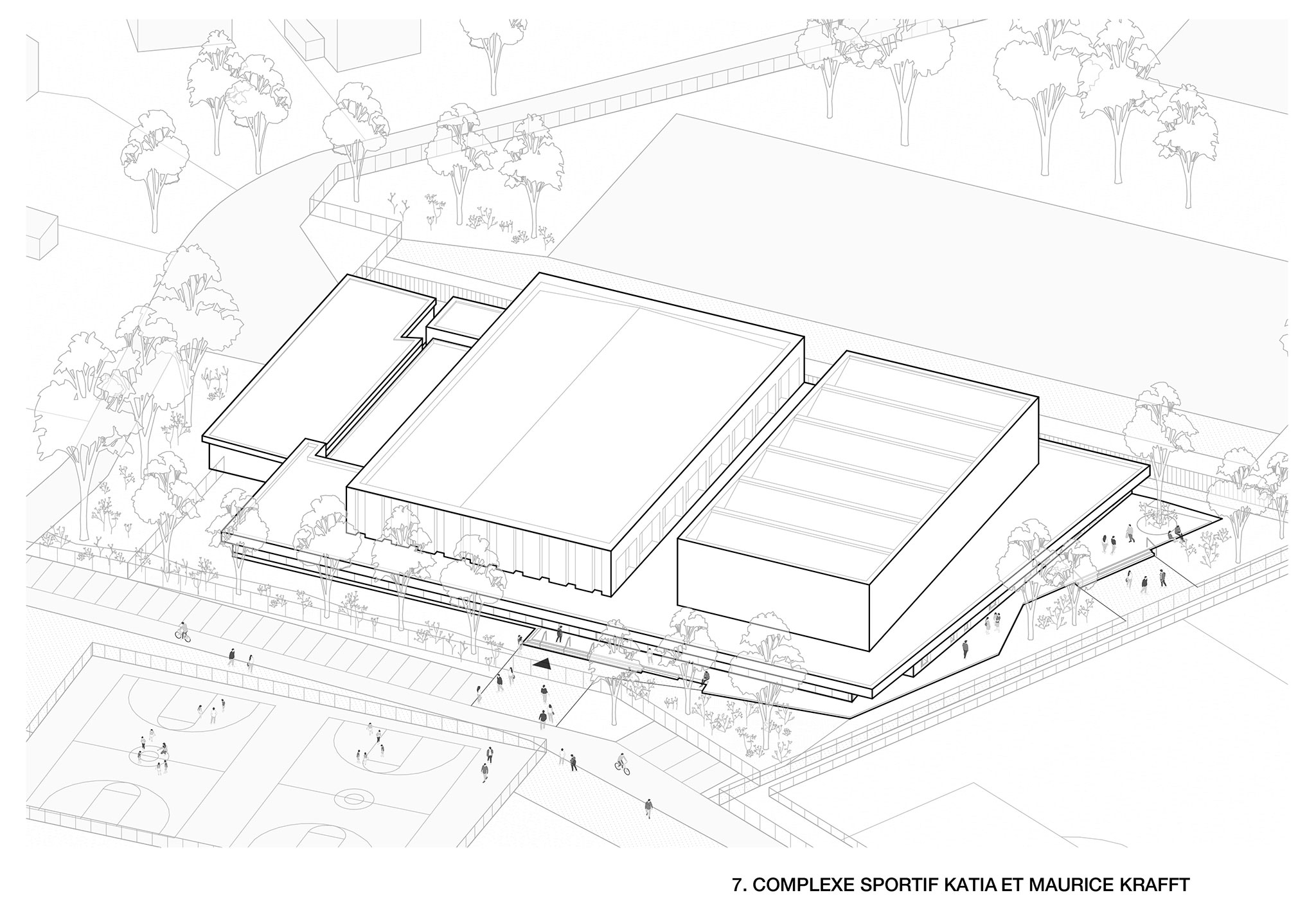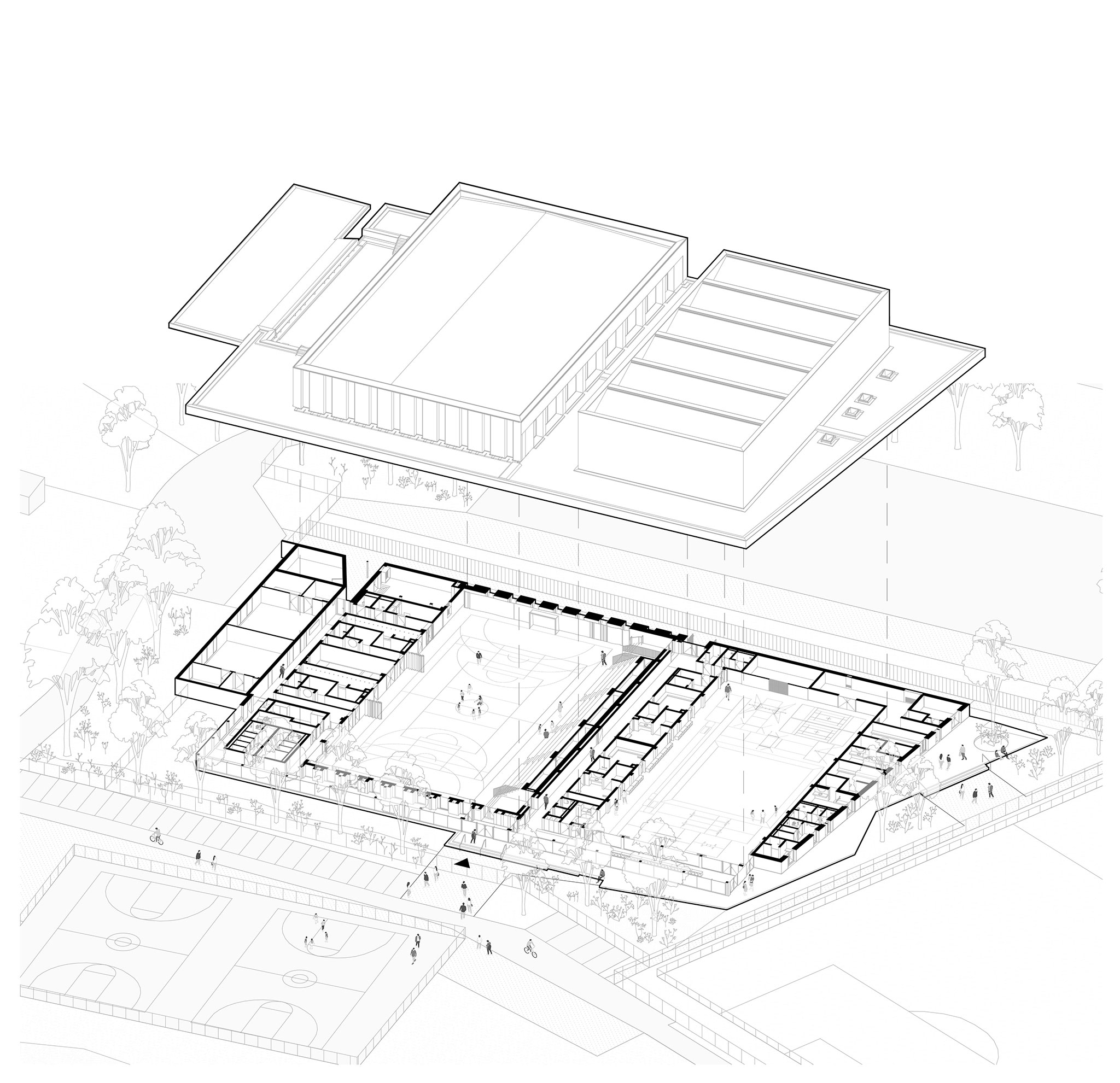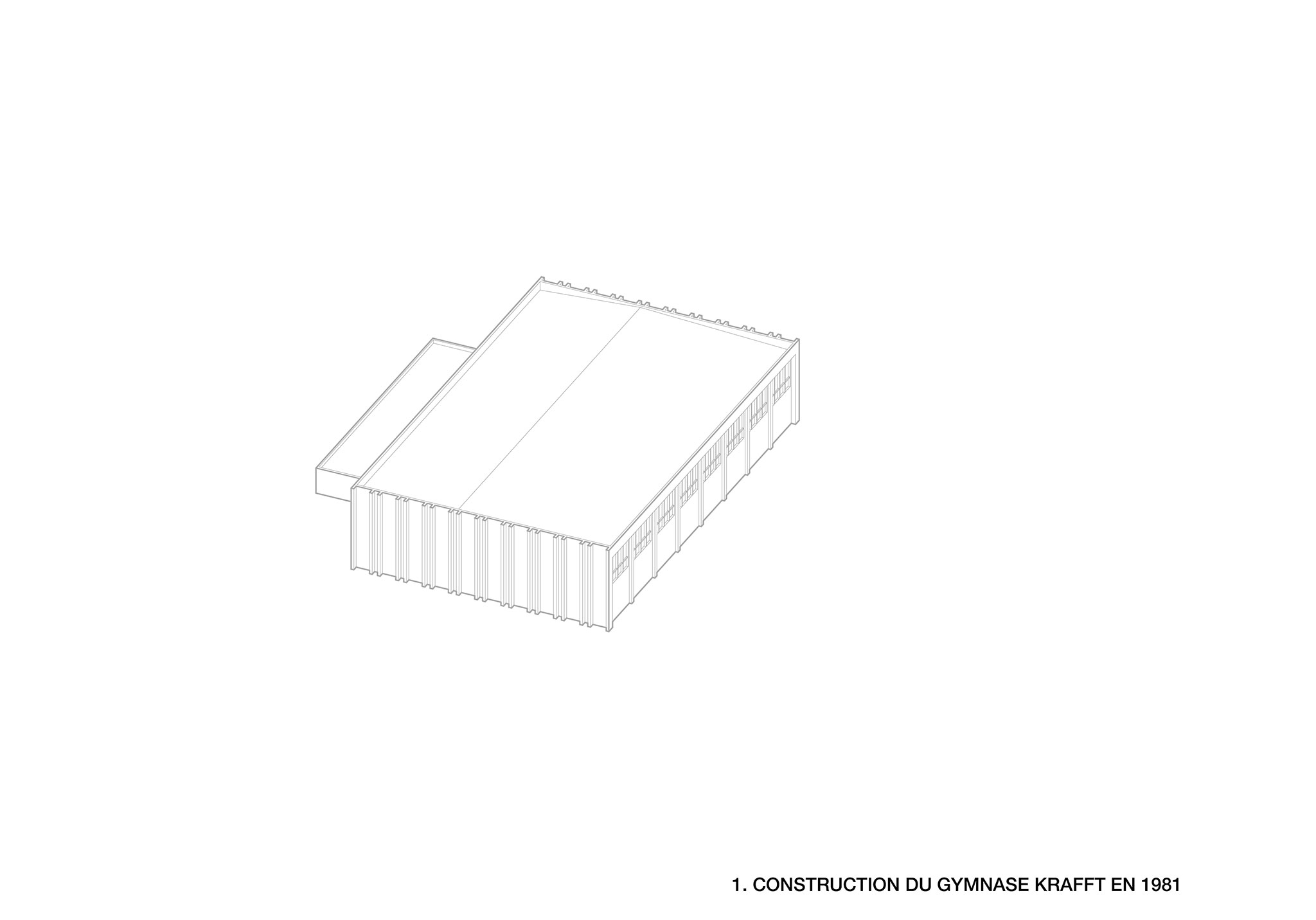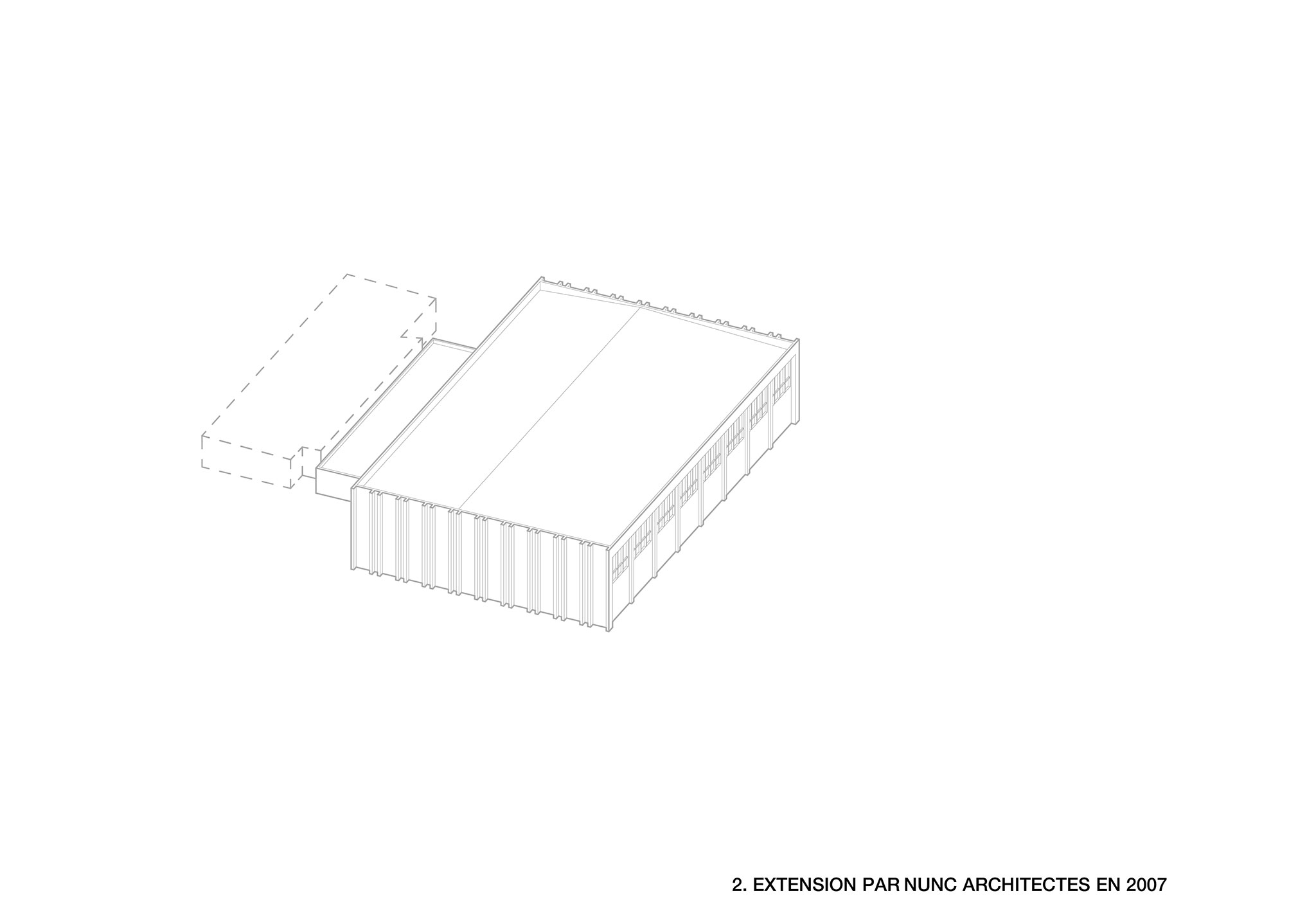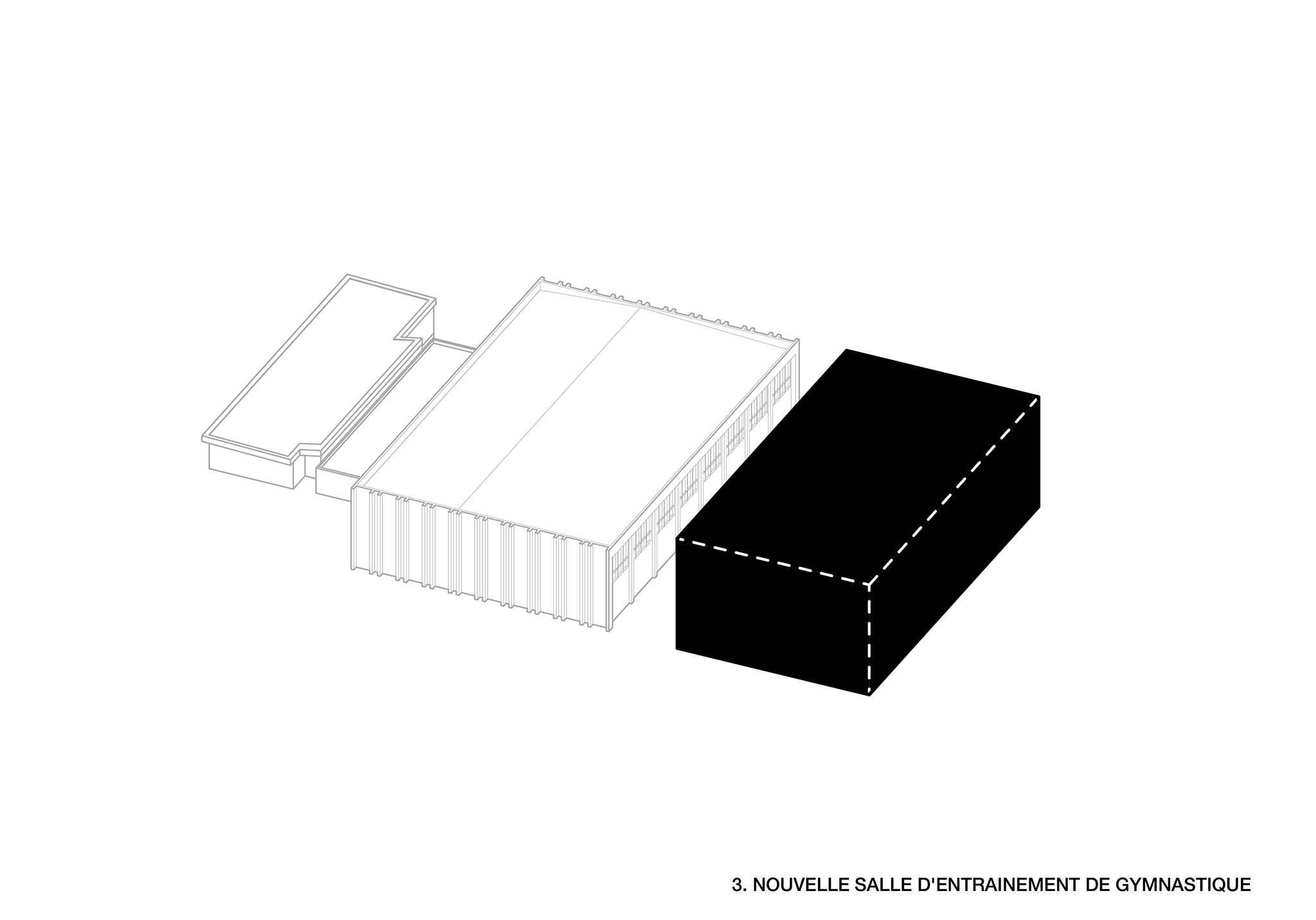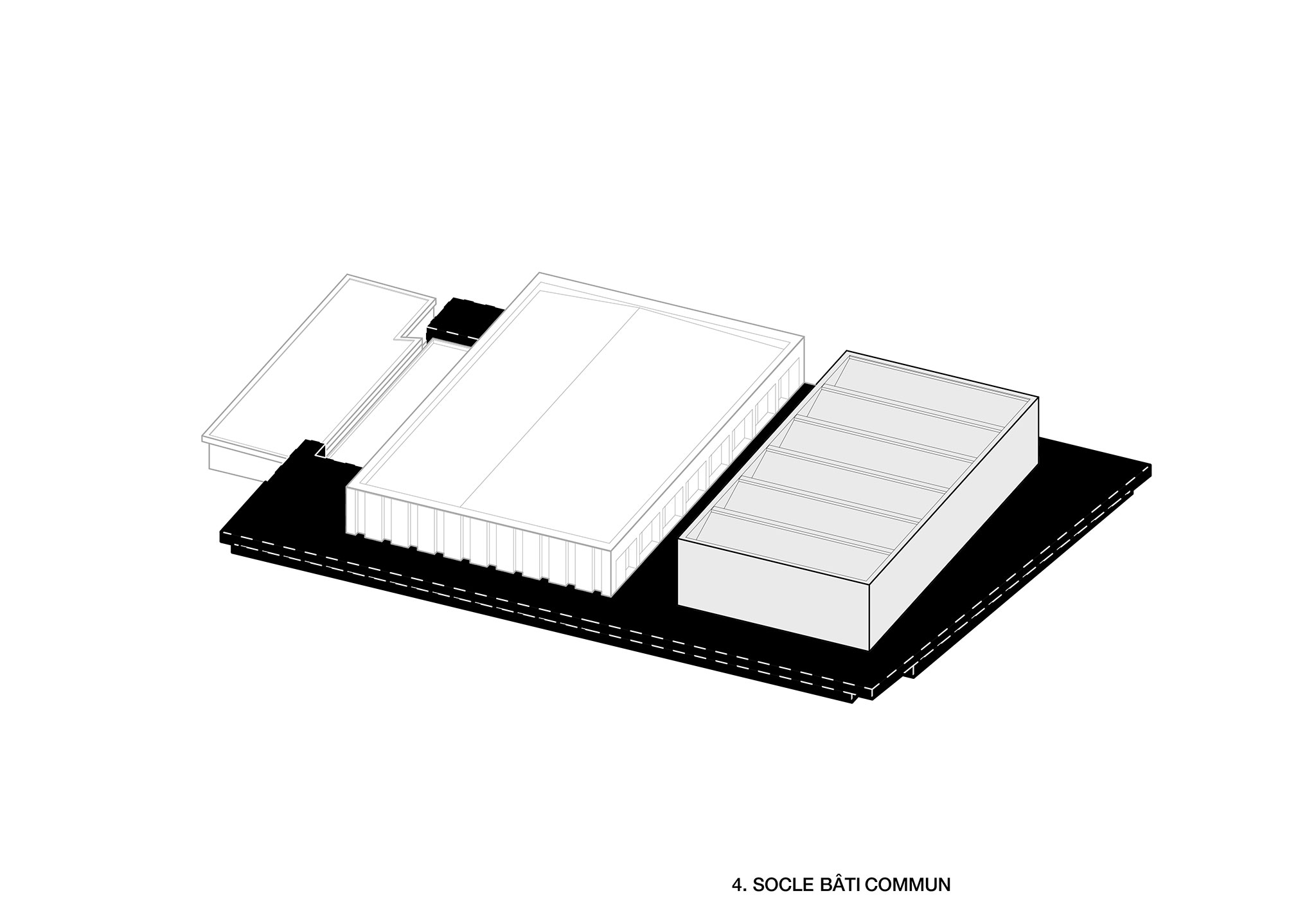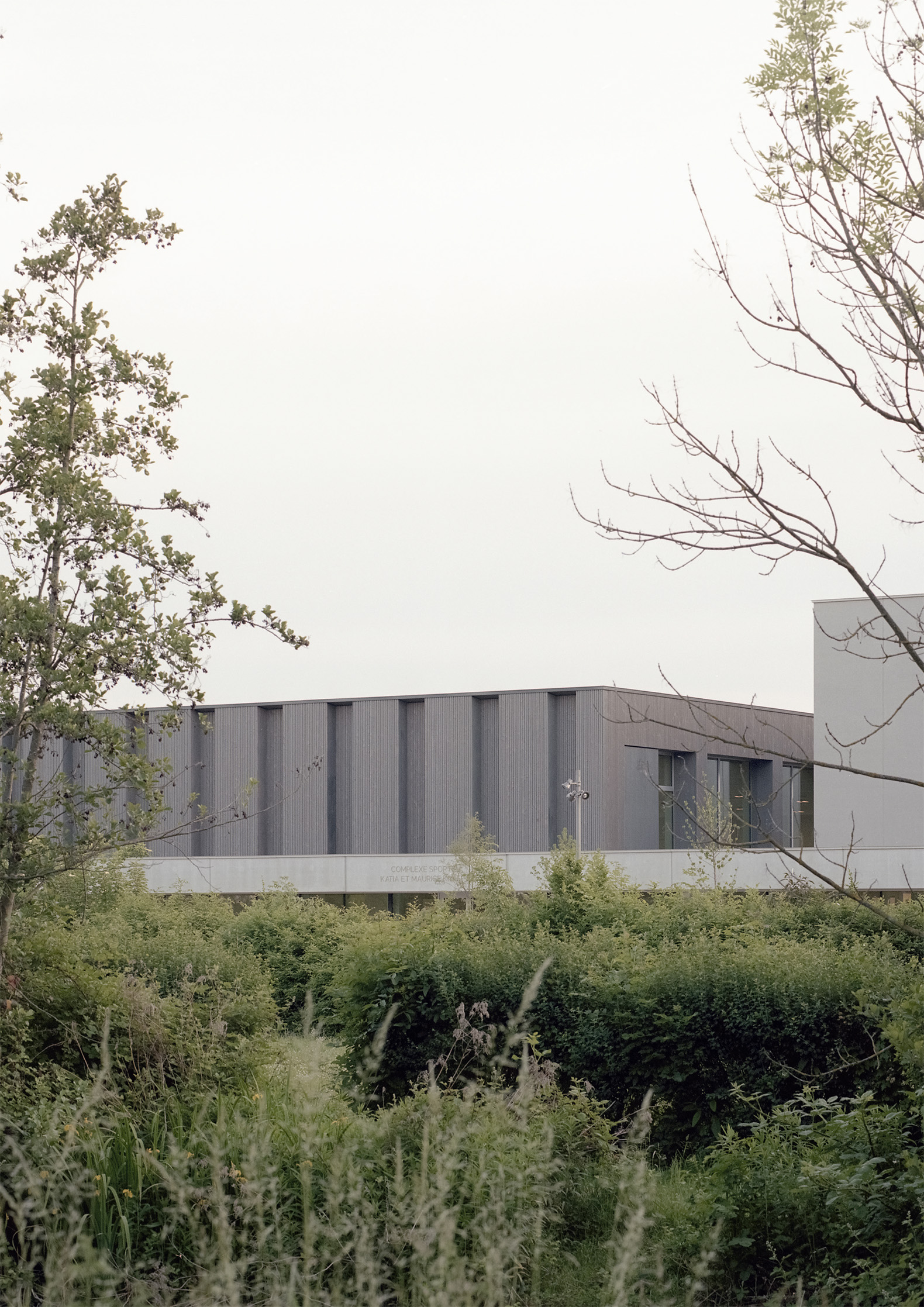
The integral renovation and expansion of the Katia & Maurice Krafft Sports Complex proposed by RHB architectes creates a cohesive complex with a horizontal form in which the various programmatic uses are subtly highlighted. Environmentally, a high-performance envelope, enhanced by architectural strategies—site location, cantilevers, and orientation of openings—ensures the building’s long-term durability.
The building defines the new spaces through a load-bearing structure of insulated precast concrete. The original concrete and masonry structure is preserved, and the roof is replaced with a perforated steel roof over existing wooden trusses. The gymnasium features a mixed concrete and wood structure. The exterior cladding, made of Douglas fir, creates a subtle contrast between the robustness of the structure and the warmth of the wood.
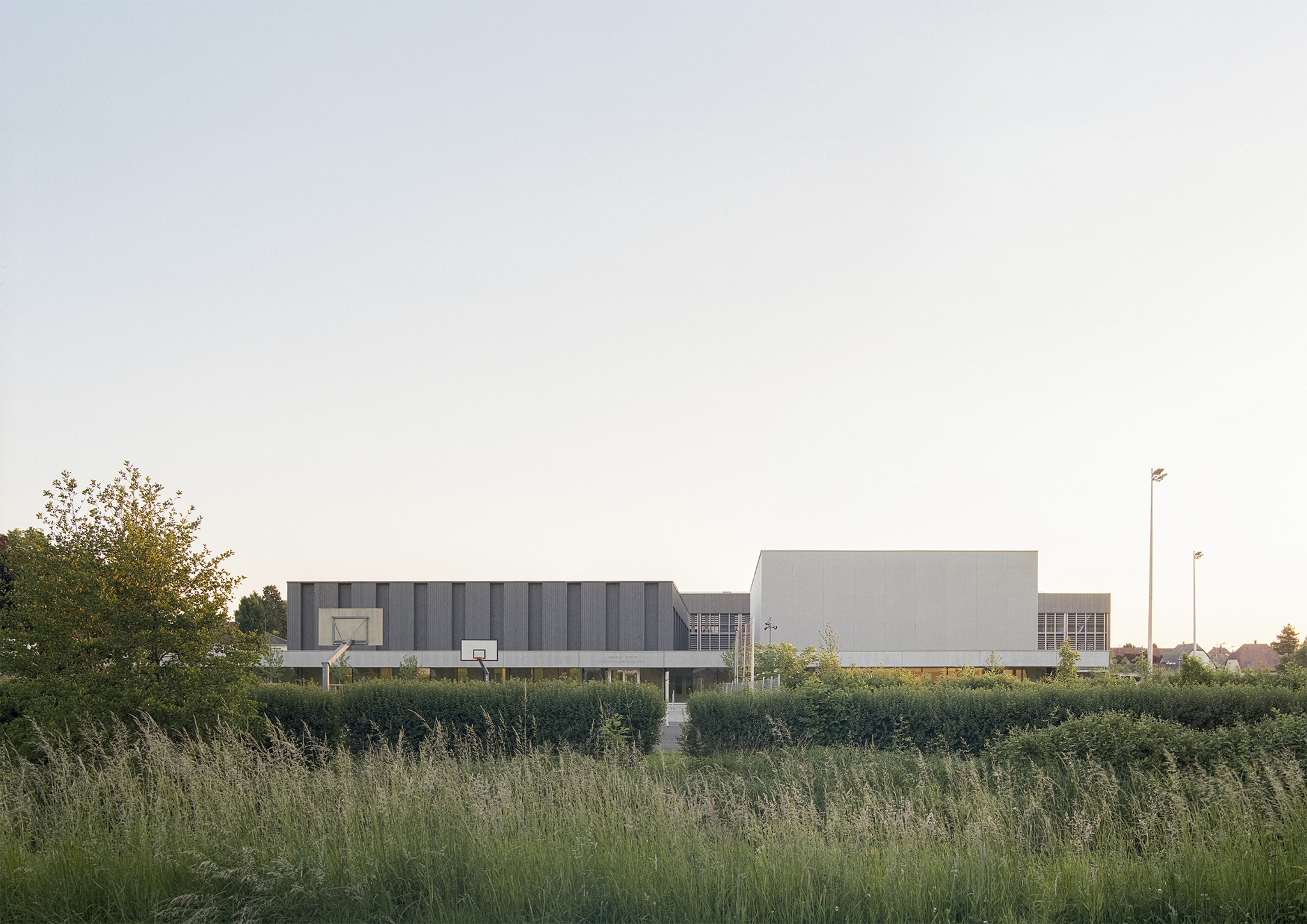
Katia & Maurice Krafft Sports Complex by RHB architectes. Photograph by Guillaume Porche.
Project description by RHB architectes
Life within the building unfolds in a space designed to be calm, welcoming, and well-adapted to its users. All architectural decisions—whether structural choices, material selection, implementation of building systems, or the visual relationships between spaces—are guided by this intention.
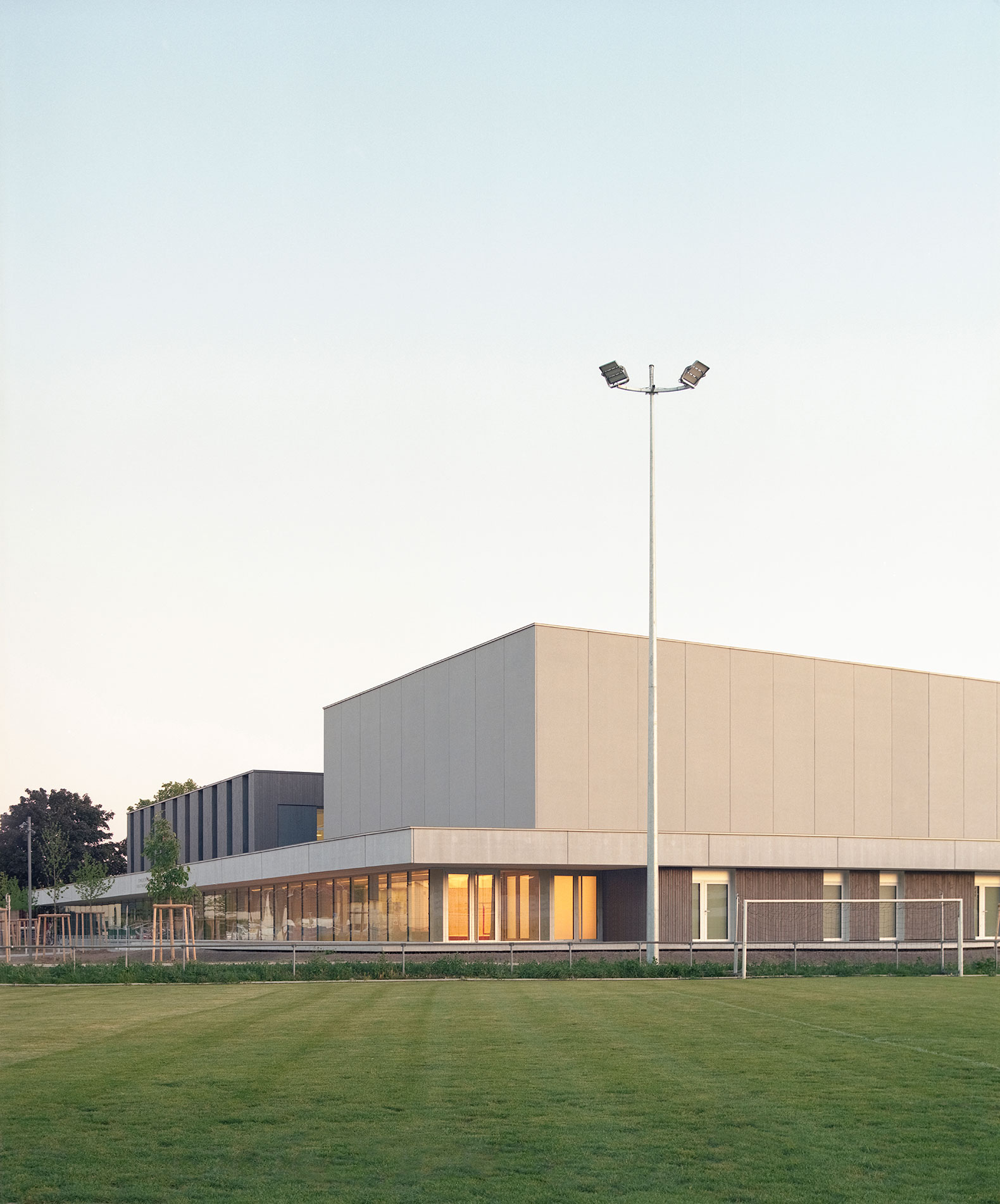
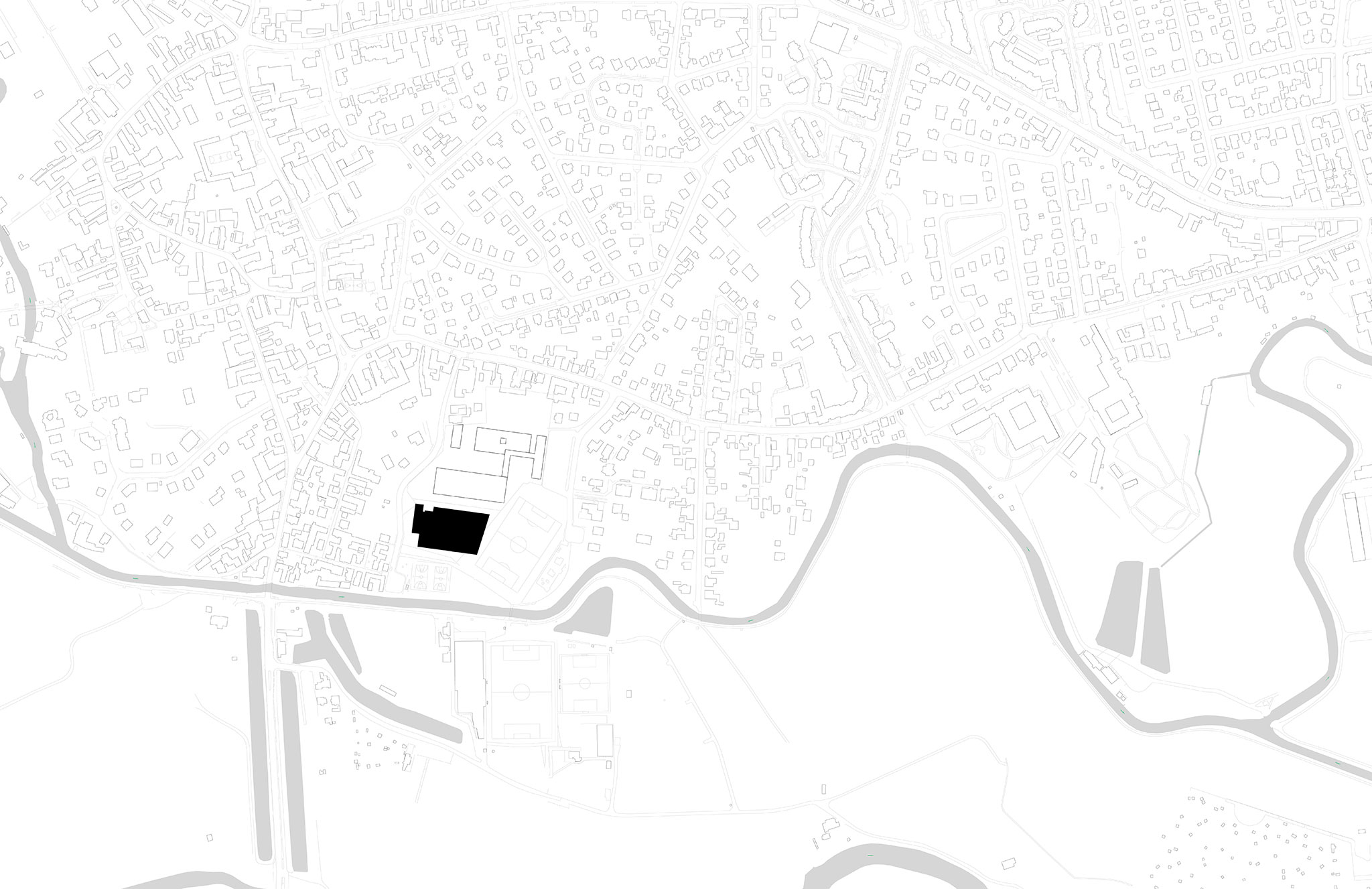
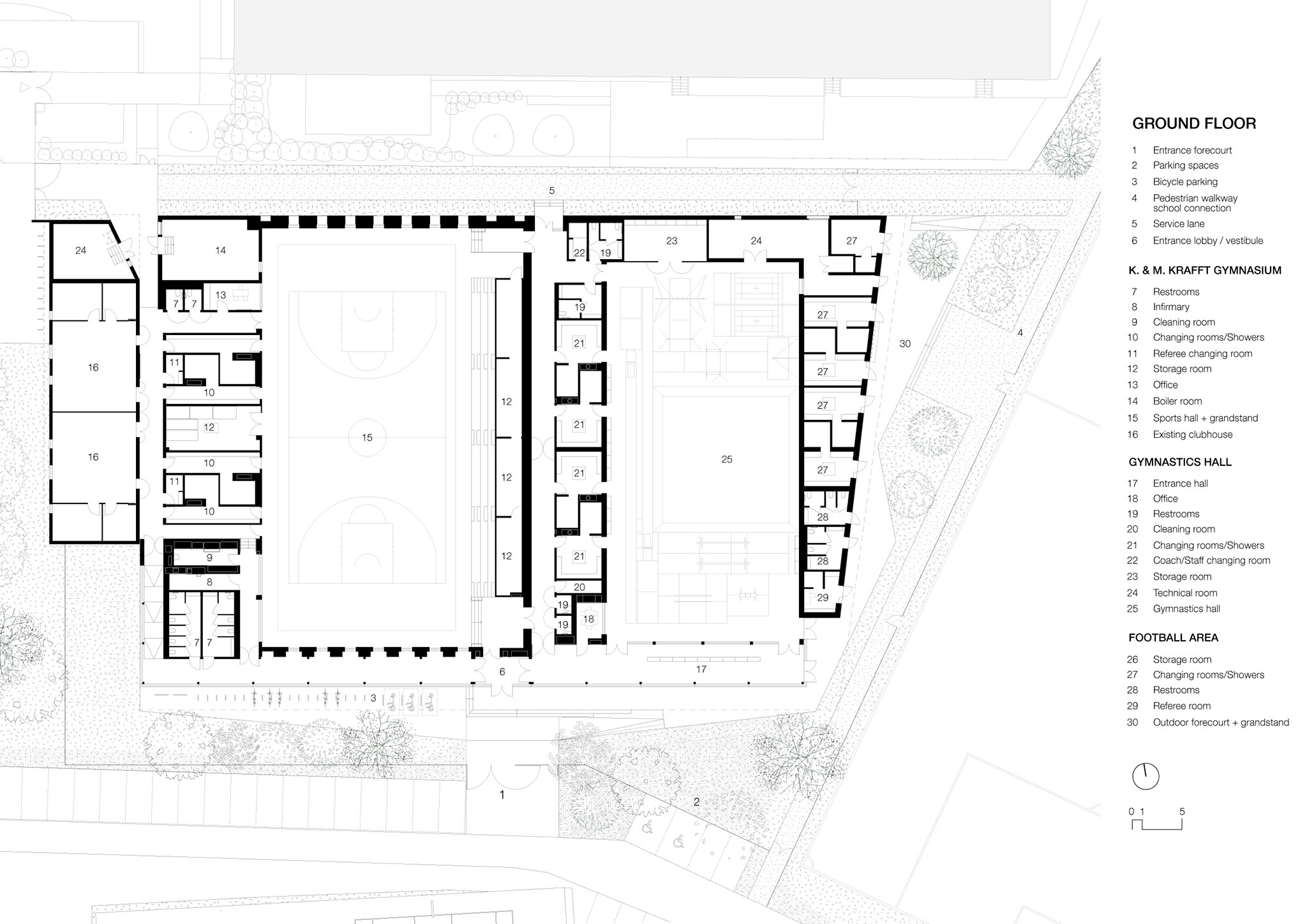
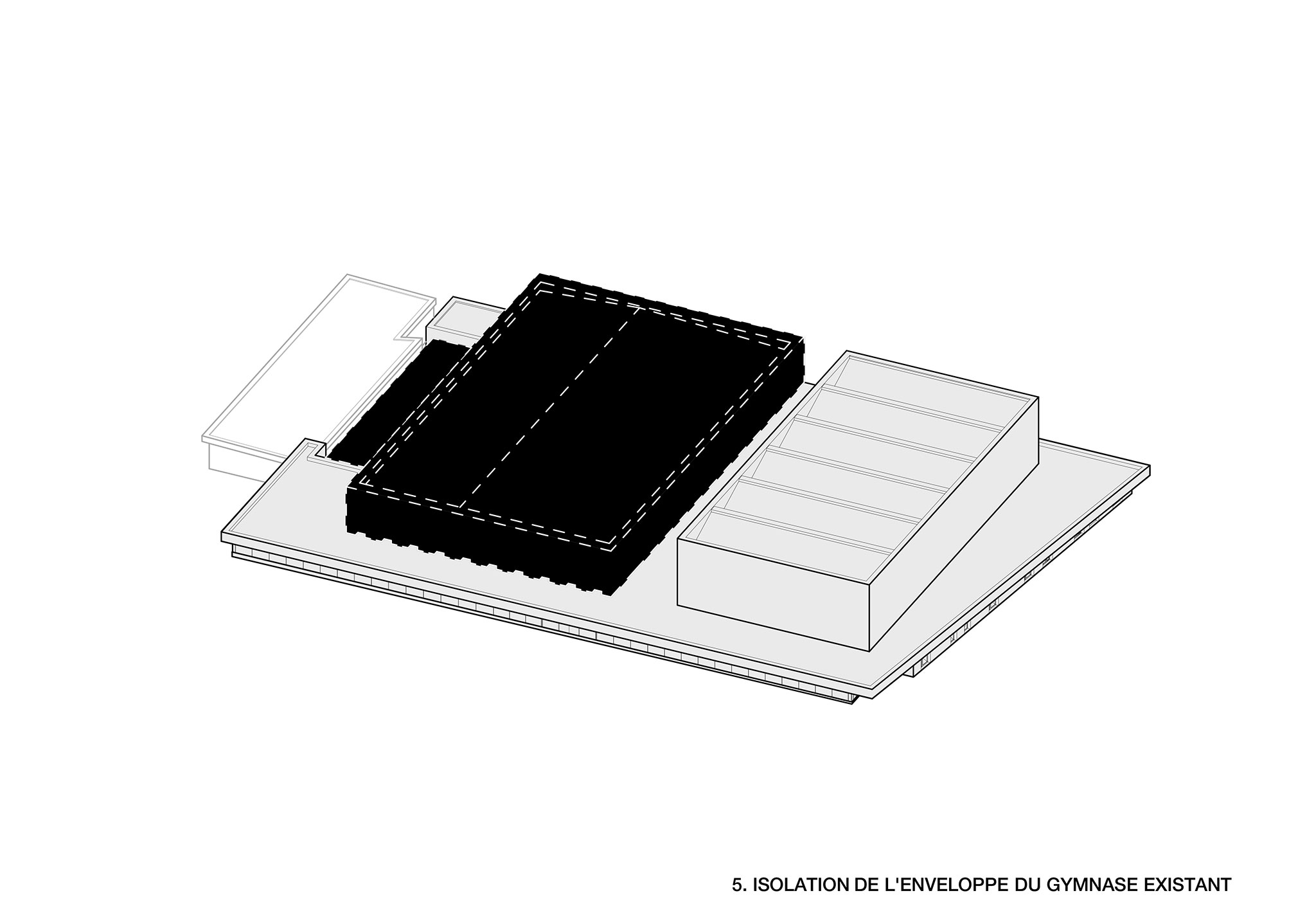
The extension of the existing gymnasium and the construction of the new gymnastics hall are positioned as continuations of the facility’s south and east façades, wrapping the building along these two sides. This layout directly links the existing infrastructure to the new construction, ensuring a coherent and unified reading of the entire sports complex, while freeing the edges of the site to create outdoor areas that reinforce the openness of the new facility.
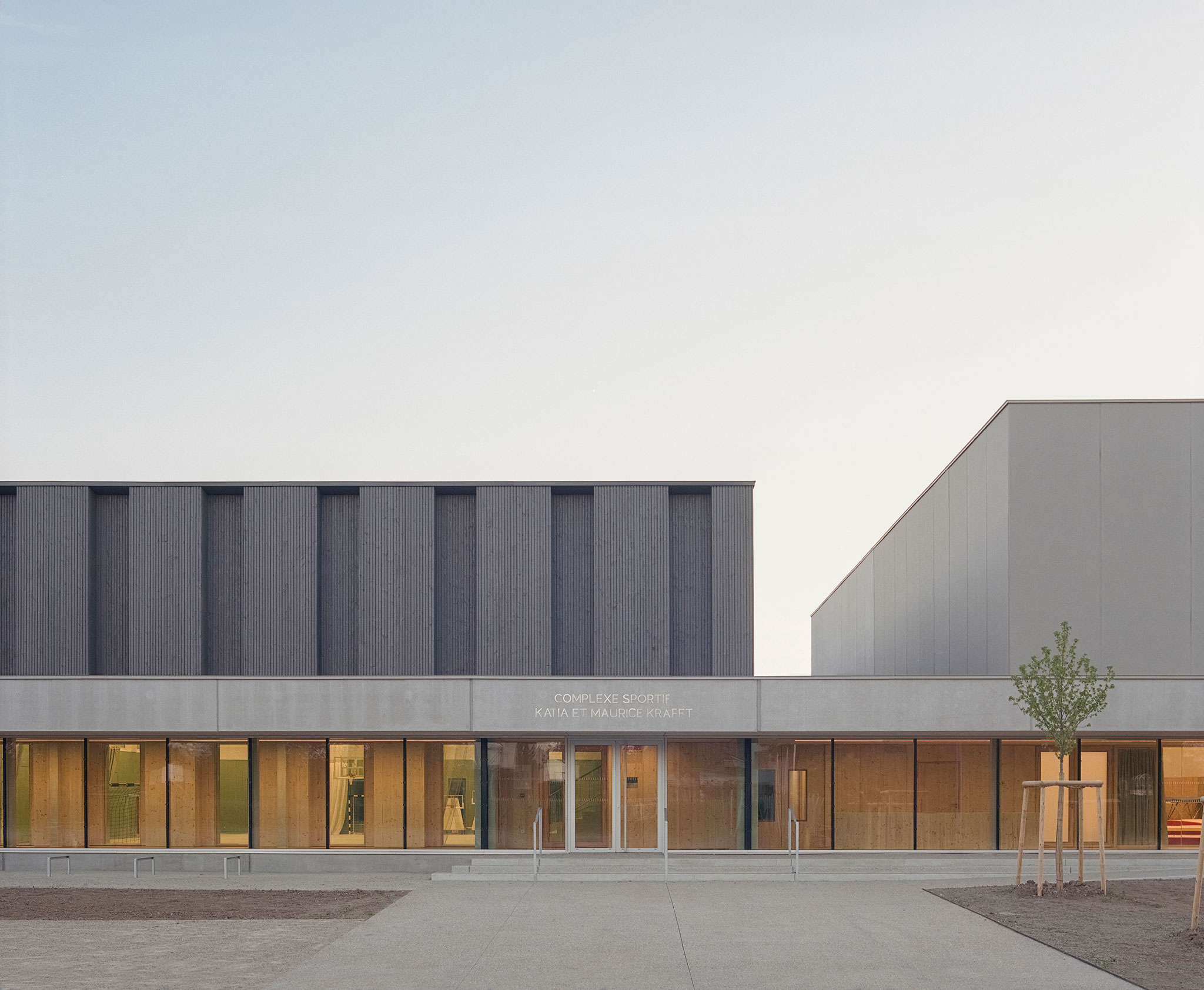
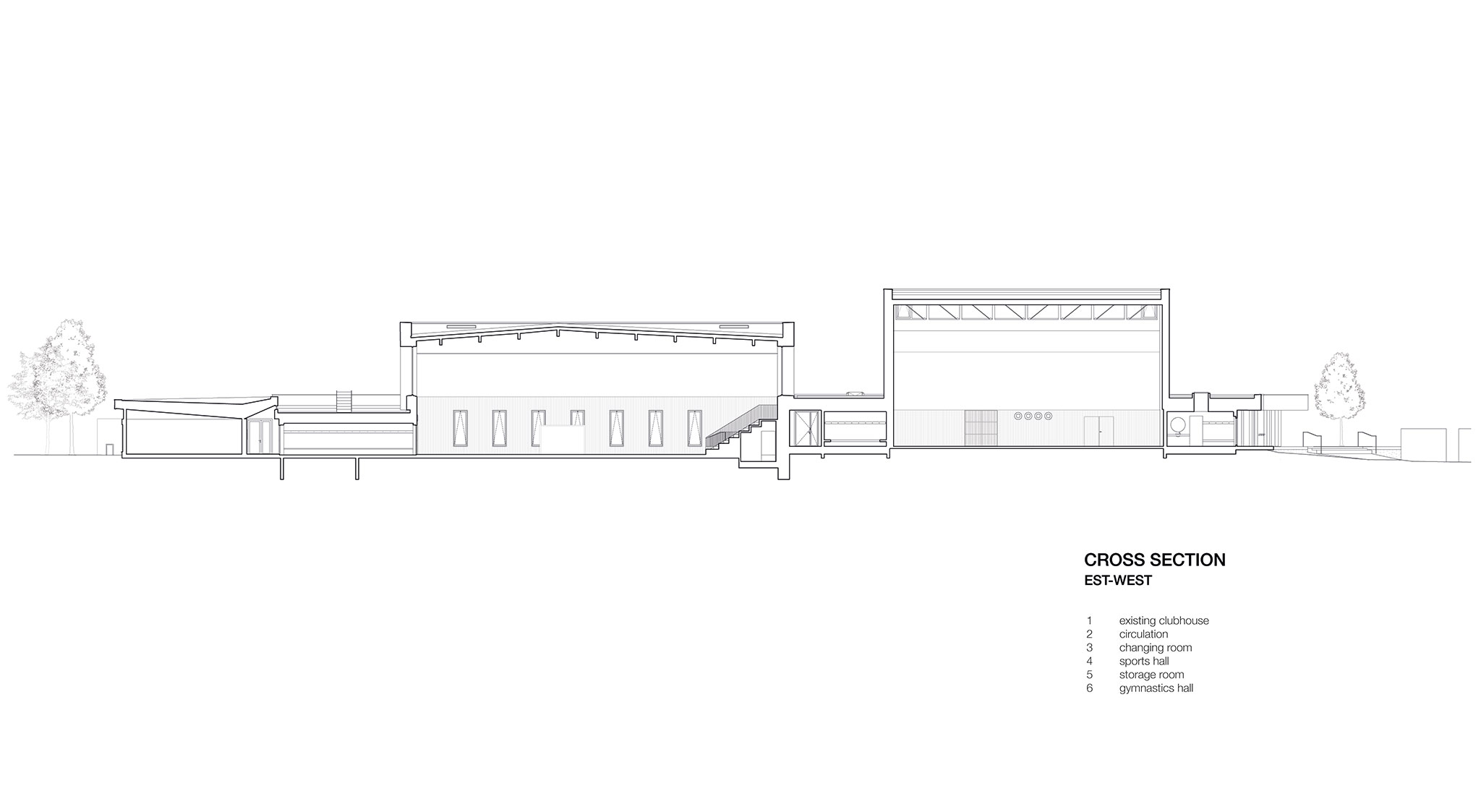
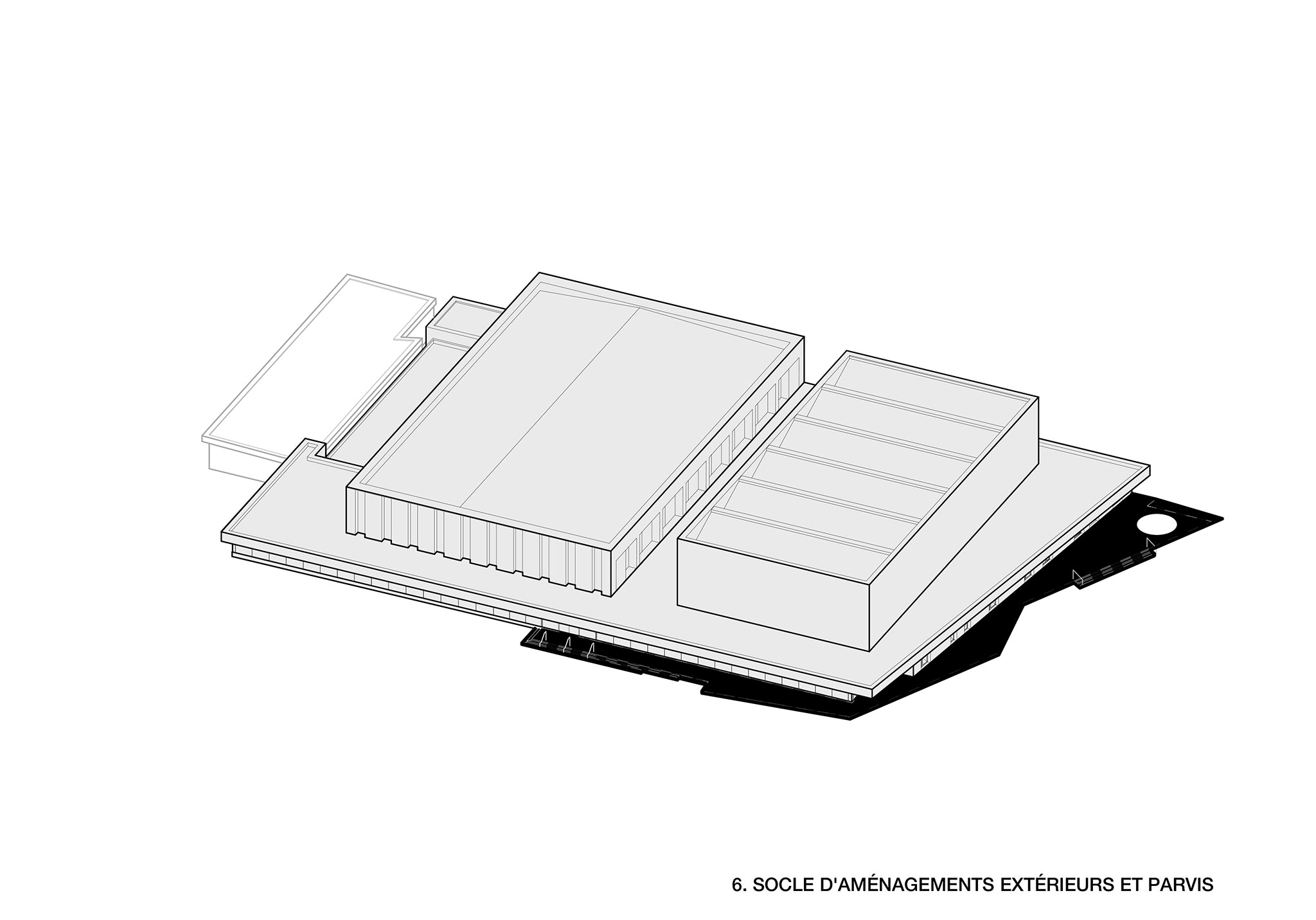
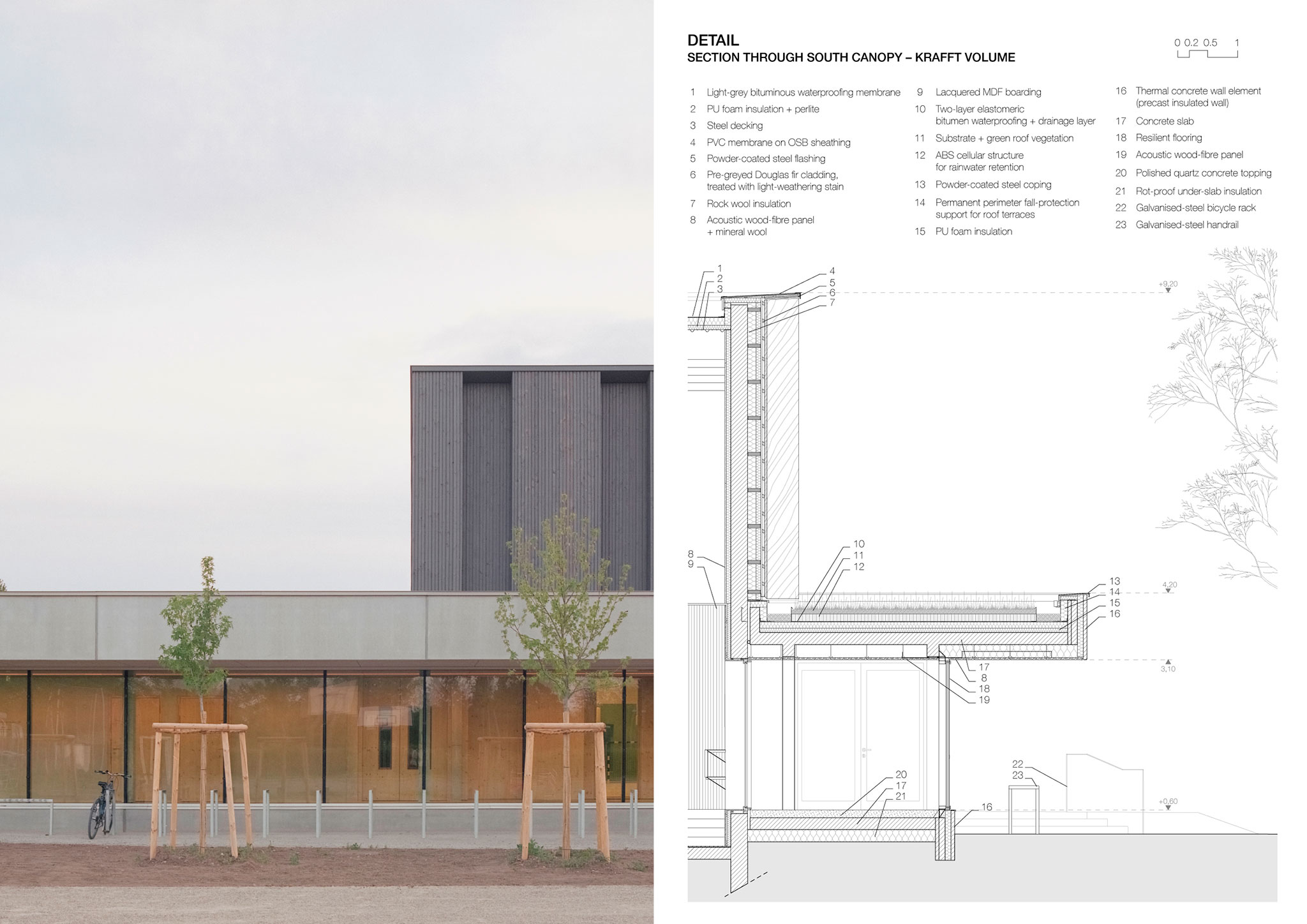
Organised entirely on a single level, the complex is characterised by two distinct emerging volumes connected by a shared 4.20-metre-high base. This horizontal element subtly highlights the uses of the multisport hall and the gymnastics hall—standing respectively 9 metres and nearly 12 metres high—while establishing a visual and technical dialogue with the scale of the clubhouses and changing rooms.
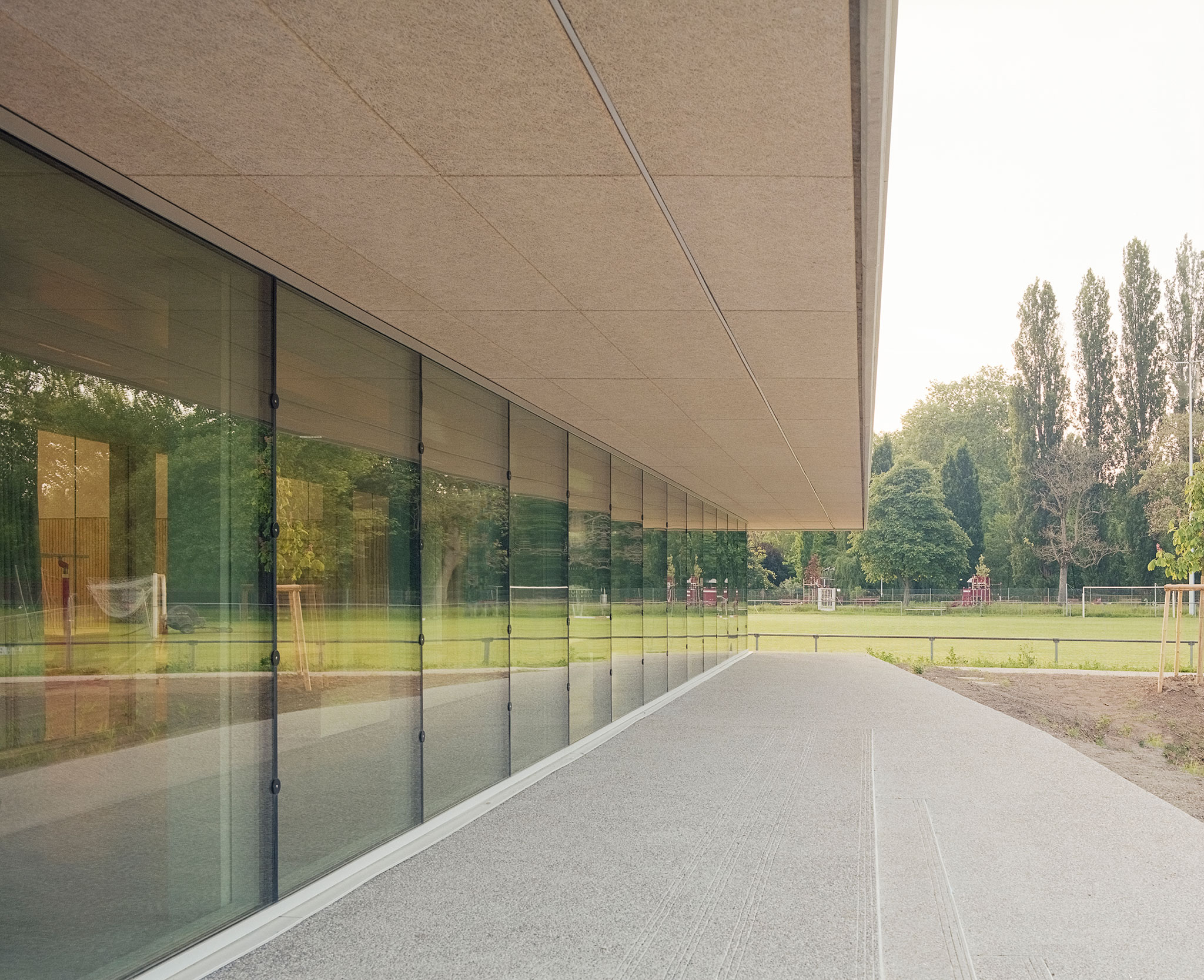
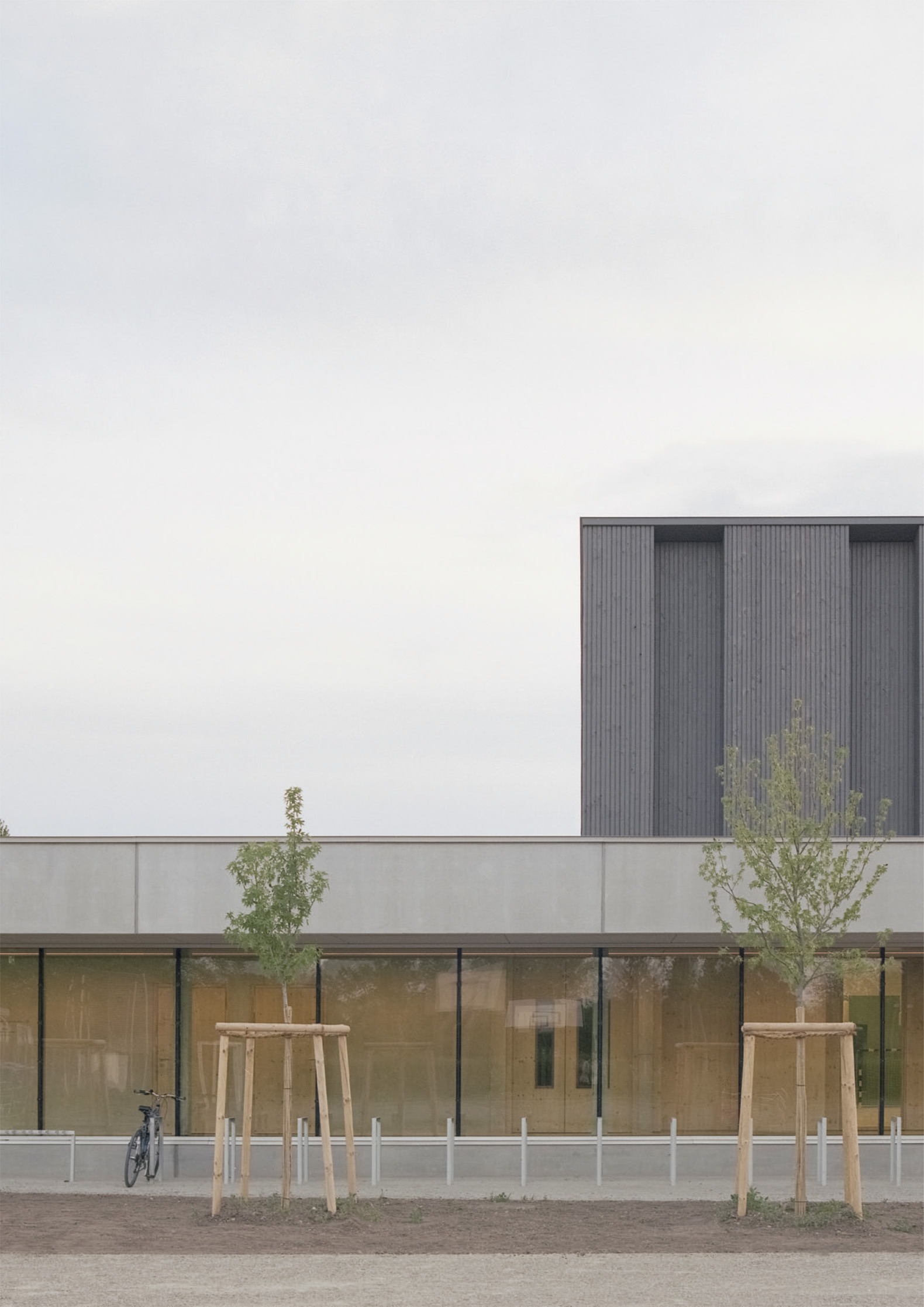
This shared built base extends southwards, in line with the existing changing rooms, reshaping the principal façade through an architectural expression that provides a transparent view of the sports activities from the public space. In doing so, it contributes to the identity of the surrounding landscape, frequented daily by pedestrians, cyclists, and athletes. Its scale introduces a more human and welcoming presence than the previously blank façade. This first architectural layer shifts eastward to integrate the football facilities and then turns northward to form a buffer zone housing the technical rooms, accessible via a service lane. This arrangement maintains distance from the school and facilitates the maintenance of all exterior spaces.
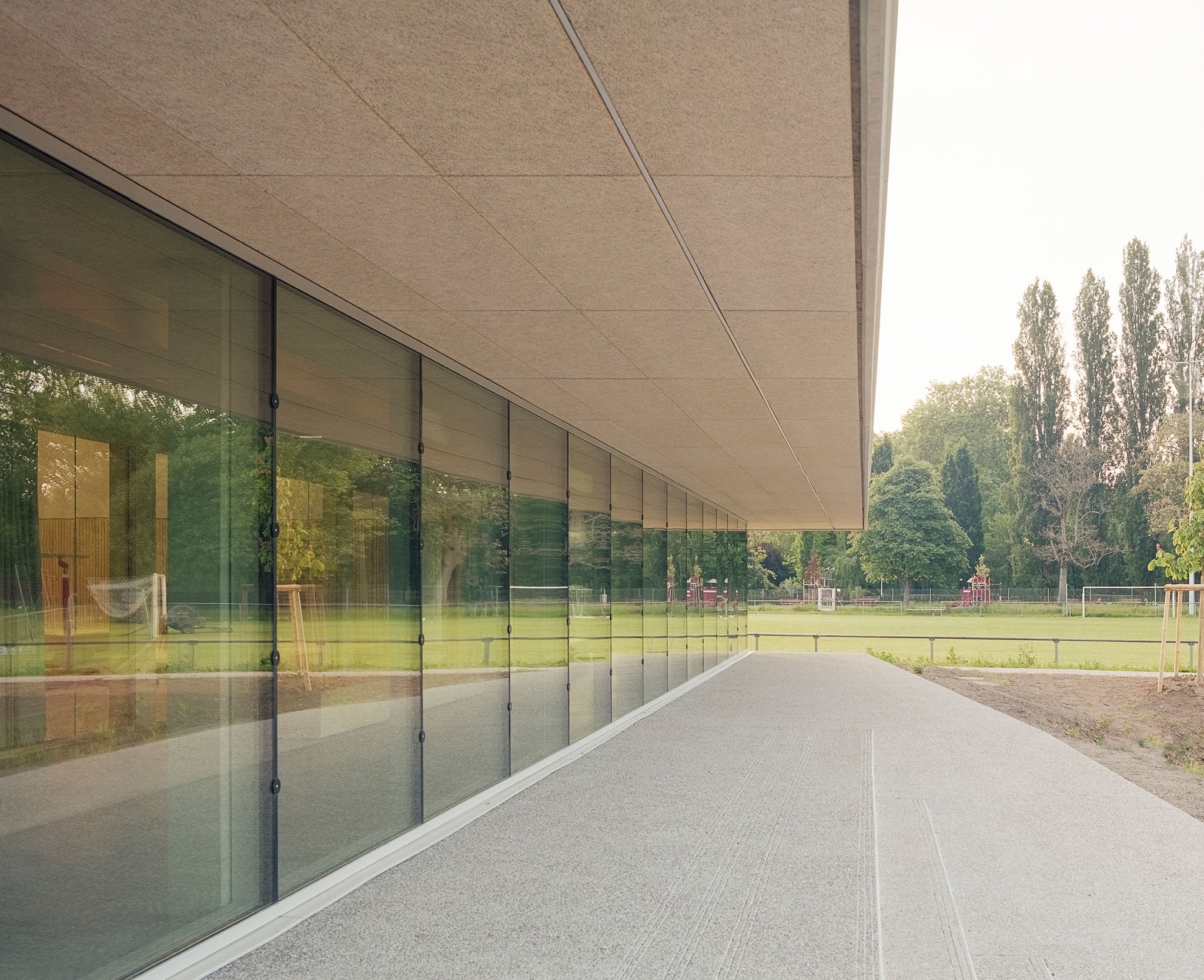
The base wraps around the new gymnastics hall, which is positioned orthogonally to the existing gymnasium and at a distance that allows the latter to continue benefiting from natural light. The entrance forecourt, located on the south façade, is defined by a new fence and gate. It opens onto a generous concrete stairway incorporating an access ramp.
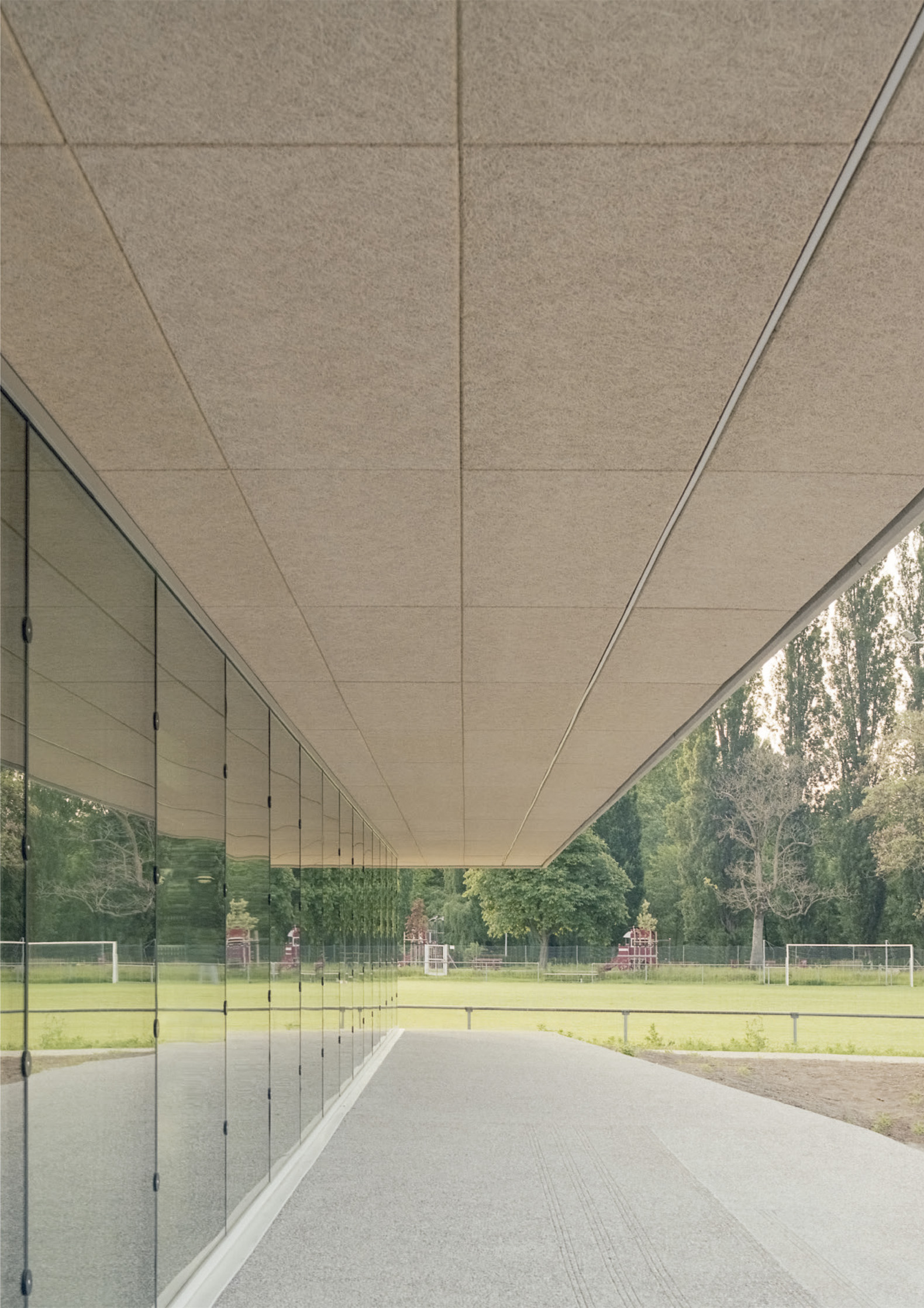
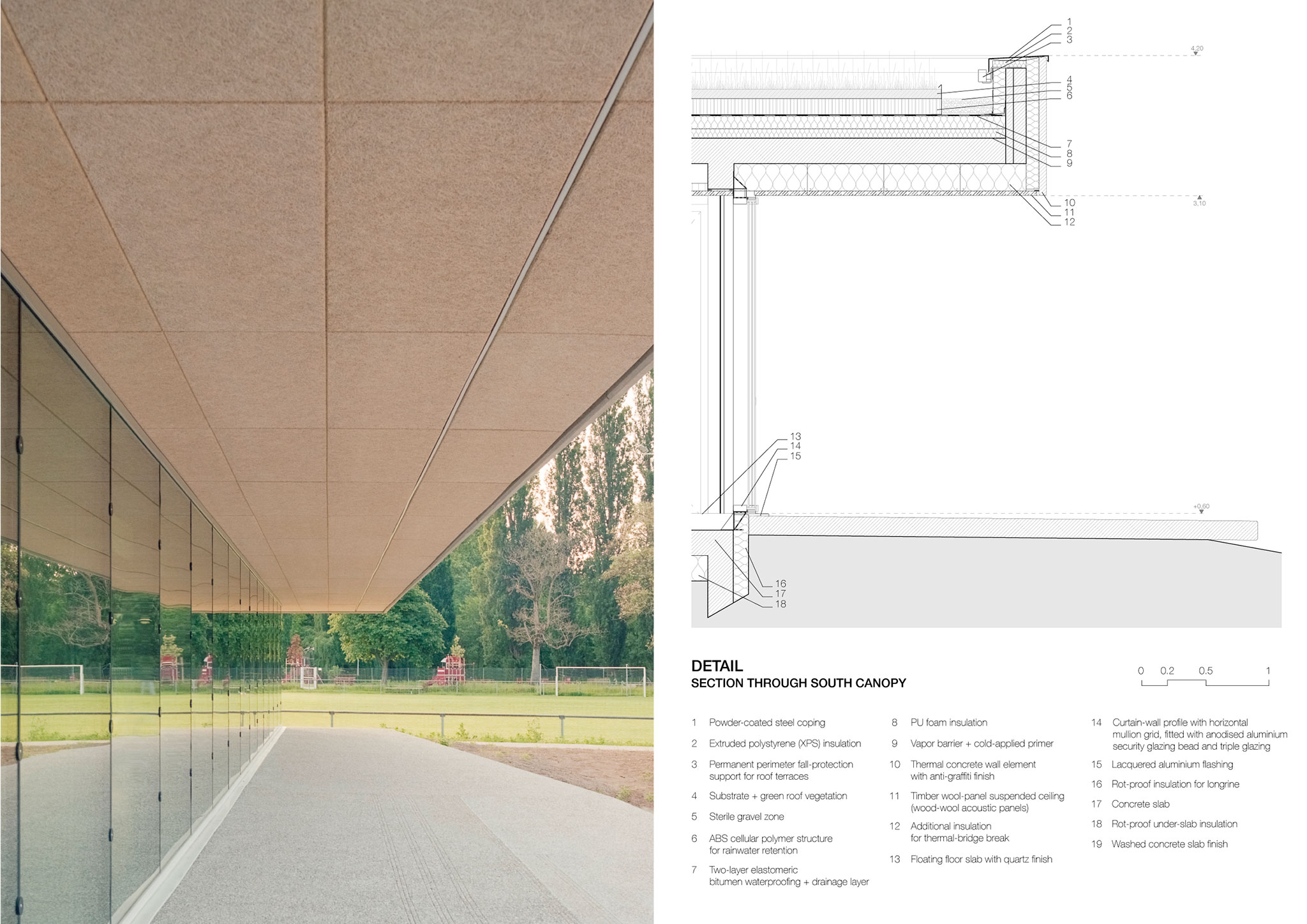
This arrangement ensures a smooth connection with the level of the new buildings, raised 60 cm above the existing ground to comply with flood-prevention requirements (PPRI). It is sheltered by an overhanging roof that extends the horizontality of the architectural base and shapes the welcoming façade. The canopy creates a covered area for bicycle parking and for users to wait or gather, while providing summer shading and allowing winter solar gains.
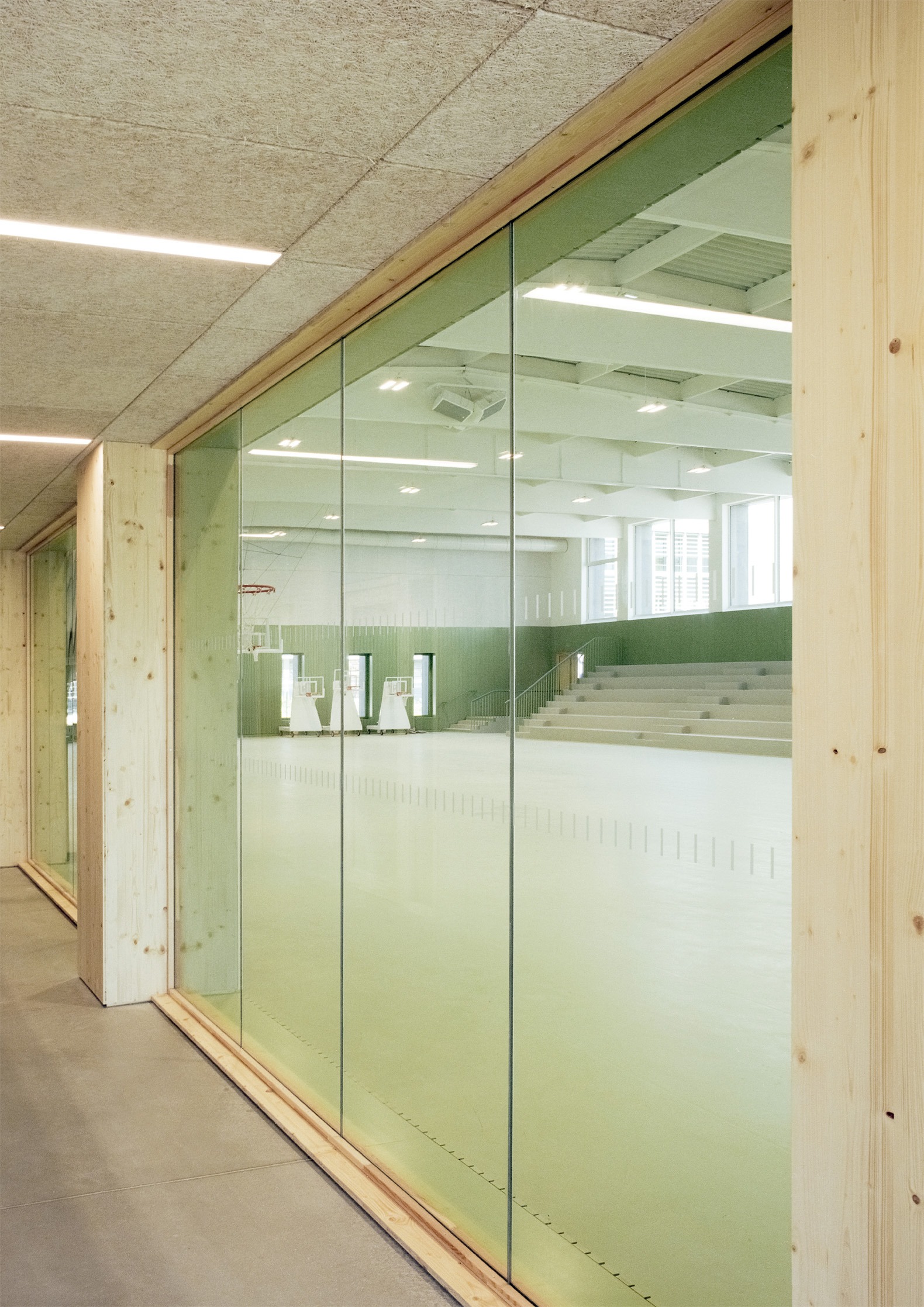
This concrete base outlines the footprint of the new construction: it forms the foundation of the southern gallery and serves as an exterior circulation linking directly to the football facilities, which are now independent. This elevated walkway, always protected by the roof overhang, offers a long span that can act as seating for spectators as well as a landscaped, accessible outdoor space. It is punctuated by wide staircases connecting the changing rooms to the field, passing through the pedestrian link to the school. This strategic connection is intentionally widened to provide an additional gathering space for football players before or after training.
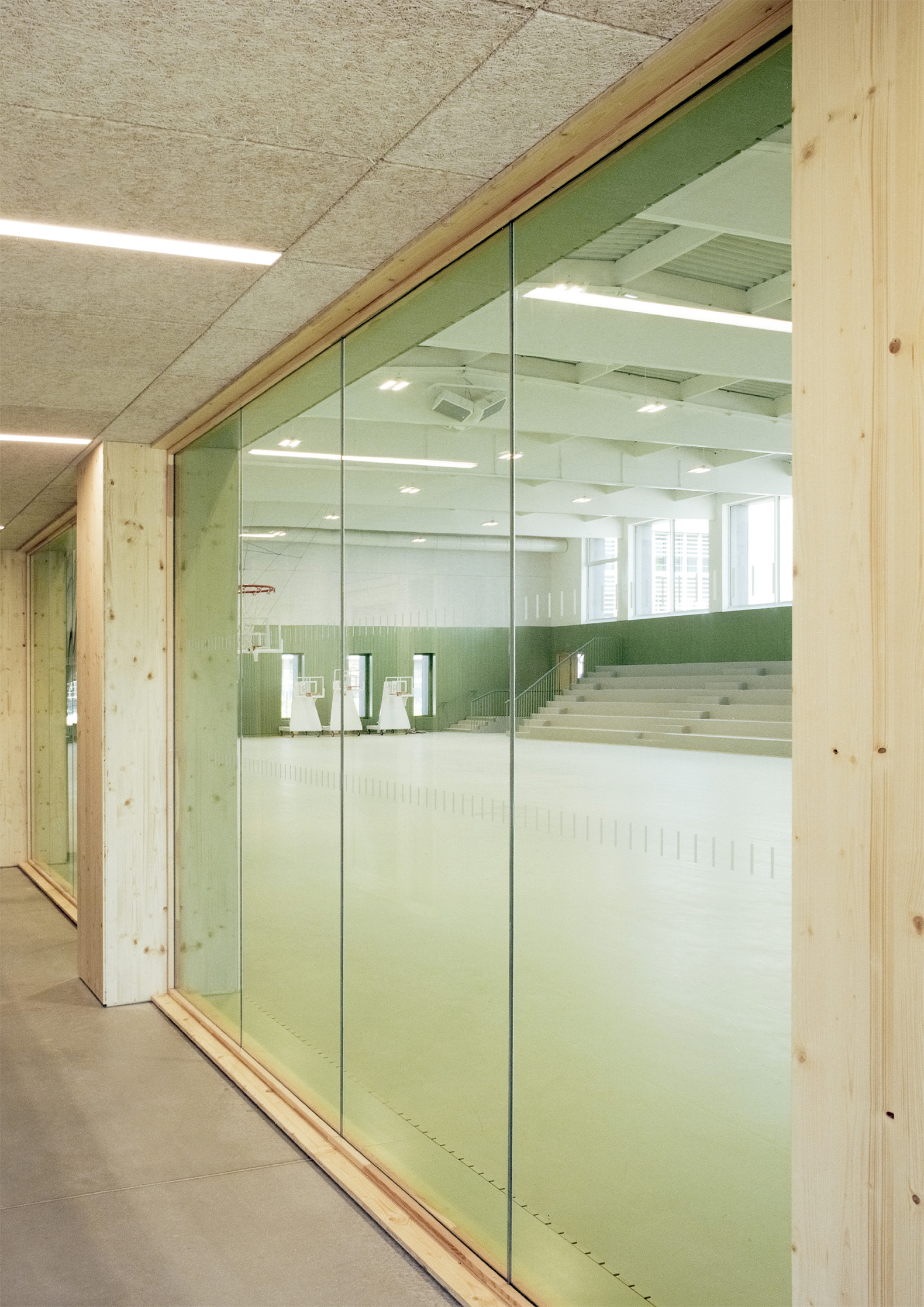
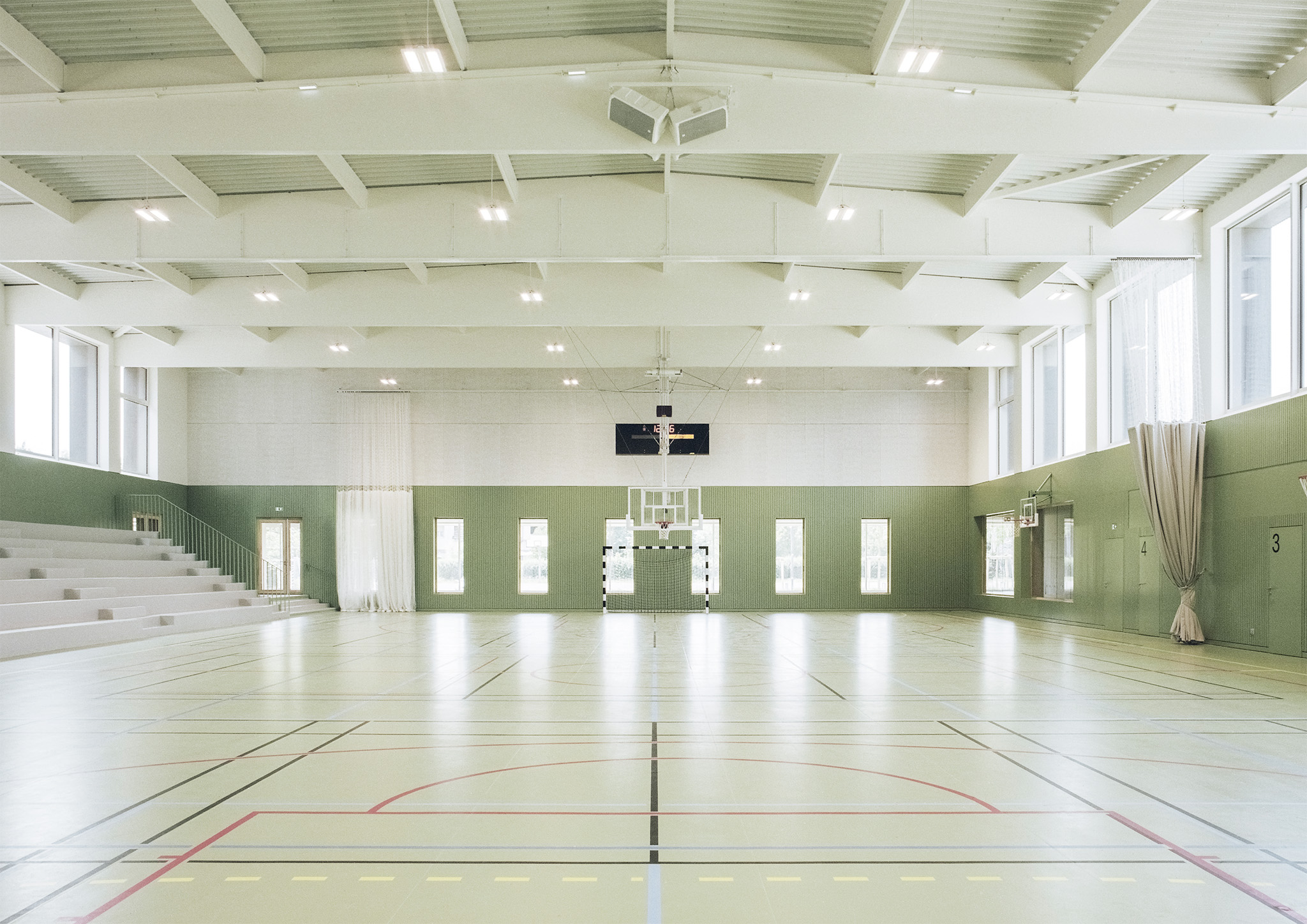
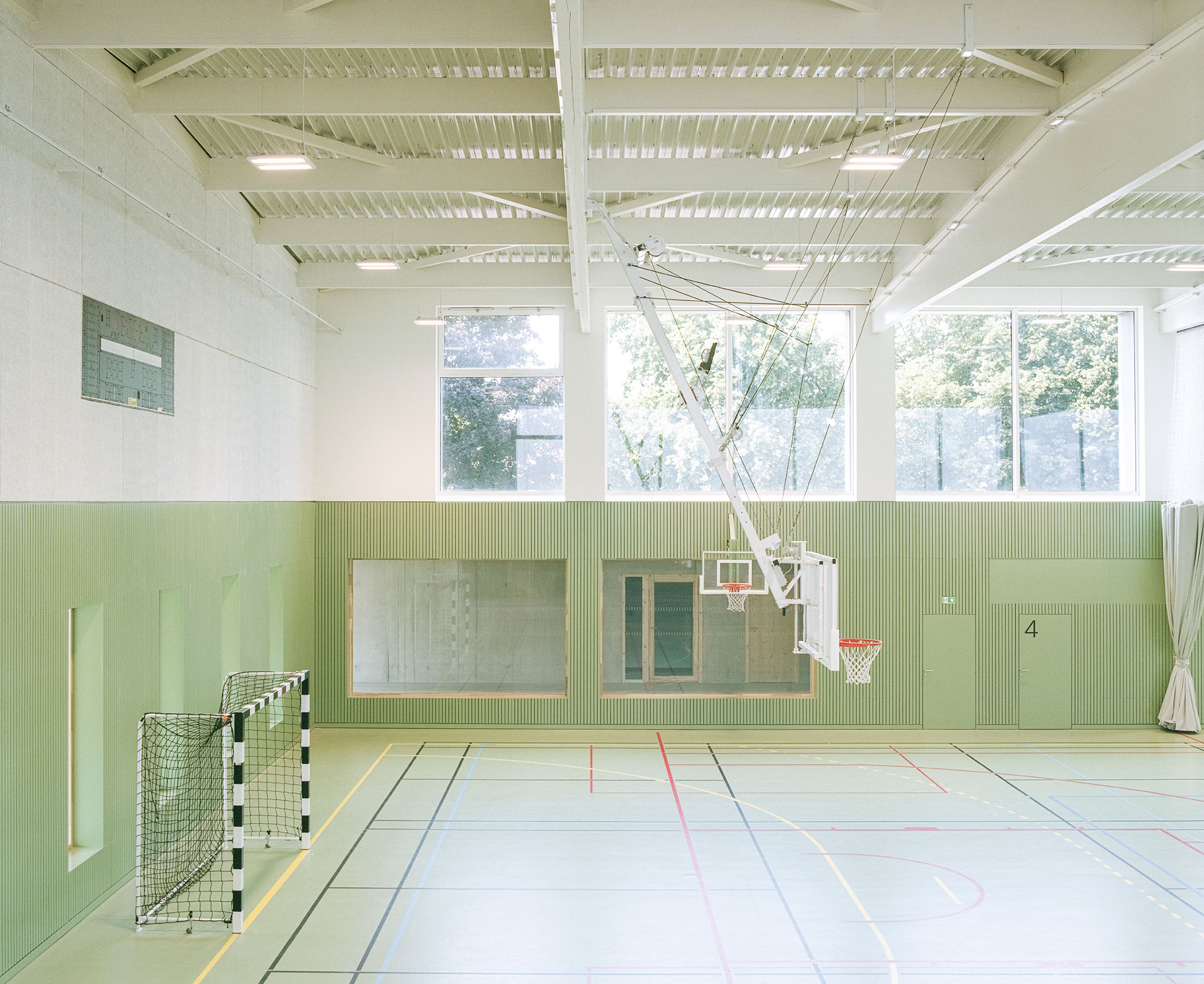
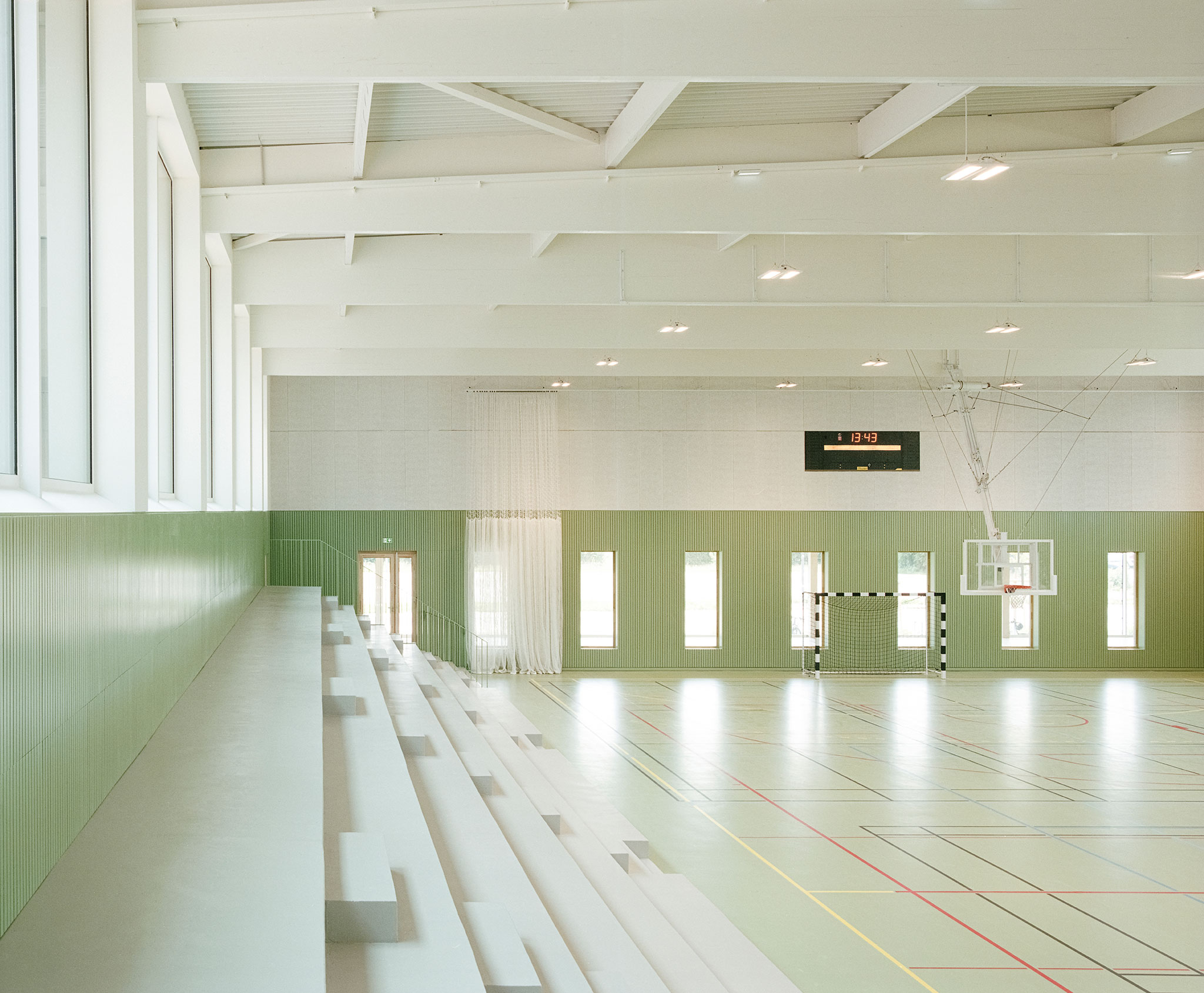
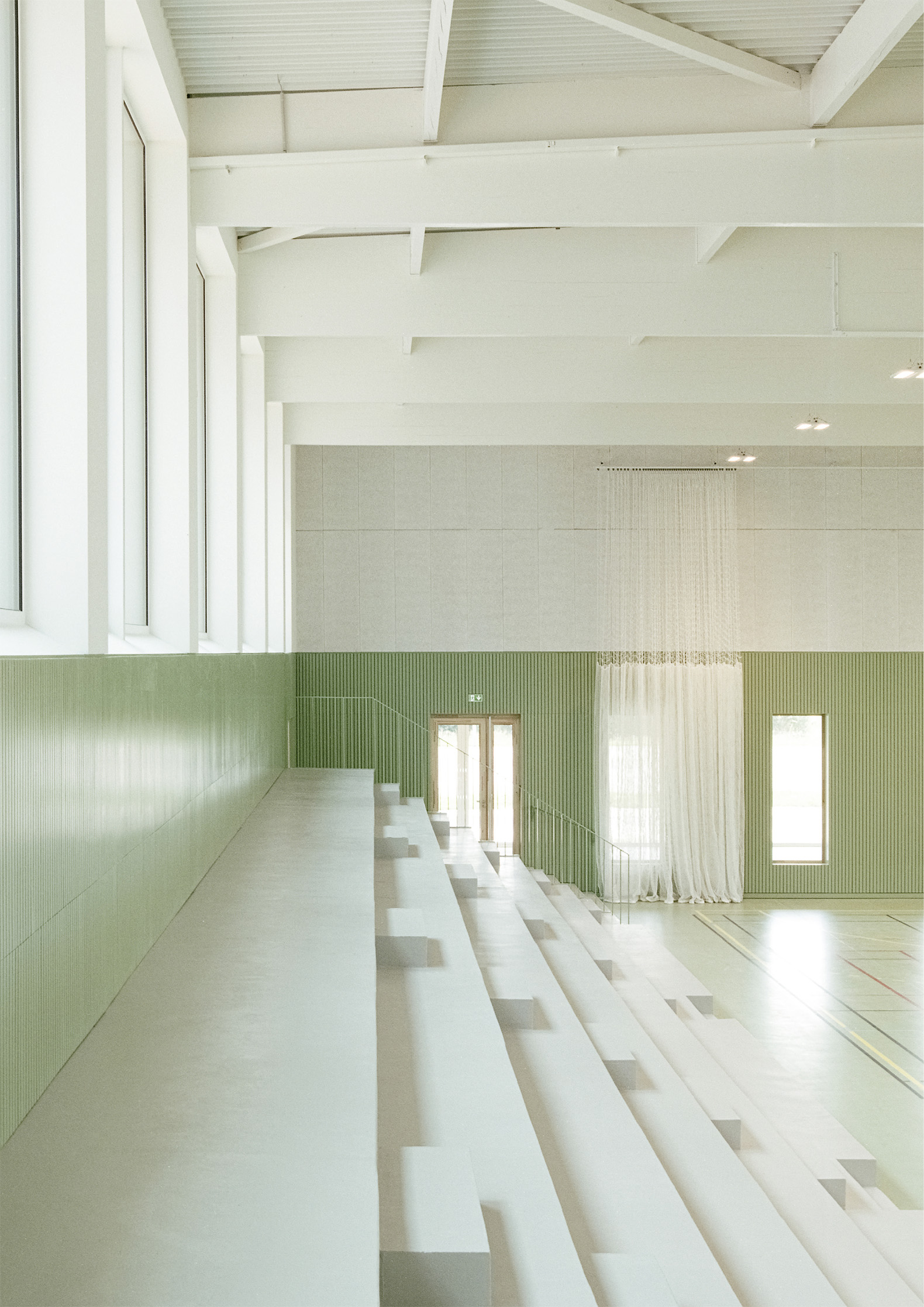
The multisport hall, identifiable by its exposed timber structure, is housed within a simple volume open to the east and west. A tiered seating stand is positioned on the eastern side. The entire space has been preserved and enhanced through new openings in the north and south gable walls, bringing abundant natural light into the central playing area. These openings also allow the activities inside to be visible from internal circulation spaces—and even from the public realm—reinforcing the integration of the complex into the life of the site.
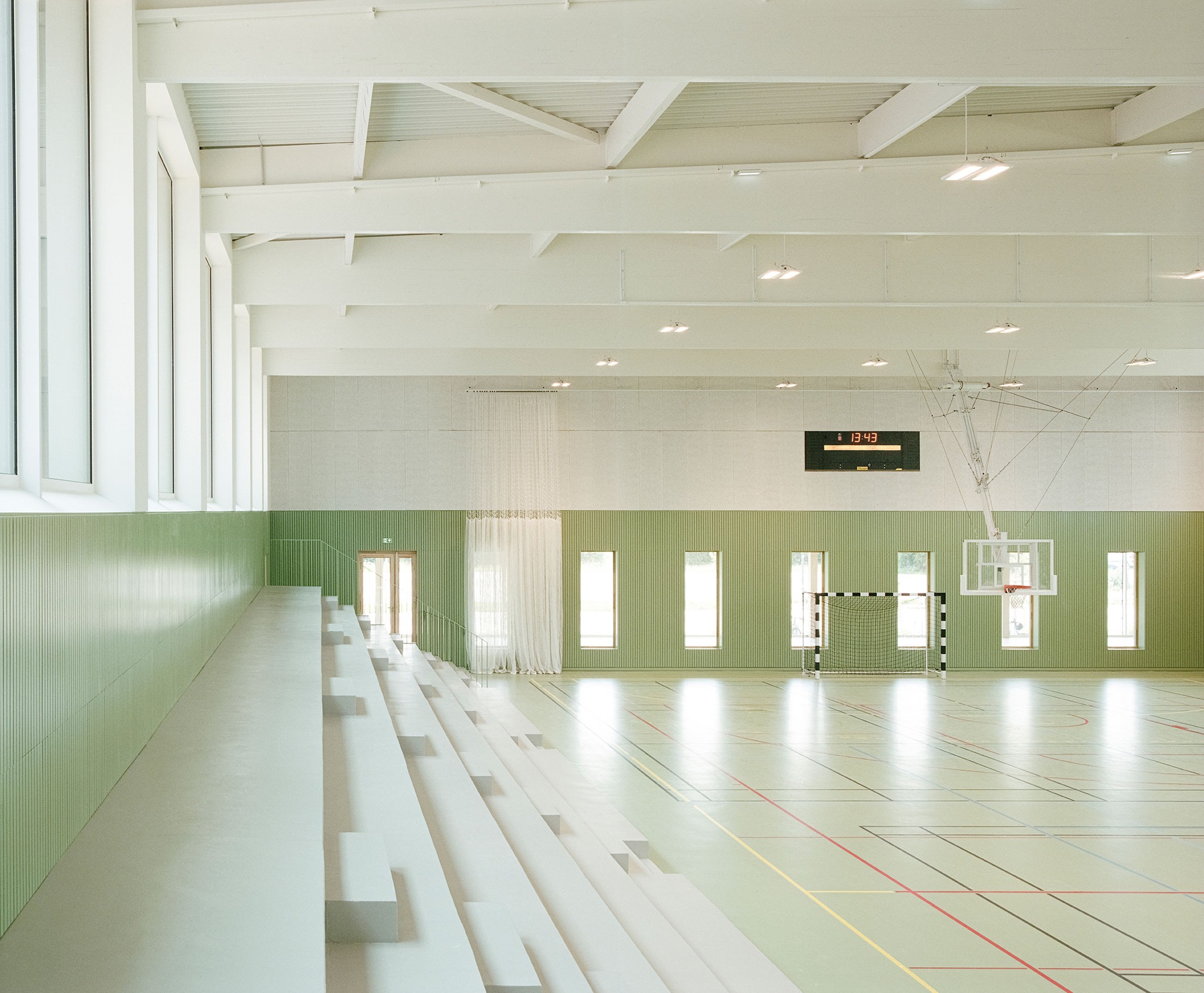
Special attention has been given to light and colour, creating a clear reading of the volume structured into two layers. The seating stand maintains its autonomy, while technical and structural elements are subtly integrated or concealed. This approach ensures a legible, functional, and understated space.
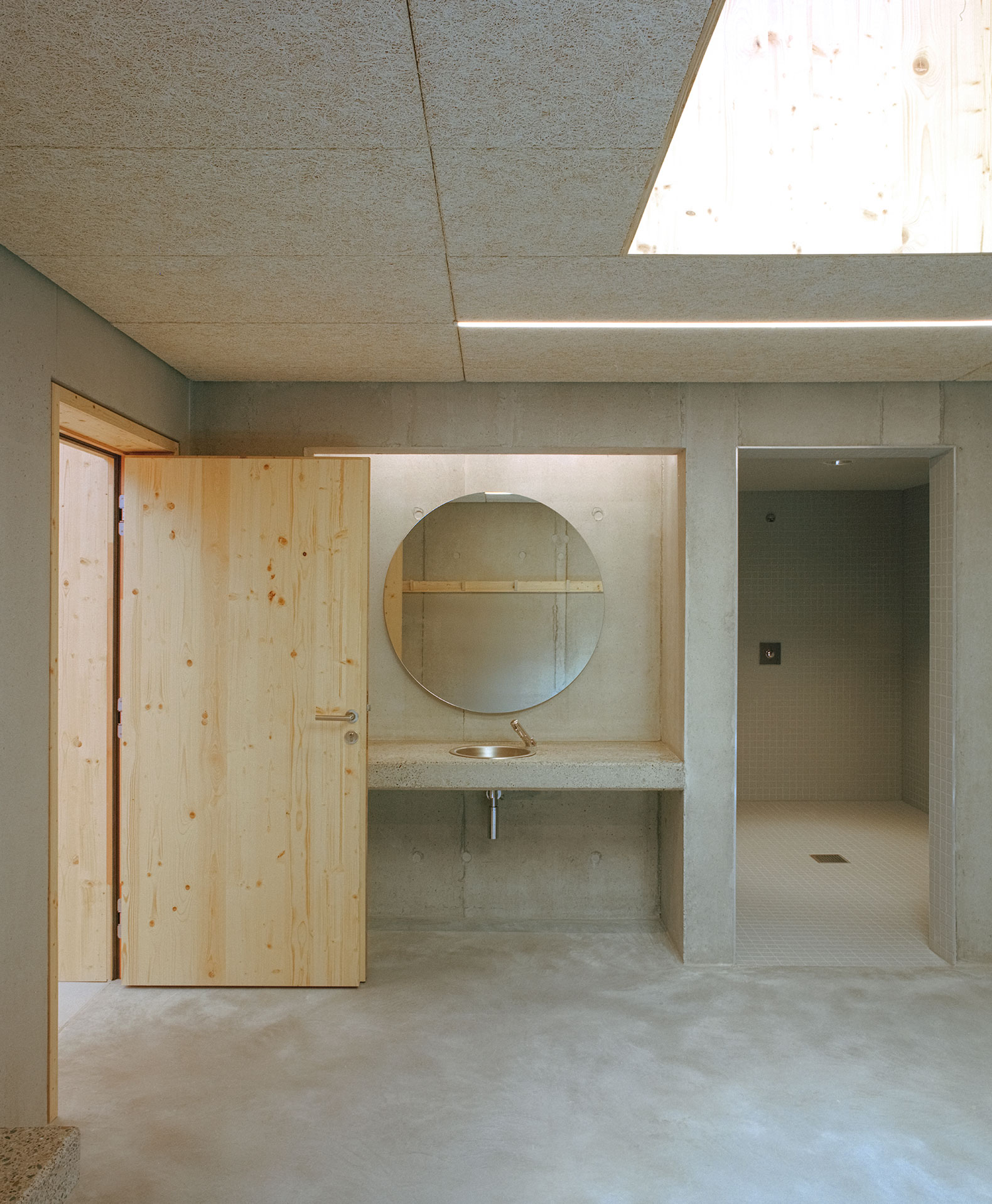
The hall maintains a distinctive status within the project. The former band of changing rooms has been redesigned as through-changing rooms, guaranteeing circulation that meets the required “dirty foot / clean foot” separation.
The extension asserts a distinct identity in contrast with the existing building through an atmosphere shaped by a strong presence of raw materials. Exposed concrete on walls and floors defines the space with rigour. Timber, used as interior cladding for joinery and built-in furniture, introduces warmth and a tactile quality.
The project balances finesse and robustness : assemblies are precise, details carefully controlled, achieving harmony between structural solidity and user comfort. The resulting atmosphere is unique — both welcoming and disciplined — where materiality plays a central role in spatial perception, legibility, and appropriation by its users.
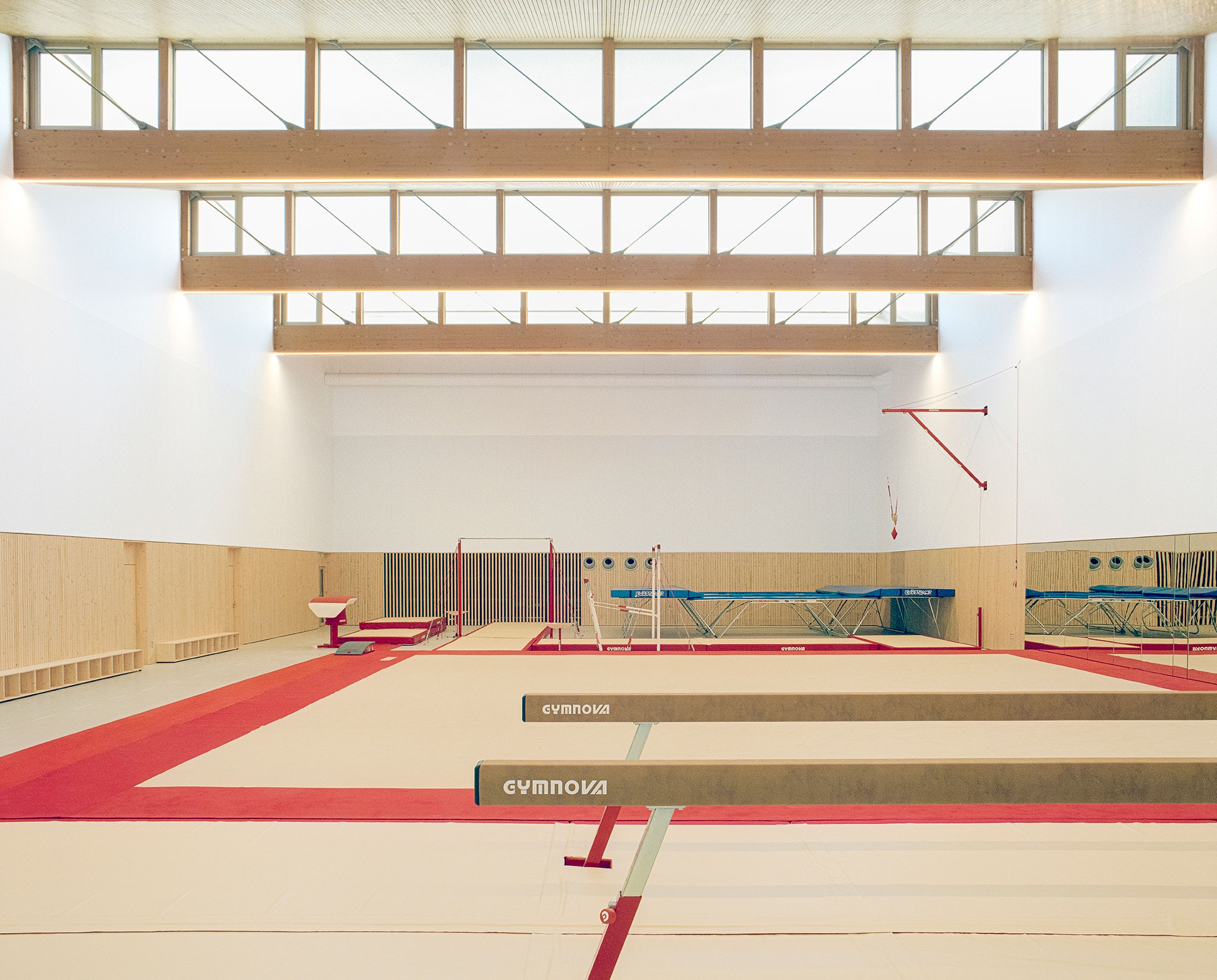
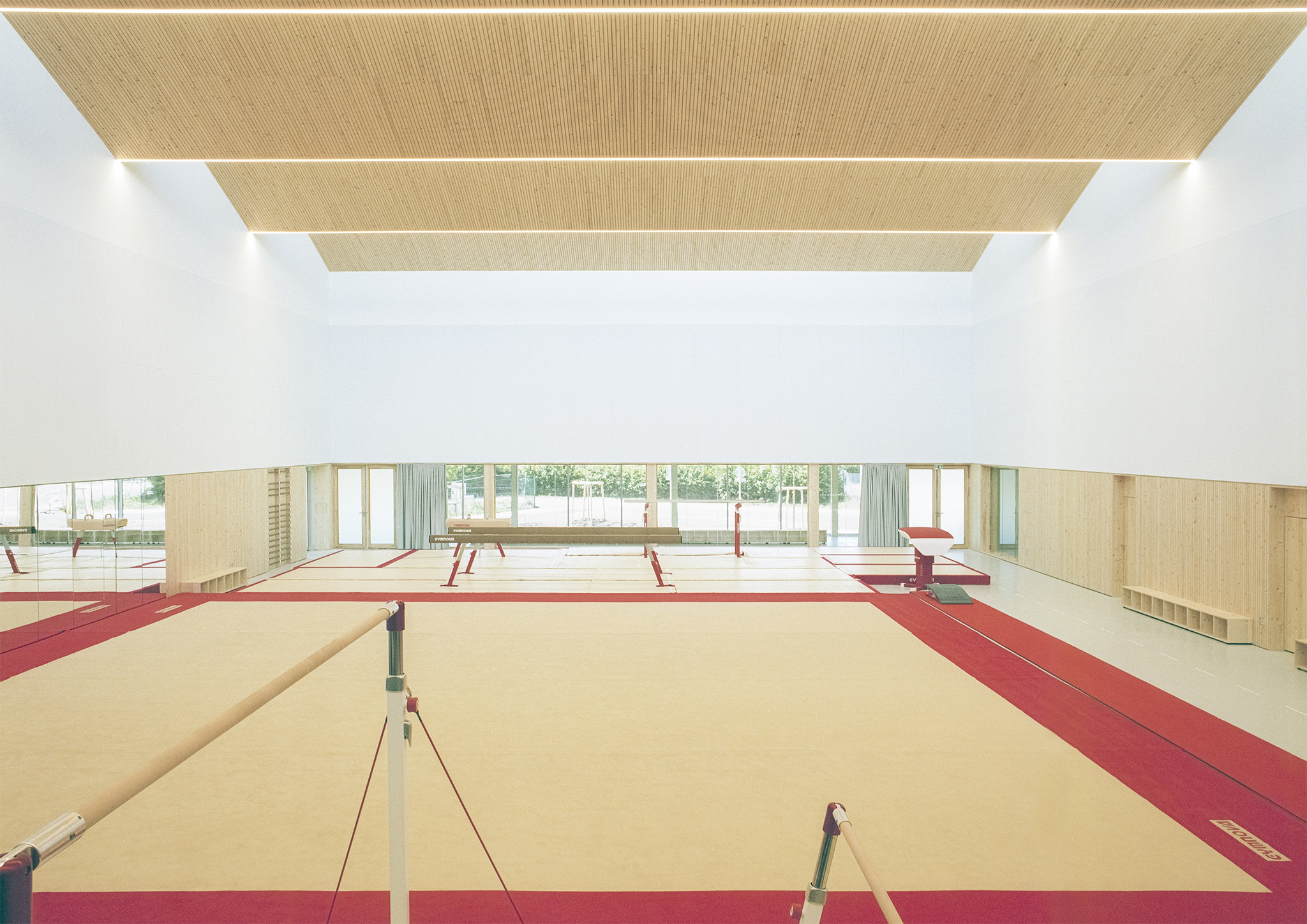
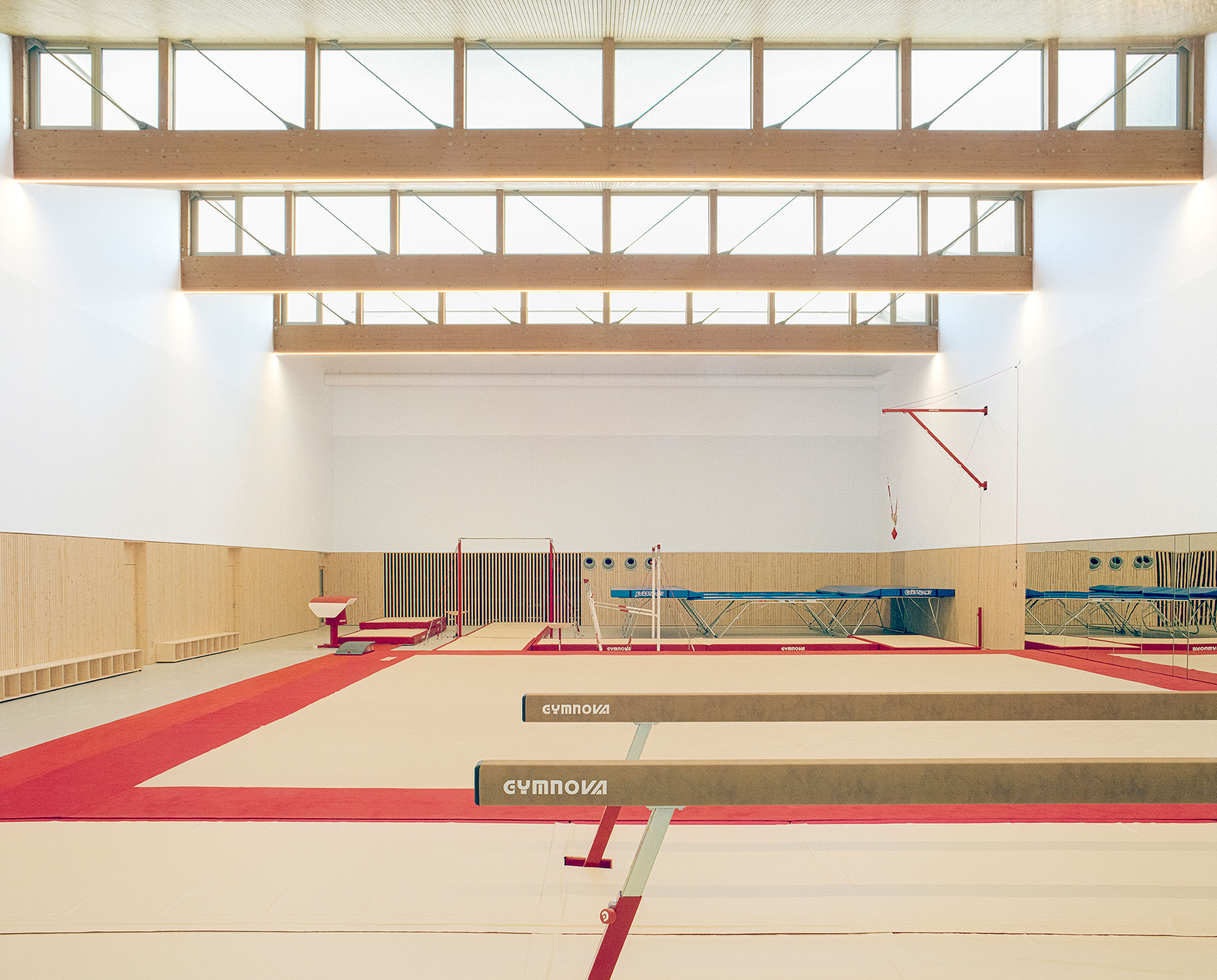
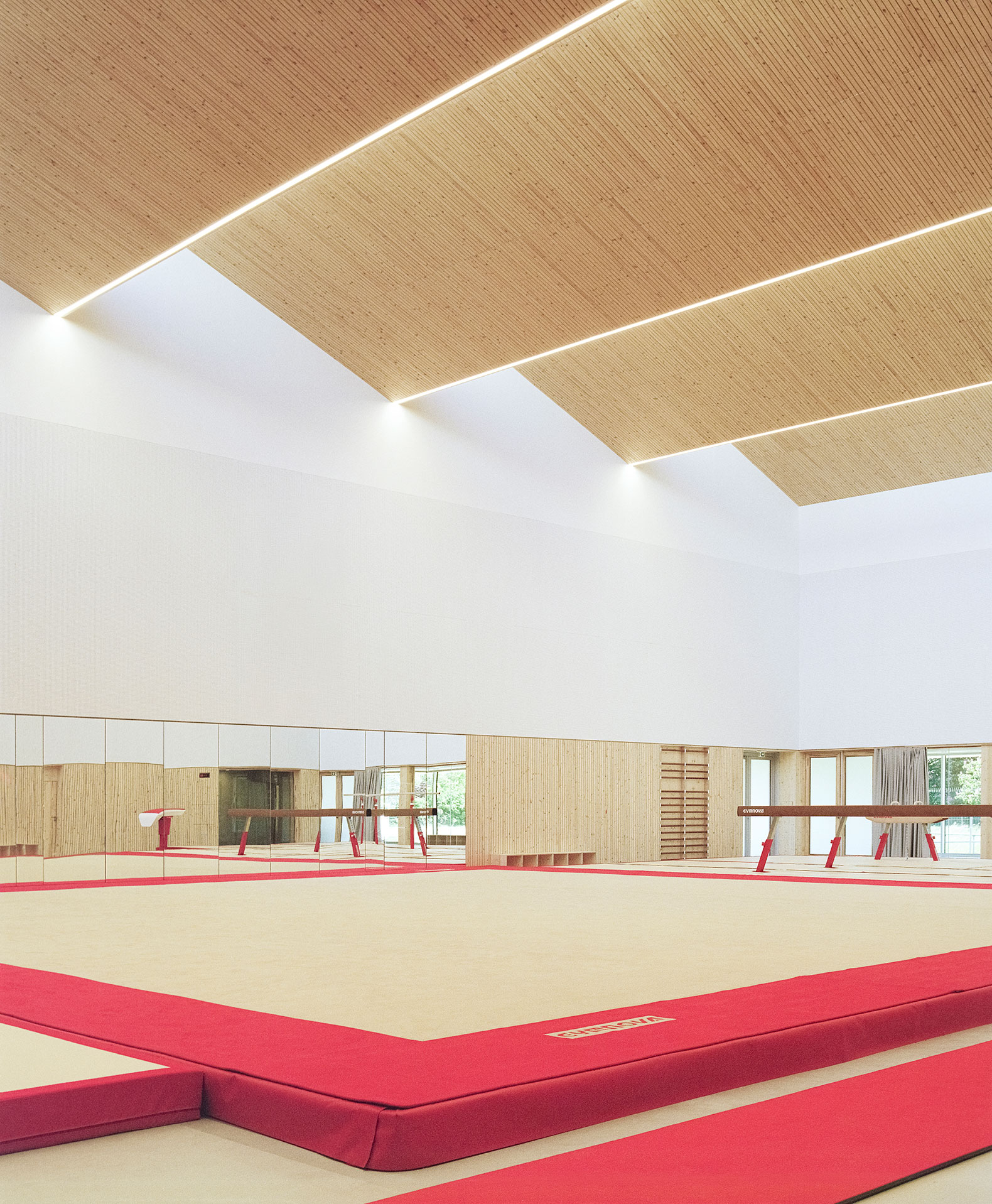
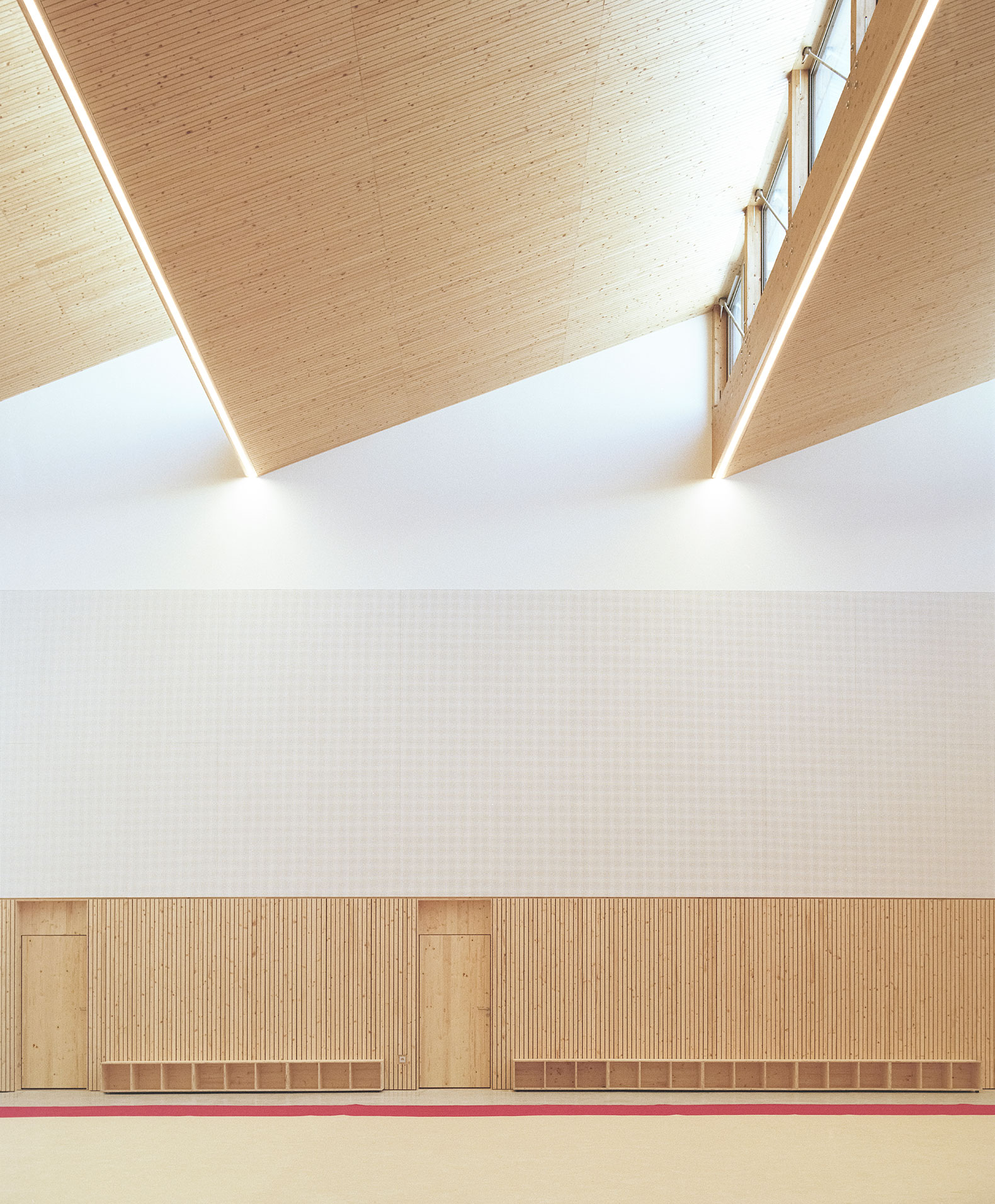
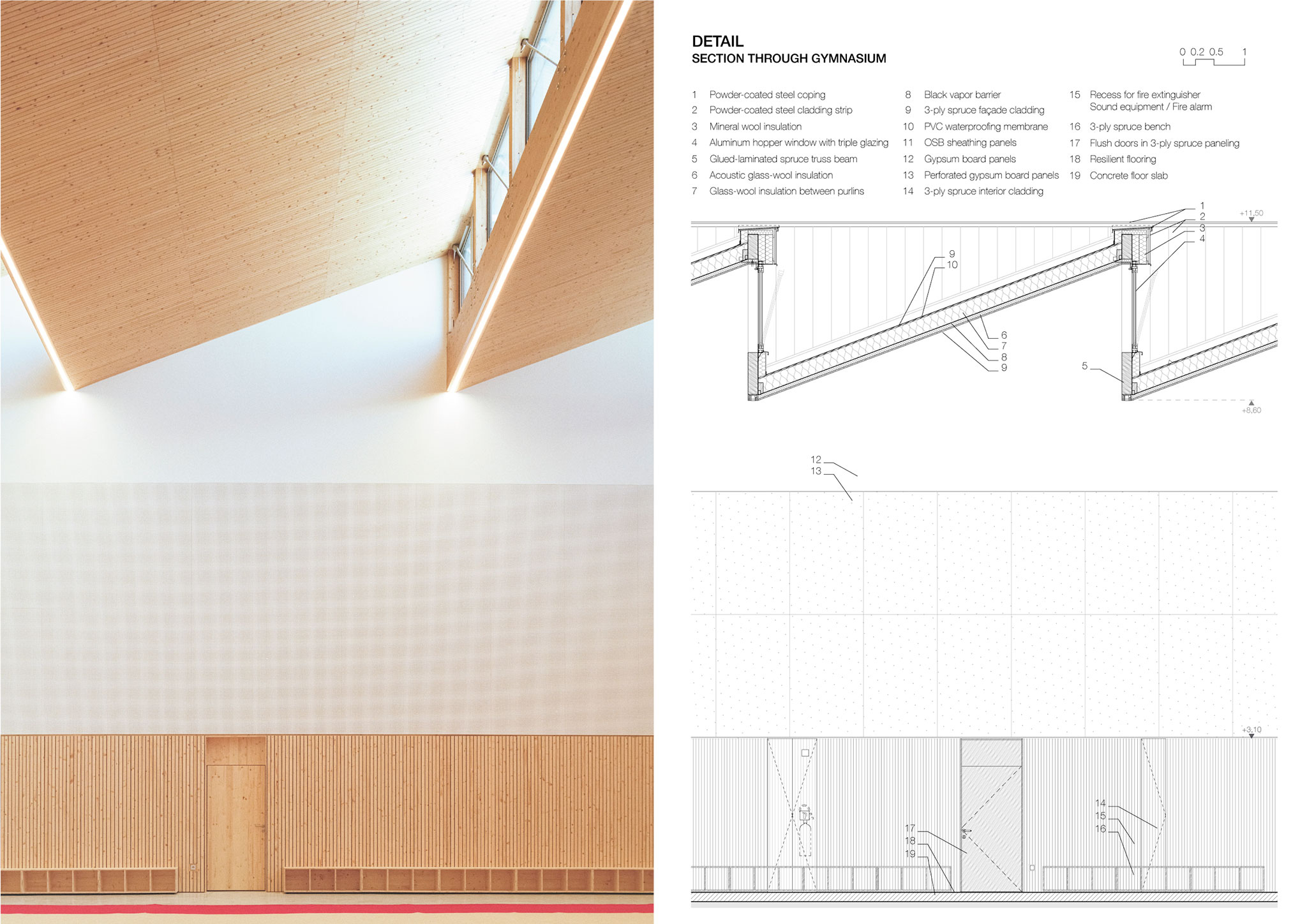
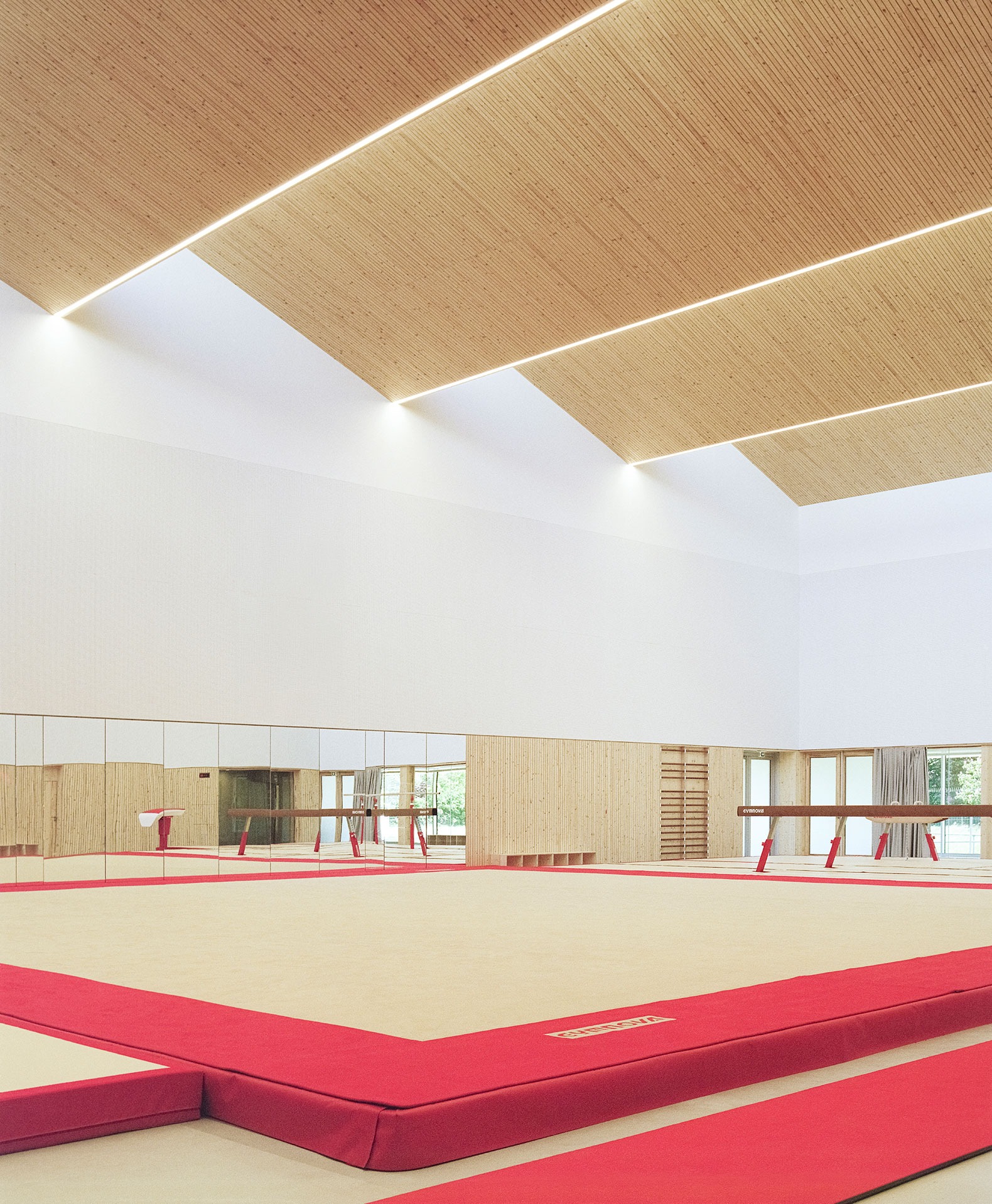
Finally, the gymnastics hall distinguishes itself with a singular volume defined by generous proportions, a strong architectural profile, and an accentuated influx of natural light. Illumination is entirely overhead and indirect, provided by a series of north-facing sheds. This system bathes the space in soft, even, glare-free light, perfectly suited to the requirements of gymnastics, where avoiding harsh contrasts supports spatial orientation during aerial movements.
The atmosphere is shaped by the presence of timber, used in the lower belt as a grounding element and across the ceiling surfaces that line the sheds. Natural light, filtered through these sheds, glides across the timber and reveals warm tonal variations. This subtle gradient, created by the material itself, accompanies movement through the space and gives the hall a living, evolving, and welcoming character.