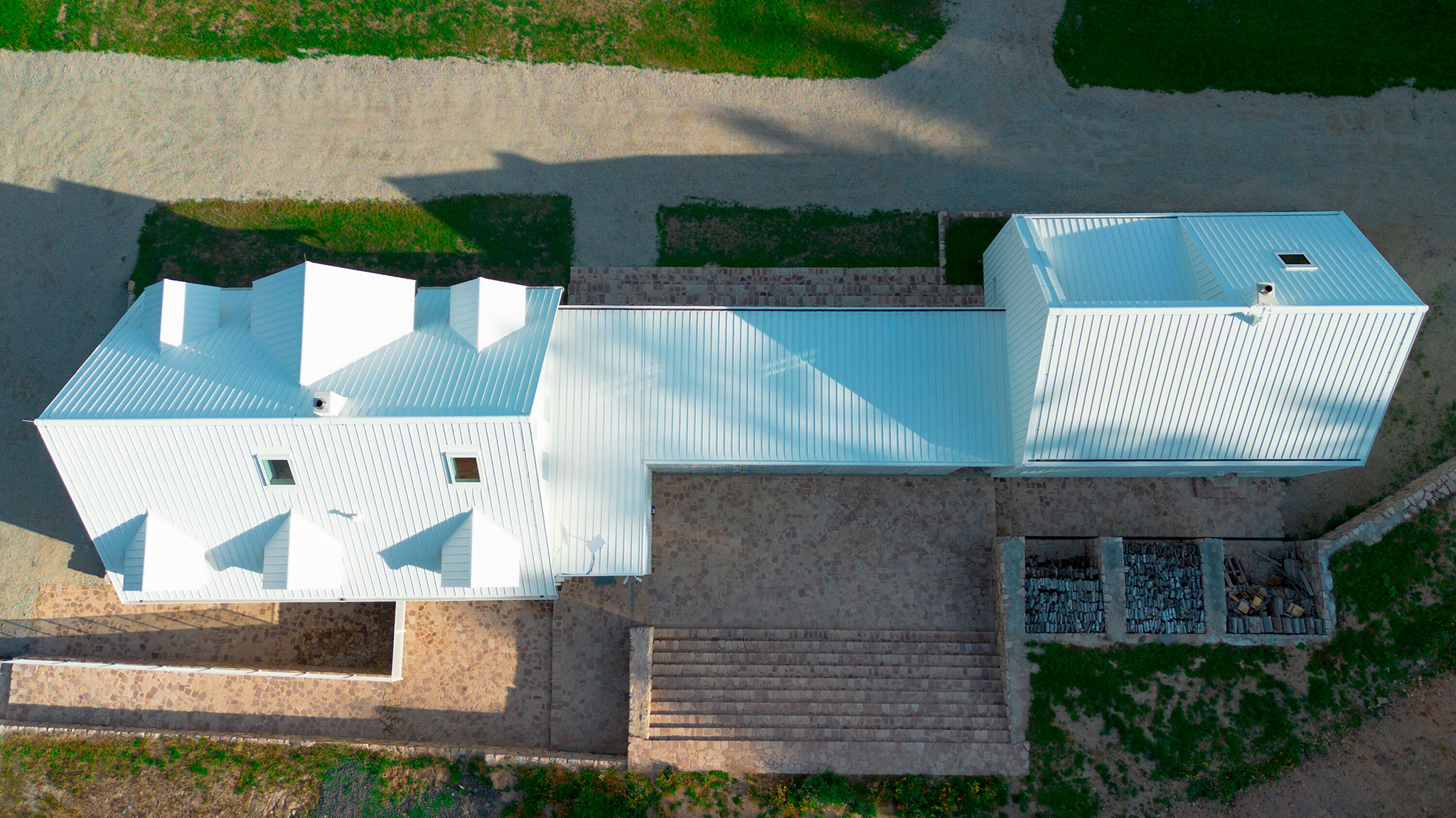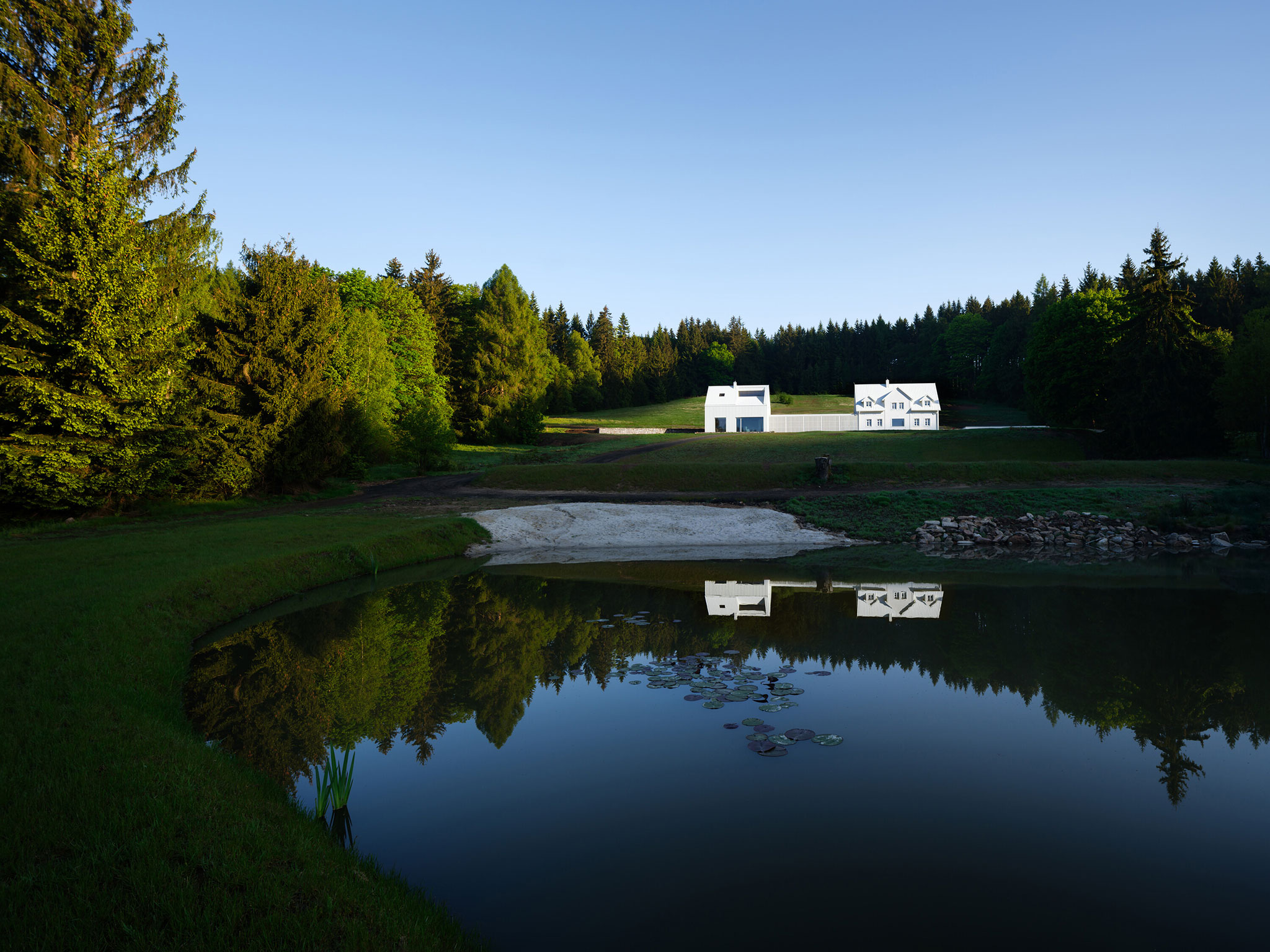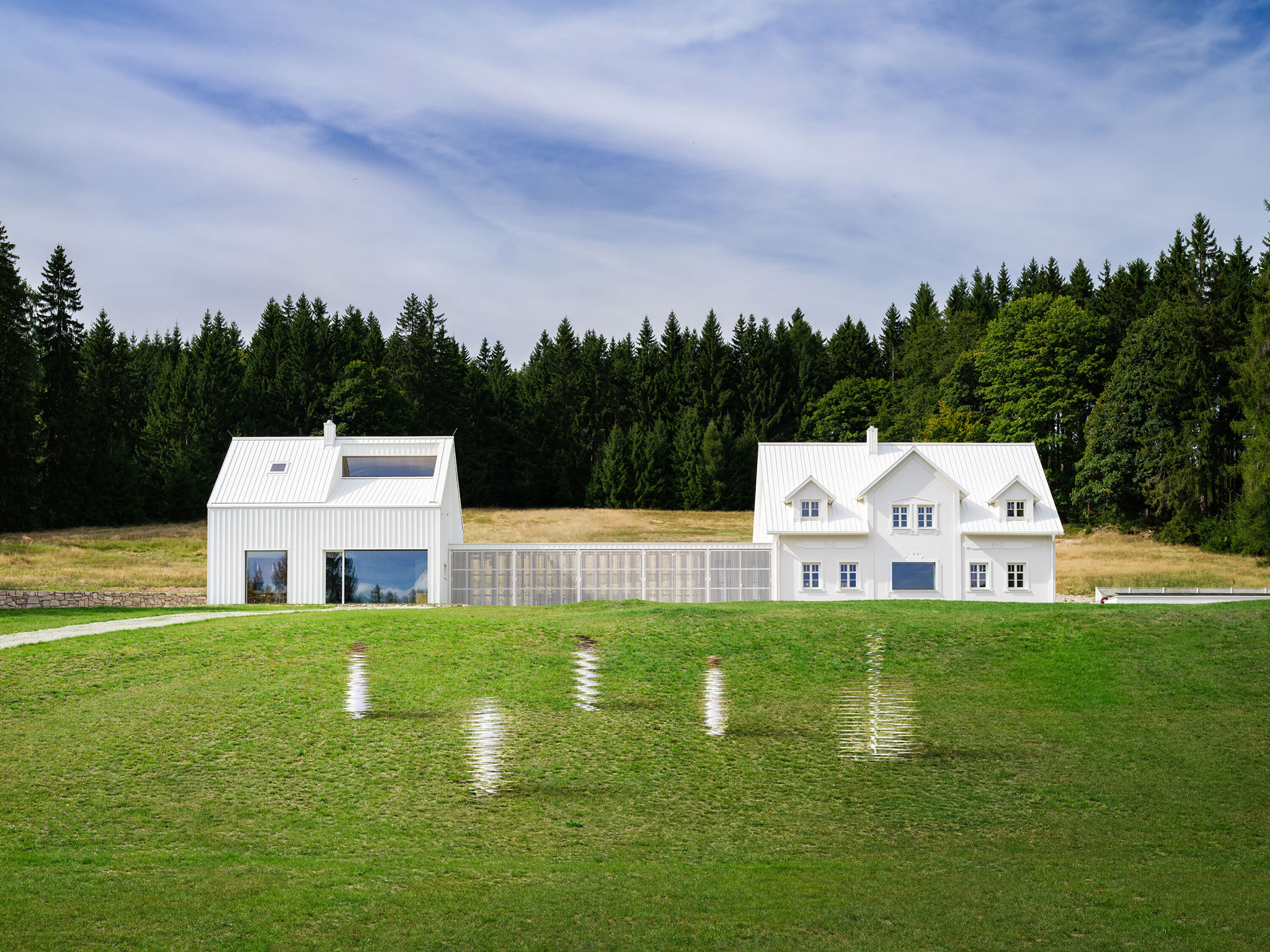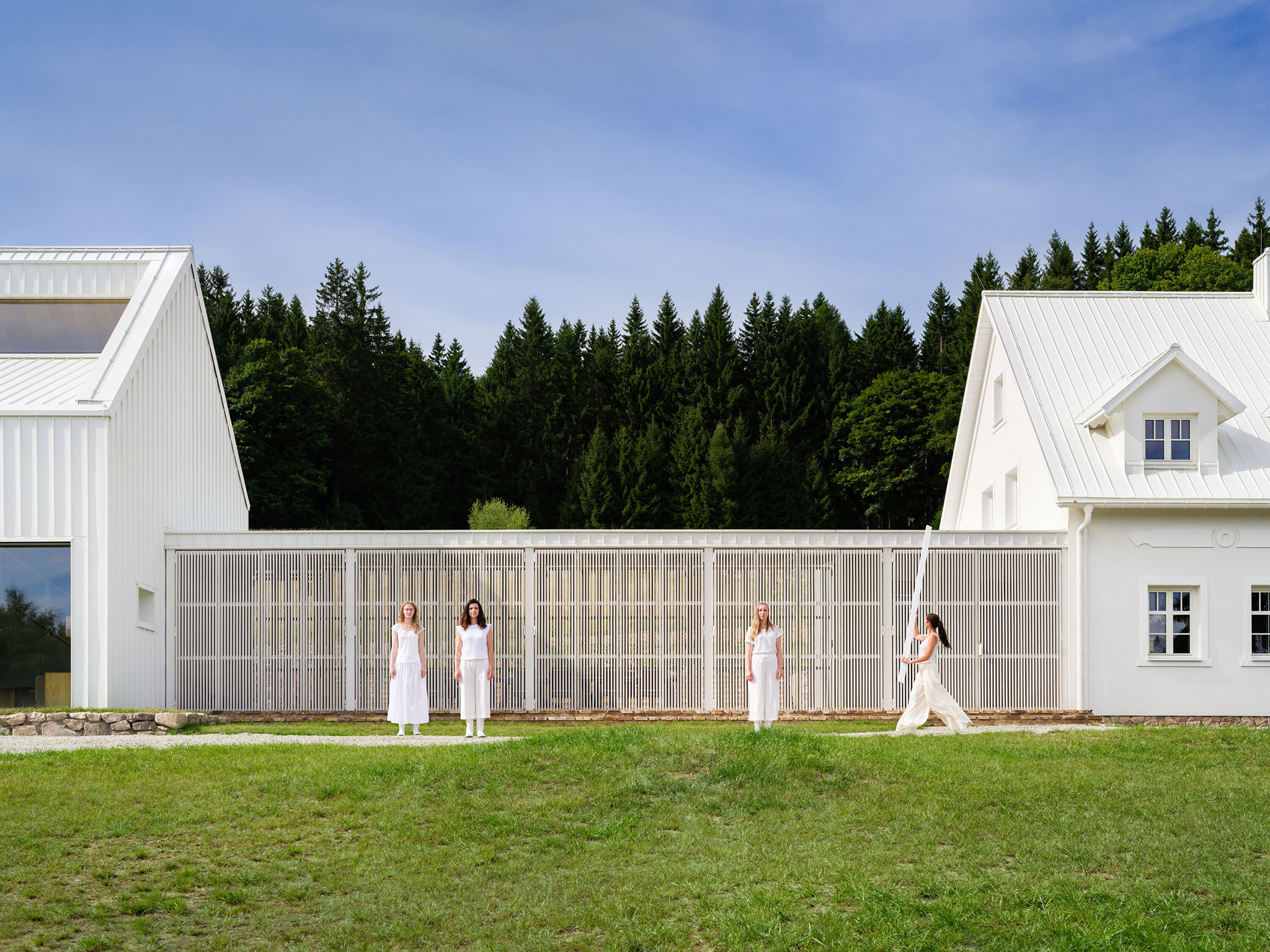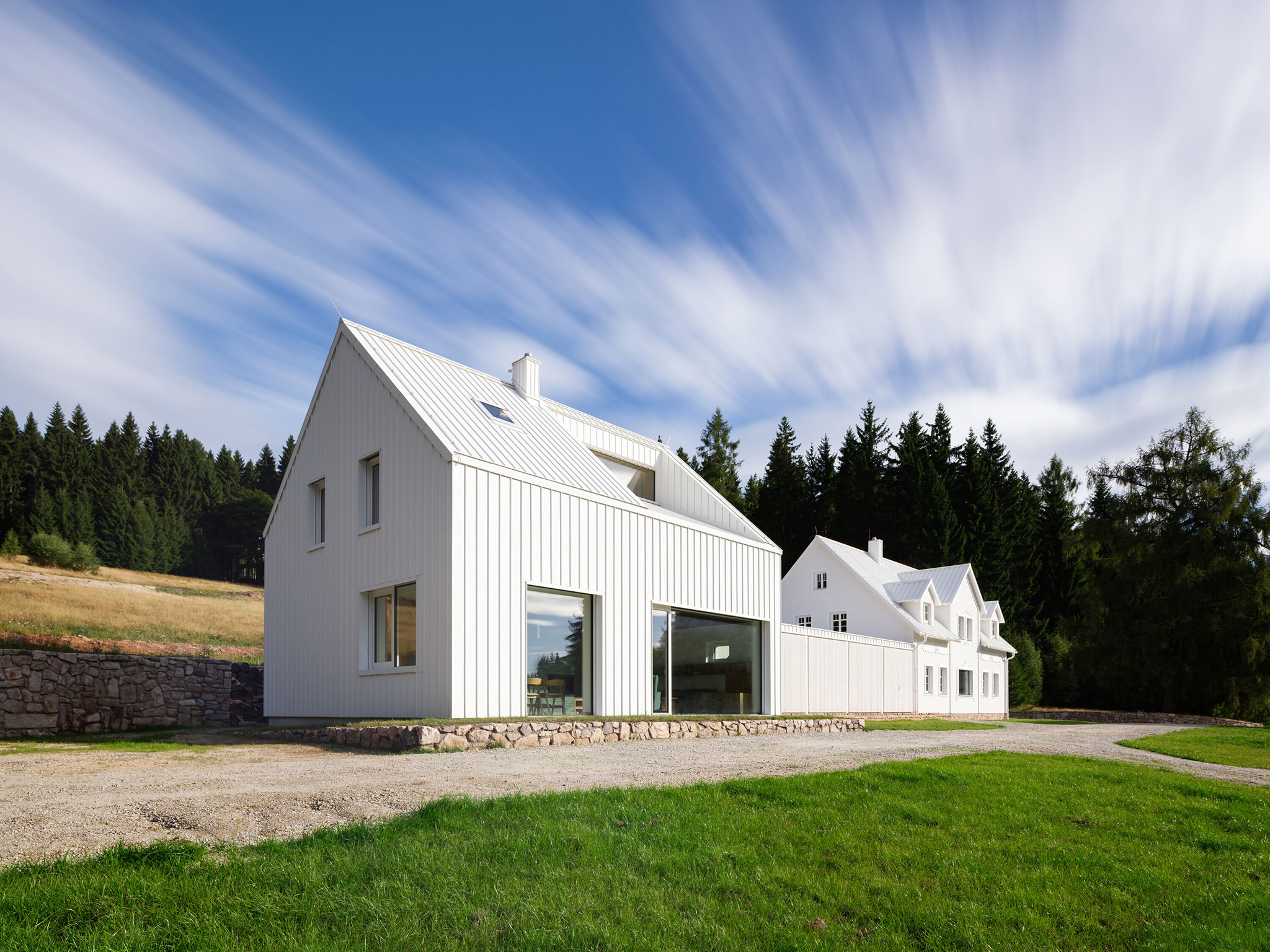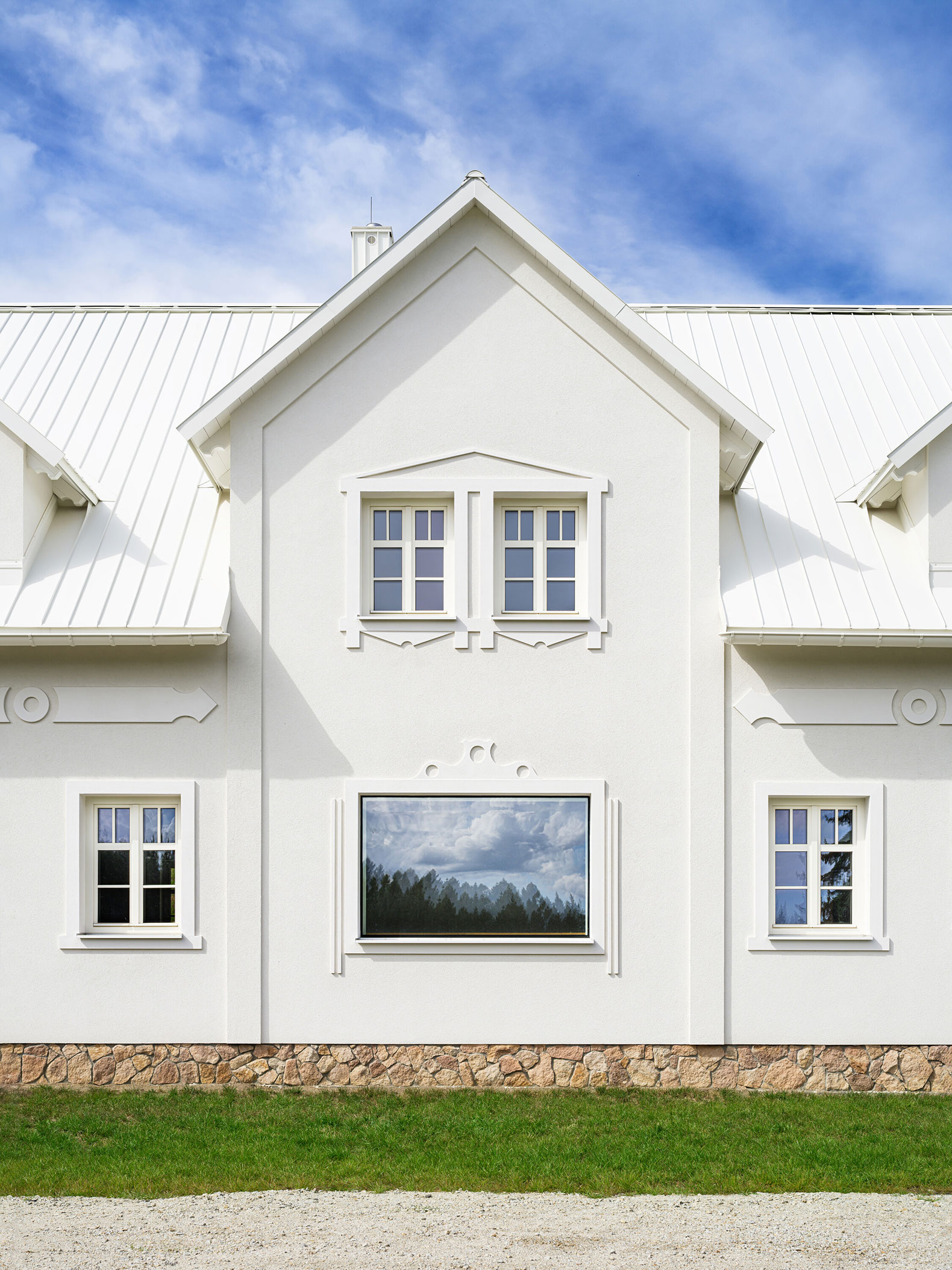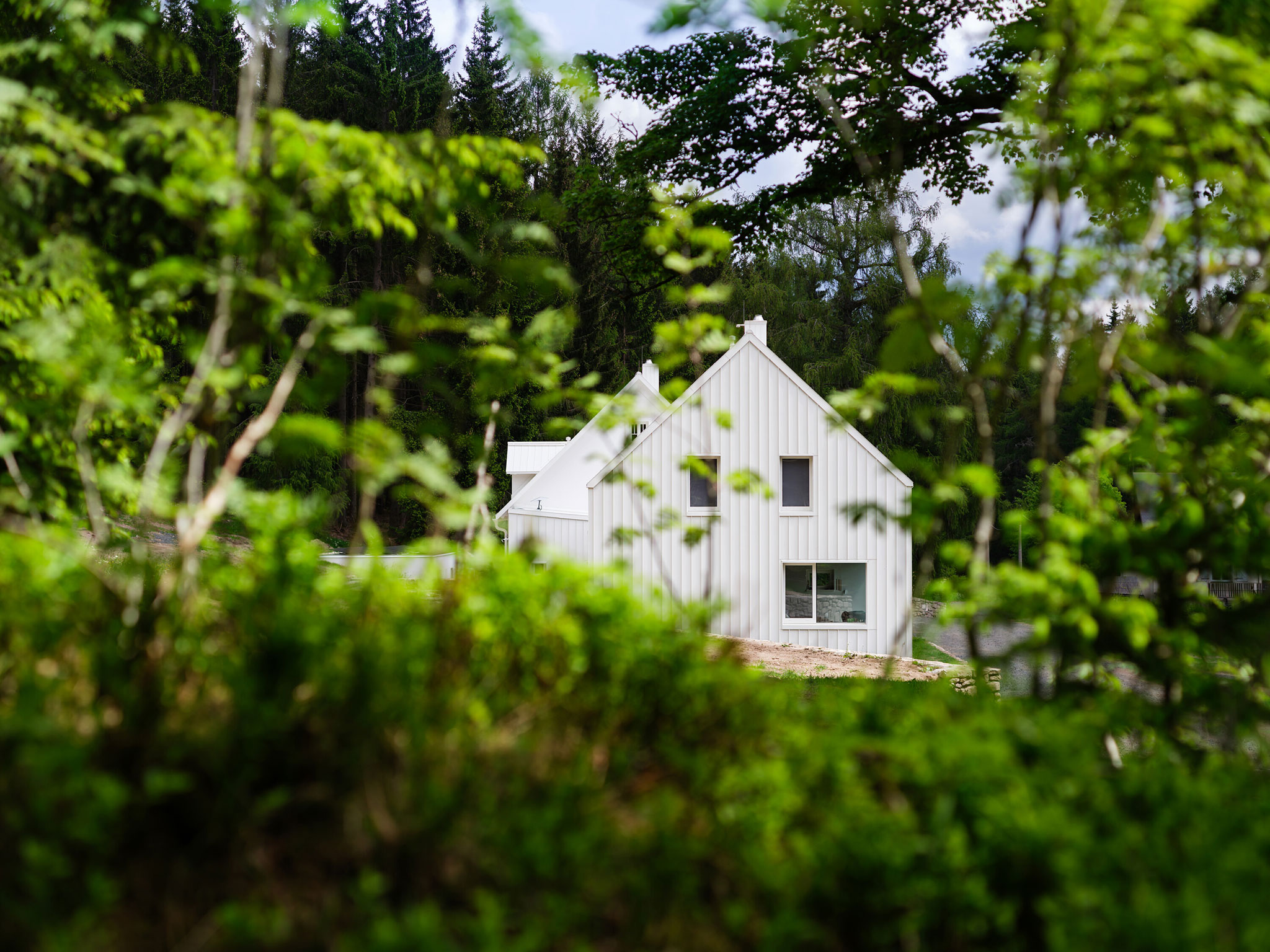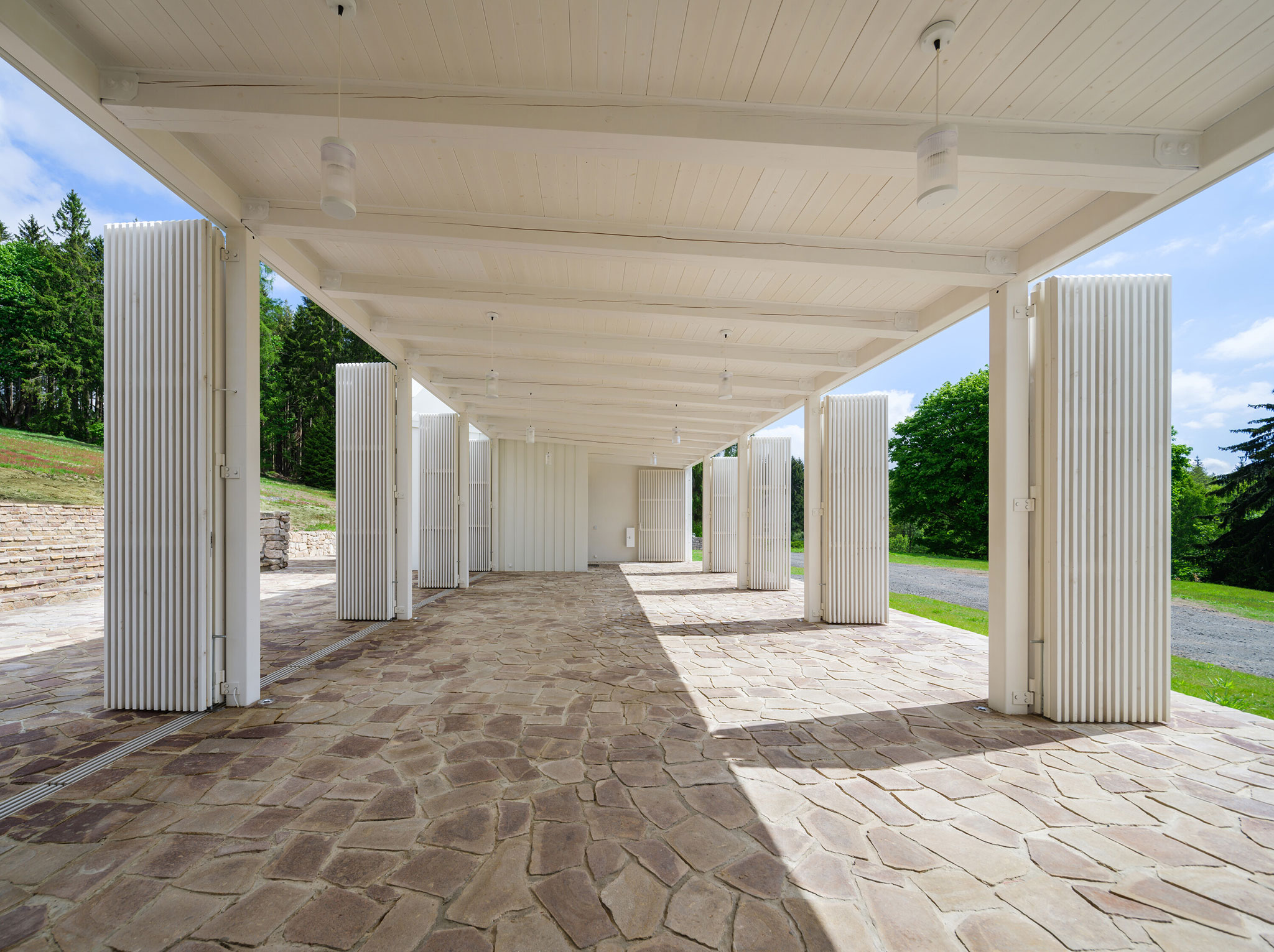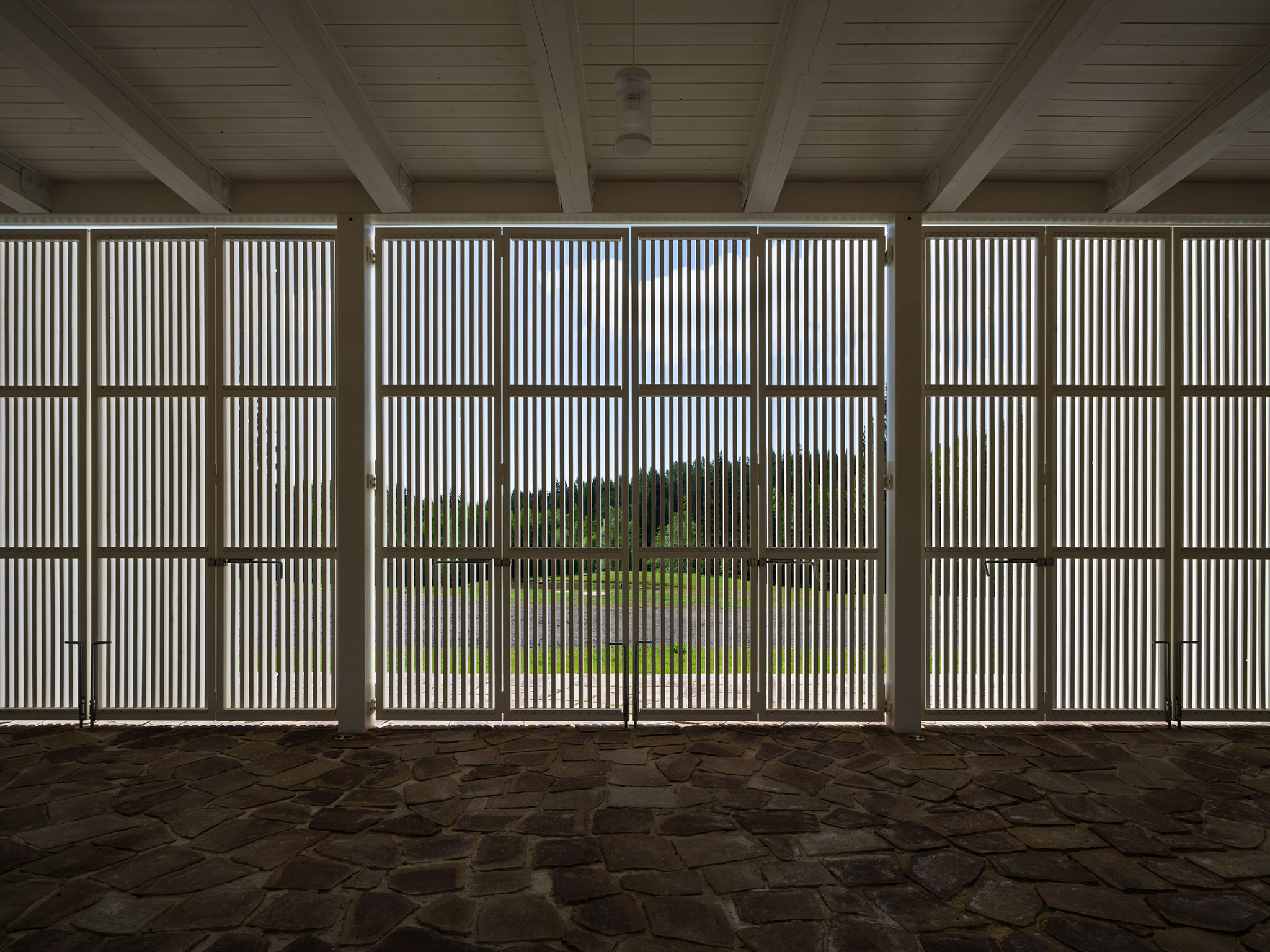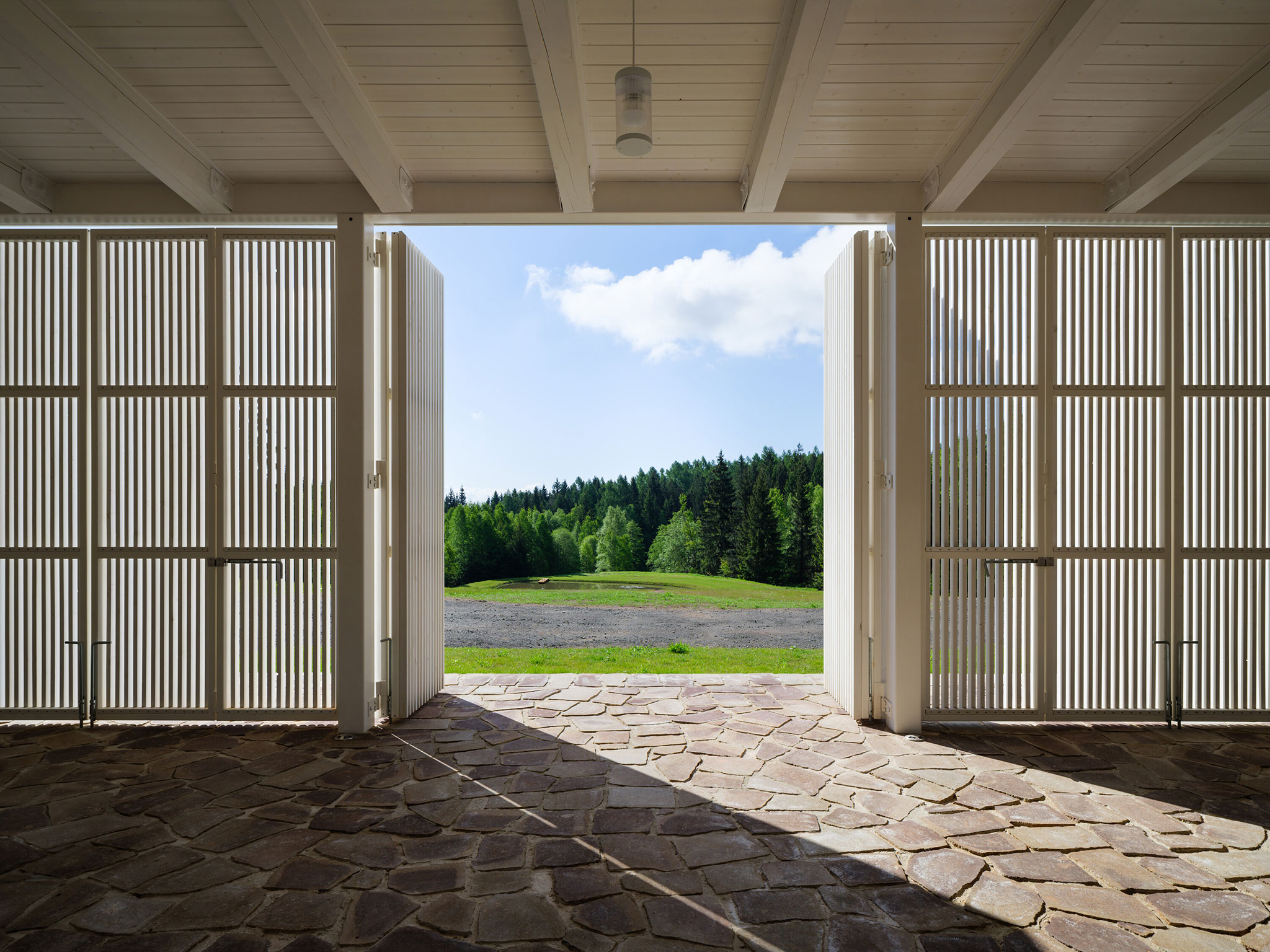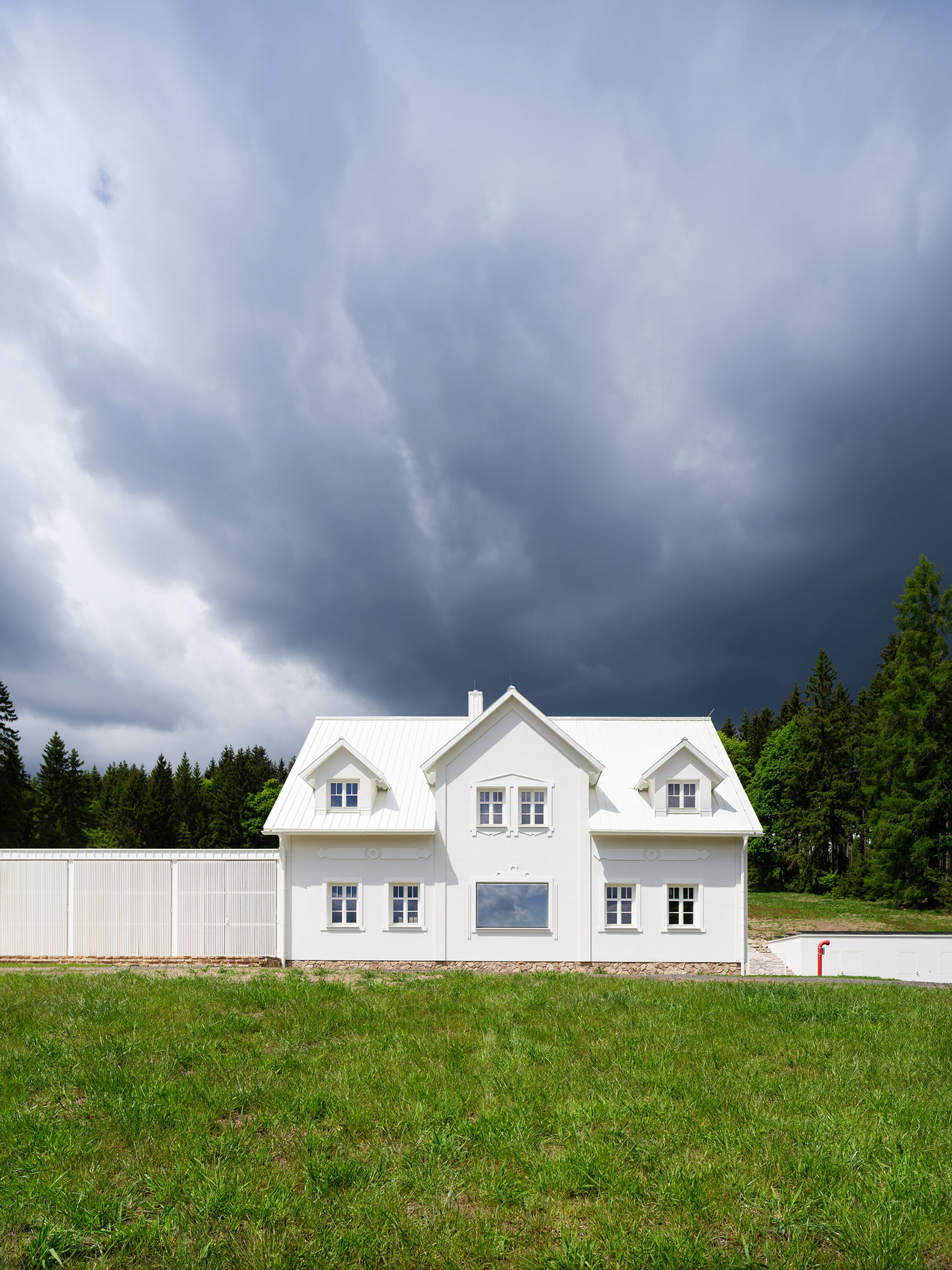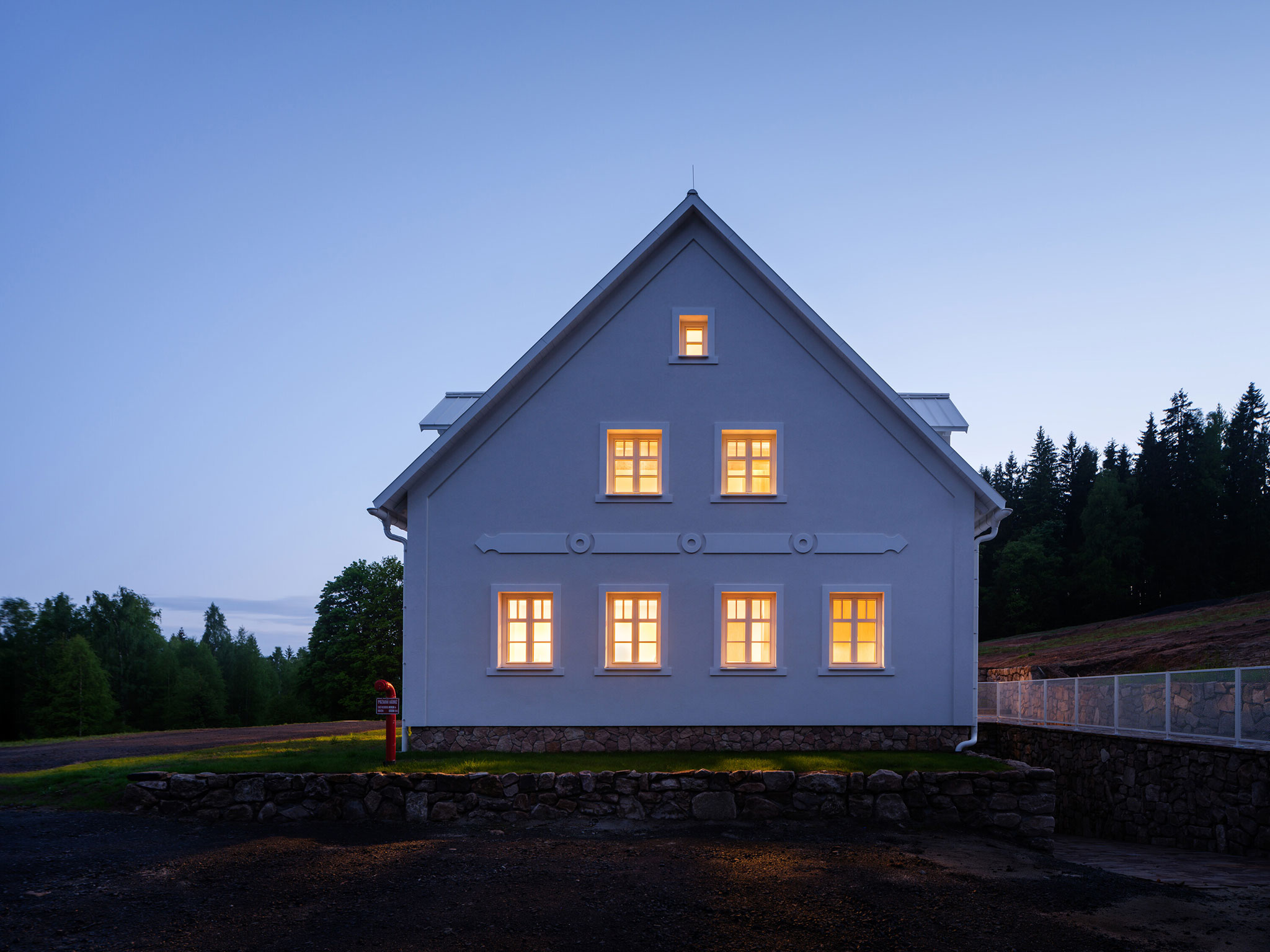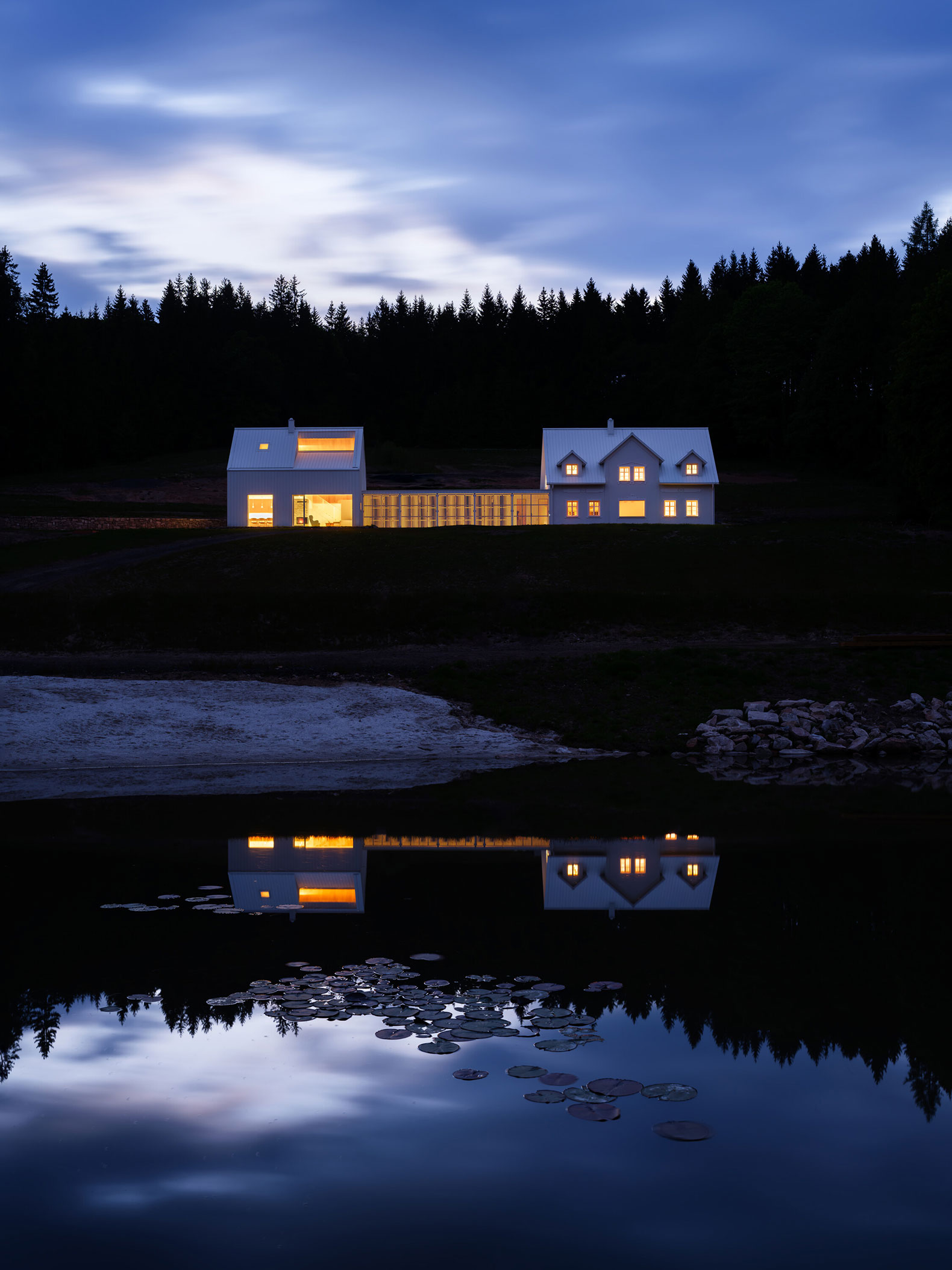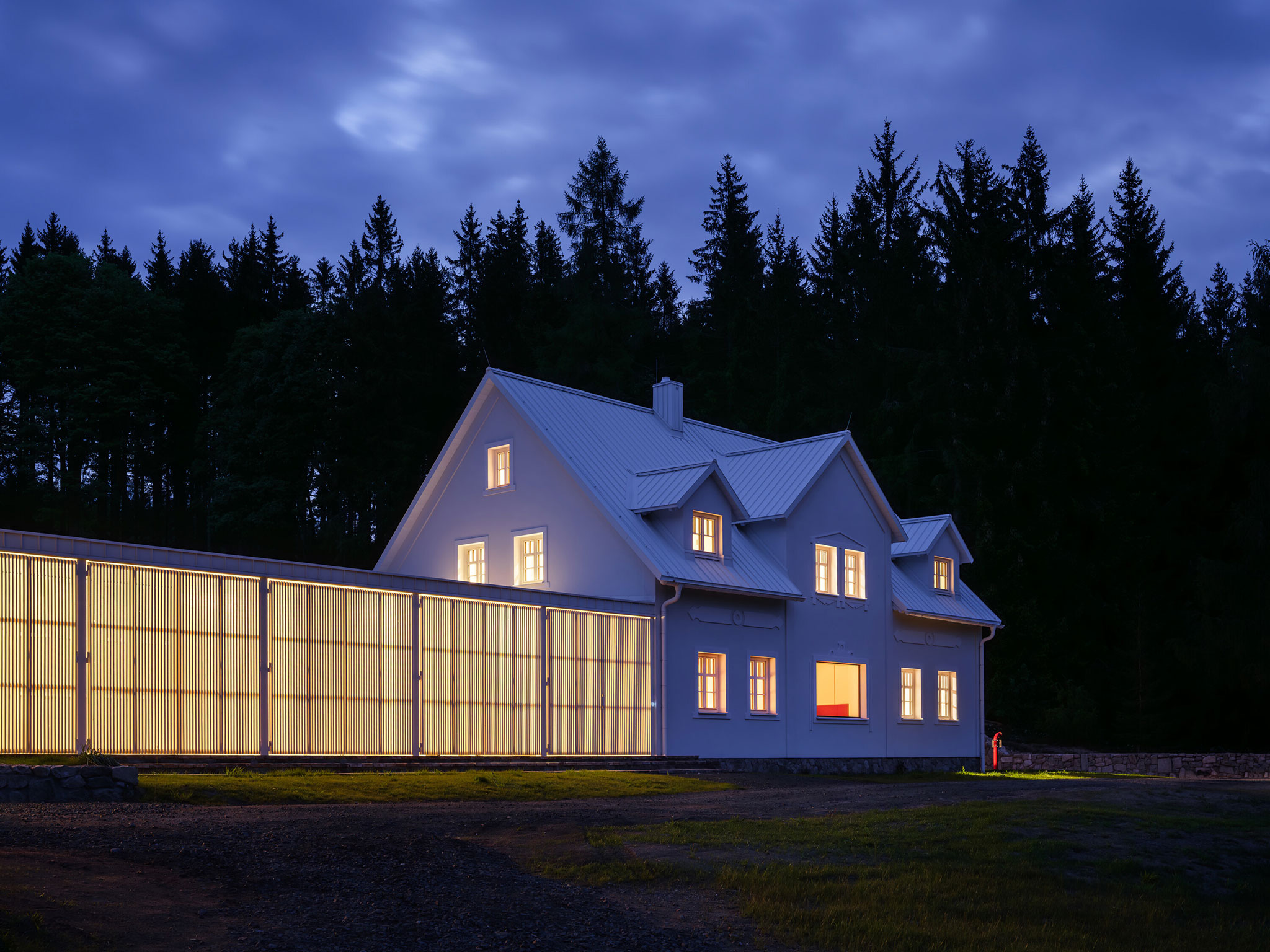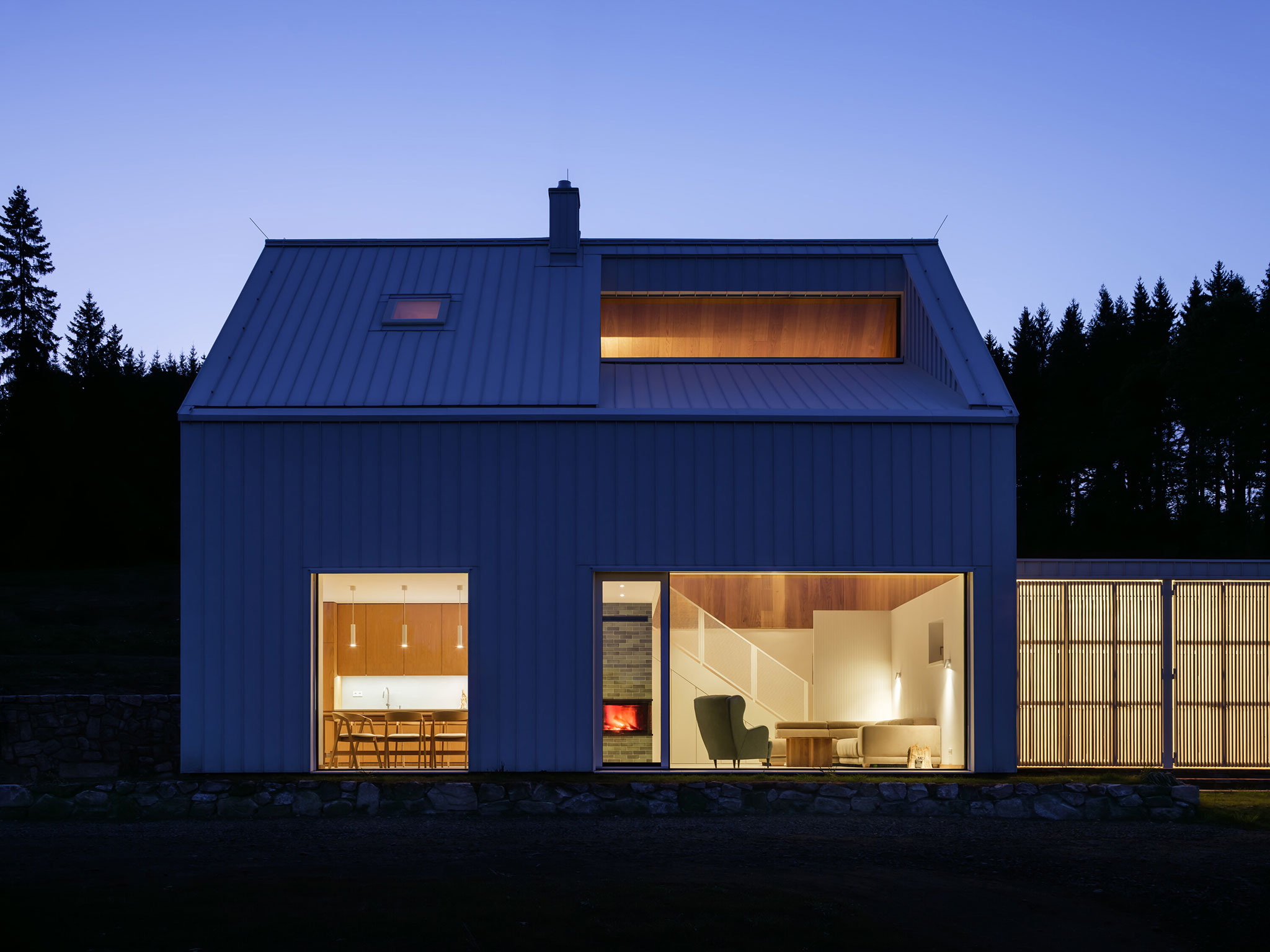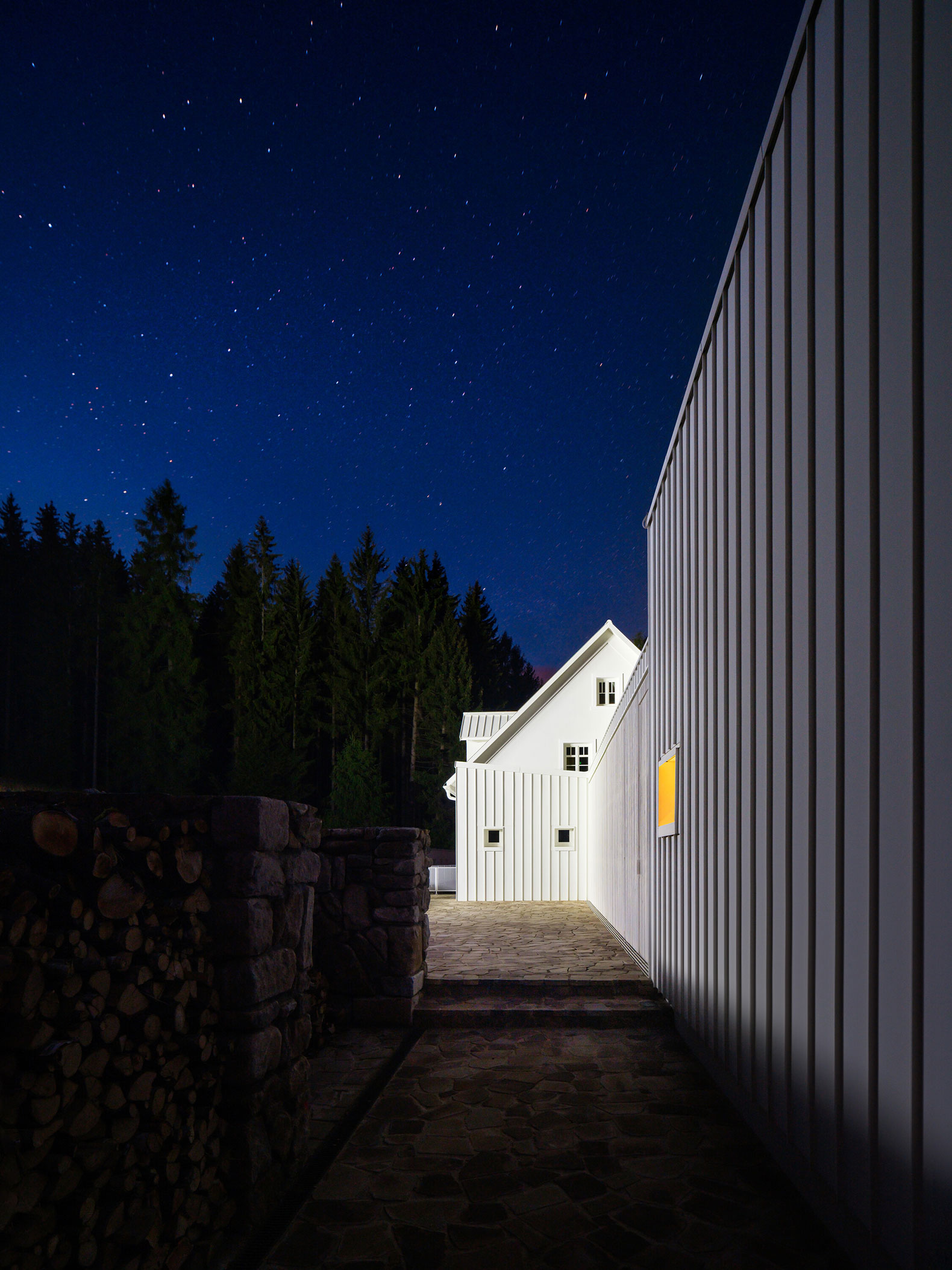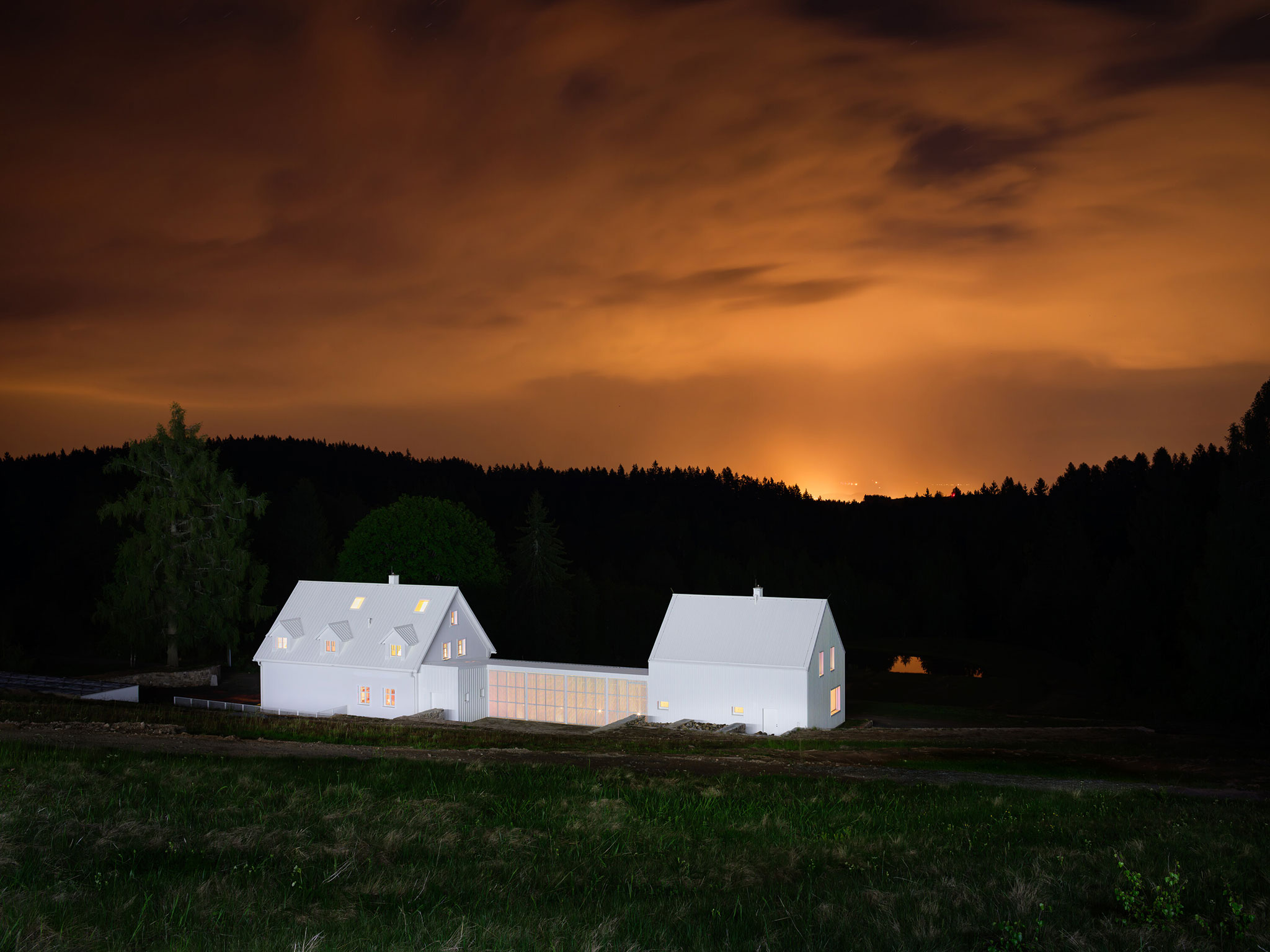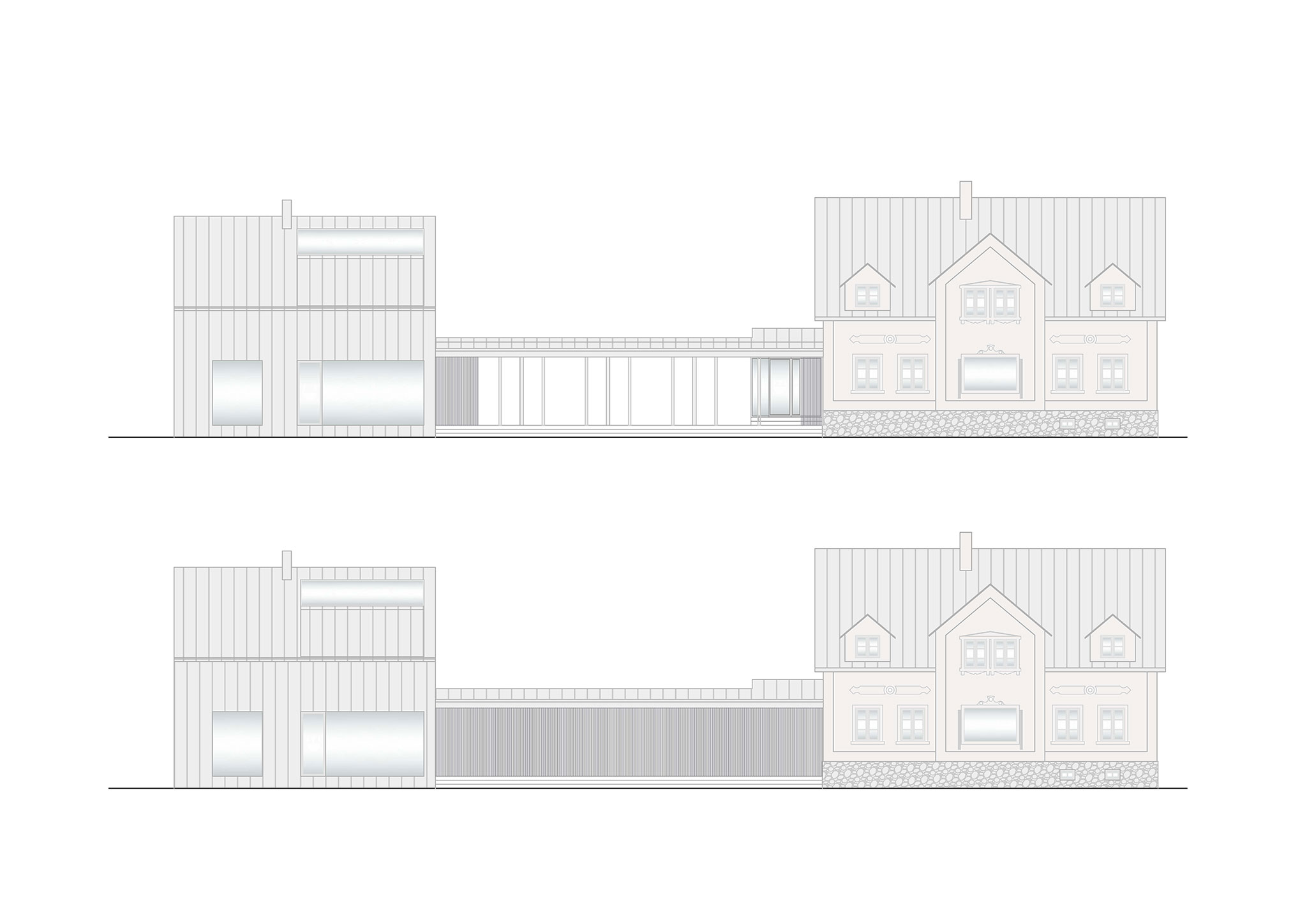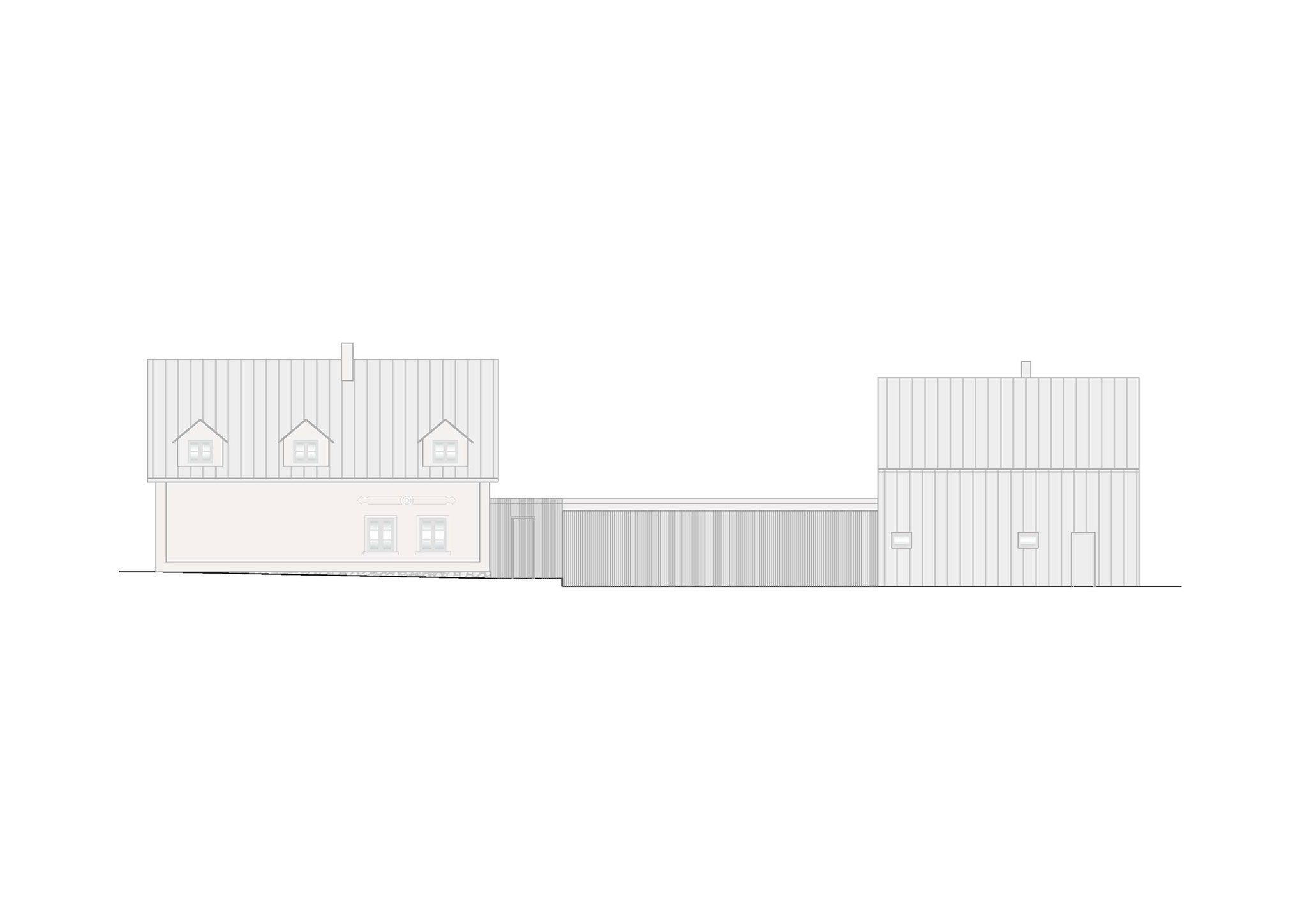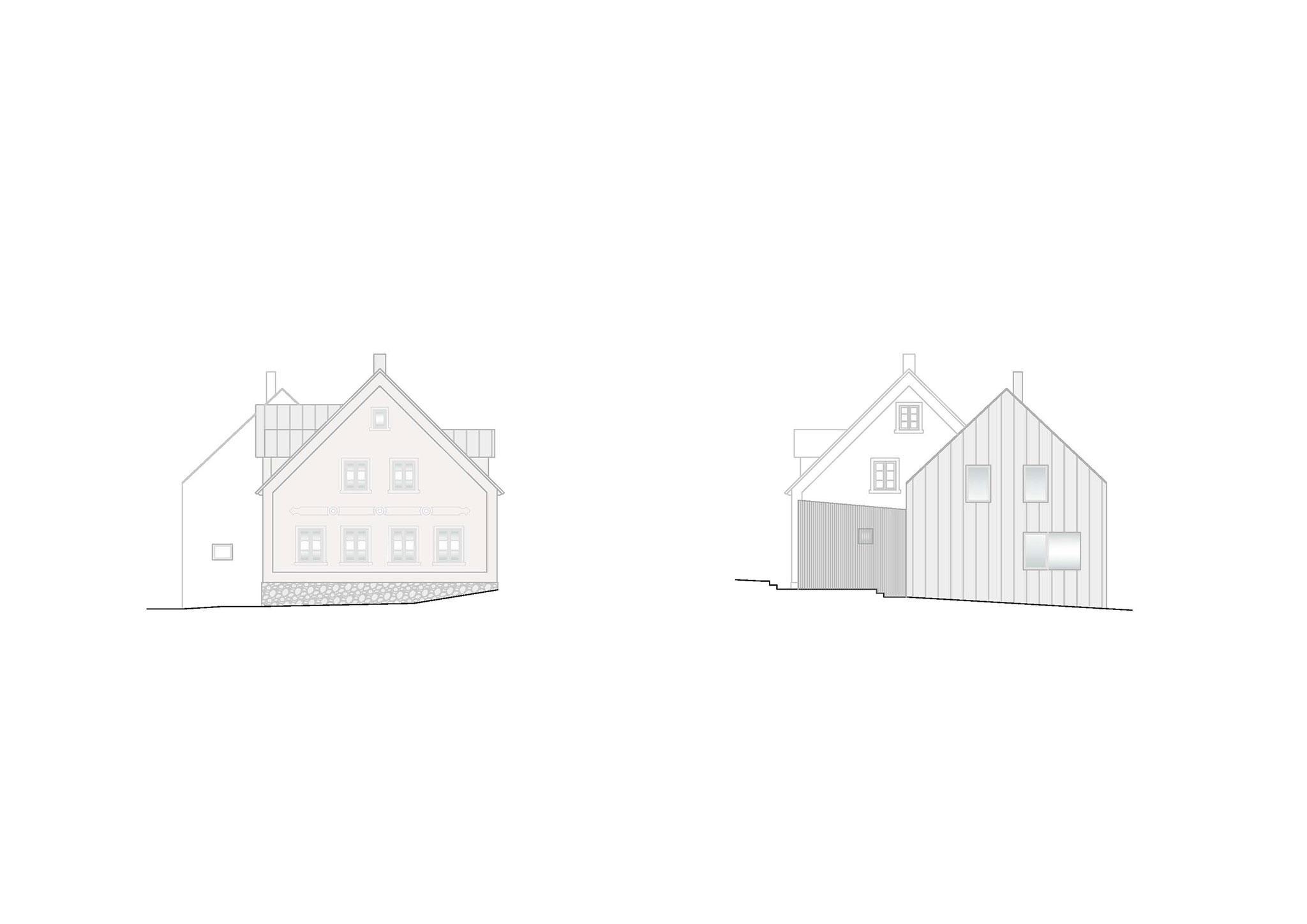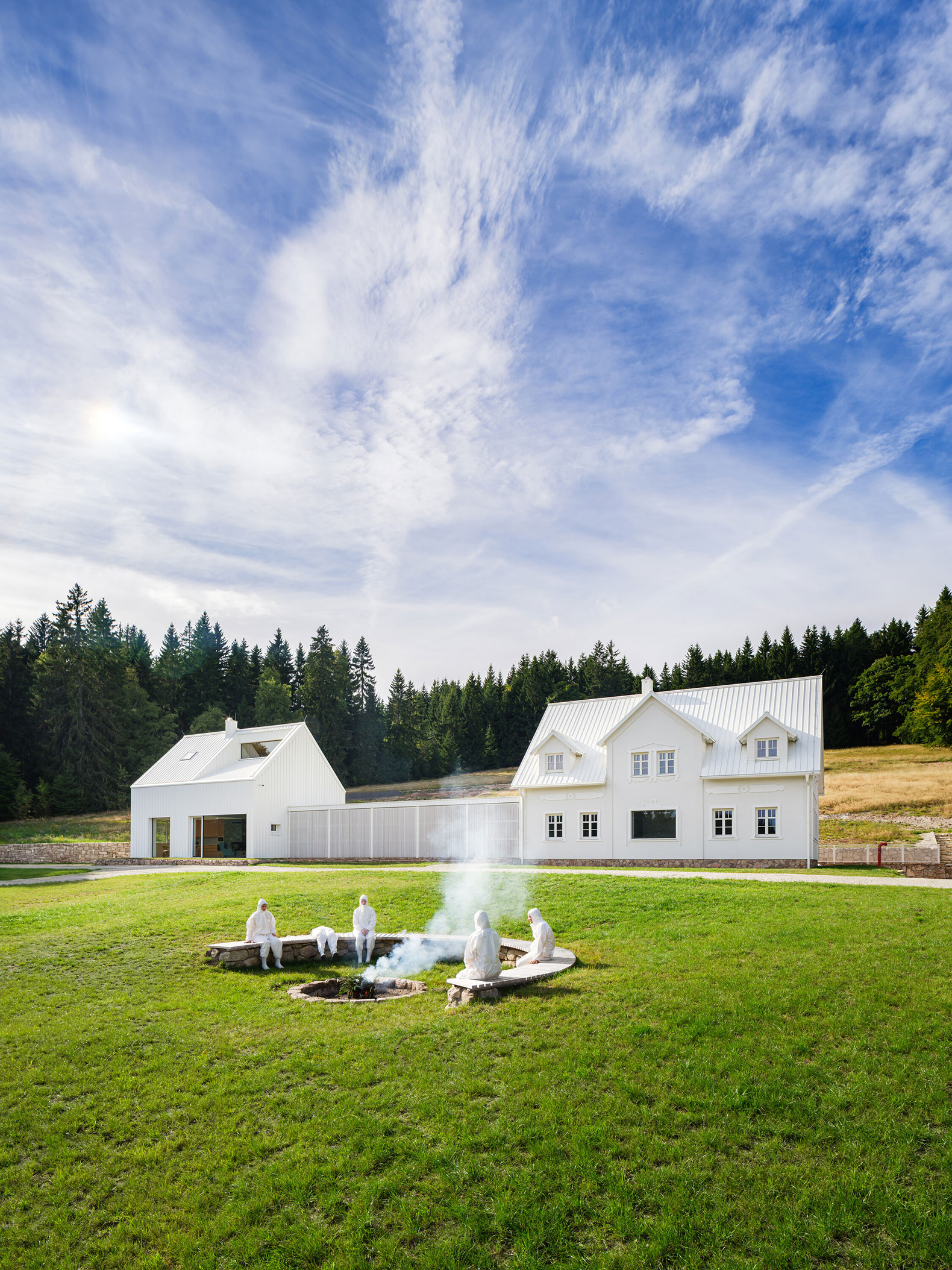
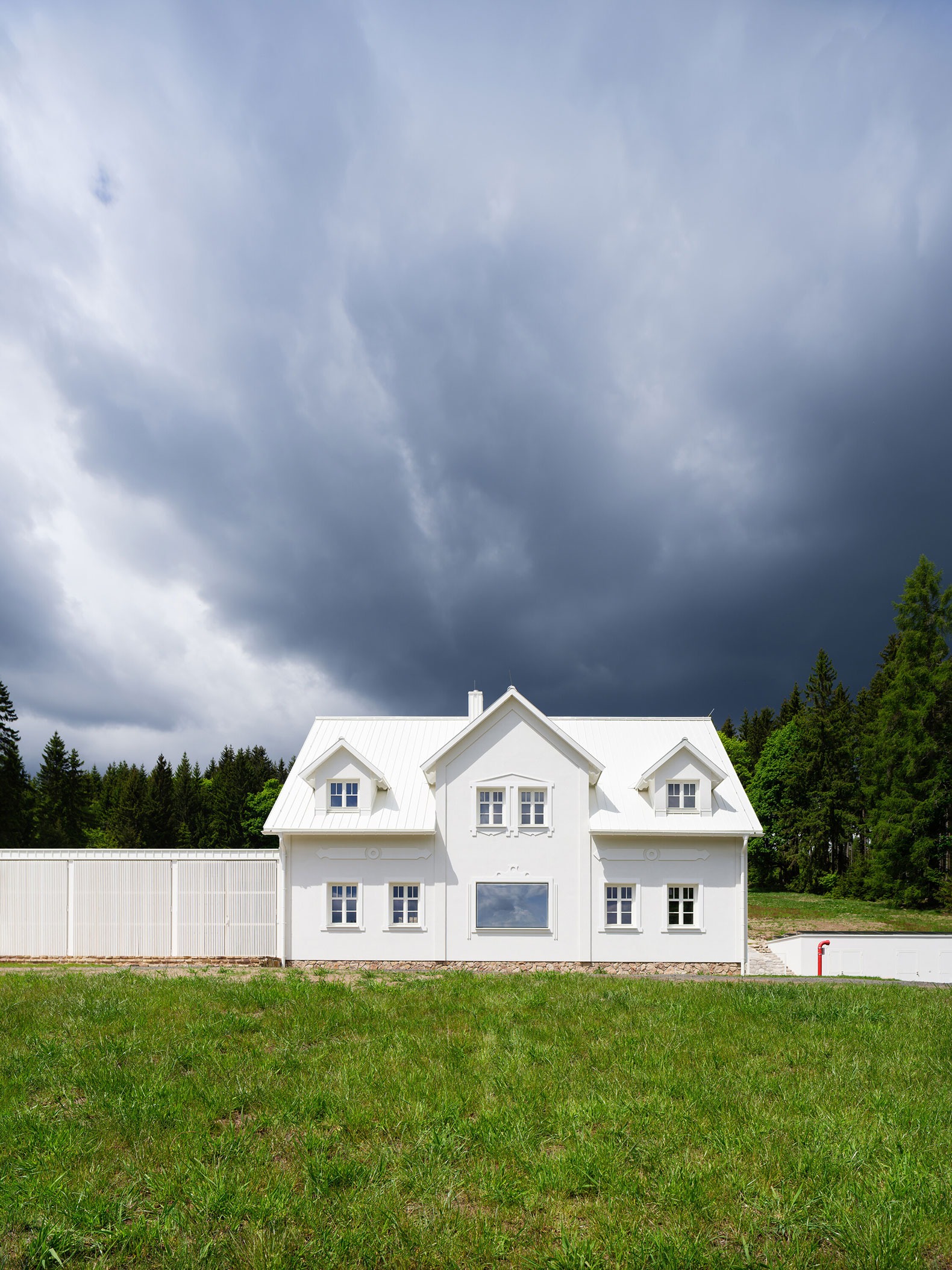
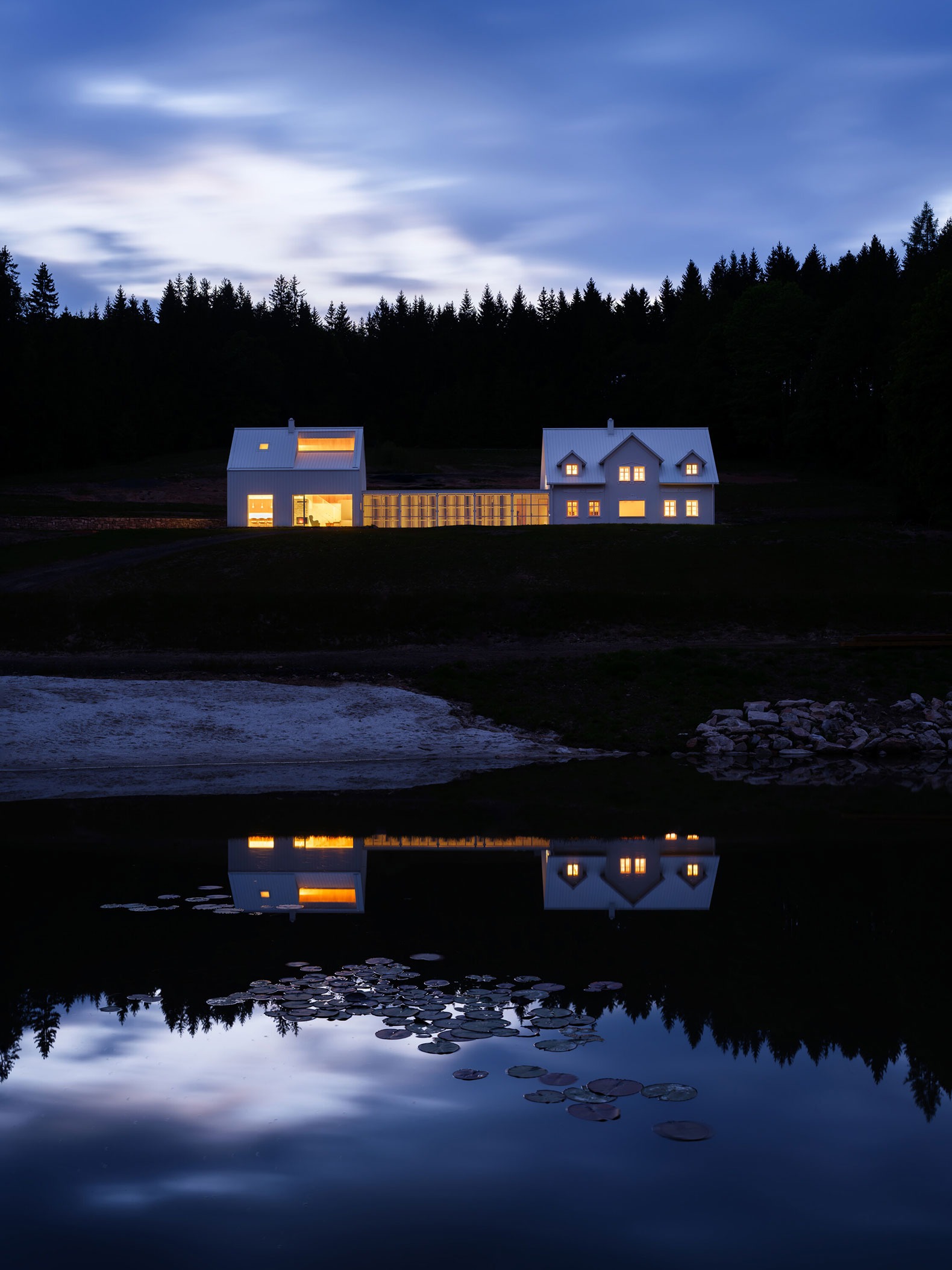
No Architects’ proposal for the "Resurrection of the Sudetenland" breathes new life into the country’s poorest region, where all the scattered structures have been demolished to make way for a new complex unified within a single, stark white volume, supported by a base of local stone from the Metallic Mountains. Among the cluster of houses, only one farmstead remained standing, now comprising an old dwelling and a new one, connected by a covered, enclosable terrace.
The project takes into account the natural forces it faces in these mountains, dominated by cold, damp winds; consequently, the pipes are buried beneath the expansive meadow in front of the house, the energy accumulated on the hillside is used to heat the buildings and the well water, and the entire complex is powered by electricity from a photovoltaic system located on the green roof of the old farm building.
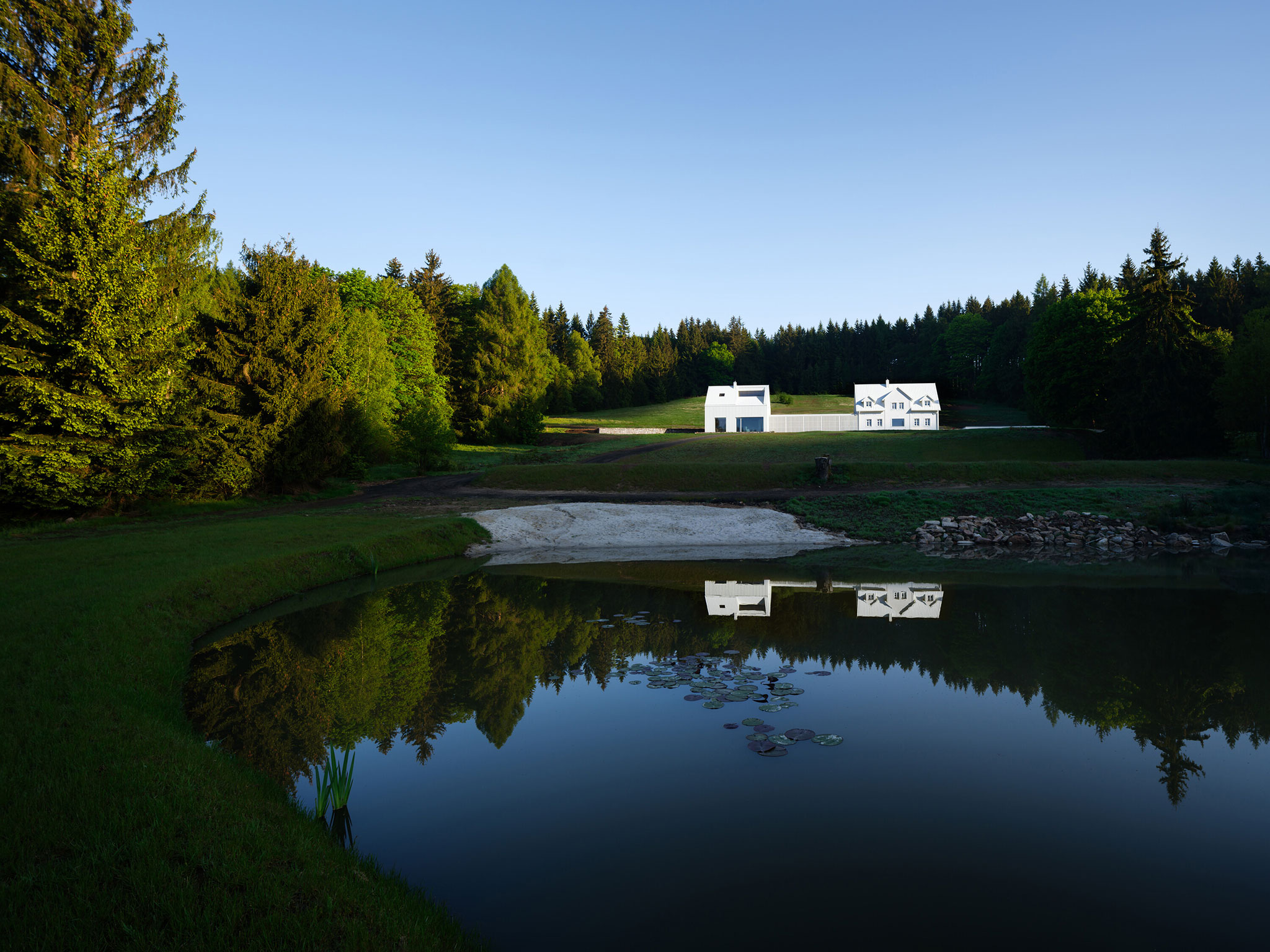
"Resurrection of the Sudetenland" by No Architects. Photograph by Studio Flusser.
Project description by No Architects
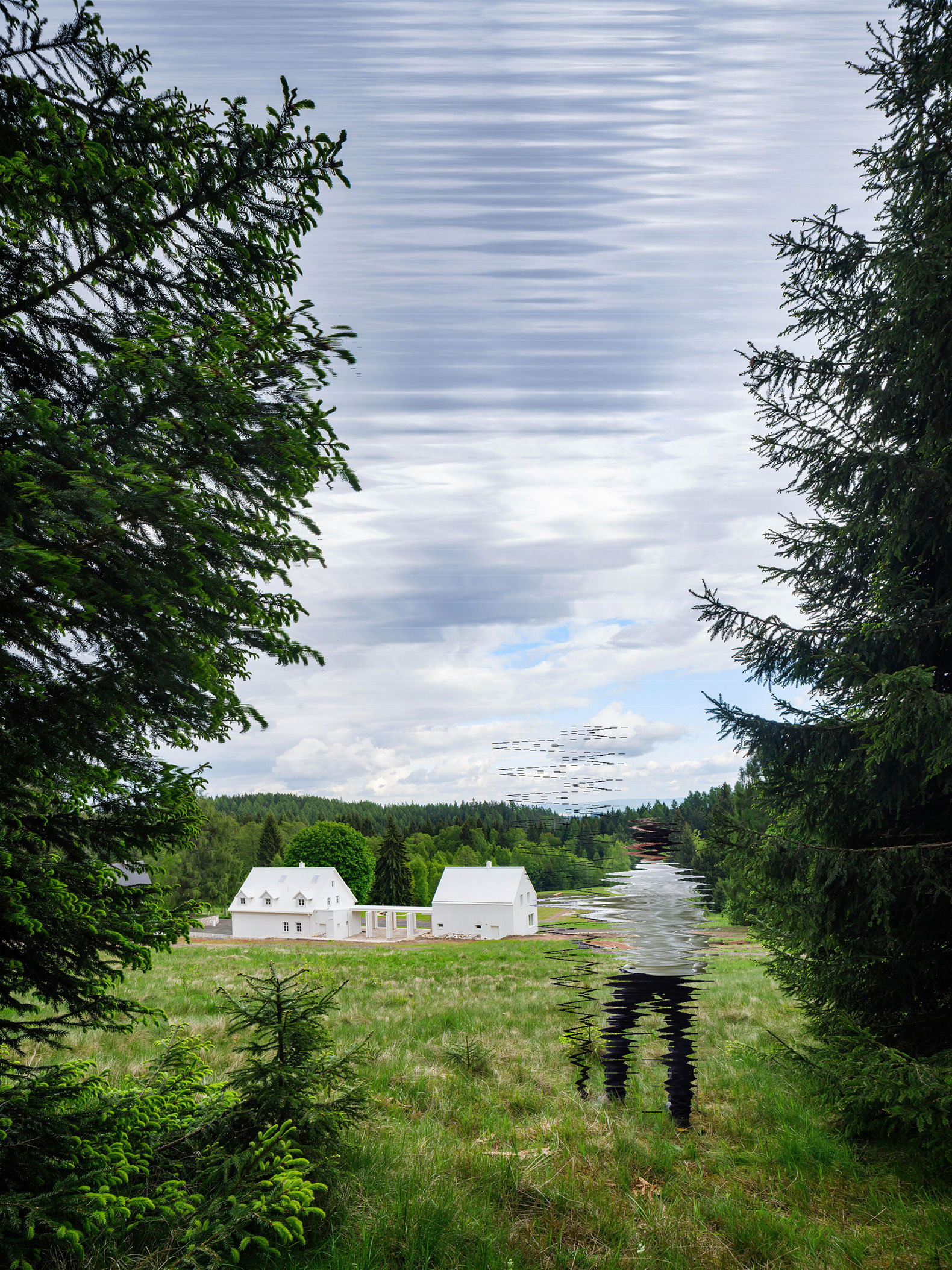
Sudetenland. Unlike the more mixed Krkonoše and Šumava Mountains, the Ora Mountains were home almost exclusively to the German-speaking population in the last century, so when they were expelled after 1945, people disappeared from the landscape completely. The mountains lost their heart and soul. Those who loved it here left. In addition to five hundred depopulated villages, there were also one and a half thousand abandoned hamlets on the slopes. One of these many hundreds of preserved, relatively typical buildings forms the basis of our intervention.
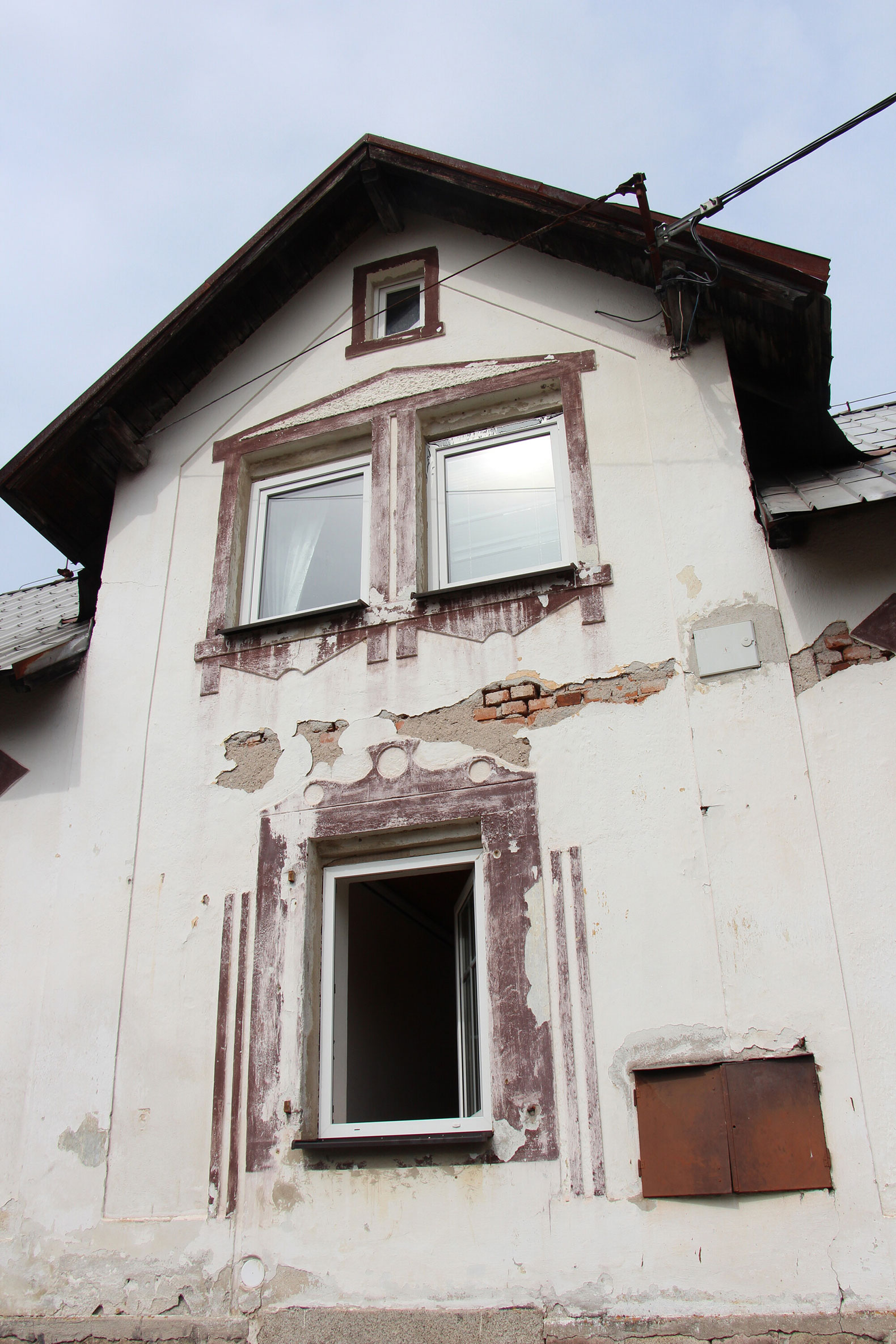
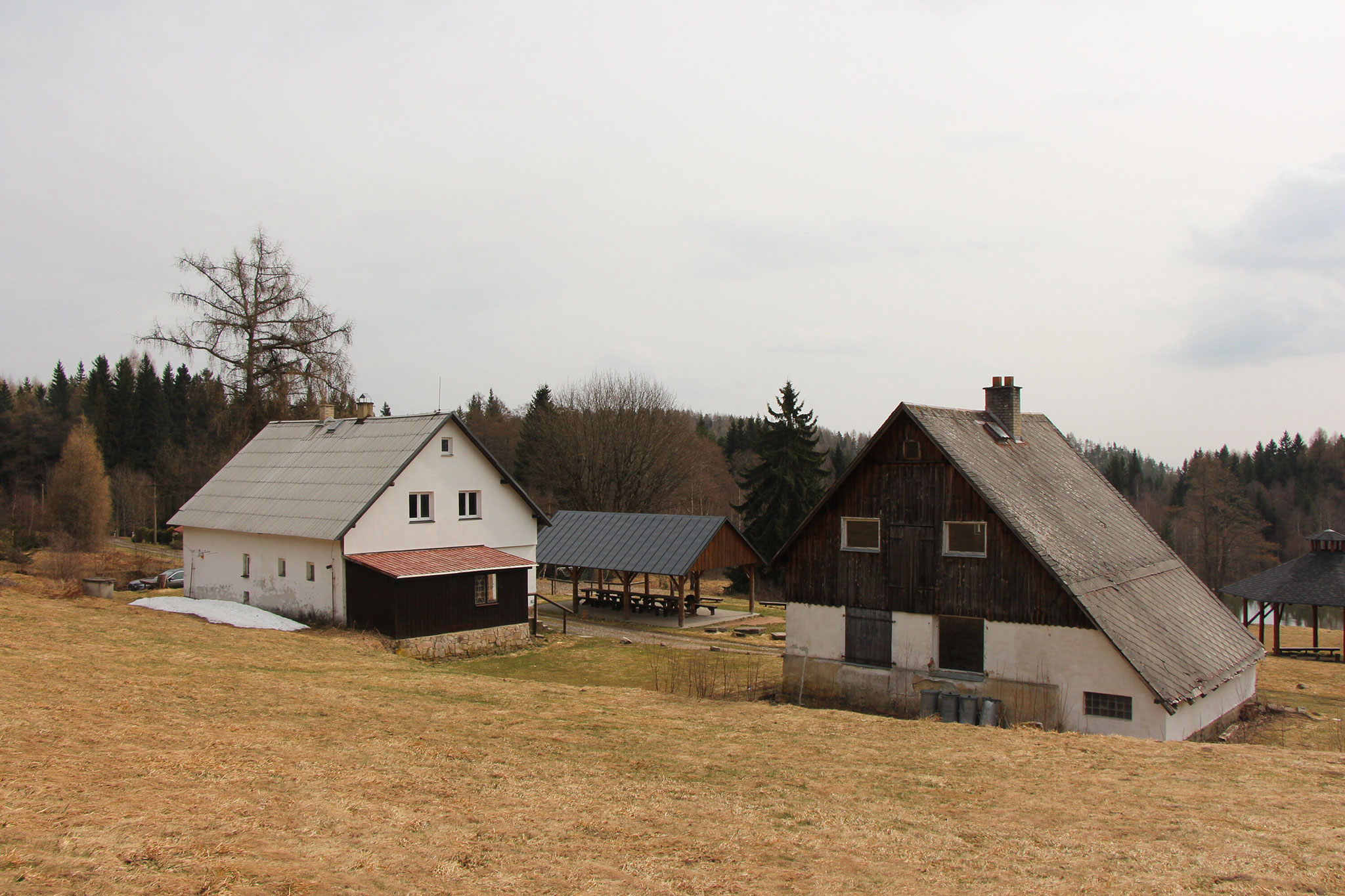
After being occupied by the newcomers, the building was used in various ways for seventy years, renovated on the ground floor, and pragmatically infected with infrastructure. As the potential of the building waned, it was gradually surrounded by a suite of accompanying objects and unrelated shelters, which gradually formed the basis of a small recreational area, where a small ski club eventually operated and created beautiful memories for not only local children. Despite all attempts at resuscitation, however, its smoldering life finally came to an end, both morally and structurally.
We were given the opportunity to help revive it. To restore the functional facilities of local summer camps and family mountain accommodation. All in accordance with contemporary standards.
We decided to definitively abandon the line of melancholic nostalgia and the superficial mountain romanticism for self-indulgent tourists. It has been seventy years, a full human lifetime, since the orphanhood. Before that, however, life pulsated on these slopes. Neighbors gathered in the house, children played loudly, cattle mooed, and craftsmen made noise. People were at home here.
We therefore wanted to break away from the myth of an eternally abandoned and decaying region. A narrative of heroic survival in the poorest region of the country and of staying put despite the lure of emigration to the interior. An incomplete history that attracts visitors primarily as witnesses to mythical suffering, with the distorted ideal that they will not encounter a soul here. We needed to create a place that radiates life. A place that is not ashamed of its needs and contemporary nature. A place that offers children and families year-round optimism, even in relatively harsh mountain conditions.
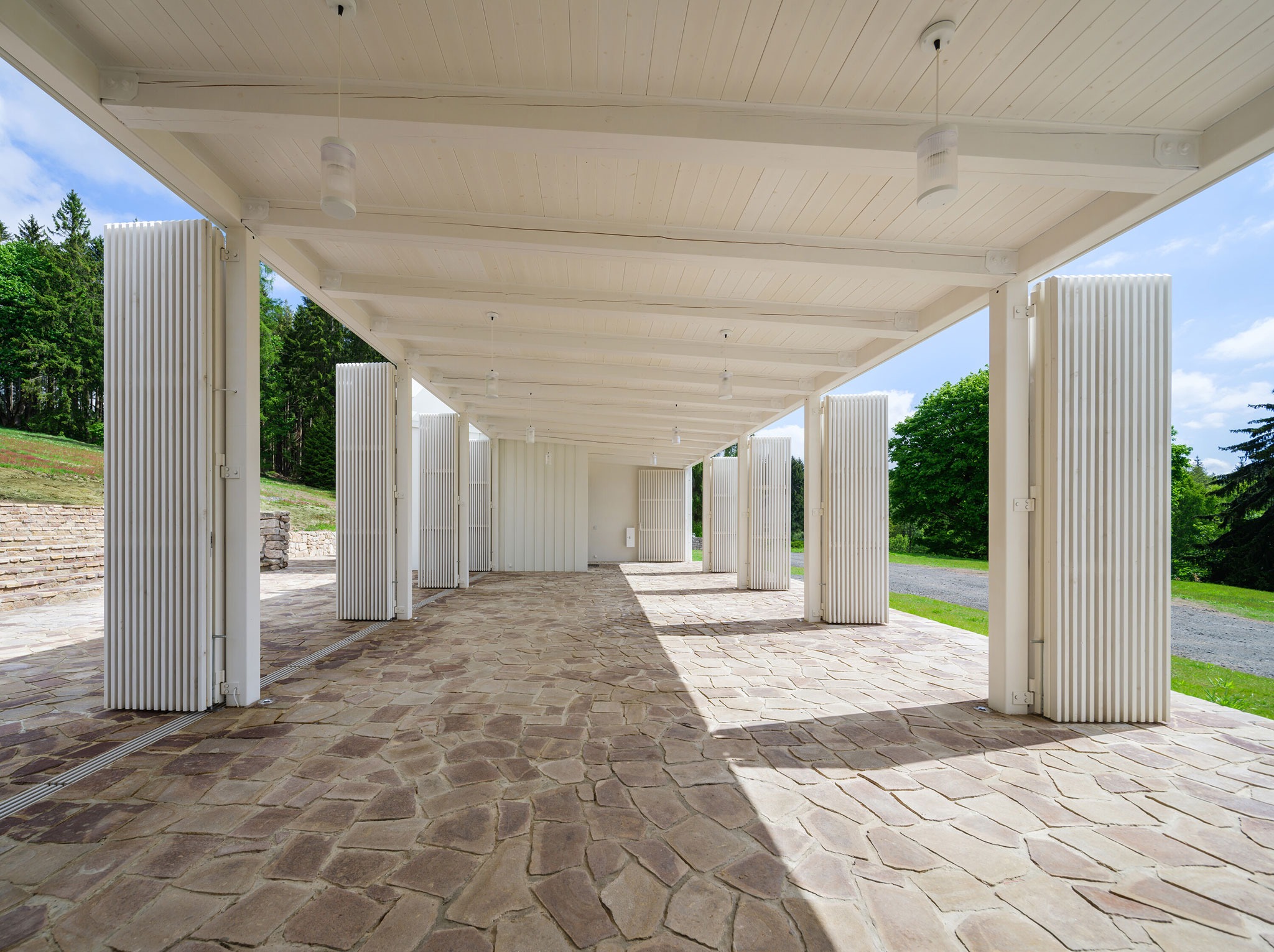
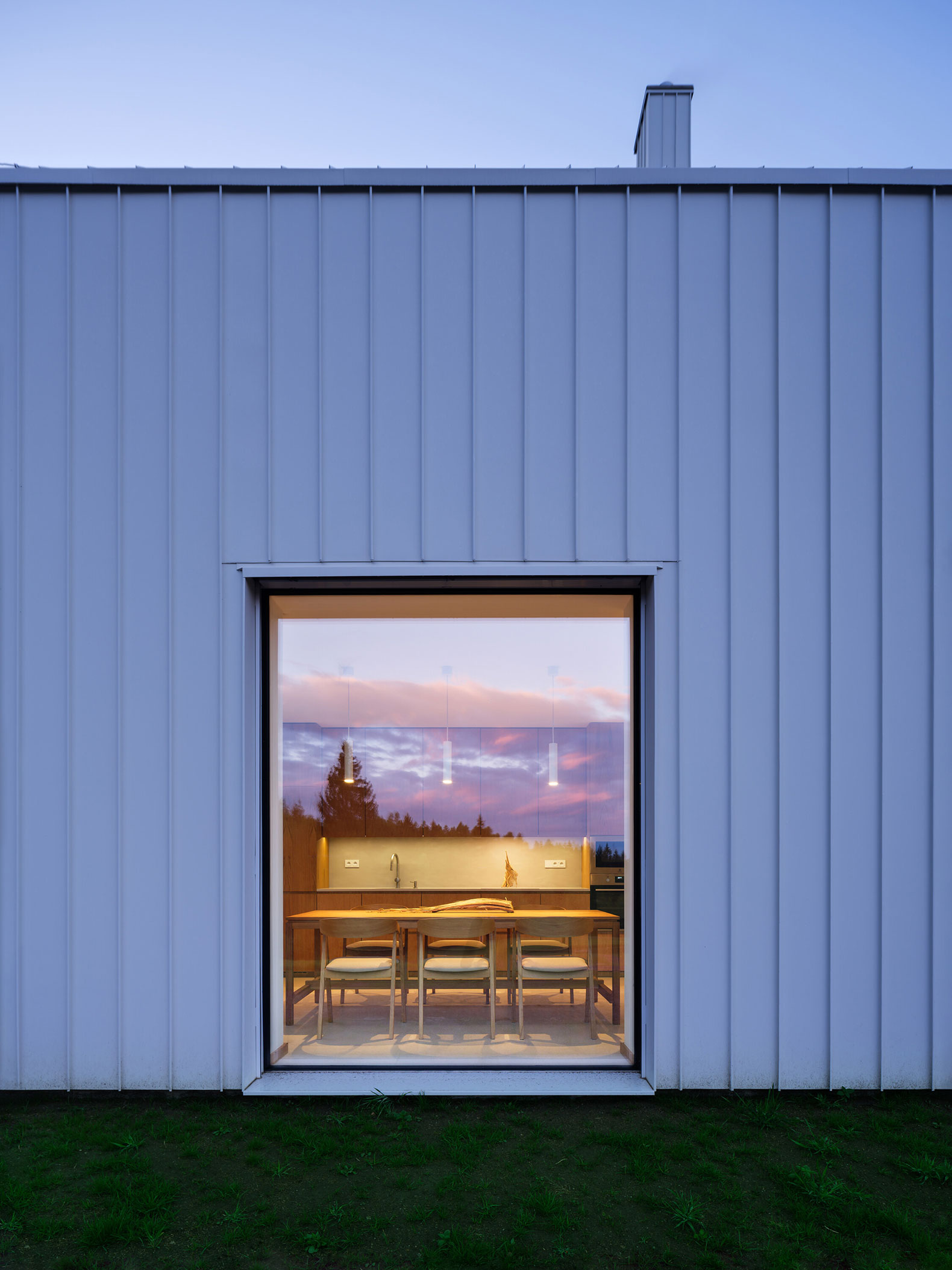
We chose white for the new life of the complex. Radically white, including the gravel on the dirt roads. We placed a durable white steel cap on the old building, which, through the wooden connecting roof of the slope, transitions into a gleaming white steel suit on the new building. We covered the windows with unbreakable glass and framed them with indestructible iron. We then placed all of this on a base made of local Ora Mountain stone, the ruins of the past. We sprinkled the surroundings with white gravel paths in places, adding a small beach by the pond.
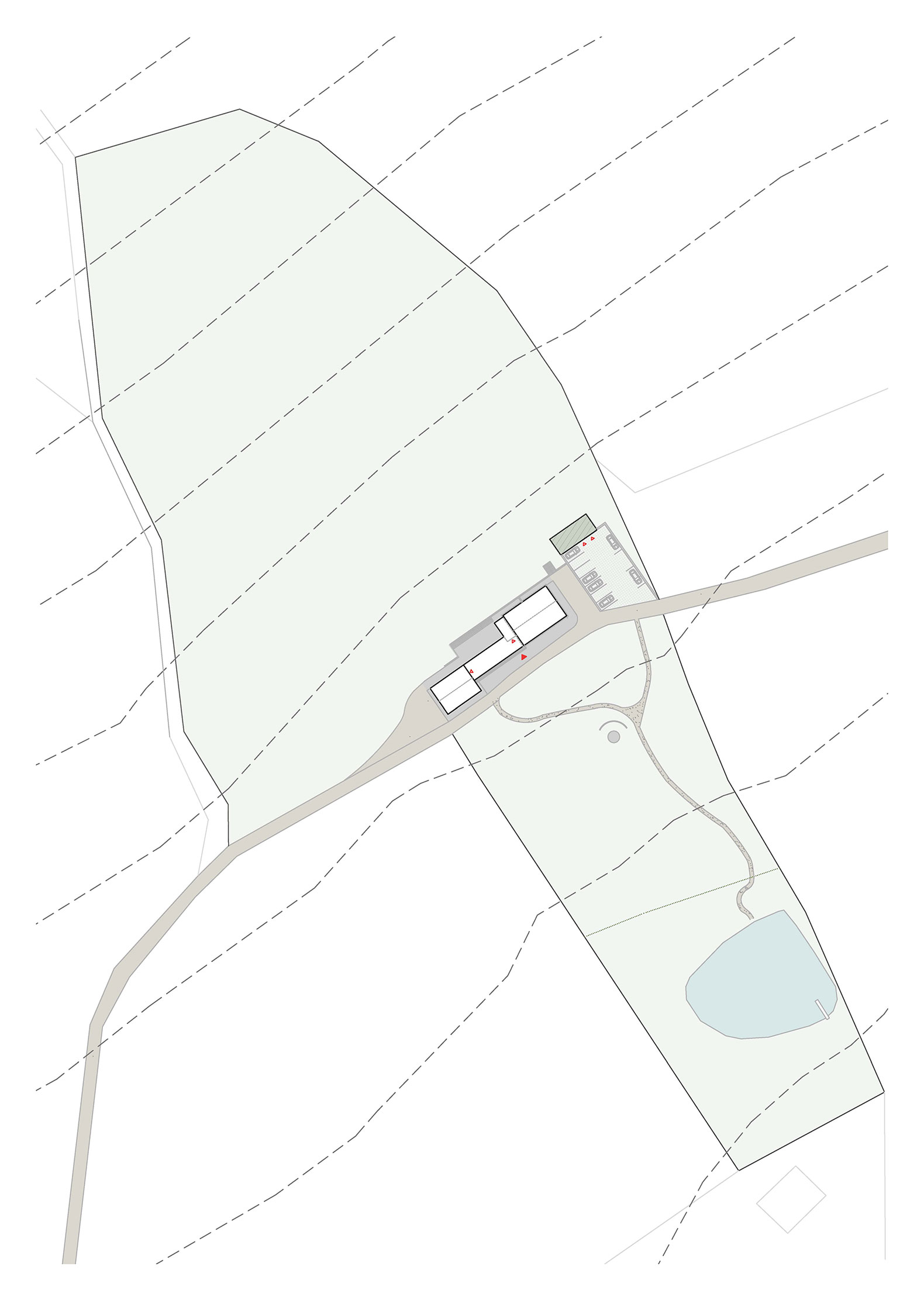
But it all started with demolition. We tore down and removed all the structures scattered across the meadow that had not been there before the clinical death of the original solitude. We borrowed the stones that were suitable. Then we unified the new construction program into a single coherent volume, contrasting dignified age with playful youth. And what didn't fit, we mercilessly buried in the slope so that only a single farmstead remained on the slope from the pile of houses, consisting of an old and a new house connected by a covered, closable terrace, fused roofing into a single weather-resistant layer. We intensified the sheet metal tectonics with atypically narrow strips of custom-made sheet metal and multiple seams.
However, in order to succeed in the long term, it was also necessary to create a place that is not naive and understands the natural forces of the mountains, which it faces, just as the generations who passed on their experience here centuries before us understood them. Only then can one settle here. Summer on both sides of the border is short in the Ora Mountains: the last frosts can still occur here in June, and the first ones appear as early as September. The average annual temperature at an altitude of 900 meters above sea level is around 4 °C, with snow falling up to 100 days a year, and an incredible 214 days on the ridges. Overall, more than twice the average domestic rainfall falls here annually. During heavy rains, water often flows dangerously outside the established riverbeds down the wet slopes, ending up in permanently waterlogged peat bogs. Overall, the Ora Mountains are dominated by humid and cold north and west winds, which bring rapid changes in weather. There are long winter fogs, which occur up to 124 times a year. In such conditions, without the security of urban infrastructure, houses need to be built sustainably. Not only must they be weather-resistant, but also capable of long-term, low-cost operation.
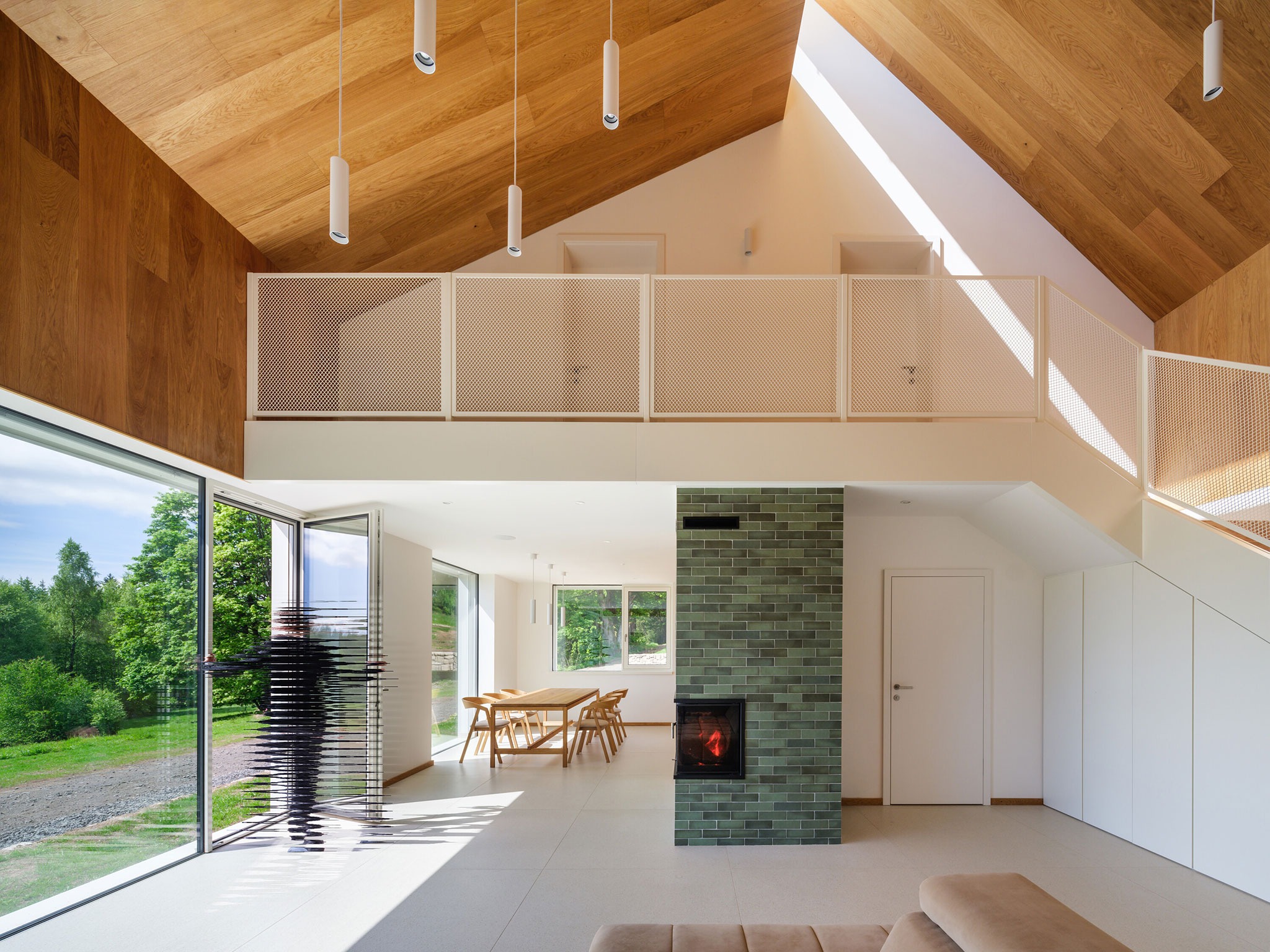
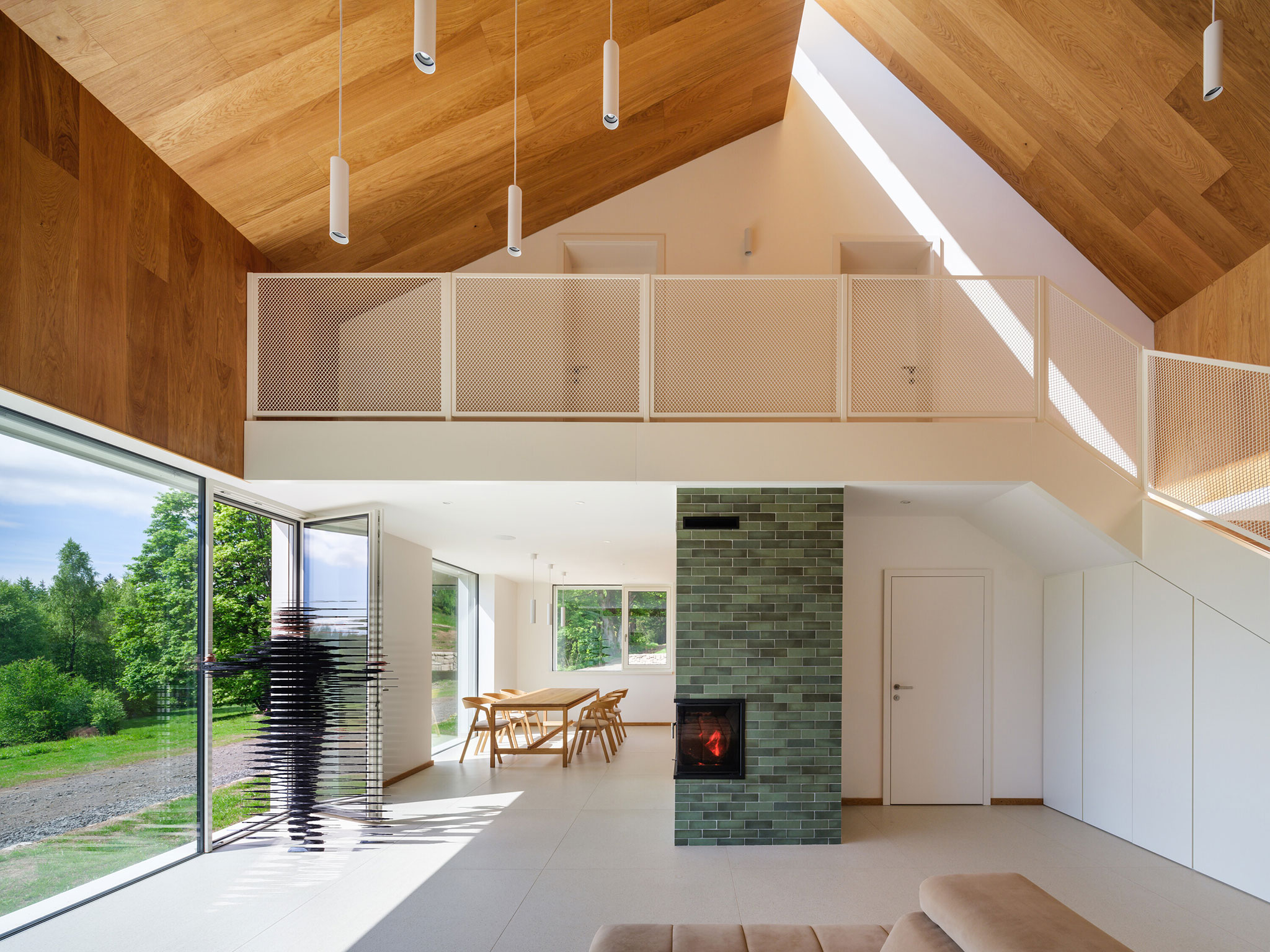
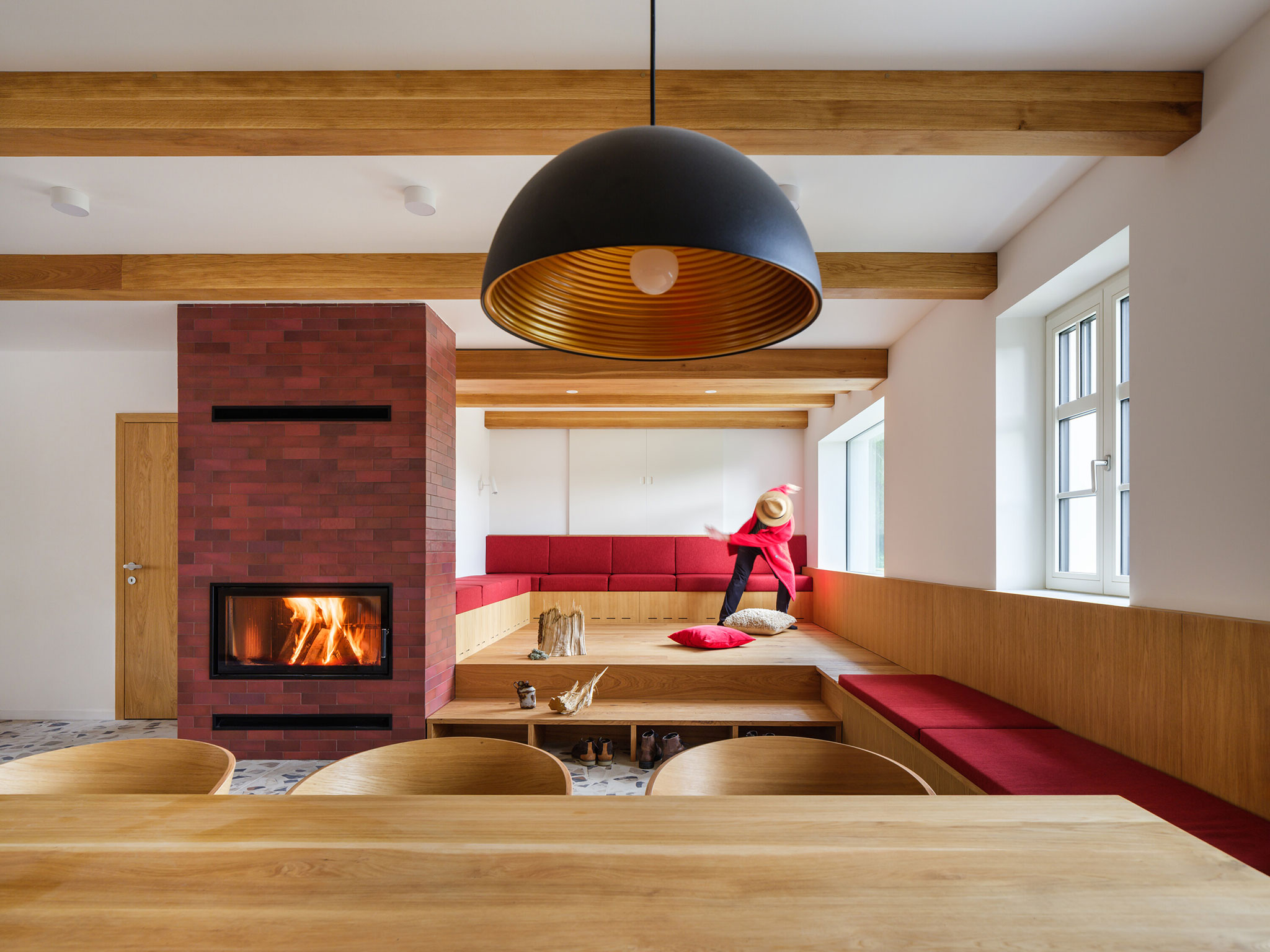
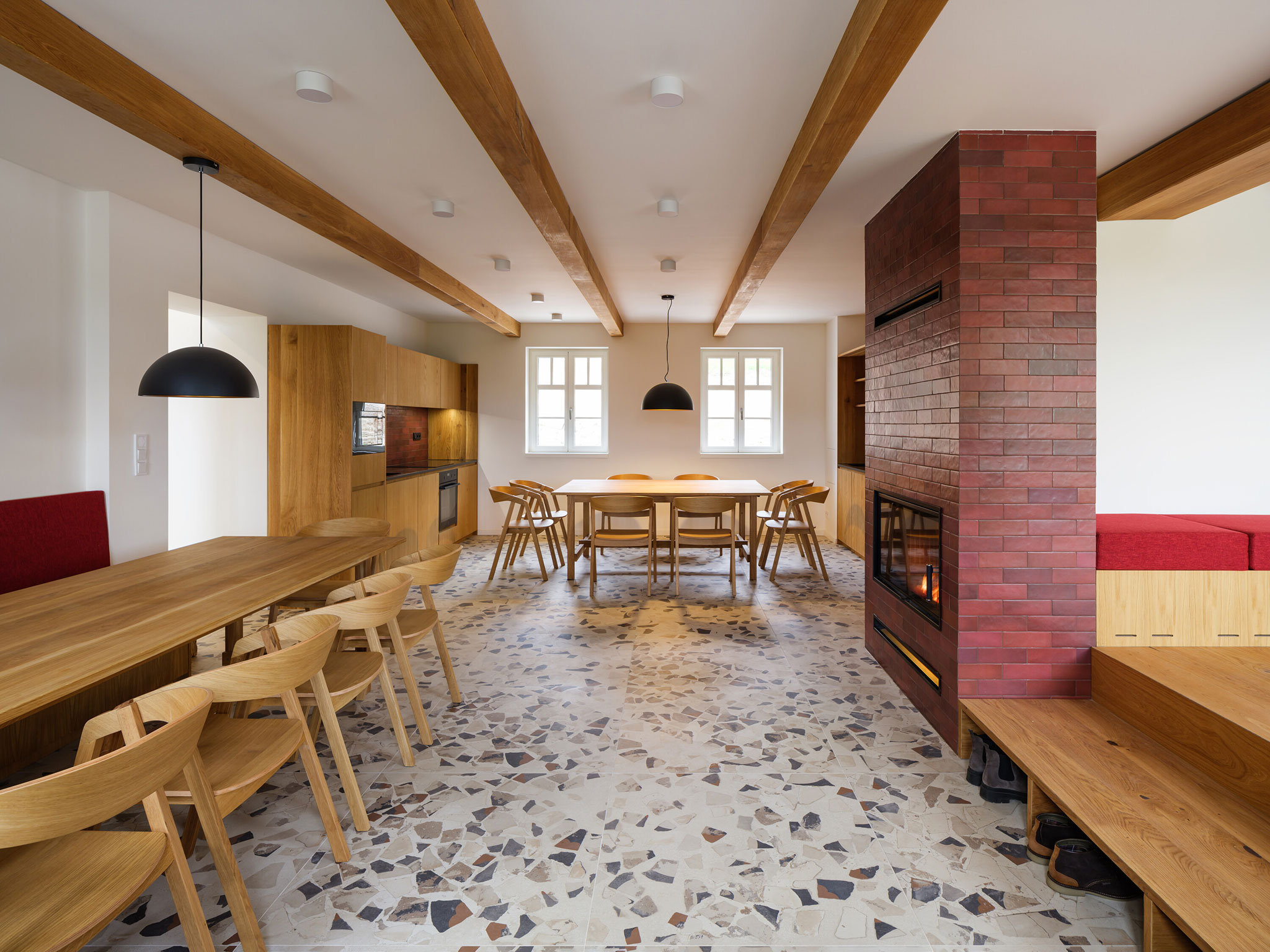
We therefore buried the pipes of a ground collector under the wide meadow in front of the house. The energy accumulated in the slope from the short summer sun is used to heat the buildings and water from a newly drilled well, which ends up in a root treatment plant. All this is powered by electricity from a photovoltaic power plant on the green roof of the sunken farm building. It does so via the engine room in the newly extended cellar of the old building. Everything in the house, from cameras to lights and locks to window blinds, can be controlled remotely under a complex integrated system controlled via a satellite connection to civilization. Stable low-temperature underfloor heating is complemented by massive built-in fireplaces, providing exactly the kind of heat radiation that has the frequency of sunlight and is so necessary in the mountains in winter. And if the worst should happen, the underground fire reservoir under the parking lot will provide water for extinguishing fires not only for the entire complex, but also, in combination with the wetland transformed back into a pond, for the nearest forest stands.
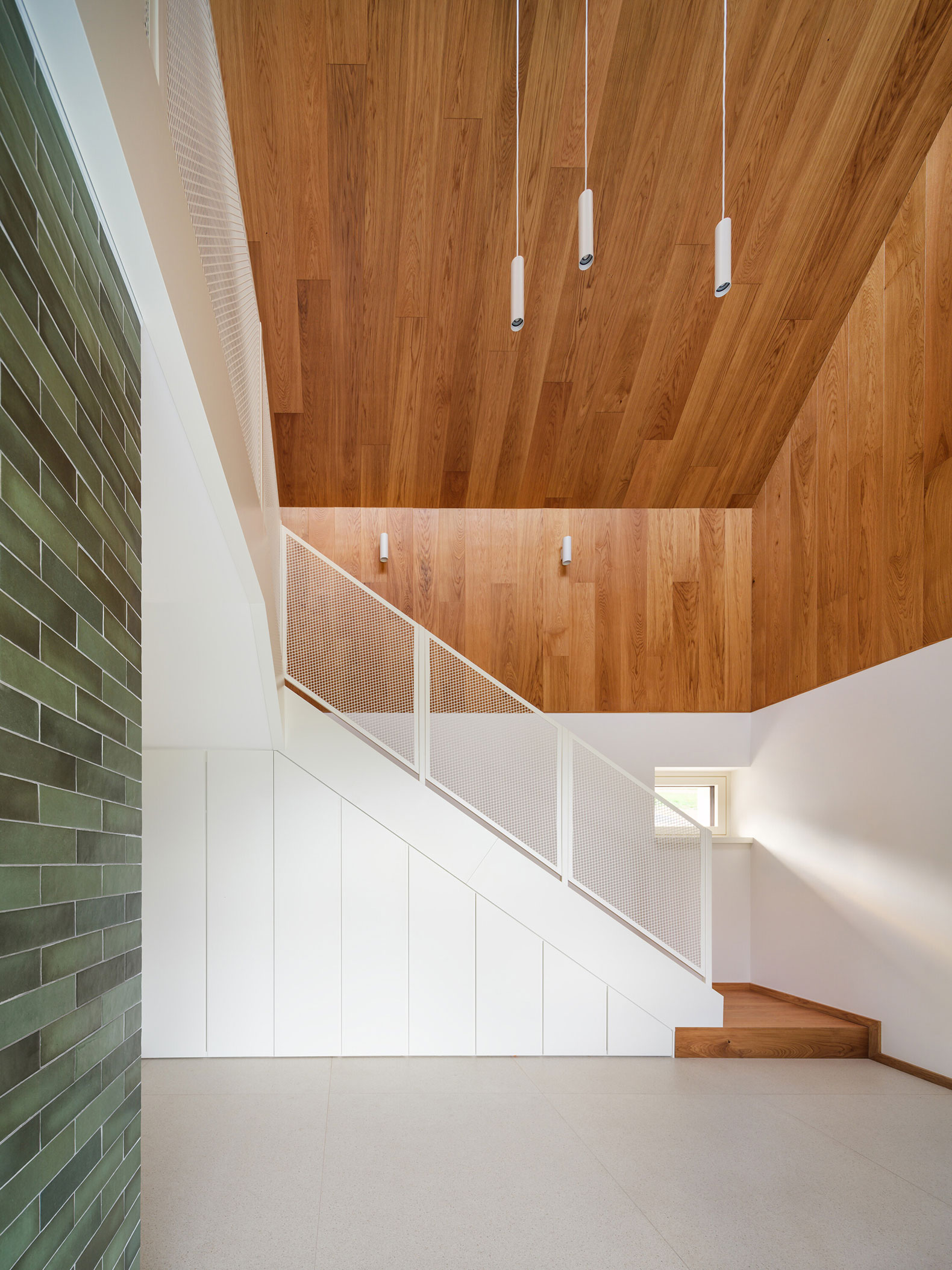
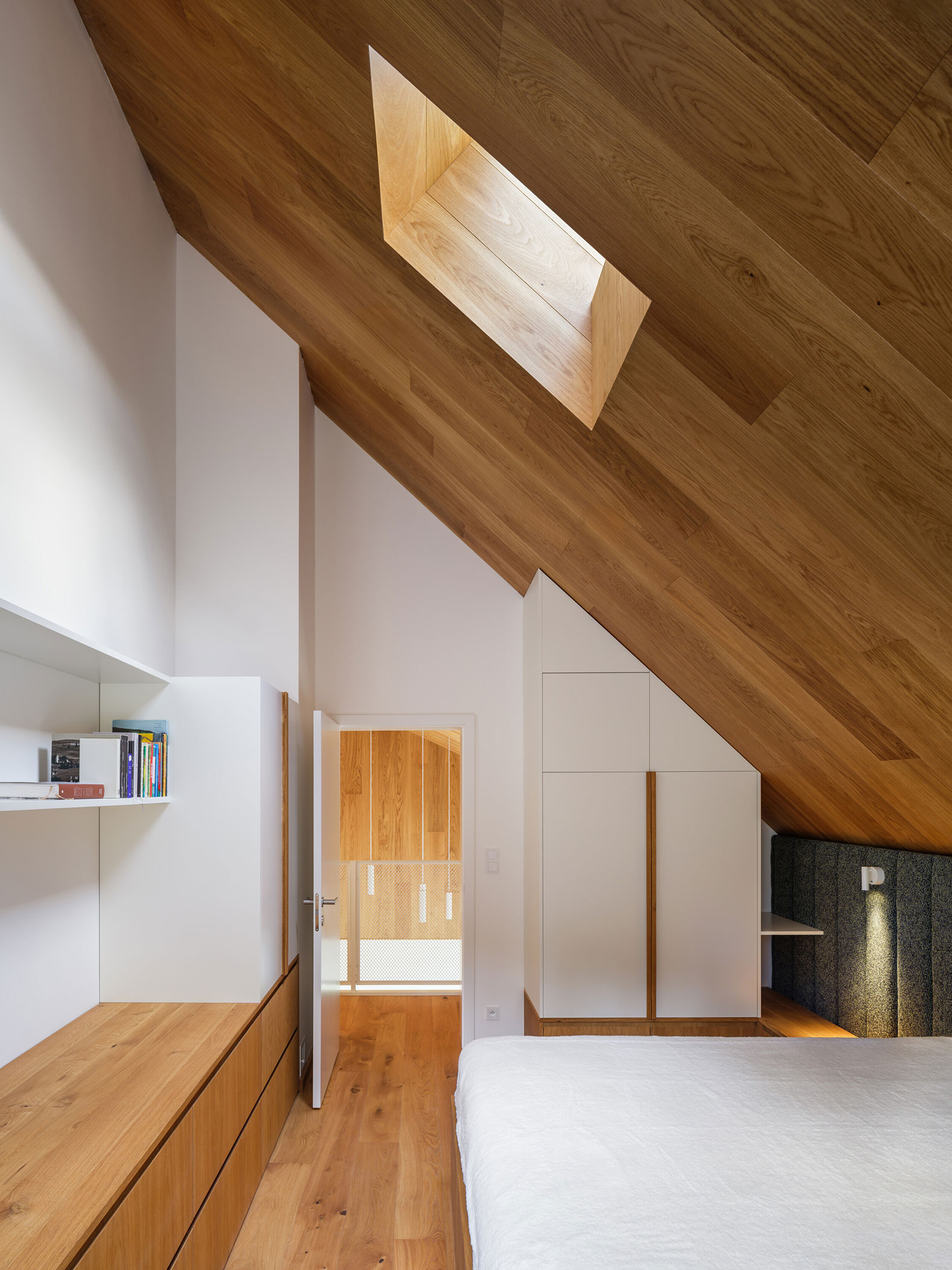
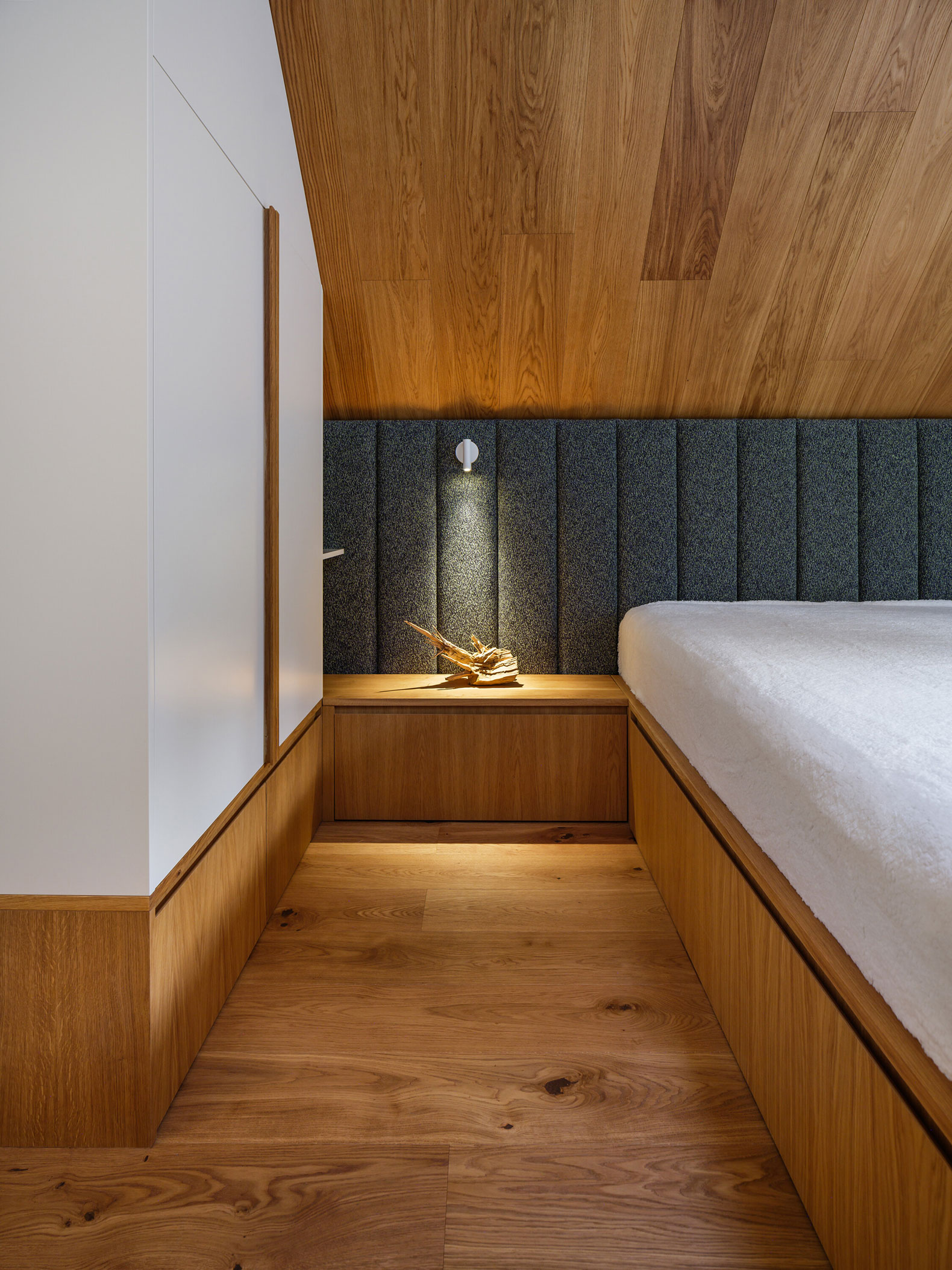
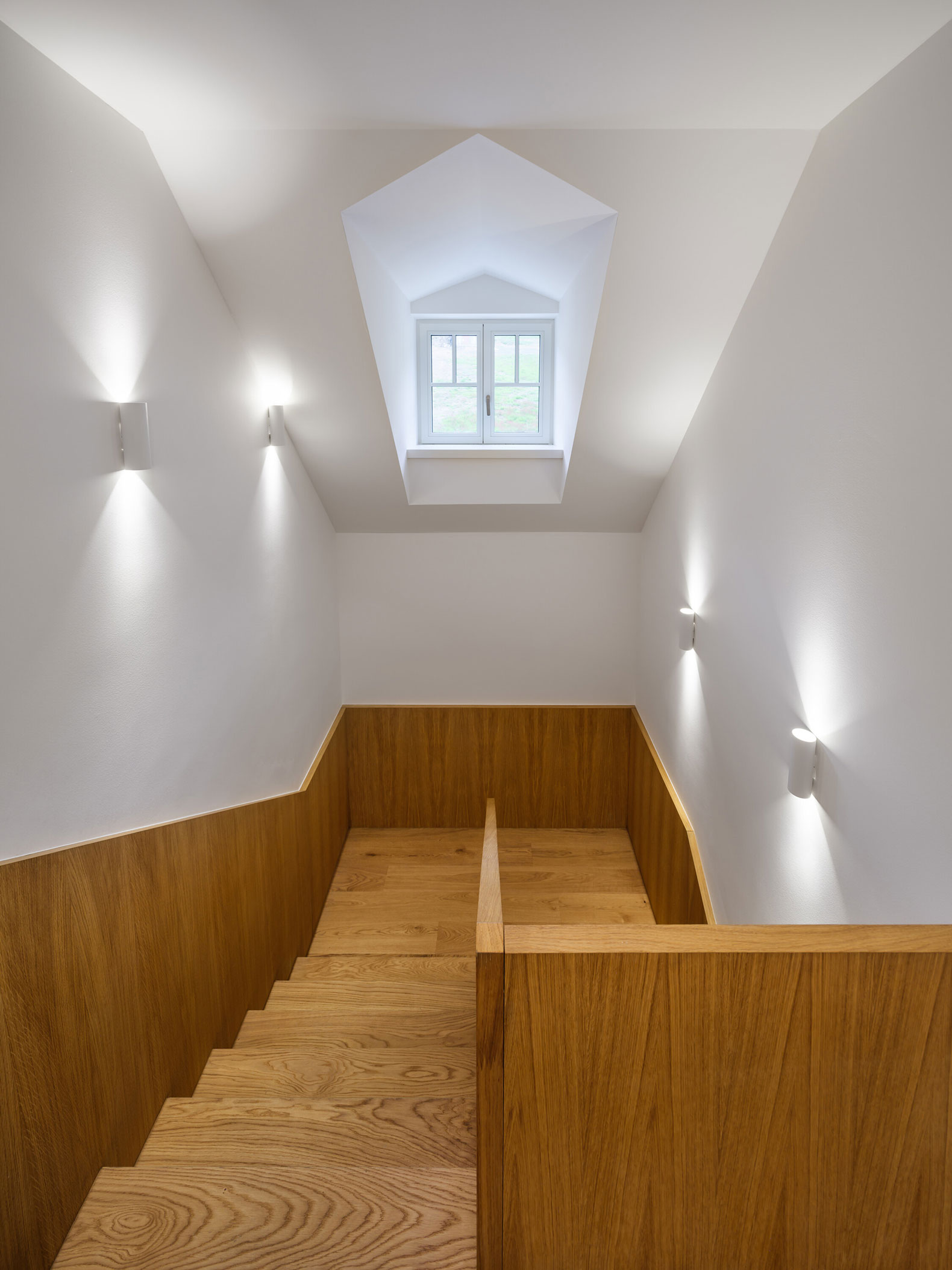
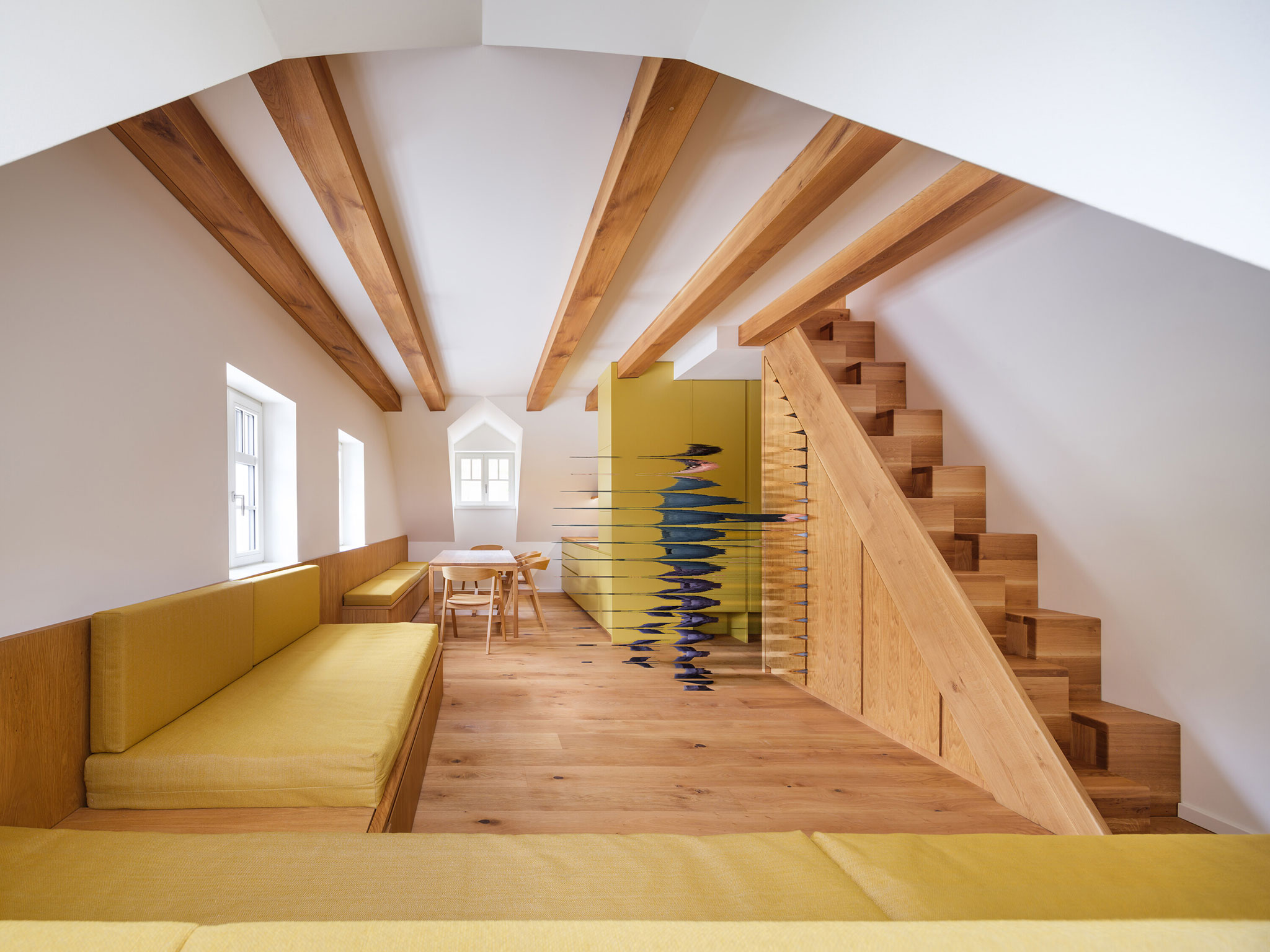
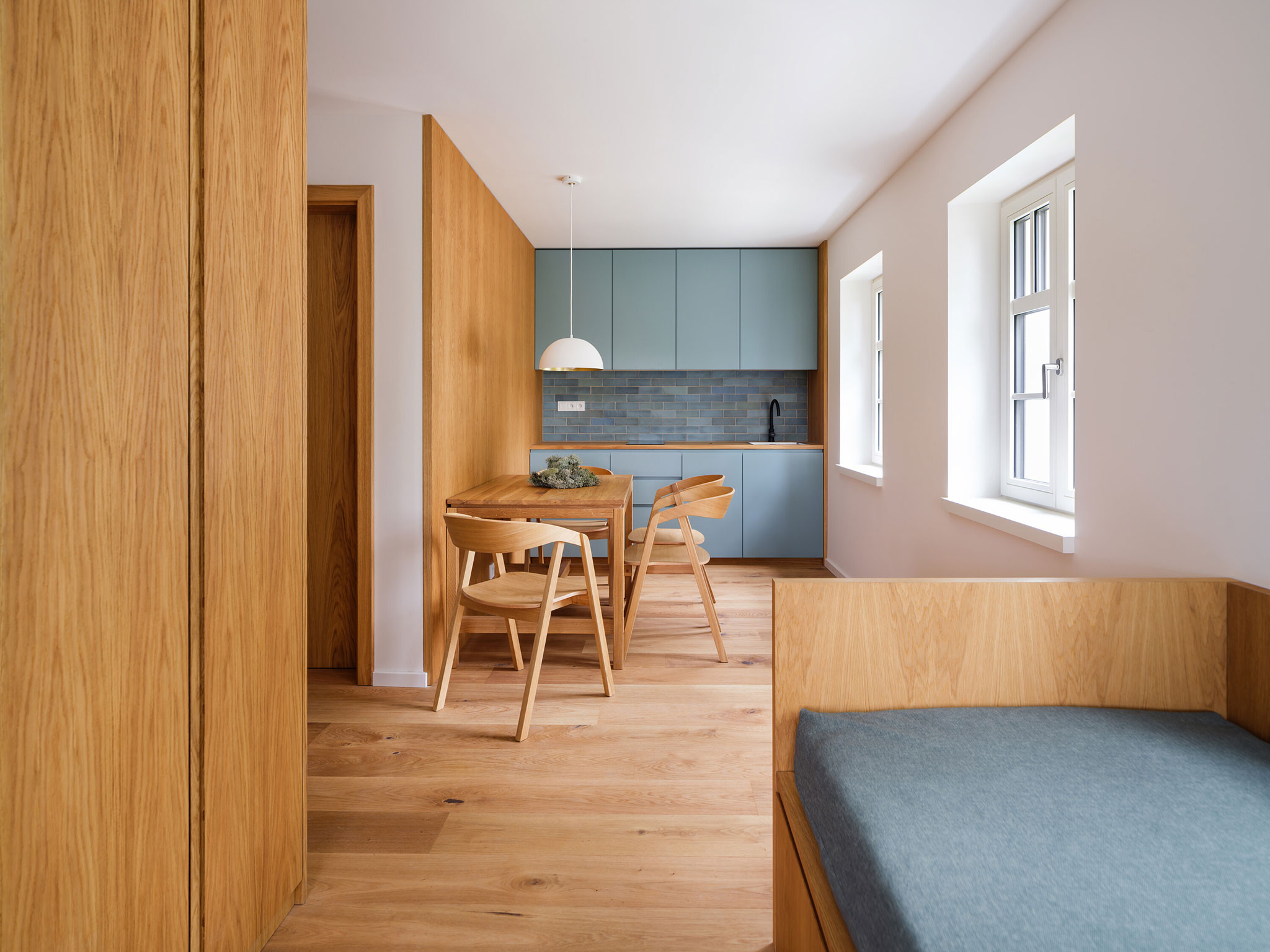
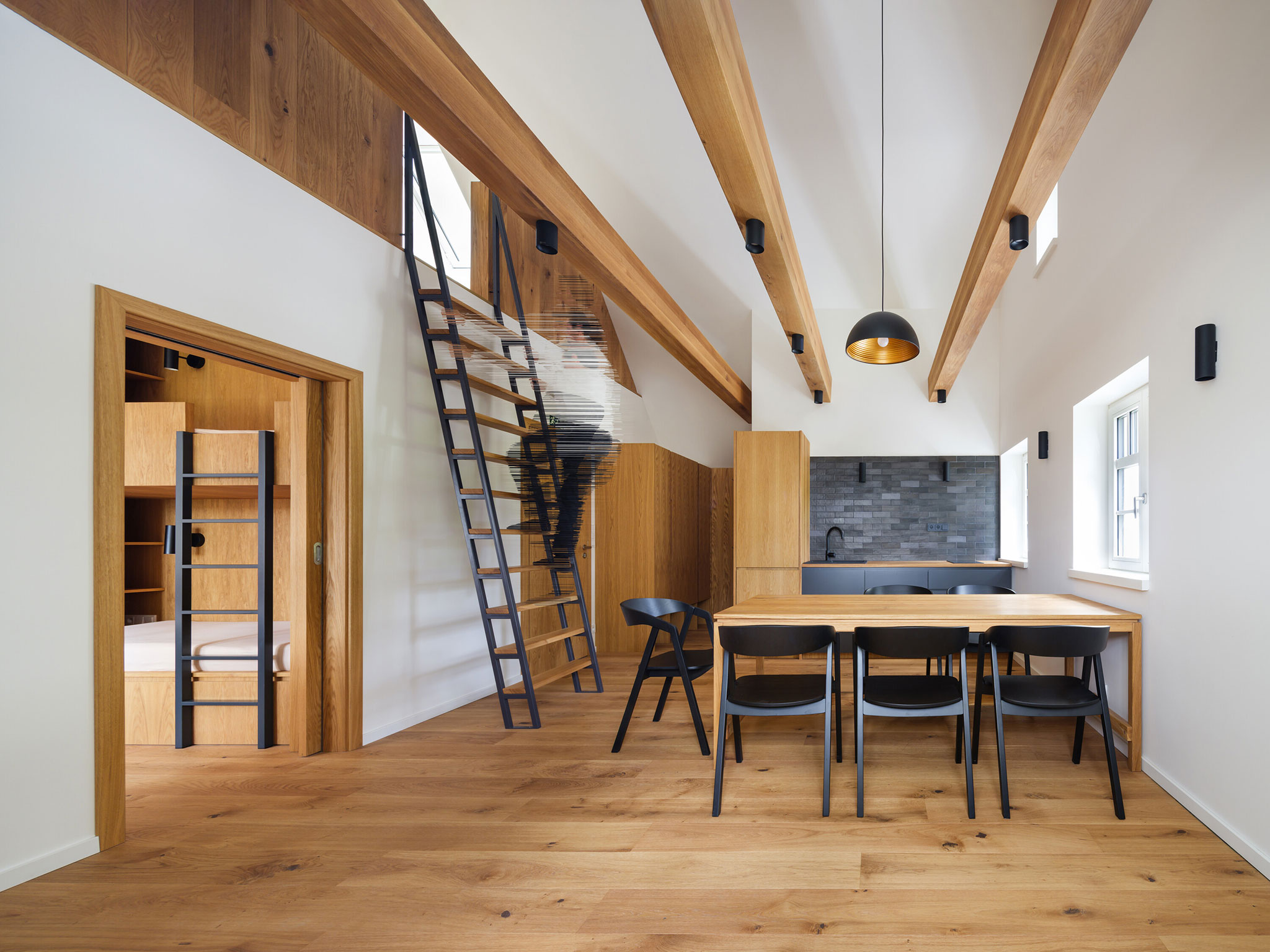
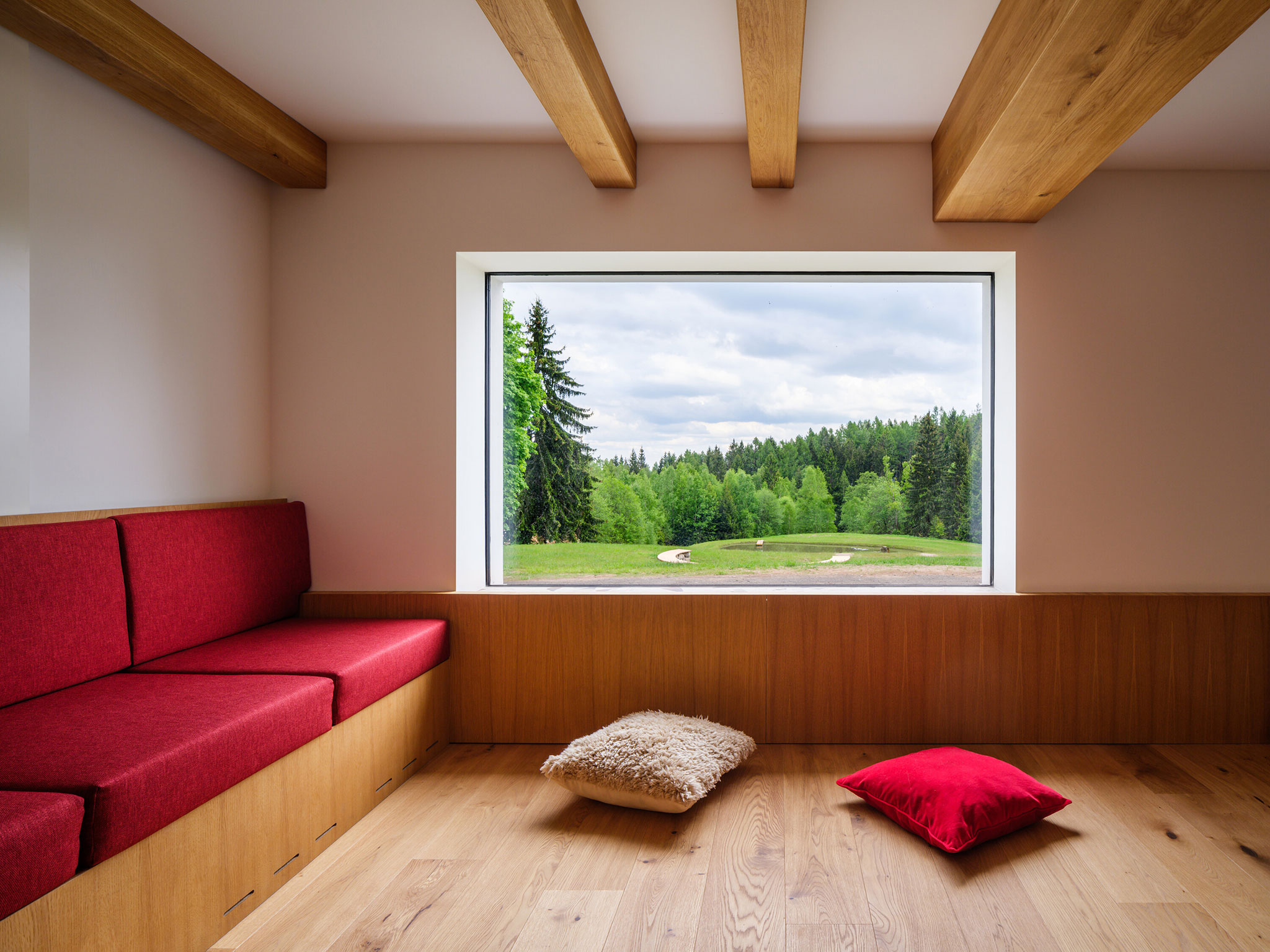
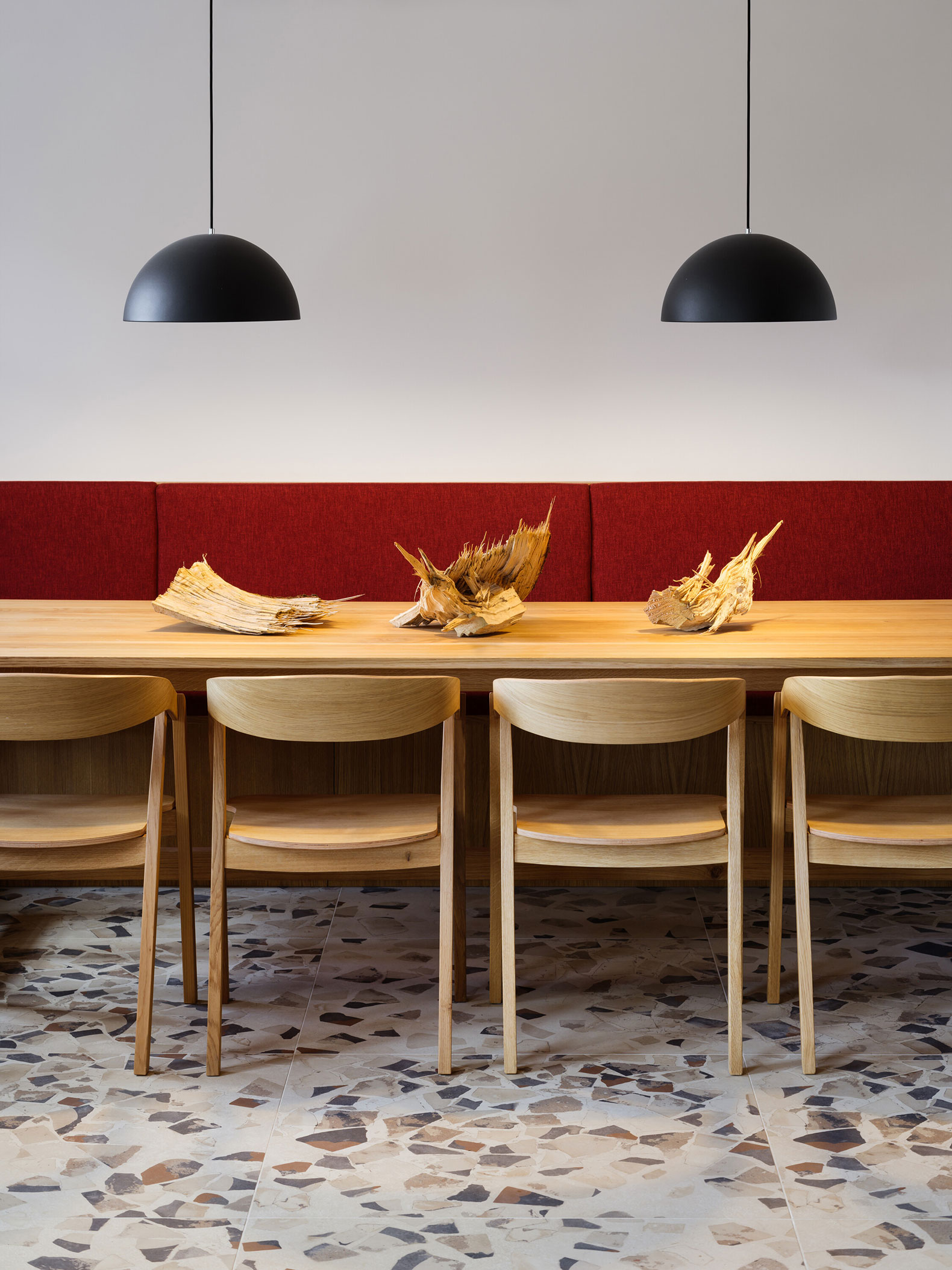
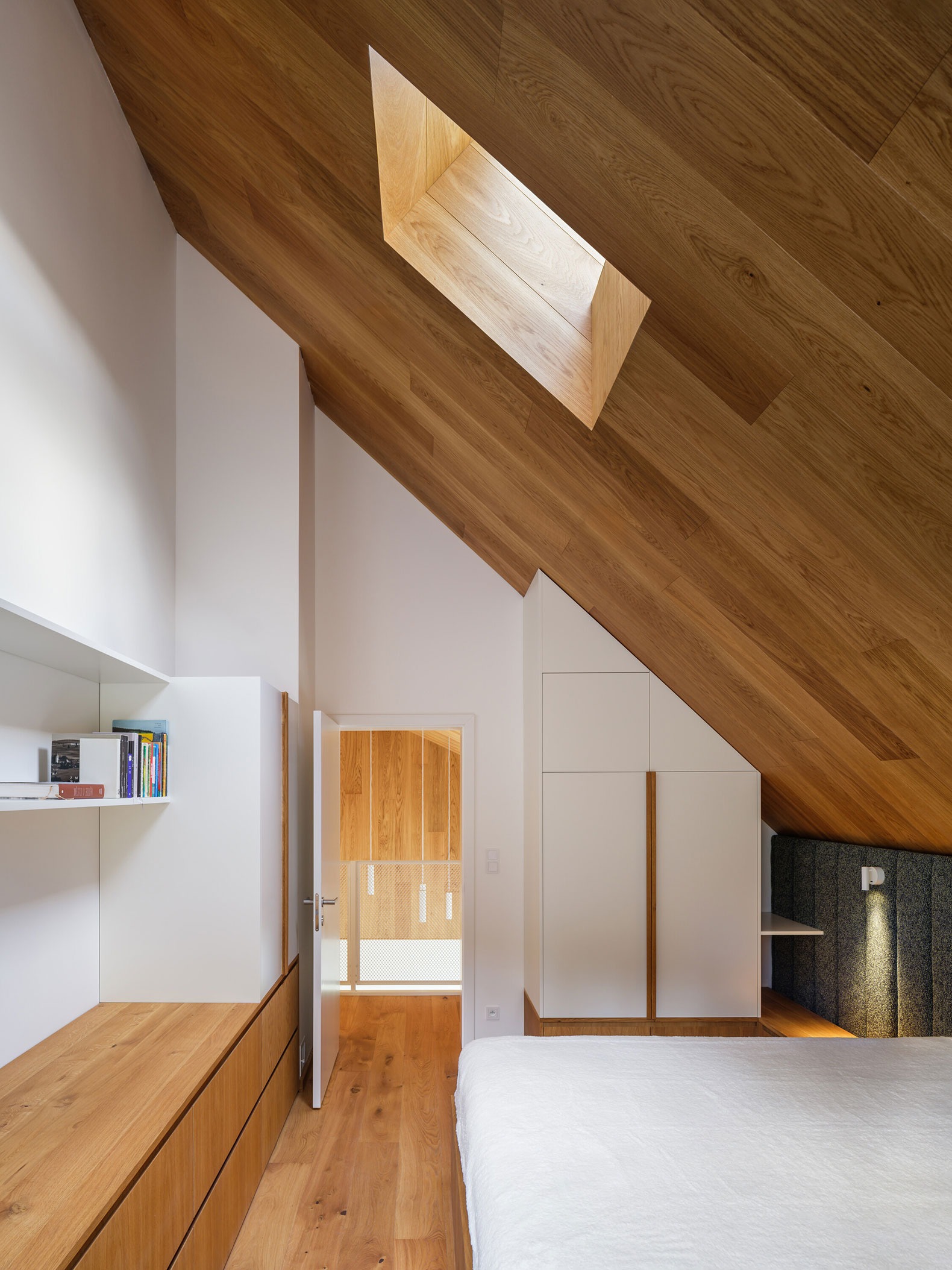
The living areas – the interiors of the apartments and the caretaker's house – are designed to be simple and cozy, but also durable in the face of heavy visitor use. This includes even the most demanding visitors – boisterous children who happily run around wildly, their hair covered in smoke, their fingers sticky with resin, and occasionally holding some beautiful natural object in their hands.