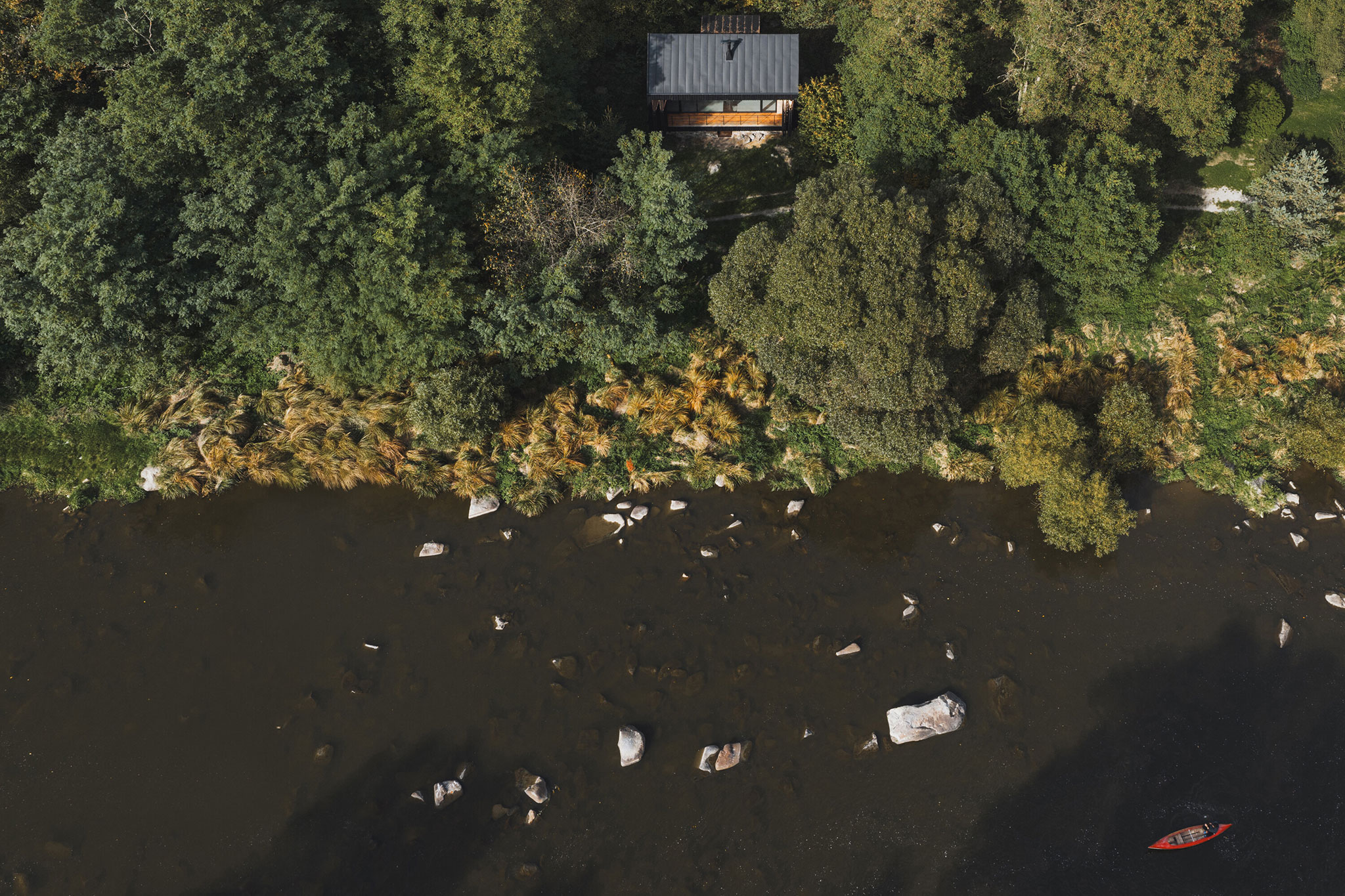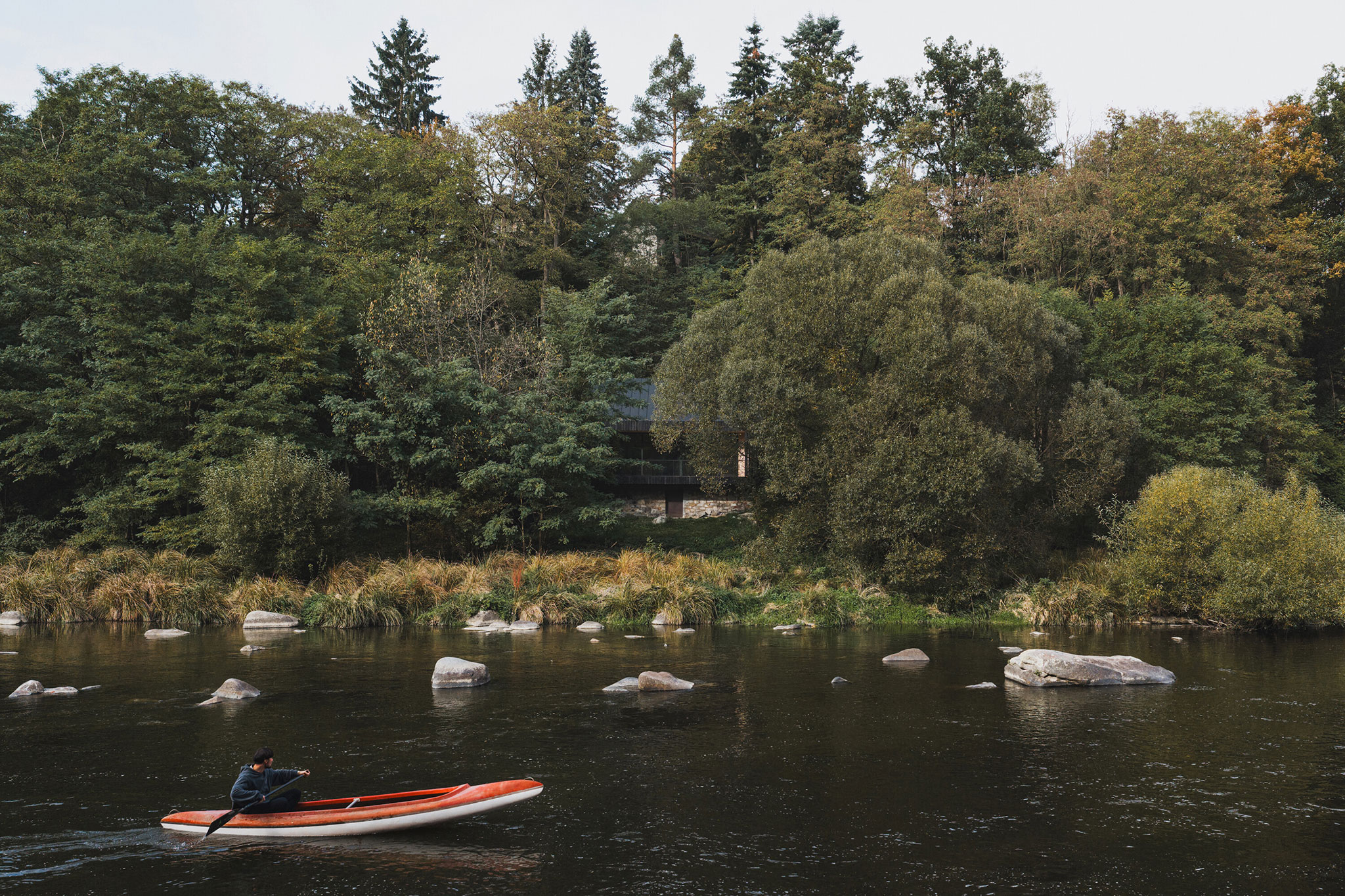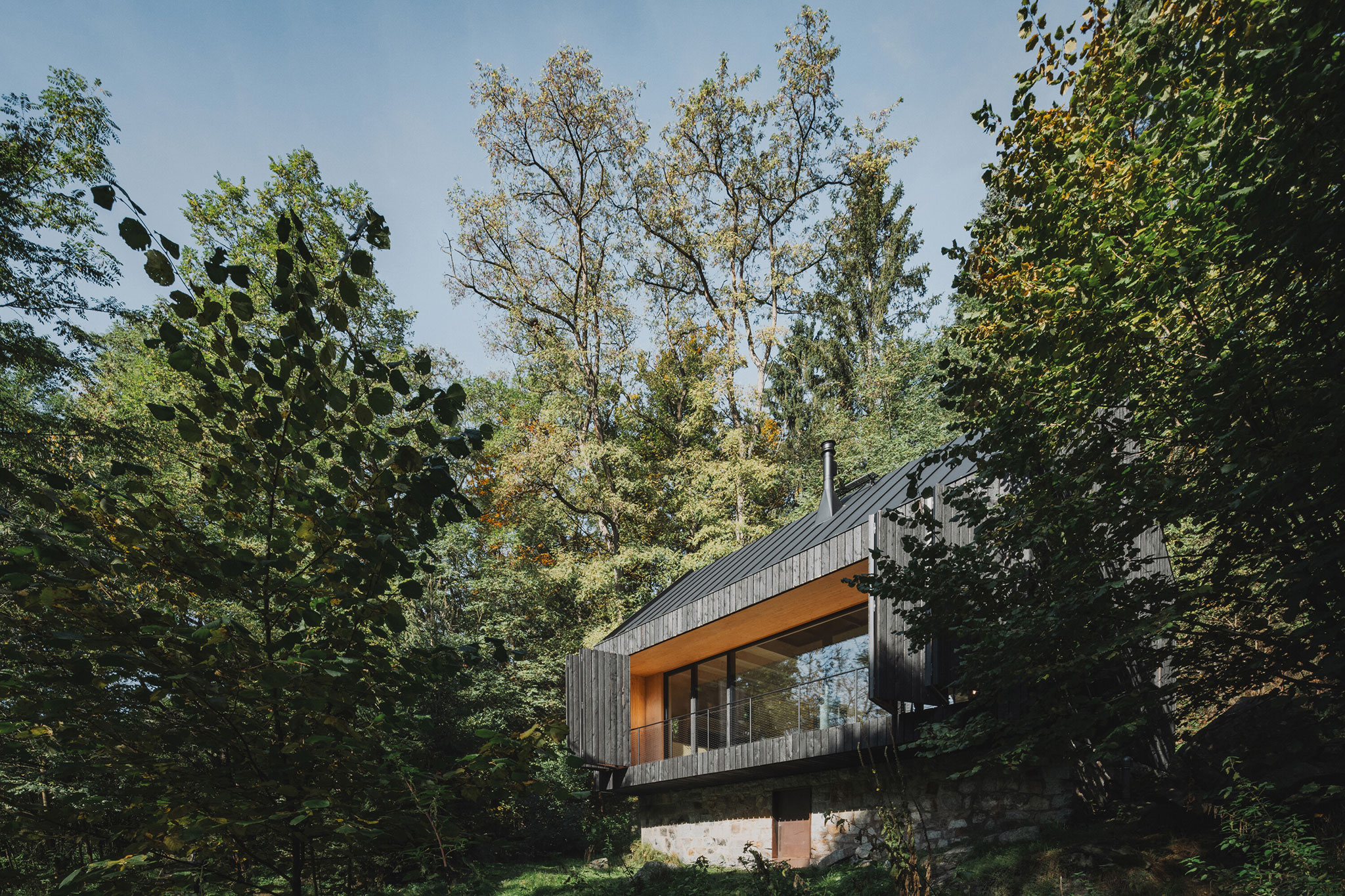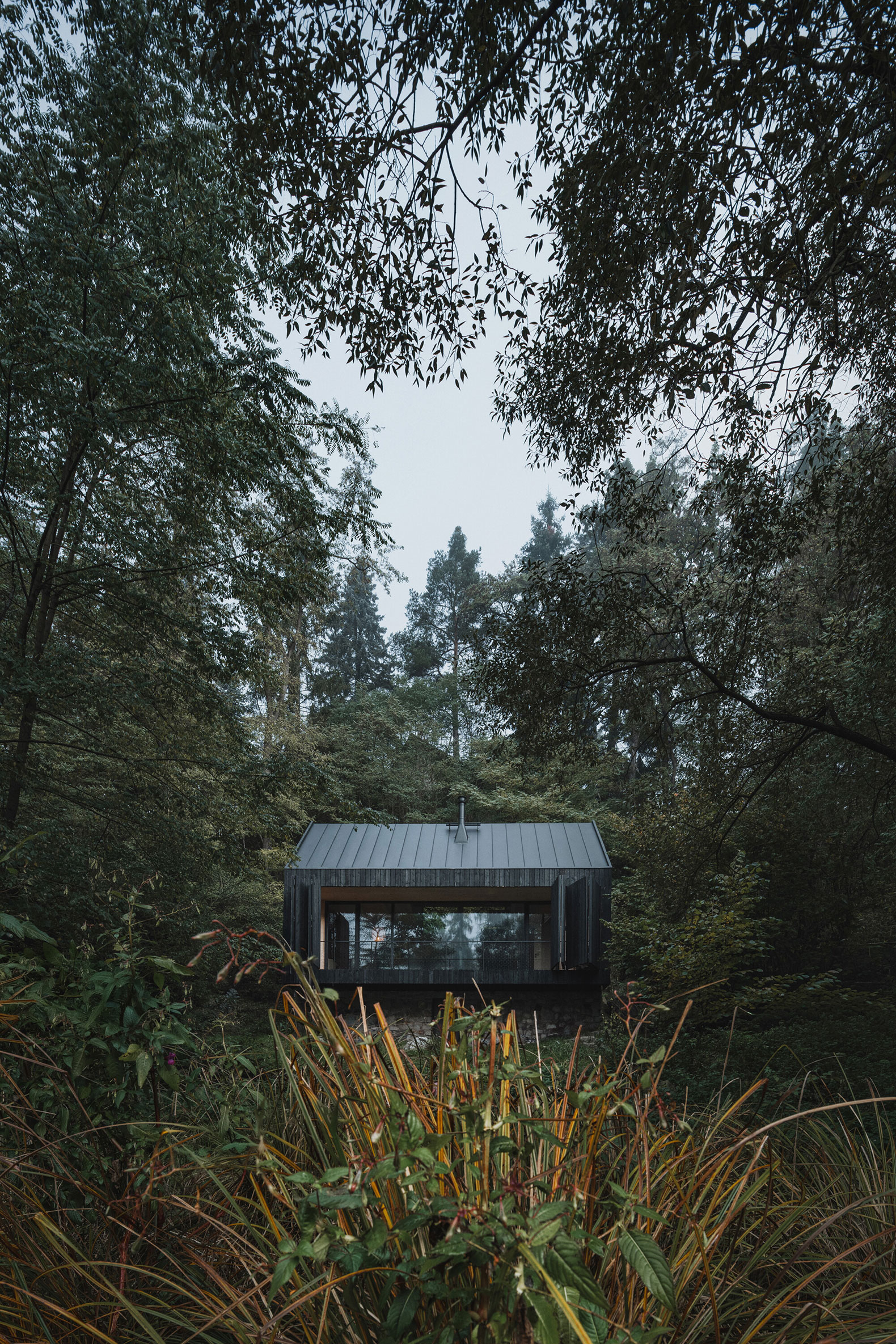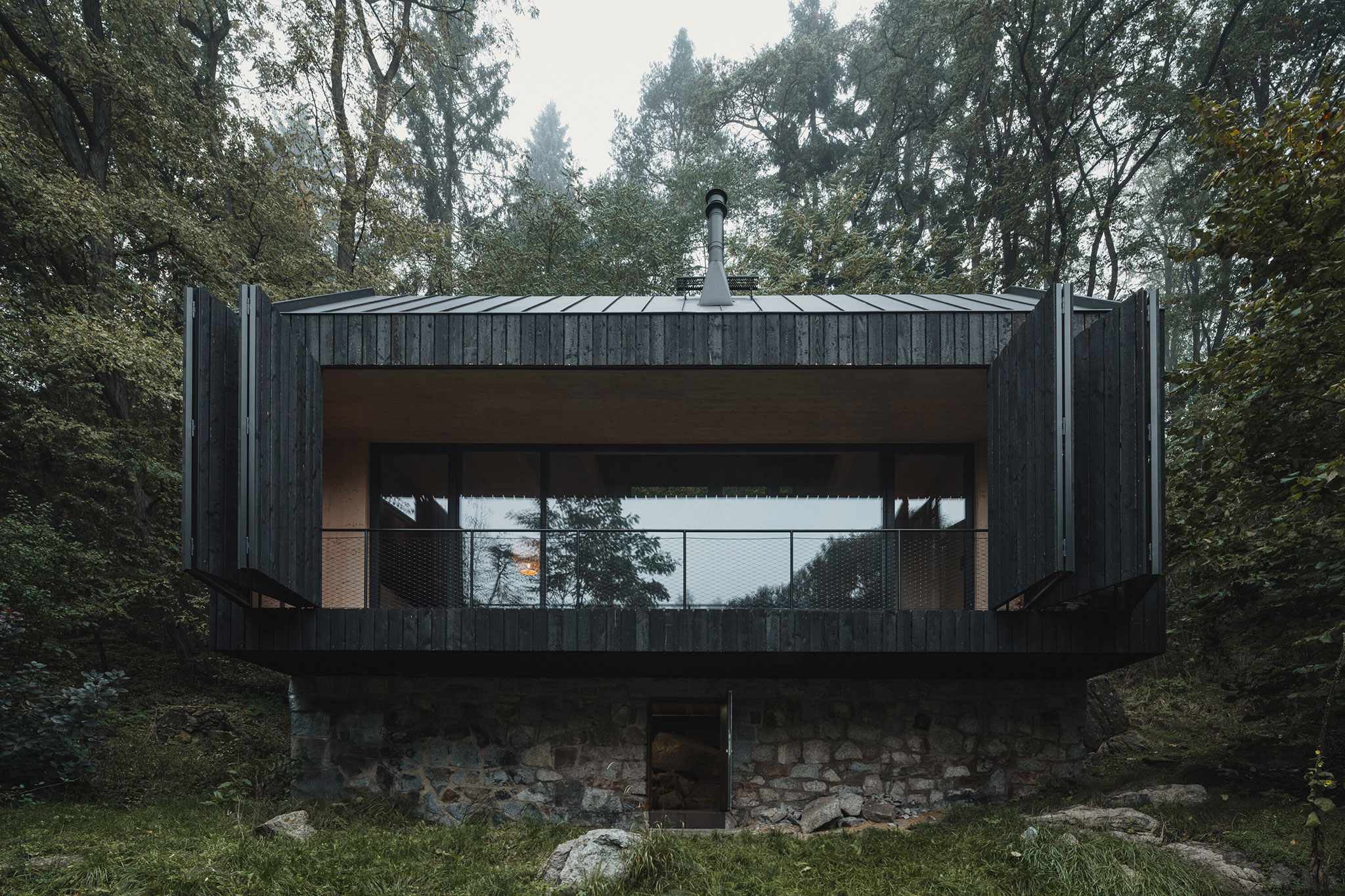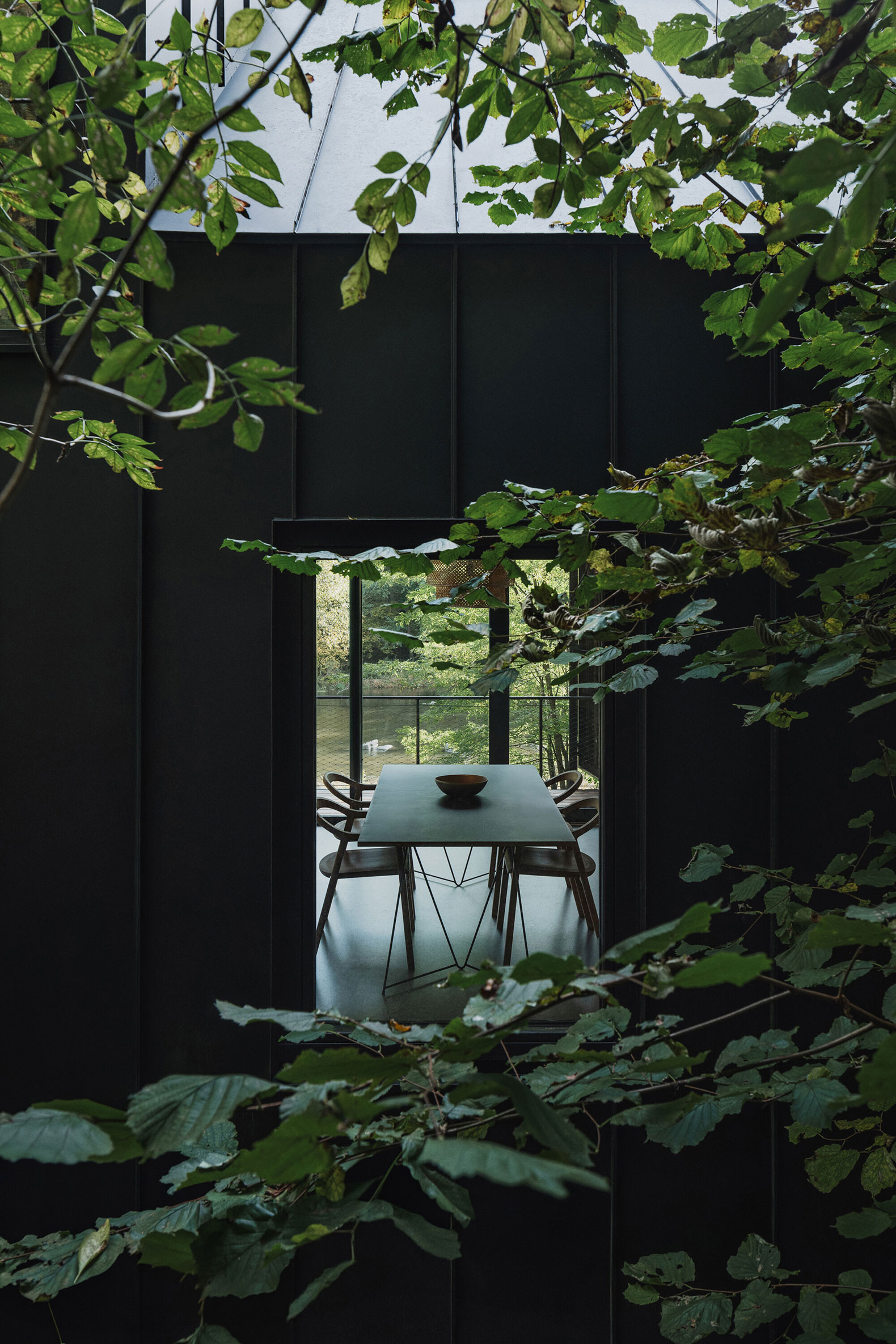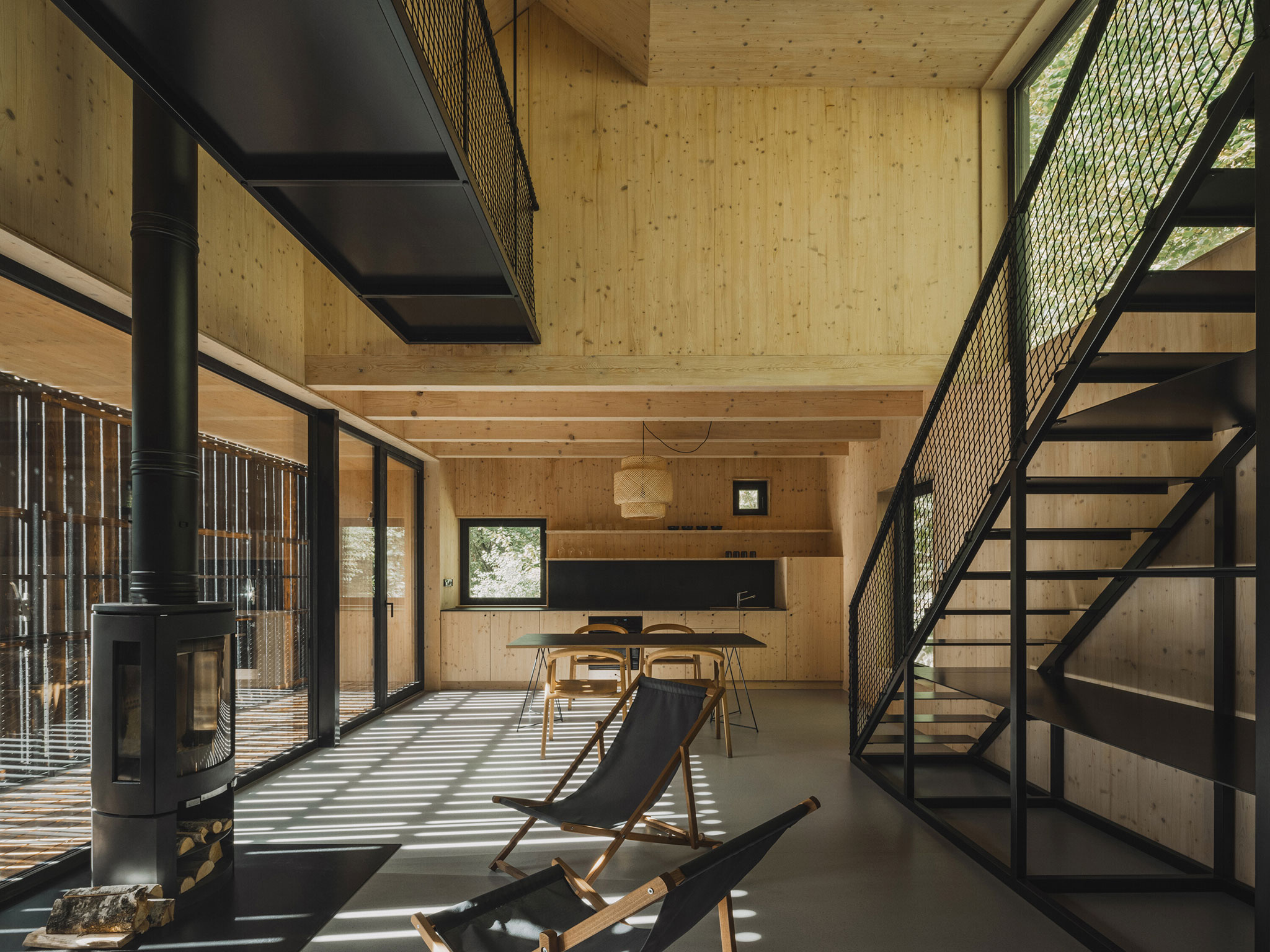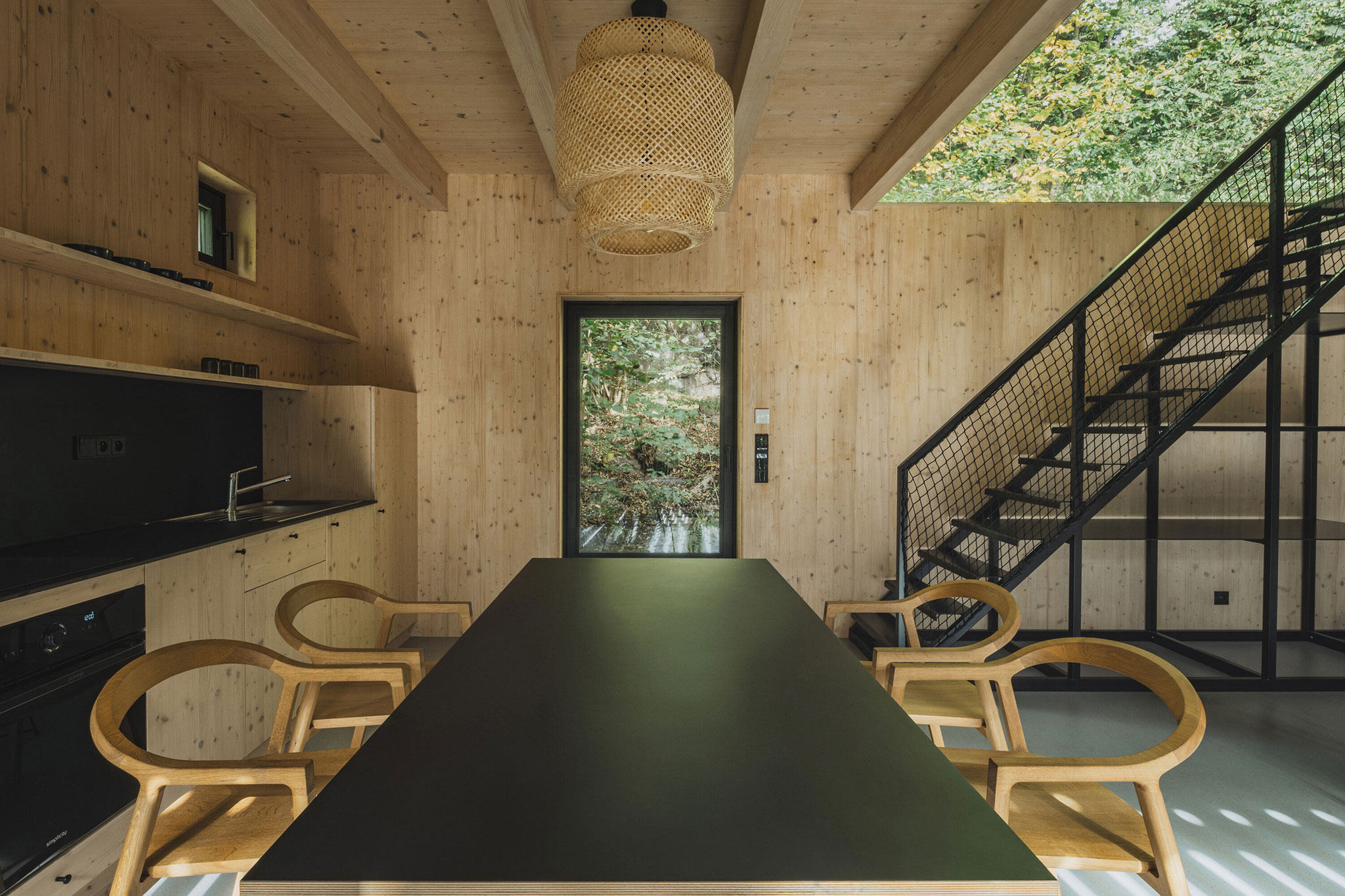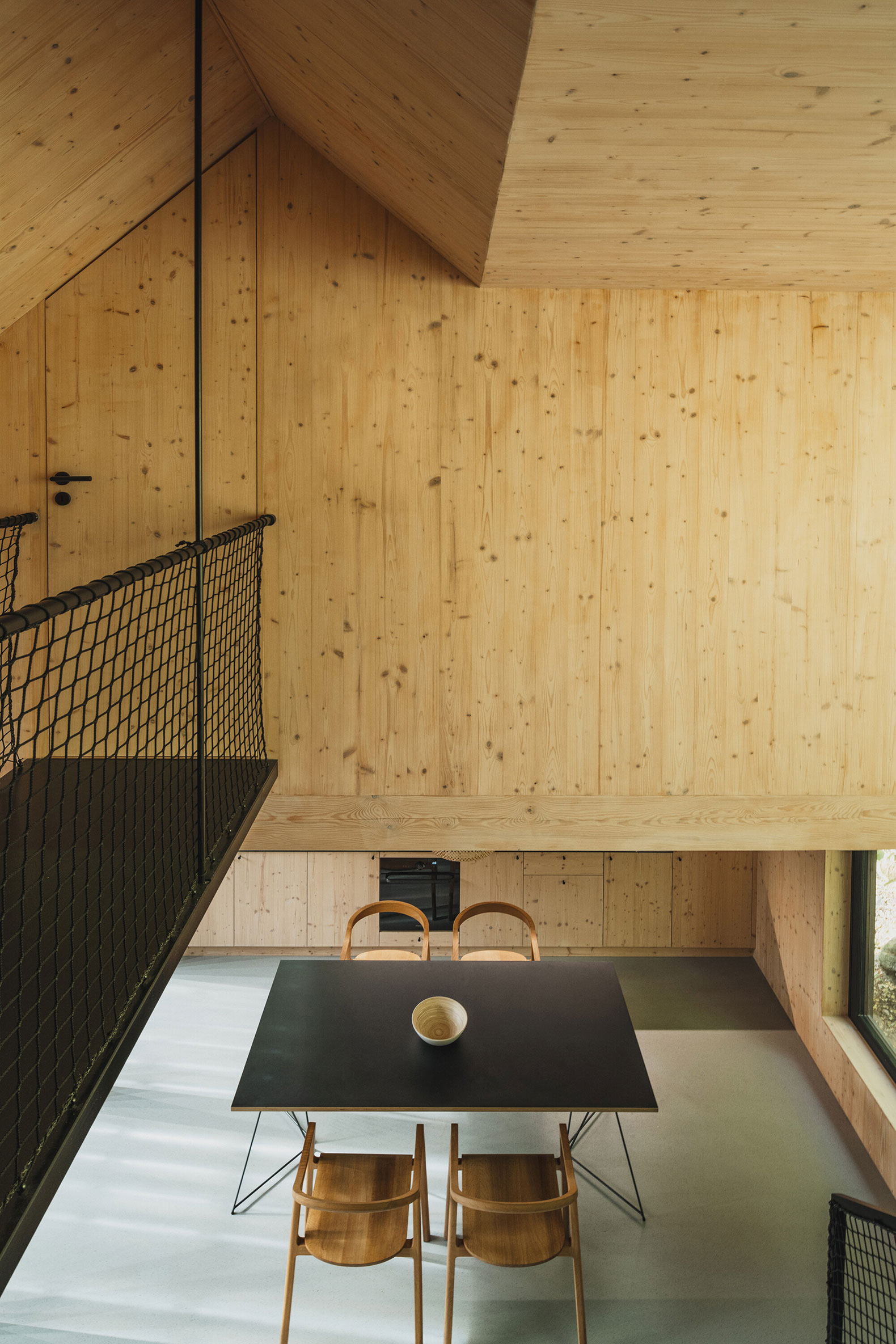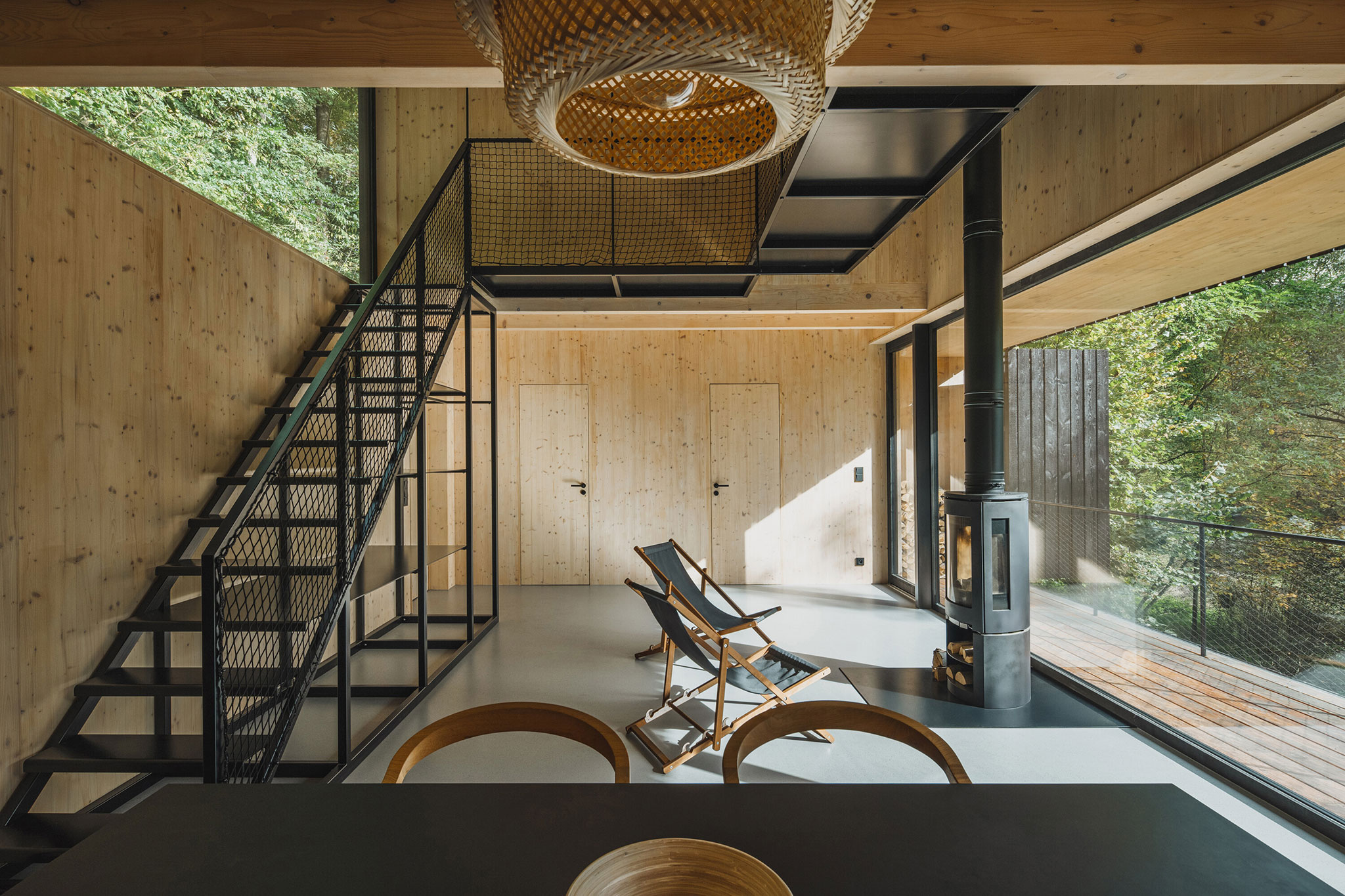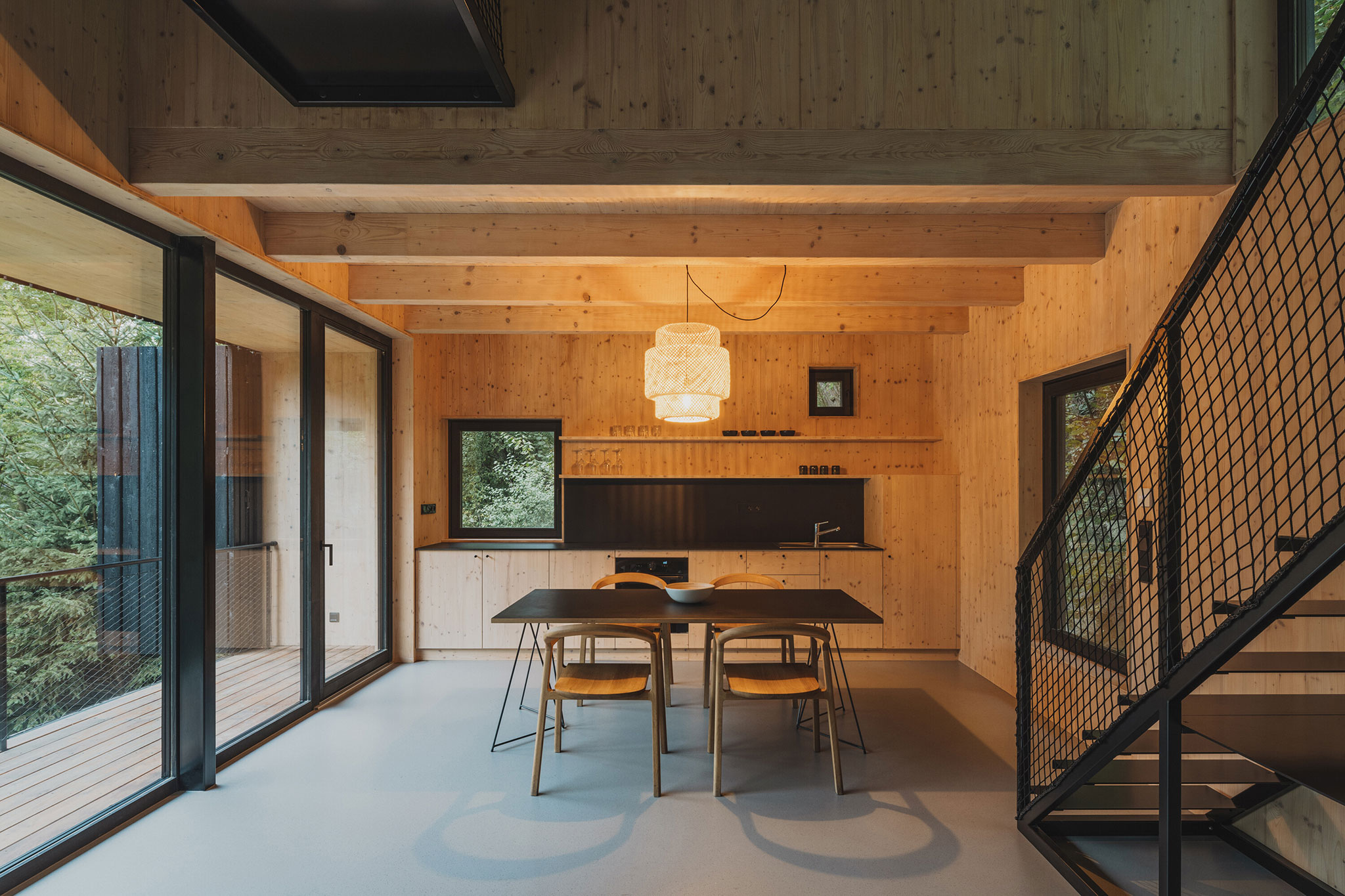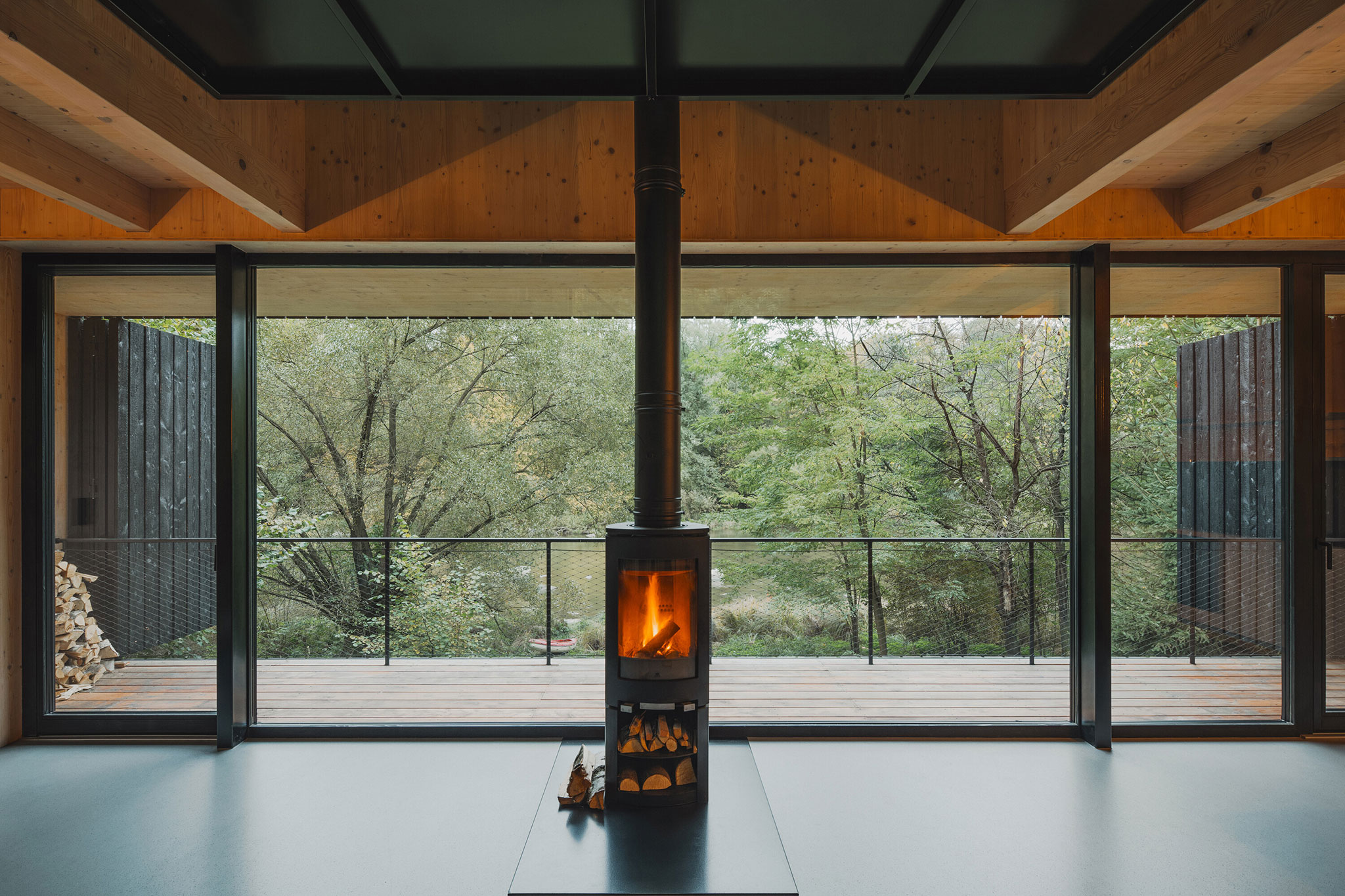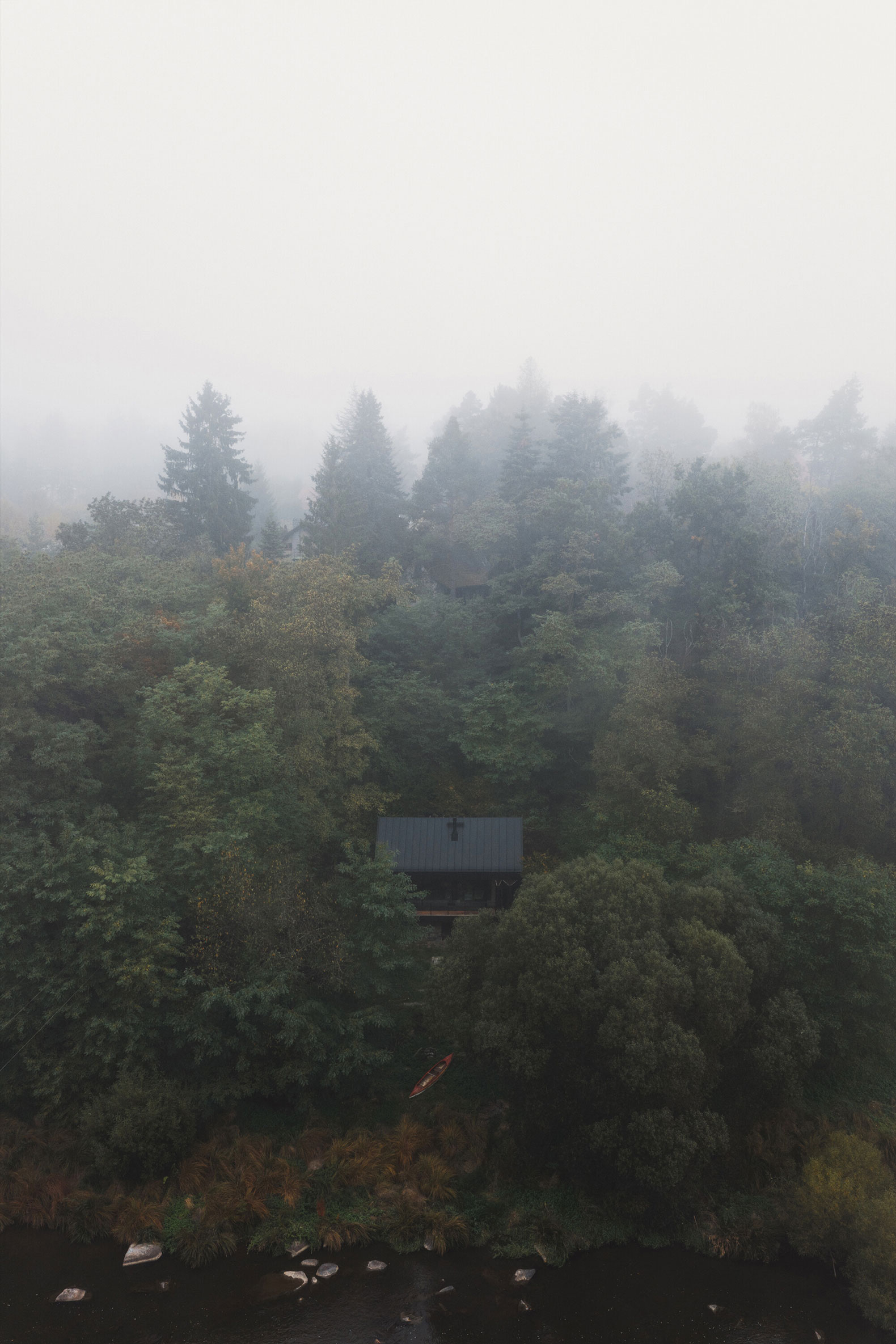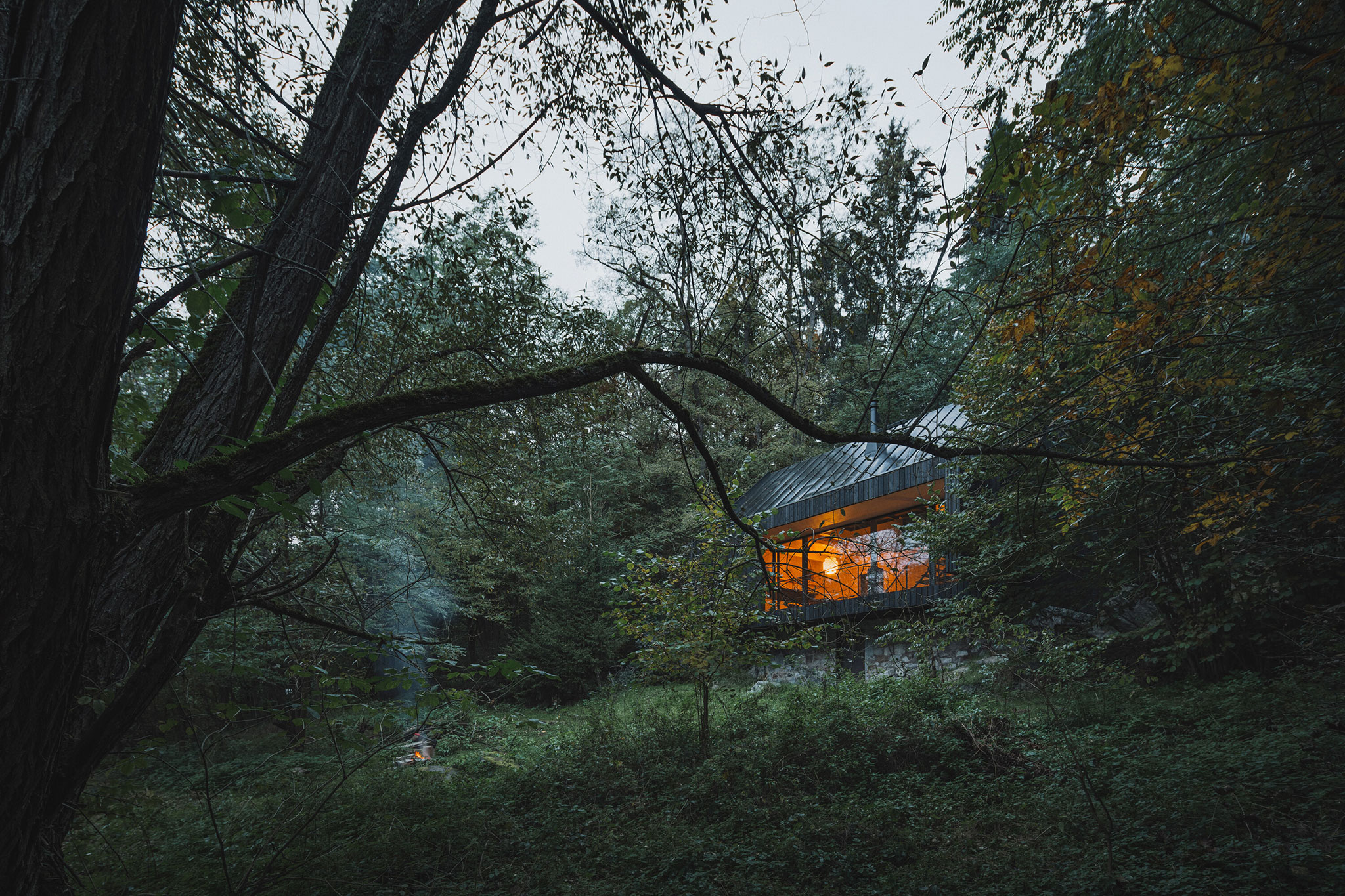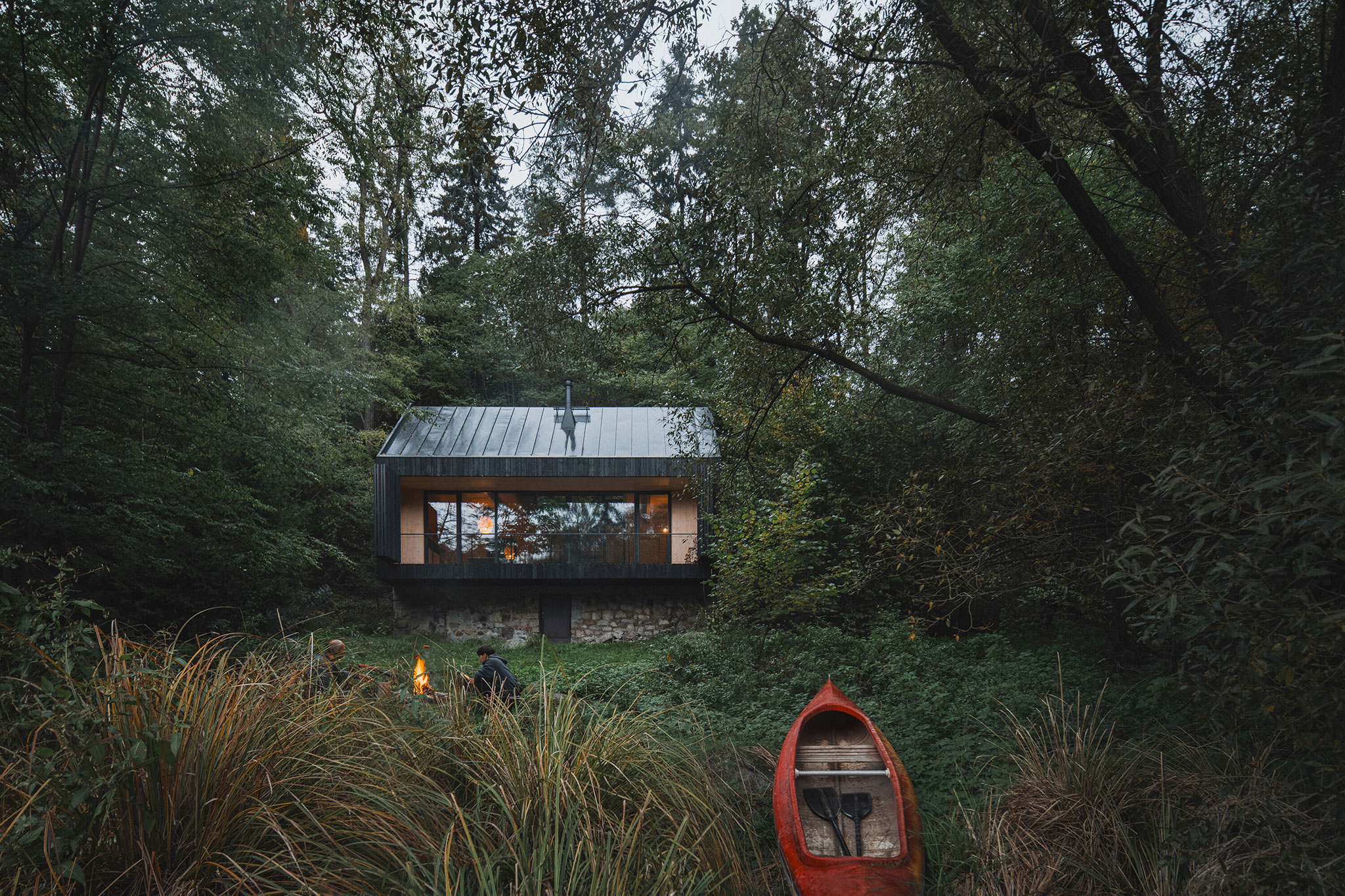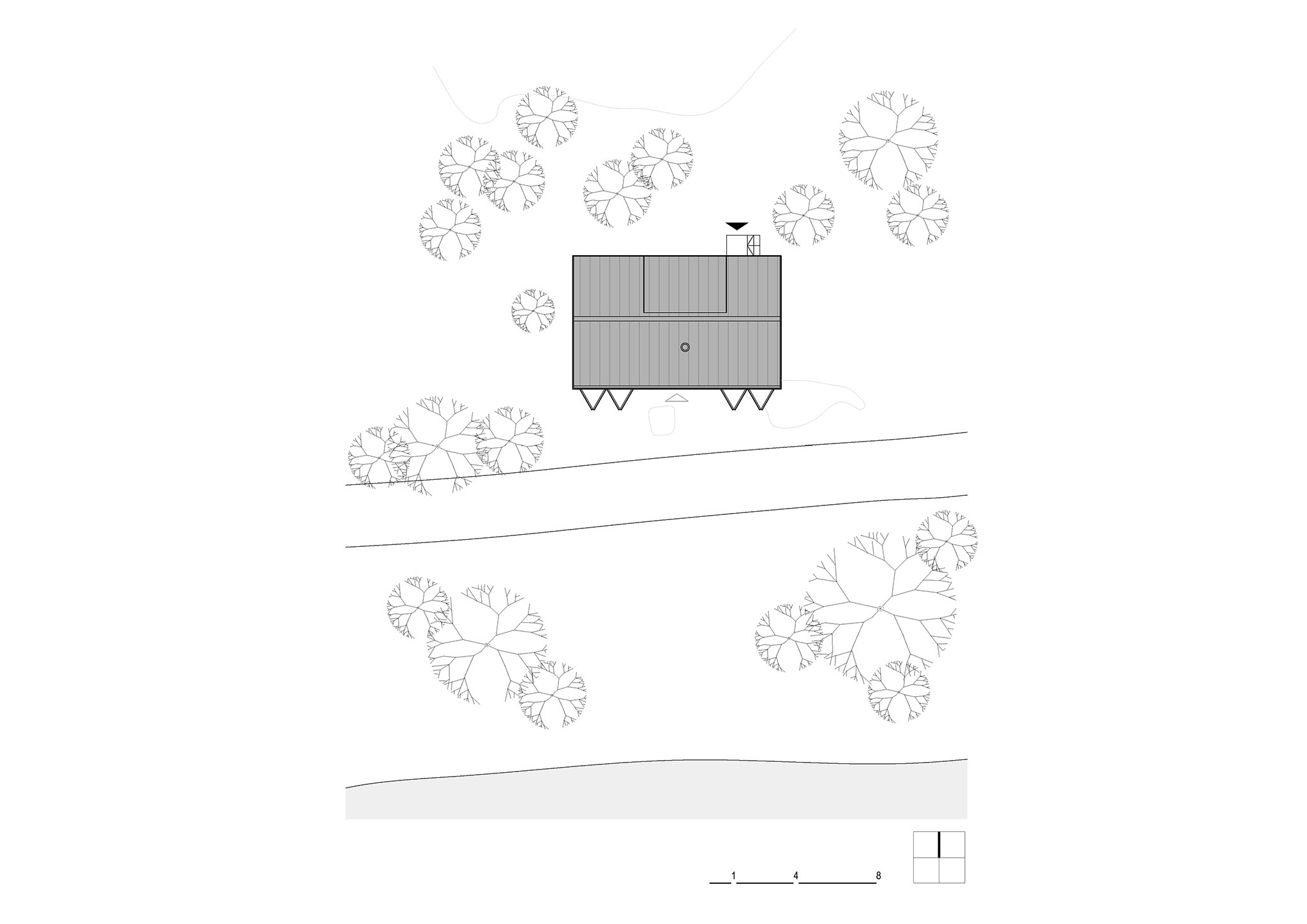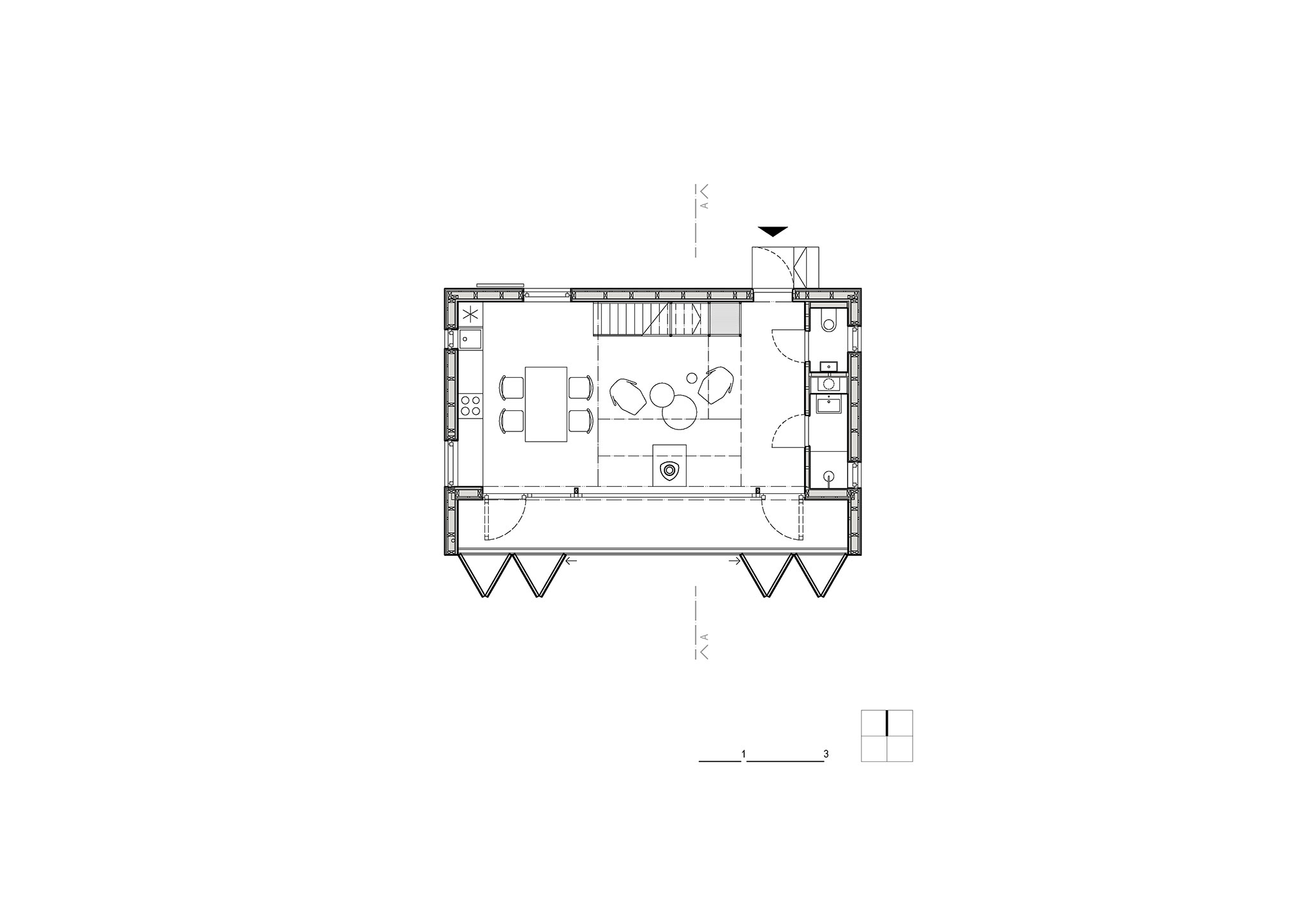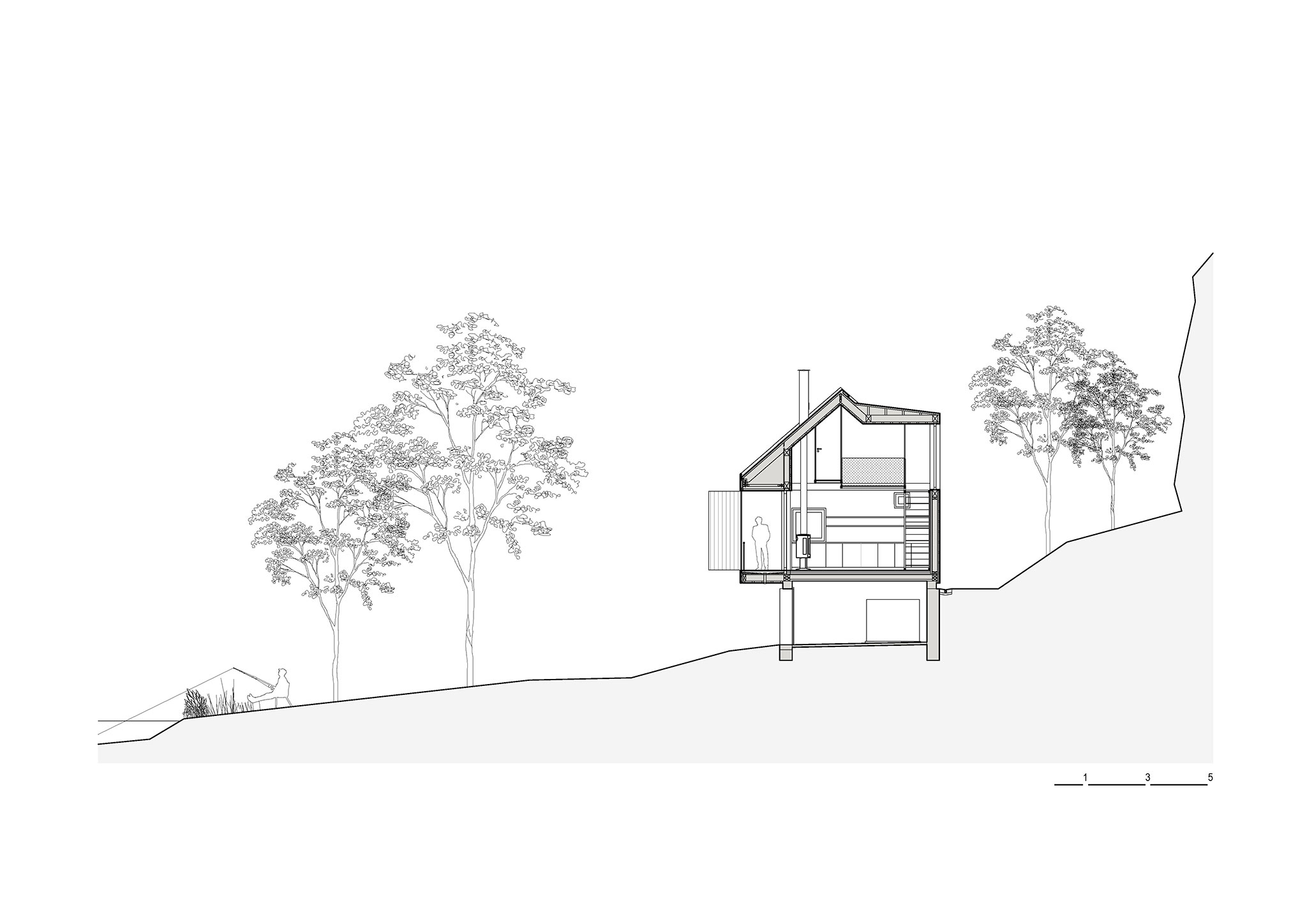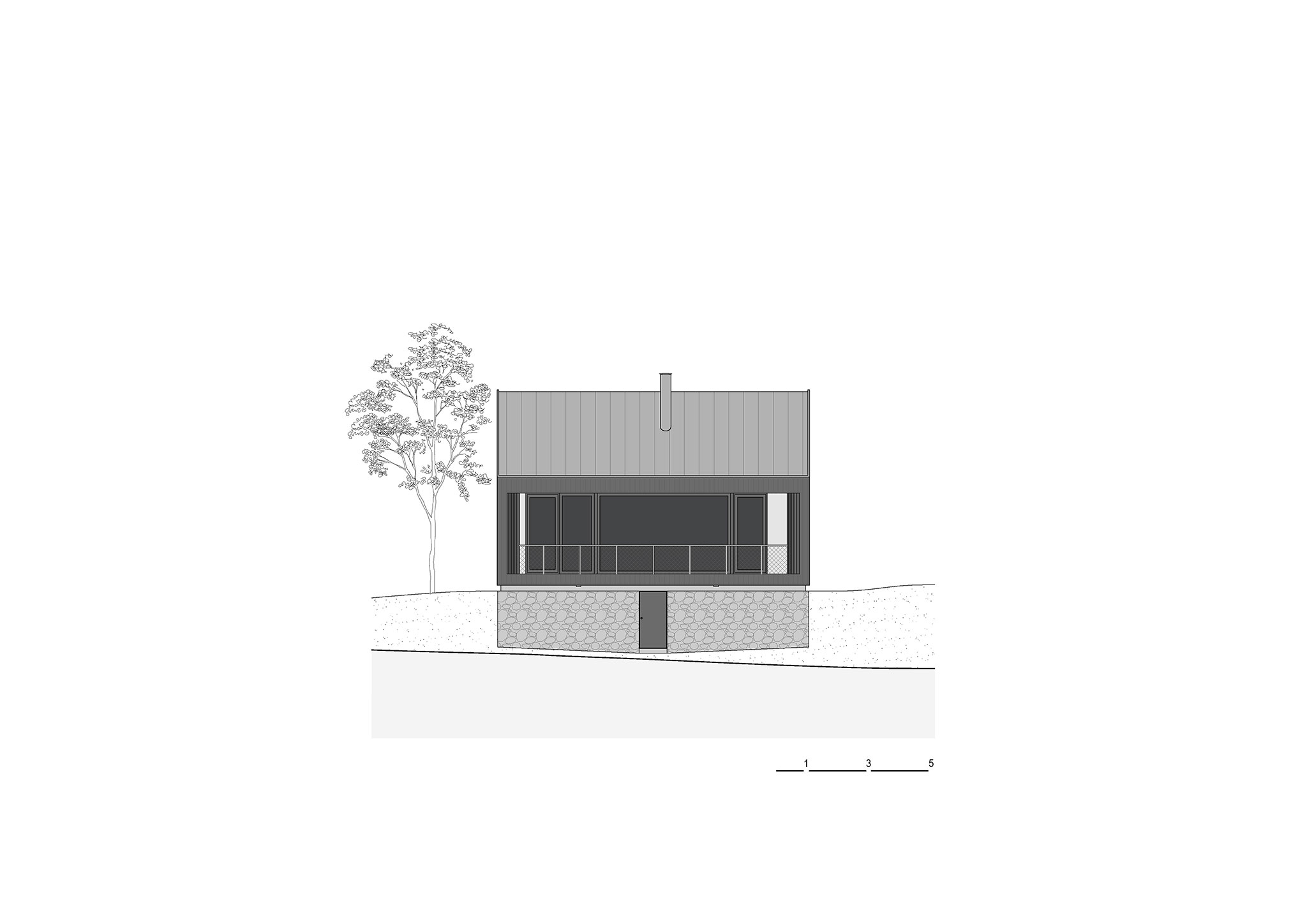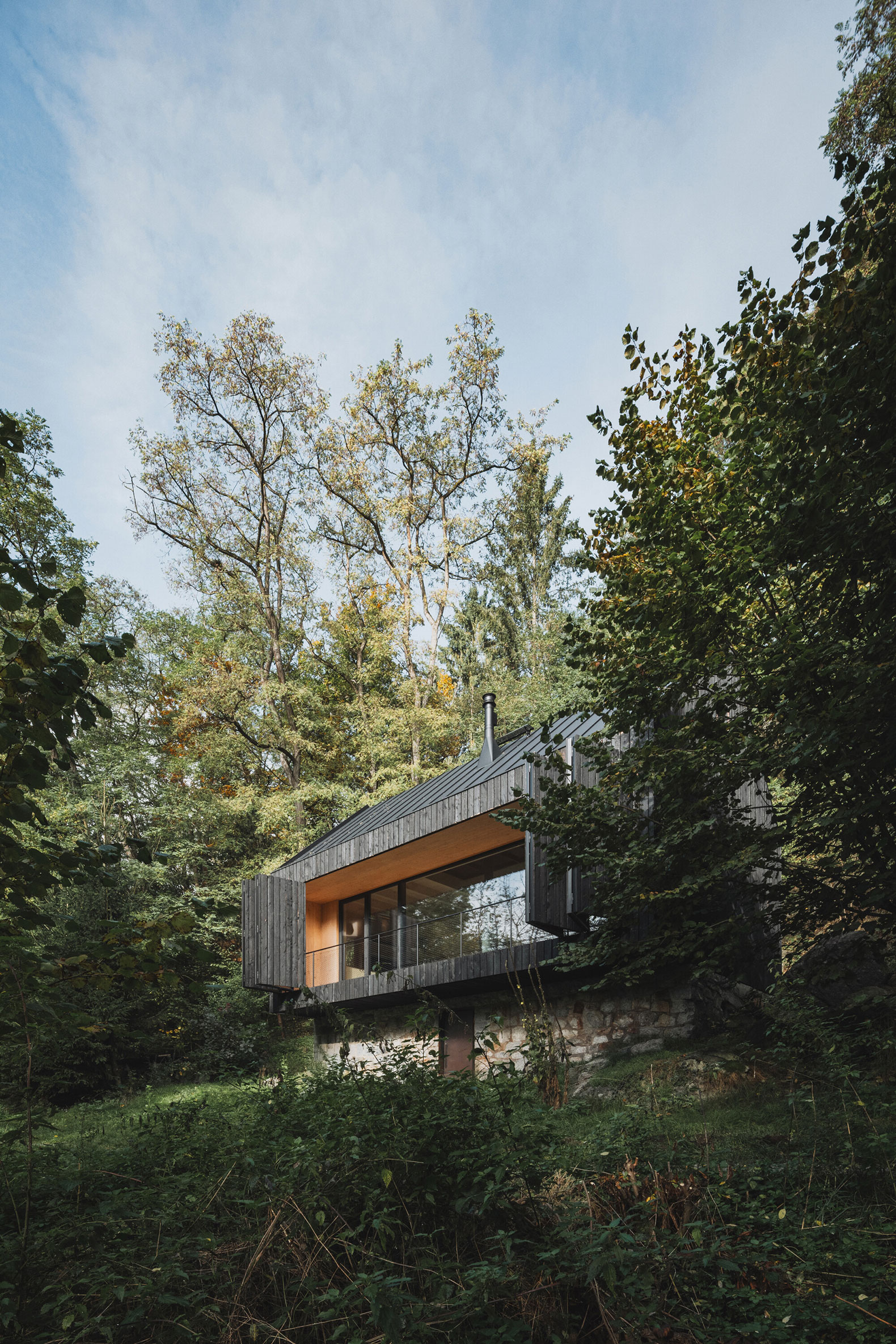
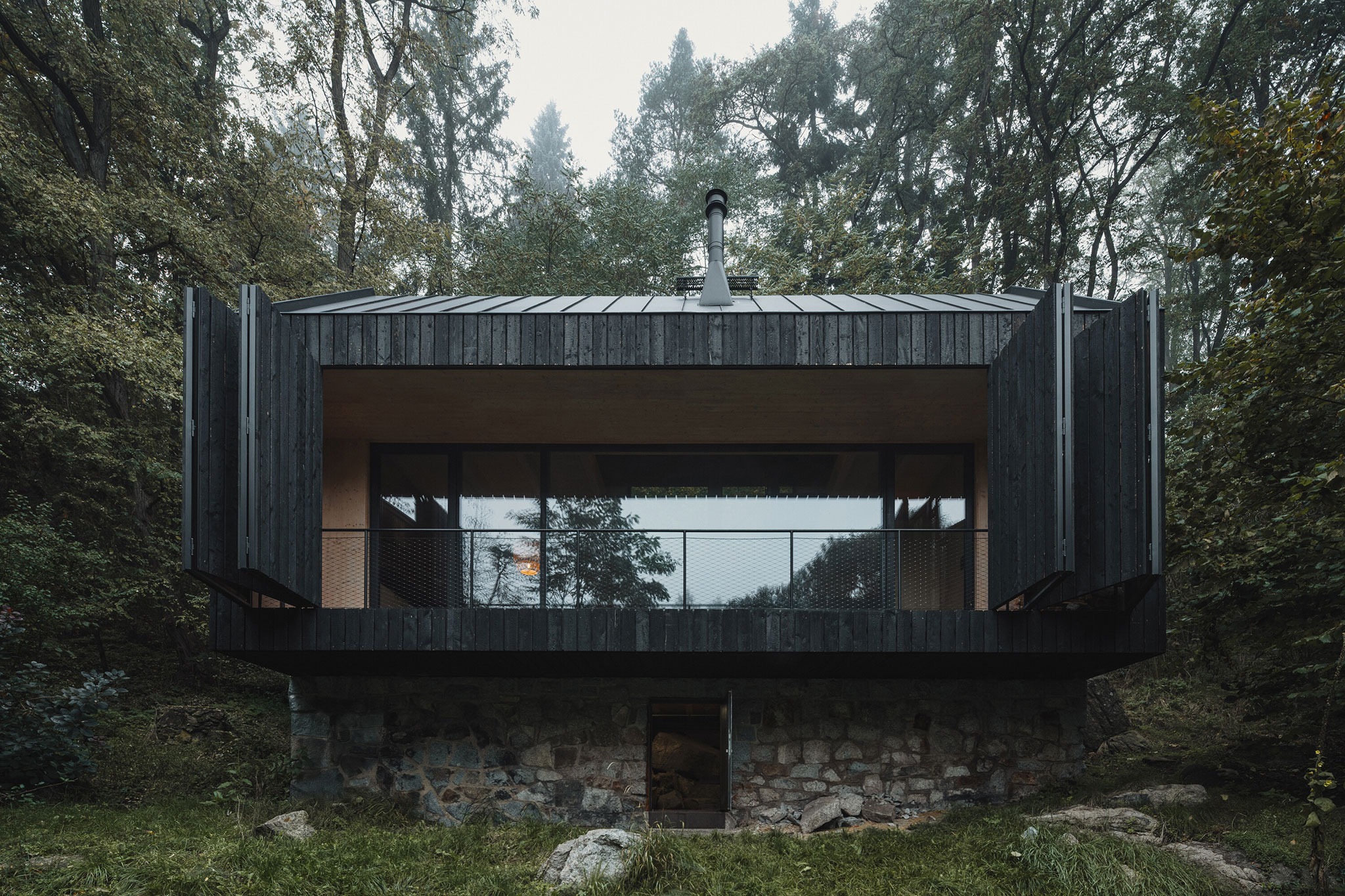
Mimosa architekti has devised a unified palette of materials and colours for the "Between the Rock and the River" cabin, creating an interior with a "cave-like" feel. This interior features compact rooms and a spacious main area that extends to the full height of the building, encouraging visitors to spend time together. The glazed communal space connects the cliffs with the river, towards which it faces and opens up via a raised terrace.
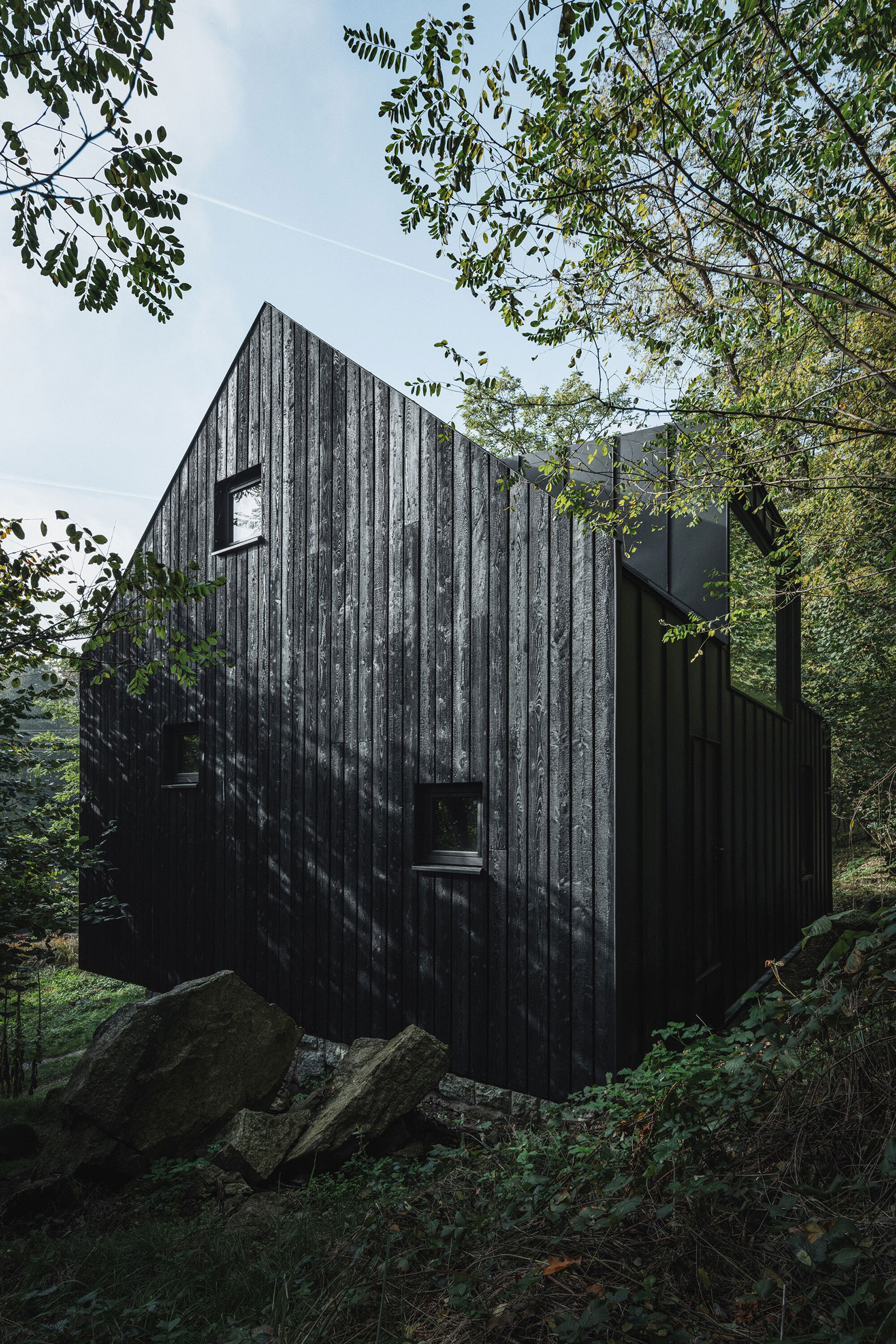
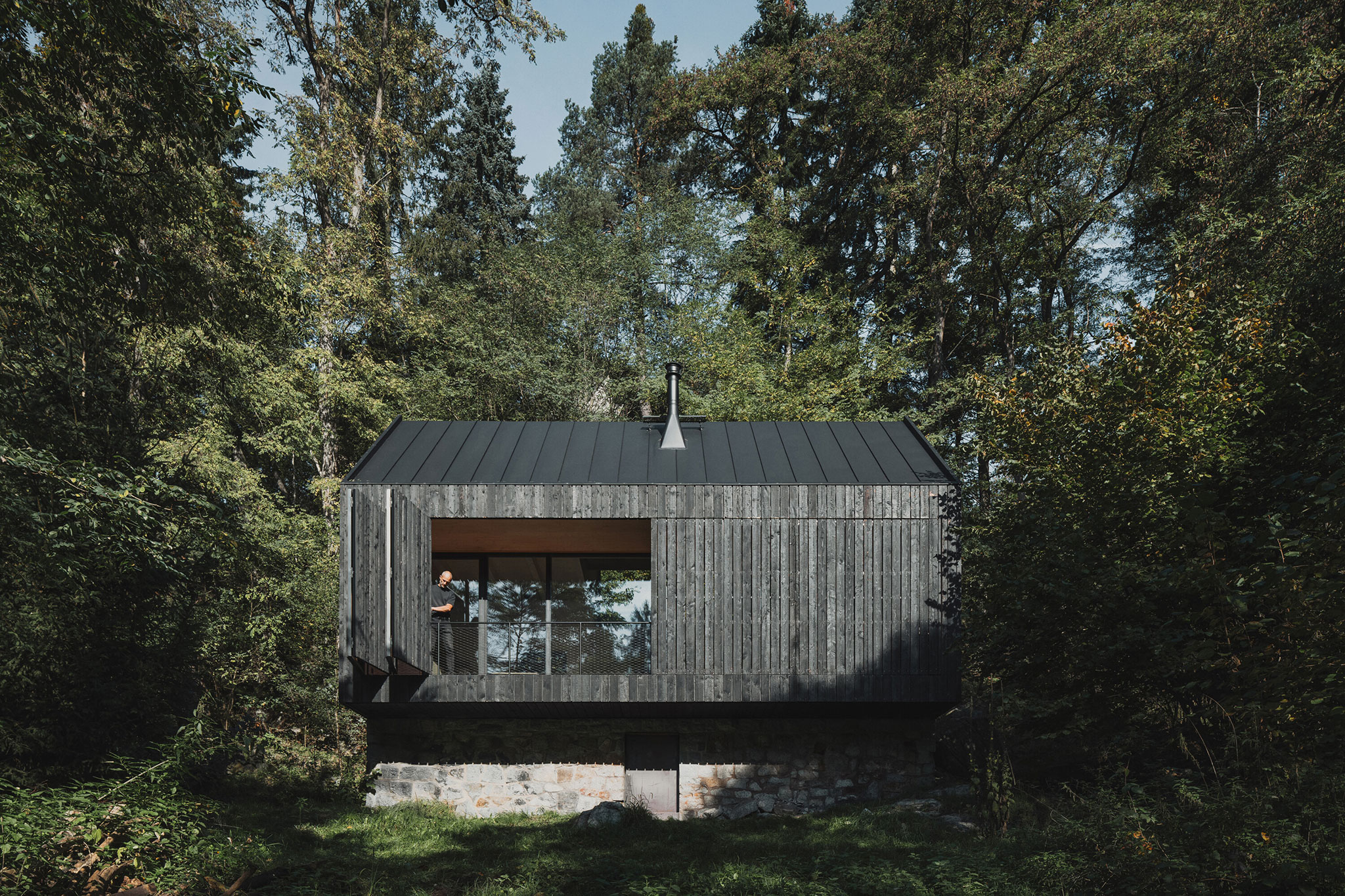
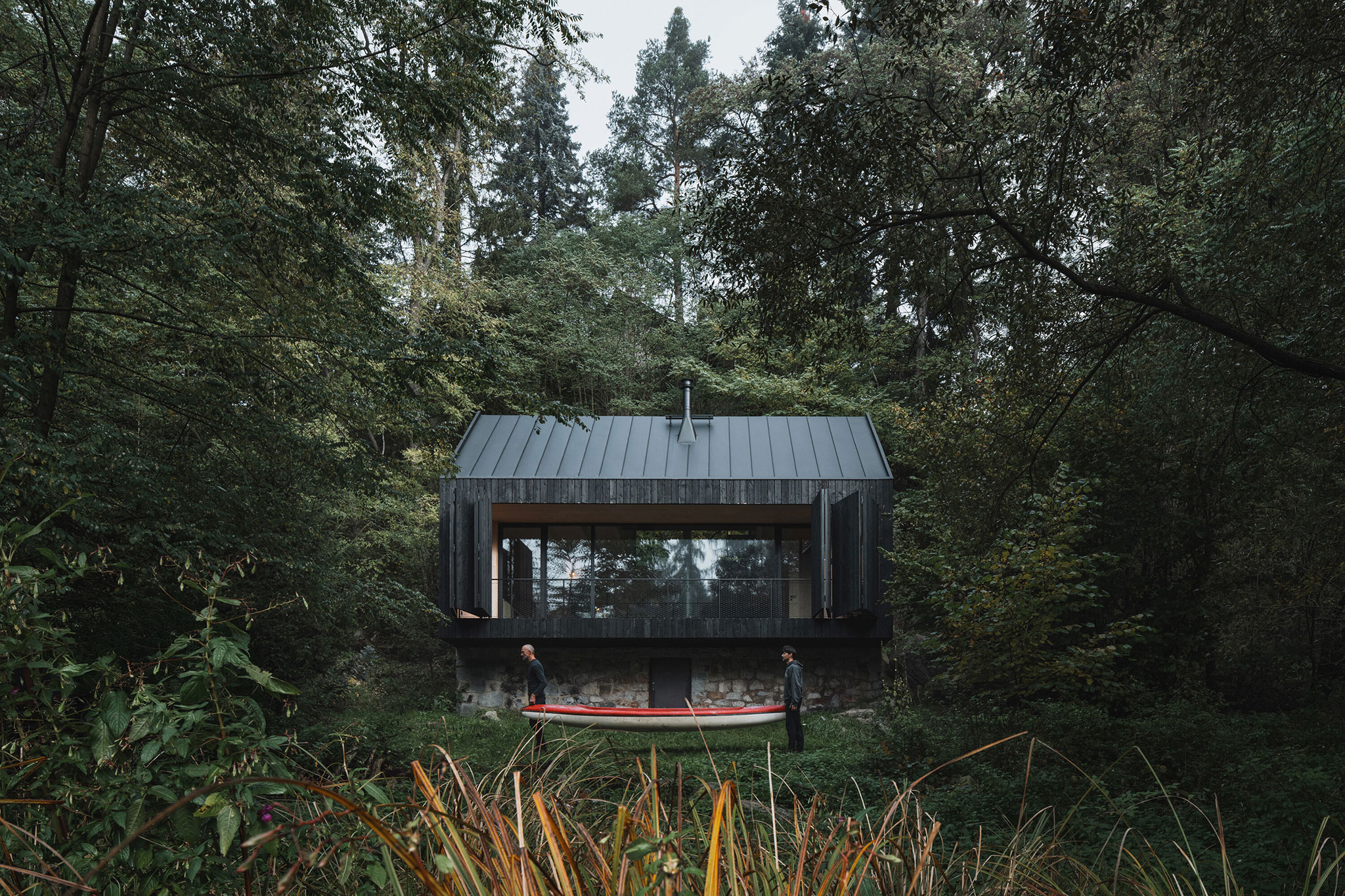
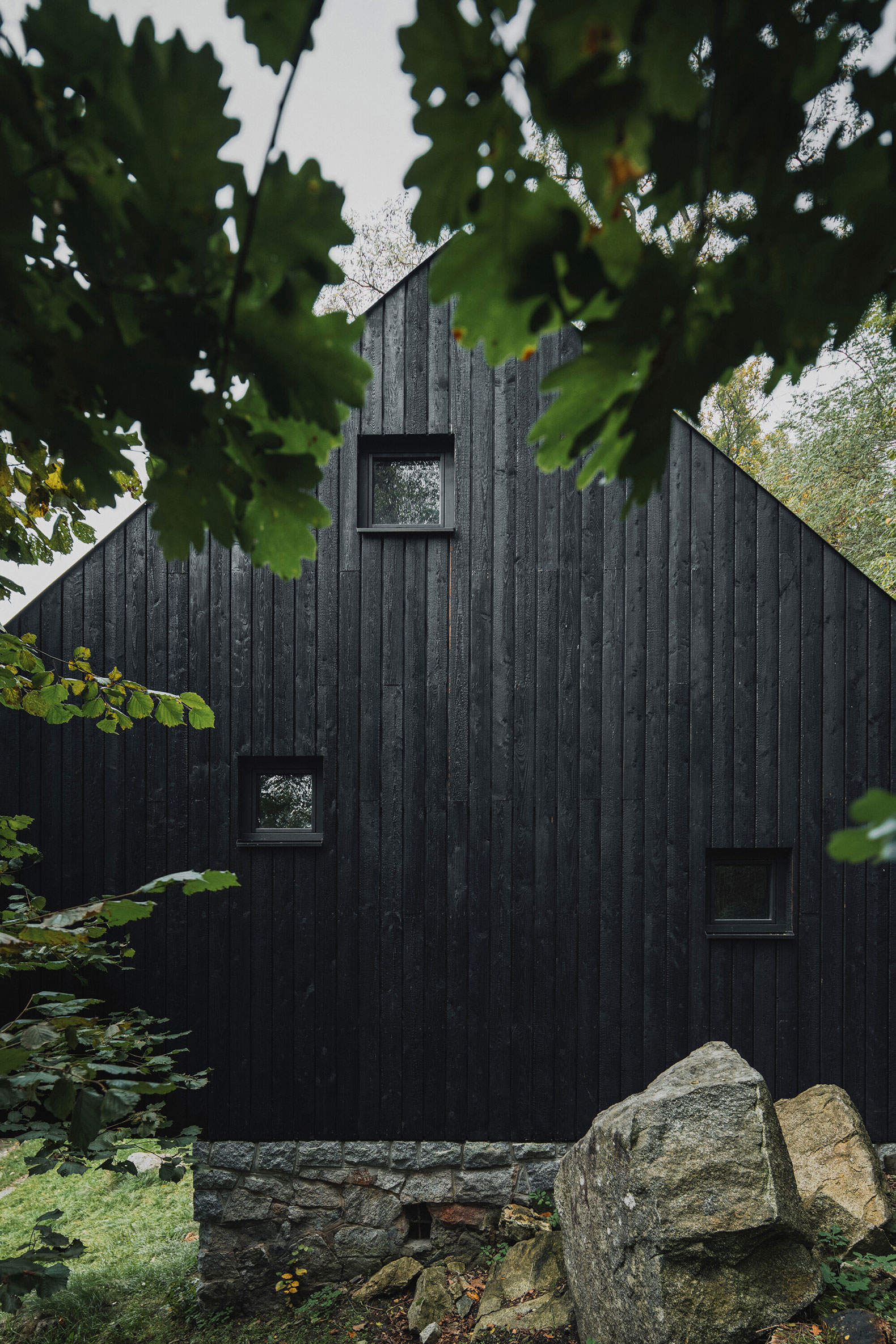
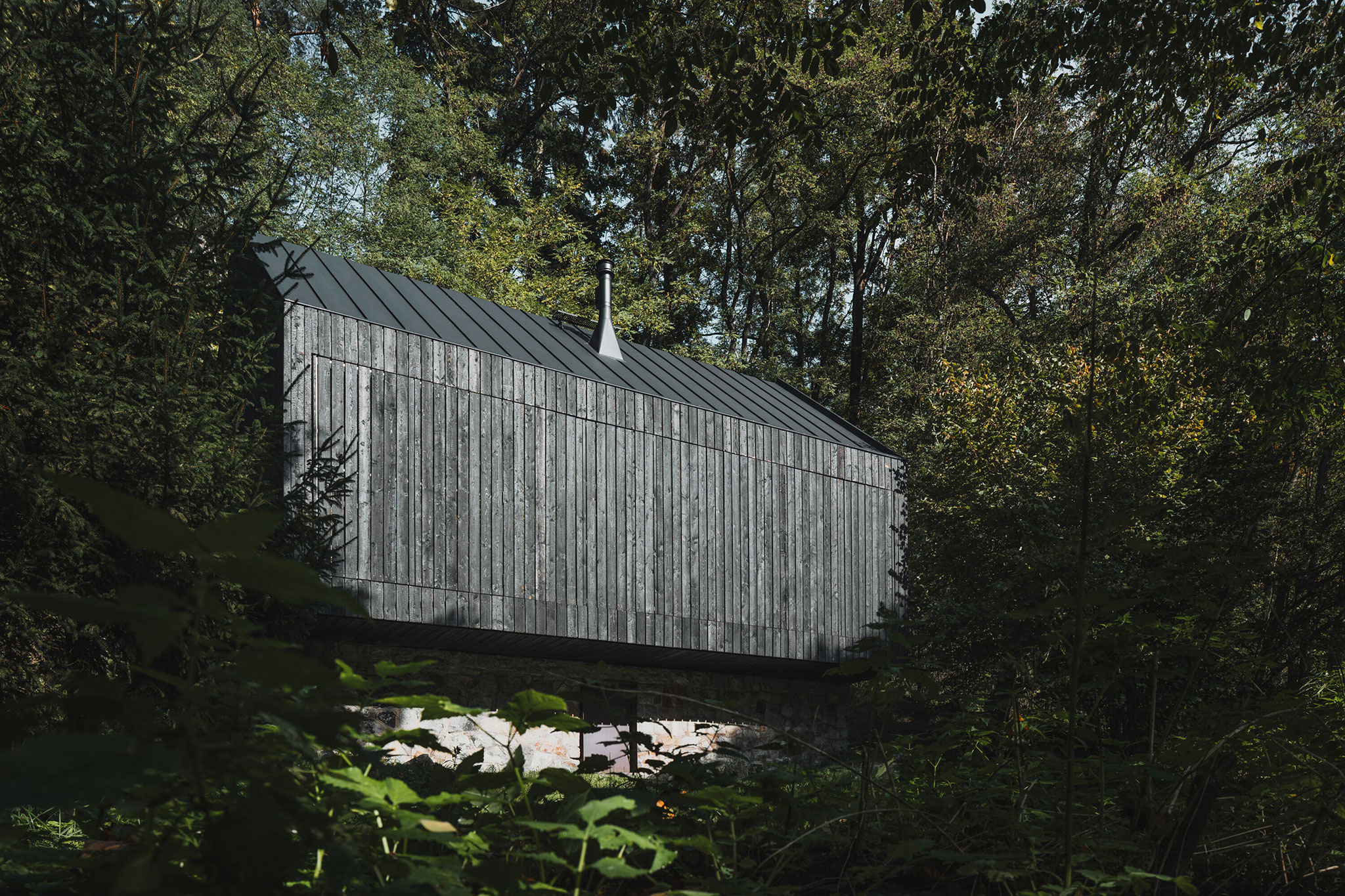
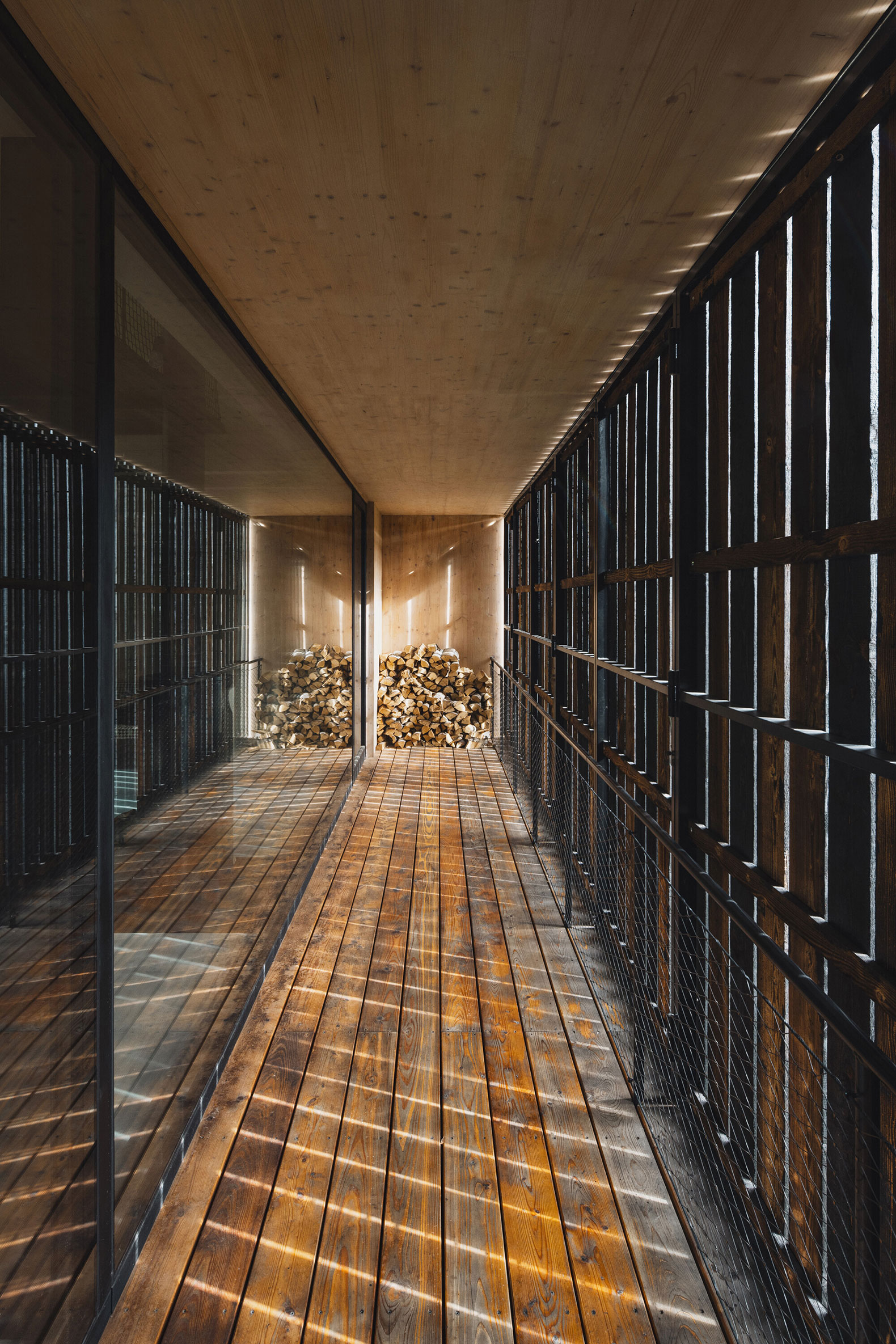
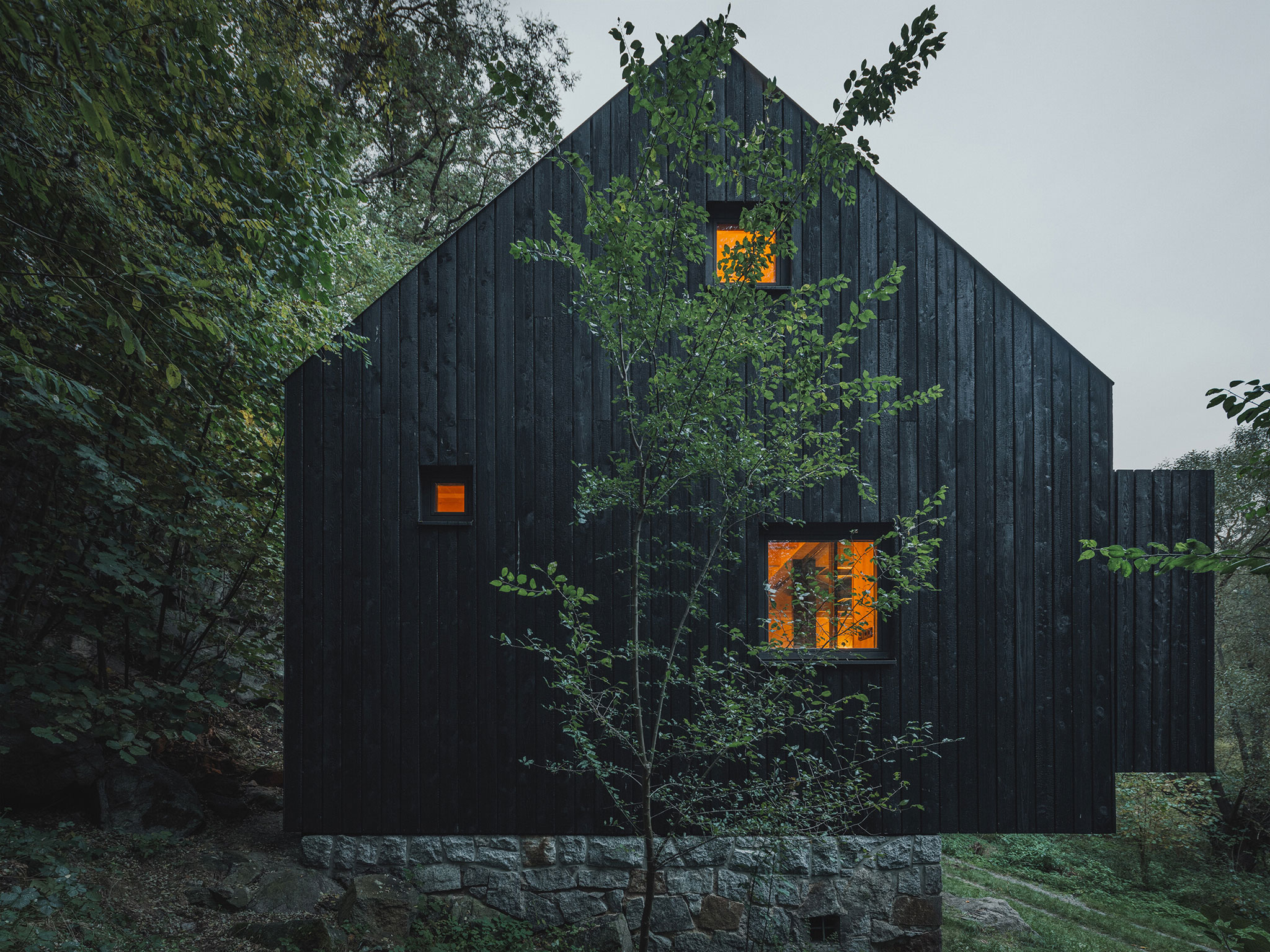
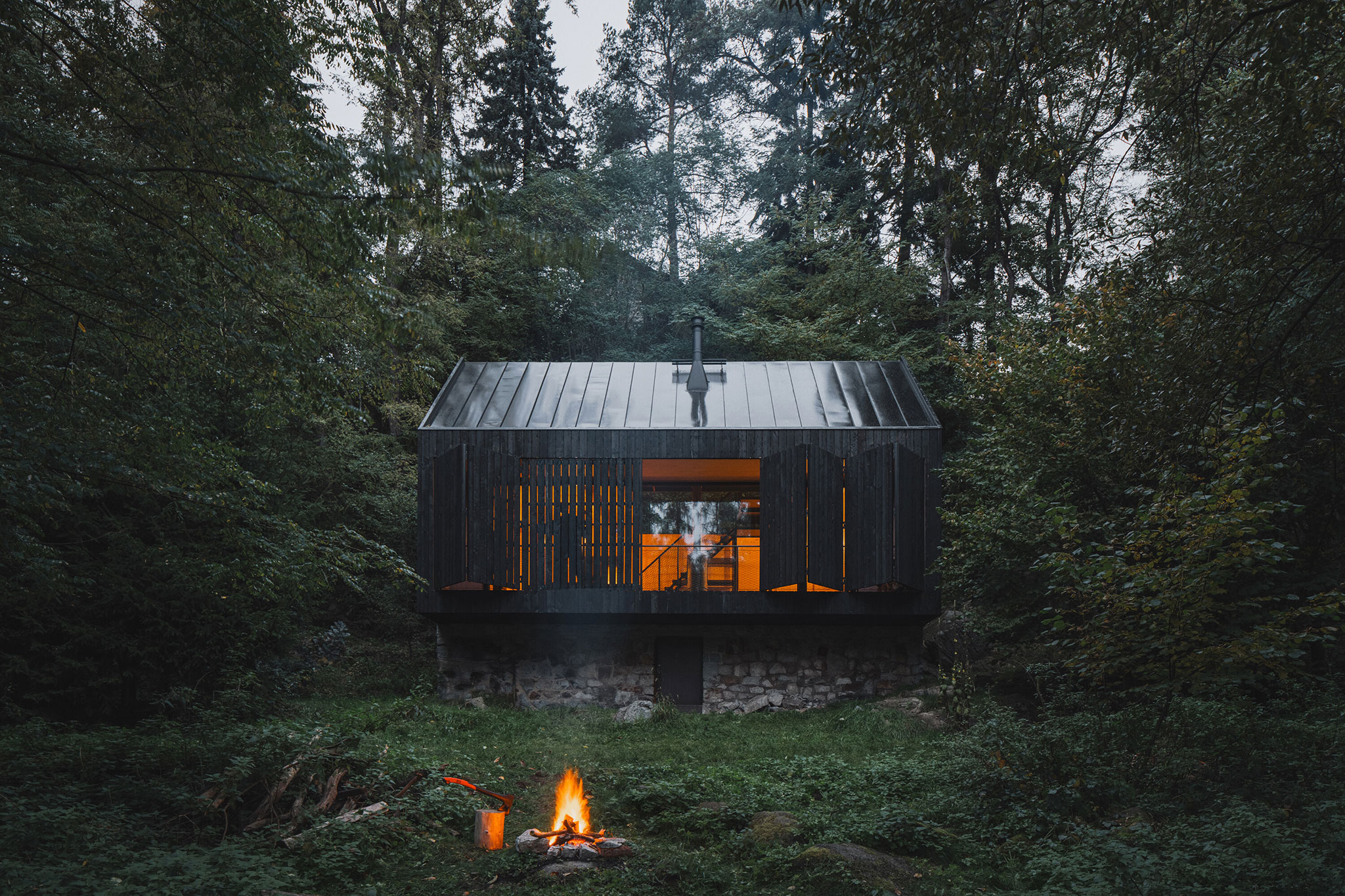
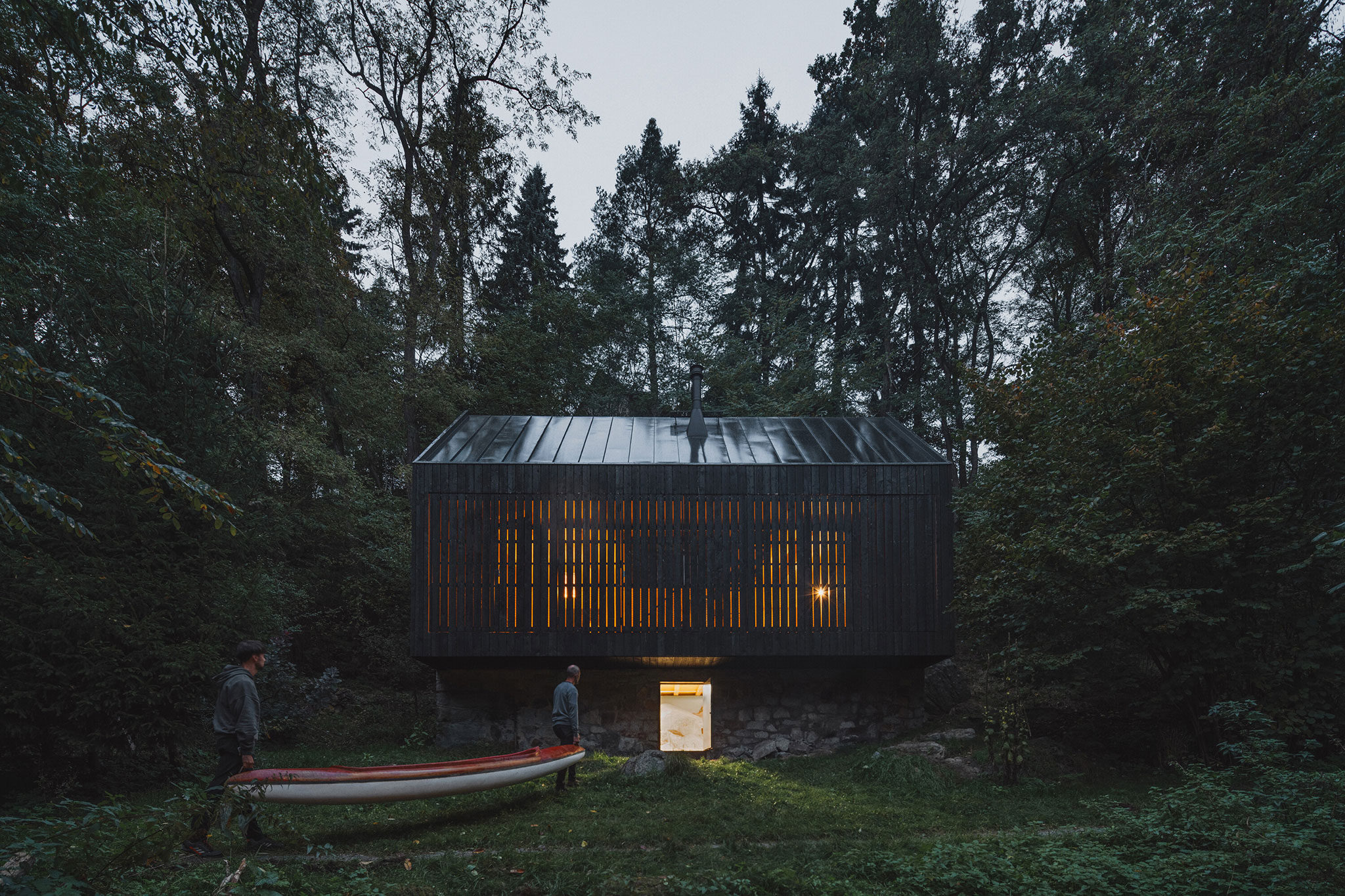
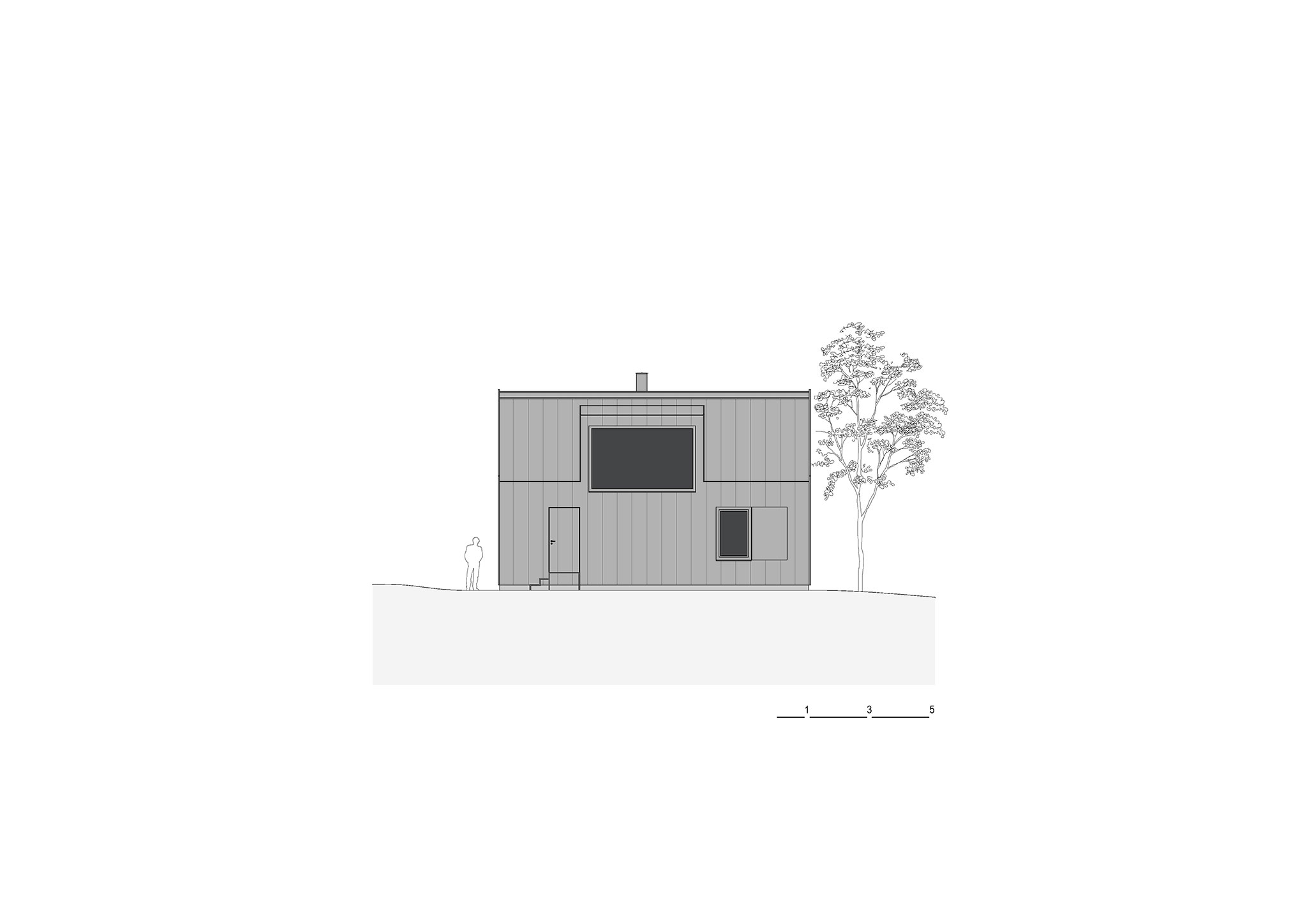
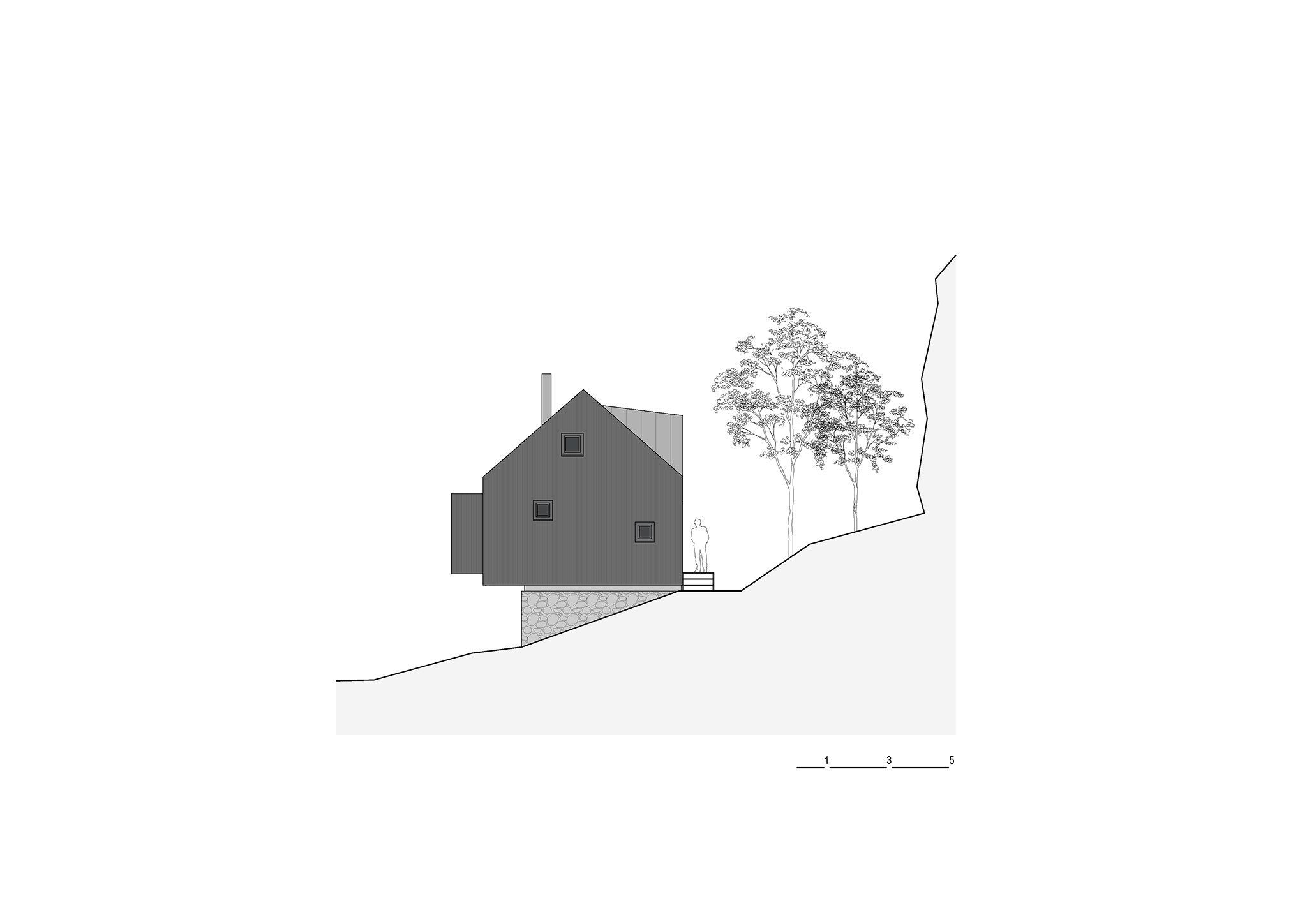
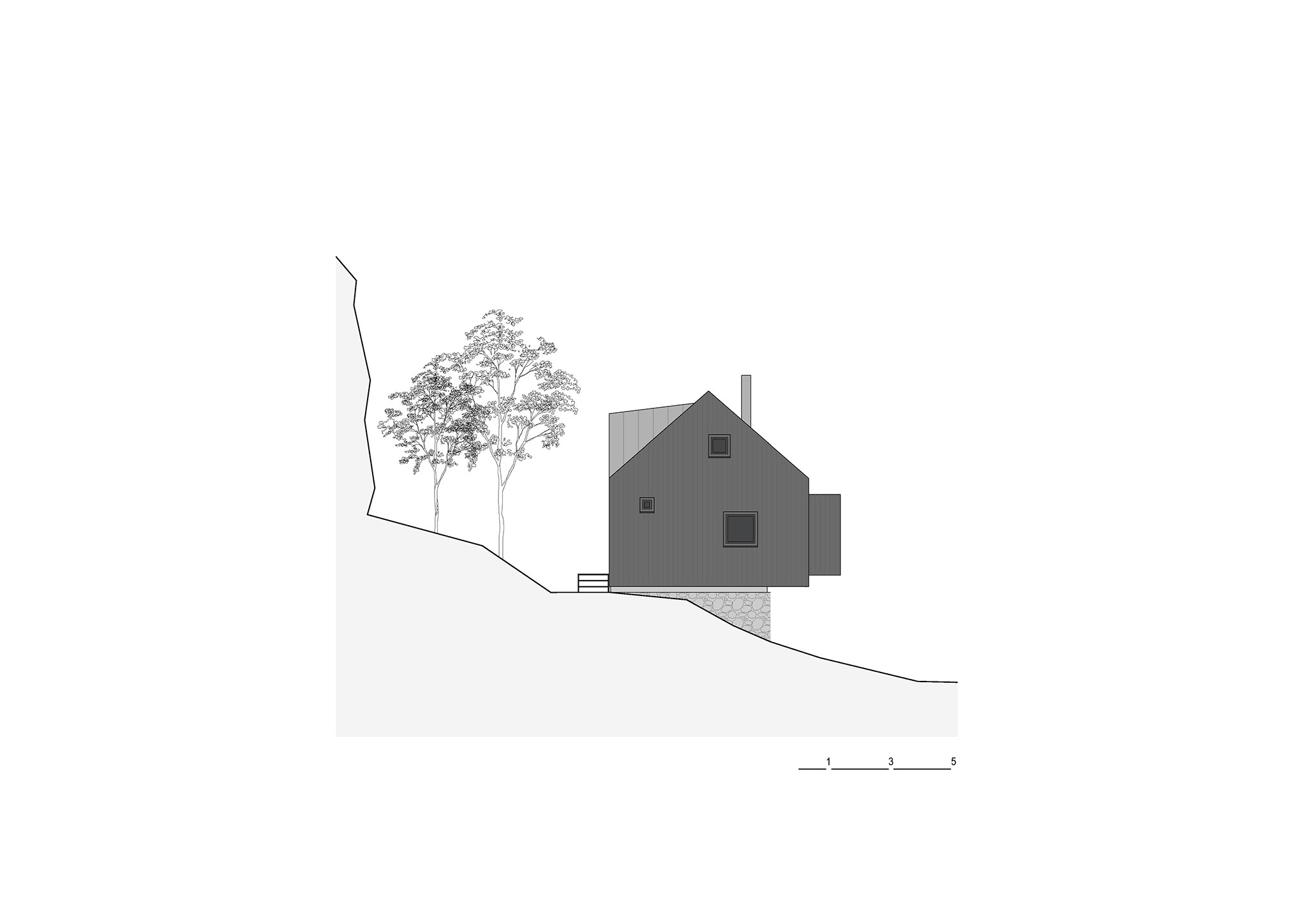
The cabin features a lightweight timber structure set upon the stone plinth of its predecessor. Inside, the timber is clad with spruce panelling, whilst the exterior features charred larch planks, lending durability to the façade. At the rear, facing the slope, the structure is clad in waterproof sheet metal. The terrace becomes "impregnable" thanks to a folding shutter.
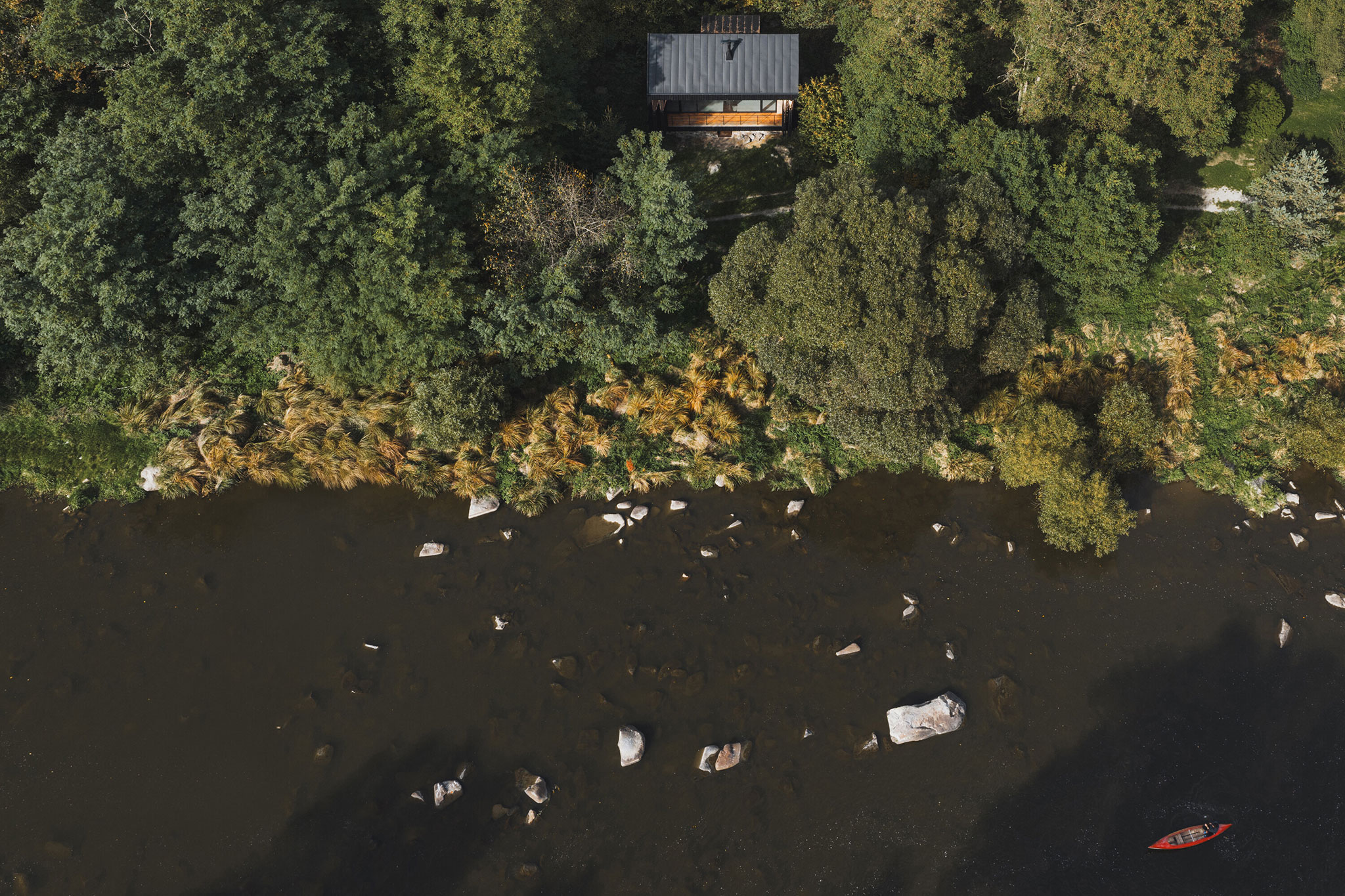
"Between the Rock and the River" Cabin by Mimosa. Photograph by Petr Polák.
Project description by Mimosa architekti
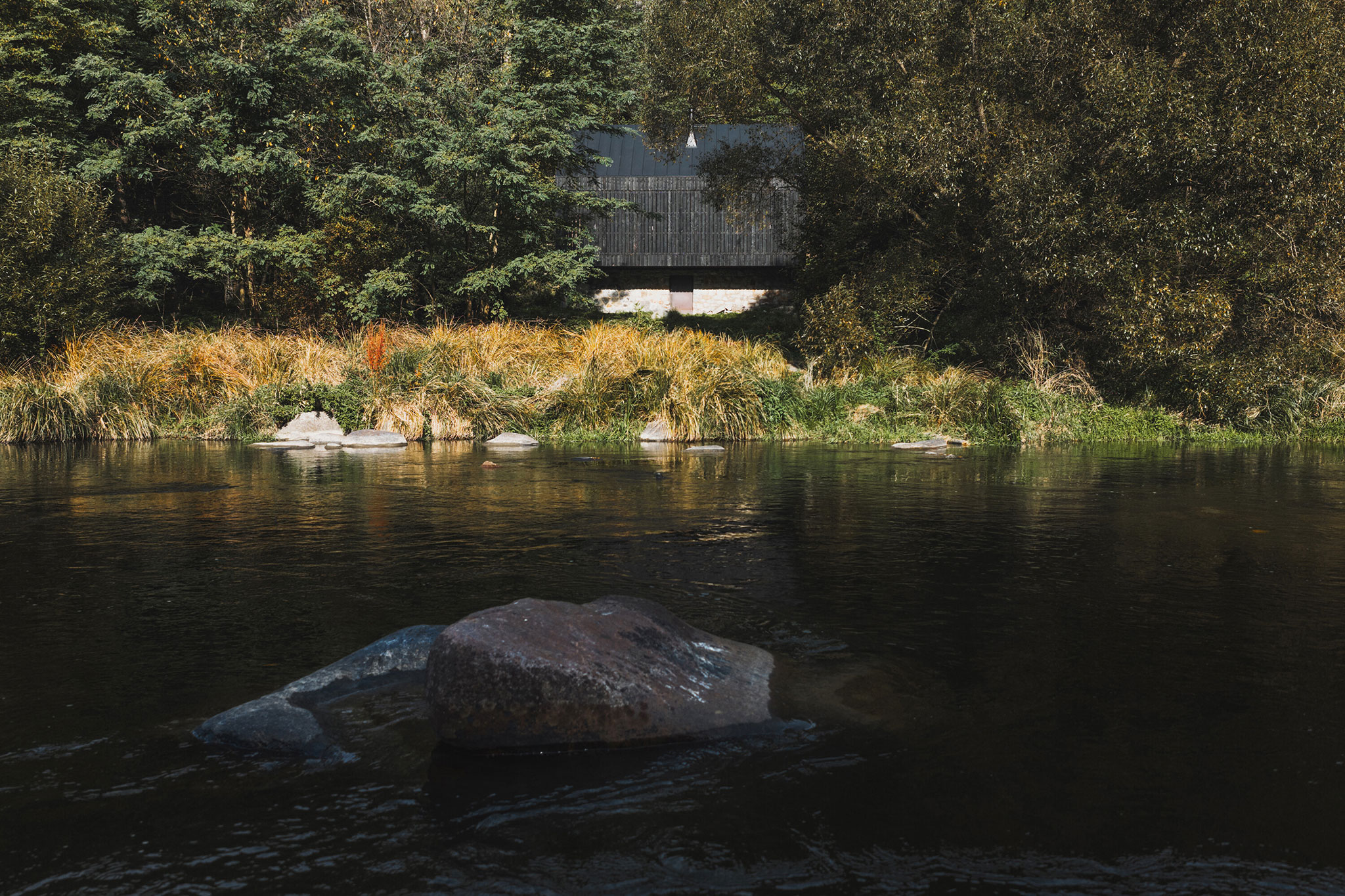
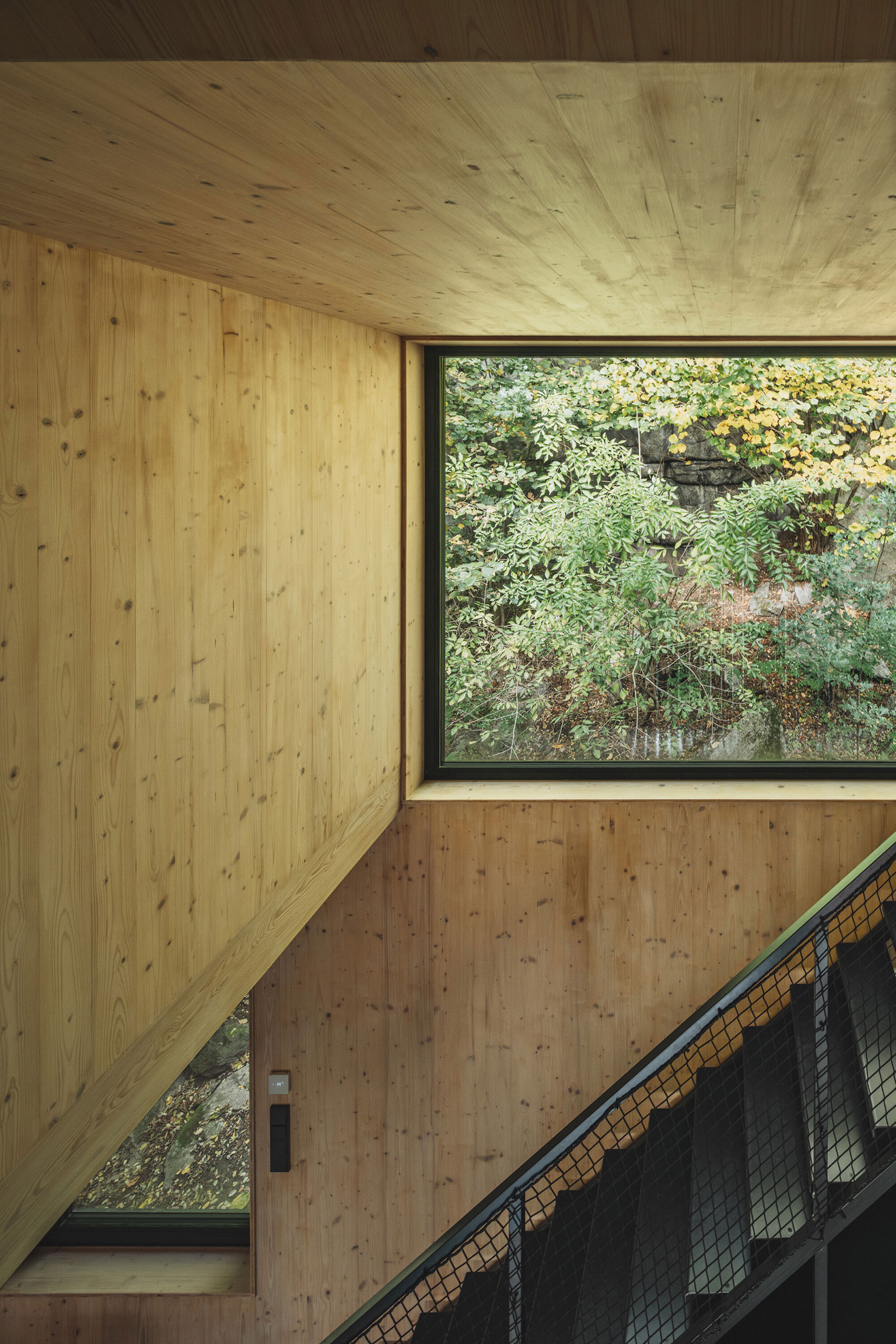
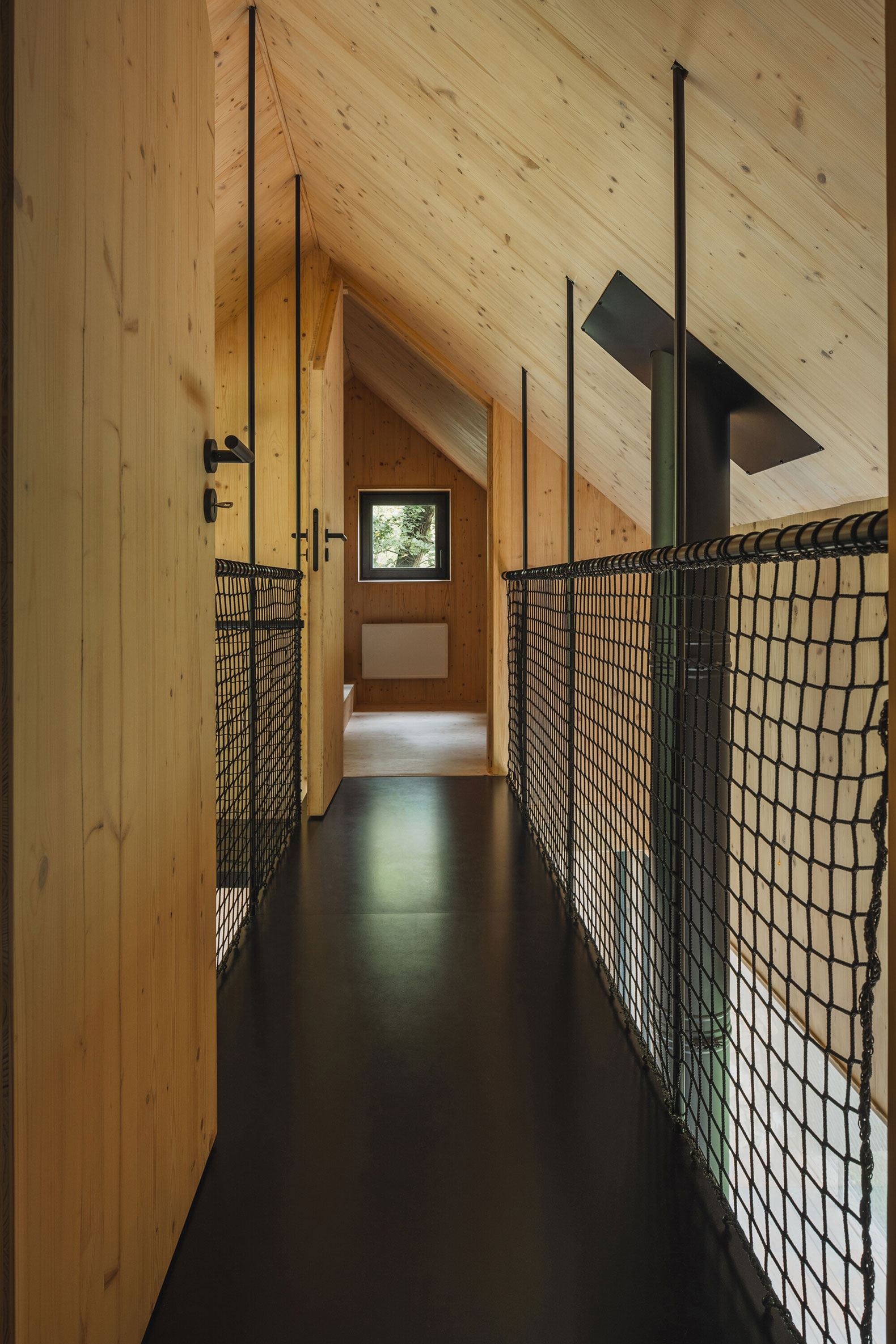
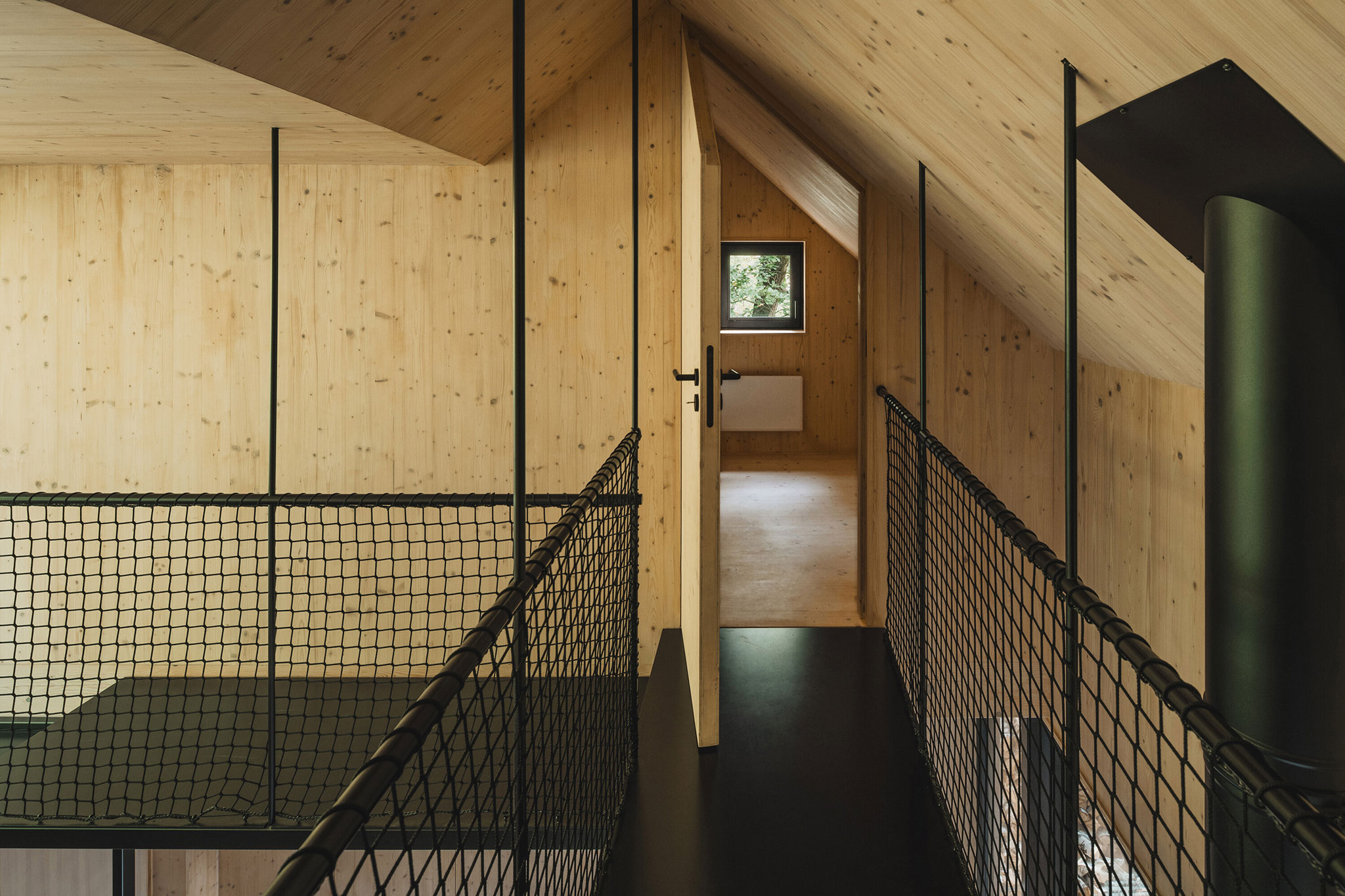
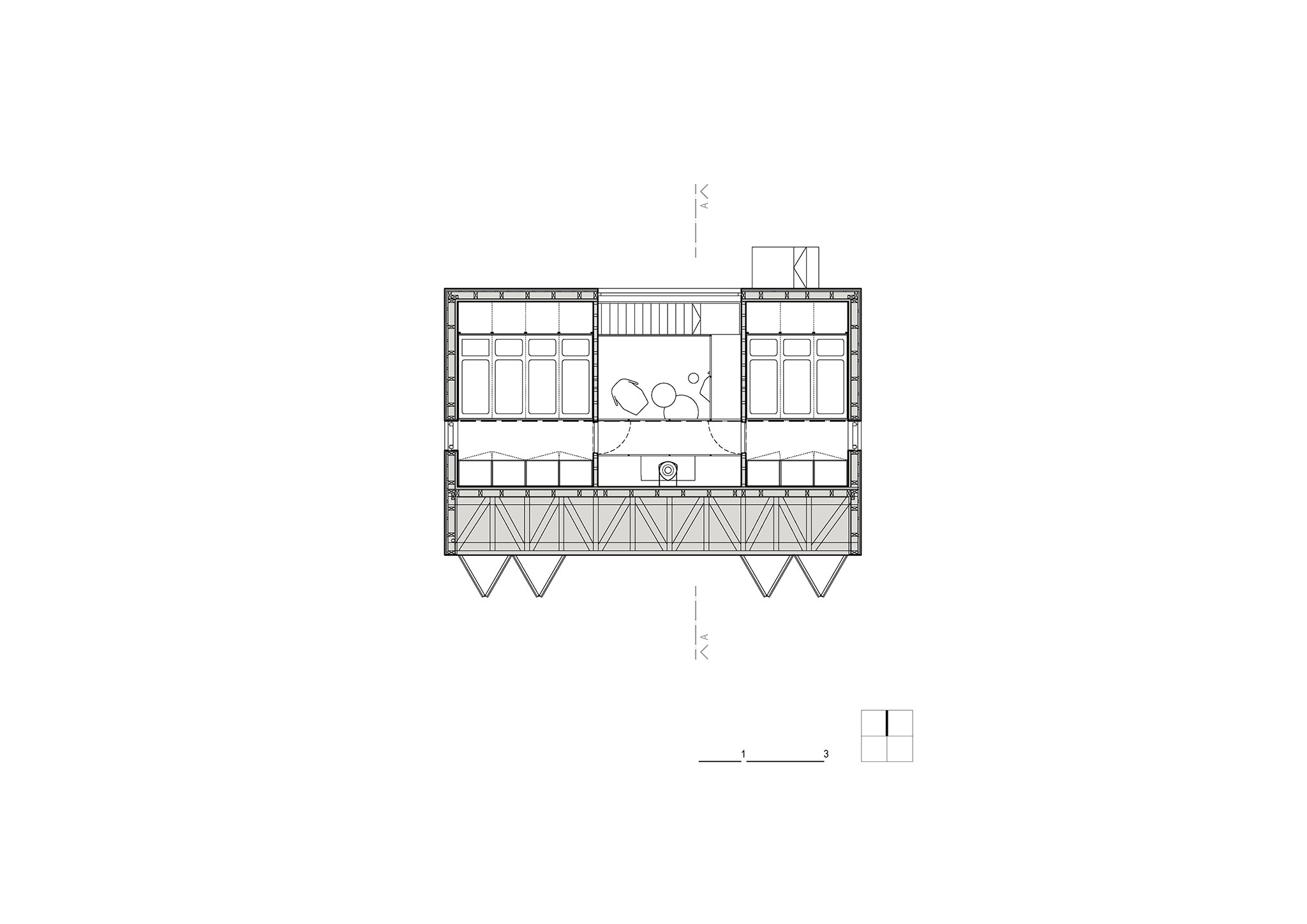
The cabin on the banks of the Sázava River replaces its predecessor on the same site. After the original cabin burned down, only the stone plinth remained, which the new structure naturally incorporates. It provides protection from flooding and offers a sense of perspective — over the river and perhaps over everyday haste. Just slide open the shutter facing the river and then simply listen to the splashing water and the whisper of pines, watch kingfishers above the surface and rapids breaking around boulders. Grilling on the campfire, light the stove, talk with friends. In the evening, on the way to the small attic bedroom — just big enough for sleeping — the river horizon disappears and a view of the cliffs behind the cabin opens, reminding everyone how tightly the Sázava is enclosed between them here.
The cabin is a light wooden structure set on a robust stone plinth. The wooden frame is clad on the interior with spruce wood panels and on the exterior with charred larch planks. Charring gives the façade timber durability, while also making the cabin a bit less appealing to uninvited guests. It also — perhaps somewhat cynically — connects it with the previous structure. Toward the slope behind the cabin, the structure is clad in sheet metal resistant to water flowing down from the roof. Thanks to the unified material palette and colour — natural-toned wood panel and black metal — the interior forms a “cave” rather than a collection of house and furniture. The black metal of the woodstove, staircase and other interior elements naturally continues the theme of the charred façade both in colour and in its “proximity” to fire. The durable natural linoleum floor allows free-flow movement between the cabin and the outdoors. Except for electricity, the cabin is self-sufficient. Water is supplied from an on-site well, and wastewater is collected in a tank within the plinth. Heating is provided by a woodstove and electric heaters.
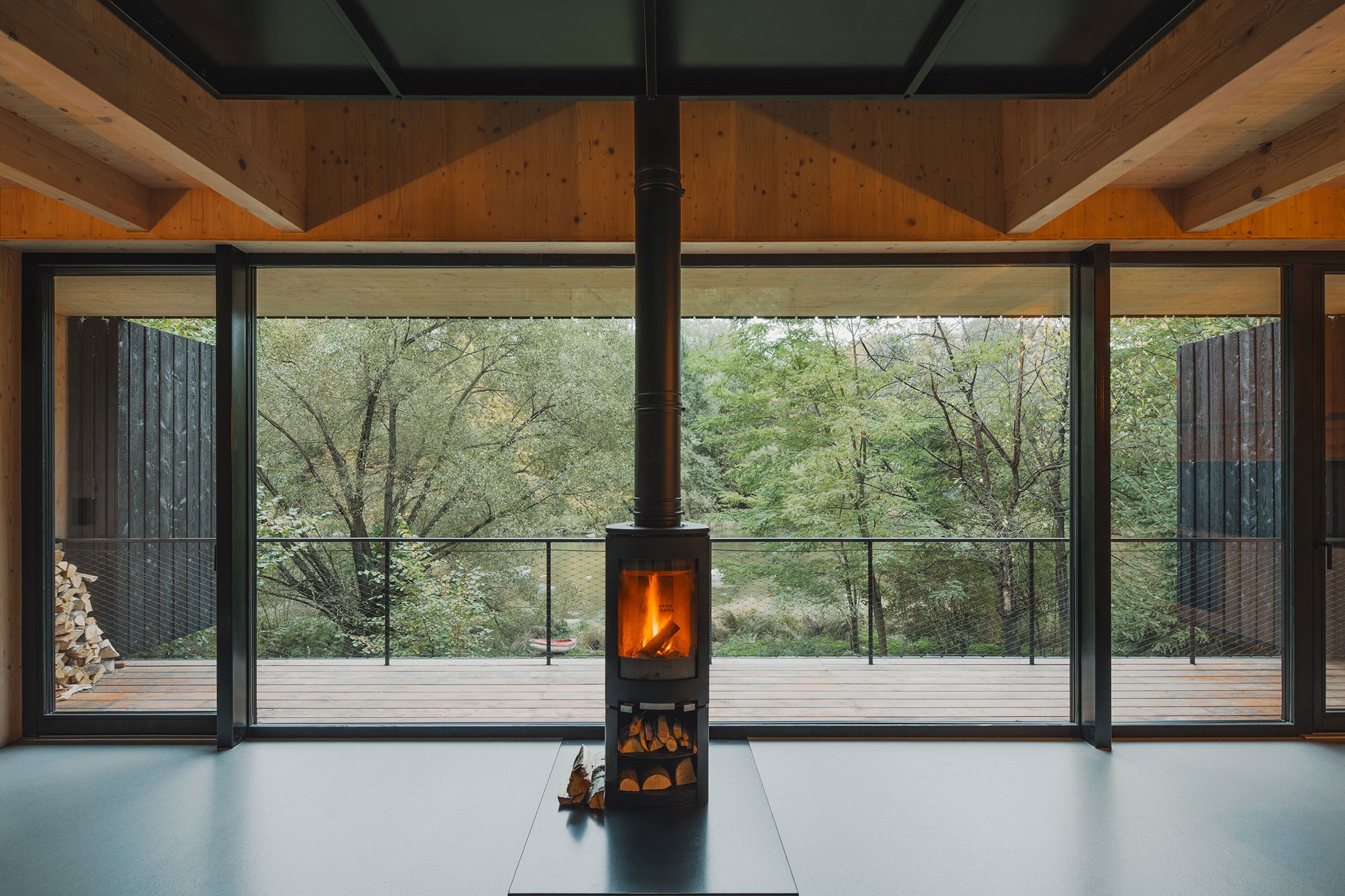
The generosity of the main space is enabled by minimizing the upstairs rooms to small but sufficient sleeping areas. After all, the purpose of going out of the city is to be together... The shared space, spanning the full height of the cabin, connects the front and back — river and cliffs. Facing the river, the main space is fully glazed along its entire length, and the raised terrace replaces direct ground contact while offering uninterrupted views of the Sázava. The terrace can be closed with a folding shutter — when the summer sun is too strong, or when the weekend ends and the cabin transforms into a closed, “impregnable” box. Until next week…