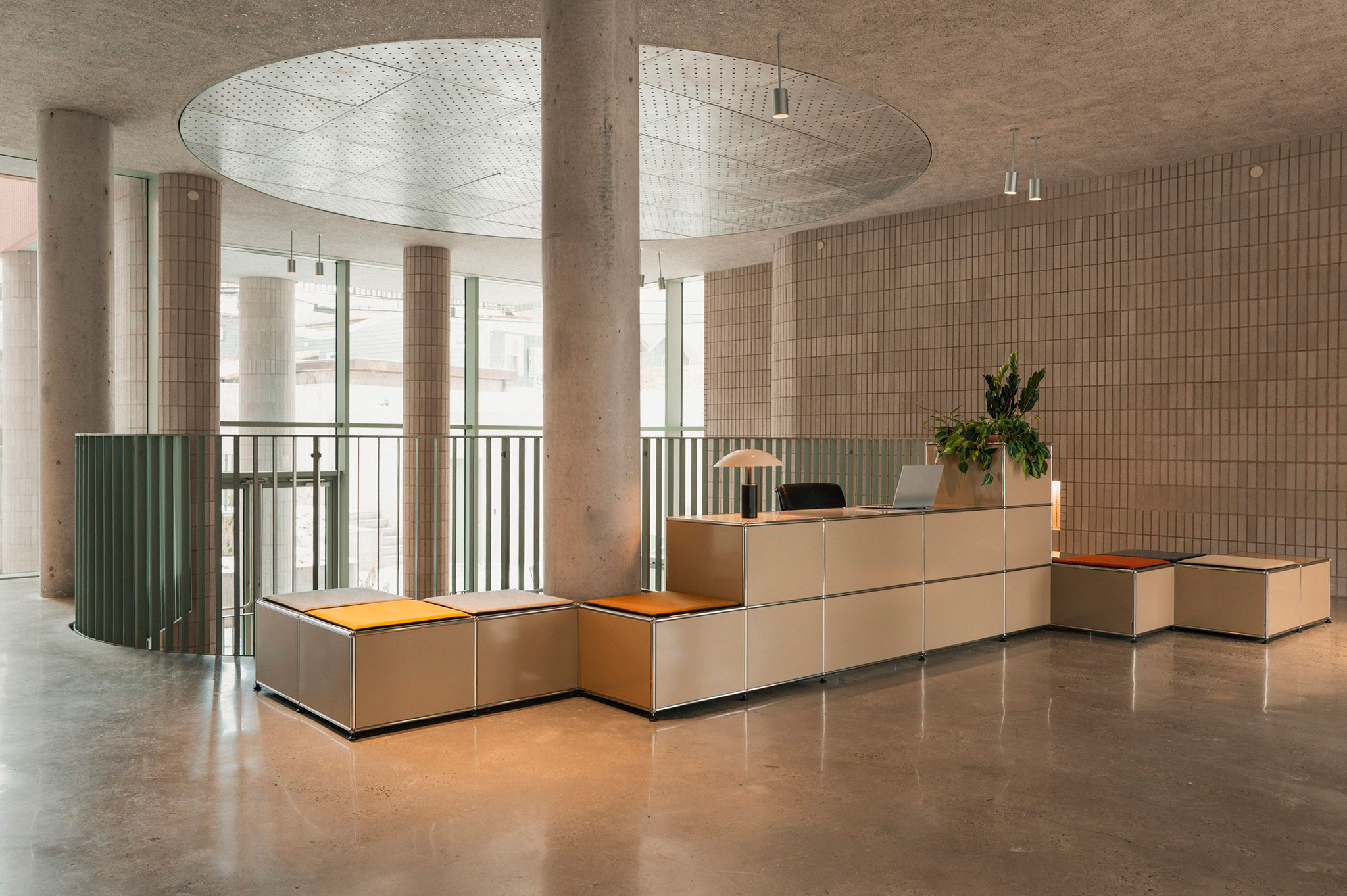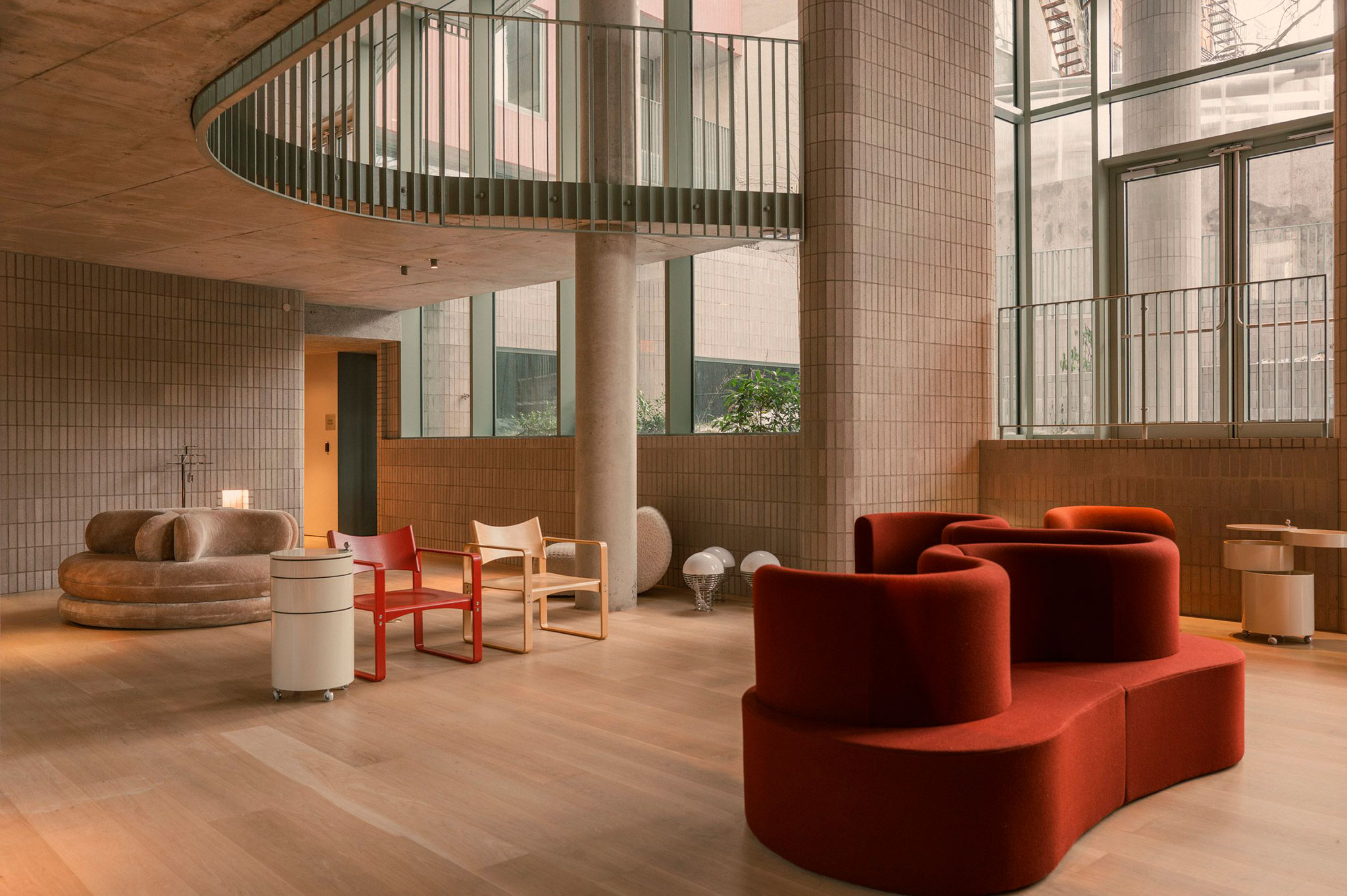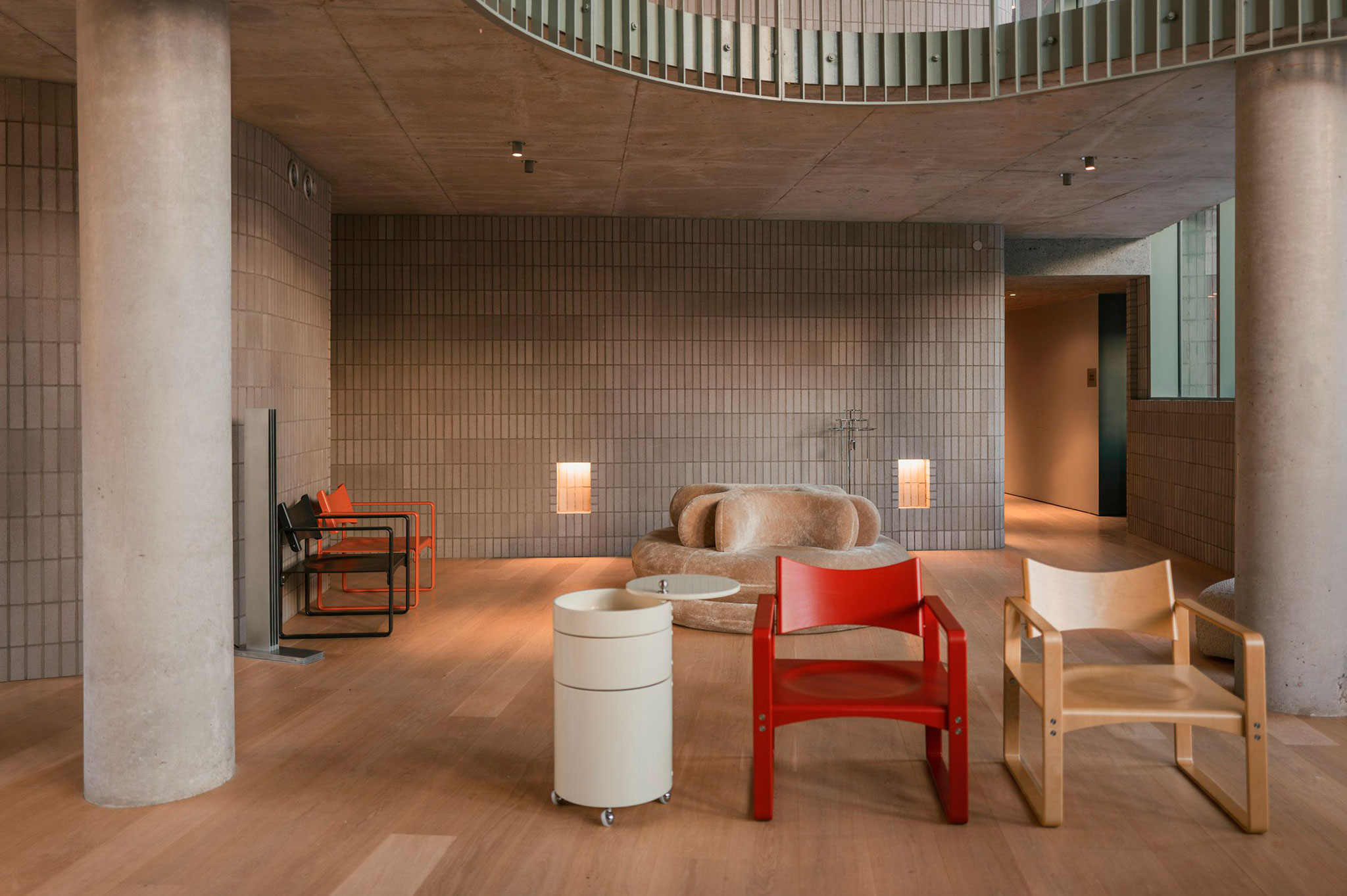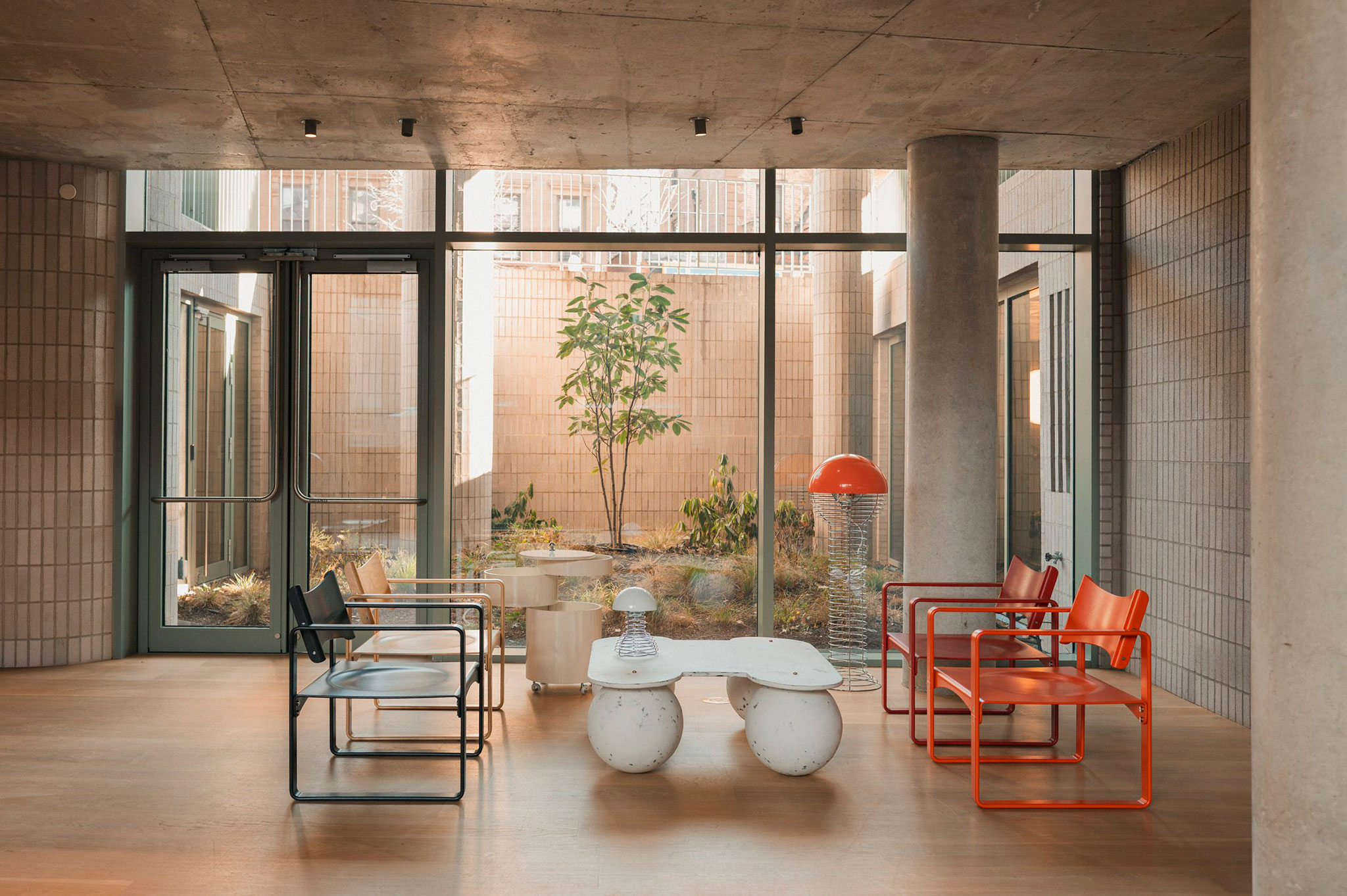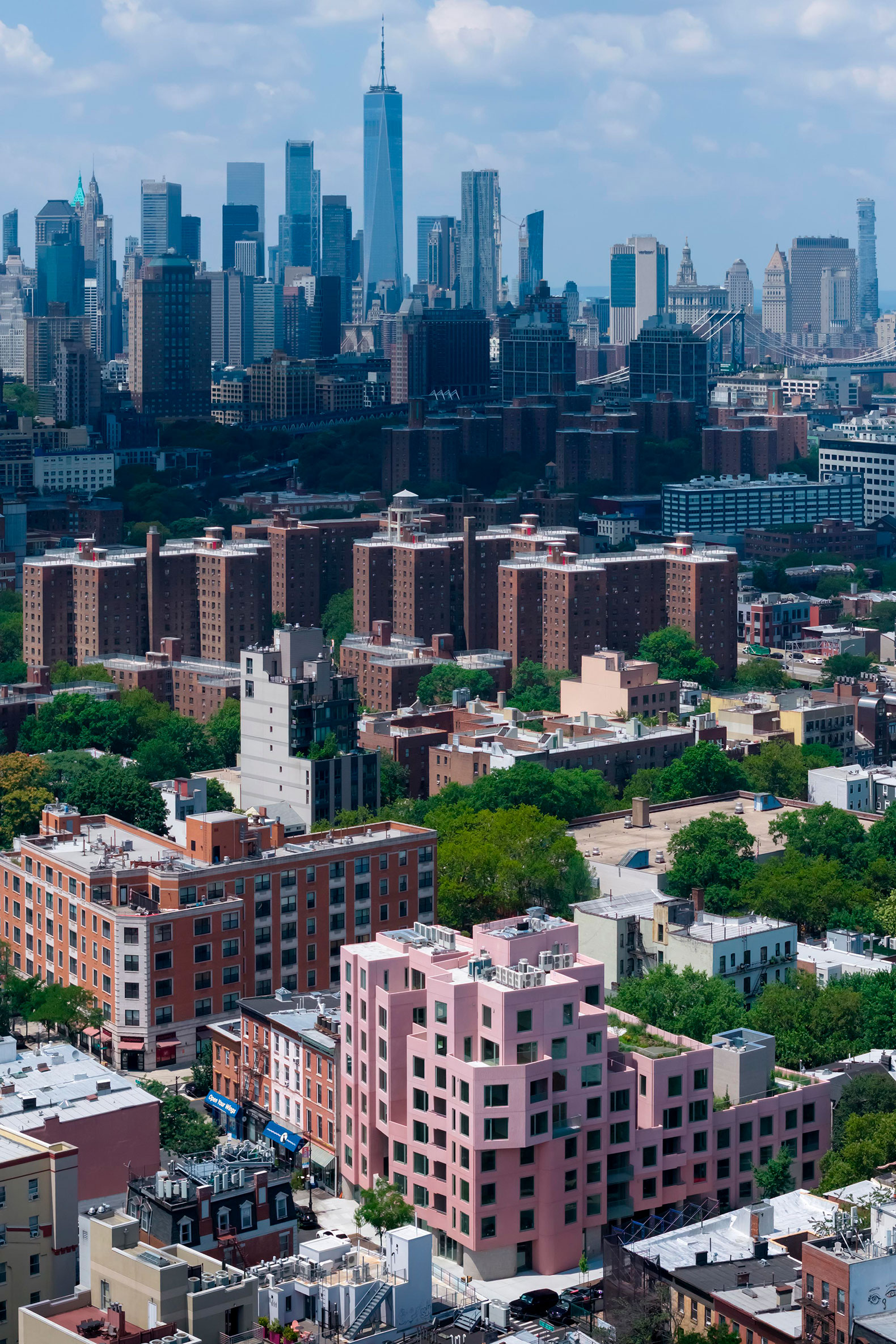
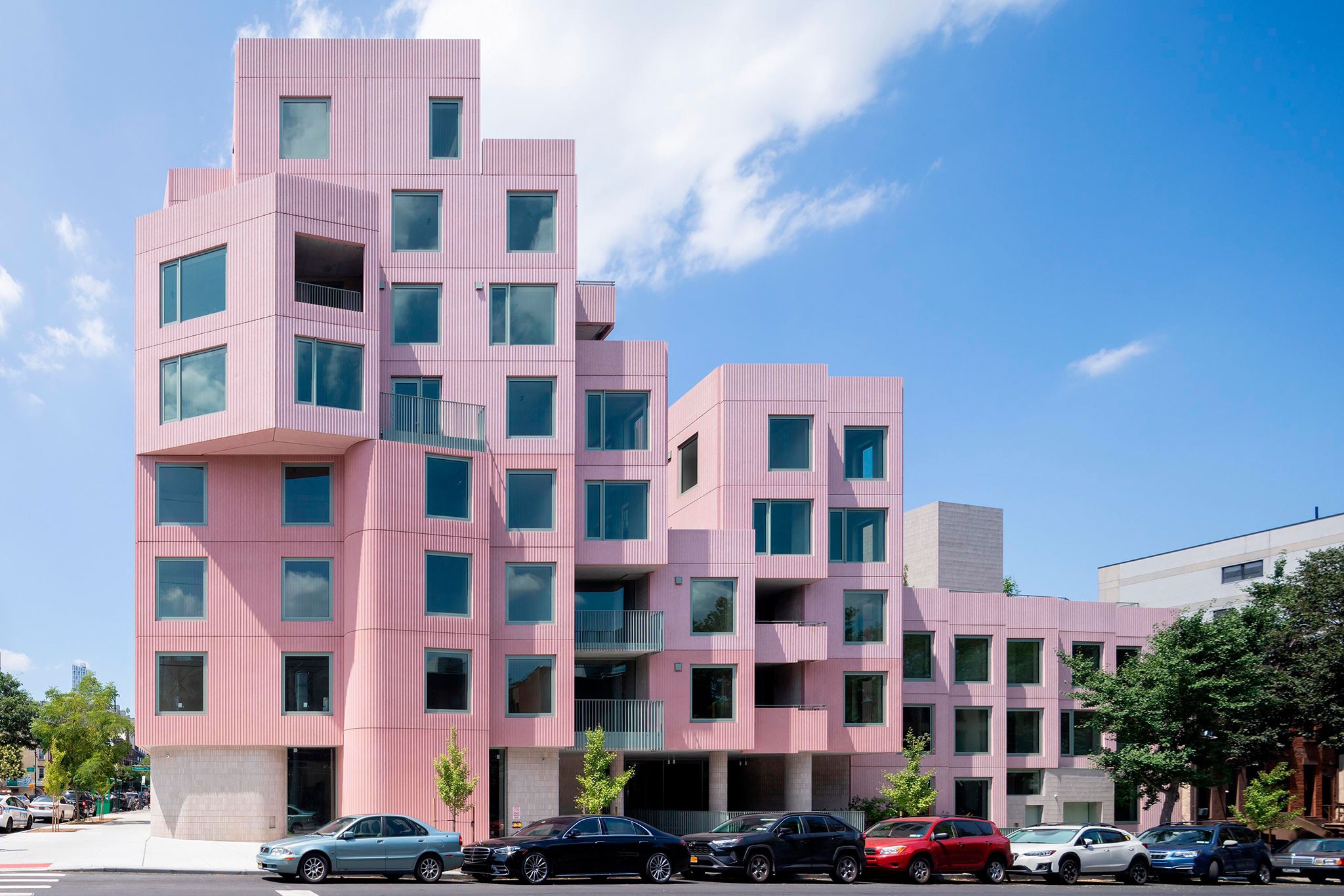
Architecture practice SO-IL was commissioned to design 144 Vanderbilt, a precast housing, 26 meticulously designed two to four-bedroom homes, situated uphill from the East River waterfront and facing Manhattan, in New York City.

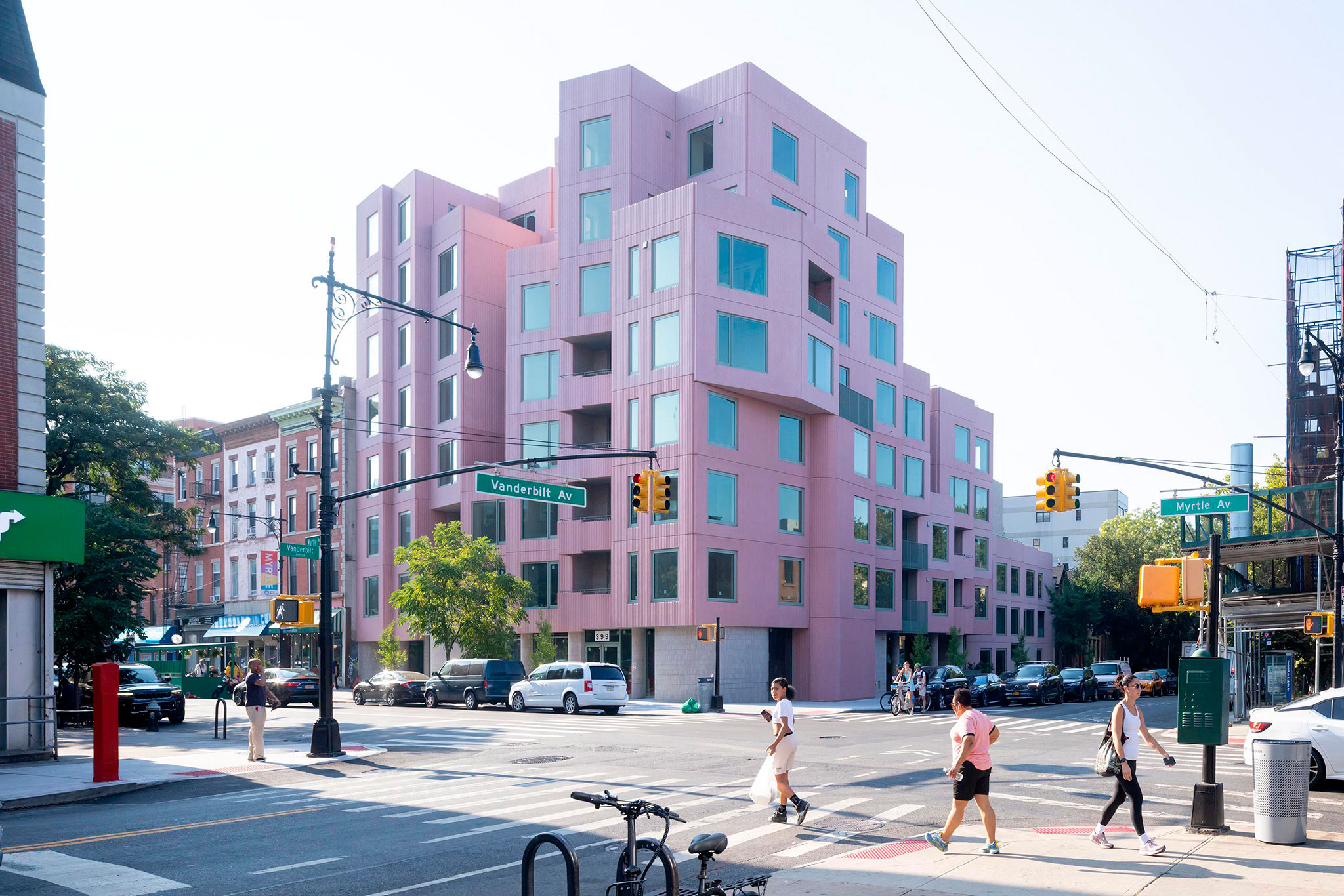
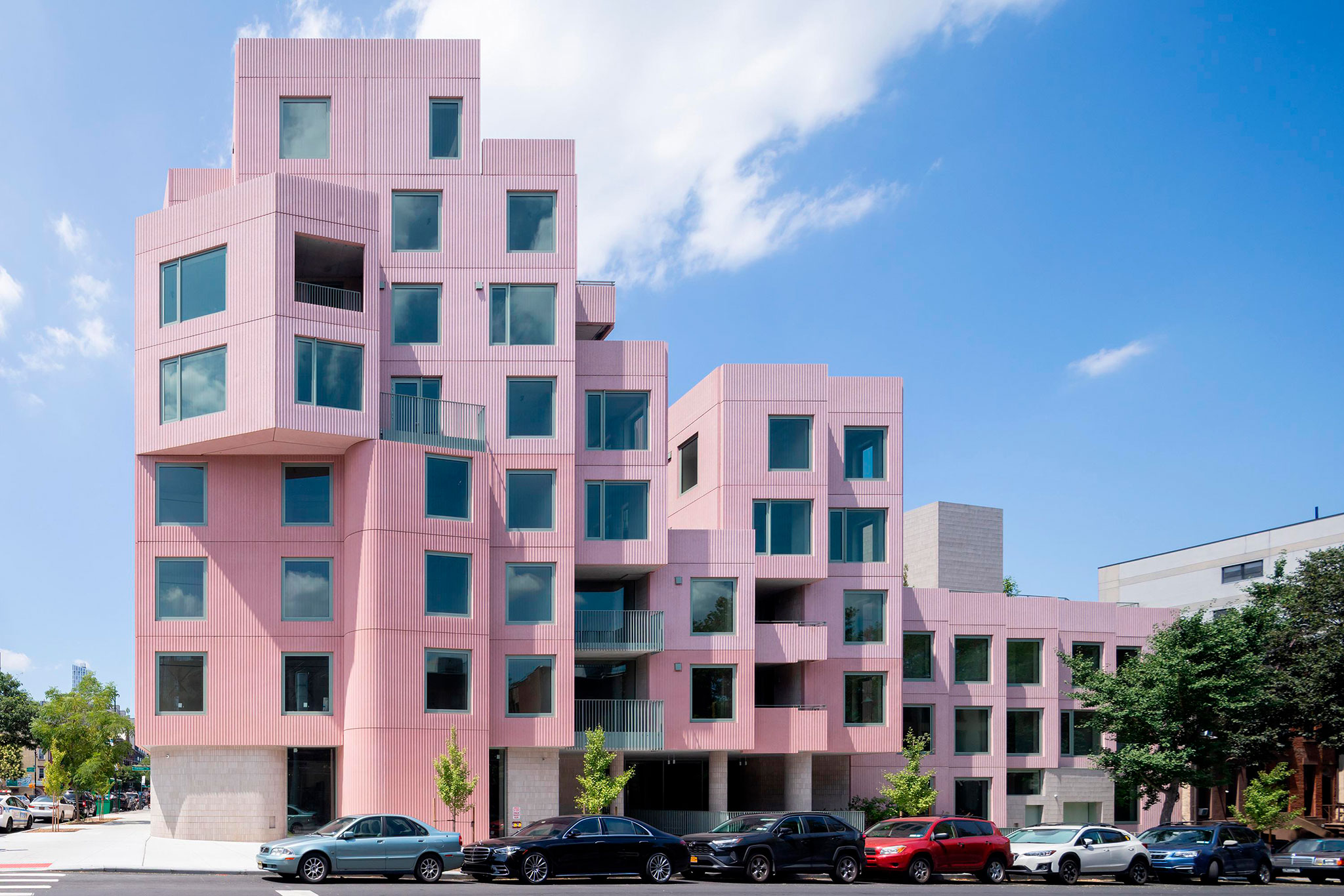
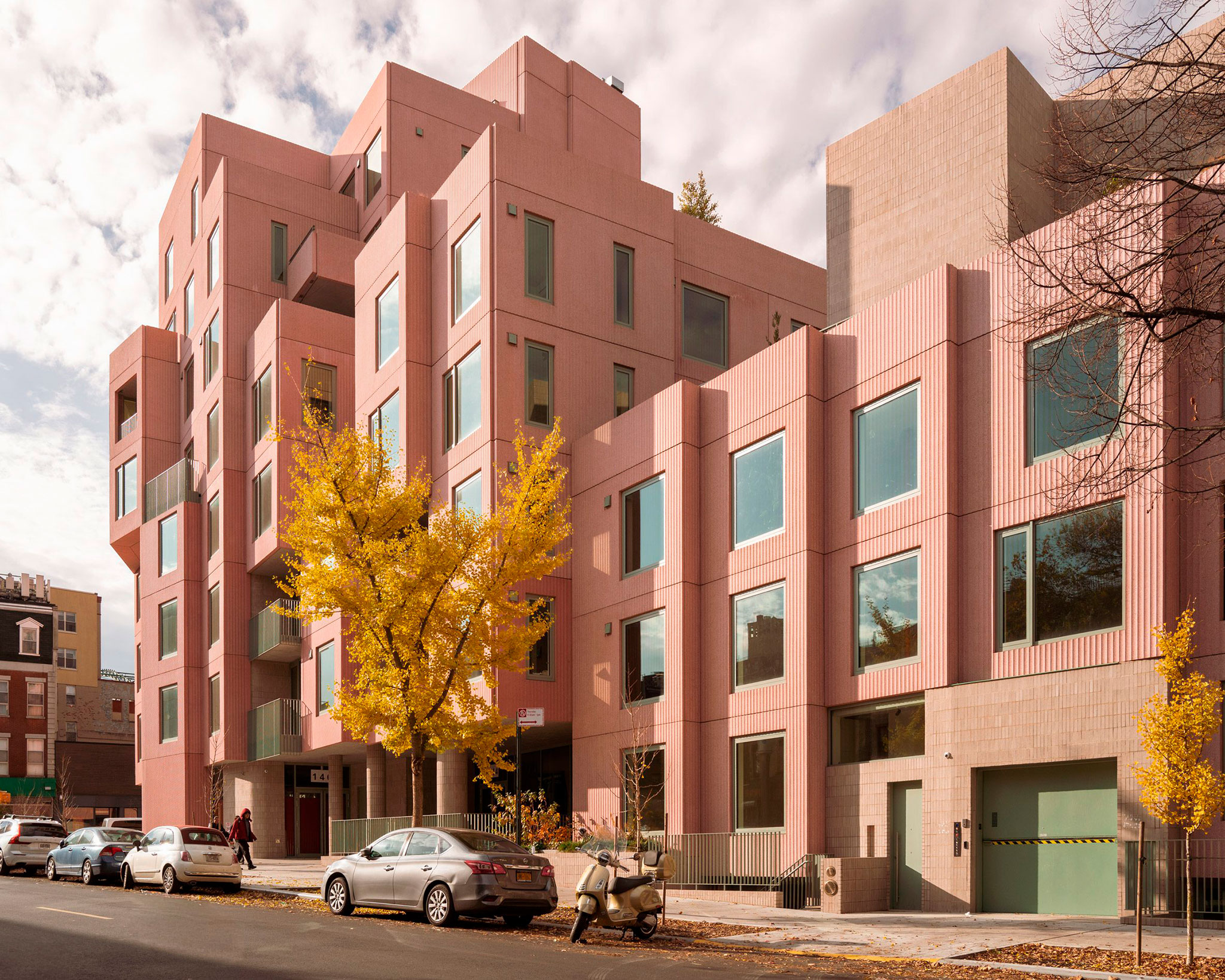
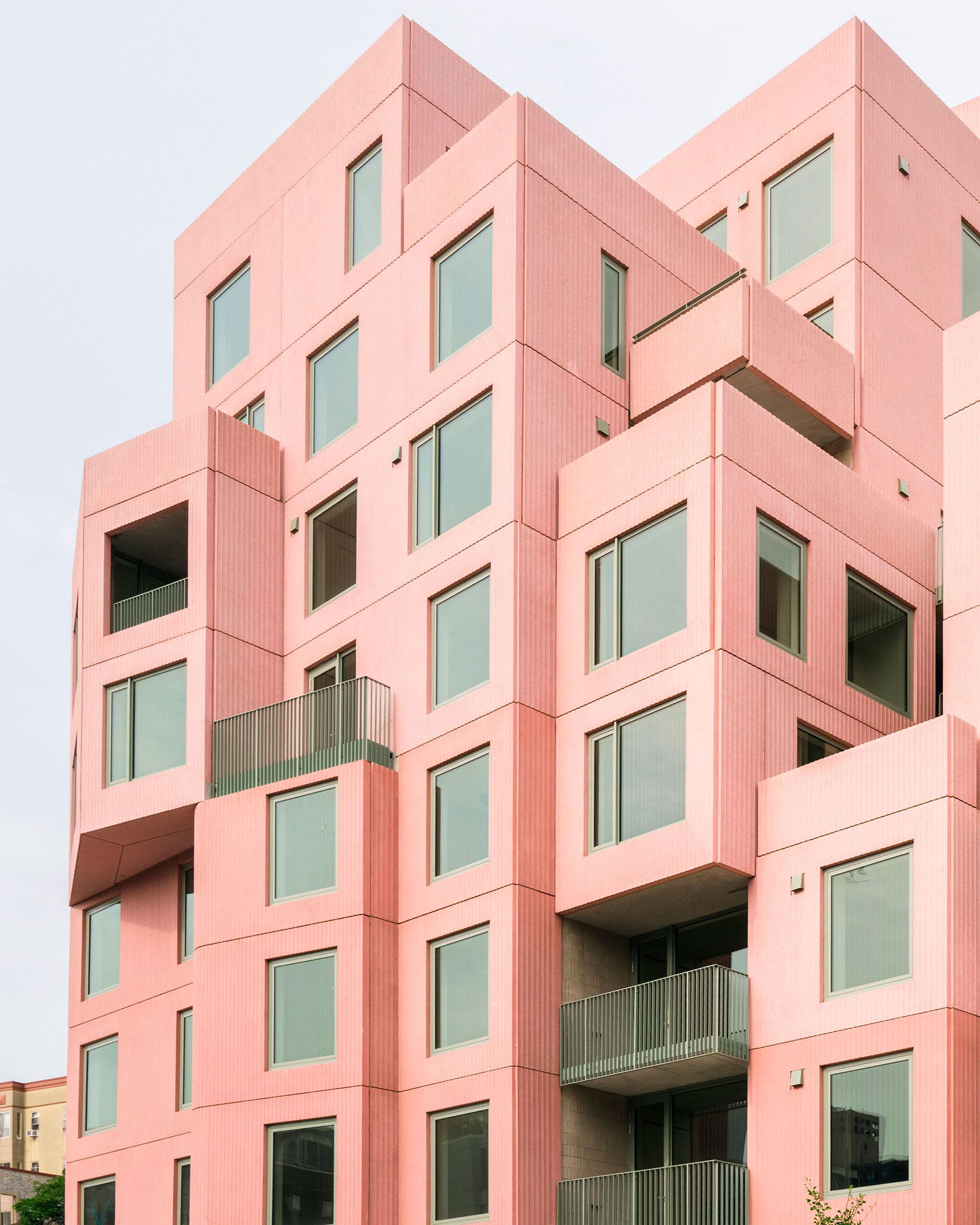
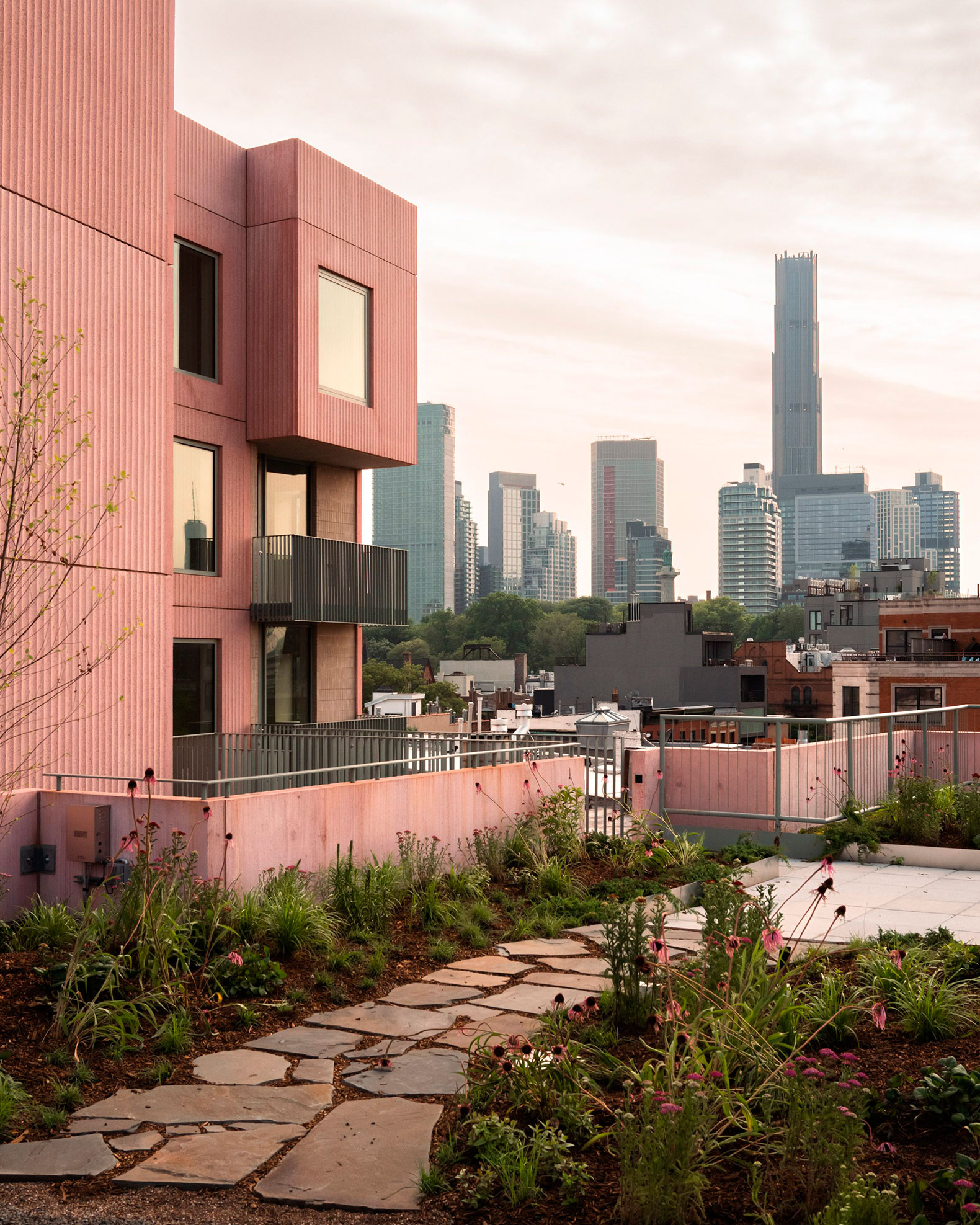
The building has an iconic silhouette in a distinctive pink colour, striking terraces with panoramic views that stretch from the Williamsburg Savings Bank Building and across the Downtown Brooklyn skyline, to Manhattan’s Financial District, the three iconic East River bridges, and all the way to 432 Park Avenue and Midtown.
--
El estudio de arquitectura SO-IL recibió el encargo de proyectar 144 Vanderbilt, un complejo de viviendas prefabricadas con 26 casas de dos a cuatro dormitorios, meticulosamente pensadas, ubicado en la ladera de la colina, cerca de la ribera del East River y con vistas a Manhattan, en la ciudad de Nueva York.

El edificio presenta una silueta singular en un reconocible color rosa, con grandes terrazas que ofrecen vistas panorámicas que se extienden desde el edificio del Williamsburg Savings Bank y el horizonte del centro de Brooklyn, hasta el Distrito Financiero de Manhattan, los tres emblemáticos puentes del East River y hasta el número 432 de Park Avenue y Midtown.

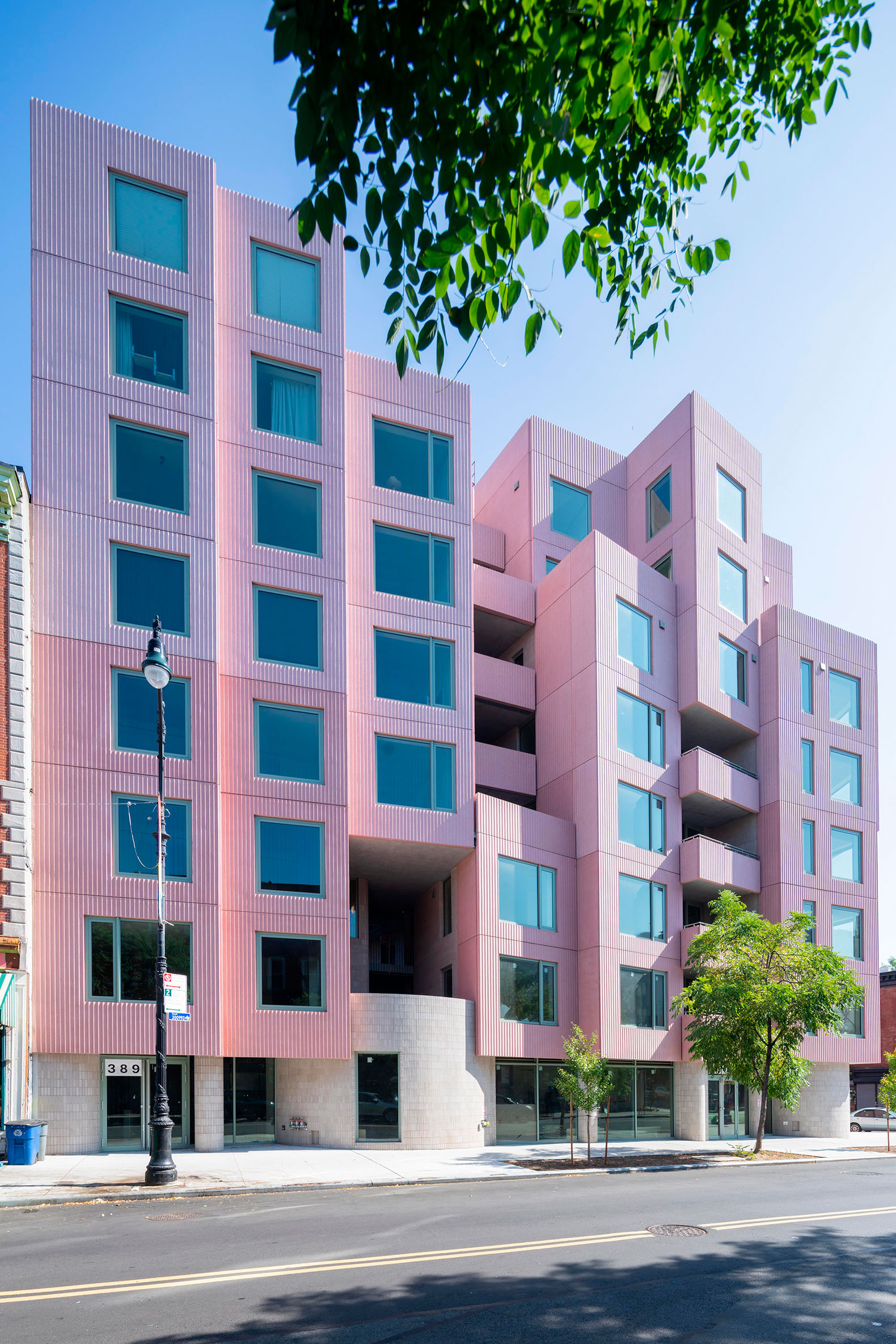
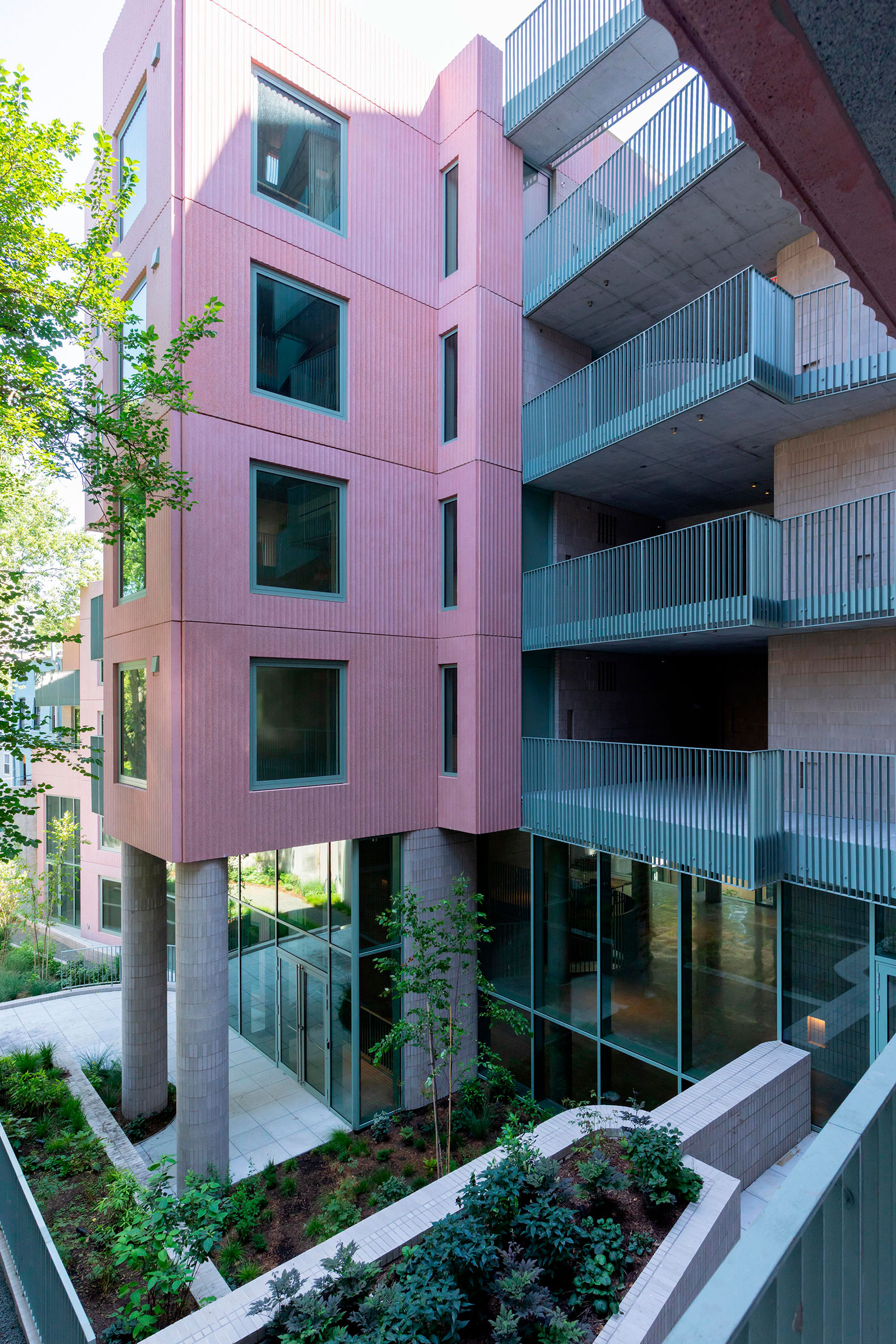
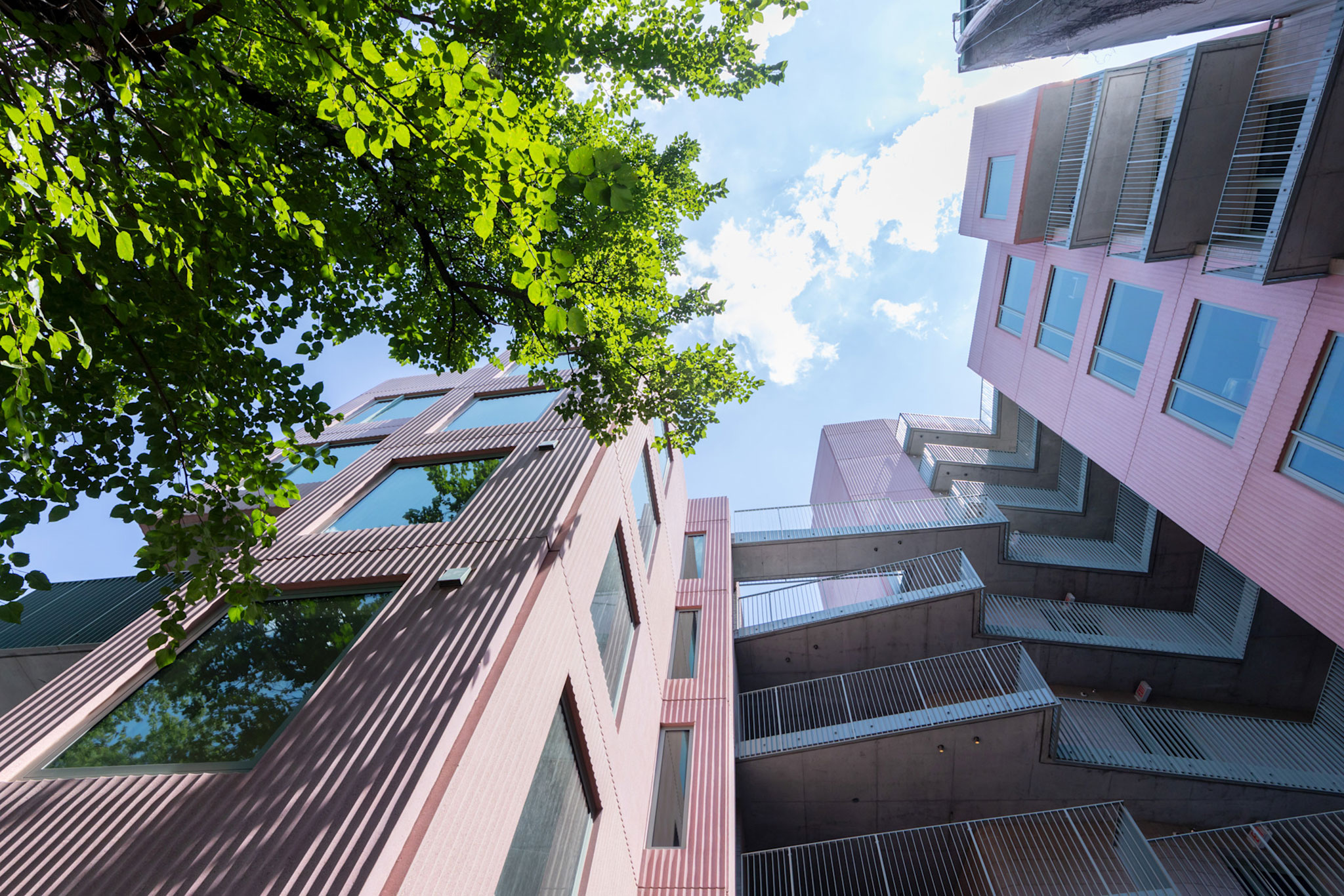
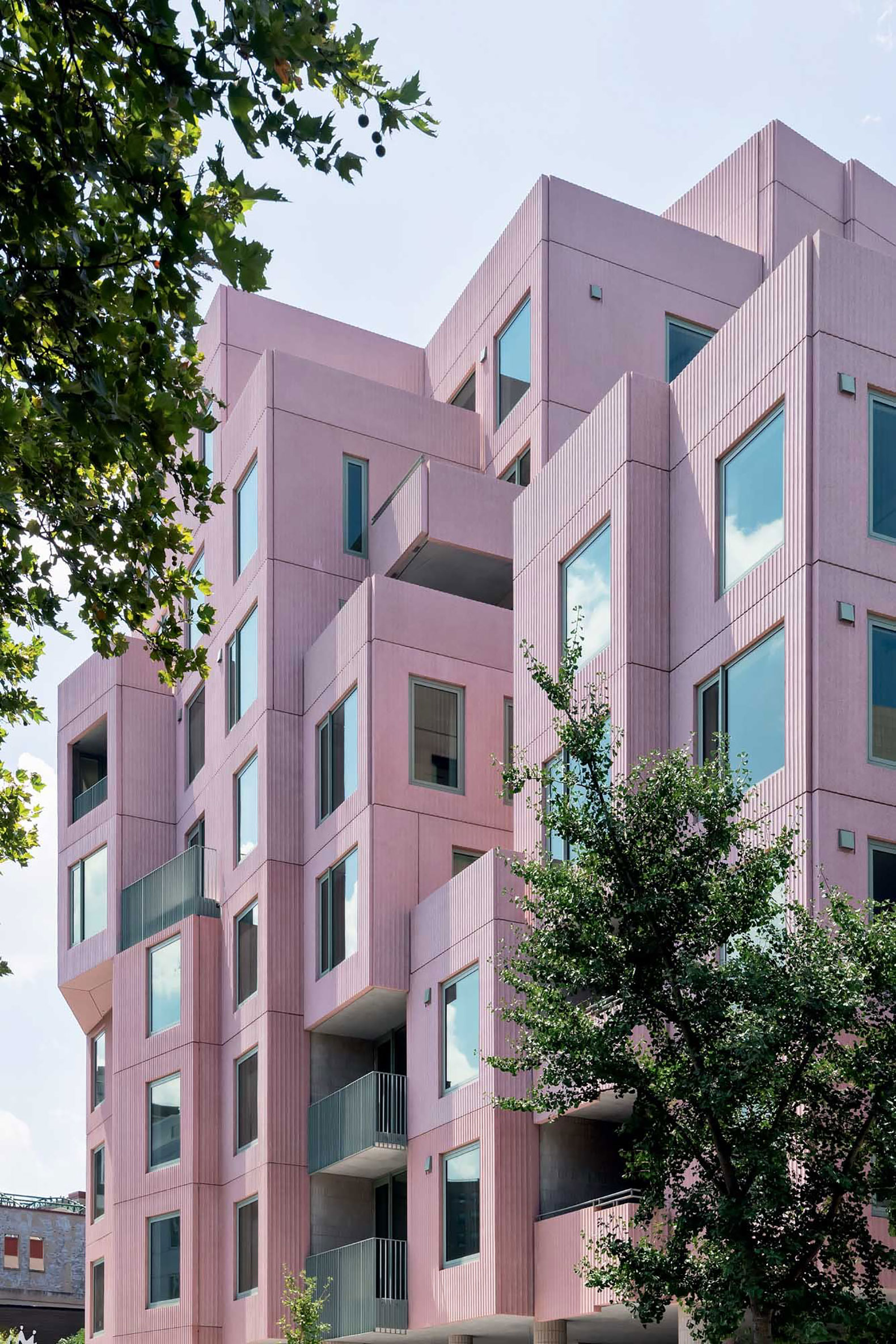
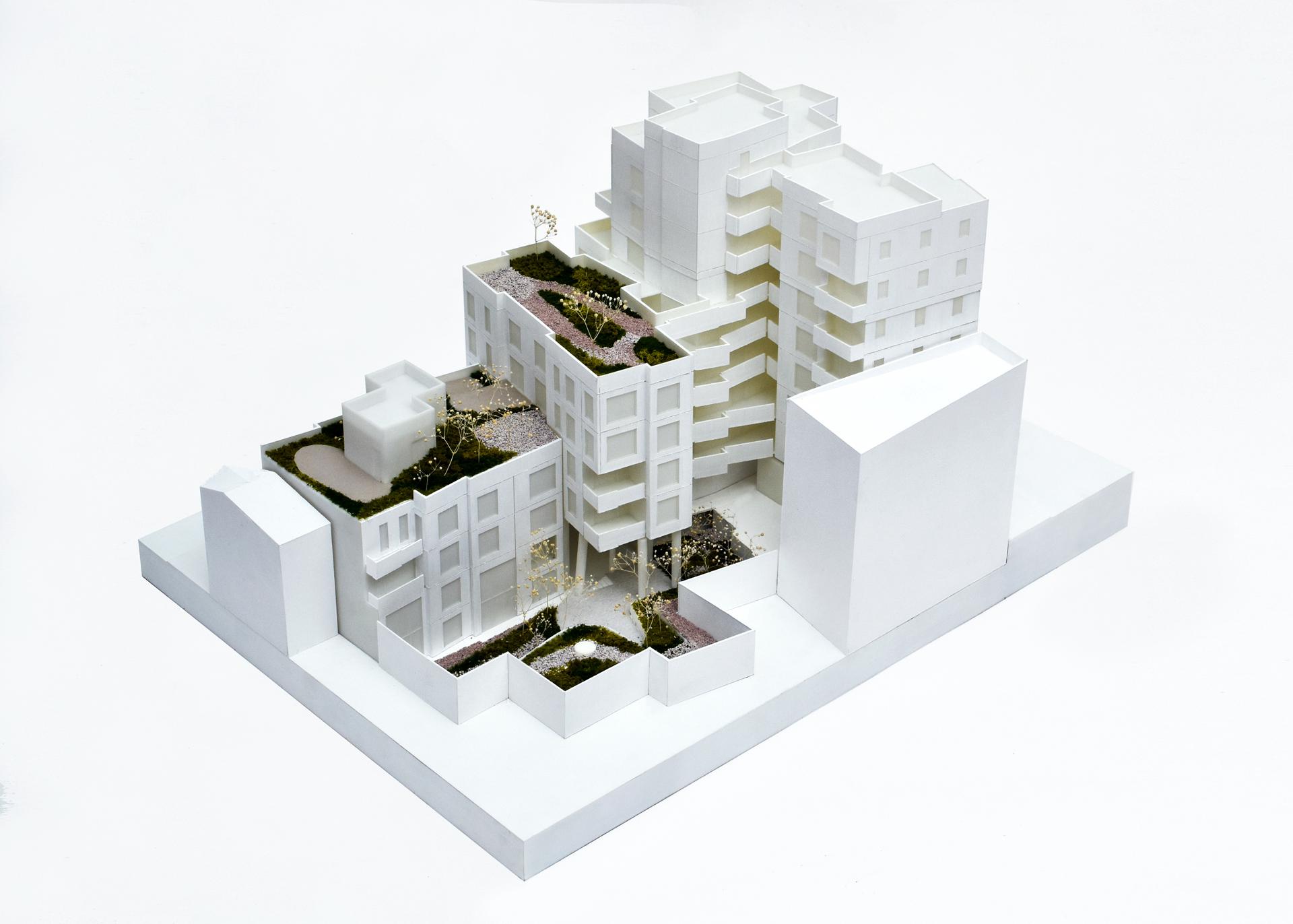
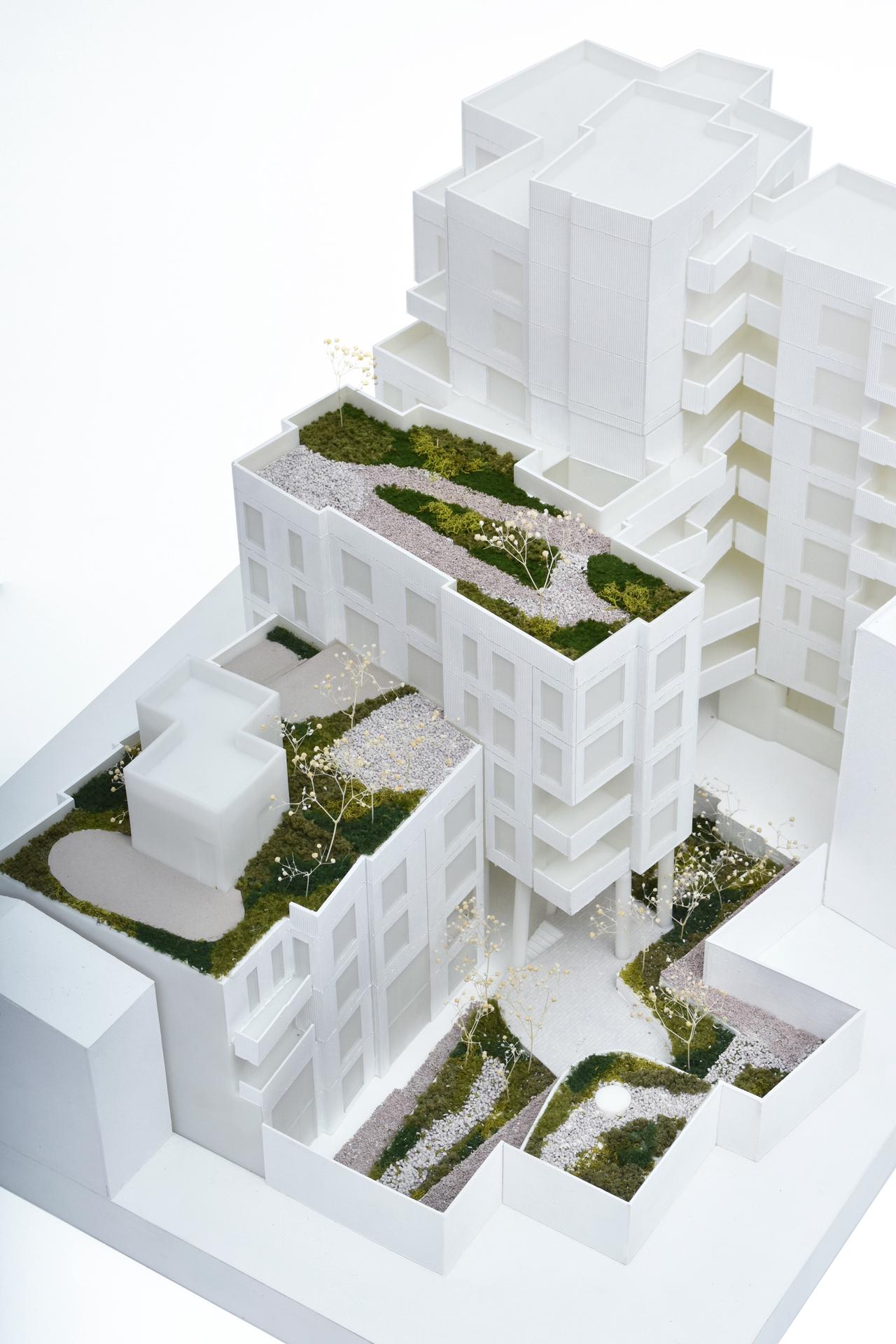
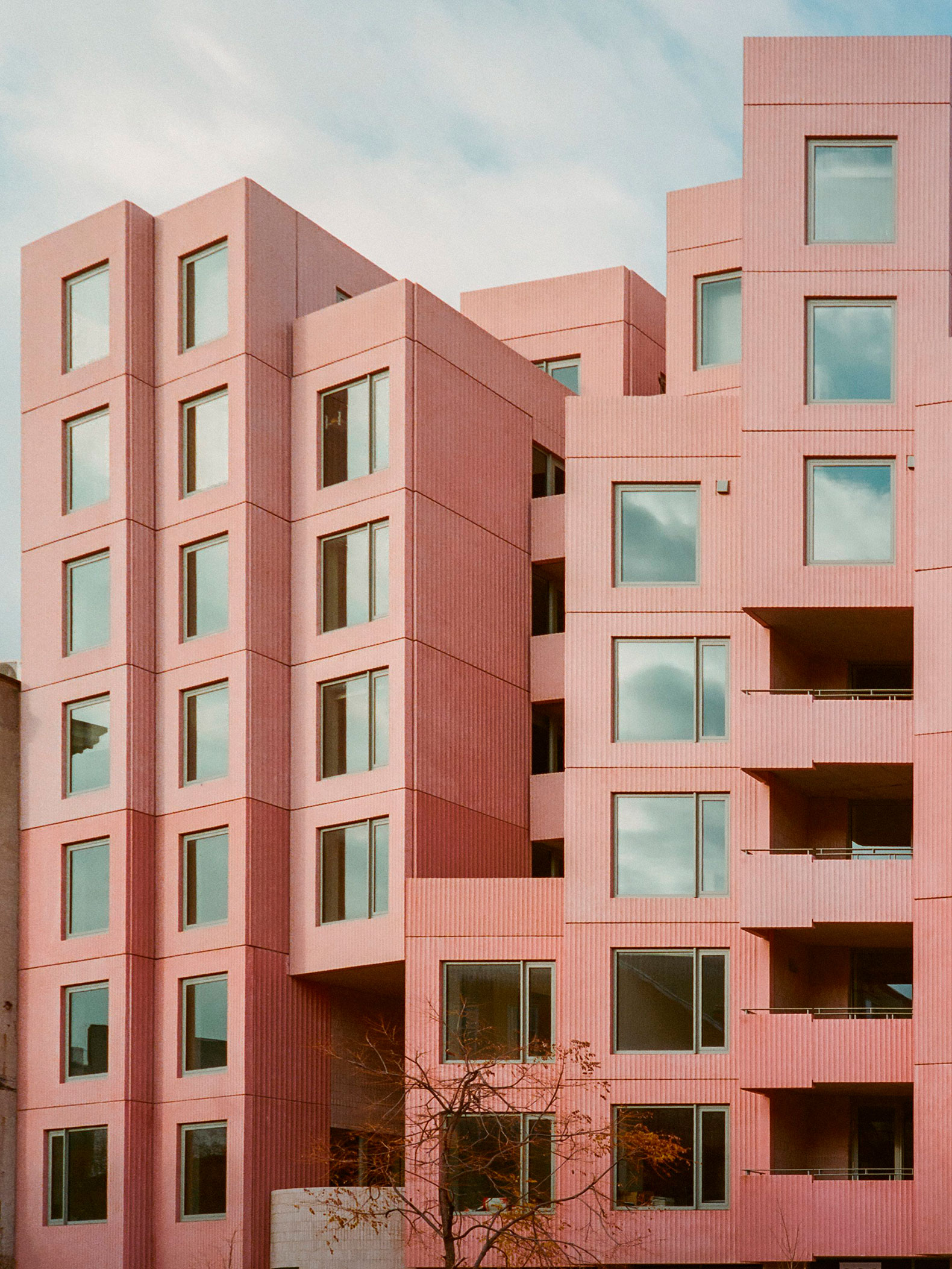
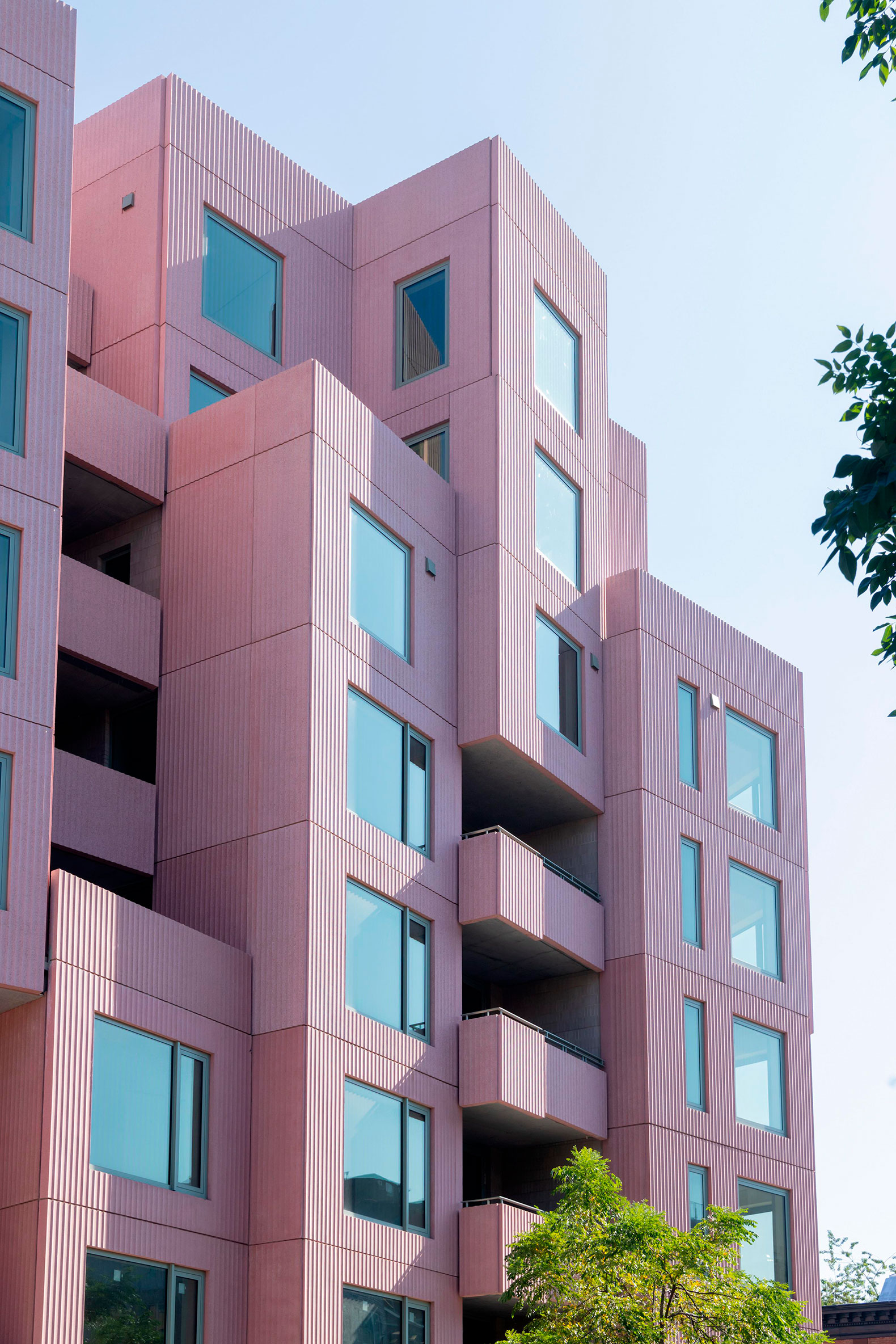
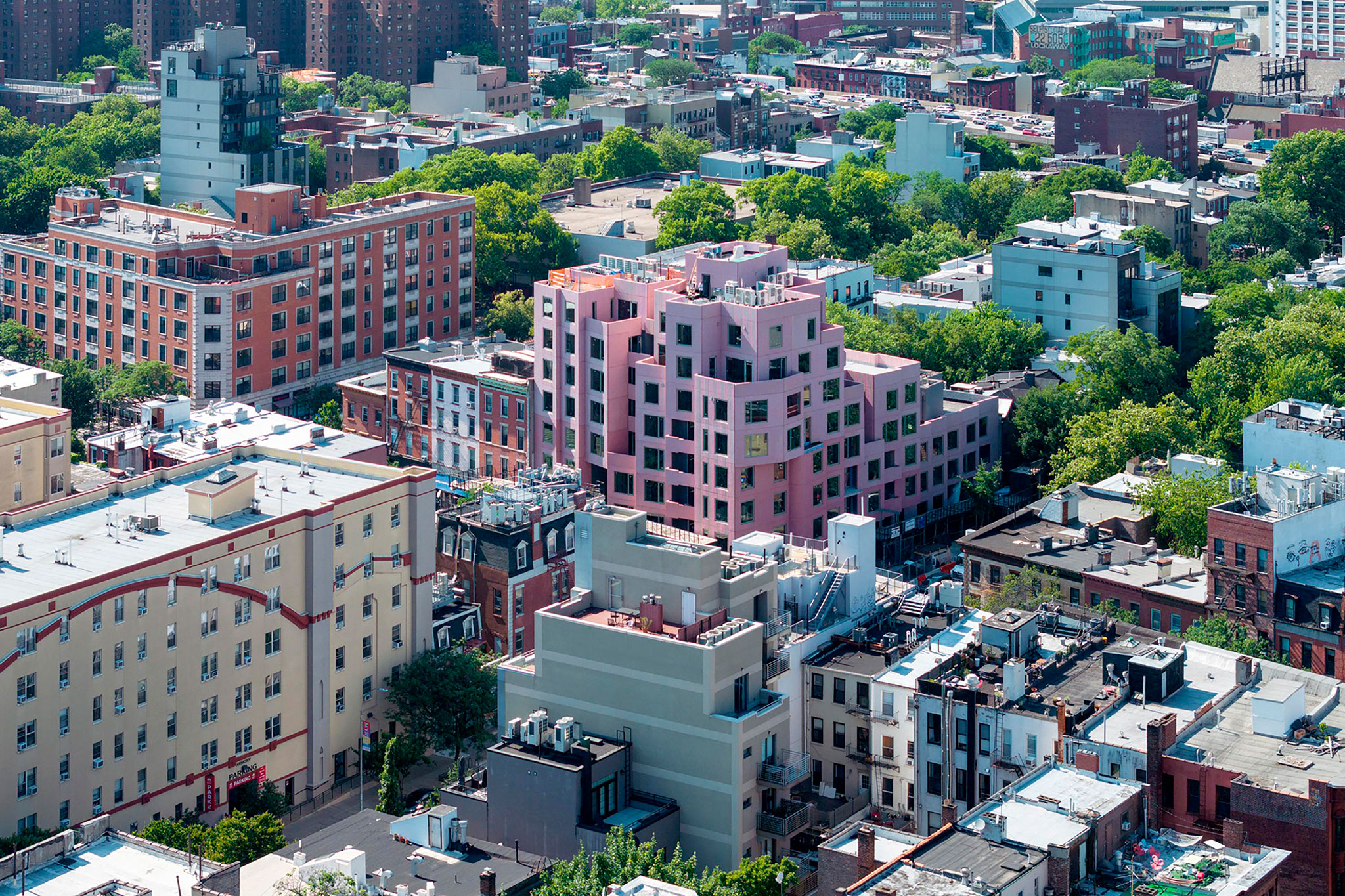
SO-IL designed the 144 Vanderbilt with a staggered volume. The prominent intersection of historic Vanderbilt and Myrtle avenues offers the building’s southeast corner heightened prominence and visibility from its surroundings. From the exterior, the building’s composition is stacked at different heights, angles and setbacks—with each residence articulated separately by subtle shifts, and featuring oversized windows that frame vistas of Brooklyn, Fort Greene Park, Manhattan and beyond.

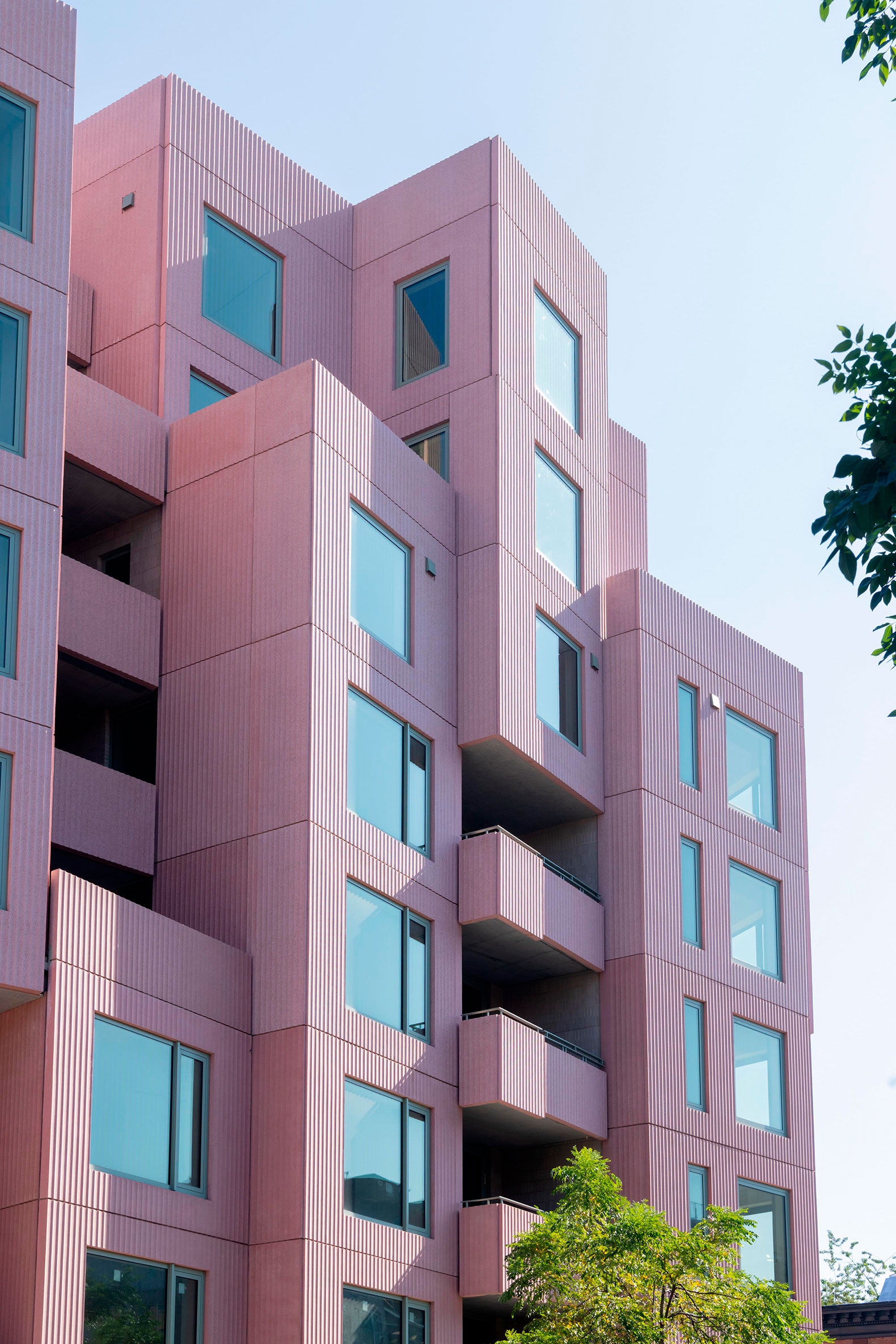
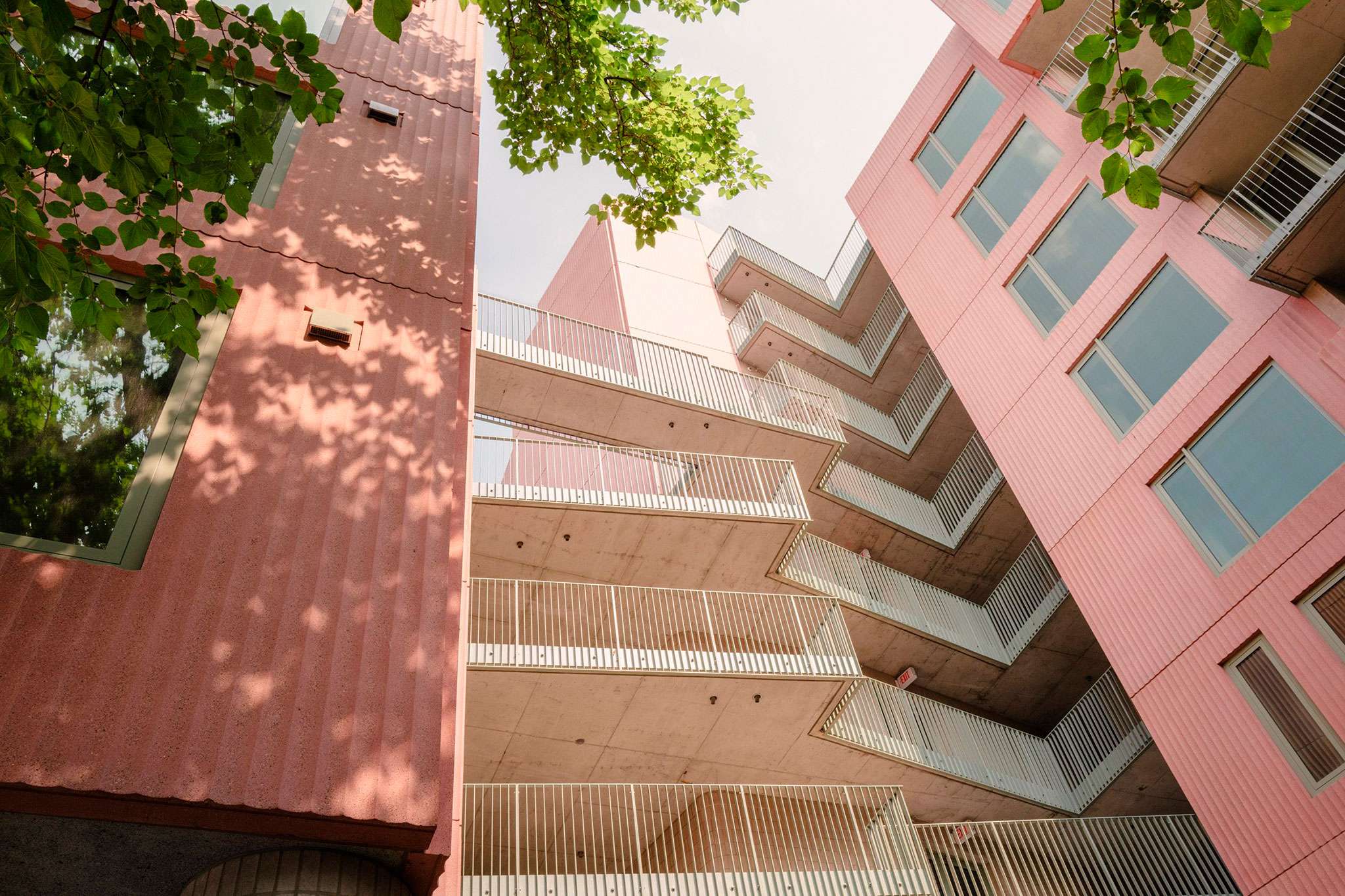
The building is wrapped almost entirely in pink precast concrete, enabling a fully realised, carefully detailed architectural vision that is unlike any other in New York City. The scalloped surfaces of these bespoke yet precisely fabricated panels cast ever-changing shadows throughout the day. Two finishes, an acid wash and a sandblasted texture, expose the warm tones of the concrete aggregate, adding complexity and nuance to the facade. The material variation and subtle shifts in orientation create a dynamic effect.
--
SO-IL proyectó el edificio 144 Vanderbilt con un volumen escalonado. La prominente intersección de las históricas avenidas Vanderbilt y Myrtle otorga a la esquina sureste del edificio una mayor visibilidad y prominencia. Desde el exterior, la composición del edificio se presenta apilada a diferentes alturas, ángulos y retranqueos, con cada residencia articulada individualmente mediante sutiles variaciones y grandes ventanales que enmarcan vistas de Brooklyn, Fort Greene Park, Manhattan y más allá.

El edificio está revestido casi por completo de hormigón prefabricado rosa, lo que permite una visión arquitectónica completa y meticulosamente detallada, única en la ciudad de Nueva York. Las superficies onduladas de estos paneles, fabricados a medida con precisión, proyectan sombras cambiantes a lo largo del día. Dos acabados, un lavado ácido y una textura arenada, exponen los tonos cálidos del agregado de hormigón, añadiendo complejidad y matices a la fachada. La variación de materiales y los sutiles cambios de orientación crean un efecto dinámico.

"144 Vanderbilt Ave" by SO – IL. Photograph by Iwan Baan.

«144 Vanderbilt Ave» por SO - IL. Fotografía por Iwan Baan.

"144 Vanderbilt Ave" by SO – IL. Photograph by Iwan Baan.

Descripción del proyecto por SO–IL Project description by SO–IL

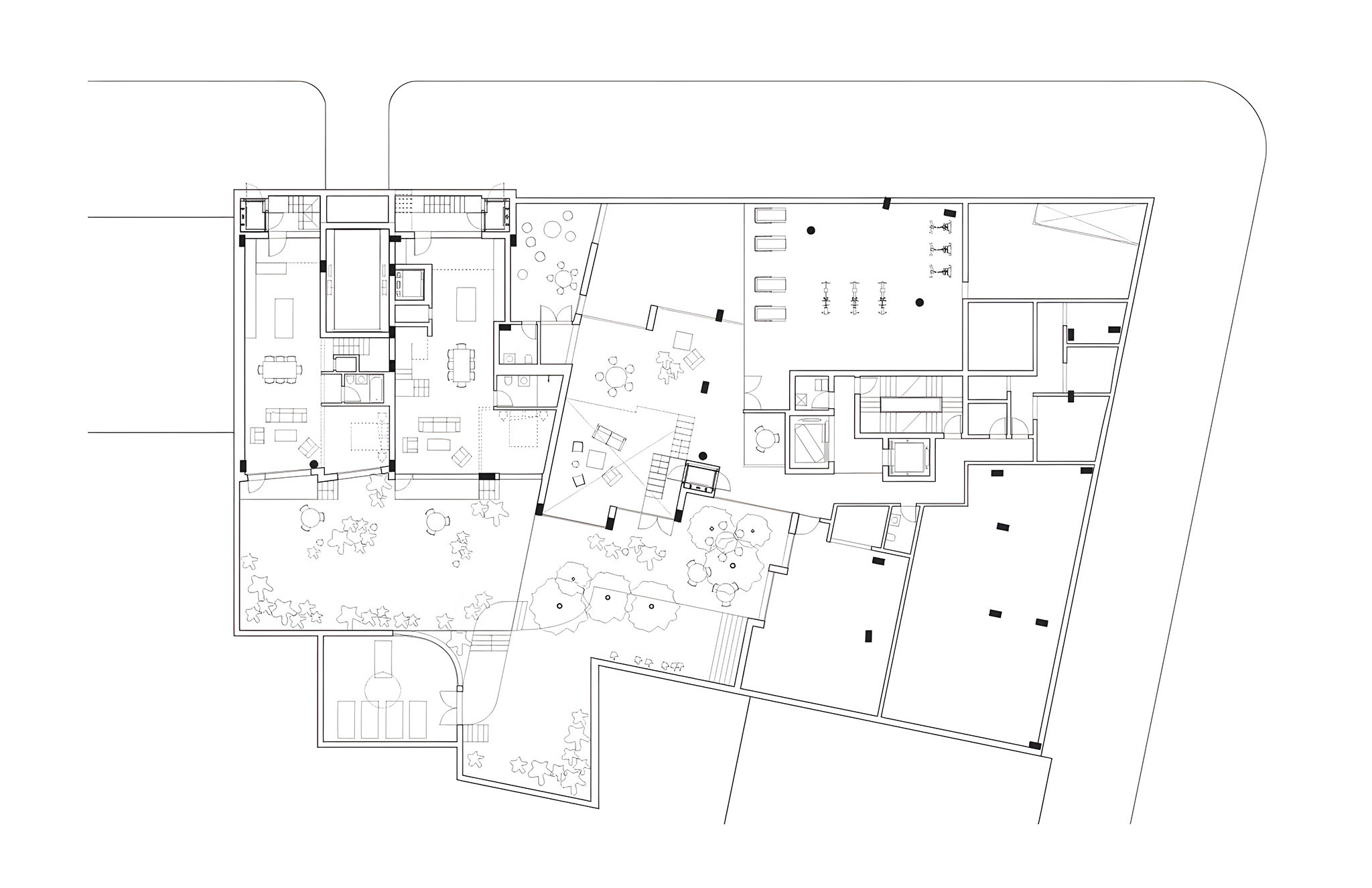
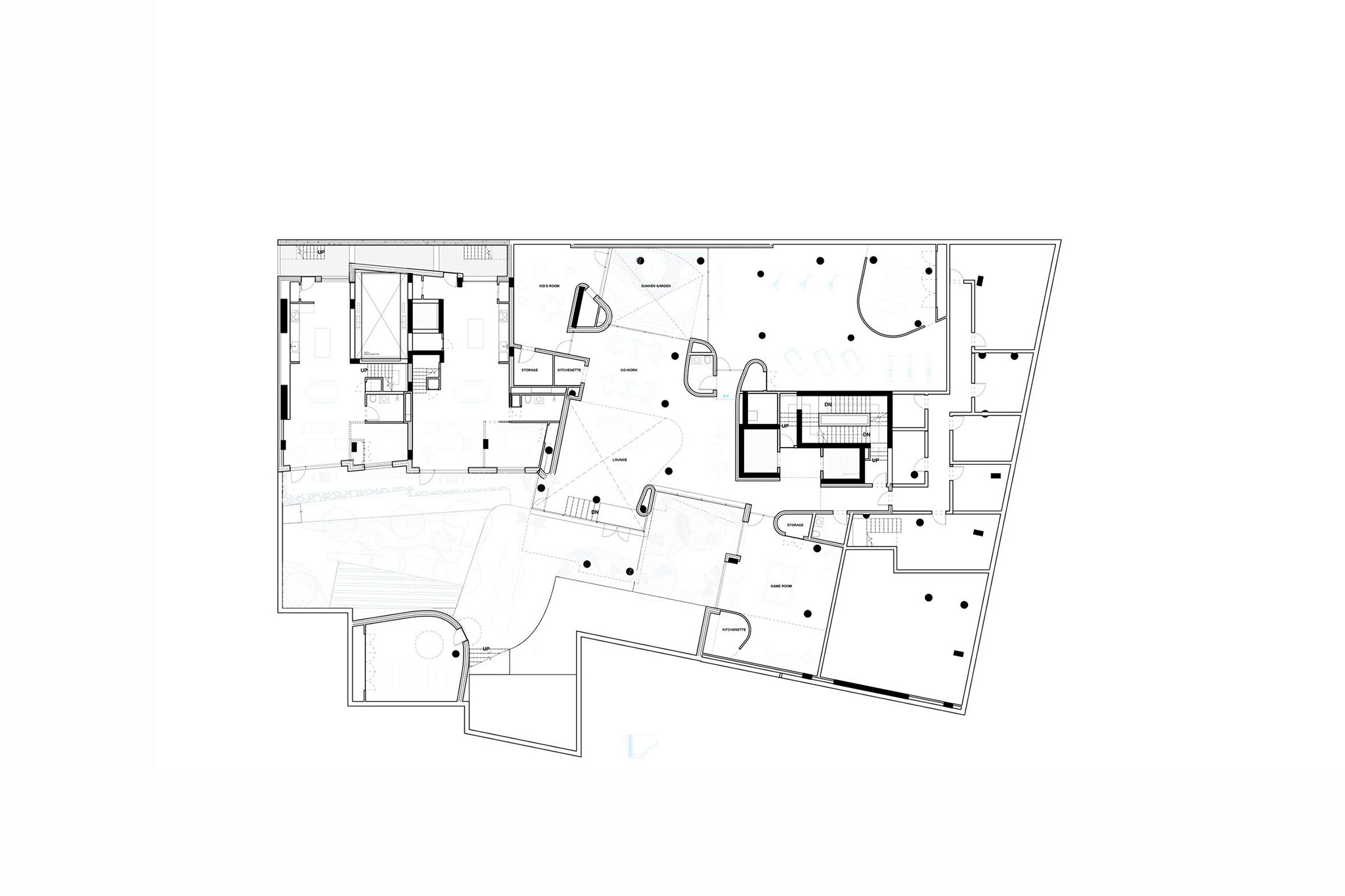
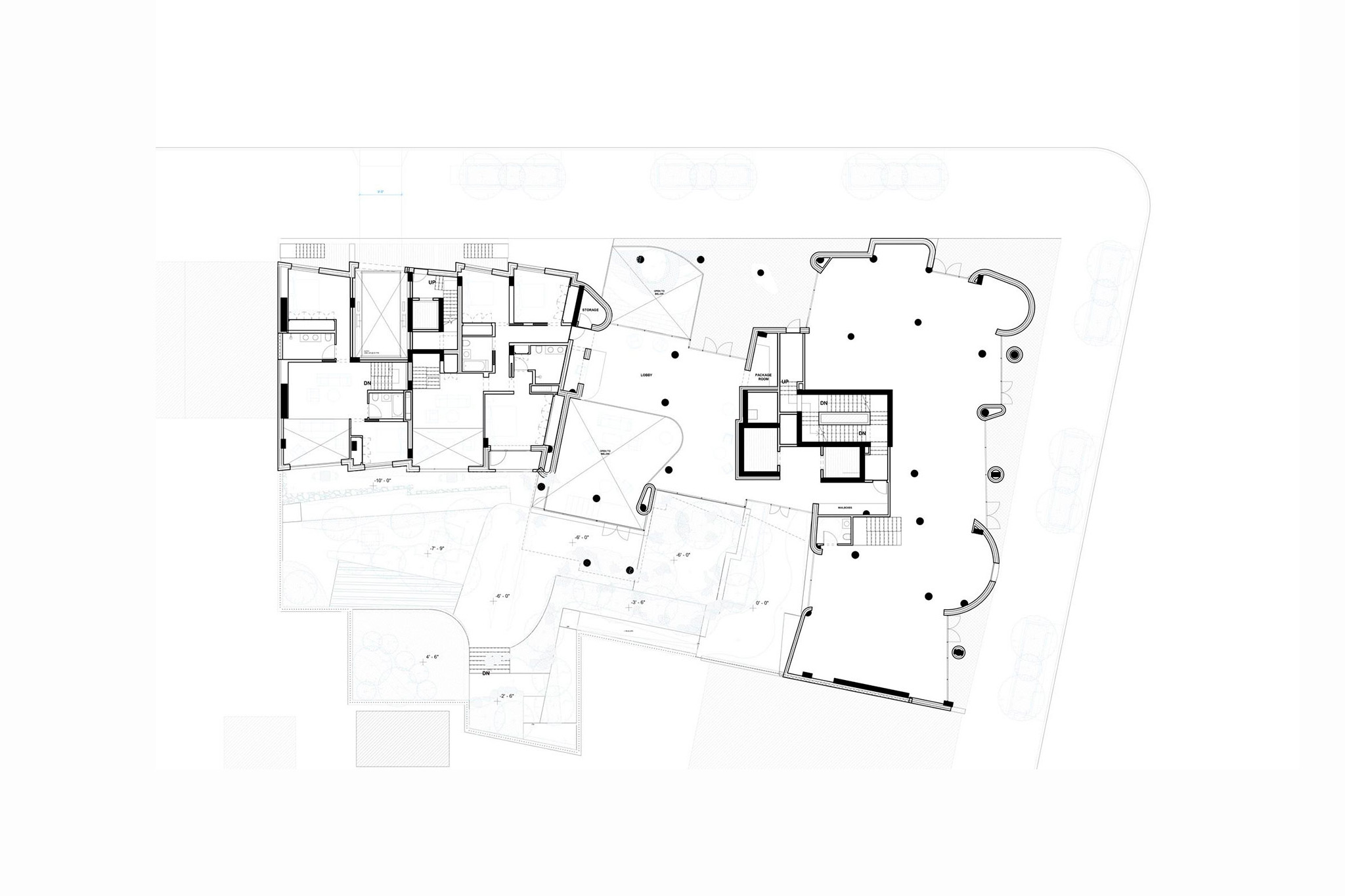
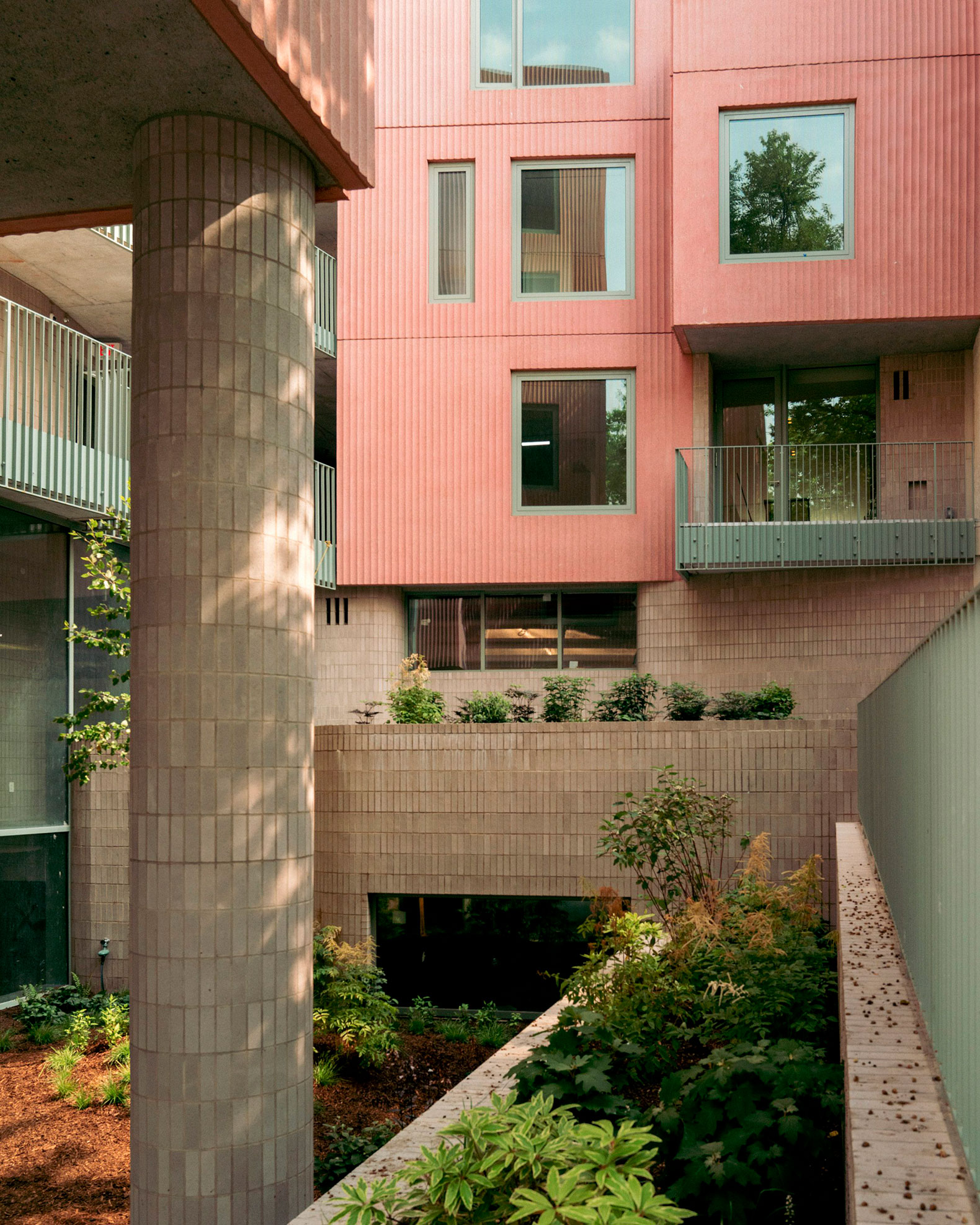
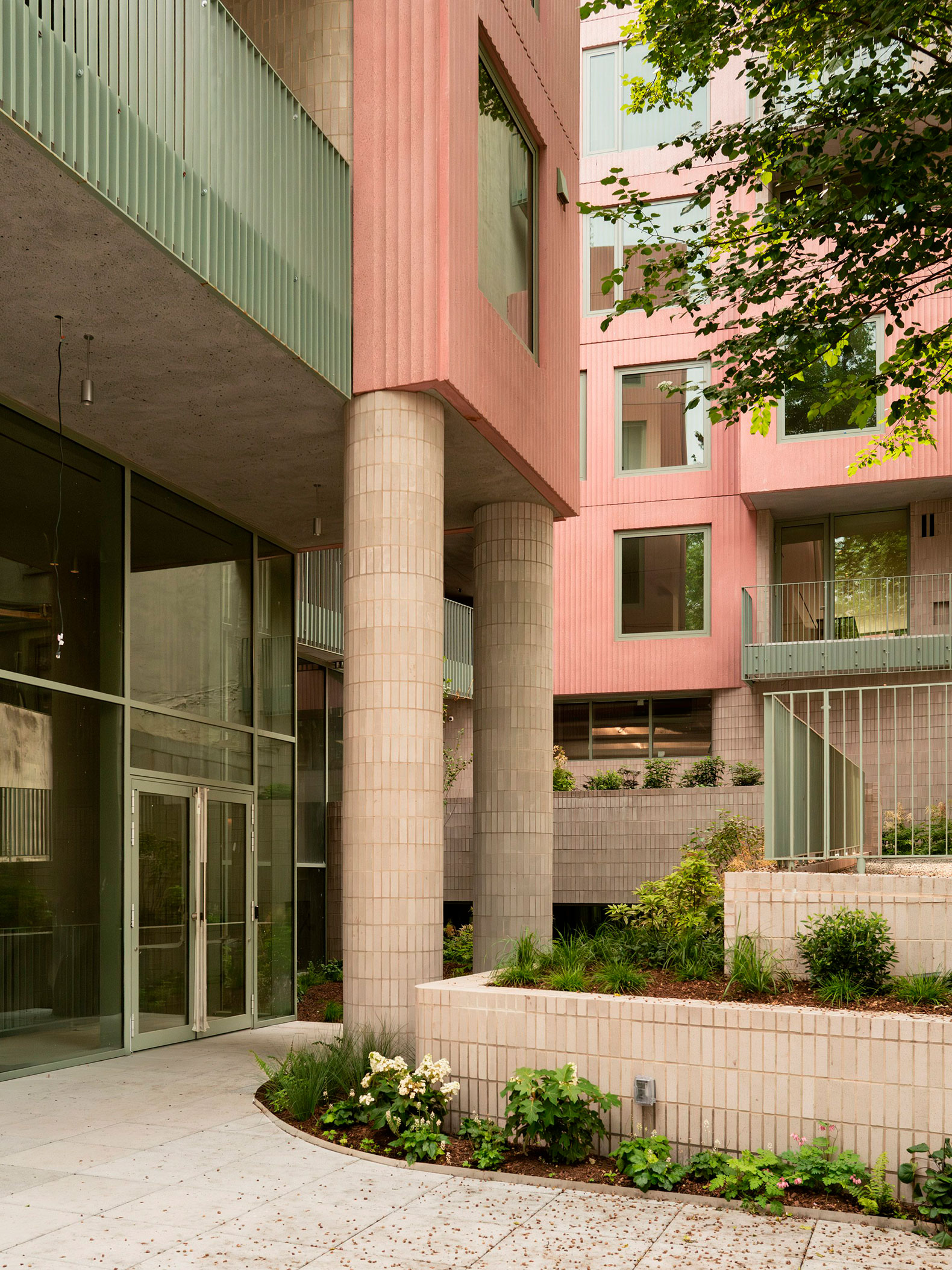
This project represents the third (after 450 Warren and 9 Chapel) in a series aimed at transforming the conventional multifamily housing typology in New York. Its distinct corner location, straddling two zoning districts, heavily influences the building's structure and layout. On one side, it aligns with a row of townhouses, rising to four stories. On Myrtle Avenue, known for its commercial activity, the building expands to accommodate six residential floors above two commercial levels. The project explores these two contrasting urban experiences, creating a structure that acts as a porous barrier, creating a tranquil inner haven that contrasts with the vibrant street life outside.

"144 Vanderbilt Ave" by SO – IL. Photograph by Iwan Baan.

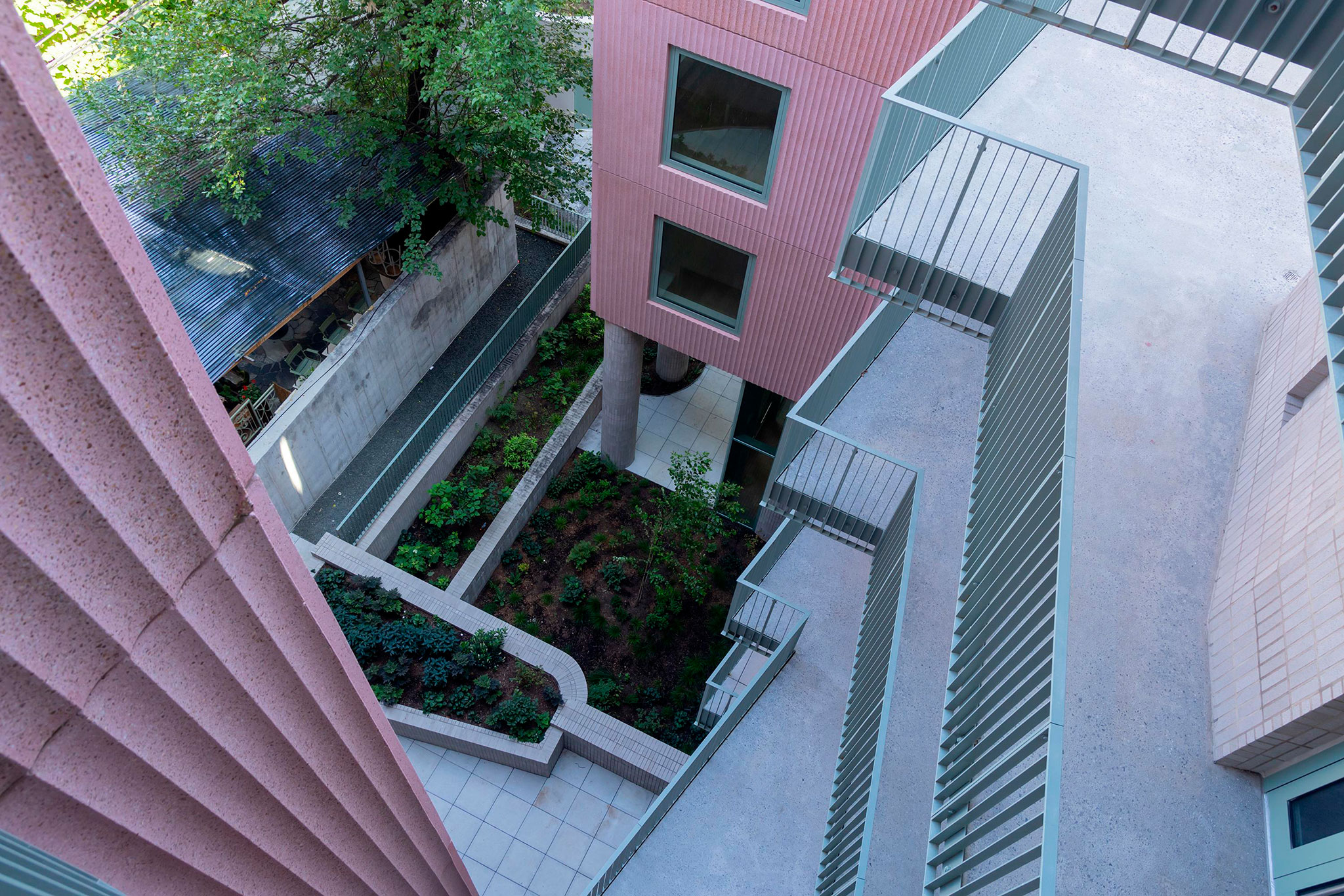
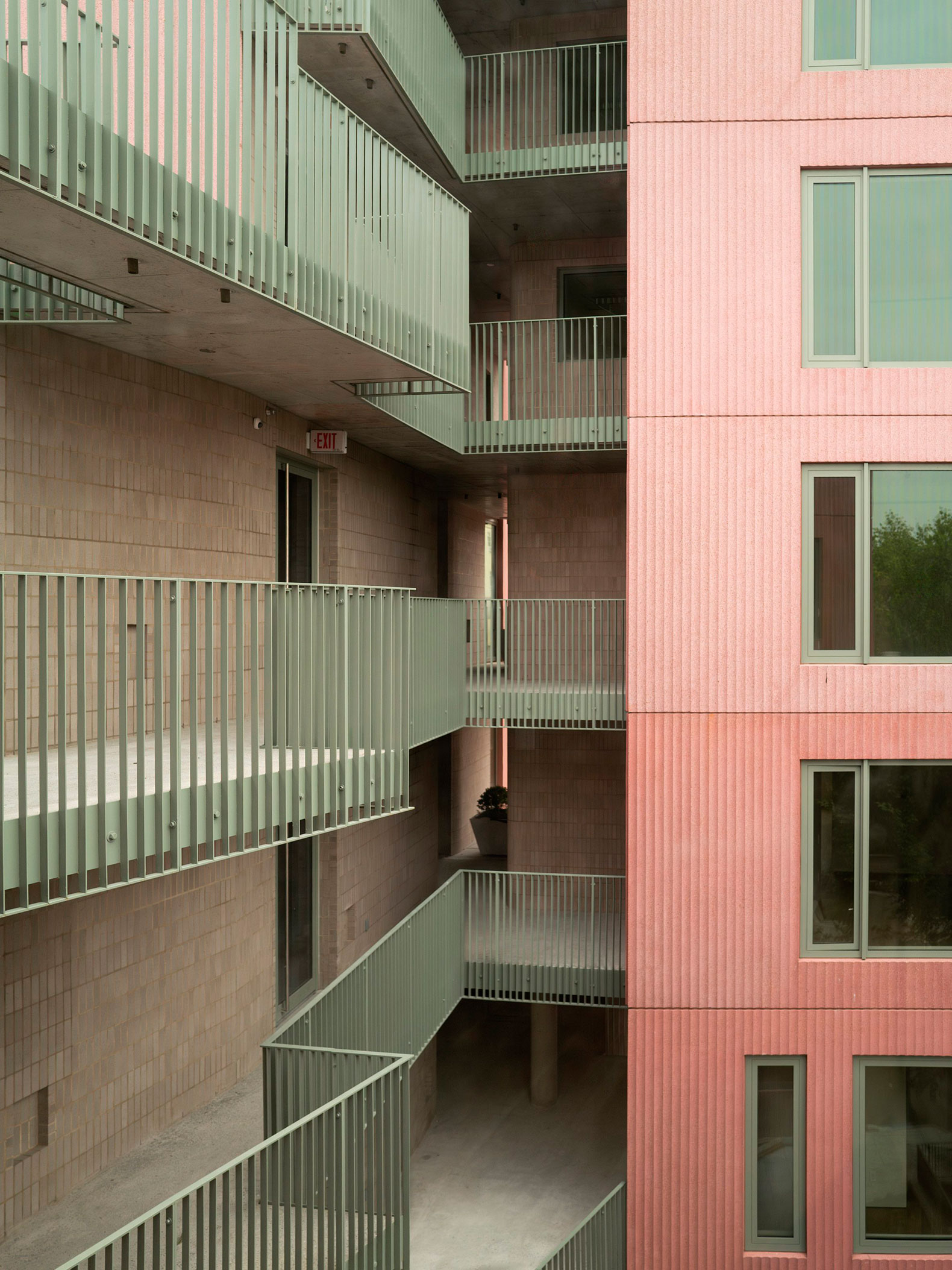
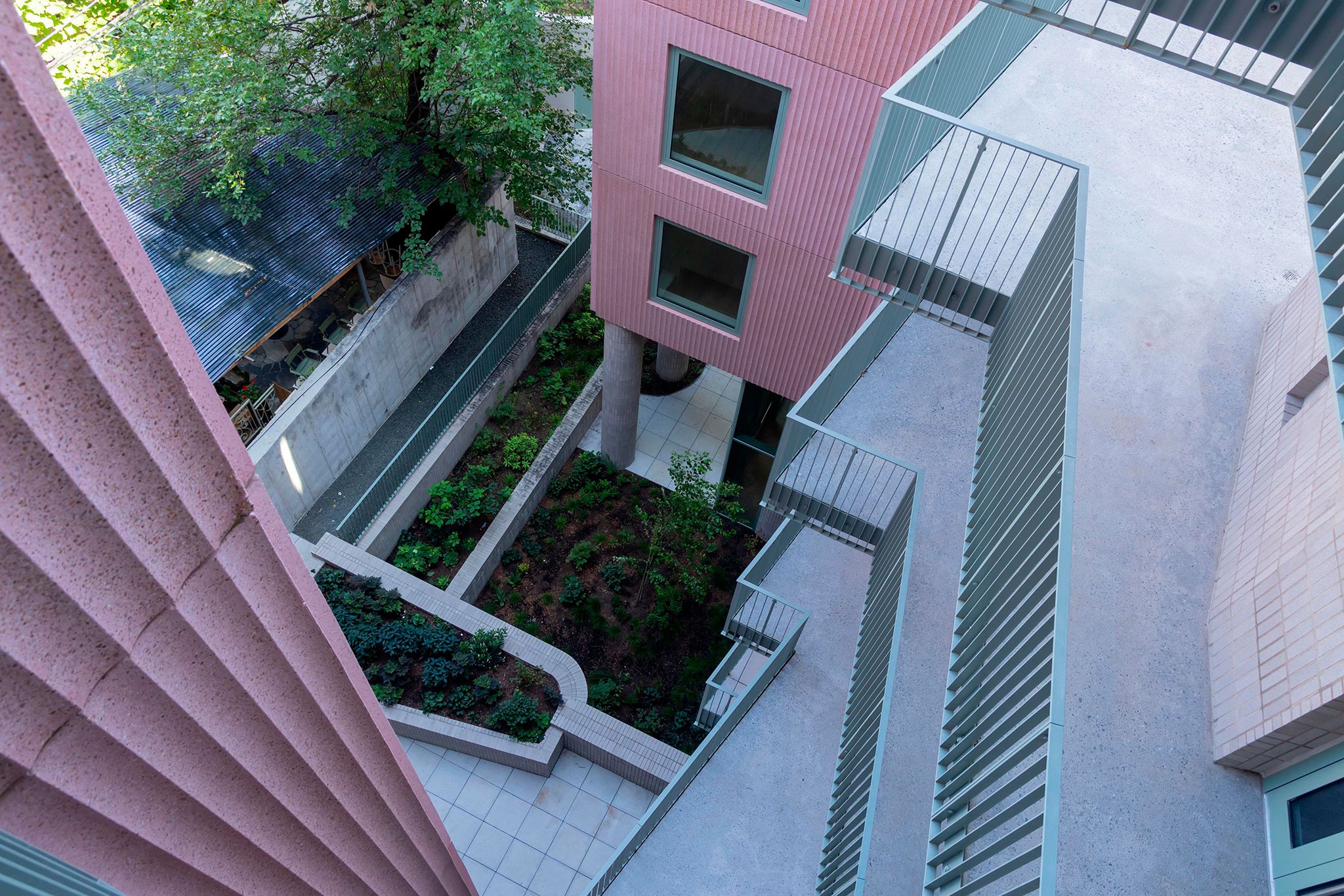
The building is filled with greenery. Its staggered design offers a variety of communal outdoor spaces, each distinct in size and function, fostering collective activities. A verdant, secluded backyard extends the local streetscape, while a central courtyard is enlivened by surrounding movement. An elevated public square also provides a visible communal area that blends indoor and outdoor environments.

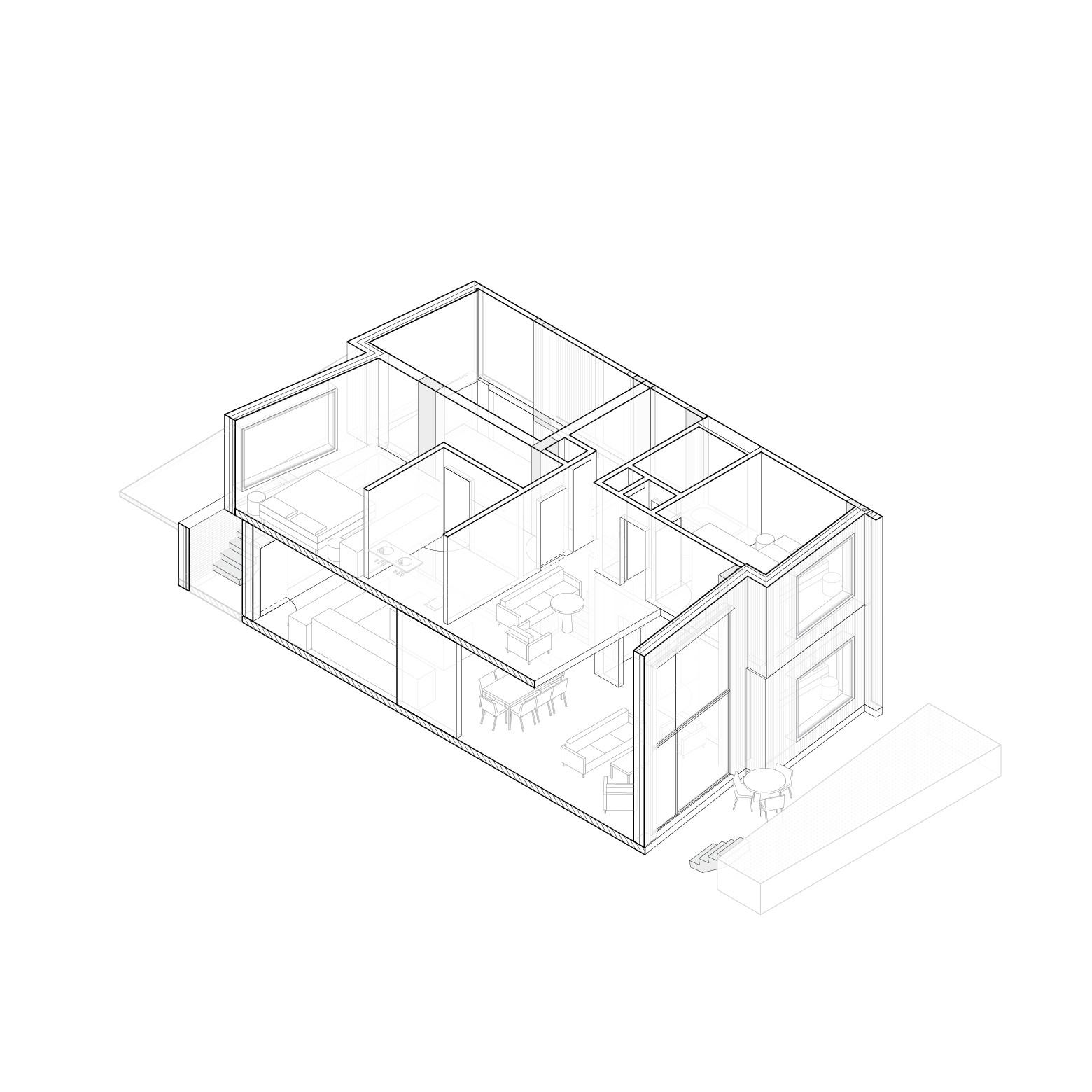
The units are designed to engage residents in multiple environments simultaneously. Every apartment enjoys access to both the lively street front and the more serene interior of the site. Residents also have proximity to shared outdoor spaces within the building, encouraging outdoor living, neighbourly interactions, and engagement with the building's communal life.
"144 Vanderbilt Ave" by SO – IL. Photograph by Iwan Baan.

The building's facade comprises precast concrete panels varying in shape, size, and finish. This diversity contributes to the building's unique and robust urban appearance, marking it as a bespoke architectural piece within New York's multifamily housing landscape.
---
Este proyecto es el tercero (tras el 450 Warren y el 9 Chapel) de una serie destinada a transformar la tipología convencional de la vivienda multifamiliar en Nueva York. Su singular ubicación en esquina, a caballo entre dos distritos de zonificación, influye considerablemente en la estructura y la distribución del edificio. Por un lado, se integra en una hilera de casas adosadas, con una altura de cuatro plantas. En Myrtle Avenue, conocida por su actividad comercial, el edificio se expande para albergar seis plantas residenciales sobre dos niveles comerciales. El proyecto explora estas dos experiencias urbanas contrastantes, creando una estructura que actúa como una barrera porosa, creando un remanso de paz interior que contrasta con la vibrante vida callejera del exterior.

"144 Vanderbilt Ave" by SO – IL. Photograph by Iwan Baan.
«144 Vanderbilt Ave» por SO - IL. Fotografía por Iwan Baan.

El edificio está repleto de vegetación. Su diseño escalonado ofrece una variedad de espacios comunes al aire libre, cada uno distinto en tamaño y función, que fomentan las actividades colectivas. Un patio trasero frondoso y apartado amplía el paisaje urbano local, mientras que un patio central cobra vida gracias al movimiento que lo rodea. Una plaza pública elevada proporciona además una zona común visible que fusiona los ambientes interiores y exteriores.

Las viviendas están diseñadas para que los residentes disfruten de múltiples entornos simultáneamente. Cada apartamento tiene acceso tanto a la animada calle como al interior más tranquilo del edificio. Además, los residentes tienen acceso a espacios exteriores compartidos dentro del edificio, lo que fomenta la vida al aire libre, la interacción con los vecinos y la participación en la vida comunitaria.

"144 Vanderbilt Ave" by SO – IL. Photograph by Iwan Baan.
«144 Vanderbilt Ave» por SO - IL. Fotografía por Iwan Baan.

La fachada del edificio está compuesta por paneles prefabricados de hormigón de diferentes formas, tamaños y acabados. Esta diversidad contribuye a la apariencia urbana única y robusta del edificio, lo que lo convierte en una obra arquitectónica singular dentro del panorama de la vivienda multifamiliar de Nueva York.

More information

Label
Architects Arquitectos
+ + copy Created with Sketch.
- + copy Created with Sketch.
Label
Project team Equipo de proyecto
Text

Florian Idenburg, Jing Liu, Ted Baab, Jonathan Molloy, Melissa Gutiérrez Soto, Dohyun Lee.

+ + copy Created with Sketch.
- + copy Created with Sketch.
Label
Collaborators Colaboradores
Text

Local Architect.- Kane AUD Architecture and Urban Design.
Structural Engineer.- Silman.
MEP Engineer.- ABS.
Expediter.- Vitacco.
Envelope Engineer.- Entuitive.
Geotechnical Engineer.- GES.
Landscape Designer.- Watson Salembier.
Lighting Designer.- O-N-P.

+ + copy Created with Sketch.
- + copy Created with Sketch.
Label
Client Cliente
+ + copy Created with Sketch.
- + copy Created with Sketch.
Label
Area Superfiice
Text

8,300 m² / 89,900 sf.

+ + copy Created with Sketch.
- + copy Created with Sketch.
Label
Dates Fechas
Text

Completion.- 2025.

Terminación.- 2025.

+ + copy Created with Sketch.
- + copy Created with Sketch.
Label
Location Localización
Text

144 Vanderbilt Avenue, Brooklyn. New York City 11205, USA.
144 Vanderbilt Avenue, Brooklyn. 11205 - Nueva York, EE. UU.

+ + copy Created with Sketch.
- + copy Created with Sketch.
Label
Photography Fotografía
+ + copy Created with Sketch.
- + copy Created with Sketch.

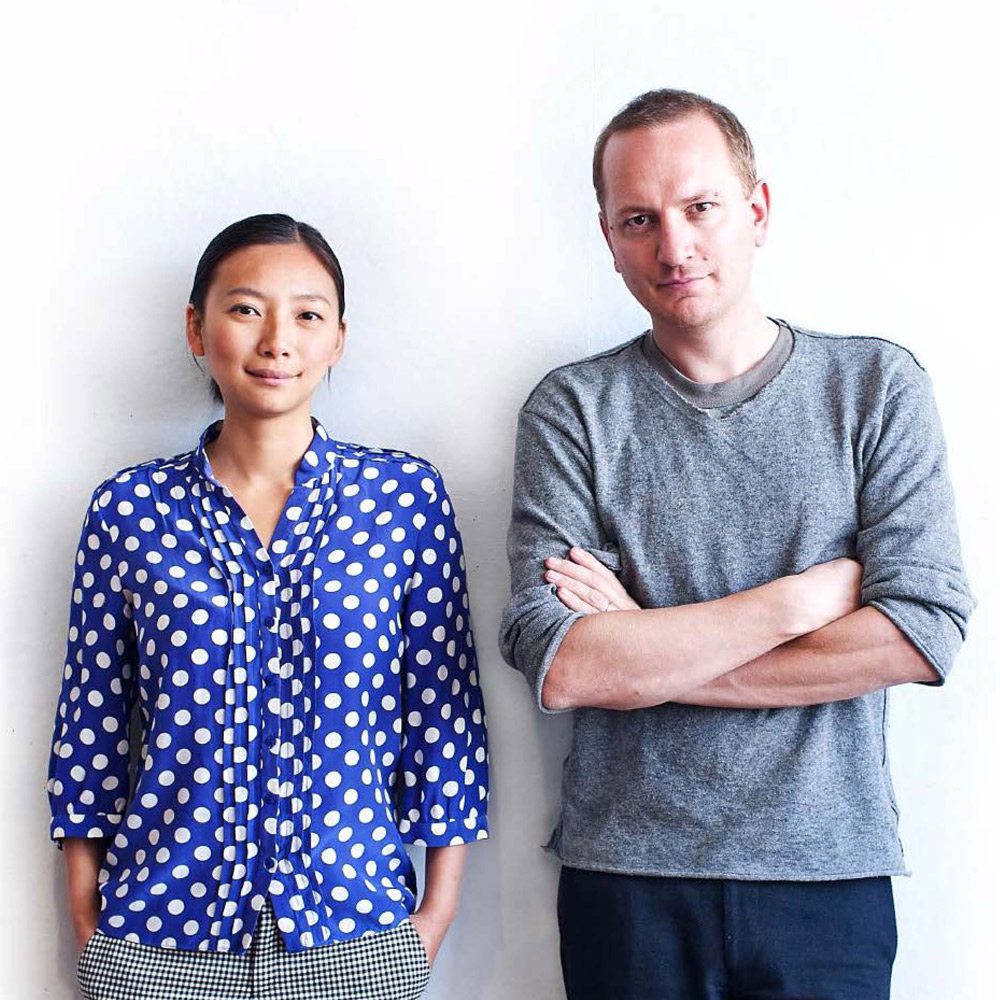
Solid Objectives – Idenburg Liu (SO – IL) is an internationally recognized architecture and design firm established in New York in 2008 by Florian Idenburg and Jing Liu. Diverse in origin, their team of collaborators speaks a dozen languages. They are informed by global narratives and perspectives while deeply grounding our research and design in the specificities of local social and cultural contexts. In addition to innumerable awards and publications, their work has been acquired by institutions like the MoMA in New York, the Carnegie Museum of Art in Pittsburgh, and the Art Institute of Chicago.

With their progressive and ambitious private, public, and institutional clients, they explore how built environments inspire lasting positive intellectual and societal engagement. Holding universal participation and ethical construction practices as core standards within their office and projects, they are a proudly certified Minority/Women-Owned Business Enterprise (M/WBE) and certified B Corporation.

In a digitized world that increasingly draws one inward, their architecture is outward-looking, engendering meaningful dialogue with that which is materially and psychologically outside of themselves. Their work incorporates innovative physical materials that follow each project’s unique scale and specificity, from stretched chainmail enveloping an entire gallery building to an elegant array of glass tubes forming a museum facade. Independent of budget and location, they infuse their projects with craft and material tactility.

With the firm now in its second decade, its work has spread onto four continents. From a collection of industrial heritage buildings housing three cultural institutions in northern France, to a contemporary art center inserted into an office tower in Shanghai, their scope is international. Current projects include a new gateway museum for Williams College in Massachusetts, aiming to be the most sustainable museum in the country.

In 2022, practice leaders Jing Liu and Florian Idenburg were awarded the American Academy for Arts and Letters Award in Architecture and were named United States Artist Fellows.

Florian Idenburg (b. Haarlem, Netherlands, 1975) is an internationally renowned architect with over two decades of professional experience. After learning the ropes in Amsterdam and Tokyo, he founded SO–IL in New York in 2008 together with Jing Liu. His years of working in cross-cultural settings make Florian a thoughtful, enthusiastic partner. With a joyous demeanour, he pursues innovation through collaboration. His particularly strong background in institutional spaces has enabled him to lead the office on notable projects, including the Kukje Gallery in Seoul, the Manetti Shrem Museum of Art at UC Davis, and the Amant Arts Campus in Brooklyn. His strength lies in generating imaginative ideas and transforming them into real-world spaces.

Idenburg has a strong intuition for the orchestration of form, material, and light. He is passionate about developing projects to a level where these elements converge into a superbly crafted physical space. He combines a hands-on approach with a theoretical drive, sharing this creative spirit with clients, collaborators, and students.

A frequent speaker at institutions around the world, he has taught at Harvard, MIT, Columbia, and Princeton University and is currently Professor of the Practice at Cornell University. In 2010, Idenburg received the Charlotte Köhler Prize of the Prince Bernhard Culture Fund. He is a registered architect in the Netherlands and an International Associate of the American Institute of Architects.

Jing Liu (b. Nanjing, China, 1980) co-founded SO–IL with Florian Idenburg in 2008 in New York City after receiving her education in China, Japan, the United Kingdom, and the United States. Over 20 years of practice, Jing has brought an intellectually open, globally aware, and locally embedded sensibility to her work spanning a wide range of mission-driven cultural projects.

Through building practice and interdisciplinary collaborations, Jing has led SO – IL to explore new fabrication techniques, such as in Kukje Gallery, Las Americas Housing project, and K11 Museum — and to engage with the socio political conditions of contemporary cities — in projects like Martin Luther King Library in Cleveland, Neighborhoods Now initiative in New York, and the Melbourne Arts Precinct Transformation.

In each case, Jing carefully considers the feedback loop between the cultural, social, economic, and political systems unique to the place and its material practices and seeks to make positive contributions toward transformation. As a past and present board member of several non-profit institutions, including the Van Alen Institute and the Urban Design   Forum, Jing furthers these endeavours in the broader public sphere.

Jing has written on many topics, including housing, design culture, and female practices. She has contributed to Solid Objectives: Order, Edge, Aura, published by Lars Müller, The Fabricated Landscape, published by Carnegie Museum of Art and Inventory Press, Home Futures: Living in Yesterday’s Tomorrow, published by the Design Museum, and the Avery Review by the Office of Publications at the Columbia University Graduate School of Architecture, Planning, and Preservation.

In previous years, the studio has included partners such as Lias Papageorgiou and associates such as Sooran Kim and Ted Baab on its team.


metalocus_so-ill_02    Solid Objectives – Idenburg Liu (SO – IL)

> 2013.          > 2022.             >2024

Read more
Published on: April 23, 2026
Cite:
metalocus, SARA GENT
"Gardens and Terraces in Brooklyn. "144 Vanderbilt Ave" by SO–IL" METALOCUS. Accessed
<https://www.metalocus.es/en/news/gardens-and-terraces-brooklyn-144-vanderbilt-ave-so-il> ISSN 1139-6415
Loading content ...
Loading content ...
Loading content ...
Loading content ...
Loading content ...
Loading content ...
Loading content ...
Loading content ...
Loading content ...
Loading content ...
Loading content ...
Loading content ...
Loading content ...
Loading content ...
Loading content ...
Loading content ...
Loading content ...
Loading content ...
Loading content ...
Loading content ...
Loading content ...
Loading content ...
Loading content ...
Loading content ...
Loading content ...
Loading content ...
Loading content ...
Loading content ...
Loading content ...
Loading content ...
Loading content ...
Loading content ...
Loading content ...
Loading content ...
Loading content ...
Loading content ...
Loading content ...
Loading content ...
Loading content ...
Loading content ...
Loading content ...
Loading content ...
Loading content ...
Loading content ...
Loading content ...
Loading content ...
Loading content ...
Loading content ...
Loading content ...
Loading content ...
Loading content ...
Loading content ...
Loading content ...
Loading content ...