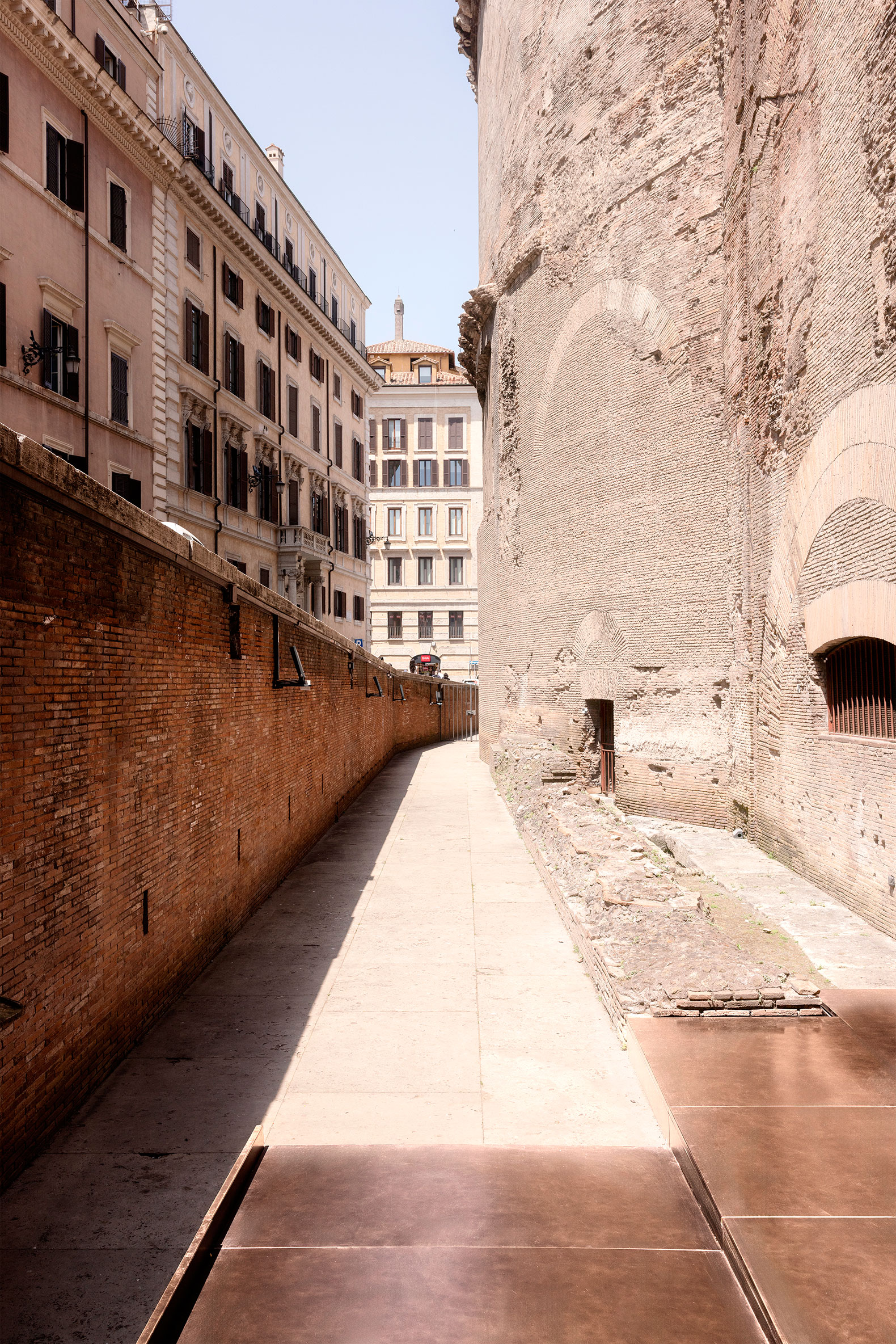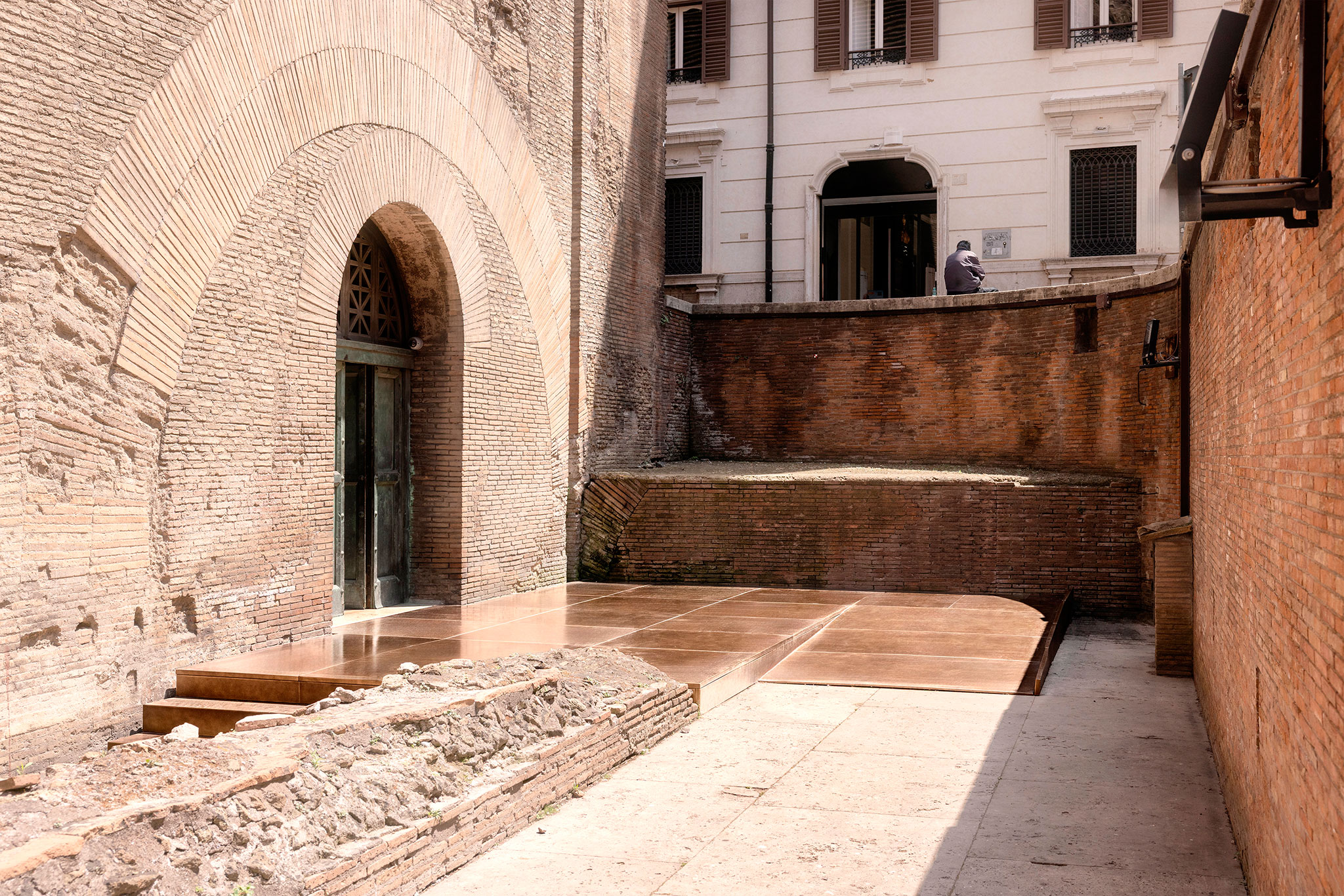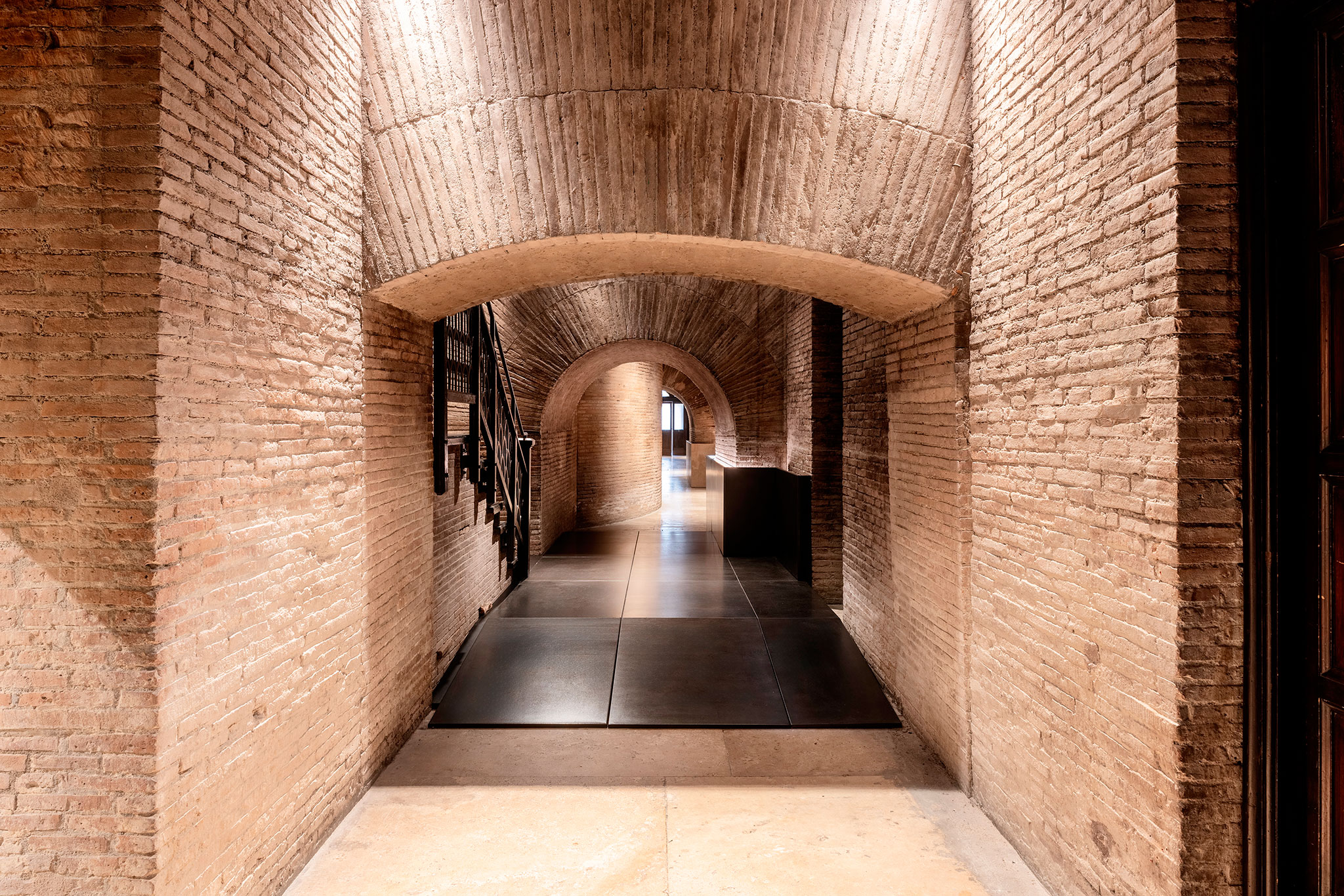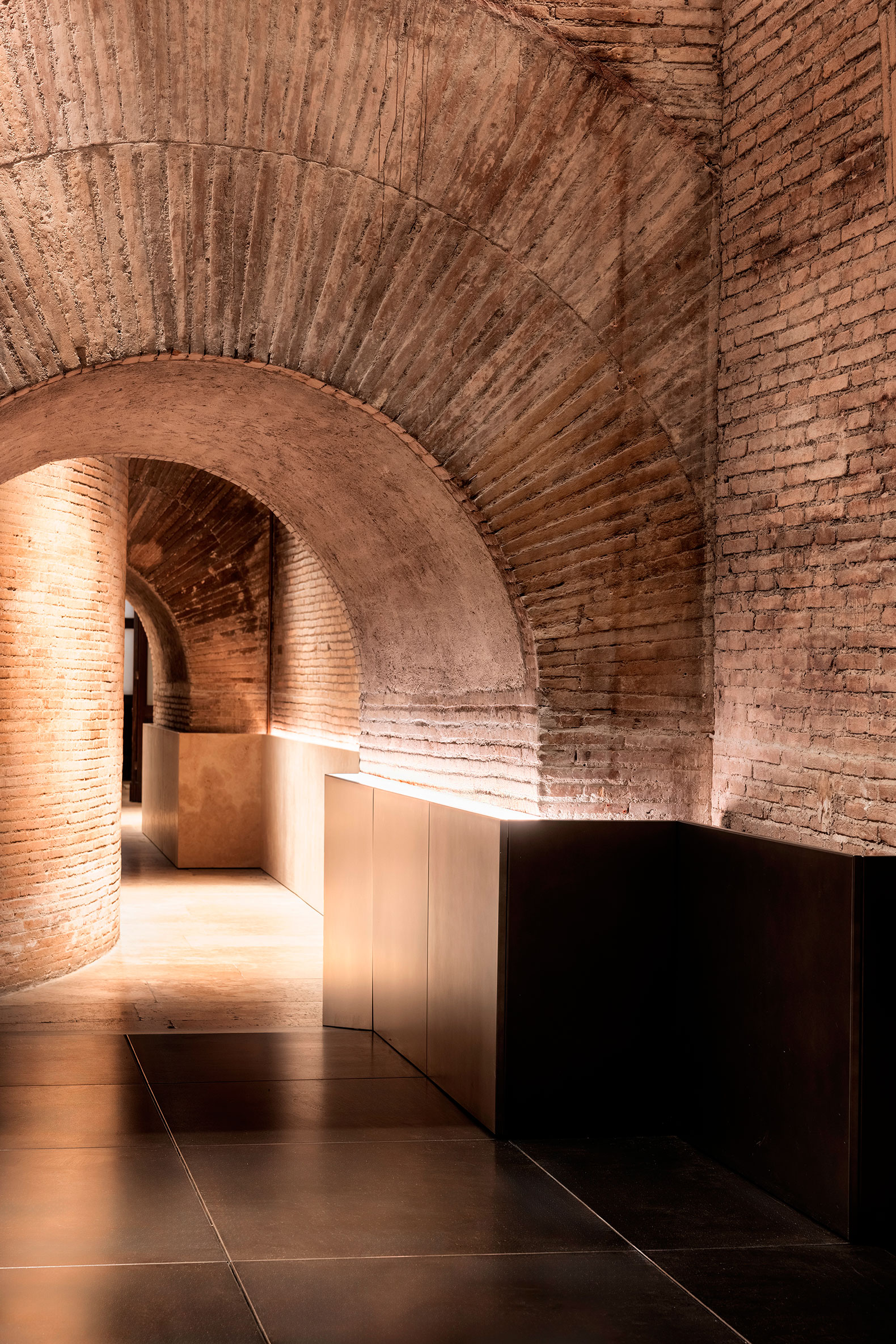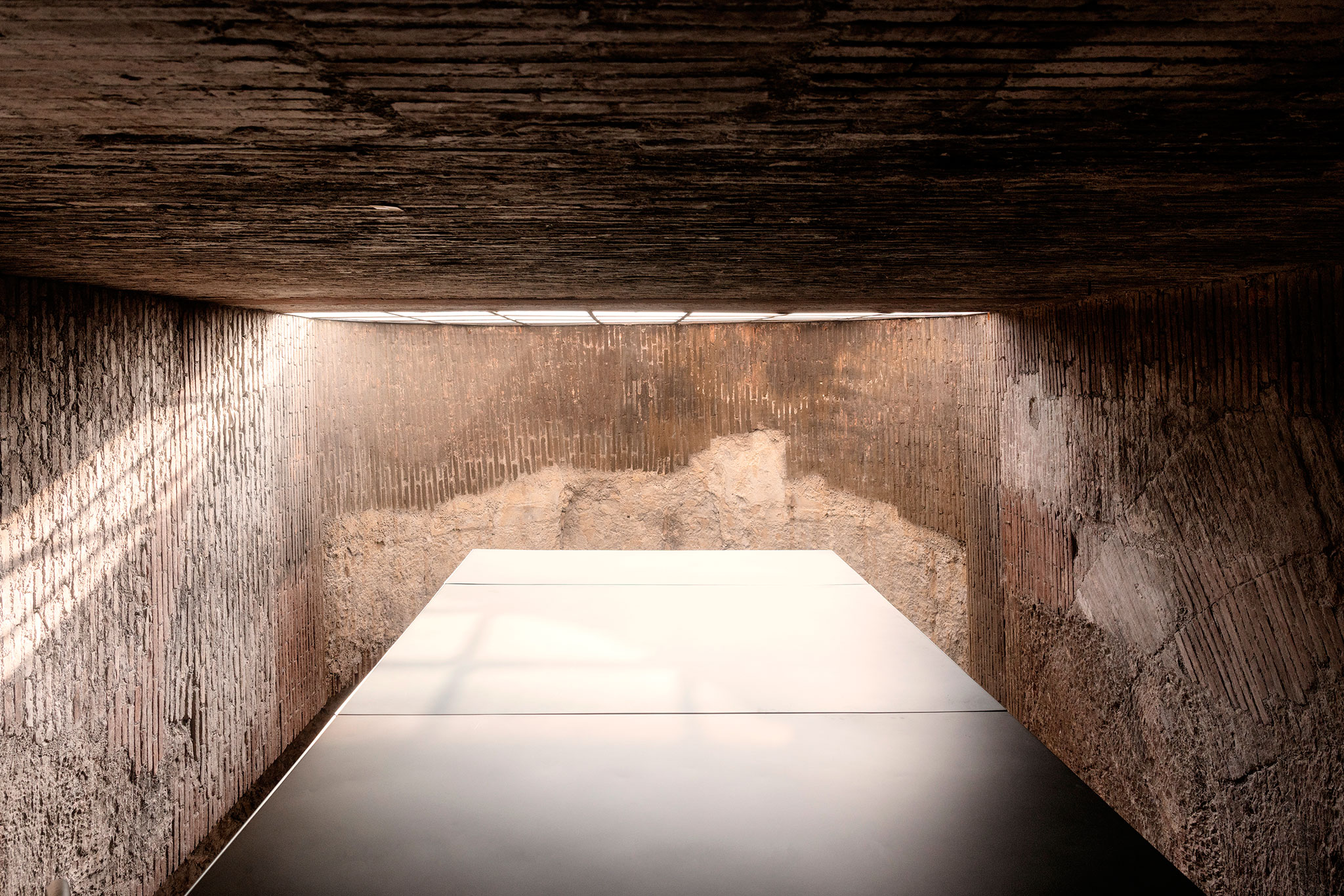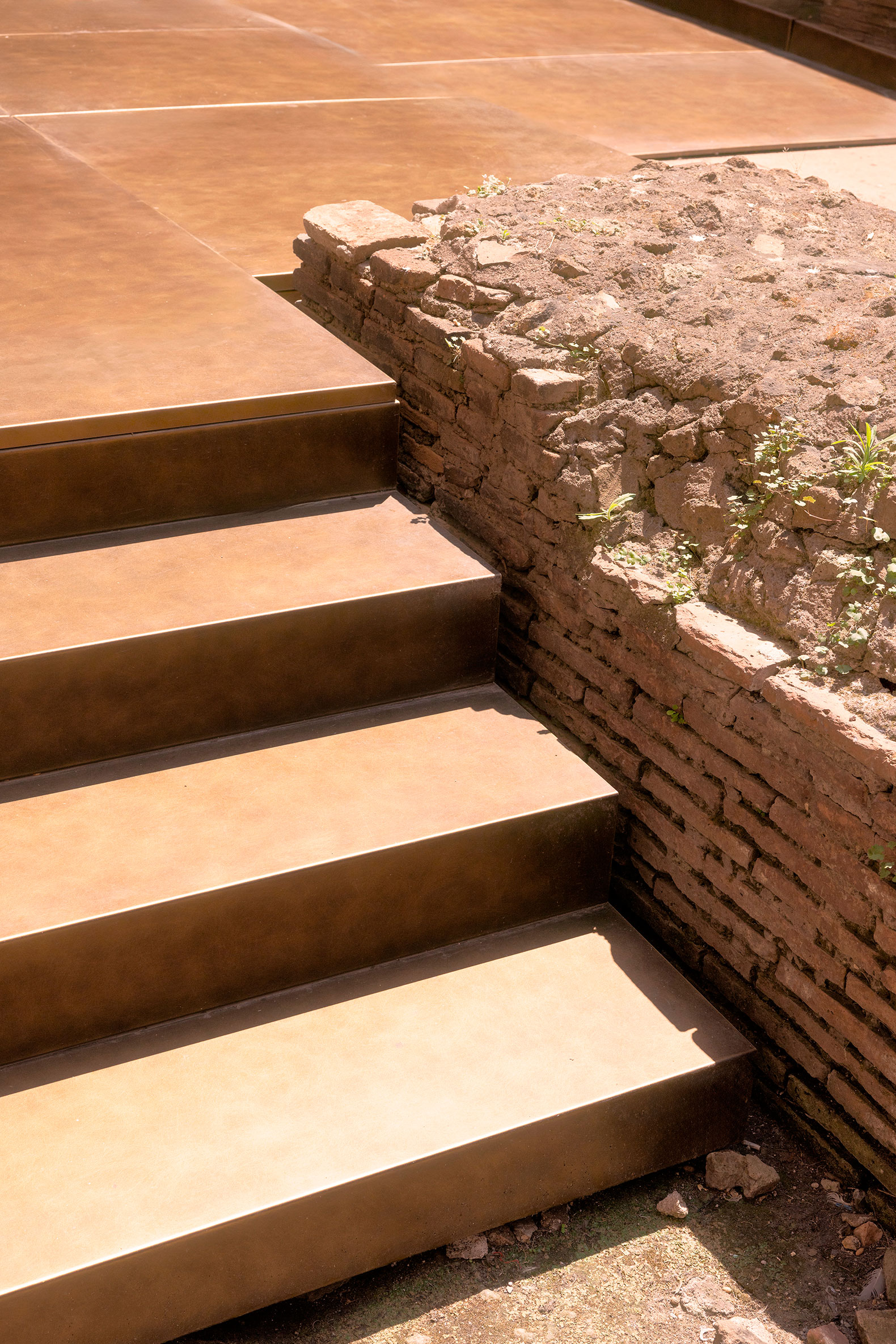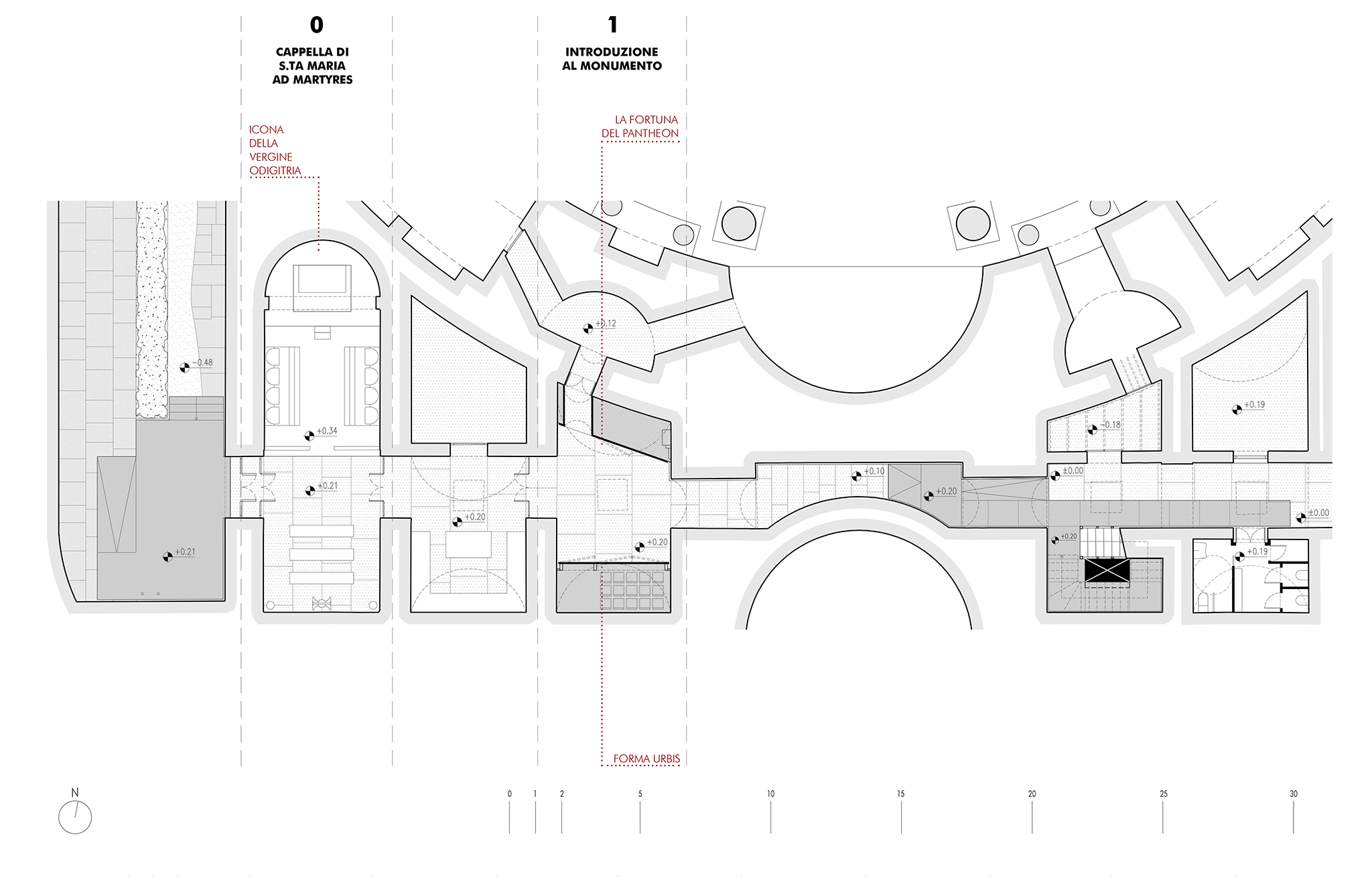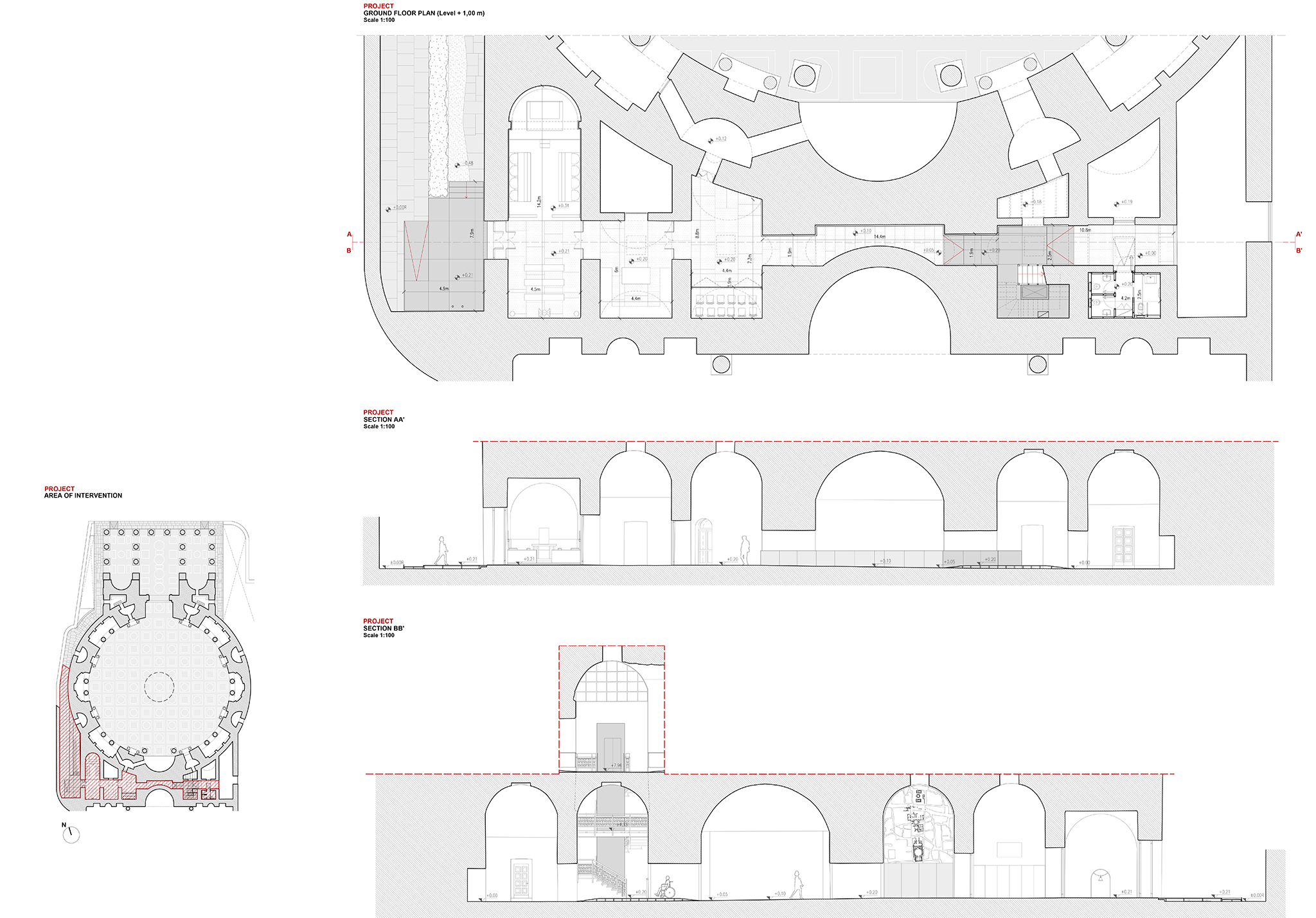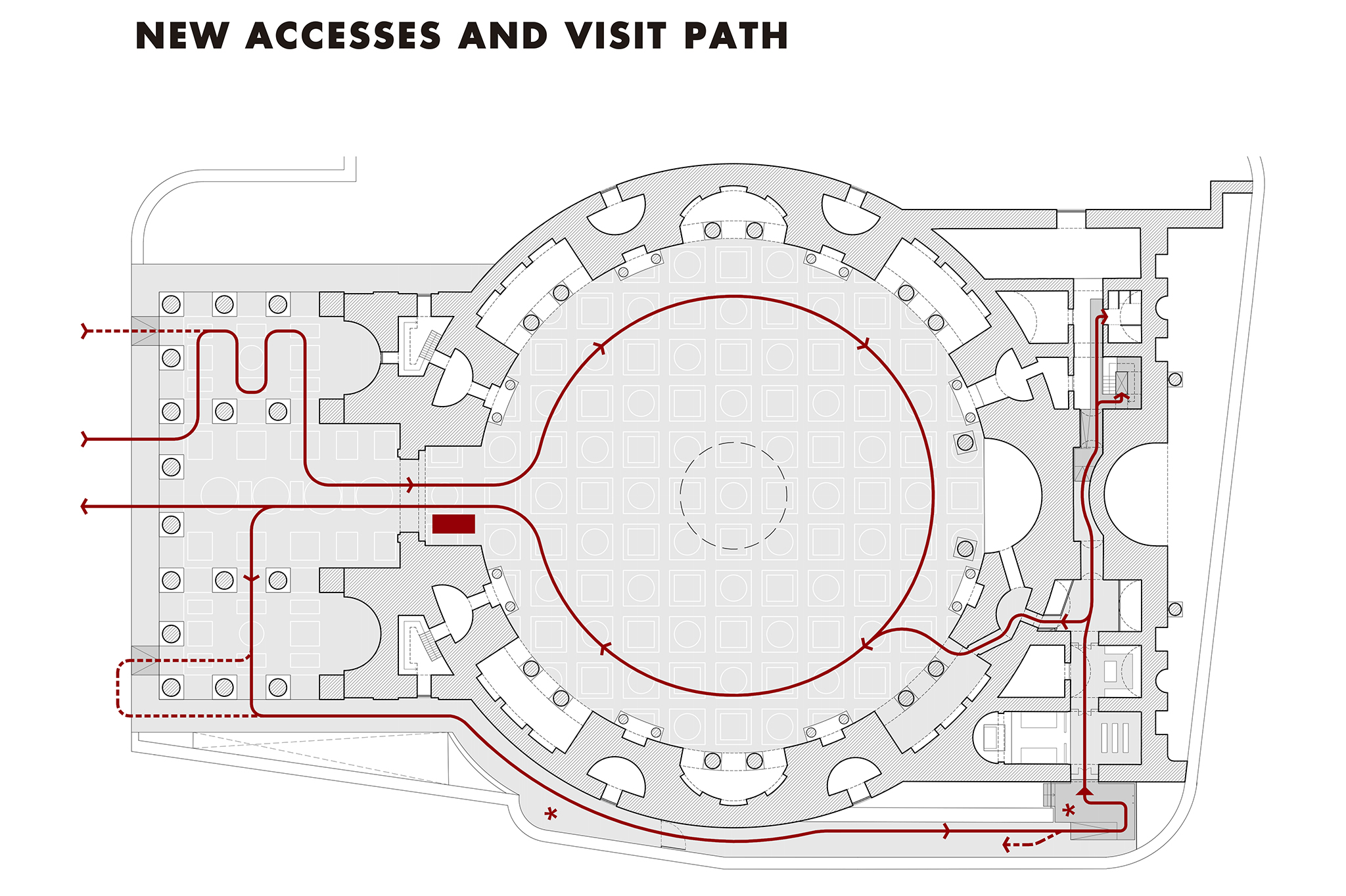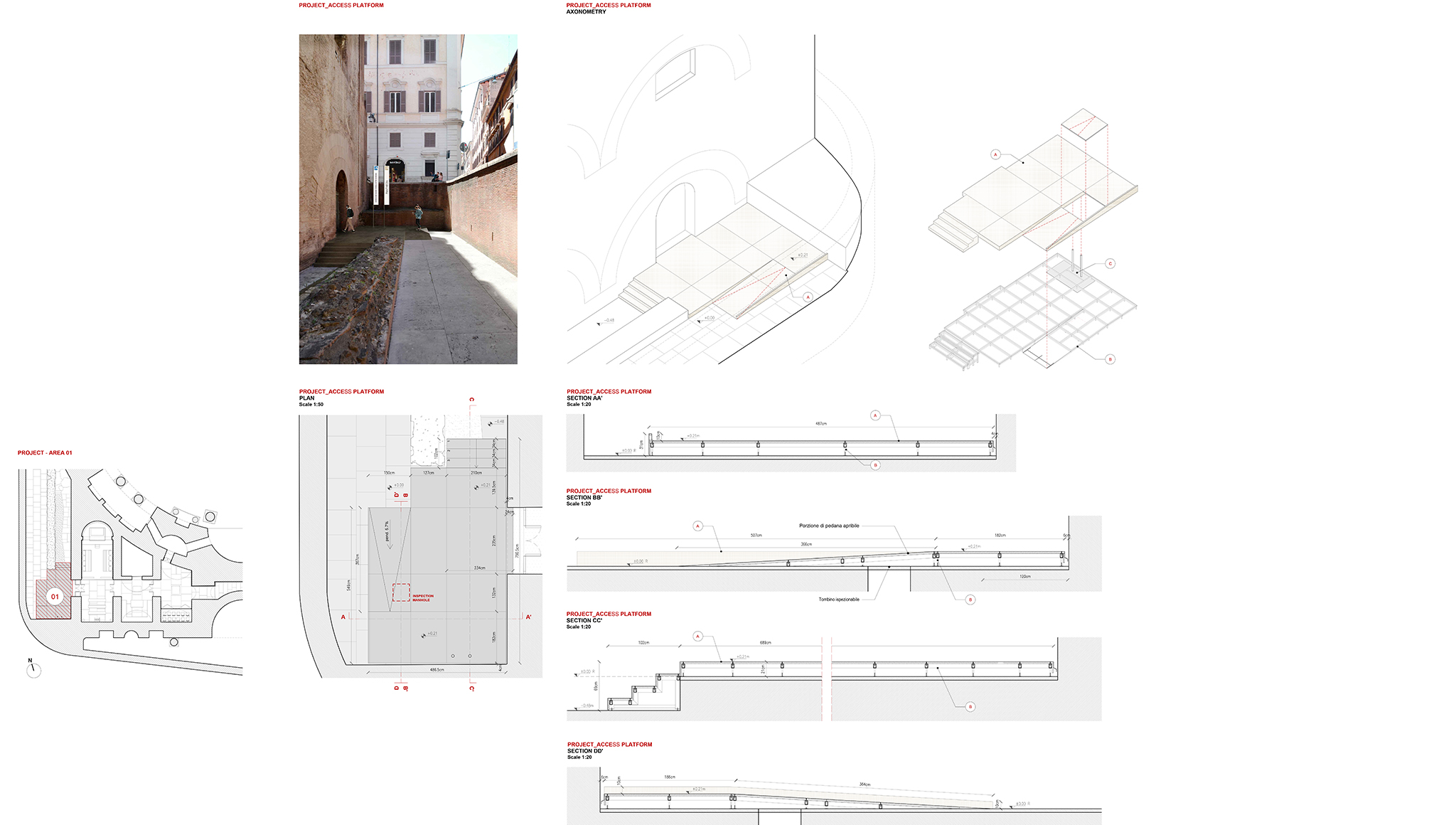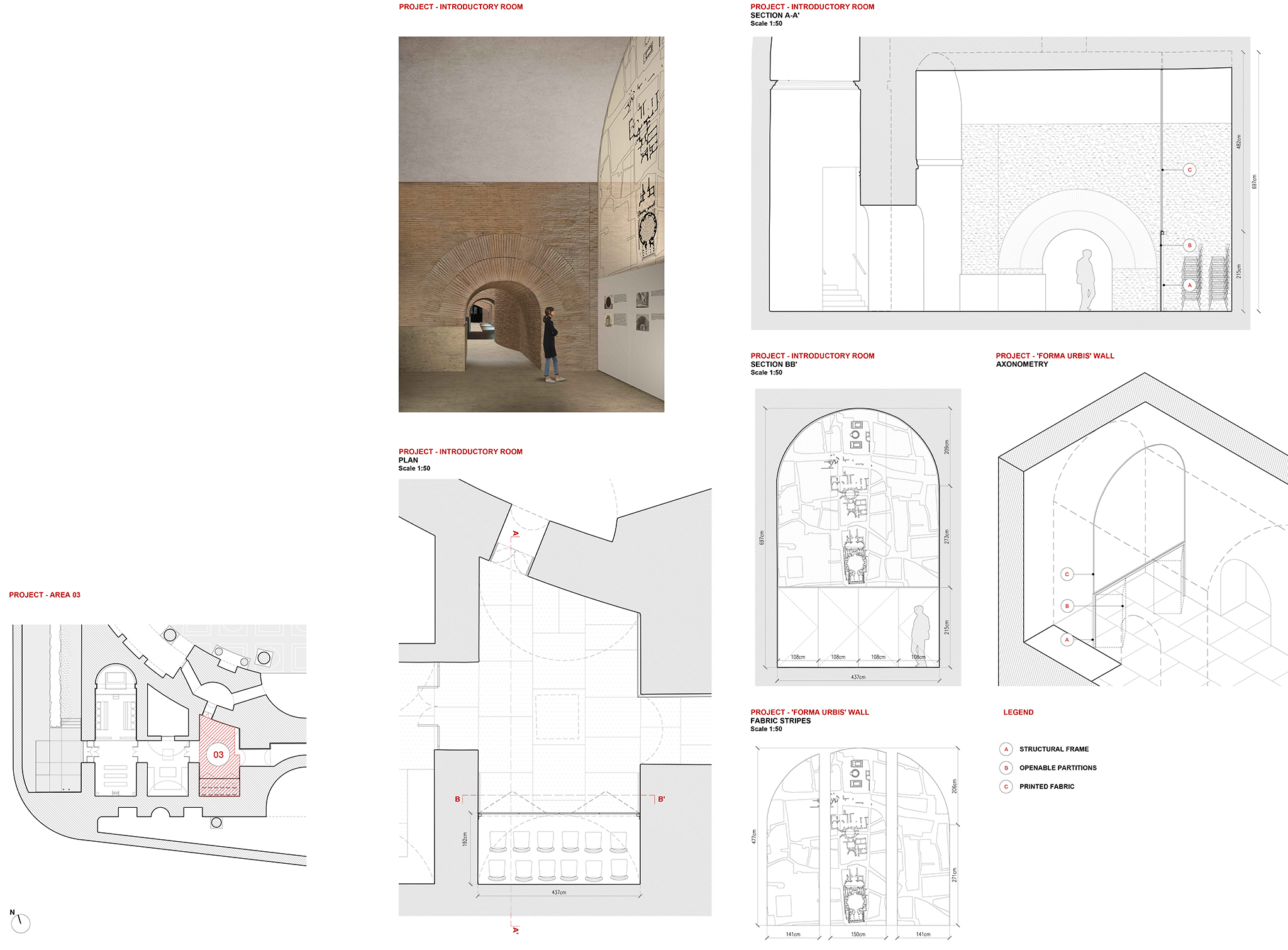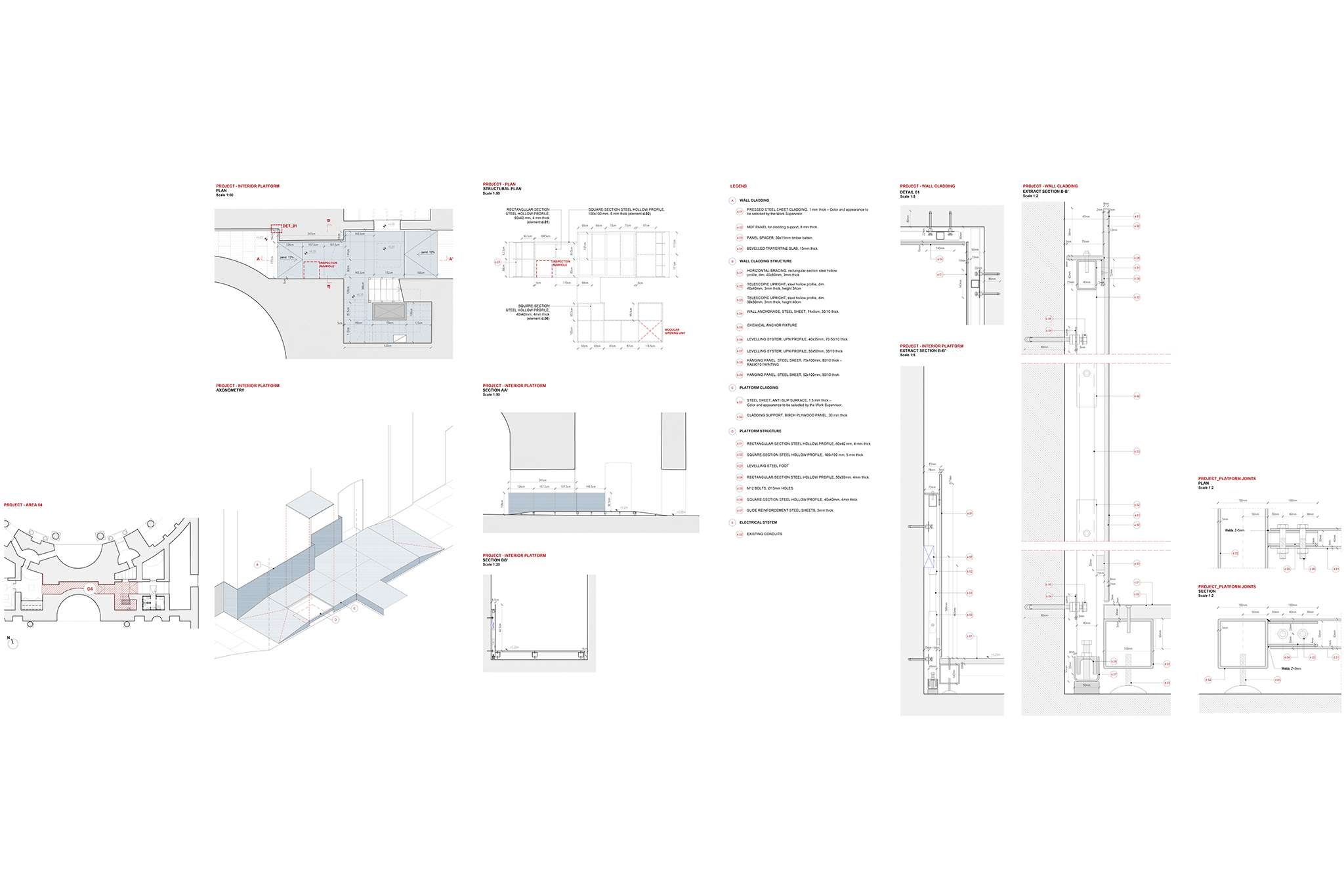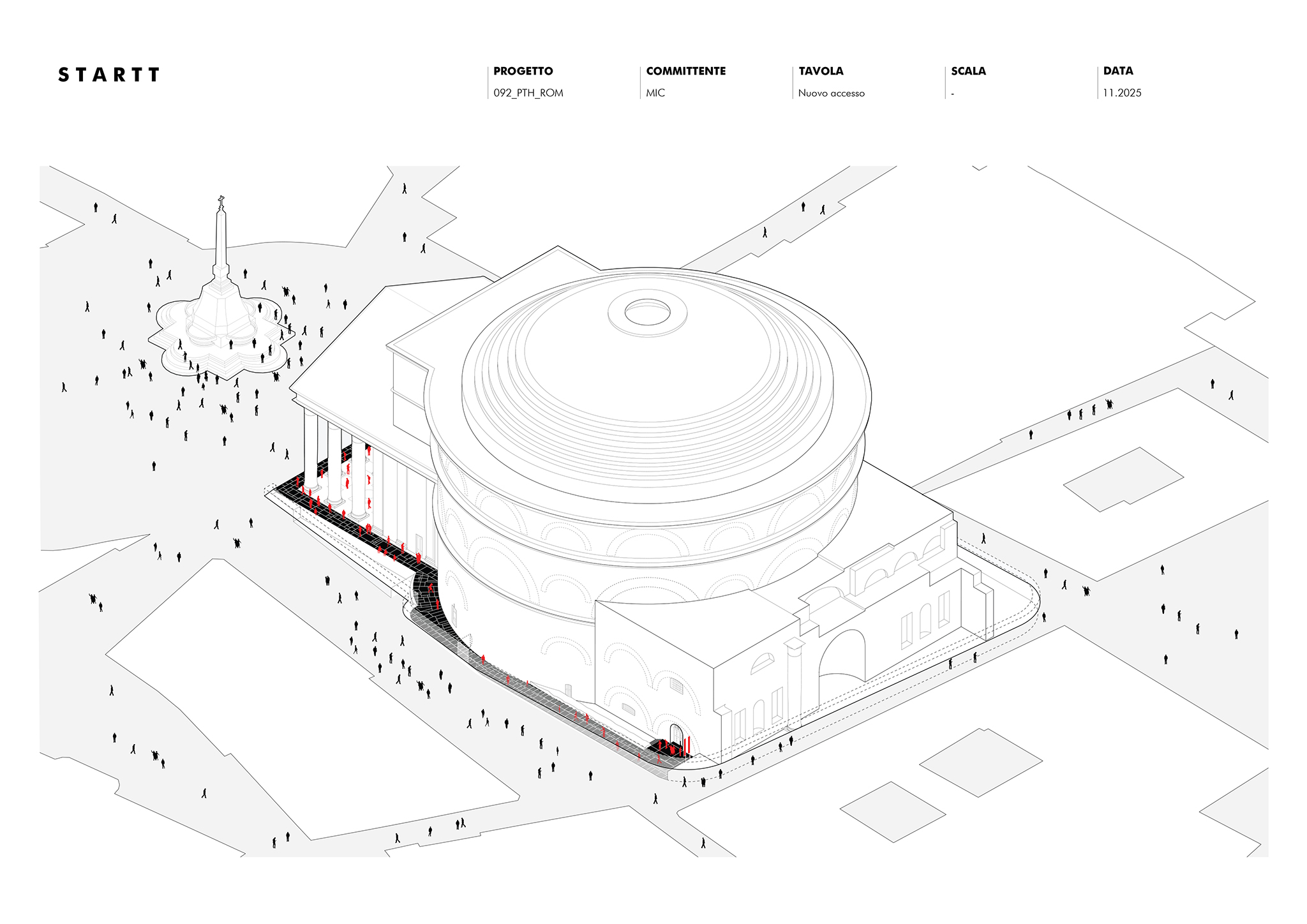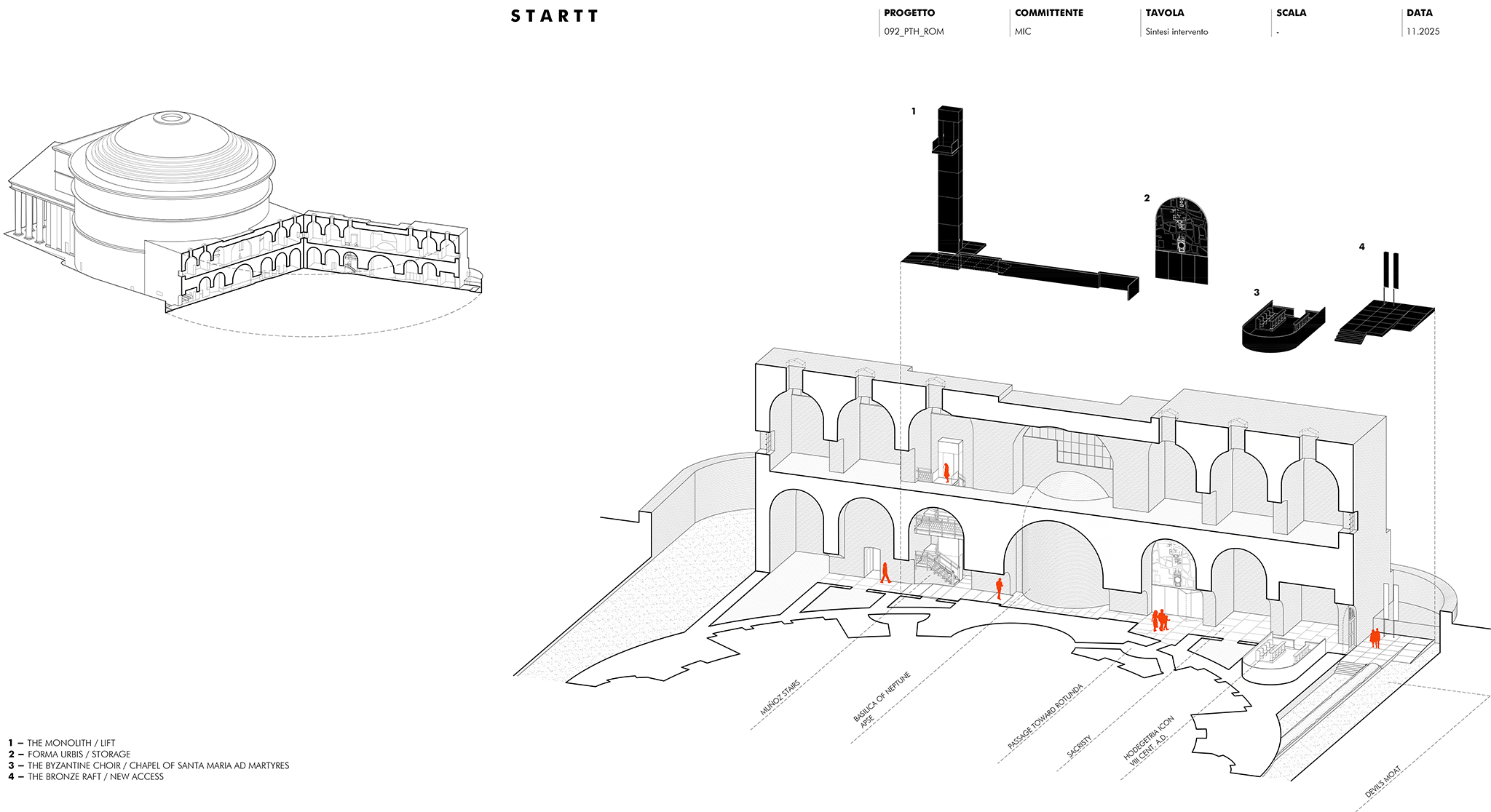
The micro-architectural intervention designed by STARTT allows visitors to access the two levels that comprise the project, introducing a new system of ramps and a new elevator within the archaeological site to ensure full access to the upper level. The exhibition spaces house the chapel of the Basilica of Santa Maria ad Martyres, along with architectural fragments representing the various historical phases of the Pantheon and the Basilica of Neptune.
The intervention employs brick and metal. This establishes a contrast between the original brick surfaces and the materiality of the metal sheets, achieved through galvanizing, rolling, and coating techniques. These processes utilize calamine black, rolling blue, and alloy oxidations to create a dialogue with history.
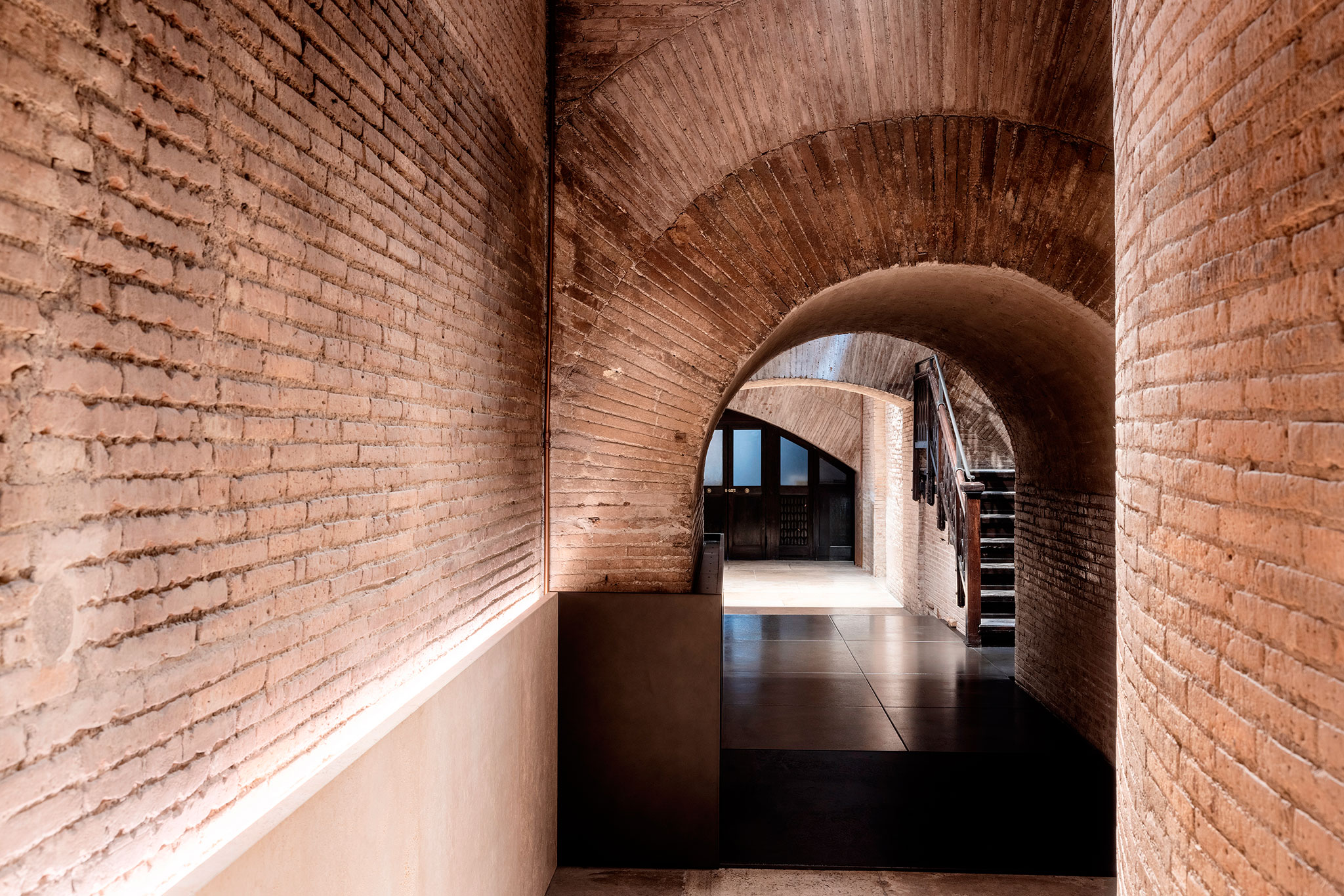
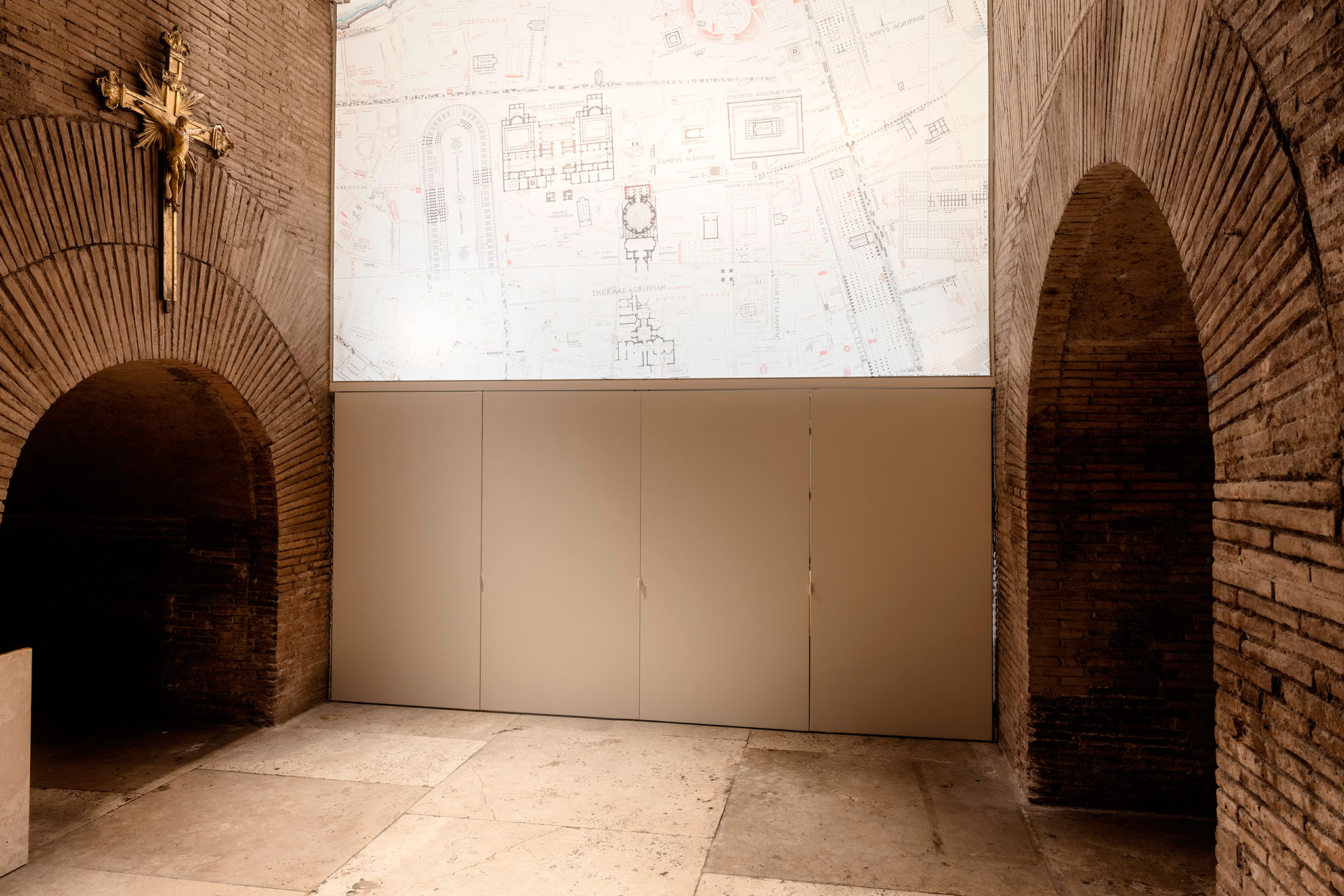
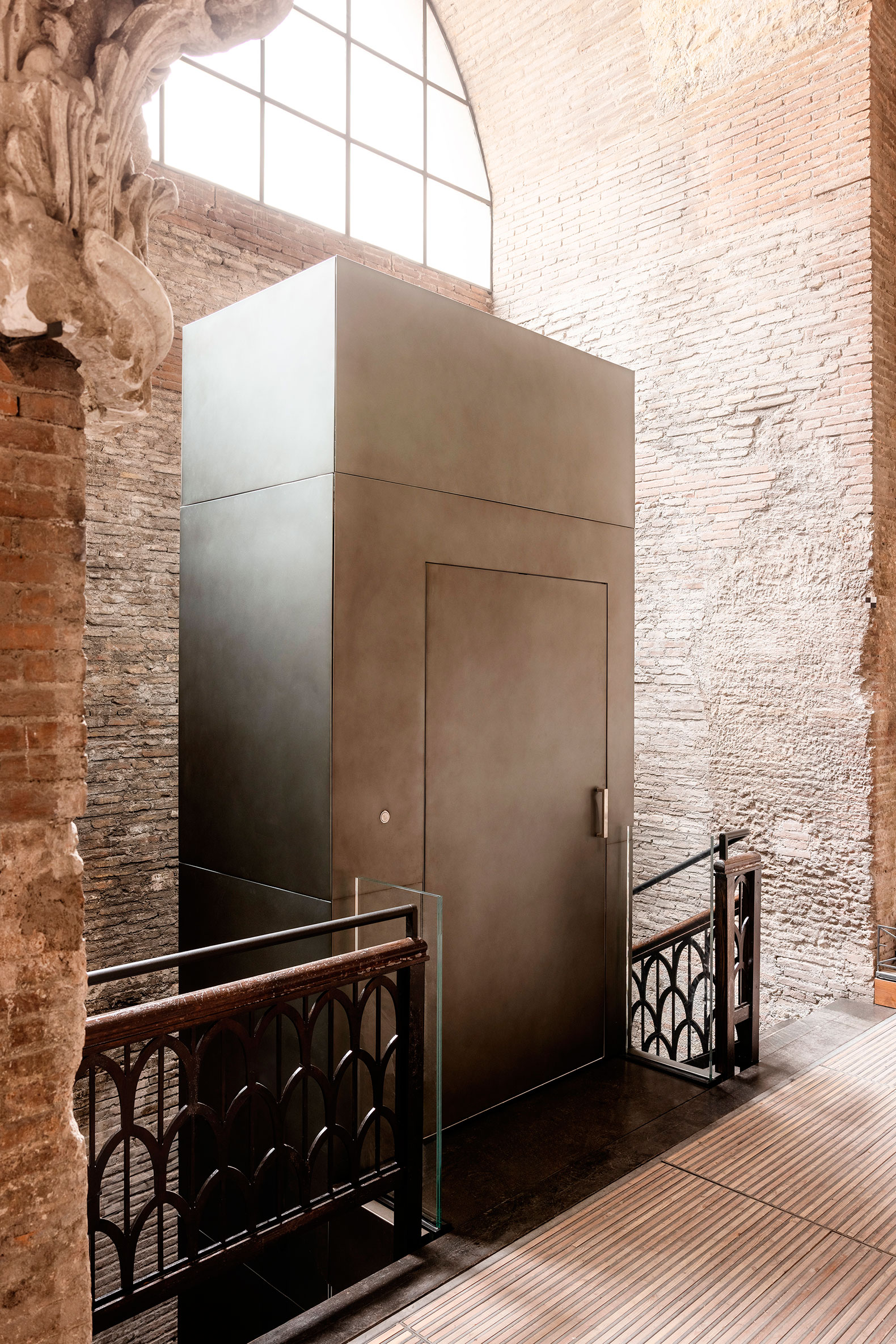
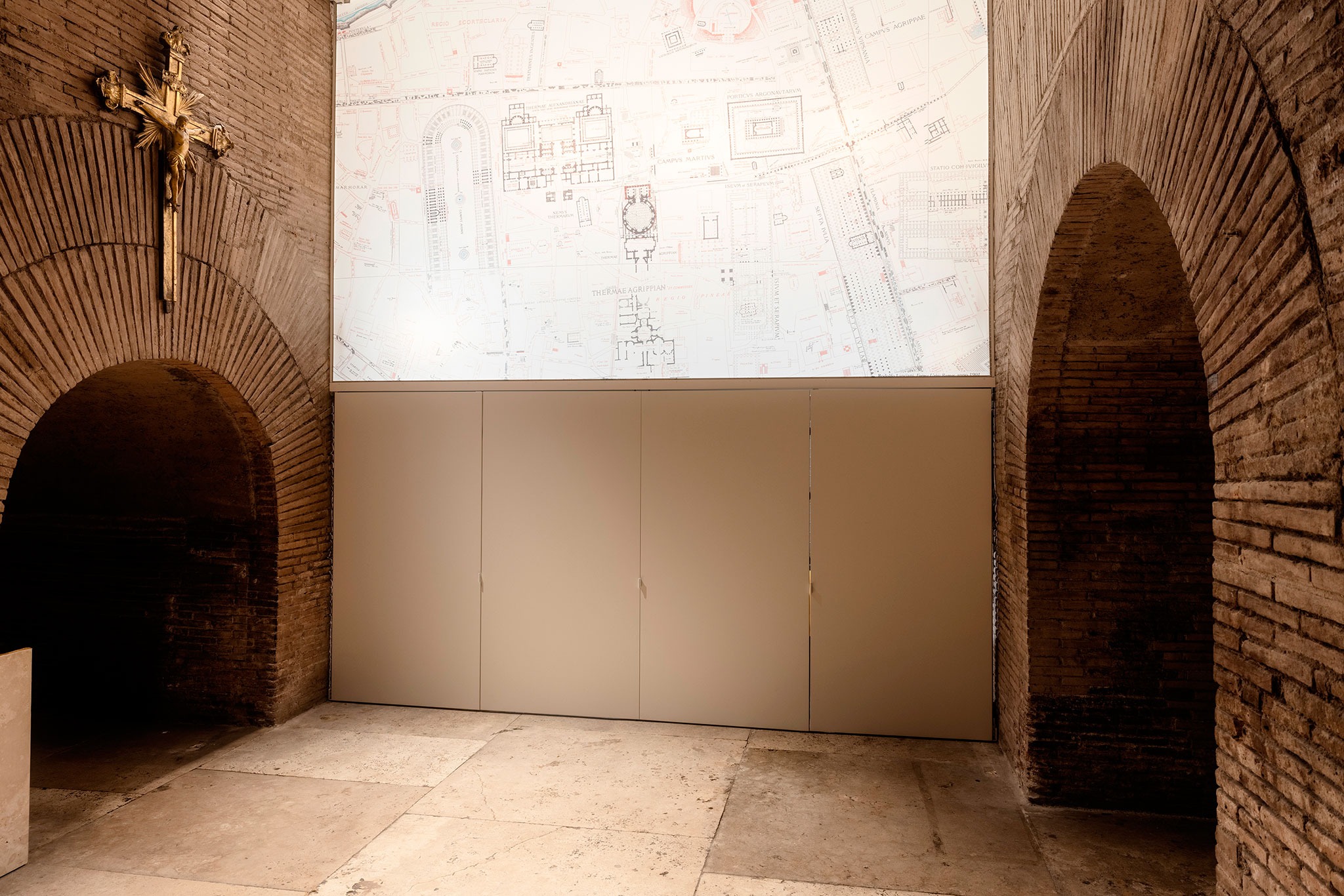
The passage to the Rotunda features a semi-transparent filter of a storage structure, defined by a metal railing. The elevator rises as a monolithic element on the upper level. Here, the union between the monolith and the original floor is achieved through a glazed separation.
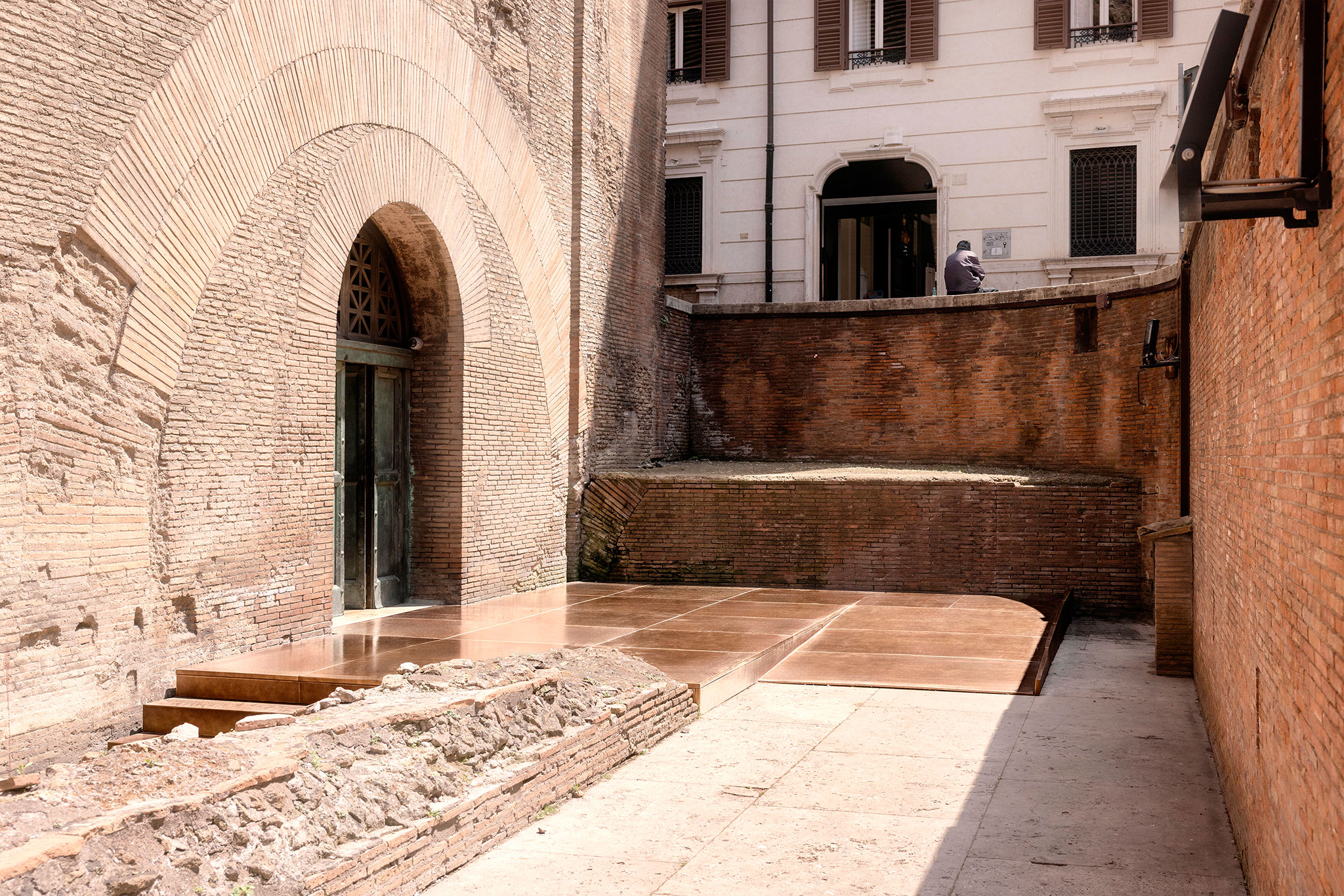
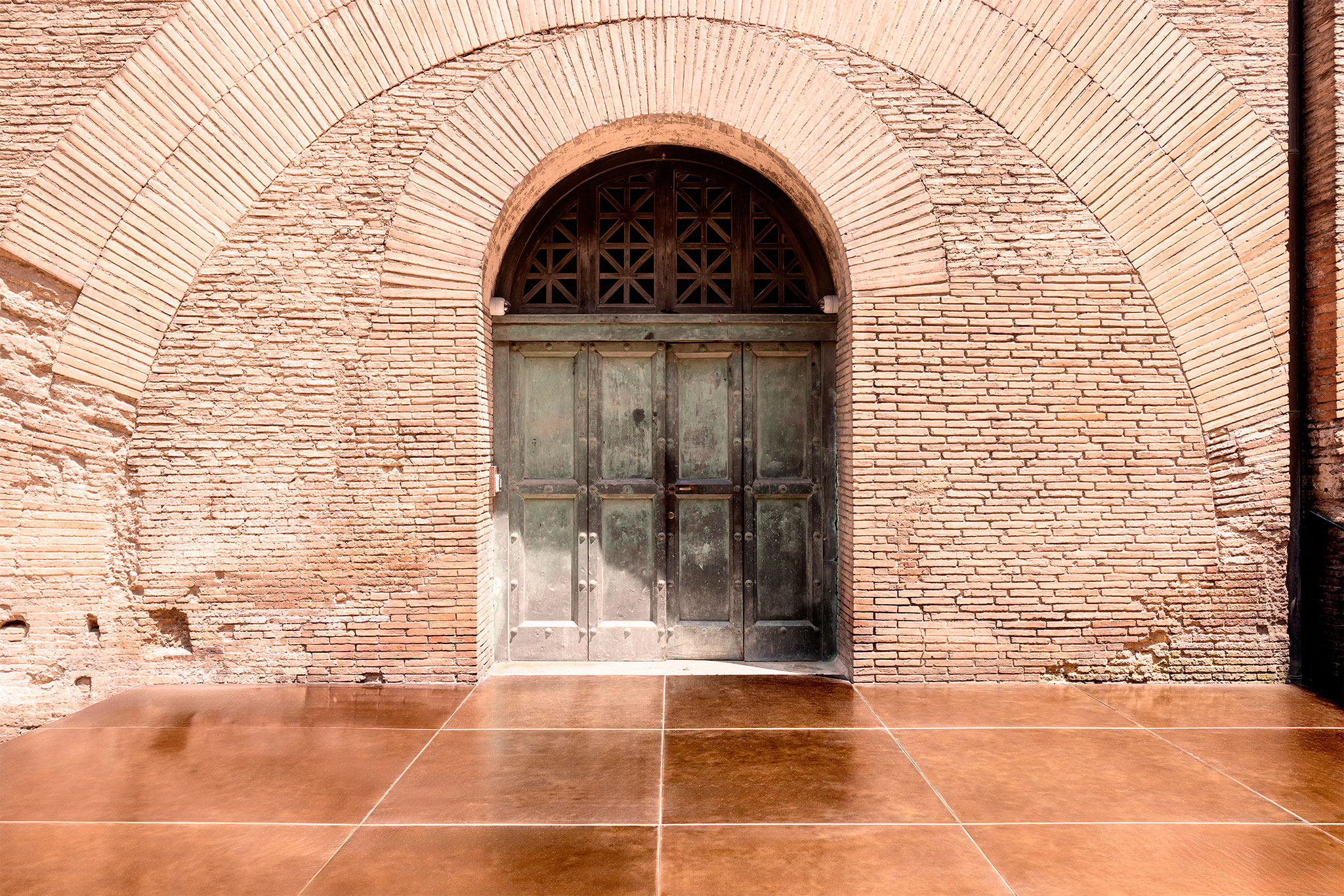
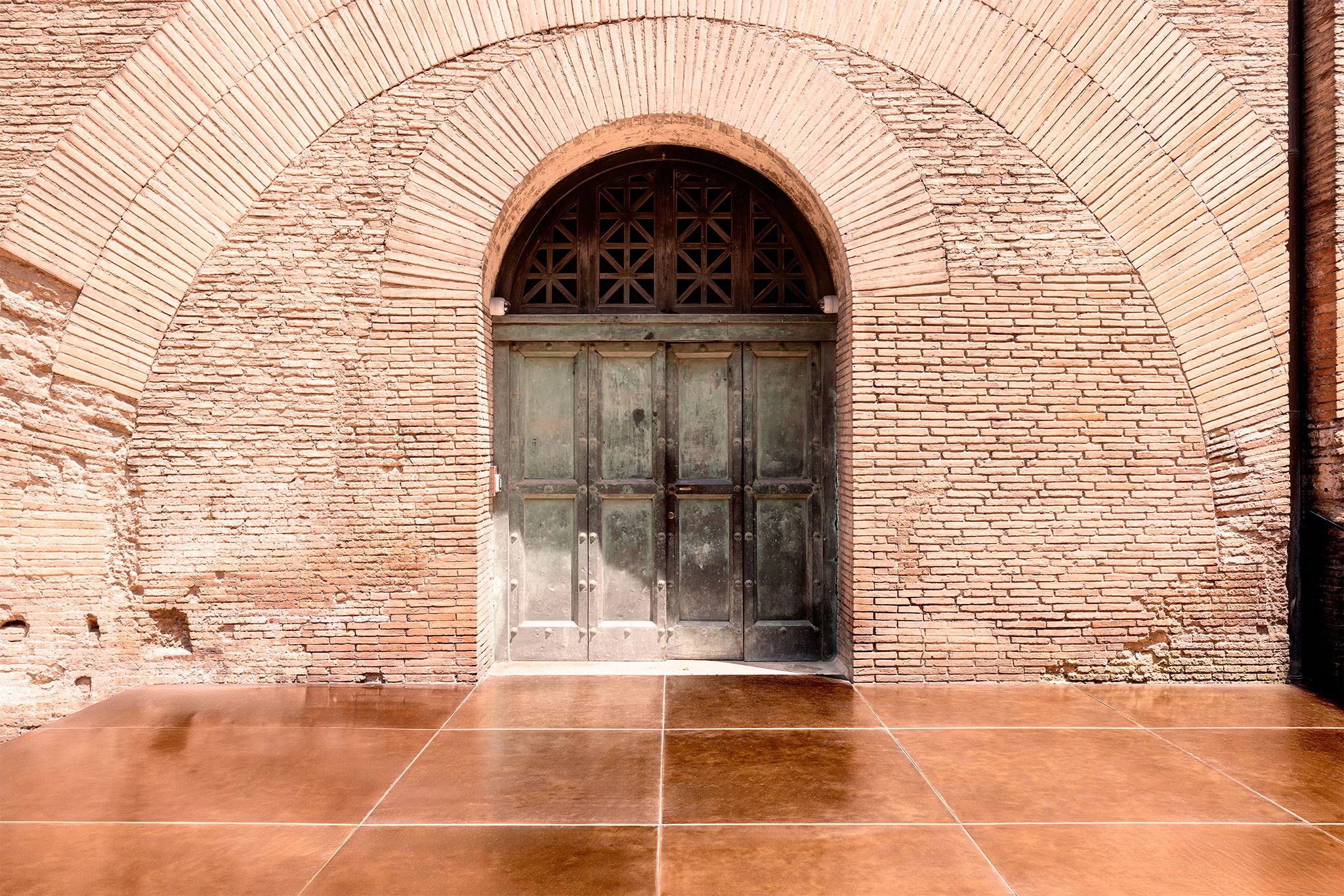
Entrance to the spaces behind the Rotonda of the Pantheon – Moat Level. Pantheon – Micro-Architectures for Archaeology by STARTT. Photograph by Alessandro Penso.
Project description by STARTT
The inhabited History
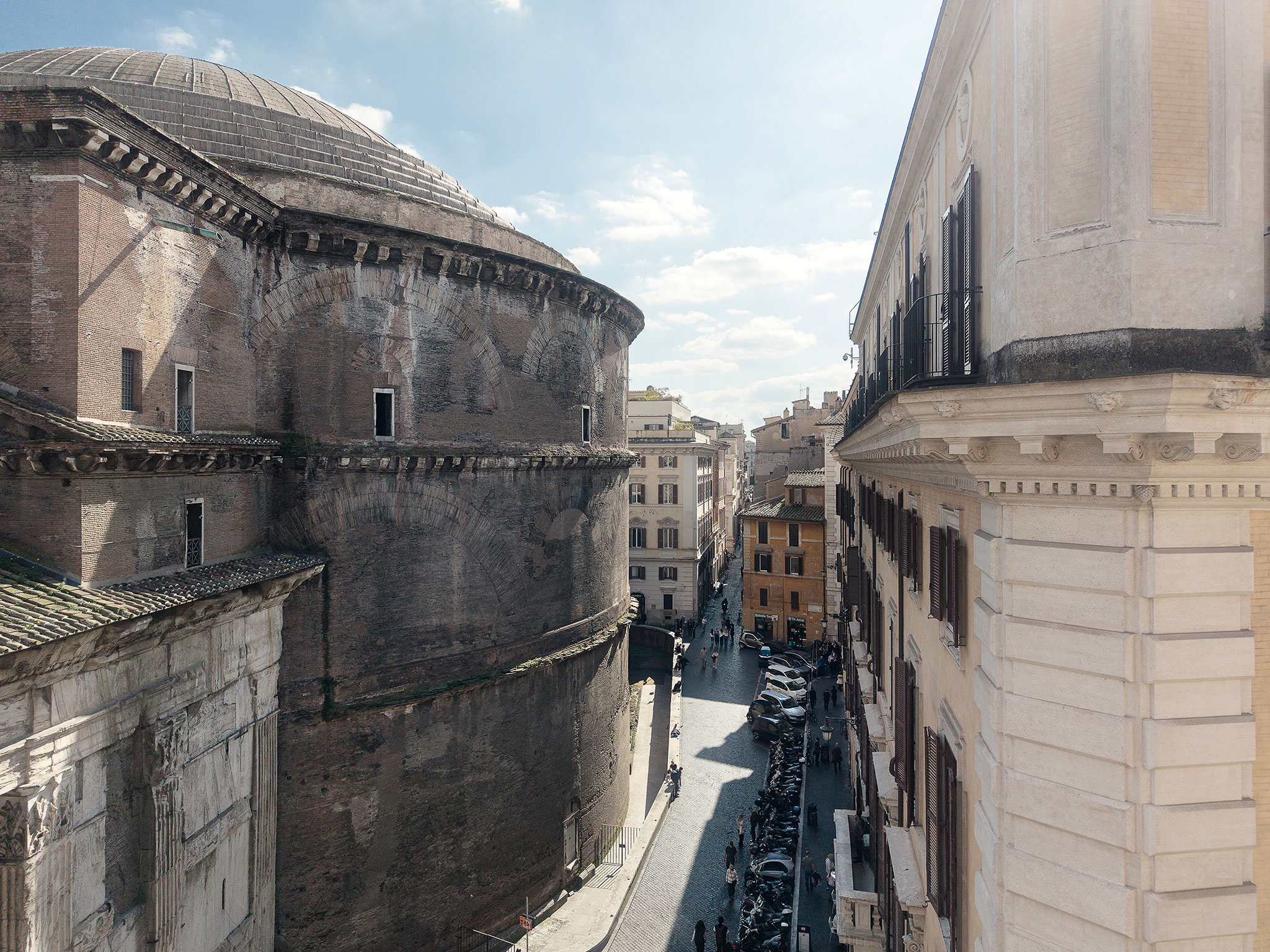
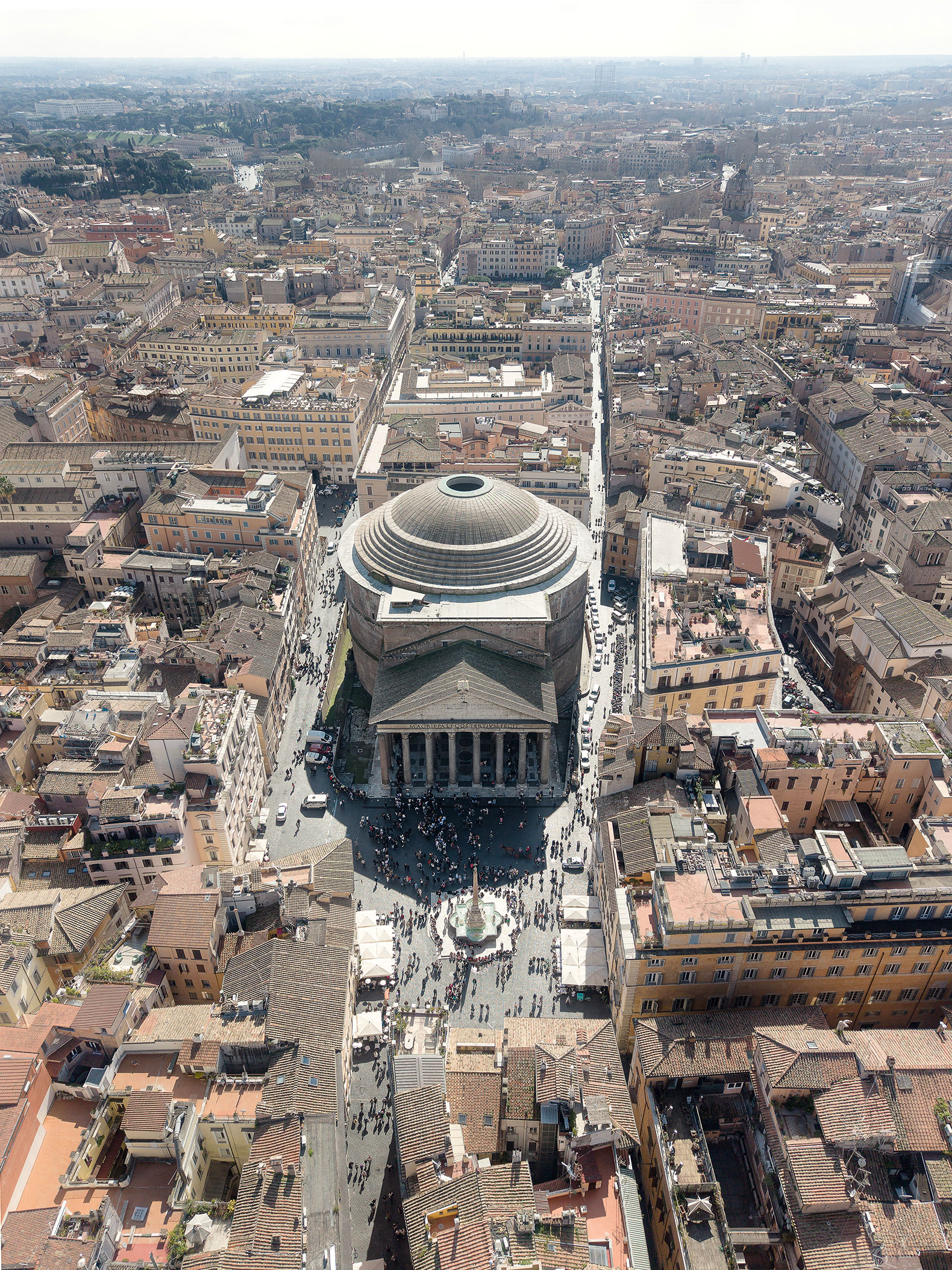
Pantheon – Micro-Architectures for Archaeology is the project designed by STARTT for the recovery and the opening to the public of the spaces located behind the Rotunda of the Pantheon in Rome. The spaces behind the Rotunda, distributed over two floors, are defined by the buttresses that once connected the Pantheon and the Basilica of Neptune (1st century BCE). These rooms testify to how the monument was the head of a longitudinal urban system extending across the city block up to what is now Largo Argentina —prior to the demolitions undertaken during the Kingdom of Italy, which removed part of the Basilica and made the monument autonomous, with the specific purpose of transforming it into the mausoleum of King Vittorio Emanuele II.
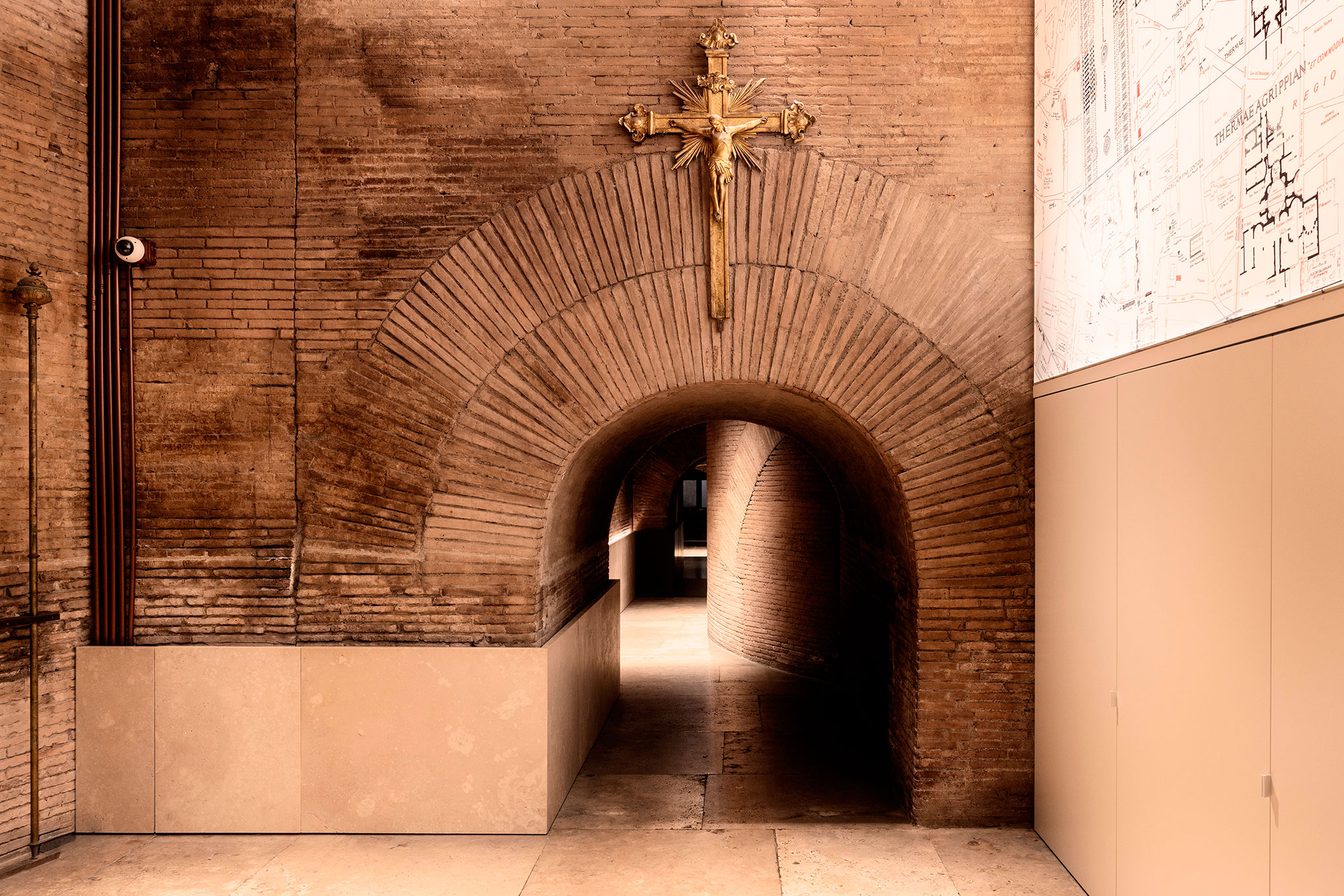
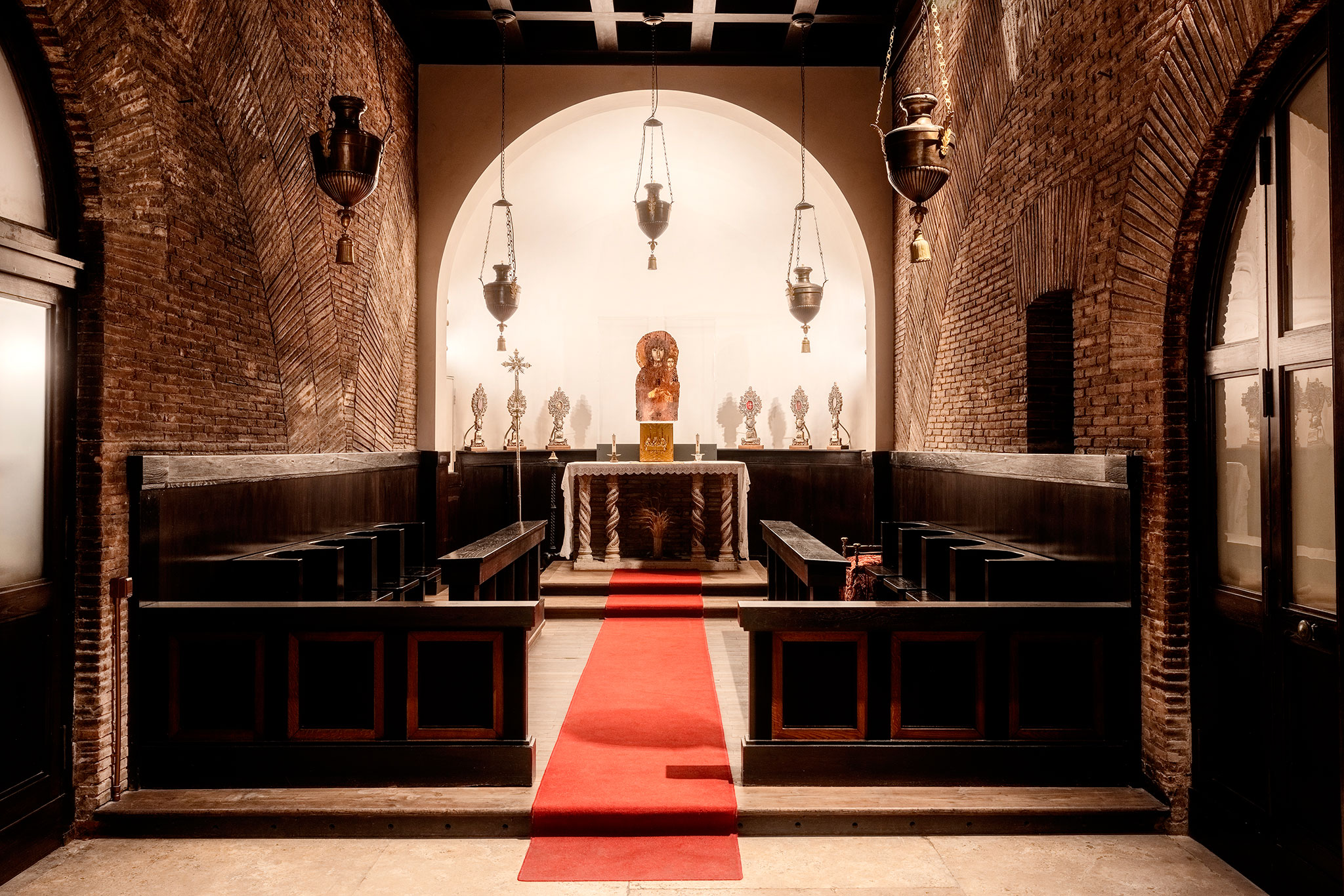
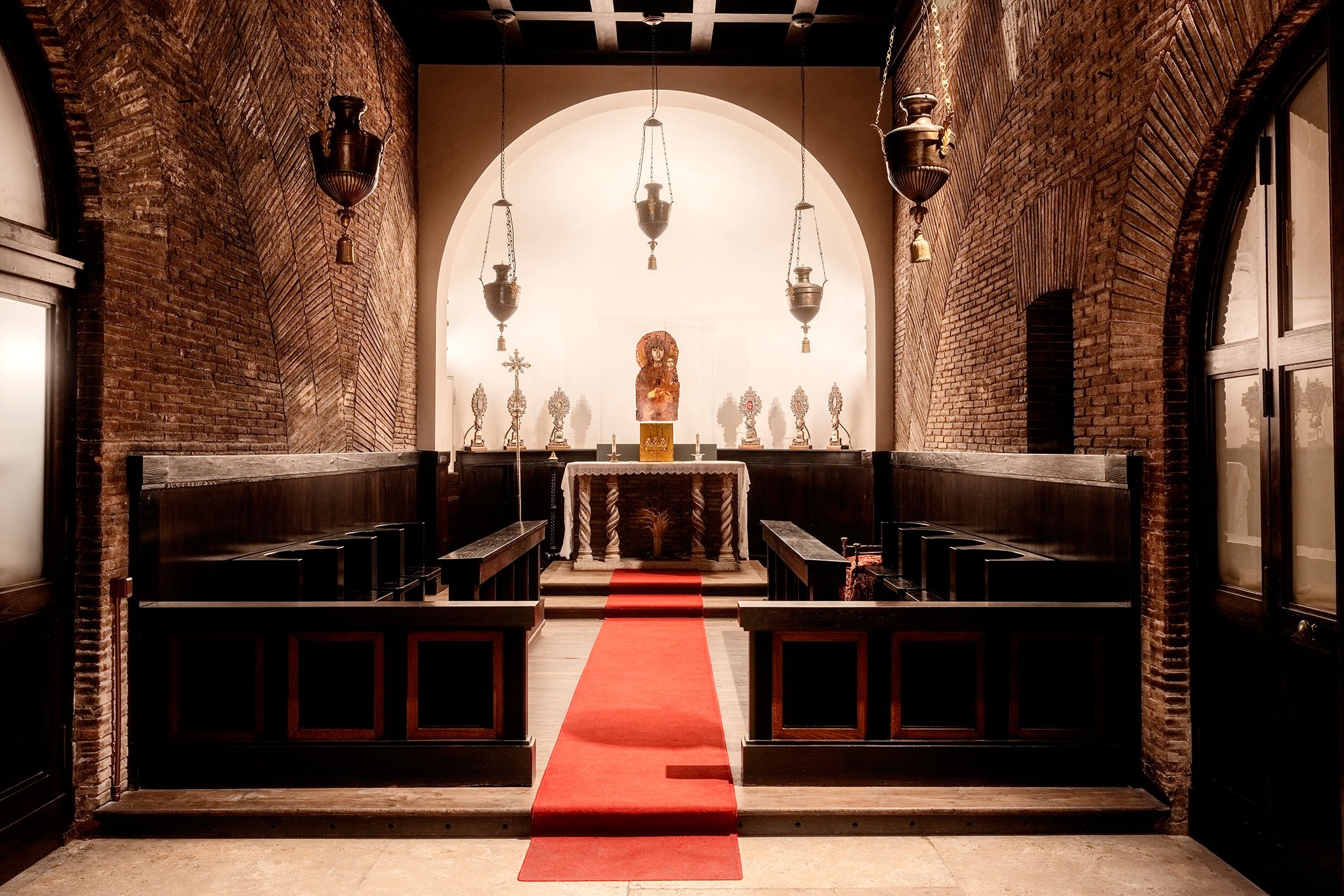
Today, these surviving spaces are accessed from the lateral ditch, below the street level but at the elevation of the original podium of the Pantheon. The spaces, now open to the public, host the chapel of the Basilica of Santa Maria ad Martyres, which preserves Rome’s earliest Byzantine icon, alongside architectural fragments representing the various historical phases of the Pantheon and the Basilica of Neptune. These elements were originally exhibited during the Fascist era as part of the 20th-century antiquarium of the Pantheon and are now being reinterpreted in a new exhibition, curated by the Ministry of Culture under the direction of Luca Mercuri, Director of the Pantheon.
Inclusive archaeology and spatial sequences / everything is visitable
The project enables the opening of these spaces to the public under the principles of social inclusion and universal accessibility. The intervention allows visitors to access both floors, which—due to the exceptional nature of the materials collected and displayed—constitute a veritable museum of the Monument itself.
The project operates through subtraction, seeking to emphasise the Roman spatiality compressed between the perimeter cylinder of the Rotunda and that of the apse of the Basilica of Neptune, that is still perceivable as a ruin from Via della Palombella.
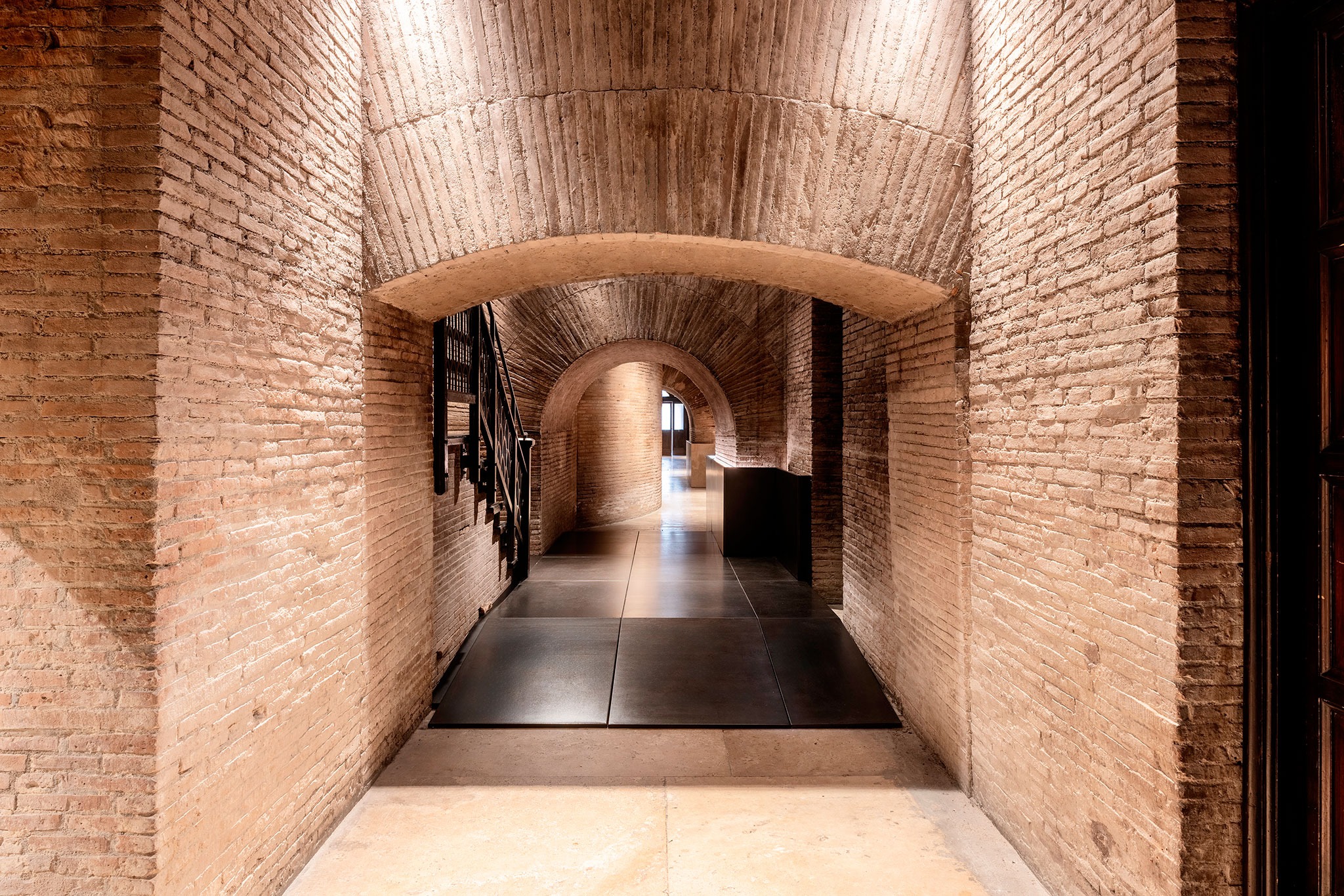
All rooms involved have been reinterpreted as part of a narrative sequence, that is centred on the perception of this spatial compression. In the new layout, everything becomes exhibition-focused. The project deliberately avoids a conventional separation between “served” spaces for the public—such as the exhibition rooms on the upper floor or those for religious functions on the ground floor—and “servant” spaces for staff—such as restrooms, storage rooms, and corridors.
Circulation spaces and ancillary rooms become the locus for exploring the relationship between the historical space and the visitor’s body; every space is bounded and reorganized as a visitable space through site-specific architectural elements.
Micro-architectures
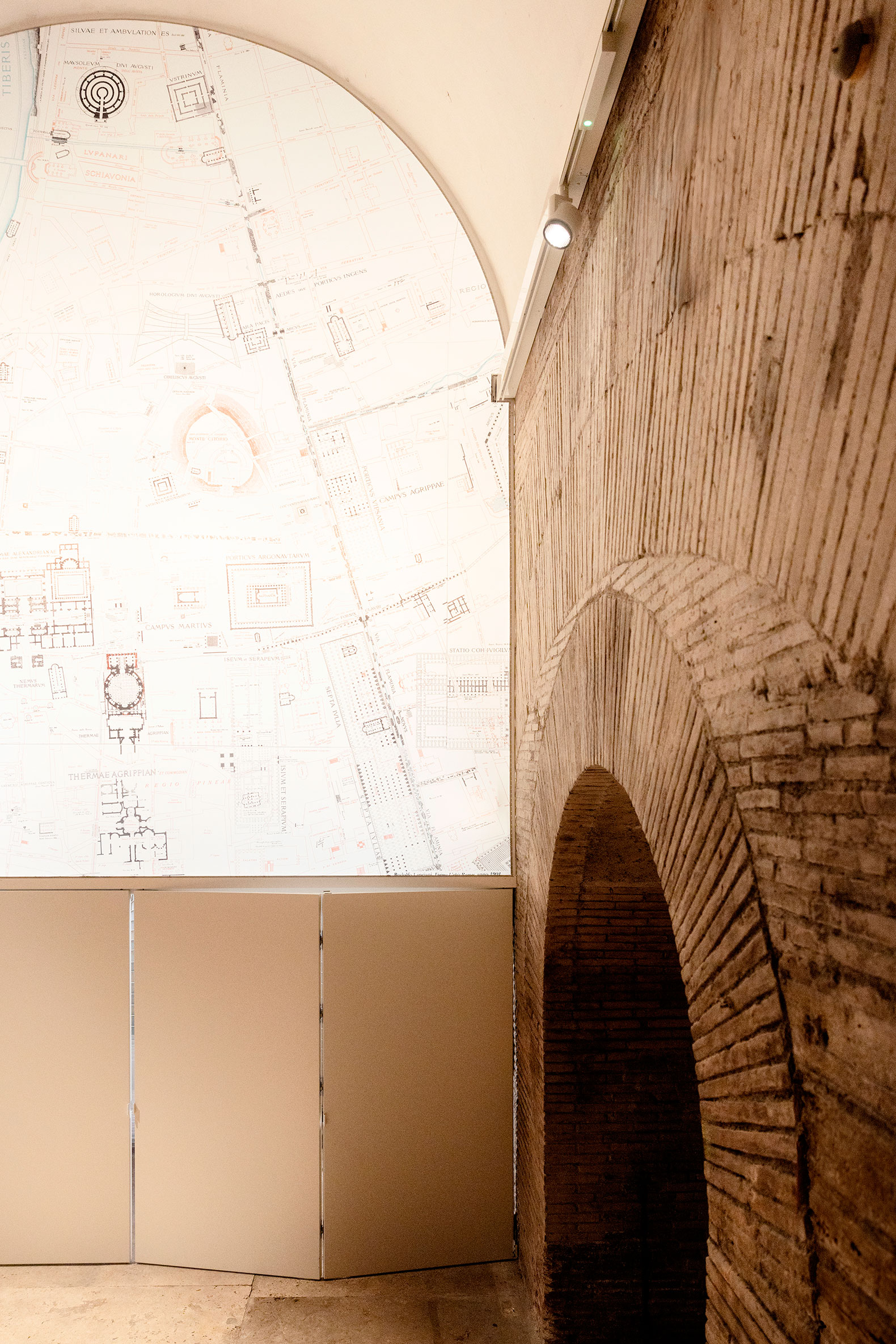
Like a cinematic sequence, visitors walk through different spaces whose functions are highlighted by specific architectural elements infilled within the archaeological fabric. These devices respond to technical requirements and simultaneously act as standalone installation-machines within the route —micro-architectures that engage with the archaeological space while emphasising its historical traces: an ancient bronze-hued platform dialogues with the historic copper-clad doorway; the Byzantine Hodegetria icon with gold ground appears to float above the restored dark-wood choir; the passage towards the Rotunda is mediated by the semi-transparent filter of a storage structure onto which Rodolfo Lanciani’s celebrated forma urbis is printed. This last space is defined by a metal handrail that directs the path and merges with the elevator’s metal sheets; the elevator rises as a monolithic element on the upper floor. Here, the junction between the monolith and the original floor occurs through a glazed separation that allows visitors to perceive the distance—literal and temporal—between the new intervention and the historical preexistence.
Materiality as narrative
The intervention deploys single contemporary architectural elements designed to make the ancient space legible and perceptible to the visitor through material contrast (ancient—brickwork versus contemporary—metal).
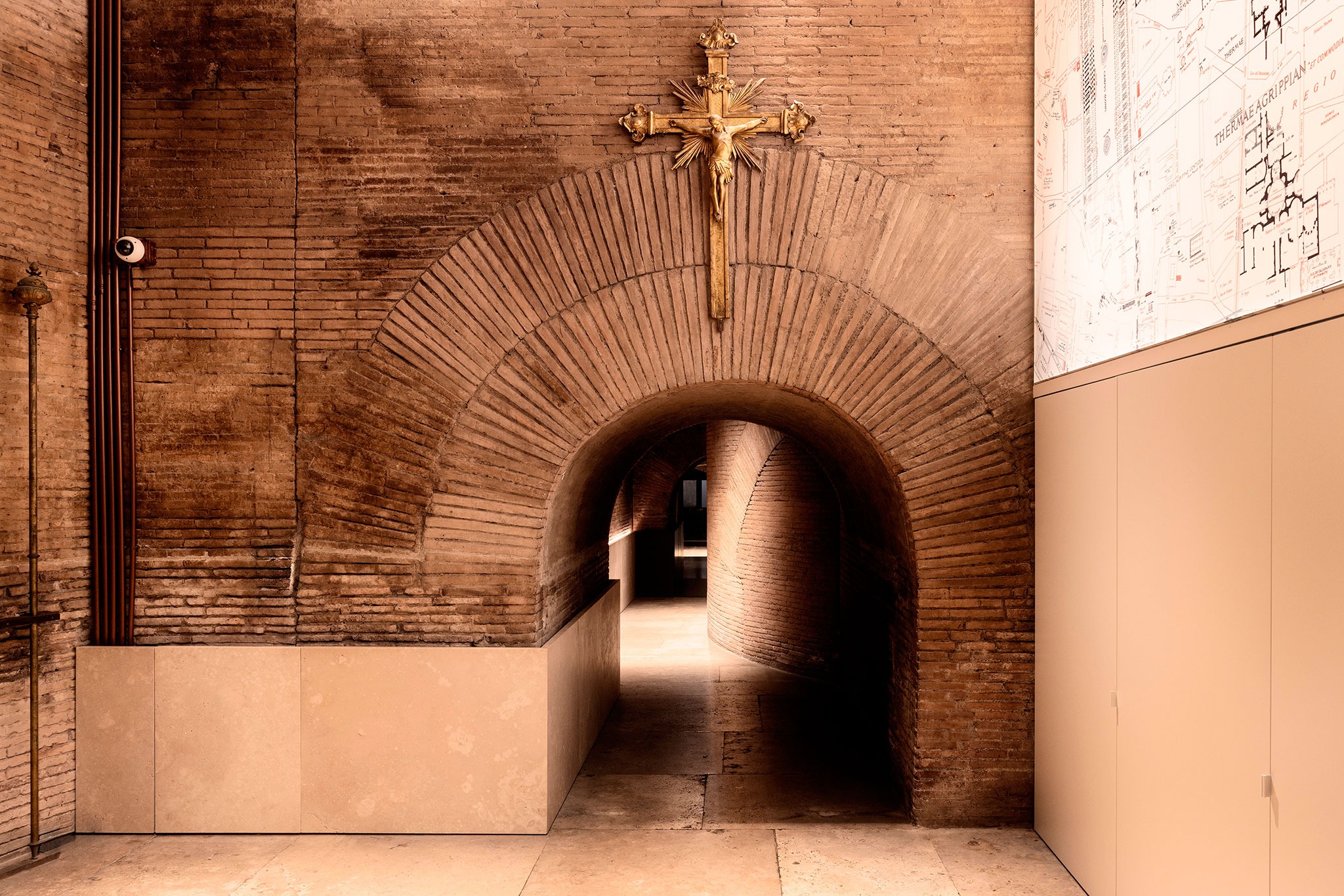
Where the historical space tightens or expands along the brick curves of the Pantheon and the ruins of the apse of the Basilica of Neptune, the path unfolds horizontally and vertically along, above, and within the metal panels used for its finishing. Through an intentionally non-uniform surface treatment, these panels engage with the patina of time that marks the Monument. The project thus establishes a dialogue between the dust of the original brick surfaces and the materiality of the metal sheets, through the techniques of galvanisation, the processes of rolling, and coating, where calamine blacks, lamination blues, and alloy oxidations are employed according to the lessons of Roman Arte Povera, in order to create a daily dialogue with history.
A particular attention is paid to accessibility: a new system of ramps and a new elevator are introduced into the archaeological site to ensure full access to the upper floor. This functional requirement is also interpreted figuratively in the design of a large suspended monolith at the center of the double-height space, which gradually dissolves upwards as it is illuminated by the large thermal windows above.
The context of the intervention
The project is part of an extensive programme of interventions— started in 2019 and promoted by the General Director of the Italian State Museums, Massimo Osanna— with the aim to make the various archaeological areas of the Pantheon accessible, as they are currently closed to the public.
This intervention is realized under the coordination and supervision of architect Gabriella Musto. Alongside the new museal display curated by the staff of the Ministry of Culture and strongly promoted by the Director of the Pantheon and the National Museums of the City of Rome, Luca Mercuri, this realization represents the first phase of works opening a significant portion of the Monument to the public through a new entrance from the so-called Fossato del Diavolo (Devil’s Moat).