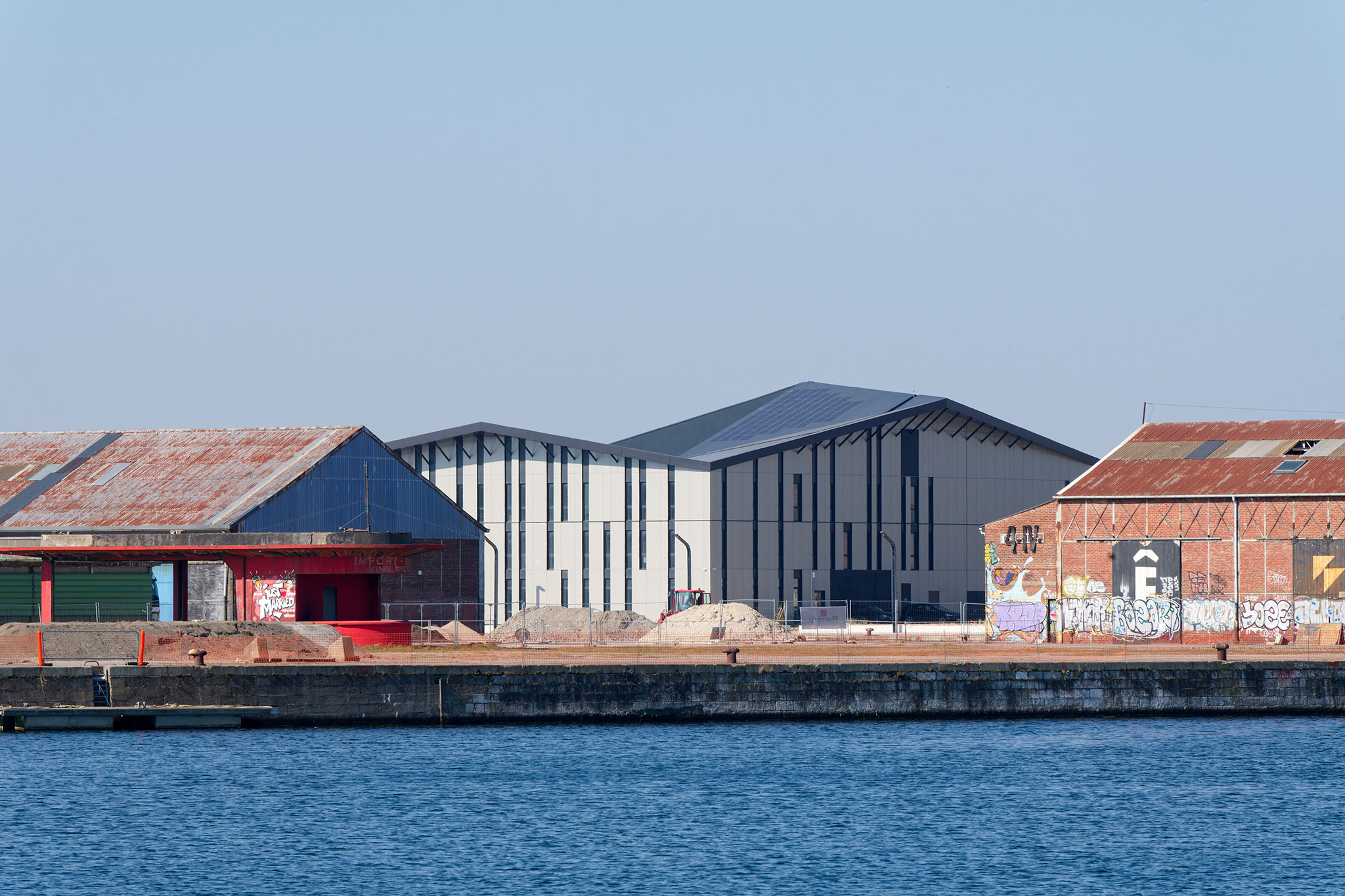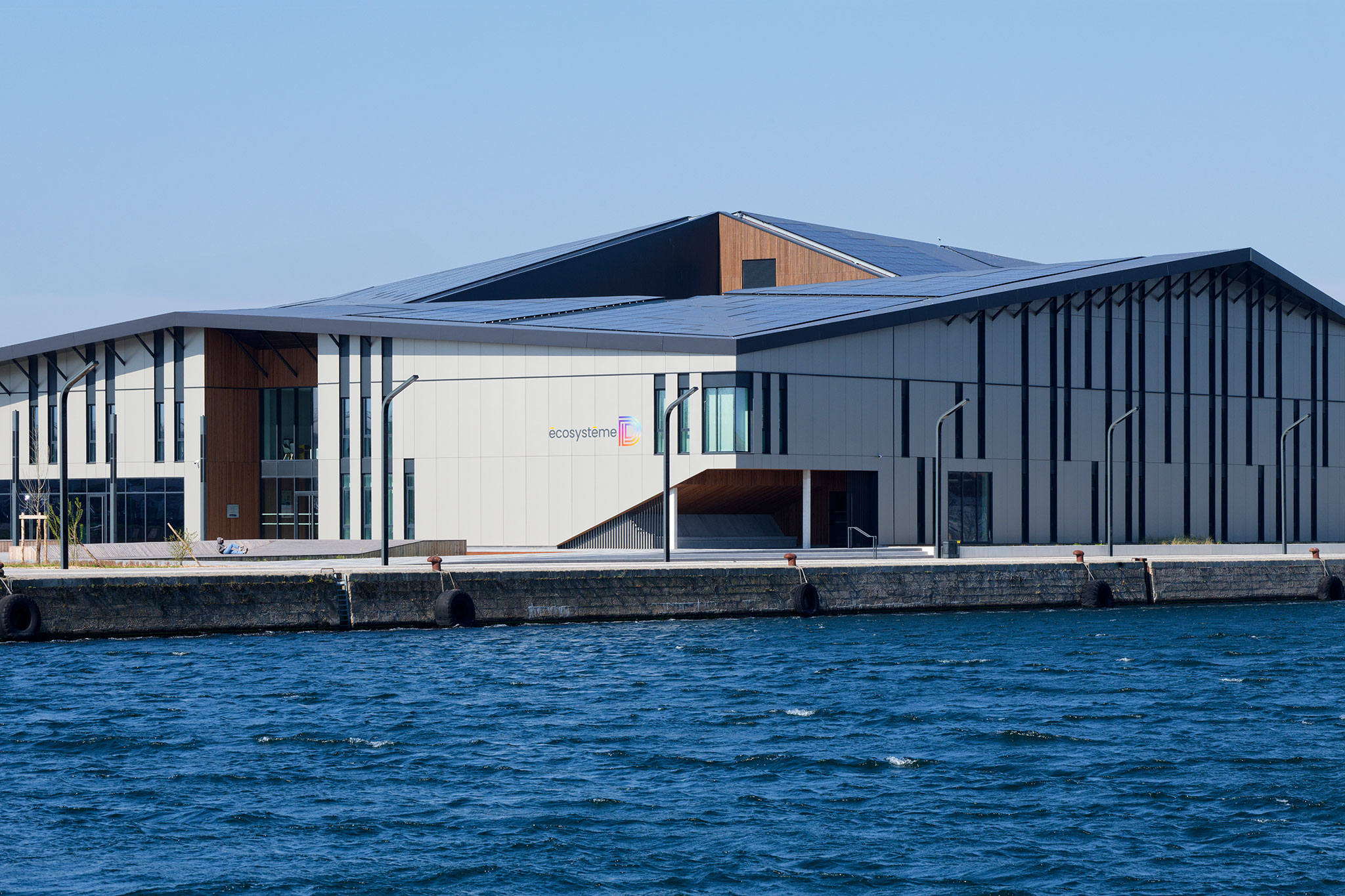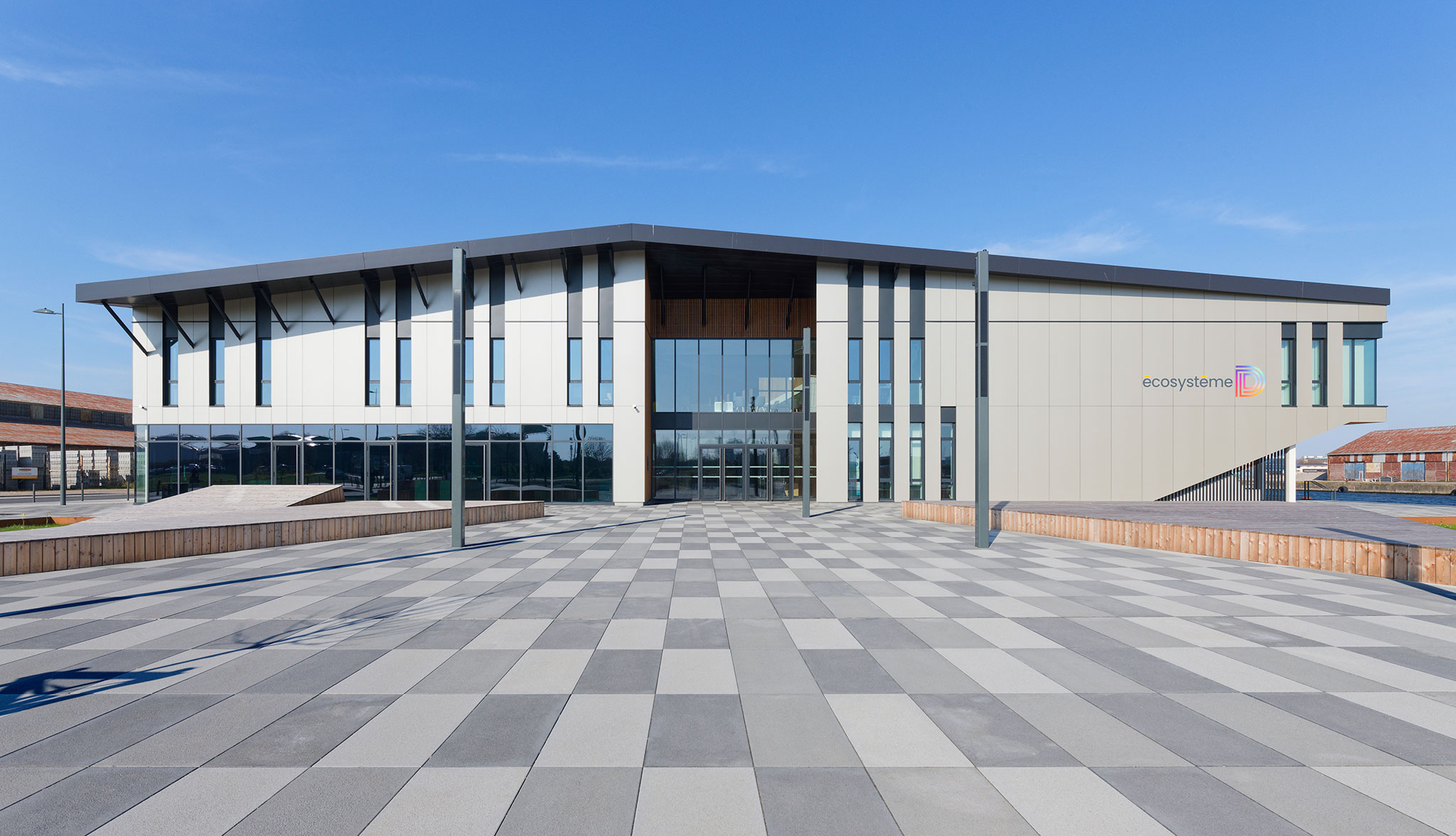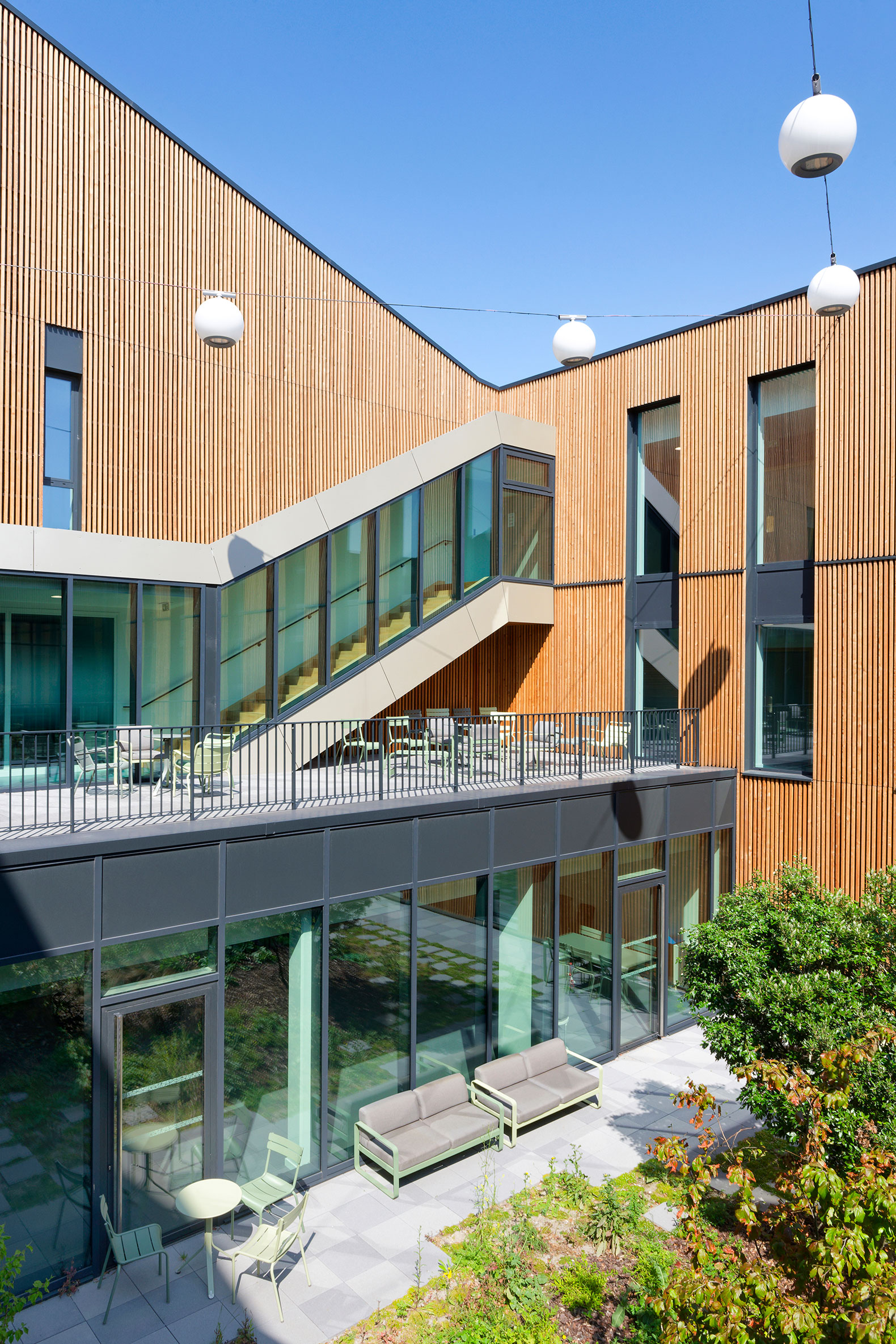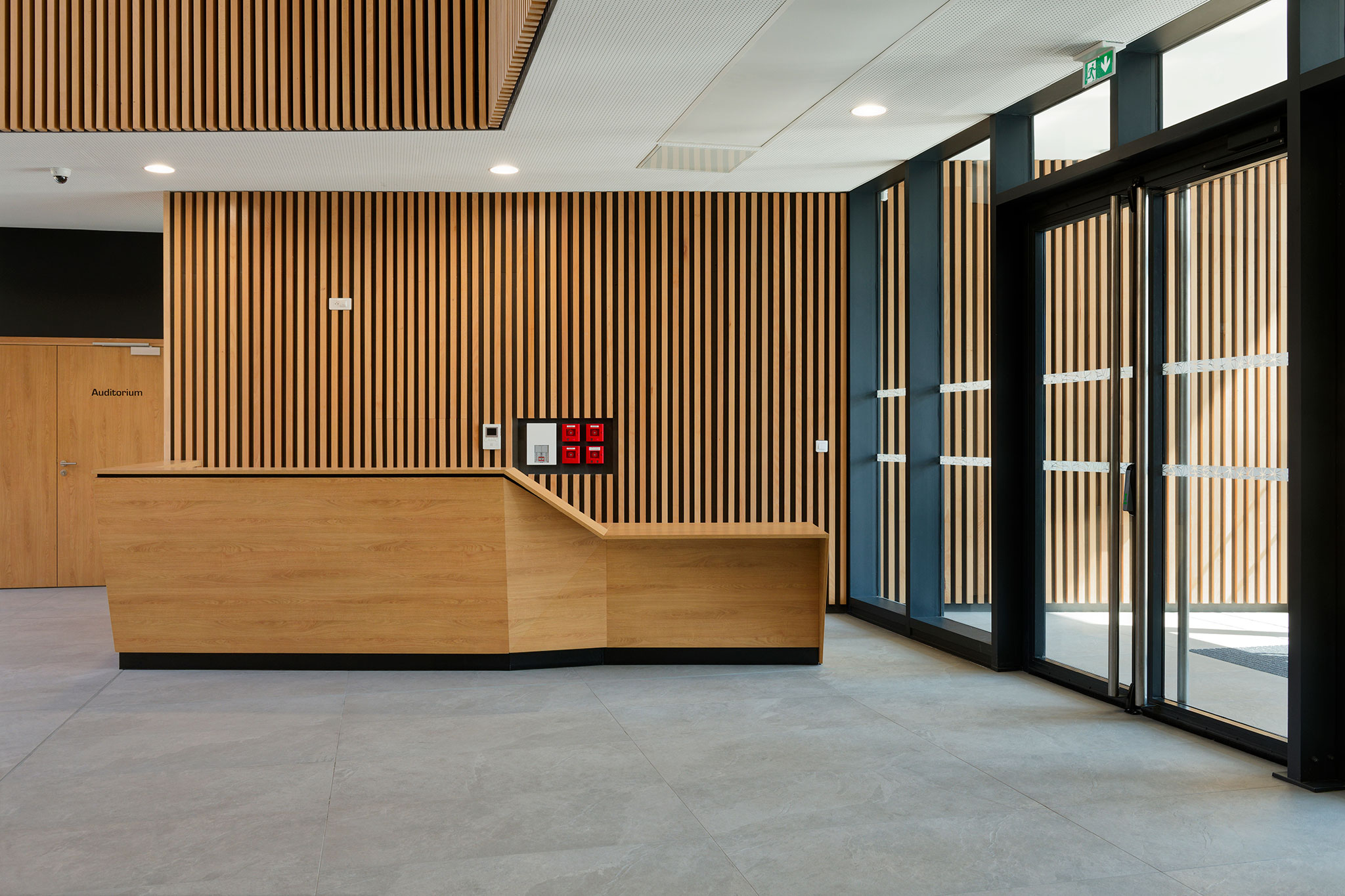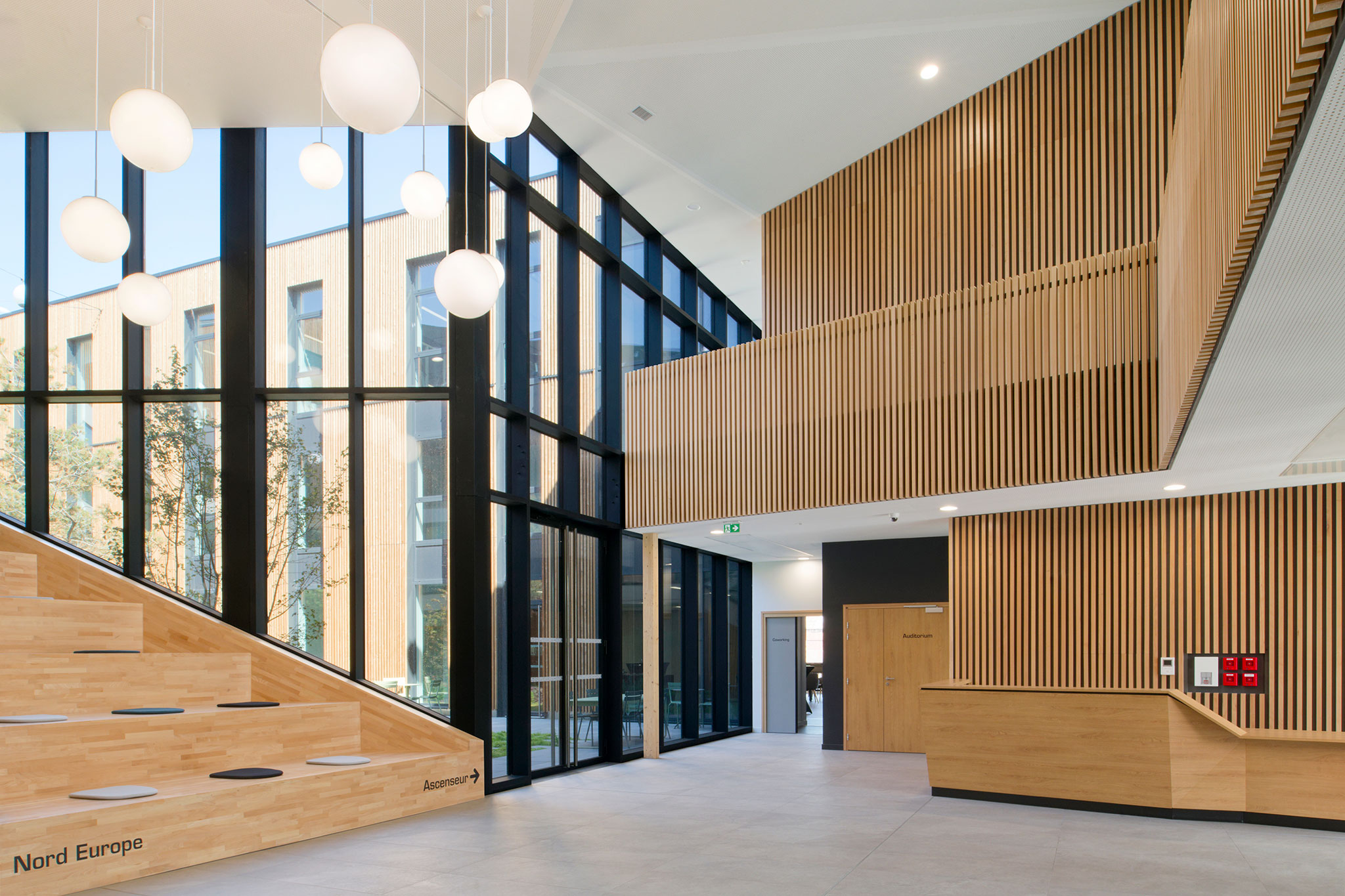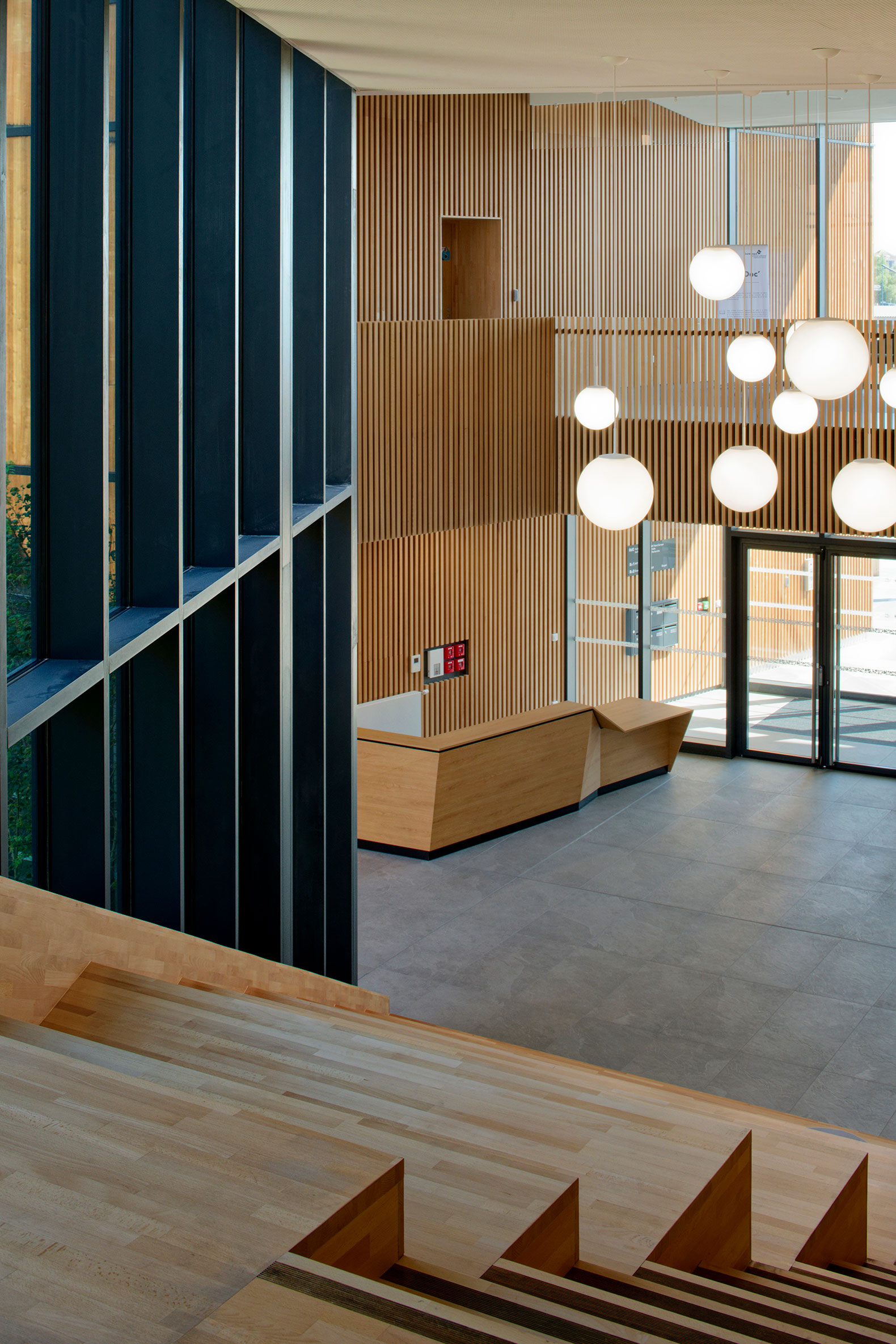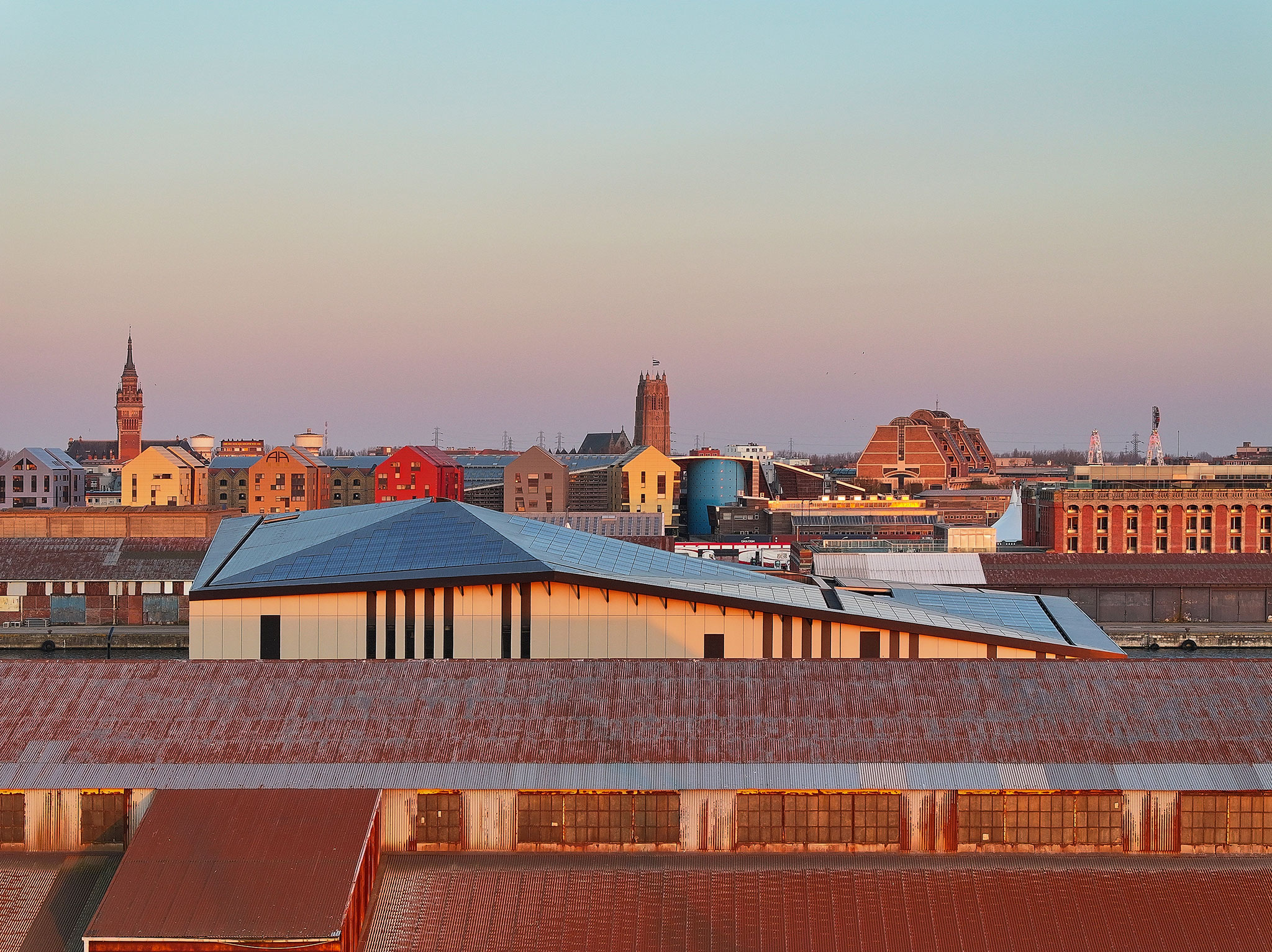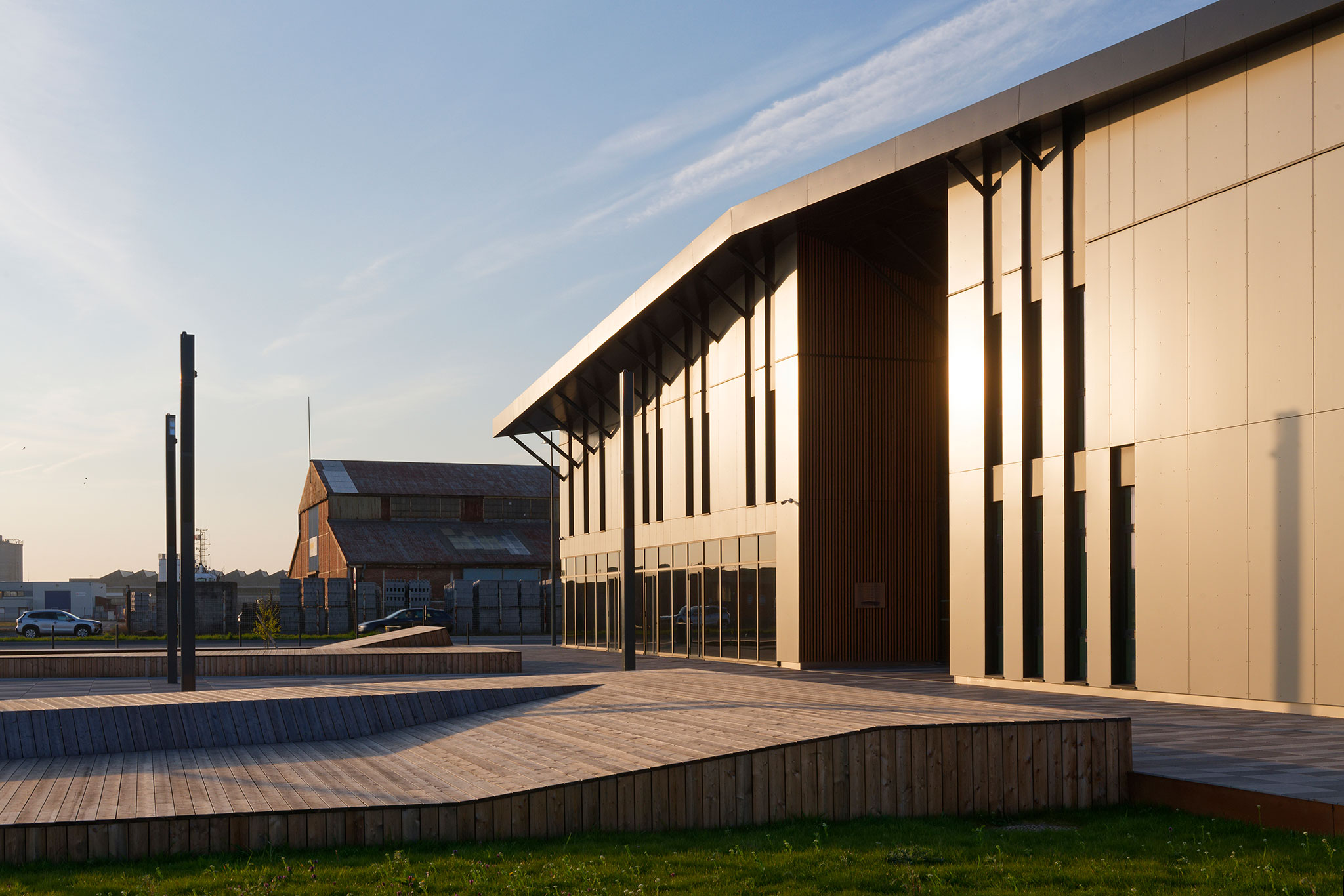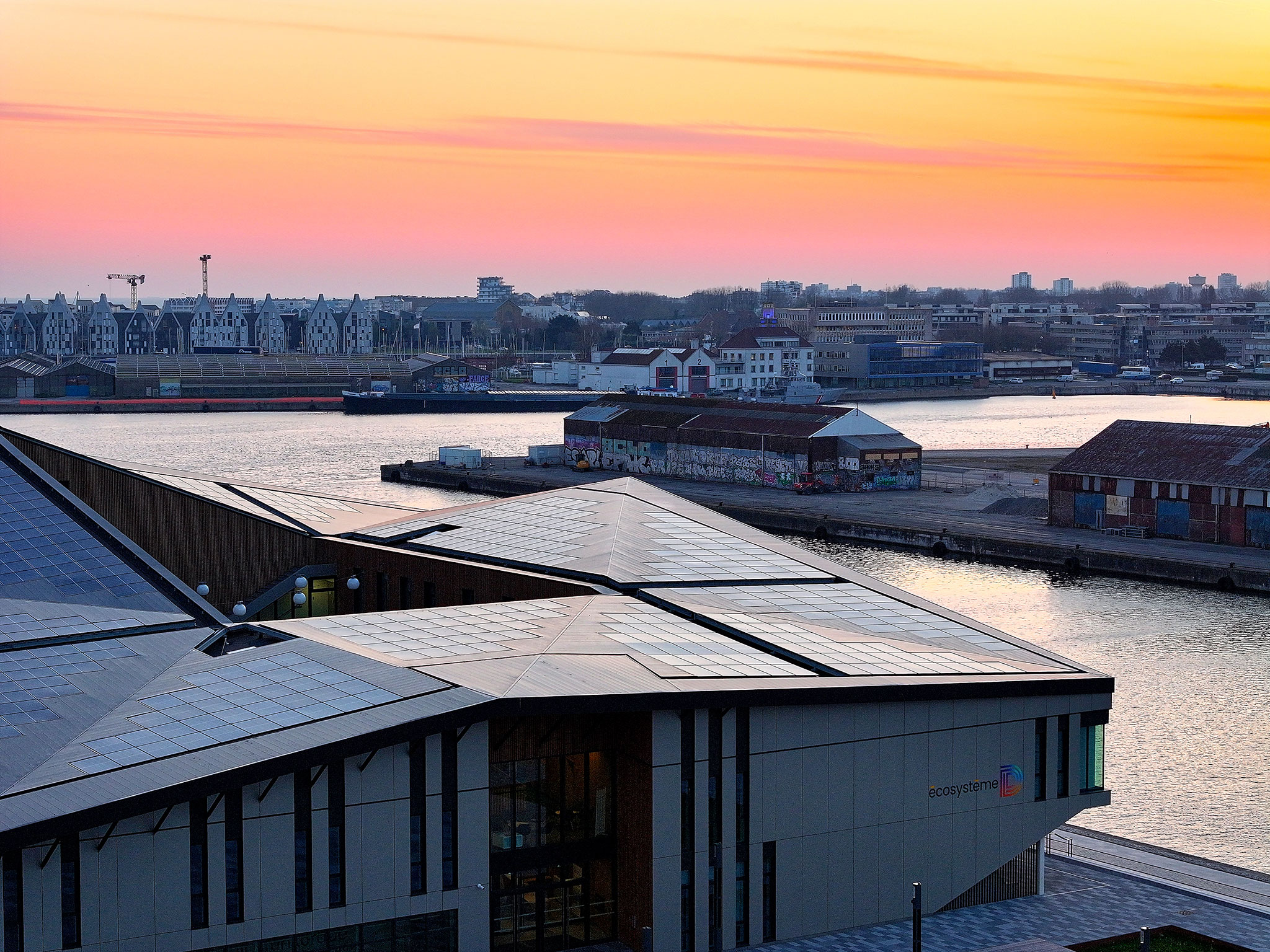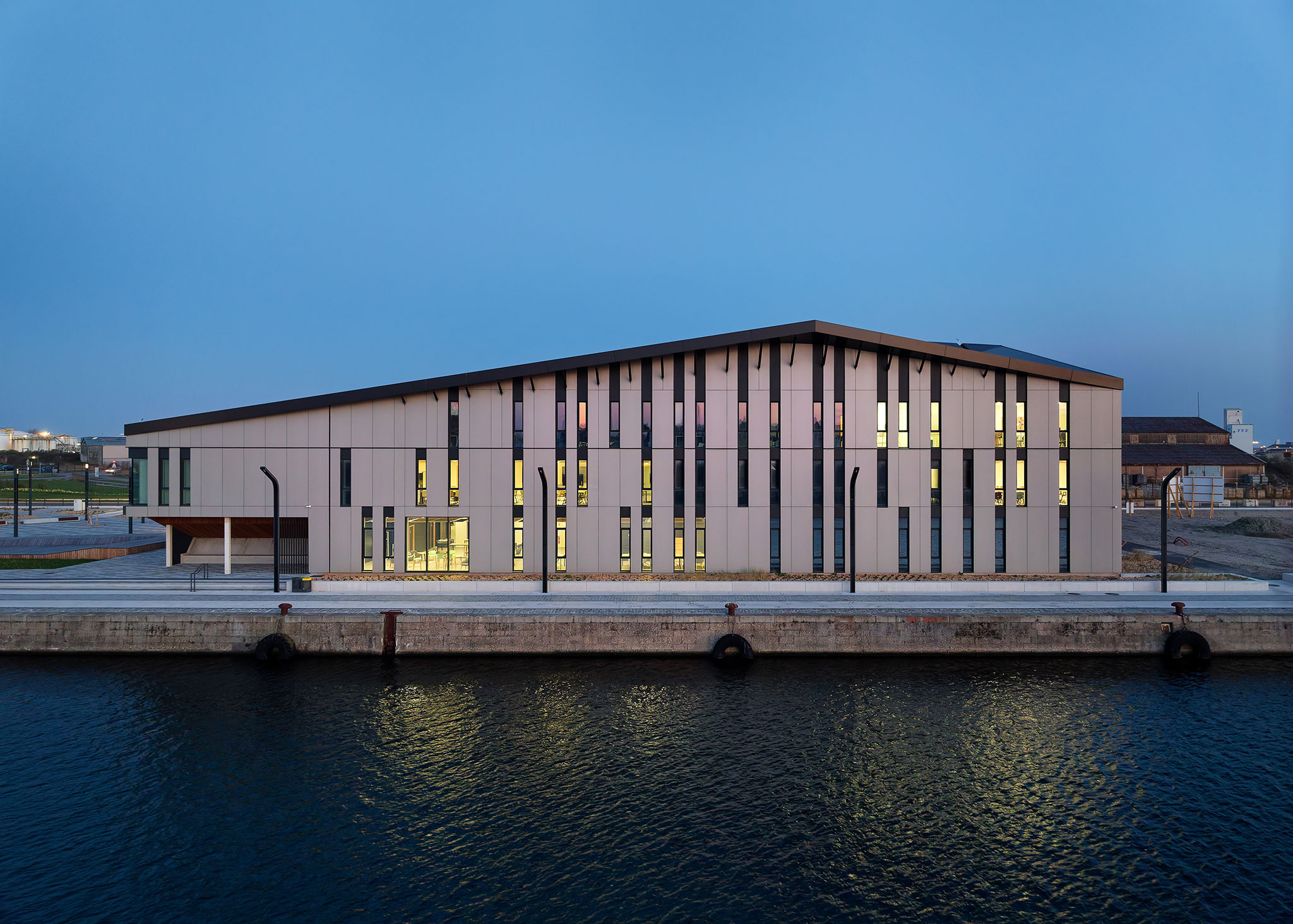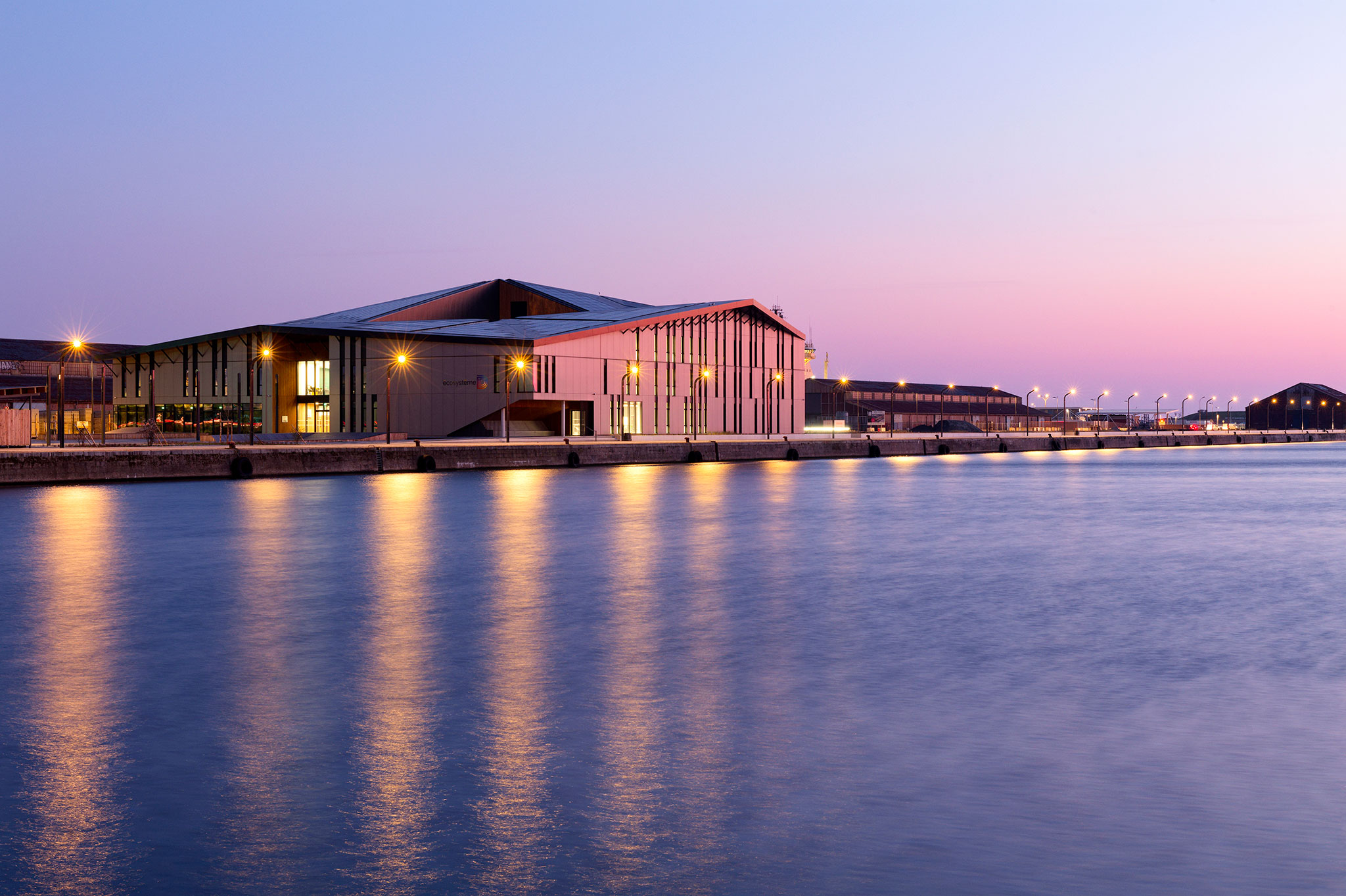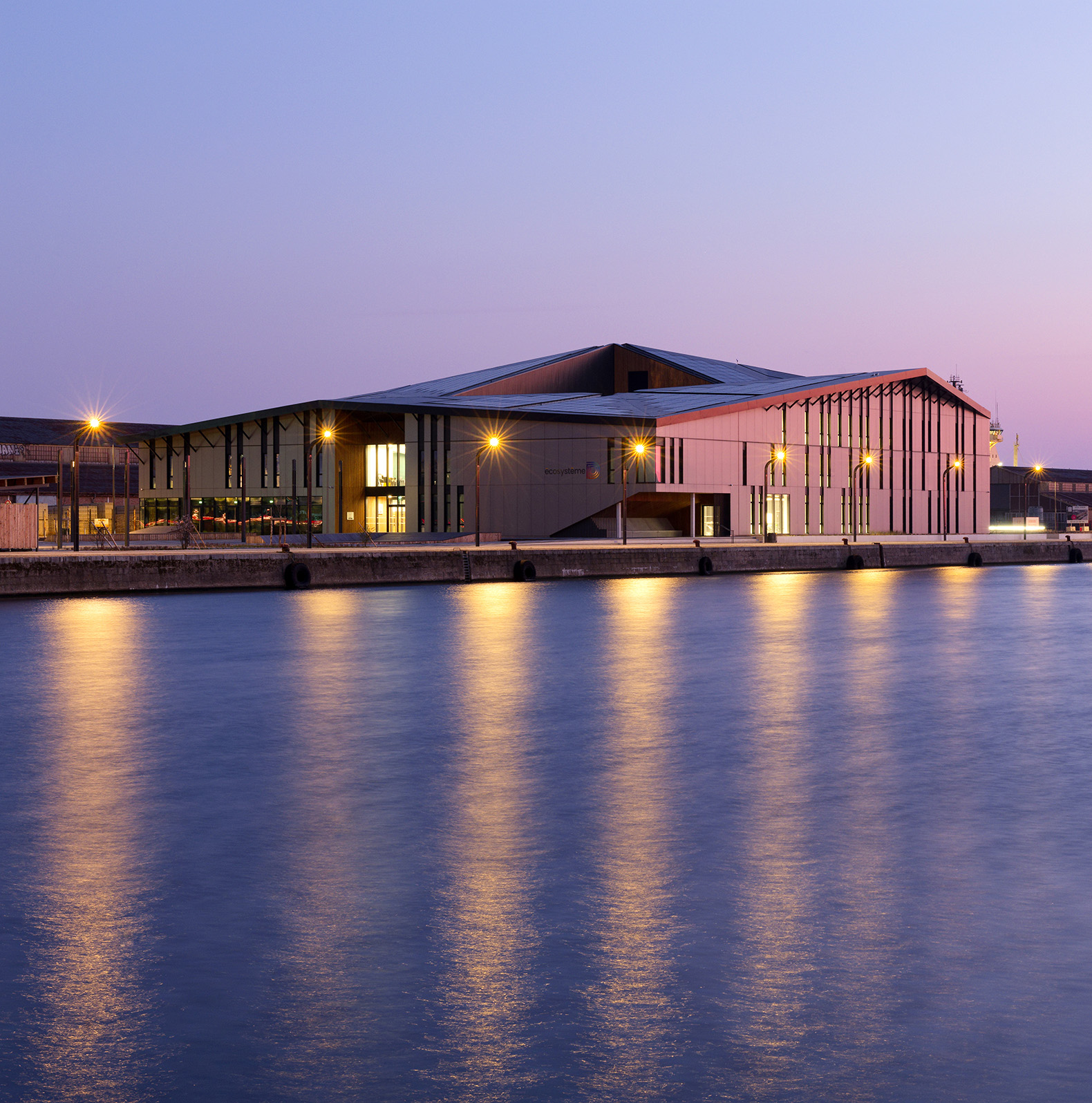
Norwegian architecture practice Snøhetta was commissioned to design the facilities of Écosystème D, a building with a positive energy balance, anchored in the port landscape of Dunkirk, northern France.

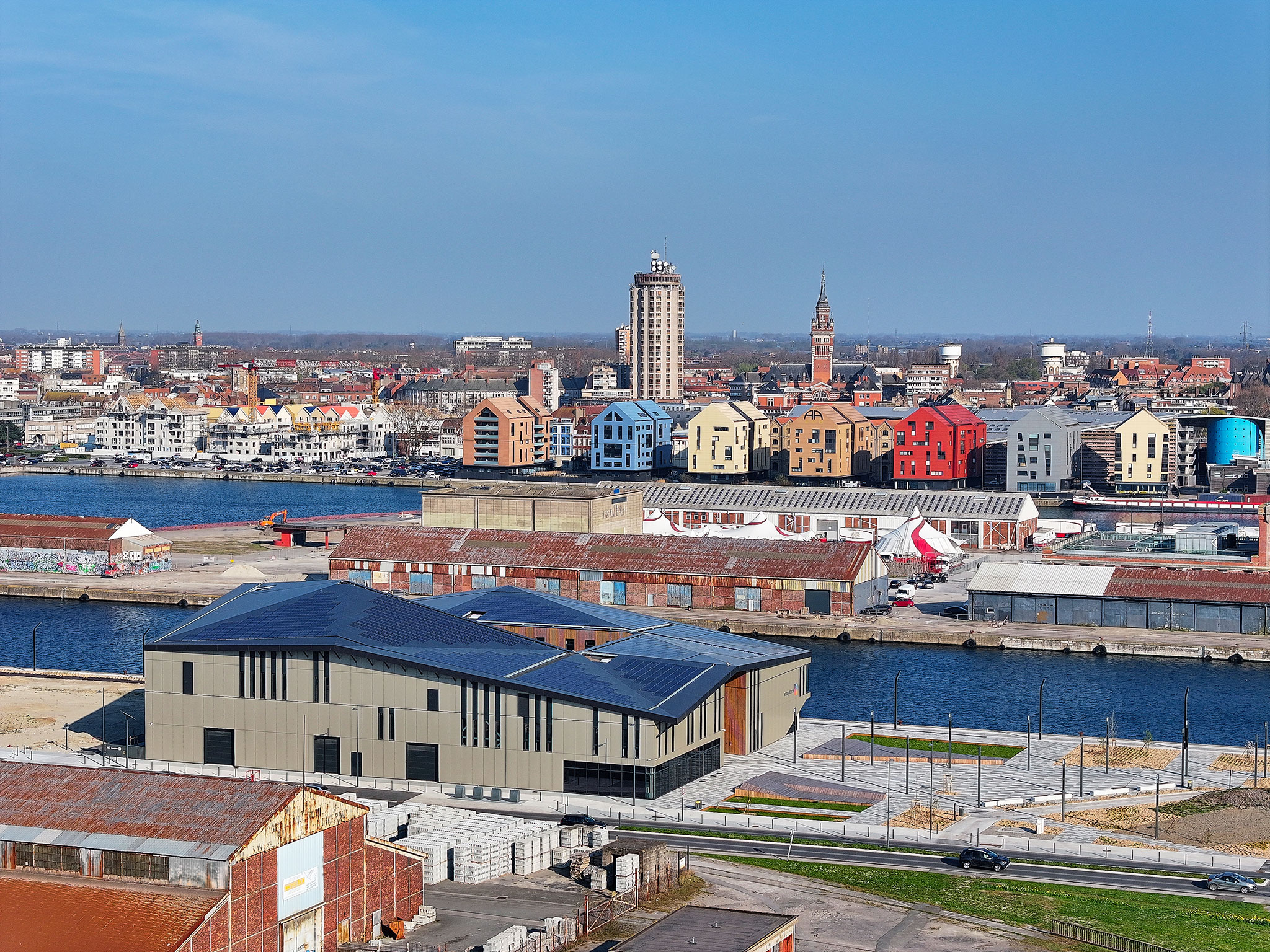
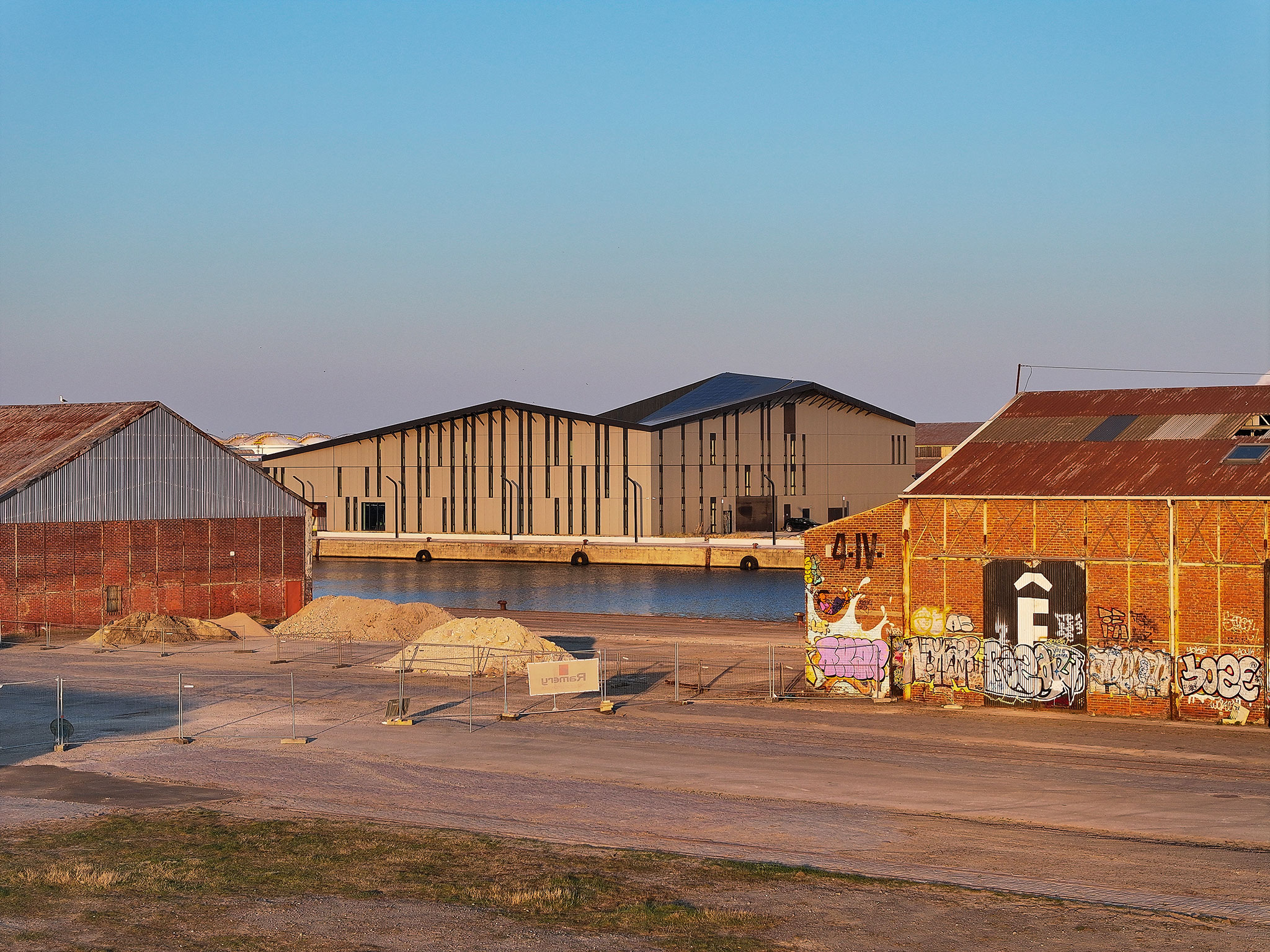
Located on Pier 2, in the heart of the old port area, it is part of the "Neptune" development strategy, launched in the 1990s, which aims to reconnect abandoned industrial sites with the city center and promote sustainable growth.

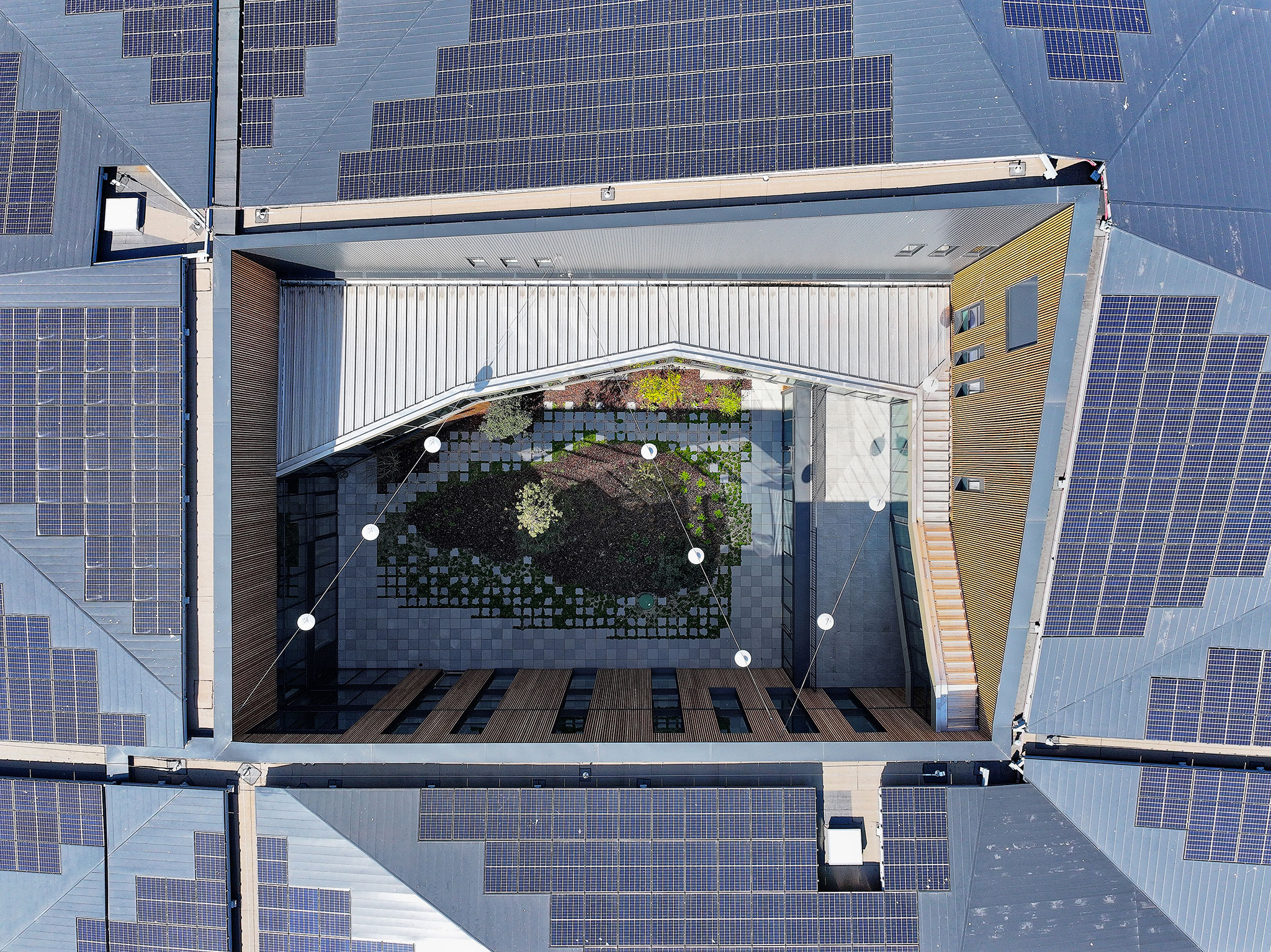
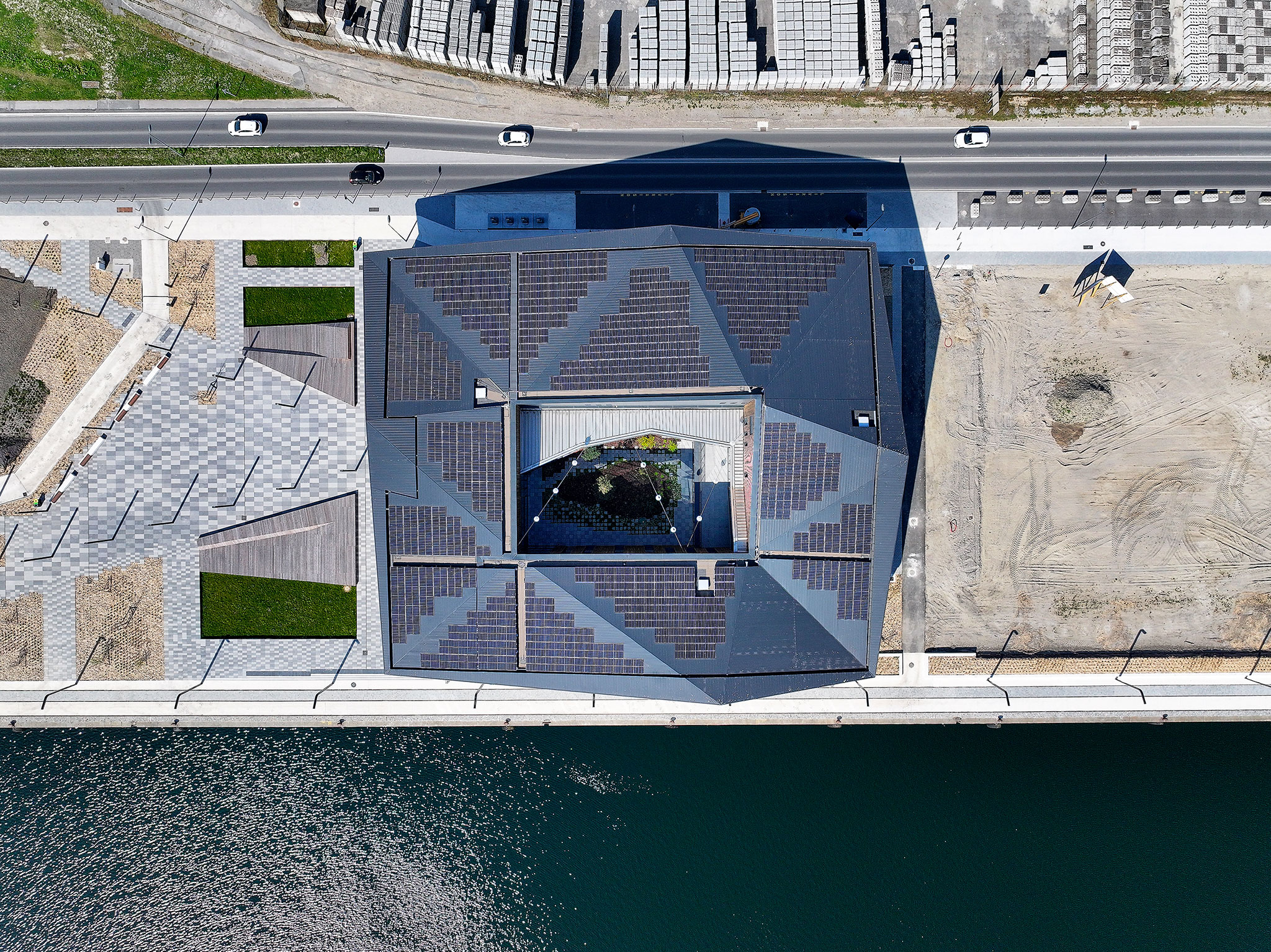
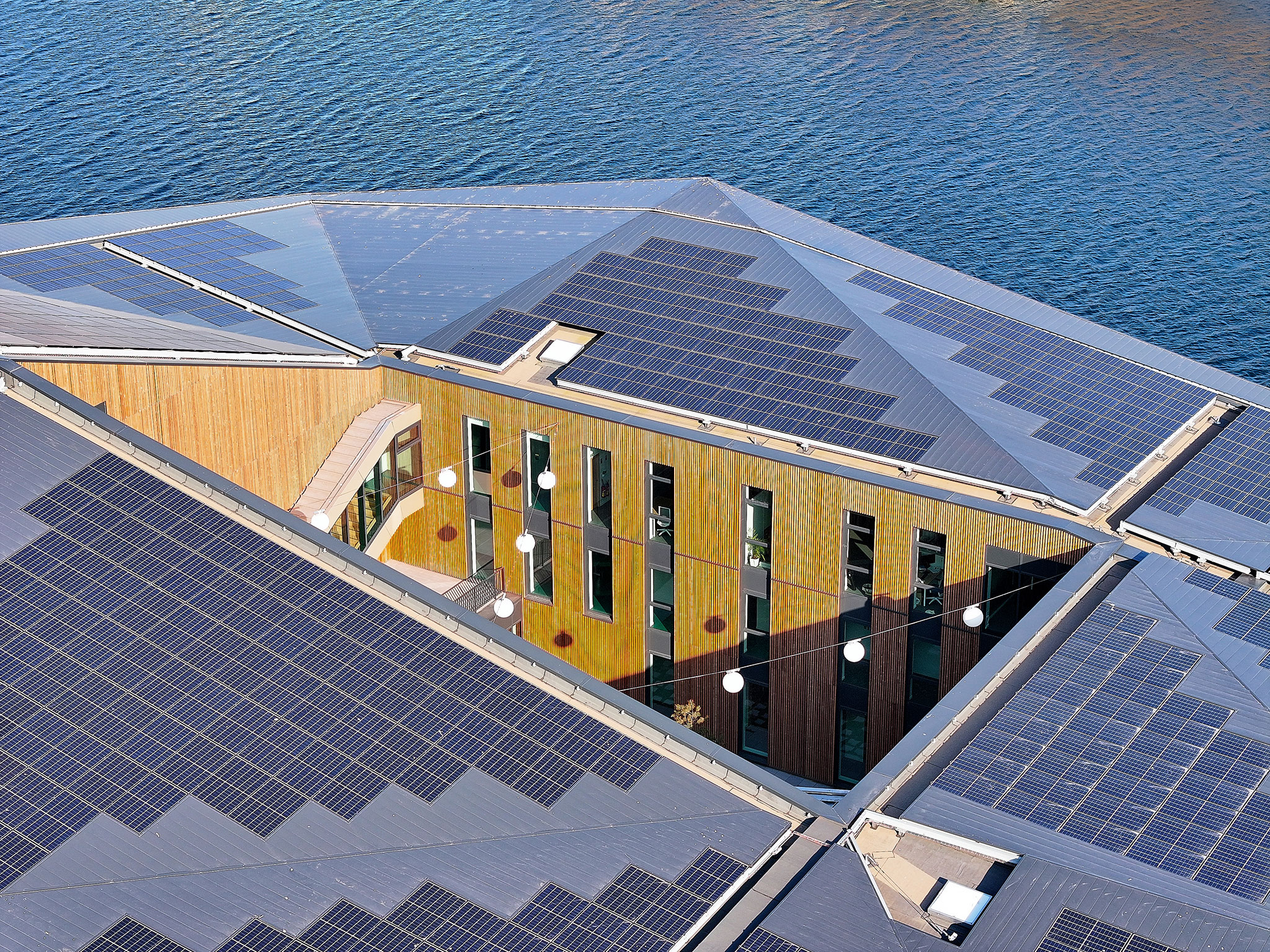
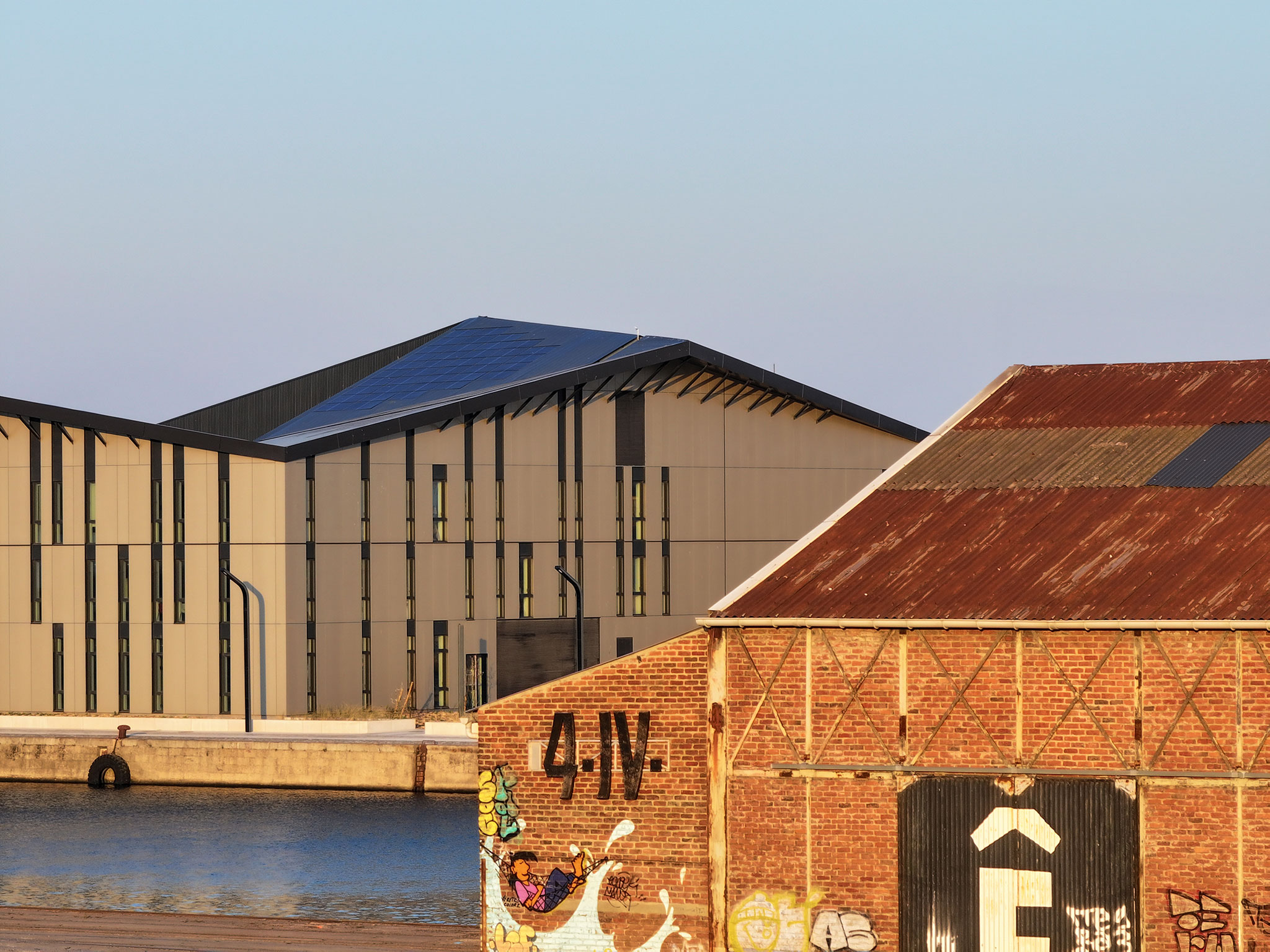
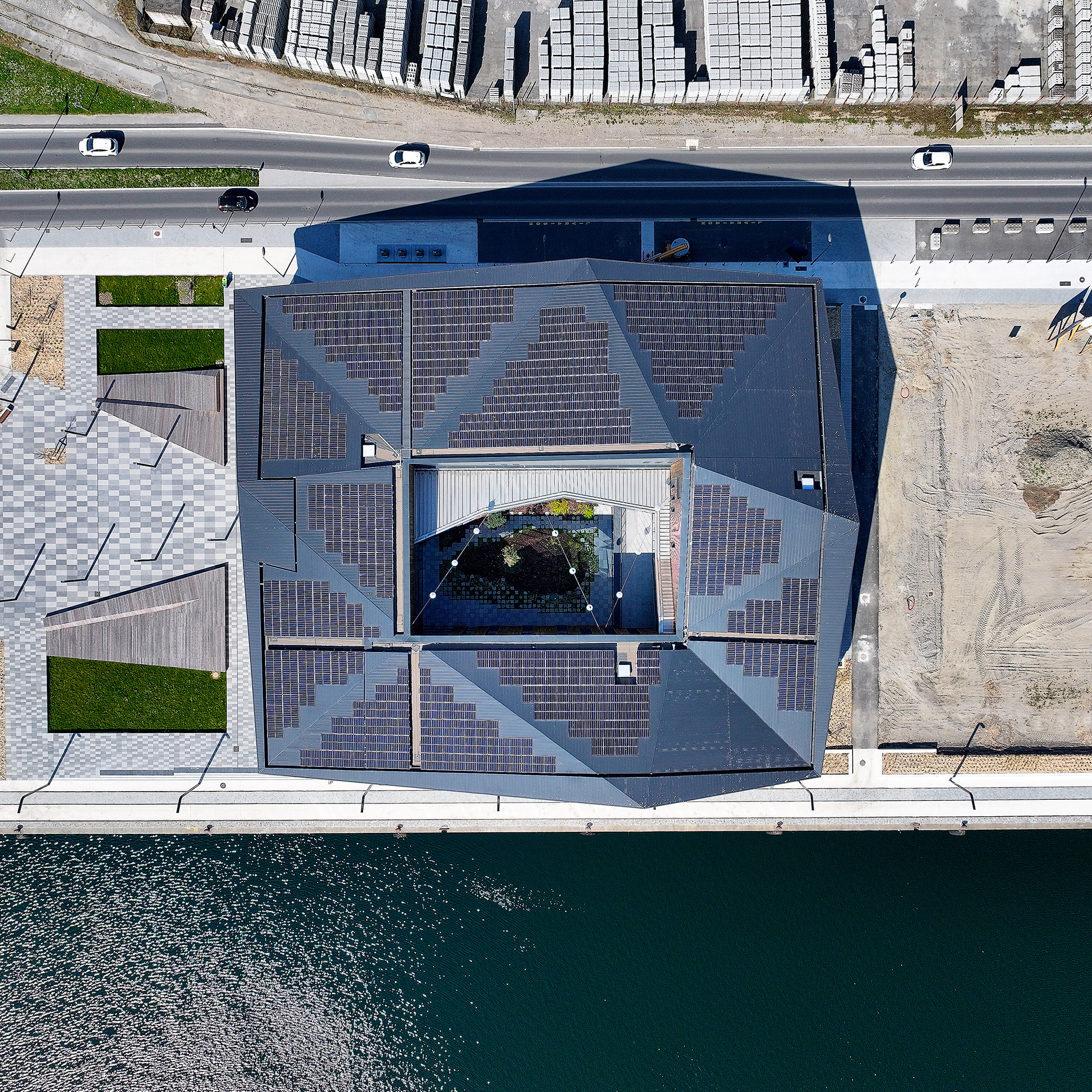
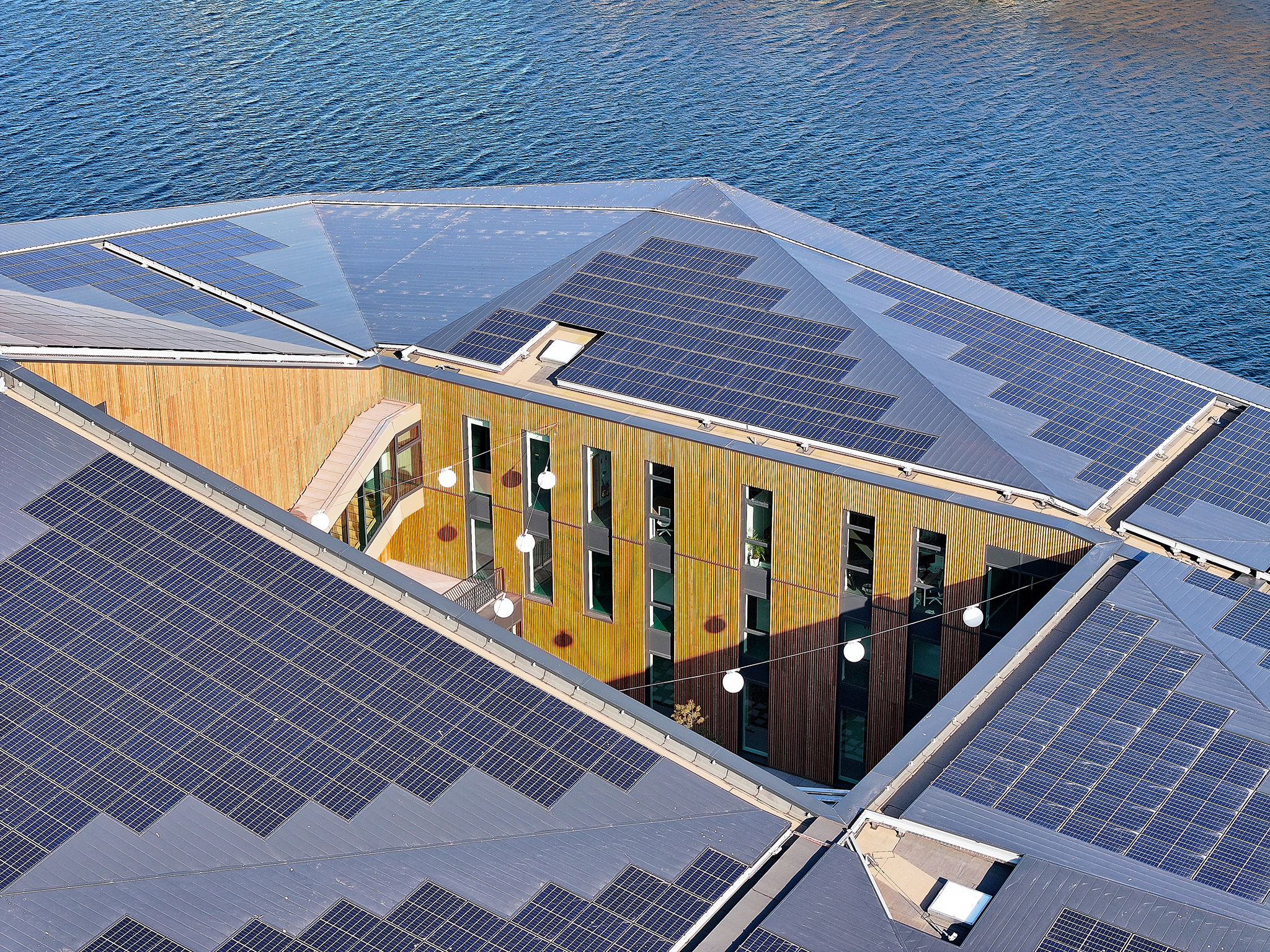
El edificio proyectado por Snøhetta representa una nueva dinámica urbana e industrial para la región de Hauts-de-France. Toda la estructura forma parte de una arquitectura bioclimática de bajo impacto que encarna la innovación en energías renovables. Ha sido pensado bajo criterios de «powerhouse» para producir más energía de la que consume gracias a un riguroso planteamiento bioclimático y a 1200 m² de paneles fotovoltaicos en el tejado.

«Los edificios de energía positiva son los edificios del futuro. El lema del sector del diseño no debería ser “la forma sigue a la función”, sino “la forma sigue al entorno”». 

Kjetil Trædal Thorsen, socio fundador y arquitecto de Snøhetta.

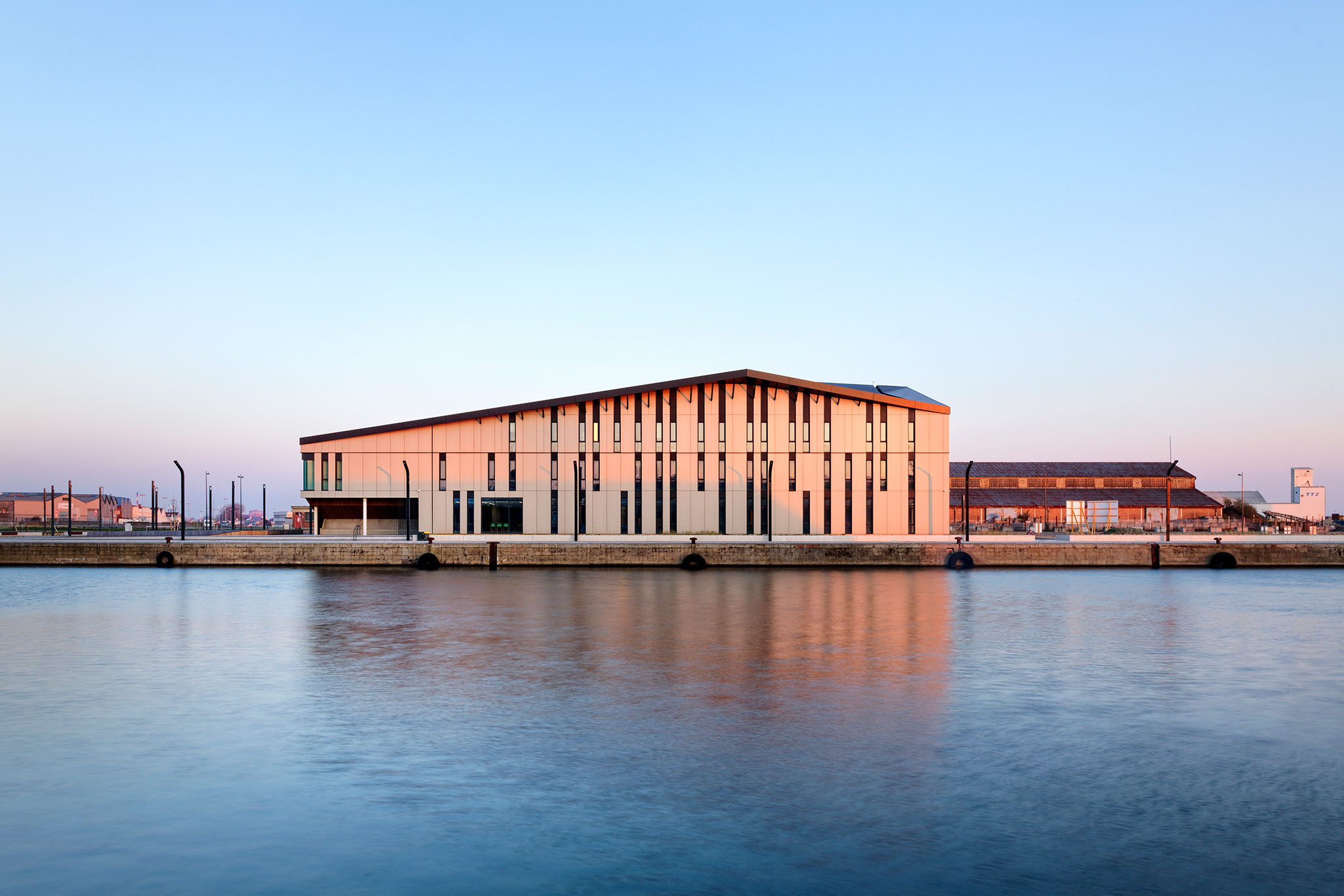
La morfología del edificio es consecuencia del análisis de su contexto industrial y climático. El emplazamiento, situado a 5 metros sobre el nivel del mar, está expuesto a los vientos dominantes y a la contaminación atmosférica procedente de las infraestructuras cercanas.
Ecosystème D por Snøhetta. Fotografía por Nicolas Fussler.
Ecosystème D por Snøhetta. Fotografía por Nicolas Fussler.

Ecosystème D por Snøhetta. Fotografía por Nicolas Fussler.

Ecosystème D por Snøhetta. Fotografía por Nicolas Fussler.

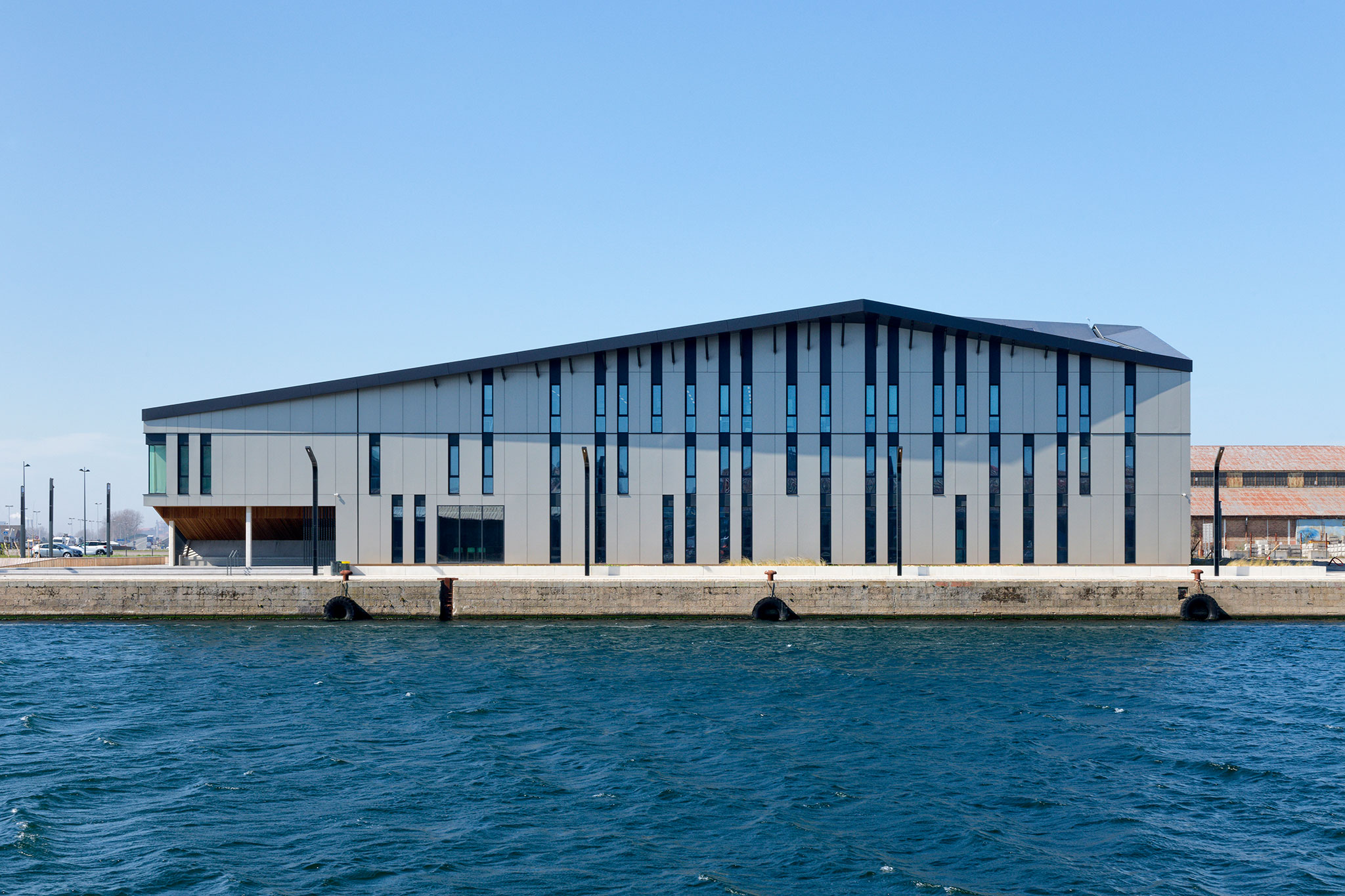
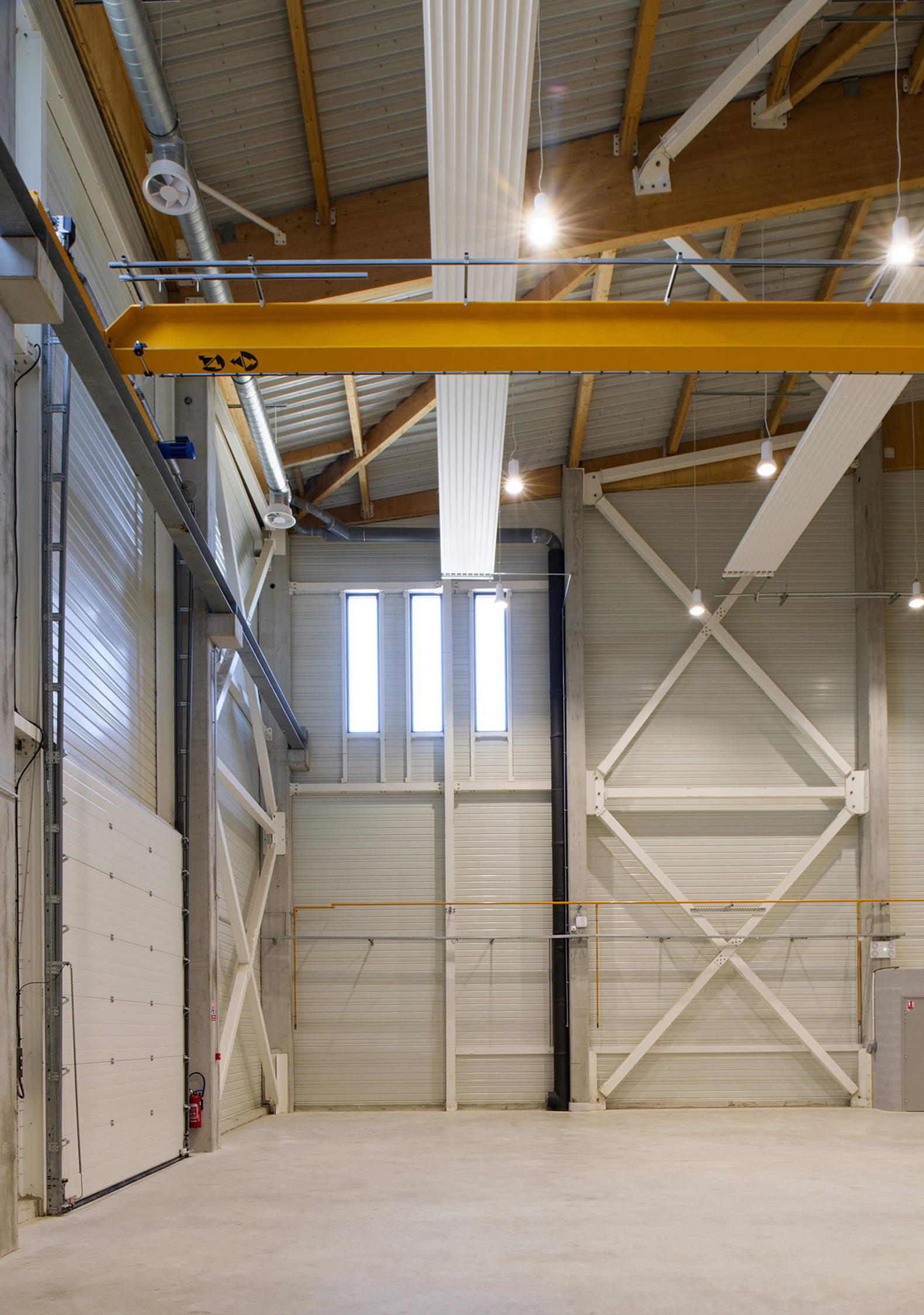
El volumen tiene una altura variable, que va de 9 a  18 metros según los usos internos, generando un conjunto coherente gracias a la continuidad de sus cubiertas plegadas, cuyas pendientes están optimizadas para conseguir la mejor captación solar.

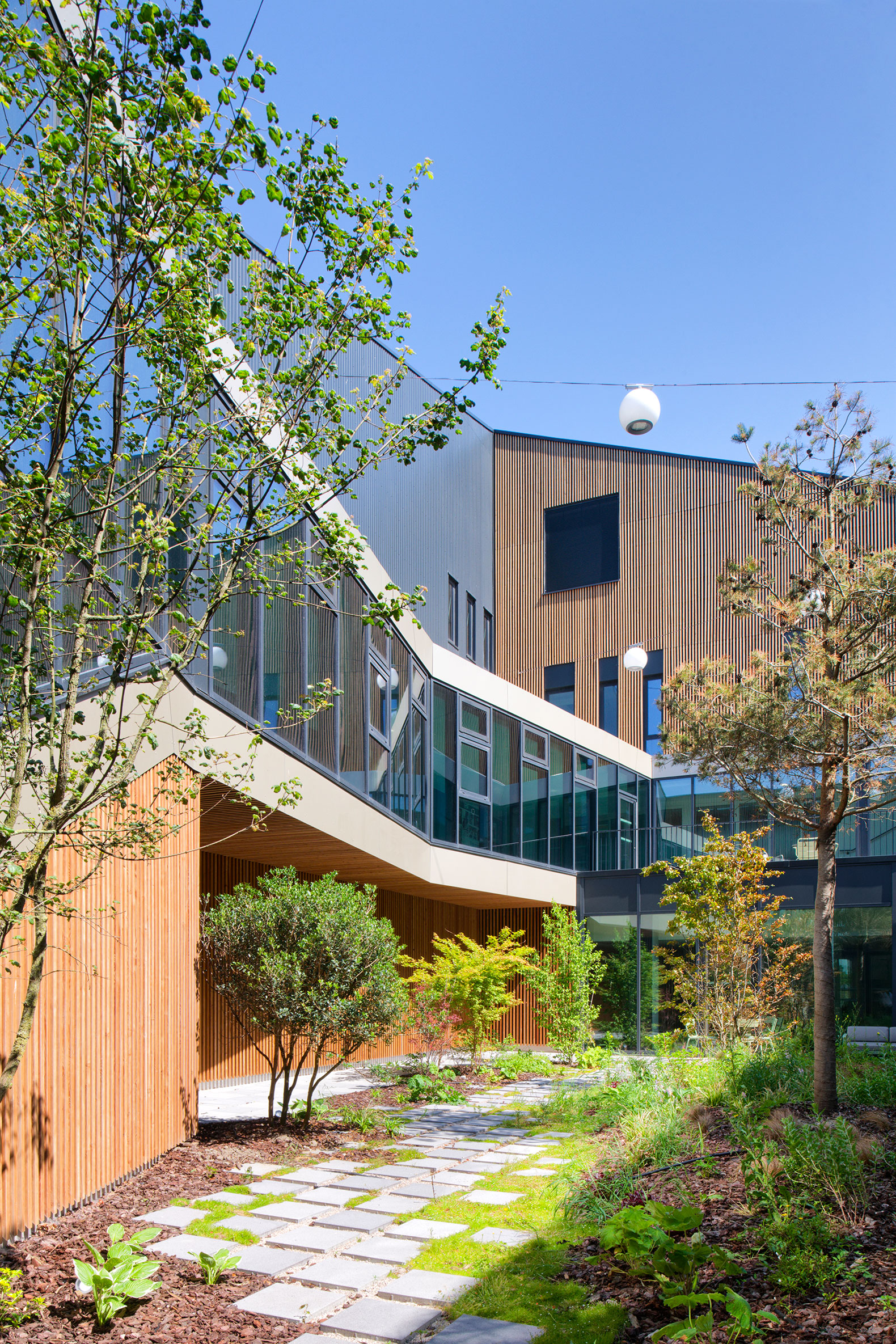
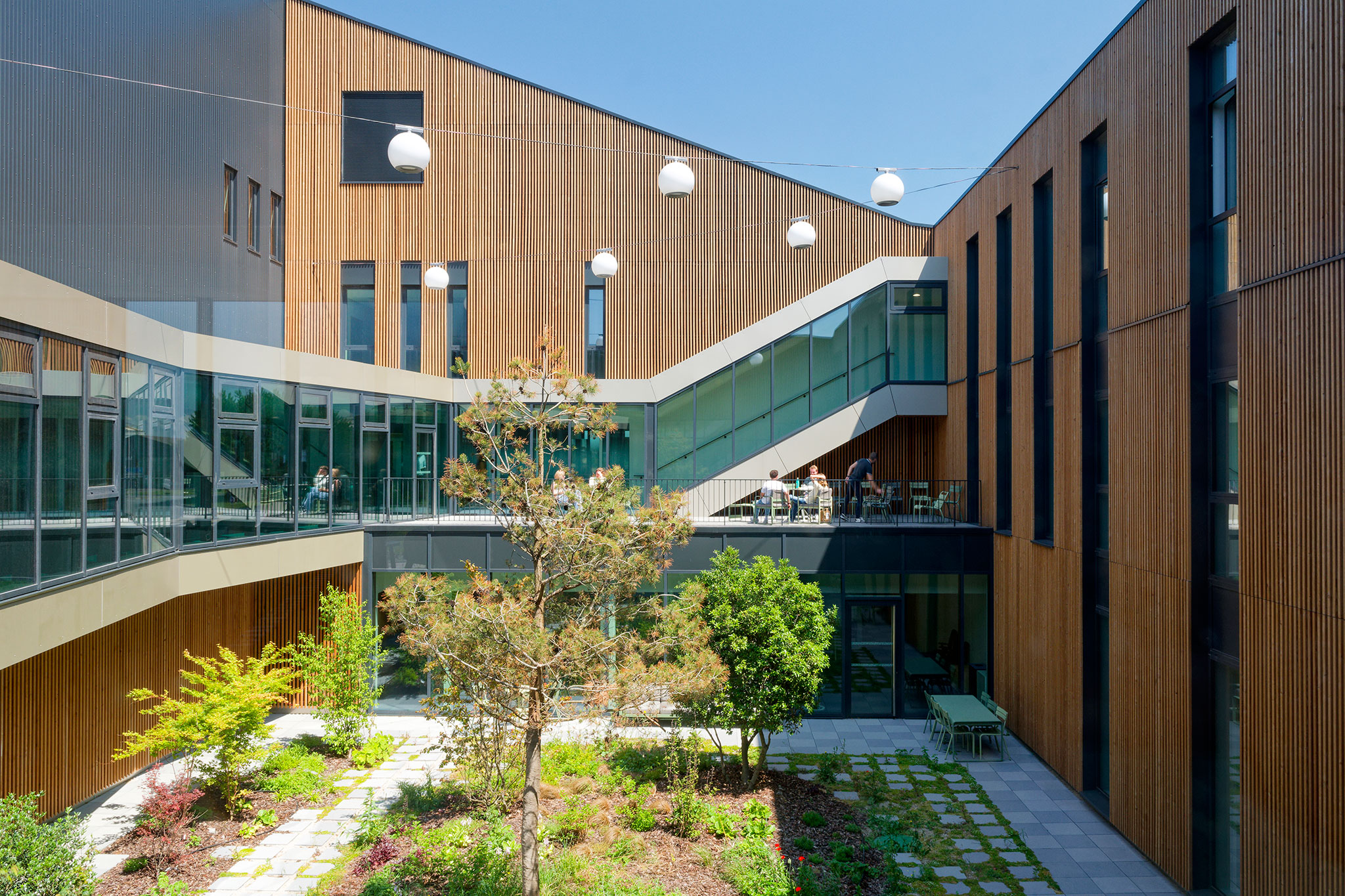
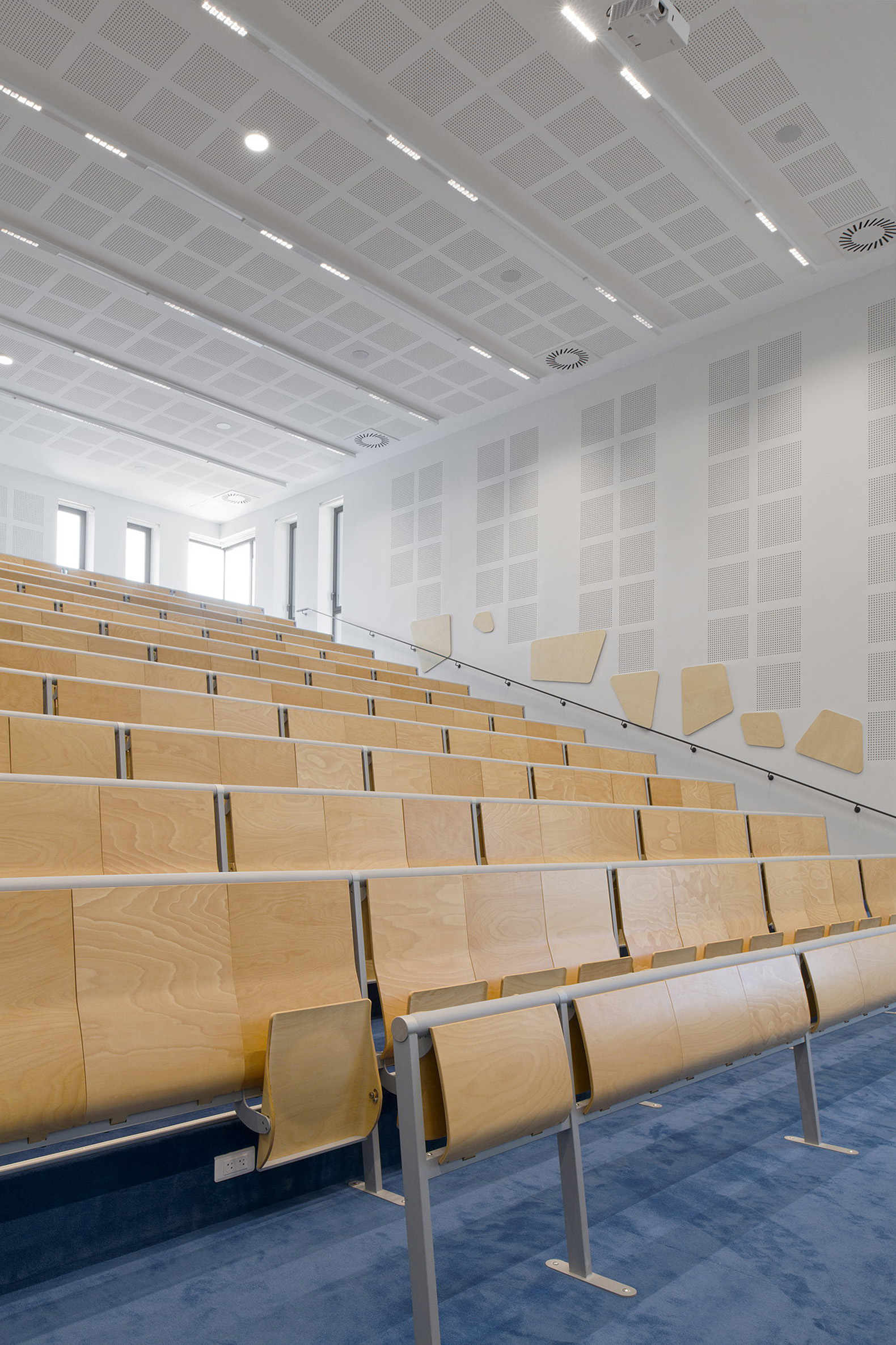
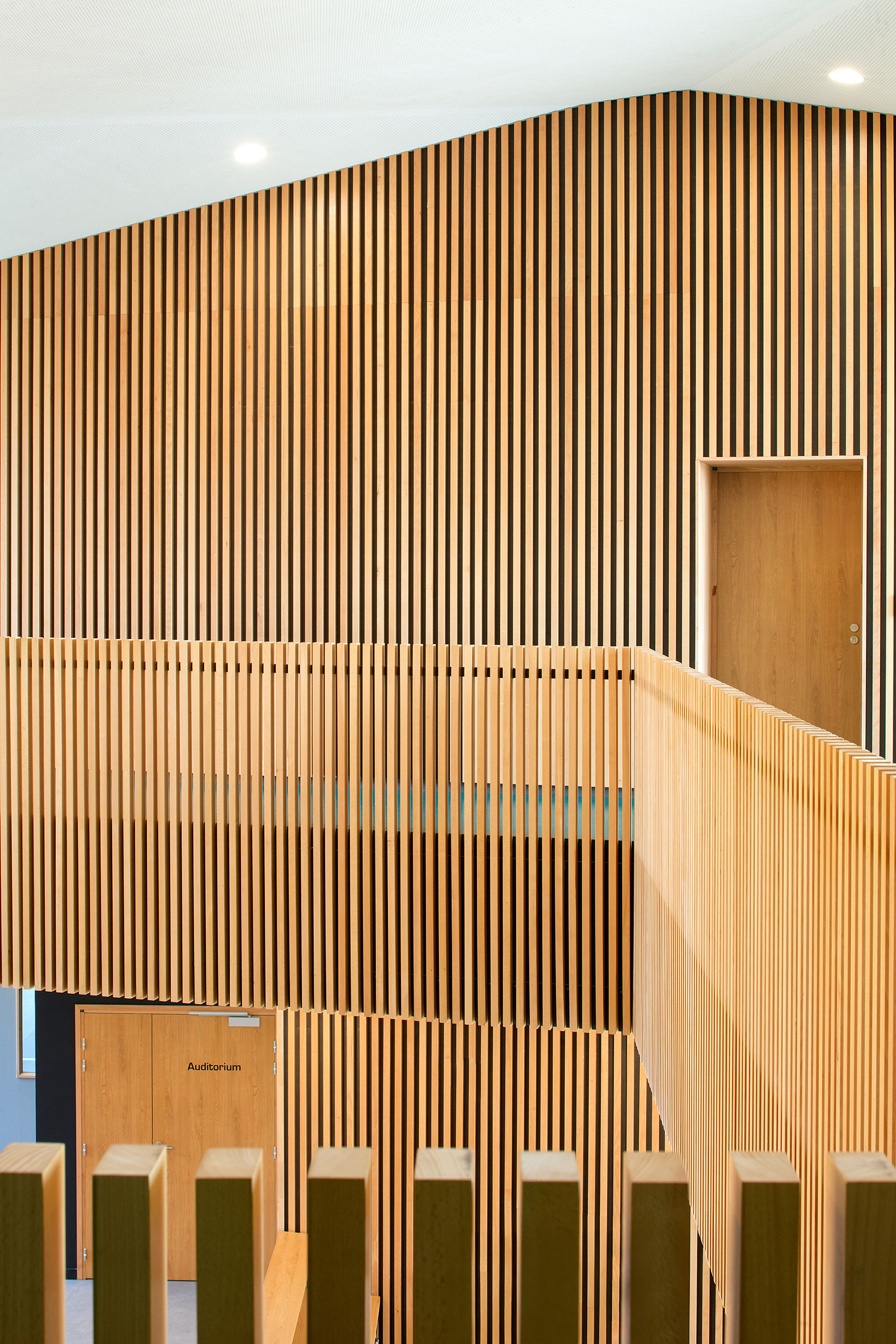
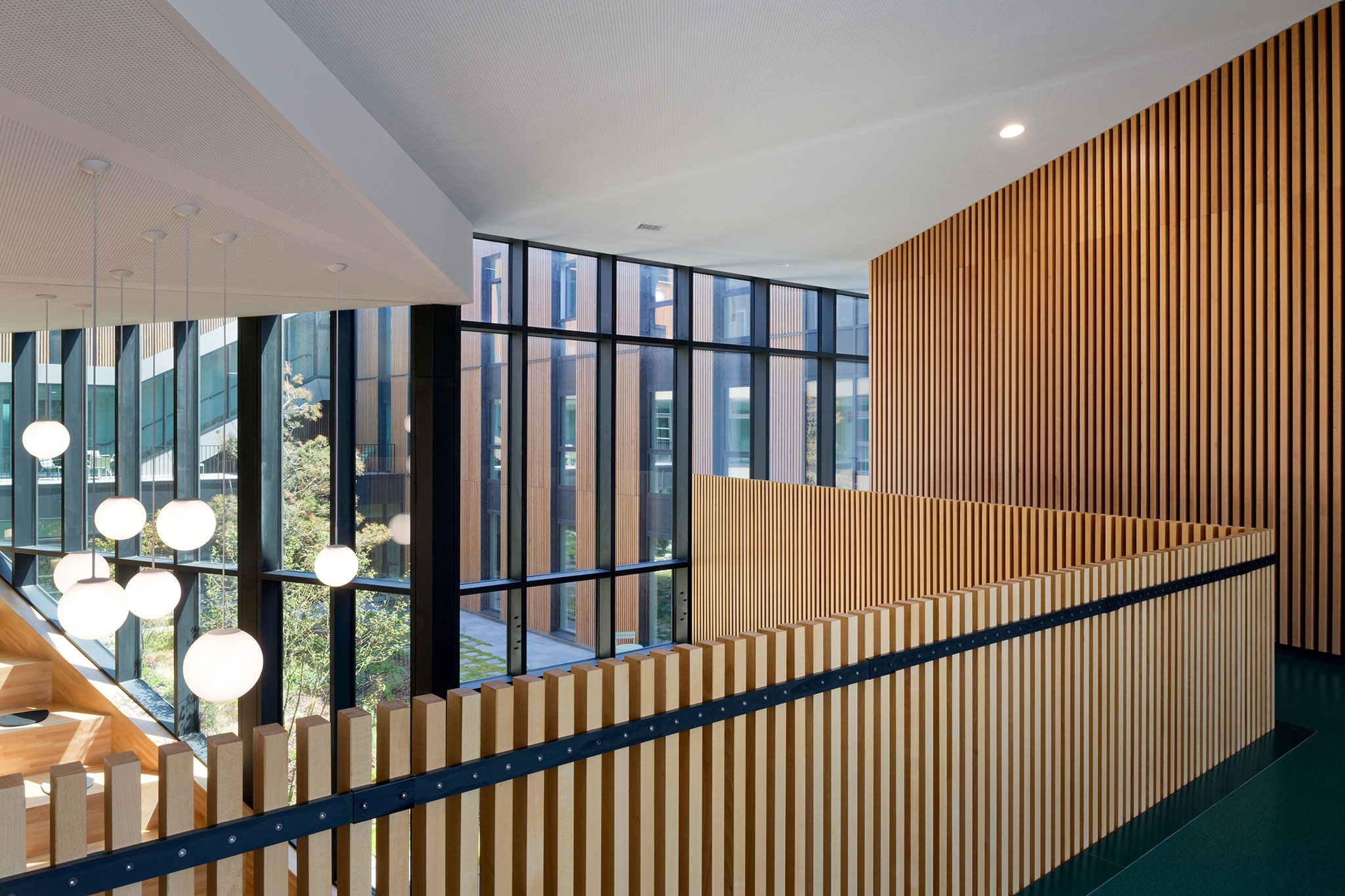
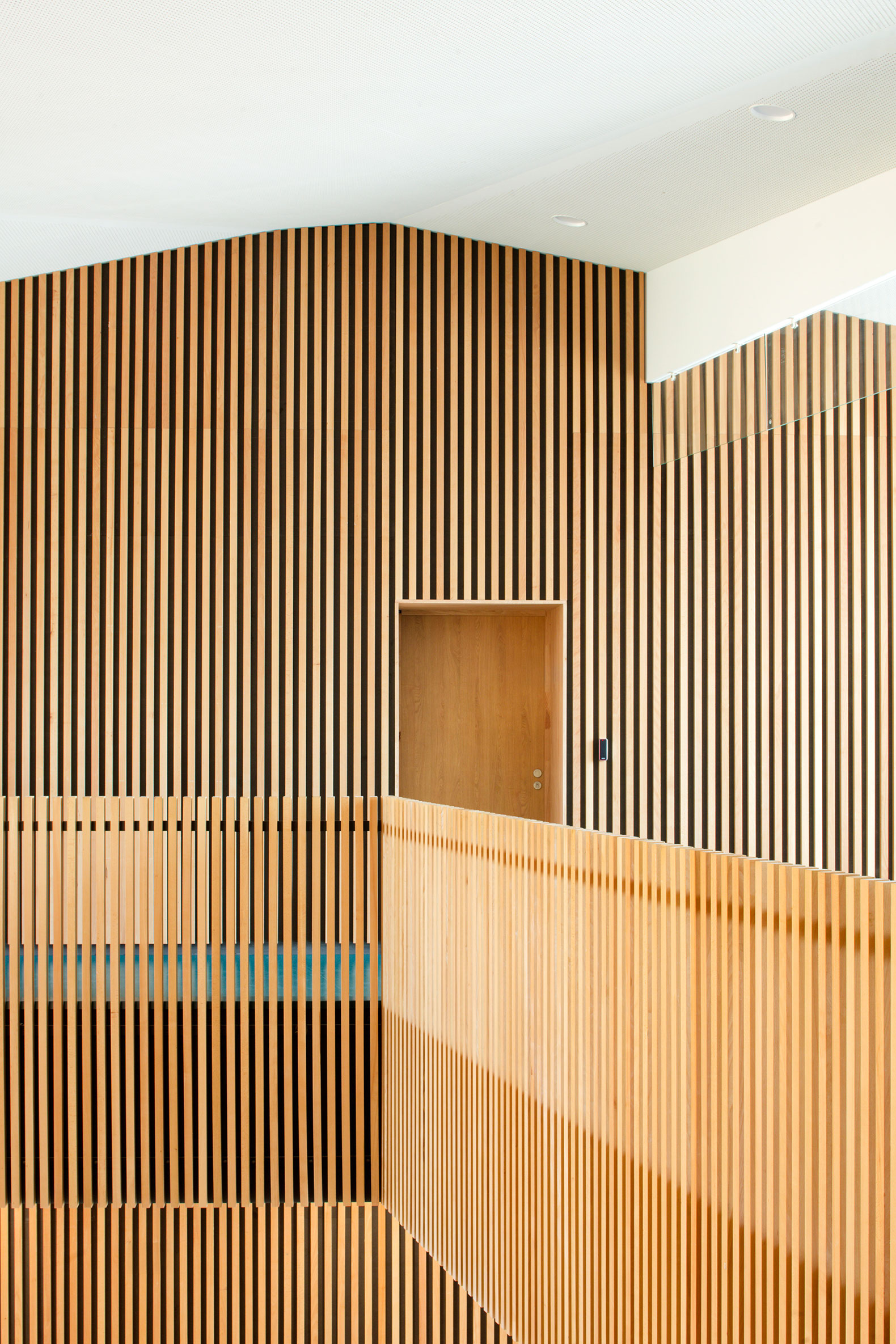
Situado a medio camino entre el puerto y el tejido urbano, Écosystème D cuenta con un patio delantero, una conexión al aire libre de la sala de exposiciones acristalada. El interior se organiza alrededor del patio central, con una amplia escalera que serpentea entre los niveles conectando el centro de aprendizaje, los espacios de trabajo, los laboratorios experimentales y las funciones administrativas.

Alberga una nave tecnológica para prototipado a gran escala, un centro de formación, una incubadora, una sala de exposiciones y numerosos espacios de trabajo flexibles. Mediante sus alianzas con escuelas de ingeniería y empresas comprometidas con la descarbonización, se ha convertido en un epicentro de innovación y formación que  promueve la investigación.
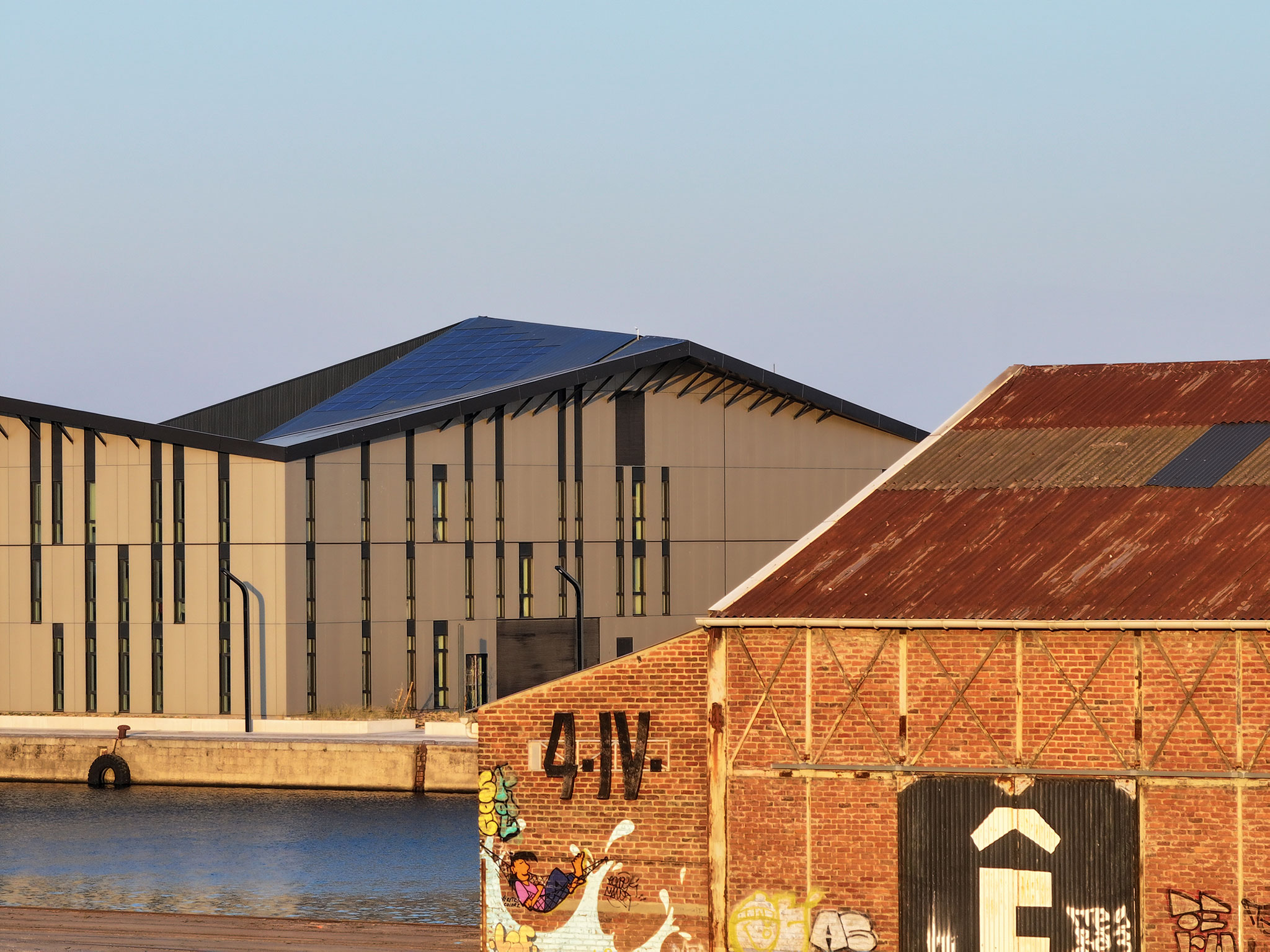
Ecosystème D por Snøhetta. Fotografía por Nicolas Fussler.

Ecosystème D por Snøhetta. Fotografía por Nicolas Fussler.

El edificio ha sido proyectado por Snøhetta con una estrategia bioclimática basada en cinco principios clave:

Compacidad y luz natural:
El edificio adopta una planta rectangular (50 x 60 m) centrada en un patio protegido del viento. Todas las funciones del programa se organizan en torno a este núcleo verde, lo que favorece la luz natural, la ventilación y la interacción entre los usuarios.

Envolvente térmica pasiva y de alto rendimiento:
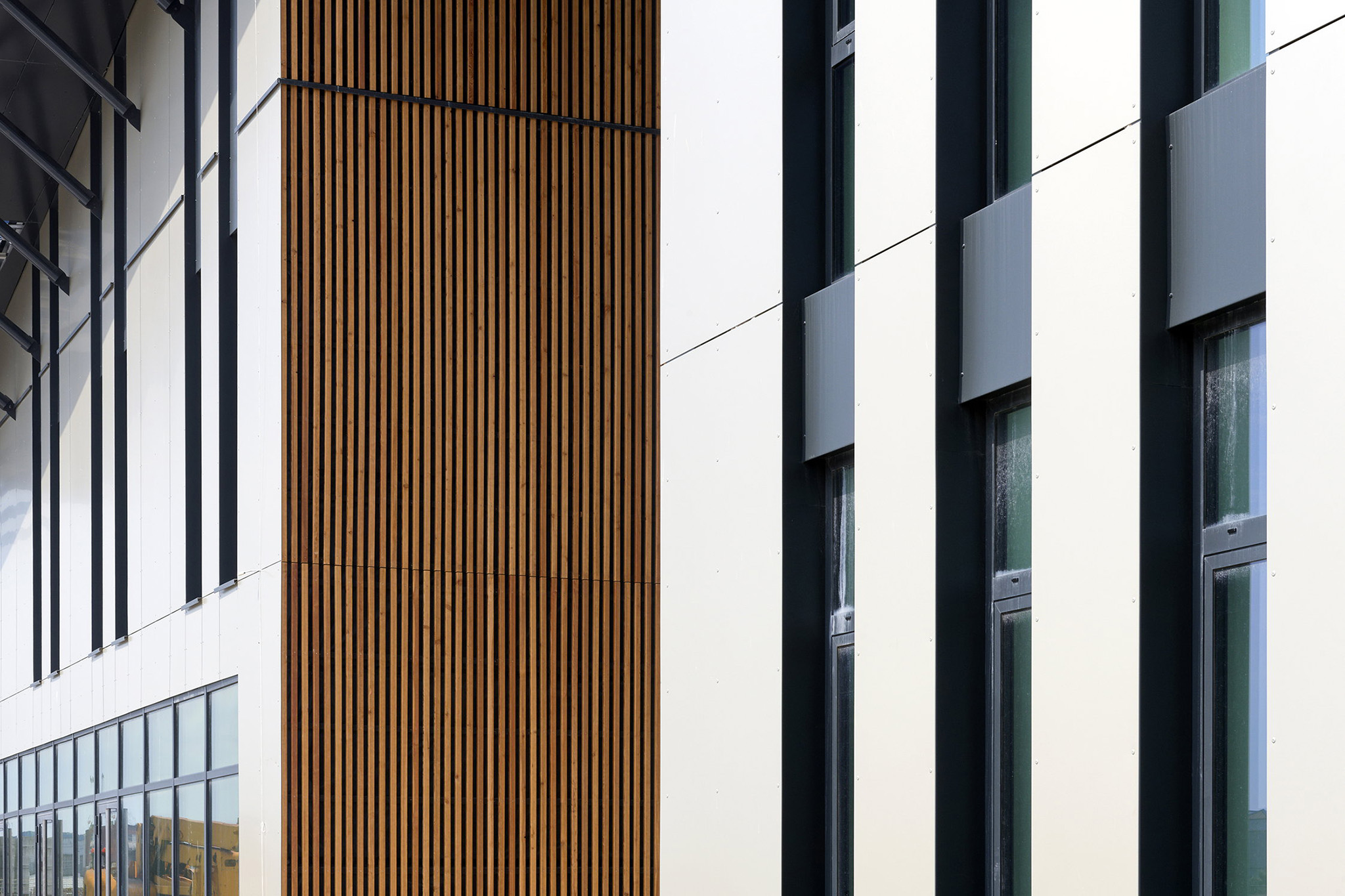
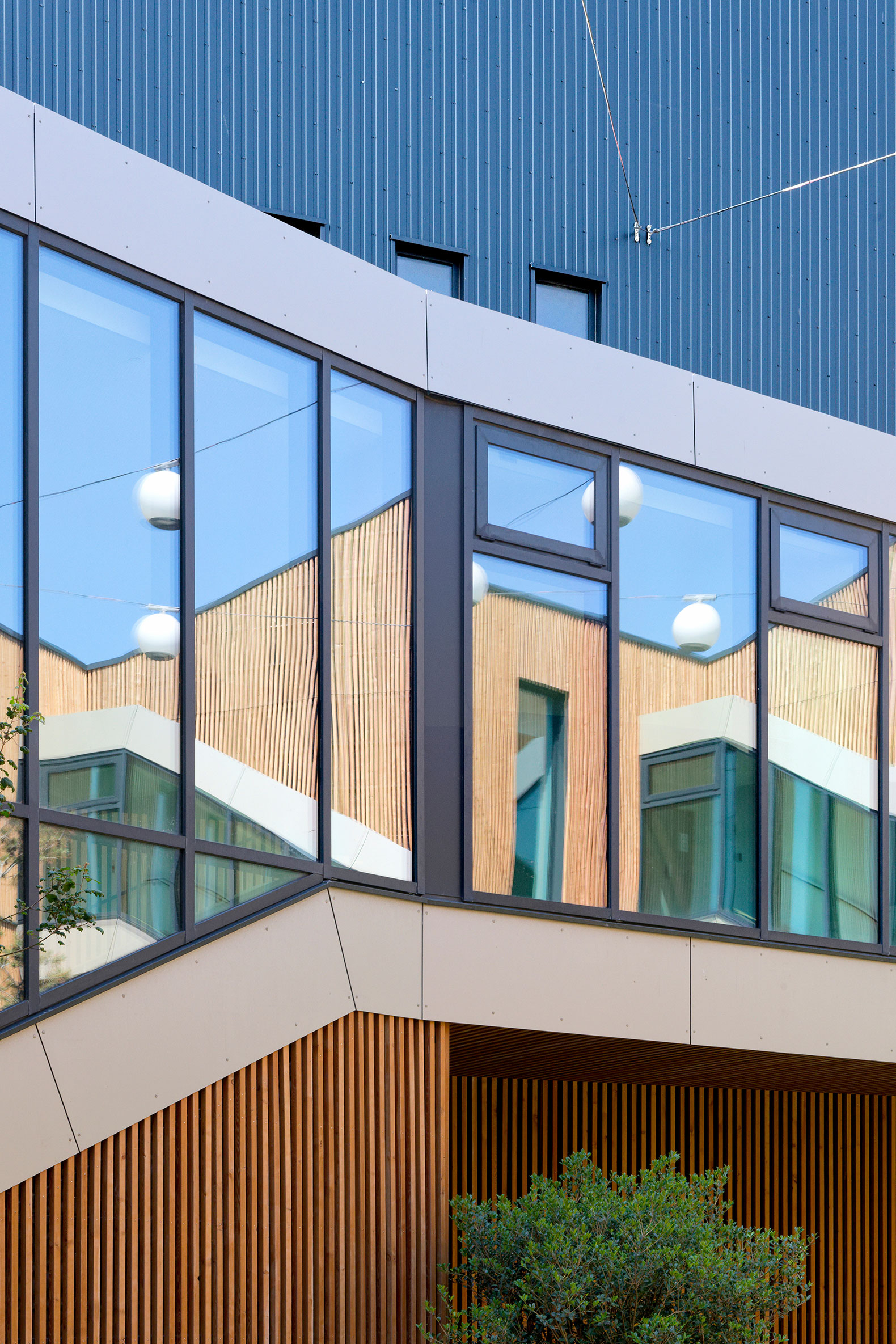
El triple acristalamiento, el aislamiento mejorado, la carpintería de alto rendimiento, los voladizos del tejado que actúan como parasoles y el revestimiento metálico de alto albedo garantizan una eficiencia térmica óptima.

Refrigeración natural sin aire acondicionado:
La refrigeración adiabática aprovecha la proximidad del mar y favorece la ventilación cruzada. No se requiere un sistema de aire acondicionado activo.
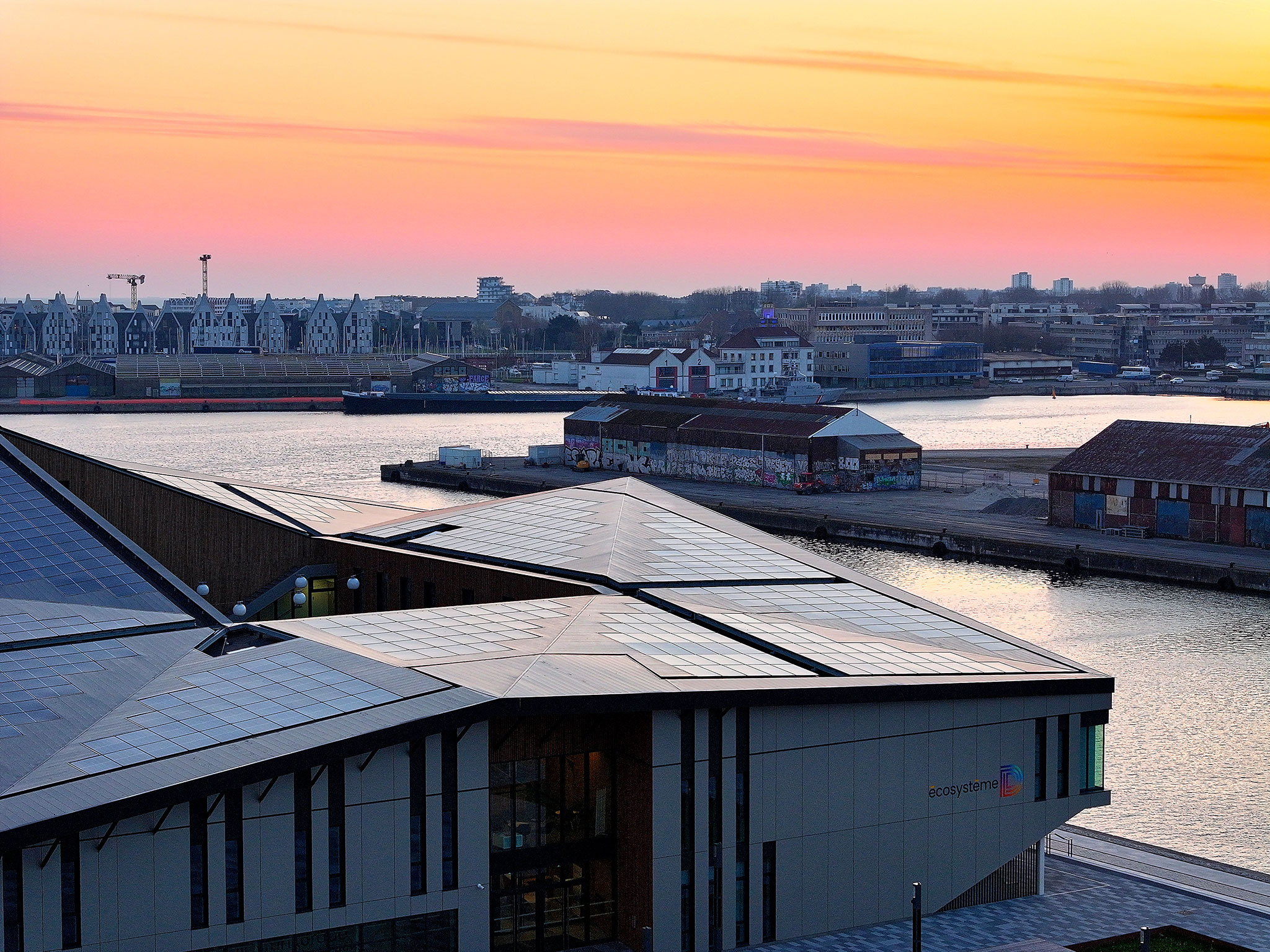
Ecosystème D por Snøhetta. Fotografía por Nicolas Fussler.

Ecosystème D por Snøhetta. Fotografía por Nicolas Fussler.

Materiales de origen biológico y locales:
La estructura de madera maciza contribuye a alcanzar el nivel 3 de la etiqueta «Edificio de Origen Biológico», con más de 36 kg de materiales de origen biológico por metro cuadrado de superficie. Los materiales proceden principalmente de fuentes locales.

Mantenimiento simplificado y durabilidad:
Mantenimiento simplificado y durabilidad: El edificio está proyectado para minimizar las necesidades de mantenimiento, con sistemas accesibles, robustos y bien pensados ​​para una larga vida útil.
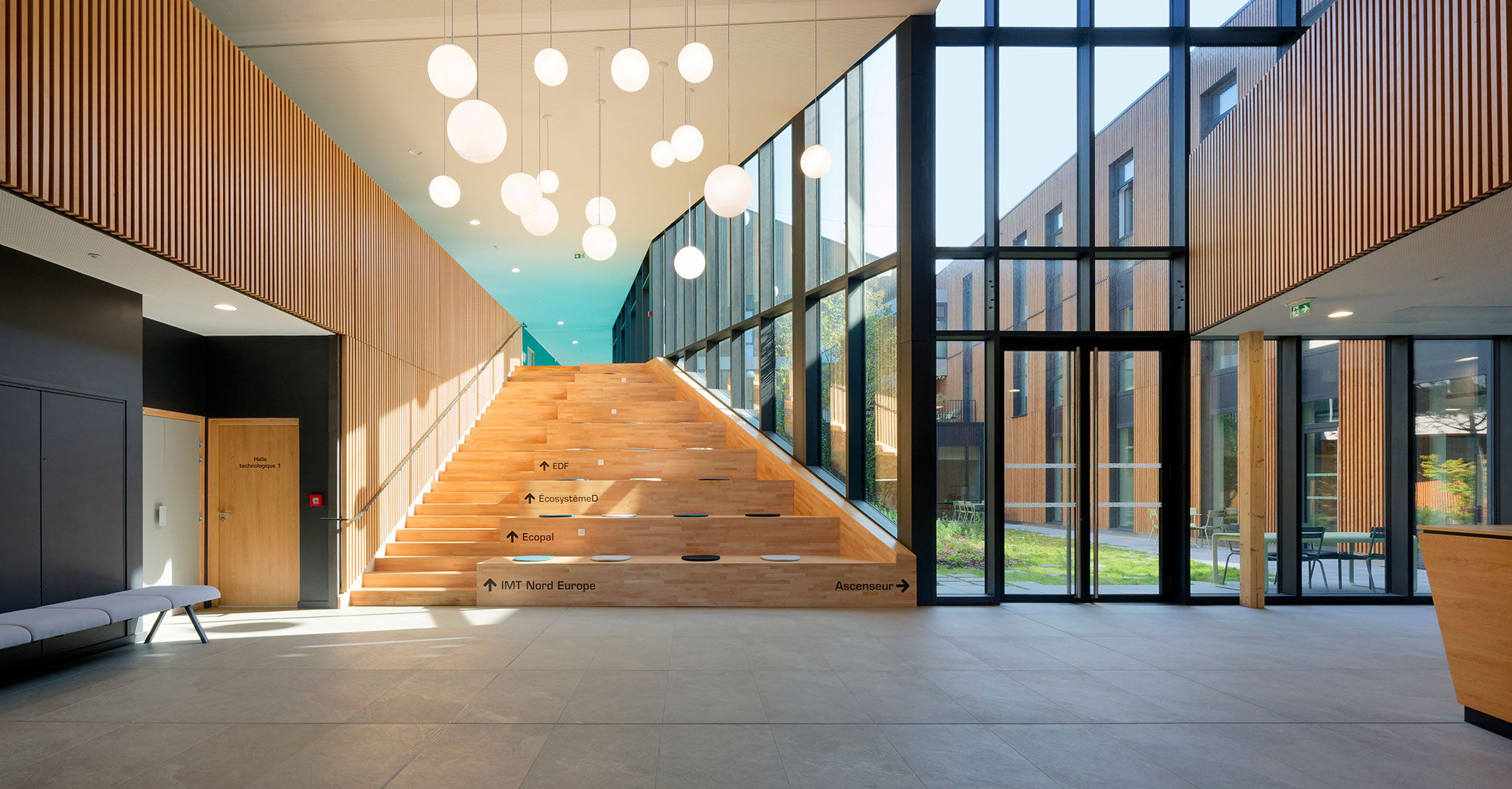
More information

Label
Architects
+ + copy Created with Sketch.
- + copy Created with Sketch.
Label
Collaborators
Text

Local architect/execution architect.- Santer Vanhoof.
Landscape.- RVB Paysage.
Environmental engineer.- Impact Ingénierie.
Building engineer.- CET Ingénierie.
​Acoustic engineer.- GAMBA.

+ + copy Created with Sketch.
- + copy Created with Sketch.
Label
Client
Text

SPAD on behalf of Dunkirk Urban Community.

+ + copy Created with Sketch.
- + copy Created with Sketch.
Label
Area
Text

​Plot.- 5,000m²
​GFA.- 4,400m²
​Net.- 3,570 m²

+ + copy Created with Sketch.
- + copy Created with Sketch.
Label
Dates
Text

Building started in November 2022 - Delivery of the building October 2024.

+ + copy Created with Sketch.
- + copy Created with Sketch.
Label
Location
Text

Môle 2, Dunkirk, Northern France.

+ + copy Created with Sketch.
- + copy Created with Sketch.
Label
Certifications
Text

Certification biobased level 3, E+C- (E4C1).

+ + copy Created with Sketch.
- + copy Created with Sketch.
Label
Construction Cost
Text

​11,8 mill. €​.

+ + copy Created with Sketch.
- + copy Created with Sketch.
Label
Photography
+ + copy Created with Sketch.
- + copy Created with Sketch.

Snøhetta is an architecture, landscape, and interior design studio with offices in Oslo, Norway, and New York City, USA. Founded in 1989, it is led by Craig Dykers and Kjetil Thorsen. The studio, named in honour of Mount Snøhetta, the highest peak in the Dovrefjell mountains of Norway, has approximately 100 collaborators working on large-scale international projects across a wide range of typologies. Their approach is deeply collaborative and transdisciplinary, bringing together architects, designers, engineers, and landscape professionals to explore multiple perspectives depending on the nature of each project.

Snøhetta has completed a series of world-renowned cultural and landmark projects, including the Bibliotheca Alexandrina in Egypt, the Oslo Opera House and Ballet, and the Lillehammer Art Museum in Norway. Current projects include the National Pavilion of the September 11 Memorial Museum at the World Trade Center site in New York, as well as urban and landscape developments that aim to merge local identity, sustainability, and public experience.

In 2004, Snøhetta was awarded the Aga Khan Award for Architecture, and in 2009, the Mies van der Rohe Award. The studio is the only practice to have won the World Architecture Award for Best Cultural Building twice in consecutive years: in 2002 for the Bibliotheca Alexandrina and in 2008 for the Oslo Opera House and Ballet, consolidating its international prestige.

Kjetil Trædal Thorsen (born 1958 on the coastal island of Karmøy, Norway) is a co-founder of the studio and a multiple award-winning architect. He is a visionary and humanist designer who has redefined the boundaries of contemporary practice. Under his leadership, Snøhetta has produced iconic, sustainable structures that are highly sensitive to their cultural context, combining technological innovation with a profound environmental awareness. Thorsen’s work is recognized for its focus on social interaction, sustainability, and the creation of spaces that foster human connection and sensory experience, establishing a benchmark in contemporary global architecture.

Craig Dykers (born 1961 in Frankfurt, Germany) is also a co-founder of the studio and director of its New York office. Snøhetta has earned a reputation for maintaining a deep integration of landscape, architecture, and urban experience across all its projects. Key works include the Bibliotheca Alexandrina in Egypt, the Oslo Opera House and Ballet, the National Pavilion of the September 11 Memorial Museum in New York, and the redesign of Times Square. Professionally and academically active, Dykers has been a member of the Norwegian Association of Architects (NAL), the American Institute of Architects (AIA), and the Royal Society of Arts in England. He has served as a diploma juror at the Architectural College in Oslo and as a distinguished professor at City College, New York. He has delivered numerous lectures across Europe, Asia, and the Americas, and has undertaken public art installation projects, many of which explore the interplay between context, landscape, and human experience.

Read more
Published on: April 12, 2026
Cite:
metalocus, ANTONIO GRAS
"A platform for the energy transition in Dunkirk. Ecosystème D by Snøhetta" METALOCUS. Accessed
<https://www.metalocus.es/en/news/platform-energy-transition-dunkirk-ecosysteme-d-snohetta> ISSN 1139-6415
Loading content ...
Loading content ...
Loading content ...
Loading content ...
Loading content ...
Loading content ...
Loading content ...
Loading content ...
Loading content ...
Loading content ...
Loading content ...
Loading content ...
Loading content ...
Loading content ...
Loading content ...
Loading content ...
Loading content ...
Loading content ...
Loading content ...
Loading content ...
Loading content ...
Loading content ...
Loading content ...
Loading content ...
Loading content ...
Loading content ...
Loading content ...
Loading content ...
Loading content ...
Loading content ...
Loading content ...
Loading content ...
Loading content ...
Loading content ...
Loading content ...
Loading content ...
Loading content ...
Loading content ...
Loading content ...
Loading content ...
Loading content ...
Loading content ...
Loading content ...
Loading content ...
Loading content ...
Loading content ...
Loading content ...
Loading content ...
Loading content ...
Loading content ...
Loading content ...
Loading content ...
Loading content ...
Loading content ...