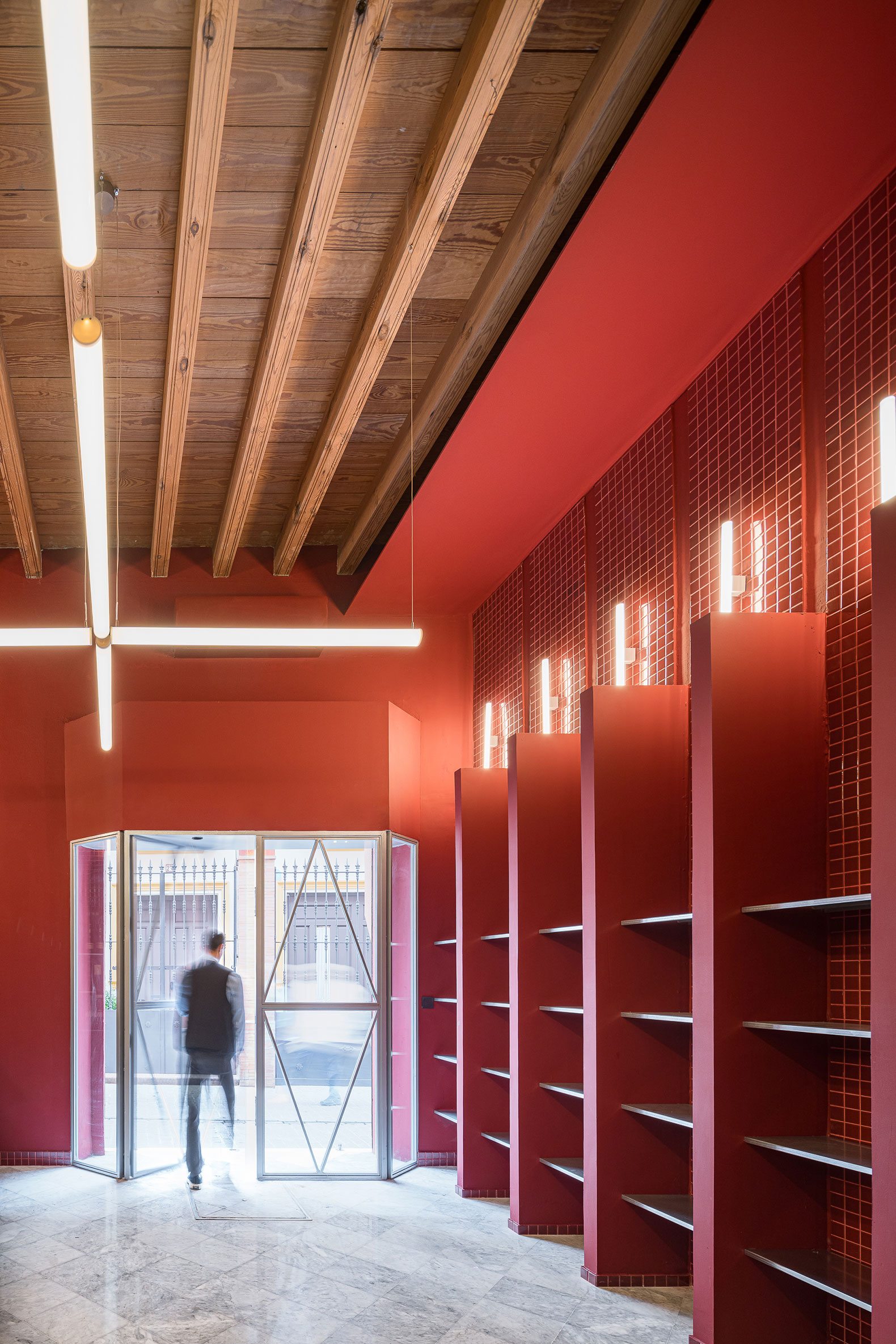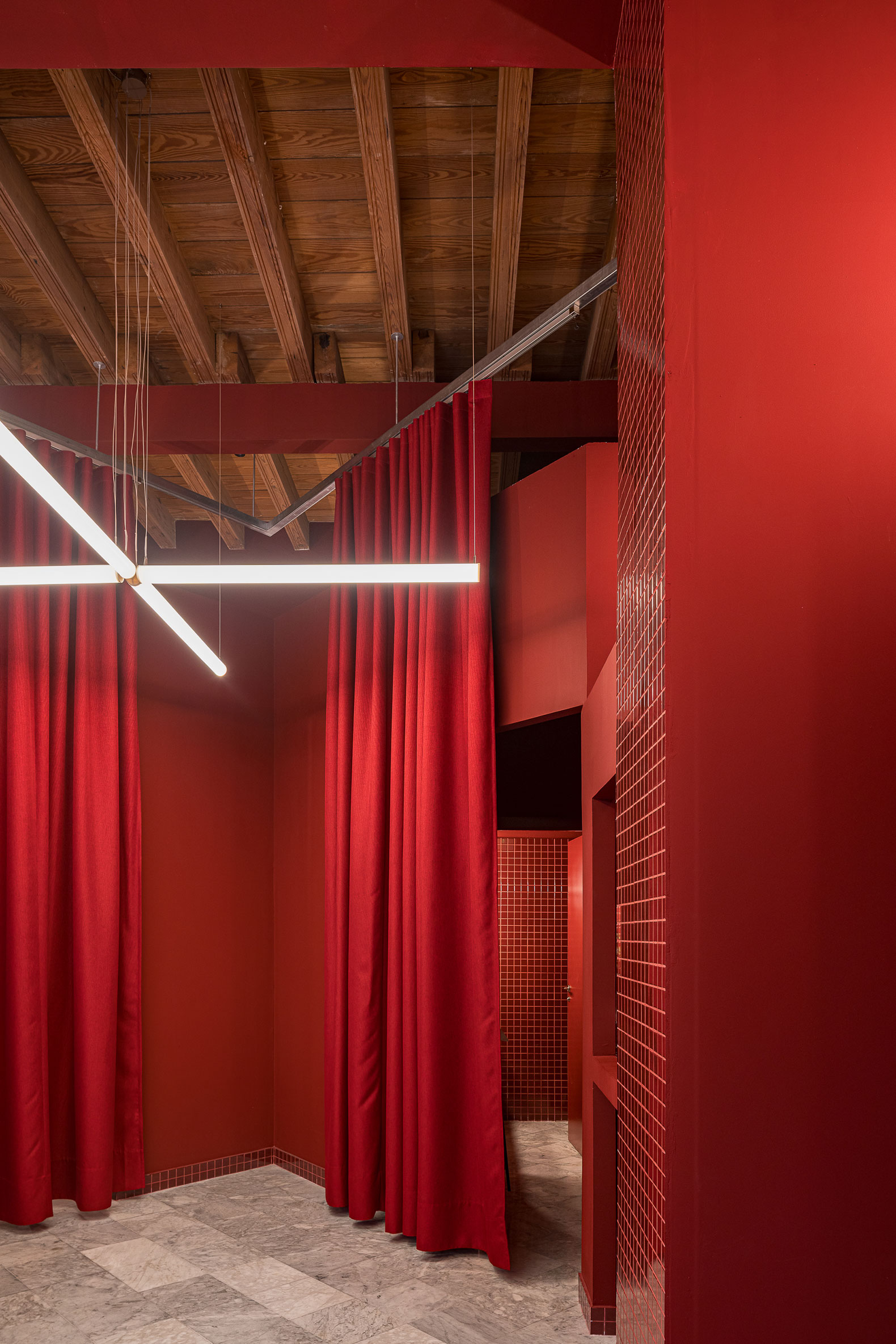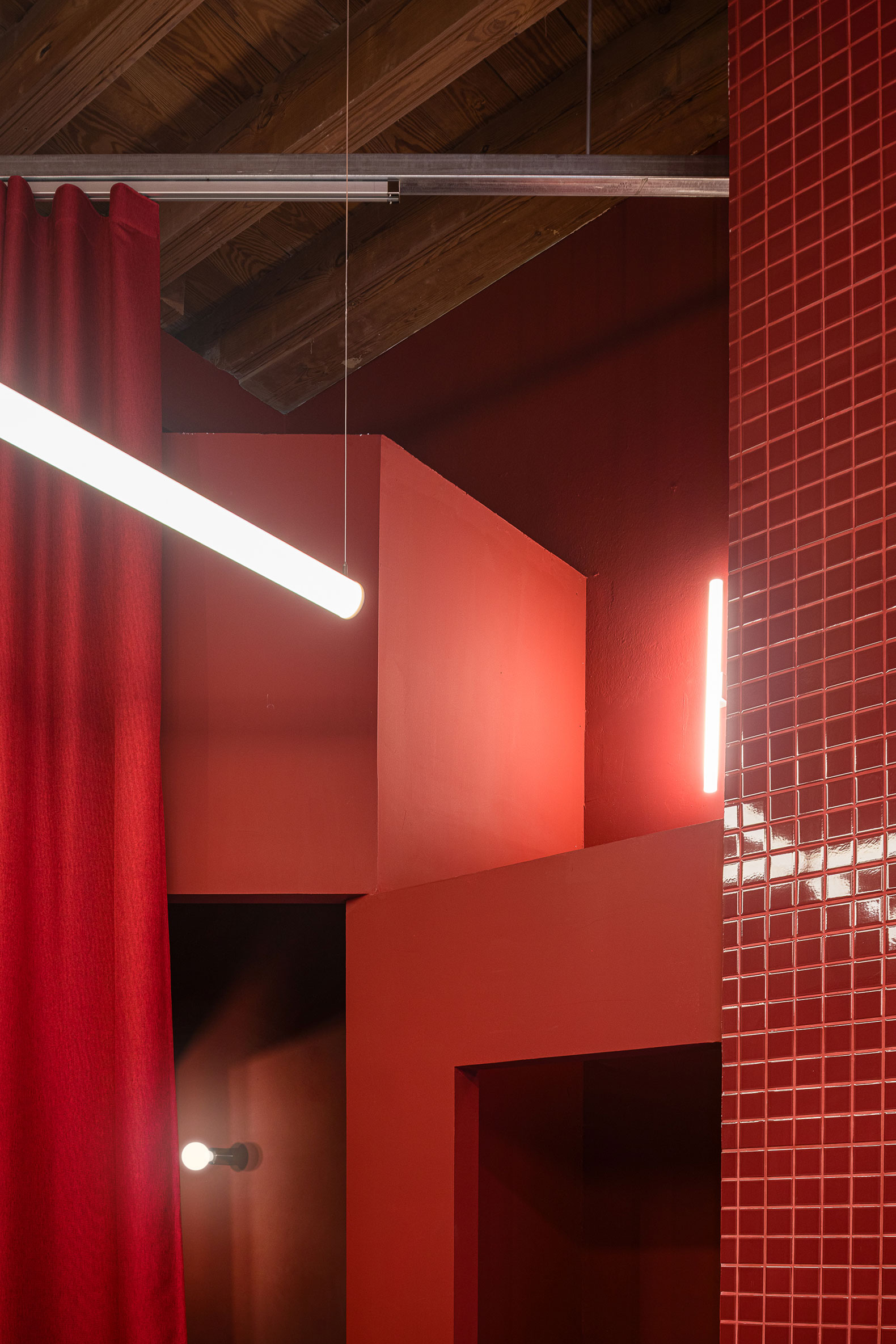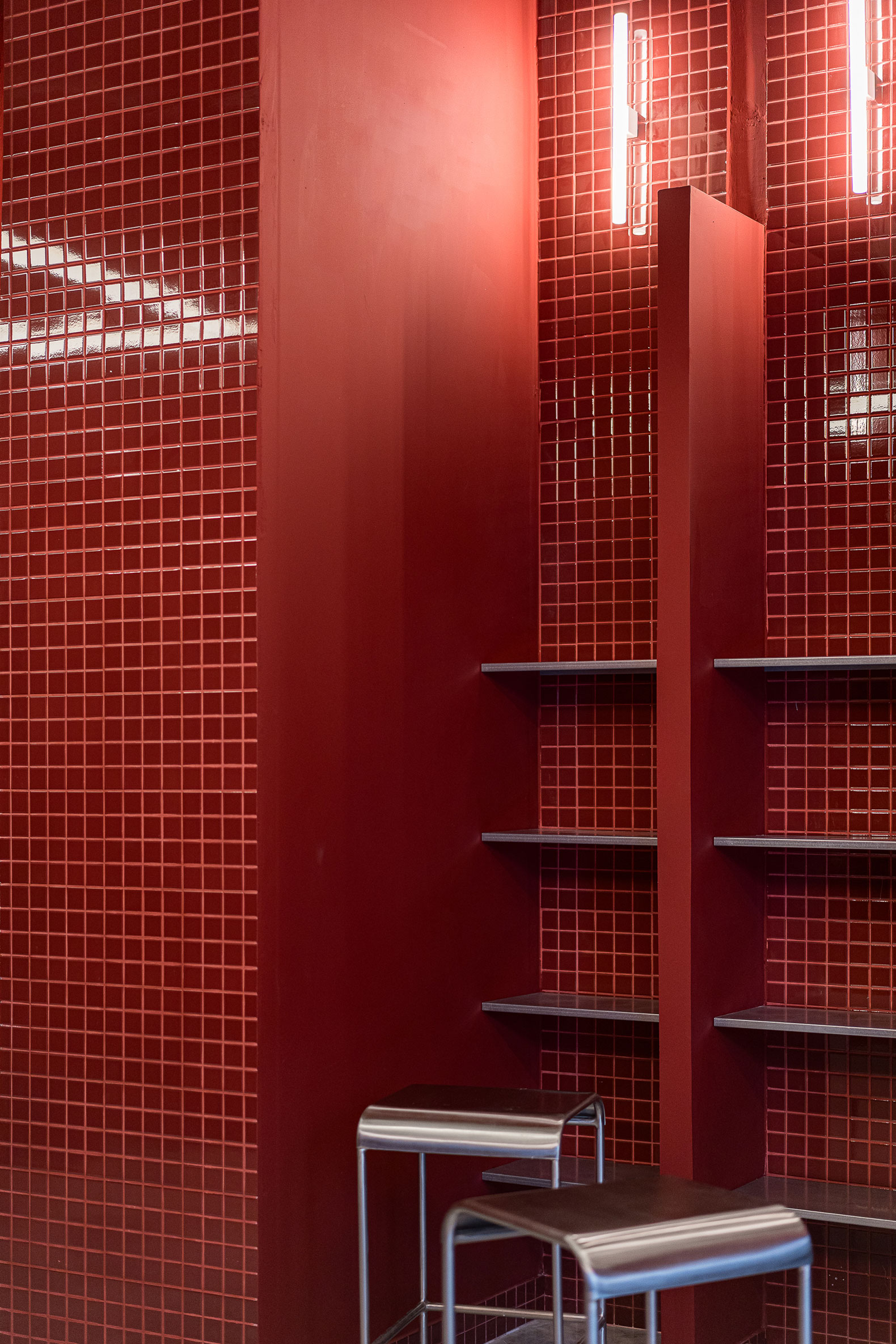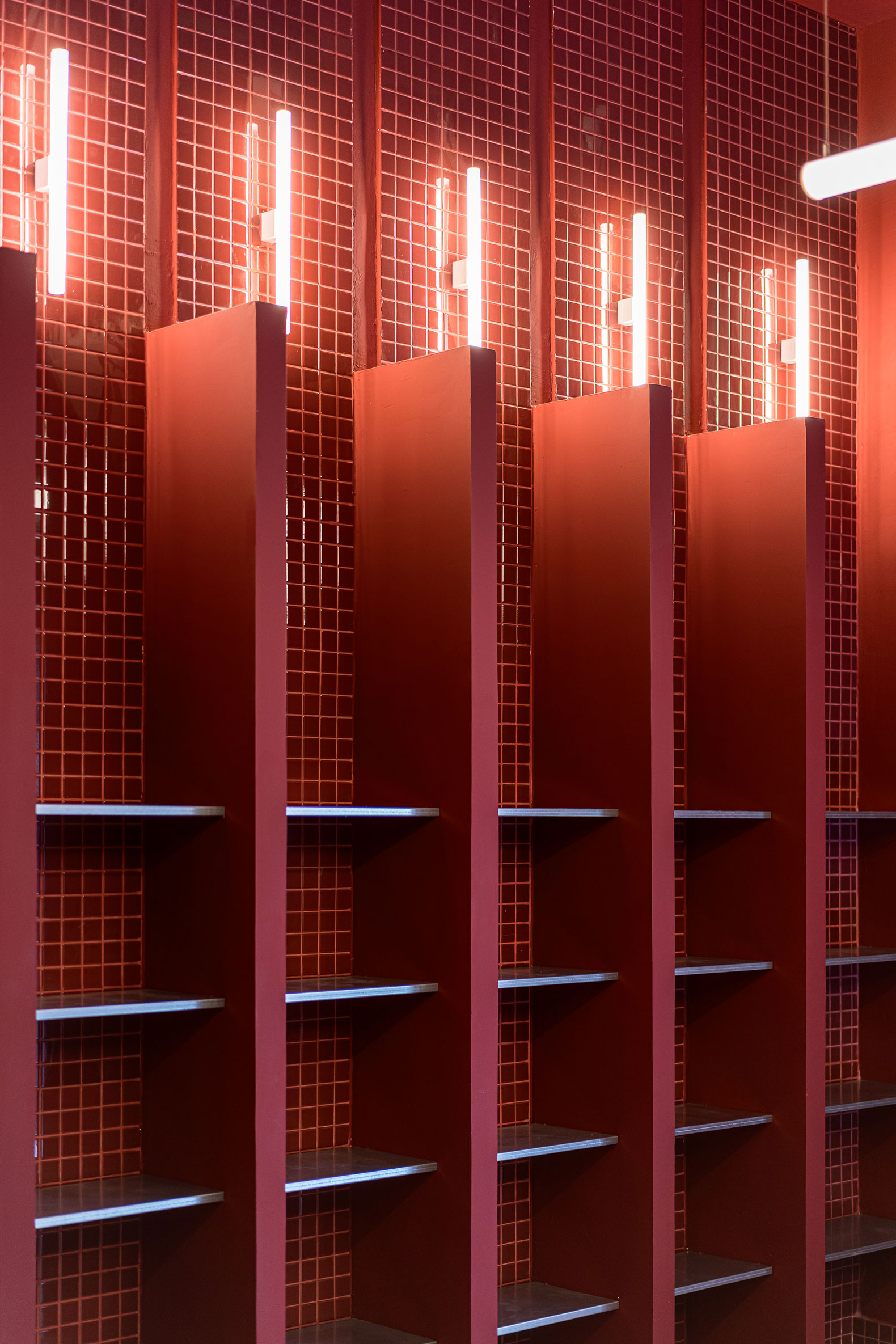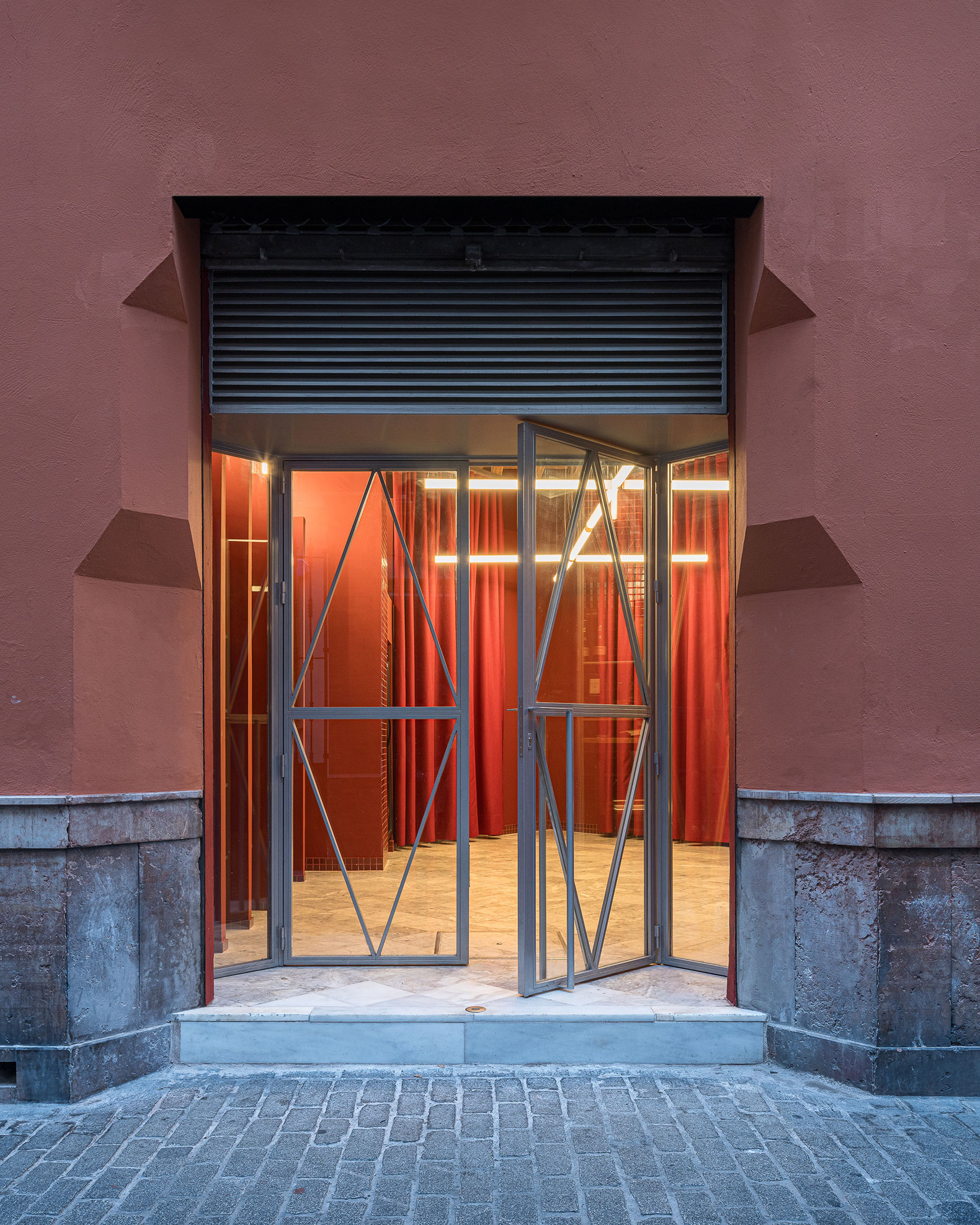
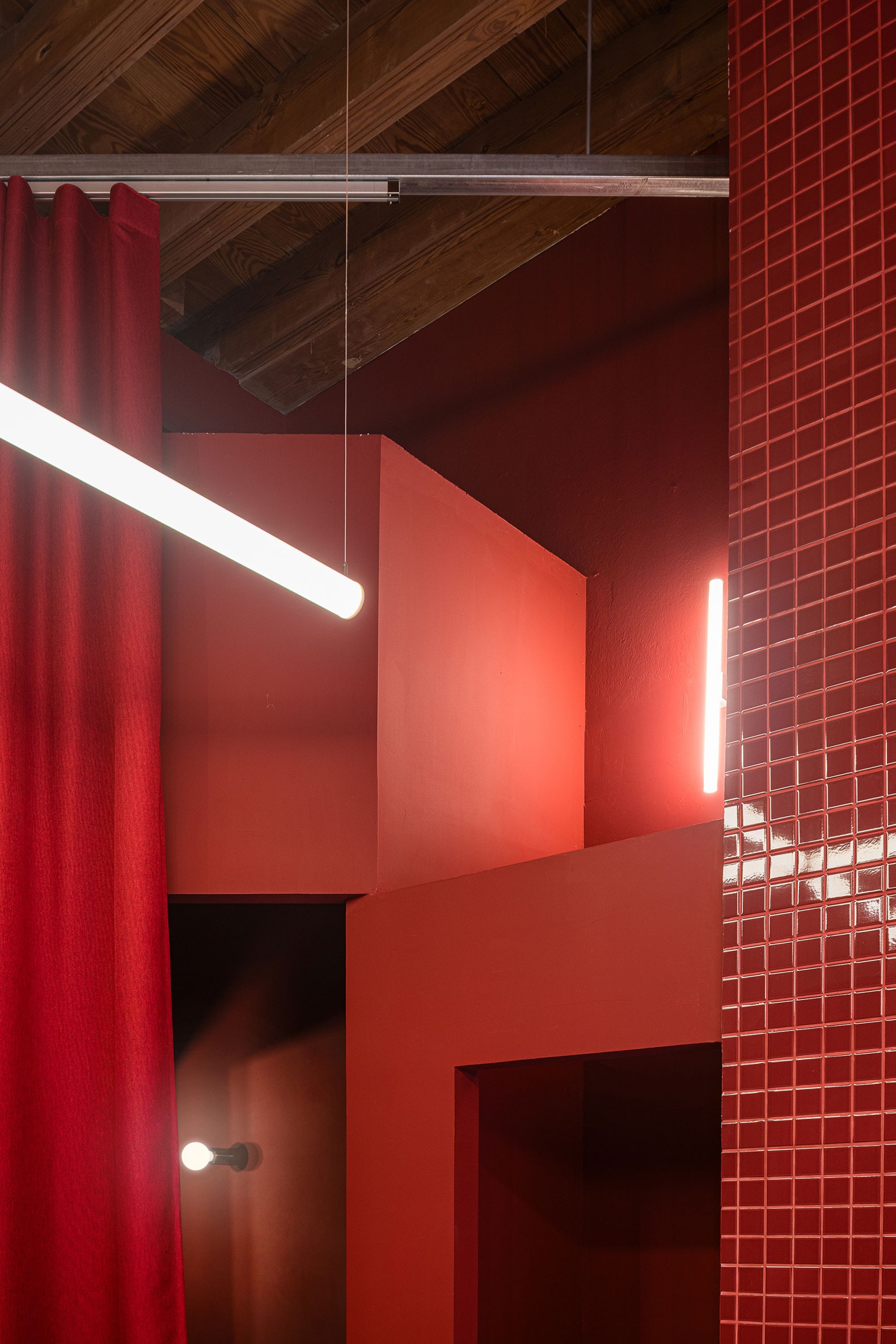
The proposal, designed for Vinoteca Z13 by ALFADA Estudio, emphasizes the spatial perception of visitors. They enter a space that feels like a sanctuary dedicated to the sensory experience of the product. Color, as a continuous and enveloping element, floods the vertical surfaces and furniture, creating an abstract and unified perception of the space as a whole.
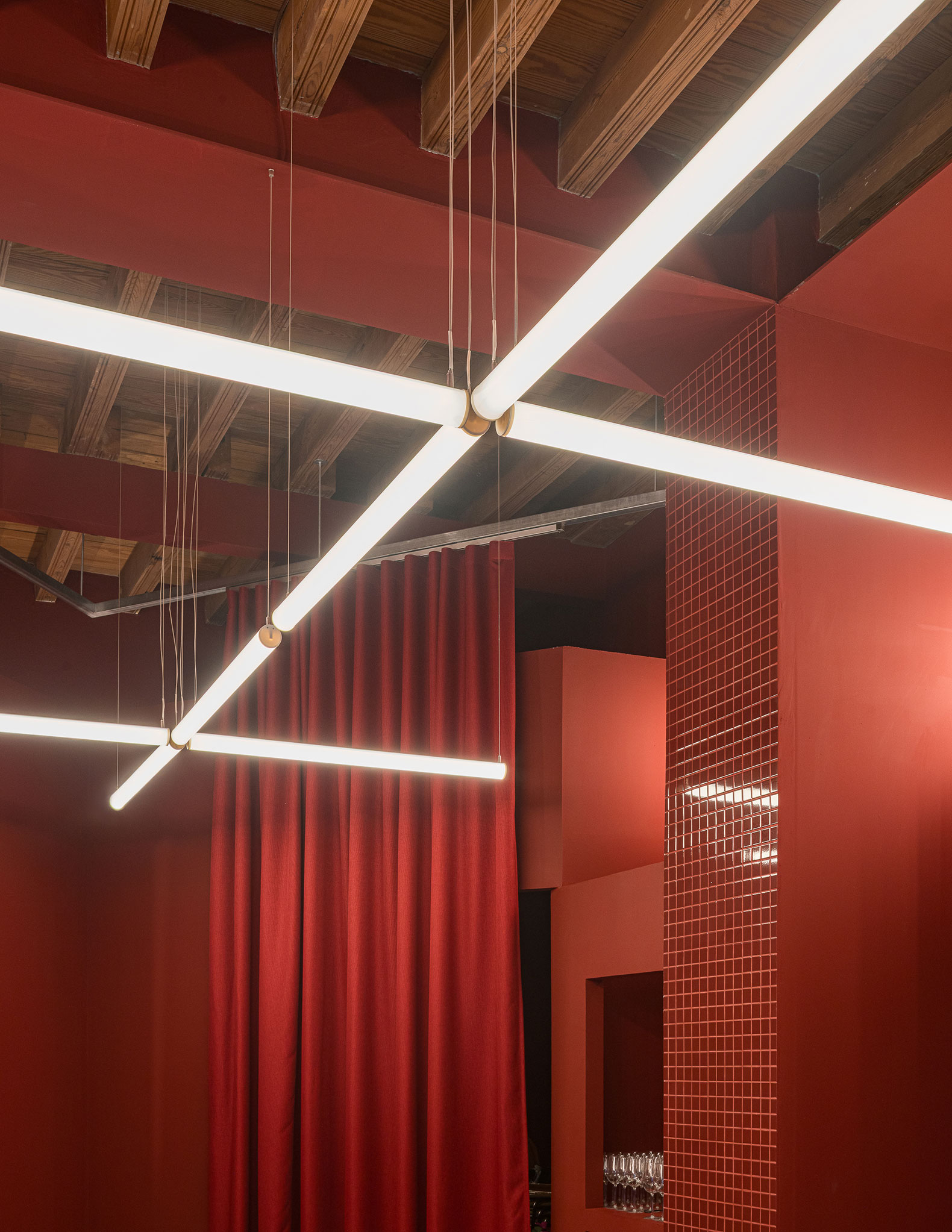
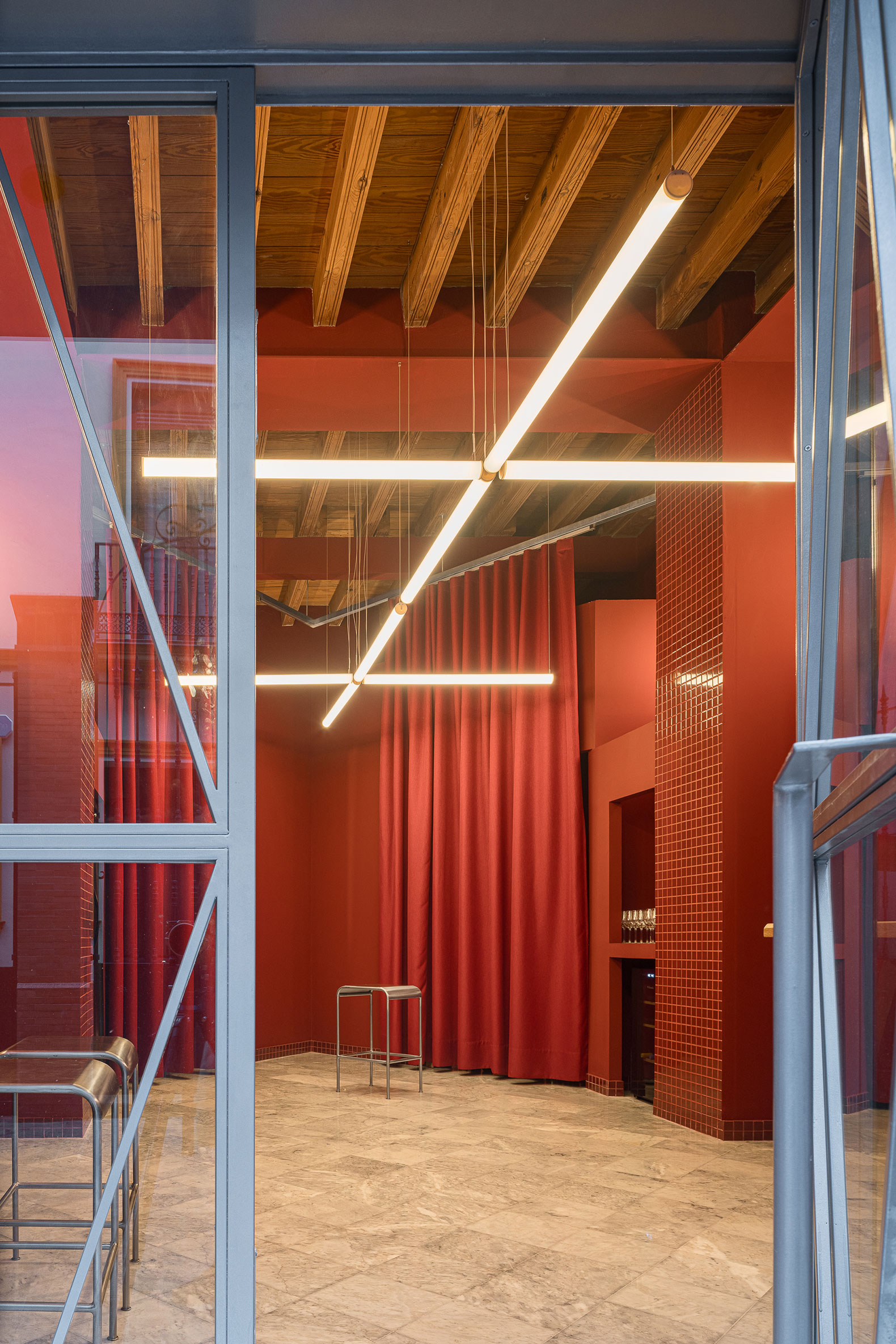
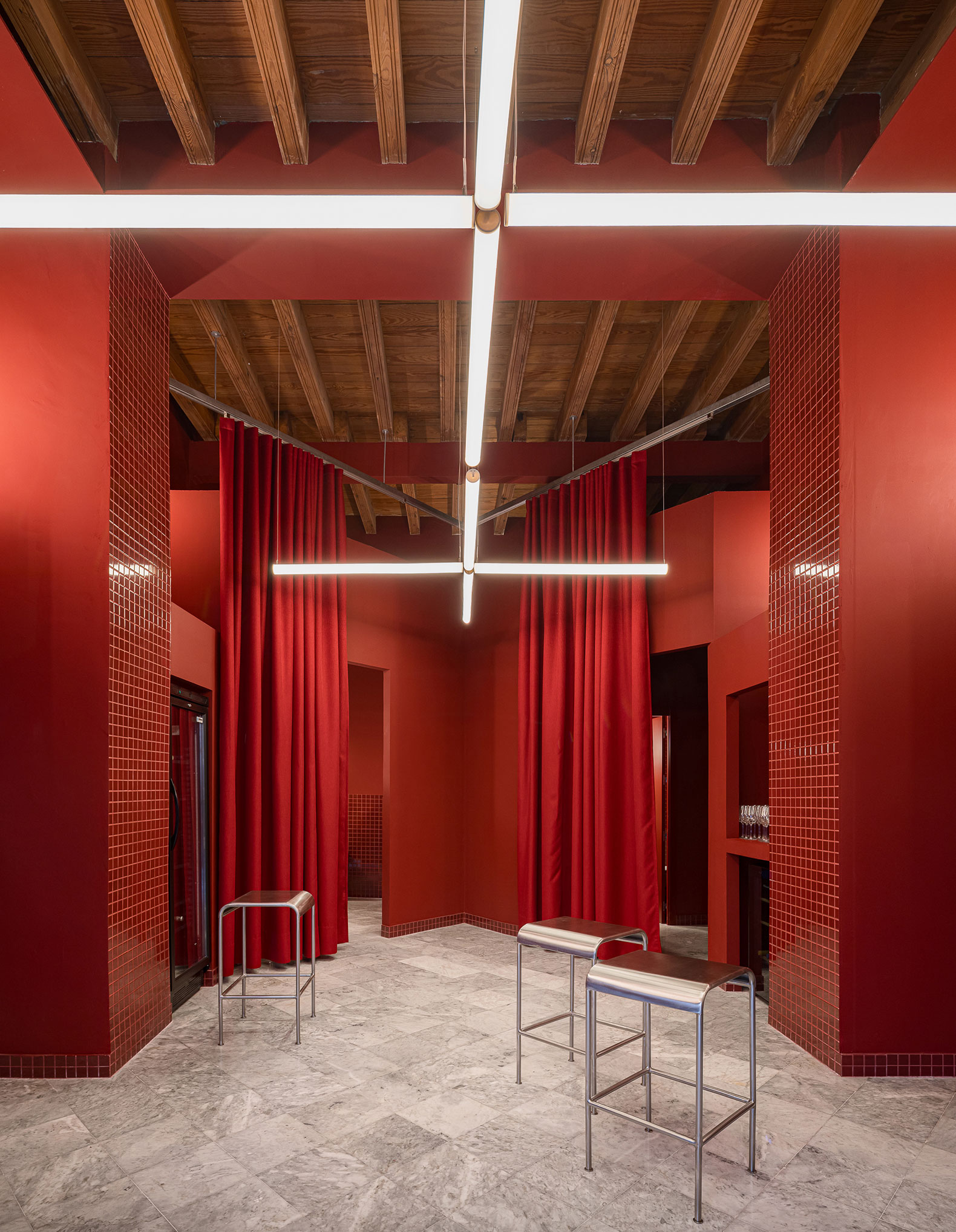
The interior, built on emotion, atmosphere, and perception, does not sacrifice functionality in a space where form, color, and light align to transform this compact space into a wine shop, with suspended light fixtures that reinforce the verticality and interact with the existing structure in an almost ecclesiastical atmosphere.
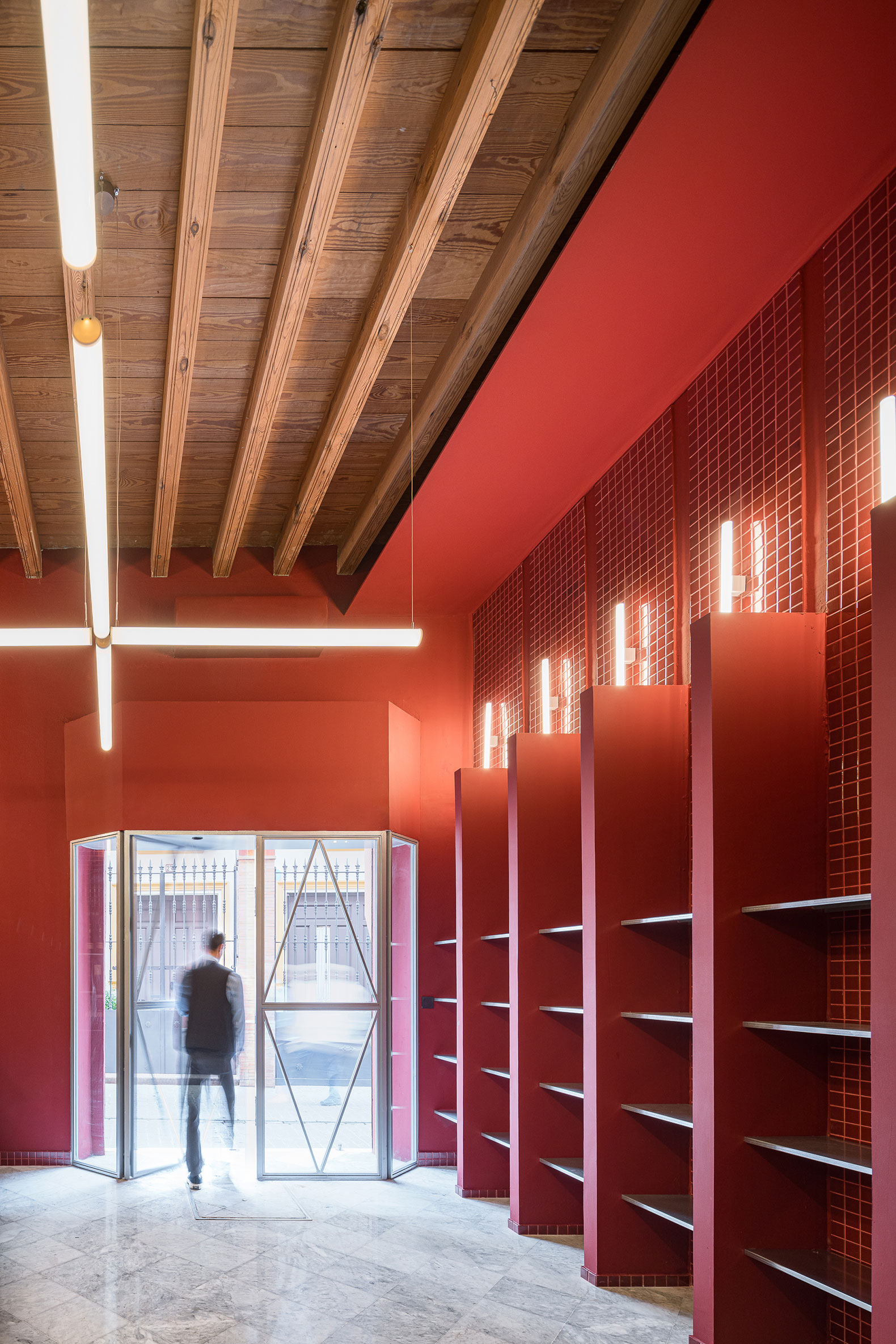
Vinoteca Z13 by ALFADA Estudio. Photograph by Juanca Lagares.
Project description by ALFADA Estudio
Transforming a small space into a ritualistic and memorable environment.
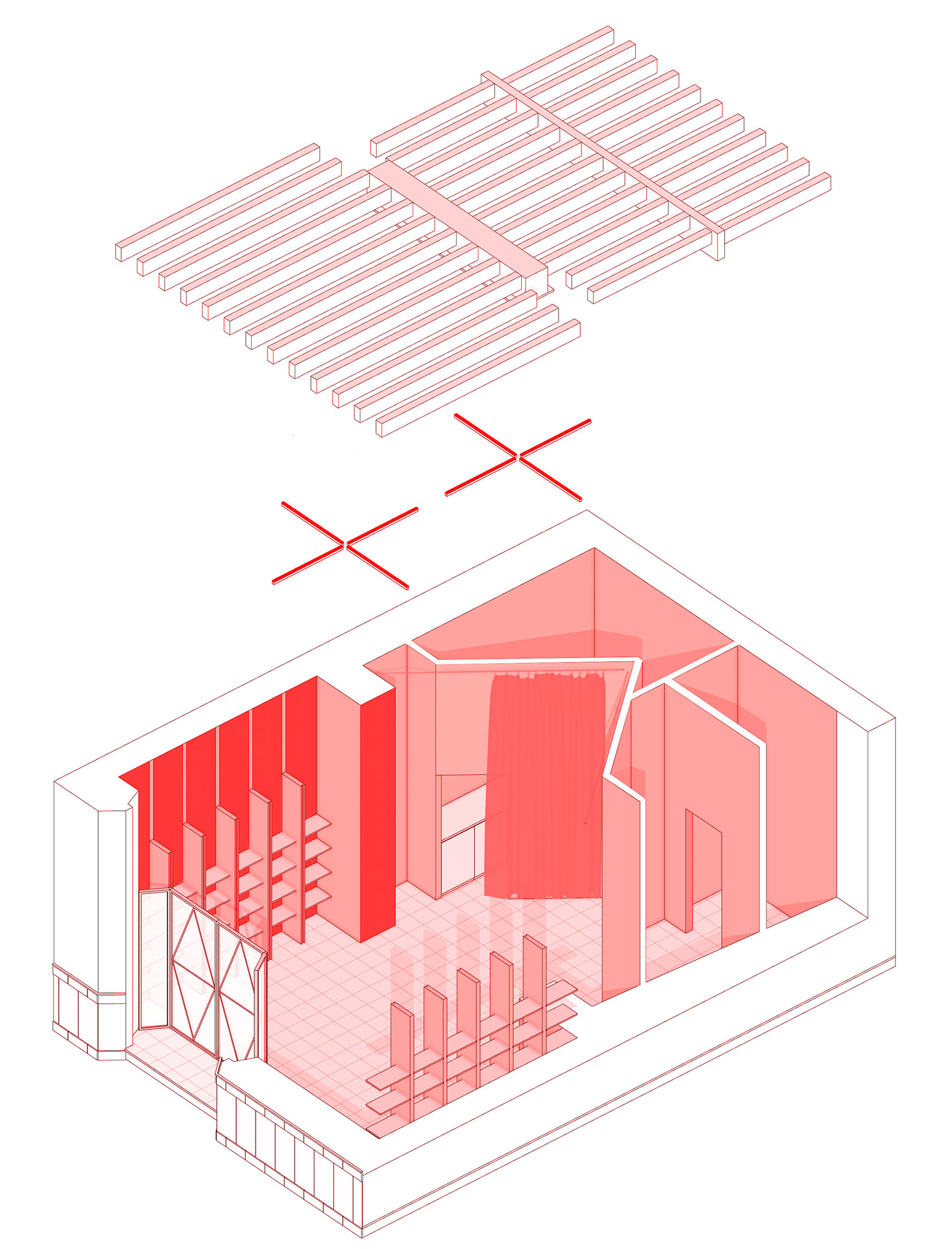
We took advantage of the existing ceiling height of over four meters to create a sense of spaciousness. Verticality thus became the true focus of the project, allowing us to liberate the space, dematerialize its boundaries, and construct an immersive atmosphere.
Between the stone floor and the wooden ceiling, both preserved elements, a series of spatial operations were implemented, centered on reinforcing the idea that, upon crossing the threshold, the customer is entering a place of worship and sensory experience of the product.
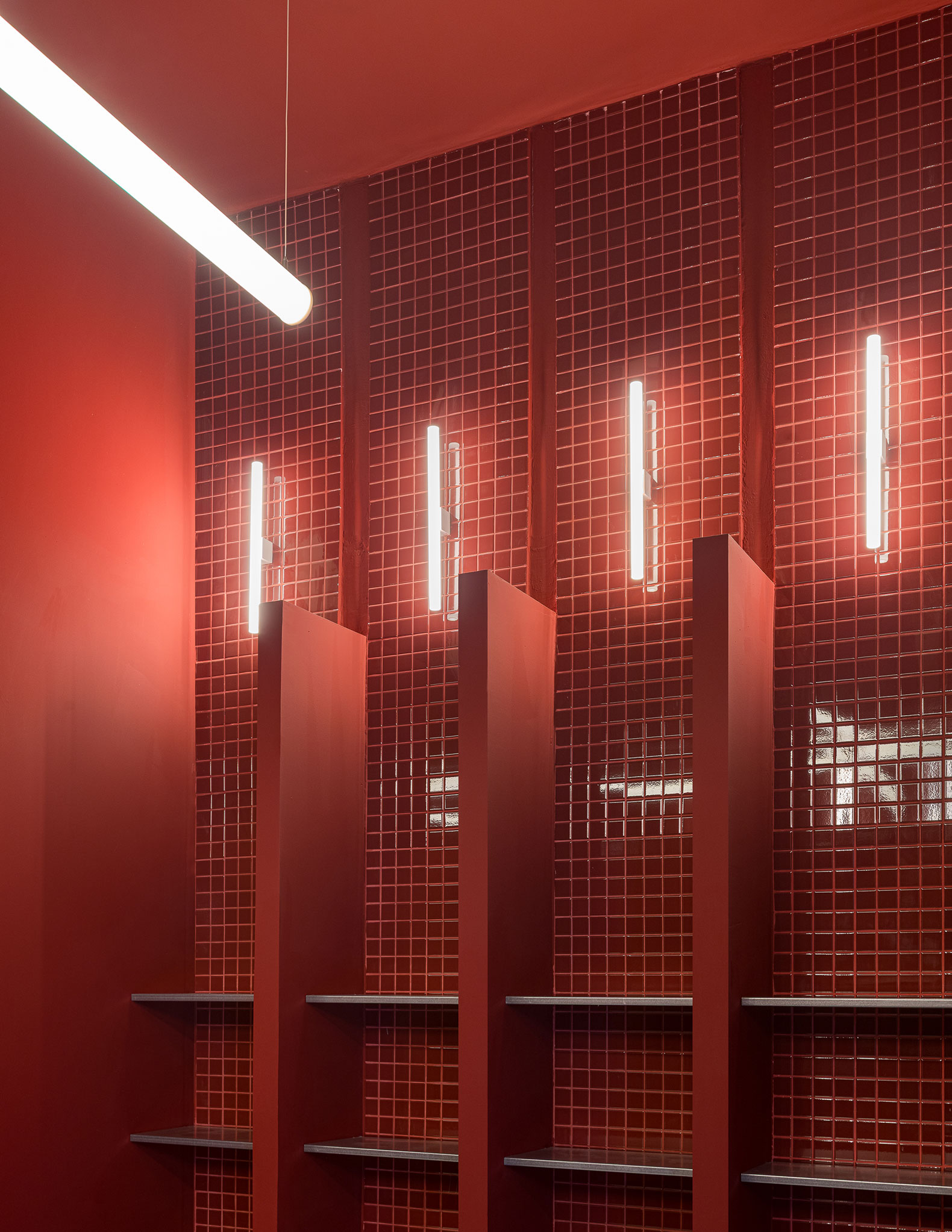
Color becomes a key element of the intervention, bathing the vertical surfaces, the shelving, and the furniture itself. Its continuous and enveloping presence blurs the boundaries, generating a unified and almost abstract perception of the whole. The light and the textures of the different materials create nuances that enrich the space throughout the day. This interior lighting is carefully designed to contribute to the creation of an almost church-like atmosphere. The suspended light fixtures reinforce the verticality of the space and complement the existing structure, while the accent lighting highlights the product and enhances the user experience.
The result is an interior that, without sacrificing functionality, is built on emotion, atmosphere, and perception. A space where form, color, and light align to transform a small shop into an intense and profoundly sensory environment.