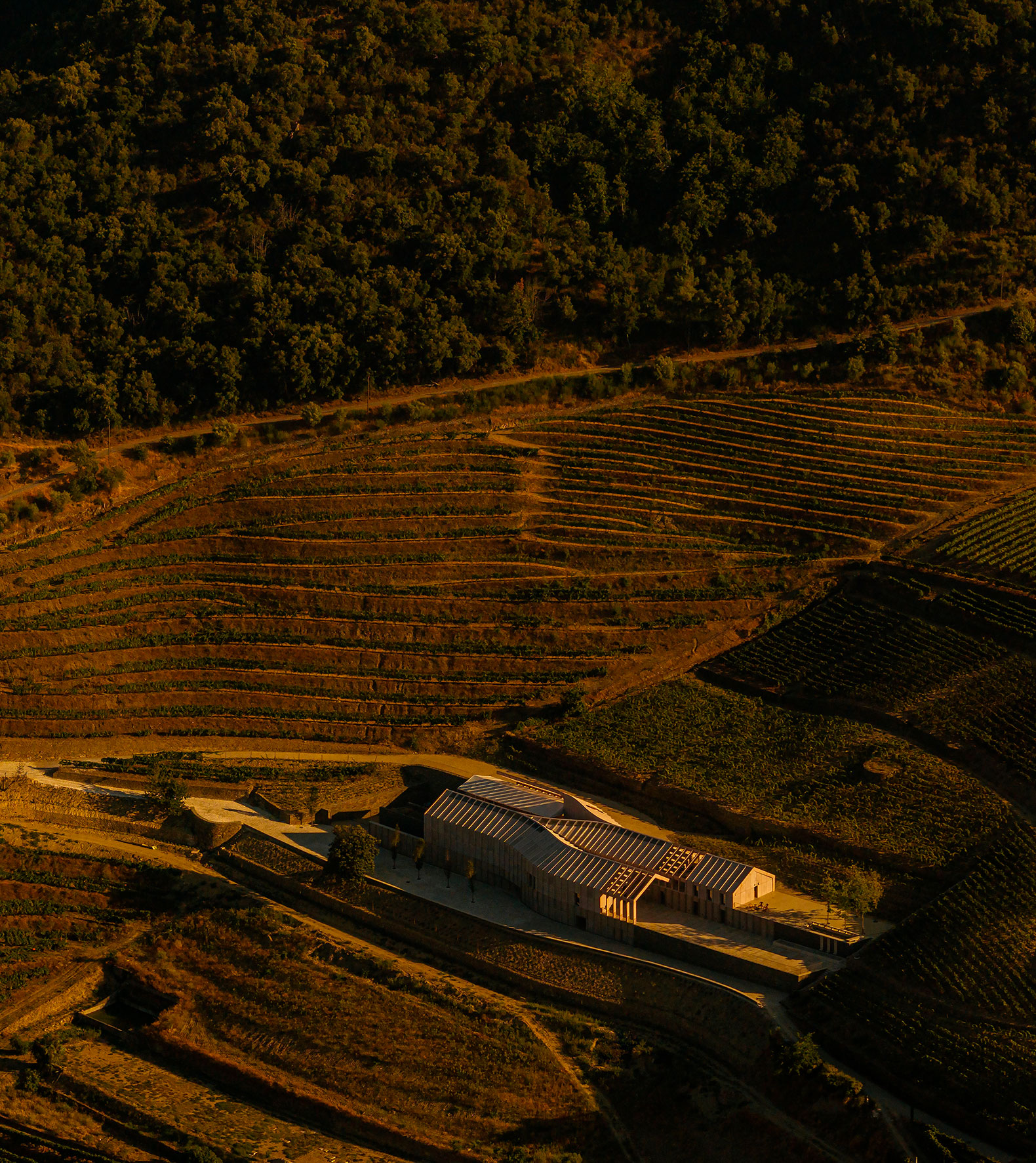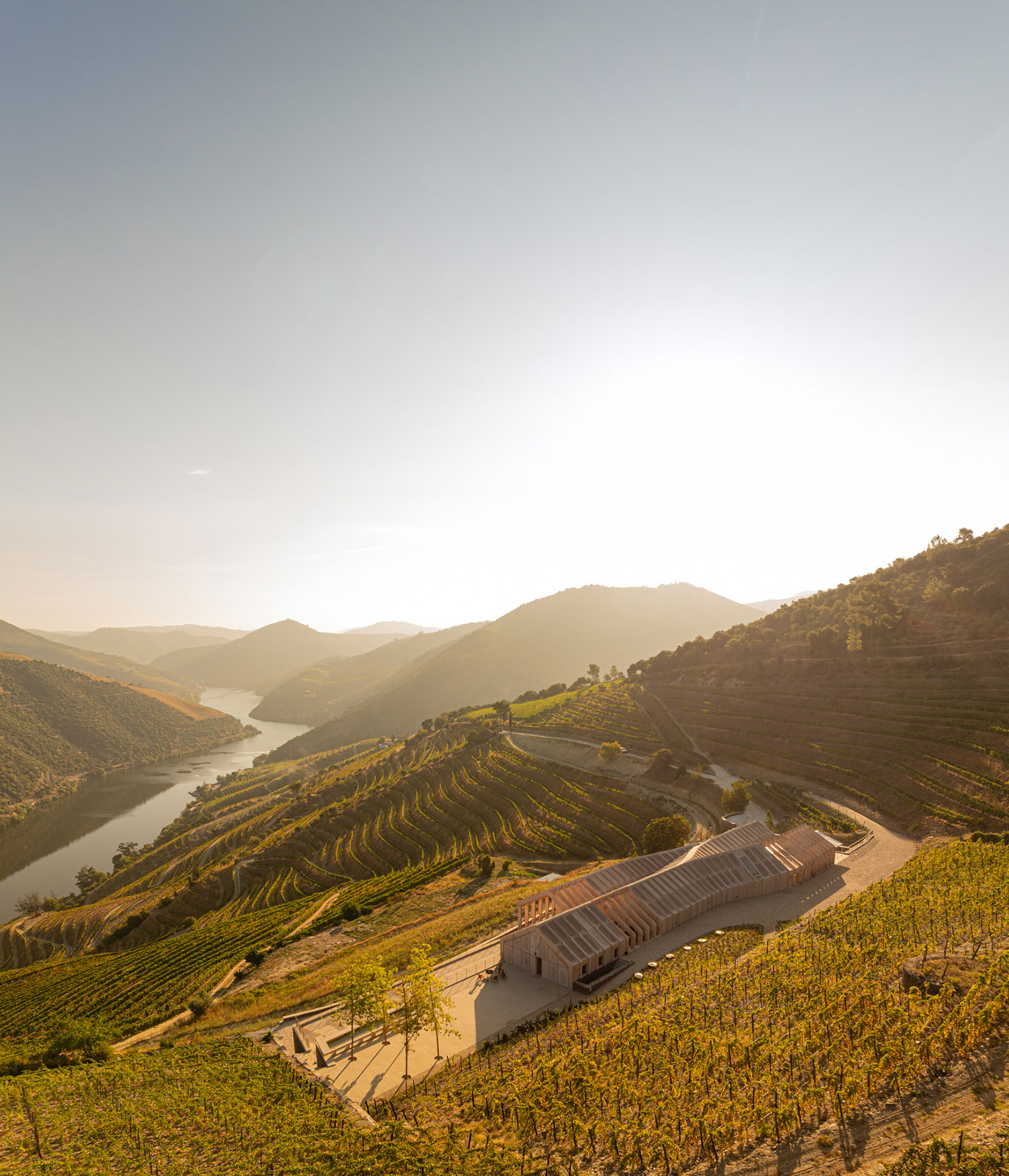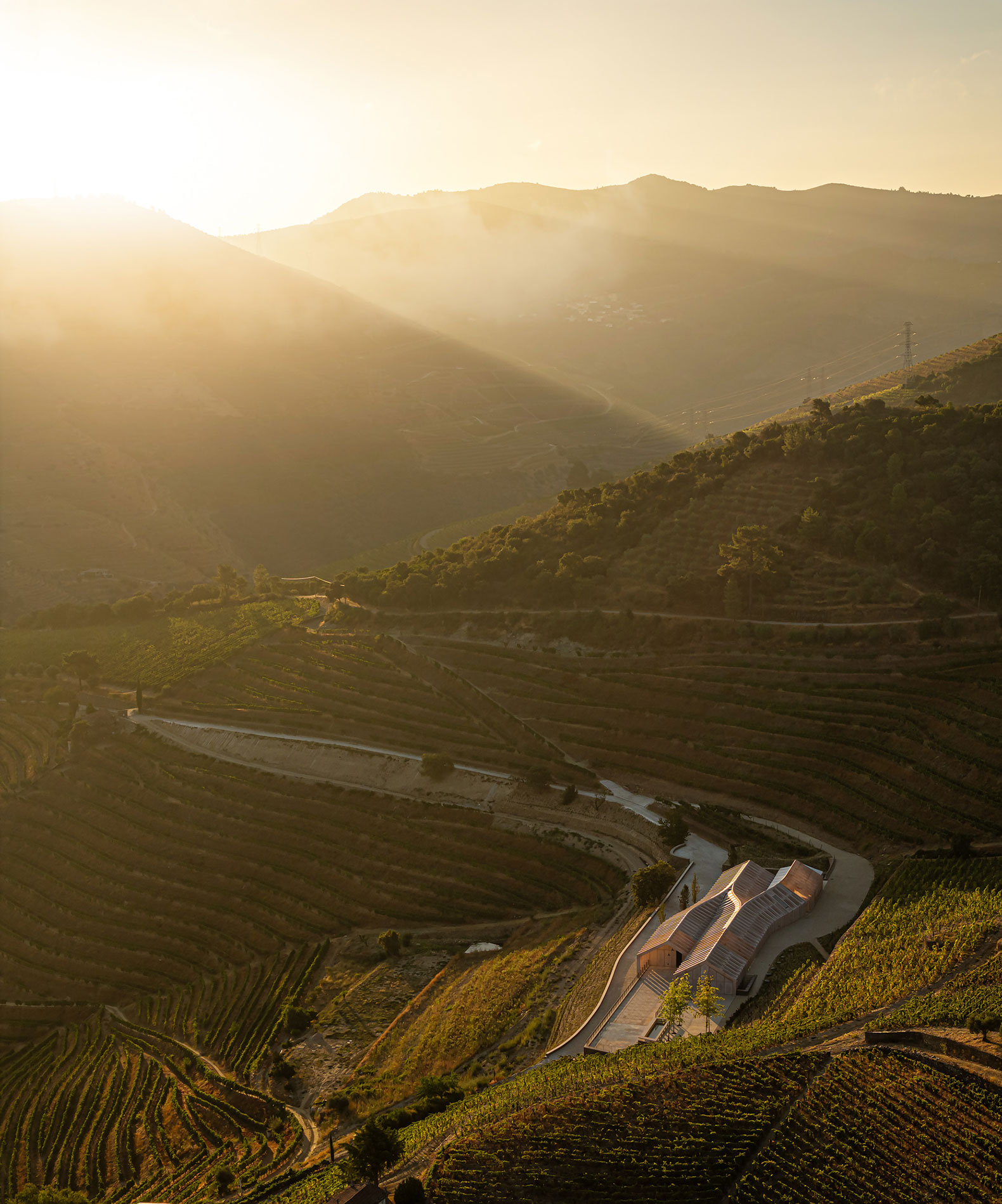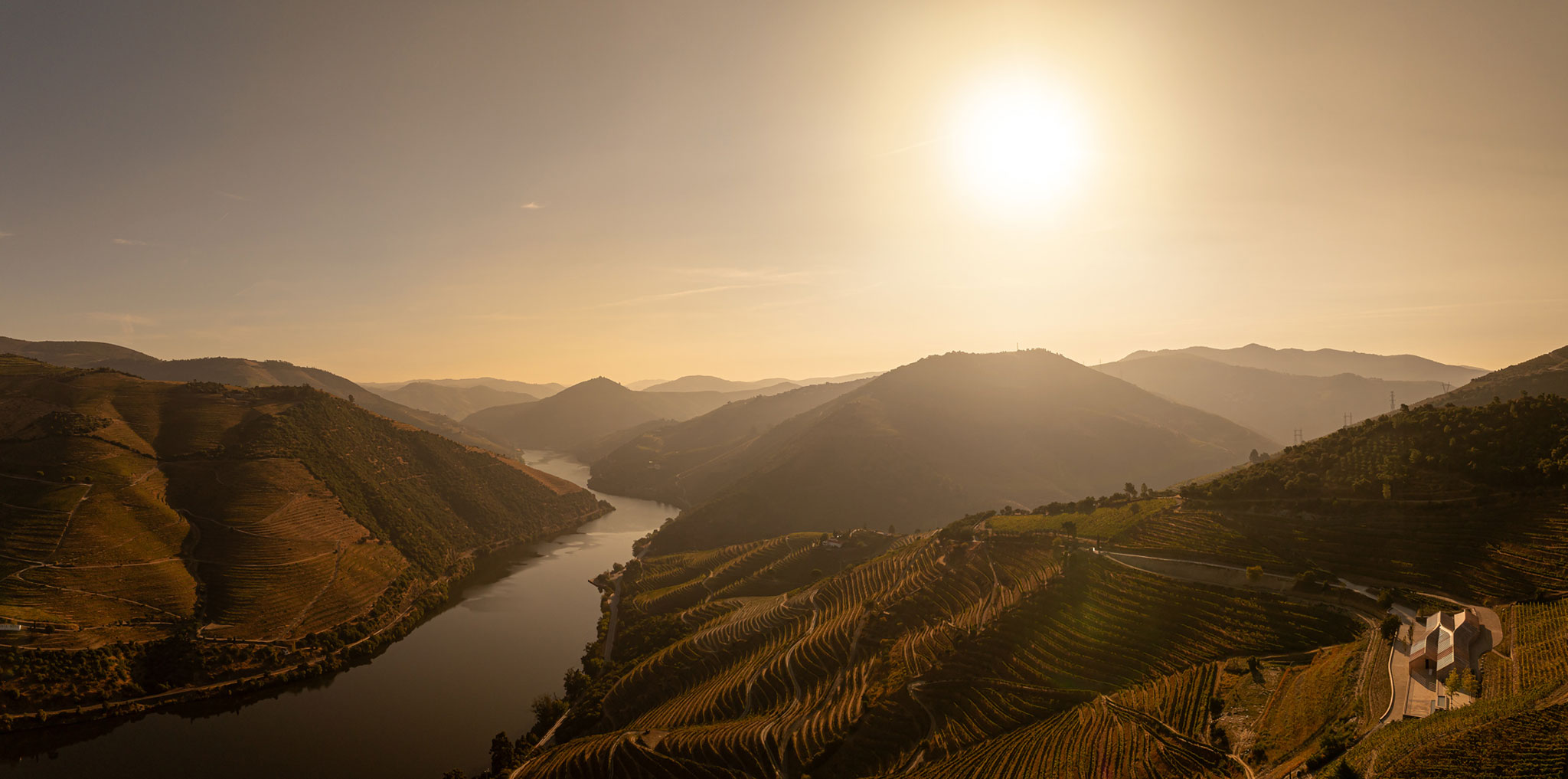
Wine Cellar of the Quinta de Adorigo project has been designed by the architecture studio Atelier Sérgio Rebelo, in the Alto Duero wine region - declared a Natural and Cultural Heritage of Humanity by UNESCO - in Portugal.

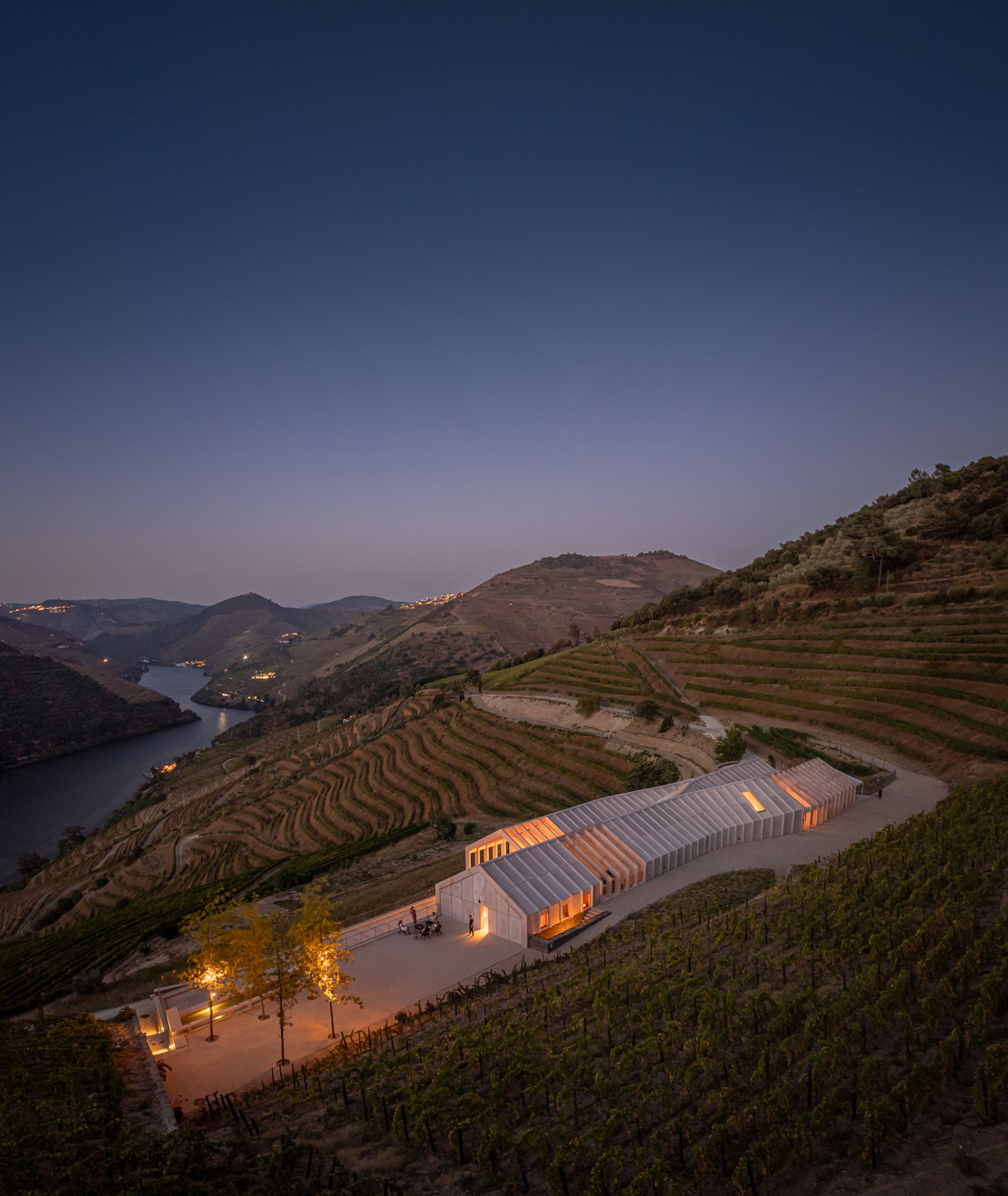
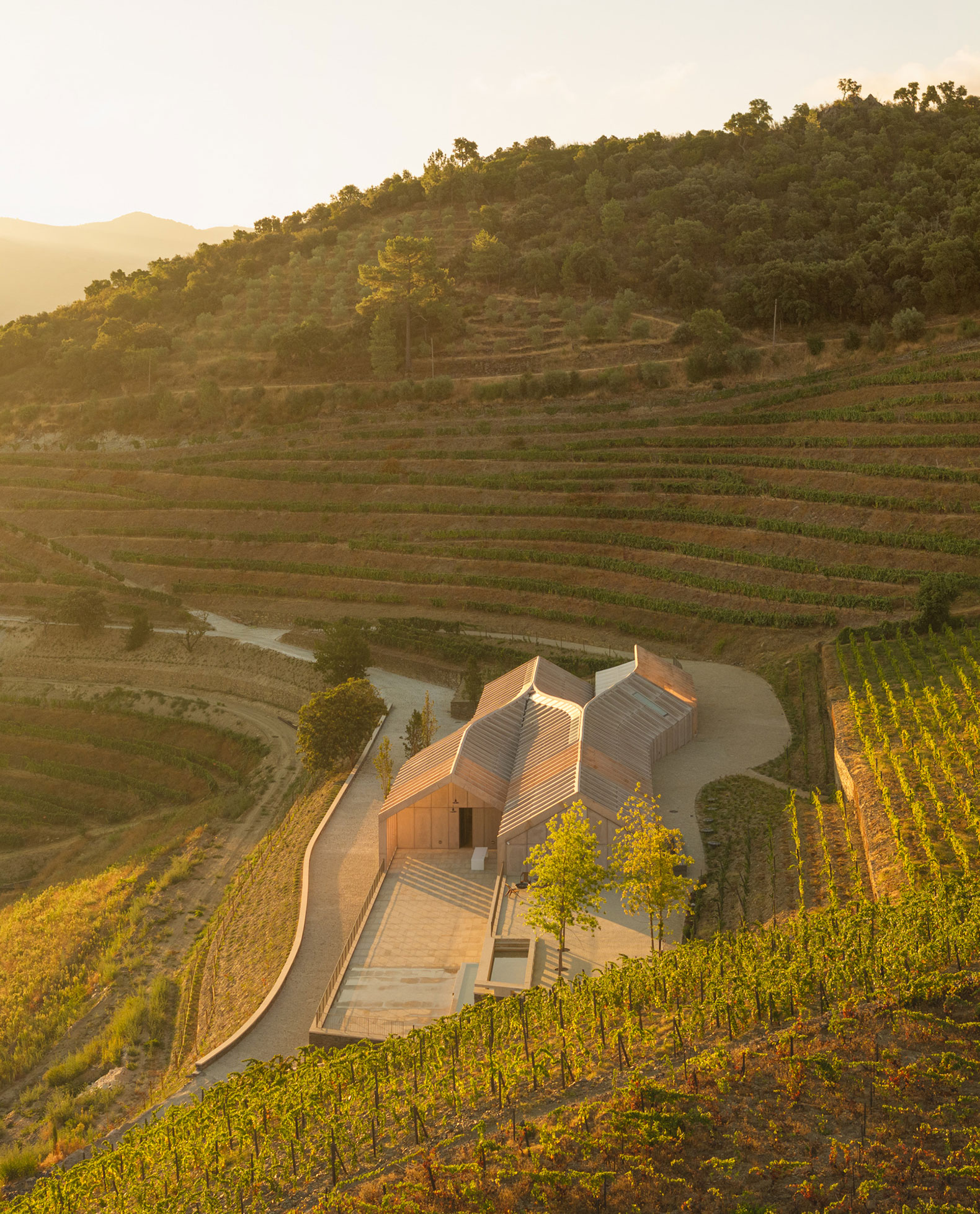
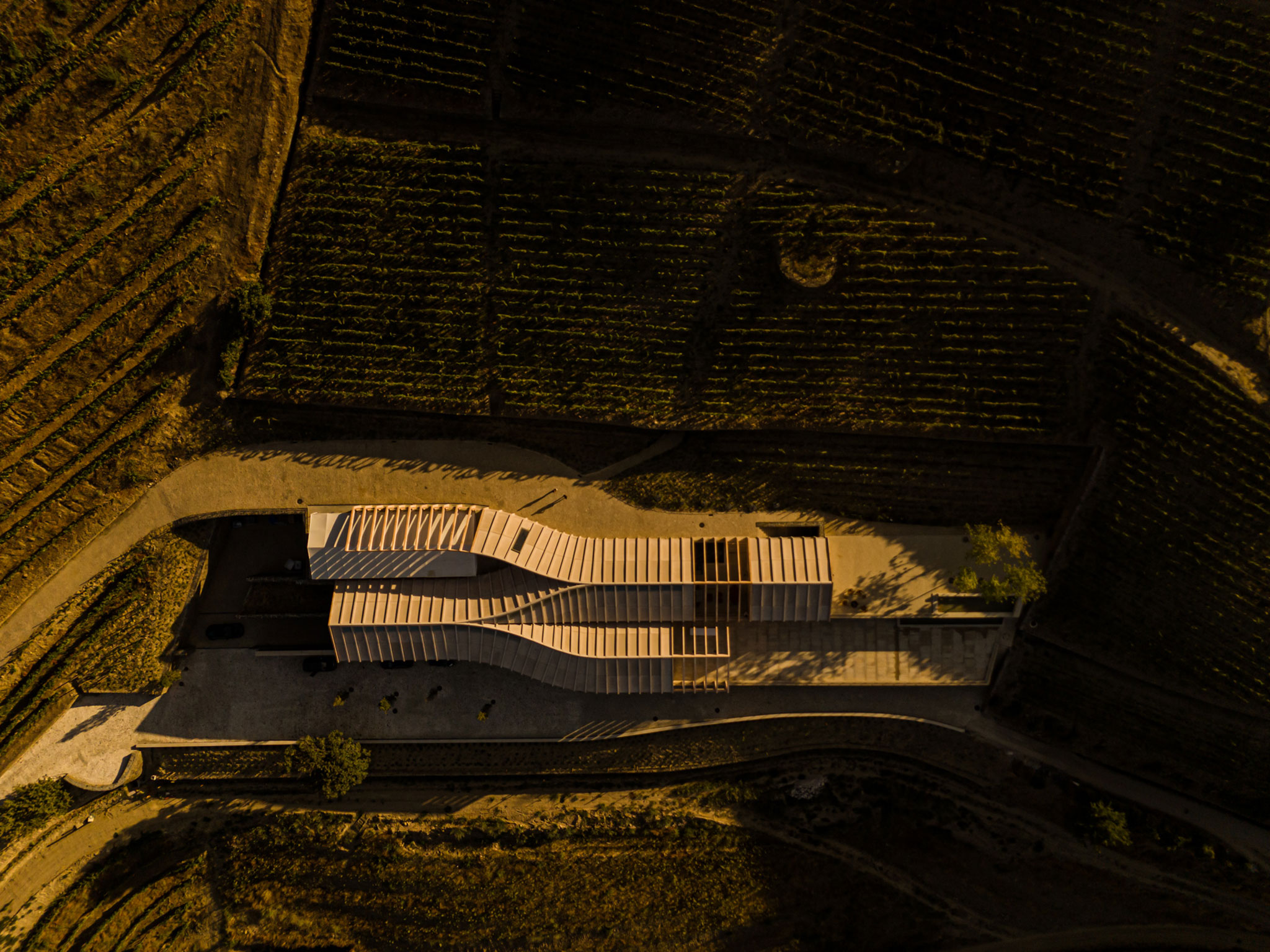
Completed in 2024, the winery is part of a wine tourism project in the region that blends tradition, innovation, and sustainability, and whose curvilinear geometry echoes the vineyard landscape. Designed with minimal environmental impact, the winery utilizes renewable energy sources such as geothermal energy and sustainable practices like water harvesting and recycling.

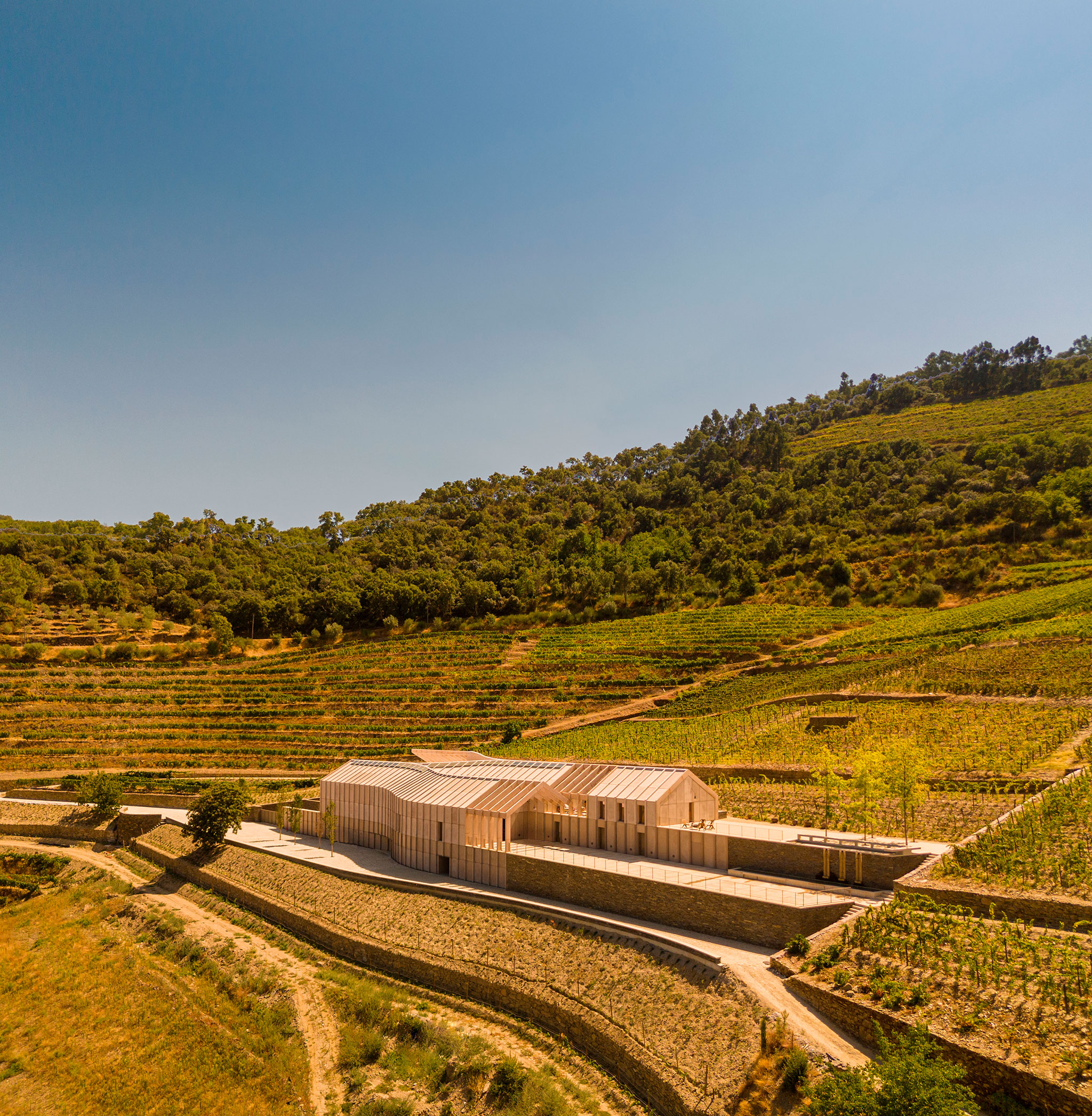
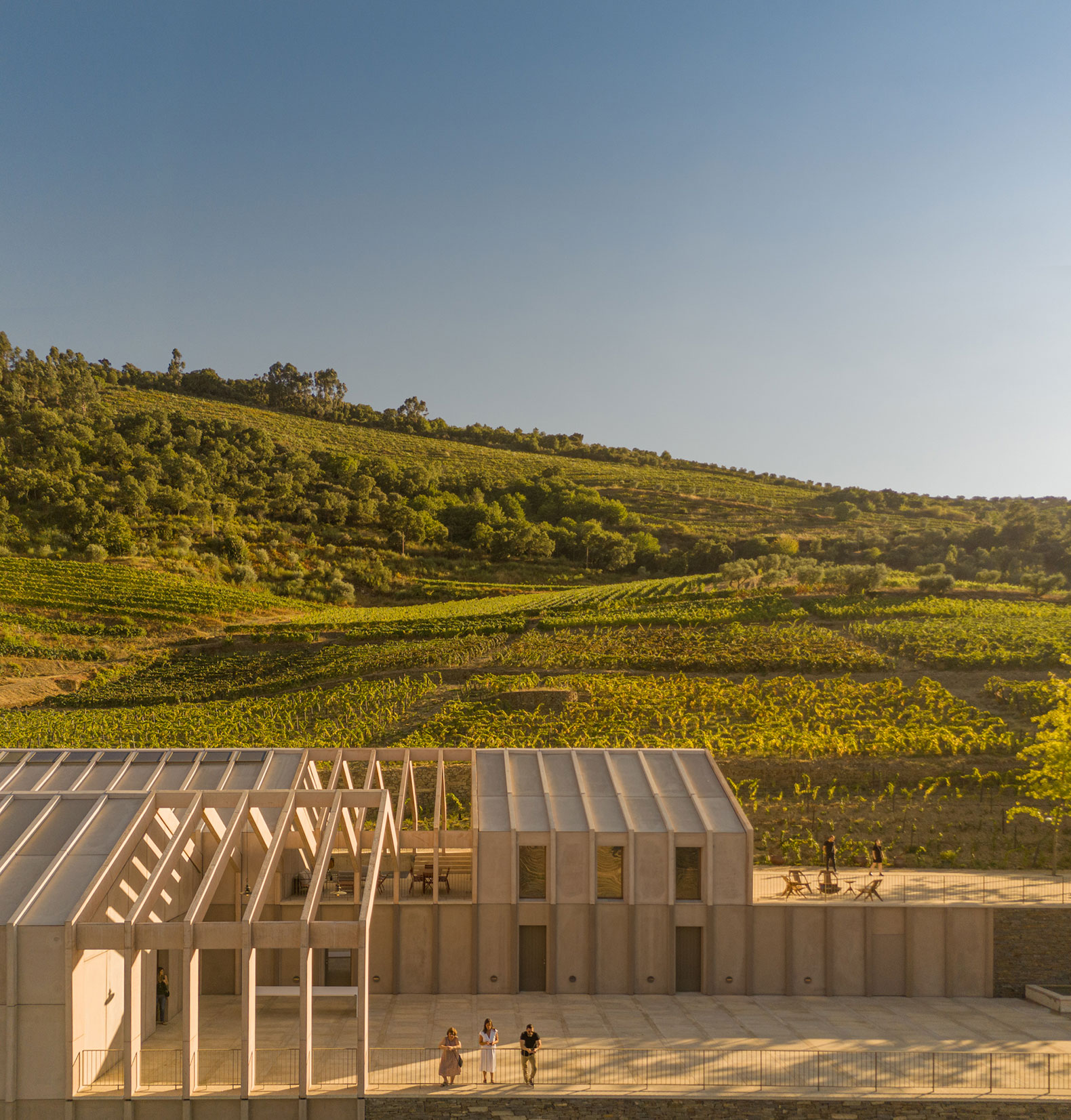
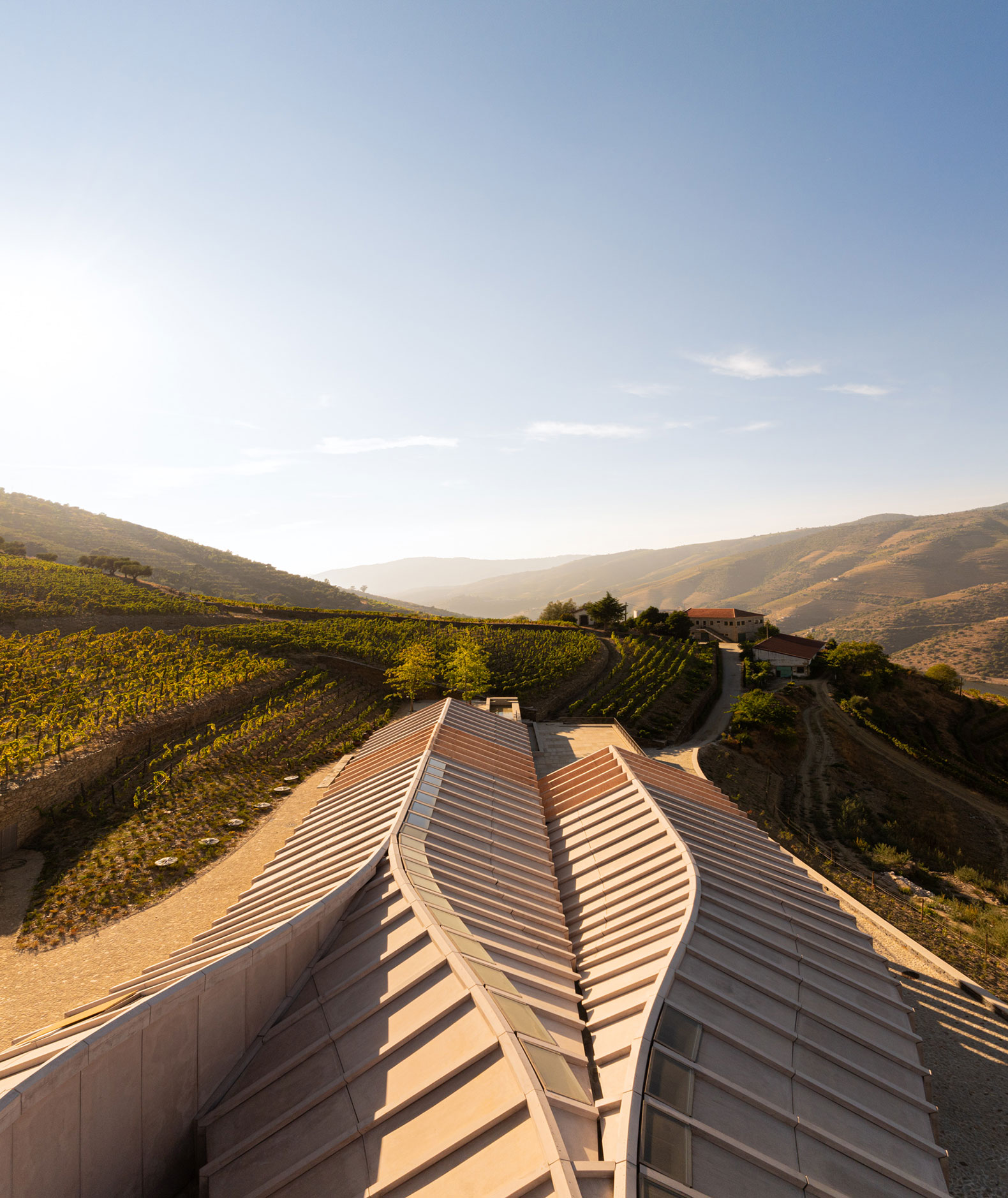
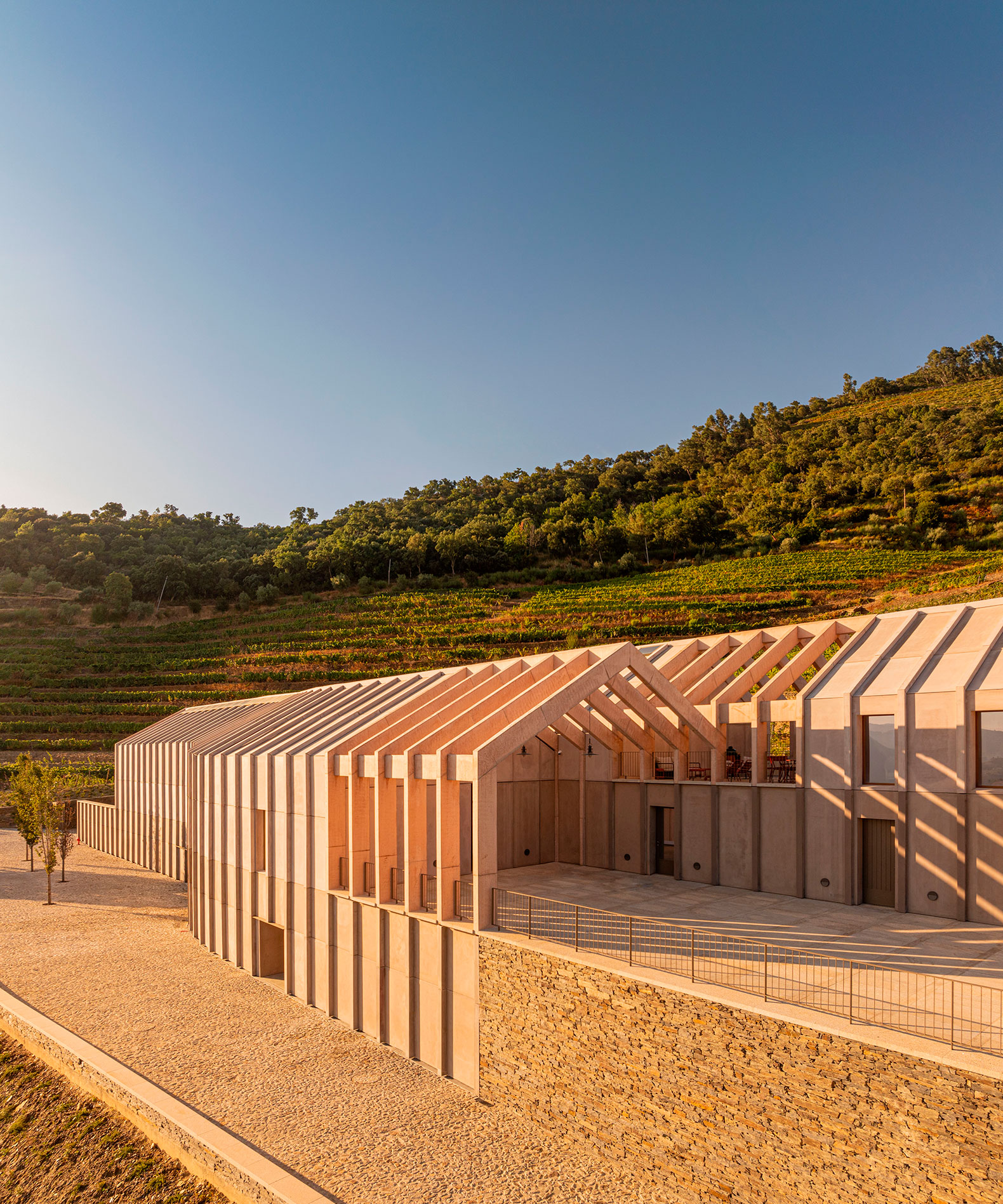
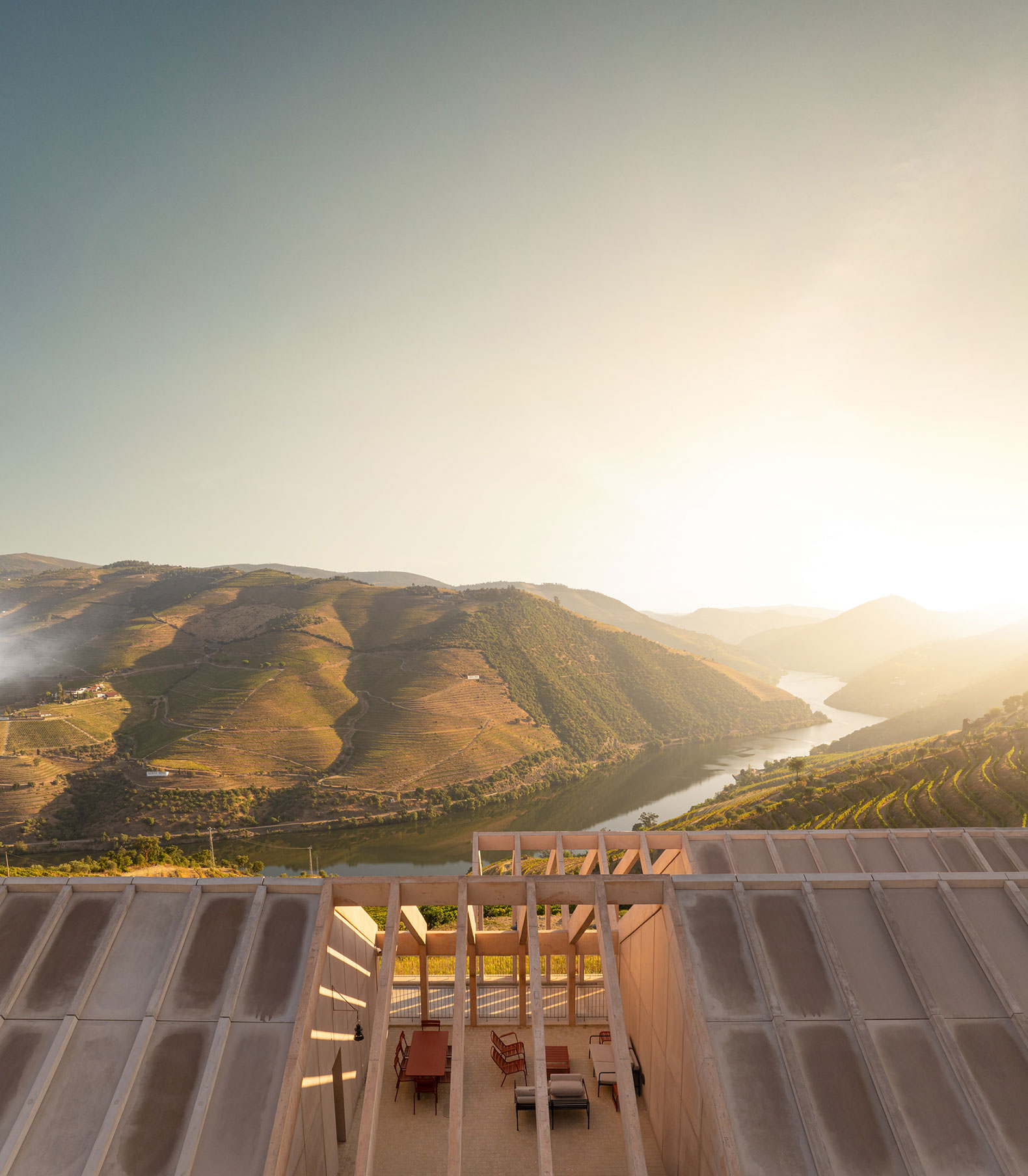
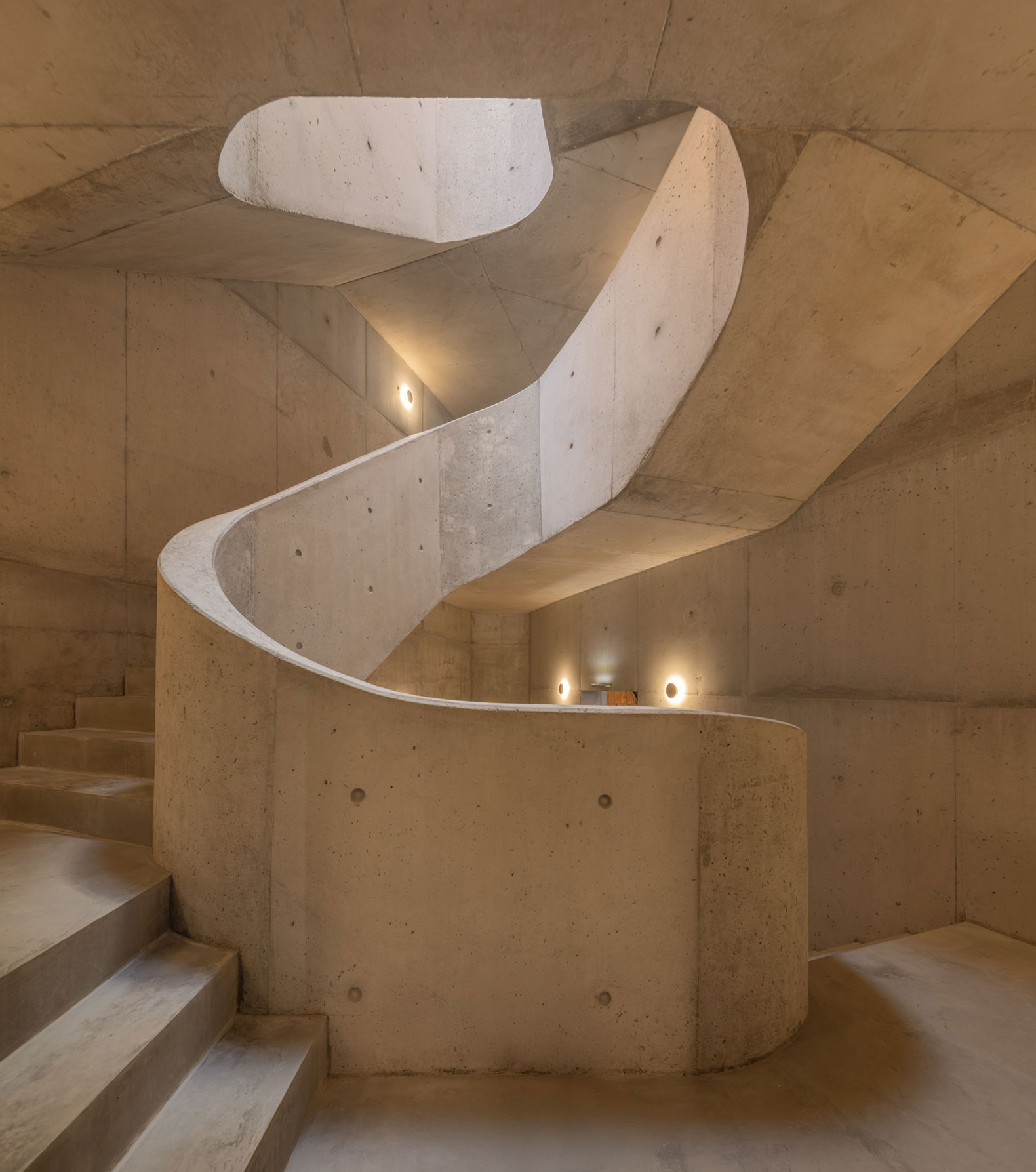
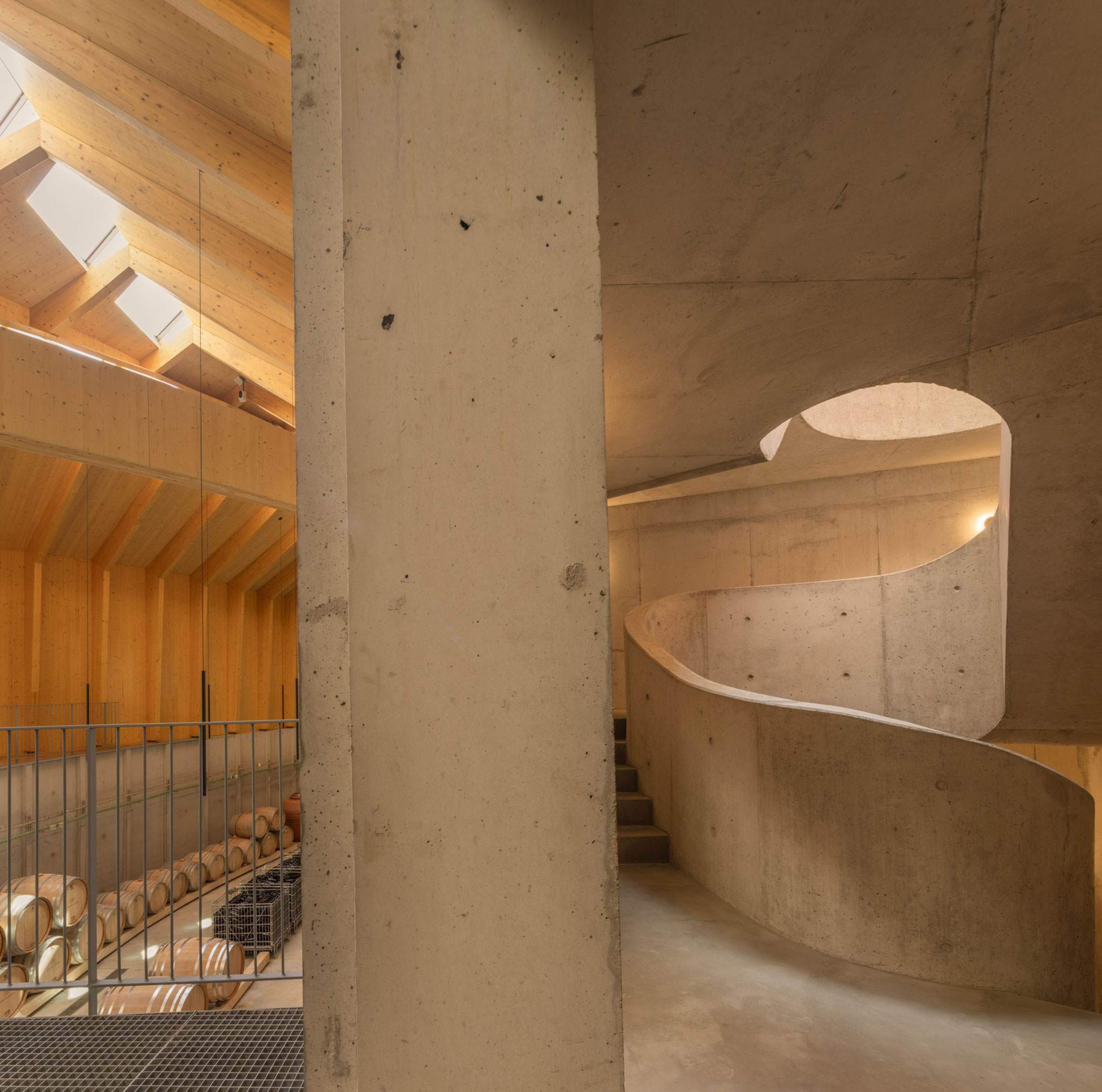
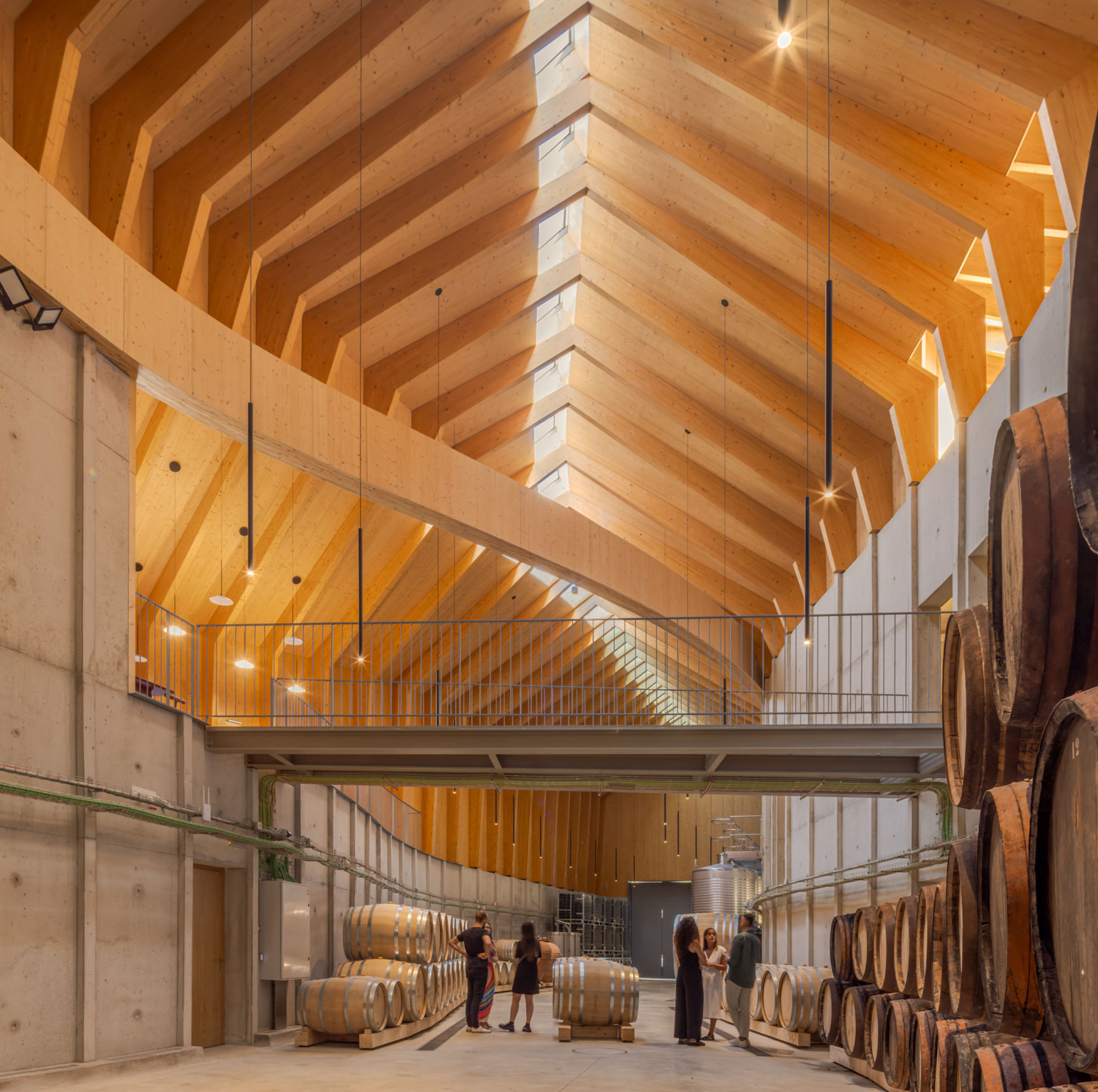
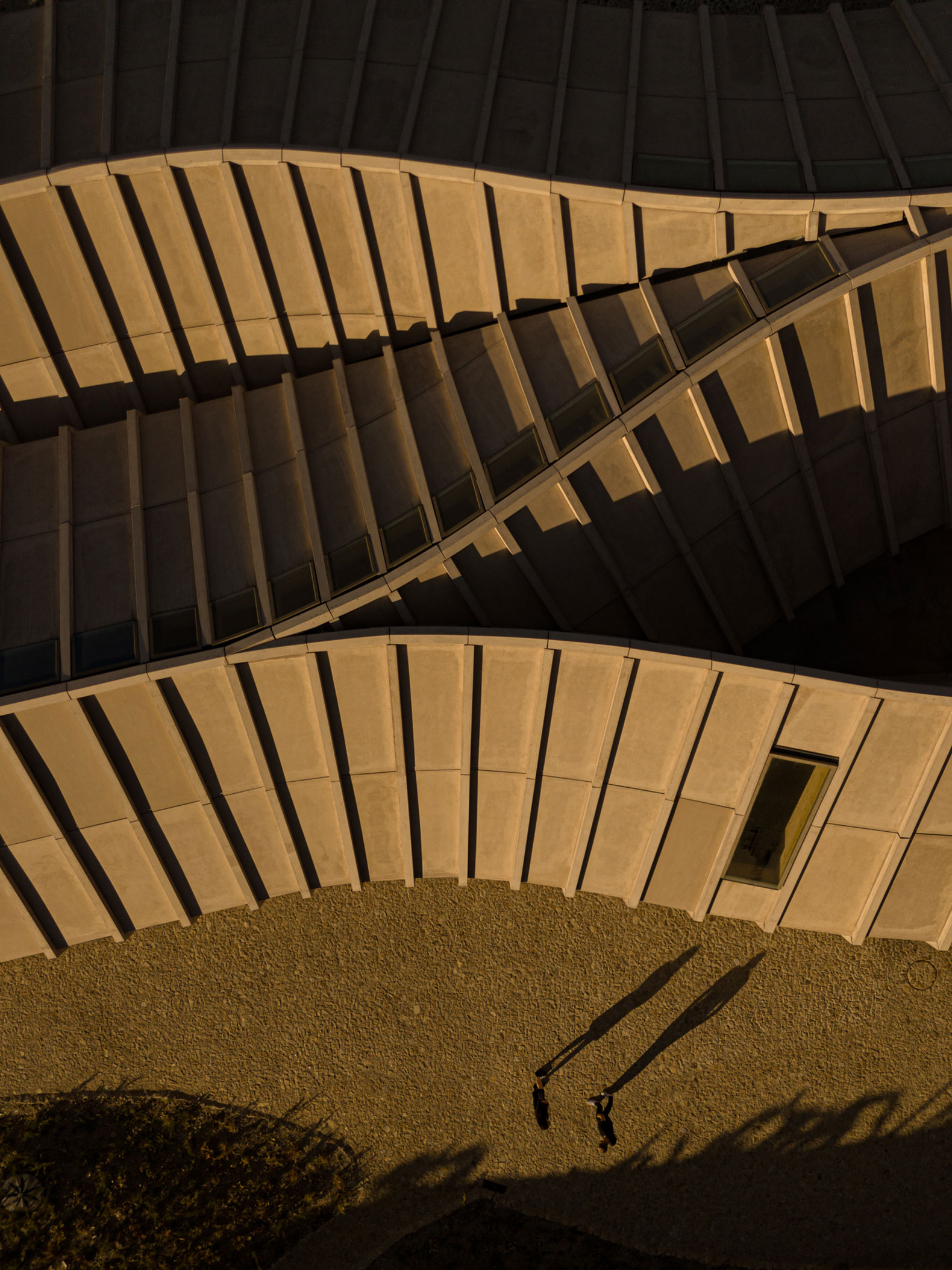
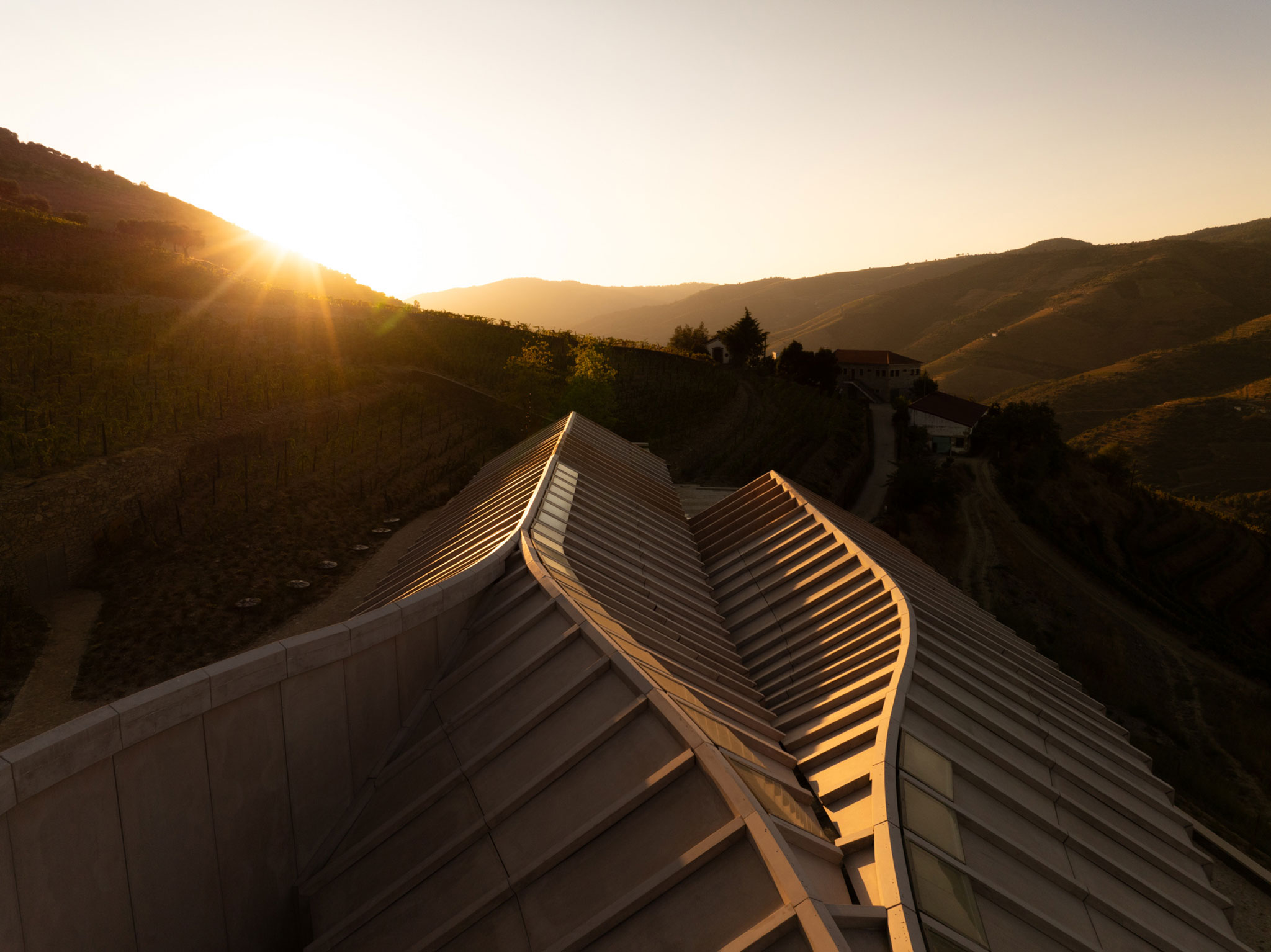
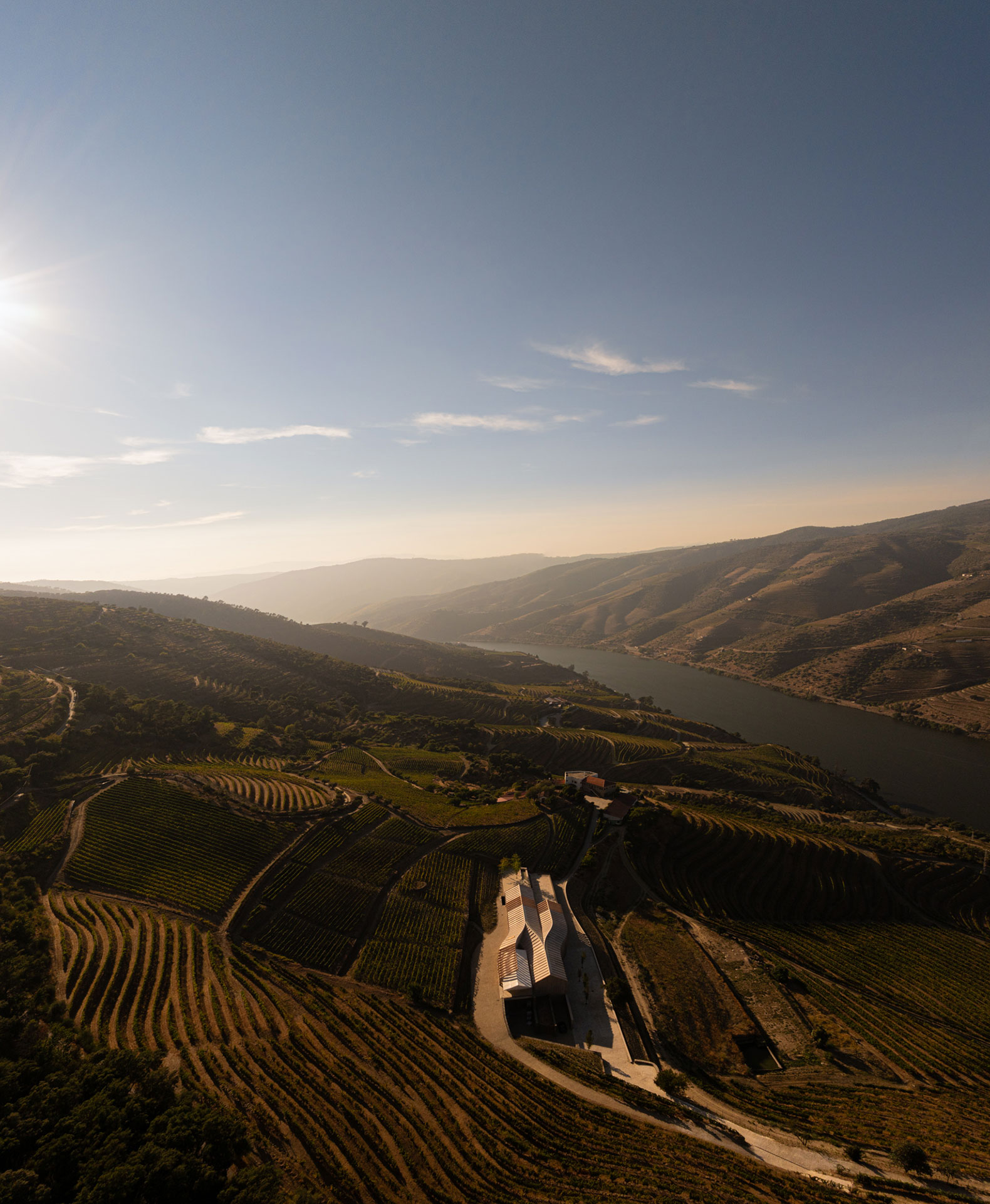
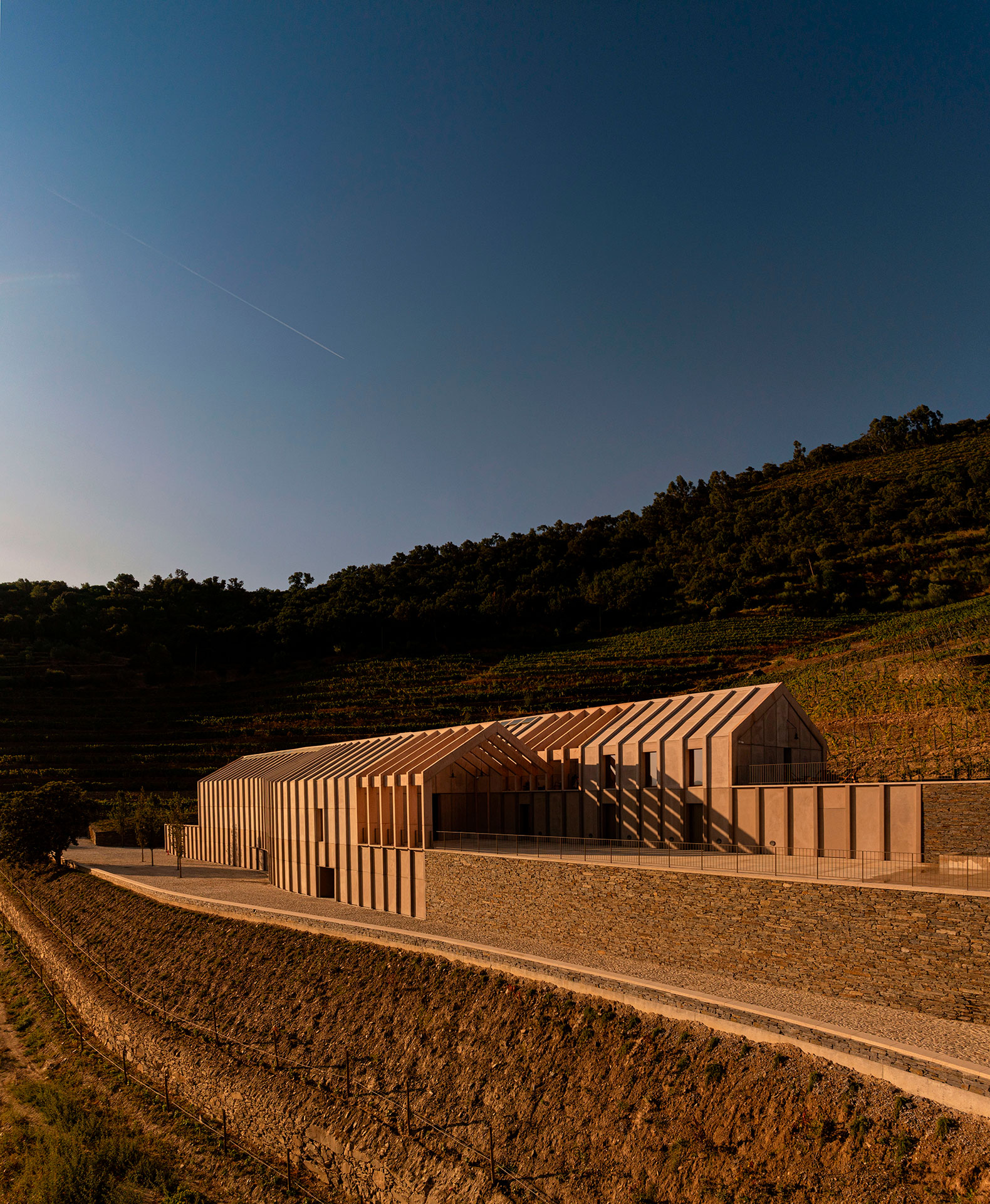
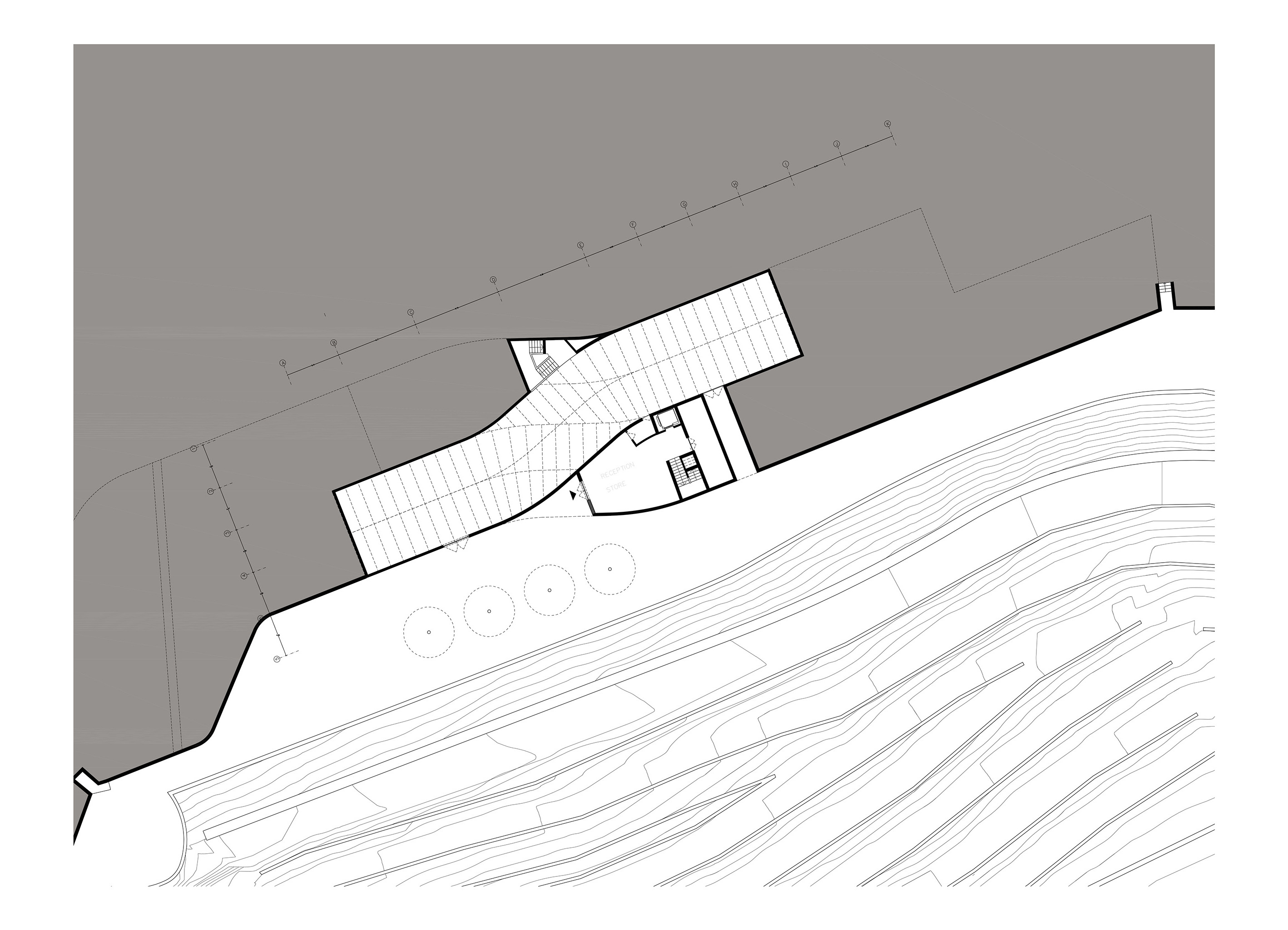
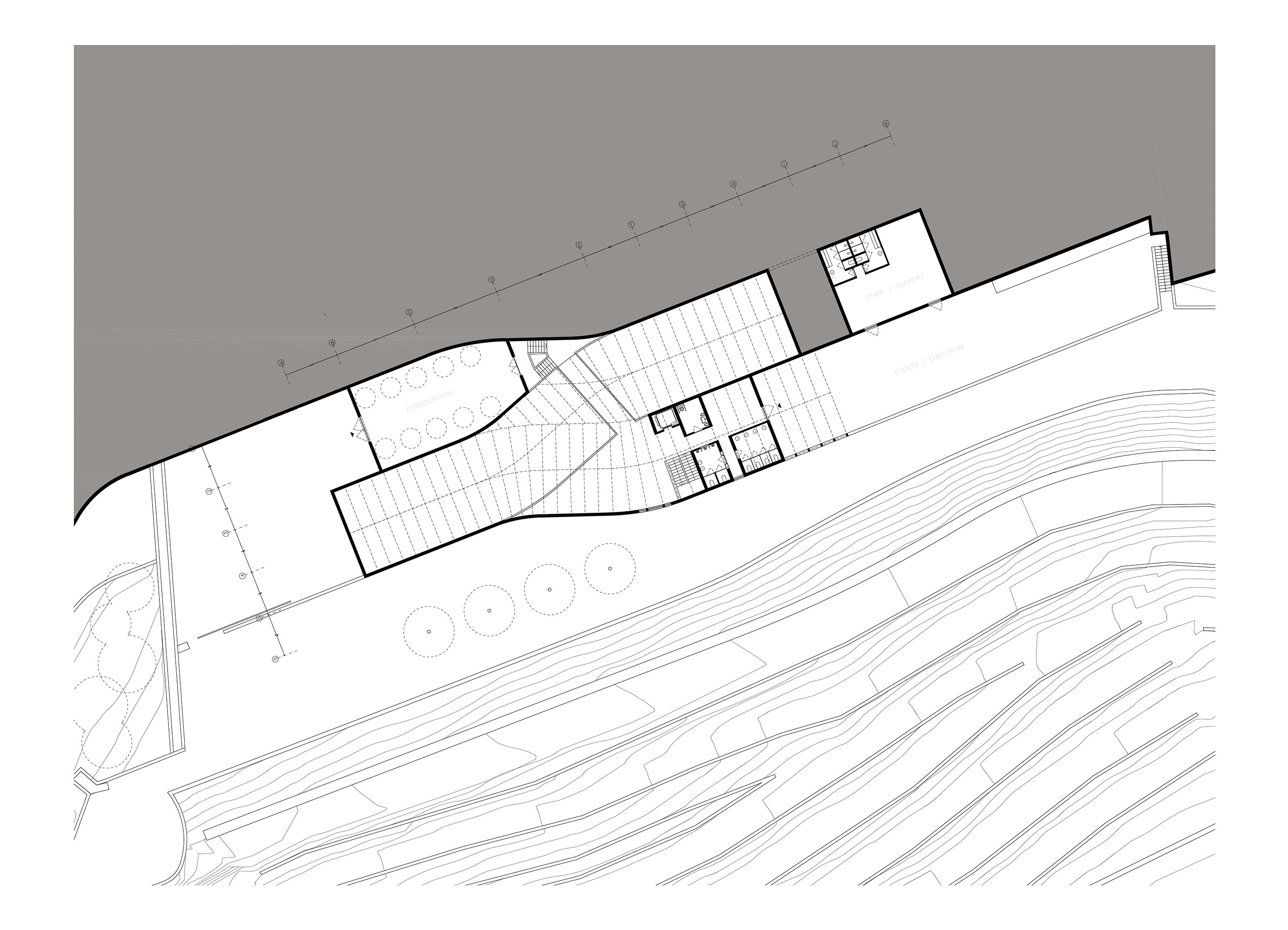
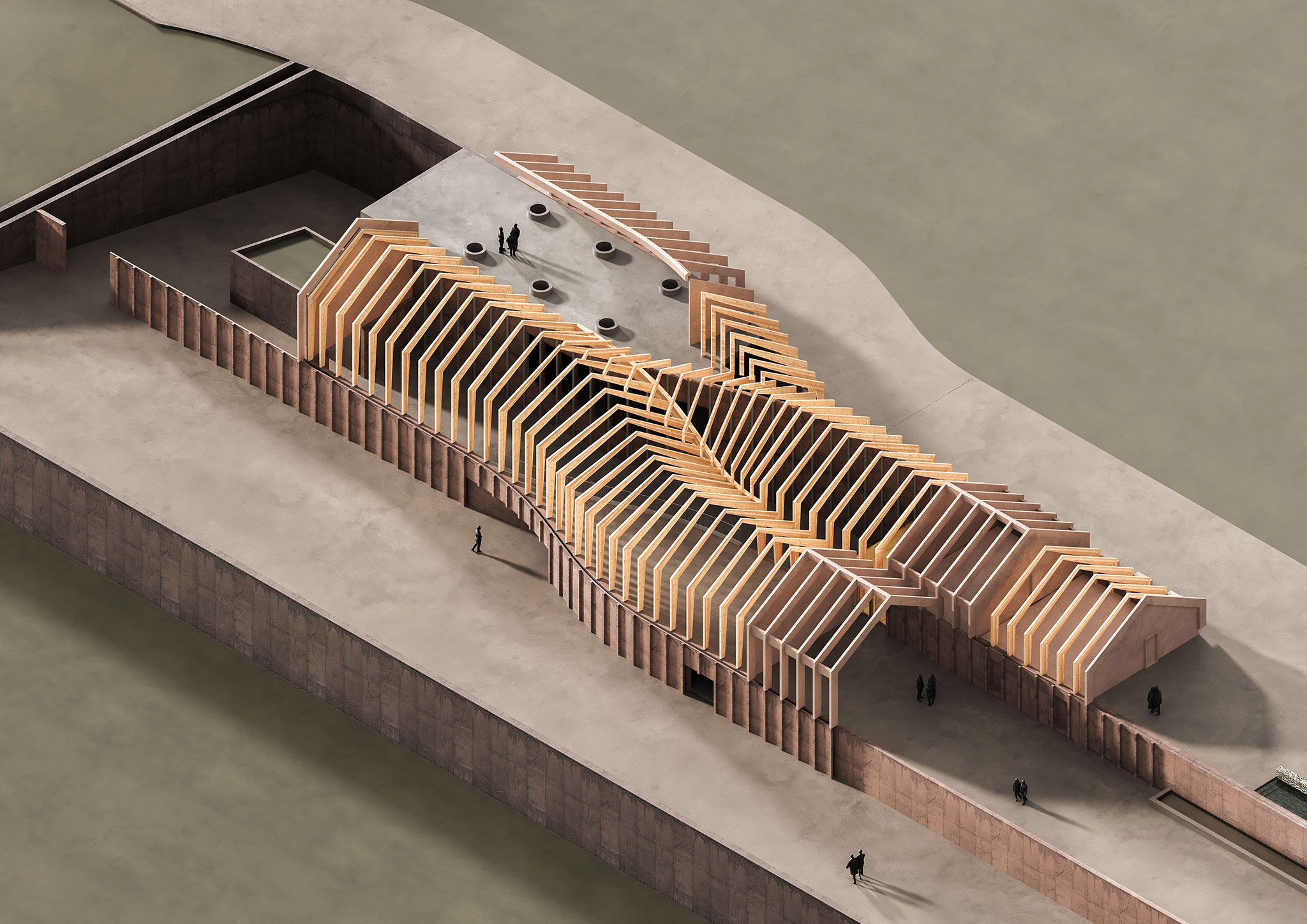
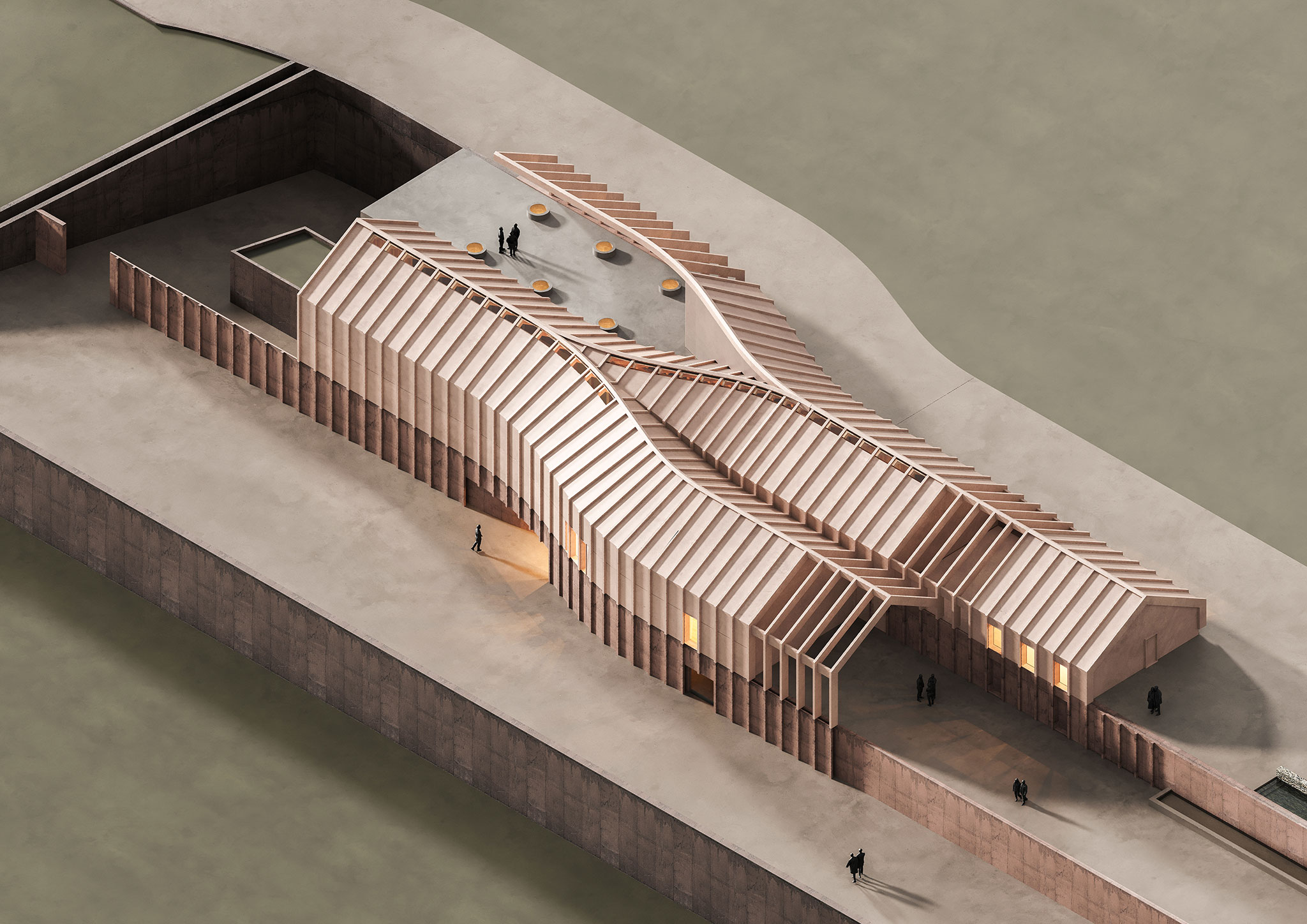
The Quinta de Adorigo Winery, designed by Atelier Sérgio Rebelo, comprises a series of interconnected buildings that follow the existing topographical slopes while offering contemporary operational capabilities. Its most striking feature is the sculptural and organic gabled roof. The main entrance to the winery houses a visitor center with a reception area and a wine shop, leading to a meeting room and a wine tasting area. A spacious gallery with balconies provides access to the vineyard and a small, historic stone chapel.

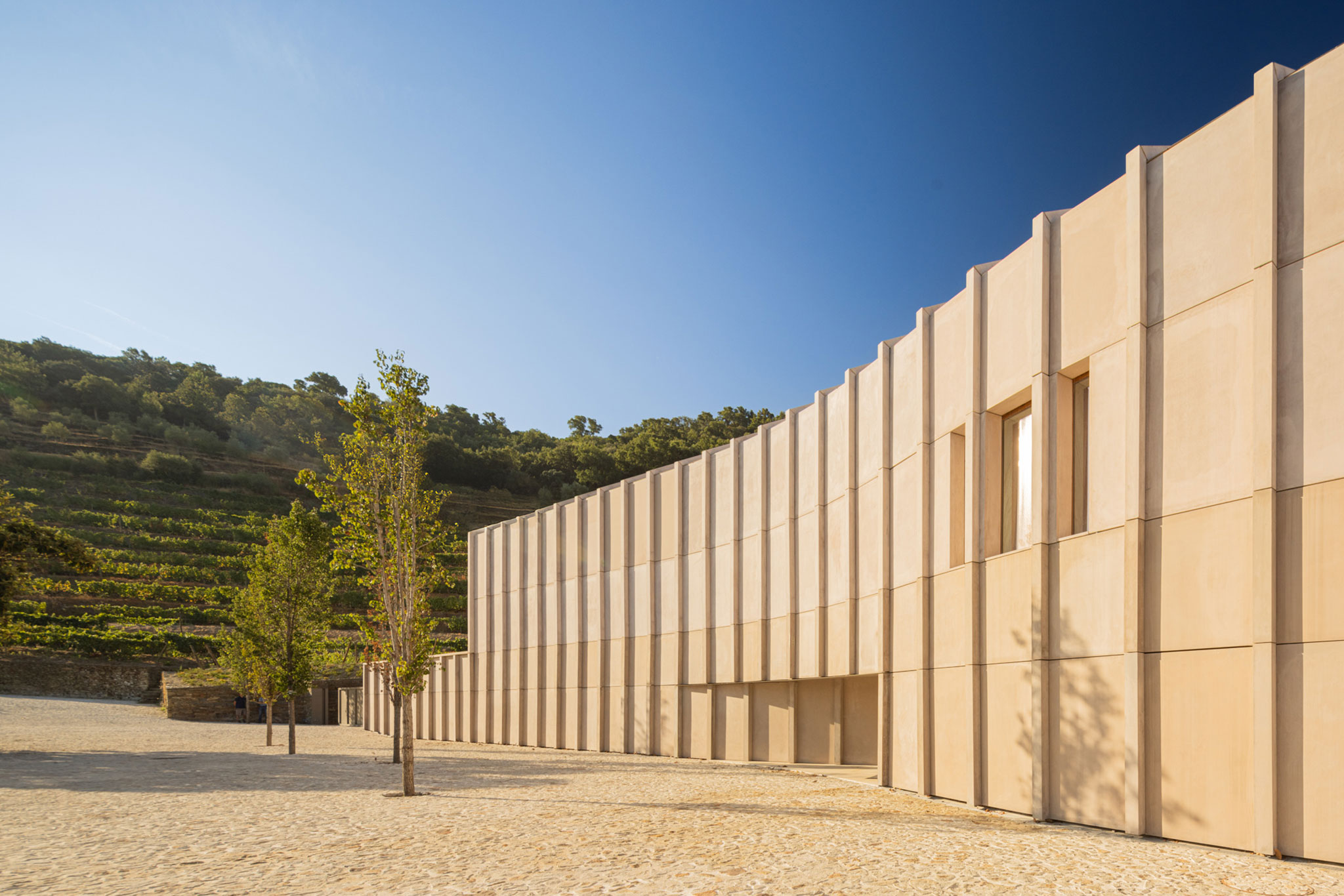
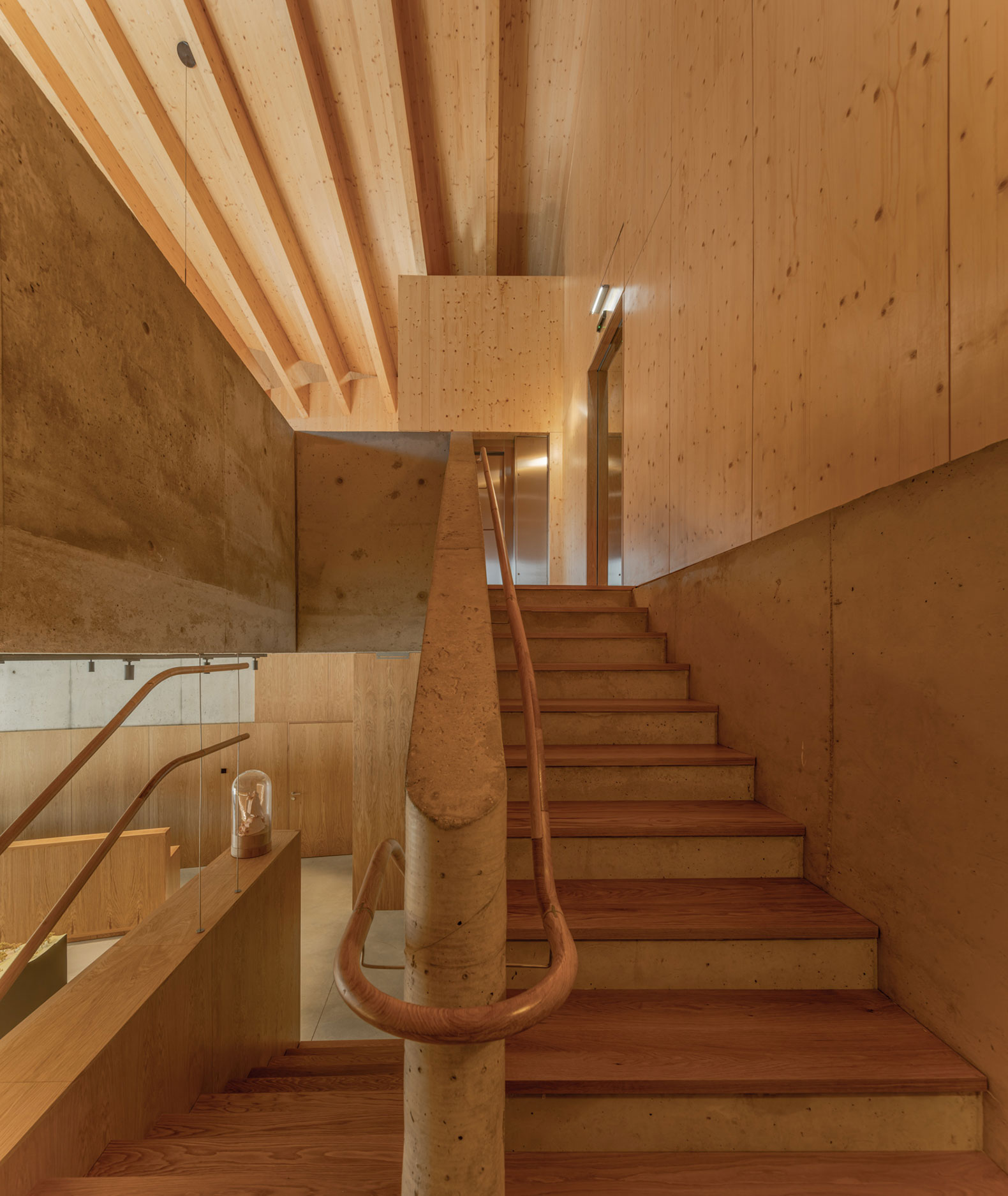
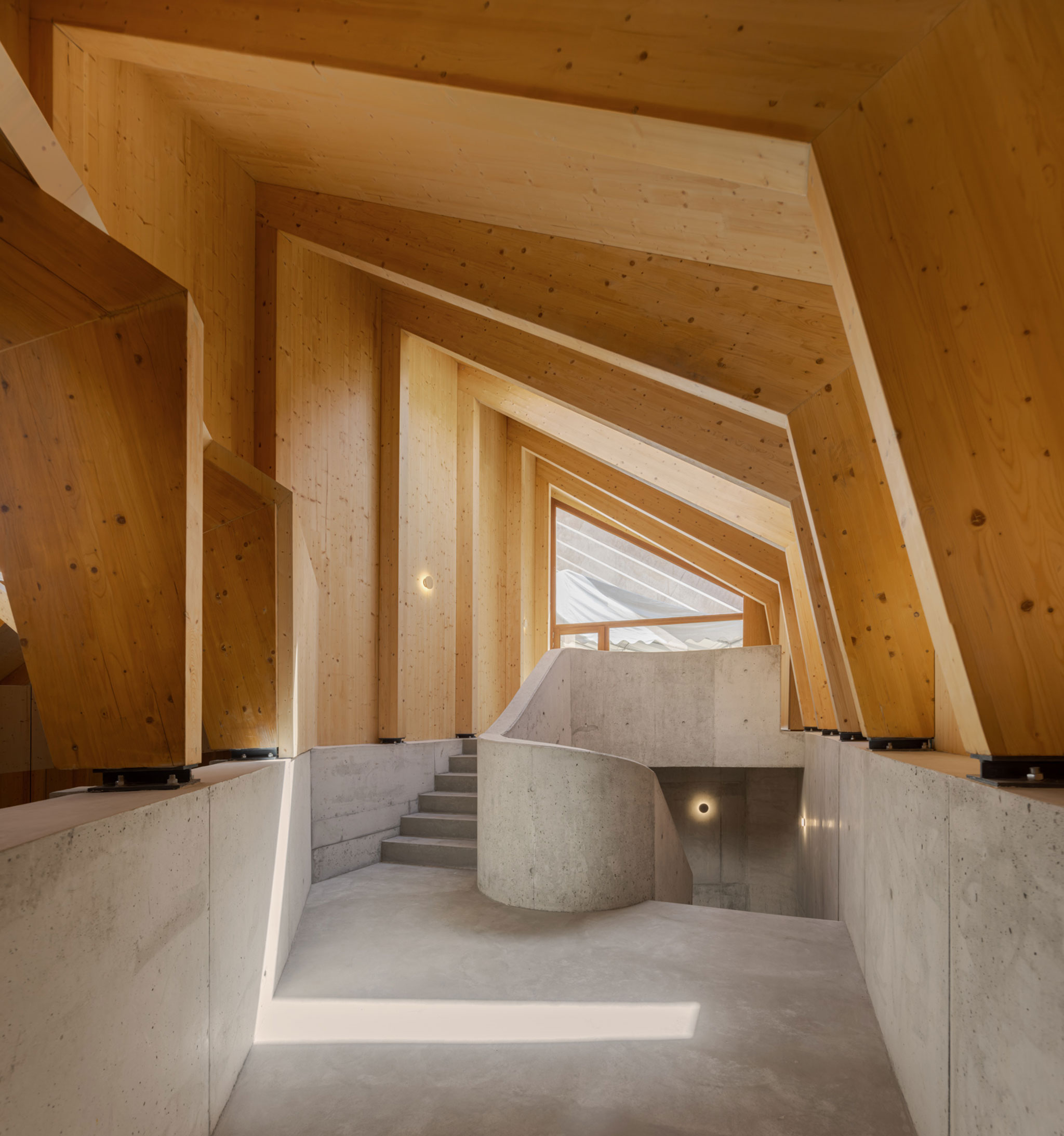
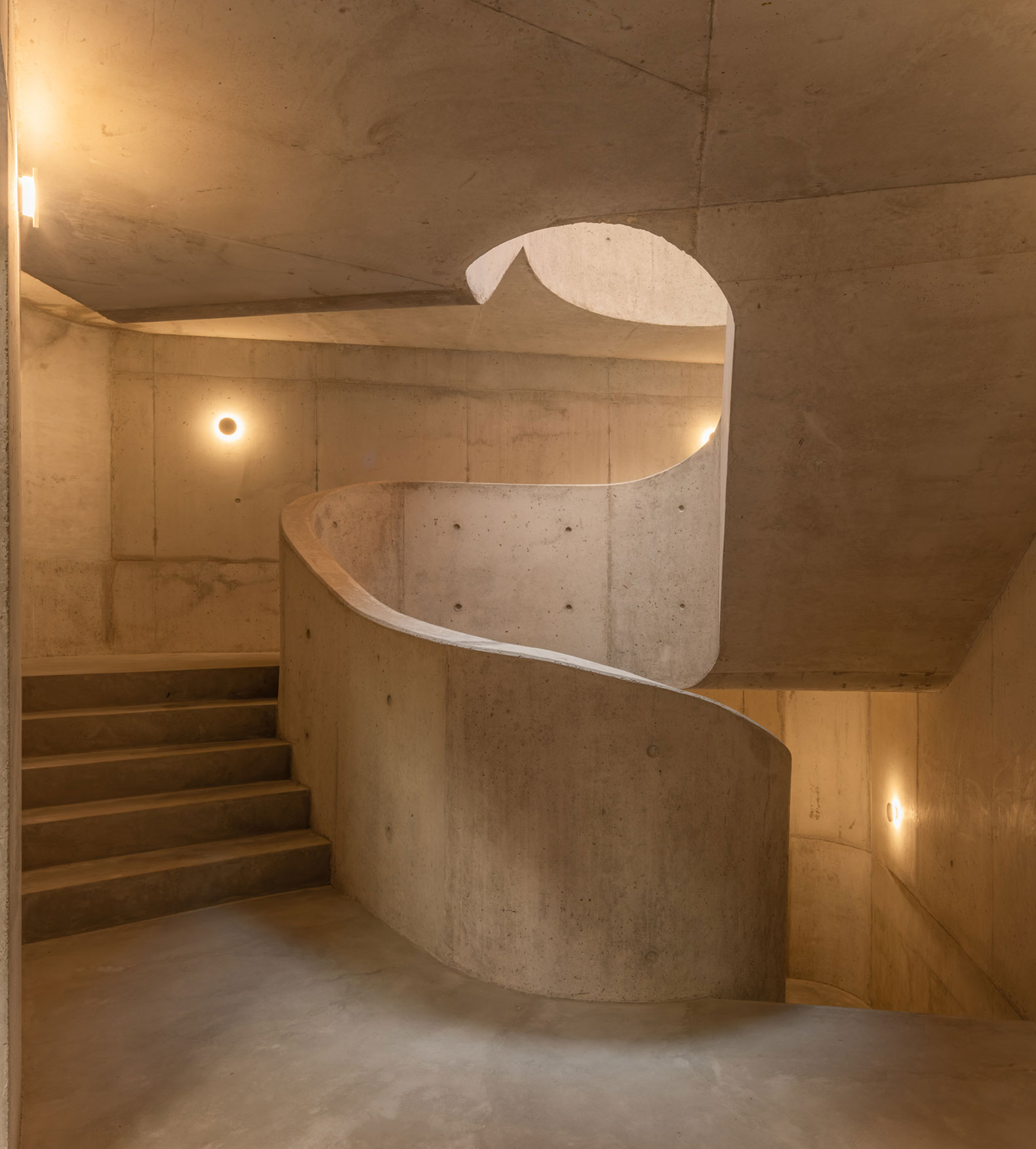
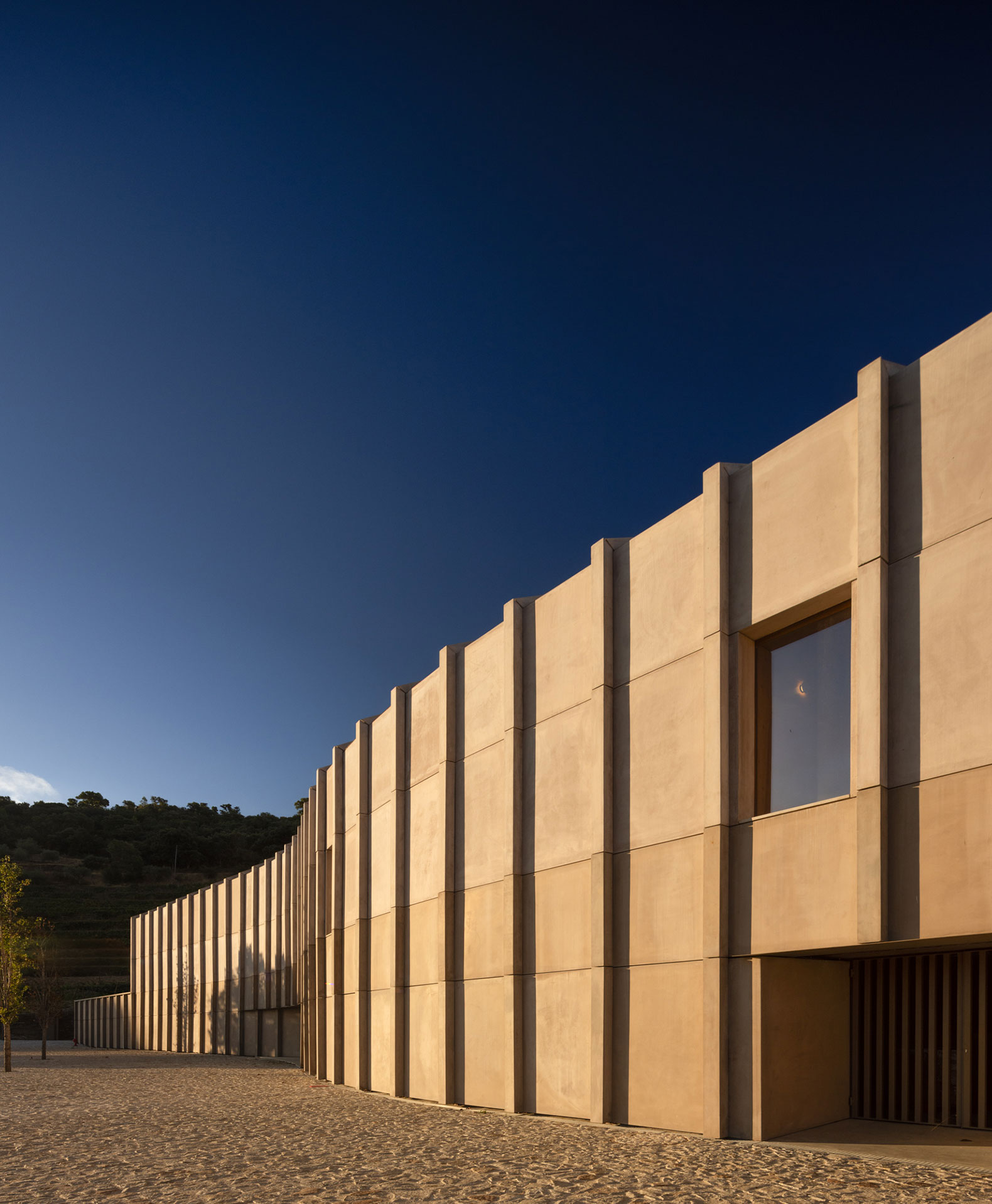
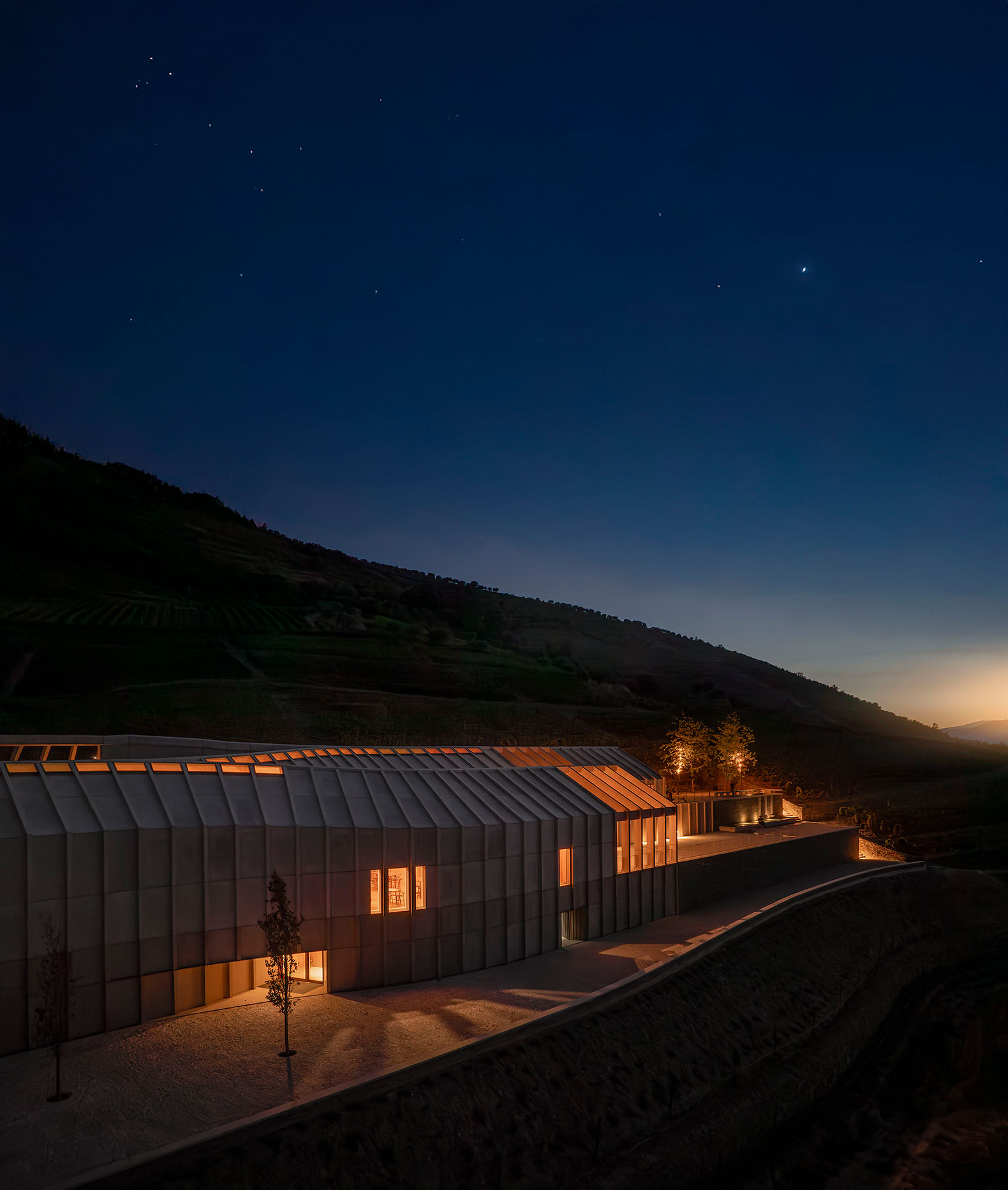
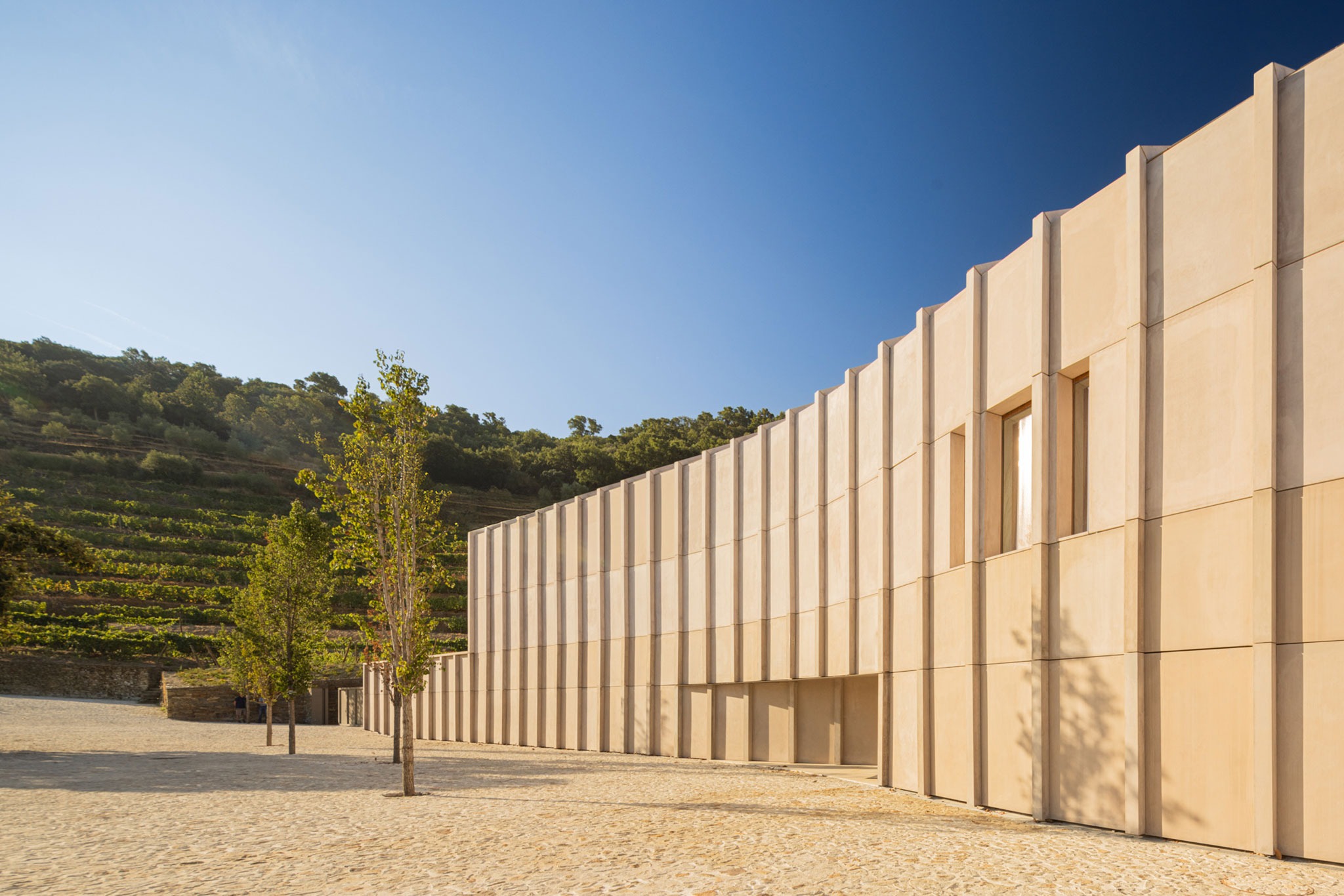
In its construction, the roof structure is made of wood. Locally sourced materials such as schist and granite are used, along with colors like grays, greens, and pinkish browns, subtly adapting the intervention to the terrain.
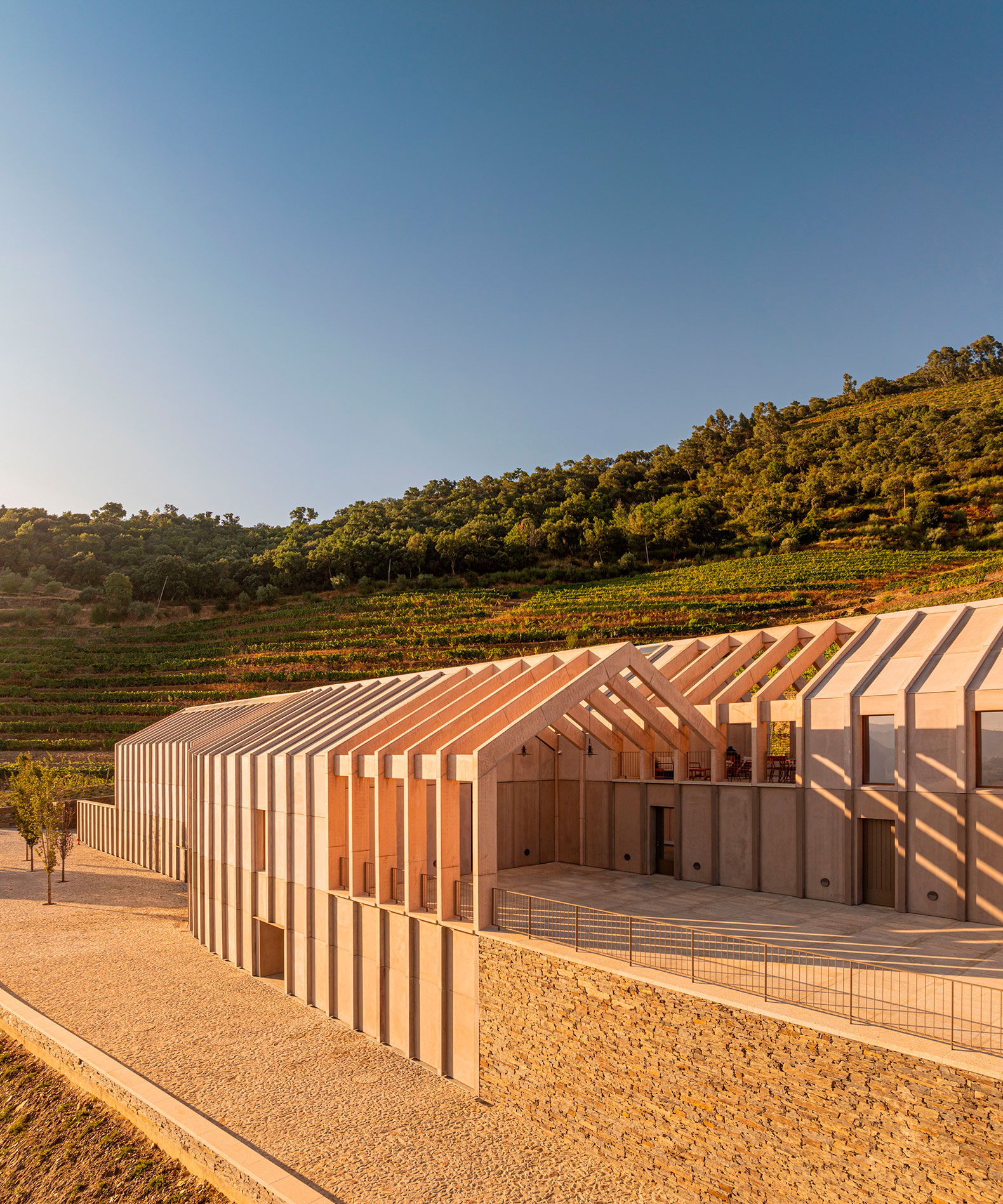
Bodega de Vinos de la Quinta de Adorigo por Atelier Sérgio Rebelo. Fotografía por Fernando Guerra.

Wine Cellar of the Quinta de Adorigo by Atelier Sérgio Rebelo. Photograph by Fernando Guerra.

Project description by Atelier Sérgio Rebelo

Winery project at Quinta de Adorigo  
The winery at Quinta de Adorigo, completed in 2024, is part of a family-run wine tourism development in Portugal's Alto Douro Wine Region, a UNESCO World Natural and Cultural Heritage Site. Together with a hotel still under construction, the winery subtly blends into the landscape, combining tradition with innovation and sustainability.

Designed to minimize environmental impact, the project utilizes existing infrastructure while anticipating future adaptations. Its curvilinear architecture echoes the zigzag vineyards without compromising functionality.

Bodega de Vinos de la Quinta de Adorigo por Atelier Sérgio Rebelo. Fotografía por Fernando Guerra.
Wine Cellar of the Quinta de Adorigo by Atelier Sérgio Rebelo. Photograph by Fernando Guerra. 

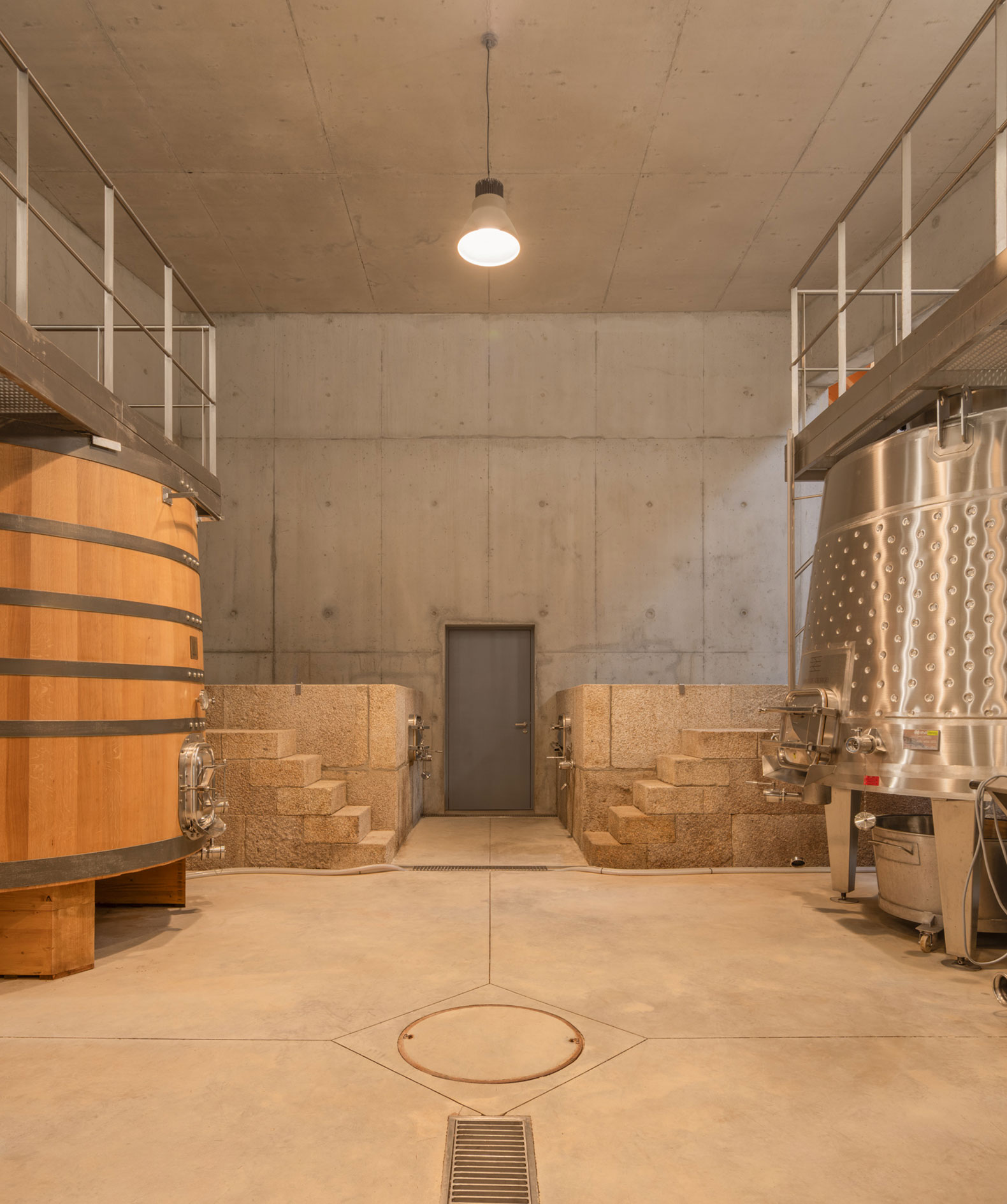
Locally sourced materials such as schist and granite reduce transport emissions, while wooden structures replace concrete where possible, limiting CO2 release. Over time, the pinkish greys, greens and browns take on new hues and textures, potentiating the building's integration into the environment.

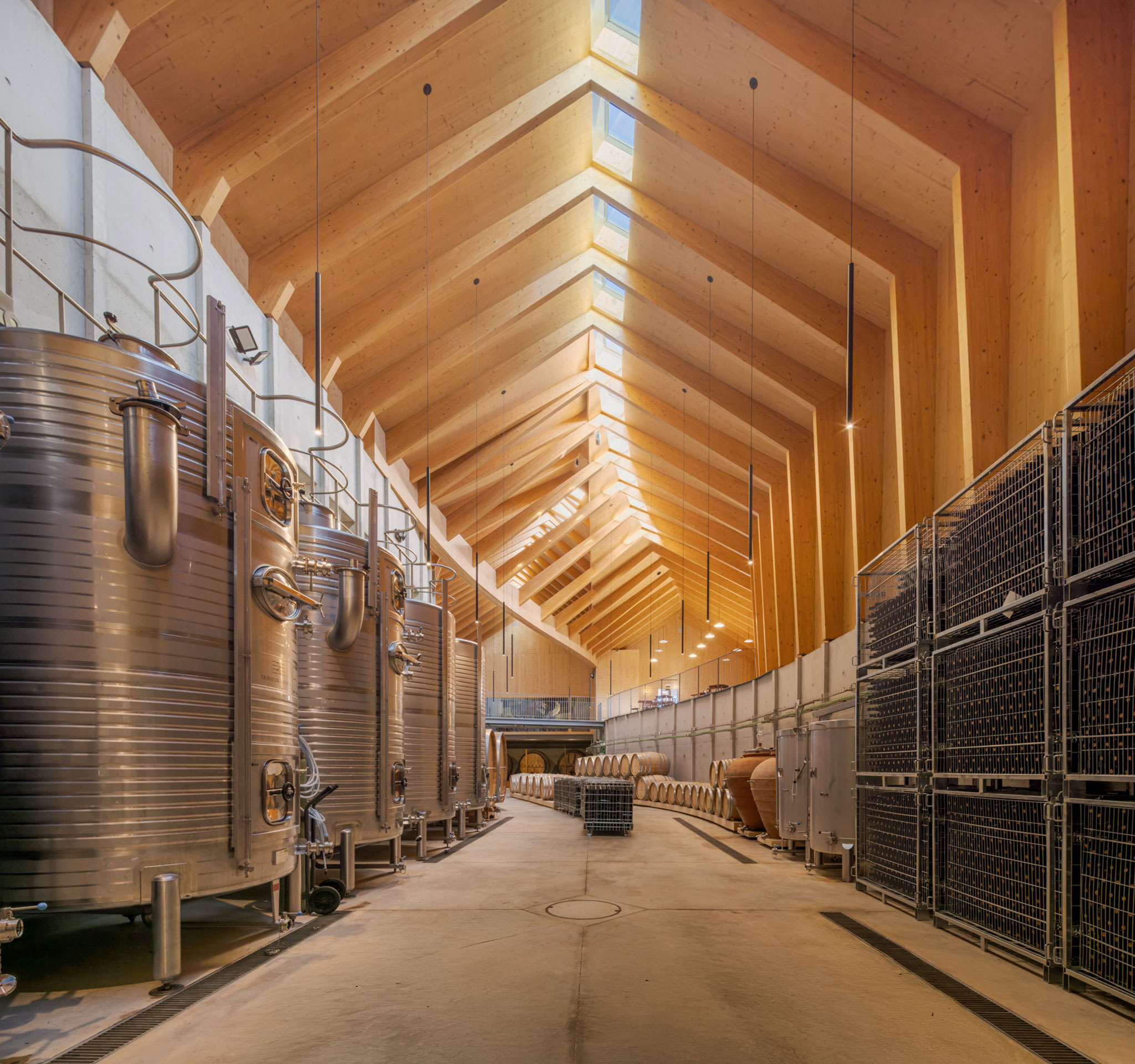
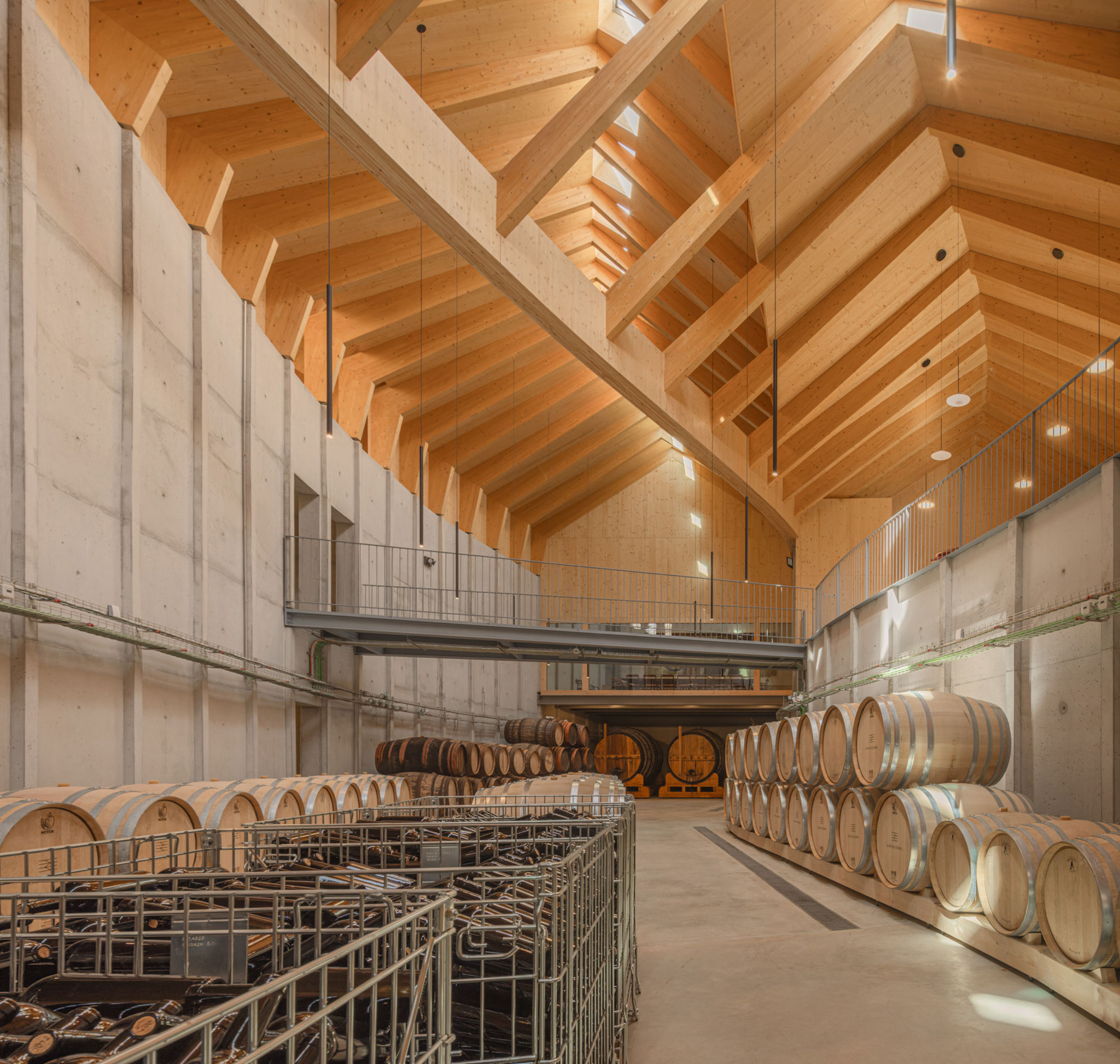
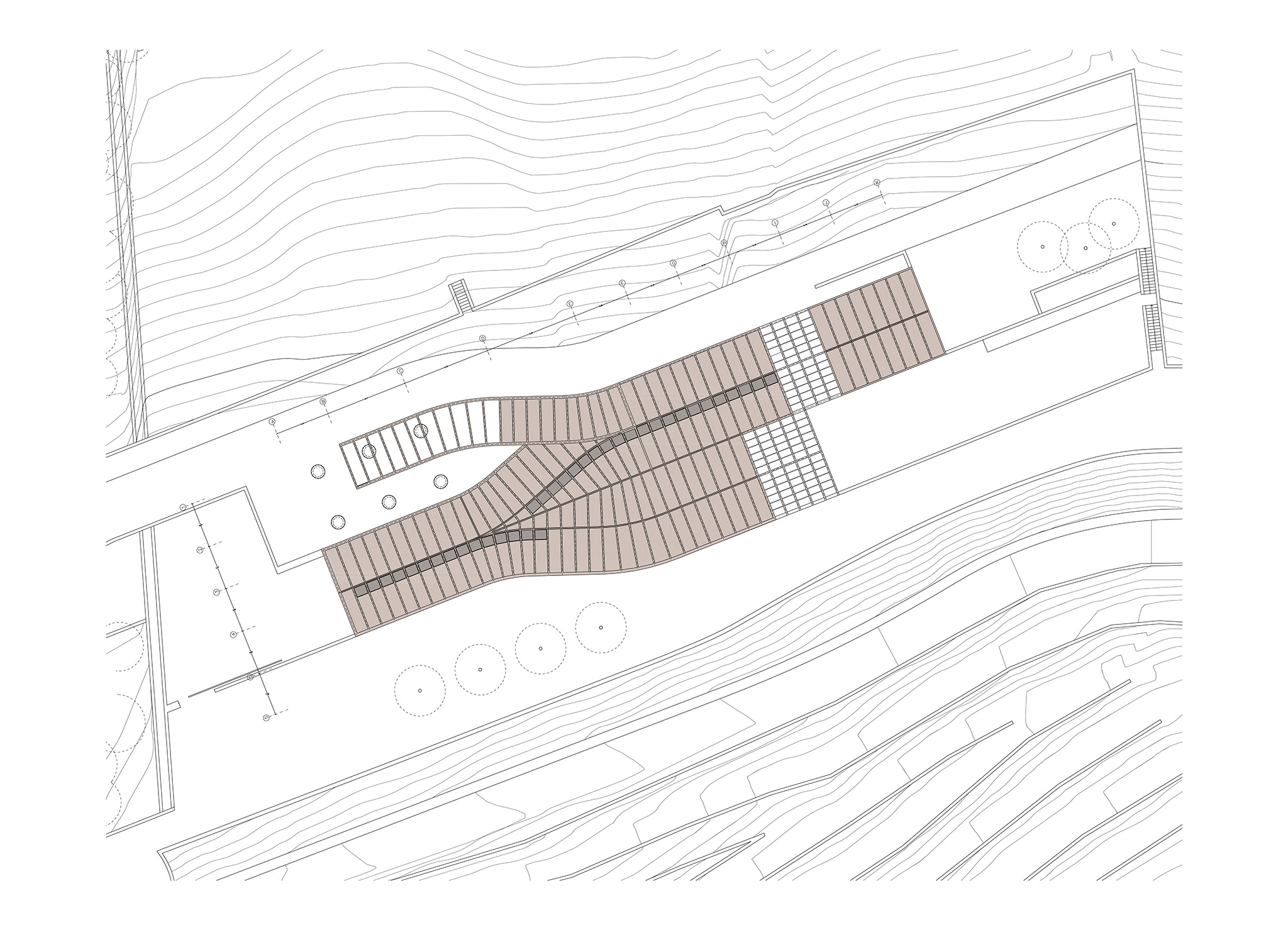
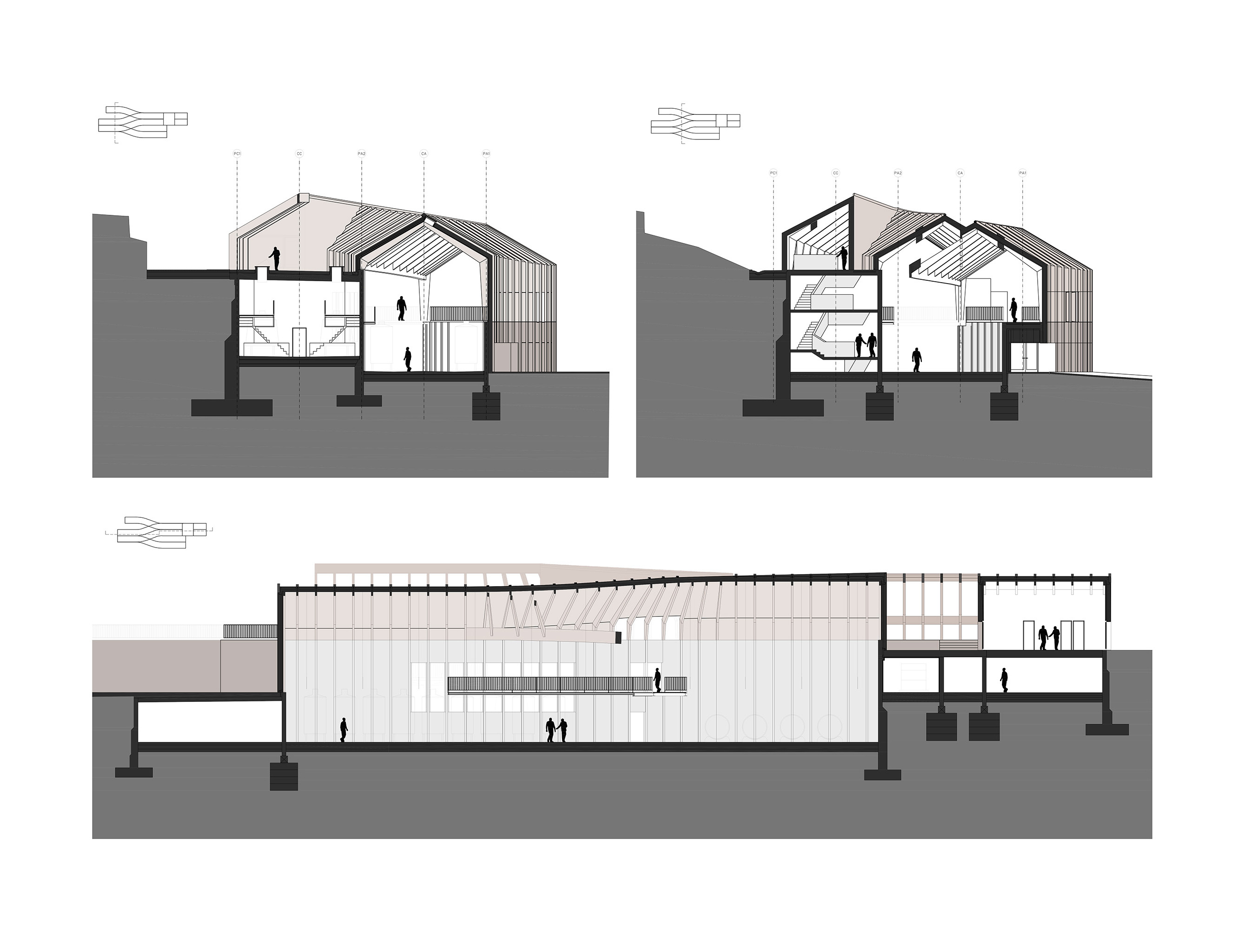
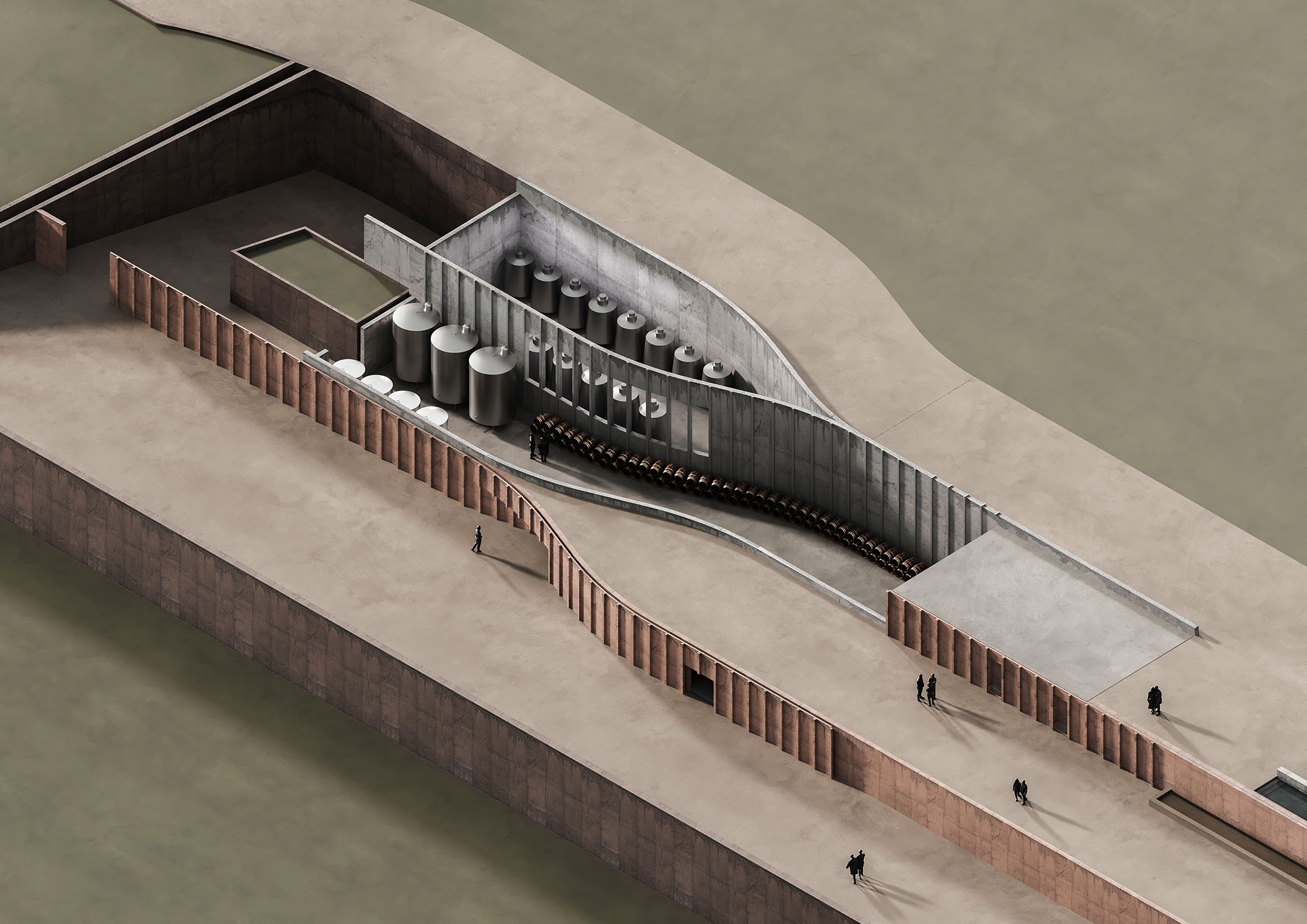
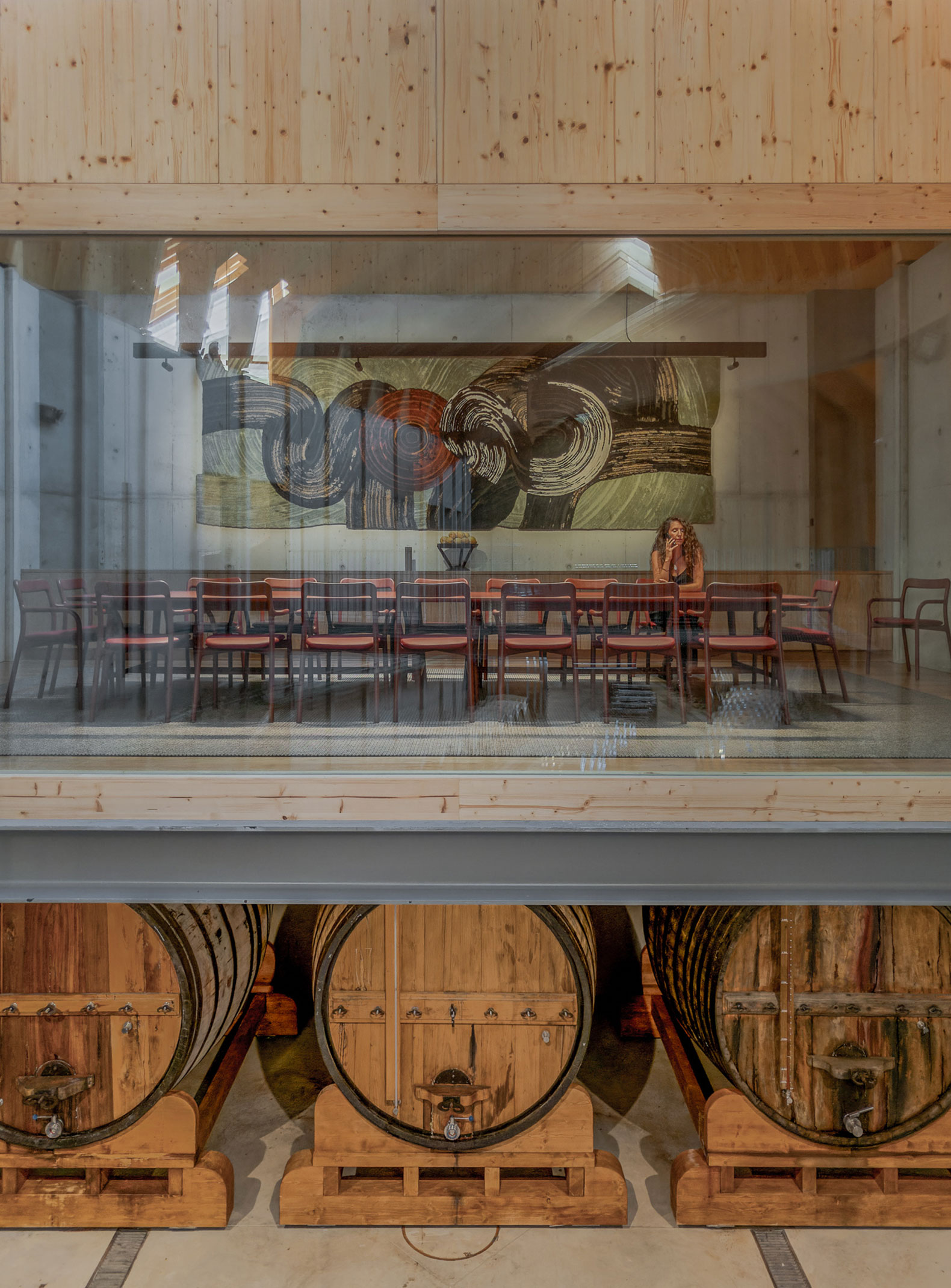
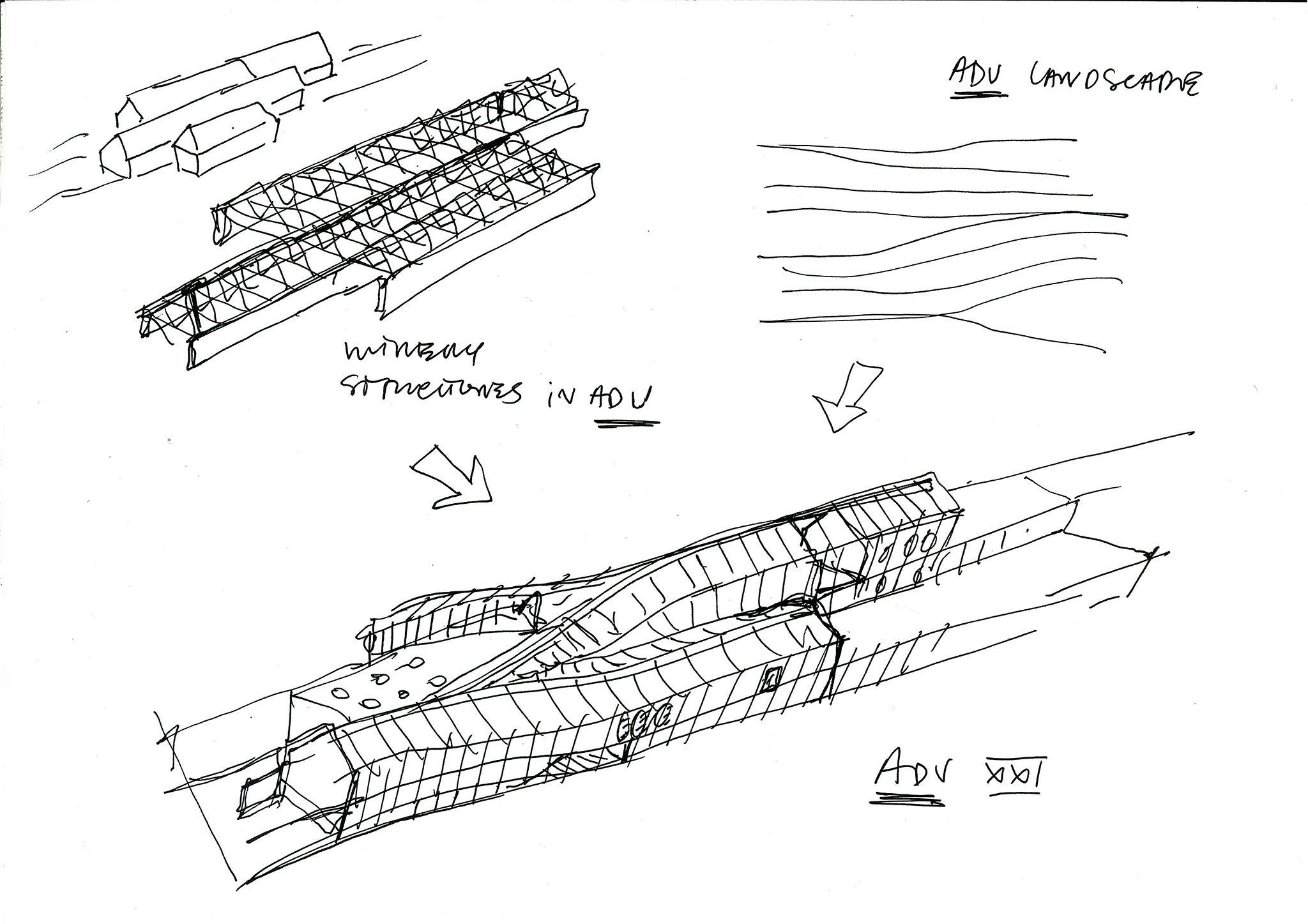
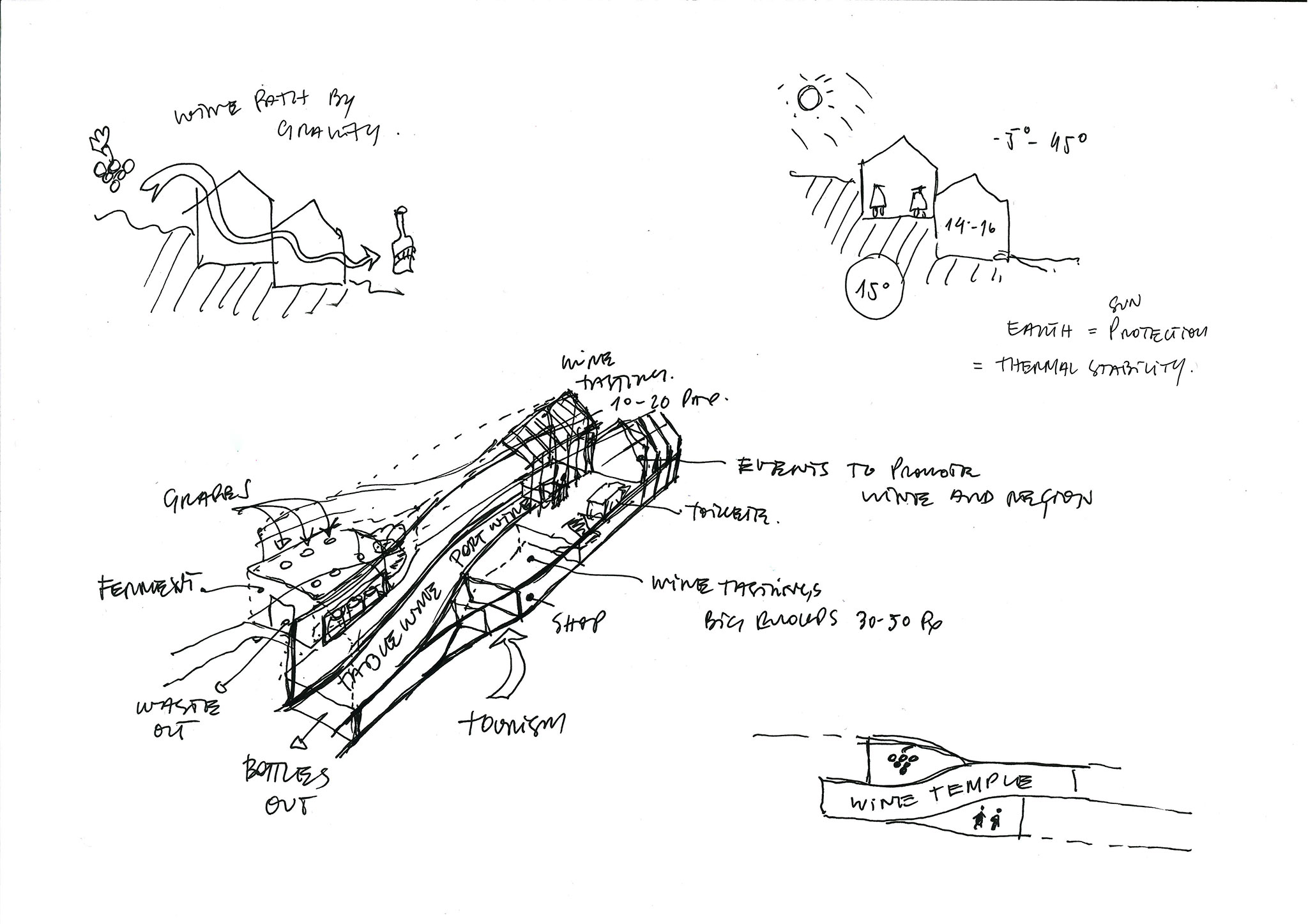
The configuration of the building is a set of interlocking naves that follow the existing topographic slopes, replicated on its internal mechanics, where the winemaking process takes place by gravity. The gravitational system is a traditional solution on the banks of the River Douro and this wine cellar showcases it with all its up to-date operational capabilities.
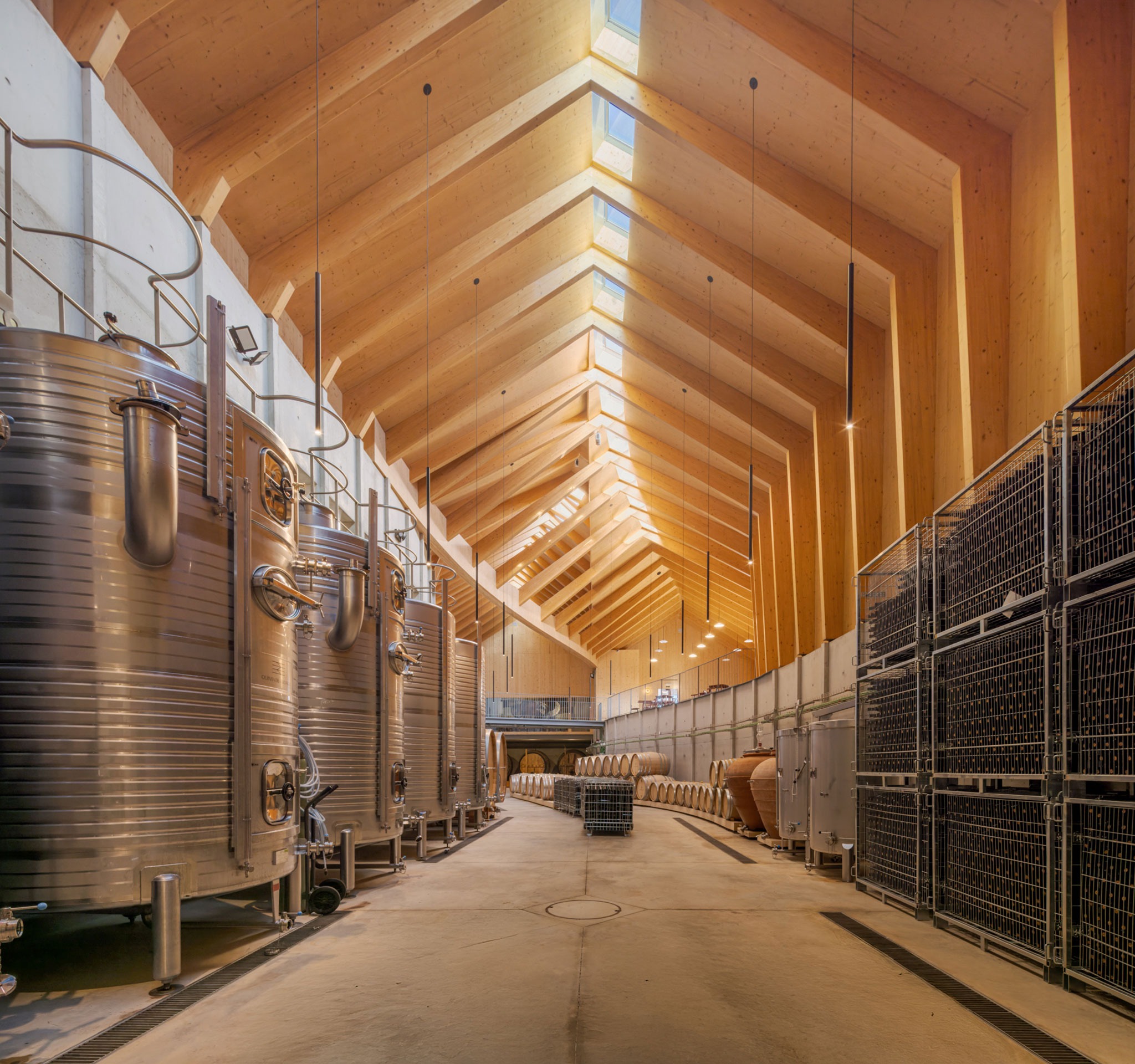
Bodega de Vinos de la Quinta de Adorigo por Atelier Sérgio Rebelo. Fotografía por Fernando Guerra.
Wine Cellar of the Quinta de Adorigo by Atelier Sérgio Rebelo. Photograph by Fernando Guerra. 

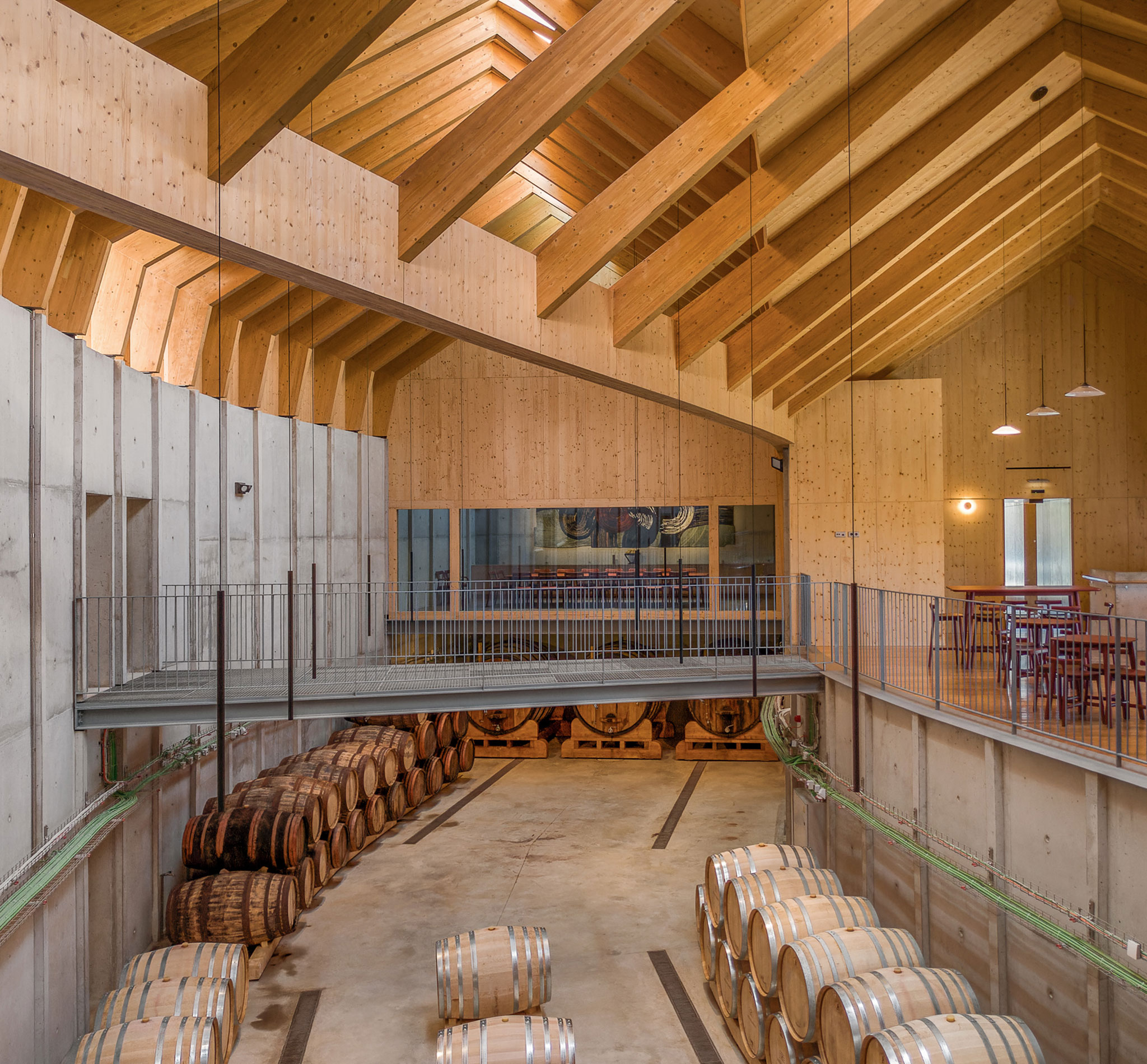
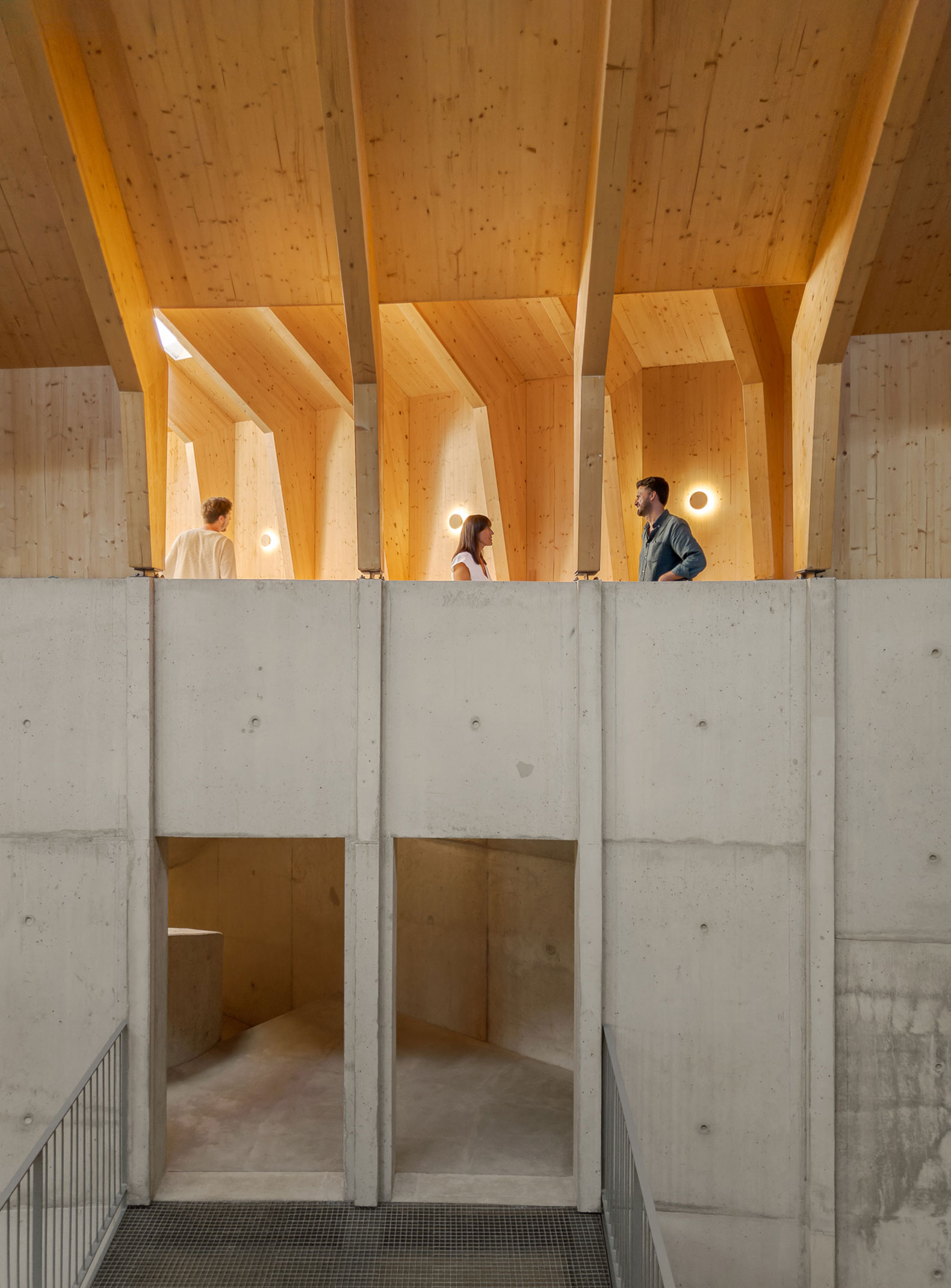
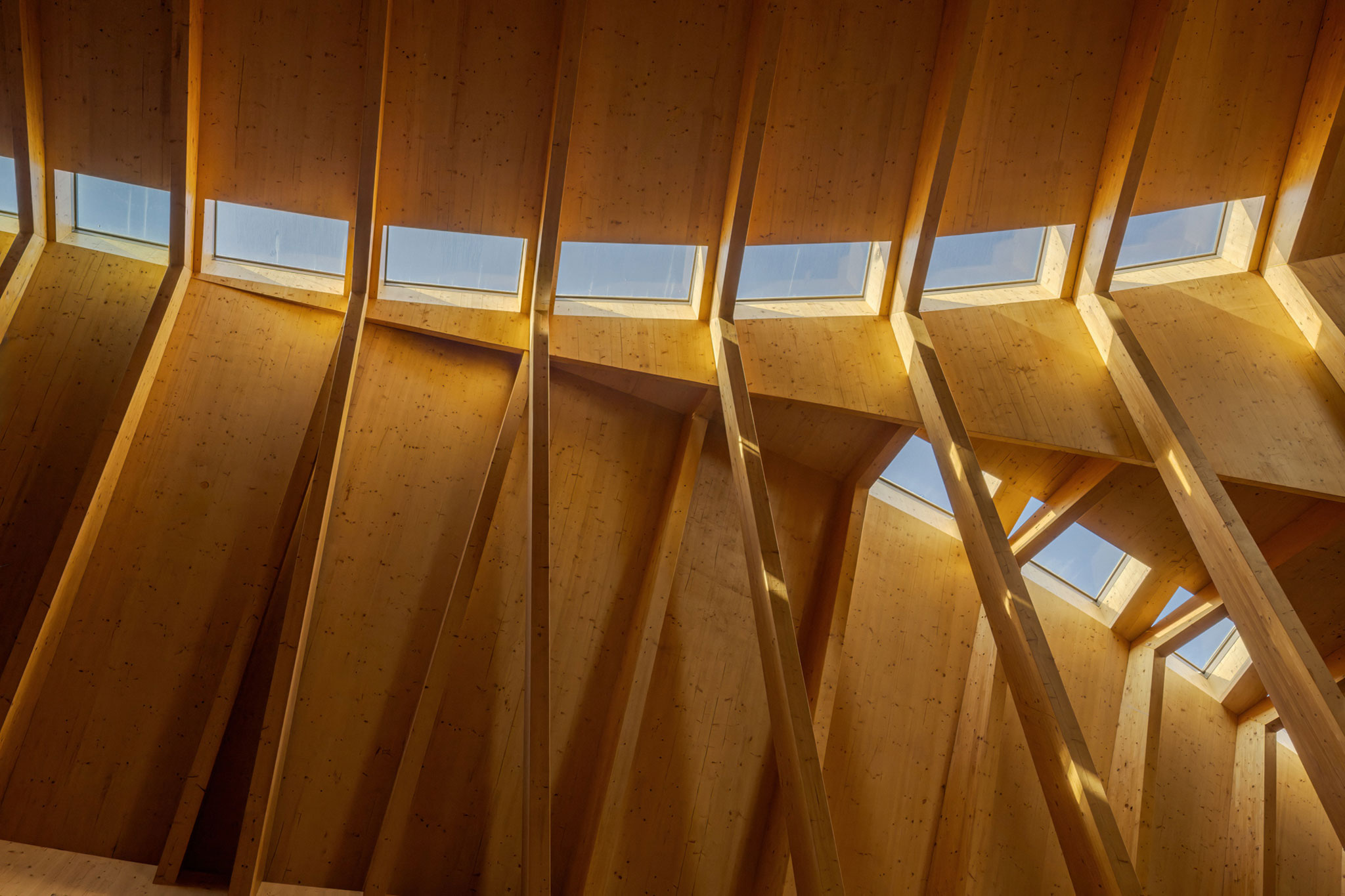
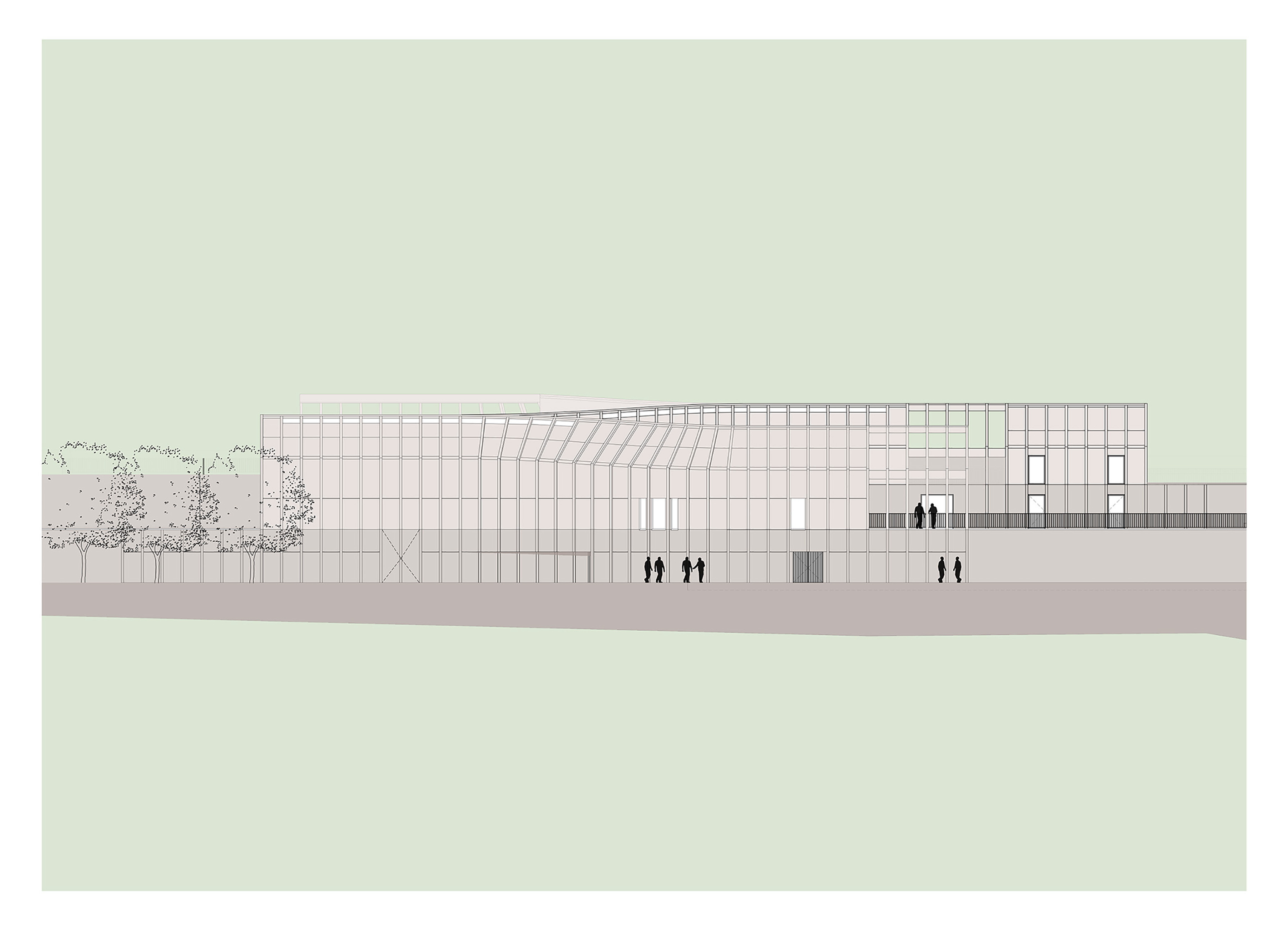
The geometry of the cellar's roof interprets the vernacular gable roof structured in wood. This structure is exposed in the winery, and has becomes a sinuous, continuous and organic sculptural element that flows through the tangential curves of the vineyards.  

The development uses renewable energy sources, namely geothermal energy, to reduce greenhouse gas emissions and to provide ideal hydrothermal conditions for wine production and human comfort.
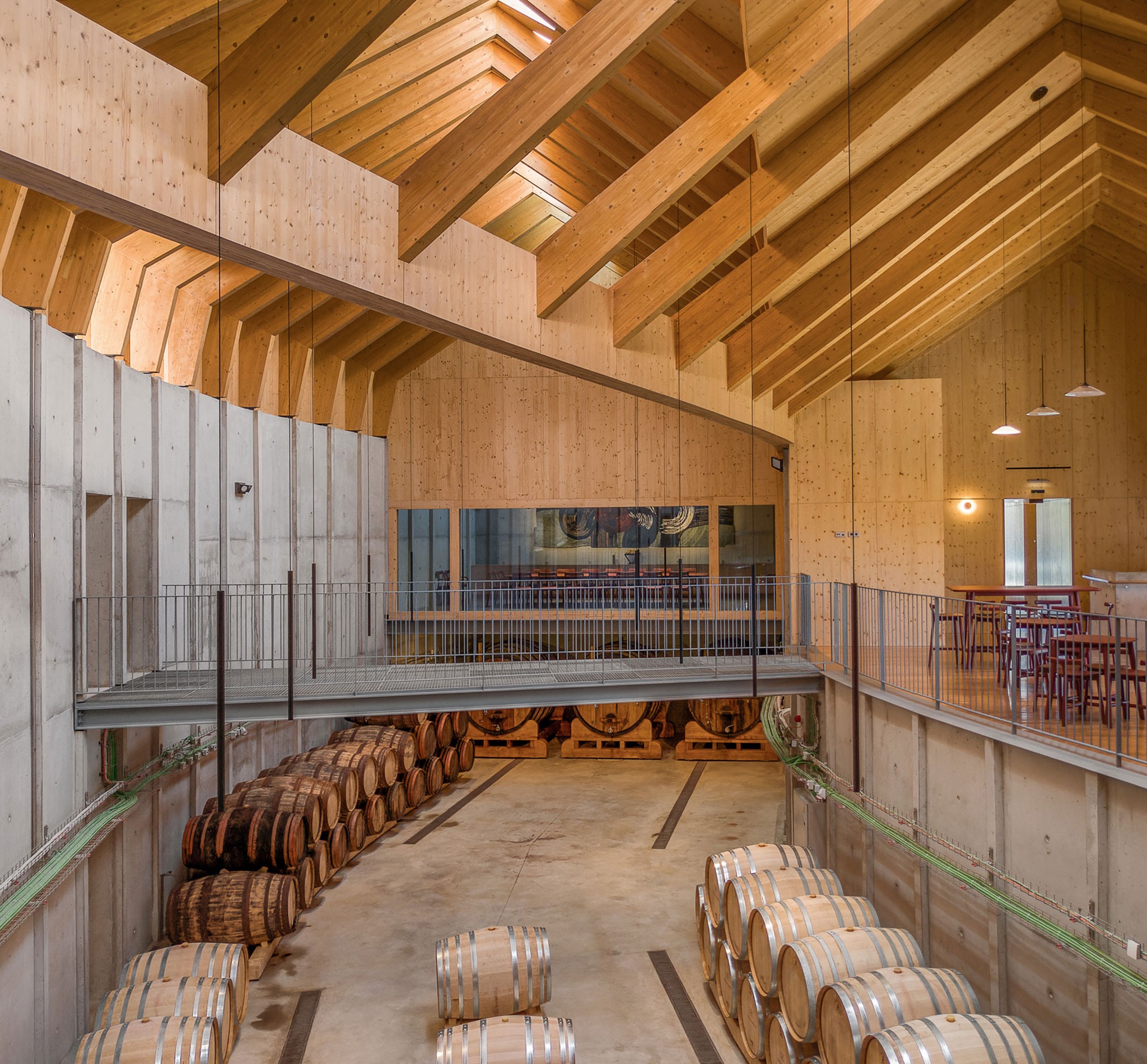
Bodega de Vinos de la Quinta de Adorigo por Atelier Sérgio Rebelo. Fotografía por Fernando Guerra.
Wine Cellar of the Quinta de Adorigo by Atelier Sérgio Rebelo. Photograph by Fernando Guerra. 

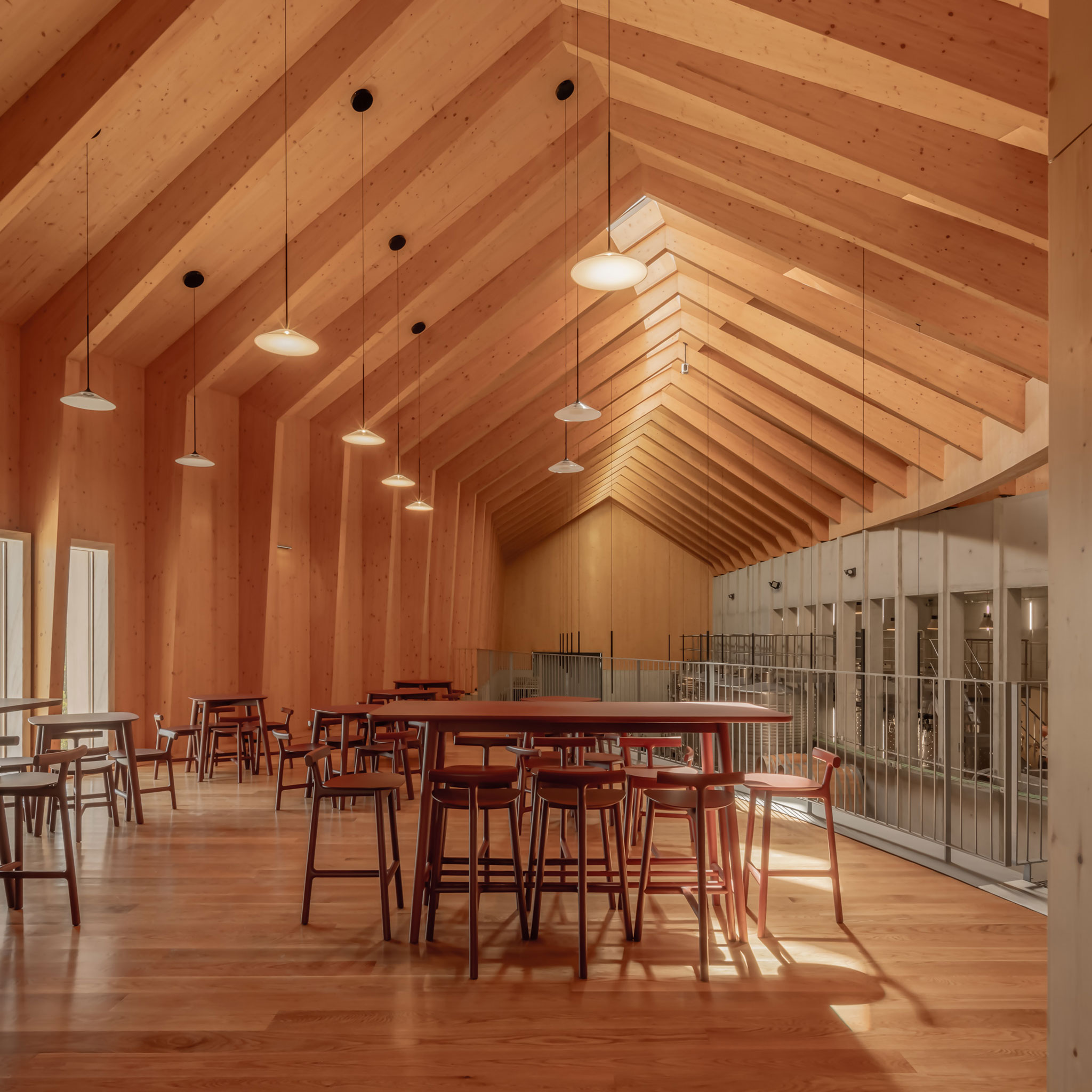
Energy efficiency is fundamental to the winery's design. The building's northerly orientation and its specific insulation ensure optimum indoor temperatures and humidity levels, with limited mechanical climate control. The few windows and skylights frame the landscape and maximize the use of natural light.

Water conservation is also integral to the winery, which lacked public water supply infrastructure. Rainwater is harvested, drinking water sourced from artesian boreholes, and wastewater is treated and recycled for irrigation, cleaning, and fire prevention. Permeable pathways return rainwater to agricultural use, reducing waste and preserving resources.
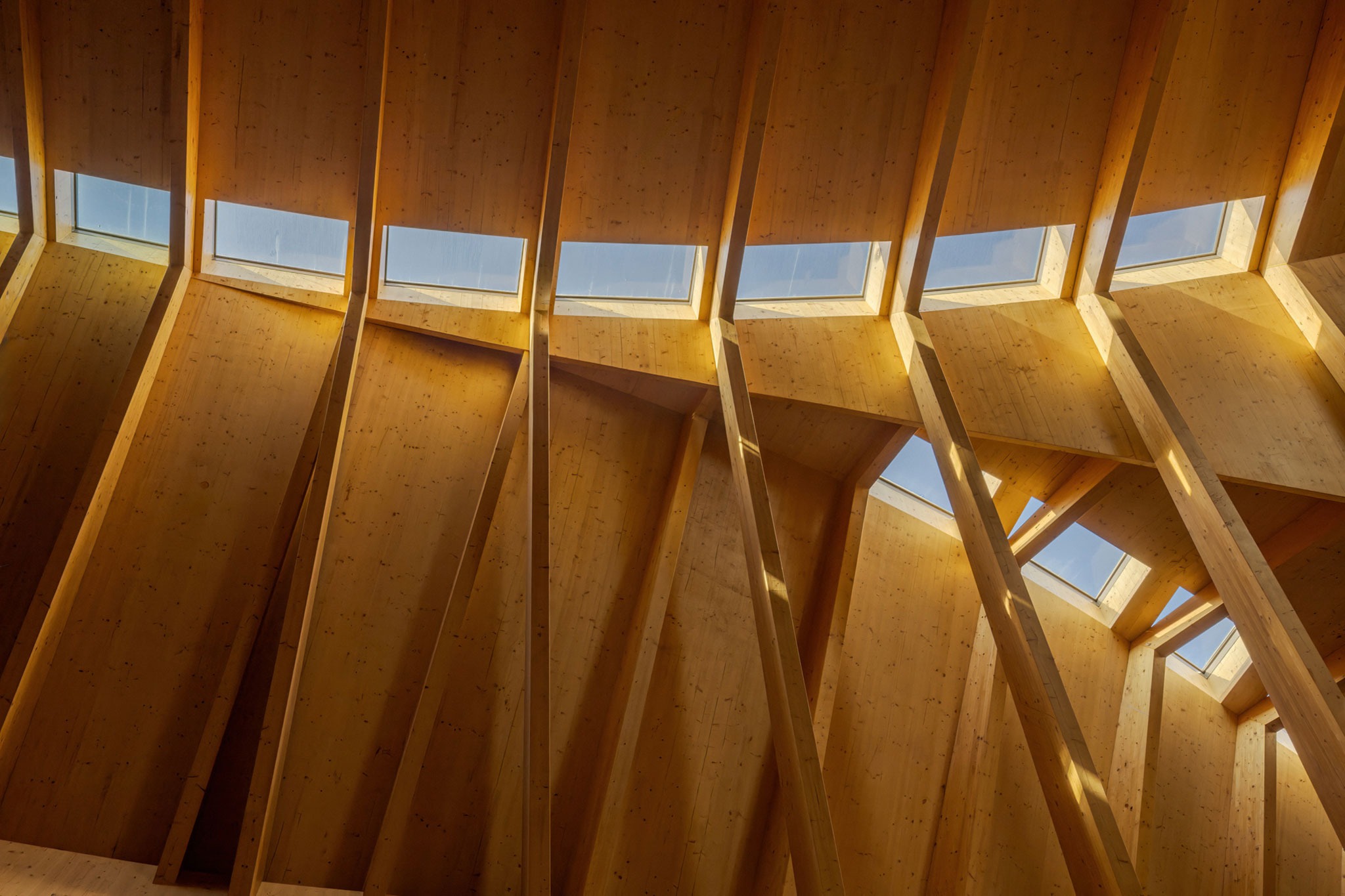
Bodega de Vinos de la Quinta de Adorigo por Atelier Sérgio Rebelo. Fotografía por Fernando Guerra.
Wine Cellar of the Quinta de Adorigo by Atelier Sérgio Rebelo. Photograph by Fernando Guerra. 

The landscape design revives native flora, enriching biodiversity and supporting ecosystems that benefit vineyard health and promote economic activities that run parallel to the wine production.

The winery’s main entrance houses a visitor center with a reception area and a wine shop that leads up to a meeting room with an all-glass wall and to the wine tasting area in a spacious balconied gallery, overlooking both the wine ageing area in the central nave of the building and the surrounding landscape. These rooms have access to the vineyard and a stone little old chapel, via a large terrace overlooking the Douro. Events that favor a prestigious wine tourism may be hosted to promote the winery and the region, and celebrate both nature and architecture. 
More information

Label
Architects
+ + copy Created with Sketch.
- + copy Created with Sketch.
Label
Project team
Text

Sérgio Rebelo, Nuno Borges, Tiago Pinto de Carvalho, Joana Portela, Tiago Martins, Ricardo Gouveia, La-Salete Carvalho, Lourenço Barreto, Catarina Araújo, Bruna Campos, Fátima Séneca, Paulo Cunha Martins. 

+ + copy Created with Sketch.
- + copy Created with Sketch.
Label
Collaborators
Text

Landscape Design.- Sofia Pera.
Concept of Structures and Sustainability.- Thornton Tomassetti, Scott Lomax, Gunnar Hubbard.
Concrete Structure, Hydraulics, Electricity, ITED, SADI and Electromechanical Design.- Pormin, José Guedes, João Guedes, Henrique Araújo, Carolina Freixo, Susana Fernandes.
Wooden structure project.- Portilame, Marcos Oliveira, José Esteves.
Mechanical Design.- Greenbeelt, João Sousa, Filipa Sucena, Rúben Avelar.
Graphic Design and Signage.- Eduardo Aires Studio.
Interior Design.- Atelier Sérgio Rebelo.
Enology.- Luís Seabra.
History.- Natália Fauvrelle.
History of Art, Text and Translation.- Fátima Séneca.

+ + copy Created with Sketch.
- + copy Created with Sketch.
Label
Client
Text

Quinta de Adorigo. 

+ + copy Created with Sketch.
- + copy Created with Sketch.
Label
Builder
Text

Teixeira, Pinto e Soares SA.

+ + copy Created with Sketch.
- + copy Created with Sketch.
Label
Area
Text

Land area.- 24 hectáreas.
Builded area.- 1.100 sqm.

+ + copy Created with Sketch.
- + copy Created with Sketch.
Label
Dates
Text

Start date of the project.- 2019.
Completion date of construction.- 2024.    

+ + copy Created with Sketch.
- + copy Created with Sketch.
Label
Location
Text

Tabuaço, Alto Douro Vinhateiro, Portugal. 

+ + copy Created with Sketch.
- + copy Created with Sketch.
Label
Manufacterers
Text

Wooden Structure.- Portilame.
GRC Panels.- Betoncrete.
Furniture.- Mattiazzi, Nobilis.
Art / Tapestry.- Tomek Sadurski /Tapetes Beiriz. 

+ + copy Created with Sketch.
- + copy Created with Sketch.
Label
Photography
+ + copy Created with Sketch.
- + copy Created with Sketch.
Label
Rendering
Text

MIR and 24 Studio. 

+ + copy Created with Sketch.
- + copy Created with Sketch.
ASR is an architecture studio founded by Sérgio Rebelo, an architect from the University of Architecture of Porto. The studio develops solutions focused on enhancing the end-user experience and adheres to sustainable construction and production models.

Its practice aims to contribute to the place-making process while also paying homage to memory and history. Experimentation with materials in architecture translates into a deep appreciation for heritage and craftsmanship. Therefore, the integration of tradition with innovation fosters environments where daily routines become sensory adventures.

Based in Porto, the studio collaborates with other experts and consultants, both locally and internationally. The creative process is dialogic with the client, intertwining research, design, and architecture.
Sérgio Rebelo is the founder of ASR. He graduated in Architecture at the University of Porto in Portugal and at the École Polytechnique Fédérale de Lausanne in Switzerland. Before launching his studio in Porto, Portugal, in early 2018, he was the Design Director at FR-EE of Fernando Romero in New York. In 2010, he was a thesis reviewer at the Columbia University Graduate School of Architecture, Planning, and Preservation (GSAPP). He treasures analytic processes and experimentation in different fields of design.

Read more
Published on: December 10, 2025
Cite:
metalocus, CAMILA DOYLET
"Adapted to the vineyard landscape. Wine Cellar of the Quinta de Adorigo by Atelier Sérgio Rebelo" METALOCUS. Accessed
<https://www.metalocus.es/en/news/adapted-vineyard-landscape-wine-cellar-quinta-de-adorigo-atelier-sergio-rebelo> ISSN 1139-6415
Loading content ...
Loading content ...
Loading content ...
Loading content ...
Loading content ...
Loading content ...
Loading content ...
Loading content ...
Loading content ...
Loading content ...
Loading content ...
Loading content ...
Loading content ...
Loading content ...
Loading content ...
Loading content ...
Loading content ...
Loading content ...
Loading content ...
Loading content ...
Loading content ...
Loading content ...
Loading content ...
Loading content ...
Loading content ...
Loading content ...
Loading content ...
Loading content ...
Loading content ...
Loading content ...
Loading content ...
Loading content ...
Loading content ...
Loading content ...
Loading content ...
Loading content ...
Loading content ...
Loading content ...
Loading content ...
Loading content ...
Loading content ...
Loading content ...
Loading content ...
Loading content ...
Loading content ...
Loading content ...
Loading content ...
Loading content ...
Loading content ...
Loading content ...
Loading content ...
Loading content ...
Loading content ...
Loading content ...