The architecture firm Sau Taller d'Arquitectura, led by Lluís Jordà and Pol Jordà, designed a complex of three single-family homes called "Tiana Hills," located in Tiana, a town in the Coastal Range east of Barcelona.

Prior to its planning, the project addressed two fundamental principles: achieving a high level of energy efficiency and offering its residents functional flexibility adapted to their lifestyles and needs.

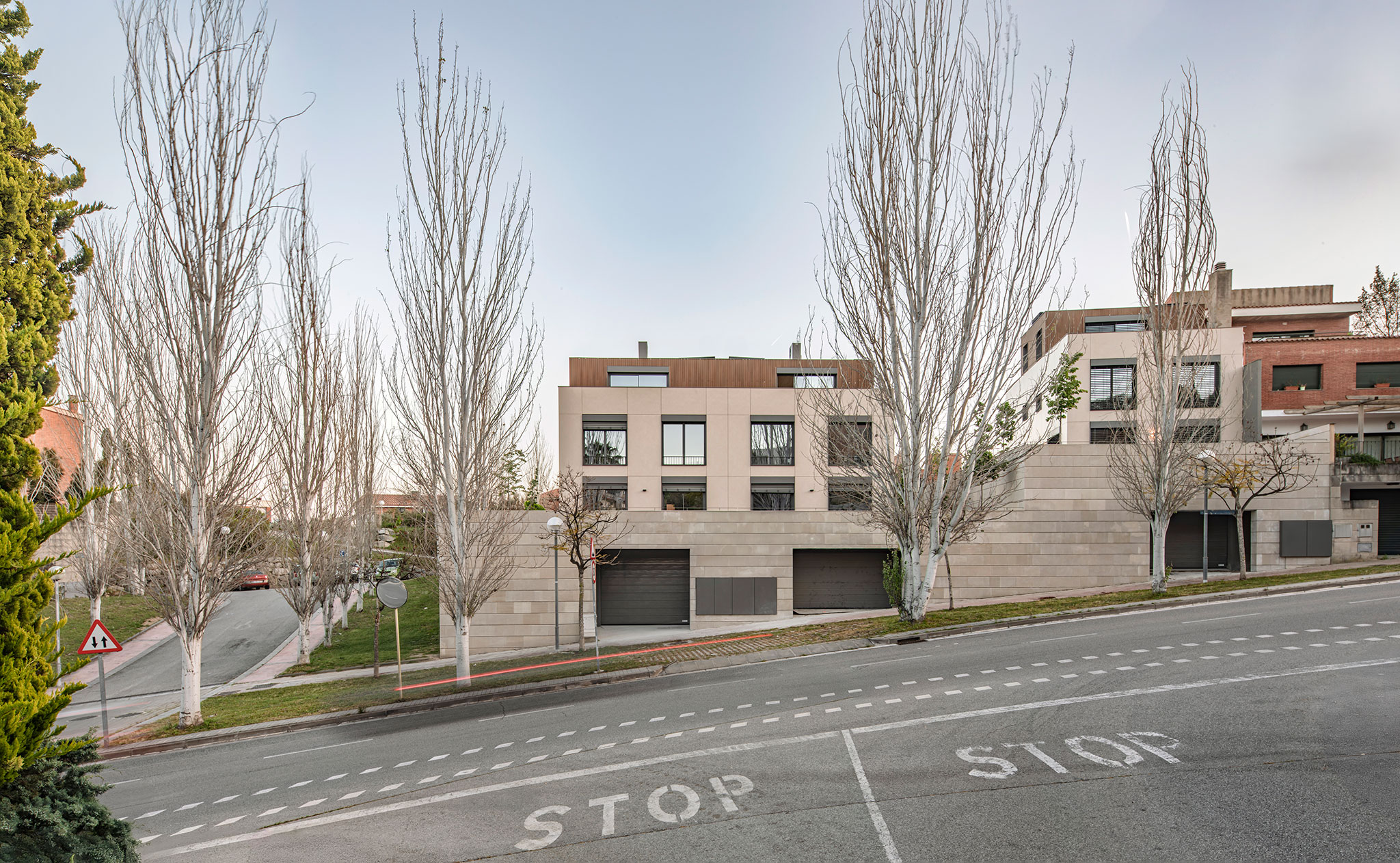
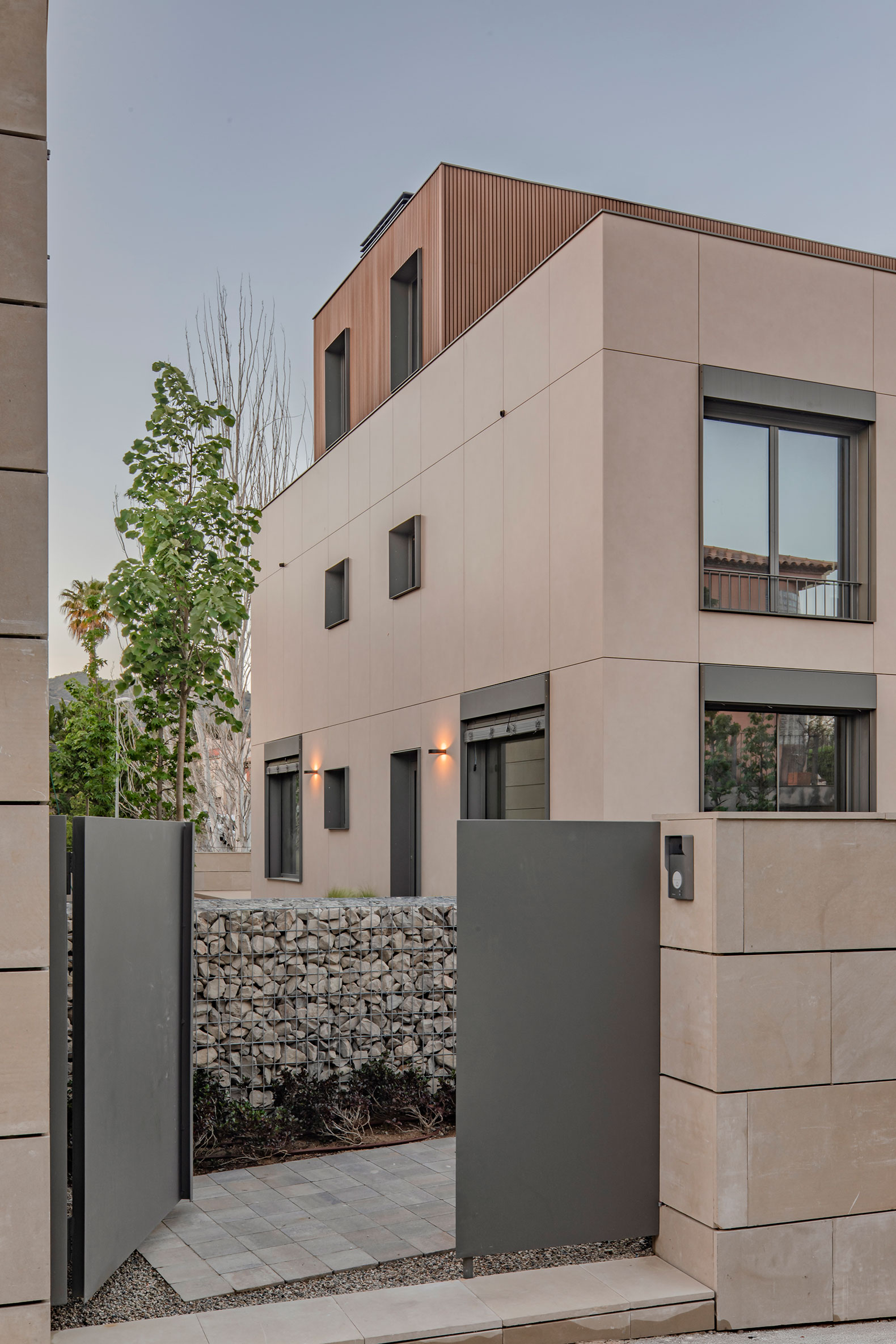
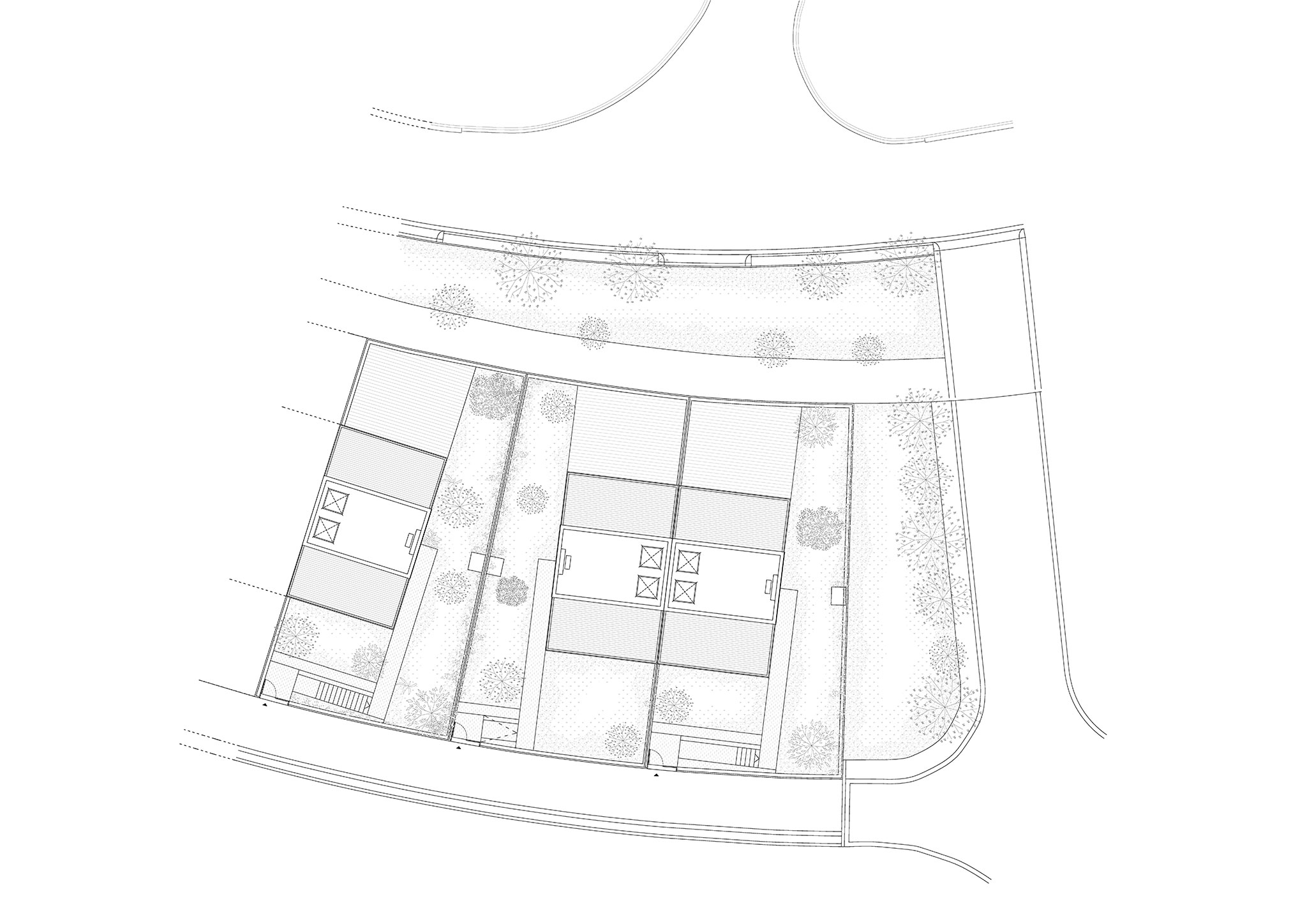
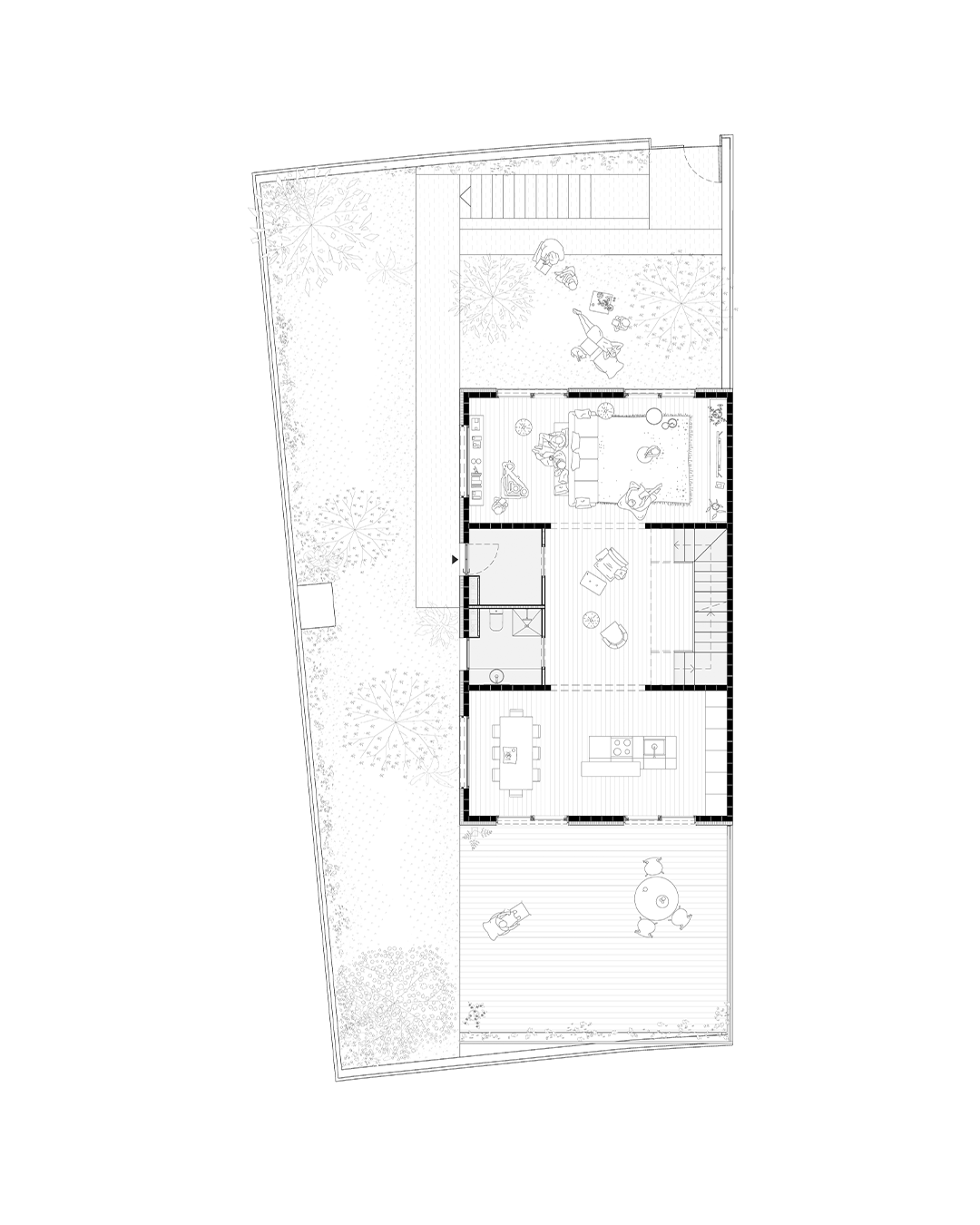
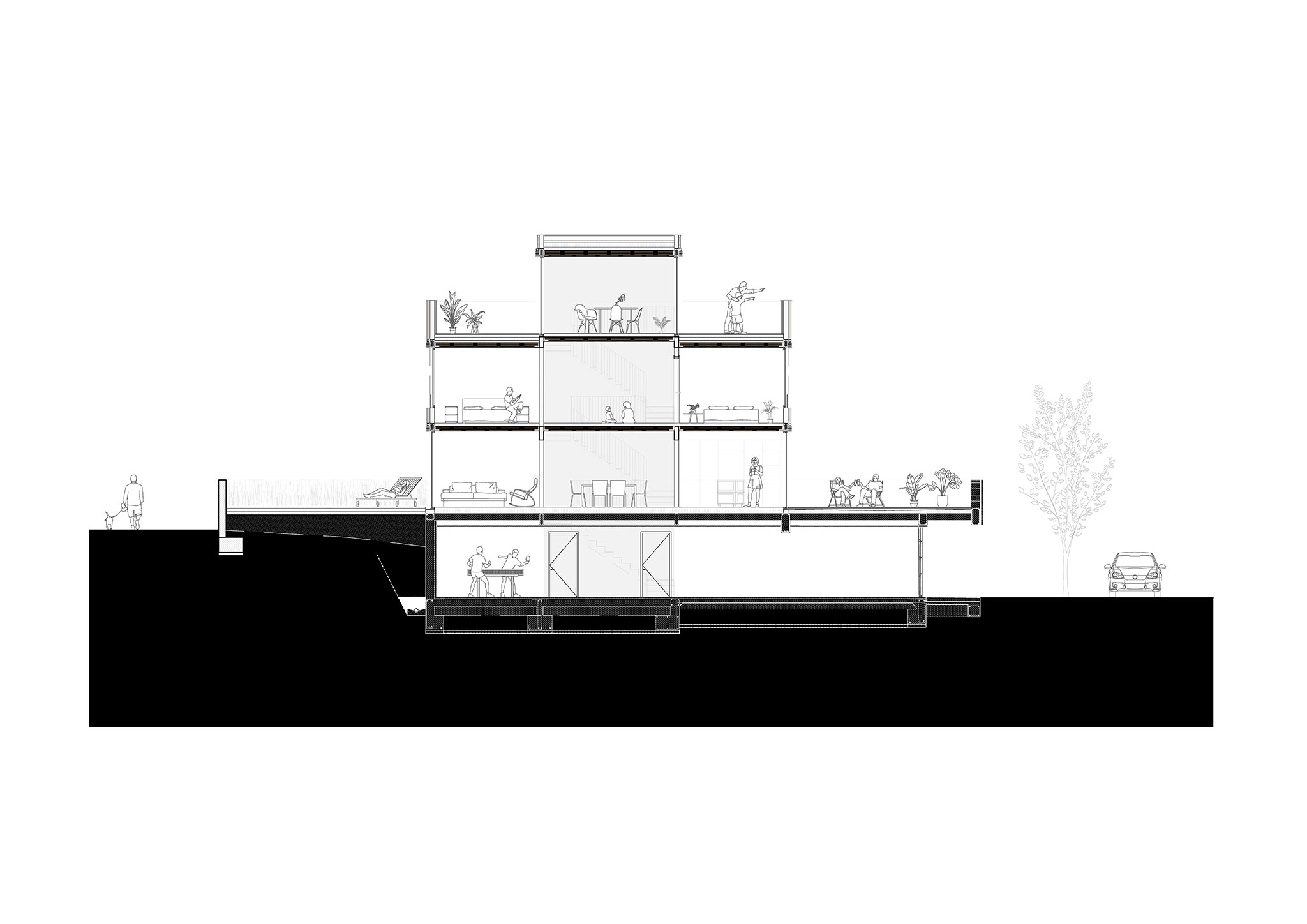
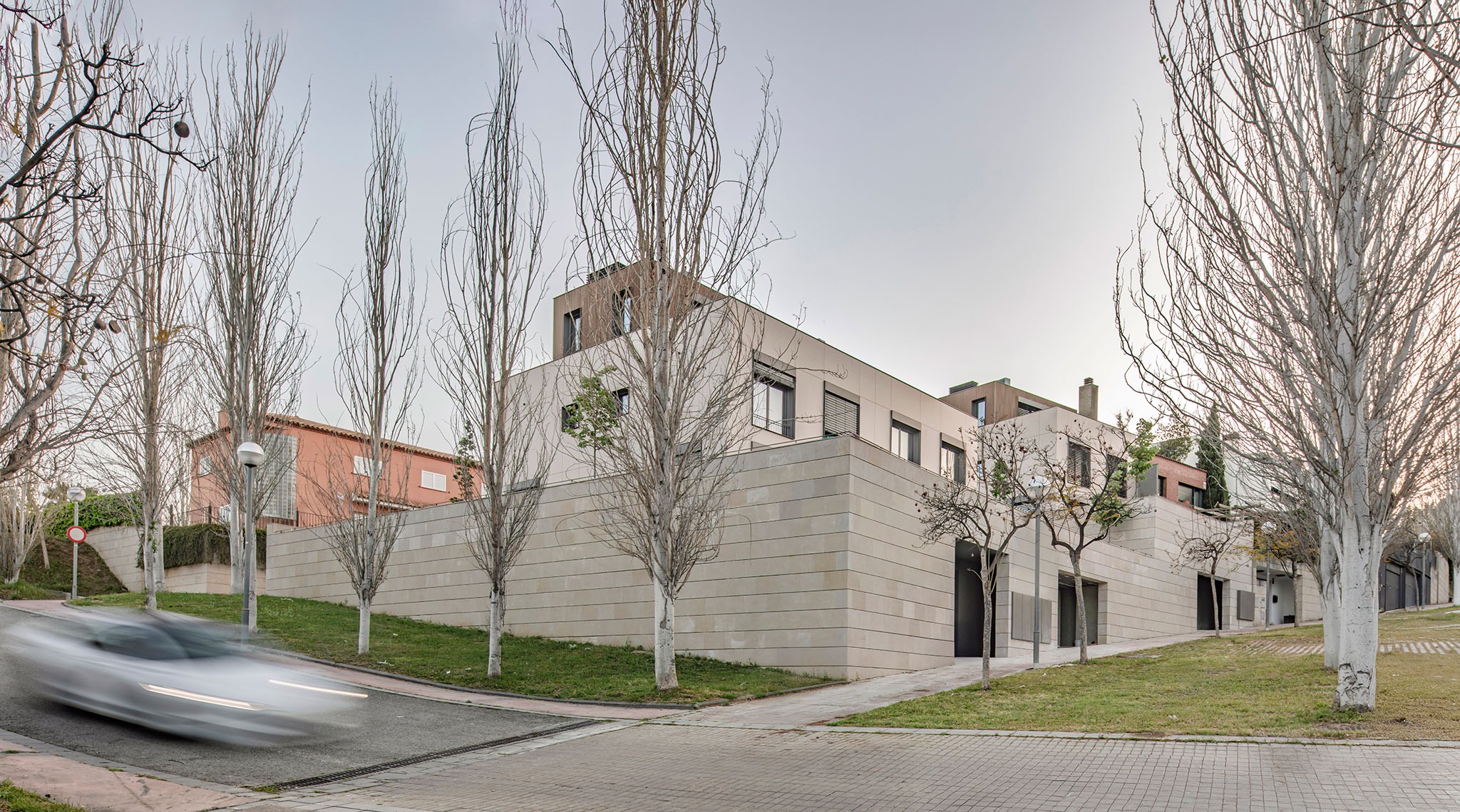
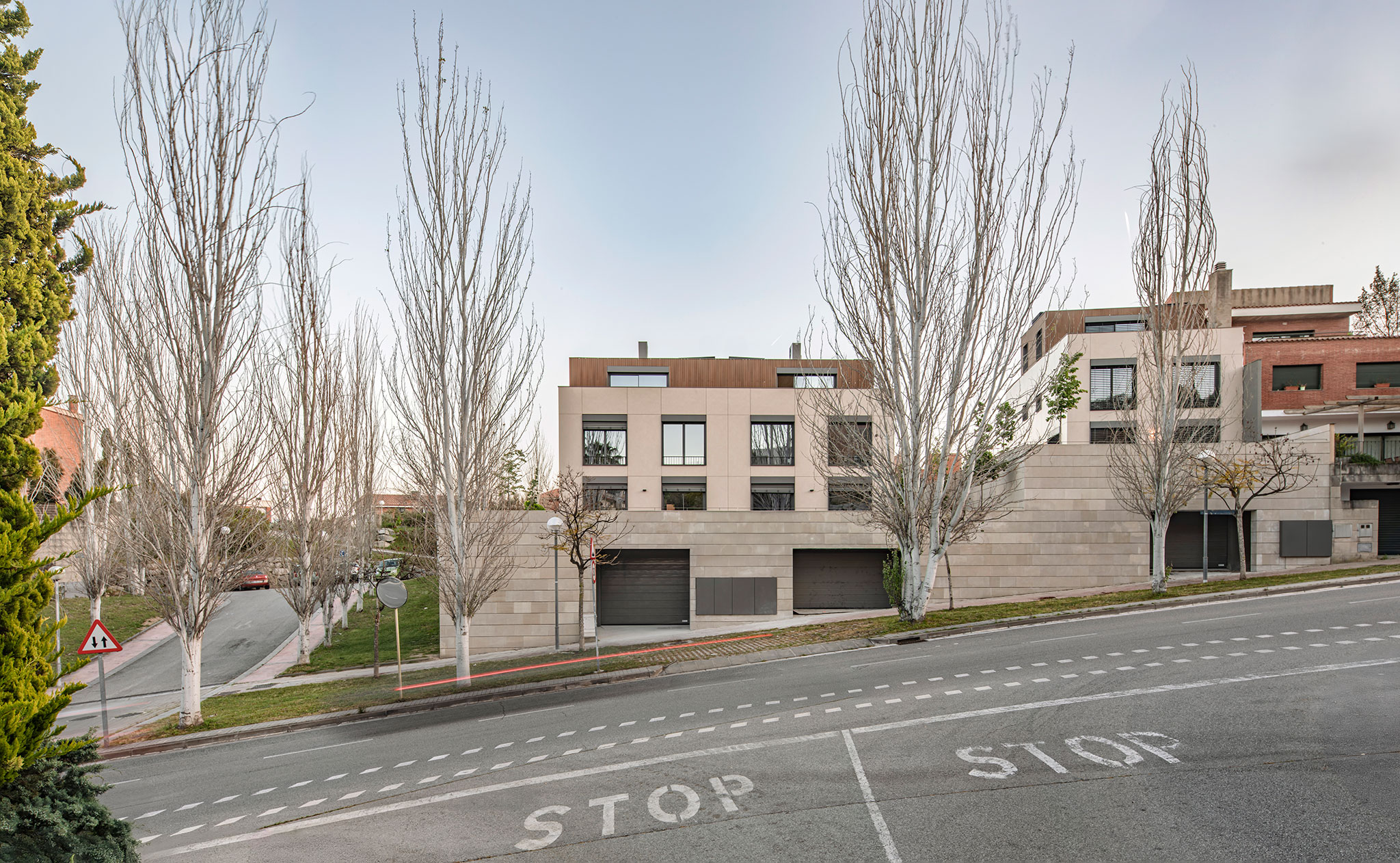
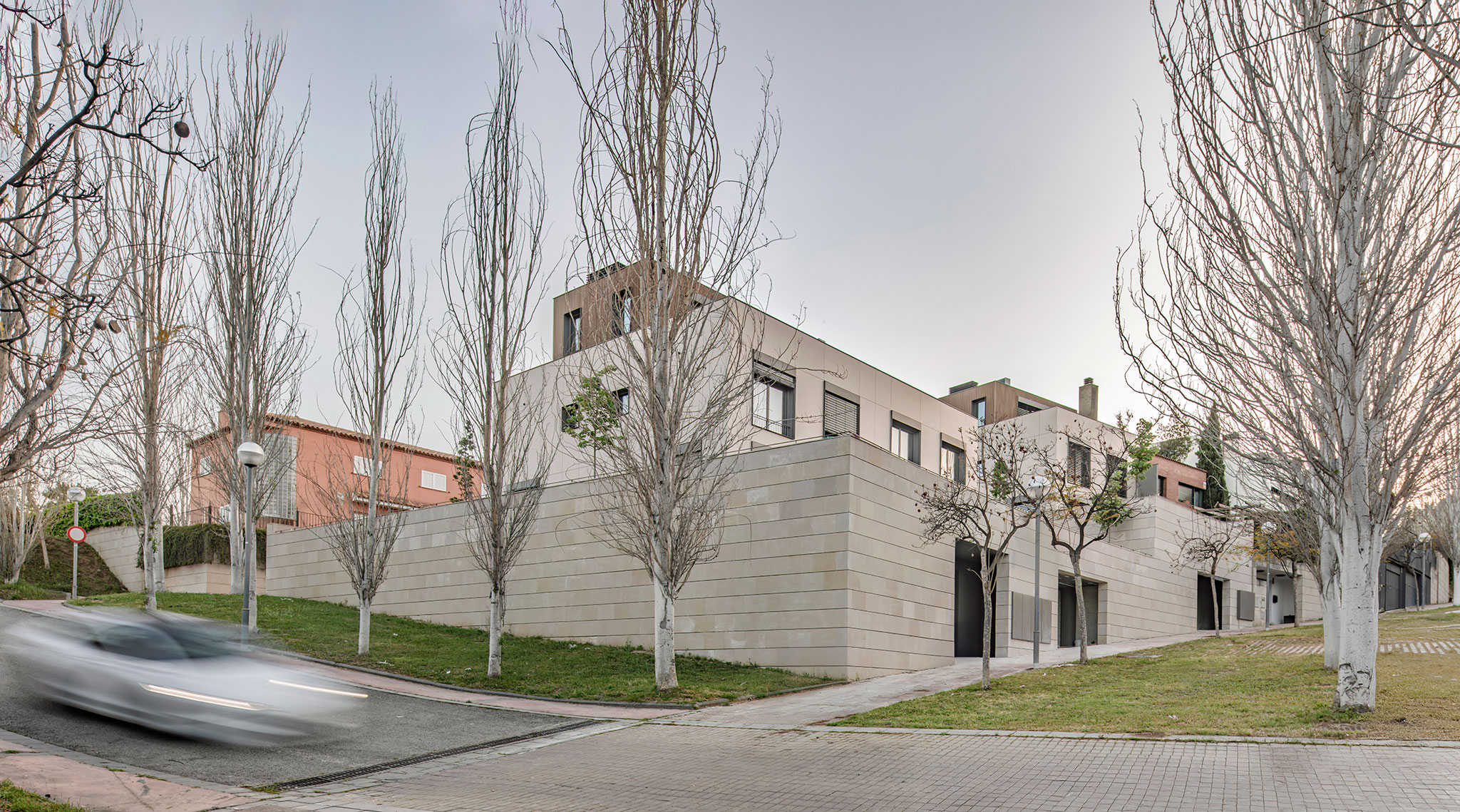
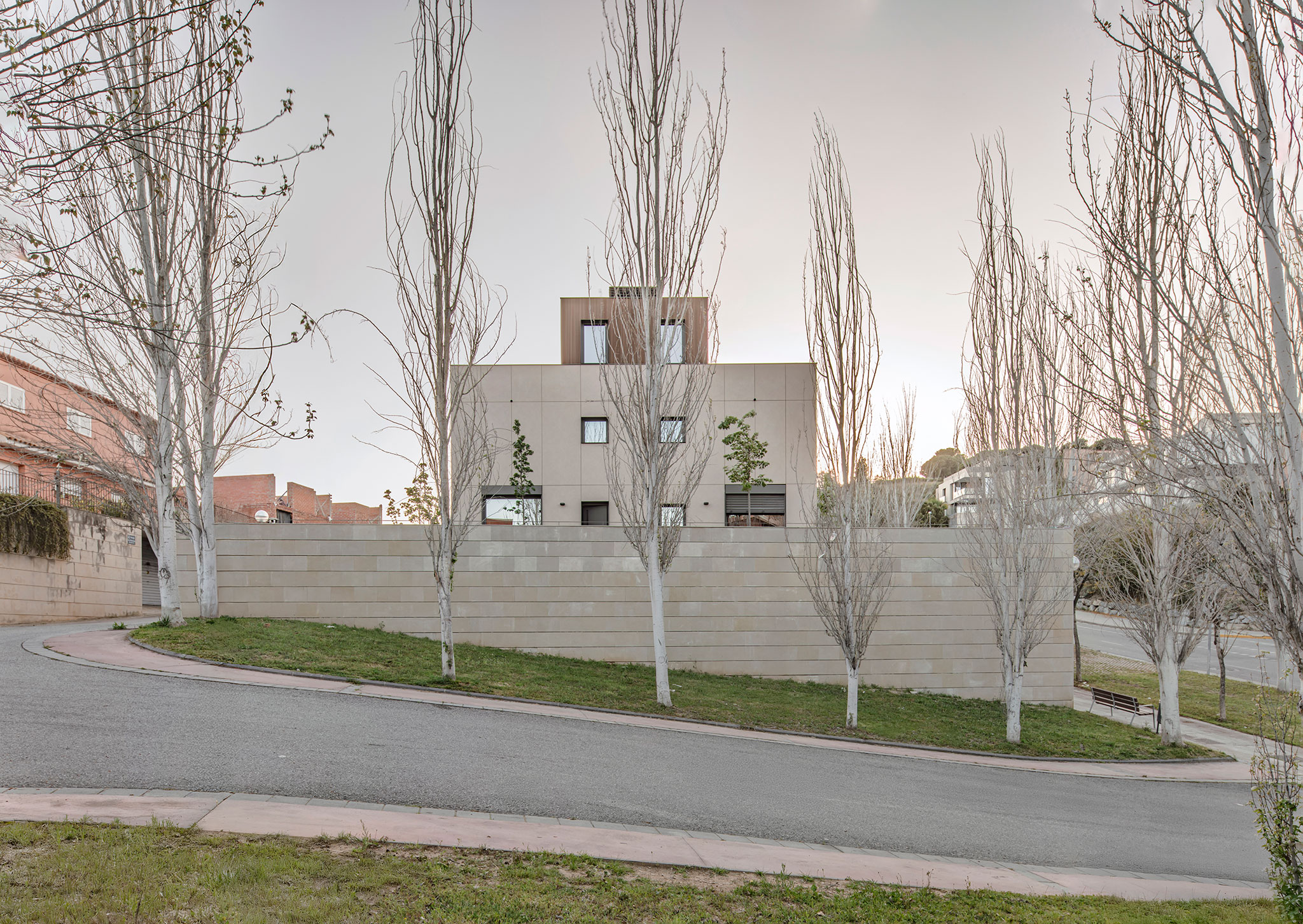
“Tiana Hills,” the housing complex designed by Sau Taller d’Arquitectura, is situated on a topography that dictates the project's configuration. The plots have a difference in elevation of more than three meters between the north and south facades. The building features a main pedestrian entrance at ground level from the south facade and a vehicular entrance from the north facade leading to a semi-basement level. Inside, it maintains a free and versatile layout that adapts to the needs of its residents.

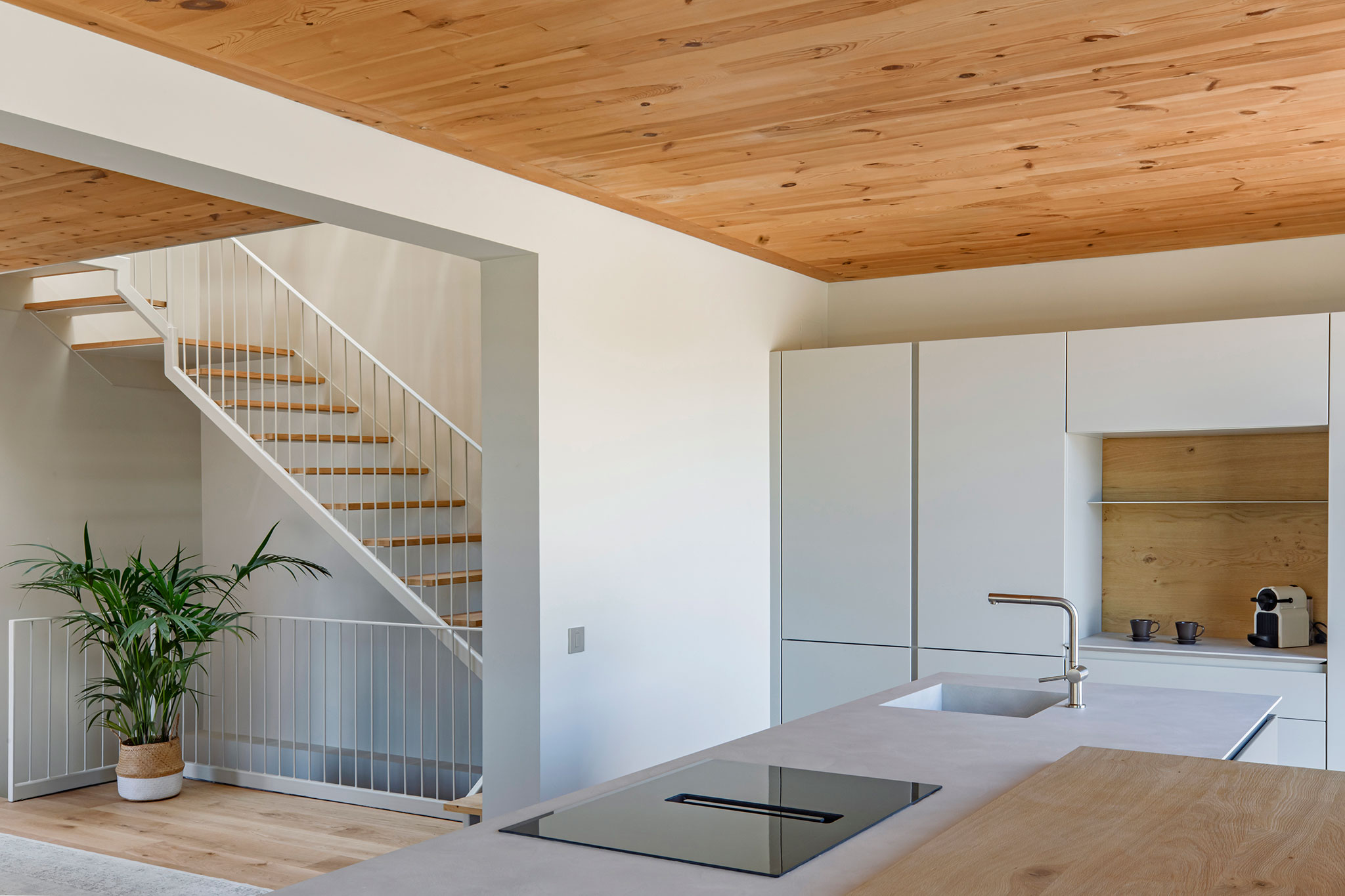
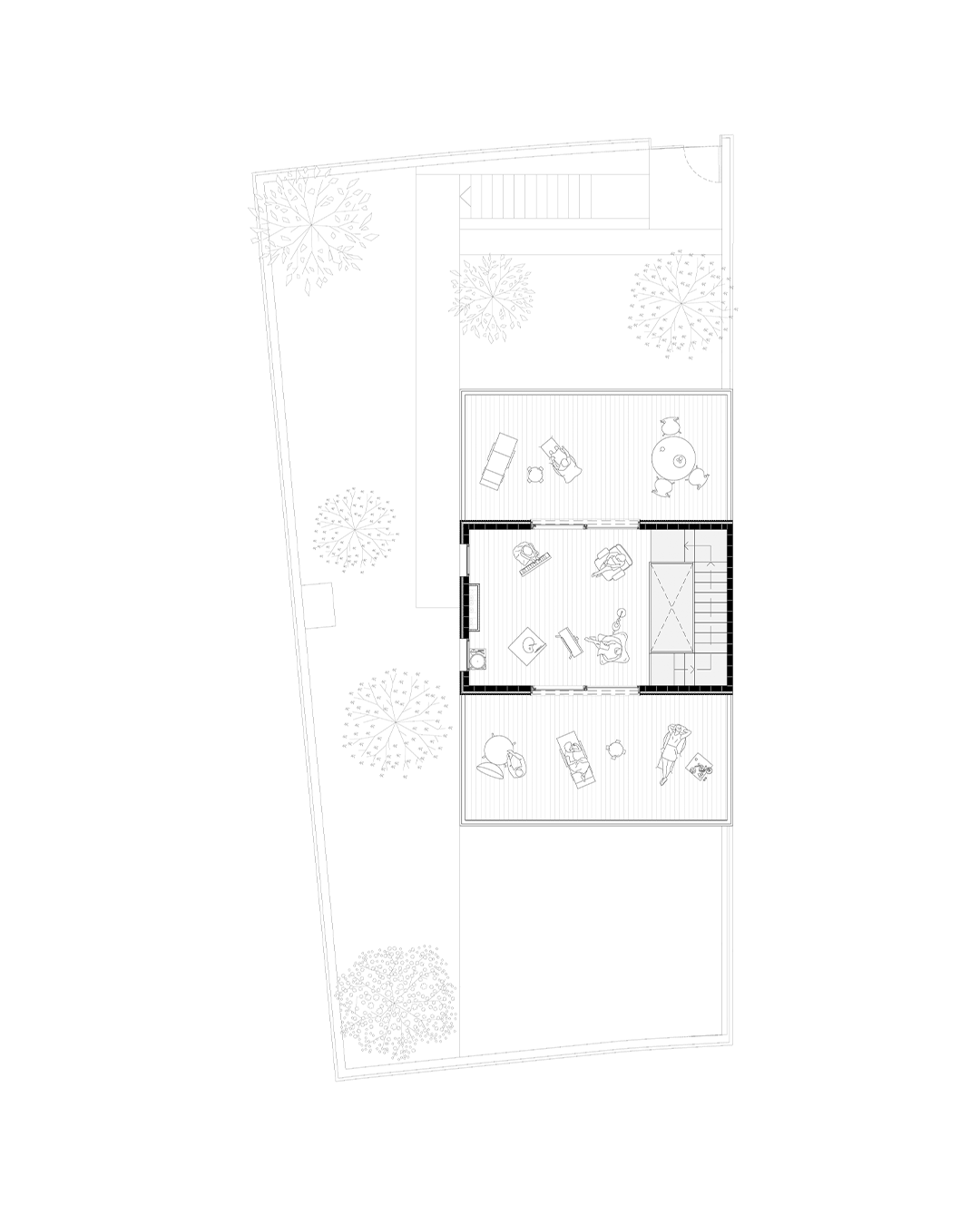
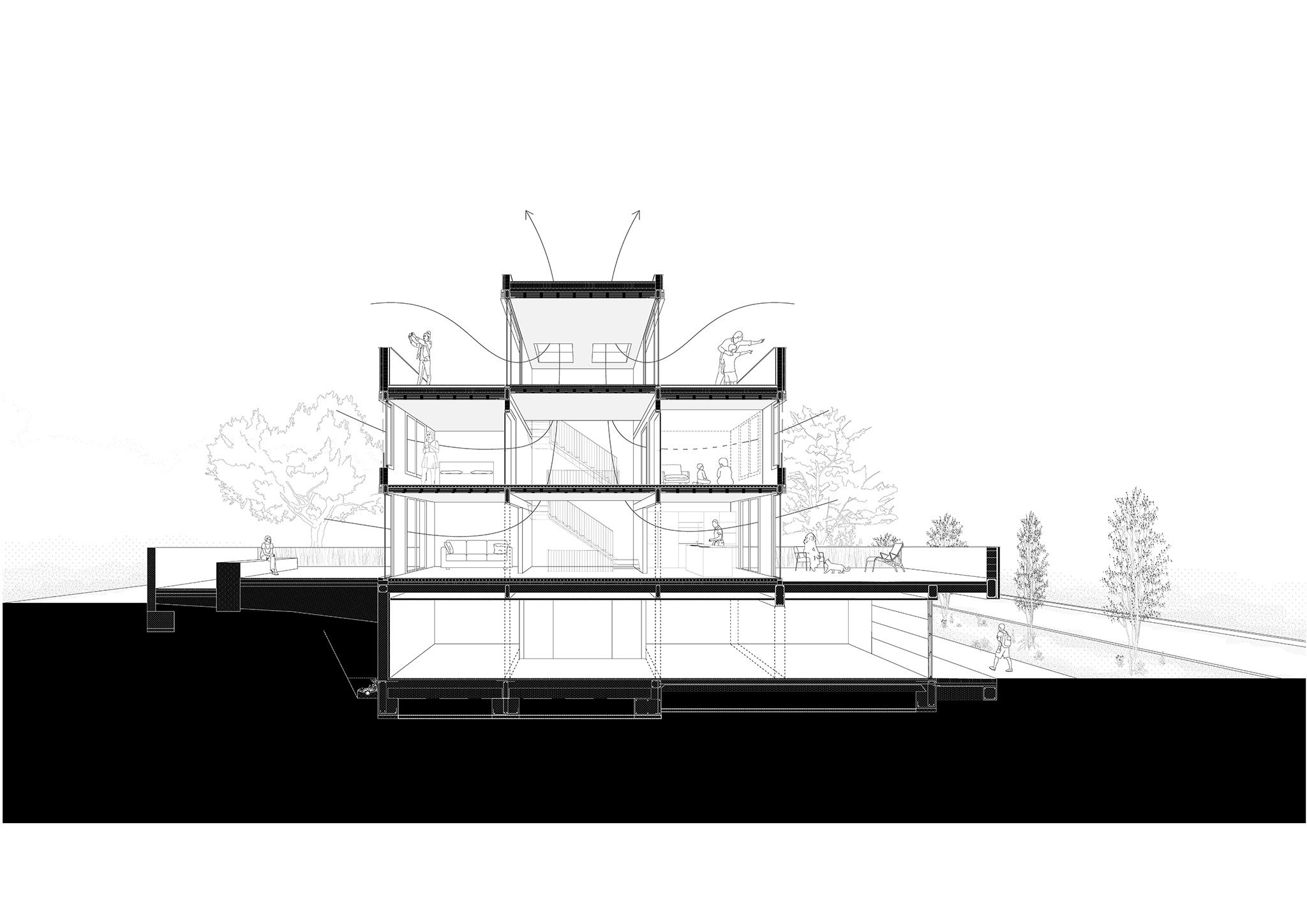
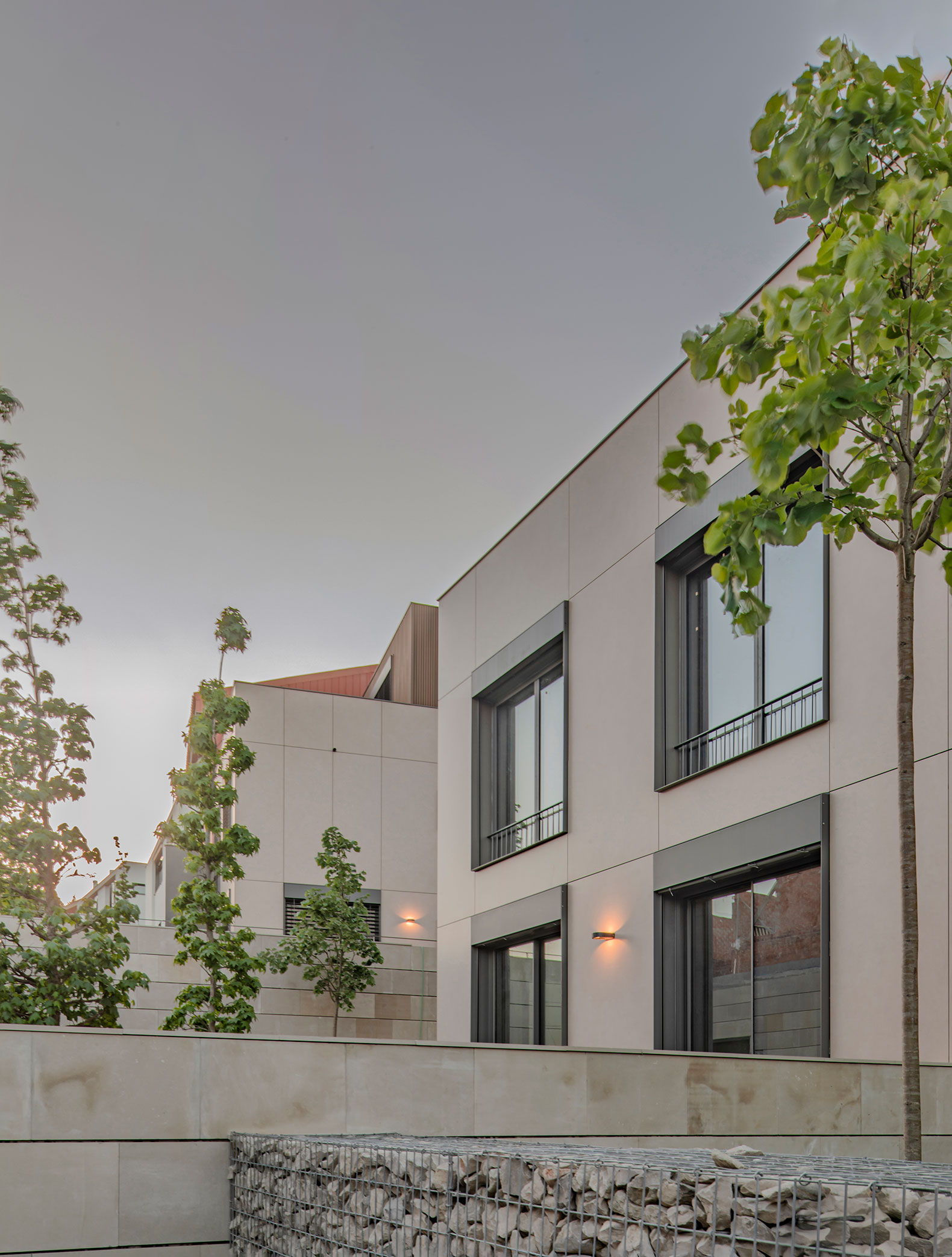
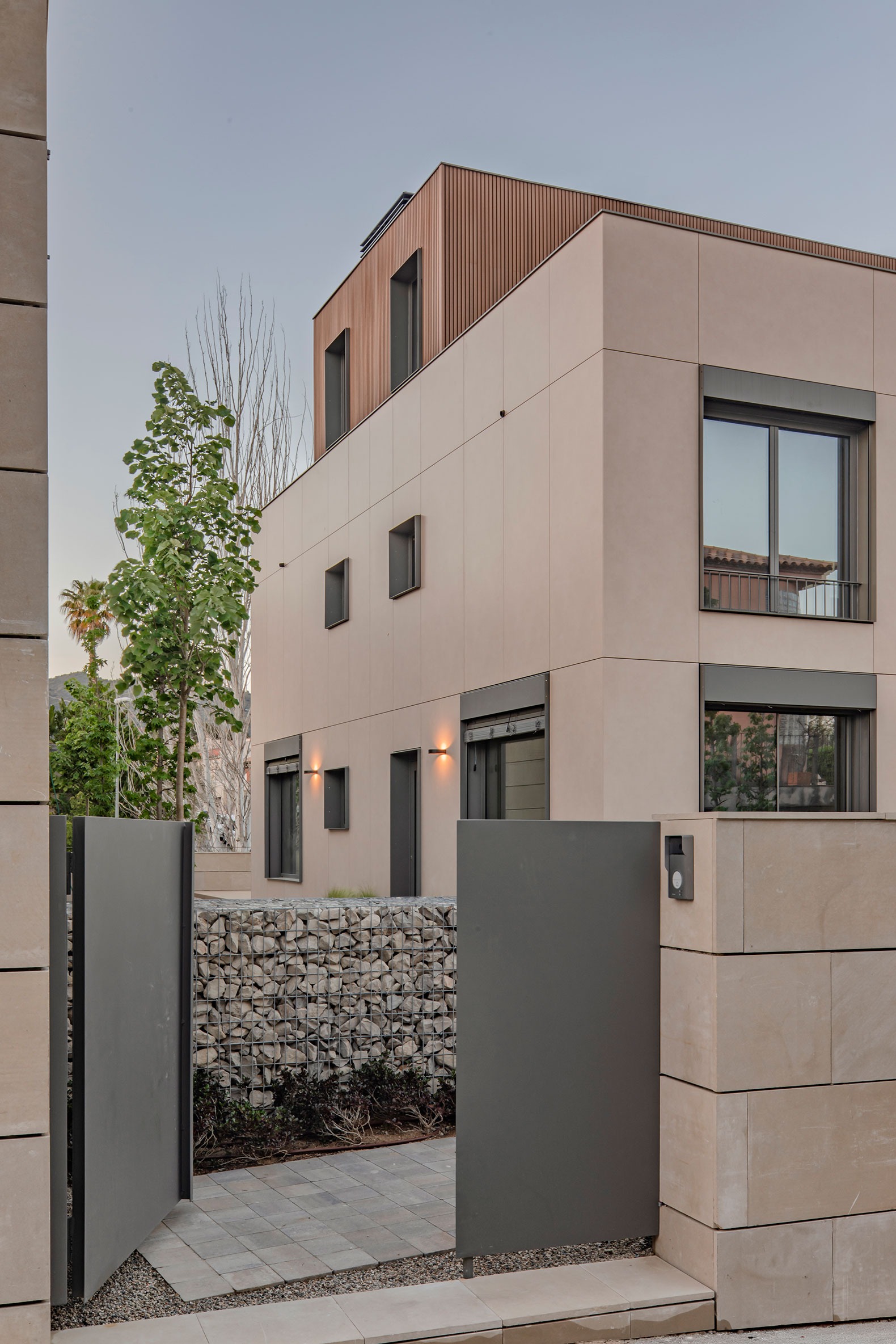
The attic level was constructed using a dry construction method with a lightweight timber frame system. The building achieves high energy efficiency through passive strategies that ensure thermal comfort, with systems such as underfloor heating, solar control via adjustable louvers, and a ventilated facade.
Tiana Hills por Sau taller d'Arquitectura. Fotografía por Andrés Flajszer.

Tiana Hills by Sau taller d'Arquitectura. Photograph by Andrés Flajszer. 

Project description by Sau taller d'Arquitectura

Tianna Hills comprises three single-family homes in Tiana, at the entrance to the Maresme region, just minutes from Barcelona and very close to the Serralada de Marina mountain range.

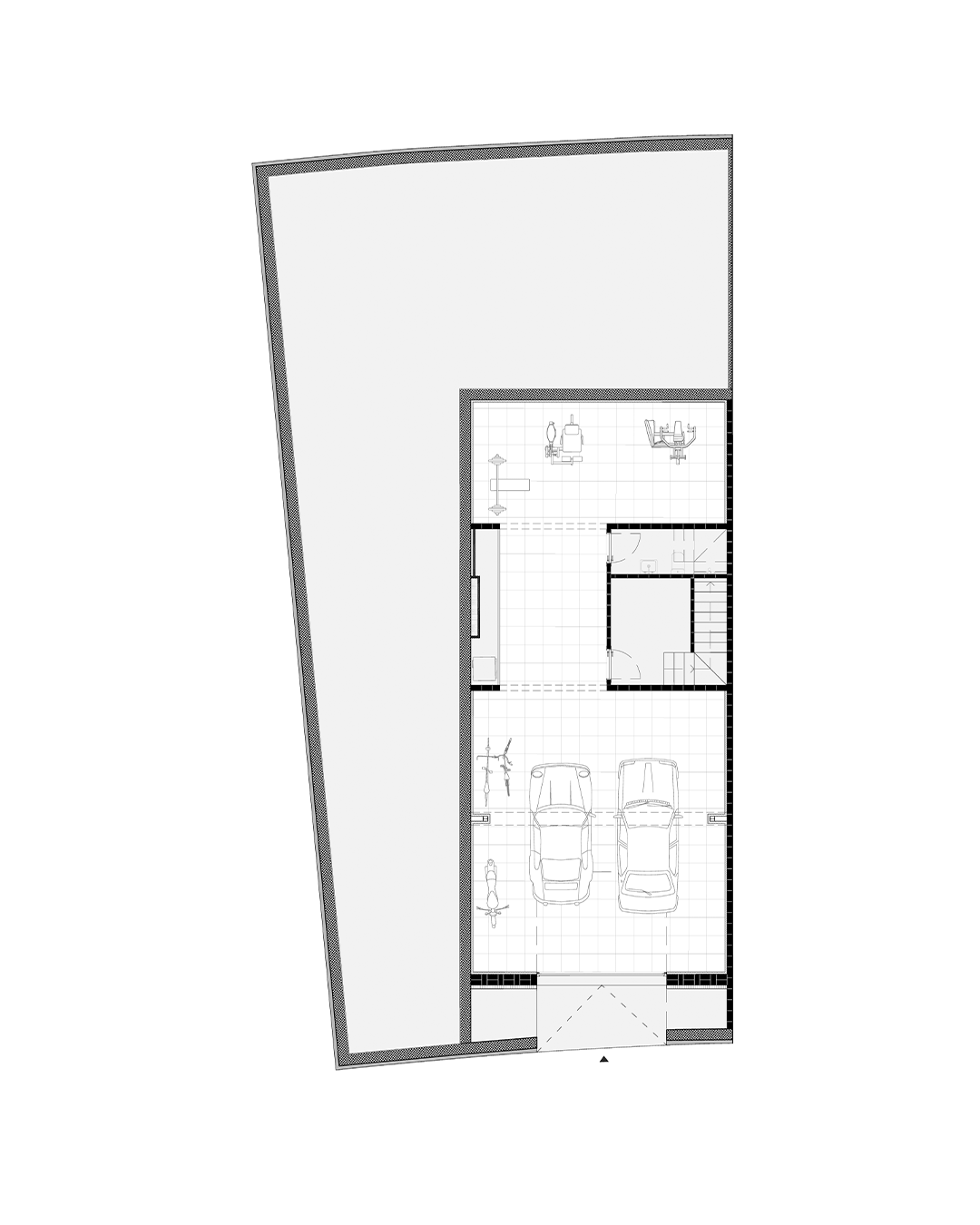
The plots have a difference in elevation of more than three meters between the north and south facades. This topographical feature allows for vehicular access via the north facade, leading to a semi-basement level, while the main pedestrian access is at ground level via the south facade, directly onto the ground floor.

Tiana Hills por Sau taller d'Arquitectura. Fotografía por Andrés Flajszer.
Tiana Hills by Sau taller d'Arquitectura. Photograph by Andrés Flajszer.

When approaching the project, two fundamental premises were established:

1. To achieve a high level of energy efficiency.
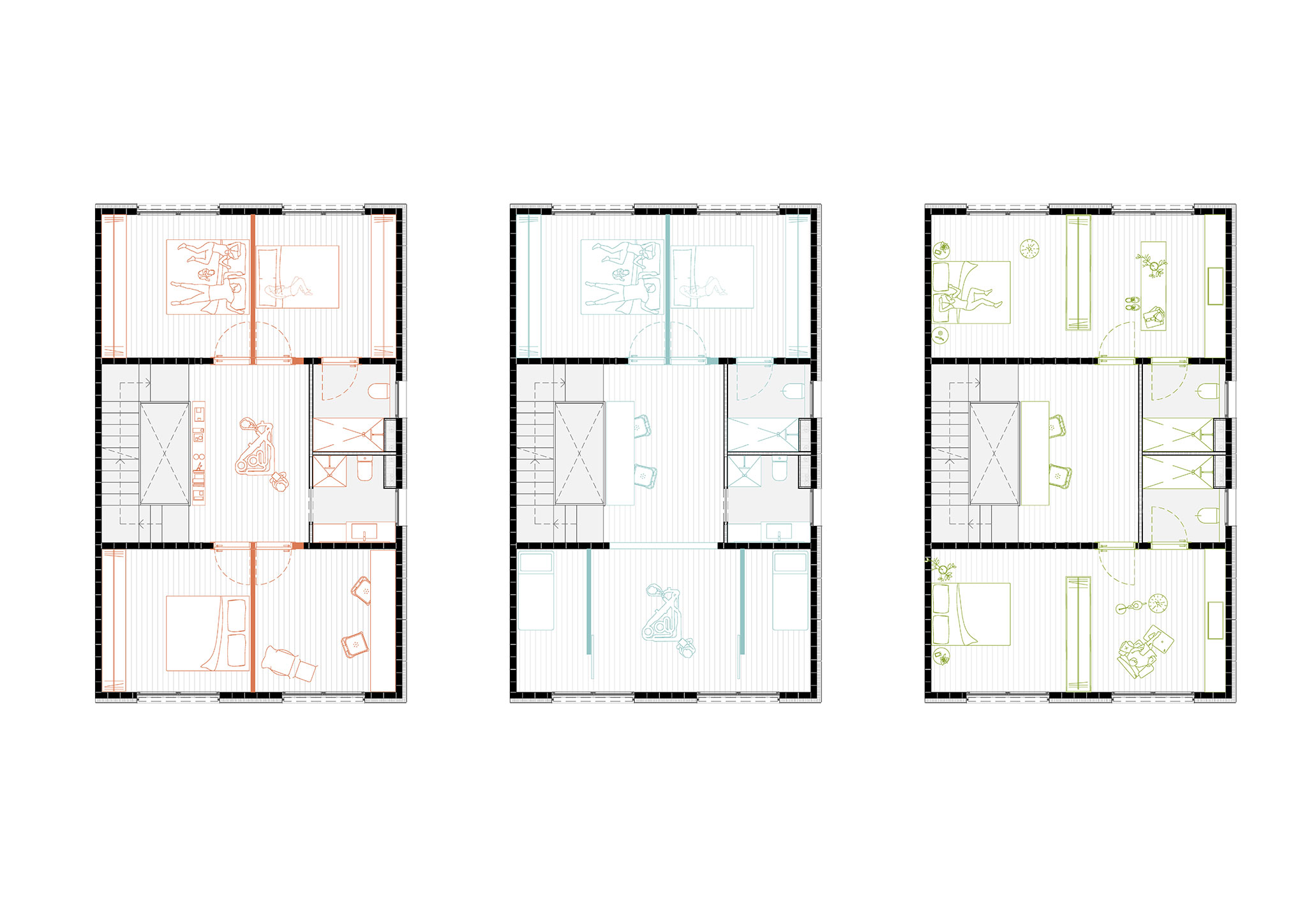
2. To guarantee maximum functional flexibility, capable of adapting to the lifestyles and changing needs of its future residents.

Energy Efficiency
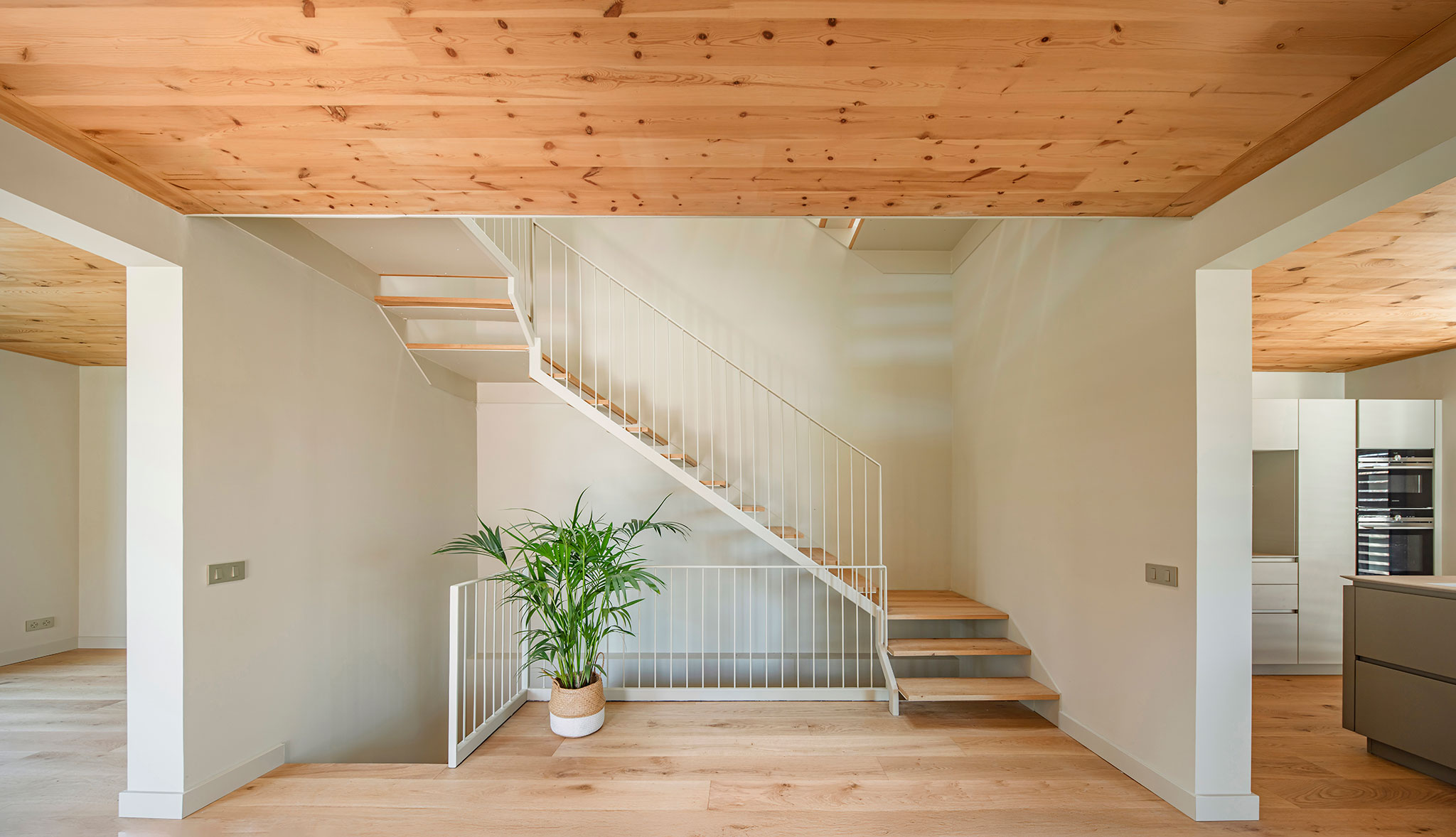
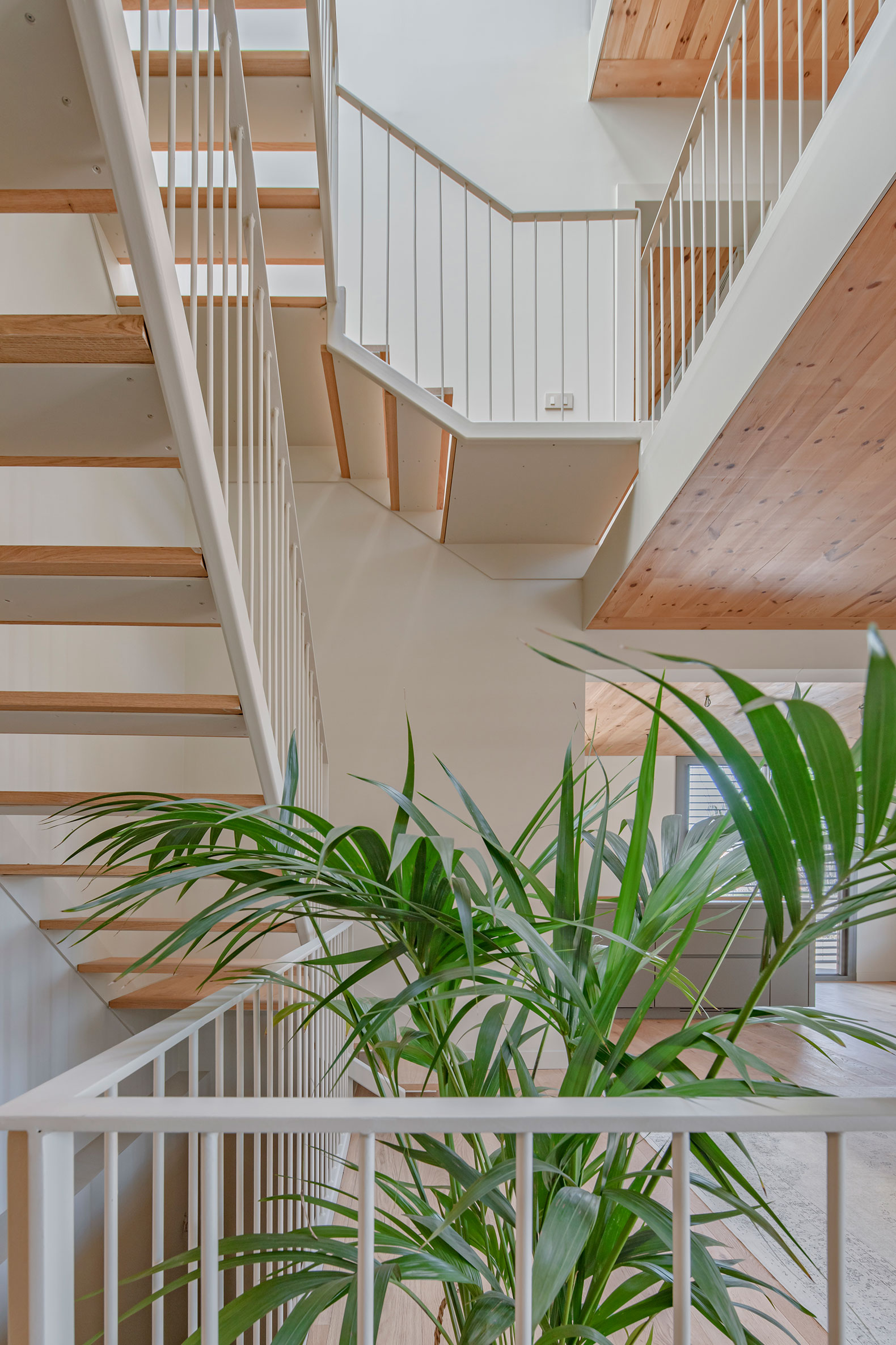
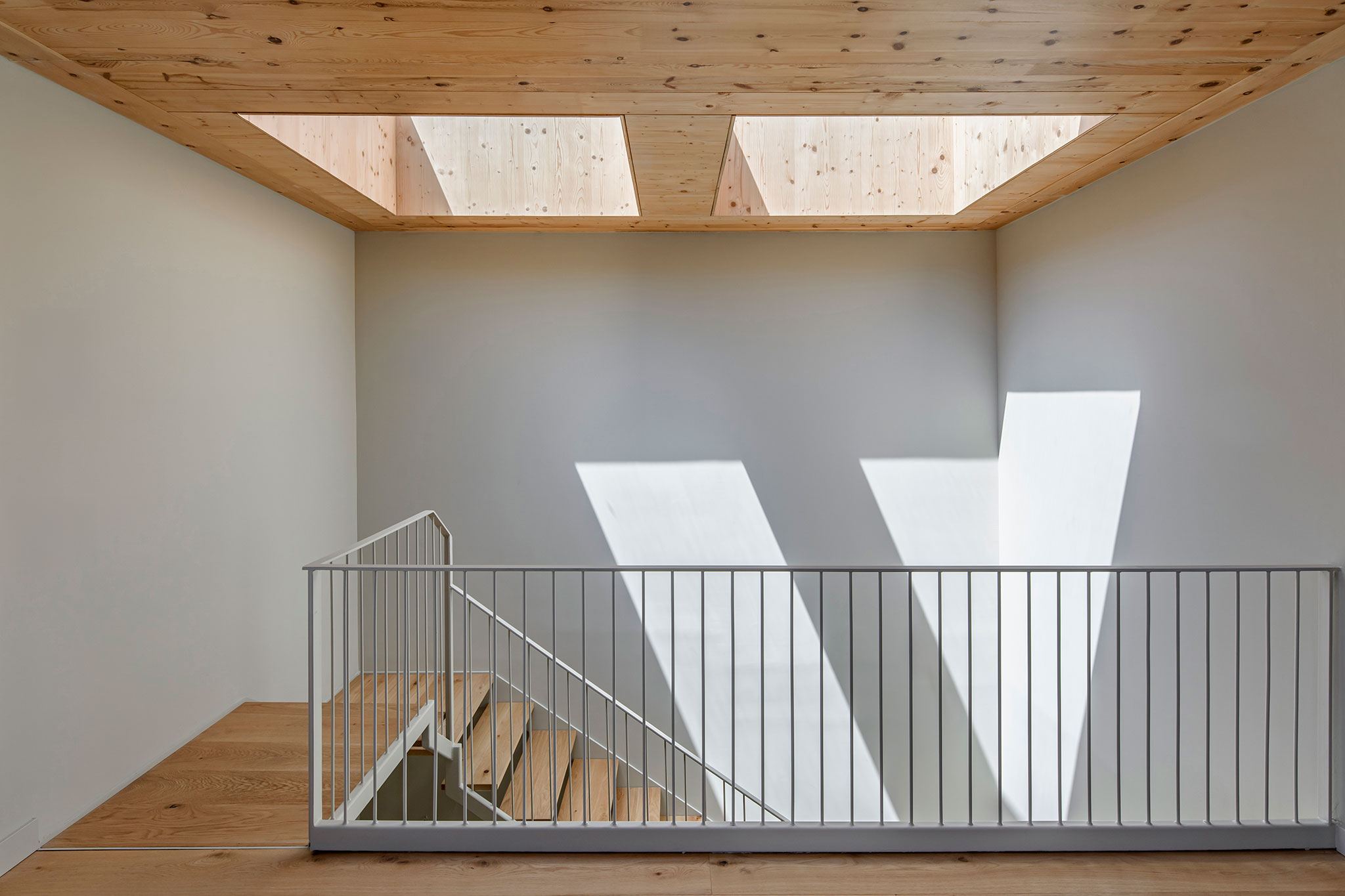
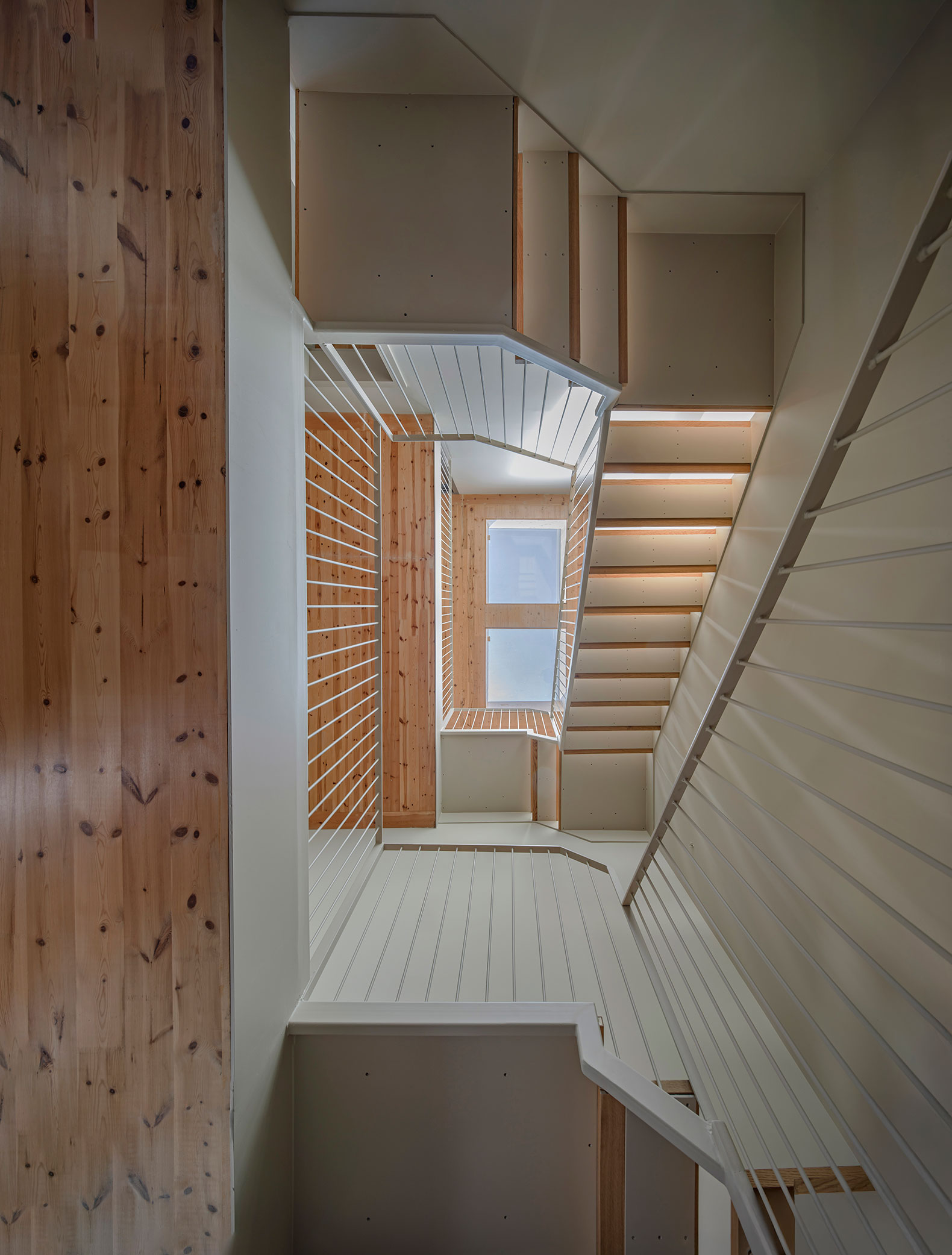
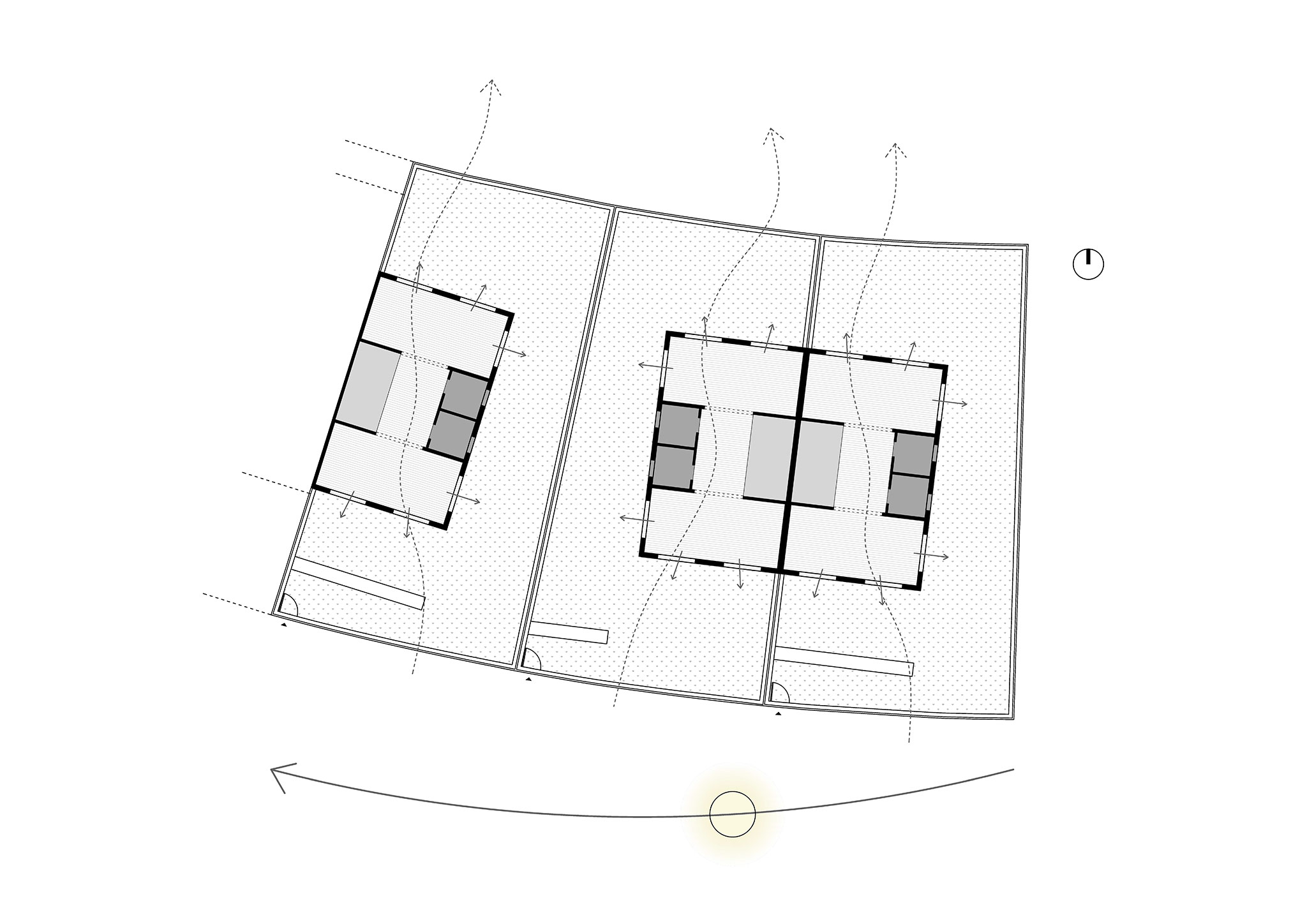
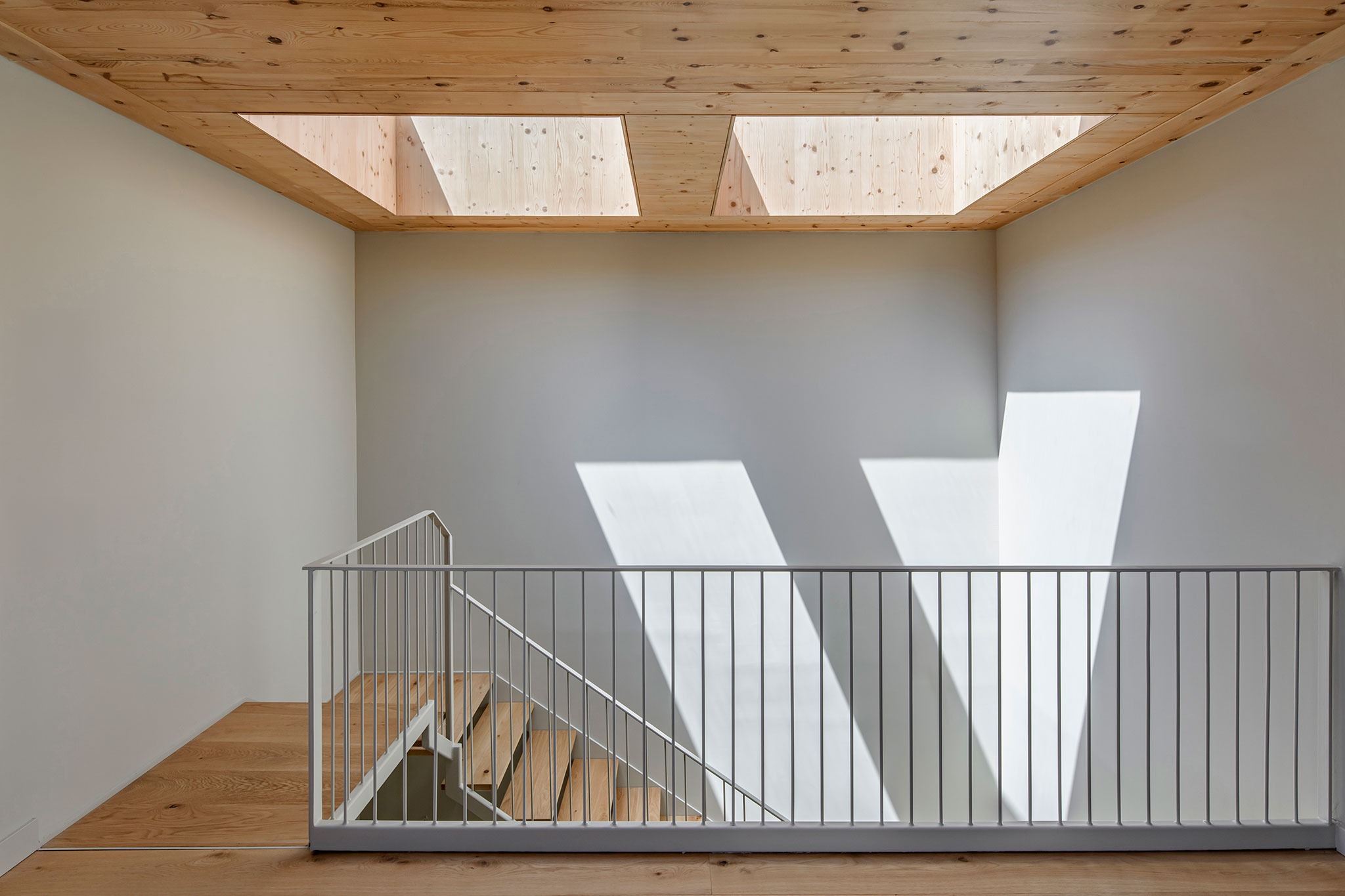
Efficiency is achieved through a set of passive strategies aimed at ensuring thermal comfort. Beyond the incorporation of systems such as underfloor heating, solar control via adjustable louvers, and a ventilated façade, the project's defining element is the large, triple-height central void, which houses the staircase and is topped with two expansive roof openings. This space functions as a natural ventilation chimney, taking advantage of the Venturi effect and promoting cross-ventilation throughout the building.
Tiana Hills por Sau taller d'Arquitectura. Fotografía por Andrés Flajszer.
Tiana Hills by Sau taller d'Arquitectura. Photograph by Andrés Flajszer.

Adaptability
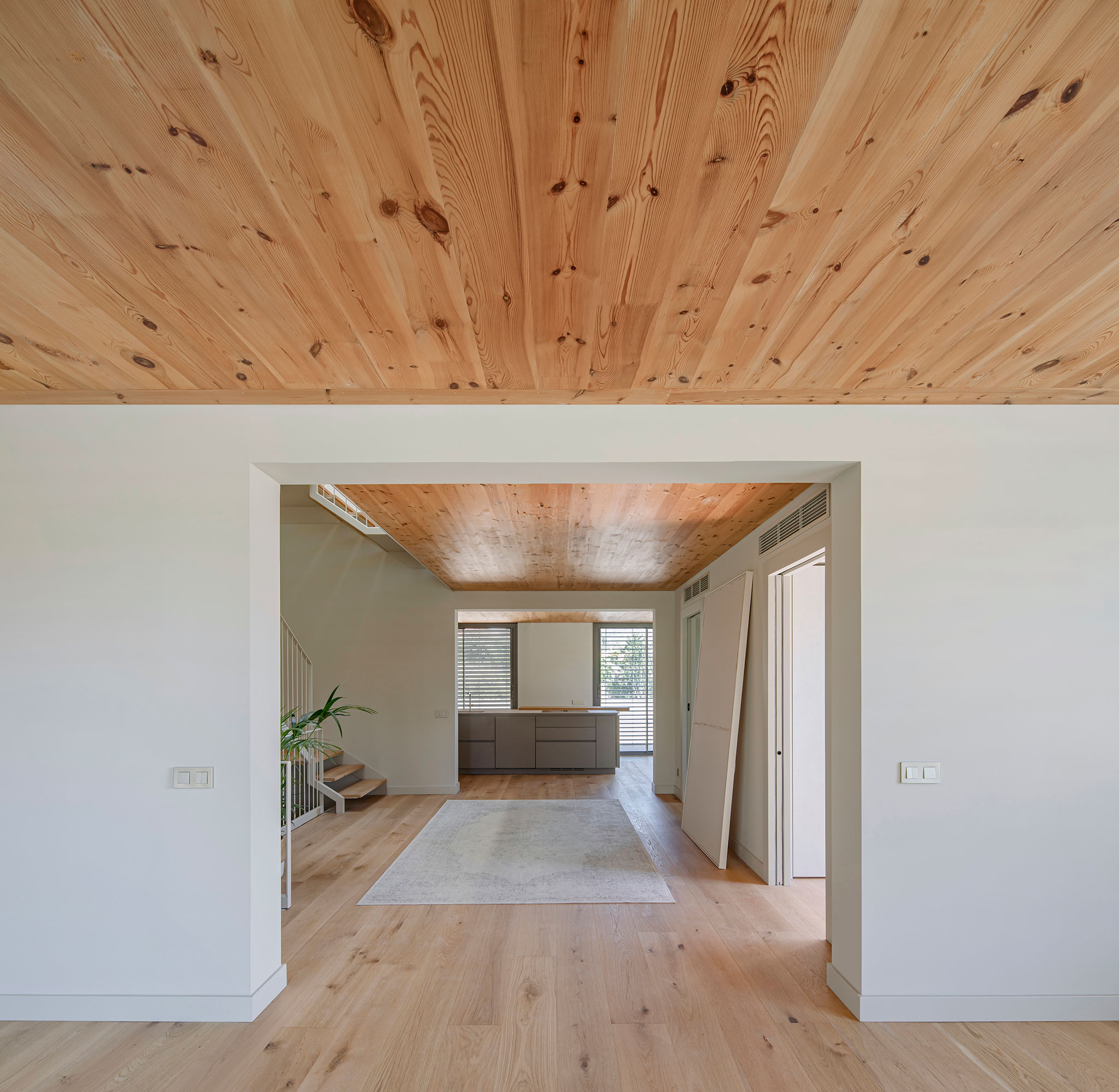
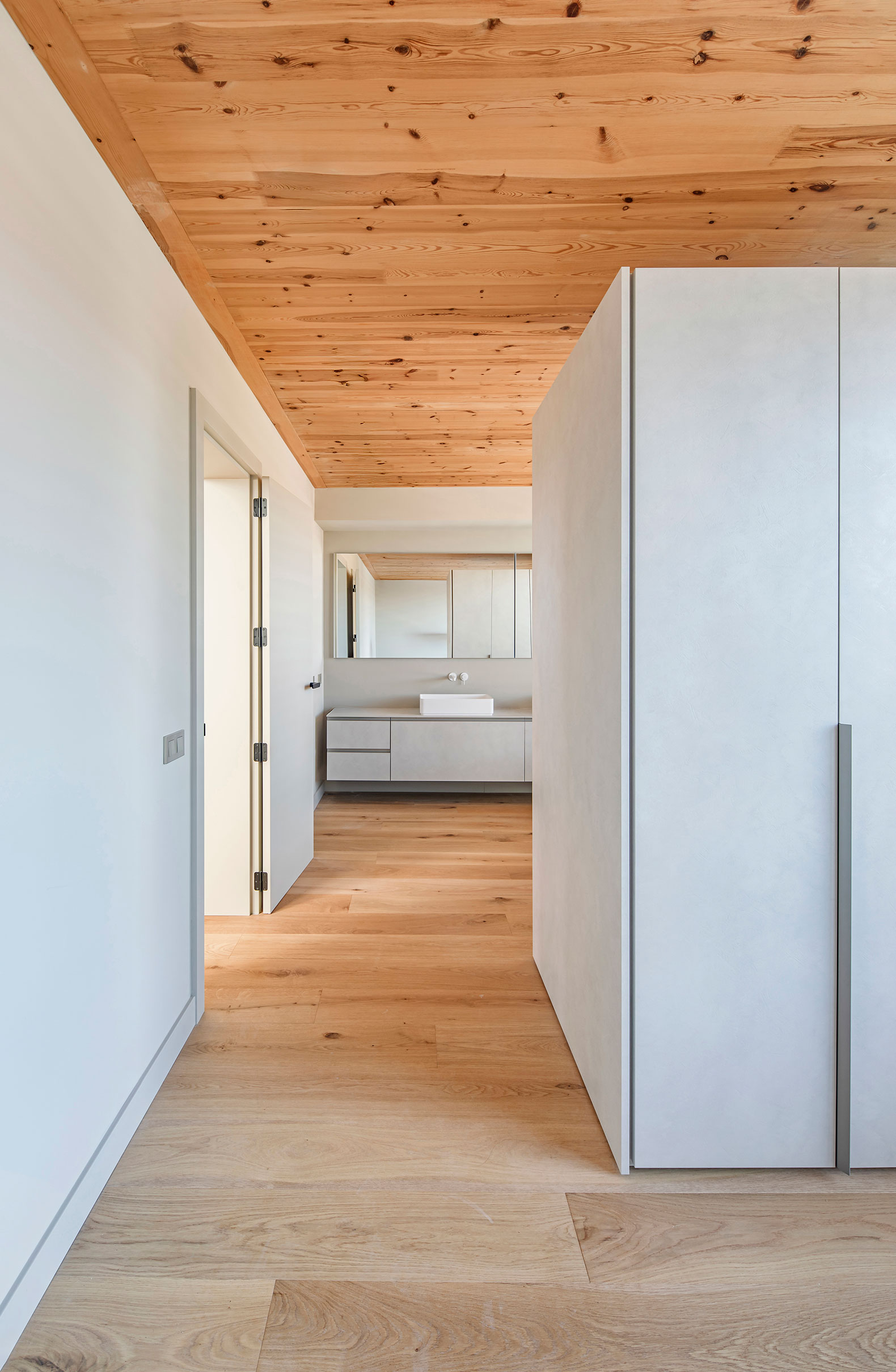
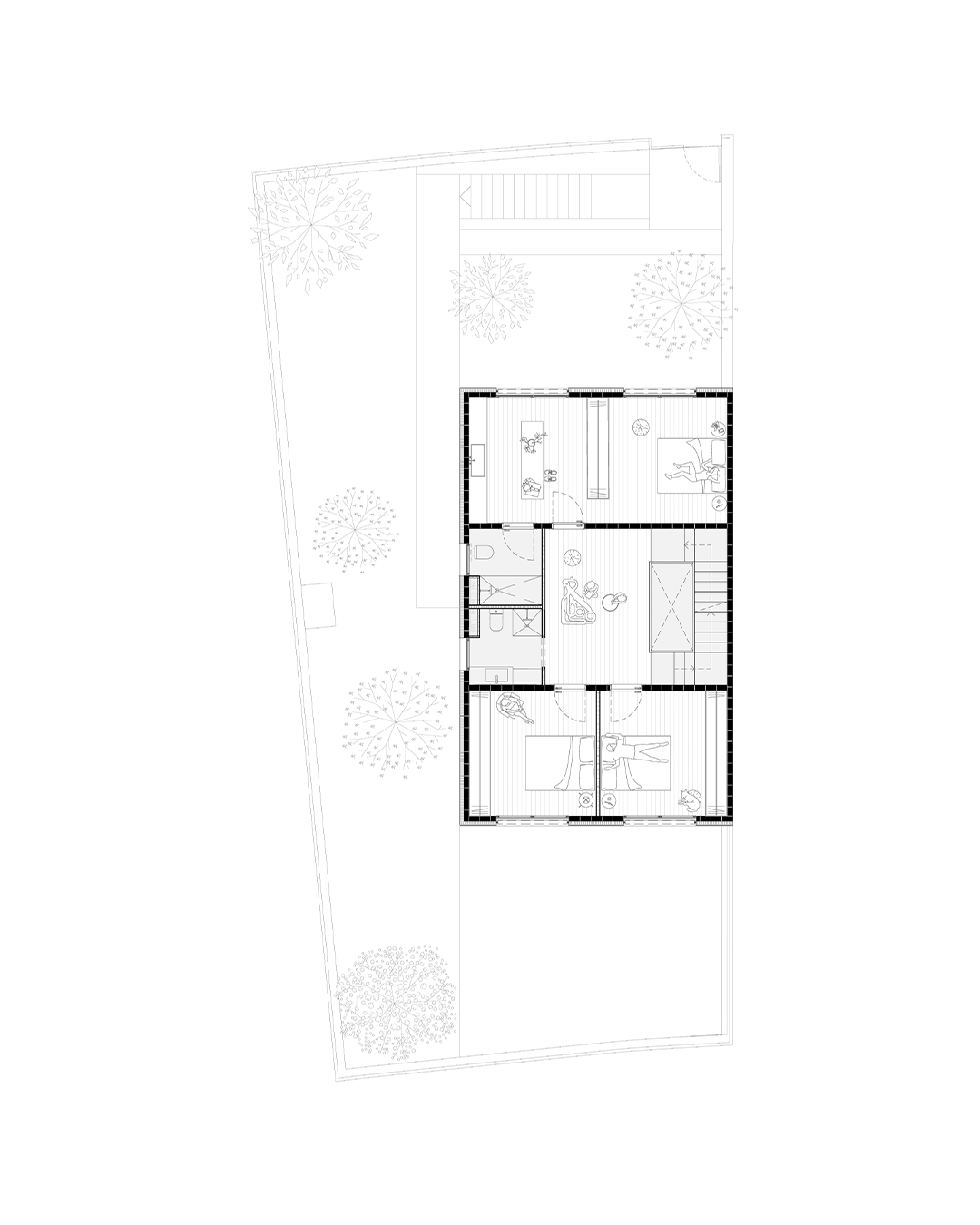
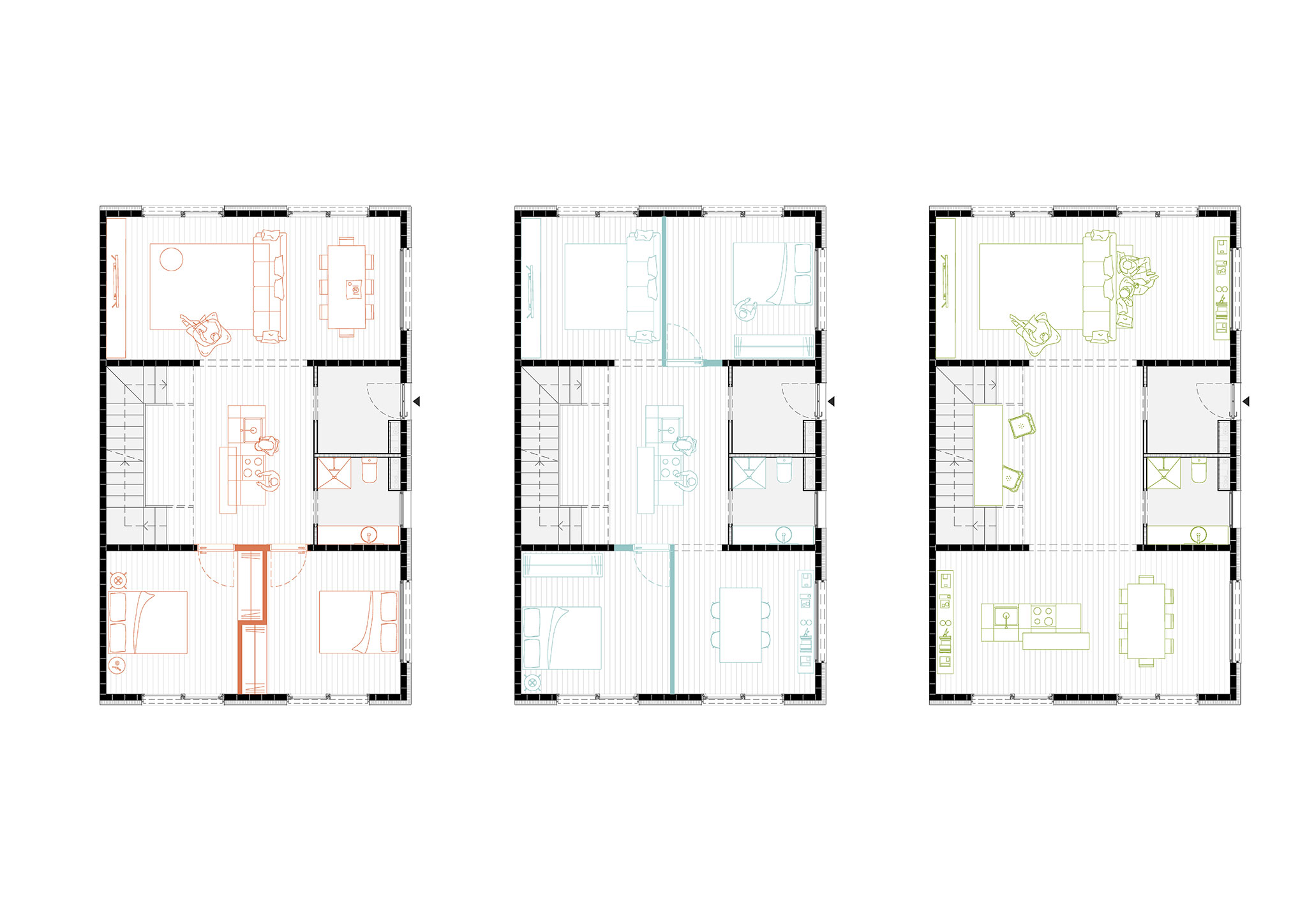
Functional flexibility is achieved by concentrating the service cores in the central bay and articulating two lateral bays—one facing north and the other south—with a constant module of 3.5 meters. This configuration allows for a free and versatile arrangement of service and living spaces, capable of evolving over time and adapting to the changing needs of each user.

Formal Composition
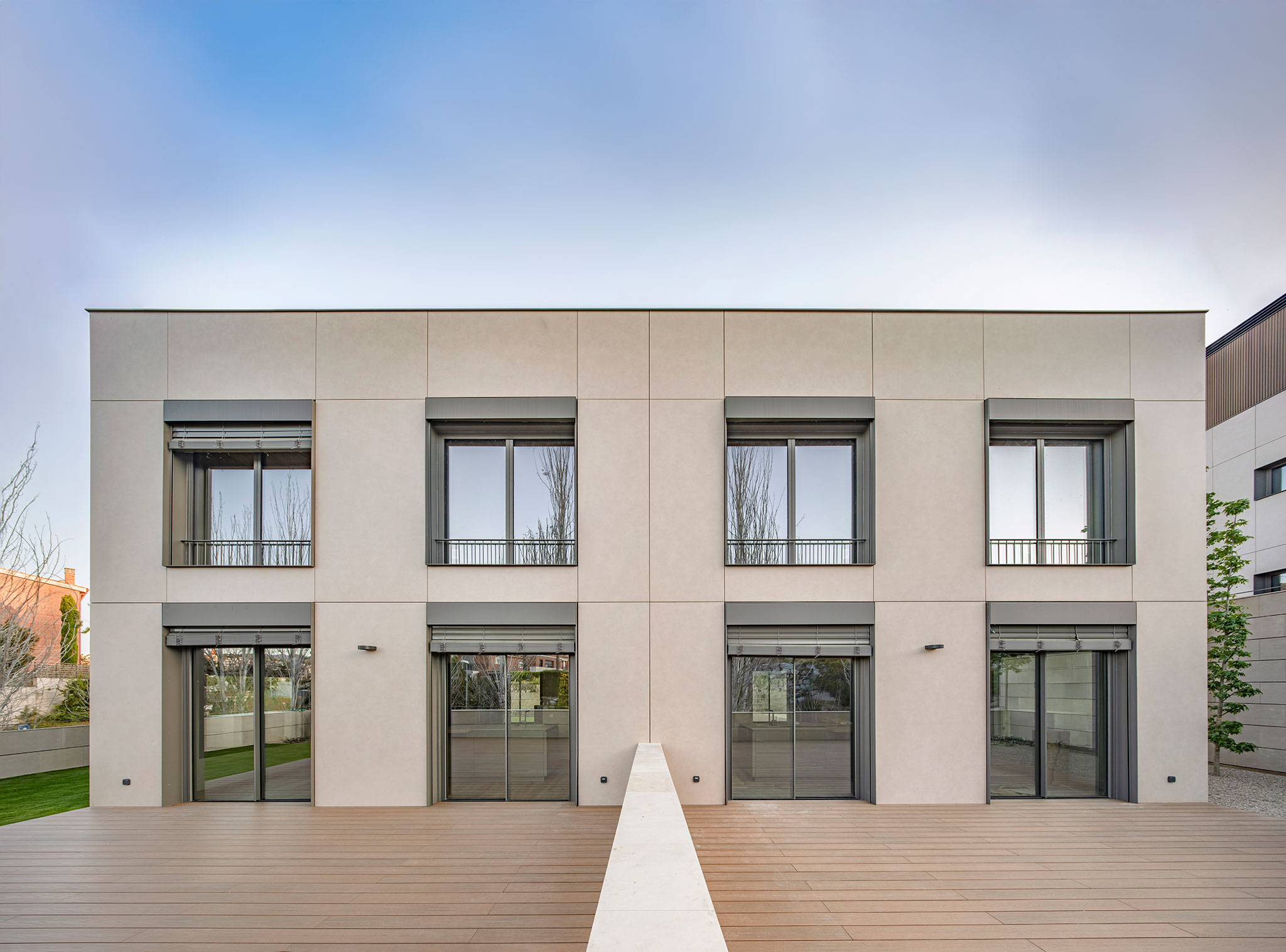
This structural order is also reflected in the architectural composition. Both the north and south façades are configured with four identical openings arranged symmetrically with respect to the central space, avoiding a predefined hierarchy of uses. This compositional neutrality allows for a flexible interpretation of the program, permitting the kitchen to be positioned facing either south or north, depending on whether the priority is solar gain, views, or a cooler, shaded orientation.
Tiana Hills por Sau taller d'Arquitectura. Fotografía por Andrés Flajszer.
Tiana Hills by Sau taller d'Arquitectura. Photograph by Andrés Flajszer.

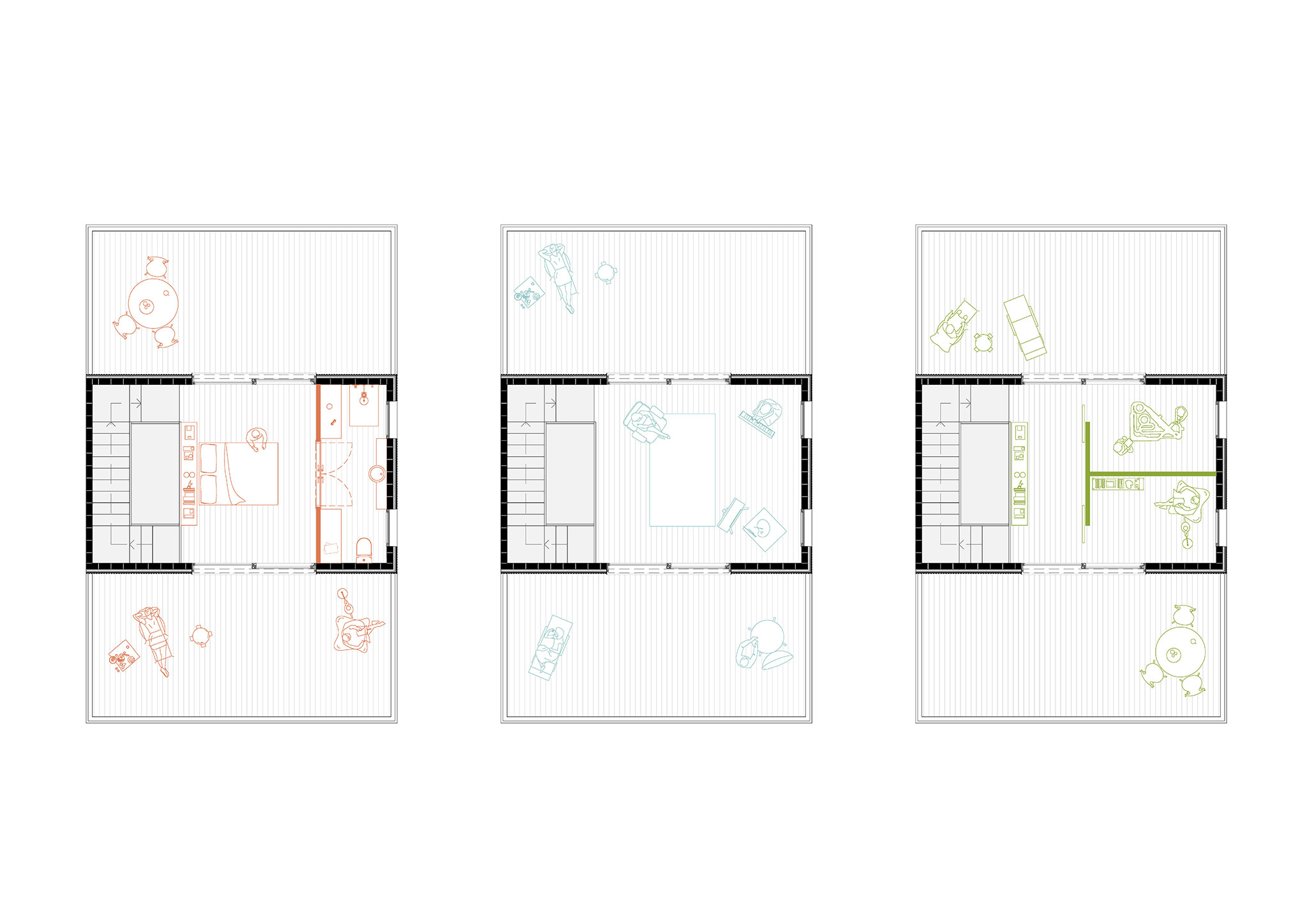
The attic level, constructed using a dry timber frame system and located exclusively in the central bay, creates two terraces, one facing north and the other south. These terraces, together with the building that connects them, form a single unit traversed by large openings facing both directions. This strategy allows the entire space to be perceived as a continuous whole, with a sunnier area for winter and a more sheltered, shaded area for summer.
More information

Label
Architects
Text

Sau taller d'Arquitectura. Lead architects. Lluis Jordà, Pol Jordà. 

+ + copy Created with Sketch.
- + copy Created with Sketch.
Label
Developer
Text

Eina Corp. 

+ + copy Created with Sketch.
- + copy Created with Sketch.
Label
Dates
Text

2025.

+ + copy Created with Sketch.
- + copy Created with Sketch.
Label
Location
Text

Municipality of Tiana, Maresme region, Barcelona, ​​Spain. 

+ + copy Created with Sketch.
- + copy Created with Sketch.
Label
Photography
+ + copy Created with Sketch.
- + copy Created with Sketch.
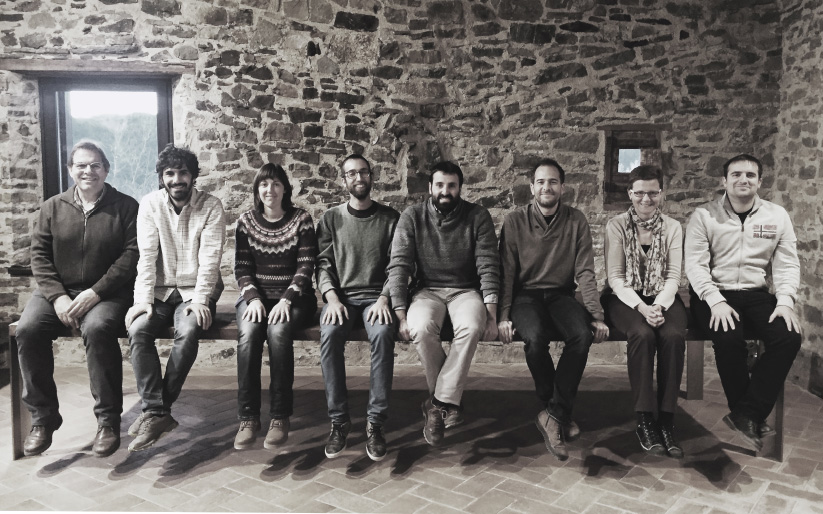
SAU Taller d´Arquitectura is a multigenerational and multidisciplinary architecture practice founded in 2010 in Sant Joan de les Abadesses and is currently also established in Barcelona and Puigcerdà. Their professional activity encompasses projects of planning, landscape, architecture and product design. The main objective is to provide an efficient response to the challenges posed by each project, making functionality and rationality the main pillars of our professional practice.

Simplicity and constructive austerity are an added value of their projects. Projects committed to the environment and tradition and designed to make life easier for its users without renouncing the emotional capacity of the architecture itself.

They understand the project from its entirety. Let us suppose, therefore, key aspects such as the structural calculation, facilities or the energy and climate control of our projects and introduced them from the beginning of the project process.

They have structured the team in three areas of work: productive area, which is responsible for responding to the administrative aspects of each project; Creative area, that works the aspects more related to the technical, formal and functional result of the proposals, and the area of ​​work management, that looks for the correct execution and operation of the construction process.


Read more
Published on: January 30, 2026
Cite:
metalocus, CAMILA DOYLET
"Flexible housing complex. Tiana Hills by Sau taller d'Arquitectura" METALOCUS. Accessed
<https://www.metalocus.es/en/news/flexible-housing-complex-tiana-hills-sau-taller-darquitectura> ISSN 1139-6415
Loading content ...
Loading content ...
Loading content ...
Loading content ...
Loading content ...
Loading content ...
Loading content ...
Loading content ...
Loading content ...
Loading content ...
Loading content ...
Loading content ...
Loading content ...
Loading content ...
Loading content ...
Loading content ...
Loading content ...
Loading content ...
Loading content ...
Loading content ...
Loading content ...
Loading content ...
Loading content ...
Loading content ...
Loading content ...
Loading content ...
Loading content ...
Loading content ...
Loading content ...
Loading content ...
Loading content ...
Loading content ...
Loading content ...
Loading content ...
Loading content ...
Loading content ...
Loading content ...
Loading content ...
Loading content ...
Loading content ...
Loading content ...
Loading content ...
Loading content ...
Loading content ...
Loading content ...
Loading content ...
Loading content ...
Loading content ...
Loading content ...
Loading content ...
Loading content ...
Loading content ...
Loading content ...
Loading content ...