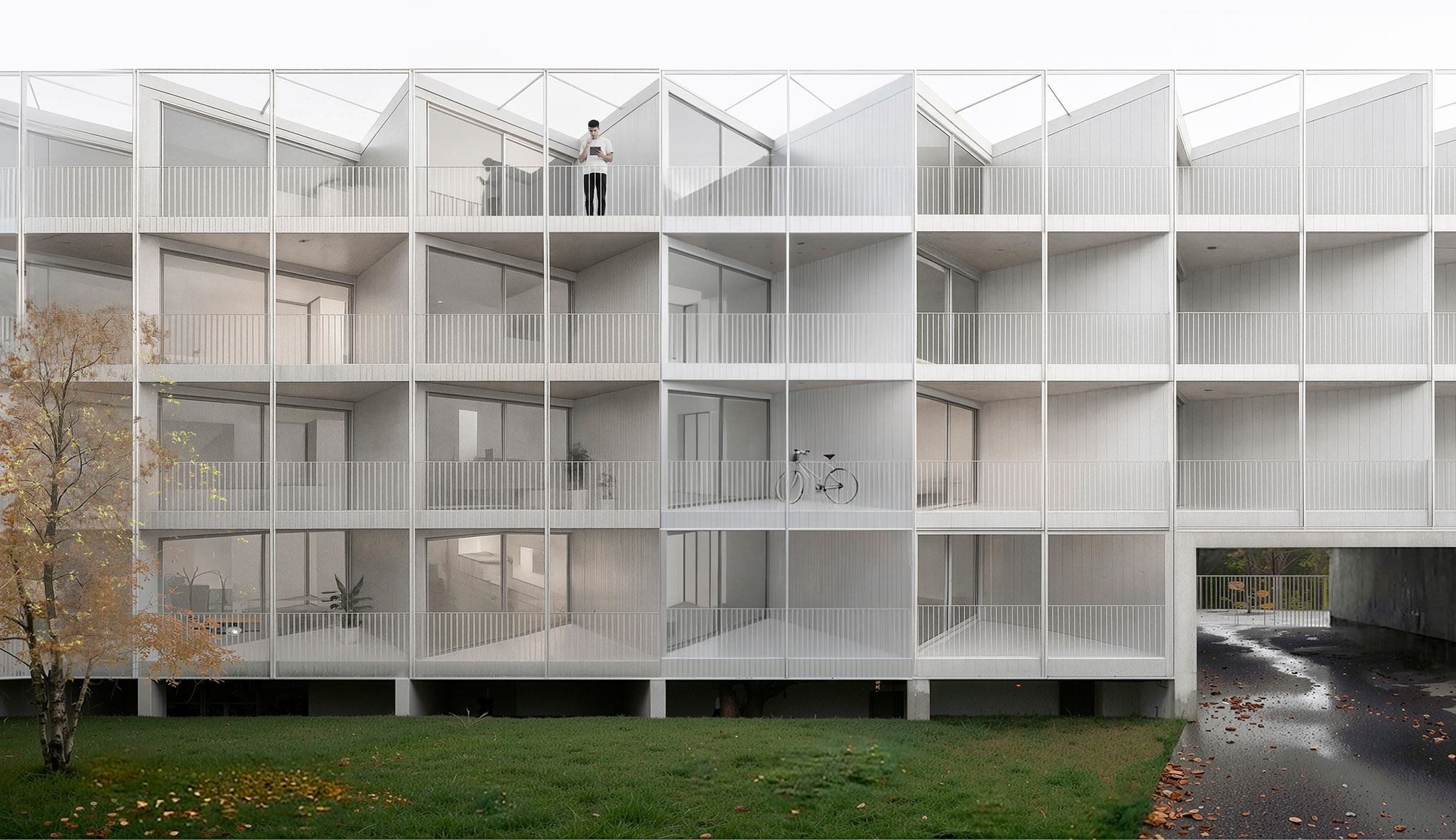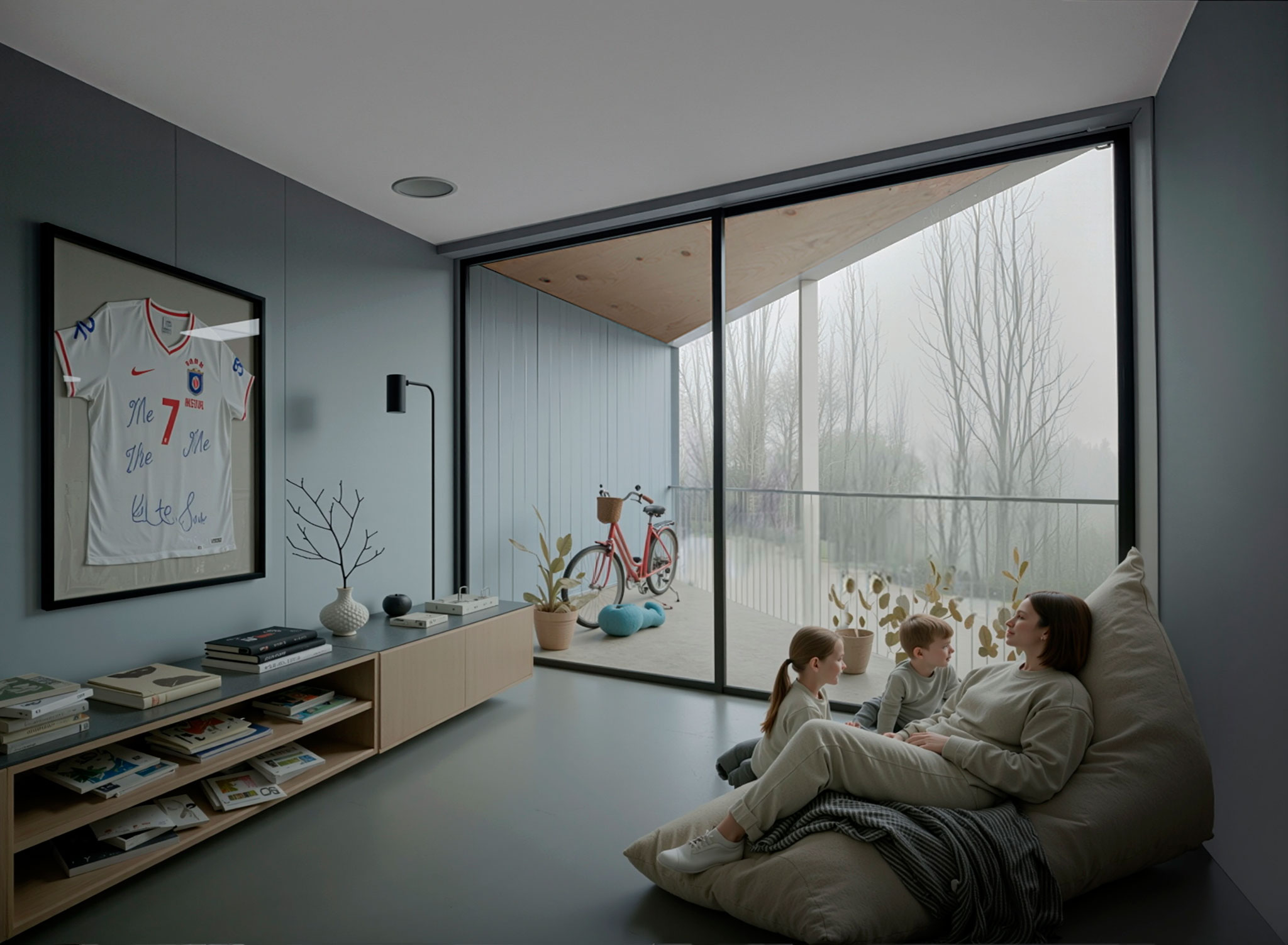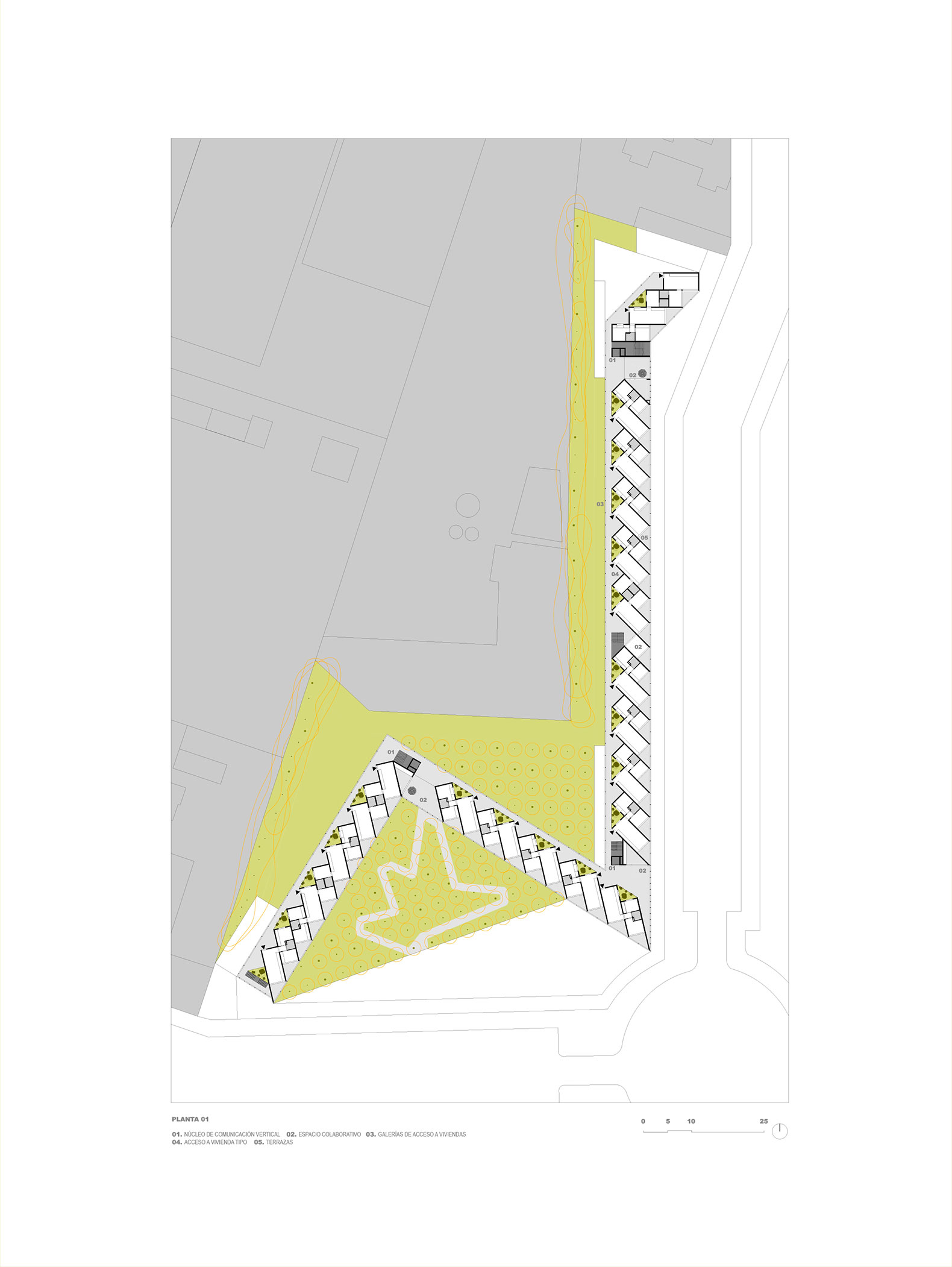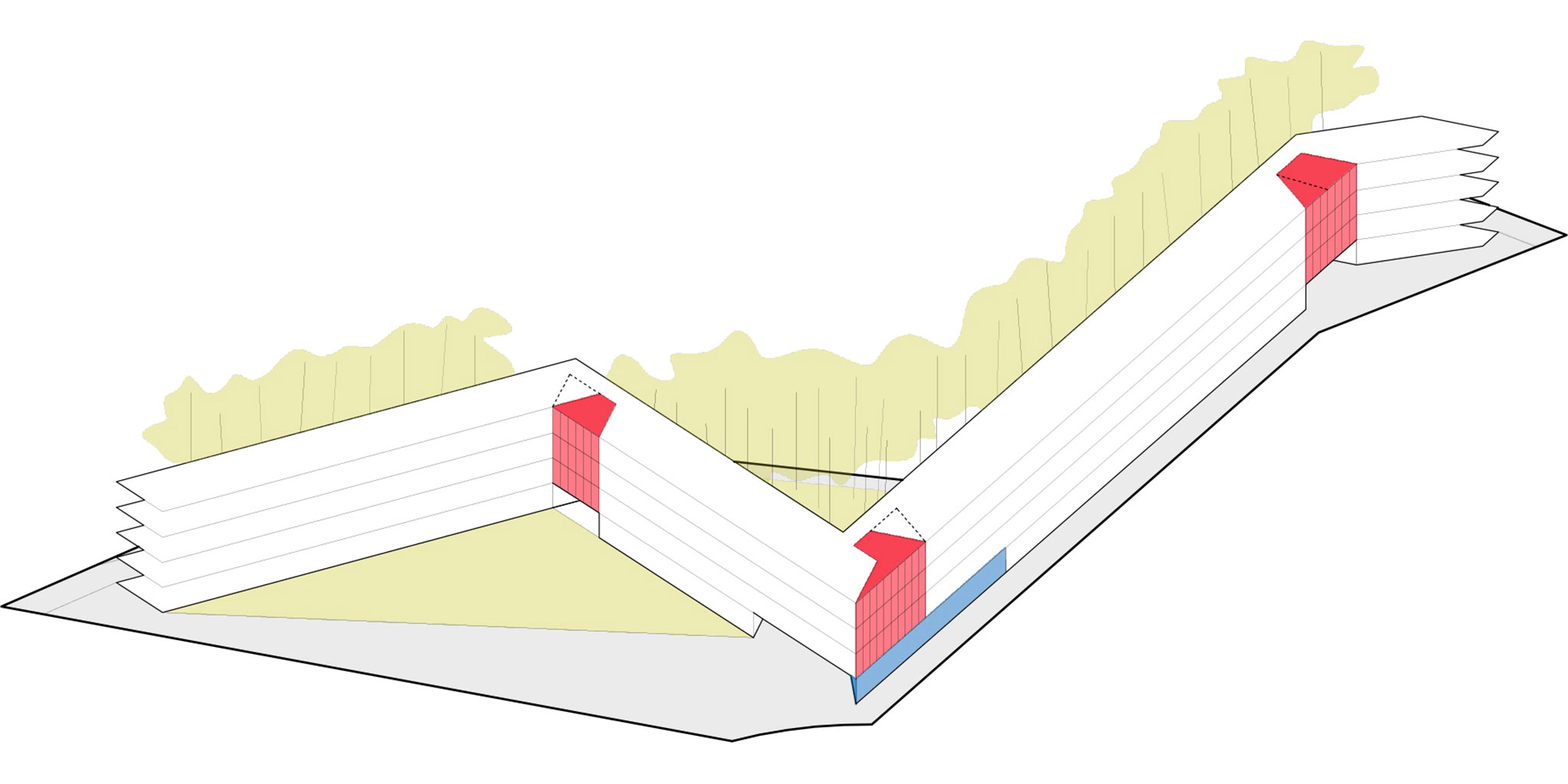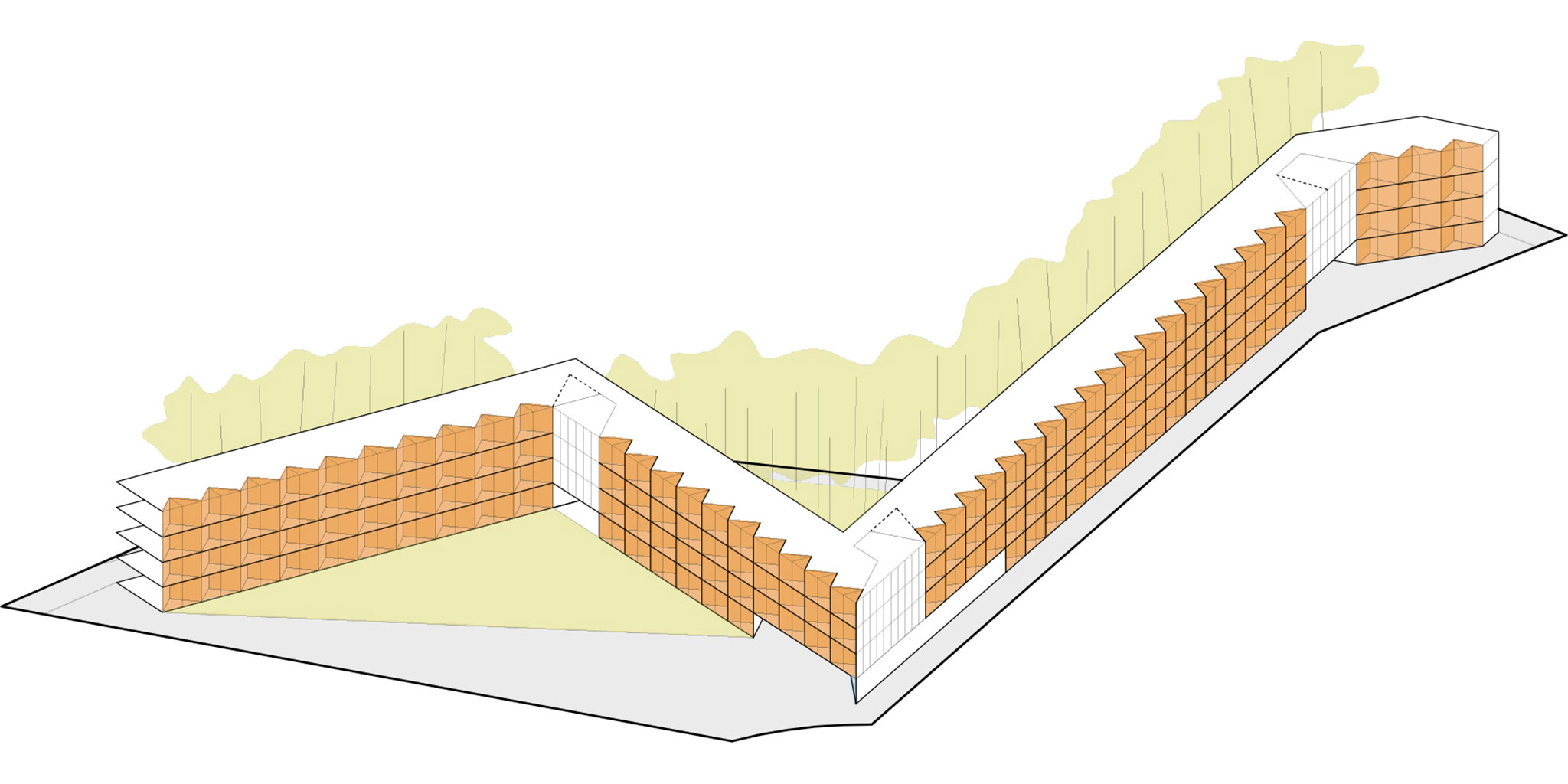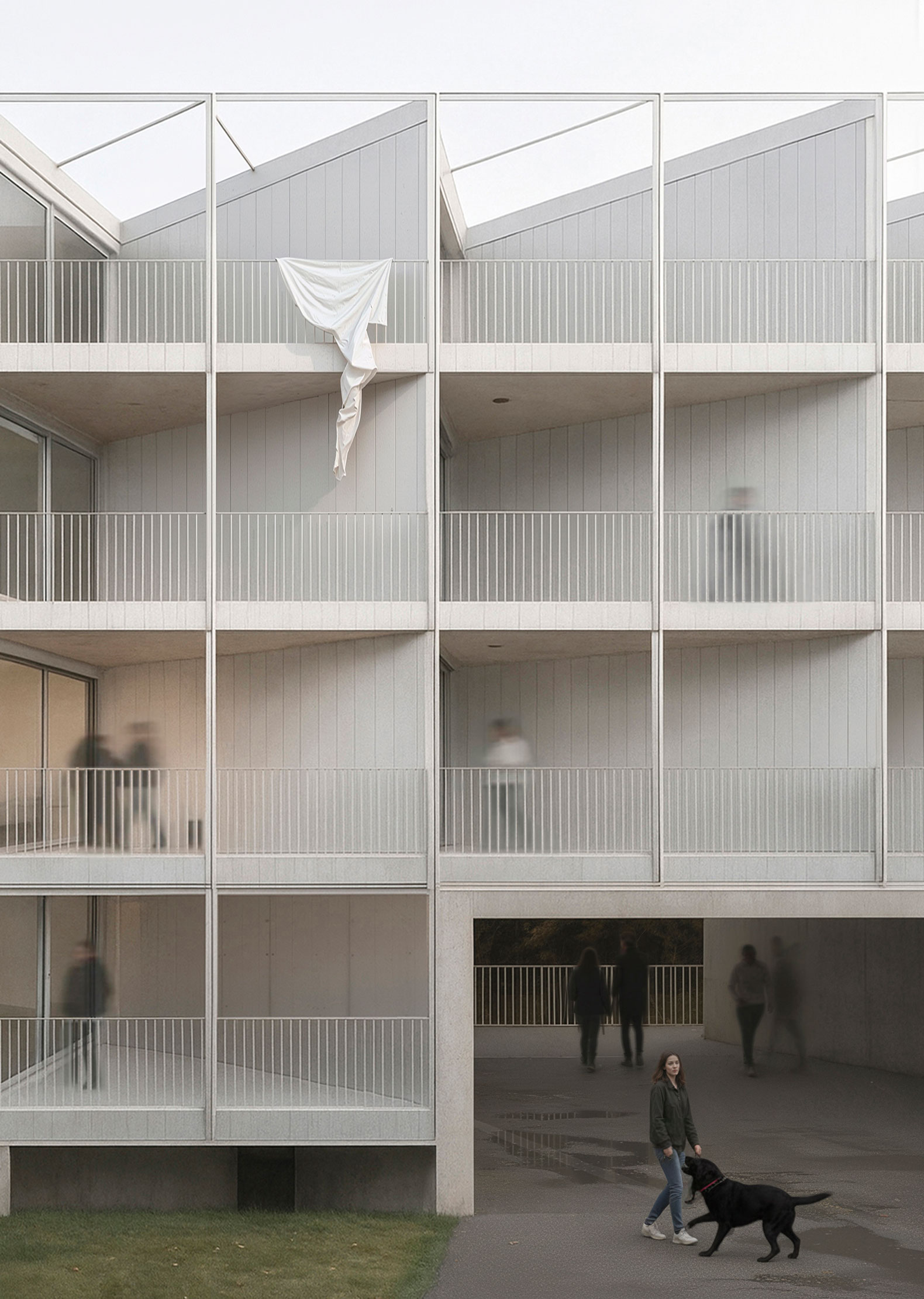
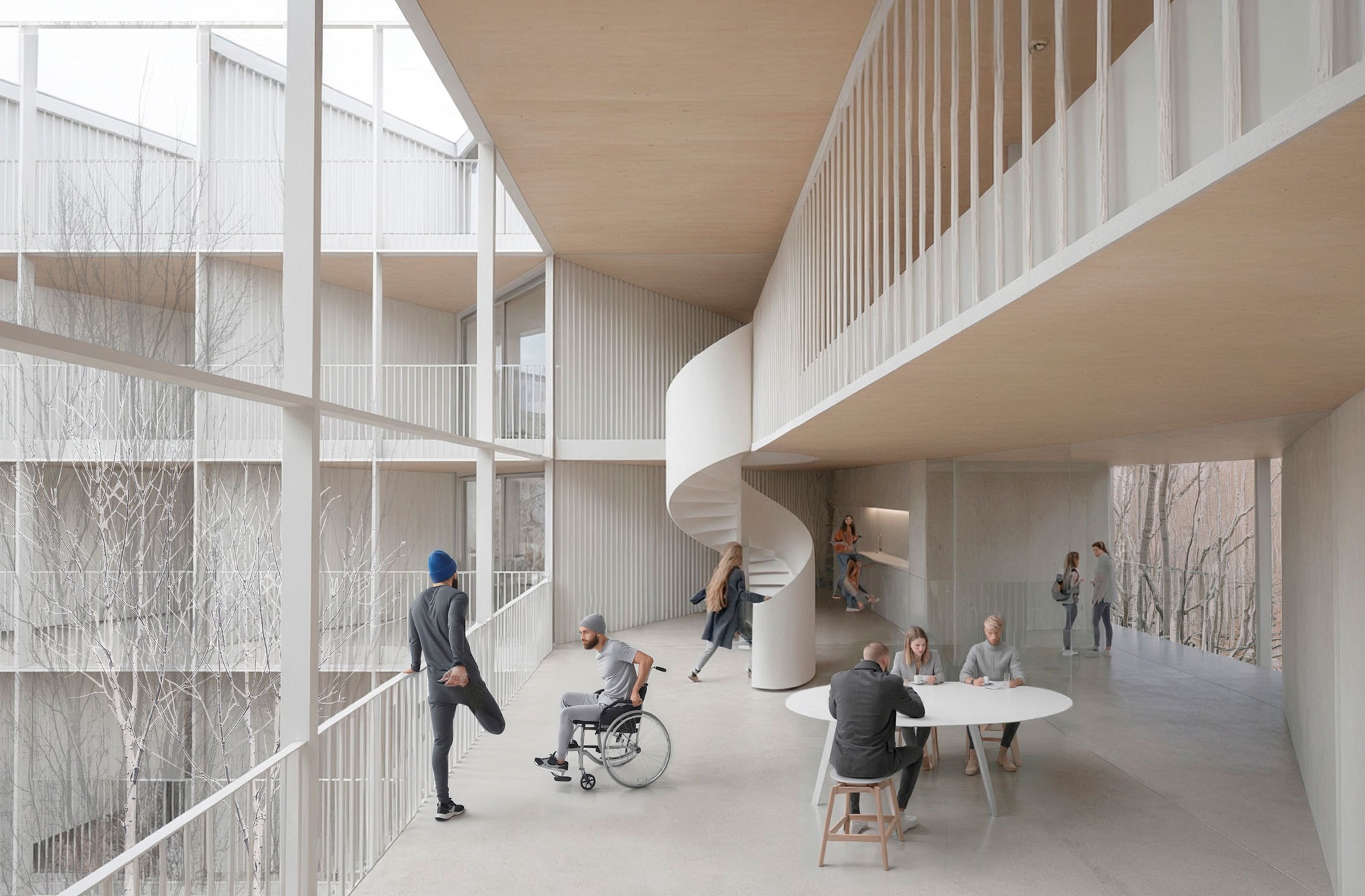
The proposal by Ignacio Olite Lumbreras, Koldo Fernández Gaztelu, and Made.V Arquitectos for 80 Affordable Rental Housing and Collaborative Spaces in Soria includes 1, 2, and 3-bedroom homes, as well as a ground floor conceived as an extension of the living space with coworking areas, a daycare, and multipurpose rooms. These unit types are organized in a linear, double-fronted layout: an exterior gallery that acts as a filter towards the industrial area to the north, and the main living areas facing south.
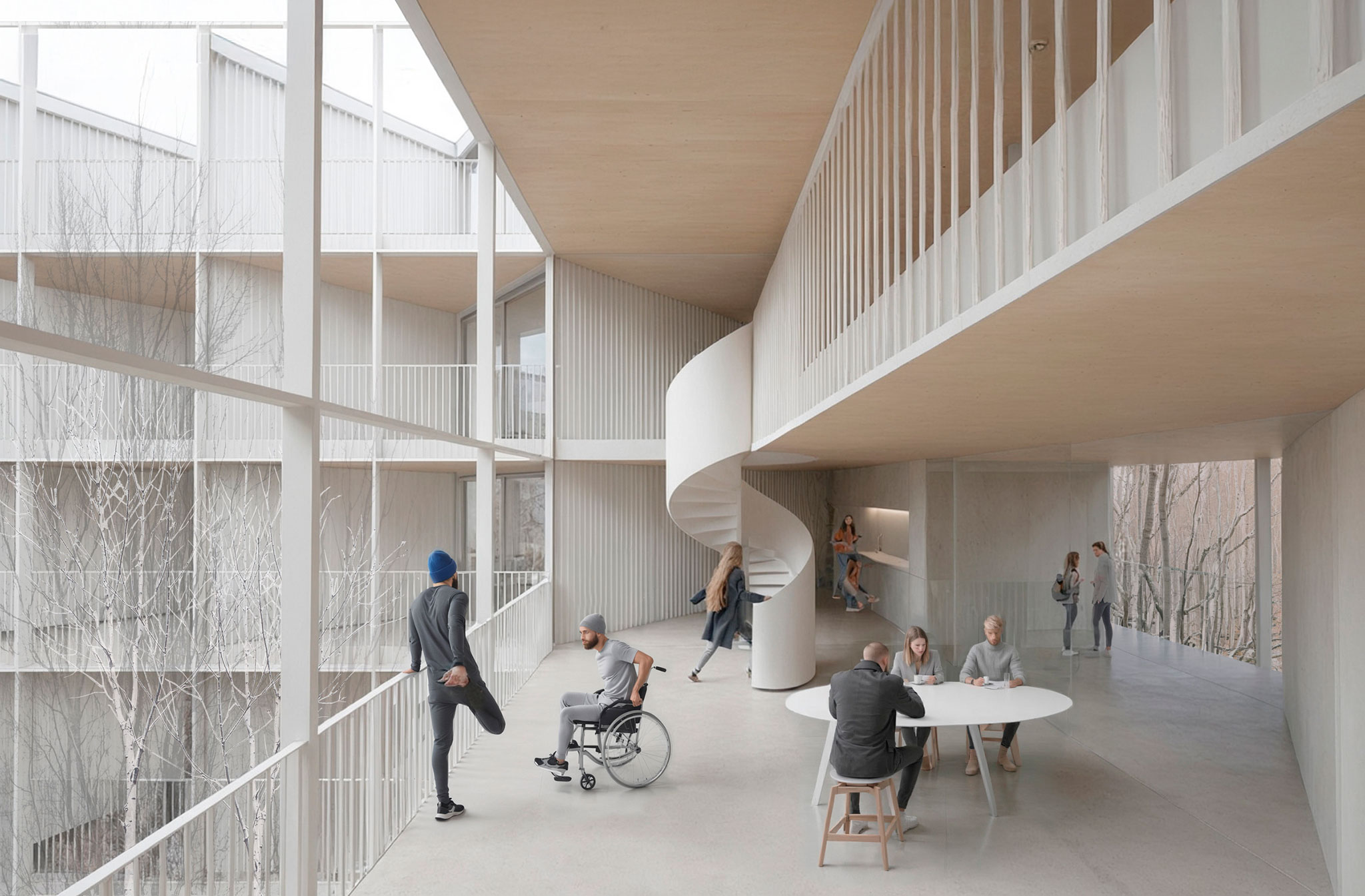
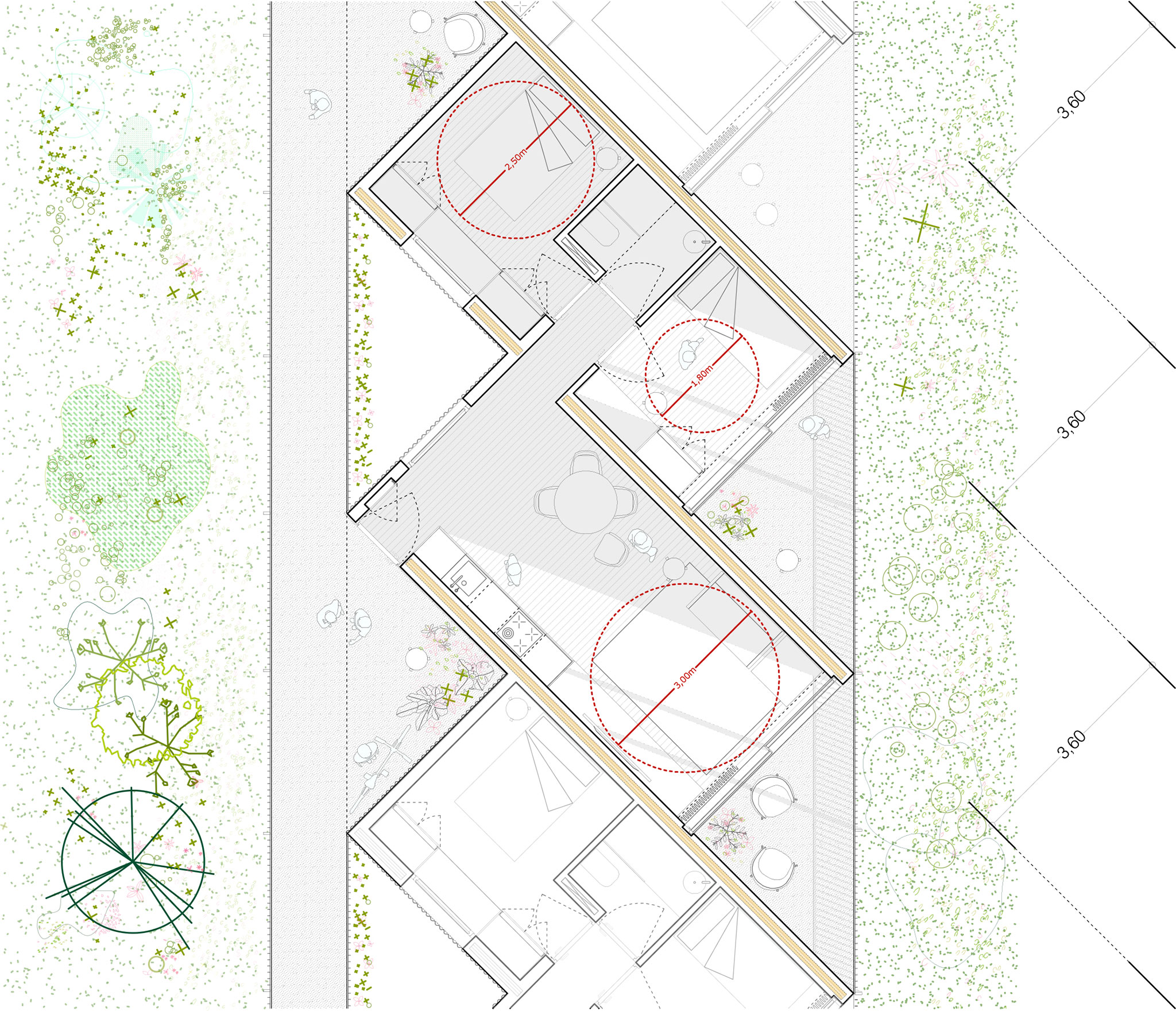
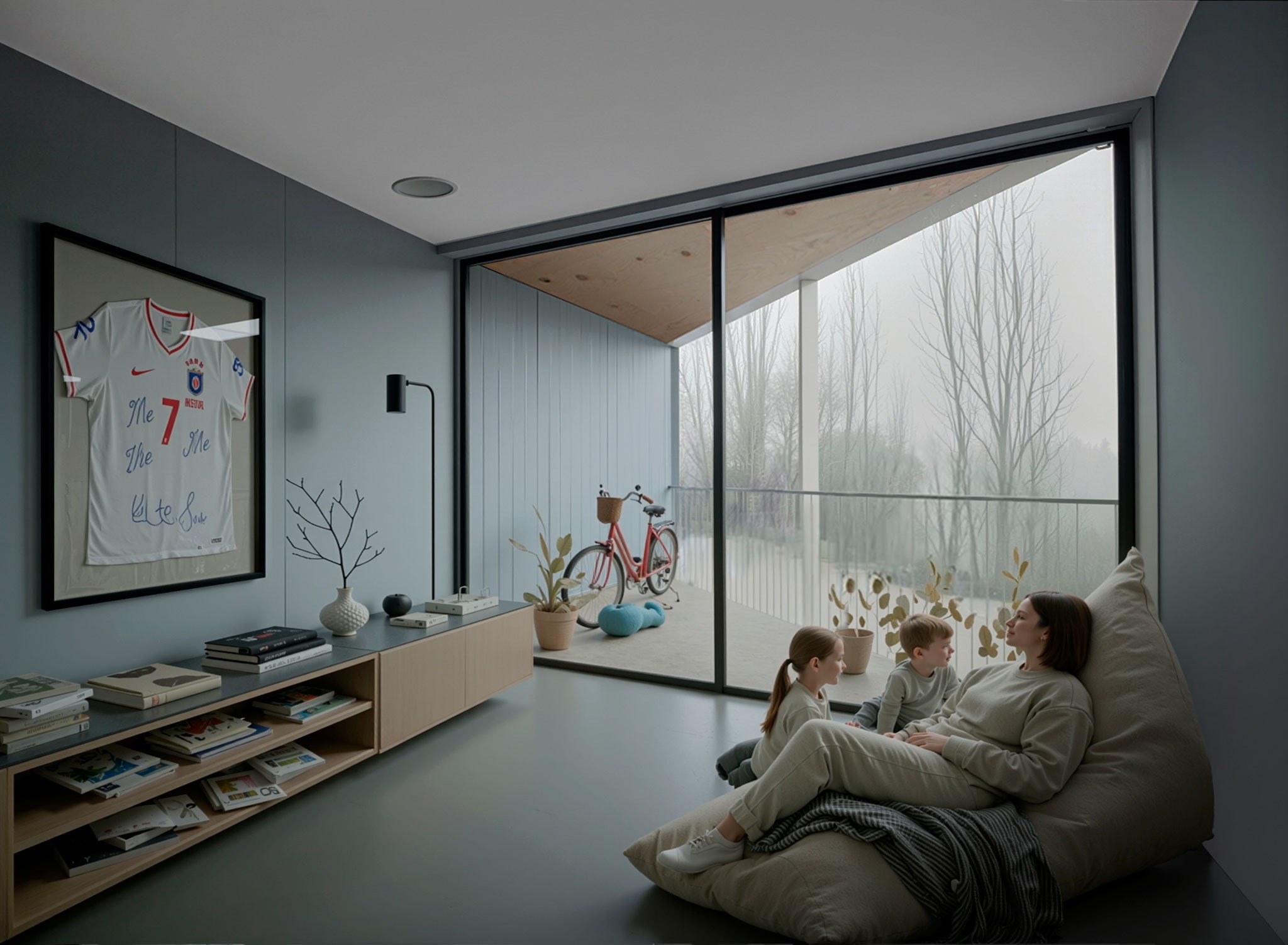
These longitudinal galleries widen at the access points to break the monotony of the corridor, creating a series of living spaces. These serve as meeting thresholds and expand the usable floor area of the homes by 11% to 12%.
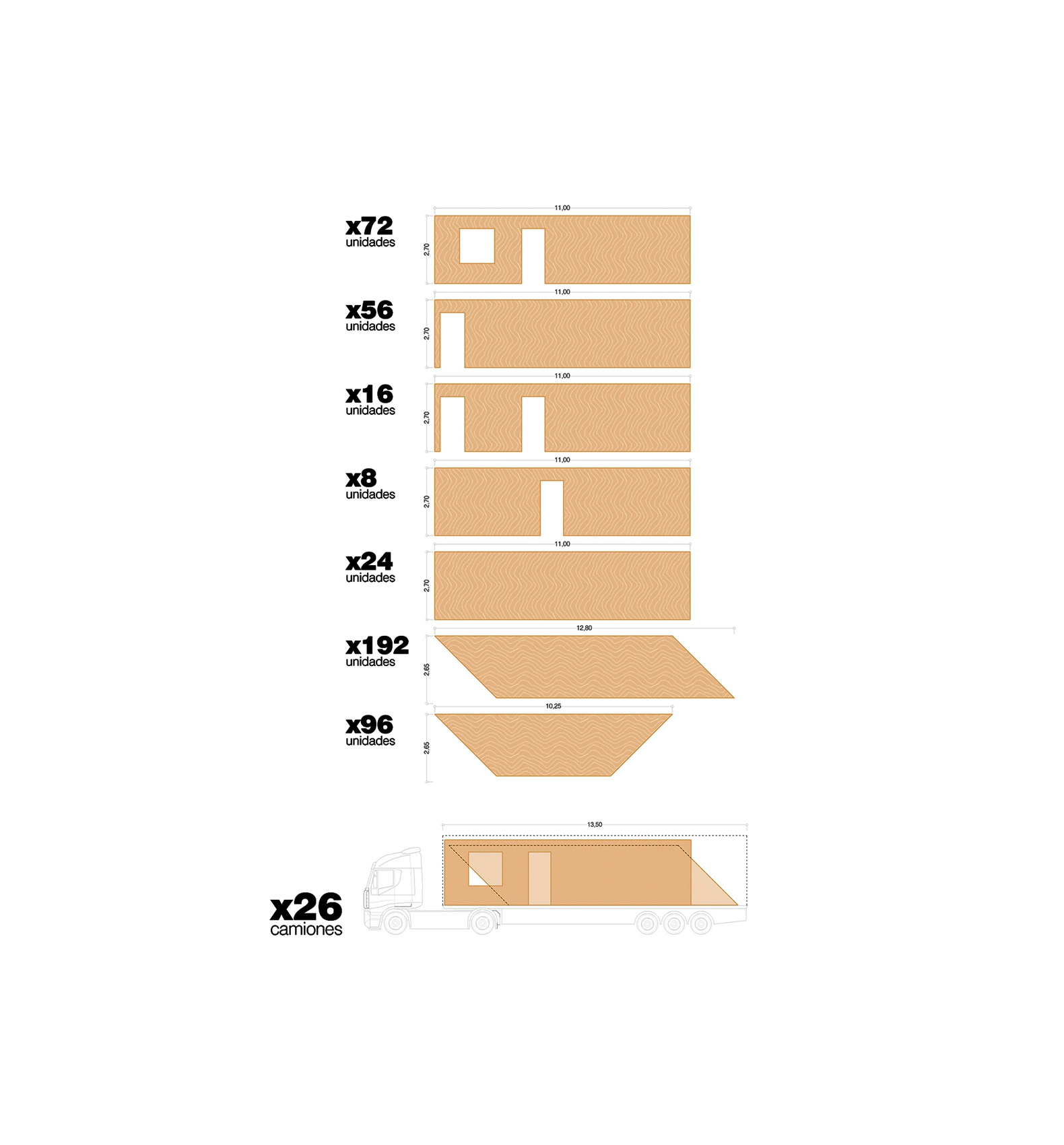
In terms of construction, the building consists of a concrete foundation for the basement and a lightweight cross-laminated timber (CLT) structure, organized using a modular system of five types of load-bearing walls. Energy efficiency is guaranteed by a 25 cm envelope finished in micro-perforated mini-corrugated sheet metal —in homage to the area's industrial past— and by a green roof that acts as a natural thermal regulator.
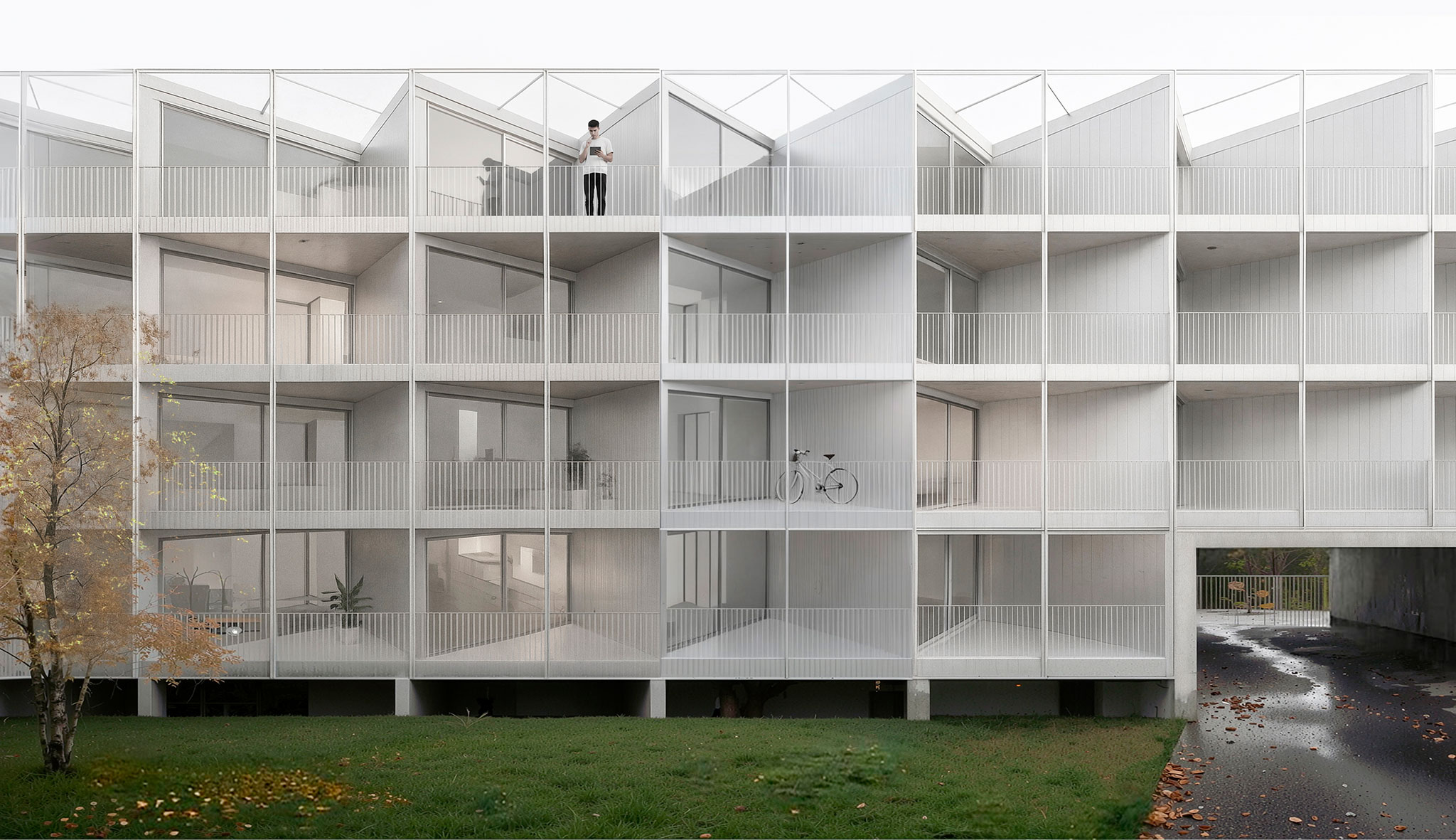
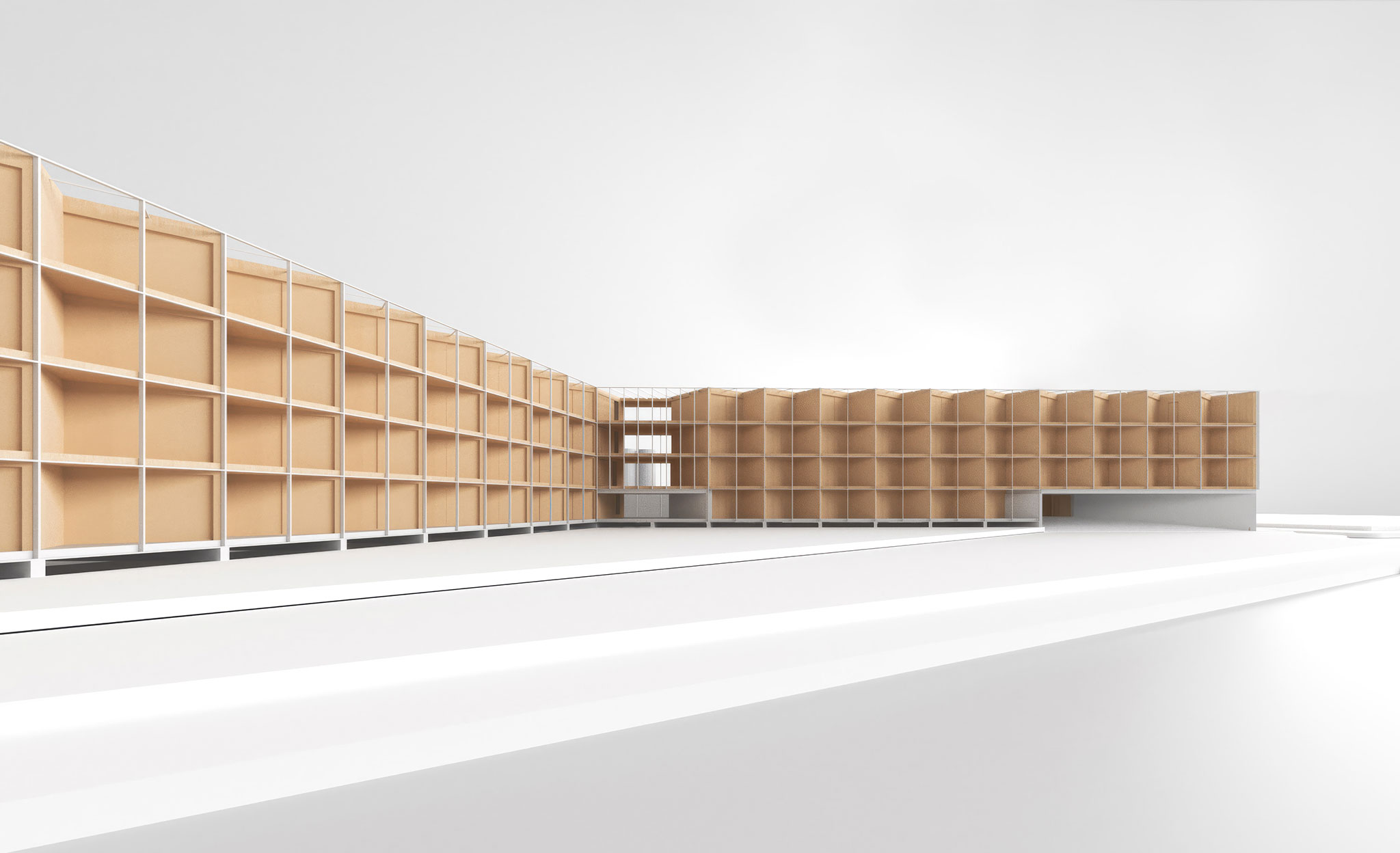
Rendering. 80 Collaborative Housing Units by Ignacio Olite, Koldo Fdez. Gaztelu y MADE.V.
Project description by Ignacio Olite Lumbreras, Koldo Fernández Gaztelu y Made.V Arquitectos
Project Concept
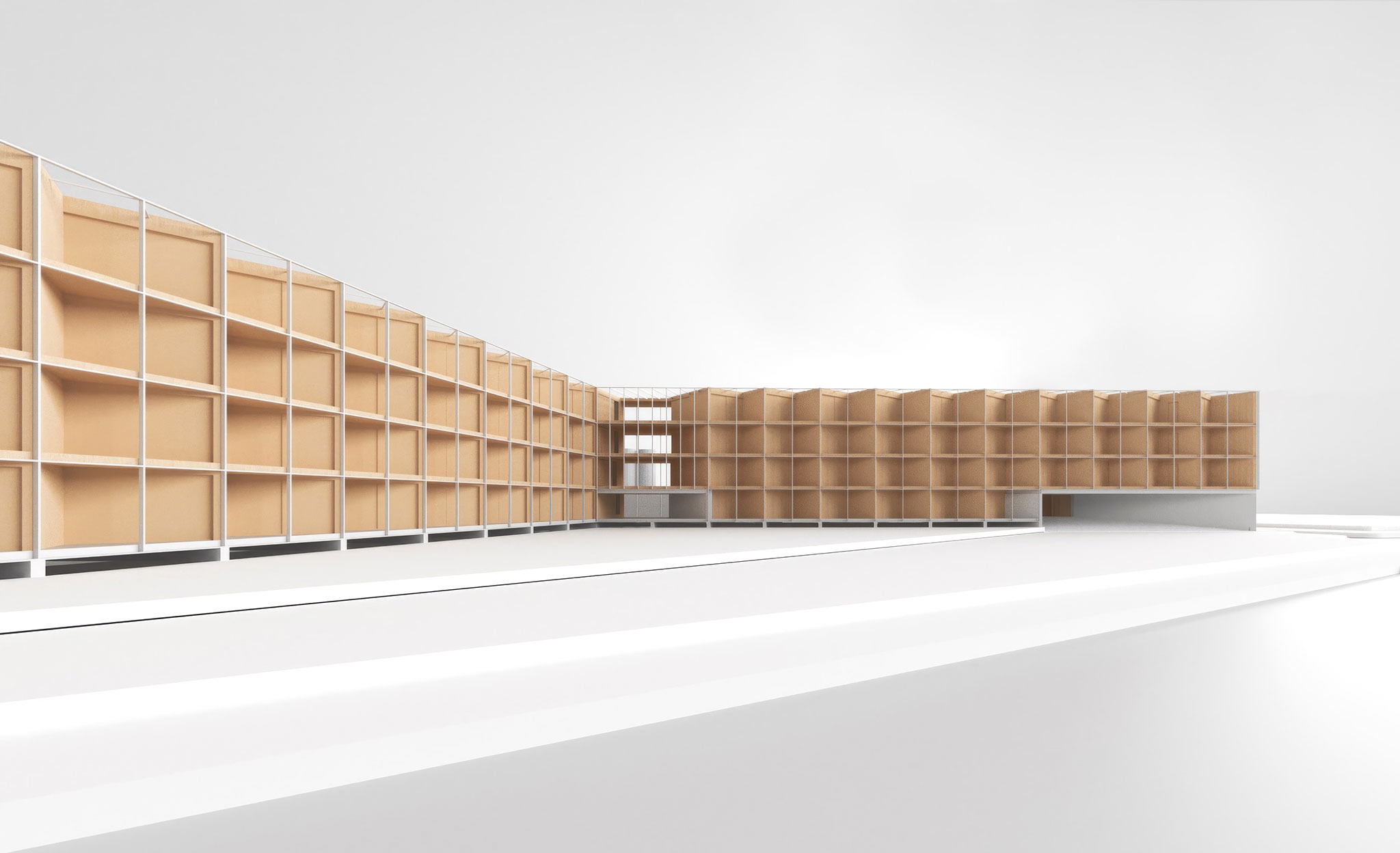
The proposal begins with a simple yet powerfully evocative image: twenty-six trucks, the number needed to transport the prefabricated CLT panels that make up the building's structure—both vertical and horizontal. This seemingly anecdotal logistical detail becomes the starting point for an architectural reflection: an architecture born from measurement, folding, logistics, and action. Each truck contains fragments of space, possibilities for life, living units that are not repeated cells but pieces of an open system. Architecture here is conceived not as an isolated object, but as part of a larger system, a habitable landscape in which vegetation, air, and light are as structural as the walls or floors. Therefore, the project's strategy is clear: the creation of a new urban landscape. To achieve this, two fundamental tools are employed: the construction of public space—a park—that transforms the site into a city, and a domestic space, imbued with contemporary values, linked to the new urban landscape and a reflection of collective life. The complex articulates this new expansion of the city in a place where the street as an urban space for coexistence is no longer recognizable. Therefore, the housing units that comprise it reinforce their suburban character by seeking the universal and primordial references of human habitation: the midday sun and the naturalized environment.
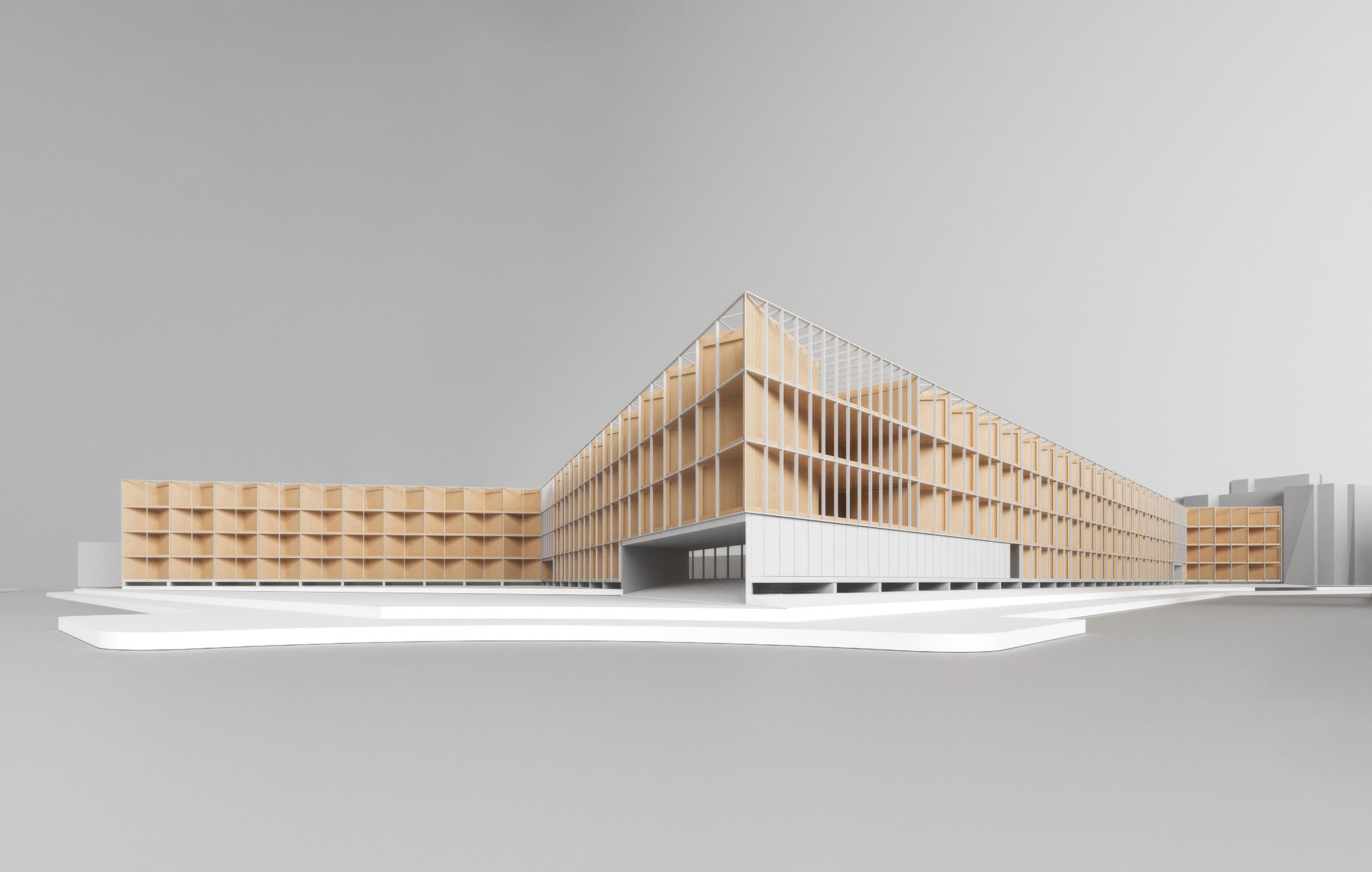
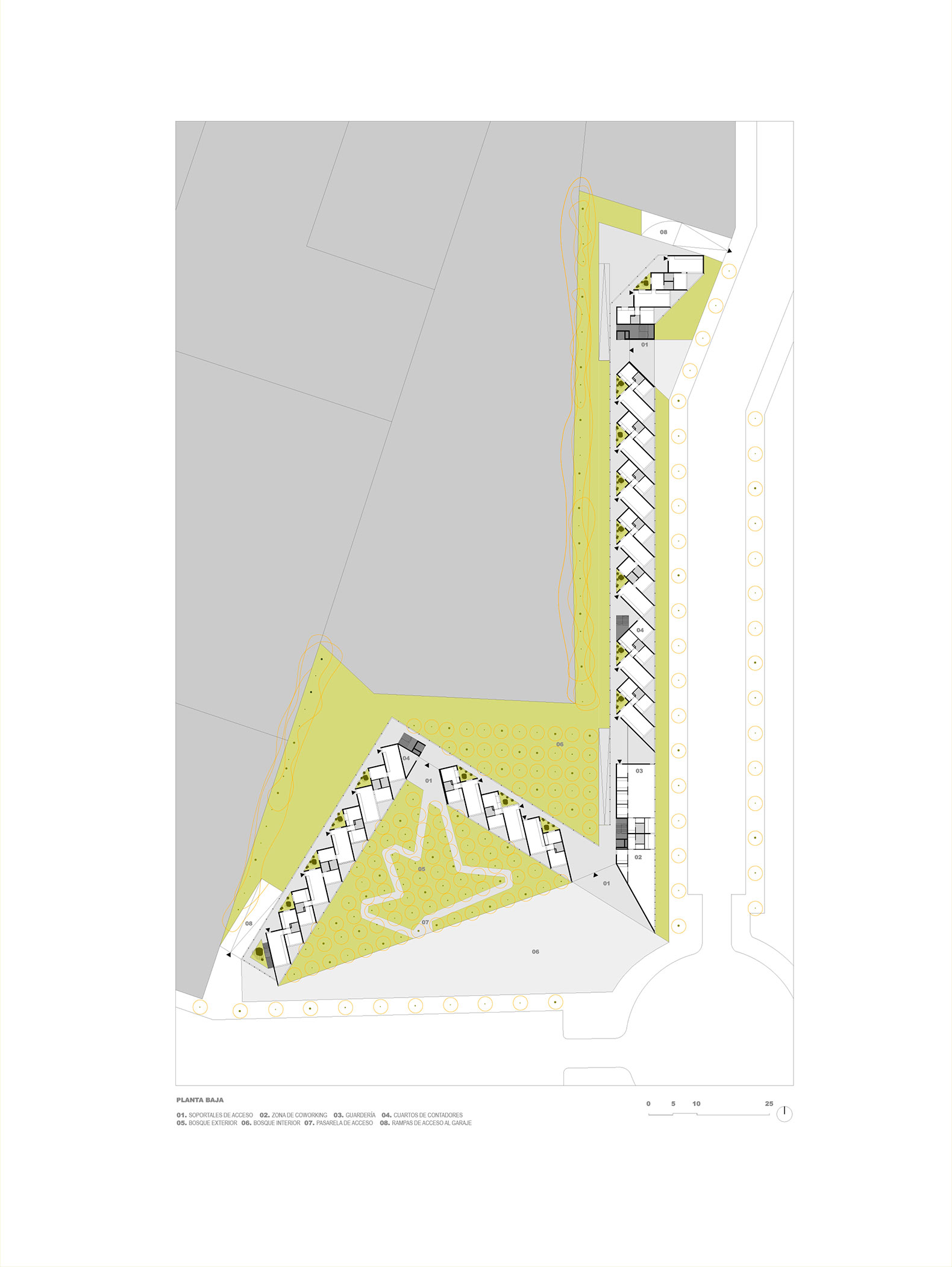
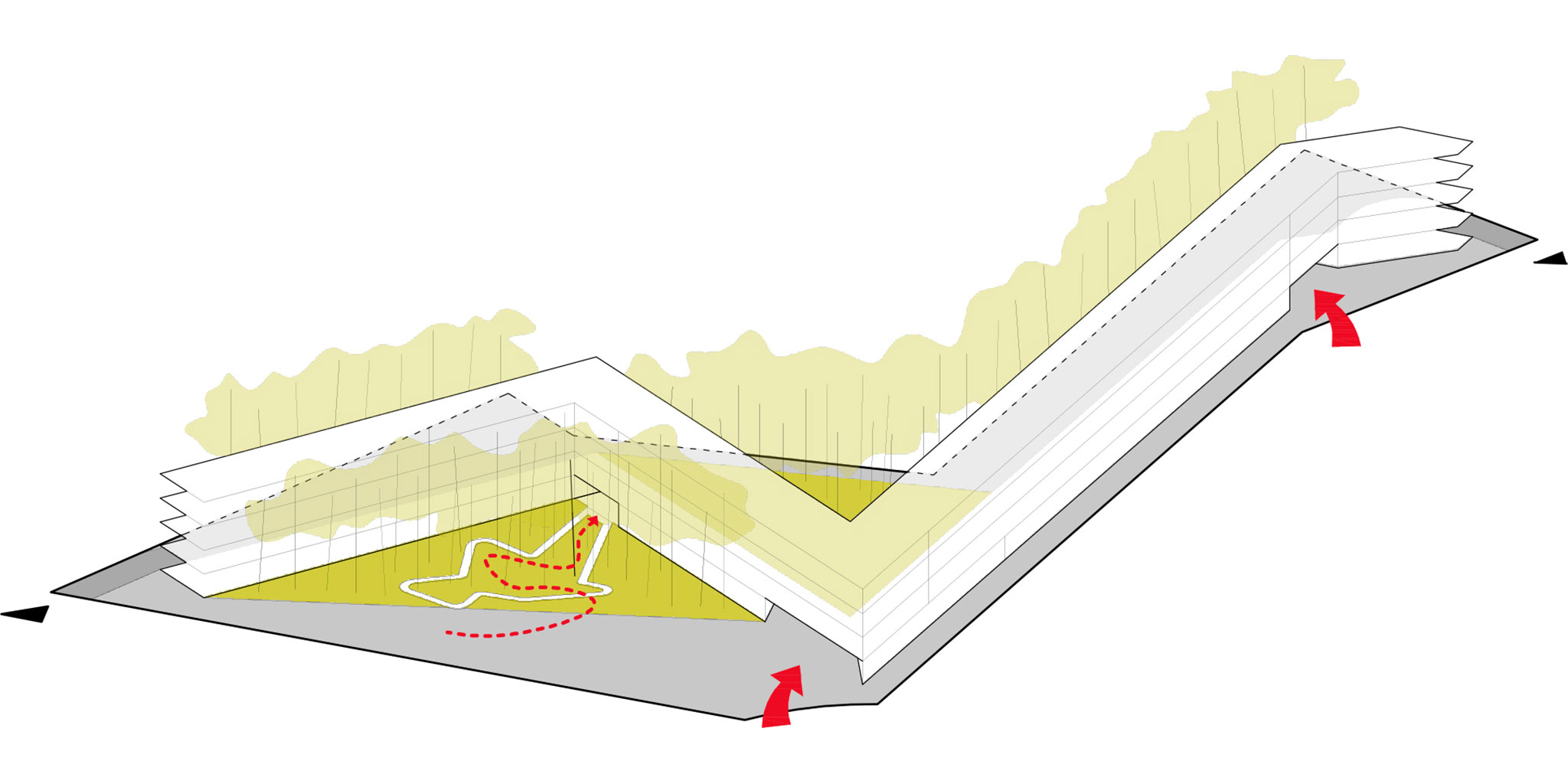
The project is situated within a complex urban environment, on the boundary between the newly created residential city and the industrial fabric undergoing relocation. This border condition is embraced not as a problem, but as an opportunity to activate new spatial, social, and ecological relationships. The building is conceived as an articulated line, a zigzag that adapts to the irregular perimeter of the plot and, as it folds, generates a sequence of public and community spaces of varying sizes and intensities. Unlike the closed and homogeneous urban logic that has characterized many recent residential developments in the area, where the plot boundary is nothing more than a "fence" of privacy, this proposal seeks to construct an architecture open to the complexity of the site, capable of embracing the unexpected and fostering collective life.
In contrast to what René Boer has defined as the "smooth city"—a polished, homogenized, excessively regulated city designed from the aesthetics of neutrality and commercial efficiency—this proposal champions an architecture that acknowledges the rough edges of living, recognizing the diversity of uses, rhythms, and relationships that shape daily life. Against the closed order of the predefined, this proposal envisions an open, permeable infrastructure, ready to be interpreted and modified by its inhabitants. This approach does not imply abandoning design, but rather understanding it as a tool for generating possibilities, fostering encounters, and embracing the unfinished. The city envisioned here is not a perfect model, but a collective organism that, over time, will be inhabited, transformed, and enriched by those who live within it.
This project is not a definitive answer, but a framework for lives to unfold. It does not seek to impose a way of living, but to offer the conditions so that each person can build their own, together, at their own pace, with their own rituals. Twenty-six trucks: the precise number to imagine an entire building in transit, an architecture that moves to take root. Each gallery, each passageway, each corridor, each terrace is designed not only to be lived in. It is about building relationships, opening spaces for the common good without erasing the private, tracing a domestic topography where living is not synonymous with confinement, but with possibility. The aim is not to erect a building closed in on itself. The aspiration is to construct an urban piece that engages with its surroundings, that knows how to exist on the edge, that recognizes the city as a fabric still being woven. This building does not want to be the center of anything, but rather a node: a point of intersection between people, times, memories and futures.
Architectural Memory
The residential complex comprises 80 apartments, distributed as follows: 16 one-bedroom units, 48 two-bedroom units, and 16 three-bedroom units. Four of these, located on the ground floor, have been designed as fully accessible apartments, in accordance with current regulations in Castile and León. All the others are adaptable, allowing for adjustments over time with a simple change to the bathroom door to accommodate different abilities and living needs.
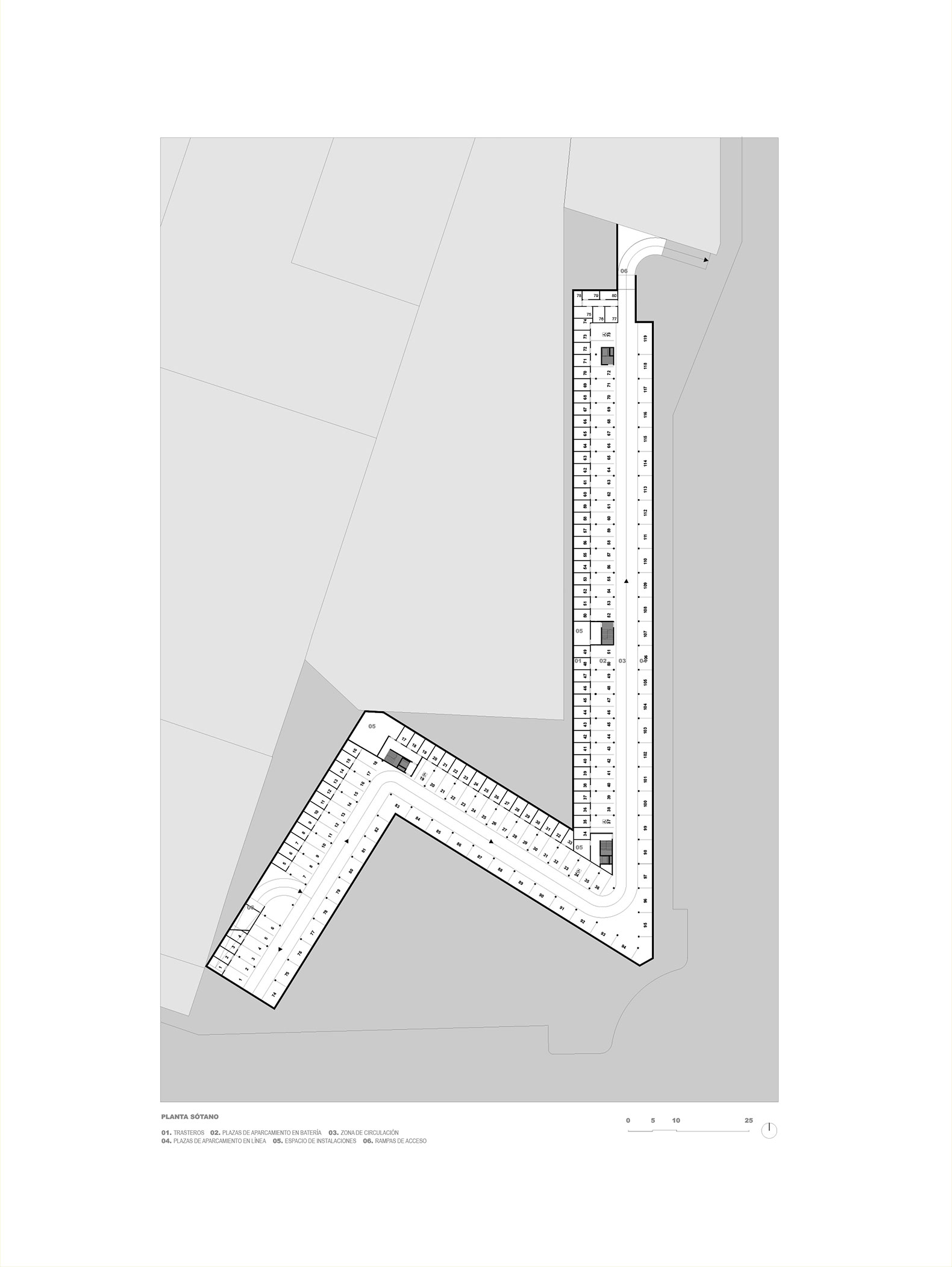
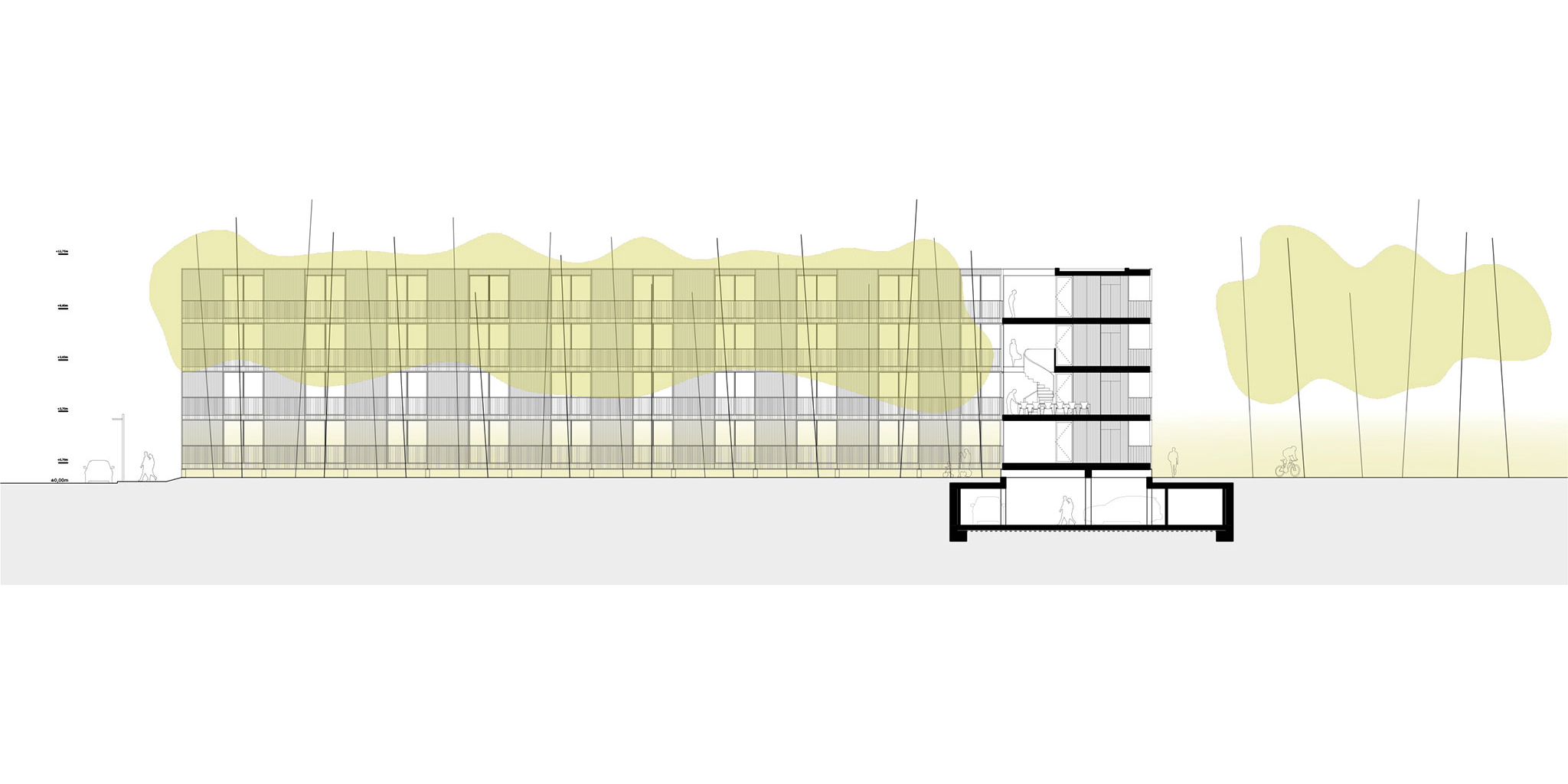
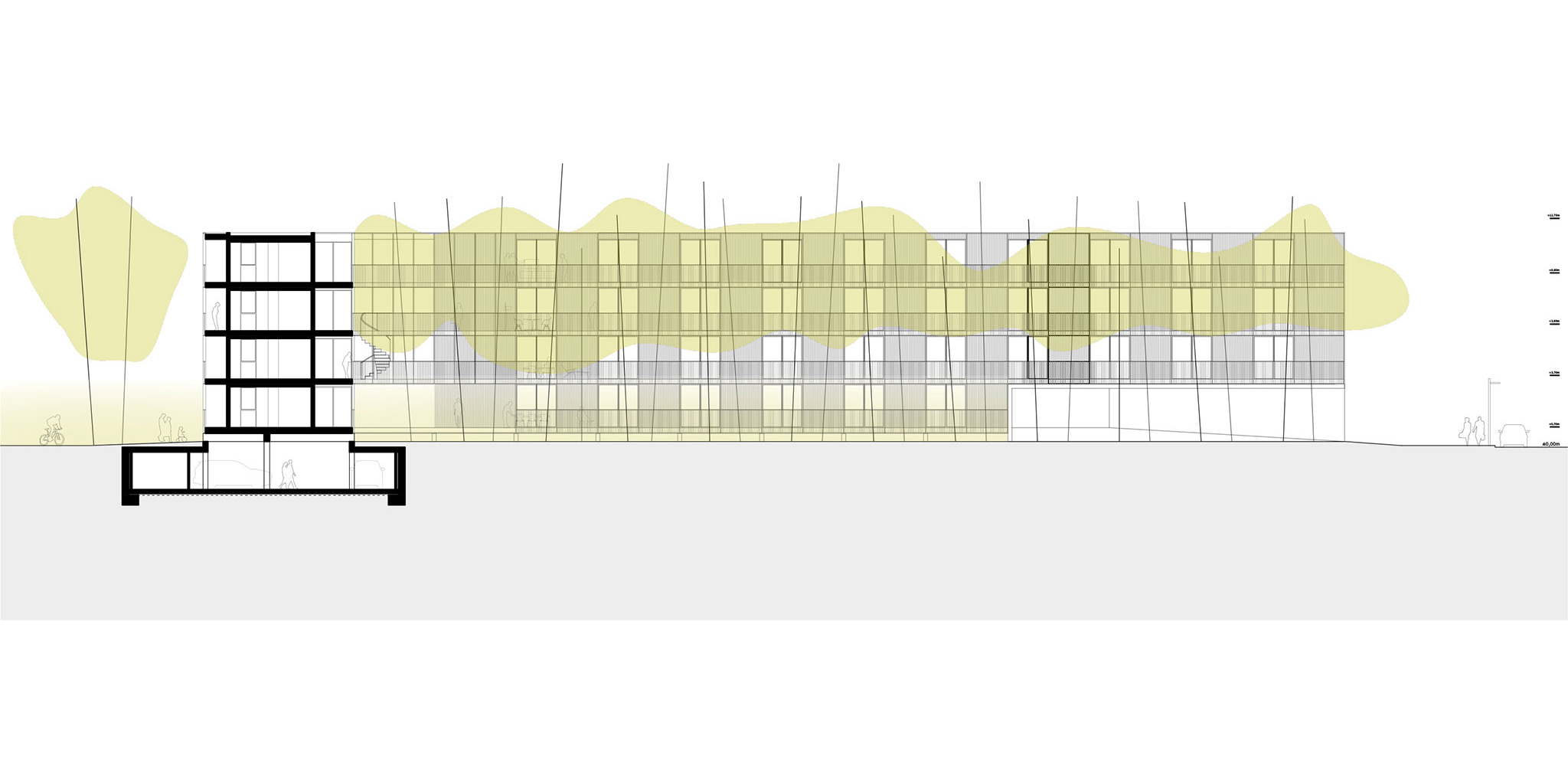
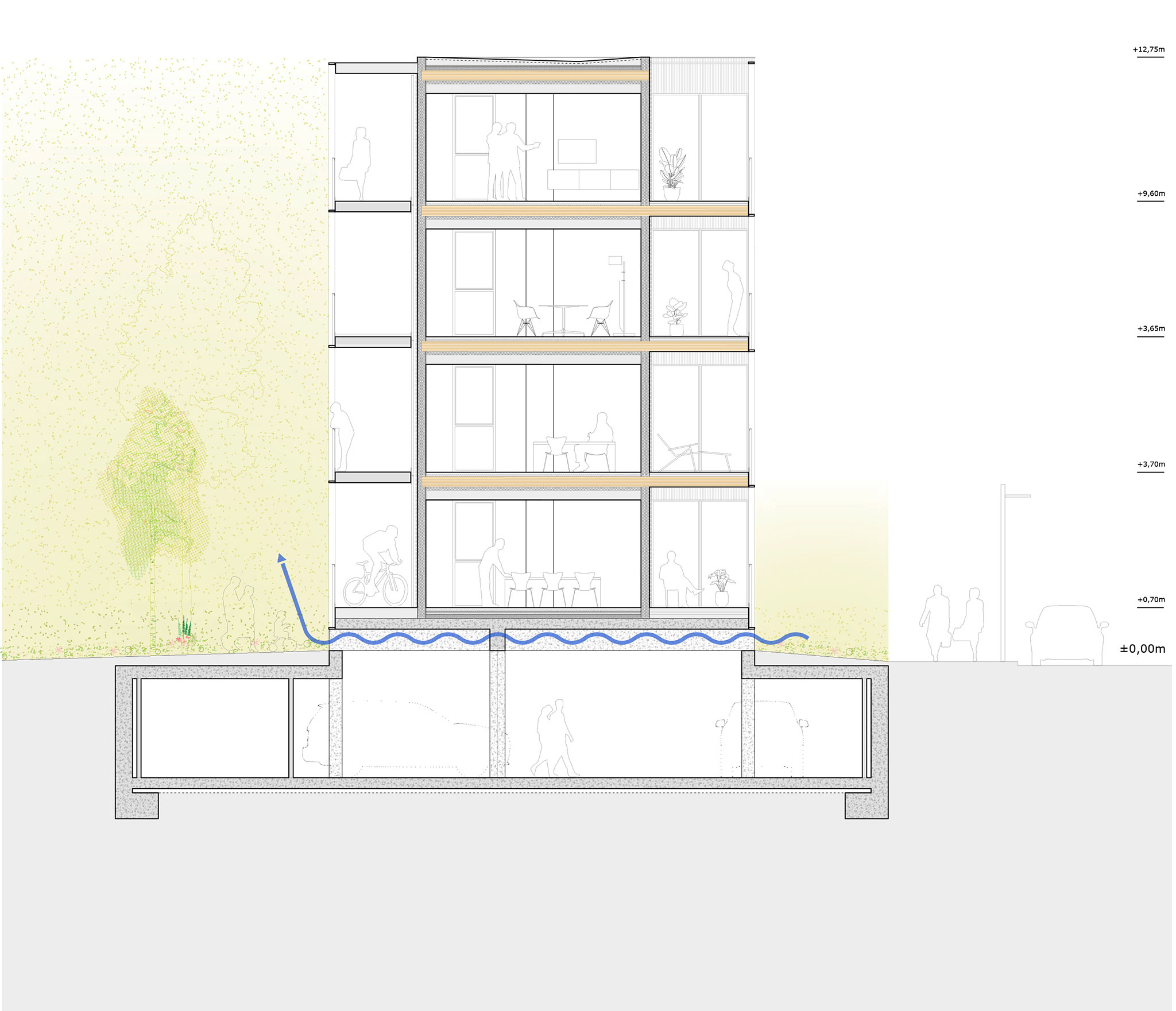
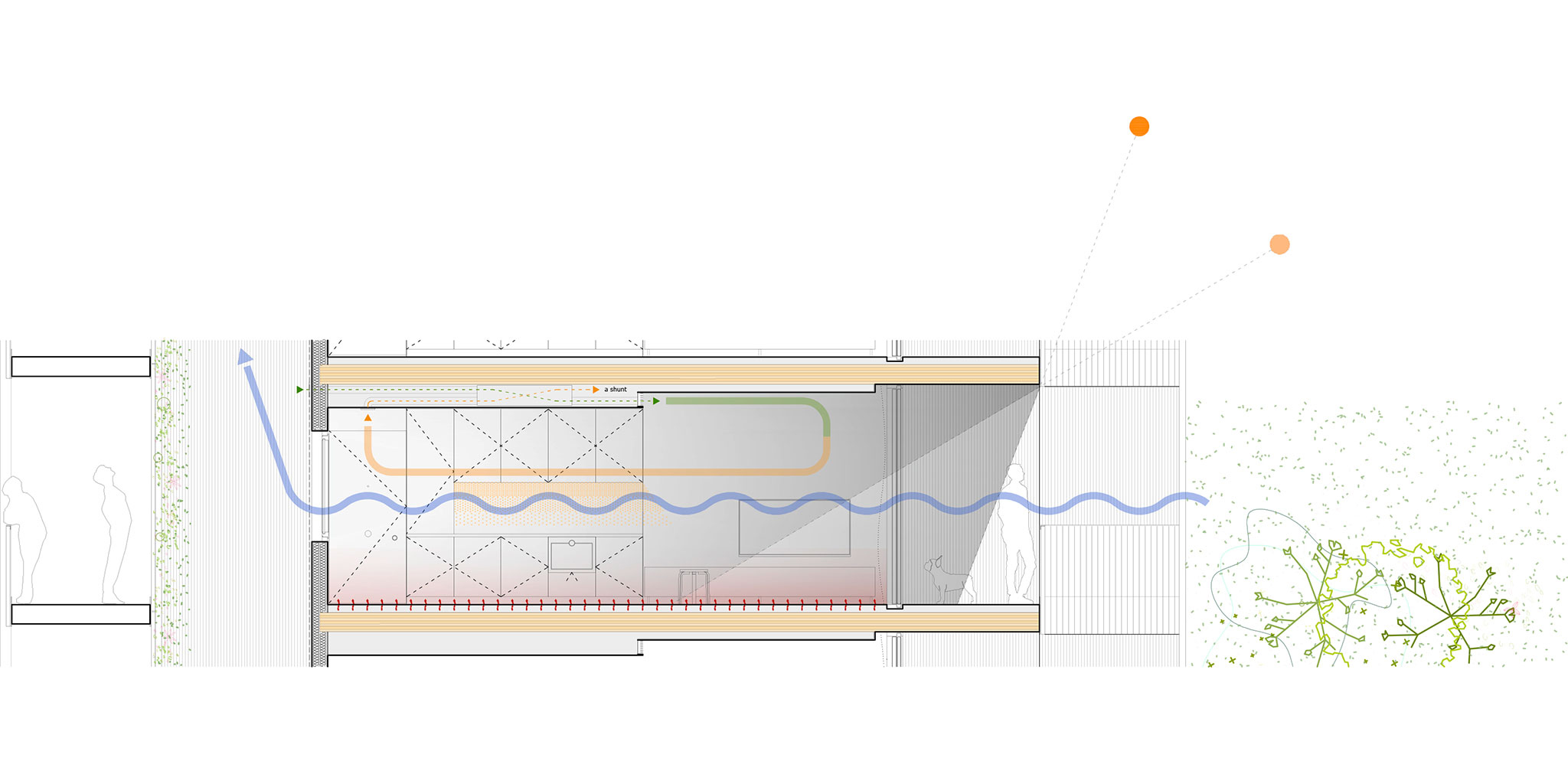
The building has a total constructed area of 6,766 m², distributed across a ground floor plus three upper floors (ground floor + 3), and a 3,161.36 m² basement that houses 120 parking spaces and 80 storage units, one for each apartment. The overall layout follows a linear typology adapted to the context. The building is designed with two facades: one acting as a filter towards the industrial landscape and the other connecting it to the city. The access galleries face the industrial edge, acting as a filter, while the living spaces open to the south, engaging with the new urban park and the distant landscape. This arrangement not only optimizes climatic and visual conditions but also reinforces the building's border location, embracing its role as an urban connector.
The building is organized around a clear and functional structure that responds to both the site's urban planning requirements and the project's social, spatial, and environmental objectives. The layout of uses on each floor articulates the domestic and the communal, allowing the complex to function as a true domestic amenity. Each level fulfills a specific role within an integrated strategy where the construction logic, everyday comfort, and community life intertwine to create an open and evolving system. Collaborative spaces are not concentrated on a single level but are strategically dispersed as active articulations on each floor, accompanying the building's longitudinal circulation and intensifying its communal character.
On the ground floor, the building rises above a permeable plinth that subtly separates it from the terrain, lending it visual lightness and spatial autonomy. This level houses a wide range of collective uses open to the neighborhood, such as coworking spaces, a daycare center, workshops, multipurpose rooms, and cultural initiatives. To reinforce its connection with the urban fabric, the ground floor opens up with large pedestrian walkways that traverse the building's volume and become direct access points to the private spaces, linking the park with the domestic sphere. The corner of Elio Antonio de Nebrija Street has been reserved as a strategic point to highlight the collaborative use of the building, giving it urban visibility and the capacity for social activation. The management of these spaces is left open to future decisions by the community or the administration, but their presence in the project reflects a clear conviction: the ground floor is not merely a technical level, but an opportunity to build community, foster relationships, and open architecture to everyday life.
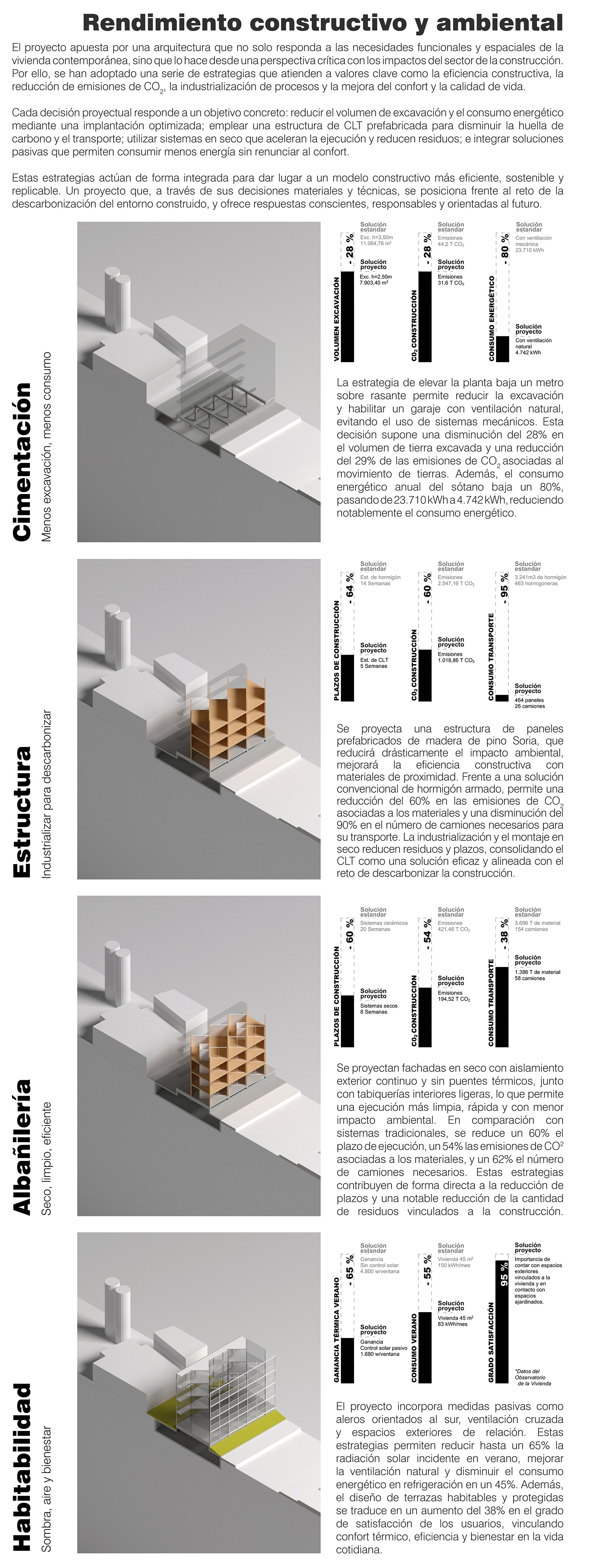
Below this level, the basement provides parking, utilities, and storage. Far from being conceived as a residual space, it has been designed as a section that allows for natural ventilation of the parking area through the grooves in the edge beams, eliminating the need for mechanical ventilation systems.
Access to the apartments is organized through longitudinal exterior galleries that run along each floor and structure the collective life of the complex. These walkways widen at the entrances to the apartments, creating intermediate thresholds where bicycles can be parked, everyday items left, or where people can simply stop to chat. These are transitional spaces that are not intended as mere passageways, but rather as areas for neighborly interaction, domestic in scale yet open to the community. These "expansions" break the monotonous linearity of the gallery and transform it into a series of small living spaces on the boundary between communal and private, which, in addition to fostering neighborly relations, expand the usable floor area of the apartments by between 11 and 22%, depending on the unit type.
Construction Concept and Materials
The project stems from a key construction decision: to reduce the building's carbon footprint through a prefabricated cross-laminated timber (CLT) structural system. This choice is not solely based on technical criteria but constitutes a central idea of the project, articulating sustainability, efficiency, and architectural quality. The building is conceived as a lightweight and precise infrastructure, capable of rapid construction, minimizing waste, and fostering a healthy and adaptable environment. Based on this premise, the complex is organized as a dual tectonic composition: a permeable, thermally inert base anchored to the ground, upon which rises a prefabricated, lightweight, dry, and modular timber structure. This duality not only optimizes the construction processes but also architecturally expresses the relationship between the building, the ground, and the urban landscape.
From this perspective, the project employs three fundamental construction strategies that articulate its technical, energy, and spatial logic: the foundation as a permeable and structural base for the entire complex, the load-bearing CLT structure as a prefabricated, sustainable, and efficient system, and a highly efficient thermal envelope designed to guarantee comfort and minimize energy consumption.
The foundation is resolved through a system of reinforced concrete footings and retaining walls. To reduce the environmental impact of contact with the ground, the ground floor is raised above street level, which not only minimizes the volume of excavation but also allows for natural ventilation of the parking area, eliminating the need for mechanical systems. This strategy translates into the construction of a reinforced concrete slab, whose deep beams incorporate ventilation buffer spaces, functioning as a thermal diaphragm, load-bearing base, and building services infrastructure.
The building's structure is resolved using a system of cross-laminated timber (CLT) walls and floors, combining lightness, precision, and sustainability. The housing units are organized around a basic unit measuring 3.40 x 7.10 meters, defined by CLT structural walls repeated throughout the complex. This modular scheme ensures significant space efficiency, simplifies assembly, and allows for rapid, clean, and dry construction, reducing construction time and associated emissions. The structural system is based on the repetition of five types of load-bearing walls, all with the same dimensions (11.00 x 2.90 meters), the only variation being the type of opening they incorporate: solid walls, walls with doors, walls with French doors, or double-leaf openings. This simplification allows for more precise construction, a reduction in on-site errors, and greater traceability in manufacturing. Furthermore, it facilitates transport—only 26 trucks are required for the entire complex—and reduces on-site assembly time.
The building's thermal envelope is achieved through a dry, industrialized system, allowing for high structural and thermal performance with a reduced thickness. This technical decision optimizes the built volume and improves the efficiency of the structural system without compromising interior comfort or durability. The total thickness of the façade is 25 cm, including continuous thermal insulation on the exterior and a self-supporting interior lining. The exterior finish is a micro-perforated, lacquered corrugated metal sheet in its natural color, providing a homogeneous, contemporary, and luminous appearance while reducing surface heating of the envelope. This is a nod to the recent past of the area and the commercial use of the adjacent plots with which the building will coexist for some time. A visual reminder of the future is also present. The roof features an inverted flat roof system with a 12 cm insulation layer and a green roof. This solution reinforces the building's thermal performance, improves the thermal inertia of the upper envelope, and allows for low-maintenance green surfaces that act as climate regulators, rainwater retainers, and potential community spaces.
All the construction systems employed have been conceived as part of the same design logic. This logic prioritizes material sustainability, energy efficiency, and long-term durability, without sacrificing spatial quality or architectural expressiveness.