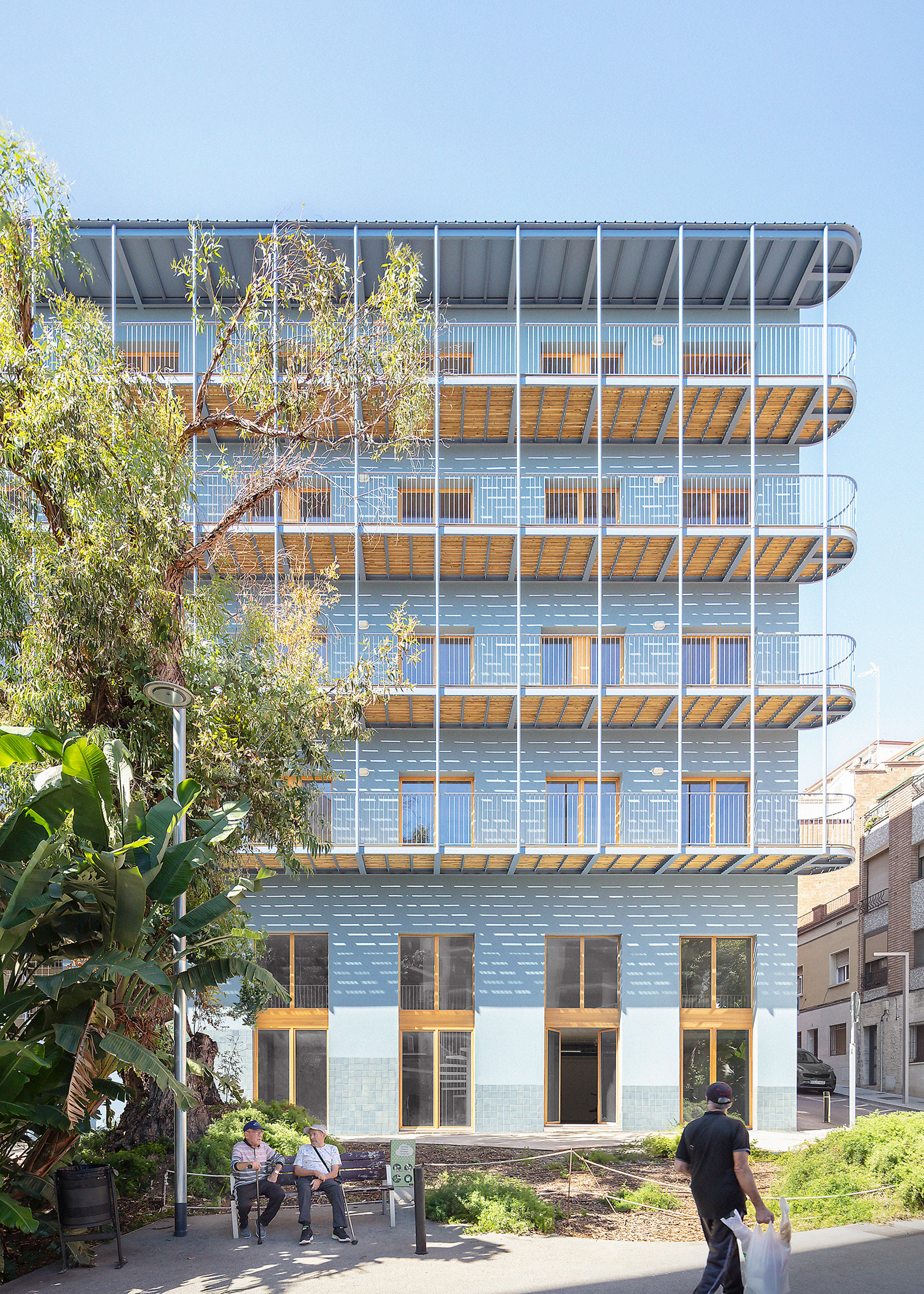
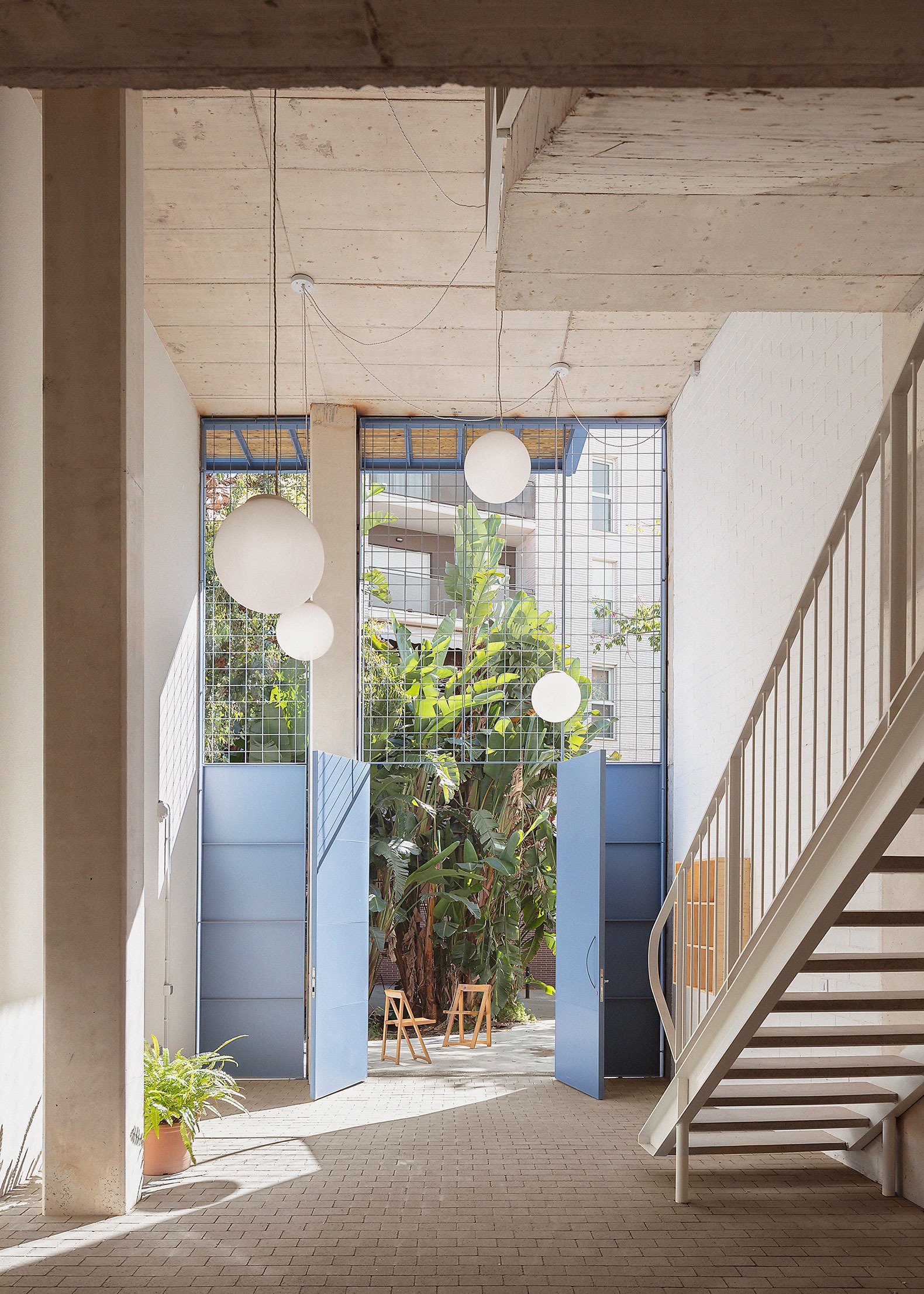
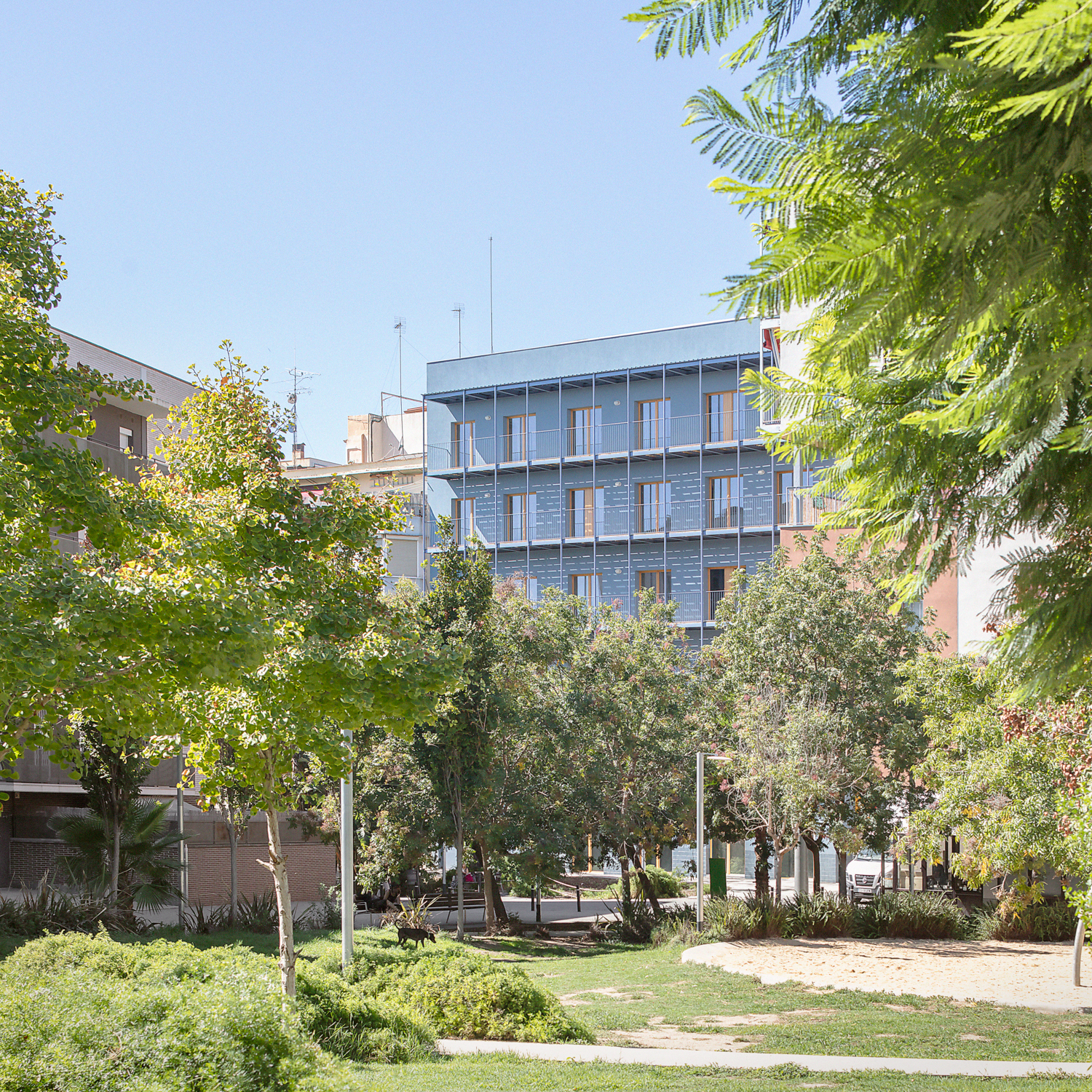
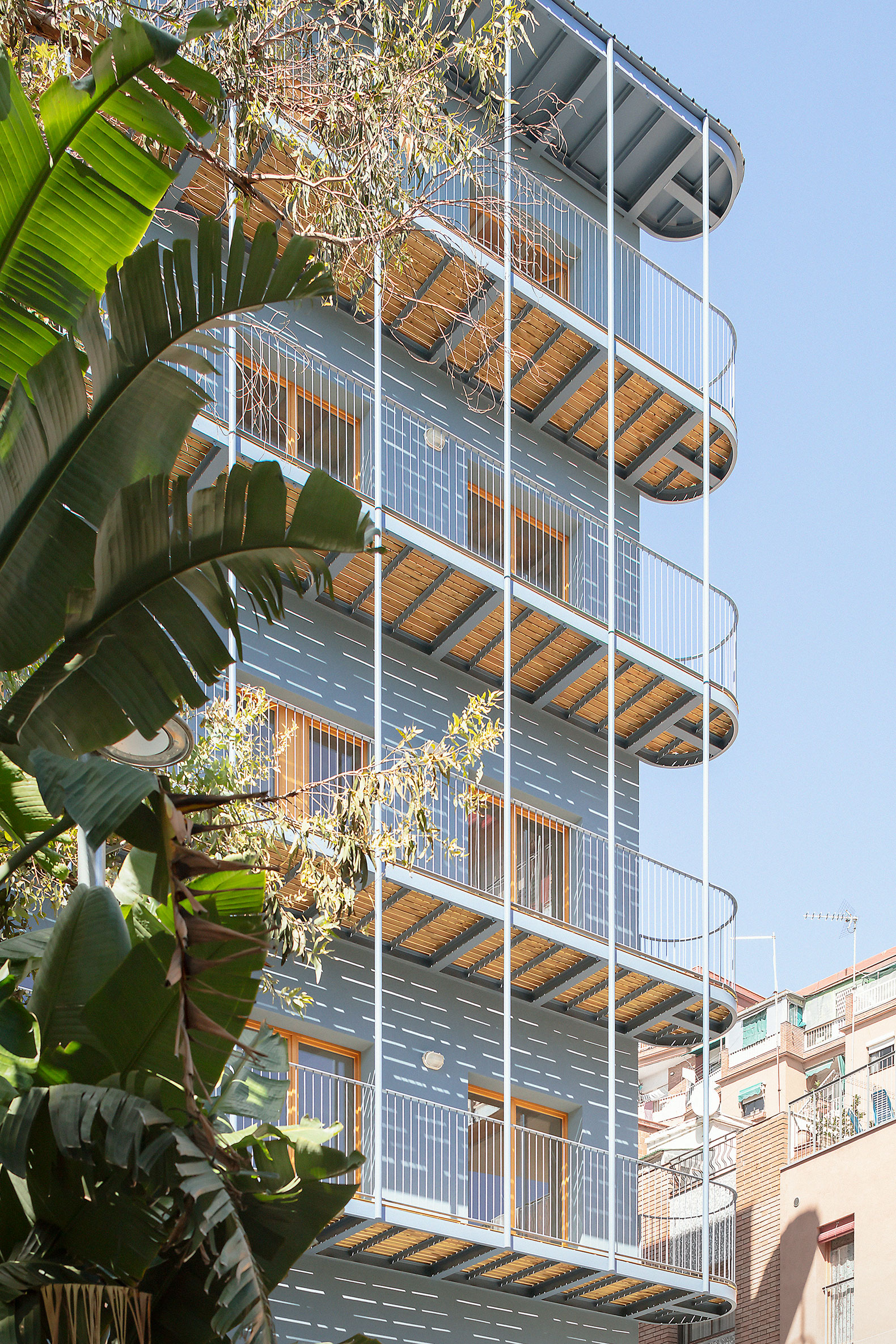
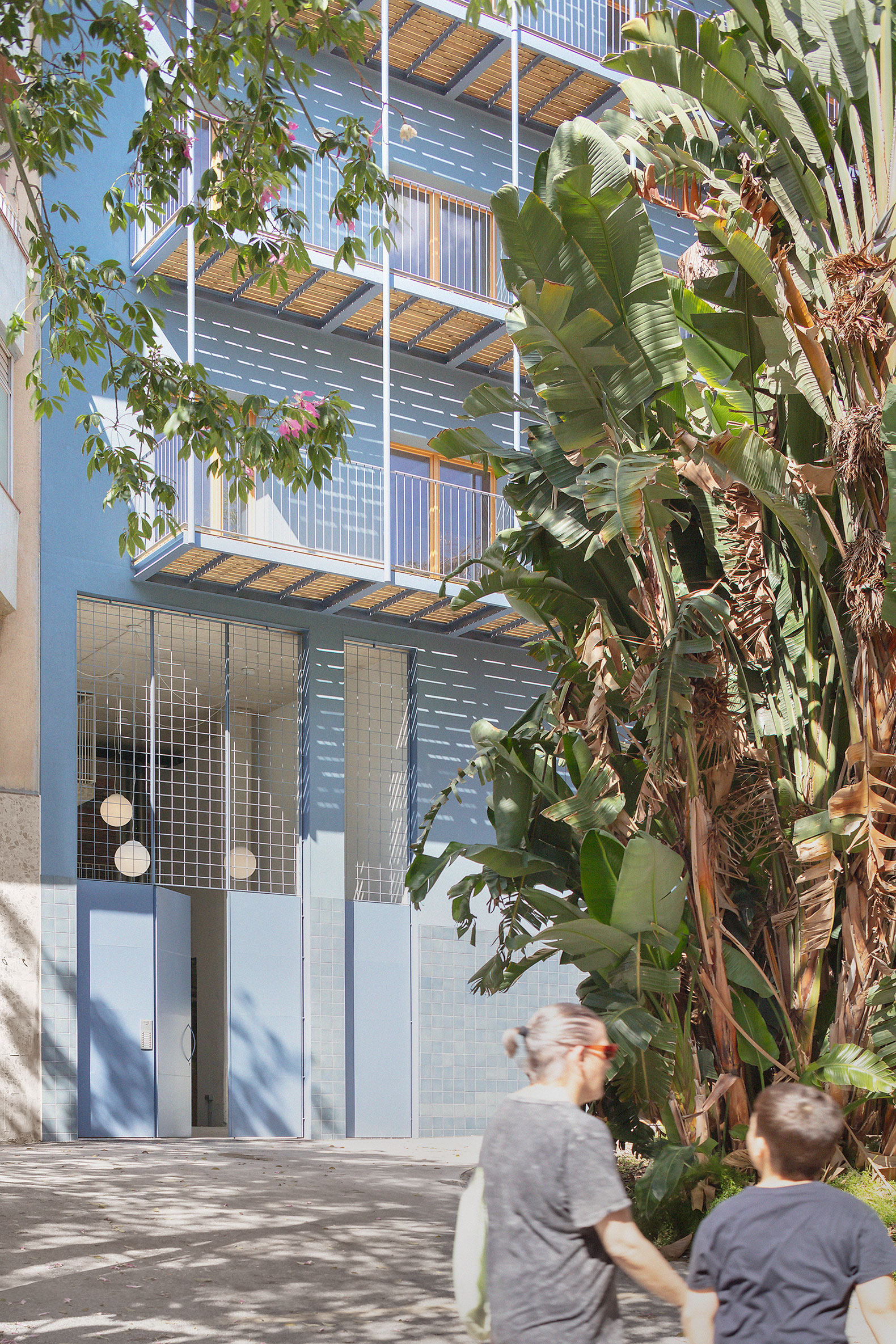
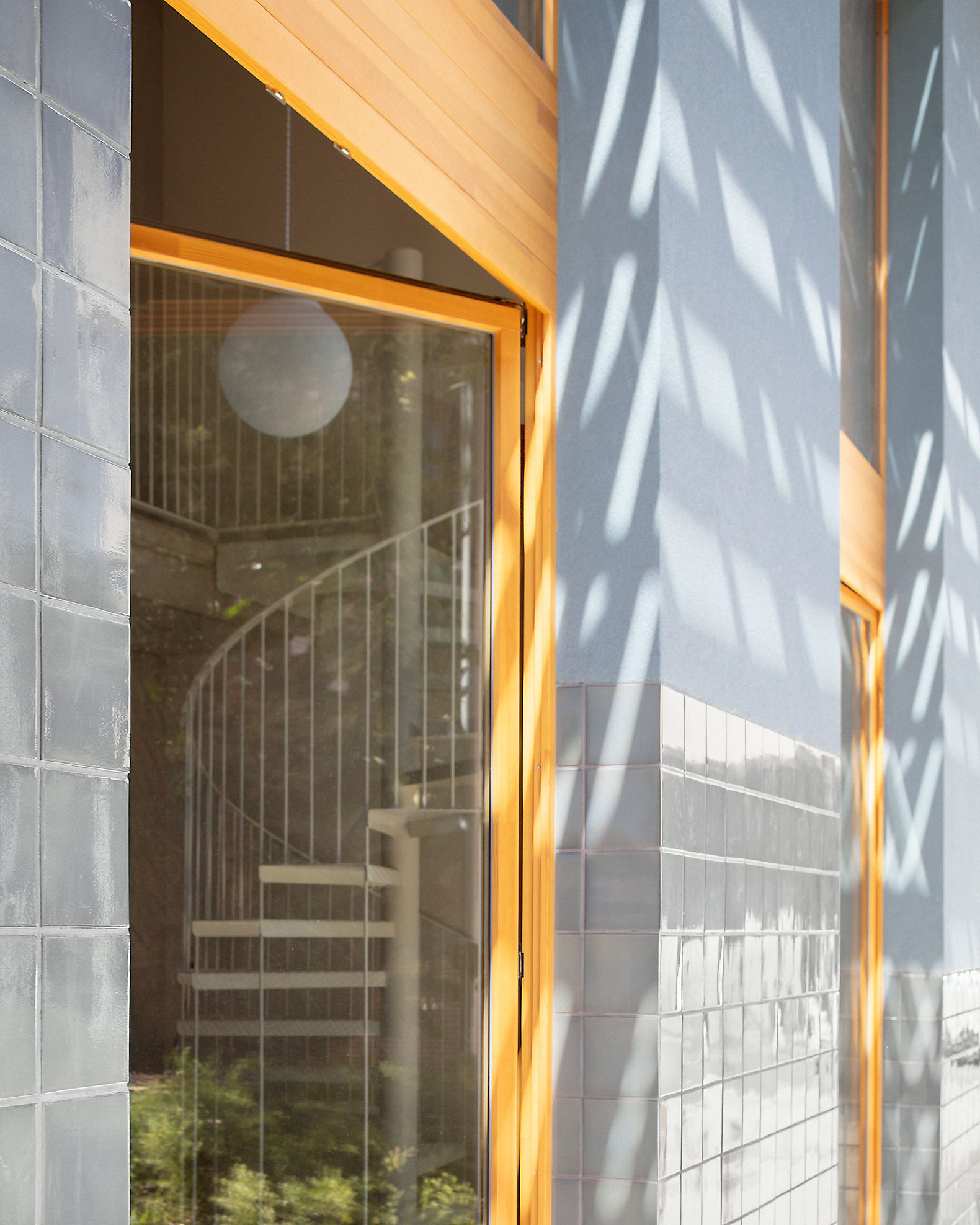
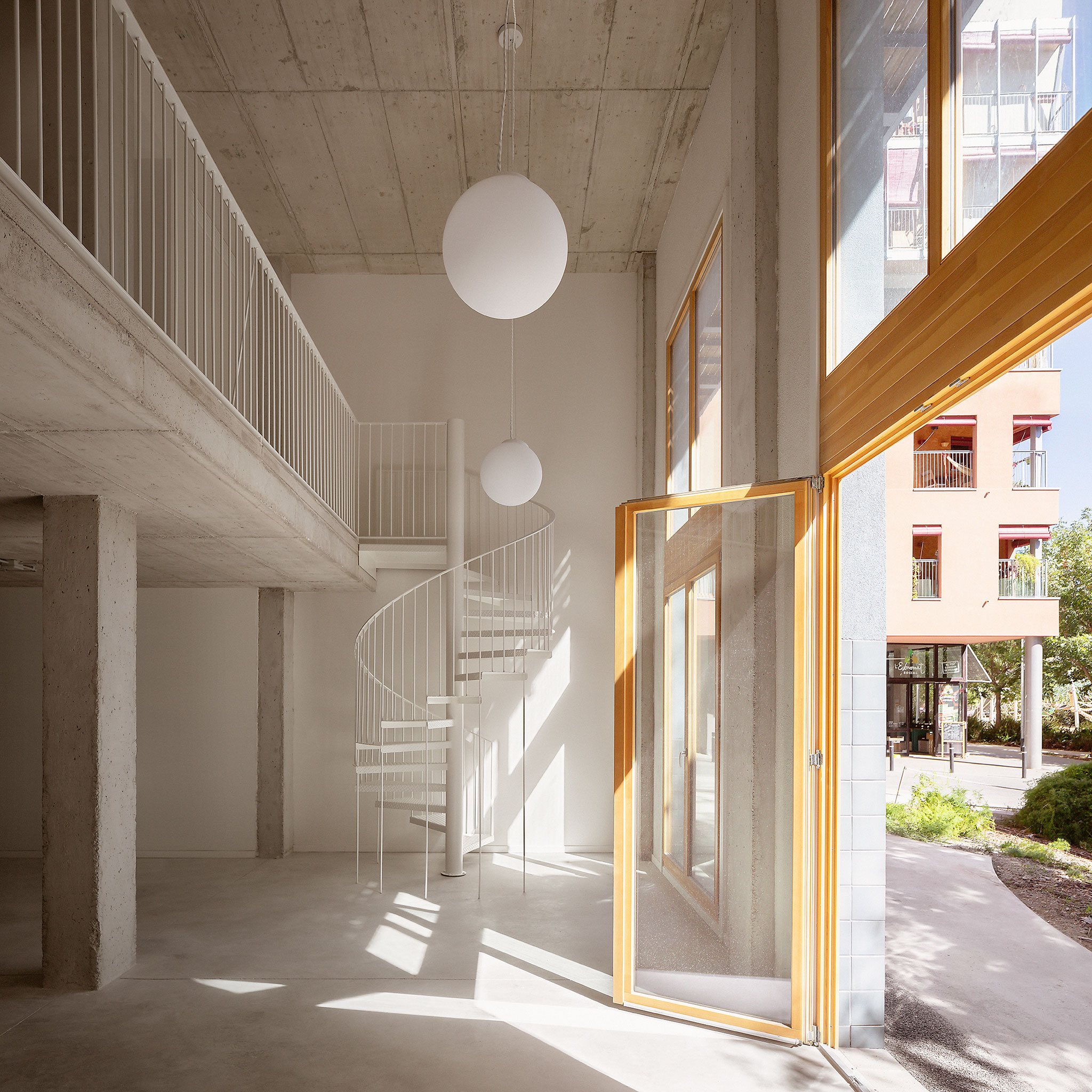
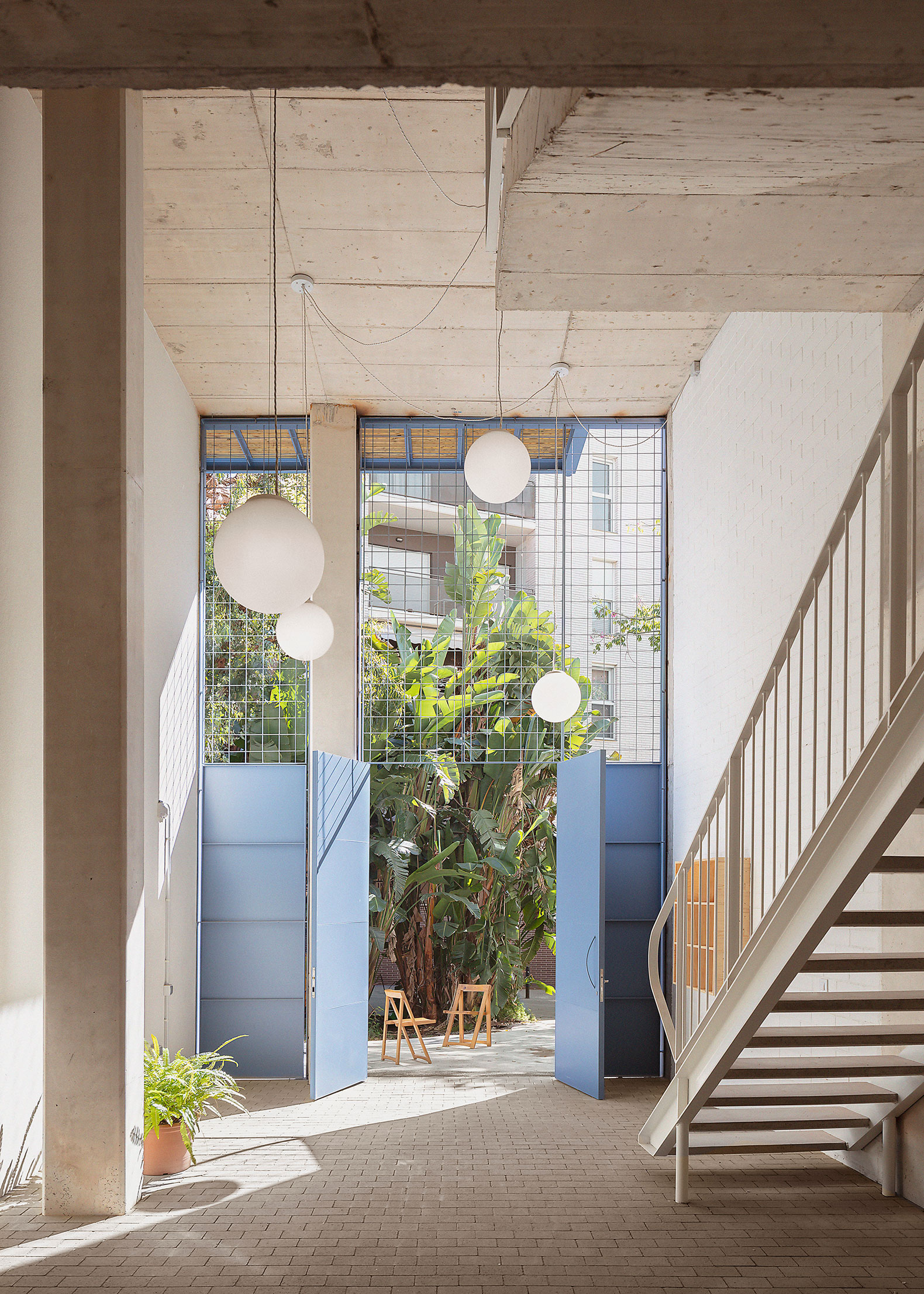
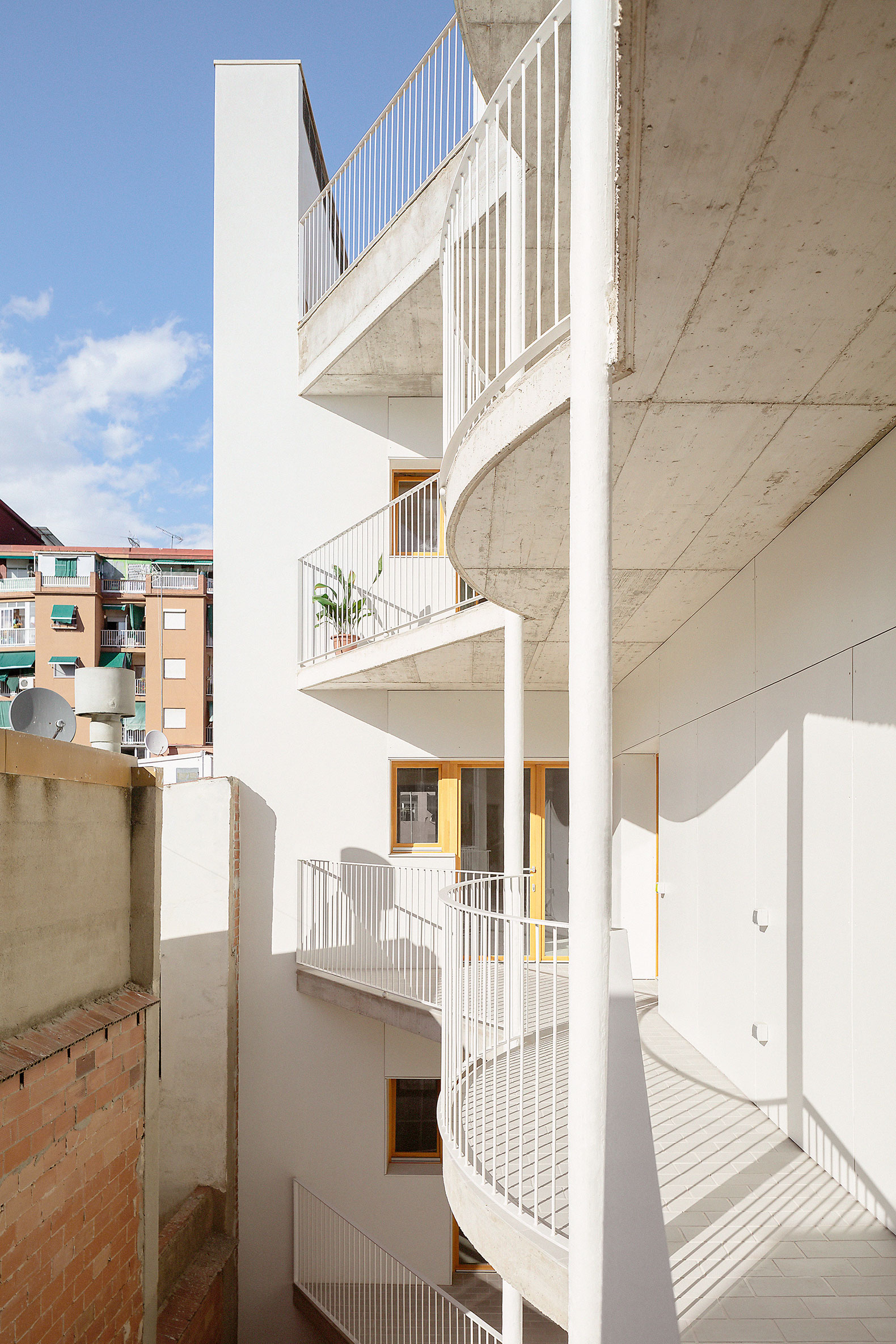
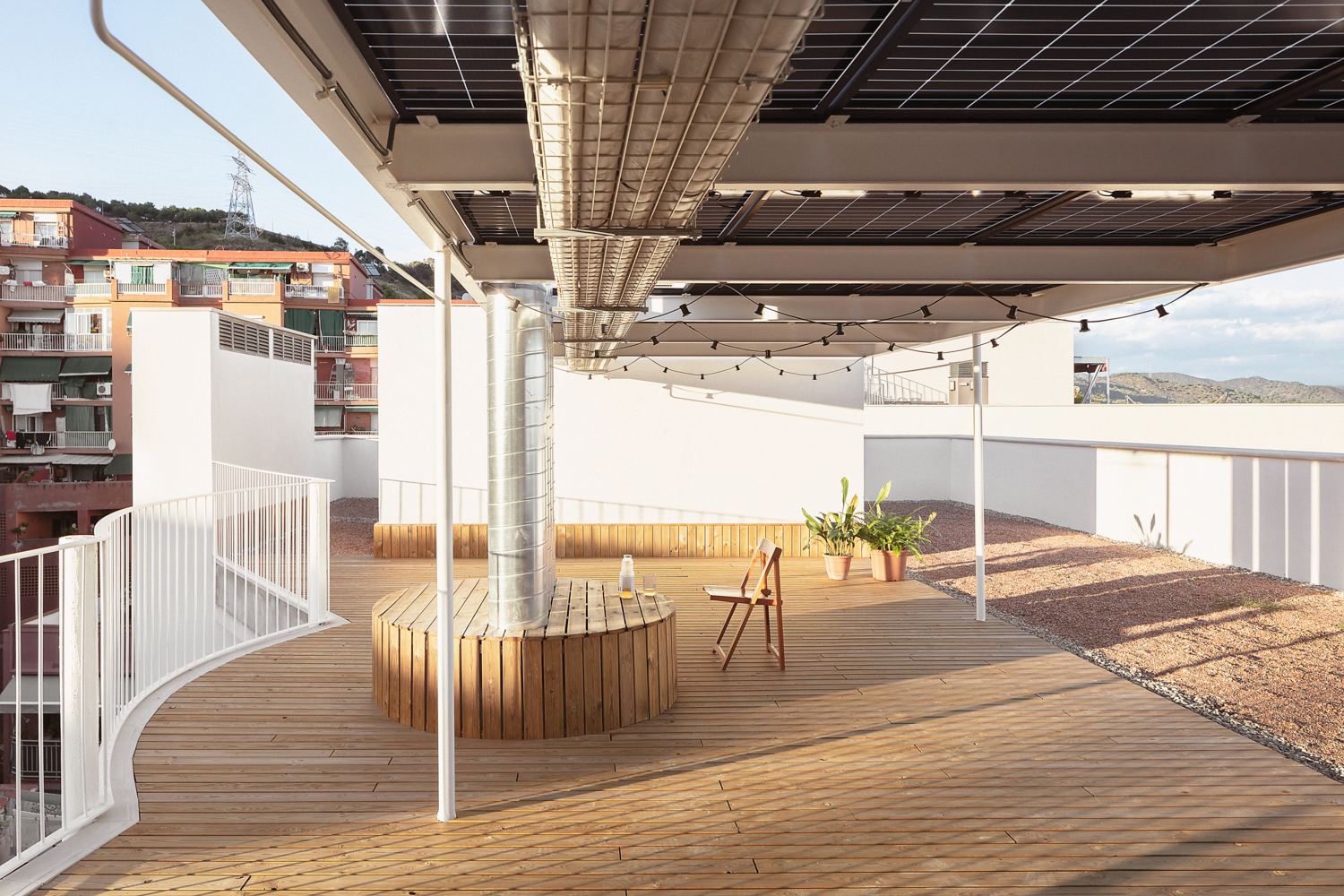
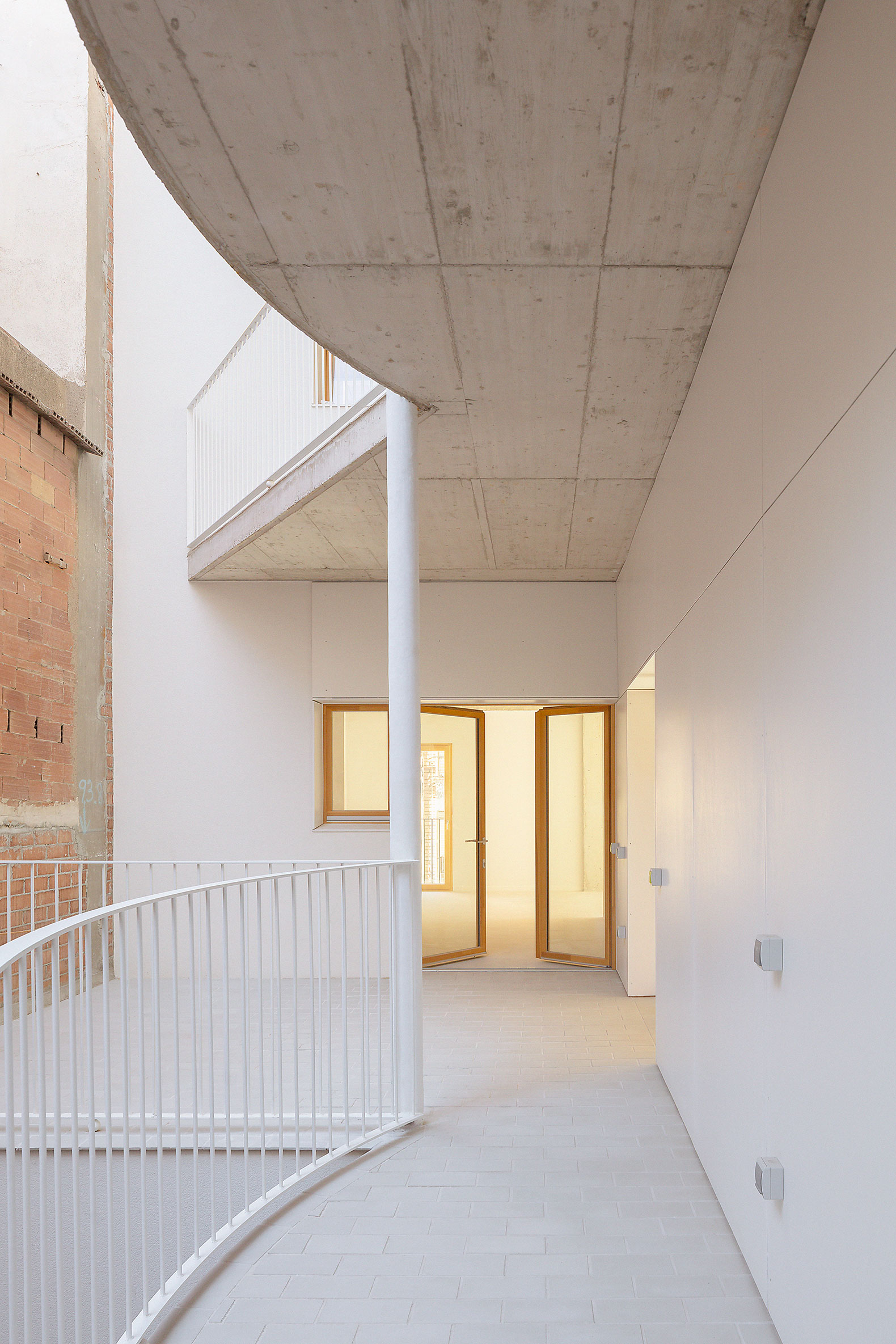
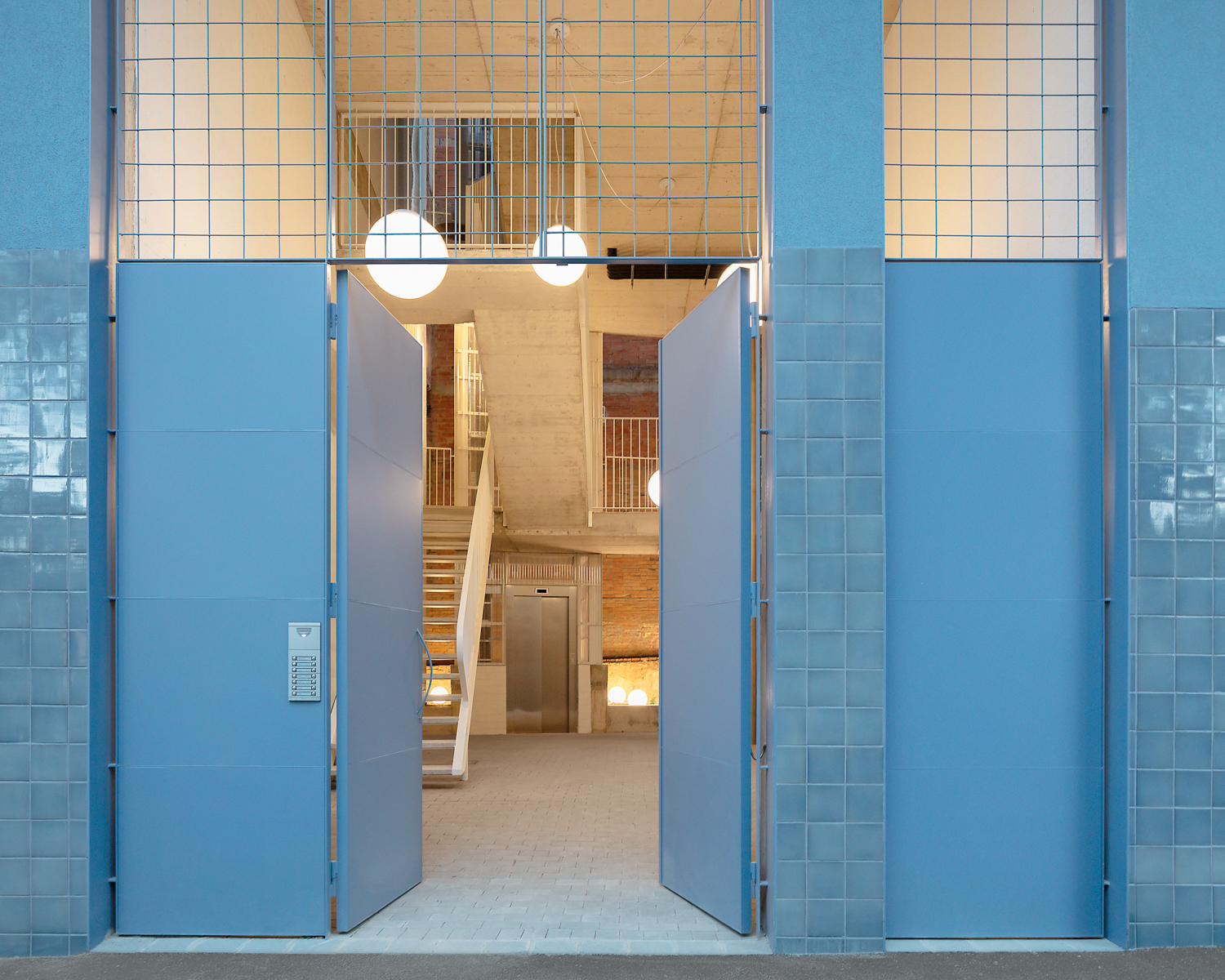
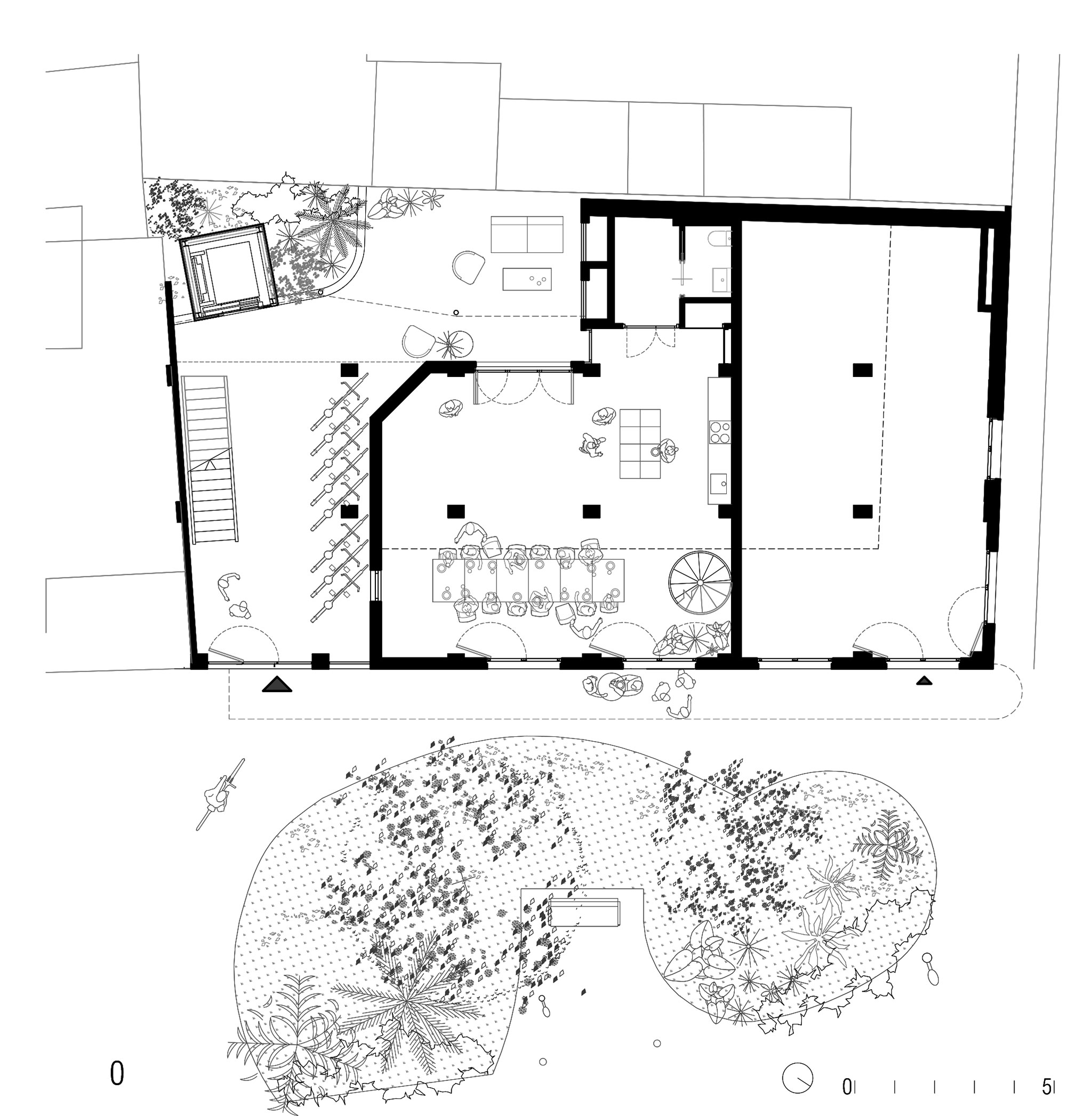
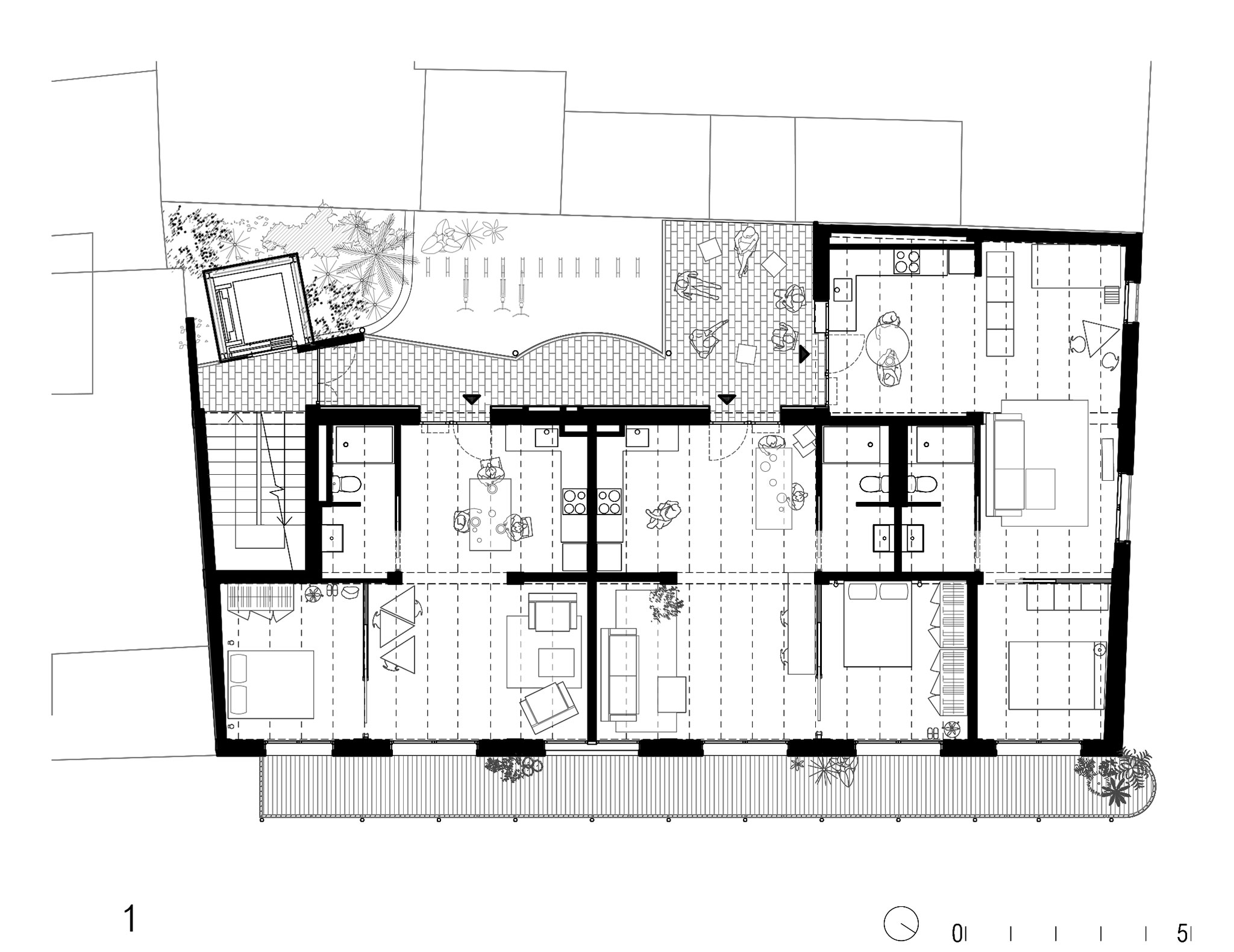
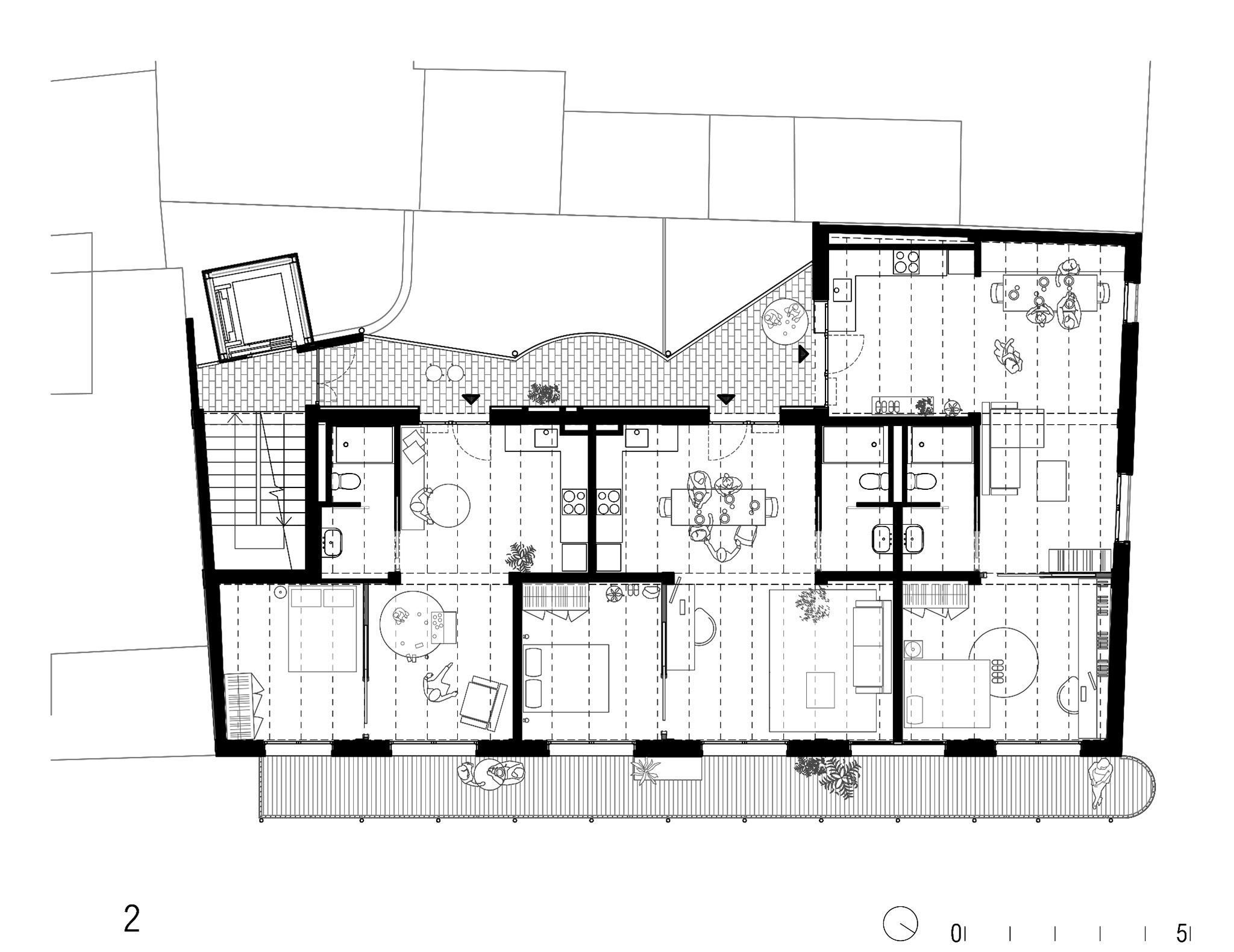
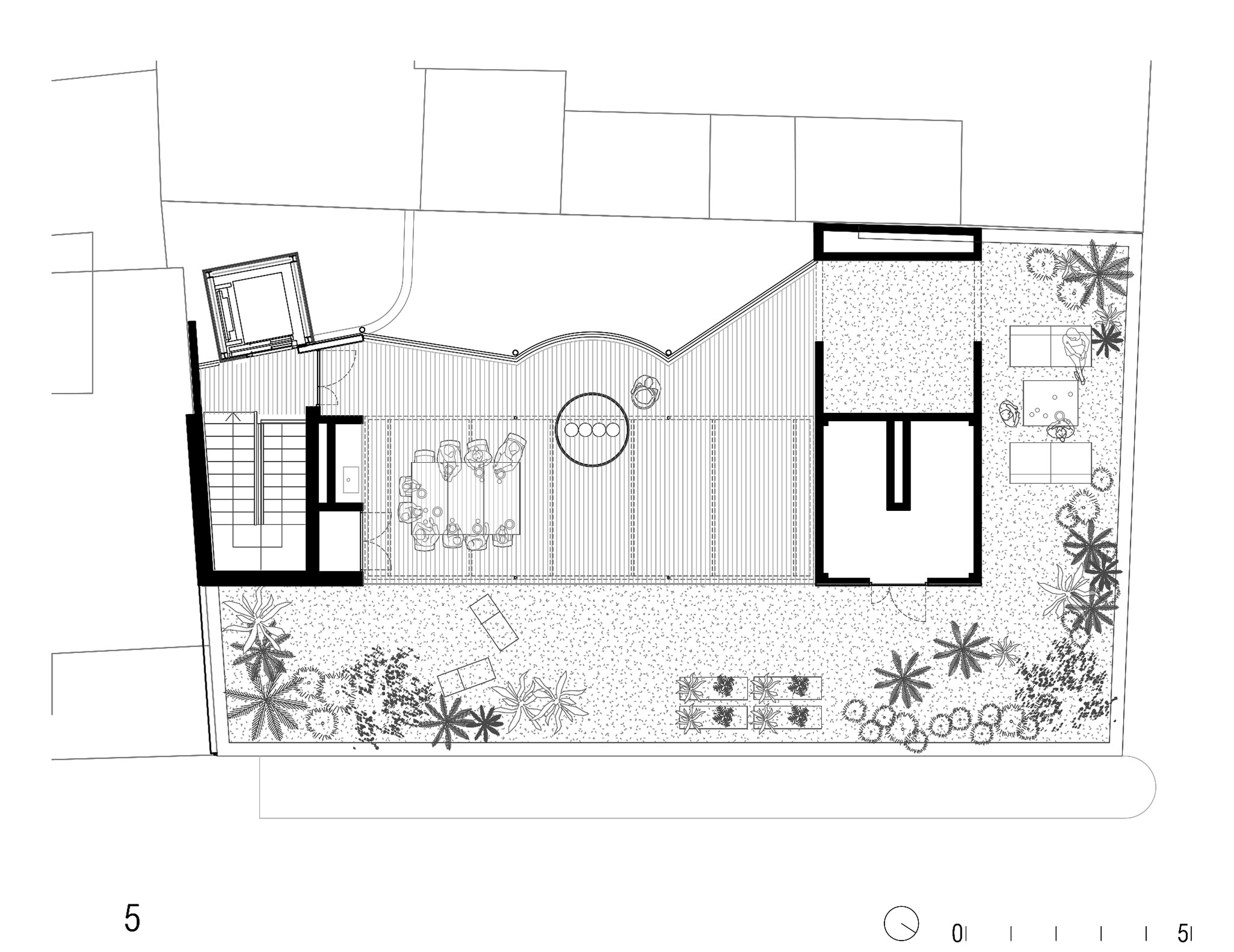
Lacol, in collaboration with the residents of "La Morada," designed the building's entrance through an interior garden with a communal kitchen on the ground floor. Above this is a mezzanine level with guest rooms and a coworking space. The upper floor features a large common area and a landscaped terrace. The apartments, connected by walkways, have private terraces overlooking the plaza.
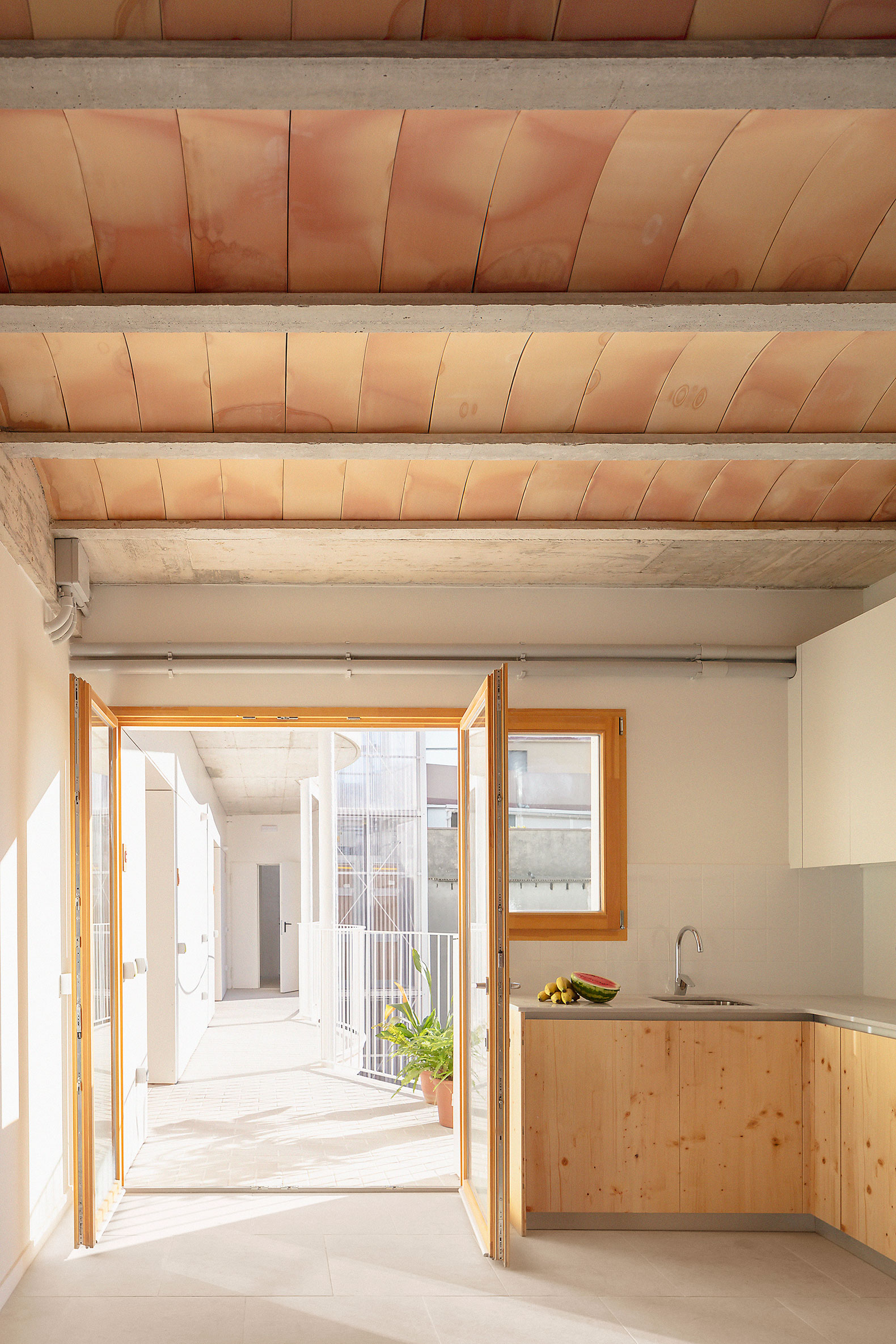
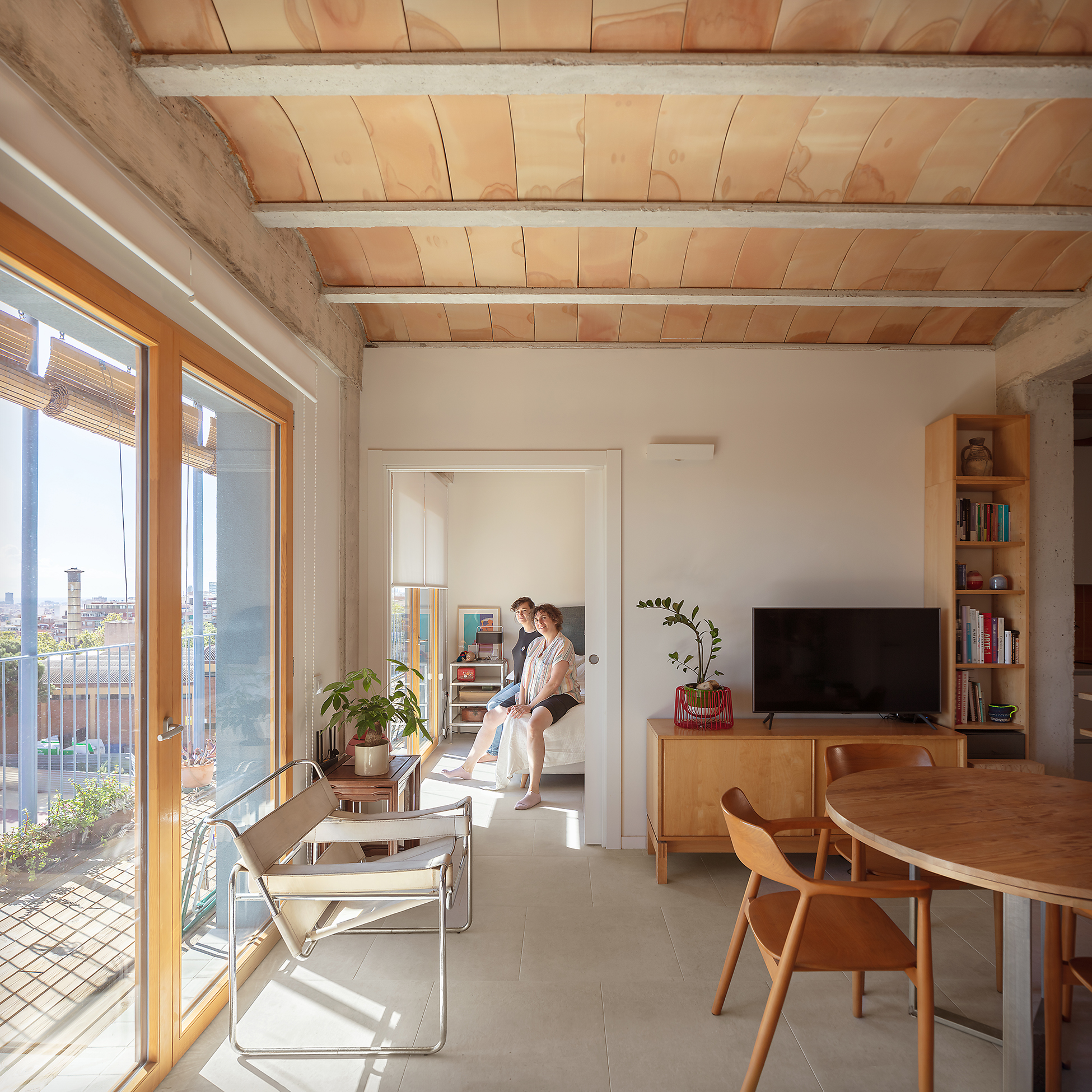
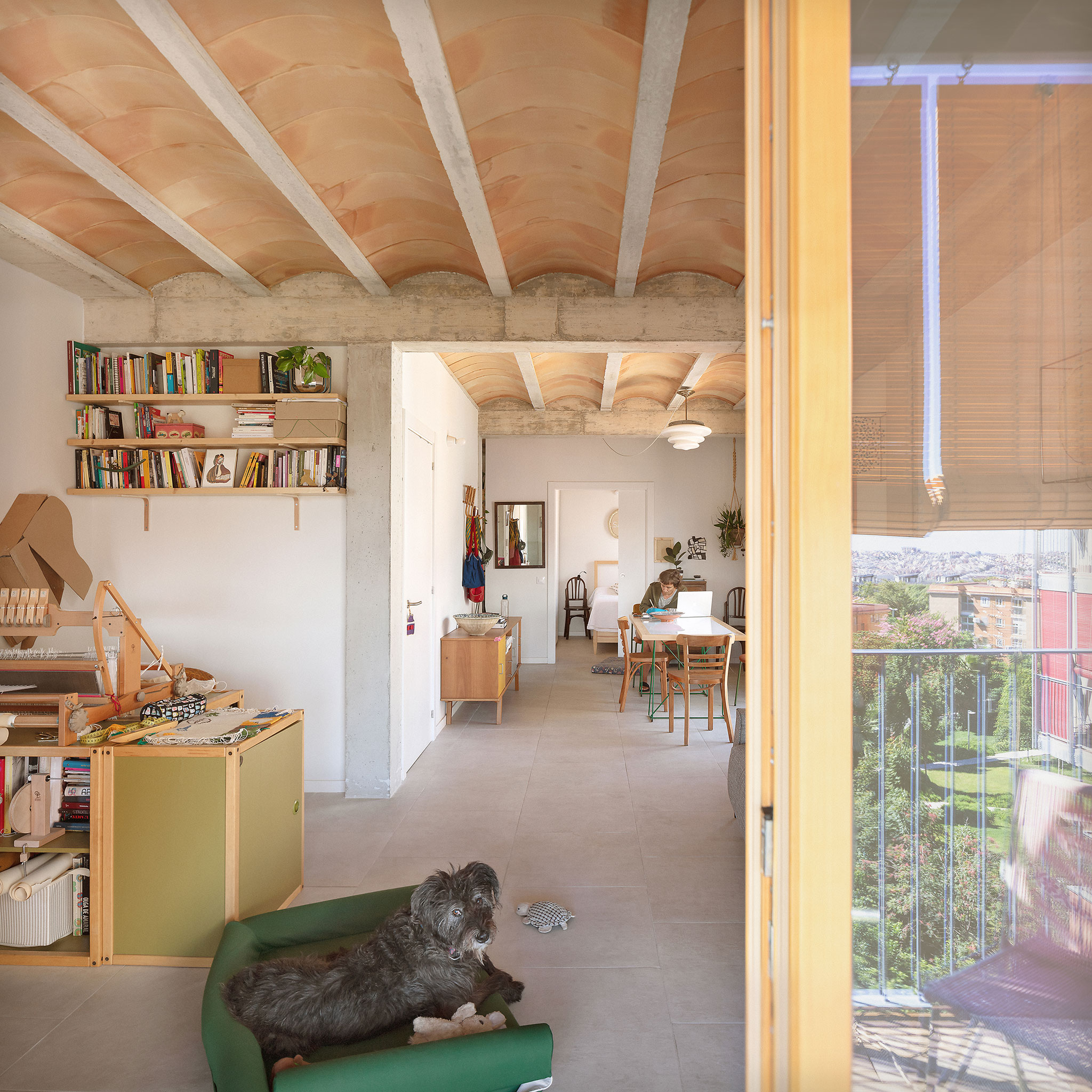
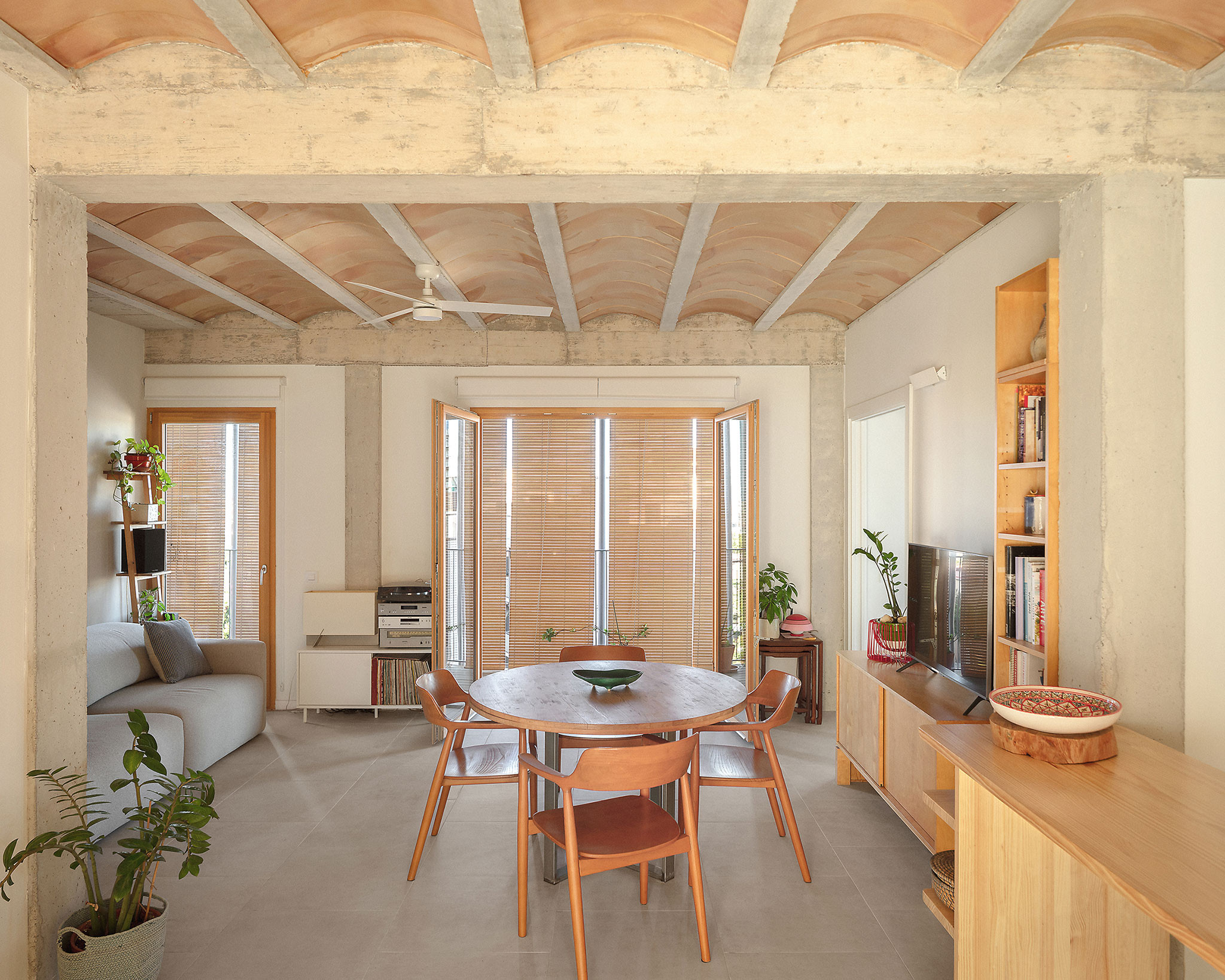
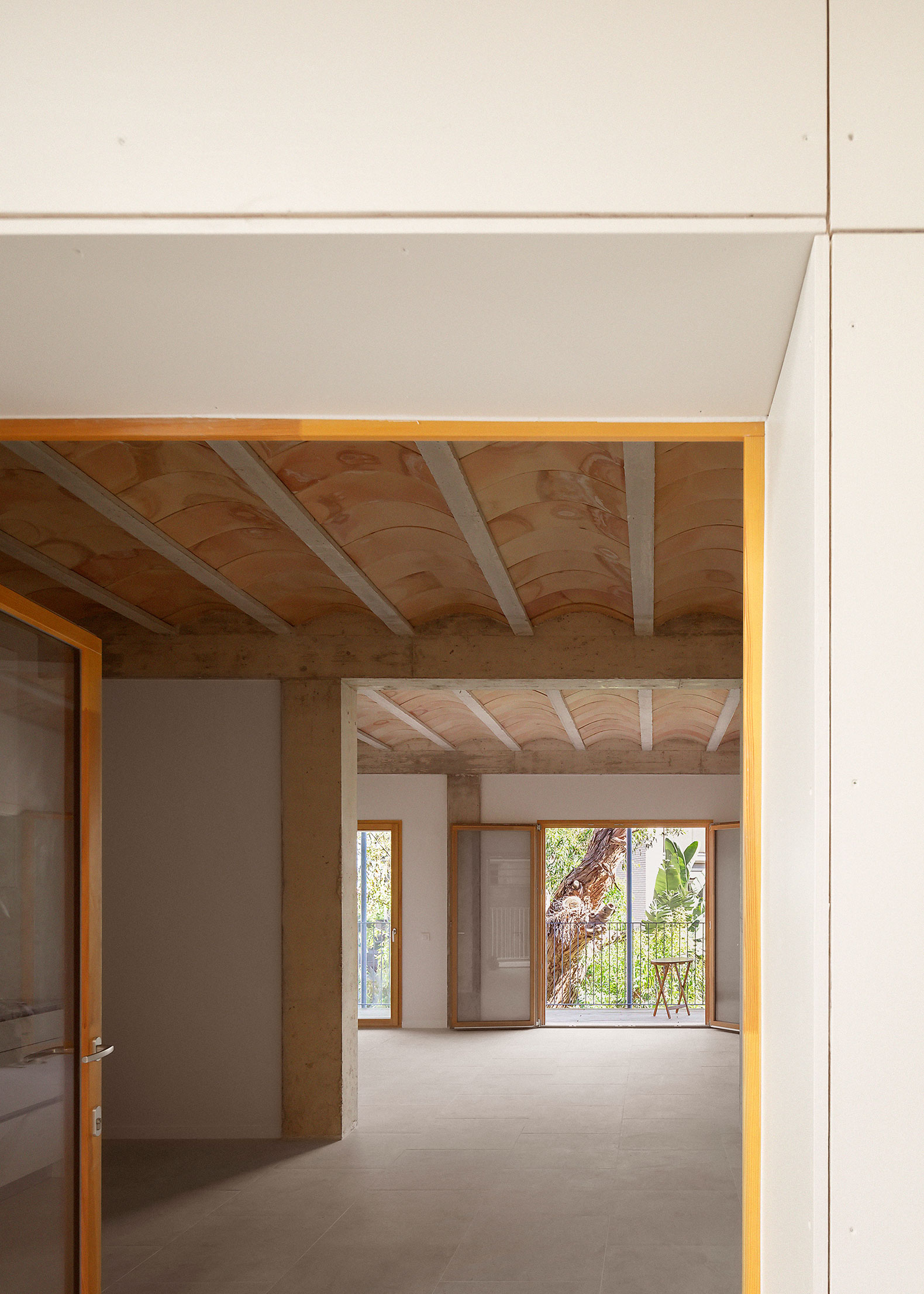
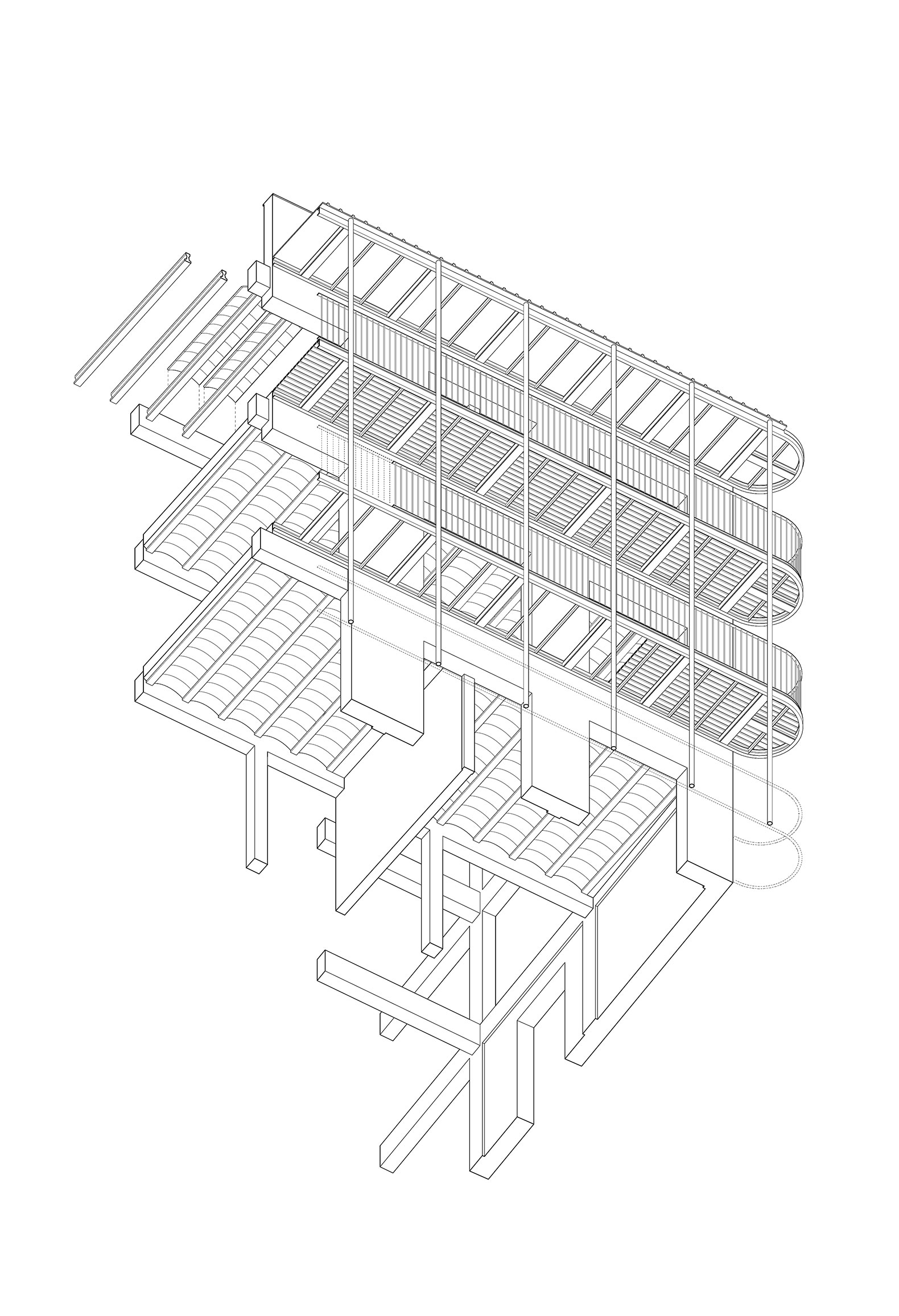
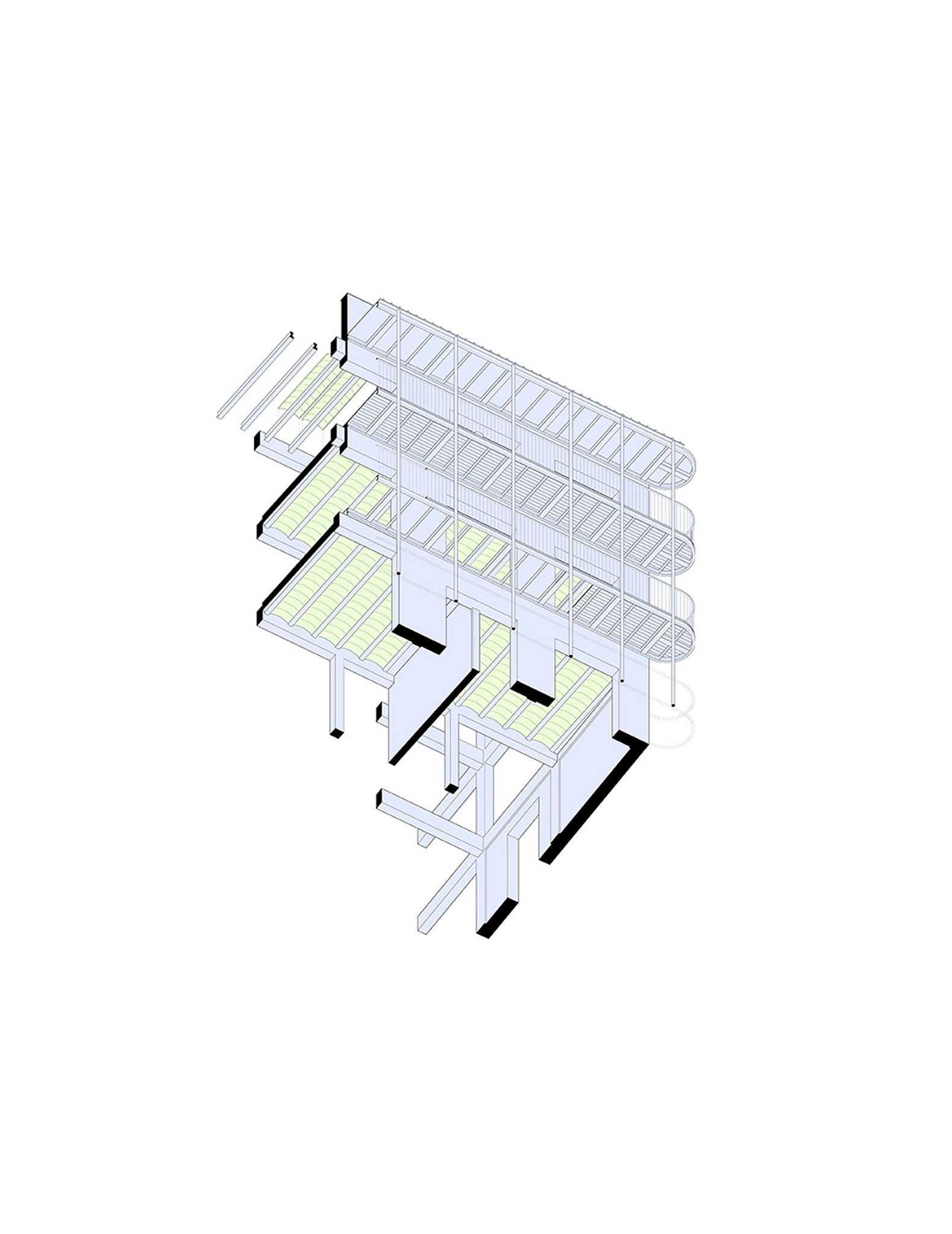
The structural design, constrained by a limited budget, is simple and optimizes the use of concrete through pillars, suspended beams, and hollow brick beams. These rhythmically arranged beams serve as the foundation for the apartment layout. The building boasts 10 cm of thermal insulation, solar panels, and underfloor heating with aerothermal technology, earning it an A-class energy rating and zero CO2 emissions.
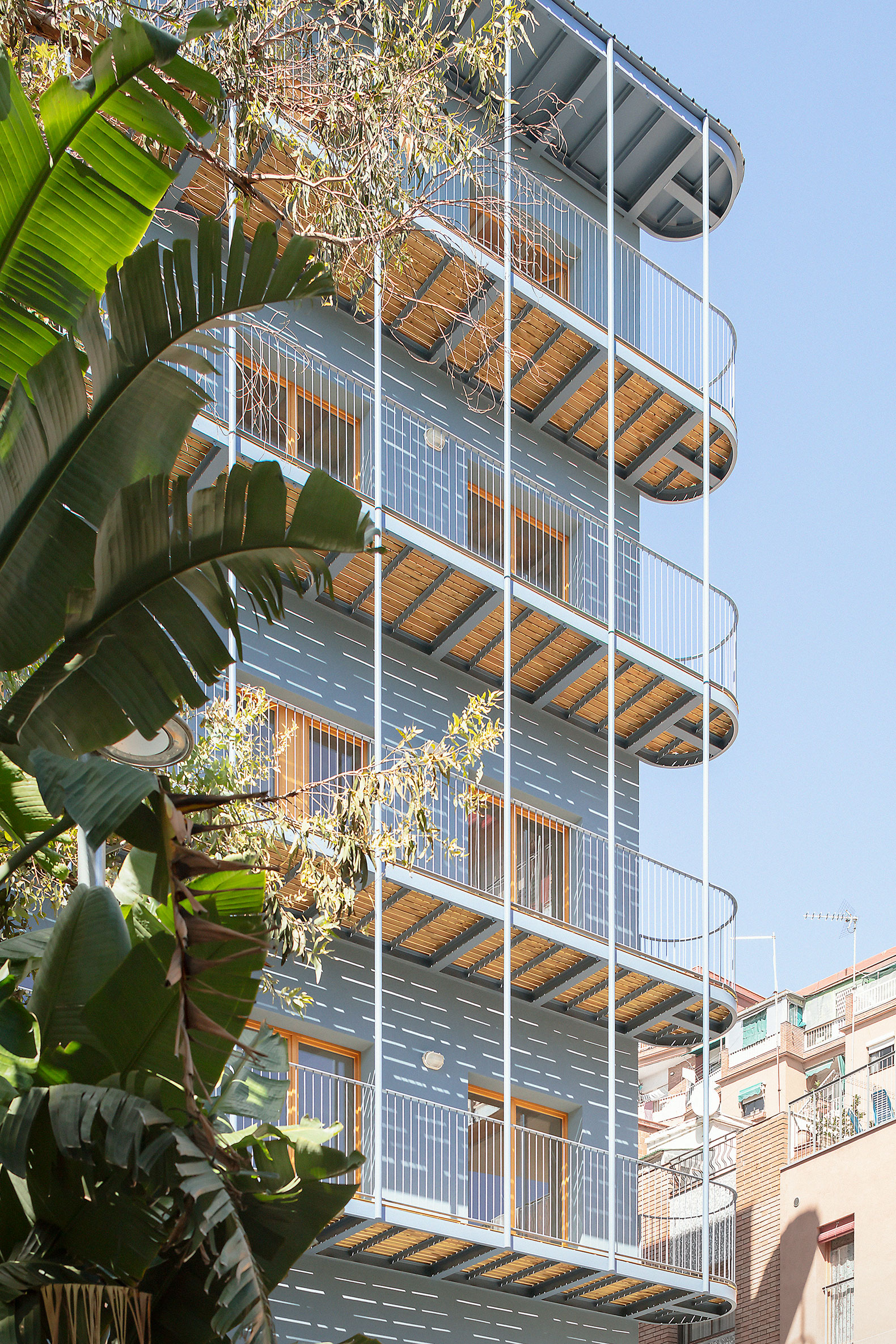
"La Morada" by Lacol. Photograph by Milena Villalba.
Project description by Lacol
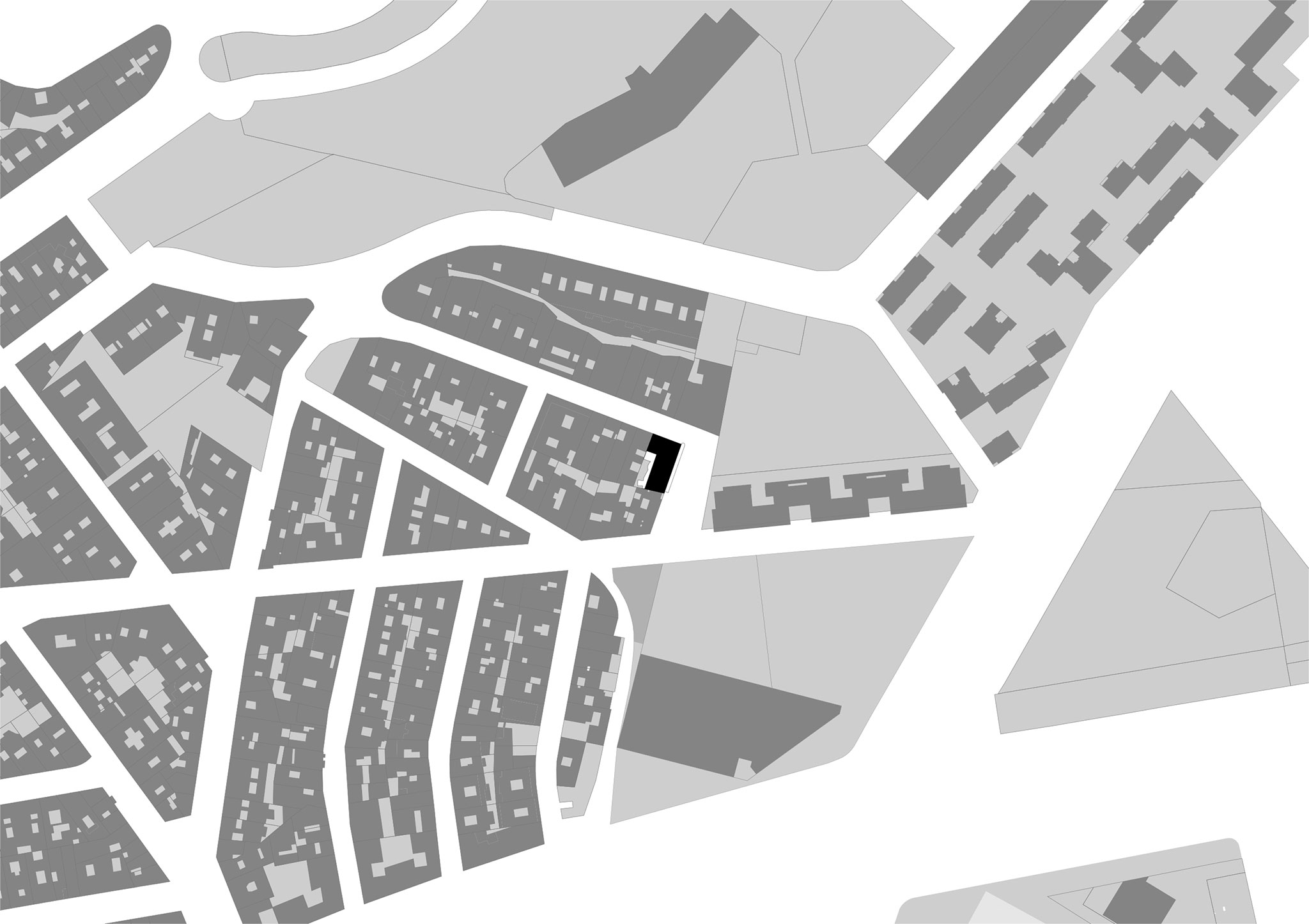
"La Morada" is a transfer-of-use housing cooperative located in the neighbourhood of Roquetes in Barcelona. It is headed by a group of lesbians, trans and other women involved in different feminist initiatives who seek to create a model for sustainable community and solidarity-based living. Their housing development is centred on a plot of land owned by La Dinamo Fundació, which was granted to "La Morada" in 2018 following an open call for applications, with the aim of building 12 social housing units (HPO, in Catalan). Lacol has supported the project both in terms of architectural design and building management, as well as taking on a site management role in order to ensure a more sustainable, collaborative and efficient construction process, optimising budgets and carrying out tasks delegated by the developer. La Dinamo heads the overall management of the development.
The design process has been undertaken in tandem with a consultation process involving future users, with whom we have sought to establish standards for shared living in community spaces and homes. The development features a ground-floor community kitchen, which can be opened to the outside, thus offering participation in local community life. The entrance is a welcoming space where residents can take in fresh air, with cross ventilation generated via connection with the inner courtyard. Immediately above the kitchen is a mezzanine floor that houses guest rooms and a co-working space. The upper floor (fully accessible by lift) has a large terrace with a roof garden, a trellis featuring solar panels and laundry facilities. 290 m² of communal space offers significant scope for use, complementing the interior surface area of the housing units.
Another of the project’s aims is to offer rewarding views to the outside and natural light, with a focus on creating a larger interior courtyard at the expense of other uses and allowing access to homes via spacious passageways that can also act as meeting points and seating areas. The kitchen offers an entry point to homes and a transition to private spaces, also connected by corridors. Individual kitchens and bathrooms occupy the midsection, while bedrooms and living rooms occupy the outward-facing parts of the building, freeing up the possibility of future changes. Each housing unit has a private outdoor terrace overlooking the square.
To meet budgetary requirements, a simple structural design has been chosen, which optimises the use of concrete through pillars and hanging girders made of unidirectional concrete and hollow brick beams. The rhythm used in the structure provides a baseline for the distribution of the housing units and their small variations across each floor.
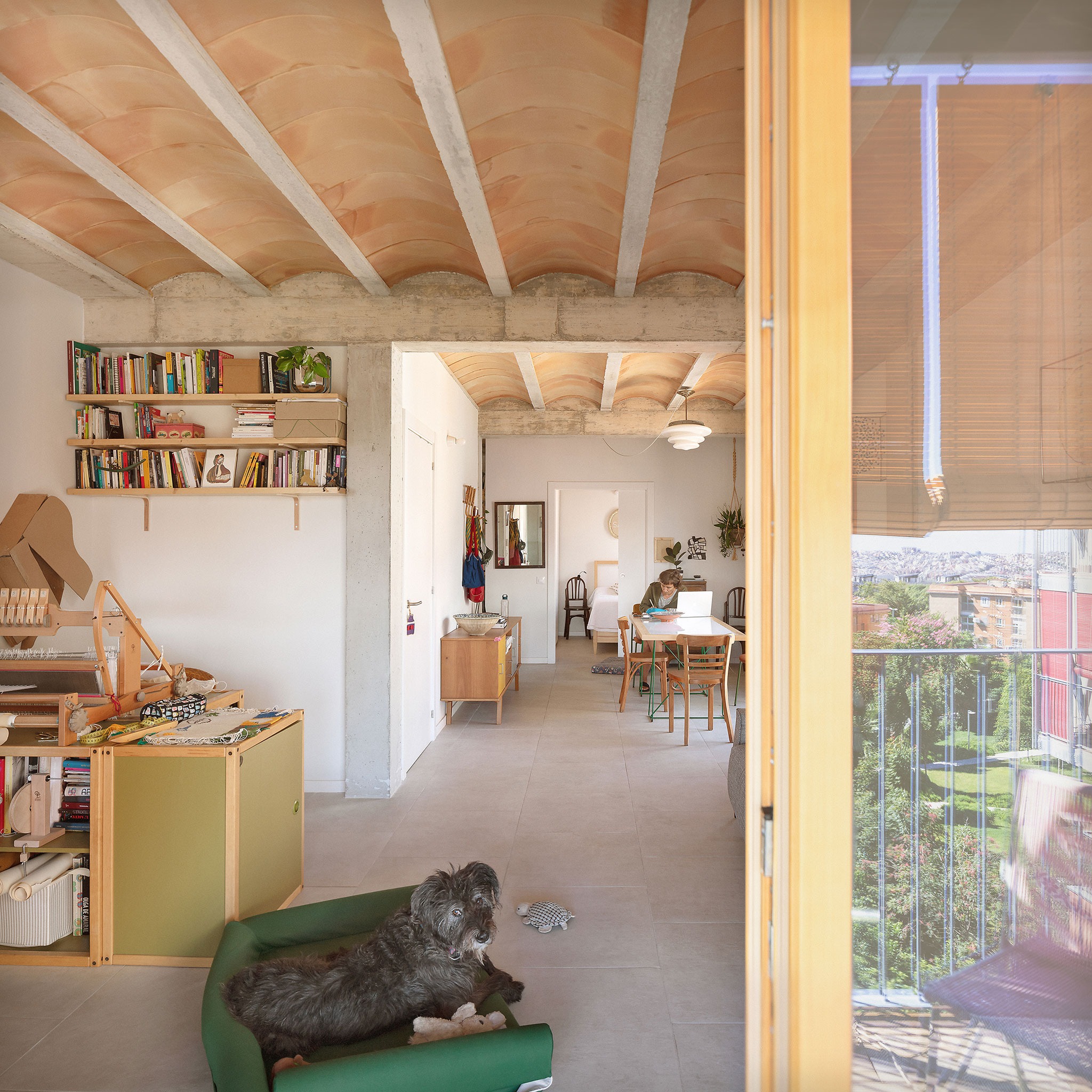
The building is protected with 10 cm of external insulation and solid wooden exteriors which complemented by solar and aerothermal panels for underfloor heating – ensure an A-class energy certificate with 0 CO2 emissions.


![Bois de Cergy Leisure Centre by PLURIEL[LES] ARCHITECTES. Photograph by Charly Broyez](/sites/default/files/styles/mopis_home_featured_block_desktop/public/2026-10/metalocus_PLURIEL-LES_Bois-de-Cergy-Leisure-Centre_14_2p.webp?h=3b4e7bc7&itok=lWSYYH2X "Bois de Cergy Leisure Centre by PLURIEL[LES] ARCHITECTES. Photograph by Charly Broyez")